Clinton Cites Definition of 'Is' to Defend Past Denials on Lewinsky
bamageddrain
Former President Bill Clinton argues his past denials of an affair were truthful because present-tense verbs applied strictly to the moment they were uttered.
AI-assisted summary of Bill Clinton It Depends on what the meaning of the word is is — original source. Check the original for full context.
Source published:
Key ideas
- Former President Bill Clinton addressed grand jury questioning regarding Monica Lewinsky by famously asserting, "It depends on what the meaning of the word 'is' is." (0:00)
- Clinton defended telling top aides that "there's nothing going on between us" by framing the statement as technically truthful under strict present-tense scrutiny. (0:00)
- The exchange exemplifies a hyper-literal legal defense strategy centered on parsing verb tense and semantic definitions to counter allegations of perjury. (0:00)
Detailed notes
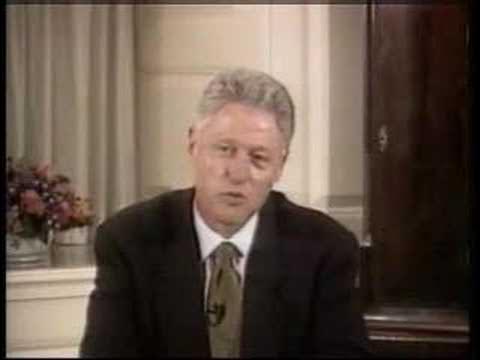
## Background Published on YouTube by user bamageddrain on December 22, 2007, this short video captures a notable excerpt from former President Bill Clinton's grand jury testimony. According to the description, the clip highlights Clinton redirecting questions regarding Monica Lewinsky into a semantic debate over the word "is" to argue that his prior statements to aides were technically truthful.
## TL;DR The video features former President Bill Clinton during his grand jury testimony addressing allegations concerning his relationship with Monica Lewinsky. When pressed about previous remarks made to aides, Clinton scrutinizes the phrasing and grammatical tense of the inquiry. He famously declares, "It depends upon what the meaning of the word is is." This semantic distinction between present-tense reality and past occurrences forms the crux of his technical defense.
## Atmosphere & style The brief excerpt carries a tense, hyper-calculated atmosphere defined by legalistic precision. Clinton appears intensely focused and composed under scrutiny, dissecting fundamental grammar to deflect adversarial questioning. Watching the moment feels remarkably surreal and deliberate, underscoring an iconic instance of high-stakes political rhetoric and meticulous evasion.
## Bulletin - [00:00](https://www.youtube.com/watch?v=j4XT-l-_3y0&t=0s) Former President Bill Clinton addressed grand jury questioning regarding Monica Lewinsky by famously asserting, "It depends on what the meaning of the word 'is' is." - [00:00](https://www.youtube.com/watch?v=j4XT-l-_3y0&t=0s) Clinton defended telling top aides that "there's nothing going on between us" by framing the statement as technically truthful under strict present-tense scrutiny. - [00:00](https://www.youtube.com/watch?v=j4XT-l-_3y0&t=0s) The exchange exemplifies a hyper-literal legal defense strategy centered on parsing verb tense and semantic definitions to counter allegations of perjury.
## Key takeaways - [00:00](https://www.youtube.com/watch?v=j4XT-l-_3y0&t=0s) The testimony stems from Bill Clinton's grand jury inquiry concerning his relationship with Monica Lewinsky. - [00:00](https://www.youtube.com/watch?v=j4XT-l-_3y0&t=0s) Clinton famously redirected the questioning by stating, "It depends upon what the meaning of the word is is." - [00:00](https://www.youtube.com/watch?v=j4XT-l-_3y0&t=0s) The statement served to defend Clinton's earlier claim to aides that "there's nothing going on between us." - [00:00](https://www.youtube.com/watch?v=j4XT-l-_3y0&t=0s) Clinton's argument relied on a strict grammatical distinction between present tense and past occurrences. - [00:00](https://www.youtube.com/watch?v=j4XT-l-_3y0&t=0s) He argued that if "is" means that an activity never previously occurred, the statement would carry a different meaning. - [00:00](https://www.youtube.com/watch?v=j4XT-l-_3y0&t=0s) He asserted that if "is" is defined strictly as an ongoing present condition ("there is none"), his prior denial was completely true. - [00:00](https://www.youtube.com/watch?v=j4XT-l-_3y0&t=0s) Clinton claimed that responding "no" to a present-tense inquiry about ongoing sexual relations on that day was factually accurate. - [00:00](https://www.youtube.com/watch?v=j4XT-l-_3y0&t=0s) The response highlights a broader legalistic defense strategy reliant on semantic precision to navigate grand jury questions.
## Detailed walkthrough ### [00:00](https://www.youtube.com/watch?v=j4XT-l-_3y0&t=0s) Parsing the Meaning of the Word "Is"
In this brief excerpt from his grand jury testimony regarding the Monica Lewinsky investigation, former President Bill Clinton addresses the precise tense and semantic definition of statements made to his aides about their relationship. Challenging the phrasing of the question, Clinton pivots the inquiry toward strict grammatical interpretation by famously stating, “It depends upon what the meaning of the word is is.”
The moment captures Clinton’s legalistic defense strategy, where he distinguishes between present tense and past events to maintain that his prior denials of an ongoing relationship were technically truthful.
## Mentioned Bill Clinton, Monica Lewinsky, Kenneth Starr
## Video description Bill Clinton, while being questioned about Monica Lewinsky, brilliantly sends the questioning in a new direction. To determine the meaning of the word "is".
Here's what Bill Clinton said to the grand jury about why he wasn't lying when he said to his top aides that with respect to Monica Lewinsky, "there's nothing going on between us." How can this be? Here's what Clinton told the grand jury (according to footnote 1,128 in Starr's report):
"It depends on what the meaning of the word 'is' is. If the--if he--if 'is' means is and never has been, that is not--that is one thing. If it means there is none, that was a completely true statement....Now, if someone had asked me on that day, are you having any kind of sexual relations with Ms. Lewinsky, that is, asked me a question in the present tense, I would have said no. And it would have been completely true."
[Source](https://www.youtube.com/watch?v=j4XT-l-_3y0)