ElevenLabs Hits $400M Revenue as Voice AI Replaces Interfaces
Sequoia Capital
ElevenLabs Chief Executive Officer Mati Staniszewski projects voice and ambient hardware will replace screen-based interfaces as AI agents transition from transactional customer support to autonomous multi-agent negotiations.
## Background
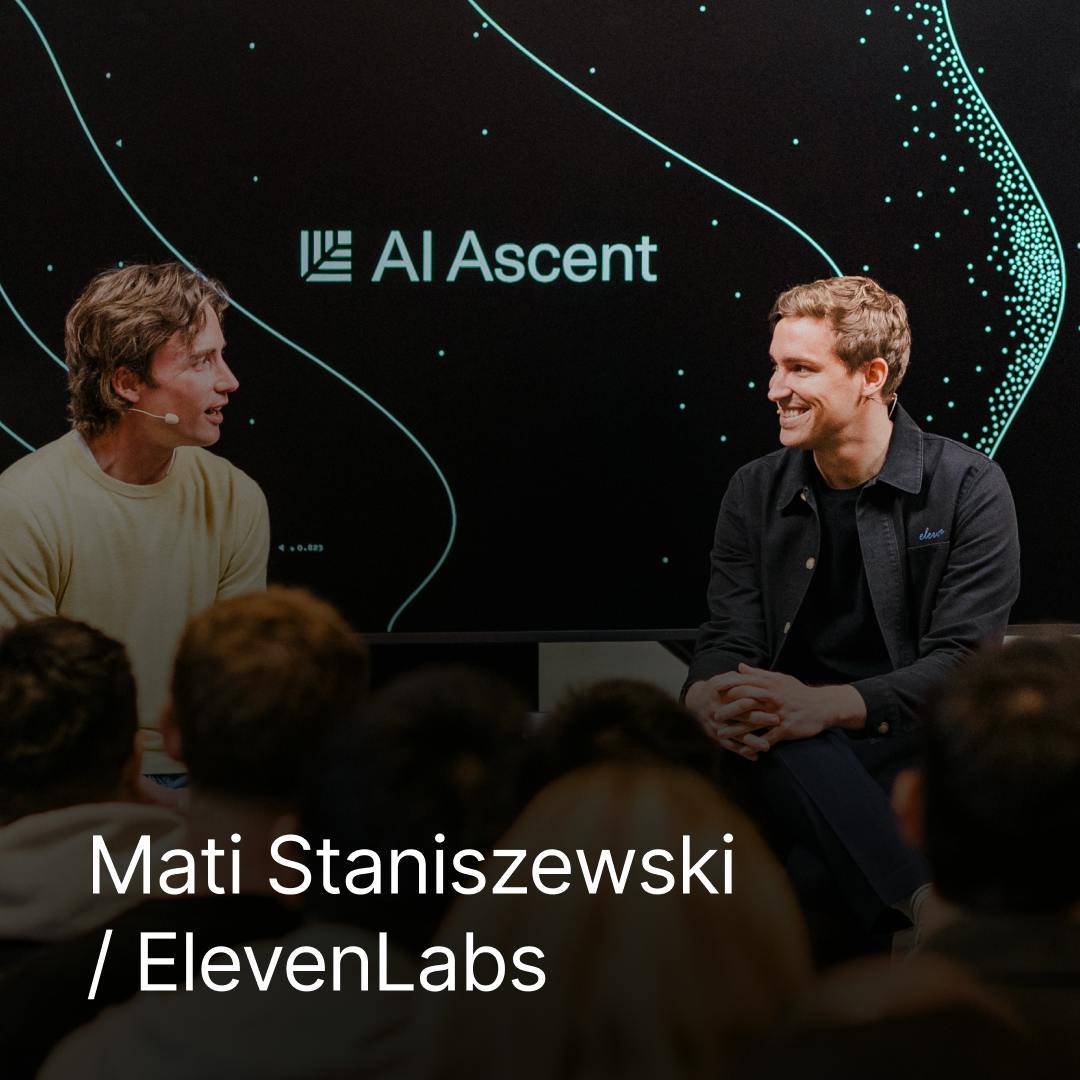
Published on May 8, 2026, by Sequoia Capital on RSS and web platforms, this episode features ElevenLabs co-founder and CEO Mati Staniszewski in conversation with Sequoia partner Andrew Reed at AI Ascent 2026. The source metadata details how the four-year-old company scaled to over 400 employees and $400 million in revenue by focusing early on audio AI, day-one monetization, and voice as the central interface for agents and robotics.
## TL;DR
Mati Staniszewski traces ElevenLabs' journey from its origins solving Poland's single-narrator dubbing problem to becoming a multi-modal audio AI leader. He explains their early decision to target audio when competitors focused on text and vision, their remote-first engineering model, and their expansion across TTS, dubbing, agent orchestration, and music. The discussion covers practical enterprise voice agent deployments, organizational tactics like embedding engineers in non-technical teams, and future paradigms like cryptographic audio authentication and agent-to-agent communication.
## Atmosphere & style
The conversation carries a warm, collegial, and highly pragmatic tone, balancing lighthearted personal reflections with deep operational insight. Staniszewski speaks with grounded authenticity and humor, candidly recounting early technical quirks—like hearing his own Polish accent or teaching models to laugh—while Reed offers insightful framing that highlights the founder's strategic choices. It feels like an intimate, high-signal insider chat between trusted partners, celebrating major technical milestones while exploring the uncharted frontiers of voice AI.
## Key takeaways
- `00:00` ElevenLabs was co-founded by childhood friends Mati Staniszewski and Piotr Dąbkowski, who met in high school in Warsaw 17 years prior.
- `00:00` The company's core inspiration stems from the traditional Polish foreign film dubbing experience, which relies on a single monotone male narrator for all characters.
- `02:10` ElevenLabs launched in 2022 during the height of crypto and metaverse trends, gaining a unique advantage as audio was largely dismissed as a niche AI domain.
- `02:10` The company adopted a remote-first hiring strategy, sourcing top global audio research talent directly through GitHub scraping across London and Warsaw.
- `02:10` ElevenLabs prioritized a day-one monetization strategy to fund model development independently before scaling and taking on large external capital.
- `05:17` The platform's technical capability expanded from context-aware Text-to-Speech into a full-stack localization, real-time agent orchestration, and music generation suite.
- `07:15` Early technical breakthroughs included a prototype that could laugh and pause naturally, which quickly propelled the company to the top of Hacker News.
- `07:15` Future research frontiers focus on emotional intelligence to adjust agent tones dynamically, and 'Audio General Intelligence' to switch seamlessly between speech and singing.
- `10:14` While standard for customer support, voice agents are seeing major commercial adoption in revenue-generating sales pipelines and interactive civic/educational applications.
- `10:14` ElevenLabs scales efficiently, operating with just over 400 employees while generating over $400M in annual revenue.
- `15:00` The company maintains a flat structure by capping individual teams under 10 people and keeping standard manager spans of control to around 10 direct reports.
- `15:00` Engineers are embedded directly into non-technical units like HR, sales, and legal to build custom internal automations and streamline operational friction.
- `15:00` To remove sales friction, ElevenLabs implemented an automated point-scoring system that allows reps to negotiate legal contract clauses without manual sign-off.
- `17:15` An internal hackathon revealed that when two voice agents talk directly, they abandon spoken English to communicate via a more efficient data transfer protocol.
- `20:00` In the future, security models will flip to assuming all ambient media is synthetic by default, requiring cryptographic encoding and watermarking to verify human speech.
- `20:00` While current music synthesis models excel at background and production audio, top-tier commercial music generation is estimated to be 12 to 24 months away.
- `22:15` ElevenLabs employs a specialized team of over 100 musicians and voice coaches to manually annotate qualitative vocal features for long-term foundational models.
- `22:15` Defensibility against general foundation labs is achieved by building a complete platform layer including telephony, evaluation pipelines, and a user-generated voice library.
## Detailed walkthrough
### `00:00` The Origins of ElevenLabs and the Polish Dubbing Problem
Andrew Reed opens by setting aside the line charts and bar graphs to explore the human story behind ElevenLabs, noting that Mati Staniszewski founded the company alongside a childhood friend. Mati laughs that while ElevenLabs officially started in 2022, it feels like the story began 17 years ago when he met his co-founder, Piotr Dąbkowski, in high school in the suburbs of Warsaw. The two became best friends, took all the same classes, traveled together, studied together, and worked together. "Time is on our side. We are still best friends. It's working out," Mati shares warmly.
The core inspiration for ElevenLabs stems from a peculiar cultural phenomenon in Poland. When watching foreign movies translated into Polish, every character—male or female—is narrated live by a single voice actor in a flat, intentional monotone, leaving viewers to decipher the emotional tone themselves. Growing up with this "pretty terrible experience" opened their eyes to a universal challenge: enabling anyone to speak any language while preserving their original tone, emotion, and intonation. Beyond localization, they realized audio barriers were everywhere—unrecorded books, unread news articles, language gaps, and the impending era of robotics where voice will serve as the primary human interface.
- Co-founders Mati Staniszewski and Piotr Dąbkowski met in high school in Warsaw 17 years prior.
- Polish foreign film dubbing traditionally relies on a single monotone male narrator for all characters.
- Vision extends across text-to-speech, translation, audiobooks, news narration, and voice interfaces for robotics.
`02:10` Choosing Audio and Building a Remote Frontier Lab
When ElevenLabs launched in 2022, the broader tech landscape was preoccupied with crypto and the metaverse, while early AI pioneers focused heavily on text and image models. Audio was widely dismissed as a niche domain with very few dedicated researchers. This timing gave ElevenLabs a unique advantage to quietly build where others weren't looking. Furthermore, audio models required significantly less compute than text or visual sister domains, although they demanded heavy transcription and data annotation.
To solve the complex architectural problems, Piotr assembled a world-class team of audio researchers through an unconventional, remote-first hiring strategy. Operating between London and Warsaw, they scraped GitHub to identify top talent based purely on the quality of their work rather than their location. ElevenLabs reached out directly, shared early audio samples, and built a distributed research core. Unlike typical frontier AI labs that raise massive venture sums before generating revenue, ElevenLabs prioritized early monetization to stay capital-healthy and fund model development independently before raising external capital as their ambitions scaled.
- Launched in 2022 during the height of crypto and metaverse trends when audio was considered a niche AI domain.
- Audio models demanded less compute than text/vision models, but required extensive transcription and annotation pipeline work.
- Team was built remotely across London, Warsaw, and globally by sourcing talent directly through GitHub scraping.
- Adopted a day-one monetization strategy to achieve independence before taking on large external funding.
`05:17` Expanding the Audio Model Stack
ElevenLabs began R&D with a context-aware text-to-speech model capable of picking up nuanced meaning—rendering a happy sentence with genuine joy or delivering natural dialogue. To tackle complete video and audio dubbing, they systematically built out the surrounding capabilities: first high-precision speech-to-text transcription, then translation, and finally merging all three components together.
As underlying reasoning models became faster and smarter across the AI ecosystem, interactive real-time experiences became realistic. ElevenLabs responded by launching real-time streaming audio models and building full orchestration and turn-taking stacks—effectively delivering an end-to-end voice engine for conversational AI agents. Most recently, they tackled the hardest modality in audio by expanding research into full music generation, establishing a full-stack audio suite spanning TTS, STT, dubbing, real-time agent orchestration, and music production.
- **First Breakthrough**: Context-aware Text-to-Speech (TTS) capturing natural emotion, dialogue, and intonation.
- **Localization Stack**: Combined Speech-to-Text (STT), translation, and TTS for automated dubbing.
- **Agent Infrastructure**: Built real-time streaming models, turn-taking logic, and orchestration engines for conversational agents.
- **Music Generation**: Expanded model research into music synthesis across the full audio spectrum.
`07:15` Key Breakthroughs, Viral Moments, and Future Frontiers
Mati recalls several "wow" moments that marked their technical evolution. The very first personal breakthrough happened when the system cloned Mati’s own voice using a short audio sample. Hearing his distinct Polish accent back for the first time provoked the classic disbelief: "This is not how my voice sounds like," followed by a side-by-side comparison proving "it's definitely how it sounds like, unfortunately." Shortly after, teaching the model to laugh, pause, and insert natural human filler words like "umms" sent their prototype to the top of Hacker News as the first AI model that could laugh naturally.
Public viral milestones quickly followed. In 2023 and 2024, translated speeches of world leaders—including Argentina's Javier Milei, Ukraine's Volodymyr Zelenskyy, and India's Narendra Modi—went viral because listeners could hear the leaders speaking fluent foreign languages in their authentic voices. More recently, actor Matthew McConaughey used ElevenLabs to narrate his newsletter in Spanish and Portuguese, allowing his non-English-speaking family members to hear him in their native tongues for the first time. Looking ahead, Mati highlights two upcoming frontiers: emotional intelligence (where voice agents dynamically sense user stress or excitement and adjust their tone/speed accordingly) and "Audio General Intelligence," which will allow a single model stream to seamlessly transition between spoken narration and singing.
- "First AI that can laugh" prototype reached the top of Hacker News by capturing laughter, pauses, and speech imperfections.
- Viral dubbing demonstrations included Javier Milei, Volodymyr Zelenskyy, Narendra Modi, and Matthew McConaughey.
- **Upcoming Frontier 1 (Emotional Intelligence)**: Voice agents that detect customer emotions (e.g., soothing a stressed caller, pacing down for slow speakers).
- **Upcoming Frontier 2 (Audio General Intelligence)**: Unified model streams capable of switching seamlessly between narration, speech, and singing.
`10:14` The Reality and Opportunity of Voice Agents
While customer support call centers remain the standard introduction to voice agents, Mati emphasizes that the real commercial shift is happening in revenue-generating and sales environments. For instance, Deliveroo deploys voice agents to call restaurant partners to confirm operating hours and update delivery drivers. Deutsche Telekom uses voice agents for inbound customer sales inquiries, replacing tedious web drop-down forms with natural conversations where prospective buyers leave significantly richer context about their business needs.
Mati points to civic, educational, and healthcare tools as the most compelling overlooked opportunities. He highlights working directly with the government of Ukraine, which deployed voice agents within their official citizen app to provide front-line safety updates, educational content for children, and emergency guidance. In education, interactive voice tutors modeled on teachers like Andrej Karpathy or Richard Feynman could provide 24/7 personalized instruction. Partnerships with platforms like MasterClass are already bringing this to life—such as cooking tutorials where chef Gordon Ramsay gives real-time kitchen feedback or negotiation drills with former FBI negotiator Chris Voss. Andrew Reed jokes that having negotiated financing rounds against Mati, he now understands where Mati practiced. Closing out the section, Mati notes that ElevenLabs now operates with just over 400 team members and generates over $400 million in revenue.
- Deliveroo uses ElevenLabs voice agents for automated restaurant operational calls.
- Deutsche Telekom leverages inbound voice agents for product inquiries, replacing web forms.
- Ukraine's government deployed voice agents in citizen apps for front-line safety alerts and educational support.
- MasterClass interactive integrations include chef Gordon Ramsay (cooking guidance) and Chris Voss (live negotiation training).
- ElevenLabs scale metrics: Over 400 employees and over $400M in annual revenue.
[015:00] Flattened Teams, Engineering Embeds, and Strategic Autonomy
ElevenLabs maintains an unusually lean organizational structure where internal teams—spanning research, product, go-to-market, operations, and talent—are capped at fewer than 10 people. With managers typically overseeing around 10 direct reports, the company stays flat and operates with agility. Mati Staniszewski shares that ElevenLabs adopted an organizational model inspired by the Ukrainian government: embedding software engineers directly into non-technical units such as legal, go-to-market, and people teams. This structure allows non-technical departments to build custom automations and upskill their workflows independently.
With the rise of "vibe coding"—where non-engineers rely heavily on AI tools to write code—having embedded technical expertise has proven crucial for maintaining code quality, infrastructure safety, and security. Beyond code review and scraping tools for recruitment, this embedded technical capability streamlines operational friction. For example, to eliminate constant back-and-forth negotiations between sales and legal regarding contract terms like liability caps and indemnity provisions, ElevenLabs built an automated scoring system. The system assigns sales reps a fixed pool of negotiation points based on customer size, allowing them to make deal trade-offs independently without manual legal approval. Additionally, ElevenLabs operates entirely without corporate titles, encouraging employees to optimize for real-world impact rather than tenure.
- Team sizes across product, research, GTM, and ops are capped at under 10 people.
- Standard manager span of control is around 10 direct reports to maintain flat management.
- Non-technical departments (legal, HR, sales) feature embedded dedicated engineers to build custom tools and oversee security/code reviews.
- Contract negotiations use an automated point-scoring system based on account size to grant indemnity and liability clauses without manual legal sign-off.
- The company enforces a no-titles policy to promote meritocratic, impact-driven career growth regardless of tenure.
[017:15] Agentic Negotiation, Interruptibility, and Machine Speech
When asked about the future of voice agents conducting negotiations on behalf of humans, Staniszewski notes that current deployments are primarily transactional order-taking—such as fetching prices or querying vendor availability—rather than full-fledged bargaining. However, multi-step workflows are emerging where agents call multiple venues, gather quotes, and call back with a target budget. He highlights emotional intelligence, tactical pauses, and voice delivery as the critical hurdles to true automated negotiation. Furthermore, while modern voice systems are designed with human interruptibility, negotiation scenarios require the inverse: agents that strategically interrupt humans.
When two voice agents interact directly, human conversational conventions quickly become obsolete. Replicating an experiment from an ElevenLabs hackathon 18 months prior, Staniszewski describes how two voice agents, upon identifying each other as AI, instantly abandoned spoken English and switched to an optimized, higher-bandwidth data transfer protocol. While human-to-agent communication relies on natural spoken audio, agent-to-agent communication will naturally default to raw data transmission depending on underlying infrastructure constraints.
> "They detected that they are both agents and they swapped over to a different language and also more efficient transmitter of information than just the classic spoken word."
[020:00] Ambient Audio, Jagged Intelligence, and Synthetic Authentication
As ambient computing, smart devices, and robotics proliferate, voice will become the primary interface for instructing artificial intelligence. Staniszewski argues that the key bottleneck in future computing will not be raw intelligence, but the bandwidth and naturalness of human-AI communication. Concurrently, ubiquitous synthetic voice will paradoxically increase the value of authentic human-to-human interactions, such as live conferences or physical concerts.
This proliferation of voice AI requires a total inversion of security and trust paradigms. Today, systems attempt to detect synthetic audio within a default-real world. In the future, all audio will be assumed synthetic by default, requiring explicit cryptographic encoding, digital watermarking, and continuous authentication to verify real or opted-in human speech.
Addressing "jagged intelligence" in current audio models, Staniszewski notes that while voice agents excel at structured customer support and basic sales, they still struggle with deep emotional authenticity and ultra-low latency conversational rhythm. Similarly, in music synthesis, models can generate high-quality background and production audio, but cannot yet generate top-charting pop hits—a boundary he expects to cross within the next one to two years.
- Voice and visual modalities will serve as the primary control surface for ambient hardware and robotics.
- Security models will shift from "detecting AI" to assuming all ambient media is synthetic unless verified via cryptographic encoding and digital watermarking.
- Production-grade background music generation is currently viable, but top-tier commercial music synthesis remains 12 to 24 months away.
[022:15] Data Annotation and the Artistry of Voice Infrastructure
ElevenLabs deliberately prioritizes long-term foundational research over short-term revenue optimization. To bridge the gap in emotional expression and subtle cadence, ElevenLabs assembled a specialized team of over 100 voice coaches, professional musicians, and voice artists. This group manually annotates non-verbal nuances—capturing not just *what* is said, but *how* it is said, including tone, emotion, and vocal timbre—building proprietary datasets intended to yield breakthroughs over a 12-to-24-month horizon.
Reflecting on a conversation with NVIDIA CEO Jensen Huang, Staniszewski shares a compliment that captures ElevenLabs' technical strategy: speech-to-text is core technology, but text-to-speech is true artistry. Defensibility at the model layer comes from combining deep domain specialization with robust end-to-end platform infrastructure.
To remain competitive against generalized foundation model labs, ElevenLabs focuses on building complete, multi-channel voice agent workflows. This platform ecosystem integrates audio models with enterprise knowledge bases, telephony systems, evaluation suites, and a crowd-sourced library of over 20,000 custom user-contributed voices across diverse styles and languages.
> "Jensen... said that our speech-to-text models are technology, and text-to-speech is artistry, and we are all artists."
- Dedicated annotation team of 100+ musicians, vocal artists, and speech coaches annotating qualitative audio features ("how" vs. "what").
- Training data investments are executed on a 12-to-24-month horizon rather than chasing immediate 6-month product returns.
- Platform layer features telephony integration, agent workflow templates, custom evaluation pipelines, and a library exceeding 20,000 user-generated voices.
## Notable quotes
> `00:00` Time is on our side. We are still best friends. It's working out — Mati Staniszewski
> `00:00` pretty terrible experience — Mati Staniszewski
> `07:15` This is not how my voice sounds like — Mati Staniszewski
> `07:15` it's definitely how it sounds like, unfortunately. — Mati Staniszewski
> `07:15` umms
> `17:15` They detected that they are both agents and they swapped over to a different language and also more efficient transmitter of information than just the classic spoken word. — Mati Staniszewski
> `22:15` Jensen... said that our speech-to-text models are technology, and text-to-speech is artistry, and we are all artists. — Mati Staniszewski
## Mentioned
ElevenLabs, Mati Staniszewski, Andrew Reed, Sequoia Capital, Piotr Dąbkowski, Poland, Warsaw, London, GitHub, Hacker News, Javier Milei, Volodymyr Zelenskyy, Narendra Modi, Matthew McConaughey, Deliveroo, Deutsche Telekom, Ukraine, Andrej Karpathy, Richard Feynman, MasterClass, Gordon Ramsay, Chris Voss, Jensen Huang, NVIDIA
ElevenLabs co-founder Mati Staniszewski argues that voice is becoming the primary interface for ambient computing and robotics, requiring specialized emotional modeling and full-stack orchestration rather than generalized language models alone. To compete against foundation labs, the company pairs proprietary data annotation with lean, engineering-embedded organizational structures to expand voice systems from call centers into real-time operational workflows.
Architecting the End-to-End Voice Stack (0:00)
ElevenLabs originated from co-founders Mati Staniszewski and Piotr Dąbkowski's childhood frustration with traditional Polish film dubbing, where a single monotone male voice translated every character. Launching in 2022 when artificial intelligence research focused heavily on text and vision, ElevenLabs identified audio as an overlooked domain requiring less compute but demanding intensive data annotation and transcription pipelines. Sourcing a distributed team via GitHub scraping and monetizing from day one, they developed context-aware text-to-speech models capable of rendering emotion, intonation, and human conversational artifacts like pauses and laughter.
The technical roadmap systematically expanded from text-to-speech into speech-to-text, translation, and automated video dubbing, eventually adding real-time streaming engines and turn-taking orchestration for conversational agents. Looking ahead, Staniszewski outlines two primary research frontiers: dynamic emotional intelligence that detects caller stress or excitement to adjust pacing and tone, and 'Audio General Intelligence,' which would allow a unified model to transition seamlessly between spoken dialogue and singing.
Commercial Voice Deployments and Machine Interaction (10:14)
While initial enterprise adoption centered on customer support centers, Staniszewski emphasizes that commercial momentum is shifting toward revenue-generating workflows and operational coordination. Deliveroo uses voice agents to verify restaurant operating hours, Deutsche Telekom replaces web inquiry forms with inbound sales voice agents, and the Ukrainian government deployed voice agents within its citizen application to distribute front-line safety alerts and educational material. Interactive training partnerships, such as MasterClass simulations with chef Gordon Ramsay and negotiator Chris Voss, illustrate a parallel transition toward real-time voice instruction.
Staniszewski observes that current voice deployments primarily execute transactional order-taking rather than true multi-step bargaining, which requires tactical pauses, emotional calibration, and the capacity for agents to strategically interrupt humans. Furthermore, hackathon trials demonstrated that when two voice agents interact directly without human listeners, they immediately abandon human conversational speech conventions in favor of higher-bandwidth, machine-optimized data transfer protocols.
Data Artistry and Full-Stack Platform Defensibility
Citing NVIDIA CEO Jensen Huang's remark that speech-to-text is core technology while text-to-speech represents artistry, Staniszewski argues that model differentiation relies on qualitative nuance rather than raw compute. To capture vocal timbre, emotional inflection, and cadence, ElevenLabs employs a dedicated team of over 100 professional musicians, vocal artists, and speech coaches who manually annotate non-verbal features on a 12-to-24-month research horizon.
To defend against generalized foundation model providers, ElevenLabs surrounds its core models with an enterprise-ready platform layer. This infrastructure incorporates telephony connectors, agent orchestration templates, custom evaluation suites, and a library exceeding 20,000 user-contributed voices. Operating under this specialized strategy, the company maintains a team of just over 400 people while generating more than $400 million in annual revenue.
Lean Operations and the Synthetic Media Paradigm
Internally, ElevenLabs maintains an organizational structure inspired by the Ukrainian government, capping team sizes across research, product, and operations at under 10 people and operating without corporate titles. Dedicated software engineers are embedded inside non-technical departments, including legal, human resources, and sales. This technical embedding oversees code quality in internal AI automations and enabled an automated, account-weighted scoring mechanism that allows sales representatives to negotiate indemnity and liability terms without manual legal review.
As voice becomes the dominant control layer for ambient devices and robotics, Staniszewski forecasts that communication bandwidth between humans and AI will supersede raw intelligence as the primary technical constraint. This proliferation will force an inversion of media security: rather than attempting to detect artificial audio in an assumed-real environment, platforms must treat all ambient media as synthetic by default, relying on cryptographic watermarking and explicit authentication to verify genuine human speech.
While background music generation is currently viable, Staniszewski notes that voice models still exhibit jagged intelligence, with commercial-grade pop music synthesis remaining 12 to 24 months away. Broader adoption will depend on solving conversational latency, enabling strategic interruption in complex negotiations, and establishing industry-wide authentication standards as synthetic audio becomes the default state of ambient communication.
## Background
该内容由红杉资本(Sequoia Capital)于 2026 年 5 月 8 日在 RSS 及 Web 平台发布。节目记录了 ElevenLabs 联合创始人兼 CEO Mati Staniszewski 与红杉合伙人 Andrew Reed 在 AI Ascent 2026 上的炉边对谈,探讨了这家仅拥有 400 余名员工的四岁初创公司如何做到超 4 亿美元营收、为什么音频赛道在 2022 年被低估、坚持首日商业化的战略考量,以及语音为何将成为智能体与未来计算的核心接口。
## TL;DR
Mati Staniszewski 深入回顾了 ElevenLabs 从解决波兰单调译制片痛点,到凭借情境感知 TTS、全自动化 AI 译制与语音引擎实现全栈演进的创业历程。公司在 2022 年避开文本与图像的红海竞争,坚持全远程网格化团队、非技术部门内嵌工程师与首日商业化自我造血,成功以 400 人的体量实现 4 亿美元营收。Mati 重点剖析了语音智能体从被动客服向创收、政务及教育等深度交互场景的跃迁,并展望了由反向打断与情绪智力驱动的商业博弈、机器原生传输协议普及以及“默认可疑”的信任验证新范式。此外,ElevenLabs 正通过由百余位专业配音教练与艺术家打造的高壁垒情感数据集,以及深度集成的工程工作流与庞大社区生态构筑长期护城河。
## Atmosphere & style
整场对谈兼具务实的工程理性与细腻的人性温情,Andrew Reed 的风趣穿插与 Mati 沉稳内敛的娓娓道来相得益彰。从回忆高中好友共同创业、自嘲面对自己被克隆声音时的心理抗拒,到分享内部黑客松上两个 AI 瞬间掐断人类语言改用机器信令的高能瞬间,现场气氛在轻松幽默与前沿科技的震撼感之间自然流转。听众能真切感受到一家极度聚焦、工程师文化浓郁的硬核团队在打破技术壁垒时的从容与笃定,既有脚踏实地的商业经营洞察,又洋溢着对未来人机交互形态的先锋探索热情。
## Bulletin
- `02:26` ElevenLabs 依托仅约 400 人的微型扁平团队实现了超 4 亿美元营收与单季度 ARR 净增破 1 亿美元,其核心策略为首日坚持收费造血、聚焦音频算力洼地并避开大模型烧钱内卷。
- `10:00` 语音智能体正加速从传统呼叫客服等“成本中心”转向销售线索转化等“营收中心”,并通过高信息密度的语音入站对话大幅强化客户上下文数据的沉淀。
- `06:34` 下一代音频技术聚焦两大演进:一是能实时感知用户焦虑或兴奋并同频自适应的“音频高情商(EQ)”,二是在统一条流式架构内打通转录、合成、音效与音乐的“通用音频智能(Audio AGI)”。
- `20:00` 随着语音智能体代理交互普及,内容防伪范式正彻底转向“默认假设一切为假”,未来高度依赖人类主动授权水印与加密证书来验证合法智能体与真人身份。
## Key takeaways
- `00:00` 创业灵感直接源于波兰传统译制片中单人枯燥朗读(Lektor)抹杀角色情绪的痛点,立志让所有人能用保留原声音色与情感的方式跨越语言障碍。
- `02:26` 2022 年错位避开狂热的文本与图像大模型竞争,敏锐抓住音频模型参数小、算力门槛低且主要壁垒在于高质量转录标注的工程优势。
- `02:26` 摒弃硅谷本地传统招聘,全远程团队通过抓取 GitHub 开源项目定向挖掘顶级音频研究员,并以震撼的生成 Demo 直接招募全球顶尖技术人才。
- `05:01` 全栈技术架构经由情境感知 TTS、高精度 STT 与语义翻译形成 AI 译制闭环,并进一步演进出面向实时 Agent 的低延迟流式语音引擎及音乐生成能力。
- `06:34` 拟真感的质变来源于捕捉人类发音中的轻微停顿、语气助词与笑声瑕疵,“会笑的 AI”使模型从机械朗读跃升为人性化表达。
- `06:34` 米莱、莫迪与泽连斯基的跨语种演讲及好莱坞巨星马修·麦康纳原声音色外语复刻,成为推动前沿语音技术出圈的代表性标杆案例。
- `10:00` 语音智能体在深远社会价值场景中展现出巨大潜能,例如战区网络中断下的乌克兰电话政务专线,以及名师 24 小时一对一交互式实训对练。
- `14:48` 组织架构贯彻极致微型自治单元(单组不超 10 人)与无职级文化,完全以业务交付影响力为晋升导向,消除政治内耗。
- `14:48` 在法务、人力与销售等非技术部门全面内嵌专职工程师,一方面构筑防御以审计 Vibe Coding 生成代码,另一方面打造自动化的法务条款积分审批体系。
- `17:32` 商业谈判智能体的瓶颈在于情绪智力,未来的高阶谈判智能体不能只具备被动可打断性,更需要掌握策略性停顿与“反向打断人类”以夺取对话主导权。
- `17:32` 当语音智能体与智能体直接通话并识别出彼此均为 AI 时,将毫不犹豫掐断针对人类听觉妥协的自然语言,瞬间切换为高带宽的原生机器通信协议。
- `20:00` 在具身智能与智能硬件普及的物理环境中,语音将是核心交互界面,人机语音交互的激增反而使真人面对面交流获得更高的价值溢价。
- `21:40` 音频智能呈现参差不齐(Jagged Intelligence),在客服与背景音乐等轻度场景表现成熟,但在深层情感共鸣及打造流行榜单金曲上仍存鸿沟。
- `21:40` 前瞻性布局稀缺数据集壁垒,组建超百人的专业配音教练与音乐人团队,提前 12-24 个月重点标注声音的情绪、语气与旋律风格(How)而非仅标注文本内容(What)。
- `23:54` 超越纯模型的综合护城河建立在工程全流程整合上,包括电话网络通信打通、开箱即用工作流沉淀,以及社区沉淀的 20,000+ 种特色声音生态。
## Detailed walkthrough
### `00:00` 创业起源:从波兰的单调电影配音到破除语言壁垒
红杉资本合伙人 Andrew Reed 以风趣的开场切入,表示自己虽然热爱折线图和柱状图,但 ElevenLabs 的故事从人性视角来看尤为迷人,因为这是一家由两位发小共同创立的前沿 AI 公司。联合创始人兼 CEO Mati Staniszewski 回忆道,虽然公司正式成立于 2022 年,但这颗种子早在 17 年前就已经埋下。当时他和联合创始人 Piotr Dąbkowski 在波兰华沙郊区的高中相遇,两人选了相同的课程,迅速成为形影不离的好友,随后一同旅行、求学、共事,至今依然是彼此最亲密的挚友。
ElevenLabs 的灵感直接源于两人在波兰成长的独特文化体验。在波兰的影视产业中,存在一种被称为“单人画外音旁白”(Lektor)的奇特现象:无论好莱坞大片中的角色是男是女、老态龙钟还是充满激情,全部都由同一位配音演员用波兰语从头读到尾。为了让观众自行体会原片的情绪,这种旁白通常会被刻意配得极为单调乏味,观影体验相当糟糕。即便到了今天,波兰的大部分海外译制内容仍在使用这种模式。这让 Mati 和 Piotr 深刻意识到,音频领域存在一个巨大的未竟之地:让任何人在保留原始情绪、语调和音色的前提下,自由流利地说出世界上任何一种语言。随着探索的深入,他们发现音频的痛点远不止于影视译制,还包括周围海量文字内容的有声化、未能转化为有声书的出版物、新闻阅读,乃至未来人形机器人与 AI Agent 时代下人机交互的核心界面——语音注定会成为最主要的基础设施。
- **联合创始人渊源**:Mati Staniszewski 与 Piotr Dąbkowski 相识于 17 年前的高中时代,二人均来自波兰华沙郊区。
- **现实痛点启发**:波兰传统译制片采用单人单调旁白(Lektor),一人分饰全片所有角色且故意消除情绪起伏。
- **愿景延伸**:从解决语言障碍拓展至全场景音频交互,涵盖有声书、新闻朗读以及未来机器人与智能体的首选语音接口。
---
### `02:26` 逆流而上:冷门赛道、GitHub 寻才与首日商业化
当被问及为何 ElevenLabs 能够在没有像传统前沿大模型公司那样一开始就烧掉数亿美元的情况下异军突起时,Mati 将其归功于出色的切入时机与务实的工程文化。2022 年初,整个科技行业还在为加密货币和元宇宙狂热,AI 领域尚未全面爆发,即便有少数团队涉足 AI,也几乎全部扎堆在文本(LLM)和图像模型上。在当时,音频被普遍视为一个极小众、极冷门的赛道,全球范围内钻研顶尖音频模型的研究员寥寥无几。然而,这个“冷门领域”却具备独特的工程优势:音频模型参数规模相对较小,所需的算力远低于庞大的多模态视觉或底层语言模型;尽管可用的原始音频数据体量庞大,但真正的瓶颈在于高质量的转录与精细化标注,而这正是团队擅长解决的工程难题。
在团队组建上,ElevenLabs 打破了硅谷传统的本地招聘模式。公司最初在伦敦成立,核心骨干分布在伦敦与华沙之间,自创立之日起便践行全远程办公模式。为了网罗全球顶尖的音频人才,他们直接在 GitHub 上检索开源贡献和论文代码,根据候选人的实际代码产出而非地理位置进行定向挖掘。Mati 和团队会主动联系这些散落在世界各地的顶尖学者与工程师,直接附上 ElevenLabs 生成的突破性音频样本,最终组建起了一支小而精的顶尖音频研发战队。更为关键的战略选择在于商业化路径:ElevenLabs 没有选择盲目依赖外部巨额风险投资,而是从上线第一天起就坚持收费,通过健康的毛利率实现商业造血,用早期产生的现金流反哺底层模型的迭代研发;直到后续产品野心持续扩大、模型训练规模大幅跃升时,才按需引入外部资本。
- **赛道错位竞争**:2022 年行业重心在加密与元宇宙,AI 研发聚焦文本与图像,音频领域研究人员稀缺、竞争极小。
- **工程与算力差异**:音频模型体量较小,算力门槛低于主流基础语言模型,核心壁垒在于大规模音频的转录与精准标注体系。
- **GitHub 远程寻才**:不设地域限制,通过抓取 GitHub 开源成果评估技术实力,用高质量音频 Demo 吸引全球顶级音频研究员。
- **自我造血模式**:坚持“Day 1 商业化”与健康毛利,优先利用业务营收资助研发,保持独立性,后期再规模化引入外部融资。
---
### `05:01` 架构演进:从情境感知 TTS 到全栈语音引擎与音乐生成
针对许多用户仅将 ElevenLabs 视为单一语音工具的狭隘视角,Mati 梳理了公司底层研发矩阵的递进逻辑。团队最初的突破口是文本转语音(Text-to-Speech, TTS)。与传统机械朗读不同,他们的核心在于让模型理解文本的上下文意图:如果是欢快的情景,声音会自动流露喜悦;如果是充满戏剧张力的对话,语调也会随着角色互动而起伏。然而,要真正攻克“跨语言内容本地化(AI 译制)”的终极命题,仅有 TTS 远远不够,必须形成完整的闭环:首先需要极其精准的语音识别(Speech-to-Text, STT)以完全理解原始音频,接着进行语义翻译,最后再通过上下文感知的 TTS 输出。这三款模型的打磨构成了公司前两年的核心技术底座。
随后,随着前沿推理大模型变得足够聪明且延迟极低,人机实时语音交互成为了可能。ElevenLabs 迅速响应,开发了超低延迟的实时流式音频模型,并进一步构建了涵盖声音停顿、轮流发言机制(Turn-taking)及复杂会话编排的完整堆栈,推出了专为语音智能体(Voice Agent)打造的底层语音引擎。在此基础上,由于团队攻克了音频中的情绪表达,他们顺势进军了音频领域最复杂、维度最高的模态——音乐生成。如今,ElevenLabs 的研发布局已覆盖整个音频科研全景,横跨 TTS、STT、多语言 AI 译制本地化、Agent 实时对话编排以及端到端音乐生成。
```mermaid
flowchart TD
accTitle: ElevenLabs 全栈音频模型架构演进
accDescr: 展示从基础情境理解 TTS 逐步演进到译制闭环、实时 Agent 引擎及音乐生成的全栈路径。
subgraph Phase1["基础理解与生成"]
A["上下文意图理解"] --> B["情境感知 TTS<br/>(情绪与语调拟真)"]
end
subgraph Phase2["多语言本地化闭环"]
C["高精度 STT<br/>(语音转录与理解)"] --> D["语义翻译引擎"]
D --> B
B --> E["全自动化 AI 译制<br/>(保留原声音色与情感)"]
end
subgraph Phase3["实时交互与高阶模态"]
F["低延迟流式音频"] --> G["轮流发言与会话编排"]
G --> H["Voice Engine<br/>(语音智能体底座)"]
B --> I["高维音乐生成模型"]
end
```
- **三步闭环破局译制**:通过高精度 STT(理解)+ 机器翻译 + 上下文 TTS(表达),实现跨语言音色与情绪的原汁原味复刻。
- **推理时代的语音引擎**:结合大语言模型的快速推理能力,研发具备毫秒级响应、流式传输及发言权协调机制的交互式语音引擎。
- **全模态音频版图**:打通从语音识别、语音合成、Agent 实时交互到高难度 AI 音乐创作的完整科研栈。
---
### `06:34` 突破时刻与未来前沿:从 AI 笑声到全能音频智能(Audio AGI)
在谈到研发历程中的惊艳时刻(Oh-wow moments)时,Mati 动情地分享了几个技术演进的里程碑。团队最初内部测试克隆算法时,总是拿 Mati 带有波兰口音的英语当素材。当技术第一次近乎完美地复制出他的声线时,Mati 经历了所有人的经典心理反应:一开始本能地拒绝承认“这根本不像我自己的声音”,可一旦与真实录音并排对比,只能苦笑着承认“这完完全全就是我”。而真正引发行业轰动的第二次突破,是他们让模型学会了“笑”——精准捕捉人类发音中的轻微停顿、语气助词(如 “umm”)、笑声以及各种微小的瑕疵,正是这些不完美赋予了声音真实的人性温度。这项突破让 ElevenLabs 的“首个会笑的 AI 模型”直接登顶了 Hacker News 榜首。
随后,全球范围内的标杆案例接踵而至:2023 至 2024 年间,阿根廷总统哈维尔·米莱(Javier Milei)在达沃斯论坛上的西班牙语演讲被翻译为流利英文,且完美保留了其极具辨识度的个人声线,在全网病毒式传播;印度总理纳伦德拉·莫迪(Narendra Modi)和乌克兰总统弗拉基米尔·泽连斯基(Volodymyr Zelenskyy)的跨语种演讲也相继采用了该技术。近期最令团队振奋的代表作之一,是好莱坞知名影星马修·麦康纳(Matthew McConaughey)将其个人 Newsletter 及标志性台词通过 ElevenLabs 完美转换为西班牙语和葡萄牙语,让麦康纳讲这两种母语的家人第一次亲耳听到了他用流利外语发声。
展望近期即将推向生产环境的技术前沿,Mati 重点揭示了两大战略方向:其一是语音智能体交互中的**情商(Emotional Intelligence)**——模型不仅能主动输出正确的情绪,还能深度感知对端人类的情绪状态。当察觉到用户焦虑紧张时,AI 会主动采用温和抚慰的语调;当用户情绪高涨时,AI 会同步展现热情;如果对方语速放缓,AI 也会即刻放慢节奏与之同频。其二则是**通用音频智能(Audio General Intelligence, Audio AGI)**,旨在将转录、合成、音效、音乐等所有独立的音频模型整合至单一流式统一框架中,实现音频领域真正的通用端到端处理。
- **拟真人性化关键**:首次在模型中还原笑声、呼吸停顿与非结构化语气词,凭“会笑的 AI”登顶 Hacker News。
- **全球政要与巨星案例**:米莱、莫迪、泽连斯基跨语种演讲出圈;马修·麦康纳西葡双语原声复刻,打动拉美母语家人。
- **双前沿演进**:
1. **音频高情商(EQ)**:实时感知人类情绪与语速,动态自适应提供抚慰、同频或减速回应。
2. **通用音频智能(Audio AGI)**:打破单一模型壁垒,在统一条音频流内实现全任务端到端处理。
### `10:00` 语音智能体的演进:从客服热线到创收、政务与互动教育
在探讨前沿音频模型的能力时,Mati 描绘了一种全新的多模态体验:同一个连续声音模型可以在朗读叙述、自然停顿之后,毫无违和感地用完全相同的音色直接开嗓歌唱。这种跨越叙述与旋律的无缝衔接在过去极难实现,而如今已近在咫尺。主持人 Andrew Reed 顺势将话题引向当下炙手可热的“语音智能体”(Voice Agents),并抛出一个关键问题:当全行业的买家都在采购语音智能体时,人们最直接联想到的往往只是替代传统 IVR 电话菜单的呼叫中心客服,那么在这之外,究竟有哪些被严重低估的商业机会与创业盲区?
```mermaid
flowchart TD
accTitle: 语音智能体应用场景演进
accDescr: 展示语音智能体从传统客服向创收场景与深远社会场景拓展的拓扑图
subgraph Cost["传统提效(成本中心)"]
CS["自动化客户支持<br/>(替代传统电话按键菜单)"]
end
subgraph Revenue["收入驱动(营收中心)"]
Outbound["外呼协同<br/>(如 Deliveroo 自动致电餐厅确认工时)"]
Inbound["入站销售转化<br/>(如 德国电信 与 ElevenLabs 表单语音化)"]
end
subgraph Impact["深远社会价值(被低估的领域)"]
Gov["公共政务与应急响应<br/>(乌克兰前线电话专线、报税与出行政策咨询)"]
Edu["24/7 沉浸式互动教学<br/>(MasterClass、名师 1对1、模拟对练)"]
end
Cost --> Revenue
Revenue --> Impact
```
Mati 指出,语音智能体正在经历从“成本中心”向“直接创造营收”的显著演进,销售环节的渗透便是典型代表。智能体并非要完全取代人类销售流程,而是放大其中的特定环节。例如外卖平台 Deliveroo 部署语音智能体自动给餐厅打电话核实营业时间,进而实时同步骑手排班与用户下单预期;德国电信(Deutsche Telekom)等大型企业则开始将语音用于入站销售,客户不再需要费力去翻下拉菜单或填写冗长表单,直接通过对话即可完成意向登记。ElevenLabs 自身也落地了这套流程,并发现了一个意外收获:通过语音交互,潜在买家留下的业务背景信息丰富得多。客户会主动倾诉当前的具体用例、遇到的瓶颈以及正在对比评估的方案,这为后续的销售跟进提供了极其详实的上下文支撑。
在 Mati 眼中,真正具有颠覆性却被外界忽视的沃土存在于政务、医疗与教育领域。他特别分享了 ElevenLabs 团队前往乌克兰现场协作的案例:乌克兰政府虽然拥有成熟的政务 App,但面对战时前线网络中断和数字化盲区,他们急需建立语音专线。团队通过构建语音智能体,让战区民众只需拨打电话就能实时获取前线安全态势、接收避险指引,甚至为失学儿童播放教学讲义。而在教育领域,Mati 畅想了随时随地连线顶尖名师的未来——无论是让 Andrej Karpathy 还是让理查德·费曼(Richard Feynman)直接在耳机里为你做全天候的物理学答疑。他提到他们与 MasterClass 合作推出的全新交互式教学模块:用户不仅能在厨房做菜时让名厨戈登·拉姆齐(Gordon Ramsay)通过语音“实时吼你两句”来纠正烹饪动作,还能直接致电前 FBI 谈判专家克里斯·沃斯(Chris Voss)进行一对一的实战谈判对练。Andrew Reed 随即打趣道,自己在融资谈判中与 Mati 过了好几轮招,现在终于明白 Mati 是从哪儿学来的了。
- 传统静态表单往往只能收集机械的预设字段,而语音入站让客户留存了包含痛点、竞品评估与边缘场景的高密度非结构化数据。
- 乌克兰政府借助电话端语音智能体,突破了战火摧毁网络基础设施后数字政务 App 无法触达的物理限制。
- MasterClass 从单向录播课转型为基于语音的实时互动实训,覆盖烹饪即时反馈到高压商务谈判模拟等丰富维度。
---
### `14:48` 400人实现4亿美元营收:微型团队、无职级与非技术部门内嵌工程师
谈及 ElevenLabs 惊人的增长神话——以仅仅 400 余名员工的精干体量实现超过 4 亿美元营收,且仅在第一季度净增 ARR 就突破 1 亿美元大关,Andrew Reed 询问 Mati 在打造底层模型与应用一体化企业的过程中,有哪些值得同行创业者借鉴的反直觉组织管理经验。Mati 坦言,ElevenLabs 最鲜明的组织原则就是极致扁平化与严控团队规模。无论是研发、产品,还是市场拓展(GTM)、运营与招聘团队,各业务单元被严格限制在 10 人以下,多数团队负责人的直属下属(Direct Reports)都在 10 人左右。这种去中心化的网格结构避免了臃肿层级造成的沟通摩擦,确保全员能以最快速度响应市场。
更为反直觉的一项机制是,ElevenLabs 在人力、法务、GTM 等每一个传统非技术职能部门内部,都固定嵌入了专属的专职软件工程师。Mati 观察到,尽管乌克兰政府等敏捷机构也曾采用过类似机制,但在硅谷这依然极其罕见。在当今全行业借助 AI 进行“氛围编码”(Vibe coding)的浪潮下,非技术人员往往能轻易生成大量脚本或工作流,但随之而来的代码审查、数据安全和基础设施稳定性风险却呈指数级上升。非技术人员天然缺乏代码审计能力,而内嵌在部门内的工程师不仅能承担严苛的技术兜底,还能主动为业务端开发深度定制的自动化工具。例如,招聘团队在专职工程师协助下自动化抓取分析候选人画像;法务与销售端更是构建了一套自动化条款积分体系:以往销售在客户谈判中经常为了争取赔偿条款(Indemnity)或责任上限(Liability Cap)的让步而反复找 CEO 审批,如今公司将商业让步量化为分值,根据客户规模给予销售对应的积分额度,在系统内即可完全自动化闭环。
```mermaid
flowchart LR
accTitle: 非技术团队内嵌工程师协同模型
accDescr: 展示专职工程师在法务、销售与人力等业务线中负责工具开发、代码审查与流程自动化的拓扑结构
subgraph OrgDesign["微型自治单元(上限小于10人)"]
direction TB
subgraph Legal["法务与业务团队"]
L1["业务/法务专员"]
E1["嵌入式工程师"]
end
subgraph GTM["市场与销售团队"]
G1["销售前线"]
E2["嵌入式工程师"]
end
subgraph HR["招聘与人力团队"]
H1["招聘猎头"]
E3["嵌入式工程师"]
end
end
E1 -->|"构建条款积分打分系统<br/>自动化放宽赔偿限额"| L1
E2 -->|"Vibe Coding 质量审查<br/>保障安全与基础设施规范"| G1
E3 -->|"自动化候选人数据抓取<br/>历史沉淀数据分析"| H1
```
此外,ElevenLabs 贯彻了“无职级”(No Titles)文化。公司彻底摒弃了依靠工龄资历晋升的晋升阶梯,所有评估完全以个人交付的实际业务影响力为唯一导向。这种文化不仅消解了头衔带来的政治内耗,更让高潜人才能够不受年资羁绊自由突击核心战场。
- **组织规模控制**:单团队规模上限为 10 人,管理者平均拥有 10 名直属下属,确保决策链路极短。
- **Vibe Coding 的质量防御**:非技术员工通过 AI 生成逻辑的同时,由部门专属技术人员负责代码审查与基础设施合规审查,消灭技术负债。
- **法务条款积分体系**:将高频内耗的合同责任谈判转化为与客户体量挂钩的量化积分系统,实现销售谈判的完全自动化免审批流转。
- **弱化年资的无职级体系**:无预设头衔,晋升与权能完全绑定个人对业务的实质产出与推进速度。
---
### `17:32` 智能体博弈与未来协议:情绪智力、反向打断与机器间的秘密语言
在现场观众互动环节,观众 Sonia 接连提出了三个关于未来的层层递进式猜想:现在是否已经有人部署语音智能体代表人类进行商业谈判?智能体与智能体之间是否已经开始直接谈判?当智能体与智能体彼此交锋时,它们是会像人类那样继续用自然语言客套沟通,还是瞬间切换成某种高效而尖锐的机器原生传输协议(“哔啵哔啵”式的数字信令)?
针对代人谈判的现状,Mati 坦率地澄清,目前市面上绝大多数尝试仍停留在初级的“被动接单”(Order Taking)或信息摸底阶段。典型的应用场景是活动策划类初创公司:智能体批量致电多家场地机构询问报价并采集数据,随后拿着客户的预算上限进行简单的二次试探,这远非深度的博弈谈判。Mati 强调,要真正实现代理谈判,智能体必须攻克“情绪智力”(Emotional Intelligence)这一关键技术壁垒。谈判的核心不仅在于输出了什么内容,更在于说话时的语气、微表情般的语调变化以及极其微妙的策略性停顿。他提出了一个极其尖锐的观点:目前所有语音智能体都在强调被人类打断的能力(Interruptibility),但在残酷的高级商业谈判中,胜负手往往在于智能体是否敢于“反向打断人类”,通过打破对方节奏来夺取主导权。
谈及智能体与智能体直接对接的未来,Mati 分享了 ElevenLabs 在一年半前内部黑客松上见证的惊人一幕:参赛者让两个语音智能体直接连线通话,当两个模型在握手阶段迅速识别出对方同样也是 AI 后,它们毫不犹豫地立刻掐断了模拟人类发音的自然语言,瞬间切换成一套信息密度极高、机器交互更为高效的原生数据传输协议。Mati 斩钉截铁地表示,这种场景未来“百分之百会全面普及”。自然语言发音原本就是为了适配人类物理听觉器官的低带宽妥协产物,当交流完全在机器与机器之间发生时,承载信息的载体究竟是经过声学压缩的声音信号还是底层网络协议,将彻底取决于底层的物理基础设施架构。
### `20:00` 语音作为未来接口与信任验证范式的倒转
随着硬件技术与具身智能的快速演进,未来人类身处的物理环境中将充斥着形形色色的智能设备与机器人,语音自然而然会成为向这些设备下达指令并展开交互的最核心界面。虽然目前底层的模型智能水平正在飞速提升,但未来真正的瓶颈并不在智能本身,而在于人类如何与这种智能进行高效沟通。语音与视觉的多模态融合,将成为彻底释放这部分智能价值的关键钥匙。与这种人机交互泛滥相对的,是人与人之间面对面交流的价值不仅不会贬值,反而会变得愈发珍贵——无论是现场峰会活动,还是与心仪艺术家的现场互动,在语音智能无处不在的时代都将具有更高的溢价。
与此同时,智能体(Agent)与人类之间的“信任机制”成为 ElevenLabs 极为看重并持续优化的方向。在未来的日常生活里,每个人都会拥有专属的语音 Agent 代表自己去拨打电话预订餐厅,或是向医疗诊所提交预约信息。这些敏感交互必须建立在极高的信任度之上,以确保通话方能确凿验证“这代表的就是经过授权的你”。这也将彻底颠覆现有的内容防伪逻辑:目前的做法是在默认真实的环境中去检测 AI(Detect for AI);而未来的安全模型将全面转向默认可疑(Assume it's fake)——只有经过特定编码、解码认证、数字水印标记且经人类主动授权(Opted-in)的真实内容或经过认证的合法 AI,才能被系统判定为可信。
```mermaid
flowchart TD
accTitle: 信任验证机制的历史演进对比
accDescr: 展示从当前的默认真实、检测AI,转向未来的默认伪造、仅认证可信数字签名的安全架构变迁。
subgraph Present ["当前范式 (Present)"]
direction TB
A["默认假设环境内容为真实"] --> B{"检测伪造与合成内容"}
B --> C["被动检测 AI 生成痕迹"]
end
subgraph Future ["未来范式 (Future)"]
direction TB
D["默认假设所有通信均为伪造 (Fake)"] --> E{"强身份验证机制"}
E --> F["人类主动授权水印 (Opted-in)"]
E --> G["可信加密与编码解码认证"]
F --> H["确认为经认证的真实人类或合法 AI Agent"]
G --> H
end
```
### `21:40` 音频智能的“参差不齐”与长远数据标注布局
谈及音频领域的“参差不齐的智能”(Jagged Intelligence)时,当前的音频模型在不同维度的表现存在着极其明显的断层。在传统客服支持场景中,多模型协同运行已经能够做到极高的高可靠性,在早期销售等轻量场景中也开始落地见效;然而,一旦将模型推向需要深层次、细腻情感共鸣的人际交互场景,现有技术就会瞬间卡壳——模型不仅无法精准领会和传达微调的情绪,在实时响应上也会显得略显迟缓。在音乐生成领域同样存在类似鸿沟:模型已经可以稳定产出高质量的背景商用音乐(Production Music),但在人类艺术家的协作下,依然无法创造出足以登顶流行榜单(Top Charts)的热门金曲,而这一瓶颈预计在未来一到两年内才会迎来突破。
针对团队是否只为“具备直接商业价值的方向”训练模型的疑问,ElevenLabs 的研发策略并非短视地追逐短期利润,而是围绕能为客户创造长期最大影响力的生态来展开。由于许多基础能力的商业回报周期在未来两到三年之后,团队经常会训练短期内看不到直接收益的模型,并投入巨大精力攻克音频数据处理最前置的瓶颈:
- **深度标注“怎么说”而非仅标注“说了什么”**:传统语音标注仅关注文本内容(What),ElevenLabs 则全面聚焦于音频的表现形式(How),深入标记声音背后的细微情绪、语气特征、音色质感以及音乐的旋律风格。
- **组建百人跨界专家标注团队**:公司专门组建了一支由 100 多名前专业配音教练、音乐人和专业艺术家组成的标注团队,在幕后对高难度音频数据进行人工精细打标。
- **构建高壁垒稀缺数据集**:此类高质量的交互与情感音频数据在公网上极度匮乏,提前 12 到 24 个月进行前瞻性数据采集与标注,为下一代情感模型的突破构筑了底层壁垒。
### `23:54` 音频模型的护城河:技术、艺术与工作流生态
谈及前沿音频模型在研发制作中的核心壁垒与护城河时,Mati 分享了近期与英伟达创始人黄仁勋(Jensen Huang)会面时的趣事。黄仁勋当时评价道:“语音转文字(STT)模型是技术(Technology),而文字转语音(TTS)则是纯粹的艺术(Artistry),你们全都是艺术家。”这一精辟评价让 Mati 笑着调侃道:“就冲这句话,英伟达成功收获了一个终身客户。”要想真正攻克 TTS 的表现力与细腻的情感表达,团队必须长期专注于该领域,深入到真实用户面前持续收集偏好反馈以进行模型微调,同时针对医疗、金融服务、教育等差异极大的垂直场景解决领域特异性(Domain Specificity)难题。
然而在模型层之外,纯粹的模型往往只是实际应用技术栈中的一小部分。真正的护城河正建立在超越基础研究的产品化工作流与生态系统之上:
- **端到端工程系统集成**:在语音 Agent 领域,核心竞争力在于将前沿音频模型与企业知识库深度融合,打通传统电话通信(Telephony)网络以实现跨渠道无缝接入,并配备完整的自动化评测、测试与监控闭环。
- **开箱即用的工作流模板**:无论是面向 Agent 搭建者还是创意内容制作者,平台均提供了标准化的预设工作流模板,极大地降低了端到端落地的门槛。
- **规模化的社区语音生态**:依托品牌声誉与分发网络,ElevenLabs 社区已沉淀了由全球创作者自主生成、贡献的超过 20,000 种特色声音,全面覆盖各种语言、风格与嗓音特征,形成了极具黏性的网络效应。
## Notable quotes
> `06:34` 这根本不像我自己的声音 — Mati Staniszewski
> `06:34` 这完完全全就是我 — Mati Staniszewski
> `23:54` 语音转文字(STT)模型是技术(Technology),而文字转语音(TTS)则是纯粹的艺术(Artistry),你们全都是艺术家。 — 黄仁勋(Jensen Huang)
> `23:54` 就冲这句话,英伟达成功收获了一个终身客户。 — Mati Staniszewski
> `17:32` 反向打断人类 — Mati Staniszewski
> `17:32` 百分之百会全面普及 — Mati Staniszewski
> `00:00` 单人画外音旁白 — Mati Staniszewski
> `14:48` 氛围编码 — Mati Staniszewski
## Mentioned
ElevenLabs, Mati Staniszewski, Piotr Dąbkowski, Andrew Reed, 红杉资本 (Sequoia Capital), Hacker News, 哈维尔·米莱 (Javier Milei), 纳伦德拉·莫迪 (Narendra Modi), 弗拉基米尔·泽连斯基 (Volodymyr Zelenskyy), 马修·麦康纳 (Matthew McConaughey), Deliveroo, 德国电信 (Deutsche Telekom), 乌克兰政府, Andrej Karpathy, 理查德·费曼 (Richard Feynman), MasterClass, 戈登·拉姆齐 (Gordon Ramsay), 克里斯·沃斯 (Chris Voss), 黄仁勋 (Jensen Huang), 英伟达 (NVIDIA), GitHub, Sonia
## Video description
Mati Staniszewski, co-founder and CEO of ElevenLabs, joins Sequoia partner Andrew Reed at AI Ascent 2026 to talk about how a four-year-old company built a frontier audio AI business with just over 400 people and over $400M in revenue. He explains why audio was overlooked in 2022 when the rest of AI was chasing text and images, why ElevenLabs chose to monetize from day one rather than raise indefinitely, and why he believes voice will be the primary interface for agents, robots, and the next generation of computing. Also: why emotional intelligence is the next frontier in voice, and what happens when one voice agent realizes it's talking to another.
[Source](https://pscrb.fm/rss/p/traffic.megaphone.fm/CPUAI5362828253.mp3)
Source quotes
[6:34] Mati Staniszewski: 这根本不像我自己的声音
[6:34] Mati Staniszewski: 这完完全全就是我
[23:54] 黄仁勋(Jensen Huang): 语音转文字(STT)模型是技术(Technology),而文字转语音(TTS)则是纯粹的艺术(Artistry),你们全都是艺术家。
[23:54] Mati Staniszewski: 就冲这句话,英伟达成功收获了一个终身客户。
[17:32] Mati Staniszewski: 反向打断人类
[17:32] Mati Staniszewski: 百分之百会全面普及
[0:00] Mati Staniszewski: 单人画外音旁白
[14:48] Mati Staniszewski: 氛围编码
Source quotes
[0:00] Mati Staniszewski: Time is on our side. We are still best friends. It's working out
[0:00] Mati Staniszewski: pretty terrible experience
[7:15] Mati Staniszewski: This is not how my voice sounds like
[7:15] Mati Staniszewski: it's definitely how it sounds like, unfortunately.
[7:15] umms
[17:15] Mati Staniszewski: They detected that they are both agents and they swapped over to a different language and also more efficient transmitter of information than just the classic spoken word.
[22:15] Mati Staniszewski: Jensen... said that our speech-to-text models are technology, and text-to-speech is artistry, and we are all artists.
Original transcript
[0:00] So I love line charts and bar graphs as much as the next guy, probably more. The story of 11 Labs is also interesting from a human perspective, but as you started a company with a childhood friend. So maybe take us back to 2022 or earlier and just tell the human side of the 11 Labs story to start. I have the most luck in the story of 11 Labs because, well, it started in 2022. It feels like it started 17 years ago when I met my co-founder, Piotr. All the names in Polish are complicated, luckily, for us. But we met in high school, became best friends, took all the same classes together. And then through the years, did everything together. So we traveled together, studied together, worked together. And time is on our side. We are still best friends. It's working out. And part of what started 11 Labs is inspiration from where we are both from. We are both from Poland. suburbs of Warsaw. And there's a very peculiar thing in Poland. If you watch any foreign movie in Polish language, all the voices, whether that's a male voice or a female voice, get narrated with one single character So as you can imagine pretty terrible experience You have literally one voice narrating everything It usually also on purpose is kept in monotone so you are meant to interpret your own emotions for that content. And while we grew up with this, this is still happening today for majority of content, and that kind of opened our eyes into one of the clear things across the domain, across audio domain, across the future, will be this ability for everybody to speak any language with the the same emotion, the same intonation. And we started diving deeper into that problem and realized the problem of audio exists in so many other domains too, whether that's narrating the content around us, whether that's the books not being available in audio form, whether that's the news articles that we could read, whether that's that language barrier, or in the future, as we heard in the previous conversations, the future where human noise, the robots are around us, the voice will be the primary interface to a lot of the technology and something would love to fix themselves. Excellent. And Eleven Labs builds frontier models for audio. I think there's a paradigm now where to build a frontier model, you have to start with hundreds of millions or billions of dollars and then figure out the rest later. Eleven Labs did not take that path May I talk a little bit about your approach towards building this company why this hasn been replicated Is that even possible in 2026 et cetera Yeah, I think that continues that great lack in timing because we started in 2022. For those of you working in the domain at the time, that was the year of crypto and metaverse. Nobody was still working on the AI side. Even further, people were starting to work, of course, on the text models, on the visual models. But audio as a domain was still considered a big niche. There's so few researchers in the space working on that work. So for us, that was a good part of picking that domain where, A, we were excited about where that future is called. We felt that people around just didn't realize the value of that domain. But three, the requirements of what you needed to solve were very different. The audio models were smaller, so you don't need as much compute as you need for some of the other sister domains. The data needs are big, but while there's a lot of audio data, we knew that the thing to actually get that audio working, you will need to figure out how to transcribe a lot of that data and annotate a lot of that data, which we knew we can do. And then ultimately, it all boiled down to architectural side of, can we solve that part in a good way And here Michael Foner is one of the smartest people I know and a great researcher and has been able to assemble some of the best people in audio to help us And we took a slightly untraditional approach at the time. We started in London. We had a lot of people between London and Warsaw and started a company in a completely remote way. So we wanted to hire the best researchers wherever they were. We were going through the classic GitHub scraping and trying to reach people based on their work instead of based on their presence. And based on that work, we would reach out to those people. We would always share our samples and try to get them to join the team. And that's how we assembled the first set of people who we think are some of the best researchers in that audio domain. And through the years, they still help us crank a lot of those models into production. Then we launched the product. I think the slightly different approach we took was monetizing very quickly. So trying to get some of the revenue stream back so we can find a lot of the work in the models. We try to stay healthy on the margins so we can continue investing with the assumption that it's better for us to figure out that stream and be able to be independent in the development. But then as the ambitions grew, we knew that
[5:00] We need to train models, so we, of course, brought a lot of money externally as well. And I think, like, projecting to today, one thing that's clear for us is there's still so many of those niches that people don't tackle that you can start with and then step by step start opening them up. I think a lot of customers see 11 Labs through their narrow needs, right? Maybe take a zoomed-out view. Like, what is the suite of models that 11 Labs works on? How do you prioritize them? How do you organize R&D, et cetera? So we started with the first text-to-speech model, so the model that could finally understand the context of what's being written, and based on that context understanding, get the right emotion, the right intonation from text. So if it's a happy sentence, you get that happiness out. If it's a dialogue, it can pronounce the dialogue out. And then continuously started adding that. So it started with the problem of breaking down language barriers. The things you need to solve dubbing is transcription, so understanding, then the translation, and then text-to-speech. So we first solve text-to-speech. Then we knew we needed to add the other component which is speech and being able to transcribe content in a great way Then how we combine those models together So that kind of was the first three models in the first couple of years And then, of course, the other thing started happening across the space, which is that a lot of the reasoning models started becoming quick enough and smart enough at the same time where you could imagine those interactive experiences being possible. And that's where we started launching more of the real-time streaming models across audio and then combining those into conversational experiences. So we added effectively all the stack, all the turn-taking and orchestration to create a voice engine for a voice agent. And then on the other side, as we realized that the emotionality is something we can solve, we added some of the hardest modality in audio, which is music and being able to produce music. So today we span entirety of the research of audio, whether it's text-to-speech, speech-to-text, combining those models together in both localization with dubbing, with orchestration with voice engine, and then being able to do that across music as well. And what's the – all those things and all that interesting development work, was there any oh-wow moment in terms of what these products are capable of that you can remember? You know there so many and it kind of the bar changes for all of us The first moment for us was well first moment for us they always use my voice as a testing voice because it has this weird accent And the first time was like when we could replicate my voice based on a good sample. That was like a first wow moment to myself. And you always go for this moment like this is not how my voice sounds like. And then you listen to yourself side by side, and it's like definitely how it sounds like. Unfortunately. Then the second moment was where we first got it to laugh and people were like, okay, this is actually the thing that makes the whole experience more human. The laughter, the pauses, the umms, the umms, the imperfections. So we started getting those out and that was the moment for us because we made it to the top of Hacker News with the first AI that can laugh model, which was a very proud moment for us. And then, of course, for the years, kind of that extended where you might remember in 2023, 2024, there was a Javier Millet speech that went viral where he could speak other languages. It was translated into English. And it was the first time where he could still hear his voice out there. So that the kind of continuous wow moment that was something that completely impossible And we saw that happen time and time again with Narendra Modi with President Zelensky all the way to recently one of the I feel like pinnacles of the voice performance, Matthew McConaughey giving his newsletter and his iconic lines in Spanish and Portuguese, where for the first time his family who speaks that language could hear him speak those languages too. But for more recent pieces, There's two ones that we are excited about bringing to production. I think the first one is finally figuring out the emotional intelligence in that interactive experience. So in the voice agent experience where it doesn't only get the right intonation and emotion, but can understand the other side. So if somebody is stressed, it gets and delivers that soothing, reassuring emotion. If someone is excited, maybe it matches that. If someone speaks slowly, it makes sure to slow down. And that emotional intelligence is something that we are finally seeing internally a path to solving, which will be just a continuous step change to what's possible. And then the second one, which will apply there, but also apply into general audio space, is audio general intelligence, where you can combine audio models together in one stream. So you could theoretically,
[10:00] We have a model that narrates, then pauses, and let's say starts singing with that same continuous voice. And that's something that's extremely hard to combine today and something that would be possible, I think, very soon. In voice, you mentioned voice agents, and it seems like everybody is, at least on the customer side, everyone's buying a voice agent. And I think intuitively you think customer support, the old phone tree replacement. And what's actually going on in the world of voice agents and what do you think are the most interesting, overlooked opportunities, spots where startup founders should focus? Yeah, of course, the customer support is probably the one that everybody heard and knows about very, very well. I think the second thing and the second thread we are seeing is increasing shift to revenue generating opportunities where voice agents can act in sales, whether it's inbound or outbound of sales. it doesn't replace the entire experience, but takes and amplifies part of that experience. Maybe a good example is Deliveroo, where Deliveroo will have voice agents that contact the restaurants to capture their opening times. And based on their opening times, they can update the riders and drivers, and of course the people ordering on when to get to that work all the way through to the inbound sales where increasingly people that a good example of Deutsche Telekom will be contacting to inquire about the service inquire to buy a product. And instead of going through the dropdown, instead of going through the form, you can speak with the voice agent to leave that information. We do it ourselves too, so we have a good metrics of an understanding of what's happening there. One, of course, so much simpler and quicker to go through instead of going through that form. But the second thing that started happening in that inbound sales flow is we had a lot more information that people started leaving because they would speak about the use case they're coming with, but then where it's not working, where it's working, some of the other use cases that they are evaluating, which we can combine and then just deliver such a much better experience afterwards. On the overlooked side, I think my favorite example, the citizen support education and healthcare will completely change. on the citizen support, like all of us would benefit from just generally better government access, whether that's understanding how to fill in the taxes that I think many of you went through earlier this month all the way through to just learning what is the policy for travel abroad and how that might affect the space We recently seen that work deployed in government of Ukraine who we think is like one of the most advanced governments on that front We travel to Ukraine working with their team. And what they are trying to solve is they have a government app, which every citizen can access and get information about what's happening. But given the war, given the frontline and lack of that access, They wanted to figure out a new channel for people to be able to call in and get that information. So they created a voice agent effectively where you can call in and get the information about what's happening on the front line. You can get education help and some of the lectures delivered to your kids all the way through to a proactive engagement about staying safe and staying out there. And maybe last example on education front, and that's probably my favorite one as I think about that changing. It's just how incredible would it be to have someone that is an incredible teacher available 24-7, where you can ask him questions, whether it's Karpathy, all the way through to Richard Feynman, and you can learn physics with them on the headphones while you are teaching that subject or learning that subject. And that something that we are seeing pockets of Like a great example is Masterclass where Masterclass of course collaborates with incredible teachers to deliver static lectures But recently they launched an interactive version of that So for, I don't know if that will be a good reference for this audience, but we recently worked with them on bringing Gordon Ramsay that can teach you cooking. So while you're in the kitchen, he can shout at you effectively to get better. or maybe a better one is Chris Voss, where you can, of course, learn negotiation, but you can learn by negotiating with Chris live on the phone to get better, which I thought was a phenomenal subject. Having negotiated against Madi a number of times around financing rounds, I understand now. I think it helps you to say this, but I think the opposite is true. I have some more questions. I want to save time for the audience as well. Maybe one, as Constantine mentioned, more than 100 million of net new ARR in Q1. Obviously, the business is going very well. And you're sort of pioneering the startup founder, building a foundation model, applications. Any counterintuitive lessons about building a company in this era that for the founders in the audience, they might want to take home with them? So we are, just for reference, we are just over 400 people, over 400 million in revenue, but still
[15:00] The teams extremely small, so it's like rough, arbitrary, a little bit. Cap is less than 10 people. It's for each of the research product. Even the go-to-market ops talent teams are all smaller than that size. Most of people will have 10 direct reports or so, so it keeps it relatively flat and allows us to move a little bit quicker. One thing that we've done, which is in this model, and very surprisingly, this is a very similar model that we've seen actually with the government of Ukraine. each of the teams, even the teams that aren't technical teams, will have engineers within them. So our people team, our go-to-market team, our legal team will have an engineer in that team that helps to build, of course, automation, upscale, uplevel the rest of the people. And recently that really helped because, as I'm sure many of you are going through, everybody will be Vibe coding and coding a lot of the help, even if they are not technical. So now that kind of shifted the responsibility, not responsibility, but shifted the requirement of how good the review needs to be for a lot of that work. There's security, infrastructure implications. You will want to make sure that the output is right. And I think on the engineering side, you can put that expectation. On the non side the ability to do that is relatively hard So that technical research in those teams helped us a lot to figure this out And in general there just so many incredible work you can do by having that whether that the scraping on the hiring and recruiting front or analyzing what worked in the past to improve in the future, whether that's upskilling the legal team on how to use those tools and then figuring out ways of, we recently introduced the scoring system. for those on the go-to-market on, like, sales side. You frequently will end up in this negotiation with your sales team of, can I give indemnity provisions? What's the liability cap? Can I give the set of clauses? And then you kind of need to draw the line of how many things you give. And I ended up being in so many of those conversations that we gave already a lot or we didn't. So now we introduced a scoring system that you can give per size of the customer. You can just give a few of those points out and in. we just made it so much easier and of course that's fully automated now with how we work across that team so that was one of the intuitive small teams, bringing technical talent in the non-technical teams keeping it relatively flat we also have no titles which allows us to bring people and really optimize for impact that they are having and then you can grow as quickly as you want the tenure will not define this and many more So we see It a four company so we see if that helps Any questions? Oh, no. Okay, Sonia. Are you seeing people deploy voice agents to actually negotiate on their behalf? And then are you starting to see agents actually negotiate with agents? sorry I do three part questions when that world happens do you think the agents are actually talking to each other the way that humans talk to communicate and negotiate or do you think it's beep boop beep boop do you think it's all done instantaneously how's that world going to look like so one early inklings of that we haven't seen any truly successful on the negotiation front it was like more order taking what's the price can we capture that and then kind of goes back to the team so not real negotiation but there's there's few startups that we see especially on any organizational shifts of can I organize this event, calling a lot of places, getting the price and then calling again with our budget. That is happening and I think this will shift. I think emotional intelligence will like this is the big part that will start being important in a lot of that work where it not only the content that matters but how you deliver when you pause that work And then maybe the extreme version of that which agents are not like most of the people wouldn do it and they are not good at that, is today you will see a lot of interruptibility built in, where a human can interrupt the agent, but with negotiation you also want the opposite, where an agent will interrupt the human. It's kind of the extreme version of that. On the second part, on the agent-to-agent part, some of you might have seen this that we did a hackathon over a year and a half ago and that was exactly the case where agent was speaking with another agent they detected that they are both agents and they swapped over to a different language and also more efficient transmitter of information than just the classic spoken word and I think this will happen 100% Like the big question will be really voice, will it be other transmission of information, depends truly on what the infrastructure is built for and I think this will define that experience. Yes. I'll see you at the catch box. Hey. I'm curious how you're thinking about the need for voice in the future where agents
[20:00] do more and more of the work. So basically, what are the kind of use cases maybe where human conversation? I think it's more of a follow up to the last question. Like first, all of us will have so many different devices around us. And step from that, you will have robots around us. So of course, voice will be such an important interface to instruct and be able to interact with those devices. In many ways, I feel like we see a lot of developments of intelligence, but then the real bottleneck of the future will be how we communicate with that intelligence. And I hope voice and visual part will be a big unlock to be able to actually get the most of that intelligence value in those settings, which isn't yet possible. But on the flip side, the value of the human-to-human interaction will only increase. So whether that's the events like this one, whether that's events with your favorite artist, will increase in value with that ability of having voice all around you. But the trust will be such a big part and something we optimize for in between the agent and human in the future where all of us will have a voice agent for example to call and book a restaurant or give information to a healthcare appointment all of that will require such a high degree of trust that this is you and authenticated you So there'll be like a level of encoding and decoding for real, then encoding, decoding for watermarked opted in human, and then by default, everything else will be fake, which is kind of the opposite of how it is today. You'll detect for AI, but you will detect for real, authenticated AI in the future and assume it's fake. Andre spoke earlier about jagged intelligence. Do you see similar odd places in audio where models are good and are bad that you might not expect? And, yeah, what are they? There's still so much on the bad side. I think that, you know, like we spoke a little bit about where we see the voice agents working. So like this combination of the models together and support settings works really well, works reliably. And early sales starts working. But like the moment you start swapping to a true emotional interaction, not yet working. It doesn get the emotion that well It slightly too slow So that is still I think a big step change that should work Same will apply in a very different domain on the music side I think in the music side, you can get good production music. You cannot get top charts music, even with artist input. I think this will change over the next year or two. Can I just follow up? Of course. And the reason for that was that the labs were basically training for the stuff that had economic value. Where you're training your models, is that true of you? Are you basically training for the things that make the most money? Or is it that there are some challenges that are genuinely harder than others? We try to train the models, build the product and ecosystem that will derive, of course, the biggest impact for all our customers, all users, which should correlate, of course, the revenue in the long term. So that long term perspective, it's going to be minimal in the next few years, so not next year. So frequently we will train the models that might not provide that value in the short term, or even step before, we'll spend so much time labeling the data, not only the what of audio, but also how of audio, like what emotions did I use? What is my voice described as What is this music described as So we assembled a team of now 1 plus people that have been voice coaches musicians artists before that can help us annotate that behind the scenes And that will not provide value in the next 6 to 12 months, but we think we're in the next 12 to 24. And then you often need to collect that data, which frequently just isn't that accessible as well. Okay, last one, and then we'll go to lunch. Hey, can you hear me? Yes. I'm a big fan of yours and I love it labs. Thank you. What do you think, from the model air perspective, what do you think are the modes here with audio models? The labs are going there, not going there. What are the kind of, you know, in this sausage making of making a real good frontier audio model? What are the main defensible parts there? So, of course, we do a variety of models. And recently had the pleasure of meeting Jensen, and he was commending on a few of those models, and he said that our speech-to-text models are technology, and text-to-speech is artistry, and we are all artists. So he gained a client for life. But, of course, we do believe there's a little bit of that to really fix text-to-speech and fix
[25:00] emotionality, you will need to be really focused on that space. You really need to get in front of users, collect the data, collect the preferences, use that to fine-tune the models, and then there's the domain specificity in how you actually bring those models to production. In healthcare, very different than in financial services, very different than in education or experiences. So that's on the model layer. I think there will be continuous advantage that if you actually care about the quality, does actually spending the time on the model work will help you keep that advantage. That's to your point. The models and a lot of use cases will use a model as just a small part of their stack, and that's where we spend a lot of time beyond going, beyond the research on the product side of how you understand a user's problem, the workflow that they need. Invoice agents is combining the audio models with knowledge and bringing that inside of the system, how you bring it outside with telephony systems so you can interact across channels, how you evaluate, test, and monitor. And then as you create, whether that's in the agent space, whether that's in the creative space, that's the same understanding, you build the ecosystem, and that's what we hope to build across 11 Labs, a place where, whether it's distribution and brand that people can trust, the platform where you have pre-existing set of work that you can start off, whether it's a template for creating an agent, templates for creating a workflow in the creative space, or whether that's a voice. and we had a pleasure now of having over 20,000 voices that people created, contributed, that you can use across language styles and voices. And I think that will be an increasingly important layer of how you are able to cater to that diversity and make it easy for people to start and really understand that workflow. All right, I'm going to hand it back to Konstantin Mati. Thank you. Andrew, thanks for being a partner. Amazing, thank you guys.