Napoleon's greatest foe
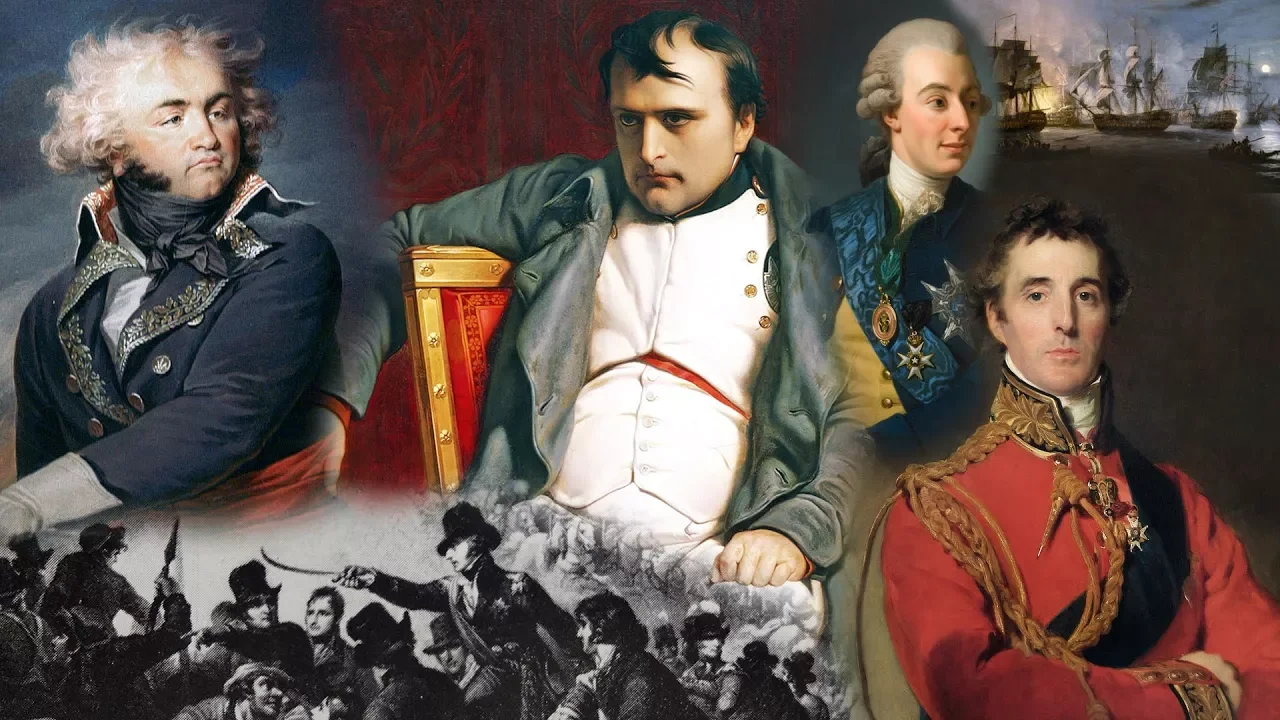
Lindybeige
AI-assisted summary of Napoleon's greatest foe — original source. Check the original for full context.
Source published:
Key ideas
- While modern history credits figures like Wellington and Nelson with breaking Napoleon, Napoleon himself viewed British naval officer Sir Sidney Smith as his most damaging adversary, lamenting in his memoirs that Smith made him 'miss his destiny.' (0:00)
- Smith effectively halted Napoleon's eastward march to replicate Alexander the Great by capturing the French siege guns at sea and holding the fortified town of Acre for three months alongside Ottoman commander Jezzar Pasha. (20:24)
- British high command's refusal to honor the Convention of El Arish negotiated by Smith led to a bloody amphibious assault at Aboukir and an estimated 20,000 unnecessary casualties to secure the exact terms Smith had already obtained. (37:10)
- Smith's innovative coastal raiding in Italy—including beaching ships to create instant shore forts and coordinating with local partisans—served as a primary tactical study for Arthur Wellesley ahead of the Peninsular War. (43:22)
Detailed notes
## Background This video was published on YouTube by the channel Lindybeige on January 25, 2018. In the video description, host Nikolas Lloyd explains that he investigates who Napoleon's most effective opponent was, while candidly admitting that his research uncovered so much vile brutality and deceit from Bonaparte that he could not resist highlighting the French leader's darker deeds alongside tales of bravery.
## TL;DR While popular history often credits the Duke of Wellington, Lord Nelson, or Russian generals for bringing down Napoleon Bonaparte, Napoleon himself viewed British naval commander Sir Sidney Smith as the man who derailed his grandest ambitions. From burning the French fleet at Toulon and escaping a Paris prison to shattering Napoleon's eastern conquests at the Siege of Acre, Smith repeatedly outmaneuvered Bonaparte through audacity, regional diplomacy, and unconventional tactics. Despite facing bureaucratic jealousy from Whitehall and friction with figures like Nelson, Smith remained a persistent thorn in Napoleon's side, influencing British doctrine at Maida and supervising wounded care at Waterloo. Ultimately, Smith's versatile career in military strategy, amphibious warfare, and later humanitarian crusades earned him a singular place as Napoleon's personal nemesis.
## Atmosphere & style The presentation carries Lindybeige's trademark conversational and passionate style, blending enthusiastic historical storytelling with scathing, acerbic indictments of Napoleon's moral character. Watching the video feels like an animated, deeply researched parlor lecture full of sharp wit, personal asides about historical hairstyles, and theatrical readings of century-old taunting letters. The tone shifts seamlessly between dark indignation at wartime atrocities and infectious delight at Sidney Smith's brazen, swashbuckling defiance.
## Bulletin - [00:00](https://www.youtube.com/watch?v=jdM3ID4m38U&t=0s) While modern history credits figures like Wellington and Nelson with breaking Napoleon, Napoleon himself viewed British naval officer Sir Sidney Smith as his most damaging adversary, lamenting in his memoirs that Smith made him 'miss his destiny.' - [20:24](https://www.youtube.com/watch?v=jdM3ID4m38U&t=1224s) Smith effectively halted Napoleon's eastward march to replicate Alexander the Great by capturing the French siege guns at sea and holding the fortified town of Acre for three months alongside Ottoman commander Jezzar Pasha. - [37:10](https://www.youtube.com/watch?v=jdM3ID4m38U&t=2230s) British high command's refusal to honor the Convention of El Arish negotiated by Smith led to a bloody amphibious assault at Aboukir and an estimated 20,000 unnecessary casualties to secure the exact terms Smith had already obtained. - [43:22](https://www.youtube.com/watch?v=jdM3ID4m38U&t=2602s) Smith's innovative coastal raiding in Italy—including beaching ships to create instant shore forts and coordinating with local partisans—served as a primary tactical study for Arthur Wellesley ahead of the Peninsular War.
## Key takeaways - [01:05](https://www.youtube.com/watch?v=jdM3ID4m38U&t=65s) Sir Sidney Smith rose through merit rather than patronage, becoming a Royal Navy lieutenant at sixteen and earning a Swedish knighthood after directing a crushing naval defeat of Russia at Svensksund. - [04:14](https://www.youtube.com/watch?v=jdM3ID4m38U&t=254s) During the 1793 Siege of Toulon, Smith volunteered to burn half of the French Mediterranean fleet, cementing a lifelong superstitious grudge and dread of Smith in Napoleon Bonaparte's mind. - [07:11](https://www.youtube.com/watch?v=jdM3ID4m38U&t=431s) Captured in 1796, Smith spent two years in Paris's Temple prison, where he carved a taunting message to Napoleon predicting their fortunes on 'fortune's wheel' would eventually reverse. - [10:14](https://www.youtube.com/watch?v=jdM3ID4m38U&t=614s) Following his escape from Paris, Smith accurately warned the Foreign Office that Napoleon intended to invade Egypt and march across the Levant toward India. - [13:51](https://www.youtube.com/watch?v=jdM3ID4m38U&t=831s) Horatio Nelson intensely resented Smith for exercising independent diplomatic authority and leading coastal ground operations, despite Nelson having exhibited similar unruliness earlier in his career. - [15:35](https://www.youtube.com/watch?v=jdM3ID4m38U&t=935s) Smith dismantled Napoleon's Levant propaganda campaign by collecting and cross-distributing the contradictory promises Napoleon made separately to Coptic Christians, Muslims, and competing sects. - [20:24](https://www.youtube.com/watch?v=jdM3ID4m38U&t=1224s) At the Siege of Acre, Smith combined naval bombardment, intercepted French siege artillery, and hasty wall repairs to frustrate Napoleon's assaults, forcing a disastrous and spiteful French retreat. - [27:22](https://www.youtube.com/watch?v=jdM3ID4m38U&t=1642s) Napoleon abandoned his stranded army in Egypt after Acre, leaving General Jean-Baptiste Kléber without funds, artillery, or transport to face the mobilized Ottoman Empire. - [33:18](https://www.youtube.com/watch?v=jdM3ID4m38U&t=1998s) British commanders annulled Smith's negotiated Convention of El Arish, forcing a costly opposed landing at Aboukir that achieved nothing beyond what Smith had already negotiated peacefully. - [37:10](https://www.youtube.com/watch?v=jdM3ID4m38U&t=2230s) Lindybeige emphasizes the preventable human cost of the aborted El Arish accord, estimating 20,000 lives were wasted before the French surrendered under the identical original terms. - [42:18](https://www.youtube.com/watch?v=jdM3ID4m38U&t=2538s) Operating along the Italian littoral, Smith improvised shore fortresses by deliberately beaching and stripping expendable ships, establishing coastal redoubts to support partisan warfare. - [43:22](https://www.youtube.com/watch?v=jdM3ID4m38U&t=2602s) Arthur Wellesley closely studied the 1806 Battle of Maida to evaluate joint amphibious support, partisan coordination, and British line firepower against French formations. - [48:24](https://www.youtube.com/watch?v=jdM3ID4m38U&t=2904s) Napoleon's Continental System foundered against the Royal Navy's aggressive maritime blockade, driving Napoleon toward his ruinous 1812 invasion of Russia. - [50:24](https://www.youtube.com/watch?v=jdM3ID4m38U&t=3024s) Napoleon's personal superstition resurfaced on his way into exile on Elba when he discovered his armed British escort was commanded by Sir Sidney Smith's nephew. - [52:53](https://www.youtube.com/watch?v=jdM3ID4m38U&t=3173s) At the Battle of Waterloo, Smith arrived to direct medical operations, designing a six-wheeled suspension ambulance before negotiating the peaceful surrender of French frontier cities. - [54:51](https://www.youtube.com/watch?v=jdM3ID4m38U&t=3291s) In his later career, Smith campaigned against Barbary piracy and white slavery in the Mediterranean, pioneering the modern concept of the high-society charity fundraising dinner.
## Detailed walkthrough ### [00:00](https://www.youtube.com/watch?v=jdM3ID4m38U&t=0s) Identifying Napoleon's Greatest Foe
When considering who did the civilized world the greatest service by foiling Napoleon Bonaparte, popular history quickly offers famous names: the Duke of Wellington, who crushed him at Waterloo; the Russian generals who broke the *Grande Armée* during the brutal retreat from Moscow; or Admiral Horatio Nelson, who shattered the combined French and Spanish fleets at Trafalgar to strangle Napoleon’s maritime ambitions. Yet, as Lindybeige explains, Napoleon himself harbored a very different opinion. To Napoleon's mind, his most damaging adversary was a British naval figure widely overlooked by modern memory: Sir Sidney Smith. Born William Sidney Smith, he chose to go by his middle name, and Lindybeige argues that his remarkable career and outsized impact on the French emperor warrant far greater modern recognition.
[01:05](https://www.youtube.com/watch?v=jdM3ID4m38U&t=65s) Rapid Rise and the Swedish Knight
Smith joined the Royal Navy at a very young age, cutting his teeth during the American Revolutionary War. He repeatedly distinguished himself through conspicuous bravery under fire, coming to the urgent notice of his commanders. Consequently, he was elevated to the rank of lieutenant at only sixteen years old—an astonishing appointment, given that official naval regulations strictly mandated an officer be at least nineteen. By eighteen, he was already in command of his own ship. Though he possessed respectable family connections, his astronomical promotion through the ranks was propelled almost entirely by merit and raw capability.
When peacetime arrived, leaving a dynamic young naval officer with little to do on half-pay, Smith turned his restless energy toward intelligence, diplomacy, and foreign travel. He journeyed through Spain and reached the Ottoman Empire, arriving in Istanbul, where his brother was stationed with the British diplomatic mission. Capitalizing on this network, Smith became fluent in regional affairs. In 1790, he offered his services to King Gustav III of Sweden, who was embroiled in war against Catherine the Great's Russian Empire. At just twenty-six, Gustav made him his chief naval advisor and placed him in operational command of a Swedish naval squadron. At the Battle of Svensksund, Smith spearheaded an overwhelming tactical triumph: the Swedes lost only four ships while destroying sixty-four Russian vessels. King Gustav was so overjoyed that he knighted him on the spot.
```mermaid flowchart TD accTitle: Sidney Smith Early Career Progression accDescr: Diagram illustrating Sidney Smith's rapid promotions, Swedish service, and rising rivalries. subgraph Early_Navy["Royal Navy Service"] A["American War of Independence"] --> B["Lieutenant at age 16"] B --> C["First command at age 18"] end subgraph Foreign_Duty["Baltic Service & Aftermath"] C --> D["Chief Naval Advisor to Gustav III"] D --> E["Victory at Svensksund<br/>(64 Russian ships lost vs 4 Swedish)"] E --> F["Swedish Knighthood<br/>('Sir Sidney')"] end F --> G["Enmity of Whitehall bureaucrats &<br/>peers who served in Russia"] ```
- Naval regulations required lieutenants to be at least 19 years old; Smith was promoted at 16. - The Swedish victory at the Battle of Svensksund in 1790 cost the Russians 64 ships, compared to a loss of only 4 Swedish vessels. - Because the title was granted by Sweden rather than the British crown, British naval peers spent years taunting him as the “Swedish knight.” - British officers serving under contract with the Imperial Russian Navy had been killed at Svensksund, creating lasting bitterness toward Smith within certain Royal Navy circles. - Smith also alienated higher authorities through his independent streak; senior figures in Whitehall resented subordinates who exercised field initiative without awaiting official orders.
[04:14](https://www.youtube.com/watch?v=jdM3ID4m38U&t=254s) The Siege of Toulon and Napoleon's Superstition
By 1793, war reignited with post-revolutionary France. Many within France detested the Jacobin regime and the murderous excesses of Robespierre’s Reign of Terror; several key port cities rose in revolt, preferring the ancient monarchy to the guillotine. When the royalist port of Toulon rebelled, Smith was still lingering on half-pay in the Mediterranean. Rather than waiting for the British Admiralty to send him paperwork, he independently hired a crew and vessel and sailed straight into Toulon harbor to volunteer for Admiral Lord Hood, who was holding the city alongside French royalists and Spanish allies.
Toulon was encircled by Republican forces, whose siege guns were directed by a bright young artillery colonel named Napoleon Bonaparte. During the eventual allied evacuation of the port, Smith volunteered for the desperate mission of destroying the French arsenal. Despite the withdrawal of promised Spanish infantry support, Smith led a small detachment of British seamen directly into the harbor basins under intense fire and set half of the French Mediterranean fleet ablaze. Napoleon watched his warships burn from the heights above, a sight etched into his memory with fury and profound dread.
The encounter forged an almost mystical grudge. Napoleon was deeply superstitious, and the name "Smith" became a personal omen of ill fortune that caused him to darken, grow silent, and dread what lay ahead. Paradoxically, rather than receiving unvarnished praise back home, Smith was carped at by his critics in the Admiralty for failing to burn the entire French fleet. Regarding this absurd criticism, Lindybeige notes: “I mean if he destroyed half the French fleet that's you know that's a good night's work isn't it I would have thought so.”
[07:11](https://www.youtube.com/watch?v=jdM3ID4m38U&t=431s) Capture, the Temple Prison, and Fortune’s Wheel
Specializing in brown-water combat, littoral operations, and cutting-out expeditions within rivers and coastal harbors rather than conventional fleet clashes on the open high seas, Smith led a boat raid in 1796 to capture a French vessel in Le Havre. His boarding party succeeded, but an abrupt shift in wind and tide stranded their small craft, forcing Smith’s surrender. Under the customary gentlemanly conventions of 18th-century European warfare, captured officers routinely sent a polite dispatch requesting an exchange of prisoners of war.
Unfortunately for Smith, his prisoner dispatch landed on the desk of Napoleon Bonaparte. Recognizing his nemesis from Toulon, Napoleon seized the chance for revenge. Denying him recognized prisoner-of-war status, Napoleon had him thrown into the grim Temple prison in Paris and attempted to have him prosecuted as an arsonist and spy, claiming his lack of formal standing at Toulon made him an illegal combatant. The French courts refused to proceed with such absurdities, but Smith remained confined within the Temple for two years. Undaunted, Smith used the wooden window shutters of his cell to carve a philosophical, taunting open letter directly to Napoleon:
> “One has to admit that fortune's wheel makes strange revolutions, but before it can be truly called a revolution the turn of the wheel must be complete. Today you are as high as you can be, but I do not envy you your happiness, because I have a still greater happiness, and that is to be as low in fortune's wheel as I can go, so that as soon as the capricious lady who turns the wheel does so again, I shall rise for the same reason that you shall fall. I do not write this to distress you, but to bring you the same consolation that I have. When you reach the point where I am, you will occupy this same prison. Why not you as well as I? I did not expect to be shut up here any more than you do now.”
[10:14](https://www.youtube.com/watch?v=jdM3ID4m38U&t=614s) Escape from the Temple and Predicting the Invasion of Egypt
After scrawling his cheeky farewell message on the wall predicting that Napoleon would eventually occupy the very same cell because the jailer was a decent man who reserved the best room for distinguished guests, Sir Sidney Smith made his escape from the Temple prison in Paris. He was aided by pro-royalist and anti-Republican sympathizers who risked their own lives to get him out of the city. Once free, Smith returned to the Royal Navy to continue his service. Beyond commanding ships, Smith was heavily engaged in international diplomacy and strategic intelligence. Reviewing the geopolitical board, he sent a military assessment to the Foreign Office regarding the character of France's rising star, warning them of his immense appetite for conquest: “This Napoleon guy is coming to power, is tremendously ambitious, and I predict that he's going to invade Egypt.”
At the time, the Royal Navy lacked bases across the Mediterranean and had largely withdrawn from the region, leaving it an open playground for the French fleet. Napoleon dreamed of casting himself as a modern-day Alexander the Great, explicitly remarking that he wanted to “make the English tremble.” He envisioned taking an army comparable in size to Alexander’s, seizing Egypt, and then sweeping counter-clockwise across the Levant, taking Lebanon and Palestine, capturing Istanbul to eliminate the Ottoman Empire, marching through Vienna, and returning triumphantly to France. Such a conquest would hand France total mastery over the Dardanelles, the Eastern Mediterranean, and the lucrative trade routes to the Near, Middle, and Far East. With no organized armies between the Mediterranean and India capable of resisting the French, it is very likely Napoleon harbored ambitions of conquering India itself—thereby surpassing Alexander.
When the British government finally recognized the validity of Smith's warning, they dispatched a fleet under Horatio Nelson to Egypt. Nelson arrived ahead of the French, warning the local Mamluk rulers of the impending danger and offering military assistance. The Mamluks brushed the British off, telling them not to be ridiculous and even forbidding them from purchasing supplies—a bizarre dictate that the British could easily have overridden by force had they chosen to. Accepting the dismissal, the British sailed off, only for the French army to arrive immediately afterward and swiftly conquer Alexandria and Cairo.
```mermaid flowchart LR accTitle: Napoleon's Planned Grand Campaign accDescr: Diagram illustrating Napoleon's envisioned counter-clockwise route to replicate and surpass Alexander the Great. subgraph Conquest ["Envisioned Conquest Route"] A["Invade Egypt"] --> B["Sweep Levant<br/>(Lebanon & Palestine)"] B --> C["Capture Istanbul<br/>& Dardanelles"] C --> D["Take Vienna<br/>& Return to France"] D -.->|"Ultimate Ambition"| E["Conquer India<br/>(Surpassing Alexander)"] end ```
[13:51](https://www.youtube.com/watch?v=jdM3ID4m38U&t=831s) The Battle of the Nile and the Friction Between Nelson and Smith
Nelson returned with the Royal Navy fleet and delivered a crushing blow at the Battle of the Nile in Aboukir Bay, destroying or capturing roughly half of the French ships and effectively stranding Napoleon's land army in Egypt. While Nelson anticipated receiving vast prestige and top diplomatic appointments for his triumph, he was bitterly disappointed to discover that Sidney Smith was assigned significant diplomatic and military authority in the theater. Nelson resented Smith’s hybrid role; Smith operated simultaneously as a naval captain, a diplomat, and a land commander landing shore parties on his own initiative.
Nelson viewed this as an improper breach of service boundaries, grumbling that landing troops was army work and demanding to know why a naval officer was meddling in diplomacy. Furthermore, Smith possessed strong regional diplomatic ties and had a talent as a linguist, likely speaking some Turkish and Arabic, which allowed him to communicate directly with local leaders. What irritated Nelson most was that Smith was an audacious junior officer who bypassed rigid command structures and acted on his own initiative. Lindybeige notes the hypocrisy of this attitude, pointing out that Nelson had made his own career by flouting superior orders as a younger man, but now disliked seeing a younger version of himself displaying the same independent streak.
- Nelson's victory at the Battle of the Nile immobilized the French army by cutting off naval transport and supply lines. - Sidney Smith's unique portfolio combined diplomatic envoy status from the British government with independent naval command. - Nelson was personally offended by Smith’s autonomy and felt his own post-Nile glory was being encroached upon.
[15:35](https://www.youtube.com/watch?v=jdM3ID4m38U&t=935s) The Atrocities at Jaffa and Napoleon’s Clumsy Propaganda
Stranded on land, Napoleon chose to push forward with his counter-clockwise campaign, marching into the Levant and deliberately targeting cities previously assaulted by Alexander the Great. The expedition was characterized by extreme brutality. When Napoleon captured Jaffa, the defending garrison of approximately 4,000 troops surrendered after agreeing to formal capitulation terms. Rather than honoring the surrender, Napoleon ordered the entire garrison marched to the beach and executed with bayonets to conserve ammunition, watching the slaughter unfold in person. Napoleon's cruelty shocked even his own officers; several literate French commanders left accounts expressing profound disgust, with some becoming suicidal over their complicity in carrying out his orders. Shortly thereafter, bubonic plague erupted within the French encampment, which many contemporaries viewed as divine retribution for the massacre.
Reflecting on Napoleon's broader legacy of destruction, Lindybeige argues that while 20th-century dictators had modern technology to amplify their casualty counts, Napoleon's personal record remains appalling: “The more you learn about Napoleon, the more difficult it is to believe that he could have been any worse.” Considering the smaller global population of the era and the millions who perished as a result of his wars—including over two million French citizens—Lindybeige remarks, “I suspect that in terms of atrocities per capita Napoleon might actually be top dog here.”
In addition to slaughter, Napoleon attempted to lie and manipulate his way across the region, though his propaganda efforts proved hopelessly transparent: - He told local Coptic Christians that he was leading a crusade to protect them from the Muslims and purge their oppressors. - Simultaneously, he distributed declarations to Muslims claiming that he himself was a Muslim, sent to protect them from the wicked Christians. - He told different Islamic sects and tribes mutually contradictory stories, claiming to align with each specific faction against its rivals.
Sidney Smith easily dismantled this propaganda campaign. He simply collected the contradictory proclamations Napoleon had issued to the different factions and distributed them to opposing groups, exposing the French commander as an untrustworthy liar. Nevertheless, Napoleon’s formidable army still inspired immense fear among the locals, who recognized that refusing to bow to him risked total annihilation.
[20:05](https://www.youtube.com/watch?v=jdM3ID4m38U&t=1205s) Sidney Smith Takes the Initiative at Acre
Recognizing that lingering around Alexandria would not halt the French advance, Sir Sidney Smith took the initiative and sailed north with a small naval force toward the fortified coastal town of Acre. Refusing to wait for orders from his superiors, Smith arrived to bolster the defenses of the local Ottoman Muslim governor, setting the stage for a critical confrontation to halt Napoleon's march.
[20:24](https://www.youtube.com/watch?v=jdM3ID4m38U&t=1224s) Slasher Jezzar and Sir Sidney Smith Fortify Acre
Holding out against the French in the region was Jezzar Pasha, a ferocious sixty-year-old Ottoman commander known by a moniker that translates to "the Slasher." He was a man who showed respect to virtually no one, had aggressively taken the initiative by garrisoning Jaffa and other points, and was determined to resist Napoleon. Yet, when he met Sir Sidney Smith, Jezzar showed him immediate and profound respect. This endorsement instantly elevated Smith in the eyes of everyone in the region, paving the way for smooth cooperation. Slasher Jezzar quickly recognized that Smith was a capable partner who could get things done.
Smith proved remarkably useful right from the outset. By sheer fortune and daring, he captured all the French siege guns as they were being transported by sea to Acre. He then deployed his ships to bombard the coastal road, severely punishing Napoleon’s advancing columns from offshore, before landing a force of British naval troops and heavy ordnance in Acre itself. Smith threw himself into rapidly repairing the town's defensive walls, which were in a pitifully dilapidated state. His heroic efforts earned him several honors, including an award that had previously been bestowed upon Richard the Lionheart, who had famously taken Acre centuries earlier during the Crusades.
```mermaid flowchart TD accTitle: Sir Sidney Smith's Defense of Acre accDescr: Key actions taken by Sir Sidney Smith to fortify and defend Acre against Napoleon's siege. subgraph Prep["Naval Actions & Reinforcements"] A["Capture of French siege guns at sea"] --> B["Bombardment of coastal road"] B --> C["Landing of naval troops & guns at Acre"] end subgraph Siege["Holding the Fortress"] C --> D["Repairing dilapidated city walls"] D --> E["Plugging breaches during 3-month siege"] E --> F["Repelling repeated French assaults"] end ```
- Jezzar Pasha was sixty years old, famously brutal, and earned his moniker "the Slasher" through his ruthless reputation. - Acre sat squarely in the path of the French army; defeating Jezzar was essential if Napoleon wished to prove his mastery over the entire region. - The surrounding hillsides filled with local onlookers who watched the siege unfold, eager to see which army would prevail so they knew which side to join to preserve their own lives.
---
[22:31](https://www.youtube.com/watch?v=jdM3ID4m38U&t=1351s) The Epic Siege and General Kléber’s Defiance
The siege of Acre raged for roughly three months with an enormous amount of ebb and flow. Time and again, it seemed inevitable that the French would overwhelm the tiny, miserable town, yet every assault was hurled back. Even when French artillery managed to blast breaches into the walls, Smith and the defenders swiftly plugged the gaps, leaving Napoleon's mounting frustration to boil over. Serving under Napoleon was General Jean-Baptiste Kléber, a man cut from an entirely different cloth—sporting magnificent, wild hair that Lindybeige admires, though he doubts his own hair will ever look that glorious when grey. Kléber was an ardent, genuine Republican who believed in a true French Republic rather than the quasi-monarchical empire Napoleon was building.
Kléber’s competence and genuine care for his soldiers earned him the deep love and loyalty of his men, making him a distinct threat to Napoleon. Furthermore, Kléber was practically the only officer in the French high command who dared to speak out against Napoleon’s foolish proposals during staff meetings. When Napoleon pointed proudly to a breach blown into Acre's fortifications, Kléber scoffed and remarked that a cat could barely squeeze through it. On another occasion, Kléber inspected the trenches Napoleon had ordered dug and openly mocked his commander's stature, pointing out that while the trenches might be deep enough for Bonaparte, they only reached up to his own waist.
- Kléber was viewed by the British as an honorable, straightforward commander with whom someone like Sir Sidney Smith could negotiate in good faith. - Napoleon felt compelled to constantly suppress Kléber's influence because the troops were fiercely loyal to him.
---
[24:25](https://www.youtube.com/watch?v=jdM3ID4m38U&t=1465s) Retreat, Deceit, and Napoleonic Spite
Napoleon’s conduct during and after the siege laid bare his extreme pettiness, spite, and callous disregard for human life. Refusing to admit defeat, Napoleon insisted the campaign was a triumph despite failing in his objective, suffering horrific casualties, and losing almost all his artillery. Abandoning his guns was a direct violation of his own foundational military maxim: you may abandon food, supplies, or allies, but never your guns. Yet he was forced to abandon the very artillery pieces that had famously accompanied him across the Alps. As the French army retreated across the desert, shedding men to dehydration and wounds, they passed through Jaffa, where the stench of unburied corpses left behind was utterly indescribable.
To maintain the fiction that he had not lost, Napoleon flatly rejected Smith’s offer to evacuate the wounded French soldiers, reasoning that striking a humanitarian deal with the enemy would force him to acknowledge defeat. To frighten his own men against surrendering or accepting British aid, Napoleon fabricated a grotesque lie, telling them that Sir Sidney sent prisoners home in plague ships; when French casualties were eventually treated and realized they were not being murdered on plague ships, they were pathetically grateful. In an act of sheer scorched-earth spite, Napoleon ordered every village and crop field along his path destroyed and burned. When he finally gave the order to lift the siege of Acre, he ordered his artillery to fire all remaining ammunition directly into the residential quarters of the town rather than at the military works. Lindybeige condemns the sheer pointlessness and cruelty of the act: “this was Napoleon one of the worst human beings ever to have disgraced the face of the earth”.
- Napoleon abandoned the historic artillery that had crossed the Alps with him during his early Italian campaigns. - Thousands of retreating soldiers died agonizing deaths in the desert heat due to wounds and a complete lack of water. - Bombarding civilian Acre served zero tactical purpose and only hardened regional hatred against the French.
---
[27:22](https://www.youtube.com/watch?v=jdM3ID4m38U&t=1642s) Desertion, the Convention of El Arish, and the Elgin Marbles
Recognizing that his grandiose dreams of marching on Istanbul were dead and that the Ottoman Empire had mobilized against him, Napoleon abandoned his army and slipped away by sea back to France. He left General Kléber in an impossible situation: stranded with eighteen thousand troops, no artillery, no provisions, no money to pay his men, and no fleet, as Napoleon had requisitioned all the ships for his own escape. Despite this betrayal, Kléber sought an honorable resolution and met with Sir Sidney Smith at El Arish. Together, they negotiated a convention allowing the 18,000 French soldiers to be repatriated safely to France aboard British vessels, surrendering all territorial claims in Egypt while keeping their personal honor intact.
The Ottoman authorities were ecstatic to be rid of the French invaders. Lindybeige notes an intriguing historical byproduct of this goodwill: Lord Elgin took advantage of the warm diplomatic relations to secure official Ottoman permission—and paid a substantial sum of money—to remove the classical sculptures from the Parthenon in Athens, known today as the Elgin Marbles. Lindybeige emphasizes that Athens was part of the Ottoman Empire at the time, meaning Elgin bought them legally with official consent rather than stealing them. Beyond ridding Egypt of the French, Smith had an ingenious strategic motive for sending Kléber’s intact army home:
> “Well he saw clay there as a good bulwark against bulwark against Napoleon because he saw clay bare as an honorable ardent genuine Republican and someone who was not at all a friend of Napoleon's and someone who likes a Sydney saw Napoleon's ambitions were really dangerous to the point of deranged.”
Smith calculated that if Kléber returned to France at the head of an army devoted to him, he would serve as a formidable counterweight to thwart Bonaparte’s dictatorial ambitions. Before revealing how this plan was ultimately derailed, Lindybeige pivots to the sponsor, Audible, suggesting that listeners pursuing New Year's self-improvement listen to an unabridged, 61-hour recording of Leo Tolstoy's *War and Peace* during their daily commutes.
[31:29](https://www.youtube.com/watch?v=jdM3ID4m38U&t=1889s) Audible Sponsor and Reconnecting with the Levant
Lindybeige wraps up a promotional segment for Audible, joking that listeners can finally cross Leo Tolstoy's *War and Peace* off their list of books they have always meant to read. He details how viewers in the United States can text the service using their "clever telephones" and notes the spelling quirks of his channel name, Lindybeige, remarking that “ie before I I know it doesn't obey the usual rule it's like the word there or weird it's just different.” He points out that taking on Tolstoy means getting 61 hours of audio out of a single free token. Returning to the historical narrative, he refocuses on Sir Sidney Smith in the Middle East following the Convention of El Arish. The treaty had successfully brought together the French, the Ottoman Turks, and the Mamluks—the local ruling class in Egypt who remained nominally subservient to the Ottoman Sultan—and had seemed to solve the strategic problem without further bloodshed.
[33:18](https://www.youtube.com/watch?v=jdM3ID4m38U&t=1998s) The Countermanded Treaty and Honorable Conduct
The peaceful settlement was abruptly shattered from London. Lord Keith, the Commander-in-Chief in the Mediterranean, agreed with Horatio Nelson that Sir Sidney had drastically exceeded his authority by treating with the enemy and signing such sweeping accords without explicit permission. Keith countermanded the treaty and declared the agreement void. Under the terms of the original surrender, General Jean-Baptiste Kléber's French forces had already begun vacating several occupied fortresses in anticipation of an escorted evacuation. Upon learning that the British high command had annulled the pact, Sidney acted swiftly: he sent advance word to Kléber, warning him to reoccupy the fortifications because he could no longer guarantee the promised safe passage. Reflecting on this controversial move, Lindybeige weighs the morality: “Now you could say that that was a very honorable thing he did or you could say he was being treacherous to his own nation I'm inclined towards the former of those two though I do see that there's an argument for the latter.”
[34:25](https://www.youtube.com/watch?v=jdM3ID4m38U&t=2065s) The Opposed Landing at Aboukir and a Colorful Highland Turk
With diplomacy voided, the British had to dislodge the French from Egypt by force, necessitating a dangerous opposed amphibious assault. Sidney was dispatched to southern Turkey to train and rehearse the forces, even designing specialized landing craft for the mission. Lindybeige digresses to describe an eccentric figure who appeared during these rehearsals: a local ruler, described as a nut-brown, grizzled, heavily bearded man draped in flowing local garments, who suddenly addressed the Highland regiments in Sir Sidney's ranks in fluent Scottish Gaelic. This man turned out to be a native of Argyllshire named Campbell, who had gotten into trouble at home, fled to the Ottoman Empire to seek adventure, fought against the Russians on behalf of the Sultan, lost his nose in combat, and replaced it with a silver prosthetic painted a flesh tone.
The subsequent British assault at Aboukir was fiercely contested, with the attackers enduring 600 casualties within the opening thirty minutes. Sidney was in the thick of the action, fighting so hard that his sword broke. He directed the landing craft, organized the landing of naval guns, and oversaw the artillery batteries ashore throughout the engagement. Lindybeige laments that Army officers later omitted any mention of Sidney in their official battle dispatches. During the fighting, French heavy cavalry charged straight through the British infantry line, expecting the British to shatter and run as infantry doctrine dictated. Instead, the British infantry held their nerve, simply faced about, and opened fire into the rear of the cavalry that had just swept through them.
```mermaid flowchart TD accTitle: Egypt Campaign Failure of Diplomacy Flowchart accDescr: Sequence of events from the annulment of the Convention of El Arish to the renewed British invasion and casualty toll. subgraph Diplomacy["Annulled Agreement"] A["Convention of El Arish Signed"] --> B["Lord Keith & Nelson Countermand Treaty"] B --> C["Smith Warns Kléber to Reoccupy Forts"] end subgraph MilitaryAction["Amphibious Operation"] C --> D["Amphibious Landing Rehearsals in Turkey"] D --> E["Opposed Landing at Aboukir"] E --> F["French Cavalry Broken & Defeated"] end subgraph Aftermath["Final Cost"] F --> G["French Capitulate on Original El Arish Terms"] G --> H["20,000 Lives Lost for Identical Outcome"] end ```
- British troops suffered 600 casualties in the initial half-hour of the amphibious assault. - Sidney personally broke his sword during close combat on the beaches while directing naval gun support. - French heavy cavalry breached the British line, but the infantry held, turned around, and fired into them from behind.
[37:10](https://www.youtube.com/watch?v=jdM3ID4m38U&t=2230s) The Fruitless Butcher's Bill and Kléber's Murder
After severe losses, the French forces were once again defeated and compelled to surrender. The final capitulation terms granted to them were completely identical to those negotiated by Sir Sidney at the Convention of El Arish months earlier. Lindybeige stresses the sheer, preventable human cost of high-command interference: “If they had just let Sir Sidney just do what he had done then 20,000 lives would have been saved.” The renewed campaign also caused peripheral atrocities; Ottoman forces moved into the Rosetta mouth of the Nile and slaughtered local Coptic Christians before Sidney could arrive to intervene. Lindybeige acidly remarks that “those Coptic Christians made the mistake of worshipping the same imaginary friends in a very slightly different manner so obviously obviously they had to die.”
Furthermore, the initial goal of returning a massive, cohesive army of 18,000 veteran French troops under Kléber to France—where they might have served as a political and military check on Napoleon's ambitions—was entirely lost. Instead, only a broken, halved remnant returned home without their general. Kléber was assassinated in Cairo, allegedly by an Arab student, though Lindybeige notes that so many powerful figures stood to gain from his death that the true instigator remains suspicious. When Kléber's corpse was shipped home to France, Napoleon, whom Lindybeige calls "a git," refused to allow the ship bearing the body to land.
[39:00](https://www.youtube.com/watch?v=jdM3ID4m38U&t=2340s) Old Clothes, Poverty, and a Letter of Revenge
Sidney returned to Britain at a loose end, only to find himself a sartorial relic: dressed in outdated floral waistcoats, tailcoats, and cravats, he looked eccentric and distinctly French to London society. Despite having wrecked Napoleon's Middle Eastern ambitions at Acre, he was financially destitute. Because the Foreign Office had formally repudiated his work at El Arish, the British government refused to reimburse him or pay him for his service. He was kept afloat largely through the goodwill of the British public, among whom he was a celebrated folk hero. During this domestic interlude, he married and briefly served as the Member of Parliament for Rochester.
Lindybeige then pauses to read out of chronological order a scathing letter that Sidney had sent to Napoleon immediately after the French retreat from the siege of Acre, sent while the defeated general was still within courier reach:
> “General, I have known for some days that you've been planning to raise the siege. I have no cause to love you, to say the least of it... but circumstances have led me to wish that you should reflect on the instability of human affairs. Would you ever have thought that a poor prisoner in the cells of the Temple, that an unfortunate man on whose behalf you refused to interest yourself for a moment when you were in a position to do him a signal service—for at that time you were all-powerful—would you ever have thought, I say, that that same man would become your opponent and force you in the sands of Syria to raise the siege of a miserable little town? These are events, you must admit, that surpass all human calculations. Believe me, General, you must adopt a more modest line of thought, and the man who tells you that Asia is not a theater created for your glory will not in fact be your enemy. This letter is a small revenge that I now allow myself.”
Following his parliamentary stint, Sidney grew restless once more and began scouting opportunities in Spain, Portugal, and the Mediterranean. He soon turned his eyes toward an aggressive naval strategy in Sicily and mainland Italy, operating, as was typical of his career, without explicit orders from his superiors.
[42:18](https://www.youtube.com/watch?v=jdM3ID4m38U&t=2538s) Raiding Italy and Improvised Coastal Forts
Rather than staying put and clustering around Sicily waiting for French forces to mass and strike at a time and place of their own choosing, Sir Sidney Smith recognized that the far superior strategy was to take the Royal Navy and mount offensive operations across the Italian coastline. Operating under the principle that the best defense is attacking the enemy wherever they happen to be, British naval forces sailed up and down the Italian littoral, spreading chaos and pinning down Bonapartist troops.
A central part of this disruptive strategy involved throwing up rapid coastal fortifications. Smith repeatedly landed on small islands off the French and Italian coasts and established strongholds, occasionally sacrificing a vessel from his own fleet to do so. In these instances, he would intentionally beach an older or expendable ship, strip off its artillery, salvage the timber, and instantly turn the vessel into a fortified coastal redoubt. As Lindybeige remarks on the sheer utility of this improvised engineering: “You want a fort very quickly send up the ship and turn the ship into a fort bingo.” Although it cost the squadron a vessel, it provided an immediate, armed garrison base from which further amphibious raids could harass French positions.
```mermaid flowchart TD accTitle: Coastal Raiding and Improvised Fortification accDescr: Flowchart showing how the Royal Navy disrupted French forces along the Italian coastline using beached ships as forts. subgraph Action["Offensive Coastal Strategy"] A["Royal Navy Coastal Raids"] --> B["Beach Vessel on Strategic Coastline"] B --> C["Strip Naval Guns & Dismantle Timber"] end subgraph Result["Strategic Disruption"] C --> D["Instant Fortified Shore Redoubt"] D --> E["Base for Amphibious Partisan Operations"] E --> F["Ties Down French Continental Armies"] end ```
[43:22](https://www.youtube.com/watch?v=jdM3ID4m38U&t=2602s) The Battle of Maida and Arthur Wellesley's Education
In 1806, Smith's operations culminated in the Battle of Maida in southern Italy, an engagement that produced a decisive British victory. Smith showed a unique talent for rallying local resistance, becoming an effective coordinator of regional partisans known as the *massa* and turning the civilian populace aggressively against French occupation. During the fighting at Maida, he orchestrated a joint amphibious operation: naval vessels provided supporting gunfire from just offshore while partisan irregulars struck the French rear.
The battle proved disproportionately influential because Sir Arthur Wellesley subjected it to rigorous study to determine how British forces could defeat French forces in land combat. Wellesley drew several crucial operational insights: he was deeply impressed by the tactical synergy between offshore naval power and ground troops, as well as the disruptive potential of coordinated guerrilla warfare. Historically, commentators also asserted that Maida was where Wellesley observed the effectiveness of a disciplined two-deep British firing line against the traditional shock of the French column. While modern revisionist historians point out that French forces at Maida were actually deployed primarily in line rather than column, the tactical lessons Wellesley internalized formed the foundation of his doctrine during the Peninsular War, where he rose to prominence as the first Duke of Wellington. As Lindybeige notes regarding Wellesley's assessment of French doctrine: “And he concluded that unless the French changed their tactics well he'd be able to beat them.”
- **Battle of Maida (1806):** Demonstrates the power of joint land-sea operations combined with guerrilla warfare in the rear. - **Arthur Wellesley’s Takeaways:** Integrated naval firepower, strategic partisan coordination, and firepower superiority on the defensive line. - **Historiographical Debate:** Traditional accounts focus on the British line defeating the French column, though modern military historians contest whether the French ever actually formed column at Maida.
[45:27](https://www.youtube.com/watch?v=jdM3ID4m38U&t=2727s) Spanish Treachery and Napoleon's Egotism
The focus shifts to the Iberian Peninsula, where Napoleon plotted with the Spanish crown to invade and partition Portugal. Because Portugal and Britain were longstanding allies, Britain intervened, drawing Sir Sidney Smith into operations around Lisbon. However, Napoleon promptly betrayed his own ally: after marching his armies into Spain under the pretense of joint operations, he seized Spain’s frontier fortresses, ousted the Bourbon monarchy, and placed his brother Joseph Bonaparte on the throne. This treachery provoked the widespread Spanish guerrilla war, where partisans fought viciously against French occupation.
Lindybeige launches into a blistering critique of Napoleon's character and modern historical admiration for him, rejecting the notion that he was an admirable figure simply due to the scale of his impact. Rather than a visionary leader, Napoleon is characterized as a petty, duplicitous egomaniac who was pathologically unable to accept personal defeat. During his return from the failed siege of Acre and the Syrian campaign, where he lost half his army, most of his artillery, and his ambitions in the East, Napoleon nevertheless orchestrated a triumphant parade into Egypt, requiring the populace to offer gifts on pain of death while forcing an infantry regiment that had underperformed at the Acre breach to march dressed as women. Meanwhile, he suppressed news of General Kléber’s actual victories to prevent any subordinate from outshining him. As Lindybeige forcefully argues: “He was great man in that he achieved a staggering amount of harm and if that's a way to measure greatness then oh okay yeah a great man but what good did he actually do the world?”
- **The Iberian Treachery:** Napoleon offered to partition Portugal, moved armies into Spain, seized his ally's fortresses, and installed Joseph Bonaparte as king. - **The Metric System Tangent:** Refuting claims of Napoleon's benevolence, Lindybeige points out that Napoleon actually despised the metric system, despite its adoption during his reign. - **Post-Acre Retribution:** Humiliated units forced to march in women’s clothing; local Egyptians forced under threat of death to shower the retreating army with flowers and gifts.
[48:24](https://www.youtube.com/watch?v=jdM3ID4m38U&t=2904s) The Continental System and the Invasion of Russia
Following his diplomatic maneuvering with Tsar Alexander I in 1807, Napoleon implemented the Continental System—a massive economic embargo intended to crush Britain by barring British trade from every European port. Believing he could bring the "nation of shopkeepers" to their knees, Napoleon instead ran into the immovable barrier of the Royal Navy. Unlike Napoleon's terrestrial European neighbors, who were paralyzed by his cultivated myth of military invincibility, British naval commanders showed zero fear of French power because the Royal Navy routinely and decisively defeated them at sea.
Rather than succumbing, the Royal Navy simply blockaded Europe's ports, shutting down reciprocal trade and isolating the continent. As Lindybeige explains the psychological rift between land and sea warfare: “You see Napoleon had had cultivated this myth of invincibility which seemed to really work on his land-based European neighbors you know they were terrified of him but he just couldn't get this blasted Royal Navy to be frightened of him which is you know quite understandable on the Royal Navy's part given that the Royal Navy very consistently beat him easily anyway.” By 1811, Tsar Alexander realized the embargo was bankrupting his empire and reopened Russian ports to British merchants. This unilateral defiance shattered Napoleon's economic blockade and, combined with his unchecked megalomania, drove him into his disastrous 1812 invasion of Russia, which destroyed the Grande Armée.
[50:24](https://www.youtube.com/watch?v=jdM3ID4m38U&t=3024s) Exile to Elba, Sidney Smith's Shadow, and the Hundred Days
Following his collapse in 1814, Napoleon was exiled to Elba. In an act of consummate arrogance—and driven by terror of the French citizens and former allies who wanted him dead—Napoleon insisted on being transported aboard a British warship under British armed escort for his own personal safety. Even his brother Lucien had come to bitterly regret enabling his rise. When Napoleon arrived at the carriage to board the harbor barge, attempting to appear aloof and imperious, he demanded to know the identity of the officer commanding his escort. The officer was Lieutenant Smith—Sir Sidney Smith’s nephew. Upon hearing that name, Napoleon’s face darkened, and he remained sullenly silent for the remainder of the passage.
Napoleon later admitted in his memoirs that Sir Sidney Smith was the man who had derailed his grandest ambitions, acknowledging that Smith had made him miss his destiny. Even after Elba, Napoleon briefly returned during the Hundred Days, exploiting the French army’s self-interest. Under the restored Bourbon monarchy of Louis XVIII, the military had lost its excessive funding and elite societal status; Napoleon readily promised the soldiers their former privileges back to secure their loyalty. Lindybeige highlights the naked hypocrisy of the entire Bonapartist enterprise, noting that while the French Revolution purported to abolish monarchical privilege, Napoleon wrapped himself in lavish royal trappings and imperial robes. As Lindybeige summarizes Napoleon's lifelong fixation with his naval nemesis: “Anyway so it was when Napoleon himself wrote his memoirs that he said that it was Sir Sidney Smith who made him miss his destiny but of course we all know that the final nail in the coffin was Waterloo.”
[52:53](https://www.youtube.com/watch?v=jdM3ID4m38U&t=3173s) Napoleon’s Return, Waterloo, and Smith’s Ambulance
Upon returning from exile, Napoleon resorted to deception to rally the French population behind him once more. He claimed that France was in grave peril and framed himself as the only man who could save the nation, demanding a massive army to defend the country. In reality, this was an outright fabrication; the Allied powers had already signed a treaty guaranteeing the existing borders of France. Nobody was attempting to invade, conquer, or seize any French territory. The Allies had made the unprecedented move of declaring war not on France, but personally on Napoleon Bonaparte. As Lindybeige scoffs, Napoleon merely used this crisis to protect himself: “Napoleon used another lie to convince everyone that he was their Savior and that they didn't he was saving them no no he was trying to get them to save his skin but hey ho he was a liar and he fought the Battle of Waterloo”.
Sir Sidney Smith happened to be nearby when the Battle of Waterloo erupted. Hearing the thunder of artillery, Smith gathered a small party of men and rode directly toward the sound of the guns, arriving on the battlefield roughly halfway through the engagement. He was not assigned a combat command, but was entrusted with the vital and grim responsibility of managing the wounded from both sides. Unimpressed by the crude medical transport of the era, Smith promptly designed an improved, six-wheeled ambulance fitted with a smooth-ride suspension system engineered to prevent wounded soldiers from being violently jostled while transported at speed across rugged battlefields.
Following Waterloo, Smith took charge of several diplomatic and military surrenders to secure a peaceful transition of power. He successfully negotiated the surrender of key cities, including Amiens and Arras, and orchestrated the safe entry of King Louis XVIII into Paris without bloodshed. In recognition of these achievements, Smith was finally awarded a British knighthood (a KCB), officially silencing those who had long sneered at him for using his foreign Swedish title.
[54:51](https://www.youtube.com/watch?v=jdM3ID4m38U&t=3291s) Anti-Slavery Campaigns, Charity Dinners, and Napoleon's Greatest Foe
Reflecting on the sheer breadth of Smith's life, Lindybeige admits having skipped over numerous other remarkable exploits. Smith carried out vital naval and military service in Italy, as well as extensive diplomatic missions across Europe. He maintained close ties with figures like King Gustav IV Adolf of Sweden, who was eventually ousted due to his staunch anti-Napoleonic stance. Smith frequently attempted to take on further diplomatic roles, though he was routinely sidelined by senior officials who viewed him as somewhat "jumped up" and resented his popularity, personal connections, and desire to direct operations himself.
Undeterred by political snubs, Smith threw his energies into humanitarian causes, chief among them the abolition of white slavery in the Mediterranean. For centuries, the Barbary pirates of North Africa had terrorized coastal communities and merchant shipping, launching raids that reached as far north as Cornwall and Ireland to capture whole villages of people and sell them into slavery. To raise funds and assemble a military force against them, Smith is credited by some historians with inventing the modern concept of the charity dinner: selling expensive tickets, gathering wealthy patrons together, delivering rousing speeches praising one another's virtue, and directing the proceeds toward the cause. This initiative was only derailed when Napoleon escaped Elba and seized power again.
Ultimately, when assessing who Napoleon's most effective and haunting opponent was, historians often point to military titans like Wellington, Blücher, Nelson, or Russian generals. Yet in Napoleon’s own suspicious mind, the individual who had fundamentally derailed his destiny at Acre and turned his wheel of fortune was none other than Sir Sidney Smith.
```mermaid flowchart TD accTitle: Sir Sidney Smith's Late Career Contributions accDescr: Diagram illustrating Smith's interventions at Waterloo, post-war civil achievements, and humanitarian efforts.
subgraph Waterloo ["Waterloo & Post-War Actions"] A["Rides to sound of guns at Waterloo"] --> B["Supervises wounded of both sides"] B --> C["Designs 6-wheeled ambulance"] C --> D["Secures surrender of Amiens & Arras"] D --> E["Secures bloodless entry of King into Paris"] E --> F["Awarded British Knighthood"] end
subgraph Humanitarian ["Humanitarian Endeavors"] G["Crusade against Barbary piracy & slavery"] G --> H["Invents the modern charity dinner"] H --> I["Plans interrupted by Napoleon's Hundred Days"] end ```
- **Treaty Guarantees**: The Allies had formally guaranteed the integrity of French borders prior to Waterloo, focusing their hostile declaration strictly against Napoleon as an outlaw. - **Battlefield Arrival**: Smith reached Waterloo approximately halfway through the fight after riding towards the sound of artillery fire. - **Ambulance Innovation**: Smith designed a novel six-wheeled carriage with smooth suspension to move injured men comfortably across rough terrain. - **Surrenders Organized**: Smith secured the surrenders of Amiens and Arras to pave the way for the French monarch's safe return to Paris. - **British Honor**: For his post-Waterloo services, Smith received a British knighthood, replacing his controversial status as merely a "Swedish knight." - **Barbary Piracy Campaign**: Smith campaigned aggressively to rescue Christian captives and halt Barbary slave raids that historically raided shipping and coastal settlements across Europe and the British Isles. - **Charity Dinner Origins**: Smith pioneered fundraising through ticketed high-society dinners with speeches and donor recognition.
## Notable quotes > [15:35](https://www.youtube.com/watch?v=jdM3ID4m38U&t=935s) The more you learn about Napoleon, the more difficult it is to believe that he could have been any worse. — Lindybeige
> [07:11](https://www.youtube.com/watch?v=jdM3ID4m38U&t=431s) One has to admit that fortune's wheel makes strange revolutions, but before it can be truly called a revolution the turn of the wheel must be complete. — Sir Sidney Smith
> [39:00](https://www.youtube.com/watch?v=jdM3ID4m38U&t=2340s) Believe me, General, you must adopt a more modest line of thought, and the man who tells you that Asia is not a theater created for your glory will not in fact be your enemy. — Sir Sidney Smith
## Mentioned Napoleon Bonaparte, Sir Sidney Smith, Duke of Wellington, Horatio Nelson, Gustav III, Catherine the Great, Lord Hood, Maximilien Robespierre, Jean-Baptiste Kléber, Jezzar Pasha, Alexander the Great, Lord Elgin, Lord Keith, Campbell, Joseph Bonaparte, Tsar Alexander I, Lucien Bonaparte, Louis XVIII, Gebhard Leberecht von Blücher, Gustav IV Adolf, Richard the Lionheart, Leo Tolstoy, Audible, Royal Navy, Mamluks, Barbary pirates, War and Peace, Battle of Svensksund, Siege of Toulon, Battle of the Nile, Siege of Acre, Convention of El Arish, Battle of Maida, Battle of Waterloo, Peninsular War
## Video description Go to http://www.audible.com/lindybeige for a free download and 30 day trial at Audible, or text 'lindybeige' to 500-500. Who was Napoleon's most effective opponent?
Support me on Patreon: https://www.patreon.com/Lindybeige
Possibly I did too much research for this one. Trying to stay on-topic when the subject is so vast and so interesting was not easy, hence the rather long video. I didn't mean to say quite so much about what an utter £$%&*! Napoleon was, but he was so thoroughly vile that it proved impossible not to include some details about the man who won his promotion in the army by mowing down civilian protesters in the streets of Paris with grapeshot from his artillery batteries. Anyway, here are tales of bravery and virtue, as well as horrendous some of brutality, lies, and death.
Correction: The battle against the Russian fleet is called Svensksund (Swedish sound, as in channel), not Svenksund. I missed out an S in my haste.
Buy the music - the music played at the end of my videos is now available here: https://lindybeige.bandcamp.com/track/the-mandeville-march
More weapons and armour videos here: https://www.youtube.com/playlist?list=PLCA860ECD7F894424
Lindybeige: a channel of archaeology, ancient and medieval warfare, rants, swing dance, travelogues, evolution, and whatever else occurs to me to make.
▼ Follow me...
Twitter: https://twitter.com/Lindybeige I may have some drivel to contribute to the Twittersphere, plus you get notice of uploads.
Facebook:https://www.facebook.com/Lindybeige (it's a 'page' and now seems to be working).
Google+: "google.com/+lindybeige"
website: http://www.LloydianAspects.co.uk
http://www.youtube.com/user/"Lindybeige"
[Source](https://www.youtube.com/watch?v=jdM3ID4m38U)