Arctic Seabed Thaw Risks Doubling Global Methane, Shakhova Says
Nick Breeze ClimateGenn
Releasing just 1% of the East Siberian Arctic Shelf's subsea methane reservoir would double global atmospheric levels within decades because degraded permafrost and shallow waters allow the gas to escape without oxidizing.
AI-assisted summary of Methane Hydrates - Extended Interview Extracts With Natalia Shakhova — original source. Check the original for full context.
Source published:
Key ideas
- The East Siberian Arctic Shelf (ESAS) holds hundreds to thousands of gigatons of carbon preserved as methane, representing what should be the largest hydrocarbon reservoir globally. (0:08)
- Because the shelf's mean water depth is only 50 meters, vented methane bypasses typical microbial water-column oxidation and escapes directly into the atmosphere. (1:55)
- Destabilizing just 1% of the methane stored beneath the ESAS would inject enough gas to double the total atmospheric methane inventory of approximately 5 gigatons. (3:50)
- Field observations show coastal fast ice thinning from expected 2-meter profiles down to 40 centimeters, accompanied by accelerated sub-ice currents and increasing seismic activity. (5:29)
Detailed notes
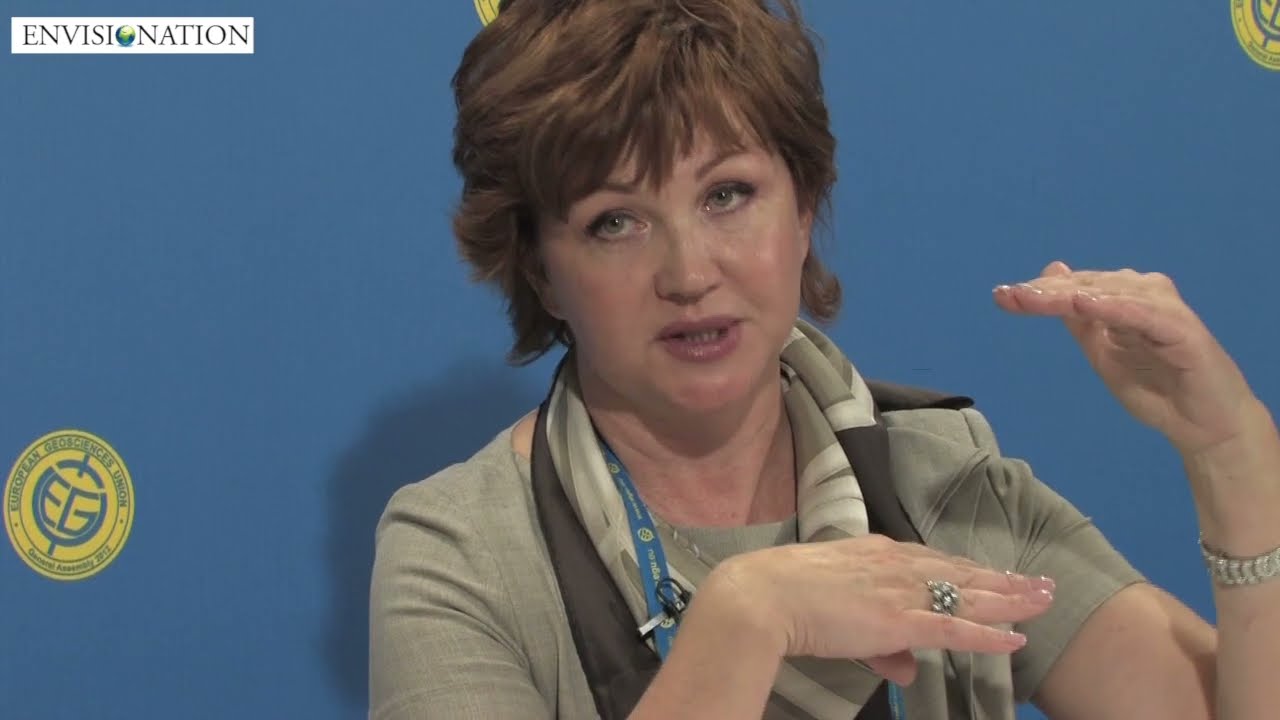
## Background Published on YouTube by Nick Breeze ClimateGenn on July 29, 2013, this video features extended interview excerpts with Arctic researcher Natalia Shakhova recorded at the 2012 European Geosciences Union General Assembly in Vienna. The discussion focuses on the destabilization of subsea permafrost and the catastrophic climate risks posed by methane releases from the East Siberian Arctic Shelf.
## TL;DR Dr. Natalia Shakhova explains that the East Siberian Arctic Shelf holds a massive carbon and methane reservoir historically trapped by impermeable subsea permafrost. Because the shelf has a uniquely shallow mean depth of around 50 meters, escaping gas bubbles reach the surface with little time for microbial oxidation, while sea-ice retreat and wind-driven mixing vent accumulated methane straight into the atmosphere. With the global atmosphere containing only about 5 gigatons of methane compared to hundreds to thousands of gigatons beneath the shelf, releasing just 1% would double the global atmospheric burden. Compounded by increasing regional seismicity and thinning sea ice, Shakhova warns this destabilization is an immediate hazard playing out over decades rather than millennia.
## Atmosphere & style The interview has a somber, sobering, and intensely scientific tone, driven by Shakhova's measured yet deeply unsettling technical delivery. Rather than relying on hyperbole, she relies on empirical field measurements and basic atmospheric math to convey an existential scale of risk. The conversation feels stark and unembellished, carrying a quiet, ominous tension when she contrasts historical baseline conditions with the jarring anomalies her team observes firsthand on the ice.
## Bulletin - [00:08](https://www.youtube.com/watch?v=kx1Jxk6kjbQ&t=8s) The East Siberian Arctic Shelf (ESAS) holds hundreds to thousands of gigatons of carbon preserved as methane, representing what should be the largest hydrocarbon reservoir globally. - [01:55](https://www.youtube.com/watch?v=kx1Jxk6kjbQ&t=115s) Because the shelf's mean water depth is only 50 meters, vented methane bypasses typical microbial water-column oxidation and escapes directly into the atmosphere. - [03:50](https://www.youtube.com/watch?v=kx1Jxk6kjbQ&t=230s) Destabilizing just 1% of the methane stored beneath the ESAS would inject enough gas to double the total atmospheric methane inventory of approximately 5 gigatons. - [05:29](https://www.youtube.com/watch?v=kx1Jxk6kjbQ&t=329s) Field observations show coastal fast ice thinning from expected 2-meter profiles down to 40 centimeters, accompanied by accelerated sub-ice currents and increasing seismic activity.
## Key takeaways - [00:08](https://www.youtube.com/watch?v=kx1Jxk6kjbQ&t=8s) Long-term monitoring of the East Siberian Arctic Shelf involved one to two dedicated sea expeditions annually over an eight-year period. - [00:08](https://www.youtube.com/watch?v=kx1Jxk6kjbQ&t=8s) Subsea permafrost historically served as an impermeable cryosphere seal, trapping hydrocarbon accumulations for thousands of years. - [00:08](https://www.youtube.com/watch?v=kx1Jxk6kjbQ&t=8s) Methane hydrates are not a unique gas formation, but rather a physical reservoir that temporarily traps biogenic or thermogenic gas within specific temperature and pressure limits. - [01:55](https://www.youtube.com/watch?v=kx1Jxk6kjbQ&t=115s) Deep ocean releases typically oxidize into carbon dioxide before surfacing, but the shallow 50-meter depth of the ESAS enables rapid transit directly to the atmosphere. - [01:55](https://www.youtube.com/watch?v=kx1Jxk6kjbQ&t=115s) The retreat of sea ice allows wind-driven storms to churn the entire shallow water column from surface to bottom, sweeping out dissolved methane inventories. - [01:55](https://www.youtube.com/watch?v=kx1Jxk6kjbQ&t=115s) Sediment cores reveal that a sediment layer roughly 53 meters thick has lost its sealing capability, opening direct gas migration pathways. - [03:50](https://www.youtube.com/watch?v=kx1Jxk6kjbQ&t=230s) The global atmosphere currently contains around 5 gigatons of methane, dwarfed by the subsea carbon reservoir beneath the Arctic shelf. - [03:50](https://www.youtube.com/watch?v=kx1Jxk6kjbQ&t=230s) A 1% destabilization of the subsea Arctic methane pool would effectively double the global atmospheric methane burden. - [03:50](https://www.youtube.com/watch?v=kx1Jxk6kjbQ&t=230s) Permafrost degradation places the timeline for potential major release within decades or a century at most, rather than over millennia. - [05:29](https://www.youtube.com/watch?v=kx1Jxk6kjbQ&t=329s) Increasing regional tectonic and seismic activity acts as a mechanical trigger, fracturing seabed permafrost and venting pressurized gas deposits. - [05:29](https://www.youtube.com/watch?v=kx1Jxk6kjbQ&t=329s) Field fast ice formerly stable enough for travel across tens of kilometers has broken down into polynyas, brine channels, and thin 40 cm sheets. - [05:29](https://www.youtube.com/watch?v=kx1Jxk6kjbQ&t=329s) Accelerating sub-ice currents and widespread physical anomalies across the shelf indicate substantial and ongoing ecosystem destabilization.
## Detailed walkthrough ### [00:08](https://www.youtube.com/watch?v=kx1Jxk6kjbQ&t=8s) Research Background and the Nature of Methane Hydrates
Natalia Shakhova traces the beginnings of her Arctic methane research back to the 1990s, when the initial fieldwork served as exploratory testing across terrestrial and freshwater ecosystems. Approximately eight years prior to the interview, her team shifted their primary scientific focus to the East Siberian Arctic Shelf (ESAS), carrying out continuous research campaigns with one or two dedicated sea expeditions every year. Shakhova explains that across geological timescales, subsea permafrost functioned as an impermeable cryosphere cap that sealed hydrocarbon accumulations generated within the sedimentary drape, locking them in place for millennia and preventing their escape into the atmosphere.
Clarifying common misconceptions about methane hydrates, Shakhova stresses that hydrates are not an isolated or unique form of methane generation. Instead, they act as a physical holding reservoir that traps any type of natural gas—whether biogenic or thermogenic—whenever ambient temperature and pressure conditions fall within the hydrate stability zone. Once those conditions change, the gas is no longer securely trapped, meaning hydrates represent a transient storage phase rather than an immutable structure.
> “It's so it is a reservoir to temporarily preserve certain amount of any kind of any type of methane.” — Natalia Shakhova
- **Expedition History**: Continuous annual monitoring over eight years with one to two marine expeditions per year. - **Geological Trap**: Subsea permafrost has historically sealed seabed hydrocarbon deposits for thousands of years. - **Resource Scale**: Described as holding what should be the largest hydrocarbon and carbon reservoir in the world.
[01:55](https://www.youtube.com/watch?v=kx1Jxk6kjbQ&t=115s) Water Column Dynamics, Ice Loss, and Gas Migration Pathways
The physical vulnerability of the East Siberian Arctic Shelf stems directly from its uniquely shallow bathymetry. In the open global oceans, where mean depths range from hundreds of meters to several kilometers, methane released from the seafloor has ample transit time to dissolve and oxidize microbially into carbon dioxide before reaching the surface. By contrast, the mean depth of the East Siberian Arctic Shelf is merely 50 meters. Because transit distance through this shallow water column is extremely short, methane bubbles pass through rapidly with minimal microbial oxidation, venting straight into the overlying air.
```mermaid flowchart TD accTitle: Subsea Methane Release Dynamics accDescr: Flowchart showing methane migration from subsea reservoirs through degraded permafrost and shallow water into the atmosphere. subgraph Seabed["Seabed & Subsea Deposits"] A["Deep Hydrocarbon Stock<br/>(Biogenic / Thermogenic)"] --> B["Hydrate Stability Zone"] B --> C["Weakened Subsea Permafrost<br/>(Losing Sealing Ability)"] end subgraph Shelf["Shallow Water Column (Mean Depth ~50 m)"] C --> D["Gas Migration Pathways<br/>(Through 53 m Sediments)"] D --> E["Limited Oxidation Time<br/>in Shallow Water"] F["Ice Retreat & Wind-Driven Storm Mixing"] --> E end subgraph Atmos["Atmosphere"] E --> G["Direct Atmospheric Emission<br/>(Potential Rapid Doubling)"] end ```
Shakhova details how surface sea ice traditionally acts as a physical barrier that prevents wind-driven hydrodynamic mixing. When ice is intact, gas escapes primarily through quiescent surface diffusion; however, the progressive loss of ice cover exposes the sea surface to wind forcing. Storm events induce deep vertical mixing throughout the entire water column, venting the entire dissolved methane inventory into the atmosphere. Furthermore, sediment cores confirm that sediment layers around 53 meters thick no longer retain their sealing integrity, opening active migration conduits directly from the seabed.
> “The shallower the water column, the less time is required to this methane to pass by through the water column and escape to the atmosphere.” — Natalia Shakhova
- **Bathymetry Contrast**: The East Siberian Arctic Shelf averages around 50 meters in depth, compared to hundreds or thousands of meters across the global ocean. - **Storm Purging**: Wind mixing churns the shallow water column from surface to bottom, sweeping out the accumulated methane inventory. - **Sedimentary Degradation**: A specific sediment layer of roughly 53 meters has failed as a caprock, establishing ongoing gas migration pathways.
[03:50](https://www.youtube.com/watch?v=kx1Jxk6kjbQ&t=230s) The 1% Destabilization Threat and Atmospheric Burden
Assessing regional climate hazards, Shakhova identifies the East Siberian Arctic Shelf as the single highest-risk zone for abrupt releases because of its massive carbon inventory, exceptionally shallow waters, and an amplification of warming far exceeding other oceanic sectors. She frames the hazard by contrasting the current atmospheric methane inventory with the volume buried beneath the shelf: the entire global atmosphere contains approximately 5 gigatons of methane, whereas the East Siberian Arctic Shelf reservoir preserves hundreds to thousands of gigatons of carbon in the form of methane.
Because of this steep disproportion, destabilizing merely 1% of the shelf's carbon pool would inject enough gas to double the total atmospheric methane burden. Shakhova underscores that triggering this 1% release does not require immense external energy or thousands of years of gradual warming. With the protective permafrost already degraded and failing as a gas-tight seal, the physical barrier between the deposits and the air has been reduced to a fragile permafrost layer and a razor-thin water column.
> “And this is I think it's matter of it's not matter of thousands of years, it's matter of decades, I think.” — Natalia Shakhova
- **Atmospheric Baseline**: The contemporary atmosphere contains roughly 5 gigatons of methane. - **Subsea Reservoir Size**: The East Siberian Arctic Shelf holds hundreds to thousands of gigatons of carbon preserved as methane. - **Double Burden Threshold**: Destabilizing just 1% of the shelf reservoir is sufficient to double global atmospheric methane. - **Projected Timescale**: Destabilization is expected on a timescale of decades—at most 100 years—rather than millennia.
[05:29](https://www.youtube.com/watch?v=kx1Jxk6kjbQ&t=329s) Seismic Forcing, Field Observations, and the Risk of Abrupt Release
Shakhova highlights that thermal degradation is compounded by tectonic and seismic forces. The East Siberian Arctic Shelf is situated in a seismically and tectonically active region where activity has been increasing. Earthquakes and tectonic fracturing act as mechanical triggers that shatter permafrost and open new pathways for pressurized gas to vent upward.
When interviewer Nick Breeze asks whether a catastrophic release could occur at any moment—today, tomorrow, or the day after—Shakhova reflects on the stark conclusions drawn by her colleague Igor Semiletov, whose deep field experience drives his deep concern. In earlier years, field expeditions traveled across annual fast ice for tens or hundreds of kilometers away from the coastline. In recent seasons, that travel became impossible: the fast ice was fragmented by polynyas, brines, and open leads, with ice thickness plunging from expected 2-meter profiles down to a mere 40 centimeters. Coupled with accelerated sub-ice currents, every parameter observed over their decade of field measurements appears deeply anomalous.
> “Shortly speaking, we do not like what we see there. Absolutely do not like.” — Natalia Shakhova
- **Tectonic Triggers**: Increasing seismic activity mechanically disrupts the seabed, creating fractured escape conduits for gas deposits. - **Deteriorating Fast Ice**: Coastal fast ice formerly relied upon for winter travel collapsed into open leads, polynyas, and brine channels. - **Ice Thinning Measurements**: Ice sheets that should measure approximately 2 meters thick were measured at just 40 centimeters. - **Hydrological Shifts**: Sub-ice ocean currents have accelerated, pointing to widespread instability across the water column and ice cover.
## Notable quotes > [01:55](https://www.youtube.com/watch?v=kx1Jxk6kjbQ&t=115s) The shallower the water column, the less time is required to this methane to pass by through the water column and escape to the atmosphere. — Natalia Shakhova
## Mentioned Natalia Shakhova, Nick Breeze, Igor Semiletov, East Siberian Arctic Shelf, European Geophysical Union, ClimateGenn
## Video description These are excerpts from Nick Breeze's interview with Natalia Shakhova at the European Geophysical Union in Vienna, 2012. http://envisionation.co.uk/index.php/blogs/72-co2-let-me-introduce-you-to-my-little-friend-ch4-methane
[Source](https://www.youtube.com/watch?v=kx1Jxk6kjbQ)