Havana Gamers Wire Citywide Intranet to Bypass State Telecom Monopoly
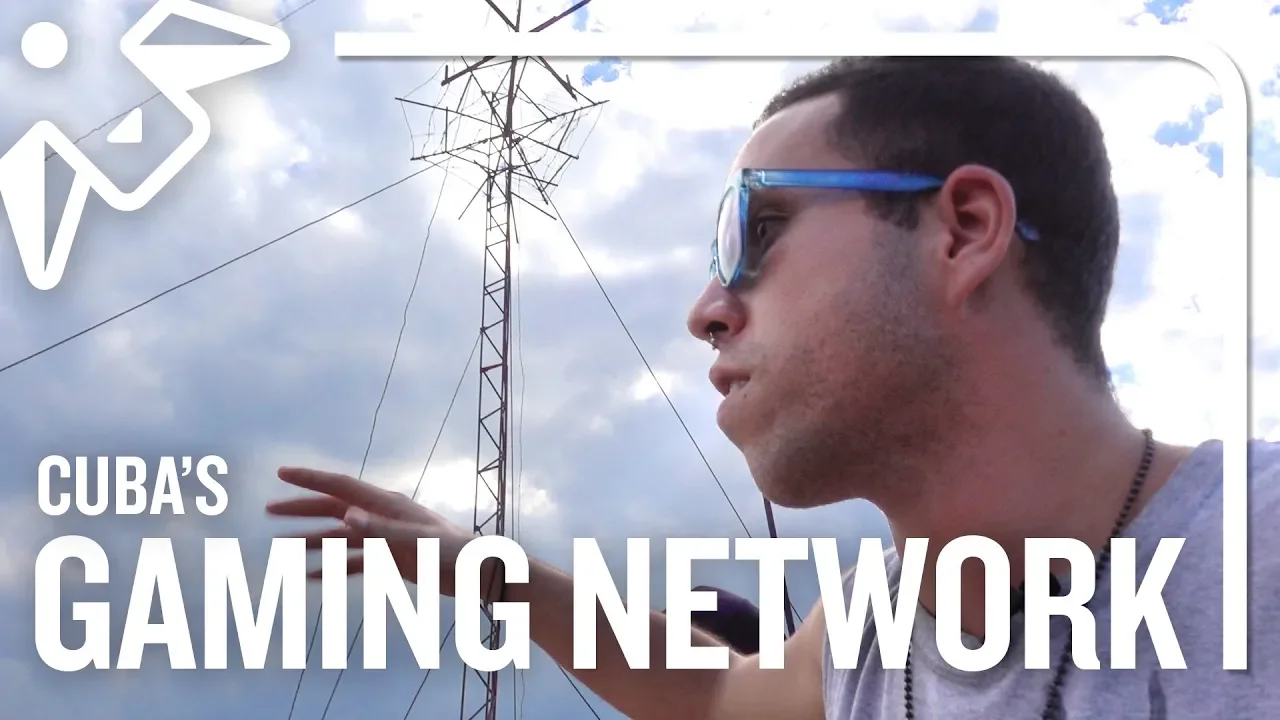
Cloth Map
Havana's 20,000-user grassroots network survives state scrutiny as an open secret because volunteer administrators strictly prohibit commercial activity and political dissent.
AI-assisted summary of Cuba's Underground Gaming Network — original source. Check the original for full context.
Source published:
Key ideas
- State-run internet in Cuba, managed by monopoly ETECSA, costs roughly 1 CUC per hour via public Wi-Fi parks, an exorbitant rate against average monthly salaries of $25 to $50. (1:14)
- Havana gamers built SNET ('Street Network'), an offline, citywide grassroots intranet linking an estimated 20,000+ users via line-of-sight Ubiquiti NanoStations and sprawling rooftop Ethernet cables. (3:46)
- SNET operates as an isolated community web without broad internet access, hosting local matchmaking servers, community forums, soccer news hubs, and its own classifieds and 'Cuban Facebook.' (14:59)
- The network enforces strict self-governance, permanently banning commercial monetization and cheating, while relying on travelers and sneakernet downloads to import software and hardware into the island's gray market. (8:56)
Detailed notes
## Background Published on YouTube by the travel and gaming channel Cloth Map on April 6, 2018, this documentary is hosted by Drew Scanlon. According to the page description, while Cuba has officially joined the global network, prohibitively high prices have driven Havana's citizens to construct their own alternative digital infrastructure.
## TL;DR Host Drew Scanlon examines internet access in Cuba, contrasting costly, identity-tracked state Wi-Fi parks with SNET ('Street Network'), an expansive, citizen-engineered offline intranet spanning Havana. Connecting over 20,000 users through rooftop NanoStations and sprawling Ethernet cables, the community-run network operates without an active internet connection to deliver local multiplayer gaming, social forums, and peer-to-peer file sharing. By strictly enforcing non-commercial rules and avoiding political interference, the network's volunteer administrators maintain a delicate, quasi-legal coexistence with local authorities.
## Atmosphere & style The presentation blends curious, boots-on-the-ground travel journalism with the resourceful, nostalgic energy of early PC LAN culture. Drew Scanlon's easygoing, inquisitive dynamic with local guides and administrators demystifies Cuban daily life, shifting the narrative from geopolitical stereotypes to human ingenuity. Visually and emotionally, tracing weathered blue network cables across sunlit Havana rooftops and inspecting plastic-bag-wrapped antennas evokes a genuine admiration for grassroots community resilience.
## Bulletin - [01:14](https://www.youtube.com/watch?v=lEplzHraw3c&t=74s) State-run internet in Cuba, managed by monopoly ETECSA, costs roughly 1 CUC per hour via public Wi-Fi parks, an exorbitant rate against average monthly salaries of $25 to $50. - [03:46](https://www.youtube.com/watch?v=lEplzHraw3c&t=226s) Havana gamers built SNET ('Street Network'), an offline, citywide grassroots intranet linking an estimated 20,000+ users via line-of-sight Ubiquiti NanoStations and sprawling rooftop Ethernet cables. - [14:59](https://www.youtube.com/watch?v=lEplzHraw3c&t=899s) SNET operates as an isolated community web without broad internet access, hosting local matchmaking servers, community forums, soccer news hubs, and its own classifieds and 'Cuban Facebook.' - [08:56](https://www.youtube.com/watch?v=lEplzHraw3c&t=536s) The network enforces strict self-governance, permanently banning commercial monetization and cheating, while relying on travelers and sneakernet downloads to import software and hardware into the island's gray market.
## Key takeaways - [00:00](https://www.youtube.com/watch?v=lEplzHraw3c&t=0s) Public Wi-Fi access points in municipal parks serve as the primary gateway to the internet in Cuba due to the extreme rarity of in-home broadband. - [01:14](https://www.youtube.com/watch?v=lEplzHraw3c&t=74s) Official ETECSA scratch cards cost 1 CUC per hour and must be tied to a Cuban citizen's national ID, creating a self-policing mechanism for online activity. - [06:09](https://www.youtube.com/watch?v=lEplzHraw3c&t=369s) SNET originated from informal LAN parties where players carried heavy PC towers through night streets, occasionally facing police questioning over undocumented hardware. - [03:46](https://www.youtube.com/watch?v=lEplzHraw3c&t=226s) The backbone of SNET relies on long-distance, line-of-sight wireless relays using NanoStation transceivers—often protected with plastic bags—bouncing signals from central server clusters across Havana's skyline. - [03:46](https://www.youtube.com/watch?v=lEplzHraw3c&t=226s) Volunteer network administrators maintain individual district nodes that connect hundreds of users through hardwired Ethernet cables strung over rooftops and balconies. - [06:09](https://www.youtube.com/watch?v=lEplzHraw3c&t=369s) SNET operates as a non-commercial, community-funded entity that charges minimal dues solely to replace hardware damaged by tropical storms or lightning strikes. - [08:56](https://www.youtube.com/watch?v=lEplzHraw3c&t=536s) Commercial exploitation and cheating in multiplayer games are met with strict penalties, ranging from temporary suspensions to permanent expulsion from the network. - [08:56](https://www.youtube.com/watch?v=lEplzHraw3c&t=536s) Because direct game downloads over the state network are prohibitively slow and expensive, new titles are manually transferred via sneakernet onto SNET and shared peer-to-peer. - [13:28](https://www.youtube.com/watch?v=lEplzHraw3c&t=808s) The intranet replicates offline versions of standard internet services through the Henetica portal, including matchmaking lobbies for games like World of Warcraft and Call of Duty. - [14:59](https://www.youtube.com/watch?v=lEplzHraw3c&t=899s) SNET features localized social infrastructure, including sports discussion boards, a platform known as 'Cuban Facebook,' and classifieds used to trade cars, parts, and networking gear. - [16:30](https://www.youtube.com/watch?v=lEplzHraw3c&t=990s) State electronics stores offer low-tier computer peripherals alongside home appliances, driving users to rely on SNET classifieds and gray-market imports brought by international travelers. - [16:30](https://www.youtube.com/watch?v=lEplzHraw3c&t=990s) Cuban authorities treat SNET with informal tolerance—akin to 'alcohol in a paper bag'—permitting it as long as administrators avoid political dissent and commercial profit.
## Detailed walkthrough ### [00:00](https://www.youtube.com/watch?v=lEplzHraw3c&t=0s) Introduction to Cuba's Connectivity
Drew Scanlon introduces the journey through the lens of video games, supported by patrons via Patreon. Despite lying barely 100 miles off the southern tip of Florida, Cuba is often stereotyped by outsiders as an isolated, frozen-in-time society resembling a Caribbean North Korea. While Havana's streets are filled with classic 1950s American cars—a direct consequence of decades of strict trade embargoes—the nation is gradually stepping into modern digital life.
Cuba does have an internet infrastructure, though in-home broadband remains exceptionally rare. Most citizens seeking online connectivity gather at public access points scattered across municipal parks and state-run buildings. At any hour of the day or night, groups of people can be found huddled outdoors over their mobile devices or laptops.
[01:14](https://www.youtube.com/watch?v=lEplzHraw3c&t=74s) The Reality and Cost of State-Run Internet
Connecting to Cuba's public Wi-Fi requires navigating a captive portal managed by the state telecommunications monopoly, ETECSA. Drew's local guides, Alfredo and Carolina, lead him to an official ETECSA storefront to purchase a prepaid access card granting five hours of access. Because cards must be tied directly to a Cuban citizen's official registry, Carolina presents her national identification card and pays the official fee of 5 CUC (convertible pesos). Outside the shop, street scalpers offer the same cards at double the price to help customers bypass the government identification rule.
```mermaid flowchart LR accTitle: ETECSA Public Wi-Fi Access Flow accDescr: Diagram illustrating the official process of purchasing and logging into Cuba's state-run internet. subgraph Acquisition["Card Acquisition"] A["Cuban Citizen ID"] --> B["Pay 5 CUC at ETECSA"] B --> C["Prepaid Scratch Card<br>(5-Hour Limit)"] end subgraph Connection["Network Login"] C --> D["Connect to 'WIFI_ETECSA'"] D --> E["Captive Portal Login<br>(Username & Password)"] E --> F["Full Web Access<br>(Self-Policing Identity)"] end ```
The scratch card provides a long numeric username and password. While speeds are modest and video streaming on platforms like YouTube is noticeably slow, Drew notes with surprise that the web connection gives access to the open internet—including services like Facebook and Instagram—rather than a sanitized, state-approved intranet. However, this freedom comes with a significant privacy compromise. When Drew asks whether the card restricts him from viewing sensitive political material, Carolina explains the real mechanism of control: “Yeah, it will, but it will go directly to my ID.” Drew observes that tying each session directly to a citizen's official identity is “enough, it seems, to keep the whole thing self-policing.”
- Prepaid internet access costs roughly 1 CUC per hour, an exorbitant price in a country where typical monthly earnings range between $25 and $50. - Mobile phones have limited cellular data, mainly restricted to state-managed email, making public Wi-Fi parks the primary gateway to the wider web.
[03:46](https://www.youtube.com/watch?v=lEplzHraw3c&t=226s) Discovering SNET: Havana’s DIY Intranet
Because public Wi-Fi is expensive and requires sitting in public squares, gamers in Havana built their own massive alternative: SNET (short for "Street Network"), a completely decentralized, grassroots intranet spanning the entire city. Jesus, a local network administrator, and his friend Roberto demonstrate the architecture from a rooftop.
The backbone relies on line-of-sight wireless transmissions originating from a cluster of central servers known as *Henetica*. Using directional wireless transceivers called NanoStations—often wrapped in plastic bags to shield them from tropical rain—administrators establish a relay system across Havana's skyline. As Roberto explains, “The signal with the current equipment isn't strong enough to broadcast to everybody. So, what they do is they send the signal and bounce from here to there, so it can get to the whole city and everybody can stay connected.”
Jesus’s rooftop node alone supports 250 users and bridges 12 secondary relay towers. Those who cannot afford NanoStation hardware or lack line-of-sight clearance run long stretches of Ethernet cables over rooftops, balcony railings, and alleyways to link directly into nearby hubs. When new users wish to join, they mount their own NanoStation, build an antenna pole, and begin bridging further neighbors down the line.
```mermaid flowchart TD accTitle: SNET Network Hierarchy accDescr: Flowchart illustrating how SNET distributes signal from central servers down to individual users across Havana. subgraph Backbone["Signal Origin"] H["Henetica Server Cluster"] end subgraph Distribution["Relay System"] H -->|"Long-Distance Wireless"| N1["Master Rooftop Node<br>(NanoStation Relay)"] N1 -->|"Wireless Bridge"| T1["12 Secondary Towers / Sub-Nodes"] end subgraph EndUsers["Client Access"] N1 -->|"Direct Wi-Fi"| W1["Local Wi-Fi Clients"] N1 -->|"Ethernet Cables"| C1["Hardwired Local Users"] T1 -->|"Extended Coverage"| C2["Neighborhood Clusters<br>(~250+ Users per Master Node)"] end ```
[06:09](https://www.youtube.com/watch?v=lEplzHraw3c&t=369s) The LAN Party Origins and Legal Status of SNET
Roberto reminisces about the humble beginnings of Cuba's underground networking scene. Before citywide wireless links were established, gaming was strictly confined to physical LAN gatherings:
> “When I was connected, we were like eight people and it was all by cable. There was no wifi. Before there was the cable, we would have to carry our computer, our PC, and go to a place, a house, anybody's, other house. So we would play, connected by small cables and little switch of eight ports. Everybody connected. Cable everywhere. The machines were old. Super Old. It was amazing.”
These late-night gaming sessions often drew suspicion. Roberto recounts finishing a session at four or five in the morning, hauling heavy desktop towers through the dark streets, only to be stopped by police officers who assumed they had burglarized a home. The officers demanded ownership papers for the hardware, leading to hours of tense questioning because informal, undocumented computer hardware rarely had official retail paperwork. Later, when operators began stringing cables across municipal rooftops without permits, they faced legal resistance. Over time, the network obtained quasi-legal tolerance: administrators applied for permits and received government documentation authorizing the cables, granted on the explicit understanding that the network is non-commercial and strictly intended for community gaming.
Roberto emphasizes that the entire enterprise operates strictly without profit. The minor dues collected from participants go exclusively toward replacing hardware fried by tropical lightning strikes or subsidizing cable runs to bring distant, low-income users into the fold.
[08:56](https://www.youtube.com/watch?v=lEplzHraw3c&t=536s) Software Administration, Governance, and Sneakernet Distribution
Inside Jesus’s home office, the operational hub of the node comes into focus. Communication throughout SNET is coordinated via a legacy local-area chat application called BORGChat. On Jesus's monitor, proprietary network management software displays active and dormant NanoStation links across the district, highlighting connection health and mapping outward in radial arcs toward neighboring districts and river valleys.
System stability requires constant vigilance. Faulty cabling or misconfigured computers on a distant branch can loop back and degrade the entire sector, forcing administrators to isolate problematic nodes until local repairs are completed.
Because SNET is an isolated community network, user behavior and rules are strictly maintained by community-appointed volunteer admins: - **Commercial Bans:** Commercial activity or monetizing access for personal gain triggers an immediate and permanent expulsion (*“bañamos”*). - **Game Admins:** Dedicated administrators oversee popular titles like *Call of Duty* and *World of Warcraft*, utilizing volunteer teams to detect aimbots and cheats to ensure fair play. - **Cheating Penalties:** First-time cheaters receive temporary bans lasting a month or two; habitual offenders face complete exile from the network.
Because SNET does not connect to the broader internet, getting new games onto the network requires a manual distribution chain. Whenever a Cuban resident secures access to an unmetered, high-speed external connection, they download a game installation and transfer it physically to the intranet. From there, it is shared peer-to-peer across SNET, machine-to-machine. Roberto points out that downloading large files through standard Cuban internet is unfeasible: “We don't just go and download one game because downloading one game, here, one gigabyte, long time downloading that.”
Walking outside, Drew and the crew follow the physical blue category cable stretching from Jesus’s roof down across residential walls, tracing how the DIY infrastructure winds through Havana's streets, house by house.
[13:28](https://www.youtube.com/watch?v=lEplzHraw3c&t=808s) Expanding SNET: Nodes, Switches, and Gaming Portals
As SNET spreads across Havana, individual nodes connect into switches that link more and more households together. Estimates suggest that SNET serves well over 20,000 users across the city. While guiding Drew through the neighborhood, Roberto points out a nearby spot where law enforcement once intercepted them, remarking, “We were walking over here and police stopped us right there. It was very funny.” He traces the physical infrastructure to the point where Jesus's portion of the network terminates: “From this point further, other people control the network.” Despite the shift in local administration, it remains one continuous, interconnected system.
```mermaid flowchart TD accTitle: SNET Network Hierarchy accDescr: Diagram illustrating how local administrator nodes feed into switches, connecting end users to local gaming portals and community services. subgraph Infrastructure["Physical Distribution"] A["Core Node / Jesus's Segment"] -->|"Ethernet / Bridges"| B["Switch / Butty's Node"] B --> C["Local End Users"] end subgraph Services["Henetica Platform (Offline SNET)"] C --> D["Henetica Web Portal"] D --> E["Game Matchmaking Lobbies"] D --> F["Community Forums & Football News"] D --> G["Cuban Facebook & Classifieds"] end ```
The next relay point is maintained by Dariel, an administrator known by his alias "Butty." Butty is an avid PC gamer who manages to stay current on modern console titles like the latest *The Legend of Zelda*, even though he does not own a console. Because dedicated gaming hardware is prohibitively expensive in Cuba, PCs dominate the scene. Through community portals like Henetica, players access local matchmaking servers for multiplayer games like *World of Warcraft*—an impressive feat given that the network operates entirely offline without an actual Internet connection. Henetica features a front-end portal where clicking on a game title brings players into a waiting lobby. As Roberto explains, “And when the room is full, the game starts.”
- SNET serves an estimated community of over 20,000 people. - PC gaming serves as the primary platform due to the high retail costs of consoles. - The Henetica portal organizes multiplayer match lobbies, hosting titles like *World of Warcraft* locally.
[14:59](https://www.youtube.com/watch?v=lEplzHraw3c&t=899s) The Offline Web: Football, Social Networks, and Classifieds
SNET replicates much of the modern web entirely within its offline intranet. Roberto demonstrates a community sports hub featuring scores, match updates, and a post-game discussion chat room: “We have a football page where you can go and see the latest news from games and players.” He also points out "Steam SNET," a service being developed to host matches for football simulation titles like *FIFA* and *Pro Evolution Soccer*, alongside a general social platform that Roberto describes simply: “This is like Facebook for SNET. Cuban Facebook.”
Beyond entertainment, SNET hosts its own Craigslist-style classifieds system where participants trade everything from cars to networking hardware. Jesus and Butty take time to admire high-grade CAT6 Ethernet cables listed on the site, which also frequently features antennas, switches, and Ubiquiti NanoStations needed to construct new SNET nodes. When Drew asks whether official brick-and-mortar stores offer these accessories, Roberto notes that state-run shops have limited, substandard inventory and inflated prices: “The electronic stores here, they sell little Logitech mouse. They're white, they get yellow, and.. bad. It's bad.” Visiting a state-run store, the production crew observes barebones computer keyboards backed by a 30-day guarantee displayed right next to hair curlers and kitchen ovens.
- Henetica hosts specialized discussion boards, live match chat rooms, and a dedicated social networking platform dubbed "Cuban Facebook." - Classified boards allow users to list physical goods, automotive vehicles, and critical networking gear like switches and NanoStations. - Official state electronics retailers stock scarce, low-tier peripherals alongside unrelated domestic appliances like ovens and hair curlers.
[16:30](https://www.youtube.com/watch?v=lEplzHraw3c&t=990s) Gray-Market Hardware and the "Paper Bag" Economy
Because official channels are severely limited, the SNET classifieds board functions as the primary marketplace for hardware and physical media. Users post photos, item descriptions, asking prices, and phone numbers directly to the site: “You can buy anything in this page. A car, whatever.” Consoles generally appear at roughly US retail prices, putting them out of reach for average Cuban incomes. Physical games and components are typically brought into the country by travelers returning from abroad who purchase them cheaply to resell locally.
When Drew asks about the legality of importing games to sell for personal profit, Roberto explains the gray-market reality: “Yeah, it's not really a felony, per se. But it must be illegal. But they just don't care.” As long as imports look like personal possessions, customs authorities look the other way. Drew reflects on how the Cuban government treats SNET as an open secret: as long as network administrators refrain from anti-government activity or commercial abuse, authorities tolerate its presence. Drew characterizes this informal tolerance as the “alcohol in a paper bag of connectivity”—a community-funded, volunteer-built network providing vital communication and shared play entirely free of charge.
- Physical games and hardware are brought in by international travelers taking advantage of lower prices abroad. - Sellers list their phone numbers and items directly on SNET classified boards without interference from authorities. - SNET operates on an unpaid, volunteer-driven model focused on mutual cooperation and local connectivity.
[18:27](https://www.youtube.com/watch?v=lEplzHraw3c&t=1107s) The Cloth Map Series and Channel Outro
Drew introduces this Havana network feature as the first entry in Cloth Map's dedicated documentary series exploring Cuba. Upcoming videos in the pipeline include a deep dive into the street games and athletics ingrained in Cuban culture—featuring locations like Havana's Sports City—along with cross-country thematic interviews connecting Cuba to past Cloth Map journeys.
Drew addresses the audience to explain how independent patron funding powers the channel's travel operations:
> “Regular folks just like you contribute a few bucks a month to keep Cloth Map going. Their support helps pay for flights, lodging, guides, translators, camera operators, editors, music licensing, and more.”
He invites viewers who care about global human stories and grassroots communities to join the channel's Patreon community for extended cuts, travelogues, and production updates.
## Mentioned Drew Scanlon, Joey Fameli, Jeremy Jayne, Alfredo, Carolina, Jesus, Roberto, Dariel, ETECSA, Cloth Map, Patreon, SNET, Henetica, Ubiquiti NanoStation, BORGChat, Call of Duty, World of Warcraft, The Legend of Zelda, FIFA, Pro Evolution Soccer, Facebook, Instagram, YouTube, Logitech, Steam, Havana, Cuba
## Video description Cuba has joined the global network, but high prices have driven Havana's citizens to construct their own.
SUPPORT US ON PATREON! https://patreon.com/clothmap Patrons get early access to videos, extended cuts, behind-the-scenes notes and documents, producer credits, live stream chat, and the ability to vote where Cloth Map goes next!
CAMERA BY Joey Fameli: https://twitter.com/joeyfameli
EDITING BY Jeremy Jayne: https://twitter.com/adackmusic
CLOTH MAP MERCH: https://store.clothmap.co
GEAR WE USE: https://clothmap.co/gear
MUSIC BY AUDIO NETWORK Viva Latina: https://www.audionetwork.com/browse/m/track/viva-latina_31438 Midnight Cafe: https://www.audionetwork.com/browse/m/track/midnight-cafe_60193 Hazy Dreams: https://www.audionetwork.com/browse/m/track/hazy-dreams_148294 With You: https://www.audionetwork.com/browse/m/track/with-you-2_98447 Pimps And Hustlers: https://www.audionetwork.com/browse/m/track/pimps-and-hustlers-2_63899 Mambolya: https://www.audionetwork.com/browse/m/track/mambolya_114793
#CLOTHMAPPING around the Internet Twitter: https://www.twitter.com/clothmap Instagram: https://www.instagram.com/clothmap YouTube: https://www.youtube.com/clothmap Patreon: https://patreon.com/clothmap Patrons get exclusive access to the Cloth Map Discord channel!
[Source](https://www.youtube.com/watch?v=lEplzHraw3c)