Feynman Rejects Technical Jargon, Warning Names Mask Lack of Knowledge
Caitlin Spies
Memorizing terminology delivers zero insight into underlying physical mechanisms, forcing scientists to strictly distinguish between linguistic labels and actual understanding to preserve intellectual honesty.
AI-assisted summary of Richard Feynman - Names Don't Constitute Knowledge — original source. Check the original for full context.
Source published:
Key ideas
- Richard Feynman recalls how his father taught him that memorizing names in every language provides zero actual knowledge about the thing itself. (0:07)
- This philosophy led Feynman to ignore technical labels throughout his scientific career, frequently requiring colleagues to explain the underlying physical phenomena rather than citing experiment names like the Fitch-Cronin experiment. (1:14)
- Feynman underscores that scientific integrity relies on knowing precisely what you understand versus what you do not, warning researchers never to confuse themselves. (1:14)
Detailed notes
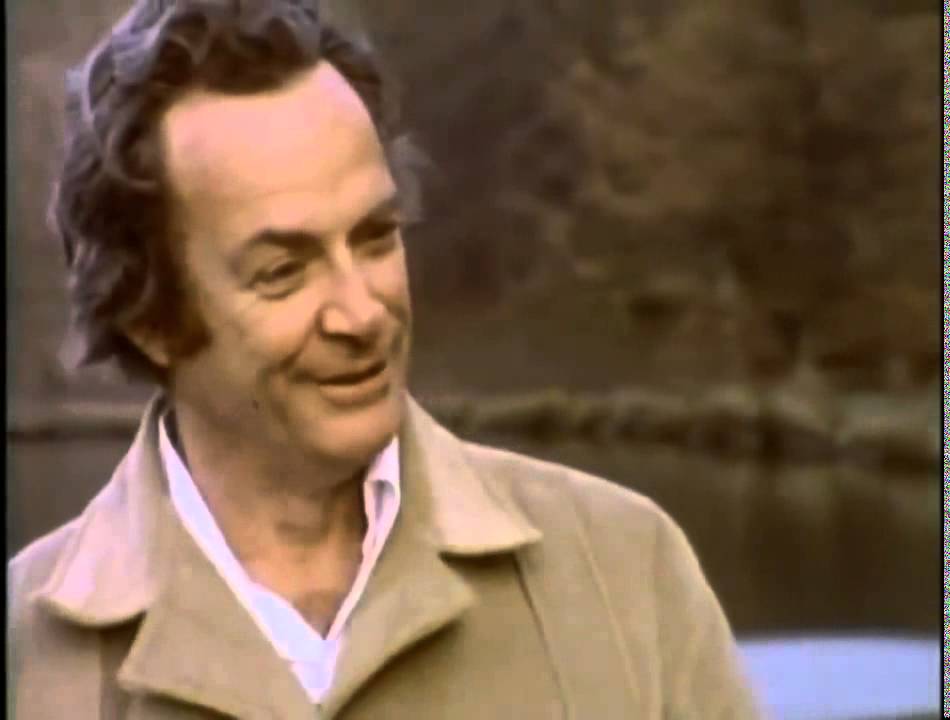
## Background Published on YouTube by Caitlin Spies on September 17, 2014, this video presents an excerpt from the 1973 Yorkshire public television film *Take the World from Another Point of View*. The page description highlights Nobel prize-winning theoretical physicist Richard Feynman as a transformative figure in science and an "all-round nice guy" who changed how we perceive the universe.
## TL;DR In this archival interview, theoretical physicist Richard Feynman recalls a pivotal childhood lesson taught by his father about a brown-throated thrush. Although other children memorized bird names and mocked his apparent ignorance, his father demonstrated that knowing the name of a bird in multiple languages teaches you absolutely nothing about the animal itself. Feynman explains how this fundamental distinction between nomenclature and real comprehension shaped his scientific career, sometimes causing him to ignore technical jargon like the 'Fitch-Cronin experiment' until reminded of the physical phenomena involved. Ultimately, Feynman emphasizes that true scientific discipline requires intellectual honesty: understanding what you know versus what you do not, and being careful never to confuse yourself.
## Atmosphere & style The excerpt carries an intimate, charming, and intellectually grounded tone, driven by Feynman's distinctive candidness and reflective warmth. His storytelling feels casual yet deeply philosophical, blending self-effacing humor about his blind spots for technical jargon with profound maxims on intellectual integrity. Watching him speak feels like leaning in to listen to a master thinker strip away academic pretension, leaving viewers with an inspiring sense of curiosity and mental clarity.
## Bulletin - [00:07](https://www.youtube.com/watch?v=lFIYKmos3-s&t=7s) Richard Feynman recalls how his father taught him that memorizing names in every language provides zero actual knowledge about the thing itself. - [01:14](https://www.youtube.com/watch?v=lFIYKmos3-s&t=74s) This philosophy led Feynman to ignore technical labels throughout his scientific career, frequently requiring colleagues to explain the underlying physical phenomena rather than citing experiment names like the Fitch-Cronin experiment. - [01:14](https://www.youtube.com/watch?v=lFIYKmos3-s&t=74s) Feynman underscores that scientific integrity relies on knowing precisely what you understand versus what you do not, warning researchers never to confuse themselves.
## Key takeaways - [00:07](https://www.youtube.com/watch?v=lFIYKmos3-s&t=7s) Feynman's approach to science was deeply influenced by his father, a New York clothing salesman who pushed him to question conventional knowledge. - [00:07](https://www.youtube.com/watch?v=lFIYKmos3-s&t=7s) A childhood peer accused Feynman's father of teaching him nothing after Feynman could not name a brown-throated thrush. - [00:07](https://www.youtube.com/watch?v=lFIYKmos3-s&t=7s) Feynman's father demonstrated that knowing the name of a bird in English, German, Chinese, and Japanese conveys absolutely zero understanding of the bird itself. - [00:07](https://www.youtube.com/watch?v=lFIYKmos3-s&t=7s) Real knowledge comes from observing physical behavior—such as how a bird pecks, flies, and preens its feathers—rather than mere taxonomy. - [01:14](https://www.youtube.com/watch?v=lFIYKmos3-s&t=74s) Prioritizing physical reality over naming conventions created later challenges for Feynman, as he developed a habit of disregarding names entirely. - [01:14](https://www.youtube.com/watch?v=lFIYKmos3-s&t=74s) Feynman often fails to recognize famous experiments by their eponymous labels, such as the Fitch-Cronin experiment, until the actual physics (the long-lived K meson decaying into two pions) is described. - [01:14](https://www.youtube.com/watch?v=lFIYKmos3-s&t=74s) Feynman concedes that knowing names remains practically necessary for effective communication with other people. - [01:14](https://www.youtube.com/watch?v=lFIYKmos3-s&t=74s) A central discipline of science is maintaining the clarity to distinguish between what you truly know and what you do not know. - [01:14](https://www.youtube.com/watch?v=lFIYKmos3-s&t=74s) The paramount rule of scientific thinking is to maintain intellectual honesty and avoid self-deception.
## Detailed walkthrough ### [00:07](https://www.youtube.com/watch?v=lFIYKmos3-s&t=7s) The Brown-Throated Thrush: Names vs. Real Knowledge
Theoretical physicist Richard Feynman is described as standing at the leading edge of one of the oldest pursuits in science—uncovering the fundamental constituents of the world. In this quest, he developed a reputation as a celebrated maverick, shaped early on by his father, a New York clothing salesman who encouraged him to challenge conventional wisdom rather than accept it blindly.
Feynman illustrates this upbringing with a story from his childhood. One Sunday, neighborhood children were walking through the woods with their fathers in small groups. The following Monday, while playing in an open field, another boy pointed to a bird and challenged Feynman to name it. When Feynman admitted he had no idea, the boy smugly declared that it was a brown-throated thrush and told him, "Your father doesn't teach you anything."
In truth, Feynman’s father had already taught him about bird names, but from a completely different perspective. During their own walk, his father had pointed out the exact same bird, listing what it was called around the world: the brown-throated thrush in English, the *Pfleegel flügel* in German, *Keewontong* in Chinese, and *Towhatowharra* in Japanese. His father then drove home a fundamental lesson about the distinction between vocabulary and understanding: “And when you know all the names of that bird in every language, you know nothing, but absolutely nothing, about the bird.” Rather than dwelling on taxonomy, father and son moved on to study the bird itself—examining how it pecked, how its feathers worked, and how it lived.
[01:14](https://www.youtube.com/watch?v=lFIYKmos3-s&t=74s) Knowing What You Know: Science and Terminology
That childhood lesson left a lasting mark on Feynman, giving him an early realization that names do not equate to knowledge. He playfully confesses that this mindset caused him a fair amount of trouble later in life because he developed a stubborn habit of ignoring names entirely. Whenever colleagues approach him with technical jargon, he often draws a complete blank until they explain the underlying physical reality. For instance, if someone asks him for his thoughts on the "Fitch-Cronin experiment," Feynman will simply ask what that is; only when the colleague explains, "You know – that long‑lived k meson that disintegrates into two pi's," does Feynman instantly connect with the problem: "Oh, yes, now I know."
```mermaid flowchart TD accTitle: Concept vs Nomenclature in Science accDescr: Diagram contrasting superficial naming with actual scientific comprehension. subgraph Superficial["Superficial Labeling"] A["Learn Name / Jargon<br/>('Fitch-Cronin Experiment')"] --> B["Useful for communication<br/>with other people"] end subgraph Deep["Substantive Knowledge"] C["Understand Mechanics<br/>(K meson decaying into two pions)"] --> D["True scientific comprehension<br/>and predictive insight"] end B -.->|"Does not equal"| D ```
Feynman quips that the only thing his father neglected to mention was that knowing names is still practically useful if you ever want to converse with other human beings and make yourself understood. When asked if prioritizing real understanding over labels has remained a core principle throughout his career, Feynman confirms that it lies at the very heart of scientific integrity: “We have to learn that these are the kinds of disciplines in the field of science that you have to learn – to know when you know and when you don't know, and what it is you know and what it is you don't know.” Above all, he stresses that one must maintain absolute intellectual honesty: “You've got to be very careful not to confuse yourself.”
## Notable quotes > [00:07](https://www.youtube.com/watch?v=lFIYKmos3-s&t=7s) And when you know all the names of that bird in every language, you know nothing, but absolutely nothing, about the bird. — Richard Feynman's father
## Mentioned Richard Feynman, Yorkshire Public Television, Take the World from Another Point of View, Fitch-Cronin experiment
## Video description In 1973 the Yorkshire public television decided to make a short film (Take the World from Another Point of View) about the Nobel prize winner, Richard P. Feynman. This is a short excerpt from that same film.
Feynman was an American theoretical physicist, author, and all-round nice guy. A key figure in the history of science, Feynman revolutionized the way we view the world around us.
**I do not own the rights to this video, nor any information contained therein.**
[Source](https://www.youtube.com/watch?v=lFIYKmos3-s)