Reflect Orbital Space Mirrors Yield Milliwatts, Erasing Revenue Math
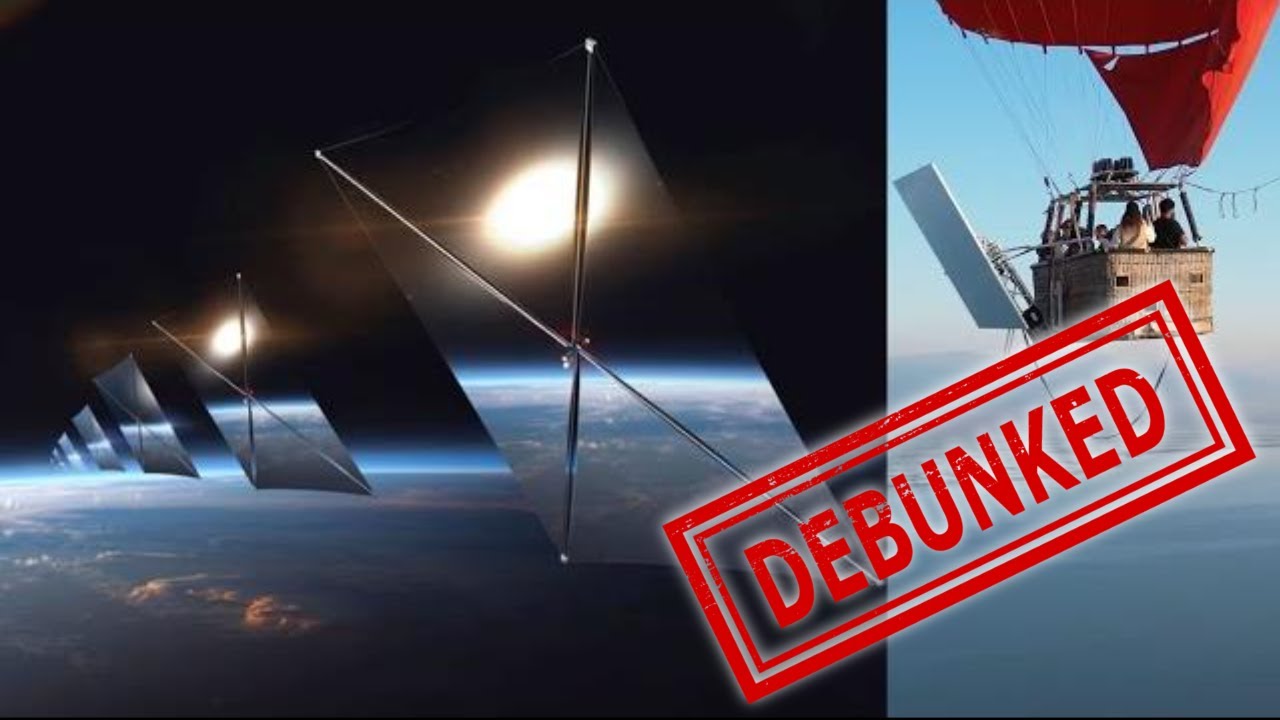
EEVblog 1637: Solar Freakin' Space Mirrors! - Reflect Orbital DEBUNKED — EEVblog

EEVblog

Spreading 100 square meters of orbital sunlight across a five-kilometer footprint dilutes irradiance to five milliwatts per square meter, generating less power than solar inverters consume to run.

AI-assisted summary of EEVblog 1637: Solar Freakin' Space Mirrors! - Reflect Orbital DEBUNKED — original source. Check the original for full context.

Source published:

Key ideas

  • Reflect Orbital proposes launching 57 satellites carrying 10 m × 10 m reflective Mylar mirrors to sell 4-minute sunlight packets to ground solar farms at dawn and dusk. (3:54)
  • While the startup claims ground irradiance of roughly 200 W/m², optical divergence of a 100 m² reflector spreading over a 5 km footprint delivers only about 5.1 mW/m²—far below the standby self-consumption of commercial inverters. (11:58)
  • Reflect Orbital projects $175,000 in annual revenue per satellite at $50/MWh, but realistic orbital availability (13%) yields only ~20 MWh per year, equivalent to just $1,000 in theoretical gross revenue. (18:25)
  • Deploying a 12U CubeSat via commercial launch and deployment services costs upwards of $1 million, rendering the venture economically unviable against realistic energy yields. (20:09)

Detailed notes

## Background Published on YouTube on September 2, 2024, by EEVblog (Dave Jones), this video examines startup Reflect Orbital's ambitious commercial plan to put reflecting mirrors into orbit to sell sunlight to solar farms after dark. The video provides a rigorous technical critique of the venture's financial and physical claims, demonstrating how the actual numbers collapse under scrutiny.

## TL;DR Reflect Orbital claims its planned constellation of 57 satellites—each deploying a 10-meter by 10-meter Mylar mirror—can sell 4-minute sunlight passes to solar farms during dawn and dusk to monetize high peak-demand electricity prices. Dave Jones runs the math on his whiteboard, showing that spreading 100 kW of raw sunlight across a 5-kilometer diameter footprint yields a negligible 5.1 milliwatts per square meter, vastly contradicting the startup's claim of 200 watts per square meter. Taking into account orbital passing factors and tilt angles, each satellite would yield only around 20 MWh annually—generating roughly $1,000 in gross revenue against deployment costs exceeding $1 million. Furthermore, because commercial solar inverters consume more standby power than a 5 mW/m² beam produces, the entire proposal is physically and commercially unviable.

## Atmosphere & style The presentation is trademark EEVblog: energetic, incredulous, and unapologetically blunt. Dave Jones balances good-humored amusement at the startup's promotional videos with genuine exasperation that venture capital investors failed to run basic back-of-the-envelope calculations. The viewing experience feels like an entertaining, fast-paced reality check where polished Silicon Valley techno-optimism collides head-on with unforgiving whiteboard physics.

## Bulletin - [03:54](https://www.youtube.com/watch?v=lkjyeI0ykGM&t=234s) Reflect Orbital proposes launching 57 satellites carrying 10 m × 10 m reflective Mylar mirrors to sell 4-minute sunlight packets to ground solar farms at dawn and dusk. - [11:58](https://www.youtube.com/watch?v=lkjyeI0ykGM&t=718s) While the startup claims ground irradiance of roughly 200 W/m², optical divergence of a 100 m² reflector spreading over a 5 km footprint delivers only about 5.1 mW/m²—far below the standby self-consumption of commercial inverters. - [18:25](https://www.youtube.com/watch?v=lkjyeI0ykGM&t=1105s) Reflect Orbital projects $175,000 in annual revenue per satellite at $50/MWh, but realistic orbital availability (13%) yields only ~20 MWh per year, equivalent to just $1,000 in theoretical gross revenue. - [20:09](https://www.youtube.com/watch?v=lkjyeI0ykGM&t=1209s) Deploying a 12U CubeSat via commercial launch and deployment services costs upwards of $1 million, rendering the venture economically unviable against realistic energy yields.

## Key takeaways - [00:00](https://www.youtube.com/watch?v=lkjyeI0ykGM&t=0s) Reflect Orbital plans to treat sunlight as an on-demand commodity by reflecting orbital light onto solar farms after dark. - [01:18](https://www.youtube.com/watch?v=lkjyeI0ykGM&t=78s) The startup demonstrated proof of concept using a hot air balloon at 242 meters, which showed physics works locally but ignored orbital-scale capture area challenges. - [02:55](https://www.youtube.com/watch?v=lkjyeI0ykGM&t=175s) A constellation of 57 satellites in sun-synchronous polar orbits along the terminator is proposed to capture continuous sunlight while targeting twilight zones. - [03:54](https://www.youtube.com/watch?v=lkjyeI0ykGM&t=234s) Due to orbital velocity and optical divergence, the system can only deliver light to a 5-kilometer diameter spot for 4 minutes per pass. - [05:58](https://www.youtube.com/watch?v=lkjyeI0ykGM&t=358s) Historical precedent like Russia's Znamya 2 experiment showed orbital mirrors produce light comparable to a full moon, which is insufficient for photovoltaic power generation. - [08:12](https://www.youtube.com/watch?v=lkjyeI0ykGM&t=492s) The commercial model targets the electrical grid's 'duck curve' to capitalize on high wholesale power prices during sunset hours. - [09:18](https://www.youtube.com/watch?v=lkjyeI0ykGM&t=558s) The design packs a 10 m × 10 m Mylar reflector into a 12U CubeSat using active gimbal tracking. - [10:35](https://www.youtube.com/watch?v=lkjyeI0ykGM&t=635s) The company claims each satellite will generate $175,000 annually by selling power to solar farms at $50/MWh to be resold at $80/MWh. - [11:58](https://www.youtube.com/watch?v=lkjyeI0ykGM&t=718s) A 100 m² mirror captures at most 100 kW of sunlight, which drops to ~5.1 mW/m² when spread across a 5 km circular spot—nowhere near the claimed 200 W/m². - [14:50](https://www.youtube.com/watch?v=lkjyeI0ykGM&t=890s) Even combining 57 satellites focused simultaneously would only yield ~285 mW/m², leaving ground irradiance completely inadequate for power generation. - [16:02](https://www.youtube.com/watch?v=lkjyeI0ykGM&t=962s) Factoring in mirror tilt, a 13% target availability over solar farms, and 25% panel efficiency reduces the effective average continuous power per satellite to roughly 2.275 kW. - [18:25](https://www.youtube.com/watch?v=lkjyeI0ykGM&t=1105s) At 20 MWh generated per satellite per year, actual gross revenue at $50/MWh would be roughly $1,000—more than two orders of magnitude below the claimed $175,000. - [19:22](https://www.youtube.com/watch?v=lkjyeI0ykGM&t=1162s) At milliwatt-level irradiance, parasitic power consumption from industrial solar inverters exceeds total generation, resulting in net negative energy for solar farms. - [20:09](https://www.youtube.com/watch?v=lkjyeI0ykGM&t=1209s) A simple back-of-the-envelope calculation disproves the entire premise, highlighting a lack of basic technical due diligence by venture capital investors.

## Detailed walkthrough ### [00:00](https://www.youtube.com/watch?v=lkjyeI0ykGM&t=0s) Reflect Orbital and the Pitch for Sunlight After Dark

Reflect Orbital introduces an ambitious concept: placing reflecting mirror satellites into orbit to beam sunlight down onto terrestrial solar farms after dusk. In promotional clips, the founders argue against the accepted reality of day and night cycles, noting that billions of dollars worth of solar farms sit entirely idle once the sun goes down. Their proposed solution is to treat sunlight as an on-demand commodity, with one founder comparing the effort to “building a new nuclear reactor or something like that.”

Dave Jones of EEVblog opens by addressing the viral news surrounding the startup. While confirming that the company is real, funded, and deadly serious about putting satellites into space to reflect light at dawn and dusk, Dave immediately questions the real-world viability of the enterprise. As Dave puts it: “So can this work? Yeah, it can. Is it practical? Hell no.”

```mermaid flowchart LR accTitle: Reflect Orbital Basic Concept accDescr: Sunlight reflected from space satellite mirror down to ground solar farm after dark

subgraph Space ["In Orbit"] Sun["Sunlight"] --> Mirror["Orbiting Mylar Mirror"] end subgraph Ground ["Earth Surface"] Mirror -->|"Reflected Beam"| SolarFarm["Ground Solar Array"] SolarFarm --> Grid["Electricity Grid at Dusk"] end ```

[01:18](https://www.youtube.com/watch?v=lkjyeI0ykGM&t=78s) Ben Nowack, BenNBuilds, and the Hot Air Balloon Test

The startup is the brainchild of YouTuber Ben Nowack from the channel *BenNBuilds*, who previously documented hardware builds online before raising venture capital. To validate the concept, the team executed an initial proof-of-concept test by suspending a large reflecting mirror from a hot air balloon at an altitude of roughly 242 meters.

Footage from the test shows the team cheering as the reflected beam strikes sensors on the ground, registering spikes from 58 watts per square meter up to 120, 300, and eventually over 500 watts per square meter. In the field video, the founders celebrate the result, yelling, “Dude, it's literally working! Let there be light! We're going to be rich!” Dave concedes that reflecting a beam of light from a balloon demonstrably works from a physics standpoint, but stresses that orbital mechanics and commercial scale involve a completely different problem: capture area.

- Balloon test distance: 242 meters above ground sensors. - Peak irradiance measured in the balloon test: spikes between 120 W/m² and 516 W/m². - Target commercial application: reflecting sunlight onto commercial solar farms at dawn and dusk.

[02:55](https://www.youtube.com/watch?v=lkjyeI0ykGM&t=175s) The Sun-Synchronous Polar Orbit Architecture

Reflect Orbital plans to deploy a constellation of 57 satellites into a sun-synchronous polar orbit. In this orbit, the satellites travel along the day-night terminator line, allowing the onboard mirrors to remain continuously illuminated by the sun while passing over areas on Earth experiencing dawn or dusk.

Using a handheld globe to demonstrate orbital mechanics, Dave explains how the mirrors would operate. Each satellite would carry a 10-meter by 10-meter sheet of reflective Mylar mounted to an active tilt-and-swivel gimbal. Because the satellite zips across the terminator line at orbital velocity, the mirror must actively articulate to track the sun and bounce light down to a designated ground site. While the geometry technically allows them to bounce sunlight into darkness or boost output during twilight, Dave emphasizes that the steep angles involved severely restrict the practical window of delivery.

```mermaid flowchart TD accTitle: Sun-Synchronous Terminator Orbit accDescr: Satellite path along the terminator tracking the sun to direct beams to the dusk side of Earth

Sun["Sun Illumination"] -->|"Continuous Light"| Sat["Polar Orbit Satellite (Terminator Path)"] Sat -->|"Active Tilt Tracking"| Dusk["Dusk / Twilight Solar Farm"] Sat -.->|"Alternative Angle"| Day["Daylight Side Array"] ```

[03:54](https://www.youtube.com/watch?v=lkjyeI0ykGM&t=234s) Commercial Claims: 5-Kilometer Spots in 4-Minute Slots

On Reflect Orbital's commercial website, the company markets "sunlight after dark," hyping the sun as a fusion reactor generating 24 trillion times more energy than human civilization requires. The site features an interactive order portal with an application deadline of October and claimed deliveries starting in the fourth quarter of 2025.

The service offering allows a customer to purchase sunlight delivered in a 5-kilometer diameter spot for an exact duration of 4 minutes. Using the website's map over a California solar farm, Dave points out that the spot cannot be made smaller due to optical divergence over orbital distances, and cannot be placed over residential communities due to light pollution complaints. The rigid 4-minute limitation is a direct consequence of low Earth orbit physics: the satellite travels across the sky so rapidly that it can only maintain an effective reflection angle on a single ground coordinate for about 4 minutes before passing out of range. Maintaining illumination would require immediately handing off the beam to another passing satellite in the constellation.

- Mirror size per satellite: 10 m × 10 m (100 m² surface area). - Constellation size planned: 57 satellites. - Ground spot size: 5 km diameter circular beam. - Delivery window per satellite pass: 4 minutes. - Target delivery timeline: Q4 2025.

[05:58](https://www.youtube.com/watch?v=lkjyeI0ykGM&t=358s) Historical Precedent: The Russian Znamya 2 Mirror

Dave points out that reflecting sunlight from orbit is not a novel concept, citing the Russian Znamya 2 experiment from the 1990s. The Russian space program successfully deployed a 20-meter diameter orbiting space mirror—twice the size of the 10 m × 10 m mirrors Reflect Orbital proposes to launch.

While Znamya 2 successfully unfurled in orbit and projected light back down to Earth, its real-world illumination was underwhelming. Historical documentation recorded the ground spot's brightness as roughly equivalent to that of a full moon. Dave remarks on the commercial uselessness of moonlight for photovoltaic generation, pointing out: “Anyone who owns a solar array knows that you can't get jack all out of the energy from a full moon.” In practice, the parasitic standby consumption of system microinverters would consume more power than a full-moon-level light beam could ever generate.

[06:56](https://www.youtube.com/watch?v=lkjyeI0ykGM&t=416s) The Reflect Orbital Team and Founders

Reflect Orbital is backed by venture capital and led by a core team with varying engineering backgrounds: - **Ben Nowack**: Co-founder and CEO, former host of the YouTube channel *BenNBuilds* and former SpaceX intern. - **Tristan Semmelhack**: Co-founder and CTO, previously associated with the drone delivery company Zipline. - **Specialist Roles**: The startup also employs a chief of staff, a heliostat design engineer (dedicated to the steering and gimbal mechanism), an optics modeling engineer recruited from NASA's Jet Propulsion Laboratory (JPL), and a senior mechanical engineer.

Despite the team's credentials and technical background, Dave argues that the foundational physics of their business plan fails basic back-of-the-envelope feasibility.

[08:12](https://www.youtube.com/watch?v=lkjyeI0ykGM&t=492s) Targeting the Duck Curve and Peak Electricity Prices

The economic thesis of Reflect Orbital relies on exploiting the electrical grid's "duck curve." As massive amounts of utility-scale and rooftop solar have been connected to power grids worldwide, midday electricity generation surges, resulting in abundant, low-cost power during peak daylight hours.

The challenge occurs between 5:00 p.m. and 6:00 p.m. As the sun sets, solar generation plummets at the exact moment residential demand spikes when people return home from work. This mismatch creates the "neck" of the duck curve, driving wholesale electricity prices up, measured in dollars per megawatt-hour ($/MWh). Reflect Orbital claims its 57 satellites can provide roughly 30 additional minutes of sunlight to power plants during these specific evening and dawn transition windows, allowing solar operators to generate and sell electricity when wholesale market pricing reaches its absolute peak.

```mermaid flowchart LR accTitle: The Duck Curve Problem accDescr: Contrast between midday solar surplus and evening sunset peak demand

subgraph Midday ["Midday Conditions"] SolHigh["High Solar Output"] --> PriceLow["Wholesale Prices Drop"] end subgraph Evening ["5:00 PM - 7:00 PM Sunset"] SolDrop["Solar Drops to Zero"] --> PeakDemand["Evening Household Peak"] PeakDemand --> PriceSpike["Wholesale $/MWh Surges"] end ```

[09:18](https://www.youtube.com/watch?v=lkjyeI0ykGM&t=558s) Packaging a 100 m² Reflector into a CubeSat

Reflect Orbital’s business plan relies on selling sunlight to ground-based solar farms in brief, four-minute windows as the sun sets and rises, enabling solar farm operators to on-sell that generated electricity to end customers. Ben Nowack explains the physical packaging of the hardware, comparing it directly to existing aerospace technology: “NASA's 3 solar sail vehicles will be 10 m by 10 m. They pack into a 12U CubeSat, which is this big. So, you know, we can go to like a 16U CubeSat and, you know, we'll have no problem watching, you know, thicker material, thicker booms, all of that.”

Dave Jones recaps that the team claims to fit a 10-meter by 10-meter folding Mylar mirror into a 12-unit CubeSat form factor. Once deployed in orbit, the satellite would use onboard electronics and gyroscopes to orient itself, track the sun, and cast a steady beam onto a target location on the ground. Reflect Orbital claims that this concept will allow them to generate tens to hundreds of billions of dollars per year in revenue from the massive global market of utility-scale solar farms. In the interview, Nowack notes that collimators will not even be necessary in their early constellation, stating: “So, we're able to serve them, make tons of money and, you know, until the point where you're making like tens, hundreds of billions of dollars a year, you you don't need collimators for a while.”

```mermaid flowchart LR accTitle: CubeSat Deployment to Solar Farm Delivery accDescr: Flow diagram showing how a 12U CubeSat deploys a 100 square meter mirror to sell reflected sunlight to solar farms. subgraph Launch ["Orbit & Deployment"] A["12U CubeSat"] -->|"Deploys in space"| B["10m x 10m Mylar Reflector"] end subgraph Targeting ["Ground Delivery"] B -->|"Gyros & Sun Tracking"| C["5 km Diameter Beam Spot"] C -->|"4-Minute Packets"| D["Terrestrial Solar Farm"] end ```

[10:35](https://www.youtube.com/watch?v=lkjyeI0ykGM&t=635s) Pricing Claims, Launch Economics, and Lifetime Revenue

The financial model presented by Reflect Orbital suggests that solar farms could purchase supplementary sunlight packets at a wholesale rate of $50 per megawatt-hour and on-sell the produced power into the electrical grid during peak pricing windows for around $80 per megawatt-hour. Nowack describes the pitch as an undeniable commercial proposition: “You can purchase some sunlight at night. You can see how it works. If you don't like it, you don't have to buy it again. But, you know, we can be pretty sure that you're going to be making power with us. You know, if if it costs $50 to to buy us and you're able to sell it for for $80, you know, it's it's pretty obvious value.”

The company projects manufacturing costs of roughly $100,000 per satellite. Launching via SpaceX Falcon 9 rideshare missions would cost approximately $150,000 per vehicle, while future launches on Starship could theoretically reduce launch costs to the $30,000 range. Against these deployment costs, the startup claims each orbiting mirror will generate around $175,000 in revenue annually over an operational lifespan expected to begin at 10 years and eventually reach 20 years.

- Satellite manufacturing cost: ~$100,000 per unit - Launch cost via Falcon 9 rideshare: ~$150,000 per vehicle - Projected launch cost via SpaceX Starship: ~$30,000 per vehicle - Claimed gross revenue per satellite: $175,000 per year - Targeted operational lifespan: 10 to 20 years - Wholesale sunlight price: $50/MWh - Target grid on-sell price: $80/MWh

[11:58](https://www.youtube.com/watch?v=lkjyeI0ykGM&t=718s) The Irradiance Claim vs. DaveCAD Physics

The foundational flaw in the proposal emerges in the startup's claims regarding delivered power density. Ben Nowack claims the mirrors can provide a couple hundred watts per square meter over two hours in the morning and two hours at night: “So, at the point where it's like, you know, 200 W per square meter for 2 hours, it's it's like 20 or so percent more energy, um, for the solar farms that are out there.” Dave rejects this immediately, declaring, “Huh, I don't think so,” before turning to his whiteboard for a "DaveCAD" calculation.

```mermaid flowchart TD accTitle: DaveCAD Solar Irradiance Degradation accDescr: Step-by-step calculation showing how 100 kW of reflected sunlight over 19.6 million square meters drops to 5 milliwatts per square meter. A["10m x 10m Reflector (100 m²)"] -->|"1,000 W/m² capture"| B["100 kW Total Space Capture"] B -->|"Spread over 5 km diameter spot (19.63M m²)"| C["5.1 mW/m² Peak Irradiance"] C -->|"Combined 57-satellite constellation"| D["~285 mW/m² Total Ground Irradiance"] ```

Dave outlines the basic geometry: space solar irradiance at Earth's orbital distance is approximately 1,360 W/m², which drops to roughly 1,000 W/m² at ground level after atmospheric absorption. A 10-meter by 10-meter mirror provides a capture area of 100 square meters, capturing an absolute maximum of 100 kW of raw sunlight. As Nowack himself demonstrated in interviews using physical props, angling the flat mirror relative to the incoming sunlight reduces the effective aperture even further.

Even if one generously ignores off-axis cosine losses and assumes a full 100 kW of sunlight is redirected without loss into the company's stated 5-kilometer diameter ground circle, the math fails completely:

$$\text{Beam Area} = \pi \times (2,500\text{ m})^2 \approx 19,634,954\text{ m}^2 \approx 19.6\times 10^6\text{ m}^2$$

$$\text{Ground Irradiance} = \frac{100,000\text{ W}}{19,634,954\text{ m}^2} \approx 0.0051\text{ W/m}^2 = 5.1\text{ mW/m}^2$$

Dave points out that five milliwatts per square meter is completely useless for power generation: “Just the residual power to run the inverters is going to be more than this than you capture for 5 mW per so you per square meter of solar panels.” Even if 57 satellites were somehow lined up to focus on the exact same spot simultaneously, the total irradiance would reach only about 285 mW/m²—nowhere near the claimed 200 W/m². Dave mocks the premise: “Even if you combine an entire array of 10 m by 10 m satellites, you cannot beat the laws of physics, Captain.”

[16:02](https://www.youtube.com/watch?v=lkjyeI0ykGM&t=962s) Modeling Orbit Realities and the Capacity Factor

The real-world energy balance deteriorates further when considering orbital mechanics and target availability. In their promotional interviews, Reflect Orbital references Monte Carlo simulations that show a satellite will pass over an existing solar farm only about 13% of the time, and when customer adoption curves are considered, practical target availability drops to around 6%. Nowack concedes this limitation: “With all the solar farms that are out there, you know, it's like 13% of the time you're over a solar farm that you can just serve. And then you know, you assume like a customer adoption curve and it's like okay, you know, it's about 6% of the ones that are large that are likely to buy.”

Dave applies these capacity factors step-by-step to calculate the actual annual energy yield of a single satellite:

| Parameter | Dave's Generous Assumption | Resulting Power Available | |:--- |:--- |:--- | | **Mirror Capture Area (10m x 10m)** | 1,000 W/m² baseline | 100.0 kW | | **Mirror Tilt / Cosine Reduction** | 70% effective collection area | 70.0 kW | | **Orbital Target Availability** | 13% maximum (ignoring 6% adoption rate) | 9.1 kW | | **Photovoltaic Panel Efficiency** | 25% modern cell efficiency | 2.275 kW |

Assuming best-case conditions across every variable, the average continuous energy capture from an orbiting satellite drops to just 2.275 kW. This ignores ground panel fill factors, spacing gaps between module strings, and atmospheric scattering, setting up the calculation for total usable energy output over an entire year of operation.

[18:25](https://www.youtube.com/watch?v=lkjyeI0ykGM&t=1105s) The Revenue Fantasy vs. Inverter Losses

Examining the actual financial return highlights the sheer disconnect between Reflect Orbital's projections and physical reality. Even assuming an optimistic annual yield of roughly 20 MWh per satellite, applying the company's own stated sale price of $50 per megawatt-hour to solar farm customers results in a meager $1,000 per year in revenue ($50 multiplied by 20 MWh). This stands in stark contrast to the startup's public claim that each 10-meter by 10-meter satellite could generate $175,000 in annual revenue. Dave points out that this is not merely a small discrepancy, noting, “These numbers are crazy. They're off by several or not one order of magnitude. They're off by several orders of magnitude in the fairy land.”

```mermaid flowchart LR accTitle: Revenue Comparison for Reflect Orbital Satellite accDescr: Flowchart contrasting Reflect Orbital's claimed satellite revenue against actual calculated physics-based revenue. subgraph Claimed["Reflect Orbital Claim"] C1["Projected Annual Revenue"] --> C2["$175,000 / year"] end subgraph Reality["Physics & Market Reality"] R1["Annual Generation: 20 MWh"] --> R2["Wholesale Price: $50 / MWh"] R2 --> R3["Real Gross Revenue: $1,000 / year"] end ```

The underlying technical barrier makes even that $1,000 figure an impossible dream. Because the 100-square-meter mirror spreads its reflected light across a massive 5-kilometer diameter spot, the resulting ground irradiance is around 5 milliwatts per square meter—dimmer than bright moonlight. Even if hundreds of satellites were orbiting overhead and managed to focus 10 satellites simultaneously onto the exact same area, irradiance would only reach about 50 milliwatts per square meter. At such trivial irradiance levels, industrial solar farm inverters cannot operate; the baseline standby and operational power consumed by the conversion electronics exceeds the tiny amount of electricity generated by the panels. Consequently, commercial solar farms would suffer net energy losses and have zero financial incentive to purchase the service.

- **Claimed revenue:** $175,000 per satellite per year. - **Calculated theoretical gross revenue:** $1,000 per satellite per year (20 MWh × $50/MWh). - **Practical ground irradiance:** ~5 mW/m² for a single mirror, or ~50 mW/m² if 10 mirrors overlap. - **Grid reality:** Inverter self-consumption outstrips panel power generation at milliwatt-level irradiance, yielding negative net energy.

---

[20:09](https://www.youtube.com/watch?v=lkjyeI0ykGM&t=1209s) Seed Funding, Launch Economics, and Physics Reality

Dave expresses absolute bafflement at how an idea this fundamentally flawed could gain traction without anyone performing basic sanity checks: “Like how? How can you not do simple back of the envelope? You can do these calculations in your head, let alone back Don't even need an envelope.” Despite the unworkable physics, investors have already poured money into the venture. In 2022, the investment firm Climate Capital participated in a seed funding round for Reflect Orbital under the banner of harnessing satellites for nighttime power. Dave acknowledges that the startup has put serious effort into the engineering side—noting their high-altitude balloon test was not cheap—and grants that they likely have the technical capability to build and deploy a 12U CubeSat capable of unfurling a 10-meter by 10-meter Mylar reflector.

The launch economics, however, make the financial picture even bleaker. Launching small satellites carries substantial commercial costs: SpaceX charges roughly $275,000 for a 50-kilogram payload, while deployment integrators like Nanoracks charge approximately $90,000 per 1U slot. Deploying a 12U CubeSat therefore easily pushes total launch and hardware deployment expenses well past $1 million per unit—to chase $1,000 a year in theoretical gross revenue. Regardless of how well the mechanical deployment works, spreading 100 square meters of captured sunlight over a 5-kilometer footprint inevitably dilutes the energy down to useless milliwatts. Wrapping up the critique, Dave remarks: “And but you can't upend the laws of physics, Captain.” While congratulating the founders on successfully raising money if they can convince venture capitalists, Dave voices concern about where early-stage climate capital originates, hoping that public funds or retirement pensions are not quietly footing the bill for a project that has no viable path to delivering useful energy.

- **Venture funding:** Seed funding secured in 2022 from Climate Capital. - **Satellite architecture:** A 12U CubeSat deploying a 10 m × 10 m reflective Mylar sheet. - **Launch cost benchmarks:** SpaceX charges around $275,000 for 50 kg; Nanoracks charges roughly $90,000 per 1U slot, placing a 12U deployment well over $1,000,000. - **The immutable constraint:** Diluting 100 m² of sunlight over a 5 km circular footprint guarantees milliwatt-level ground irradiance instead of the claimed hundreds of watts per square meter.

## Notable quotes > [05:58](https://www.youtube.com/watch?v=lkjyeI0ykGM&t=358s) Anyone who owns a solar array knows that you can't get jack all out of the energy from a full moon. — Dave Jones

> [11:58](https://www.youtube.com/watch?v=lkjyeI0ykGM&t=718s) Even if you combine an entire array of 10 m by 10 m satellites, you cannot beat the laws of physics, Captain. — Dave Jones

## Mentioned Reflect Orbital, Dave Jones, EEVblog, Ben Nowack, BenNBuilds, Tristan Semmelhack, Znamya 2, SpaceX, Falcon 9, Starship, NASA, Jet Propulsion Laboratory, Zipline, Climate Capital, Nanoracks

## Video description Reflect Orbital wants to put reflecting mirrors in space to sell sunlight to solar farms after dark. The numbers work out exactly as you expect them to. It's Solar Freakin' Space Mirror time!

https://www.reflectorbital.com/ BenNBuilds balloon test video: https://www.youtube.com/watch?v=4hUNCtDTIZc First Principles interview with Ben Nowack: https://www.youtube.com/watch?v=yDV3v0Xb4ow S3 Interview video with Reflect Orbital: https://www.youtube.com/watch?v=4BcDoDs89rc S3 2nd interview with Ben Nowack & Tristan Semmelhack : https://www.youtube.com/watch?v=kmC-u-fXueA Space.com article: https://www.space.com/orbiting-mirror-boost-solar-power-production ClimateCapital investment: https://www.climatecapital.co/portfolio Understanding the Duck Curve: https://www.nrel.gov/docs/fy16osti/65023.pdf Real time US energy price tracker: https://www.iea.org/data-and-statistics/data-tools/real-time-electricity-tracker

Forum: https://www.eevblog.com/forum/blog/eevblog-1537-solar-freakin-space-mirrors-reflect-orbital-debunked/

00:00 - Reflect Orbital, Sunlight After Dark 01:18 - Ben Nowack from BenNBuilds Youtube channel & the balloon test 02:55 - Sun synchronous polar orbit reflecting mirror satellites 03:54 - A look at the website claims, a 5km sunlight spot for 4 minutes 05:58 - This isn't new, the Russians did it with the Znamya 2, albeit unintentionally 06:56 - Who's behind Reflect Orbital? 08:12 - What is the Duck Curve? 09:31 - CLAIM: A 10m x 10m satellite mylar reflector into a 12U Cubesat 10:09 - CLAIM: 10's to 100's if BILLIONS of dollar per year revenue! 10:35 - CLAIM: $50/MWh energy sale price after dark 11:18 - CLAIM: $175k/year revenue from each satellite & launch costs 11:58 - CLAIM: 200W/sqm? Err, in what universe? 12:24 - DaveCAD calculations 13:10 - 100kW maximum capture is reduced by the tilt angle 14:05 - 5mW/sqm. FIVE MILLIWATTS! Is this a JOKE? 14:50 - But WAIT, what if you combine and focus all the satellites? 16:02 - It gets WORSE! Capacity Factor is a problem. 18:14 - 20MWh/year WOW!, that's a lot, right? Right? 19:22 - Even 20MWh/year become ZERO if it consumes more than it produces! 20:09 - How did nobody do a back-of-the-envelope calculation?

If you find my videos useful you may consider supporting the EEVblog on Patreon: http://www.patreon.com/eevblog Or with crypto: BTC: 33BsprBQNBtHuVzVwDmqWkpDjYnCouwASM ETH: 0x68114e40ff4dcdd384750500501e20acf3875f8c BCH: 35n9KBPw9T7M3NGzpS3t4nUYEf9HbRmkm4 USDC: 0x68114e40ff4dcdd384750500501e20acf3875f8c LTC: MJfK57ujxy55su4XicVGQc9wcEJf6mAoXF Web Site: http://www.eevblog.com Store: https://eevblog.store/

Other channels: EEVblog2: http://www.youtube.com/EEVblog2 EEVdiscover: https://www.youtube.com/eevdiscover

T-Shirts: http://teespring.com/stores/eevblog #ElectronicsCreators #debunking #solar

[Source](https://www.youtube.com/watch?v=lkjyeI0ykGM)

中文简报

Reflect Orbital太空反光镜输出仅毫瓦级,商业变现逻辑破灭 将100平方米的轨道阳光分散到5公里光斑范围内,会使辐射照度稀释至每平方米5毫瓦,产生的电量甚至不足以维持太阳能逆变器的自身运转。 Reflect Orbital声称,其计划部署由57颗卫星组成的星座(每颗卫星展开一面10米×10米的聚酯薄膜反光镜),可在黎明和黄昏向地面太阳能电站出售每次持续4分钟的阳光照射,以此在高用电高峰时段变现。Dave Jones在白板上进行了测算,结果表明将100千瓦的原始阳光分散到直径5公里的光斑区域,仅能产生微不足道的每平方米5.1毫瓦,与该初创公司宣称的每平方米200瓦大相径庭。考虑到轨道过境因素和倾斜角度,每颗卫星每年仅能产生约20兆瓦时的电量——年总收入仅约1000美元,而部署成本却超过100万美元。此外,由于商用太阳能逆变器的待机功耗就超过了5毫瓦/平方米光束所产生的电能,整个方案在物理和商业层面均不可行。 Reflect Orbital提议发射57颗搭载10米×10米反光聚酯薄膜镜的卫星,在黎明和黄昏向地面太阳能电站出售持续4分钟的阳光光束。 (3:54) 虽然该初创公司声称地面辐射照度约为200瓦/平方米,但100平方米反射镜扩散到5公里光斑上的光学发散度仅能提供约5.1毫瓦/平方米——远低于商用逆变器的待机自耗电水平。 (11:58) Reflect Orbital按每兆瓦时50美元预测单颗卫星年收入为17.5万美元,但实际轨道可用率(13%)每年仅能产生约20兆瓦时,相当于仅约1000美元的理论总收入。 (18:25) 通过商业发射与部署服务部署一颗12U立方星的成本超过100万美元,面对实际的发电量收益,这一项目在经济上根本行不通。 (20:09)

Reading summary

EEVblog's Dave Jones evaluates startup Reflect Orbital's commercial proposal to beam orbital sunlight onto terrestrial solar farms during evening peak demand, concluding that fundamental optical and orbital physics make the venture commercially and energetically unviable. The Commercial Proposal and Orbital Architecture (2:55) Reflect Orbital plans to address the grid "duck curve"—where electricity demand surges just as solar generation drops at sunset—by deploying 57 satellites into sun-synchronous polar orbits along the day-night terminator. Each satellite, packaged in a 12U CubeSat form factor, is designed to unfurl a 10-meter by 10-meter Mylar mirror mounted on an active gimbal to redirect sunlight toward ground solar arrays during dawn and dusk. The startup advertises sunlight sold in 5-kilometer diameter spots for four-minute delivery passes, proposing that solar farm operators purchase wholesale sunlight at $50 per megawatt-hour to resell electricity into the grid at peak rates of $80 per megawatt-hour. Against projected manufacturing costs of roughly $100,000 per unit, Reflect Orbital claims each satellite will generate $175,000 in gross annual revenue. The Optical Irradiance Deficit (11:58) While co-founder Ben Nowack claims the mirrors can provide roughly 200 watts per square meter of irradiance for two hours daily, Jones demonstrates that geometric beam divergence makes this impossible. With orbital solar irradiance around 1,000 watts per square meter at Earth's surface level, a 100-square-meter mirror intercepts an absolute maximum of 100 kilowatts in space. Spreading that 100 kilowatts evenly across the company's stated 5-kilometer diameter spot (roughly 19.63 million square meters) yields a ground irradiance of only 5.1 milliwatts per square meter. Even if all 57 planned satellites in the constellation could align simultaneously onto the same target, the combined ground irradiance would reach only about 285 milliwatts per square meter. Jones notes that this mirrors the historical precedent of Russia's 1990s Znamya 2 experiment, which deployed a 20-meter mirror that merely matched the brightness of a full moon—far below the thresholds required to activate commercial photovoltaic cells. Orbital Constraints and Inverter Parasitic Losses (16:02) Orbital mechanics and operational geometry further erode the startup's energy balance. Startup simulations show that a satellite passes over existing solar farms only 13 percent of the time, dropping to about 6 percent when factoring in customer adoption. Accounting for mirror tilt angles, orbit availability, and 25 percent panel efficiency, Jones calculates that continuous average power delivery drops to roughly 2.275 kilowatts per satellite. Because actual ground irradiance is diluted to milliwatts per square meter, utility-scale solar farms would suffer net energy losses. At irradiance levels comparable to moonlight, the baseline standby and operating power consumed by industrial solar inverters exceeds the minuscule electricity produced by the panels, leaving ground operators with negative net energy and no financial incentive to purchase beam passes. Financial Disconnect and Capital Deployment (20:09) The physical delivery limits invalidate Reflect Orbital's financial claims. Under optimistic assumptions yielding 20 megawatt-hours per satellite annually, Jones calculates that selling power at the company's $50 per megawatt-hour price would produce just $1,000 in annual gross revenue—far below the claimed $175,000. Furthermore, deployment costs contradict startup estimates: with SpaceX Falcon 9 rideshares charging around $275,000 for 50 kilograms and integrators charging roughly $90,000 per 1U slot, deploying a 12U CubeSat easily pushes total capital expenses past $1 million per unit. Jones expresses disbelief that venture funds like Climate Capital backed Reflect Orbital without performing basic optical sanity checks, noting that while mechanical deployment of small-satellite solar reflectors is technically achievable, the laws of physics prevent diffuse orbital reflections from delivering viable energy to terrestrial solar farms.

精炼阅读摘要

EEVblog主持人Dave Jones针对初创企业Reflect Orbital提出的太空反射镜方案指出,尽管将阳光从轨道反射到地面在工程上具有展示性,但由于光学发散与轨道物理限制,该商业模式在辐射照度和经济收益上存在多个数量级的计算漏洞。 商业构想与鸭子曲线的套利逻辑 (0:00) 由前YouTuber Ben Nowack与Tristan Semmelhack联合创立的Reflect Orbital计划向太阳同步极地轨道发射57颗卫星。该构想瞄准电网“鸭子曲线”特征,即黄昏时段太阳能发电量剧减而居民用电需求激增、批发电力价格暴涨的窗口期。公司宣称这些卫星可沿晨昏线运行,利用展开的10米乘10米Mylar反射膜将阳光导向地面太阳能电站,以每次4分钟的窗口提供“夜间阳光”。 光学发散导致地面辐照度严重稀释 (11:58) 虽然Reflect Orbital此前通过242米高空热气球测试录得最高超500 W/m²的局部光强,并宣称轨道反射能在清晨和傍晚提供约200 W/m²的辐照度,但Dave Jones通过物理公式测算驳斥了该结论。在地球轨道上,100平方米镜面最多只能捕获约100 kW的太阳辐射功率。由于轨道距离造成的光学发散,反射到地面的光斑直径至少达到5公里,对应约1963万平方米的照射面积。 这意味着单颗卫星投射到地面的理论平均辐照度仅有约5.1 mW/m²,即使全星座57颗卫星同时对准同一目标,整体辐照度也不过285 mW/m²。该数值仅接近满月亮度,与20世纪90年代俄罗斯Znamya 2号空间镜试验的微弱效果类似。Dave强调,工业级光伏逆变器自身的待机与运行损耗就远高于毫瓦级辐照所能产生的电能,导致光伏阵列在实际运作中净输出为负。 轨道覆盖率限制与极端收益偏差 (16:02) 根据Reflect Orbital自身引用的蒙特卡洛模拟,单颗卫星飞经既有太阳能电站上空的有效时间比例仅为13%,若叠加客户采纳率,可用性进一步降至6%。考虑倾角余弦损失与25%的光伏转换效率,单颗卫星的平均连续能量产出上限仅约2.275 kW,年发电量预估约为20 MWh。 Reflect Orbital向潜在客户开出50美元/MWh的采购价,并预期客户能以80美元/MWh的价格回售电网,宣称每颗卫星每年可创收17.5万美元。然而依据20 MWh发电量与50美元单价计算,单颗卫星每年的理论毛收入仅有1000美元。这与官方宣称的年收入相差达数百倍,暴露了财务预测的脱节。 卫星发射部署成本与风投资本反思 (20:09) 在硬件部署方面,Reflect Orbital提出利用12U CubeSat立方星打包并部署100平方米展开式反射帆,预估制造成本为10万美元,并计划利用SpaceX Falcon 9拼车发射或未来Starship降低运载开销。但行业基准显示,50公斤级有效载荷发射费用约27.5万美元,配合相关部署机构服务,单颗12U立方星的发射部署总成本很容易超过100万美元。 面对单星每年仅千元级别的理论毛收入与毫瓦级的无用输出,Dave质疑该项目在2022年获得Climate Capital等机构种子轮融资的尽职调查标准,指出哪怕最基础的心算和粗算推导也能揭示其不可行性,并对气候投资领域的资金配置透明度表达了担忧。 该节目表明,通过小型低轨反射镜向地面农场商业化售卖夜间阳光在理论物理和基础财务模型上均不成立;主要悬而未决的问题在于,缺乏基本可行性校验的早期硬科技与气候初创企业,为何依然能够在风险投资市场中持续吸纳资金。

Detailed notes — zh

## Background 该视频由知名工程科普频道 EEVblog(Dave Jones)于 2024 年 9 月 2 日发布在 YouTube 上。视频针对初创公司 Reflect Orbital 宣称通过部署太空反射镜卫星在夜间向地面太阳能电站出售阳光的商业计划展开了详细的技术与财务打假。 ## TL;DR Dave Jones 深入剖析了 Reflect Orbital 试图用 57 颗搭载 10米×10米 反射镜的立方星在晨昏轨道为地面光伏电站补光的构想。通过基础的物理草算,Dave 指出单星捕获的 100 kW 光能一旦扩散到宣传的 5 公里直径光斑,地面光强仅剩微不足道的 5 mW/m²,远低于官方宣称的 200 W/m²,甚至连光伏逆变器自身的待机功耗都无法弥补。结合轨道利用率与转换效率,单星每年理论发电收益最多仅约 1,000 美元,与官方宣称的 17.5 万美元年收入相差数个数量级,证明该项目在物理学与商业经济账上均属天方夜谭。 ## Atmosphere & style 整期视频洋溢着 Dave Jones 标志性的毒舌、犀利与工程硬核直觉,充满了面对荒谬商业宣传时的哭笑不得与当头棒喝。从开篇对初创团队豪言壮语的辛辣嘲弄,到拿出经典的“DaveCAD”手绘草图一步步进行严谨的物理与数学粉碎,叙事节奏紧凑而极具说服力。观众在观看时既能感受到传统硬核工程师对资本泡沫的无情嘲讽,也能体会到用纯粹物理定律一击击碎百亿美元神话的畅快感。 ## Bulletin - [02:55](https://www.youtube.com/watch?v=lkjyeI0ykGM&t=175s) 初创公司 Reflect Orbital 提出利用 57 颗晨昏轨道卫星将太阳光反射至地面,在黎明与黄昏时段向地面光伏电站出售 4 分钟单元的夜间阳光包,号称单星年营收可达 17.5 万美元。 - [12:24](https://www.youtube.com/watch?v=lkjyeI0ykGM&t=744s) Dave 通过基础物理推导指出,单颗 10m × 10m 卫星反射镜的最大捕获功率仅 100 kW,投射至宣传中 5 公里直径的光斑区域后,实际地面辐照度仅有 5 mW/m²,远低于官方宣称的 200 W/m²。 - [16:02](https://www.youtube.com/watch?v=lkjyeI0ykGM&t=962s) 在计入镜面倾角折减、13% 轨道重叠率及 25% 光电转换效率后,单星全年最大产电量仅约 20 MWh,按 50 美元/MWh 计算理论年收益上限仅 1,000 美元,与官方声称的 17.5 万美元存在数量级差距。 - [18:25](https://www.youtube.com/watch?v=lkjyeI0ykGM&t=1105s) 地面光强衰减至毫瓦级后与满月相当,地面电站逆变器及辅助设备的静态自耗电将完全超过微弱发电量,实际净收益为零,经济模型彻底崩溃。 ## Key takeaways - [06:56](https://www.youtube.com/watch?v=lkjyeI0ykGM&t=416s) Reflect Orbital 团队由前 SpaceX 实习生及前 Zipline 工程师创立,并已获得包括 Climate Capital 在内的风险投资背书。 - [01:18](https://www.youtube.com/watch?v=lkjyeI0ykGM&t=78s) 团队曾用 242 米高空热气球反射镜录得 58 至 516 W/m² 的光斑强度,但两百米试验与数百公里外近地轨道的能量截获尺度存在巨大物理鸿沟。 - [02:55](https://www.youtube.com/watch?v=lkjyeI0ykGM&t=175s) 商业方案计划将 10m × 10m 的 Mylar 反射镜折叠进 12U/16U CubeSat,部署于太阳同步晨昏轨道,利用过境窗口提供 5 公里直径、持续 4 分钟的光斑服务。 - [08:12](https://www.youtube.com/watch?v=lkjyeI0ykGM&t=492s) 商业叙事切入电网“鸭子曲线”痛点,试图在傍晚光伏归零且电价飙升的高峰期以 50 美元/MWh 向电站售光,再由电站以 80 美元/MWh 并网套利。 - [05:58](https://www.youtube.com/watch?v=lkjyeI0ykGM&t=358s) 历史上的俄罗斯 Znamya 2 实验早已部署过 20 米直径太空反光镜,其实际投射亮度仅相当于满月,证明微型轨道反光镜在能源利用上毫无产出价值。 - [12:24](https://www.youtube.com/watch?v=lkjyeI0ykGM&t=744s) 空间太阳辐射通量约为 1360 W/m²,100 平方米反射镜最多捕获 100 kW 能量,在无损投射至 19.64 平方公里(直径 5 公里)光斑时,照度摊薄至仅 5 mW/m²。 - [14:45](https://www.youtube.com/watch?v=lkjyeI0ykGM&t=885s) 即使调动 57 颗卫星集群全数对准同一区域叠加光斑,地面光强理论极限也仅有 285 mW/m²,绝不可能达到宣传的 200 W/m²。 - [16:02](https://www.youtube.com/watch?v=lkjyeI0ykGM&t=962s) 考虑 70% 倾角有效投影面积、13% 轨道电站重合率及 25% 光伏电池板转换效率,单星最终转化的可用平均电功率仅约 2.275 kW。 - [18:25](https://www.youtube.com/watch?v=lkjyeI0ykGM&t=1105s) 单星全年理论发电上限仅 20 MWh,按合同价计算年收入上限仅为 1,000 美元,与其宣称的 17.5 万美元年收益严重脱节。 - [18:25](https://www.youtube.com/watch?v=lkjyeI0ykGM&t=1105s) 地面光伏电站的逆变器和监控系统运行需要基础静态功耗,毫瓦级的微弱辐照度连逆变器待机自耗都无法打平,导致净发电收益为零。 - [20:09](https://www.youtube.com/watch?v=lkjyeI0ykGM&t=1209s) 单颗 12U CubeSat 的发射与部署成本通常超过 100 万美元,与极低甚至归零的实际年收益相比,经济账在工程上完全无法立足。 ## Detailed walkthrough ### [00:00](https://www.youtube.com/watch?v=lkjyeI0ykGM&t=0s) 反光镜上天卖阳光:初创公司的狂想与 Dave 的当头棒喝 视频开篇剪辑了 Reflect Orbital 创始团队令人啼笑皆非的宏伟愿景。联合创始人 Ben Nowack 面对镜头自信地表示,他们正在原型化一种全新的能源形式,其意义堪比建造一座全新的核反应堆。在他们的逻辑里,全球数百亿美元建设的太阳能电站每天一入夜就彻底闲置,这完全是不可理喻的浪费:“We're here because for some reason people just accept that the sun goes down at night.” 于是,他的合伙人在收到一条“我们把镜子送上太空,夜里把阳光卖给太阳能电站”的短信后瞬间入局,幻想着有朝一日站在自己亲手打下来的天外阳光之中。 Dave 闻言当场拆台,调侃空气中瞬间弥漫起一股“极度不切实际”的资本泡沫气息。尽管这家初创公司引起了媒体轰动、斩获了风险投资,甚至信誓旦旦声称要在清晨和黄昏将日光反射到地面光伏电站,Dave 依然直截了当地给出了工程师视角的冷酷判断:从物理原理上讲它能不能反射光线?能;但在工程和商业上它可行吗?“Hell no.” 这完全就是一个典型的投资无底洞,只需要在信封背面做点基础算术,就能彻底戳破这场皇帝的新衣。 ### [01:18](https://www.youtube.com/watch?v=lkjyeI0ykGM&t=78s) 242 米的热气球试验:欢呼声背后的尺度偷换 Reflect Orbital 的技术验证源于 YouTube 创客博主 Ben Nowack(频道 BenNBuilds)主导的一场实地测试。在夜间测试中,团队将一面大型反射镜挂载到热气球上,悬停在 242 米的高空,并将反射光斑对准地面的传感器与团队成员。当光斑扫过传感器时,地面探测到的辐射照度瞬间从 58 W/m² 跳升到 120 W/m²,峰值甚至记录到 45 W/m² 至 516 W/m² 不等的明显尖峰。 地面团队随之陷入狂喜,在无线电中歇斯底里地咆哮:“DUDE, IT'S LITERALLY WORKING!” 甚至兴奋地高喊“我们要发大财了”。Dave 看着他们的功率分布包络图苦笑不得地指出,在两百多米的距离用热气球反射光束,能测到光斑是理所当然的中学生物理常识。然而,从区区几百米的热气球跳跃到几百公里外的近地轨道卫星群,中间横跨着几个数量级的物理鸿沟,决定成败的核心从来不是“能不能反光”,而是残酷的“有效捕获面积”。 ```mermaid flowchart TD accTitle: Reflect Orbital 卫星反光系统概念流程 accDescr: 展示太阳光照射到晨昏线轨道卫星后反射至地面 5 公里光斑的过程 subgraph Space["近地空间(太阳同步晨昏轨道)"] Sun["太阳光源"] -->|"约 1361 W/m²"| Sat["反光卫星 (10m x 10m Mylar 镜面)"] Sat -->|"主动倾斜与云台追踪"| Beam["5 公里发散光斑"] end subgraph Ground["地面目标(夜间/晨昏区)"] Beam -->|"单星过境照射 4 分钟"| Target["地面大型太阳能电站"] end ``` ### [02:55](https://www.youtube.com/watch?v=lkjyeI0ykGM&t=175s) 晨昏太阳同步轨道:57 颗卫星的太空布局 Reflect Orbital 设想的轨道部署方案是建立由 57 颗反光镜卫星组成的星座。这些卫星将运行在近地轨道的太阳同步极地晨昏轨道(Sun-synchronous polar orbit)上,沿着地球昼夜交界的“晨昏线”(Terminator)飞行。在此轨道上,卫星几乎可以持续沐浴在阳光下,同时利用倾斜旋转云台(Tilt swivel mechanism)动态调整镜面朝向。 每颗卫星计划搭载一面展开面积为 10 米 × 10 米的聚酯薄膜(Mylar)反射镜。当太阳能电站所处的地面区域进入黄昏变暗或黎明破晓时,卫星自太空调整反射角度,将阳光折射到底面的电站阵列上。虽然 Dave 随手拿起的粗糙演示模型甚至来不及喷漆,但他指出,虽然几何光路上确实可以通过受限的仰角把光线打到暗面,但轨道运动带来的几何恶化和能量扩散才是致命要害。 - 规划星座规模:57 颗反射卫星。 - 单星镜面规格:10 米 × 10 米 Mylar 反射材质。 - 目标运行轨道:穿越晨昏线的极地太阳同步轨道。 ### [03:54](https://www.youtube.com/watch?v=lkjyeI0ykGM&t=234s) 官网画饼卖“阳光包”:4 分钟 5 公里的虚幻光斑 Dave 调取了 Reflect Orbital 制作精良的商业网站。网站充斥着诸如“太阳是巨型核聚变反应堆”、“太阳辐射能量是地球所需 24 兆倍”等煽动性营销辞令,并上线了交互式预订地图。访客甚至可以像订外卖一样申请阳光,页面提示申请将于 10 月截止,预计 2025 年第四季度开始交付“夜间阳光”。 根据其商业宣传,每颗卫星在过境时能为地面提供一个直径达 5 公里的圆形光斑,但单次持续时间仅有短短 4 分钟。由于近地轨道卫星绕地飞行速度极快(约每秒 7 至 8 公里),卫星在保持主动追踪的同时,有效反射视场角迅速衰减,因此只能以“4 分钟切片”的形式向地面买家出售阳光包。如果客户需要更长的照射时间,就必须寄希望于后续过境的卫星进行无缝接力。然而,任何有常识的光学工程师都会发问:把 10 米见方的薄膜反射镜的光芒散布到整整 5 公里直径的庞大面积上,地面到底还能剩下多少能量密度? ### [05:58](https://www.youtube.com/watch?v=lkjyeI0ykGM&t=358s) 历史早已给出答案:俄罗斯 Znamya 2 实验的微光 Dave 强调太空反光镜并不是什么新鲜发明。早在 1993 年,俄罗斯就已经在太空中开展过代号为 Znamya 2(旗帜 2 号)的著名反射镜实验。俄罗斯当时部署的太空反射镜直径达到了整整 20 米,其反射截面积是 Reflect Orbital 规划中 10 米 × 10 米镜面的数倍之多。 “Znamya 2” 实验在工程上获得了成功,也确实将光斑投射到了欧洲地表,但其实际效果给所有能源狂想泼了一盆冷水:地面光斑的亮度仅仅相当于一轮满月。Dave 嘲讽道,任何安装过户用光伏的人都很清楚,满月的照度根本榨不出半点电力:“Anyone who owns a solar array knows that you can't get jack all out of the energy from a full moon.” 光伏逆变器自身的静态待机功耗,都远远超过了满月光强所能激发的微弱电流。俄罗斯的先例早已证明太空反光可行,但捕获面积决定了它在能源领域毫无产出价值。 ### [06:56](https://www.youtube.com/watch?v=lkjyeI0ykGM&t=416s) 团队履历与硅谷风投背书 针对外界关于该项目是否纯属恶作剧的质疑,Dave 梳理了 Reflect Orbital 的核心团队与融资背景。创始人兼 CEO Ben Nowack 此前曾是 SpaceX 的实习生,并在 YouTube 上运营自己的工程频道;联合创始人兼 CTO Tristan Semmelhack 则出身于无人机物流独角兽 Zipline。团队中还招募了负责协调事务的参谋长(Chief of Staff)、来自 JPL(NASA 喷气推进实验室)的光学建模工程师、专门研发定日镜(Heliostat)的设计工程师以及高级机械工程师。 正是这样一支拥有硬核航空航天与机械工程背景的团队,成功说服了包括 Climate Capital 在内的风险投资机构,并在 First Principles、S3 等播客与访谈栏目中大谈颠覆能源行业。Dave 评价道:“So they've got funding and a team behind them.” 他们不仅拿到了真金白银,而且整整运作了数年,然而越是这样专业的团队,其对基础物理限制的集体视而不见就越发显得荒谬。 - Ben Nowack:联合创始人兼 CEO,前 SpaceX 实习生,YouTube 频道 BenNBuilds 创作者。 - Tristan Semmelhack:联合创始人兼 CTO,曾供职于无人机货运公司 Zipline。 - 研发支持团队:包含 JPL 背景的光学工程师、定日镜专家及资深机械工程师。 ### [08:12](https://www.youtube.com/watch?v=lkjyeI0ykGM&t=492s) 瞄准电力市场的痛点:“鸭子曲线”与晚高峰溢价 Reflect Orbital 能够打动投资人的核心商业叙事,建立在现代电网著名的“鸭子曲线”(Duck Curve)之上。随着近年来全球光伏发电的大规模并网,白昼正午光照最强烈时,全网电力供应严重过剩,甚至出现弃光和负电价;但一到傍晚五六点钟,太阳落山导致光伏出力骤降归零,而居民下班回家开启空调与电器的用电负荷却急剧飙升。 这种供给与需求的错位导致傍晚电价暴涨。在实时电力市场中,以每兆瓦时($/MWh)计价的批发电力在日落高峰期往往能卖出惊人的溢价。Reflect Orbital 正是声称要用 57 颗卫星在黄昏时段为电站凭空延长 30 分钟的光照黄金期,精准收割一天中电价最昂贵的时间段。正如 Dave 总结其野心时所言:“They think that during these peak demand times and when the wholesale prices for energy start going up... that's the thing that they want to solve.” 然而,看似完美的商业闭环,能否经受住真实光通量计算的残酷考验,依然是个悬念。 ### [09:18](https://www.youtube.com/watch?v=lkjyeI0ykGM&t=558s) 折叠反光镜、立方星与百亿美元营收神话 Reflect Orbital 的商业构想是:在太阳即将落山或刚刚升起的黄昏与黎明时段,通过轨道反射卫星向地面太阳能电站出售以“4分钟”为单位的额外阳光包,再由电站转手将电能卖给终端电网客户。在硬件方案上,创始人 Ben Nowack 宣称可以将一套 10米 × 10米 的麦拉(Mylar)反射镜阵列折叠塞进仅 12U 大小的立方星(CubeSat)中,甚至提到参考了 NASA 的太阳帆设计;即使放宽到 16U 立方星,也能轻松容纳更厚的材料和支撑桁架。卫星在太空中展开后,借助机载电子器件与小型陀螺仪进行姿态控制,跟踪太阳并将反射光斑固定投射到地面目标上。 基于这一设定,公司管理层给出了极其夸张的财务预测。Nowack 声称市场上存在大量巨型地面光伏电站,这代表着巨大的潜在市场,公司完全可以借此赚取“成百上千亿美元”的年收入。在他们看来,初期星座甚至根本不需要准直光学系统(collimator),也能实现惊人的商业回报。 - **卫星折叠尺寸**:10m × 10m 反射阵列折叠进 12U 或 16U 立方星。 - **目标照射模式**:以 4 分钟为单元的阳光脉冲包,服务于黎明/黄昏时段的光伏电站。 - **营收远景宣称**:未来年收入可达百亿至千亿美元级别。 > “So, we're able to serve them, make tons of money and, you know, until the point where you're making like tens, hundreds of billions of dollars a year, you you don't need collimators for a while.” —— Ben Nowack --- ### [10:35](https://www.youtube.com/watch?v=lkjyeI0ykGM&t=635s) 荒唐的商业模型:50美元买入、80美元转卖与单星收益 在具体的电价交易模式上,Reflect Orbital 设想以每兆瓦时(MWh)50美元的价格向地面太阳能电站出售夜晚阳光,而地面电站再以每兆瓦时 80 美元的价格并网出售。Dave 指出,虽然对方在口头表述中经常省略单位,但光伏行业通常使用的就是 $/MWh;从理论上看,这种“50买入、80卖出”的套利逻辑看似让双方都能稳赚不赔。 在单星经济效益方面,Nowack 测算制造一颗反射卫星的成本大约为 100,000 美元。若采用 SpaceX Falcon 9 的拼车发射(rideshare),单颗卫星发射成本约 150,000 美元;若未来换用 Starship,发射成本更可被摊薄至惊人的 30,000 美元。凭借极低的部署成本,Nowack 声称每颗卫星在全寿命周期内每年能创造 175,000 美元的收入,初期卫星设计寿命为 10 年,未来更计划延长到 20 年。更夸张的是,他们宣称卫星能在地面形成约 200 W/m² 的辐照度,若在夜间提供 2 小时、清晨提供 2 小时,就能直接为现有太阳能电站增加约 20% 的发电量。 | 经济/技术指标 | Reflect Orbital 官方宣称数值 | |:--- |:--- | | **卫星制造成本** | 约 $100,000 / 颗 | | **Falcon 9 拼车发射成本** | 约 $150,000 / 颗 | | **Starship 预估发射成本** | 约 $30,000 / 颗 | | **单星年预期营收** | $175,000 / 年 | | **设计工作寿命** | 初期 10 年,未来目标 20 年 | | **交易电价模型** | 光照成本 $50/MWh,上网电价 $80/MWh | | **宣称地面辐照强度** | 约 200 W/m² | > “And then with each of those satellites, you're basically able to make like $175,000 per year, um, over, you know, over the lifetime of the vehicle.” —— Ben Nowack --- ### [12:24](https://www.youtube.com/watch?v=lkjyeI0ykGM&t=744s) DaveCAD 实测物理算账:5毫瓦与200瓦的残酷现实 面对对方宣称的“200 W/m²”,Dave 拿出了标志性的“DaveCAD”手绘草图进行物理推导。太阳在地球轨道外的太阳辐射照度约为 1360 W/m²,穿透大气层后在地面峰值约为 1000 W/m²。一颗 10m × 10m 的卫星反射镜,其最大物理捕获面积仅为 100 平方米。在理想正对入射角下,它能截获的最大太阳能功率仅有 100 kW。而在实际轨道运行中,为了将光反射到地面特定位置,镜面必须倾斜,有效迎光投影面积会被大幅压缩(Nowack 本人在视频中也拿模型展示了镜面倾角导致截光面积变小的几何原理)。 即便彻底忽略倾角损失,假设卫星能将 100 kW 的能量毫无损耗地全部投射到地面,对方承诺的光斑直径为 5 公里。直径 5 公里的圆形面积高达 19,634,954 平方米(约 19.64 平方千米)。将 100 kW(即 100,000 瓦)均摊到这近两千万平方米的地面上,得到的真实辐照度仅有微不足道的 **5 mW/m²(5毫瓦每平方米)**。Dave 痛斥这一数值荒谬至极:光是让地面大型光伏逆变器维持待机运行所需的静态功耗,都远超过这 5 毫瓦所能产生的电能;更何况光伏电站中间还有大片间隙,根本没有满铺电池板。哪怕将 57 颗卫星排成一线同时照向同一地点,总强度也才 285 mW/m²,根本不可能违抗物理法则。 ```mermaid flowchart TD accTitle: 轨道反射镜能量稀释计算 accDescr: 展示从卫星 100 平方米反射镜到地面 5 公里光斑的能量稀释过程与极端落差 subgraph Sat ["太空轨道截能"] Area["10m × 10m 镜面<br/>截获面积: 100 m²"] Power["理想捕获总功率<br/>100 kW"] Area --> Power end subgraph Ground ["地面光斑扩散"] Spot["5 公里直径圆形光斑<br/>覆盖面积: 19.64 × 10⁶ m²"] Density["实际到达地面辐照度<br/>仅 5 mW/m² (0.005 W/m²)"] Spot --> Density end Power -->|"经大气层投射至地面"| Spot ``` - **太空太阳能通量**:约 1360 W/m²,地面标准光照约 1000 W/m²。 - **单星最大捕获功率**:$100\text{ m}^2 \times 1\text{ kW/m}^2 = 100\text{ kW}$。 - **5公里光斑面积**:$\pi \times (2500\text{ m})^2 \approx 19.635 \times 10^6\text{ m}^2$。 - **平均光照强度**:$100,000\text{ W} \div 19,635,000\text{ m}^2 \approx 0.005\text{ W/m}^2$(5 mW/m²)。 - **57颗卫星集群极限叠加**:$5\text{ mW/m}^2 \times 57 = 285\text{ mW/m}^2$(仍然不到 0.3 W/m²)。 > “Even if you combine an entire array of 10 m by 10 m satellites, you cannot beat the laws of physics, Captain.” —— Dave Jones --- ### [16:02](https://www.youtube.com/watch?v=lkjyeI0ykGM&t=962s) 叠加利用率与转换效率:单星实际可用功率暴跌至 2.275 kW 除了光斑极度发散导致的致命微弱功率外,系统的容量因数(Capacity Factor)让数据进一步雪崩。Nowack 在访谈中透露,根据他们的蒙特卡洛(Monte Carlo)轨道模拟,卫星飞行轨迹下方正好有光伏电站可供服务的几率仅有 13%;若再结合客户采纳曲线,实际可能采购服务的比例仅约为 6%。 Dave 以极其宽容的口径,为该项目按各项理论上限重新复核能量产出: 1. **镜面倾角折减**:给出的倾角余弦折扣取极其慷慨的 70%,截获功率从 100 kW 降至 70 kW。 2. **时间利用率折减**:放弃真实的 6%,直接采用对方模拟的最优上限 13%,使可用平均功率骤降至 9.1 kW($70\text{ kW} \times 0.13$)。 3. **光伏板转换效率**:按目前业界高端的 25% 光电转换效率折算,9.1 kW 的辐照光能转换为电能后,仅剩下 **2.275 kW** 的最大可用电功率。 此时甚至还没有扣除光伏电站阵列间距所造成的露天地面空损。Dave 开始推算这区区 2.275 kW 在全年不间断运行下能积攒的理论总电量:以 2.275 kW 乘以 24 小时再乘以 365 天,单星全年的总能量产出已低到触目惊心的地步。 > “With all the solar farms that are out there, you know, it's like 13% of the time you're over a solar farm that you can just serve.” —— Ben Nowack ### [18:25](https://www.youtube.com/watch?v=lkjyeI0ykGM&t=1105s) 夸张的收益神话与崩溃的逆变器能效 Reflect Orbital 在宣传视频中假设以每兆瓦时 50 美元($50/MWh)的价格将夜间阳光出售给地面太阳能电站。按照前述计算,一颗卫星每年最多仅能反射收集约 20 MWh 的能量。以 50 美元乘以 20 MWh 估算,单颗卫星一年所能产生的理论总收入仅为 1,000 美元。然而,官方给出的宣传数据却声称一颗 10 米 × 10 米的反射镜卫星每年可产生高达 175,000 美元的潜在收益。Dave 怒斥这完全是痴人说梦:“These numbers are crazy. They're off by several or not one order of magnitude. They're off by several orders of magnitude in the fairy land.” 更致命的问题在于地面系统的实际能效表现。即便退一步承认能量总量,投射到地面 5 公里直径区域的光强其实只有区区 5 mW/m²,这微弱的能量甚至和月光相差无几。在地面太阳能电站中,光伏逆变器和监控设备维持运转本身就需要消耗电能;当照射功率仅有几毫瓦甚至数百毫瓦每平方米时,逆变器的自身自耗电远远大于电面板捕获的微弱电量。即便在理想状态下调动 10 颗卫星同时对准同一区域叠加光斑,地面光强也只能勉强抬升至 50 mW/m²,依旧连系统自耗底线都达不到。没有任何理性运作的地面光伏电站会愿意为这种连逆变器都无法启动的微弱光照买单,其理论商业收入在现实中完全为零。 - 卫星理论发电潜能:每年约 20 MWh - 官方假定电价:$50/MWh - 实际理论年收入上限:$1,000 / 卫星 - 官方宣传年收入指标:$175,000 / 卫星(差距达两个数量级以上) - 地面光照强度:仅约 5 mW/m²(多星叠加 10 颗也仅 50 mW/m²) - 关键阻碍:逆变器及电站辅助设备自身待机与运转功耗远超光伏板产生的毫瓦级电能 ### [20:09](https://www.youtube.com/watch?v=lkjyeI0ykGM&t=1209s) 荒诞的融资现实与无法逾越的物理法则 令人难以置信的是,面对只要在脑海里或者草稿纸背面算一下就能戳破的数字,依然有投资方真金白银地掏钱。Reflect Orbital 早在 2022 年就完成了种子轮融资,风投机构 Climate Capital 正式将其列入投资组合,打出“利用卫星捕获夜间能源”的旗号进行背书。虽然未公开具体融资金额,但配合气球测试以及雇佣专业技术团队,这笔资金消耗相当庞大。Dave 承认,就工程技术而言,将 10 米 × 10 米的聚酯薄膜(Mylar)反射镜塞入 12U 规格的 CubeSat 立方星并送入轨道是完全可行的,但这掩盖不了其商业逻辑在物理层面彻底破产的本质。 发射成本同样是一笔沉重的经济负担。以 SpaceX 拼车发射 50 公斤收费 275,000 美元、Nanoracks 部署 1U CubeSat 约 90,000 美元的市场行情推算,发射一颗 12U 的微纳卫星往往需要花费超过 100 万美元。花上百万美元部署一颗年收入上限仅 1,000 美元(实际为 0 美元)的卫星,在经济账上完全站不住脚。Dave 借用《星际迷航》的名言感叹:“And but you can't upend the laws of physics, Captain.” 哪怕卫星成功入轨且完美展开,100 平方米的微小捕光面积一旦发散到 5 公里直径的广大区域,地面光强就注定只有毫瓦级别,根本不可能达到宣传中所说的每平方米数百瓦。Dave 最后表示,只要别浪费公共纳税人或养老基金的钱,骗子与愿者上钩的风险投资爱怎么玩随他们去,但这个项目在物理学和工程学上绝无可能成功。 ```mermaid flowchart TD accTitle: 空间反射镜项目的物理与经济落差 accDescr: 对比 Reflect Orbital 的官方宣传与物理经济现实,展示其不可行性。 subgraph Claims["官方宣传承诺"] C1["地面光强: 约 200 W/m²"] C2["单星年收入: $175,000"] end subgraph Reality["物理与经济实际"] R1["100 m² 镜面发散至 5 km 区域"] R2["地面实际光强: 约 5 mW/m²"] R3["单星年理论产电: 20 MWh"] R4["理论年收入: 仅约 $1,000"] R5["发射成本: 超过 $1,000,000 (12U)"] R6["逆变器自耗电 > 发电量 (净效益为 0)"] end Claims -.->|"物理发散稀释"| Reality R1 --> R2 R2 --> R6 R3 --> R4 R5 -->|"严重倒挂"| R4 ``` - 早期投资机构:Climate Capital(2022 年种子轮投资) - 卫星规格:12U CubeSat,内置 10 米 × 10 米定向聚酯薄膜反射镜 - 发射基准参考价格:SpaceX 50 公斤级收费约 $275,000;Nanoracks 单个 1U 发射费约 $90,000 - 12U 卫星预估发射总成本:超过 1,000,000 美元 - 物理死结:100 平方米采集的阳光在几何距离发散至 5 公里光斑后,能量密度必然衰减至毫瓦级,绝无可能输出 200 W/m² ## Notable quotes > [12:24](https://www.youtube.com/watch?v=lkjyeI0ykGM&t=744s) Even if you combine an entire array of 10 m by 10 m satellites, you cannot beat the laws of physics, Captain. — Dave Jones > [05:58](https://www.youtube.com/watch?v=lkjyeI0ykGM&t=358s) Anyone who owns a solar array knows that you can't get jack all out of the energy from a full moon. — Dave Jones ## Mentioned Reflect Orbital, Dave Jones, EEVblog, Ben Nowack, BenNBuilds, Tristan Semmelhack, SpaceX, Falcon 9, Starship, NASA, JPL, Zipline, Climate Capital, Znamya 2, Nanoracks, CubeSat ## Video description Reflect Orbital wants to put reflecting mirrors in space to sell sunlight to solar farms after dark. The numbers work out exactly as you expect them to. It's Solar Freakin' Space Mirror time! https://www.reflectorbital.com/ BenNBuilds balloon test video: https://www.youtube.com/watch?v=4hUNCtDTIZc First Principles interview with Ben Nowack: https://www.youtube.com/watch?v=yDV3v0Xb4ow S3 Interview video with Reflect Orbital: https://www.youtube.com/watch?v=4BcDoDs89rc S3 2nd interview with Ben Nowack & Tristan Semmelhack : https://www.youtube.com/watch?v=kmC-u-fXueA Space.com article: https://www.space.com/orbiting-mirror-boost-solar-power-production ClimateCapital investment: https://www.climatecapital.co/portfolio Understanding the Duck Curve: https://www.nrel.gov/docs/fy16osti/65023.pdf Real time US energy price tracker: https://www.iea.org/data-and-statistics/data-tools/real-time-electricity-tracker Forum: https://www.eevblog.com/forum/blog/eevblog-1537-solar-freakin-space-mirrors-reflect-orbital-debunked/ 00:00 - Reflect Orbital, Sunlight After Dark 01:18 - Ben Nowack from BenNBuilds Youtube channel & the balloon test 02:55 - Sun synchronous polar orbit reflecting mirror satellites 03:54 - A look at the website claims, a 5km sunlight spot for 4 minutes 05:58 - This isn't new, the Russians did it with the Znamya 2, albeit unintentionally 06:56 - Who's behind Reflect Orbital? 08:12 - What is the Duck Curve? 09:31 - CLAIM: A 10m x 10m satellite mylar reflector into a 12U Cubesat 10:09 - CLAIM: 10's to 100's if BILLIONS of dollar per year revenue! 10:35 - CLAIM: $50/MWh energy sale price after dark 11:18 - CLAIM: $175k/year revenue from each satellite & launch costs 11:58 - CLAIM: 200W/sqm? Err, in what universe? 12:24 - DaveCAD calculations 13:10 - 100kW maximum capture is reduced by the tilt angle 14:05 - 5mW/sqm. FIVE MILLIWATTS! Is this a JOKE? 14:50 - But WAIT, what if you combine and focus all the satellites? 16:02 - It gets WORSE! Capacity Factor is a problem. 18:14 - 20MWh/year WOW!, that's a lot, right? Right? 19:22 - Even 20MWh/year become ZERO if it consumes more than it produces! 20:09 - How did nobody do a back-of-the-envelope calculation? If you find my videos useful you may consider supporting the EEVblog on Patreon: http://www.patreon.com/eevblog Or with crypto: BTC: 33BsprBQNBtHuVzVwDmqWkpDjYnCouwASM ETH: 0x68114e40ff4dcdd384750500501e20acf3875f8c BCH: 35n9KBPw9T7M3NGzpS3t4nUYEf9HbRmkm4 USDC: 0x68114e40ff4dcdd384750500501e20acf3875f8c LTC: MJfK57ujxy55su4XicVGQc9wcEJf6mAoXF Web Site: http://www.eevblog.com Store: https://eevblog.store/ Other channels: EEVblog2: http://www.youtube.com/EEVblog2 EEVdiscover: https://www.youtube.com/eevdiscover T-Shirts: http://teespring.com/stores/eevblog #ElectronicsCreators #debunking #solar [Source](https://www.youtube.com/watch?v=lkjyeI0ykGM)

Source quotes

[12:24] Dave Jones: Even if you combine an entire array of 10 m by 10 m satellites, you cannot beat the laws of physics, Captain. [5:58] Dave Jones: Anyone who owns a solar array knows that you can't get jack all out of the energy from a full moon.

Source quotes

[5:58] Dave Jones: Anyone who owns a solar array knows that you can't get jack all out of the energy from a full moon. [11:58] Dave Jones: Even if you combine an entire array of 10 m by 10 m satellites, you cannot beat the laws of physics, Captain.

Original transcript

[0:00] We are putting reflector satellites in [0:01] space to shine sunlight onto solar farms [0:03] after dark. We really are prototyping a [0:06] new form of energy here. Like it's like [0:07] building a new nuclear reactor or [0:09] something like that. [0:11] We're here because for some reason [0:12] people just accept that the sun goes [0:13] down at night. And there's billions of [0:15] dollars of solar farms around the world [0:16] that get absolutely no sunlight after [0:18] the sun goes down. He text me one day [0:19] being like [0:20] I think we can put these mirrors in [0:21] space and sell the sunlight to solar [0:23] farms, at which point I was in. [0:24] I couldn't stop really imagining what it [0:26] would be like to stand in a sunlight [0:28] spot that we generated ourselves. [0:30] See the beam. Oh my god. [0:32] Oh, we got a flash. [0:33] We got it. [0:35] Hell yeah. [0:37] Let there be light. [0:39] Hang on. What's that you can smell? [0:43] Yeah, impractical [0:46] Hi. Thanks to everyone who sent me this [0:49] in. It's making the news. It's been [0:51] around for a couple of years actually. [0:52] Yeah, there's a company called [0:53] Reflectorble. Yes, they want to put [0:55] satellites in space. Yes, they're deadly [0:56] serious. Yes, they have funding. And [0:59] they want to reflect sunlight at night [1:02] or at dawn and dusk actually onto solar [1:06] farms. So can this work? Yeah, it can. [1:10] Is it practical? Hell no. [1:13] It won't take long to run through the [1:14] calculations on this investment [1:16] boondoggle. Let's go. So this one is [1:19] actually the brainchild of a fellow [1:20] YouTuber, Ben and Builds here. Um and [1:23] used to make build videos on YouTube. [1:25] Now he's got this funded startup [1:28] company. But basically yeah, they [1:30] have done [1:30] this hot air balloon test here. [1:32] See it. I see it. [1:33] You see it? And they put a big uh [1:36] reflecting mirror on a hot air balloon. [1:40] You see the beam. [1:41] It works. Oh, yeah. [1:42] It works. WE GOT A FLASH. [1:44] All right, these are very noticeable [1:45] spikes. [1:46] 45 watts per square meter. Look at this. [1:48] sitting standing in a sun beam. [1:50] Basically right on them. [1:51] 516 watts per square meter [1:54] at a distance of 242 m distance. [1:56] Nobody move at all. [1:58] It went from 58 to 120 W. [2:02] DUDE, IT'S LITERALLY WORKING! [2:04] IT'S LITERALLY WORKING! IT'S literally [2:06] working! [2:06] LET THERE BE LIGHT! [2:08] WE'RE GOING TO BE RICH! [2:10] ALL RIGHT, let's do one more square [2:11] wave. Let's get that signal to noise [2:13] ratio. [2:14] Oh, you've got to get the signal to [2:15] noise ratio. Come on. [2:16] That's not existing before. [2:18] Come on. [2:19] We're doing it, man! [2:20] WE'RE DOING IT, MAN! [2:22] YOU'RE PEDALING, TRISTAN! [2:24] YEAH! [2:25] AND LOOK AT THIS, THEY HAVE AN actual [2:27] power envelope here. Look at this, 300. [2:30] Although I think they were getting up to [2:31] like 500 W. Look at this, a power [2:33] envelope. Meters, meters like this and [2:35] like the density spot of So, this works. [2:39] And yeah, of course it works. But the [2:41] question is, can you afford actually put [2:43] satellites in space with reflecting [2:45] mirrors to reflect on the solar farms at [2:47] dawn and dusk? Oh boy, you already know [2:50] the answer. My engineering audience [2:52] already know the answer to this. It's [2:54] about capture area. So, how they want to [2:56] do this is they want to put a bunch of [2:58] satellites in [2:59] sun-synchronous polar orbit to go across [3:02] the terminator here, which is the part [3:05] of light and day here, and at dawn and [3:07] dusk. So, they want to put 57 satellites [3:10] of 10 m by 10 m of Mylar reflecting [3:13] material with like a tilt swivel thing, [3:16] you know, so they can actually program [3:17] where it's pointed. And they want to put [3:19] them in a sun-synchronous polar orbit [3:21] like this. So, they're orbiting around [3:23] this way like this and because it's a [3:25] sun-synchronous orbit, the sun is coming [3:27] in like this. Please excuse the crude of [3:28] your model, didn't have time to build a [3:30] sail or paint it. So, these mirrors can [3:31] then tilt to give you once it's gone [3:34] like dark at dusk here, it can actually [3:37] reflect There's only certain angle you [3:39] can do this at, but they can get extra [3:41] energy. And also, they could get if they [3:43] wanted to, they could get extra energy [3:45] on still the sun side. So, [3:48] yeah, [3:49] it's like in In [3:50] it works, but [3:52] it's all about practicality. So, I'll [3:54] give them an A for enthusiasm, that's [3:56] for sure. Let's have a quick look at [3:57] their website here. Sunlight after dark, [4:00] the sun is huge fusion reactor, blah [4:02] blah blah, 24 trillion times more energy [4:04] than the Earth needs, etc., etc. So, [4:06] they've put some coin into this coverage [4:09] map thing, solar energy at night. I'm [4:11] Jane Smith, I would like some energy, [4:13] please. So, applications close this [4:15] October, limited availability, delivery [4:17] begins in fourth quarter 2025. So, you [4:20] can actually order this sunshine now. [4:22] Once they put the satellites up with the [4:24] reflecting mylar material, then I'll be [4:26] able to generate a 5 km diameter spot [4:30] for 4 minutes. So, you can buy it in [4:32] 4-minute slots of a 5-km diameter [4:37] sunshine spot. What do you want to use [4:39] it for? So, they've got this interactive [4:41] map here, and if we zoom in, right, this [4:43] is a solar array in California here. And [4:46] so, this is like a giant solar farm, and [4:49] they've got this simulated 5-km spot. [4:51] So, if you're the owner-operator of this [4:53] solar farm here, you can order a [4:55] 4-minute interval of sunlight like this [4:58] over your solar array. They can't make [5:00] it smaller than that, obviously, cuz you [5:02] need kilometers, and then it's all sorts [5:03] of things, it becomes complicated. A [5:05] 5-km diameter spot over like that. [5:07] Obviously, you can't have it over like a [5:09] residential area, you get too many [5:10] people complaining, but solar farms in [5:12] the middle of whoop whoop, um it can [5:14] order 4 minutes extra. Why 4 minutes? [5:17] Because these satellites, remember, are [5:19] zip- ping around the Earth real quick, [5:22] okay? So, and they've and they have to [5:24] have active tracking like this to know [5:25] where the sun is, like this, and then [5:27] reflect it into that one spot like that. [5:29] And you can order either one satellite, [5:31] or presumably, you can order multiple [5:32] ones, but you can only get a 4-minute [5:34] slot, uh presumably, when it switches [5:36] over to the next satellite, cuz it's [5:38] gone out of angle, uh you know, [5:40] effective angle range like that. So, [5:43] yeah, you're switching from one 4-minute [5:45] satellite, you can buy these 4-minute [5:46] packets of light. [5:50] Come on. But, there's no doubt this is [5:52] going to work and you're going to get [5:53] something out of it. [5:56] That's the point. How much is something? [5:58] This isn't anything new. The Russians [5:59] have actually done this before and [6:00] deployed a a twice the size actually a [6:03] 20-m diameter um solar reflector in [6:07] space. They it's the [6:09] Znamya [6:09] two. And here it is here. It's a 20-m [6:11] diameter one. So, this is twice as big [6:14] as what Reflect Orbital are going to do, [6:16] 10 m by uh 10 m um mirror. So, this is [6:19] actually quite a large demonstrator and [6:22] it did actually work. How much power did [6:24] they get out of it? Well, they don't [6:25] say, but they just mentioned here the [6:27] bright spot has a luminosity equivalent [6:29] to approximately that of a full moon. [6:30] Anyone who owns a solar array knows that [6:32] you can't get jack all out of the energy [6:35] from a full moon. Just the uh residual [6:38] power of your invert microinverters or [6:41] whatever is just going to uh take more [6:43] energy than what you're actually [6:45] receiving. It's just it's naff all. But, [6:47] hey, this Russian project proved that [6:49] you can put these reflecting mirrors in [6:50] space and you can actually do a spot on [6:53] the ground. But, as I said, it's all [6:54] about capture area. So, who's behind [6:56] this? Well, as I said, uh Ben Nowack [6:58] here is the co-founder and uh CEO um and [7:01] he's from the Ben Builds uh YouTube [7:03] channel here. He was an intern at SpaceX [7:06] or whatever and a couple of other uh [7:07] things. And then Tristan Semelhack, [7:09] co-founder and CTO. Um he's from [7:11] Zipline. You remember that drone [7:13] delivery company that was going to drop [7:14] things down on the zipline. So, he's uh [7:17] he's behind that. And they've got a [7:18] chief of staff here. And then a [7:20] heliostat design engineer. Heliostat is [7:22] essentially what this is. Heliostat is [7:24] just a reflecting mirror that like just [7:26] reflects light and focuses it on a uh [7:29] spot. They've got an optics modeling [7:31] engineer from JPL and senior mechanical [7:33] engineer. So, they've got funding and a [7:35] team behind them. And they've been doing [7:36] this for quite a few years now. And [7:38] there's a lot of interviews and things [7:39] down there. I'll link them in this First [7:41] Principles uh podcast where I get a lot [7:43] of the information here from interviews [7:45] on another channel called S3. There's [7:47] another S3 video here. Anyway, I'll link [7:49] him in, but let's go through the claims [7:51] and then let's just run the numbers on [7:53] this dude. Place your bets down below [7:55] right now. So, there's a space.com [7:58] article here. I'll link it in down [7:59] below, but they claim that they're going [8:00] to put up uh 57 satellites to provide an [8:03] additional 30 minutes of sunshine to [8:05] power plants when it's most needed. And [8:08] when is it most needed? Well, dawn and [8:10] dusk. Peak periods, the duck curve. Very [8:12] briefly, what is this duck curve? Well, [8:15] it's basically a graph of uh generation [8:17] cuz we've got so much solar now that uh [8:20] time on the uh x-axis here, you can see [8:23] that during the day when sunshine we've [8:25] got all these solar arrays, okay? So, [8:26] you've got over generation due to all [8:28] these solar plants. So, in general, [8:30] solar energy is cheap during the day. [8:32] But once you hit that 5:00, 6:00 p.m. [8:34] and the demand actually goes up, people [8:37] come home from work. So, your [8:38] generation's going down with the sun [8:39] setting, but your demand is going up. [8:41] So, therefore, the providers are going [8:43] to charge a lot more for energy. And [8:45] it's called a duck curve cuz it kind of [8:46] looks like a duck. And it's been [8:48] changing over time um to get more of a [8:50] trough as people install more solar. And [8:53] you can actually get uh real-time prices [8:55] here. So, here's a real-time price for [8:56] the United States right now. There's [8:58] that duck curve thing like it once it [9:00] hits like 6:00 p.m., the wholesale [9:02] prices for energy start going up. And [9:05] energy is priced in dollars per megawatt [9:07] hour. It's always megawatt hours. So, [9:09] yeah, you can see that around about that [9:11] time when the sun's setting, the prices [9:13] go up and that's the thing that they [9:15] want to solve. They think that during [9:16] these peak demand times and when the [9:18] sun's uh setting and also when it's [9:19] coming up, they can sell extra sunshine [9:22] in 4-minute packets to these solar farms [9:25] and that will uh then they can on-sell [9:27] that to the customers. Yeah, anyway, [9:29] that that's the idea behind it. [9:31] You can pack uh 10-m by 10-m reflector [9:33] into something that's about this size. [9:35] Not even just us that that's doing that. [9:36] It's like NASA's 3 solar sail vehicles [9:38] will be 10 m by 10 m. They pack into a [9:40] 12U CubeSat, which is this big. So, you [9:41] know, we can go to like a 16U CubeSat [9:43] and, you know, we'll have no problem [9:44] watching, you know, thicker material, [9:46] thicker booms, all of that. [9:47] So, they claim to be able to fit like 10 [9:49] m by 10 m Mylar mirrored array, folded [9:52] up, of course, inside a 12 unit CubeSat. [9:56] So, once they're unfolded, you use the [9:57] electronics and the little gyroscopes or [9:59] whatever it is they're using to move [10:01] these things and you can follow the sun [10:03] and track and hopefully get a fixed spot [10:06] on the ground. Yeah, it'll work if you [10:08] get it right. And they claim to be able [10:10] to generate tens to hundreds of billions [10:12] of dollars per year in revenue. [10:14] And you still have a very large market [10:16] because there's so many giant solar [10:17] farms out there. [10:18] So, we're able to serve them, make tons [10:20] of money and, you know, until the point [10:21] where you're making like tens, hundreds [10:23] of billions of dollars a year, [10:25] you you don't need collimators for a [10:26] while. They're definitely something that [10:27] we're going to be adding in the future. [10:29] So, it's, you know, a piece of [10:30] technology that we're going to continue [10:31] to develop, but it's not something [10:33] that's required for our initial [10:34] constellation. [10:35] And they give the example of being able [10:36] to sell this extra sunshine at $50 per [10:40] megawatt hour. They don't say megawatt [10:42] hour, but that's the industry figure. [10:44] So, that's what I'm sure they're talking [10:46] about. So, the solar farms buy it from [10:48] them, the extra sunshine, at $50 per [10:51] megawatt hour, and then the solar farm [10:52] will onsell that extra energy to the [10:54] grid for, you know, $80 per megawatt [10:57] hour and everyone makes a profit, in [10:59] theory. [11:00] You can purchase some sunlight at night. [11:02] You can see how it works. If you don't [11:03] like it, you don't have to buy it again. [11:05] But, you know, we can be pretty sure [11:06] that you're going to be making power [11:07] with us. You know, if if it costs $50 to [11:09] to buy us and you're able to sell it for [11:11] for $80, [11:13] you know, it's it's pretty obvious [11:14] value. And then, you know, we know on [11:15] our side that we're making money, you [11:17] know, at those kind of prices. [11:18] And they claim they'll be able to make [11:19] $175,000 in revenue per satellite that [11:22] they launch over their lifetime. Hmm. [11:25] On the economic side, so, you know, we [11:27] expect to be able to make these [11:27] satellites for like around $100,000. [11:30] You you if you're launching that on [11:31] Falcon 9 rideshares, it would cost like [11:34] $150,000 or so per per vehicle. But, if [11:36] you kind of do the economics out with [11:38] with Starship's launch costs, you're [11:39] down at like $30,000 per per vehicle [11:42] range, um, which is which is really [11:43] crazy. And then with each of those [11:45] satellites, you're basically able to [11:46] make like $175,000 per year, um, over, [11:49] you know, over the lifetime of the [11:50] vehicle. Um, so, you know, for at first [11:53] we're going to be like 10-year life [11:54] vehicles, and then in the end we're [11:55] going to we expect to want to get up to [11:56] like 20-year lifespan vehicles. [11:58] And they also state that they'll be able [11:59] to generate about 200 W [12:01] per square meter. [12:03] Huh, [12:04] I don't think so. [12:05] Yeah, we have a lot of flexibility on if [12:07] we want more power or more hours. Um, [12:09] you know, we're doing a little bit of a [12:10] blend right now, so it's like, you know, [12:12] 2 hours at night, 2 hours in the [12:13] morning, and then, you know, a couple [12:14] hundred watts per square meter. Um, so, [12:16] at the point where it's like, you know, [12:17] 200 W per square meter for 2 hours, it's [12:19] it's like [12:20] 20 or so percent more energy, um, for [12:23] the solar farms that are out there. [12:24] Dave CAD time, please excuse the crudely [12:27] modeled didn't have time to build the [12:28] scale or to paint it. We've got the sun [12:30] here. We've got our reflecting mirror [12:33] here in space, 10 m by 10 m. Now, you do [12:36] get higher solar irradiance in space. In [12:38] fact, it's about, at the Earth's [12:40] distance from the sun, it's about 1360 W [12:43] per square meter. So, that's higher than [12:45] the typical thousand you get here on [12:47] Earth, but yeah, still have to go [12:49] through the atmosphere. So, you're still [12:51] only going to get your thousand W per [12:52] square meter once it comes through the [12:54] atmosphere. Okay, cool. So, 10 m by 10 m [12:57] is 100 square meters. Now, this is all [13:01] about capture area. [13:02] One satellite that you've paid millions [13:05] of dollars to put in the space only has [13:07] a capture area of 100 square meters. [13:10] That means that each satellite is only [13:12] going to be able to capture 100 kW, [13:15] but in practice it's going to be a lot [13:17] less than this, and Ben actually says [13:19] this in the video and demonstrates it, [13:20] how you angle the mirror like this, and [13:23] well, the sun coming in, the capture [13:24] area is actually smaller. [13:26] And this one is really fun to figure [13:27] out. Um, so like, you know, if a mirror [13:28] is like this, it's very large, but when [13:30] it goes over an angle, now it's much [13:31] smaller in this dimension. So, you know, [13:33] if the camera is the sunlight, um [13:35] there's a lot less sunlight hitting this [13:36] now, so you're going to get less power [13:37] to the ground. So, you also need to [13:39] optimize for what [13:40] like where you're pointing. [13:42] And how you're pointing there, because [13:44] you're going to get less mirror area. [13:45] But we're going to completely ignore [13:46] that. We're going to be very generous [13:47] and still say you can get 100 kW capture [13:50] out of your satellite, and you can [13:52] actually then point that down to the 5 [13:55] km diameter spot. What does that work [13:58] out to? Well, a 5 km diameter uh circle [14:01] here, which is what they say it's going [14:03] to be from one satellite, then 100 kW, [14:07] that's your capture area, divided by [14:09] 19.6 million square meters, cuz that's [14:13] what your 5 km diameter is, you get 5 mW [14:17] per square meter. [14:19] mW. As I mentioned before, this is [14:21] completely useless. Just the residual [14:25] power to run the inverters is going to [14:27] be more than this than you capture for 5 [14:29] mW per so you per square meter of solar [14:32] panels. And then, look at the photo of [14:34] any solar farm, it's not 100% capture [14:36] area. So, you've got this gigantic 5 km [14:39] circle, and you're trying to light up [14:42] this solar farm with a 10 m by 10 m [14:45] mirror. [14:47] And you think you can make money with [14:48] this? [14:49] What? But Dave, there's 57 satellites up [14:52] there. What if you combine them all? [14:53] Well, if they're all spread out, you [14:55] can't really You might be able to get a [14:56] couple of them, but you can't really get [14:58] more than that. But even if you put like [15:00] 57 all in a line like this, get the [15:02] compuser out, 5 mW * 57 satellites, uh [15:06] 285 [15:08] mW [15:10] per square meter. Even if you combine an [15:12] entire array of 10 m by 10 m satellites, [15:16] you cannot beat the laws of physics, [15:18] Captain. It's [15:19] But hey, even if you had a collimated [15:21] lens system and you could focus that 100 [15:23] square meters into a like a 10 m by 10 m [15:27] like a 10 m diameter circle on the [15:28] ground, you're still only getting an [15:30] extra 100 square meters of sunlight [15:33] for your 4-minute period before you have [15:34] to switch to the next satellite and the [15:36] next one [15:38] So where they get this claim of 200 [15:40] watts per square meter is beyond me. [15:42] What from their balloon test? That [15:45] doesn't scale up to the atmosphere. When [15:47] you got to they say it's a 5 km spot and [15:51] they say they're putting a 10 m by 10 m [15:52] in the run the numbers. You're getting [15:54] milliwatts per square meter, not [15:57] hundreds of watts. Yet they make the [15:59] claim of like 200 watts per square [16:01] meter. It's right there. But hey, it [16:03] gets worse than this. In the video they [16:06] actually specifically say through their [16:08] simulations they've done extensive [16:10] modeling and simulations of this. They [16:12] talk about that a lot. That the [16:14] effective maximum utilization they can [16:17] get from each satellite is basically [16:19] 13%. So this is their own effectively [16:22] what's called in the industry the [16:23] capacity figure of solar farm which [16:27] includes all the cloud cover and the [16:29] seasonal variations and everything else. [16:30] So this is effectively their own version [16:33] of that. But in the video they even say [16:35] that in practice they're looking at [16:37] around about 6% effectively a [16:39] utilization factor so to speak or a [16:42] capacity factor. So [16:44] this is not looking good. [16:46] You launch a satellite in the space, you [16:48] know, it's flying over the earth like [16:49] picture as a satellite. How often is [16:51] there a solar farm under you that you [16:52] can serve? [16:54] That that you know, that's a pretty big [16:55] question and you know, this the Monte [16:56] Carlo simulation is you know, just spits [16:58] out a result for that. With all the [16:59] solar farms that are out there, you [17:00] know, it's like 13% of the time you're [17:02] over a solar farm that you can just [17:03] serve. And then you know, you assume [17:05] like a customer adoption curve and it's [17:06] like okay, you know, it's about 6% of [17:08] the ones that are large that are likely [17:09] to buy. [17:10] So you can get these numbers pretty [17:11] easily from that. [17:12] Right, so we've got our 100 kilowatt [17:13] maximum reflected figure because that's [17:17] the only 10 m by 10 m. And uh but due to [17:20] the angle, you have to reduce that. I'm [17:22] going to be generous and say say 70% [17:25] you can utilize. So, that 100 kW now [17:28] drops to 70 kW. And then they've got [17:31] their own utilization factor down here. [17:34] I'm going to be generous and use their [17:36] maximum figure of 13% Okay, not even [17:39] their own claimed practical figure of [17:41] 6%. So, it's going to be worse than what [17:43] our numbers here. Right? So, our 70 kW [17:46] available now drops to 9.1 kW available. [17:50] And then, of course, solar panels aren't [17:52] 100% efficient. So, you've got 25% panel [17:56] efficiency. So, you multiply your 9.1 by [17:58] your 25% 2.275 kW maximum usable energy. [18:03] And that's not even taking into account [18:05] the fact that [18:06] the solar panels aren't packed tightly [18:08] on the ground. There's a quite a large [18:10] space in between them, but we'll ignore [18:12] that. Being very generous. So, how much [18:15] energy over a year can one satellite [18:18] actually give using this 2.27 Well, [18:21] 2.275 kW * 24 hours * 365 days a year is [18:25] around about 20 MW hours per year. [18:27] Sounds like a lot. And it kind of is [18:30] until you realize that the cell price in [18:33] their video they're they're using the [18:34] example of 50 if they can sell it to the [18:37] solar farm customer at $50 per MW hour [18:40] uh 50 [18:42] The units are the same MW hours. 50 * 20 [18:46] $1,000 [18:47] per year revenue. [18:52] And once again, they claim a potential [18:55] income of $175,000 [18:58] per satellite. This is their own claim [19:01] for their 10-m by 10-m satellite. [19:04] $175,000. [19:06] These numbers are crazy. They're off by [19:08] several or not one order of magnitude. [19:10] They're off by several orders of [19:12] magnitude in the fairy land. But then [19:15] you have to remember, go back to this 5 [19:18] mW per square meter over here that [19:21] you're going to generate. Even like all [19:23] these numbers mean squat if your [19:26] efficiency of your inverters there with [19:28] essentially moonlight up there [19:30] generating mW or even if it's a hundreds [19:33] of mW per square meter, right? And which [19:36] is not. But even if it was hundreds of [19:38] mW per square meter, no solar farm is [19:42] going to buy this because the efficiency [19:44] of the [19:45] converters, it's going to use more power [19:47] than you're actually generating your 5 [19:49] km diameter here. And even if the [19:52] satellites, you've got hundreds of them [19:53] up there whizzing over, even if they can [19:55] get like combined, you know, 10 [19:57] satellites in one, yeah, you go up to 50 [19:59] mW per square meter, whoop-de-do. I get [20:02] none of this matters. You're not going [20:04] to get any revenue at all. No solar farm [20:06] is going to buy this cuz it's useless to [20:09] them. Like [20:10] how? How can you not do simple back of [20:14] the envelope? You can do these [20:16] calculations in your head, let alone [20:17] back Don't even need an envelope. But I [20:20] know what you're thinking. Dave, no [20:22] one's going to be dumb enough to invest [20:23] in this. Well, sorry to tell you, yeah, [20:27] they are. [20:28] Look, in 2022, they actually got a seed [20:31] funding round. Who was dumb enough to [20:33] invest in this? Well, a company called a [20:36] climate capital here. So if you go [20:38] reflect down here, you can see that [20:41] Reflect Orbital harnessing satellites [20:44] for nighttime power. This is what they [20:47] they don't say how much they invested, [20:49] but they've got a quite a large team [20:50] with a lot of experience behind them and [20:53] and that balloon test thing, that wasn't [20:55] cheap at all. But yeah, they invested in [20:57] this and who knows where they just going [20:59] to keep raising funds because, you know, [21:02] all the like they've done like I'll be [21:04] generous and say like they've done a lot [21:06] of work on the engineering side of this [21:09] to actually get this. And I actually [21:10] have no doubt they've got the ability to [21:12] launch a 12-unit [21:15] CubeSat containing a 10 m by 10 m Mylar [21:18] thing with a directional thing. I'm you [21:19] know, it's not cheap, but I'm sure that [21:21] they can do that. So, I'm [21:24] a bit yeah, nah. Yeah, nah. SpaceX [21:27] charges $275,000 for 50 kilos and [21:29] Nanoracks costs yeah, $90,000 per one [21:32] unit CubeSat. Um they they using a [21:35] 12-unit. [21:36] So, they're well over like a million [21:39] bucks to launch one of these things. So, [21:41] yeah, they might be able to get a [21:42] satellite up there. Um and but you can't [21:44] upend the laws of physics, Captain. Even [21:46] if they got the whole thing working, 10 [21:48] m by 10 m, a 5 km diameter spot with [21:51] that capture area of 100 square meters [21:53] spread out, the energy spreads out over [21:56] that 5 km and you're going to end up [21:58] with milliwatts per square meter, not [22:00] this couple of hundred watts per square [22:03] meter that they're talking about. It's [22:04] just [22:05] Oh, man. Do I have to do any more? No. [22:08] No, I'm done. Thoughts and comments down [22:11] below, please. Do they have a snowball's [22:13] chance in hell of generating any usable [22:16] energy with this thing? But hey, you can [22:17] get it up there and working and good [22:19] luck to them, I guess, if they suck [22:21] somebody into funding this thing. Hey, [22:24] you know. [22:25] Hats off. I hope they don't start taking [22:27] any public funding for this, although I [22:29] don't know they're funny where Climate [22:31] Capital gets their money from. I hope [22:32] it's not some pension fund somewhere. [22:34] And it's just No. No. [22:37] Anyway, thoughts and comments down [22:39] below. [22:40] Catch you next time.