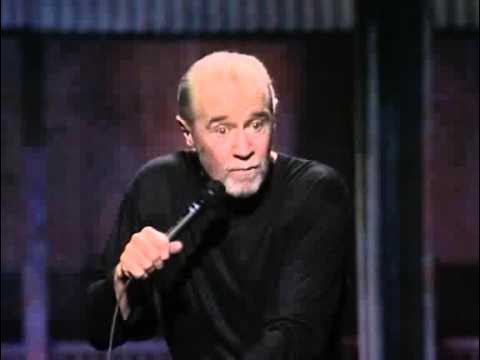
Carlin Urges US to Seize 3 Million Acres of Golf Courses for Housing
iStateOfMind3
Homelessness persists across the US because corporate and political elites cannot profit from solving it, even as more than three million acres remain hoarded for golf courses.
Public policy framing in the United States relies almost exclusively on the metaphor of war, yet homelessness is omitted because neither corporations nor corrupt politicians stand to profit from solving it. (0:01)
Market-driven society tends to commodify deprivation and substitute commercial consumerism for direct aid, satirized as lifestyle periodicals like Better Crates and Cartons. (1:42)
The housing crisis is fundamentally a lack of physical shelter ('houselessness') rather than an emotional abstraction, yet construction is perpetually thwarted by NIMBY zoning resistance. (3:21)
More than 17,000 U.S. golf courses monopolize over 3 million acres (4,820 square miles)—an area equal to two Rhode Islands and Delaware—that could be reclaimed for low-income housing alongside repurposed cemetery land. (5:53)
Detailed notes
## Background
This video was published on YouTube by the channel iStateOfMind3 on January 28, 2013. In the description, the uploader introduces the performance with the brief remark: "It's better than what we have now - No plan at all."
## TL;DR
George Carlin examines America's obsession with declaring domestic wars, arguing that a "War on Homelessness" has never materialized because no corporate or political elites stand to profit from solving the issue. After satirizing market-driven solutions through a parody lifestyle magazine, he reframes the crisis as "houselessness" and exposes the deep hypocrisy of suburban NIMBY zoning attitudes toward shelters and prisons. To solve the shortage of physical shelter, Carlin proposes confiscating millions of acres consumed by elitist golf courses and repurposing municipal cemeteries into public housing.
## Atmosphere & style
The performance is biting, acerbic, and fueled by righteous indignation, characteristic of Carlin's sharp social commentary. His delivery balances rapid-fire wit and cynical realism with pitch-black absurdity, taking genuine societal neglect and confronting it directly. Watching the routine feels like an exhilarating, provocative indictment of American consumerism and suburban hypocrisy, shifting seamlessly from grim diagnostic truths to hilarious, calculated outrage.
## Bulletin
- [00:01](https://www.youtube.com/watch?v=lncLOEqc9Rw&t=1s) Public policy framing in the United States relies almost exclusively on the metaphor of war, yet homelessness is omitted because neither corporations nor corrupt politicians stand to profit from solving it.
- [01:42](https://www.youtube.com/watch?v=lncLOEqc9Rw&t=102s) Market-driven society tends to commodify deprivation and substitute commercial consumerism for direct aid, satirized as lifestyle periodicals like Better Crates and Cartons.
- [03:21](https://www.youtube.com/watch?v=lncLOEqc9Rw&t=201s) The housing crisis is fundamentally a lack of physical shelter ('houselessness') rather than an emotional abstraction, yet construction is perpetually thwarted by NIMBY zoning resistance.
- [05:53](https://www.youtube.com/watch?v=lncLOEqc9Rw&t=353s) More than 17,000 U.S. golf courses monopolize over 3 million acres (4,820 square miles)—an area equal to two Rhode Islands and Delaware—that could be reclaimed for low-income housing alongside repurposed cemetery land.
## Key takeaways
- [00:01](https://www.youtube.com/watch?v=lncLOEqc9Rw&t=1s) Declaring war is the solitary rhetorical framework and metaphor society relies on to address domestic public problems.
- [00:01](https://www.youtube.com/watch?v=lncLOEqc9Rw&t=1s) Homelessness lacks a dedicated federal campaign because there are no lucrative corporate contracts or political kickbacks to be extracted from solving it.
- [00:01](https://www.youtube.com/watch?v=lncLOEqc9Rw&t=1s) If a mechanism existed for corporate elites and politicians to pocket millions of dollars, the streets would be cleared of homelessness overnight.
- [01:42](https://www.youtube.com/watch?v=lncLOEqc9Rw&t=102s) American consumer culture treats niche periodical publications as the ultimate badge of demographic arrival and recognition.
- [01:42](https://www.youtube.com/watch?v=lncLOEqc9Rw&t=102s) Satirical commercial solutions, like using glossy magazines as crate insulation, highlight the absurdity of applying free-market capitalism to human survival needs.
- [03:21](https://www.youtube.com/watch?v=lncLOEqc9Rw&t=201s) The crisis should be termed 'houselessness' rather than 'homelessness,' recognizing that shelter requires tangible physical structures rather than abstract emotional concepts.
- [03:21](https://www.youtube.com/watch?v=lncLOEqc9Rw&t=201s) NIMBY ('Not In My Backyard') sentiments routinely block the construction of essential social facilities like halfway houses and rehabilitation clinics.
- [03:21](https://www.youtube.com/watch?v=lncLOEqc9Rw&t=201s) Communities demand harsher criminal justice measures and more prisons, yet paradoxical NIMBY attitudes reject building correctional facilities locally.
- [03:21](https://www.youtube.com/watch?v=lncLOEqc9Rw&t=201s) Economically strained working-class communities tolerate hazardous military installations solely out of desperation for local employment.
- [05:53](https://www.youtube.com/watch?v=lncLOEqc9Rw&t=353s) Golf is characterized as an elitist, racially exclusionary pastime of wealthy businessmen that wastes vast geographical tracts on a trivial game.
- [05:53](https://www.youtube.com/watch?v=lncLOEqc9Rw&t=353s) Over 17,000 U.S. golf courses occupy roughly 4,820 square miles, enough surface area to fit two Rhode Islands and a Delaware dedicated to low-income housing.
- [05:53](https://www.youtube.com/watch?v=lncLOEqc9Rw&t=353s) Cemeteries represent an antiquated waste of municipal land that could be reclaimed for civic housing while recycling human remains for agricultural phosphorus.
## Detailed walkthrough
### [00:01](https://www.youtube.com/watch?v=lncLOEqc9Rw&t=1s) The American Metaphor of War and the Absence of a War on Homelessness
George Carlin opens by taking aim at American foreign and domestic priorities, remarking that the nation always seems overdue to bomb some small country equipped with only a marginally effective air force and drop high explosives on helpless civilians who hold no real grudge against the United States. He observes that America appears fundamentally incapable of existing without an adversary to harass, noting that the country could barely wait for the Cold War to wrap up before finding an excuse to go play with military hardware in the desert sand. Carlin points out that whenever the nation is not busy invading sovereign states or setting them ablaze from the skies, it turns that same destructive impulse inward by constantly declaring domestic wars.
Domestically, declaring war serves as the sole rhetorical framework society understands for addressing civic ills. Carlin lists the familiar litany of campaigns—the War on Poverty, the War on Crime, the War on Litter, the War on Cancer, and the War on Drugs—before pointing out the glaring omission of any campaign aimed at those living on the streets. Carlin explained the cold financial logic behind the omission: “Nobody stands to get rich off of that problem.” He asserts that if a program could be engineered where corporate elites and corrupt politicians could pocket a few million dollars apiece, the streets of America would be cleared almost overnight.
- Carlin notes that declaring war is the only rhetorical tool society uses: “It's the only metaphor we have in our public discourse for solving a problem.”
- Identified domestic "wars": poverty, crime, litter, cancer, and drugs.
- The fundamental barrier to ending homelessness is financial: without lucrative corporate contracts or political kickbacks, institutional interest evaporates.
---
[01:42](https://www.youtube.com/watch?v=lncLOEqc9Rw&t=102s) Better Crates and Cartons: A Satirical Business Solution
Turning toward commercial culture, Carlin jokes that the first step to addressing the plight of the homeless would be granting them their own specialized magazine, since having a niche publication is the defining American hallmark of cultural arrival. He points out that groups and micro-demographics everywhere possess dedicated periodicals, from *Working Mother* and *Black Enterprise* to publications tracking niche outdoor hobbies like skydiving, snowmobiling, and bungee jumping. He mocks the hyper-specialization of print media by singling out *Walking* magazine, enacting a suburbanite marveling over an issue whose lead story amounts to instructions on putting one foot in front of the other.
Extending this satire into a dark parody of free-market ingenuity, Carlin suggests naming the homeless lifestyle publication *Better Crates and Cartons*. Beyond providing reading material, the glossy pages could double as insulation for personal clothing or help patch drafts in improvised cardboard shelters. Carlin captures the cynical tone of free-market fixes: “A good sound practical conservative American business solution.” Through this caricature, he illustrates how market-driven society prefers commodifying human misery or treating basic survival needs as an afterthought rather than confronting deprivation head-on.
- Examples cited of hyper-specific publications: *Working Mother*, *Black Enterprise*, *Hispanic Business*, and *Walking*.
- Parodied utility: using read magazines as insulation inside clothing and plugging holes in piano shipping crates.
---
[03:21](https://www.youtube.com/watch?v=lncLOEqc9Rw&t=201s) Houselessness, NIMBYism, and the Hypocrisy of Zoning
Carlin pivots to semantics, arguing that the public must first reframe the issue from "homelessness" to "houselessness." He emphasizes that a home is merely an abstract concept, an emotional setting, or a state of mind, whereas what people actually lack is tangible, physical shelter. The fundamental obstacle to constructing this shelter is the entrenched attitude of NIMBY—"Not In My Backyard." While citizens pay lip service to helping the needy, they routinely mobilize against halfway houses, addiction rehab clinics, or assisted housing within their own neighborhoods, exposing the empty rhetoric surrounding American generosity.
This neighborhood protectionism extends even to institutions that the public vocally demands, such as prisons. Carlin ridicules the paradox of citizens chanting to lock up offenders while adamantly refusing correctional facilities in their vicinity. He points out that living next to a high-security prison would logically create the safest neighborhood imaginable, as street criminals would actively avoid the premises and escaped convicts would immediately flee the zip code rather than linger to inspect neighborhood real estate. The only neighborhood intrusion citizens happily accept without protest is a military installation, because self-interest and local employment trump all health hazards. Carlin observed, “Working people have been fucked over so long in this country, those are the kind of decisions they're left to make.”
- Conceptual distinction: shelter requires physical buildings, whereas "home" remains an emotional abstraction.
- Institutional hypocrisy: universal public demand for prisons paired with total local refusal to host them.
- Selective zoning tolerance: military bases with hazardous or nuclear payloads are welcomed solely for job creation.
---
[05:53](https://www.youtube.com/watch?v=lncLOEqc9Rw&t=353s) Reclaiming Golf Courses and Cemeteries for Affordable Housing
To solve the housing crisis once and for all, Carlin proposes seizing golf courses and repurposing the land for low-income residential development. He decries golf as an arrogant, elitist, and racially exclusionary pastime played predominantly by wealthy white businessmen who use fairways to negotiate backroom deals and carve up the country's wealth. He mocks the players' colorful trousers, tiny hats, and golf carts, ridiculing the sheer physical waste of dedicating immense acreage to hitting a tiny ball with a crooked stick only to walk after it and hit it again.
```mermaid
flowchart TD
accTitle: Land Reallocation Proposal
accDescr: Diagram illustrating George Carlin's satirical proposal to convert golf courses and cemeteries into housing and agricultural resources.
subgraph Current["Current Land Misuse"]
GC["17,000+ Golf Courses<br/>(3+ Million Acres)"]
CEM["Cemeteries<br/>(Burial Grounds)"]
end
subgraph Proposed["Proposed Social Utility"]
HOU["Houseless Communities<br/>(Size of 2 Rhode Islands & Delaware)"]
AGR["Agricultural Phosphorus<br/>(Recycled into Soil)"]
end
GC -->|"Reclaim for housing"| HOU
CEM -->|"Plow into rivers/farmland"| AGR
```
Carlin underscores the vast scale of this wasted geography: with over 17,000 courses averaging 150 acres each, the sport monopolizes more than 3 million acres, or roughly 4,820 square miles. Carlin stressed the potential of this acreage: “You could build two Rhode Islands and a Delaware for the homeless on the land currently devoted to this meaningless, mindless, arrogant, elitist, racist, racist.” He suggests banishing these players to miniature golf to negotiate obstacles like windmills instead. As a closing proposal, Carlin targets cemeteries as another antiquated waste of premium municipal real estate. He derides the medieval superstition of segregating corpses on vast tracts of land, suggesting instead that the deceased be plowed under into waterways to replenish phosphorus reserves for agriculture, concluding that genuine environmental recycling must begin with our own priorities.
- Golf course land usage statistics cited: over 17,000 facilities in the U.S. averaging 150 acres each, totaling over 3 million acres (4,820 square miles).
- Land equivalency: sufficient surface area to accommodate two Rhode Islands and one Delaware.
- Cemetery proposal: convert burial grounds into housing and recycle human remains for agricultural phosphorus.
## Mentioned
George Carlin, Working Mother, Black Enterprise, Hispanic Business, Walking, Rhode Island, Delaware
## Video description
It's better than what we have now - No plan at all.
George Carlin argues that the systemic failure to resolve homelessness in America stems from the absence of corporate profit incentives and pervasive suburban hypocrisy, contrasting widespread civic neglect with the lavish land allocated to elite recreation.
Profit Motives and the Rhetoric of Domestic Warfare (0:01)
Carlin observes that the United States fundamentally relies on war as its primary metaphor for civic problem-solving, citing historical campaigns such as the wars on poverty, crime, litter, cancer, and drugs. However, he highlights the glaring absence of a war on homelessness, attributing this omission entirely to financial logic: without opportunities for corporate contractors and politicians to pocket millions in profits or kickbacks, institutional motivation to clear the streets evaporates.
The Houselessness Distinction and NIMBY Hypocrisy (3:21)
Carlin argues that the public must reframe the issue as "houselessness" rather than homelessness, explaining that a home is merely an abstract emotional idea, whereas individuals on the street lack physical shelter. He contends that the primary barrier to building this shelter is the entrenched "Not In My Backyard" (NIMBY) mentality, where citizens profess sympathy for the needy but actively mobilize against halfway houses, addiction clinics, and assisted housing in their own neighborhoods.
This protectionism extends to penal policy, where citizens vocally demand mass incarceration while refusing correctional facilities nearby. Carlin points out that while an adjacent maximum-security prison would logically deter local crime, residents reject it, yet simultaneously welcome hazardous military bases because economic neglect leaves working-class communities desperate for local employment.
Satirizing Free-Market Approaches to Human Misery (1:42)
Turning to consumer culture, Carlin parodies the American tendency to equate cultural validation with commercial media representation. He highlights how the market produces hyper-specialized print publications for every niche demographic—such as Working Mother, Black Enterprise, and Walking magazine—and suggests that the homeless should receive their own publication, titled Better Crates and Cartons.
Carlin presents this satirical concept as a practical conservative business solution, noting that the physical magazine could double as clothing insulation or patch holes in cardboard shipping crates. Through this caricature, he illustrates how market-driven societies favor commodifying suffering and offering superficial consumer fixes over addressing fundamental material deprivation.
Reclaiming Golf Courses and Cemeteries for Housing (5:53)
To directly address the shelter deficit, Carlin proposes confiscating golf courses and converting the land into low-income housing communities. He condemns golf as an arrogant, elitist, and racially exclusionary pastime played by wealthy businessmen conducting backroom deals, ridiculing the disproportionate geography dedicated to chasing a ball with a crooked stick.
Citing municipal scale, Carlin notes that the United States contains more than 17,000 golf courses averaging 150 acres each, monopolizing over 3 million acres—or roughly 4,820 square miles. He calculates that this space is large enough to construct two Rhode Islands and a Delaware for the unhoused, suggesting players be relegated to miniature golf. He further proposes repurposing cemeteries, labeling the preservation of corpses on prime real estate an archaic superstition, and suggests plowing remains into waterways and farmland to recycle phosphorus back into agricultural soil.
Through sharp satirical hyperbole, Carlin frames homelessness not as an intractable social condition, but as the direct outcome of corporate greed, exclusionary zoning, and spatial waste. By contrasting the vast acreage reserved for elite sports and deceased bodies with the lack of basic human shelter, the argument underscores an indictment of American civic priorities.
[0:01] By the way, speaking of American values,
[0:03] aren't we about due to start bombing
[0:04] some small country that only has a
[0:06] marginally effective air force?
[0:08] Seems to me like we're a couple of weeks
[0:10] overdue to drop high explosives on
[0:12] helpless civilians. People who have no
[0:14] argument with us whatsoever. I think we
[0:16] ought to be out there doing what we do
[0:17] best, gang, making big holes in other
[0:20] people's countries.
[0:22] I hate to be repetitious, but God, we
[0:23] are a war-like lot, you know? We can't
[0:26] stand not to be [ __ ] with somebody.
[0:28] We couldn't wait for that Cold War to be
[0:29] over, could we? Just couldn't wait for
[0:31] that Cold War to be over so we could go
[0:32] and play with our toys in the sand. Go
[0:34] play with our toys in the sand. And when
[0:36] we're not invading some sovereign nation
[0:39] or setting it on fire from the air,
[0:41] which is more fun, then we're usually
[0:43] declaring war on something here at home.
[0:46] Did you ever notice that? We love to do
[0:47] that, don't we? We love to declare war
[0:49] on things here in America. Anything we
[0:51] don't like about ourselves, we have to
[0:52] declare war on it. Don't do anything
[0:55] about it. We just declare war on it.
[0:57] We got a war, it's the only it's the
[0:59] only metaphor we have in our public
[1:01] discourse for solving a problem. It's
[1:03] called declaring a war. We got a war on
[1:05] poverty, the war on crime, war on
[1:07] litter, the war on cancer, the war on
[1:09] drugs. But you ever notice there's no
[1:11] war on homelessness, is there? Nah. No
[1:13] war on homelessness. You know why?
[1:14] There's no money in that problem.
[1:16] There's no money in that problem. NOBODY
[1:19] STANDS
[1:21] IT'S TRUE.
[1:22] Nobody stands to get rich off of that
[1:24] problem. You could find a solution to
[1:26] homelessness with a corporate swine and
[1:28] the politicians could steal a couple of
[1:30] million dollars each. You'd see the
[1:31] streets of America begin to clear up
[1:33] pretty goddamn quick. I'll guarantee you
[1:35] that. I will GUARANTEE
[1:37] THAT. NOW,
[1:39] SO
[1:42] I GOT AN IDEA FOR THE HOMELESS. You know
[1:43] what they ought to do? You know what
[1:44] they ought to do? Give the homeless
[1:46] their own magazine.
[1:48] Give them their own magazine. It would
[1:51] make them feel better for one thing.
[1:53] That's a sure sign of making it in this
[1:54] country. Every group in this country
[1:56] that makes it and arrives at a certain
[1:58] level has its own magazine. You have
[2:01] Working Mother magazine, Black
[2:03] Entrepreneur magazine, Hispanic business
[2:05] magazine. In fact, any activity, any
[2:09] activity engaged in by more than four
[2:11] people
[2:12] in this country has got a [ __ ]
[2:13] magazine devoted to it.
[2:15] Skydiving, mountain climbing,
[2:17] snowmobiling, backpacking, bungee
[2:19] jumping,
[2:21] duck hunting, shooting someone in the
[2:23] [ __ ] with a dart gun, jerking off,
[2:24] they probably have a magazine for that.
[2:26] I'm sure they have. I know THEY HAVE A
[2:27] MAGAZINE. WALKING.
[2:30] WALKING!
[2:32] THERE'S ACTUALLY A [ __ ] MAGAZINE
[2:35] CALLED WALKING.
[2:38] LOOK, DAN, THE NEW WALKING IS OUT.
[2:42] HERE'S A GOOD ARTICLE, PUTTING ONE FOOT
[2:45] IN FRONT OF THE OTHER.
[2:48] GIVE THEM THEIR OWN MAGAZINE.
[2:51] GIVE THEM.
[2:53] Give the homeless their own magazine.
[2:54] You know what you call it? Better Crates
[2:56] and Cartons.
[2:59] Then when they get finished reading it,
[3:00] they can use it to line their clothing.
[3:03] That's a good sound business solution.
[3:06] That's kind of answer you get from a
[3:07] conservative American businessman. He'd
[3:09] say, "Yeah, let them read it. When they
[3:11] get finished reading it, they can use it
[3:12] to plug up the holes in them piano
[3:13] crates they all seem to like to live
[3:15] in." A good sound practical conservative
[3:18] American business
[3:21] solution. I'll tell you what they ought
[3:23] to do about homelessness. First thing,
[3:24] change the name of it. Change the name
[3:26] of the condition. It's not homelessness,
[3:29] it's houselessness. It's houses these
[3:31] people need. A home is an abstract idea.
[3:34] A home is a setting. It's a state of
[3:36] mind. These people need houses,
[3:38] physical, tangible structures. But where
[3:40] are you going to put them? Where are YOU
[3:41] GOING TO BUILD THEM? Nobody wants you to
[3:43] build low-cost housing near their house.
[3:45] People don't want it near them. We got
[3:47] something in this country, you've heard
[3:48] of it, called NIMBY, N I M B Y, not in
[3:51] my backyard.
[3:53] People don't want any kind of social
[3:54] help located anywhere near them. You try
[3:57] to open up a halfway house. Try to open
[3:59] up a rehab center for drugs or alcohol.
[4:01] Try to build a little home for some
[4:02] [ __ ] people who want to work their
[4:04] way into the community. PEOPLE SAY, "NOT
[4:06] IN my backyard." People don't want
[4:08] anything near them, especially if it
[4:11] might help somebody else. Part of the
[4:13] great American spirit of generosity
[4:15] we're always told about.
[4:18] Big, generous American nation. Ask an
[4:20] Indian about that. Ask an Indian how
[4:23] generous this country is, if you can
[4:24] find one. You got to locate the Indian
[4:26] first. We've made them just a little
[4:28] difficult to find. Or if you need
[4:30] current data, select a black family at
[4:32] random and ask them how generous this
[4:34] country has been. People don't want
[4:36] anything near them, even if it's
[4:37] something they believe in, something
[4:39] they think society needs, like prisons.
[4:42] EVERYBODY WANTS THAT, RIGHT? EVERYBODY
[4:43] WANTS MORE PRISONS. That's the new
[4:45] answer to all of our problems. LOCK A
[4:46] LOT OF [ __ ] UP.
[4:48] EVERYBODY WANTS MORE PRISONS. THEY SAY,
[4:49] "BUILD MORE PRISONS!"
[4:52] BUT NOT HERE.
[4:54] BUT WHY NOT? What's wrong? What's the
[4:56] problem? What's wrong with having a
[4:57] prison in your neighborhood? Well, it
[4:58] seems to me like it would make it a
[4:59] pretty crime-free area, don't you think?
[5:02] You think a lot of crackheads and
[5:03] muggers and pimps and hookers are going
[5:04] to hang around in front of a [ __ ]
[5:05] prison?
[5:07] [ __ ] THEY AIN'T COMING ANYWHERE
[5:08] NEAR IT.
[5:09] WHAT'S WRONG WITH THESE PEOPLE? All the
[5:11] criminals are locked up behind the
[5:12] walls. If a couple of them do break out,
[5:13] what do you think they're going to do?
[5:14] Hang around?
[5:17] Check real ESTATE TRENDS? [ __ ]
[5:20] THEY'RE [ __ ] GONE.
[5:22] THAT'S THE WHOLE IDEA OF BREAKING OUT OF
[5:23] PRISON IS TO get the [ __ ] as far away as
[5:25] you possibly can.
[5:27] Not in my backyard. People don't want
[5:30] anything near them.
[5:32] Except military bases. They don't mind
[5:35] that, do they? No, they like that. Give
[5:36] them an army base, makes them happy.
[5:38] Why? Jobs. JOBS. SELF-INTEREST. EVEN IF
[5:41] THE BASE is loaded with nuclear weapons,
[5:43] they don't give a [ __ ]
[5:45] They'd say, "Well, I'll take a little
[5:46] radiation if I can get a job."
[5:48] Working people have been [ __ ] over so
[5:50] long in this country, those are the kind
[5:51] of decisions they're left to make.
[5:53] I got just the place for low-cost
[5:56] housing. I have solved this problem. I
[5:59] know where we can build housing for the
[6:00] homeless.
[6:02] Golf courses.
[6:04] Perfect.
[6:06] Golf courses.
[6:08] Just what we need. Plenty of good land
[6:12] in nice neighborhoods, land that is
[6:14] currently being wasted on a meaningless,
[6:17] mindless activity
[6:19] engaged in primarily by white,
[6:21] well-to-do male businessmen who use the
[6:24] game to get together to make deals to
[6:25] carve this country up a little finer
[6:27] among themselves. I am getting tired.
[6:31] REALLY TIRED.
[6:33] [Applause]
[6:37] I AM GETTING TIRED OF THESE golfing
[6:39] [ __ ]
[6:41] in their green pants and their yellow
[6:44] pants and their orange pants and their
[6:47] precious little hats and their cute
[6:49] little golf carts. It is time to reclaim
[6:53] the golf courses from the wealthy and
[6:55] turn them over to the homeless. Golf is
[6:56] an arrogant,
[6:58] elitist game and it takes up entirely
[7:00] too much [ __ ] room in this country.
[7:03] Too much [ __ ] room in this country.
[7:07] It is
[7:10] It is an arrogant game on its very
[7:12] design alone. Just the design of the
[7:14] game speaks of arrogance. THINK OF HOW
[7:16] BIG a golf COURSE IS.
[7:18] THE BALL IS THAT [ __ ] BIG!
[7:21] WHAT DO THESE PINHEADED PRICKS NEED WITH
[7:22] ALL THAT LAND?
[7:24] THERE ARE OVER 17,000 golf courses in
[7:26] America. They average over 150 acres
[7:29] apiece. That's over 3 million acres.
[7:31] That's 4,820
[7:33] square miles. You could build two Rhode
[7:35] Islands and a Delaware for the homeless
[7:37] on the land currently devoted to this
[7:39] meaningless, mindless, arrogant,
[7:41] elitist, racist, racist. There's another
[7:45] thing. The only blacks you'll find in
[7:47] country clubs are carrying trays. And a
[7:50] boring game for boring people. Did you
[7:53] ever watch golf on television? It's like
[7:55] WATCHING FLIES [ __ ]
[7:59] AND A MINDLESS GAME.
[8:01] MINDLESS. Think of the intellect. Think
[8:04] of the intellect it must take to draw
[8:06] pleasure from this activity.
[8:08] Hitting a ball with a crooked stick
[8:11] AND THEN
[8:13] WALKING AFTER IT.
[8:15] AND THEN
[8:17] HITTING IT AGAIN!
[8:19] I SAY, "PICK IT UP, [ __ ] YOU'RE
[8:20] LUCKY YOU FOUND THE [ __ ] THING.
[8:22] PUT IT IN YOUR POCKET AND GO THE [ __ ]
[8:23] HOME.
[8:24] GO THE [ __ ] HOME, YOU'RE A WINNER!"
[8:27] NO.
[8:28] [Music]
[8:29] NO CHANCE OF THAT HAPPENING. DORKO IN
[8:32] THE plaid knickers is going to hit it
[8:33] again and walk some more.
[8:35] Let these rich [ __ ] play
[8:37] miniature golf. Let them [ __ ] with a
[8:39] windmill for an hour and a half or so.
[8:42] See if there's any real skill among
[8:44] them.
[8:45] Now, I know there are some people who
[8:47] play golf who don't consider themselves
[8:49] rich.
[8:50] [ __ ] them!
[8:52] And shame on them for engaging in an
[8:55] arrogant, elitist pastime.
[8:58] Hey, here's another place we could put
[9:00] some low-cost housing. Cemeteries.
[9:04] There's another idea whose time has
[9:05] passed. Saving all the dead people in
[9:08] one part of town?
[9:10] What the hell kind of a superstitious,
[9:12] religious, MEDIEVAL [ __ ] IDEA IS
[9:13] THAT? PLOW THESE [ __ ] UP. PLOW
[9:16] THEM INTO THE STREAMS and rivers of
[9:17] America. We need THAT PHOSPHORUS FOR
[9:19] FARMING. IF WE'RE GOING TO RECYCLE,
[9:22] LET'S GET SERIOUS.
[9:26] THANK YOU.