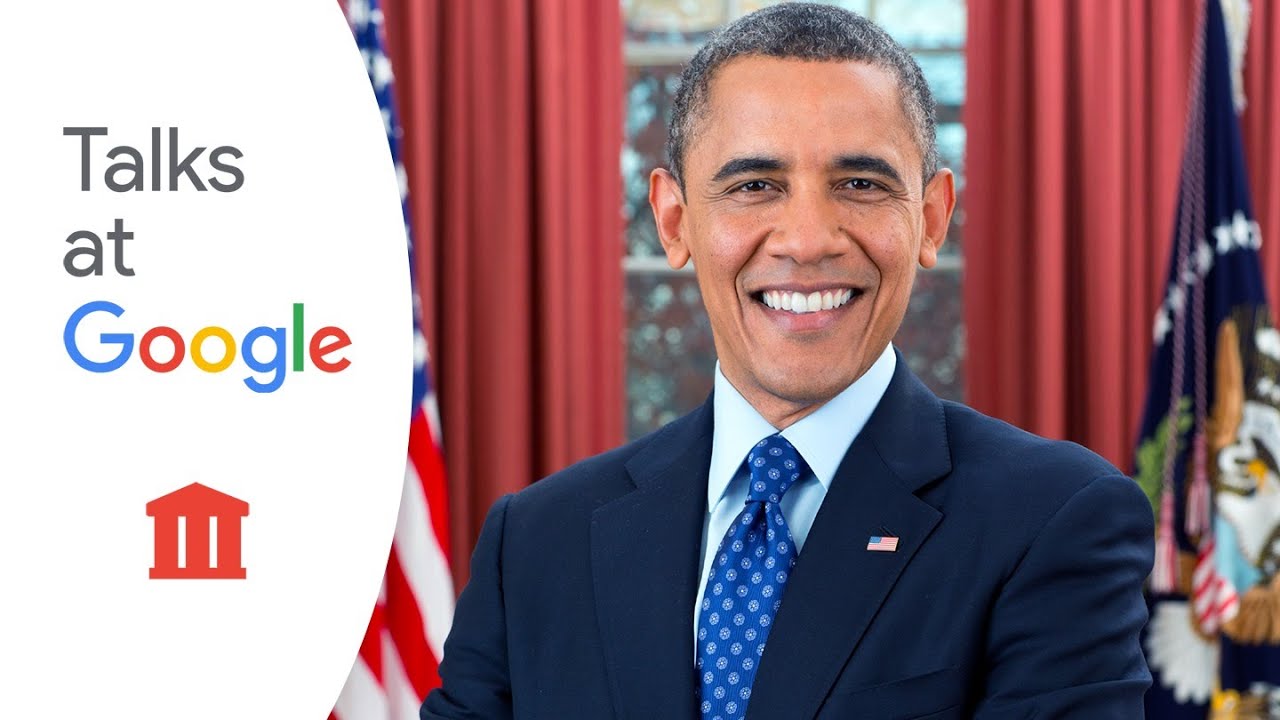
Obama Pledges Federal CTO, Net Neutrality in Silicon Valley Pitch
Talks at Google
Entrenched special interests can be dismantled and national crises resolved only if the federal government enforces open-data transparency and protects an open internet, Obama says.
Barack Obama unveils his presidential innovation platform at Google headquarters, pledging strict enforcement of net neutrality, universal broadband access, and the creation of the nation's first federal Chief Technology Officer. (8:04)
Obama commits to doubling federal funding for basic scientific research, making the R&D tax credit permanent, and expanding high-skilled immigration pathways like H-1B visas to maintain global competitiveness. (11:08)
Addressing foreign policy, Obama details an operational plan to withdraw one to two combat brigades per month from Iraq, bringing all combat troops home within sixteen months while pursuing direct bilateral diplomacy with adversaries such as Iran. (23:59)
To rein in federal healthcare spending and eliminate administrative waste, Obama advocates broad adoption of Health IT and electronic medical records while pledging to conduct healthcare reform negotiations openly on C-SPAN and the internet. (48:03)
Detailed notes
## Background
Published on YouTube by Talks at Google on November 15, 2007, this video records Illinois Senator and 2008 Democratic presidential candidate Barack Obama visiting Google's Mountain View headquarters as part of the Candidates at Google series. According to the description, the event features Obama unveiling his technology and innovation agenda, sitting down for a wide-ranging conversation with Google CEO Eric Schmidt, and answering questions directly from Google employees.
## TL;DR
Obama outlines a comprehensive innovation platform prioritizing net neutrality, universal broadband access, open-government data, and the appointment of the nation's first federal Chief Technology Officer. In his discussion with Eric Schmidt and the audience, he details his foreign policy vision—including a phased withdrawal from Iraq, direct diplomacy with adversaries, and the restoration of civil liberties—alongside domestic priorities like portable healthcare, teacher investment, and fiscal discipline. Confronting critiques about his political experience, Obama emphasizes judgment, public transparency, and civic mobilization over Washington insiderism, urging engineers and scientists to help restore reason and objective evidence to national governance.
## Atmosphere & style
The gathering balances the elevated rhetoric of a national presidential campaign with the relaxed, intellectual rapport of a Silicon Valley tech forum. Obama moves fluidly between soaring oratory and easy self-deprecation, effortlessly bantering with Eric Schmidt over algorithmic sorting and Google's casual dress code before shifting into sober, measured reflection on war, torture, and racial division. The mood throughout the room is visibly receptive and energized, creating a dialogue that feels both aspirational and technocratically pragmatic.
## Bulletin
- [08:04](https://www.youtube.com/watch?v=m4yVlPqeZwo&t=484s) Barack Obama unveils his presidential innovation platform at Google headquarters, pledging strict enforcement of net neutrality, universal broadband access, and the creation of the nation's first federal Chief Technology Officer.
- [11:08](https://www.youtube.com/watch?v=m4yVlPqeZwo&t=668s) Obama commits to doubling federal funding for basic scientific research, making the R&D tax credit permanent, and expanding high-skilled immigration pathways like H-1B visas to maintain global competitiveness.
- [23:59](https://www.youtube.com/watch?v=m4yVlPqeZwo&t=1439s) Addressing foreign policy, Obama details an operational plan to withdraw one to two combat brigades per month from Iraq, bringing all combat troops home within sixteen months while pursuing direct bilateral diplomacy with adversaries such as Iran.
- [48:03](https://www.youtube.com/watch?v=m4yVlPqeZwo&t=2883s) To rein in federal healthcare spending and eliminate administrative waste, Obama advocates broad adoption of Health IT and electronic medical records while pledging to conduct healthcare reform negotiations openly on C-SPAN and the internet.
## Key takeaways
- [02:47](https://www.youtube.com/watch?v=m4yVlPqeZwo&t=167s) America faces a fundamental choice between a closed system controlled by special interests and an open innovation agenda that harnesses technology for civic engagement and infrastructure.
- [08:04](https://www.youtube.com/watch?v=m4yVlPqeZwo&t=484s) Net neutrality must be protected without compromise so that internet service providers cannot favor specific applications over smaller voices.
- [08:04](https://www.youtube.com/watch?v=m4yVlPqeZwo&t=484s) Federal data should be published online in standardized, machine-readable formats overseen by a newly appointed federal Chief Technology Officer.
- [11:08](https://www.youtube.com/watch?v=m4yVlPqeZwo&t=668s) Maintaining America's competitive edge against global tech hubs requires doubling basic research investments, making R&D tax credits permanent, and reforming skilled immigration.
- [16:13](https://www.youtube.com/watch?v=m4yVlPqeZwo&t=973s) A president's core rationale must extend beyond ambition to unifying a divided electorate and challenging entrenched special interests in Washington.
- [23:59](https://www.youtube.com/watch?v=m4yVlPqeZwo&t=1439s) A scheduled sixteen-month withdrawal from Iraq, combined with direct regional diplomacy involving Iran and Syria, is vital for long-term Middle East stability.
- [27:14](https://www.youtube.com/watch?v=m4yVlPqeZwo&t=1634s) Direct diplomatic engagement with adversaries like Iran signals respect to foreign publics and rebuilds international moral authority without conceding American security positions.
- [28:14](https://www.youtube.com/watch?v=m4yVlPqeZwo&t=1694s) Restoring constitutional civil liberties requires closing Guantanamo Bay, reinstating habeas corpus, prohibiting warrantless surveillance, and ending simulated drowning.
- [32:46](https://www.youtube.com/watch?v=m4yVlPqeZwo&t=1966s) Economic inequality must be counterbalanced by modernizing the social safety net, making healthcare and retirement portable, and reforming early childhood through higher education.
- [38:37](https://www.youtube.com/watch?v=m4yVlPqeZwo&t=2317s) Closing the societal 'empathy deficit' requires confronting systemic disparities in minority communities and viewing marginalized youth as collective responsibilities.
- [43:11](https://www.youtube.com/watch?v=m4yVlPqeZwo&t=2591s) Democratic candidates fail nationally when vague convictions lead to defensive imitations of opponents rather than offering clear, principled contrasts.
- [48:03](https://www.youtube.com/watch?v=m4yVlPqeZwo&t=2883s) Addressing long-term federal deficits requires enforcing PayGo budget rules, increasing spending transparency via searchable databases, and curbing healthcare inflation through Health IT.
- [54:30](https://www.youtube.com/watch?v=m4yVlPqeZwo&t=3270s) Executive leadership in the presidency relies on sound judgment, vision, and core character rather than purely technical or administrative management credentials.
- [57:00](https://www.youtube.com/watch?v=m4yVlPqeZwo&t=3420s) Entrenched congressional special interests can be overcome by public scrutiny and floor votes that hold politicians publicly accountable.
- [59:07](https://www.youtube.com/watch?v=m4yVlPqeZwo&t=3547s) Healthcare reform negotiations must be conducted publicly before stakeholders and streamed on C-SPAN to prevent industry lobbies from secretly undermining policy.
- [01:01:43](https://www.youtube.com/watch?v=m4yVlPqeZwo&t=3703s) National governance should be anchored in scientific evidence, reason, and objective facts rather than political manipulation.
## Detailed walkthrough
### [00:00](https://www.youtube.com/watch?v=m4yVlPqeZwo&t=0s) Welcoming Senator Barack Obama Back to Google
David Drummond, Google’s Senior Vice President of Corporate Development and Chief Legal Officer, opens the session by welcoming employees to another installment of the *Candidates at Google* series. He reminds the crowd that then-Senate candidate Barack Obama had visited Google's Mountain View headquarters during the summer of 2004 for a TGIF gathering, where Drummond, Larry Page, and Sergey Brin introduced him to the team. During that 2004 visit, Obama toured the facilities, observed the GeoDisplay search traffic, inspected server infrastructure, and held an in-depth conversation with Page and Brin regarding technology policy and innovation—an experience Obama subsequently chronicled in his book, *The Audacity of Hope*. Drummond jokes about a major oversight from that original appearance: “And, you know, while it was a fantastic visit, I now realized that we made a grave error that day at TGIF, we didn't let him speak.” Drummond announces that Obama is rectifying that omission by formally unveiling his presidential innovation agenda, to be followed by an onstage conversation with CEO Eric Schmidt and questions from Google employees.
[02:47](https://www.youtube.com/watch?v=m4yVlPqeZwo&t=167s) Improbable Journeys and the Fork in the Road
Barack Obama takes the stage to sustained applause, thanking Larry Page, Sergey Brin, Eric Schmidt, and David Drummond for their leadership and friendship. He also acknowledges California State Senator Elaine Alquist in the audience, noting that as a former state legislator himself, he always wants to pay respect to local representatives. Obama jokes that it is nice to see Google is still strictly enforcing its famously casual dress code before reflecting on how improbable the meeting is. Just over a decade earlier, Page and Brin were graduate students sharing a dorm room with an ambition to organize all the world's information, while Obama was serving in the Illinois State Senate trying to help working families; both sides shared unpaid student loans and a core belief in bottom-up change.
Obama argues that the nation faces a decisive choice between two distinct paths for technology and society. In one scenario, the spirit that launched Google is smothered: broadband access is auctioned to the highest bidders, government turns secretive, special interests capture tax subsidies, and critical challenges such as healthcare costs and energy dependency go unaddressed. In the other scenario, open access and technological innovation are harnessed systematically to broaden democracy, upgrade national infrastructure, reach clean energy goals, and improve public health. As Obama tells the audience: “And as president, I intend to work with you to write the next chapter in the story of American innovation.”
```mermaid
flowchart TD
accTitle: Divergent Paths for American Innovation
accDescr: A decision diagram contrasting a closed, special-interest future with an open, innovation-driven future.
A["The Choice in American Policy"] --> B["Stifled Innovation Path"]
A --> C["Open Innovation Agenda"]
subgraph Stifled["Stifled Innovation Path"]
B1["Internet divided to highest bidders"]
B2["Government technology shuts citizens out"]
B3["Tax loopholes favor special interests"]
B4["Stagnation in healthcare & energy"]
end
subgraph Open["Open Innovation Agenda"]
C1["Net neutrality & open internet"]
C2["Universal 21st-century broadband"]
C3["Open-government data & public forums"]
C4["Clean energy & electronic medical records"]
end
B --> Stifled
C --> Open
```
[08:04](https://www.youtube.com/watch?v=m4yVlPqeZwo&t=484s) Open Internet, Broadband Infrastructure, and Open Government
Obama outlines the core pillars of his technology platform, starting with an uncompromising defense of network neutrality: “I will take a backseat to no one in my commitment to network neutrality, because once providers start to privilege some applications or websites over others, then the smaller voices get squeezed out and we all lose.” Beyond maintaining an open internet, he pledges to establish universal broadband access across the country regardless of geographic location or income level, raise national standards for connection speeds, wire schools, libraries, and hospitals, and free up commercial wireless spectrum by taking on incumbent telecom interests.
Turning to governance, Obama criticizes the incumbent Bush administration as one of the most secretive in American history. He promises to mandate that federal data be published online in standardized, machine-readable formats. Under his proposed framework, citizens will be able to review federal grant allocations, contracts, legislative earmarks, and lobbying disclosures, as well as participate in real-time policy discussions and submit public comments on pending bills prior to presidential signing. To enforce these technological standards across federal bureaucracy, Obama announces he will appoint the nation's first federal Chief Technology Officer (CTO). Pointing to his own 2008 campaign as proof of concept for bottom-up digital civic participation, he highlights several operational figures:
- Over 370,000 online campaign donations, with roughly half coming in increments under $25
- Nearly 300,000 registered user accounts created on BarackObama.com
- Thousands of independent, volunteer-led grassroots groups established online
- More than 15,000 public policy proposals submitted by citizens through the campaign platform
[11:08](https://www.youtube.com/watch?v=m4yVlPqeZwo&t=668s) Basic Research, Immigration, and Global Competitiveness
Obama argues that modernizing government operations is only a starting point; the broader imperative is leveraging technology to resolve national crises. Implementing interoperable electronic health records will curtail medical errors and significantly lower overhead costs. Similarly, large-scale investments in renewable technologies—mirroring Google’s on-campus solar installations in Mountain View—can end dependence on foreign oil, generate domestic manufacturing jobs, and mitigate environmental damage. To support the talent pipeline, he calls for prioritizing technological literacy in primary and secondary education.
Emphasizing that Silicon Valley faces escalating competition from international hubs like Dubai, Dublin, Shanghai, and Mumbai, Obama outlines specific federal commitments to preserve the American research edge:
- Doubling federal funding for basic scientific research
- Making the federal Research and Development (R&D) tax credit permanent
- Enforcing rigorous antitrust regulations to protect emerging startups from monopolistic abuses
- Passing comprehensive immigration reform that protects and expands skilled work mechanisms such as H-1B visas and permanent residency pathways
Obama returns to his initial 2004 tour, recalling when Larry Page showed him a real-time global monitor of internet search traffic. Watching search requests illuminate the rotating globe in dozens of languages underscored how rapidly a network that barely existed in their childhoods had unified human inquiry.
[14:19](https://www.youtube.com/watch?v=m4yVlPqeZwo&t=859s) A Transformational Moment and the Call to Service
Concluding his prepared address, Senator Barack Obama reflects on the contrast between the illuminated parts of the globe and the areas left in complete darkness—spanning most of Africa, vast stretches of Asia, and even forgotten corners within the United States. He warns that in these disconnected regions, the bright promise of the twenty-first century risks being eclipsed by peril, and insists that the prosperity of the new economy cannot become the private property of a privileged few. Instead, it must serve as an uplifting force for the entire country and the world. Calling the era a rare transformational moment where an idea can alter human history and technology can connect people without suppressing their individuality, he rallies the Google audience to refuse complacency and help him seize the opportunity to change the world.
> “You and I must not settle for anything less than an America that replaces that darkness with a new light, because the promise and prosperity of the new economy must not be the property of the few.” — Barack Obama
[16:13](https://www.youtube.com/watch?v=m4yVlPqeZwo&t=973s) Audacity, Timing, and the Three Questions for the Presidency
Google CEO Eric Schmidt takes the stage to enthusiastic applause, praising Obama's address on innovation before recounting Obama's biography: the son of a mother from Kansas and a father from Kenya, born in Hawaii, educated at Columbia and Harvard, and rising through the Illinois State Senate to the United States Senate. Schmidt asks what exceptional contribution Obama intends to bring to the presidency and why he believes the nation will achieve greatness. Noting Obama’s book, *The Audacity of Hope*, Obama explains that America’s defining characteristic has always been an audacious belief—from a ragtag group of revolutionaries toppling the world's greatest empire to establishing a novel form of government across a continent. Addressing why he chose to run now rather than waiting a decade, Obama explains that ordinary working families are falling behind as healthcare and college costs escalate, savings dwindle, and Washington remains stubbornly unresponsive.
Before launching his campaign, Obama evaluated his decision by asking himself three foundational questions:
```mermaid
flowchart TD
accTitle: Presidential Campaign Decision Framework
accDescr: Three core evaluation questions considered by Barack Obama before entering the presidential race.
subgraph Evaluation ["Decision to Run"]
Q1["1. Can the family survive the rigors of a campaign?"]
Q2["2. Is victory achievable?"]
Q3["3. What is the governing rationale and purpose?"]
end
subgraph Rationale ["Three-Point Rationale"]
R1["Unify a divided electorate beyond 45-45-10 gridlock"]
R2["Challenge special interests and entrenched status quo"]
R3["Leverage unique global perspective and personal diplomacy"]
end
Q1 --> Q2
Q2 --> Q3
Q3 --> Rationale
```
- **Family resilience:** Whether his family could weather the brutal demands of a national presidential bid, which he concluded they could because his wife is exceptional and his children are above average.
- **Electoral viability:** Whether a viable mathematical and political path to victory existed.
- **Governing purpose:** Having a clear rationale beyond personal ambition, concluding that he could unite a country trapped in a 45–45 gridlock where national politics obsessively caters to the 10 percent in Florida and Ohio while leaving critical problems unaddressed.
> “And what I concluded is this; I believe I can more effectively bring this country together to solve problems than on the other candidate.” — Barack Obama
[20:26](https://www.youtube.com/watch?v=m4yVlPqeZwo&t=1226s) Overcoming Gridlock and a New Global Standing
Expanding on his governing rationale, Obama stresses that he possesses an instinctive bias against the Washington status quo, having taken on entrenched special interests in the past and won. He argues that policy decisions in the capital are currently driven by political clout and who holds "the juice" rather than reason, healthy competition, or technological innovation. Beyond domestic politics, Obama points to his unconventional global upbringing—raised in Hawaii, having lived in Indonesia, and maintaining family spread across the globe. He argues that the diplomatic damage wrought over the previous seven years demands a president willing to engage in high-stakes personal diplomacy unmatched since World War II.
> “And I believe that the day I'm inaugurated, the--not only does the country look at itself differently but the world looks at America differently.” — Barack Obama
Obama notes that his personal background offers unprecedented diplomatic leverage when confronting foreign leaders:
- In Africa, he can challenge leaders on developmental corruption while speaking with authentic credibility as a man whose own grandmother lives in a rural African village without running water or electricity.
- In negotiations across the Islamic world, as a Christian who lived in Indonesia—the nation with the world's largest Muslim population—he rejects the deterministic idea of an inevitable "clash of civilizations" and can find common ground where others cannot.
[22:44](https://www.youtube.com/watch?v=m4yVlPqeZwo&t=1364s) The Google Interview: Sorting 32-Bit Integers
Transitioning into a lighter mood, Eric Schmidt remarks that the presidency is much like a grueling job interview, but quips that landing a position at Google is just as difficult. Producing an actual question from Google software engineer Larry Schwimmer, Schmidt asks Obama: "What is the most efficient way to sort a million 32-bit integers?" Without missing a beat, Obama pauses thoughtfully before deadpanning his response, sending the room into laughter.
> “No, no, no, no. I think--I think the bubble sort would be the wrong way to go.” — Barack Obama
Schmidt feigns outrage, exclaiming that he saw no computer science degree on Obama's resume and demanding to know who fed him the answer. Obama jokes back that he has his own spies inside the company.
[23:59](https://www.youtube.com/watch?v=m4yVlPqeZwo&t=1439s) Ending the War in Iraq and Shifting Diplomatic Strategy
Turning to serious foreign policy matters, Schmidt brings up Obama’s early and consistent opposition to the war in Iraq, asking what concrete steps he will take on day one when entering the Oval Office with the conflict still raging. Obama details an explicit exit blueprint: immediately convening the Joint Chiefs of Staff, his designated Secretary of State, and his National Security Advisor to assign them a clear operational objective to end the war. Guided by military advisers, Obama intends to withdraw one to two combat brigades per month, bringing all combat troops home within sixteen months. He commits that the United States will establish no permanent bases and engage in no ongoing combat operations in Iraq.
Residual military missions under Obama's plan would be restricted strictly to:
- Protecting the American embassy, diplomatic personnel, and humanitarian workers.
- Maintaining a targeted counterterrorism strike capability to intervene if hostile terrorist camps assemble within Iraqi borders.
Obama argues that a credible, scheduled withdrawal is the only mechanism that will force Iraqi factions—Sunnis, Shiites, and Kurds—to hammer out political compromises. Simultaneously, the United States must aggressively pursue regional diplomacy with all Middle Eastern neighbors, explicitly including adversaries like Iran and Syria. He notes this stance sharply differentiates him from competitors like Senator Hillary Clinton and marks an explicit departure from the Bush-Cheney doctrine.
> “President Kennedy once said, 'We should never negotiate out of fear, but we should never fear to negotiate.' And the notion that not talking to leaders we don't like makes us look tough is fundamentally flawed.” — Barack Obama
[27:16](https://www.youtube.com/watch?v=m4yVlPqeZwo&t=1636s) Direct Engagement with Adversaries: The Case of Iran
Schmidt asks Obama to lay out his specific leadership philosophy for managing critical international flashpoints, including Iran, Pakistan, and the detention facility at Guantanamo Bay. Obama begins with Iran, asserting without hesitation that he will pursue direct bilateral negotiations. He emphasizes that opening talks does not mean conceding American interests or downplaying threats, calling Iran's pursuit of nuclear technology a grave peril that could spark a catastrophic regional arms race.
> “I will talk to Iran directly. That does not mean that we will be conceding any positions with Iran. It means that we will listen and see where we can find common ground.” — Barack Obama
While recognizing that Iran has undeniably supported terrorism via Hezbollah and Hamas and has directed unacceptable rhetoric toward Israel, Obama argues that refusing to talk has yielded nothing. He contends that repeatedly rebuffing diplomatic openings has closed off opportunities to defuse regional crises, and that high-level engagement offers the strongest foundation for American security.
[28:14](https://www.youtube.com/watch?v=m4yVlPqeZwo&t=1694s) Direct Diplomacy, Pakistan's Crisis, and Restoring American Civil Liberties
Senator Barack Obama argues that direct engagement with adversaries offers leverage that military threats cannot achieve alone. By directly proposing to Iran that curbing nuclear ambitions and ceasing sponsorship of terrorism could lead to World Trade Organization entry and normalized relations, the United States sends a crucial signal. Even if President Mahmoud Ahmadinejad outright rejects such an offer, the gesture tells ordinary Iranians they are not considered enemies and demonstrates to the world that America conducts its diplomacy differently. Rebuilding international standing directly enhances American power. Recalling a comment from French President Nicolas Sarkozy in *The New Yorker*, Obama notes that when asked what America could do best to help, Sarkozy replied bluntly, “Be more liked.” Obama emphasizes that when America's global credibility falls, diplomatic room to maneuver evaporates—citing the ongoing genocide in Darfur, where international standing and moral authority would have enabled a protective force without giving the Khartoum regime an excuse to claim another Western invasion of a Muslim nation.
Turning to Pakistan, Obama warns that the U.S. faces the worst possible scenario under General Pervez Musharraf, an authoritarian ruler who suspended constitutional rule and imprisoned political rivals while failing to root out terrorists operating within Pakistan's borders. Obama advocates cutting off non-counterterrorism military aid until emergency rule is ended, political prisoners are freed, and constitutional order is restored. Aligning America with autocrats under the illusion of checking extremism repeats the fatal errors of the Cold War. As Obama explains, “It makes people believe that somehow the United States is opposed to their liberty, opposed to their democracy.” While safeguarding Pakistan's nuclear weapons remains the paramount priority, he points out that Pakistan's pro-democracy opposition is largely secular, middle-class, and eager for genuine political freedom. Regarding domestic and international human rights, Obama lays out an immediate reversal of Bush-era policies: closing Guantánamo Bay, reinstating habeas corpus, ending extraordinary renditions, and stopping warrantless surveillance. Resisting these measures requires directly challenging a culture of engineered paranoia.
> “Part of my job as the next president is to break the fever of fear that has been exploited by this administration, that—you know, we're told—you know, we're told that we should be afraid of terrorists and immigrants and each other, and it becomes the means by which our civil liberties are subverted, our values are distorted, we start hearing our attorney general nominee not being certain as to whether simulated drownings are torture.”
- **Diplomatic Incentives for Iran**: Offering WTO membership and normalized relations in return for abandoning nuclear proliferation and ending support for terrorist proxies.
- **Aid Suspension for Pakistan**: Freezing all military aid not strictly tied to hunting terrorists until Pakistan's military leadership lifts the state of emergency and releases imprisoned dissidents.
- **Civil Liberties Restoration**: Terminating indefinite detention at Guantánamo, prohibiting warrantless wiretaps, ending extraordinary renditions, and categorically defining simulated drowning (waterboarding) as illegal torture.
---
[32:46](https://www.youtube.com/watch?v=m4yVlPqeZwo&t=1966s) Domestic Economic Inequality, Education Reform, and a 21st-Century Safety Net
Eric Schmidt steers the discussion from foreign policy to America's stark domestic divides, pointing out that Obama's message has resonated strongly with millions who feel left behind economically and educationally. Obama agrees that the American economy has fallen severely out of balance. While sectors like Silicon Valley—with Google as the archetype—have generated immense wealth, innovation, and creativity, the past two decades of economic gains have been concentrated almost exclusively within the top one percent. In contrast, average worker wages have flatlined, breeding widespread anxiety that our political system channels into a fear of globalization. Obama contends that globalization cannot simply be turned back, asserting, “Now, my strong belief is that globalization is here to stay and it is a powerful potential tool for good.” The government's true task is ensuring every American possesses the skills and security needed to share in its benefits.
```mermaid
flowchart TD
accTitle: Obama Education and Social Safety Net Pipeline
accDescr: Flowchart illustrating policy proposals from early childhood learning through workforce modernization and risk protection.
subgraph EDU["Education Pipeline"]
EC["Early Childhood (Ages 0-3)<br/>Parent literacy & at-risk support"] --> K12["K-12 Modernization<br/>Higher pay, art/music, test reform"]
K12 --> HE["Higher Education<br/>Eliminate bank middlemen for direct loans"]
end
HE --> WORK
WORK --> NET
NET -.->|"Encourages"| RSK["Entrepreneurial Risk-Taking & Resilience"]
```
Obama outlines a comprehensive domestic agenda beginning with sweeping education reform:
- **Early Childhood Development (Ages 0–3)**: Intervening at birth for at-risk families, providing adult literacy instruction to parents so they can read to their children, and closing the developmental gap before kindergarten begins.
- **K–12 Reinvestment and Teacher Pay**: Prioritizing classroom teachers as the single most critical factor in learning after parents by increasing compensation, offering intensive early-career professional development, and replacing the stifling, test-centric focus of No Child Left Behind with curricula that reintroduce arts and music.
- **Direct College Lending**: Removing private commercial banks and lending institutions from federal student loans, redirecting billions of dollars in corporate subsidies directly into student aid.
- **Broadband Expansion and Lifelong Learning**: Investing aggressively in nationwide broadband lines and continuous retraining infrastructure, adopting the doctrine that while government cannot guarantee permanent employment, it can ensure that every worker remains employable.
- **Rebuilding the Social Safety Net**: Overhauling safety-net institutions that have remained largely unchanged since the New Deal. Decoupling healthcare and retirement accounts from specific employers creates a portable cushion that allows workers to switch careers or weather personal crises, directly fostering the confidence required for an innovative, risk-taking economy.
---
[38:37](https://www.youtube.com/watch?v=m4yVlPqeZwo&t=2317s) Race, the Problem of the Other, and Closing the "Empathy Deficit"
Eric Schmidt turns to a personal exchange he watched during a *60 Minutes* broadcast featuring Barack and Michelle Obama. In that interview, Michelle was questioned about race and the personal dangers of the presidency, looking directly into the camera to say that she worried more about her husband walking down the street from the Senate building than anything else. Schmidt shares that this moment exposed the vast perceptual gap between racial experiences in America, and he asks Obama to address the underlying reality. Obama responds by invoking sociologist W.E.B. Du Bois, remarking that while Du Bois observed that the problem of the 20th century was the problem of the color line, the defining challenge of the 21st century is broader: "the problem of the other"—the instinct to fear and demonize people who are different, whether along lines of race, religion, or nationality.
Obama observes that deep-seated divisions are resurfacing in American society, noting recent reports showing African Americans feeling more economically pessimistic than they have in decades, alongside a virulent surge in anti-immigrant sentiment. When he campaigned for comprehensive immigration reform two years prior, the debate was challenging, but it lacked the raw, bitter anger permeating political discourse today. Reflecting on his own multicultural background—a white mother from Kansas, a Kenyan father, childhood years in Hawaii, an Indonesian half-sister married to a Chinese Canadian—Obama quips to Schmidt's amusement that his family resembles the global demographic makeup of Google itself. He argues that his unique background equips him to bridge divides, concluding, “We have an empathy deficit. We aren’t able to see the world through other people's eyes. And that's what I think I can provide.”
[41:48](https://www.youtube.com/watch?v=m4yVlPqeZwo&t=2508s) Racial Disparities and Viewing Every Child as "Our Kids"
Barack Obama concludes his thoughts on racial tensions in America by tying them directly to underlying economic realities. African American and Latino populations face systematically higher rates of unemployment, work lower-wage jobs, lack healthcare access, and attend substandard schools with high dropout rates. This persistent inequality feeds a perception gap: for many minority children, the glass perpetually looks half-empty. Obama argues that bridging this divide requires intentional investments across the board—from early childhood education and well-funded schools to strict enforcement of civil rights laws and aggressive federal investigations of hate crimes, such as nooses being hung in classrooms.
He emphasizes that policy choices shape cultural belonging, arguing that government and society must convey that marginalized youth are deeply valued. As Obama summarizes: “All that contributes to a sense that these kids matter to us, that they're not those kids, they’re our kids, and when we can have a culture and a government that perceives every child as mattering, and then they will respond differently.” By doing so, he believes the nation can begin stitching together the shared future Americans dream of. Eric Schmidt praises the sentiment as “promising, absolutely riveting” before transitioning the session to live and ranked audience questions.
[43:11](https://www.youtube.com/watch?v=m4yVlPqeZwo&t=2591s) Learning from Clinton and Avoiding the Traps of Gore and Kerry
An audience member who notes he has been voting for many years—and is "a little older than the average Googler"—prompts banter with Obama, who quips that the man looks almost his age. The questioner points out that Bill Clinton is the only Democrat elected president in the last 30 years and the only one re-elected since World War II. Declaring that he is “tired of losing,” he asks Obama what he plans to learn from Clinton, what he will do differently, and what pitfalls he will avoid from the failed campaigns of Al Gore and John Kerry.
Obama responds that Bill Clinton’s great strength was recognizing his historical moment. In 1991–1992, the Democratic Party was weighed down by unexamined excesses from the 1960s and 1970s, caught in rigid identity and interest-group politics, and governed by an unadaptable congressional orthodoxy. Clinton broke through by declaring himself a different kind of Democrat willing to do things in new ways. Obama argues that winning in 2008 requires taking Clinton’s adaptive approach rather than simply copying his playbook, because the country is in a totally different moment that demands bringing people together to address urgent national problems with pragmatic, straight talk.
When diagnosing why Democrats lose national elections, Obama points to a lack of core conviction and an instinct to play defense under attack:
```mermaid
flowchart TD
accTitle: Democratic Campaign Vulnerability Cycle
accDescr: A diagram illustrating how lack of conviction leads Democratic candidates to become defensive and lose elections.
subgraph Weakness["Core Weakness"]
A["Vague or uncertain core convictions"]
end
subgraph Reaction["Response to Attacks"]
B["Opponent attacks on national security/values"]
C["Defensive posture and imitation of opponents"]
end
subgraph Outcome["Electoral Result"]
D["Loss of clear contrast and voter trust"]
end
A --> B
B --> C
C --> D
```
He specifically welcomes a general election debate against Republican contenders like Rudy Giuliani or Mitt Romney over their rhetoric on expanding the Guantanamo Bay detention camp, tolerating or redefining torture, and reading citizens' private emails. Obama warns that the party fails when it panics and starts sounding like the opposition: “The problem we have is when we get defensive, and we're not sure about our beliefs and our convictions, and so we start trying to sound a little bit like them, and that is a profound mistake.” He jokes that if he ran a campaign that sounded like everyone else, he might as well abandon politics and “go work for Google,” drawing laughs and Schmidt's quip that he answered correctly. Obama stresses that urgency is paramount: the nation must take immediate action on climate change, healthcare reform, education, and doubling federal investments in science and research.
[48:03](https://www.youtube.com/watch?v=m4yVlPqeZwo&t=2883s) Reining in the Federal Deficit, Iraq War Spending, and Health IT
Eric Schmidt reads a popular submitted question asking for concrete fiscal measures, program cuts, and tax proposals the Obama administration would enact to rein in the national debt and deficit. Obama sharply critiques the Bush administration as the most fiscally irresponsible in modern memory, observing that the national debt has nearly doubled during George W. Bush's presidency to over $9 trillion.
To restore fiscal integrity, Obama lays out several immediate and structural priorities:
- **Ending the War in Iraq**: The conflict costs $10 to $12 billion per month, with the combined Iraq and Afghanistan funding request reaching $196 billion for the upcoming year alone. Recapturing these funds would allow investment in veterans' care, universal health insurance, school infrastructure, teacher salaries, college scholarships, and direct deficit reduction.
- **Enforcing "Pay-As-You-Go" (PayGo)**: Instituting strict budget rules where any tax cuts require corresponding spending cuts, and any spending hikes require dedicated revenues, restoring honest accounting to the federal budget.
- **Budget Transparency & "Google for Government"**: Eliminating non-competitive, no-bid contracts and scrubbing earmarks. Obama highlights his bipartisan legislation—which he nicknames the "Google for Government bill"—to establish an open, searchable federal spending database. Schmidt chimes in that Google supports the measure, and Obama notes it will allow citizens, journalists, and watchdog groups to expose wasteful earmarks like the "Bridge to Nowhere" in real time.
- **Taming Healthcare Inflation**: Explaining that Medicare and Medicaid represent the true long-term fiscal threat, Obama warns: “That's the big budget buster. That's the scary thing out there that it will be, like, the blob. It will just consume everything unless we do something about it now.” Rather than demographic aging alone, the primary driver is annual healthcare inflation of 6% to 10%. Obama proposes aggressive adoption of Health IT—such as digitizing patient records so nurses can legibly read charts and avoid administering wrong medications, implementing electronic billing, and funding preventive care so conditions like childhood asthma are treated before requiring emergency room visits.
[52:31](https://www.youtube.com/watch?v=m4yVlPqeZwo&t=3151s) Confronting the Inexperience Critique
Google employee Ethan takes the microphone to ask how Obama plans to address the frequent criticism from voters and the press regarding his perceived lack of experience. While Ethan affirms his strong personal support, he notes that this is the primary hesitation holding other voters back.
Obama counters by challenging traditional definitions of readiness, drawing an analogy directly to Google's own founders: “First of all, Sergey and Larry didn’t have a lot of experience starting a Fortune 100 companies.” He jokes that when Sergey Brin and Larry Page first consulted corporate counsel David Drummond about incorporating Google, skeptics could easily have dismissed them as unqualified. True leadership, Obama maintains, rests on judgment, character, and vision rather than time spent inside the Washington establishment. He points to his proven legislative record in the Illinois State Senate, highlighting how he brought Democrats and Republicans together to expand state healthcare coverage and built consensus between law enforcement and civil rights advocates to overhaul Illinois's broken death penalty system.
[54:30](https://www.youtube.com/watch?v=m4yVlPqeZwo&t=3270s) Executive Leadership, Judgment, and Impatience with the Status Quo
Barack Obama elaborates on his governing philosophy, explaining that his effectiveness comes from an ability to listen carefully to people, locate common ground, and stand firm on difficult convictions even when they run counter to popular sentiment. He cites his early opposition to the Iraq War in 2002, noting that when President George W. Bush enjoyed a 65 percent approval rating, speaking out forcefully carried a real risk of sinking his own U.S. Senate campaign. That stance was not an accident; it came from deliberately thinking through the downstream consequences and refusing to stay quiet simply to protect his political prospects.
Obama argues that voters are fundamentally misjudging the presidency if they evaluate candidates merely as administrative managers. “We're not looking for a Chief Operating Officer when we select a president,” he insists, asserting instead that the commander-in-chief must be someone who sets a clear vision, mobilizes top-tier independent talent, and unites divergent viewpoints to tackle urgent challenges like the energy crisis and the education system. While he could present his twenty-year record in public service—as a civil rights attorney, constitutional law professor, state legislator, and United States Senator—he argues that the presidency ultimately hinges on judgment, character, and an active impatience with the political establishment. Both Democrats and Republicans, he contends, have shown an unacceptable willingness to settle for an intolerable status quo, ignoring the shared frustration of the American public.
- Opposed the Iraq War in 2002 despite Bush's 65% approval rating and the potential hazard to his own Senate campaign.
- Emphasizes assembling capable, independent thinkers rather than operating purely as a bureaucratic manager.
- Outlines his public service credentials (civil rights lawyer, constitutional law professor, state legislator, U.S. Senator), while arguing that core character and judgment matter more.
---
[57:00](https://www.youtube.com/watch?v=m4yVlPqeZwo&t=3420s) Overcoming Special Interests Through Public Shame and Transparency
Google CEO Eric Schmidt introduces the final question from an audience member, who asks how Obama expects his proposals to survive the legislative process if special interests exert such a perverting influence over Congress. Obama acknowledges the paradox of expecting political insiders to dismantle the very mechanisms from which they benefit, stating candidly: “You have to use shame.”
To illustrate how public accountability can force reform, he recalls collaborating with Senator Russ Feingold to pass the most aggressive ethics legislation since Watergate. The bill targeted lobbyist influence directly by eliminating lobbyist-funded gifts, meals, and flights on corporate jets, while establishing strict disclosure requirements for campaign contributions bundled by lobbyists. Although both Republicans and reluctant Democrats initially resisted the bill, bringing it directly to the Senate floor forced members to take a public stand on the record, making it politically toxic for them to vote against it. Obama connects this principle to his broader agenda, explaining that tools like “Google for Government” and systemic transparency are essential because scrutiny obliges elected officials to clean up their behavior.
- Collaborated with Russ Feingold on sweeping post-Watergate ethics legislation.
- Banned lobbyist gifts, meals, and corporate jet travel, and mandated bundling disclosures.
- Overcame resistance from both parties by forcing open floor votes under the glare of public visibility.
---
[59:07](https://www.youtube.com/watch?v=m4yVlPqeZwo&t=3547s) Healthcare Reform, C-SPAN, and the Lessons of 1993
Addressing the power of the healthcare industry, Obama explains why his approach will succeed where earlier efforts faltered, despite pharmaceutical and insurance firms investing roughly $1 billion over the previous decade to derail reform. He pays tribute to what the Clinton administration attempted in 1993, but points out their fatal strategic misstep: they assembled experts behind closed doors to engineer policy in secrecy. That vacuum allowed health maintenance organizations (HMOs), insurance companies, and drug lobbies to mobilize fear campaigns, such as the famous “Harry and Louise” television advertisements, before the public ever saw the legislation. Teasing the youthful Google audience, Obama jokes, “you guys don't remember this, you weren't born, maybe, I'm teasing. You were six.”
Obama promises a fundamentally different process within the first 100 days of his presidency. He plans to convene a wide-ranging, public negotiation including labor leaders, employers, doctors, nurses, hospital executives, patient advocates, and drug and insurance representatives. “The drug and insurance company, they’re all going to sit at the table, they just won't get to buy every chair,” Obama declares. He vows to stream the negotiations live on C-SPAN and the internet, countering industry lobbying points—such as claims that drug prices cannot be reduced due to research and development expenses—with open data in real time. If special interests attempt to mount another misleading media blitz, he plans to utilize YouTube and the presidential bully pulpit to present the facts directly to the electorate.
```mermaid
flowchart TD
accTitle: Healthcare Reform Approaches Compared
accDescr: Flowchart contrasting the closed-door 1993 healthcare approach with the open 100-day public negotiation strategy proposed by Obama.
subgraph CLINTON["1993 Approach"]
C1["Closed-Door Expert Meetings"] --> C2["Lobbyist Mobilization & Preemptive Ads"]
C2 --> C3["Public Fear & Legislative Collapse"]
end
subgraph OBAMA["Obama First 100 Days Plan"]
O1["Broad Stakeholder Table<br/>(Labor, Doctors, Insurers, Patients)"] --> O2["Public Streaming on C-SPAN & Web"]
O2 --> O3["Real-Time Fact-Checking of Special Interests"]
O3 --> O4["Direct Public Buy-in & Action"]
end
```
---
[01:01:43](https://www.youtube.com/watch?v=m4yVlPqeZwo&t=3703s) Restoring Reason, Evidence, and Science to Governance
Obama shares his belief in the basic decency and common sense of the American public, arguing that everyday citizens are not fundamentally divided or indifferent, but are often exhausted, busy raising children, and overwhelmed by conflicting messages. Without accessible, objective information, political debates become distorted. A president's responsibility is to use the bully pulpit to rebuild trust and provide reliable facts, creating a governance model founded on the exact scientific and analytical methods that tech innovators rely on every day.
He closes his address by recalling an exchange involving the late Senator Daniel Patrick Moynihan. When an opponent grew flustered during a Senate floor debate and claimed, “Well, Pat, you know, you're entitled to your opinion and I'm entitled to mine,” Moynihan delivered his famous retort: “You are entitled to your own opinion, but you’re not entitled to your own facts.” Obama warns that political discourse has deteriorated into an arena where special interests exploit the absence of facts. Calling on engineers, scientists, and technology innovators to enter public service, he asks the Google workforce to help his administration build a government anchored in reason, evidence, and objective truth before thanking the crowd and concluding the session with Eric Schmidt.
- Asserts that everyday citizens possess sound instincts when provided with accurate information.
- Cites the famous quote from Senator Daniel Patrick Moynihan regarding opinions versus objective facts.
- Appeals directly to Google engineers, scientists, and innovators to assist in crafting evidence-based public policy.
## Notable quotes
> [08:04](https://www.youtube.com/watch?v=m4yVlPqeZwo&t=484s) I will take a backseat to no one in my commitment to network neutrality, because once providers start to privilege some applications or websites over others, then the smaller voices get squeezed out and we all lose. — Barack Obama
> [59:07](https://www.youtube.com/watch?v=m4yVlPqeZwo&t=3547s) The drug and insurance company, they’re all going to sit at the table, they just won't get to buy every chair — Barack Obama
> [54:30](https://www.youtube.com/watch?v=m4yVlPqeZwo&t=3270s) We're not looking for a Chief Operating Officer when we select a president — Barack Obama
> [38:37](https://www.youtube.com/watch?v=m4yVlPqeZwo&t=2317s) We have an empathy deficit. We aren’t able to see the world through other people's eyes. And that's what I think I can provide. — Barack Obama
> [27:16](https://www.youtube.com/watch?v=m4yVlPqeZwo&t=1636s) I will talk to Iran directly. That does not mean that we will be conceding any positions with Iran. It means that we will listen and see where we can find common ground. — Barack Obama
> [32:46](https://www.youtube.com/watch?v=m4yVlPqeZwo&t=1966s) Now, my strong belief is that globalization is here to stay and it is a powerful potential tool for good. — Barack Obama
## Mentioned
Barack Obama, David Drummond, Larry Page, Sergey Brin, Eric Schmidt, Elaine Alquist, George W. Bush, Dick Cheney, Hillary Clinton, John F. Kennedy, Mahmoud Ahmadinejad, Nicolas Sarkozy, Pervez Musharraf, W.E.B. Du Bois, Michelle Obama, Bill Clinton, Al Gore, John Kerry, Rudy Giuliani, Mitt Romney, Russ Feingold, Daniel Patrick Moynihan, Larry Schwimmer, Google, YouTube, C-SPAN, 60 Minutes, The New Yorker, The Audacity of Hope, World Trade Organization, Hezbollah, Hamas, Guantanamo Bay
## Video description
Illinois Senator and 2008 Democratic presidential hopeful Barack Obama visits Google's Mountain View, CA, headquarters to deliver his innovation agenda, speak with Google CEO Eric Schmidt, and take questions from Google employees. This event took place on November 14, 2007, as part of the Candidates at Google series.
[8:04] Barack Obama: I will take a backseat to no one in my commitment to network neutrality, because once providers start to privilege some applications or websites over others, then the smaller voices get squeezed out and we all lose.
[59:07] Barack Obama: The drug and insurance company, they’re all going to sit at the table, they just won't get to buy every chair
[54:30] Barack Obama: We're not looking for a Chief Operating Officer when we select a president
[38:37] Barack Obama: We have an empathy deficit. We aren’t able to see the world through other people's eyes. And that's what I think I can provide.
[27:16] Barack Obama: I will talk to Iran directly. That does not mean that we will be conceding any positions with Iran. It means that we will listen and see where we can find common ground.
[32:46] Barack Obama: Now, my strong belief is that globalization is here to stay and it is a powerful potential tool for good.
Original transcript
[0:00] >> DRUMMOND: Another great day at Google.
So I want to welcome everybody to the latest
[0:11] installment of Candidates at Google. For those
of you who don't know me, I'm David Drummond,
[0:16] Senior Vice President of Corporate Development,
the company's Chief Legal Officer. I'm very
[0:22] pleased and distinctly honored here to welcome
back to Google Senator Barack Obama. I say
[0:33] welcome back because for those of you who
were around in the summer of 2004, you may
[0:38] remember at TGIF in which I joined Larry and
Sergey on this stage and introduced to the
[0:44] assembled Googlers then senate candidate Obama.
And Barack had been in the Bay Area and he
[0:51] wanted to come down and see what we were up
to here at Google, see what this Google thing
[0:56] was all about. And he had a great visit. He
came and did the tour. He saw the GeoDisplay,
[1:01] the Search Traffic, and he saw the servers,
and everything we had at Google. We sat down
[1:07] with Larry and Sergey. We had a great talk
about innovation, about policy, and he later
[1:12] wrote about that in his book, The Audacity
of Hope. And I know all of you have a copy
[1:19] of that. And all in all a great visit. And,
you know, while it was a fantastic visit,
[1:25] I now realized that we made a grave error
that day at TGI, we didn't let him speak.
[1:32] So, ladies and gentlemen, today, we are going
to rectify that error. We are thrilled that
[1:40] Senator Obama has chosen Google to unveil
his innovation agenda. And you're going to
[1:46] hear that today and we're very, very excited
about what that means for the country and
[1:53] I think you will be too. Following that, Eric's
going to come up on the stage and do a Q&A
[2:01] with Senator Obama. And following that, you'll
have your chance to ask your question. So,
[2:05] without anything further, please join me in
giving an enormous Google welcome back to
[2:12] Senator Barack Obama. Thanks.
>> OBAMA: Thank you. Thank you. Thank you,
[2:47] every body. Thank you. Thank you. Thank you
so much. What a--what a wonderful reception.
[2:52] I am so grateful to all of you for showing
such interest in taking the time to be here
[2:58] today. I want to thank Larry and Sergey and
Eric and, obviously, David for helping to
[3:07] set this up. I am extremely grateful to all
of them for their leadership and their friendship.
[3:13] And I also want to acknowledge state Senator
Elaine Alquist who is here. This is her district,
[3:19] and since I used to be a state senator I always
want to give her, her props, so it's wonderful
[3:24] to see her as well. So, thank you. Well, it
is wonderful to be back. As David said I was
[3:35] here about 3 years ago and had just a wonderful
visit. It was such a striking visit for me.
[3:42] It made such an impression that I ended up
writing about it in my book. And so it's always
[3:47] good to be back in Mountain View and it's
good to see that Google is maintaining its
[3:52] strict dress code.
When you stop to think about it, there is
[4:01] something improbable about this gathering.
After all it wasn't much more than a decade
[4:09] ago that Larry and Sergey got together in
a dorm room as graduate students, with a big
[4:16] idea to organize all of the world's information
into an accessible form. And at that time,
[4:22] I was an Illinois state senator doing my best
to help people get a better shot at their
[4:27] dreams. What we shared is a belief in changing
the world from the bottom-up, not the top-down.
[4:35] That a bunch of--that ordinary people can
do extraordinary things. We shared that. We
[4:43] also shared a bunch of student loans that
still needed to be paid off. And you would
[4:49] have found it hard to predict that Larry and
Sergey would now be the co-founders of one
[4:54] of the most successful companies in recent
history and that I would be standing on this
[5:00] stage today as a candidate for president of
the United States. But this is where improbable
[5:07] journeys have led. This is where the moment
finds us. And I'd like to say a few words
[5:14] about what I believe we have to do together,
to seize this moment with a sense of purpose
[5:21] and a sense of urgency. We know how the first
chapters of the Google story have turned out.
[5:27] After all, all of you have good jobs. But
we also know that the Google story is more
[5:34] than just being about the bottom line. It's
about seeing what we can accomplish when we
[5:40] believe in things that are unseen, when we
take the measure of our changing times and
[5:46] we take action to shape them. And that's why
we're here today, that's why many of you decided
[5:52] to work here instead of someplace else. Technology
and innovation have reshaped our economy and
[5:58] our lives at breathtaking speed. America's
been fighting to figure out how to tap this
[6:07] awesome new resource that we have, and Google
has helped to show us the way. But the story
[6:12] is far from over. Google’s story is far
from over. The story of how we shaped our
[6:17] changing times is far from over. What comes
next depends on the choices that we make right
[6:24] now, at this moment, in this election. We
could see the spirit of innovation that started
[6:32] this company be stifled. We could see the
internet divided up to the highest bidders.
[6:39] We could see a government that uses technology
to shut people out, instead of letting them
[6:44] in. Tax break shuffled to special interests
while the next start-up, the next Google can't
[6:50] get a fair shot. Challenges like healthcare
and energy that hold our country back while
[6:57] competition from other nations picks up. That's
one alternative. Another alternative is for
[7:05] us to unlock a new future of opportunity.
Together we could open up the government and
[7:10] invite all citizens in while connecting all
of America to 21st century Broadband. We could
[7:17] use technology to help achieve universal healthcare,
to reach for a clean energy future, and to
[7:24] ensure that young Americans can compete and
win in the global economy. If America recommits
[7:31] itself to science and innovation, then we
can lead the world to a new future of productivity
[7:39] and prosperity. That's what we can do if we
seize this moment. That's the choice we face.
[7:45] And as president, I intend to work with you
to write the next chapter in the story of
[7:52] American innovation. That's part of the reason
why I'm running for president of the United
[7:56] States. To seize this moment, we have to ensure
free and full exchange of information, and
[8:04] that starts with an open internet. I will
take--I
[8:16] will take a backseat to no one in my commitment
to network neutrality, because once providers
[8:23] start to privilege some applications or websites
over others, then the smaller voices get squeezed
[8:29] out and we all lose. The internet is perhaps
the most open network in history and we have
[8:35] to keep it that way. To seize this moment,
we have to connect all of America to 21st
[8:41] century infrastructure. As president, I will
set a goal of ensuring that every American
[8:47] has Broadband access, no matter where you
live, no matter how much money you have or
[8:52] don't have. We will raise the standards for
Broadband speed. We will connect schools and
[8:58] libraries and hospitals. And we’ll take
on the special interest so that we can finally
[9:02] unleash the power of wireless spectrum for
our safety, our security, and our connectivity.
[9:10] To seize this moment, we have to use technology
to open up our democracy. It's no coincidence
[9:17] that one of the most secretive administrations
in our history, has favored special interests
[9:22] and pursued policies that could not stand
up to the sunlight. As president, I'm going
[9:27] to change that. We will put government data
online in universally accessible formats.
[9:34] I'll let citizens--I'll let citizens check
federal grants, contracts, earmarks, and lobbying
[9:46] contracts. I'll let you participate in government
forums, ask questions in real time, offer
[9:53] suggestions that will be reviewed before decisions
are made, and let you comment on legislation
[10:00] before it is signed. And to ensure that every
government agency is meeting 21st century
[10:06] standards, I will appoint the nation's first
chief technology officer to coordinate and
[10:11] make certain that we are always at the forefront
of technology and that we are incorporating
[10:15] it into every decision that we make. And if
you want to know how I'll govern, just look
[10:29] at our campaign. We’ve received over 370,000
donations online, half of which have been
[10:38] under $25. Nearly 300,000 Americans have their
own accounts on BarackObama.com. They’ve
[10:48] created—they’ve created thousands of grassroots
groups. They've offered up over 15,000 policy
[10:56] ideas, because we believe the real change
can only come from the bottom-up, and technology
[11:02] empowers people to come together to make that
change. Because at this moment, I think we
[11:08] have to do more than to get our house in order,
the opportunity in front of us is bigger than
[11:13] that. Seizing this opportunity is going to
depend on more than what the government does
[11:18] or even what the technology sector does. It's
going to depend on how together we harness
[11:23] technology to confront the biggest challenges
that America faces. Just imagine what we could
[11:29] do. If we commit ourselves to electronic medical
records, then we can lift up the quality of
[11:34] healthcare and reduce error and dramatically
lower costs. If we take on--if we take on
[11:45] special interests and make aggressive investments
and clean a renewable energy like Google has
[11:50] done with solar here in Mountainview, that
we can end our addiction to ore, create millions
[11:56] of jobs and save the planet in the bargain.
If we make technological literacy a fundamental
[12:02] part of education then we can give our children
the skills they need to compete and ensure
[12:07] the next generation of scientists and engineers
as being educated right here in America. We
[12:15] can do this, but we can't wait because Silicon
Valley is not the only corner of innovation
[12:21] in the world. If America doesn't seize this
moment, then we will face only more competition
[12:27] from Dubai and Dublin, from Shanghai and Mumbai.
So, instead of George Bush's policy of undermining
[12:35] science, I intend to double federal funding
for basic research and make the R&D tax credit
[12:41] permanent. To keep--to keep the door open
for the next generation of start-ups, I'll
[12:53] enforce tough anti-trust laws, and to ensure
that America continues to track the world's
[12:59] best and brightest, we need comprehensive
immigration reform that strengthens permanent
[13:05] resident visas like the H-1B program. We need
to make sure that the next success story,
[13:18] the next Google, happens here in America.
The Google stories about what can be achieved
[13:25] when we cultivate new ideas and keep the playing
field level for new businesses. But it's also
[13:32] about not settling for what we've already
achieved, it's about constantly raising the
[13:37] bar so that we're more competitive. And so
we use technology to reach ever expanding
[13:42] horizons. You know, the first time I was back
here in 2004, Larry showed me the image that
[13:50] tracks all the internet searches taking place
in the world. I wrote about this in my book.
[13:56] And I saw the earth rotating on a flat panel
monitor with the different lights for different
[14:02] languages marking all the traffic on this
wondrous network, the network that didn't
[14:07] even exist when almost all of us here were
born, almost. But what struck me wasn't the
[14:19] light on that globe; it was the darkness.
Most of Africa, chunks of Asia, even parts
[14:28] of the United States, the disconnected corners
of our interconnected world where the promise
[14:35] of the 21st century is being eclipsed by peril.
You and I must not settle for anything less
[14:42] than an America that replaces that darkness
with a new light, because the promise and
[14:48] prosperity of the new economy must not be
the property of the few. It must be a force
[14:54] that lifts up our entire country and ultimately
lifts up the entire world.
[15:07] We have the privilege to live in a transformational
moment, a moment when an idea can change the
[15:14] world, a moment when technology empowers us
to come together as never before while letting
[15:20] each of us reach for our own individual dreams,
a moment when we can finally progress and
[15:27] move beyond the huge challenges that have
stood in the way of progress for far too long.
[15:33] We cannot and we must not look back and regret
that we settled for anything less. And that's
[15:41] why I'm asking you to join me in seizing this
moment, I'm asking you to join me in changing
[15:47] the world. Thank you very much everybody.
Thank you. Thank you. Thank you. Thank you.
[16:13] Eric, come on up. Thank you.
>> SCHMIDT: Brilliant. Brilliant.
[16:14] >> OBAMA: Thank you so much.
>> SCHMIDT: Thank--thank you, Senator, for
[16:15] such a strong message about innovation.
>> OBAMA: Thank you.
[16:17] >> SCHMIDT: Senator Obama, the product of
a Kansas mother and a father from Kenya, born
[16:24] in Hawaii; your history, of course, Columbia,
Harvard, state senator, now, senator running
[16:32] for president, welcome to Google.
>> OBAMA: Thank you so much. Thank you.
[16:35] >> SCHMIDT: When you see yourself in the presidency
in 2008, 2009, and for many years, what is
[16:48] it that you're going to do that's exceptional?
What is your fundamental reason why you think
[16:55] this company--this country, excuse me, is
going to be--is going to be a great country?
[17:05] And by the way...
>> OBAMA: Is this the kind of interview that
[17:08] you guys want too?
>> SCHMIDT: And your book is really extraordinary,
[17:14] its title is The Audacity of Hope.
>> OBAMA: Yeah. Well, Eric, first of all,
[17:18] thanks, thanks for letting me be here, and
the reason that book is called The Audacity
[17:23] of Hope is it captures an idea that got me
into politics in the first place, which is
[17:30] that part of what has been great about America
is there’s a certain audacious quality,
[17:36] this belief that this ragtag bunch of revolutionaries
can overthrow the greatest empire on earth,
[17:43] start a government that we've never seen operate
before, spread across the continent, create
[17:51] the greatest economy and the greatest democracy
in our history, and then overcome barriers,
[18:00] both internal and external that would prevent
us from making progress. There's a certain
[18:03] confidence and boldness to the idea of America.
And the reason I'm running for president right
[18:11] now, because oftentimes people ask me, "Why
now?" You know, if I waited 10 years, I'd
[18:16] be still younger than most of the other candidates,
that's true. It is because I think we are
[18:30] at a defining moment in our history, our nation
is at war, the planet is in peril, ordinary
[18:37] Americans are working harder for less. They
feel as if the dream that generations fought
[18:42] for is slowly slipping away. There are costs
for everything, from healthcare to college
[18:50] have gone up. They're finding it more difficult
to save, difficult to retire, and they don't
[18:56] feel as if anybody in Washington is listening
to them. And when I made the decision, I sat
[19:01] down with my wife, and I asked myself three
questions: One, could my family survive the
[19:07] rigors of presidential campaign? And because
my wife is exceptional and my children are
[19:11] above average, we figured we could do it,
and they’ve been great. That's also true.
[19:20] The second question we asked was, "Could we
win?" And we determined that we could. But
[19:24] the third question was, I asked myself the
question you asked, because I think so much
[19:28] is at stake right now that running for president
can't be about just ambition this time, there's
[19:34] got to be a rationale. And what I concluded
is this; I believe I can more effectively
[19:39] bring this country together to solve problems
than on the other candidate. And, yeah, we
[19:45] have seen a gridlock where 45% of the country
is on one side, 45% of the country is on the
[19:52] other, we've got 10% in the middle, they all
live in Ohio and Florida apparently, and so,
[20:00] political contest just become beating down
the other side and eking out of victory one
[20:05] way or the other, but you can't govern. And
the problems we face, whether it's climate
[20:10] change or healthcare or our standing in the
world are so enormous that we have to govern,
[20:18] we have to make good decisions, so that's
number one. Number two, is I--I have taken
[20:26] on the special interest in the past and of
one and I've got an instinct of bias to push
[20:33] against the status quo, which I think is really
needed right now because Washington has become
[20:38] captive of special interest that are making
decisions not based on reason, not based on
[20:43] competition, not based on innovation, but
all too often based on who's got the most
[20:49] juice, who's got the most clout, and that
has to change. And the third--the third thing
[20:58] and this is the last thing is--you mentioned
in my background--I was shaped by a new global
[21:10] perspective. I grew up in Hawaii. I lived
in Indonesia. I have family all around the
[21:17] globe. And the damage that's been done over
the last seven years and outstanding in the
[21:25] world is so significant that we have to have
the next president engage in a level of personal
[21:32] presidential diplomacy that I think is unmatched
at least since World War II. And I believe
[21:39] that the day I'm inaugurated, the--not only
does the country look at itself differently
[21:43] but the world looks at America differently.
And I'm able to go to Africa and speak to
[21:48] them about development and problems of corruption
and our obligations towards that continent,
[21:56] and I could say--I've got a grandmother in
a small African village without electricity
[22:02] or running water. So I have a little credibility
that no other president could match. If I
[22:08] go to a Muslim leader, I can speak to them
and I can say, "I am a Christian but I live
[22:12] in the country with the largest Muslim population
in the world. And so, I don't assume a clash
[22:21] of civilizations. I think that there's something
we have in common that we can potentially
[22:25] build on. And I have a level of credibility
that no other president has. That I think
[22:29] is what's going to be necessary to lead us
out of the problems that we're in right now.
[22:44] >> SCHMIDT: You know--well. Now, Senator,
you're here at Google and I like to think
[22:55] of the presidency as a job interview. Now,
it's hard to get a job...
[23:01] >> OBAMA: Right.
>> SCHMIDT: As president...
[23:02] >> OBAMA: Right.
>> SCHMIDT: And--I mean, you're going to do
[23:04] a great job. It's also hard to get a job at
Google.
[23:06] >> OBAMA: Right.
>> SCHMIDT: We have questions and we ask our
[23:11] candidates questions. And this one is from
Larry Schwimmer.
[23:13] >> OBAMA: Okay.
>> SCHMIDT: What--you guys think I'm kidding,
[23:19] it's right here. What is the most efficient
way to sort a million 32-bit integers?
[23:27] >> OBAMA: Well...
>> SCHMIDT: Maybe--I'm sorry...
[23:30] >> OBAMA: No, no, no, no. I think--I think
the bubble sort would be the wrong way to
[23:38] go.
>> SCHMIDT: Come on. Who told him this? Okay.
[23:46] I didn't see computer science in your background.
>> OBAMA: We've got our spies in there.
[23:48] >> SCHMIDT: Well, why not--okay, let's ask
a different interview question. Well, obviously,
[23:59] more serious. You're notable in this campaign
for your steadfast opposition to the Iraq
[24:10] War.
>> OBAMA: Right.
[24:12] >> SCHMIDT: On the assumption that you're
elected president on day one, you'll walk
[24:14] in...
>> OBAMA: Yeah.
[24:15] >> SCHMIDT: And the war will probably still
be on.
[24:16] >> OBAMA: Yeah.
>> SCHMIDT: And we know your view that the
[24:20] war was a mistake.
>> OBAMA: Right.
[24:21] >> SCHMIDT: But here it is, you're at the
desk, what are you going to do?
[24:25] >> OBAMA: We will call in--I will call in
the Joint Chief of Staff, my Secretary Of
[24:32] State Nominee, my National Security Advisor
Nominee, and they will have a new mission,
[24:40] which is to end this war. And it appears based
on the advice that I've gotten from military
[24:47] commanders that we can safely bring out one
to two brigades per month. At that phase,
[24:53] we will have our combat troops out in sixteen
months. The only mission--we will not have
[25:02] permanent basis in Iraq and we will not have
combat operations in Iraq. The only mission
[25:09] that I will allow will be to protect our embassy
and our civilian personnel, diplomats, humanitarian
[25:19] workers and we will have a narrowly targeted
mission of if there are terrorist camps that
[25:27] are amassing in Iraq that we have a strike
capability. Now, it is important during those
[25:34] 16 months that we are redoubling our diplomatic
efforts. The reason that it is so important,
[25:41] I believe, to start getting our troops out
is because the Iraqi government has declined
[25:47] to negotiate with the various factions. The
Sunnis, the Shiites, the Kurds have not come
[25:53] together and arrive at the political accommodations
that are necessary to solve this problem.
[25:58] And we have not reached out to the regional
powers including Iran, Syria--so not just
[26:04] our friends, but also our enemies to arrive
at a workable and stable Iraq. And this is
[26:12] an argument that I've had with some of the
other candidates, including Senator Clinton
[26:16] in this race. And I think it's part of what
signals a break from Bush-Cheney diplomacy;
[26:22] the willingness to speak to our adversaries.
President Kennedy once said, "We should never
[26:28] negotiate out of fear, but we should never
fear to negotiate." And the notion that not
[26:33] talking to leaders we don't like makes us
look tough is fundamentally flawed. It makes
[26:39] us look arrogant and it sends a message to
the world that we're not listening. And if
[26:43] we change our diplomatic approach led by me,
the president of the United States, that I
[26:52] think will allow us to shift not just the
situation in Iraq but change the climate in
[26:58] the Middle East around the world. It will
give us more leverage then to deal with terrorist
[27:03] activity that's taking place in Afghanistan,
in the border areas around Pakistan and elsewhere
[27:11] in the region.
>> SCHMIDT: Let's ask about--let's ask about
[27:16] Iran, Guantanamo...
>> OBAMA: Right.
[27:21] >> SCHMIDT: Pakistan, give us your sense as
leader what you would do with all of these
[27:29] issues.
>> OBAMA: I will talk to Iran directly. That
[27:33] does not mean that we will be conceding any
positions with Iran. It means that we will
[27:41] listen and see where we can find common ground.
I think Iran is a grave threat to security.
[27:49] If they develop nuclear weapons, they could
trigger another arms race in the Middle East.
[27:54] It is indisputable that they have assisted
Hezbollah and Hamas in terrorist activity
[28:00] and--you know, their language, when it comes
to Israel is unacceptable. But what is also
[28:06] true is that we have repeatedly rebuffed gestures
that might allow for some resolution of these
[28:14] conflicts in a non-military way. And so, for
us to say to them, "You stand out on the nuclear
[28:20] issue and you may be able to join the World
Trade organization. You stop supporting terrorist
[28:27] activity; we are in a position to start normalizing
relations." Having those conversations face-to-face
[28:34] are important. Not--it may be that Ahmadinejad
rejects it, but it will send a message to
[28:43] Iranian people that they are not our enemy
and it sends a message around the world that
[28:50] we are doing business differently. Sarkozy,
President Sarkozy, I know you just met with
[28:54] him, Eric. He was quoted in the New Yorker
a while back, and he said--he was asked what's
[29:00] the most important thing America could do
to help you, and he said, "Be more liked."
[29:07] Be more liked. You know, and he wasn't joking
because when our standing is low, it gives
[29:14] us less leverage. We can't negotiate and maneuver.
Many people are concerned probably here about
[29:19] the genocide in Darfur. We would be in such
a stronger position to ensure there was a
[29:25] protective force on the ground and to save
people's lives if we had more credibility
[29:31] and more trust so that people--so that the
Khartoum government couldn't say that, "Oh,
[29:37] we're just trying to invade another Muslim
country." So that's on Iran. Pakistan--Pakistan
[29:49] is in a difficult situation right now. And
in some ways, we've got the worst of both
[29:54] worlds; we’ve got a military ruler who has
locked up political opposition and institute
[30:01] an emergency rule. So he's violating human
rights in Pakistan and he also has not dealt
[30:09] with terrorist activity inside his borders.
We need to reverse course. I've already said
[30:15] that we should suspend military that's not
related to--directly to hunting down terrorists.
[30:21] We should suspend that until military--emergency
rule is lifted and prisoners were released
[30:28] and they can proceed with what the Constitution
of Pakistan has called for. This is a mistake
[30:36] we repeatedly make. We think somehow and we
made this all throughout the Cold War. We
[30:40] think that by latching on to non-democratic
authoritarian rule, we somehow contain--in
[30:48] this case, Islamist extremism, it doesn’t
contain as Islamist extremism. It makes people
[30:56] believe that somehow the United States is
opposed to their liberty, opposed to their
[31:01] democracy. And that's not the side of history
that we want to be on. Now, we have to make
[31:06] sure that the nuclear weapons in Pakistan
are secure. And that has to be our number
[31:12] one priority and will be my number one priority
as president. But understand Pakistan--the
[31:18] democratic element in Pakistan, a big chunk
of this movement is secular, it is middle-class.
[31:25] And what they're seeking is for the kind of
political liberty that we hope for. Last point,
[31:31] Guantanamo, that's easy. We close down Guantanamo,
restore Habeas Corpus, say no to renditions,
[31:38] no to wireless wiretaps, you know, Part of
my job as the next president is to break the
[31:51] fever of fear that has been exploited by this
administration, that--you know, we're told--you
[32:01] know, we're told that we should be afraid
of terrorists and immigrants and each other,
[32:12] and it becomes the means by which our civil
liberties are subverted, our values are distorted,
[32:20] we start hearing our attorney general nominee
not being certain as to whether simulated
[32:26] drownings are torture. That's not who we are
as Americans. And sometimes I’m accused
[32:33] of being, you know, this progressive far--I'm
conservative in a sense that I want us to
[32:40] get back to those values that were essential
to building America. Well....
[32:46] >> SCHMIDT: The--let's talk a little about
America, and the America that you see today
[33:00] is one of extremes. And in your campaign,
you've talked a lot about the people who are
[33:06] not the--the economic winners, the educational
winners, or whatever, and many people are
[33:13] responding very strongly and positively to
that message.
[33:15] >> OBAMA: Right.
>> SCHMIDT: Take us through what would be
[33:19] different. What are you going to do, how are
you going to deal with the very serious economic
[33:25] problems, educational problems, a set of problems
that we face here in the United States.
[33:29] >> OBAMA: Well, let's start with acknowledging
that our economy is out of balance. We have
[33:38] seen extraordinary economic growth and, obviously,
Google is a symbol of one sector of our economy
[33:47] that's just been extraordinary; innovative,
creative and lucrative, but there's a whole
[33:59] another part of America that has been left
behind. You know, if you look economically,
[34:06] all the growth over the last two decades is
essentially been captured by not just the
[34:11] top five percent, but really the top one percent.
And the average American worker's wages and
[34:21] incomes have flatlined; they're not making
progress. And they feel anxious about it,
[34:27] and because they feel anxious about it, they
are afraid of globalization. And that fear
[34:33] has been fed by our politics. Now, my strong
belief is that globalization is here to stay
[34:41] and it is a powerful potential tool for good.
But we've got to--but we've--but we have to
[34:47] make sure that everybody has the ability to
access what's good about globalization. And
[34:54] right now, people are locked up. So very specifically,
what would I do, I would transform our education
[35:00] system and that means that we invest in early
childhood education to close the achievement
[35:04] gap that exists right now. And that's not
just pre-kindergarten, I mean, it's zero over
[35:13] to three. From the moment the child is born,
if they're born to an at-risk parent, we're
[35:16] going to that parent and we are helping them.
If that parent can't read, we'll teach the
[35:20] parent to read so they can read to their child.
But make sure they're prepared for school.
[35:24] That's step number one. The--in terms of K
through 12, we know that the most important
[35:33] element other than the parent in the child's
learning is the teacher. So we--I will be
[35:38] a president who stops talking about how great
teachers are and actually starts rewarding
[35:43] them for being great by paying them more money.
We need to pay them higher salaries. We have
[35:58] to give them more professional development,
especially in their early years where they
[36:03] start and we have to change how we asses progress
for teachers because No Child Left Behind
[36:09] has created a situation where people are being
taught just the standardized test. They're
[36:15] not being thought art, they're not being thought
music, and it is stifling for the teacher
[36:19] and for the student. Now, we have to have
high standards, but those standards have to
[36:24] build on what is best about the American education
system, which is innovation, and creativity.
[36:31] So that we have to take or we have to make
college way more affordable. And one way to--one
[36:38] way I will immediately do that is get to banks
and financial institutions out of the business
[36:44] of providing student loans. You can take billions
of dollars of profits with the direct loan
[36:49] program. So that's on the education front.
We have to make investments in Broadband line
[36:53] and infrastructure so that we are competitive.
There has to be lifelong learning available
[36:59] so that people can continually retrain. I
mean, you know, I will steal a phrase from--I
[37:08] think it was Tony Blair who said that, "We
can't guarantee employment for everybody,
[37:16] but we can guarantee that everybody is employable."
And that means that people have to be able
[37:21] to constantly transition in terms of their
ability to adapt to new circumstances. And
[37:27] technology can play a critical role in that,
but we've got to make sure that it's accessible
[37:32] and available to every person. And the last
point I would make is that we've got to rebuild
[37:40] our social safety net that has not been adapted
since FDR. So, we've got to make sure that
[37:52] healthcare is available even when you lose
your job, that you have a retirement account
[37:57] that follows you with the job. Part of the
reason where an innovative society is--that
[38:02] we've always felt that, you know what, if
we take a risk and we make a misstep, that
[38:10] there's some cushion there for--not just us
but for our families as well. And that's why
[38:16] universal healthcare is so important, that's
why creating new systems for--to help people
[38:20] say this is so important, so that we'll actually
spur on people's willingness to take risks
[38:26] in the marketplace. Right now, they don't
feel as if they're able to do so.
[38:37] >> A couple of final questions from me and
then we'll ask some audience questions. I
[38:41] had a privilege. I was watching 60 Minutes
and I saw an interview with yourself and your
[38:48] wife, Michelle, and there were a number of
questions to you and then they asked--asked
[38:50] your wife about it, and excuse, it’s rather
a personal question. It's a question about
[38:54] race.
>> OBAMA: Uh-hmmm.
[38:55] >> SCHMIDT: How did she feel about race, the
dangers of presidency and so forth, and she
[39:00] looked straight in the camera and she said,
"I worry more about my husband walking down
[39:05] the street from the Senate than anything else."
At that moment, I understood the gap and perception
[39:15] between people of races in America. And it
was made vivid to me how different her view
[39:21] and my view would be. The same question.
>> OBAMA: All right.
[39:24] >> SCHMIDT: Can you talk a little bit about
that issue in America?
[39:29] >> OBAMA: Absolutely. Look, the W. B. Du Bois
said that the problem of the 21st--the problem
[39:34] of the 20th century is the problem of the
colored one. And if you expand that, the problem
[39:42] of the 21st century is the problem of the
other, people who are not like us, whether
[39:50] it's in religious terms. If you go to Sri
Lanka, it's, you know, what's been fueling
[39:56] as a vicious civil war there even though everybody
looks exactly the same, same with--in Northern
[40:01] Ireland, or it manifests itself in this country
in racial terms. And that--it has always been
[40:11] a nagging problem. There have been reports
just this week that African-Americans feel
[40:15] more pessimistic than they have in a very
long time and there's statistics that bear
[40:21] out. Why--how they in fact have not kept pace
when it comes to economic growth in this country.
[40:31] The virulent and anti-immigrant sentiment
that we're seeing all across the country is
[40:37] something that has been striking. I mean,
just in the last two years, you're seeing
[40:42] a shift where, you know, I fought for comprehensive
immigration reform two years ago and we didn't
[40:49] succeed, but there wasn't this raw anger about
it that you see now even when I'm campaigning
[40:55] among Democrats sometimes. So part of what
I believe I bring to this office is somebody
[41:05] who sees the world through a variety of different
races. My mother was white, my father was
[41:11] African. I grew up in Hawaii. I've got a sister
who's half Indonesian. She's married to a
[41:16] Chinese Canadian. You know, I've said...
>> SCHMIDT: It sounds like Google.
[41:21] >> OBAMA: Yeah. It's--my family would fit
right in here, no doubt about it. But people
[41:29] talk about our federal budget deficit, right?
We have an empathy deficit. We aren’t able
[41:37] to see the world through other people's eyes.
And that's what I think I can provide. Now,
[41:44] very concretely, what we need to do when it
comes to issues of race, I think a lot of
[41:48] the tensions are tied to economics. African-Americans
and Latinos are much more likely to be unemployed,
[41:57] employed in lower-wage jobs, will not have
healthcare, and be in substandard schools,
[42:05] drops out of school. So on in every indicator,
they're doing worse. And that contributes
[42:11] to that gap in perceptions that you're talking
about because, you know, the glass often looks
[42:16] half empty to a lot of African-American and
Latino children. And so, part of our job in
[42:24] investing an early childhood education or
making sure that they're going to outstanding
[42:29] schools, or insuring equality of opportunity
when it comes to employment, enforcing our
[42:37] Civil Rights laws, investigating crimes like
news is being hanged in classrooms. All that
[42:46] contributes to a sense that these kids matter
to us, that they're not those kids, they’re
[42:51] our kids, and when we can have a culture and
a government that perceives every child as
[42:59] mattering, and then they will respond differently.
And I think we will start stitching together
[43:06] the kind of America that all of us hope and
dream for.
[43:11] >> SCHMIDT: That's promising, absolutely riveting.
Let's get a couple of questions from the audience.
[43:17] I've also got--why don't you go ahead--and
I've also got some that were submitted that
[43:21] we also ranked, so, go ahead.
>> First of all, thank so much for coming.
[43:26] Your words are really inspiring.
>> OBAMA: Thank you.
[43:28] >> And we really appreciate it. You know,
I've been voting for quite few a years, a
[43:31] little older than the average Googler. And…
>> OBAMA: Yeah, you know, you, like, look
[43:36] like you might almost be my age.
>> Maybe a little older.
[43:40] >> OBAMA: Yeah.
>> And, you know, Bill Clinton is the only
[43:43] Democrat elected in the last 30 years. And
he's the only Democrat elected twice since
[43:50] World War II.
>> OBAMA: Right.
[43:51] >> I'm tired of losing.
>> OBAMA: Right.
[43:54] >> So, what have you learned from Clinton
that is going to make you win? What are you
[43:59] going to do differently? And what have you
learned from Gore and from Kerry and all those
[44:06] guys that you're going to avoid so that history
doesn’t reoccur?
[44:10] >> OBAMA: Well, first of all, I think--there's
a lot to learn from Bill Clinton. I mean,
[44:15] one of the things that Clinton did I think
was recognize the moment. We were in a particular
[44:21] moment in 1991-'92 when the Democrats had
not wrung out the excesses of the '60s and
[44:33] the early '70s, we were still deeply invested
in identity politics and interest group politics.
[44:42] And the Democratic Congress wasn’t showing
itself adaptable and shaking off some of the
[44:48] orthodoxies of the past. And he came in and
he said, "You know what? I'm a different kind
[44:53] of Democrat, and I'm willing to do things
in some new ways." And that was a powerful
[44:58] message for that moment. The reason I'm running
and the reason I believe I'm going to win
[45:05] is because we are in a different moment. So
you can't just copy what Bill Clinton did,
[45:10] but you have to take the same approach. What
is it that's needed right now? And I believe
[45:16] that what's needed right now is the capacity
to bring people together to think in practical
[45:22] reasoned ways about big problems that we face
to be straight with the American people about--and
[45:30] honest with them about the challenges that
we face. So part of what our message is built
[45:34] around is that we are in this defining moment
and we can't keep doing the same things that
[45:40] we've been doing that haven’t been working.
So that's point number one. What I've learned
[45:46] in terms of how Democrats lose? Democrats
lose when they are not clear about what they
[45:52] stand for. Democrats lose when they are attacked,
and because they don't know where they stand,
[46:01] they end up getting defensive instead of going
on the offensive. So, let me give you a very
[46:08] specific example, I am looking forward to
having a debate with whether it's Rudy Giuliani
[46:13] or Mitt Romney about the fear mongering that
has dominated the Republican debate of, like,
[46:21] where they're going to say I'm going to double
Guantanamo. Or, I'm going to, I think torture
[46:26] is okay. Or, you know, at least we'll redefine
torture. So torture is not okay, but these
[46:32] things that look on off are like--like it,
are okay. Or we need to do whatever it takes
[46:38] to read people's e-mails. And I am looking
forward to having that debate. But the problem
[46:46] we have is when we get defensive, and we're
not sure about our beliefs and our convictions,
[46:53] and so we start trying to sound a little bit
like them, and that is a profound mistake.
[47:01] One of the things that my wife and I, we said
to ourselves when we got into this race is
[47:05] if we start sounding like anybody--everybody
else, then what's the point, you know? I should
[47:10] go work for Google, you know, it'll be more
fun.
[47:13] >> SCHMIDT: You answered the question correctly.
>> OBAMA: I did answer the question correctly.
[47:22] So making sure that we're clear about where
we stand, honest with the American people,
[47:28] seizing the moment and recognizing that we
have to deal with climate change now, we have
[47:34] to deal with healthcare now. We have to revamp
our education system now. We have to double
[47:44] our investment and research and science now
and understanding that we don't have a lot
[47:51] of time to waste. That I think is going to
be a compelling message for the American people.
[48:03] Thank you. Thanks.
>> SCHMIDT: We--okay, thank you very much,
[48:06] Senator. We have an electronically submitted
question dealing with federal deficit.
[48:07] >> OBAMA: Okay.
>> SCHMIDT: What concrete steps will the Obama
[48:08] Administration take to address the federal
government's deficit and debt? What specific
[48:13] tax measures and program changes will you
recommend to Congress?
[48:17] >> OBAMA: This has been the fiscally the most
irresponsible administration that we have
[48:22] seen. I mean, we have increased the national
debt, almost doubled it since George Bush
[48:29] took office. It is now over $9 trillion. And
that is money that we're all going to have
[48:38] to pay back. So, the first thing that we have
to do is to bring an end to this war in Iraq.
[48:45] We're spending $10 to $12 billion per month.
The latest request for both Iraq and Afghanistan
[48:55] are $196 billion for next year. One year,
a $196 billion. That is money that could be
[49:08] providing health insurance to all Americans.
It could be rebuilding our schools. It could
[49:13] be providing higher teachers’ salaries.
It could be providing scholarships for every
[49:17] American, young persons going to college.
So we are using our resources in a way that's
[49:26] not sound. We can recapture some of that money.
Some of it will go to taking care of our veterans,
[49:34] some of it should go to social programs, and
some of it should go towards deficit reduction.
[49:39] Second principle is a very similar principle
called Pay Go. If you want to cut taxes, you’ve
[49:45] got to cut spending, if you want to raise
spending, you got to raise revenue, so that
[49:50] you have honest accounting. Right now, the
federal budget is not honest. And unless we
[49:58] have good numbers, we can't end up dealing
with this budget issue. Now, the biggest problem
[50:04] we have in terms of our budget though long
term. And look, I want to eliminate no-bid
[50:10] contracts. I want to scrub the federal budget
free of earmarks and pet projects that are
[50:19] not based on our national priorities and that
require transparency in government. I talked
[50:25] earlier about the power of technology. One
of the things that we've done, you'll be pleased
[50:29] to know that we call this the Google for Government
bill and…
[50:32] >> SCHMIDT: Google is in favor of it.
>> OBAMA: Yes. And what it does is we're going
[50:38] to set up a searchable database for every
dollar of federal spending so that we can
[50:43] track it, which means that we'll be able to--journalist
and ordinary citizens and think tanks and,
[50:49] you know, advocacy groups will be able to
see it. There are moneys going to a bridge
[50:52] to nowhere instead of going to a bridge to
somewhere. We'll be able to challenge it in
[50:58] real time and that's going to be important.
But the last thing I was going to mention--and
[51:02] this is probably the biggest problem we have
with the federal budget is healthcare spending;
[51:08] Medicare and Medicaid. That's the big budget
buster. That's the scary thing out there that
[51:14] it will be, like, the blop. It will just consume
everything unless we do something about it
[51:20] now. And again, technology is part of the
answer. And innovation is going to be part
[51:24] of the answer in reducing these costs. The
reason that healthcare cost is skyrocketing
[51:29] is not so much that the population is getting
older, that contributes a little bit to it,
[51:34] but the main problem is healthcare inflation
goes up six, eight, ten percent per year.
[51:41] It's unsustainable. And so for example, if
we use Health I. T., just simple stuff, making
[51:49] sure that everybody's medical records are
on digital--in a digital form, so that when
[51:57] a nurse pulls up somebody's chart, they can
actually read the writing, and they’re not
[52:04] administering the wrong drug. Making sure
that billing is all electronic. That can make
[52:10] a huge difference, investing and prevention,
so that children are getting regular check-ups
[52:16] instead of having to go to the emergency room
for treatable illnesses like asthma. That
[52:20] makes an enormous difference. That will probably
be the biggest savings item for our federal
[52:26] budget if we do it right. And people like
yourselves can be a part of that process.
[52:31] >> SCHMIDT: Thank you. Ethan.
>> ETHAN: Thank you, Senator Obama, for coming
[52:35] to visit us. And we’re really pulling for
you out here in the Bay area.
[52:38] >> OBAMA: Thank you.
>> ETHAN: I'm a big supporter and a vocal
[52:41] supporter, and the biggest issue that I constantly
hear brought up about you is the lack of experience,
[52:47] the inexperience issue.
>> OBAMA: Right.
[52:49] >> ETHAN: And I heard about it amongst my
friends, you read about that in the press,
[52:53] I'm sure you’ve had the answers to lots
of questions about it, without getting into--frankly,
[52:55] I guess you can--but without getting whether
experience makes a difference or not, but
[52:59] what you’re actually going to do to address
this perceived weakness and allow a lot of
[53:05] voters that want to get behind you and want
to support you to get past this issue of inexperience.
[53:10] >> OBAMA: Right. Well, look. The--first of
all, Sergey and Larry didn’t have a lot
[53:18] of experience starting a fortune 100 companies.
And it's a--and I suppose when they came in,
[53:31] we're talking to Dave Drummond about incorporating
Google. You could have said, "Duh, these guys
[53:37] don't know what they’re doing." But, you
know, what we're looking for, I believe, when
[53:45] it comes to leadership is judgment, vision,
character. And that's what I bring to bear
[53:57] in this race. I have the experience of bringing
people together to get things done that I
[54:06] would put up against any candidate in this
race. When I was in Illinois, I expanded healthcare
[54:11] to Illinoisians by getting Democrats and Republicans
to agree and work together. We were able to
[54:18] reform a death penalty system that was broken
by getting law enforcement and Civil Rights
[54:23] advocates to agree on things that people said
was--were impossible, but I was able to get
[54:30] it done, probably, because I'm pretty good
at listening to people and finding common
[54:35] ground. I've also got the ability to stand
up for what I believe in even when it's unpopular,
[54:43] which I think is the quality that the next
president has to provide. I mean part of the
[54:49] reason I was opposed to the war--I was opposed
to the war in Iraq back in 2002 when George
[54:55] Bush was at 65%, I didn’t just stumble into
that. It was based on having thought through
[55:01] what the consequences would be, understanding
that I was running in the U.S. Senate race,
[55:06] and I might lose my race, but I thought that
it was important to speak out forcefully on
[55:12] what I believed in. I think that's what the
next president has to offer. And I know how
[55:20] to choose talent, get smart people around
me who are capable and independent and bring
[55:29] together a variety of different points of
views and then set a vision and move in the
[55:33] same direction, that, more than anything is
what we need. We're not looking for a Chief
[55:39] Operating Officer when we select a president.
What were looking for is somebody who will
[55:46] say--will chart a course and say, "Here's
where America needs to go. Here's how we need
[55:51] to solve our energy crises. Here's how we
need to revamp our education system," and
[55:57] then gather the talent together and mobilize
that talent to achieve that goal and to inspire
[56:02] a sense of hope and possibility. So one way
to answer this question is to say, "Look,
[56:08] the guy has been in the public service for
20 years. He's a constitutional law professor.
[56:12] He was a Civil Rights lawyer. He did X, Y,
and Z in the state legislature. He's done
[56:18] all these wonderful things in the United States
Senate." But I think the main way to respond
[56:22] is to say, "This is all about judgment and
character." And also, I think, a little sense
[56:30] of impatience because part of the reason I'm
running is I'm impatient with the status quo.
[56:37] And what we've seen out of Democrats and Republicans--what
we’ve seen from Democrats and Republicans
[56:50] is a certain willingness to tolerate, what
I consider to be an intolerable status quo.
[56:55] And I think the American people feel that
same frustration. So, thank you.
[57:00] >> SCHMIDT: Thank you. Then we have our--we're
going to have our, unfortunately, our last
[57:05] question, so why don't you go ahead.
>> Senator, you said you had a bias to act
[57:11] against special interest.
>> OBAMA: Yeah.
[57:13] >> But if special interests were having a
perverting influence on the entire legislative
[57:17] process, what can you propose as president
that can make it through that process intact?
[57:23] >> OBAMA: Yeah, it is the classic question
of how do you get insiders to fix the system
[57:30] that they’re benefiting from, and it's hard.
You have to use shame. No, and I mean it.
[57:37] I'll give you an example. Last year, I passed
the toughest ethics reform legislation since
[57:44] Watergate. And I worked with Russ Feingold
and we eliminated corporate gifts or gifts
[57:53] from lobbyists, meals from lobbyists, and
corporate jets from lobbyists. We required
[57:57] the disclosure of campaign contributions that
were bundled from lobbyists. And I'll be honest
[58:04] with you, when we first started, it wasn’t
just resistance from Republicans, there were
[58:07] Democrats who didn’t want to see this happen
either. But what I knew was that if you stuck
[58:18] with it and you got it to the floor where
the people had to vote, then it was going
[58:24] to be hard for them to vote against it. So
part of the key for any reform is going to
[58:36] be getting the American people to pay enough
attention, that members of Congress start
[58:41] worrying, "You know what, the American are
looking at us. And so we better change how
[58:46] we behave," that's why this Google for Government
is so important because it--that's why transparency
[58:55] generally is so important in this entire process
because the more American people know, the
[59:02] more government is going to be held accountable.
And I'll give you just one very specific example
[59:07] around healthcare. I've mention that I want
to set up a system where every American has
[59:12] healthcare that's at least as good as the
healthcare I've got as a member of Congress.
[59:16] And if people want to--and if you’re interested
in the details of the healthcare plan, you
[59:23] can go to my website, barackobama.com. But
people asked me, "Well, why do you think you
[59:30] can get it done and overcome the insurance
and the drug companies to spent a billion
[59:35] dollars over the last decade preventing the
reform from happening in lobbying and campaign
[59:41] contributions?" And what I tell them is, "Yeah,
I respect what the Clintons tried to do in
[59:46] 1993, in moving health reform forward." But
they made one really big mistake and that
[59:53] is they took all their people and all their
experts into a room and then they close the
[59:58] door and they try to design the plan in isolation
from the American people. And during that
[60:05] period of time, the insurance companies and
the drug companies, and the HMOs they mobilized,
[60:11] and by the time the Clintons announced their
plan, you already have this Harry and Louise
[60:15] heads up, you guys don't remember this, you
weren’t born, maybe, I'm teasing. You were
[60:21] six. But these ads were out there that convinced
the American people they should be afraid
[60:29] of healthcare reform. Now, I will do it entirely
differently. Within the first 100 days of
[60:36] my administration, we are going to have a
big table, and everybody is going to be invited;
[60:41] laborer, employers, doctors, nurses, hospital
administrators, patient advocate groups, the
[60:48] drug and insurance company, they’re all
going to sit at the table, they just won't
[60:51] get to buy every chair. And we will work on
this process publicly. It will be on C-SPAN.
[61:02] It will be streaming over the net. And every
time we hit a glitch where somebody says,
[61:08] "Well, no, no, no, we can't lower drug prices
because of, yeah, RND cost that drug companies
[61:14] need." Well, we'll present data and facts
that make it more difficult for people to
[61:24] carry the water of their special interest
because it's public. And if they start running
[61:28] Harry and Louise ads, I'll make my own ads
or I'll send out something on YouTube, I’m
[61:34] president, and I'll be able to--I'll let them
know what the facts are. But, you know, one
[61:43] of the things that you learn when you’re
traveling and running for president is the
[61:48] American people at their core are a decent
people. There's a generosity of spirit there
[61:54] and there's common sense their, but it's not
tapped. And many people are--they are just
[61:59] misinformed or they’re too busy, they're
trying to get their kids to school, they're
[62:05] working, but they just don't have enough information
or just they're not professionals at sorting
[62:10] out all information that's out there. And
so our political process gets skewed, but
[62:15] if you give them good information, their instincts
are good and they will make good decisions.
[62:19] And the president has the bully pulpit to
give them good information, and that's what
[62:24] we have to return to as a government where
the American people trust the information
[62:29] they’re getting. And I'm really looking
forward to doing that because I am a big believer
[62:35] in reason, in facts, in evidence, in science,
in feedback, everything that allows you to
[62:42] do what you do, that's what we should be doing
in our government. I want people in technology.
[62:48] I want innovators and engineers and scientists
like yourselves, I want you helping us make
[62:55] policy based on facts, based on reason. You
know, one of my favorite stories I have from
[63:02] Washington is Daniel Patrick Moynihan, he
was a giant of the Senate and a very, you
[63:07] know, towering intellect. And he got an argument
one time with another senator, and the other
[63:15] senator apparently was losing the argument,
and so he got kind of huffy, and he said,
[63:20] "Well, Pat, you know, you're entitled to your
opinion and I'm entitled to mine." And Moynihan
[63:25] says, "You are entitled to your own opinion,
but you’re not entitled to your own facts."
[63:32] And part of the problem that we're having
and special interests exploit this is we constantly
[63:38] have a contest where facts don't matter. And
I want to restore that sense of decisions
[63:50] being based on facts to the White House. And
I think that many of you can help me, so I
[63:56] want you to be involved. Thank you so much
everybody.
[63:58] >> SCHMIDT: Thank you.
>> OBAMA: Thank you.
[63:59] >> SCHMIDT: Senator, thank you very much.
>> OBAMA: Thank you.