US Helium Reserve Nears 2021 Exit as Wyoming Eases Shortage Fears
Tom Scott
Global helium is not running out because rising market prices incentivize private development of decades of untapped reserves while spurring industrial conservation that dwarfs balloon consumption.
AI-assisted summary of I visited the US National Helium Reserve — original source. Check the original for full context.
Source published:
Key ideas
- The US National Helium Reserve in Amarillo, Texas, is winding down after largely exhausting the 32 billion cubic feet injected into the Bush Dome reservoir during the 1960s over roughly 15 years. (0:00)
- Despite persistent media reports of an imminent global helium exhaustion, known reserves in Wyoming alone hold an estimated 80 to 100 years of domestic supply. (2:03)
- The federal government plans to conclude its operations and transition all remaining Federal Helium Reserve program assets to private entities by 2021. (3:39)
- Rising prices have incentivized heavy industry to implement aggressive helium conservation and recapture, leaving novelty party balloons accounting for only a minor fraction of overall market consumption. (3:39)
Detailed notes
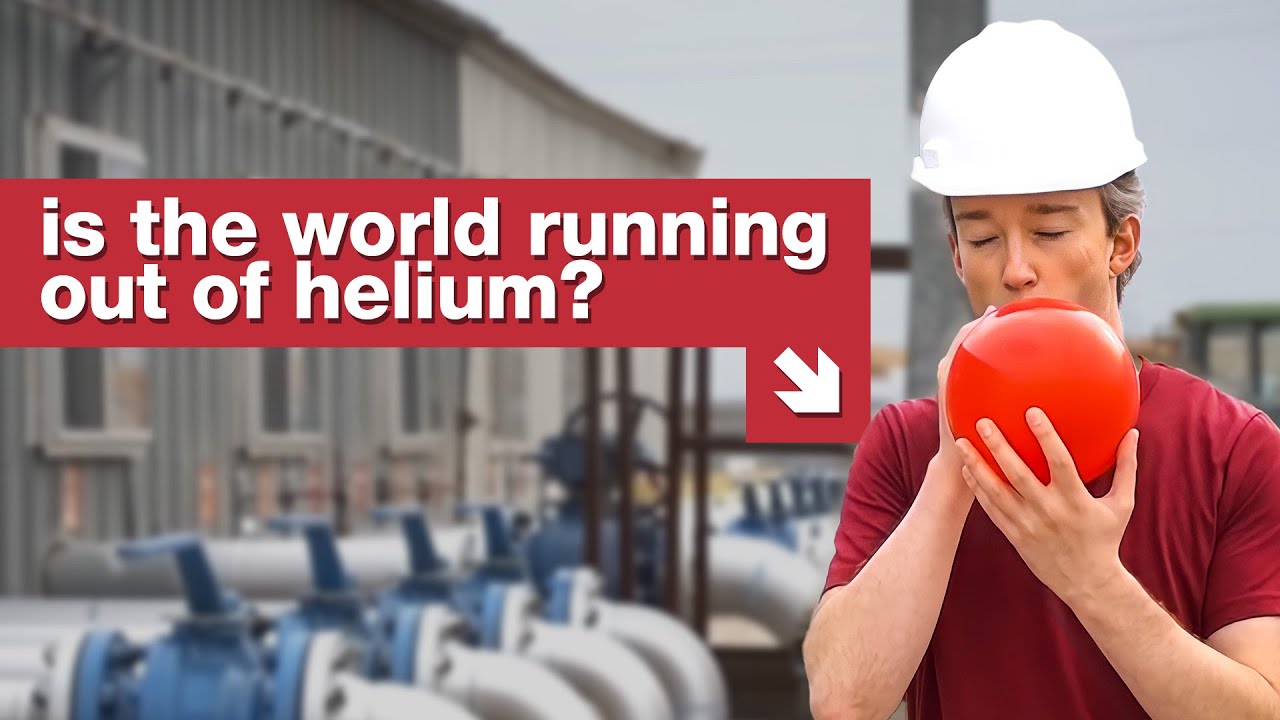
## Background Published by Tom Scott on YouTube on November 25, 2019, this video investigates the US National Helium Reserve in Amarillo, Texas, where the federal government once held 32 billion cubic feet of helium. The video examines recurring media claims that the world is running out of helium against the reality that consumer party balloons remain widely available.
## TL;DR Visiting the Bush Dome reservoir in Amarillo, Texas, Tom Scott details how helium is formed slowly through radioactive decay and stored underground to prevent natural leakage. Although the original 1960s federal stockpile was drawn down far faster than projected due to modern industrial and scientific demand, facility officials explain that the United States still possesses 80 to 100 years of known reserves in Wyoming. While the federal program phases out its operations and transitions assets to private industry by 2021, rising market prices primarily pressure cryogenic laboratory research rather than novelty party balloons, which represent only a minor fraction of overall consumption.
## Atmosphere & style The presentation blends Tom Scott's characteristic fast-paced educational curiosity with grounded, journalistic myth-busting. Exploring the industrial facility during its annual maintenance period, the exchange between Tom and the reserve official feels relaxed, informative, and pragmatic as they unpack complex resource economics without sensationalism. The video maintains a lighthearted yet conscientious tone throughout, punctuated by Tom's decision to avoid wasting gas on a squeaky-voice gag in favor of an air-filled balloon test.
## Bulletin - [00:00](https://www.youtube.com/watch?v=mOy8Xjaa_o8&t=0s) The US National Helium Reserve in Amarillo, Texas, is winding down after largely exhausting the 32 billion cubic feet injected into the Bush Dome reservoir during the 1960s over roughly 15 years. - [02:03](https://www.youtube.com/watch?v=mOy8Xjaa_o8&t=123s) Despite persistent media reports of an imminent global helium exhaustion, known reserves in Wyoming alone hold an estimated 80 to 100 years of domestic supply. - [03:39](https://www.youtube.com/watch?v=mOy8Xjaa_o8&t=219s) The federal government plans to conclude its operations and transition all remaining Federal Helium Reserve program assets to private entities by 2021. - [03:39](https://www.youtube.com/watch?v=mOy8Xjaa_o8&t=219s) Rising prices have incentivized heavy industry to implement aggressive helium conservation and recapture, leaving novelty party balloons accounting for only a minor fraction of overall market consumption.
## Key takeaways - [00:00](https://www.youtube.com/watch?v=mOy8Xjaa_o8&t=0s) Helium is non-renewable on human timescales, created exclusively via slow radioactive decay underground before it vents into the atmosphere and bleeds off into space. - [00:00](https://www.youtube.com/watch?v=mOy8Xjaa_o8&t=0s) Crucial applications across medicine, science, and manufacturing rely on helium, notably for cooling superconducting magnets in MRI machines and conducting leak detection. - [00:00](https://www.youtube.com/watch?v=mOy8Xjaa_o8&t=0s) The Bush Dome reservoir stores gas roughly 3,500 feet underground within porous rock rather than open caverns, which prevents the leakage typical of surface storage. - [00:00](https://www.youtube.com/watch?v=mOy8Xjaa_o8&t=0s) Originally stocked with 32 billion cubic feet of helium in the 1960s to cover a century of consumption, surging modern industrial demand depleted the reservoir in about 15 years. - [02:03](https://www.youtube.com/watch?v=mOy8Xjaa_o8&t=123s) Raw gas extracted from the Bush Dome requires onsite enrichment to strip hydrocarbons, raising the helium concentration to roughly 80% alongside 20% nitrogen. - [02:03](https://www.youtube.com/watch?v=mOy8Xjaa_o8&t=123s) An enriched gas mixture travels through a dedicated 425-mile pipeline to commercial refining facilities that purify it to 100% for end users. - [02:03](https://www.youtube.com/watch?v=mOy8Xjaa_o8&t=123s) Wyoming holds an estimated 80 to 100 years of known helium reserves, counteracting alarmist assertions that the resource is disappearing entirely. - [03:39](https://www.youtube.com/watch?v=mOy8Xjaa_o8&t=219s) Resource scarcity functions primarily through market economics: shrinking supplies raise prices, which suppresses non-essential demand while incentivizing the extraction of costlier deposits. - [03:39](https://www.youtube.com/watch?v=mOy8Xjaa_o8&t=219s) Severe price volatility disproportionately strains academic and scientific research budgets dependent on liquid helium for cryogenic cooling. - [03:39](https://www.youtube.com/watch?v=mOy8Xjaa_o8&t=219s) The Federal Helium Reserve is scheduled to conclude federal management and transfer remaining operations to private ownership by 2021. - [03:39](https://www.youtube.com/watch?v=mOy8Xjaa_o8&t=219s) Contrary to public perception, party balloons constitute a very small share of the helium market due to substantial conservation and recovery practices adopted by industrial consumers.
## Detailed walkthrough ### [00:00](https://www.youtube.com/watch?v=mOy8Xjaa_o8&t=0s) The Nature of Helium and the Underground Bush Dome
Helium is fundamentally non-renewable on any human timescale. Although it is not a fossil fuel, it is generated exceedingly slowly through radioactive decay deep beneath the Earth's crust, meaning it must be managed with the same caution as finite underground resources. Once extracted, consumed, and vented into the air, it becomes prohibitively costly to recapture. Because helium is remarkably light and chemically inert, it gradually drifts upward through the atmosphere and bleeds off into space. This presents a serious dilemma given helium's industrial and scientific necessity: it cools superconducting magnets in MRI machines, aids advanced manufacturing, enables specialized scientific research, and famously provides lift for blimps and party balloons. In response to these constraints, news outlets have spent the past decade publishing breathless warnings that the global supply is on the verge of vanishing.
A substantial portion of global helium originates deep below the Great Plains of the United States, centered around Amarillo, Texas, home to the US National Helium Reserve. Standing above the storage facility, an official explains that they are positioned directly over the Bush Dome reservoir, which rests approximately 3,500 feet below the surface. Rather than being an open cavern, the geological formation functions like a sponge: solid rock to the naked eye, but riddled with microscopic pores that securely house the gas. The site was originally a depleted natural gas reservoir before the federal government recharged it in the 1960s by injecting 32 billion cubic feet of helium into the ground. While the project was engineered to preserve a century's worth of helium at 1960s consumption rates, helium's ballooning popularity across modern industries drastically accelerated that depletion timeline. The stored gas has been rapidly withdrawn over roughly 15 years, and declining pressure in the field signals that the program is drawing to a close.
“Once it's pulled up from the ground, used, and dispersed into the atmosphere, it is ludicrously expensive to recover,” Tom Scott emphasizes regarding the fundamental vulnerability of the element.
- **Geological mechanism:** Formed deep underground via slow radioactive decay. - **Reservoir depth:** The Bush Dome storage reservoir sits roughly 3,500 feet below ground level. - **Original stockpile:** 32 billion cubic feet of helium injected into a depleted natural gas reservoir during the 1960s. - **Depletion rate:** Planned to conserve a 100-year supply at 1960s consumption levels, but largely withdrawn over approximately 15 years due to surging global demand.
---
[02:03](https://www.youtube.com/watch?v=mOy8Xjaa_o8&t=123s) Extraction, Enrichment, and Known Global Reserves
Helium is famous for its capacity to slip through microscopic gaps, making it a premier industrial substance for leak detection; if a container or device permits helium to escape, a structural flaw is immediately evident. Keeping bulk helium stored underground prevents the leakage that inevitably occurs when relying on pressurized surface infrastructure, such as stainless steel containers or tanker trucks, while allowing technicians to monitor and manage the reservoir effectively. At the time of filming, the Amarillo processing facility is undergoing its annual week of scheduled maintenance, allowing Tom close access to equipment, though certain areas remain off-limits to cameras for security and operational reasons.
Because gas stored deep in the Bush Dome naturally blends with leftover natural gas inside the geological formation, it does not emerge at commercial purity. It must be processed through an onsite enrichment unit to strip out hydrocarbons and raise the helium concentration to roughly 80%, with the remaining 20% consisting of nitrogen impurity. This enriched mixture is subsequently pumped into a dedicated 425-mile pipeline running to commercial refining plants, which process the gas up to 100% purity for end users. Despite alarmist narratives, the official points out that the US still holds an estimated 80 to 100 years of known helium reserves located in Wyoming. Recent market price surges have incentivized private industry to locate and develop previously untapped deposits, ensuring fresh supply will enter the market to relieve near-term shortages.
“So to say that we're running out of helium is actually a little bit incorrect,” explains the facility representative regarding the panic over supply depletion.
```mermaid flowchart TD accTitle: Helium Extraction and Refining Flow accDescr: Flowchart showing how helium moves from the underground Bush Dome to commercial purity.
subgraph Underground["Underground Reservoir"] A["Bush Dome Reservoir<br/>(3,500 ft underground)"] B["Raw Gas Mixture<br/>(Helium mixed with natural gas)"] A --> B end
subgraph AmarilloFacility["Amarillo Reserve Facility"] C["Enrichment Unit"] D["Enriched Product<br/>(80% Helium, 20% Nitrogen)"] B -->|"Extracted"| C C -->|"Hydrocarbons removed"| D end
subgraph Distribution["Distribution & Final Processing"] E["425-Mile Pipeline"] F["Private Helium Plants<br/>(Refined to 100% purity)"] D --> E E --> F end ```
- **Enrichment specifications:** The onsite unit concentrates blended field gas up to approximately 80% helium and 20% nitrogen. - **Transport pipeline:** A specialized 425-mile pipeline transports enriched gas directly to commercial processing facilities. - **Wyoming reserves:** The United States maintains an estimated 80 to 100 years of known reserves located in Wyoming fields.
---
[03:39](https://www.youtube.com/watch?v=mOy8Xjaa_o8&t=219s) Free Markets, Reserve Privatization, and the Balloon Debate
Within a global market economy, running out of an essential commodity rarely means reaching absolute zero overnight. Instead, diminishing supply drives prices progressively higher until demand contracts to match availability. These rising price points subsequently transform deeper, more complex, and costlier deposits into viable commercial targets. However, these market swings create extreme price volatility, leaving academic and scientific researchers scrambling to secure funding just to keep their experiments cooled and running. It also directly drives up the consumer cost of novelty party items.
Administratively, the Federal Helium Reserve is navigating the final two years of its planned phaseout. By the year 2021, the federal government will conclude its operational activities and transfer the remaining reserve assets to private entities. When asked about public criticism surrounding helium party balloons during an apparent shortage, the reserve official admits to being an unapologetic fan of balloons, noting that rigorous conservation in high-value industries means party decorations account for only a tiny fraction of total consumption. With enhanced industrial recovery and fresh reserves coming online, the official insists party balloons have received an unfair reputation. Tom Scott closes by noting he initially considered delivering his wrap-up in a classic squeaky helium voice, but refrained to avoid setting a poor example for conservation; he instead releases a balloon filled with standard shop air, relieved when it catches the breeze and floats away on cue.
“With the price of helium where it is, there's so much conservation going on now that the party balloons are actually a very small part of the market,” the facility representative explains.
- **Privatization deadline:** Federal helium operations and program assets are scheduled to transfer to private commercial entities by 2021. - **Scientific impact:** Volatile pricing heavily strains academic lab budgets reliant on helium for cryogenic cooling and research instruments. - **Market perspective:** Increased recovery efforts across heavy industry and new supply wells have minimized the relative consumption footprint of novelty balloons.
## Notable quotes > [03:39](https://www.youtube.com/watch?v=mOy8Xjaa_o8&t=219s) With the price of helium where it is, there's so much conservation going on now that the party balloons are actually a very small part of the market, — Facility representative
## Mentioned Tom Scott, US National Helium Reserve, Federal Helium Program, Bush Dome, Amarillo, Texas, Wyoming, Great Plains, Michelle Martin
## Video description At the National Helium Reserve in Amarillo, Texas, the US government once stored 32 billion cubic feet of helium. There have been breathless news articles recently saying the world's running out: but it's still possible to buy party balloons. What's going on?
More about the Federal Helium Program: https://www.blm.gov/programs/energy-and-minerals/helium/federal-helium-program
Edited by Michelle Martin https://www.youtube.com/@OnTheCrux
🟥 MORE FROM TOM: https://www.tomscott.com/ (you can find contact details and social links there too) ❓ LATERAL, free weekly podcast: https://lateralcast.com/ https://youtube.com/lateralcast/ 👥 THE TECHNICAL DIFFICULTIES: https://youtube.com/techdif
[Source](https://www.youtube.com/watch?v=mOy8Xjaa_o8)