Thunderf00t Cuts 5kg in 50 Days, Citing Inefficiency of Exercise
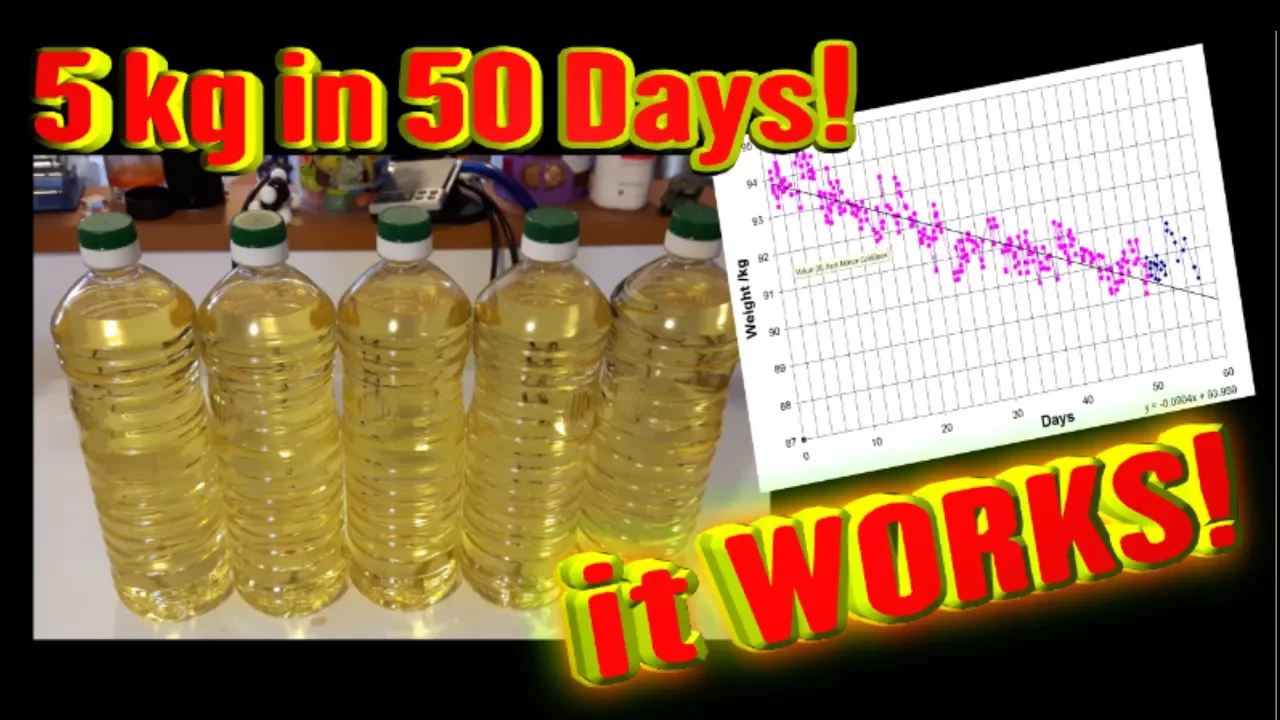
The '5kg in 50 days' Diet! — Thunderf00t

Thunderf00t

Cutting caloric intake proves vastly more efficient than working out because an hour of vigorous cycling expands total daily metabolic expenditure by only 16 percent.

AI-assisted summary of The '5kg in 50 days' Diet! — original source. Check the original for full context.

Source published:

Key ideas

  • Thunderf00t outlines a thermodynamic mass-balance approach to losing 5 kilograms over 50 days by maintaining a consistent deficit of roughly 100 grams per day. (0:00)
  • An hour on an exercise bike increases daily metabolic burn by only about 16% directly, making dietary calorie reduction significantly more time-efficient for weight loss. (5:23)
  • Physical side effects such as tongue sticking and sudden leg cramps emerged around day 45 to 55, prompting a planned diet pause due to suspected magnesium or mineral deficiencies. (12:51)
  • Claims that immediate weight gain during early exercise is fat turning into muscle are biologically false due to density ratios and nitrogen chemistry; rapid shifts stem primarily from water-bound glycogen. (17:27)

Detailed notes

## Background Published by Thunderf00t on YouTube on July 16, 2017, this video breaks down his personal experience losing weight through fundamental thermodynamic principles. In the video description, he explains that weight loss relies on a simple mass balance of expending more energy than consumed, noting that while eating less requires enduring initial hunger, the body quickly adapts after the first week.

## TL;DR Thunderf00t frames weight loss as a strict mass-balance equation governed by thermodynamic inputs and respiratory exhaust rather than popular dieting fads. Targeting a steady deficit of roughly 100 grams per day, he managed to lose five kilograms over 50 days by restricting calories while keeping daily pleasures like coffee and chocolate intact. Along the way, he uses physical props, thermal imaging, and back-of-the-envelope calculations to illustrate fat loss, evaluate exercise versus diet, and debunk myths surrounding spot reduction and converting fat into muscle. After pausing at the five-kilogram mark due to minor deficiency symptoms, he plans to test whether an active upcoming travel itinerary can shed the remaining weight through movement alone.

## Atmosphere & style The presentation carries Thunderf00t's trademark scientific, no-nonsense delivery, pairing pragmatic laboratory-style reasoning with relatable personal anecdotes. Holding up five liters of cooking oil directly to the camera sets a blunt, visual tone that cuts through commercial diet hype. Watching it feels like a frank, analytical debrief that combines the satisfaction of solving an engineering problem with the grounded pride of completing a tough personal endurance test.

## Bulletin - [00:00](https://www.youtube.com/watch?v=mTABw0EyIWY&t=0s) Thunderf00t outlines a thermodynamic mass-balance approach to losing 5 kilograms over 50 days by maintaining a consistent deficit of roughly 100 grams per day. - [05:23](https://www.youtube.com/watch?v=mTABw0EyIWY&t=323s) An hour on an exercise bike increases daily metabolic burn by only about 16% directly, making dietary calorie reduction significantly more time-efficient for weight loss. - [12:51](https://www.youtube.com/watch?v=mTABw0EyIWY&t=771s) Physical side effects such as tongue sticking and sudden leg cramps emerged around day 45 to 55, prompting a planned diet pause due to suspected magnesium or mineral deficiencies. - [17:27](https://www.youtube.com/watch?v=mTABw0EyIWY&t=1047s) Claims that immediate weight gain during early exercise is fat turning into muscle are biologically false due to density ratios and nitrogen chemistry; rapid shifts stem primarily from water-bound glycogen.

## Key takeaways - [00:00](https://www.youtube.com/watch?v=mTABw0EyIWY&t=0s) Weight loss strictly follows thermodynamic conservation of mass: energy expenditure must exceed intake. - [00:00](https://www.youtube.com/watch?v=mTABw0EyIWY&t=0s) Baseline human metabolic maintenance requires approximately 0.5 kg of oil or 1 kg of sugar per day. - [00:00](https://www.youtube.com/watch?v=mTABw0EyIWY&t=0s) Starvation diets can produce rapid loss but lead to dangerous muscle and tissue cannibalization, requiring a comfortable deficit instead. - [03:07](https://www.youtube.com/watch?v=mTABw0EyIWY&t=187s) Targeting a safe deficit of 100 grams per day equates to shedding 1 kg every 10 days, requiring substantial psychological endurance. - [05:23](https://www.youtube.com/watch?v=mTABw0EyIWY&t=323s) Mass expelled from the body exits primarily through respiration as carbon dioxide resulting from fuel oxidation. - [05:23](https://www.youtube.com/watch?v=mTABw0EyIWY&t=323s) Vigorous cycling boosts respiration 3 to 4 times over resting rates, but only raises total 24-hour calorie expenditure by roughly 16% directly. - [09:22](https://www.youtube.com/watch?v=mTABw0EyIWY&t=562s) Cutting food intake by roughly one-third is far less time-consuming than burning the equivalent calories through daily structured exercise. - [09:22](https://www.youtube.com/watch?v=mTABw0EyIWY&t=562s) Adapting to reduced caloric intake takes about one week to break psychological eating habits before hunger levels stabilize. - [09:22](https://www.youtube.com/watch?v=mTABw0EyIWY&t=562s) Thermal imaging demonstrates that abdominal fat acts as a cold, insulating layer that softens and reduces noticeably within weeks. - [12:51](https://www.youtube.com/watch?v=mTABw0EyIWY&t=771s) Prolonged dieting risks mineral deficiencies such as magnesium, leading to symptoms like muscle cramps that necessitate a maintenance pause. - [14:49](https://www.youtube.com/watch?v=mTABw0EyIWY&t=889s) All-day physical activity during travel can outpace high-calorie fast food intake due to non-stop exertion and elevated recovery burn. - [17:27](https://www.youtube.com/watch?v=mTABw0EyIWY&t=1047s) Losing 5 kg significantly improves the body's power-to-weight ratio because existing musculature is accustomed to carrying a heavier frame. - [17:27](https://www.youtube.com/watch?v=mTABw0EyIWY&t=1047s) Early exercise weight gain represents water-heavy glycogen stores rather than immediate muscle building from fat. - [21:25](https://www.youtube.com/watch?v=mTABw0EyIWY&t=1285s) Spot reduction is a fallacy; exercise builds underlying muscle locally, but systemic circulation dictates where the body mobilizes fat. - [21:25](https://www.youtube.com/watch?v=mTABw0EyIWY&t=1285s) Completing a structured 50-day caloric deficit fosters personal discipline, proving long-term psychological control over dietary habits.

## Detailed walkthrough ### [00:00](https://www.youtube.com/watch?v=mTABw0EyIWY&t=0s) The 5kg Milestone and the Thermodynamic Reality

Holding up containers totaling 5 liters of oil, Thunderf00t illustrates what five kilograms of lost weight physically looks like after roughly 50 days of dieting. He acknowledges that hauling around five liters of oil on camera might look crazy, but points out how visually striking it is to see the exact volume of mass he eliminated from his body. Reflecting on the diet industry, he laments how much superstition and nonsense surround weight management, contrasting that confusion with basic physics: “The thing is there is so much voodoo associated with losing weight, and so I decided I'd have a more scientific approach to this—a more thermodynamic mass balance type approach.”

Recalling his earlier years, he notes that in his youth he could eat anything he wanted without gaining or losing a gram. That effortless equilibrium ended around age 35, and by his mid-40s his weight had gradually crept up to roughly 95 kilograms (over 200 pounds), forcing him to realize he had to take control. Looking at human metabolism through thermodynamic inputs and outputs, he calculates that his body requires the equivalent of about half a kilogram of oil or one kilogram of sugar per day to function. While a complete water-only starvation diet could theoretically burn through 5 kilograms of fat in just 10 days, he stresses that such an extreme approach is dangerous and counterproductive because a starved body turns desperate and cannibalizes essential tissues. To remain healthy and sustainable, a diet must be comfortable.

- Baseline daily energy demand equates to approximately 0.5 kg of fat/oil or 1 kg of sugar. - A total water fast produces a theoretical loss of roughly 0.5 kg per day, but risks severe health degradation through self-cannibalization. - Thunderf00t targeted a sustainable, comfortable average loss of roughly 100 grams per day.

---

[03:07](https://www.youtube.com/watch?v=mTABw0EyIWY&t=187s) Realistic Timeframes and the Long Game

A sensible daily reduction of 100 grams means losing roughly one kilogram every ten days, making a 5-kilogram loss an endeavor of nearly two months, and a 10-kilogram target roughly a four-month commitment. Thunderf00t emphasizes that anyone wanting to alter their body must first be psychologically prepared for the duration required. To demonstrate the mathematics of massive weight loss, he points to YouTuber Boogie2988, who weighed around 200 kilograms—more than double Thunderf00t’s weight.

He observes that individuals carrying that much excess weight possess immense physical strength simply from moving half their body weight around every day, like hauling an enormous backpack, which also gives them a much higher resting capacity to burn calories. However, shedding 100 kilograms at a safe pace of 100 grams a day requires about 1,000 days. Stressing the mental endurance needed for such an undertaking, Thunderf00t argues: “If you're going to commit to actually losing the weight, you've got to be in it for the long game.”

- Target pace: 100 grams lost per day equals 1 kilogram every 10 days. - Losing 100 kg safely requires roughly 1,000 days (nearly three full years). - Heavier individuals burn more total calories due to the physical work of moving higher baseline body mass.

---

[05:23](https://www.youtube.com/watch?v=mTABw0EyIWY&t=323s) Respiration, Exercise, and Calorie Expenditure

At a fundamental physical level, weight loss obeys strict conservation of mass: the body must expend more energy than it consumes. Thunderf00t likens the human body to an outboard motor that burns fuel (fat and sugar) and vents exhaust gases through the mouth. Atmospheric air consists of roughly 80% inert nitrogen and 20% oxygen. When inhaled oxygen oxidizes fuel within cells, it is exhaled as approximately 15% oxygen and 5% carbon dioxide. Because this ratio remains essentially constant whether resting or exercising, the total mass of carbon expelled directly correlates to breathing volume.

```mermaid flowchart TD accTitle: Respiration and Fuel Combustion Cycle accDescr: Diagram illustrating how inhaled oxygen oxidizes internal fat stores and is exhaled as carbon dioxide.

subgraph Inhale ["Inhaled Air"] N1["80% Nitrogen"] O1["20% Oxygen"] end

subgraph Body ["Metabolic Combustion"] Fuel["Body Stores: Fat / Sugar"] O1 -->|"Combustion"| Fuel end

subgraph Exhale ["Exhaled Exhaust"] N2["80% Nitrogen (Unchanged)"] O2["15% Oxygen"] CO2["5% Carbon Dioxide (Mass Lost)"] Fuel --> CO2 Fuel --> O2 end ```

One cannot simply hyperventilate while sitting on the sofa to shed weight, because breathing is triggered by internal carbon dioxide buildup, which only increases when metabolic output rises. Examining exercise as a mechanism to burn calories, Thunderf00t evaluates the numbers for an exercise bike: vigorous aerobic cycling increases breathing rates by three to four times over resting baseline. Consequently, one hour on the bike yields the equivalent of roughly four extra hours of standard resting metabolism. Spread across a 24-hour day (adding 4 hours of metabolic equivalent to 24 baseline hours), that vigorous hour increases total daily caloric expenditure by only about 16%. Pointing out the stark reality of the math, Thunderf00t explains: “The only way that you can get rid of more carbon dioxide and burn more stuff is to breathe more.”

---

[09:22](https://www.youtube.com/watch?v=mTABw0EyIWY&t=562s) Dietary Strategy, Habit Breaking, and Thermal Imaging

Because grinding out an hour on an exercise bike every day yields only a modest 16% metabolic bonus and demands significant time, Thunderf00t concluded that cutting intake by roughly one-third is vastly more efficient. To ensure the diet remained sustainable over several months, he refused to give up the treats that provided daily enjoyment: chocolate, coffee, and alcohol (beer or wine). To offset those indulgences, he relied on salads for lunch and consumed minimal food in the evening. He notes that a large bowl of leafy green salad contains virtually no dry mass once dehydrated, meaning one can consume large volumes without gaining weight.

The primary obstacle during the initial seven days was breaking habits rather than physical starvation. The body and mind crave accustomed routines, such as ordering an evening pizza, requiring roughly a week to adjust. Reflecting on this psychological hurdle, Thunderf00t notes: “There are two things: you've got to sort psychologically break the habit, and then you've got to become acclimatized to the new normal, and that takes about a week.”

Once adapted, the hunger subsided and the routine became easy. Monitoring his body with a thermal infrared camera, he observed that fatty tissue acts as an insulator and shows up noticeably colder on the surface compared to the warm, heat-dumping areas around the head and shoulders. For men, this cold insulating layer collects prominently across the belly. Within three weeks of maintaining his 100-gram-per-day deficit, that abdominal fat layer had not only visibly shrunk when pinched between the fingers, but its physical texture had softened and changed significantly.

[12:51](https://www.youtube.com/watch?v=mTABw0EyIWY&t=771s) Physical Symptoms and Pausing the Diet at 5 Kilograms

After adhering strictly to the regimen for over a month, physical signs began to emerge that signaled it was time to take a temporary break. Around day 45, an unusual change occurred in the mouth where the tongue started adhering noticeably to the inner cheek. Roughly ten days later, sudden leg cramps started developing after sitting down for long periods and abruptly standing up. Research suggested this was likely symptomatic of a magnesium or mineral deficiency. Having reached a full five-kilogram loss—representing the halfway point toward an ultimate goal of losing ten kilograms, or approximately 10% of total body weight—a pause seemed sensible to let the body stabilize.

While the primary approach was caloric restriction, the alternative path to weight loss is increasing physical activity. For someone with a packed daily schedule, spending an hour on an exercise bike every single day is difficult to sustain. Although earlier rough calculations suggested an hour of stationary biking only equated to about a 15% reduction in daily caloric intake, that figure only accounts for the mechanical work done during the session itself. In practice, the metabolic recovery process afterward can burn two to three times the energy of the workout itself, making an hour of daily exercise a very potent tool if one can manage the time.

```mermaid flowchart TD accTitle: Two Approaches to Weight Loss accDescr: Diagram contrasting calorie restriction with an active lifestyle and exercise recovery. subgraph CR["Approach 1: Calorie Intake"] A["Cut Daily Calories"] --> B["Effective & Time-Efficient"] B --> C["Risk of Deficiencies (e.g. Magnesium)"] end subgraph EX["Approach 2: Caloric Expenditure"] D["Exercise (e.g., 1 hr Bike)"] --> E["Direct Burn (~15% Equivalent)"] E --> F["Post-Exercise Recovery Burn (2-3x Work)"] F --> G["Requires High Daily Time Investment"] end ```

[14:49](https://www.youtube.com/watch?v=mTABw0EyIWY&t=889s) The Fast Food Hiking Phenomenon and the US Road Trip

An upcoming trip to the United States presented an opportunity to test the exercise side of the mass-balance equation. The planned itinerary includes viewing the solar eclipse, checking on Solar Roadways installations, visiting the Hyperloop test track, measuring radiation levels on Californian beaches, and revisiting locations photographed over a decade prior across the Rocky Mountains and Pacific regions to see how the landscape changed during the hottest decade on record.

On similar journeys taken a decade earlier, daily sustenance consisted almost entirely of fast food chains like McDonald’s, Burger King, and Wendy’s. This was not due to personal culinary preference, but pure logistics: fast food provided a rapid meal, public restrooms, and reliable Wi-Fi. Despite consuming high-calorie junk food for over a month, those trips consistently ended with returning several kilograms lighter. The continuous physical exertion of hiking and moving from sunrise to sunset easily outpaced the caloric surplus of fast food. This raised the question of whether a similar active lifestyle on the upcoming trip could shed the remaining five kilograms without any deliberate dietary restrictions:

> “I'm curious to see if you know making no effort to cut calories or anything like that just living an active lifestyle which is something I really can't do when I'm working here whether I I just lose the rest even though I'm eating junk food all the time.”

- **Fast food logistics**: Combined speed, dependable restrooms, and Wi-Fi into an indispensable travel base. - **Physical output**: Being active all daylight hours outmatched the dense caloric intake of burgers and fries. - **Upcoming experiment**: Testing whether non-sedentary travel alone breaks through the plateau down to the weight of ten years ago.

[17:27](https://www.youtube.com/watch?v=mTABw0EyIWY&t=1047s) The Physics of Weight Loss and Debunking Muscle-for-Fat Myths

Physically packaging five kilograms into a backpack provides a visceral realization of the unnecessary load carried around every day. Shedding that weight noticeably alters the body's power-to-weight ratio; because the leg and core muscles were conditioned to carry a heavier frame, losing five kilograms immediately results in feeling springier, fitter, and noticeably lighter on one's feet.

This leads directly into dispelling widespread dieting misconceptions. A prominent myth claims that an immediate weight gain after starting an exercise routine is simply "turning fat into muscle." This assertion collapses under basic physics and biology. Fat has a density of roughly 0.89 to 0.9 kg/L, while muscle tissue is only 10% to 20% denser. Gaining a single kilogram by swapping volume would require transforming immense volumes of oil into muscle overnight, which is physiologically impossible. Furthermore, muscle consists primarily of protein containing nitrogen, whereas fats contain zero nitrogen. Instead, this initial weight gain is almost certainly water-heavy glycogen stored in the liver and muscle tissue:

> “The reason this just crashes and burns almost immediately if you look at the density of fat it's 8.9 kilos per liter or something you take a look at muscle it's only 10 maybe 20% denser which means that if you put on just one extra kilo uh if it was indeed you were turning fat into muscle that would mean you're turning like 5 liters of oil into fat uh in a very short period of time which is just it's just not possible the your body takes quite a long time to put on 5 kilos of muscle...”

- **Energy density comparison**: Daily maintenance requires roughly 0.5 liters of oil, 1 kilogram of pure sugar, or roughly 3 kilograms of hydrated glycogen. - **Glycogen characteristics**: Highly labile, rapidly accessible fuel stored with significant amounts of water, making it a heavy but temporary energy reservoir.

[21:25](https://www.youtube.com/watch?v=mTABw0EyIWY&t=1285s) The Spot-Reduction Fallacy and the Psychology of Control

Another persistent myth is targeted fat reduction—the notion that specific exercises can selectively burn fat from problem areas like the stomach or buttocks. In reality, fat mobilization is governed by systemic circulation and hormonal signaling. While lifting weights directly determines where muscle is built, exercises like sit-ups will only strengthen abdominal musculature underneath without dictating where the body draws its lipid reserves:

> “So if you want to get rid of uh you know fat on your belly or something doing uh situps will do nothing for you it'll get you more muscle it won't burn the the fat.”

Beyond the physical changes, completing a 50-day diet provides a profound psychological benefit. Managing caloric intake is far simpler when cooking for oneself without social pressures or family members encouraging overeating. Maintaining consistency over several weeks builds self-mastery and proves that one possesses absolute control over one's own habits. Reaching the five-kilogram milestone feels akin to summiting a mountain: the grueling duration gives way to a genuine sense of personal achievement, accompanied by a touch of pride in knowing the goal was met through discipline alone.

[24:53](https://www.youtube.com/watch?v=mTABw0EyIWY&t=1493s) Final Recommendation and Health Benefits

Thunderf00t concludes his breakdown of the diet by reflecting on the overall positive impact the experience has had, particularly pointing out the associated health benefits. Reflecting on the challenge and the resulting transformation, he offers an unequivocal endorsement of taking on the regimen, noting how worthwhile the process is from both a physical and psychological standpoint. Summarizing his final verdict to the audience, Thunderf00t emphasizes, “I would strongly recommend it on so many levels.” The video then draws to a close as the outro music plays out.

## Notable quotes > [00:00](https://www.youtube.com/watch?v=mTABw0EyIWY&t=0s) The thing is there is so much voodoo associated with losing weight, and so I decided I'd have a more scientific approach to this—a more thermodynamic mass balance type approach. — Thunderf00t

> [05:23](https://www.youtube.com/watch?v=mTABw0EyIWY&t=323s) The only way that you can get rid of more carbon dioxide and burn more stuff is to breathe more. — Thunderf00t

## Mentioned Thunderf00t, Boogie2988, McDonald's, Burger King, Wendy's, Solar Roadways, Hyperloop, Rocky Mountains, California

## Video description Theres a simple mass balance to losing weight. You have to expend more energy than you consume. If you do that, you will lose weight.

After that your options become: 1) more exercise 2) consume less.

Some back of the envelope calculations show that you have to do quite a lot of exercise to burn off 30 % extra calories (while eating the same amount). Great for keeping you fit of course, but a hard way to lose weight. Eating less is less time consuming but of course means you have to deal with the hunger. After the first week however your body adapts to the new norm and things get a lot easier.

I thought I would share my experiences here. Yes its hard, but in many ways its like climbing a mountain. Once you've done it, you feel so much better, and have a great sense of achievement!

I wont be adding this video to the patreon supported feed, however if you want to support this channel directly: https://www.patreon.com/Thunderf00t

[Source](https://www.youtube.com/watch?v=mTABw0EyIWY)

中文简报

Thunderf00t以运动效率低下为由50天减重5公斤 减少热量摄入被证实远比运动更高效,因为一小时的高强度骑行仅能使全天代谢消耗增加16%。 Thunderf00t将减重视为一个严格受热力学输入和呼吸排出控制的质量平衡方程,而非追随流行的节食风潮。他设定了每天约100克的稳定热量缺口,在保留咖啡和巧克力等日常喜好的同时,通过限制热量在50天内成功减重5公斤。在此过程中,他借助实体道具、热成像和粗略计算来阐述脂肪消耗,评估运动与饮食的效果,并驳斥了局部减脂以及脂肪转化为肌肉的迷思。在达到5公斤减重目标后,由于出现轻微的营养缺乏症状,他暂停了该计划,并打算测试接下来行程活跃的旅行能否仅靠运动减掉剩余体重。 Thunderf00t阐述了一种基于热力学质量平衡的方法,通过保持每天约100克的稳定缺口,在50天内减重5公斤。 (0:00) 骑健身车一小时仅能使每日代谢消耗直接增加约16%,这使得通过节食减少热量在减重上具有高得多的时间效率。 (5:23) 在第45天至55天左右出现了舌头黏滞和突发腿部抽筋等身体副作用,因怀疑缺乏镁或矿物质,促成了计划中的节食暂停。 (12:51) 关于运动初期体重立即增加是由于脂肪转化为肌肉的说法,从密度比和氮化学的角度来看在生物学上是不成立的;体重的快速波动主要源于与水结合的糖原。 (17:27)

Reading summary

Thunderf00t argues that weight loss should be treated as a thermodynamic mass-balance problem rather than a collection of dietary superstitions, advocating for a moderate, sustainable daily deficit of roughly 100 grams over extreme fasting or exhausting exercise routines. Thermodynamics and the Chemistry of Respiration (5:23) Viewing human metabolism through basic physics, Thunderf00t calculates that his daily energy expenditure equals roughly 0.5 kilograms of oil, 1 kilogram of sugar, or 3 kilograms of hydrated glycogen. While a total water fast could theoretically burn half a kilogram of fat daily, he cautions that starvation forces the body to cannibalize essential tissues. Instead, weight loss obeys strict conservation of mass via cellular respiration: inhaled atmospheric air (roughly 20% oxygen and 80% nitrogen) oxidizes stored fuels and is exhaled as approximately 5% carbon dioxide, 15% oxygen, and 80% nitrogen. Because breathing is regulated by internal carbon dioxide buildup, the only physical way to expel more carbon mass is to raise metabolic output. Dietary Restriction Versus Direct Exercise Expenditure (9:22) Thunderf00t points out that vigorous stationary cycling increases respiration rates by three to four times over resting baseline, meaning a one-hour workout yields about four hours of resting metabolic equivalent. Spread across a 24-hour day, this direct mechanical effort only expands total daily caloric expenditure by roughly 16%, even though post-exercise recovery can eventually burn two to three times the energy of the session itself. Because daily workouts are difficult to schedule, he found reducing caloric intake by one-third far more efficient. To keep the regimen sustainable, he retained daily treats—specifically coffee, chocolate, and alcohol—while eating large, low-calorie green salads for lunch and minimizing evening meals. Adapting to the new routine required roughly one week to overcome habitual cravings, such as ordering evening pizza. Using thermal infrared imaging, he observed that fatty tissue acts as a cold insulating layer across the belly, which visibly contracted and softened in texture within three weeks of maintaining a 100-gram daily deficit. Pacing, Physical Symptoms, and the Halfway Pause (12:51) Thunderf00t emphasizes that shedding weight requires long-term commitment. A safe pace of 100 grams lost per day amounts to 1 kilogram every ten days, meaning a 5-kilogram loss requires nearly two months and a massive 100-kilogram reduction—such as for individuals weighing 200 kilograms—demands roughly 1,000 days. While heavier individuals naturally burn more calories simply moving their baseline frame, mental endurance remains critical. After 45 to 55 days of strict restriction, physical warning signs prompted Thunderf00t to pause at his 5-kilogram milestone. His tongue began sticking to his inner cheek, and he developed abrupt leg cramps when standing up, which he attributed to mineral deficiencies such as low magnesium. Halting the diet halfway toward his 10-kilogram target allowed his body to stabilize while preserving the psychological achievement and improved power-to-weight ratio. Debunking Muscle Conversion and Spot Reduction (17:27) Thunderf00t rejects the common claim that sudden initial weight gain from exercise represents fat converting into muscle. Muscle is only 10% to 20% denser than fat (which has a density of about 0.89 to 0.9 kg/L), and muscle requires dietary nitrogen that fats do not contain; gaining a kilogram of muscle overnight would require converting impossible volumes of oil. Instead, rapid weight fluctuations stem from water-heavy glycogen stores in the liver and muscles. Similarly, he dismisses spot reduction, explaining that abdominal exercises like sit-ups build localized muscle but cannot direct the systemic, hormone-driven mobilization of fat stores. Thunderf00t endorses the 50-day regimen for fostering self-mastery and physical health, while preparing to test the opposite approach: whether continuous daylight activity during a US hiking trip can burn his remaining five kilograms despite eating an unconstrained fast-food diet.

精炼阅读摘要

科普创作者 Thunderf00t 主张从热力学与质量守恒定律看待减重,指出人体如同依靠呼吸排出氧化废气的引擎;他通过每天创造约100克的适度赤字,在50天内减重5公斤,并强调建立可持续心理习惯与辨析常见健身迷思的重要性。 质量守恒与呼吸代谢机制 (5:23) Thunderf00t 批评减重行业充斥着迷信说辞,主张回归热力学与质量守恒的科学本质。人体运作需要能量输入与输出,其基础日常能量需求大致相当于每天消耗0.5公斤油脂或1公斤糖分。虽然纯喝水断食理论上能以每天约0.5公斤的速度在10天内消耗掉5公斤脂肪,但极度饥饿会导致身体反噬自体重要组织,因此既危险又不可持续。他将身体比作依靠呼吸排气的引擎,吸入含约80%氮气与20%氧气的空气,在细胞内氧化脂肪或糖类燃料后,呼出约15%氧气与5%二氧化碳。由于呼出气体中二氧化碳比例在静止和运动时基本恒定,身体排出的碳质量直接取决于通气总量,减重的实质正是通过呼吸将脂肪分解产物排出体外。 饮食控制与习惯重塑的长期策略 (9:22) 针对能量支出途径,Thunderf00t 评估了剧烈运动的局限性:在健身车上高强度骑行1小时能使呼吸率提高到静息水平的3至4倍,相当于增加4小时的基础代谢量,但摊薄到整日24小时中,仅能将全天热量消耗提升约16%。相比耗费大量时间去骑车,将每日饮食摄入削减约三分之一更为高效。为了确保计划能持续数月,他保留了巧克力、咖啡与少量酒类以维持生活乐趣,午餐改用脱水后几乎无干重的大碗绿叶沙拉充饥,并大幅缩减晚餐。他指出最初7天的主要挑战不是生理饥饿,而是打破以往订外卖等惯性行为的心理习惯;一旦经过约一周适应了“新常态”,饥饿感便会消退,饮食控制就会变得自然且易于维持。 阶段性身体反馈与运动补偿效应 (12:51) Thunderf00t 定下每日减重约100克(即每10天1公斤)的温和节奏,使5公斤减重成为历时约50天的长期工程。在第45天左右,他发现舌头出现粘连口腔内侧的异常感,约10天后又在久坐突然站立时发生腿部痉挛,查阅资料推测这可能是镁等矿物质缺乏所致。鉴于已达成减重5公斤的阶段目标(达到预期减重10公斤的一半),他决定暂时中止节食让身体恢复。不过他也补充指出,此前单次骑行仅贡献约15%热量差的估算只计入了机械做功,实际上运动后的代谢恢复过程还会燃烧相当于锻炼本身2至3倍的能量;结合此前高强度徒步旅行中即便全吃快餐也能变瘦的经历,他提出除了严格节食,保持全天持续活动也是打破平台期的有效路径。 破除局部减脂与脂肪变肌肉的迷思 (17:27) Thunderf00t 借助物理学常识驳斥了健身领域的流行误区。针对刚开始运动后体重不降反升是“脂肪转化成肌肉”的说法,他指出脂肪密度约为0.89至0.9 kg/L,而肌肉密度仅比脂肪高出10%至20%,短期内依靠体积置换增加一整公斤在生理上绝无可能,且肌肉富含氮元素而脂肪不含氮;运动初期迅速增加的重量实际上是肝脏和肌肉中伴随大量水分储藏的糖原。同时,他也反驳了通过仰卧起坐减去腹部脂肪的“局部减脂”幻想,强调脂肪的分解动员受全身血液循环与激素信号调控,专项力量训练只能增强深层肌肉,无法指定身体从特定部位抽取脂肪储备。通过红外热成像仪观察,腹部脂肪层如同冷隔热层,只有维持全身热量赤字,该区域的脂肪才会逐渐变薄变软。 Thunderf00t 总结认为,以50天减重5公斤为代表的受控节食不仅带来了轻盈的推重比和切实的生理健康改善,更通过严谨自律赋予个体强大的自我掌控感与心理成就;但他留下的开放性课题是,在随后行程满满的美国公路旅行中,能否仅靠全天活跃的徒步生活方式抵消高热量快餐,在不刻意节食的情况下顺利减掉剩余的5公斤。

Detailed notes — zh

## Background 该视频由科学科普博主 Thunderf00t 于 2017 年 7 月 16 日发布在 YouTube 平台。视频简介指出,减肥本质上是一个简单的质量与能量守恒问题,人们只能选择多运动或少摄入;由于运动制造热量缺口的代价极高,博主通过自身实践分享了少吃减重的心得,并强调虽然过程艰辛,但熬过第一周的适应期后便能像登山成功一样收获巨大的成就感与健康提升。 ## TL;DR Thunderf00t 从物理热力学与质量守恒视角出发,破除了市场上流行的减肥迷思,提出通过每日削减约三分之一卡路里摄入、以大体积沙拉为核心的温和长线减重策略。他详细解析了脂肪经呼吸排出为二氧化碳的生化机制,并通过算力对比论证了单纯依赖运动减脂的低性价比,同时辟谣了“脂肪变肌肉”与“局部减脂”的伪科学说法。在历经 50 天成功减去 5 升植物油等重(5 公斤)的脂肪后,他分享了减重对人体推重比、精神面貌的提振,并提醒减重者警惕抽筋等微量元素匮乏信号,适时进行阶段性休整。 ## Atmosphere & style 整期视频充满着硬核科学家特有的严谨与直率,开场直接手提 5 升食用油直观具象化减脂成果,语言风格犀利且条理分明。Thunderf00t 借助红外热成像、黑板算式推导与幽默自嘲,将原本枯燥痛苦的节食过程解构成一场可量化的物理实验。观众在观看时既能感受到打破伪科学谬论的理性快感,又能在博主谈及深夜渴望披萨、腿部抽筋等真实生理挣扎中体会到真切的共情与坚定的激励感。 ## Bulletin - [00:00](https://www.youtube.com/watch?v=mTABw0EyIWY&t=0s) 基于热力学质量平衡,人体的每日能量基准消耗约折合半升植物油或一公斤食糖,脂肪最终是通过呼吸转化为二氧化碳排出体外。 - [05:48](https://www.youtube.com/watch?v=mTABw0EyIWY&t=348s) 单纯依赖运动减脂的性价比偏低:高强度骑行健身车 1 小时呼吸率增加 3 至 4 倍,但全天总能量消耗仅净增约 16%,直接削减三分之一摄入是更高效的赤字手段。 - [19:09](https://www.youtube.com/watch?v=mTABw0EyIWY&t=1149s) 运动初期体重反弹并非“脂肪转化为肌肉”,而是肌肉与肝脏在运动应激下合成糖原并伴随大量水分滞留所致;局部减脂在生理学上同样无法实现。 - [12:51](https://www.youtube.com/watch?v=mTABw0EyIWY&t=771s) 长期节食约 45 至 55 天后需警惕微量元素匮乏信号(如舌黏口腔、久坐起立后抽筋),应适时引入阶段性饮食与代谢休整。 ## Key takeaways - [00:00](https://www.youtube.com/watch?v=mTABw0EyIWY&t=0s) 减肥的核心物理法则是热力学质量平衡,即消耗的能量必须大于摄入的能量,不存在玄学捷径。 - [00:00](https://www.youtube.com/watch?v=mTABw0EyIWY&t=0s) 极端绝食虽可在理论上快速减重,但会导致身体分解自噬肌肉与器官组织,健康稳健的减重速率应保持在平均每天约 100 克。 - [05:48](https://www.youtube.com/watch?v=mTABw0EyIWY&t=348s) 脂肪氧化的最终代谢出口是呼吸系统,碳原子以二氧化碳形式排出,呼出气体中二氧化碳与氧气的比例在静止和运动状态下基本恒定。 - [05:48](https://www.youtube.com/watch?v=mTABw0EyIWY&t=348s) 每天骑行动感单车 1 小时仅能让全天总热量消耗提升约 16%,单纯依赖运动制造热量缺口耗时费力,控制饮食摄入更为高效。 - [09:20](https://www.youtube.com/watch?v=mTABw0EyIWY&t=560s) 长线减重应保留核心生活乐趣(如咖啡、适量酒精与巧克力),通过摄入水分占比极高的蔬菜沙拉来填补饱腹感并建立“新常态”。 - [09:20](https://www.youtube.com/watch?v=mTABw0EyIWY&t=560s) 红外热成像显示人体躯干核心及头部为散热区,腹部皮下脂肪组织隔热性极佳,在热像仪下表现为明显的低温区。 - [12:51](https://www.youtube.com/watch?v=mTABw0EyIWY&t=771s) 在持续严格减重约 45 至 55 天时,身体出现口腔干燥黏附与腿部抽筋等疑似缺镁症状,适时暂停控食有利于微量元素补充与代谢再平衡。 - [12:51](https://www.youtube.com/watch?v=mTABw0EyIWY&t=771s) 剧烈运动后人体会经历过量氧耗(EPOC)等代谢恢复期,修复过程带来的附加热量消耗可达实际运动消耗的两到三倍。 - [14:49](https://www.youtube.com/watch?v=mTABw0EyIWY&t=889s) 在全天保持高强度户外徒步与考察的公路旅行中,即使顿顿食用高热量快餐,由于超高日常活动量仍可自然实现能量负平衡。 - [17:26](https://www.youtube.com/watch?v=mTABw0EyIWY&t=1046s) 超重者本身具备支撑额外体重的肌力基础,减去 5 公斤多余负重后人体的推重比显著提升,体能轻盈感与机能反馈极为明显。 - [19:09](https://www.youtube.com/watch?v=mTABw0EyIWY&t=1149s) 脂肪与肌肉密度差异仅约 10% 至 20%,且脂肪缺乏构成蛋白质的氮元素,生理上绝无可能发生“短期内脂肪直接转化成肌肉”的现象。 - [19:09](https://www.youtube.com/watch?v=mTABw0EyIWY&t=1149s) 糖原储备属于水合分子,结合大量水分;刚恢复运动时的体重不降反升主要是糖原合成及伴随水分潴留造成的假象。 - [19:09](https://www.youtube.com/watch?v=mTABw0EyIWY&t=1149s) 增肌具有解剖学靶向性,而脂肪分解受全身血液循环激素统一调配,通过仰卧起坐等局部锻炼无法实现定向消脂。 - [22:29](https://www.youtube.com/watch?v=mTABw0EyIWY&t=1349s) 排除外界社交劝食与家庭饮食干扰有助于建立纯粹的能量控制执行力,成功减重能带来如登山般的自我掌控感与心理正反馈。 ## Detailed walkthrough ### [00:00](https://www.youtube.com/watch?v=mTABw0EyIWY&t=0s) 用热力学质量平衡打破减肥迷思与现实目标 Thunderf00t 手里提着 5 升(约 5 公斤)食用油开场,直观地展示了他在过去大约 50 天里减掉的脂肪总量。他感叹市面上充斥着太多关于减肥的“巫术”和玄学迷信,因此他决定从科学家的视角出发,采用基于物理热力学与质量平衡(Thermodynamic mass balance)的方法来审视减重。年轻时他随便怎么暴饮暴食,体重都纹丝不动;然而到了大约 35 岁,身体机能发生变化,十几年后他的体重悄然攀升至 95 公斤(超过 200 磅)。这让他下定决心必须控制体重。从生理消耗来看,他身体维持一天的能量基准大约相当于半公斤植物油或一公斤食糖。 如果采取极端绝食(Starvation diet,只喝水),理论上大约 10 天就能减掉这 5 公斤油脂。但 Thunderf00t 强调这纯粹是疯狂且极度摧毁健康的自残行为。当身体极度匮乏必需营养时,会开始“同类自残”(Cannibalize)消耗自身的肌肉与器官组织。因此,减肥必须在一个舒适且可持续的节奏下进行。每天减重的理论极限约为半公斤,而他选择的稳健节奏是平均每天减去大约 100 克。这意味着减掉 1 公斤需要一周多一点,减掉 5 公斤需要大约 50 天(近两个月)。他计划总共减掉 10 公斤,这意味着整场战役需要长达 4 个月左右。减肥的第一步是建立清醒的心理预期。 ```mermaid flowchart TD accTitle: 减重路径与生理机制 accDescr: 展示从能量负平衡到呼吸排碳及两种不同实施路径的结构图 subgraph CorePrinciple ["核心物理法则:能量负平衡"] E_IN["能量摄入 (食物)"] E_OUT["能量消耗 (代谢/呼吸)"] BAL["消耗必须大于摄入:消耗脂肪转化为 CO2 排出"] E_OUT --> BAL E_IN --> BAL end subgraph PathA ["路径一:运动消耗 (高时间成本)"] BIKE["每天骑 1 小时健身车"] VENT["呼吸率提升 3~4 倍"] BURN["全天总热量消耗仅提升约 16%"] BIKE --> VENT --> BURN end subgraph PathB ["路径二:控制饮食 (长效可持续)"] SALAD["主食替换:与沙拉做朋友"] KEEP["保留核心生活品质:咖啡、巧克力、酒"] CUT["每日卡路里摄入减少约 1/3"] SALAD --> CUT KEEP --> CUT end BAL --> PathA BAL --> PathB ``` - 身体每日基准能量消耗折合约 0.5 公斤油脂或 1 公斤糖。 - 绝食减肥在 10 天内减掉 5 公斤虽然理论成立,但会迫使身体分解自噬自身组织,严重损坏健康。 - 推荐的健康减重速率为平均每天约 100 克,减掉 10 公斤需做好坚持 4 个月以上的心理准备。 ### [03:42](https://www.youtube.com/watch?v=mTABw0EyIWY&t=222s) 肥胖的力学代价与长线减重预期 Thunderf00t 提到了 YouTube 主播 Boogie2988(当时体重约 200 公斤)也下定决心减重的例子。200 公斤相当于 Thunderf00t 体重的整整两倍。从生物力学角度来看,严重肥胖的人其实力量极其惊人。普通人如果背上相当于自身体重一半的背包,行动都会异常吃力,而极度肥胖者每天走动都在负重训练,因此其自身的基础热量消耗能力实际上非常高。然而,如果要合理稳健地减掉 100 公斤,按照每天减 100 克的健康节奏,需要耗费整整 1000 天(约 3 年时间)。 面对这种漫长的挑战,Thunderf00t 警告绝不可能一蹴而就:“If you're going to commit to actually losing the weight, you've got to be in it for the long game.” 减肥唯一的物理定律就是消耗的能量必须大于摄入的能量。人体的能量代谢本质上就像一台船外机(Outboard motor),在体内利用吸入的氧气“燃烧”油脂或糖分,最终产物转化为二氧化碳并通过呼吸排出。 - 常人背负相当于自身体重 50% 的重物即举步维艰,严重肥胖者日常行动蕴含极大的肌肉负荷。 - 200 公斤体重的个体减重 100 公斤,按合理步调(100 克/天)需要 1000 天,即近 3 年的长期战役。 - 脂肪的代谢出口并非汗液或排泄物,而是通过肺部将碳原子以二氧化碳气体的形式呼出体外。 ### [05:48](https://www.youtube.com/watch?v=mTABw0EyIWY&t=348s) 呼吸排碳机制与运动减重的边际效应 Thunderf00t 从生理化学角度解释了呼吸与减脂的联系。人体吸入的空气中大约 80% 是惰性氮气,不参与反应;约 20% 是氧气。而呼出的气体中,氧气下降至约 15%,同时产生了约 5% 的二氧化碳。令人惊讶的是,无论人是在剧烈运动还是静躺休息,呼出气体中二氧化碳与氧气的比例几乎是恒定不变的。这意味着,想要呼出更多二氧化碳、燃烧更多体内脂肪,唯一的物理途径就是增加通气量(即呼吸更多空气)。但人不能单纯靠主动大口深呼吸来减肥,因为驱动呼吸中枢加快频率的本源,是体内代谢产生的二氧化碳浓度累积;只有身体通过做功燃烧物质,才会迫使呼吸加快。 针对增加能量赤字的两种手段,Thunderf00t 进行了“信封背面”的粗略数学测算(Back-of-the-envelope calculations)。如果保持日常活动不变,将饮食摄入砍掉三分之一;另一种方法是增加运动。当人在健身车上进行有氧运动时,呼吸速率大约是静坐时的 3 到 4 倍。如果将一天 24 小时的标准代谢视为基准,在健身车上苦练 1 小时,相当于额外增加了大约 4 小时的日常代谢量。以全天总负荷来看,相当于在原本的代谢基准上增加了大约 5/30(即 1/6,约 16%)。每天坚持骑 1 小时动感单车不仅需要极大的毅力,其全天热量消耗的增幅却只有大约 16%。因此,单纯依赖运动来制造热量缺口性价比极低,最行之有效的方法依然是直接控制摄入。 | 减重干预方式 | 实际操作方式 | 代谢/卡路里影响 | 投入产出特征 | |:--- |:--- |:--- |:--- | | **有氧运动增耗** | 每天高强度骑行健身车 1 小时 | 呼吸率提高 3-4 倍,全天热量消耗仅净增约 16% | 时间与意志力成本极高,减脂效率提升有限 | | **饮食赤字控制** | 引入大体积蔬菜沙拉,减少高能量餐食 | 每日总热量摄入直接削减约 33%(三分之一) | 效率高且省时,但需克服第一周的饥饿心理 | - 吸入空气组成为约 80% 氮气和 20% 氧气;呼出气体约为 15% 氧气与 5% 二氧化碳,该气体比例在静止与运动时保持恒定。 - 呼吸加快的生理驱动力是体内燃烧脂肪/糖类产生的二氧化碳堆积,无法通过单纯主动过度通气来空耗热量。 - 1 小时中高强度有氧单车运动换算全天代谢增量仅约为 16%(增加相当于 4-5 小时的静止代谢)。 ### [09:20](https://www.youtube.com/watch?v=mTABw0EyIWY&t=560s) 保留生活品质、沙拉饱腹策略与红外热成像下的腹部脂肪 由于必须做好长期抗战的准备,Thunderf00t 提出不能完全剥夺生活的乐趣:“As you're in this for the long game, you've got to decide what gives you sort of quality of life as it were and for me, I like chocolate, coffee, and drinking.” 他坚决不愿舍弃巧克力、咖啡和适量饮酒(啤酒或葡萄酒)。为了在保留这三样爱好的同时大幅削减摄入,他的破局之策是“与沙拉成为朋友”(Become friends with salad)。绿叶蔬菜沙拉一旦脱水,其干物质微乎其微,这意味着无论吃多少沙拉,几乎都不会带来多余热量。他的日常食谱变成午餐吃大份加料蔬菜沙拉,晚餐仅摄入极少量的食物,其余额度留给咖啡、巧克力和酒,从而轻松实现每天减重 100 克的稳定缺口。 实施这套方案最艰难的是前一周。人们受旧生活习惯和特定心理欲望支配(例如深夜渴望吃披萨),打破旧习惯并适应“新常态”(The New Normal)大约需要整整一周的心理与生理调适。熬过第一周的持续饥饿感后,身体适应了新的节奏,一切变得顺理成章。为了追踪身体的生理变化,他使用红外热像仪拍摄自身体表。在热成像画面中,头部和肩部散发出大量热量呈暖色,而脂肪层因为极佳的绝热隔热性能,在热成像下表现为明显的低温区。在男性身上,这表现为腹部肚脐周围那一整块厚重的冷色脂肪层。在坚持节食大约 3 周后,Thunderf00t 发现不仅捏起来的腹部脂肪层厚度肉眼可见地变薄,而且其组织质感也发生了明显改变。 - 节食适应期大约需要 1 周时间,熬过第一周的心理习惯对抗与饥饿感后,身体即可适应“新常态”。 - 沙拉水分占比极高,脱水后几乎没有干物质热量,是填补饱腹感的核心食物工具。 - 红外热成像显示人体头部与肩部为主要散热区,腹部脂肪组织具备极佳隔热性,在热像仪中呈现明显的冷区。 ### [12:51](https://www.youtube.com/watch?v=mTABw0EyIWY&t=771s) 身体反应、阶段性休整与运动的代谢恢复 在减重进行到大约 45 天时,身体开始显现出一些不同寻常的生理变化。口腔内部出现了明显的异常感觉,舌头开始不由自主地黏附在口腔内侧,这种干燥与不适感让人意识到身体正在发出某种警示信号,或许是时候阶段性地休整一段了。又过了大约 10 天,新的症状随之而来:如果长时间坐着然后猛然站起,腿部就会剧烈抽筋。查阅资料后发现,这种情况极有可能是体内缺乏镁等微量元素所导致的。在这个节点暂停严格的节食是有充分依据的——此时已经成功减去了 5 公斤体重,如果在下一阶段再减掉 5 公斤,整体减重幅度就将达到初始体重的 10%,这是一个非常理想的减重目标。 回顾减重的基本逻辑,核心无非两条路径:要么减少热量摄入,要么通过更多运动来维持高消耗的生活方式。然而在现实生活中,大多数人包括博主自己都忙于日常工作,每天要在动感单车上坚持骑行一小时是极为困难的。此前曾估算过,在动感单车上骑行一小时所消耗的卡路里,仅相当于减少了日常摄入量的 15% 左右。但这里必须补充一个重要的运动生理机制:这一测算仅计算了蹬车运动本身的直接热量消耗,而在实际生理过程中,身体在剧烈运动后还需要经历一个代谢恢复期。 Thunderf00t 对此特别解释道:“在现实中,身体在运动后很可能会经历一个恢复阶段,此时身体为了修复和调整所消耗的热量,大概是实际运动消耗的两到三倍,因此每天锻炼一小时确实是个不错的方式,不过无论如何,保持更具活力的生活方式肯定会有所帮助。” - 身体在减重约 45 天后出现舌头黏附口腔内侧的异常干燥感,约 55 天时出现久坐站起后腿部抽筋的症状,疑似缺镁。 - 阶段性目标是累计减掉总体重的 10%,目前已达成前 5 公斤的目标。 - 骑行一小时的表面热量消耗约为每日摄入量的 15%,但后续的机体恢复与过量氧耗(EPOC)能够带来两到三倍的附加热量消耗。 ### [14:49](https://www.youtube.com/watch?v=mTABw0EyIWY&t=889s) 美国公路旅行计划与“快餐减重”悖论 紧接着的十天内,博主计划启程前往美国进行长途公路旅行。这一趟行程安排得极其充实:不仅要实地观测日全食(Solar Eclipse)、探访争议不断的“太阳能公路”(Solar Roadways)与超级高铁(Hyperloop)试验轨道,还要携带仪器测量加利福尼亚州海滩的辐射水平。十多年前,博主曾多次穿越落基山脉至太平洋沿岸地区,沿途拍摄了海量实景照片;由于过去这十年是有气象记录以来最热的十年,这次他打算按照旧照片重访相同地点,通过地貌对比直观展现美国自然环境在过去十年间发生的变化。 在这类长途公路考察中存在一个非常有趣的饮食现象:过去的每一次旅行,博主几乎全程完全依赖快餐生活。这绝非因为对快餐有某种特殊偏好,而是纯粹出于实用性考量——在频繁移动的公路旅行中,快餐店出餐迅速、提供卫生间,同时还配备 Wi-Fi,这种“效率、生理需求与网络”的三合一组合对于旅行者而言堪称无可替代的神器。令人称奇的是,在整整一个月顿顿吃麦当劳(McDonald's)、汉堡王(Burger King)和温迪(Wendy's)等高热量垃圾食品的情况下,博主每次旅行归来不仅没胖,体重反而减轻了好几公斤。 Thunderf00t 感叹道:“这是一件非常奇妙的事情,我在外面跑了一个多月,主要吃麦当劳、汉堡王和温迪之类的快餐,结果回来时体重反而轻了好几公斤。” 这种现象背后的逻辑在于极高的日常活动量:在公路旅行期间,只要太阳升起,人就处于持续的运动状态中,每天都在进行大量的徒步和攀爬。相比于在办公室伏案工作时无法兼顾高强度运动,博主十分好奇在接下来的旅行中,即便完全不刻意节食、顿顿吃垃圾食品,仅仅依靠高强度的户外活动生活方式,是否也能顺利打破平台期并自然减掉剩余的 5 公斤。 ```mermaid flowchart TD accTitle: 行程与减重对比逻辑 accDescr: 对比居家科研与公路旅行两种生活模式下的能量摄入与消耗差异 subgraph ModeA ["日常科研模式"] A1["饮食控制(减少摄入)"] --> A3["身体平台期与微量元素匮乏"] A2["久坐缺乏运动(时间不足)"] --> A3 end subgraph ModeB ["公路旅行模式"] B1["快餐摄入(高热量高油脂)"] --> B3["总能量负平衡(自然减重)"] B2["全天候高强度徒步与考察"] --> B3 end ``` ### [17:26](https://www.youtube.com/watch?v=mTABw0EyIWY&t=1046s) 减去5公斤后的身体反馈与推重比提升 亲身经历减重后,回顾整个过程会带来很多全新的体悟。最震撼的瞬间莫过于把减掉的 5 公斤等重物资装进背包并亲手提起来的时刻:唯有此时,你才会直观地感受到自己过去每一分每一秒都在背负着多大的多余重量生活。甩掉这 5 公斤负重之后,日常身体感觉完全变了样,整个人变得格外轻盈且充满弹性。 这种身体状态的飞跃有着坚实的力学基础。在超重状态下,骨骼和肌肉系统为了长期支撑这部分赘肉,实际上已经发展出了相对强壮的肌力;当体重迅速下降而肌肉尚未明显萎缩时,人体的“推重比”(power-to-weight ratio)就会得到显著优化。即便仅仅减去了 5 公斤,整个人的身体机能和精神风貌都会发生质的改变。 然而,减重绝非一件可以轻视的易事。年轻时许多人往往对其嗤之以鼻,觉得少吃两口就能瘦下来,完全不当一回事。可一旦动真格去执行,就会发现这需要数周甚至数月如一日的自律与坚持,如果心理上没有做好长期抗战的准备,极易半途而废。 Thunderf00t 坦言:“第一点当然是,如果你以前从未认真尝试过,减肥实际上是相当困难的;我年轻时常常对此嗤之以鼻,觉得这再简单不过了,但当你真正去尝试时,你必须能够坚持好几个星期,如果你初次尝试时没有对此做好准备,就会感到非常艰难。” ### [19:09](https://www.youtube.com/watch?v=mTABw0EyIWY&t=1149s) 辟谣减脂常见误区:脂肪转化肌肉与局部减脂 在减重与健身领域,充斥着大量违背基本物理与生化规律的伪科学说辞,其中流传最广的谎言之一便是“刚开始运动时体重上涨是因为脂肪转化成了肌肉”。从物质质量守恒与物理密度的角度来看,这一论调根本站不住脚:人体的脂肪密度约为 0.89 到 0.9 千克/升,而肌肉的密度仅仅比脂肪高出 10% 到 20% 左右。如果体重突然增加了一公斤,并假定这是所谓的“脂肪转化成肌肉”,那就意味着人体必须在极短时间内把大约 5 升的液态油脂不可思议地压缩转变为高密度肌肉,这在生理学上是完全不可能的。况且人体增肌极其缓慢,且肌肉的主要成分是含氮的蛋白质,而脂肪组织中根本不含氮元素,二者在生化构成上有着本质鸿沟。 那么刚开始锻炼时体重的反弹究竟从何而来?答案在于人体肝脏和肌肉中的临时能量储备——糖原(Glycogen)。糖原是一种寡聚或多聚化的水解糖类,是人体最灵活、最容易调用的即时能源。然而糖原的能量密度极低,需要绑定大量水分子一同储存。如果要维持一天的基础代谢,人体仅需消耗半升植物油或一公斤蔗糖,但如果要用糖原供给等量能量,则需要足足三公斤结合了水分的糖原。当缺乏锻炼的人重新开始运动时,身体为了应对运动应激,会急剧增加肝糖原与肌糖原的储备,伴随而来的大量水分滞留才是体重不降反升的真正元凶,与“脂肪变肌肉”毫无瓜葛。 ```mermaid flowchart LR accTitle: 能量储存介质密度与特性对比 accDescr: 对比脂肪与糖原在能量密度与水分结合方面的物理差异 subgraph FatGroup ["脂肪储备(高能量密度)"] F1["密度约 0.9 kg/L"] F2["不含氮元素"] F3["仅需约 0.5 L 满足单日消耗"] end subgraph GlycogenGroup ["糖原储备(高含水量)"] G1["水合分子,结合大量水分"] G2["能量极易调用但密度低"] G3["需约 3 kg 结合物满足单日消耗"] end ``` 另一个根深蒂固的误区是所谓的“局部减脂”,尤其是各类广告经常向女性推销的“减臀部脂肪”或“减肚子肉”。人体生理学决定了局部减脂纯属无稽之谈:脂肪的分解与动员是通过全身血液循环输送激素与酶来调节的,身体会从全身各处的脂肪库中统一调度脂肪酸进入血液转化为糖类,根本无法人为指定优先消耗哪一个部位的脂肪。通过举重等力量训练,人类确实可以精准决定在手臂或腹部增加局部肌肉;但无论做多少个仰卧起坐,锻炼出来的也仅仅是腹直肌本身,根本无法定向消除覆盖在肌肉外层的腹部皮下脂肪。 Thunderf00t 明确指出:“你可以决定把肌肉练在哪个部位,如果我开始大量举重,我确实能决定哪里长肌肉,但我根本无法决定身体从哪里燃烧脂肪,所以如果你想减掉腹部脂肪,做仰卧起坐根本起不到任何作用,它只会让你练出更多肌肉,却不会燃烧那里的脂肪。” - 脂肪密度约为 0.89–0.9 kg/L,肌肉密度仅比脂肪高 10%–20%,二者不存在短时间内等体积剧烈增重的质量差基础。 - 蛋白质含氮,脂肪不含氮,脂肪无法直接“变”成肌肉组织。 - 运动初期体重增加的主要成因是糖原合成增加及其伴随的水分滞留(每日等效能量需求:0.5 L 油 vs 1 kg 糖 vs 约 3 kg 水合糖原)。 - 增肌具有靶向性,而减脂是全身血液循环驱动的系统性过程,无法通过局部肌肉锻炼实现定向消脂。 ### [22:29](https://www.youtube.com/watch?v=mTABw0EyIWY&t=1349s) 减重的社交阻力、心理掌控感与登山成就感 对于很多人来说,50 天内减重 5 公斤或许只能算是一次温和的成果,但它所带来的心理价值却远超数字本身。博主原本并不属于严重超重的群体,但成功减去这 5 公斤后,不仅身体感到明显轻快弹跳,更重要的是在心理层面完成了一次重要的自我证明——证明自己对身体具有绝对的自律与掌控力。 在减重过程中,外部环境往往是最大的破坏力量。如果身处复杂的社交圈,面临他人的劝食压力,或者由家人掌勺做饭,个体往往就会彻底丧失对每日热量摄入的控制权。由于博主独居且生活轨迹单纯,没有受到任何外界饮食社交的干扰,减重便退化成一个纯粹的执行力问题:即自己能否将这种能量负平衡坚定地贯彻 50 天。事实证明完全可以做到,而这次暂停节食,只是为了给身体留出重新平衡微量元素与代谢的时间。 Thunderf00t 总结道:“在许多方面,这有点像攀登一座高山,这是一项长期的付出,但一旦你真正取得了成果,就会有一种切实的成就感,这也是为什么我强烈推荐即使你只打算减掉几公斤也可以去尝试的原因,你会感觉更轻盈、更健康、更有活力,而且能体会到一种掌控自己身体的成就感。” 随着减重的逐步推进,人的心态也会经历奇妙的变化。当成功跨过 5 公斤这个实质性门槛时,甚至会不可避免地产生一种小小的“傲慢”心态——心想既然这件事情通过严谨的质量守恒完全行得通、且自己已经做到了,那其他人为什么做不到?这种战胜生理本能后的自豪与成就感,正是这场身体实验带给人的最大收获。 ### [24:53](https://www.youtube.com/watch?v=mTABw0EyIWY&t=1493s) 减重带来的多重健康益处与强烈推荐 Thunderf00t 在视频尾声总结了执行这项“50天减重5公斤”控食计划的最终感受。除了体重数字下降与外表体型的改善之外,他特别强调了这种节食方式在整体健康层面上所带来的深远益处。尽管在初始阶段需要克服热量缺口带来的饥饿感,但随着身体逐步适应新的平衡状态,最终不仅能成功减去多余脂肪,更能大幅提升个人体能状态与自我掌控的成就感。 基于自己亲身实践的显著成效,Thunderf00t 对这套基于能量平衡的饮食控制方法给予了高度评价。Thunderf00t 诚恳地表示:“I would strongly recommend it on so many levels.” 伴随着渐起的尾声背景音乐,他以此向所有考虑改善身体状况的观众给出了由衷的建议与鼓励,为整期经验分享画上了圆满句号。 ## Notable quotes > [03:42](https://www.youtube.com/watch?v=mTABw0EyIWY&t=222s) If you're going to commit to actually losing the weight, you've got to be in it for the long game. — Thunderf00t > [09:20](https://www.youtube.com/watch?v=mTABw0EyIWY&t=560s) As you're in this for the long game, you've got to decide what gives you sort of quality of life as it were and for me, I like chocolate, coffee, and drinking. — Thunderf00t > [19:09](https://www.youtube.com/watch?v=mTABw0EyIWY&t=1149s) 你可以决定把肌肉练在哪个部位,如果我开始大量举重,我确实能决定哪里长肌肉,但我根本无法决定身体从哪里燃烧脂肪,所以如果你想减掉腹部脂肪,做仰卧起坐根本起不到任何作用,它只会让你练出更多肌肉,却不会燃烧那里的脂肪。 — Thunderf00t > [17:26](https://www.youtube.com/watch?v=mTABw0EyIWY&t=1046s) 第一点当然是,如果你以前从未认真尝试过,减肥实际上是相当困难的;我年轻时常常对此嗤之以鼻,觉得这再简单不过了,但当你真正去尝试时,你必须能够坚持好几个星期,如果你初次尝试时没有对此做好准备,就会感到非常艰难。 — Thunderf00t > [12:51](https://www.youtube.com/watch?v=mTABw0EyIWY&t=771s) 在现实中,身体在运动后很可能会经历一个恢复阶段,此时身体为了修复和调整所消耗的热量,大概是实际运动消耗的两到三倍,因此每天锻炼一小时确实是个不错的方式,不过无论如何,保持更具活力的生活方式肯定会有所帮助。 — Thunderf00t > [14:49](https://www.youtube.com/watch?v=mTABw0EyIWY&t=889s) 这是一件非常奇妙的事情,我在外面跑了一个多月,主要吃麦当劳、汉堡王和温迪之类的快餐,结果回来时体重反而轻了好几公斤。 — Thunderf00t > [24:53](https://www.youtube.com/watch?v=mTABw0EyIWY&t=1493s) I would strongly recommend it on so many levels. — Thunderf00t ## Mentioned Thunderf00t, Boogie2988, YouTube, Patreon, 麦当劳 (McDonald's), 汉堡王 (Burger King), 温迪 (Wendy's), 太阳能公路 (Solar Roadways), 超级高铁 (Hyperloop), 落基山脉, 加利福尼亚州 ## Video description Theres a simple mass balance to losing weight. You have to expend more energy than you consume. If you do that, you will lose weight. After that your options become: 1) more exercise 2) consume less. Some back of the envelope calculations show that you have to do quite a lot of exercise to burn off 30 % extra calories (while eating the same amount). Great for keeping you fit of course, but a hard way to lose weight. Eating less is less time consuming but of course means you have to deal with the hunger. After the first week however your body adapts to the new norm and things get a lot easier. I thought I would share my experiences here. Yes its hard, but in many ways its like climbing a mountain. Once you've done it, you feel so much better, and have a great sense of achievement! I wont be adding this video to the patreon supported feed, however if you want to support this channel directly: https://www.patreon.com/Thunderf00t [Source](https://www.youtube.com/watch?v=mTABw0EyIWY)

Source quotes

[3:42] Thunderf00t: If you're going to commit to actually losing the weight, you've got to be in it for the long game. [9:20] Thunderf00t: As you're in this for the long game, you've got to decide what gives you sort of quality of life as it were and for me, I like chocolate, coffee, and drinking. [19:09] Thunderf00t: 你可以决定把肌肉练在哪个部位,如果我开始大量举重,我确实能决定哪里长肌肉,但我根本无法决定身体从哪里燃烧脂肪,所以如果你想减掉腹部脂肪,做仰卧起坐根本起不到任何作用,它只会让你练出更多肌肉,却不会燃烧那里的脂肪。 [17:26] Thunderf00t: 第一点当然是,如果你以前从未认真尝试过,减肥实际上是相当困难的;我年轻时常常对此嗤之以鼻,觉得这再简单不过了,但当你真正去尝试时,你必须能够坚持好几个星期,如果你初次尝试时没有对此做好准备,就会感到非常艰难。 [12:51] Thunderf00t: 在现实中,身体在运动后很可能会经历一个恢复阶段,此时身体为了修复和调整所消耗的热量,大概是实际运动消耗的两到三倍,因此每天锻炼一小时确实是个不错的方式,不过无论如何,保持更具活力的生活方式肯定会有所帮助。 [14:49] Thunderf00t: 这是一件非常奇妙的事情,我在外面跑了一个多月,主要吃麦当劳、汉堡王和温迪之类的快餐,结果回来时体重反而轻了好几公斤。 [24:53] Thunderf00t: I would strongly recommend it on so many levels.

Source quotes

[0:00] Thunderf00t: The thing is there is so much voodoo associated with losing weight, and so I decided I'd have a more scientific approach to this—a more thermodynamic mass balance type approach. [5:23] Thunderf00t: The only way that you can get rid of more carbon dioxide and burn more stuff is to breathe more.

Original transcript

[0:00] now you might think that I'm just [0:03] straight up crazy hauling 5 lers of oil [0:06] like this it's about 5 kilos but this is [0:10] how much weight I've actually managed to [0:12] lose in the last 50 or so day so it's [0:17] like H give or take it's five five [0:20] liters 5 kilos of oil maybe there ought [0:23] to be a six L one here I no no anyway [0:26] you see the thing is there is so much [0:28] Voodoo as so associated with losing [0:32] weight um and when I I so I decided I'd [0:36] have a more scientific approach to this [0:39] um a more thermodynamic mass balance [0:43] type approach um and it was actually [0:46] really interesting [0:48] um but you mean first of all when I was [0:51] young trying to regulate I I could eat [0:55] whatever I wanted never gained weight [0:57] never lost weight fantastic now when you [0:59] get to about 35 you start realizing this [1:02] isn't quite the way it was 10 years ago [1:05] and you about decade later you know my [1:08] my weight sort of ticks up to about 95 [1:10] kilos which is somewhat over 200 and [1:12] that's it it's like no I've got to get a [1:14] grip on this and so I actually started [1:17] looking at it um in more thermodynamic [1:21] terms you know uh what actually [1:24] regulates your weight and the such like [1:28] and yeah it it was really interesting so [1:31] I'm going to give you some of the things [1:33] I I worked out and and how I I lost all [1:37] of [1:38] this now uh the first thing is that if I [1:45] don't just the um typical energy [1:49] requirements for my body for one day I [1:51] need about half a kilo of oil or a kilo [1:55] of sugar right that's the sort of energy [1:58] content um energy input my body needs [2:01] per day so if I absolute starvation diet [2:04] right only water then this is you know I [2:07] would lose approximately this much [2:09] weight in 10 days more or [2:13] less however it doesn't qu [2:18] um if you want to lose weight by [2:21] dieting [2:23] um it's got to be comfortable right this [2:26] took about 50 days so [2:30] this is starving yourself for 10 days is [2:33] just crazy and it um it'll trash your [2:37] your health um you know cuz as your body [2:40] gets desperate for the things that it [2:41] really needs it'll start cannibalizing [2:43] your body to do it um and that's just [2:46] really bad so you you the maximum you [2:50] can lose per day is about half a liter [2:53] um or half a kilo uh I was averaging [2:56] about 100 grams per day uh so you know I [3:00] would lose that much in just under a [3:03] week and a kilo in just over a [3:07] week and you know so from the second you [3:11] start you can have a rough [3:13] calculation of how long this is going to [3:17] take and for me yeah this was a couple [3:19] of [3:19] months uh if I want to lose the full 10 [3:22] kilos which I will do I'll come to why I [3:25] stopped here um towards the end uh then [3:30] you know it's going to take me like 4 [3:32] months or something so the first thing [3:35] you got to do is so be psychologically [3:37] prepared for how long you're going to [3:40] have to do this in fact there's a [3:42] guy uh called Boogie uh [3:45] 2988 and uh he sort of resolved to also [3:50] get his weight under control apart from [3:52] he weighs about 200 kilos which [3:56] um if you think about it this is [4:00] that's basically twice my body weight [4:02] and you know it's when you look at it [4:05] like that you realize that fat people [4:07] have to be immensely strong in the I if [4:12] I put on a backpack that weighs half of [4:15] my body weight it's difficult to move [4:18] around so you just to carry around that [4:21] extra weight means you've got to do lots [4:24] of exercise um but you know the the [4:28] thing is if you want to lose 100 kilos a [4:31] you know a sensible weight loss which is [4:33] say 100 gr a day or something um then [4:37] you're looking at you a th days to lose [4:42] 100 kilos which [4:43] is um 3 years right this is not [4:47] something that you can sort of do in the [4:49] short term if you're going to commit to [4:52] actually losing the weight you've got to [4:54] be in it for the long [4:57] game and you know I mean you are [4:59] somewhat helped out if that you're very [5:01] fat to begin with because like I was [5:03] saying you're also very strong uh which [5:05] means that your capacity to burn [5:09] calories is actually higher once you get [5:11] down to my sort of size uh sensible [5:16] weight loss is like 100 grams per day or [5:19] something so um there is uh a certain [5:24] energy requirement that your body is [5:25] going to get through per day and the [5:28] only way that you can lose weight is to [5:32] actually expend more energy than you [5:34] consume it's the the only way to do it [5:37] what will you what your body is [5:38] essentially doing is the same as an [5:40] outboard motor the it's it's burning oil [5:45] and as it's doing so you're breathing it [5:46] out through your mouth carbon dioxide [5:48] oil comes or fat is used it's turned [5:52] into carbon dioxide by burning the [5:54] oxygen in the air within your [5:56] body and so the the the the air content [6:00] is about 80% of it is just nitrogen that [6:03] has no interaction with anything about [6:06] 20% of what you breathe in is [6:09] oxygen and when you breathe it in 20% [6:12] oxygen when you breathe it out Burns a [6:14] little bit of oil or sugar or something [6:18] and it comes out as 15% oxygen and 5% [6:22] carbon [6:23] dioxide and that turns out to be really [6:25] constant that if I'm doing exercise or [6:30] if I'm just lying around the ratio of [6:34] carbon dioxide to oxygen in my exhaled [6:37] breath is more or less constant so the [6:40] only way that you can get rid of more [6:41] carbon dioxide and burn more stuff is to [6:44] breathe more now turns out that you [6:47] can't just breathe more and lose the [6:50] weight because it turns out it's the [6:51] buildup of carbon dioxide in your body [6:53] which stimulates your breathing in the [6:55] first place so the only way to actually [6:57] stimulate your breathing to go [7:00] faster is to build up more is to [7:04] actually burn more stuff in your body [7:06] which is basically exercise right so [7:09] that's one of the ways that you can burn [7:11] the extra calories is by doing exercise [7:13] the other way that uh you can lose [7:16] weight is to keep your lifestyle the [7:18] same but to consume [7:22] less and so you need the back of the [7:24] envelope calculations the um I'm going [7:26] to say I'm going to keep my [7:30] ex my my daily routine about the same so [7:32] I'm going to consume about the same [7:34] amount of energy per day and that means [7:38] that I can maybe reduce the number of [7:40] calories that I intake by a third um [7:44] which basically [7:45] means yeah you just got to reduce what [7:48] you eat by a third per day which I'll [7:51] I'll come to come come back to that um [7:54] shortly the other way is to do more [7:56] exercise now you'll recall what I said [8:02] that um when you're doing exercise [8:05] you're breathing out about the same [8:07] amount of carbon dioxide the the the [8:09] ratio of carbon dioxide to oxygen in [8:11] your exhaled breath is about the same as [8:13] when you're sitting around so the best [8:17] metric for how [8:19] much uh weight you're losing as it were [8:23] is how much you're breathing and it [8:24] turns out if you got on an exercise bike [8:27] you know doing aerobic type exercise [8:30] you breathe about 3 to four times faster [8:32] than you do if you're just sitting [8:35] around so um let's just say 24 hours of [8:40] standard metabolism that's that's how [8:44] much energy I I consume in a day so if I [8:47] get on the exercise bite for 1 hour per [8:50] day [8:52] and that would be worth an extra 4 hours [8:55] of regular metabolism as it were so [8:59] H let's call it five so it's about five [9:03] parts in 30 it's about 1 in six it's [9:05] about 16% give all take right that would [9:08] be one hour on the exercise bike per day [9:12] uh only increases the amount of calories [9:15] you burn by about 16% over the day so [9:20] that that was the initial calculations [9:21] that I [9:22] did and looked out like that the you're [9:27] spending an hour on an exercise bike per [9:29] day is quite a commitment and whil I did [9:32] it sort of occasionally it's quite [9:35] effective but you by far the more [9:38] obvious thing is just to reduce what you [9:40] eat and for me there are things that I I [9:45] think give [9:46] me see as you're in this for the long [9:48] game you got to decide what gives you [9:52] sort of quality of life as it were and [9:53] for me I like chocolate coffee and [9:57] drinking right those are three the [9:59] I'm really not keen on ditching any of [10:01] those and [10:04] so the most obvious way to massively [10:07] reduce your calorie intake is to become [10:10] friends with salad because you just take [10:13] a green salad well look look at what a [10:16] what a green salad looks like once it's [10:18] dried out there's basically nothing [10:20] there right so you can almost eat as [10:23] much salad as you want it won't do [10:26] anything and so I would sort of have a [10:28] not a green salad but you know salad [10:30] with some other stuff in it for lunch um [10:33] something very small in the evening and [10:35] that was basically it for the day other [10:37] than the coffee the chocolate and you [10:40] know the and some beer or wine or [10:43] whatever and you know from the second I [10:46] started this um it was a pretty decent [10:51] loss of 100 gram per day now the amazing [10:53] thing is right for the first week um [10:56] there's all sorts of psychological [10:58] issues the but uh your your previous [11:02] lifestyle is what you become a [11:03] lied to [11:05] so um you know you want a pizza in the [11:09] evening or what whatever it doesn't [11:10] matter right you've got a a habit and [11:15] there are two things you got to sort [11:16] psychologically break the habit and then [11:18] you've got to become a climatized to The [11:21] New Normal and that takes about a week [11:24] for me it did and so after about a week [11:30] um yeah yeah I was hungry for the first [11:32] week then you sort of become more [11:35] um it just becomes The New Normal right [11:39] and after that becomes a lot easier and [11:42] so I actually had all these little notes [11:44] of physiological changes that I was [11:46] noticing in my body now it turns out [11:49] when you get a thermal camera on the [11:50] human body it's incredibly easy to see [11:53] where the fat is because it's basically [11:55] the stuff that's cold right it's and so [11:59] for me and most guys it turns out you [12:01] get this slab of fat right on the front [12:03] of the belly okay so what you got here [12:05] is the human body in the infrared and [12:08] what I'm going to show you is how the [12:11] body actually dumps the heat when it's [12:13] doing exercise so I mean this is the [12:15] more or less rest body you know the head [12:17] and the shoulders they actually putting [12:19] out quite a lot of heat and you even see [12:21] where my I've got some fat here cuz it's [12:23] it's really quite well insulated [12:25] compared to the the belly button there [12:28] and it very easy to tell you sort of [12:30] pinch it and see how much um there is [12:33] between your [12:34] fingers and for me it was getting quite [12:37] chunky this slab of fat on the front and [12:41] after about uh what is it 3 weeks uh not [12:45] only had it diminished visibly it had [12:48] changed texture become much [12:51] softer and then after about 45 days um [12:56] there was a sort of change in my mouth [12:58] which uh um the the tongue was more [13:01] adhering to the side of the mouth than [13:03] it had done [13:05] previously which yeah I was getting a [13:06] little yeah maybe it's maybe it's time [13:09] to sort of uh take a break from this for [13:12] a bit and about 10 days after that I [13:15] started getting you know if I was [13:17] sitting around for a long time and would [13:18] suddenly get up I'd get cramp in my legs [13:21] which you you look it up and it says [13:22] it's sort of it's it's like it to be [13:24] magnesium deficiency or something so I [13:26] at that point I thought I'd take a break [13:28] and there's a good reason me taking a [13:29] break at that point because that means [13:32] I've lost five kilos at this point I [13:33] lose another five which would mean I've [13:36] overall lost 10% of my body weight which [13:39] which I'll be happy with but um you'll [13:42] recall that I said there's basically two [13:44] ways of doing this you've got to reduce [13:46] the calorie intake or you've got to do [13:48] more [13:49] exercise or live a more active lifestyle [13:52] now [13:53] honestly for the most part I'm so busy [13:56] that you spending an hour on the [13:59] exercise bike [14:00] is especially if it's per day would be [14:03] tough and actually I should say [14:06] something about uh the exercise right [14:08] remember I said an hour on the exercise [14:10] bike only is was about the equivalent of [14:14] reducing your calorie intake by 15% [14:17] that's assuming that it's just the [14:21] exercise that you do while you're on the [14:23] bike uh in reality there is probably a [14:26] recovery session on that where your body [14:30] is actually doing stuff to recover [14:32] that's maybe worth two or three times [14:35] the the actual work that you did so uh [14:39] an hour of exercise per day is probably [14:42] a pretty decent way of doing stuff but [14:44] anyway so living a more active lifestyle [14:47] would certainly help [14:49] now I'm going to America shortly in you [14:52] know the next 10 days or so um and while [14:56] there I'm going to do all sorts of stuff [14:57] I'm going to see the solar Clips [14:59] obviously uh the solar [15:02] roadways um the maybe the hyperloop [15:06] track measure the radiation on the [15:07] Californian beaches and also right cuz [15:11] I've done this before I did this before [15:14] several times actually over a decade ago [15:17] and I took loads of pictures while I was [15:20] there so what I'm going to do is I'm [15:21] going to go around and see if I can find [15:24] these things cuz this has been the [15:25] hottest decade on record so I'm going to [15:28] go back back to these places and see if [15:30] I can find the same place again and sort [15:33] of see how America Has Changed um o over [15:38] the last decade and like I was saying i' [15:40] I've got pictures from absolutely [15:42] everywhere they're all going to be out [15:45] in the Rocky Mountains to the Pacific [15:47] region [15:49] um but interestingly every previous time [15:52] I've done this I lived almost [15:54] exclusively on fast food and there's a [15:57] very good reason for that it's not CU [15:58] I've any particular taste for fast food [16:01] but if you want to move around a lot uh [16:04] fast food's actually pretty good because [16:05] it's quick uh you get toilets and you [16:09] get Wi-Fi uh which is it it turns out [16:13] it's basically a killer combination so [16:15] it's one of those bizarre things that I [16:17] would go around for over a month eating [16:21] mostly things like McDonald's and Burger [16:23] King and Wendy's and whatever and I [16:26] would come back kilos ligh than when I [16:29] went out now most of that is because for [16:33] that time you're hugely active basically [16:36] whenever the Sun is up you're you're [16:38] active you're moving around and I would [16:40] be doing lots of hiking and that sort of [16:42] thing and so I'm tempted to try this [16:45] little McDonald's diet to see right the [16:49] thing is if there comes a point when you [16:52] you you plateau out irrespective so I'm [16:55] just curious um [16:59] you know 10 years ago I was another 5 [17:01] kilo lighter I'm curious to see if you [17:04] know making no effort to cut calories or [17:07] anything like that just living an active [17:09] lifestyle which is something I really [17:11] can't do when I'm working here um [17:14] whether I I just lose the rest even [17:18] though I'm eating junk food all the [17:20] time so um yeah these are uh my sort of [17:27] dieting experiences which I thought I'd [17:29] share with you because it's actually [17:32] really quite fun at this point you know [17:34] just to look back I mean this is the [17:35] amazing thing when I went and bought all [17:37] of this stuff and you actually put it in [17:39] your backpack and you realize this is [17:42] how much I weighed daily and you'll pick [17:45] up the backpack and yeah it it's an [17:49] effort to carry the extra weight and I [17:52] can also tell you I mean just after [17:54] losing I just but by the time I was here [17:59] um I felt much lighter and bouncy and I [18:02] think part of that is [18:06] um the the the physique was was carrying [18:10] the extra weight around for some time so [18:12] you're actually still quite strong [18:14] relatively um but your your power to [18:18] weight ratio changes as you lose the [18:21] weight and yeah I felt much fitter and [18:25] bouncier for merely losing f kilos so [18:29] yeah I mean I guess there are two key [18:31] points here that I would like to share [18:35] with people my own personal experience [18:37] the first is of course losing weight is [18:40] actually pretty hard right if you've [18:43] never had to seriously try to do it [18:45] before you know I I mean when I was [18:47] young I us s of laughed it you know n [18:49] it's dead easy there's no problem and [18:52] then you actually try it [18:55] and it it it takes um [19:00] um you you got to be able to do it for [19:02] weeks and if that's something you're [19:05] really not prepared for when you first [19:06] try it um fact I should actually dispel [19:10] some other very quick myths about um [19:14] dieting and one of the ones that's very [19:15] common is that if [19:17] you if you start doing exercise you put [19:20] on a couple of kilos because you're [19:22] turning fat into muscle and the reason [19:26] this just crashes and burns almost [19:28] immediately if you look at the density [19:30] of fat it's 8.9 kilos per liter or [19:34] something you take a look at muscle it's [19:36] only 10 maybe 20% denser which means [19:40] that if you put on just one extra kilo [19:43] uh if it was indeed you were turning fat [19:46] into muscle that would mean you're [19:48] turning like 5 lers of oil into fat uh [19:53] in a very short period of time which is [19:55] just it's just not possible the your [19:57] body takes quite a long time [19:59] to put on 5 kilos of muscle and that's [20:02] even assuming it's possible because [20:03] muscle is mostly protein it contains [20:06] nitrogen um whereas fat contains none of [20:10] it so there's all sorts of problems with [20:12] that what it probably [20:14] is um is if you're not done the exercise [20:18] for a while your body is this temporary [20:20] store of energy called glycogen it's [20:22] very sort of Alig alized sugar it's [20:27] stored in the liver and and if you start [20:30] doing exercise you probably start [20:31] storing more of it and whilst glycogen [20:35] is a very good temporary store of energy [20:37] it's not very energy dense so remember [20:41] what I was saying that uh your energy [20:43] requirements are half a liter of oil per [20:47] day kilo of sugar or it's about 3 kilos [20:50] of glycogen cuz glycogen it's it comes [20:52] with loads of water and whatever it's [20:55] necessary to have it in your body [20:57] because [20:59] this is the very labal energy that your [21:02] body can use quickly but it's just not [21:05] very energy dense where storing it so [21:06] what it probably is you this sort of [21:08] weight gain when you start doing [21:09] exercise is my guess would be glycogen [21:12] I've got nothing solid on it it's it's [21:14] just you take a look at the mass balance [21:17] it really can't be that you're turning [21:20] oil into muscle or fat into muscle so [21:25] another one that's really common is this [21:27] idea that you you can actually determine [21:30] where you lose your fat and this is just [21:34] a complete non-st start I mean you get [21:36] these they tend to focus on women for [21:38] some reason that you know you can burn [21:41] off your butter fat or something like [21:42] that and no you absolutely just cannot [21:47] determine where your body is going to [21:50] take the fact that it's going to turn [21:52] into uh whatever first of all some sort [21:54] of sugar that'll turn into glycogen [21:56] that's all done by blood flows and the [21:59] such like none of that is going right [22:03] you can determine where you put muscle [22:05] on if I do if I start lifting lots of [22:07] Weights yeah I can determine where I put [22:09] on muscle I can't determine where I [22:12] actually burn the fat so if you want to [22:14] get rid of uh you know fat on your belly [22:16] or something doing uh situps will do [22:19] nothing for you it'll get you more [22:21] muscle it won't burn the the [22:25] fat so um [22:29] yeah I [22:30] guess uh these are my dieting [22:33] experiences and even though the this [22:35] this would be a modest success for a lot [22:39] of people but it it serves important [22:43] roles yeah I mean first of all I was [22:45] never greatly overweight but having just [22:47] lost these these 5 kilos uh I feel much [22:51] better for it uh much lighter and [22:53] Bouncer and all that sort of thing um [22:55] but there's also the psychological issue [22:58] uh of proving to yourself that you can [23:01] do it that you you actually have this [23:03] level of control and there are things [23:05] that actually make that a lot harder I [23:07] mean if you're sort of [23:09] around if there are other people around [23:12] s socially pressuring you to eat [23:14] something you know [23:16] [Music] [23:18] um if someone is cooking for you and the [23:20] such like uh you sort of lose control [23:25] much more of of of what you eat uh and [23:29] that's a that's a big problem so I mean [23:30] for me it was really quite easy cuz I've [23:32] got none of that so uh after that it's [23:36] just a simple matter of can you keep it [23:39] up for 50 days and you the answer is [23:42] yeah I could have I could quite easily [23:44] do this for an extended period of time [23:47] um you know I I I stopped because paused [23:51] I think would be the right word um just [23:53] to let the body sort of [23:57] re-equilibrate um [23:59] but yeah uh [24:02] each really um recommend so um like I [24:06] was saying there were points down this [24:09] this [24:10] um uh weight loss where you have [24:13] different sort of attitudes and by the [24:14] time you get up to 5 kilos uh an element [24:18] of the arrogance kicks in that if I can [24:20] do it why can't everyone else [24:23] um you know in many ways it's kind of [24:26] like getting up climbing a mountain it's [24:28] uh um it's a long commitment uh but [24:32] having actually got [24:33] somewhere there is a real sense of [24:37] achievement and that's one of the this [24:40] is another reason why I would strongly [24:42] recommend that even if you're only going [24:43] to lose a few [24:44] kilos um yeah you feel lighter fitter [24:48] bouncier and a sense of achievement that [24:51] you can control it as well as all of the [24:53] health benefits um so yeah uh I would [24:57] strongly recommend it [25:00] um on so many levels [25:06] [Music] [25:14] [Music]