Ex-CIA Disguise Chief Mendez Rejects Hollywood Espionage Myths
WIRED
Real-world intelligence operations succeed by making operatives thoroughly forgettable rather than glamorous, relying on mundane behavioral immersion instead of cinematic masks and gadgetry.
AI-assisted summary of Former CIA Chief of Disguise Breaks Down 30 Spy Scenes From Film & TV | WIRED — original source. Check the original for full context.
Source published:
Key ideas
- Real-world intelligence operations do not use pre-made caches of passports stored in safety deposit boxes around the globe; alternate identity documents are painstakingly manufactured on a strict, case-by-case operational basis. (0:00)
- CIA quick-change protocols require an operative to clandestinely alter their physical silhouette and clothing within a strict 37-second window using layered garments. (3:40)
- The CIA strictly bars three civilian covers from operational use: journalists/media figures, religious clergy, and Peace Corps volunteers. (3:40)
- Institutionalized schools for sexual espionage were historically operated by Russian ('swallows') and East German ('Romeos') intelligence, whereas the CIA operates no equivalent seduction training programs. (23:46)
Detailed notes
## Background Published on May 8, 2019, by WIRED on YouTube, this video features former CIA Chief of Disguise Jonna Mendez analyzing espionage scenes across popular cinema and television. According to the show notes, Mendez evaluates the real-world operational accuracy of these on-screen tradecraft depictions, drawing on her extensive intelligence career and co-authored book, 'The Moscow Rules.'
## TL;DR Former CIA Chief of Disguise Jonna Mendez breaks down the tradecraft accuracy of 30 spy scenes from films and television shows like The Bourne Identity, Homeland, Mission: Impossible, and Argo. She debunks enduring Hollywood myths—such as quick-change magic, safety deposit boxes stuffed with spare passports, and skin-tight catsuits—in favor of meticulous real-world principles like pocket litter, non-verbal cultural cues, and vanishing as the 'little gray man.' Mendez also shares authentic historical intelligence anecdotes, detailing custom audio harnesses, cyanide L-pills hidden in pens, and Soviet sexual espionage programs. Ultimately, she underscores that successful field tradecraft relies far more on psychological discipline, subtle environmental immersion, and strict preparation than cinematic gadgetry or glamorous disguise.
## Atmosphere & style The video carries an authoritative, engaging, and delightfully candid tone, driven by Mendez's sharp, seasoned practitioner perspective. Her delivery is coolly analytical and infused with dry humor, effortlessly puncturing glamorous Hollywood spy fantasies with practical field realities. Watching her offers the feeling of sitting down with a master artisan who is fond of the craft yet utterly unfooled by cinematic exaggeration, balancing gripping cold-war tradecraft disclosures with warm, amused critiques of movie tropes.
## Bulletin - [00:00](https://www.youtube.com/watch?v=mUqeBMP8nEg&t=0s) Real-world intelligence operations do not use pre-made caches of passports stored in safety deposit boxes around the globe; alternate identity documents are painstakingly manufactured on a strict, case-by-case operational basis. - [03:40](https://www.youtube.com/watch?v=mUqeBMP8nEg&t=220s) CIA quick-change protocols require an operative to clandestinely alter their physical silhouette and clothing within a strict 37-second window using layered garments. - [03:40](https://www.youtube.com/watch?v=mUqeBMP8nEg&t=220s) The CIA strictly bars three civilian covers from operational use: journalists/media figures, religious clergy, and Peace Corps volunteers. - [23:46](https://www.youtube.com/watch?v=mUqeBMP8nEg&t=1426s) Institutionalized schools for sexual espionage were historically operated by Russian ('swallows') and East German ('Romeos') intelligence, whereas the CIA operates no equivalent seduction training programs.
## Key takeaways - [00:00](https://www.youtube.com/watch?v=mUqeBMP8nEg&t=0s) Cover documents are highly resource-intensive and precious, precluding the Hollywood trope of ready-made passports hidden in safety deposit boxes. - [01:03](https://www.youtube.com/watch?v=mUqeBMP8nEg&t=63s) Effective disguise relies on altering overall silhouette, behavior, and visual anchors, or adopting an outgoing persona to distract observers rather than merely changing hair color. - [02:32](https://www.youtube.com/watch?v=mUqeBMP8nEg&t=152s) Disguise tradecraft operates like Stanislavski method acting, where operatives must psychologically inhabit the 'little gray man' to remain forgettable and mundane. - [03:40](https://www.youtube.com/watch?v=mUqeBMP8nEg&t=220s) Operational quick-changes rely on layered garments shed in unmonitored blind spots within roughly 37 seconds, and discarding clothing in the open is prohibited because it leaves physical evidence. - [03:40](https://www.youtube.com/watch?v=mUqeBMP8nEg&t=220s) Journalists, clergy, and Peace Corps personnel are strictly off-limits as CIA covers to protect institutional trust, genuine humanitarian efforts, and civilian lives. - [04:50](https://www.youtube.com/watch?v=mUqeBMP8nEg&t=290s) Dense crowds provide forgiving visual cover against surveillance tails, who track gross physical profiles rather than detailed facial features. - [06:56](https://www.youtube.com/watch?v=mUqeBMP8nEg&t=416s) Touching an earpiece is an immediate dead giveaway; the CIA solved this vulnerability by developing hands-free covert audio systems with neck induction loops and deep-canal earpieces. - [07:44](https://www.youtube.com/watch?v=mUqeBMP8nEg&t=464s) Recognizable utility uniforms and service workwear provide psychological camouflage by directing bystander focus onto the perceived job rather than individual identity. - [09:23](https://www.youtube.com/watch?v=mUqeBMP8nEg&t=563s) Group exfiltrations require simple, relatable covers that every member can comfortably discuss under hostile interrogation, as demonstrated by the Hollywood scout cover in Argo. - [10:59](https://www.youtube.com/watch?v=mUqeBMP8nEg&t=659s) Overhead masks add physical volume and cannot reduce facial dimensions; CIA mask molds historically came from Hollywood head forms, including actor Rex Harrison. - [13:06](https://www.youtube.com/watch?v=mUqeBMP8nEg&t=786s) Cover identities rely heavily on 'pocket litter'—everyday receipts, wallet clutter, and cards—assigned strictly by administrative branches rather than chosen by operatives. - [13:56](https://www.youtube.com/watch?v=mUqeBMP8nEg&t=836s) Cultural mannerisms such as hand-counting habits carry severe operational finality; a single foreign gesture can immediately blow cover behind enemy lines. - [15:10](https://www.youtube.com/watch?v=mUqeBMP8nEg&t=910s) Concealed fountain pens historically carried micro-cameras or asset-demanded suicide L-pills to evade torture, rather than offensive combat darts or firearms. - [17:29](https://www.youtube.com/watch?v=mUqeBMP8nEg&t=1049s) Covert black bag entries demand strict Plan B contingency matrices, with officers sometimes forced to hide within structural building voids for days during unexpected security sweeps. - [18:32](https://www.youtube.com/watch?v=mUqeBMP8nEg&t=1112s) CIA operational aliases adhere to a rigid lifetime three-name standard with statistically common names to prevent counterintelligence mnemonic triggers. - [21:12](https://www.youtube.com/watch?v=mUqeBMP8nEg&t=1272s) Attempts to physically disguise voices using roof-of-mouth prosthetics failed because they merely induced permanent lisps, while foreign accents are replaced with intensive language training. - [26:46](https://www.youtube.com/watch?v=mUqeBMP8nEg&t=1606s) Undercover officers avoid feigning drunkenness or consuming alcohol in excess, instead relying on stomach-coating dietary preparation or discreet non-alcoholic barcraft.
## Detailed walkthrough ### [00:00](https://www.youtube.com/watch?v=mUqeBMP8nEg&t=0s) Introduction and The Bourne Identity: The Myth of the Box of Passports
Former CIA Chief of Disguise Jonna Mendez introduces herself to break down espionage scenes across popular film and television. Addressing a well-known scene from *The Bourne Identity* where Jason Bourne discovers a safety deposit box packed with cash, a firearm, and a stack of international passports, Mendez quickly dismisses the entire concept as pure Hollywood fiction. She explains that in real intelligence work, there is simply no cache of pre-made documents waiting in safety deposit boxes around the globe.
Mendez emphasizes that creating alternate identity documentation is an exacting, time-consuming tradecraft that cannot be trivialized. Genuine cover documents demand immense technical skill, resources, and administrative validation, meaning they are never manufactured arbitrarily or stored away "just in case." Instead, each identity is generated on a strict, case-by-case basis when an officer or asset has an explicit, active operational requirement.
> “This sort of denigrates that the expertise required to do alternate identity documents it's painstaking it's meticulous we don't do them just in case they're too precious you do them one by one as they're needed they're not waiting for you around the world” — Jonna Mendez
[01:03](https://www.youtube.com/watch?v=mUqeBMP8nEg&t=63s) Hair Color Tradecraft: Homeland vs. Alias
Turning to disguise techniques that rely on hair dye, Mendez contrasts a scene from *Homeland* with one from *Alias*. In *Homeland*, Carrie Mathison attempts an ad-hoc disguise by simply coloring her blonde hair dark. Mendez deems this approach completely useless. Carrie remains instantly recognizable because her overall silhouette, hairstyle, and facial behavior have not shifted. To produce an effective concealment, Carrie needed to cut and restyle her hair, apply different makeup, or wear glasses to mask the intense, wide-eyed stare that defines her onscreen persona.
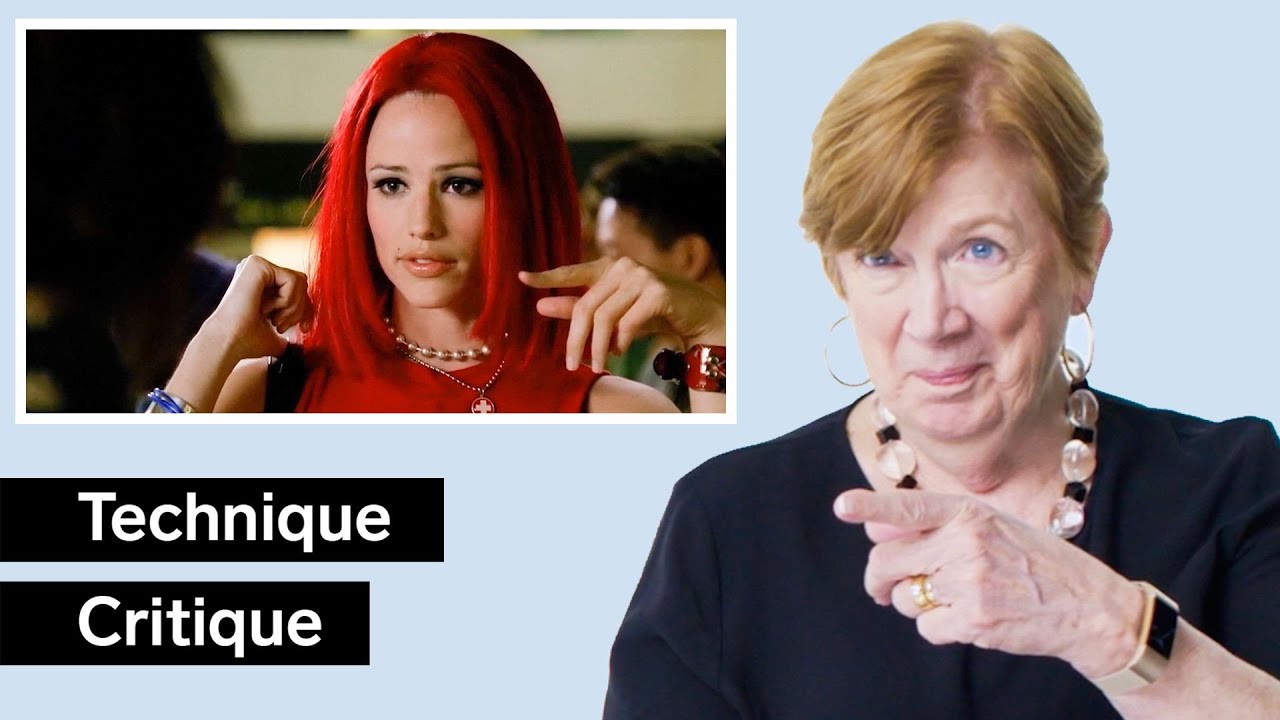
In stark contrast, Sydney Bristow’s bathroom hair dye scene in *Alias* serves as a masterclass in operational deception. Rather than attempting a quiet, half-hearted alteration, Sydney dyes her hair a vibrant, eye-catching red and fully embodies an entirely new, flamboyant persona. She chews gum casually and banters with the airport security and airline check-in agents. Mendez explains that drawing the agent into playful dialogue while sporting a loud visual element distracts them entirely from inspecting her true features.
> “What she did was absolutely spot-on and she didn't just dye her hair she dyed it outrageously red and then adopted the whole thing that went with it including chewing gum while she's walking through the airport and then she has that that back-and-forth with with the airline agent I though that was a brilliant this is a great example of distracting someone sweet talking to them getting them engaged and getting them away from the things you don't want them looking at we could have used that as a training film” — Jonna Mendez
[02:32](https://www.youtube.com/watch?v=mUqeBMP8nEg&t=152s) The Americans: Inhabiting the "Little Gray Man"
Reviewing *The Americans*, Mendez praises Matthew Rhys's portrayal of deep-cover Soviet intelligence officer Philip Jennings. Philip’s disguises work because he never attempts to look glamorous or stylish; his sole focus is adopting mundane, ordinary aesthetics—such as a dowdy counterintelligence bureaucrat or an awkward nerd. His wigs and styling allow him to vanish in plain sight by embodying the classic intelligence archetype known at the CIA as the "little gray man."
Mendez draws an explicit connection between professional disguise tradecraft and Stanislavski-style method acting. While physical materials like hairpieces and wardrobe are foundational, disguise collapses if the operative cannot completely inhabit the target identity for prolonged operational periods. The psychological adoption of posture, behavior, and social presence is what truly sells an operational cover to the outside world.
> “When it came really close to projecting the little gray man that we always would talk about at CIA that was sometimes often that was the goal you wanted to be forgettable getting into disguise is a lot like method acting the look is part of it but if you're gonna wear it for more than a minute you need to inhabit it” — Jonna Mendez
- Operatives aim to be deliberately bland and unmemorable rather than attractive. - Disguises must be inhabited mentally; external prosthetics and wigs fail without believable body language. - Long-term surveillance evasion requires matching the everyday demeanor of target demographics (e.g., bureaucratic clerical workers).
[03:40](https://www.youtube.com/watch?v=mUqeBMP8nEg&t=220s) Mission: Impossible III and the Rules of Quick-Change
Mendez examines a rapid costume change sequence from *Mission: Impossible III* to illustrate the CIA concept of the "quick-change." A quick-change requires an operative to clandestinely alter their physical silhouette and appearance within a rigorous operational window of roughly 37 seconds. In field practice, this involves layering garments: the operative's base attire is topped with a secondary disguise layer, which is then covered by a tertiary outer layer that can be peeled away swiftly in an unmonitored blind spot. Mendez points out an operational flaw in the film clip: letting discarded clothing blow away is unacceptable tradecraft, as left-behind items constitute critical physical evidence.
```mermaid flowchart TD accTitle: CIA Layered Disguise Framework accDescr: Three-tier clothing sequence showing how disguises are shed from outermost to base layer.
subgraph Layers ["Layered Disguise Structure"] L3["Outer Disguise Layer 2 (Disposable/Reversible)"] L2["Middle Disguise Layer 1"] L1["Base Profile (True Person)"] end
subgraph OperationalRules ["Operational Constraints"] R1["Strict 37-Second Execution Target"] R2["Zero Trace: Retain/Conceal Discarded Garments"] R3["Strictly Exclude Restricted Covers"] end
L3 -->|"Peeled off in blind spot"| L2 L2 -->|"Secondary strip if necessary"| L1 Layers -.-> OperationalRules ```
Mendez details the three sensitive professions strictly off-limits as CIA covers: - **Journalists / Media Figures:** Protecting authentic press freedom and safety abroad requires that American intelligence never impersonates active journalists. - **Religious Figures:** Priests, pastors, and clerics lack institutional intelligence fallback structures and operate with inherent vulnerability among the public; compromising this trust would expose genuine clergy to lethal danger. - **Peace Corps Volunteers:** The agency rigorously forbids using the Peace Corps as cover to ensure its humanitarian missions remain entirely pure and free of espionage accusations.
> “Quick-change is the ability to clandestinely change your appearance you have 37 seconds to come out with those changes it was not unusual for us to layer disguises so you'd have the the true person and then he would wear disguise number one and then on top of that would be disguised number two we would never let that piece of a disguise fly away that's evidence” — Jonna Mendez
> “There are three covers that are basically off-limits to CIA and that would be a religious figure Media figure and Peace Corps not that we don't like the Peace Corps we love the Peace Corps but it has to stay kind of pure it cannot be suspected of harboring CIA officers” — Jonna Mendez
[04:50](https://www.youtube.com/watch?v=mUqeBMP8nEg&t=290s) Changing in Plain Sight: Teenage Mutant Ninja Turtles and Baby Driver
Analyzing a rapid wardrobe switch in *Teenage Mutant Ninja Turtles*, where a character transitions into a schoolgirl outfit, Mendez validates the operational tactic of using high-density public crowds to break surveillance. A core rule of counter-surveillance is that dense crowds are remarkably forgiving: when people are surrounded by visual chaos, they pay little attention to subtle movements around them. Surveillance tails rarely track an individual’s detailed facial features across a crowded street; they track a recognizable physical profile, such as a blonde in dark-rimmed glasses wearing a pencil skirt. Stripping away those specific profile anchors breaks the visual continuity for the surveillance team.
Moving to *Baby Driver*, Mendez evaluates a scene where the driver attempts a quick change by stealing clothes from a store during a foot chase. While the intent to alter his appearance on the fly is sound, the method introduces unacceptable operational liability. Relying on shoplifting risks triggering electronic security alarms and invites immediate arrest by local police, which completely defeats the purpose of covert evasion.
> “The bigger the crowd the more forgiving they are if you want to change your clothes in public you can do lots of things you would never dream of doing no one pays any attention that's the whole point we use that a lot in our training exercises back here it was always a way to lose surveillance surveillance isn't following her face they never are they're following her profile” — Jonna Mendez
> “The intent was good the execution was okay but again you have to ask yourself would we really recommend that because the odds of him getting caught and arrested for shoplifting are just too great if you have everything with you at the beginning and you start revealing it you start removing things and you have a bag where you can store some things and maybe even a bag to put that bag in that works but we don't recommend stealing” — Jonna Mendez
[06:56](https://www.youtube.com/watch?v=mUqeBMP8nEg&t=416s) Casino Royale and Hands-Free Communications
In the Madagascar pursuit opening of *Casino Royale*, an operative in a crowd accidentally blows his cover because he constantly holds his hand to his ear while listening to his radio receiver. Mendez notes that touching an earpiece is an unmistakable dead giveaway that immediately identifies an operative to counter-surveillance or targets.
To overcome this exact physical vulnerability in real-world intelligence operations, CIA technical specialists engineered custom covert audio equipment: - A body-worn covert radio receiver harness hidden beneath standard street clothing. - A magnetic induction neck loop positioned invisibly under the shirt collar. - A tiny wireless acoustic receiver inserted deep inside the ear canal. - An induction-coupled transmission mechanism that relayed incoming audio wirelessly without requiring any physical wires to the ear or manual hand-to-head adjustments.
> “In this opening scene the man in the crowd was called out from having his hand up he's holding on to his earpiece and he was so caught up in that motion that he forgot and it was a it was a giveaway it started the whole scene we found the way around that by inventing something that didn't exist it was a harness that we was body mourning a receiver that would be in our ear that we never had to touch and an induction loop that went around our neck so we could receive and it would transmit to the earpiece it was a no hands kind of system” — Jonna Mendez
[07:44](https://www.youtube.com/watch?v=mUqeBMP8nEg&t=464s) The Pink Panther vs. 24: Prosthetics and Utility Uniforms
Reviewing an eccentric disguise fitting scene from *The Pink Panther*, Mendez contrasts cinematic disguise closets with operational reality. In the film, an operative self-selects cosmetic features from a boutique display of fake noses, goatees, and teeth. In actual CIA disguise labs, operatives never choose their facial modifications. Prosthetic pieces are either meticulously customized to the officer’s exact bone structure or tailored from standard stock to reshape their facial planes. Disguise is strictly functional: operatives are not styled to look handsome or appealing, but to present an altered, completely forgettable face that they are committed to wearing.
Turning to *24*, Mendez examines the tactical use of worker coveralls and maintenance uniforms. Utilitarian service outfits—such as air conditioner repair technicians, utility crew members, or military personnel—act as psychological camouflage. In public and corporate environments monitored by security cameras or civilian bystanders, individuals seeing a utility uniform automatically mentally categorize the person by their perceived job, disregarding their individual facial identity. While the CIA does not warehouse racks of generic uniforms, disguise officers can procure or fabricate whatever legitimate service cover an operation requires.
> “Nobody left our labs looking better than after our labs looking different what we were interested in is giving him a total look that he didn't have to like but he had to wear it we had to feel that he would wear it” — Jonna Mendez
> “A lot of uniforms that are just universally recognized get into one of those groups and you disappear and your identity becomes the identity of the group and that's a good thing we don't have stores of maintenance uniforms or military uniforms we've got nothing we can arrange anything” — Jonna Mendez
[09:23](https://www.youtube.com/watch?v=mUqeBMP8nEg&t=563s) Argo and the Anatomy of a Real Exfiltration Cover
Mendez reviews *Argo*, noting that Ben Affleck portrayed her late husband, legendary CIA technical operations and disguise officer Tony Mendez. The film depicts the historic "Canadian Caper" exfiltration of six American diplomats stranded in Tehran during the 1979 Iran hostage crisis. Mendez explains that establishing a viable cover for a large group of people is significantly more complex than designing an alias for a solitary operative. Every single member of the group must be capable of speaking about their cover identity effortlessly and convincingly under the pressure of hostile interrogation.
Because the six diplomats could not be turned into seasoned operatives overnight, the disguise team avoided elaborate facial prosthetics. Instead, Tony Mendez restyled their clothing, hair, and outward demeanor, casting them as a Canadian film scouting crew scouting desert locations for a science fiction movie titled *Argo*. Since cinema is a universally understood industry that people enjoy discussing, the diplomats could inhabit their roles comfortably and answer probing questions at airport checkpoints without stumbling.
> “Ben Affleck is playing my husband Tony Mendez in the movie Argo the story of an exfiltration one of many exfiltrations that my husband undertook over the years this was a very successful exfiltration in this particular clip the six house guests as we call them were using the the cover of a Hollywood location scouting team that was a subject they thought they could easily talk about they could talk about Hollywood movie people do and be believable” — Jonna Mendez
> “When they were choosing the cover for these six houseguests it was unique because it was a group of people not just one person they had to find a cover that all six of them could believably speak about looking at Argo gives us an opportunity to look at a real cover story and see how it was executed and see how it was carried off and to see that it performed its function” — Jonna Mendez
[10:59](https://www.youtube.com/watch?v=mUqeBMP8nEg&t=659s) Mission: Impossible and the Real Science of Overhead Masks
Mendez concludes with the iconic latex face-peel mask scene from *Mission: Impossible*. While the seamless, instantaneous masks depicted on film rely entirely on cinematic CGI, Mendez reveals that the CIA did engineer functional "overhead masks" that fully encompassed the wearer's head and neck. These advanced masks could successfully alter an operative’s perceived age, gender, and ethnicity.
However, real-world overhead masks come with severe physical constraints. A mask cannot animate facial micro-expressions with full organic elasticity. Crucially, disguise materials are strictly additive: a mask adds volume to an operative’s head, meaning one cannot conceal a prominent nose beneath a smaller prosthetic nose. The base wearer and the donor mold must have compatible cranial measurements. Mendez recounts that the CIA utilized high-grade aluminum head forms acquired from Hollywood studios in small, medium, and large dimensions. The large-sized mold was cast directly from English actor Rex Harrison, resulting in Harrison's exact facial contours inadvertently serving as the foundation for high-stakes intelligence operations across the world.
> “This is pure CGI of course this is what we called an overhead mask we could change your gender we could change your ethnicity we could turn you into almost anything masks are always additive you can't put a small nose over a larger nose you have to make sure that your donor and your recipient are well matched” — Jonna Mendez
> “We had some aluminum molds that came out of Hollywood they came in large medium and small the size large was an old Hollywood actor named Rex Harrison so he was taking part in a lot of interesting operations without his knowledge I think” — Jonna Mendez
[11:50](https://www.youtube.com/watch?v=mUqeBMP8nEg&t=710s) *Mission: Impossible* and the Mechanics of Mask Fabrication
Evaluating the mask sequences across the *Mission: Impossible* franchise, Jonna Mendez examines both the plausibility and cinematic trickery involved in donning someone else's face. Reacting to a sequence in *Mission: Impossible 2* where an operative wears a hyper-realistic face mask over a captive whose mouth has been taped shut, Mendez notes the immediate physiological hazard of such an approach. While a subject can still inhale through the nasal passages, sealing the lips severely cuts off secondary airflow, compounding distress during an already claustrophobic process. “You can still breathe through the nose, but it's always a relief to know that you can also breathe through the mouth, and so by taping the mouth, you really start restricting their other air intake,” Mendez observes, questioning why any handler would deliberately tape a subject's mouth beneath a custom disguise.
Transitioning to *Mission: Impossible III*, Mendez compares the film’s on-screen fabrication process to authentic technical operations. The film depicts a field device taking a rapid mold of a target's face, which Mendez likens directly to getting dental impressions taken at a clinic—a technique the CIA routinely employed across entire human faces, taking extreme precautions to leave open breathing passages for the nostrils. On screen, however, the illusion relies heavily on seamless visual effects. The production layers digital effects and cuts imperceptibly between the masked performer and the real actor, creating a flawless visual sleight of hand.
```mermaid flowchart LR accTitle: Face Casting Process accDescr: Workflow from physical dental impression to field-ready disguise mask. subgraph Impression["1. Physical Casting"] A["Target Face"] --> B["Dental Impression Material"] B --> C["Clear Airway Maintained"] end subgraph Lab["2. Disguise Lab"] C --> D["Molded Latex/Silicone Mask"] end subgraph Field["3. Operational Use"] D --> E["Operative Deployment"] end ```
[13:06](https://www.youtube.com/watch?v=mUqeBMP8nEg&t=786s) *Spy*: Cover Identities and Pocket Litter
Mendez reviews the comedy *Spy*, where Melissa McCarthy’s desk-bound analyst Susan Cooper is thrust into field operations and issued a thoroughly unglamorous undercover persona: Penny Morgan, a divorced homemaker from Iowa who holds the state record for Mary Kay cosmetic sales and owns ten cats. Mendez finds the comedic frustration relatable, noting that real-life clandestine officers almost never dictate the parameters of their assigned operational covers.
The documents and everyday props handed across the briefing desk represent a cornerstone of operational support known within the CIA as "pocket litter." Mendez points out that convincing documentation goes far beyond a single passport; it encompasses the mundane detritus a real person accumulates in their wallet or handbag, from loyalty cards and club memberships to receipts. Reflecting on Cooper's dissatisfaction with her assigned identity, Mendez remarks, “She didn't like the identity that was being proposed, but then she didn't really get to choose.”
- **Pocket litter elements**: Everyday billing receipts, membership cards, transit stubs, and regional credentials carried to survive basic inspection. - **Operational reality**: CIA officers do not design their own cover backgrounds; technical and security branches assign personas based on operational requirements.
[13:56](https://www.youtube.com/watch?v=mUqeBMP8nEg&t=836s) *Inglourious Basterds*: Hand Gestures and Cultural Customs
Analyzing the tense basement tavern shootout in Quentin Tarantino’s *Inglourious Basterds*, Mendez focuses on the subtle gesture that unmasks the undercover British commando posing as a German staff officer: ordering three glasses ("drei Gläser") by extending the index, middle, and ring fingers. In continental Europe, and specifically in Germany, hand-counting starts with the thumb extended first. Signalling "three" with the three center fingers immediately revealed the commando was neither German nor European.
Mendez emphasizes that tradecraft requires exhaustive preparation in local mannerisms, because small nonverbal habits are virtually impossible to fake without deep conditioning. Crossing cultural boundaries without proper behavioral training creates vulnerabilities that cannot be salvaged once detected. Mendez underscores the absolute finality of making such a slip behind enemy lines: “Once you've committed one of those errors, you have outed yourself, so to speak, and you kind of have to go with the consequences, whatever those consequences are.”
[15:10](https://www.youtube.com/watch?v=mUqeBMP8nEg&t=910s) *Kingsman*: Gadgetry and the Dark History of Poison Pens
The gadget cache in *Kingsman: The Secret Service* prompts Mendez to separate cinematic fantasy from the genuine history of lethal CIA technology. While Hollywood frequently outfits fountain pens with darts or hidden firearms, the agency historically utilized pens for concealment rather than direct combat—frequently housing subminiature surveillance cameras or suicide capsules rather than offensive weaponry.
Mendez reveals that the CIA deployed "L-pills" (lethal poison pills) hidden inside custom fountain pens at the explicit insistence of high-risk foreign agents who feared interrogation and torture if caught by hostile intelligence services. Mendez recounts an operation where a compromised asset faced imminent interrogation: “In one case, our agent was captured and he was gonna be interrogated, and he said, 'Before I do that, give me my pen, I will write my confession,' and they handed him his pen and he bit down on it on the tip; they said he was dead before he hit the floor.”
- **Pen concealments**: Used for micro-cameras and concealable escape aids rather than offensive chemical weapons. - **The L-pill**: Issued only under extreme operational constraints upon explicit agent demand to prevent forced confession under torture. - **Historical accuracy**: Lethal spring-loaded or dart-firing pens remain largely cinematic, but pen-based suicide capsules are historical fact.
[16:22](https://www.youtube.com/watch?v=mUqeBMP8nEg&t=982s) *The Saint* and *Superman*: Ineffective and Overt Disguises
Turning to Val Kilmer’s disguise work in *The Saint*, where the protagonist portrays an eccentric, unkempt scientist, Mendez evaluates the tradecraft through the lens of visual conspicuousness. A competent disguise must deflect scrutiny, allowing an officer to blend invisibly into a target environment. By adopting a menacing, unstable gait and aggressive styling, the character achieves the exact opposite outcome by attracting every eye in the room. Mendez delivers a blunt professional assessment: “That draws attention, and you never want to draw attention, so I would rate that disguise as a failure.”
Shifting to the classic trope in *Superman*, where Christopher Reeve’s Clark Kent hides his superhero identity behind nothing more than oversized spectacles, Mendez notes the enduring absurdity that has puzzled audiences for generations. While optical frames can soften facial geometry, relying solely on eyeglasses without altering posture, body mass, or vocal patterns offers zero protection against genuine physical recognition.
[17:29](https://www.youtube.com/watch?v=mUqeBMP8nEg&t=1049s) *Be Kind Rewind*: Black Bag Entries and Contingency Planning
Reviewing a break-in sequence from *Be Kind Rewind* involving a ladder and an exposed chain-link perimeter fence, Mendez assesses the mechanics of covert entry. To a veteran of CIA technical services, amateurish field improvisation reflects poor preparation. True clandestine black bag jobs involve surgical advance reconnaissance, detailed floor plans, bypass tools, and layers of contingency planning. Mendez stresses that competent operators never operate without an escape matrix: “When you planned an operation, you always had Plan B: what if it goes wrong?”
While CIA entry specialists never drew up plans that left them stranded behind open fences, unforeseen circumstances still emerged on the ground. Mendez recalls authentic operational incidents where officers infiltrated restricted foreign facilities, encountered unexpected guard rotations or sweeps, and had to hide inside structural voids or concealed spaces for a day or two until an operational window opened for extraction.
```mermaid flowchart TD accTitle: Covert Entry Planning Hierarchy accDescr: Primary entry planning compared to unexpected operational holds. subgraph Planning["Standard Entry Protocol"] P1["Primary Infiltration Route"] --> P2["Target Facility Access"] P2 --> P3["Plan B Contingency Matrix"] end subgraph Reality["Compromise Containment"] P3 -.->|"Countermeasure Sweep"| C1["Static Concealment in Place"] C1 -->|"24 to 48 Hours"| C2["Safe Operational Extraction"] end ```
[18:32](https://www.youtube.com/watch?v=mUqeBMP8nEg&t=1112s) *Austin Powers*: The Strict Architecture of CIA Aliases
Mendez uses the scene in *Austin Powers: International Man of Mystery* where the protagonist introduces himself as "Richie Cunningham" and his companion as "Oprah" to demystify how operational aliases are assigned in real-world intelligence agencies. In genuine operations, covers are rigidly regulated by administrative and security branches rather than invented spontaneously by field officers. A working officer receives an alias that stays with them throughout their professional tenure, ensuring their true legal name never appears on official manifests, cable traffic, or field communications overseas.
Mendez explains that alias names must remain thoroughly unremarkable to avoid generating mnemonic triggers for foreign counterintelligence. High-profile pop-culture references like Oprah are strictly forbidden, and every CIA alias adheres to a standard three-part naming convention including a middle initial. Mendez reflects on her own long-term operational identity: “My name for life, my first name was Faith, and so whenever I see anything that has to do with faith, like 'keep the faith, baby,' I'm like, okay.”
- **Lifetime assignment**: An operational alias serves an officer across their entire clandestine career. - **Three-name standard**: All assigned identities feature a first name, middle initial, and surname. - **Anonymity over novelty**: Names must be statistically standard to avoid drawing notice from immigration or security officers.
[19:40](https://www.youtube.com/watch?v=mUqeBMP8nEg&t=1180s) *Sherlock Holmes* and *Spy Hard*: Concealment in Furniture and Exfiltration
Looking at sequences from *Sherlock Holmes* and the spoof *Spy Hard* where individuals camouflage themselves directly inside armchairs, Mendez notes that the CIA did not disguise human bodies as parlor furniture. She recalls an anecdote involving former FBI Director James Comey, who famously wore a navy suit matching the White House curtains in an unsuccessful attempt to blend into the background during a public reception.
In genuine operations, furniture concealment was reserved for clandestine technical hardware. In denied territories subject to heavy surveillance, the CIA embedded secure receivers, recorders, and transmitters into hollowed-out furniture pieces placed inside residential quarters. For moving people, the agency developed specialized exfiltration containers. Mendez highlights vehicles modified with hidden compartments designed to smuggle assets past border controls, such as the authentic vehicular hides showcased at the International Spy Museum's Checkpoint Charlie exhibit.
| Concealment Category | Operational Purpose | Real-World Application | |:--- |:--- |:--- | | **Furniture Cavities** | Technical Sigint / Comms | Receivers and transmitters embedded into custom household pieces in hostile environments. | | **Vehicle Hides** | Exfiltration of Personnel | Secret compartments built into automotive chassis to pass border checkpoints like Checkpoint Charlie. | | **Improvised Fabric** | Visual Camouflage | Generally ineffective; Mendez references Comey’s attempt to match blue White House drapes. |
[21:12](https://www.youtube.com/watch?v=mUqeBMP8nEg&t=1272s) *22 Jump Street* and *The Dark Knight*: Accents and Voice Disguises
Addressing the botched undercover scene in *22 Jump Street* where officers mimic exaggerated caricatures of foreign accents, Mendez explains that operational officers do not fake accents in the field. When foreign language capabilities are required, the CIA invests immense resources in intensive language training to build genuine fluency. Mendez warns that attempting a clumsy phonetic impersonation instantly marks an officer as completely unprepared, courting swift arrest or compromise.
Turning to Christian Bale's gravelly vocal rasp in *The Dark Knight*, Mendez discusses the CIA's historical attempts to engineer voice disguises. Disguise specialists attempted to physically modify an officer's vocal acoustic palette using dental appliances and custom roof-of-mouth prosthetics. Rather than disguising identity, the physical inserts simply degraded articulation. Mendez describes the frustrating technical limitations: “To our dismay, it did not change your voice; it would just make you lisp forever.” Similarly, conscious vocal modulation—like adopting an artificial limp—invariably collapses the moment an officer faces stress or distraction, causing the natural voice to return.
[22:31](https://www.youtube.com/watch?v=mUqeBMP8nEg&t=1351s) *Fletch* and *Alias*: Mastering Cover Stories and Espionage Seduction
In *Fletch*, Chevy Chase attempts to bluff his way through a mechanic's shop using absurd, fabricated technical jargon about sticking "Fetzer valves." Mendez points out that Fletch committed the fatal operational error of fielding a cover story without studying the fundamentals of the trade. The CIA’s disguise and cover branches strictly align assigned covers with subjects the operative can navigate authoritatively. Mendez notes that operational covers must always withstand technical scrutiny: “We would always pick a cover story that our people could talk about intelligently.”
Finally, reflecting on the glamorized honey traps depicted in the series *Alias*, Mendez acknowledges that seductive tradecraft has deep roots in intelligence history. While pop culture often sensationalizes romantic entanglements, female and male operatives have historically used personal intimacy to collect intelligence, compromise foreign targets, or execute operational access. Mendez affirms that real-world operations mirror this dynamic: “Stories about seduction in the espionage business are legion; some of them are based on truth.” She references a renowned American Cold War seductress whose tradecraft yielded extraordinary intelligence successes for Washington.
[23:46](https://www.youtube.com/watch?v=mUqeBMP8nEg&t=1426s) Seduction and "Sparrows": *Red Sparrow*
Jonna Mendez reflects on the historical reality of using sex and seduction to gather intelligence. While there have been cases of operatives infiltrating embassies to steal ciphers out of safes, most accounts of institutionalized sexual espionage trace back to the Russians and the Germans. The Russians historically referred to these female operatives as "swallows," though author Jason Matthews—a friend of Mendez—popularized the term "sparrows" in his novel *Red Sparrow*. Conversely, the East Germans trained male operatives in similar tactics and referred to them as "Romeos." As Mendez emphasizes: “So the use of sex to collect intelligence is not unheard of and it's probably going on today.”
Looking at the seduction school depicted in the film adaptation of *Red Sparrow* starring Jennifer Lawrence, Mendez notes that the training focused heavily on psychological manipulation alongside sexual compliance. The film effectively showed American audiences that such practices formed a genuine component of Moscow's intelligence apparatus: “I think it presented to a lot of American audiences the idea that that was you know that's a piece of the intelligence machine in Moscow.” However, when addressing whether the Central Intelligence Agency maintains an equivalent program, Mendez is unambiguous: “Now you might want to ask me if the CIA has a school and I would tell you we don't.” She points out that such institutional seduction programs are uniquely Russian tradecraft rather than American practice.
- **Russian Terminology**: Historically designated female seduction agents as "swallows"; Jason Matthews labeled them "sparrows." - **German Terminology**: Male operatives trained in seduction by East German foreign intelligence were called "Romeos." - **CIA Policy**: Mendez confirms the CIA does not operate schools or training programs dedicated to seduction tradecraft.
---
[25:20](https://www.youtube.com/watch?v=mUqeBMP8nEg&t=1520s) Contextual Disguise: *Octopussy* and Virginia Hall
Examining James Bond's clown disguise in *Octopussy*, Mendez admits she cannot confirm whether a CIA officer has ever had to slip into an actual clown outfit. Nevertheless, she defends the underlying principle: the golden rule of disguise is blending seamlessly into the local environment. If an operative is inside a circus or carnival, putting on a clown suit transforms them into part of the background rather than an obvious outlier: “There was a lot to be said for fitting into your environment into your surroundings.”
To demonstrate how extreme contextual disguises can be in real life, Mendez points to World War II operative Virginia Hall. Hall, who operated in occupied France despite having a prosthetic leg, disguised herself as an ordinary shepherdess tending a flock of sheep in order to mask her limp: “During the Second World War there was a agent named Virginia Hall who disguised herself as a shepherdess with a flock of sheep to conceal her prosthetic leg and she was lethal.”
---
[26:00](https://www.youtube.com/watch?v=mUqeBMP8nEg&t=1560s) The Black Catsuit Trope: *The Avengers* (1998)
Mendez tackles the pervasive Hollywood trope of the skin-tight black catsuit, as showcased in the 1998 film *The Avengers*. While intelligence and special operations personnel certainly use climbing gear and tactical harnesses, the glossy black catsuit is pure cinematic fiction: “They use climbing gear but not really black catsuits.”
According to Mendez, the outfit persists on screen purely for aesthetic reasons: “I think the reason is because women look so good in them or at least Hollywood women did in them.” In reality, operational disguise requires inconspicuous practical wear, leading Mendez to remark: “Most of our men and probably a majority of our women would not have been caught dead in a black catsuit.” While dark, non-descript athletic clothing is technically acceptable for night or physical operations, form-fitting catsuits have no place in authentic tradecraft.
---
[26:46](https://www.youtube.com/watch?v=mUqeBMP8nEg&t=1606s) Undercover Drinking: *Veronica Mars* and Conclusion
Reviewing a scene from *Veronica Mars* where the protagonist feigns intoxication, Mendez firmly rejects the strategy: “I would not act drunk undercover and I don't think most officers would because it would defeat your purpose.” While undercover work frequently placed officers in high-stakes social settings—such as diplomatic black-tie galas where scotch and liquor flowed freely—getting drunk impairs control. Officers occasionally became intoxicated accidentally, but entering an assignment planning to pretend to be drunk is counterproductive.
The Agency actively prepares officers for environments heavy with alcohol. Recruits are taught dietary tricks, such as consuming specific foods or beverages in advance to coat the stomach and slow alcohol absorption. Furthermore, officers rely on simple barcraft to maintain sobriety without raising suspicion: quietly instructing the bartender to serve 7-Up or club soda disguised as a cocktail allows an operative to appear to drink freely while keeping a completely clear head.
Closing out her breakdown of spy media, Mendez notes that filmmakers genuinely strive for realism, yet the deviations from reality provide the most entertainment for a veteran practitioner: “The writers and directors do everything they can to get it really right half the fun for me is watching closely to see what they get wrong.”
## Notable quotes > [02:32](https://www.youtube.com/watch?v=mUqeBMP8nEg&t=152s) Getting into disguise is a lot like method acting the look is part of it but if you're gonna wear it for more than a minute you need to inhabit it — Jonna Mendez
> [22:31](https://www.youtube.com/watch?v=mUqeBMP8nEg&t=1351s) We would always pick a cover story that our people could talk about intelligently. — Jonna Mendez
> [26:46](https://www.youtube.com/watch?v=mUqeBMP8nEg&t=1606s) I would not act drunk undercover and I don't think most officers would because it would defeat your purpose. — Jonna Mendez
> [17:29](https://www.youtube.com/watch?v=mUqeBMP8nEg&t=1049s) When you planned an operation, you always had Plan B: what if it goes wrong? — Jonna Mendez
> [23:46](https://www.youtube.com/watch?v=mUqeBMP8nEg&t=1426s) the use of sex to collect intelligence is not unheard of and it's probably going on today. — Jonna Mendez
## Mentioned Jonna Mendez, Tony Mendez, CIA, The Moscow Rules, International Spy Museum, The Bourne Identity, Homeland, Alias, The Americans, Mission: Impossible, Mission: Impossible 2, Mission: Impossible III, Teenage Mutant Ninja Turtles, Baby Driver, Casino Royale, The Pink Panther, 24, Argo, Spy, Inglourious Basterds, Kingsman: The Secret Service, The Saint, Superman, Be Kind Rewind, Austin Powers: International Man of Mystery, Sherlock Holmes, Spy Hard, 22 Jump Street, The Dark Knight, Fletch, Red Sparrow, Octopussy, The Avengers, Veronica Mars, Rex Harrison, James Comey, Virginia Hall, Jason Matthews, Ben Affleck, Melissa McCarthy, Val Kilmer, Christopher Reeve, Christian Bale, Chevy Chase, Jennifer Lawrence
## Video description Jonna Mendez, former CIA Chief of Disguise, takes a look at spy scenes from a variety of television shows and movies and breaks down how accurate they really are.
To learn more, check out Jonna and Tony Mendez's new book "The Moscow Rules" out now: https://amzn.to/2J8zPWa
The International Spy Museum located in Washington, D.C. is a 501c3 nonprofit with a mission to educate the public about the history and impact of espionage and intelligence. The Museum features the largest collection of international espionage artifacts ever placed on public display. www.spymuseum.org
Still haven’t subscribed to WIRED on YouTube? ►► http://wrd.cm/15fP7B7 Get more incredible stories on science and tech with our daily newsletter: https://wrd.cm/DailyYT
Also, check out the free WIRED channel on Roku, Apple TV, Amazon Fire TV, and Android TV. Here you can find your favorite WIRED shows and new episodes of our latest hit series Tradecraft.
ABOUT WIRED WIRED is where tomorrow is realized. Through thought-provoking stories and videos, WIRED explores the future of business, innovation, and culture.
Former CIA Chief of Disguise Breaks Down 30 Spy Scenes From Film & TV | WIRED
[Source](https://www.youtube.com/watch?v=mUqeBMP8nEg)