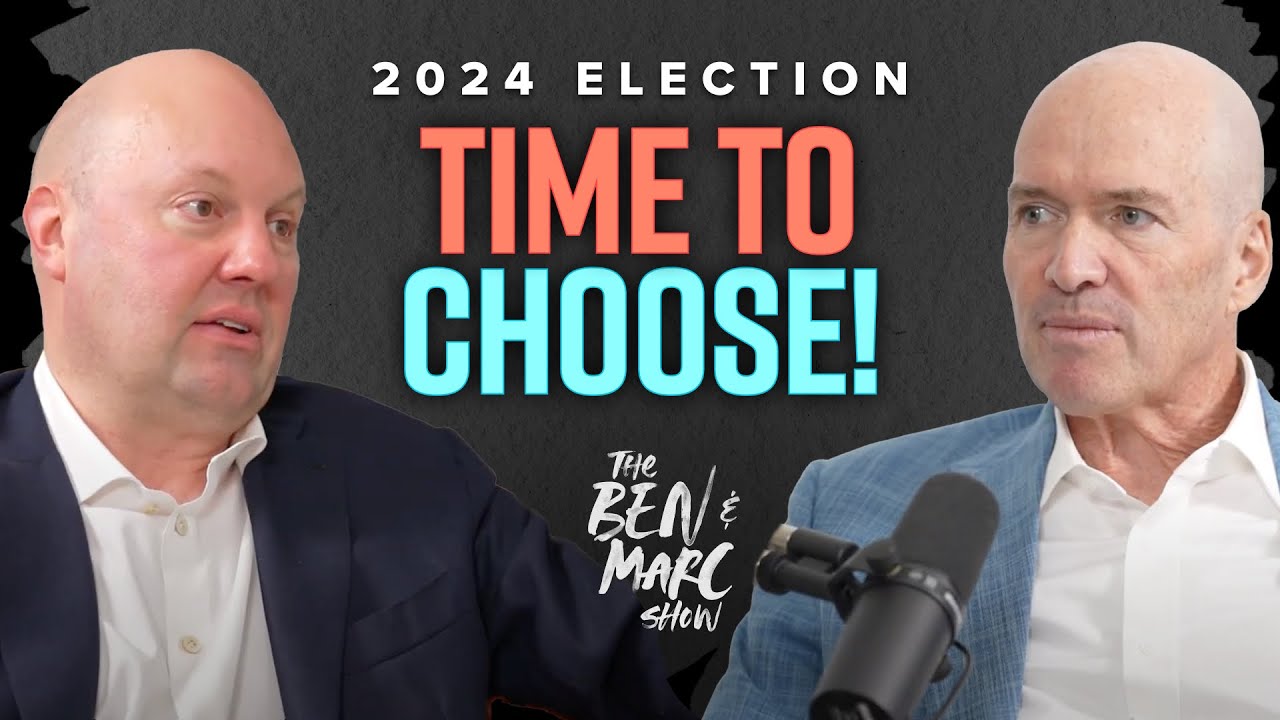
Andreessen, Horowitz Back Trump Over Biden Tech, Tax Curbs
a16z
The venture capital founders argue the Biden administration's regulatory hostility toward crypto and AI, paired with proposed taxes on unrealized capital gains, risks crushing domestic startups and ceding technological dominance to China.
Andreessen Horowitz co-founders Marc Andreessen and Ben Horowitz formally endorse Donald Trump for the 2024 presidential election, citing an existential threat to startups and 'Little Tech' under the Biden administration. (0:00)
The co-founders condemn the Biden administration's regulatory hostility toward crypto, noting that the SEC has targeted over 30 a16z portfolio companies with enforcement actions while regulators engaged in 'Operation Choke Point 2.0.' (30:04)
A16z sharply critiques the Biden administration's AI executive order for establishing an arbitrary compute ceiling at 10^26 FLOPs, warning it threatens to entrench an incumbent cartel while stifling open-source innovation. (42:42)
Andreessen and Horowitz warn that the Biden administration's proposed tax on unrealized capital gains starting at $100 million would destroy venture capital and startup incentives by repeating the disastrous fallout of the dot-com era's Alternative Minimum Tax. (67:12)
Detailed notes
## Background
This episode of "The Ben & Marc Show" was published by venture capital firm a16z on YouTube on July 16, 2024. The video features a16z co-founders Marc Andreessen and Ben Horowitz discussing their policy essay, "The Little Tech Agenda," examining how the differing policy stances of Donald Trump and Joe Biden impact startups, blockchain, AI, and taxes, while announcing their endorsement in the 2024 presidential race.
## TL;DR
Venture capitalists Marc Andreessen and Ben Horowitz announce their formal endorsement of Donald Trump for the 2024 presidential election, framing it strictly around the survival and growth of early-stage startups and open-source innovators ("Little Tech"). They criticize the Biden administration for aggressive regulatory overreach, citing SEC enforcement actions and Operation Choke Point 2.0 against the crypto sector, restrictive compute thresholds in the AI Executive Order, and proposed taxes on unrealized capital gains. In contrast, they point to the 2024 Republican platform's explicit support for blockchain, deregulation of artificial intelligence, and Trump's direct commitment to American competitiveness against China. The co-founders also reflect on the July 13 assassination attempt on Trump in Butler, Pennsylvania, arguing that his resilience under fire exemplifies the unique personal strength required of a president.
## Atmosphere & style
The conversation carries a grave, resolute, and candid tone, feeling less like standard Silicon Valley boosterism and more like a high-stakes strategic briefing delivered by reluctant partisans. Andreessen speaks with rapid-fire historical conviction and policy detail, while Horowitz provides a measured, reflective counterweight, openly acknowledging the personal grief and social friction that comes with endorsing Trump after a lifetime in liberal circles. Despite moments of dark humor and disbelief regarding administrative mandates, an undercurrent of urgency dominates the discussion, marked by an acute conviction that foundational American technological dominance is facing an existential crisis.
## Bulletin
- [00:00](https://www.youtube.com/watch?v=n_sNclEgQZQ&t=0s) Andreessen Horowitz co-founders Marc Andreessen and Ben Horowitz formally endorse Donald Trump for the 2024 presidential election, citing an existential threat to startups and 'Little Tech' under the Biden administration.
- [30:04](https://www.youtube.com/watch?v=n_sNclEgQZQ&t=1804s) The co-founders condemn the Biden administration's regulatory hostility toward crypto, noting that the SEC has targeted over 30 a16z portfolio companies with enforcement actions while regulators engaged in 'Operation Choke Point 2.0.'
- [42:42](https://www.youtube.com/watch?v=n_sNclEgQZQ&t=2562s) A16z sharply critiques the Biden administration's AI executive order for establishing an arbitrary compute ceiling at 10^26 FLOPs, warning it threatens to entrench an incumbent cartel while stifling open-source innovation.
- [01:07:12](https://www.youtube.com/watch?v=n_sNclEgQZQ&t=4032s) Andreessen and Horowitz warn that the Biden administration's proposed tax on unrealized capital gains starting at $100 million would destroy venture capital and startup incentives by repeating the disastrous fallout of the dot-com era's Alternative Minimum Tax.
## Key takeaways
- [00:49](https://www.youtube.com/watch?v=n_sNclEgQZQ&t=49s) Andreessen and Horowitz base their political engagement solely on the 'Little Tech' agenda, prioritizing early-stage startups, open-source builders, and emerging disruptors over entrenched incumbents.
- [03:33](https://www.youtube.com/watch?v=n_sNclEgQZQ&t=213s) Despite historical alignment with Democratic administrations from Clinton to Obama, the founders argue the modern Democratic establishment has developed an aggressive anti-tech posture.
- [15:16](https://www.youtube.com/watch?v=n_sNclEgQZQ&t=916s) American global primacy and post-WWII peace depend upon an interdependent iron triangle composed of technological dominance, economic preeminence, and military superiority.
- [18:42](https://www.youtube.com/watch?v=n_sNclEgQZQ&t=1122s) Peter Thiel's monopoly innovation thesis is flawed because monopolistic incumbents prioritize protecting existing profit pools over disruptive breakthroughs, which historically emerge from startups.
- [20:35](https://www.youtube.com/watch?v=n_sNclEgQZQ&t=1235s) Top-down industrial policy fails because centralized bureaucrats lack the foresight to predict technological revolutions, risking the same stagnation seen in the Soviet Union.
- [24:01](https://www.youtube.com/watch?v=n_sNclEgQZQ&t=1441s) Blockchain architecture provides a critical decentralized alternative to centralized web platforms by lowering take rates and offering an immutable source of truth against AI deepfakes.
- [30:04](https://www.youtube.com/watch?v=n_sNclEgQZQ&t=1804s) Regulatory actions like SEC Staff Accounting Bulletin 121 (SAB 121) and backchannel banking restrictions have forced key crypto startups like Worldcoin to deploy outside the United States.
- [35:37](https://www.youtube.com/watch?v=n_sNclEgQZQ&t=2137s) The 2024 Republican platform adopted a complete embrace of cryptocurrency, pledging to end the crackdown, ban CBDCs, defend Bitcoin mining, and protect self-custody rights.
- [38:51](https://www.youtube.com/watch?v=n_sNclEgQZQ&t=2331s) Artificial intelligence constitutes the Department of Defense's Third Offset, making American victory over China's state-backed AI sector essential for the future of global governance.
- [44:03](https://www.youtube.com/watch?v=n_sNclEgQZQ&t=2643s) Static regulatory compute thresholds ignore Moore's Law and the rapid commoditization of AI model training through distillation and open-source mathematics.
- [49:10](https://www.youtube.com/watch?v=n_sNclEgQZQ&t=2950s) Imposing the European precautionary principle on public mathematics like linear algebra creates an 'anarcho-tyranny' that hamstrings domestic builders while foreign adversaries proceed unchecked.
- [58:23](https://www.youtube.com/watch?v=n_sNclEgQZQ&t=3503s) Antitrust enforcement that blocks pharmaceutical and biotech startup acquisitions removes critical venture exit pathways and jeopardizes life-saving drug development.
- [01:01:53](https://www.youtube.com/watch?v=n_sNclEgQZQ&t=3713s) AI's unprecedented power requirements necessitate massive domestic energy expansion, highlighting the strategic necessity of nuclear baseload power over failed European energy phaseouts.
- [01:07:12](https://www.youtube.com/watch?v=n_sNclEgQZQ&t=4032s) The Biden Treasury proposal to tax unrealized capital gains will force startup founders and investors to pay cash taxes on volatile, illiquid paper valuations that may collapse to zero.
- [01:11:30](https://www.youtube.com/watch?v=n_sNclEgQZQ&t=4290s) The Alternative Minimum Tax crisis during Cisco's dot-com collapse serves as historical proof that taxing phantom paper wealth leads to personal bankruptcy and severe economic harm.
- [01:13:10](https://www.youtube.com/watch?v=n_sNclEgQZQ&t=4390s) Wealth tax thresholds inevitably ratchet down over time, threatening California's volatile tax base and impacting broader sectors like housing and construction.
- [01:18:42](https://www.youtube.com/watch?v=n_sNclEgQZQ&t=4722s) Donald Trump's defiance and physical courage immediately following the July 13 assassination attempt in Butler, Pennsylvania, reflect the extraordinary personal fortitude required of presidential leaders.
## Detailed walkthrough
### [00:00](https://www.youtube.com/watch?v=n_sNclEgQZQ&t=0s) Backing Trump and the Stakes for "Little Tech"
Ben Horowitz opens the discussion by acknowledging the intense social and emotional blowback that comes with endorsing Donald Trump. He knows that speaking favorably about Trump will alienate friends and cause discomfort for Andreessen Horowitz, its employees, and portfolio founders. However, he explains that the firm felt compelled to act because the election has become an existential crossroads for innovation: “Um it's tough. Uh but the future of our business, the future of technology, new technology, and the future of America is literally at stake.”
Ben frames their decision around what they call the "Little Tech" agenda—the ecosystem of startups, open-source developers, and emerging innovators challenging entrenched incumbents. Looking strictly through that lens, Ben and Marc Andreessen conclude that Donald Trump is the right candidate for the presidency. Acknowledging how polarizing that conclusion is even within his own family, Ben adds a half-apologetic, half-resigned personal note: “So here we are. Um, and for a little tech, uh, we think Donald Trump is actually the right choice. Um, and sorry, Mom. She's going to be I know you're going to be mad at me for this, but like we had to do it.”
[00:49](https://www.youtube.com/watch?v=n_sNclEgQZQ&t=49s) The Little Tech Agenda and Bipartisan Engagement in Washington
Ben outlines the rationale behind dedicating an entire podcast episode to the 2024 presidential race. While readily conceding that they are not specialists in foreign policy, civil rights, or macroeconomic theory, he emphasizes that when it comes to startups, venture capital, and technology regulation, their operational vantage point is unmatched. They spend all day working directly with early-stage founders, observing firsthand how government policy either fuels or suffocates innovation.
Over the preceding months, Marc and Ben spent extensive time in Washington, D.C., lobbying lawmakers and policymakers across the political spectrum. They met directly with Donald Trump and sat down with key Biden administration officials—including White House Chief of Staff Jeff Zients, National Security Advisor Jake Sullivan, and Commerce Secretary Gina Raimondo—though their repeated attempts to meet with President Joe Biden were unsuccessful. They emphasize that their focus remains strictly single-issue and bipartisan, having donated substantial capital to both Democrats and Republicans who advocate for Little Tech.
- Key Biden administration officials met: White House Chief of Staff Jeff Zients, National Security Advisor Jake Sullivan, and Secretary of Commerce Gina Raimondo.
- Core political philosophy: Single-issue advocacy for "Little Tech" and bipartisan financial contributions to candidates on both sides of the aisle.
[03:33](https://www.youtube.com/watch?v=n_sNclEgQZQ&t=213s) Marc Andreessen's History with Presidential Politics
Marc reflects on his three-decade history with presidential administrations, explaining how his perspective evolved. Having co-created the NCSA Mosaic browser and co-founded Netscape, Marc was thrust into national politics at age 23 in the summer of 1994, meeting President Bill Clinton. In 1996, Marc participated alongside Clinton in the very first presidential webcast, broadcasting from an auditorium at the old Silicon Graphics (SGI) campus—now the site of the Googleplex—while Clinton participated from the White House. Marc also collaborated closely with Vice President Al Gore and engaged with the Clinton administration during the 1990s "crypto wars" over software encryption exports, an issue on which the administration eventually adopted a pro-tech stance.
For most of his adult life, Marc was an ardent supporter of the Democratic Party. He backed Clinton in 1996, Gore in 2000, and John Kerry in 2004. After being introduced to Barack Obama by Dan Rosensweig, Marc enthusiastically endorsed Obama in 2008, and he later publicly endorsed Hillary Clinton in 2016. Marc explains that during the 1990s, Gen X tech entrepreneurs viewed supporting Democrats as an obvious default because the party was unabashedly pro-growth: “And and the answer is because it it basically it solves all the basically the the formula resolves to an easy answer which is um the Democrats in those days um you know presidential the presidential level were were pro business they were pro tech they were pro startup um they they were pro America winning in in in tech markets um they were pro entrepreneurship...”
Under that 1990s consensus, tech founders could build valuable companies, accumulate wealth, donate heavily through philanthropy (mirroring Bill Gates), and champion progressive social causes without contradiction. Ben dryly summarizes the cultural assumption of Silicon Valley at the time: “Well, you're I was going to say like it's obvious you're to be a Democrat because you have to be to be a good person.”
[07:39](https://www.youtube.com/watch?v=n_sNclEgQZQ&t=459s) The Shift: Anti-Tech and Anti-Philanthropy Sentiment
That long-standing alignment began unraveling in the early 2010s, as Marc observed the emergence of a distinct anti-tech and anti-business sentiment within progressive politics. Even traditional tech philanthropy came under fierce attack. Marc recalls a turning point when Mark Zuckerberg and Priscilla Chan established the Chan Zuckerberg Initiative and pledged 99% of their wealth to charitable and scientific endeavors. Instead of widespread praise, the announcement triggered sharp criticism from political factions arguing that billionaires should not direct social capital and that the funds should have been absorbed by the government through higher taxation, or dismissing the initiative as an illegitimate tax shelter. Ben characterizes that reaction as “kind of a funny life jealousy taken to the extreme,” marking the broader cultural transition toward political hostility against tech entrepreneurs.
[08:52](https://www.youtube.com/watch?v=n_sNclEgQZQ&t=532s) Political Journeys, Ideological Extremes, and the Pursuit of Power
The conversation opens with Marc Andreessen and Ben Horowitz reflecting on how public perception of wealth and philanthropy has warped, noting that critics argue wealthy individuals only give away fortunes to get tax breaks—a claim that makes no mathematical sense when one gives away 99% of their assets. Horowitz points out that the traditional formula for how tech interacts with politics has completely broken down over the past eight years, and especially the last four, proving far more complicated than anyone expected.
Horowitz shares his own unique background, describing his grandparents as communists and his father (David Horowitz) as someone he jokingly calls "the Tiger Woods of communism because he was raised to be like the greatest communist of all times." His father was the editor of the radical left-wing publication *Ramparts* magazine and collaborated closely with the Black Panthers in the early 1970s, which deeply shaped Horowitz’s cultural worldview. Raised in Berkeley—a city he characterizes as essentially communist—Horowitz was surrounded by deep left-wing politics, while his mother remained on the left. However, his father famously made a dramatic shift to the far right. Consequently, Horowitz grew up hearing both ideological extremes argued loudly at the dinner table.
That upbringing gave him an enduring framework for evaluating politics. In dealing with policy leaders today, both founders have observed vast disparities—not just between Democrats and Republicans, but across individual politicians. While they have encountered forward-thinking leaders on both sides, they have also met individuals who understand nothing about technology or who harbor darker, power-driven motives. Andreessen and Horowitz note that entering politics inevitably means confronting raw power, which turns destructive when pursued above all else.
> “And uh power can be very very dark if people um you know kind of pursue it uber ales you know so to speak.” — Ben Horowitz
- **Horowitz's family background:** Grandparents were communists; father edited *Ramparts* and worked with the Black Panthers before later shifting to the far right.
- **Cultural foundation:** Grew up in Berkeley with exposure to both hard-left and hard-right viewpoints.
- **Core realization on politics:** Tech policy issues cannot be mapped neatly along standard party lines; individual politicians range from visionary thinkers to those operating with agendas focused purely on state control.
[11:23](https://www.youtube.com/watch?v=n_sNclEgQZQ&t=683s) Why Little Tech Matters to the American Experiment
Horowitz turns the dialogue to the foundational premise of their manifesto: why should anyone prioritize "Little Tech" (startups and emerging innovators) amidst colossal global crises? The United States faces potential conflict with China, ongoing wars involving Russia and the Middle East, and domestic debates over equality and fairness. In that context, tech policy might seem niche to an ordinary citizen or voter.
Andreessen outlines his response by breaking the thesis into three distinct questions: why technology matters, why Little Tech specifically matters, and which Little Tech sectors are critical. Tracing the sweep of modern history, he argues that Americans live in an era of rare fortune, having been the preeminent global superpower since entering World War I and World War II, tipping the scales for the Allies in both conflicts. Alongside military strength, America drove the Second Industrial Revolution, inventing and scaling the infrastructure of modern life—from automobiles and railroads to telephony, logistics, and air conditioning.
Following World War II, America’s technological leadership anchored a 50-year struggle against the Soviet Union during the Cold War. Andreessen and Horowitz recall the visceral, existential terror of that period, when children routinely performed "duck and cover" drills under school desks in anticipation of nuclear annihilation. Despite the criticisms leveled against American foreign policy, Andreessen emphasizes that the last 70 years have constituted an era of unprecedented global peace and stability relative to human history. That peace, however, is fragile and contingent on American dominance rather than an inevitable state of affairs.
> “And so we we we just we we've lived in this world we really seriously like I think do not want to live in the alternative worlds.” — Marc Andreessen
- **Historical milestones:** U.S. intervention tipped both World War I and World War II.
- **Second Industrial Revolution:** American leadership introduced modern essentials including modern logistics, telecommunications, mass transit, and air conditioning.
- **Cold War reality:** Both speakers recall duck-and-cover drills under desks during their youth when nuclear annihilation felt like a daily possibility.
- **The Pax Americana:** The past 70 years of relative global peace were built directly on American economic and technological superiority, not accidental goodwill.
[15:16](https://www.youtube.com/watch?v=n_sNclEgQZQ&t=916s) The Iron Triangle: Technology, Economy, and Military
Andreessen introduces the concept of "the triangle"—the three interdependent domains where the United States has maintained global supremacy: technology, the economy, and the military. Rather than existing as separate pillars, each component directly sustains and depends upon the other two. Technological dominance generated America’s economic preeminence, powering successive economic waves from the industrial age to computing, the internet, biotechnology, and artificial intelligence.
```mermaid
flowchart TD
accTitle: The American Power Triangle
accDescr: Interdependent relationship showing how Technology, Economy, and Military feed into one another.
subgraph PowerTriangle["The American Power Triangle"]
Tech["Technological Dominance"]
Econ["Economic Preeminence"]
Mil["Military Supremacy"]
end
Tech -->|"Drives productivity and creates new industries"| Econ
Econ -->|"Funds defense budgets and large-scale R&D"| Mil
Mil -->|"Secures global trade and protects national interests"| Tech
Tech -->|"Yields advanced defense systems"| Mil
Mil -.->|"Spurs breakthrough technological innovation"| Tech
Econ -.->|"Finances research and venture ecosystems"| Tech
```
In turn, a nation cannot possess the world’s most capable military without leading in technology to create advanced defense systems, backed by a world-leading economy capable of financing them. Andreessen points to the collapse of the Soviet Union in 1989 as the definitive proof of this dynamic. Contrary to expert predictions of a protracted war, the Soviet regime simply gave up because it fell disastrously behind in technology and economics. Recognizing that their technological lag made winning any future military conflict impossible, the Soviet leadership concluded that continuing the rivalry was futile.
> “The cornerstone of the American economic success over the last century has been from you know successive waves again going back to the second industrial revolution continuing through the computer age the internet age and now the the AI age and everything you know every biotech and everything else that that that has come along with that and so so so technology and economics are like are like deeply interlin um and then you can only have the world's leading military if you're the world's leading technology power and you're the world's leading economy because you need the technology to do to actually develop the military systems that make you worldleading and you need the economy to be able to pay for it.” — Marc Andreessen
- **The three pillars:** Technology, economy, and military form a self-reinforcing triad of national power.
- **The engine of wealth:** Major American economic expansions have stemmed from rolling technological transformations (industrial manufacturing, software, the internet, biotech, AI).
- **The fall of the Soviet Union (1989):** The Cold War ended not with a direct clash of armies, but because the USSR lagged behind technologically and economically, rendering military parity unsustainable.
[17:15](https://www.youtube.com/watch?v=n_sNclEgQZQ&t=1035s) The Collapse of Communism and the Innovation Triangle
Reflecting on the Cold War, Marc Andreessen describes the collapse of the Soviet Union as one of the most astonishing occurrences in world history: a brutal, globe-spanning empire with massive strength and boundless ambitions simply gave up and quit, saving and bettering hundreds of millions of lives. Ben Horowitz observes that whenever a communist undercurrent crops up in America, particularly among the youth, the best antidote is straightforward: just introduce them to someone who actually lived under a communist regime. Andreessen completely agrees, arguing that any criticism directed at capitalist economies can be multiplied tenfold under communism, whether examining environmental destruction or basic standards of living.
```mermaid
flowchart TD
accTitle: The American Power Triangle
accDescr: Interdependent triad of technology, economy, and military power that ensures national strength.
subgraph TRIAD["Foundational Triad"]
T["Technological Strength"]
E["Economic Strength"]
M["Military Strength"]
T <--> E
E <--> M
M <--> T
end
L["Little Tech Startups & Founders"] -->|"drives"| T
```
The defeat of the Soviet bloc was fundamentally a triumph anchored in a triad of technological, economic, and military power. Andreessen emphasizes that the entire structure collapses without technology at the base: “And so that that's why tech is important is because if you don't have the tech part of that triangle, you're not going to have the economy part, you're not going to have the military part.” Horowitz points out that this foundation was not erected by bureaucrats, but by Little Tech entrepreneurs like Thomas Edison and Henry Ford. Their early manufacturing capabilities and inventions won World War II and forged the modern American economy, and their modern-day descendants are precisely the creators whom a16z seeks to protect.
[18:42](https://www.youtube.com/watch?v=n_sNclEgQZQ&t=1122s) The Peter Thiel Disagreement: Why Startups Must Provoke Monopolies
Andreessen outlines his sharpest intellectual disagreement with his close friend Peter Thiel, who argued in his book that monopolies are necessary to produce real innovation. In Andreessen’s view, monopolies do the exact opposite—they are the death of innovation because their operational motto is fundamentally, as Horowitz quips, “we don’t care because we don’t have to.” When entrenched incumbents reach monopoly status, taking risks becomes foolish: executives can be ridiculed, projects can fail, and people can get fired, so they simply stop trying.
True innovation instead arises from startups through two primary mechanisms:
- Direct creation: Core defense and technology leaders like Lockheed and Hughes were fast-moving startups when they initially drove the breakthroughs that secured victories in World War II and the Cold War.
- External provocation: The mere existence of startups forces sluggish corporate giants to wake up and compete. A prominent recent example is Google, which invented the transformer architecture in 2017 but left it idling on a shelf. Only after upstarts like OpenAI and Anthropic seized the technology and ran with it did Google scramble to release Gemini and pursue new frontier breakthroughs.
Andreessen concludes that American primacy hinges entirely on whether young companies have fertile soil to grow: “And so basically the basically what that means is American technological preeminence lives or dies on the fate of whether startups can succeed or not whether there's fertile ground for it.”
[20:35](https://www.youtube.com/watch?v=n_sNclEgQZQ&t=1235s) The Folly of Industrial Policy and Unpredictable Breakthroughs
Responding to critics who contend that only obvious military-adjacent tools like autonomous drone software deserve government backing, Andreessen rejects the idea that anyone can forecast which technologies will prove strategically vital. In 1993, the expert class dismissed the internet as trivial, leaving Andreessen and his peers standing virtually alone. He references Elting Morison's 50-year-old book *Men, Machines, and Modern Times*, which recounts how naval officer William Sims was mocked and stymied around 120 years ago for inventing a continuous-aim naval gun mechanism that compensated for a vessel rolling in rough seas. Incumbents invariably insist that a radical new concept is unimportant right until it reshapes the world.
Attempting to engineer technology outcomes from the top down risks squandering the nation's premier competitive advantage: putting every ambitious mind on the field. In Stalinist Russia, citizens built only what the central ruler commanded, neutralizing individual ingenuity. Horowitz notes that applying top-down industrial policy to the United States produces the worst of both worlds—it exposes the country to cultural fractures and social dysfunctions while suppressing the decentralized genius that makes the American engine function. A cautionary real-world example is Argentina, which Horowitz discussed after meeting with President Javier Milei: despite having one of the most talented populations on earth, decades of destructive governance crushed its potential. Andreessen and Horowitz argue that bureaucrats picking winners and killing nascent sectors in the cradle represents a dangerous detour into self-sabotage.
[24:01](https://www.youtube.com/watch?v=n_sNclEgQZQ&t=1441s) Blockchain, Crypto, and Permissionless Networks
Horowitz turns the discussion to the explicit policy comparison between Joe Biden and Donald Trump, starting with blockchain and cryptocurrency—the vertical where a16z has experienced the heaviest friction with the federal government. Horowitz draws an analogy between crypto and the architectural breakthrough of the early internet. The internet flourished because it was built on permissionless innovation: it was an open network owned by no single corporation, whether Microsoft or AT&T.
Because the underlying protocols were community-operated and decentralized, anyone could spin up a node, build a service, or launch an enterprise without securing permission from a dominant gatekeeper or paying an extortionate corporate toll. That open foundation sparked the historic wave of commercial creativity and software companies over the past three decades. Blockchain, Horowitz explains, represents the modern continuation of this open architecture, making the ongoing regulatory assault against it a critical issue for the future of American innovation.
[25:21](https://www.youtube.com/watch?v=n_sNclEgQZQ&t=1521s) The Promise of the Internet and the Trap of Centralized Servers
Ben Horowitz reflects on the early promise of the internet, recalling when Prince famously changed his name to escape his restrictive record contract and began distributing his music directly online. In that original vision, the web promised a level playing field where anyone with talent, ideas, or writing could reach the world directly without needing to appease an entrenched industry or secure a job at *The New York Times*.
```mermaid
flowchart TD
accTitle: Evolution from Early Web to Centralized Gatekeepers
accDescr: Chart contrasting the decentralized early web with modern server centralization and economic capture by Big Tech monopolies.
subgraph Early["Early Web Vision"]
A["Direct Distribution<br/>(e.g., Prince bypasses record labels)"]
B["Decentralized Network Participation"]
end
subgraph Centralized["Modern Web Oligopoly"]
C["Server Ownership Centralized<br/>(Discovery, Commerce, Social)"]
D["Monopolistic Take Rates<br/>(App Store 30%, Social Platforms 99%)"]
end
Early -->|"Architectural Shift"| Centralized
```
However, the history of computing unfolded as an evolution of networks and centralized servers. Because of fundamental architectural constraints, a handful of winning corporations ended up owning the servers and all the data across the discovery layer (Google), social networking, and commerce. As Horowitz argues:
> “Google, I think we would all agree, is more powerful than probably 95% of the countries in the world in terms of who controls the information, how much money they have, everything.”
This immense concentration of power harms both businesses and creators. Startups find themselves entirely beholden to platform monopolies that can wipe them out simply by altering search indexing or visibility. Meanwhile, social media platforms like Instagram and TikTok extract onerous take rates—generating 99% of the platform revenue while leaving creative contributors with roughly 1%—and Apple commands a 30% cut of application earnings.
[27:28](https://www.youtube.com/watch?v=n_sNclEgQZQ&t=1648s) Blockchain as Stakeholder Capitalism and the Truth Layer
Horowitz explains that blockchain provides the first architectural alternative to this corporate stranglehold. Instead of a single corporation owning the servers, a distributed community owns and operates the computers, echoing the way the public originally owned the physical telecommunications network. This economic model aligns with genuine stakeholder capitalism: users, network runners, and developers all share in network governance and value. Early blockchain creative platforms return 90% to 95% of generated value to the artists, rather than the 1% typical of Web 2.0 incumbents.
Beyond economic equity, blockchain addresses pressing societal challenges around verification and deepfakes. As artificial intelligence makes it trivial to fabricate convincing synthetic media—such as a counterfeit video of Joe Biden—society requires an uncorrupted source of truth. Entrusting a single political party or a tech giant like Google to maintain the definitive database creates dangerous systemic risk; an open, immutable, community-run blockchain utility solves that dilemma.
- **Distributed Infrastructure:** Approximately 10,000 independent participants run the nodes powering the Ethereum network.
- **Regulatory Ambiguity:** Blockchains issue tokens to compensate community participants for compute power; depending on implementation, these tokens could legally represent a stock certificate, a collectible Pokémon card, or something else entirely.
- **Legislative Goal:** Venture capital and technology founders went to Congress seeking explicit statutory definitions distinguishing securities from commodities to excise bad actors and scammers while protecting legitimate software innovation.
[30:04](https://www.youtube.com/watch?v=n_sNclEgQZQ&t=1804s) Operation Choke Point 2.0, SAB 121, and Worldcoin
Rather than providing clear rules of the road, the White House and executive appointees at the SEC and the FDIC launched an aggressive regulatory crusade against crypto without formal guidance or statutory authority. Horowitz notes that the SEC has targeted and sued over 30 of a16z's portfolio companies and issued unprecedented Wells notices to early-stage private firms. Although the SEC routinely loses these enforcement actions in court, early-stage startups cannot afford the millions required to litigate against the federal government.
Concurrently, regulators deployed extralegal debanking strategies, dubbed "Operation Choke Point 2.0," mirroring the FDIC tactics originally leveled against the state-legal cannabis industry. Federal regulators privately warned banks that extending accounts to digital-asset firms would jeopardize their access to the Federal Reserve discount window and trigger regulatory audits. In parallel, the SEC implemented Staff Accounting Bulletin No. 121 (SAB 121), mandating that financial institutions holding custodial digital assets must place those assets on their own balance sheets as liabilities. If a bank custodies customer Bitcoin or gold and the asset drops in market price, the bank would be forced to absorb that loss—effectively making institutional custody impossible. When a bipartisan congressional coalition including Democratic Senate Majority Leader Chuck Schumer voted to overturn SAB 121, President Biden vetoed the bill to sustain the regulatory blockade.
```mermaid
flowchart LR
accTitle: Regulatory Suppression Mechanisms in Crypto
accDescr: Three-pronged regulatory pressure applied by federal agencies against blockchain startups.
subgraph Pressure["Administrative Enforcement"]
A["SEC Wells Notices & Lawsuits<br/>(Targeting 30+ a16z Startups)"]
B["FDIC Bank Coercion<br/>('Choke Point 2.0')"]
C["SAB 121 Rule & Presidential Veto"]
end
subgraph Impact["Ecosystem Fallout"]
D["Capital Depletion via Legal Battles"]
E["Debanking of Legal US Entities"]
F["Offshoring Domestic Technology<br/>(e.g., Worldcoin)"]
end
A --> D
B --> E
C --> F
```
Horowitz illustrates the real-world consequence with portfolio company Worldcoin, an identity protocol that provides cryptographic proof of personhood to counter AI bots without collecting names, Social Security numbers, or driver's licenses:
> “And they have launched their product everywhere in the world except the United States because... of this behavior and these laws.”
- **Global Adoption:** Worldcoin has been endorsed by the Malaysian government and is actively used by roughly half the population of Buenos Aires, yet regulatory hostility prevents US deployment.
[34:07](https://www.youtube.com/watch?v=n_sNclEgQZQ&t=2047s) Political Stonewalling in Washington
When Andreessen asks with dry sarcasm whether the obvious remedy was simply to sit down and educate federal regulators, Horowitz details the extensive stonewalling they experienced across Washington. Despite a16z being the largest crypto and blockchain venture investor in the world, SEC Chairman Gary Gensler repeatedly rebuffed their requests to meet:
> “And we’ve requested meetings with him at least a half a dozen times. I even was able to get in contact with his office mate at MIT who said, 'Surely Gary will meet with you. It’s so important that he meets with you.' And he couldn't get us the meeting.”
Horowitz observes that Gensler was elevated at the behest of Senator Elizabeth Warren, who similarly remains the only member of the US Senate to flatly decline meeting with them. Direct appeals to secure discussions with President Biden were also denied. In response to this executive branch resistance, a16z shifted focus to legislative remedies, working directly on bipartisan market-structure legislation alongside supportive congressional members, including prominent House Democrats such as Ritchie Torres.
[35:37](https://www.youtube.com/watch?v=n_sNclEgQZQ&t=2137s) Trump's Platform and the Stark Contrast in Crypto Policy
Ben Horowitz notes that while congressional Democrats like Ritchie Torres and Chuck Schumer have been working constructively with the tech community, Donald Trump published a formal position on cryptocurrency that presents an astonishing contrast. Marc Andreessen explains that Trump's stance was released even before their private discussions with him and is codified directly into the Republican National Committee platform for the 2024 convention. Emphasizing that Trump personally rewrote the RNC platform into a simplified, direct statement of intent, Andreessen reads straight from Chapter Three, titled *Build the Greatest Economy in History*, pointing to bullet point five: *Champion Innovation*. Under this heading, the platform pledges to pave the way for future economic greatness by leading the world in emerging industries, listing crypto as industry number one.
The platform text explicitly vows to end what it terms the "unlawful and un-American crypto crackdown," oppose the creation of a Central Bank Digital Currency (CBDC), defend the right to mine Bitcoin, and guarantee every American the right to self-custody digital assets while transacting free from government surveillance and control. Andreessen characterizes this as a flat-out, across-the-board embrace of the entire space. Reflected against their experiences with the current administration, Andreessen calls it an absolute 180-degree turn:
> “And so it's just like a flatout blanket endorsement of the entire space. Yes. Like a complete across the board uniform embrace of the entire thing.”
- Ritchie Torres has been an "absolute hero" on crypto policy, and Chuck Schumer has also been engaged and supportive.
- Donald Trump rewrote the RNC platform himself, foregrounding crypto under Chapter 3, bullet point 5.
- Key platform commitments include ending regulatory crackdowns, banning CBDCs, safeguarding Bitcoin mining, and protecting self-custody rights without government surveillance.
[37:20](https://www.youtube.com/watch?v=n_sNclEgQZQ&t=2240s) The Biden Administration's Assault on Crypto and Subversion of Rule of Law
Marc Andreessen expresses deep disbelief over the regulatory hostility faced by the crypto sector under the current administration, noting that neither the Clinton-Gore administration nor the Obama administration would have ever pursued such an approach. Ben Horowitz reflects that whether one agreed with Barack Obama or not, Obama was genuinely curious, always engaged with business leaders and technologists, and wanted to learn—in stark contrast to the current administration's "talk to the hand; the hand understands" posture. Andreessen describes the ongoing environment as a brutal and unprecedented assault on an infant industry that has made constructive dialogue with the White House virtually impossible.
Horowitz points out the irony in arguments advanced by defenders of the administration, specifically citing an essay by LinkedIn co-founder Reid Hoffman. Hoffman argued that the business community should back Joe Biden because the single most critical asset for business is the rule of law. Horowitz counters that the administration's campaign against crypto has done the exact opposite by subverting established legal standards to crush the sector:
> “And I thought, wow, that's so ironic because they've basically subverted the rule of law to attack the crypto industry.”
[38:51](https://www.youtube.com/watch?v=n_sNclEgQZQ&t=2331s) The Foundational Stakes of Artificial Intelligence
Transitioning from crypto to artificial intelligence, Marc Andreessen and Ben Horowitz address why AI represents the single most important technological race of the modern era. While crypto's importance is sometimes debated by outsiders, Andreessen notes that the importance of AI is unambiguous. He projects that AI will serve as the cornerstone of future economic expansion, driving a boom that will match or exceed the 1990s internet boom and the post-1950s computer industry expansion.
Beyond economics, AI is entirely redefining military doctrine and national security. Andreessen details how the Department of Defense has officially designated AI and autonomy as the "Third Offset"—the foundational technology underpinning the next generation of American defense superiority. In post-WWII history, there have been only two prior offsets:
1. Nuclear weapons.
2. Maneuver warfare, precision-guided munitions, and stealth.
3. AI and autonomous systems.
This transformation is unfolding live on the battlefield in Ukraine and across the Middle East. Andreessen stresses that China has made the identical strategic assessment, mobilizing its entire state-controlled tech apparatus to dominate the field. Consequently, the AI race will shape warfare, state surveillance, and global governance for centuries to come, making an American victory non-negotiable.
> “This is going to determine the shape of the world for hundreds of years. This is going to determine how government works. This is going to determine how surveillance works. This is going to determine who wins wars.”
```mermaid
flowchart TD
accTitle: The Three Defense Offsets
accDescr: Visual breakdown of the three strategic defense offsets recognized by the Pentagon in the post-WWII era.
subgraph S1["Pentagon Strategic Offsets"]
O1["First Offset: Nuclear Weapons"]
O2["Second Offset: Maneuver Warfare & Precision"]
O3["Third Offset: AI & Autonomous Systems"]
end
O1 --> O2
O2 --> O3
```
[42:42](https://www.youtube.com/watch?v=n_sNclEgQZQ&t=2562s) Flaws in the Biden Administration's AI Executive Order
Turning to the Biden administration's domestic AI policy, Ben Horowitz draws a distinction between constructive figures across government—such as Commerce Secretary Gina Raimondo and National Security Advisor Jake Sullivan—and the regulatory framework embodied in the administration's executive order on AI. Andreessen agrees that dedicated professionals exist throughout Congress, the Pentagon, and intelligence agencies, but points out that the policy emerging from parts of the White House is fundamentally flawed.
Horowitz dissects the executive order's restriction triggering regulatory oversight at $10^{26}$ floating-point operations (FLOPs), which effectively caps the volume of computation companies can perform without government intervention. After extensive discussions with White House advisors and policymakers, Horowitz identified the faulty premise animating this policy: the belief that the world will only ever have three or four relevant foundation models because only a handful of mega-corporations can afford the massive GPU clusters required to train them at scale. Horowitz dismantles this logic on two technical grounds:
1. **Distillation and Model Transfer**: Emerging techniques like model distillation allow developers to build remarkably capable, lightweight models using the outputs of larger frontier models at a fraction of the compute cost.
2. **Post-Training Quality vs. Raw Compute**: Empirical progress demonstrates that high-quality, labeled post-training data often drives performance gains far more efficiently than simply stacking more GPUs.
The assumption that brute computational scale is the sole determinant of AI advancement fundamentally misinterprets the trajectory of modern computer science.
> “And it really comes down to a belief that that we think is is highly incorrect, which is basically that if I can summarize, there will only be maybe three or four foundation models in the whole world that are relevant because only a few companies can afford the number of GPUs to make a relevant model.”
[44:03](https://www.youtube.com/watch?v=n_sNclEgQZQ&t=2643s) The Fallacy of Compute Caps and FLOP Limits
Ben Horowitz begins by noting that while regulators act as though artificial intelligence is confined to three canonical tech giants, there is a vibrant universe of non-giant foundation models experiencing rapid growth and massive usage. If there were genuinely only three massive corporations, regulators could construct flaming hoops for them to jump through without destroying the sector. But for Little Tech—including nearly all the fast-growing foundation model startups in their own portfolio—such mandates act as an existential threat. Ben prompts Marc Andreessen to explain why setting regulatory limits based on floating-point operations per second (FLOPs) makes so little technical sense.
Marc clarifies that FLOP stands for floating-point operations per second, which simply measures how many calculations or math problems a computer can perform in a given second. The Biden administration's executive order establishes a regulatory reporting threshold of $10^{26}$ FLOPs, operating under the assumption that only the very largest frontier models will ever hit that ceiling. However, Marc argues that this view ignores Moore's Law—the fifty-year-old baseline phenomenon of the computing industry dictating that chips reliably become faster and cheaper year after year.
Today, that deflationary dynamic is accelerated by massive market capitalizations. With Nvidia valued at roughly $3 trillion as the reigning AI hardware standard, the global chip industry faces the largest profit incentive in history to apply Moore's Law, undercut Nvidia, and drive down prices while boosting volume. Marc mentions that Nvidia CEO Jensen Wang is openly on the record forecasting relentless, massive improvements in chip speed alongside plunging compute costs. Consequently, tasks that appear exotic and impossibly expensive today will become trivial and cheap over the coming decade.
- A FLOP (floating-point operation per second) measures the fundamental speed of a computer calculating mathematical operations.
- The Biden administration’s executive order institutes reporting burdens and restrictions pegged at $10^{26}$ FLOPs.
- Nvidia's valuation near $3 trillion has created unprecedented global incentives to commoditize and advance AI compute silicon.
[46:33](https://www.youtube.com/watch?v=n_sNclEgQZQ&t=2793s) Historical Parallels: PlayStations and the Deflation of Model Training
```mermaid
flowchart TD
accTitle: The Compute Deflation Cycle
accDescr: Diagram showing how hardware advances turn export-controlled supercomputer performance into ubiquitous consumer technology.
subgraph HardwareEvolution["Moore's Law & Silicon Scaling"]
A["Supercomputer FLOP Thresholds Defined"] --> B["Moore's Law Drives Down Silicon Costs"]
B --> C["Consumer Hardware Reaches Regulated Thresholds"]
end
subgraph HistoricalPrecedent["PlayStation Precedent"]
C --> D["Sony PlayStation 1/2 Ships as $300 Device"]
D --> E["Consumer Console Placed on Military Export Control Lists"]
end
subgraph ModernAIImpact["AI Democratization"]
C --> F["GPT-2 Class Models Drop from Millions to Under $100"]
F --> G["Frontier AI Models Run Locally on Laptops & Smartphones"]
end
```
To illustrate the absurdity of anchoring regulation to static compute metrics, Marc points to the original Sony PlayStation. When that home gaming console first launched, it contained one of the early consumer graphics processing units (GPUs). Because policymakers had previously set static supercomputer FLOP thresholds for export controls, the $300 gaming console unexpectedly crossed the line. Sony was legally barred from exporting the PlayStation to nations suspected of pursuing nuclear weapons programs, such as Iraq, because government authorities feared the hardware could be harvested to simulate nuclear weapons.
The exact same deflationary arc has already occurred in modern software and model weights. When OpenAI initially built GPT-2—the first large language model that clearly worked—they withheld the weights, citing catastrophic safety risks and potential societal dangers. Today, GPT-2 is open source. Former OpenAI co-founder Andrej Karpathy published an open-source implementation allowing anyone to train a GPT-2-grade model from scratch for under $100 in raw compute costs, collapsing what was once a tens-of-millions-of-dollars effort by orders of magnitude.
Marc predicts that within five years, students and everyday users will run models of that magnitude natively on ordinary laptops and smartphones. By choosing a blunt mathematical limit, Marc warns that the federal government is attempting to freeze the market in place. Rather than protecting the public, this framework threatens to legally entrench two or three incumbents as permanent monopolies and establish an artificial, state-sanctioned cartel. Marc questions whether this regulatory posture stems from sheer technical ignorance or deliberate malevolence:
> “And they’re going to just basically destroy uh the startup ecosystem underneath that. And they’re going to enshrine a essentially an OPEC of AI.” — Marc Andreessen
[49:10](https://www.youtube.com/watch?v=n_sNclEgQZQ&t=2950s) The Precautionary Principle, Open Math, and Anarcho-Tyranny
Ben addresses the underlying mindset driving this policy, tracing it back to the hubristic belief that regulators can foresee the future, quoting Yogi Berra: “The trouble with predictions is they’re hard, especially about the future.” Ben points out that if bureaucrats could genuinely predict technological trajectories, they would be far wealthier than Elon Musk. Venture capitalists, whose full-time livelihood is trying to forecast technical shifts, recognize that writing rigid statutory prohibitions before an industry matures is catastrophic. Ben points to Europe as a cautionary tale where the aggressive adoption of the precautionary principle systematically crushed European technological innovation.
Marc underscores the fundamental reality that AI is not a radioactive material that can be locked away in a secure vault; it is simply mathematics—specifically linear algebra and the gradient descent algorithm:
> “It turns out AI is it’s math. And I mean it’s it’s math in a sense of like it turns out it’s actually like just math.” — Marc Andreessen
These mathematical foundations are published in textbooks, taught in introductory university courses worldwide, and explained in free YouTube videos. Because this knowledge operates entirely out in the open, Marc argues that any onerous domestic regulations merely hamstring the United States while China and the rest of the world accelerate without restriction.
Ben concludes that attempting to ban or restrict reproducible mathematics creates an unworkable enforcement dilemma known as anarcho-tyranny. When the state enacts laws that are inherently impossible to enforce globally, bad actors and geopolitical adversaries operate in complete anarchy, ignoring the rules entirely. Meanwhile, domestic, law-abiding citizens and startups face bureaucratic tyranny, crushed under a labyrinth of Byzantine compliance requirements that they cannot navigate.
[51:46](https://www.youtube.com/watch?v=n_sNclEgQZQ&t=3106s) The Threat of Administrative Overreach in AI
Reflecting on the ongoing regulatory battles, Marc Andreessen and Ben Horowitz emphasize how the Biden administration's handling of the crypto and blockchain sector serves as an alarming preview of what is now happening in artificial intelligence. Andreessen points out that in an adjacent sector, heavy-handed regulatory enforcement has been outright catastrophic, warning that the United States cannot afford to make the same mistake with AI when the technology is still in its infancy. Startups around the globe are producing remarkable breakthroughs, yet officials in Washington act as though they can already predict and dictate the trajectory of the entire industry for the next twenty years.
```mermaid
flowchart TD
accTitle: Regulatory Divergence on Emerging Technology
accDescr: Contrasting the Biden administration's heavy-handed administrative approach with Trump's competition-focused stance.
subgraph TrumpApproach["Trump / Platform Stance"]
T1["Repeal AI Executive Order"] --> T2["Focus on national competitiveness vs. China"]
T2 --> T3["Application-level regulation only"]
T3 --> T4["Foster open innovation & free speech"]
end
```
The fear, Horowitz notes, is that this mindset unleashes the administrative state to act without accountability, shutting out entrepreneurs and venture investors entirely. Andreessen underscores that if the federal government unleashes a similar crackdown on AI, the nation will face profound consequences: “If there's a reign of terror in the government for AI the way that there has been for blockchain, the country is in like profound trouble, and that it's the default path and it's just completely unacceptable.”
[53:33](https://www.youtube.com/watch?v=n_sNclEgQZQ&t=3213s) Trump’s Stance on AI and National Competitiveness
Marc and Ben contrast this regulatory climate with discussions they had directly with Donald Trump during a private dinner, referencing the official policy platform. Horowitz reads aloud from the platform document under Chapter Three, "Build the Greatest Economy in History," specifically the section on championing innovation and artificial intelligence: “We will repeal the dangerous executive order that hinders AI innovation and imposes radical ideas on the development of this technology. In its place, we will support AI development rooted in free speech and human flourishing.”
The contrast in philosophy between the two camps is striking. The Biden administration operates with an overly complex, top-down theoretical model, assuming it knows in advance that startups will be irrelevant, that only a tiny cartel of incumbents can train large models, and completely ignoring real-world technical developments like model distillation. Trump, by contrast, takes a pragmatic, geopolitical view. As Horowitz recalls: “What he said to us is, look, AI is very scary, but we absolutely have to win, because if we don't win and China wins, like that's a very bad world.” Horowitz compares preemptive AI bans to outlawing the automobile at its inception out of fear that someone might eventually build a car that goes 500 miles per hour, noting that banning current educational tutoring tools because of hypothetical future sentience is deeply misguided.
[56:10](https://www.youtube.com/watch?v=n_sNclEgQZQ&t=3370s) The White House Proposal to "Classify Math"
Andreessen and Horowitz clarify that their critique is not an anti-regulation stance; rather, they advocate for sensible guardrails. In crypto, for instance, they have actively lobbied Congress to pass legislation like the Financial Innovation and Technology for the 21st Century Act (FIT21) to establish clear regulatory frameworks. In their White House discussions on AI, they argued that rules should be applied at the application level—governing how the software is used in practice—rather than attempting to restrict the foundational technology or the mathematics behind it.
When Horowitz made the argument that regulating algorithms equates to regulating fundamental math, a White House official pushed back aggressively with an astonishing historical precedent:
- The official asserted that the United States classified entire fields of theoretical physics during the nuclear era, turning foundational scientific concepts into state secrets so the research vanished from the public domain.
- The official directly told them that the government is fully capable of doing the exact same thing to artificial intelligence by classifying any area of mathematics deemed to be moving in a dangerous direction.
- Horowitz and Andreessen find this concept absurd in the modern era of the internet, where mathematical information cannot realistically be hidden, with Andreessen expressing disbelief at the prospect: “I just personally can't tolerate the idea that that kind of idea is hanging out there and that literally we could have linear algebra be declared a state secret.”
[58:23](https://www.youtube.com/watch?v=n_sNclEgQZQ&t=3503s) Biotech Bottlenecks: Compute Thresholds and Blocked Acquisitions
This aggressive administrative posture extends directly into biotechnology, where AI is poised to revolutionize drug discovery and cure complex diseases. Horowitz points out that the administration’s arbitrary regulatory trigger—such as reporting requirements and restrictions kicking in at $10^{26}$ floating-point operations (FLOPs)—threatens to strangle vital medical research, asking what happens if that scale of computing is precisely what is needed to cure cancer.
At the same time, antitrust regulators are crippling the economic lifecycle of biotech startups:
- Bringing a single new drug through development to market typically costs upwards of $1 billion, and high failure rates make curing rare diseases economically challenging for venture capital because patient populations are small.
- Horowitz shares the story of an a16z-backed startup with a proprietary drug platform that successfully cured a rare disease through Phase 1 clinical trials.
- To recoup capital and fund further pipeline development, the startup agreed to sell the drug to pharmaceutical giant Sanofi.
- The Biden administration intervened, suing to block the transaction and breaking the deal, thereby dismantling the financial incentive for investors to back rare disease solutions in the future.
[01:00:09](https://www.youtube.com/watch?v=n_sNclEgQZQ&t=3609s) Military Innovation, Startups, and American Dynamism
Horowitz pivots the conversation to national security and a16z’s "American Dynamism" practice, asking Andreessen to outline the structural problems plaguing current military technology procurement. The modern defense apparatus relies on legacy systems that are ill-equipped to compete in modern conflicts unless drastically overhauled with software and artificial intelligence.
Andreessen explains that historical perspective is essential here: the pioneering defense contractors that built the military technologies that won World War II were the agile, innovative startups of their era. Over the ensuing decades, however, the defense procurement ecosystem calcified, driving massive corporate consolidation into a tiny handful of legacy prime contractors who dominate government contracts while shutting out new, innovative entrants.
[01:00:50](https://www.youtube.com/watch?v=n_sNclEgQZQ&t=3650s) Defense Procurement, DIU, and the Barrier for AI Startups
Defense contracting has consolidated into a small handful of massive legacy corporations that operate primarily as large-scale political lobbying machines. These prime contractors have shifted their headquarters directly into Washington, D.C., installing lawyers and lobbyists as chief executives to maintain a tightly wired stranglehold on government procurement. As a consequence, integrating modern, breakthrough technology into the military or intelligence agencies has become nearly impossible for outside innovators. While dedicated reformers inside the Pentagon—most notably through the Defense Innovation Unit (DIU)—and across various intelligence outfits have fought hard to bridge this divide, their efforts remain pushed to the outer margins of the defense budget.
A broad consensus exists throughout the national security establishment that fundamental procurement reform is overdue and the entire system must be opened up to commercial innovation. However, meaningful change requires an executive branch with the political will to enact it. Marc Andreessen warns that the looming regulatory crackdown on artificial intelligence threatens to strangle AI-driven defense and intelligence startups before they can even get off the ground, reinforcing the incumbent monopoly and preventing agile tech companies from supporting national defense.
- Major defense contractors operate essentially as lobbying entities run by lawyers and lobbyists with headquarters located in Washington, D.C.
- Internal reform efforts, such as the Pentagon's Defense Innovation Unit (DIU), remain confined to the margins of procurement.
- As Marc Andreessen observes: “There needs to be fundamental reform and this whole thing needs to be opened up.”
---
[01:01:53](https://www.youtube.com/watch?v=n_sNclEgQZQ&t=3713s) Energy Policy, AI Demands, and the European Cautionary Tale
A modern technological and defense base cannot function without an aggressive, pro-growth domestic energy policy. Marc Andreessen and Ben Horowitz point out that artificial intelligence is the largest consumer of electrical power humanity has ever built, making abundant power a non-negotiable prerequisite for both computing leadership and military readiness. Securing this future requires a regulatory posture that embraces American energy independence, particularly advanced nuclear power. Nuclear energy is inherently clean and safe—both modern next-generation reactor designs and traditional plants boast safety profiles vastly superior to coal and oil, without the ecological drawbacks of alternatives like wind turbines that kill large numbers of birds.
```mermaid
flowchart TD
accTitle: Energy Policy Paths and Consequences
accDescr: Comparison between pro-growth nuclear policy for AI and the European model of energy hostility.
subgraph HostileEnergy["Hostile Energy Policy (European Model)"]
direction TB
E1["Dismantle Domestic Energy & Nuclear"]
E2["Dependence on Hostile Foreign Energy"]
E3["De-industrialization & Soaring Consumer Costs"]
E1 --> E2 --> E3
end
subgraph ProEnergy["Pro-Growth Energy Policy (US Tech Imperative)"]
direction TB
U1["Abundant American Power & Nuclear Innovation"]
U2["Massive Power Capacity for AI & Defense"]
U3["Industrial Competitiveness & Technological Edge"]
U1 --> U2 --> U3
end
```
The speakers point to Western Europe—specifically Germany—as a living warning of what happens when a society embraces ideological hostility toward its own power grid. Over the past four decades, Germany waged regulatory war against domestic energy and shut down its nuclear infrastructure, leaving it heavily dependent on Russian gas. The resulting fallout has been devastating: major industrial plants are shutting down, the country is resorting to burning dirty coal to keep the lights on, and citizens are paying exorbitant rates that leave them unable to afford basic air conditioning or heating. Andreessen warns that powerful factions within the current U.S. government harbor an energy agenda just as hostile to power generation as their tech policies are to Little Tech.
- As Marc Andreessen describes the continental disaster: “Europe is the Dickens ghost of Christmas future.”
- German de-industrialization has forced major manufacturing plants to halt operations due to acute power shortages and exorbitant electricity prices.
- Nuclear technology offers a clean, reliable, and exceptionally safe alternative to fossil fuels that is directly compatible with climate objectives.
---
[01:03:58](https://www.youtube.com/watch?v=n_sNclEgQZQ&t=3838s) Tax Policy: Structure, Incentives, and Capital Gains
Turning to economic policy, Marc Andreessen identifies the Biden administration’s tax agenda as the ultimate breaking point that pushed him into active political opposition. Both hosts emphasize that their critique is not about marginal income tax rates, progressive brackets, or carried interest deductions—debates they are content to leave to others. Instead, their alarm centers entirely on underlying tax *structure*, which functions as the federal government's most potent mechanism for dictating economic behavior by signaling what forms of activity are allowed to exist.
Tax structures establish whether an economy rewards long-term value creation or short-term speculation. A common criticism of modern financial markets is an obsession with quick quarterly trading over the patient, multi-decade capital deployment required to build lasting institutions, affordable housing, and frontier industries. Capital gains taxes directly govern long-term asset development—from tech startups and commercial real estate to local small businesses. For generations, the American tax code has functioned on the principle of realization: taxes are levied only when an asset is liquidated or sold, allowing builders to compound the internal value of an enterprise over ten or fifteen years before paying taxes on the final realized gain.
- The primary policy concern is tax *structure* rather than marginal rates: “Tax structure basically determines how the economy works at a very fundamental level,” Andreessen explains.
- Realization has long formed the bedrock of capital investment, ensuring taxes are due only when an asset is converted into cash rather than during the illiquid compounding phase.
- Disincentivizing long-term building through punitive capital gains structures directly harms real estate, housing availability, small businesses, and technological ventures.
---
[01:07:12](https://www.youtube.com/watch?v=n_sNclEgQZQ&t=4032s) The Proposal to Tax Unrealized Capital Gains
The most economically destabilizing measure put forward by the Biden Treasury Department is its second-term budget proposal to levy an annual tax on *unrealized* capital gains. Horowitz highlights the absurdity of taxing paper appreciation on illiquid assets: if someone buys an asset that appreciates on paper, they have not received any liquid cash, and the asset could easily crash in value before it is ever sold.
Andreessen points out that the administration has dishonestly branded this proposal to the public as a "billionaire’s tax" to make it politically palatable. However, reading the legislative text reveals that the actual threshold is set at $100 million. Andreessen calls out the marketing as an outright lie designed to obscure a policy that would fundamentally dismantle the venture-backed startup ecosystem, forcing founders, early employees, and investors to pay steep annual cash taxes on fluctuating, completely illiquid equity valuations.
- The Treasury proposal creates a recurring annual levy on paper asset appreciation before any sale or cash realization occurs.
- While publicly promoted as a tax targeting billionaires, the text sets the threshold at $100 million.
- Calling out the administration's public positioning, Marc Andreessen states: “Right out of the gate, they're lying about what it is.”
[01:08:27](https://www.youtube.com/watch?v=n_sNclEgQZQ&t=4107s) The Unrealized Capital Gains Tax and the Death of Startups
Marc Andreessen details a core element of the Biden administration's tax proposals: levying an annual tax on unrealized capital gains for founders and venture capital funds whose assets exceed a specific valuation threshold. The immediate mechanical trap is that the Internal Revenue Service does not accept private shares or fractional deeds in physical buildings—taxes must be paid strictly in United States dollars. Consequently, individuals holding illiquid, paper markups must somehow scrounge up real cash every single year. Ben Horowitz sarcastically jokes that housing prices never decline and startups are famously never overvalued, prompting Marc to point out that the proposal's fine print explicitly dictates calculating valuation based on the greater of several options, specifically locking in the last round valuation. Because high-growth venture rounds routinely assign high paper valuations to volatile early-stage companies, taxpayers would be assessed on peak paper gains they may never actually realize.
```mermaid
flowchart TD
accTitle: The Mechanics of the Unrealized Gains Tax
accDescr: Diagram illustrating how an annual unrealized capital gains tax depletes founder equity and forces venture capital out of business.
subgraph Valuation["Paper Valuation"]
A["Startup completes funding round"] --> B["High paper markup recorded"]
end
subgraph TaxBill["IRS Cash Assessment"]
B --> C["25% annual minimum tax on paper gain"]
C --> D["IRS requires payment in USD cash"]
end
subgraph Outcome["Asset Liquidation"]
D --> E["Founder has no cash for illiquid stock"]
E --> F["Equity steadily surrendered or diluted"]
F --> G["Founders wiped out; venture models collapse"]
end
```
The math behind an annual 25% minimum tax rate creates an insurmountable compounding drain on equity. Marc notes that even if a team executes brilliantly and builds an enduring company, stripping away 25% of paper gains year after year mathematically guarantees that founders and venture firms are whittled down to nothing over a standard ten-year startup lifecycle. Both founders and investors would see their ownership continuously confiscated simply because a financing round marked up their equity on paper.
Marc spells out the catastrophic structural consequences for American innovation:
> “This makes startups completely implausible because why on earth is anybody going to go do this instead of going to work for, you know, Google and getting paid a lot of money every year in cash?”
- The proposed tax assesses an annual minimum rate starting at 25% on paper markups.
- Valuations for tax purposes are pegged to the highest available metric, specifically the company's last financing round valuation.
- Because venture capital portfolios and private founder equity are entirely illiquid, paying cash taxes requires selling shares or borrowing against paper assets that may later drop to zero.
---
[01:11:30](https://www.youtube.com/watch?v=n_sNclEgQZQ&t=4290s) Cisco, the Alternative Minimum Tax, and Tow Trucks in the Parking Lot
Ben Horowitz recalls a real-world precedent from the dot-com era that demonstrated the lethal danger of taxing paper gains: the Alternative Minimum Tax (AMT) disaster. During the late 1990s, employees at Cisco—regarded at the time as the most stable, monotonically climbing juggernaut in the technology sector—routinely exercised their stock options before an anticipated initial public offering or liquidity event to start the clock on long-term capital gains treatment. Doing so triggered AMT on the spread between the exercise strike price and the prevailing fair market value. When the dot-com bubble abruptly burst, Cisco’s market capitalization collapsed below the price at which many employees had exercised, leaving them with astronomical cash tax liabilities on phantom wealth that had evaporated overnight.
The fallout was immediate and devastating. Because the underlying shares could no longer be sold for enough money to cover the tax debt, individuals went bankrupt. Ben remembers that there were literally tow trucks roaming the Cisco corporate parking lot repossessing engineers' cars, while others lost their family homes. Both Marc and Ben underscore that this failure mode is not a theoretical abstraction; it is a known historical disaster. Despite this well-documented history, President Biden has continued to champion taxing unrealized wealth as the cornerstone of his promise to force billionaires to pay their “fair share.”
Ben emphasizes the human and systemic cost of ignoring this historical precedent:
> “So we we know people who lost their homes.”
---
[01:13:10](https://www.youtube.com/watch?v=n_sNclEgQZQ&t=4390s) The Destruction of the California Tax Base and the Downward Ratchet
Marc and Ben examine the macroeconomic fallout, warning that liquidating tech startups would immediately bankrupt the state of California. In peak realization years, such as 2021, up to half of California’s entire state tax receipts are generated by the top 1,000 individual taxpayers—virtually all of whom are high-tech entrepreneurs, executives, and venture capitalists. Because more than 60% of the state general fund is constitutionally allocated to public education, obliterating this concentrated tax base would trigger an immediate fiscal collapse, wiping out public school funding and gutting social safety nets designed to protect lower-income residents.
Beyond state-level destruction, Marc highlights the predictable historical trajectory of federal tax policy: once a novel tax mechanism is established, its rate rises and its threshold expands downward. The federal income tax originally debuted as a modest 3% levy aimed exclusively at high earners before expanding into a universal, 30% to 40% burden on working Americans. While the unrealized gains proposal is currently marketed as a “billionaire tax” targeting individuals worth $100 million or more, Marc points out that this bracket does not hold enough aggregate capital to sustain government spending. As revenues fall, politicians inevitably lower the threshold to encompass smaller business owners, middle-class estates, and ordinary homeowners. Ben draws a historical parallel to the Bolshevik Revolution, noting that Vladimir Lenin’s regime set out to expropriate the richest citizens, only to exhaust that supply rapidly and turn its sights downward on the Kulaks.
Marc warns how this dynamic inexorably plays out once the legal machinery exists:
> “And so what’s going to happen number one is if this starts at a 25% annual unrealized capital gains tax, it’s not going to stay at 25%.”
- Peak tech market realizations accounted for roughly 50% of California’s total state tax revenue, sourced from just the top 1,000 filers.
- Over 60% of California’s state tax receipts directly fund public primary, secondary, and higher education.
- Historical federal tax policy demonstrates that targeted high-bracket taxes invariably expand down the income spectrum once initial revenues are exhausted.
[01:15:59](https://www.youtube.com/watch?v=n_sNclEgQZQ&t=4559s) The Kulak Slippery Slope and the Wealth Tax Threat
Marc and Ben discuss the inevitable downward creep of proposed wealth taxes, drawing an analogy to Soviet history. Marc points out that when the Soviets went after the kulaks, the dividing line between being an oppressor or part of the proletariat ultimately boiled down to whether a farmer owned one cow or two cows, simply because the regime constantly needed more people to target and more assets to seize. Applying that same dynamic to current proposals targeting unrealized capital gains at high net-worth levels, Marc warns that once the mechanism exists, the threshold will inexorably slide down from one hundred million to fifty million, then twenty, five, and one million dollars. At that point, it will hit everyone working at a tech startup, every homeowner in California, and builders across the broader economy.
Ben reinforces the point by noting that anyone constructing houses or working in the real estate sector operates entities routinely valued at one hundred million dollars or more. While there is a chance such a radical tax proposal will not make it all the way through the legislative process, Ben emphasizes that it has been explicitly proposed by the incumbent president. If reelected, Joe Biden would claim a clear mandate from the voters to enact the very policies he promised.
- Historical precedent shows wealth confiscation thresholds consistently expand downward to capture broader segments of the population.
- If implemented, unrealized capital gains taxes would devastate startup employees holding illiquid equity as well as California homeowners.
- Real estate development projects and homebuilders would be severely penalized under an entity-level one-hundred-million-dollar valuation metric.
---
[01:17:18](https://www.youtube.com/watch?v=n_sNclEgQZQ&t=4638s) Backing Trump for Little Tech and Bracing for Backlash
Weighing the aggregate impact of these regulatory and tax policies on startups, Ben and Marc officially state their political position. While acknowledging they are not experts on every single domain of federal policy, they emphasize that on the subject of technology, venture capital, and startups, they are among the foremost experts in the world. Based strictly on the candidates' respective approaches to innovation and little tech, they conclude that Donald Trump is the superior choice over Joe Biden. Ben admits this is not an easy stance to take publicly, anticipating personal and social fallout.
Having grown up in Berkeley, Ben reflects on how difficult it will be to face friends who will be furious with him for saying anything positive about Donald Trump. He stresses that neither he nor Marc wanted to be forced into picking a side in presidential politics, as their historical approach has always been bipartisan, working closely with many great Democrats. However, the radical faction within the Biden administration has gained decisive control over tech policy, sidelining the moderates and leaving little tech facing existential regulatory and financial headwinds.
> “We think, Donald Trump is a better choice than Joe Biden on these issues as we've described.” — Ben Horowitz
---
[01:18:42](https://www.youtube.com/watch?v=n_sNclEgQZQ&t=4722s) The Assassination Attempt on Donald Trump: A Personal Shock
Ben explains that their policy essay, "The Little Tech Agenda," was written before the July 13, 2024 assassination attempt on Donald Trump in Butler, Pennsylvania. Recounting the immediate aftermath, Ben describes receiving a frantic phone call from Marc saying that Trump had just been shot and they did not know whether he was alive or dead. For Ben, the initial reaction was deeply personal rather than political, because both he and Marc had gotten to know Trump's family well over the years—especially Jared Kushner, Ivanka Trump, and their children Arabella, Joseph, and Theo, who had visited Ben's house just recently to see David Copperfield. Hearing the breaking news over speakerphone while Marc had CNN playing in the background left Ben completely frozen.
Once they learned Trump had survived, Ben watched the television replays in disbelief. Seeing a former president get shot in the head, drop to the stage under the protection of the Secret Service, and then halt his evacuation to address the crowd was unlike anything Ben had ever witnessed. Despite active gunfire that left an audience member dead just twenty feet away, Trump stood up, raised his fist, and urged the crowd to "fight, fight, fight." Ben compares the extraordinary presence of mind and defiance in that life-threatening moment to Teddy Roosevelt's famous reaction after being shot during a campaign speech in 1912.
> “How you have the presence of mind when you're being rushed out by like security and Secret Service and there's gunshots going off and you don't know if there's going to be more gunshots to go no I got to talk to the crowd like that was, you know, I had heard about that, you know, we talked about that Teddy Roosevelt doing kind of that but there hasn't been a president since that did that so that was kind of just a remarkable thing.” — Ben Horowitz
---
[01:21:35](https://www.youtube.com/watch?v=n_sNclEgQZQ&t=4895s) Physical Courage Under Fire and Surviving a Long Gun Attack
Marc adds that the shock was magnified because he and Ben had spent three hours having dinner with Donald Trump at his Bedminster, New Jersey golf club just ten days before the shooting. Marc expresses deep outrage that an assassination attempt could take place in modern America, calling it completely unacceptable and flabbergasting. He marvels at the razor-thin margins that separated life and death: Trump turning his head at the exact right fraction of a second to look at a projected immigration chart, surviving what observers noted was an unprecedented event—a head of state surviving an assassination attempt from a high-powered rifle rather than a pistol.
Marc and Ben both reflect on the astonishing physical courage Trump demonstrated on stage. With shots actively striking the surrounding bleachers—killing one spectator and critically injuring two others—Trump had no way of knowing whether the sniper was neutralized or if multiple shooters were present. Instead of staying pinned beneath the Secret Service detail, the 78-year-old former president deliberately stuck his head up to rally the crowd. Marc and Ben close the discussion with a touch of humor, noting that Trump even made his scheduled golf tee time the following morning, whereas either of them would have spent weeks curled up in the fetal position after taking a bullet to the ear.
> “The idea that in the United States of America in 2024 that this can happen is just like completely, you know, shocking, flabbergasting, completely unacceptable.” — Marc Andreessen
> “Not only am I not sticking my head out to put my fist in the air, I'm also going to be in a fetal position on the ground for weeks.” — Ben Horowitz
[01:24:55](https://www.youtube.com/watch?v=n_sNclEgQZQ&t=5095s) Generational Flashpoints and the Outsized Strengths of Leaders
Marc Andreessen reflects on historical moments etched permanently into collective memory, noting that while he only dimly remembers Ronald Reagan getting shot because he was ten years old at the time, he vividly recalls the Challenger space shuttle explosion. He remarks that there are only a handful of events in a person’s lifetime where they will always remember where they were, and the recent assassination attempt on Donald Trump is unquestionably one of them. Ben Horowitz observes that an event like that highlights how different someone like Trump is compared to ordinary people, calling him “a different type of cat.”
Horowitz notes that when people spend time in politics, it is easy to fixate purely on candidates' flaws—their bad policies, foolish statements, or unpopular associations. Yet whether considering Donald Trump, Barack Obama, Bill Clinton, George W. Bush, George H.W. Bush, Ronald Reagan, Richard Nixon, or Jimmy Carter, Horowitz argues that anyone who reaches the presidency possesses an outsized and extraordinary personal capability: “Well, I think it brings up an actually interesting point, which is like, you know, it's just a long way of saying like this guy is different, right? Like he's he's not like us. He's a different type of cat.” He points out that spending time in Washington, D.C., reinforces this reality across the political spectrum, citing Senate Majority Leader Chuck Schumer as another example of someone possessing remarkable gifts, specifically a photographic memory that recalls the exact details of every past conversation.
[01:26:37](https://www.youtube.com/watch?v=n_sNclEgQZQ&t=5197s) The Self-Sabotage of Current Democratic Tech Policy
Horowitz asks Andreessen how the journey of engaging in politics has felt, admitting that the entire experience has been shocking, educational, weird, and completely unexpected. Andreessen confesses that when he initially began hearing reports about the Biden administration's proposed regulatory attacks and legislative plans for startups, he outright refused to believe them. Both partners recall that previous Democratic administrations were exceptionally supportive of the tech industry; during the Clinton administration, they collaborated directly on resolving tensions when the federal government initially pushed back on commercial cryptography, and the Obama years ushered in a massive tech boom. Andreessen stresses that the current posture is not inherent to the Democratic Party, but an anomaly specific to this particular administration.
```mermaid
flowchart TD
accTitle: Democratic Approaches to Tech Innovation
accDescr: Contrasts the Clinton and Obama administrations' pro-business model with the Biden administration's approach.
subgraph Historical["Historical Democratic Formula"]
A["Encourage Tech & Business Growth"] --> B["Expand Productive Economic Activity"]
B --> C["Generate Robust Tax Base"]
C --> D["Fund Expansive Social Programs"]
end
subgraph Current["Biden Administration Approach"]
E["Unforced Regulatory Assaults"] --> F["Hostile Posture on Little Tech"]
F --> G["Self-Sabotaging Economic Base"]
end
```
Andreessen argues that the aggressive actions taken against tech are entirely unforced errors that fail to address the core issues voters actually care about, such as inflation, the economy, border security, or abortion. He points out that Bill Clinton and former British Prime Minister Tony Blair operated on the sensible formula that if a center-left government wants expansive social safety nets, it must foster aggressive economic productivity to generate the tax revenue needed to pay for them: “And so like that that was always the formula which is you actually encourage business because it generates the tax base to pay for the programs.” Andreessen describes the Biden administration's current approach as pure self-sabotage that is impossible to rationalize unless one simply harbors an ideological hatred of tech and capitalism. Horowitz and Andreessen both emphasize that every single one of these destructive policies could be rescinded tomorrow without harming the Democrats' broader agenda, provided political leaders are willing to act like adults and hold sober conversations.
- Issues that actually drive voter decisions in national polling: inflation, the general economy, border security, and abortion rights.
- Historical precedent: Bill Clinton and Tony Blair demonstrated that pro-business policies directly enable the tax base needed for progressive social programs.
- The regulatory posture toward artificial intelligence, cryptocurrency, and startup capital gains is entirely discretionary rather than central to the administration's mandate.
[01:29:36](https://www.youtube.com/watch?v=n_sNclEgQZQ&t=5376s) Endorsement of Donald Trump and Closing Thoughts
Horowitz expresses his deep personal reluctance to enter the political fray. He recalls growing up watching his father lose nearly all of his personal friends after switching political allegiances, leaving a lasting impression of how vicious and emotionally charged political alignment can be. He never wanted to drag the venture firm, its employees, or its portfolio founders into partisan battles. However, Horowitz explains that the co-founders felt forced to act because the future of startup innovation and American technological leadership is hanging in the balance due to misguided regulatory policies: “Um and you know, the last thing I wanted for the firm, for our employees, for the companies we invest in and so forth was us to be involved in this because it gets very emotional. Um and it's tough. Uh but like we literally like like the the future of our business, the future of technology, new technology and the future of America is literally at stake with some of these um I just say like really misguided and difficult policies.”
Horowitz officially announces their endorsement, stating that for the health and preservation of Little Tech, they believe Donald Trump is the right choice for the presidency. He jokingly apologizes to his mother, acknowledging she will be upset with his political stance, but insists the stakes left them no alternative. The hosts close out the episode by thanking the audience and announcing that they will be recording a follow-up show dedicated to answering listener questions.
## Notable quotes
> [25:21](https://www.youtube.com/watch?v=n_sNclEgQZQ&t=1521s) Google, I think we would all agree, is more powerful than probably 95% of the countries in the world in terms of who controls the information, how much money they have, everything. — Ben Horowitz
> [51:46](https://www.youtube.com/watch?v=n_sNclEgQZQ&t=3106s) If there's a reign of terror in the government for AI the way that there has been for blockchain, the country is in like profound trouble, and that it's the default path and it's just completely unacceptable. — Marc Andreessen
## Mentioned
Ben Horowitz, Marc Andreessen, Donald Trump, Joe Biden, Jeff Zients, Jake Sullivan, Gina Raimondo, Bill Clinton, Al Gore, John Kerry, Barack Obama, Hillary Clinton, Dan Rosensweig, Bill Gates, Mark Zuckerberg, Priscilla Chan, Chan Zuckerberg Initiative, David Horowitz, Peter Thiel, Thomas Edison, Henry Ford, William Sims, Elting Morison, Javier Milei, Prince, Gary Gensler, Elizabeth Warren, Chuck Schumer, Ritchie Torres, Reid Hoffman, Jensen Huang, Andrej Karpathy, Elon Musk, Jared Kushner, Ivanka Trump, Teddy Roosevelt, Tony Blair, Andreessen Horowitz (a16z), Google, OpenAI, Anthropic, Lockheed, Hughes, Apple, Instagram, TikTok, Worldcoin, Nvidia, Sony, Sanofi, Cisco, Securities and Exchange Commission (SEC), Federal Deposit Insurance Corporation (FDIC), Federal Reserve, Department of Defense, Defense Innovation Unit (DIU), Internal Revenue Service (IRS), Republican National Committee (RNC), Staff Accounting Bulletin No. 121 (SAB 121), Financial Innovation and Technology for the 21st Century Act (FIT21), Men, Machines, and Modern Times, The Little Tech Agenda, GPT-2
## Video description
Welcome to "The Ben & Marc Show," featuring a16z co-founders Marc Andreessen and Ben Horowitz. In this new episode, Marc and Ben discuss their latest article, “The Little Tech Agenda,” and why the future of American innovation is at a critical juncture.
In a one-on-one conversation, Ben and Marc compare the policies of Donald Trump and Joe Biden regarding Little Tech, explore the potential futures for blockchain, crypto, and AI, and examine how tax policies could shape the future of startups and venture capital.
They also address the recent assassination attempt on President Trump and reveal which candidate they’ll be supporting in the upcoming election. Enjoy!
*Read Marc and Ben's “The Little Tech Agenda”: https://a16z.com/the-little-tech-agenda/
Topics Covered:
00:00:49 Intro to Little Tech Agenda and presidential election impact
00:03:33 Involvement in presidential politics
00:11:24 Importance of Little Tech
00:24:01 Blockchain, crypto and stakeholder capitalism
00:28:52 Challenges faced in the crypto industry
00:35:59 Trump's stance on emerging industries
00:37:20 Biden admin's assault on a nascent industry
00:38:51 Significance of AI in America
00:42:42 Discussion on Executive Order limiting math operations in AI
00:53:33 Trump's position on AI
00:55:17 AI regulation
00:58:23 Biotech and the Biden administration
01:00:09 AI and military technology
01:03:52 Biden admin's destructive tax policy for startups
01:17:18 President Trump and Little Tech
01:18:42 Assassination attempt on President Trump
01:25:27 The strength of American presidents
01:26:38 Closing remarks
01:30:44 Sign off
Book mentioned on this episode:
- “Men, Machines, and Modern Times” by Elting Morison https://amzn.to/4f4eWrt
Listen to Us!
- Apple: https://bit.ly/3SdsfNt
- Spotify: https://spoti.fi/3SclPOr
Resources:
Marc on X: https://twitter.com/pmarca
Marc’s Substack: https://pmarca.substack.com/
Ben on X: https://twitter.com/bhorowitz
Stay Updated:
Find us on X: https://twitter.com/a16z
Find us on LinkedIn: https://www.linkedin.com/company/a16z
The views expressed here are those of the individual personnel quoted and are not the views of a16z or its affiliates. This content is provided for informational purposes only, and should not be relied upon as legal, business, investment, or tax advice. Furthermore, this content is not directed at nor intended for use by any investors or prospective investors and may not under any circumstances be relied upon when making a decision to invest in any a16z funds. PLEASE SEE MORE HERE: https://a16z.com/disclosures/
[25:21] Ben Horowitz: Google, I think we would all agree, is more powerful than probably 95% of the countries in the world in terms of who controls the information, how much money they have, everything.
[51:46] Marc Andreessen: If there's a reign of terror in the government for AI the way that there has been for blockchain, the country is in like profound trouble, and that it's the default path and it's just completely unacceptable.
Original transcript
[0:00] I'm gonna have a lot of friends who are
[0:01] probably pissed off at me for saying
[0:04] anything nice about um President Trump.
[0:07] You know, the last thing I want for the
[0:09] firm, for our employees, for the
[0:10] companies we invest and so forth is us
[0:12] to be involved in this cuz it gets very
[0:14] emotional. Um it's tough. Uh but the
[0:18] future of our business, the future of
[0:22] technology, new technology, and the
[0:24] future of America is literally at stake.
[0:26] So here we are. Um, and for a little
[0:29] tech, uh, we think Donald Trump is
[0:32] actually the right choice. Um, and
[0:34] sorry, Mom. She's going to be I know
[0:36] you're going to be mad at me for this,
[0:37] but like we had to do it.
[0:49] All right. So today we're going to talk
[0:50] about the little tech agenda, but
[0:52] specifically how uh the presidential the
[0:56] upcoming presidential election impacts
[0:58] little tech and how we think about it
[1:02] and how you might think about it because
[1:04] things are about to get very real for
[1:06] little tech and the presidency. You
[1:08] know, sometimes I think we focus so much
[1:11] on the negative in politics. It's good.
[1:13] It's kind of been a refreshing to to
[1:15] learn a little bit about that. And so
[1:17] maybe we should kind of do like a little
[1:21] bit of a rundown. So we one of the
[1:22] reasons we're doing this podcast is look
[1:25] there are people who know much more
[1:27] about foreign policy or um the various
[1:31] you know groups rights issues or uh you
[1:36] know um you know maybe economic theory
[1:39] or all kinds of stuff than we do. But
[1:41] when it comes to startups uh and the
[1:45] policies around them, there's probably
[1:48] you know maybe there's one or two other
[1:51] people at our level of expertise in the
[1:53] whole world just because you know we do
[1:54] it all day long. We work with startups.
[1:56] We see the impact of the policies and
[1:58] then we've been in Washington um doing a
[2:00] lot of work. And so that that kind of
[2:02] brings us to the reason for the podcast.
[2:04] And and so those of you um listening,
[2:08] you know, we have been spending a
[2:10] tremendous amount of time with senators,
[2:13] Congress people on both sides of the
[2:15] aisle. Mark mentioned we met with
[2:18] President Trump. Um we did uh uh meet
[2:22] with um White House offici many White
[2:24] House officials um including Jeff Zites
[2:27] the chief of staff um and uh Jake
[2:30] Sullivan the national security adviser
[2:32] Gina Rayondo the commerce secretary and
[2:35] so forth. We have not uh met with
[2:38] President Biden. We attempted and
[2:40] failed. Um but uh we have pretty good
[2:43] feel in in kind of working with the
[2:44] administration for a while. So we're
[2:47] really kind of deeply embedded in
[2:48] politics and you know we're kind of one
[2:51] issue focused the little tech agenda and
[2:55] uh on that agenda um we're pretty
[2:58] bipartisan in that we've donated a lot
[3:01] of money to both sides of the aisle. Um
[3:03] we've got people who are really great on
[3:06] the Democrat side in supporting little
[3:07] tech. We've got people really great on
[3:09] the Republican side in reporting little
[3:11] tech. So, we're, you know, we're just
[3:13] kind of purely on this issue. And Mark,
[3:16] maybe you uh might want to just talk a
[3:18] little bit about your background and
[3:19] your story around politics cuz it's
[3:22] different
[3:23] given, you know, you you invented the
[3:25] browser as we discussed last time and
[3:27] and so you kind of got vaulted into uh
[3:30] kind of presidential politics early in
[3:32] your life.
[3:33] Yeah. And I wouldn't I wouldn't normally
[3:34] go into this except it is since we are
[3:36] on this in this podcast talking about
[3:37] the presidential race. I think this is
[3:39] relevant for people understanding you
[3:40] know where where where I'm coming from
[3:42] where we're coming from at least in
[3:43] terms of our origin stories uh for
[3:45] thinking about these things. So uh yeah
[3:46] so I I've you know I've had an unusual
[3:48] career in life and in a in in a number
[3:50] of ways and one of them is just as a
[3:51] consequence of what I was involved in
[3:52] early on. Um, you know, I I first met a
[3:55] an American president in a business
[3:57] context in when I when I was 23. Um, in
[3:59] uh which is then I just I just turned
[4:01] 53, so you know, 30 years ago, uh, in
[4:04] the I think in the summer of of 1990
[4:06] summer of 1994, which was obviously
[4:08] President Clinton at that point. Um, and
[4:10] um, I I knew, you know, I knew Clinton,
[4:12] you know, somewhat. Um, actually Bill
[4:15] Clinton and I did the first presidential
[4:17] webcast uh, [laughter]
[4:19] together. I I was all right. I knew
[4:21] tech. I was the third wheel on the on
[4:23] the first presidential webcast which was
[4:25] uh Bill Clinton in the White House and
[4:26] me in out here in actually an auditorium
[4:28] actually in the in the
[4:29] in the old SGI office um uh the now the
[4:33] Google campus um in uh I think in '96.
[4:36] But um yeah, so I knew I knew I knew
[4:38] Bill a bit and then Al Gore, you know, I
[4:39] knew Al Gore obviously had been I talked
[4:41] about this last time, but Alore had been
[4:42] obviously very involved in creating the
[4:44] the the internet and um and and making
[4:46] all my work possible. So I knew him
[4:48] quite well. Um so yeah so so I knew them
[4:51] and and um you know talked to them
[4:52] worked with them and you know then there
[4:54] were by the way there were various
[4:55] political issues along the way there you
[4:56] know the crypto the encryption wars at
[4:59] that time were actually a big deal so
[5:00] there was a lot of interaction with the
[5:01] white house and they ultimately you know
[5:02] came around to the right position on
[5:04] that um so so I I knew them quite well
[5:07] um I actually supported uh politically
[5:09] supported um uh Clinton in '96 I
[5:11] supported Gore in 2000 um and uh you
[5:14] know at the time I was very very
[5:15] disappointed when he lost um and then um
[5:18] you know, kind of through all of that, I
[5:19] also knew uh Senator Kerry, John Kerry,
[5:21] and supported him in 2004. Um I met
[5:24] Obama, um uh a mutual friend of ours. I
[5:27] actually met Obama, I'll give him
[5:29] credit, Dan Rosen Swag, um and took me
[5:31] to meet Obama, um early on when he was
[5:33] first,
[5:34] you wrote a nice endorsement of him.
[5:35] I did. I endorsed him in 2008.
[5:38] In 2008, very enthusiastically, which
[5:40] you can still find online. Um, and so,
[5:43] um, you know, I, you know, I knew Obama,
[5:45] you know, you'll you'll give your own, I
[5:46] think, version of this, but, you know,
[5:47] you also know know and knew Obama quite
[5:49] well. Um, and so, uh, you know, kind of
[5:52] all the way through. And then, and I
[5:53] also say, look, I I actually endorsed,
[5:54] you know, Hillary Clinton in in 2016,
[5:56] uh, you know, publicly for, you know,
[5:58] for what I thought were a variety of
[5:59] good reasons. Um, and and the way I
[6:01] would describe it is, you know, so so
[6:03] I've never I've never been this into the
[6:06] sort of political program to this depth
[6:08] as the one we're doing today, but I've
[6:09] been, you know, kind of in and out and
[6:10] kind of involved and around, you know,
[6:12] kind of kind of the whole time.
[6:14] Um, and and the way I describe it is,
[6:15] you know, I and and the way I describe
[6:17] it basically is like in the 1990s, you
[6:18] know, when I kind of came, you know, I'm
[6:20] Gen X. I kind of came of age in the '90s
[6:21] as an entrepreneur and you just like
[6:23] almost everybody I knew, including
[6:25] myself, just took it for granted, which
[6:26] is like, of course you're a Democrat. Of
[6:27] course you support the Democratic
[6:29] president. And and the answer is because
[6:30] it it basically it solves all the
[6:32] basically the [laughter] the formula the
[6:34] the formula resolves to an easy answer
[6:36] which is um the Democrats in those days
[6:39] um you know presidential the
[6:40] presidential level were were pro
[6:41] business they were pro tech they were
[6:43] pro startup
[6:44] um they they were pro America winning in
[6:46] in in tech markets um they were pro
[6:48] entrepreneurship um and so you could
[6:50] start a company they were pro business
[6:52] you could be in business you could be
[6:53] successful in business you could make a
[6:55] lot of money and then you give the money
[6:57] away in philanthropy and you get
[6:59] enormous credit for that and you know it
[7:01] absolves you of whatever the whatever.
[7:02] Yeah. Well, you're I was going to say
[7:04] like it's obvious you're to be a
[7:06] Democrat because you have to be to be a
[7:08] good person. [laughter]
[7:09] That's kind of the underlying thing. But
[7:11] but specifically specifically successful
[7:13] business people could could could then
[7:14] basically uh you know become successful
[7:16] philanthropists. You know this is the
[7:17] path that Gates and many others you know
[7:19] kind of kind of kind of carved out.
[7:20] Um and then um and then you could be
[7:22] progressive on social issues and you
[7:24] could be on the right side of you know
[7:25] all these sort of societal changes. you
[7:26] know, the people were kind of, you know,
[7:28] focused on at the time. And it it just
[7:29] like the whole thing just like seemed
[7:30] completely obvious and, you know,
[7:31] completely completely easy.
[7:33] Um, and so I was kind of on on that
[7:34] path, you know, frankly, um, you know,
[7:36] quite quite strongly through, you know,
[7:37] through at least 2016.
[7:39] Um, and and and you know, in in
[7:42] retrospect, it's like there were
[7:43] glimmers um of, um, you know, I'd say
[7:46] growing anti-tech, I would say animus,
[7:48] you know, probably in the early 2010s.
[7:50] Um, and there were, you know, growing
[7:52] kind of anti-b businessiness sentiments
[7:54] and, you know, kind of And then, by the
[7:55] way, you know, something that really
[7:57] disturbed me a while back is sort of
[7:58] growing anti-filanthropy sentiments,
[8:00] which, you know, we probably won't
[8:01] discuss at length today, but
[8:03] Oh, well, yeah. Well, with with people
[8:05] who made a lot of money, who gave money
[8:07] away, got criticized for giving money
[8:11] away to charitable causes as opposed to
[8:14] paying more taxes. as opposed to paying
[8:16] more taxes and spec I'll just say a
[8:18] specific moment that happened
[8:19] kind of a funny life jealousy taken to
[8:22] the extreme. Yeah.
[8:23] A specific moment that happened with me
[8:24] to make me realize the landscape was
[8:25] shifting was when Mark and Priscilla you
[8:27] know Zuckerberg um Priscilla Chan set up
[8:29] the Chan Zuckerberg initiative. Um you
[8:31] know they they literally just committed
[8:33] to 90 99% of their assets going to the
[8:35] Chan Zuckerberg initiative.
[8:36] Yeah. Um, and it was there was a there
[8:38] was a political faction that basically
[8:40] heavily criticized them. And the theory,
[8:42] number one is to your point, the theory
[8:43] should they should pay it in taxes and
[8:45] the government should distribute the
[8:45] money. They shouldn't have any control
[8:46] over where it goes. But the other was,
[8:47] oh, they're only doing it for a tax
[8:49] break.
[8:49] Yeah. Which wasn't true. Yeah.
[8:50] Well, it it can't be [laughter] it can't
[8:52] be true because you you you can't get a
[8:55] a tax break. You're giving away 99% of
[8:57] your assets to get a tax break. Like it
[8:59] literally doesn't
[9:00] It's like people bad at math and
[9:01] jealousy.
[9:02] Exactly. And so like basically like that
[9:04] that formula started to break down. And
[9:06] so, you know, I think like like a lot of
[9:07] us in tech, it's it's been a much more
[9:09] difficult puzzle to try to figure this
[9:10] all out over the over the last eight
[9:12] years and then particularly over the
[9:13] last four years, which we'll talk a lot
[9:14] about.
[9:15] I think both of us have kind of learned
[9:17] it's much more complicated than we
[9:18] thought. Um, in summary, uh, and you
[9:23] know, I've had a kind of similar like or
[9:25] maybe a weirder journey. You know, my
[9:27] grandparents were communists. Um, my
[9:29] father was kind of ra I always call him
[9:31] the Tiger Woods of communism because he
[9:33] was raised to be like the greatest
[9:34] communist of all times. He was the
[9:36] editor of Ramparts magazine, a very
[9:38] left-wing magazine. He did a lot of work
[9:40] with the Black Panthers in the early
[9:43] '7s, which kind of impacted me quite a
[9:45] bit culturally and that um, you know, a
[9:48] lot of my kind of cultural references
[9:49] come from those days. Uh and then um you
[9:53] know my I grew up in Berkeley which is
[9:56] you know basically a communist city. Uh
[9:59] and all my friends of course are very
[10:01] very leftwing growing up and then my mom
[10:04] is still uh you know kind of very on the
[10:06] left but my father ended up switching
[10:08] sides for you know and you can read all
[10:10] about that if you're interested. um and
[10:13] it's kind of very far right-wing and so
[10:15] I kind of grew up hearing both arguments
[10:19] uh you know very loudly um and you know
[10:23] continuing to this day. though, but it
[10:25] wasn't really until this process that
[10:28] kind of
[10:30] I understood all the details and there
[10:32] there's such big differences not only
[10:34] between,
[10:35] you know, Democrats and Republicans, but
[10:37] you know, politician to politician, um,
[10:40] you know, particularly as it relates to
[10:42] tech. And so that's one of the big
[10:43] things and you know we've met with now
[10:46] you know so many I would say really
[10:49] forwardthinking people on both sides and
[10:52] then also people on both sides who don't
[10:53] understand anything and then you know
[10:55] kind of people with uh I would say
[10:57] almost dark agendas um you know which
[11:00] have to do almost inevitably with uh
[11:04] what I'd say is control you know and can
[11:06] they kind of control power you know when
[11:09] you get into politics you get into power
[11:11] And uh power can be very very dark if
[11:16] people um you know kind of pursue it
[11:19] uber ales you know so to speak. Um okay
[11:23] so like let's get into just why is you
[11:27] know why is little tech even important
[11:29] to America like there are all these you
[11:32] know super you know pressing issues.
[11:34] We've got the kind of competition you
[11:37] know potential war with China. We've got
[11:40] war with Russia. We've got war in the
[11:42] Middle East. Um we have, you know, all
[11:45] these issues about uh equality and
[11:48] fairness and so forth. So like why
[11:50] should anybody care about tech, let
[11:54] alone little tech as an agenda that you
[11:58] know should affect how they think about
[12:00] policy or politics or who they should
[12:02] vote for.
[12:03] Yeah. So I'll break it into three parts.
[12:04] So one is why is tech important? Two is
[12:07] [clears throat] why is little tech
[12:07] important? And then three is which
[12:09] little tech is important. Um so is tech
[12:12] important? So the point of view I have
[12:13] on this um is that if if you look at the
[12:16] sweep of history like we're you know we
[12:18] we Americans are are lucky in many ways.
[12:19] Um and one of the one of the ways that
[12:21] we're lucky is like our our country has
[12:23] been the you know preeminent or dominant
[12:26] [snorts] country in the world basically
[12:27] since World War I. Um and you know it
[12:30] was really America's entry into World
[12:31] War I that really tipped it you know for
[12:32] the allies. Uh it was once again
[12:35] America's entry into World War II that
[12:36] tipped it for the allies um in that war.
[12:38] Um America also during that period was
[12:41] the leader in what is now called the
[12:42] second industrial revolution which is
[12:44] basically the roll out of essentially
[12:45] all of the modern technology that we
[12:47] live with today. Basically everything
[12:49] from cars to railroads to telephones to
[12:52] you know um you know logistics and like
[12:55] everything in in in our sort of make air
[12:57] conditioning everything that makes our
[12:58] lives you know livable and and um and
[13:00] pleasant you know kind of through that
[13:02] era. America, you know, by far was was
[13:03] was the leader in that all the way
[13:05] through. Um, and then and then we were
[13:07] the leader, you know, kind of, you know,
[13:08] continuing after World War II. We were
[13:09] the dominant, you know, country for, you
[13:11] know, on the planet for the next 50
[13:12] years. And that turned out to be really
[13:13] critical because of the Cold War. Um,
[13:15] and so there was, you know, the hostile
[13:17] ideology of full-on capital C communism.
[13:19] Um, you know, with incarnated in the
[13:21] Soviet Union and, you know, people who
[13:22] didn't live through that, I don't I
[13:23] don't think have a sense of what that
[13:24] was like, but that was a that really was
[13:26] like an existential life and death
[13:28] thing. You know, I grew up thinking that
[13:29] there was like a significant chance that
[13:31] we were all going to die in nuclear war.
[13:32] Um, [laughter] you know, all the way up
[13:33] through that.
[13:34] Yeah. Well, we used to have to do those
[13:35] drills. Remember that? We'd hide under
[13:36] our desk.
[13:37] Yeah. Hide under your desk. Yes. So,
[13:38] when the bombs [laughter] drop off, hide
[13:39] under your desk cuz that is going to
[13:40] help. Um, and so, and that was, you
[13:42] know, through the late ' 80s, like that
[13:43] was a that was a very present thing, you
[13:45] know, for our generation and older older
[13:48] generations. And so, you basically so
[13:49] for, you know, the last 110 years plus,
[13:52] you know, this this has been the most
[13:54] important country in the world. And you
[13:55] know there's you can apply lots of
[13:56] criticisms to you know things that
[13:58] America's done and so forth but like you
[14:00] know in terms of you know basically
[14:02] economic development, technological
[14:03] development, military strength um you
[14:06] know um and and look by the way and
[14:08] again American foreign policy you can
[14:09] have long discussions about it but look
[14:10] the last 70 years have been you know a
[14:13] period of unprecedented global peace
[14:15] relative to basically any historical
[14:17] period. And a lot of that had to do with
[14:18] you know America's America's
[14:20] technological and uh and military
[14:22] dominance. And so so so we've just all
[14:23] kind of grown up and I think frankly we
[14:25] just like take it we all kind of take it
[14:26] for granted you know we we inherited it
[14:28] and um and we take it for granted but it
[14:30] it didn't have to happen and it didn't
[14:31] used to be the case and the world used
[14:32] to be like a lot more fractured and a
[14:34] lot more and a lot more violent.
[14:35] Yep.
[14:36] Um
[14:36] yeah I mean we it it's not been the case
[14:39] for that long but that that's the thing
[14:41] and and it could very easily not be the
[14:44] case again. Yeah.
[14:45] Not be the case. And so we we we just we
[14:47] we've lived in this world we really
[14:48] seriously like I think do not want to
[14:50] live in the alternative worlds. Um we we
[14:52] I think we want this to continue. Um I
[14:53] think there's a very you know popular
[14:55] meme out there that like America's best
[14:56] days are behind it and you know we've
[14:58] we've lost our grip and and so forth.
[15:00] And I I you know I think to to Dave
[15:01] that's not true but I think you know
[15:02] that that that hangs in the balance and
[15:04] and America still has real advantages
[15:06] you know that people discount. It's kind
[15:08] of like with the politicians. It's like
[15:10] it's very easy to see everything that's
[15:12] wrong with America but I think we take
[15:14] for granted what's right with America.
[15:16] Yeah. And then there's there's I call it
[15:17] the triangle. There's basically three
[15:18] areas in which we're just basically
[15:20] which we're basically best in the world
[15:22] and they turn out to be three very
[15:23] important areas and so then the areas
[15:25] are technology um economy and and
[15:27] military.
[15:28] Um and what's interesting about that if
[15:31] you think about that as a triangle
[15:32] what's interesting about that is each of
[15:33] those relies on the other two. Um and so
[15:36] and again this this predates Silicon
[15:38] Valley. This goes back to literally you
[15:39] know the the creation of like you know
[15:41] any sort of modern warfare systems going
[15:43] back again 100 you know [snorts] 110 12
[15:45] years
[15:45] including in like ancient Japan and
[15:47] everywhere. Yeah.
[15:48] Yeah. And so um we have um uh we have
[15:51] had uh technological technological
[15:53] dominance technological preeminence uh
[15:55] you know kind of through through this
[15:56] whole period. The the fact that we've
[15:57] had technological dominance basically is
[15:59] what gave us milit economic dominance.
[16:02] um the the sort of the the the
[16:04] cornerstone of the American economic
[16:06] success over the last century has been
[16:08] from you know successive waves again
[16:10] going back to the second industrial
[16:11] revolution continuing through the
[16:12] computer age the internet age and now
[16:14] the the AI age and everything you know
[16:16] every biotech and everything else that
[16:17] that that has come along with that and
[16:19] so so so technology and economics are
[16:21] like are like deeply interlin um and
[16:23] then you can only have the world's
[16:25] leading military if you're the world's
[16:26] leading technology power and you're the
[16:28] world's leading economy because you need
[16:29] the technology to do to actually develop
[16:31] the military systems that make you
[16:32] worldleading and you need the economy to
[16:34] be able to pay for it.
[16:35] Yep.
[16:36] Uh and basically the story of you know
[16:37] the great the great success of our
[16:39] lifetimes um you know from a from a from
[16:41] a shape of the world standpoint was the
[16:43] defeat of Soviet communism in in 1989.
[16:45] And basically if you read what happened
[16:47] uh in that period they basically just
[16:48] surrendered. They basically just gave
[16:50] up.
[16:51] Yeah.
[16:51] In a and by the way in a way that
[16:52] shocked like basically every expert
[16:54] basically like the Soviet Union just
[16:56] showed up one day and they're like we're
[16:57] done. We're not going to fight you
[16:58] anymore. We're just done. And basically
[17:01] what happened is they they they fell
[17:03] behind technologically. Um they they
[17:06] fell behind economically. Um and then
[17:08] they concluded that as a consequence
[17:09] they were sunk militarily and and it was
[17:12] going to be impossible to win a war and
[17:13] it was just not worth even trying to
[17:15] fight it anymore. And it was one of the
[17:16] most extraordinary events in world
[17:17] history as they just this this globe
[17:19] spanning empire with like tremendous
[17:20] ambitions and tremendous strength and
[17:21] this track record of massive brutality
[17:23] just quit.
[17:24] Yeah. Yeah. Right. and hundreds of
[17:27] millions of lives were, you know, saved
[17:28] and improved and so forth, you know,
[17:29] kind of kind kind of coming out of that.
[17:31] Yeah. You know, it's funny because there
[17:33] is this kind of like communist movement
[17:36] that's always kind of present in
[17:38] America, particularly among young
[17:39] people. And the answer to it is always
[17:42] just meet anybody who lived in a
[17:43] communist country and that'll cure you
[17:46] of that.
[17:46] Yes. 100%. Basically, yeah. Any any any
[17:49] criticism that can be leveled against a
[17:50] capitalist society or economy,
[17:51] [clears throat] you can just 10x it. and
[17:53] you know whatever it is, whether it's
[17:54] environmental damage or quality of life
[17:55] or whatever is just worse
[17:57] under communism. And so this this was
[17:58] like a tremendous moral victory, but it
[18:00] was because of that triangle, because of
[18:02] technology strength, economy strength,
[18:04] and and and military strength. And so
[18:06] that that's why tech is important is
[18:07] because if you don't have the tech part
[18:08] of that triangle, you're not going to
[18:09] have the economy part, you're not going
[18:10] to have the military part. Well, and
[18:12] that that that strength was built
[18:14] through kind of little tech
[18:15] entrepreneurs like Thomas Edison, like
[18:17] Henry Ford, um, who, you know, kind of
[18:19] built these technologies and these
[18:21] companies and these manufacturing
[18:23] capabilities that, you know, ultimately,
[18:26] you know, helped win us World War II
[18:28] and, uh, built the economy and so forth.
[18:30] And, uh, these same entrepreneurs, uh,
[18:34] exist today or their their their
[18:36] descendants. and uh you know these are
[18:39] the interests that that we're concerned
[18:41] with and trying to protect.
[18:42] Yeah, that's right. And so and then this
[18:43] go yeah this goes to the role of
[18:44] startups and little tech and there there
[18:46] I guess what I'd say is this is probably
[18:47] the thing I disagree with the most with
[18:49] my you know very close friend Peter Teal
[18:51] um you know kind of famously wrote in in
[18:53] his book um it says you know basically
[18:54] that you need monopolies in order to get
[18:56] innovation and this is probably the
[18:57] thing that I most disagree with him on
[18:59] which is monopolies stop innovating.
[19:00] Yeah, [snorts]
[19:01] they monopolies are just death to
[19:02] innovation because as as you like to
[19:04] say, the motto of any monopoly is we
[19:05] don't care because we don't have to.
[19:06] [laughter]
[19:07] Yep.
[19:08] You know, you just watch the observed
[19:10] behavior of any monopoly, you know,
[19:11] today and they just don't innovate. And
[19:13] the answer is because they don't have
[19:14] to. And it's hard and it's risky and
[19:15] it's dangerous and you might get fired
[19:17] and it's like, you know, you might get
[19:18] people might laugh at you and they just
[19:19] won't do it.
[19:20] Um, and so basically the innovation
[19:22] comes from startups and and the
[19:23] innovation comes from startups by the
[19:24] way in two ways. comes directly from
[19:26] startups and as you you mentioned a long
[19:27] list and by the way you know look like
[19:29] lock you know locked Lockheed was a
[19:31] startup you know Hughes you know all all
[19:33] the core technology defense contractors
[19:36] that won you know won World War II won
[19:37] the cold war like they were all startups
[19:39] uh when they started and so you have
[19:41] when they were winning and good they
[19:43] were startups
[19:44] they were startups and so you you you
[19:45] have the contributions of the startups
[19:47] but you have the other important part
[19:48] also which is the existence of the
[19:49] startups keeps the big companies on
[19:50] their toes right and and and motivates
[19:52] them to do things and of course the
[19:53] classic example that playing out right
[19:54] now was Google invented the transformer
[19:56] in 2017 and then put it on a shelf and
[19:58] then and then startups you came in and
[20:00] sort of picked up an idea and ran with
[20:01] it open AI and now anthropic [snorts]
[20:03] and others and and and and many others
[20:05] now um and then as a consequence Google
[20:07] has has now been forced to react and now
[20:09] they're doing now they're doing like
[20:11] amazing you know technological
[20:12] development with Gemini um you know with
[20:14] with and now they're making whole new
[20:15] breakthroughs but it's clearly happening
[20:17] in response to startup pressure and so
[20:19] even if you think that the innovation is
[20:21] all going to come from the big companies
[20:22] they still have to be provoked into it
[20:23] and they get provoked into by by having
[20:25] startup competition.
[20:26] And so basically the the basically what
[20:28] that means is American technological
[20:30] preeminence lives or dies on the fate of
[20:32] whether startups can succeed or not
[20:33] whether there's fertile ground for it.
[20:35] And then the the final thing I just
[20:36] wanted to note was you know which which
[20:37] startups cuz you know an answer to that
[20:39] you know that that I get is well Mark
[20:41] like you know clearly that's true for
[20:42] like you know whatever you know drone
[20:43] autonomy software or something like that
[20:45] because it has military applications but
[20:47] how can you possibly say that about xyz
[20:49] other
[20:49] other thing and here here I would just
[20:51] say look that the history of this is it
[20:52] is really unpredictable which of the
[20:54] innovations are really going to matter.
[20:55] Um, and you know, my own personal
[20:57] example that we talked about in the last
[20:58] podcast is nobody in in in sort of the
[21:01] expert class in 1993 would have said or
[21:04] did say that the internet was going to
[21:05] be strategically important.
[21:06] Nope.
[21:07] Um, and if you go back,
[21:08] you were all alone. [laughter]
[21:10] And if you go back further, if you go
[21:11] further, one of my favorite books I
[21:12] recommend to people is a book from 50
[21:14] years ago written by a
[21:15] MIT professor called Men Machines in
[21:17] modern times. And he sort of goes
[21:18] through the history of new technology
[21:19] and how it gets basically adopted,
[21:21] proliferated. Yeah,
[21:22] his example in the book is is 100 years
[21:24] ago there was this guy Sims who came up
[21:26] with the first uh gun. Um it's like 120
[21:29] years ago now um the first naval gun
[21:31] that was able to automatically
[21:32] counteract the the a ship rolling in in
[21:34] the waves. Um uh right. So the the gun
[21:36] would automatically basically uh you
[21:38] know stay aimed even as the ship rolled
[21:39] and and it was
[21:41] and basically he just got like laughed
[21:42] at and scorned and mocked and blocked at
[21:43] every turn to try to get that adopted.
[21:45] It's it's like a spectacular story. But
[21:46] there's always this story with any of
[21:48] these new things. There's always a story
[21:49] of like the thing can't possibly matter.
[21:50] It can't possibly be important. that
[21:52] can't possibly be a thing. And then it
[21:53] turns out, you know, and look, some
[21:54] things end up not mattering, but a lot
[21:56] of these things it turns out end up
[21:57] mattering a lot. And so, you know,
[21:59] there's this thing right now where
[22:00] people think that they can kind of
[22:01] prejudge which of the new waves of of of
[22:04] technology and which the new waves of
[22:05] startups are going to be the ones that
[22:06] strategically matter. And I think that
[22:07] that is a deeply misguided point of
[22:09] view. I don't think they have any
[22:10] ability to forecast that. And I think if
[22:11] they apply that judgment, they're highly
[22:12] likely to get it wrong. Everybody like
[22:14] them has been wrong about those topics
[22:15] in the past. Um, and this this this this
[22:18] tendency to now apply sort of this,
[22:20] I don't know, perverse form of
[22:21] industrial policy where you're kind of
[22:22] saying, well, this sector is going to be
[22:23] allowed to succeed, but we're going to
[22:24] kill this one in the cradle is like
[22:25] incredibly destructive.
[22:27] Yeah. Well, and it's so um much been the
[22:30] strength of America that, you know, all
[22:33] of our smart people are in play. You
[22:35] right, anybody who's got talent and
[22:38] ambition can go try and build something.
[22:41] and you know as opposed to you know in
[22:45] Stalin's Russia where if Stalin didn't
[22:48] tell you to build it you're not building
[22:49] it and this is a um you know so when you
[22:53] start to apply that kind of thing then
[22:56] you get all of the weaknesses of America
[22:59] which is our like um crazy disconnected
[23:04] culture all of our depravities our drug
[23:06] addictions um but not the the thing that
[23:09] makes it all kind of Burke, which is the
[23:12] ability for all of our talent, and we
[23:15] are so talented as a country. Um, talent
[23:18] from all different places, you know, is
[23:20] in play.
[23:22] And that's just not the case in uh in
[23:24] top- down governments and and in
[23:26] communist societies and dictatorships
[23:28] and fascist societies. You know, in in
[23:31] those worlds, um the talent gets kind of
[23:34] nuked. And you know it's it's funny
[23:37] because we spent some time with um
[23:39] Malayu in particular but you know I just
[23:41] saw him at this conference uh in
[23:43] Argentina the story of Argentina this is
[23:45] one of the most talented countries in
[23:46] the world um but it got all that talent
[23:49] got completely obliterated by bad
[23:51] government and uh you know this is this
[23:54] is the concern that we have on the
[23:57] little tech agenda. Um so should we get
[24:00] into uh let's get into the topics and uh
[24:03] kind of the compare and contrast um the
[24:07] two kind of campaigns. We know of course
[24:10] much more about Biden because he's kind
[24:13] of been uh kind of running policy for
[24:15] the last four years. Uh but we do know
[24:18] kind of what Trump's platform is. And
[24:20] then we know a little bit uh about what
[24:22] he did before. You know, some of these
[24:24] technologies weren't really prominent
[24:25] but but but some were. Um okay so first
[24:29] uh topic is the blockchain um in crypto
[24:32] which is probably the area where we've
[24:35] had the most interaction with the
[24:36] government and let me kind of first lay
[24:39] out why we think this is a really
[24:41] important technology. So kind of going
[24:43] back to the internet the reason why the
[24:45] internet was so special and so important
[24:48] was or or one of the main reasons was it
[24:51] was a what you call permissionless
[24:53] innovation or a network that nobody
[24:55] owned. you know, Microsoft didn't own
[24:56] it, AT&T didn't own it, nobody owned it.
[24:58] Um, it was the community literally ran
[25:01] the network, ran the internet. Um, all
[25:03] kinds anybody could participate, put up
[25:04] nodes, you know, go ahead. And as a
[25:07] result of that, anybody could build a
[25:09] business and then anybody could be
[25:11] creative on it and um without paying a
[25:14] massive tax, you know, to some
[25:16] corporation. And I mean I remember I
[25:19] mean all the companies that got built
[25:21] but also you know I mean I remember
[25:24] Prince like putting his stuff on the
[25:25] internet and it was you know such an
[25:27] amazing thing because he was able to you
[25:29] know he famously kind of changed his
[25:31] name to get out of his record contract
[25:33] and did all this stuff and it's like you
[25:34] know what an exciting place where you
[25:37] know everybody gets to participate and
[25:39] there's no like you know big industry
[25:42] that you have to go through. you just,
[25:44] you know, you can go do your thing and
[25:46] if you've got kind of talent or ideas or
[25:48] whatever, you can publish your ideas,
[25:50] you can write and put it on the
[25:51] internet. You don't have to, you get a
[25:53] job at the New York Times and all that
[25:55] kind of thing. Uh but then what happened
[25:57] was that you know the history of
[25:59] technology is kind of the history of
[26:00] networks and servers and the servers
[26:04] ended up being you know owned by big
[26:07] companies and there were a lot of kind
[26:08] of technological architectural reasons
[26:10] for that and so very you know the
[26:13] winning companies ended up owning all
[26:14] your data in kind of the discovery layer
[26:17] with Google or in the social networking
[26:20] layer or in the commerce layer. And so
[26:23] as a result um these companies became
[26:26] massively powerful like more powerful
[26:28] than most governments like Google I
[26:30] think we would all agree is more
[26:31] powerful than probably 95% of the
[26:34] countries in the world in terms of who
[26:35] controls the information how much money
[26:38] they have uh everything. Um and that's
[26:42] kind of ends up being to the detriment
[26:44] of the people to have that high a
[26:45] concentration of power uh in several
[26:48] ways. one like to build a business,
[26:50] you're now beholden to them and they can
[26:52] eliminate your business by just making
[26:53] you impossible to find. Uh if you're an
[26:56] artist, you know, the take rates uh for
[26:59] your work on uh you know, if you're on
[27:02] Instagram or if you're on Tik Tok or
[27:04] whatever are are really ownorous like
[27:08] you put up the content and they get 99%
[27:10] of the money. Like there there's no
[27:12] other thing in the world. And even you
[27:14] know with something like Apple like you
[27:17] build an application they get 30% of the
[27:19] money. It's just you know a very
[27:22] constant high concentration of economic
[27:25] power information control etc. And we
[27:28] haven't had a technology um to deal with
[27:31] that but now we do with blockchain. So
[27:33] it's this amazing breakthrough where you
[27:35] can build these same services but rather
[27:37] than a company owning the computers the
[27:40] community owns the computers just way
[27:41] the community owned the network and it's
[27:44] just such a remarkable breakthrough and
[27:46] so important to like you know we think
[27:49] how society a healthy society will
[27:51] function. You know, we hear these words
[27:53] like stakeholder capitalism. This really
[27:55] is stakeholder capitalism where the
[27:57] customers participate, you know, the
[27:59] people running the servers and the
[28:01] community participate, everybody
[28:02] participates. And then, you know, if you
[28:04] look at the early services, the
[28:07] creatives get, you know, 90% or 95% of
[28:10] the money, not 1% of the money. So, it's
[28:12] really like an amazing potential. Um, in
[28:16] addition, it solves some real societal
[28:20] issues that we're getting faced with
[28:22] like who controls the truth. Um, and
[28:25] this comes up in deep fakes, right? So,
[28:27] you have AI and now AI can uh make a
[28:31] video of Joe Biden that looks just like
[28:33] Joe Biden. How do we know that's real or
[28:35] not real? And who keeps track of that?
[28:38] And who owns the database, the source of
[28:40] truth for that? Is that the Republicans?
[28:42] Is it the Democrats? Is it Google? you
[28:45] know like who do you trust or should
[28:47] this be a communityrun utility and this
[28:51] is what blockchain solves. So we think
[28:52] it's you know for our country for our
[28:55] society is probably the most important
[28:58] in terms of how the world works uh
[29:00] technology that we deal with. Um, it
[29:04] needs, you know, and we went to work
[29:06] with the government immediately on it
[29:08] because it does need regulation in that
[29:12] the way the community gets paid for the
[29:14] power they use for running their
[29:16] computers to run it. And there's like
[29:18] 10,000 people who run the Ethereum
[29:20] service, which is one of these
[29:21] blockchains, um, is they get these
[29:24] tokens. Um, and the token is, you know,
[29:27] what they're paid in. And the thing
[29:29] about a token is it it could be a stock
[29:31] certificate or it could be a Pokemon
[29:33] card. Um it could be a lot of things.
[29:35] It's a kind of a a computer construct.
[29:38] And so there needed to be a regulation
[29:39] that said, okay, in this case it's a
[29:41] stock certificate and in this case it's
[29:43] a Pokemon card and so that the industry
[29:45] can function and also kind of eliminate
[29:48] things like scammers or you know people
[29:50] trying to sneak your money and that kind
[29:52] of thing. And so we then, you know, went
[29:55] to Congress to say, well, maybe we can
[29:57] pass a law that clarifies, you know,
[29:58] when something's a security, when it's a
[30:00] commodity. Um, and, you know, the, uh,
[30:04] the administration in the form of the
[30:06] SEC and the FDIC to be, uh, specific,
[30:10] which are appointees from the White
[30:12] House, um, have just fought us every
[30:15] step of the way and using very nefarious
[30:17] means. So, just kind of going through
[30:20] um, some of them. So first they refuses
[30:22] to issue any guidance. Then as um uh you
[30:26] know they've gone after the companies in
[30:29] lack of law, no law and no guidance. Um
[30:32] so they've sued I think over 30 of our
[30:35] companies. They've issued wells notices
[30:37] which in our whole career we never saw a
[30:39] wells notice which is kind of a form of
[30:41] a of an SEC declaring they're
[30:44] investigating and going after a company
[30:46] for any private company. And these are
[30:48] all private companies. So, you know,
[30:50] specifically targeted at the industry.
[30:52] Um, they're losing almost all these
[30:54] lawsuits, you know, uh, but the problem
[30:58] is that when you're a startup, you don't
[31:00] have the money to fight the US
[31:01] government. And so, they're kind of
[31:03] nuking the industry in that way. They've
[31:05] also made it impossible to have a bank
[31:08] account. Although it's completely legal
[31:10] to be a company building this
[31:13] technology, uh the FDIC has gone to the
[31:16] banks and said, "Look, we're not going
[31:18] to let you borrow at the Fed window.
[31:20] We're going to put you under attack if
[31:22] you bank these companies." Which is a
[31:24] similar technique, and you can read
[31:26] about it, that they used against the
[31:27] marijuana industry to kind of debank why
[31:30] why why you had to pay cash at, you
[31:33] know, the weed store is the same thing
[31:34] they're doing in the crypto industry.
[31:37] Um, and you can read about it if you're
[31:38] interested. It's they're called choke
[31:40] point 1.0 is against marijuana and choke
[31:42] point 2.0 against the crypto industry.
[31:44] So going outside the law um using you
[31:48] know the administrative state to
[31:50] basically try to crush an industry. Then
[31:53] as we've tried to get laws passed, so
[31:55] you know, there's this thing called
[31:57] SAB121, which the SEC put in place,
[32:00] which is a crazy rule, uh, which says if
[32:03] you custody, if you hold somebody's
[32:06] crypto asset, so if I have some Bitcoin,
[32:08] I give it to you to hold for me, then as
[32:10] a bank, you're liable for that if the
[32:13] price of Bitcoin goes down, even though
[32:15] it's my Bitcoin. Um, and so you can
[32:18] imagine like, oh, the bank is storing
[32:20] gold and the price of gold goes down
[32:23] that their customer owns, not they own,
[32:26] and they have to take a liability. Well,
[32:27] that means the bank can't custody
[32:29] crypto. And so the Senate was like, the
[32:31] Democrats in the Senate, you know, great
[32:33] senators like Chuck Schumer said like,
[32:35] "Come on, that's ridiculous." And they
[32:37] voted to get rid of that rule. and then
[32:41] the Joe Biden vetoed the bipartisan kind
[32:45] of conclusion of the Senate uh to keep
[32:48] it going. So that's how aggressive
[32:49] they've been. Um and so it's just been
[32:52] really terribly frustrating and hard for
[32:55] us. Um and for the industry and it's
[32:58] such an important technology. So this is
[33:00] this has been kind of you know one of
[33:02] our biggest battles and to give you kind
[33:04] of an example of how you know
[33:06] devastating this is. So, we have a
[33:07] company, Worldcoin, which solves the big
[33:11] AI problem, which is you can prove
[33:13] you're human without giving up your
[33:15] identity, without giving up your social
[33:16] security number, without giving up your
[33:18] driver's license. Like, hard
[33:20] cryptographic strength that proves you
[33:22] are a human being and not a robot. Um,
[33:25] and they have launched their product
[33:28] everywhere in the world except the
[33:30] United States because the United States
[33:32] uh of these of this behavior and these
[33:34] laws. And to give you an idea of how
[33:37] important a product it is, I mean, this
[33:39] is something that's endorsed by the
[33:40] government of Malaysia. It's something
[33:42] that half of the citizens of Buenos
[33:45] Aries use on a on a frequent basis. So
[33:47] like it's a really great, useful,
[33:50] important product um that you know can
[33:53] make everybody's lives better and we've
[33:55] just outlawed in the United States and
[33:56] it is uh you know just a huge attack on
[34:00] little tech. Um so AI the next
[34:07] surely surely we just the answer is we
[34:09] need to go explain this to these folks
[34:10] and
[34:11] yes so okay so yes and then so like we
[34:14] should go in and explain it and um you
[34:17] and I have spent a lot of time uh
[34:21] so it's really interesting so we tried
[34:23] to meet with Gary Gensler who's the so
[34:25] he's the chair of the SEC he's running
[34:27] this campaign against crypto where the
[34:30] largest crypto investors their largest
[34:32] blockchain investors in the world. Um,
[34:35] and we've requested meetings with him at
[34:38] least a half a dozen times. I even was
[34:41] able to get in contact with his office
[34:43] mate at MIT who said, "Surely Gary will
[34:46] meet with you. It's so important that he
[34:48] meets with you. You know, all these
[34:49] things." Um, and he couldn't get us the
[34:52] meeting. Um he was appointed by all
[34:55] accounts not really by Joe Biden but by
[34:58] Elizabeth Warren who refuses similarly
[35:01] refuses to meet with us the only senator
[35:03] who has refused to meet with us. Um and
[35:05] then of course we are have been unable
[35:07] to get a meeting with the president
[35:09] himself. So it's just been you know
[35:12] really frustrating I I I would say um
[35:16] and difficult and uh you contrast that
[35:19] and amazingly so you know as we're
[35:22] working on this legislation and we the
[35:25] market structure bill is what determines
[35:27] uh what's a commodity versus what's a
[35:29] security and we've been working with
[35:32] Congress and you know amazing Democrats
[35:34] by the way in Congress you know helping
[35:35] support us on this you know Richie
[35:37] Torres has been an absolute hero
[35:40] Um, you know, Chuck Schumer has been
[35:42] great. Uh, and we we've been working on
[35:45] this with them. And as we're working on
[35:46] it, uh, Donald Trump comes out with his
[35:49] crypto position, um, which is, and you
[35:53] can read it, but it's,
[35:56] you know, it's such a crazy contrast
[35:58] right now.
[35:59] Yeah. And this, you know, this came out
[36:00] before before we met with him, um, which
[36:02] was which was it's all remarkable. Just
[36:04] such a stark stark contrast. But, uh, he
[36:07] he's he's talked about this in public.
[36:08] Um, and actually he's about to speak at
[36:10] the big Bitcoin conference after the
[36:11] convention, so he'll he'll be even more
[36:12] on the record on this. But, um,
[36:14] one of the things that, uh, Trump has
[36:16] done is he's he's he rewrote the the
[36:18] Republican National Committee platform
[36:20] for for this convention. And he he
[36:21] rewrote it he rewrote it himself. And
[36:23] so, it's it's a very clear, much more
[36:25] simplified version statement of intent
[36:27] on all these things. And you can
[36:28] download it and read. It's worth
[36:29] reading. And I'm just I'm just going to
[36:30] read straight from it. So, this is
[36:31] chapter three, build the greatest
[36:32] economy in history.
[36:34] Yeah.
[36:34] Um, you know, so bullet five.
[36:37] We're all for that. We're all for that.
[36:38] Bullet five, champion innovation,
[36:40] you know, which are words only coming
[36:42] out of
[36:43] his side right now. Um uh and then uh
[36:46] yeah, you know, pave the way for future
[36:48] economic greatness by leading the world
[36:49] in emerging industries. Industry number
[36:51] one, crypto. Um we will end the unlawful
[36:54] and unamerican crypto crackdown. We will
[36:56] oppose the creation of a central bank
[36:58] digital currency, which is another
[36:59] another part of this. Um we will defend
[37:01] the right to mine Bitcoin. we will
[37:02] ensure every American has a right to
[37:04] self custody of the digital assets and
[37:06] transact free from government
[37:07] surveillance and control. Um and so it's
[37:09] just like a flatout blanket endorsement
[37:11] of the entire space. Yes. Like a
[37:13] complete across the board uniform
[37:14] embrace of the entire thing. Um and and
[37:17] he's talked about this in other settings
[37:18] and and you know can and confirm that.
[37:20] Um and so it's just it's an absolute 180
[37:22] um from what we've been experiencing.
[37:24] Yeah.
[37:24] Uh let me also just say look what we've
[37:26] experienced here on this is just like I
[37:28] I I've I've been in personally I've just
[37:29] been in absolute shock that this that
[37:31] this has happened. um like the the the
[37:33] idea and again like I I come from an era
[37:35] in which
[37:36] you know the the Clinton core
[37:38] administration would have never done
[37:39] this. I don't think the Obama
[37:40] administration would have done this. No
[37:41] way. You know this is new behavior.
[37:43] Well and look you know one thing about
[37:46] Obama um whether you like him or don't
[37:49] like him he was always interested in uh
[37:53] kind of what business had to say and
[37:55] what techn technologists had to say and
[37:57] whether he agreed with it or not he
[37:59] wanted to learn. He wasn't talk to the
[38:01] hand. The hand understands, which is
[38:03] what we've been dealing with here. So,
[38:05] it's it's been tough.
[38:06] Yeah. And so, this has just been this
[38:07] has been a brutal assault in a nation
[38:09] industry that I I've just I've never
[38:10] experienced before. I'm I'm in total
[38:12] shock that it's happened. It's been
[38:13] intensely frustrating that it's been
[38:14] impossible to make progress in this with
[38:16] the White House.
[38:17] Yeah.
[38:17] And it's just like it's it's a totally
[38:19] intolerable situation.
[38:20] Well, and it's really, you know, it's
[38:22] funny because our old friend Reed
[38:24] Hoffman kind of wrote uh a defense of
[38:26] the Biden administration. and he said,
[38:27] you know, you should uh business people
[38:29] should uh endorse Joe Biden because, you
[38:33] know, the most important thing to
[38:35] business is rule of law. And I thought,
[38:37] wow, that's so ironic because they've
[38:39] basically subverted the rule of law to
[38:42] attack the crypto industry. I mean, like
[38:44] we're dealing with that right now. Um
[38:46] and uh yeah, th this is the probably the
[38:49] most emotional topic. Um so let's move
[38:53] on to artificial intelligence. Yes.
[38:55] Um, so why is AI important to America?
[38:58] Yeah, it look this is one actually
[39:00] nobody even argues with. Um, you know, I
[39:01] think with crypto people make arguments
[39:03] whether it's important or not and
[39:04] obviously we you know we believe very
[39:05] strongly that it is. Um,
[39:07] you know, with AI I think it's
[39:08] unambiguous that it's I think everybody
[39:09] agrees that it's important. It's going
[39:10] to be a cornerstone technology for
[39:11] economic growth. Like if if it's allowed
[39:13] to play like if it's allowed to play out
[39:15] the way that it the way that it should,
[39:17] I think it's you know what's going to
[39:18] what's going to follow is at least the
[39:20] equivalent of the internet boom of the
[39:21] 1990s if not the computer, you know,
[39:23] boom of the computer industry from the
[39:25] 50s on, you know, which again was
[39:27] enormously powerful for America. And
[39:28] then and then look, AI is powerful
[39:29] enough where it may be even bigger than
[39:31] those two, right? And so this may be the
[39:32] biggest technological boom of all time.
[39:34] And so the the the the e the economic
[39:36] aspect of this is is is incredibly
[39:38] important. And then look the the
[39:39] entirety of um you know military
[39:42] doctrine, military warfare, it's all
[39:44] going to change um it's all going to
[39:45] change around AI. Uh by the way that
[39:47] that's already happening. So the um uh
[39:50] the Pentagon uh has already classified
[39:52] the Department of Defense has already
[39:53] classified AI and autonomy as what they
[39:55] call the third offset which means
[39:56] basically the cornerstone technology for
[39:58] the next generation of there have only
[40:00] been three offsets in the history of of
[40:02] uh of in the postw World War II era. Um
[40:04] the first was uh was um was nuclear
[40:07] weapons. Um the second was uh maneuver
[40:09] warfare and and um
[40:11] and associated things. Um and uh the
[40:13] third is um the third is AI and
[40:15] autonomy. And so there's going to be a
[40:17] complete revolution in mil what they
[40:18] call revolution in military affairs and
[40:19] complete reconstitution of the entire
[40:21] way that the US military operates and
[40:23] glo global militaries operate. Um and
[40:26] the the the DoD, yeah, they've already
[40:28] identified this. Um you know, we work
[40:29] with them a lot on this. They're they're
[40:30] pushing very hard on this. Um we're
[40:32] funding a lot of companies behind this
[40:33] and so this is going to really matter a
[40:35] And then China has already declared the
[40:36] exact same thing. And so they're
[40:38] completely reinventing their military uh
[40:40] in the same way. It's it's it's a giant
[40:42] national security priority for them.
[40:43] They and they, you know, have total
[40:45] control over their domestic tech
[40:46] industry. And so they're completely
[40:47] harnessing the capability of their smart
[40:48] people to do this in a very directed
[40:50] controlled way. Um and so yeah, this
[40:52] this is the technology race of our time.
[40:55] This is going to determine the shape of
[40:56] the world for hundreds of years. This is
[40:58] going to determine how government works.
[40:59] This is going to determine how
[41:00] surveillance works. This is going to
[41:01] determine who wins wars. Is that all?
[41:03] Yes. [laughter] Well, and you can see
[41:05] it. You can see it. Yes. Exactly. And
[41:06] then I don't know.
[41:06] Why are you so worked up about this?
[41:08] Well, look. And then you can see it. You
[41:09] can see it on You can already see it.
[41:10] You can see it on the Ukrainian
[41:11] battlefield, right? And I won't go into
[41:12] huge detail here, but it's it's there's
[41:14] a massive shift. This is all playing out
[41:16] right now on on the Ukraine battlefield.
[41:18] And then it's also obvious that it's
[41:20] going to have, you know, big
[41:21] implications for what's happening in the
[41:22] Middle East um and and everywhere else.
[41:25] Um and so this is as central and
[41:27] foundational technology as as you can
[41:29] imagine. And it is like absolutely
[41:31] absolutely required that America win.
[41:33] Yeah. And so, um, what have we seen so
[41:37] far, uh, from the Biden administration,
[41:39] uh, you know, the White House in
[41:41] particular? I think Congress, I'll I'll
[41:44] just kind of preempt it by saying, um,
[41:48] you know, they're they're trying in a
[41:49] bipartisan way to get to an answer. Um,
[41:51] the Biden administration has been
[41:53] different. Uh, and maybe you can run
[41:55] through kind of what they've done thus
[41:57] far. Yeah, look, so that you know, look,
[41:58] there's there's different there's
[41:59] different branches to it and you you
[42:00] highlighted the commerce secretary as an
[42:02] example of somebody who, you know, we've
[42:03] been talking to and I think, you know,
[42:04] hey, by the way, Gina Rayondo has been
[42:06] absolutely fantastic on um her thinking
[42:10] on AI policy, how it relates to China
[42:13] and CPHAS and and so forth, you know, as
[42:16] has uh Jake Sullivan, the national
[42:18] security adviser. So, you know, when we
[42:21] talk about the White House, um, we're
[42:24] kind of talking about in this case,
[42:26] particularly, uh, an executive order,
[42:30] um, that came from a different portion
[42:31] of it.
[42:32] Yeah. And then, look, there's also many
[42:33] many smart people in the defense
[42:35] department and in the intelligence
[42:36] agencies as well, I would highlight, who
[42:37] are who are doing really good work. And
[42:38] so there there there's a lot a lot of
[42:39] positives. Um, a lot of people are
[42:41] really trying to figure this out.
[42:42] All right. you know, we were trying to
[42:44] figure out in the executive order um
[42:47] where kind of this idea just
[42:50] conceptually of um putting a limit on 10
[42:52] to the 26 flops and how much math you're
[42:56] allowed to do uh in kind of life, you
[43:00] know, basically. Uh and so we, you know,
[43:03] you and I did a lot of research. We
[43:04] talked to people who were advising uh
[43:07] the White House. We spoke to kind of
[43:09] policy makers in the White House. And it
[43:12] really comes down to a belief that that
[43:15] we think is is highly incorrect, which
[43:17] is basically that if I can summarize um
[43:20] there will only be maybe three or four
[43:24] foundation models in the whole world
[43:27] that are relevant because only a few
[43:30] companies can afford the number of GPUs
[43:32] to make a relevant model. Um there's a
[43:35] few issues with this idea. The first
[43:38] being um there's a bunch of techniques
[43:40] that are already showing that you can
[43:42] make a pretty amazing model off of
[43:45] somebody else's model. There's a
[43:46] technique called distillation that we've
[43:48] spoken of of the past. Secondly, um
[43:51] right now it turns out that you know
[43:53] labeled post-training data is more
[43:56] effective than adding GPUs. So like
[43:58] maybe uh kind of scale is the only thing
[44:01] that matters and maybe it isn't. Um, but
[44:03] there are just so many, you know, really
[44:06] important foundation models out there
[44:07] that aren't big right now that are
[44:09] getting massive usage. Um, and aren't in
[44:12] the kind of canonical three. And the
[44:15] idea, you know, if there's only three
[44:16] and they're all from the biggest
[44:17] companies in the world, then you can
[44:19] put, you know, kind of, you know,
[44:21] flaming hoops in front of them and
[44:22] they'll jump through them and it's fine.
[44:25] Uh but you know for little tech which is
[44:28] by the way you know everything that
[44:29] we've invested in foundation well not
[44:31] not everything but almost everything is
[44:33] growing incredibly fast and doing
[44:34] incredibly well and these will be
[44:36] snuffed out by this kind of regulation.
[44:38] Maybe you can talk about kind of why you
[44:41] know a flop limit is so weird.
[44:43] Yeah. So for people who don't know so
[44:45] flop as a technical term in computer
[44:47] science it stands for floatingoint
[44:48] operations per second. And I realize
[44:50] that explains nothing. So let me explain
[44:52] what that means. Uh [clears throat] it's
[44:53] just basically it's a measure of the
[44:54] speed of the computer, how many
[44:55] calculations per second the computer can
[44:57] do, how many math problems per second a
[44:59] computer can solve and you know
[45:00] computers are very fast now at doing
[45:02] math and so they can solve you know
[45:03] millions or
[45:04] you know [snorts] lots of lots of lots
[45:06] of these operations per second. Um you
[45:08] know this idea of the what's in the
[45:10] executive order which is the 10 to the
[45:11] 26th power flops. Um you know the idea
[45:14] is like as you said that this is the the
[45:16] this is only the biggest models will
[45:17] ever be at that at that level. Um the
[45:19] the problem with that is there there's
[45:20] this you know universal phenomenon in
[45:23] our industry that has a you know 50-year
[45:25] history which is you know kind of
[45:26] extremely it's like probably the most
[45:27] clear thing that we know of in terms of
[45:29] how to predict the future in our
[45:30] industry which is called Moors law. Um
[45:32] and it's this well-known phenomenon
[45:33] where every year chips get faster and
[45:35] cheaper.
[45:36] Um and I should also say just on that
[45:38] like Moore's law like if you know for
[45:40] people tracking like Nvidia you know
[45:41] Nvidia is now one of the most valuable
[45:42] companies in the world. You know it's
[45:43] worth like $3 trillion. It's like you
[45:45] know this incredible you know success
[45:47] story. um uh you know the the the
[45:50] existence of a company with and the
[45:52] reason is because their chips are the
[45:53] standard AI chips you know for now and
[45:54] so this is now the largest profit
[45:57] incentive the global chip industry has
[45:59] ever had to be able to figure out how to
[46:01] apply more more slotted chips to be able
[46:02] to compete with Nvidia to be able to
[46:04] drive down prices uh to be able to drive
[46:05] up drive up volume um and so there's
[46:08] there and even Jensen Wang who runs
[46:09] Nvidia and is a good friend of ours you
[46:10] know he he's he's doing this he's going
[46:12] to drive this as hard as possible and he
[46:13] he has predictions that he's on the
[46:14] record that there's going to be you know
[46:16] massive improvement in in the speed of
[46:18] of these chips and and reducing the cost
[46:20] from from here on out. And so over over
[46:22] the next, you know, decade, there's
[46:23] going to be this massive reduction in
[46:24] cost on the on the chip side. And so
[46:26] things today that look very uh expensive
[46:29] and very hard to do are going to get to
[46:31] be very easy and very cheap. Um and and
[46:33] there are many historical precedents for
[46:34] this. I'll just give you my personal
[46:35] favorite one uh which was the original
[46:37] Sony PlayStation uh which is a gaming
[46:40] console.
[46:41] Yeah. Yeah, I have one.
[46:41] Play Call of Duty on. Yes. People know
[46:44] about those. uh when those first
[46:46] shipped, those were export controlled um
[46:48] and so uh Sony was not legally allowed
[46:50] to ship those to countries that might
[46:51] have their own nuclear programs um
[46:53] because like Iraq because uh you know at
[46:56] the time um u because uh the chips in
[46:58] them were viewed as too powerful and
[47:00] could potentially be used to make
[47:01] nuclear nuclear weapons and and and and
[47:03] this illustrates sort of the fundamental
[47:04] issue which is like and the reason why
[47:05] why is that is because somebody
[47:07] previously had set a flops limit for
[47:08] supercomputers
[47:10] uh right um and then Moors law kicked in
[47:12] and then the Sony PlayStation shows up
[47:13] at as a $300 $ consumer device and has
[47:16] that flaps capability and all of a
[47:17] sudden you're expert controlling.
[47:18] The beauty of GPUs.
[47:19] Beauty of GPUs. Yeah, PlayStation was
[47:21] one of the first GPUs. Had one of the
[47:22] first GPUs in it. And so,
[47:24] so, so, so these these these
[47:25] restrictions that look like they make
[47:27] sense like don't don't make sense very
[47:28] quickly. Um, I'll give you another
[47:29] example of how this kind of deflation
[47:31] has happened. Um, you know, when when
[47:33] OpenAI first released GPT2, which was
[47:35] kind of the first LLM that that worked,
[47:36] they they actually refused to release in
[47:38] the beginning because they had all these
[47:38] warnings about how dangerous it was and
[47:40] the safety and all that. Um, you know,
[47:42] sitting here today, there are now
[47:43] there's now open source. GPT2 is now
[47:45] open source. Um, and Andre Karpathy, who
[47:47] was a co-founder of of OpenAI, who has
[47:49] left, actually now has an open source
[47:51] version of GPT2 where you can train your
[47:52] own GPT2 from scratch for less than $100
[47:55] in compute costs.
[47:57] Well, right. And so it's it's all, you
[47:59] know, this is like, I don't know, it
[48:00] went from, I don't know, 10 million or
[48:01] something to like $100, right? You know,
[48:03] that that kind of order of magnitude
[48:04] drop. Um, and so the things today that
[48:06] look incredibly expensive and look
[48:07] incredibly exotic are going to get
[48:08] mainstream and then cheap and then
[48:10] everybody's going to have them. By the
[48:11] way, every computer science student is
[48:12] gonna have models of this power on their
[48:14] laptops. You're gonna have models like
[48:15] this on your phone. I think within five
[48:16] years, you're gonna have models of this
[48:17] size on your phone. I think the
[48:18] deflation effect on this is going to hit
[48:19] really hard.
[48:20] Yeah.
[48:21] Um and so these things are going to hit
[48:22] um you know, and these are going to be
[48:23] un these are going to be just like
[48:24] microprocessors, these are going to be
[48:26] universal products that basically AI is
[48:27] going to get built into everything and
[48:28] and and everybody's going to have it in
[48:30] every device. And so basically the
[48:32] regime that you know the the the the
[48:34] government is threatening to put in
[48:35] place right now is going to you know by
[48:37] by by using this limit they're going to
[48:38] basically enshrine the two or three
[48:40] companies that they believe are the only
[48:42] companies that matter. Yeah.
[48:43] As sort of the permanent monopolies. Um
[48:45] and they're going to just basically
[48:46] destroy uh the startup ecosystem
[48:48] underneath that. And they're going to
[48:49] enshrine a essentially an OPEC of AI.
[48:51] Yeah.
[48:51] Straight out of the gate. Um, and and
[48:53] it's this is one of those things like
[48:55] this is so crazy that like, you know,
[48:57] there's this like sort of very I have
[48:58] this very kind of big question of like
[49:00] is this is this like ignorance or is
[49:01] this malevolence, right? Like do they
[49:03] not understand what they're doing or are
[49:05] they doing this deliberately to put a
[49:06] cartel in place? And either way,
[49:08] like it I just I find it completely
[49:10] unacceptable.
[49:10] Yeah. Well, you know, it kind of gets
[49:12] into um you know, this thing that we've
[49:16] spoken about before, which is this idea
[49:19] that you can predict the future. um you
[49:21] know and it kind of the precautionary
[49:24] principle uh so to speak. So and as Yogi
[49:27] Barah says um the trouble with
[49:30] predictions is they're hard especially
[49:32] about the future. Um and you know if
[49:34] they could predict the future and like
[49:36] you know the easy kind of way of of
[49:39] obviously the future is unpredictable
[49:41] because if they could predict it they'd
[49:42] be like uh quite a bit more rich than
[49:45] Elon Musk or anybody. Um so of course
[49:48] nobody can predict the future and
[49:49] particularly about these kinds of things
[49:52] and we know we can't predict the future
[49:53] and it's our whole job [laughter] to you
[49:56] know try to predict the future um but
[50:00] you know to write policy about it um
[50:03] before it comes to be is just super
[50:04] dangerous and I think that
[50:06] we've seen that in Europe where they've
[50:08] basically eliminated you know almost all
[50:11] innovation through this idea of the pro
[50:13] cautionary principle trying to like stop
[50:15] the future before it happens. Uh, so
[50:19] that's that's probably the most
[50:20] concerning thing for me.
[50:21] Another thing I'd highlight is like
[50:22] look, it turns out AI is it's math. And
[50:25] I mean it's it's math in a sense of like
[50:26] it turns out it's actually like just
[50:27] math.
[50:29] They're just big math models. They're
[50:30] giant equations. Yeah.
[50:31] Giant equations. And and specifically,
[50:33] it's an area of mathematics called
[50:34] linear algebra. And there's a key
[50:35] algorithm called gradient descent. And
[50:36] like and and this stuff, by the way,
[50:38] this stuff is taught in every
[50:39] university.
[50:40] This stuff all over, by the way, all
[50:41] over the world. This stuff is in YouTube
[50:43] videos. It's all over the internet.
[50:44] It's all over the internet. there are
[50:45] tech, you know, it's a standard
[50:46] textbooks like this is not, you know,
[50:48] this is not
[50:49] rocket science. It's kind of hard to
[50:50] hide
[50:50] nuclear physics. This this is this is
[50:52] operating in plain sight.
[50:53] Um, and so the idea that this is going
[50:55] to be bottled up. Um, the idea, and by
[50:57] the way, again, this relates to kind of
[50:58] national versus global policy. The idea
[50:59] that we're going to deliberately
[51:00] hamstring oursel through ownorous
[51:02] regulations while the rest of the world
[51:03] lights up on this and while China lights
[51:05] up on this. Um, like there are very few
[51:08] secrets in this space. Um, and so
[51:10] basically any limitations like this we
[51:11] put on ourselves are just going to
[51:12] disadvantage the US versus the rest of
[51:14] the world. Yeah, this is kind of, you
[51:16] know, one thing we talk about quite a
[51:17] bit where you get into these laws, you
[51:20] know, there's law and law enforcement.
[51:22] Uh, and if you put in place a law that's
[51:25] impossible to enforce, then you end up
[51:27] in a state of what, you know, is known
[51:29] as anarcho tyranny where you have
[51:32] anarchy for the people who don't abide
[51:34] by the law. they can do whatever they
[51:35] want. And then tyranny for people who
[51:37] are law-abiding citizens because no
[51:40] matter how carefully you try to comply
[51:43] with the Byzantine government relation
[51:46] uh you know regulations, you're going to
[51:47] get you're going to screw something up
[51:49] and get nailed.
[51:50] Um so it is a it is a kind of weirdly
[51:54] horrible policy idea I think. Um, and
[51:58] so, you know, just just another of the
[52:01] things that we've been worried about in
[52:02] dealing with, you know, and how uh, you
[52:05] know, how we get to some of these
[52:06] conclusions on policy.
[52:08] And if if I had as say if I hadn't seen
[52:09] how blockchain played out, I wouldn't
[52:10] necessarily
[52:12] Yeah. Yeah. That's not been good.
[52:13] Feel this strongly, but I've seen where
[52:14] this road leads and and you can see it
[52:17] right now in real time in in an adjacent
[52:19] sector. And it it's been catastrophic
[52:21] and I we we cannot the country cannot
[52:23] afford to have this [snorts] happen
[52:25] again. We're so early in the industry.
[52:27] We're seeing like really important
[52:30] innovations all across the industry.
[52:32] There's there's people from everywhere,
[52:34] every walk of life, every country, you
[52:37] know, who are doing amazing things um on
[52:40] the AI front. And to go like, oh, I know
[52:43] how the whole industry is going to play
[52:44] out for the next 20 years right now.
[52:47] And then I just, you know, my my big
[52:48] concern is with what we saw with crypto
[52:49] was the foreshadowing. Um it's going to
[52:51] happen in AI. Well, unleashes the
[52:53] administrative state to do, you know,
[52:56] what they do, you know, and um
[52:59] [laughter]
[53:00] and I have no confidence that they'll
[53:02] even meet with us and although, you
[53:03] know, some it's not the whole
[53:05] administrative state, but certainly the
[53:06] the parts that have been affecting us.
[53:08] Yeah. But if there's a if there's a
[53:09] reign of terror um you know, in the
[53:11] government for AI the way that there has
[53:12] been for blockchain like we the country
[53:14] is in like profound trouble and like
[53:15] that it's the default path and I I it's
[53:18] just completely unacceptable.
[53:20] Yeah. So very worried. very worrisome
[53:22] meeting I would say on it. You know,
[53:23] it's it's yet to be determined. Like I
[53:25] said, there's many people in the White
[53:26] House and, you know, it's kind of yet to
[53:28] be fought out and we'll see how it goes,
[53:30] but it's it's a it's a certainly
[53:32] extremely worrisome. Um, and then let's
[53:34] talk about [laughter] Trump's uh
[53:37] proposal. And we we actually discussed
[53:38] this with him when we had dinner.
[53:40] Yeah, we we we discussed all these
[53:41] topics and we we um we we confirmed all
[53:44] this. But um yeah, so um chapter three,
[53:47] build the greatest economy in history.
[53:48] After bullet five, champion innovation.
[53:51] Item two, artificial intelligence. Um,
[53:53] we will repeal the dangerous executive
[53:56] order that hinders AI innovation and
[53:58] imposes radical ideas on the development
[53:59] of this technology. Um, in its place, we
[54:02] will support AI development rooted in
[54:03] free speech and human flourishing.
[54:05] Yeah, that sounds like a good plan to
[54:08] me. Um, so when we met with him, uh, I
[54:10] thought his comment was really, uh,
[54:13] insightful and good. You know, it's it's
[54:15] funny because um
[54:18] I I would contrast kind of the Biden
[54:21] administration's approach, you know,
[54:22] particularly in the kind of inner core
[54:24] of the White House uh with Trump's
[54:27] approach is the the White House has a
[54:29] very complicated model of things. And um
[54:33] I would say they think they know a lot.
[54:35] They they know that startups aren't
[54:37] going to be important, that only a few
[54:38] companies will be able to field big
[54:40] models. um they know they know all these
[54:42] things that we don't know and we we we
[54:44] don't they've never heard a distillation
[54:46] apparently or like how you know how AI
[54:49] is actually working in practice but but
[54:51] it's a very complex kind of view of the
[54:53] world and Trump's view was like very
[54:56] simple what he said to us is look AI is
[54:59] very scary but we absolutely have to win
[55:03] um because if we don't win and China
[55:04] wins like that's a very bad world and I
[55:07] think that
[55:08] um is actually a more correct view uh in
[55:13] that that that that is basically true.
[55:16] And look, when things start happening
[55:20] that uh do need regulation, then we
[55:23] should regulate them. But to anticipate
[55:25] it, you know, it' be kind of like
[55:28] saying, "Oh, the automobile is coming
[55:31] out and we think that somebody's going
[55:33] to make an automobile that drives 500
[55:35] miles an hour nobody can control, so
[55:37] we're going to just outlaw cars." Now, I
[55:39] mean that that's a little bit this
[55:40] approach AI where like well we think in
[55:42] the future that there's going to be a
[55:44] sentient model.
[55:45] Yeah.
[55:46] Now like nobody has built anything
[55:50] anywhere that's on the way to sentience
[55:53] and so kind of doing that you know like
[55:55] what we have is these great things that
[55:57] can tutor kids. So no you can't tutor
[55:58] kids because like maybe somebody will
[56:01] come up with an idea that will make
[56:03] Centy an AI. So we have to cut off the
[56:05] tutors. It's it's that kind of thinking
[56:07] which is uh you know quite scary I would
[56:10] say.
[56:10] Yeah. So you know one of the arguments
[56:11] we make cuz you know we're not we're not
[56:13] anti-regulation um you know as we
[56:14] described in the blockchain section like
[56:16] there there are clearly regulations
[56:17] or or a model that can like build itself
[56:19] into like this super genius thing which
[56:22] also nobody's figured out how to do by
[56:24] the way.
[56:25] So um you know we're actually trying to
[56:26] get a regulatory law passed you know
[56:27] this this Fed 21 bill. We're actually
[56:29] trying to get actually regulatory
[56:30] structure. So we're actually trying to
[56:31] get new regulations created because the
[56:33] government the government won't do it.
[56:35] Um but um you know one of the things we
[56:38] argued in our meeting with the white
[56:39] house um on AI policy was you know look
[56:41] there are going to be there are going to
[56:42] be issues that come from AI but let's
[56:43] they should be regulated the regulation
[56:44] should happen at the application level
[56:46] not at the technology level.
[56:47] Yeah.
[56:47] Um and the reason for that is is is is
[56:50] basically because like to to regulate
[56:52] math right at the at the level of the
[56:54] algorithms like to regulate
[56:55] and he argued with me when I said that.
[56:57] Well, yes. So, so, so Ben basically
[56:59] said, "Look, it doesn't make sense
[57:00] because to regulate AI at the technology
[57:01] level, you're regulating math." And of
[57:03] course, we're not going to do that.
[57:04] Like, that doesn't make any sense. And
[57:06] you'll recall that what they said was,
[57:08] "No, actually,
[57:09] we can classify math.
[57:10] We can classify math." And literally,
[57:12] this was this is verb this is verbatim.
[57:13] This is this is we we did we we
[57:15] classified whole entire areas of physics
[57:17] uh with in the nuclear era and and made
[57:20] them state secrets like of the of the
[57:22] like theoretical
[57:23] physics. [snorts] Yeah. [laughter]
[57:25] Science of physics. uh we totally
[57:27] classified them and made them state
[57:28] secrets. Um and that research vanished.
[57:30] Um and we are absolutely capable of
[57:32] doing that again for AI. We will
[57:34] classify any area of math
[57:35] that we think is leading in a bad
[57:36] direction and it will it will end.
[57:39] Uh [laughter] yeah, which is interesting
[57:41] also because you know there's this thing
[57:43] called the internet now. So it's kind of
[57:45] hard to keep a secret about math
[57:48] like there there are no information
[57:50] secrets anymore it turns out.
[57:52] Yeah. So, and and you know, this is the
[57:54] kind of thing where like some people are
[57:55] going to say, I've talked to people
[57:56] about this, they're like, well, you
[57:57] know, that's clearly crazy. Of course,
[57:58] they won't do that. But like, here's the
[57:59] thing. Like, at this point, I've seen so
[58:01] many crazy things.
[58:02] I I no longer believe like I I don't
[58:04] feel like I can forecast anymore which
[58:05] of these crazy ideas are going to get
[58:07] implemented and I'm just not going to I
[58:08] just personally can't tolerate the idea
[58:10] that that like that that kind of idea is
[58:11] hanging out there and that like
[58:12] literally we could have,
[58:13] you [snorts] know, linear algebra be
[58:14] declared a state secret. Like I it's
[58:16] like no, like no, [laughter]
[58:18] there is a line that is over the line.
[58:20] Yeah. You're getting fired up. Yes.
[58:23] Um and then uh you know we've have this
[58:28] in you know also biotech um and you know
[58:34] biotech is in a an incredible place with
[58:37] AI um where all of a sudden we can uh
[58:42] cure all kinds of or are in position to
[58:44] potentially cure all kinds of things
[58:45] that we couldn't previously cure. like
[58:48] these restrictions on AI, these
[58:50] arbitrary restrictions.
[58:52] 26, how many flops is it?
[58:55] Yeah. Yeah. 10 10 to the 26
[58:57] 10 to the 26 flops. If you go over that
[58:59] like well like what if that's the size
[59:01] of the model you need to like cure
[59:03] cancer like so so you know that's that's
[59:07] been [gasps]
[59:08] a similar uh struggle. The other kind of
[59:11] thing that we've run into with this
[59:13] administration is um you know one of the
[59:15] things that's almost impossible to do
[59:17] from a venture capital standpoint is
[59:19] cure a re rare disease because it cost a
[59:22] billion dollars to bring a drug to
[59:24] market and then they don't all work. So
[59:26] you know multiply that uh and there just
[59:30] aren't that many if rare disease there's
[59:31] not that many people with it so you can
[59:33] never get the money back. Um, but like
[59:35] we have a company with an incredible
[59:36] drug platform. They cured a rare disease
[59:40] like past phase one clinical trials,
[59:42] cured it, sell the drug to Safi because,
[59:45] you know, so they can get some of the
[59:46] money back to develop more things. And
[59:48] the Biden administration sued them and
[59:50] broke the deal. Um, so making it
[59:53] basically virtually impossible for us to
[59:56] fund any company trying to cure a rare
[59:58] disease. And you know this just like I
[60:01] said it's just this arbitrary
[60:04] hammer uh against startups um that's
[60:08] going on. Um and maybe you can talk a
[60:10] bit about American dynamism and so we're
[60:13] doing a lot of work in defense as you
[60:14] mentioned AI work and maybe talk about
[60:18] why the way our military is built today
[60:21] is not um likely to be competitive if we
[60:25] don't upgrade it and then what some of
[60:26] the barriers to that are.
[60:28] Yeah. So look there's just this there's
[60:29] this there's just this this longunning
[60:31] you know sort of problem that's been
[60:32] well documented many books have been
[60:33] written about this um basically that um
[60:36] you know we mentioned like the the
[60:37] companies that built the military
[60:38] technology that won World War II were
[60:40] startups um you know at that time and
[60:42] before um and what's happened is that
[60:44] that system has calcified and there's
[60:46] now a very small set of companies
[60:48] the the whole industry is consolidated
[60:50] down to a small number of very large
[60:51] companies that are basically basically
[60:53] their their large scale political
[60:54] lobbying operations and you know they
[60:56] move their headquarters to DC and they
[60:57] put you know CEOs in who are like
[60:59] lawyers and lobbyists and you know it's
[61:00] this very kind of tightly wired thing.
[61:03] Um and so it's just it's become very
[61:05] very difficult um to get um uh you know
[61:08] to kind of get any sort of new
[61:10] technology into uh into the military or
[61:12] into any of the associated agencies. Um
[61:14] you know and again there are people in
[61:15] the Pentagon who have been working on
[61:16] this. There's this whole program called
[61:18] DIU Defense Innovation Unit where you
[61:20] know very very sharp people have been
[61:21] have been working on that. Um and you
[61:23] know the intelligence agencies have
[61:24] people like that too but it's still it's
[61:26] like way on the margin.
[61:27] Yeah.
[61:28] Um and there and and basically everybody
[61:29] in the system basically agrees that
[61:31] there needs to be fundamental
[61:32] fundamental reform and this whole thing
[61:34] needs to be opened up.
[61:34] Yeah.
[61:35] Um but um but one is like that that
[61:38] actually needs to happen. You need an
[61:38] administration that wants to do that. Um
[61:40] and then the but the other is like
[61:41] startups need to be able to function and
[61:43] you know again this is the case where
[61:44] the AI regulatory framework that's being
[61:47] threatened right now.
[61:48] Yeah. you know, is going to directly hit
[61:49] the ability for, you know, to do AI
[61:51] based defense and intelligence startups.
[61:53] Um, by by the way, also energy, uh, you
[61:55] know, energy is core to so much of this.
[61:57] And, you know,
[61:58] well, energy is core to AI, obviously,
[62:00] because AI is the biggest sucker of
[62:02] energy we've ever had.
[62:04] Yes. Exactly. And it's and energy is
[62:06] core to all the all the all the defense
[62:07] applications. Um, and you know, you need
[62:10] an administration that has a pro energy
[62:11] pro energy policy, pro-American energy
[62:13] policy, pro nuclear policy. Um, you
[62:16] know, you you just you have to have it.
[62:18] You strangle your I mean, you know,
[62:20] Europe Europe is Europe is the Europe is
[62:22] the um, you know, is is the is the
[62:25] the um the Dickens ghost to Christmas
[62:28] future. Uh, Europe is the warning sign
[62:30] in this because the German, you know,
[62:32] the the Germans over the course of the
[62:33] last 40 years just declared war on their
[62:35] domestic energy industry.
[62:36] Yeah.
[62:36] Um, and now they're burning coal.
[62:39] And now they're burning coal. they're
[62:40] completely dependent on the Russians and
[62:41] and and they're actually
[62:42] de-industrializing. Like there there are
[62:44] plants, you know, there are large German
[62:46] manufacturers who are shutting down
[62:47] right now because they literally cannot
[62:48] get energy. And then German, you know,
[62:49] consumers are getting like just paying,
[62:51] you know, enormous multiples of what
[62:52] they should be paying for energy. They
[62:53] can't afford to have air conditioning,
[62:55] can't afford to have heat. I mean, it's
[62:56] just like it's just a crazy level of of
[62:58] of sort of devolution of an advanced
[63:00] society. And the energy there there is a
[63:02] branch of the government right now that
[63:03] has an energy policy that is every bit
[63:05] as hostile to energy as they are to
[63:07] tech.
[63:07] Yeah. and and and we should point out
[63:09] like you know energy innovation um and
[63:12] kind of uh you know a kind of pragmatic
[63:15] energy policy doesn't we think is kind
[63:19] of climate positive um no question
[63:22] because you know nuclear is super clean
[63:24] that new nuclear technology is extremely
[63:27] safe I mean the
[63:28] and even the old technology is very safe
[63:31] compared to oil uh which is really kind
[63:34] of the alternative
[63:36] um or coal and or coal or even, you
[63:37] know, to some extent like windmills. Um,
[63:40] you know, you would think of them as
[63:41] dangerous, but you're not the one
[63:43] setting those things up and watching
[63:45] them kill all the birds. Uh, so so, so
[63:48] it really is, you know, important. Um,
[63:52] which leads us to uh kind of tax.
[63:58] So tax policy and startups and how do we
[64:03] think about that? Um and kind of there
[64:06] is a very scary proposal that uh the
[64:10] Biden Treasury Department put forth.
[64:12] Yeah. So this is the [clears throat]
[64:13] thing this this is sort of the final
[64:14] straw for me. This is the thing that
[64:15] tipped me hard um on top of everything
[64:17] else. Um so let me start by saying we're
[64:19] not weighing in on tax rates and so
[64:22] rates can be set. There's big arguments.
[64:24] Lots of people can have arguments about
[64:25] tax rates.
[64:26] Progressive tax fine. No problem.
[64:28] Whatever the tax rates, whatever. We're
[64:29] going to let other people fight that.
[64:30] We're also not weighing on a carried
[64:32] interest. And that's a common thing that
[64:34] kind of you know people in our industry
[64:35] get kind of you know kind of wrapped
[64:37] around the axle.
[64:37] That's fine.
[64:39] Like we're going to let other people
[64:40] other people work on that. Um the the
[64:42] the issue that that we have is tax
[64:44] structure.
[64:45] Yeah.
[64:46] Uh because tax structure basically
[64:48] determines how the economy works at a
[64:49] very fundamental level.
[64:50] Right. It's all the it's the most
[64:52] fundamental incentive that that
[64:54] government puts forth.
[64:55] Exactly. For what kind of economic
[64:56] activity you want to exist and what kind
[64:58] of economic activity you don't want to
[64:59] exist.
[65:00] Right. Right. Right. This this is why
[65:01] often like people would prefer a
[65:04] property tax over an income tax because
[65:06] you don't want to discourage people from
[65:08] working. You'd rather discourage them
[65:09] from owning like massive houses or
[65:12] something. So from an incentive, you
[65:13] know. So that's one argument. Yes. Not
[65:15] the argument I'm making, but one
[65:16] argument.
[65:16] Yeah. That's the kind of argument.
[65:17] [laughter]
[65:18] Those of you with big houses, I'm not
[65:19] after you. Whatever.
[65:21] So um so just to kind of to bring people
[65:23] up to speed on this, um you know, so a
[65:25] common criticism you'll hear about the
[65:26] American economy or the capital system,
[65:28] whatever is there's not enough long-term
[65:29] investment. you know, it's all
[65:31] short-term trading. There's not enough,
[65:32] you know, long-term, you know, building
[65:34] building um, you know, big important new
[65:36] things.
[65:36] Um, and so the the tax that's relevant
[65:38] to the idea of building big new things
[65:40] is capital gains tax. Um, and capital
[65:42] gains tax, by the way, capital gains tax
[65:44] applies to tech startups. It applies to
[65:46] small businesses, it applies to actually
[65:48] housing, it applies to commercial real
[65:49] estate.
[65:50] Yep. Anything you build,
[65:51] anything you build, anything you build
[65:53] that you're going to build over time,
[65:54] right? Um, and of course,
[65:55] right? So, if you're building new, we
[65:57] have huge homeless problems. So, you
[66:00] know, we want to be careful about, you
[66:01] know, people who build buildings and
[66:03] what they pay on these capital gains
[66:05] rates because um it's going to affect
[66:09] how many kind of how much affordable
[66:11] housing, how much unaffordable housing
[66:13] uh we have in general, in the world and
[66:15] in the cities and in the country. Um so,
[66:17] it's it's very material, I would say.
[66:20] That's right. Right. And so basically
[66:21] what basically what happens is um uh so
[66:23] there's a tax capital gains tax and it's
[66:25] it's it's taxed basically on on on
[66:27] literally the gain of invested capital.
[66:28] So the the the long run appreciation in
[66:31] in an asset that you're like like a
[66:33] business or a building uh that you're
[66:34] building. And the way that the way that
[66:35] the tax code has been wired forever is
[66:37] basically that that basically capital
[66:39] gains tax applies uh when uh when the
[66:41] when the when the asset is sold what
[66:43] they call realization.
[66:45] Uh so so when it's sold and so you can
[66:47] build a business over 10 years. um you
[66:49] you can comp you can compound the
[66:50] business the value of the business
[66:51] internally and then and then at some
[66:52] point if you take the company public you
[66:54] sell the stock you sell the company to
[66:55] acquire whatever that's when you pay the
[66:57] and then you pay the tax on the entire
[66:58] on the entire
[66:59] right so it's kind of like you buy a
[67:01] house it goes up in value but you don't
[67:04] pay tax on tell until you sell it
[67:06] because among other things you don't
[67:08] have the money and it could go down in
[67:09] value
[67:10] exactly exactly so there is this very
[67:12] radical idea um on the sort of I say
[67:14] anti- capitalist you know kind of wing
[67:16] of
[67:16] well radical
[67:18] idea from the current president.
[67:22] Yes. And so this is there's a proposal
[67:24] in the in the budget for next year for
[67:26] the second term. Um and the proposal is
[67:28] for a the a a change to the tax
[67:30] structure um to tax unrealized capital
[67:32] gains.
[67:33] Yeah.
[67:33] Um and this this sounds esoteric, but
[67:35] this ends up being very important. And
[67:36] so what this means is that anybody um
[67:39] and I'm [laughter]
[67:41] start by saying
[67:43] it comes out of the gate marketed as a
[67:45] billionaire's tax.
[67:46] Yeah. Isn't this just about rich people?
[67:48] It's just about rich people. So the the
[67:50] first thing that happens is you read the
[67:51] document that describes it. It's it
[67:53] doesn't just apply to billionaires.
[67:54] Yeah.
[67:54] So like right out of
[67:55] it's always marketed as billionaires.
[67:57] Right out of the gate, they're lying
[67:58] about what it is. And it's just black
[68:00] and white in the document that that
[68:01] that's just like a flatout lie. And so
[68:03] it's not a billionaire's tax. So it it
[68:04] is a threshold of 100 of $100 million.
[68:07] That is obviously a lot of money. I'm
[68:08] going to come back to why that's
[68:10] important though in in a few minutes. Uh
[68:13] but for anybody in in that category,
[68:15] what what you're going to be required to
[68:16] do is you're going to be required to pay
[68:17] an an annual tax on unrealized capital
[68:19] gains. And so if you again if you own a
[68:21] building, if you own or if you own a own
[68:23] a business and here specifically we're
[68:25] talking about, you know, tech startups,
[68:26] which is our space,
[68:27] um if you're the founder of a tech
[68:28] startup and the value of your stake in
[68:30] that startup exceeds the threshold that
[68:32] they set. um or if you're a venture
[68:34] capital firm and you have a fund that
[68:35] has an aggregated pool of such things
[68:37] and the value exceeds that
[68:39] um you have to start paying you have to
[68:41] pay annual tax on the unrealized gain.
[68:43] Mhm.
[68:43] Now the thing is the IRS only takes they
[68:46] don't take private stock or a share in a
[68:49] building as [laughter] tax payments.
[68:50] They only take
[68:51] you have to somehow get the money
[68:53] US dollars. They only take US dollars.
[68:55] And so you have to figure out a way to
[68:57] get US dollars against an unre against
[69:00] an unrealized gain in in in an illlquid
[69:02] asset.
[69:03] Yeah.
[69:04] Right. And so first of all, like where
[69:05] are you going to get
[69:06] Well, the good news is, you know,
[69:07] housing prices and building prices never
[69:09] go down.
[69:10] They only ever go up.
[69:10] And for sure startups never like go up
[69:14] and down. They're they're never
[69:15] overvalued. There's no there's no
[69:17] bubbles.
[69:18] Oh, so you'll love this. So in in the
[69:19] black and white, you you'll love this
[69:20] part. In the black and white of the of
[69:21] the of of the of the tax proposal, what
[69:23] they say is that the valuation of the
[69:25] startup for the purpose of calculating
[69:26] the gain is the greater of a number of
[69:28] options, but the specifically the last
[69:30] round valuation.
[69:32] Yeah.
[69:32] And so everybody then everybody in the
[69:34] world who likes to go on and on about
[69:36] how startups are always overvalued at
[69:37] every round like
[69:38] Well, and you know often they are, you
[69:40] know, and that that's kind of why
[69:42] there's it's a risky business. Yeah.
[69:44] So so so there is the issue of Yes. So
[69:46] there is the issue of paying paying tax
[69:48] against something where you're you're
[69:49] never actually going to, you know, come
[69:50] out the other end and realizing it
[69:51] because sometimes these things go great
[69:52] and then they don't. So there is that
[69:53] issue. We we'll also come back to that
[69:55] one. But there's a more fundamental
[69:56] thing which is every year if you're a
[69:58] startup founder a significant percent
[70:00] they're proposing out of the gate. I
[70:01] think it's it's like a 25% tax. I should
[70:03] look it up. Let's see.
[70:04] Yeah.
[70:05] Let's see. 25% tax minimum minimum tax
[70:08] of 25%
[70:09] on day one. And we'll talk about what
[70:11] happens to tax rates over time.
[70:13] It starts at 25%. So every year 25% of
[70:15] your gain gets stripped away. [snorts]
[70:17] And so basically you're working and your
[70:19] your team is working, everything is
[70:20] working. And you know these companies,
[70:21] you know, the founders, you want them to
[70:22] have like big ownership.
[70:24] You're you're unrealized gains. It's 25%
[70:27] of the markup in valuation that you do
[70:30] not have the money for. Yeah.
[70:31] Every year.
[70:32] Yeah.
[70:32] And so what's happening is you're
[70:34] getting strips of your equity stripped
[70:37] away from you every year.
[70:39] Yeah. If you're a venture firm, you're
[70:41] getting strips of your portfolio pulled
[70:43] away from you every year,
[70:45] which isn't actually plausible.
[70:48] 25% annual unrealized gains tax every
[70:51] year for 10 years.
[70:52] Yeah.
[70:53] You're done.
[70:54] Yeah. Yeah. You're out of business.
[70:55] You're out of business.
[70:56] Yeah.
[70:56] For for the new company and for the and
[70:58] for the funer of the new company
[71:00] and for the VC. You lose your equity
[71:01] stake. It gets systematically stripped
[71:03] away from you. You lose it. It it gets
[71:05] it gets whittleled down to nothing.
[71:06] Yeah,
[71:07] this makes startups completely
[71:09] implausible
[71:10] because why on earth is anybody going to
[71:12] go do this instead of going to work for,
[71:14] you know, Google and getting paid a lot
[71:15] of money every year in cash? Why is
[71:17] anybody going to put themselves through
[71:18] this in order to have all their equity
[71:19] get taken away? Number one. And then
[71:21] number two, venture capital just ends.
[71:23] Yeah.
[71:23] It's just over. Like firms like ours
[71:26] just like don't exist.
[71:28] They're gone because the structure
[71:29] doesn't work.
[71:30] Well, actually, we had experience with
[71:32] something kind of similar. So in the dot
[71:34] do you you remember the.com bubble?
[71:36] I do.
[71:37] Um
[71:37] alleged bubble.
[71:38] Yeah, alleged bubble. Uh or the dot you
[71:41] know having been CEO there it was at
[71:43] least a very violent time in the stock
[71:45] market.
[71:46] Yes.
[71:46] Uh and one of the things so Cisco which
[71:48] was probably the most stable like
[71:51] monotonically increasing company in the
[71:54] industry. Um a lot of the employees did
[71:58] something called exercise their option
[72:00] to convert them to capital gains. Uh and
[72:02] when you do that, you're subject to
[72:04] something called the alternative minimum
[72:05] tax. Um and you know, basically you owe
[72:10] a tax on the difference between the fair
[72:13] value and the price that you exercised
[72:15] at. And uh then the market crashed. Um
[72:19] so they could not sell their stock um to
[72:22] pay their taxes um because the kind of
[72:26] the the price of Cisco fell below what
[72:29] they paid for. So they didn't have the
[72:30] money. Um and there were literally tow
[72:33] trucks in the Cisco parking lot
[72:36] repossessing employees cars. So we
[72:39] we know people who lost their homes.
[72:40] Yeah. Yeah. And then people of course
[72:41] lost their homes and everything else.
[72:43] And so like it just doesn't make it
[72:46] makes it not plausible to to start a
[72:49] company and it's like very obvious and
[72:51] it's a known fact and and all these
[72:53] things and so it was really surprising
[72:56] that this would be a formal proposal and
[72:59] and something that by the way Biden's
[73:01] been campaigning on like when he says um
[73:04] I'm going to get the fair share from
[73:06] billionaires he's really talking about
[73:08] the unrealized guy. That's the form of
[73:10] that promise.
[73:10] That's the thing. And so and so here
[73:12] here's here's here's what happened. So
[73:13] number one, you just like kill startups
[73:14] and you just like kill venture capital.
[73:16] So congratulations.
[73:16] Yeah. You kill the technology industry.
[73:18] Good job. Number one,
[73:20] by the way. Number two, you kill the
[73:21] California tax base.
[73:22] Oh yeah, California [snorts] is done.
[73:23] California is done. And I'll just give
[73:25] you an example. I'll give the audience
[73:26] an example why California is done. So at
[73:28] the peak years of of of capital gains
[73:31] realization for uh for the high-tech
[73:32] industry in California, at the peak
[73:34] years,
[73:34] and we just had one of those peak years
[73:36] actually in like I think 2021. Yeah. Um,
[73:38] in the peak years, up to half of total
[73:40] tax receipts for the state of California
[73:42] come from the top thousand individual
[73:43] taxpayers.
[73:44] Yeah.
[73:44] Which is basically all tech.
[73:46] Yeah.
[73:46] Um, and so if you eliminate high-tech in
[73:48] California, if you eliminate startups,
[73:50] you eliminate venture capital, you
[73:51] eliminate at least half of the
[73:52] California tax base. And the California
[73:54] tax base, you take away half the
[73:55] funding.
[73:56] Yeah. Yeah. [clears throat] Well, 60
[73:58] over 60% goes to schools. So like it,
[74:00] you know, it's a just total destruction.
[74:02] It's total destruction. And you know,
[74:04] California has a giant population
[74:06] including, you know, many people who,
[74:07] you know, don't pay tax, many people who
[74:09] are, you know, very low income. And the
[74:11] every support network, everything that
[74:13] basically takes care of those people
[74:15] just gets like completely obliterated.
[74:16] And so like it's it's like a direct
[74:17] strike in California.
[74:18] Seems like a bad idea.
[74:19] This seems like a very bad idea. Um
[74:21] [clears throat] I'm not done with the
[74:22] extent to which it's a bad idea, though.
[74:24] Uh number three, the issue that you
[74:25] brought up, which is you end up paying
[74:26] tax on things that that don't realize
[74:28] the then there's just the issue of how
[74:29] much, you know, are you taking on debt?
[74:31] Like just all kinds of crazy issues. Um,
[74:33] are are you allowed to sell your stock
[74:35] in in a in a company that's not public
[74:36] yet? At what point does the SEC come
[74:38] after you for that? I mean, it's just
[74:40] it's just that part's all bonkers. But
[74:43] then there's what happens next, which is
[74:44] there's a long history here of what
[74:45] happens in taxes in the United States,
[74:47] which is what happens is like when the
[74:48] income tax started, it wasn't a 30 or
[74:50] 40% tax. It was like a 3% tax. And what
[74:53] happens is basically once the structure
[74:54] gets established, the politicians do
[74:56] what they do, which is they they walk
[74:57] the numbers up. And so what's going to
[74:59] happen number one is if this starts at a
[75:00] 25% annual unrealized capital gains tax,
[75:03] it's not going to stay at 25%. It's
[75:04] going to walk up
[75:05] number one, especially because it's
[75:07] going to be destruction in the tax base.
[75:08] So you're they're going to need to tax
[75:09] the remaining taxpayers more
[75:11] because there's not enough top
[75:12] because there's not enough topline
[75:13] revenue anymore. Um right, which is
[75:15] which is sort of a very predictable
[75:17] thing.
[75:17] Presto changeno or Argentina
[75:19] for Argentina. I mean this is this is
[75:21] just absolutely pretty scary absolutely
[75:23] destructive. And then the other thing
[75:24] that happens is I mentioned they're
[75:25] marketing as a billionaire's tax which
[75:27] is high. It's it's $100 million and
[75:28] people are people are going to say,
[75:29] "Look, I'm never going to never to be in
[75:31] that category." But it doesn't stay at
[75:32] $100 million because there aren't enough
[75:33] people at $100 million. So what they're
[75:35] going to do is they're inevitably going
[75:36] to walk that number down
[75:37] because you run out of money. Well, it's
[75:38] like the Koolax, right?
[75:40] What's that?
[75:40] It's so Well, when u the Bolvac
[75:44] revolution happened, the first thing um
[75:47] Lenin's first idea was kill all the rich
[75:49] people, right? Um, but you run out of
[75:51] rich people pretty fast. It turns out,
[75:53] you know, particularly if you're killing
[75:54] them, you know, and you know, there's no
[75:57] more money. So, he ended up killing the
[75:59] Kulaks, who were the farmers with uh two
[76:02] horses, two cows, that kind of thing. Um
[76:06] because, you know, you need more people
[76:07] to kill clearly so you can seize more
[76:09] stuff. Uh
[76:11] the dividing line at the end was it was
[76:13] whether you're in one car or two cows.
[76:15] Yeah. Yeah. Yeah. one one car or two car
[76:17] whether you're a kulak or or the
[76:19] proletarian.
[76:20] Yeah.
[76:20] And so and so basically what happens is
[76:22] inevitably this the the threshold is
[76:23] going to walk down and it's going to end
[76:24] you just tell what's going to happen.
[76:25] It's going to 50 and then 20 and then 5
[76:27] million and then 1 million. It's going
[76:28] to it's going to walk all the way down
[76:29] and it's going to number one it's going
[76:30] to hit everybody in high-tech. Yeah.
[76:32] So it's going to hit everybody who works
[76:33] at a tech startup and then number two
[76:34] it's going to hit every California home.
[76:35] Well and everybody who's building
[76:37] anything. So, you know, the in the real
[76:39] estate sector, I mean, you know, anybody
[76:41] building houses, anybody, you know, to
[76:43] do that kind of stuff, the entity is
[76:45] generally, you know, worth $100 million.
[76:47] So, it's a it's a pretty
[76:50] um
[76:52] worrisome idea. Now, look, it it, by the
[76:54] way, this one probably, you know, uh
[76:59] won't kind of get all the way through
[77:02] the system, but it might, you know, and
[77:03] it's certainly proposed and it's
[77:04] certainly proposed by the incumbent. And
[77:06] then if uh the incumbent gets reelected,
[77:10] he's certainly got a mandate. You know,
[77:11] it's what the people want and he did
[77:13] promise it. So, you know, it's a it's a
[77:16] real thing. Um all right. So, look, I
[77:19] think that it's probably clear now that
[77:22] at least on little tech and like we
[77:24] said, you know, we're not um experts on
[77:27] all things that the government does, but
[77:29] on on startups and technology, we are
[77:33] certainly among the best experts in the
[77:35] world. Um, we think, uh, Donald Trump is
[77:40] a better choice than Joe Biden on these
[77:42] issues as we've described. Um, and we
[77:45] were, look, it would be way better for
[77:47] us, I think, um, because we, one, we
[77:49] wouldn't have to do this podcast, and
[77:50] two, you know, we're going to have a lot
[77:52] of I'm going to have a lot of friends
[77:53] who are probably pissed off at me for
[77:56] saying anything nice about um, President
[78:00] Trump. Uh, just because I did grow up in
[78:02] Berkeley. Um, and you know, it's it's
[78:05] going to be tough and I wish it wasn't
[78:07] this way. I wish it wasn't so drastic
[78:08] and I wish we didn't have to, you know,
[78:11] pick a side. Uh, cuz, you know, like
[78:14] we're generally bipartisan. There are
[78:16] many great Democrats, as I've said. Uh,
[78:18] and, you know, in addition, um, you
[78:22] know, these policies are from kind of
[78:24] the radical, uh, side, which is, you
[78:26] know, like it's a significant side of
[78:28] the, uh, Biden administration. Um but it
[78:32] is it's a powerful side and and they
[78:34] really are in charge I would say you
[78:36] know kind of much more than the
[78:38] moderates. Um and that just is the way
[78:40] it is and what we've experienced. You
[78:41] know, one of the things is we had
[78:43] planned to do this and and we wrote a uh
[78:46] post called the little tech agenda,
[78:47] which we'd welcome you to all read um
[78:50] before there was an assassination
[78:52] attempt on the president. And uh so we
[78:55] didn't plan for that part, but thought
[78:57] we'd give some brief thoughts on it
[78:59] since it's obviously, you know, people
[79:01] are going to be interested in that given
[79:03] we're talking policy and presidents. Um
[79:06] so maybe I'll start. Uh so you call me
[79:10] [laughter]
[79:11] on the phone and you're like, they just
[79:14] shot Trump. Um, I don't know if he's
[79:17] alive or dead. Uh, and I couldn't even I
[79:22] I was stunned. And a quick background,
[79:24] you know, Mark and I have both gotten to
[79:26] know the family, particularly
[79:29] uh Jared and Ivanka, um, and their kids
[79:32] um, Arabella, Joseph, and Theo. And in
[79:35] fact, like Ivanka and the kids were just
[79:38] at my house. We went to see David
[79:39] Copperfield, all that. So like all like
[79:42] my my brain was almost frozen because I
[79:44] had this feeling about oh my god, you
[79:47] know, grandpa just got shot kind of
[79:49] thing. Um as opposed to anything about
[79:52] politics. So it was a bit of a freakout.
[79:55] And uh anyway, and then you said, "Oh,
[79:58] he's okay." And I'm listening to the
[80:00] whole thing through the phone. I think
[80:01] you had like CNN on speaker phone and
[80:04] I'm listening to that. And so the whole
[80:06] thing was just really like weird,
[80:09] bizarre, and shocking. Um, and then, you
[80:12] know, once we knew he was okay, I kind
[80:14] of watched the replay on TV. And that
[80:17] was also
[80:19] like something I never thought I would
[80:21] see uh in my lifetime, you know, where
[80:25] like he gets shot like in the head, goes
[80:30] down, you know, ducks out of the way,
[80:32] which seemed prudent. Um the Secret
[80:34] Service is kind of moving him out.
[80:38] You know, we now know that somebody was
[80:39] shot and killed probably no more than 20
[80:43] feet from him. And
[80:46] as they're taking him out, he says,
[80:47] "Stop. Hold on." And he gets up um and,
[80:52] you know, fires up the crowd and uh
[80:55] tells him to fight, fight, fight, which
[80:58] you know, that that just that was just a
[81:00] remarkable thing for anybody to do. It's
[81:03] kind of um how you have the presence of
[81:06] mind when you're being rushed out by
[81:07] like security and secret service and
[81:10] there's gunshots going off and you don't
[81:11] know if there's going to be more
[81:12] gunshots to go no I got to talk to the
[81:15] crowd like that was uh you know I had
[81:18] heard about that um you know we talked
[81:20] about that Teddy Roosevelt doing kind of
[81:22] that but there hasn't been a president
[81:24] since that did that so that was kind of
[81:27] just a remarkable thing so like quite a
[81:29] wild experience and um something that'll
[81:33] almost certainly impact the the race and
[81:35] the vote.
[81:35] We uh Ben and I had dinner with uh with
[81:37] with with uh with the former president
[81:40] um uh 10 days ago um at Bedminister uh
[81:44] his golf club in in New Jersey and and
[81:46] had a had a three-hour dinner and so you
[81:47] know we were we were quite literally
[81:49] just with him.
[81:50] Yeah.
[81:50] Um and uh you know kind of got to know
[81:52] him as a as a person and so it was you
[81:54] know
[81:56] you know you know you know he's he's a
[81:58] very complicated guy. people have a lot
[81:59] of opinions, but um you know when when
[82:01] you know somebody like that and you know
[82:02] the family uh you know it really it
[82:04] really hits hard. Um yeah, I I would
[82:07] just register a couple things. You know,
[82:09] one one is you know my people have a
[82:11] hard time expressing emotion, but the
[82:13] [laughter] the idea that in the United
[82:15] States of America in 2024 that this can
[82:18] happen.
[82:18] Yeah.
[82:19] Um and it's is just like completely, you
[82:23] know, shocking, flabbergasting,
[82:25] completely unacceptable.
[82:27] you know, I I'm just I'm just beside
[82:28] myself that that that this could happen.
[82:30] And then, you know, you mentioned his
[82:32] his his actions after the shooting, and
[82:34] I I've been thinking about that non-stop
[82:36] ever since I I saw it. But, you know,
[82:38] he's a 78-year-old man. Um, [laughter]
[82:42] and
[82:42] he got shot in the head.
[82:44] He got shot in the head. By the way,
[82:45] he's I believe this is true. People are
[82:47] saying he's he's the only head of state
[82:49] who's ever survived an attack from a
[82:51] long gun.
[82:52] Oh, wow.
[82:52] Um, ever.
[82:54] Yeah. Um, and so there have been failed
[82:56] assassination attempts with pistols
[82:58] [laughter]
[82:58] and only because he was looking at the
[82:59] chart, the immigration chart,
[83:01] and it was a split-second, you know, a
[83:03] slightly different gust of wind, um, or
[83:06] a his head turning slightly differently
[83:08] or not having, you know, he doesn't
[83:09] usually show charts at rallies and so,
[83:10] you know, had he not had a chart, you
[83:12] know, he wouldn't have turned his head.
[83:13] Um, and we'd be living in a totally
[83:14] different world today. So,
[83:16] so that's all just amazing. And then the
[83:17] other thing, and I just I just bring
[83:18] this up because I've just I've never
[83:19] seen anything like it, but for for for
[83:21] for a 78-year-old man to be shot in the
[83:25] head to go down and then having no idea
[83:29] at all whether there is one shooter or
[83:31] multiple shooters or whether or not the
[83:33] shooter who literally just shot you has
[83:34] been neutralized.
[83:35] Yeah.
[83:36] No. I mean, for all you know, he's still
[83:38] shooting. And you know, other people we
[83:39] we now know, right? Three other people.
[83:41] One person got killed, two other people
[83:42] got seriously injured,
[83:43] you know? So like shots are landing like
[83:45] in the stands behind him like around him
[83:47] like you know literally a guy just like
[83:48] died right behind him
[83:50] um you know shot in the head died and so
[83:52] like to to the the level of physical
[83:55] courage required to stick your head up
[83:57] out of that out of Secret Service
[83:58] protection deliberately
[84:00] or even think of that like that's an
[84:01] idea like that that was the thing to me
[84:03] that was so shocking like I you know
[84:06] maybe if I had thought it all the way
[84:07] through I'd go oh yeah like I'll like
[84:10] fire up the but that thought wouldn't
[84:13] cross my mind. I [laughter] don't think
[84:15] it's it's unbelievable. And then, you
[84:17] know, and then and then look, the other
[84:18] other thing is just I I just can't, you
[84:19] know, he he then makes his tea time the
[84:21] next morning.
[84:21] Yeah. Yeah. Yeah. [laughter]
[84:24] And let me let me just say if I ever get
[84:27] shot in the head,
[84:28] you're not going to make your tea time.
[84:29] Not only am I not sticking my head out
[84:31] uh to to and put my fist in the air, um
[84:33] I'm also not Yeah, I'm not I'm going to
[84:35] I mean I I've be a fetal position on the
[84:38] ground for weeks. like I I the the whole
[84:40] thing is just so both devastating and
[84:43] and just like amazing to amazing to
[84:46] witness. So I I yeah this is one of this
[84:48] is one of those things you know people
[84:49] who live through
[84:51] you know there's a small number of
[84:52] historical events that happen you know
[84:54] for I don't know about you for me it was
[84:55] like the the I remember the Challenger
[84:57] the space shuttle explosion you know
[84:59] there there's a small I remember I
[85:00] actually remember Reagan's assassination
[85:02] dimly because I I was you know we were I
[85:04] was 10 at the time but I remember that
[85:05] I remember that
[85:06] president's been shot and so like
[85:07] there's a small number of these like
[85:08] moments where for the rest of your life
[85:10] you're like I remember where I was when
[85:13] I'll definitely remember where I was on
[85:15] this one. Well, I think it brings up an
[85:17] actually interesting point, which is
[85:18] like, you know, it's just a long way of
[85:20] saying like this guy is different,
[85:22] right? Like he's he's not um like us.
[85:25] He's a different type of cat. Uh, and I
[85:28] think that that's one of the things, you
[85:30] know, we've been spending a lot of time
[85:32] in politics and one of the things that
[85:34] can get lost is um, you know, because
[85:38] we're always, and I I'm guilty of this
[85:40] for sure, is you always kind of look at
[85:43] people's flaws when they're running for
[85:45] office, like, oh, they said this and
[85:46] that's stupid or like he's got this bad
[85:48] policy that I hate or, you know, he's
[85:50] associated with this person who I don't
[85:52] like. Um, but you know, particularly
[85:55] people who get to that level and you
[85:57] could, you know, any of the presidents,
[86:01] Trump, Obama, um, Clinton,
[86:05] W. Bush, HW Bush, Reagan, uh, Nixon,
[86:10] Jimmy Carter,
[86:12] whatever you don't like about them, just
[86:14] know that whatever strength they have is
[86:16] really like special and outsized. And I
[86:19] think that's, you know, our time in
[86:22] Washington has been kind of a reminder
[86:24] of how special like Chuck Schumer is a
[86:26] very like special a guy when you meet
[86:29] him in that um
[86:32] you know he's just like his memory he's
[86:34] got a photographic memory of like every
[86:36] conversation you'd ever have with him.
[86:37] So to close uh why don't we talk you
[86:41] know how's this experience been for you
[86:44] like you know kind of coming from where
[86:46] you came from and then like cuz it's
[86:47] been you know like a little bit shocking
[86:49] for me uh and I'll get into that but it
[86:52] it it's been educational and like weird
[86:55] and um something that I never expected.
[86:58] So
[87:00] how have you experienced it? I didn't
[87:01] even in the beginning I didn't even
[87:02] believe it was happening. Like I I
[87:03] [laughter] kept hearing all these
[87:04] reports and I kept hearing about all
[87:06] these people and I kept hearing about
[87:07] all these plans and I just was like well
[87:09] that can't possibly be the case. They
[87:10] can't possibly do this.
[87:11] Yeah. And we didn't actually you know
[87:12] like we went through like Clinton was
[87:14] actually quite good for tech and we
[87:16] worked with him on a lot of things
[87:17] including um you know like when they
[87:19] went berserk on cryptography and so
[87:21] forth we worked closely with them on
[87:22] that and
[87:23] y
[87:24] you know like we had a great tech boom
[87:27] during Obama. Um, so it's it's pretty
[87:30] surprising. It's it's not like a a kind
[87:32] of fundamental thing of the Democrats
[87:34] specific to this administration. Yeah.
[87:36] Yeah. And this is what we've been
[87:37] telling our Democratic friends and I
[87:38] would tell, you know, people listening,
[87:39] which is like, look, I think every
[87:41] single thing we've mentioned here is
[87:42] optional. Like I I think this has been
[87:44] an optional choice by this
[87:45] administration. I don't think they need
[87:46] to have any of these policies. I think
[87:47] that they could have had an equally or
[87:49] even more successful presidency without
[87:50] all of this stuff. Like this stuff is
[87:52] not
[87:53] it's not central to what people elected
[87:56] them for. I don't think
[87:57] yeah it doesn't have anything to do with
[87:58] the big issues that people care about.
[88:00] It doesn't have anything to do with the
[88:01] issues that people pull on. You know
[88:03] these are these are subsidiary issues to
[88:04] the big national issues. They are
[88:06] important.
[88:06] It's not inflation. It's not the
[88:07] economy. It's not the border. It's not
[88:09] you know like it's not abortion.
[88:11] Yeah. And and and and again we said the
[88:13] the Clinton years and the Obama years
[88:15] proved that you could have pro business
[88:16] Democratic administrations and you
[88:17] actually it was actually great. And and
[88:19] by the way, what Clinton what Clinton
[88:20] would have told you and he said this a
[88:21] lot at the time and
[88:22] and Democrats like those presidencies I
[88:24] think you know they liked Obama they
[88:26] liked Clinton.
[88:26] They do and and and look like if if you
[88:28] want look if you're a Democrat and this
[88:29] what that's Clinton this was always
[88:30] Clinton's view by the way Antonio
[88:31] Blair's view in the UK um uh was um look
[88:34] if you if you want if you're a Democrat
[88:36] and you want you know expansive social
[88:37] programs. You want
[88:38] lots [snorts] of productive economic
[88:39] activity because you want a tax base
[88:41] that's going to be able to pay for it.
[88:42] And so like that that was always the
[88:44] formula which is you actually encourage
[88:45] business because it generates the tax
[88:46] base to pay for the programs.
[88:48] And so there there's a level of
[88:50] self-sabotage here just from an
[88:51] instrumental standpoint that I it's one
[88:53] of the reasons I didn't even think that
[88:54] this was conceivable. Um is it just it
[88:56] it is wild. It's wild. It just doesn't
[88:58] it doesn't logically hang together
[88:59] unless you just like flat out hate tech
[89:01] and hate capitalism.
[89:02] Yeah.
[89:02] Um and so I I Yeah. It's just like I
[89:06] would say the the good news is all of
[89:07] these issues could be dropped solved
[89:09] tomorrow
[89:11] without affecting
[89:12] which is by the way part of the reason
[89:14] why we're doing this because we're just
[89:15] kind of encouraging moderation or just
[89:19] sober sobriety that kind of thing. Yeah.
[89:21] Yeah. But to to your point it will to to
[89:23] to to have the honest conversation about
[89:25] this it will require adults to have
[89:29] sober conversations.
[89:30] Yeah. Um and uh and um the good news is
[89:33] like yes there are some adults there are
[89:34] some sober conversations but we need
[89:36] more.
[89:36] Yeah. Yeah. So this I mean look this is
[89:38] this is the last thing I wanted and in
[89:40] fact you know we one I didn't want us to
[89:43] get into politics. We kind of got
[89:44] dragged into it. Um you know my father
[89:47] has been in pol I I can say personally I
[89:50] watched him lose all of his friends um
[89:53] when he switched political sides. It was
[89:56] uh really an uncanny experience, you
[89:59] know, when I was a kid. Um and you know,
[90:03] the last thing I wanted for the firm,
[90:04] for our employees, for the companies we
[90:06] invest in and so forth was us to be
[90:08] involved in this because it gets very
[90:09] emotional. Um and it's tough. Uh but
[90:13] like we literally like like the the
[90:16] future of our business, the future of
[90:20] technology, new technology and the
[90:22] future of America is literally at stake
[90:24] with some of these um I just say like
[90:26] really
[90:28] misguided and difficult policies. Uh so
[90:31] here we are. Um and for little tech uh
[90:35] we think uh Donald Trump is actually the
[90:38] right choice. Um, and sorry, Mom. She's
[90:40] going to be I know you're going to be
[90:42] mad at me for this, but like we had to
[90:44] do it. Uh, and um, that's our show for
[90:49] the today.
[90:50] So, thank you.
[90:51] Yes.
[90:52] And, uh, thank you all for listening.
[90:53] And we will do a Q&A follow-up show.
[90:55] We will do a Q&A follow-up show. And,
[90:58] uh, so, please, we'll solicit your
[91:00] questions. Uh, and, uh, thank you. Thank
[91:02] you for taking the time.
[91:03] Good. Good.
[91:06] [music]