The Great Tragedy of the 'Buffy' HD Remaster
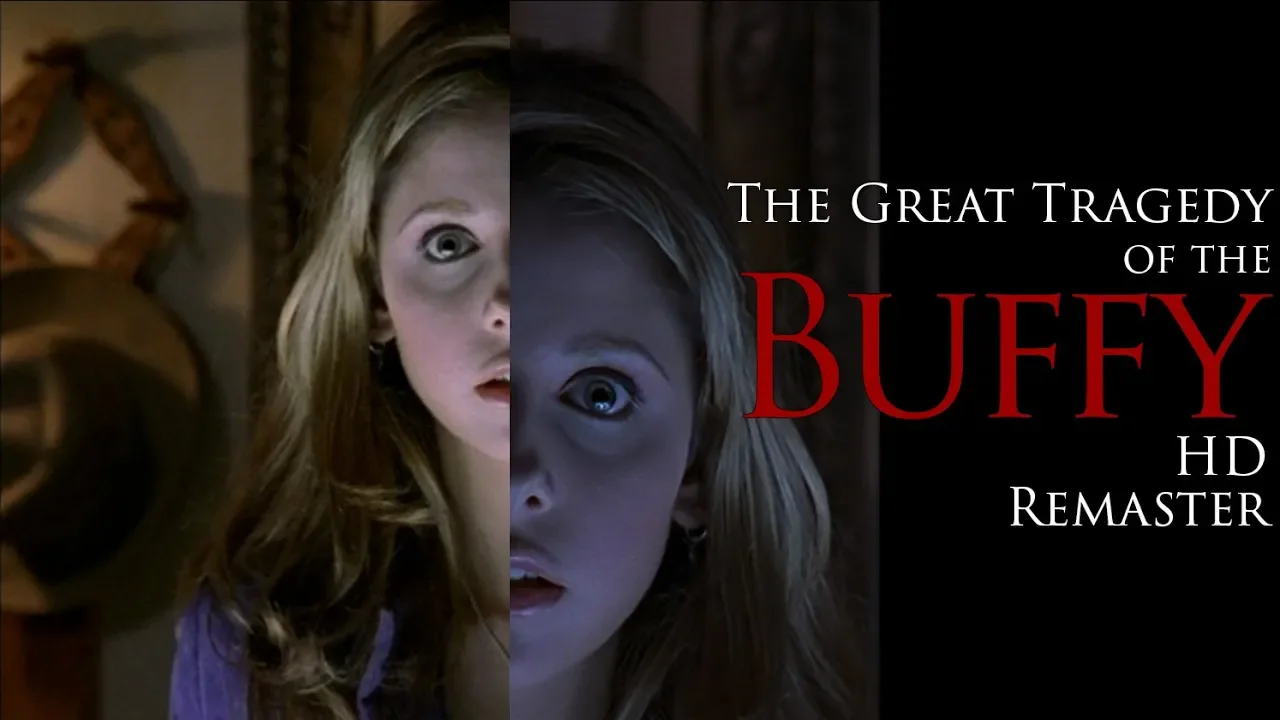
Passion of the Nerd
AI-assisted summary of The Great Tragedy of the 'Buffy' HD Remaster — original source. Check the original for full context.
Source published:
Key ideas
- 20th Century Fox's high-definition remaster of Buffy the Vampire Slayer suffers from severe technical defects, including discarded color grading, destructive 16:9 cropping, heavy digital noise reduction, and blown-up standard-definition visual effects. (0:00)
- Key series creators—including Joss Whedon, David Fury, Steven S. DeKnight, and cinematographer Michael Gershman—have openly condemned the transfer for discarding the visual craft and artistic intent of the original broadcast. (17:00)
- Because the remaster's flaws stem from automated batch processing rather than human oversight, the errors cannot be patched and require a complete, ground-up restoration from the original film negatives. (17:50)
- With physical media declining, the flawed streaming release threatens to become the permanent historical version of the series seen by future generations, mirroring the loss of the original Star Wars theatrical cuts. (17:50)
Detailed notes
## Background Published on YouTube by the channel Passion of the Nerd on March 21, 2019, this video essay examines the severely flawed high-definition remaster of 'Buffy the Vampire Slayer'. The video description includes links to original DVD releases recommended for an authentic viewing experience, citations to cultural criticism regarding the show's legacy, and references to the grassroots Buffy HD campaign.
## TL;DR The essay outlines the foundational narrative importance of 'Buffy the Vampire Slayer' in modern prestige television before detailing the catastrophic technical failures of 20th Century Fox's official HD remaster. It systematically catalogs how the release stripped away atmospheric color grading, ruined original 4:3 framing with haphazard 16:9 cropping that exposes crew members and boom mics, smoothed skin textures into wax using aggressive Digital Noise Reduction, and relied on low-resolution visual effects upscaling. Featuring scathing reactions from creator Joss Whedon and late cinematographer Michael Gershman, the piece warns that the decline of physical media risks permanently enshrining this damaged conversion as the definitive version of the series unless fans demand a complete, ground-up restoration.
## Atmosphere & style The presentation blends the meticulous, shot-by-shot precision of a film-preservation critique with the palpable, wine-fueled exhaustion of a devoted fan witnessing a cultural treasure get desecrated. It balances dry, biting humor against deep historical reverence for the craft of television, making the technical breakdowns accessible and visually striking. The tone turns profoundly solemn when quoting the original creators—particularly director of photography Michael Gershman mourning the erasure of his life's work—transforming the video from a mere critique of technical incompetence into an urgent, melancholic plea for artistic preservation in the streaming era.
## Bulletin - [00:00](https://www.youtube.com/watch?v=oZWNGq70Oyo&t=0s) 20th Century Fox's high-definition remaster of Buffy the Vampire Slayer suffers from severe technical defects, including discarded color grading, destructive 16:9 cropping, heavy digital noise reduction, and blown-up standard-definition visual effects. - [17:00](https://www.youtube.com/watch?v=oZWNGq70Oyo&t=1020s) Key series creators—including Joss Whedon, David Fury, Steven S. DeKnight, and cinematographer Michael Gershman—have openly condemned the transfer for discarding the visual craft and artistic intent of the original broadcast. - [17:50](https://www.youtube.com/watch?v=oZWNGq70Oyo&t=1070s) Because the remaster's flaws stem from automated batch processing rather than human oversight, the errors cannot be patched and require a complete, ground-up restoration from the original film negatives. - [17:50](https://www.youtube.com/watch?v=oZWNGq70Oyo&t=1070s) With physical media declining, the flawed streaming release threatens to become the permanent historical version of the series seen by future generations, mirroring the loss of the original Star Wars theatrical cuts.
## Key takeaways - [00:00](https://www.youtube.com/watch?v=oZWNGq70Oyo&t=0s) Modern television remasters typically return to original film negatives to scan in high definition while preserving aesthetic intent, but the Buffy remaster represents the exact opposite approach. - [01:12](https://www.youtube.com/watch?v=oZWNGq70Oyo&t=72s) Buffy played a foundational role in modern serialized television alongside The Sopranos, training acclaimed writers and influencing showrunners like Russell T Davies and Damon Lindelof. - [04:42](https://www.youtube.com/watch?v=oZWNGq70Oyo&t=282s) The remaster routinely skipped post-production color grading, leaving raw negative lighting that erases night scenes, sunsets, and gothic atmosphere. - [06:46](https://www.youtube.com/watch?v=oZWNGq70Oyo&t=406s) In the Season 5 finale 'The Gift', omitting the nighttime blue color grade destroys the thematic and visual impact of dawn breaking during Buffy's emotional breakthrough. - [08:31](https://www.youtube.com/watch?v=oZWNGq70Oyo&t=511s) Buffy was composed and protected strictly for a 4:3 aspect ratio, yet Fox forced a widescreen 16:9 conversion using aggressive zooming and cropping. - [09:44](https://www.youtube.com/watch?v=oZWNGq70Oyo&t=584s) Careless reframing lopped off critical compositional storytelling elements while exposing film cameras, lighting rigs, boom mics, and off-camera crew members on the edges of the frame. - [09:44](https://www.youtube.com/watch?v=oZWNGq70Oyo&t=584s) Unsupervised widescreen framing exposed actors whose sideline lips remain completely motionless while their ADR dialogue plays audibly. - [11:54](https://www.youtube.com/watch?v=oZWNGq70Oyo&t=714s) Excessive Digital Noise Reduction (DNR) scrubbed away natural film grain and human skin texture, leaving characters looking like waxy plastic dolls. - [11:54](https://www.youtube.com/watch?v=oZWNGq70Oyo&t=714s) Because Seasons 1 and 2 were captured on Super 16mm film, aggressive DNR was especially catastrophic, scrubbing away image detail embedded directly inside the grain structure. - [11:54](https://www.youtube.com/watch?v=oZWNGq70Oyo&t=714s) Competitor remasters like CBS Digital's work on Charmed and Star Trek demonstrate that 1990s television can achieve natural film grain and rebuilt high-definition effects with proper care. - [14:38](https://www.youtube.com/watch?v=oZWNGq70Oyo&t=878s) Rather than rebuilding digital visual effects from raw plates in native HD, the studio blew up standard-definition composite tapes, introducing blurriness and harsh edge halos. - [14:38](https://www.youtube.com/watch?v=oZWNGq70Oyo&t=878s) The few CGI effects rebuilt for early seasons took unapproved artistic liberties, such as turning tactile crumbling vampire ash into billowing smoke. - [17:00](https://www.youtube.com/watch?v=oZWNGq70Oyo&t=1020s) Director of photography Michael Gershman lamented that the remaster threw his life's work in the garbage by removing the dramatic cinematic texture he crafted. - [17:50](https://www.youtube.com/watch?v=oZWNGq70Oyo&t=1070s) As streaming platforms replace physical media, the flawed transfer risks becoming the sole surviving visual record unless fans demand a complete ground-up restoration.
## Detailed walkthrough ### [00:00](https://www.youtube.com/watch?v=oZWNGq70Oyo&t=0s) The Golden Age of Television and the Buffy Remaster Disaster
Television has entered a gilded age driven by the internet, DVR technology, and modern streaming platforms, all of which have made it easy for audiences to invest in serialized, season-long narratives. In many respects, long-form television storytelling has surpassed the scope and emotional depth typically found in average cinema releases. Alongside these newer cinematic epics, classic television series that viewers once experienced through blurry, standard-definition CRT screens are being lovingly restored. Studios routinely return to original film negatives to strike pristine high-definition scans, refreshing visual effects while preserving the artistic integrity and aesthetic tone of the original work.
The high-definition remaster of *Buffy the Vampire Slayer*, however, stands as the exact opposite of this meticulous preservation. Instead of a careful restoration, the release presents an alarming cascade of glaring technical defects: characters' faces are smeared with smoothing filters until they resemble wax figures, established nighttime shots are inexplicably brightened into broad daylight, color timing is radically altered, and production crew members and equipment are left visible on the edges of the frame. The contrast between contemporary industry standards and this slapdash release is so profound that the narrator laments needing an entire bottle of wine just to process the visual catastrophe.
“With these remasters, studios are going back to the original films the shows were shot on, creating brand new high definition scans of them, and updating their special effects while keeping the original flavor.”
---
[01:12](https://www.youtube.com/watch?v=oZWNGq70Oyo&t=72s) Why Buffy Matters in the Modern Pop Media Landscape
For skeptical viewers who might scoff at putting *Buffy the Vampire Slayer* alongside landmark prestige dramas like *Breaking Bad* or *The Sopranos*, its foundational role in modern television history cannot be overstated. While the series built upon foundations laid by supernatural predecessors like *The X-Files* and *Twin Peaks*—and drew conceptual DNA from comic archetypes like Peter Parker—it fundamentally revolutionized narrative structure. As noted television critic Emily Nussbaum observed, 1999 was a watershed moment in television history defined by two shows: *The Sopranos* and *Buffy the Vampire Slayer*. Nussbaum highlighted how David Chase and Joss Whedon pushed the medium into uncharted territory by blending horror, comedy, and drama into an intricate mythic architecture that established the template for modern serialized television.
The creative footprint of *Buffy* extends through the dozens of top-tier showrunners and creators who cite it as an essential influence. The series’ writing room, Mutant Enemy, operated as an incubator for writers and producers who went on to shape productions like *24*, *Once Upon a Time*, *Daredevil*, and *The Martian*. Its season six musical episode, "Once More, with Feeling," popularized the narrative musical format across American television. Whedon himself treated the show as his personal film school before launching *Angel*, *Firefly*, *Dollhouse*, *Dr. Horrible's Sing-Along Blog*, *Marvel's Agents of S.H.I.E.L.D.*, and directing major cinematic tentpoles.
Despite this immense cultural and industry legacy, the HD remaster handled by 20th Century Fox was rushed to completion and distributed across platforms like Netflix US, Amazon Prime UK, Facebook Watch, and FoxPlay. The remaster was met with near-universal condemnation from fans, critics, and original Mutant Enemy alumni, yet Fox addressed only a trivial handful of errors in early episodes while leaving the bulk of the disaster untouched.
“To say that 'Buffy' is an important influential show worthy of a quality HD remaster is of an understatement something and, in an era where we're getting more and more carefully and beautifully created remasters, 'Buffy' currently has (without hyperbole) the WORST HD conversion ever seen.”
- Prominent showrunners influenced by *Buffy*: Rob Thomas (*Veronica Mars*), Russell T Davies (*Doctor Who*), Damon Lindelof (*Lost*, *The Leftovers*), Eric Kripke (*Supernatural*, *The Boys*), and Amy Sherman-Palladino (*Gilmore Girls*). - Initial community pushback began around 2014–2015 via the collaborative efforts of the *Buffy HD* research group on Facebook and video essays documenting early transfer anomalies.
---
[04:42](https://www.youtube.com/watch?v=oZWNGq70Oyo&t=282s) The Stripping of Color Correction and Atmosphere
Filming on set is merely the first step of bringing a show to life; raw footage must pass through post-production, where picture editing, audio mastering, visual effects compositing, and color grading occur. Color correction allows directors and cinematographers to alter hue, saturation, and exposure to establish atmosphere, define spatial reality, or turn daylight shoots into convincing night scenes. A famous cinematic parallel is *The Matrix*, where the real world carries a cool, organic blue wash while scenes inside the simulated computer program feature a distinct digital green tint mirroring computer code. *Buffy* used post-production color grading constantly to establish its mood, enrich palettes, and support supernatural storytelling.
```mermaid flowchart TD accTitle: Comparison of Original Production and Flawed Remaster Pipelines accDescr: Flowchart illustrating the intended original post-production pipeline compared against Fox's deficient HD remaster workflow.
subgraph Original["Original Post-Production Workflow"] A["35mm Film Capture"] --> B["Telecine & Editing"] B --> C["Artistic Color Grading"] C --> D["4:3 Broadcast Master"] end
subgraph Remaster["Flawed HD Remaster Workflow"] E["Original 35mm Negatives"] --> F["Automated HD Scan"] F --> G["Automated Exposure / No Color Grading"] G --> H["Defective 16:9 Widescreen Crop"] end ```
When remastering a show from scratch, technicians must scan the raw camera negatives and then meticulously re-apply the secondary color grades established in the final broadcast cuts. In Fox's remaster, this entire phase was essentially bypassed in favor of crude, automated brightness and contrast adjustments. The consequence is visual incoherence: moody gothic lighting is bleached away, sunset scenes no longer feature visible sunsets, and day-for-night sequences appear as bright as midday. Even the high-profile musical "Once More, with Feeling" looks washed out and flat. In one egregious juxtaposition, a scene explicitly set at 11:34 at night carries the exact same illumination levels as Buffy taking a midday nap.
“And it’s clear that, for the remaster, a crucial part of the post-production was regularly skipped: color correction, also called color-grading.”
---
[06:46](https://www.youtube.com/watch?v=oZWNGq70Oyo&t=406s) The Loss of Visual Subtext in "The Gift"
The catastrophic impact of discarded color timing is most evident in the Season 5 finale, "The Gift." Throughout the season, Buffy fights to protect her sister Dawn from an unkillable god, ultimately reaching a point of complete despair when forced to choose between Dawn's life and the collapse of the universe. In her lowest emotional moment, Buffy engages in a desperate battle, until a flash of insight leads her to realize that she can sacrifice her own life instead of her sister's. As she makes this emotional breakthrough and leaps to save reality, the physical sun rises over Sunnydale.
In the original broadcast grade, the nighttime battle sequences leading up to this resolution are cast in a heavy, cool blue palette that reinforces the crushing despair and cold isolation of Buffy's dilemma. When dawn finally breaks, the warm golden morning light dramatically shatters the visual coldness of the night. In the HD remaster, the blue color timing was omitted entirely, leaving the raw negative's warm, orange, and rosy tones on screen during the nighttime fighting. By stripping out the blue tint, the remaster erases the contrast between the hopeless battle and the symbolic sunrise, flattening an essential thematic payoff into visual mush.
“By removing the blue tint, there is no longer a visual distinction between the hopeless battle and Buffy’s moment of clarity with the scenes after.”
- Episode highlighted: Season 5, Episode 22 ("The Gift"), written and directed by Joss Whedon. - The thematic sunrise directly parallels the sister's name (Dawn) and Buffy's breakthrough, a visual metaphor ruined by the remaster's premature warm color palette.
---
[08:31](https://www.youtube.com/watch?v=oZWNGq70Oyo&t=511s) Broken Framing and the Forced 16:9 Conversion
Standard-definition television of the 1990s was composed for a 4:3 aspect ratio, producing an image that fit roughly square screens. Modern televisions and monitors utilize the wider 16:9 rectangular format. When older series are converted for modern displays, technicians must choose whether to preserve the original 4:3 composition with black pillarboxes on the sides or adapt the image to fill the 16:9 screen. Joss Whedon has stated clearly that 4:3 is the intended format for *Buffy the Vampire Slayer*, clarifying that he is not opposed to the series being seen in high definition, but is opposed to presenting it in widescreen.
While *Buffy* was captured on 35mm film using Panavision cameras whose film gates physically captured a wider area, the directors and cinematographers composed and framed strictly for the center 4:3 safe area. Other series, such as *The Wire* and *Charmed*, have demonstrated that widescreen transfers can be executed respectfully through careful shot-by-shot reframing, or by offering high-definition 4:3 presentations alongside widescreen releases. Fox's remaster of *Buffy*, however, approached widescreen conversion like a bulldozer, aggressively and haphazardly zooming and cropping the frame, lopping off important visual information, and mangling the compositions planned by the filmmakers.
“Whatever decision they were going to make, the problem is that 'Buffy'’s conversion to widescreen was done with a bulldozer using insane amounts of cropping.”
[09:44](https://www.youtube.com/watch?v=oZWNGq70Oyo&t=584s) Broken Framing, Cropping, and Exposed Production Errors
Rather than opening up the frame to properly incorporate the unused sides of the original film negative, the remaster consistently makes baffling choices to zoom in and crop down the original broadcast picture. Season 1 is particularly disastrous: intimate framing on characters like Willow and Buffy becomes claustrophobic, awkward, and crowded. Even when later seasons begin opening up wider portions of the negative, the team still inexplicably lops off crucial visual information from the original compositions. In "What's My Line?", the burned church at the climax of the episode is cropped out entirely, and in other instances, background jokes and visual cues—like an entire latte sitting next to Angel—simply vanish from the frame. The prevailing theory among fans is that the remaster team relied on an automated computer algorithm to guess the framing and never bothered to review or manually correct the output.
The result is a barrage of ruined compositions and total indifference to the original directors' intent. These cropping problems plague all seven seasons, making the extreme zoom-ins doubly insulting when compared to the European widescreen standard-definition DVD releases, which proved that no aggressive zooming was necessary to fill a 16:9 frame. Because *Buffy* was never framed or protected for widescreen broadcast, opening the mattes without careful shot-by-shot supervision introduces rampant technical glitches. Viewers frequently see lighting rigs, Panavision cameras, and wandering crew members standing just outside the original 4:3 safe zone. Furthermore, opening the sides exposes actors whose lines were dubbed or altered in post-production, leaving moments where characters speak audibly while their visible lips remain completely still.
While cropping is inherently the cheapest and most damaging way to mask these errors because it permanently destroys compositional information, superior restorations handle these issues with artistry. In HBO's high-definition remaster of *The Wire*, crew members, cameras, and C-stands were painstakingly painted out digitally frame by frame rather than slicing away the frame itself.
```mermaid flowchart TD accTitle: Broken Framing Workflow in Buffy Remaster accDescr: Diagram contrasting proper remastering practices against the automated and careless methods used in the Buffy HD transfer.
subgraph CarelessRemaster["Buffy HD Remaster (Fox)"] A["Original 35mm/16mm Film"] --> B["Automated Auto-Framing Algorithm"] B --> C["Indiscriminate Cropping & Zooming"] B --> D["Unchecked Widescreen Matting"] C --> E["Lost Visual Context<br>(Burned church, props lost)"] D --> F["Exposed Glitches<br>(Crew, cameras, lighting rigs, audio desync)"] end
subgraph ProperRemaster["Industry Standard (e.g., The Wire)"] G["Original Film Elements"] --> H["Shot-by-Shot Inspection"] H --> I["Digital Paint-Out of Equipment"] H --> J["Protected Original Composition"] end ```
- **Extreme cropping examples**: In Season 1, close-ups on Willow and Buffy are squeezed uncomfortably tight; in Season 2's "What's My Line?", the burned church at the end of the episode is cut out of the shot completely. - **Production gaffes exposed**: C-stands, boom mics, lighting equipment, Panavision cameras, and off-camera crew members appear routinely on the edges of widescreen shots. - **Audio-sync discrepancies**: Expanding the frame reveals actors on the sidelines whose lips do not move while their dialogue plays. - As the narrator summarizes the failure: “So you have cropping and reframing where it's pointless and breaks the original vision of the director, and you have shots where cropping actually would’ve been a benefit just outright ignored.”
---
[11:54](https://www.youtube.com/watch?v=oZWNGq70Oyo&t=714s) Digital Noise Reduction (DNR) and the Plastic Texture
The most egregious technical offense in the remaster is the aggressive, indiscriminate application of Digital Noise Reduction (DNR). Because *Buffy* was captured on physical Panavision film cameras, its natural texture includes film grain—tiny, dancing particles that give organic film stock its distinct, cinematic weight. DNR is a digital processing tool meant to diminish visible grain, but when dialed up recklessly, the software cannot tell the difference between film grain and genuine human skin texture. Human beings have natural pores, freckles, and fine lines; the remaster’s heavy filtering scrubs these features away entirely, leaving the cast looking like smoothed-over plastic dolls or smeared watercolor paintings.
The irony is that this over-processing completely destroys the fundamental benefit of scanning 16mm and 35mm film in high definition. In numerous instances, the standard-definition DVD master actually retains far greater facial texture and image detail than the smudged 1080p remaster. When evaluating comparable projects, this disaster stands out sharply. 20th Century Fox’s own HD transfer of *The X-Files* avoided this trap, and the contemporary remaster of *Charmed*—which was shot on 35mm during the exact same television era—showcases crisp, filmic sharpness and natural grain without sacrificing fine detail.
Even footage shot on smaller gauges can look stellar when handled by a competent team. The BBC's *Pride and Prejudice* miniseries was shot on 16mm just one year prior to *Buffy* Season 1, and its Blu-ray release is beautifully defined and organic. Similarly, the 16mm first season of *Gilmore Girls* demonstrates that 16mm film can transition into stunning high definition when grain is preserved rather than scrubbed. Because the first two seasons of *Buffy* were filmed on Super 16mm, retaining the grain was doubly vital, as all fine detail on smaller film stocks is physically embedded inside the grain structure. The arbitrary, ham-fisted application of DNR proves that Fox chose a brute-force, automated batch process with no human technician supervising the work.
- **Film gauge differences**: Seasons 1 and 2 of *Buffy* were shot on Super 16mm, while later seasons transitioned to 35mm film. - **DNR visual artifacts**: Over-filtering scrubs out freckles, facial lines, and skin pores, turning live-action footage into a flat, waxy watercolor look. - **Positive industry benchmarks**: - *Charmed*: Shot on 35mm in the same late-'90s era, restored with sharp detail and subtle DNR. - *Pride and Prejudice* (1995): Shot on 16mm, offering sharp, natural, textured high definition. - *Gilmore Girls* (Season 1): Proof that 16mm television elements hold up cleanly in HD without aggressive smoothing. - Highlighting the absurdity of the transfer, the narrator asks: “What is the point of remastering a show from film if you make it look like it was shot on a digital camera from 1998?”
---
[14:38](https://www.youtube.com/watch?v=oZWNGq70Oyo&t=878s) Compromised Visual Effects and Upscaling
Because *Buffy* was an episodic television series produced in the late 1990s and early 2000s, all of its digital visual effects—vampire facial morphs, dusting sequences, and magic spells—were composited on computers in standard-definition resolution and printed onto video tape. A legitimate HD remaster requires technicians to retrieve the original raw film plates, rescan them in 1080p, and reconstruct the computer-generated elements from scratch. While a few isolated effects in Seasons 1 and 2 were rebuilt in native high definition, Fox abandoned this effort almost immediately. By early Season 2, the studio stopped rebuilding dusting effects and simply took the dated standard-definition video files, blew them up to fill an HD canvas, and pasted them back into the show.
The few CGI shots that were re-rendered suffered from baffling aesthetic liberties. Instead of recreating the original look, the team altered the fundamental behavior of the vampire dusting, turning the crumbling ash into an unconvincing, billowing smoke effect. The remaining bulk of the series relies entirely on standard-definition upscaling, producing jarring visual rollercoasters where crisp live-action footage abruptly cuts to muddy, blurry, low-resolution visual effects, only to cut back a second later. These upscaled shots are layered with harsh digital edge enhancement that produces glowing white halos around characters' silhouettes, looking far worse than the standard-definition DVDs.
The climax of Season 2's finale, "Becoming, Part 2", highlights this laziness. The critical sequence featuring the dimensional portal opening behind Acathla looks dreadful: the CGI is poorly upscaled from standard definition, using what appears to be an alternate, unapproved visual effects pass with completely different colors than the broadcast master. By contrast, CBS Digital rebuilt every single visual effect shot from scratch in native high definition for their remasters of *Star Trek: The Original Series*, *Star Trek: The Next Generation*, and *Charmed*. *Buffy* received none of this care, craftsmanship, or budget.
```mermaid flowchart LR accTitle: Visual Effects Workflow Comparison accDescr: Flowchart illustrating the difference between CBS's ground-up rebuild of visual effects versus Fox's upscaled shortcut for Buffy.
subgraph CBSMethod["CBS Method (Star Trek / Charmed)"] direction TB C1["Raw Film Scanned at 1080p"] --> C2["Rebuild CGI from Scratch"] C2 --> C3["Native HD Composite Matching Original"] end
subgraph FoxMethod["Fox Method (Buffy Remaster)"] direction TB F1["Late 90s SD Effect Composite"] --> F2["Blown-up / Upscaled Video"] F2 --> F3["Edge Enhancement Artifacts & Blurry Shots"] end ```
- **Rebuilt vs. upscaled effects**: Rebuilding dusting sequences ceased early in Season 2; subsequent magic and monster effects rely on magnified 480i video files. - **Dusting alteration**: The recreated vampire deaths replace tactile, crumbling dust with an arbitrary smoke simulation. - **"Becoming, Part 2" portal**: The climactic portal sequence behind the demon Acathla uses a blurry, upscaled SD asset featuring altered color timing never present in the original broadcast. - **Edge halos**: Heavy sharpening and artificial edge enhancement produce distracting white outlines around characters during upscaled sequences.
---
[17:00](https://www.youtube.com/watch?v=oZWNGq70Oyo&t=1020s) Outrage from the Creative Team
The grassroots fan campaign *Buffy HD* reached out directly to key members of Mutant Enemy and the original production crew, finding that the creators share the fans' deep frustration. Joss Whedon made his feelings known in 2015 when he succinctly posted online, “Widescreen Buffy is nonsense.” Frequent series writers, directors, and executive producers David Fury and Steven S. DeKnight expressed mutual disgust, calling the transfer an embarrassing mess, with DeKnight declaring, “Somebody should be indicted.”
The most heartbreaking appraisal came from the late Michael Gershman, who served as the Director of Photography on the vast majority of the series and directed several pivotal episodes. In 2016, Gershman gave an emotional statement to the *Buffy HD* campaign:
> “It's a shame to have all of my work thrown in the garbage. I tried to give *Buffy* a texture that would turn a teeny bopper show into a serious dramatic presentation. Alas, once any piece of art leaves the artist's hands, control is lost. Sorry everyone can't see the work in its original incarnation.”
His words underscore that the remaster is not merely a technical disappointment; it is a systematic erasure of the artistic labor that elevated *Buffy* from a kitschy teen show into an enduring cultural touchstone.
---
[17:50](https://www.youtube.com/watch?v=oZWNGq70Oyo&t=1070s) The Dying Medium and Why Fans Must Speak Out
The sheer volume of framing, coloring, cropping, and resolution errors means that the existing remaster cannot simply be patched or adjusted: it must be completely scrapped. Doing the job properly requires starting over from scratch with the original negative film cans—a process requiring considerable studio time, money, and commitment. Yet *Buffy*'s legacy and historical importance merit precisely that level of investment.
The urgency of this issue is compounded by the rapid decline of physical media. Unless one still owns vintage VHS tapes or laserdiscs of the original *Star Wars* trilogy, it is practically impossible to watch those films without George Lucas's controversial Special Edition revisions. In the same vein, as DVDs and Blu-rays become obsolete, audiences will depend entirely on streaming libraries and digital storefronts controlled by corporate conglomerates. Whichever file Disney and Fox host on their servers is the version that will define the show's legacy for future generations.
If audiences remain silent, the definitive visual record of *Buffy* will remain a blurry, careless mess. Fans must speak up and make their voices heard. With a modern *Buffy* reboot in development, the hope is not only that a new show might meaningfully explore the struggles of a new generation, but that renewed corporate interest might convince Disney to revisit the classic original series and finally treat it with the care, affection, and artistic respect it has always deserved.
- **Streaming monopoly**: As DVDs fade out, streaming services become the sole gatekeepers of how historical television is presented and preserved. - **Precedent of lost originals**: Like the untampered theatrical cuts of *Star Wars*, original television broadcasts risk being permanently superseded by flawed corporate remasters. - Describing the scale of the failure, the narrator emphasizes the only real solution: “It may seem daunting but the truth here is, you can’t fix this remaster. There are too many mistakes. Too much went wrong. Doing it right means starting over again with the original footage and... yeah... that means expense.”
## Notable quotes > [11:54](https://www.youtube.com/watch?v=oZWNGq70Oyo&t=714s) What is the point of remastering a show from film if you make it look like it was shot on a digital camera from 1998? — Ian Martin (Passion of the Nerd)
> [17:00](https://www.youtube.com/watch?v=oZWNGq70Oyo&t=1020s) It's a shame to have all of my work thrown in the garbage. I tried to give Buffy a texture that would turn a teeny bopper show into a serious dramatic presentation. — Michael Gershman
## Mentioned Buffy the Vampire Slayer, Passion of the Nerd, Joss Whedon, Emily Nussbaum, David Chase, The Sopranos, Breaking Bad, The X-Files, Twin Peaks, Mutant Enemy, Rob Thomas, Russell T Davies, Damon Lindelof, Eric Kripke, Amy Sherman-Palladino, 20th Century Fox, Disney, The Matrix, The Wire, Charmed, Pride and Prejudice, Gilmore Girls, Star Trek: The Original Series, Star Trek: The Next Generation, CBS Digital, David Fury, Steven S. DeKnight, Michael Gershman, Star Wars, George Lucas, Panavision
## Video description Support the channel on Patreon: https://www.patreon.com/passionofthenerd
SPOILERS FOR ALL OF BUFFY
Suggested versions (links support the channel)
Note: Unfortunately I can't keep up on the what digital service is carrying which version of the show (especially internationally) as they change too frequently. However, a LOT of people have asked me which to buy so these are the two versions for purchase that are currently the best choices for the original experience of the show.
Buffy Seasons 1-7: The Complete Series (Region 1) This is the current print DVD, American, stand definition, 4:3 boxed set for the series. This is the format as originally intended by Joss Whedon.This version will ONLY work in a Region 1 (North American) DVD player unless ripped. https://amzn.to/2JcAPKZ
Buffy Complete Season 1-7 - 20th Anniversary Edition [DVD] [2017] (Region 2) This is the 16:9 Standard Definition European DVD printing. This is the second best version of the series currently available for purchase. Second best because the show was not protected for 16:9 so SOME onscreen errors are present (vignetting, mics, etc.) but NOTHING on par with the current HD remaster. These DVD's will ONLY work in a Region 2 (Eurpopean) DVD Player unless ripped. https://amzn.to/3kuWNqe
For more info, checkout the Buffy HD Facebook page: https://www.facebook.com/BuffyHD/
Social Links
Sources: Co-Written by Nicolas Respaud: https://twitter.com/Rem_Nico and Kévin Hérieau
Vox - How Buffy the Vampire Slayer transformed TV as we know it Todd VanDerWerff and Caroline Framke https://www.vox.com/culture/2017/3/10/14857542/buffy-the-vampire-slayer-explained-tv-influence
Cahiers Du Buffy Emily Nussbaum https://www.newyorker.com/culture/culture-desk/cahiers-du-buffy/amp
Buffy Summers Is Responsible For Everything You Like On TV KADEEN GRIFFITHS https://www.bustle.com/p/buffy-summers-is-responsible-for-everything-you-like-on-tv-9651649
10 Shows influenced by Buffy the Vampire Slayer BBC America http://www.bbcamerica.com/anglophenia/2017/03/10-shows-that-wouldnt-exist-without-buffy-the-vampire-slayer
AV Clubs Interview with Russel T Davies https://tv.avclub.com/russell-t-davies-1798217185
Force Awakens: George Lucas Special Edition timtimfed https://www.youtube.com/watch?v=v93Jh6JNBng
Music Credits: "Favorite Secrets" by Waylon Thornton http://waylonthornton.tumblr.com
0:00 Introduction 1:10 Why Buffy matters 4:42 Absent Color 8:31 Broken framing 11:54 Digital noise reduction (DNR) 14:38 Special effects 17:00 What the creators think 17:50 How to be heard
#buffythevampireslayer #btvs #sarahmichellegellar #mutantenemy
Business inquiries: thepassionofthenerd@gmail.com
PO Box 150002 10799 W Alameda Ave Lakewood, CO 80215 US
Bluesky: https://bsky.app/profile/iannitram.bsky.social Instagram: https://www.instagram.com/passionofthenerd TikTok: https://www.tiktok.com/@passionofthenerd Facebook: https://www.facebook.com/thepassionofthenerd X: https://x.com/Iannitram Discord: https://discord.gg/CQ6wGKr Reddit: https://www.reddit.com/r/thepassionofthenerd Tumblr: https://thepassionofthenerd.tumblr.com Amazon: https://www.amazon.com/shop/passionofthenerd
[Source](https://www.youtube.com/watch?v=oZWNGq70Oyo)