Patreon CEO Defends Southern Ban, Citing Physical Harm Over Speech
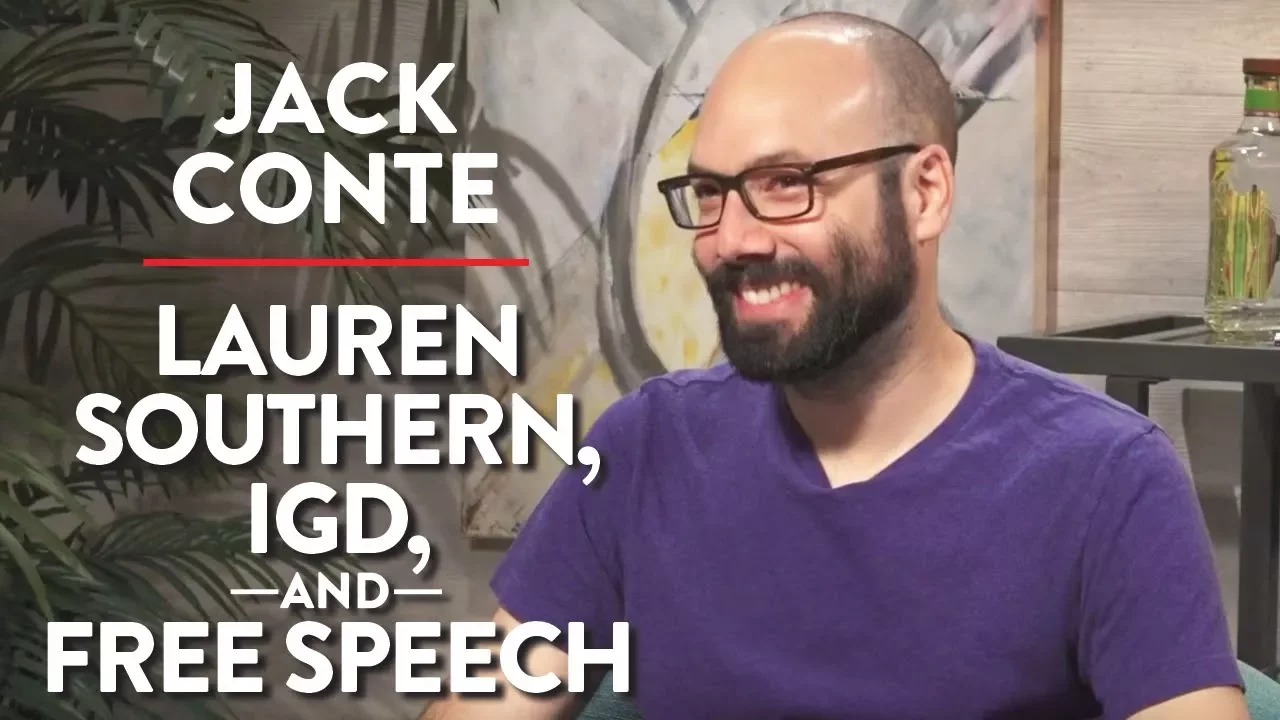
The Rubin Report
Patreon restricts creators solely for manifest physical endangerment rather than ideological speech, relying on direct subscription funding to insulate the platform from advertiser-driven boycotts.
AI-assisted summary of Patreon CEO On Lauren Southern, IGD, & Free Speech | Jack Conte | TECH | Rubin Report — original source. Check the original for full context.
Source published:
Key ideas
- Patreon CEO Jack Conte clarified that the platform deplatformed Lauren Southern for physical endangerment on the Mediterranean rather than speech, comparing her crew's obstruction of an NGO search-and-rescue boat to blocking an ambulance. (4:04)
- Patreon's Trust and Safety enforcement operates on a 'manifest observable behavior' standard driven by inbound community reports rather than proactive surveillance, outside lobbying, or media opinion. (6:54)
- Conte acknowledged systemic execution failures in the abrupt termination notice sent to Southern, pledging that Patreon will establish a formal appeals process, introduce warnings, and double its Trust and Safety team. (35:00)
- Unlike advertising-dependent platforms like YouTube, Patreon's direct-to-creator funding model is structurally insulated from advertiser boycotts and third-party corporate pressure. (17:03)
Detailed notes
## Background This video was published on YouTube by The Rubin Report on July 31, 2017. In the live in-studio interview, host Dave Rubin speaks with Patreon co-founder and CEO Jack Conte about Patreon's corporate policies, free speech, and the controversial account deletions of right-wing commentator Lauren Southern and radical left-wing media outlet It's Going Down (IGD).
## TL;DR Following fierce creator backlash and subscriber cancellations sparked by the deplatforming of Lauren Southern, Jack Conte explains the rationale behind Patreon's content moderation decisions. Conte emphasizes that Southern was banned not for her ideology or political speech regarding immigration, but under a 'manifest observable behavior' standard after she physically participated in obstructing an NGO search-and-rescue ship at sea. The discussion covers Patreon's three-tiered policy architecture, its insulation from advertiser boycotts compared to ad-supported platforms like YouTube, and operational oversights in its notification process. Throughout the interview, Conte details how Trust and Safety teams separate physical endangerment, incitement, and hate speech from controversial but permissible political discourse.
## Atmosphere & style The interview carries an intense, high-stakes air of executive accountability, yet maintains a remarkably candid, collegial, and constructive tone throughout. Rather than an aggressive cross-examination, the dynamic feels like an earnest deep dive into systemic governance, with Rubin voicing the palpable anxieties of creators facing sudden revenue loss while Conte transparently admits operational blunders and misfired emails. Watching the discussion feels unusually grounded and thoughtful for online culture-war debates, characterized by a shared determination to demystify Silicon Valley moderation frameworks and explore where digital free speech meets physical harm.
## Bulletin - [04:04](https://www.youtube.com/watch?v=ofpbDgCj9rw&t=244s) Patreon CEO Jack Conte clarified that the platform deplatformed Lauren Southern for physical endangerment on the Mediterranean rather than speech, comparing her crew's obstruction of an NGO search-and-rescue boat to blocking an ambulance. - [06:54](https://www.youtube.com/watch?v=ofpbDgCj9rw&t=414s) Patreon's Trust and Safety enforcement operates on a 'manifest observable behavior' standard driven by inbound community reports rather than proactive surveillance, outside lobbying, or media opinion. - [35:00](https://www.youtube.com/watch?v=ofpbDgCj9rw&t=2100s) Conte acknowledged systemic execution failures in the abrupt termination notice sent to Southern, pledging that Patreon will establish a formal appeals process, introduce warnings, and double its Trust and Safety team. - [17:03](https://www.youtube.com/watch?v=ofpbDgCj9rw&t=1023s) Unlike advertising-dependent platforms like YouTube, Patreon's direct-to-creator funding model is structurally insulated from advertiser boycotts and third-party corporate pressure.
## Key takeaways - [01:03](https://www.youtube.com/watch?v=ofpbDgCj9rw&t=63s) Lauren Southern's account deletion caused immediate financial fallout for Dave Rubin, who lost over 200 patrons and $1,000 in monthly recurring revenue amid community outrage. - [04:04](https://www.youtube.com/watch?v=ofpbDgCj9rw&t=244s) Southern's deplatforming was triggered by physical obstruction of an NGO search-and-rescue boat at sea rather than her ideological commentary on migration. - [06:54](https://www.youtube.com/watch?v=ofpbDgCj9rw&t=414s) Patreon evaluates policy violations through 'manifest observable behavior,' relying strictly on verifiable primary-source receipts such as video footage, audio, and written statements. - [10:12](https://www.youtube.com/watch?v=ofpbDgCj9rw&t=612s) Patreon organizes its policy into three tiers: on-platform behavior, severe off-platform concurrent conduct (such as violent crime or property destruction), and historical disqualifiers like terrorism. - [19:44](https://www.youtube.com/watch?v=ofpbDgCj9rw&t=1184s) Platform rules distinguish private company policy from criminal law, allowing Patreon to disallow legal activities like adult content to maintain its primary mission without acting as a judicial body. - [22:17](https://www.youtube.com/watch?v=ofpbDgCj9rw&t=1337s) External media smears, partisan pressure, and designations by organizations like the Southern Poverty Law Center do not dictate Patreon's enforcement decisions. - [25:40](https://www.youtube.com/watch?v=ofpbDgCj9rw&t=1540s) Content creators engaging in controversial speech, political debate, or interviews remain protected, as speech alone does not cross into actionable physical endangerment. - [35:00](https://www.youtube.com/watch?v=ofpbDgCj9rw&t=2100s) Patreon admitted execution errors in how Southern's ban was communicated and committed to building a transparent warning system and formal appeals workflow. - [01:02:22](https://www.youtube.com/watch?v=ofpbDgCj9rw&t=3742s) The Trust and Safety team operates as an internal investigation unit that compiles detailed multi-page reports rather than acting on administrative whim or public outrage. - [52:32](https://www.youtube.com/watch?v=ofpbDgCj9rw&t=3152s) Patreon deplatformed radical left-wing site It's Going Down for publishing instructions on disabling railroad tracks with concrete, demonstrating consistent application across ideological spectrums. - [59:02](https://www.youtube.com/watch?v=ofpbDgCj9rw&t=3542s) The platform's direct consumer-to-creator subscription structure removes corporate advertisers from the ecosystem, shielding creators from commercial advertiser boycotts. - [01:06:43](https://www.youtube.com/watch?v=ofpbDgCj9rw&t=4003s) Harassment policies distinguish public officials from private citizens, permitting aggressive political critique of leaders while strictly prohibiting targeted harassment of private individuals.
## Detailed walkthrough ### [01:03](https://www.youtube.com/watch?v=ofpbDgCj9rw&t=63s) Dave Rubin’s Prelude: Independence, Backlash, and Big Tech Monoliths
Dave Rubin opens the live broadcast by explaining the unique nature of the stream and acknowledging how essential Patreon has been to the growth of *The Rubin Report*. Through the crowdfunding platform, the show became completely fan-funded and editorially independent, allowing Rubin to build a professional home studio without any corporate gatekeepers between him and his audience. However, following Patreon's decision the previous week to delete the account of political commentator and former guest Lauren Southern, Rubin faced immediate community backlash. Frustrated supporters pulled their pledges, resulting in the loss of approximately 200 patrons and over $1,000 per month in recurring revenue. While some donors shifted their contributions over to PayPal, Rubin emphasizes that the financial hit is secondary to the underlying principles of free speech and platform governance.
While acknowledging Patreon's legal prerogative as a private company to manage its business, Rubin expresses intense frustration with the growing lack of transparency from modern tech monoliths. Unlike executives at other major platforms who remain unreachable, Patreon co-founder and CEO Jack Conte personally telephoned Rubin and roughly half a dozen other creators to explain the company's reasoning. During that 20-minute phone call, Rubin challenged Conte to come onto the show for an open discussion about content moderation, free expression, and the treatment of dissent, and Conte immediately agreed. Rubin frames Patreon alongside YouTube, Facebook, and Twitter as one of the modern "Big Four" platforms for creators, noting that Conte's willingness to sit down live is virtually unheard of among tech leaders.
- Rubin lost roughly 200 patrons and more than $1,000 per month in monthly revenue immediately after Southern was banned. - Jack Conte personally reached out by phone to roughly half a dozen creators to explain the moderation choice before agreeing to appear in-studio.
[04:04](https://www.youtube.com/watch?v=ofpbDgCj9rw&t=244s) The Removal of Lauren Southern: Speech Versus Action
Rubin dives straight into the core controversy, asking Conte to clearly explain why Southern’s page was terminated. Conte explains that Southern, alongside a crew aboard a vessel in the Mediterranean, physically maneuvered their boat to obstruct a non-governmental organization (NGO) ship involved in search-and-rescue operations. According to Conte, this event represented a clear transition from protected speech into tangible, dangerous physical action. Patreon maintains an explicit clause in its content policy prohibiting conduct that could foreseeably lead to loss of life or severe bodily harm, with Conte comparing the maritime obstruction to physically blocking the entrance to an emergency room or parking a car in front of an active ambulance.
```mermaid flowchart TD accTitle: Patreon Moderation Process for Southern accDescr: Flowchart showing how incoming reports triggered escalation and account removal under Patreon terms. subgraph Influx ["Community Reports"] A["Influx of user complaints"] --> B["Detailed evidence submitted<br>(Tweets, video footage, screenshots)"] end subgraph Policy ["Policy Evaluation"] B --> C["Review of Manifest Observable Behavior"] C --> D{"Violates safety policy?<br>(Actions risking loss of life)"} end subgraph Action ["Platform Action"] D -- "Yes (Obstructing rescue ship)" --> E["Account Deletion"] end ```
When Rubin asks how the incident originally reached Patreon's radar, noting online speculation that the advocacy organization Hope Not Hate lobbied the company to take action, Conte clarifies that he had never even heard of Hope Not Hate until seeing tweets over the preceding weekend. He explains that moderation decisions are triggered internally when an influx of community reports reaches critical mass, pointing out that an identical spike in reports led to the removal of the radical left-wing media platform IGD (It's Going Down). When reports include concrete, traceable documentation—such as screenshots, public social media statements, and video evidence—the trust and safety team formally escalates the issue for an operational verdict. As Conte directly remarks regarding external political pressure: “If they lobbied Patreon, they didn’t lobby me.”
[06:54](https://www.youtube.com/watch?v=ofpbDgCj9rw&t=414s) Manifest Observable Behavior and Content Policy Tiers
Rubin presses Conte on a specific phrase he used in a recent public response video: "manifest observable behavior." Conte explains that this standard is designed to remove subjective guesswork, ideological bias, and mind-reading from moderation decisions. Instead of speculating on an individual's private intent or political motivation, trust and safety teams evaluate concrete, verifiable actions. Conte illustrates this with a hypothetical scenario: if an individual threatens on Twitter to burn down a local DMV, releases video footage of themselves practicing arson on an empty building, and uses crowdfunding to purchase matches and gasoline, the aggregation of verified, recorded actions constitutes a manifest, credible threat.
Rubin counters by highlighting the defense raised by Southern's supporters: many argue that the NGO vessels are operating illegally by facilitating unlawful human trafficking across borders, meaning Southern was documenting or resisting illicit activity rather than endangering legitimate rescue operations, and that Southern never spent Patreon funds to finance the boat mission itself. Conte pushes back against conflating legal immigration debates with platform policy, arguing that defining who counts as a refugee versus an economic migrant is an ideological debate that Patreon's rules cannot adjudicate. Addressing the funding rules, Conte begins unpacking how Patreon structures its policies into distinct tiers because it processes financial transactions, starting with absolute bans on hosting or funding certain conduct:
> “Content policy is about manifest observable behavior; who is a migrant and who is a refugee is a separate discussion that actually has nothing to do with content policy.” — Jack Conte
- Manifest observable behavior relies on verifiable receipts: public videos, recorded statements, and demonstrable offline activities rather than presumed intent. - Patreon's policies distinguish between activities conducted on the platform and external actions funded through money raised via the platform. - The first tier of Patreon's terms forbids both hosting and monetizing extreme conduct, ranging from severe physical endangerment and child sexual abuse material to hate speech.
[10:12](https://www.youtube.com/watch?v=ofpbDgCj9rw&t=612s) The Three Tiers of Patreon’s Content Policy and the Law
Jack Conte outlines the three distinct tiers governing Patreon's content policy, emphasizing that company policy exists entirely separate from municipal or international law. The first section specifies explicit rules for what creators can and cannot do directly on the Patreon platform itself, rather than on third-party sites like Twitter. The second tier extends beyond the platform's digital borders to off-platform actions: creators cannot engage in certain severe activities anywhere while maintaining a Patreon creator page. Conte provides extreme hypothetical scenarios to illustrate the point, explaining that if someone runs a bomb-making facility or commits money laundering elsewhere, they cannot use Patreon to fund unrelated creative endeavors like weekly flute music. Dave Rubin questions whether this category is strictly about illegal behavior, but Conte clarifies that while violent crime and property destruction feature heavily, legality is not the only metric. Patreon bans completely legal activities as well, such as pornography, not out of moral condemnation, but because hosting it does not align with the company's core mission to support creators. Rubin concurs that Patreon is a private business entitled to define its terms of service, noting he makes that clear to his audience.
Conte notes the third section of Patreon's policy, which addresses historic actions: individuals who have ever engaged in severe offenses, such as terrorism or cybercrime, are barred from having a creator account on the platform, regardless of whether that activity has ceased. As Conte frames the core framework of Patreon's guidelines:
> “And at the end of the day that's that's the way we think about it which again is why we distinguish between like law and uh and like content policy they really are different discussions.”
```mermaid flowchart TD accTitle: Patreon Three-Tier Policy Framework accDescr: Diagram illustrating the three distinct levels of Patreon's content policy and enforcement. subgraph Levels["Patreon Policy Tiers"] L1["1. On-Platform Restrictions<br>(Actions directly on Patreon)"] L2["2. Off-Platform Concurrent Actions<br>(Violent crime, property damage, adult content)"] L3["3. Historical Disqualifiers<br>(Past terrorism, cybercrime)"] end L1 --> Decision["Account Review & Enforcement"] L2 --> Decision L3 --> Decision ```
[12:43](https://www.youtube.com/watch?v=ofpbDgCj9rw&t=763s) The NGO Ships and the Ambulance Analogy
Rubin raises the broader political context surrounding Lauren Southern and the Defend Europe mission in the Mediterranean. Supporters argue that non-governmental organization (NGO) ships act as an intentional smuggling pipeline for illegal migrants rather than rescuing genuine refugees, meaning activists believe they are actively defending European borders against lawbreaking. Rubin asks whether the debate over whether the passengers are legitimate refugees or economic migrants matters to Patreon's determination. Conte rejects the premise outright, calling the political status of the people at sea totally irrelevant to Patreon's enforcement decision.
To explain why Patreon avoids litigating such geopolitical disputes, Conte presents an analogy involving an ambulance. If someone physically blocks an ambulance from reaching a patient, Patreon cannot look past the obstruction to evaluate whether the person suffering a medical emergency was a convicted felon or an awful human being. Doing so would force a private platform to serve as an impossible arbiter of moral worth and conflicting empirical studies. In international waters, international law guarantees asylum seekers certain rights, while conflicting academic papers dispute migrant percentages; wading into those debates would mire the company in subjective determinations. Conte explains the bright-line rule:
> “So the where we draw the line as a private company is like look you can't you can't block an ambulance no matter who that ambulance is going to pick up.”
[15:31](https://www.youtube.com/watch?v=ofpbDgCj9rw&t=931s) Speech Versus Physical Action in Lauren Southern's Video
Rubin asks Conte for clarification on the exact dividing line between protected free expression and policy-violating conduct in Lauren Southern's case. He asks whether Southern would have remained on the platform if she had simply recorded the event as a journalist rather than telling the boat captain to position the vessel in front of the NGO ship. Conte confirms unequivocally that mere coverage or protest would have been permitted. Had Southern stood on the deck filming, or held signs and shouted protests from the side of the vessel, her account would have remained intact.
The violation occurred when speech crossed into direct instruction and physical obstruction. Conte stresses that Southern was captured on camera repeatedly telling the operator to cut in front of the NGO vessel specifically because maritime regulations would force the larger ship to halt. Conte reiterates that while he personally disagrees with many things Southern says and does, Patreon protects contentious speech; the boundary was crossed only when she directed physical action that impeded maritime transit. Conte emphasizes the distinction:
> “And in this particular case like the second you actually turn that speech into action that's the line in our content policy.”
- Southern did not merely film; she explicitly said, "get in front, get in front, they have to stop," relying on maritime navigation rules to force the rescue ship to an emergency stop. - Patreon permits filming, vocal protests, signs, and controversial speech outside facilities like hospitals or alongside ships. - The platform enforces deplatforming only when rhetoric materializes into manifest physical intervention.
[17:03](https://www.youtube.com/watch?v=ofpbDgCj9rw&t=1023s) MOB Rule, Silicon Valley Bias, and the Advertiser Difference
Rubin notes that Patreon's internal phrasing, "Manifest Observable Behavior," forms the acronym MOB, which evokes the idea of "mob rule." Rubin highlights a prevalent anxiety among creators: Silicon Valley and tech hubs lean heavily progressive, leaving many right-leaning or alternative creators to view Patreon as a sanctuary from unpredictable YouTube demonetization, opaque algorithms, and subscriber purge glitches. Creators worry that the removal of Southern signals that Patreon has surrendered to progressive outrage mobs, establishing a precedent where internet uproar will inevitably push Patreon to purge other non-conforming creators.
Conte rejects the assertion entirely, stating that creator fears of an impending slide into censorship misunderstand how Patreon differs fundamentally from ad-supported platforms. Platforms like YouTube are subject to advertiser boycots and brand-safety demands, meaning third parties with no direct stake in the creator-fan relationship dictate monetization thresholds. Patreon explicitly cut advertisers out of the loop to protect creators from outside financial blackmail. Conte expresses his own frustration as an artist facing ad-based platform incentives:
> “I hate the fact that uh literally my videos on YouTube somebody who has nothing to do with my relationship with my fans or or the platform itself gets to like gets to decide whether or not I make money you know on these videos or not that sucks for me.”
- Rubin identifies a pervasive belief that Silicon Valley companies inherently cater to left-wing sensibilities when facing external outrage. - Most media platforms balance competing stakeholders: viewers, employees, shareholders, and advertisers. - Introducing advertisers into platform economics fundamentally distorts content incentives, as brands will pull funding over controversial speech. - Patreon’s direct-to-creator funding model is engineered specifically to insulate the platform from outside advertiser boycotts.
[19:44](https://www.youtube.com/watch?v=ofpbDgCj9rw&t=1184s) The Difference Between Law and Platform Mission
Jack Conte explains why Patreon must maintain its own content guidelines rather than simply deferring to the legal system. Because Patreon’s business model does not rely on advertisers, brand boycotts like those plaguing YouTube have no bearing on what creators can do on the platform. Dave Rubin pushes Conte on why Patreon does not take an absolute stance: why not allow every creator to publish freely until they break the law, at which point the matter belongs to law enforcement?
```mermaid flowchart TD accTitle: Law versus Platform Content Policy accDescr: Contrasting how the legal system and Patreon's specific mission dictate allowable activities on the platform. subgraph LawGov["Legal System"] L1["Governs Society at Large"] L2["Intervenes Only on Illegal Acts"] end subgraph PatMission["Patreon Mission & Ecosystem"] P1["Funds Creators Directly"] P2["Enforces Content Guidelines"] P3["Restricts Non-Illegal Content (e.g., Porn)"] P4["Protects Community Perception"] end L1 -.->|"Different Purpose"| P1 P2 --> P3 P3 --> P4 ```
Conte clarifies that while the concept sounds appealing, a private company must protect its specific purpose for existing. The legal system serves one societal mission, while Patreon serves another. To illustrate, Conte points to pornography: adult content is legal, but Patreon bans it to protect the ecosystem. If the platform became known as an adult entertainment site, mainstream creators would flee, damaging the core business. Conte summarizes this governance philosophy directly: “The answer is Patreon has a mission, right? We have a purpose for existing. Law has a mission too; law’s purpose is different than Patreon’s purpose, and so we need a different set of rules to govern our mission and to describe and to propel our mission forward.”
[22:17](https://www.youtube.com/watch?v=ofpbDgCj9rw&t=1337s) Media Smears, SPLC Labels, and the Fear of Deplatforming
Rubin raises concerns about a slippery slope, noting how easily labels can be weaponized. He cites how the Southern Poverty Law Center (SPLC) categorized public figures like Ayaan Hirsi Ali and Maajid Nawaz—both vocal reformers, one born Muslim and the other a practicing Muslim—as “anti-Muslim extremists.” Rubin worries that if Trust and Safety teams rely on activist labels or biased press reports, creators could be unjustly kicked off the platform. Rubin notes that outlets like *Mother Jones* and *Der Spiegel* published scathing profiles labeling his own work as far-right while explicitly naming Patreon.
Conte firmly rejects the idea that outside journalism or smear pieces dictate Patreon's enforcement. The company evaluates creator behaviors against its rules rather than third-party commentary. Conte emphasizes that creators engaged in open dialogue should not fear censorship, lamenting that Sam Harris recently voiced concern on his podcast about a broad wave of deplatforming. When addressing whether external press coverage matters, Conte states: “You can't scale a system based on other people's opinions about people on your platform. That would be ineffective and just bad content policy.”
- The Southern Poverty Law Center (SPLC) listed Ayaan Hirsi Ali and Maajid Nawaz as anti-Muslim extremists. - *Mother Jones* and *Der Spiegel* ran critical articles targeting Dave Rubin and explicitly mentioned his Patreon funding. - Sam Harris publicly discussed his anxieties about digital platforms deplatforming creators.
[25:40](https://www.youtube.com/watch?v=ofpbDgCj9rw&t=1540s) Differentiating Speech from Action: Guarantees and Hypotheticals
Rubin points out that many creators migrated to Patreon precisely as a haven from speech crackdowns on university campuses and media cancel culture. For them, any deplatforming on Patreon feels like an existential threat to their livelihoods. Conte clarifies that while he understands the fear is genuine, Patreon operates with a much higher tolerance for challenging discourse than ad-funded networks. He reminds Rubin of their private phone discussion, confirming that neither Rubin nor creator Colin Moriarty faces account removal. He insists that hosting controversial figures—even bringing Lauren Southern back onto Rubin's show—violates no rules, as hosting a conversation is fundamentally different from physically obstructing a ship at sea. Conte is adamant about dialogue: “If your content is anything like the content that you have been doing so far, it’s not going to get deleted; it’s just not something you’ll have to worry about.”
Rubin tests the boundaries by asking what happens when creator funds are channeled into physical activism. He poses a hypothetical scenario where he uses Patreon earnings to rescue gay individuals from Saudi Arabia or support free-speech bloggers in Bangladesh, actions that might inadvertently involve anti-government activities abroad. Conte answers that every case requires concrete facts: Patreon’s Trust and Safety team looks strictly at whether the actions directly violate the established content policy, refusing to speculate on hypothetical edge cases without clear parameters.
[29:24](https://www.youtube.com/watch?v=ofpbDgCj9rw&t=1764s) Manifest Observable Behavior and Content Policy
Jack Conte continues explaining why Patreon strictly anchors its enforcement decisions to concrete actions rather than political controversies or geopolitical entanglements. Pondering the absurdity of trying to moderate ideological intent, he points out that platforms would become paralyzed if they had to evaluate things like United States foreign alliances—such as questioning whether a user is funding dissent against the Saudi Arabian government. To avoid getting trapped in subjective ideological debates, Patreon adheres strictly to manifest, observable behavior. Conte emphasizes that action is only taken when an explicit, credible violation occurs, such as a user posting that they intend to bomb a building to advance their mission.
Conte acknowledges that he sounds like a broken record repeating the phrase "content policy," but insists that having explicit, clearly codified rules based on conduct is the only sustainable way to run the platform. Dave Rubin concedes the point, noting that he wants to move away from the phrase for a moment so Conte doesn't have to repeat it again, steering the conversation toward the broader culture of tech leadership.
> “So we don't have to like because otherwise you literally can't deal with those sorts of issues unless you have the tweet from the person that says, you know, 'I'm going to bomb this building in order to accomplish my mission' or whatever, then yeah, then we can—then we've got a credible threat and and we take action.” — Jack Conte
---
[30:16](https://www.youtube.com/watch?v=ofpbDgCj9rw&t=1816s) Silicon Valley Culture vs. The Music Industry
Rubin asks Conte about the wider culture within Silicon Valley regarding transparency and communication. Rubin suspects that Conte might face backlash or "hate" from other tech CEOs simply for coming on *The Rubin Report* and opening himself up to direct scrutiny, given the industry's notorious lack of transparency and refusal to connect directly with users. Conte pushes back against this assumption, stating that he does not expect any blowback from his peers. While tech companies could do far more to be transparent with their user communities, he observes that tech executives are exceptionally collaborative and open with one another behind the scenes, regularly hopping on phone calls to swap advice and solve operational hurdles.
Conte contrasts this collaborative tech environment with his prior decade working as an independent musician in the music industry, which he describes as feeling isolated on an island. In music, basic operational standards were kept opaque; figuring out how much to pay a touring session guitarist required making endless personal phone calls because there were no organized resources. In contrast, Silicon Valley shares data openly, allowing founders to access public databases to establish competitive compensation for designers or engineers based on experience. Because dialogue and mutual discussion are central to executive culture in the Bay Area, Conte expects fellow CEOs will simply talk through and dissect Patreon's decisions rather than attack him for discussing them publicly.
```mermaid flowchart TD accTitle: Comparison of Music Industry vs Silicon Valley Tech Culture accDescr: Diagram illustrating Conte's comparison between the isolated music industry and the collaborative Silicon Valley ecosystem.
subgraph MusicIndustry["Music Industry (Conte's Previous 10 Years)"] A["Independent Artists Isolated"] --> B["Lack of Shared Data & Standards"] B --> C["Ad Hoc Answers e.g., Touring Musician Pay"] end
subgraph TechCulture["Silicon Valley Culture"] D["Open Executive Dialogue & Sharing"] --> E["Aggregated Public Compensation Databases"] E --> F["Solvable Problems & Peer Consultations"] end ```
- In the music industry, Conte felt entirely isolated when trying to determine fair compensation, such as a reasonable weekly pay rate for a touring guitar player. - In Silicon Valley, aggregated databases simplify hiring and compensation decisions for roles like a software engineer or designer with three years of experience. - Conte regularly calls other tech CEOs directly to discuss challenges and operational questions.
> “It's amazing, it's so different than because right before this I was in the music industry for 10 years, like you are alone on an island in music industry, like I felt—I felt isolated from other folks.” — Jack Conte
---
[32:30](https://www.youtube.com/watch?v=ofpbDgCj9rw&t=1950s) The Slippery Slope and Building Trust and Safety
Rubin turns the macro discussion back to Patreon's specific vulnerabilities. He raises the concern of users who fear a slippery slope: the perception that once Patreon yields to pressure and removes a creator, the dam has broken, opening the door for activist protest campaigns targeting creators like Rubin himself or Colin Moriarty over controversial tweets. Rubin asks if Conte can provide an absolute assurance that the stake is firmly in the ground and that the company will not cave to public pressure campaigns.
Conte affirms his confidence in Patreon's current content policy, explaining that he personally invested two months collaborating with a veteran trust and safety expert who had previously scaled large moderation operations and trained algorithmic systems to detect severe offenses like child exploitation. Conte refuses to make the dishonest promise that the policy will remain frozen and identical five years down the line, as systems must evolve. However, he reaffirms his core philosophy: Patreon exists to protect free speech, support creators, and build a world where creators earn enough recurring revenue to purchase their own studios. He insists that Patreon will not ban people based on ideological pressure, but will act decisively against conduct that threatens or inflicts tangible harm on others.
> “What I can say is that like I think, you know, personally I want to build like a platform, I want Patreon to be to be a, you know, a company that um that values free speech, that values creators, that wants to pay creators, that wants to put people like in that mission, that wants to put people in that world where they're making money and where they can buy a studio like this.” — Jack Conte
---
[35:00](https://www.youtube.com/watch?v=ofpbDgCj9rw&t=2100s) Account Bans, Communication Failures, and Upcoming Appeals Process
Rubin brings up Conte's public video response regarding the Lauren Southern ban, noting Conte's admission that the execution appeared sloppy and left the creator with an outright deletion and zero recourse. Rubin asks if anyone internally considered giving Southern an opportunity to adjust her conduct before pulling her account. Conte candidly concedes that the handling of the termination was flawed, acknowledging that the email sent to Southern was bad and fell far short of the company standard he wants to build.
Conte clarifies that the harsh termination was not malice or someone inside Patreon trying to "stick it" to Southern, but rather a classic systems design failure where rigid procedures produced an unacceptable outcome. In response, Patreon is overhauling its procedures by introducing an official appeals process, establishing an incremental warning system, and ramping up external communications to foster trust among creators. When Rubin inquires about a timeline for these structural improvements, Conte reveals that Patreon will double the size of its trust and safety team by the end of the year to support the rollout of these systems.
- Conte explicitly acknowledges that the termination email sent to Lauren Southern did not reflect the kind of company he aims to build. - Patreon is committed to building a formal appeals mechanism, an incremental warning system, and improved creator communication channels. - Patreon plans to double the size of its trust and safety department by the end of the year to implement these changes.
> “It wasn't a good email that we sent her, that's not the kind of company that we want to be, it's not the company that I want to build, I feel bad about that.” — Jack Conte
---
[37:05](https://www.youtube.com/watch?v=ofpbDgCj9rw&t=2225s) Direct Dialogue and Hypothetical Bans (Milo Yiannopoulos)
Rubin asks whether Lauren Southern herself would be eligible to appeal her ban under the upcoming framework, or if Conte would be willing to engage in a direct dialogue with her if she reached out, agreed to remove the offending videos, and committed to avoiding such actions in the future. Conte admits he had not yet considered that scenario, as the formal appeals process is not yet operational. However, he states that if she presented new evidence, Patreon would review it, though he believes the team did not miss anything in their initial assessment.
Conte stresses that he is completely open to talking with Southern directly, emphasizing that one of the greatest problems in society today is that people refuse to talk to one another. Rubin then pivots to whether certain individuals would trigger immediate internal alarms simply by registering an account. Excluding illegal activities like terrorism and money laundering, Rubin asks whether a highly controversial cultural figure—specifically naming Milo Yiannopoulos—would trigger internal resistance or an automatic block before publishing any content.
> “If she wanted to talk to me personally and talk about this stuff, of of course I would do that, uh of course I would, I—I'm not it has to be done publicly, but I'm happy to facilitate that, I think one of the worst things that's like going on right now is people not talking to each other.” — Jack Conte
> “Is there any type of person right now that would set bells off just by setting up a Patreon account?” — Dave Rubin
[38:43](https://www.youtube.com/watch?v=ofpbDgCj9rw&t=2323s) Internal Moderation Processes and Removing "It's Going Down"
Dave Rubin brings up the question of ideological consistency, noting that many of the same people who support Lauren Southern also follow controversial figures like Milo Yiannopoulos. Jack Conte points out a common misconception regarding how platforms function: handling individual content policy violations is not the personal day-to-day job of the CEO. Instead, Patreon relies on an internal Trust and Safety team that reviews reported pages against evidence of manifest, observable behavior violating guidelines. Conte catches himself using corporate parlance, laughing self-consciously:
> “God, I feel like such a dork saying that... it's funny about a guy who's really an artist and a musician talking about terms of service.”
Rubin transitions to another controversial action taken shortly after Southern's ban: the removal of the Patreon account for *It's Going Down* (IGD), a media platform associated with antifa. Rubin notes that critics accused Patreon of simply "throwing a bone" to conservative critics to appear politically balanced after taking down Southern. Conte counters this directly, explaining that he personally investigated the timeline of that review. The *It's Going Down* page was already sitting in the Trust and Safety queue to be evaluated well before Southern's account was removed.
Conte clarifies how their operations actually work: the Trust and Safety team at that time consisted of only about three people working linearly through reported accounts. Pages are reviewed and removed as investigations conclude—sometimes two or three weeks apart—rather than being batched or coordinated for optics. As Conte explains:
> “We don't batch pages all together that are like politically, you know, opposing and take them down at the same time to like seem like we're being fair... folks who are saying that like oh, we happened to take this page down right at the right moment, that means that they're just trying to cover their ass, it's just not true.”
```mermaid flowchart TD accTitle: Trust and Safety Review Flow accDescr: Incoming reports enter an evaluation queue handled sequentially by the small Trust and Safety team rather than batched by politics.
subgraph Ingestion ["1. Reporting"] R1["User / Public Reports"] --> Q["Trust and Safety Evaluation Queue"] end
subgraph Review ["2. Investigation (3-Person Team)"] Q --> E["Examine Manifest Observable Behavior"] E --> T["Compare Against Terms of Service"] end
subgraph Action ["3. Resolution"] T --> D["Case-by-Case Determination<br/>(Sequential, Unbatched)"] end ```
[41:27](https://www.youtube.com/watch?v=ofpbDgCj9rw&t=2487s) The Pitch to Skeptical Creators and Patrons
Rubin prepares to transition to user-submitted questions from Patreon and YouTube Super Chat, acknowledging Conte's willingness to appear on the show on short notice with no hesitation. Rubin explains that the controversy has hit him directly: over 200 patrons canceled pledges to *The Rubin Report*, totaling over $1,000 in monthly lost revenue. Rubin asks Conte for his closing pitch to those who canceled: why should patrons trust Patreon again?
Conte responds that for those willing to keep an open mind, Patreon operates with extreme care rather than knee-jerk impulses. He notes that the Southern decision involved the entire executive team and the Trust and Safety team compiling hours of evidence:
> “I think we are so much more careful and thoughtful than other companies in dealing with these issues, and certainly than people I think give us credit for based on some of the comments about us just doing things on a whim.”
Conte summarizes the dilemma as a matter of good faith: whether patrons believe the platform is run by people making evidence-based, rigorous decisions to keep things fair, or whether they assume malicious intent. Rubin agrees that he wants Patreon to succeed, noting that Conte's platform fundamentally changed his own life and created the studio they are sitting in, before calling a brief 30-second break to refill drinks.
- Dave Rubin reported losing over 200 patrons and more than $1,000 per month in revenue following the Lauren Southern deplatforming controversy. - Patreon's Trust and Safety staff numbered roughly three people at the time of these actions. - Conte stated the entire Patreon executive team had reviewed the evidence compiled against Southern before making the final decision.
[46:45](https://www.youtube.com/watch?v=ofpbDgCj9rw&t=2805s) Q&A: Outside Lobbying, Hope Not Hate, and Transparency
Returning from the break, Rubin begins reading audience questions. The first Super Chat question tackles accusations surrounding the UK advocacy group Hope not Hate, which claimed credit for successfully lobbying Patreon to remove Lauren Southern. Viewers asked whether Patreon was influenced by political lobbying or if the advocacy organization was exaggerating its role.
Conte explains that Patreon does not proactively monitor and police creator content across the web on its own; enforcement is triggered by inbound user reports through official channels. While he cannot confirm whether Hope not Hate specifically filed an official ticket, any submission from them would have been processed like any other:
> “If they sent in a report, then we evaluated their report like we evaluated probably 100 other reports that came in about that account.”
Rubin then reads a question from Patreon supporters concerning institutional transparency: will Patreon clearly provide evidence to creators facing bans and allow them a formal channel to state their defense? Conte reaffirms that while publishing bespoke explanation videos for every single case is unscalable, Patreon plans to establish a clear policy of sending specific, detailed evidence directly to the creator so they fully understand the grounds for action:
> “For the creator side, when we send an email to the creator, we're going to explain the very specific evidence because I think they deserve to know.”
[49:18](https://www.youtube.com/watch?v=ofpbDgCj9rw&t=2958s) Foreign Laws, Democracy Funding, and the Advertising Dilemma
Dave Rubin reads a question asking whether Patreon would deplatform a creator who raises funds to promote free speech and democracy in China, given that such activity is illegal under Chinese law. Jack Conte replies that Patreon’s current content policy does not specifically restrict creators for breaking local laws in foreign jurisdictions outside the United States. He notes that as the company scales internationally—adding currencies and localization—they may eventually have to confront those legal complexities, but currently no such rule exists. Rubin jokes that he had better start funding democracy in China quickly before lawyers get involved, warning that audience members worry about the cozy relationships between tech executives and politicians.
Conte pushes back against the notion that platform decisions are driven by political alliances, pointing instead to the financial mechanics of online advertising. He cites YouTube's recent waves of creator demonetization, explaining that platforms are held hostage by corporate advertisers pulling budgets when ads run alongside controversial material. Rubin counters that consumers rarely assume an ad constitutes an endorsement of the video's content, and he laments that videos merely discussing free speech, dissent, or religion are preemptively shut out of monetization. Conte agrees that advertising is a deeply flawed way to support creators, but insists the platforms are responding to raw commercial incentives rather than political directives.
> “Advertisers pulled out, right, because they didn't want their ads against a particular type of content. YouTube had their hand forced at that point to basically make the system more friendly to advertisers which unfortunately means more demonetization for creators, but that's not a political issue.” — Jack Conte
- Jack Conte notes that Patreon's content policy does not currently ban creators for violating foreign local laws outside the United States, though international expansion may complicate that stance later. - Dave Rubin observes that many YouTube videos dealing with religion, dissent, or free speech are barred from monetization entirely before receiving any views. - Conte asserts that advertising creates structural misalignment between platforms and creators: “It's just advertising is a bad way to get creators paid it just doesn't do a good job.”
---
[52:32](https://www.youtube.com/watch?v=ofpbDgCj9rw&t=3152s) Creator Inquiries: Sam Harris, Emily Youcis, Antifa, and 8chan
Rubin pivots to audience questions, asking first whether Conte reached out to neuroscientist and author Sam Harris regarding recent platform controversies. Conte confirms they spoke at length and notes that he felt much better after the conversation, though he declines to disclose any specific statements because it was an explicitly private discussion. Rubin then brings up a Super Chat asking about the ban of right-wing cartoonist Emily Youcis, asking whether removing her account was politically motivated. Conte admits he has no familiarity with her name or the details of her removal.
```mermaid flowchart TD accTitle: Moderation Trigger Flowchart accDescr: Flowchart illustrating how Patreon separates speech from actionable policy violations.
A["Creator Content / Activity"] --> B{"Nature of Conduct"} B -->|"Expressing controversial views, commentary, or interviews"| C["Allowed on Platform (Protected Speech)"] B -->|"Facilitating or inciting direct physical harm / illegal acts"| D["Violation of Terms (Account Deplatformed)"]
D -.-> E["Example: It's Going Down (railroad sabotage guide)"] D -.-> F["Example: 8chan (hosting/distribution of child pornography)"] ```
The conversation shifts to left-wing groups and antifa. Rubin asks whether Patreon monitors or bans antifa pages, recalling an off-air comment where Conte mentioned being unaware of any active antifa pages on the site. Conte confirms that Patreon removed the page for the radical left-wing media outlet *It's Going Down* (IGD) because it published material instructing activists on how to pour concrete over railroad tracks. If any other account crosses the line into encouraging or facilitating dangerous physical acts, he states it will face identical removal. Addressing another viewer inquiry regarding the ban of imageboard 8chan, Conte states bluntly that the platform was terminated for hosting and distributing child sexual abuse material on its servers.
> “I know we took down *It's Going Down*; if there are other pages I'm not aware of them right now, but if there were other pages that exist—antifa pages that exist right now—again it depends on what they've done: if they did something like *It's Going Down* did, where they publish an article that explains how to pour concrete over railroad tracks, and then yes.” — Jack Conte
- Conte spoke privately with Sam Harris to address platform concerns, reporting that the exchange left him feeling reassured. - Emily Youcis's prior deplatforming could not be evaluated during the broadcast because Conte was unfamiliar with the case. - 8chan was permanently removed from Patreon after company staff found the service was permitting the distribution of child pornography on its servers.
---
[54:27](https://www.youtube.com/watch?v=ofpbDgCj9rw&t=3267s) The NGO Ship Debate and the 1951 Refugee Convention
Rubin returns to the controversy surrounding Lauren Southern and the maritime operations off the Libyan coast. An audience member asks whether Patreon acknowledges the perspective of Southern and the Defend Europe mission—namely, that search-and-rescue NGOs operate as a de facto immigration loophole by transporting intercepted migrants across the Mediterranean to Italy rather than strictly performing emergency rescues.
Conte responds by separating high-level international law from Patreon’s enforcement criteria. He cites the 1951 Refugee Convention, noting that over 145 countries have ratified the treaty and agreed upon explicit due-process frameworks defining who qualifies as an asylum seeker. While acknowledging that the convention lacks practical enforcement procedures when signatory nations fail to follow its terms, Conte maintains that legal classification debates are distinct from platform moderation. Patreon's decision to ban Southern was predicated on documented actions that directly risked maritime safety and obstructed boats, not on political disagreements over whether incoming migrants should be classified as refugees or economic immigrants.
> “There are international laws around who is and isn't a refugee—it's in the 1951 Refugee Convention that over 145 countries have entered into, and it's a legally binding international document.” — Jack Conte
- Over 145 nations are signatories to the 1951 Refugee Convention, which outlines formal procedures and protections for individuals seeking refugee status. - Conte points out a major systemic flaw in the 1951 Convention: it fails to establish functional accountability mechanisms or penalties when signatory states violate the treaty. - Conte stresses that Patreon banned Southern for direct physical interference with ships at sea, making theoretical legal debates over refugee versus migrant status secondary to the content violation.
---
[56:24](https://www.youtube.com/watch?v=ofpbDgCj9rw&t=3384s) Distinguishing Speech from Conduct: Black Lives Matter and Cannabis
A Super Chat viewer asks why groups associated with Black Lives Matter (BLM) are permitted on Patreon if certain chapters or protests have blocked ambulances or deployed explosives. Rubin points out that BLM is not designated a domestic terror organization, but asks how Patreon treats figures or subgroups associated with violence. Conte explains the fundamental boundary between opinion and actionable conduct: creators are fully entitled to express support, hold interviews, or air radical rhetoric. However, the moment an account uses Patreon to raise funds for violent or harmful actions that violate the terms of service, it will be removed. Conte urges critics to submit specific URLs, tweets, and screenshots documenting policy-breaking conduct rather than relying on broad ideological associations.
Rubin then presents a listener question regarding federal drug laws: since cannabis remains a Schedule I controlled substance under United States federal law, does smoking or advocating marijuana on camera constitute forbidden felony behavior? Conte makes a sharp distinction between federal criminal statutes and Patreon's internal community guidelines. He clarifies that consuming marijuana or advocating drug reform does not violate Patreon's rules. As the segment concludes, Rubin points out the friction between state and federal jurisdictions, mentioning his own possession of a medical cannabis card.
> “Anyone on Patreon is allowed to interview or express support or talk about—you're allowed to talk, right; we're not going to stop you from talking, we're not going to stop you from interviewing anybody on this show, but as soon as you put up a page and raise money to do bad things that are against the content policy, that's when we'll take your page down.” — Jack Conte
- Conte insists Patreon requires precise, primary-source evidence of malicious behavior before taking down any creator, rejecting guilt by association across large movements. - Discussing or supporting controversial political factions—including Black Lives Matter—is permissible under platform rules unless the fundraising campaign directly supports violence. - Using cannabis on camera or advocating the use of Schedule I controlled substances does not violate Patreon's content terms, despite federal prohibitions.
[59:02](https://www.youtube.com/watch?v=ofpbDgCj9rw&t=3542s) Federal Illegality, Cannabis, and the Climate of Fear
Dave Rubin points out that if he were to smoke marijuana on camera to ease back pain, it would be legal under California state law but remains federally illegal. He asks Jack Conte whether Patreon allows creators to engage in federally illegal behavior as part of their content. Conte confirms that Patreon’s guidelines are not identical to federal law: “Cont policy is not federal law, right? We have different a different mission, different guidelines than the law.” Conte acknowledges that making these boundary calls is difficult, noting, “I don't think that's against our policy. It's not like against the mission of the company. No, I think it'd be fine. I'm not I think it is fine. There are many examples of creators smoking pot that we would allow on Patreon.”
Rubin then reads an audience question asking if Conte realizes that many people live in a “climate of fear when it comes to the left,” worried that tech platforms will inevitably purge them regardless of what they do. Rubin emphasizes that many creators viewed Patreon as a safe harbor away from ad-driven crackdowns, and that the recent removals feel like the first break in the dam. Conte validates the concern, acknowledging that widespread demonetization across other platforms has made the flaws of the digital advertising ecosystem obvious. However, he maintains that Patreon is structurally insulated from those pressures because it answers to consumers rather than corporate sponsors: “The thing that makes Patreon different is we don't have the advertiser in the as a stakeholder in the ecosystem; that makes our job a lot easier because it's one less person that we have to worry about making happy, right? Our revenue isn't coming from advertisers, it's coming from consumers.”
[01:01:17](https://www.youtube.com/watch?v=ofpbDgCj9rw&t=3677s) Defining R-Rated Art vs. Pornography
Rubin brings up a Super Chat message mentioning prominent creators such as Meg Turney, Jessica Nigri, and Sara Underwood, noting that large creators on the platform produce explicit or implied pornographic content. Conte states that while he is unfamiliar with their specific pages, Patreon has developed an extensive, granular internal definition to separate art from pornography—a policy document he spent considerable time drafting:
> “You can imagine how much detail I went into to write this document with with this person—way more detail than I ever wanted to go into to to define what is the difference between porn and art.”
Conte explains the general boundary: Patreon does not permit pornographic films, but R-rated artistic expression is entirely acceptable. Unlike platforms like Instagram that flag or remove images showing bare breasts, Patreon permits nude photography and figure drawing because it considers itself an arts company.
[01:02:22](https://www.youtube.com/watch?v=ofpbDgCj9rw&t=3742s) Case Inquiries and the Trust & Safety Review Process
Rubin raises another viewer question regarding why creator Sargon of Akkad was investigated by Patreon while Anita Sarkeesian reportedly was not scrutinized after alleged false claims. Conte states that he does not know the details of that dispute. He observes that many audience inquiries ask whether a specific controversial act or statement violates Patreon’s rules, but emphasizes that such determinations cannot be answered off the cuff or in a single sentence.
According to Conte, Patreon’s Trust and Safety team produces rigorous, ten-page investigative dossiers before concluding whether a violation took place: “In order to answer that question, our team builds like 10-page reports about whether or not there's a policy violation, and it requires just so much evidence and rigor and detail.” Because casual inquiries lack that depth, Patreon is focusing on publishing clearer, more transparent public guidelines so the community understands the baseline standards.
```mermaid flowchart TD accTitle: Patreon Content Review Process accDescr: Flowchart illustrating how Patreon's Trust and Safety team evaluates creator allegations versus quick public inquiries.
subgraph Intake ["Community Inquiries"] A["Creator Incident or Flagged Content"] --> B["Single-Sentence Query / Public Complaint"] end
subgraph Investigation ["Trust & Safety Review"] B --> C["Full Case Investigation"] C --> D["Compile Evidence & Context"] D --> E["10-Page Investigative Report"] end
subgraph Outcome ["Policy Decision"] E --> F{"Violates Content Policy?"} F -->|"Direct Harm / Criminal Advocacy"| G["Account Removal"] F -->|"Protected Expression / Non-Direct"| H["Content Permitted"] end ```
[01:03:26](https://www.youtube.com/watch?v=ofpbDgCj9rw&t=3806s) Protests, Black Lives Matter, and Direct Action vs. Speech
Rubin pivots to street demonstrations, citing Black Lives Matter protests that block urban streets, halt traffic, and potentially delay emergency medical vehicles. He asks how Patreon treats offshoot pages connected to actions that violate local laws. Conte explains that Patreon’s team has debated this issue at length, drawing a distinction between participating in an organized protest where an accidental injury occurs and a creator directly causing harm:
> “Are we going to hold you responsible as a creator for that? Is that a violation of our content policy? No, it's not. We had a discussion about that for quite a long time, but basically our thought was like, look, while you were exercising your right to free speech, and you were doing what is okay according to the guidelines and according to the law, something bad happened.”
Rubin pushes the hypothetical further: what if a creator actively blocks an ambulance, or instructs followers to drive their vehicles in front of police cruisers? Conte draws a firm line at direct physical interference and calls to action: - **Direct Physical Action:** If a creator personally parks their vehicle to obstruct an ambulance, Conte states Patreon will terminate their account immediately, regardless of what group or organization they represent. - **Advocacy for Crime and Doxing:** Conte references the removal of *It's Going Down* (IGD). Even though IGD did not physically pour concrete on railroad tracks, they published instructional guides on how to do so. Conte clarifies that instructing an audience to commit criminal sabotage or telling followers to hunt down and publish a private individual's home address (doxing) violates Patreon's rules just as severely as committing the physical act.
[01:06:43](https://www.youtube.com/watch?v=ofpbDgCj9rw&t=4003s) Hate Speech, Targeted Bullying, and Public Figures
Facing a tight time limit before his hard exit, Conte takes a question on how Patreon defines an "attack" under its hate speech and harassment guidelines. Rubin remarks that he dislikes the term "hate speech" because of its subjective nature. Conte admits he cannot recite the precise legalistic wording from the policy document without reading it, but explains the fundamental operational distinction: Patreon separates private individuals from public figures.
Under Patreon's anti-bullying and harassment policy, creators are afforded wide latitude to criticize, mock, or oppose public officials and politicians, whereas targeting private citizens is prohibited: “You can say certain things about a president or a politician that you can't say about a particular individual.” Creators have the freedom to express sharp political commentary about figures like Donald Trump or Barack Obama, but directing targeted abuse toward a classmate or an ordinary private citizen crosses the line into punishable bullying. As the interview nears its end, Rubin tees up his final question: why supporters should continue backing creators on Patreon.
[01:08:08](https://www.youtube.com/watch?v=ofpbDgCj9rw&t=4088s) The Broken Creative Economy and Patreon's Mission
Jack Conte delivers a passionate closing message about the core motivation behind Patreon and the broader crisis facing online creators. He laments that despite it being 2017 and the internet having advanced so far, creators who reach millions of fans or attract twenty thousand dedicated readers and viewers each month often walk away with only a few hundred dollars in ad revenue. Describing this dynamic as heartbreaking, Conte emphasizes that relying on advertising has led to the systemic financial neglect of artists and content producers. He explains that Patreon’s team of eighty employees in San Francisco wakes up every day determined to dismantle that model and replace it with direct fan funding, urging audiences to contribute five or ten dollars a month because, while digital distribution has made access to art, music, and videos free, the people and equipment required to produce them are not.
> “The like systemic abuse of creative people is demoralizing to me and there are 80 people in San Francisco who get up every morning and want to change that, want to fix that.” — Jack Conte
- Jack points out that a creator improving the lives of a million people can still end up earning as little as $300 a month in ad revenue. - Patreon's internal team consisted of roughly 80 people working in San Francisco to establish a sustainable subscription model. - Conte makes the philosophical distinction that while art, video, and music have effectively become free to consume on the internet, "creators aren't free" and production spaces like studios require real financial support.
[01:09:43](https://www.youtube.com/watch?v=ofpbDgCj9rw&t=4183s) Dave Rubin’s Closing Reflections and Tech Accountability
Dave Rubin wraps up the interview by thanking Conte for his directness and willingness to engage publicly under pressure. Rubin recounts how Conte personally reached out to creators on the preceding Thursday to address their concerns firsthand, noting that Dave was likely one of the earliest calls that morning. Rubin highlights that when he invited Conte into the studio to address the deplatforming controversies and free speech concerns, Conte accepted immediately without hesitation—a posture Rubin wishes other major Silicon Valley executives like Mark Zuckerberg and Jack Dorsey would adopt. Rubin acknowledges that while Conte's explanations will not assuage every viewer's fears, having open dialogue is essential. He accepts Conte's invitation to visit Patreon's offices in San Francisco, offers to help facilitate further conversations involving Lauren Southern, and closes the broadcast by directing viewers to support his show on Patreon.
> “This is not what CEOs of these companies do; I wish they did, so I would love to have Zuckerberg and Jack and the rest of them in here to talk about these things because I think it can allay a lot of the fears.” — Dave Rubin
- Dave Rubin notes that Conte answered "Gosh, I'd love to" without pausing when invited to appear on the show live. - Rubin and Conte express openness to following up in person at Patreon's headquarters in San Francisco and potentially opening dialogue regarding creators affected by policy enforcement, such as Lauren Southern. - Rubin closes the episode by plugging his own campaign at `patreon.com/rubinreport`.
## Notable quotes > [22:17](https://www.youtube.com/watch?v=ofpbDgCj9rw&t=1337s) You can't scale a system based on other people's opinions about people on your platform. That would be ineffective and just bad content policy. — Jack Conte
> [19:44](https://www.youtube.com/watch?v=ofpbDgCj9rw&t=1184s) Law has a mission too; law’s purpose is different than Patreon’s purpose, and so we need a different set of rules to govern our mission and to describe and to propel our mission forward. — Jack Conte
> [06:54](https://www.youtube.com/watch?v=ofpbDgCj9rw&t=414s) Content policy is about manifest observable behavior; who is a migrant and who is a refugee is a separate discussion that actually has nothing to do with content policy. — Jack Conte
## Mentioned Dave Rubin, Jack Conte, Patreon, Lauren Southern, The Rubin Report, YouTube, Facebook, Twitter, PayPal, Hope Not Hate, IGD (It's Going Down), Defend Europe, Southern Poverty Law Center (SPLC), Ayaan Hirsi Ali, Maajid Nawaz, Mother Jones, Der Spiegel, Sam Harris, Colin Moriarty, Milo Yiannopoulos, Emily Youcis, 8chan, 1951 Refugee Convention, Black Lives Matter, Meg Turney, Jessica Nigri, Sara Underwood, Instagram, Sargon of Akkad, Anita Sarkeesian, Donald Trump, Barack Obama, Mark Zuckerberg, Jack Dorsey
## Video description Dave Rubin of The Rubin Report talks to Patreon CEO Jack Conte live in-studio to discuss the deletion of Lauren Southern's and IGD's patreon accounts, free speech, Patreon's corporate policies, and more.
What is the future of tech? What effect is all the innovation coming out of silicon valley having on us? Is it inevitable that machine intelligence will eliminate a vast majority of our jobs? Is it even possible to know what future tech will look like? Watch these experts describe the cutting edge in new tech, but also what we can expect in the future and the effect it will have on you in this playlist: https://www.youtube.com/playlist?list=PLEbhOtC9klbDzksGrbLATckXU5BkQrQP0
To make sure you never miss a single Rubin Report video, click here to subscribe: https://www.youtube.com/channel/UCJdKr0Bgd_5saZYqLCa9mng?sub_confirmation=1
Looking for smart and honest conversations about current events, political news and the culture war? Want to increase your critical thinking by listening to different perspectives on a variety of topics? If so, then you’re in the right place because on The Rubin Report Dave Rubin engages the ideas of some of society's most interesting thought leaders, authors, politicians and comedians. The Rubin Report is the largest talk show about free speech and big ideas on YouTube. Dave allows his guests to speak their minds and his audience to think for themselves. New videos every week.
The Rubin Report is fan funded through monthly and one-time donations: http://www.rubinreport.com/support
******
Dave Rubin's book, "Don't Burn This Book" is now available for pre-order: www.dontburnthisbook.com
LISTEN to The Rubin Report podcast: www.rubinreport.com/podcast
See Dave LIVE: https://daverubin.com/events/
Sign up for our newsletter with the best of The Rubin Report delivered to your inbox once a month: http://www.rubinreport.com/newsletter
Official Rubin Report Merchandise: https://rubinreport.com/shop
All art on the set are original works by Caylin Rose Janet. Get a print here: https://www.caylinrosejanet.com/rubinreportart.html
******
Jack Conte CEO & Cofounder of Patreon Jack Conte on Twitter: https://twitter.com/jackconte
****** Follow Dave on Twitter: https://twitter.com/RubinReport Follow The Rubin Report on Facebook: https://www.facebook.com/rubinreport Follow Dave on Facebook: https://www.facebook.com/daverubin About Dave Rubin: http://daverubin.com/
[Source](https://www.youtube.com/watch?v=ofpbDgCj9rw)