Mitchell Demands Americans Drop 'Could Care Less' From English Lexicon
David Mitchell's Soapbox
Using the phrase 'could care less' mathematically disproves total apathy by confirming the speaker retains a non-zero degree of concern.
AI-assisted summary of Dear America... | David Mitchell's SoapBox — original source. Check the original for full context.
Source published:
Key ideas
- David Mitchell delivers a satirical royal address to America, granting British approval for most Americanisms, including phonetic spellings like 'plow' and practical terms like 'sidewalk' and 'trunk'. (0:01)
- Mitchell identifies 'I could care less' as an illogical error, explaining that possessing the ability to care less mathematically proves a non-zero degree of caring. (1:11)
- The American addition of 'down' to 'hold the fort' is dissected as absurd, suggesting a fortification is an inflatable structure at risk of drifting away. (2:06)
- A bilateral linguistic bargain is offered: Britain will accept American pronunciations of 'research' and 'Bernard' if Americans abandon 'could care less' and 'hold down the fort'. (2:06)
Detailed notes
## Background Published on YouTube by David Mitchell's Soapbox on May 20, 2010, this video features British comedian David Mitchell addressing the American nation on the proper usage of particular English words and phrases.
## TL;DR Posing as a representative speaking on behalf of the Queen, David Mitchell grants Americans royal permission to use most of their everyday spelling changes and idioms, such as "sidewalk" and phonetic spellings like "plow." However, he firmly draws the line at "I could care less," using a logical scale of emotional detachment to prove the phrase completely undermines its intended meaning of apathy. He similarly dismantles the phrase "hold down the fort," ridiculing the implication that a fortification would drift away into the sky like an inflatable balloon if left unattended. Mitchell concludes his diplomatic negotiation by offering to ignore eccentric American pronunciations of words like "research" and "Bernard" in exchange for the elimination of these two verbal offenses.
## Atmosphere & style The monologue is fueled by Mitchell's signature dry, neurotic exasperation, delivering trivial linguistic grievances with the gravitas of a high-stakes diplomatic summit. His pedantic, mock-solemn delivery builds into spirited comic outrage as he diagrammatically exposes the flaws of common American idioms. It creates a delightfully entertaining atmosphere of self-aware British pompousness, balancing sharp rhetorical barbs with absurd, deadpan hypotheticals.
## Bulletin - [00:01](https://www.youtube.com/watch?v=om7O0MFkmpw&t=1s) David Mitchell delivers a satirical royal address to America, granting British approval for most Americanisms, including phonetic spellings like 'plow' and practical terms like 'sidewalk' and 'trunk'. - [01:11](https://www.youtube.com/watch?v=om7O0MFkmpw&t=71s) Mitchell identifies 'I could care less' as an illogical error, explaining that possessing the ability to care less mathematically proves a non-zero degree of caring. - [02:06](https://www.youtube.com/watch?v=om7O0MFkmpw&t=126s) The American addition of 'down' to 'hold the fort' is dissected as absurd, suggesting a fortification is an inflatable structure at risk of drifting away. - [02:06](https://www.youtube.com/watch?v=om7O0MFkmpw&t=126s) A bilateral linguistic bargain is offered: Britain will accept American pronunciations of 'research' and 'Bernard' if Americans abandon 'could care less' and 'hold down the fort'.
## Key takeaways - [00:01](https://www.youtube.com/watch?v=om7O0MFkmpw&t=1s) Mitchell frames his address as an official message on behalf of the Queen regarding the state of her language. - [00:01](https://www.youtube.com/watch?v=om7O0MFkmpw&t=1s) He distances himself from conventional British pedantry regarding standard disagreements like 'aluminum' and 'lieutenants'. - [00:01](https://www.youtube.com/watch?v=om7O0MFkmpw&t=1s) American adaptations such as dropping the 'u' in 'color' and phonetically spelling 'plow' without the 'ugh' are deemed sensible and permitted. - [00:01](https://www.youtube.com/watch?v=om7O0MFkmpw&t=1s) Practical terms like 'sidewalk' for footpaths and 'trunk' for automobile boots are acknowledged as visually and functionally logical. - [00:01](https://www.youtube.com/watch?v=om7O0MFkmpw&t=1s) The replacement of 'titbit' with 'tidbit' is treated as prudish squeamishness, though still officially tolerated. - [01:11](https://www.youtube.com/watch?v=om7O0MFkmpw&t=71s) The phrase 'I could care less' serves as the non-negotiable central grievance of the royal address. - [01:11](https://www.youtube.com/watch?v=om7O0MFkmpw&t=71s) Total indifference exists at an emotional absolute zero, with negative caring dismissed as conceptually invalid because hatred is still an active form of caring. - [01:11](https://www.youtube.com/watch?v=om7O0MFkmpw&t=71s) Saying one 'could care less' mathematically requires an emotional baseline above zero, thereby proving the speaker still cares to some degree. - [01:11](https://www.youtube.com/watch?v=om7O0MFkmpw&t=71s) The phrase completely undermines its own purpose because the only state it rules out is absolute apathy, which is the exact sentiment meant to be conveyed. - [02:06](https://www.youtube.com/watch?v=om7O0MFkmpw&t=126s) The traditional military idiom 'hold the fort' describes securing a defensive position while an ally departs on necessary errands. - [02:06](https://www.youtube.com/watch?v=om7O0MFkmpw&t=126s) Adding 'down' to 'hold the fort' nonsensically implies that fortifications are buoyant inflatable structures requiring ballast to stay grounded. - [02:06](https://www.youtube.com/watch?v=om7O0MFkmpw&t=126s) Mitchell proposes allowing Americans to apply non-traditional stress to words like 'Bernard' and 'research' in exchange for dropping both criticized phrases. - [02:06](https://www.youtube.com/watch?v=om7O0MFkmpw&t=126s) Mitchell concludes with a derisive jab at the American silent 'h' in 'herbs' before ironically signing off with 'I could care less.'
## Detailed walkthrough ### [00:01](https://www.youtube.com/watch?v=om7O0MFkmpw&t=1s) The Queen's Message and American English
David Mitchell opens his address to the American nation with a classic British conceit: explaining that because everyone in Britain knows the Queen, Her Majesty has personally asked him to have a quick word on her behalf regarding the state of her language. He immediately reassures viewers that he is not there to engage in standard-issue pedantry, remarking, “Don't worry, this isn't the standard tedious British sneering about lieutenants and aluminum.” Instead, the overarching royal sentiment is that Americans are largely welcome to use English however they please.
Mitchell runs through a catalog of Americanisms that the Queen genuinely does not mind. Some are deemed undeniably sensible, such as spelling "plow" phonetically rather than the traditional British "plough." Others are dismissed as slightly absurd—such as prudishly replacing "titbit" with "tidbit" out of an irrational fear that the syllable "tit" is intrinsically vulgar. He concedes practical points to American naming conventions, acknowledging that leaving the "u" out of words like "color" is harmless, that the rear luggage compartment of an automobile genuinely looks more like a "trunk" than a "boot," and that calling a paved walkway a "sidewalk" makes total literal sense because it is the side portion where pedestrians walk. The official royal verdict on these adaptations is absolute indifference: she simply could not care less.
- **Permissible simplifications**: Spelling "plow" without the archaic British "ugh", omitting the "u" in "color", and calling footpaths "sidewalks". - **Tolerated prudishness**: Changing "titbit" to "tidbit" due to squeamishness over the first syllable. - **Automotive logic**: Conceding that a car's boot genuinely resembles a trunk.
---
[01:11](https://www.youtube.com/watch?v=om7O0MFkmpw&t=71s) The Logic of "Couldn't Care Less"
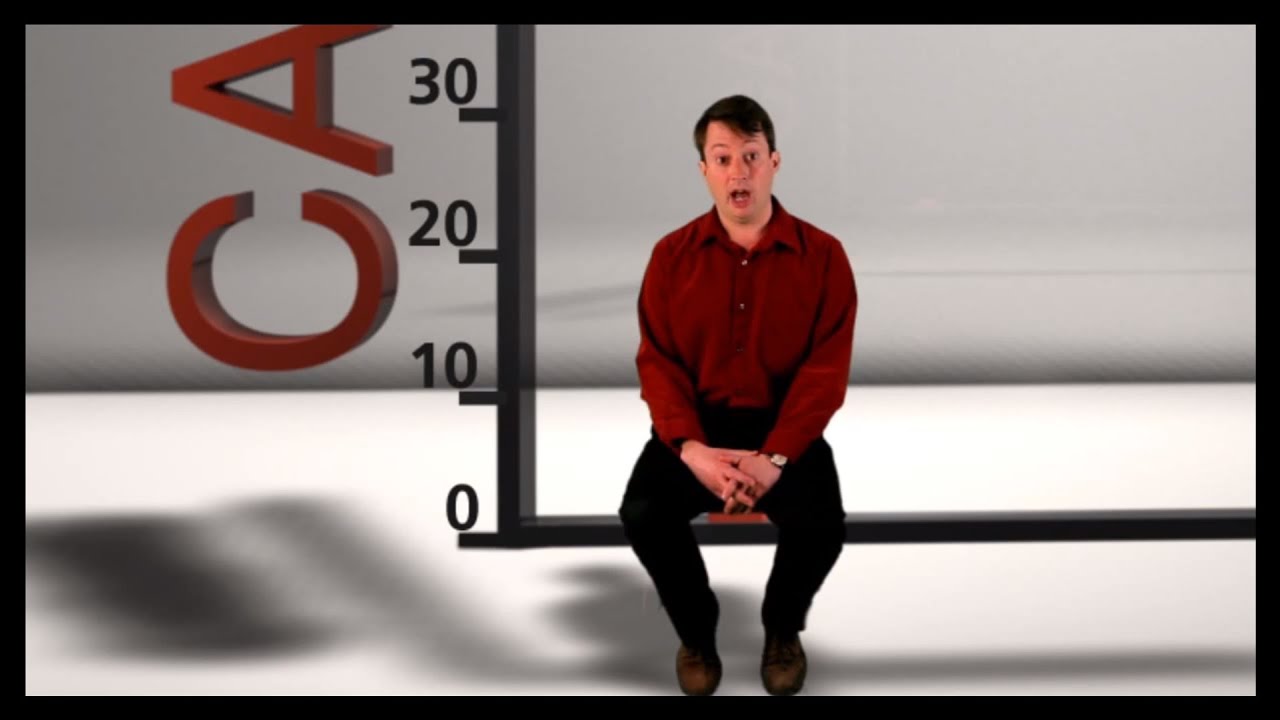
This casual royal blessing comes with one vital, non-negotiable caveat: the American tendency to say "I could care less" instead of "I couldn't care less." Mitchell points out that using "could care less" as an idiom to express total apathy or indifference makes zero mathematical or linguistic sense. Saying you are capable of caring less strictly informs the listener that you already care to some non-zero degree, leaving yourself room to care less than you presently do.
```mermaid flowchart TD accTitle: The Scale of Caring accDescr: A visual diagram illustrating David Mitchell's explanation of the caring scale, contrasting zero caring with any non-zero value. subgraph AbsoluteZero ["Zero Level (Rock Bottom)"] Zero["Zero Caring (Cannot go lower)"] end subgraph PositiveRange ["Positive Levels (> 0)"] Unit["Smallest possible unit of care"] Max["High / Maximum caring"] end
Zero -->|"Only state that justifies"| Valid["'Couldn't care less'"] Unit -->|"Any point in this range allows"| Invalid["'Could care less'"] Max -->|"Any point in this range allows"| Invalid ```
Displaying a visual graph to chart his emotional involvement, Mitchell locates himself firmly at absolute zero. He clarifies that negative caring is impossible—or simply a different variety of caring altogether, since love and hate are merely opposite faces of the same coin. At absolute zero, Mitchell explains, he could conceivably care more, but he could never care less. Caring nothing is the exact definition of rock bottom; therefore, claiming one could care less explicitly rules out total detachment. Delivering the central grievance of his monologue, Mitchell declares: “I could care less is absolutely useless as an indicator of how much you care because the only thing it rules out is that you don't care at all, which is exactly what you're trying to convey.”
- **Scale of Caring**: Zero represents absolute apathy; negative caring is conceptually invalid because intense dislike is still an active form of emotional investment. - **The Mathematical Contradiction**: To say you "could care less" requires possessing at least the minimum possible increment of caring, thereby proving you are not indifferent. - **The Core Grievance**: The phrase actively disproves the exact sentiment of complete indifference the speaker intends to broadcast.
---
[02:06](https://www.youtube.com/watch?v=om7O0MFkmpw&t=126s) Defending the Fort and Final Pronunciation Pet Peeves
Having outlined the Queen's primary grammatical demand, Mitchell seizes the opportunity to air a second irritation: the bizarre American habit of saying "hold down the fort" rather than the traditional "hold the fort." He breaks down the military logic behind the original idiom. In a proper siege scenario, two comrades occupy a fortification against attacking enemies. When one person has to briefly step away on an everyday errand—such as picking up printer toner or taking the cat to the vet—they escape using a secret tunnel and a false beard while instructing the other soldier to hold the fort so it remains secure upon their return.
By contrast, Mitchell finds the addition of "down" utterly baffling, asking: “If I ask you to hold down the fort, what the hell am I talking about?” He jokes that the phrase implies the fortification is an inflatable hover fort that might drift away into the sky the moment it is relieved of his body weight, leaving the returning garrison to do nothing more than "tickle the fort." Concluding his bilateral negotiations, Mitchell bargains that if Americans would simply eliminate these two egregious verbal crimes—saying "could care less" and "hold down the fort"—they are welcome to pronounce "research" and "Bernard" with whatever peculiar stress patterns they like. He ends with a final sideways sneer at the American habit of dropping the "h" in "herbs" like Frenchmen before sarcastically signing off with his own intentional slip: “I could care less.”
- **The Siege Analogy**: "Holding the fort" is a sound military strategy where one defender leaves via secret tunnel in a false beard while the other maintains possession. - **The Hover Fort Absurdity**: "Holding down" a fort suggests an inflatable structure in danger of floating off like a balloon. - **Permitted Pronunciations**: The British will willingly concede stress placement in names and terms like "Bernard" and "research." - **The Herb Jab**: Mocking the American soft "h" pronunciation of herbal tea and remedies as an unearned attempt at sounding French.
## Notable quotes > [01:11](https://www.youtube.com/watch?v=om7O0MFkmpw&t=71s) I could care less is absolutely useless as an indicator of how much you care because the only thing it rules out is that you don't care at all, which is exactly what you're trying to convey. — David Mitchell
## Mentioned David Mitchell, David Mitchell's Soapbox, The Queen, Peep Show, That Mitchell and Webb Look, Facebook, YouTube
## Video description David Mitchell addresses the American Nation on the proper use of particular English words and phrases. Subscribe to David Mitchell ► http://bit.ly/SoapboxSubscribe
LIKE Soapbox on Facebook ► http://fb.me/davidmitchellsoapbox David Mitchell's Soapbox DVD ► http://amzn.to/soapboxdvd
ABOUT DAVID MITCHELL'S SOAPBOX: David Mitchell, star of UK TV favourites Peep Show and That Mitchell and Webb Look, brings us his unique perspective on the issues facing men of the world today.
[Source](https://www.youtube.com/watch?v=om7O0MFkmpw)