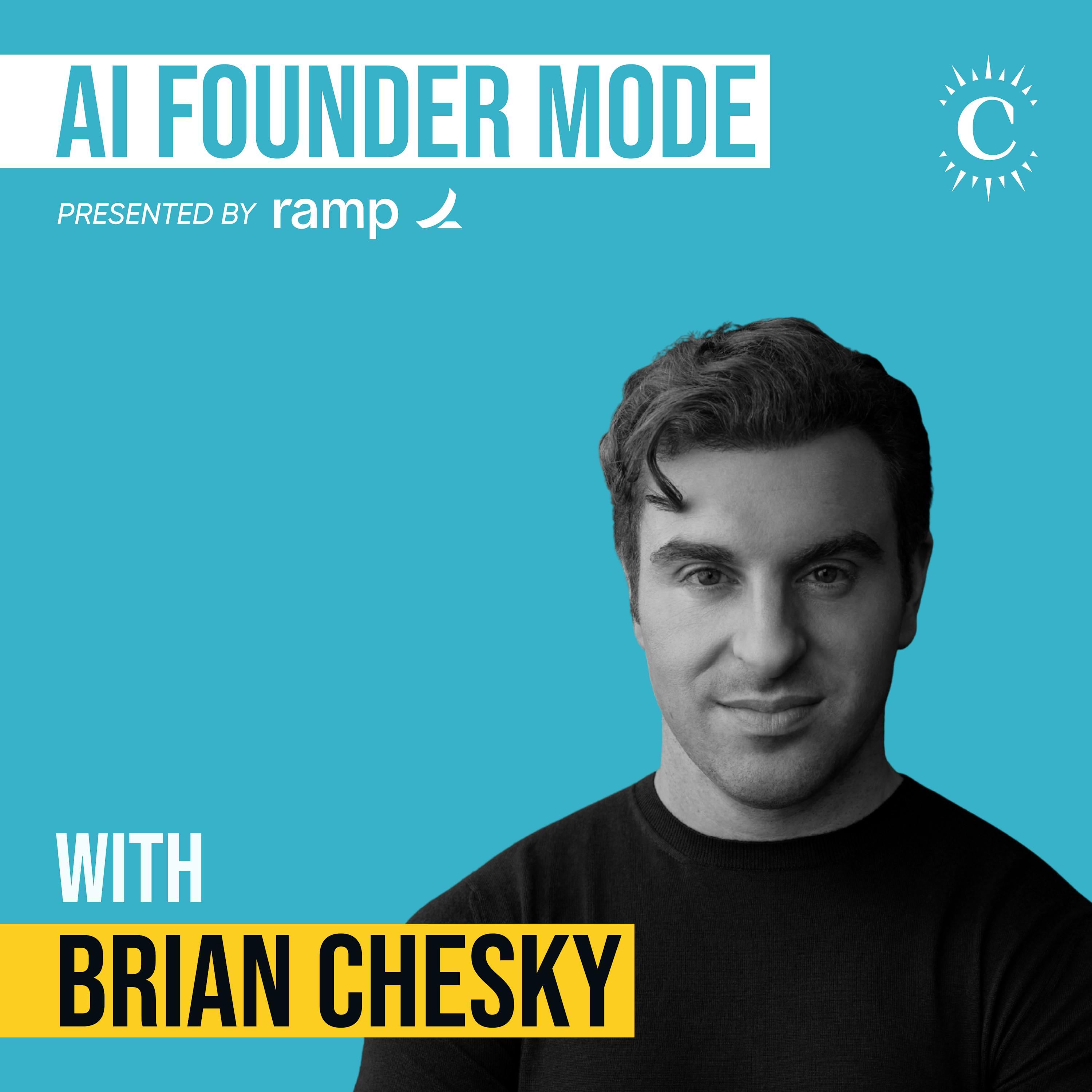
Airbnb CEO Chesky Scraps Pure Managers to Drive AI-Era Product Redesign
Colossus | Investing & Business Podcasts
Airbnb Inc. Chief Executive Officer Brian Chesky argues AI will force tech companies to eliminate pure people managers in favor of hands-on founders who direct operational details and reshape legacy platforms around individual user identities.
## Background
This episode was published by Colossus | Investing & Business Podcasts on RSS/web on May 5, 2026. The page description outlines a conversation with Airbnb co-founder and CEO Brian Chesky, tracing his background from industrial design at RISD to navigating crises using "founder mode," applying his "eleven-star experience" exercise, and shifting his motivations away from seeking public adulation toward creating for the love of the craft.
## TL;DR
Brian Chesky shares how his background in industrial design shapes his hands-on approach to leadership, explaining how the COVID-19 crisis forced him into "founder mode" and why AI will demand even greater attention to operational details. He details core frameworks like Project Hawaii, the "one to ten to many" product rollout model, and the "eleven-star experience" to build unshakeable product-market fit. Chesky also reflects on moving away from external status seeking, the discipline of continuous pipeline recruiting, and viewing Airbnb as a global canvas for human-centered design.
## Atmosphere & style
The conversation carries a reflective, candid, and intellectually energetic tone, blending deep operational rigor with personal vulnerability. Host Patrick O'Shaughnessy provides thoughtful prompts that allow Chesky to transition smoothly between intense strategic discussions and intimate reflections on personal growth. The dynamic feels like an unhurried, insider masterclass where hard-won lessons from near-existential crises are parsed with clarity, warmth, and genuine creative passion.
## Key takeaways
- `03:07` Brian Chesky's background as an industrial designer at RISD taught him to design end-to-end user journeys and balance technical, commercial, and human requirements without relying on traditional product managers.
- `08:30` Traditional corporate management often fails because over-delegating to professional managers creates insulated silos that disconnect founders from operational reality and product details.
- `09:02` Forced by the pandemic's threat to Airbnb's survival, Chesky adopted wartime "founder mode," personally auditing operational details across all departments and working 100 hours a week.
- `12:51` In the emerging era of "AI Founder Mode," corporate structures will flatten, eliminating pure people managers so that every leader remains a hands-on contributor tied directly to shipping real work.
- `18:42` While current AI development is heavily concentrated on B2B enterprise applications, a major wave of consumer AI products will fundamentally transform mobile user interfaces within 12 to 24 months.
- `21:45` Airbnb reclaimed its operational agility through small cross-functional teams like "Project Hawaii," which operated as internal startups following a strict "crawl, walk, run, and fly" methodology.
- `25:49` To successfully launch new products, companies must solve problems at the smallest possible scale first before attempting global industrialization.
- `32:11` Great leadership requires mastering simplicity and craft—distilling ideas to their essence and obsessing over inputs rather than setting arbitrary growth targets.
- `36:32` The "Eleven-Star Experience" framework forces teams to invent absurd user scenarios to discover achievable, world-class customer moments that build unshakeable product-market fit.
- `41:44` Relying on public adulation and external status is an unsustainable loop; long-term fulfillment comes from creating for the pure love of the craft.
- `46:38` Extended periods of founder-led execution build durable reservoirs of intellectual property and brand equity that allow iconic companies to endure for generations.
- `52:38` Airbnb is evolving its fundamental business unit away from home listings and toward individual user profiles, authenticated identities, and AI-driven personalized services.
- `01:00:00` Bodybuilding principles like progressive overload and rigid measurement directly parallel executive leadership, where invisible skills must be broken down into measurable, daily improvements.
- `01:02:11` Hiring and management are inversely proportional; investing in continuous pipeline recruiting brings in self-managing talent and prevents the need for micro-management.
- `01:11:04` True creators and founders operate with the mindset of an artist, driven to continually build and refine their craft regardless of commercial feedback or public validation.
- `01:11:47` The most transformative act of leadership is expressing deep belief in people and setting high standards that inspire them to realize unseen potential.
## Detailed walkthrough
### `00:00` Introduction and Early Background
The episode opens with sponsor messages and a warm introduction from Patrick O'Shaughnessy, setting the stage for a conversation with Brian Chesky, co-founder and CEO of Airbnb. O'Shaughnessy highlights the core themes of their discussion, including Chesky's early training as an industrial designer, navigating total crisis to pioneer "founder mode," applying the "eleven-star experience" framework, and how personal maturity shifted his motivations away from chasing public adulation.
As the conversation gets underway, O'Shaughnessy references his personal affinity for industrial design history—specifically citing Raymond Loewy—and asks Chesky to elaborate on how studying industrial design shaped his trajectory. Chesky shares that as a 17-year-old artist entering the Rhode Island School of Design (RISD), he had to choose a major within three months without even knowing what industrial design was. When the department head explained that industrial design covers everything "from a toothbrush to a spaceship and everything in between," Chesky was instantly hooked.
> "Industrial design is design for everything with a toothbrush to a spaceship and everything in between."
Chesky contrasts industrial design with older, traditional fields like architecture. While architecture has strict, multi-thousand-year-old boundaries (commercial, residential, retail), industrial design is a modern discipline born from the Industrial Revolution. It evolved rapidly:
* **Early Mass Products:** Chairs, tabletop dishes, and bowls (originating with figures like Josiah Wedgwood).
* **Mid-20th Century:** Appliances, cars, airplanes, radios, microwaves, and refrigerators.
* **Late-20th & 21st Century:** Complex medical equipment (ventilators) and consumer electronics (Game Boy, Super Nintendo, Reebok Pumps, Nike sneakers, and ultimately the iPhone).
Chesky emphasizes that industrial design requires a unique balance: it is deeply technical (working alongside electrical and mechanical engineers) and commercial. Unlike an architect whose unleased building can still win awards, an industrial designer's work is deemed a failure if no one buys it. Crucially, it demands deep empathy and mapping end-to-end user journeys.
To illustrate this user-centric empathy, Chesky recalls his RISD graduation project: designing a child's medical ventilator. Rather than focusing purely on technical hardware, he mapped the emotional journeys of all involved stakeholders:
* **The Child (6 years old):** Scared and looking up at an intimidating machine.
* **The Parents:** Terrified that an ominous-looking apparatus means their child might not survive.
* **The Nurse Technicians:** Highly skilled operators who took pride in the machine's complexity and felt threatened if it was made too simple, whereas the hospital wanted it simplified so anyone could operate it.
This complex balancing act taught him how to design for multi-stakeholder ecosystems without relying on traditional product managers—in industrial design, the designer *is* the product manager.
---
`08:30` Founder Mode vs. Management Culture
Transitioning into company building, O'Shaughnessy asks how these design principles translate into running a modern tech company, bringing up the concept of "founder mode." Chesky explains that while people are often born with the intuitive drive to be strong founders, no one is born a good CEO. The job of a CEO is counterintuitive, and relying on basic trial and error can destroy a company's trajectory.
> "Trial and error is bad for CEO... because you hire somebody, they build an empire, they leave, and now you got to unwind their empire, and it takes like four years."
Chesky breaks down why traditional tech management often fails founders:
* **Over-delegation:** Founders are taught to hire "professional managers" and completely step back.
* **Loss of control:** Over-delegating leads to executives building insulated silos, disconnecting the founder from the actual product and operational detail.
* **The Crisis Point:** Around 2019, after years of massive hypergrowth alongside peers like Uber, Airbnb grew to 7,000 employees. Chesky felt like he was driving a car without a steering wheel—when he said "turn left," the organization drifted right.
In late 2019, Chesky had a vivid dream: he felt as though he had stepped away for 10 years, returned to find Airbnb transformed into a bloated, political bureaucracy, and suddenly realized, *"Oh my God, it was me the whole time."*
around that time, he hired Hiroki Asai (a longtime creative executive from Apple). Hiroki recounted how Steve Jobs saved Apple when returning in July 1997—at a moment when the company was just nine days away from bankruptcy. Jobs ignored standard corporate delegation, diving directly into the minutiae of every detail. Inspired, Chesky wanted to adopt this hands-on approach, but the organization initially repelled the shift.
Then the COVID-19 pandemic struck, wiping out **80% of Airbnb's business in eight weeks**. Forced into full wartime operational mode, Chesky seized control of the entire business:
* He reviewed every detail across every department for two to three years straight, working **100 hours a week**.
* He challenged the dogma that leadership means blindly trusting executives, arguing instead that leaders should start completely hands-on and only "give ground grudgingly" as trust and auditing prove capability.
---
`12:51` AI Founder Mode and the End of Pure People Managers
Looking ahead, Chesky discusses how the rise of artificial intelligence is creating a new operational paradigm: **AI Founder Mode**. He asserts that AI will make founder mode even more granular, demanding an even higher attention to detail because information and assets can now be pulled on demand.
He contrasts his current operational cadence with the upcoming AI-driven model:
* **Traditional Founder Mode:** Highly meeting-centric. Chesky conducted ~35 hours of group meetings a week (avoiding standard one-on-ones) with the full chain of command present to review products live and ratify decisions in person.
* **AI Founder Mode:** Asynchronous, flatter, and far less dependent on constant meetings.
Chesky highlights that corporate structures are wildly over-layered. While the Catholic Church has operated for 2,000 years with only four layers of management, modern tech corporations routinely stack seven to nine layers. He plans to dramatically reduce corporate hierarchy at Airbnb and reframe every job role around AI tooling.
Specifically, Chesky predicts **the end of pure "people managers"**:
* Managers who only manage people, conduct recurring 1-on-1s, or act as internal mentors/therapists without shipping real work will become obsolete.
* Every leader must remain a hybrid manager/individual contributor who stays tethered to reality.
* Engineering managers must write code, legal heads must directly review case law, and leaders must touch what the customer ultimately sees.
`15:00` The End of Pure People Managers and the Consumer AI Renaissance
Managing effectively in the age of AI requires managing the work directly rather than managing people from a distance. The leaders who will not survive this technological shift fall into two camps: pure people managers who believe leadership is devoid of subject-matter context, and rigid individuals who refuse to evolve. True leadership—exemplified by figures like Jony Ive or Frank Lloyd Wright—happens through the work itself rather than through detached oversight or acting as an employee's therapist. Day-to-day management must focus on the product, punctuated only occasionally by personal heart-to-heart check-ins.
```
+-----------------------------------------------------------------------+
| THE TWO TYPES WHO WON'T SURVIVE |
+-----------------------------------------------------------------------+
| 1. Pure People Managers |
| • Manage people instead of managing the work |
| • Lack deep context and domain expertise |
| |
| 2. Rigid & Unwilling to Evolve |
| • Lack a growth mindset |
| • Resist adapting to new tools and workflows |
+-----------------------------------------------------------------------+
```
While current AI development is heavily skewed toward complex enterprise applications—evidenced by Y Combinator batches where 159 out of 175 companies were enterprise-focused—the ultimate prize lies in consumer AI. Current AI tools remain unintuitive because enterprise buyers bear the burden of learning them. However, economic incentives will inevitably drive the creation of radically simple consumer interfaces.
- **The Monopolization of AI Energy:** Major players are distracted from consumer experiences; OpenAI prioritizes Codex, while Google protects its core search business.
- **Enterprise Dominance in YC:** In a recent Y Combinator batch of 175 startups, 159 were enterprise-focused, leaving virtually no consumer AI entrants.
---
`18:42` Why Consumer AI Is Hard and How to Win It
Several systemic barriers explain why founders and investors hesitate to launch consumer AI startups. The primary hurdle is the absence of a proven consumer business model. Subscriptions face local maximums because models like Claude and Gemini offer free tiers; ad models are constrained; and e-commerce models suffer high inference costs that burn through capital. Additionally, Silicon Valley operates on trend-driven "vibes," where Y Combinator founders are coached to sell to other YC startups, creating an echo chamber that defaults to B2B enterprise models.
```
+-----------------------------------------------------------------------+
| BARRIERS TO CONSUMER AI STARTUPS |
+-----------------------------------------------------------------------+
| • Unclear Business Models (Subscriptions cap; ads/e-commerce burn) |
| • High Distribution Costs & Mature App Stores |
| • Trend-Driven Echo Chambers (Selling startup-to-startup in YC) |
| • High Risk & "Hits-Driven" Nature (Requires design, press, culture) |
+-----------------------------------------------------------------------+
```
Consumer businesses are inherently hits-driven, high-risk, and require excellence across design, marketing, culture, and press—skills far beyond technical engineering and enterprise sales. However, this dynamic sets the stage for a massive consumer AI renaissance over the next 12 to 24 months, transforming home screens that have remained stagnant for years.
> "It's better to have a hundred people love you than a million people sort of like you."
- **App Store Signals:** The top three apps on the App Store demonstrate that revolutionary AI products can reach consumers despite mature distribution channels.
- **Timeline for Shift:** A major wave of consumer AI apps will fundamentally transform everyday mobile experiences within 12 to 24 months.
---
`21:45` Project Hawaii: Applying Founder Mode at Scale
To reclaim the speed and magic of Airbnb's early days, an initiative named **Project Hawaii** was created. Rather than operating through a bloated corporate structure, a tight cross-functional team of 10 to 12 people—designers, engineers, product managers, and data scientists—was assembled to tackle a single critical metric: conversion rate from search to booking. Operating like an insulated startup inside the larger company, the team followed a strict operational framework: **crawl, walk, run, and fly**.
```
[ CRAWL ] ---> [ WALK ] ---> [ RUN ] ---> [ FLY ]
Fix bugs & Develop new Rethink the Complete
conversion features & entire user autonomy &
issues reframe flow journey innovation
```
The approach yielded massive financial returns, driving hundreds of millions of dollars in incremental revenue and expanding into a movement across the organization. This hands-on management style mimics a golf instructor: stay intensely involved early on to build correct muscle memory before stepping back, rather than intervening late after bad habits have already formed.
- **Financial Impact:** Project Hawaii generated $200–$300 million in year one, $400–$500 million in year two, and ultimately drove over 600 basis points of uplift on $13–$14 billion in revenue.
- **Team Scaling:** The original team of 10–12 expanded to 50–60 people before the model was replicated across other core operational challenges like pricing.
---
`25:49` Making the Problem as Small as Possible
A major pitfall for established companies is trying to launch new products at global scale from day one. Despite processing nearly $100 billion in gross sales—representing $1 out of every $1,000 spent globally—Airbnb struggled for 18 years to launch a second hit product because it attempted global rollouts immediately. When "Services Experiences" initially faltered across 100 cities, the team pivoted to a hyper-local strategy inspired by Paul Graham's early Y Combinator advice and Peter Thiel's principle of dominating a tiny market first.
```
+-----------------------------------------------------------------------+
| THE "ONE TO TEN TO MANY" FRAMEWORK |
+-----------------------------------------------------------------------+
| 1. ONE (Pilot) ---> Perfect the product in a single market |
| 2. TEN (Validate) ---> Expand to 10 markets to refine the model |
| 3. MANY (Industrialize)---> Scale globally across 50-70 verticals |
+-----------------------------------------------------------------------+
```
By removing abstraction layers and reducing the problem to a single market, teams eliminate corporate "games of telephone" and regain direct contact with reality. Product-market fit must be isolated from industrialization; first, do unscalable things to blow the user's mind, and only industrialize after the experience is perfected.
- **Historical Examples:** Airbnb started exclusively in New York City; Uber launched in San Francisco; DoorDash began in Palo Alto.
- **Current Pipeline:** Airbnb transitioned from 16 years of struggling with new verticals to running 10 to 20 active pilots, with plans to expand to 50 to 70 verticals.
- **Gmail Analogy:** Paul Buchheit spent two years perfecting Gmail until exactly 100 internal Google users loved it, which laid the foundation for hundreds of millions of users later.
---
`29:46` Reclaiming the Role of CEO Through Founder Mode
Navigating the shift from early-stage founder to corporate CEO often forces leaders into bureaucratic traps. Many founders hit a low point when managing large organizations because direct communication degrades into multi-layered corporate bureaucracy—culminating in "meetings about meetings."
Transitioning into "founder mode" rather than traditional corporate CEO mode allows leaders to engage directly with the product and cross-functional teams. While early-stage operations rely heavily on luck, great co-founders, and intuitive leadership, long-term success requires rejecting passive managerial oversight in favor of deep, direct involvement in the work.
`30:00` Becoming a Good CEO and Founder Mode in the Age of AI
Brian Chesky reflects openly on his initial struggles as CEO during the 2010s, admitting that Airbnb paid a steep price for his steep learning curve. Being naturally conflict-averse, he hesitated to make tough personnel calls, comparing it to a baseball manager who refuses to take a struggling pitcher off the mound—a delay that only leads to more home runs given up and greater anger overall. By the eve of the pandemic, he genuinely questioned whether he was cut out for the role. However, the near-death experience of the pandemic served as a rude awakening that forced him to drop all rumination and adopt a "do or die" mentality, ultimately teaching him how to master the job across its distinct phases: from getting product-market fit to hypergrowth, scaling into a profitable public company, and now driving product reinvention.
Looking forward, Chesky argues that "founder mode" will be the mandatory operating mechanism in the age of AI. Professional, risk-averse CEOs focused on incrementalism will simply not survive this transformation. Echoing Albert Einstein's famous quote that maintaining balance on a bicycle requires keeping in motion, he emphasizes that founders are uniquely primed to redesign their companies from scratch to navigate the massive shifts brought on by AI.
- Airbnb generates $100 billion in sales with a ~40% free cash flow margin, though its stock performance hit a plateau due to core product saturation, necessitating product extensions.
- Chesky outlines the core evolution of a CEO:
1. Have an idea and find product-market fit.
2. Scale through hypergrowth.
3. Build a real, profitable, public company.
4. Reinvent the company through product extensions and technology transformations.
---
`32:11` Lessons from Hiroki Asai: Simplicity and Craft
Chesky discusses his formative relationship with Hiroki Asai, the legendary, elusive creative director under Steve Jobs who was responsible for Apple's signature aesthetic (e.g., bold black type, gray fonts, and products set against crisp white backdrops). Hiroki taught him two bedrock principles that transformed his leadership style: **simplicity** and **craft**. Chesky notes that cash-strapped startups possess a natural simplicity forced by constraint, but as they raise capital and hire hundreds of people, they lose focus and dilute that muscle. Hiroki taught him that simplicity is not just removing items, but distilling something down to its ultimate essence—a principle mirrored in Steve Jobs' view of design as the fundamental soul of a human creation, as well as Elon Musk's first-principles thinking at SpaceX.
The second principle is a rigorous dedication to craft and detail, summarized by the ethos: "How you do anything is how you do everything." Drawing inspiration from Bill Walsh's *The Score Takes Care of Itself* and legendary UCLA basketball coach John Wooden—who famously spent the first hour of his season teaching players how to properly put on their socks—Chesky highlights that micro-details accumulate to determine success. Rather than obsessing over growth as a target, Airbnb shifted its focus to perfecting the underlying operational inputs.
> "Simplicity is not removing things. Simplicity is distilling something so fundamentally that you understand its essence."
> "Don't focus on winning, focus on getting all the inputs perfect. And you get everything perfect, then you will win."
---
`35:00` Power, Alignment, and Implementing Founder Mode
When Chesky first rolled out his version of founder mode at Airbnb based on Hiroki's teachings, it triggered immense internal pushback, with many employees accusing him of micromanaging. Over time, those who detested the intense involvement left, while those who remained came to appreciate the clarity and alignment it provided. Chesky addresses a core misunderstanding about authority in organizations: control and power are not a zero-sum game where executive power deprives employees of autonomy. Instead, an empowered leader can grant power to their team, ensuring the whole organization acts like a car with a functioning steering wheel where turning left actually moves the entire company left.
- **The Power Fallacy:** Power isn't zero-sum; when a founder consolidates control, they can effectively delegate real power down the line.
- **Organizational Alignment:** Founder mode ensures the entire company is "rowing in one direction," preventing disconnected operational silos.
---
`36:32` The Eleven-Star Experience
To illustrate how to break past average product experiences, Chesky breaks down his famous "11-star experience" framework. On platforms like Airbnb or Uber, review compression forces most acceptable experiences into a standard five-star rating, while a four-star rating signals a failure. To break out of this artificial ceiling, Chesky forces his teams to imagine increasingly absurd scenarios to uncover true delight:
* **5-Star Experience:** Standard and expected; the host greets you or the door code works smoothly.
* **6-Star Experience:** Above and beyond; your host leaves your favorite wine, fresh fruit, a selection of snacks, and a personal handwritten welcome note on the table.
* **7-Star Experience:** Personalized luxury; a private limousine picks you up at the airport, equipped with a surfboard because they know you love surfing, accompanied by a guided city tour.
* **8-Star Experience:** Pure novelty; an elephant awaits you at the airport to carry you through a parade thrown in your honor.
* **9-Star Experience:** The "Beatles Check-In"; landing to 5,000 screaming fans chanting your name, complete with a front-lawn press conference at your Airbnb.
* **10-Star Experience:** Elon Musk personally greets you at the gate and launches you into outer space.
Chesky explains that pushing an exercise into the totally absurd (8, 9, or 10 stars) reframes what is feasible, making a 6- or 7-star experience feel entirely reasonable and achievable. Scaling a 6- or 7-star experience creates an unshakeable product-market fit that separates a company from its competitors.
---
`38:48` AI and the Renaissance of Human Creativity
The conversation shifts to how AI tools act as a catalyst for human imagination. The interviewer notes that using AI rebooted his own dormant imagination, to which Chesky agrees, stating that the act of designing or writing is inherently the act of generating ideas—not just documenting pre-existing ones. Chesky critiques modern social media for locking users into passive, sit-back consumption where the only form of creation is firing off opinions. In contrast, AI shifts focus back to active creation and testing hypotheses, providing everyone with a digital paintbrush and canvas.
Quoting Pablo Picasso's sentiment that "all children are born artists, the problem is how to remain an artist once we grow up," Chesky asserts that every human possesses latent creative potential. AI bridge the gap between imagination and execution, granting people the technical craftsmanship needed to express what is inside their heads.
- **Shift in Dynamics:** AI transitions user behavior from passive consumption (social media) to active creation and experimentation.
- **Founders as Expeditionaries:** Chesky rejects the static notion of "visionaries," observing that founders are really "expeditionaries" taking one step forward at a time, labeling it a "vision" only in hindsight.
---
`41:44` Escaping the Adulation Trap and Creating for Joy
Reflecting on his personal motivation, Chesky reveals how early success turned into an "adulation trap." When founding Airbnb, he was driven purely by fun and passion—joking that if he had set out purely to make money, he would have picked a much better business idea than "air bed and breakfast." However, as the company grew, success transformed into an extrinsic status competition and a search for validation. He realized he held a childhood belief that the only way to be loved was to be "special" by achieving extraordinary things.
He compares public adulation and status-seeking to filling a cup with a gaping hole in the bottom: no matter how much praise pours in, it leaks out immediately, requiring ever-larger doses to achieve the same high. This realization hit him acutely the day after Airbnb's highly successful IPO at a $100 billion valuation. After what should have been one of the greatest days of his life, he woke up the next morning, put on sweatpants, hopped on a routine Zoom call, and felt an overwhelming sense of emptiness.
Following the pandemic reset, Chesky radically re-oriented his mindset toward intrinsic motivation, inspired by Rick Rubin's philosophy in *The Creative Act* that true artists create primarily for themselves. He let go of chasing approval or accolades and re-centered his life around making things for the pure love of the craft.
> "Adulation is like a cup with a hole at the bottom. And you keep filling it in, thinking it's love, except it just keeps coming out the bottom."
> "Don't try to be successful. Try to do something wonderful that you love for yourself."
`45:00` Chasing Adulation vs. Doing What You Love
Brian Chesky reflects on a pivotal piece of advice given to him by President Barack Obama: stop focusing on *who* you want to be, and start focusing on *what* you want to do. When entrepreneurs obsess over becoming a "giant tech founder" or running a billion-dollar company, they set themselves up for failure. By contrast, if an entrepreneur focuses on the joy of creating something meaningful, it becomes impossible to fail. Chesky shares that relinquishing the pursuit of external adulation drastically reduced his tendency to ruminate or worry about public opinion.
He highlights the irony of worrying about what others think, noting that most people are naturally focused on their own lives rather than judging a founder on a podcast. Chasing external approval creates an emotional prison that robs creators of their courage. Once freed from this trap, mental energy shifts away from self-consciousness and back into two meaningful pursuits: making things for the love of making them and spending quality time with loved ones.
`46:38` The Ham Sandwich Paradox and Building Enduring Companies
Chesky addresses two opposing investment philosophies: Warren Buffett’s principle of investing in "businesses that a ham sandwich could run" versus the belief that a founder's personal growth sets the ceiling for their company. Chesky squares these ideas using Walt Disney as a prime example. While studio executives from Paramount, Warner Bros., or Universal are often forgotten, Disney remains iconic because it was deeply founder-led as a personal expression of one man.
The paradox lies in the fact that when a founder operates in "founder mode" for an extended period, they build a massive reservoir of intellectual property, brand equity, and momentum that allows the business to endure long after they leave. Decades after Walt Disney's death in 1966, the company continues to rely on his foundational playbook—feature films, television, and theme parks—allowing subsequent CEOs to inherit a business operating with the "bases loaded." Similarly, Steve Jobs left Apple with an extraordinary moat built around the iPhone, growing the company's valuation into the trillions.
- **Warren Buffett's Moat Philosophy:** Works best in non-tech industries (e.g., Coca-Cola, See's Candies) where products face minimal technological disruption.
- **Technology as a Engine of Change:** Because tech constantly evolves, technology companies require prolonged periods of founder mode to survive and continually reinvent themselves.
- **The 100-Year Fallacy:** Founders who delegate too early in the name of building a century-long institution risk stripping away the magic that makes the company durable in the first place.
`52:38` Shifting Airbnb's Bedrock: From Homes to Persons
While Airbnb is currently recognized as both a noun and a verb for home rentals, Chesky views this category dominance as a double-edged sword—much like how Kleenex struggles to sell products outside of tissues. To build a multi-generational institution, Chesky is actively redesigning Airbnb’s foundational "atomic unit," shifting the core focus away from properties and onto the individual human being.
To drive this transformation, Chesky outlines three primary strategic initiatives for the next phase of Airbnb:
- **Developing the Internet’s Most Authenticated Identity:** Creating robust proof-of-personhood, rich preference libraries, and real-world social graphs centered around individual users.
- **Industrializing Product Offerings:** Expanding Airbnb from a few core offerings into an automated engine capable of delivering over 50 distinct types of services, experiences, and travel products.
- **Disrupting the Core with AI Sandboxes:** Mitigating the "Innovator's Dilemma" by launching isolated testbeds and standalone apps to experiment with radical new AI concepts without threatening the $100+ billion in transaction volume that hosts and investors rely on.
Chesky views himself as entering "Level Four" of CEO mastery—moving beyond product-market fit, hypergrowth, and profitability to focus entirely on continuous self-reinvention and category expansion.
`55:14` Ephemeral Software, Enduring Communities, and Lessons from Bodybuilding
Reflecting on the nature of digital software, Chesky notes that unlike architecture, interior design, or luxury physical goods like Hermès Birkin bags—which gain patina and value over time—software is inherently ephemeral and fast-fashion. Even the best user interfaces look dated after a decade. Realizing that apps will eventually be replaced by AI agents, Chesky emphasizes that Airbnb's ultimate enduring asset is not its user interface or app code, but its real-world community, brand identity, and foundational principles.
Chesky also shares how his teenage bodybuilding career shaped his approach to executive leadership and building companies. After a late puberty threatened his youth ice hockey career, a 135-pound Chesky took up weightlifting, eventually competing at the national level by age 19.
- **Empowerment Through Biology:** Bodybuilding taught him that if you can transform your physical body, you gain the confidence and agency to transform your immediate environment and, ultimately, the world around you.
- **The Fallacy of Overtraining:** Physical growth cannot be rushed by spending 20 consecutive hours in the gym in a single day; doing so leads to overtraining. True strength is built through disciplined, incremental progress over time.
<ElicitationsGroup message="To explore these topics further:">
<Elicitation label="Explore the 'Eleven-Star Experience' exercise" query="Tell me about Brian Chesky's 'Eleven-Star Experience' product design framework mentioned in this podcast episode."/>
<Elicitation label="Deep dive into 'Founder Mode' vs. 'Manager Mode'" query="How does Brian Chesky define 'Founder Mode' compared to traditional management approaches?"/>
</ElicitationsGroup>
`01:00:00` Lessons from Bodybuilding: Consistency, Metrics, and Discipline
Chesky connects his personal experience with bodybuilding to the core discipline required in leadership and entrepreneurship. He breaks down the physiological reality of weightlifting: muscles do not grow during the workout itself; rather, exercise stresses and tears down the tissue, and the body's adaptive response—much like an immune reaction—builds it back stronger during recovery. True physical progress isn't made in a single session; it relies on compounding small daily gains of roughly 1%. Bodybuilding combines visual subjectivity with rigid scientific measurement—calculating caloric deficits, tracking training volume, and weighing meals down to the gram.
This relentless consistency directly mirrors how founders must run their businesses. If a lifter trains hard for a month and then takes a month off, they lose their gains and start over from zero. Chesky points out that while physical training offers immediate visual feedback in the mirror, leadership skills are largely invisible. To apply the principle of "progressive overload" to a company, a CEO must break abstract, hidden problems down into observable, measurable units. For Chesky, one concrete way he visually measures organizational health is during Airbnb's twice-a-year roadmap reviews, where he looks out at the room of the top 100 leaders to subjectively and objectively judge the density of talent.
* Bodybuilding relies on the principle of progressive overload, breaking down muscles so they rebuild stronger through an adaptive response.
* Success compounds at roughly 1% improvement per day; taking long breaks resets progress to zero.
* Bodybuilding requires strict scientific tracking: weighing meals, managing caloric deficits, and logging every set and weight.
* Leaders must convert invisible skills into observable metrics, such as evaluating company health by studying product design, decision-making efficiency, or team caliber.
* Airbnb conducts massive twice-yearly roadmap reviews with its top 100 leaders to assess talent quality and alignment face-to-face.
`01:02:11` The Hiring Trade-off and Pipeline Recruiting
Chesky introduces a fundamental law of management: leadership is a direct trade-off between recruiting and managing. The better the people you hire, the less time you have to spend managing them. Recalling advice from Sam Altman back when Airbnb was a tiny two-person team funded by Y Combinator (alongside early YC success stories like Drew Houston's Dropbox and Altman's Loopt), Chesky notes that Altman warned him he would need to spend 50% of his time on hiring. Chesky admits he neglected that advice early on, calling it a near "death blow" because under-investing in recruiting forced him to waste endless hours micro-managing underperforming teams.
To fix this, Chesky completely reinvented how Airbnb recruits talent. He strictly rejects standard headhunter searches—the traditional agency model where a company posts a role, screens 50 resumes, interviews 10 people, hires the best of a mediocre batch, and realizes a year later they made a mistake after that person has already hired a substandard team beneath them. Instead, Chesky practices continuous "pipeline recruiting." He maps out top talent across Silicon Valley, conducts casual informational chats with the best engineers, designers, and marketers, and ends every meeting by asking for introductions to the smartest people they know. By starting with exceptional real-world work (like a brilliant ad campaign) and working backward to find who created it, he builds self-reinforcing talent "mafias."
```
TRADITIONAL RECRUITING (Reactive Search)
Need Role ──► Hire Headhunter ──► Filter 50 Resumes ──► Interview 10 ──► Hire "Best of Batch"
PIPELINE RECRUITING (Proactive Network)
Identify Great Work ──► Work Backwards to Creator ──► Casual Meeting ──► "Who is the smartest person you know?" ──► Talent Pipeline
```
* **The Management Equation:** Recruiting and management are inversely proportional; high-caliber hires are naturally self-managing.
* **Early Valuation Context:** When Sequoia funded Airbnb, it was at a $3M post-money valuation ($600k for 20%), compared to typical modern YC valuations averaging $30M+.
* **First Key Hire:** Chesky argues a founder's very first hire should often be an elite recruiter rather than an engineer, as a great recruiter unlocks all subsequent talent.
* **Pipeline vs. Search:** Avoid reactive candidate searches; proactively network with top industry talent constantly to build deep talent pipelines long before positions open.
* **Co-Hiring Up to 2-3 Layers Deep:** Chesky acts as the co-hiring manager for the top 200 roles at Airbnb, refusing to delegate middle-tier talent decisions entirely to executives.
* **Targeting Talent "Mafias":** Identify specialized talent hubs across the industry—such as Uber's operations talent or Apple's design teams—to source proven networks of experts.
* **Reaching Beyond Executive Limits:** Executives should hire candidates so exceptionally qualified that those hires would only agree to join the company with direct pitch support from the CEO.
`01:07:55` Are Founders Born or Made?
When asked whether founders are born or made, Chesky suggests that while CEOs can be cultivated and shaped over time, true founders are largely born—or at least forged through a lifetime of relentless tinkering and building. You cannot artificially simulate the trial-by-fire experience of being a founder in a classroom. Referring to Palantir co-founder Alex Karp's concept of a "Bruce Banner gamma-ray event," Chesky notes that high-agency individuals get "activated" when confronted with extreme existential challenges.
For Chesky, Airbnb's famous origin story—being unable to pay rent in San Francisco—was simply the specific catalyst that activated a drive he had been channeling his entire life through art and design. He emphasizes that raw motivation cannot be taught or forced; a leader can inspire people, but they cannot make an unmotivated person care. The role of a leader is to throw high-agency people into demanding, real-world problems and give them space to step up and activate their latent potential.
* Founders possess an innate, high-agency drive forged through a lifetime of building, which gets activated under extreme pressure.
* Motivation itself cannot be taught from scratch; leaders can only channel and direct existing intrinsic motivation by providing massive challenges.
* The true test of talent is placing individuals in high-stakes environments to see if they possess the agency to rise to the occasion.
`01:11:04` The Motivation of an Artist: Why Great Creators Never Stop
Addressing what drives him now that he has overcome early struggles for financial survival and public validation, Chesky explains that his core identity is that of an artist rather than a traditional corporate executive. He cites his historical icons—Leonardo da Vinci, Vincent van Gogh, Walt Disney, and Steve Jobs—noting that every one of them worked on their craft until their final days on Earth. Da Vinci carried the *Mona Lisa* with him everywhere without selling it; Van Gogh died in obscurity having sold only one painting, purely out of love for the work; Walt Disney spent his final bedridden days planning EPCOT and Disney World on hospital ceiling tiles; and Steve Jobs reviewed product designs and marketing campaigns in his last weeks of life.
```
HISTORICAL CREATORS BRIAN CHESKY & AIRBNB
┌─────────────────────────────────┐ ┌─────────────────────────────────┐
│ Da Vinci: Carried Mona Lisa │ │ │
│ Van Gogh: Painted for the love │──►│ "I feel like a designer given │
│ Disney: EPCOT on ceiling tiles │ │ the largest canvas in history."│
│ Jobs: Reviewing tech to the end │ │ │
└─────────────────────────────────┘ └─────────────────────────────────┘
```
Chesky views these stories not as tragic tales of workaholism, but as the highest fulfillment of a human life spent doing what one loves. He views Airbnb as an extraordinary, accidental gift—a "glitch in the system" that granted an industrial designer access to billions of dollars in capital, thousands of elite team members, and a global canvas. His primary motivation is not administrative management or shareholder metrics for their own sake, but using this unprecedented canvas to craft incredible, world-changing experiences.
* Legendary creators across history worked continuously until death because they were propelled by internal craft rather than external adulation.
* Van Gogh sold only one painting in his lifetime, proving that pure creative output operates independently of commercial feedback or praise.
* Chesky views his role as CEO as that of a designer who stumbled upon one of the largest corporate and cultural canvases in human history.
* Modern AI tools offer a historic shift, transforming everyday people from passive media consumers into active creators and builders.
`01:11:47` Believing in Others: The Kindest Act
In response to the show's closing question—"What is the kindest thing anyone has ever done for you?"—Chesky answers without hesitation: having people believe in him when he gave them no reason to. He traces his journey back to age 16, when he transferred to a new public high school unsure of his talents. His art teacher, Miss Williams, recognized his gifts and boldly told his parents, "He's going to be a famous artist." That single act of faith gave him the courage to pursue art school, fundamentally shifting his life trajectory away from feeling like a failed ice hockey player trying to impress his father.
That pattern repeated throughout his career in Silicon Valley. Early YC leaders like Michael Seibel believed in him; Paul Graham took a rare gamble on a non-technical founder with an idea Graham initially thought sounded crazy ("People are actually doing this? What's wrong with them?"); and his co-founders Joe Gebbia and Nathan Blecharczyk trusted him to lead as CEO. Concluding with a lesson from legendary UCLA basketball coach John Wooden, Chesky explains that true management is about seeing potential in people that they cannot yet see in themselves. Demanding perfection isn't a critique of who a person is today, but a vote of confidence in who they can become tomorrow.
> "When I tell somebody it's not good enough, I'm not saying *you're* not good enough. I'm saying I see potential in you that you don't see in yourself. That is the most motivating thing you can do... people will climb a mountain for that type of thing."
* **Miss Williams:** Chesky's high school art teacher was the first to instill creative confidence in him, inspiring his decision to attend the Rhode Island School of Design (RISD).
* **Paul Graham's Exception:** Y Combinator founder Paul Graham notoriously avoided funding non-technical founders, but admitted Chesky to YC purely out of belief in his personal drive.
* **The Giving Pledge:** When joining the Giving Pledge, Chesky wrote that none of his childhood teachers would have guessed he would ever be in a position to give away a fortune, highlighting the unpredictable power of latent human potential.
* **John Wooden's Secret:** Great leaders do not merely ask people to do their best; they pull out unseen capability by setting standards higher than individuals believe they can reach.
* **Overcoming Imposter Syndrome:** Most successful entrepreneurs are driven early on by insecurity and something to prove; true peace comes when you learn to believe in yourself as deeply as others once believed in you.
## Notable quotes
> `00:00` Industrial design is design for everything with a toothbrush to a spaceship and everything in between. — Brian Chesky
> `08:30` Trial and error is bad for CEO... because you hire somebody, they build an empire, they leave, and now you got to unwind their empire, and it takes like four years. — Brian Chesky
> `18:42` It's better to have a hundred people love you than a million people sort of like you. — Brian Chesky
> `32:11` Simplicity is not removing things. Simplicity is distilling something so fundamentally that you understand its essence. — Brian Chesky
> `32:11` Don't focus on winning, focus on getting all the inputs perfect. And you get everything perfect, then you will win. — Brian Chesky
> `43:44` Adulation is like a cup with a hole at the bottom. And you keep filling it in, thinking it's love, except it just keeps coming out the bottom. — Brian Chesky
> `43:44` Don't try to be successful. Try to do something wonderful that you love for yourself. — Brian Chesky
> `01:11:47` When I tell somebody it's not good enough, I'm not saying *you're* not good enough. I'm saying I see potential in you that you don't see in yourself. That is the most motivating thing you can do... people will climb a mountain for that type of thing. — Brian Chesky
## Mentioned
Brian Chesky, Patrick O'Shaughnessy, Airbnb, Rhode Island School of Design (RISD), Raymond Loewy, Josiah Wedgwood, Steve Jobs, Hiroki Asai, Apple, Uber, Catholic Church, Y Combinator, Claude, Gemini, OpenAI, Codex, Google, App Store, Project Hawaii, Paul Graham, Peter Thiel, DoorDash, Gmail, Paul Buchheit, Albert Einstein, Jony Ive, Frank Lloyd Wright, Elon Musk, SpaceX, Bill Walsh, John Wooden, UCLA, Pablo Picasso, Rick Rubin, Barack Obama, Warren Buffett, Walt Disney, Paramount, Warner Bros., Universal, Coca-Cola, See's Candies, Hermès Birkin, Sam Altman, Dropbox, Drew Houston, Loopt, Sequoia, Alex Karp, Palantir, Leonardo da Vinci, Vincent van Gogh, EPCOT, Disney World, Michael Seibel, Joe Gebbia, Nathan Blecharczyk, Miss Williams, The Giving Pledge
Airbnb CEO切斯基取消纯管理者角色,力推AI时代产品重构
Airbnb首席执行官Brian Chesky认为,AI将迫使科技公司淘汰单纯的人事管理者,转向亲自过问运营细节并围绕个体用户身份重塑传统平台的亲力亲为型创始人。
Brian Chesky分享了其工业设计背景如何塑造了他亲力亲为的领导风格,阐释了新冠疫情危机如何迫使他进入“创始人模式”,以及为何AI将对运营细节提出更高的关注要求。他详细介绍了“夏威夷项目”(Project Hawaii)、“从一到十再到广泛”(one to ten to many)产品推行模型以及“十一星级体验”(eleven-star experience)等核心框架,以构建坚不可摧的产品市场契合度。Chesky还反思了摆脱对外部地位的盲目追求、坚持持续储备人才招聘的纪律,以及将Airbnb视作践行以人为本设计的全球画布。
Brian Chesky 分享了 RISD 工业设计背景对其产品思维的塑造,以及疫情使业务骤降 80% 的危机如何迫使他开启“创始人模式”(Founder Mode)——通过每周工作 100 小时亲自抓全业务细节,打破传统职业经理人模式造成的官僚孤岛。 (9:02)
在即将到来的“AI 创始人模式”时代,企业组织架构将大幅扁平化,只懂管人而不产出实际成果的“纯人员管理者”将被淘汰,所有管理者都必须重新成为直接接触核心工作的一线实践者。 (14:41)
为破解大公司难以孵化新产品的困境,Airbnb 借助“Project Hawaii”等 10 至 12 人的敏捷团队验证了“爬、走、跑、飞”的方法论,强调在新业务扩展至全球之前,必须先在最小的单一市场打磨出无可挑剔的极致体验。 (21:45)
Chesky 预测消费级 AI 将在未来 12 至 24 个月迎来爆发并重塑移动界面;面对软件的易逝性,Airbnb 正将其底层“原子单元”从房源转移到“个人”,通过构建高可信度身份体系与 AI 实验沙盒驱动长期自我颠覆。 (52:38)
Reading summary
Airbnb co-founder and CEO Brian Chesky argues that conventional corporate management weakens companies through over-delegation, asserting that sustained success requires an intensely hands-on 'founder mode' that artificial intelligence will accelerate by flattening organizational hierarchy.
Operational Overhaul: Founder Mode in the AI Era (8:30)
Chesky contends that traditional corporate wisdom misleads founders by encouraging them to delegate operational oversight to professional managers, which he claims creates bureaucratic silos. After growing Airbnb to 7,000 employees by 2019, Chesky observed that corporate alignment had degraded. The crisis of the COVID-19 pandemic, which erased 80% of Airbnb's business in eight weeks, forced him into working 100-hour weeks to review operational details directly, an intervention he credits with stabilizing the company.
Looking forward, Chesky anticipates that artificial intelligence will transform this hands-on model into 'AI Founder Mode.' Rather than spending roughly 35 hours weekly in ratification meetings, leaders will monitor operations asynchronously. Noting that the Catholic Church has operated for 2,000 years with four management tiers while modern tech firms stack seven to nine, Chesky forecasts the obsolescence of pure people managers who do not directly produce work, arguing leaders must actively code, review legal filings, or design user touchpoints.
The Consumer AI Opportunity and Structural Barriers (18:42)
While acknowledging that current AI venture activity concentrates heavily on enterprise software—pointing out that 159 of 175 startups in a recent Y Combinator cohort focused on B2B—Chesky believes the largest commercial opportunity lies in consumer interfaces. He explains that enterprise applications currently dominate because corporate buyers tolerate clunky user experiences, whereas consumer adoption demands radical simplicity.
Chesky identifies distinct barriers stalling consumer AI: subscription models face ceilings due to free model tiers, inference costs strain unit economics, and Silicon Valley networks default to selling software to other startups. Despite these headwinds, Chesky predicts a consumer AI renaissance within 12 to 24 months, claiming that sustained advantage will belong to founders who combine technical capability with cultural relevance, public relations, and consumer product design.
Execution Frameworks: Hyper-Local Scoping to Eleven-Star Experiences (25:49)
To prevent corporate bloat from stalling innovation, Chesky advocates reducing operational problems to their smallest viable units. He highlights Project Hawaii, where an autonomous cross-functional team of 10 to 12 people followed a 'crawl, walk, run, and fly' process to improve booking conversion rates. The initiative generated $200 million to $300 million in its first year and ultimately contributed over 600 basis points of uplift on $13 billion to $14 billion in revenue.
Chesky applies this reductionist approach to new ventures through a 'One to Ten to Many' framework, cautioning against launching products globally from inception. Drawing parallels to early rollouts at DoorDash and Uber, he notes Airbnb struggled to launch secondary products until it abandoned 100-city rollouts in favor of single-market pilots. To elevate product quality, Chesky utilizes an 'eleven-star experience' exercise, pushing product concepts into deliberate absurdity—such as being greeted by an elephant or launched into space—to make six- and seven-star personalized hospitality feel operationally feasible.
Recruiting, Progressive Discipline, and Enduring Corporate Moats (62:11)
Drawing on his background as a competitive teenage bodybuilder, Chesky likens executive leadership to progressive overload and physiological recovery, where progress compounds at roughly 1% daily through disciplined tracking of observable inputs. In business, he argues that management requirements are inversely proportional to hiring caliber: recruiting top performers minimizes the hours spent managing poor performance.
Consequently, Chesky rejects standard agency recruiting, which he believes selects the best of a mediocre candidate pool. Instead, he uses continuous pipeline recruiting, mapping elite industry talent and acting as co-hiring manager for Airbnb's top 200 roles. Addressing Warren Buffett's preference for simple businesses that 'a ham sandwich could run,' Chesky counters that technology companies constantly face obsolescence and therefore require extended founder mode—citing Steve Jobs at Apple and Walt Disney—to accumulate the intellectual property and brand loyalty needed to endure.
Chesky acknowledges that digital software is inherently ephemeral and likely to be superseded by AI agents, prompting Airbnb to shift its strategic core from rental listings to verified identity and real-world community networks. However, the operational model leaves an open question: whether intense, centralized founder involvement can scale across dozens of planned service verticals without reintroducing executive bottlenecks.
## Background
本期节目由商业投资播客频道 Colossus 于 2026 年 5 月 5 日在网页及 RSS 平台发布,由主持人 Patrick O'Shaughnessy 深度对话 Airbnb 联合创始人兼 CEO Brian Chesky。根据节目简介,对话回溯了 Chesky 早年在罗德岛设计学院(RISD)的工业设计训练、新冠疫情如何逼迫他开启深入业务细节的“创始人模式”及其在 AI 时代的进阶,并拆解了他著名的“十一星级体验”思维模型与不再迎合外界赞誉、重拾纯粹造物热爱的心理蜕变。
## TL;DR
Brian Chesky 深刻复盘了 Airbnb 如何在疫情危机中推翻传统职业经理人的过度授权陷阱,重掌业务底层并开启事必躬亲的“创始人模式”,进而断言 AI 时代将彻底淘汰不碰业务一线的“纯人员管理者”。他详述了通过荒谬推演寻找 PMF 的“十一星级体验”方法论,以及把新业务缩减到极小试点打磨成熟后再工业化规模化的扩张逻辑,并计划将 Airbnb 的原子单元由“房屋”彻底颠覆为“人”。最后,Chesky 诚恳剖析了百亿美元估值与上市掌声带来的空虚感,阐释了他如何摆脱迎合外界认可的心理陷阱,回归如乔布斯与达芬奇般直到生命最后一刻仍在纯粹造物的艺术家终极动机。
## Atmosphere & style
整场对谈兼具硅谷一线作战的凌厉干练与艺术哲思的深沉自省,Patrick 的引导提纲挈领,让 Chesky 彻底放下了大厂 CEO 惯常的公关辞令。Chesky 的叙事坦率直接且极具感染力,从对大企业会议官僚主义的辛辣讽刺,到直面公司濒死体验与换人痛苦时的果决,再到剖白早年自卑与“冒名顶替综合征”时的真情流露,情感弧度饱满动人。听众能够深切感受到一种高度务实的工程管理直觉与对设计手艺近乎偏执的浪漫追求在激烈碰撞,令人沉浸其中并深受鼓舞。
## Bulletin
- `14:41` Brian Chesky 预言在 AI 时代纯粹的“人员管理者”(People Managers)将彻底失去价值,未来组织要求所有管理人员转型为亲自写代码或深入业务一线的“经理/独立贡献者(IC)”混合体。
- `52:38` Airbnb 正开启核心战略重组,将底层原子单元从“房屋”彻底转向“人”,同时尝试建立独立沙盒与 AI 智能体应用,以打破年交易额近千亿美元平台的“创新者窘境”。
- `21:45` 通过极简精益团队(Project Hawaii)与“1 到 10 到规模化”模式,Airbnb 仅靠十几人团队便撬动超过 600 个基点的搜索转化率提升,累计贡献了数亿美元的增量营收。
- `01:02:11` 针对高管招募,Chesky 强调 CEO 必须担任排名前 200 个关键岗位的联合招聘经理,并以“顺藤摸瓜”的人才黑帮溯源取代依赖简历空缺的传统猎头机制。
## Key takeaways
- `05:15` 工业设计的核心训练是端到端全流程掌控与极端同理心,在工业设计领域“设计师本身就是产品经理”,这一背景奠定了 Chesky 日后推行创始人模式的底层思维。
- `07:05` 创始人往往依靠直觉天生而成,但规模化企业的 CEO 角色几乎完全反直觉,常规管理学倡导的“招人后完全放权”往往导致企业陷入官僚泥潭与失控。
- `11:45` 2020 年疫情迫使 Chesky 全面重掌业务细节,他提出管理者必须“以亲力亲为掌控为起点”,建立起严密审计和肌肉记忆后才能极其谨慎地让出权力。
- `12:51` “AI 创始人模式”将从传统的高频群组会议转向极度扁平的异步协同,通过全指挥链同室评审消除多层审批带来的“传话游戏”损耗。
- `15:00` 优秀的管理应当是“通过具体工作来管人”而非扮演心理咨询师,缺乏专业交付能力的抽象领导力在 AI 时代注定被淘汰。
- `17:20` 消费级 AI 才是未来的终极大奖,尽管目前受制于底层模型恐惧、订阅制瓶颈和高昂推理成本导致创业公司扎堆 B2B,但 12 到 24 个月内有望迎来消费级 AI 文艺复兴。
- `25:00` 探索新业务应遵循“把问题缩减至最小”法则(1 到 10 到规模化),宁愿烧热一浴缸的水彻底打动 100 个人,也不要试图给整个海洋加热去取悦 100 万人。
- `32:11` 极简主义绝非简单的减法,而是将事物彻底提炼至核心本质;管理者应专注于确保每个微观输入(Input)做到极致,结果与比分自会水到渠成。
- `35:00` 权力与控制在组织中是非零和博弈,创始人紧握方向盘才能确保整艘巨轮朝同一方向航行,从而将真实的执行权力交付给团队。
- `36:32` “十一星级体验”思维模型通过将用户体验推演至荒谬极致(如私人游行、太空漫游),反向打破认知边界,推导出具备绝对竞争优势且可规模化的 6 星级体验以锁定 PMF。
- `41:44` 外界的赞誉如同底部漏风的破杯子,沉迷于世俗标签只会丧失勇气,创作者只有从“想成为谁”转向“想做什么”,回归造物本身的纯粹热爱,才能摆脱精神内耗。
- `46:38` 破解“火腿三明治悖论”:企业要想基业长青 100 年,不能过早退居二线放权,而应长久保持创始人模式,将核心护城河与资产沉淀至即使后任经理人躺平也能依靠惯性维持增长。
- `55:00` 软件正沦为“超级快时尚”,十年前的优秀界面放到今天都会显得落伍;软件应用(App)终将被智能体取代,唯有品牌文化与真实人类连接的“社区”才能永存。
- `01:02:11` 健美训练教会 Chesky 两大人生法则:其一,“改变自己的身体就能改变人生”,生理突破赋予人改造世界的无限信心;其二,拒绝暴饮暴食式狂热,组织与个人的质变依赖日拱一卒的渐进式超负荷积累。
- `01:02:11` 管理者面临将时间投入在“招聘”还是“后期管理”的零和权衡;人才质量越高管理成本越低,初创公司最应优先重仓投入顶尖招聘能力。
- `01:13:20` 管理与领导力的最高境界正如约翰·伍登所言——“看见了对方身上连自己都未曾意识到的潜能”,给予他人毫无保留的信任是激活自主能动性的最强大催化剂。
## Detailed walkthrough
### `00:00` 播客开篇与对话背景
Patrick O'Shaughnessy 在节目开篇介绍了本期嘉宾——Airbnb 联合创始人兼首席执行官 Brian Chesky。本期对话从 Chesky 在罗德岛设计学院(RISD)接受工业设计专业训练的早年经历展开,回溯了新冠疫情如何作为转折点迫使他彻底推翻职业经理人模式、进入全情投入细节的“创始人模式”(Founder Mode);并进一步探讨了在人工智能时代,这种“AI 创始人模式”为何对产品细节的把控要求更为严苛。
此外,两人还深入拆解了 Chesky 著名的“十一星级体验”(Eleven-Star Experience)思维模型——即通过构想极致甚至荒诞的极端用户体验来倒逼产品寻找真正的契合点(Product-Market Fit),并探讨了为什么创始人很少能在早期自然成为一名优秀的 CEO,以及当 Chesky 不再迎合外界赞誉、纯粹出于对造物的热爱而创造时,他的内心发生了怎样的蜕变。
---
### `03:07` 罗德岛设计学院与工业设计的本质
对话切入正题时,Patrick 提到工业设计先驱雷蒙德·洛威(Raymond Loewy)曾对自己的职业生涯产生过深远的间接影响,并邀请 Chesky 聊聊工业设计史以及这些传奇设计师对他的启蒙。Chesky 回忆道,自己从小是个喜欢画画的艺术生,但对未来的方向一无所知。17 岁进入罗德岛设计学院(RISD)读大一的第一学期,学校要求新生在三个月内决定终身专业。在工业设计系的宣讲会上,系主任的一句话彻底击中了他:“工业设计,就是设计从牙刷到宇宙飞船之间的一切事物。”原本考虑学习建筑的 Chesky 毫不犹豫地选择了工业设计。
在学习过程中,Chesky 深深沉迷于伊姆斯夫妇(Charles and Ray Eames)与雷蒙德·洛威的作品。洛威不仅操刀了“空军一号”的涂装设计,还创造了大量经典汽车与消费品,对现代社会的物质生活产生了深远塑造。Chesky 梳理了工业设计的历史脉络:建筑学是一个拥有数千年历史的领域,其边界相对明确(商业、住宅、零售等),变化空间有限;而工业设计则是工业革命的产物,始于约西亚·韦奇伍德(Josiah Wedgwood)开启的现代陶瓷器皿与批量生产。起初,工业设计仅限于椅子、碗盘等模拟物品;但随着工业与电气革命的推进,它延伸到了汽车、飞机、收音机、微波炉、冰箱,再到呼吸机等精密的医疗设备,直至现代最著名的工业设计杰作——iPhone。
Chesky 动情地谈到,在 20 世纪 80 年代与 90 年代成长的那一代人,对产品有着极度亲密的情感联结。不论是 Game Boy、Game Gear、超级任天堂(Super Nintendo),还是耐克球鞋、锐步充气鞋(Reebok Pump),这些产品都赋予了冰冷物件以鲜活的人格特质,极大地激发了少年时代青少年的想象力。到了 1998 年 iMac 问世,苹果公司与乔尼·艾夫(Jony Ive)开启了工业设计的黄金时代,不仅彻底教育了大众审美,也树立了让人“一旦见过优秀设计便再也无法忍受平庸”的标准,成为 Chesky 青年时期的精神灯塔。
---
### `05:15` 商业约束、极端同理心与“设计师即产品经理”
工业设计与其他设计门类(例如纯艺术或建筑学)存在着本质分水岭。Chesky 指出,工业设计与服装设计类似,其评判标准是高度务实的:“一项设计唯有卖得出去,才算成功。”建筑师即便设计出一座无人承租的办公楼,依然可能斩获行业大奖;但如果一件工业产品在市场上无人问津,它在商业上就被直接定性为失败。因此,工业设计师必须深入机械工程、电气工程、生产制造、供应链分销和市场营销的整个闭环,在现实严苛的边界内寻找解法。
这种训练的核心是构建“用户旅程”(User Journey)与极致的同理心。Chesky 以自己在 RISD 的毕业设计——一款儿童医用呼吸机为例,解释了设计思维如何拆解极其复杂的利益相关方诉求:
```mermaid
flowchart TD
accTitle: 医疗呼吸机设计的多维度利益相关方模型
accDescr: 展现儿童呼吸机设计中涉及的四方利益诉求与情感平衡
subgraph Design["儿童呼吸机核心设计目标"]
style Design fill:#f9f9f9,stroke:#333,stroke-width:1px
P1["患病儿童视角"]
P2["患儿父母视角"]
P3["专业护士视角"]
P4["医院管理层视角"]
end
P1 ---|"消除恐惧感:不能像巨大冰冷的续命怪物"| Goal1["弱化器械威胁感"]
P2 ---|"缓解心理崩溃:提供治愈信赖感而非绝症暗示"| Goal2["传递安全与希望"]
P3 ---|"职业认同感:维护专业操作门槛,抵触无脑简易化"| Goal3["平衡专业掌控度"]
P4 ---|"运营安全诉求:极易上手,防范全员操作失误"| Goal4["普适与防呆机制"]
```
- **患儿视角**:置身于一名 6 岁重病儿童的视角,抬头仰望庞大的机器会产生濒死的巨大恐惧,设计必须消除冷酷机器带来的压迫感。
- **父母视角**:陪护父母精神极度脆弱,若设备看起来凶多吉少,会引发家长的恐慌与失控,产品必须传递出安全和安抚的力量。
- **护士与医院视角**:医院管理层希望设备极致傻瓜化,人人都可无差错操作;但重症监护室的资深专业护士却对操作复杂器械怀有强烈的职业自豪感,过度简化反而会引发她们对自身岗位价值被贬低的抵触。
工业设计师不仅要在工程与美学之间妥协,更要在相互冲突的人性维度中达成平衡。Chesky 强调了一个关键细节:“在工业设计领域,根本没有产品经理(Product Manager)这一角色。设计师自己就是 PM。”项目团队由工业设计师、工程师与项目经理(Program Manager)构成,产品定义与设计落地合二为一。这一早期训练为他后来管理 Airbnb 烙下了深厚印记。
---
### `07:05` 创始人模式与职业经理人的治理陷阱
Patrick 提出疑问:在当前大语言模型与人工智能突飞猛进的背景下,从想法到最终产物的中间链条被大幅压缩,工业设计这种端到端的全掌控方式是否正在成为管理大型公司的主流范式?大家该如何在新能力涌现的时代重构公司运营模式?
Chesky 借由保罗·格雷厄姆(Paul Graham)提出的“创始人模式”(Founder Mode)概念给出了深入剖析。他旗帜鲜明地指出一个残酷的组织反差:
> “人们基本上天生就是优秀的创始人——或者说,这是与生俱来的直觉。你不需要专门学习如何成为创始人,就像被扔进泳池自然学会游泳一样;但没有人天生就是优秀的 CEO。CEO 的职责几乎是完全违背直觉的,你在早期形成的所有常规本能几乎全都是错的。”
创始人习惯通过“边做边学”(Learning by doing)和试错来迭代,这种工作机制在创业探索阶段至关重要,但在管理规模化企业时却是致命毒药:
- **试错的代价高昂**:CEO 如果依靠试错来做组织决策,往往会招进某位履历光鲜的外部高管;该高管在内部招兵买马组建自己的“小帝国”;两年后高管离职,创始人却需要耗费整整三到四年时间去艰难清理其残留的组织泥潭,公司数年的光阴就这样白白浪费。
- **过度授权的陷阱**:过去硅谷奉行的教条要求创始人向“职业经理人”全面放权,导致创始人逐渐脱离业务底层细节,从管理公司蜕变成被职业经理人反向汇报与操弄(Being managed rather than managing)。
Chesky 总结道,“创始人模式”绝非任性妄为,而是创始人理直气壮地拒绝为深入业务细节道歉,重掌组织的核心操盘权。当 Patrick 追问究竟是哪一刻让他彻底顿悟并痛下决心切换模式时,Chesky 直言正是 2020 年新冠疫情的骤然降临,以及随后与苹果前设计主管 Jony Ive、浅井弘树(Hiroki Asai)等人的深入交流,逼迫他彻底重塑了 Airbnb 的组织架构与领导逻辑。
### `10:00` 没有方向盘的火箭飞船:官僚噩梦与史蒂夫·乔布斯的启示
布莱恩·切斯基(Brian Chesky)回忆道,早年 Airbnb 与 Uber 经历了一段不可思议的火箭式狂飙增长,就像如今 OpenAI 和 Anthropic 所经历的那样。然而到了 2010 年代末,大约在 2019 年底的某一天醒来时,他惊觉自己掌管的公司已经变得面目全非。当时 Airbnb 拥有约 7,000 名员工,他完全不知道每个人每天在忙些什么,整个人感觉“就像坐在一辆没有方向盘的车里”。他试图命令公司“向左转”,这家庞然大物却偏偏向右滑行。不仅是他自己感到彻底失控,实际上全公司没有任何人觉得自己掌控着局面,数以千计的决策在没有创始人参与的情况下被擅自敲定。切斯基陷入了过度放权、不敢相信自身直觉的怪圈。
这种焦虑在 2019 年底化作了一场逼真的噩梦。切斯基梦见自己离开 Airbnb 整整十年,等重返公司时,发现有人在过去的十年里把这里变成了一个庞大、政治化的官僚机器,所有事物都陌生得让人心惊。“然后我突然意识到:天呐,过去十年一直是我在管理,这全是我一手造成的!”他开始与其他创业者交流,发现大家竟然都陷入了相同的泥潭,甚至被外界的常规管理理论规训得认为自己的微观直觉是“疯了”。转机发生在他从苹果公司挖来 Hiroki Asai 之后。Hiroki 向他生动复述了史蒂夫·乔布斯(Steve Jobs)在 1997 年 7 月临危重返苹果时的情景——当时苹果距离破产仅剩 9 天,乔布斯直接切入“创始人模式”,极其严苛地过问每一个细枝末节。切斯基当时也想推行这套做法,但最初整个组织产生了巨大的抗拒与排异反应。
### `11:45` 疫情冲击与“创始人模式”:亲手掌控而非盲目放权
真正让切斯基彻底打破阻力的是新冠疫情的爆发。短短八周之内,Airbnb 的业务断崖式暴跌了 80%,公司瞬间跌入生死存亡的至暗时刻。在那一瞬间,切斯基从“和平时期 CEO”切换成了“战时 CEO”,全面接管了公司的方方面面,并且从此再未放手。在随后的两到三年里,他每周疯狂工作 100 个小时,亲自把关公司的每一个细微决策。
切斯基强调,他的初衷并非要永远做微观管理,而是在真正授权他人之前,必须确切知道底层究竟在发生什么。主流商业管理界常鼓吹“卓越的领导力就是招募优秀的人,然后放手让他们去做”,但在切斯基看来,这纯属逻辑悖论:“如果你根本不审计他们做的事情,你怎么知道他们优不优秀?”正确的做法应该是以“亲力亲为、强力掌控”为起点,随着信任的建立,极其吝啬地逐步让出掌控权。现实中绝大多数管理者的做法恰好颠倒——一上来就彻底撒手不管,导致新员工朝着错误的方向一路狂奔;这既没有对结果负责,更谈不上对下属进行真正的培养。
```mermaid
flowchart TD
accTitle: 传统逐级审批模式与创始人模式全链路评审对比
accDescr: 展示传统大公司层层上报的低效流程,与切斯基全指挥链同时在场评审的扁平决策机制对比。
subgraph Traditional["传统大公司管理模式"]
direction TB
T_IC["基层执行者 / IC"] --> T_M1["直属经理审批"]
T_M1 --> T_M2["总监 / 二级汇报"]
T_M2 --> T_VP["副总裁 / 高管审批"]
T_VP -.-> T_Dec["信息层层过滤、脱节失控"]
end
subgraph FounderMode["切斯基创始人模式评审"]
direction TB
F_All["全指挥链同处一室<br>(包含基层执行者、各级主管与决策者)"]
F_Disc["全员公开讨论并发表意见"]
F_Chesky["创始人最后发言<br>(90%认同团队,10%否决拍板)"]
F_All --> F_Disc --> F_Chesky
end
```
### `12:51` 走向“AI创始人模式”:从高频会议转向异步与扁平化
当话题延伸到人工智能时代,切斯基指出,他们需要进阶到“AI 创始人模式”(AI Founder Mode),而这种模式甚至会比以往更加极致与高强度,因为 AI 让几乎所有维度的业务数据与工作进展都能按需即时呈现。过去切斯基推行创始人模式的主要抓手是海量的高强度会议,因为那是当时获取真实信息的唯一渠道。他每周有多达 35 个小时都在开会,模式与乔布斯当年的苹果如出一辙:
- **拒绝一对一谈话(1-on-1s)**:几乎只召开群组会议,严防信息在私下沟通中形成壁垒或被扭曲。
- **全指挥链同处一室(Full Chain of Command)**:彻底打破传统企业中“先找经理审批、再找总监、再找副总裁”的繁琐流程。评审时让该项目相关的所有层级人员全部坐在同一间会议室里,任何层级的员工都可以公开发表观点。
- **创始人最后发言并最终裁定**:切斯基通常把发言权留到最后,仔细倾听每个人的想法。大约 90% 的时候他会赞同团队的方案,剩下 10% 则会由他亲自推翻并敲定方向,但每一个决策都会经由他最终拍板确立。
这种强依赖面对面群会的方式正在迎来剧变。切斯基认为,在 AI 赋能的未来,公司将从“重度依赖会议的文化”大步跨向“异步协同文化”,这对于已经广泛采用远程办公的 Airbnb 而言极为有利。与此同时,管理层级必须大幅削减。他引用了一句名言:“天主教会延续了 2,000 年,也仅仅只有 4 个管理层级,凭什么商业公司动辄需要七八层甚至九层管理?”切斯基坦言,虽然“由他一个人彻底扁平地管理 7,000 名员工”只是一种不可行的思想实验,但将管理层级压缩到极少数几层绝对是大势所趋。目前他正深入思考如何重构整座公司,在不草率做出人事激变的前提下,全力推动全员拥抱 AI 工具,观察员工的工作方式如何被重塑,进而启动颠覆性的组织重组。
### `14:41` 纯管理者的终结:与现实接触的“经理/IC”混合体
对于组织重塑的核心方向,切斯基做出了一个极其激进的预判:“我认为纯粹的‘人员管理者’(People Managers)未来将不再具备任何价值。”
所谓“纯管理者”,指的是那些整天不产出任何实际成果、仅仅负责管理他人的人。在未来的组织里,每一个人都必须演变成“管理者兼独立贡献者”(Manager / IC)的混合角色,必须重新与现实产生触碰:
- **触碰客户与实体**:管理者的产出必须是用户能看得到、摸得着的东西。
- **技术人员必须写代码**:在工程领域,哪怕是工程经理也必须亲自写代码。“在你的专业领域里,无论那个‘写代码’的对应行为是什么,你都必须去做。”
- **专业领域必须深入一线**:即便是法务部门的负责人,也不能只做人员调度,必须亲自研读判例法并深耕业务实质。
切斯基辛辣地抨击了充斥在各大科技公司的“企业心理治疗师”文化。那些整天安排满格一对一谈话、把自己当成导师或大学教授、对员工说“你遇到任何烦恼都可以来找我倾诉”的管理者,在未来的 AI 时代将绝无生存空间。管理者必须重回一线作战,通过具体的业务、产品和专业实践来指导团队,而不是寄生在会议和情绪抚慰之中。
### `15:00` AI 时代淘汰的两类人与“通过工作来管理人”
布莱恩·切斯基(Brian Chesky)直言,那种脱离实际业务的领导风格在 AI 时代注定失效。他认为大部分具备成长心态的人都能在 AI 浪潮中幸存下来,唯独有两类人必遭淘汰:第一类是“纯粹的人员管理者”(pure people managers)——他们误以为管理仅仅关乎所谓的“领导力抽象艺术”,却对实际工作内容一无所知;第二类则是僵化固执、拒绝改变与演进的人。切斯基以设计领域为例犀利吐槽:“我听说有些所谓的设计主管,自己根本不碰设计。这太荒唐了。Jony Ive 管理设计团队时,他自己就在动手做设计,他是通过专业产出在领导团队。”
切斯基提到,建筑大师弗兰克·劳埃德·赖特(Frank Lloyd Wright)管理团队的唯一途径就是通过具体作品。切斯基的核心管理哲学是:“你不是去‘管人’,你是‘通过工作来管人’。否则你整天在干什么?你又不是员工的心理咨询师。”在他看来,管理者当然应该一年中有几次与员工推心置腹地交流,关心家庭、建立真诚的关系,但这绝不是日常工作的核心,日常的唯一抓手就是业务产出本身。切斯基坚信未来的 AI 工具不会像现在的命令行那样晦涩难懂,强烈的商业经济驱动力必然会促使人机界面变得极致简单直观,门槛将大幅降低。
- **AI 无法容忍的管理者特质**:缺乏专业上下文、只谈抽象领导力、充当“专职心理咨询师”而非聚焦交付质量。
- **工具发展轨迹**:当前阶段虽然依赖复杂的提示词或命令行交互,但经济激励终将推动界面走向全员极简可用。
---
### `17:20` 为什么当下缺乏消费级 AI 与潜在的商业模式陷阱
针对当前人工智能领域的结构,切斯基指出目前除了 ChatGPT 以及大家随手玩玩的图像生成工具外,整个 AI 浪潮本质上几乎完全是 Enterprise(企业级)的狂欢。作为 Y Combinator(YC)的董事会成员,他透露在最近一期的 175 家创业公司中,有 159 家都在做企业级 B2B,几乎看不到消费级(Consumer)公司的身影。由于缺少消费端竞争,开发者根本没有动力去打磨极致顺滑的用户体验,把界面易用性的包袱直接丢给了企业采购方。但切斯基断言:“消费级 AI 才是未来的终极大奖。目前 OpenAI 转向聚焦 Codex 与企业开发生态,Google 也在极力保护现有的搜索商业模式不受 Gemini 蚕食。但在接下来的 12 到 24 个月里,我们必将迎来消费级 AI 的文艺复兴。”
谈及为何当下极少有人敢做消费级 AI,切斯基归纳了数个深层痛点:
首先是恐惧心态,ChatGPT 刚问世时,绝大多数消费级团队和投资人都害怕自己的业务会被底座模型瞬间碾碎;其次是商业模式极度棘手,由于 Claude 与 Gemini 免费提供高阶能力,订阅制(Subscription)很容易撞上转化率天花板;广告模式(Ads)也面临巨头竞争和体验冲突;而此前开放的第三方插件生态已基本关闭,高昂的推理成本(Inference Costs)更让烧钱难以维持——“用户天然没有为纯信息付费的习惯”。最后,硅谷虽然自诩“叛逆”,骨子里却极易受 Twitter 等社交舆论驱动,形成严重的从众与跟风效应(Trend-based & Vibe-based)。YC 一直倡导“做无法规模化的事,让身边的 YC 同学成为第一批用户”,这种极为实用的早期冷启动策略在逻辑推演到极致后,反而让所有创业者都在扎堆做卖给其他初创公司的 B2B 软件。
| 维度 | 企业级软件 (Enterprise) | 消费级产品 (Consumer) |
|:--- |:--- |:--- |
| **行业属性** | 确定性较高、可针对垂直赛道稳步做大 | 典型的“爆款逻辑”(Hits-driven),风险极高,全有或全无 |
| **核心壁垒** | 技术架构可靠、销售拓展能力(Sales) | 设计美学、文化感知、市场公关(PR)、品牌体验 |
| **用户与买家** | 软件的使用者与买单决策者往往不是同一人 | 用户直接用脚投票,无法小规模在街头直接靠销售强推 |
---
### `21:45` Project Hawaii:从微型团队到数百个基点的效率飞跃
面对主持人关于成熟消费公司如何落地 AI 与创始人模式的提问,切斯基分享了 Airbnb 内部著名的“夏威夷项目”(Project Hawaii)。当时 Airbnb 经历疫情裁员,员工数从 7,000 人精简至 5,000 人。切斯基渴望重拾创业初期几个人挤在一间狭小公寓里攻坚克难的魔力,于是他挑出了一个仅有 10 到 12 人的全功能软件精益小团队(包括设计师、工程师、产品经理与数据科学家),只聚焦于一个核心指标:提升房客体验与搜索转化率(Search to Book Conversion Rate)。
```mermaid
flowchart LR
accTitle: Project Hawaii 敏捷推进阶段图
accDescr: 展示夏威夷项目从 Crawl 到 Fly 的四步演进法,从修复基础 Bug 到彻底重构产品。
subgraph Phase1["基础验证"]
A["爬 Crawl<br/>修复基础 Bug 与转化漏斗硬伤"] --> B["走 Walk<br/>开发渐进式功能,重构部分旅程"]
end
subgraph Phase2["深度重构"]
B --> C["跑 Run<br/>大范围重构主流程,上线重大功能"]
C --> D["飞 Fly<br/>完全自主重构体验,产生颠覆式创新"]
end
```
他们摒弃了传统的盲目 A/B 测试模式,确立了“先有更好体验,后有转化提升”的北极星准则,并严格执行“爬、走、跑、飞”(Crawl, Walk, Run, then Fly)的渐进落地节奏:
- **爬(Crawl)**:快速修补转化漏斗里最显眼的缺陷与系统 Bug;
- **走(Walk)**:建立信心后,开始推出重构用户预订旅程的具体功能;
- **跑(Run)**:全面推倒并重新设计整个搜索到成交的主流程;
- **飞(Fly)**:实现业务自运转和颠覆式的形态创新。
这个精益团队产出了惊人的战果:第一年就为公司带来了约 2 亿至 3 亿美元的增量收入;第二年达到了 4 亿至 5 亿美元;最终累积撬动了超过 600 个基点(Basis Points)的转化率提升。以 Airbnb 每年 130 亿至 140 亿美元的营收规模来看,这支最初仅十余人(后续扩展到五六十人)的团队释放了无比巨大的商业杠杆。尝到甜头后,切斯基将完全相同的团队打法和运营模式复制到了“定价机制”(Pricing)等核心问题上。
在谈及与团队的协同方式时,切斯基用高尔夫教练打了个绝妙的比方:“学高尔夫球必须在形成任何坏习惯之前就请教练紧盯,如果你先野蛮生长,教练之后就得花数倍精力去纠正错误的肌肉记忆。”他认为多数创始人的错误恰恰在于把人招进来后“充分放权让他们自己摸索”,等养成了一身坏毛病再去粗暴干涉;而他的做法是初期极度亲力亲为(Hands-on),每周高频开会、逐个像素指导,手把手传授所有认知,随着团队建立起正确的肌肉记忆,开会频率才逐渐降为两周一次、每月一次,最终逐步放手让各团队互相学习、全面自驱。
### `25:00` 把问题缩到最小:从单一市场到“1 到 10 到规模化”
Airbnb 的核心业务虽然极其成功——年交易总额(Gross Sales)接近 1000 亿美元,世界上每支出 1000 美元就有 1 美元花在 Airbnb 上——但布莱恩·切斯基(Brian Chesky)坦言,公司在长达 18 年的时间里就像个“一曲成名后就再无代表作的歌手(One-hit wonder)”,始终无法推出第二个爆款。他反复反思症结所在,最终发现答案其实显而易见:团队一开始就背负了从第一天起就以全球规模进行扩张的沉重负担。当年 Airbnb 起步时,业务仅仅局限在一个城市——纽约,当时只有 100 个用户。在 Y Combinator 期间,保罗·格雷厄姆(Paul Graham)问切斯基:“你的用户在哪?”切斯基回答说在纽约,格雷厄姆立刻反问:“那你在山景城(Mountain View)干什么?去纽约找他们!”于是创始团队挨家挨户上门拜访用户。
核心理念其实就是:**把问题缩减到尽可能小,先找到产品市场契合点(Product-Market Fit, PMF),然后再去规模化**。切斯基回顾道,去年公司推出了“服务体验(Service Experiences)”,一上来就在 100 个城市铺开,结果并没有立刻奏效。切斯基猛然醒悟:Airbnb 最初起步于纽约,Uber 起步于旧金山,DoorDash 起步于帕洛阿尔托,“为什么不把问题缩小,先彻底打磨好一座城市?”于是他们重构了新业务的孵化机制——“1 到 10 到规模化(One to 10 to many)”:任何新想法先在 1 个市场进行试点,跑通后再扩展到 10 个市场;当 10 个市场都被验证成功后,再全面推进工业化生产与铺开。
```mermaid
flowchart LR
accTitle: 业务孵化与规模化路径
accDescr: 展示从单点验证、小规模打磨到工业化扩展的三阶段漏斗流程
subgraph Phase1 ["第一阶段:单点打磨"]
A["单一市场试点 (1)"] --> B["精简精英团队<br/>(海豹突击队模式)"]
B --> C["挨家挨户拜访<br/>做不可扩展的事"]
end
subgraph Phase2 ["第二阶段:模式验证"]
C --> D["验证成功"]
D --> E["拓展至 10 个市场 (10)"]
end
subgraph Phase3 ["第三阶段:工业化"]
E --> F["全面工业化扩张 (Many)"]
F --> G["多垂直品类并进<br/>(50-70 个新业务)"]
end
```
这种模式正如“夏威夷项目(Project Hawaii)”体系:将庞大的大公司拆解,抽调出如海豹突击队般精悍的极简精英小团队。Airbnb 花了 16 年才探索出第二、第三条业务线,而随着这一机制的运转,公司目前已有 10 到 20 个试点在同时推进,未来计划扩展到 50 至 70 个全新垂直品类。彼得·蒂尔(Peter Thiel)作为早期投资人曾说:“拥有一个微小市场的垄断地位,远好过在一个巨大市场中占据微小的份额。”切斯基极为推崇这一反直觉的理念:绝大多数投资人都盲目追逐大市场,但他厌恶大市场,因为大市场充满惨烈竞争;真正明智的做法是进入一个微小市场,再把它做成大市场。
- **核心规模指标**:Airbnb 年总预订额近 1000 亿美元,约占全球消费总额的千分之一。
- **验证漏斗**:从最初的单点突破,演进为 10-20 个并行试点,长远目标是构建 50-70 个垂直新业务。
---
### `27:16` 加热浴缸而非海洋:消除抽象层与传话游戏
当被问及“为什么 10 人的小团队能击败 100 人的大团队、多伦多单点打磨能胜过百城齐推”时,切斯基指出,核心在于能否“与现实世界保持直接接触”,随着组织变大,现实认知往往会被层层抽象所扭曲。这源于切斯基在 YC 第一天所学到的最重要的一课:保罗·格雷厄姆引述 Gmail 创始人保罗·布赫海特(Paul Buchheit)的话告诫他——**“宁让 100 个人深爱你的产品,也不要让 100 万人只是稍微喜欢它”**。当年布赫海特花了整整两年时间开发 Gmail,Google 内部规定只有当公司里有 100 个人发自内心热爱它时才允许发布。事实证明,只要 100 个人彻底爱上一个产品,就足以推演到 1 亿人热爱它;但如果你一开始就试图取悦 100 万人,你根本无法和 100 万人面对面交流,最终只会做出一片浅尝辄止的“浅水池”。
切斯基生动地比喻道:这就像试图给整个海洋加热,不仅耗费巨量能量而且水温根本不见涨;与其加热海洋,不如集中火力烧热一浴缸的水。将问题极度缩小,团队就能紧贴客户,甚至亲自跟每一个用户对话,把海量资源砸在一个微小的痛点上,从而彻底扭转数据轨迹。这完全对应了保罗·格雷厄姆“做那些无法规模化之事(Do things that don't scale)”的准则:产品市场契合点(PMF)的探索本质上是原型开发(Prototyping),而随后的工业化扩张(Industrialization)则是完全不同的另一道难题。在工业设计中,量产之前必须反复手工制作物理原型,不惜成本,直到打造出让自己和用户为之倾倒的作品。
在切斯基看来,这种逻辑同样适用于 AI 时代:无论是小团队试点还是引入 AI 工具,本质都是在**剥离中间抽象层**,直接触达源头。传统大公司最大的痼疾在于内部严重的“传话游戏(Game of telephone)”:创始人的意图向下传达五层,反馈再向上层层汇报五层,会议变成了无休止的“系统审查”,切斯基直言自己职业生涯的最低谷,就是陷入了“为了开会而开会(Meetings about meetings)”的荒唐循环。
---
### `29:46` 走出经理人迷思:从回避冲突到创始人模式
谈到自身角色的转变,切斯基坦言自己天生是个好创始人,而且非常幸运地拥有两位出色的联合创始人,但他并不是天生就能成为一个优秀的 CEO。在公司早期他能游刃有余地带领团队,但一旦开始组建专业高管团队,从“创始人”向“职业经理人”的转型过程让他极度痛苦。切斯基反思道,在整个 2010 年代,自己算不上一个优秀的 CEO,公司也为他的学习曲线付出了沉重代价。当时的他极度回避冲突(Conflict averse),正如棒球场上的名言——“投手永远不会主动走下投手丘,必须由教练上去换人”;切斯基当时总是害怕伤害别人感情,迟迟不肯换下表现不佳的人,结果投手在场上停留得越久、被击出的全垒打越多,局势就越糟糕,而且最终换人时对方同样会心生怨恨。
在疫情暴发前,切斯基甚至一度陷入自我怀疑,困惑自己是否根本就不适合当 CEO。直到 2020 年疫情带来生死存亡的濒死考验(Near-death experience),断崖式的业务下跌彻底终结了他的内耗。“去他的胡思乱想,要么做,要么死(Screw all the rumination. Like, it's do or die)。”这场危机彻底逼迫他掌握了这份工作的精髓。他将 CEO 的历程划分为几个关键阶段:
1. **构想萌发(Idea)**
2. **找到产品市场契合点(PMF)**
3. **驱动超高速增长(Hyper-growth)**
4. **规模化为正规盈利公司(Scale to real company)**:实现高度盈利与公开上市(Airbnb 实现了约 40% 的自由现金流利润率,年交易额达千亿美元)
5. **重塑自我与产品延伸(Reinventing the company / Product extension)**
切斯基指出,Airbnb 过去股价走平的核心原因在于单一业务遇到了天花板,公司必须重塑自己、开拓第二曲线。而眼下,他面临的全新大考是带领公司完成 AI 转型。他坚信,在 AI 时代,以深耕细节、打破层级为特征的“创始人模式(Founder Mode)”将是唯一行得通的运作方式。平庸、厌恶风险、依赖渐进式改良的职业经理人绝不可能在 AI 时代存活。正如爱因斯坦所言:“骑自行车想要保持平衡,就必须不断前行。”创始人必须具备将整个公司推倒重来、从零重新设计的决绝勇气。
---
### `32:11` 汲取苹果精髓:浅井弘树传授的极简与工艺细节
在谈及乔布斯深耕细节、不断颠覆自我的管理艺术时,切斯基特别提到了苹果传奇创意总监浅井弘树(Hiroki Asai)。与人尽皆知的首席设计官乔尼·艾夫(Jony Ive)不同,浅井弘树是隐匿在聚光灯背后的无名英雄,网上几乎找不到他的公开照片或视频,但他曾长期担任乔布斯的创意总监,主管营销旗下的广告与平面设计,经典的“白底背景、灰色衬线、极简黑色字体与产品特写”的设计语言正是出自他的手笔。浅井弘树向切斯基传授了两项深深植根于苹果文化的核心原则:
其一是**极简主义(Simplicity)**。切斯基指出,初创公司在初期由于极度匮乏资金和资源,这种天然的约束强行赋予了它们极简与专注;然而一旦拿到巨额融资、雇佣大量员工,公司往往会四处出击,迅速丧失对核心目标的专注力,丧失追求极简的能力。浅井弘树告诫他:**“极简绝非简单地删减东西,而是将事物彻底提炼,直至理解其最本真的内核。”** 这正契合乔布斯的名言:“设计是人造造物最深层的灵魂,它最终通过外在的层层细节显现出来。”正如埃隆·马斯克(Elon Musk)在 SpaceX 强调的“第一性原理”,第一性原理不仅是物理学概念,更是工业设计法则——如果你要重新发明玻璃制品,你必须从原子层面吃透玻璃的一切物理特性,将其提炼为本质。切斯基由此对全维度的极简产生了近乎偏执的追求:产品要极简,组织架构要极简,流程运作同样要极简。
其二是**对工艺与细节的极致执念(Sense of craft and details)**——“你如何做好一件事,你就如何做好所有事(How you do anything is how you do everything)”。这一理念与旧金山 49 人队传奇教练比尔·沃尔什(Bill Walsh)的名作《比分自会照料自己》(The Score Takes Care of Itself)以及 UCLA 传奇篮球教练约翰·伍登(John Wooden)的哲学如出一辙:
| 传奇管理者 / 导师 | 核心方法与细节示范 | 管理哲学内涵 |
|:--- |:--- |:--- |
| **浅井弘树 (Hiroki Asai)** | 极简排版、白底黑灰字、直击本质的视觉呈现 | 极简不是删减,而是将事物抽丝剥茧提炼至其灵魂本质 |
| **约翰·伍登 (John Wooden)** | 带领球队第一天第一个小时,手把手花 60 分钟教球员“如何正确穿袜子” | 杜绝脚上起泡等微小瑕疵,将最微不足道的动作标准化到极致 |
| **比尔·沃尔什 (Bill Walsh)** | 严苛规范球员如何将比赛球衣规整地塞进球裤中 | 决定胜负的不是盯着记分牌,而是赛场下成千上万个输入细节的叠加 |
切斯基总结道,优秀的领导者不应死盯着最终的成绩单或增长数字,而必须把所有精力倾注在确保每一个“输入端(Input)”都做到尽善尽美。Airbnb 曾一度过度沉迷于增长指标,后来他们果断扭转方向,专注于将所有细节体验打磨到极致。如果你把所有细节都做到了完美却依然没有增长,说明你抓错了输入变量;但只要找准了关键输入并将其执行到极致,爆发式增长自然会水到渠成。
### `35:00` 创始人模式与非零和权力:让公司驶向同一方向
布莱恩·切斯基(Brian Chesky)谈到他从前苹果全球创意总监广木浅井(Hiroki Asai)身上学到了真正的“创始人模式”(Founder Mode)。由于布莱恩从未见过史蒂夫·乔布斯(Steve Jobs),广木成了他理解乔布斯运作方式的唯一桥梁。作为一个有着艺术与工业设计背景的人,布莱恩当时心想:“我太喜欢这个了,我是个设计师、艺术家,这意味着我能对产品拥有更多控制权,把每一个细节都做到极致。”然而,Airbnb 转向创始人模式的初次尝试却引发了全公司的“巨大叛乱”。员工们怨声载道,痛恨这种转变,普遍认为布莱恩是在搞令人窒息的微观管理(micromanagement)。
随着时间推移,布莱恩领悟到了一个极其底层的组织动力学真相:虽然最初人人都抗拒,但最终大家却爱上了这种模式。那些极度厌恶的人选择离开,留下来的人则产生了积极的筛选效应。更重要的是,那些原本极度渴望“自主权、独立性与员工赋能”的人,往往误解了权力的本质——**权力和控制从来不是零和博弈(zero-sum)**。
很多人以为“如果 CEO 握有所有权力,员工就失去了权力”,但现实往往是:如果缺乏统一掌控,整家公司会陷入无人拥有真正权力的混乱状态;相反,当创始人拥有清晰的控制力时,才能将真实的权力交付给团队。布莱恩打了个生动的比方:这就像一辆汽车必须装有方向盘,当你向左打方向盘时,车轮必须实打实地向左转。创始人模式的核心目的不是限制个人,而是确保整艘大船的所有人都在向着完全相同的方向划桨。
- **权力的非零和性质**:创始人掌握控制权并不是掠夺员工的权力,而是为公司确立方向基准;只有系统具备执行力,向下授权才具备实际意义。
- **方向盘隐喻**:企业最底层的痛苦往往不是管得太细,而是转动方向盘时轮子毫无反应、各自为政。
---
### `36:32` 十一星级体验:通过荒谬推演寻找 PMF
当主持人帕特里克·奥肖内西(Patrick O'Shaughnessy)问及布莱恩广为人知的“十一星级体验”(Eleven-Star Experience)思维模型时,布莱恩拆解了如何通过推向极致与荒谬来反向找到真正的“产品市场契合点”(Product-Market Fit, PMF)。在 Airbnb 或 Uber 这类双边平台上,普遍存在“评价压缩”(review compression)现象:用户打 5 星只代表“一切按部就班发生,没有出岔子”;一旦给出 4 星或更低,往往意味着体验出现了严重灾难。但如果房东做得极其出色,系统里却没有更高星级可以表达。为了打破这种思维定势,布莱恩设计了一套从 5 星一路推演到 11 星的思想实验:
```mermaid
flowchart TD
accTitle: Eleven Star Experience Progression
accDescr: A diagram mapping Brian Chesky's 5 to 10 star experience framework from baseline to absurd fantasy.
subgraph GroundReality["现实基准与差异化"]
S5["5星:按部就班<br/>门禁密码可用,房东准时交钥匙"]
S6["6星:惊喜关怀<br/>迎宾红酒、水果零食与手写卡片"]
S7["7星:专属管家<br/>机场豪华轿车接机、备好冲浪板、私人导游"]
end
subgraph AbsurdZone["极致荒谬与超越现实"]
S8["8星:国王盛典<br/>机场大象骑乘与个人专属游行"]
S9["9星:披头士狂热<br/>5000名尖叫粉丝接机与草坪新闻发布会"]
S10["10星:宇宙漫游<br/>埃隆·马斯克接机并带你直飞太空"]
end
S5 --> S6 --> S7 --> S8 --> S9 --> S10
S10 -.->|"突破认知边界<br/>反向推导出可规模化方案"| S6
```
- **5 星体验**:入住顺利,房东在门口迎接,或者门禁密码好用,没有任何差错。
- **6 星体验**:推开门,桌上放着你最喜欢的红酒、新鲜水果、可口点心,以及一张房东手写的温馨欢迎卡片。这已经超越了单纯的租房过夜。
- **7 星体验**:一辆豪华轿车在机场等候;房东知道你热爱冲浪,屋里早已备好专属冲浪板,并亲自带你游览城市的大街小巷。
- **8 星体验**:你走出机舱,停机坪上赫然站着一头大象,你骑上大象,全城举办专为你而设的欢迎游行,让你备受尊崇。
- **9 星体验(披头士式入住)**:如同 1964 年披头士乐队访美盛况,机场挤满了 5000 名为你尖叫狂欢的年轻女孩,挥舞着你的应援牌;抵达房源前坪时,现场正为你召开全球新闻发布会。
- **10 星体验**:埃隆·马斯克(Elon Musk)亲自在机舱口与你握手,随后直接把你送上火箭飞向太空。
布莱恩指出,这个思想实验的核心价值在于**通过主动拥抱荒谬,打破思维局限**。当你一路推演到第 10 颗星的太空漫游时,回过头看,第 6 星或第 7 星的体验瞬间显得无比切实可行。创业者无法规模化一头大象或一场披头士式的游行,但完全可以工业化并规模化一种 6 星级的极致关怀。而 5 星与 6 星之间的微妙差距,恰恰就是你彻底击穿竞争对手、锁定坚固 PMF 的制胜点。
---
### `38:48` AI 时代与创造力复兴:从被动消费到主动表达
面对这种天马行空的思维演练,主持人感慨现代人的想象力似乎在工具面前发生萎缩,直到开始使用 AI 试做小物件,沉睡的想象力才被重新唤醒。布莱恩深有同感,并引用了名言“优秀的写作即是优秀的思考”(great writing is great thinking)。他强调,很多人以为人必须先在大脑中完成抽象构思才能下笔,但对很多创作者而言,**写下文字或画出设计的动作本身,才是诞生创意的载体**。如果只是坐在空房间里凭空冥想,往往什么也憋不出来。
布莱恩直言,过去人类缺少足够强大的表达工具,社交媒体等产品逐渐将大众驯化为极其被动的“仰躺式”(sit-back)受众。在社交平台上,唯一的“创造”往往不过是发表个人观点,大部分时间都在无休止地消费内容。而 AI 的颠覆性在于,它把人类的注意力从纯粹的“消费”拉回到了“创造与动手制作”:
- **画笔与画布的普及**:AI 不关注泛泛而谈的意见,而是让每个人拥有快速验证假设的工具,真正把画笔和画布交到了全人类手中。
- **手艺壁垒的瓦解**:就像音乐传奇 Prince 或许多性格内向木讷的艺术家一样,他们平日言语笨拙,唯有透过音符与画作才能释放灵魂深处的强烈情感。世界上绝大多数人体内都蕴含着充沛的情感与创造力,只是缺少打磨手艺的技术门槛;AI 抹平了这种表达壁垒。
- **唤醒人人皆有的艺术家本能**:毕加索曾说:“每个孩子都是天生的艺术家,难的是长大后如何依然保持艺术家的特质。”布莱恩观察到,当问及普通成年人是否觉得自己具有创造力时,至少有一半人会说“不”。但这只是因为这块肌肉长期缺乏锻炼。
- **探险家而非预言家**:外界总喜欢把创业者神化为未卜先知的“远见者”(visionaries),但布莱恩认为创始人本质上只是一群“探险家”(expeditionaries)。他们根本无法一开始就看清全貌,只是在脑海灵光与工具反馈之间步步摸索、探险前行,直到登顶后,外界才把这趟脚踏实地的攀登追溯包装为“远见”。
---
### `41:44` 摆脱赞誉陷阱:从百亿美元 IPO 到回归做产品的纯粹初心
话题转向创作背后的底层驱动力——究竟是为了博取外界赞赏、追逐成就标签,还是单纯享受创造本身的纯粹乐趣。布莱恩坦诚剖析了自己心路历程的巨大转变。他调侃道,如果当初做 Airbnb 是为了赚大钱,自己绝不可能挑一个叫“气垫床与早餐”(AirBed & Breakfast)的荒唐点子;早期的纯粹快乐完全来自于热爱。然而,随着平台爆发式成长,巨大的成功逐渐异化为衡量自我的“计分板”,将他拽入了一场迎合他人和追逐地位的心理陷阱。
布莱恩在童年形成的潜意识认为:获得爱的唯一途径是让自己变得“特殊”,而变得特殊的唯一途径是做出非凡的事情以换取赞扬。进入商业世界后,这种心理投射演变为一种对外界极度崇拜与赞誉(adulation)的渴求。然而他深刻意识到,**外界的赞誉就像一个底部漏风破洞的杯子**——你无论往里面倒进多少赞美与掌声,液体都会迅速漏得一干二净。它如同烈性毒药,你需要越来越高的剂量才能获得短暂的快感,最终却只剩下麻木与空虚。
这一心理危机在 Airbnb 上市当天迎来了戏剧性的爆发。公司上市首日市值突破 1000 亿美元,外界鲜花着锦、烈火烹油,被所有人视作他人生中最辉煌的高光时刻。然而次日清晨,布莱恩独自从床上醒来,套上一条松垮的运动裤,照常打开电脑坐进 Zoom 视频会议,现实中没有任何实质变化。那一刻,他体会到了“人生中最悲伤的一天”:得到了全世界的喝彩,内心却依然空洞冷清。
这次震动彻底促使布莱恩与外界的认可脱钩。他重新研读了传奇音乐制作人里克·鲁宾(Rick Rubin)的创作哲学——真正的艺术家做东西从来只取悦自己,而不是为了换取世俗成功;同时也重温了比尔·沃尔什(Bill Walsh)的名言“专注过程,比分自会水到渠成”(The score takes care of itself)。
布莱恩总结道,一个素未谋面的陌生人永远不可能真正爱你,真正爱你的只有身边了解你的人以及你自己;而一个人最应该深沉热爱的,恰恰是自己亲手打造的事物本身。当他彻底抛下对地位、估值与公众掌声的执念,重拾童年时代席地而坐纯粹“制作物件”的心流时,工作才重新找回了最初的光芒。
### `45:00` 摆脱赞誉陷阱:从“想成为谁”转向“想做什么”
布莱恩·切斯基(Brian Chesky)谈到奥巴马总统曾给予他的一条深刻建议:永远不要把焦点放在“你想成为谁”(who you want to be)上,而要专注于“你想做什么”(what you want to do)。奥巴马当时解释道,如果自己当年一心只想成为“美国总统”,那么一旦未能当选,整个人生就会被定义为彻底的失败;相反,如果专注于自己想做的事——比如做一名社区组织者去帮助他人——那么无论是否成为总统,人生都同样圆满。切斯基认为,科技圈有太多创业者陷入了这个误区,执迷于身份标签:“我想成为科技巨头创始人”、“我想掌管一家十亿美元估值的独角兽”,却往往忽视了最核心的问题——“我究竟想做出什么产品?”当你真正为了热爱去创造事物时,失败的概率其实微乎其微。
当被问及停止追逐外界赞誉后生活中最大的改变是什么,切斯基坦言是放下了“精神内耗”(ruminating)和对他人口碑的过度担忧。他笑称,过分在意别人如何看待自己,本质上是一种轻微的自恋,仿佛全世界都在时刻盯着你一样。现实恰恰相反,即便是看这期播客的观众,可能只有在观看的片刻里会想到他,随后便会立刻回归自己的生活与人际关系,根本没人会在意播客里的某个人太久。“在意别人的看法就像坐牢,你一旦为了讨好和认可而做东西,就会失去勇气。”如今切斯基将所有心力聚焦于两件真正有意义的事情:全心全意地创造事物,以及陪伴自己真正在乎的人。
- **奥巴马的处世哲学**:“不要聚焦于你想成为谁,要聚焦于你想做的事。”
- **心态转变的成果**:彻底摆脱精神内耗,停止为外界认可而妥协产品愿景,重新找回创作的无畏勇气。
- **切斯基的人生两大重心**:专注创作本身,以及花时间陪伴所爱之人。
---
### `46:38` “火腿三明治悖论”:创始人模式与百年基业的真正张力
针对企业治理,主持人提出了两个截然相反的投资流派:一边是沃伦·巴菲特(Warren Buffett)的名言——“投资哪怕由一块火腿三明治来管理都能运转良好的公司,因为迟早有一天会有三明治来掌管它”(如 Visa、MasterCard 等商业模式极为优雅的平台);另一边则是顶级早期投资人的信条——“公司是创始人个人成长的载体,创始人的认知上限决定了公司的天花板”。面对这两种观点的对立,切斯基认为二者其实并不矛盾,并以华特·迪士尼(Walt Disney)为例化解了这一悖论。
切斯基向观众抛出一个问题:你能随口说出派拉蒙、华纳兄弟、环球影业或米高梅旗下的几部招牌电影吗?这极其困难(或许有人会勉强想到《蝙蝠侠》)。但如果是迪士尼或黄金时代的皮克斯,任何人都能如数家珍。原因在于,迪士尼是一家极具创始人烙印的公司,是华特·迪士尼个人审美与表达的纯粹体现。迪士尼前任首席财务官曾对切斯基透露,华特在 1966 年去世后的近半个世纪里,公司本质上从未跳出华特划定的框架——依然是在拍动画长片、做电视节目、建神奇王国主题乐园。正因创始人在“创始人模式”下将护城河与 IP 资产池深挖到了极致,当他离世后,后续的职业经理人接手时才拥有了如同“满垒”(bases loaded)般的巨大胜势,即便躺平也能维持增长。
切斯基指出,科技行业虽有其特殊性(科技本质上就是不断颠覆旧秩序的行业,因此不能完全照搬可口可乐或喜诗糖果的躺平模式),但长青的逻辑是一致的:想要公司基业长青 100 年,绝不是过早放权退居二线,而是要尽可能长久地保持创始人模式,亲历所有细节,将这种不可思议的商业魔力彻底制度化。
```mermaid
flowchart TD
accTitle: 创始人模式与基业长青演进逻辑
accDescr: 展示创始人模式如何通过极致细节构筑不可逾越的护城河,从而使企业在未来经理人接管后依然长青。
subgraph S1["第一阶段:创始人模式深度深耕"]
A["创始人以个人意志驱动"] --> B["深入所有产品细节<br/>构建极致 IP 与护城河"]
end
subgraph S2["第二阶段:资产沉淀与溢出"]
B --> C["沉淀厚重的商业资产池<br/>(如迪士尼IP/苹果生态)"]
end
subgraph S3["第三阶段:跨时代长盛不衰"]
C --> D["形成'火腿三明治'级商业壁垒"]
D --> E["即便后续由职业经理人接管<br/>基业依然能依靠惯性延展数十年"]
end
```
- **迪士尼与米高梅的鲜明对比**:米高梅创始人路易斯·B·梅耶(Louis B. Meyer)已少有人知,而华特·迪士尼的精神在 50 年后依然无处不在。
- **苹果的印证**:史蒂夫·乔布斯去世时苹果市值仅数千亿美元,如今已成长为数万亿美元的庞然大物,其底层根基依然牢牢建立在乔布斯留下的 iPhone 遗产之上。
- **关于放权的逆向思考**:很多创始人误以为“要让公司维持百年就必须早早授权退出细节”,切斯基直言这种想法适得其反;过早放权只会让公司的魔力迅速流失,无法长久承载未来。
---
### `52:38` Airbnb 的底层基石:将原子单元从“房屋”转向“人”
当讨论到宝丽来(Polaroid)创始人埃德温·兰德(Edwin Land)曾把顶级摄影师安塞尔·亚当斯(Ansel Adams)作为自家相机的终极测试者、不断向下深挖底层时,主持人询问切斯基:对于 Airbnb 而言,持续深挖的“底层基石”(bedrock)究竟是什么?切斯基坦言,Airbnb 的品牌目前面临类似舒洁(Kleenex)的烦恼:品牌已经成为了名词和动词,深入人心是好事,但也是一把双刃剑——当舒洁想跨界做洗发水时,消费者的第一反应是“我怎么能把面巾纸抹在头上”。
为了突破天花板,切斯基正在主导三大核心变革:
1. **改变业务的“原子单元”(Atomic Unit)**:彻底将 Airbnb 的底层单元从“房屋”(Home)转向“人”(Person)。他构想的未来图景是以个人为中心,周围环绕着 50 种衍生服务(住宿、真实体验、本地服务、机票等)。在 AI 时代,Airbnb 要打造全网最真实、经过最高强度认证的“真人身份验证机制”(proof of personhood)、极度丰富的个人偏好数据库,以及真实世界的社交图谱与超级会员计划。
2. **横向工业化复制(像亚马逊从图书到万物)**:提炼出跨业务共用的通用基元(primitives),从提供单一的住宿体验扩展到同时交付上百种不同产品与服务能力。
3. **在自我颠覆与保护现金牛之间破局“创新者窘境”**:目前通过 Airbnb App 流转的资金规模高达约 1000 亿美元,且作为上市公司不仅面临财报预期的压力,更背负着全球数百万房东的切身生计,任何冒进改版都可能直接摧毁房东的生活来源。为了摆脱束缚,切斯基选择设立独立沙盒或打造完全独立的新应用,以此探索 AI 驱动下完全颠覆性的“后 Airbnb 时代”产品形态。
切斯基总结道,作为 CEO,他自认已熟练掌握了“寻找产品市场匹配(PMF)”、“应对指数级爆发增长”以及“实现强劲盈利”前三阶段的掌控力;如今他正踏入第四阶段——自我重塑与品类大跨界延伸。现年 44 岁的他坦承,丰厚经验既是优势也是劣势。当年 25 岁创办 Airbnb 时,对手 Expedia 还在用 Outlook,而自己全面拥抱 Google Docs 和 iPhone;如今面对 22 岁原生的 AI 世代,保持年轻、打破既有思维定式、主动发起自我颠覆,正是他目前最为关切的核心战役。
### `55:00` 逆风重塑自我与软件的“快时尚”困境
毕加索曾留下一句发人深省的名言:“年纪越大,逆风越强劲,而且它永远正对着你的脸吹。”在这个充满巨变的时代,人必须保持步履轻盈、永葆年轻、时刻保持旺盛的好奇心,并不断重塑自我。Brian 直言,他绝不想成为那种陷入固定思维轨道的“老派古董”,因此必须强迫自己不断进化。
对谈中谈到亲手创造事物的全新体验:以前如果你不是工程师,想要把想法落地,向团队沟通的反馈闭环不仅痛苦、漫长,而且损耗极大;如今在 AI 工具的辅助下,反馈周期被压缩到了 5 到 15 分钟,保真度极高,很快甚至会缩短到 5 秒钟内实现完美呈现。这印证了交互设计先驱布雷特·维克托(Bret Victor)的核心理念——将“输入”与“输出”之间的距离尽可能缩短并紧密咬合。但这种前所未有的极速创造体验也引发了一种强烈的焦虑:当所有的阻力与摩擦力彻底消失,世界上是否还有任何东西能够永存?过去人们津津乐道的“护城河”——例如 Airbnb 拥有的两亿深入理解的用户、数以亿计的真实房源评价——在当下似乎都面临被重新洗牌的风险,人们追寻的商业壁垒仿佛成了彩虹尽头逐渐飘散的幻影。
面对这种焦虑,Brian 提出了一个生动的时尚界类比:像爱马仕(Hermès)这样堪称全球价值最高的奢侈品牌,其核心支柱铂金包(Birkin bag)和凯莉包(Kelly bag)往往历经数十年而历久弥新,甚至每十年才推出一款重磅新品,不仅随着岁月流逝持续升值,更在二手市场上被奉为经典;而另一端则是 Zara 这样的快时尚。如今的软件行业正深陷一种“超级快时尚(hyper fast fashion)”的漩涡。无论十年前的某款软件在当时多么惊艳绝伦,今天看回去都会显得极其陈旧落伍。相比之下,十年前的硬件产品今天看起来依旧体面;十年前的室内设计今天看依然赏心悦目甚至更胜一筹;而古老的建筑在历经岁月洗礼后会形成迷人的包浆(patina)——漫步在巴黎街头,那种古老与永恒的气息扑面而来。物理环境与真实世界具有极其漫长的持久性,硬件具备中等持久性,唯独软件是极端脆弱且转瞬即逝的。
- **输入与输出的即时响应**:AI 正在让创造过程实现 Bret Victor 所倡导的低延迟、高保真闭环,从以往团队沟通的数周损耗缩短至 5-15 分钟,直至即将到来的 5 秒级实时成型。
- **持久度光谱对比**:
- **建筑与物理环境**:持久度最高,历经岁月洗礼反而沉淀出独特美感(如巴黎历史街区)。
- **工业硬件与室内设计**:持久度中等,十年前的优秀设计至今仍不失体面。
- **现代软件系统**:极度脆弱短暂,十年前的最优界面放到今天大多不堪入目。
---
### `58:15` 终将消失的 App 与真正永存的“社区”
这种软件易逝的残酷现实让 Brian 陷入了深度的自我审视。他坦言自己对 Airbnb App 的设计、界面细节有着近乎偏执的强迫症,但他也不得不承认一个扎心的事实:无论今天把这个 App 雕琢得多么完美无瑕,十年后自己回过头看,一定会觉得它“简直是一堆烂垃圾”。因为即使回看十年前 Airbnb 那些获奖级的优秀界面,如今也同样显得拙劣过时。被时间锁住的软件,永远敌不过审美与技术的迭代。
这逼迫创始人和企业必须叩问核心问题:如果软件注定无法永生,那么到底什么才能经受住时间的淬炼?Brian 给出的答案是:**社区(Community)**。软件不会永存,纯粹的网络效应也只能在一定阶段内维系优势,但 Airbnb 蕴含的底层理念、核心使命、组织文化、品牌声誉、设计符号与它所代表的人类连接,将拥有长久的生命力。其中最重要的基石,就是那个由无数真实房东与房客构成的庞大社区。
```mermaid
flowchart TD
accTitle: 商业核心持久度演进
accDescr: 展示从短暂的软件应用形态向长青的社区与品牌精神转化的层级结构
subgraph Ephemeral["转瞬即逝的表层形态"]
A["App 界面与交互设计<br/>(10年后沦为过时产物)"]
B["纯客户端应用生态<br/>(将被智能 Agent 全面取代)"]
end
subgraph Transition["过渡型资产"]
C["传统双边网络效应与数据沉淀"]
end
subgraph Enduring["真正长青的核心资产"]
D["品牌身份与价值主张"]
E["全球房东与房客的真实验证社区"]
F["跨文化人际连接的使命与理念"]
end
Ephemeral --> Transition
Transition --> Enduring
```
在某一刻,Brian 彻底想通了这个问题,并在公司全员大会上郑重宣布:“我们不是在做一个 App,我们也不是在做一个普通的服务,我们在建立一个社区——因为唯有社区才能永恒。”他甚至大胆预言,在未来的 AI 时代,今天意义上的“独立 App”可能根本不复存在,所有的交互都将被自主智能体(Agents)全面接管。如果一家公司依然死死抓着自己的 App 界面不放,就注定会被历史无情淘汰。
---
### `01:02:11` 健美带来的第一课:改变肉体即可改变人生
对话随后转向了个人成长的主题:那种在服务他人过程中所体现的长期稳步累进与持续学习。当被问及少年时期的健美(Bodybuilding)经历对日后在硅谷创业有什么影响时,Brian 动情地回顾了这段看似与科技毫不相干、实则奠定了他人生底色的青春往事。这段经历教会了他两条影响终生的核心原则。
Brian 的父亲曾是个疯狂的冰球爱好者,一心渴望将他培养成职业冰球运动员。为此,Brian 在 13 岁时进入了一所专门的体育学院专攻冰球,当时他意气风发,自认未来能成为顶尖选手。然而,他的身体发育极度迟缓,直到 15、16 岁才迎来青春期发育,而当时的体重仅仅只有 135 磅(约 61 公斤)。在高度依赖体格对抗的冰球世界里,晚发育无异于“职业死刑”。他眼睁睁看着自己从一线队、二线队一路滑落到三线甚至四线边缘;从原本笃定能拿到 NCAA 一级联盟(D1)大学运动员资格,骤降到三级联盟(D3),最终发现这条路彻底走不通了。
陷入谷底的 Brian 决定通过举重和健美进行自我拯救。他当时瘦弱得只有 135 磅,却郑重其事地向身边的朋友宣告:“等我到了 19 岁,我一定要成为全美最顶尖的健美运动员之一。”当时所有人都觉得他彻底疯了。但凭借日复一日近乎狂热的苦练,在他年满 19 岁那年,他真的登上了全美青少年健美锦标赛(Teenage Nationals)的舞台,代表全国最高水平参赛。
这段经历给他留下了刻骨铭心的第一课:**“如果你能改变自己的身体,你就能改变自己的人生。”** 许多人渴望改变世界,却往往连自己的生活都无法掌控;许多人提倡“首先改变你的思想”,但 Brian 坚信,改变应该从最底层的生理肉体(biology)开始。掌控身体是人类最极致的赋能体验:一旦你发现自己连肉体构造都能通过意志力彻底重塑,你就会获得无限的信心去问自己——“既然连身体我都能改写,这世界上还有什么是不能被我改变的?”这种由内而外的蜕变,是之后设计环境、改变组织、乃至最终“设计整个世界”的起点。
---
### `01:05:40` 健美带来的第二课:拒绝暴饮暴食式的过度训练
健美赋予 Brian 的第二个人生法宝,则是对“长期主义积累规律”的绝对敬畏。无论是在健身房塑造肌肉,还是在硅谷孵化一家伟大企业,没有任何奇迹能够在一夜之间凭空发生。
Brian 指出,你绝不可能通过“在健身房连续苦练 20 个小时”就能在一天之内获得强健的体魄。相反,这种急功近利、暴饮暴食式的狂热不仅不会让你变得更强壮,反而会导致严重的过度训练(overtraining),彻底摧毁身体的肌肉纤维与神经免疫系统。在生理学上,身体真正变得强壮的机制,从来不是在杠铃下被撕裂的那一刹那,而是在规律的负荷之后,通过科学的休息、营养的供给与长期的超量恢复,让肌纤维在日积月累中缓慢重构与生长。
这种健美哲学直接映射到了他日后管理企业和面对商业竞争的心态上:硅谷充斥着渴望一夜暴富或指望依靠单一顿悟彻底颠覆世界的浮躁狂想,但真正能够跨越周期、抵御风浪的组织,无一不是依靠长年累月日拱一卒的扎实迭代、在正确的方向上反复打磨核心能力而存活下来的。懂得节制、尊重生长规律并保持长期专注,远比短期的狂热冲刺更为重要。
### `01:00:00` 健美哲学与渐进超负荷:将隐性管理转化为可观测指标
Brian Chesky 借用健美训练中的“渐进式超负荷”(Progressive Overload)机制,阐释了卓越组织进化的底层逻辑。在生理机制上,肌肉并非在举铁时变强,训练实际上在撕裂肌纤维,随后的自适应修复(类似于免疫系统的应激强化)才是力量增长的根源。没有任何人能够在一夜之间练成理想体魄,其精髓在于每天持续获得 1% 的微小精进,凭借复利产生巨大的质变。健美是一项极为自律且高度分析型的运动:虽然最终的评判是视觉上主观的形态呈现,但实现路径必须依靠严密的科学量化——必须称量每一餐的食物重量、维持精确的卡路里缺口、一丝不苟地记录每一次的训练组数与负重重量。许多创业者过早放弃,正是因为缺乏这种日复一日的纪律性;健美训练一旦停滞一个月,一切就必须从头再来,因此核心法则是“永远不退场,持续推进行动”。
然而,领导者的核心技能往往是无形不可见的,无法像健美者照镜子或他人直观审视体格那样一目了然。Brian Chesky 解决这一问题的方法是**将庞大抽象的愿景拆解为具体且可直接观察的项目与指标**:
- **Roadmap Review(路线图评审会议)**:Airbnb 每年举办两次全员路线图评审,将全公司最顶尖的 100 位核心员工召集在同一间会议室。Brian 并不单纯看纸面汇报,而是直接通过这 100 个人在现场展现的讨论水准、思想深度和认知密度,作为评判团队质量最直观的“视觉反馈”。
- **具象化切片**:无论是审视 App 像素级的交互设计细节,还是考察组织决策的敏捷性与质量,他始终坚持将战略问题降维成“要么可以通过数据指标度量,要么可以通过感官直接主观观察”的具体载体,杜绝空中楼阁式的虚无考核。
---
### `01:02:11` 招聘与管理的零和权衡:管道式招募与顺藤摸瓜构建人才生态
在 Brian 看来,管理者面临着一个根本性的时间零和选择:**你要么把时间花在招聘上,要么把时间花在后期的管理上**。人才素质越高,组织所需的管理层级和监督成本就越低,两者呈现绝对的一比一反比对应关系。当年红杉资本以 300 万美元投后估值向 Airbnb 投资 60 万美元(当时 YC 项目的历史最高估值,此前红杉在 YC 仅投资过两家:Dropbox 的 Drew Houston 和 Loopt 的 Sam Altman)时,年仅 27、28 岁的 Brian 曾收到 Sam Altman 的忠告:“你必须把 50% 的时间放在招聘上。” Brian 坦言早年未听从这一建议是他犯下的“致命伤”,招募平庸者直接导致后续陷入无休止的管理泥潭。如今他将招聘视为 Airbnb CEO 最重要的核心职责,甚至建议初创公司的第一号员工不应该是工程师,而应当是一名顶尖的招聘专员(Recruiter),因为这是撬动所有人才的杠杆支点。
```mermaid
flowchart TD
accTitle: 传统招聘与管道式招聘对比
accDescr: 对比传统猎头检索模式与以结果为导向的管道式人才招募模式
subgraph Traditional ["传统搜寻模式(弊端)"]
T1["业务出现岗位空缺"] --> T2["聘用猎头搜寻 50 份简历"]
T2 --> T3["筛选并面试 10 人"]
T3 --> T4["录用其中相对最好者"]
T4 --> T5["一年后发现不胜任且已自建平庸团队"]
end
subgraph Pipeline ["管道式持续招募(Brian 模式)"]
P1["常态化约见全球顶尖工程师/人才"] --> P2["信息性对谈,绝不以空缺为前提"]
P2 --> P3["顺藤摸瓜:'谁是你认识的最厉害的人?'"]
P3 --> P4["按成果溯源:寻找惊艳产品背后的真正作者"]
P4 --> P5["构建人才黑帮生态与顶尖候选人池"]
end
```
针对高管团队与关键人才的获取,Brian 彻底推翻了传统猎头检索逻辑,建立了一套独特的“管道式招募法则”(Pipeline Recruiting):
- **杜绝空缺驱动的搜寻(Searches)**:传统模式是出现职位空缺才找猎头推选 50 份简历、挑出 10 人面试,最终只能在有限样本中矮子里拔将军,一年后如果候选人不胜任,其麾下早已建立起低质团队,造成毁灭性损失。
- **信息性会面与顺藤摸瓜**:即便当下没有编制,也持续约见行业内最顶尖的人才。每一次对话的核心目标只有一条——“拿到下一个人的引荐”,不断追问“你认识的最强之人是谁?能否引荐两到三位?”通过滚雪球的方式持续充实人才库。
- **以产出逆推人物(Start with results, work backwards)**:很多人寻找优秀营销人才时盲目迷信耐克(Nike)等大厂履历,而正确做法是“先找到一支真正惊艳你的绝妙广告,然后顺藤摸瓜查清这支广告幕后到底是谁操刀做出来的”,从实际作品倒推创造者,彻底摒弃简历光环。
- **渗透“人才黑帮”(Talent Mafias)**:每个行业巨头都有其专属的优势基因圈子,例如 Uber 拥有顶尖的运营黑帮(Ops Mafia),苹果拥有顶尖的设计黑帮(Design Mafia)。一旦挖出其中的核心关键人物,就能顺藤摸瓜撬动一整套顶尖人才生态。
- **CEO 深度下沉直管前 200 名关键招聘**:Brian 极具颠覆性地担任公司排名前 200 号核心关键岗位的“联合招聘经理”(Co-hiring manager)。他尖锐指出,许多创始人幻想着招来高管就能由高管自行搭班子,这是致命的幻想——大多数高管根本没有能力在没有外部强援的情况下招到超越自身水平的高人。招聘必须“向上攀亲”(Marrying up),高管引入的下属必须强大到“没有 CEO 亲自出马背书,候选人绝不可能屈尊来为其工作”的超预期水准。如今 Brian 每天醒来的第一通电话和睡前的最后一通电话都是打给招聘团队,日均投入 2 到 3 个小时亲自抓招募。
---
### `01:05:35` 创始人的天生特质与能动性激活
在探讨创始人究竟是天生造就还是后天磨练的问题上,Brian 倾向于认为**创始人往往是天生的,而 CEO 的能力则更多依赖后天重塑**。成为创始人的内核在于终身都在不受约束地折腾、探索与创造未知事物,而 CEO 这一角色的复杂系统性运转是无法在模拟环境中提前习得的。
当被问及人才是否需要被某种“伽马射线照射”(借用 Palantir 早期投资人用于形容激发绿巨人潜能的比喻)进行后天激活时,Brian 指出激活的本质在于**给予其一个极端严峻的现实挑战或关键机遇**:
- **挑战作为催化剂**:Airbnb 的诞生原点仅仅是因为三位创始人付不起下个月的公寓房租,但在这之前 Brian 已经有过几十次面对挑战并亲手创造事物的经历。房租危机只是将他体内深植的创造本能放大到了前所未有的广阔画布上。
- **自主能动性(Agency)的无法传授**:激活人才的前提是其本身具备极高的能动性。外部环境可以激发甚至点燃一个人已有的火种,但绝不可能把内在根本没有内驱力的人改造成自我驱动者。“自驱力(Self-motivation)是企业家的固有特质,它无法被后天教会”,管理者能做的只有抛出真正的硬仗,然后退后一步观察对方是否能够挺身而出、自我激活。
---
### `01:07:30` 艺术家的终极动机:手握时代画布的设计师
随着内心追逐外界掌声与赞誉的“漏水木桶”被彻底修补,Brian 找到了驱动自己开启公司新篇章的终极源泉——**艺术家的纯粹创作冲动**。他的精神英雄全部是纯粹的创造者:达芬奇(Leonardo da Vinci)、梵高(Vincent van Gogh)、华特·迪士尼(Walt Disney)以及史蒂夫·乔布斯(Steve Jobs)。这四个人跨越时代拥有同一个震撼的共性:**直到生命的最后一天或最后一周,他们都在全神贯注地工作**。
- **达芬奇**终其一生随身携带《蒙娜丽莎》直到逝世,这幅画作生前从未公开展出,他创作它绝非为了换取大众的喝彩;
- **梵高**生前仅售出一幅画,最终在麦田里默默无闻地离世,他作画纯粹是出于对创作本身不可遏制的深爱;
- **华特·迪士尼**生命最后一刻躺在病床上被肺癌折磨,他的哥哥罗伊(Roy Disney)一边为他冰凉的双脚取暖,华特一边凝视着医院天花板上网格状的瓷砖,在脑海中勾勒并构想迪士尼世界的未来蓝图;
- **乔布斯**在生命的最后几周里,苹果营销总监 Hiroki Asai 依然在床前向他汇报最新的营销创意与产品细节。
很多人可能会从世俗角度将其解读为未能陪伴家人的悲剧,但 Brian 认为这恰恰是最崇高的生命圆满——伟大的艺术家自始至终都在做自己深沉热爱的事业。
> “我的动机就是艺术家的动机,我的动机就是去创造出伟大的事物。我当然希望商业成功,希望股东获得丰厚回报,希望员工坚信自己身处伟大的组织,更渴望对世界产生深远影响。但在所有这一切的内核深处,我唯一真正渴望的,就是‘亲手把东西做出来’。”
Brian 总结道,相比于 CEO 这个世俗头衔,他骨子里始终是一个设计师。由于历史上设计师极少有机会掌控如此庞大的商业与资本力量,他觉得自己仿佛是意外触发了商业系统中的某种“代码漏洞”(Glitch in the system)——仅仅因为当年出租了几张充气床垫,系统意外赋予了他人类设计史上前所未有的庞大画布与丰沛资源。他绝不会浪费这一历史级偶然,而将坚定运用这块巨大的时代画布,以艺术家的执念全情投入创造。
### `01:10:00` 从内容表演者到真正的造物者:AI 与生俱来的艺术本能
毕加索曾有一句名言:“每个孩子都是天生的艺术家,问题在于长大之后如何依然保持艺术家的本色。”如今随着生成式 AI 等全新工具的普及,人类社会正迎来一个历史性的拐点——每个人只要愿意,都有机会重新成为艺术家、科学家和造物者。长久以来,整个社会将绝大多数人规训成了被动的“消费者”;但在 AI 的赋能下,人们第一次拥有了从消费者转变为真正创造者的能力。
在当下互联网语境中,人们一旦提到“创作者”(Creator),脑海中往往立刻浮现出社交媒体上网红博主的“表演”(Performance)。但表演仅仅是创作的一种狭隘形式,甚至在某种程度上扭曲了创作的本质。随着技术门槛被彻底抹平,“创造者”一词终于能够回归其字面真谛——去创造、去制作、去把脑海中的构想变成现实(Make)。现在,每一个人都拥有了亲手造物的力量。
```mermaid
flowchart LR
accTitle: 从消费者到造物者的范式转变
accDescr: 展示在AI工具赋能下,人类角色从纯消费者或社交表演者转变为真正造物者的演进路径。
subgraph Past["传统范式"]
direction TB
C["大众:纯粹消费者<br/>(Consumer)"]
P["网络创作者:社交表演<br/>(Performer)"]
end
subgraph Future["AI 时代新范式"]
direction TB
M["全民造物者<br/>(True Creator / Maker)"]
A["艺术家 / 科学家<br/>释放未知的潜在天赋"]
end
Past -->|"AI 抹平技术门槛"| Future
```
---
### `01:11:47` 别人给予的最大善意:那些无条件选择相信你的人
在访谈的固定收尾问题“别人为你做过最善良的事是什么?”中,布莱恩·切斯基(Brian Chesky)给出了一个深沉而笃定的回答:**“他人给予我最大的礼物,就是相信我(Believe in me)。”** 切斯基动情地回忆起几段彻底改写他人生轨迹的信任时刻:
- **高中艺术老师威廉姆斯女士(Miss Williams):** 16 岁转学到一所公立高中时,切斯基热爱画画,却对自己的才华毫无把握;而在冰球场上,他始终无法打出优异成绩来让父亲骄傲。就在这时,威廉姆斯老师坚定地对他的父母断言:“他未来会成为一名著名艺术家。”尽管他最终没有成为传统画家,但正是这份毫无保留的信任赋予了他自信,让他确信自己在世界上某些事情上是优秀的,并立志报考艺术学院(RISD),走向了追寻自我幸福的道路。
- **迈克尔·塞贝尔(Michael Seibel)与 Justin.tv 团队:** 当他初到硅谷一无所有时,早期的 YC 创业者们向他伸出了援手并选择相信他。
- **保罗·格雷厄姆(Paul Graham, PG):** 在早期 YC 申请中,PG 几乎从不投资非技术背景的工程师,而且打心眼里觉得 Airbnb 这个让陌生人睡在别人家里的点子匪夷所思(PG 当时反问:“真有人这么干?”切斯基回答“是的”,PG 甚至吐槽:“那些人脑子有什么毛病?”)。但 PG 最终为切斯基破了例,因为他看中并相信切斯基本人。
- **联合创始人 Joe Gebbia 与 Nate Blecharczyk:** 切斯基坦承自己起初根本不懂如何管理公司,毫无做 CEO 的资历,但两位合伙人依然将最高领导者的信任交给了他。
---
### `01:13:20` 约翰·伍登的管理哲学:看见他人身上未被察觉的潜能
这份来自外界的信任,最终沉淀为切斯基对待慈善、管理和人生的核心信条。当他荣幸地签署“捐资承诺”(The Giving Pledge)并需要提交公开承诺信时,他在信中感慨地写道:“如果去问我当年的高中老师们,谁未来能签署这份捐赠承诺,他们绝对猜不到会是我。”他坚信,每个人身上都蕴藏着自己无法想象的巨大潜能,只是被脑海里自我设限的叙事所困住了。
在团队管理上,切斯基深刻践行传奇大学篮球教练约翰·伍登(John Wooden)的哲学:
- 曾有人问伍登成功的秘诀是什么,伍登说他只要求球员做到自己最好(Do their very best)。提问者纳闷这听起来就像家长安慰经常输球的孩子一样普通。
- 伍登一语道破关键:“秘诀在于,**我看到了他们自己都未曾看见的潜能。**”
- 切斯基将这视为自己做管理的心法:当他对团队成员说“这还不够好”(It's not good enough)时,绝非否定对方的人格或能力,而是因为“**我看到了你身上连你自己都没意识到的巨大潜力**”。对一个人表达“我相信你,并且我相信你还能做得更卓越”,是世界上最强大的驱动力,足以让人为之跨越重重险阻、攀登绝壁高峰。
---
### `01:14:15` 战胜冒名顶替综合征:创业者最艰难的救赎是相信自己
在对话的最后,切斯基分享了创业者内心最深沉的心理底色。绝大多数创业者的内心深处往往是由不安全感(Insecurity)驱动的——或许源于童年时期的某种缺失,或许因为在成长过程中从来都不是受人瞩目的“酷小孩”。为了证明自己,他们拼尽全力奔跑;然而即便日后取得了巨大的商业成功,内心深处那股强烈的“冒名顶替综合征”(Impostor Syndrome)依然挥之不去。
切斯基总结道,创业者乃至所有人通往幸福与灵魂救赎的真正路径,本质上是学会去“相信你自己”。对他而言,这一过程极其漫长而艰辛——他是直到身边无数优秀的人一次又一次选择相信他之后很久很久,才终于学会了真正相信自己。而他现在最渴望回馈给这个世界的礼物,就是将这份深沉的信任与信念传递给更多的人,绝不把身后的梯子抽掉。
## Notable quotes
> `03:07` 工业设计,就是设计从牙刷到宇宙飞船之间的一切事物。 — RISD 工业设计系主任
> `07:05` 人们基本上天生就是优秀的创始人——或者说,这是与生俱来的直觉。你不需要专门学习如何成为创始人,就像被扔进泳池自然学会游泳一样;但没有人天生就是优秀的 CEO。CEO 的职责几乎是完全违背直觉的,你在早期形成的所有常规本能几乎全都是错的。 — Brian Chesky
> `11:45` 如果你根本不审计他们做的事情,你怎么知道他们优不优秀? — Brian Chesky
> `14:41` 我认为纯粹的‘人员管理者’(People Managers)未来将不再具备任何价值。 — Brian Chesky
> `15:00` 你不是去‘管人’,你是‘通过工作来管人’。否则你整天在干什么?你又不是员工的心理咨询师。 — Brian Chesky
> `27:16` 宁让 100 个人深爱你的产品,也不要让 100 万人只是稍微喜欢它。 — 保罗·格雷厄姆 (引述 Paul Buchheit)
> `32:11` 极简绝非简单地删减东西,而是将事物彻底提炼,直至理解其最本真的内核。 — 浅井弘树 (Hiroki Asai)
> `45:00` 永远不要把焦点放在‘你想成为谁’上,而要专注于‘你想做什么’。 — 巴拉克·奥巴马 (Barack Obama)
> `58:15` 我们不是在做一个 App,我们也不是在做一个普通的服务,我们在建立一个社区——因为唯有社区才能永恒。 — Brian Chesky
> `01:02:11` 如果你能改变自己的身体,你就能改变自己的人生。 — Brian Chesky
> `01:02:11` 你要么把时间花在招聘上,要么把时间花在后期的管理上。 — Brian Chesky
> `01:07:30` 我的动机就是艺术家的动机,我的动机就是去创造出伟大的事物。我当然希望商业成功,希望股东获得丰厚回报,希望员工坚信自己身处伟大的组织,更渴望对世界产生深远影响。但在所有这一切的内核深处,我唯一真正渴望的,就是‘亲手把东西做出来’。 — Brian Chesky
> `01:13:20` 秘诀在于,我看到了他们自己都未曾看见的潜能。 — 约翰·伍登 (John Wooden)
## Mentioned
Brian Chesky (布莱恩·切斯基), Patrick O'Shaughnessy (帕特里克·奥肖内西), Airbnb, 罗德岛设计学院 (RISD), 雷蒙德·洛威 (Raymond Loewy), 查尔斯与雷·伊姆斯夫妇 (Charles and Ray Eames), 约西亚·韦奇伍德 (Josiah Wedgwood), 史蒂夫·乔布斯 (Steve Jobs), 乔尼·艾夫 (Jony Ive), 浅井弘树 (Hiroki Asai), 保罗·格雷厄姆 (Paul Graham), Y Combinator (YC), OpenAI, Anthropic, ChatGPT, Claude, Gemini, Google, Gmail, 保罗·布赫海特 (Paul Buchheit), 弗兰克·劳埃德·赖特 (Frank Lloyd Wright), 彼得·蒂尔 (Peter Thiel), 比尔·沃尔什 (Bill Walsh), 《比分自会照料自己》, 约翰·伍登 (John Wooden), 埃隆·马斯克 (Elon Musk), SpaceX, 披头士乐队 (The Beatles), 里克·鲁宾 (Rick Rubin), 巴拉克·奥巴马 (Barack Obama), 沃伦·巴菲特 (Warren Buffett), 华特·迪士尼 (Walt Disney), 迪士尼公司 (The Walt Disney Company), 埃德温·兰德 (Edwin Land), 宝丽来 (Polaroid), 布雷特·维克托 (Bret Victor), 爱马仕 (Hermès), 山姆·奥特曼 (Sam Altman), 红杉资本 (Sequoia Capital), 列奥纳多·达·芬奇 (Leonardo da Vinci), 文森特·梵高 (Vincent van Gogh), 巴勃罗·毕加索 (Pablo Picasso), 迈克尔·塞贝尔 (Michael Seibel), 乔·杰比亚 (Joe Gebbia), 内森·布莱卡斯亚克 (Nathan Blecharczyk), Project Hawaii (夏威夷项目)
## Video description
My guest today is Brian Chesky, the co-founder and CEO of Airbnb. Our conversation traces the path from his early training as an industrial designer at RISD through the pandemic moment that forced him into founder mode.
He explains why he thinks AI founder mode will demand even more attention to the details and why founders are rarely good early CEOs.
He walks through his eleven-star exercise, which is a way of imagining the most absurd version of a customer experience to achieve product market fit.
We also talk about what changed for him when he stopped chasing adulation and started making things for the love of making them.
For the full show notes, transcript, and links to mentioned content, check out the episode page here.
-----
Become a Colossus member to get our quarterly print magazine and private audio experience, including exclusive profiles and early access to select episodes. Subscribe at colossus.com/subscribe.
-----
Ramp’s mission is to help companies manage their spend in a way that reduces expenses and frees up time for teams to work on more valuable projects. Go to ramp.com/invest to sign up for free and get a $250 welcome bonus.
-----
Trusted by thousands of businesses, Vanta continuously monitors your security posture and streamlines audits so you can win enterprise deals and build customer trust without the traditional overhead. Invest Like the Best listeners get a special offer of $1,000 off Vanta when you go to vanta.com/invest.
-----
WorkOS is the infrastructure B2B and AI-native companies use to sell to enterprise. It covers everything enterprise security requires: SSO, SCIM, RBAC, Audit Logs, AI governance, and more. Trusted by 2,000+ fast-growing companies, including OpenAI, Anthropic, Cursor, and Vercel.
-----
Rogo is the AI platform for finance. They're building agents for Wall Street that are trained to understand how bankers and investors actually do work: from diligence and modeling, to turning analysis into deliverables. To learn more, visit rogo.ai/invest.
-----
Ridgeline has built a complete, real-time, modern operating system for investment managers. It handles trading, portfolio management, compliance, customer reporting, and much more through an all-in-one real-time cloud platform. Visit ridgelineapps.com.
-----
Editing and post-production work for this episode was provided by The Podcast Consultant (https://thepodcastconsultant.com).
Timestamps:
(00:00:00) Welcome to Invest Like The Best
(00:02:29) Episode Intro: Brian Chesky
(00:03:07) Studying Industrial Design at RISD
(00:08:30) Why Founders Don't Make Good CEOs
(00:09:02) Founder Mode
(00:12:51) AI Founder Mode
(00:14:41) The End of Pure People Managers
(00:18:42) Consumer AI
(00:21:45) Project Hawaii
(00:25:49) Make the Problem as Small as Possible
(00:29:46) Becoming a Good CEO
(00:32:11) What Brian Learned From Hiroki Asai
(00:36:32) The Eleven-Star Experience
(00:38:48) AI and Creativity
(00:41:44) Making Things for the Love of It
(00:43:36) The Adulation Trap
(00:46:38) The Ham Sandwich Paradox
(00:52:38) Why Founder-Led Businesses Endure
(00:55:14) The Person as the Atomic Unit of Airbnb
(00:59:40) Disrupting Yourself With AI
(01:02:11) Lessons from Bodybuilding
(01:07:55) Hiring as the Most Important Job
(01:09:16) Are Founders Born or Made?
(01:11:04) The Motivation of an Artist
(01:11:47) The Kindest Thing
[Source](https://traffic.megaphone.fm/CLS3515065653.mp3?updated=1777959750)
Source quotes
[3:07] RISD 工业设计系主任: 工业设计,就是设计从牙刷到宇宙飞船之间的一切事物。
[7:05] Brian Chesky: 人们基本上天生就是优秀的创始人——或者说,这是与生俱来的直觉。你不需要专门学习如何成为创始人,就像被扔进泳池自然学会游泳一样;但没有人天生就是优秀的 CEO。CEO 的职责几乎是完全违背直觉的,你在早期形成的所有常规本能几乎全都是错的。
[11:45] Brian Chesky: 如果你根本不审计他们做的事情,你怎么知道他们优不优秀?
[14:41] Brian Chesky: 我认为纯粹的‘人员管理者’(People Managers)未来将不再具备任何价值。
[15:00] Brian Chesky: 你不是去‘管人’,你是‘通过工作来管人’。否则你整天在干什么?你又不是员工的心理咨询师。
[27:16] 保罗·格雷厄姆 (引述 Paul Buchheit): 宁让 100 个人深爱你的产品,也不要让 100 万人只是稍微喜欢它。
[32:11] 浅井弘树 (Hiroki Asai): 极简绝非简单地删减东西,而是将事物彻底提炼,直至理解其最本真的内核。
[45:00] 巴拉克·奥巴马 (Barack Obama): 永远不要把焦点放在‘你想成为谁’上,而要专注于‘你想做什么’。
[58:15] Brian Chesky: 我们不是在做一个 App,我们也不是在做一个普通的服务,我们在建立一个社区——因为唯有社区才能永恒。
[62:11] Brian Chesky: 如果你能改变自己的身体,你就能改变自己的人生。
[62:11] Brian Chesky: 你要么把时间花在招聘上,要么把时间花在后期的管理上。
[67:30] Brian Chesky: 我的动机就是艺术家的动机,我的动机就是去创造出伟大的事物。我当然希望商业成功,希望股东获得丰厚回报,希望员工坚信自己身处伟大的组织,更渴望对世界产生深远影响。但在所有这一切的内核深处,我唯一真正渴望的,就是‘亲手把东西做出来’。
[73:20] 约翰·伍登 (John Wooden): 秘诀在于,我看到了他们自己都未曾看见的潜能。
Source quotes
[0:00] Brian Chesky: Industrial design is design for everything with a toothbrush to a spaceship and everything in between.
[8:30] Brian Chesky: Trial and error is bad for CEO... because you hire somebody, they build an empire, they leave, and now you got to unwind their empire, and it takes like four years.
[18:42] Brian Chesky: It's better to have a hundred people love you than a million people sort of like you.
[32:11] Brian Chesky: Simplicity is not removing things. Simplicity is distilling something so fundamentally that you understand its essence.
[32:11] Brian Chesky: Don't focus on winning, focus on getting all the inputs perfect. And you get everything perfect, then you will win.
[43:44] Brian Chesky: Adulation is like a cup with a hole at the bottom. And you keep filling it in, thinking it's love, except it just keeps coming out the bottom.
[43:44] Brian Chesky: Don't try to be successful. Try to do something wonderful that you love for yourself.
[71:47] Brian Chesky: When I tell somebody it's not good enough, I'm not saying *you're* not good enough. I'm saying I see potential in you that you don't see in yourself. That is the most motivating thing you can do... people will climb a mountain for that type of thing.
Original transcript
[0:00] Ramp is the only platform built to make your finance team leaner, faster, and better, saving businesses 5% annually on average so you can stay focused on growth. Ramp customers grew revenue 3.2 times faster than the average American business. Visa, Vercel, Cursor, Stripe, Notion, 11Lab, Shopify, and 70,000 other businesses all run on Ramp. Mine does too, and so should yours. Learn more at ramp.com slash invest. Felix by Rogo is a personal finance agent that turns a single prompt into finished client-ready work using your firm's own templates, context, and standards. Send Felix an email like, take these comments and turn them for me, or update my tracker with the context of these emails, or run the ability to pay math on this buyer, and Felix sends back finished PowerPoint decks, Excel models, and sourced research. Felix works the way your team already does, delivering work quickly and accurately around the clock. Learn more at rogo.ai slash Felix. The best AI and software companies from OpenAI to Cursor to Perplexity use WorkOS to become enterprise ready overnight, not in months. Visit WorkOS.com to skip the unglamorous infrastructure work and focus on your product. Hello and welcome everyone I Patrick O and this is Invest Like the Best This show is an open exploration of markets ideas stories and strategies that will help you better invest both your time and your money If you enjoy these conversations and want to go deeper, check out Colossus, our quarterly publication with in-depth profiles of the people shaping business and investing. You can find Colossus along with all of our podcasts at colossus.com. Patrick O'Shaughnessy is the CEO of Positive Sum, All opinions expressed by Patrick and podcast guests are solely their own opinions and do not reflect the opinion of Positive Sum. This podcast is for informational purposes only and should not be relied upon as a basis for investment decisions. Clients of Positive Sum may maintain positions in the securities discussed in this podcast. To learn more, visit PSUM.VC. My guest today is Brian Chesky, the co-founder and CEO of Airbnb. Our conversation traces the path from his early training as an industrial designer at RISD through the pandemic moment that forced him into founder mode. He explains what he calls AI founder mode and why it will demand even more attention to the details. He walks through his 11 exercise which I used personally many times over the years which is his way of imagining the most absurd version of a customer experience as a path to product market fit We talk about why founders are rarely good early CEOs and what changed him when he stopped chasing adulation and started making things for the love of making them Please enjoy this great conversation with Brian Chesky. Before we hit go here, we were talking about industrial design, which you studied at RISD. And I have this weird affinity for the history of this topic just because Raymond Lowy, one of the famous industrial designers, helped me a lot in my career indirectly. I'd love to hear you just riff on the influence that guys like him had in your early studies and why you studied that in the first place. Such an interesting background. I was an artist growing up, but I didn't know what to do with my life. And I went to the Rhode Island School of Design. And at RISD, when you're a freshman, you have to pick a major. I'm 17 years old. And I'm like, OK, in three months, I've decided what I'm going to do the rest of my life. And I remember the department head for industrial design came. I never even heard of the term industrial design. I don't know what it was. and they said industrial design is designed for everything with a toothbrush to a spaceship and everything in between. I immediately said that's what I want to do in my life because I was thinking of maybe being an architect or something like that. So I started learning about industrial design and I learned about Charles Ray Eames, Raymond Lowy. Raymond Lowy, probably the most important industrial designer of the 20th century, designed so many incredible products. This first designer, Air Force One he designed a lot of beautiful consumer products He designed a lot of cars and he had a profound impact I think on society And as I was studying the history of industrial design it was so incredible because industrial design field is a deeply technical field. The thing about architecture is fairly technical, but it's a more known boundary. Like there's buildings and there's commercial, there's residential, there's retail. There's only so much variation. It's a multi-thousand-year-old field. So industrial design, for the most part, really started with Josiah Wedgwood. It was like, it's really the mass industrial product. So industrial design is really new from the Industrial Revolution. And it used to be analog things. The first industrial design was chairs and tabletop dishes and bowls. But as technology grows, suddenly industrial design becomes cars and airplanes. And now you have microwaves and refrigerators. And you have all these things in the 20th century, radios. And then eventually it becomes like medical equipment, like ventilators. And then, you know, with computers, I mean, a lot of people, the most infamous industrial design product in the world is the iPhone. And the vastness of industrial design is unbelievable. The intimate relationship you have with a product is incredible. I remember in that I grew up in the 1980s, I loved video games. I played with a Game Boy, a Game Gear, Super Nintendo, or remember Nike in the 80s and 90s, those sneakers, those were the Reebok pumps. Like these products captured kids of
[5:00] imaginations. And they had a very intimate relationship with you. They really had a sense of personality. And computers in particular were something I was really, really interested in. And then, of course, you get to the golden age of Apple, starting probably in 1998 with the iMac and to Johnny Ive, who was my hero. So I went to RISD. And when I was at RISD, Apple was the golden age of industrial design. They really educated the public about design. Once they're educated, they couldn't unseek great products. And that captured my imagination. What I loved about industrial design was, A, it was very technical. You work with mechanical engineers. You work with electrical engineers. B, here's the thing about industrial design. It's almost different than any other design. This is also true of fashion design. A design is only successful if it sells. So if we design an office building, architects can win awards in their office building, and it can never get leased. You can design a house, but no one looks at, well, what was the retail value of the house? So the words are detached from the commercial success. If you're not a product and no one buys it, it's considered a failure. And so because the commercial success matters, you have to think about marketing, manufacturing, distribution, solving problems. It not just about winning awards It about being viable to a customer The other thing is it very much a problem field It got so many different boundaries And it very much about empathy about user journeys More than I think any other design field, I think industrial design always seemed like it was the kind of field where you put yourself in the shoes of the user. You design these user journeys. And I think they really teach enough design through user journeys. There's a very specific type of field. And I think that really prepared me for designing. I'll just give you one example. one of the projects I designed when I graduated with RISD was a child's ventilator. And so instead of just thinking about a child's breathing machine, instead of just thinking about the design of the ventilator, one of the projects I had to do was imagine being the child in a hospital. And so I imagine being a child, it's hard to do, but you're six years old, imagine you being six, and you're scared, you're looking up at a breathing machine. And imagine the parents, the parents go in, and the parents are like, is my child going to be okay? If this breathing machine seems like ominous and like it's keeping you alive, the parents are going to freak out. Like what's wrong with my child? The other thing is I learned that one of the interesting things that happened was the nurse technicians, the really technical nurses, it's a weird thing. They had no problem that these things were complicated but the hospital wanted a breathing machine that was so simple that everyone can learn how to use it Except the nurse technicians had pride that only they knew how to use it So you had to weigh the stakeholders How do you design something from the vantage point of a child Consider how would it imbues to the parents? How could it be universally useful for everyone without threatening people's jobs? You see, there's so many dimensions. That just, I think, really prepared me for this field. There's no product managers in industrial design. You are the PM. There's industrial designers and there's engineers and there's program managers. So the designer is the product manager. So a design product is one function. Do you think the world's going to go that way now? You're obviously famous for helping usher in this founder mode idea. That was kind of pre-Opus 4.6 or whatever. There's like another layer to that now. I'm curious what we would call it. But it seems like for the first time again, someone, even like you running a very large company with lots of people can disintermediate lots of the steps between idea and outcome. And this design stuff may be even more applicable than ever. What is the new mode like? Because everyone's trying to figure out how do I run a company in this era? So how would you describe the new capabilities and the mode through the lens of this? You know, founder mode was something that Paul Graham coined but based on experience I had I think people are basically born good founders or said differently it innate You don have to learn how to be a good founder It like you jump in the pool you learn how to swim No one is born a good CEO. And the job of CEO is completely counterintuitive. And almost all of your intuition about what to do is wrong. And so the problem is we founders never were really prepared to be great CEOs. We founders were taught to learn by doing. And that's great for a founder. It's not good as a CEO. You do not want to learn on the job how to be CEO. In other words, trial and error is bad for CEO. You know why trial and error is really bad? Because you hire somebody, they build an empire, they leave, and now you got to unwind their empire, and it takes like four years. So you've wasted years. So actually learning how to be CEO is something you should learn. And so I learned the hard way. And I basically learned that what happened was founders were over-delegating their companies to these professional managers. I'm not disparaging them, but they were detaching themselves, and they were being managed rather than managing the company. And it was really about not apologizing about how you run around the company, being in the details. That was founder mode. Was there a moment that that like clicked for you that you had to change the mode? Yes. The pandemic. Two things happen. Actually, speaking of Johnny Ivan, Apple, and another person named Hiroki here, I spent the 2010.
[10:00] I was riding a rocket ship, Airbnb, Uber, a few of us, we went on these crazy rocket ships that like, you know, Open Anthropic are doing now. It was awesome. It was amazing. But by the end of the last decade, around 2019, I remember waking up one day and it was like completely unrecognizable, the company I was running. I had like 7,000 employees. I didn't know what anyone was doing. I felt like I was in a car without a steering wheel. And I just could not turn the company. I was like, turn left. And the company would go right. And actually, not only did I feel like I was not in control, I don't think anyone felt like they were in control. It was just a free-for-all. Thousands of decisions being made for me, me overly deferring, not listening to my intuition. And I got to this point where I remember having this dream, and I told my co-founders, I had a dream in late 2019, where I felt like I'd left the company for 10 years, and I'd come back, and I was like, somebody had been running the company for 10 years, and they turned it into this giant political bureaucracy, and I didn't even recognize the company. And then I realized, oh my God, it was me the whole time. And so it was my fault. I had actually enabled all this to happen. And then I started talking to people and they all had the same experience. And all these founders felt like we were all made to feel crazy because we had this instinct. So around the same time as the pandemic I hired a guy named Hiroki Asai he was from Apple And he told me about how Steve Jobs ran Apple And Steve Jobs when he came back to Apple in 1997 in July of 1997 there were nine days from bankruptcy And he basically just like went into founder mode what you call founder mode He got into the details of every little detail. And I wanted to do that. But initially, the company braced against it. It was almost like it repelled against it. But then the pandemic happened. And we lost 80% of our business in eight weeks. We were in total crisis mode. At that moment, I went from peacetime to wartime. And then I just totally took control of the entire company and I just never let go. Over time, basically what I did is I reviewed every single thing for two, three years. I worked like 100 hours a week, reviewed every little detail of the company. My vision wasn't do this forever. My vision wasn't to micromanage forever. My vision was before I empower people, I need to know what's going on. This notion that great leadership is hiring great people and trust them to know what to do. Well, how do you know they're great if you're not auditing what they're doing? And you actually want to start hands-on under control and give ground grudgingly. Everyone does the opposite. They let go. They hire someone. They go in the wrong direction. And by the way, that's bad for the leader. You're not training them. So to bring it back to your question, that's founder mode. We need AI founder mode. AI founder mode is going to be even more intense than founder mode What are the principles that you thinking about as you go into it I think AI founder mode you even in significantly more details because you have almost everything on demand The mechanism of founder mode was I had a lot of meetings because that was the only way I gained information. So I would probably do 35 hours of meetings, which is very similar to the way Steve ran Apple. I wouldn't do one-on-ones. I'd only do group meetings. I do a recurring thing where I review every single thing in the company, either on a weekly basis, by a week, month, year, quarterly. Live in person. Live in person, group meeting, and I'd have the full chain of command. A lot of companies, you have to get your boss to approve it, and your boss's boss to approve, and your boss's boss's boss to approve it. I'd have the full chain of command in the room, and anyone can give their opinion. I would make all the final decisions. I would not speak first. I'd usually speak last, and I'd usually agree with the team, but 10% of the time, I'd disagree, but I'd ratify every decision. It was a very clear chain of command. But this is a meeting-based culture. I think in AI, I think we're going to move away from meeting-based to asynchronous. And we're fairly remote. And so I think that will benefit us. I think we're going to have a lot fewer layers of management. You know, I think there was an old famous saying, the Catholic Church has been going on for 2,000 years, only have four layers of management. Why do every other company have like seven, eight, nine layers of management? I know there this like general idea like as a thought experiment what if I could theoretically manage all 7 people flat I don think that a good idea I think that an extreme But I do think going to a few layers of management would make a lot of sense I'm in the middle of trying to think about how to redesign the company. I think every single person in this company's job will change. I don't know how. I've not wanted to make any rash changes. What I'm amazingly doing now is trying to get people to adopt AI tools. and I want to see how everyone's job changes in the world of AI tooling. And then I want to basically embark on like a fundamental redesign. I don't think people managers will have any value in the future. When I think people managers, people that only manage people, I think everyone's going to have to be a hybrid people manager or manager IC. Meaning they have to have contact with reality in some sense. They have to be a thing a customer ends up seeing or touching. An engineer recall, they have to be technical. In other words, every engineer needs a code. Even the managers need to code. Whatever the version of that is for your field, you need to code. So if you're a lawyer, you're just not managing people. You have to actually read the case law and you have to get involved. And that makes sense, right? You can't just be these managers where you're kind of people's therapists and you're doing meetings, you're doing one on ones. Like people who have lots of recurring one on ones are not going to survive because what they're doing is like that. Oh, you come with me with whatever problem is. I'm here to help you like a mentor or professor that kind of leads.
[15:00] Ship style is not going to work. You need to have context. And I think a lot of people will survive this age of AI. The two types of people that will not survive the age of AI are two types of people. Pure people managers who think it's all about just leadership. No, it's about content and leadership. I hear about design leaders that like the heads of design, they don't actually manage the design. Johnny Ive manages the design. He designs and he leads people. A design leader who only manages the people, that's crazy to me. The way Frank Lloyd managed his design team is through the work. I say you manage people through the work. You don't manage the people, you manage the work. Otherwise, what are you doing? I mean, yeah, like maybe a couple times a year you should have like a check-in, have a heart-to-heart, ask about their family, build relationships. You should do that. You should have relationships. That's not a day-to-day thing. You're not their therapist. You're managing people through the work. So two types of people will not make the shift to AI are pure people managers and people that are rigid and don't wanna change and evolve. As long as you're like got a growth mindset, I think the tools are going to be very easy. There's an economic setup for the tools to be so easy, everyone can figure them out. So I don't think the AI tools are going to be complicated. Right now, there's a lot of command line I think CloudBot and Co are not the most intuitive to an average person but I think economic incentives will be for this to become incredibly intuitive And I think AI is really an enterprise thing right now If you take out Chatubiti and people screwing around image generation, it's pretty much just an enterprise phenomenon. I'm on the board of Y Commodore, 175 companies last batch, 159 were enterprise. There are no consumer companies. Because there's no consumer companies, the incentive to make the interfaces really simple is not there. because it's their job to figure out the interface. The next wave of AI is going to be consumer AI. Consumer AI is going to be the big prize. Can you think of a consumer AI company? You know, maybe open AI, but most of their energy is now going to Codex. Google, yeah, with Gemini, but most of it's still going to search. They don't want to cannibalize their business. So I think that's where it's all going to go. And I'm trying to start thinking about AI as a consumer play and how we make tools so simple that everyone here can figure out how to use them. Vanta automates security and compliance for over 16,000 fast-moving companies like Ramp, Cursor, and Harvey, keeping them audit-ready around the clock. It's the number one agentic trust platform, and it now helps companies like yours watch for the risks that show up between audits across your vendors your AI tools and your whole environment Every new tool your team signs up for every vendor that turns on AI features is an opportunity for something to go wrong And most security programs weren built for AI pace of growth The Vanta agent works like a 24-7 GRC engineer in the background, finding issues, drafting fixes for you, and cutting vendor assessment time by up to 50%. Whether you're a fast-growing startup or a global enterprise, Vanta helps you earn and prove trust. Invest like the best listeners get a special offer for $1,000 off at vanta.com slash invest. Ridgeline is the first end-to-end system of record with embedded AI for investment management firms, running portfolio accounting, reconciliation, reporting, trading, and compliance on one unified platform. Firms are moving off legacy technology and onto Ridgeline because of how far ahead Ridgeline's AI features are compared to anything else in investment management software, which is why I believe that firms that come out ahead in the AI era will be the ones running on Ridgeline's unified platform. If you're serious about your firm's AI strategy, Ridgeline should be part of that conversation. You can request a demo at ridgeline It surprising that so few have tackled consumer so many of the biggest companies in history are consumer companies You built one of the great consumer companies of the last generation of companies What advice would you give to people that do want to build consumer businesses using this technology Like if the next batch of YC startups were to invert because of your advice, what would you tell them? How would you guide them? So curious why you think there aren't more. Here are the three or four reasons I think it's happening. Number one, I think a lot of people, when Chachupiti came out, were afraid. They were afraid Chachupiti was going to kill their business. And I think a lot of investors, they want to invest in something where they thought ChatGPT was going to kill it. Number two, the business model is tricky. There is no yet consumer business model for AI that I've seen. For example, ChatGPT, there's three ways it can monetize. Subscriptions, unfortunately, they're probably going to hit a local maximum percentage of users subscribing because Claude and Gemini are given away for free. Ads, again, they're hitting a local maximum because Claude, Gemini are not going to do ads. And then e-commerce, they shut down the third-party apps and the inference costs are expensive enough that they're burning a lot of money. And so I think the first thing is you need to have a business model around consumer AI. You can't just be in the business of information because people are not trained to pay for information. The second problem is distribution is mature. Now, again, top three apps in App Store are AI. So it does prove you have something revolutionary. You'll find your way to the top. The third
[20:00] Thing is, while I think Silicon Valley, we like to describe ourselves as rebels, I think, and maybe it's a little bit like the always-on nature of Twitter, I think it's very trend-based and vibe-based. I think there's a sense that everyone kind of does what everyone kind of does. That makes sense. I think the trend is enterprise. The other thing is with Y Combinator, we tell entrepreneurs, get other YC startups to be your first users. It's a really great distribution strategy, right? The way we got our first users is you do things that don't scale. Now, what happened was that has taken the logical extension that everyone just keeps making enterprise companies. Maybe finally, the reason people aren't doing consumer companies is they're just harder. They're more hits-driven. The prize is bigger, but the risk is higher. It's more all or nothing. You can pick a narrow vertical, build a good medium to large-sized business. It's pretty straightforward. You can get other YC companies to adopt it, and you can grow into larger and larger enterprise. It is much more hits-driven business. You have to be good at a lot more things. you generally have to be better at design, marketing, culture, press. It's not purely technology and sales, which is what I'd say enterprise is. You make a product, it can be a technology-based product. Oftentimes in enterprise, the person using the product is not the person buying the product And so sales becomes really important but you can start sales really small with smart and companies It really hard to figure out how do you start small consumer Who do you start with on the street So I think these are the reasons why But it might also just be that everyone doing enterprise because everyone's doing enterprise. And it's a trend. My prediction is that we're living in the age of enterprise AI. And I think in the next 12 to 24 months, you're going to see the beginning of a consumer AI renaissance. Almost every app on my home screen has not changed fundamentally since AI, including Airbnb. I think that's going to change in two years. On your most recent earning call, you referenced this thing, Project Hawaii, I think it was called, which is like the on-the-ground direct application of the soon-to-be-defined founder AI mode or whatever. Maybe just describe what that is and how you as an incumbent consumer company are trying to make yourself into one of these AI companies and sort of like what's possible with a project like this. This is such a great story. So I had this conundrum. We had like 7,000 people. We were down to 5,000. I wanted to like basically take the magic of the founding of the company, the early stages. We were in this little apartment working together. And I wanted to work with like a team of 10 people. And I wanted to like have that team work in one problem. And so we ended up focusing on one problem. We said let put a team together to focus on improving the guest experience improving conversion rate Conversion rate is basically search to book The conversion rate of people typing in a location and dates and booking And there a funnel And you can basically measure the funnel and you can do A-B test. But more than A-B testing, I wanted to do something where the North Star was let's make the experience better and increase conversion. We're going to start with a better user experience. And so we put together a team, 10 or 12 people, designers, engineers, product people, data scientists. It was mostly just a pure software team. And we treated it like a little startup. And we said, we're going to just focus. We're going to do a system of crawl, walk, run, then fly. Crawl, fix the bugs, fix the problems of conversion, just the easy things. Once you build a little bit more confidence, walk, start to develop features, really start to reframe the journey, then run. Rethink the entire flow, big features, fly, like completely be in by yourself. And everything's gonna be measured. Everything's gonna be operationalized. The team's results were phenomenal. They ended up delivering the equivalent of, I think in year one, two, 300 million dollars in kind of revenue for the company. The following year was like four or 500 million dollars. Now we're at a run rate of like over 600 basis points, 600 basis points of 13 14 billion dollars You get the sense of how much of a lever that is It was just one team I mean it grew into dozens and dozens of people maybe 50 or 60 people but it was this really lean team We took that team, we said, what if we apply to the next problem? Pricing. Totally different team, same model, then another model, then another model. And I really tried to work with a team. And initially, I would meet with them every week. And then it became every other week, and then every month. And my general philosophy is start really hands-on and let go over time. I'm not a golfer, but I took a couple of golf lessons. Here's an analogy for management. If you learn golf, you want to learn with a golf instructor before you build any habits. Because if you learn on your own, you're going to have a weird swing. And then when you get a golf instructor, they got to change your muscle memory. So the golf instructor has got to watch you swing thousands of times. Eventually, they don't need to see it. You let go over time. What most founders do is the opposite. They bring these people in, they let them figure it out, and then they intervene later, but they already have the wrong muscle memory. So I decided I'm going to be totally hands-on, do everything with the team, teach them everything I know, and let go. Then do it with the next team. And then I had teams learn from other teams. Then when we launched Services Experiences, we basically found this other way of innovating. So here's a riddle, or it was a riddle to me.
[25:00] We had this core business that was really successful. It did nearly $100 billion a year in gross sales. For every $1,000 spent in the world, $1 was spent on Airbnb. Except we had the problem of we're like a one-hit wonder. And for 18 years, I couldn't get a second hit out. And I kept wondering, like, why is this not working? And the answer is like too obvious. It was staring us in the face. But we kept having the burden of trying to scale these businesses at a global scale from the beginning. When we started Airbnb, we started one city, New York City. We had 100 users. I was in Y Combinator. Paul Graham goes, where are your users? I'm like, they're in New York. We have like not many, but they're in New York. He goes, you're in Mountain View. You're in New York. What are you doing here? We went door to door meeting users. The basic philosophy is make the problem as small as possible. Get to product market fit, then scale. So we launched service experiences last year, and it didn't work right away. And I'm like, oh shit. We launched service experiences in 100 cities. And I went back and I thought to myself, wait a second, Airbnb launched in New York, Uber launched in San Francisco, DoorDash launched in Palo Alto. Let's make the problem small and just perfect the city And so we started doing this with new businesses We basically get any new business we going to do one to 10 to many We pilot in one market any idea If we get the market to work we go to 10 You get a 10 that works we industrialize It took us 16 years to get to our second and third business. We started getting those two working. Now we have like 10 to 20 pilots. Eventually we'll have 50 to 70 new verticals. This is like the Hawaii system. It's basically taking this giant company, making it a really small elite team. It's like the Navy SEALs. I work with the teams really leanly. make the problem as small as possible. I think that's a key thing. Make the problem as small as possible. Dominic Inish, Peter Thiel used to say this. He was one of our first investors. He said it's better to have a monopoly of a tiny market than a small share of a big market. This is counterintuitive. Every investor wants to go into big markets. I don't like big markets. Big markets have a lot of competition. Go into a small market and make it big. Is the reason for both of these things, the idea that it works in Toronto, but not at 100 city scale, and the reason a 10-person team can outperform a 100-person team Is the shared reason some sort of like better contact with reality and like somehow reality starts getting distorted as you get bigger or something? This comes back to the most important piece of advice I ever got. The first day Y Combinator, Paul Graham said, it's better to have a hundred people love you than a million people sort of like you And that came from Paul Buchheit Paul Buchheit was a partner Y Combinator He created Gmail The old famous story was he created Gmail and it took him two years And they said you can ship until 100 people inside of Google loved it. And actually took two years to get 100 people to actually like the product. But once 100 people like something, 100 million people like it. It's like the sample size is enough. The problem is you try to make something a million people like, you can't talk to a million people. And so you end up with this shallow swimming pool. It's like you're trying to heat up an ocean. And the ocean just, it takes too long to heat up and you can't tell. Instead of heating up an ocean, heat up a bathtub. Make the problem as small as possible. And you're close to the customer. In fact, if you only are focused on one city or even a subset of city, you can talk to every person. You can put all of these resources on a tiny problem. And I guarantee you take a ton of resources, you put on a tiny problem, the smaller the problem, the more you'll change the numbers, the trajectory. And that will teach you lessons. And there's you do things that don't scale, then you scale. And the scaling is industrialization. But product market fit is a distinct problem from industrialization. So you wanna basically make the problem as small as possible, understand the user, put yourself in their shoes, blow their mind, do things you've never thought before, do them by hand, make them unscalable, don worry how much it costs just prove the model It like R This is a lot like industrial design This is what we call prototyping Before you manufacture something you prototype You make prototype after prototype after prototype. And until you make something that you love for yourself or someone loves. So yes, the smaller the problem, the more there's fewer abstraction layers. You're actually on the ground. You're talking to people. That's how you prove it. Hawaii to these pilots, it's all the same thing. By the way, same thing with AI. You're removing abstraction layers. You're making the problem as small as possible. You're going directly to the source. I think that's a principle that all these things have in common. It's like we're playing this game of telephone if we don't do it that way and you just lose information. And this is why founders don't like running large companies. They end up in a game of telephone. They say something and then it goes down like five layers and then it goes back up five layers. And they're in these like meetings and the meetings become like system reviews, and literally the lowest point for me when I was having meetings about meetings. You've gotten into this new mode. It's called founder mode. It's not called CEO mode. Do you think you're now a good CEO? I think I am. I think I was naturally a good founder, although I would say I also got really lucky because I had two great co-founders, and damn, did I luck out on that. I think I was a very good early stage CEO, and I think the moment I had to have an executive team, I really struggled to make the shift from a
[30:00] or a CEO. I really struggled. And I think in the 2010s, I do not think I was a great CEO. And I think we paid the price for my learning curve. And I think the pandemic was a rude awakening for me. I think I was conflict averse. By the way, somebody once said a pitcher never takes himself off the mound. As a manager, you got to go take them off the mound. I didn't want to hurt people's feelings. I wanted them to take them off the mound. And the longer you leave a pitcher on the mound, the more home runs they give up, the more upsetting they're getting. And they're still going to be angry at you no matter when you take off the mound. So I don't think I was naturally a good CEO. And I remember up to the pandemic, at one point I wonder, I wonder if I'm just not meant to be a CEO. Maybe I'm not meant to do it. And then the pandemic happened. We had a near-death experience. And I said, well, screw all the rumination. Like, it's do or die. And I feel like I learned how to do the job. There's really a few phases of CEO. Have an idea. Get to product market fit. Product market fit to hyper growth. Hyper growth scale to become a real company. real company as in profitable public. And I did all that. We have like 40% free cash flow margin. We're very profitable. We do $100 billion in sales. The last phase of a CEO is reinventing the company, product extension And the reason our stock has been flat is because we only do one thing and we started to saturate a little bit of the core idea So we had to reinvent ourselves We had to do product extension So I still got to prove myself And then there another proof point. Can I navigate this transformation of AI? I think founder mode is going to be the only way to operate in the age of AI. If you're a giant professional CEO, I think you can operate in a founder mode. But if you're like risk averse, you want to be incremental, those types of people are not going to survive the age of AI. So I think there was an old Albert Einstein quote. He said, the best way to keep your balance on a bicycle is to keep moving. You're going to have to keep moving. Founders are going to be really well primed or set up for this age of AI because we kind of have to redesign our whole company from scratch again. Was there anything else that Hiroki taught you? Because Steve was perhaps the literal ultimate example of everything you just said, focused on the details, in the weeds forever, reinvention of the company. And before I say, just to say who Hiroki is, everyone knows Johnny Ive. Hiroki is a bit of an unsung hero. I always heard about him. He's like this legendary mythical figure that like was elusive. There's like almost no photos of him online. There's like no videos of him. He was never out in front but he was Steve Jobs creative director It was a function under marketing He did the ads He did the graphic design He was really responsible for you know when he was like that black type with a gray font and like the product in front of white that was really his aesthetic He taught me two principles of Apple that I brought One was simplicity. I think startups are like, when you start a company, because you have no money and you're so constrained, you are naturally simple. Lack of abundance creates natural constraints. And so simplicity is thrust upon you, and that is good for you. And then once you raise a bunch of money and hire a bunch of people, you go to a lot of directions, then you lose your sense of focus. How many startups can we think of today who have struggled from lack of focus? Probably name a few. So you start to lose your muscle for simplicity. Hiroki taught me simplicity, and he taught me simplicity is not removing things. Simplicity is distilling something so fundamentally that you understand its essence. I know Steve just say, design is the fundamental soul of a man-made creation that reveals itself through subsequent layers. In other words, great design is about distilling something to its essence. It's kind of what Elon does with SpaceX, where he talks about first principles. And first principles is kind of like a physics term, but it's also a design term. It about understanding if I going to reinvent this product I have to understand the properties of glass I have to understand everything about it to distill it to its essence So I got obsessed with simplicity simplicity of our products simplicity of our organization simplicity of everything The other one was a sense of craft and details How you do anything is how you do everything. And I said, everything must be perfect. It comes from, there's a book that a lot of people in Silicon Valley recommend, The Score Takes Care of Itself. Bill Walsh, the coach of the San Francisco 49ers, John Wooden, winning his coach in college basketball history, UCLA, same principal. First day UCLA. So John Wooden won 10 NCAA champions over 12 years. First day, first hour on his team, he spends an hour teaching you how to put your socks on. One hour, and he said, put your socks on this way. Mr. Miyagi. Yeah. One hour teaching you how to put your socks on. It's a metaphor. Everything was that rigorous. Bill Wall said the way you tuck your jersey into your pants was one of 10,000 details that depend on whether you won or not. Basically, don't focus on winning, focus on getting all the inputs perfect. And you get everything perfect, then you will win. And you don't focus on the scorecard. We do focus on growth, but we kind of stop focusing on growth. We started focusing on making everything perfect. And if everything is perfect and you don't grow, then you focus on the wrong input. But if you have the right inputs and you make them perfect, then you'll grow really fast.
[35:00] It's really what I learned from him. He really taught me, I think, founder mode because I'd never met Steve. So I only knew through Hiroki. And I said, well, I love this. I'm an artist. I'm a designer. I get to have more control of the product. I get to make everything perfect. The initial attempt at founder mode created giant revolts. Everyone hated it because everyone thought I was micromanaging. And I learned something fundamental. Initially, everyone hated it. And by the end, everyone loved it. The people hated it left. So maybe there's like selection bias the people liked it stayed. But even the people that thought they wanted autonomy and independence and empowerment, what they didn't realize was control and power is not zero sum. It's not like if I have all the power, you don't. There's a scenario where we're all powerless. And there's all scenario where if I have power, I can therefore give you power. It's not zero sum. This is the problem people don't understand. If I have more power and control, I can give you more power control and I can hand it off to you. It's about the idea that the car has a steering wheel. You turn it left and it actually goes left. I do think it's all about the company rowing in one direction. That's it. The thing that you've said historically that had the largest impact on me was this notion of the 11 experience the exercise of going from not a five but a six and actually forcing yourself to write it And I have this idea in mind because of this idea of simplicity and distillation And it a beautiful thing right It ultimately empathetic with the customer But why is that idea in practice so powerful? What happens as you go up the star count to 11 stars? So let me do like a one minute on what it is. Basically, when you book an Airbnb, most people leave a five-star. And if you leave a four-star, it's a bad experience. Five-star, everything went as planned. So it's called review compression, similar to Uber. You always leave a five star. And if you leave anything other than a five star, something really went wrong. But what if the driver was really amazing? You can only leave a five star. So I started imagining, what if we could give a six star? And I did this exercise from six to like 10 or 11 stars. So a five star, let's say take one moment checking into Airbnb. Five star check-in is you get there and the host greets you or there's a door code and it works. In other words, nothing went wrong and you give a five star. Anything went wrong, you give a four star or less. That's review compression. Like what if you went above and beyond? So what would a six star look like? A six star would look like you basically get to the Airbnb and there's your favorite wine on the table and there's like fruit and there's snacks there and there's a handwritten car. Okay, that's better than just letting me in the house. So what's a seven star experience? Some of their experience there like a limousine or something waiting for me at the airport They know I like surfing There a surfboard waiting for me And they like showing me around the city There all this stuff So what an eight experience An eight experience I get to the airport There an elephant I go on the elephant I go on a parade in my honor. I'm like, wow, I feel really special. What's a nine-star experience? I call it the Beatles check-in. I get off the plane and like 1964 Beatles, there's 5,000 teenage girls screaming my name with cards, making me feel like I'm a pop star. I get to the front lawn of Airbnb, and there's a press conference in my name. So it's a 10-star experience. 10-star experience, Elon Musk greets me and takes me to space. It's an exercise. It's an exercise in the absurd. You keep pushing to go so absurd to 10 stars that suddenly six or seven stars doesn't seem crazy at all. And the way to get to product market fit is to just create a six or seven star experience. But you can't create a six or seven star experience without going beyond. In other words, go beyond the edge of reality and work backwards. And so it's kind of a fun exercise. What would the craziest possible way to blow someone's mind, one person's mind, one customer, and maybe try that. And maybe you can't scale that because that's like an eight star experience, but you can probably scale a six star. And that difference between the five and six stars probably difference between you and a competitor And if you can find a way to industrialize it and scale it you might have profit market fit in something special One of the things that I think about when you give the absurd examples at the high end of the range is this feeling that I experienced with AI that my imagination had almost atrophied That by using these tools, I realized how hard it was. Like, oh, I can make anything. And I sit down like, I have no fucking idea what to make. And that as I started making little things, like all of a sudden my imagination got rebooted. And it feels like this exercise is like an imagination exercise. It is. One of the sayings is great writing is great thinking. But I find that, I don't know about you, some people have ideas and they think of ideas and they write them down. Sometimes I figure out ideas through the act of writing. The act of writing is the act of coming up ideas. The act of designing is the act of coming up with ideas. It's really hard to just sit in a room and abstractly think of ideas. You need to do something. And so I think what was happening was we didn't have enough tools to express ourselves. I think a lot of the tools were very passive tools. I think increasingly we were spending more and more time on a sit-back experience like social media. What I like about AI is I think AI shifts our attention from consumption to creation. Social media, a lot of us spend our time on and the only type of creation is giving your opinion, but you're mostly consuming. What I love about AI,
[40:00] AI is, it's not about opinions. It's about testing the hypothesis we're making. I love what's happening right now. Suddenly, all of us have a paintbrush and a canvas to make stuff. I think that AI is going to lead to a renaissance in creativity. And I was an artist growing up. I was a pretty good artist. So I had the ability to express ideas. Here's an analogy. You ever meet a person, like you probably think of musicians, like Prince, name a musician that probably in words couldn't express themselves. But then through music, there's this dimension you never knew. An artist, they seem really reserved, but their art is really emotional. So many of us have this creativity inside of us, but we don't have the craftsmanship or tools to express it. And suddenly, what AI is going to do is going to give us the ability to express it. We're going to realize there are a lot more creative people than we thought. Because we typically think of creative people as people that know how to express their creativity. It turns out, what if everyone can express it? Pablo Picasso once said, all children are born artists, so problems remain artists as one grows up. Every child's creative. If every child's creative, that means every adult could be creative. I think that every human on this planet is creative. You ask the average person you creative about one in two says they not That my experience That not true It just that they haven exercised the muscle And I think that the magic of AI is what in our head can manifest But also, as you said, we can develop new ideas in our head because it's a relationship. We maybe have a small idea, we try something, gives another idea, and you go on this journey. A lot of people call founders visionaries. We're more expeditionaries. We're on these expeditions. We only call it visions later. We're really just one foot in front of the other. Can you talk about the difference between the act of creation in pursuit of, you said people pleasing earlier, achievement, notches on the belt versus just for the raw pure joy of it, which seems to be more the way the mode you're in now? I think when I started Airbnb, I don't think we were totally trying to be successful. And I like to joke that if I was trying to make money, I would have come up with a better idea than air bed and breakfast. I truly did it for the love and the fun. And somewhere along the way, I got really successful. And that almost became a curse because the success became a scorecard. And then I wanted to get even more successful. It stopped being intrinsic and it started being a version of status and people pleasing. It took me a little while to realize what I was doing. What I really wanted was love I think that I learned growing up as a child the way to get love is to be special The way to be special is to do special things And if I do special things I get praise and I feel love I think that translated into if I really successful I will get adulation And if I get adulation, I'll feel that feeling that I'm always seeking. And I can do this consciously. I'm not like saying this. It took me many years to realize this is what I was doing. By the way, adulation is kind of like seeking status. So many people seek status. Anyone's on social media and posting all the time is probably someone seeking status. There's nothing wrong with it. But the problem is that's not where great products and great companies come from. See, adulation is like a cup with a hole at the bottom. And you keep filling it in, thinking it's love, except it just keeps coming out the bottom. And at some point, you have to confront, who am I doing this for? Am I doing it for other people, for them to briefly love me and commend me to then move on? And either way, that's a drug. And it's a drug that's like real drugs. You need a greater hit to get the high and eventually it stops working and eventually you reach a peak and it gets really meaningless and empty. And that happened to me. And at some point around the pandemic, we go public, we have a hundred billion dollar valuation. It like one of the best days of my life And the next day I wake up I like put on sweatpants I go on a Zoom meeting It was like it never happened And it became like the saddest day of my life because I realized okay what now I got all this adulation and I don feel any different And that made me like reevaluate like what I'm doing this for. I had to like just come to terms with, I want to do things for pure intrinsic reasons. And so I had to basically detach myself from people's approval, from status, from worrying about like how hot Airbnb is or how successful I am, which I never gave a shit about when we started. You know, you start getting accolades and you want more of them. And you got to like let go of that because this is a losing game. And I just really started focusing on being heads down. Do the work like you used to do. Like when you're a kid, there was light. Just make stuff. Make it for yourself. That great book, Rick Rubin, he says an artist is an artist when they make it for themselves and they don't try to make something successful. And I stopped trying to be successful. And I just went back to the basics. And I realized like a person doesn't know you will never love you. That's okay. The people love you and the people that know you. And the most important person to love you is yourself. And we should love is the thing you're doing. So this became like a whole thing. It became about doing it because you love it, putting your heart and soul in it. It's like the score takes care of itself. It goes back to that. Don't try to be successful. Try to do something wonderful that you love for yourself.
[45:00] maybe you'll be successful, maybe you don't. But don't focus on who you want to be. Focus on what you want to do. That was advice President Obama once told me. He said, if I focus on who I want to be, I focus on being president of the United States, and I wasn't, my life would have been a failure. But if I focus on what I want to do, I want to help people, I want to be a community organizer, then I don't need to be president. And so I think so many entrepreneurs focus on what they want to be. I want to be a giant tech founder. I want to run a billion-dollar company. I want to do this. I want to do that. Instead of focusing on what do I want to make? And then suddenly there's no way to fail if you're making what you love. It's an incredible set of ideas. I'm curious what most fell away in your life in this recent period as a result of this shift in mindset. Like what do you do less of that you used to do a lot of when you stopped chasing adulation? Mostly ruminating. You ruminate less. Yeah. Just like worrying about people's opinions of me. By the way, somebody kept saying like there's something mildly narcissistic about like worrying about everyone's opinions as if they're all thinking about you. The reality is like even people watching this like I'm gonna be self-conscious except for a moment They're gonna think about me, but then they're gonna be mostly think about themselves and that's okay And all of us are thinking everyone's thinking about us and they're thinking about themselves or the people in their life They not thinking about some guy on a podcast except for like maybe an hour and then it over Letting go of what people think about you because that a prison Suddenly you making things for approval and then you lose your courage That's the main thing. It's just like the mental energy. But I really try to do things that are meaningful. Meaningful things are really two buckets. It's making, it's spending time with people I care about. Those are two things. There are two very different ideas I'm curious for you to react to. The first was made famous by Warren Buffett, who said you want to buy as an investor businesses that a ham sandwich could run because eventually one will. Not to pick on anyone, but think about like the card payment processors like Visa or MasterCard, like just extremely elegant business models. Actually, a network effect businesses like Airbnb tend to be in this category. And then you've got this opposite end of the spectrum, which is one of my favorite investors, early stage investors said he tells every founder that they should think about the company as a platform or a vehicle for their own personal growth and that their ability to grow will set the ceiling for the company. This is sort of like opposite ideas. And we've been talking a lot more about leadership in this second bucket. I'm curious how you think about whether or not you care if eventually a ham sandwich ran Airbnb, the business model would be so perfected that it wouldn matter in the Warren Buffett sense And just in general how you think about if that true that your ceiling is the company ceiling as its leader I think they both true Let me try to square those with one example I agree with both sentiments Okay here an example Walt Disney People watching, I want them to try to name a Paramount Pictures film. I want you to name a Warner Brothers film. Maybe you'll think of like Batman. I want you to name a Universal Pictures film. I want you to name something from the MGM library. Pretty hard, right? But you can name a lot of Disney films and probably Pixar during their golden age. There's a big difference to us too. One is that Disney was very founder led and that Disney was all about a personal expression of one man. The irony is the longer a company is run by founders in the founder mode, the more I think it can let go and anyone can run it. I think Disney, not to take away from the CEO of Disney, the new guy Josh is really great. I've met him. He's great. And I think they've had a lot of good CEOs, But I generally think the CEO of Disney has the bases loaded. You've got this incredible theme park that people are going to visit no matter how well it's run. It's like a city that as many people visit Disneyland every year as San Francisco. It's crazy. They've got this incredible IP. It not that it an easy job but Walt left so much I remember I was speaking to the former CFO at Disney once This was like 10 years ago And he said Disney hasn really done anything new since Walt died Walt died in 1966 Since 1966, we still make feature and make films, TV, and Magic Kingdoms. And of course, yeah, they do new things. But fundamentally, that's the same playbook. So I do think that that's an example where the founder reinventing the company and their expression created such a reservoir of IP, of momentum. He died 50 years ago. 50 years later, Walt Disney's spirit seems very omnipresent. Whereas Louis B. Meyer, I don't know if most people can tell you which studio he was. See what I'm saying? There's a huge difference. So I generally think this is a paradox. The ham sandwich, you have a business so good, you can run it because sooner or later they will. The best businesses are ones that founders run and they reinvent and they create so much equity in such a great moat that then when they hand it off, they will endure and grow after them. I think Apple is very similar. They've not had to invent new products for the most part. They're still running the iPhone. I mean, what a gift Steve left them. They were a few hundred billion dollar company when he died. They're like a multi-tillion dollar company now. I think the one caveat is I think tech companies are different. Warren Buffett generally didn't invest in tech companies with the exception of Apple.
[50:00] Coca-Cola was a big investment of his or like See's Candy. These are things that don't get disrupted. I think technology is a cinema for change. If we're in the change industry, you kind of need to be more in founder mode, more time. But I think that's how I square it. The company is the upper bound of the founder's potential. The longer you're in founder mode, the more it will endure. I remember one founder told me, I want this company to last 100 years. So therefore, I can't be in all the details. And so therefore, I need to empower people. And I remember saying, if you want to send me around for 100 years, you want to control it as long as possible and keep it in founder mode as long as possible, like Disney. I think that's counterintuitive. And I think people say, oh, but like the company is going to get very dependent on you. Well, yeah, but the alternative is you're going to have so institutionalized this magic that it can't endure after you. Edwin Land, the founder of Polaroid, was very famous for using Ansel Adams as his ultimate tester of his equipment. And so he cared about the most important, maybe best photographer of all time, what he thought of his device. Comes to mind when you talk about Disney because I have this visual of Walt just like continuing to drill down to some sort of bedrock or something And that the mission that you on as a founder is like bedrock What is that for you from this point forward As you keep drilling what do you think you still after Where is there still room for your ceiling to raise so that the businesses can A few things come to mind. When people think of Airbnb, if you close your eyes and say, I want you to think of a picture of Airbnb, you probably think of a house. We're a noun and a verb like Kleenex, which is amazing and not amazing. It's amazing in that like we're kind of the category leader. It's also tough because when you're Kleenex, you want to sell shampoo. They're like, wait a second, I'm not putting Kleenex on my head. It's a double-edged sword, our brand. The bedrock for me is how do I change the atomic unit of Airbnb from a home to a person? I do not want Airbnb to be about homes. I want it to be about people. And I want the people to be atomic unit. And on Airbnb, you get a home, you can experience, you can get a service, eventually a flight. I want, imagine like a person in the center with a ring with like 50 things around. These are the things you can get. That is the thing. The bedrock of Airbnb is going to be identity, profile, the person's preferences. I want to develop the most authenticated identity on the internet. Proof of personhood is going to be really, really important in the age of AI artificial I want to develop the most robust profile on the internet I mean it used to be Facebook They kind of abandoned that strategy I want to build one of the richest preference libraries of you as a person because that would be useful to have I want to build a social graph, but in the real world. And I want to eventually have a membership program where you get all these different benefits. So the bedrock is the person. I want to basically figure out how we can launch, like Amazon, Amazon from books to like 100 things. I don't want us to just have homes. I want us to have 100 things. So we need to develop this industrialized machine of understanding what are the atomic units or the primitives that are consistent across all these different businesses. And then the last one is AI. We have a bit of the innovator's dilemma. Plus or minus $100 billion goes through our app. I have all these visions that will totally change it. But you're a public company, and you're giving guidance. And the difference between missing and hitting earnings is not just being public company. People's livelihood depends on Airbnb. If we mess with something, somebody could go from making a living, not making a living. So you got to be very careful. That is not an environment for mass innovation when you're being really careful. So I'm also exploring little sandboxes, almost like a separate app. What is a radically different Airbnbs What after Airbnb Airbnb and C What that What the next Think about it So those are the three things I thinking about Number one how do we take the atomic unit from a home to a person? Number two, how do we basically industrialize what Airbnb offers to do like 50 things, not three things? And then how do we disrupt ourselves before someone else does with AI without screwing over our investors and our host who depend on us. And so those are the kind of things I'm doing. Maybe the last thing I'm thinking just as a CEO is I think I've reached a certain level of mastery. I've reached the mastery of like product market fit, hyper growth, profitability. I'm beginning level four. Level four is reinvent yourself product extension. I think there's something potentially even beyond that in the age of AI, which is like one of my strengths is all my experience. And that's also my weakness now. Like I'm 44. I'm not old, but I'm not young. I'm not AI native in the same way a 22 year old is. Here's a bad example. When I started me, I was 25, 26, and we were competing against Expedia. They were on like Outlook and we use Google Docs and we were like iPhone. It all seems anachronistic now, but back then that was innovative and we were on the coolest new tools and we just moved faster. And so also just staying young, probably,
[55:00] Picasso, another quote, he said, the older you get, the stronger the wing gets. And it's always in your face. You've got to stay light on your feet. You've got to stay young. You got to keep reinventing yourself. You got to have curiosity. And so I don't want to become like this old school person in the groove. I got to reinvent myself. One of the things that as I've been building stuff myself, really for the first time, like I'm not an engineer, I used to build stuff, but I'd tell people and it would come, the feedback loop was like painfully slow and lossy. Now it's like five to 15 minutes and pretty high fidelity. And soon it'll be five seconds and perfect fidelity. I always love Brett Victor's idea of wanting the input of the output being as linked as possible. And we're getting to that stage. The anxiety I have having this experience is that it feels like just nothing will last. Historically, there's been these ways to have enduring moats. People would always call them. You have 200 million people that you know a lot about already. You've got hundreds of millions of reviews that lots of information on places. Like you have these embedded things that I can't just get that from you. But it just seems as I build this stuff like, oh, it's going to be really hard to have something enduring and lasting. Do you share that anxiety? How does that make you feel that as the frictions fall it also feels like the pot of gold at the end of the rainbow is like disappearing into the distance or something Here an analogy Take a fashion brand like Hermes I think the most valuable single fashion brand in the world The Birkin bag and the Kelly bag, it's like they have a new product every like decade or something. Like these really multi-decade old things and they appreciate and they resale. And then you've got like Zara fast fashion. And I feel like we all want to make these things that endure, but we're living in like hyper fast fashion of software. If you look at software from 10 years ago, no matter how great it was at the time, it looks really old and dated. You look at hardware from 10 years ago, it looks pretty decent. You look at interior design, it looks pretty good. Or better. Or better. You look at buildings, after a certain period of time, they've got this patina and they're wonderful. You go to Paris and old endurance. Environments and physical worlds have got huge endurance. Hardware and physical things have medium endurance. Software is extremely ephemeral. Opinions are like that, but some ideas permeate. This is something I'm wrestling with myself because I wanna make things that endure. I don't know how I've reconciled it, except to say this. I obsess over our app, Airbnb's app. It designed it interface And yet no matter how great it is 10 years from now I gonna look at it and think it looks like crap Cause I look at the interface from 10 years ago and think it looks like crap no matter how good it was Gated software never looks good even if it was good back then So then you got to ask, what endures? I do think there are things that endure. Airbnb, the community endures. I started realizing the software won't endure. And the network effect will decently endure. But the ideas of Airbnb, its principles, its mission, the organization, the company, the brand, the identity, the logo, the voice, the community, what it stands for, those things will endure. Most importantly, the community. I realized at some point, I told a company, we're not building an app. We're not building a service. We're building a community. Because that's the only thing that will last. I don't think there will be apps in the future. I think there'll be agents. So if we're attached to apps, I don't think there will be apps. So we better let go of that. So many of the themes that we've talked about is this steady progress and learning through time applied in service of others. What did bodybuilding when you were young teach you about steady progress over time? Weirdly, bodybuilding taught me so much that I could apply to Silicon Valley. It taught me two important principles. My dad was really into ice hockey, wanting me to be an ice hockey player. Unfortunately, I was very skinny. I hit puberty really late. And I went to a sports academy for hockey When I was 13 I thought I could be a really good hockey player But by the time I was 14 I didn hit puberty until I was like 15 or 16 And that a death sentence in hockey because suddenly I went from like first or second line to third or fourth line And I went from thinking I'd be a division one athlete, division three athlete. I'm like, it's not really going to work out for me. And so I started weightlifting. I was 135 pounds. And I told my friends I'm going to be like one of the top out of both the country by the time I'm 19. and they thought it was like out of my mind. I ended up by 19 competing at the national level. I competed at teenage nationals. The first lesson I learned from bodybuilding was if you can change your body, you can change your life. It was actually the most fundamental thing to change. Like everyone wants to change things around them, but what if you change you first physically? And I even think like if you could start somewhere, a lot of people say like change your thoughts. I would change your body first. Change your physical biology. If you can change your body, you can change your life. It was the ultimate expression of empowerment. Okay, now I changed my body. What else can I change? It's a metaphor for eventually you can design the world around you. I can change your body. I can change my environment. Eventually I can change the world. It's like you just go inside out. But the other thing it taught me, which might be even more helpful, is that you can't get in shape in one day. And if you go to the gym and work out for like 20 hours, you're not going to get in better shape. In fact, you're going to overtrain. And the way you get stronger is,
[60:00] adaptation from progressive overload, that you basically, you stress the body, the body doesn't get stronger during exercise, it actually breaks the muscles down, and it's an adaptive response, like an immune system, it gets stronger. You just keep doing it. The basic idea is that you can't get in the shape in one day, and it's about 1% better every single day. I mean, if you compound 1% a day, you can actually have massive gains. And so it's really about discipline. And it's also very analytical. Bodybuilding is this wonderful thing where it's judged, it's a subjective sport, that you judge visually, but you measure it scientifically. You weigh your food, you have to put yourself in the right caloric deficit, you have to write down your training, you have to write down your weights. It's like extremely analytical. You're talking to be very analytical, metrics driven, and that it's really about discipline and consistency. And I think that's important because I think a lot of founders just give up too early. It's about discipline. And it's about if you train for a month, you take a month off, you're starting over. And that's the key. You never quit. You just keep going. One of the nice things about it is the visual feedback, like to judge visually, you can literally see it. You can look in the mirror. Other people can look at you and say you've been working out. Probably some of the skills that you would want to apply the same progressive overload thing to as a leader are very invisible How do you figure out the objective function Like how do you apply that same thing to something else that other people can see I start trying to focus on how good of a company I take it to the project So I give you one example of a project I focus on One is I want to build the best team possible. So twice a year, we do this giant thing we call roadmap review, and there's the top 100 people in the room, and I see the quality of people in the room. And we did one in the last two days. And then one of my most important jobs, The most important job I do at Airbnb is hiring. That's a whole separate topic. And the visual feedback is every twice a year, I get the top 100 people in the room and I can see the quality of the people in the conversation. So in other words, there's many metrics that you use and I obsess over. Maybe it's the app and I just look at the design of the app. Maybe it's like how well the company operates and I look at decision making. So I try to break the problem down to something that's observable that I can observe, either measure data or even subjectively look at and observe. So it's always out breaking the problem down to something that's observable and measurable. By the way, just on this, because this is a really important point. Basically, as a leader, you can choose if you want to spend time hiring or managing, one or the other. The better the people, the less they need to be managed. The more time you spend on recruiting, the less time you have to spend on management. It's one-to-one. I remember when I was starting Airbnb Sam Altman who obviously everyone knows now is OpenAI I was like one of the first Sequoia companies Before me we were two people that had ever been funded by Sequoia from Y Combinator Drew Houston from Dropbox. But the first one was Sam Altman. It's a company called Looped. It was like a way to see your friends on a phone before the iPhone. I remember him telling me, I was like 27 or 28, Sequoia just funded us $600,000, $3 million post-money valuation, highest valuation Y Combinator. Now the average valuation is $30 million. And he said, you're gonna spend 50% of your time on hiring. I never did, by the way. It was my death blow, not spending more time on hiring. The less time I spent on hiring, the more time I spent managing. And I started learning my number one job was hiring. Every day I wake up, the first person I call is my recruiter. I think people should think about their first employee being a recruiter, not an engineer. They are the most important person because they are the ones that get you every other person. I mean, a company is as good as its people. And the difference between the good companies, the great companies, or the people, And I think AI kind of makes that clear now that like what's all about the people. But I obsess. I obsess over recruiting. I spend hours a day. And I don't recruit executives. I recruit two, three layers deep. Here's how you hire good people. Do not do searches. Generally What you want to do is build pipelines So here the mistake people make when they hire They do I need to hire a blank So do a search they hire a search firm And the search firm scans they give you like 50 profiles You like call it down to 10 people, you contact 10, and you pick the best one you hire. And a year later, you realize like they're good or bad. And if they're bad, oh, they've already hired their own team. That is the wrong way to do it. So the best way to do it is pipeline recruiting. You're constantly recruiting, you're constantly meeting people. So this is what you do. Try to map out all the best people in the valley. So let's say I need to hire really good engineers. I don't do searches. I just informationally meet the best engineers in the world. Every meeting, the job is to get the next meeting. Meet someone else. So if I were to meet you and I say, hey, who's the best people you know? Can you introduce me to two or three people? So what you're doing is you're constantly meeting people in advance of searches. And you're just building your pipeline. You just need to know lots of talent. And all of it's referral-based. The two ways to find out if people are good. I mean, one way is you're just good at assessing talent. But the two best ways to start with the results, work backwards to people. So a lot of people say like, I want like a really good marketer. I'm gonna go to Nike, they do really good marketing. No, no, no, you do that. Find an ad you like, and figure out who made the ad. Start with the results, work backwards to people. Don't start with the resume. The other thing to do is keep asking
[65:00] people to build your Rolodex. And so I'm constantly building a Rolodex. And the moment I find somebody that's really good, I ask them who all the best people they know are. And I basically build these little mafias. Every company's got like a little mafia of talent. So like Uber's got like an ops mafia. Apple's got like a design mafia. And then like build these little ecosystems and they tell you who the other good people are. And you're constantly finding more people, more people. And what I do is I am the co-hiring manager for the top 200 people in the company. This is very radical. A lot of CEOs think it's their job to hire their executive and their executive team hires their team. I think that is fatal. I mean, theoretically, yes. Theoretically, you should live in a world where you have such good people, they can all hire their own people. Most entrepreneurs, if they have 10 executives, would be lucky if two or three are able to do that without any support or help. In other words, you always want to be like marrying up, hiring people to the future. I sometimes used to say like, my executives should hire people so good, they would never work for them without my help. In other words, it should be like we're reaching. If you can hire them on my help, we're not reaching far enough. You want to like hire the very best person you can. So I constantly meeting people constantly interviewing The first and last call I make every day is the recruiting team Still I probably spend two three hours a day on it Every day every year I spend more time on recruiting than less By the way in the 2000s I didn I thought it was all about having a good idea, having a recruiting machine, managing people. The great thing is I don't manage this much anymore. The more time you spend on recruiting, the less time you spend on management because the really good people are self-managing. This is amazing. And if you have to manage people, then maybe you should think about like upgrading the talent. You said before that founders are born, you think, and CEOs can be more shaped? For the most part. And maybe the caveat to that is just like maybe founders aren't born, but we spent our whole life tinkering and building, but you can't simulate being a CEO. I was going to ask whether or not you think they're activated in some way, like maybe there's the raw material, but then some event happens. Sean from Palantir would call this the Bruce Banner, you know, gamma rays thing or something. What have you learned about activating talent? I think the activation is giving someone a challenge. Our founding stories, we couldn't afford to pay rent. But of course, I have 50 stories before that of challenges I had. It's just Airbnb, that story activated something on a scale I'd never done before, but it wasn't the first thing I made. I was making things my whole life. I think the way to activate somebody is to give them a problem or opportunity and see if they can do it I think the people that have a high level of agency are going to do it I don know how to teach motivation. I don't know if it can be taught, by the way. I don't know if you can teach them. I think you can motivate people. I don't think you can make a person who's not motivated motivated, but I think entrepreneurs have the trait of their self-motivated. And so it's really about giving them a challenge. And then it's up to them to step in and activate. Having plugged the leaky bucket of motivation, of adulation, what's your motivation now as you attack this next chapter? Most of my heroes are artists. I'll pick four people, two I've mentioned repeatedly, Leonardo da Vinci, Vincent van Gogh, Walt Disney, Steve Jobs. There's many things they had in common, but what is something they all had in common? The last day of their life or the last week of their life, they were working. Leonardo da Vinci carried the Mona Lisa with them until he died. And he definitely didn't pay the Mona Lisa for adulation because he never showed it to anyone. Vincent van Gogh sold one painting in his life. He died an obscure artist in the cornfield, maybe shot, maybe not unclear what happened, but did it because he loved it Walt Disney last day of his life he was laying in a hospital bed His brother Roy was like rubbing his cold feet dying of lung cancer looking at the ceiling tiles which were a grid imagining Disney World Steve Jobs, Hiroki said the last couple weeks of his life, he showed him marketing. He was still looking at products. Now, some people can look at that and interpretations, oh, that's sad. They weren't spending time with family. By the way, I'm sure those that had families, Vincent Van Gogh and Leonardo da Vinci didn't have families. My understanding is Steve and Walt spent time with their family at the end of their life. But I don't see that as a sad story they're working in the end, because I think they did what they loved. You know, the great artist in history did what they love. My motivation is the motivation of an artist. My motivation is to create something great. That is my motivation. I would like to be successful. I want our shareholders to get a return. I would like employees to feel that they're at a great company. I would love to make a huge impact in the world. But mostly, I just want to make something. I feel like I'm a designer more than I am a CEO, and I might be afforded one of the great biggest canvases of any designer in human history, because usually designers are just not given this many resources. It's almost like a glitch in the system. It was almost like accidental. Some airbeds allowed me to crack this glitch and get all these resources I wasn't supposed to get, but I'm not letting go. And so my motivation is that of an artist. I just want to make...
[70:00] incredible things. It's a beautiful, almost closing thought, given the tools now at our disposal, that everyone can do that if they want, and we should encourage them to do so. All children are born artists. The problems remain one as you grow up. AI is the opportunity for all of us to become artists and scientists and creators. We don't have to be consumers anymore. We can be creators, true creators. And we hear the word creator, you think social media performer. That's one way to create. You can perform. The problem is I think creator has meant performance. Now creator can be create, make. Everyone can make now. It's amazing. The last question I ask everyone's the same. What is the kindest thing that anyone's ever done for you? The biggest gift anyone's given me is believe in me. And I think the biggest gift you can give somebody or one of the biggest gifts is believe in you. A couple examples. When I was 16 years old, I transferred to a public high school. I was really into art. I was a pretty good artist. I didn't know how good I was. And I had a teacher named Miss Williams. she believed in me. I remember her telling my parents, he's going to be a famous artist. I never became a famous artist, but it gave me confidence that I was actually good at something because I wasn't that good at hockey. I wish I was, and I wish I could make my dad proud of ice hockey I just didn get very far And suddenly that belief set me on a path That moment I said I going to go to art school And that moment I realized I can decide to be happy the rest of my life I came to Silicon Valley I met Michael Seibel and the guys at Justin A. TV, and they believed in me. They were early YC people. Paul Graham made an exception to let me in early YCometer. He believed in me. I was an engineer, and he almost never funded non-engineers. He thought the idea was not a good idea, actually. He said, people are actually doing this. I go, yes. He goes, what's wrong with them? But he believed in me. My investors, I can go down the list of investors, they believed in me. Joe and Nate, I had no business being a CEO. Joe somehow believed in me. I wouldn't be here if it wasn't for the generosity of people believing in me, in helping me. But I think the greatest gift I can give back in believing in others and help them and not pull the ladder up behind me, but to like really show them. Yeah, I had the great privilege to eventually join the Giving Pledge. And you had to write a letter. I remember my letter was, if you could ask my HESCO teachers who would join the Giving Pledge, they wouldn't have guessed me. The basic idea in my life philosophy is we all have unknown potential. I think we have these stories in our own head about what we're capable of. To go back to John Wooden somebody once asked him I think like what the secret to success And he said I only ask my players to do their very best Person goes oh wow that seems weird That sounds like a parent says to the kid who loses all the time Goes, here's a catch. I saw potential in people they didn't see in themselves. And that's my management philosophy. When I tell somebody it's not good enough, I'm not saying you're not good enough. I'm saying I see potential and you don't see in yourself. That is the most motivating thing you can do, to say I believe in you and I believe you can do even more. and people will climb a mountain for that type of thing. And maybe the way to end this whole conversation is the most important person ever that you can believe in is yourself. And I think a lot of us that are entrepreneurs, we're driven by insecurity. We're driven by some hole, not all of us, but a lot of us. Something in our childhood, something, a lot of us were not the coolest kids or whatever. And there's something in us you wanted to prove and then you get really successful and you still have imposter syndrome. and a lot of like the path to happiness and salvation is just the path of learning to believe in yourself. For me, I only believe myself long after other people believed in me. Now my gift is to try to give it to others. Beautiful place to close. Thanks, man. Thank you very much If you enjoyed this episode visit Colossus You find every episode of this podcast complete with hand edited transcripts You can also subscribe to Colossus our quarterly print digital and private audio publication featuring in profiles of the founders investors and companies that we admire most Learn more at Colossus dot com slash subscribe. Thank you. Thank you.
[75:00] enabling faster growth, smarter operations, and a competitive edge. Visit ridgelineapps.com to see what they can unlock for your firm. Every investment firm is unique and generic AI doesn't understand your process. Rogo does. It's an AI platform built specifically for Wall Street, connected to your data, understanding your process, and producing real outputs. Check them out at rogo.ai slash invest.