Apple Bypasses Native iPhone SDK to Run Third-Party Apps on Safari
Bruce Lawson
Apple resolves the trade-off between software openness and device security by restricting developers to server-hosted web applications powered by the embedded Safari engine.
AI-assisted summary of Steve Jobs' original vision for iOS web apps, WWDC 2007 — original source. Check the original for full context.
Source published:
Key ideas
- Steve Jobs pitched embedded desktop-class Safari engine integration at WWDC 2007 as Apple's primary method for third-party iPhone application development. (0:00)
- Web applications were designed to interact directly with core native iPhone capabilities, including initiating phone calls, sending emails, and launching Google Maps locations. (1:13)
- Distribution and updates bypassed app store approval pipelines, relying entirely on hosting standard Web 2.0 and Ajax code on independent internet servers. (1:13)
- Apple famously launched this strategy with 'no SDK', relying purely on modern open web standards so developers could deploy applications immediately for the June 29 iPhone launch. (1:13)
Detailed notes
## Background Published on YouTube by Bruce Lawson on September 15, 2021, this video captures Steve Jobs addressing developers at WWDC 2007. The description features transcript excerpts of Jobs presenting Apple's "sweet solution" for third-party software on the upcoming iPhone: building secure Web 2.0 and Ajax apps powered by Safari without an SDK.
## TL;DR At WWDC 2007, Steve Jobs introduces Apple's original developer strategy for the iPhone, aiming to balance third-party software expansion with device security and reliability. He reveals that because the device houses the full desktop-class Safari engine, developers can create Web 2.0 and Ajax applications that look, behave, and interact like native software. These web applications integrate with native features such as phone calls, email, and Google Maps while relying on standard web server hosting for frictionless distribution and updates. Jobs triumphantly frames the architecture as having "no SDK," enabling modern web developers to launch apps immediately for the iPhone's debut on June 29.
## Atmosphere & style The presentation exudes classic Steve Jobs charisma and theatrical showmanship, defined by deliberate pauses, confident cadence, and buoyant optimism. Jobs masterfully reframes a technical limitation—the absence of native app development—into an empowering, breakthrough advantage for the audience. Viewed in hindsight, the clip carries a compelling layer of historical irony as Jobs enthusiastically celebrates the "no SDK" model just one year before the launch of the App Store.
## Bulletin - [00:00](https://www.youtube.com/watch?v=p1nwLilQy64&t=0s) Steve Jobs pitched embedded desktop-class Safari engine integration at WWDC 2007 as Apple's primary method for third-party iPhone application development. - [01:13](https://www.youtube.com/watch?v=p1nwLilQy64&t=73s) Web applications were designed to interact directly with core native iPhone capabilities, including initiating phone calls, sending emails, and launching Google Maps locations. - [01:13](https://www.youtube.com/watch?v=p1nwLilQy64&t=73s) Distribution and updates bypassed app store approval pipelines, relying entirely on hosting standard Web 2.0 and Ajax code on independent internet servers. - [01:13](https://www.youtube.com/watch?v=p1nwLilQy64&t=73s) Apple famously launched this strategy with 'no SDK', relying purely on modern open web standards so developers could deploy applications immediately for the June 29 iPhone launch.
## Key takeaways - [00:00](https://www.youtube.com/watch?v=p1nwLilQy64&t=0s) Apple faced the challenge of opening the iPhone to third-party developers while maintaining operating system security and device reliability. - [00:00](https://www.youtube.com/watch?v=p1nwLilQy64&t=0s) The initial developer strategy rested entirely on running Web 2.0 and Ajax applications inside the iPhone's embedded full Safari engine. - [00:00](https://www.youtube.com/watch?v=p1nwLilQy64&t=0s) Apple intended web applications to look and behave identically to native built-in iPhone apps. - [01:13](https://www.youtube.com/watch?v=p1nwLilQy64&t=73s) Web applications featured native device service integration, enabling actions like dialing calls, composing emails, and querying Google Maps. - [01:13](https://www.youtube.com/watch?v=p1nwLilQy64&t=73s) Hosting code directly on web servers enabled instant distribution and eliminated complex client-side update mechanisms. - [01:13](https://www.youtube.com/watch?v=p1nwLilQy64&t=73s) Application security relied on established web and banking-level encryption standards without compromising the underlying system. - [01:13](https://www.youtube.com/watch?v=p1nwLilQy64&t=73s) Jobs promoted the complete lack of a native SDK as an advantage, requiring only standard modern web development skills. - [01:13](https://www.youtube.com/watch?v=p1nwLilQy64&t=73s) Developers were instructed that their web apps could go live immediately for the official iPhone release on June 29, 2007.
## Detailed walkthrough ### [00:00](https://www.youtube.com/watch?v=p1nwLilQy64&t=0s) The Safari Engine as a Mobile Application Platform
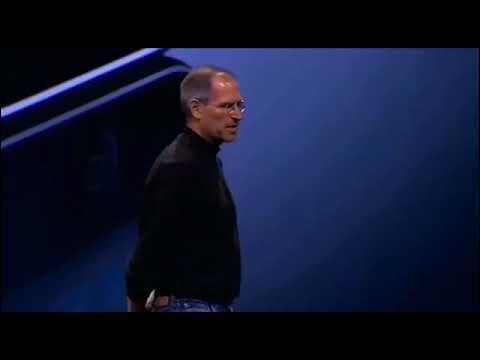
Addressing the developer community at WWDC 2007, Steve Jobs turns directly to the pressing question of third-party software on the upcoming iPhone. He explains that Apple spent considerable effort attempting to balance two competing priorities: enabling external developers to build powerful, compelling software while simultaneously ensuring the phone remains thoroughly stable, dependable, and secure. He presents the breakthrough as an elegant compromise, telling the audience, “We have been trying to come up with a solution to expand the capabilities of iPhone by allowing developers to write great apps for it, and yet keep the iPhone reliable and secure.” To solve this challenge, Jobs reveals what he calls a “very sweet solution” that rethinks application architecture on mobile devices.
Rather than running native compiled binaries directly on the operating system, this development model relies entirely on the fact that the iPhone includes the complete, desktop-grade Safari web engine. Jobs emphasizes that having the full Safari engine embedded inside the device delivers unprecedented computational and rendering power on mobile hardware. With this engine powering the presentation layer, developers can craft modern Web 2.0 and Ajax applications that visually match and functionally emulate native iPhone applications.
```mermaid flowchart TD accTitle: iPhone Web App Platform Architecture accDescr: Diagram showing how Web 2.0 apps hosted on external servers run through iPhone's Safari engine to interact with core device services. subgraph Hosting["Developer Infrastructure"] SVR["Internet Web Server"] end
subgraph iPhone["iPhone Runtime"] SAF["Full Safari Engine"] API["Core iPhone Services"] end
subgraph Services["Integrated Features"] CALL["Phone Calls"] MAIL["Email Client"] MAPS["Google Maps"] end
SVR -->|"Web 2.0 / Ajax Code"| SAF SAF --> API API --> CALL API --> MAIL API --> MAPS ```
[01:13](https://www.youtube.com/watch?v=p1nwLilQy64&t=73s) Seamless Integration, Instant Distribution, and "No SDK"
Jobs details how deeply these web-based applications can tie into native device functions, noting that they are not mere isolated web pages. They can directly invoke core iPhone actions, such as initiating cellular phone calls, composing emails, or querying geographic locations through Google Maps. Furthermore, this paradigm fundamentally transforms the mechanics of software release and maintenance. Developers do not need to submit builds to an intermediary or manage complicated deployment pipelines; software is deployed instantly simply by hosting the files on standard web servers. Making an update is as easy as pushing revised code to that web server, bypassing any complex client-side patching cycles.
Regarding security and integrity, Jobs assures the audience that web applications inherit standard, battle-tested encryption and isolation protocols comparable to what online banking institutions or Amazon use for secure transactions. Because the software executes inside the secure web sandbox, it cannot compromise the base phone’s stability. In a famous, enthusiastic pitch to the crowd, Jobs frames the absence of traditional developer tooling as the ultimate developer convenience, proclaiming: “And guess what: there's no SDK!” Anyone equipped with standard web development knowledge can target the iPhone immediately, allowing developers to have their applications ready to go live on the iPhone's official launch day.
- **Deep system integration**: Web applications can trigger phone calls, send emails, and look up coordinates on Google Maps. - **Server-driven lifecycle**: Distribution is instant upon uploading to a web server, and updates require only a code swap on the server side without user-installed updates. - **Standardized security**: Applications leverage bank-grade and e-commerce-grade web security protocols to keep the device stable and uncompromised. - **Immediate readiness**: With zero software development kits required, web developers were cleared to launch applications immediately for the iPhone release on June 29.
## Mentioned Steve Jobs, Bruce Lawson, Apple, iPhone, Safari, Google Maps, Amazon, WWDC 2007
## Video description "Now, what about developers? We have been trying to come up with a solution to expand the capabilities of iPhone by allowing developers to write great apps for it, and yet keep the iPhone reliable and secure. And we’ve come up with a very sweet solution. Let me tell you about it.
So, we've got an innovative new way to create applications for mobile devices, really innovative, and it's all based on the fact that iPhone has the full Safari inside. The full Safari engine is inside of iPhone and it gives us tremendous capability, more than there's ever been in a mobile device to this date, and so you can write amazing Web 2.0 and Ajax apps that look exactly and behave exactly like apps on the iPhone!
And these apps can integrate perfectly with iPhone services: they can make a call, they can send an email, they can look up a location on Google Maps. After you write them, you have instant distribution. You don't have to worry about distribution: just put them on your internet server. And they're really easy to update: just change the code on your own server, rather than having to go through this really complex update process. They're secured with the same kind of security you'd use for transactions with Amazon, or a bank, and they run securely on the iPhone so they don't compromise its reliability or security.
And guess what: there's no SDK! You've got everything you need, if you know how to write apps using the most modern web standards, to write amazing apps for the iPhone today. You can go live on June 29."
[Source](https://www.youtube.com/watch?v=p1nwLilQy64)