Translators Split Dubs From Subtitles as Lip-Sync Clashes With Text
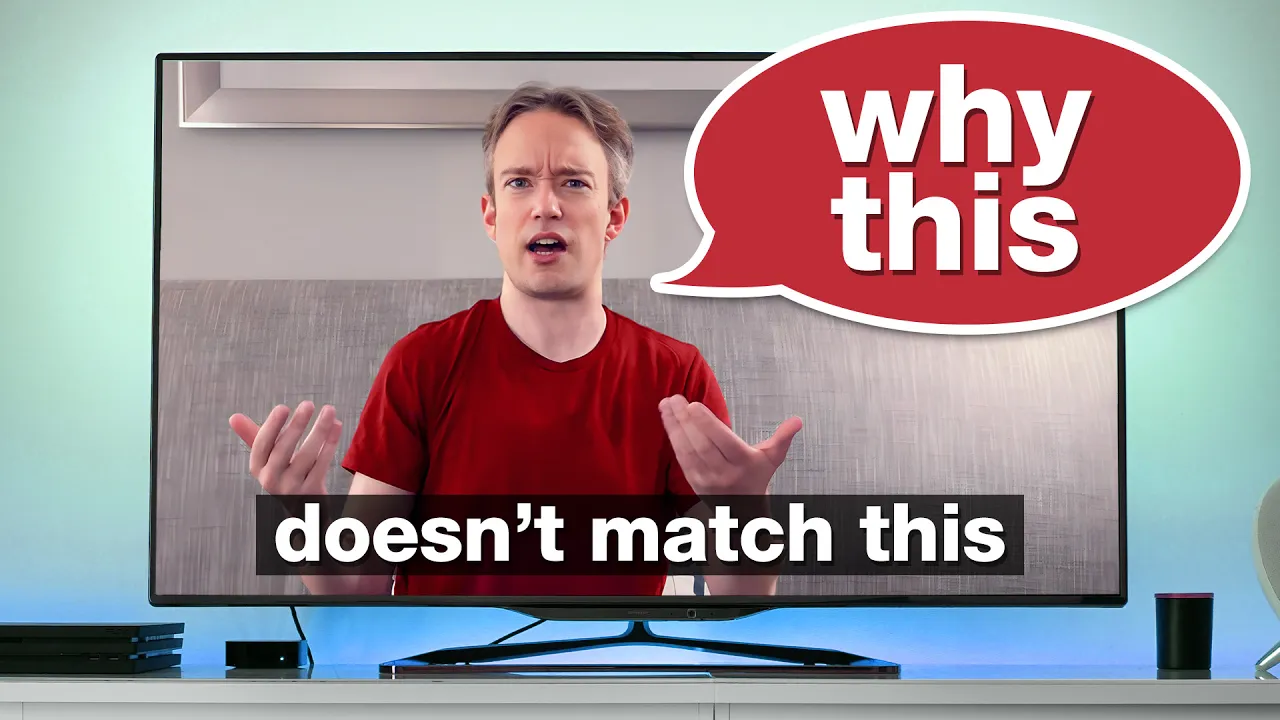
Why don't subtitles match dubbing? — Tom Scott

Tom Scott

Foreign-language subtitles and audio tracks diverge because voice actors must match on-screen lip movements while captioners are forced to compress dialogue to fit viewer reading speeds.

AI-assisted summary of Why don't subtitles match dubbing? — original source. Check the original for full context.

Source published:

Key ideas

  • Subtitles and dubbing diverge primarily because they are produced by separate creative teams navigating fundamentally conflicting physical and cognitive constraints. (0:00)
  • Dubbing scripts prioritize matching visible lip movements and speech cadence, whereas subtitles are constrained by reading speed, screen space, and character limits. (1:40)
  • Complex linguistic challenges like multi-layered puns and culturally specific slang continue to require human localization, as tested 2023 AI and LLM tools failed to capture their nuance. (3:49)
  • Audio localization often extends to audio engineering adjustments, including splicing room tone and outtake sound effects to synchronize natural audio with translated performances. (3:49)

Detailed notes

## Background Published on YouTube by educational creator Tom Scott on December 4, 2023, this video explores the intricate challenges of audiovisual translation. Scott's channel description emphasizes that "translation is really difficult" and details the extensive localization credits behind the project, alongside sponsorship information for NordVPN.

## TL;DR Tom Scott breaks down why foreign-language subtitles almost never match spoken dubbing, attributing the divergence to fundamentally opposing media constraints rather than mere carelessness. Subtitlers must condense dialogue to fit reading speeds and screen margins, while dubbers are forced to reshape natural phrasing and syntax to match visible lip flaps and timing. By testing localization teams on a dense music critique, an untranslatable pun, and British roller-coaster slang, Scott demonstrates that both crafts require distinct creative liberties that automated AI tools still cannot replicate.

## Atmosphere & style The presentation carries Scott's signature energetic, analytical curiosity, pairing breathless intellectual rants with engaging, practical demonstrations. The mood oscillates between playful humor—highlighted by goose sound-effects and visceral theme park screams—and genuine appreciation for the human craft behind localization. It feels like an illuminating behind-the-scenes masterclass, moving from mild everyday viewer frustration to an eye-opening look at the cognitive and technical tightrope translators must walk.

## Bulletin - [00:00](https://www.youtube.com/watch?v=pU9sHwNKc2c&t=0s) Subtitles and dubbing diverge primarily because they are produced by separate creative teams navigating fundamentally conflicting physical and cognitive constraints. - [01:40](https://www.youtube.com/watch?v=pU9sHwNKc2c&t=100s) Dubbing scripts prioritize matching visible lip movements and speech cadence, whereas subtitles are constrained by reading speed, screen space, and character limits. - [03:49](https://www.youtube.com/watch?v=pU9sHwNKc2c&t=229s) Complex linguistic challenges like multi-layered puns and culturally specific slang continue to require human localization, as tested 2023 AI and LLM tools failed to capture their nuance. - [03:49](https://www.youtube.com/watch?v=pU9sHwNKc2c&t=229s) Audio localization often extends to audio engineering adjustments, including splicing room tone and outtake sound effects to synchronize natural audio with translated performances.

## Key takeaways - [00:00](https://www.youtube.com/watch?v=pU9sHwNKc2c&t=0s) The mismatch between subtitles and dubbing stems directly from procedural industry workflows where distinct teams handle audio performance versus on-screen text. - [00:00](https://www.youtube.com/watch?v=pU9sHwNKc2c&t=0s) Syntactic differences in languages like Hindi and Japanese force dubbing teams to reorder sentences for lip synchronization, while subtitlers preserve natural grammatical flow. - [01:40](https://www.youtube.com/watch?v=pU9sHwNKc2c&t=100s) Modern subtitling conventions lean toward including complete dialogue because digital platforms allow pausing, unlike older broadcast and DVD standards that mandated summarizing text for slower readers. - [01:40](https://www.youtube.com/watch?v=pU9sHwNKc2c&t=100s) Translating dense, rapid monologue into text often demands cutting obscure cultural references to maintain readability without overwhelming viewers. - [01:40](https://www.youtube.com/watch?v=pU9sHwNKc2c&t=100s) Overlapping dialogue in chaotic or unscripted media can be rendered naturally by multiple voice actors but forces subtitle translators to compress and omit lines to prevent visual clutter. - [03:49](https://www.youtube.com/watch?v=pU9sHwNKc2c&t=229s) Wordplay that hinges on idioms, slang, and phonetic puns requires creative localization, often prompting translators to craft entirely new native puns rather than literal translations. - [03:49](https://www.youtube.com/watch?v=pU9sHwNKc2c&t=229s) Automated AI translation tools and large language models in 2023 proved incapable of reliably capturing the nuanced humor, performance, and context required for quality localization. - [03:49](https://www.youtube.com/watch?v=pU9sHwNKc2c&t=229s) Replacing dialogue layered over background noise requires sound engineers to isolate room tone and sync alternative audio outtakes to match on-screen visual movements. - [05:38](https://www.youtube.com/watch?v=pU9sHwNKc2c&t=338s) Context-heavy local slang without literal definitions presents significant hurdles for translators who rarely receive explanatory glossaries from original productions. - [07:04](https://www.youtube.com/watch?v=pU9sHwNKc2c&t=424s) Dubbers and subtitlers solve opposite problems: dubbing grants emotional freedom within the strict boundary of lip movements, while subtitling offers vocabulary flexibility constrained by viewer reading speeds.

## Detailed walkthrough ### [00:00](https://www.youtube.com/watch?v=pU9sHwNKc2c&t=0s) The Mismatch Between Subtitles and Dubbing

When viewers switch audio and subtitle tracks on YouTube or professional television broadcasts, they frequently notice that foreign-language subtitles almost never match the spoken dubbing word-for-word. This disconnect proves especially jarring for people who like to listen to audio while simultaneously reading captions. As Tom Scott points out, the simplest explanation is procedural: “The short reason why is: subtitles and dubbing are usually done by different teams of people.” However, uncovering why the industry operates this way requires looking at the physical constraints of audio-visual media.

```mermaid flowchart TD accTitle: Dubbing vs Subtitling Workflow and Constraints accDescr: A diagram contrasting the workflows, constraints, and priorities of dubbing teams versus subtitling teams.

subgraph Source["Source Material (English)"] A["Original Script & Video"] end

subgraph DubbingFlow["Dubbing Path"] D1["Dubbing Translator & Director"] D2["Lip Sync & Timing Constraints"] D3["Spoken Audio Performance"] D1 --> D2 --> D3 end

subgraph SubtitleFlow["Subtitling Path"] S1["Subtitle Translator"] S2["Reading Speed & Screen Space Constraints"] S3["On-Screen Text"] S1 --> S2 --> S3 end

A --> D1 A --> S1 ```

To demonstrate the issue in practice, Tom uses the video's own sponsor message for NordVPN. In languages like French, Spanish, and Brazilian Portuguese, sentence structure roughly mirrors English, allowing the dubbing and subtitles to align fairly closely. In Hindi and Japanese, however, structural differences immediately cause a divergence:

- In a natural Hindi translation, the company name naturally lands in the middle of the sentence. Because standard dubbing practice demands matching the speaker's on-screen lip movements, the Hindi dubbing team rephrased the line so the brand name fell at the end, whereas the subtitlers retained the natural sentence structure. - In Japanese, which presents an identical syntactic conflict, the dubbing team sought phrasing where mouth flaps matched reasonably well, creating another divergence from the text captions. - Rather than reusing dubbing scripts as subtitles, streaming and broadcast services treat the two formats as entirely separate crafts with competing physical limitations.

---

[01:40](https://www.youtube.com/watch?v=pU9sHwNKc2c&t=100s) Subtitle Limitations and the Maroon 5 Challenge

Subtitles cannot simply copy dubbing scripts because the medium of reading imposes completely different cognitive demands than listening. In modern subtitling, the general assumption is that reading speed exceeds speaking speed, so standard convention calls for placing every spoken word on screen and relying on the viewer to pause if necessary. Yet historical style guides for television and DVD releases from ten or fifteen years prior placed heavy emphasis on “careful and sensitive subtitle editing.” Those older standards prioritized summarizing dialogue to assist slower readers on devices that could not be easily paused or rewound.

To test how modern translators navigate dense scripts, Tom supplied a past rant regarding Maroon 5’s track *Memories*. The excerpt criticizes the song for lifting the opening melody of Pachelbel's *Canon in D* without resolving it, comparing the irritating earworm effect to the telepathic jingle in Alfred Bester’s 1953 science-fiction novel *The Demolished Man*.

When adapting this breathless passage into Japanese, the subtitle translator chose to excise the obscure reference to *The Demolished Man* entirely to preserve reading space and deliver the core meaning in fewer characters. Reflecting on this editorial liberty, Tom notes: “If they’d just taken the breathless, high speed performance of the Japanese voice actor, then it would have been a worse experience for subtitle readers.” This challenge is magnified in chaotic media like unscripted reality television, where multiple participants routinely talk over one another; voice actors can reproduce layered overlapping dialogue, but subtitles are forced to compress and summarize the scene.

---

[03:49](https://www.youtube.com/watch?v=pU9sHwNKc2c&t=229s) Untranslatable Puns and Nuance: The Gosling Joke

Translation frequently forces a choice between fidelity to literal wording and fidelity to underlying meaning. To test how teams handle linguistic wordplay, Tom submitted a classic English pun: *“Anyone want to buy some goslings? They’re going cheep.”* This pun relies on three distinct layers of colloquial knowledge simultaneously:

| Component | Meaning Required to Understand the Pun | |:--- |:--- | | **"Going"** | Idiomatically used to mean "making a sound" (e.g., the bird goes *cheep*). | | **"Cheep"** | The English onomatopoeia for the sound baby birds make. | | **"Going cheap"** | British slang meaning offered for sale at a discounted or low price. |

While a few translators surrendered and rendered the phrase literally, others invented creative native equivalents. The Brazilian Portuguese dub and subtitle teams, along with the Latin American Spanish subtitler, independently landed on the portmanteau *gansado*—merging *ganso* (goose) with *cansado* (tired) to joke that the speaker was “goose-tired” of the birds. Meanwhile, the French and Spanish dubbing teams devised puns around their respective native animal onomatopoeias.

Evaluating automated alternatives, Tom observed: “In case you’re wondering, I did try several AI translation tools, as well as just asking a large language model to translate this stuff, and as of right now, as of 2023, capturing that nuance, that meaning, that performance, definitely still requires humans.” The physical editing went even further: because Tom spoke over a goose honking in the original clip, audio engineers had to locate clean room tone and alternate goose calls from unseen outtakes, manually synchronizing the bird's beak movements with replacement audio.

---

[05:38](https://www.youtube.com/watch?v=pU9sHwNKc2c&t=338s) Translating British Slang on a Roller Coaster

The complexities of context become acute when dealing with hyper-local slang. Tom shared a clip from his experience riding the *Nemesis* roller coaster at Alton Towers, where conquering his phobia culminated in him shouting: *“Yes! Have it!”*

As an idiom, *“have it”* carries virtually no literal definition and defies search engine queries. Within British culture, it represents an aggressive surge of adrenaline, relief, and celebration—evoking football stadium cheers or late-night pub bravado. Tom provided an explanatory note to his localization agency, Iyuno, but acknowledged that working translators rarely receive production glossaries: “They’ll only have the original show, and maybe the script, if there is one.” Each international dubbing actor had to summon an equivalent native exclamation of uninhibited euphoria while fitting the brief visual window on the ride.

---

[07:04](https://www.youtube.com/watch?v=pU9sHwNKc2c&t=424s) Conflicting Priorities and the NordVPN Integration

Ultimately, subtitles and dubbing cannot match because they are solving opposite physical problems under strict time constraints. Subtitlers enjoy total freedom of vocabulary but are bounded by screen margins, character counts, and viewer reading speeds. Dubbers enjoy dynamic emotional range in the recording booth, but their vocabulary is held hostage by the actor's visible lip movements.

Tom closes by highlighting these dynamics through the full translated versions of his NordVPN sponsorship:

- The service allows desktop and mobile users to route connections through servers across approximately 60 countries, ranging from Albania to Vietnam. - This routing prevents localized websites from automatically enforcing translation and bypasses geographic blocks while traveling, subject to provider terms. - The software supports cross-platform usage across Windows, macOS, Linux, iOS, and Android across up to six concurrent devices, backed by a 30-day money-back guarantee. - Reaffirming his genuine reliance on the sponsor, Tom explains: “I keep endorsing NordVPN because it keeps being a thing I actually use.”

## Mentioned Tom Scott, NordVPN, Iyuno, Maroon 5, Memories, Johann Pachelbel, Canon in D, Alfred Bester, The Demolished Man, Alton Towers, Nemesis, YouTube

## Video description Translation is really difficult. ■ AD: 👨‍💻 NordVPN's best deal is here: https://nordvpn.com/tomscott - with a 30-day money-back guarantee.

🟥 MORE FROM TOM: https://www.tomscott.com/ (you can find contact details and social links there too) ❓ LATERAL, free weekly podcast: https://lateralcast.com/ https://youtube.com/lateralcast/ 👥 THE TECHNICAL DIFFICULTIES: https://youtube.com/techdif

🌐 TRANSLATION CREDITS

FRENCH Dubbing Translator: Noreen Ropers, Aurélia Naamani Dubbing Director: Stéphane Valverde Voice Talent: Pascal Nowak Subtitle Translator: Justine Derhourhi

HINDI Dubbing Translator: मीनल वि. पाटिल (द स्क्रिप्ट शॉप ) Dubbing Director: अनुज सुरेका Voice Talent: राजेश शुक्ला Subtitle Translator: संवाद अनुवादक: हिमांशु पाल

JAPANESE Dubbing Translator: 琢磨 有香里 Dubbing Director: 工藤 美树 Voice Talent: 橘 润二 Subtitle Translator: 大渕 誉哉

LATIN AMERICAN SPANISH Dubbing Translator: Regina Barajas Dubbing Director: Aureliano Castillo Voice Talent: Jesse Torres Subtitle Translator: Andrés Negrete

BRAZILIAN PORTUGUESE Dubbing Translator: André Conchon Dubbing Director: Gilberto de Syllos Voice Talent: Vitor Paranhos Subtitle Translator: Pollyana Tiussi

Translation Studio: Iyuno Operations Manager: Coolbe Hung

[Source](https://www.youtube.com/watch?v=pU9sHwNKc2c)

中文简报

口型同步与文本限制冲突,配音与字幕制作走向分流 外语字幕与配音音轨之所以存在分歧,是因为配音演员必须匹配屏幕上的唇形动作,而字幕员则被迫压缩台词以适应观众的阅读速度。 汤姆·斯科特(Tom Scott)深入剖析了外语字幕为何几乎从不与配音语音完全一致,并将这种分歧归因于根本对立的媒介限制,而非单纯的疏忽。字幕员必须精简对话以契合阅读速度和屏幕边缘限制,而配音人员则被迫重构自然的措辞与句法,以匹配画面中口型的开合与节奏。通过让本地化团队测试密集的乐评、难以直译的双关语以及英国过山车俚语,斯科特表明这两种制作工艺都需要独特的自由发挥空间,而这是目前的自动化人工智能工具仍无法复制的。 字幕与配音之所以存在分歧,主要是因为它们由不同的创意团队独立制作,各自应对根本对立的物理与认知限制。 (0:00) 配音剧本优先考虑匹配画面中的唇形动作与语速节奏,而字幕则受限于阅读速度、屏幕空间及字符数量上限。 (1:40) 多层双关语和特定文化俚语等复杂的语言难题仍需要人工本地化,2023年参与测试的AI和大语言模型工具均未能捕捉其微言大义。 (3:49) 音频本地化往往延伸至音频工程调整,包括拼接环境底噪和截取音效,以使原始自然音轨与译配表演达到同步。 (3:49)

Reading summary

Foreign-language subtitles and spoken dubbing rarely match word-for-word because they are produced by separate localization teams solving fundamentally incompatible physical and cognitive constraints, according to presenter Tom Scott. Competing Demands of Lip-Sync and Syntax (0:00) Dubbing and subtitling workflows diverge primarily because the spoken track must accommodate visual timing that text captions can ignore. In dubbing, translators and voice directors must shape dialogue so that phrasing matches the speaker's visible lip movements and mouth flaps. In a demonstration using a sponsor script, natural Hindi and Japanese syntax placed the sponsor brand name in the middle of the sentence. To match the on-screen English lip movements, the dubbing teams rephrased the line so the brand name fell at the end, while the subtitle teams retained natural grammatical order. Rather than reusing dubbing scripts for on-screen captions, streaming platforms and broadcasters maintain distinct pipelines. Subtitlers prioritize natural grammatical flow and reader comprehension, while dubbers remain bound by the physical pace of the original speaker's mouth. Reading Speed Limits and Text Compression (1:40) Subtitles cannot simply duplicate spoken scripts because reading text imposes distinct cognitive limits. While modern subtitling conventions often assume reading speed outpaces speaking and expect viewers to pause if needed, historical standards for broadcast and DVD releases placed strict emphasis on summarizing dialogue to assist slower readers who lacked easy playback controls. This constraint requires editorial omission when dialogue is rapid or dense. When adapting a fast-paced critique of Maroon 5's track Memories—which borrows from Pachelbel's Canon in D—the Japanese subtitle translator cut an obscure cultural reference to Alfred Bester's 1953 novel The Demolished Man entirely to save screen space. Scott points out that transcribing the voice actor's rapid performance verbatim would create a worse reading experience, a problem shared with unscripted television where overlapping dialogue must be heavily condensed for text. Creative Localization of Puns and Slang (3:49) Wordplay and cultural idioms further widen the divide between spoken audio and text. A multi-layered English pun about goslings "going cheep" relies simultaneously on animal sounds, idiomatic phrasing, and British slang for low prices. Translators could not rely on literal conversion; the Brazilian Portuguese and Latin American Spanish teams invented the portmanteau gansado (blending ganso for goose and cansado for tired), while others adapted native animal onomatopoeias. Dubbing also required manual audio engineering to replace background goose honks from outtakes to match replacement dialogue. Hyper-local expressions present similar hurdles. Translating an adrenaline-fueled British exclamation like "Yes! Have it!" on Alton Towers' Nemesis roller coaster forced international voice actors to match brief visual windows without the benefit of standard production glossaries. Scott noted that tests of AI translation tools and large language models in 2023 showed that capturing these cultural nuances, jokes, and vocal performances still strictly requires human translators and actors. Subtitles and dubbing remain mismatched because each format optimizes for a different sensory channel: subtitlers hold vocabulary flexibility but are constrained by screen space and reading speed, while dubbers command expressive vocal performance but are restricted by the actor's physical lip movements.

精炼阅读摘要

Tom Scott指出,外语字幕与配音无法做到逐字一致,核心原因在于二者由不同团队独立制作,且分别受制于屏幕阅读空间与口型同步等截然相反的物理限制。 分立的工作流程与物理限制 (0:00) 观众在流媒体与广播节目中常发现字幕与配音存在脱节。Tom Scott解释称,影视行业通常将字幕与配音交给两个完全独立的团队处理。法语、西班牙语和巴西葡萄牙语等语序与英语相似的语言中,二者差异较小;但在印地语和日语等语序结构不同的语言中,冲突极为明显。例如在赞助商文案中,自然的印地语句子会将品牌名称置于句中,但配音团队为了配合讲话者的嘴唇动作,特意调整语序将品牌词置于句末,而字幕翻译则保留了常规语序。流媒体和广播服务并未直接复用配音脚本作为字幕,而是将两者视为面对不同物理局限的独立工种。 字幕的阅读速率与信息删减 (1:40) 字幕制作面临严格的屏幕空间与观众阅读速度限制。尽管现代惯例倾向于呈现所有台词并依靠观众自行暂停,但早期的电视与DVD规范更强调精细化剪辑,以帮助无法随时暂停的慢速读者。在测试高密度台词时,Tom Scott使用了批评Maroon 5歌曲《Memories》借用帕赫贝尔《D大调卡农》旋律并提及Alfred Bester 1953年科幻小说《被毁灭的人》的片段。日文字幕译者为了在有限字数内传达核心含义,直接删除了晦涩的小说引用。Scott指出,如果字幕直接照搬配音演员高语速念出的完整文本,读者的阅读体验反而会更差;在真人秀等多名角色互相插话的混乱场景中,配音能通过多层音轨还原,字幕则被迫进行压缩与概括。 双关语意译与人工本地化必要性 (3:49) 文字游戏往往迫使译者在字面对应与深层语意之间做出取舍。以涉及雏鹅叫声“cheep”与英国俚语“便宜(cheap)”的多层谐音梗为例,部分翻译选择字面直译,而巴西葡萄牙语团队与拉美西班牙语字幕译者则独立创造了“gansado”一词,将鹅(ganso)与疲惫(cansado)结合,表达对雏鹅“厌烦”的本土双关。音频工程师为了画面匹配,还需从废弃素材中寻找干净的叫声来手动对齐画面中雏鹅的嘴部开合。Tom Scott表示,截至2023年,他测试的大语言模型与AI翻译工具仍无法有效捕捉此类文化细节与表演语境,这一维度的本地化依然需要人工完成。 本土俚语缺乏语境带来的翻译挑战 (5:38) 极端依赖本土文化的口语表达给翻译带来了更大的不确定性。例如Scott在奥尔顿塔乘坐Nemesis过山车克服恐惧时喊出的英国俚语“Yes! Have it!”,在字面上毫无实质含义,也极难通过搜索引擎查询。在英国文化语境中,该短语多见于足球场欢呼或酒吧庆祝,代表肾上腺素激增后的释怀与亢奋。尽管Scott向本地化机构Iyuno提供了背景注释,但他指出,实际商业流程中的译者通常只能拿到原片和基础脚本,缺乏背景词汇表,各国外语配音演员必须在有限的过山车镜头时隙内自行寻找能传递同等狂喜情绪的本土感叹词。 字幕与配音的根本冲突源于媒介特性的差异:字幕受制于屏幕空间、字数上限和人眼阅读节奏,但选词自由度较高;配音演员在录音室拥有充沛的情感表达空间,其词汇选择却必须严格屈从于画面人物的口型开合与说话时长。

Detailed notes — zh

## Background 本视频由知名科普博主 Tom Scott 于 2023 年 12 月 4 日发布在 YouTube 平台上。页面简介指出“翻译是一件极其困难的事”,并附带了本次商业赞助商 NordVPN 的推广信息,同时完整列出了法语、印地语、日语、西语及葡语等多语言配音与字幕制作团队的详尽致谢名单。 ## TL;DR 视频深入探讨了影视作品中外语配音与字幕往往无法对应的深层原因:两者通常由截然不同的专业团队独立完成,并承担着完全相悖的制作制约。配音团队的首要任务是实现严苛的口型同步与情绪传达,往往不得不调整语序甚至牺牲词汇的自然度;而字幕团队则受限于屏幕显示空间、字符阅读速度以及信息密度的裁切,追求在极短时间内传递核心语义。通过分析极速长难句、小鹅双关冷笑话、地道英式俚语“Have it!”以及音频对齐真实鹅叫等极端实操案例,Tom Scott 揭示了本土化翻译中直译与意译的永恒博弈,以及人类译员在捕捉微妙情感与文化语境时不可替代的创造力。 ## Atmosphere & style 整支视频洋溢着 Tom Scott 标志性的极客式幽默与严谨求证的知识探索氛围,节奏明快且信息密集。从分析长难句时的机智自嘲,到音频工程师被迫给一只鹅“对嘴型”的荒诞趣谈,再到回忆坐过山车时嘶吼英式俚语的狂喜反差,叙事过程生动鲜活。观看体验宛如跟随一位敏锐的语言侦探穿梭在不同语种的录音棚与字里行间,既能感受到跨语言交流的精妙复杂,又充满顿悟与欢笑。 ## Bulletin - [00:00](https://www.youtube.com/watch?v=pU9sHwNKc2c&t=0s) 影视与视频中的字幕与配音文本之所以频繁出现差异,最直接原因是两者通常由完全独立的专业团队分别完成,且两方受制于截然不同的媒介技术规范。 - [00:34](https://www.youtube.com/watch?v=pU9sHwNKc2c&t=34s) 配音团队受制于画面口型同步(Lip-sync)的严格物理要求,往往不得不重构自然语序或妥协选词;而字幕团队无需对口型,更专注于维持自然的母语表达与阅读流畅度。 - [03:43](https://www.youtube.com/watch?v=pU9sHwNKc2c&t=223s) 在文化双关与小众引用的本地化处理上,现代人类专业译员通过创造全新双关词或删减冗余信息来传递核心情绪与意图,这种表现力在当前 AI 与大语言模型测试中仍难以被完全替代。 - [07:04](https://www.youtube.com/watch?v=pU9sHwNKc2c&t=424s) 字幕与配音的根本冲突在于载体边界:字幕拥有词汇选择自由但受限于屏幕空间与阅读时长,配音能倾注充沛表演情感但受制于唇形动作匹配。 ## Key takeaways - [00:00](https://www.youtube.com/watch?v=pU9sHwNKc2c&t=0s) 观众同时开启字幕与配音时发现文本对不上,并非单纯的粗制滥造,而是字幕与配音分别由两个独立团队并行制作的必然结果。 - [00:34](https://www.youtube.com/watch?v=pU9sHwNKc2c&t=34s) 配音的首要目标是口型同步,当目标语言(如印地语或日语)的自然语序与英语冲突时,配音译文必须打乱正常语序以匹配讲话者的嘴唇开合节奏。 - [00:55](https://www.youtube.com/watch?v=pU9sHwNKc2c&t=55s) 字幕制作完全不受画面嘴型的约束,因此字幕译员没有理由打乱句式,会优先沿用目标语言最符合母语习惯的自然语序。 - [01:40](https://www.youtube.com/watch?v=pU9sHwNKc2c&t=100s) 现代字幕规范建立在“人看文字比听话更快”的假设上,倾向于将语速极快的台词逐字呈现,因为现代播放设备支持随时暂停与回退。 - [02:10](https://www.youtube.com/watch?v=pU9sHwNKc2c&t=130s) 旧时代的电视和 DVD 翻译指南强调审慎编辑与精简摘要,以照顾阅读较慢且无法随时倒带的观众,与现代逐字字幕的理念大相径庭。 - [02:40](https://www.youtube.com/watch?v=pU9sHwNKc2c&t=160s) 遇到本土观众缺乏认知的极小众文化引用(如冷门科幻小说)时,优秀的字幕翻译会选择主动剔除该元素,用更短的文字传达核心含义以保障阅读体验。 - [03:20](https://www.youtube.com/watch?v=pU9sHwNKc2c&t=200s) 在多人同时打断、抢话的复杂场景中,配音可以多音轨重叠录制,而字幕受限于屏幕显示宽度和停留时间,只能被迫做信息摘要。 - [03:43](https://www.youtube.com/watch?v=pU9sHwNKc2c&t=223s) 面对“小鹅便宜叫”(going cheep)等依赖特定语言多义词与拟声词构成的复杂双关,优秀的译员会放弃字面直译,转而生造符合母语语境的全新双关语。 - [04:50](https://www.youtube.com/watch?v=pU9sHwNKc2c&t=290s) 跨语言本地化中的复杂双关和情绪微妙张力,在 2023 年的大语言模型及 AI 翻译工具测试中仍无法达到专业人类译员的创造性水平。 - [05:15](https://www.youtube.com/watch?v=pU9sHwNKc2c&t=315s) 多语言音频重置不仅考验台词,还涉及复杂的音效与环境音匹配,音频工程师甚至需要给画面中张嘴叫唤的动物寻找未受污染的音频以完成“喙型同步”。 - [05:38](https://www.youtube.com/watch?v=pU9sHwNKc2c&t=338s) 高度本土化且缺乏字面语义的俚语(如英式俚语“Have it!”)无法通过字面直接翻译,配音的核心任务是寻找对应语境下的极限情绪爆发与氛围传达。 - [06:35](https://www.youtube.com/watch?v=pU9sHwNKc2c&t=395s) 商业影视流水线上的译员往往缺乏原作者提供的背景注释备忘录,通常只能在缺乏语境解释的情况下盲译剧本,进一步加剧了字幕与配音的理解分歧。 - [07:04](https://www.youtube.com/watch?v=pU9sHwNKc2c&t=424s) 字幕与配音的核心矛盾是“屏幕空间与阅读速度限制”与“声音情绪与嘴型物理限制”之间的永恒权衡,这决定了两者文本注定无法统一。 ## Detailed walkthrough ### [00:00](https://www.youtube.com/watch?v=pU9sHwNKc2c&t=0s) 为什么字幕与配音经常对不上? 在这期视频中,Tom Scott 探讨了一个许多习惯同时开着声音和字幕看视频的人经常遇到的困惑:除了英语原声之外,在大多数设备上切换 YouTube 的多语言音轨和字幕时,你会发现字幕文本与配音台词往往大相径庭。这种情况在专业电视剧中屡见不鲜,让既想听声音又想看字幕辅助理解的观众倍感挫败。 Tom Scott 一针见血地给出了最直接的原因:“The short reason why is: subtitles and dubbing are usually done by different teams of people.”(简而言之:字幕和配音通常是由完全不同的团队独立完成的。)然而,为什么非要分工成两个团队、甚至不能直接沿用同一套稿子?为了彻底讲清背后的门道,Tom Scott 展开了一场涉及鹅、过山车以及赞助商广告的翻译机制探索之旅。 ### [00:34](https://www.youtube.com/watch?v=pU9sHwNKc2c&t=34s) 对口型限制与语序冲突:印地语与日语的实操难题 很多人可能会好奇,既然翻译都花钱了,为什么不能直接把配音演员的录音脚本照搬做成字幕?一个核心制约在于配音对“口型同步”(Lip-sync)的严苛要求。现代专业配音的标准做法是尽可能使译文的口型动作与画面中讲话者的嘴型完全吻合。在 Tom Scott 插入的 NordVPN 赞助广告中,法语、西班牙语和葡萄牙语的语序与英语基本一致,进行直接对译非常平滑,因此字幕与配音的文本几乎一模一样。 然而在印地语中,最符合母语直觉的译法会将公司名称放在句子的正中间,而英语原文中品牌名是放在最后面的。为了在画面上实现嘴型同步,印地语配音团队特意重构了句式结构,把公司名称强行挪到句尾,完美贴合了 Tom Scott 念出品牌时的嘴型;但负责印地语字幕的团队并没有口型限制,根本没有理由打乱自然语序,于是采用了正常的句式,导致字幕和配音台词彻底分道扬镳。日语翻译团队同样面临着语序倒装的困扰,最终配音团队选择了一种折中方案,挑选了一套嘴型看起来“足够接近”的日语译法。 ```mermaid flowchart TD accTitle: 配音与字幕的分歧流程 accDescr: 展示配音团队与字幕团队在处理同一段外语源文本时因面临不同限制而走向不同翻译结果 Source["英文源视频与台词"] --> DubTeam["配音团队"] Source --> SubTeam["字幕团队"] subgraph DubConstraints["配音团队的制约"] DubTeam --> LipSync["首要目标:口型同步 (Lip-sync)"] LipSync --> Reorder["调整语序 / 寻找嘴型贴合的词"] Reorder --> DubScript["产生配音脚本(牺牲部分自然度)"] end subgraph SubConstraints["字幕团队的制约"] SubTeam --> ReadLimit["首要目标:阅读流畅与屏显时间"] ReadLimit --> NaturalOrder["保持自然语序 / 删减冗长信息"] NaturalOrder --> SubScript["产生屏幕字幕(保留自然理解)"] end DubScript -.-> Diff["两者文本产生显著差异"] SubScript -.-> Diff ``` ### [01:40](https://www.youtube.com/watch?v=pU9sHwNKc2c&t=100s) 字幕的自身制约:从总结意译到逐字呈现的演变 即便字幕团队不受口型的约束,字幕本身也有着一套独立的呈现逻辑与技术限制。为了测试翻译极限,Tom Scott 故意给翻译公司提供了极具挑战性的素材。他拿出了多年前讨论 YouTube 版权系统时对魔力红乐队(Maroon 5)的一段极速吐槽作为测试样本: > “Maroon 5’s Memories is an infuriating composition that uses the start of the melody of Canon in D but never resolves it, which means it has the same stuck-in-your-head effect as the jingle from Alfred Bester’s The Demolished Man, and I hate it.” > (魔力红的《Memories》是一首令人恼火的作品,它套用了《D大调卡农》的前奏旋律却从不解决,这意味着它会产生像阿尔弗雷德·贝斯特的小说《被毁灭的人》中那段洗脑广告歌一样的洗脑效应,我讨厌死它了。) 在现代的大多数语言字幕标准中,通行的假设是“人阅读文字的速度比听人说话更快”,即使遇到像上面这样极快的语速,字幕规范依然倾向于将每一个字都打在屏幕上,因为现代观众如果跟不上,随时可以暂停或者回退。但 Tom Scott 指出,十几二十年前的电视重播或 DVD 时代完全不是这样。当时的翻译行业风格指南非常强调“审慎而敏感的字幕编辑技巧”(careful and sensitive subtitle editing),旨在确保阅读速度慢的观众也能理解核心意思,毕竟旧式载体很难随时倒带暂停。不仅如此,Tom Scott 还讽刺了当年的行业假设:过去的人怎会料到如今大家都揣着手机看视频,或是现代影视的混音让对白变得越来越难以听清,导致听力健全的人也普遍离不开字幕。 由于日文字符的视觉阅读节奏与信息密度问题,日本当地的字幕译员敏锐地注意到《被毁灭的人》这本科幻小说在英语圈本就小众,日本观众更是几乎闻所未闻,因此决定直接从字幕中彻底删去对该小说的引用,用更少的字符传达出“这首歌洗脑且令人烦躁”的核心含义。Tom Scott 对这种做法表示高度认可:“Opinions can differ, but I think that’s a pretty solid decision.”(看法可能各不相同,但我认为这是一个非常明智的决定。)倘若字幕团队直接套用日本配音演员那段气喘吁吁、超高语速录出的台词,对于看字幕的观众来说体验只会奇差无比。由此延伸,在真人秀等多人群体对话中,六个人抢话、结巴、互相打断,配音演员可以同时在音轨上重叠大喊,而字幕受限于屏幕宽度和阅读时间,只能做摘要精简。 ### [03:43](https://www.youtube.com/watch?v=pU9sHwNKc2c&t=223s) 直译还是意译?“小鹅便宜叫”的双关挑战与音效同步 翻译中永恒的哲学矛盾在于:究竟是直译字面,还是翻译意图?Tom Scott 抛出了第二个极具杀伤力的语言陷阱——一个关于小鹅的冷笑话: - “Anyone want to buy some goslings?”(有人想买小鹅吗?) - “They’re going cheep.”(它们叫得正欢 / 它们卖得很便宜。) 英语母语者能立刻秒懂这个笑话,是因为它完全建立在一连串复杂的英语口语双关上: - 动词短语“going”既可以表示“正在发出某种声音”,也可以与价格连用表示“售价为……”; - 拟声词“cheep”是英语中小雏鸟叽叽喳喳的叫声; - “going cheap”则是英语俚语,意为“以非常廉价的价格甩卖”。 面对这个几乎无法直译的语言梗,翻译团队的百态呈现极其有趣。有的语种译员选择了字面直译、直接放弃笑话包袱。然而有些译员展现出了惊人的本地化创造力: - 葡萄牙语的字幕和配音团队,以及西班牙语的字幕译员,不谋而合地创造了同一个全新的双关词:在西语和葡语中,“ganso”是鹅,“cansado”是疲惫,他们将其生造为“gansado”(鹅累了),将笑话改成了“我想把这些小鹅卖掉,因为我已经被鹅折磨得精疲力尽了”。 - 法语和西班牙语的配音团队则退回拟声词本身,利用各自母语中形容小鸟叫声的特有拟声词,重新编排了一套本土化的叫声双关。 Tom Scott 对这种超越字面、捕捉“意义与意图”的翻译大加赞赏。他补充道,自己用多款 AI 翻译工具和大语言模型(LLM)测试过这一段,但在 2023 年的技术水平下,想要捕捉到这种精妙的人类语感、表演张力与细微差别,依然非专业人类译员莫属。 有趣的是,尽管小鹅这段不需要配音演员对 Tom Scott 的嘴型,但音频后期却遭遇了另一个离奇的挑战:原片中 Tom Scott 说话的声音盖住了背景里真鹅的叫声。为了把新配音塞进去,音频工程师必须在未公开的素材库里找到另一段没被说话声干扰的真实鹅叫和环境底噪,复制粘贴过来重新混音,严格对准画面里那只鹅张嘴叫唤的动作。Tom Scott 戏称:“Someone had to lip-sync a goose. Beak-sync, actually. I— they— they don’t have lips. …I don’t think they have lips.”(居然有人得去给一只鹅对口型。确切地说是对喙型,反正鹅肯定没有嘴唇。) ### [05:38](https://www.youtube.com/watch?v=pU9sHwNKc2c&t=338s) 无法字面解释的英式俚语:“Have it!” 与情绪本地化 在第三个极端案例中,Tom Scott 调出了前一年他在奥尔顿塔主题公园坐过山车“报应”(Nemesis)以克服过山车恐惧症的片段。当极度恐惧转化为狂喜冲顶时,他对着镜头咆哮了一声极度地道的英格兰俚语:“Yes! Have it!” “Have it”在字面上完全没有任何意义,甚至在英国本土不同地域也有不同的用法,普通人通过 Google 几乎搜不到它的确切释义。在当时的语境中,它是一种混合了极度兴奋、胜利喜悦、肾上腺素飙升与自我鼓励的情绪爆发。它就像足球队进球后球迷在看台上的嘶吼,或者几个青年在酒吧里给连干两品脱拉格啤酒的哥们起哄助威的声音,充斥着非常男性化、英式“醉酒哥们夜出狂欢”(drunken lads’ night out)的粗粝氛围。 为了避免翻译偏差,Tom Scott 提前给各语种团队附上了一份背景说明备忘录。但他指出,在实际的专业影视流水线上,译员通常根本拿不到这么贴心的原作者注释,往往只能拿着剧本生啃甚至直接看着原声视频盲译。在最终成片中,各语种配音演员各显神通,通过不同语言中宣泄极限情绪的母语叫喊,将那种肾上腺素爆棚的状态传递了出来。 ### [07:04](https://www.youtube.com/watch?v=pU9sHwNKc2c&t=424s) 字幕与配音差异的核心本质 通过这一系列横向对比,Tom Scott 总结了导致字幕与配音永远存在断层的终极底层逻辑: > “Subtitling teams have their choice of any word or phrase, but they have to fit the words on the screen. Dubbing teams can get their voice actors to emote in the studio as much as possible… but the lip movements have to match. That’s why subtitles and dubbing differ.” > (字幕团队可以自由选用任何词汇或短语,但他们必须受限于屏幕尺寸与阅读节奏;配音团队可以让录音棚里的配音演员倾尽全力宣泄情感,但他们的发音必须对得上画面里的嘴型。这就是字幕与配音注定不同的原因。) 在视频的尾声,Tom Scott 巧妙地把这种语言转换关联到了本次赞助商 NordVPN 的功能上:无论使用哪种语言,通过 VPN 的“Quick Connect”一键连接功能,用户的电脑和手机可以虚拟定位到全球约 60 个国家(从阿尔巴尼亚到越南),不仅能在出国旅行时防止网页被强行自动翻译,还能解锁不同地区的流媒体库(他同时提醒要先查阅各平台的用户条款)。Tom Scott 强调,该服务支持 Windows、Mac、Linux、iOS 和 Android 等跨平台同时连接多达 6 台设备,并享有 30 天退款保证。他坦言自己过去一年多由于高频差旅,NordVPN 从原本以为只是偶尔用用的工具变成了不可或缺的高频日常软件,这也是他持续代言该产品的原因。 ## Notable quotes > [07:04](https://www.youtube.com/watch?v=pU9sHwNKc2c&t=424s) Subtitling teams have their choice of any word or phrase, but they have to fit the words on the screen. Dubbing teams can get their voice actors to emote in the studio as much as possible… but the lip movements have to match. That’s why subtitles and dubbing differ. — Tom Scott > [00:00](https://www.youtube.com/watch?v=pU9sHwNKc2c&t=0s) The short reason why is: subtitles and dubbing are usually done by different teams of people. — Tom Scott ## Mentioned Tom Scott, NordVPN, YouTube, Iyuno, Maroon 5, 《D大调卡农》, Alfred Bester, 《被毁灭的人》, 奥尔顿塔主题公园, Nemesis(过山车) ## Video description Translation is really difficult. ■ AD: 👨‍💻 NordVPN's best deal is here: https://nordvpn.com/tomscott - with a 30-day money-back guarantee. 🟥 MORE FROM TOM: https://www.tomscott.com/ (you can find contact details and social links there too) ❓ LATERAL, free weekly podcast: https://lateralcast.com/ https://youtube.com/lateralcast/ 👥 THE TECHNICAL DIFFICULTIES: https://youtube.com/techdif 🌐 TRANSLATION CREDITS FRENCH Dubbing Translator: Noreen Ropers, Aurélia Naamani Dubbing Director: Stéphane Valverde Voice Talent: Pascal Nowak Subtitle Translator: Justine Derhourhi HINDI Dubbing Translator: मीनल वि. पाटिल (द स्क्रिप्ट शॉप ) Dubbing Director: अनुज सुरेका Voice Talent: राजेश शुक्ला Subtitle Translator: संवाद अनुवादक: हिमांशु पाल JAPANESE Dubbing Translator: 琢磨 有香里 Dubbing Director: 工藤 美树 Voice Talent: 橘 润二 Subtitle Translator: 大渕 誉哉 LATIN AMERICAN SPANISH Dubbing Translator: Regina Barajas Dubbing Director: Aureliano Castillo Voice Talent: Jesse Torres Subtitle Translator: Andrés Negrete BRAZILIAN PORTUGUESE Dubbing Translator: André Conchon Dubbing Director: Gilberto de Syllos Voice Talent: Vitor Paranhos Subtitle Translator: Pollyana Tiussi Translation Studio: Iyuno Operations Manager: Coolbe Hung [Source](https://www.youtube.com/watch?v=pU9sHwNKc2c)

Source quotes

[7:04] Tom Scott: Subtitling teams have their choice of any word or phrase, but they have to fit the words on the screen. Dubbing teams can get their voice actors to emote in the studio as much as possible… but the lip movements have to match. That’s why subtitles and dubbing differ. [0:00] Tom Scott: The short reason why is: subtitles and dubbing are usually done by different teams of people.

Original transcript

[0:00] This video has been dubbed and subtitled into several languages. [0:03] On most devices, you can call up YouTube’s settings, [0:05] and switch between them. And if you do, [0:07] you’ll find that outside the original language, English, [0:10] the words in the subtitles and dubbing often don’t match. [0:13] Which happens a lot, mostly in professional TV shows, [0:16] and it can be frustrating for those of us [0:18] who like to listen but also use subtitles. [0:21] The short reason why is: [0:23] subtitles and dubbing are usually done by different teams of people. [0:26] But to answer why that happens, [0:28] I need to take you on a journey that’s going to involve [0:30] geese, a roller coaster, and this advert. [0:34] This video is sponsored by NordVPN. [0:37] That’s not a joke, this video is actually sponsored by NordVPN, [0:40] who have been very useful as I’ve been travelling around! [0:42] Visit nordvpn.com/tomscott to find the best deal they’re offering right now. [0:47] Now, in most of the languages that advert was translated into, [0:51] the subtitles and dubbing pretty much match. [0:54] In French, Spanish and Portuguese, [0:55] the word order is roughly the same as in English, [0:58] and it’s a simple translation. [1:00] But in the most obvious Hindi translation, [1:02] the company name sits in the middle of the sentence, [1:05] and standard practice for modern professional dubbing [1:07] is to match lip movements as closely as possible. [1:11] Now, there is a way to rephrase the sentence in Hindi [1:14] so that the company name sits at the end. [1:17] The dubbing team chose that option, [1:19] and the lip movements pretty much match. [1:21] But the subtitling team didn’t see any reason to do that, [1:24] and so the lines are different. [1:26] In Japanese, which has the same problem, [1:27] the dubbing team instead found a translation [1:30] where the lip movements look close enough. [1:33] But why don’t they just take the dubbing script, [1:36] and then turn it into subtitles? [1:38] Why translate everything twice? [1:40] Well, subtitles have their own limitations. [1:43] I gave the translation teams for this video [1:45] some deliberately difficult examples. [1:47] A few years ago, I made a video on YouTube’s copyright systems, [1:50] and it included this sidebar about a song that I don’t like: [1:54] Maroon 5’s Memories is an infuriating composition [1:56] that uses the start of the melody of Canon in D but never resolves it, [1:59] which means it has the same stuck-in-your-head effect [2:01] as the jingle from Alfred Bester’s The Demolished Man, [2:03] and I hate it. [2:04] The modern approach to subtitling in most languages [2:07] is that reading is faster than talking, [2:09] and that even for fast talking like that, [2:11] you put every word on screen. The viewer can always pause. [2:14] But that wasn’t always the case. [2:16] If you watch anything in English that was subtitled more than 10 or 15 years ago, [2:19] like reruns on television or movies on DVD, [2:22] you’ll find the subtitles often summarise what’s said. [2:25] Style guides used to emphasise the skill in “careful and sensitive subtitle editing”, [2:30] because they thought it was important that everyone got the meaning, [2:32] even if they were a slow reader, [2:34] because you couldn’t easily pause and go back. [2:36] And besides, why would someone who can hear watch video with subtitles? [2:40] It’s not like we’d all end up with tiny televisions in our pocket, [2:43] or sound mixing changes would mean [2:45] dialogue was going to be suddenly difficult to hear. [2:48] In the original English version of that Maroon 5 rant that I just did, [2:52] I made a reference to The Demolished Man by Alfred Bester, [2:55] which isn’t that well-known even in English. [2:57] So for Japanese viewers, who have probably never heard of it, [3:00] the local subtitle translator decided to remove the reference entirely [3:04] and get the same meaning across in fewer characters. [3:07] Opinions can differ, but I think that’s a pretty solid decision. [3:10] If they’d just taken the breathless, high speed performance [3:13] of the Japanese voice actor, [3:14] then it would have been a worse experience for subtitle readers. [3:17] And well done to the voice actor, by the way! [3:19] That cannot have been easy. [3:21] And this is just to translate one person performing a script! [3:25] Imagine if it was a reality show, [3:27] with six people shouting and talking quickly [3:29] and stumbling their words and interrupting each other. [3:31] The subtitles would have to summarise, [3:33] while the voice actors for the dub can shout over each other. [3:38] But it does mean that in this case, [3:40] for some Japanese viewers, that reference is lost. [3:43] That’s one of the other big challenges with translation. [3:46] How much do you translate the words versus translating the meaning? [3:50] Here’s another really difficult example. [3:53] “Anyone want to buy some goslings?” [3:56] “They’re going cheep.” [3:58] The English version of that joke is pretty much impossible to translate! [4:02] It relies not just on a pun, but on knowledge of colloquial English. [4:05] You have to know that “going” can mean “making a noise”. [4:08] You have to know that “cheep” is the English word [4:10] for the noise that baby birds make, cheep-cheep-cheep, [4:13] and you have to know that “going cheap”, spelled differently, [4:16] is slang for “on sale at a good price”. [4:20] I loved seeing the responses from the translators on this example. [4:23] A couple of folks translated it word for word, [4:25] and just gave up on the joke. Fair enough. [4:27] But I do want to highlight a couple of them. [4:29] The Portuguese subtitle and dubbing teams came up with the same joke! [4:34] And so did the Spanish subtitler. [4:35] ‘Ganso’ in both languages means ‘goose’, and ‘cansado’ means ‘tired’, [4:39] so they combined them into the word ‘gansado’, [4:42] and now I’m asking if anyone wants the goslings [4:44] because I’m goose-slash-tired of them? Brilliant. [4:47] And both the French and Spanish dubbing teams came up with [4:49] their own puns based on their languages’ words for bird noises, [4:53] because yes, the sounds that animals are said to make differ in each language! [4:58] And I love this! [4:59] This is translating meaning and intent, not just words. [5:03] In case you’re wondering, [5:04] I did try several AI translation tools, as well as just asking [5:06] a large language model to translate this stuff, [5:09] and as of right now, as of 2023, [5:11] capturing that nuance, that meaning, that performance, [5:14] definitely still requires humans. [5:16] At least for the goose clip, [5:17] the translators didn’t have to match my lips. [5:19] But they did have to match the goose’s honk! [5:22] Because I talked over it, [5:23] so they had to go to another bit of the video that you didn’t see, [5:26] copy and paste the background noise and a different goose honk from there, [5:30] and synchronize them up. [5:31] Someone had to lip-sync a goose. [5:34] Beak-sync, actually. I— they— they don’t have lips. [5:37] …I don’t think they have lips. [5:38] All of which comes together for this example. [5:41] Last year, I made a video [5:41] where I tried to get over my phobia of roller coasters. [5:44] And, spoiler, I did! [5:45] And just after my terror changed to joy, on a ride called Nemesis, [5:49] I shouted this: [5:53] Yes! Have it! [5:57] The original English is “have it”. [5:59] How on earth do you translate “have it”? [6:01] It’s got no literal meaning. [6:02] And more than that, it’s kind of obscure slang? [6:04] Different people in different parts of Britain [6:05] might use it for different things, [6:06] and it’s almost impossible to Google. [6:09] In my context, it’s a cry of [6:11] excitement, triumph, adrenaline, encouragement, success. [6:14] It’s the sort of thing that you might yell after your team scores a goal, [6:17] or to cheer on your friend after they’ve successfully [6:20] downed two pints of lager back-to-back. [6:22] It feels very male? Very “drunken lads’ night out’? [6:26] I did pass a note with all that context on to the translators, [6:29] but for many productions they won’t be working with notes. [6:31] They’ll only have the original show, and maybe the script, if there is one. [6:36] So, here is that cry in all the video’s languages. [7:04] Subtitling teams have their choice of any word or phrase, [7:07] but they have to fit the words on the screen. [7:09] Dubbing teams can get their voice actors [7:11] to emote in the studio as much as possible… [7:14] but the lip movements have to match. [7:17] That’s why subtitles and dubbing differ. [7:20] And if you want a perfect example of that: [7:22] …this advert has also been translated into five languages! [7:25] And no matter which one you speak, [7:27] you can push NordVPN’s magic Quick Connect button, [7:29] and your phone and computer can pretend [7:31] they’re in any one of around 60 countries, [7:33] from Albania to Vietnam. [7:35] So if you’re travelling and want websites to stop automatically translating for you, [7:39] it’s easy! Or if you want to watch stuff from another country, [7:42] but it’s blocked where you are, you can. [7:44] (Just check the streaming service’s terms and conditions first.) [7:47] NordVPN works on Windows, Linux, Mac, iOS and Android, [7:51] up to six devices at the same time, [7:53] and there’s a 30-day money-back guarantee. [7:55] So if you’re not sure: try it anyway. [7:57] When I first used it, I thought I’d only use it occasionally, [8:00] but over the last year… [8:02] it really has come in handy for me, time after time after time. [8:05] I keep endorsing NordVPN because it keeps being a thing I actually use. [8:10] You can go to nordvpn.com/tomscott, or scan the QR code, [8:13] for the best deal they’re offering right now, [8:15] even if you’re watching this in the future. [8:19] I think that worked. [8:21] Lovely.