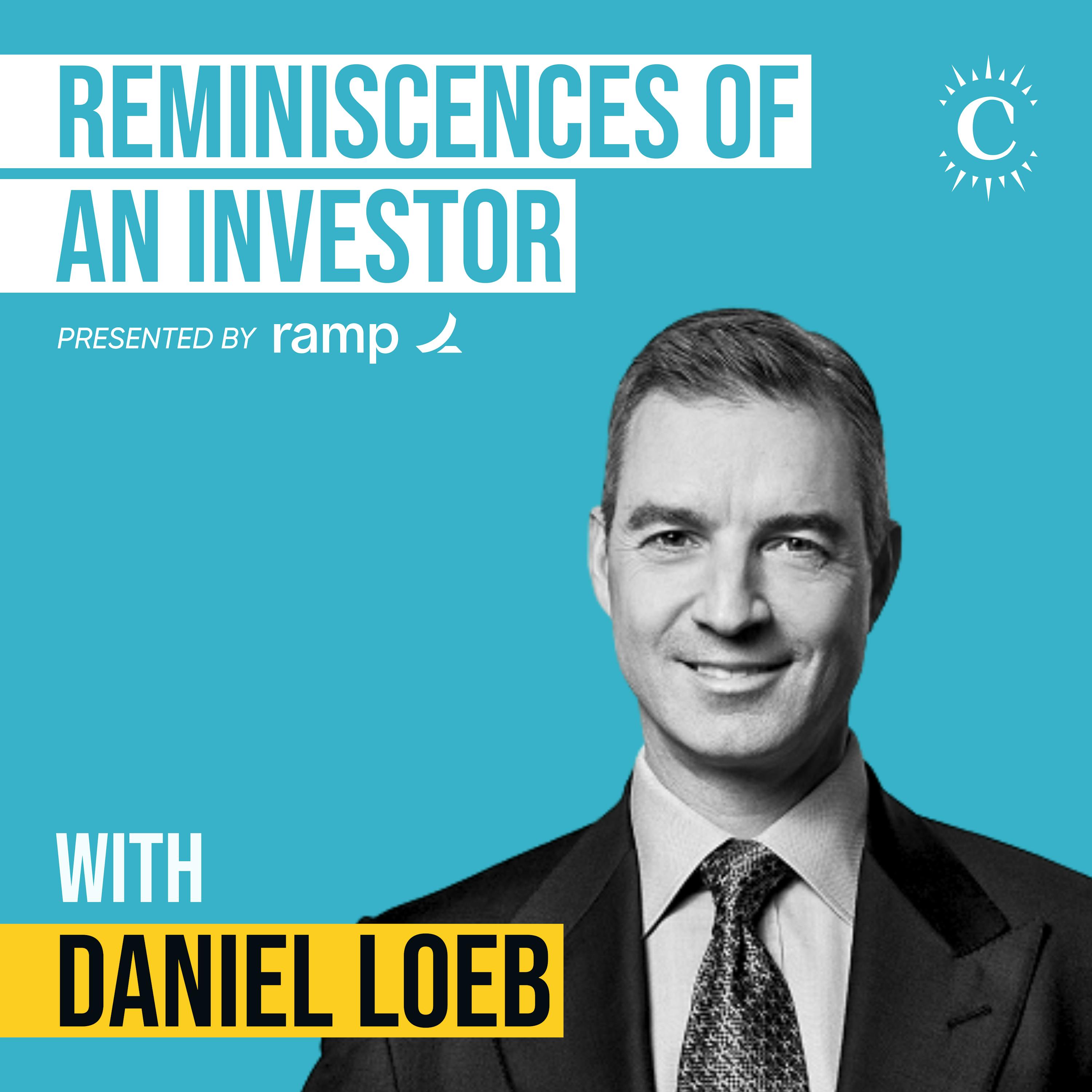
LOEB SAYS THIRD POINT DEPLOYS 60% TO CREDIT AS AI WRITES NEW PLAYBOOK
Colossus | Investing & Business Podcasts
Dan Loeb argues fundamental investors must pivot from legacy deep-value formulas toward high-quality compounders and flexible credit structures as rapidly accelerating AI infrastructure disrupts traditional corporate moats.
## Background
Published on RSS / web by Colossus | Investing & Business Podcasts on May 28, 2026, this episode features host Patrick O'Shaughnessy in conversation with Dan Loeb, founder and CEO of Third Point. The page description outlines Loeb's thirty-year career evolution from credit and event-driven roots to quality and thematic investing, highlighting key topics such as the AI stack, activist campaigns at Sony and Sotheby's, corporate governance, and lessons from FTX.
## TL;DR
Dan Loeb shares critical insights and lessons learned over three decades of building Third Point into a $24 billion multi-asset firm. He details his transition from traditional event-driven strategies and spinoffs to high-quality compounders, while explaining how Third Point currently navigates the AI stack, corporate governance, and its heavy expansion into credit and reinsurance. Loeb reflects on high-profile activist campaigns like Sotheby's and Sony, the power of clear writing in shifting market sentiment, and how mispricings driven by human psychology and quantitative risk models continue to generate fundamental alpha. Finally, he discusses operational frameworks like the Danaher Business System, risk management lessons from FTX, and why personal empathy remains vital to long-term success.
## Atmosphere & style
The episode carries an intellectually rigorous yet relaxed tone, driven by the easy camaraderie between two deeply experienced market practitioners. Loeb speaks with candid clarity and reflective self-awareness, balancing high-stakes Wall Street anecdotes—like breaking a story to the New York Times on a BlackBerry in Tokyo—with thoughtful assessments of his own analytical stumbles. The conversation feels like an insider masterclass, smoothly shifting from sharp strategic frameworks and technical capital allocation to heartfelt reflections on early mentorship and personal kindness.
## Key takeaways
- `00:00` Third Point has grown from a few million dollars in 1995 to over $24 billion in AUM across equities, corporate and structured credit, venture, and insurance.
- `02:01` Dan Loeb filters macro information by focusing on core drivers like oil prices and geopolitical conflict alongside AI infrastructure spending, avoiding minute-to-minute noise.
- `03:21` Third Point structures its tech strategy along the entire AI stack, closely tracking core entities like NVIDIA, Anthropic, and Elon Musk's suite of companies.
- `06:50` Third Point's initial playbook relied on Joel Greenblatt's frameworks for spinoffs and post-reorganization equities, but later shifted to focus heavily on business quality and high ROIC compounders.
- `13:52` Eric Schmidt's 2013 warning at Davos highlighted that technological innovation is an accelerating, logarithmic force that constantly threatens traditional 'quality' moats.
- `20:00` Systematic trading rules and pod-shop risk constraints create forced selling and market anomalies, providing fundamental long-term investors with enduring sources of alpha.
- `26:17` Effective activist investing relies heavily on public writing to create social pressure and hold complacent boards accountable to their fiduciary duty.
- `28:04` Third Point's activist campaign at Sotheby's involved acquiring a 9.9% stake, bringing in new leadership, modernizing operations, and engineering a profitable sale.
- `30:03` Over 60% of Third Point's broader strategy sits in credit, giving the firm flexibility to seek the best risk-adjusted fulcrum security across capital structures.
- `36:10` Unlike the dot-com bubble, leading AI and semiconductor companies currently generate massive GAAP earnings and cash flow to fund their infrastructure CapEx directly.
- `40:33` In Japan, Third Point's campaign at Sony helped drive structural governance reform, encouraging Japanese companies to unwind cross-shareholdings and boost ROIC.
- `43:59` Studying the Danaher Business System (DBS) provided Third Point with a blueprint for evaluating operational excellence and continuous improvement (Kaizen) across portfolio companies.
- `48:48` Third Point built its liability engine by transitioning away from volatile P&C reinsurance float toward predictable annuity liabilities, deploying capital across structured and private credit.
- `51:19` The FTX venture loss underscored the necessity of verifying basic bank balances during due diligence, regardless of cap-table consensus or prestigious co-investors.
- `56:22` Modern investment analysts require deep domain fluency and qualitative field insights rather than just commoditized financial modeling skills.
- `01:00:00` A crucial act of early support and generosity provided Dan Loeb with the foundational seed capital needed to launch Third Point.
## Detailed walkthrough
### `00:00` Introduction and Staying Up to Speed on Information
Patrick O'Shaughnessy opens the episode by introducing Dan Loeb, founder and CEO of Third Point, noting that the firm has grown from a few million dollars at its launch in 1995 to managing over $24 billion across equities, credit, venture, and insurance. O'Shaughnessy highlights Loeb's evolution over three decades—from credit and event-driven investing to quality, thematic technology, and structured credit—as well as his activist history at Sony, Sotheby's, and Yahoo.
Opening their conversation, O'Shaughnessy asks Loeb how he manages the daily "fire hose" of information. Loeb admits he does not rely on a magic AI system to organize everything. Instead, he focuses on filtering news for core economic and position-specific relevance while avoiding minute-to-minute market noise. Rather than getting bogged down in traditional macroeconomic indicators like GDP, unemployment, or CPI, Loeb tracks two dominant macro drivers: oil prices (governed by war and geopolitics) and the broad impact of AI spending and infrastructure.
* Third Point assets under management: $24 billion across equities, credit, venture, and insurance.
* Key macro drivers today: Geopolitics/oil prices and AI infrastructure/spending.
---
`03:21` Navigating the AI Stack and Market Ecosystems
While not natively a technology investor by background, Loeb stresses that tech has become an unavoidable, compounding force across the entire economy. To evaluate this landscape, Third Point maps investments along the "AI stack"—starting with foundational power and energy, moving up to semiconductors and compute infrastructure, and ascending to large language models, software, and applications.
Loeb notes how rapidly sentiment can flip, pointing out that semiconductors were treated like "roadkill" just a few years ago before NVIDIA's transformative March earnings report ignited a sector-wide boom. Beyond tracking hyperscalers and competing hardware ecosystems like NVIDIA, AWS Trainium, and Google TPU, Loeb stays attuned to the industry by closely following three core entities: NVIDIA, Anthropic, and Elon Musk's suite of companies.
* NVIDIA's March 2023 earnings report served as the catalyst that reshaped market perceptions of semiconductors.
* Three core AI entities Loeb watches most closely: NVIDIA, Anthropic, and Elon Musk's companies.
---
`06:50` Dan's Identity as an Investor and the Event-Driven Playbook
Reflecting on his identity as an investor, Loeb explains that Third Point's foundational DNA stems from his early career as a credit investor at Jefferies. He describes Jefferies as a "laboratory" where he studied legendary investors like David Tepper (prior to founding Appaloosa), Eric Mindich at Goldman Sachs, and firms like Angelo Gordon and Farallon. His early equity strategy was strictly structured around event-driven frameworks rather than business quality.
In those years, Loeb relied heavily on Joel Greenblatt's classic book, *You Can Be a Stock Market Genius*, utilizing a framework focused on spinoffs, demutualizations, privatizations, and post-reorganization equities. He explains why spinoffs historically yielded exceptional returns: newly spun-off entities were dumped by institutional investors due to liquidity gaps or sector mandates; management teams intentionally gave conservative guidance during roadshows to secure favorable incentive benchmarks; and operating inefficiencies within the prior parent company left ample room for margin expansion.
* Key influences at Jefferies: David Tepper, Eric Mindich (Goldman Sachs), Angelo Gordon, Farallon.
* Core playbook reference: *You Can Be a Stock Market Genius* by Joel Greenblatt.
* Historical event-driven focus: Spinoffs, demutualizations, privatizations, and post-reorganization equities (1995–2013).
---
`11:24` Evolving the Strategy: Quality and Thematic Investing
Addressing how his strategy evolved after 2013, Loeb notes that traditional deep-value investors suffered over the past decade by stubbornly buying cheap companies with low multiples while ignoring business quality. Third Point adapted by overlaying an event-driven framework onto high-quality, high-return-on-capital compounders and restructuring its team from generalists into industry specialists.
Loeb highlights two books that reshaped his team's framework: William Thorndike's *The Outsiders* (focusing on capital allocation leaders like Danaher and TransDigm) and Lawrence Cunningham's *Quality Investing*. However, he cautions that the recent AI explosion has tested the quality paradigm, as several businesses previously regarded as indestructible quality compounders faced abrupt technological disruption.
* Two influential books on quality investing: *The Outsiders* by William Thorndike and *Quality Investing* by Lawrence Cunningham.
* Key corporate exemplars of capital allocation: Danaher and TransDigm.
---
`13:52` Adapting to Accelerating Technology and "Essentialism"
To illustrate his realization that market dynamics were shifting permanently toward rapid tech disruption, Loeb recalls a dinner in Davos in 2013 where former Google CEO Eric Schmidt issued a warning: investors assuming the recent surge in technological innovation was a temporary anomaly would be caught off guard, as the pace of disruption would only accelerate logarithmically.
Loeb notes that Schmidt's prediction proved true through 2017, 2020, and into the current AI wave. Because human cognition and market frameworks struggle to process exponential information flows, Loeb references Brad Gerstner's emphasis on Greg McKeown's book *Essentialism*. He argues that modern investors must practice essentialism—relentlessly stripping away noise to focus only on the vital factors driving their investments.
* Crucial perspective from Eric Schmidt at Davos (2013): Technological acceleration is permanent and logarithmic, not a temporary spike.
* Framework for information management: *Essentialism* by Greg McKeown.
---
`17:48` Return Opportunities, Market Extremes, and Human Nature
Addressing whether attractive market returns remain possible despite high valuations and massive sector rallies, Loeb cites the famous line from *Reminiscences of a Stock Operator*: "there is nothing new under the sun." He argues that despite advanced AI tools and quantitative models, financial markets are still driven by human psychology—hysterias, panics, and extreme swings in sentiment.
He points to recent market behavior where stellar fundamental results triggered sharp sell-offs due to inflated expectations. For instance, despite strong fundamentals across the semiconductor equipment and memory sectors, stocks like Micron tanked after reporting quarter-over-quarter growth exceeding 80% because expectations were simply priced too high. Loeb draws parallels to Meta's historical earnings pullbacks, emphasizing that mispricings caused by positioning and market psychology remain a primary source of alpha.
* Reference on market cycles: *Reminiscences of a Stock Operator* by Edwin Lefèvre.
* Example of expectation overhang: Micron reporting over 80% growth yet experiencing a stock pull-back due to extreme positioning.
`20:00` Market Irregularities, Creditor Committees, and the Human Element in Governance
Dan Loeb reflects on the mental fortitude required of a fundamental investor to make tough trading decisions when stock prices diverge sharply from underlying fundamentals. While quantitative strategies, CTAs, and pod shops operate under strict risk metrics that force selling on the way down, fundamental investors view price drops through the classic Warren Buffett lens: a chance to celebrate and buy more at a better price. These programmatic risk-management rules create market irregularities and anomalies, offering a enduring source of alpha for long-term investors. Beyond simple market volatility, human involvement remains indispensable in complex corporate restructurings, credit cycles, and bankruptcies. As Loeb points out, it is impossible to imagine an AI algorithm sitting on a creditors' committee, navigating intricate capital structures, or executing high-touch private credit workouts.
```
continuum of public securities to private equity
[ Public / Liquid ] <-----------------------------------------> [ Private Equity ]
│ │
AI-Driven Trading High-Touch Deals
(Quants, CTAs, Pods) (Private Credit, Restructuring)
```
The discussion turns to corporate governance, a domain where Loeb built much of his reputation. His initial interest came directly from his father, a prominent securities lawyer and corporate governance expert who served on the boards of Mattel and Williams-Sonoma. Loeb’s father was well ahead of his time on ethical sourcing and worker treatment, regularly visiting overseas supplier factories. In describing his father, Loeb warmly recalls a funny, irreverent, and smart self-made man—the only child of European immigrants (a mother from Poland and a father from Romania). Notably, his paternal grandmother's younger sister was the co-founder of Mattel Toys.
When evaluating what makes governance good or bad, Loeb champions the core beauty of American capitalism: board members are fiduciaries answerable to shareholders, tasked with maintaining management accountability and driving long-term value. Governance breaks down when boards suffer from a lack of talent or intellectual diversity, lose sight of their fiduciary duty, or get distracted by agendas disconnected from value creation. Bad governance manifests most clearly when board members let personal loyalty to an underperforming CEO overshadow their obligation to shareholders.
- **Dad's background:** Securities lawyer, pioneer in corporate responsibility; served on the boards of Mattel and Williams-Sonoma.
- **Family connection:** His grandmother’s younger sister co-founded Mattel Toys.
- **Core issue with bad governance:** Board members placing personal relationships with a failing CEO over shareholder duties.
- **Quote on board duties:** "There's something beautiful about the American capitalist system... where the board is responsible and answerable to the shareholders."
---
`26:17` The Power of Writing and the Sotheby's Activist Campaign
For Loeb, writing has always been a strategic weapon rather than just a medium for updates. Great writing is rooted in clear thinking and structured communication designed to achieve a specific outcome. In activist investing, where levers include financial bids, proxy contests, and litigation, social pressure generated through sharp writing and public relations is often the most effective tool for shaking up complacent boards. Host Patrick O'Shaughnessy notes a recurring theme in Loeb's activist campaigns: targeting high-status institutions or individuals who enjoy the social prestige of their positions without delivering performance to match.
Loeb agrees, pointing out that board seats are too often treated as status symbols or income sources rather than serious fiduciary roles. A primary objective of Third Point's activism is to disintermediate that dynamic—either by stripping away the status or raising the social cost of poor stewardship. A textbook case was Sotheby's, an iconic, centuries-old business that had historically operated more like a private high-society club than a public company accountable to shareholders.
```
[ Financial Levers ] ──► Buyouts & Equity Bids
[ Legal Levers ] ──► Proxy Contests & Litigation
[ Social Pressure ] ──► Public Letters & Media Coverage
```
Sotheby's had never fully recovered from a high-profile antitrust scandal that resulted in criminal charges, and its operations remained profoundly inefficient. The company had been around since the 1700s, and many of its business practices had barely evolved since. The CEO at the time had background in the rug division and lacked both deep art expertise and strong relationships with major collectors. Third Point accumulated a 9.9% stake and pressed the board for basic modernized operational practices. After giving the existing management a year to prove themselves, the board realized a change was needed. They brought in Tad Smith from Madison Square Garden (MSG), who overhauled operations, modernized technology, and ultimately orchestrated a highly profitable sale of the business.
- **Sotheby's stake:** Third Point acquired a 9.9% position.
- **Key operational changes:** Replacing the former CEO with Tad Smith (ex-MSG), improving technology, and fixing basic margin inefficiencies.
- **Primary activist levers:** Financial, legal, and social/public pressure through strategic writing.
- **Quote on writing as a tool:** "Great writing is really about clear thinking and organizing your thoughts, communicating them to people in a clear way to get a desired outcome."
---
`30:04` Strategy Evolution: Third Point's Shift to 60% Credit and Flexible Capital
Addressing the state of activism today, Loeb notes that hunting for underperforming sub-$2 billion market cap companies driven by "B-plus management" often turns into a negative selection process. Identifying obvious surface-level operational flaws often signals that there are ten times more hidden problems underneath. Instead, Third Point increasingly prefers investing in great companies led by exceptional management teams and serving as supportive shareholders.
Patrick highlights Third Point's unique organizational structure, noting that around 60% of the broader firm's strategy is in credit—an asset mix that wouldn't fit into a standard Wall Street pitch deck. Loeb clarifies the firm's structure: starting from a $3 million hedge fund in 1995, Third Point now oversees multiple distinct pools of capital. The flagship hedge fund manages approximately $9 billion, with a flexible portfolio that typically sits at 110% long and 30–40% short equities, alongside roughly 30% ($3 billion) in structured and corporate credit.
The unifying thread across all these strategies—spanning venture capital, risk arbitrage, structured credit, and public equities—is a fundamental view of enterprise value. Loeb looks for the optimal "fulcrum security" in a company's capital structure that offers the best risk-adjusted return. He illustrates this with Credit Suisse’s takeover by UBS: investors could choose between preferred shares, holdco paper, or opco paper. In that case, preferreds were completely wiped out, while holdco debt provided the highest upside.
- **Hedge fund credit breakdown:** ~30% in corporate and structured credit.
- **Positioning shift:** Heading into recent geopolitical conflicts, Third Point dialed back equity risk, temporarily holding more credit than equities for the first time since 2009.
- **Twitter / X AI credit trade:** Third Point bought Morgan Stanley’s underwater Twitter debt at 96–97 cents on the dollar yielding ~12%, backed by their firm-wide understanding of the business value.
- **Quote on fulcrum securities:** "Having a comprehensive view of these companies gives you a really great vantage point to make alpha generating investment decisions."
---
`36:10` The AI Stack, Valuations, and Opportunities Beyond the US
As portfolio manager of the flagship hedge fund, Loeb addresses the broader market setup, specifically the heavy concentration in mega-cap technology. Unlike traditional value investors who view current AI valuations as a repeating dot-com bubble, Loeb remains firmly in the optimistic camp. He notes that valuation multiples for dominant semi-cap and hyperscaler leaders remain highly attractive when measured against their actual earnings growth rates—such as NVIDIA trading at 15 times 2027 or 12 times 2028 earnings expectations.
Unlike the dot-com era, today's tech giants generate massive, real cash flows and fund their CapEx directly off their balance sheets. Real-world enterprise adoption, exemplified by revenue growth at companies like Anthropic and the deployment of next-generation models, indicates that the AI buildout is only in its earliest stages.
```
Dot-Com Bubble (1999–2000) Current AI Cycle
┌──────────────────────────────────┐ ┌──────────────────────────────────┐
│ • Extreme valuation multiples │ │ • Reasonable forward P/E multiples│
│ • Funded by debt/speculation │ VS │ • Funded via cash off balance │
│ • Minimal real cash flows │ │ sheets │
│ • Unproven business models │ │ • Rapid real-world enterprise │
└──────────────────────────────────┘ │ revenue growth │
└──────────────────────────────────┘
```
Looking outside the US market, Loeb highlights that Third Point is flexible enough to invest anywhere in the world. He singles out Israel as a high-conviction niche market where one of Third Point's top holdings has performed exceptionally well despite ongoing regional conflict. The conversation then turns toward Asia, with South Korea seeing positive shifts and Japan serving as the backdrop for one of Third Point's landmark international activist campaigns: Sony.
- **NVIDIA valuation:** Highlighted as trading at 15x 2027E and 12x 2028E numbers.
- **Dot-com contrast:** Strong GAAP earnings and massive balance-sheet cash funding current CapEx spending.
- **Niche international markets:** Israel praised for producing top-performing portfolio holdings despite geopolitical tensions.
- **Quote on tech valuations:** "Unless you are really draconian or negative, and you think that somehow the AI world is going to roll over... I think it's the most attractive sector right now."
<ElicitationsGroup message="Explore related aspects of Dan Loeb's strategy and investing career:">
<Elicitation label="Examine the full Sony activism story in Japan" query="Detail the full Sony activism story from Dan Loeb's perspective, including his engagement with Japanese corporate culture and management."/>
<Elicitation label="Analyze Third Point's risk management during market crises" query="How does Dan Loeb manage risk and portfolio exposure at Third Point during periods of extreme market volatility or geopolitical conflict?"/>
</ElicitationsGroup>
`40:00` International Markets & The Sony Activism Story
Dan Loeb shares his bullish outlook on Asian markets like Taiwan and Japan as prime hunting grounds for great companies, contrasting them with European markets. Europe remains a tough investment environment due to a restrictive regulatory climate and a fundamentally different attitude toward business and capitalism. While Third Point holds positions in select European giants like Rolls-Royce and ASML, Loeb notes that local-economy-dependent European businesses face significant headwinds.
Loeb then recounts the famous Sony investment story, where Third Point eventually accumulated a 7% stake over two separate activist campaigns. During the first run, Sony was operating as a bloated conglomerate spanning electronics, semiconductors, entertainment, and life insurance. Third Point presented a massive deck to Sony’s leadership—headed by Kaz Harai—recommending the separation of these disparate units, particularly carving out the insurance arm. To force accountability, Loeb informed management at the end of their meeting that he had already shared the thesis with Andrew Ross Sorkin at *The New York Times*.
> "When we told them that there was going to be a story that came out... he goes, 'You told the New York Times?' I said, 'Yeah, but just the New York Times, nobody else.' He says, 'Okay, just the New York Times.' It was wild."
While touring Sony's Innovation Center immediately after, the team watched on their BlackBerrys as Sorkin’s embargoed story broke, igniting worldwide attention. Though Sony initially pushed back on every proposal, they gradually executed almost every recommendation over the next five years—breaking out semiconductors and planning the spin-off of their financial services unit.
Beyond Sony, Loeb's engagement in Japan helped catalyze broader economic reforms. During early trips, he met with Japanese leadership, including the Prime Minister and his right-hand man, Yoshihide Suga. Loeb promised to write a paper demonstrating how corporate governance and return on invested capital (ROIC) could serve as a vital pillar alongside Japan's "Three Arrows" economic policy (fiscal policy, monetary easing, and structural reform). Partnering with policy experts Larry Lindsey and Niall Ferguson, Loeb co-authored an influential paper published through AEI and featured as a *Wall Street Journal* editorial. The Japanese government ultimately adopted these ideas, encouraging corporate restructuring, dismantling cross-shareholdings, and penalizing companies trading below book value.
- **Key Holdings Mentioned:** Rolls-Royce, ASML, Sony.
- **Sony Ownership:** Third Point owned up to 7% of Sony at its peak; Loeb notes that held long-term, several of his historical positions would be worth in the mid-to-upper single-digit billions.
- **Governance Reform Impact:** Japanese regulators began pressuring entrenched management teams by cracking down on cross-shareholdings and penalizing stocks trading at discounts to book value.
---
`43:59` Danaher and the Masterclass in Operational Excellence
Reflecting on the most instructive investments of his career, Loeb singles out Danaher as a masterclass in corporate operating systems. While reading seminal books like *The Outsiders* or Joel Greenblatt's guides provides theoretical knowledge, Loeb stresses that true investing lessons require "getting hit in the face" or experiencing business execution firsthand.
Loeb and his partner Muneeb visited Danaher directly and persuaded management to condense their legendary five-day "Danaher Business System" (DBS) training into an intensive one-day session. The experience revealed how a company could systematically improve its overall quality over time—relentlessly divesting lower-margin industrial units to acquire high-return, high-margin healthcare and life-science assets.
The core of DBS lies in a culture of continuous improvement (Kaizen) paired with extreme operational accountability. Rather than shaming underperforming employees, Danaher’s culture celebrated the discovery of operational flaws because every problem was viewed as a structured, fixable opportunity to extract efficiency and working capital improvements.
> "When they found someone that was underperforming, it was celebrated... because, look, look what all these things you're doing wrong, we can fix those. And they did. They do that over and over and over again."
Third Point enjoyed a lucrative four-year run in Danaher equity before exiting when COVID-19 disrupted the narrative. Pandemic-driven demand surges caused order dislocations and inventory bullwhips that temporarily turned tailwinds into headwinds. Loeb notes that watching the "Danaher diaspora"—including executives like Larry Culp (who went on to run General Electric) and leadership at Ingersoll Rand—proved equally instructive for identifying top-tier management talent across corporate America. Third Point recently re-entered Danaher in a smaller position following market sell-offs.
- **DBS Framework:** Built around continuous improvement (Kaizen), operational metrics, and converting identified underperformance into structured fixes.
- **Portfolio Shift:** Danaher transformed itself from a general industrial compounder into a high-margin healthcare and diagnostics powerhouse.
- **Executive Alumni:** Notable DBS-trained leaders include Larry Culp (former Danaher CEO, later GE CEO) and top executives at Ingersoll Rand.
---
`48:48` Building Third Point’s Insurance & Liability Engine
Shifting from asset allocation to the liability side of the balance sheet, Loeb details how Third Point built its proprietary insurance float—a strategy popularized by Warren Buffett's Berkshire Hathaway and Jim Simons, and more recently scaled by Apollo via Athene. In 2010, Third Point launched a de novo Bermuda-based reinsurance company backed by Loeb alongside private equity firms Kelso and Pine Brook.
The original strategy operated as a barbell: write property and casualty (P&C) reinsurance while investing the resulting float into Third Point's flagship hedge fund and U.S. Treasuries to enjoy tax deferral and capital leverage. However, underwriting conditions in the P&C reinsurance market deteriorated sharply, forcing hedge fund returns to constantly offset insurance underwriting losses.
Realizing they had the right thesis but the wrong insurance vehicle, Third Point pivoted roughly three years ago from volatile P&C lines to predictable, plain-vanilla annuity liabilities. Because annuity regulations prohibit direct hedge fund investments, Third Point restructured its UK closed-end fund, Third Point Offshore Investors, reincorporating it from Guernsey to the Cayman Islands to own the underlying reinsurance company.
Under this modern structure, the insurance company issues primary annuities and reinsures annuity blocks. Third Point manages the asset side across private credit, structured credit, whole loan mortgages, direct real estate lending, and corporate investment-grade debt. Crucially, the equity of the insurance vehicle is deployed into high-yielding junior tranches of structured financings and select growth equity investments.
- **2010 Insurance Launch:** Bermuda-based de novo reinsurance vehicle co-backed by Dan Loeb, Kelso & Company, and Pine Brook.
- **Structural Pivot:** Shifted away from volatile P&C reinsurance toward stable annuity float.
- **Corporate Restructuring:** Re-domiciled Third Point Offshore Investors from Guernsey to Cayman to house the reinsurance engine.
- **Asset Allocation:** Insurance float is deployed across private credit, structured credit, residential mortgages, corporate IG debt, real estate lending, and growth equity.
---
`51:19` FTX, AI Disruptions, and Leading Through Uncertainty
When asked about the hardest investment lessons of his 30-year career, Loeb highlights Third Point’s venture investment in Sam Bankman-Fried’s FTX. On paper, the thesis appeared airtight: explosive user growth verifiable on-chain, alongside blue-chip co-investors on the cap table. While the fraud ultimately inflicted painful losses, Loeb notes the irony that Bankman-Fried possessed a phenomenal nose for venture value—backing winning category leaders like Anthropic, Cursor, and Solana. The experience forced Third Point to revamp its diligence protocols to verify foundational mechanics like direct bank account balances, even when deals are backed by top-tier venture peers.
On the public markets side, Loeb reflects on recent short-side mistakes involving artificial intelligence. While Third Point successfully executed shorts against companies vulnerable to AI disruption, they stumbled by taking long positions in controversial information-services companies under the assumption that their proprietary data troves would shield them from LLM disintermediation.
To navigate this landscape, Loeb drives his team to become power users of AI platforms like Claude. Third Point blends external expertise—hiring native computer scientists and systems integrators—with a firm-wide culture of self-improvement. Analysts run autonomous agents overnight, consuming massive token volumes for research, while Loeb utilizes models for daily queries and analytical synthesis.
> "Cloud really enables you to be an individual self-improver. It makes you very autonomous. It'll give you back whatever you put into it."
- **FTX Diligence Lessons:** Highlighted the need for elementary proof-of-cash auditing and bank balance checks, regardless of cap-table consensus.
- **AI Short/Long Distortions:** Proved that traditional "data moats" in legacy information services can be weaker than anticipated against generative AI tools.
- **Internal AI Deployment:** Third Point team members run agentic workflows overnight, utilizing native computer scientists to train staff on prompt engineering and token-heavy workflows.
---
`54:29` The Distinctive Edge: Credit Agility & What Makes a Great Analyst Today
Loeb outlines what sets Third Point apart from traditional single-strategy equity or credit shops. Rather than fearing an AI-driven economic shift, Loeb remains optimistic about overall job creation and net economic gains. Third Point’s key structural edge is its ability to seamlessly shift capital into stressed and distressed credit during market disruptions.
While pure equity managers lack the infrastructure to navigate bond desks, Loeb’s background trading credit at Jefferies provided Third Point with the muscle memory required for complex debt markets. Expanding into the $1.5 trillion high-yield market, the $1.5 trillion broadly syndicated loan market, and the $6 trillion structured credit market requires long-standing desk relationships rather than electronic "tourism." During market panics—such as the early 2020 COVID sell-off—Third Point aggressively allocated into investment-grade credit rather than blindly chasing equities.
Loeb also contrasts the modern elite analyst with the "ancient dinosaurs" of the 1990s. In his early career at Jefferies, Loeb distinguished himself by spending an entire weekend deciphering a dense, three-inch-thick bankruptcy disclosure statement for Drexel Burnham Lambert, uncovering mispriced asset pools that yielded one of the most profitable claims investments in bankruptcy history.
Today, financial modeling skills are commoditized. The modern elite analyst—citing tech investor Gavin Baker as a model—must possess deep domain fluency in technology nuances or consumer realities. Loeb illustrates this with a Third Point investment in Casey's General Stores: while appearing to be a mundane convenience store chain, a field-analyst visited Texas, ate the product, and realized Casey's was actually a high-margin pizza chain disguised as a gas station.
Looking toward the next decade, Loeb expresses immense excitement for cross-disciplinary learning—from tracking tech developments and studying quantum computing with leaders like Jeremy O'Brien (PsiQuantum) and Elad Raz (NextSilicon), to building relationships with industrial legends like Mitchell Rales (Danaher co-founder). Geopolitically, Loeb notes the dramatic economic vibrancy of the Middle East, highlighting nations like the UAE, Saudi Arabia, Bahrain, Morocco, and Azerbaijan as dynamic tech adopters surpassing traditional NATO economies.
Closing on a reflective note, Loeb emphasizes that beyond analytical rigor, kindness and empathy are the most critical traits for building enduring relationships and becoming a complete investor.
- **Market Sizing:** Active across High Yield ($1.5T), Broadly Syndicated Loans ($1.5T), and Structured Credit ($6T).
- **Historical Drexel Burnham Bankruptcy:** Loeb spent a weekend reading the 3+ inch disclosure statement, identifying under-reported asset values and over-stated claims to unlock massive alpha.
- **Casey's General Stores Thesis:** Recognized that the company's valuation upside was driven by its position as one of the largest pizza chains in the U.S., rather than just a fuel retailer.
- **Featured Innovators:** Mentions collaborations and dialogues with Jeremy O'Brien (PsiQuantum), Elad Raz (NextSilicon), and Mitchell Rales (Danaher).
`01:00:00` Kindness, Early Believers, and Closing Thoughts
Reflecting on the profound impact of kindness, Dan Loeb emphasizes the importance of extending warmth and support to others without expecting anything in return. He notes that while some acts of kindness surprisingly come back to benefit you, others simply lead to a genuine connection with someone who appreciates your character. Illustrating this principle, Dan shares the story of his friend Carter. During a six-to-nine-month period when Dan was between jobs before starting at Jefferies, Carter let him sleep on his couch. Later, once Dan secured his role at Jefferies, he recommended several distressed debt investment opportunities to Carter. Carter trusted him with a few hundred thousand dollars, which quickly grew to over a million dollars. Carter then rolled that capital into Third Point, providing the crucial seed capital that allowed Dan to launch his fund.
Reflecting on the value of early supporters, Dan references a line shared by Gavin—who was quoting Oculus founder Palmer Luckey—stating, "the one thing money doesn't buy you is friends that believed in you when you had nothing." Expressing deep gratitude for those early relationships, Dan wraps up his conversation with host Patrick O'Shaughnessy, who closes the episode with a tribute to Carter and final remarks on the resources available through the podcast network.
* **Key Acts of Kindness:** Carter provided Dan a place to stay during a career transition and subsequently trusted him with seed capital that grew into the foundational investment for Third Point.
* **Memorable Quote:** "The one thing money doesn't buy you is friends that believed in you when you had nothing."
## Notable quotes
> `22:10` There's something beautiful about the American capitalist system... where the board is responsible and answerable to the shareholders. — Dan Loeb
> `26:17` Great writing is really about clear thinking and organizing your thoughts, communicating them to people in a clear way to get a desired outcome. — Dan Loeb
> `30:04` Having a comprehensive view of these companies gives you a really great vantage point to make alpha generating investment decisions. — Dan Loeb
> `36:09` Unless you are really draconian or negative, and you think that somehow the AI world is going to roll over... I think it's the most attractive sector right now. — Dan Loeb
> `40:00` When we told them that there was going to be a story that came out... he goes, 'You told the New York Times?' I said, 'Yeah, but just the New York Times, nobody else.' He says, 'Okay, just the New York Times.' It was wild. — Dan Loeb
> `45:26` When they found someone that was underperforming, it was celebrated... because, look, look what all these things you're doing wrong, we can fix those. And they did. They do that over and over and over again. — Dan Loeb
> `53:07` Cloud really enables you to be an individual self-improver. It makes you very autonomous. It'll give you back whatever you put into it. — Dan Loeb
> `01:00:00` The one thing money doesn't buy you is friends that believed in you when you had nothing. — Dan Loeb
## Mentioned
Dan Loeb, Third Point, Patrick O'Shaughnessy, NVIDIA, AWS Trainium, Google TPU, Anthropic, Elon Musk, Jefferies, David Tepper, Appaloosa, Eric Mindich, Goldman Sachs, Angelo Gordon, Farallon, Joel Greenblatt, You Can Be a Stock Market Genius, William Thorndike, The Outsiders, Danaher, TransDigm, Lawrence Cunningham, Quality Investing, Eric Schmidt, Brad Gerstner, Greg McKeown, Essentialism, Edwin Lefèvre, Reminiscences of a Stock Operator, Micron, Meta, Warren Buffett, Mattel, Williams-Sonoma, Sotheby's, Yahoo, Sony, Tad Smith, Madison Square Garden, Credit Suisse, UBS, Twitter, Morgan Stanley, Rolls-Royce, ASML, Kaz Harai, Andrew Ross Sorkin, The New York Times, Yoshihide Suga, Larry Lindsey, Niall Ferguson, Wall Street Journal, Larry Culp, General Electric, Ingersoll Rand, Kelso, Pine Brook, Third Point Offshore Investors, Sam Bankman-Fried, FTX, Cursor, Solana, Claude, Drexel Burnham Lambert, Gavin Baker, Casey's General Stores, Jeremy O'Brien, PsiQuantum, Elad Raz, NextSilicon, Mitchell Rales, Palmer Luckey
勒布:AI重塑投资范式 Third Point将60%资产配置于信贷
丹·勒布指出,随着飞速发展的AI基础设施不断打破传统的企业护城河,基本面投资者必须从传统的深度价值策略转向高质量复合增长型企业与灵活的信贷结构。
丹·勒布分享了在将Third Point打造成管理规模达240亿美元的多资产公司的三十年历程中,所积累的关键洞见与教训。他详细阐述了自己从传统的事件驱动与分拆策略向高质量复合增长型企业的转型,并解释了Third Point当前如何布局AI技术栈、推进公司治理,以及大力拓展信贷与再保险业务。勒布回顾了苏富比(Sotheby's)和索尼(Sony)等高调的维权投资战役、条理分明的文字在扭转市场情绪方面的力量,以及由人类心理和量化风险模型导致的错误定价如何持续创造基本面阿尔法。最后,他还探讨了丹纳赫商业系统(Danaher Business System)等运营框架、FTX带来的风险管理启示,以及为何个人同理心对取得长期成功依然至关重要。
Third Point 的管理规模已从 1995 年创立时的数百万美元发展至超 240 亿美元,Dan Loeb 在宏观层面主要聚焦于地缘政治/油价以及 AI 基础设施支出两大核心驱动因素,以过滤短期市场噪音。 (0:00)
投资框架从早期的分拆、破产重组等事件驱动策略,演变为结合高 ROIC 优质复利企业的选股模型,目前信贷类资产已占到机构整体配置的约 60%。 (30:04)
在激进投资方面,Loeb 强调通过公开信施加舆论压力以打破董事会惰性,代表案例包括重组并最终出售苏富比(Sotheby's),以及推动索尼(Sony)业务分拆并助力日本企业治理改革。 (26:17)
总结 FTX 暴雷教训后 Third Point 强化了底层银行账户审计等尽调标准;同时团队全流程拥抱 AI 智能体投研,并坚信当前由真实高额现金流驱动的 AI 巨头估值与互联网泡沫截然不同。 (51:19)
Reading summary
Third Point founder Dan Loeb argues that enduring investment success requires pairing fundamental capital-allocation flexibility across equities and credit with continuous adaptation away from static deep-value frameworks toward high-quality, tech-enabled compounders. While algorithmic systems alter short-term market dynamics, Loeb contends that durable alpha still stems from exploiting human psychology, governance friction, and structural mispricings across corporate capital structures.
Evolving from Event-Driven Value to Quality Compounders (6:50)
Loeb traces Third Point’s foundational strategy to his credit background at Jefferies and Joel Greenblatt’s event-driven framework, which targeted spinoffs, demutualizations, and post-reorganization equities. These situations reliably generated outsized returns because structural institutional selling, conservative initial guidance, and parent-company inefficiencies created mispriced equities. However, after 2013, as traditional deep-value strategies foundered by acquiring cheap, low-multiple businesses without regard to business durability, Third Point restructured its analyst team into sector specialists and shifted toward high-return-on-capital compounders, informed by William Thorndike’s *The Outsiders* and Lawrence Cunningham’s *Quality Investing*.
This framework was further reshaped by Eric Schmidt’s 2013 warning at Davos that technological disruption would accelerate logarithmically rather than linearly. Loeb stresses that modern investors must practice "essentialism" to filter noise from exponential information flows, recognizing that even perceived fortress businesses can suffer sudden disruption. Direct study of corporate operating systems—such as the Danaher Business System (DBS), with its Kaizen continuous-improvement discipline and active reallocation from industrial lines into high-margin healthcare—became Loeb's model for assessing corporate quality and execution.
Activism, Fiduciary Responsibility, and Strategic Communication (26:17)
Loeb roots his activist philosophy in the principle that corporate boards are fiduciaries answerable to shareholders, rather than social clubs or shields for underperforming executives. In campaigns where governance breaks down, Loeb utilizes incisive public writing as an activist lever alongside legal actions and proxy contests. By increasing public scrutiny and raising the social cost of poor stewardship, targeted communication forces complacent boards to act. In the case of Sotheby’s, this pressure resulted in replacing incumbent leadership with outside executive Tad Smith, addressing operational inefficiencies, and eventually facilitating a profitable sale.
This approach also extended to international markets, notably Third Point's campaign at Sony. Loeb pushed management to dismantle conglomerate discounts by carving out insurance and semiconductor divisions, publicly orchestrating press disclosures to compel board engagement. Beyond individual corporate changes, Loeb co-authored an economic policy paper alongside Larry Lindsey and Niall Ferguson urging Japanese policymakers to adopt return on invested capital (ROIC) targets and corporate governance reforms, which contributed to regulatory initiatives penalizing cross-shareholdings and sub-book-value trading.
Capital Structure Agility and the Insurance Engine (30:04)
Unlike pure-play equity funds, Third Point manages approximately $24 billion across multi-asset strategies, with roughly 60% of broader firm assets allocated to credit across high-yield debt, syndicated loans, and structured credit. Loeb emphasizes analyzing enterprise value to identify the optimal "fulcrum security" in a company’s capital structure. For example, during the UBS takeover of Credit Suisse, senior holdco paper offered significant upside while preferred equities were wiped out; similarly, the firm acquired underwater Twitter debt yielding roughly 12% at 96–97 cents on the dollar based on core enterprise valuation.
To institutionalize permanent capital, Third Point replicated Warren Buffett's float model. After early difficulties with property and casualty reinsurance—where underwriting losses dragged on investment returns—the firm pivoted to stable, predictable annuity liabilities. Domiciled in the Cayman Islands, this platform deploys annuity float across private credit, residential mortgages, corporate investment-grade paper, and junior tranches of structured debt, insulating the firm from public equity redemption cycles.
Navigating the AI Cycle and Modern Diligence Realities (36:10)
Loeb rejects comparisons between current AI investments and the dot-com bubble, contending that today's market leaders generate robust GAAP earnings and fund aggressive infrastructure CapEx directly from cash flow rather than speculative debt. He points to forward valuation multiples among semiconductor and hyperscaler leaders—such as NVIDIA trading around 15 times 2027 and 12 times 2028 earnings expectations—as rational relative to underlying earnings growth. Third Point tracks the full AI ecosystem, spanning foundational energy, semiconductors, models, and application software.
Concurrently, technological shifts and market errors have forced strict diligence adaptations. Painful venture losses in FTX highlighted the hazard of relying on cap-table consensus and reinforced the necessity of verifying core bank balances. On the public side, misjudging the defensibility of legacy data moats against generative models showed that historical competitive moats can dissolve quickly. Loeb notes that financial modeling has become commoditized; modern edge demands deep industry-specific domain fluency—such as recognizing Casey's General Stores as a high-margin food operation rather than a fuel station—combined with active internal adoption of agentic AI research workflows.
Loeb concludes that despite the rise of quantitative models and automated algorithms, markets remain inherently subject to recurring human panics and sentiment extremes. Generating consistent alpha requires the flexibility to shift between equity and distressed credit across market cycles, supported by the humility to adapt when foundational paradigms shift.
精炼阅读摘要
Third Point 创始人 Dan Loeb 回顾其三十年的投资历程,指出通过跨越股票与信贷全资本结构寻找支点资产、将事件驱动机制融入优质复利企业,以及善用激进治理与技术前沿认知,是获取超额回报的核心动力。
从特殊事件套利转向高质复利框架 (6:50)
Third Point 创立初期的策略扎根于 Joel Greenblatt 的《股市天才》方法论,专注于分拆上市、去共同化、私有化和重组后股票等事件驱动机会。分拆公司之所以能产生卓越回报,是因为机构投资者受流动性或行业配置限制被迫抛售,管理层在路演中有意给出保守业绩指引以压低期权基准,且剥离出的业务往往有巨大的利润率改善空间。然而,传统深度价值投资在近十年中因执着于低估值而忽视商业品质而蒙受损失。
2013 年后,Third Point 引入《局外人》和《质量投资》的理念,将事件驱动框架覆盖至 Danaher 和 TransDigm 等具备卓越资本配置能力的高资本回报率企业,并将投研团队转变为行业专家建制。Loeb 强调,理论知识必须通过一线商业实践印证;例如其团队亲赴 Danaher 参与业务系统(DBS)培训,认识到其以持续改善(Kaizen)为核心的文化是将运营失误视为结构性优化机会,进而系统性地剥离低利润资产、转型为高利润医疗与诊断平台。
敏捷资本结构:信贷护城河与保险浮存金 (30:04)
区别于纯股票管理机构,Third Point 依托早期在 Jefferies 的不良债务交易经验,将全资本结构视角作为核心护城河。在当前管理的逾 240 亿美元资产中,信贷业务占比达 60%,其旗舰对冲基金通常维持约 30%(约 30 亿美元)的结构化与企业信贷配置,并拥有 40 亿美元的担保贷款凭证(CLO)平台。在面临地缘冲突等尾部风险时,该基金曾一度将信贷持仓提升至超过股票水平;在投资 Twitter / X 的交易中,团队以面值 96 至 97 美分的价格买入摩根士丹利持有的折价债务,获取约 12% 的收益率。
在负债端管理上,Loeb 借鉴巴菲特与 Apollo 的模式构建保险浮存金。针对 2010 年成立的百慕大再保险公司因财产及意外险(P&C)承保波动而吞噬投资回报的问题,Third Point 大约三年前完成了关键重组:将离岸基金迁册至开曼群岛,并全面转型为负债可预测的年金业务。年金资产端被系统性投向私募信贷、结构化信贷、住宅按揭全额贷款与投资级企业债,而保险实体的股权则用于配置高收益次级档结构化融资及成长型股权。
激进主义杠杆与公司治理的重构机制 (26:17)
Loeb 将战略写作视为激进投资的核心武器,强调清晰严密的表达能通过公关与媒体对董事会施加不可忽视的社会压力。激进介入往往针对那些将董事席位当作身份象征、个人利益凌驾于受托责任之上的机构。在苏富比(Sotheby's)案例中,Third Point 建立 9.9% 股权仓位,指出该机构自 18 世纪以来的落后运营模式和管理层缺乏艺术领域专长的问题,最终推动董事会聘请 Tad Smith 进行业务与技术革新,并实现高额溢价出售。
在国际市场,Third Point 曾累计持有索尼(Sony)达 7% 的股份。Loeb 在与索尼管理层会面时出示了详尽拆分方案,并通过《纽约时报》公开报道施加问责压力,推动索尼在随后的五年中逐步落实分拆半导体与金融业务的建议。该实践亦促成了 Loeb 与政策学者合作,向日本政界提出将公司治理与投入资本回报率(ROIC)纳入“三支箭”改革,间接推动了日本监管层打击交叉持股并对股价低于净资产的企业施压。
AI 技术浪潮的估值分歧与投研工具进化 (36:10)
针对大型科技股估值偏高的争议,Loeb 反驳了当前环境重演互联网泡沫的观点。他指出,以英伟达为代表的半导体及超大规模云服务商具备巨额的公认会计准则(GAAP)净利润与强劲自由现金流,其资本开支由资产负债表自有现金全额支持,对应 2027 年与 2028 年预期盈利的市盈率仅为 15 倍和 12 倍。但与此同时,技术加速度也打破了部分传统优质企业的护城河,Third Point 在部分信息服务公司的做多仓位上低估了生成式 AI 绕过传统数据壁垒的颠覆力。
在组织内部,投研范式已从单纯的财务建模转向深度领域认知与自主工作流。Third Point 配备了本土计算机科学家协助员工部署提示工程与自主代理,分析师在夜间通过大算力消耗运行自主 Agent 梳理产业链。Loeb 强调,现代优秀分析师必须具备深入一线商业细节的能力——正如其团队通过实地调研 Casey's General Stores 的热食业务,洞察出其实质是一家伪装成加油站的高毛利披萨连锁企业。
市场非理性、尽职调查痛点与商业底色 (20:00)
尽管量化模型、CTA 与 Pod Shop 广泛应用程序化风控规则,并在资产下行时被动平仓引发市场扭曲,Loeb 认为市场本质仍由人类情绪主导。例如美光科技(Micron)在季度环比增长超 80% 的情况下因市场预期过高而遭遇抛售,这种非理性反差依然是基本面投资者的 Alpha 来源。此外,在复杂的破产清算和高触点私人信贷重组中,债权人委员会的协商仍是算法无法替代的人力博弈。
在风险管控的反思中,Loeb 提及 FTX 风险投资事件带来的教训:即便面对链上数据透明且有顶级风投背书的明星企业,也必须在尽职调查中独立审计最基础的银行真实存款。在回溯三十年历程时,Loeb 表达了对早期人际支持的敬畏,回顾了在失业期为自己提供居所、并在日后提供种子资金协助发起 Third Point 的友人 Carter,指出在严密分析之外,真诚与同理心是构建长期伙伴关系的终极基石。
Dan Loeb 的投资演进表明,单一维度的价值评估难以应对指数级演进的技术环境与结构化波动的金融市场。如何在保持跨资本结构套利敏锐度的同时,防范 AI 对固有商业壁垒的侵蚀并夯实底层流动性审计,仍是长期复合回报必须直面的考验。
Detailed notes — zh
## Background
本期播客由 Colossus 旗下的商业与投资播客《Invest Like the Best》发布于 2026 年 5 月 28 日,由主持人 Patrick O'Shaughnessy 对话 Third Point 创始人兼首席执行官 Dan Loeb。节目概述重点回顾了 Dan Loeb 三十年的投资演进之路——从早期的信贷与事件驱动投资,逐步融合高质量成长股与科技主题投资,乃至拓展至庞大的跨市场信贷与保险负债业务,并聚焦探讨了 AI 产业链分层、公司治理真谛、公开信写作的维权力量以及 FTX 尽调教训等核心议题。
## TL;DR
Dan Loeb 详尽复盘了 Third Point 从数百万美元起步壮大至 240 亿美元综合投资平台的范式跃迁,系统阐释了从经典事件驱动(分拆与改制重组)转向高资本回报率(ROIC)品质投资、再到如今全面拥抱 AI 基础设施的战略迭代。他通过苏富比和索尼等激进投资战役,剖析了以公开信为代表的“社会压力杠杆”在破除劣质治理上的威力,并结合 Twitter 债务与 xAI 融资等实战展现了跨资本结构寻找“支点证券”的核心壁垒。访谈还深刻反思了 FTX 尽调教训、丹纳赫精益运营系统的启示以及再保险负债端的战略协同,并在末尾以借宿好友沙发、获患难之交资助起家的故事,道出不求回报之善意与真挚友谊的终极价值。
## Atmosphere & style
整场对话兼具华尔街顶级对冲基金的凌厉锋芒与历经牛熊三十载后的洗练从容,呈现出高密度、重实战的深度叙事风格。Dan Loeb 在拆解商业博弈与施压管理层时言辞犀利果决,但在面对自身误判(如踩雷 FTX 与部分科技判断)时又展现出极度罕见的诚实与通透。主持人提问张弛有度、层层递进,既有对万亿信贷流动性与算力周期的冷峻审视,又有深入德州试吃便利店比萨的生动草根视角;尾声处关于低谷期患难情谊的回忆更带来内敛而深刻的情感共振。
## Bulletin
- `36:10` Dan Loeb 认为当前主导全球宏观格局的核心变量已简化为石油价格与 AI 演进;他坚决驳斥 AI 泡沫论,指出按预期收益测算,占据行业统治地位的 NVIDIA 对应 2027 年市盈率仅约 15 倍、2028 年仅 12 倍,仍是极具吸引力的核心资产。
- `31:03` Third Point 整体资产管理规模已扩展至 240 亿美元,其中约 60% 分布于信贷领域;其 90 亿美元旗舰对冲基金通常配置约 30% 信贷资产,依托跨资本结构的人脉网络在承压周期捕捉阿尔法,而非充当临时涉足信贷的“市场观光客”。
- `30:00` 激进投资策略正面临“逆向淘汰”陷阱,挖掘与重组管理不善的企业往往隐藏着十倍以上未被察觉的内部隐患;Loeb 建议减少对平庸修复型标的的精力倾斜,转而直接重仓由顶尖团队执掌的卓越企业。
- `50:00` FTX 投资暴雷事件促使 Third Point 彻底重塑尽职调查机制,强制推行核查真实银行账户存款等最底层基础审计;同时 Loeb 坦言此前低估了大模型对信息服务类企业的颠覆深度,过度迷信所谓的“专有数据”壁垒已招致亏损。
## Key takeaways
- `03:21` 宏观分析框架应高度精简,传统统计指标在当下退居次席,唯有主导地缘博弈的石油价格与重塑社会经济生产力的 AI 演进才是两大核心驱动力。
- `06:50` 投资范式需顺应时代演化:Third Point 早期依托 Jefferies 熔炉深耕经典事件驱动,利用被动机械抛售与管理层低调洗筹获利;后顺应市场转型为行业专家垂直制,融入《商界局外人》与《品质投资》所提倡的高 ROIC 商业模式。
- `17:48` 市场预期饱和度往往压倒财务基本面:在半导体与科技繁荣期,财报客观超预期后股价仍可能因买盘透支而暴跌(如 NVIDIA、Micron 与 Meta 案例),洞察人性的非理性摆动是主动投资的核心收益源泉。
- `20:00` 量化基金与多经理平台(Pods)在下跌时触发风控所进行的顺周期强制止损,虽然对其商业模型合理,但为能承受短期回撤的基本面投资者创造了极其优质的买入错价。
- `26:17` 写作是激进投资中最具杀伤力的舆论与社会压力杠杆;在面对苏富比等自恃地位崇高却治理松懈的企业时,公开信能精准打破管理层的声誉护城河并倒逼其实施换届与商业重塑。
- `32:50` 跨资产类别的全景视野有助于在资本结构中精准锚定“支点证券”(Fulcrum Security),例如在瑞信危机中选择兼顾折价弹性与清偿顺位的母公司债券,以及逆势重仓 Twitter 折价债务与 xAI 融资。
- `38:09` 当前的 AI 资本开支周期与 2000 年互联网泡沫存在本质区别:本次基础设施建设由微软、亚马逊、谷歌等巨头强大的资产负债表与自生经营现金流全额买单,且前沿大模型企业已展现极陡峭的真实营收增速。
- `40:33` 激进投资在日本市场的破局不仅推动了索尼剥离金融与优化半导体业务,还通过政策建言将公司治理与资本回报率(ROIC)考核纳入日本政府的宏观经济政策核心。
- `43:59` 丹纳赫业务系统(DBS)展现了顶级运营体系的威力,其“公开庆祝不达标”的企业文化表明,系统将一切暴露出的缺陷均视作可通过精益流程加以修正的升级机会。
- `48:48` 资产管理机构需重视负债端结构创新:Third Point 放弃了波动剧烈的财产及意外再保险,转向与信贷资产高度协同的普通年金(Plain Vanilla Annuities),构建起稳定长期的低成本资本池。
- `53:30` 信贷市场的核心壁垒在于危机来临时的定价承受力与人脉网络;规模庞大的高收益债、银团贷款与结构化信贷绝不容许临时抱佛脚的“观光客”涉足。
- `55:00` 当代卓越分析师的评价标准已从单纯的报表算账机器(如拆解破产披露文件),转变为兼具底层技术理解力与深入产业一线的草根调研能力(如亲自试吃验证 Casey's 便利店的比萨餐饮内核)。
- `01:00:00` 商业世界中最宝贵的财富是困境中建立的无私信任:Dan Loeb 在早年失业借住沙发时获得的患难支持,最终转化为创立 Third Point 的第一笔基石资金,印证了“金钱唯一买不到的,是那些在你一无所有时坚信你的朋友”。
## Detailed walkthrough
### `00:00` 播客开篇与嘉宾背景介绍
主持人 Patrick O'Shaughnessy 首先介绍了本期嘉宾——知名对冲基金 Third Point 的创始人兼首席执行官 Dan Loeb。Dan Loeb 于 1995 年以数百万美元起家创立 Third Point,如今该公司已发展为管理资产规模达 240 亿美元的综合投资机构,投资领域涵盖股票、企业及结构化信贷、风险投资以及保险业务。Dan Loeb 广为人知的标签是他在苏富比(Sotheby's)、索尼(Sony)以及雅虎(Yahoo)等大型企业发起的激进投资(Activism),以及他多年来公开发表、辞锋犀利的致董事会公开信。
Patrick 指出,Dan Loeb 最引人瞩目的特质在于其投资方法在过去 30 年间的深刻演变。他早年在 Warburg Pincus 和 Jefferies 从事信贷与事件驱动投资(Event-Driven),随后创办 Third Point;在此基础上,他又逐步融入了高质量企业投资、科技主题投资,并在对冲基金业务之外建立起庞大的信贷资产平台。两人原计划碰面交流已长达六年之久,此次深入探讨了当下的 AI 产业链全景、公司治理优劣辨析、做空与尽调的惨痛教训(如 FTX 事件)、过往标志性的激进投资战役,以及文字写作作为投资利器的独特力量。
---
### `03:21` 信息过载环境下的日常专注点与两大核心宏观变量
面对现代金融市场中浩瀚如烟、永远读不完的信息洪流,Patrick 询问 Dan Loeb 究竟如何安排日常工作以保持专注、避开噪音。Dan 坦率表示,自己并没有一个能够将所有数据规整到一处的高级云端代码系统,他的核心原则是**过滤噪音,避免被分分秒秒的琐碎动态牵着鼻子走**,以防耗尽精力。他日常主要浏览对整体经济以及投资组合头寸具有实质影响的核心新闻,在思维上更偏向战术执行而非空洞的战略构想。
在谈到当前宏观环境时,Dan 提出了一个非常规的视角:许多投资者一谈宏观,就死盯着政府公布的传统数据——GDP 增速、失业率、通胀率、基准利率、汇率波动、黄金走势或加密货币;但在当下,这些指标全部都要退居次席,真正主导当前宏观走向的核心驱动力只有两个:
1. **石油价格(Where's oil?)**:其走势由地缘政治博弈与局部战争的演进所主导;
2. **人工智能(AI)的演进**:涵盖从资本开支(Capex)、基础设施建设,到技术最终对全人类社会与宏观经济结构的重塑深度。
---
### `05:00` AI 技术栈的思维模型与三大核心风向标企业
Dan 承认自己并非技术出身,过去投资者可以选择避开科技股,转而深耕工业、消费或医疗等传统行业;但在今天的经济格局下,**任何投资者都必须成为“科技投资者”**,因为科技在整体经济中的比重不仅在持续扩张并产生复利效应,更在深刻改造其他所有传统行业。他与多位行业顶尖专家频繁沟通,并采纳了英伟达 CEO 黄仁勋(Jensen Huang)普及的“AI 技术栈(AI Stack)”作为统一的思考框架。
```mermaid
flowchart TD
accTitle: AI 技术栈全景层次结构
accDescr: 展示从底层能源基础设施到上层基础模型与应用的 AI 技术栈分层
subgraph InfraLayer ["底座支撑层 (Infrastructure)"]
A["电力与能源供应 (Power & Energy)"]
B["芯片与算力硬件 (Chips & Hardware)"]
C["数据中心与超大规模云厂商 (Hyperscalers)"]
end
subgraph ComputeEcosystem ["算力生态体系 (Compute Ecosystems)"]
D["NVIDIA GPU 生态"]
E["AWS Trainium 生态"]
F["Google TPU 生态"]
end
subgraph ModelAppLayer ["智能与应用层 (Models & Apps)"]
G["基础大模型 (LLMs / Foundational Models)"]
H["软件及终端落地应用 (Software & Applications)"]
end
A --> B
B --> C
C --> ComputeEcosystem
ComputeEcosystem --> G
G --> H
```
Dan 回顾了半导体行业的戏剧性逆转:几年前费城半导体指数(SOX)里的半导体芯片股几乎无人问津,被市场视作弃如敝屣的“路毙动物(roadkill)”;而如今芯片指数暴涨,转折点就在约三年前英伟达在 3 月份交出颠覆性财报的那一刻。当下的竞争核心则聚焦于以英伟达生态、亚马逊 Trainium 生态以及谷歌 TPU 生态之间的相对强弱消长,及其对各大云厂商(Hyperscalers)和上层基础模型竞争格局的传导。此外,Dan 提出观察当下科技变革最具实战意义的棱镜,是盯紧全球最有影响力的三家商业实体:
- **英伟达(NVIDIA)**:算力基础设施的绝对中枢;
- **Anthropic**:领先的通用人工智能与前沿大模型研发力量;
- **“埃隆世界”(Elon World)**:埃隆·马斯克旗下所有企业构成的集合体(Tesla、xAI、SpaceX 等)。
---
### `06:50` 早期投资烙印:Jefferies 熔炉与经典事件驱动投资法
在剖析自身投资风格的演进历程时,Dan 回溯了 Third Point 的基因源头——**信贷投资与 Jefferies 的实战熔炉**。在 Jefferies 期间,该平台犹如他观察全球顶尖投资大师的“活体实验室”:当时他的客户包括刚刚创办 Appaloosa 的 David Tepper、高盛交易台主管 Eric Mindich,以及 Angelo Gordon、Farallon 等传奇另类资产管理机构。耳濡目染之下,他早期的第一反应始终是信贷分析框架,而到了权益市场(股票),则完全通过事件驱动(Event-Driven Investing)与风险套利的思维模型进行筛选。
在这一阶段,Dan 坦承自己**完全不在意商业质量、经济护城河(Moat)或资本回报率(ROIC)**,甚至极少考虑不同行业的相对估值倍数;他唯一专注的,是能否在特定事件驱动下买到极其便宜的资产。这种策略的行动指南正是 Joel Greenblatt 的经典名作《你也可以成为股市天才》(*You Can Be a Stock Market Genius*,原书名戏称为《就算你不够聪明也可以成为股市天才》),其核心范式聚焦于公司分拆(Spinoffs)、股份非共同化(Demutualizations)、私有化(Privatizations)以及重组后重新上市股票(Post-reorganization Equities)。
Dan 深入拆解了当时**公司分拆(Spinoffs)**产生超额收益的内在机制:
- **流动性断层与被动抛售**:当一家大型集团剥离其子公司并诞生新股票时,原先母公司的持股方(往往是大型公募基金)可能受限于行业配置要求、市值限制,或根本没有精力对新拆分出的独立标的进行深入尽调,往往会在标的上市初期不计成本地机械性抛售,造成股价在短期内因流动性真空而严重低估;
- **管理层利益诱因与“低调洗筹”(Sandbagging)**:在分拆路演期间,管理层由于自身薪酬与股权激励往往挂钩于分拆初期的基准股价,因此极具动机向市场传递极为保守甚至刻意压低的业绩指引;
- **独立运营带来的利润率释放**:此前附属于大集团内部时,被剥离业务通常运营效率低下,利润率远低于应有水平,一旦脱离母体独立运营,往往蕴含巨大的经营改善空间。
### `10:00` 经典事件驱动投资的演变与“质量投资”的引入
在 Third Point 成立的前二十年里,经典事件驱动策略是公司真正的立身之本。这类机会常见于公司分拆(Spin-offs)、私有化、相互制转股份制(Demutualizations)以及新成立的上市公司(如 Visa 或 MasterCard)。在这类资产剥离前,被剥离业务的销售往往未达潜能,管理团队缺乏优化业务的激励机制;一旦独立上市并绑定激励,释放出的价值往往能创造极佳的超额回报。后来,Dan Loeb 将这套基本框架扩展到了大型企业合并的协同效应中,例如联合太平洋(Union Pacific)与诺福克南方(Norfolk Southern)的整合。从 1995 年基金创立一直到 2013 至 2015 年前后,这套模式始终是 Third Point 最核心的投资底色。
然而,过去的投资图景发生了根本性变化。许多在过去十年中被市场淘汰或业绩垫底的同行,根源就在于死守“深度价值”(Deep Value)和低估值倍数,在业务认知上缺乏弹性,不愿涉足更高倍数和更高增长的公司。Third Point 顺应市场改变了策略,引入了对增速更快、资本回报率更高(ROIC)的“高质量企业”(Quality Businesses)的关注,将投资重心拓展至主题投资与质量投资。为了适应这种转型,团队组织架构也从原先以交易事件为导向的通用型人才(Generalists),转型为深耕特定行业的垂直专家。
在这一转变过程中,有两本书对 Dan Loeb 产生了深远的影响:
1. **《商界局外人》(The Outsiders)**:探讨了兼具卓越资本配置能力与运营执行力的管理层典范,例如 Danaher 与 TransDigm。
2. **《品质投资》(Quality Investing)**(劳伦斯·坎宁安等著):阐明了具备深厚护城河、极高资本回报率且值得长达数年持有的超优质商业模式。
具有讽刺意味的是,这一选股范式在近期遭遇了剧烈冲击——随着 AI 浪潮的席卷,许多表面上看似坚不可摧的“高品质企业”,在极短时间内便被削弱了护城河与吸引力。
```mermaid
flowchart LR
accTitle: Third Point 投资范式的三十年演进
accDescr: 展示 Third Point 从 1995 年的经典事件驱动,逐步融合质量投资与行业垂直化,并在 AI 颠覆期动态应对的演变过程。
subgraph Phase1["1995-2013:事件驱动与制度红利"]
A["公司分拆与私有化"] --> B["寻找未被优化的资产"]
B --> C["并购协同与激励释放"]
end
subgraph Phase2["2013-2023:质量与主题投资"]
D["打破低估值执念"] --> E["高 ROIC 与宽护城河"]
E --> F["组织转向行业垂直专家"]
end
subgraph Phase3["当下:AI 颠覆时代的重构"]
G["传统高质量护城河受冲击"] --> H["动态重估企业质量与边界"]
end
Phase1 --> Phase2
Phase2 --> Phase3
```
- **经典驱动类型**:包括分拆上市、私有化、去相互化改制以及如 Visa/MasterCard 这类新设公共实体的价值重估。
- **团队架构变迁**:由早期的交易型通用分析师转型为由深耕特定行业的专家构成的团队。
- **核心启蒙读物**:威廉·桑代克的《商界局外人》(*The Outsiders*)与劳伦斯·坎宁安的《品质投资》(*Quality Investing*)。
---
### `13:52` 2013年达沃斯晚宴的启示:指数级加速的技术创新与“精要主义”
Dan Loeb 在过去三十年中最突出的特质在于他不断推翻固有认知、随时代调整策略的敏锐度。这一认知的质变可以追溯至 2013 年达沃斯(Davos)世界经济论坛期间高盛举办的一场晚宴,当时前谷歌 CEO 埃里克·施密特(Eric Schmidt)发表了演讲。回看 2013 年,技术生态尚处在相对朴素的阶段:Uber 刚刚崭露头角,iPhone 上的移动应用生态初具规模,SaaS 革命才刚刚拉开序幕,而微软也还在寻找现代转型的立足点。在此之前,从互联网泡沫破灭一直到 2008 年全球金融危机,市场的明星行业主要集中于大宗商品、能源及传统金融,科技的破坏力尚未完全体现。
施密特在晚宴上对在场投资者发出预警:"你们的本能倾向会认为,过去几年我们所经历的技术创新、颠覆与剧变只是某种异常现象(Anomaly),事情很快就会回归到一个更加平稳的创新和增长节奏。但请抓紧扶手,因为从现在开始,变革只会进一步加速。"
回看历史,这一论断不仅在 2017 年和 2020 年被屡次印证,在如今 AI 初期的节点上更是格外切中要害。技术变革的斜率呈现出对数级乃至指数级的爆发态势。Dan Loeb 感慨道,从生物进化的角度看,人类的大脑甚至都还没能完全适应社交媒体带来的冲击,更不用说面对如今庞大的 AI 时代信息洪流。为了在极度嘈杂的环境中生存,投资者必须像对冲基金投资人 Brad Gerstner 经常推崇的《精要主义》(*Essentialism*)一书所说的那样,放弃面面俱到的幻想,全力聚焦于对核心投资决策最至关重要的关键要素上。
---
### `17:48` 市场周期中的人性不变定律:半导体繁荣与预期陷阱
当被问及在费城半导体指数(SOX)年内已大涨 40%、大趋势被广泛认知的情况下,市场是否依然存在获取超额收益的机会时,Dan Loeb 引用了《股票大作手回忆录》以及《传道书》中的名言——"日光之下,并无新事"(There is nothing new under the sun)。尽管技术演进日新月异,但在投资世界中,狂热、泡沫、恐慌以及人类情绪在极度乐观与极度悲观之间的剧烈摆动,永远不会消失。AI 究竟是能消除人类情绪中的非理性缺陷,还是会在自身的风险控制机制中复制并放大这种羊群效应,依然是一个待检验的问题。
以当下的半导体行业为例,SOX 指数暴涨的背后固然有极具说服力的基本面支撑——半导体设备、内存芯片及周边硬件需求均呈现爆发式增长。然而,由于市场情绪过热,预期被推向了不切实际的高位:
- **英伟达(NVIDIA)**:在三年前第一季度交出历史级表现后引发资金涌入,股价连续攀升。然而在此后几个季度,即便公司交出了客观上极其出色、甚至远超预期的成绩单,股价依然遭遇大幅杀跌,并拖累整个板块回调。这让无数只看账面基本面的投资者困惑不解。
- **美光科技(Micron)**:曾录得营收同比飙升 80% 且大幅超预期的惊人季报,但在股价象征性冲高后便应声转跌,根源同样在于买盘与预期已被透支殆尽。
- **Meta(前 Facebook)**:数年前也上演过类似的“威利狼掉悬崖”(Wile E. Coyote)场景——即使业绩优异,但在没有新边际买家接盘的情况下,股价在空中悬停片刻便瞬间坠落。
Dan Loeb 强调,这类现象反复出现,正是主动型投资者展现价值的所在。单纯依靠财务报表数据无法战胜市场,真正决定胜负的是对市场情绪周期、预期差饱和度以及人性弱点的透彻洞察。
### `20:00` 市场异象与基本面投资者的 Alpha 护城河
基本面投资者的核心挑战之一,是在基本面表现向好、而股票价格却背道而驰时,依然能够承受短期的亏损阵痛,做出艰难的交易决策。Dan Loeb 指出,不依赖算法做决策的基本面投资者,其长期优势恰恰来源于市场上持续存在的“结构性异常”。量化基金(Quants)、趋势交易者(CTAs)以及多经理平台(Pods)各自拥有合理的商业模式,但在面对下跌时,其严格的风险控制指标会触发“强制止损卖出”。这与沃伦·巴菲特(Warren Buffett)推崇的价值投资哲学截然相反——巴菲特认为股票下跌应当被庆祝,因为这意味着能以更低的价格买入更多资产。量化和平台型机构的顺周期抛售虽然对它们自身的业务模型是理性的,但对于长期投资者而言却创造出了定价扭曲,进而为基本面投资者提供了捕捉超额收益(Alpha)的肥沃土壤。
除了人类非理性行为和结构性交易机制带来的机会,企业自身的交易与周期演进也是不可或缺的 Alpha 来源。无论技术如何演变,信用周期、企业违约和破产清算始终存在。Dan Loeb 强调,很难想象计算机会代替人类坐在债权人委员会的谈判桌前,梳理复杂的资本结构并促成交易。在公开市场证券与私募股权(Private Equity)的光谱两端,AI 永远无法替代人类去完成高度依赖人际交往的私募股权交易;而在介于两者之间的灰色地带——例如高度依赖博弈与谈判的私人信贷(Private Credit)和破产债务重组——人类面对面的互动与高难度磋商始终是不可替代的核心能力。
```mermaid
flowchart TD
accTitle: 基本面投资者与量化平台的交易机制差异
accDescr: 对比传统基本面价值投资逻辑与多经理平台量化止损机制在面对资产下跌时的分歧
subgraph Pods["量化基金 / 平台型 Pods"]
P1["资产价格下跌"] --> P2["触及风控指标限制"]
P2 --> P3["顺周期强制平仓止损"]
end
subgraph Fundamental["基本面投资者 (Dan Loeb)"]
F1["基本面与价格背离"] --> F2["承受短期回撤阵痛"]
F2 --> F3["低价吸收筹码 / 逆向买入"]
end
P3 -.->|"引发市场非理性抛售"| F3
```
---
### `22:10` 父亲的启蒙与 Dan Loeb 的公司治理哲学
公司治理(Governance)在企业命运中扮演着决定性角色,OpenAI 此前公开上演的董事会风波便印证了董事会结构对公司的深远影响。Dan Loeb 对公司治理的敏锐度最早源于其父亲的言传身教。他的父亲是一名证券法律师兼公司治理专家,撰写过多部相关专著,并且是企业社会责任理念的先驱。父亲曾担任美泰(Mattel)和威廉索诺玛(Williams-Sonoma)的董事,常年亲自走访原材料供应链工厂,确保劳工获得人道对待、原材料来源符合道德伦理。他的父亲生性风趣幽默、不拘小节且极富智慧,作为欧洲移民的后代(母亲于 1914 年从波兰移民,父亲约于 1898 年从罗马尼亚移民,其母最小的妹妹正是玩具巨头美泰的联合创始人),凭借自身奋斗考入加州大学洛杉矶分校(UCLA)和哈佛法学院,并在同一家律所奉献了大半生。
谈及公司治理的本质,Dan Loeb 坚信美国资本主义制度设计的优越性:董事会在民主与资本体制中扮演着信托责任人的角色,对全体股东负责,负责管理层问责、战略制定以及关键财务决策。治理失灵往往发生在以下几种情形:
- 董事成员忘却了自身作为受托人(Fiduciary)的核心天职,过度分心于股东利益之外的事务。
- 董事会缺乏深厚的行业知识、智力多样性或专业人才深度,无法胜任监督职责。
- 董事成员将自身对 CEO 的私人交情或忠诚,凌驾于对股东应尽的受托责任之上,对不称职的管理层姑息迁就。
Dan Loeb 明确反驳了商业圆桌会议(Business Roundtable)此前淡化“股东价值优先”的宣言,认为这分散了董事会的核心职责。正如米尔顿·弗里德曼(Milton Friedman)和巴菲特所主张的,关注社区、产品质量、员工福利与合规经营固然关键,但这些非但不与“创造股东价值”冲突,反而正是实现长期股东价值的重要组成部分。在健康运转的公司中,董事会应当负责“战略(Strategic)”而非干涉“战术执行(Tactical)”,只有当公司资本配置严重失误或缺乏管理层问责机制时,激进投资者才有必要介入介入干预。
---
### `26:17` 写作即权力:激进投资中的舆论与社会压力杠杆
在 Dan Loeb 的激进投资生涯中,写给董事会主席的公开信往往极具杀伤力。对于写作的意义,他认为真正的优秀写作本质上是“清晰的思考与思想的组织”,是以清晰直接的方式向外界传达观点以达成预期目标的能力。在投资场景下,写作是一种极具威力的“影响力杠杆”,它能够迅速震动董事会、唤醒其他沉睡的股东,并精准引爆主流媒体的舆论监督。
Dan Loeb 梳理了激进投资者可以动用的三类主要杠杆:
| 杠杆类型 | 核心手段与表现形式 |
|:--- |:--- |
| **资本杠杆 (Financial Lever)** | 对目标公司直接发起收购要约(Bid)或举牌持有关键比例股权 |
| **法律杠杆 (Legal Lever)** | 代理权争夺(Proxy Contests)、发起司法诉讼、要求查阅公司账册与信息请求 |
| **社会压力杠杆 (Social Pressure)** | 通过犀利的公开信写作与公关(PR)战,瓦解管理层的光环与声誉壁垒 |
在实际操作中,面对那些自诩地位崇高、实则碌碌无为的精英管理层,“社会压力”往往是最见成效的杀手锏,而精心构思的公开信就是引爆这一压力的最佳导火索。
---
### `27:29` 苏富比风云:打破“高声望假象”与业务重塑
主持人提到,Dan Loeb 的激进投资似乎经常针对那些自视地位崇高(High Status)、但实际经营业绩严重配不上其声望的公司(如日本大型财团、苏富比、以及充斥裙带关系的家族董事会)。Loeb 赞同这一观察,直言许多董事仅仅是为了汲取社会声望或丰厚薪酬而赖在席位上,根本没有履行代表股东的责任;激进投资者的任务正是打破这种特权壁垒,增加其尸位素餐的成本。
苏富比(Sotheby's)就是这场破除声望迷思的经典战役:
- **历史包袱与管理脱节**:苏富比创立于 18 世纪,历史极为悠久,在外人看来极具格调。然而,该公司不仅深陷未完全恢复的反垄断违规刑事指控阴影,其商业运营模式更是落后、极其不盈利。
- **管理层能力错配**:当时的 CEO 缺乏深厚的艺术专业底蕴,原先出自地毯部门,与顶级艺术品收藏家群体也缺乏深度交情。
- **Third Point 入局举牌**:Third Point 果断吸纳了苏富比 9.9% 的股权成为重要股东,向董事会施压要求推行最基本的现代企业商业实践。
- **耐心观察与果断换将**:Loeb 最初给原 CEO 留出了一年时间证明自己,在董事会彻底意识到其能力无法胜任后,Loeb 主导从麦迪逊广场花园(MSG)挖来了优秀的运营高管泰德·史密斯(Tad Smith)出任新 CEO。
- **最终战果**:史密斯大刀阔斧清理冗杂运营、全面升级苏富比的技术体系,最终成功将公司高价出售,为股东创造了极其丰厚的回报。
### `30:00` 维权投资的“逆向淘汰”陷阱:好管理优于平庸修复
当被问及年轻投资人是否还能专职通过“寻找平庸或糟糕的管理层,并推动其改善以释放巨大价值”来建立职业生涯时,Dan Loeb 给出了十分冷静的评估。他认为,在市值 20 亿美元以下的小市值领域,确实还潜藏着不少这类机会——往往谈不上管理层彻底溃败,而更多是“B+ 级”的管理层未能做到最优化。然而,Third Point 在多年的实战中发现,这几乎是一个“逆向淘汰(negative selection)”的泥潭。
与其花费大量心力去挖掘一家“若非管理不善本该价值更高”的公司,Loeb 如今更倾向于直接下注那些由卓越管理层执掌、战略执行无可挑剔的优秀企业,并在旁为其摇旗呐喊。背后的血泪教训在于,外部投资者通常只能看到冰山一角:“当你发现企业有几处被经营得一塌糊涂时,其内部大概率还隐藏着十倍以上你根本没看到的破烂事。”
### `31:03` 从 300 万到 240 亿:Third Point 业务版图与信贷布局
Third Point 如今的资产组合中约有 60% 分布在信贷领域,这让许多依然将 Loeb 视为激进权益维权者(Activist)的人感到意外。针对这种与早期完全由散户、家族办公室起步的草根形态截然不同的组织演变,Loeb 详细拆解了公司内部的业务矩阵。Third Point 实际上是一组多元业务的集合体,而 Loeb 自己的核心精力始终放在旗舰对冲基金上——该策略最初仅以 300 万美元起家,如今已壮大至约 90 亿美元。
在旗舰对冲基金内部,信贷资产占比实际上在 30% 左右(折合约 30 亿美元的结构化信贷与公司债),剩余主要由股票多空构成。股票账本通常保持在 110% 左右的多头仓位与 30% 到 40% 的空头仓位。不过这一比例绝非僵化不变:在俄乌冲突爆发前夕,Third Point 曾大幅收缩风险敞口,自 2009 年以来首次使信贷敞口超过了股票敞口,随后又随着市场局势明朗迅速重新加杠杆回股票端。而全公司之所以呈现出 60% 的信贷占比,是因为旗下的独立业务线:包括一个规模可观的 CLO(贷款抵押凭证)业务、管理着约 10 亿美元信贷资产的保险公司、一个专门管理数十亿美元石棉赔偿责任(Asbestos Liabilities)资金池的独立账户,以及刚起步的小规模私募信贷业务。
- **旗舰对冲基金规模**:由 1995 年的 300 万美元增长至目前的约 90 亿美元,其中约 30%(约 30 亿美元)配置于结构化信贷及高收益公司债。
- **典型权益敞口配置**:多头约 110%,空头约 30% 至 40%,具备根据宏观极端风险(如战争地缘危机)灵活避险并动态切换资产重心的战术弹性。
- **独立专户与附属平台**:包括 CLO 业务、约 10 亿美元保险资本运作、数十亿美元级石棉责任准备金资产池管理,以及新兴的私人信贷业务。
### `32:50` 贯穿一切的底层逻辑:在资本结构中寻找“支点证券”
将石棉负债、私人信贷、高收益债、一级市场风险投资与公开市场股票串联在一起的核心红线,是统一的企业估值能力。Loeb 职业生涯早期涉足过风险投资、风险套利、信贷和二级市场股票,这种多维视角使他不局限于单一工具,而是在初创期、成熟期等不同生命周期的企业资本结构中,精准寻找具有最优风险收益比的“支点证券(Fulcrum Security)”。
```mermaid
flowchart TD
accTitle: Capital Structure and Fulcrum Security Analysis
accDescr: Capital structure hierarchy showing Senior Debt, Holding Company Paper, and Equity/Preferred, highlighting where the best risk-adjusted return lies.
subgraph CapStruct["企业资本结构层级 (Capital Structure)"]
OpCo["最优先偿付债务 (OpCo Paper)<br/>高级抵押债 / 极度稳健"]
HoldCo["控股公司债券 (HoldCo Paper)<br/>★ 支点证券 (Fulcrum Security):兼具折价弹性与破产保护"]
Pref["优先股 (Preferred Shares)<br/>重组危机中极易全额清零"]
Equity["普通股股权 (Equity)<br/>初创期唯一支点 / 成熟期高波动"]
end
OpCo --> HoldCo
HoldCo --> Pref
Pref --> Equity
```
Loeb 以瑞信(Credit Suisse)被瑞银(UBS)收购的危机时刻为例说明:投资者当时面临优先股、母公司控股债券(HoldCo paper)以及最顶层的高级运营公司债券(OpCo paper)等多重选择。当时的“支点”正是母公司控股债券——它不仅提供了极高的估值修复弹性,而且兼具法律清偿顺位保护;相比之下,直接买入被彻底归零抹除的优先股则是致命陷阱。Loeb 强调:“跨资本结构的全景视角,构成了创造超额阿尔法(Alpha)的核心制高点。”
### `34:25` 案例实战:Twitter 债务折价与 xAI 融资的超额下注
跨资产类别视野的威力在埃隆·马斯克(Elon Musk)旗下的两笔交易中展现得淋漓尽致。当马斯克收购 Twitter(现为 X)时,主承销行摩根士丹利(Morgan Stanley)账上积压了大量深度浮亏的过桥贷款债务。随着行情回暖、价格反弹至面值的 96 到 97 美分时,大多数传统信贷投资者由于恐惧情绪依然不敢接盘。但 Third Point 凭借对 Twitter 核心资产与企业底层价值的透彻理解,认定该债务在约 12% 的到期收益率下极具吸引力,果断大举建仓,使其一度成为对冲基金内部规模最大的信贷头寸。
紧接着在马斯克成立的 AI 公司 xAI 进行债务融资时,市场同样陷入犹疑:该公司彼时仅有约 20 亿美元营收预期、企业价值(EV)却高达 200 亿美元,且毫无正向现金流,传统信贷分析师几乎全部望而却步。然而 Third Point 结合了一级市场科技投资的专有认知与信贷风险定价模型,确信其算力资产与技术底蕴足以支撑债务清偿能力,再度逆势重仓布局。
### `36:10` 投资架构去中心化与 AI 科技股的估值真相
针对外界关于 Loeb 是否作为“全能投资经理”审批所有资产买卖的误解,Loeb 作出了明确澄清。他只是旗舰对冲基金的首席投资经理,而旗下的私人信贷、CLO、结构化信贷及高收益债团队均配备了独立的投资经理(PM)。Loeb 本人甚至不属于这些细分业务的投资委员会,仅在出现 Twitter 和 xAI 这种极度罕见、需要从顶层协调资金予以超额下注(supersize)的战略性机会时,才会跨界介入。
谈及占当前美股市场绝对权重的大型科技股与 AI 浪潮,有着传统价值投资背景的 Loeb 展现出了坚决的做多立场。他坦言,自己曾本能地想对半导体、半导体资本设备(CapEx equipment)和超大规模云服务商(Hyperscalers)投资组合做获利了结,但在拉出估值与增长率后改变了主意:
> “你依然可以买入 NVIDIA,以其体量而言最快增速、最具统治力的地位,对应 2027 年预期收益仅 15 倍市盈率,2028 年仅 12 倍。除非你抱持极其严苛悲观的心态,笃定 AI 世界会在 2031 或 2032 年突然戛然而止,否则这里就是当下最具吸引力的资产板块。”
### `38:09` 资本开支争议、Dot-com 泡沫对比与全球市场初探
面对传统价值投资者对巨额 AI 资本开支(CapEx)将沦为“泡沫破裂前夕将钞票倒进马桶”的质疑,Loeb 驳斥了将当下与 2000 年互联网泡沫(Dot-com bubble)相提并论的观点。Third Point 曾在互联网泡沫破灭前成功做空并斩获丰厚回报,Loeb 指出两者在微观基础上存在本质分野:
- **资金来源与资产负债表底气**:当年的科技狂热由毫无盈利的空壳概念构成,而如今的算力扩张是由微软、亚马逊、谷歌等巨头依靠强劲的资产负债表和海量自生经营现金流在资助。
- **真实生产力落地与业绩兑现**:以 Anthropic 为代表的前沿大模型公司展现出极其陡峭的营收增长曲线与产品实用度,从代码开发到复杂企业工作流,实际效能正在指数级提升。
- **渗透率阶段**:企业级渗透才刚刚拉开序幕,“我们现在甚至连冰山表面都还没刮开(barely scratching the surface)”。
在谈话转向全球配置时,Loeb 展现出极度开放的无国界视角。他以以色列市场为例,指出尽管地缘冲突爆发,Third Point 在当地布局的一家核心标的却成为组合中表现最耀眼的股票之一;而对于韩国等具备深层治理改善催化的亚洲主流大市场,更有结构性机遇正在剧烈演进。
### `40:00` 海外投资版图与索尼(Sony)激进投资实录
在谈及海外市场的投资环境时,Dan Loeb 指出相较于欧洲,他目前更看好中国台湾和日本,认为它们是寻找优秀企业的绝佳猎场。欧洲市场由于监管环境严苛且对待商业与资本主义的态度截然不同,使得依赖本地经济的本土企业面临巨大挑战;不过,Third Point 仍在欧洲布局了具备全球竞争力的企业,如罗尔斯·罗伊斯(Rolls-Royce)和阿斯麦(ASML)。
提到对索尼的激进投资,Dan 透露他们曾一度持有索尼 7% 的股份。他感叹自己投资生涯中曾大幅建仓过一批公司,如果当初一股不卖,如今价值都会在数十亿美元中高位区间。Third Point 曾对索尼发起过两次进攻。初次建仓时,索尼是一家庞大的综合性集团(Conglomerate),旗下同时拥有电影制片厂、半导体业务、人寿保险业务以及传统的消费电子业务。Third Point 向索尼管理层提交了一份详尽的演示报告,敦促其分拆这些关联度不高的资产,尤其是完全不搭界的人寿保险业务。
在管理层会议结束时,Dan 坦白告知对方:"出于透明度考虑,我们已经将投资逻辑分享给了《纽约时报》的 Andrew Ross Sorkin。" 这一消息立刻让索尼高管陷入恐慌。Andrew 同意将报道封锁到日本股市收盘后发布。当时索尼首席执行官平井一夫(Kazuo "Kaz" Hirai)惊诧地问:"你告诉了《纽约时报》?" Dan 回应:"是的,但只告诉了《纽约时报》,没别的人。" 平井一夫无奈道:"好吧,只告诉了《纽约时报》。" 随后索尼高层按原定计划带他们参观创新中心,而 Third Point 团队则一边走动一边低头看着黑莓手机(BlackBerry),看着那篇爆炸性报道传遍全球。
```mermaid
flowchart TD
accTitle: 索尼激进投资逻辑与业务分拆图
accDescr: 展示 Third Point 对索尼集团各业务板块的拆分建议与后续实施
subgraph SonyOriginal ["索尼原集团业务架构"]
A1["消费电子 Consumer Electronics"]
A2["影视制作 Sony Studios"]
A3["半导体业务 Semiconductor"]
A4["人寿金融 Financial Services"]
end
subgraph Actions ["激进推动诉求与落地过程"]
B["Third Point 提交重组方案并向媒体曝光"] --> C{"历经约5年推动"}
C --> D1["半导体业务独立披露/运作"]
C --> D2["金融服务板块计划分拆上市"]
end
SonyOriginal --> B
```
- **日本激进投资的艰难与突破**:尽管索尼管理层初期强烈抵制 Third Point 的所有建议,但随后五年内一步一步落实了分拆半导体和金融服务的计划。该笔投资最终取得了极佳回报。
- **推动日本企业治理变革**:Dan Loeb 亲赴日本会见了首相及其重要副手(时任内阁官房长官菅义伟,Suga-san)。Dan 提议将公司治理以及对资本回报率(ROIC)的考核纳入日本政府的“三支箭”国家战略。回到纽约后,他与 Larry Lindsey、Niall Ferguson 共同起草政策白皮书,经由美国企业研究所(AEI)发表并在《华尔街日报》刊登社论,最终该理念被日本官方吸纳。日本政界和股东其实非常支持改革,顽固的阻力主要来自根深蒂固的企业管理层。近年来,日本在打破交叉持股、惩罚破净交易(低于账面价值)等方面取得了显著进步。
### `43:59` 从丹纳赫(Danaher)习得的商业运营操作系统与精益哲学
在被问及哪笔投资最能让人学到现实商业运转的真谛时,Dan Loeb 毫不犹豫地选择了丹纳赫(Danaher)。在投资界,很多人读过《商界双雄》(The Outsiders)或 Joel Greenblatt 的经典著作,但真正深刻的认知往往来自在现实中“挨过打”或亲身参与。对丹纳赫的投资,是 Dan 第一次真正体验到一家超高质量企业如何将最佳实践内化为一套完整的企业操作系统。
为了吃透丹纳赫的底细,Dan Loeb 与其当时的合伙人 Muneeb 亲自前往丹纳赫,请求管理层将原本针对内部高管的五天版“丹纳赫业务系统”(DBS,Danaher Business System)高强度压缩为专属于他们的一日精读特训。这次特训为他们带来了极大震撼,并在随后大约四年的持仓期内带来了丰厚回报。Dan 观察到丹纳赫通过剥离低质资产,转向收购高资本回报率、高利润率的医疗保健业务,一步步实现了从传统综合工业集团向高景气度领域的跨越升级。
尽管后来在疫情期间,受制于订单激增、渠道库存积压及随后的去库存周期反噬,顺风转为逆风,Third Point 在此前的高位退出了大部分仓位,并在近期的回调中小幅买回。但 Dan 从丹纳赫身上学到了企业该如何深度构建激励系统,以及这套系统对后继高管群体的深远影响(例如通用电气首席执行官 Larry Culp、英格索兰的高管等均来自丹纳赫体系)。
- **文化与改善系统(Kaizen)的本质**:丹纳赫绝非仅仅口头上宣称推崇“持续改善(Kaizen)”,而是拥有自上而下渗透至组织每一个毛孔的具体执行工具和追踪机制。
- **“庆祝不合格”的独特文化**:如果将这种极具纪律性的企业文化称为“邪教(Cult)”可能稍显夸张,但它确实极度鲜明。令 Dan 印象最深的是:企业对员工的问责极严,能够清晰量化出谁在哪些指标上落后;但一旦发现有人业绩不达标,团队不仅不会羞辱该员工,反而会公开“庆祝”。因为这套运营系统坚信,所有暴露出的缺陷都是完全可以被流程化修正和解决的。全员在同一波长上反复优化营运资金和生产效率。
### `48:48` 负债端创新:从再保险试水到年金与信贷资产协同
在投资界,人们往往把全部注意力放在“资金投向了哪里”(资产端),却极少探讨“资金从哪里来”(负债端),尽管 Apollo 通过旗下 Athene 在负债端构筑了巨大的竞争优势。Dan Loeb 回顾了 Third Point 在构建长钱负债平台上的探索与转型历程。
早在 2010 年,Third Point 就联手私募股权机构 Kelso 和 Pine Brook 在百慕大设立了一家名为 Third Point Re 的全新财产及意外再保险公司。当时的构想是通过杠杆募集浮存金,并将资金全部配置到 Third Point 的对冲基金和美国国债中,形成一个既能推迟缴税又能放大投资杠杆的杠铃策略(Barbell Strategy)。当时同样模式的 Greenlight Re 估值高达账面价值的 1.4 倍,Dan 曾以为这将是未来不断扩充资本金的终极法宝。然而,财产及意外再保险行业的承保端环境随后急剧恶化,导致 Third Point 在对冲基金层面取得丰厚收益的同时,不得不疲于应对承保端带来的巨额亏损。
约三年前,Dan 意识到战略方向是正确的,但选错了保险工具——不该涉足波动极大的财产及意外险,而应该经营业务模式更规整的普通年金(Plain Vanilla Annuities)。年金浮存金虽然无法直接投资对冲基金,但极其契合 Third Point 擅长的信贷投资。因此,Third Point 近年重新搭建了再保险架构:
- **资本重组与架构调整**:Third Point 将其再保险业务与在英国上市的封闭式基金 Third Point Offshore Investors 进行了合并,将公司注册地从根西岛(Guernsey)变更至开曼群岛,并由传统的封闭式基金转型为直接持有再保险公司的上市实体。
- **资产端与信贷板块深度协同**:该上市保险平台具备直接对外承保再保险交易及发行初级年金的资质;吸收而来的低成本海量资金则全权交由 Third Point 的信贷团队进行精细化管理。
- **多元化生息资产配置**:资金被分散投资于私募信贷(Private Credit)、结构化信贷(Structured Credit)、整笔房屋抵押贷款(Whole Loan Mortgages)、房地产直接借贷、投资级企业债(IG Corporate Debt)以及私募投资级资产,而该实体的资本金则参与包括初级权益档(Junior Tranches)在内的结构性投资产品以博取更高综合收益。
### `50:00` FTX 的惨痛教训与 AI 浪潮下的判断失误
谈及职业生涯中最惨痛的投资教训,丹·勒布(Dan Loeb)毫不犹豫地指出了对 FTX 的投资。当时这笔投资在账面上看起来完美无瑕:业务增长极其迅速,各项交易数据看似都能在区块链上得到验证,而且股东名册(Cap table)上坐满了顶级的同行机构。然而残酷的现实证明,FTX 根本不是他们想象中的样子。勒布感慨道,资本主义体系和风险投资最神奇的地方,在于创业者能够凭借令人兴奋的想法募集到巨额资金,而且商业社会中绝大多数人都是怀揣善意的好人,Third Point 极少踩到这种雷。但这也彻底重塑了他们的尽职调查流程——现在他们会进行最基础、最底层的核查,比如直接核实银行账户余额,而这种最原始的手段在当时原本就能戳破骗局。
具有讽刺意味的是,勒布指出,抛开萨姆·班克曼-弗里德(SBF)是个骗子或管理极其混乱不谈,SBF 所做的那些风险投资眼光毒辣得惊人,押中了 Cursor、Anthropic、Solana 等等,“简直是这个时代最顶尖的风险投资家”,在发掘价值上有着不可思议的嗅觉。
而在过去两年的二级市场中,Third Point 虽精准做空了一批被 AI 颠覆的企业,但也犯过错误。他们曾自以为比市场看得更透,认为某些备受争议的信息服务类公司不会受到 AI 的冲击,或是坚信这些公司拥有不可替代的专有数据壁垒。事实证明,这些误判让他们蒙受了损失。勒布认为,这类信息服务行业未来必将经历一场大洗牌,唯有极少数浴火重生的“不死鸟”能够存活。
- **FTX 尽职调查教训**:即便链上数据看似透明、联合投资者阵容豪华,最基本的审计(如核实银行存款真伪)也绝不能省略。
- **SBF 的风投眼光**:投资版图涵盖 Cursor、Anthropic 和 Solana,展现出极强的资产识别能力。
- **AI 投资误区**:低估了 AI 对传统信息服务企业的颠覆深度,过度迷信所谓的“专有数据”护城河。
---
### `52:00` 拥抱 AI 工具:全员实践与持续自我迭代
面对 AI 带来的巨大不确定性,勒布在指导团队时秉持着非常务实的态度:“掌握这项技术的唯一途径,就是立刻去用它。”Third Point 并未将 AI 仅仅视作研究课题,而是推动全员将其作为日常工具。公司引进了科班出身的计算机科学家担任 AI 专家,负责攻关具体项目并辅导投资团队,同时还聘请了系统集成商来搭建底层支持。勒布对个人与组织层面的“持续精进”(continual improvement)近乎痴迷,他认为大语言模型(如 Claude 等 AI 工具)赋予了个人极强的自主进化能力——你在上面投入多少精力与思考,它就会回馈你多少价值。
在 Third Point 内部,团队成员之间正在形成共享最佳实践的文化。技术激进的分析师会整夜运行自动化 Agent,消耗数以百万计的 Token 来进行深度研究;而像勒布本人这样相对传统的使用者,则更多利用它来进行精准查询与逻辑推演。全公司上下无论层级,都深度卷入了这场技术应用浪潮之中。
---
### `53:30` 逆向视角与核心壁垒:信贷弹药库不是“观光客”能涉足的领域
当被问及 Third Point 与同侪最根本的区别时,勒布表示,相比市场上充斥的悲观论调,他们对 AI 更加乐观,坚信技术最终会创造出更多的净增就业与全新机遇。但 Third Point 真正的差异化护城河,在于其“随时可以切换回信贷投资模式”的能力。勒布在极其严峻的承压市场中如鱼得水,2020 年新冠疫情暴发时,Third Point 取得了极佳的业绩,这并非因为他们在股市底部盲目抄底,而是因为他们将弹药倾泻到了被恐慌抛售的投资级(IG)信用债中。
这种信贷能力是大多数股票对冲基金无法复制的。勒布早年在华尔街的交易柜台摸爬滚打,深刻理解信贷不是坐在屏幕前敲敲键盘就能完成的电子化交易,它高度依赖深厚的行业人脉与机构关系。如今,Third Point 不仅彻底摸透了 1.5 万亿美元的高收益债市场,深入涉足 1.5 万亿美元的广泛银团贷款(BSL)市场,还将触角伸向了规模高达 6 万亿美元的结构化信贷领域。勒布直言:“这些市场绝不容许‘观光客’临时起意跑来捞金。”只有长期深耕其中、建立起交易对手信任并深刻理解底层资产的人,才能在危机降临时迅速收割机会。
```mermaid
flowchart TD
accTitle: Third Point 跨市场信贷资产布局
accDescr: 展示 Third Point 在不同规模信贷市场中的纵深能力布局,强调其关系网络与壁垒
subgraph CoreMarkets["深耕多年的核心信贷领域"]
HY["高收益债券市场<br/>规模:1.5 万亿美元"]
BSL["广泛银团贷款市场<br/>规模:1.5 万亿美元"]
end
subgraph Expansion["深度拓展领域"]
SC["结构化信贷市场<br/>规模:6 万亿美元"]
CLO["CLO 业务布局"]
end
subgraph Edge["核心竞争壁垒(拒绝观光客模式)"]
R1["资深交易台出身与深层机构关系"]
R2["极端承压环境下的定价与承受力"]
R3["危机时刻迅速切换资产配置(如 2020 抄底投资级信用债)"]
end
HY --> Edge
BSL --> Edge
SC --> Edge
CLO --> Edge
```
---
### `55:00` 分析师的演进:从 Drexel 破产重组到去德州吃比萨
谈到优秀分析师标准的代际转变,勒布回顾了自己早年在杰富瑞(Jefferies)时的经历。二十年前,顶尖分析师的标志是建模速度极快、能算清极其复杂的重组方案。勒布自嘲当时自己就是这样一只“古代恐龙”:当年传奇投行 Drexel Burnham Lambert 破产时,甩出了一份三四英寸厚的重组披露文件,没人能看懂其中的玄机。为了脱颖而出,年轻的勒布闭门苦读整整一个周末,终于解开了资产池与清偿优先级的密码,敏锐发现其资产被严重低估、索赔金额被大幅夸大。这笔 Drexel 破产债权最终成为破产投资史上最成功的案例之一,也奠定了勒布的行业地位。
然而时代变了。今天的顶级分析师不再仅仅是算账机器,而是需要像 Gavin Baker 那样,既能深刻理解科技创新的底层逻辑,又能发掘产业细节中的反共识真相。勒布分享了一个非科技股的经典案例——Casey's General Stores:
- **市场表面印象**:一家平平无奇的中西部便利店连锁企业。
- **Third Point 真实洞察**:它本质上是一家“伪装成便利店的连锁比萨店”,具备极强的单店经济效益和消费粘性。
- **草根调研的力量**:Third Point 的分析师没有仅仅坐在办公室盯财报,而是亲自飞赴德克萨斯州,一家家试吃他们的比萨,从而验证了这一核心投资逻辑。正是这种走出舒适圈、理解业务内核的洞察力,构成了当代卓越分析师的分水岭。
---
### `56:50` 未来十年的担忧与兴奋:时间稀缺、中东活力与深厚关系
展望未来十年的投资生涯,勒布坦言,自己最焦虑的根本不是商业竞争或市场动荡,而是“时间的稀缺”——能否拥有足够的时间去陪伴家人、去海上冲浪、去读完那些心仪的书籍。
而真正让他每天清晨充满激情醒来的,依然是认知世界的广度与深度。他将宏观政治、前沿技术、产业趋势与消费者行为融会贯通:
- **地缘经济新重心**:勒布特别提到中东地区(巴林、阿联酋、沙特、摩洛哥、阿塞拜疆等),惊叹于它们在技术接纳度、经济增长速度以及与美国的盟友紧密程度上甚至超越了部分北约传统盟友。
- **与顶尖大脑同行**:投资让他得以与全球最优秀的企业家建立联系并深入交流,例如与 PsiQuantum 创始人杰里米·奥布莱恩(Jeremy O'Brien)探讨量子计算,与 NextSilicon 创始人埃拉德·拉兹(Elad Raz)交流新型芯片架构,或是与丹纳赫(Danaher)联合创始人米奇·雷尔斯(Mitch Rales)切磋管理与运营智慧。
在播客尾声,主持人抛出了每期必问的经典问题:“他人为你做过的最善良的一件事是什么?”勒布在给出具体答案前,认真阐述了他对“善良”(Kindness)这一品质的推崇。他认为,善良在人性的价值排序中应当置于与诚实、聪慧、敏锐同等甚至更高的位置。善良并非软弱,它是通往“同理心”(Empathy)的桥梁;唯有怀揣同理心,人才能与他人建立深维度的连接,从而真正向他人学习,成为一个更完整、更优秀的人。
### `01:00:00` 善意的真谛与卡特的沙发:在一无所有时相信你的朋友
当被问及“别人为你做过的最友善的事情是什么”这一经典收尾问题时,Dan Loeb 分享了他对“善意(kindness)”的深刻理解。他指出,真正的善意绝不应带有功利心,不要仅仅因为对方能为你带来商业回报才去施善,而是要善待那些你甚至不知道未来是否会对自己产生任何助益的人。有时这种善意会以意想不到的方式回馈你,有时则不会,但最重要的是,通过善意你能够与人建立真诚的联结,成为一个更好的人。
随后,Dan 回忆起了自己的挚友卡特(Carter)。在 Dan 职业生涯早期、加入富瑞集团(Jefferies)之前,曾经历过一段长达六到九个月没有工作的失业低谷期。在那段居无定所的窘迫日子里,卡特收留了 Dan,让他睡在自家的沙发上。后来 Dan 在 Jefferies 找到了工作,并向卡特推荐了一系列困境债务(distressed debt)的投资机会。卡特对 Dan 报以极大的信任,交给他几十万美元资金进行操作,Dan 成功帮他把这笔钱运作增值到了 100 多万美元。而在 Dan 创办 Third Point 时,卡特又毫不犹豫地将这笔资金全额滚入了他的新基金中,正是这笔宝贵的初始资金,真正支撑 Dan 开启了自己的对冲基金事业。
Dan 进一步动情地引用了友人 Gavin 援引帕尔默·拉齐(Palmer Luckey)的一句名言:“金钱唯一买不到的,是那些在你一无所有时就坚信你的朋友(The one thing money doesn't buy you is friends that believed in you when you had nothing)。”这一深刻感悟引发了主持人的强烈共鸣。在向卡特致敬并互道感谢后,这场横跨三十年投资风云与人生智慧的对谈圆满落下帷幕。
- **善意法则**:不要抱持功利预期去行善,真诚善待无法给你带来即时利益的人,善意本身即是对自我品格的塑造。
- **卡特的患难之交**:在 Dan Loeb 经历 6–9 个月失业低谷时收留他睡沙发,并在 Dan 进入 Jefferies 后信任其专业判断,托付数十万美元投资困境债务,资金增长至逾百万美元后,更全额注入 Third Point 成为基金起步的关键基石。
- **关于财富与友谊的名言**:“金钱唯一买不到的,是那些在你一无所有时就坚信你的朋友。”
## Notable quotes
> `03:21` 过滤噪音,避免被分分秒秒的琐碎动态牵着鼻子走 — Dan Loeb
> `05:00` 任何投资者都必须成为“科技投资者” — Dan Loeb
> `13:52` 你们的本能倾向会认为,过去几年我们所经历的技术创新、颠覆与剧变只是某种异常现象,事情很快就会回归到一个更加平稳的创新和增长节奏。但请抓紧扶手,因为从现在开始,变革只会进一步加速。 — Eric Schmidt
> `17:48` 日光之下,并无新事 — Dan Loeb
> `30:00` 当你发现企业有几处被经营得一塌糊涂时,其内部大概率还隐藏着十倍以上你根本没看到的破烂事。 — Dan Loeb
> `36:10` 你依然可以买入 NVIDIA,以其体量而言最快增速、最具统治力的地位,对应 2027 年预期收益仅 15 倍市盈率,2028 年仅 12 倍。除非你抱持极其严苛悲观的心态,笃定 AI 世界会在 2031 或 2032 年突然戛然而止,否则这里就是当下最具吸引力的资产板块。 — Dan Loeb
> `40:00` 出于透明度考虑,我们已经将投资逻辑分享给了《纽约时报》的 Andrew Ross Sorkin。 — Dan Loeb
> `52:00` 掌握这项技术的唯一途径,就是立刻去用它。 — Dan Loeb
> `53:30` 这些市场绝不容许‘观光客’临时起意跑来捞金。 — Dan Loeb
> `01:00:00` 金钱唯一买不到的,是那些在你一无所有时就坚信你的朋友 — Dan Loeb
## Mentioned
Dan Loeb, Patrick O'Shaughnessy, Third Point, Sotheby's, Sony, Yahoo, Warburg Pincus, Jefferies, David Tepper, Eric Mindich, Angelo Gordon, Farallon, NVIDIA, Anthropic, Elon Musk, Tesla, xAI, SpaceX, Joel Greenblatt, 《你也可以成为股市天才》(You Can Be a Stock Market Genius), Union Pacific, Norfolk Southern, 《商界局外人》(The Outsiders), 《品质投资》(Quality Investing), Danaher, TransDigm, Eric Schmidt, Brad Gerstner, 《精要主义》(Essentialism), 费城半导体指数(SOX), 美光科技(Micron), Meta, Warren Buffett, Milton Friedman, Mattel, Williams-Sonoma, Tad Smith, Credit Suisse, UBS, Twitter (X), Morgan Stanley, Rolls-Royce, ASML, 平井一夫(Kazuo Hirai), Andrew Ross Sorkin, 菅义伟, Larry Lindsey, Niall Ferguson, Larry Culp, 丹纳赫业务系统(DBS), Third Point Re, Athene, Apollo, Kelso, Pine Brook, Third Point Offshore Investors, FTX, Sam Bankman-Fried, Cursor, Solana, Claude, Drexel Burnham Lambert, Gavin Baker, Casey's General Stores, Jeremy O'Brien, PsiQuantum, Elad Raz, NextSilicon, Mitch Rales, Palmer Luckey
## Video description
My guest today is Dan Loeb, the founder and CEO of Third Point.
Dan started Third Point in 1995 with a few million dollars, and today the firm manages over 24 billion across equities, corporate and structured credit, venture, and insurance.
He is best known for his activist work at companies like Sotheby's, Sony, and Yahoo, and for the public letters he has written to boards over the years.
What I find most interesting about Dan is how much his approach has evolved across thirty years.
He came up as a credit and event-driven investor at Warburg Pincus and Jefferies, built Third Point, then layered in quality investing, thematic technology investing, and now a very large credit business that sits alongside the hedge fund.
We cover how he thinks about the AI stack and the companies inside it he believes matter most, the difference between good and bad governance, what FTX taught him about due diligence, the Sony and Sotheby's stories, and the power of writing.
Please enjoy my conversation with Dan Loeb.
For the full show notes, transcript, and links to mentioned content, check out the episode page here.
-----
Become a Colossus member to get our quarterly print magazine and private audio experience, including exclusive profiles and early access to select episodes. Subscribe at colossus.com/subscribe.
-----
Ramp’s mission is to help companies manage their spend in a way that reduces expenses and frees up time for teams to work on more valuable projects. Go to ramp.com/invest to sign up for free and get a $250 welcome bonus.
-----
Trusted by thousands of businesses, Vanta continuously monitors your security posture and streamlines audits so you can win enterprise deals and build customer trust without the traditional overhead. Invest Like the Best listeners get a special offer of $1,000 off Vanta when you go to vanta.com/invest.
-----
WorkOS is the infrastructure B2B and AI-native companies use to sell to enterprise. It covers everything enterprise security requires: SSO, SCIM, RBAC, Audit Logs, AI governance, and more. Trusted by 2,000+ fast-growing companies, including OpenAI, Anthropic, Cursor, and Vercel.
-----
Rogo is the AI platform for finance. They're building agents for Wall Street that are trained to understand how bankers and investors actually do work: from diligence and modeling, to turning analysis into deliverables. To learn more, visit rogo.ai/invest.
-----
Ridgeline has built a complete, real-time, modern operating system for investment managers. It handles trading, portfolio management, compliance, customer reporting, and much more through an all-in-one real-time cloud platform. Visit ridgelineapps.com.
-----
Editing and post-production work for this episode was provided by The Podcast Consultant (https://thepodcastconsultant.com).
Timestamps:
(00:00:00) Welcome to Invest Like The Best
(00:02:29) Dan Loeb
(00:03:21) Mental Models Information Overload
(00:06:50) Dan's Identity as an Investor
(00:11:24) The End of Classic Event-Driven Investing
(00:13:52) Evolving Strategy Over 30 Years
(00:17:48) Return Opportunities in Today's Market
(00:21:12) Sources of Alpha for Fundamental Investors
(00:22:10) Good vs. Bad Governance
(00:26:17) Writing as an Investing Tool
(00:27:29) The Sotheby's Story
(00:30:04) Activism Opportunities Today
(00:31:03) Third Point's Evolution to 60% Credit
(00:36:10) Dan as Sole Portfolio Manager
(00:38:09) Value Investor Perspective on Today's Market
(00:39:23) Investing Outside the US
(00:40:33) The Sony Activism Story
(00:43:59) Lessons from 30 Years of Investing
(00:46:26) Danaher and Operational Excellence
(00:48:48) Building the Insurance Liability Business
(00:51:19) The FTX Story
(00:53:07) Leading a Team Through Uncertainty
(00:54:29) Where Third Point Is Most Contrarian
(00:56:22) What Makes a Great Analyst Today
(00:58:12) The Next 10 Years
(01:00:24) The Kindest Thing
[Source](https://traffic.megaphone.fm/CLS8547493168.mp3)
Source quotes
[3:21] Dan Loeb: 过滤噪音,避免被分分秒秒的琐碎动态牵着鼻子走
[5:00] Dan Loeb: 任何投资者都必须成为“科技投资者”
[13:52] Eric Schmidt: 你们的本能倾向会认为,过去几年我们所经历的技术创新、颠覆与剧变只是某种异常现象,事情很快就会回归到一个更加平稳的创新和增长节奏。但请抓紧扶手,因为从现在开始,变革只会进一步加速。
[17:48] Dan Loeb: 日光之下,并无新事
[30:00] Dan Loeb: 当你发现企业有几处被经营得一塌糊涂时,其内部大概率还隐藏着十倍以上你根本没看到的破烂事。
[36:10] Dan Loeb: 你依然可以买入 NVIDIA,以其体量而言最快增速、最具统治力的地位,对应 2027 年预期收益仅 15 倍市盈率,2028 年仅 12 倍。除非你抱持极其严苛悲观的心态,笃定 AI 世界会在 2031 或 2032 年突然戛然而止,否则这里就是当下最具吸引力的资产板块。
[40:00] Dan Loeb: 出于透明度考虑,我们已经将投资逻辑分享给了《纽约时报》的 Andrew Ross Sorkin。
[52:00] Dan Loeb: 掌握这项技术的唯一途径,就是立刻去用它。
[53:30] Dan Loeb: 这些市场绝不容许‘观光客’临时起意跑来捞金。
[60:00] Dan Loeb: 金钱唯一买不到的,是那些在你一无所有时就坚信你的朋友
Source quotes
[22:10] Dan Loeb: There's something beautiful about the American capitalist system... where the board is responsible and answerable to the shareholders.
[26:17] Dan Loeb: Great writing is really about clear thinking and organizing your thoughts, communicating them to people in a clear way to get a desired outcome.
[30:04] Dan Loeb: Having a comprehensive view of these companies gives you a really great vantage point to make alpha generating investment decisions.
[36:09] Dan Loeb: Unless you are really draconian or negative, and you think that somehow the AI world is going to roll over... I think it's the most attractive sector right now.
[40:00] Dan Loeb: When we told them that there was going to be a story that came out... he goes, 'You told the New York Times?' I said, 'Yeah, but just the New York Times, nobody else.' He says, 'Okay, just the New York Times.' It was wild.
[45:26] Dan Loeb: When they found someone that was underperforming, it was celebrated... because, look, look what all these things you're doing wrong, we can fix those. And they did. They do that over and over and over again.
[53:07] Dan Loeb: Cloud really enables you to be an individual self-improver. It makes you very autonomous. It'll give you back whatever you put into it.
[60:00] Dan Loeb: The one thing money doesn't buy you is friends that believed in you when you had nothing.
Original transcript
[0:00] Ramp is the only platform built to make your finance team leaner, faster, and better, saving businesses 5% annually on average so you can stay focused on growth. Ramp customers grew revenue 3.2 times faster than the average American business. Visa, Vercel, Cursor, Stripe, Notion, 11Lab, Shopify, and 70,000 other businesses all run on Ramp. Mine does too, and so should yours. Learn more at ramp.com slash invest. Felix by Rogo is a personal finance agent that turns a single prompt into finished client-ready work using your firm's own templates, context, and standards. Send Felix an email like, take these comments and turn them for me, or update my tracker with the context of these emails, or run the ability to pay math on this buyer, and Felix sends back finished PowerPoint decks, Excel models, and sourced research. Felix works the way your team already does, delivering work quickly and accurately around the clock. Learn more at rogo.ai slash Felix. The best AI and software companies from OpenAI to Cursor to Perplexity use WorkOS to become enterprise ready overnight, not in months. Visit WorkOS.com to skip the unglamorous infrastructure work and focus on your product. Hello and welcome everyone I Patrick O and this is Invest Like the Best This show is an open exploration of markets ideas stories and strategies that will help you better invest both your time and your money If you enjoy these conversations and want to go deeper, check out Colossus, our quarterly publication with in-depth profiles of the people shaping business and investing. You can find Colossus along with all of our podcasts at colossus.com. Patrick O'Shaughnessy is the CEO of Positive Sum, All opinions expressed by Patrick and podcast guests are solely their own opinions and do not reflect the opinion of Positive Sum. This podcast is for informational purposes only and should not be relied upon as a basis for investment decisions. Clients of Positive Sum may maintain positions in the securities discussed in this podcast. To learn more, visit PSUM.VC. My guest today is Dan Loeb, the founder and CEO of Third Point. Dan started Third Point in 1995 with a few million dollars, and today the firm manages $24 billion across equities, corporate and structured credit, venture, and insurance. He is best known for his activist work at companies like Sotheby's, Sony's, and Yahoo, and for the public letters he has written to boards over the years. What I find most interesting about Dan is how much his approach has evolved across those 30 years He came up as a credit and event investor at Warbur Pincus and Jeffries built Third Point then layered in quality investing thematic technology investing and now a very large credit business that sits alongside the hedge fund We cover how he thinks about the AI stack and the companies inside it he believes matter most, the difference between good and bad governance, the Sony and Sotheby's stories, and the power of writing. Please enjoy my conversation with Dan Lope. Dan, we've only been trying to do this for six years. Welcome. I've been excited to finally chat with you about all things markets. It's such a crazy time. And I was walking in here. I'm like, what am I actually the most curious about as it relates to how Dan runs his life? And one of the questions is the simplest, which is in this time where there's more information than you could ever read, literally, what does your day look like to stay up to speed on all the investments that you've made, the investments that you could make? How do you stay on top of the fire hose? I wish I could say I have a cloud code that has organized all the information in one place and I go through it all. But, you know, I check the news and see what's relevant for the economy and what's relevant for our positions. I try not to get too obsessed with the minute to minute stuff because that will drive you crazy. I try to be a little more tactical than strategic People ask me about macro what important And I think when people think about macro they think about all the typical stuff that the government reports growth unemployment inflation rates currencies where gold where's crypto. And I think that all that stuff is trumped right now by two things. Where's oil? And that's going to be dictated by what happens in the war, geopolitics, and what's happening with AI, both on the spending front, infrastructure, and what's the impact of that going to be on society and on the economy? So those are the main things I'm focused on really trying to deeply understand. What is your model of both of those things? Do you feel like you need to have just a clear view or a differentiated view? Like how do you process things as big as this where probably no one person can understand the whole thing? I'm not natively a tech person, but I think given where the world is today, there was a time when you could say, I'm just going to punt on tech and focus on industrials and consumer and healthcare. I think you have to be a tech person today. It's a big and growing and compounding part of the economy. It affects everything else. So I think best as I can, I try to talk to smart people regularly. Jensen has laid out well and everybody talks about the AI stack, starting with power and energy at the bottom and chips and infrastructure and moving up.
[5:00] through the LMs and software and applications and how that plays through. And I think that's a good mental model to just think about all of it. And we've played different elements of that through industrials and infrastructure and hyperscalers and things like that. But right now, the SOX is up 40%. I don't think I've ever seen an event like that. In fact, if you just go back a few years, semiconductors were kind of left for dead. They're like roadkill in the market, Like people were just not thinking about them at all. And I think that all changed when NVIDIA reported its March results three years ago. And I think you either were there or it's okay if you weren't, you could quickly play catch up. That was the big event. And now, of course, it's sort of thinking about the NVIDIA, the Tranium, and the TPU ecosystems and how those play out in relative strength and how that plays through the different hyperscalers. And then, of course, the foundational models. I try to think in terms of that stack, but I also think about what's going on in the three most consequential companies today. NVIDIA Anthropic and Elon World all of his companies collectively There a lot of ways to look through the prism but for me that been an effective way to kind of think about how things flow through. How would you describe yourself as an investor? You have an early reputation for this incredibly precise ability to go through things with sort of a forensic lens as an activist early in your career. But now Third Point is a much bigger, broader, more diversified collection of $25 billion or so of assets. How do you think of yourself as stylistically as an investor? The roots of Third Point really come out of my experience as a credit investor and my time at Jeffries. Jeffries was like my laboratory for studying some of the best investors. My clients were people like David Tepper, who had not yet started Appaloosa, but started Appaloosa. Guys like Eric Mindich, who ran the trading desk at Goldman, firms like Angelo Gordon, Farallon, was able to watch firsthand how the best, I guess at that point we would call them either distressed debt or event-driven or risk arbitrage investors. So my natural first lens was to think about credit, but on the equity side to think about it in terms of a hierarchy and a mental model I completely thought about it through the lens of event investing So merger arbitrage, a little bit off to the side because that's less directional. But on the non-merger arb part, which is really just a mathematical exercise in earning a return and the risks that you're taking, but in terms of a fundamental investment lens, I think it would be best characterized by those types of firms. And the best book, which I think is still relevant today, would be Joel Greenblatt's book, the classic, You Can Be a Stock Market Genius. I think the original title was You Can Be a Stock Market Genius Even If You're Not That Smart. I think he took that part out because investors don't like to think of themselves that way. But it's a brilliant book. And most of the people I know in that world kind of use that as their framework. Talked about things like spinoffs, demutualizations, privatizations, post-re-order equities. That's how I thought about things. I was totally unfocused on business quality, the moat, return on capital. I barely even thought about relative multiples for different kinds of businesses All I thought about is am I buying something really cheap that has the following characteristics A new security is often created which is priced and valued at a very cheap price because of a lack of liquidity. So when a large company or any company spins off a subsidiary, especially in those days, or part of the business, there's a new stock being born. The existing investors at that point in time, especially usually mutual fund types or folks that didn't want to, for whatever reason, it maybe wasn't in their sector. They just weren't doing the work. So it would just routinely sell it. So there'd be this sort of liquidity gap. And if you could figure out the value of the business, those tended to be good trades. And that was exacerbated by the fact that the management teams would go out in the case of a spinoff and do a roadshow that would present a very conservative view. Some might even say sandbag the numbers. Why? Because people are always creatures of incentives. Their incentive package would be set at the time of the spinoff, so they would come out very conservatively. But there's more. The companies themselves were inefficiently operated within these larger businesses, so margins were lower than they should
[10:00] been. Sales were probably less. The management team didn't have the incentives to really optimize the businesses. So that was an incredible business model. And that dynamic that I just described, it applied to spinoffs. It applied to privatizations. It applied to demutualizations. It applied to newly created companies like Visa or MasterCard. So that was a beautiful business. and it was sort of underappreciated for a long, long time, and you could generate really excess returns, would take that basic framework and start applying it to other things like the synergies that come when you combine two companies in a major merger, something like the Union Pacific Norfolk Southern merger, things like that. From 1995, when we started the fund, probably up until the early 2013 to 15, that was our bread and butter and how we thought about investing. And what changed in that era? How would you describe that landscape today? Does Joel Greenblatt's book still as valuable as it was when you first read it? Are there opportunities like that that still exist? Are they too small for someone like you as an example? No they still exist all the time The real opportunity today is understanding those types of opportunities and looking for something that combines that with a business quality lens So let's talk about how my business evolved and how we evolved. I think if you look at a lot of the people who have underperformed or haven't survived the last decade or so, when people are really stuck on the idea of deep value, low multiples, being really stubborn about how they viewed businesses and less flexible about moving into higher multiple companies or growthier companies. So we basically just started to look at companies that grew faster, that had better returns on capital, that were quote unquote quality businesses. That kind of opened up a whole new world for us. So I would call that the other significant part of what we do, which would be quality investing, thematic investing. And that's when we started to organize our team around industry experts and less generalists and less around the transactions. And if I would suggest a couple of books I sure people have mentioned them I think you may have even interviewed some of the people who wrote them Probably the two most consequential books that I read that had the most influence on me in that area One would be The Outsiders It talks about more from the perspective of the managers who understand capital allocation along with great operations. So companies like Danaher, Transdime, and others. The most influential and eye-opening book to me was this book, Quality Investing by Cunningham. And that, I think, really lays out the idea of super high-quality businesses with good moats and high return on capital and that you might want to own for many, many years. Now, what happened last year was really interesting because a lot of these companies that appeared to be super high-quality, it's probably the worst year going into the beginning of this year because of the disruption of AI. a lot of these apparently high quality companies very rapidly became less so. One of the most distinctive things about you and the business is how much of that you've done, how much changing of your stripes or evolving of your strategy you've done relative to others. And I'm curious, I'm assuming that's gonna have to keep happening, the world's gonna keep changing probably at a faster clip even than before How have you done that and how do you think about the conditions or the cultural touch points Or what is the key to doing that well across 30 years now for you In 2013, I was in a room. It was a dinner in Davos, which I don't go to anymore. It was a Goldman Sachs dinner. Eric Schmidt was there and gave it a talk. And if you go back to 2013, it was a time of, when you look back at it, was almost quaint in terms of the technological innovation. This was probably around the time that maybe the Uber app came out and the iPhone was starting to come up with some interesting apps, which were starting to be adopted. The SaaS revolution was sort of at the front end. Companies like Microsoft were starting to find their footing. Think about all the period from the dot-com bubble through the GFC. The 90s were a time of incredible technological innovation. And yes, stuff was happening, but I don't think we felt there was a lot going on. There are other things going on in those years, but it was the sexy industries at times were natural resources, energy, financial services. So he said to the room, it will be your natural tendency,
[15:00] to think that this increase in technological innovation and disruption and change that we've been experiencing for the last couple of years is an anomaly and that things are going to go back to a kind of a steadier type of innovation and growth. But hold on to your seats because things are only going to accelerate from here. And he was really right. I think you could have said that again in 2017. You could have said it again in 2020. I think you can really say that right now. It has just continued to logarithmically accelerate. And we're going through something now where we're at the front end of AI. At this thing, we're just going to have to learn to live with this. In the same way, I don't know that from an evolutionary standpoint, our brains have been able to deal with things like social media and some of the other changes. It's going to take a lot of work for us to just prepare ourselves as a species and even mentally how to ingest all this information. And Brad Gerstner talks about this book, Essentialism. And I think we also have to adopt this idea of essentialism because you can do it all You have to figure out the things that are most important and most relevant to what you do Vanta automates security and compliance for over 16 fast companies like Ramp Cursor, and Harvey, keeping them audit-ready around the clock. It's the number one agentic trust platform, and it now helps companies like yours watch for the risks that show up between audits across your vendors, your AI tools, and your whole environment. Every new tool your team signs up for, every vendor that turns on AI features, is an opportunity for something to go wrong, and most security programs weren't built for AI's pace of growth. The Vanta agent works like a 24-7 GRC engineer in the background, finding issues, drafting fixes for you, and cutting vendor assessment time by up to 50%. Whether you're a fast-growing startup or a global enterprise, Vanta helps you earn and prove trust. Invest like the best listeners get a special offer for $1,000 off at vanta.com slash invest. Ridgeline is the first end-to-end system of record with embedded AI for investment management firms running portfolio accounting, reconciliation, reporting, trading, and compliance on one unified platform. Firms are moving off legacy technology and onto Ridgeline because of how far ahead Ridgeline's AI features are compared to anything else in investment management software which is why I believe that firms that come out ahead in the AI era will be the ones running on Ridgeline unified platform If you serious about your firm AI strategy Ridgeline should be part of that conversation You can request a demo at ridgeline Is your sense that there is a lot of opportunity to earn great returns still in this environment? Like the fact that SOX is up 40% this year. We're several years into everyone kind of being aware that this thing is a big trend, and yet still these things are up tremendously in year three or four. There's so much wisdom in books for investing. One of my favorite books, Reminiscences of a Stock Operator, quotes, I think it's from Ecclesiastes, which says there's nothing new under the sun. And the question is, will AI take human nature and the flaws in human emotion out of the investment process? Or might the AIs even adopt some of that under the name of risk management or managing downside or whatever? It will test the theory that there's nothing new under the sun. And the thing that doesn change is hysterias bubbles panics and just the extremes of human nature both optimistically and pessimistically Think about just this year Why is the SOX up so much It up so much because all the evidence pointed to the fundamentals in semiconductors, semi-cap equipment, memory, everything around it being super strong. What happened? Expectations were too high. In the same way that NVIDIA, after Q1 three years ago had this monster quarter, people piled on, it kept going up. You had a couple of quarters in a row where it put up solid numbers, then shockingly good numbers, and the stock tanked. The whole sector went down. And I think people were just scratching their heads saying, why did the numbers look so good and stock prices keep going down? And then the same thing happened with Micron. They had a phenomenal quarter, up 80%, way ahead of expectations. The stock went up a little bit because expectations were too high, and then it went down. Now, that happens a lot. It happened to Meta a couple of years ago. They put up a good quarter, stock went up. It was like Wile E. Coyote. There was no one else to buy the stock. It tanked. So those things happen, and I think that's where the human element comes in to understand and
[20:00] be able to make those tough trading decisions when fundamentals are going one way and stock prices are going the other way, to be able to take the pain of losses in the short run. The advantage that someone like me being a fundamental investor who doesn't make trading decisions based on computers is that there are still a lot of market irregularities caused by some very good strategies, but collectively, they create these anomalies. So you have quants and CTAs, you have pods. They have a great strategy for them and their investors, but it causes some unusual behaviors because fundamental investors believe that when, as Warren Buffett would say, if a stock goes down, you celebrate it because it's a chance to buy more at a better price. They have risk metrics, which have forced selling on the way down, so they do the opposite. It might be rational for their business model, but it's not rational for long-term investors. So you have a lot of these things that will continue to create opportunities, I think, for fundamental investors. It's so interesting to imagine where the source of potential outsized returns are human behavior which as you said maybe that changes how much that impact prices and structural things like these And absent those two maybe it would be a less exciting market or something like that Yeah, but then you'll have corporate transactions that will create opportunities. It feels like there's always something. There's failures. There's credit cycles. There's bankruptcies. It's hard to imagine the computer sitting on a creditor's committee and working through the capital structure and being able to transact. If you think about a continuum of public securities and private equity, AI will not do private equity. You always need people to do deals. And then you have the stuff in between that requires a lot of negotiation and human interaction and high-touch private credit or working through a restructuring. You'll probably always need human beings to do that part of the investment business. It seems like we're entering time as well where governance becomes incredibly important, especially in companies. I mean, we saw this play out with OpenAI in the public, where the governance structure and the people on a board can matter tremendously to outcomes. This has been an area where you've spent a huge amount of time thinking, writing, investing. A lot of your great successes have come in and around this topic When did you first get interested in it Where did it come from My dad who was a securities lawyer was an expert on corporate governance and wrote books about it He's actually the first person I'd ever heard of who actually talked about corporate responsibility. He was on the board of Mattel and later William Sonoma. He would go visit these factories where they were sourcing their materials from and wanted to make sure that they were ethically sourced and the workers were treated well at Mattel or Williams-Sonoma. So he was really ahead of his time on that stuff. What was he like as a person? My dad was incredibly funny, warm, irreverent, really smart. He was the only son of two immigrants from Europe. My grandmother, his mother came from Poland in 1914. His father came from Romania in like 1898. Incidentally, his mother's youngest sister, she was the first of that family that was born in this country. Her younger sister founded Mattel Toys. He was a self-made person. He went to UCLA did well went to Harvard Law School and spent most of his career at one law firm I curious for you to sum up if you think about everything you done in governance what good and bad governance are like just at the highest possible level How do you think about it I think we have an incredible system Let start with that There something beautiful about the American capitalist system in the aspect of it that creates boards of directors that ultimately have a role within both capitalism and a democratic system where the board is responsible and answerable to the shareholders and is responsible for accountability for the management, setting strategy, and key financial decisions. We have a great system in place. Where the shortcomings within governance happen is when the board members lose sight of what their duties are as fiduciaries, or the composition of the board is such that they aren't really equipped to carry out that duty because there is a lack of deep knowledge or intellectual or talent diversity on the board, or they are thinking excessively about things other than their duty to shareholders. Not to say that the board doesn't have other responsibilities, but I think ultimately
[25:00] They should feed into creating shareholder value. If you go back to both Milton Friedman and things that Warren Buffett have said, of course, boards care about the communities that they serve, the products, the employees, proper conduct, et cetera. All those things are very important. They are not inconsistent with creating shareholder value. In fact, it's part of creating shareholder value. But I think especially a few years ago, the business roundtable said, we're no longer going to say that boards' responsibility is primarily to drive shareholder value. I think it was a distraction from what their real duty is. Bad governance I've seen is when they let their loyalty or relationship to a CEO who's not up to the job overshadow their duty to shareholders. That's probably the main thing. It's very important to understand the boards don't run the companies. In a well-functioning company, the board is strategic, not tactical. So they should be really focusing on those things. But if the company isn't allocating capital well, or isn't holding the management team responsible, or there some very obvious things that should be done differently that when we can come in What have you learned about the power of writing in investing You obviously extremely well known for some letters you written to chairs of the board and things like this throughout your entire career. And I just know you're a writer. You've used writing in a lot of different ways. What is great writing to you and how do you use it well? Great writing is really about clear thinking and organizing your thoughts, communicating them to people in a clear way to get a desired outcome. You can also use writing to influence. And in our case, it's been very helpful in getting the attention of other shareholders, sometimes the board itself, shaking them up a little bit, getting media attention focused on a board. I think about activism, you've got a few different levers. You can have a financial lever so we can make a bid for the company. You have legal levers, proxy contests, litigation, information requests, et cetera. Social pressure is actually a very effective way. And I think the best way to put social pressure on a company is through writing and PR efforts around the company. If I look across all the different activism that you done it seems like maybe there an interesting theme of you going activist on places or people or companies that hold themselves out as quite high status but then they not living up to it Whether that's Sotheby's or some of the Japanese conglomerates or just certain CEOs and their family members on the board, things like this. There's like a status component that would be deserved if being earned on an ongoing basis, but maybe the company wasn't. And you saw that gap as an opportunity. Is that a thing? Do I see a correct pattern? Certainly was the case in Sotheby's. Can you tell that story? That's such a good story. Such an interesting one. I'll come back to the story about Sotheby's in a second. Board members often feel a sense of status for being on these boards. And I think that in itself needs to be dispelled because I think if you're on a board because you are either getting status or you're getting income and that's your primary reason for doing it, not for representing shareholders, then that's where we come in to try to disintermediate that and take away some of the status or increase the cost of doing that. Sotheby's, I thought, was just an interesting company. It was a pretty small company and a small target for us It actually a very good example of what you talking about because although it was a public company it wasn really run for the shareholders It was run because I think people did feel like it was a high status business had been mismanaged It didn't really recover from an antitrust violation that spilled into criminal charges brought against the company and some of the individuals. And the business itself was a good business, but just run unbelievably, unprofitably. The company had been around since the 1700s, and some of the business practices had not really been updated since that time. We took a position. We bought 9.9% of the company. We went after the board, but really just wanted them to implement some basic business practices that we thought would be better. The CEO that was there, he didn't have a particularly deep knowledge of art. I think he came out of the rug division. He didn't really have deep relationships with the collectors either. So we came in and gave him a shot for a year. And then I think the board came to realize he wasn't the right guy. We brought in a guy named Tad Smith, who was terrific from MSG. Cleaned up the operations, improved the technology. They sold the company. Good result.
[30:00] good result. Do you think that there's a lot of that lurking out there today? If one wanted to start a career and only do that, go find companies where it was kind of mediocre or bad management, where if it was good management, the company would do way, way, way better. Do you think there's still a lot of that out there? I think there's probably some of that in the sub $2 billion market cap space and not necessarily even bad management, but B plus management, not optimizing. What we're finding is that it's almost like a negative selection process. We'd much rather invest in a great company with awesome management that's doing the right things and cheer them on than kind of find something that, but for mismanagement, the company would be worth a lot more. Because what you find is that if the things that you've identified are badly run, then there's probably 10 times more things that are badly run One of the interesting things about their point is that if I understand it correctly, it's something like 60% credit, which I think would surprise a lot of people. And also when you started I think you started with no institutional investors It was individuals families things like this And it seems like you sort of have felt your way into the strategy The strategy as it exists today probably wouldn go on like a clean PowerPoint deck If you were a new firm doing this from scratch, it would be hard to pitch what you have now. And I'm really interested by that, by a firm which has evolved into its model and it's 60% credit today and it's a blend of other things. And I'd love you to just talk about that evolution and why it is and the value of that evolution versus predicting, okay, here's exactly what we're going to do? First of all, third point is a whole collection of businesses. My main focus is on the hedge fund strategy, which started at $3 million. It's now about $9 billion today. That fund itself is about 30% credit in total. The rest of the portfolio, it moves all over the place. It is primarily equities. And I think our equity book is generically around 110 long by 30 or 40 short, but that can be all over the place. Going into the war, it was down. We really dialed back our risk I think for the first time since 2009 we did have more credit exposure than equity but we very quickly have taken that back up The hedge fund we still more equity than credit But across the fund we have a CLO business with about billion in it Within Third Point itself, we have about 30%, which would make it about close to $3 billion in structured credit and corporate credit, but that's in the hedge fund. And then we have an insurance company that we manage about $1 billion in credit. We have a couple billion dollars in asbestos liabilities that we manage in its own pool. And we just started a private credit business, which is small. What's the thread that unites all those things like asbestos liability and private credit and corporates? It seems all over the place. I've worked in venture capital. I've worked in risk arbitrage. I've worked in credit. I've worked and equities, having a view of value and thinking about valuing enterprises, whether they are earlier stage, mid-stage, or mature businesses, and looking to invest in whatever the fulcrum security is in that enterprise. Obviously, for an early stage company the only fulcrum is the equity What does that mean fulcrum One that going to have the best risk reward It usually used in terms of companies that have debt and equity Do you want to be in the equity Do you want to be in this junior debt? Do you want to be in the senior debt? Let me give you an example. Like when Credit Suisse was going through its troubles and being bought by UBS, you could invest in the preferred shares. You can invest in the hold coat paper, or you can invest in the Opco paper, which was most senior within the capital structure. This fulcrum there was actually the Holdco paper that had the most upside, but the Opco paper also did well. The pref was wiped out, so that was the wrong place to be. But there are always different interesting places within the capital structure to play. And having a comprehensive view of these companies gives you a really great vantage point to make alpha generating investment decisions. Let me give you two examples. We had a good enough knowledge of Twitter and XAI to understand the equity value of both of those businesses. And without making a decision whether or not we wanted to own equity in XAI, there were two financing transactions that came up, one for XAI,
[35:00] and another one for Twitter. The Twitter debt was a resale of the financing debt that was offered when Elon bought the company. Morgan Stanley sat on it for a while. It was deep underwater. When it got close to par, they decided to sell it. Most credit investors were really scared and nervous to buy that, even though it was like 96, 97 cents on the dollar. It was yielding around a 12% yield. We were comfortable enough with the underlying value of the business and with the fundamentals that we made that, at that time, our largest credit position. Then when XAI did a debt financing, very few credit people wanted to play in that one because there was no cash flow, $2 billion in revenues and a $20 billion enterprise value. But we were very comfortable that this was a real business. We looked at them as credit investors, but we also were able to bring and resources of our private investing knowledge. Yeah, it's a fascinating example of the value of seeing across the whole ecosystem and being able to invest however you want, which brings me to the question of, again, as I understand it you sort of still the single portfolio manager that sits on top of all these assets across all these different buckets Like ultimately you have to make the decision to buy or sell something Let me just push back on that Sure I the portfolio manager that sits on top of all these assets across all these different buckets Ultimately you have to make the decision to buy or sell something Let me just push back on that Sure I the portfolio manager of the hedge fund but private credit CLOs structured credit a high-yield business, they all have their own PMs. I will come in if there's an interesting opportunity. We supersized both of those, both Twitter and XAI when I got involved, but I'm not even on the investment committees of those businesses. So to zoom in on just the hedge fund where you're the PM, you mentioned before you could be a great investor and not bother with tech, Warren Buffett style or something. And now today the market's 70% tech. What do you think of that complex of companies today, the sort of Amazon, Microsoft, Google, big technology companies relative to the last 10 years of watching them and investing in them carefully? What does this setup feel like to you today? I think the setup's great. You can still buy NVIDIA, maybe the multiple slightly higher right now, but there's such a catch-up trade in NVIDIA at 15 times 27, 12 times 28 for the most dominant very fast growing company at its size I looked through our whole semis cap equipment hyperscaler portfolio and I thought my instinct was going to be okay we got to take profits here I looked at the valuations I looked at their growth rates Unless you are really draconian or negative, and you think that somehow the AI world is going to roll over in 31 or 32, I think it's the most attractive sector right now. It's where the bulk of our capital is invested. As a person that was born in this sort of value discipline and made a lot of money in that kind of investing. Those people who tend to have not evolved as much would point today and say, oh, it's just like another classic example of like a giant bubble in the making. Do you feel seeds of that at all? Are there aspects of the market that feel euphoric or strange? If you don't believe the CapEx numbers are going to yield a return, then you would have to believe that they're just flushing money down the toilet and that they're not going to get a return because the gap earnings numbers are really strong and the multiples on that. And they might say, yes, but the cashflow after CapEx is squandered. But these are companies also that are, for the most part, investing money off their balance sheets and are generating enormous amounts of cash So it very different from the dot bubble which we were short going into and had good numbers in those years You don have the valuation bubble now on those companies that you had on those companies back in those days You see Anthropics revenue growth and the adoption and the usefulness of its products and the anecdotes that you hear about the next generation mythos and what that's going to do. we're barely scratching the surface. There's so many layers of corporations. They're just getting started. So I'm in the optimist camp in terms of seeing this as something that's going to play out. What about the rest of the world? I'd love you to tell the Sony story, the story of going to Japan and spending so much time there and everything that you learned. I think it's a really colorful, cool story. But it's also an excuse to ask about the rest of the world and what you see going on there. I know you'd be willing to invest anywhere, whereas the American companies get basically all attention in markets these days. Whichever order you want to go into, you can tell the Sony story first as just an example of this, but I'm curious how you think about everything outside the US. Israel's an interesting market. It's kind of a niche-ier market, and we had one of our top investments there that, despite the war, has been one of the best performing stocks in our portfolio. But in terms of the big markets, there's a lot going on in Korea,
[40:00] Taiwan, Japan, I'm probably more bullish on them just in terms of a hunting ground to find great companies. The European markets are tough right now, given the regulatory environment. They just have a different attitude about business and capitalism. And we're invested in a couple of businesses there, Rolls-Royce and ASML. But the companies that are in Europe, dependent on the local economy are challenged. Can you tell that Sony investment story and kind of everything you learned through that process? At one point, we owned 7% of Sony. There's a list of companies that we at one point owned significant stakes in that had I not sold would be worth in the mid to upper single digits, billions of dollars. Sort of took two runs at Sony. The first time we invested in it, it was basically a conglomerate. It had obviously the main Sony studios. It had a semiconductor business, a life insurance business, obviously had all the consumer electronics. So we advised them to separate these businesses Certainly at a minimum take out the insurance business which had no place in it We met with the management team We had a big deck that we went through. At the end of the meeting, we told them, well, in the interest of transparency, we shared our investment thesis with the New York Times. So Andrew Ross Sorkin wrote the story. They went into a panic when we told them about that. Andrew agreed to embargo the story until the Japanese market closed. The story came out, and they had prearranged us to go on a tour of their innovation center. But before we went on the Innovation Center, when we told them that there was going to be a story that came out, his name was Kaz Harai. One time he goes, you told the New York Times? I said, yeah, but just the New York Times, nobody else. He says, okay, just the New York Times. It was wild. We were walking around the Innovation Center, and we were looking at our BlackBerrys at that time. The story went everywhere and ended up being a really good investment. They really pushed back on everything that we recommended. It took them about five years. And I think one by one they done many of the things They broken out the Semi semi They partially spun out or they plan to spin out their financial services business The one thing I learned is that activism in Japan is really hard. On one of our first trips, we met with the prime minister and we met with his right-hand man, Sugo-san. I told him I would write a paper explaining to him why activism was good for Japan. as a country. And they had released something called the Three Arrows. It was about fiscal, monetary, and restructuring. And my suggestion was that they needed to include corporate governance and in particular focus on return on invested capital as part of their Three Arrow strategy. And I came back to New York. I met with Larry Lindsey and Neil Ferguson. We wrote a three-person paper. They did most of the writing. But we wrote a paper for AEI and picked up as an editorial in the Wall Street Journal. And they then adopted that. It was pretty cool. But the government actually really wants the companies to do this. It's really the management teams that are more entrenched because the shareholders and the government want that And you really seen progress since we first went over there They breaking up some of these cross shareholdings They penalizing companies that trade at discounts to book value There a bunch of other things. So I think they're definitely moving in the right direction. If you think about all the investments that you've made, is there any that stands out as the one that taught you the most just about how this world works? I'm just always interested in these instructive learning by doing versus by reading. You can read all these amazing books, The Outsiders and Joe Greenblatt's book, and they're great. But it feels like part of investing is you have to get hit in the face or experience things to really imbibe the lessons. Is there any investment through your career that stands out as one like that? I think investing in Danaher has been the most instructive because it really is truly one of the best run businesses. It was also one of the first experiences that I had investing in a super high quality business that internalized some of the best practices of creating a corporate operating system. My partner then, Muneeb and I actually went to Danaher and got them to boil down their five-day DBS Danaher business system training into a one-day business.
[45:00] thing for us. It was really instructive. It was a really, really good investment for about four years. What I learned by observing them, by watching them incrementally improve the business quality of the company by shedding lower quality businesses, buying higher return on capital, better quality, higher margin businesses to shift from kind of general industrials into healthcare. I learned a ton and then stopped working as an investment. Because of COVID, there were all kinds of irregularities, surges in orders and increases in inventory, and then a correction for that. All the benefits that they got from the surge in demand that was a tailwind became a headwind. And they still haven't come out of it. It'll be interesting to see how they navigate AI in the next few years. We actually sold it recently. The recent sell-off have gotten back in, but in a small way. I learned a lot about how really thoughtful businesses think philosophically and deeply about their operating system about optimizing and motivating and inspiring their team and even the fact that they have a system in place And it also been incredibly instructive watching the diaspora of executives Larry Culp was there, right? Yeah. Larry Culp was there. The guy from Ingersoll Rand, which has been a well-run business. If you had to sum up that one day, what was it? Just some system for continuous improvement was the thing that you took away? Cult is a little bit too strong of a word to describe it, but they had a very strong corporate identity and culture. It's one thing to say we are a Kaizen company and we're dedicated to continual improvement. But what they have is a whole system of implementing improvement across the organization. There are a lot of things that I learned that day, but one of the things I took away is that they would hold people very accountable and individually show when people were underperforming. But the interesting thing about it was that because these things were all addressable and fixable, when they found someone that was underperforming, it was celebrated because instead of shamed because, look, look what all these things you're doing wrong, we can fix those. And they did. They do that over and over and over again. And they do it both in terms of operations working capital And it was really cool to just walk around a place It was really amazing how everybody on the same wavelength trying to accomplish that Can you talk about the insurance business that you've built and acquisitions that you've done? Everyone talks about in investing, the stuff you're putting money in, far less discussion of where the money's coming from. Apollo has certainly done this with Athene. There's been a lot of cool innovation and the liability side. How have you thought about it? What have you done? We actually started an insurance company, DeNovo, in 2010. We were backed by myself, Kelso, and Pinebrook, and we started a Bermuda-based reinsurance company. And the thesis there when we started was, we have an executive that will do these reinsurance deals, we will invest the float all in Third Point and in Treasury. So it was sort of a barbell, and we can defer taxes, get leverage on our capital. Greenlight Re at the time was trading at 140% of book value. I thought this would be the future. We'll just keep raising money for this vehicle. The problem was that the reinsurance business took a sharp turn for the worse. And we had some good years at Third Point but we were like scrambling to offset the losses from the insurance company About three years ago I said well we had the right idea but we had the wrong insurance vehicle We were doing PNC insurance We really should have just done plain vanilla annuities. The problem is the annuity business, though, it can't invest in the hedge fund. It can only do credit. So a few years ago, we started a reinsurance company. We've done two things since then. We merged our reinsurance company into a closed-end fund that we had in the UK, Third Point Offshore Investors. We reincorporated that business from Guernsey to Cayman, and we repurposed it from a closed-end investor in my hedge fund into an insurance company. It still has some of the investment in the hedge fund, but it now owns our reinsurance company. That company will then be in a position to do more reinsurance deals, issue primary annuities. And then third point manages the money in private credit, structured credit, whole loan mortgages, some direct lending in real estate, some investment grade corporate debt and private investment grade. But we also put the equity of that business in things like the junior tranches of your
[50:00] structured financings, but we'll also be using it for growth equity investments. What's the hardest investment lesson that you've ever learned? I would have to say our investment in FTX. It looked great. The company was growing fast. We could verify it all on the blockchain. We felt like we had some good company on the cap table with us. We did. Turned out that it wasn't what we thought it was. And It was painful because, you know, I think in general, one of the amazing things about our capitalist system and that venture-backed companies have this incredible ability to go out and raise capital for interesting ideas. Most people are good actors with good intentions. We've rarely had any kind of mishap. It doesn't mean that you don't do very careful due diligence. I will say that now our due diligence process, We definitely like check bank balances and do like the most basic due diligence that probably would have turned stuff up on this. If he hadn't ended up being a crook or very sloppy, the venture investments he made would have. It's like the best venture investor of this era. Cursor Anthropik Solano everything he did I mean the guy had a great nose for value So that was probably the toughest The mistake that we made within the last two years we obviously were looking for and we've taken some great shorts and things that are being disrupted by AI. But where we've made the mistake is thinking that companies that were controversial, but we thought we knew better, The AI wasn't really going to affect this part of the info services business, or these guys had proprietary information. That's where we've made some mistakes. There probably will be a shakeout there where there will be some phoenixes that rise from the ashes, but that's been the investment lesson of the last year or so. How do you guide your team through this? You've got a bunch of extremely smart, ambitious, I'm sure hungry analysts, investors, et cetera. What do you tell them going into this crazy uncertainty? First of all, we all have to just start using it. The only way to get good at this is just to use it. And we have people at different levels. We have some experts that we have brought on that are native computer scientists that are coming at this as expert AI people who are working on specific projects They coaching the team But we also encouraging everyone to use AI We do hire system integrators We have a system integrator working with us. But I'm obsessive about continual improvement, both at the individual level and organizationally. But Cloud really enables you to be an individual self-improver. It makes you very autonomous. It'll give you back whatever you put into it. If you put a lot of time and energy and effort into it. So I'm encouraging everyone to do that. And I think collectively, we're all sharing best practices. And some people are running agents overnight and using tons and tons of tokens. Other people are probably more like me, just using it more for queries and things. But we're all very involved with it. Where do you feel like your and the firm's view is the most different from your peers these days? You're close with lots of the great investors of this era that run firms like this one. Everyone's trying to do the best they can. Where do you feel the most out by yourself or distinctive in how you view the world? I think we're maybe less pessimistic that there's going to be some kind of apocalypse from AI. I still pretty optimistic that it will create opportunities and create jobs and create net jobs Obviously it lose in some places gain in other places The differentiator for us is that we can always default into credit investing. We haven't been in a scenario where we had a real credit cycle, but I'm very comfortable investing in incredibly stressed times. We really haven't had any since 2020. So going back to COVID, the thing that we got really right because we had a good year that year, but it wasn't because we piled into stocks. We piled into IG credit, answering the question a little bit differently, having that credit arsenal in our back pocket. Why do you suppose more places don't do that? It seems like it would be an obvious thing to provide an advantage, have more options for expressing a view. It's so different. I grew up in credit. I worked on a trading desk. You don't just electronically trade bonds. You have to have relationships with these firms. Part of the reason for expanding into the CLO business is that we had the high yield market, trillion and a half dollar market, pretty well wired. We were sort of dabbling in the broadly syndicated loan market, which is another trillion and a half dollars. But we also have eyes on a $6 trillion structured credit market. But these are not markets that let
[55:00] themselves to tourism. When the opportunities really come up, we're already there with the relationships and the understanding the companies. What makes a great analyst today in any way that's distinctive from what made a great analyst 20 years ago? The great analyst 20 years ago was like someone that could build a model really fast and understand some really complicated restructuring. I'll use myself as the example of that ancient dinosaur of an analyst that used to be useful. When I was at Jeffries, Drexel went bankrupt. And there was a thick disclosure statement about three or four inches thick on this bankruptcy of a company called Drexel Burnham. And this thing got passed around and nobody could crack the code on this thing. And I was relatively new and I knew I had to differentiate myself. So I just spent like a whole weekend studying this thing. And ultimately, that was one of the best investments ever in the history of bankruptcies was the claims on Drexel because people didn't understand the complexity of the different value pools and liquidations. and the claims were overstated the assets were understated but it was super complicated And that was the kind of thing that differentiated the analysts of the 90s when I did that I think now it's somebody who's like a Gavin Baker type, a junior Gavin Baker, somebody who understands a company or understands an industry and understands the nuances of a technology. Let's get away from technology for a minute. Casey's General Stores. Why was this one of the best performing stocks? It looked like a tech stock. It was because they were not a convenience store chain. They were a pizza chain masquerading as convenience stores. And I had an analyst who went to Texas and ate pizza. And that kind of an analyst today, I think, is what is different. If you think about the next 10 years for yourself and everything going on in markets, I feel like we're all lucky to be alive to watch this era. What excites you the most about this next 10 year period as an investor? And you're lucky you have all these resources and you can invest in anything and credit, equity, whatever. And then what worries you the most? The thing that worries me the most is just not having the time to do the things that I care about Spending the time with my family or being able to go surfing and read books that I want to read I not really worried about the business And then the thing that excites me is just the things that have excited me that keep me going. I mean, what an awesome opportunity to be able to incorporate everything that you can possibly know about the world that's relevant to study industries, to study technology, to study consumer behavior, to look at the U.S. economy, look at politics, to travel to the Middle East, which I think is probably the most vibrant, interesting part of the world. I mean, who would have thought 20 years ago or even three years ago that Bahrain, the Emirates, Saudi, Morocco, Azerbaijan would be better allies to the US than NATO? Who would have thought that their growth rates would exceed them or their embracing of technology? That's the stuff that keeps me going. Just being able to incorporate all these different things and also to form relationships with people that are doing interesting things. It's just incredibly fun to hang out with Jeremy O'Brien, who founded SciQuantum and talk about quantum computing or Elad Raz who started NextSilicon or the CEOs of the companies that we invest in I get to know Mitch Rails from Danaherst It so cool to finally be able to do this with you. I've obviously followed that Third Point story for many years, talking to you about it and others. And the thing that I really take away is draw your own path. Don't just copy other people. Third Point doesn't really look like any of the other firms that have been built, but it works for you and for the team. So it's so cool to finally hear about it directly and do this with you. When I do this, I ask the same traditional closing question of everyone. What's the kindest thing that anyone's ever done for you? Before I answer that, I do want to talk about the importance of kindness. And I know you know it's important because you ask this question every time you interview someone. It's important on many levels because I think if you elevate kindness as a characteristic that you want to elevate in your hierarchy of things that you want to be honest and truthful and smart, clever, innovative. Kindness is very important. I think it goes with forming deep relationships with people. Kindness enables you to be empathetic. I think it's that empathy that enables you to connect with people, to learn from them, to be better as a human being. I hate to sound crass, but ultimately,
[60:00] benefit your business. So I will say on the kindness front, be kind to the people, not just that will benefit from you, be kind to people you have no idea how it will ever benefit you. And sometimes it will. And sometimes it won't. Sometimes you just connect with someone who thinks you're a better person. But anyway, I came down to my friend Carter, who when I was, let's just say in between jobs before I started at Jeffries. I had about a six or nine month period where I wasn't working and he let me sleep on his couch. And then when I got my job at Jeffries, I suggested to him a bunch of different distressed debt situations. And he trusted me, the few hundred thousand dollars of his money, and then it turned into a little over a million and then he then rolled that into my fund. It really enabled me to get my business started. So that was one of the kindest things. I want to say one other thing on the kindest topic. Gavin actually said this, and I think he was quoting Palmer Luckey. He said, the one thing money doesn't buy you is friends that believed in you when you had nothing. That's a great line. Amen. Shout out to Carter. Dan, thanks so much for your time. Thank you very much. If you enjoyed this episode, visit Colossus.com. You'll find every episode of this podcast complete with hand edited transcripts. You can also subscribe to Colossus our quarterly print digital and private audio publication featuring in profiles of the founders investors and companies that we admire most Learn more at Colossus slash subscribe You know how small advantages compound over time? That's true in investing and just as true in how you run your company. Your spending system is your capital allocation strategy. Ramp makes it smarter by default. Better data, better decisions, better economics over time. See how at ramp.com slash invest. As your business grows, Vanta scales with you, automating compliance and giving you a single source of truth for security and risk. Learn more at vanta.com slash invest. The best AI and software companies from OpenAI to Cursor to Perplexity use WorkOS to become enterprise ready overnight, not in months. Visit WorkOS.com to skip the unglamorous infrastructure work and focus on your product. Ridgeline is redefining asset management technology as a true partner, not just a software vendor. They've helped firms 5x in scale, enabling faster growth, smarter operations, and a competitive edge. Visit RidgelineApps.com to see what they can unlock for your firm. Every investment firm is unique and generic AI doesn't understand your process rogo does it's an ai platform built specifically for wall street connected to your data understanding your process and producing real outputs check them out at rogo.ai invest