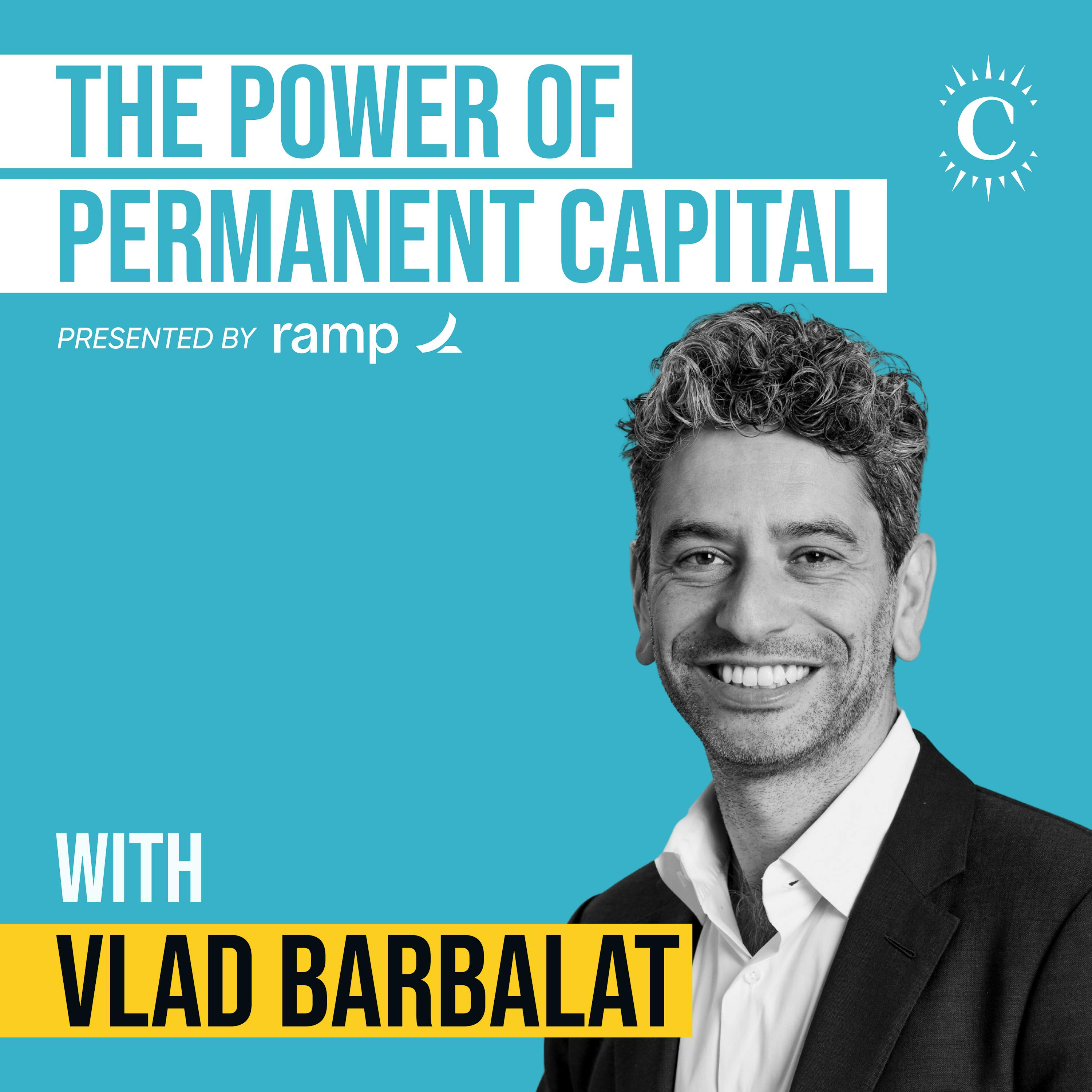
Liberty Mutual CIO Rethinks Asset Valuations as Tech Disrupts Moats
Colossus | Investing & Business Podcasts
Liberty Mutual Investments Chief Investment Officer Vlad Barbalat argues equity multiples across traditional industries face structural downward pressure because accelerating technological disruption has severely shortened long-term business visibility.
## Background
Published on the RSS / web platform on June 23, 2026, by Colossus | Investing & Business Podcasts, this episode of Invest Like the Best (EP.479) features Vlad Barbalat, Chief Investment Officer of Liberty Mutual Investments. According to the page description, Barbalat discusses managing LMI's $120 billion permanent capital platform, how its mutual insurance structure shapes allocation decisions, what Liberty looks for in deal partners, and his personal journey immigrating from Soviet Moldova to build a career in finance.
## TL;DR
Vlad Barbalat outlines how Liberty Mutual Investments deploys its $120 billion balance sheet across fixed reserves, growth credit, and private equity while maintaining strict investment hygiene. He explains how the firm's mutual structure provides a distinct long-term advantage over public insurers, enabling agile capital deployment through direct deals, specialized GP partnerships, and flexible credit structures. Beyond portfolio mechanics, Barbalat shares how his background as a Soviet immigrant instills a high-agency, low-entitlement worldview that shapes LMI's culture and informs his perspective on technological shifts like AI, geopolitical realignments, and market valuations.
## Atmosphere & style
The conversation carries a reflective, highly intellectual tone that seamlessly blends institutional finance expertise with deeply personal narrative arcs. Barbalat speaks with measured gravitas, pragmatic optimism, and an engaging storytelling style, using vivid everyday metaphors—like Soviet bread lines versus American croissants—to ground abstract macro concepts. The host-guest dynamic feels collaborative and candid, creating an immersive, inspiring listen that balances disciplined investment theory with genuine gratitude for American opportunity.
## Key takeaways
- `00:00` Liberty Mutual Investments manages a ~$120 billion platform fed by personal lines and global commercial & specialty insurance reserves, balancing safety with growth.
- `00:00` Operating under a mutual insurance structure frees the platform from quarterly public earnings pressure and forced dividends, allowing for true long-term investment discipline.
- `05:53` The portfolio is strategically split into ~$75 billion in fixed reserves for policyholder claims and a flexible growth engine spanning credit, private equity, real estate, and infrastructure.
- `10:41` Rather than relying on speculative macro forecasting, portfolio construction focuses on being prepared for all market regimes and maintaining strict enterprise liquidity buffers.
- `16:32` Actively targeting a 7% to 10% portfolio return over passive bond yields compounds capital to build a 'fortress balance sheet' capable of absorbing emerging, capital-intensive risks like data centers.
- `23:40` Immigrating from Soviet Moldova in 1990 shaped Barbalat's worldview, instilling an absence of entitlement, a commitment to continuous iteration, and deep gratitude for American opportunity.
- `38:23` LMI competes as 'branded capital' by hiring former GPs and operators, enabling rapid decision-making, creative deal structuring, and active network-sharing across its portfolio.
- `45:00` Artificial intelligence functions as an agentic multiplier for personal expertise rather than a passive software tool, requiring iterative human editing to avoid mediocre 'slop.'
- `46:22` Decreasing long-term business visibility across legacy industries puts structural downward pressure on equity multiples and steepens the long-term corporate credit risk curve.
- `50:47` Private capital markets now offer sufficient depth to fund mega-scale companies indefinitely, providing operational management with necessary multi-year runways away from public quarter-to-quarter scrutiny.
- `01:00:00` Managing permanent capital removes third-party fundraising distractions and preserves investment hygiene, though leaders must guard against institutional complacency and using 'long-term' as an excuse for poor short-term execution.
- `01:05:00` Radical transparency with internal and external stakeholders is the essential prerequisite for maintaining operational autonomy through volatile economic cycles.
## Detailed walkthrough
### `00:00` Platform Mechanics & The Power of Insurance Float
The Liberty Mutual Group balance sheet represents a $120 billion investment platform fed by two distinct insurance engines. The first is its well-known consumer brand—the personal lines business providing home and auto coverage across the United States. The second is its global commercial and specialty insurance arm, which serves corporations, brokers, and specialized partners. Premiums gathered across both businesses generate reserves and surplus capital that flow directly into the investment platform. The primary mandate is safeguarding these assets to honor every policyholder claim while systematically growing the underlying capital base.
Operating as a mutual insurance structure fundamentally alters how capital can be allocated. Unburdened by third-party capital constraints or public shareholders demanding quarterly dividends and share buybacks, the team avoids short-term, expedient moves in favor of long-term investment discipline and strict "investment hygiene." Sitting at the intersection of risk mitigation and capital deployment, the firm acts as a vital foundation for commerce—syndicating risk on one side while funding infrastructure, backing entrepreneurs, and driving job growth on the other.
* **Total Portfolio Size:** ~$120 billion in total investment assets.
* **Core Insurance Divisions:** Personal lines (home and auto) alongside global commercial & specialty lines.
* **Structural Advantage:** Mutual ownership structure eliminates short-term public equity market pressures and dividend/buyback demands.
---
`05:53` Portfolio Breakdown: Reserves vs. Growth Capital
The $120 billion balance sheet splits into two core pools: fixed reserve backing and flexible growth allocations. Roughly $75 billion consists of tightly managed policyholder reserves. Rather than treating this core as a passive, "sleepy, boring" buy-and-hold bond portfolio, the platform actively acts as a flexible liquidity provider in fixed-income markets while upholding its commitment to fulfill all policy claims.
The remaining balance comprises growth credit and growth equity, which expand alongside the firm's total surplus capital. This segment provides capital across every tier of the economy through direct originations, manager allocations, and strategic partnerships.
```
$120B Liberty Mutual Portfolio
|
+-----------------------+-----------------------+
| |
~$75B Reserves Growth Capital
(Tightly Managed Liquidity) +---------------+---------------+
| |
Growth Credit Growth Equity
(Levered Corporate Credit, (Private Equity, Real Estate,
Direct Lending, Public) Energy/Infra, Alt Credit)
```
To streamline operations, corporate credit functions are consolidated under a unified platform. Public high-yield, leveraged loans, capital solutions, direct lending, and credit partnerships operate as a single unit under one reporting structure.
* **Fixed Reserves:** ~$70–$75 billion focused on liquidity and claim fulfillment.
* **Growth Credit Integration:** Combines public high-yield, leveraged loans, direct corporate lending, and credit partnerships.
* **Growth Equity Coverage:** Encompasses private equity, real estate, energy & infrastructure, and alternative credit (asset-backed finance).
---
`10:41` Allocation Strategy & Toolkit Flexibility
Rather than starting with pre-packaged financial products, portfolio construction begins by determining the exact macro exposures and risk profiles desired across the enterprise. Once a target exposure is defined, the team selects the most efficient vehicle to access it. This flexibility allows the firm to toggle freely between direct originations, co-investments, club deals with peer institutions, or fund commitments with third-party GPs.
When allocating to external fund managers, the platform views specialized general partners as an extension of its internal workforce—leveraging their niche expertise in areas that are inefficient to replicate internally. This multi-channel approach transforms the platform into an attractive hub for proprietary, off-market deal flow.
* **Execution Channels:** Direct deals, co-investments, institutional club deals, and manager allocations (LPs).
* **Alternative Credit Focus:** Emphasizes asset-backed financing backed by physical or cash-flowing collateral rather than corporate balance sheets.
---
`11:00` Macro Philosophy & Portfolio Construction
The platform avoids speculative top-down macroeconomic forecasting, operating instead on the core principle: *"We are not in the business of predicting the future; we are in the business of being prepared for all its eventualities."* Long-term illiquid asset classes like private equity require multi-year commitments that transcend short-term market timing or tactical regional shifts.
Portfolio management centers on balancing long-term illiquid investments with enterprise-level liquidity needs. Because the parent organization may strategically pursue M&A or expand into new underwriting lines, the investment desk maintains continuous liquidity buffers. Geographic focus remains anchored in North American markets, avoiding European expansion where the firm lacks deep institutional relationships and proprietary edge.
* **Core Investment Philosophy:** Prioritizes preparedness for all market regimes over macroeconomic forecasting or short-term tactical tilts.
* **Geographic Discipline:** Focuses capital allocation within U.S. markets where internal expertise and deal-sourcing relationships are strongest.
### `15:00` What Liberty Mutual Looks for in an Originator
When deal originators, general partners (GPs), or entrepreneurs approach Liberty Mutual Investments with novel ideas, the team prioritizes unique value propositions and aligned long-term partnerships over cold pitches. Given the broad "waterfront" of investments Liberty already covers, atypical opportunities carry a higher burden of proof regarding fit and expertise. Barbalat emphasizes that taking entrepreneurial risks within a large, traditionally conservative insurance asset manager requires a deliberate cultural dynamic and governance structure. Refusing calls or failing to demonstrate curiosity risks drying up the high-quality, referral-based deal flow that fuels their reputation.
* **Deal Flow Mechanism:** Liberty relies heavily on warm referrals rather than cold calls due to its collaborative reputation in the market.
* **Cultural Mandate:** Cultivating an internal incentive structure that encourages curiosity is framed as one of the CIO's largest responsibilities.
---
### `16:32` Why Build an Active Investment Platform vs. Buying Bonds
Barbalat addresses why an insurer managing $120 billion shouldn't simply take the "sleepy" route of buying investment-grade bonds to collect float. While holding 4% to 5% bonds is safe, actively aiming for a 7% to 10% total portfolio return compounds capital, building a "fortress balance sheet." This added financial strength enables the firm to adapt to shifting macroeconomic risks and scale up for emerging, capital-intensive asset classes that traditional balance sheets cannot absorb on their own.
* **Evolving Risk Examples:** Modern data centers represent an unprecedented scale of single-asset value, requiring novel capital structures and third-party commitments that standard balance sheets cannot absorb alone.
* **Two Profit Engines:** Insurers rely on underwriting (a thin-margin business) and asset management; high-yielding assets dramatically expand the total opportunity set across both sides of the business.
---
### `18:30` Mutual vs. Public Insurance Structures & Long-Tail Risks
The mutual structure grants Liberty a distinct advantage over public insurers. Publicly traded insurance companies face shareholder pressure to maintain conservative investment portfolios, yield consistent underwriting margins, and return excess capital via dividends or buybacks rather than building complex asset management arms. As a mutual insurer, Liberty lacks public equity markets to raise capital, making exceptional internal underwriting and investment execution essential. This setup generates a self-sustaining "flywheel" that supports long-tail, high-uncertainty insurance lines.
> "If you're a shareholder of a public insurer... what I ask of you, management, is to deliver me a very consistent margin on the underwriting... I don't need you to recreate an investment firm on the asset side of your balance sheet..."
* **Tail Risk Comparison:** Unlike short-tail insurers like Progressive (focused heavily on U.S. motor insurance), Liberty Mutual handles complex risks that can re-emerge 20 to 30 years later, requiring a much sturdier balance sheet.
* **Strategic Synergy:** While insurance lines and investment teams operate in separate operational spheres, they share a core conceptual discipline: deploying capital into uncertainty, managing liquidity, and pricing multi-year risk.
* **The Extremes of Underwriting:** Barbalat references Berkshire Hathaway and Ajit Jain's approach of "waiting for the phone to ring" to underwrite bespoke, high-risk propositions that standard programmatic insurers refuse to touch.
---
### `23:40` Immigrant Perspectives and the Agency of the American System
Reflecting on the broader American system ahead of the country's 250th birthday, Barbalat shares his background immigrating to the U.S. from Soviet Moldova in 1990. He contrasts the strict limitations of oppressive or rigid foreign economic systems with the unparalleled personal agency, mobility, and opportunity available in the United States.
To illustrate how the U.S. incentivizes human creativity and iteration, Barbalat uses the metaphor of buying bread: in the Soviet Union, a single government bread store offered one or two standard choices just for calories, whereas in America—exemplified by endless variations of croissants around Union Square—anyone can reinvent a product, persuade customers, and build a market around an original idea.
* **Origin:** Emigrated from Moldova (then a Soviet Republic) in 1990 via a direct path to the U.S.
* **Core Philosophy:** The U.S. uniquely allows individuals to overcome regional, ethnic, or socioeconomic barriers through talent, agency, and creative iteration.
`30:00` Soviet Moldova, Persecution, and the Spirit of Innovation
Reflecting on his childhood in Soviet Moldova before immigrating to the United States in 1990, Vlad Barbalat draws a sharp contrast between living under a regime designed for survival and living in a society built on individual freedom. Growing up as a young Jewish boy in the Soviet Union meant enduring overt, systemic persecution. He recalls stark memories of being singled out and bullied in school, while his parents faced strict university quotas, career restrictions, and government-mandated housing assignments. In that environment, society offered no spiritual room for art or dreaming—people were conditioned merely to navigate a hostile system to survive day-to-day.
```
Soviet Union (Born to Survive) vs. United States (Freedom to Iterate)
• Systemic persecution & quotas • Individualism & merit-based talent
• Society suppresses human spirit • Culture of constant improvement
• Focus: Daily navigation & survival • Focus: Entrepreneurship & innovation
```
Yet, coming to America exposed Barbalat to the exact inverse: a culture grounded in individualism and permissionless innovation. While extreme individualism brings its own societal debates, its superpower is unlocking human talent and giving people the agency to continuously refine the world around them. He analogizes this mindset to the relentless American drive to perfect something as simple as a croissant—taking an already great product and constantly tweaking it to make it better.
- **State-Sanctioned Discrimination:** Soviet Jews faced explicit quotas on university admissions and restricted access to prestigious professional careers.
- **Mindset Shift:** Moving from a "survival mindset" in a totalitarian regime to an "iteration mindset" in a free-market economy.
- **The Croissant Analogy:** Illustrates the core American entrepreneurial impulse to incrementally improve products and processes simply out of a passion for the craft.
---
`32:45` Immigrant Mentality and Building the Culture at Liberty Mutual Investments
Barbalat explains how his background as an immigrant directly shapes his investment philosophy and the internal culture at Liberty Mutual Investments (LMI). Immigrants arrive with nothing, which instills a deep-rooted sense that no one is entitled to anything and that success must be earned every day. At LMI, this manifests as an insistence on never settling for "good enough." The team constantly iterates on internal processes, experiments with new technology, and operates with the agility of an entrepreneurial firm rather than a slow-moving institutional bureaucracy.
When evaluating external partners and General Partners (GPs), LMI looks for that same obsessive passion. Barbalat seeks out investors who are fundamentally driven by the love of their craft and a desire to build great businesses, rather than those motivated purely by financial gain. Crucially, he emphasizes that technical brilliance alone is insufficient; top-tier managers must also possess the clarity and communication skills required to articulate their vision and bring it to reality.
- **Immigrant Core Trait:** A complete absence of entitlement coupled with a high tolerance for risk-taking and relentless work ethic.
- **LMI Culture:** Active experimentation, rapid technology adoption, and a refusal to accept legacy operational baselines.
- **GP Selection Criteria:** Obsessive passion for the investment craft, operational mindset, and exceptional communication abilities.
---
`35:23` Granular Portfolio Evolution: Shifting Away from Legacy Models
The granular composition of LMI's $120 billion portfolio has undergone a major transformation over the past five years. Historically, institutional insurance capital accessed niche sectors through narrow GP fund commitments. Barbalat highlights how LMI re-evaluated these structural exposures—most notably in natural resources and energy. Previously, holding direct operational risk in energy companies exposed LMI to business-level execution failures that often got swamped by broader macroeconomic swings, all while lacking the internal operator capabilities to fix them.
> "Having that diversity of different businesses and different exposures... keep coming back to how do you acquire that exposure? That difference can mean the difference between it actually being effective versus not."
To solve this, LMI established a dedicated Energy & Infrastructure vertical. This structure enables them to deploy capital flexibly across both credit and equity. Instead of operating physical energy assets, LMI can provide tailored credit solutions while retaining upside participation through warrants or selective asset ownership. They also back highly specialized technical partners where internal replication would be inefficient, creating a far more resilient risk-return profile.
- **Legacy Model:** Passive LP fund commitments in natural resource vehicles with unhedged operational risk.
- **Modern Structuring:** Energy & Infrastructure vertical offering flexible credit, equity upside via warrants, and direct asset co-investments.
- **Capital Deployment Philosophy:** Matching exposure goals with the exact right structural instrument rather than relying on standard fund formats.
---
`38:30` Defining "Branded Capital" and the LMI Value Proposition
Addressing how LMI competes for allocation alongside elite institutional investors, Barbalat breaks down his concept of "branded capital." While mega-pensions win deals simply by writing massive checks, LMI differentiates itself by acting as an agile, value-add partner. They recruit heavily from GP backgrounds and operating roles rather than traditional LP channels, allowing them to evaluate deals quickly, respect a manager's time, and construct creative deal architectures.
Barbalat aims for LMI to hold the prestige of a premier endowment like Yale—where having their name on the cap table validates a fund—while remaining far more flexible and bold. LMI actively serves as a connective hub, introducing portfolio partners to one another and facilitating deals even when LMI itself has no direct financial stake in the transaction.
- **Branded Capital Types:** Capital roster "halo effect" (e.g., Yale) vs. structural problem-solving and speed (LMI's focus).
- **Team Composition:** Hiring former GPs and operational leaders to speak the same language as deal sponsors.
- **Ecosystem Velocity:** Generous network-sharing that drives deal flow back to LMI over multi-year horizons.
---
`39:07` Navigating Geopolitics, Historical Cycles, and Macro Shifts
As global power dynamics shift away from the post-WWII Pax Americana, Barbalat evaluates how macroeconomic and geopolitical fragmentation impacts long-term capital allocation. Drawing on his passion for history, he notes that living through any moment makes it feel like the most acute crisis ever experienced. Recalling a late-night walk during the peak COVID-19 lockdowns in early 2020, he reminded himself that humanity has survived far worse historical shocks, and that perspective is essential for sound long-term decision-making.
While current geopolitical tensions may not alter domestic US investing on a day-to-day basis, the underlying economic architecture is undergoing a fundamental regime shift. Energy security, supply chain realignments, and technological leaps are changing the flow of global commerce in ways not seen since the Industrial Revolution. Investors must distinguish between short-term noise and structural realignments in global trade.
- **Historical Perspective:** Comparing current geopolitical friction to major structural pivots like the fall of the Berlin Wall and the Industrial Revolution.
- **Pandemic Reflections:** Navigating 10-to-11-hour Zoom marathons during March/April 2020 while keeping an anchored, long-term outlook.
- **Economic Architecture Shifts:** Realignment of global energy distribution, supply chain reshoring, and security frameworks.
`45:00` Macro Dynamics, Geopolitics, and the Imperative of AI Agency
The U.S. remains endowed with structural advantages—from its capacity to innovate to its ultimate abundance of energy—that conspire in favor of American exceptionalism. However, the global framework is shifting. The era of frictionless, "just-in-time" supply chains is under pressure, and identifying the cheapest labor pools will face growing structural impediments, introducing real friction around inflation and interest rates. It is exceptionally difficult to forecast how these inflationary pressures will clash with the massive, deflationary impulse coming from emerging technology. While financial leaders are adept at identifying the core macro variables driving economic outcomes, assigning correct mathematical weights to those factors remains virtually impossible because we cannot predict how human participants will adapt to roadblocks inside the system. Although the world is undergoing a clear reset in how *Pax Americana* governs, this does not represent a shift away from relative American power; the world continues to depend on the U.S.
On the technological front, artificial intelligence represents a paradigm shift far more profound than unpredictable geopolitics. What sets AI apart from previous software deployments is that it requires human users to engage with it, exert agency, and build an active relationship with the tool. It is not an enterprise program that an IT department passively installs on a desktop to automate routine workflows. Instead, AI serves as a superhuman cognitive assistant that helps professionals externalize, rationalize, and structure their thoughts.
Interacting with these models requires iterative back-and-forth editing to avoid mediocre outputs. Because foundational AI models naturally gravitate toward the average, relying on a first pass yields generic "slop." Extracting true value demands pairing the model with personal domain expertise, creativity, and nuanced experience. In the investing domain—where the core art lies in discovering non-obvious insights within obscure data sets—AI offers a transformative multiplier. However, this shift presents a distinct human downside: spending more time interacting with hyper-efficient AI models risks isolating leaders from the messy, essential human relationships and spontaneous conversations through which critical information historically flowed.
* **Macro Supply-Chain Impediments:** The shift away from just-in-time inventory creates structural headwinds for labor costs, interest rates, and inflation.
* **AI as an Agentic Tool:** Modern AI functions as a force multiplier for individual creativity rather than a passive corporate software installation.
* **The "Slop" Risk:** Accepting immediate model outputs leads to baseline mediocrity; extracting elite performance requires iterative prompt design and rigorous human editing.
* **Relational Isolation:** Increased reliance on streamlined AI interfaces threatens to displace the nuanced, informal human interactions vital for organizational connectivity.
---
`46:22` Re-evaluating Multiples, Volatility, and the invisible Future
Inside Liberty Mutual Investments (LMI), executive discussions are focused on the fundamental question of asset valuation in an era where the long-term future is increasingly invisible. Historically, investors applied premium multiple valuations to high-quality businesses with proven staying power across market cycles. Today, even seemingly insulated legacy giants—from enterprise software to standard brick-and-mortar operations like Home Depot or John Deere—face uncertainty as technology disrupts established moats. This obscurity raises a radical question for capital allocators: should equity multiples be structurally lower across the board simply because the 10-to-15-year visibility of any business model has drastically decreased?
This dynamic threatens to reshape valuations regardless of favorable short-term macroeconomic indicators or general economic expansion. By 2030, the market will likely feature brand-new trillion-dollar enterprises that do not currently exist, while several existing multi-hundred-billion-dollar giants may vanish entirely. This underlying churn inevitably drives structurally higher volatility—a trend further amplified if regulatory bodies like the SEC relax quarterly reporting requirements.
In fixed-income markets, these same structural uncertainties apply. Holding short-dated paper (such as four-year debt) issued by established software providers like Salesforce or Oracle remains safe due to existing long-term contracts. However, holding 30-year corporate credit on those same institutions represents a far riskier proposition given the unpredictability of their long-term moats. This divergence should drive a structural steepening of corporate credit risk curves.
> "The question is, is the company—the trillion dollar company I mentioned before, that isn't even around today, that's still an idea somewhere—will they ever use Salesforce as part of their ecosystem? And if the answer is no, that should absolutely be a massive headwind to the valuation..."
* **Uncertainty Discount:** Decreased long-term business visibility challenges the historical practice of awarding high valuation multiples to market incumbents.
* **Credit Curve Steepening:** Short-term credit paper remains money-good due to contracted revenues, but 30-year corporate debt faces long-term disruption risks.
* **Public-to-Private Cascades:** Shifts in public equity multiples and volatility dynamics directly impact private equity pricing and deal structure.
---
`50:47` Public vs. Private Equity Dynamics and Balance Sheet Considerations
The fundamental decision of allocating capital between public and private equity comes down to structure and horizon rather than underlying risk differences—fundamentally, "equity exposure is equity exposure." While public securities subject investors to constant real-time mark-to-market sentiment, private holdings offer psychological insulation similar to residential real estate, where owners do not obsess daily over theoretical price fluctuations.
The explosive growth of private markets over the past decade stems from a shift in corporate financing needs. Historically, companies pursued initial public offerings (IPOs) out of necessity to access large capital pools unavailable in private markets, as well as for corporate prestige. Today, private capital markets are deep enough to fund massive enterprises indefinitely. Furthermore, the administrative, compliance, and short-term earnings pressure associated with being a public entity often undermines long-term strategy. Most corporate transformations require a three-to-five-year operational runway—a timeframe rarely tolerated by public markets, which routinely overreact to quarterly fluctuations.
```
+---------------------------+---------------------------------+----------------------------------+
| Attribute | Historical Public Markets | Modern Private Markets |
+---------------------------+---------------------------------+----------------------------------+
| Primary Driver | Capital access & prestige | Long-term operational focus |
| Capital Availability | Deep and liquid | Deep enough for mega-scale caps |
| Time Horizon | Quarter-to-quarter focus | Flexible 3-to-5 year windows |
| Compliance Overhead | High regulatory burden | Lower public regulatory oversight|
+---------------------------+---------------------------------+----------------------------------+
```
For an institution like Liberty Mutual Investments, specific internal asset-liability management rules and insurance balance sheet constraints dictate portfolio composition. Consequently, LMI concentrates a major portion of its equity risk within private markets, taking advantage of structural long-term holding periods to build wealth outside public market churn.
* **Capital Availability:** Deep private liquidity allows late-stage growth companies to delay or forgo public listings entirely.
* **Operational Horizons:** Private ownership shelters management teams from short-term public earnings pressures, offering necessary multi-year runways for strategic bets.
* **Institutional Fit:** LMI’s specific balance sheet requirements make private equity an attractive vehicle for long-term equity exposure.
---
`53:53` Culture, Excellence, and Personal Fulfillment in Allocating Capital
Reflecting on his foundational years at Goldman Sachs alongside senior team members, Vlad Barbalat emphasizes the enduring cultural legacy of high-performance environments. The defining trait imported from that era is an innate drive for excellence—a relentless "motor" that refuses to accept "good enough" or settle into complacency.
```
┌─────────────────────────────────────────────────────────────────┐
│ Drive for Personal & Organizational │
│ EXCELLENCE │
└────────────────────────────────┬────────────────────────────────┘
│
┌──────────────────────────┴──────────────────────────┐
▼ ▼
┌─────────────────────────┐ ┌─────────────────────────┐
│ At the Office │ │ At the Home │
│ - Building products │ │ - Setting an example │
│ - Mentoring talent │ │ - Quality over quantity │
│ - Improving system │ │ - Intentionality │
└─────────────────────────┘ └─────────────────────────┘
```
As a leader matures, personal satisfaction pivots away from pure individual deal-making and toward organizational stewardship: building better product capabilities, improving customer outcomes, and supporting the professional growth of younger colleagues. Managing time between work and family life presents an ongoing, deeply human balancing act. Rather than viewing high professional engagement as mere workaholism, it can be reframed as an obsession with building exceptional systems and setting a strong example of productivity and devotion for one's children.
> "My 17-year-old, my firstborn, literally needs a lot less of me today than he did 10 years ago... I go to bed thinking about that sometimes, but I also think about this is a forever thing. You think about your parents a lot less than they think about you. That will forever be true."
* **Cultural Drive:** High-performing institutions instill a commitment to continuous improvement that persists across careers.
* **Leadership Fulfillment:** True career satisfaction shifts over time from direct operational success toward mentoring talent and institutional building.
* **Evolving Family Dynamics:** Balancing professional obsession with fatherhood requires focusing on the quality and intentionality of interactions as children grow and gain independence.
`01:00:00` Managing Permanent Capital vs. Running a Third-Party Fund Business
Managing an internal balance sheet of permanent capital is fundamentally distinct from running a third-party asset management fund. In a typical fund cycle, an investment outcome is ultimately a product sold to attract the next wave of capital. As a result, the business strategy of raising funds and pleasing public market multiples inherently competes with—and dilutes—the pure craft of investing. Managing permanent capital eliminates these external pressures, removing the need to react to divergent investor priorities or constantly sell a narrative. It grants the luxury of maintaining strong "investment hygiene," allowing allocators to stay singularly focused on deploying capital for the right rate of return in service of their policyholders and balance sheet.
However, permanent capital carries its own set of structural downsides. Because the capital outlasts individual careers, teams regularly inherit past investment decisions made by predecessors. More critically, permanence can foster complacency, leading teams to use the "long-term horizon" as a convenient excuse for poor performance or inconsistency. Barbalat views the long term through a fixed-income lens: just as a ten-year rate is simply a series of shorter-term rates stacked together, a long-term strategy is merely a sequence of short-term execution steps. Long-term flexibility is immensely valuable, but it should never become an explanatory crutch when things go wrong.
- **Fund dynamics:** Third-party managers are often forced to optimize for business growth, fundraising cycles, and public market valuations over pure investment execution.
- **Investment hygiene:** Internal permanent capital allows allocators to avoid defensive investor updates and maintain an uninterrupted, long-term focus.
- **The downside of permanence:** A permanent capital structure can lead to institutional complacency and the temptation to hide underperforming assets under the guise of "long-term holding."
---
`01:05:00` The Relationship Between Transparency and Autonomy, and the Meaning of Kindness
Navigating the friction between an annual financial budget and multi-year investment horizons requires striking the right balance with key stakeholders. While every organization operates on a 12-month calendar cycle, long-term investors should hold teams accountable primarily over three- to five-year targets. Maintaining operational autonomy through volatile market cycles hinges on complete transparency. When an investment business is opaque or poorly understood, stakeholders are far less likely to support the leadership team through difficult periods. In Barbalat's view, transparency is the absolute prerequisite for retaining autonomy.
Reflecting on the kindest act he has ever experienced, Barbalat offers a unique perspective on the podcast's traditional closing question. Rather than naming a specific mentor, he expresses deep gratitude to the people who fought to construct legal immigration pathways to the United States. Arriving as an immigrant, the opportunity to come to America radically altered his life trajectory. It instilled in him a enduring sense of "pragmatic optimism"—a firm belief that America remains a vital force in the world and a "shining city on a hill." He views his citizenship as an extraordinary gift that inspires him to make a positive impact every day.
> "Transparency is what allows you to have autonomy. No transparency, no autonomy."
- **Horizon alignment:** Organizations must hold leaders accountable to realistic 3- to 5-year performance windows rather than purely judging results over a single calendar year.
- **The ultimate act of kindness:** Barbalat credits the architects of U.S. legal immigration pathways for giving him the chance to build a life, career, and impact in America.
- **Pragmatic optimism:** A core belief in the continuing importance of the United States as a global beacon of opportunity and innovation.
## Notable quotes
> `11:00` We are not in the business of predicting the future; we are in the business of being prepared for all its eventualities. — Vlad Barbalat
> `18:30` If you're a shareholder of a public insurer... what I ask of you, management, is to deliver me a very consistent margin on the underwriting... I don't need you to recreate an investment firm on the asset side of your balance sheet... — Vlad Barbalat
> `35:23` Having that diversity of different businesses and different exposures... keep coming back to how do you acquire that exposure? That difference can mean the difference between it actually being effective versus not. — Vlad Barbalat
> `46:22` The question is, is the company—the trillion dollar company I mentioned before, that isn't even around today, that's still an idea somewhere—will they ever use Salesforce as part of their ecosystem? And if the answer is no, that should absolutely be a massive headwind to the valuation... — Vlad Barbalat
> `53:53` My 17-year-old, my firstborn, literally needs a lot less of me today than he did 10 years ago... I go to bed thinking about that sometimes, but I also think about this is a forever thing. You think about your parents a lot less than they think about you. That will forever be true. — Vlad Barbalat
> `01:05:00` Transparency is what allows you to have autonomy. No transparency, no autonomy. — Vlad Barbalat
## Mentioned
Vlad Barbalat, Liberty Mutual Investments, Liberty Mutual Group, Berkshire Hathaway, Ajit Jain, Progressive, Goldman Sachs, Yale University, Salesforce, Oracle, Home Depot, John Deere, Ramp, Vanta, WorkOS, OpenAI, Anthropic, Cursor, Vercel, Rogo, Ridgeline, The Podcast Consultant, Invest Like the Best, Colossus
科技颠覆护城河,Liberty Mutual CIO重新审视资产估值
Liberty Mutual Investments首席投资官Vlad Barbalat指出,随着加速的技术颠覆严重缩短了长期业务可见度,传统行业的股票估值倍数正面临结构性下行压力。
Vlad Barbalat概述了Liberty Mutual Investments如何在保持严格投资纪律的同时,将其1200亿美元的资产负债表配置于固定准备金、成长型信贷和私募股权。他解释了该机构的相互制架构相比上市保险公司所具备的独特长期优势,使其能够通过直接交易、专业GP合作以及灵活的信贷架构进行敏捷的资本部署。除投资组合运作机制外,Barbalat还分享了他作为苏联移民的背景如何赋予其高主动性、低特权感(high-agency, low-entitlement)的世界观,这不仅塑造了LMI的文化,也深刻影响了他对AI等技术变革、地缘政治重组以及市场估值的看法。
Liberty Mutual Investments 负责管理约 1200 亿美元的投资平台,得益于相互制保险结构,该机构免受公开市场季度业绩与分红回购的压力,能够践行严谨的长期投资纪律。 (0:00)
其投资组合划分为约 750 亿美元用于保单赔付的流动性准备金,以及跨越信贷、私募股权和基础设施的增长引擎,主动追求 7% 至 10% 的整体回报以筑造“堡垒式资产负债表”。 (5:53)
首席投资官 Vlad Barbalat 结合自身从苏联摩尔多瓦移民的经历,在内部推行持续迭代且无特权感的文化,通过聘用前 GP 与运营人才将 LMI 打造为兼具敏捷决策与网络赋能的“品牌化资本”。 (38:30)
面对 AI 颠覆与企业长期可见度的降低,团队认为 AI 应作为人类专业智慧的能动性放大器,并预警传统护城河的弱化或将引发企业信用曲线结构性走陡与估值倍数的整体重估。 (46:22)
Reading summary
Vlad Barbalat outlines how Liberty Mutual leverages its $120 billion balance sheet as permanent capital, operating without public equity market pressures to pursue an active, multi-channel investment strategy across fixed reserves and private assets.
The Mechanics of a Mutual Balance Sheet (0:00)
Liberty Mutual Group's $120 billion investment portfolio is fed by premiums from personal lines insurance alongside its global commercial and specialty divisions. The capital base is split into roughly $70 billion to $75 billion in fixed reserves dedicated to fulfilling policy claims and maintaining liquidity, with the remainder allocated to flexible growth credit and growth equity. Corporate credit functions—including public high yield, leveraged loans, direct lending, and capital solutions—are integrated into a single operating unit.
Operating under a mutual insurance structure eliminates the demands of public equity markets for quarterly earnings, dividends, and share buybacks. Barbalat explains that while conservative insurers typically collect float by holding 4% to 5% investment-grade bonds, Liberty targets total portfolio returns of 7% to 10%. This approach builds a sturdier capital base to support long-tail, high-uncertainty risks that standard programmatic insurers often avoid, such as massive modern data centers.
Agile Capital Deployment and GP Relationships (10:41)
Portfolio construction begins with defining desired macro exposures and enterprise risk profiles rather than selecting pre-packaged financial products. To fill these exposures, the firm toggles between direct originations, institutional club deals, co-investments, and third-party fund commitments. In areas such as energy and infrastructure, the platform shifted away from passive fund stakes with operational risks to a specialized vertical that deploys capital flexibly across tailored credit, direct co-investments, and equity warrants.
Barbalat distinguishes Liberty Mutual's approach as 'branded capital,' emphasizing quick execution, cross-portfolio introductions, and hiring former operators and general partners over traditional institutional LP bureaucracy. The team relies on warm referrals and aligned partnerships, treating niche external managers as extensions of its internal team while maintaining a North American geographic focus where proprietary sourcing and institutional relationships are strongest.
Technological Agency and Shifting Asset Valuations (45:00)
Barbalat views macroeconomic forecasting with skepticism, arguing that allocators must prepare for structural shifts rather than predict specific market outcomes. Structural frictions—such as the retreat from frictionless supply chains, energy transition dynamics, and higher inflation pressures—are clashing with the massive deflationary potential of emerging technology. In this environment, he treats artificial intelligence not as passive software, but as an interactive cognitive multiplier that requires iterative human editing to move past generic outputs.
Rapid technological disruption also obscures the 10-to-15-year visibility of established enterprise moats. Barbalat suggests this structural uncertainty could depress equity valuation multiples across the board and steepen the corporate credit curve. While short-dated debt (such as four-year paper) from established software incumbents remains secure due to ongoing enterprise contracts, holding 30-year debt introduces substantial risk given the potential turnover of market leaders by 2030.
Managing Permanent Capital Without Complacency (60:00)
Managing internal permanent capital offers distinct advantages over running third-party fund businesses, which routinely face fundraising cycles and conflicting investor agendas. Freed from the pressure to market products or issue defensive updates, internal allocators can preserve strict investment hygiene and tailor capital deployment to long-term enterprise needs. Consequently, Liberty Mutual concentrates substantial equity risk in private markets, which provide multi-year operational runways away from daily public sentiment.
However, Barbalat cautions that permanent capital carries the institutional risk of complacency, where allocators use a 'long-term horizon' as an excuse for poor performance. To manage this friction, he views multi-year horizons as a consecutive sequence of short-term execution steps, stressing that maintaining operational autonomy from stakeholders requires complete transparency across realistic three- to five-year performance windows.
Barbalat attributes his pragmatic optimism and operational intensity to his experience immigrating to the United States from Soviet Moldova, emphasizing that while permanent capital provides structural shelter, it demands disciplined execution to avoid institutional inertia.
## Background
本期节目由 Colossus 旗下的知名播客《Invest Like the Best》于 2026 年 6 月 23 日在 RSS 及网络平台发布。节目主要记录了主持人 Patrick O'Shaughnessy 对利宝互助保险(Liberty Mutual Investments)首席投资官 Vlad Barbalat 的深度专访,探讨其如何管理高达 1200 亿美元的资产配置平台、相互制保险公司的独特投资结构、挑选交易与合伙人的标准,以及从前苏联摩尔多瓦移民美国的经历对其资本视野的塑造。
## TL;DR
访谈深入拆解了利宝互助投资平台掌管 1200 亿美元资本的底层架构,阐述了其如何将“准备金”与“盈余资本”高效分配于高流动性资产与成长型信贷、股权中。依托无需迎合外部股东短期诉求与募资周期的相互制架构,团队得以保持极高的“投资洁癖”,打破公私市场隔阂,以灵活的资本工具箱捕获结构化机会。与此同时,Vlad 深入探讨了在 AI 技术冲击与地缘政治重构下企业长期估值与长久期信用的重塑逻辑,并尖锐指出永久资本绝不能沦为掩饰短期平庸执行力的借口,必须在坚守长期主义的同时对阶段性结果保持高度敏锐与透明。
## Atmosphere & style
整场对话在宏大资本配置的专业理性与个体命运沉浮的温情人性之间自如切换,兼具智识思辨的深度与自省的哲学意境。Vlad 的讲述沉稳内敛、毫无大机构官僚气,既能在拆解千亿级复杂资本架构时展现出手术刀般的严密与果决,又能在以“排队买面包”和“纽约可颂”隐喻制度活力时流露出深切的诗意与敬畏。主持人的节奏推进克制而敏锐,使得整期节目不仅是一堂硬核的长期资本配置大师课,更是一段关于打破平庸、追求卓越以及对时代机遇心怀感恩的精神共振之旅。
## Bulletin
- `00:53` 利宝互助投资(LMI)统筹管理约 1200 亿美元的资产负债表资本(包含 700 亿至 750 亿美元核心准备金与 450 亿至 500 亿美元盈余资本);得益于无需管理第三方受托资金和无需应对公开上市股东分红的互助制结构,团队能够彻底维持高水准的“投资洁癖”,摆脱基金募集周期的商业侵蚀。
- `05:53` 在资本配置路径上,LMI 彻底推翻了传统金融机构按产品线割裂部门的模式,改为“先明确宏观所需风险敞口、再灵活选用直投、跟投、财团或 LP 出资”的执行框架,在能源与基础设施以及资产支持另类信贷领域大范围提供横跨债权与股权的定制化解决方案。
- `50:00` 面对 AI 技术冲击,资产定价正遭遇长周期能见度丧失的根本挑战:传统软件龙头虽坐拥稳固存量客户,但若无法捕获未来万亿级原生增量企业,将退化为估值倍数受抑的“现金牛”,并驱动市场波动率长期走高与 30 年期超长信用债利差显著陡峭化。
- `01:02:40` 针对“永久资本”的治理悖论,管理层强调绝不能将长周期视作掩盖短期平庸业绩的避难所;10 年期利率本质是由一系列短期利率复合而成,唯有向利益相关者交付彻底、坦诚的业务透明度,才能真正换取长线战略布局的自主权。
## Key takeaways
- `00:53` 相互制架构赋予了罕见的“投资洁癖”:利宝互助既无向公开市场股东派发股息或回购股票的短期业绩压力,也无为维持第三方资管规模而迎合多样化 LP 诉求的妥协,所有资本复利增长均纯粹服务于保单持有人的长期利益与资产负债表韧性。
- `05:00` 保险资金兼具“风险兜底”与“实体赋能”双重社会价值:承保端分担未知的厚尾风险以守护个人与企业,而累积的浮存金则通过资本市场回流至实体经济,为核心基础设施、科技创新与就业创造提供长效动能。
- `05:53` 以“底层风险敞口”为导向重构信贷与投资生态:摒弃“为买特定金融产品而配置”的传统惯性,利宝将公募高收益、杠杆贷款、资本解决方案与私募直接借贷整合进同一架构,根据敞口需求灵活决定是亲自操盘还是作为 LP 借力外部 GP。
- `11:00` “机构共识”的核心是全面准备而非预测宏观:大型资管平台试图精准预测短期宏观波动的胜率极低;真正的共识在于围绕流动性底线与能力圈约束,专注打造具备数十年生命周期的长期战略业务与特许经营体系。
- `20:00` 打破安稳买债券的舒适区以构筑“堡垒式资产负债表”:面对数据中心等超大体量、新形态的复杂风险,薄利的承保端需要资产端提供 7% 至 10% 的复合回报支持,若仅满足于吃 4% 至 5% 的固收利差,资产负债表将丧失演进韧性与承保更大规模新型风险的能力边界。
- `23:40` 商业特种险承保与职业投资遵循同一套概念内核:类似伯克希尔承保极度复杂风险的阿吉特·贾恩,特种险面对跨越 20 至 30 年的厚尾风险,两者本质上都是在高度不确定的世界中,通过对资本进行合理定价来换取风险溢价。
- `26:45` 苏联成长记忆与移民视角的“零特权心态”:亲历前苏联配给制下的物质匮乏与体制压抑,让投资人深刻敬畏美国市场赋予的自主权;“没有人欠你任何东西”的饥饿感转化为对工作流程、技术试验持续精进的工匠精神(如同纽约对可颂制作的千百次迭代)。
- `37:30` 以 GP 运营者思维重塑 LP 的“品牌资本”:利宝互助不追求单纯以巨额支票砸盘的机构背书,而是凭借高效迅捷的决策反馈、对底层运营的深度理解,以及在自身不投资时也乐于为生态伙伴牵线搭桥的主动性,将平台打造成行业关系的高价值枢纽。
- `44:30` 地缘秩序重塑下的供应链再平衡与宏观预测困局:从“零库存即时效率”转向“冗余安全”对通胀形成结构性支撑,但同时被技术通缩脉冲对冲;人类在识别变量上尚可,但在给非线性变量分配权重上极其糟糕,长期制胜仍需依托美国在能源与技术层面的例外护城河。
- `46:15` 将 AI 视为“超人助手”与思维磨刀石:生成式 AI 能够高效理顺模糊灵感并快速验证投资假设,但使用者必须主动输入独到非共识见解以防止模型输出平庸的“数字废话”;与此同时,需警惕过度依赖顺从的机器对非结构化人际信任交流造成的挤压。
- `50:00` 未来能见度坍塌动摇传统高倍数估值基石:当前对估值的质疑并非由高通胀或紧缩引起,而是技术震荡导致企业 10 至 15 年存续确定性被打破;成熟软件巨头虽有存量客户黏性,但若无法捕获未来万亿级新兴原生企业,将退化为现金牛,导致股权估值受压与长期信用债利差走阔。
- `53:15` 私募市场深度膨胀瓦解传统上市动因:私募资本池已足以承载超大体量企业的扩张诉求,企业无需再为了规模而忍受公开市场繁琐的合规成本与按季汇报的短视框架,这使负债期限极长的保险资本更加坚定地将私募股权作为核心权益阵地。
- `01:00:00` 警惕“永久资本”掩盖平庸并建立 3 至 5 年对齐机制:资本是长久的但身处其中的人是过渡的,不能用“时间足够长就会变好”来掩饰短期糟糕的执行力;成熟的管理应将人员责任从单一自然年解耦,牢固锚定在 3 至 5 年的中长期复合维度上。
- `01:02:40` 彻底透明是赢取长期投资自主权的唯一前提:如果底层资产与策略晦涩不透,外部利益相关者在经历市场周期低谷时绝不会给予容忍支持,“没有透明度,就绝无自主权”。
- `01:05:40` 对美国法治化移民通道的制度善意心怀敬畏:正是为陌生人争取权益并维护合法移民通道的制度体系,让成长于摩尔多瓦贫困环境中的个体获得了改写命运的舞台,这种感恩构成了投资人生涯中务实乐观主义的坚实基石。
## Detailed walkthrough
### `00:53` 全球最具吸引力的资本配置席位之一
作为全球规模最大、业务最多元化的保险集团之一,利宝互助保险(Liberty Mutual Group)旗下管理着高达 1200 亿美元的投资平台——Liberty Mutual Investments。首席投资官 Vlad Barbalat 将这一职位视为金融界最独特、最令人向往的资本席位之一。利宝的资金来源于两大核心保险业务支柱:一是大众熟知、在美国本土极具影响力的个人保险业务(包含家宅及汽车险,常伴随家喻户晓的广告旋律);二则是面向全球企业的商业与特种保险业务,服务于复杂的企业网络、经纪人及合作伙伴。这两大业务源源不断地向投资平台注入两大类资金:保证理赔兑现的“准备金”(Reserves)以及“盈余资本”(Surplus Capital)。
```mermaid
flowchart TD
accTitle: 利宝互助资本流向架构
accDescr: 展现从利宝保险业务端到投资平台的资金汇聚过程与资金属性分类
subgraph Insurance["保险业务来源"]
A["个人险业务<br/>(汽车险 / 家宅险)"]
B["全球商业与特种险<br/>(复杂企业保单 / 经纪网络)"]
end
subgraph BalanceSheet["1200 亿美元资产负债表"]
C["准备金 Reserves<br/>(约 700 亿 - 750 亿美元)"]
D["盈余资本 Surplus<br/>(约 450 亿 - 500 亿美元)"]
end
subgraph Allocation["全谱系资本平台"]
E["高流动性 / 严格管控资产"]
F["成长型信贷 (Growth Credit)"]
G["成长型股权 (Growth Equity)"]
end
A --> C
A --> D
B --> C
B --> D
C --> E
D --> F
D --> G
```
与其他资产管理机构相比,利宝互助结构最关键的护城河在于其“无须管理任何第三方资本”。管理外部资金往往伴随着严重的短期业绩焦虑与妥协,而利宝互助的属性则让团队能够彻底摆脱这种束缚。正如 Vlad 所说,这种机制让他们得以维持极其难得的“投资洁癖”(Investment hygiene),专注于做“正确的事”而非“权宜之策”。此外,公司没有公开上市股东索取股息分红或股票回购的压力,所有的资本留存与复利增长,其终极目标都是强化资产负债表,更好地回馈与保护保单持有人的利益。
### `05:00` 保险浮存金的双向力量与社会价值
谈及保险投资机制,主持人 Patrick O'Shaughnessy 联想到了沃伦·巴菲特(Warren Buffett)依托伯克希尔·哈撒韦(Berkshire Hathaway)构建的商业帝国,其核心驱动力正是保险浮存金(Float)带来的长久期与永久性资本优势。Vlad 对此深表认同,并进一步阐述了保险在社会运转中所扮演的“双轮驱动”角色。
在资产负债表的这一侧,保险业务的使命是“保护”——为个人与企业分担未知的风险,提供底线支撑,正如利宝的企业信条所述:“让人们与企业拥抱当下,自信追求未来”(embrace today and confidently pursue tomorrow)。而一旦承保承诺确立、保费汇聚形成庞大的浮存金,资本便被转移至资产负债表的另一侧——通过资本市场再循环到实体经济中,为关键基础设施注资、赋能创新创业者、创造就业机会并促进经济繁荣。这种“一边构筑安全兜底、一边驱动实体增长”的机制,正是该平台最引人入胜的经济支点。
### `05:53` 1200亿美元资产拆解:打破产品孤岛的信贷生态
面对这笔动辄牵动全行业的千亿级资本池,Vlad 详细拆解了其内部构成与配置哲学:
* **核心准备金(约 700 亿至 750 亿美元)**:这部分属于严格监管与审慎管理的底盘资产,核心使命是确保在任何极端市场周期下,都能无条件兑现对投保人的赔付承诺。然而,利宝并未将其变成“买入投资级债券、锁进抽屉里坐收微薄票息”的沉睡资产,而是采取积极创新的管理手段,在二级市场中主动扮演流动性提供者的角色,以捕捉超额溢价。
* **成长型信贷与成长型股权(剩余约 450 亿至 500 亿美元)**:这部分依托累积的盈余资本运作,致力于成为全方位的战略资本提供方。
在杠杆企业信贷领域,利宝彻底推翻了传统金融机构按“产品销售”设立的割裂部门(如把公募高收益债与非标私募信贷对立),而是将所有相关业态打通重组。公募高收益债、杠杆贷款、资本解决方案(Capital Solutions)、直接借贷(Direct Lending)乃至外部 GP 合作结构,全部被整合进同一个平台与统一的管理汇报线之下。
Vlad 强调,许多配置机构往往从“买某种特定产品”(例如直接借贷还是公募高收益)入手,而利宝的思考路径恰恰相反:
1. **明确敞口**:首先评估在整体业务宏观图景下,平台究竟需要承担何种性质的风险与底层资产敞口;
2. **多维实施**:在明确所需风险敞口后,再挑选最优的进入渠道——无论是直接做 Deal、做大额基金出资(LP 投资),还是构建定制化合作架构。机构拥有足够丰富多元的工具箱与选择权,是利宝相比普通资管机构的一大核心优势。
### `10:00` 多维度的投资工具箱与“全景式”生态系统
在许多大型资产管理机构中,获取某种风险敞口往往只有单一路径,比如纯粹作为有限合伙人(LP)去拜访基金经理并分配资本;而在另一端,则有专注于资产直投和底层风险发起的普通合伙人(GP)。对于管理着 1200 亿美元资产的 Liberty Mutual Investments 而言,其核心优势在于拥有一个极其宽广的“投资工具箱”。一旦团队确定了想要获取的某种特定风险敞口,他们可以灵活选择最合适的切入方式:既可以做纯粹的直投(Direct Deal),也可以选择跟投(Co-invest),或是与其他老练成熟的机构组成投资财团(Club Deal)。对于那些获取难度极高、极度垂直专业、机构自身根本没有必要去复制内部能力的领域,他们会坚定地扮演 LP 角色,把优秀的 GP 视为“自身专业团队的外部延伸”。
这种多渠道、灵活多样的执行框架贯穿于机构的各个资产类别,尤其是在其成长型股权投资组合(Growth Equity Portfolio)中,囊括了四大核心业务线:
1. **私募股权(Private Equity)**
2. **房地产(Real Estate)**
3. **能源与基础设施(Energy & Infrastructure)**
4. **另类信贷(Alternative Credit)**
另类信贷与传统的企业信用贷款截然不同,它主要涵盖各类资产支持融资(Asset Finance)——贷款的偿付基础并非企业的综合资产负债表,而是底层特定的资产抵押池。正因为在每个细分门类中都具备直接放贷、结构化合作或作为 LP 出资的全套能力,Liberty 成为资本市场交易网络中的核心枢纽。各类拥有新颖视角的市场参与者会主动找上门来,使他们能够持续捕获非常规的、市场之外(Off-market)的独特交易机会。
```mermaid
flowchart TD
accTitle: Liberty Mutual 投资风险敞口获取路径
accDescr: 展示从确定风险敞口到选择四种执行方式,再落地到四大业务资产的决策流程。
subgraph Choice["执行路径(多元工具箱)"]
D["直接投资 (Direct)"]
C["跟投机制 (Co-invest)"]
CL["财团投资 (Club Deal)"]
LP["LP 出资 (能力外部延伸)"]
end
subgraph Assets["成长型业务板块"]
PE["私募股权 (Private Equity)"]
RE["房地产 (Real Estate)"]
EI["能源与基础设施 (Energy & Infra)"]
AC["另类信贷 (Alternative Credit / 资产抵押)"]
end
Exposure["确定宏观风险敞口需求"] --> Choice
Choice --> Assets
```
### `11:00` 什么是“机构共识”:拒绝预测未来的宏观准备
当被问及一个管理 1200 亿美元庞大资金池的机构如何形成所谓“机构共识(House View)”以及多久调整一次时,Vlad Barbalat 开门见山地划清界限:这种共识绝不是去押注甚至预测未来。Vlad 直言自己曾经做过宏观交易员(Macro Trader),深知试图预测“是否该超配欧洲”这类宏观波动的游戏胜率极低,对一家大型保险资管机构更是毫无用处。Liberty Mutual Investments 的内部信条是:“我们不以预测未来为生,我们的职责是为所有可能出现的情况做好准备”("We are not in the business of predicting the future; we are in the business of being prepared for all its eventualities.")。
因此,这里的机构共识并非一到三年的短期宏观情绪,而是聚焦于**“长期战略业务与特许经营体系(Franchises)的构建”**。例如进入私募股权领域,绝不是看未来两三年的景气度,而是决定是否要在该领域建立数十年的长期能力。在构建整体投资组合时,有三个核心支柱至关重要:
- **流动性管理与偿付底线**:资产配置必须绝对优先确保履行母公司 Liberty Mutual Group 的保单偿付义务,这是神圣不可侵犯的(Sacrosanct)。同时,母公司本身作为庞大的企业实体,可能会在战略上寻求并购(M&A)或拓展新业务线,投资平台必须在长线非流动性投资与高流动性资产之间维持严密的动态平衡,以便随时为企业战略动作提供流动性弹药。
- **能力边界与能力圈约束**:以欧洲市场为例,尽管当前受地缘政治等因素影响,欧洲市场出现了一些看似诱人的折价机会,但 Liberty 极度克制,并未大举进军,原因就在于团队在当地缺乏深厚的合作关系网络和本地化专长。
- **立足美国本土的确定性**:尽管资金体量庞大且不断扩张,团队依然能在熟悉的美国本土市场中持续挖掘出横跨资本结构不同层级的优质机会,这比盲目涉足缺乏掌控力的海外市场要踏实得多。
### `15:47` 发起人打动资本的核心:独创性与承担企业家风险的内部文化
站在资本寻求者(无论是带来具体交易的 GP 还是带着全新创意的项目发起人)的视角,什么样的特质能真正吸引 Liberty 团队的注意?Vlad 指出,由于长久以来建立的合作口碑,最优质的交易往往来自熟人网络的引荐(Referrals),而不是漫无目的的冷邮件或推销电话(Cold Calls)。当一个新颖的想法被推到面前时,团队首要考量的是其“独特的价值主张(Unique Proposition)”。在当今同质化严重、竞争极度内卷的金融子行业中,真正的原创性非常罕见。只要发起人展现出无可置疑的操守(Integrity)、逻辑严密的商业构想,并且双方能建立一种长期互惠互利的深度合作关系,Liberty 非常乐意去支持他们、为其承担风险。
这里引出了一个大型金融机构治理中最本质的张力:**坐在一家资金极其稳固、规模庞大的保险资管机构里,一名专业投资人究竟凭什么要走出舒适区,去承担带有企业家精神的风险(Entrepreneurial Risk)?**
在大型机构中,最本能、最官僚的反应往往是“这超出了我的舒适区,我何必承担风险惹麻烦”。为了打破这种惰性,Vlad 强调这是他作为首席投资官最重要的职责之一:从考核机制、治理架构到人才选拔,精心呵护一种充满好奇心和开拓精神的组织文化。因为信誉积累极其脆弱——一旦内部团队对外部引荐表现出官僚推诿或缺乏好奇心,市场上的优质项目源泉很快就会彻底枯竭。
面对“为什么不把 1200 亿美元全买成安全平庸的债券、安安稳稳吃浮存金(Float)利差”的灵魂拷问,Vlad 指出,传统保险业虽然常常被视为沉睡温和的资产配置者,但若仅仅安于现状买债券,资产负债表就会丧失进化的韧性,彻底失去拥抱新兴技术和结构性时代红利的能力。将资本配置在更加动态、支持实体经济深度创新的复杂资产中,不仅使资本更具生产力,也正是投资这门手艺能够为母公司和整个经济体持续创造超额价值的关键所在。
### `20:00` 堡垒式资产负债表与相互制保险公司的独特飞轮
经济与技术环境在不断演变,保险公司所承担的风险本质也随之剧变。25 年前保险公司承保的风险与今天截然不同,未来更不可同日而语。数据中心便是一个典型例证:其资产规模和价值总量远超以往任何资产类别,单凭常规的保险资产负债表根本无法直接消化,必须借助各类第三方资本的承诺与协同。要在这种大体量、新形态的风险浪潮中脱颖而出,必须构建坚不可摧的“堡垒式资产负债表”(fortress balance sheet)。打造这种资产负债表依赖两大核心盈利引擎:一是承保端,但这本身是一个极薄毛利的业务;二是资产端。如果仅仅满足于买入 4% 或 5% 收益率的投资级债券,而不是努力实现整个资产组合 7%、8%、9% 乃至 10% 的复合回报,两者的终局将有天壤之别。在这个竞争极其激烈的领域,资本规模直接决定了企业在负债端与资产端能涉足的机会边界。
```mermaid
flowchart TD
accTitle: 相互制保险公司的资本正向飞轮
accDescr: 展示了承保端与资产端双轮驱动如何强化资产负债表并赋能保单持有人的闭环机制。
subgraph Engines["两大盈利引擎"]
UW["精细化与定制化承保<br/>(薄利但多样化业务)"]
INV["主动多元资产投资<br/>(追求 7%-10% 复合回报)"]
end
subgraph Core["资产负债表核心"]
BS["堡垒式资产负债表<br/>(无需分红/回购给公开股东)"]
end
subgraph Value["赋能保单持有人"]
PROD["承保新兴与厚尾风险<br/>(如数据中心、复杂商险)"]
CAP["全天候履行赔付承诺<br/>长期伙伴关系"]
end
UW --> BS
INV --> BS
BS --> PROD
BS --> CAP
PROD -.-> UW
CAP -.-> UW
```
对于上市保险公司与相互制(Mutual)保险公司的机制差异,弗拉德给出了反直觉的洞见。外界常以为只有追逐高回报的股权股东才会在意卓越的投资收益,但实际上上市公司往往难以走通这条路。公开市场的股东通常会将承保与投资割裂看待:他们认为保险管理层历史上并不是成熟敏锐的专业投资人,因此只要求管理层保持稳定的承保利润率,并通过股息和股票回购尽可能多地退还资本;股东绝不希望管理层在资产端重新克隆一家大型综合投资机构,因为若想配置多元资产,股东完全可以在二级市场自行操作,这种做法类似不受市场待见的多元化综合企业(conglomerate)。
相比之下,相互制公司没有公开市场股东必须追求短期利润的强制约束,唯一的核心限制是无法通过二级市场直接发行股票融资。这种“免于股东短期审视”的特征在许多相互制组织中可能沦为懈怠的借口,但利宝相互保险(Liberty Mutual)主动选择将其转化为优势——立志成为行业内的顶尖运营者,兼具顶尖的承保能力与世界级的投资机构。资产端的高质量回报构建了充沛的资本缓冲,不仅保证公司在危机时刻能够为保单持有人遮风挡雨,更为保单持有人解锁了更广泛的产品广度,使其有底气承接未来那些尚未显现、但极具规模的新型风险。
---
### `23:40` 商业与特种保险的“厚尾”风险:从 Progressive 到伯克希尔的阿吉特·贾恩
不同保险公司对资产负债表的要求天差地别。以 Progressive(前进保险)为例,这是一家在垂直领域极其卓越的企业,专注于美国本土的汽车保险业务。汽车保险的风险周期较短,尾部风险不长,因而匹配其业务模式的资产负债表类型相对特定。而利宝保险的业务线高度分散,涵盖大量商业与特种险种,风险敞口可能跨越 20 至 30 年,呈现出显著的“厚尾”(fat tail)特征。这种长周期、高不确定性的负债结构,要求资产负债表必须具备极强的韧性与吸收波动的深度。
这一模式的极致代表是伯克希尔·哈撒韦(Berkshire Hathaway)。尽管普通大众对伯克希尔保险业务的认知多停留在 GEICO(政府雇员保险公司)等车险品牌,但伯克希尔在业内最核心的角色其实是“终极承保人”(insurer of last resort)。正如伯克希尔副董事长兼保险业务掌舵人阿吉特·贾恩(Ajit Jain)所言,他的日常工作状态与职业投资人如出一辙:
> “我就坐在办公室里等电话响起。人们会带着最离谱的提议、全世界没人敢接的最疯狂的风险来找我,而我所做的就是给风险定价。”
这种模式完全脱离了程序化的标准化承保,如同沃伦·巴菲特等待“肥美的大棒球”(fat pitches)一样,在不确定性中通过精准定价资本来获取超额回报。弗拉德指出,商业保险与特种保险的内在精神与投资实践高度相通:两者都是将资本投向未来的不确定性以换取风险溢价,面对的都不是 6 个月或 1 年的短期博弈,而是跨越数年的系统性考验。在准备金管理、流动性缓冲以及资本分配上,承保端与投资端遵循着同一套严密的概念框架与战略协同。
---
### `26:45` 移民视角看美国:从苏联摩尔多瓦的面包到联合广场的可颂
谈及宏观视野与制度红利时,弗拉德流露出对美国制度发自内心的敬畏与珍惜。这种情感往往在亲身经历过其他体制的移民身上体现得最为纯粹。弗拉德出生于苏联加盟共和国时期的摩尔多瓦(现为独立主权国家,毗邻乌克兰),1990 年随父母背井离乡移民美国。在当年的苏联,能够直接移民美国是无数人可望而不可即的梦想,他的家庭极其幸运地踏上了这条直通之路。
在弗拉德看来,土生土长的人往往把美国的自由与机会视作理所当然,就如同空气和引力一样本该存在;但对于从外部世界走来的人而言,这种公民享有的“自主权”(agency)在全世界无可比拟:
- **突破身份锁定的跃升空间**:在世界上绝大多数地方,个体的命运常常被家族出身、种族、宗教信仰、压抑的体制或僵化的经济阶梯牢牢锚定,上升通道严重受阻。而在美国,尽管存在诸多社会矛盾与批评声音,但社会极具包容性,个体能够拥有无数种定义成功、贡献价值和实现繁荣的可能。
- **“面包”与“可颂”的制度隐喻**:弗拉德分享了一个极其生动的生活细节来阐释这种体系差异。在苏联生活时,年仅 6 岁的他常常被母亲派去排队买面包。当时的供销体系极其单一,面包店里只有一到两种固定样式的面包,人们排起长队,买走配给的卡路里。在计划经济的认知中,“面包就是面包,吃饱即可,何须更多花样”。然而在美国纽约的联合广场(Union Square)周围,仅可颂(croissant)这一种点心,就有一千种完全不同的创意重塑与表达。只要有人能找到独特的手法做出专属特色并打动顾客,市场就会给予其空间与奖赏。
这种从单一配给到千变万化可颂的转变,正是人类创造力、持续迭代与自由说服能力的真实投射,也是市场机制与开放社会赋予个体最深刻的活力所在。
### `30:00` 苏联童年与生存法则:从“不准做梦”到美国式的个人主义
谈及童年在苏联摩尔多瓦度过的最初十年,弗拉德·巴尔巴拉特(Vlad Barbalat)直言,那种生活在最宏观的层面上可以用一句话概括:“在那个体制下,你根本不被允许做梦,你生来只是为了生存(you're not given permission to dream. You're born to survive)。”社会灌输给每个人的核心态度,是如何在严苛的环境中摸索生存之道。作为苏联的一名犹太人,他亲身经历了深刻的排斥与歧视:在学校里,年仅九岁的他就会被当众挑出来针对;而他的父母面对的境况则残酷得多——犹太人被限制从事某些职业,关键行业有严格的名额配额(quotas),居住地点被强制分配,升大学同样面临名额封锁。
这种赤裸裸、公开化的迫害与霸凌是当时社会结构不可分割的一部分。然而弗拉德回忆,自己童年依然过得相对快乐,因为当一个人一出生就身处这种现实时,你不会觉得自己是个受害者,而是将其视为既定常量并以此构建生活。在他的记忆中,既有属于孩童的快乐片断,也有深刻的灰色印记——那是一个被剥夺了精神活力与真实艺术的社会。这种压抑并非源自人民本身,而是体制扼杀了人类天然的创造力。当来到美国后,他体验到了彻底的逆转:极度的“个人主义”(individualism)。尽管走向极端的个人主义在当代美国也引发了诸多社会争议,但它赋予了每个人追逐自身天赋、兴趣以及自主选择社交圈的自由,而这种自由在苏联等社会是完全不可想象的。
- **苏联体制下的生存底色**:没有试错与创新的空间,生存是首要驱动力;犹太家庭在就业、大学录取和住房分配上面临制度化的硬性配额与社会排斥。
- **美国个人主义的正面价值**:消除了对个人追求的体制性压制,允许个体自由结社、发挥专长,形成通过微小改良让事物变得更美好的社会创新动力。
---
### `32:45` 移民心态与投资匠心:拒绝理所当然与不断“改良羊角面包”
这种强烈的制度对比深刻重塑了弗拉德的世界观,并直接映射到了自由互助投资公司(Liberty Mutual Investments, LMI)的投资文化与选人标准上。首先是刻在骨子里的移民特质:绝不将任何事物视作理所当然,坚决摈弃“理应享有”的特权心态(not taking anything for granted, not entitled to anything)。弗拉德强调,当你赤手空拳来到一个新国家只为谋求生路时,你深知“没有人欠你任何东西(no one owes you anything)”,这一信条贯穿了他之后的生活与职业生涯。
在组织文化层面,这催生了一种持续微调、不断迭代的企业家精神。弗拉德打了个生动的比方:就像有人并不满足于市面上现有的羊角面包,非要精雕细琢去烘焙出更好的口感一样,LMI 也绝不接受“这样已经够好了”的心态。无论是内部工作流程、与外部世界的交互方式,还是拥抱新技术的快速试验,团队都在不断精益求精。而在寻找外部投资合伙人(GP)时,他们同样寻找这种对自身技艺极度痴迷的企业家特质——那些真正热爱投资本身,而非纯粹被金钱驱动的人。此外,沟通能力至关重要:“如果你无法清晰传达一个绝妙的愿景,它就只能永远停留在你的脑海中,无法转化为现实。”
- **零特权意识(Zero Entitlement)**:不假设任何优势是理所应当的,以创业者的饥饿感与敬畏心对待资本配置。
- **卓越迭代文化**:将“持续改良”融入团队日常流程、技术尝试和投资决策中。
- **优秀合伙人画像**:对自身专业怀有极致热情(obsessed with their craft),具备清晰沟通愿景的能力,而非单纯受财务激励驱动。
---
### `35:23` 投资敞口的演进:从单纯配置 GP 到全资本结构的灵活赋能
从实际构建组合的微观颗粒度来看,LMI 过去五年的投资路径经历了戏剧性的蜕变。在传统模式下,机构往往主要依赖向普通合伙人(GP)出资做 LP,路径相对狭窄;而如今,LMI 强调根据想要获取的具体宏观或行业敞口,设计最优的进入方式。弗拉德以能源领域为例,详细对比了战略思路的转变:
过去的传统做法是在自然资源(Natural Resources)板块持有大量重资产。这种方式的初衷是获取能源敞口或对冲通胀,但效果极差——一方面,LMI 自身并不具备运营底层能源企业的专业运营能力;另一方面,单一运营业务极易被公司层面的微观问题拖垮,以至于即使宏观能源价格暴涨,底层资产也无法带来预期的收益。如今,LMI 设立了“能源与基础设施”(Energy & Infrastructure)垂直业务群,横跨信贷(Credit)与股权(Equity)。他们选择持有优质资产的所有权或权益,但绝不亲自下场运营;同时通过提供横跨资本结构的综合解决方案(如在提供债务融资的同时获取附认股权证 Warrants 以保留上行弹性),并在技术极度复杂、难以内部复制认知能力的细分领域坚定支持专业 GP。这种多维度的工具箱,确保了组合在真正捕获宏观红利的同时,有效分散了单一资产的运营风险。
```mermaid
flowchart TD
accTitle: LMI能源敞口获取方式的演进对比
accDescr: 对比传统单一持有运营型重资产与现代跨资本结构赋能的策略差异
subgraph OLD["传统方式(5年前)"]
A1["自然资源单一敞口"] --> A2["直接参与企业运营"]
A2 --> A3["缺乏专业运营能力<br/>微观经营问题对冲掉宏观能源红利"]
end
subgraph NEW["现代方式(LMI能源与基建垂直群)"]
B1["跨资本结构工具<br/>(债权/股权/认股权证)"] --> B3["捕获宏观红利并锁定上行收益"]
B2["持有优质资产产权<br/>(剥离繁琐运营职责)"] --> B3
B4["重度专业技术细分领域<br/>(严选深度技术型GP出资)"] --> B3
end
```
- **自然资源敞口重构**:从重度依赖运营的狭隘敞口,转向兼具债权安全性与股权弹性的资本解决方案。
- **灵活的资本工具**:通过信贷附带认股权证(warrants)等结构化设计,兼顾下行保护与通胀带来的上涨潜力。
- **认知边界清晰**:明确自身不是实体资产运营商,技术密集型赛道交给最顶尖的专业 GP,LMI 负责提供量身定制的资本。
---
### `37:30` 重新定义“品牌资本”:以 GP 思维做 LP 与构建关系枢纽
当被问及如何在竞争激烈的市场中向顶尖 GP 推销自己、甚至动用所谓的“品牌资本(branded capital)”时,弗拉德对这个概念给出了独特的拆解。对于超大型基金(Mega-funds)而言,所谓的品牌资本可能意味着某些大型州立养老基金,因为它们在每次募资周期中都能开出体量庞大的巨额支票;但弗拉德明确表示:“那不是我们做的事,也不是我们的底色。”
LMI 所打造的“品牌”,核心在于像真正的商业建设者一样去赋能合作伙伴。他们的差异化优势体现在反应极其迅捷:在吸收海量尽调信息后,能够迅速给出明确的参与或拒绝答复,绝不拖泥带水、浪费 GP 的宝贵时间。在团队组建上,LMI 倾向于招募具有 GP 背景或实业运营经验的人才,而非单纯传统的 LP 官僚。更重要的是,LMI 将自身定位为一个高价值的“关系枢纽(hub of relationships)”。弗拉德指出,资本声誉是通过每一次与外部打交道累积起来的,哪怕只是某一个员工的外派互动,都可能带来巨大助益或造成损害。如果能通过卓越的合作交付成效,人脉网络便会形成滚雪球效应。哪怕某笔交易 LMI 最终决定不投资,只要能利用自身网络帮两三个合作伙伴牵线搭桥、解决问题,他们也会毫不犹豫地倾囊相助,从而在整个投资生态中建立起深厚的信誉护城河。
- **非“支票簿”式品牌**:不靠单纯的大资金砸盘,靠敏捷反馈、尊重合伙人时间与实打实的业务共建建立口碑。
- **人才背景偏向 GP/运营者**:引入实操型人才,打破传统 LP 冗长迟缓的决策与沟通范式。
- **生态枢纽效应**:主动充当资本与业务资源的超级连接点,即便自己不参投,也乐于为生态伙伴创造合作契机,换取长久复利的行业声望。
### `40:00` 品牌资本与超越“耶鲁效应”的定制解法
针对“品牌资本”(Branded Capital)在资产配置中的价值,Patrick 探讨了自由互助投资(Liberty Mutual Investments, LMI)的声誉定位:自由互助是否也致力于成为像耶鲁大学捐赠基金(Yale Endowment)那样具有风向标意义的顶尖机构有限合伙人(LP)——只要其名字出现在通用合伙人(GP)的资本名册(Cap Table)上,便能形成极强的声誉背书与光环效应,从而大幅降低其他资方眼中的承销风险,并吸引更多外部跟投资本。
Vlad 明确承认自由互助确实已经并持续在巩固这种跻身全球前十至十五家顶尖机构的威望,但他强调团队的抱负远不止于提供一层单纯的名字背书。在竞争极度白热化的成熟风投(VC)生态中,许多机构争抢的仅仅是在名册上挂个名字的“入场券”,而自由互助无意在自身体系外照搬这种同质化的争夺。在更多资产类别中,资本运作的核心胜负手并非品牌光环,而是三项差异化能力:
- 交易方案设计的**结构化创造力**(Creativity to structure solutions);
- 极端市场变化下的**决断与落地敏捷度**(Quick execution);
- 以及承担某些传统光环机构在制度架构上根本无法承受的**非对称风险的意愿**。
自由互助坚信,真诚为商业伙伴的成功而喝彩、在深厚的人际与商业信任中提供量身定制的复杂流动性解法,才是能够穿越周期的真正护城河。
```mermaid
flowchart LR
accTitle: 两种 LP 资本模式对比
accDescr: 对比传统光环型 LP 与自由互助创造型 LP 的核心价值主张与适用场景。
subgraph HaloLP["传统光环型 LP (Halo Capital)"]
H1["名册背书 / 品牌光环"] --> H2["降低他人顾虑 / 引流资本"]
H2 --> H3["典型场景: 热门 VC 份额争夺"]
end
subgraph LMIModel["自由互助差异化模式 (Creative Capital)"]
L1["保持顶尖 LP 声望"] --> L2["结构化设计 + 风险承受意愿 + 极速执行"]
L2 --> L3["典型场景: 复杂资产定制 / 特殊流动性解法"]
end
```
---
### `42:00` 地缘政治巨变与历史透镜下的危机视角
伴随冷战后“美利坚治世”(Pax Americana)与既有国际安全框架的动摇,刚刚退休的一整代投资人从未在资产配置中深度考量过的地缘政治变量,在数十年来首次成为左右底层投资收益的决定性力量。对于如何将这一不可预测的宏观变量输入自上而下的投资系统,酷爱历史的 Vlad 提出了一套基于长周期视角的反思逻辑。
Vlad 指出,身处历史洪流中的当代人极易陷入一种感知偏见,即总觉得当前经历的风暴是整个人类历史上“最尖锐、最不可承受的时刻”(feels particularly acute)。Vlad 回忆起自己在职业生涯中经历过数不清的危机,其中最鲜明的一幕发生在 2020 年三四月份疫情爆发初期:在一个凄风苦雨的黄昏,他刚刚结束长达 10 到 11 个小时让人筋疲力竭的 Zoom 马拉松连线,走到户外散步透气。他当时忍不住在脑海中闪过一个极端的念头:“难道我这一生真的如此倒霉,恰好撞上了这场彻底摧毁人类社会与现代文明生活运转的世纪大瘟疫?”但他随即通过历史常识压制了这种恐慌:人类在历史上经历过无数次更为致命的瘟疫浩劫,人口遭遇惨烈折损,但人类文明最终依旧向前繁衍迈进。
这一历史透镜同样适用于当下关于科技质变的讨论。虽然生成式技术的发展让所有人笃信 10 到 15 年后的社会将与当下截然不同,但若回溯工业革命,蒸汽机普及 15 年后的人类社会相较于此前同样沧海桑田。在 Vlad 看来,二战以来的全球经济流动与安全秩序确实在经历自柏林墙倒塌以来最深远的一次解体与重塑,但如果仅着眼于抽象的地缘博弈,对立足本土的投资者而言意义不大,关键在于看清其折射出的底层经济架构巨变。
---
### `44:30` 供应链重塑、美国例外论与经济预测的困局
在地缘政治秩序瓦解的表象之下,真正对长期资产定价产生实质性冲击的是全球经济架构的再平衡,其核心聚焦于能源格局的演变与供应链的深度重构:
- **从即时供应到冗余安全**:过去数十年全球企业高度依赖的“零库存管理”(Just-in-Time Inventory)与教科书式寻找全球绝对廉价劳动力的时代正在遭遇结构性阻碍,安全冗余与近岸/回流正在取代绝对效率。
- **结构性通胀与通缩脉冲的博弈**:供应链的断裂与摩擦对中长期通胀中枢和利率曲线构成了持续的上行压力,但这一压力同时正被科技进步所带来的巨大通缩脉冲(Deflationary Impulse)强力对冲。
针对宏观模型如何解构这两股力量的拉扯,Vlad 直言人类以及绝大多数职业投资者在预测未来时存在根本性缺陷:
> “在识别驱动经济结果的变量方面,我们这群喜欢思考的人表现尚可;但我们真正糟糕透顶的,是给这些变量赋予正确的权重。正因如此,宏观预测几乎是不可能完成的任务。”
投资人即便挑对了所有宏观变量,也根本无法预判各变量之间极其复杂的非线性动态交互,更无法预测经济体内部由无数鲜活个体为了化解现实路障而做出的适应性调整。不过,在这一重构周期中,Vlad 坚定坚守对“美国例外论”(American Exceptionalism)的长期信仰。无论是在无与伦比的技术创新活力,还是在极为充沛且低廉的本土能源禀赋上,美国的绝对护城河依然深厚。即便 Pax Americana 的治理规则发生重置,全球在相对实力维度上对美国资产与创新的根本依赖依然无可替代。
---
### `46:15` AI 赋能:从“超级大脑外挂”到人际疏离的隐忧
谈及技术裂变向日常投资体系的渗透,Vlad 指出生成式 AI 与过去几十年 IT 部门在桌面端统一安装企业级软件的应用逻辑截然不同。AI 绝非一个将既定工作流生硬套入的流程工具,而是一种需要使用者投入极强主观能动性(Agency)、主动与之建立深度协作关系的“超人级助手”(Superhuman Assistant):
- **思考的外挂与思维磨刀石**:它能够迅速将大脑深处模糊、发散的灵感提取出来,理顺底层逻辑并以结构化的语言呈现;通过反复的论辩与交互质疑,使用者被迫充当高标准的审校者(Editor),进而反哺自身的思考锐度。
- **警惕均值回归与数字废话(Slop)**:大语言模型的数学本质决定了其默认输出倾向于平庸的公约数;若使用者仅仅抛出笼统的提示词并被动接受第一遍反馈,得到的结果注定充斥着毫无价值的泛化废话。唯有将个人的非共识见解、行业经验与独特创意深度注入互动中,模型才能爆发出惊人的分析深度。
- **投资艺术的快速迭代**:在海量无论隐晦或规整的庞大数据堆中洞察常人不易察觉的盲点与非线性因果,始终是专业投资的核心艺术,而 AI 将这种艺术洞察的假设检验迭代周期压缩到了极致。
但在惊叹效率飞跃的同时,Vlad 坦陈了这套系统带来的深层心理与组织隐忧。他发现自己如今每天花在与 AI 深度对话上的时间越来越多,而代价是与同事面对面沟通的时间被不可避免地挤压。人类之间那些充满“混乱与摩擦”(Messy)的互动,恰恰是非结构化核心信息传递和人际信任凝聚的不可替代载体。如果将追求智识效率推向极致,过度依赖高度智能、百依百顺的机器助手,其代价可能是投资人深度的自我孤立。
---
### `48:20` 终极辩题:当未来不可见时,如何对商业资产估值?
在由地缘格局重置、技术颠覆与宏观摩擦交织而成的复合环境下,Vlad 透露,目前他与自由互助投资各核心部门负责人之间内部交锋最激烈、最具哲学意味的议题,并非单纯局限于软件即服务(SaaS)的商业模式重塑,而是延伸至商业世界的定价基石:**当未来的可见度在技术与地缘风暴中被急剧压缩时,我们究竟该如何对一家企业的长期价值进行合理定价?**
在长达数十年的传统估值框架中,尽管未来同样不可知,但投资者能够通过分析护城河、行业壁垒与客户黏性,建立起高度的心理舒适区,坚信某些优质资产具备“历经万千风浪而基业长青”(staying power through thick and thin)的确定性。正是这种基于长周期生存力的可见度,赋予了市场在资产端给予更高估值倍数(Higher Multiples)并据此合理化当前买入价格的逻辑底气。
然而,在今日剧烈的技术震荡与跨周期洗牌下,这一前提假设遭到了根本性质疑。在团队审视各类投资标的时,一个最严苛的灵魂拷问不断回荡在投资委员会的桌面之上:面对日新月异的技术渗透与竞争格局突变,当下的我们,是否真的有百分之百的把握断言,眼前这家今天看起来无比强大的企业,在 10 年乃至 15 年之后依然能够保持蓬勃的生命力?如果长周期的终局可见度荡然无存,传统基于高倍数定价的估值基石必将被彻底重构。
### `50:00` AI 冲击下的估值重塑与长久期信用风险
随着人工智能技术的迅猛发展,投资领域正面临一场前所未有的估值思辨。这种不确定性不仅笼罩着纯软件公司,甚至蔓延到了家得宝(Home Depot)或约翰迪尔(John Deere)这类看似不在 AI 交火中心的传统企业。弗拉德指出,在以往的职业生涯中,估值倍数的压缩通常是由宏观经济指标驱动的——例如通胀走高、利率上升导致估值下调;但眼下的局面截然不同:投资者直面的是未来的高度不可预测性,“面对如此扑朔迷离的未来,你怎么可能继续给予高估值?”更为奇特的是,这种倍数质疑恰恰发生在潜在利好的宏观经济和经济扩张背景之下。
这种技术巨变带来的直接后果,是市场波动率的结构性上升。到 2030 年,市场上很可能会诞生今天尚未存在的一万亿美元市值的巨无霸,同时现存的万亿级或数千亿美元巨头也可能灰飞烟灭。如果再加上监管层面(如美国证券交易委员会 SEC 讨论取消季度财报硬性要求)等潜在变化,整体市场的波动中枢将被长期推高。在信用债领域,同样的逻辑正在引发深远冲击:持有绝大多数软件公司的 4 年期短期债券或许不必担忧,因为企业现有合同尚在履行周期内,兑付确定性极高;但若要持有 Salesforce 或甲骨文(Oracle)这类公司的 30 年期超长期信用债,风险暴露将成倍放大。弗拉德认为,这种深层担忧理应导致信用曲线显著陡峭化,进而重塑资本市场的运作逻辑。
在谈到现有巨头的护城河时,弗拉德驳斥了市场上关于“企业员工未来会自给自足、通过 AI 随意写代码(vibe code)搭一套专属 CRM”的幼稚论调。坐在大型金融机构投资负责人的位置上,他坦言这种设想在企业级场景中是荒谬的,财富 500 强企业在极长时间内仍会继续使用 Salesforce。然而,真正的估值杀手在于增量市场:那些未来成长为万亿美元规模、如今尚在萌芽中的新兴原生企业,其生态系统中是否还会采购传统巨头的产品?如果答案是否定的,哪怕现有存量客户永不流失,传统软件巨头也将退化为缺乏长期成长潜力的“现金牛”(cash cow)业务,其估值中枢必然面临剧烈下杀,而这种来自公开市场的定价重估正层层向私募市场渗透。
```mermaid
flowchart TD
accTitle: AI 不确定性对资产估值与信用的传导机制
accDescr: 展示 AI 技术的不确定性如何通过增量客户缺失和长期存续风险,分别向股票估值、波动率以及超长期信用利差传导。
A["AI 技术演进与不可预测性"] --> B["业务模式与企业存续期重估"]
subgraph Equity ["股票市场传导"]
B --> C["存量客户稳定 但错失新一代增量巨头"]
C --> D["传统软件退化为现金牛 估值倍数压缩"]
D --> E["市场波动率结构性升高"]
end
subgraph Credit ["信贷市场传导"]
B --> F["短期现金流安全 (4年期纸面风险极低)"]
B --> G["长期生存危机 (30年期长债风险剧增)"]
F & G --> H["信用收益率曲线显著陡峭化"]
end
```
- **宏观背离反差**:历史上的杀估值多伴随紧缩与加息周期,但本轮技术颠覆导致的不确定性,却是在宏观经济保持韧性、潜在环境有利的背景下倒逼估值收缩。
- **存量与增量之辩**:Salesforce 等龙头的危机不在于存量流失,而在于未来的万亿级新兴原生公司可能完全不属于其客户生态。
- **期限风险割裂**:短期信贷资产因合同壁垒依然坚挺,但长达 30 年的长期债权在破坏性创新面前需要更高的风险溢价补偿。
---
### `53:15` 公开市场与私募市场的权衡与演进
面对新巨头的崛起与更迭,尤其是私募市场中体量庞大的独角兽如果上市便能直接跻身市值前十的现实,资产配置在公私募之间的权衡显得尤为核心。弗拉德指出,在心理层面,持有公开市场资产远比持有私募资产困难得多。这就像普通人拥有一套住宅,哪怕房价每天都在变,也不会时刻陷入焦虑;但如果买入的是公开交易的房地产投资信托(REIT),每天跳动的数字都会牵动情绪。不过从底层逻辑来看,股权风险的本质是一致的,自由互利保险并不会单纯依据行情的短期波动在两者之间频繁倒仓,而是着眼于在私募市场中能获取什么资产。
回顾过去十年私募市场的演进,企业上市的底层动因已经发生了结构性迁移。历史上,企业走向 IPO 主要是为了解决两件事:一是募集私募市场无法承受的巨量扩张资本,二是获取公开上市所附带的名誉声望与关键里程碑认可;其付出的代价则是让渡控制权、受制于股东与董事会的短期情绪、无法从容熬过艰难时刻。然而如今,私募市场的深度已经能够承载极大规模的资金供给,“资金匮乏”与“上市光环”这两大传统诉求均被大幅削弱。
与此同时,作为一家上市公司的隐性与显性成本正急剧攀升。严苛的合规监管不仅耗费巨资,更将企业绑架在按季度或年度汇报的短视框架内。对于需要 3 到 5 年甚至更长战略窗口期来推进变革的业务模式而言,公开市场的短期审视会造成严重伤害。正是这些结构性因素推动了私募市场的繁荣。弗拉德强调,尽管监管层面的繁琐负担未来或许会均值回归,但私募资本的高效供给将长期持续。对于自由互利投资团队而言,其负债端特征与资产负债表结构天然更契合私募股权投资,因此在资产配置上依然会以私募股权作为权益敞口的核心阵地,仅在公开市场出现极端错配与高吸引力机会时灵活介入。
- **持有体验的差异**:公开市场每日盯市带来巨大的心理噪音,而私募资产隔绝了每日情绪波动,更利于践行长久期投资。
- **上市动因的瓦解**:私人资本池的膨胀解决了巨额融资需求,使企业不再被迫为了资本规模走向公开市场。
- **时间窗口的匹配**:公开市场鲜少给予管理层 3 至 5 年的试错容忍期,私募股权结构提供了宝贵的长周期保护。
---
### `55:20` 高盛基因:卓越的驱动力与永不止步的“引擎”
弗拉德与他的多位核心管理团队成员皆出自高盛(Goldman Sachs)。当被问及高盛文化在他们身上的烙印、带来了什么又舍弃了什么时,弗拉德分享了对这家机构的深切体会。在高盛工作期间,身边环绕着极度聪明、进取心极强的顶尖人才,那是一个节奏紧绷、充满挑战却又令人心潮澎湃的竞技场。更有趣的是,高盛的价值往往在离开它之后才体现得更加深刻——你会在不知不觉中意识到,那些在高压下潜移默化汲取的养分和思维训练,早已融入骨髓。
在这段经历中,他们带走并融入当下团队最核心的特质,是对“卓越”(Excellence)近乎本能的追逐。弗拉德坦言,自己根本无法忍受安于现状、或者满足于“这样已经够好了”的平庸心态。在很多外人看来,冒着风险打破现状去进一步推进行动似乎是多此一举,但对于在顶尖金融机构历练成功的人而言,内心深处似乎都装着一台永不停歇的“引擎”,驱动着他们不断向前推进边界,绝不满足于及格线。
---
### `56:45` 追求卓越的人生意义、组织进步与为人父的思考
谈及为什么对追求卓越如此执着,弗拉德展现了其哲学与存在主义层面的思考。随着年龄增长与组建家庭,看待世界的方式会发生深刻重塑。尤其是从孩子的视角出发,一个人的身份认同会被切分为多个维度,如果过分倒向某一极,其他方面就会受损,每个人都必须摸索属于自己的平衡点。尽管如此,弗拉德依然在职业中获得了巨大的内心满足——这种满足并非源于自负,而是来自于亲手打造并身处一个不断进步、让事情变得更美好的组织之中。
这里的“变好”有着丰富的层次:它意味着更出色的投资成果、更优质的客户体验,而最让弗拉德感到无比充实的,是帮助身边的同事在职业生涯中不断成长晋升。“年轻时你可能不会意识到这一点,但亲眼看着并助力他人实现职业跨越,真的是世上最让人欣慰的事情之一。”随着心智的成熟,他放下了早期对工作投入过多的心理包袱。过去他曾时刻警惕自己变成一个“工作狂”,唯恐因此缺席孩子们的成长;如今他意识到,自己并非迷恋盲目加班的工作狂,而是对组织的精进、团队的向好抱有极度的热忱,这种驱动力是超越个人的。
这种追求卓越的态度也深刻投射到了他的家庭教育中。弗拉德育有三个儿子,他时刻提醒自己要通过言传身教,向孩子们展示如何成为一个富有成效的社会人、一个充满爱与支持的称职父亲。随着孩子们长大,父子之间的相处模式也在动态演进。他 17 岁的大儿子如今对父亲的陪伴依赖大不如前,弗拉德坦承自己有时在深夜也会陷入反思:“今天我们只聊了 10 到 15 分钟,虽然质量很高,但仅仅这 10 到 15 分钟真的够吗?”然而他也释然地意识到,这是代际演进中的永恒法则:
> “你挂念父母的程度,永远比不上他们挂念你的一半。无论岁月如何流转,这都是世间永恒不变的规律。”
### `01:00:00` 永久资本的本质与资产负债表投资的纯粹性
很多人常把“永久资本”(Permanent Capital)挂在嘴边,将其视作一种极为理想的资金形态,但置身其中管理它却有着外界鲜为人知的复杂性。资本本身或许是永久的,但置身其中的人绝非永久,职业生涯注定只是漫长历史中的一段过渡。永久资本的一个隐性代价是人员更迭所带来的责任割裂:当新团队接手时,面对表现不佳的遗留资产,人们往往习惯性地推诿称“那是前任团队做的决策”,而那些表现出色的投资成果却常常被当下的人欣然纳为己有。
然而,管理属于自己的资产负债表(自有资金),与管理第三方受托资本存在着根本性差异。第三方资管业务在本质上被基金募资周期(Fund Cycle)所牢牢统治:机构不仅要为当期基金与 LP 创造回报,更要时刻谋划下一期基金的募资。在这种模式下,投资成果更像是一种被包装出售的“产品”,公司的商业战略(扩大 AUM、追求估值倍数、满足公众股东偏好)往往会压倒并稀释投资本身的工艺(Craft of Investing)。为了迎合资本市场的最高估值乘数,资产管理机构必须按照特定模式塑造业务架构,而面对诉求与优先级各异的不同 LP,机构往往要在妥协中消耗精力,使投资流程受到商业利益的侵蚀与污染。
与此形成鲜明对照的是,在互助制保险公司的内部资产负债表上配置资金,具备无可比拟的“投资纯洁性”(Investment Hygiene)。团队无需为了下一次募资而做局,无需应对不同投资人的利益拉扯,更无需疲于应付季度投资人报告中的种种情绪。团队的全部精力可以纯粹地聚焦于一件事:如何将资本合理配置于具有合适回报率的机会上,为保单持有人(Policyholders)和资产负债表创造最大价值,静待资本开花结果。
```mermaid
flowchart TD
accTitle: 两种资本管理模式的对比
accDescr: 对比第三方资管机构与保险自营资产负债表投资在核心驱动力和投资流程上的差异
subgraph ThirdParty["第三方资管模式(基金周期驱动)"]
A["募资周期压力"] --> B["商业规模优先于投资工艺"]
B --> C["妥协于不同LP的多样化诉求"]
C --> D["投资纯粹性被商业运营稀释"]
end
subgraph BalanceSheet["自有资产负债表模式(永久资本驱动)"]
E["服务保单持有人"] --> F["聚焦资本回报率与长远价值"]
F --> G["无需应对外部募资与估值博弈"]
G --> H["保持极高水准的投资纯洁性"]
end
```
### `01:02:40` 警惕“长周期”借口与长短期的辩证统一
尽管永久资本赋予了投资人放眼长远的空间,但也潜藏着滋生自满与懈怠的风险。在现实中,许多人常拿“我们做的是长线决策,别人比不了”作为掩饰短期糟糕业绩的借口,声称“只要等得足够久,事情总会变好”。弗拉德·巴尔巴拉特(Vlad Barbalat)对这种思维模式保持着极高的警惕。他借助固定收益的逻辑打了一个比方:10年期利率在本质上就是一系列短期利率的复合叠加;同理,所谓“长远未来”,正是由一个又一个具体的“短期”构筑而成的。投资人不能将长线视野当作逃避现实波动的避难所,而必须同时容纳两重现实:既要有做出长远决策的战略定力,又必须对眼下的每一个阶段性结果保持敏锐。
所有的企业组织都被框定在公历年度这一时间约束之中。虽然很少有业务的内在生命周期完全契合单一自然年,但向利益相关者交付可衡量的年度成果依然至关重要。平衡这种矛盾的有效方式,是将组织的责任约束从单一的年度目标转移到更具有实质意义的3至5年目标上,明确要求更多核心成员对中长期结果承担具体责任。
与此同时,这种兼顾长短期的管理模式高度依赖于“完全透明”。如果底层投资业务晦涩难懂、缺乏透明度,一旦遭遇市场周期剧烈动荡,外部利益相关者就绝不可能在艰难时刻给予支持。巴尔巴拉特经常向领导团队强调一条核心准则:“透明度才是赢得自主权的唯一前提;失去透明,就必将失去自主”(Transparency is what allows you to have autonomy. No transparency, no autonomy)。
- **长短期认知**:长周期不是掩盖平庸执行力的借口,它必须经由一系列坚实的短期成果逐步兑现。
- **管理对齐机制**:在兼顾年度考核的同时,把团队核心责任坚定地锚定在3至5年的长期目标上。
- **治理法则**:维持长期策略的自主权不是凭空赋予的,而是建立在向所有利益相关者提供彻底、坦诚的业务透明度之上。
### `01:05:40` 最善意之举:走向美国的合法移民之路
在播客的传统收尾环节,帕特里克(Patrick O'Shaughnessy)提出了他的经典问题:“有人为你做过的最善意的一件事是什么?”面对这个访谈了近500位嘉宾的问题,巴尔巴拉特给出了一个前所未有的答案。
他没有列举某位具体的师长、家人或职业引路人,而是将这份最深切的感激献给了一个群体与一种体制——那些多年来在美国为合法移民争取权益、铺设并维护法治化移民通道的人们。正因为有这样一套向外界敞开大门的制度,才让一个成长于前苏联摩尔多瓦贫困环境中的年轻人,能够合法踏上美利坚的土地,获得在世界其他任何地方都难以企及的发展机遇,进而改写整个人生命运,并有能力反哺周围的社区与组织。
巴尔巴拉特感慨道,许多人出于原本不必履行的道义责任,构建起接纳异乡人的通道,给予了他们全新的人生可能。这种发自肺腑的感激之情,构成了他内心“务实乐观主义”(Pragmatic Optimism)的基石。在他眼中,美国依然是那座闪闪发光的“山巅之城”(Shining City on a Hill),是全球不可或缺的重要灯塔;能够成为一名美国公民,是他每一天醒来都心怀敬畏与感恩的无上恩赐,他也誓言竭尽所能去回馈这片土地。
## Notable quotes
> `05:00` 让人们与企业拥抱当下,自信追求未来 — Vlad Barbalat
> `11:00` 我们不以预测未来为生,我们的职责是为所有可能出现的情况做好准备 — Vlad Barbalat
> `23:40` 我就坐在办公室里等电话响起。人们会带着最离谱的提议、全世界没人敢接的最疯狂的风险来找我,而我所做的就是给风险定价。 — Ajit Jain
> `30:00` 在那个体制下,你根本不被允许做梦,你生来只是为了生存 — Vlad Barbalat
> `32:45` 没有人欠你任何东西 — Vlad Barbalat
> `32:45` 如果你无法清晰传达一个绝妙的愿景,它就只能永远停留在你的脑海中,无法转化为现实。 — Vlad Barbalat
> `44:30` 在识别驱动经济结果的变量方面,我们这群喜欢思考的人表现尚可;但我们真正糟糕透顶的,是给这些变量赋予正确的权重。正因如此,宏观预测几乎是不可能完成的任务。 — Vlad Barbalat
> `50:00` 面对如此扑朔迷离的未来,你怎么可能继续给予高估值? — Vlad Barbalat
> `56:45` 你挂念父母的程度,永远比不上他们挂念你的一半。无论岁月如何流转,这都是世间永恒不变的规律。 — Vlad Barbalat
> `01:02:40` 透明度才是赢得自主权的唯一前提;失去透明,就必将失去自主 — Vlad Barbalat
## Mentioned
Vlad Barbalat, Patrick O'Shaughnessy, Liberty Mutual Group, Liberty Mutual Investments, Warren Buffett, Berkshire Hathaway, Progressive, Ajit Jain, GEICO, Yale Endowment, Salesforce, Oracle, Home Depot, John Deere, Goldman Sachs, SEC, Ramp, Vanta, WorkOS, Rogo, Ridgeline
## Video description
My guest today is Vlad Barbalat, the Chief Investment Officer of Liberty Mutual Investments, the $120 billion investment platform that sits within one of the largest insurance companies in the world.
Vlad grew up in Soviet Moldova, came to America in 1990, and built a career that eventually led him to one of the most distinctive capital allocator seats anywhere in finance.
Today we talk about how the mutual insurance structure creates a unique investment platform, what Liberty looks for in a new deal or partner, and what it means to build a career and a life in a country that gave you opportunities you never would have had anywhere else.
Please enjoy my conversation with Vlad Barbalat.
For the full show notes, transcript, and links to mentioned content, check out the episode page here.
-----
Become a Colossus member to get our quarterly print magazine and private audio experience, including exclusive profiles and early access to select episodes. Subscribe at colossus.com/subscribe.
-----
Ramp’s mission is to help companies manage their spend in a way that reduces expenses and frees up time for teams to work on more valuable projects. Go to ramp.com/invest to sign up for free and get a $250 welcome bonus.
-----
Trusted by thousands of businesses, Vanta continuously monitors your security posture and streamlines audits so you can win enterprise deals and build customer trust without the traditional overhead. Invest Like the Best listeners get a special offer of $1,000 off Vanta when you go to vanta.com/invest.
-----
WorkOS is the infrastructure B2B and AI-native companies use to sell to enterprise. It covers everything enterprise security requires: SSO, SCIM, RBAC, Audit Logs, AI governance, and more. Trusted by 2,000+ fast-growing companies, including OpenAI, Anthropic, Cursor, and Vercel.
-----
Rogo is the AI platform for finance. They're building agents for Wall Street that are trained to understand how bankers and investors actually do work: from diligence and modeling, to turning analysis into deliverables. To learn more, visit rogo.ai/invest.
-----
Ridgeline has built a complete, real-time, modern operating system for investment managers. It handles trading, portfolio management, compliance, customer reporting, and much more through an all-in-one real-time cloud platform. Visit ridgeline.ai.
-----
Editing and post-production work for this episode was provided by The Podcast Consultant.
Timestamps:
(00:00:00) Welcome to Invest Like The Best
(00:00:53) Vlad Barbalat
(00:01:28) The Most Interesting Seat in the Market
(00:05:53) Breaking Down the $120B
(00:10:41) How the Portfolio Is Constructed
(00:11:00) The House View
(00:13:49) What Liberty Looks for in a GP
(00:16:32) Why Not Just Buy Bonds
(00:18:30) Benefits of the Mutual Structure
(00:23:40) The Luxury of the American Citizen Through Immigrant Eyes
(00:30:26) How Immigration Shaped His Worldview
(00:32:45) Direct Deals vs. GP Allocations
(00:35:23) Branded Capital
(00:39:07) Geopolitics & Investing
(00:43:48) AI's Impact on Investing
(00:46:22) The Valuation Debate
(00:50:47) Public vs. Private Markets
(00:53:53) Lessons from Goldman
(00:54:41) Why Excellence Matters
(00:57:30) Managing Permanent Capital
(01:03:54) The Kindest Thing
[Source](https://traffic.megaphone.fm/CLS2722061524.mp3)
[11:00] Vlad Barbalat: We are not in the business of predicting the future; we are in the business of being prepared for all its eventualities.
[18:30] Vlad Barbalat: If you're a shareholder of a public insurer... what I ask of you, management, is to deliver me a very consistent margin on the underwriting... I don't need you to recreate an investment firm on the asset side of your balance sheet...
[35:23] Vlad Barbalat: Having that diversity of different businesses and different exposures... keep coming back to how do you acquire that exposure? That difference can mean the difference between it actually being effective versus not.
[46:22] Vlad Barbalat: The question is, is the company—the trillion dollar company I mentioned before, that isn't even around today, that's still an idea somewhere—will they ever use Salesforce as part of their ecosystem? And if the answer is no, that should absolutely be a massive headwind to the valuation...
[53:53] Vlad Barbalat: My 17-year-old, my firstborn, literally needs a lot less of me today than he did 10 years ago... I go to bed thinking about that sometimes, but I also think about this is a forever thing. You think about your parents a lot less than they think about you. That will forever be true.
[65:00] Vlad Barbalat: Transparency is what allows you to have autonomy. No transparency, no autonomy.
Original transcript
[0:00] Ramp is the only platform built to make your finance team leaner, faster, and better, saving businesses 5% annually on average so you can stay focused on growth. Ramp customers grew revenue 3.2 times faster than the average American business. Visa, Vercel, Cursor, Stripe, Notion, 11Lab, Shopify, and 70,000 other businesses all run on Ramp. Mine does too, and so should yours. Learn more at ramp.com slash invest. Felix by Rogo is a personal finance agent that turns a single prompt into finished client-ready work using your firm's own templates, context, and standards. Send Felix an email like, take these comments and turn them for me, or update my tracker with the context of these emails, or run the ability to pay math on this buyer, and Felix sends back finished PowerPoint decks, Excel models, and sourced research. Felix works the way your team already does, delivering work quickly and accurately around the clock. Learn more at rogo.ai slash Felix. The best AI and software companies from OpenAI to Cursor to Perplexity use WorkOS to become enterprise ready overnight, not in months. Visit WorkOS.com to skip the unglamorous infrastructure work and focus on your product. Hello and welcome everyone I Patrick O and this is Invest Like the Best This show is an open exploration of markets ideas stories and strategies that will help you better invest both your time and your money If you enjoy these conversations and want to go deeper, check out Colossus, our quarterly publication with in-depth profiles of the people shaping business and investing. You can find Colossus along with all of our podcasts at colossus.com. Patrick O'Shaughnessy is the CEO of Positive Sum, All opinions expressed by Patrick and podcast guests are solely their own opinions and do not reflect the opinion of Positive Sum. This podcast is for informational purposes only and should not be relied upon as a basis for investment decisions. Clients of Positive Sum may maintain positions in the securities discussed in this podcast. To learn more, visit PSUM.VC. My guest today is Vlad Barbalat, the chief investment officer of Liberty Mutual Investments, the $120 billion investment platform that sits within one of the largest insurance companies in the world. Vlad grew up in Soviet Moldova, came to America in 1990 and built a career that eventually led him to one of the most distinctive capital allocator seats anywhere in finance. Today we talk about how the mutual insurance structure creates a unique investment platform what Liberty looks for in a new deal or partner and what it means to build a career and a life in a country that gave you opportunities you never would have had anywhere else Please enjoy my great conversation with Vlad Barbalat Vlad, this is going to be a fascinating conversation, given that you sit in one of the most interesting investment seats probably in the world. I think to give people context, the right place to start is for you to describe the platform, how much money you manage, how it's managed, why that platform is unique and different. The seat itself is so interesting to me. And then we'll go into all the things that you've learned sitting in the seat and building the platform. But first, just ground us in what is the thing? How big is it? How does it work? The thing is the balance sheet of one of the largest insurance companies in the world, one of the most diversified insurance companies in the world, Liberty Mutual Group, which has two primary insurance businesses that ultimately feed the investment platform. First is the one that probably most are familiar with, the Liberty Jingle, which is our personal lines business, one of the largest in the U.S. That, of course, is the home and auto component of our business. And then there is the business that is much more global in nature and really serves a sophisticated set of companies brokers partners providing commercial and specialty insurance across many domains of business Those two insurance businesses ultimately feed an investment platform that takes the reserves as well as the surplus capital of Liberty Mutual Group and invests it for the benefit of our balance sheet, ultimately for the benefit of our policyholders so that we can ensure that our promises are always met and have the financial strengths behind them. We are about $120 billion in capital. And what's interesting about our platform is that it allows us an incredibly unique way of behaving as investors, which is to say, we are focused not on any form of third-party capital, which has lots of benefits, but also lots of challenges when you manage money. And it allows us to think about investing from a long-term perspective, and that allows us to do the right thing, not the expedient thing. It allows us to maintain what I would describe as investment hygiene. That is one of the most difficult things to do when you're managing other people's money. The other part that's quite unique is the ecosystem that we're in, which allows us to continuously grow our capital base in the service of our policyholders. We are not driven by shareholders, for example, whose priority is return on capital in the form of dividend.
[5:00] and buybacks. That's not part of our structure. And it allows us to, again, think about making decisions that are the right decisions, not expedient decisions. Maybe explain one level more why the insurance idea is so powerful. Very famously, Buffett built a big chunk of Berkshire's success on this idea that if you have a sort of insurance part of your business, you control this float and that that's this magic access to capital and creates this permanence that allows you to do things others can't do. Maybe build that bridge between sort of the Buffett way of thinking and how it feels to actually operate this thing. What really is interesting to me is how insurance is one of these industries that serves so many different purposes. And the way I like to think about it is that one side of our business and one side of our balance sheet is all about protecting, whether it's an individual, whether it's a business, and syndicating that risk, allowing risk to be taken by the people in the world. And so we have a very appropriate way we think about that at Liberty. We say we want people and businesses to embrace today and confidently pursue tomorrow. That's what the insurance part of our business does. When we sell those promises when we take in those premiums we then move them to the other side of the balance sheet and we do something else that really interesting for the economy and society We invest that float as Buffett would say it but ultimately invest our policyholders premiums in order to grow the economy to support the economy invest in critical infrastructure fund entrepreneurs create jobs And so where we sit in the economy is quite a unique place. we do things on both sides of our business that allow us to protect and now create the foundation of commerce and at the same time grow the economy. That's a unique spot. So coming back to this unique combo, so you're providing the value through insurance, hedging people's risk, one way to think about it, that creates this pool of capital, $120 billion that you can then, at least some portion of it, we'll get into that, invest and support the growth of the economy, et cetera, creation of jobs. break down the 120. How much of that is tightly controlled and has to be a certain way because it's heavily regulated? How much of that is more open? And then for the open portion, how do you think about how to allocate it? It's a lot of money. It's one of the bigger investment platforms in the US. It's a challenge. That's a lot of money to put out. Something that's going to move the needle for you needs to be pretty big I curious how you think about that Break down the 120 for us 120 is a snapshot I think that number will be bigger next time we talk a couple of years from now but it was bigger than last time Yes exactly So let talk about the 120 You could probably think of it as roughly 70 to 75 billion of that is reserves that could be described as tightly managed. Again, going back to this notion, of course, you want to make sure that whatever happens in the investment portfolio, you will always be in position to fulfill that sacred promise of writing an insurance policy to your policyholder. Even there, we have quite a unique approach. We are not just buying investment grade bonds, putting them in the drawer and waiting for that coupon to come once a quarter, and then ultimately maturity. That can be a sleepy, boring way, frankly, the way this type of capital pool was managed historically. We're quite innovative. We do lots of different things that allow us to be a liquidity provider into that marketplace, but that's about $75 billion. You can think about the rest as broken out between what we describe as growth credit and growth equity. Those two pools of capital are growing as a function of our surplus. They are a way we can be a full service invest capital provider into all parts of the economy What we done with our credit business is taken an approach not of public which currently of course gets lots of headlines, but really, what is our levered corporate credit business? And we've put those parts together. So our public credit, high-yield leveraged loans business sits with our capital solutions business, sits with our direct lending business, and with our partnership structure that's focused on credit. All of them sit together, have one platform, one reporting structure, because we believe the expertise, frankly, is what's important. And you'll do direct deals, you'll do manager allocations, you'll do big partnerships, whatever. 100%. The way I like to describe that is people very often start with a product, direct lending, or high yield public, or whatever else you want to take. We asked the question was, what exposure do we want in the totality of our business? When you ask that question, the next question is assuming you could figure it out and have the ability to build that portfolio of risks, portfolio of exposures. The next thing you would do is you'd say, what's the best way for me to get those risks? And the options are many. The challenge is most organizations don't have options. You can take...
[10:00] an organization that really has one way, which is to be an LP. So then you are going out, meeting managers, and ultimately allocating capital. You have people who are direct originators of that risk and pursue that. Perhaps that's a GP and many more. Our toolkit is vast. Once we determine what exposure we want, we've got lots of different ways of getting that exposure. And this is critical because I think as an investor that sits in our platform, you have the choice set that very few investors have, which is again, to figure out, do I want that in direct form? Do I want that as a co-invest? Do I want that in some club format with other sophisticated investors? Do I want to be an LP because the particular risk is so difficult to access, so specialized that I have no aspiration or ambition of trying to replicate that? I view that as an extension of my workforce, and that's the way I'm going to get that exposure. Same applies in our growth equity portfolio. Multiple businesses housed there. One is private equity. Second is real estate. Third is energy and infrastructure. And fourth, what we describe as alternative credit. I just talked about the corporate credit business Alternative credit tends to be all forms of asset finance where you lending not against corporate balance sheets but against ultimately some pool of collateral Same concept applies We got many different ways we can go to market get that exposure And that totality of the toolkit has led to a very, very broad and interesting ecosystem in itself. You mentioned the nexus of where we sit. We get to talk to lots of different people with very interesting approaches to the marketplace. And our job is to be competent across all those choices, because if we are, we naturally become a hub of interesting transactions that come our way and opportunities to participate in really unique off-market things. So especially as you think about the risk portion of this total pie, you start with where you want exposures and then you fill the exposures. How do you do that? Because one way to think about this is that you're just a giant, giant an asset manager. And you've got all these different ways you can express yourselves, but it starts with like, I don't know what to call it, a house view or something like that. How does the house view get developed and how often does it change? Let me first tell you what it's not. It is not a attempt in any way, shape or form to predict the future. In fact, one of the sayings we have at Liberty Mutual Investments is to say, we not in the business of predicting the future We in the business being prepared for all its eventualities A house view that tries to predict Overweight Europe or Yeah any of that stuff I been a macro trader That game hardly works and certainly doesn work for an institution like ours. God bless those that keep playing it and those that are successful at it. Our house view is much more about what long-term businesses and franchises do we want to be in. The notion of being in a business like private equity, that's not a one or two or three or five year business. It has very little relevance of what our feelings may be on the environment in the next two years or three years. What I want to always be is in position to be valuable to our partners, be in position to deploy capital into interesting opportunities, structure our risks in a way that is always cognizant of our obligations to Liberty Mutual Group. not only through the lens of making sure we meet those policies. That's sacrosanct. But Liberty Mutual Group is a large enterprise that can decide to, for example, add businesses to its structure. It can acquire. And we need to be in position to always have the right balance of liquidity versus long investments that we make that allow us to do all that So I say liquidity management is actually an incredibly important component of how that broader portfolio gets constructed. We know that credit is going to be a large component of our business, and we want to make sure anything we enter, we have the right level of expertise. So for example, things we have not really done. We have not expanded much into the European market, largely because we don't think we have the right relationships in place there, the right expertise. And even though that particular region is more interesting than it has been in the past, given all the geopolitical dynamics, it is not a place where we are spending our time. Despite the size of the book, despite the growth, we continue to identify opportunities in the US that we feel a lot more comfortable with. That's one way to think about it. Largely US focused asset classes, different parts of the capital structure. It's a multidimensional view that gets both developed, but constantly refreshed at the top of the house for sensibility. There isn't a notion of we have to be this and we have to be that. The market's changing, the world's changing. We need to have the liquidity to always react. We need to be flexible, but at the same time have permanence in stay of some of these businesses because that's what makes you a good partner and a good investor in some of them.
[15:00] Vanta automates security and compliance for over 16,000 fast-moving companies like Ramp, Cursor, and Harvey, keeping them audit-ready around the clock. It's the number one agentic trust platform, and it now helps companies like yours watch for the risks that show up between audits across your vendors, your AI tools, and your whole environment. Every new tool your team signs up for, every vendor that turns on AI features, is an opportunity for something to go wrong, and most security programs weren't built for AI's pace of growth. The Vanta agent works like a 24-7 GRC engineer in the background, finding issues, drafting fixes for you, and cutting vendor assessment time by up to 50%. Whether you're a fast-growing startup or a global enterprise, Vanta helps you earn and prove trust. Invest like the best listeners get a special offer for $1,000 off at vanta.com slash invest. Ridgeline is the first end-to-end system of record with embedded AI for investment management firms. running portfolio accounting, reconciliation, reporting, trading, and compliance on one unified platform. Firms are moving off legacy technology and onto Ridgeline because of how far ahead Ridgeline AI features are compared to anything else in investment management software which is why I believe that firms that come out ahead in the AI era will be the ones running on Ridgeline unified platform If you serious about your firm AI strategy Ridgeline should be part of that conversation You can request a demo at ridgeline Let's put the hat of the originator on, whether that's a GP or someone that has a specific deal or something, someone that needs capital and has an idea. And they come to you because you've got the reputation you do for being one of these both big, stable and flexible partners that likes novel stuff. What gets your and your team's attention? What are the attributes of an originator, their strategy, the idea that tends to get you engaged? Above all, if you're coming from a place of a newish idea or you've got ideas and you're looking for capital partners, one is we always want to get that phone call. By the virtue of what I've described before, our approach to the way we partner with people, these kinds of things as referrals rather than a barrage of cold calls. And that in itself is super helpful. What are we interested in? There's a very wide waterfront of things that we do. And we already know that If something falls outside the waterfront there obviously going to be a higher burden of proof on that We may not have the expertise We may not be able to assess or find a fit in the book but that more rare What is more interesting is what the unique proposition that is being brought forward? By the way, those are not frequent. It's not easy to be original in many of these industries and sub-industries, but we're willing to back people. We're willing to take a risk on people we believe in if we see integrity, if we see an idea that makes sense, and if we can find a true partnership that has the ability to serve both the originator in this case and liberty for the long run. That links to something very important to me in my time in this role, which is to say, what possesses a professional sitting at a stable, large insurance asset manager to take entrepreneurial risk? That's a cultural dynamic and one that shouldn't be taken for granted because the easy answer is this falls outside my area of comfort. Why in the world would I take the risk? we have been incredibly purposeful in developing a culture where people have the incentive, the types of people that would be curious and interested and have the governance structure in place to actually take those risks And I view that component of the organization as one of the largest and most important responsibilities I have to make sure that we have the people that will actually engage the right way Because the first time someone turns that call away or behaves in a manner which doesn't demonstrate curiosity and entrepreneurial spirit, those referrals that I talked about earlier, they'll dry up because the reputation is built on that entrepreneurial spirit. Why take the risk at all? If I think about the $120 billion again, there's a long history of insurance being pretty sleepy, investing in bonds, earning a small spread on the float. No one gets fired. Nothing goes wrong. You can still be a great insurance provider. Why bother at all applying your craft and your career in this space versus like a more traditional asset manager? Why is the juice worth the squeeze? I really do believe what I described before, which is really unique place to sit in the financial system in the fabric of the economy. You sit and you support the economy in two different ways. But specifically, why not just invest the whole thing in the bond portfolio and go away? That would prevent you from ultimately being a balance sheet that can adopt new technologies, because that's obviously
[20:00] constant in our world. It is a balance sheet that is able to adapt to the evolution of the economy. Risks are evolving all the time. The risks that insurance companies took on 25 years ago are very different than they are today, and for sure, they will be different tomorrow. Give me an example. Data centers. This is a totally different scale of asset and values than of an asset that have existed before. Insurance balance sheets aren't large enough to just absorb that. That's why you have an extension into all forms of third-party capital commitment. But that's an example of where if you build a fortress balance sheet, you're able to do things that others will not. How do you build that fortress balance sheet? Through two main engines of profitability. One is the underwriting part, but that's a thin margin business. And then through the asset side, where if you simply take the approach of, let me buy a 4% investment grade bond or 5% investment grade bond versus trying to achieve a 7, 8, 9, 10% return on the totality of your portfolio, So it's all the difference in the world. It is a competitive business where the amount of capital you have will dictate the opportunity set that is available to you both on the liability side and the asset side. In a mutual structure I would totally understand it if I was an equity shareholder You can invest this at a high rate of return That good for me Maybe close the loop for why that good for the holistic thing I would actually reverse that I think as a public insurer you not likely to be able to pursue what we're doing. Because if you're a shareholder of a public insurer, you can bifurcate these two things and say, you have historically not been a sophisticated investor. You've been much more conservative. What I ask of you, management, is to deliver me a very consistent margin on the underwriting. I'd like to get as much capital back from you in the form of dividends or buybacks. I don't need you to recreate an investment firm on the asset side of your balance sheet because if I wanted you to do that, well, instead I could just take it. I could do it. I could do it. That's a classic example of conglomerates. shareholders don't generally welcome that approach. And it's especially difficult if you're starting from scratch. Why should you have the right to build a world-class investment organization if you're not really starting there? I think the public sphere therefore operates differently and is held to a very, very tight standard on the underwriting side. Now, the flip side of that, if you a mutual you don have the forcing function of shareholders to ensure that you are operating at your best But that an optional feature of mutuality That's not a requirement. The only requirement is that you can't raise equity. We've made the choice that we want to be an exceptional operator, and that includes exceptional underwriting results and exceptional investment organization. How it benefits our policyholders? Well, first and foremost, again, we are going to be there through thick and thin when inevitably trouble strikes. The other component I mentioned that our insurance businesses are incredibly diverse. So if you think about other large insurers, take a progressive, incredibly successful company, lots to admire, but they're very focused on a particular vertical motor in the US. They're incredible at it. Those risks require a certain types of balance sheet. They're not particularly long tail. If you think about our mix, we have risks that can come back from 20, 30 years ago and be very fat tail. It is really, really important to differentiate the balance sheet that a company like Progressive needs versus a company like Liberty Mutual. Our tails are fatter. Our balance sheet requirements are very different. That goes back to this what we describe as a flywheel If we do well for our policyholders in terms of underwriting efficiently creating various products that tailor and suit their risks and then invest our capital well, we can perpetuate the strength in the service of our policyholders. If I were to sum that up, the success on the investment side unlocks product or service quality for policyholders. Product breadth, future risks that currently may not be visible to you, but are going to evolve. we can be your partner in solving those. And risks that you can underwrite that maybe others couldn't because of the nature of the balance sheet. Correct. Got it. At the most extreme, you can think of Berkshire as being that. People think about Berkshire's insurance operations, the most visible obviously is GEICO, the original, but they are the insurer of last resort very, very often. The reason they can do that is because they've got this incredible balance sheet. Berkshire is in a universe of its own, particularly in the way shareholders have regarded Berkshire and not asking for capital back. But that's an extreme example of what you can do when you have a balance sheet like that. I had lunch with Ajit Jain one time, the savant that has run Berkshire's insurance business forever. He described what he did as the exact same as how I would describe investing, which is he literally said, I wait around and wait for the phone to ring. People can't wait.
[25:00] on me with the craziest propositions, the craziest risks that I can price and underwrite, and then I price risk. It sounded much more like Warren's job of waiting for fat pitches, as he would describe it. It's sort of the extreme version of this, not this programmatic auto insurance, but wacky stuff that nobody else in the world could do. So it sounds like part of what you've built in our building is something that moves more out in that direction and isn't just this rote, repetitive, single kind of underwriting. Exactly. We are incredibly diversified in our insurance businesses. You're spot on in the way you've just described what Ajit said, but we think about the similarity between not all our insurance lines, but particularly those more esoteric ones are really in the commercial and specialty space as very similar in spirit to the practice of what investing is, which you're deploying capital into uncertainty to achieve a return. That's true across both. The risks tend to be not six-month and one-year risks. They tend to be multi-year risks. The same disciplines and the same conceptual framework applies. How do you manage your reserves? How do you manage your liquidity These concepts go back and forth between the balance sheet Let be clear these businesses operate in their own spheres and ecosystem not a lot of operational synergy but definitely strategic synergy One of the things that you and I have talked about many times that I think is so important for the context that you bring to the job is the power of America and the American system. I have found this phenomenon that the people that love America most often weren't born here. They're immigrants. They saw some other system that came to this one. You have an incredible story in this regard. Can you tell that early life story in whatever vivid detail you're able to put a finer point on this thing that I've noticed of the people that appreciate this system the most came from outside of it? Yes, I do love America. And we're going to celebrate America's 250th birthday this summer. When you're born outside the United States, you are exposed to a way of life that is very difficult to actually understand for those that are fortunate enough to be born in the United States. You take certain things for granted. You assume they are like gravity because they just exist, but they're not. I was born in Moldova, a former Republic of the Soviet Union, currently an independent country right outside of Ukraine I was very very fortunate that my parents decided to uproot their life in 1990 and make the journey to the United States Now to be clear this wasn a difficult decision This was something that people could only dream of. We were very fortunate for a number of different reasons to take the path that we did, which was a direct path to the United States. I think what is true in the U.S. always has been true, still true today, despite all the many ways you could criticize America, is that the level of agency you have as a citizen of the U.S. or as a resident of the U.S. is unparalleled to anywhere else in the world. That's because it is a vast country with vast amount of regional differences, cultural differences along the way. We have done an incredible job of ultimately integrating people into our society. And if you have talents, if you have motivation, there's an infinite amount of way you can both define what success is define how you will contribute and ultimately live a life where you have the option to thrive not everyone thrives but you have the option to and that option is not available to the vast majority of humanity because you be burdened by your family history your ethnicity your religion your government oppressive system an inability to move up the socioeconomic ladder because of the way the economy is set up. All those things and versions of or combinations of are present just about everywhere. But in the U.S., you have an opportunity. One of the ways I describe the fascinating thing about America is, believe it or not, through the lens of a croissant. I remember as a kid in the Soviet Union, at about six years old or so, my mom would send me to go get bread. And the way you get bread is there's a bread store and there is one, maybe two types of bread. And there'd be lines outside of it and you'd get the bread. Never went hungry, so don't want to create those impressions. But the view was very simple. Bread is bread. Why would you need more bread. You get your loaf and you go have your calories. In the US, we take the exact opposite view. If you want to reinvent the croissant, which exists in a thousand different ways right around Union Square, you can do that. And if you can figure out a way to make it special to you and to your customer, there will be a market for that. And what is the act of that? That is human creativity. That is humans iterating and persuading.
[30:00] affecting and continuing to apply themselves and to express themselves on something that doesn't need necessarily a different way of consuming calories. But it's beautiful. It's what drives, I think, people in general in the United States is to constantly make little tweaks that make things better. And we all benefit from those. I'm curious what else the experience was like in that first decade of life. Breadstore is very illustrative of the power of a market system and permissionless innovation and all these things you and I've talked a lot about, but paint a little bit more of a picture of what it was like to spend the formative decade of your early childhood there. Draw the contrast to what your experience was then in the US. At the highest level, you're not given permission to dream. You're born to survive. You're born with an attitude and a notion of I need to navigate these ways of life so that I can survive. I don't think it's worth getting into all the other components. Like I said, I experienced really difficult persecution being Jewish in the Soviet Union. That looked like being called out in school. I was a nine kid and I still have memories of that My parents experienced that in much more stark ways where as a Jew you were not allowed to pursue certain professions or there would be hard quotas on how many people would be allowed to be in those professions. You would be assigned where you live. There'd be university quotas and so on and so on. I didn't experience obviously those things, but I experienced a society where that was normal. Jews were persecuted. Many other types of groups were persecuted. The point is that was normal behavior. It was overt, explicit persecution. bullying, all those things were part of the social fabric. So when you're born into that, you are consumed by this notion of this is my reality. How do I navigate it and survive? Never mind iterating on innovation. I'm just trying to survive. My experience is at the same time, that was a reasonably happy kid, because when you accept those things as part of your life, you don't dwell on them. You don't think of yourself as a victim. You just accept them as they are, and you form the rest of your life around them as constants. I have both kid happy memories, as well as some of those stark moments of grayness, of just a society that has no spirit, a society that has no real art. And that's not a statement on the people. That a statement of the way society is constructed and suppresses those otherwise natural human I think traits When you come to the U you experience literally the inverse of that this notion of individualism It's the opposite of what you would experience in a place like the Soviet Union, but I would argue in many other societies as well. Like everything else taken to its excessive corner, you would probably find all sorts of issues with individualism as the way to construct a society, and we wrestle with those in the U.S. But what it does do is it frees a person to pursue their talents, pursue their interests, pursue a network of friends they want to be associated with in a way that's just impossible elsewhere. I'm sure it all shaped your worldview to a huge extent, seeing the contrast. How does that all then map back onto this activity of investing? How does it affect the culture you want to build, the types of people you want to partner with, the types of deals that you're interested in? I'm sure there's a connection. First of all, related to this notion of risk taking, not assuming and not taking anything for granted, not being entitled to anything. This is a fundamental trait that immigrants share. When you come with nothing just looking for a life you don think of yourself as entitled to anything And I think that carries no matter how your life in the United States ultimately evolves You know you not entitled to anything No one owes you anything And that for me it the spirit of the way I go through my life Now we talked about entrepreneurship, a culture of why do this at all? Well, why not? Why wouldn't you want to make something better? And I think we've tried to have that culture at LMI where we don't say this is good enough. That's not a good way to live. If you're passionate about your work and you're really interested in what you do and you care about your craft, you're going to continue to iterate because it's what you do. And that leads to better results. It's no different in my mind than that silly act of trying to create a better croissant. It exists in current form. It's great, but you can make it better. We do that culturally at LMI. We try to make things better, whether it's our internal process, whether it's the way we engage the world, whether it's the way we are willing to experiment with technology and move fast. All that is part of our culture. In terms of the investing activity or this notion would be back at certain type of investor. We look for traits of entrepreneurs, people who are eager to make the world better through the lens of whatever it is that they're doing. The best investors are obsessed with their craft and
[35:00] not because they're financially driven. I think we look for that in our partners. We look for people who are incredibly passionate and good at what they do, are able to communicate it and make it come across and work clear about what is it that they're trying to accomplish. Because if you can't communicate a brilliant vision, it stays in your head and unfortunately doesn't get realized. Lots of different things that go into it, but passion for your craft is a really important component. Going back to the composition of the portfolio that you've built, how much of that ends up being you invested in a specific company versus you persistently backed up GP that you're just a constant investor in versus a one-off partnership with the GP. How does it then break down once you get down to that granular level? Well, it has evolved through time. We've created much more of those options. Historically, depending on how far you want to go, the primary way would have been to back a GP. That's a pretty narrow path, perfectly good one. But I'd say we've been very, very focused on that same thing I described before. We want to have as many ways we can engage and help our business partners. Asking the first question is, what's the exposure? How do we best get that exposure The mix today is dramatically different than what would have been five years ago That both expressed in the types of exposure So for example we used to have a meaningful amount of exposure in natural resources. We have much less today. One could have looked at that and said, well, natural resources is a way to get exposure to energy, let's say, or perhaps inflation hedge if you wanted to put that lens on. But the way we were getting it was not serving us well, both because of our capabilities. We just didn't have the capabilities to be operators of some of these energy businesses. The second part was they were quite narrow. The second you're focused on an operating business, that can be swamped against a backdrop of macro that says, okay, well, energy prices are up. Why is this thing not providing me with what I thought it would? Instead today, I mentioned one of the verticals we have is energy and infrastructure, which is both a credit and equity business where we, in many cases, choose to own certain assets or have ownership in certain assets, but not operate them, provide capital across the capital stack and provide solutions, which allow us sometimes to do things like provide credit, but have upside exposure via warrants or things like that Certainly back partners where appropriate in parts of the industry that are quite technical where we would never seek to reproduce that kind of insight and that kind of capability That is an example of do we have diversification in our portfolio? Are we benefiting in the moment from that exposure to energy? Absolutely. Would we have gotten the same level of exposure and benefit from our previous way of expressing that? No. That is really, really important. Having that diversity of different businesses and different exposures, but keep coming back to how do you acquire that exposure? That difference can mean the difference between it actually being effective versus not. Do you find yourself selling yourself as a differentiated partner to GPs because of all these ways that you can support them to try to win more allocation to their funds or whatever up against other partners that they might choose? And if so, what's that like? What is your pitch to GPs. You've used this term branded capital, but what is branded capital? Branded capital could mean literally for one reason or another, you're viewed as someone that a GP should engage with. And that can mean many things. If you're a mega fund and you're coming to raise through your fundraising cycle branded capital could be a large state pension which will always write the big check That not what we do That not what we are And so that not our brand Our brand is to come and help you build a business Our brand is to be quick in the way we ingest information ultimately come back with how we want to or don want to participate so that we don waste your time We operate much more like a GP in that way and frankly look to hire people that come from GPs or operators rather than just a traditional LP background. Of course, we compete in a variety of spaces, but our reputation continues to build on the way we show up. Any single one of our people that goes out into the world can do tremendous damage or bring tremendous benefit in the way they engage. because as you know, if you do great things with 10 business partners, the next 10 things are going to be easier because at least a few of those are going to come from that network. And we find ourselves well beyond that. We are a hub of incredibly interesting relationships. And we've tried to make sure that we approach that with all the care and diligence and thoughtfulness. But I mentioned before, if I can identify a way we can be helpful to two of our partners or three of our partners and not be involved, we're always going to do
[40:00] We're always going to think that way because we feel that these are valuable business relationships, friendships. We're rooting for all our business partners. We know that one way or the other, that's going to help our business in the long term. And that's part of our value proposition. On this notion of branded capital, is it fair to say that a goal you have is that you want to be one of those LPs that a GP thinks about as like a Yale or something where, okay, if Yale's back this thing that says something about it and that brings other capital, it reduces the risk in the eyes of other capital. And you want to cultivate that and have cultivated that reputation as being like one of those 10, 15 LPs that have that perimeter that is impactful on the partner. That's exactly right. I think we want to be one of those institutions, but I would say we want to be even more bold than that because there's a notion of a name being on the capital roster that allows others to come in. That's an asset you have as that type of LP, but we want to be much more than that. We want to sustain that, maintain that, but we also want to be known for our creativity to structure solutions for our creativity and willingness to take risks that some of those institutions with that halo of a brand just don do not set up to do That not meant to be a negative In certain cases that all that you need In the case of let say the venture ecosystem which you so familiar with we're not going to try to replicate that outside of our organization. That's where you're competing truly with other capital to get on the capital roster. In other places, that's just not the game. The game is, are you creative? Are you quick? Can you take certain risks that others just don't even think about? The game's different across different types of exposures. This environment is so interesting because it feels as though geopolitics, the changing, shifting nature of global order and power structures, matters to investing outcomes for the first time in a long time. A whole generation of investors that is retiring right now. I didn't really have to think too much about this. There was relative global peace and stability post-World War II, this like Pax Americana that everyone talks about, and that's changing. How do you think about that variable in all of this, in the top-down system settings that you stick in there? How do you think about this? I love history. We talked about this before, and so I particularly tempted to engage in these things A couple of things I try to remind myself of Whatever it is that you are living through we are living through it feels particularly acute to us It always feels like the sharpest moment It probably isn If you go back and take people in our parts of life they experienced things then and they thought it was the most acute thing. I also think about the fact that in my career, I've now been through what I would say is more than enough of various crises, some of them feeling like, could this really be that I'm alive during this period? I distinctly remember walking after a long day on Zoom in March or maybe April of 2020. It was a rainy day, 10, 11 hour marathon on Zoom, needed to walk outside. And I'm walking around and thinking, is it really possible that my life happened to coincide with this moment in humanity where a pandemic was going to completely upend society and human life as I know it? I told myself, odds are very small. It's very unlikely that that's going to be the case. And then I remind myself there were many pandemics before that would wipe out large parts of humanity, yet humanity goes on. It is true that if you're living in that period of time, your experience is actually quite different than the lens of history many years later. But I also find myself having those thoughts over and over again I have those thoughts when it comes to the unbelievable moment in tech progress that we living through And that feels really real and very, very different in a way that you can imagine society 10, 15 years from now that will look nothing like what it looks like today. But that was also probably true during the industrial revolution. For the people that look back 15 years after the steam engine became mainstream, society looked nothing like it did 15 years before. Is it really that different or is it just continuous progress? And then I think about the geopolitics today and they do feel like we are certainly breaking the order that had governed economic flow, security, architecture across the globe that has been in place more or less since World War II. You can make the argument that along the way we had some really major shifts like the Berlin Wall falling. But it's been a period where certain norms in international relations and certain alliances held through all that. And it does feel like that's changing. That in itself, I don't think affects investing if you're focused in the US so much. What does clearly matter is that the economic architecture is changing. It's changing from an energy perspective. It's changing from a supply chain perspective. And there are real.
[45:00] investing opportunities and risks that evolve from that. I continue to think that the U.S. is endowed with inherent advantages, whether that's the ability to innovate, whether that is the energy abundance that we ultimately have. All those things continue to conspire for American exceptionalism. But we've also gotten quite accustomed to a world where just-in-time inventories were saying, and now that's challenged. The ability to identify the cheapest pockets of labor or competitive advantages, like the economics book would say, that's going to potentially have structural impediments, which has implications on inflation, on rates. How does all that balance with this, what I perceive as an incredibly deflationary impulse from technology? I'm not sure. I think we are reasonably good at identifying by we, I mean, not LMI, but we as people who like to think about these things, at identifying the variables that drive economic outcomes. What I think we're terrible at is assigning weights to them. That's why forecasting is next to impossible. You may get the right issues, but you don't know how they interact with each other. You don know what people do within the system to adjust and mitigate all the different roadblocks that come up I do think we living through a moment I do think it a reset in the way Pax Americana governed but I don think it a reset away from American power in the world, at least on a relative basis. The world continues to need America. The other side of the coin that you mentioned is the changing technology landscape. Arguably, that's the bigger one than very unpredictable geopolitics. This seems more predictable. 10 years from now, there's going to be a lot more stuff that's changed as a result of AI and all that it impacts. How does that filter through to your investing? And of course, you get very tactical here. You think about software or things like that, but I'm also curious, just more holistically, what are the conversations like inside of Liberty about this topic? I'm sure, like everyone, you're wondering what to do. What's super different about this technology than other versions of how this came about is it requires people to engage with it, get into a relationship with it, have agency. It's not a software package that the technology department is going to install on your desktop and then you're going to put your workflow through. That's not what it is. It's a absolute superpower that's given to you to get the thoughts out of your brain and have the superhuman assistant that is able to rationalize your thoughts present them in a coherent way interact with you By the way it makes you sharper if you go back and forth and jostle with it and really become an editor, as opposed to just taking that first output that it gives you and saying, oh, good enough, because that's where slop tends to live. If you just ask for something and you get it back, it will give you generalities and it will drive everything to kind of an average, right? That's what these models are. So in order to get the best out of them, you need to engage with your knowledge, your experience, your ideas and creativity. It is amazing what you get back. And so I think in the investing sphere, creativity is such an incredibly important part. The ability to take an obscure or well-organized set of data and find insights that are not easily observed from it. That's the art of investing. And now you can iterate on that in such powerful ways. I find myself using AI every single day, more and more so. And frankly, it raises other questions for me. The more I spend of my day with AI, I'm actually not spending it with my colleagues I begin to worry about that now How much are you taking from those messy relationships that are human relationships and messy ways of getting information into the super interesting smart, and efficient way of interacting with artificial intelligence? I don't know how that part is going to play out because it almost is, if you take it again to the max, it's isolating. What are the biggest debates? If I think about the team that you've built, you plus the heads of the various parts of the organization. What are you guys debating and discussing most right now in this combined interesting environment of geopolitics, AI, everything else that's going on? One of the newer ones that is really interesting is this notion of how do you think about valuations across not just software, software I think has been the most talked about one. How do you think about valuation of businesses in a world where the future is increasingly invisible? It was perhaps always invisible, but you could get comfortable that certain things had a lot more staying power through thick and thin than not. And whenever you have that dynamic, you could put a higher multiple on things. And that's how you rationalize paying a price for an asset. I think today you kind of got to ask, well, do I really, really know which businesses will thrive 10 years from now or 15 years from now?
[50:00] Well, I think that's really difficult. And that could be everything from, yes, software, but maybe perhaps even Home Depot or John Deere, things that are not obvious in the AI crossfire. So that leads you to a question of should multiples be actually lower across the board? I don't think I've experienced a question like that in my career where you question multiples based on macroeconomic variables like, oh, inflation is higher, rates are higher, therefore multiples should come down or some version of. This is very different. You're literally saying the future is so unpredictable that how could I possibly place some higher multiple on something? So that is a really fascinating question because it comes against the backdrop of possibly very favorable macro, which historically would have just said higher multiples. It can come against the backdrop of an expanding economy. Another way to put it is you will likely have trillion dollar companies in 2030 that currently don't exist. and you probably have trillion dollar companies or many hundred billion dollar companies that will not exist. And we're starting to see that. We're starting to see therefore more volatility. So that's the next extension of that is there's a multiple question. Now you also have potentially structurally higher volatility You combine that with some of the tactical stuff like perhaps the SEC will not require quarterly earnings And so you can make an argument that volatility is just going to be structurally higher going forward. The other part of that is everything I've talked about for now is through the equity lens. In the credit space, same concepts apply. Am I worried about four-year paper in most of the software names? Probably not. I mean, they're contracted out. This is not a four-year issue. That paper should be money good. Would I be worried about holding 30-year credit on Salesforce or Oracle or any of these things? I just think that it's a much, much riskier proposition. And so it would feel like that should drive steepness in credit curves. If that's a structural shift that takes place, that will change capital market behavior. I go back to the fact that I have not experienced a framework or a time in my career, and I can't really go back through history and identify something similar where it's not really the macro conditions per se, although you can maybe call this macro, that are driving potential repricing of equities and long duration credit and volatility, all because it's just uncertain as to how this technology will evolve and change the fabric of the economy We had things that change the fabric of the economy but it would be slow burn It would not be something that you need to think about today Things like Salesforce this is a company that is embedded in the vast majority of large companies in the United States and globally. The first question was, are people just going to vibe code their own CRM? No, of course not. I sit in a large enterprise. That's absurd. That's not the question. The question is, is the company, the trillion dollar company I mentioned before, that isn't even around today, that's still an idea somewhere, will they ever use Salesforce as part of their ecosystem? And if the answer is no, that should absolutely be a massive headwind to the valuation of Salesforce, even though every Fortune 500 company may use Salesforce into perpetuity. It's a different business. It's a cash cow business, deserves a different multiple. And that's what I think the markets are wrestling with in the public sphere, which has its own cascading effects into the private sphere. Yeah, I was going to ask that specific question. If we've got this rise and fall, a new mag seven is emerging or something like this. The question of public versus private seems really important. And it's an important question, no matter what there's the three or four biggest companies in private markets. If they go public this year or next year will be three of the 10 biggest companies in public markets That never happened before What is this debate like internally of how you should allocate to the public part of the market versus privates especially interested in the equity piece? So public markets are substantially more difficult to hold than private markets. Many parallels to this. You don't think about the value of your house every day, even though it changes arguably every day. But if you own a public REIT, real estate, you'll probably look at it every day and have some kind of feelings from it. But fundamentally, equity exposure is equity exposure. So we don't think about moving between the two based on this dynamic. It comes back to what do we own in private markets? And I think the more significant reason private markets have evolved the way they have in the past decade is you went public historically for very specific reasons. You needed to raise a certain amount of capital that was simply unavailable in private markets. They were just not robust enough. And if you wanted to grow your business, you would have to go to the public markets. There was a clear element of prestige with going public. So that was a milestone in a company's history to go public. That was a thing. And the trade-offs would be you give up a significant amount of control, the ability to make decisions for longer horizons and sit through difficult moments because public market is.
[55:00] issue, shareholders react, boards react. Private markets have more or less addressed those challenges. You can now raise gigantic amounts of capital. So the capital need has been solved. The prestige and milestone thing, that's kind of gotten diluted. These companies have grown so large, we all know what they are. And now the cost of being public is actually quite high, whether that is a literal cost of the amount of compliance required to people being really careful about saying, do I want the kind of pressures that are naturally present in public markets in the way I'm going to run my company? And what is it that my company does? Can I operate on a more of a quarter to quarter or maybe year to year basis? Or is my business really going to suffer if I have to operate that way? I really need that three to five year window, which public markets very rarely give. That's what's driven the growth of private markets. And some of those things may mean reverts. So maybe regulatory burden reverts. That's at least fixable. But the main reason of capital being available to you as a private company, I think that stays. And so this balance will persist. I think if you are an equity investor, you should look at the equity risk first and then decide what is the best way to get it We have not stopped by any means investing in the private markets There are other reasons why our balance sheet specifically is probably not best suited for public market exposure That is specific to our balance sheet. Doesn't mean we don't participate. Doesn't mean we don't take opportunities when they look particularly compelling. But we will continue to largely focus in the private space for our equity exposure. You and your senior team came from Goldman. What cultural crossover happened there? What did you take with you? What did you leave behind? Goldman is one of these places where when you're there, you're amongst such talented and driven people. It's a hard place to be and it's a thrilling place to be. But you're particularly actually appreciated once you're not in it because of all the things that you didn't know you were learning, but you were in fact learning. I think we brought a drive for excellence. I find it implausible to just sit still, to take something and say, this is good enough. Why should we do this? This involves risk. It's just this motor that I think people that come and have been reasonably successful in all of this organization, that it's inherent to them that they are always pushing forward, even though another person may look at that and say, why do you bother? What is it about excellence that's fun or enjoyable or rewarding? I think about this a lot First of all I clearly don know the answer to it I think as I gotten older I think about this in a very existential way When you have a family when you think about the incredibly important lens that provides, particularly through the lens of your kids, you could split your identity in so many different ways. And if you overswing to one or the other, something suffers and everybody's got their own equilibrium. But I've continued to find that I get an incredible amount of personal satisfaction from building and being part of an organization that is making progress, that is making things better. By things, I mean, that can mean product. I can mean customer experiences. I can mean the careers of the people that are in my vicinity. My God, it's one of the most satisfying things in the world to have you help other people progress through their careers. You don't think about that when you're younger, but it is truly satisfying. I've gotten more comfortable through time with spending more of myself at work than I have before Before I would be very wary of that because I didn want to have somehow my kids see less of me because I am a workaholic But my whole frame around that has evolved I don think I a workaholic but I am obsessed with making things better and being part of this organization and team. It's not about you. It's about the organization as a whole and how it can continue to get better. It gives me real satisfaction. I have three boys, so So inevitably, I want to set an example for them best I can through my experience of what it means to be a productive human being, what it means to be a good father, unbelievably important, what it means to show them love and support and care, try to do that best I can every single day. I think they would find that they get a healthy balance and that balance moves through time. My 17-year-old, my firstborn, literally needs a lot less of me today than he did 10 years ago. I think that's less of something he thinks about because it's so natural. It's something that I think about and I grapple with, is it okay that we interacted for 10, 15 minutes? It was maybe a high quality interaction, but it's all was 10 to 15 minutes. I go to bed thinking about that sometimes, but I also think about this is a forever thing. You think about your parents a lot less than they think about you. That will forever be true. It's
[60:00] true of your kids. It's true of the way you probably interact with your parents, but your parents probably think about you much more than you think about them. It's just reality. I'd love to close asking about two concepts that I think are so powerful that you've alluded to a bunch. One is just permanent capital, like what it's actually like. Everyone talks about this as like a nice thing to have, but what it's actually like managing it. You're not permanent. Nobody's permanent. Ideally, if you do a great job, this thing will go far beyond you. So careers are not permanent, they're a trend story. And then the second thing is this notion kind of related to the question on where you came from, where you grew up of pragmatic optimism. These two concepts are interesting to me in combination. And I thought it'd be a fun place to have you riff as we wind up. The downside of permanence is people change. Even though the capital may be permanent, people come through the organization ultimately, and you're always dealing with some version of, but another team made that investment or there was a decision made in the past. And you can dwell a lot on that. Usually the ones you're discussing are the difficult ones and not the good ones that people are happy to absorb into their window of time. What I have found about managing your own balance sheet as opposed to managing third party capital which is inherently not permanent it completely changes what you think about Because when you in a fund cycle when you have to deliver returns to a fund and to your investors, and then think about the next one, you are consumed by the business that you're running. Investment outcomes are kind of a product that you sell, but you are ultimately running a business. And so your business strategy is going to always dwarf your investment process. No matter how many times you can talk about your long-term horizon or whatever else, ultimately the time comes when new funds need to be raised. If you're a public alternative asset manager, you care about how the market will give you the highest multiple, which will then drive a certain way you will structure your business. The craft of investing is inherently diluted one way or the other. It just is. It doesn't mean that there aren't excellent investors, but they have to think about other things. In some cases, that really does take the business away from the bespoke nature. In some cases, people stay small in many examples of that and ultimately try to just deliver truly outsized returns because of how they approach that problem When you don have to think about any of that And all you thinking about is how do I take my capital deploy it into the world get the right rate of return on it and see the fruit of what that capital does It's just inherently different. You are able to sustain what I describe as much better investment hygiene. You don't have to react. You don't have to worry about doing an investor update where some of your investors may have circumstances or priorities that differ from other investors in your fund and therefore creating tension, polluting your investment process with the nature of the business. We just don't have that. We are singularly focused on being in the service of our policyholders, in the service of our balance sheet, and doing the best we can to deploy capital for the right opportunity, for the right rate of return, and seeing the fruit of that come to the organization. the other part that you mentioned is very real there's a downside to having that permanence because you can make the argument that it makes people a little bit more complacent about this notion of the long term and i mentioned that before i always am careful with saying we can make long decisions that others can i think when people say that for the most part what you end up with i do mean the most part is some form of excuses as to why sure this is not great but it will be if you wait long enough Especially like you said before the volatility the rising uncertainty I've always almost had like this strange fixed income version of my thinking around long-term versus short-term. It's like the 10-year rate is just a series of shorter rates that build up to it. Yes, you can talk about the long-term, but the long-term is constructed of a bunch of short terms. And so you have to actually hold both truths. The ability to make long-term decisions and focus on the long-term is really valuable. But if it becomes a crutch and an explanatory variable as to why you're either inconsistent or things are not going the way that you'd like them to go, then it's not very useful. In fact, that's an impediment. I think all businesses have a constraint of an annual calendar. That's just the way we've structured ourselves. Some have it very acutely, have quarterly constraints. The annual one is important for everybody. Everybody has some notion of a financial plan or objectives they're trying to hit on an annual basis. But very few businesses actually have those horizons. This is another one where you have to hold both truths, particularly when you're responsible for the organization. Your business is
[65:00] your business. We know this. Anything can happen in a one-year window. And yet, you know that that one-year result has importance to your stakeholders. The way I, therefore, try to navigate that is to, one, be cognizant of the one-year, of the calendar year, but try to establish some three, five-year targets. And do put yourself on the hook for those in a much more meaningful way than the one year, or at least say more people in this organization really are on the hook for the three to five year and be explicit about what that is than it is for the one year. The other part is all businesses that have this dynamic, they require a great degree of transparency from all your stakeholders in order for you to ride those waves. Because if your business is opaque, not understood, and volatile, that's a recipe for ultimately not being supported through difficult times I try to always remind myself and my leadership team that transparency is what allows you to have autonomy No transparency no autonomy Critically important difficult to deliver and people don always focus on it I love doing this with you I love your story I love the way you built this thing. I think it's extremely distinctive. It certainly is one of those 10 referent branded capital LPs that I think everyone out there wants. It's so interesting to me. Maybe I should make this a series or something to really help the world understand how each of these huge pools of capital thinks and works. I think, you know, my traditional closing question for everyone, What is the kindest thing that anyone's ever done for you? This is the one question I knew was coming. I've thought about it. I had so many thoughts on who I should describe. I've been fortunate to have many. I'm going to come back and maybe do something that I haven't seen others say on your podcast. I'm going to come back and say the kindest thing is this group of people that have fought for constructed pathways for legal immigration to the United States. So my gratitude is to America and my gratitude is to the people that for reasons they didn have to allowed people like me to come to America to have a very very very different life than I would have otherwise had to allow me to have an impact on people that are in my vicinity and surroundings hopefully a positive one and to find a way to learn from that gratitude and continue to have pragmatic optimism that America is essential to the world It is still the shining city on a hill, and I want to do whatever I can to remind people of that, to contribute to it, and every single day be grateful for being an American citizen. Beautiful. First answer of its kind, which is hard to do 500 of these in. Thanks for the great answer and for your time. Awesome. Thanks. Thank you advanta.com slash invest. The best AI and software companies from open AI to cursor to perplexity use WorkOS to become enterprise ready overnight, not in months. Visit workos.com to skip the unglamorous infrastructure work and focus on your product. Ridgeline is redefining asset management technology as a true partner, not just a software vendor. They've helped firms 5x in scale, enabling faster growth, smarter operations, and a competitive edge. Visit ridgelineapps.com to see what they can unlock for your firm. Every investment firm is unique and generic AI doesn't understand your process. Rogo does. It's an AI platform built specifically for Wall Street, connected to your data, understanding your process and producing real outputs. Check them out at rogo.ai slash invest.