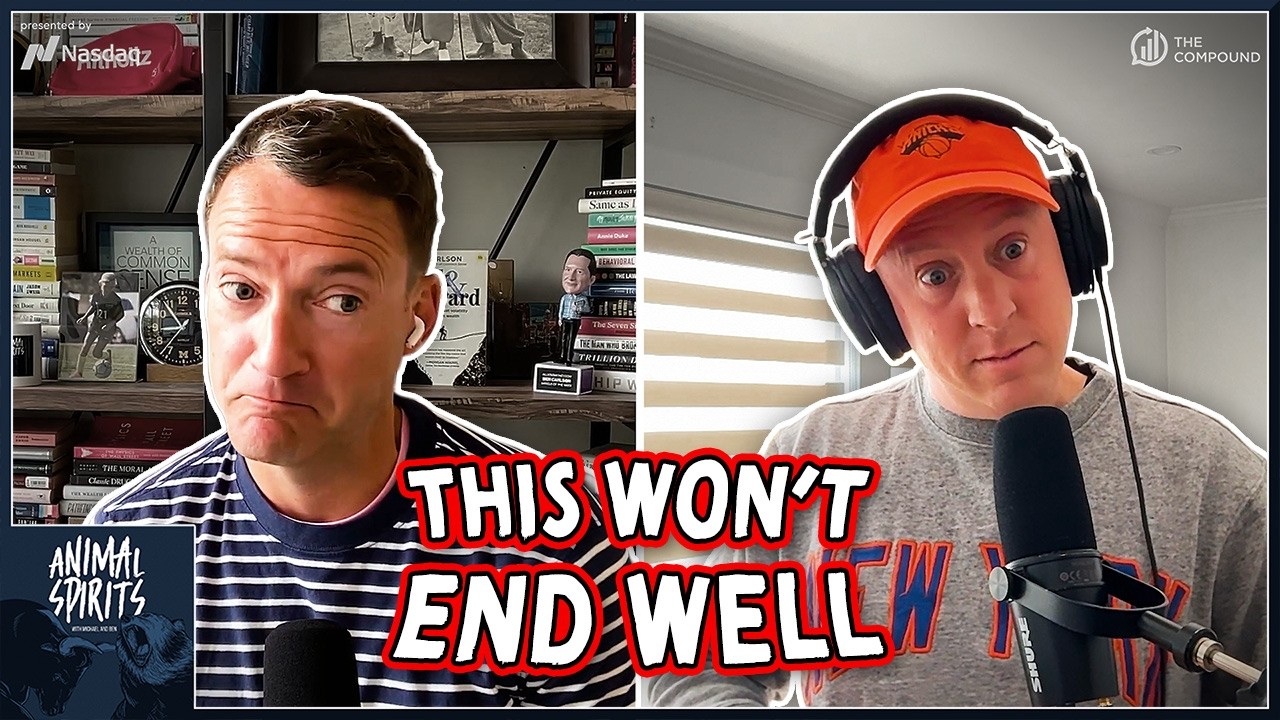
Batnick, Carlson Say AI Tech Surge Validates Market Valuation
The Compound
Rapid corporate earnings growth and robust fiscal deficits justify high stock valuations, keeping the current technology market rally grounded in solid economic fundamentals rather than speculative bubble dynamics.
## Background
Published by The Compound on YouTube on May 13, 2026, episode 464 of Animal Spirits features hosts Michael Batnick and Ben Carlson discussing financial markets, economic trends, and personal finance. The episode background covers Ben's new book *Risk & Reward*, an aggressive stock market melt-up, semiconductor stocks, AI portfolios, financial nihilism among young adults, longevity risk, and crypto margin trading.
## TL;DR
Ben Carlson opens by introducing his new book *Risk & Reward*, which explores the balance between historical market crashes and long-term gains. The hosts then analyze the ongoing stock market rally, arguing that massive surges in semiconductor and memory stocks like Micron and SanDisk are backed by real earnings growth rather than pure speculative bubble dynamics. They evaluate South Korea's economic shift, how AI is altering financial advisory services and white-collar career pathways, macro trends like GLP-1 adoption, and the financial mechanics facing retirees and younger investors.
## Atmosphere & style
The episode has a conversational, banter-filled, and upbeat atmosphere typical of two longtime friends and colleagues bouncing financial ideas off each other. The tone balances lighthearted humor—such as self-deprecating jokes about book promo, chart crimes, and youth sports chaos—with sharp, analytical market commentary. It feels approachable and candid, translating complex economic metrics and market cycles into grounded, relatable dialogue.
## Key takeaways
- [00:41](https://www.youtube.com/watch?v=mbkDuV9BW6s&t=41s) Ben Carlson released his new book, "Risk & Reward," structuring alternating chapters of market risks and rewards to help both timid and overly speculative investors navigate cycles.
- [08:00](https://www.youtube.com/watch?v=mbkDuV9BW6s&t=480s) The S&P 500 staged an aggressive rally of 16% in just six weeks, reigniting market melt-up debates amid the current 10-year Nasdaq 100 run of nearly 650%.
- [12:06](https://www.youtube.com/watch?v=mbkDuV9BW6s&t=726s) Semiconductor and memory stocks now represent 22% of the S&P 500 market cap, led by extreme movers like SanDisk and Micron.
- [14:51](https://www.youtube.com/watch?v=mbkDuV9BW6s&t=891s) Despite massive price gains, strong earnings growth has kept key market multiples reasonable, making this rally fundamentally driven rather than a classic speculative valuation bubble.
- [23:09](https://www.youtube.com/watch?v=mbkDuV9BW6s&t=1389s) South Korea's stock market surged 250% over the past decade—driven almost entirely by the last 12 months of semiconductor demand—surpassing Canada and the UK to become the 7th largest globally.
- [27:11](https://www.youtube.com/watch?v=mbkDuV9BW6s&t=1631s) AI tools are commoditizing basic portfolio construction, raising client expectations while threatening to disrupt traditional white-collar apprenticeship training models.
- [35:16](https://www.youtube.com/watch?v=mbkDuV9BW6s&t=2116s) Hyperscaler AI capital expenditure is projected to hit $1.1 trillion next year (3.3% of US GDP), making an AI spending slowdown a major potential recession catalyst.
- [39:44](https://www.youtube.com/watch?v=mbkDuV9BW6s&t=2384s) Automation and AI systems are hollowing out entry-level roles across tech and corporate sectors, driving down entry-level hiring by more than 50% from pre-pandemic levels.
- [53:18](https://www.youtube.com/watch?v=mbkDuV9BW6s&t=3198s) Adoption of GLP-1 weight-loss drugs has expanded rapidly, reshaping consumer behavior and contributing to significant market value declines for major alcohol manufacturers.
- [01:02:59](https://www.youtube.com/watch?v=mbkDuV9BW6s&t=3779s) The Great Wealth Transfer will primary flow first between spouses due to women's higher average longevity, before transferring to millennials in later decades.
## Detailed walkthrough
### [00:00](https://www.youtube.com/watch?v=mbkDuV9BW6s&t=0s) Nasdaq Global Index Solutions Sponsor Note & Intro
The episode kicks off with a sponsor message from **Nasdaq Global Index Solutions** and their *Blueprint of Tomorrow* series. They highlight how Nasdaq Global Indexes designs benchmarks across asset classes, sectors, and geographies to help investors stay in sync with a fast-changing market environment and build the financial infrastructure of the future.
Following the opening, host Ben Carlson dives right into self-promotion—a task he admits is his least favorite thing to do in the content game. He brings up a quote from financial planner Michael Kitces, who famously noted that "blogging is marketing for introverts," which Ben identifies with deeply. Ben announces the release of his brand-new book, *Risk & Reward* (mistranscribed in the audio as *Risk Parity*).
- **Key Takeaway:** Michael Kitces' quote: *"Blogging is marketing for introverts."*
[00:41](https://www.youtube.com/watch?v=mbkDuV9BW6s&t=41s) Ben’s New Book: *Risk & Reward*
Ben expresses immense pride in *Risk & Reward*, calling it "the best thing I've ever written" and explaining that it distills over 12 years of his professional writing and market analysis into a single volume. He gives a shout-out to his production team: Daniel, who designed a sharp cover that exceeded expectations, and "Chart Kid Matt," who formatted over 50 charts and tables throughout the book to ensure the visual data looked top-tier.
Michael Batnick presses Ben on how this book compares to his past work, such as *A Wealth of Common Sense* or *Organizational Alpha*. Ben explains that while his prior book *Don't Fall for It* was a fun project, it was outside his core domain. *Risk & Reward* directly hits his sweet spot by incorporating the four pillars that legendary investor William Bernstein (referred to in conversation as Phil Bernstein) identified as necessary for investment success:
1. **Interest in the Process**
2. **Math Horsepower**
3. **Deep Understanding of Financial History**
4. **Behavioral Psychology and Emotional Control**
Addressing the structure of the book, Ben notes that any time he writes about long-term investing, skeptics push back with endless "what-ifs." To tackle this head-on, Ben channels the famous final rap battle in *8 Mile* where Eminem preemptively lists every negative flaw about himself:
> "In the rap battle at the end of *8 Mile*... Eminem just does a self-deprecating thing and he says all the bad things about himself... I wanted to put it out there like, 'Okay, these are all the bad things that can and have happened in the past 100 years. Let's lay it out there.'"
By structuring the book as alternating chapters of Risk (the context, crashes, and historical pain) and Reward (how to survive them and achieve long-term growth), Ben highlights how risk and reward are attached at the hip, much like "love and marriage."
Ben shares a funny behind-the-scenes story about recording the audiobook himself. Initially, he wanted to hire "some British guy with an accent" to read it so he wouldn't have to, but colleagues reminded him that as a podcast host, listeners would expect his own voice. He spent nearly two full days in a studio working with a London-based producer from his publisher, Harriman House.
The producer, who had no background in finance, admitted halfway through that listening to Ben recount historical market catastrophes—such as the Great Depression, the 1970s stagflation, and the 1980s interest rate shocks—was deeply "anxiety-inducing," though he appreciated how Ben tied it all together with actionable context. After Ben finally found his reading rhythm on the second day, the producer made him re-record the first three chapters from scratch.
When asked who the book is written for, Ben outlines two distinct types of market participants:
- **The Fetal-Position Investors:** Those stuck in the conservative mindset of the 2010s who let every negative drumbeat scare them away from equities.
- **The Over-Risk Takers:** Those in the current market cycle taking on excessive risk under the delusion that "the good times will never end."
Michael draws a parallel between market cycles and physical illness: when you are sick, all you want is to be healthy, but once healthy, you completely forget what being sick felt like. Bear markets feel like the sun will never shine again, while bull markets make investors forget that pain exists altogether.
- **Book Details:** ~200 pages, over 50 charts/tables, available via paperback, Kindle, and audiobook (read by Ben Carlson).
- **Publisher:** Harriman House.
Transitioning back to the broader stock market, Michael notes how rapidly recent geopolitical and economic anxieties have subsided. The fear surrounding war and oil spiking to $200/barrel cleared up, allowing fundamental earnings momentum to reassert itself. As a result, the S&P 500 staged a dramatic rally, gaining **16% in just 6 weeks**—its most aggressive short-term gain since the Great Financial Crisis (GFC).
This rapid ascent has reignited widespread chatter about a market "melt-up." While skeptics constantly warn "this won't end well" or call it "textbook late-cycle behavior," Ben argues that people say this every three years during a bull market. He urges investors to keep an open mind rather than assuming every run is immediately over.
Ben shares a chart created by Chart Kid Matt comparing historical 10-year total return bull runs ("measurable markets"):
- **1920s Roaring Twenties (Dow):** Up ~500%
- **1950s Bull Market (S&P 500):** Up ~500%
- **1980s Japanese Asset Bubble (Nikkei):** Up >500%
- **1990s Dot-Com Era (Nasdaq):** Up ~800%
- **Current 10-Year Run (Nasdaq 100):** Up nearly **650%**
Michael points out a key structural distinction: unlike the continuous upward trajectories of the 1980s or 1990s (which had very few 20% drawdowns), the current 10-year period has experienced numerous severe resets, including the 2020 crash and the 2022 bear market. Ben suggests that modern market structure may create more frequent, short-lived 1- to 2-month "gnarly crashes" rather than multi-year prolonged drawdowns.
[12:06](https://www.youtube.com/watch?v=mbkDuV9BW6s&t=726s) Semiconductor Madness: Micron, SanDisk, & The AI 11
To illustrate the sheer volatility and speed of individual stock moves within this melt-up, Michael brings up **Micron Technology**. Following a massive earnings beat in Q1, Micron's stock unexpectedly plummeted 30%—dropping from $460 on March 18th to $320 on March 30th in just a few trading sessions. Yet, just weeks later, the stock surged all the way to **$800**.
The narrative has shifted away from the "Magnificent Seven" toward semiconductor and memory stocks:
- **Market Cap Weight:** According to data from Bespoke, semiconductor stocks in the SOX index now make up **22% of the S&P 500 market cap**, up from just **6%** in April 2025.
- **Extreme Performers:** **SanDisk** has exploded by an astonishing **4,000%** over the past year.
- **The AI 11:** Market strategist Ed Yardeni coined the term "AI 11" to track semi and hardware names—including SanDisk, Intel, Western Digital, Micron, and South Korean chipmakers—which are drastically outperforming the traditional Mag 7 mega-caps.
Ben jokes that the silver lining to this melt-up is that market commentators no longer need to complain about Mag 7 market concentration. Michael emphasizes that while chart patterns look insane, these surges are ultimately backed by eye-popping fundamental earnings growth.
<ElicitationsGroup message="Where would you like to go next with this transcript?">
<Elicitation label="Analyze the semiconductor rally dynamics" query="Break down the semiconductor rally mentioned in the transcript, focusing on the SOX index weight shift and earnings fundamentals."/>
<Elicitation label="Explore Ben Carlson's market cycle principles" query="Summarize Ben Carlson's key principles on managing risk vs. reward during late-stage bull markets based on this episode."/>
</ElicitationsGroup>
Here is a detailed, faithful walkthrough covering Part 2 of the transcript.
---
[14:51](https://www.youtube.com/watch?v=mbkDuV9BW6s&t=891s) The Fundamental Logic Behind the Tech Melt-Up
Michael Batnick and Ben Carlson open the discussion by examining why the current stock market rally—despite reaching eye-popping levels—differs significantly from past speculative manias. Michael points out that this is "the melt-up that makes the most sense" because corporate fundamentals have actually improved alongside the price action.
To illustrate this, Michael brings up Micron Technology. While it might sound unbelievable to casual observers, Micron is up 180% year-to-date, and over the past full year, the stock has surged an astounding 800%. Despite this massive 800% run-up, Micron is trading at just 9.7 times estimated 2026 earnings (and roughly 7 times 2027 estimates), while SanDisk trades at 11.5 times 2026 earnings (and 8.4 times 2027 estimates).
Michael explains why these memory names appear so cheap on a forward P/E basis: memory chips are inherently among the most cyclical businesses in existence. Investors who have seen this cycle play out repeatedly refuse to pay up or award high multiples to peak earnings. However, the current cycle is being propelled by an insatiable, overwhelming demand for compute power. Michael highlights a comment from Anthropic's Dario Amodei, noting their compute usage grew around 80 times in a single quarter, illustrating how AI scale is pushing cloud infrastructure to its limits.
Ben joins in with research from Duality Research showing that the forward P/E ratio for the overall S&P 500 sits at 21 times—which is actually *lower* than where it was trading in January 2025, even though the broader index has climbed 30% since that time. Earnings growth is outpacing stock price increases. Michael references charts compiled by Nick Maggiulli (Chart), pointing out that Nvidia has technically gotten cheaper on a forward P/E basis despite its astronomical price increase. As Michael explains, when a company scales its earnings from $8 billion to $60 billion, it becomes mathematically impossible to maintain a massive premium multiple without engulfing the entire index—if Nvidia maintained its premium valuation, it would make up 15% of the S&P 500 on its own.
- Wall Street Journal reporter Gunjan Banerji noted that the S&P 500 P/E ratio has dropped 4% year-to-date even as the index rose 8%.
- The ratio of valuation (forward P/E) relative to forward profit margins remains well below its historical trendline, making the broader market look surprisingly cheap relative to corporate profitability.
---
[18:42](https://www.youtube.com/watch?v=mbkDuV9BW6s&t=1122s) Redefining Market Bubbles and Evaluating Retail Sentiments
Addressing the term "bubble," Michael argues that the label is thrown around far too loosely in financial media. He emphasizes that a true bubble occurs only when future earnings and reality cannot mathematically catch up to present stock prices—referencing Cliff Asness’s classic definition of Japan's 1980s stock market crash, where fundamentals were completely detached from reality. A stock trading at 10 times earnings that might fall 70% in a cyclical downturn does not mean it was in a valuation bubble.
Ben and Michael transition into evaluating investor behavior, pointing out the stark split in current retail market dynamics:
* **Charles Schwab STAX (Trading Activity Index):** Schwab reported one of its largest month-over-month declines in customer activity since 2021.
* **Citadel Retail Equity Flows:** Citadel's market-making platform showed retail net buying accelerating violently in April into the 98th percentile of all weekly inflows since 2019.
Michael notes that these conflicting data points prove there is no single "pulse of the market." While self-directed retail accounts on platforms like Robinhood are stomping on the gas, mature long-term investors at traditional brokerages like Schwab are sitting tight and letting their portfolios ride.
```
TWO DIFFERENT RETAIL PULSES
[ Schwab Custodial Investors ] [ Citadel / Retail Traders ]
│ │
▼ ▼
Activity dropped sharply Net buying hit the 98th
(Holding existing positions) percentile of weekly flows
```
Ben brings up research from Warren Pies comparing the current market environment to the 2000 Tech Bubble. A crucial macroeconomic difference lies in fiscal policy: in the year 2000, the US government was running a 2% budget surplus, whereas today it runs a massive 6% fiscal deficit. While market bears previously blamed low Fed interest rates for artificially pumping up stocks in the 2010s, they now point to government deficit spending as a reason to sell. Ben and Michael argue the opposite: a 6% government deficit flows directly into corporate revenues and bottom-line profits, offering a structural reason for investors to stay invested rather than get out.
---
[23:09](https://www.youtube.com/watch?v=mbkDuV9BW6s&t=1389s) South Korea's AI Stock Vertical Surge and Global Shifts
The hosts pivot to foreign equity markets, focusing on the vertical chart breakout in South Korean equities via the iShares MSCI South Korea ETF (EWY). Ben notes that South Korean stocks have gained 250% over the last decade—and virtually the entire gain occurred within the last 12 months.
Michael interrupts to tease Ben about using linear charts instead of logarithmic scale for 25-year charts, leading to a friendly debate over "chart crimes" and visual point distortions on social media.
```
+-------------------------------------------------------------+
| SOUTH KOREAN MARKET REALIGNMENT |
+--------------------------+----------------------------------+
| Metric / Ranking | Data / Context |
+--------------------------+----------------------------------+
| 10-Year Index Return | +250% (achieved in past 12 mos) |
| Global Stock Market Rank | #7 worldwide |
| Surpassed Markets | Canada, United Kingdom |
| Key Heavyweights (50%) | Samsung Electronics, SK Hynix |
+--------------------------+----------------------------------+
```
Data from analyst Daniel Van Aalst highlights that forward earnings per share (EPS) for South Korean equities have shot up vertically alongside their share prices, driven almost entirely by the memory and semiconductor demand transformation. Ben references data from Nick Maggiulli showing that South Korea recently surpassed both Canada and the United Kingdom to become the world's 7th largest stock market.
Ben reflects on the historical perspective: 75 to 100 years ago, South Korea was a nation devastated by war and split in two, while the United Kingdom represented a dominant world empire. Today, the UK stock market is smaller than South Korea's. Michael adds that while critics frequently compare the US to the fall of the Roman Empire, the UK is a far more accurate modern example. Additionally, emerging markets overall are experiencing their best rally in 17 years—up 23% over a single six-week period—as foreign indices transition from traditional energy components into technology and AI plays.
---
[27:11](https://www.youtube.com/watch?v=mbkDuV9BW6s&t=1631s) How AI is Reshaping Financial Advisory Services
Michael recaps a recent podcast episode he hosted on *Talking Wealth* with Michael Kitces, discussing how artificial intelligence will transform the financial advisory business. Michael contends that AI will raise consumer education and engagement levels across the board. While this represents a threat to disengaged advisors who do the bare minimum, it creates massive opportunities for high-quality practices.
Ben asserts that the 2020s represent the single most disruptive decade for wealth management in history:
1. **2020 Remote Shift:** The instant normalization of Zoom calls eliminated geographic boundaries, allowing clients to hire advisors anywhere in the country rather than relying on local firm offices.
2. **AI Knowledge Demands:** AI models give clients immediate access to financial technical details, forcing advisors to communicate at a much higher level.
Michael shares an anecdotal text message he received from an advisor friend:
> "Watching you and Michael right now—fun story: I literally had a conversation like this last week. The client ended up staying with me instead of going somewhere else in part because everything I told them was closer to what Claude said than the other guys did."
Finally, Ben highlights a Wall Street Journal article by Gunjan Banerji, where she tasked ChatGPT with managing a $1,000,000 taxable portfolio for a long-term growth investor with moderate risk tolerance. Ben and Michael remark that the resulting portfolio looked almost identical to an established robo-advisor asset allocation. While experts can nitpick minor details—such as slightly cash-heavy allocations—it proves that fundamental portfolio construction is becoming completely commoditized by AI models.
<ElicitationsGroup message="To explore the market dynamics and economic trends from this episode further:">
<Elicitation label="Analyze the fundamental differences between the 2000 Tech Bubble and today's market" query="Analyze the key differences between the 2000 dot-com bubble and the current stock market rally, focusing on forward P/E ratios, profit margins, and fiscal policy."/>
<Elicitation label="Examine the concentration of South Korean equity indices and memory stocks" query="Explain how South Korea's stock market surged to become the 7th largest in the world, including the role of SK Hynix and Samsung in the global AI supply chain."/>
</ElicitationsGroup>
[30:00](https://www.youtube.com/watch?v=mbkDuV9BW6s&t=1800s) Active ETFs and Launching the Porterhouse Momentum Strategy
Michael Batnick and Ben Carlson wrap up a discussion on how basic asset allocation is rapidly becoming a commoditized service. Referring to Bloomberg’s Eric Balchunas’s recent appearance on *The Compound & Friends*, Ben notes that advisers will increasingly need distinct strategies to differentiate themselves, making him fundamentally bullish on active ETFs. Taking the cue, Michael offers a plug for Ritholtz Wealth Management’s internal project known as "Porterhouse," which they have been developing since the winter in partnership with Franklin Templeton. The strategy originated from the "best stocks" list that Josh Brown and Shawn Langlois run on CNBC. While screens can easily highlight great companies or top performers, turning a raw buy list into an actual portfolio requires quantitative discipline around turnover, trading, and concentration that Ritholtz historically outsourced to momentum ETFs.
Both hosts have been personally invested in the rules-based momentum strategy since January to iron out operational kinks ahead of its June launch for Ritholtz clients. Michael admits that momentum has enjoyed an extraordinary run over the first five months of the year, joking that the strategy "might not ever have a better period." He shares an anecdote about a constituent stock currently trading at $2,500 per share—a stock he candidly admits he would never have bought on his own, or would have foolishly sold at $1,200 after buying at $1,000, forgetting it was at $500 less than a year prior. Ben emphasizes that removing human emotion via a systematic framework is precisely why he loves the approach, especially as someone who has given up on picking individual stocks. Crucially, unlike traditional momentum products that stay fully invested during bear markets by holding relative winners in defensive sectors, this strategy shrinks its buy list to zero and moves into cash when no stocks meet its fundamental and momentum criteria. Ben compares this strict discipline to how investor John Bogleman used to manage money.
- Ritholtz Wealth partnered with **Franklin Templeton** to build and launch the proprietary momentum strategy in **June** for clients.
- Michael and Ben have been personally test-investing in the strategy since **January**.
- One underlying stock in the portfolio reached **$2,500 per share**, illustrating how rules-based models force investors to ride high-flyers they would otherwise trim too early.
- Unlike traditional relative-momentum funds, this strategy can go entirely to cash if no equities satisfy its momentum and quality benchmarks.
[35:16](https://www.youtube.com/watch?v=mbkDuV9BW6s&t=2116s) Greg Ip on AI CapEx, Defense Spending, and Recession Risks
The discussion shifts to economic commentary by *The Wall Street Journal's* Greg Ip, who argues that artificial intelligence is distorting economic metrics by artificially boosting overall growth figures while masking underlying weakness in the labor market. Ip presents the provocative, contrarian thesis that a potential crash or pullback in AI capital expenditure might not actually harm the broader economy as severely as feared. Citing Morgan Stanley estimates, Ip highlights that tech hyperscalers are projected to spend $800 billion this year and $1.1 trillion next year on AI infrastructure. At 3.3% of US GDP, next year's projected AI CapEx would officially surpass total national defense spending.
Ben and Michael vehemently push back against Ip's optimistic take on an AI pullback. While Ip notes that AI data center construction is concentrated in just 33 counties accounting for 72% of all facilities—meaning a slowdown in building wouldn't create a nationwide construction slump—Michael and Ben believe a major retrenchment in AI spending would almost certainly trigger a broader economic downturn. Michael observes that recent market action has firmly converted him to the "wealth effect" argument championed by Josh Brown: record equity wealth is directly driving consumer borrowing and real-world spending habits. Michael places the probability of a full-blown recession at "90 plus percent if the AI spending rolled over," arguing that a severe pull-back in hyperscaler budgets would derail the soft landing.
- **Hyperscaler AI CapEx Projection:** $800 billion spent this year, scaling to **$1.1 trillion** next year.
- **GDP Comparison:** AI spending is set to reach **3.3% of US GDP**, exceeding the federal national defense budget.
- **Geographic Concentration:** Just **33 counties** contain **72%** of all AI data centers across the United States.
- Michael estimates a **90%+ probability of recession** if major tech firms significantly pull back on their AI capital expenditures.
[38:13](https://www.youtube.com/watch?v=mbkDuV9BW6s&t=2293s) Disney Earnings and the Reality of the K-Shaped Economy
Turning to corporate earnings, Michael highlights commentary from Disney's latest earnings call as a practical gauge of consumer health. Disney executives reported zero pushback or changes in consumer behavior despite elevated gas prices, noting strong forward bookings across properties. Disney World park attendance is pacing strongly upward, while booked occupancy for their cruise line remains steady year-over-year despite a massive 40% increase in total cruise capacity. Ben remarks that Disney earnings calls consistently sound so bullish that one would assume the stock must be on fire.
The commentary sparks a debate over the widely discussed "K-shaped economy." While acknowledging that the economic recovery is undeniably split, Michael argues that the upper arm of the K represents a far larger portion of the population than just the top 1% or 10%. Because Disney vacations are exceptionally expensive, the sustained surge in park and cruise bookings proves that discretionary spending power extends deep into the upper 50% to 60% of households. Ben adds that while affluent visitors pay extra for VIP guides and line-skipping privileges, the crowds filling the parks reflect a broad cross-section of everyday American families continuing to spend aggressively.
- Disney successfully absorbed a **40% increase in cruise capacity** while keeping booked occupancy rates level with the prior year.
- Disney World park bookings continue to pace strongly higher, defying inflationary pressures and high gas prices.
- The hosts contend that high spending at Disney demonstrates that upper-tier consumer strength spans the top **50% to 60% of households**, rather than merely the ultra-wealthy top 1%.
[39:44](https://www.youtube.com/watch?v=mbkDuV9BW6s&t=2384s) How AI Is Breaking the White-Collar Apprenticeship Model
Michael brings up an influential essay on AI published by Baillie Gifford and shared socially by market commentators like Jesse Livermore, calling it "the best thing that I've seen on what AI is going to do to our brains" and society. The article details how generative AI is dismantling the traditional white-collar apprenticeship model that has sustained professions like law, accounting, and medicine for centuries. Historically, junior professionals developed genuine judgment by doing tedious grunt work under the direct supervision of senior partners who corrected their early mistakes. By automating this administrative workload, firms achieve immediate efficiency but destroy the essential training pathway required to build future experts.
The authors note that this dynamic is already unfolding in real-time. For example, Shopify’s CEO recently mandated that teams must prove why AI cannot perform a job before requesting any additional headcount. While this logic delights investors by expanding operating margins—with Michael noting he owns Shopify stock himself—it creates a severe structural problem: entry-level tech hiring has plummeted more than 50% below pre-pandemic levels. Rather than replacing entire jobs overnight, AI hollows out occupations from within by automating 30% to 40% of standard workloads. This leaves corporations leaner today, but without a pipeline of trained talent to step into leadership tomorrow, widening an institutional rift between senior experts and stranded recent graduates.
- **Entry-level hiring** at major technology companies has dropped by **more than 50%** compared to pre-pandemic baselines.
- Generative AI typically automates **30% to 40%** of a white-collar employee's routine workload rather than replacing roles entirely.
- Shopify instituted a policy requiring managers to demonstrate that AI cannot handle tasks before approving new employee hires.
[42:16](https://www.youtube.com/watch?v=mbkDuV9BW6s&t=2536s) Financial Nihilism and the Risk of Unemployed Educated Youth
Continuing with the Baillie Gifford piece, Michael quotes a warning regarding the three career trajectories facing young workers lacking pre-existing expertise: orchestrating AI tools (a fragile niche), moving into physical trades and caregiving where human presence remains mandatory, or getting trapped in the middle. The essay warns that this stranded middle class of educated, underemployed youth poses severe political consequences, as historically, "large populations of educated but unemployed young people are among the most reliable predictors of social instability." Ben agrees, noting that this dynamic explains the pervasive sense of "financial nihilism," cynicism, and pessimism currently observed among young adults.
Ben and Michael reflect on how drastically entry-level career dynamics have shifted since they entered the workforce. Ben recalls his very first job out of college as a performance analyst at a small firm—a position where he spent hours manually pulling paper statements and calculating returns in spreadsheets. He points out that his entire entry-level job simply "doesn't exist today" because software and automated systems handle those calculations instantly. While early career workers used to be wide-eyed and optimistic, Ben admits he completely understands why today's youth feel defeated when facing skyrocketing housing costs alongside AI systems that threaten to erase the bottom rungs of the corporate ladder.
[44:19](https://www.youtube.com/watch?v=mbkDuV9BW6s&t=2659s) Manual Learning vs. AI Brain Rewiring
Ben reflects on the foundational years of his career, recalling how he used Lotus 1-2-3 to manually input performance figures and calculate investment returns by hand. Every Friday, his boss would bring the team to a whiteboard to teach core concepts regarding asset allocation and investment guidelines. For Ben, calculating ranges of returns across stocks, bonds, and cash built a deep, tactile understanding of how markets function. That hands-on training created a level of fluency in Excel and financial charting that he relies on to this day. He worries that as automated tools strip away these grunt-work learning experiences, younger generations will be forced to teach themselves the fundamentals without workplace mentorship.
This leads into a broader discussion about a recent article exploring the neurobiology of cognitive outsourcing. Ben and Michael contrast historical shifts in literacy with the current artificial intelligence revolution. Two centuries ago, only about 12% of the world's adult population could read, compared to roughly 87% today. Neurological research demonstrates that acquiring literacy physically rewired human brain matter; outsourcing cognitive tasks to AI is poised to alter physical brain structure in a similarly profound way.
- **Historical Literacy Shift:** Adult literacy expanded from 12% 200 years ago to 87% today, fundamentally altering human neurobiology.
- **Lotus 1-2-3 Legacy:** Ben attributes his lifelong Excel proficiency to years of manual calculation routines early in his career.
---
[45:49](https://www.youtube.com/watch?v=mbkDuV9BW6s&t=2749s) AI Headcount Tradeoffs and the "Tax the Robots" Proposal
The conversation shifts to corporate earnings call commentary, specifically highlighting remarks from Uber's Chief Financial Officer. When Uber set its 2026 budget back in November, executives vastly underestimated the efficiency gains AI tools would provide. CEO Dara Khosrowshahi and the executive team explicitly acknowledged trading off incremental human headcount in favor of AI implementation, a reality Michael describes as genuinely scary for the workforce.
Michael argues that if he were a politician, he would aggressively target AI companies and automation tools with heavy tax rates. The co-hosts joke about a political platform centered on lowering individual income taxes for citizens while heavily taxing AI technology to capture and redistribute corporate wealth.
> "We're going to lower taxes for you, the citizen. We're going to tax the [expletive] out of these robots and AI companies."
- **Corporate Headcount Tradeoff:** Uber's management team admitted to swapping planned human hiring for AI tools after underestimating their impact during late-2025 budget planning.
---
[46:28](https://www.youtube.com/watch?v=mbkDuV9BW6s&t=2788s) Chipotle's AI Customer Service Success and the Rise of Voice AI
Ben shares a chaotic weekend story involving his daughters' packed sports schedules, which featured five games in a single Saturday across basketball and soccer tournaments. Attempting to feed his kids before an early game, Ben placed a Chipotle pickup order for 11:15 a.m. Upon arrival, the restaurant was delayed, no food was ready, and staff told waiting customers they could not cancel online orders on-site. Ben left without the food. Later that evening, the girls still wanted Chipotle, so Ben ordered delivery via DoorDash. To his horror, DoorDash delivered the original morning order that had been sitting out on the counter for over six hours. After his wife insisted he throw the spoiled food away, Ben sought a refund without navigating traditional phone queues.
Using ChatGPT to inquire about refund procedures, Ben was directed to Chipotle's website AI customer service agent. In under 30 seconds, the chatbot identified the order and issued a full refund, marking Ben's first genuinely positive customer service interaction with an AI agent. Michael connects this to an article by tech journalist Eric Newcomer on voice AI startups, highlighting Sierra—which recently raised $950 million at a $16 billion valuation—and WhisperFlow, a voice-dictation app rapidly gaining traction among corporate users.
- **Youth Sports Marathon:** Five separate games across two daughters in a single Saturday.
- **Chipotle Incident:** Morning food order sat out for over six hours before being mistakenly delivered by DoorDash for dinner.
- **AI Venture Valuations:** Startup Sierra achieved a $16 billion valuation on a $950 million funding round; spend data from Ramp identified WhisperFlow as the third fastest-growing software vendor.
---
[49:54](https://www.youtube.com/watch?v=mbkDuV9BW6s&t=2994s) Tech Frustrations: Group Messaging, Knicks Playoffs, and the "Irish Exit"
Michael details his frustration with mobile user experiences, targeting Apple's dictation and group messaging features. While he enjoys WhisperFlow's ability to turn stream-of-consciousness speech into structured prose, Apple forces users out of native messaging apps into third-party interfaces, creating a clunky experience. Michael then airs two primary grievances with Apple software:
1. **Multi-Group Broadcasts:** As a passionate New York Knicks fan following their playoff run, Michael wants a feature to broadcast a single text to multiple distinct group chats simultaneously without repetitive copy-pasting. He remains wildly optimistic about the Knicks' postseason prospects against teams like the Detroit Pistons, whose secondary scoring relies heavily on Tobias Harris and Duncan Robinson.
2. **Silent Group Exit ("Irish Exit"):** Michael describes being trapped in a spring flag football group chat with over 25 parents. Even though the season ended six weeks prior and he attempted to mute the thread, notifications continue to ping. Because Apple explicitly broadcasts a system message when a user leaves a group text, Michael feels unable to exit without public embarrassment.
> "Why do you need to force, why do you need to embarrass somebody? I want to Irish exit the conversation."
- **Pistons Roster Critique:** Michael notes Detroit's lack of depth beyond their top star, pointing out that Tobias Harris and Duncan Robinson serve as their second and third options.
- **Group Chat Dilemma:** Flag football group text contained over 25 parents and remained active six weeks after the season concluded.
---
[53:18](https://www.youtube.com/watch?v=mbkDuV9BW6s&t=3198s) GLP-1s, Alcohol Decline, and Physical Transformations
Michael praises a concise newsletter format popularized by Scott Galloway and Ed Elson, comparing its back-and-forth structure to ESPN's *Pardon the Interruption*. Ben notes his recent appearance on the *Prof G Podcast* alongside Ed Elson and Ramit Sethi discussing high-earning households living paycheck-to-paycheck.
The discussion pivots to GLP-1 weight loss medications like Ozempic, with Michael admitting he severely underestimated their macro-economic impact. Major global alcohol manufacturers have lost more than $830 billion in market value since 2021. A study of 14,000 Weight Watchers members revealed that roughly 50% of regular drinkers reduced their alcohol intake after starting a GLP-1 regimen. Ben and Michael note the rapid facial and body transformations associated with significant GLP-1 weight loss, contrasting standard 8-pound weight shifts with 27-pound drops.
- **Market Value Loss:** Top-listed global beer, wine, and spirits companies have shed over $830 billion in equity value since 2021.
- **Behavioral Shift:** Approximately 50% of surveyed patients reduced alcohol consumption after starting GLP-1 treatments.
---
[55:03](https://www.youtube.com/watch?v=mbkDuV9BW6s&t=3303s) Home Fitness Gear, App-Blocking "Bricks", and Neighborhood Speed Bumps
Michael briefly considers whether he should take a weight-loss drug for his stomach before reaffirming his commitment to exercise routines. To protect his wrists during push-ups, he demonstrates a newly purchased ergonomic push-up board with adjustable handles. Ben teases Michael about having weak wrists and upper-body strength, prompting Michael to defend his bone density and highlight his switch to Peloton home workouts instead of paying for a personal trainer—even while acknowledging he pays monthly subscription fees for a Peloton bike he hasn't ridden in four years.
To combat screen addiction and impulse buying from Instagram ads, Michael showcases "Brick," a physical device that locks selected smartphone applications. He keeps one unit at home and another in his travel backpack, locking his social media apps by default and unblocking them only briefly to post content. Ben concludes the segment with a story about his small, 20-house cul-de-sac neighborhood. With a 15 mph speed limit and numerous young children playing, several teenage drivers were driving aggressively, prompting the homeowners association to mandate speed bump installations.
- **Peloton Disconnect:** Michael continues paying the monthly Peloton subscription despite not using the physical exercise bike for four years.
- **App Management Strategy:** Michael utilizes two physical "Brick" hardware tokens (home and backpack) to lock distraction-heavy mobile apps.
- **Neighborhood Profile:** Ben's cul-de-sac consists of 20 home sites with a 15 mph limit where speed bumps were enacted due to teenage drivers.
[58:03](https://www.youtube.com/watch?v=mbkDuV9BW6s&t=3483s) Speed Bumps, Sunlight, and Sleep Masks
Michael and Ben wrap up their discussion on setting behavioral guardrails, using speed bumps as a metaphor for forcing oneself to slow down. Michael notes that speed bumps can be deeply annoying, though Ben points out that teenagers in his neighborhood seem completely undeterred, flying right over them and risking damage to their cars. Nevertheless, Michael insists that sometimes a person needs an external friction point—a physical or mental "brick"—to halt bad habits.
To illustrate his need for a firm behavioral boundary, Michael shares a personal struggle regarding his morning routine. The design of his home lets an overwhelming amount of morning sunlight stream into his bedroom from both the front and back windows, particularly through a half-cylinder window situated directly above the doors. Because the sun blasts him in the face around 5:50 AM, he finds himself awake at 6:00 AM every morning and immediately wasting 45 minutes scrolling through Instagram. To break this cycle and avoid waking up prematurely under a harsh morning light, Michael resorted to wearing a sleep mask. Expecting ridicule, he asks Ben if he has ever worn one, acknowledging how absurd he feels using it.
- **Morning Distraction:** Michael admitted to spending 45 minutes on Instagram every morning after being prematurely woken up by the sun at around 5:50 or 6:00 AM.
---
[59:42](https://www.youtube.com/watch?v=mbkDuV9BW6s&t=3582s) The Soccer Dad Crypto Update: Margin Loans and MicroStrategy Call ETFs
Ben shifts the conversation to an update on a crypto storyline he first mentioned a year prior involving parents from his kid's soccer games. About a year ago, two soccer dads—one an enthusiastic crypto evangelist who had convinced the other over drinks—approached Ben on the sidelines to discuss Bitcoin. At a recent game, the duo gave Ben a sheepish look, like children admitting to something wrong, and revealed their latest financial maneuver. Ben admitted to them that he personally sold half of his Bitcoin when it reached $100,000. The dads then explained that when Bitcoin hit $100k, they took out a margin loan against their crypto holdings at a 6% to 7% interest rate through their crypto brokerage.
Because the platform prohibited using margin funds to buy more crypto directly, they transferred the cash off the exchange. Convinced they had found a "free money" trick, they invested the borrowed funds into a leveraged MicroStrategy call option ETF. The strategy backfired when the market turned, causing the product to crash. For the past six to twelve months, they have been forced to continuously feed fresh cash into their crypto accounts to meet strict margin requirements—which Ben notes were surprisingly high, around 80%. Fortunately, because crypto recently rebounded, the dads were able to laugh off the blunder, recognizing the absurdity of what they had done. Michael frames it as a classic rite of passage, noting that almost every investor makes a foolish move at some point and that paying the piper is often the only way to learn.
- **Interest Rate:** The soccer dads borrowed against their Bitcoin at a 6% to 7% interest rate.
- **Crypto Benchmark:** Ben disclosed that he sold half of his Bitcoin position when the price hit $100,000.
- **Collateral / Margin Rules:** The dads faced strict margin maintenance requirements, estimated near 80%, requiring continuous capital injections to avoid liquidation.
---
[01:01:52](https://www.youtube.com/watch?v=mbkDuV9BW6s&t=3712s) GLP-1 Adoption and Longevity Risk in Retirement
Michael briefly pivots back to GLP-1 weight-loss medications to share a jaw-dropping data point from Gallup. According to the survey, 5.8% of Americans were using GLP-1 drugs in the first quarter of 2024, a figure that jumped to 12.4% a year later. Ben asserts that this adoption number will only rise from here.
This leads directly into a discussion on longevity risk, highlighting a *New York Times* report on how increasing life expectancy presents severe financial challenges. For a 65-year-old couple today, there is a 64% chance (roughly two-thirds) that at least one spouse will live past the age of 90. Ben emphasizes that this statistic explains why so many retirees are terrified to spend down their nest eggs—they are genuinely afraid of outliving their capital.
- **GLP-1 Growth Rate:** Gallup data showed US adult GLP-1 usage surged from 5.8% in Q1 2024 to 12.4% roughly a year later.
- **Joint Survival Probability:** A 65-year-old couple has a 64% chance that at least one partner survives past age 90.
---
[01:02:59](https://www.youtube.com/watch?v=mbkDuV9BW6s&t=3779s) The Great Wealth Transfer: Timing, Lifestyle Subsidies, and Gender Dynamics
The hosts examine *The Wall Street Journal's* analysis of the long-discussed "Great Wealth Transfer" from Baby Boomers to younger generations. While many millennials assume an inheritance will fund their eventual retirement, the data shows that the bulk of these wealth transfers will not occur for millennials until the 2030s or 2040s. Ben and Michael acknowledge knowing people who live beyond their means today under the assumption that family money is coming, but they note the operational risk of "threading the needle" when inheritances might not arrive until the adult child is 65 years old. In the interim, parent-subsidized lifestyles—such as grandparents paying for children's summer camps—remain widely prevalent.
Ben references an appearance on Melissa Joy's podcast, *Women's Money Wisdom*, to highlight a critical aspect of wealth transfer that is often overlooked: the primary transfer of wealth occurs first between spouses. Because women generally outlive men, the initial wave of inherited wealth will transfer from husbands to wives, leaving women in control of a massive share of total assets—a shift for which Ben argues the broader financial services industry is underprepared.
- **Inheritance Timeline:** Major wealth distributions to millennials are projected to peak in the 2030s and 2040s rather than the immediate future.
- **Spousal Longevity Gap:** Husbands frequently predecease their wives by 5 to 10 years, making women the primary immediate beneficiaries of Baby Boomer wealth.
---
[01:05:18](https://www.youtube.com/watch?v=mbkDuV9BW6s&t=3918s) Movie Culture: Unnecessary Remakes, Emotional Hits, and the 95-Minute Rule
The atmosphere turns conversational as Michael brings up a Slack message from their colleague Sean, who reported that the 1990 film *Ghost* is being filmed for a remake in Queens with Channing Tatum taking on the lead role. Both hosts adamantly reject the concept, with Michael declaring that *Ghost* is a perfect, timeless movie that should never be touched. Michael then admits to crying over the weekend while watching the Netflix movie *Remarkably Bright Creatures*, describing it as a surprising, feel-good cry that caught him off guard. When Michael asks Ben to name the last movie that made him cry, Ben reveals it was *Field of Dreams*—which he watched shortly after his brother passed away, making the iconic catch scene between father and son overwhelmingly emotional.
Pitching a business idea, Ben proposes founding a movie production company named **"95 Minutes or Less."** He argues that while certain epic films justify a two-hour-plus runtime, the vast majority of modern movies suffer from unnecessary bloat. As an example, Ben brings up the film *Send Help* starring Rachel Bilson, which ran for an hour and 52 minutes; he asserts that trimming 15 minutes would have made it fantastic, though Michael notes he thoroughly enjoyed seeing it in theaters.
- **Production Concept:** Ben's proposed studio mandate, "95 Minutes or Less," aims to eliminate filler and bring back the tighter runtimes characteristic of 1980s and 1990s cinema.
- **Film Mentions:** *Ghost* (remake rumor), *Remarkably Bright Creatures* (Netflix), *Field of Dreams*, and *Send Help* (Hulu).
---
[01:08:40](https://www.youtube.com/watch?v=mbkDuV9BW6s&t=4120s) TV Shows, Streaming Preferences, and Upcoming Events
Ben asks Michael for an update on Apple TV's *Your Friends and Neighbors*. Michael raves about a recent funeral episode, praising its realistic depiction of the awkwardness, family dynamics, and inappropriate comments typical of real-life memorial services. He expresses surprise that the show maintained its high quality beyond its debut season. The hosts joke about how seamless it has become for viewers to accept Apple TV as a primary destination for star-studded series.
Michael then reviews the A24 film *The Drama*, directed by Kristoffer Borgli (who also directed *Dream Scenario*). Starring Robert Pattinson and Zendaya as a couple preparing for their wedding, the story hinges on a wine-tasting scene with friends where a game of "What's the worst thing you've ever done?" causes the narrative to come to a screeching halt following Zendaya's character's admission. Michael notes that while the final third of the movie may divide audiences, he found it highly entertaining.
Closing out the episode, Ben mentions that he is heading to New York the following day to record an episode of *The Compound and Friends*. They will also host a event celebrating the launch of "Porterhouse," a new momentum investment strategy offered exclusively to clients of Ritholtz Wealth Management.
<FollowUp label="Want me to summarize the main takeaways or economic insights from this segment?" query="Can you summarize the core economic and behavioral finance takeaways from this portion of Animal Spirits?"/>
[01:11:12](https://www.youtube.com/watch?v=mbkDuV9BW6s&t=4272s) Ben's Busy Month and Closing Thoughts
Ben Carlson notes that this is shaping up to be "the busiest month" of his life, but emphasizes how much he is enjoying the moment. Between rolling out new initiatives and launches at their firm, Ritholtz Wealth Management, and officially releasing his new book, *Risk & Reward*, there is a tremendous amount of momentum. He encourages listeners to go out and buy the book and mentions plans to coordinate a signed copy giveaway through *The Compound* for viewers tuning in this week.
Reflecting on the current strong market environment and personal achievements, Michael Batnick shares a perspective on keeping grounded: "I'm trying to remind myself that we will be sick again, metaphorically speaking." Ben agrees wholeheartedly with the sentiment, reinforcing the idea that bad times are an inevitable part of the cycle. Because market pullbacks and difficult periods are bound to happen eventually, he advises investors and listeners to stay realistic and simply "enjoy the good times while they last."
The hosts wrap up the episode by directing listeners to send their thoughts and questions to animalspirits@thecompoundnews.com. They offer their thanks to the audience for tuning in and writing in, give a special shoutout to Duncan and the production team, and sign off until the next episode.
- Ben Carlson announces the release of his new book, *Risk & Reward*, alongside signed copy giveaways on *The Compound*.
- Listener feedback and inquiries can be sent via email to `animalspirits@thecompoundnews.com`.
## Notable quotes
> [00:20](https://www.youtube.com/watch?v=mbkDuV9BW6s&t=20s) blogging is marketing for introverts. — Michael Kitces
> [02:01](https://www.youtube.com/watch?v=mbkDuV9BW6s&t=121s) In the rap battle at the end of 8 Mile... Eminem just does a self-deprecating thing and he says all the bad things about himself... I wanted to put it out there like, 'Okay, these are all the bad things that can and have happened in the past 100 years. Let's lay it out there.' — Ben Carlson
> [27:11](https://www.youtube.com/watch?v=mbkDuV9BW6s&t=1631s) Watching you and Michael right now—fun story: I literally had a conversation like this last week. The client ended up staying with me instead of going somewhere else in part because everything I told them was closer to what Claude said than the other guys did. — Anonymous Advisor
> [45:28](https://www.youtube.com/watch?v=mbkDuV9BW6s&t=2728s) We're going to lower taxes for you, the citizen. We're going to tax the [expletive] out of these robots and AI companies. — Michael Batnick
> [51:40](https://www.youtube.com/watch?v=mbkDuV9BW6s&t=3100s) Why do you need to force, why do you need to embarrass somebody? I want to Irish exit the conversation. — Michael Batnick
> [01:11:12](https://www.youtube.com/watch?v=mbkDuV9BW6s&t=4272s) I'm trying to remind myself that we will be sick again, metaphorically speaking. — Michael Batnick
## Mentioned
Michael Batnick, Ben Carlson, Michael Kitces, William Bernstein, Harriman House, Nasdaq Global Index Solutions, Micron Technology, SanDisk, Intel, Western Digital, SK Hynix, Samsung Electronics, Ed Yardeni, Dario Amodei, Anthropic, Nick Maggiulli, Gunjan Banerji, Cliff Asness, Charles Schwab, Citadel, Warren Pies, Daniel Van Aalst, Eric Balchunas, Josh Brown, Shawn Langlois, Franklin Templeton, Ritholtz Wealth Management, Greg Ip, Morgan Stanley, Disney, Baillie Gifford, Jesse Livermore, Shopify, Uber, Dara Khosrowshahi, Chipotle, DoorDash, ChatGPT, Sierra, WhisperFlow, Ramp, Apple, New York Knicks, Detroit Pistons, Tobias Harris, Duncan Robinson, Scott Galloway, Ed Elson, Ramit Sethi, Peloton, Brick, Gallup, Melissa Joy, Channing Tatum, Rachel Bilson, Robert Pattinson, Zendaya, Kristoffer Borgli
Ben Carlson and Michael Batnick argue that the current market rally is fundamentally anchored by corporate earnings growth rather than speculative multiples, even as rapid AI expansion introduces significant macroeconomic and labor risks. They caution that extreme capital expenditure concentration, the erosion of white-collar career pathways, and extended retiree longevity present underappreciated structural challenges.
Fundamental Earnings Anchor the AI Semiconductor Rally (14:51)
Michael Batnick and Ben Carlson challenge assertions that the stock market's rapid climb represents an unsustainable valuation bubble, emphasizing that corporate earnings growth has outpaced price increases. Following a 16% surge in the S&P 500 over six weeks, the index's forward price-to-earnings ratio dropped to 21 times—lower than in January 2025 despite a 30% rise in the index. A major macroeconomic divergence from the 2000 tech bubble is fiscal policy: while the U.S. ran a 2% budget surplus in 2000, today's 6% fiscal deficit directly fuels corporate revenues and profitability.
Market leadership has shifted from the 'Magnificent Seven' toward semiconductors and hardware, with the SOX index rising from 6% of the S&P 500 market cap in April 2025 to 22%. Individual names exhibit aggressive earnings expansion alongside modest forward multiples: Micron Technology surged 800% over the trailing year but trades at 9.7 times estimated 2026 earnings, while SanDisk trades at 11.5 times 2026 estimates. Globally, memory and chip demand propelled South Korea's EWY ETF to surpass the UK and Canada as the world's seventh-largest equity market, backed by vertical growth in forward earnings per share at heavyweights like Samsung and SK Hynix.
Hyperscaler Capital Expenditures and Macro Recession Risks (35:16)
Wall Street Journal columnist Greg Ip posited that because AI data center construction is concentrated in just 33 counties—accounting for 72% of all domestic facilities—a pullback in artificial intelligence capital spending would not trigger a nationwide construction slump. Morgan Stanley estimates project tech hyperscalers will spend $800 billion this year and $1.1 trillion next year on AI infrastructure, reaching 3.3% of U.S. GDP and overtaking total national defense spending.
Batnick and Carlson strongly contest Ip's benign scenario, contending that equity appreciation drives a powerful wealth effect supporting broader consumer borrowing and spending. Batnick estimates an outright recession probability above 90% if hyperscalers significantly retrench their AI investments. Meanwhile, corporate updates reflect consumer resilience extending well beyond the top 1%: Disney absorbed a 40% expansion in cruise capacity while keeping occupancy stable and reported robust park attendance, signaling discretionary spending strength across the top 50% to 60% of households.
The Erosion of Entry-Level Professional Apprenticeship (39:44)
Highlighting analysis from Baillie Gifford, Batnick notes that generative AI is dismantling traditional white-collar apprenticeship models across law, finance, and accounting. By automating 30% to 40% of routine workloads, firms expand immediate profit margins but destroy the grunt-work learning process through which junior professionals cultivate judgment. Entry-level tech hiring has dropped more than 50% below pre-pandemic levels, driven by efficiency mandates such as Shopify requiring teams to prove AI cannot perform a role before hiring, and Uber trading planned human headcount for AI implementation.
Carlson warns that this dynamic fuels pervasive 'financial nihilism' among educated youth, who confront elevated living costs alongside vanishing junior career ladders. In wealth management, basic portfolio construction is becoming commoditized, demonstrated by ChatGPT assembling allocations identical to standard robo-advisors. In response, advisory practices are turning toward differentiated systematic strategies, such as Ritholtz Wealth Management's rules-based momentum collaboration with Franklin Templeton, which holds the discipline to retreat entirely into cash when market criteria are not met.
Longevity Realities and Wealth Transfer Timelines (61:52)
Rapid adoption of GLP-1 weight-loss medications—surging from 5.8% of U.S. adults in Q1 2024 to 12.4% a year later according to Gallup—is generating cross-industry disruptions, including an $830 billion market value loss for top global alcohol producers since 2021. However, extended life expectancies compound financial longevity risk. Citing data from The New York Times, Carlson highlights a 64% probability that at least one partner in a 65-year-old couple will survive past age 90, explaining why retirees frequently resist drawing down portfolios out of fear of exhausting capital.
This demographic reality complicates assumptions regarding the 'Great Wealth Transfer.' Wall Street Journal reporting shows that significant generational wealth handoffs to millennials will not peak until the 2030s or 2040s, when recipients are already nearing retirement. Furthermore, because women consistently outlive men, the primary wave of capital transfers will initially flow between spouses from husbands to wives, requiring the financial advisory industry to adjust its planning approach for female decision-makers.
While corporate earnings momentum and technological productivity gains currently support elevated market levels, Carlson and Batnick emphasize that cyclical downturns remain inevitable. Investors and institutions must account for the structural vulnerabilities of concentrated AI infrastructure spending, the societal impacts of automating early-career employment, and the behavioral discipline required to manage longer retirement horizons.
精炼阅读摘要
Ben Carlson 与 Michael Batnick 指出,当前由半导体板块领涨的美股强劲走势拥有坚实的企业盈利与财政赤字支撑,不能简单等同于非理性的投机泡沫;但高达上万亿美元且高度集中的 AI 资本开支若发生停滞,将引发极高概率的宏观衰退,同时技术对初级白领职位的替代也正在动摇长期人才培育体系与社会稳定。
科技股上涨背后的盈利现实与估值辩证 (14:51)
针对市场关于行情加速赶顶与泡沫破裂的担忧,Michael Batnick 与 Ben Carlson 指出,当前标普 500 指数六周上涨 16%、半导体占指数市值权重从 2025 年 4 月的 6% 飙升至 22% 的现象具有深层基本面支撑。以 Micron 为例,其股价过去一年上涨 800%,但 2026 年预期市盈率仅为 9.7 倍;SanDisk 一年暴涨 4000%,其 2026 年预期市盈率也仅为 11.5 倍。由于市场对存储芯片的强周期属性保持警惕,并未因价格上涨而给予其峰值利润过高的估值倍数。Duality Research 数据亦显示,标普 500 指数当前前瞻市盈率为 21 倍,低于 2025 年 1 月水平,反映出企业利润增长速度实际超过了股价上涨速度。
宏观结构同样与 2000 年科技泡沫存在本质差异。Warren Pies 的研究显示,2000 年美国政府财政盈余达 2%,而当前美国维持着高达 6% 的财政赤字,这些财政支出直接转化为私营部门的企业收入与利润。此外,受 AI 存储芯片需求推动,韩国股市(EWY)过去一年大幅走高并带动其总市值超越英国与加拿大跃居全球第七。主持人认为,根据 Cliff Asness 对泡沫的定义,只有当未来现实无法在数学上匹配资产价格时才是真正泡沫,而在当前利润与现金流持续兑现的背景下,不应将周期性繁荣草率定义为估值崩溃的前兆。
算力资本开支集聚与潜在宏观衰退风险 (35:16)
随着科技巨头持续扩大基础设施投资,摩根士丹利预计科技巨头的 AI 资本支出今年将达 8000 亿美元,明年将攀升至 1.1 万亿美元,占美国 GDP 的 3.3%,体量已超越美国国防预算总额。针对《华尔街日报》Greg Ip 提出“72% 数据中心集中于 33 个县,AI 建设降温不会对全国经济造成普遍冲击”的乐观论调,主持人表达了强烈质疑。
Michael Batnick 强调,股票市场创纪录的财富效应已成为直接推动居民借贷与实体消费的关键引擎。Batnick 据此预测,如果大型科技企业未来显著缩减其 AI 资本开支,美国经济陷入实质性衰退的概率将高达 90% 以上。过度集中于算力基建的资本开支一旦出现周期性逆转,将通过金融市场与财富效应迅速传导至整体经济,直接打破软着陆预期。
白领学徒机制瓦解与青年就业结构断裂 (39:44)
在探讨人工智能对劳动力市场的长期影响时,节目引用了 Baillie Gifford 的分析,指出生成式 AI 正在瓦解法律、会计等专业领域运行数百年的白领学徒机制。以往初级员工通过处理基础琐碎工作接受资深导师指导,以此逐步建立专业判断力;但当前 AI 自动化了 30% 至 40% 的常规工作量,导致科技企业初级岗位招聘规模较疫情前骤降逾 50%。例如 Shopify 已要求团队在申请新员工配额前必须证明该工作无法由 AI 完成,Uber 管理层亦公开承认在预算中选择以 AI 工具替代增量人力。
Ben Carlson 与 Michael Batnick 认为,这种底层职位的蒸发切断了年轻群体的职业上升阶梯。历史上,受过良好教育却遭遇结构性失业的青年群体往往是引发社会动荡的重要诱因。面对高昂的生活成本与被技术截断的职业起点,年轻一代普遍滋生出“金融虚无主义”与厌世心态,而缺乏实操沉淀的新一代劳动者也面临长远专业素养断层的风险。
消费分化现实、长寿挑战与财富转移延迟 (38:13)
结合微观企业表现,Michael Batnick 从迪士尼财报分析了当前的消费者实际状况。迪士尼在邮轮总运力扩大 40% 的情况下依然维持了稳定的预订率,主题公园客流持续强劲,这证明在所谓的 K 型经济中,具备强劲非必需消费韧性的群体并不局限于前 1% 的极富阶层,而是覆盖了前 50% 至 60% 的家庭。
然而,长期资产规划面临严峻的长寿风险与继承时差。纽约时报数据显示,现年 65 岁的夫妇中至少一人活过 90 岁的概率达 64%,迫使大量退休人员出于对资产耗尽的恐惧而不敢消费;Gallup 统计显示美国成人 GLP-1 药物使用率在一年内从 5.8% 翻倍至 12.4%,进一步推高了预期寿命。《华尔街日报》的研究表明,婴儿潮一代向千禧一代的大规模财富传承预计要到 2030 至 2040 年代才会全面出现,且由于女性平均寿命显著长于男性,资产首轮转移主要发生在配偶之间,子女实际获得遗产的时间将严重滞后于其当前的生活预期。
主持人在总结中提示,市场参与者应当在享受盈利与财政共振带来的牛市红利的同时,时刻敬畏商业周期的不可逆性。本期讨论留下的核心未决问题在于:当前由高度集中的科技资本支出与巨额财政赤字驱动的经济势头,究竟能否在巨额开支回报率证伪或劳动力市场断裂之前,真正转化为实体经济广泛而平稳的全要素生产率增长。
Detailed notes — zh
## Background
本期节目由 The Compound 频道于 2026 年 6 月 13 日在 YouTube 平台发布。节目中主持嘉宾 Michael Batnick 与 Ben Carlson 围绕 Ben 的新书《Risk & Reward》展开讨论,并重点解析了当前股市加速赶顶、半导体板块暴涨、韩国股市奇迹、AI 对财富管理与年轻职场的颠覆性冲击、GLP-1 减肥药的消费影响以及加密货币杠杆炒作等热点议题。
## TL;DR
节目核心聚焦于当前看似疯狂却在基本面支撑下“合乎逻辑”的美股暴涨行情,指出半导体板块已接替科技七巨头成为领跑主力,且韩国等新兴市场正深度分享 AI 红利。主持人深入探讨了 AI 对传统理财顾问学徒制与入门级白领岗位的掏空效应,并透露了机构自研的‘Porterhouse’动量策略如何用纪律规则剔除人性弱点。此外,两人结合身边‘足球老爸’抵押借贷炒币的惊险操作、GLP-1 药物对酒类消费的冲击以及长寿带来的代际财富转移困境,向投资者传达了在狂欢中敬畏周期、在顺境中享受当下的投资哲理。
## Atmosphere & style
整场对谈延续了两人一贯风趣幽默且充满自嘲的松弛风格,既有两位华尔街资深从业者严密的数据论证与逻辑推演,又穿插着送错外卖被 AI 客服秒退款、因晨光太刺眼而买眼罩等接地气的生活琐事。面对极速狂飙的市场与身边散户的加杠杆狂欢,两人在感叹‘这绝不会有好看结局’的同时保持着清醒的克制与释然,整期播客节奏明快、谈笑风生,为听众营造出一种既具专业深度又极具陪伴感的朋友闲聊氛围。
## Bulletin
- [12:04](https://www.youtube.com/watch?v=mbkDuV9BW6s&t=724s) 美股领涨主线由科技七巨头切换至半导体板块,费城半导体成份股在标普500中的市值权重已从2025年4月的6%急剧飙升至22%,闪迪与美光等个股业绩与股价出现史诗级爆发。
- [15:00](https://www.youtube.com/watch?v=mbkDuV9BW6s&t=900s) 尽管芯片巨头股价暴涨数倍,但美光、闪迪对应2026/2027年的远期市盈率仍处在7至12倍之间,企业超额盈利增速远超股价涨幅,展现出估值并未脱离基本面的“合乎逻辑的暴涨”。
- [35:40](https://www.youtube.com/watch?v=mbkDuV9BW6s&t=2140s) 超大规模云服务商明年在AI领域的资本支出预计达1.1万亿美元(占美国GDP的3.3%),主持人警示一旦AI投资出现大幅削减,引发全面经济衰退的概率高达90%以上。
- [53:48](https://www.youtube.com/watch?v=mbkDuV9BW6s&t=3228s) 全美成年人使用GLP-1类减肥药的比例从2024年初的5.8%飙升至12.4%,约半数用药者减少饮酒,全球啤酒与烈酒龙头市值自2021年以来已累计蒸发逾8300亿美元。
## Key takeaways
- [00:58](https://www.youtube.com/watch?v=mbkDuV9BW6s&t=58s) 本·卡尔森新书《风险与收益》面世,围绕威廉·伯恩斯坦提出的投资者四大核心支柱(兴趣、数学、金融史、行为心理),以一章风险对应一章收益的阴阳结构构建长期投资框架。
- [10:16](https://www.youtube.com/watch?v=mbkDuV9BW6s&t=616s) 纳斯达克100指数近十年涨幅逼近650%,直追1990年代互联网狂潮,但本轮牛市伴随了更密集的深度回调,未来市场形态可能由漫长阴跌转向更多持续一到两个月的“极速闪崩”。
- [15:00](https://www.youtube.com/watch?v=mbkDuV9BW6s&t=900s) 半导体板块出现“暴涨但便宜”的估值悖论:存储芯片与算力硬件业务的强周期性导致市场不愿给予高倍溢价,但企业当期算力收益出现指数级暴增,直接压缩了前向市盈率。
- [19:39](https://www.youtube.com/watch?v=mbkDuV9BW6s&t=1179s) 散户投资行为出现剧烈两极分化:嘉信理财代表的成熟长期账户活跃度创2021年以来最大降幅选择按兵不动,而以Citadel与Robinhood为主的投机散户净买入量却冲上98%历史分位。
- [22:02](https://www.youtube.com/watch?v=mbkDuV9BW6s&t=1322s) 当前市场与2000年互联网泡沫存在本质的宏观差异:2000年美股见顶时美国政府享有2%财政盈余,而如今高达6%的财政赤字正在源源不断转化为企业账面的实际利润。
- [23:09](https://www.youtube.com/watch?v=mbkDuV9BW6s&t=1389s) 韩国股市总市值超越加拿大与英国跃升全球第七,其过去十年约250%的涨幅几乎全在近一年由AI芯片浪潮驱动完成,SK海力士与三星两家公司即占据韩国指数50%的权重。
- [29:16](https://www.youtube.com/watch?v=mbkDuV9BW6s&t=1756s) ChatGPT等大模型已能免费生成标准的资产配置组合,传统配置方案被彻底大宗商品化,迫使理财顾问转向行为心理疏导、复杂财务规划以及高壁垒的主动规则系统。
- [30:38](https://www.youtube.com/watch?v=mbkDuV9BW6s&t=1838s) Ritholtz推出基于量化规则的内部动量策略“Porterhouse”,旨在将主观情绪与恐高心理剔除出选股流程,并设立绝对门槛以在系统性危机中全额退守现金防御。
- [39:47](https://www.youtube.com/watch?v=mbkDuV9BW6s&t=2387s) 生成式AI正在内部瓦解白领职场的传统“徒弟带教机制”,大厂初级岗位招聘较疫情前锐减逾50%,初级从业者失去磨炼底层基本功的机会,加剧了年轻一代的金融虚无主义情绪。
- [59:43](https://www.youtube.com/watch?v=mbkDuV9BW6s&t=3583s) 足球老爸群体在比特币触及10万美元时将持仓作为抵押借入保证金贷款并全额提现加仓,暴露出业余散户在市场高热期加杠杆博弈的典型非理性行为。
- [01:02:26](https://www.youtube.com/watch?v=mbkDuV9BW6s&t=3746s) 一对65岁夫妇中至少一人活至90岁以上的概率高达64%,长寿风险显著加剧了老年人的节俭焦虑;而所谓“大财富转移”因寿命延长被推迟数十年,第一顺位继承人多为高龄遗孀而非千禧一代子女。
## Detailed walkthrough
### [00:00](https://www.youtube.com/watch?v=mbkDuV9BW6s&t=0s) 赞助商致辞与开场:内向者的“自我营销”
节目开篇插播了来自纳斯达克全球指数解决方案(Nasdaq Global Index Solutions)及其“未来蓝图”(Blueprint of Tomorrow)系列的赞助信息。文案强调未来的市场与引导投资者的基准指数并非一朝一夕建成,纳斯达克致力于跨资产类别、板块和地域构建基准,以紧跟快速变化的市场环境,帮助塑造现代经济并构建未来的金融基础设施。随后,迈克尔·巴特尼克(Michael Batnick)与本·卡尔森(Ben Carlson)正式开启本期《动物精神》(Animal Spirits)的对谈。
本首先坦言,在整个内容创作行业里,自己最讨厌做的事情就是“自我推销”,但今天必须破例一次。他引用了知名财务规划专家迈克尔·基采斯(Michael Kitces)的一句名言:“写博客其实是内向者的营销方式”(Blogging is marketing for introverts),迈克尔对此深表赞同,本也承认这正是自己多年来沉浸于写作的原因。当天恰逢本的新书《风险与收益》(Risk & Reward)正式发售,他借此机会向听众分享了这本新书的诞生过程。
### [00:58](https://www.youtube.com/watch?v=mbkDuV9BW6s&t=58s) 新书《风险与收益》背后的创作与打磨
本分享了新书装帧与排版背后的趣事。由于出版商最初给出的封面方案未达预期,本直接求助团队内部的创意设计师丹尼尔(Daniel),最终拿到了远超预期的封面设计。为了让书中包含的 50 多张图表和表格呈现出最顶级的美感,他还找来团队里的制图专家“图表小子”马特(Chart Kid Matt)定制了一整套排版格式,自己只需将数据逐一填入。本自豪地表示,这绝对是自己迄今为止写得最好的一本书。迈克尔随即列举了他过去的著作:第一本《常识的财富》(A Wealth of Common Sense)、第二本《组织超额收益》(Organizational Alpha)以及揭露金融骗局的《别上当》(Don't Fall for It)。本解释说,《别上当》虽然写起来很有趣,但并非自己真正的核心专长;而新书《风险与收益》则是将他过去 12 年多在投资领域的深度思考与博文沉淀提炼而成的集大成之作。
本提到,投资理论家威廉·伯恩斯坦(William Bernstein)曾提出成功投资者必须具备的四项特质:对投资过程抱有浓厚兴趣、具备一定的数学功底、对金融历史有深刻理解,以及掌握行为心理学与情绪控制。本这本新书正是围绕这四大维度展开。面对过去读者对长期投资理念提出的种种质疑与假设,本借用了电影《街头痞子》(8 Mile)结尾处阿姆(Eminem)自嘲式说唱对决的典故——就像阿姆在台上主动把所有关于自己的黑料和不堪过去全盘托出一样,本在新书开篇也把过去 100 年里发生过的所有最可怕的金融灾难、萧条与崩溃一股脑摊开在读者面前,随后逐一剖析这些危机的背景、应对生存法则以及对投资者的真正启示。全书采用“阴阳”交替的结构,一章探讨风险,紧接着一章阐述收益,生动展现了风险与收益如影随形、不可分割的关系。
```mermaid
flowchart TD
accTitle: 投资者的四大支柱与图书结构
accDescr: 展示伯恩斯坦提出的投资者四项核心特质与本·卡尔森新书阴阳章节结构的对应关系
subgraph BernsteinPillars["伯恩斯坦投资者四要素"]
P1["研究兴趣<br/>Process Interest"]
P2["数学能力<br/>Math Horsepower"]
P3["金融历史<br/>Financial History"]
P4["行为心理<br/>Behavioral Psychology"]
end
subgraph BookStructure["新书《风险与收益》框架"]
Risk["风险章节 (Risk)<br/>梳理历史危机与至暗时刻"]
Reward["收益章节 (Reward)<br/>提供数据背景与生存法则"]
end
BernsteinPillars --> BookStructure
Risk <==>|"如影随形 / 阴阳相生"| Reward
```
- **四大核心特质**:兴趣、数学计算能力、金融史认知以及行为心理学,构成了长期投资体系的基石。
- **章节对应架构**:全书约 200 页,包含 50 余幅精美图表,以一章风险对应一章收益的形式编排。
### [03:52](https://www.youtube.com/watch?v=mbkDuV9BW6s&t=232s) 录制有声书的波折与受众定位
迈克尔询问该书是否推出了方便不爱阅读人群的有声书版本。本笑称自己亲自进棚录制了整本书。最初出版方 Harriman House 曾建议找一位声音悦耳的英国配音员来念,本原本打算偷懒答应,但朋友提醒他“你自己就做播客,不自己读像话吗”,他才决定亲自上阵。录音过程耗费了将近整整两天(约一天又四分之三),期间伦敦制作人全程在耳机里严格监督,不断要求他纠正发音、重读句子、调整快慢节奏。有趣的是,录到中途时,那位非金融背景的英国制作人忍不住坦言:“听你描述大萧条、70 年代和 80 年代的各种危机,简直让人焦虑症发作;但妙的是你每次都能把话题拉回来,给出历史背景并传授应对心态,这反倒抚平了焦虑。”本最终花了大半天才彻底找到朗读的韵律,甚至不得不回头将前三章全部重新录制一遍。
谈及这本书究竟写给谁看,本将目标读者划分为两类极端群体:
1. **过度保守型投资者**:类似于在 2010 年代被各种负面新闻吓破胆、“以胎儿蜷缩姿态在投资”的人,稍有风吹草动就惊慌失措;
2. **过度激进型投资者**:当前坐在船的另一侧、承担了过大风险并天真以为狂欢永不落幕的人。
迈克尔深有感触地打了个生病与健康的生动比方:人生病的时候,唯一的愿望就是恢复健康;可一旦身体痊愈,人们就会彻底忘记生病时的痛苦。牛市与熊市的心态亦是如此——好日子里人们觉得阳光普照理所当然,熊市来临时又觉得暗无天日。本强调,任何人都无法脱离短期的剧烈波动而平白获得长期的丰厚回报。
### [07:41](https://www.youtube.com/watch?v=mbkDuV9BW6s&t=461s) 市场的繁荣、周期的宿命与风险消退
随着讨论转向当下的股票市场,本补充了出版商曾对他说过的一句话:“无论这本书何时出版,它永远不会过时,因为市场上永远都会涌现出下一个新的风险。”历史经验反复告诫人们,那些回报率远超平均水平的狂热繁荣期,最终无一例外都会在泪水中收场,这一经济周期规律从未打破。
迈克尔则指出,眼下市场中最紧迫的一些风险似乎正在逐步消退。投资者对地缘战争蔓延的焦虑有所缓解,原油价格也没有如某些悲观预测那样飙升至每桶 200 美元,企业盈利势头依然强劲。这种看似风险解除的舒适环境,正悄然推动着新一轮行情的演变,也为后文深入探讨市场的史诗级暴涨与半导体板块的狂热埋下了伏笔。
### [08:22](https://www.youtube.com/watch?v=mbkDuV9BW6s&t=502s) 历史性逼空大涨与牛市“第几局”之争
标普 500 指数在短短 6 周内狂飙 16%,创下了自全球金融危机(GFC)以来的最快涨幅。市场并未陷入此前担忧的战争阴霾,反而是迅速回归常态并迎来惊人反弹。伴随这场大涨,市场上关于“加速赶顶”(melt-up)的担忧甚嚣尘上。迈克尔·巴特尼克(Michael Batnick)和本·卡尔森(Ben Carlson)指出,虽然行情并非普涨,但盘面上确实正在切切实实地向上狂飙。本甚至直言:“这难道不是历史上所有加速赶顶中最合理的一次吗?”
本对于市场上一旦上涨就频繁出现的周期焦虑不以为然。在每轮牛市中,每隔三年就会有一批人跳出来问“现在是第几局了”,或者摆出高深莫测的姿态宣称“教科书式的周期尾声行为”、“我知道这部电影的结局,结局绝不会好看”。这种言论在整个牛市过程中周而复始。本向投资者呼吁,面对这轮打破常规的牛市必须保持开放心态,“如果你到现在都还没有保持开放的心态,那你究竟什么时候才会开放?”
两人还探讨了对“加速赶顶”的定义分歧。本在团队内部的 Slack 研究频道分享了一张对比图,将这轮行情与历史上著名的长牛周期并提。迈克尔对此提出异议,认为“加速赶顶”在定义上应该指代一到三个月内极速冲高的短期极端行情,而图表中动辄展示十年的走势更应该被称为“可计量的超级牛市”。本则反驳称,历史上所有伟大的超级牛市,最终无一例外都是以这种拔地而起的垂直抛物线赶顶姿态收尾的。
### [10:16](https://www.youtube.com/watch?v=mbkDuV9BW6s&t=616s) 百年牛市大比拼:史上最频繁回调的狂飙时代
在这份跨越世纪的牛市复盘中,本梳理了几大历史标杆的十年期总回报:20 世纪咆哮的二十年代(1920s)道指累计上涨近 500%;被极度低估、直到 1970 年代才陷入滞胀深渊的 1950 年代标普 500 指数同样上涨了约 500%;1980 年代处于泡沫巅峰的日本股市涨幅亦超过 500%;而 1990 年代互联网泡沫中的纳斯达克指数则斩获了近 800% 的涨幅。相比之下,纳斯达克 100 指数在过去十年中的涨幅已接近 650%,不仅超越了 1920 年代的道指、1950 年代的标普和 1980 年代的日股,正紧追 1990 年代的纳斯达克狂潮,堪称载入史册的史诗级长牛。
迈克尔指出,若仔细对比这五大历史超级行情,当前周期的最大特征在于它经历了最密集的熊市与重置过程。在 1980 和 1990 年代,超过 20% 的大幅回撤屈指可数(仅 1987 年崩盘达到 20%,1990 年回调约 19% 略多);而当下的美股在狂奔途中,不仅承受了 2020 年突如其来的崩盘洗礼,还在 2022 年经历了货真价实的熊市考验,其间更是穿插了多次幅度超过 15% 乃至 20% 的剧烈回调。
本赞同这一观点,并提出了对未来市场结构的新思考。随着当前市场微观机制的演变,未来的熊市或许不再表现为拖沓数年的漫长阴跌磨底,而是会演变成更多持续一到两个月的“极速闪崩”。市场在短时间内宣泄完极端恐慌与惨烈亏损后迅速重置,糟糕的月份可能变多,但长达数年的大熊市反而变得罕见。
- **1920 年代道琼斯指数**:10 年回报近 500%
- **1950 年代标普 500 指数**:10 年回报约 500%
- **1980 年代日本股市**:10 年回报超 500%
- **1990 年代纳斯达克指数**:10 年回报近 800%
- **当前纳斯达克 100 指数**:近 10 年回报近 650%
### [12:04](https://www.youtube.com/watch?v=mbkDuV9BW6s&t=724s) 芯片股接棒巨头:从美光暴跌暴涨到“AI 11”的狂欢
当前推动市场加速向上的核心驱动力已不再是“科技七巨头”(Magnificent Seven),接力棒已被半导体板块彻底接管。迈克尔和本以美光科技(Micron)为例,展现了该赛道令人瞠目结舌的极端波动:在刚结束的财报季中,美光交出了一份惊天业绩,净利润同比暴增 5 倍,然而交出史诗级财报后的美光却在 3 月 18 日至 3 月 30 日短短 12 天(仅约 7 至 8 个交易日)内从 460 美元暴跌 30% 跌至 320 美元。当时所有人都在惊呼“见顶信号出现”,谁知随后股价自 320 美元直接原地拔起,飙升至惊人的 800 美元。美光股价在过去一年内累计暴涨了 800%,年内涨幅也达到 180%。
半导体板块在整个美股市场的权重扩张令人咋舌。根据 Bespoke 的数据,费城半导体指数(SOX)成份股在标普 500 指数中的市值占比,已经从 2025 年 4 月底的 6% 一路膨胀至当前的 22%。不仅是美光,闪迪(SanDisk)在过去一年的涨幅更是达到了骇人听闻的 4000%,西部数据(Western Digital)及半导体行业 ETF(SMH)全线陷入狂热。
知名市场策略师埃德·亚德尼(Ed Yardeni)甚至提出了“AI 11”对决“科技七巨头”的新概念。囊括了闪迪、英特尔、西部数据、美光以及韩国半导体巨头(如三星和 SK 海力士)等标的的“AI 11”,在近期的相对表现上彻底碾压了以往领涨的七巨头。本打趣道,这轮行情至少带来了一个好消息:投资者终于不用再整天忧心忡忡地讨论“巨头权重过于集中”的风险了,因为注意力已被半导体全面取代。
```mermaid
flowchart TD
accTitle: 美股核心领涨主线轮动与权重变迁
accDescr: 展示从科技七巨头领涨转向AI 11及半导体主导,费城半导体权重剧增的路径
subgraph G1["主导主线轮动"]
A["科技七巨头 (Mag 7) 领涨"] --> B["半导体与硬件接力 (AI 11)"]
end
subgraph G2["市值权重剧烈跃迁"]
C["2025年4月 SOX占标普市值: 6%"] --> D["当前 SOX占标普市值: 22%"]
end
subgraph G3["代表性标的表现"]
E["闪迪 (SanDisk): 1年涨超4000%"]
F["美光 (Micron): 30%闪崩后自320飙至800美元"]
G["SMH 行业ETF 全线狂飙"]
end
B -.-> D
B -.-> E
B -.-> F
B -.-> G
```
### [15:00](https://www.youtube.com/watch?v=mbkDuV9BW6s&t=900s) 业绩爆表与“便宜”的估值:算力饥渴下的周期诅咒与估值悖论
面对半导体板块的飙升,本和迈克尔强调,这绝非单纯的非理性狂热,而是一场由真实基本面爆发驱动的赶顶。最令人费解的悖论在于:哪怕美光过去一年暴涨了 800%,它对应 2026 年预期收益的远期市盈率(P/E)竟然只有 9.7 倍,对应 2027 年预期市盈率更是低至 7 倍左右;闪迪对应 2026 年和 2027 年的市盈率也分别仅有 11.5 倍和 8.4 倍。
这种“一边暴涨数倍,一边估值不到 10 倍”的奇观,源于存储芯片产业刻在骨子里的极度周期性。存储芯片是商业史上最具周期性的业务之一,其营收和毛利率向来大起大落。资本市场老手早就看惯了周期的起伏,因此即便行业正处于景气高点,市场也绝不愿给予它们高溢价乘数。但眼下的现实是,全行业正面临对算力与计算资源深不见底的饥渴。Anthropic 首席执行官达里奥·阿莫代伊(Dario Amodei)曾透露其算力需求在单季内增长了数十倍,许多云服务用户甚至开始遭遇限速和算力瓶颈。市场深知存储周期的风险,但当下又不得不为暴增的当期收益买单。
从整个宏观市场来看,这一估值悖论同样存在。根据 Duality Research 的数据,标普 500 指数目前的远期市盈率约为 21 倍,反而低于 2025 年 1 月的水平;在这期间指数整体大涨了 30%,市盈率却因盈利增速远超股价涨幅而出现了被动压缩。英伟达也是典型的例子,迈克尔解释道,当一家公司的利润仅有 80 亿美元时,市场可以轻松给它很高的估值溢价;但当利润体量飙升至 600 亿美元级别且仍在狂飙时,数学逻辑本身就不允许它继续维持超高倍数的市盈率——否则单凭英伟达一家公司就将吞噬标普 500 指数 15% 的总权重。因此,远期市盈率的“变便宜”不仅完全合乎逻辑,更是庞大绝对体量下的必然数学法则。
### [18:09](https://www.youtube.com/watch?v=mbkDuV9BW6s&t=1089s) 估值、利润率与所谓“史上最合乎逻辑的暴涨”
迈克尔·巴特尼克(Michael Batnick)与本·卡尔森(Ben Carlson)探讨了当前美股估值与企业盈利能力之间的关系。从远期市盈率(Forward P/E)对比远期利润率(Forward Profit Margin)的图表来看,该比率一直在持续下滑,目前远低于历史趋势线。单看这张图表,人们甚至会得出“根据利润率和远期市盈率来看,市场其实挺便宜”的荒谬结论。古恩扬(Gunjan)的数据也印证了这一点:标普 500 指数年内上涨了 8%,但其市盈率估值反而下降了 4%。本由此直言,这轮暴涨(melt-up)堪称“史上最合乎逻辑的暴涨”。
关于市场是否处于“泡沫”(bubble)的争论,迈克尔认为这个词在日常口语中被滥用了。对他而言,真正的泡沫是指“资产价格高到未来的现实在数学上无论如何也无法匹配”的境地——没有任何转机,也没有任何解脱底牌。然而,当前许多单看走势疑似泡沫的股票,其市盈率实际上仅有 10 倍左右。即使这些股票未来可能暴跌 70%,这也属于周期波动,并不能证明当前就是泡沫。本引用了克里夫·阿斯尼斯(Cliff Asness)在其新书中的观点指出,真正的泡沫就像 1980 年代的日本股市,其基本面与现实彻底脱节,未来无论如何都无法解释当下的定价;而如今空喊泡沫的人根本没有审视真实的基本面。
- 标普 500 指数年内上涨 8%,但前向市盈率却下滑了 4%。
- 真正的泡沫定义:资产价格高到“未来无论如何无法在数学上匹配现实”(如 1980 年代日股)。
- 当前大量领涨股票估值仅在 10 倍市盈率上下,并非脱离基本面的纯粹投机。
---
### [19:39](https://www.youtube.com/watch?v=mbkDuV9BW6s&t=1179s) 散户两极分化:谁才是市场的“真实脉搏”?
迈克尔询问本最近是否有普通朋友问起美光(Micron)等股票,本表示很久没有与“圈外平民”聊过股市了。随后两人转向“投资者行为”话题,探讨到底谁才能代表所谓的“市场情绪”。迈克尔指出,市场上根本不存在单一的脉搏,因为不同群体的行为截然相反。
```mermaid
flowchart TD
accTitle: Divergent Retail Behavior
accDescr: Charles Schwab mature accounts pull back while Citadel active retail traders surge into equities.
subgraph Macro["当前散户行为分歧"]
CS["嘉信理财 (Charles Schwab)<br/>成熟/长期投资群体"]
CIT["城堡证券 (Citadel) 渠道<br/>Robinhood/高频交易群体"]
end
CS -->|"STAX 交易活跃度"| CS_Result["出现自 2021 年以来<br/>最大单月降幅(按兵不动)"]
CIT -->|"散户股票净买入"| CIT_Result["飙升至 2019 年以来<br/>第 98 百分位的周度天量(踩死油门)"]
```
作为全球最大的资产托管机构,嘉信理财(Charles Schwab)的交易活跃度指数(STAX)录得了自 2021 年以来最大的月度降幅,表明拥有成熟投资组合的长期投资者正在按兵不动、选择观望;然而来自城堡证券(Citadel Securities)等涵盖 Robinhood 散户交易平台的资金流向数据显示,散户净买入量在 4 月迅速反弹,单周流入量甚至冲上 2019 年以来的第 98 个百分位。本认为这种对比非常合理:资金规模较大、更成熟的投资者选择“把手拿开,任其发展”,而年轻或投机型交易者则在“死死踩住油门”。
---
### [22:02](https://www.youtube.com/watch?v=mbkDuV9BW6s&t=1322s) 财政赤字与 2000 年互联网泡沫的本质差异
针对市场对当前行情重演 2000 年崩盘的担忧,两人引用了沃伦·派斯(Warren Pies)的研究:无论“当前是否为泡沫”还是“当前是否是 2000 年”,答案都是坚决的“否”。两者在宏观层面最核心的区别在于财政政策:2000 年互联网泡沫破裂时,美国政府坐拥 2% 的财政盈余;而当下,美国政府运行着高达 6% 的财政赤字。
本指出,2010 年代怀疑论者常以“低利率人为操纵市场”为由劝大家持有现金;到了 2020 年代,空头又改口称“市场全靠印钞几万亿才上涨”,以此作为离场借口。但逻辑恰恰相反——高达 6% 的政府赤字最终都会转化为企业的直接利润。巨额赤字不应被视为退场的理由,反而是继续留在市场中的核心依据。
- 2000 年美国政府实现 2% 财政盈余;当下则是 6% 的高额财政赤字。
- 财政赤字通过支出链条直接流向实体经济,最终支撑企业盈利,是留在市场而非离场的理由。
---
### [23:09](https://www.youtube.com/watch?v=mbkDuV9BW6s&t=1389s) 韩国股市与新兴市场的半导体狂欢
话题随后转向近期暴涨的海外半导体与周期市场。本提到追踪韩国股市的 ETF(EWY)走势图在最近几个月几乎垂直拉升。迈克尔调侃本发图时声音发颤,强调看这种跨度长达 25 年的图表必须使用对数坐标(Log Scale),否则从 300 到 600 的涨幅在视觉上会严重碾压从 20 到 40 的同比例涨幅;本则吐槽社交媒体上那些为了博眼球刻意收窄坐标轴制造垂直行情的“制图重罪犯”(Chart Crime)。
数据显示,韩国股市过去 10 年录得约 250% 的涨幅,但全部涨幅竟然都是在最近一年内完成的。分析师丹尼尔·范·阿尔斯特(Daniel Van Aalst)的图表显示,韩国企业的远期每股收益(Forward EPS)同样呈现垂直上升,基本面盈利与股价曲线完全重合,一改过去常年横盘的窘境。这背后的核心动力是人工智能(AI)驱动的半导体热潮,其中 SK 海力士(SK Hynix)与三星电子(Samsung)两家公司就占据了韩国指数约 50% 的权重。根据 Charter 数据,韩国股市规模已正式超越加拿大和英国,跃升为全球第七大股票市场。本感慨道,英国作为曾经的“现代罗马帝国”,其股市市值竟然被 1950 年代经历战争分裂的韩国超越,这在百年前是任何人都不敢想象的奇迹。
与此同时,新兴市场正在经历 17 年来最强劲的反弹,过去六周内飙升了 23%。迈克尔指出,新兴市场指数的属性已经发生了蜕变,从过去的传统“能源指数”演变成了如今的“科技指数”。本认为,台积电(TSMC)和韩国半导体巨头的爆发证明了本轮 AI 红利不再由美国科技七巨头独占,正如托马斯·弗里德曼(Thomas Friedman)当年所言的“世界是平的”,AI 浪潮可能正在真正重塑全球科技与产业链的利益格局。
- 韩国股市(EWY)过去 10 年的全部涨幅(约 250%)均在最近 1 年内完成。
- SK 海力士与三星两家巨头占据韩国基准指数 50% 权重,EPS 预测随 AI 芯片需求暴增而同步直线上升。
- 韩国股票市场总市值已超越加拿大与英国,成为全球第七大股市。
- 凭借芯片产业链的权重上升,新兴市场在过去 6 周上涨 23%,创下 17 年来最快反弹纪录。
### [26:57](https://www.youtube.com/watch?v=mbkDuV9BW6s&t=1617s) AI 全球化浪潮与理财顾问行业的颠覆性重构
AI 正在从知识、人才和商业等各维度将全球化推向全新高度。而在财富管理行业,理财顾问正迎来史上最剧烈的颠覆期。Michael Batnick 在其参与的《Talking Wealth》节目中与业内知名人物 Michael Kitces 深入探讨了 AI 对行业的深远影响。当前理财顾问面对的是一个更加投入且受过良好教育的客户群体。这对那些平庸、在工作中打瞌睡或仅做最低限度工作的顾问而言无疑是灭顶之灾,但对于专业顾问而言,更懂行的客户反而促成了更高质量的合作。
回顾 2020 年以来的行业演变,新冠疫情与 Zoom 视频会议一夜之间抹平了地域壁垒,打破了客户“只能找同城理财顾问”的固有习惯。十年前,理财顾问还需要向客户耐心解释什么是受托人(fiduciary)、独立顾问与传统大行(wirehouse)究竟有何差异;如今,客户在接洽顾问时已经具备了充足的金融知识与 AI 赋能的认知工具。一位理财顾问朋友甚至向 Michael 分享过一个极具代表性的真实案例:一位客户在多家机构之间权衡,最终决定留在他这里,核心原因竟然是“这位顾问给出的所有建议,与 Claude 给出的建议吻合度远高于竞争对手”。
```mermaid
flowchart TD
accTitle: 理财顾问行业演进历程
accDescr: 展示从传统本地面对面模式到Zoom普及、再到AI赋能客户时代的行业变化。
subgraph Phase1["传统阶段(2020年之前)"]
A["地域受限<br/>找同城线下顾问"] --> B["信息高度不对称<br/>顾问需科普受托人概念"]
end
subgraph Phase2["线上化阶段(2020年起)"]
C["Zoom 等视频会议普及"] --> D["地域壁垒被打破<br/>顾问全国化竞争"]
end
Phase1 --> Phase2
subgraph Phase3["AI 重塑阶段(当下与未来)"]
E["客户使用 AI 自行调研<br/>知识储备激增"] --> F["基础资产配置被大宗商品化<br/>平庸顾问被淘汰"]
end
Phase2 --> Phase3
```
### [29:16](https://www.youtube.com/watch?v=mbkDuV9BW6s&t=1756s) ChatGPT 管理百万美元组合实验与大宗商品化的资产配置
针对 AI 能否接管投资,Ben Carlson 提到了《华尔街日报》记者 Gunjan Banerji 撰写的一篇热度极高的实验报道。记者向 ChatGPT 输入了一组标准提示词:设定其为受托理财顾问,管理一个 100 万美元、应税账户、目标为长期增长、风险承受能力中等的投资组合。结果显示,ChatGPT 给出的方案挑不出硬伤,整体表现甚至好于许多人的预期,呈现出标准的机器人投顾(robo-advisor)水准。虽然业内人士可以挑出一些细节瑕疵(例如现金配比偏多),但普通客户完全可以在此基础上微调。
这一现象揭示了一个残酷的行业现实:传统的简单资产配置(asset allocation)已经彻底沦为一种廉价的“大宗商品”(commodity)。既然现成的模型与大语言模型可以免费生成及格线以上的投资方案,理财顾问就必须寻找真正的差异化价值。这也是近期市场对主动管理型 ETF(Active ETF)愈发看好的逻辑所在——单纯被动跟随均值的时代正在受到挤压,能够提供独特规则体系与超额阿尔法的策略才能站稳脚跟。
- **ChatGPT 实验配置特征**:具备受托人定位意识,配置结构贴近传统机器人投顾风格,但存在一定的现金沉淀瑕疵。
- **行业本质演变**:基础资产配置的壁垒被 AI 彻底击穿,理财顾问必须依靠复杂财务规划、行为心理引导及专业主动策略建立护城河。
### [30:38](https://www.youtube.com/watch?v=mbkDuV9BW6s&t=1838s) Ritholtz 内部动量策略“Porterhouse”:从选股清单到基于规则的执行系统
为了提供无法被普通工具轻易复制的独特价值,Michael 和 Ben 透露了 Ritholtz Wealth Management 筹备已久的内部自研动量策略——“Porterhouse”(专供本机构客户)。该策略灵感最初来源于 Josh Brown 与 Shawn Cruz 在 CNBC 上长期维护的“最佳股票清单”。但在实践中,拥有一份优秀股票清单与构建一个真正的投资组合之间存在巨大鸿沟。仅凭主观筛选,往往难以解决交易执行、换手率控制和仓位配比等量化难题。为此,Ritholtz 团队与富兰克林邓普顿(Franklin Templeton)展开深度合作,历时半年到八个月进行底层架构设计,并于当年 6 月正式上线。
Ben 和 Michael 自 1 月起便用自有资金实盘验证该策略。Ben 特别强调,这类基于规则(rules-based)的系统最大的价值在于“将人性自我剔除出投资流程”。在此类动量策略下,系统买入的股票往往是主观选股者因恐高而绝不敢碰的标的。Michael 举例称,策略中持有一只股价高达 2,500 美元的股票;若按他自己的主观交易习惯,可能在 1,000 美元时就会买入并在 1,200 美元迅速止盈离场,甚至由于该股在一年内刚从 500 美元翻倍而根本不敢建仓。此外,“Porterhouse”与市场上主流动量 ETF 存在显著差异:市场现有动量基金往往要求始终满仓(在熊市中只能选择防御性消费等相对抗跌板块),而该策略引入了绝对筛选门槛——当市场遭遇系统性崩盘、无任何标的满足硬性指标时,买入清单会收缩归零,策略将直接退回纯现金防御。
- **合作开发与时间线**:自前一年冬季开始打磨,历时 6 至 8 个月,与富兰克林邓普顿合作开发,1 月由主播团队率先进行真金白银实盘测试,6 月向 Ritholtz 客户正式推出。
- **致敬先贤的纪律性**:该策略在缺乏合格标的时坚决退守现金的逻辑,令 Ben 联想到已故知名趋势交易员 Jon Boorman(退守现金以规避洗盘行情)。
- **动量周期的现实**:动量策略在当年前 5-6 个月迎来历史级别的爆发期,但所有量化规则系统都不可避免会遭遇表现惨淡的周期,关键在于提前明晰风险底线。
### [35:16](https://www.youtube.com/watch?v=mbkDuV9BW6s&t=2116s) AI 全面渗入宏观叙事与经济数据扭曲
讨论转向宏观层面,Ben 幽默地指出,在他们的播客选题大纲中,原本 AI 只是 20 多个独立板块中的普通一项,如今却像幽灵一样渗透进了每一个讨论主题之下。《华尔街日报》首席经济评论员 Greg Ip 近期发表了极具反思意味的逆向观点:AI 正在全面扭曲宏观经济的各项核心数据。巨额的算力与基建资本支出推高了 GDP 增长表象,但自动化与提效预期却令就业市场表面数据承压。Greg Ip 由此提出一个大胆的逆向设想:即便未来发生一场 AI 投资泡沫破裂,其对整体实体经济的实际杀伤力或许根本没有人们预想的那么可怕。
### [35:40](https://www.youtube.com/watch?v=mbkDuV9BW6s&t=2140s) AI 资本支出的繁荣与潜在破灭风险
两位主持人讨论了一篇探讨“AI 泡沫破裂究竟会不会造成严重冲击”的观点文章。根据摩根士丹利(Morgan Stanley)的数据,超大规模云计算服务商(Hyperscalers)今年预计将投入 8000 亿美元,明年这一数字更是将飙升至 1.1 万亿美元,占美国国内生产总值(GDP)的 3.3%,甚至超过了全美预期的国防开支预算。尽管该文章作者认为 AI 支出即便见顶回落也不会对经济造成致命打击,但 Michael Batnick 和 Ben Carlson 对此持强烈反对态度。
```mermaid
flowchart TD
accTitle: AI 资本支出预期与回落风险
accDescr: 超大科技厂商的巨额资本支出推动经济,一旦发生大规模削减可能带来深远影响
subgraph Spending["AI 资本支出预测"]
A["2024 年投入: 8,000 亿美元"] --> B["2025 年投入: 1.1 万亿美元"]
B --> C["占 GDP 3.3%<br>(超越国家防务支出)"]
end
subgraph Impact["潜在回落情景"]
C -.-> D["AI 支出严重削减 / 破裂"]
D --> E["科技股估值重挫"]
D --> F["资产财富效应消失"]
E & F --> G["经济陷入衰退<br>(概率评估 > 90%)"]
end
```
Michael 直言,最近股市的疯狂上涨让他彻底倒向了 Josh Brown 所主张的“财富效应”(Wealth Effect)。他指出,2010 年代股市的财富效应可能并不明显,但到了 2020 年代,随着巨额财富积聚在股票市场中,大量投资者甚至开始通过抵押股票投资组合进行借贷消费,股票资产直接影响了大众的消费决策。文章中提出的论点是:全美仅 33 个县就集中了 72% 的数据中心,因此数据中心建设陷入停滞并不会广泛波及实体经济;即便股市利润下滑,依赖固定工资而非股票资产的普通打工者也几乎不会受影响。但 Michael 认为这个逻辑存在致命漏洞——一旦 AI 投资出现大幅撤资("if AI rolls over"),引发全面经济衰退的概率高达 90% 以上,到那时根本不可能实现所谓的软着陆。
- 摩根士丹利测算:超大规模云厂商明年的 AI 资本支出预计达 1.1 万亿美元,占 GDP 的 3.3%。
- 行业集中度:美国全境仅 33 个县就占据了全国 72% 的数据中心,建设分布高度局部化。
- 衰退概率评估:若 AI 领域发生大规模投资削减,引发整体经济衰退的概率预估在 90% 以上。
---
### [38:11](https://www.youtube.com/watch?v=mbkDuV9BW6s&t=2291s) 财报里的真实经济与“不对称”的 K 型消费
Michael 转向迪士尼(Disney)近期的财报电话会议内容,用来观察美国消费者的实际健康状况。财报显示,尽管当前汽油价格处于高位,但消费者行为没有发生任何变化,全财年剩余时段的预订情况依然强劲。迪士尼乐园的预订量增长势头迅猛;甚至在邮轮运力增加了 40% 的情况下,舱位预订率依然与去年持平。
Ben 调侃道,迪士尼就是那种“每次听财报电话会议都让人觉得股价要一飞冲天”的典型公司。两位主持人深入探讨了常被提及的“K 型经济”(K-shaped economy)。虽然当前经济呈现典型的两极分化,但 Michael 认为这个 K 字的“上半部分”其实远比大家想象的要宽广。媒体报道常将消费市场简单划分为“超级富豪”与“其他大众”,然而迪士尼的度假与游玩成本极其高昂,绝不是只有顶层 1% 的家庭才能去。现实中,至少有前 50% 到 60% 的家庭依然有能力且正在前往迪士尼消费。园区里虽然充斥着用昂贵 VIP 通行证插队、聘请私人向导的顶层富豪,但现场也汇聚了来自各行各业、分布极为广泛的中产阶级家庭。
---
### [39:47](https://www.youtube.com/watch?v=mbkDuV9BW6s&t=2387s) 徒弟制的瓦解:AI 对白领职场与年轻一代的冲击
讨论转向了 Baillie Gifford 近期发表的一篇关于 AI 对人类心智、信息处理机制以及整个社会结构影响的深度文章。文中揭示了一个极具破坏性的隐忧:生成式 AI 正在瓦解延续数千年之久的“徒弟带教机制”(Apprenticeship model)。传统上,初级律师、会计师和医生都是在资深导师的指导下,通过处理大量枯燥的基础工作(grunt work)来积累经验;即便一开始做得粗糙,但在被纠正的过程中逐步培养出职业判断力。一旦 AI 全盘接管这些底层杂务,初级白领的技能养成路径将彻底断档。
```mermaid
flowchart LR
accTitle: AI 自动化与学徒制断裂循环
accDescr: AI 承接基层杂活带来效率提升,但也导致初级岗位流失与未来人才培养脱节
subgraph Traditional["传统学徒制路径"]
T1["基础繁杂工作<br>(Grunt Work)"] --> T2["资深导师纠错指导"] --> T3["形成成熟职业判断力"]
end
subgraph AIAssisted["AI 介入后的企业现状"]
A1["企业要求 AI 优先替代杂务"] --> A2["削减初级岗位<br>(效率提升)"] --> A3["基层培养通道消失<br>(未来人才断档)"]
end
```
文章举例指出,Shopify 的首席执行官已明确要求员工:在申请新增编制之前,必须首先证明该项工作为什么无法由 AI 完成。从投资者视角来看,这无疑能提升利润率、精简组织架构;但“效率的提升与培养通道的丧失,实则是同一决策的一体两面(The efficiency gain and the training loss are the same decision viewed from different angles)”。科技大厂的初级岗位招聘规模相较疫情前已腰斩超过 50%。这不仅在各公司之间拉大鸿沟,更在组织内部造成严重断层:一边是精通 AI 工具且不可替代的极少数资深员工,另一边是无法获得职场敲门砖的海量毕业生。
- 招聘现状:大型科技公司针对初级/应届岗位的招聘量相较疫情前下滑了 50% 以上。
- 职场重塑:生成式 AI 并未直接彻底淘汰整个职业,而是通过自动化取代员工 30% 到 40% 的日常杂项工作,进而逐步从内部“掏空”入门岗位。
---
### [42:10](https://www.youtube.com/watch?v=mbkDuV9BW6s&t=2530s) 三种职业走向、年轻人的虚无主义与消失的初级岗位
文章进一步预言了在 AI 时代下,缺乏既定专业积累的年轻群体将面临的三种分化路径:
1. 一部分人转向围绕掌控和指挥 AI 本身构建职业生涯,但这类岗位其实远比预期脆弱;
2. 一部分人流向需要真人实体在场的蓝领技工、护理与服务业;
3. 其余绝大多数人将被困在尴尬的断层中——“既无法再通过传统途径积累经验,又为时过早而无法享受未来可能形成的新制度红利”。
更为严峻的是其潜在政治与社会后果。历史上,大规模受过高等教育却无法就业的年轻人群体,往往是“社会动荡最可靠的先兆之一”。Ben 提到,现在许多刚踏入社会的年轻人展现出过早的厌世、愤世嫉俗以及强烈的“金融虚无主义”(Financial nihilism)。面对高不可攀的房价与 AI 对未来就业前景的挤压,他们陷入了“努力又有什么意义”的无力感。
Ben 回忆起自己初入职场时的经历:当年他虽有学历却毫无实操经验,正是凭借一份小公司的初级绩效分析师(Performance analyst)工作才得以起步。那个岗位每天要处理每月寄来的对账单并手动核算绩效,而这种纯粹依靠人工搬砖磨炼基本功的职位,在如今的 AI 与自动化浪潮下已经几乎彻底消失。
### [44:18](https://www.youtube.com/watch?v=mbkDuV9BW6s&t=2658s) 失去底层基本功训练的隐忧与大脑被重新布线
Ben 回忆起自己职业生涯早期,曾在基于 Lotus 1-2-3 搭建的模型上手动计算投资组合的表现并录入数字。在最初的两三年里,老板每个周五都会在白板前给他们讲解资产配置或投资指引;而亲手计算股票、债券相对于现金的收益范围与表现,让他深刻理解了金融市场的真实运作逻辑。时至今日,他在 Excel 建模、收益计算和制图方面的熟练度,完全得益于那段高强度的基础训练。然而随着自动化与 AI 的普及,这种训练机会正从年轻一代手中被剥夺。Michael 指出,既然外部不再提供这种基础打磨,现在的年轻人就必须依靠自觉去主动探索学习。
Michael 进而推荐了一篇关于大脑生理机制的文章,讨论人类在将思考外包后,大脑内部的化学平衡与神经结构会发生怎样的生理改变。回溯历史,200年前全球仅有约12%的成年人具备读写能力,而今天已达到87%;识字能力的普及从物理层面重塑了人类的大脑神经回路,如今 AI 正在以另一种方式重塑人类脑组织,这是实实在在的大脑物质结构改变,而非修辞学上的隐喻。
### [45:49](https://www.youtube.com/watch?v=mbkDuV9BW6s&t=2749s) 企业预算转向 AI 与“机器人税”构想
转向科技对就业的冲击,Michael 引用了 Uber 首席财务官(CFO)在财报电话会议上的坦白发言:“坦率地讲,当我们在11月制定2026年预算时,低估了 AI 工具所能产生的巨大影响。正如 CEO 达拉(Dara Khosrowshahi)所说,我们正用 AI 工具来权衡替代新增的员工编制(incremental head count)。”两人感叹这种趋势令人不寒而栗。
面对机器替代人力的现实,Ben 半开玩笑地提出政治诉求:如果自己是政客,就会大幅调高针对 AI 与机器人的税率。“给普通公民降税,然后对这些机器人和 AI 公司狠狠征税(tax the sh*t out of these robots),把它们的财富全收走。”
### [46:28](https://www.youtube.com/watch?v=mbkDuV9BW6s&t=2788s) Chipotle 翻车订单与极为丝滑的 AI 客服体验
Ben 分享了一个关于 AI 客服的真实生活案例。周末孩子们的体育赛事排得极满,大女儿在篮球锦标赛打完三场后立刻接上一场足球赛,二女儿也有一场足球赛,一天之内要打五场比赛。为了补充蛋白质,女儿要求午餐吃 Chipotle。Ben 上午11:15赶到店里自提,却发现店内空空如也,店员表示开门晚了、任何订单都还没做,且因为是线上订单无法在店内退款。
到了晚餐时间,回到家的女儿们依然想吃 Chipotle,Ben 便通过 DoorDash 再次下单外卖。然而送达的食物竟然是上午11:30就做出来、已经在柜台上硬生生摆了6个小时的那份冷透的早间订单,显然是骑手误拿了旧单。妻子坚决要求把不卫生的食物扔掉。为了退款且不想忍受传统电话客服的冗长流程,Ben 问了 ChatGPT 该如何处理,ChatGPT 指引他前往 Chipotle 官网使用其内置的 AI 客服 Agent。
```mermaid
flowchart TD
accTitle: Chipotle 订单事故与 AI 退款流程
accDescr: 展示 Ben 从两度订餐遭遇陈旧冷饭到利用 AI 客服秒级退款的全过程
subgraph Problem ["线下配送事故"]
A["上午 11:15 到店自提未果<br/>(门店延迟开门、餐品未做)"] --> B["傍晚通过 DoorDash 重新下单"]
B --> C["骑手误取上午已放置 6 小时的冷餐"]
end
subgraph AI_Solution ["AI 客服极速退款"]
C --> D["咨询 ChatGPT 获取退款路径建议"]
D --> E["访问 Chipotle 官网对接 AI 客服 Agent"]
E --> F["AI 调出对应订单确认细节"]
F --> G["30 秒内全额退款成功"]
end
```
在官网上,Ben 仅用文字输入遭遇,AI 客服便精准调出订单记录,确认详情后,在短短 30 秒内就完成了退款操作。这是 Ben 第一次在现实中体验到真正高效、顺畅的 AI 客服服务。
### [48:20](https://www.youtube.com/watch?v=mbkDuV9BW6s&t=2900s) 语音交互创业潮:Sierra 巨额融资与 WhisperFlow 体验
Michael 提到了记者 Eric Newcomer 撰写的一篇文章,探讨语音初创企业如何布局“对话式机器(talking machines)”的未来,其中智能客服与听写转录被视为最重要的前沿阵地。Michael 认为语音 AI 的爆发是大势所趋,除了被替代掉岗位的员工之外,这项技术对普通消费者来说无疑是巨大的提升。
相关前沿动态与应用体验:
- **Sierra 估值暴涨**:AI 客服公司 Sierra 最近以高达 160 亿美元的估值募集了 9.5 亿美元资金;其开发的 AI Agent 普及度极高,甚至已经出现了不同企业的 AI 客服在电话中相互对话的场景。
- **WhisperFlow 的体验与痛点**:Michael 正在试用能够将意识流语音转化为标点准确、排版规范文本的应用 WhisperFlow。该应用在使用五六次后就能学习用户的用词习惯,并被 Ramp 评为近期增长速度第三快的软件供应商。但受制于苹果 iOS 系统的生态限制,点击其图标录音时必须在主应用与 Whisper 之间来回跳跃切换,体验略显繁琐。
### [49:52](https://www.youtube.com/watch?v=mbkDuV9BW6s&t=2992s) 给苹果提需求:群发消息与“悄无声息退群”的刚需
随后,Michael 针对苹果系统的交互体验抛出了两个积怨已久的痛点,戏称要隔空喊话“Tim Apple”(蒂姆·库克):
1. **跨群组同步消息功能**:由于纽约尼克斯队(New York Knicks)表现出色,Michael 同时身处好几个 Knicks 球迷群中。他非常希望 iOS 能原生支持将同一条消息一键同步发送到多个特定分组,免去反复复制粘贴的麻烦。由此两人顺便闲聊了一阵 NBA 季后赛选情,Ben 笃定尼克斯必进总决赛,认为骑士(Cavs)和活塞(Pistons)都不是对手,活塞除了单核球星外都是托拜厄斯·哈里斯(Tobias Harris)和邓肯·罗宾逊(Duncan Robinson)这样的角色球员,缺乏足够深度。
2. **免打扰失败与“不告而别(Irish Exit)”静音退群**:Michael 参加的春季腰旗橄榄球(flag football)赛季早在一整月甚至六周前就彻底结束了,但那个包含 25 名以上家长的群聊依然整天消息不断。最让他恼火的是,尽管手动开启了群消息免打扰(Mute),iPhone 依然莫名其妙地不断发出“叮叮”的提示音。由于系统在退群时会公开显示“某某号码已退出群聊”,深感尴尬的 Michael 迫切希望苹果能开发一种神不知鬼不觉、无人知晓的“爱尔兰式悄悄退群(Irish Exit)”功能,彻底摆脱这个无休止讲烂话的家长闲聊群。
### [52:29](https://www.youtube.com/watch?v=mbkDuV9BW6s&t=3149s) 群聊退出礼仪与《Prof G》访谈趣事
迈克尔·巴特尼克(Michael Batnick)对手机群聊的社交礼仪大吐苦水。他抱怨自己经常被莫名其妙拉进各种群聊,当话题结束或者场面尴尬时,他选择直接退群,结果退群提示却让场面变得极具“羞耻感”。迈克尔原本以为自己退群是当个英雄,“如果我带头先走,就能给那些想退又不敢退的人退出的许可——派对已经结束了,大家各回各家吧!”结果系统大摇大摆地显示“Michael 已退出群聊”,留下妻子罗宾(Robin)还在群里独自尴尬。本·卡尔森(Ben Carlson)打趣说,直接潇洒退群其实是一种“硬核实力的展示”(a great flex),说明“老子根本不在乎你们怎么看”。迈克尔则自嘲自己本来也不是那种八面玲珑的好好先生,别人可能早就觉得他是个混蛋了。
两人随后聊起了斯科特·加洛韦(Scott Galloway)和埃德·埃尔森(Ed Elson)近期推出的一种全新内容栏目:两人就特定话题各自写一小段观点进行交锋,形式类似于体育脱口秀节目《Pardon the Interruption》(PTI)的博客版。本顺带提到了自己上周受邀参加加洛韦的《Prof G》播客,与埃德以及拉米特·塞提(Ramit Sethi)共同探讨了此前节目中引起热议的“年薪 50 万美元却依然沦为月光族”的话题,交流非常深入精彩。
### [53:48](https://www.youtube.com/watch?v=mbkDuV9BW6s&t=3228s) GLP-1(减肥药)的巨大冲击:重创酒企与零食产业
迈克尔坦诚自己在诺和泰(Ozempic)等 GLP-1 受体激动剂类减肥药物的深远影响上“完全看走了眼”。他承认自己过去严重低估了 GLP-1 类药物对传统消费行为的颠覆力度,尤其是对巧克力、零食和酒精行业的打击。迈克尔援引了一组令人瞠目结舌的数据:自 2021 年以来,全球顶尖的啤酒、葡萄酒和烈酒生产商的市值已经累计蒸发了超过 8,300 亿美元。
更具毁灭性的是消费习惯的永久性改变。根据对慧优体(WeightWatchers)14,000 名会员的一项调查显示,约 50% 在使用 GLP-1 之前有饮酒习惯的患者,在开始用药后明显减少了酒精摄入。本对此调侃道,慧优体本身也快撑不下去了,“既然都有了 Ozempic,谁还需要慧优体?”两人还谈到身边使用这类药物的人外貌上出现的显著变化,本指出虽然减重非常明显,但那种“急剧消瘦”(radical weight loss)在脸部呈现出的神态与自然减重完全不同,一眼就能让人看出是打了针。
### [54:30](https://www.youtube.com/watch?v=mbkDuV9BW6s&t=3270s) 健身板、Peloton 与中年发福的烦恼
看着自己日渐凸起的小肚腩,迈克尔承认自己脑海里也闪过是不是该去打一针 Ozempic 的念头。但考虑到这种药物容易导致肌肉流失,本提醒他哪怕用药也得继续坚持平板支撑以维持肌肉。迈克尔表示自己正在拼命练平板支撑,甚至为了拯救体态开启了新一轮“装备竞赛”。由于直接在地面做俯卧撑导致手腕酸痛,他最近买了一套能够通过调整插孔角度针对不同肌群训练的多功能俯卧撑板,并直呼“这玩意儿太值了”。
本毫不留情地调侃迈克尔拥有“全宇宙最弱的手臂”,既撑不起平板也做不了几个俯卧撑。迈克尔辩解称自己只是骨骼脆弱,并不是手臂力量不行。他现在也不打算再花冤枉钱请私人健身教练了,而是开始跟着 Peloton 上的力量训练课程进行锻炼。本随即揭穿了迈克尔的黑历史:迈克尔在家里闲置那台 Peloton 动感单车至少已有整整四年,但每个月的会员订阅费却一直在按时扣除,可以说是给 Peloton 贡献了四年纯利润的“云健身用户”。
### [56:28](https://www.youtube.com/watch?v=mbkDuV9BW6s&t=3388s) 戒网神器“Brick”与社区减速带:行为经济学在现实中的应用
迈克尔为了控制自己的手机瘾和冲动消费,购买了一款名为“Brick”的硬件物理防沉迷装置。迈克尔家里和随身背包里各放了一个,只要用手机轻触该装置,就会强制锁死设定的所有娱乐与社交 App。迈克尔表示自己平时默认全部锁死,如果不拿物理设备去“解锁”,在外根本无法打开被禁用的应用。他笑称自己必须用这种物理隔绝来控制刷 Instagram 的冲动,因为只要沉迷其中,就会在上面被算法种草买一堆用不上的垃圾。
本认为这简直是行为心理学和“助推”理论的完美现实样本——人类必须借助外部障碍来纠正自身的非理性行为。本分享了自己所住社区的真实故事:他住在一个只有 20 户人家的小环形胡同(cul-de-sac),限速只有 15 英里每小时,平日里很多小孩子在街上玩耍。然而社区里有五六个刚拿到驾照的青少年整天像疯子一样飙车。业主委员会(HOA)最终拍板决定全路段加装减速带。虽然减速带开过去很烦人,但这种物理障碍就像迈克尔手里的 Brick 一样,是强制纠正不良习惯的唯一手段——即便那些年轻人依然试图开着车以最快速度从减速带上飞跃过去。
```mermaid
flowchart TD
accTitle: 限制非理性冲动的外部物理干预机制
accDescr: 对比迈克尔使用物理设备Brick限制手机成瘾与社区设置减速带限制青少年飙车的行为干预机制
subgraph PhoneHabit["手机成瘾阻断(迈克尔)"]
A["刷社交媒体/冲动消费"] --> B["物理硬件 Brick 锁死 App"]
B --> C["必须物理触碰才能解锁"]
C --> D["大幅减少无效刷手机与网购"]
end
subgraph DrivingHabit["危险驾驶阻断(社区)"]
E["青少年超速飙车隐患"] --> F["业主委员会加装物理减速带"]
F --> G["强制车辆颠簸甚至损坏底盘"]
G --> H["迫使降低车速,保障街道安全"]
end
```
### [58:20](https://www.youtube.com/watch?v=mbkDuV9BW6s&t=3500s) 晨光困扰、Instagram 刷屏与眼罩救赎
迈克尔继续倒苦水,聊到了自己不得不依赖 Brick 的深层起因——他主卧的采光设计问题。迈克尔买下的这套房子卧室前后双面采光,后门虽然挂了窗帘,但门框上方设计了一个半圆形的拱形玻璃采光窗。每天清晨五点五十左右太阳升起,强烈的光线就毫无阻挡地直射进卧室,导致他每天早上六点准时被晃醒。
醒来之后睡不着,迈克尔过去习惯性地躺在床上拿起手机狂刷 45 分钟 Instagram,这也是他精神涣散和乱买东西的根源。为了从源头上彻底根除被强光刺醒的痛苦,并让自己能在自然状态下多睡一会儿,迈克尔最终购买了一顶睡眠眼罩。虽然他一边用一边还在自嘲“这年头到底谁睡觉还会戴个眼罩”,但这确实成了他隔绝阳光与手机诱惑的双重救赎。
### [59:43](https://www.youtube.com/watch?v=mbkDuV9BW6s&t=3583s) 足球老爸的加密货币骚操作:百万元杠杆套现循环加仓
节目进入加密货币环节,本分享了来自他女儿足球队“足球老爸们”(Soccer Dads)的最新加密货币动向。大约一年前,在球场边看比赛时,几位球童父亲拉住本探讨比特币;其中一位坚定的多头老爸在头一天晚上喝着古典鸡尾酒(Old Fashioned)时,成功给另一位老爸洗脑并拉其入局。而在最近的周末比赛现场,这几位老爸带着做贼心虚、宛如小孩犯错不敢声张的笑容找上了本。
本透露自己早在比特币触及 10 万美元大关时就按照纪律果断止盈卖掉了一半仓位。而这群老爸却给出了完全相反的激进策略:在比特币涨到 10 万美元时,他们不但没有获利了结,反而找到加密货币券商,以 6% 到 7% 的利率把手中的比特币作为抵押品借出了保证金贷款。更夸张的是,由于该加密平台有合规风控限制,不允许客户直接使用贷出来的资金在原平台循环加仓购买更多加密资产,这几位老爸竟然把借出来的法币提现转出平台,准备转战其他途径继续买入比特币加杠杆。听到这种极致的“高位抵押、提现加仓”玩法,迈克尔忍不住发出一声哀鸣:“哦不,这要大祸临头了。”
- **足球老爸的加杠杆操作闭环**:
- 在比特币 10 万美元高点质押代币获取抵押贷款;
- 借款成本年化 6%~7%(类似传统证券保证金贷款);
- 绕过原平台禁止同平台杠杆再买币的限制,将借款资金全额提现转出;
- 计划在外场将贷款全额重新换成加密资产,完成多头杠杆的致命循环。
### [01:00:43](https://www.youtube.com/watch?v=mbkDuV9BW6s&t=3643s) 加杠杆抄底加密期权 ETF 的惨痛教训
Ben 分享了一个朋友投资失败的真实故事。当事人借钱买入了一只 MicroStrategy 的看涨期权 ETF(Call Option ETF),幻想着这是“白送的钱”(free money)。然而市场随即暴跌,这个策略彻底崩溃。在过去整整六个月里,他们不得不源源不断地向加密货币经纪账户追加资金以维持保证金水平。由于保证金要求极高(高达约 80%),他们过去一年几乎把所有的闲置现金都填进了这个窟窿。所幸最近加密市场稍有回暖,情况才有所缓解。
Michael 听到这里忍不住笑问对方讲这事时是不是带着一种自嘲的讽刺心态。Ben 证实他们确实一边讲一边大笑,不敢相信自己当初居然会干出这种荒唐事。Michael 感慨道,每个人在投资生涯中都会经历这种阶段,谁都做过愚蠢的决策,他自己也交过不少学费;“你必须为错误付出代价,这是唯一的学习方式”,好在这场灾难还没有彻底毁灭他们的财务生活。
- 投资标的:MicroStrategy 看涨期权挂钩 ETF(带高杠杆属性)。
- 风险暴露:过去 6 至 12 个月内持续面临高达约 80% 的高额维持保证金追缴。
- 参与者心态:从最初以为是无风险套利,到后来被套牢后自嘲反省。
---
### [01:01:52](https://www.youtube.com/watch?v=mbkDuV9BW6s&t=3712s) GLP-1 减肥药渗透率的惊人激增
Michael 突然打断话题,补充了一个之前漏掉的、令他目瞪口呆(face blur)的数据点。根据盖洛普(Gallup)等机构的调研追踪,全美成年人使用 GLP-1 类减肥/降糖药物的比例呈现爆炸式增长:
- 2024 年第一季度:全美约 5.8% 的成年人使用 GLP-1。
- 截至一年前(最新数据节点):这一比例已经攀升至 12.4%,实现了翻倍增长。
Ben 随即断言,随着这类药物供给增加与接受度普及,这个渗透率数据“未来绝不可能比今天更低”,只会一路走高,Michael 也对此表示完全赞同。
---
### [01:02:26](https://www.youtube.com/watch?v=mbkDuV9BW6s&t=3746s) 长寿风险与代际财富转移的残酷现实
谈及《纽约时报》关于长寿风险(Longevity Risk)的报道,Ben 指出寿命延长正在带来前所未有的财务焦虑。长寿固然是福气,但“活得比自己的积蓄更久”(Outliving your savings)已经成为极为现实的威胁。统计数据显示,对于一对 65 岁的夫妇来说,其中至少有一人活到 90 岁以上的概率高达 64%(近三分之二)。这也解释了为什么许多退休老人极度抗拒花钱消费——他们对坐吃山空感到深深的恐惧。
```mermaid
flowchart TD
accTitle: 代际财富转移的真实流动路径
accDescr: 展示财富并非直接流向千禧一代子女,而是先在配偶间转移并延迟至子女晚年。
subgraph Phase1["第一阶段财富转移(业内常被忽视)"]
A["婴儿潮一代夫妇"] -->|"丈夫通常先去世<br>女性寿命长 5-10 年"| B["高龄遗孀继承并掌控资产"]
end
subgraph Phase2["第二阶段财富转移(严重滞后)"]
B -->|"推迟至 2030s 或 2040s<br>长寿导致继承推迟"| C["子女继承财富"]
C --> D["千禧一代继承时往往已达 60-65 岁"]
end
```
紧接着,两人讨论了《华尔街日报》关于“大财富转移”(Great Wealth Transfer)的图表分析。很多千禧一代(Millennials)甚至将“继承富裕父母的遗产”当作自己的核心退休计划,甚至因此肆无忌惮地超前消费、不存一分钱。但残酷的现实在于:
1. **继承时间极度延后**:随着父母寿命延长,财富转移的大潮主要会推迟到 2030 年代甚至 2040 年代才集中爆发。届时千禧一代自己可能都已经 60 岁甚至 65 岁了,早过了最需要资金的人生阶段。
2. **第一波转移是留给寡妇,而非子女**:Ben 提到自己在 Melissa Joy 的播客《Women's Money Wisdom》中讨论过的观点:财富的第一顺位转移通常发生在夫妻之间。由于男性往往先于妻子离世,女性平均多活 5 到 10 年,因此数以万亿计的财富首先会完全由高龄女性掌控,而目前的整个财富管理行业对此根本尚未做好准备。
3. **日常隐形补贴**:在全额遗产落地之前,现实中更多体现为父母对成年子女生活的隐形资助,比如出钱帮孙辈报夏令营、贴补日常开销等。
---
### [01:05:18](https://www.youtube.com/watch?v=mbkDuV9BW6s&t=3918s) 经典翻拍争议与让人落泪的电影
节目进入轻松的娱乐讨论环节。Michael 提到同事 Sean 在 Slack 群里爆料,经典爱情奇幻电影《人鬼情未了》(*Ghost*)正在纽约皇后区筹备翻拍,据说将由查宁·塔图姆(Channing Tatum)主演。两人对此一致表示强烈抗议,认为原版电影无论在选角、时代背景还是完成度上都是完美的,绝对不应该被翻拍破坏。
随后 Michael 透露自己周末在 Netflix 上看了一部改编自小说《戴 construction/章鱼题材》的暖心电影《 Remarkably Bright Creatures 》(由萨莉·菲尔德 Sally Field 参演相关讨论),并在毫无防备的情况下感动大哭。Michael 自嘲是个“大哭包”,哭一场感觉特别释怀。
Michael 借此询问 Ben 上一次看电影哭是什么时候,并猜测是体育励志片《鲁迪》(*Rudy*)。Ben 否认了,并解释因为自己是密歇根大学的铁杆球迷,绝不可能为了圣母大学题材的《鲁迪》流泪。Ben 坦言真正让他破防的是《梦幻之地》(*Field of Dreams*):在他哥哥不幸去世后不久,电视上刚好播到凯文·科斯特纳在片尾与父亲在玉米地旁传接棒球的那一幕,那一瞬间他彻底崩溃大哭,连女儿看到都吓了一跳。
---
### [01:07:21](https://www.youtube.com/watch?v=mbkDuV9BW6s&t=4041s) Ben 的“95分钟”电影法则与流媒体观影
Ben 提出了自己开办电影制作公司的核心构想——公司直接命名为“95 分钟或更短”(95 Minutes or Less)。他认为 80 和 90 年代电影最迷人的特质之一就是篇幅精简克制。虽然少数史诗级作品确实需要两小时以上的铺垫,但绝大部分现代电影都过于冗长,拖泥带水。
- **片长约束法则**:如果导演或制作人来合作,预算更省的同时必须遵守硬性规则——全片不得超过 95 分钟。
- **《求救信号》(*Send Help*)**:Ben 在 Hulu 上看了这部由蕾切尔·比尔森(Rachel Bilson)主演的影片,整体感觉不错,但片长达到了 1 小时 52 分钟,明显偏长;如果能剪掉 15 分钟节奏会出色得多。
- Michael 则表示自己是在电影院看的这部电影,认为它风格怪异又极其过瘾,“如果你不喜欢这部电影,你就是不喜欢看电影”。Ben 也补充说,平日里习惯在沙发上看片睡着的妻子,看这部戏时居然罕见地全程清醒、坚持看完了整部片子。
### [01:08:33](https://www.youtube.com/watch?v=mbkDuV9BW6s&t=4113s) 影视推荐:Apple TV+ 剧集与 A24 新作《The Drama》
节目进入尾声的娱乐与影视推荐环节。Ben Carlson 与 Michael Batnick 接续上周关于 Apple TV+ 剧集《战友与邻居》(Your Friends and Neighbors)的讨论。Ben 表示自己看了最新的一集,该集围绕一场葬礼展开。他盛赞剧组对真实葬礼的刻画极其精准且传神——将葬礼现场的尴尬氛围、家庭成员之间微妙复杂的互动,以及亲友们口不择言说出不合时宜话语的真实人性展现得淋漓尽致,直呼“太精彩了”。Michael 则感叹自己由于要照顾孩子,完全抽不出时间追剧,只看完了第一集;但前一天 Chris 也向他极力推荐了那场葬礼戏。两人不由得感慨,原本以为这只是一部“一季就完结”的平庸剧集,没想到水平如此之高,同时也感叹如今不知不觉间 Apple TV+ 已经成为大家频繁观看优质剧集与电影的主要平台。
随后 Michael 分享了他最近看的 A24 悬疑剧情电影《The Drama》(由执导《梦想集中营 / 梦境物语 / Dream Scenario》的导演克里斯托弗·博格利执导)。Michael 认为这部影片与《Dream Scenario》有着相似的发展轨迹:前半段设定极为惊艳,但最后三分之一的高潮走向可能会见仁见智。这部电影的前提设定非常引人入胜:罗伯特·帕丁森(Robert Pattinson)与赞达亚(Zendaya)饰演一对即将结婚的情侣,他们与两位最好的朋友一起进行婚礼前的品酒聚会,筹备宴席用酒。期间有人提议玩一个聚会游戏:“每个人说出自己这辈子做过最糟糕的一件事是什么?”轮到赞达亚的角色开口时,她透露的秘密瞬间让整个房间的气氛骤降冰点,影片剧情急转直下。虽然结局可能引发不同观众的争议,但 Michael 强烈推荐这部具有鲜明个人风格的作品,并提到该片即将登陆流媒体平台。
- 《战友与邻居》(Your Friends and Neighbors):剧中真实细腻的葬礼场面获得了 Ben 与制作团队同事 Chris 的一致盛赞。
- 《The Drama》主创与阵容:由 A24 出品、《Dream Scenario》导演执导,主演为罗伯特·帕丁森(Robert Pattinson)与赞达亚(Zendaya)。
---
### [01:10:52](https://www.youtube.com/watch?v=mbkDuV9BW6s&t=4252s) 纽约行程、Porterhouse 发布与新书结语
对谈最后,Ben Carlson 透露自己第二天将动身前往纽约与团队会合,并将作为嘉宾录制本周的《The Compound and Friends》(TCAF)播客。Michael 补充道,本周团队还将在纽约为 Ritholtz Wealth Management 客户专享的“Porterhouse”动量投资策略(Momentum Strategy)举行线下发布派对,届时会有许多客户与业内伙伴汇聚纽约。
Ben 感叹这是自己人生中最忙碌的一个月——公司正在推出重磅新业务,自己的新书《Risk & Reward》也正式面世发售。为了回馈观众,他打算本周在 The Compound 平台为粉丝举办签名书赠书活动。在节目的最后,Michael 谈及目前市场与生活的繁荣状态,提醒自己和大家保持敬畏:“隐喻地讲,我们未来肯定还会再次生病”,低谷迟早会来。Ben 对此表示赞同,强调生活与市场皆有周期,逆境注定会发生,因此在顺境之时更应该懂得享受当下的美好时光。最后,两位主持人感谢了制作人 Duncan、幕后制作团队以及发来邮件的听众,宣布本期节目圆满结束。
- 线下活动与产品动态:Ritholtz Wealth Management 推出面向专属客户的 Porterhouse 动量投资策略,本周在纽约举行发布会。
- Ben Carlson 新书与回馈:新书《Risk & Reward》正式发行,将在 The Compound 播客社群举办签名版赠书活动。
- 周期哲理:在行情火热与生活顺遂时保持理性清醒,坦然接受“坏日子终究会到来”,并在当下“尽情享受顺境”。
## Notable quotes
> [00:00](https://www.youtube.com/watch?v=mbkDuV9BW6s&t=0s) Blogging is marketing for introverts — Michael Kitces
> [08:22](https://www.youtube.com/watch?v=mbkDuV9BW6s&t=502s) 这难道不是历史上所有加速赶顶中最合理的一次吗? — Ben Carlson
> [08:22](https://www.youtube.com/watch?v=mbkDuV9BW6s&t=502s) 如果你到现在都还没有保持开放的心态,那你究竟什么时候才会开放? — Ben Carlson
> [07:41](https://www.youtube.com/watch?v=mbkDuV9BW6s&t=461s) 无论这本书何时出版,它永远不会过时,因为市场上永远都会涌现出下一个新的风险。 — Ben Carlson
> [39:47](https://www.youtube.com/watch?v=mbkDuV9BW6s&t=2387s) 效率的提升与培养通道的丧失,实则是同一决策的一体两面(The efficiency gain and the training loss are the same decision viewed from different angles) — Baillie Gifford
> [45:49](https://www.youtube.com/watch?v=mbkDuV9BW6s&t=2749s) 给普通公民降税,然后对这些机器人和 AI 公司狠狠征税(tax the sh*t out of these robots),把它们的财富全收走。 — Ben Carlson
> [52:29](https://www.youtube.com/watch?v=mbkDuV9BW6s&t=3149s) 如果我带头先走,就能给那些想退又不敢退的人退出的许可——派对已经结束了,大家各回各家吧! — Michael Batnick
> [53:48](https://www.youtube.com/watch?v=mbkDuV9BW6s&t=3228s) 既然都有了 Ozempic,谁还需要慧优体? — Ben Carlson
> [01:00:43](https://www.youtube.com/watch?v=mbkDuV9BW6s&t=3643s) 你必须为错误付出代价,这是唯一的学习方式 — Michael Batnick
> [01:07:21](https://www.youtube.com/watch?v=mbkDuV9BW6s&t=4041s) 如果你不喜欢这部电影,你就是不喜欢看电影 — Michael Batnick
> [01:10:52](https://www.youtube.com/watch?v=mbkDuV9BW6s&t=4252s) 隐喻地讲,我们未来肯定还会再次生病 — Michael Batnick
## Mentioned
Michael Batnick, Ben Carlson, Michael Kitces, William Bernstein, Cliff Asness, Warren Pies, Ed Yardeni, Dario Amodei, Greg Ip, Josh Brown, Shawn Cruz, Jon Boorman, Dara Khosrowshahi, Eric Newcomer, Scott Galloway, Ed Elson, Ramit Sethi, Melissa Joy, Tim Cook, Channing Tatum, Sally Field, Kevin Costner, Rachel Bilson, Robert Pattinson, Zendaya, Kristoffer Borgli, Nasdaq, Ritholtz Wealth Management, Franklin Templeton, Micron Technology, SanDisk, Western Digital, Intel, Nvidia, Samsung Electronics, SK Hynix, TSMC, Charles Schwab, Citadel Securities, Robinhood, Morgan Stanley, Disney, Shopify, Uber, Chipotle, DoorDash, Sierra, Ramp, Apple, Peloton, Brick, WeightWatchers, MicroStrategy, A24, Netflix, Hulu, S&P 500, Nasdaq 100, SOX, SMH, EWY, ChatGPT, Claude, WhisperFlow, Ozempic, GLP-1, Porterhouse, Risk & Reward, A Wealth of Common Sense, Organizational Alpha, Don't Fall for It, 8 Mile, Field of Dreams, Rudy, Ghost, Remarkably Bright Creatures, Send Help, Your Friends and Neighbors, The Drama, Dream Scenario, New York Knicks
## Video description
On episode 464 of Animal Spirits, Michael Batnick and Ben Carlson discuss: Ben's new book “Risk & Reward,” an epic melt-up in the stock market, semiconductor stocks going berserk, why this isn't a bubble (yet), South Korean stocks, AI portfolios & advisors, why young people are so angry, soccer dads & crypto, longevity risk and more.
This episode is sponsored by Nasdaq Global Index Solutions and their Blueprint of Tomorrow series. To learn more, visit https://www.nasdaq.com/campaign/global-indexes/blueprint-of-tomorrow/
► 00:00 - Nasdaq Global Index Solutions Ad
► 00:37 - Intro
► 08:00 - Stock Market
► 29:16 - Investor Behavior
► 35:14 - The Economy
► 39:44 - AI
► 53:14 - GLP-1s
► 59:39 - Crypto
► 1:02:24 - Retirement
► 1:05:14 - Entertainment & Recommendations
👕 Check out The Compound shop: https://idontshop.com
🎙️Listen to our podcasts:
TCAF: https://podcasts.thecompoundnews.com/show/TCAF/
Animal Spirits: https://podcasts.thecompoundnews.com/show/animalspirits/
Ask The Compound: https://podcasts.thecompoundnews.com/show/ATC/
The Compound Newsletter: https://www.thecompoundnews.com/subscribe
Linkedin: https://www.linkedin.com/company/the-compound-media/
Instagram: https://instagram.com/thecompoundnews
Twitter: https://twitter.com/thecompoundnews
Tik Tok: https://www.tiktok.com/@thecompoundnews
Investing involves the risk of loss. This podcast is for informational purposes only and should not be or regarded as personalized investment advice or relied upon for investment decisions. Michael Batnick and Ben Carlson are employees of Ritholtz Wealth Management and may maintain positions in the securities discussed in this video. All opinions expressed by them are solely their own opinion and do not reflect the opinion of Ritholtz Wealth Management. See our disclosures here:
https://ritholtzwealth.com/podcast-youtube-disclosures/
The Compound Media, Incorporated, an affiliate of Ritholtz Wealth Management, receives payment from various entities for advertisements in affiliated podcasts, blogs and emails. Inclusion of such advertisements does not constitute or imply endorsement, sponsorship or recommendation thereof, or any affiliation therewith, by the Content Creator or by Ritholtz Wealth Management or any of its employees. For additional advertisement disclaimers see here https://ritholtzwealth.com/advertising-disclaimers.
#thecompound #investing #stockmarket
[Source](https://www.youtube.com/watch?v=mbkDuV9BW6s)
Source quotes
[0:00] Michael Kitces: Blogging is marketing for introverts
[8:22] Ben Carlson: 这难道不是历史上所有加速赶顶中最合理的一次吗?
[8:22] Ben Carlson: 如果你到现在都还没有保持开放的心态,那你究竟什么时候才会开放?
[7:41] Ben Carlson: 无论这本书何时出版,它永远不会过时,因为市场上永远都会涌现出下一个新的风险。
[39:47] Baillie Gifford: 效率的提升与培养通道的丧失,实则是同一决策的一体两面(The efficiency gain and the training loss are the same decision viewed from different angles)
[45:49] Ben Carlson: 给普通公民降税,然后对这些机器人和 AI 公司狠狠征税(tax the sh*t out of these robots),把它们的财富全收走。
[52:29] Michael Batnick: 如果我带头先走,就能给那些想退又不敢退的人退出的许可——派对已经结束了,大家各回各家吧!
[53:48] Ben Carlson: 既然都有了 Ozempic,谁还需要慧优体?
[60:43] Michael Batnick: 你必须为错误付出代价,这是唯一的学习方式
[67:21] Michael Batnick: 如果你不喜欢这部电影,你就是不喜欢看电影
[70:52] Michael Batnick: 隐喻地讲,我们未来肯定还会再次生病
Source quotes
[0:20] Michael Kitces: blogging is marketing for introverts.
[2:01] Ben Carlson: In the rap battle at the end of 8 Mile... Eminem just does a self-deprecating thing and he says all the bad things about himself... I wanted to put it out there like, 'Okay, these are all the bad things that can and have happened in the past 100 years. Let's lay it out there.'
[27:11] Anonymous Advisor: Watching you and Michael right now—fun story: I literally had a conversation like this last week. The client ended up staying with me instead of going somewhere else in part because everything I told them was closer to what Claude said than the other guys did.
[45:28] Michael Batnick: We're going to lower taxes for you, the citizen. We're going to tax the [expletive] out of these robots and AI companies.
[51:40] Michael Batnick: Why do you need to force, why do you need to embarrass somebody? I want to Irish exit the conversation.
[71:12] Michael Batnick: I'm trying to remind myself that we will be sick again, metaphorically speaking.
Original transcript
[0:04] This episode is sponsored by Nasdaq
[0:06] Global Index Solutions and their
[0:08] blueprint of tomorrow series. The
[0:10] markets of tomorrow aren't built
[0:11] overnight and neither are the indexes
[0:13] that help investors navigate them.
[0:15] Nasdaq Global Indexes designs benchmarks
[0:17] across asset classes, sectors, and
[0:20] geographies built to stay in sync with a
[0:23] fast-changing market environment. With
[0:25] Nasdaq Global Indexes, you can explore
[0:28] how index-based solutions are shaping
[0:29] the modern economy, igniting innovation,
[0:31] unlocking opportunity, and helping build
[0:33] the financial infrastructure of the
[0:35] future.
[0:37] >> Welcome to Animal Spirits with Michael
[0:39] and Ben.
[0:41] Michael, my least favorite thing to do
[0:43] is self-promotion, but I'm going to do
[0:44] it.
[0:45] Okay?
[0:46] Which is kind of weird in the content
[0:47] game. I heard Michael Kitces at a talk
[0:49] one time say that blogging is marketing
[0:52] for introverts.
[0:52] >> Oh, that's good.
[0:54] >> Which is which is why I think I like it
[0:56] so much. Uh so, I have a new book out
[0:58] today called Risk Parity. I really I
[1:01] love the cover.
[1:02] The uh
[1:04] I had a really I had a cover in mind
[1:05] that I wanted, and my publisher wasn't
[1:07] quite getting there. And so, I went to
[1:09] Daniel on our production team, one of
[1:10] our creatives, and I said, "Daniel,
[1:12] here's what I want. Do it for me." And
[1:14] he gave it back like even better than I
[1:16] thought it would be. And so, I really
[1:17] wanted this book to look nice.
[1:19] And so, I also went to Chart Kid Matt,
[1:21] and I said, "Hey, I'm going to have I
[1:22] think there's over 50 charts and tables
[1:23] in the books." And I said, "I want it to
[1:26] look really good. Help me make it look
[1:27] good." So, he format he gave me these
[1:29] formatting things. He said, "Use these
[1:30] formats, and then just input your data
[1:32] in there."
[1:33] So anyway, the book looks good.
[1:35] I'm really happy with that.
[1:37] I think it's the best thing I've ever
[1:38] written.
[1:39] If I mean, not to toot my own horn,
[1:41] but um
[1:43] yeah, so the book is out now.
[1:44] >> Wait, why why do you why do you think
[1:45] that? So, you've you've your your first
[1:47] book was A Wealth of Common Sense.
[1:49] >> Yeah.
[1:50] >> Your second book was Organizational
[1:53] Alpha.
[1:54] >> Yeah. There's two books I I that don't
[1:55] count as books though. They were
[1:56] self-published little
[1:58] my small things.
[1:59] >> fall Don't fall for it was a real book.
[2:01] >> Yep.
[2:02] This is Yeah. And And I think that one
[2:05] was
[2:06] I I had fun writing that one, but it was
[2:08] like it wasn't my core competency. You
[2:09] know what I mean?
[2:10] >> Yeah.
[2:10] >> And so this one this is
[2:12] This is basically 12 plus years of
[2:15] writing and thinking distilled into one
[2:17] book.
[2:18] Everything that I've done. So Phil
[2:20] Bernstein once said that there are
[2:22] there are four things every investor
[2:25] needs to be successful.
[2:26] He said you have to have an interest in
[2:27] the process, you have to have some math
[2:29] horsepower, you have to have a deep
[2:32] understanding of financial history, and
[2:34] you also have to have like the
[2:35] behavioral psychology emotional part.
[2:38] And so I wanted to cover all four of
[2:39] those things in the book cuz that's what
[2:40] I've been writing about for a dozen
[2:42] years now.
[2:43] And that's what it is. And the biggest
[2:45] pushback I've gotten anytime I write
[2:46] about the long term is like, "What about
[2:49] this? And what about that? And did you
[2:50] think about this?"
[2:51] >> That's the whole point, right?
[2:54] >> Yes, but that's the book. I I wanted to
[2:57] I wanted to just So I the In the
[2:59] introduction I said how this book is You
[3:02] know You know in the rap battle at the
[3:03] end of 8 Mile? Are you an 8 Mile guy?
[3:05] >> Huge.
[3:06] >> When Eminem just does a self-deprecating
[3:09] thing and he says all the bad things
[3:10] about himself?
[3:11] >> Mhm.
[3:12] >> I do live in a trailer park with my mom.
[3:13] All these things.
[3:14] I wanted to put it out there like,
[3:15] "Okay, these are all the bad things that
[3:17] can and have happened in the past 100
[3:18] years. Let's lay it out there. These are
[3:20] the horrible horrible things that have
[3:21] happened.
[3:23] Here's how you think about them. Here's
[3:24] the context behind them. Here's how you
[3:25] survive them.
[3:27] And here's what they really mean to you
[3:29] as an investor.
[3:30] That's what I wanted to do. So risk and
[3:32] reward it's like a a yin and yang. So
[3:33] one chapter is the risk. Then the next
[3:35] chapter is the reward.
[3:37] It's like the context. It's the charts.
[3:38] It's the data. It's the
[3:40] thinking behind it.
[3:41] >> You really can't have one without the
[3:42] other, right? It's like a love and
[3:44] marriage.
[3:45] >> Mhm. So they're attached at the hip.
[3:47] >> That's right.
[3:48] >> That's the That's the book.
[3:49] >> I I haven't read it yet, but I am
[3:50] excited to do so.
[3:52] >> I sent a bunch of copies to the office
[3:54] >> I got one.
[3:54] >> in New York.
[3:55] >> Are we doing an audio book?
[3:57] For the reading challenged?
[3:59] >> I did an audio book and I read it
[4:00] myself. You know what's funny because so
[4:03] I go into the studio
[4:04] and first they said, "Do you want just
[4:06] to have some British guy read it with an
[4:08] accent and it'll sound nice?" And I
[4:09] said, "Yeah, just I don't want to do
[4:10] it." And then I thought then someone
[4:12] said to me, "Dude, you have a podcast.
[4:13] You should read this. What are you
[4:14] thinking?"
[4:15] >> Yeah, it's good advice.
[4:16] >> said, "Yeah, you that is good advice."
[4:17] So I said I did it. So I went to a
[4:18] studio for like a day and a half
[4:20] and read the book and it was hard.
[4:23] But because you had to get in like this
[4:24] cadence and and I had a guy in my ear
[4:26] from London cuz my Harriman House is
[4:28] based in London. He was a he was the
[4:29] producer of it. And he kept saying,
[4:31] "Hey, re- do read this word again. Do
[4:33] this sentence again. Slow down. Speed
[4:34] up." All these things.
[4:36] And well, halfway through the book he
[4:37] goes, "I got to tell you, I'm not a
[4:39] finance person at all. I'm in the
[4:40] publishing industry.
[4:42] And listening to you describe all of
[4:44] these things is very anxiety-inducing.
[4:46] Like all the bad like the Great
[4:48] Depression and the 1970s and the '80s
[4:49] and all this stuff." He's like, "It's
[4:51] it's kind of bringing me anxiety.
[4:53] But I also like the fact that you're
[4:55] like bringing it back home and tying and
[4:57] carrying it around and giving me the
[4:58] context behind it and telling me how to
[5:00] handle these things.
[5:01] Um so I turned one British guy onto the
[5:03] book at least.
[5:04] >> Okay.
[5:05] >> Yeah. So yes, I read the book and it is
[5:06] funny because
[5:08] to read the book you have to get into
[5:09] like a cadence. It's like a rhythm.
[5:11] And so I finally figured out the rhythm
[5:12] like halfway through the first day.
[5:14] >> How how does it work? Do you read a
[5:15] chapter at a time or a couple of
[5:16] chapters at a time?
[5:17] >> Yeah, a chapter at a time, take a little
[5:19] water break,
[5:20] another chapter, lunch break, and then
[5:22] at the end I finally I figured out the
[5:24] rhythm. And he said, "All right, let's
[5:26] read the first three chapters again cuz
[5:27] you didn't have it then."
[5:28] >> How many sessions how many different
[5:30] sessions did it take did it take?
[5:31] >> I was there for
[5:34] probably a day and three quarters,
[5:35] almost two full days.
[5:36] >> Oh, wow.
[5:37] >> That's what I've heard some people say
[5:37] that it takes four I don't know. The The
[5:39] book Like I said, there's 50 charts and
[5:41] stuff. The book is 200 pages
[5:43] essentially.
[5:43] >> All right, so it's an easy read.
[5:45] >> It's an easy read.
[5:46] >> Who's it for?
[5:49] >> I thought about this that there's
[5:50] there's I think there's two
[5:52] types of investors out there. One
[5:54] investor who is and this was the people
[5:56] in the 2010s who were too conservative
[5:58] and every single negative drumbeat got
[6:01] to them.
[6:02] And they were investing from the fetal
[6:03] position. This is for them. This is also
[6:05] for the people now who are the other
[6:09] side of the boat and taking too much
[6:11] risk and thinking like this the good
[6:13] times will never end.
[6:15] >> Oh, yes, they will.
[6:16] >> It's for both of those people.
[6:18] And so I think it's it's a good reminder
[6:20] of both
[6:22] yeah, the
[6:23] that's this is why I'm so
[6:26] interested in this current cycle because
[6:28] everything in history tells me
[6:30] that these periods of above average
[6:31] returns are going to end in tears.
[6:33] >> Yeah.
[6:34] >> It's never happened before we haven't
[6:35] ended in tears.
[6:36] >> You know what's interesting? I was I was
[6:38] talking with a friend the other day
[6:39] about the bull market and uh obviously
[6:42] we are in the business of taking care of
[6:44] people's money
[6:45] and our lives our jobs are a lot easier
[6:49] when the wind is at our back, of course.
[6:51] And it's like being sick.
[6:52] When you're sick, all you want to do is
[6:53] be healthy again.
[6:55] And then you get healthy and you totally
[6:56] forget about being sick. I think a bull
[6:58] market is similar.
[6:59] And and the the opposite is true, too.
[7:01] Like when things are good, you don't
[7:02] think about the bad times. And when when
[7:05] we're in the bear market, it it seems
[7:06] like the sun sun is never going to shine
[7:08] again.
[7:09] But you are here to tell people
[7:11] that you can have the good times without
[7:13] the bad times.
[7:15] >> Yeah. So the the book is a reminder to
[7:17] people on both ends of the spectrum
[7:19] that that it's it's got to be both ways.
[7:21] And the whole point is you can't get the
[7:24] long-term rewards without taking those
[7:26] short-term without accepting those
[7:27] short-term risks.
[7:30] That's the thing. So, anyway, take a
[7:32] look now. It's everywhere, like I said,
[7:34] Kindle. It's a paperback book.
[7:36] I read the audiobook.
[7:38] Harriman House published it. It's at all
[7:39] the places. You know where they are.
[7:41] >> All right, let's get back to the stock
[7:43] market. Congrats on the book, Ben.
[7:44] You're
[7:45] >> Also, the the other thing my my my
[7:46] publisher said, one more thing,
[7:48] he was like, "Listen, whenever this book
[7:50] comes out, it's going to make sense
[7:51] because there's always going to be
[7:53] another risk."
[7:54] >> Right.
[7:54] >> And it's not going to be like the last
[7:55] risk, but then he's like, "There's
[7:57] there's never going to be a bad time for
[7:58] this to come out."
[7:59] >> Well,
[7:59] >> Because it looks at both sides of the
[8:00] coin.
[8:01] >> The most recent risks have subsided.
[8:03] Um the
[8:06] the uh anxiety over the war seems to be
[8:08] behind us.
[8:11] And we were saying on the show, not that
[8:12] we could have foreseen anything like
[8:14] what just happened, but assuming that
[8:16] the war ends,
[8:17] and assuming that crude oil doesn't go
[8:19] to 200,
[8:20] and assuming that the earnings momentum
[8:22] keeps going, and these are not like
[8:24] these are not long side of
[8:25] assumptions, right? It was just Let's
[8:27] just assume things go back to the way
[8:28] they were before the war. And uh sure
[8:30] enough they have, and we've had a hell
[8:32] of a rally. The S&P has gained 16% in 6
[8:36] weeks,
[8:37] >> Unbelievable.
[8:38] >> most since the GFC, and now the new
[8:40] worry, or part of the new worry is, "Oh,
[8:42] [ __ ] we're we're in a melt-up."
[8:44] And it's not every stock
[8:46] at all.
[8:47] >> It sure feels like this is a melt-up,
[8:49] doesn't it?
[8:50] >> Well,
[8:51] it is a melt-up. We are factually
[8:53] melting higher.
[8:55] Um it's not
[8:56] >> not Is this not the the melt-up that
[8:58] makes the most sense in history, though?
[9:00] Of any melt-up we've ever had, this one
[9:02] makes the most sense.
[9:04] >> What do you mean by that?
[9:06] >> I'm going to get into it. I just want to
[9:07] say, one of the things that people say
[9:08] when they they worry about the the
[9:09] melt-up stuff that you're hearing more
[9:10] and more. And it's funny cuz you hear
[9:12] this every 3 years in this bull market.
[9:14] Is What inning What inning are we in?
[9:17] >> Yeah.
[9:17] >> Oh, I see where I see we're at the part
[9:19] part of the cycle where dot dot dot.
[9:21] >> Uh I see it's so it's so and like the
[9:24] people that say this,
[9:26] do they forget that they say this every
[9:27] single time?
[9:28] >> That's the problem. I've seen this movie
[9:30] before. I know how it ends. This won't
[9:31] end well. Textbook late cycle behavior.
[9:34] I All I want to tell people is,
[9:36] if you have it have an open mind yet
[9:38] about this bull market, when are you
[9:39] ever going to have it?
[9:41] There's so many times in this when it
[9:43] seems like this run is over. I think you
[9:45] just have to have an open mind. That's
[9:46] the only thing I say. Um
[9:47] I did so I had Matt recreate this. I
[9:49] just share this on our Slack research
[9:51] channel.
[9:52] I created this melt-up chart last year
[9:53] last year and it shows
[9:55] the roaring 20s for the Dow. So this is
[9:57] 10-year returns. The roaring 20s for the
[9:59] Dow were up almost five 500%.
[10:01] >> I can I just
[10:01] suggestion.
[10:03] >> Yeah.
[10:03] >> This chart these are these are not
[10:04] melt-ups. A melt-up in my opinion is
[10:07] something that happens over a
[10:10] short time frame. Sure, one to three
[10:11] months. This should say measurable
[10:13] markets. Cuz these are the great bull
[10:15] markets.
[10:15] That's not equivalent.
[10:16] >> I think but I think every one of these
[10:18] bull markets ended in a melt-up. How's
[10:19] that?
[10:22] You can see that the end of the lines
[10:23] all just go whoop and they go straight
[10:25] up.
[10:27] Okay, so the 1950s is probably the most
[10:29] underrated underestimated bull market.
[10:31] And maybe that's the one that didn't end
[10:33] in tears really.
[10:34] Cuz it wasn't until like the 70s where
[10:35] things got bad. So that was up 500% as
[10:37] well. Japan in the 80s is up over 500%.
[10:39] The Nasdaq in the 90s, this is the one
[10:41] we're not even close to well, kind of
[10:42] close. It was up almost 800% in total in
[10:44] that in that 10-year period. The Nasdaq
[10:47] 100 now over the past 10 years is up
[10:48] nearly 650%.
[10:52] Higher than the Dow of the 20s, higher
[10:53] than the S&P in the 50s, higher than
[10:55] Japan in the 80s.
[10:58] And oh boy, this is just this is an
[10:59] all-time run.
[11:00] >> It is an all-time run. One question that
[11:02] I would have about this period, I feel
[11:04] like
[11:06] out of out of the one to out of the five
[11:08] lines on this chart,
[11:09] this is the period that has
[11:13] the most bear markets,
[11:15] the most
[11:17] 15 plus percent pullbacks, 20% plus
[11:19] pullbacks.
[11:19] >> Yes. Yes, I that
[11:21] >> We've had a lot of resets.
[11:23] >> Yes, even in the 80s and 90s, it was
[11:25] only the only one There's only one 20%
[11:27] pullback and it was 1987. There was one
[11:29] in 1990 that was like 19% in change. So
[11:31] you're right. In terms of like bear
[11:32] markets, 2022 was a legitimate bear
[11:35] market.
[11:36] 2020 was a legitimate crash
[11:39] situation.
[11:42] I um I agree with that. So,
[11:43] I want to talk about this on TCAF a
[11:45] little bit on on Friday, but I think you
[11:46] could make the case
[11:48] that we'll have more of those periods
[11:50] where you have like a one or two-month
[11:51] crash than like an extended crash going
[11:53] forward because of the way markets work
[11:54] now.
[11:56] >> Um You would
[11:57] >> Like we're going to have more bad
[11:58] months, like more
[12:00] gnarly months than we would have like
[12:01] really bad years in terms of like the
[12:03] magnitude of losses.
[12:04] >> So, we're going to get into some of the
[12:06] stocks driving the melt-up, but like you
[12:08] would have to believe and and Josh and I
[12:10] spoke about this
[12:11] week or two ago. What are the odds that
[12:14] Micron has a 40% pullback? Like a a
[12:17] pretty quick 40% pullback over the next
[12:19] year. And I think we pegged it at like
[12:20] 75%. Now, obviously we're obviously
[12:23] we're pulling that straight out of our
[12:24] butt, but but Micron Micron just had
[12:28] one. Like literally in So, Micron
[12:31] reported the best quarter ever.
[12:34] Um I don't know if sales were up 10
[12:36] times. I mean, it was a stupid quarter.
[12:37] They beat Whatever it was. Earnings were
[12:39] up 5x year-over-year. Literally last
[12:41] quarter, they beat They had the They had
[12:43] an insane report, and the stock sold off
[12:45] by 30%.
[12:48] And shouldn't that not have been the
[12:50] absolute top of the top? Now, we've seen
[12:52] We've We've got another quarter, and the
[12:54] numbers are just even more insane.
[12:56] But, I repeat.
[12:59] In the first quarter, Micron had a
[13:01] monster monster beat,
[13:04] and the stock sold off
[13:06] 30%.
[13:08] And that was
[13:10] the stock went from 460 on March 18th
[13:16] down to 320 on March 30th.
[13:19] In 12 days, not even sessions, in like
[13:22] whatever, seven sessions, whatever that
[13:23] is, eight sessions,
[13:25] the stock fell 30% to a low of 420, uh
[13:28] 320. Ben, it's now at 800.
[13:32] This is at the end of March.
[13:34] It was at 320 and now it's at 800.
[13:39] >> All right. But I the good news here is
[13:42] that we're not talking about the Mag 7
[13:43] anymore. We're talking about
[13:44] semiconductors.
[13:45] Uh so this is from Bespoke. The market
[13:48] cap of semi stocks in the SOX index, SOX
[13:50] index, is now 22% of the S&P 500 market
[13:53] cap. It was 6% at the end of April 2025,
[13:56] over a year ago.
[13:57] 6% to 22% in the S&P 500.
[14:00] >> Wow.
[14:01] >> This has to be a historic run.
[14:03] >> It is.
[14:03] >> So
[14:04] SanDisk
[14:06] is up 4,000% in the last year. 4,000%.
[14:12] Go through all of them, Micron and
[14:14] Western Digital and all these different
[14:15] names.
[14:16] The SMH
[14:18] ETF is going bananas.
[14:20] Uh
[14:22] Ed Yardeni has this thing that's saying,
[14:24] he calls it the AI 11 versus the Mag 7.
[14:26] And he shows SanDisk and Intel and
[14:27] Western Digital and Micron and all these
[14:29] different all the all the South Korean
[14:30] stocks.
[14:32] And they are destroying the Mag 7. So
[14:34] the good news is we don't have to worry
[14:35] about concentration anymore.
[14:37] With the melt-up, right?
[14:39] That we've moved on from that worry.
[14:42] That's good news.
[14:43] >> And you have to you have to talk about
[14:44] the fundamentals.
[14:46] It's not just that investors are going
[14:48] insane. Although if you look at a chart,
[14:49] it sure seems that way.
[14:51] Um
[14:52] >> So this is this is why I said this is
[14:54] the melt-up that makes the most sense,
[14:56] because if you look at the fundamentals,
[14:58] they've improved this year on the
[14:59] market.
[15:00] >> Micron is trading, this sounds hard to
[15:02] believe. We're talking about how much is
[15:04] Micron up the year-to-date?
[15:08] I'll check right now. So Micron is up uh
[15:12] year-to-date
[15:13] 180%.
[15:15] >> Yep.
[15:16] >> Those are baby numbers. Over the last
[15:17] year, Micron's up 800%.
[15:20] 800%. All right.
[15:22] So is this crazy? Is this a bubble? Does
[15:24] this make sense? Well,
[15:27] you have to look at the fundamentals.
[15:29] Micron is trading
[15:31] at
[15:32] 9.7 times
[15:35] 2026 earnings.
[15:38] 9.7.
[15:40] SanDisk, 11.5.
[15:43] Micron, looking at the 2027, the
[15:45] estimates are seven times earnings and
[15:47] SanDisk is 8.4 times earnings. Now, you
[15:49] might say, if you're not um just a
[15:51] casual listener, why are these stocks
[15:53] so, I'm using air quote, cheap?
[15:55] These are These memory names are the
[15:59] most cyclical businesses ever.
[16:04] If you look at charts of their revenue
[16:07] or their margins or whatever, they swing
[16:09] wildly. And investors, rightfully so,
[16:13] we've we have seen this movie a million
[16:15] times with memory stocks.
[16:17] We're not going to pay up for them.
[16:18] >> Yeah, these these stocks have been
[16:19] around for a long time. These aren't
[16:20] like new flash-in-the-pan stocks.
[16:22] >> So, it's amazing that simultaneously a
[16:25] stock could be up 800% and also trade at
[16:27] less than 10 times earnings. And it's
[16:29] because it is being, obviously, and
[16:30] we'll talk about this, it is being
[16:32] driven by an insatiable demand for
[16:34] compute.
[16:35] If you are a cloud user, you might have
[16:37] noticed some slowdown,
[16:39] some limits happening.
[16:41] Um Dario said they grew
[16:44] What was the number?
[16:45] Uh 80 times in the last quarter or
[16:47] something? Like they cannot handle
[16:50] all of the growth.
[16:51] So, is this sustainable? I mean, that's
[16:53] another question, uh another story, who
[16:55] knows? I certainly don't know. What what
[16:57] earnings of Micron are going to be a
[16:58] year, two years out? But the market is
[17:00] sort of discounting it. The market is
[17:02] saying, like, yeah, no, you're trading
[17:03] at 10 times earnings, that makes sense.
[17:05] >> So, if you if you charge here, this
[17:06] These are from Duality Research. The
[17:08] forward PE for the S&P is at 21 times
[17:10] right now. That's
[17:12] below where it was trading in January
[17:14] 2025. The The is up 30% since then.
[17:17] Okay? The market has risen 30% and the
[17:19] PE ratio has fallen
[17:21] because earnings are outpacing the
[17:22] market.
[17:23] >> I was talking to Chart about this. I
[17:24] think this makes sense.
[17:26] And he's working on some numbers.
[17:28] Like, you know, we've shared a chart, he
[17:30] shared a chart, Nvidia has gotten
[17:31] cheaper.
[17:32] If you just look at the forward PE.
[17:34] Okay.
[17:35] This is logical.
[17:37] It's one thing to trade at a premium
[17:39] valuation when your earnings are $8
[17:40] billion. I'm
[17:43] When your earnings are $60 billion and
[17:44] I'm making that number up
[17:46] and growing that fast, you can't have a
[17:47] premium multiple. The numbers are too
[17:49] big.
[17:49] >> Right.
[17:50] >> If Nvidia traded at a premium multiple,
[17:51] it would be 15% of the index.
[17:54] So, I don't I don't like I know the
[17:56] forward PE has gotten cheaper. That is
[17:58] logical.
[17:59] >> That's the numbers are so big. The
[18:01] market knows you can't grow and engulf
[18:03] the rest of the world.
[18:04] >> Correct. You can't trade at a premium
[18:05] multiple with with numbers that big.
[18:07] >> Okay. So, this is one we've talked about
[18:09] before. It's valuation versus
[18:11] profitability. It looks at the forward
[18:13] PE ratio versus the forward profit
[18:14] margin. And this thing has continued to
[18:16] fall. It's risen a little bit, but it's
[18:18] way below the historical trend line
[18:20] right now. If you looked at this If you
[18:22] looked at this chart alone, you'd say,
[18:23] "Market looks kind of cheap based on
[18:25] margins and forward PE." Which is nuts.
[18:28] Gunjan has one.
[18:29] Uh the year-to-date change in the S&P
[18:30] 500 price earnings and valuation and the
[18:32] PE ratio has fallen 4% this year even
[18:34] though the index is up 8%.
[18:37] Nuts. This This is This is why this
[18:39] melt-up is the most logical melt-up in
[18:42] history.
[18:42] >> Yeah. So, uh who is I talking to about
[18:45] this? The word bubble to me, you have to
[18:47] be careful using it. I know I throw it
[18:48] around all the time, like whatever. It's
[18:49] just, you know, it's part of the common
[18:51] vernacular.
[18:52] But to me, a bubble is
[18:55] prices at which the future cannot match
[18:58] current reality. Cannot happen. Like
[19:00] there's no plausible outcome, there's no
[19:02] ace in the hole, there is no get out of
[19:03] jail free card. It cannot mathematically
[19:05] happen. And we're telling you that the
[19:07] stocks that you would think are probably
[19:08] in a bubble by looking at the price and
[19:10] not It would hard be hard to argue.
[19:12] They're trading at 10 times earnings.
[19:14] Not to say they can't fall 70% cuz they
[19:16] probably will. I mean, I don't know.
[19:17] Probably, who am I to say? But they
[19:18] certainly can and that wouldn't prove a
[19:20] bubble.
[19:21] >> Right. I I don't have the exact quote.
[19:23] Cliff Asness, I quote him in the book
[19:25] talking about Japan. He said a bubble is
[19:27] yes when a situation where the future
[19:29] cannot possibly explain the present.
[19:31] >> Correct. And guess what?
[19:32] >> Now that was Japan in the 1980s. It the
[19:35] the fundamentals were so detached from
[19:37] reality. People saying that now aren't
[19:38] looking at the fundamentals.
[19:39] >> How many of your friends are asking you,
[19:41] Ben, about uh Micron?
[19:44] >> I haven't had many
[19:46] civilian market conversations in a while
[19:48] to tell you the truth.
[19:50] >> I don't know if I put this in the doc.
[19:52] Um
[19:55] but
[19:56] let me go to our investor behavior
[19:58] section.
[20:00] Oh, here we go. Okay. This is You know
[20:02] how I talk about like well, which trader
[20:04] are we talking about?
[20:06] When we when we're talking about like
[20:07] the mood of the market or everybody's
[20:09] this or everybody's that.
[20:12] The S
[20:13] >> You always you always get mad at me when
[20:14] I do that cuz you say who are you
[20:15] talking to who are you talking about?
[20:16] >> who are you talking about? You're making
[20:17] it up. Like everybody is this based on
[20:19] what?
[20:21] So
[20:22] >> I think I think we have our good finger
[20:23] on the pulse based on the feedback we
[20:25] get.
[20:25] >> There's there's too many pulses.
[20:28] >> That's true.
[20:28] >> So Schwab trading activity index,
[20:31] stacks,
[20:32] had the largest decline
[20:35] in Oh man, I have the chart but I don't
[20:37] have the data. I think it was the
[20:39] largest decline since like 2021
[20:42] month-over-month.
[20:43] That's Charles Schwab.
[20:46] The biggest custodian on the planet.
[20:48] Okay?
[20:49] >> explain What do you think would explain
[20:50] that?
[20:51] >> Not the point.
[20:53] Uh and then next to that No, that's not
[20:57] it's not the point I'm making.
[20:58] >> Okay.
[20:59] >> Next to Charles Schwab
[21:01] this is from um Daily Chart Book, retail
[21:04] activity.
[21:05] Aggregate retail investor equity flows
[21:07] in our platform. This is from Citadel.
[21:09] Sharply accelerated in April after
[21:11] experiencing a brief after experiencing
[21:12] a brief pause from the record outflow
[21:14] from the record inflows to begin this
[21:15] year. The net buying on our platform
[21:17] last week alone was in the 98th
[21:19] percentile of weekly flows since 2019.
[21:22] Okay.
[21:23] >> Okay.
[21:24] >> Charles Schwab has the biggest monthly
[21:26] decline in investor sentiment and
[21:27] activity, not just sentiment, not
[21:29] squishy, activity since 2021.
[21:32] And Citadel market makers, which is like
[21:34] Robinhood and all the traders,
[21:36] had was in the 98th percentile of weekly
[21:38] flows since 2019. So, there is no
[21:41] pulse of the market. There are a million
[21:44] pulses.
[21:45] >> Okay. Yes. I I Yeah, and that now that
[21:47] you say it, the explanation is is
[21:49] obvious.
[21:50] People with more mature portfolios at
[21:51] this point are saying, all right, I'm
[21:53] not doing anything right now. There's
[21:55] I'm not touching this. I'm going to let
[21:56] it go. I'm not going to do one way or
[21:58] the other. And then the other people are
[21:59] going, no, we're putting our foot on the
[22:01] gas. Okay.
[22:02] >> Correct.
[22:02] >> That makes sense. Back to the bubble
[22:04] talk. Warren Pies says, are we in a
[22:06] bubble? Is this 2000? My opinion, no and
[22:08] no. Remember, these questions have been
[22:10] in the air for years now.
[22:11] Fiscal policy remains one of the most
[22:13] important macro differences. In 2000,
[22:14] the government was running a 2% surplus.
[22:16] Today, the deficit is 6%. And it's funny
[22:19] because and he has all these chain he
[22:21] looks at like today versus the '90s in
[22:22] this chart. It's pretty interesting. Um
[22:25] and it's funny because you we heard this
[22:26] in the 2010s where people said, the only
[22:29] reason the market is going up is because
[22:30] the Fed has late rates so low. The
[22:32] market is being manipulated. And they'd
[22:33] be the ones like on the sideline telling
[22:34] you to go to cash. In this decade, it's
[22:36] been, the only reason everything is up
[22:38] so much is because the government
[22:39] printed trillions of dollars. Then they
[22:41] want you to use that as a reason to get
[22:42] out. It's like, no, no, no. That's the
[22:43] reason to still be in.
[22:46] That's one of the reasons why this is is
[22:48] all the a 6% deficit. Guess where the
[22:51] Guess where that money goes?
[22:52] Profits for companies.
[22:55] >> That's right.
[22:56] >> This is not the reason to get out. This
[22:57] is the reason to stay in.
[22:58] >> That's such a great point.
[22:59] So, uh
[23:01] what I know we spoke about this last
[23:02] week. Was Google's beat a the
[23:04] beat?
[23:06] >> It was very high. Yes.
[23:09] Uh
[23:09] I want to talk about South Korea though
[23:11] for a second because this is this is
[23:13] another if you look at the chart and
[23:16] I feel like unless you're using a very
[23:17] long cuz I I put a bunch of these
[23:19] vertical charts on social media last
[23:20] week. Like there's all these charts
[23:21] Sandisk and WDC and then if you look at
[23:23] EWY which is a South Korean ETF it just
[23:26] is going vertical in a month or two
[23:27] months.
[23:28] >> you excuse oh, my voice cracked. You
[23:29] really need You do need to log these
[23:31] charts.
[23:32] >> But why do you need to log it if it's so
[23:33] if it's this short-term?
[23:36] I feel like a log is fine for a
[23:37] long-term chart. For a short-term chart,
[23:39] I don't need a log. I'm sorry.
[23:40] >> Ben, the South Korean chart goes back to
[23:41] 2000.
[23:43] It's 25 years. Of course you have to log
[23:45] it. Hello.
[23:47] You literally have to log this. I know
[23:48] >> I'm looking at like 5-year, 10-year
[23:50] chart. I feel like 10 years you're good
[23:51] with not logging. That's where I stand.
[23:53] >> that I'm looking at in this doc goes
[23:54] back to 2000.
[23:55] >> That's fair. So
[23:58] South Korea for the last 10 years is up
[24:00] like 250%. It's up All of that gain has
[24:02] happened in the last 1 year. Okay? All
[24:04] that entire gain in the last 10 years
[24:06] for South Korea has happened in the 1
[24:07] year.
[24:08] Uh Daniel Van Aalst, I think I said his
[24:10] name right.
[24:11] >> By the way, the reason why the reason
[24:12] why you need to log these charts for
[24:13] people like what the hell are you guys
[24:14] talking about?
[24:15] If a stock goes if if you look at a
[24:17] stock chart and it goes from 20 to 40
[24:19] and the stock is at is and the stock
[24:21] goes from 300 to 600
[24:23] the move to 300 to 600 dwarfs it
[24:25] visually but it's the same thing. So a
[24:27] log just eliminates the point changes.
[24:30] >> But the the worst people in terms of
[24:32] going into chart crime jail are the ones
[24:34] who narrow their charts very
[24:36] considerably. So it makes it look like
[24:38] the chart is going just from zero to a
[24:40] million, right? They make especially on
[24:42] social media people want to narrow it.
[24:43] Anyway.
[24:44] So he shows the forward EPS for South
[24:46] Korean stocks and look at this, also
[24:48] going vertical right alongside and this
[24:51] went nowhere forever.
[24:53] Why? Cuz these are now AI stocks.
[24:54] >> This this is this is remarkable. You
[24:57] don't You don't see
[24:58] earnings per share charts looking like a
[25:01] meme stock very often.
[25:02] >> No, but look at it tracks the price the
[25:04] stock prices exactly.
[25:08] This is the fundamentals and prices
[25:09] matching up with one another, but
[25:10] obviously people have pointed out
[25:12] two stocks make up 50% of this index.
[25:14] So, if you think we're concentrated
[25:16] here, so it's SK Hynix and then Samsung.
[25:19] And of course those are now
[25:21] um AI plays. This is getting crazy from
[25:23] Charter. South Korea overtook Canada
[25:25] become the world's seventh largest stock
[25:27] market. So, South Korean stock market is
[25:29] now bigger than Canada and bigger than
[25:30] the United Kingdom. Imagine telling
[25:32] someone 100 years ago
[25:34] South Korea is going to have a bigger
[25:36] stock market than the UK.
[25:37] I've talked about this before that that
[25:39] people keep saying that the US is the
[25:40] fall of the Roman Empire. No one ever
[25:42] talks about how the United Kingdom is
[25:43] literally the fall of the Roman Empire.
[25:45] They were like the modern Roman Empire.
[25:47] And their their stock market is now
[25:49] smaller than South Korea, a country that
[25:51] in the 1950s was destroyed and split
[25:53] into two.
[25:55] How could you ever possibly explain that
[25:57] to someone 75 or 100 years ago? They
[25:59] wouldn't have believed you.
[26:00] >> Exciting times we live in. Nobody knows
[26:03] uh
[26:04] where this is going.
[26:05] >> But and this is another This is another
[26:07] So, emerging markets are going crazy
[26:09] this year.
[26:10] Mark Zucotti says they're up 23% in the
[26:12] last 6 weeks, best rally in 17 years.
[26:15] >> Best rally in 17 years. Cuz emerging
[26:17] markets went from like uh an energy
[26:20] index
[26:22] into a technology index.
[26:25] >> But is isn't this one of those things
[26:27] where you finally go, "Oh, this is it I
[26:29] think it's good to see some of these
[26:31] companies overseas taking part in this
[26:33] boom."
[26:34] >> Yeah.
[26:35] >> Right? Taiwan Semiconductor and South
[26:37] Korean stocks and
[26:39] emerging markets finally going nuts.
[26:41] Like it's good to see that it's not just
[26:42] the US anymore.
[26:44] Cuz I I do think that's that's going to
[26:46] be one of the things we see with AI.
[26:47] That That's my prediction.
[26:49] >> What's that?
[26:51] >> The internet didn't really like Tom
[26:53] Friedman the internet flattened the
[26:55] world or whatever, right?
[26:57] But the US was still kind of the winner.
[26:59] I really do think AI is going to like
[27:02] absolutely bring in globalization even
[27:04] more from a
[27:05] knowledge talent business perspective. I
[27:08] think this is going to be the thing that
[27:09] does it.
[27:11] >> Uh financial advisors, I had a podcast
[27:13] on Talking Wealth with Michael Kitces
[27:16] where we discussed the future of AI in
[27:19] our industry and I think that um I mean
[27:22] you could spend 4 hours on this
[27:23] conversation.
[27:25] We are going to be dealing with a much
[27:27] more engaged and educated consumer,
[27:31] which is great for everyone. Well, it's
[27:32] it's it's not good for for bad advisors.
[27:34] If you've you know, if you've been
[27:35] asleep at the wheel um doing the bare
[27:37] minimum, that's not good. But an
[27:39] educated customer makes for a better
[27:41] customer similar to my HVAC story.
[27:44] Um and I am I am so excited
[27:47] for our future for our industry. This is
[27:49] it's
[27:50] >> Yeah.
[27:50] >> These are exciting times.
[27:51] >> That's a must-listen podcast or video.
[27:53] It's very good. Check out their Talking
[27:54] Wealth YouTube channel. Here's my
[27:56] thinking.
[27:57] I think the 2020s is the most disruption
[28:00] that financial advisors have ever had in
[28:02] their history.
[28:03] >> And I don't think I I don't think I
[28:05] don't think that people are ready for
[28:06] it.
[28:07] >> But think about it. Think about what we
[28:08] did in 2020.
[28:09] We leveled the playing field in terms of
[28:11] when Zoom calls be when people became
[28:13] okay to do Zoom calls. I know there's
[28:15] still people who say, "I'm only going to
[28:16] go to the financial advisor who lives in
[28:18] my town." There's some people who still
[28:19] do that. But it flattened
[28:22] everything in terms of communication.
[28:23] People are now accepting of video calls
[28:26] and taking a service from someone who
[28:27] doesn't live in the same city they're
[28:29] in. That happened overnight.
[28:31] Now AI is going to have come and you're
[28:33] right. If if you don't have the
[28:35] knowledge
[28:36] base
[28:37] like and the ability to deal with a more
[28:40] knowledgeable client or prospect
[28:43] >> 10 years ago
[28:44] >> you're done.
[28:45] >> we were explaining what a fiduciary was,
[28:47] the difference between us and a
[28:48] wirehouse.
[28:49] Now the customer comes to us so much
[28:50] more educated, which is great for both
[28:52] sides.
[28:54] Um a friend of mine who's an advisor
[28:55] yesterday
[28:56] texted me about this. So watching you
[28:58] and and Michael right now and fun story.
[29:00] I literally had a conversation like this
[29:02] last week. The client ended up staying
[29:04] with me instead of going somewhere else
[29:06] in part because everything I told them
[29:08] was closer to what Claude said than the
[29:11] other guys did.
[29:13] >> Wow.
[29:16] It's interesting. So all right.
[29:18] So Gunjan at The Wall Street Journal.
[29:20] This is a great story. I asked ChatGPT
[29:21] to manage a stock portfolio. Here's how
[29:23] it did.
[29:24] So she said here she gave these prompts.
[29:27] You're a fiduciary financial advisor
[29:29] managing my long-term portfolio. Here's
[29:31] my age range. My
[29:33] my goal is growth. My time horizon is
[29:35] long-term. My risk tolerance is kind of
[29:36] middle ground. It's a million-dollar
[29:38] portfolio.
[29:40] Taxable account. Have at it.
[29:43] And I mean it's not the worst
[29:45] it it the the
[29:47] the portfolio is fine, right?
[29:49] >> Totally fine. It's it looks like it
[29:50] looks like it looks like it looks like a
[29:51] a robo-advisor. It's totally fine.
[29:53] >> Yes, it it it looks like a robo-advisor.
[29:55] I'm sure they stole a lot from it. Now
[29:56] they in the article like you could poke
[29:58] some holes in it like hey there's too
[29:59] much cash here.
[30:00] >> It's a It's fine. It's better than fine.
[30:02] It's totally good.
[30:03] >> Yes, you could quibble with it, but
[30:05] obviously if if you get this as the
[30:07] output, you say no no no I don't want
[30:08] that. That's way too much of this.
[30:09] Change this. Change that. Um
[30:12] but this is just it's just it's just
[30:14] further taking us down the line of
[30:16] certain things being
[30:18] commoditized. Like the simple asset
[30:20] allocation is a commodity. Like there's
[30:22] advisors are going to have to find a way
[30:24] to stand out and that's why I think so
[30:25] you had you guys had Eric Balchunas on
[30:27] the Compound & Friends last week, which
[30:29] is very good.
[30:30] And his point of like active ETFs kind
[30:35] This is why I think I would be bullish
[30:36] on active ETFs going forward.
[30:38] >> Well, let's give let's give ourselves a
[30:39] plug. We don't do about a ton on this
[30:41] show, but we are So, we spent the last
[30:45] Uh
[30:46] when did we start working on
[30:47] Porterhouse?
[30:48] In the winter?
[30:51] >> Been a while, yeah.
[30:51] >> I can't remember.
[30:53] So, we started working on an in-house
[30:56] momentum strategy for Ritholtz Wealth
[30:58] clients only.
[31:00] And the the premise was based on
[31:02] Josh and Shawn
[31:04] do a best stocks list on CNBC. They've
[31:07] been doing it for a while now.
[31:10] And uh it's one thing to have a list of
[31:12] stocks, like a screen, where it's like,
[31:14] all right, I want to own Basically, the
[31:15] premise is I want to own good I want to
[31:17] own great stocks. I want to own the best
[31:20] stocks, the stocks that are working
[31:21] today.
[31:22] And I also want it to be good companies.
[31:25] So that when the tide goes out, they
[31:26] don't fall 80%, right? Because there's a
[31:28] lot of shitty stocks. There's a lot of
[31:30] shitty companies that make for good
[31:32] stocks in any given moment.
[31:34] We didn't know how to turn a list into a
[31:36] portfolio. We tried. Like, but we're not
[31:38] we're not quants. It's not our It's not
[31:40] our
[31:40] >> Portfolio management versus
[31:42] a a buy list is a
[31:44] There's a huge leap.
[31:45] >> So, we've we've used momentum ETFs um
[31:48] and and uh
[31:50] and and versions of that for for a
[31:52] decade plus, I think.
[31:54] But we've never like done it in-house.
[31:56] So, we partnered with Franklin
[31:56] Templeton.
[31:58] And we built a momentum strategy
[32:00] that is launching
[32:02] uh
[32:03] launching in June for Ritholtz Wealth
[32:04] clients only.
[32:06] We've been investing in it, Ben and I,
[32:08] since January.
[32:10] Um and we've been, you know, working
[32:10] through some of the kinks and stuff.
[32:12] Uh
[32:14] momentum just went on a historic run.
[32:17] So, I wish we were able to get people
[32:18] invested earlier.
[32:19] But uh anyway, this is a plug,
[32:22] obviously. We are We will have a link in
[32:23] the show notes if you want to reach out
[32:24] to us and learn more about what we're
[32:26] doing there.
[32:27] >> But I think that the AI point of this
[32:28] story is that turning those rules and
[32:31] those ideas into an actual portfolio
[32:33] strategy that is uh you know, in terms
[32:36] of the trading and the turnover and
[32:38] there's a ton of decisions you have to
[32:39] make and I think you could put together
[32:41] a back test that looks awesome and it's
[32:44] not a real world portfolio. You have to
[32:45] take there's real world considerations
[32:47] you have to do when making a rules based
[32:49] portfolio like this and it's more
[32:50] concentrated and one of the reasons that
[32:52] I like the strategy for me personally,
[32:54] remember I said a million times I'm
[32:55] giving up on stock picking.
[32:57] This is a strategy that will own stocks
[32:58] that I would never in a million years be
[33:00] able to force myself to own at the time.
[33:02] In a momentum strategy like this, it's
[33:04] rules based. That's why I like it
[33:05] because it takes me out of the equation.
[33:07] I would not buy these stocks on my own.
[33:09] >> this I shared this with our advisors
[33:10] yesterday. One of the stocks we own
[33:12] again, this is an incredible environment
[33:14] for for momentum. The strategy might not
[33:17] ever have a better period than it's had
[33:19] the first six months five months of the
[33:20] year. We own a stock, doesn't matter
[33:22] which stock, a stock that I would never
[33:23] buy, that is at $2,500 a share.
[33:27] And I said to the advisors, I would have
[33:29] bought this at a thousand and sold it at
[33:31] 1,200 and that's the point of having a
[33:33] rules based strategy and I said,
[33:34] actually, you know what?
[33:36] I wouldn't have bought it at a thousand
[33:37] because the stock was at 500. Like not
[33:39] even a year prior. And one of the great
[33:41] things and last thing and then we'll
[33:42] move on. One of the great things that
[33:43] we're so proud of and excited about the
[33:45] strategy is most momentum strategies
[33:47] that are in the market
[33:48] are fully invested at all times.
[33:51] And so in like a bear market it'll be
[33:53] relative momentum.
[33:54] So which stocks are doing the best
[33:56] versus the crashing index or the bear
[33:57] market index. So it can own a lot of
[33:59] staples and like boring names. Not the
[34:01] strategy. If there are no stocks that
[34:04] meet the criteria of what we're trying
[34:05] to do here, which is own the best stocks
[34:07] that are good businesses, if none of
[34:09] those exist because every market because
[34:10] it's a just a wash out, eventually the
[34:12] buy list will shrink to zero and we
[34:14] won't own stocks.
[34:15] >> You know who that reminded me of when we
[34:17] initially put these rules in is that's
[34:18] how John Bogleman used to run money. If
[34:20] there was no stocks going up, he would
[34:22] he would go to cash. Remember him?
[34:23] >> Of course I remember him.
[34:24] >> Rest in peace. Yeah. But no, but that
[34:26] that's how it I I loved his discipline
[34:27] was if there's no stocks that meet my
[34:29] criteria, I'm not going to buy any.
[34:33] Anyway, yes. Interesting strategy.
[34:35] Something something that
[34:37] in my book I read a lot about the
[34:39] benefits of being rules-based and making
[34:41] good decisions ahead of time and doing
[34:42] like all the hard work ahead of it. We
[34:44] we put in
[34:45] I don't know. 6 8 months on the strategy
[34:48] before implementing it because we wanted
[34:49] the rule we wanted the rules to make
[34:50] sense.
[34:51] Um and you do the heavy lifting up front
[34:53] so you don't have to do it in the
[34:54] moment. That's to me
[34:57] that's how I become a successful
[34:58] investor.
[34:59] >> Because this strategy
[35:01] the momentum one and everything else
[35:03] will have periods where it absolutely
[35:05] sucks [ __ ] And you have to know in
[35:07] advance what that environment looks
[35:10] like. And you just eat it because
[35:11] everything that everything is seasonal.
[35:13] Risk of reward, am I right, Ben?
[35:15] >> That's true.
[35:16] All right. Uh Greg It's funny because we
[35:18] have an artificial intelligence
[35:20] header in our doc. Our doc has all the
[35:22] different headers, 20 different headers
[35:23] or something of the topics we're talking
[35:24] about. And we have one that's artificial
[35:26] intelligence. And now AI is in every
[35:29] under every heading, it seems like.
[35:30] Anyway, uh Greg Ip says AI is distorting
[35:33] practically everything about the
[35:34] economy. It makes growth look better and
[35:35] the job market look worse. Maybe an AI
[35:37] investment bust wouldn't hurt so much
[35:38] after all. This isn't a This is like a
[35:40] contrarian take.
[35:40] >> An AI bust would hurt so much after all.
[35:43] >> All right. So here's here's his I I
[35:45] don't necessarily agree with this, but I
[35:46] think it's worth considering.
[35:47] So he says the hyperscalers, according
[35:48] to Morgan Stanley, are going to spend
[35:50] 800 billion this year, 1.1 trillion next
[35:53] year. At 3.3% of gross domestic product,
[35:56] next year's figure would exceed
[35:57] projected spending on national defense.
[35:59] It is funny because that sounds super
[36:01] duper high, but it's like that's 3.3%.
[36:04] But that that obviously that's still in
[36:05] the grand scheme
[36:07] So he he shows Look at the chart here
[36:09] that shows AI CapEx versus defense
[36:11] spending. It shows next year, yes,
[36:13] it's going to pass it.
[36:15] Um
[36:16] So here's here's here's why he thinks
[36:18] this wouldn't be the worst thing if it
[36:19] rolled over. And I I totally disagree
[36:21] with this. Like if AI rolls over,
[36:22] there's probably going to be a
[36:24] recession. I would
[36:24] >> The the most recent action in the stock
[36:26] market has definitely
[36:28] brought me over to the side of Josh's
[36:30] wealth effect.
[36:32] Now, I am not like an on-off wealth
[36:33] effect guy. I think there are periods of
[36:35] time where the market really doesn't
[36:36] lead to a lot of spending activity.
[36:38] But I think now it's
[36:39] >> 2010s was one where the wealth effect
[36:41] didn't really have an impact, I'd say.
[36:42] Yeah, 2020s, yes.
[36:44] >> So, but especially in recent times,
[36:46] there is so much wealth in the stock
[36:49] market. People are borrowing against
[36:50] their portfolios. People are spending
[36:51] money. And I'm not saying that's good,
[36:53] bad, or going to last forever. But I'm
[36:55] just saying today, it is definitely
[36:56] driving the way that people make
[36:59] decisions with their spending habits.
[37:01] >> I've got a great story about borrowing
[37:02] against a portfolio coming up later. All
[37:03] right. So, he says, "Overall US growth
[37:05] is low if the AI stuff turns down,
[37:07] right? But less than you think. Just 33
[37:09] counties account for 72% of data
[37:11] centers, so a construction drought
[37:12] wouldn't ripple that widely. Stocks and
[37:14] profits would fall, but the average
[37:15] worker who depends more on wages and
[37:17] wealth would barely be affected."
[37:19] >> that's true.
[37:20] >> And the mood might improve if bosses
[37:21] stop talking about doing everything with
[37:23] AI.
[37:24] >> The average worker would probably be
[37:25] relatively unimpacted,
[37:28] unless there were a recession.
[37:30] >> Yes, that's that's the problem. I
[37:32] There's no guarantees. There's no
[37:34] always, and there's no never. I would
[37:36] put the odds of a recession
[37:38] 90 plus percent if if the AI spending
[37:41] rolled over.
[37:42] I put it very high.
[37:44] >> Well, let me just just so we're defining
[37:46] this. When you say roll over, do you
[37:47] mean like roll over to like 80% of
[37:49] current spending or like it could go
[37:50] down?
[37:50] >> if it was a big pullback. Like, all
[37:52] right, this isn't working. We're pulling
[37:54] back. And I don't know how to define
[37:55] that. But I think it's one of those
[37:57] things where like pornography, you know
[37:59] it when you see it. Remember that thing?
[38:00] I think that's All right.
[38:01] >> Um I go with you.
[38:03] >> That to me.
[38:06] I I I don't think it would be a soft
[38:07] landing if all of a sudden there was a
[38:09] huge pullback in AI spending.
[38:11] >> So, uh on the Disney call last week,
[38:14] "We haven't seen any change in consumer
[38:16] behavior from elevated gas prices thus
[38:18] far, and aren't currently seeing a
[38:19] material impact on the remainder of the
[38:21] fiscal year based on forward bookings.
[38:24] Um Disney World bookings are pacing up
[38:26] strongly and even with our 40% increase
[38:29] in cruise capacity book occupancy
[38:31] remains in line with the prior year.
[38:34] We talked a lot
[38:34] >> Disney's like Disney's the one company
[38:36] like you always say listen to the
[38:38] earnings calls. Disney's the one company
[38:40] where you listen to the earnings calls
[38:41] and go this stock must be on fire.
[38:43] >> True.
[38:44] >> Right?
[38:44] >> Yeah.
[38:45] Um but I think I I I like to listen to
[38:48] the calls more in terms of like what's
[38:50] really happening with the economy.
[38:51] >> Yes, I agree.
[38:52] >> to reading the headlines.
[38:54] We talk a lot about the the K-shaped
[38:55] economy and let me be clear it is
[38:57] absolutely K-shaped. I don't know if
[38:58] it's like an even K. I think the upper K
[39:01] is like a lot bigger than the lower part
[39:02] of the K.
[39:03] And my point is
[39:05] we act like it's only rich people and
[39:06] everybody else.
[39:08] Disney is like
[39:10] everybody else in the upper
[39:12] I don't know upper 60% 50% whatever it
[39:15] is.
[39:17] Disney's extremely expensive.
[39:20] >> Yeah.
[39:21] >> And it's not just for the top 1%.
[39:24] Somehow some way
[39:26] there are a lot of people going to
[39:27] Disney.
[39:29] >> I agree that there definitely is the top
[39:31] 1% there and they they cut the lines and
[39:32] they use the passes and they have they
[39:34] pay for the guides and stuff but it's
[39:37] Disney if you look at the people there
[39:38] it's a wide range of people.
[39:41] It's a wide segmentation of the
[39:43] population.
[39:44] It's not just one sub size not just the
[39:45] top 10% that go to Disney.
[39:47] >> All right, Josh shared with us an
[39:49] article on artificial intelligence and
[39:50] Baillie Gifford. I'm going to read two
[39:52] parts of it. This was in my opinion the
[39:53] best thing I think that I've seen
[39:56] on what AI is going to do to
[39:58] our brains
[40:00] the way that we process information the
[40:02] way that it impacts society as a whole.
[40:03] Did you read this?
[40:04] >> Yeah, it's some it it was it was the
[40:06] piece come out a couple months ago. It
[40:08] was
[40:08] someone shared it on social media last
[40:10] week. Maybe Jesse Livermore or something
[40:11] cuz I read it too. Very good.
[40:13] >> All right. So here we go. This is
[40:15] already breaking the apprenticeship
[40:16] model that has transmitted professional
[40:18] expertise for millennia.
[40:20] Junior lawyers, accountants, and doctors
[40:22] have traditionally built competence by
[40:24] doing grunt work under the supervision
[40:26] of senior practitioners. The work was
[40:28] tedious, but the learning was real. You
[40:30] develop judgment by doing the thing,
[40:32] badly at first, with someone more
[40:33] experienced correcting you. If AI
[40:35] handles the grunt work instead, the
[40:37] learning pathway disappears. This is not
[40:40] hypothetical. Shopify's chief executive
[40:42] recently told his teams that before
[40:44] requesting additional head count, they
[40:46] must first demonstrate why AI cannot do
[40:49] the work. From an investor's
[40:50] perspective, the logic is is sound. It
[40:52] drives efficiency, widens margins, and
[40:54] makes the companies leaner. I own
[40:56] Shopify shares. I understand the
[40:57] rationale, but every role that AI
[40:59] absorbs is one that a junior employee
[41:01] would have once learned by doing. The
[41:03] efficiency gain and the training loss
[41:05] are the same decision
[41:07] viewed from different angles. That's
[41:08] such a good line. The efficiency gain
[41:10] and the training loss are the same
[41:11] decision viewed from different angles.
[41:13] Then the consequences for white-collar
[41:15] professionals are already visible.
[41:17] Entry-level hiring at major technology
[41:19] companies has fallen more than 50% below
[41:20] pre-pandemic levels.
[41:22] Generative AI doesn't eliminate entire
[41:24] occupations overnight. Instead, it
[41:26] hollows them out from within, automating
[41:28] 30 or 40% of an employee's workload,
[41:30] leaving fewer entry-level roles, and
[41:31] compressing opportunities for career
[41:33] progression.
[41:34] The result is organizations that get
[41:35] more done with fewer people today, but
[41:37] have fewer ways to train the people they
[41:39] will need tomorrow.
[41:40] This creates a widening gap not just
[41:42] between companies, but within them,
[41:44] between a shrinking cadre of AI-fluent
[41:46] senior professionals and a growing
[41:48] population of graduates who cannot get a
[41:50] foot on the ladder that those seniors
[41:52] once climbed.
[41:55] >> This is why I think that, I don't know
[41:56] how long it's going to be, 3 years, 5
[41:57] years, 10 years, there's going to be an
[41:59] overreaction the other way, and people
[42:01] going, "Why did we Why were we so
[42:03] short-sighted?
[42:04] And we didn't train people, we didn't
[42:06] hire people. That That we saved some
[42:07] money in the short term, sure, but it
[42:09] hurt us in the long term."
[42:10] >> Well, this is where this is the other
[42:12] side of the pendulum.
[42:14] I'll quote them one more time.
[42:16] AI will most likely produce three
[42:17] trajectories for those without
[42:19] pre-existing expertise.
[42:21] Some will build careers around
[42:22] orchestrating AI itself.
[42:24] Though the evidence suggests that their
[42:25] work will be more fragile than they
[42:26] realize. Others are already moving into
[42:29] physical trades and care and care work
[42:32] where human presence still matters.
[42:34] The rest will be caught in the gap.
[42:36] Too late to build traditional expertise.
[42:39] Too early to benefit from whatever new
[42:42] institutional structures eventually
[42:44] emerge. And this is the point.
[42:46] The last group, this last group is most
[42:49] politically consequential
[42:51] because historically
[42:53] large populations of educated but
[42:55] unemployed young people
[42:57] are among the most reliable predictors
[42:59] of social instability.
[43:01] And there's no
[43:04] doubt about it.
[43:06] No doubt in my mind
[43:07] that this is the path that we're on. And
[43:10] it's obviously not all good. It's
[43:11] obviously not all bad. There's great
[43:12] parts of it. There's bad parts of it.
[43:14] But this particular bad part of it is
[43:17] not going to be good.
[43:18] >> We talk to a lot of young people and
[43:20] hear a lot of the young voices. And we
[43:21] have some conversations internally
[43:23] about, man,
[43:25] at this age, how are they so jaded
[43:26] already? How are they so pessimistic and
[43:29] cynical? And like at that age, they
[43:31] should be wide-eyed and optimistic. And
[43:34] the thing is I actually understand why
[43:35] they are like they are.
[43:37] Why they're so cynical. Why they see
[43:38] what they not not only see what's
[43:39] happening with with like the housing
[43:40] market, but they see what's coming with
[43:41] AI. And so they this like financial
[43:44] nihilism and and just like what's the
[43:46] point?
[43:47] I understand where that comes from. But
[43:49] it's also it's very depressing. So when
[43:51] I came up, my very first job I had
[43:54] education, but I had I had no I knew
[43:56] nothing.
[43:57] And my boss said, "Listen, you're going
[43:59] to work as an analyst for us for two to
[44:00] three years."
[44:01] >> How did you get your How did you get
[44:02] your first job?
[44:04] >> It was kind of like my resume got passed
[44:05] around and passed around and passed
[44:06] around and landed on the right lap, you
[44:07] know? And I worked for a small company.
[44:09] And here's the thing, my job would
[44:12] doesn't exist today. I was literally a
[44:14] performance analyst. I would go I would
[44:16] get the statements every month, and I
[44:18] would calculate we had a model on built
[44:19] on Lotus 1-2-3, and I would calculate
[44:22] the performance.
[44:23] I put input the numbers. And the thing
[44:25] is,
[44:26] those two or three years I still use
[44:27] that to this day. My boss taught every
[44:29] Friday he'd bring us on a whiteboard and
[44:31] teach us something about asset
[44:31] allocation or investment guidelines. But
[44:33] understanding how performance worked,
[44:35] and getting to know like the range of
[44:37] returns for stocks versus bonds, and how
[44:39] cash performs, like that stuff, learning
[44:41] that by hand for me was so helpful in
[44:46] helping me understand how markets
[44:47] actually functioned.
[44:49] And if you take that away from people,
[44:51] it was so it's such a great learning
[44:53] experience for me. Again, I still use
[44:54] like I'm so fluent on Excel and stuff
[44:57] today and calculating returns and doing
[44:59] charts because I went through that
[45:01] period of training. If you take that
[45:02] training away,
[45:04] I don't I mean unfortunately young
[45:06] >> It is It is It is being taken away.
[45:08] >> So you're going to have to learn on your
[45:09] own now. That's the thing. The learning
[45:11] it's it's up to you to learn if no one's
[45:13] going to train you.
[45:14] >> But I would encourage people to read
[45:15] this article because they talk about the
[45:16] physio physiology of the brain, and what
[45:19] happens when you outsource your
[45:20] thinking. Like the actual chemical
[45:23] balance of what happens.
[45:24] >> And we talked about how 200 years ago,
[45:26] what is it? 12% of the people world's
[45:28] adults could read, today it's 87%. He's
[45:30] like, "Listen, when we acquired
[45:32] literacy, it rewired our brains. AI is
[45:34] going to do the same thing in a
[45:35] different way."
[45:36] >> And I mean they were like looking at the
[45:38] brain with like like science. Like not
[45:40] like not like oh with words. Like oh
[45:42] your brain was rewired. No, no, no, no.
[45:44] Literally,
[45:45] your brain matter changed. All right. Um
[45:49] So uh the CFO of Uber on their call,
[45:52] just staying with this depressing topic.
[45:54] I would say candidly,
[45:55] "When we set up budgets for 2026 in
[45:57] November, we underestimated the the
[46:00] amount of impact the AI tools could
[46:01] have.
[46:02] Um
[46:05] And as Dara said, we are trading that
[46:06] off against incremental head count. It's
[46:08] uh
[46:10] scary.
[46:11] >> If I was a politician,
[46:13] I would be jacking up any tax rate
[46:15] >> Tax the robots.
[46:17] >> I I would say we're going to we're going
[46:18] to lower taxes for you, the citizen.
[46:20] We're going to tax the [ __ ] out of these
[46:21] robots and AI companies.
[46:22] >> Yeah.
[46:22] >> They we're going to That's we're going
[46:24] to take all of their wealth. Sorry.
[46:25] >> Yeah. Yeah.
[46:26] >> We appreciate it, but we're going to
[46:27] we're going to take a lot of this.
[46:28] >> Um all right, you have a story about
[46:29] Chipotle AI customer service man?
[46:31] >> Oh, yes. So, uh
[46:33] weekends are full you you said last week
[46:35] you talked about how busy you are with
[46:36] kids. This weekend, you know, every
[46:38] weekend it seems that we had five my
[46:40] daughter had three basketball games in a
[46:41] tournament straight into a soccer game
[46:43] and my other daughter had a soccer game
[46:44] too. So, five games in one day on
[46:46] Saturday. So, my daughter said, "Listen,
[46:48] we're going to be busy. We want like
[46:49] some protein. So, get us Chipotle for
[46:51] lunch before our games." Okay, so I
[46:52] ordered Chipotle.
[46:54] I go there and we got it early cuz they
[46:55] their game started early. So, I got to
[46:57] Chipotle like 11:15.
[46:59] And they're like and all these people
[47:00] are waiting. They're like, "Hey,
[47:01] anyone?" And I can see all everything's
[47:02] empty. There's no food out yet, you
[47:03] know? They're like, "We open late.
[47:06] Nothing's ready. If you're here for an
[47:07] order pick up order, it's not going to
[47:08] be ready. Sorry."
[47:10] All right, can you cancel my order? No,
[47:12] we can't cancel. You did it online. All
[47:13] right, fine. Whatever. See you later.
[47:15] So, we I left.
[47:16] Then we get to dinner my daughters after
[47:17] their games are done, they said,
[47:19] "Actually, we want Chipotle now."
[47:21] We we want I still want We didn't get
[47:22] it. So, I ordered again. This time I did
[47:23] DoorDash cuz we just got home.
[47:25] I don't want to go back again. And they
[47:27] DoorDash brings our Chipotle. Guess what
[47:28] they brought?
[47:29] Our order from the morning that had been
[47:31] literally sitting out since 11:30 a.m.
[47:33] They must have made it after I left.
[47:36] But they didn't pick up my new order.
[47:37] They picked up my old order.
[47:38] >> On all the food it was
[47:39] >> It was sitting out for for 6 hours or
[47:42] something. It was obvious.
[47:43] >> you just heated it up in the microwave
[47:44] and didn't say anything to anybody.
[47:45] >> Oh, no. I I Yeah, no. I I It was hard.
[47:49] I probably would have done it if my wife
[47:50] wasn't there. Let's be honest. But she's
[47:51] like, "No, throw it away."
[47:54] I'm like
[47:55] So, I felt like I deserve a refund for
[47:57] this, but I don't want to go through the
[47:58] process of like calling a number and
[47:59] getting a refund. But then I went on
[48:01] their website and I asked ChatGPT like,
[48:02] how do I get a refund from these orders
[48:03] I didn't get? And they said, oh, go to
[48:05] Chipotle.com, they have an AI agent.
[48:07] >> Did it work?
[48:07] >> I typed it in and I said I said what
[48:08] happened and they said, is this the
[48:10] order you're talking on? And they
[48:10] brought it up. I said, yes.
[48:12] Give me a refund. What happened? This is
[48:13] what happened. Here you go, here's a
[48:15] refund. It happened in 30 seconds.
[48:16] >> Very cool.
[48:17] >> It was like my first good experience
[48:18] with an AI customer service agent.
[48:20] >> So, um, I've been complaining about
[48:22] voice
[48:23] uh, with with Apple. Apparently I don't
[48:25] enunciate my words, Ben.
[48:29] Eric Newcomer, there was a a post he
[48:31] wrote, customer support and dictation
[48:33] loom large as voice startup leaders
[48:36] prepare for a world of talking machines.
[48:38] So, this is
[48:39] this is inevitable. Obviously, this is
[48:41] going to
[48:42] be great for everybody, I assume, except
[48:44] for the people whose jobs it takes. And
[48:45] I'm not saying that flippantly, that's
[48:46] obviously not great for them.
[48:48] Um, all right, uh, there's a company
[48:50] called Sierra.
[48:52] They just raised 950
[48:55] million dollars
[48:57] at a 16 billion dollar valuation. Holy
[49:00] [ __ ]
[49:01] Um
[49:02] Sierra's agents are widespread enough
[49:03] that they they've already talked to each
[49:05] other on the phone.
[49:07] I I I'm not familiar with this company.
[49:08] I assume we will be shortly. But then
[49:10] they also spoke about WhisperFlow, a
[49:12] company that I an app that I am now
[49:14] using on my phone sort of.
[49:15] Um
[49:17] His company takes great care in turning
[49:19] your stream of consciousness into
[49:20] correctly punctuated prose. What Whisper
[49:22] does is as you're using it the first
[49:23] five, six times, it learns your common
[49:25] patterns. That really small
[49:27] is what adds to the delight. So, Ramp
[49:29] actually recently found that WhisperFlow
[49:31] is the third fastest growing software
[49:32] vendor. How about that?
[49:34] >> Okay.
[49:34] >> So, I was complaining that it's kind of
[49:35] annoying because
[49:36] Apple won't let you just You know how
[49:39] Apple has a microphone icon?
[49:42] When you hit the Whisper icon, it takes
[49:43] you out of the app it takes you into the
[49:45] Whisper app, which then takes you back
[49:46] in. And it's mildly irritating.
[49:48] >> It's like watching sports on the
[49:50] streaming TV. Like, it's harder to
[49:51] >> It's mildly
[49:52] >> irritating. So, I've got a bone to pick
[49:54] with Apple, Ben.
[49:56] And it's not just cuz of Whisper Flow.
[49:58] I have two bones.
[50:00] And one bone is bigger than the other.
[50:03] So, as you know,
[50:04] my beloved Knicks are doing quite well.
[50:08] And I am on multiple
[50:11] threads with Knicks fans.
[50:13] Perhaps this exists already,
[50:15] but it would be great
[50:17] if I were able to send messages to
[50:21] multiple
[50:23] groups in a more efficient manner, as
[50:25] opposed to copying and pasting, copying
[50:27] and pasting, and copying and pasting.
[50:28] >> Uh-huh.
[50:29] >> Right?
[50:29] >> That could get you in trouble, though.
[50:31] >> Well, if you're I mean, if you're
[50:32] drinking, it could get you into trouble.
[50:34] But, I want to be able to set up groups,
[50:36] like a
[50:36] >> Just saying the wrong thing to two
[50:38] groups at once, and one person's in the
[50:39] group who didn't know. Like, that sounds
[50:41] >> No, I'm I'm pretty I'm pretty good. I'm
[50:42] pretty good with texts. All right, so I
[50:44] would like that feature. If I could
[50:44] request that feature, if if uh Tim Apple
[50:46] is listening.
[50:47] >> Okay.
[50:48] >> I just want to say that
[50:49] I the the the Knicks are going to the
[50:51] finals. Uh I don't want to I don't want
[50:53] to jinx you, but there there's no way
[50:54] the Cavs or Pistons are beating them.
[50:55] The Pistons are
[50:56] >> I'm not an overconfident fan.
[50:58] >> No, there's no way the Knicks are
[50:59] beating them.
[50:59] >> Neither of those teams have the guys.
[51:00] Not that anybody wants to hear me talk
[51:01] about the Knicks or the or the Pistons,
[51:02] but the Pistons' second and third
[51:03] scorers are Tobias Harris and Duncan
[51:05] Robinson.
[51:06] >> I don't know how they won so many games.
[51:07] They have they have one star player, and
[51:08] a and the rest of the team is all role
[51:10] players. I don't know how they got so
[51:11] far.
[51:11] >> And they have no bench. And the Cavs uh
[51:12] the Cavs are the Cavs. We don't need to
[51:14] get into that. Um okay.
[51:16] The other So, Tim Apple, as a parting
[51:17] gift to uh to your billion-plus users,
[51:21] please.
[51:22] But, here's the here's the real thing
[51:24] that I implore you to consider strongly.
[51:27] We had a spring flag football
[51:30] group chat.
[51:32] Guess what, Ben?
[51:33] Spring flag football is over.
[51:36] In fact, it ended a month ago.
[51:38] This is a lively
[51:40] group.
[51:41] There are lots of dings. I tried to mute
[51:43] the conversation.
[51:45] I It's still dinging. It just app, you
[51:48] know, for whatever reason this
[51:49] particular conversation it won't mute
[51:52] itself.
[51:53] And uh it's a lively bunch. It's a great
[51:55] >> Why are these parents still talking to
[51:56] each other after the football season's
[51:57] over?
[51:57] >> Yeah,
[51:58] nice people, okay? Nothing nothing wrong
[52:00] with people. Not like I write against
[52:01] people.
[52:02] But I've been saying to Robin for weeks
[52:04] and weeks I got to leave. I got to get
[52:05] out of here.
[52:06] Why is it Why are these people still
[52:07] making jokes? The season ended 6 weeks
[52:09] ago.
[52:10] It's enough.
[52:11] >> I'm not good in group text situations.
[52:13] My wife is always like, "When you
[52:14] respond, please." I'm like, "No, I don't
[52:15] want to respond."
[52:16] >> ask to be added.
[52:18] A group was created with like 25 plus
[52:20] people on it. So I knew that when you
[52:23] leave, it says the number has left.
[52:27] Can I
[52:28] Can I Irish exit? I want to Irish exit
[52:29] the conversation.
[52:31] >> Why do you Why do you need to
[52:31] >> Why do you need to force Why do you need
[52:34] to embarrass somebody? Now, I thought I
[52:35] was being a hero. I thought listen,
[52:37] well, if I go first, it will give other
[52:39] people permission who are afraid to
[52:40] leave, we can all leave. It's over. The
[52:42] party has ended. Let's all go home.
[52:44] But uh yeah, why can't I Why can't I
[52:46] just leave? This is just being a Now I
[52:47] have to get embarrassed. And now now the
[52:48] group is like, "Oh, well, Michael left."
[52:50] And now Robin's still there and she's
[52:51] embarrassed.
[52:52] Come on.
[52:52] >> That's true. Yes, a a a subtle leave. I
[52:55] agree. Just like you leave.
[52:57] >> I wasn't
[52:58] I didn't ask to be added to the group.
[53:00] So in other words, if people just add
[53:02] your number to a group chat and you and
[53:04] you want to leave, you get shamed?
[53:07] >> I think it's a great flex. If you leave
[53:08] a group chat, it's a great flex. Like,
[53:10] "Oh."
[53:11] Oh, okay. I see how you roll. You don't
[53:13] care.
[53:13] >> mean I'm not the most friendly guy to
[53:14] begin with. I think people probably
[53:15] think I'm a jerk.
[53:17] So Scott Galloway and Ed Olsen do this
[53:19] great thing. I don't know if it's new.
[53:21] It's new to me. Where they have a bunch
[53:23] of topics where they go back and forth
[53:24] and they each get their own take in like
[53:25] a paragraph. I like it. It's a good
[53:26] format.
[53:27] >> Yeah, it's a it's a good newsletter. By
[53:28] the way, quick plug. I was on Prof G
[53:31] podcast last week with Ed
[53:33] >> Okay.
[53:33] >> and then Ramit talking about actually
[53:36] the $500,000 paycheck to paycheck
[53:38] because after we talked about it on the
[53:38] show.
[53:39] Good conversation.
[53:40] >> So this this particular format is like
[53:42] PTI
[53:44] um
[53:44] in a in a blog, I like it. So,
[53:47] >> I like it, too.
[53:48] >> I was dead wrong on this. I think I I I
[53:50] I not I think, I severely underestimated
[53:53] the scale of GLP-1s and their impact on
[53:57] chocolate and and and alcohol. Like it's
[53:59] it's a real thing.
[54:01] Um shares of the world's top-listed
[54:03] beer, wine, and spirits makers have shed
[54:05] more than 830 billion dollars since
[54:08] 2021.
[54:09] >> Dang.
[54:10] >> The outlook for booze companies doesn't
[54:11] look promising, according to a study of
[54:13] 14,000 Weight Watchers members. Roughly
[54:16] 50%
[54:17] >> another company that's going under.
[54:19] Weight Watchers. What do you need Weight
[54:20] Watchers for when you have Ozempic?
[54:21] >> Roughly 50% of patients who drink
[54:23] alcohol prior to starting a GLP-1
[54:24] decreased their alcohol consumption
[54:26] after starting the drug.
[54:28] Unbelievable stuff.
[54:30] Speaking of weight loss, Ben,
[54:32] >> I'm sure you have people in your life
[54:33] who've taken Ozempic. People that you
[54:34] know, like
[54:36] the it's it The weirdest thing about it
[54:38] is you can tell when someone has taken
[54:39] it. Not like because of the weight loss,
[54:40] like there's some something about it in
[54:42] the face or I don't know what it is that
[54:44] you can tell that someone's done it.
[54:45] >> the it's the weight loss.
[54:47] >> No, but like it looks different than
[54:49] they would have if they would have just
[54:50] lost the weight on their like I feel
[54:51] like there's a
[54:52] >> radical weight loss.
[54:53] >> Yeah.
[54:53] >> It's it's one thing to lose 8 lbs, it's
[54:55] another thing to lose 27. So, yeah. Um
[54:58] I thought about it. Like I always say
[54:59] thought about it, I didn't like really
[55:00] deliberate. I was like, "Should I just
[55:01] take one of these things cuz I might my
[55:03] I look at my belly, it's not great."
[55:05] Uh
[55:07] >> Keep doing If you do it, they'll keep
[55:08] doing the planks cuz you lose muscle. Um
[55:10] >> I'm I'm I'm I'm planking my ass off, and
[55:12] I got
[55:15] Uh
[55:16] I wasn't going to do this, Ben, but this
[55:17] is my last my last purchase
[55:20] for push-ups.
[55:21] This is This thing is money, Ben.
[55:24] >> What is it? It's a different push-up.
[55:25] >> Cuz you know what? I I swear to God, my
[55:27] wrist started to hurt by doing push-ups
[55:28] on the floor.
[55:30] But this, you can target multiple areas
[55:33] of your
[55:34] >> So, you you pick them and
[55:36] >> Well, look, you can like pop it out and
[55:38] pop it in. All right, anyway. But you
[55:39] know what I did? I did uh I did um So
[55:42] Peloton I see
[55:43] I you know I I used to use a trainer.
[55:45] >> the weakest arms of any person I've ever
[55:46] known. You can't do planks and you can't
[55:48] do push-ups.
[55:49] >> I could do No, bones, weakest bones. My
[55:52] bones are brittle.
[55:53] But I did I did a uh a Peloton workout
[55:55] class. I don't need a trainer. I could
[55:57] just I could just do Peloton.
[55:58] >> Oh, that's true. So you still Yeah, you
[56:00] can you can just do lifting and other
[56:02] stuff through Peloton, right? That's a
[56:03] good idea.
[56:04] >> uh
[56:05] >> So all this time cuz you have you
[56:06] probably used your Peloton bike in what?
[56:07] 4 years?
[56:08] >> So the So
[56:09] >> And you're still you're still you're
[56:10] paying every month for the membership
[56:11] still, though.
[56:12] >> I suppose.
[56:13] When you When you see me in in a year
[56:16] and you say, "Hey, Michael looks
[56:17] different." It's not Ozempic. I've just
[56:19] been hitting the
[56:21] >> Duncan Duncan says if we don't get a
[56:22] fitness
[56:23] uh
[56:25] uh sponsorship out of this, I don't know
[56:26] what what else, but
[56:28] So obviously you're on Instagram again
[56:29] cuz you're buying all this junk you
[56:31] don't need.
[56:32] >> you know what? Instagram Well,
[56:34] Instagram is very hard to live without
[56:35] for me
[56:36] cuz I'm posting a lot of our socials
[56:38] there. I love it.
[56:39] So here's what I Here's my my new thing.
[56:42] This brick thing,
[56:43] I have two of these.
[56:45] Um one at home and one on the road. One
[56:48] in my backpack.
[56:49] So if I brick my stuff, lock all my
[56:52] apps, which I always do, that's my
[56:53] default, and I forget to brick it to
[56:55] unbrick it, and I'm out, that's it. I
[56:57] just
[56:57] >> Well, I've I've never seen it before. So
[56:59] that thing actually blocks the apps that
[57:00] you So you can't use them.
[57:01] >> My My apps are blocked. I cannot access
[57:03] them.
[57:05] >> Now that is a If that's not a thing
[57:07] about behavioral psychology, I don't
[57:08] know what is.
[57:09] >> It's It works. I literally I need this
[57:11] because I can't
[57:13] >> So listen to the Listen to this.
[57:14] >> But hold on. Hold on. My my my What is
[57:15] this? I I have been unbricking to go on
[57:18] Instagram to post, but my shopping is
[57:20] going to crash
[57:21] because I'm not really on it the way
[57:22] that I used to be. I'm I'm on it and
[57:24] then I brick it.
[57:25] I post and then I brick it.
[57:27] >> This this one is the worst. The this
[57:29] thing.
[57:31] That's the worst.
[57:34] Uh so you having to break your thing. So
[57:37] you you've seen my my neighborhood,
[57:38] right? It's a little cul-de-sac. It's 20
[57:40] houses. It's not big.
[57:41] But and there's like a 15 speed limit my
[57:44] and there's a tons of little kids who
[57:45] play in the street all the time. And
[57:46] there's probably five or six teenagers
[57:47] on the block now that all drive. And
[57:49] they drive like maniacs. I'm the old guy
[57:51] yelling.
[57:51] >> Come on, you got to yell.
[57:53] >> They drive so fast. So they finally had
[57:55] a uh homeowners association meeting. I
[57:58] wasn't there. And they said, "Hey,
[57:59] sorry. We're putting in speed bumps."
[58:01] >> You have to.
[58:02] >> And I'm like, "Ugh."
[58:03] I'm like, I don't Speed bumps are so
[58:04] annoying. But guess what? It's the only
[58:06] thing that You know what I saw though?
[58:07] The teenagers drive by.
[58:09] They fly over the speed bumps. They
[58:10] don't stop. They just Like they're going
[58:12] to wreck their cars cuz they don't slow
[58:13] down. They just drive over them as fast
[58:14] as they can. Uh but that sometimes you
[58:16] need the speed bumps. You need the brick
[58:18] to stop your behavior.
[58:20] All right. I got to I got to I got
[58:21] >> Dude, I was I was waking up.
[58:23] Oh, here's another thing.
[58:25] So
[58:28] my bedroom
[58:31] the people that built the house that I
[58:33] bought
[58:36] there is so much sunlight in my bedroom,
[58:38] Ben, from both sides, both the front and
[58:41] the back, because there's windows in the
[58:43] front and there's doors windows in the
[58:45] back.
[58:46] And there's curtains in front of the
[58:48] doors, but then on top of the doors is a
[58:50] like a half cylinder, I suppose, window.
[58:53] >> Oh, yeah.
[58:54] >> And the sunlight just just shines
[58:57] through in the morning.
[58:59] And the sun rises at I don't know, 5:50
[59:02] or something whatever. Some freaking up
[59:04] at 6:00 every morning because the sun is
[59:06] blasting me.
[59:08] And I was spending 45 minutes on
[59:11] Instagram. Hence the brick. I need it. I
[59:13] can't help it, okay?
[59:14] But you know what else I did?
[59:16] Cuz of this damn sunlight, Ben
[59:21] I got a sleep mask.
[59:26] >> I can see that.
[59:26] >> I don't
[59:27] >> what else to do.
[59:29] I would like to wake up naturally
[59:30] without the sun just blasting me in the
[59:32] face.
[59:33] >> Yeah.
[59:33] >> But you ever sleep with a sleep mask?
[59:35] I'm guessing not. Who sleeps with a
[59:36] sleep mask? Who the hell sleeps with a
[59:38] sleep mask?
[59:40] >> I can see that for you. Um
[59:42] All right, I've got a soccer dad update
[59:44] on crypto. I mentioned this like a year
[59:45] ago. Some of the soccer dads approached
[59:46] me like
[59:46] >> soccer dad update on crypto?
[59:49] >> Yeah. So probably about a year ago some
[59:51] of the soccer dads approached me on the
[59:52] sidelines and said, "Hey Ben,
[59:53] get in this Bitcoin conversation." I
[59:55] said, "Oh boy." And these guys are like
[59:57] one of the guys one of the dads was an
[59:58] evangelist and he brought the other guy
[59:59] in. And the guy said, "Listen, we were
[60:01] having old fashions last night and he
[60:03] talked me into buying Bitcoin. So at the
[60:05] game this weekend they said, "All right,
[60:06] Ben, we've got an update on crypto." And
[60:07] they kind of had a sheepish grin on
[60:08] their face like, "Oh, you know, like
[60:10] when your kid does something wrong and
[60:11] they don't want to tell you."
[60:12] I'm like, "All right." And they're like,
[60:13] "You you kind of into Bitcoin a little
[60:14] bit." I'm like, "Yeah, I own some." I
[60:16] told them I sold half of it when it hit
[60:17] 100 and I they're like, "Oh, cool."
[60:19] They're like, "Here's what we did.
[60:21] When it was at 100 we went to our crypto
[60:22] brokerage and we borrowed it. We
[60:24] borrowed against it."
[60:25] And I said, "Okay, what are you
[60:26] borrowing at?" They said, "Ah, 6 or 7%."
[60:28] I said, "That's not terrible, I guess.
[60:30] It's like a margin loan, okay?" So So we
[60:31] borrowed against it but they said that
[60:32] but the crypto brokerage won't let us
[60:34] then take that margin and buy more
[60:36] crypto.
[60:37] So we took the money off the platform.
[60:39] >> Oh, no.
[60:39] >> Yeah, I said that I said, "That's that's
[60:40] smart, okay?" And I'm not going to name
[60:42] the crypto exchange they said.
[60:43] And they said, "But what we did is we
[60:45] put the borrowed money into one of the
[60:49] MicroStrategy call option ETFs
[60:51] thinking this is free money.
[60:53] And guess what? It's not free money.
[60:56] This this strategy has crashed. So for
[60:59] the past 6 months we've been having to
[61:01] feed more and more money into our
[61:04] brokerage account for crypto to cover
[61:06] the margin. It has to be more because
[61:08] the margin I guess the rules were higher
[61:09] than I thought. I don't know.
[61:11] 80% It's a It's a very high number that
[61:13] they have to keep. So they said for the
[61:15] past year we've just been funneling all
[61:16] of our money
[61:18] to keep this margin up. And luckily
[61:19] crypto has come back a little bit. So
[61:21] they're
[61:21] >> laughing about it? Like was it ironic?
[61:22] >> Yes. They They were laughing like, "I
[61:24] can't believe we did this. Like, what
[61:26] were we thinking?" It was one of the
[61:27] >> know what? Everybody goes through this.
[61:31] Everybody does something stupid with
[61:33] investing. God knows I've had my more
[61:35] than my fair share.
[61:37] Uh and you got to pay the piper. It's
[61:38] the only way to learn.
[61:40] But, at least at least it sounds like it
[61:41] wasn't catastrophic.
[61:42] >> No. Like, and they were like and I think
[61:43] one of the guys was probably into it
[61:45] more than the other.
[61:46] Uh cuz one of the guys just kind of
[61:48] followed the other guys' lead. But, uh
[61:50] yes. They're anyway, it was
[61:52] >> Um I I skipped over this data point. Uh
[61:54] back to the GLP-1 stuff.
[61:57] This is a face blur, Ben. Never would
[61:58] have guessed this.
[62:00] 5.8%
[62:02] of Americans, at least according to
[62:05] Gallup. I don't know if this is 100%
[62:07] accurate, but whatever.
[62:09] 5.8% of Americans in the first quarter
[62:11] of 2024 were using a GLP-1, and now it's
[62:13] 12.4%.
[62:15] And that's actually that's actually all
[62:16] that's actually as of a year ago. I kind
[62:18] of believe that it's sort of in the
[62:19] ballpark.
[62:20] >> And also that number will never be lower
[62:22] than it is today.
[62:23] >> Correct.
[62:25] Uh
[62:26] >> We got time for this real quick. Uh
[62:28] The New York Times did something on
[62:29] longevity, which I think is interesting.
[62:31] So, it said a longer life can lead to
[62:32] financial financial concerns, and they
[62:34] talk about like the the pros and cons,
[62:36] obviously, of living a longer life. And
[62:38] it says like, "Outliving your savings is
[62:40] becoming more and more pronounced for a
[62:41] lot of people." So, you take a
[62:43] 65-year-old couple, there's a 64%
[62:45] chance, a two-thirds chance or so, that
[62:47] at least one partner will live beyond
[62:49] 90.
[62:50] So, we always talk about why people
[62:51] don't want to spend down their money.
[62:53] Like, why don't people just do Like,
[62:54] this is one of the reasons. People are
[62:55] freaked out and terrified they're going
[62:57] to outlive their money.
[62:59] This is also interesting, from the Wall
[63:00] Street Journal. They The great wealth
[63:02] transfer that we've been talking about
[63:03] forever, right? Uh baby boomer money has
[63:06] to come down at some point. It's going
[63:07] to be passed down. So, look at all the
[63:09] money they have. And they look at like
[63:11] when those inheritances will happen by
[63:13] generation.
[63:15] Um
[63:16] they're showing like the amount per and
[63:18] it it'll be Gen X at first, obviously,
[63:20] and then that rolls over. Um but most of
[63:22] these inheritances aren't going to
[63:24] happen, especially for millennials,
[63:26] until like the bulk of it until, I don't
[63:28] know, the 2030s and possibly into the
[63:30] 2040s.
[63:32] Like if your parents are living longer,
[63:34] again, we've talked about this. We we
[63:35] know people. Everyone knows someone, a
[63:37] millennial, who their retirement plan is
[63:39] my rich parents are going to give me
[63:40] their money.
[63:41] >> Yeah.
[63:41] >> Like we know those people.
[63:43] >> And and it's it's going to be it's
[63:44] Listen, I'm not mad at anyone.
[63:47] This is life, but it's it's just it's
[63:49] going to be
[63:50] um I don't know funny is the right word,
[63:51] but odd or whatever, when people's
[63:53] parents die and they just like
[63:54] immediately like 10x their life.
[63:56] >> Yes. Or I know people now who live
[63:59] beyond their means and don't save
[64:01] anything cuz they know that that it's
[64:04] >> it's coming.
[64:04] >> Yeah. Which guess what? I would I would
[64:06] too. That's normal.
[64:08] >> But the thing is
[64:09] if people are living like you the
[64:11] planning for this
[64:13] threading the needle
[64:14] >> Oh oh oh right right
[64:14] >> Like you don't get the money until
[64:15] you're you're 65.
[64:17] >> Right right right.
[64:18] >> W- Well
[64:20] it that's when it could happen for a lot
[64:21] of people. That's that's the point like
[64:22] the wealth transfer is not And also I I
[64:23] I
[64:23] >> I think there's there's a ton of people
[64:25] and everybody who's around our age can
[64:27] can like yeah, of course. We all know
[64:28] people like this whose parents just
[64:31] subsidize a ton of their lifestyle
[64:33] whether it's the kids' camps or
[64:35] whatever, right?
[64:36] >> Oh yeah, definitely. So I I The other
[64:38] thing is that no one ever brings up when
[64:39] they talk about the wealth transfer. So
[64:40] I was on Melissa Joy's podcast. She's a
[64:42] fellow flyover state person. She has
[64:43] this Women's Money Wisdom. And we talked
[64:45] about women and money a little bit and
[64:46] about my book. But she talked about we
[64:49] talked about how the first wealth
[64:51] transfer is not going to be to the kids,
[64:52] it's going to be from mostly i- if it's
[64:55] it's a man and woman married together,
[64:57] it's the husband dying first and the
[64:58] woman living 5 or 10 years longer and
[65:01] them getting the money. That's going to
[65:02] be the first wealth transfer. Is women
[65:05] are going to control so much more of the
[65:06] money and the financial industry is not
[65:08] prepared for that.
[65:09] >> Yeah.
[65:10] >> For women having control over the bulk
[65:12] of the assets. That's going to happen
[65:14] cuz women live longer than men.
[65:16] Anyway.
[65:18] >> I saw Oh, I saw Sean posted this.
[65:21] I I didn't confirm the accuracy.
[65:24] Our guy Sean
[65:26] um
[65:26] posted or slacked to us that they're
[65:29] filming Ghost in uh in in in Queens
[65:31] where he lives.
[65:32] >> Oh, Channing Tatum is going to play the
[65:34] role.
[65:36] You can't do this.
[65:36] >> I
[65:37] This cannot happen.
[65:40] No.
[65:42] That does not need to be remade.
[65:46] It just doesn't. That is a perfect
[65:47] movie.
[65:49] >> I
[65:49] >> And it would and it came out when it
[65:50] should have came out.
[65:52] And it aged wonderfully and just no.
[65:57] >> Yeah, I agree. Some things you shouldn't
[65:59] touch.
[65:59] >> I don't remember the first time I saw
[66:00] Ghost. I was probably a baby.
[66:02] Um and I probably cried like a baby. I
[66:04] was probably like 8 years old when my
[66:05] mom showed me that movie.
[66:07] I watched a movie over the weekend Ben
[66:09] that made me cry.
[66:10] >> Okay.
[66:12] >> Uh
[66:14] The movie is called Remarkably Bright
[66:16] Creatures. Are you familiar with this
[66:17] one? It's on Netflix.
[66:19] >> I saw the title for it. I didn't watch
[66:21] it.
[66:22] >> Oh, I spoke about this yesterday with uh
[66:24] with the gang.
[66:25] >> Okay, my Okay, my wife asked me if I
[66:27] wanted to watch this. Should I Is this
[66:28] Should I I should watch it? Okay.
[66:29] >> Yeah, it's it's it's a it's an airplane
[66:31] movie.
[66:32] >> Okay.
[66:32] >> Um but I cried and I did not see myself
[66:36] crying. It was a surprise cry and I
[66:37] loved it.
[66:38] >> Okay.
[66:38] >> I'm a huge tear guy. Makes me feel good.
[66:41] Um
[66:43] Uh
[66:43] >> Almost time Sally Field was in a movie.
[66:45] >> Right. Oh, here's a Here's what I'll ask
[66:46] you.
[66:47] What's the last movie that made you cry?
[66:50] And I have a guess.
[66:51] Cuz you're not a crier. You're not a
[66:53] movie crier.
[66:56] >> You know what it was?
[66:58] Uh Okay, what's your guess?
[66:59] >> Rudy.
[67:01] >> No, I don't see The thing is kind of I'm
[67:03] a Michigan fan so I could never cry for
[67:04] a Notre Dame movie.
[67:05] >> All right, fair enough I suppose.
[67:06] >> Uh
[67:07] >> Uh, you know what it was? Field of
[67:08] Dreams.
[67:09] >> Okay. Yeah, that'll that'll get
[67:10] >> But it was it was right after my brother
[67:11] died and it I Field of Dreams came on
[67:12] and he had to catch with his dad and I
[67:14] lost it.
[67:15] Uh
[67:15] >> I'm going to cry thinking about that
[67:16] scene.
[67:17] >> Yeah, I got it my daughter looked at me
[67:18] and she's like, "Oh my gosh." Uh, okay.
[67:21] I've got
[67:22] I have a I have an idea for a movie
[67:24] production company, okay? Here's what my
[67:25] movie production company's going to be
[67:26] called, 95 minutes or less. Okay? One of
[67:29] the greatest things about '80s and '90s
[67:31] movies is how short they were.
[67:32] >> Mhm.
[67:33] >> Some movies deserve the longer
[67:35] treatment. There are some movies that
[67:36] just are better when they're 2 hours You
[67:38] need some time.
[67:39] But most movies should be 95 minutes or
[67:42] less.
[67:43] That would be my my my thing. They Hey,
[67:44] listen, if you're a director or producer
[67:45] or an actor, you come to do this a movie
[67:47] at our studio, that's fine. Here's your
[67:49] constraint, 95 minutes or less. That's
[67:51] it.
[67:51] >> cheaper cheaper to do it.
[67:52] >> Total fan way, yes.
[67:53] >> With you.
[67:54] >> Um, so I watched Send Help on Hulu. Have
[67:56] you seen this one with Rachel Bilson
[67:57] Adams?
[67:58] >> Loved it.
[67:59] >> Okay.
[68:00] I thought it was really good,
[68:01] but it was it was one of those movies
[68:03] that if if it I looked at it and it was
[68:04] like, "Hour and 52 minutes or
[68:06] something." And I thought like, "That's
[68:07] just a little long for this kind of
[68:08] movie."
[68:09] >> Yeah.
[68:09] >> If they would have trimmed 15 minutes
[68:11] off of the movie, it would have been
[68:12] fantastic.
[68:13] >> right, but you're quibbling, but also I
[68:14] saw that movie I saw that movie in the
[68:15] theater and it it it rocked hard.
[68:18] It was
[68:19] >> Wait, what? Just a weird weird movie,
[68:22] but very like enjoyable. It was it was
[68:24] bizarre.
[68:25] >> don't like that movie, you don't like
[68:26] movies.
[68:27] That was a great That was a great time.
[68:29] >> My wife is usually a fall asleep on the
[68:31] couch kind of person when I'm watching
[68:32] stuff and she's like, "I'm staying up
[68:33] for this. Like I want to see the end of
[68:35] this. I really want to know what
[68:35] happens." It was uh it was very weird,
[68:38] but in a in a I guess a delightful kind
[68:40] of way. All right. Uh, you talked about
[68:41] your friends and neighbors last week,
[68:42] how you still into it? Um, I watched the
[68:45] most recent one they did, a funeral
[68:46] episode. I love This show is so good.
[68:49] >> It's too much for me with kids, man. I
[68:50] have no time for I have no time for TV
[68:51] anymore. I haven't seen past the first
[68:53] episode.
[68:54] >> I can't believe that it's still so I
[68:56] thought it'd be a one season show and
[68:57] then it'll get bad, but they did a
[68:58] funeral episode that was so realistic
[68:59] about an actual what an actual funeral
[69:01] is and how it plays out and how awkward
[69:02] it is in dealing with your family and
[69:04] people saying the wrong stuff and
[69:06] they they nailed the funeral perfectly.
[69:08] >> Chris was telling me Chris was telling
[69:09] me yesterday. He said, "Did you see the
[69:11] funeral scene yet?" And so good.
[69:13] >> Yes. I can't believe how good this show
[69:15] still is.
[69:16] >> You know, I agree with you. I thought it
[69:17] was a one-and-done. Um
[69:19] Isn't it weird or funny how we just
[69:21] like, "Oh yeah, we just watch We just
[69:23] watch TV shows on Apple now."
[69:25] >> Right. It is.
[69:26] I know. And then you look at it and I'm
[69:28] like, "Oh, there's another actor in
[69:29] their own TV show or movie on Apple I've
[69:30] never heard of. Cool."
[69:32] >> Um I watched uh the drama.
[69:35] An A24 movie.
[69:36] >> Okay, I was interested in this one.
[69:37] >> So, the drama is by the same guy that
[69:40] did Dream Scenario. And the progression
[69:42] of the movie, in my opinion, was very
[69:44] similar in the sense that
[69:46] the maybe the last third wasn't I didn't
[69:49] love the last third in either of the
[69:50] movies.
[69:50] >> I never watched Dream Scenario.
[69:52] >> Okay, you should. At least it's it's
[69:54] worth it just for the first half.
[69:55] >> Okay.
[69:56] >> Um so, the drama is a great premise.
[69:59] Robert Pattinson and Zendaya are getting
[70:01] married.
[70:02] And they are doing like a wine tasting
[70:04] with like their two best friends, you
[70:06] know, like prepping for the wedding in
[70:07] terms of like what they're going to what
[70:09] wine they're going to serve. And one of
[70:11] them says to the group, "Hey, let's play
[70:13] a fun game.
[70:15] What's the worst thing you've ever
[70:16] done?"
[70:18] And they all go around and Zendaya says
[70:20] something and the movie the movie comes
[70:22] to a screeching halt
[70:24] where they're all like,
[70:27] "What?"
[70:28] >> Okay.
[70:28] >> And uh
[70:30] And whatever, people might not might not
[70:31] love how it ends. Um but whatever, it
[70:33] was uh it was it was definitely
[70:35] >> Oh, is that a theater movie for you or
[70:37] is that it's on
[70:37] >> No, it's streaming now. No, it's it's on
[70:39] uh what is it Oh, I wanted it. But uh
[70:41] it'll be it'll be streaming soon. My
[70:42] type of movie. I enjoyed it.
[70:44] >> All right. I'm in.
[70:46] >> Okay. All right. Uh
[70:50] All right.
[70:52] >> That's it. I'm coming to New York
[70:53] tomorrow. I will be in town. I will be
[70:55] doing the compounded friends
[70:57] with you guys this week. We're doing
[70:58] something
[70:58] >> you. So, Ben's on the compounded
[70:59] friends. We are having a a party
[71:02] for our Porter House launch with the the
[71:05] momentum strategy that is for Ritholtz
[71:07] Wealth clients only that we spoke about.
[71:08] That's going to be a lot of fun. A lot
[71:10] of people in town for that one.
[71:12] Um you've got your book.
[71:14] We've got
[71:15] >> This is like the busiest month of my
[71:16] life.
[71:18] Uh and it's great. I love it.
[71:21] >> Uh
[71:22] >> We're releasing new stuff at the firm. I
[71:23] got a new book out.
[71:26] Please go buy it.
[71:27] Uh I'm going to do some sort of giveaway
[71:28] at the compound.
[71:30] Sign copies if people want to watch this
[71:31] week.
[71:32] >> I'm trying to uh remind myself that we
[71:35] will be sick again.
[71:36] Metaphorically speaking. And you know,
[71:38] things are good right now. So.
[71:39] >> It's That's the That's what I'm trying
[71:41] to remind people. Like the bad the bad
[71:42] stuff will happen. It's It has to.
[71:45] Pretty good right now. Enjoy the good
[71:47] times while they last.
[71:47] >> That's right. All right, animal spirits
[71:49] at the compound news.com. Thank you so
[71:50] much for everybody for listening, for
[71:51] sending emails. Thank you to Duncan and
[71:53] the production team. We will see you
[71:54] next time.