Duke Declares 1960s Counterculture Defeated as Energy Wave Breaks
Movieclips
The countercultural movement collapsed within five years because relying on moral righteousness and metaphysical momentum alone could not overcome entrenched conservative power.
AI-assisted summary of Fear and Loathing in Las Vegas (7/10) Movie CLIP - The High Water Mark (1998) HD — original source. Check the original for full context.
Source published:
Key ideas
- Reflecting from early 1970s Las Vegas, Raoul Duke describes mid-1960s San Francisco as an unrepeatable cultural peak impossible to capture through words or music. (0:00)
- The psychological engine of the 1960s counterculture was an absolute faith that sheer energy and momentum would naturally overcome entrenched conservative forces without military aggression. (0:00)
- Less than five years later, the countercultural wave had broken and receded, leaving Las Vegas as a symbolic vantage point to observe the movement's retreat. (0:00)
Detailed notes
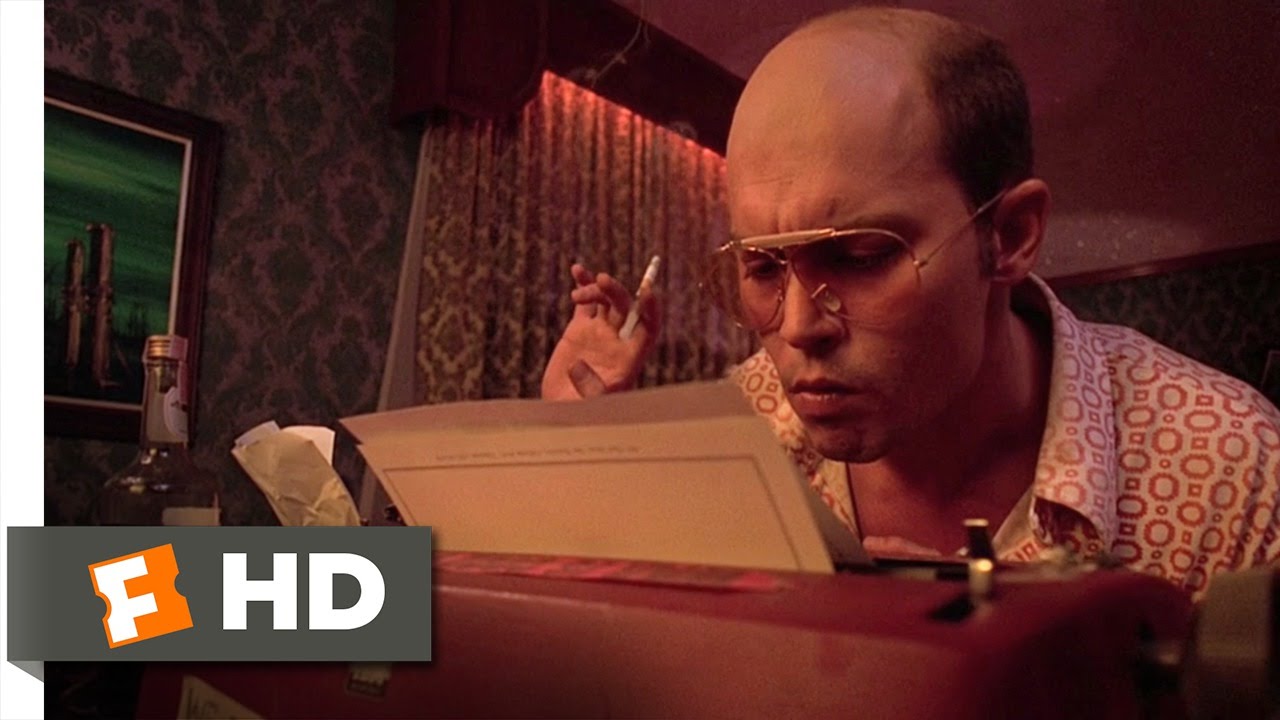
## Background Published on YouTube by Movieclips on May 28, 2011, this excerpt features a scene from Terry Gilliam's 1998 film adaptation of Hunter S. Thompson's Fear and Loathing in Las Vegas. According to the description, the clip captures an early morning moment where Raoul Duke (Johnny Depp) reflects upon the brief, magical countercultural period of mid-1960s San Francisco following a chaotic, drug-fueled night in Las Vegas.
## TL;DR Sitting in a quiet Las Vegas room as The Youngbloods' 'Get Together' plays, Raoul Duke looks back on the mid-1960s San Francisco counterculture as a singular, indescribable peak in American life. He recalls the ubiquitous manic energy of the era and the generation's profound conviction that pure metaphysical momentum and spiritual energy would inevitably defeat entrenched conservatism without violence. Looking out westward from Las Vegas less than six years later, Duke somberly concludes that this illusion of perpetual triumph has collapsed, noting that one can almost see the high-water mark where that cultural wave crested, broke, and rolled back.
## Atmosphere & style The scene carries a deeply elegiac, melancholic tone that contrasts sharply with the frenetic absurdity of the larger story. Johnny Depp's subdued, reflective voiceover conveys profound disillusionment and wistful nostalgia for a lost cultural revolution. Accompanied by the gentle strains of period music and the faint, haunting sound of crashing ocean waves, the clip feels like a sober, introspective eulogy for the death of 1960s idealism.
## Bulletin - [00:00](https://www.youtube.com/watch?v=vUgs2O7Okqc&t=0s) Reflecting from early 1970s Las Vegas, Raoul Duke describes mid-1960s San Francisco as an unrepeatable cultural peak impossible to capture through words or music. - [00:00](https://www.youtube.com/watch?v=vUgs2O7Okqc&t=0s) The psychological engine of the 1960s counterculture was an absolute faith that sheer energy and momentum would naturally overcome entrenched conservative forces without military aggression. - [00:00](https://www.youtube.com/watch?v=vUgs2O7Okqc&t=0s) Less than five years later, the countercultural wave had broken and receded, leaving Las Vegas as a symbolic vantage point to observe the movement's retreat.
## Key takeaways - [00:00](https://www.youtube.com/watch?v=vUgs2O7Okqc&t=0s) Raoul Duke reflects quietly on the past during an early morning in Las Vegas as The Youngbloods' 'Get Together' plays in the background. - [00:00](https://www.youtube.com/watch?v=vUgs2O7Okqc&t=0s) Though only five or six years have passed since the mid-1960s, the era feels psychologically distant like an entirely different lifetime. - [00:00](https://www.youtube.com/watch?v=vUgs2O7Okqc&t=0s) San Francisco in the mid-1960s represented a singular time and place whose lived experience defies verbal, musical, or nostalgic explanation. - [00:00](https://www.youtube.com/watch?v=vUgs2O7Okqc&t=0s) The atmosphere of 1960s San Francisco was charged with ubiquitous madness at all hours, creating an environment where one could strike sparks anywhere. - [00:00](https://www.youtube.com/watch?v=vUgs2O7Okqc&t=0s) A universal conviction that the movement was morally right and destined to win served as the central psychological foundation of the generation. - [00:00](https://www.youtube.com/watch?v=vUgs2O7Okqc&t=0s) The movement believed victory over age, conservatism, and evil would be achieved through spiritual energy and momentum rather than physical or military force. - [00:00](https://www.youtube.com/watch?v=vUgs2O7Okqc&t=0s) By the early 1970s, the countercultural sense of inevitable triumph had collapsed into disillusionment and exhaustion. - [00:00](https://www.youtube.com/watch?v=vUgs2O7Okqc&t=0s) Looking west toward California from the hills of Las Vegas symbolizes observing the literal and metaphysical 'high-water mark' where the countercultural wave broke and receded.
## Detailed walkthrough ### [00:00](https://www.youtube.com/watch?v=vUgs2O7Okqc&t=0s) The High-Water Mark of the Counterculture
On a restless, uneasy night in Las Vegas, Raoul Duke sits in contemplative silence, staring out into the quiet hours while The Youngbloods' anthem "Get Together" echoes softly in the background. Looking back across the short span of years—debating whether it has been five years or six—the era feels impossibly distant, like an entirely different lifetime representing the rare kind of cultural and spiritual peak that never repeats itself. Duke reflects on San Francisco during the mid-1960s, describing it as an intensely singular time and location whose essence remains impossible to convey through mere language, music, or nostalgia. As Raoul Duke observes of the era, “San Francisco in the middle '60s was a very special time and place to be a part of, but no explanation, no mix of words or music or memories can touch that sense of knowing that you were there and alive in that corner of time in the world, whatever it meant.”
Duke recalls that the environment buzzed with ubiquitous madness in every direction and at every hour of the day, a charged climate where one could easily strike sparks anywhere. Underlying this wild energy was a profound collective conviction that the entire countercultural movement was fundamentally righteous and destined to triumph. Explaining the psychological core of the movement, Duke notes: “There was a fantastic universal sense that whatever we were doing was right, that we were winning.” He identifies this conviction as the true handle of the generation—an absolute faith in inevitable victory over the entrenched forces of age, conservatism, and evil, achieved not through aggression or military force, but through sheer metaphysical momentum and spiritual energy. As Duke summarizes, “Our energy would simply prevail.”
That triumphant momentum, which once felt like riding the crest of an unstoppable wave, stands in bleak contrast to Duke's present exhaustion in the neon haze of early 1970s Las Vegas. Less than five years after that zenith, the illusion of perpetual victory has vanished into defeat and retreat. Duke reflects that one can climb a steep hill in Las Vegas, gaze westward across the desert toward California, and witness the boundary of that historical surge: “So now, less than five years later, you can go up a steep hill in Las Vegas and look west, and with the right kind of eyes you can almost see the high-water mark—that place where the wave finally broke and rolled back.” The monologue closes over the gentle, haunting sound of crashing ocean waves fading against the dying strains of the music.
- Duke estimates that barely five or six years have passed since the mid-1960s apex, though the psychological gulf makes it feel like an entire lifetime. - The generation's belief in victory rejected traditional power mechanisms, relying instead on the idea that pure momentum and cultural energy would naturally overwhelm archaic systems. - The physical vantage point of the Las Vegas hills looking west serves as a symbolic observation deck over the geographic and spiritual retreat of 1960s idealism.
## Mentioned Raoul Duke, Johnny Depp, Hunter S. Thompson, The Youngbloods, San Francisco, Las Vegas, California
## Video description Fear and Loathing in Las Vegas movie clips: http://j.mp/1yzoXod BUY THE MOVIE: http://amzn.to/ufvdw9 Don't miss the HOTTEST NEW TRAILERS: http://bit.ly/1u2y6pr
CLIP DESCRIPTION: In the early morning, following a drug-fueled evening, Duke (Johnny Depp) recalls the brief magical time and place of San Francisco during the 1960s.
FILM DESCRIPTION: Terry Gilliam (Brazil, Twelve Monkeys, The Fisher King) directed this colorful, stylized, pseudo-psychedelic $21-million adaptation of the 1971 Hunter S. Thompson classic, Fear and Loathing in Las Vegas: A Savage Journey into the Heart of the American Dream, about stoned sportswriter Raoul Duke, Thompson's alter ego, on a wild drug-crazed road trip, a paranoid plummet into the belly of the beast, with his pal, lawyer Oscar Zeta Acosta. Originally serialized in Rolling Stone (November 1971), the book catapulted Thompson headfirst toward the Kerouac-Mailer-Capote pantheon and jump-started the entire movement of "gonzo journalism." Carrying a suitcase of drugs, Raoul Duke (Johnny Depp with shaved pate) and his attorney Dr. Gonzo (Benicio Del Toro) drive a red convertible across the Mojave from L.A. to Vegas, where Duke has an assignment to cover the Mint 400 desert motorcycle race. As the drugs kick in, Duke ventures into voiceover, filling in the blank spots and narrative gaps. "This is not a good town for psychedelic drugs," says Duke, but even so, they consume vast quantities, eventually escalating to ether. Duke notes that with ether "you can actually watch yourself behaving this terrible way, but you can't control it." The two trash their hotel room, and Gonzo goes back to L.A. Thinking the hotel room holocaust will lead to an arrest, Duke begins a drive back to L.A., but after an odd encounter with a highway patrolman (Gary Busey) and a telephone conversation with Gonzo, he returns to Vegas to cover the District Attorney Convention on Narcotics and Dangerous Drugs in the glitzy Flamingo Hotel. This time the drugged-out duo trash their Flamingo room. The crazed carnival atmosphere segues into a carney casino, Bazooko's Circus, where a barker (Penn Jillette) spiels amid aerialists, clowns, and a rotating carousel bar. Gonzo worries over runaway teen Lucy (Christina Ricci), who paints portraits of Barbra Streisand. Soon the hallucinations begin: Duke sees Gonzo transmogrify into a demon with breasts on its back, and an acid vision of a Vegas bar features large legit lounge lizards (courtesy of monster makeup man Rob Bottin). Flashbacks depicting Duke's intro to the drug scene jump back to love-Haight relationships in San Francisco's Summer of Love. Cameos and guest stars include Mark Harmon, Cameron Diaz, Flea, Lyle Lovett, Harry Dean Stanton, Ellen Barkin, Tobey Maguire, and Hunter S. Thompson himself. The film features a Geffen Records soundtrack mixing rock of the period with Vegas lounge tunes. Over the years, various script adaptations came and went as did numerous talents; people connected with past efforts to film Thompson's book include Martin Scorsese, Jack Nicholson, Dan Aykroyd, John Belushi, and writer-director Alex Cox. Shown in competition at the 1998 Cannes Film Festival.
CREDITS: TM & © Universal (1998) Cast: Johnny Depp Director: Terry Gilliam Producers: Harold Bronson, Patrick Cassavetti, Richard Foos, John Jergens, Laila Nabulsi, Stephen Nemeth, Elliot Lewis Rosenblatt Screenwriters: Hunter S. Thompson, Terry Gilliam, Tony Grisoni, Tod Davies, Alex Cox
WHO ARE WE? The MOVIECLIPS channel is the largest collection of licensed movie clips on the web. Here you will find unforgettable moments, scenes and lines from all your favorite films. Made by movie fans, for movie fans.
SUBSCRIBE TO OUR MOVIE CHANNELS: MOVIECLIPS: http://bit.ly/1u2yaWd ComingSoon: http://bit.ly/1DVpgtR Indie & Film Festivals: http://bit.ly/1wbkfYg Hero Central: http://bit.ly/1AMUZwv Extras: http://bit.ly/1u431fr Classic Trailers: http://bit.ly/1u43jDe Pop-Up Trailers: http://bit.ly/1z7EtZR Movie News: http://bit.ly/1C3Ncd2 Movie Games: http://bit.ly/1ygDV13 Fandango: http://bit.ly/1Bl79ye Fandango FrontRunners: http://bit.ly/1CggQfC
HIT US UP: Facebook: http://on.fb.me/1y8M8ax Twitter: http://bit.ly/1ghOWmt Pinterest: http://bit.ly/14wL9De Tumblr: http://bit.ly/1vUwhH7
[Source](https://www.youtube.com/watch?v=vUgs2O7Okqc)