Zero Mass Water -BUSTED!
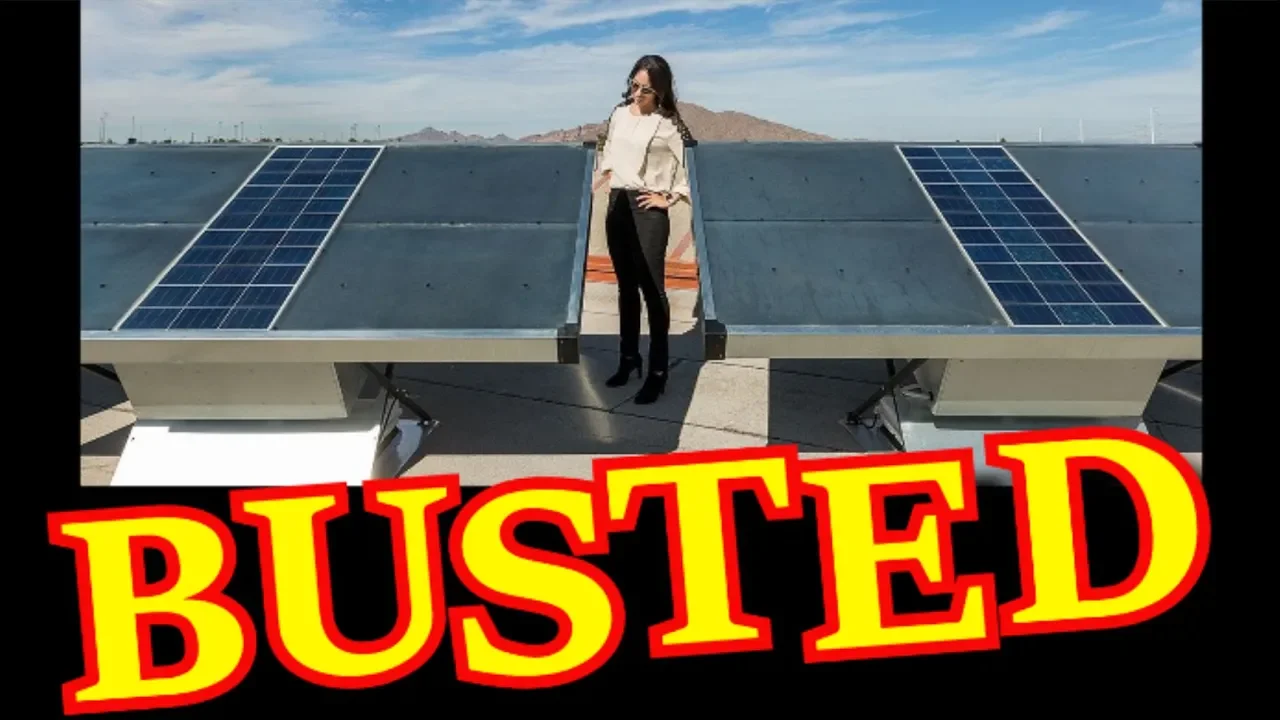
Thunderf00t
AI-assisted summary of Zero Mass Water -BUSTED! — original source. Check the original for full context.
Source published:
Key ideas
- Zero Mass Water markets a $4,500 solar-powered hydropanel system producing roughly five liters daily, even though purchasing and trucking 10 tons of municipal water costs under $400. (3:08)
- Under average global rainfall, placing a simple bucket under a passive surface equal to the panel's 3-square-meter footprint captures roughly 2.1 metric tons of water annually—exceeding the panel's active claim of 1.8 tons. (6:08)
- Condensing water vapor requires overcoming the latent heat of vaporization (roughly 2.26 million joules per liter), an energy hurdle that far outstrips the device's modest ~100-watt solar panel output. (12:43)
- Despite promotional campaigns spotlighting disaster relief and refugee camps, company leadership admitted to media outlets that the product is primarily pitched as a status symbol for wealthy homeowners. (15:40)
Detailed notes
## Background This video was published on YouTube by Thunderf00t on May 25, 2018. In the description, the creator expresses frustration over how frequently inventors repackage ordinary dehumidifiers with solar panels while the media uncritically celebrates them as world-saving innovations.
## TL;DR Thunderf00t debunks Zero Mass Water, a startup claiming to solve global water scarcity using solar-powered 'SOURCE' hydropanels that extract moisture from the air. By breaking down system costs, he illustrates that trucking clean municipal water is vastly faster and less than a tenth of the cost of a $4,500 two-panel array. Furthermore, he explains that fundamental thermodynamics—specifically the massive latent heat of vaporization—make extracting significant water from arid air mechanically impossible with low-wattage solar cells, concluding that the product is an over-engineered dehumidifier pitched as a luxury status symbol by uncritical journalists.
## Atmosphere & style The presentation is sharply satirical, exasperated, and intensely analytical. Thunderf00t combines back-of-the-envelope physics calculations with biting mockery of corporate promotional videos, tech journalists, and virtue-signaling cocktail party culture. The delivery feels like an impassioned scientific reality check, swinging between technical thermodynamics lessons and humorous disbelief at silicon-valley hype.
## Bulletin - [03:08](https://www.youtube.com/watch?v=vc7WqVMCABg&t=188s) Zero Mass Water markets a $4,500 solar-powered hydropanel system producing roughly five liters daily, even though purchasing and trucking 10 tons of municipal water costs under $400. - [06:08](https://www.youtube.com/watch?v=vc7WqVMCABg&t=368s) Under average global rainfall, placing a simple bucket under a passive surface equal to the panel's 3-square-meter footprint captures roughly 2.1 metric tons of water annually—exceeding the panel's active claim of 1.8 tons. - [12:43](https://www.youtube.com/watch?v=vc7WqVMCABg&t=763s) Condensing water vapor requires overcoming the latent heat of vaporization (roughly 2.26 million joules per liter), an energy hurdle that far outstrips the device's modest ~100-watt solar panel output. - [15:40](https://www.youtube.com/watch?v=vc7WqVMCABg&t=940s) Despite promotional campaigns spotlighting disaster relief and refugee camps, company leadership admitted to media outlets that the product is primarily pitched as a status symbol for wealthy homeowners.
## Key takeaways - [00:00](https://www.youtube.com/watch?v=vc7WqVMCABg&t=0s) Zero Mass Water promotes its SOURCE hydropanels as a breakthrough clean water solution, repeating the uncritical media hype cycle that previously surrounded the debunked WaterSeer. - [03:08](https://www.youtube.com/watch?v=vc7WqVMCABg&t=188s) A standard two-panel residential setup costs $4,500 ($2,000 per panel plus a mandatory $500 installation fee) and nominally produces around five liters of water per day. - [03:08](https://www.youtube.com/watch?v=vc7WqVMCABg&t=188s) Producing 10 tons of water with a single panel takes approximately 5.5 years, while hauling the same volume 1,000 miles by tanker truck costs around $350 to $400 in water and fuel. - [06:08](https://www.youtube.com/watch?v=vc7WqVMCABg&t=368s) A passive 3-square-meter catchment area receiving average global rainfall collects roughly 2.1 metric tons of water per year, outperforming the hydropanel's active annual yield of 1.8 tons. - [06:08](https://www.youtube.com/watch?v=vc7WqVMCABg&t=368s) Atmospheric water extraction creates an environmental paradox: regions with sufficient atmospheric humidity to operate already receive ample rainfall, while arid regions lack the moisture needed for viable output. - [07:46](https://www.youtube.com/watch?v=vc7WqVMCABg&t=466s) A commercial desiccant dehumidifier yielding five liters daily requires roughly 400 watts of continuous 24-hour power, whereas the hydropanel's integrated solar module generates only about 100 watts during peak sunlight. - [07:46](https://www.youtube.com/watch?v=vc7WqVMCABg&t=466s) Each hydropanel weighs approximately 275 pounds (130 kg), contradicting company narratives of quick, trivial residential and disaster-zone installations. - [10:46](https://www.youtube.com/watch?v=vc7WqVMCABg&t=646s) Reservoirs sitting on hot rooftops present potential stagnation and contamination hazards, and promotional segments fail to clearly show direct indoor plumbing integration. - [10:46](https://www.youtube.com/watch?v=vc7WqVMCABg&t=646s) The company's high-tech Network Operations Center (NOC) and cellular monitoring add unnecessary hardware overhead to watch water condense across only a few hundred deployed units. - [12:43](https://www.youtube.com/watch?v=vc7WqVMCABg&t=763s) Phase changes of water are strictly governed by thermodynamics, requiring the removal of approximately 2,260,000 joules of latent heat per kilogram of condensed vapor. - [12:43](https://www.youtube.com/watch?v=vc7WqVMCABg&t=763s) The ~2 million joules needed to condense one liter of water contains enough thermal energy to heat a one-kilogram bar of silver by roughly 10,000 °C, nearly double the surface temperature of the Sun. - [15:40](https://www.youtube.com/watch?v=vc7WqVMCABg&t=940s) While public relations materials leverage images of impoverished children, company statements confirm the system is targeted at affluent buyers seeking cocktail party prestige. - [15:40](https://www.youtube.com/watch?v=vc7WqVMCABg&t=940s) Softball tech journalism continually fails to interrogate basic physical and economic realities, repeating press releases rather than assessing fundamental feasibility.
## Detailed walkthrough ### [00:00](https://www.youtube.com/watch?v=vc7WqVMCABg&t=0s) The "Water From Air" Hype Machine and the Ghost of WaterSeer
Operating out of an old car dealership in Scottsdale, Arizona, the startup Zero Mass Water claims to produce clean drinking water straight out of thin air using solar power, advanced material science, and data. Tech reporting presented by Lauren Goode in conjunction with Intel framed the startup as the next frontier of drinking water, touting its potential deployment to disaster and crisis zones such as Northern Lebanon for Syrian refugees, post-hurricane Puerto Rico, lead-tainted Flint, Michigan, and even residential markets like Berkeley and Oakland. Thunderf00t highlights how this concept is repeatedly regurgitated by a scientifically illiterate media cycle eager for clickbait, pointing out: “Honestly, it drives me crazy how many people have reinvented the dehumidifier, put a solar panel on it, and the media has danced around like they've just saved the world!”
This pattern mirrors earlier viral water-harvesting gadgets like the WaterSeer, which major outlets like the BBC continued to uncritically promote in late 2017 even after it had been thoroughly debunked. The original WaterSeer pitch claimed that an unpowered, $130 underground condensation chamber driven by a simple wind turbine would collect gallons of water day and night without external energy. By the time it underwent redesigns, it had ballooned into an almost $1,000 unit requiring roughly 200 watts of power while continuing to promise unrealistic yields. People fell for it, handing over roughly a third of a million dollars in crowdfunding for what amounted to nothing more than burying an off-the-shelf dehumidifier in a backyard garden.
- Startup location: Former car dealership in Scottsdale, Arizona. - Target marketing scenarios: Northern Lebanon (Syrian refugees), Puerto Rico (Hurricane Maria), Flint, Michigan, and California cities (Berkeley, Oakland). - Media coverage: Tech segment hosted by Lauren Goode, partnered with Intel; BBC promotional coverage of WaterSeer. - WaterSeer comparison: Claimed zero-power passive condensation for $130, later morphed into a ~200 W device costing close to $1,000 after raising over $300,000.
---
[03:08](https://www.youtube.com/watch?v=vc7WqVMCABg&t=188s) The Crushing Economics: Panels vs. Tanker Trucks
Extracting moisture from air via dehumidification has never been a technological mystery; it is simply an absurdly expensive way to source water. Thunderf00t argues that virtually anywhere on Earth, dispatching a tanker truck filled with municipal water is vastly faster and cheaper than attempting to extract it from the ambient atmosphere. A basic residential installation from Zero Mass Water requires a minimum two-panel setup priced at $2,000 per panel, alongside a mandatory $500 installation fee, bringing the base entry price to $4,500. While promotional materials sow confusion over whether each panel produces five liters daily or whether the combined two-panel array produces five liters, Thunderf00t grants the generous assumption that a single unit yields five liters per day.
At five liters per day, filling a standard 10-ton (10 cubic meter) water tanker truck would take approximately 2,000 days—about five and a half years, representing more than half of the array's estimated 10-year operational lifespan. In contrast, 10 cubic meters of tap water in the United States costs around $50 to $60 (or about £3 per cubic meter in the UK, roughly $5). Hiring a medium freight truck capable of carrying 10 tons at an average of 10 miles per gallon would consume around 100 gallons of fuel to travel 1,000 miles (2,500 km), costing roughly $300 in fuel. Thus, buying clean water and trucking it halfway across the continent costs less than a tenth of what the Zero Mass Water array demands.
```mermaid flowchart TD accTitle: Sourcing 10 Tons of Water Comparison accDescr: Compares the cost and timeframe of trucking water versus harvesting it with a Zero Mass Water panel.
subgraph Truck["Tanker Truck Transport"] T1["Buy 10 m³ (10 tons) municipal water<br/>Cost: ~$50 - $60"] T2["Ship 1,000 miles by truck<br/>Fuel: ~100 gal (~$300)"] T3["Total Cost: ~$350 - $400<br/>Timeframe: Days"] T1 --> T2 --> T3 end
subgraph Panel["Zero Mass Water Array"] P1["Purchase & install 2 panels<br/>Cost: $4,500"] P2["Production rate: 5 L/day<br/>(Generous single-unit estimate)"] P3["Total Volume: 10 tons (10,000 L)<br/>Timeframe: ~2,000 days (~5.5 years)"] P1 --> P2 --> P3 end ```
- Minimum array cost: $4,000 for two panels plus $500 installation fee ($4,500 total). - Generous output estimate: 5 liters per day per unit. - Time to yield 10 metric tons (10,000 liters): ~2,000 days (~5.5 years). - Lifetime of array: Estimated by manufacturer at approximately 10 years. - Municipal residential water cost: ~$50–$60 per 10 m³ in the US; ~£3 ($5) per m³ in the UK. - Long-distance transport cost: ~10 mpg truck running 1,000 miles consumes ~100 gallons of fuel (~$300).
---
[06:08](https://www.youtube.com/watch?v=vc7WqVMCABg&t=368s) The Bucket Test and Environmental Catch-22
The fundamental flaw of atmospheric water extraction becomes stark when evaluated against natural rainfall. Earth's average land rainfall is approximately 0.7 meters per year. Each Zero Mass Water panel measures roughly 1 meter by 3 meters, establishing a surface footprint of about 3 square meters. If the array were used as a passive roof funneling into a bucket, average annual rainfall alone would deliver approximately 2 cubic meters (2 tons) of water. Under optimal conditions, the active Zero Mass Water technology promises 5 liters per day, amounting to only 1.8 tons per year. Thunderf00t emphasizes this irony: “In fact, hell, here's a fun fact for you: these panels would on average produce more water if you just stuck a bucket under them.”
When pushing comparisons to the best-case scenarios for both methods, extreme rainfall regions can reach 10 meters of rain annually, which would capture roughly 30 tons of water per year on that same surface area. More crucially, the underlying physics creates an unavoidable paradox: in climates where high relative humidity makes dehumidification somewhat viable, precipitation is already abundant, rendering the machine redundant; in arid environments where clean drinking water is actually needed, the air lacks sufficient moisture for the desiccant to capture meaningful quantities.
- Average global land rainfall: ~0.7 meters per year. - Panel physical dimensions: ~1 m by 3 m (~3 m² footprint). - Passive rainfall capture on 3 m²: ~2.1 metric tons per year. - Active Zero Mass Water yearly yield: ~1.8 metric tons per year (at 5 L/day). - Maximum passive capture in wet climates: ~10 meters/year of rain yields ~30 tons/year.
---
[07:46](https://www.youtube.com/watch?v=vc7WqVMCABg&t=466s) Thermodynamic Realities and Underpowered Hardware
The core operational principle of Zero Mass Water relies on desiccant dehumidification—a decades-old technology that relies on absorbent materials to grab airborne water vapor before applying heat to drive it off into a condensation loop. However, moving water between vapor and liquid states is fundamentally constrained by thermodynamics, a scientific reality completely overlooked in glowing media profiles. Promotional interviews gloss over technical trade-offs while advertising swift disaster response capabilities, claiming that three people can install a two-panel array in about an hour, with the bulk of the effort going toward routing the water line to a sink or refrigerator.
Taking a closer look at the manufacturer's own spec sheets reveals glaring practical and physical contradictions:
1. **Physical Bulk:** Each panel weighs an unwieldy 275 pounds (roughly 130 kilograms), making manual installation on roofs far from trivial. 2. **Desiccant Power Requirements:** A standard commercial desiccant dehumidifier purchased from Amazon that extracts around 5 liters of water daily requires roughly 400 watts of continuous electrical power running over 24 hours under ideal humidity and temperature conditions. 3. **Inadequate Solar Supply:** The solar panel mounted across the face of the Zero Mass device measures roughly 48 inches by 24 inches (just over 1 meter across). A comparable commercial panel of that surface area produces around 100 watts in full sunlight. Because the panels remain stationary rather than tracking the sun, they collect peak light for at most 12 hours a day.
Even assuming the surrounding collectors harvest ambient solar thermal energy to assist the desiccant desorption cycle, the entire setup could optimistically muster the equivalent of perhaps 400 watts exclusively while the sun shines. Thunderf00t concludes that under real-world conditions—especially in an arid test environment like Arizona—the unit would struggle to generate more than a fraction of a couple of liters daily: “I'd be surprised if they get a tenth, which is probably why they're so tight-lipped about this little thing and only stress what they'll produce in the best case scenario.”
- Stated panel weight: 275 lbs (~130 kg) per unit. - Installation claim: 3 people can install two units in ~1 hour (mostly plumbing routing). - Amazon desiccant dehumidifier benchmark: ~400 W continuous (24 hours) for ~5 L/day output. - Photovoltaic output on panel face: ~48" × 24" footprint yields ~100 W for ~12 hours of fixed sunlight. - Realistic desert yield estimate: Significantly below nominal rating, likely only a fraction of a liter to a couple of liters daily.
[10:46](https://www.youtube.com/watch?v=vc7WqVMCABg&t=646s) Plumbing Doubts, Stagnant Roof Water, and the "NOC"
Thunderf00t examines a media segment highlighting Zero Mass Water's SOURCE hydropanels, pointing out subtle skepticism from the visiting reporter. While the company claims the rooftop panels take moisture out of the air, concentrate it, and dispense drinking water straight to a building's tap, the reporter explicitly notes having zero visibility into how the water actually travels from the rooftop reservoir into the faucet. Thunderf00t remarks that not drinking it direct might actually be a relief: leaving water sitting on a hot roof inside an unsterilized collection system creates an obvious contamination risk rather than a clean drinking supply. He also catches an inconsistency in the marketing: if the water is supposed to be plumbed directly inside to replace municipal pipes, it makes little sense that video demonstrations show people grabbing standalone bottles from under outdoor collectors.
```mermaid flowchart TD accTitle: Zero Mass Water System Overview accDescr: Diagram showing how Zero Mass Water collects air moisture, sends telemetry to a Network Operations Center, and dispenses water. subgraph Collection["Rooftop Generation"] A["Ambient Air Moisture"] --> B["SOURCE Hydropanels"] B --> C["Rooftop Reservoir"] end subgraph Monitoring["Telemetry & Control"] B -->|"Wi-Fi / Cellular Data"| D["Network Operations Center (NOC)"] end subgraph Output["End User Delivery"] C -.->|"Unverified Plumbing"| E["Indoor Tap / Bottled Water"] end ```
The tour moves to the company’s high-tech control center, dubbed the "NOC" (Network Operations Center), where massive wall monitors track hydropanels deployed around the world. Thunderf00t mocks the room as a wildly over-engineered way to watch water condense. Adding network chips, Wi-Fi hardware, and sensors to each unit inflates the price tag past $2,000 per panel simply to feed unnecessary data back to headquarters. Despite the elaborate setup, the narrator points out that the grand map only accounts for a few hundred panels across eight countries.
- “While I was able to see the Zero Mass panels and taste the water, I didn't have much visibility into how the water actually runs from the reservoir to a faucet,” the reporter observes. - “Seriously, that's one of the most pointlessly, massively over-designed control centers ever,” Thunderf00t comments regarding the NOC.
---
[12:43](https://www.youtube.com/watch?v=vc7WqVMCABg&t=763s) Grand Humanitarian Aspirations vs. Thermodynamic Reality
The video cuts to a company representative waxing poetic about how their breakthrough entitles them to be “aspirational,” listing off major global crises they plan to solve: Syrian refugee camps in northern Lebanon, hurricane recovery in Puerto Rico after Hurricane Maria, the contaminated tap water crisis in Flint, Michigan, and even replacing single-use bottled water in wealthy cities like Berkeley, Oakland, and Scottsdale. Thunderf00t ridicules this as empty posturing from someone who ignores basic physics. He notes that an ordinary plug-in dehumidifier can produce ten times the water for a tiny fraction of the cost, but consumers are dazzled because Zero Mass Water slaps a solar panel on top.
The presenter turns to the fundamental science that dooms atmospheric water generation: thermodynamics. Changing water from liquid to gas—or vice versa—demands enormous amounts of energy due to strong intermolecular hydrogen bonds. Breaking those bonds requires latent heat of vaporization amounting to roughly 2,260,000 joules per kilogram (approximately 2 million joules per liter). Boiling an electric kettle consumes massive power just to evaporate a few drops, and reversing the process requires removing that exact same staggering quantity of heat from the air.
To illustrate the sheer scale of 2,000,000 joules, Thunderf00t provides a comparison using a solid one-kilogram bar of silver: - Silver has a low specific heat capacity, requiring only about 235 joules to heat one kilogram by 1 °C. - Pumping 2,000,000 joules into that one-kilogram silver bar would increase its temperature by roughly 10,000 °C. - That calculated temperature is nearly double the surface temperature of the Sun (approximately 5,500 °C).
Because cooling air to condense water requires extracting such massive amounts of thermal energy, running the process mechanically via small localized solar panels is inherently inefficient. On Earth, phase changes of water at that scale occur naturally only through the colossal energy flux of the atmosphere.
- “And it's a profound thing to say, and I recognize it sounds profound, but this technology entitles us to be aspirational,” the Zero Mass Water spokesperson claims. - “The fundamental reason why this will never be viable is because of thermodynamics,” Thunderf00t argues. “To change the phase of water from liquid to gas requires an obscene amount of energy.”
---
[15:40](https://www.youtube.com/watch?v=vc7WqVMCABg&t=940s) Cocktail Party Marketing and Softball Journalism
Thunderf00t targets the demographic Zero Mass Water is actually pitching to. While company PR films impoverished children standing around panels to tug at heartstrings, spokespeople admit to tech publications like *The Verge* that the ultimate goal is status signaling among wealthy homeowners. Their ideal scenario is a dinner party where someone says they have rooftop solar, prompting the response: “Do you mean solar electricity or solar water?” Thunderf00t stresses that the product is built for affluent virtue-signalers who want bragging rights at cocktail parties rather than impoverished communities who desperately need cheap, abundant clean water.
Media coverage surrounding the tech is criticized for fawning, softball interviews. Thunderf00t highlights a promotional clip where an interviewer frames hydropanels as an obvious, triumphant third pillar of rooftop solar—following photovoltaic and solar thermal—and asks what kind of homeowner should buy it. Thunderf00t compares this to the classic *Simpsons* parody where a journalist asks Montgomery Burns: *“Your campaign seems to have the momentum of a runaway freight train. Why are you so popular?”* Rather than asking whether generating water from dry air makes thermodynamic or economic sense, journalists uncritically parrot marketing slogans. He concludes that because the fundamental thermodynamics make the cost-per-liter exorbitant, Zero Mass Water is completely busted.
- “If you're at a cocktail party, you say, 'Well, I've got solar on my roof,' people think, 'Oh, electricity.' In a small number of years, people will be saying, 'Oh, you have solar on your roof, forgive me, do you talk about electricity or water?'” the company representative tells *The Verge*. - “That, I think, more or less establishes who the prospective customer of this thing is: it's not the impoverished kids that they cluster around this thing so they can sell it, it's folks who can brag about their solar water at their cocktail parties,” Thunderf00t states.
## Notable quotes > [00:00](https://www.youtube.com/watch?v=vc7WqVMCABg&t=0s) Honestly, it drives me crazy how many people have reinvented the dehumidifier, put a solar panel on it, and the media has danced around like they've just saved the world! — Thunderf00t
> [12:43](https://www.youtube.com/watch?v=vc7WqVMCABg&t=763s) To change the phase of water from liquid to gas requires an obscene amount of energy. — Thunderf00t
## Mentioned Thunderf00t, Zero Mass Water, SOURCE hydropanels, WaterSeer, Lauren Goode, Intel, BBC, The Verge, The Simpsons, Montgomery Burns
## Video description Honestly, it drives me crazy how many people have reinvented the dehumidifier, put a solar panel on it, and the media has danced around like theyve just saved the world!
If you want to support this work directly https://www.patreon.com/Thunderf00t
or visit my amazon store: https://www.amazon.com/shop/thunderf00t
[Source](https://www.youtube.com/watch?v=vc7WqVMCABg)