Dianna Cowern Takes First Walk After Two Years Bedbound With ME/CFS
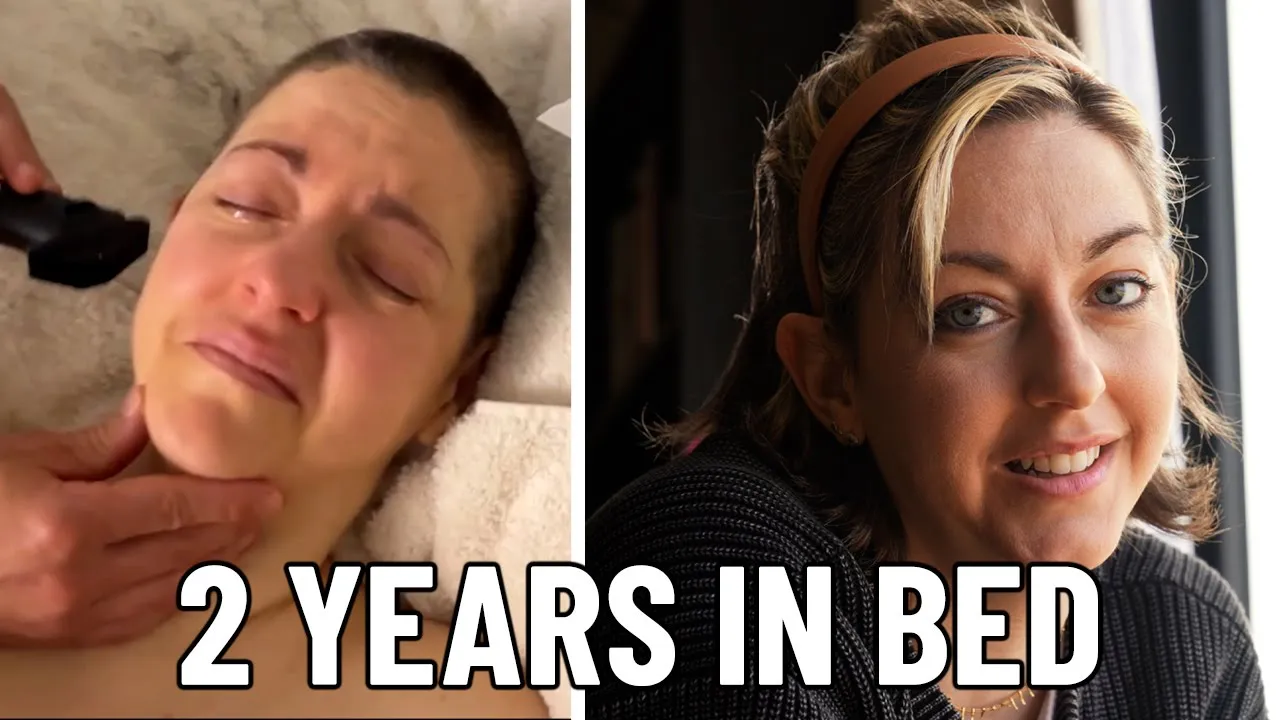
First Update From Dianna (Physics Girl) — Physics Girl

Physics Girl

Post-exertional malaise turns routine exertion and emotional stress into debilitating crashes, threatening to erase hard-won gains for millions suffering from severe Long COVID and ME/CFS.

AI-assisted summary of First Update From Dianna (Physics Girl) — original source. Check the original for full context.

Source published:

Key ideas

  • After nearly two years bedbound due to severe Long COVID and ME/CFS, Dianna Cowern demonstrated remarkable progress, including walking unassisted and completing her first brief solo outdoor walk in two and a half years. (10:07)
  • Recovery remains exceptionally fragile; an emotional trauma triggered a February crash that wiped out three months of physical and cognitive progress in just days. (3:34)
  • The video highlights the extreme severity of end-stage ME/CFS through Dianna's friend Tobias in Germany, who became bedbound in 2021, dropped to 100 pounds at 6'2", and was approved for Medical Assistance in Dying (MAID). (4:51)
  • Public health estimates indicate that post-infectious neuroimmune illnesses have reached critical scale, with roughly 3 million Americans diagnosed with ME/CFS and over 30 million affected by Long COVID. (7:11)

Detailed notes

## Background Published on YouTube by Dianna Cowern on the Physics Girl channel on May 22, 2025, this video offers an intimate update on her prolonged battle with severe chronic post-viral illness. The video description directs viewers to support Dianna's recovery through Patreon, contribute to a GoFundMe for her friend Tobias, and explore educational resources on Long COVID and ME/CFS through the Open Medicine Foundation.

## TL;DR After nearly two years completely bedbound with severe Long COVID, ME/CFS, and MCAS, science communicator Dianna Cowern and her husband Kyle document her fragile journey toward functional improvement. They explain the debilitating mechanics of post-exertional malaise (PEM) and immune flare-ups, contrasting hard-won gains like embroidering and standing with sudden, devastating setbacks. Dianna highlights the harrowing reality of end-stage ME/CFS through the story of her German friend Tobias, whose approval for Medical Assistance in Dying (MAID) underscores the devastating suffering and medical abandonment faced by patients. Concluding with cautious optimism, Dianna celebrates small but profound signs of progress, including taking her first independent outdoor walk in two and a half years and regaining the neurological capacity to process the world outside her window.

## Atmosphere & style The video carries an intensely vulnerable, heartbreaking, and quietly resilient tone, captured through candid domestic footage and deeply personal reflections between Dianna and Kyle. Watching it feels like witnessing an agonizingly fragile balancing act, where profound trauma, hypervigilance, and the ever-present threat of physical collapse exist alongside enduring marital devotion. While the discussion of Tobias's suffering casts a heavy, devastating shadow over the piece, the emotional arc ultimately breathes with tender relief as Dianna finds spontaneous joy in quiet milestones and the simple sight of birds outside her room.

## Bulletin - [10:07](https://www.youtube.com/watch?v=vqeIeIcDHD0&t=607s) After nearly two years bedbound due to severe Long COVID and ME/CFS, Dianna Cowern demonstrated remarkable progress, including walking unassisted and completing her first brief solo outdoor walk in two and a half years. - [03:34](https://www.youtube.com/watch?v=vqeIeIcDHD0&t=214s) Recovery remains exceptionally fragile; an emotional trauma triggered a February crash that wiped out three months of physical and cognitive progress in just days. - [04:51](https://www.youtube.com/watch?v=vqeIeIcDHD0&t=291s) The video highlights the extreme severity of end-stage ME/CFS through Dianna's friend Tobias in Germany, who became bedbound in 2021, dropped to 100 pounds at 6'2", and was approved for Medical Assistance in Dying (MAID). - [07:11](https://www.youtube.com/watch?v=vqeIeIcDHD0&t=431s) Public health estimates indicate that post-infectious neuroimmune illnesses have reached critical scale, with roughly 3 million Americans diagnosed with ME/CFS and over 30 million affected by Long COVID.

## Key takeaways - [00:00](https://www.youtube.com/watch?v=vqeIeIcDHD0&t=0s) Dianna developed severe Long COVID following a COVID-19 infection, which rapidly progressed over nine months into emergency room visits and profound disability. - [00:00](https://www.youtube.com/watch?v=vqeIeIcDHD0&t=0s) ME/CFS is distinguished from broader Long COVID by post-exertional malaise (PEM), where minor physical, cognitive, or emotional effort causes severe, disproportionate crashes. - [01:49](https://www.youtube.com/watch?v=vqeIeIcDHD0&t=109s) For nearly two years, Dianna was entirely bedbound and unable to tolerate basic cognitive stimulation such as reading, audiobooks, or screen entertainment. - [01:49](https://www.youtube.com/watch?v=vqeIeIcDHD0&t=109s) Co-occurring Mast Cell Activation Syndrome (MCAS) severely complicates treatment by triggering hyperinflammatory immune responses to foods and medications. - [01:49](https://www.youtube.com/watch?v=vqeIeIcDHD0&t=109s) The margin for exertion in ME/CFS can be razor-thin; even 30 seconds of gentle foot-pushing exercises previously caused Dianna a week-long crash. - [03:34](https://www.youtube.com/watch?v=vqeIeIcDHD0&t=214s) Gradual improvements allowed Dianna to embroider, watch complex mystery series, and walk across the room unassisted before experiencing a major setback. - [03:34](https://www.youtube.com/watch?v=vqeIeIcDHD0&t=214s) Crashes in ME/CFS are unpredictable, and there is never a medical guarantee that lost physical or cognitive capacity will return after a relapse. - [04:51](https://www.youtube.com/watch?v=vqeIeIcDHD0&t=291s) Emotional exertion carries the same biological penalty as physical effort; learning that her friend Tobias was approved for MAID directly triggered a multi-week crash. - [07:11](https://www.youtube.com/watch?v=vqeIeIcDHD0&t=431s) End-stage ME/CFS can strip away all sensory and physical tolerance, leaving patients unable to roll over, bear clothing friction, or see human faces without crashing. - [07:11](https://www.youtube.com/watch?v=vqeIeIcDHD0&t=431s) Tobias's decline illustrates severe medical trauma in ME/CFS care, including inappropriate physical forcing by hospital staff that worsened his state to severe wasting and PICC-line feeding. - [10:07](https://www.youtube.com/watch?v=vqeIeIcDHD0&t=607s) Dianna achieved a major milestone by taking a spontaneous five-minute solo walk outside, her first alone in two and a half years. - [11:12](https://www.youtube.com/watch?v=vqeIeIcDHD0&t=672s) Evaluating PEM requires looking at delayed symptoms rather than immediate feelings, complicating everyday pacing choices. - [11:12](https://www.youtube.com/watch?v=vqeIeIcDHD0&t=672s) A crucial neurological sign of improvement is Dianna's restored ability to visually process the outdoor environment through her window, relieving profound cognitive isolation.

## Detailed walkthrough ### [00:00](https://www.youtube.com/watch?v=vqeIeIcDHD0&t=0s) The Reality of Severe Long COVID and ME/CFS

The video opens with a stark plea regarding the severity of chronic post-viral illness: “I want people to know about this disease. I want them to know how bad it can get.” Retrospective clips and discussions outline the devastating onset of Dianna Cowern's illness. After contracting COVID-19, she developed Long COVID, losing functional capacity month after month. Within nine months, her health spiraled to the point where she was rushed to the emergency room twice in a single week. Her husband, Kyle Kitzmiller, recalls the heart-wrenching emotional toll of those early stages, noting that Dianna would call him into the room in tears, grieving the loss of their future: “I wanted to have a life with you. I wanted to have a family with you. I wanted to have kids. It's the thing I want most in the world, and I'm not going to be able to do that, and I don't know if we're going to be able to.”

The narrative distinguishes general Long COVID from Myalgic Encephalomyelitis / Chronic Fatigue Syndrome (ME/CFS). While Long COVID encompasses a broad cluster of symptoms—including severe fatigue, brain fog, and Postural Orthostatic Tachycardia Syndrome (POTS)—ME/CFS is defined by post-exertional malaise (PEM). Under PEM, even trivial amounts of physical, cognitive, or emotional exertion lead to disproportionate, catastrophic physiological crashes. Reflecting on the sudden loss of Dianna's career and channel, Kyle remarks: “I just feel like a second ago we were laughing hard on the couch planning to make a video and now Physics Girl is going to be shut down for years with how we're talking about it.”

[01:49](https://www.youtube.com/watch?v=vqeIeIcDHD0&t=109s) Two Years Bedbound, MCAS, and the Fragility of Recovery

After more than two years of illness—nearly two full years of which were spent completely bedbound—Dianna’s quality of life remained unimaginably restricted. Basic daily care tasks like showering or cleaning herself were impossible. Cognitive stimulation had to be entirely eliminated; she could not read, listen to audiobooks, or watch movies. Only recently did minor improvements begin: after going over a year and a half without being able to watch any screen entertainment, they finished three movies over a two-month span, pacing the viewing in tiny increments that grew from 5 minutes to 15 minutes at a time. Even conversational intimacy remains heavily constrained, as Dianna cannot engage in deep, animated, or emotionally charged discussions without risking a flare-up.

```mermaid flowchart TD accTitle: Pathological Interlocking of ME/CFS and MCAS accDescr: Diagram illustrating how attempts to exert or treat symptoms trigger post-exertional malaise crashes and mast cell flare-ups. subgraph MultiSystem["Complex Chronic Illness Layering"] A["Long COVID Base"] --> B["ME/CFS (Post-Exertional Malaise)"] A --> C["Severe MCAS (Hyperinflammatory Reactivity)"] end subgraph TriggerCycle["Compounding Triggers"] D["Physical or Emotional Exertion"] -->|"Exceeds Tiny Energy Envelope"| B E["Medical Treatments or Ingestion"] -->|"Immune Hyper-Response"| C B --> F["Severe Multi-Day to Multi-Month Crash"] C --> F end ```

Treating Dianna's condition is further complicated by severe Mast Cell Activation Syndrome (MCAS), an extreme hyperinflammatory immune reaction that attacks her body in response to virtually any new food, medication, or external substance entering her system. This creates a vicious cycle where treatments aimed at managing one symptom trigger an aggressive immune response from another. The razor-thin margin for physical activity is highlighted by a routine leg exercise: while feeling slightly better, Dianna gently pushed her feet against the floor for a cumulative total of roughly 30 seconds, only to suffer a severe, week-long crash. Kyle observes that her greatest overarching fear throughout this prolonged ordeal has been the terror that she might never recover.

[03:34](https://www.youtube.com/watch?v=vqeIeIcDHD0&t=214s) Glimmers of Improvement and the February Crash

During a period of notable improvement, Dianna is shown sitting up, smiling, and sharing her accomplishments with a visitor. She displays finished embroidery hoops and works-in-progress, explaining that she has progressed to watching complex, mystery-driven television series such as *Severance* that demand real cognitive focus. Most remarkably, she demonstrates standing and walking across the room completely unassisted, eliciting astonishment from those around her.

However, this upward trajectory was violently interrupted in February when Dianna suffered an intense crash. Over just a few days, roughly three months of hard-won physical and cognitive gains vanished. She lost her ability to watch television or embroider, and her outlook plummeted into deep depression. While her baseline functions eventually began returning as the crash receded, Kyle emphasizes the chilling unpredictability of the illness: there is never any guarantee that lost abilities will return after a severe crash.

[04:51](https://www.youtube.com/watch?v=vqeIeIcDHD0&t=291s) The Story of Tobias and Medical Assistance in Dying

Dianna attributes her severe February crash directly to emotional trauma surrounding Tobias, a close friend living in Germany whom she met through the ME/CFS community. Dianna notes that sharing the exact same lived experience formed an immediate, profound bond between them that healthy people cannot fully understand. Tobias’s illness had deteriorated to such an agonizing extreme that he applied for and was approved for MAID (Medical Assistance in Dying). Dianna reflects on the crushing emotional toll this news took on her: “He got approved for MAID. Have you heard of that? Medical assistance in death. And that just has been tearing me apart. That's probably why I crashed. Just the emotional aspect of it.” Connecting with Tobias also reopened painful memories of who she was before falling ill, thoughts she had suppressed because they caused too much grief.

Tobias’s partner paints a picture of his vibrant life before chronic illness took hold. He was brilliant, funny, hardworking, and an avid lover of music, travel, and long three-hour hikes in the woods with his dog, Molly. His decline spanned 15 years: - **2010**: Tobias first fell ill, operating at roughly 90% capability while symptoms gradually eroded his strength. - **Intervening Years**: He was forced to give up his passions, including gym workouts and outdoor hiking. - **December 2021**: He became fully bedbound, unable to stand up from bed one morning. - **Progression of Sickness**: Early optimism and positivity were slowly extinguished as the illness intensified.

[07:11](https://www.youtube.com/watch?v=vqeIeIcDHD0&t=431s) The Brutality of End-Stage ME/CFS

Communicating solely via sporadic text messages—an effort so taxing that Tobias must premedicate simply to type—he asked Dianna to share the stark, horrifying reality of end-stage ME/CFS with the world. Dianna relays his words directly: “You can't even call this quality of life. It's just constant waiting, just hoping for the day to end so you can take your sleeping pills and escape the situation as fast as possible.”

Dianna points out that while she experienced similar levels of absolute helplessness for three months, Tobias has lived through that level of severity for four uninterrupted years, compounded by immense physical pain: - **Mobility and Care**: He cannot roll over in bed, change his own clothes, or tolerate the sensory friction of wearing clothing, leaving him staring at the ceiling all day. - **Sensory and Physical Intolerance**: The visual stimulation of seeing a human face is overwhelming. He suffers severe PEM crashes from the physical exertion of laughing or crying, forcing him into complete emotional suppression. - **Physical Deterioration and Medical Trauma**: Tobias spent over a year institutionalized in a hospital where staff repeatedly forced him to attempt standing. Standing at 6'2", his weight dropped to just 100 pounds, requiring total parenteral nutrition through a PICC line. - **Internal Sensations**: He endures a relentless, heavy burning sensation deep inside his muscles alongside profound cellular exhaustion.

Tobias’s partner notes that during the darkest three years of their lives, they lost complete faith in medicine, doctors, and society due to the total absence of institutional help. An expert voice emphasizes the colossal public health scale: Long COVID has unleashed a "tsunami" of post-infectious fatiguing neuroimmune conditions, with an estimated 3 million individuals diagnosed with ME/CFS in the United States and projections reaching over 30 million suffering from Long COVID.

[10:07](https://www.youtube.com/watch?v=vqeIeIcDHD0&t=607s) A Fragile Step Toward Independence

After spending roughly a month incapacitated by her crash, Dianna’s baseline slowly began to rebound. She regained her ability to walk and surprised Kyle by quietly walking out the front door entirely on her own for a five-minute outdoor walk—her first solo walk in two and a half years. Kyle describes the startling experience of having to run after her down the street, admitting that after two years of complete bedbound dependence, seeing her upright around the house still catches him off guard. Dianna reflects humorously on sneaking out for the walk, while keeping the physical exertion slow, brief, and heavily managed to protect herself from triggering another severe setback.

[11:12](https://www.youtube.com/watch?v=vqeIeIcDHD0&t=672s) Navigating PEM and Reconnecting with the Outside World

Dianna reflects on the subtle indicators of progress in her illness, explaining that not experiencing post-exertional malaise (PEM) the following day is a major milestone. As she puts it, “I don't feel the PEM the next day, which is the bigger deal cuz I'm less worried about how I feel in the moment and how it's going to affect me the next day, which is why this disease is so challenging to navigate.” The delayed consequence of activity makes day-to-day decisions uniquely difficult, especially when contrasted with her previous life. Dianna shares how painful it has been to witness people outside simply walking or running, noting that prior to getting sick, all of her favorite pastimes aside from making videos were highly physical pursuits like surfing, snowboarding, hiking, and running. Losing the ability to engage in those active hobbies previously left her feeling deeply depressed.

Even without being physically able to engage in sports, Dianna finds meaningful relief in being able to cognitively experience her surroundings again. For months, even during periods when her sensory tolerance allowed her to turn her gaze toward the window, her brain simply could not process what she was seeing, describing the sensation as frustrating, weird, and hard. Now, that mental barrier has lifted enough for her to feel reconnected to reality: “Like it feels like I'm much more connected to the outside world just being able to like process what I'm seeing outside the window which I couldn't do for months even when I could handle looking out the window.” Her reflection ends on a spontaneous note of simple joy as she spots wildlife through the glass, laughing, “Birds. Sorry. There's a lot of birds that fly by here and it's so great.”

- **The nature of PEM:** The delayed onset of post-exertional malaise is often more concerning than how an activity feels while doing it, complicating every pacing choice. - **Lost passions:** Outside of creating educational science videos, Dianna's life centered around high-energy outdoor activities including surfing, snowboarding, hiking, and running. - **Cognitive recovery:** A subtle but critical improvement has been the restored neurological capacity to process visual stimuli outside her bedroom window, breaking the severe feeling of isolation.

## Mentioned Dianna Cowern, Kyle Kitzmiller, Tobias, Molly, Kaelyn Lynch, Levi Butner, Physics Girl, Severance, APM Music

## Video description Support Dianna's Recovery → https://www.patreon.com/physicsgirl Support Tobias → https://www.gofundme.com/f/help-save-tobias-his-last-hope-to-live

More about Long COVID: https://www.omf.ngo/what-is-long-covid/ More about ME/CFS: https://www.omf.ngo/resource-center/

Documentary footage by Kaelyn Lynch

Music provided by APM https://www.apmmusic.com/

http://physicsgirl.org/ http://twitter.com/thephysicsgirl http://facebook.com/thephysicsgirl http://instagram.com/thephysicsgirl

Creator: Dianna Cowern Editor: Levi Butner & Dianna Cowern Producer: Kyle Kitzmiller

[Source](https://www.youtube.com/watch?v=vqeIeIcDHD0)

中文简报

因ME/CFS卧床两年后,戴安娜·考恩迈出康复后第一步 劳累后不适让日常消耗和情绪压力演变为使人极度虚弱的病情崩溃,威胁着数百万重度长新冠与ME/CFS患者来之不易的康复成果。 因重度长新冠、肌痛性脑脊髓炎/慢性疲劳综合征(ME/CFS)以及肥大细胞活化综合征(MCAS)完全卧床近两年后,科普博主戴安娜·考恩(Dianna Cowern)与丈夫凯尔(Kyle)记录了她走向功能改善的脆弱历程。他们解释了劳累后不适(PEM)与免疫病情爆发造成的极度虚弱机制,并将刺绣、站立等来之不易的改善与突如其来且具破坏性的倒退进行了对比。戴安娜通过德国朋友托比亚斯(Tobias)的经历凸显了晚期ME/CFS的惨痛现实,其获批医疗协助死亡(MAID)展现了患者所面临的巨大痛苦与医疗忽视。最后,戴安娜以谨慎的乐观态度庆祝了虽小但意义深远的进步迹象,包括两年半来首次独立在户外散步,以及重新恢复了理解与感知窗外世界所需的神经机能。 因重度长新冠与ME/CFS卧床近两年后,戴安娜·考恩展现出显著进步,包括无需辅助行走,以及完成两年半来首次短暂的独自户外散步。 (10:07) 康复过程依然极其脆弱;一次情感创伤触发了2月份的病情崩溃,仅在数天内就抵消了三个月以来的身体与认知恢复成果。 (3:34) 视频通过戴安娜在德国的朋友托比亚斯强调了晚期ME/CFS的极端严重性:他于2021年瘫痪卧床,身高6英尺2英寸(约1.88米)体重却降至100磅(约45公斤),且已获批接受医疗协助死亡(MAID)。 (4:51) 公共卫生估算显示感染后神经免疫疾病已达到危急规模,约有300万美国人确诊ME/CFS,超过3000万人受到长新冠影响。 (7:11)

Reading summary

Following an acute COVID-19 infection, science communicator Dianna Cowern ('Physics Girl') developed severe Long COVID and Myalgic Encephalomyelitis / Chronic Fatigue Syndrome (ME/CFS), rendering her bedbound for nearly two years. Through her own setbacks and the harrowing accounts of others in the chronic illness community, Cowern and her husband Kyle Kitzmiller document the razor-thin margin for exertion, the devastating nature of post-exertional malaise, and the systemic lack of medical solutions for post-viral neuroimmune diseases. Interlocking Comorbidities: ME/CFS and Severe MCAS (0:00) Within nine months of contracting COVID-19, Cowern experienced progressive functional decline that culminated in two emergency room visits in a single week. The narrative delineates general Long COVID from ME/CFS, which is defined by post-exertional malaise (PEM)—a pathological state where trivial physical, cognitive, or emotional exertion triggers disproportionate, multisystem physiological crashes. Kyle Kitzmiller notes that the sudden onset halted Cowern's career and channel indefinitely, forcing them to grieve personal milestones like starting a family. Cowern's recovery is further constrained by Mast Cell Activation Syndrome (MCAS), an extreme hyperinflammatory response that attacks her body upon encountering new foods, medications, or external substances. This creates a severe barrier to treatment, as therapies aimed at alleviating one symptom frequently provoke an aggressive immune response from another. The margin for physical activity is exceptionally narrow; in one instance, gently pushing her feet against the floor for approximately 30 seconds caused a severe, week-long crash. The Nonlinear Volatility of Functional Gains (3:34) Progress with severe ME/CFS is fragile and highly unpredictable. After spending nearly two years completely bedbound—unable to shower, read, or listen to audiobooks—Cowern experienced slight improvements. By slowly pacing visual exposure from 5 to 15 minutes, she completed three movies across two months, progressed to watching complex shows like Severance, took up embroidery, and eventually demonstrated standing and walking across a room unassisted. However, functional gains remain subject to sudden reversal. In February, Cowern suffered an intense crash that eliminated roughly three months of cognitive and physical progress in a matter of days, stripping away her ability to embroider or watch television and plunging her into severe depression. Kitzmiller emphasizes that with ME/CFS crashes, there is never any guarantee that a patient's prior baseline will return. End-Stage Severity and Institutional Neglect (4:51) Cowern attributes her severe February crash directly to the emotional toll of learning that Tobias, a close friend with ME/CFS in Germany, was approved for Medical Assistance in Dying (MAID). Tobias's condition deteriorated over a 15-year span after falling ill in 2010, eventually leaving him completely bedbound by December 2021. Communicating only through heavily premedicated, sporadic text messages, Tobias described end-stage ME/CFS as constant waiting for the day to end without any tolerable quality of life. Tobias has endured four uninterrupted years of extreme sensory and physical intolerance: he cannot roll over, change clothing, look at human faces, or allow himself to laugh or cry without suffering PEM crashes. During a year-long institutionalization, hospital staff repeatedly forced him to stand; his 6'2" frame eventually dropped to 100 pounds, requiring total parenteral nutrition via a PICC line. His partner noted that this lack of institutional understanding eroded their trust in medicine. An expert voice cited in the source observes that Long COVID has produced a 'tsunami' of neuroimmune conditions, with 3 million people diagnosed with ME/CFS in the U.S. and projections exceeding 30 million with Long COVID. Navigating Delayed Malaise and Sensory Reconnection (10:07) Following a month of incapacity after her crash, Cowern slowly rebounded, eventually completing a five-minute outdoor walk on her own—her first solo walk in two and a half years. Managing this recovery requires constant vigilance against PEM, whose defining challenge is its delayed onset. Because symptoms appear hours or days later rather than in the moment, pacing choices carry continuous uncertainty. In addition to physical mobility, cognitive sensory processing represents a critical threshold of recovery. For months, Cowern was neurologically unable to process visual information through a window, leaving her feeling detached from reality. Regaining the mental capacity to process the outside environment and observe wildlife through the glass has provided a vital sense of reconnection after prolonged, isolating sensory deprivation. While Cowern's recent ability to walk briefly and process sensory stimuli signals a fragile rebound, her account underscores the perilous instability of ME/CFS. With millions experiencing prolonged disability after viral infections, the narratives of Cowern and Tobias highlight an urgent need for medical validation, clinical research, and systemic institutional support for post-viral chronic illness.

精炼阅读摘要

科普视频创作者Dianna Cowern(Physics Girl)与其丈夫Kyle Kitzmiller披露了她在罹患重度长新冠(Long COVID)、肌痛性脑脊髓炎/慢性疲劳综合征(ME/CFS)及肥大细胞活化综合征(MCAS)后的残酷生存现状。记录表明,ME/CFS以极度脆弱且具滞后性的劳力后不适(PEM)为核心特征,患者微小的身体或认知功能恢复极易被轻微的生理或情绪消耗击溃,而全球数以千万计的同类患者仍面临缺乏制度化医疗支持的严重危机。 多重病理重叠与被剥夺的日常生理功能 (0:00) Dianna在感染新冠病毒后发展为重度长新冠,身体机能按月持续恶化,发病九个月内曾在一周内两次被送入急诊,最终导致其科普视频频道长期停滞,并彻底中断了其建立家庭与生育后代的长远生活规划。叙述明确区分了普通长新冠与ME/CFS:后者以劳力后不适(PEM)为核心标志,患者面临微量的体力、认知甚至情绪消耗都会触发不成比例且破坏性的生理崩溃。此外,Dianna还并发了严重的肥大细胞活化综合征(MCAS),其免疫系统会对摄入的绝大多数新食物、药物或外界物质产生剧烈的过度炎症反应,形成了一种旨在治疗某一症状却反向激发另一重免疫打击的恶性循环。 在长达两年多的患病历程中,Dianna有近两年完全处于卧床状态,连自主淋浴或清洗等基本个人护理均无法完成,必须完全隔绝阅读、听音频或看电影等任何认知刺激。两人曾长达一年半无法接触任何屏幕内容,直到近期才勉强尝试以每次5至15分钟的微量递增方式,在两个月内看完了三部电影。其身体能量边界极其狭窄,一段在感觉好转时仅持续累计约30秒的脚部轻微蹬地动作,便直接诱发了长达一周的严重病情崩溃。 康复历程的极端脆弱与不可预测性 (3:34) 在一段较为明显的改善期内,Dianna曾展现出积极的进展:她能够坐起微笑与访客交流,展示完成的刺绣手工作品,甚至能够调动专注力观看情节复杂的悬疑剧集《人生切割术》(Severance),并在无需搀扶的情况下独立站立穿过房间。这些微小突破一度给照顾她的家人和朋友带来了恢复的希望。 然而,这一上升势头在今年2月突遭逆转。一次严重的病情崩溃在短短数天内抹去了她此前历经约三个月才艰苦积累的身体与认知功能收益,导致其重新丧失看电视与刺绣的能力,心理状态也跌入重度抑郁。Kyle特别指出,这类慢性神经免疫病症具有高度的不可预测性,患者在遭遇严重崩溃后,并不能保证此前失去的功能基线未来一定能重新恢复,每一次退步都伴随着能力永久丧失的现实风险。 晚期病程的绝境与医疗协助自杀 (4:51) Dianna在2月遭遇的严重崩溃,诱因直接源于其德国病友Tobias获批接受医疗协助自杀(MAID)所带来的剧烈心理冲击。两人在ME/CFS病友社群中结识,完全相同的痛苦境遇建立了常人难以企及的深层共情。Tobias的病程经历了长达15年的不可逆恶化:从2010年首次发病时维持约90%机能,到逐步被迫放弃徒步与健身等爱好,最终在2021年12月彻底瘫痪卧床。直面Tobias的结局同时打破了Dianna对自己病前状态的记忆压抑,诱发了巨大的情绪悲伤与生理退化。 晚期ME/CFS呈现出极度残酷的身体禁锢。Tobias仅能依靠提前服药艰难地发送短讯,直言这种毫无质量可言的生活只剩等待服下安眠药以逃避现实的折磨。他长年无法翻身、无法耐受穿着衣物的触觉摩擦甚至无法承受目睹人脸的视觉刺激,任何大笑或哭泣均会引发剧烈PEM崩溃;在长达一年多的住院期间,由于医护人员缺乏对该病的认知并强迫其尝试站立,身高6英尺2英寸的Tobias体重暴跌至仅100磅,只能依靠PICC静脉置管维持肠外营养,体内肌肉终日伴随严重的深层灼烧感。面对此类个案,受访专家强调长新冠已引发战后罕见的神经免疫慢性病浪潮,估计仅美国就有300万人被诊断患有ME/CFS,长新冠患者预计超过3000万,但现有的医疗与社会支持体系对此几乎呈现全面缺失状态。 延迟性PEM的权衡与微光中的感知重建 (10:07) 在因2月崩溃卧床近一个月后,Dianna的基线机能缓慢回升,并在两年前提下首次实现了五分钟的独立户外慢走。尽管这让长期看护她的Kyle深感惊讶与警惕,但Dianna严格限制了行进速度与时长,以防再次越过生理警戒线。对她而言,衡量恢复的最核心指标并非活动当下的主观感受,而是次日是否会出现劳力后不适(PEM);这种后果滞后显现的病理机制,使患者日常的每一次行为决策都必须进行极其严苛的能量权衡。 病前热爱冲浪、滑雪、徒步和跑步的Dianna,曾因彻底告别运动机能而饱受抑郁折磨。然而目前哪怕仅是轻微的神经认知功能修复,也为她带来了巨大的宽慰。在病程最严重时,即便视觉耐受力允许她望向窗外,其大脑也完全无法处理和解码所看到的图像;如今,这种神经处理障碍开始有所缓解,她能够重新理解窗外掠过的飞鸟与自然景观,这种恢复让她在生理重度受限的日常中重新建立起与外部真实世界的关键精神联结。 Dianna与Tobias的亲身经历揭示了重度长新冠与ME/CFS患者所面临的严酷生理禁锢与制度性困境。患者不仅要忍受日常机能被全面剥夺的痛苦,更被迫在每一次微弱好转与潜在的不可逆崩溃之间维持极其危险的平衡;尽管个体依靠严密的节奏管理能够寻得局部的感知复苏,但在缺乏对症治疗方案与制度化社会救助的现实下,该庞大患病群体的长期生存前景依然笼罩在巨大的不确定性之中。

Original transcript

[0:00] I want people to know about this [0:02] disease. I want them to [0:05] know how bad it can get. [0:12] YouTuber Diana Cow is dealing with long [0:15] co. She's had it for 9 months and it's [0:18] not getting any better. Every month she [0:20] would lose a little bit of capability. [0:22] This is a really good decision. Diana [0:26] will often call me in there crying. [0:29] says, "I wanted to have a life with you. [0:31] I wanted to have a family with you. I [0:33] wanted to have kids. It's the thing I [0:35] want most in the world, and I'm not [0:36] going to be able to do that, and I don't [0:39] know if we're going to be able to." [0:41] Diana has long co, and that has [0:43] triggered something called [0:45] MECFs. Diana's health has spiraled down [0:48] to the point where she can barely move. [0:51] In the past week, she has been to the ER [0:54] twice. [0:56] ME/CFS is distinct from long COVID [0:59] because ME/CFS has a particular symptom [1:03] called postexertional malaise. If you [1:06] try to do something, if you exert [1:07] yourself, you get really sick and you [1:10] pay a huge cost for doing that. Not [1:12] everyone that has long CO has ME/CFS. [1:16] Long CO includes things like brain fog, [1:19] fatigue, POTS, and other stuff. [1:23] That's too much to remember and explain [1:25] right now. Okay. [1:30] I just feel like a second ago we were [1:33] laughing hard on the couch planning to [1:35] make a video and now Physics Girl is [1:38] going to be shut down for years with how [1:40] we're talking about it. [1:44] [Music] [1:49] So, I don't know if we start with how [1:51] long it's been. It's been over two years [1:53] of being sick, essentially approaching 2 [1:55] years of like bed bound. Her quality of [1:57] life is unimaginably low right now [2:00] still. She can't get out of bed. She [2:01] can't clean herself. She can't take a [2:04] shower. She can't I think the thing [2:05] that's shocking to me as well is like [2:06] this lack of ability to have anything [2:08] really to occupy your mind, right? like [2:10] it's not like she can't really read or [2:12] audio books or movies or I don't know [2:14] from what I can see. So that's improved. [2:16] I think there's a little bit of good [2:18] news here. I mean we just finished our [2:20] third movie in the past 2 months. So [2:22] this is like huge. She couldn't watch a [2:24] movie for over a year and a half. That's [2:26] progress. Started in 5minute increments [2:28] and now up to 15-minute increments. We [2:30] can like talk a bit but like she can't [2:32] have like an animated discussion. She [2:34] can't get into something that's like you [2:37] know emotionally deep or interesting. [2:39] But the problem for Diana is that she's [2:41] had such severe mcast this kind of [2:45] hyperinflammatory but immune response to [2:47] like anything entering her body. I mean [2:49] I think that's something that kind of [2:50] became clear to me that this is not just [2:52] like one disease or one thing that's [2:54] going on. It's layered symptoms or [2:56] layered diseases and an attempt to treat [2:58] one ends up triggering another. She was [3:01] feeling really good and she tried to do [3:02] a little bit of stuff for her legs. I'm [3:04] like talking very small just like moving [3:08] them and yeah just moving them or like [3:09] just she was just putting a little bit [3:11] of pressure like with her foot like [3:14] against the ground you know and did that [3:15] like on with each foot for you know [3:17] grand total of 30 seconds or something [3:19] like that and just severe crash after [3:21] that for like a week. Yeah. I can't [3:23] imagine. She expressed to me that that [3:25] was sort of her biggest fear was that [3:26] she's just never going to get better. [3:29] That's that's her biggest fear. Yeah. [3:34] All right. And I am here visiting Diana. [3:39] Hi. Good to see you, Diana. Come over [3:41] and say hi. Oh, I can show you what I've [3:42] been up to. Yeah, absolutely. Working on [3:45] lots and lots of embroidery projects. [3:47] This is my latest one. I love this one. [3:50] That's a cool one. This is what a [3:51] finished product looks like. Nice. But [3:53] you started feeling better. A lot of [3:54] things have been changing. You were able [3:56] to get up and walk. You were able to eat [3:57] chocolate. You were you were doing but [4:00] also we I've watched a serious TV show. [4:02] I've watched Severance. Nice mystery. It [4:05] takes some thinking. Takes some [4:06] thinking. Well, I can walk also. Oh my [4:08] god. Look at you walking around, dude. [4:11] You're not using anything. No. Surprise. [4:14] Wow. [4:20] I still have a long way to go. I still [4:22] feel really sick. In February, Diana had [4:26] a crash. She'd been, you know, spending [4:28] a couple hours a day embroidering. She'd [4:30] been watching TV in a matter of days, [4:34] you know, three months worth of gains [4:36] kind of just disappear. Her depression [4:38] is a lot worse. Her outlook on life. [4:41] Luckily, they seemed to come back once [4:44] she got out of the crash, but that's [4:47] there's no guarantee of that. You are [4:49] still crashing from those things, right? [4:51] Yeah, I am. And I don't even know what [4:54] that crash was from. I have a suspicion. [4:56] I know. So, one of my friends in the [4:59] MACFS community is really, really, [5:02] really, really [5:04] sick. Tobias lives in Germany, but we [5:07] became like fast best friends just so [5:10] quickly, I think, because we had the [5:12] same experience and I knew exactly, you [5:15] know, what he's going through in a way [5:17] that no one else who hasn't been through [5:19] this could possibly understand. He got [5:23] approved for maid. Have you heard of [5:25] that? no medical assistance and death [5:28] and that just has been tearing me apart. [5:30] That's probably why I crashed. Just the [5:33] emotional aspect of it. I don't know [5:36] what it was about just like talking to [5:38] someone else who who's, you know, [5:41] suffering with the same thing. Somehow [5:43] it finally allowed me to to think back [5:47] on what my life was [5:49] like before all this happened because I [5:51] couldn't for a while cuz it made me too [5:54] sad. [5:55] What was his personality like? What did [5:57] he like to do? More sort of painting a [6:00] picture of what Tobias was like before [6:02] he was sick. Yeah. The um most prominent [6:05] thing was he was very funny. Yeah. We [6:07] had the dog Molly and was affectionate [6:10] and played with him and ran with him. [6:12] Was a hard worker. He was very smart. I [6:15] think he's the smartest person I know. [6:16] He loved music. I did traveling a lot [6:19] and to just hike in the woods for free [6:21] hours with the dog and just nature and [6:24] spring and soak in the sun. He was [6:26] positive and in the beginning all the [6:28] time, but then as the sickness, you [6:29] know, progressed, those times got less [6:31] and less. [6:33] [Music] [6:35] October, she could, you know, go walk [6:38] around the block for like 15 minutes. [6:41] November was 10 minutes. December was [6:44] housebound. [6:46] January was [6:49] bedm she never came back as who she was [6:52] before then. So he got sick in 2010 and [6:56] at first he was like 90% uh of his [7:00] capability and it got worse and worse. [7:02] He had to uh quit gyms. Then in December [7:05] 2021 he just couldn't get out of bed one [7:08] day. [7:11] You know I I can't talk to Tobias. I [7:14] just text with him back and forth. like [7:16] that's all he's capable of. So, he even [7:18] has to like premedicate himself to be [7:20] able to text. He wanted me to share [7:22] these specific things about the disease [7:24] and his experience. You can't even call [7:27] this quality of life. It's just constant [7:29] waiting, just hoping for the day to end [7:31] so you can take your sleeping pills and [7:33] escape the situation as fast as [7:35] possible. That's what every day was like [7:37] when I was really severe. He's been sick [7:39] for 15 years. He can't roll over, so he [7:42] just stares at the ceiling all day. He [7:44] can't change his own clothes. I mean, I [7:46] couldn't even wear clothes, but like [7:48] this is reminiscent of how sick I was [7:51] for about three months and he's been [7:54] this sick for 4 years. I say I was about [7:57] that sick. I think he's now much worse [8:00] because he's in significant amounts of [8:02] pain. So, what Tobias had to go through [8:05] was he was forced for a year plus to [8:09] stay in the hospital. He was also forced [8:11] to stand over and over. He couldn't look [8:13] at a clock or a phone. He was fed [8:15] through a pickline. He's 6'2 and he [8:18] weighed 100 lb. He has this burning [8:21] heavy feeling in his muscles that I have [8:23] this exhaustion that I feel in every [8:25] cell. It's too much stimulation to see a [8:28] face. Oh my god. He crashes when he [8:31] laughs. So he can't laugh. He can't cry. [8:34] Quality of life. There you go. So that's [8:36] why, you know, he wants to do the [8:39] medical assistance in dying. It's not [8:41] like imminent or like soon or anything, [8:44] but it's the direction that he feels [8:46] like he's heading. It's so terrible that [8:48] this has been going on and that it's [8:50] still going on and that [8:52] you fell into this world. I I had never [8:56] heard of this until the most active and [8:59] positive and hardworking person in my [9:01] life was in bed bound for 2 years, you [9:03] know. So, those were the three darkest [9:07] years of our lives. And I would have [9:09] never thought that you could. It was [9:11] like rock bottom. It was the darkest [9:13] time. You have no help and you lose [9:15] faith in medicine, in the doctors, in [9:18] society in [9:20] general. I'm forever appreciative of, [9:24] you know, the things that I I've gotten [9:26] from his [9:27] friendship. I want people to know about [9:30] this disease. I want them to [9:32] know how bad it can get. Yeah. and why [9:37] it's so urgent for people to know about [9:41] the disease and for research to happen. [9:45] It's no surprise to those of us who do [9:47] this work that CO has led to a tsunami, [9:51] a post-infectious fatiguing syndrome [9:53] which is long CO. There's probably 3 [9:56] million people in the country in the US [9:57] with [9:58] ME/CFS diagnosed. It's huge. There's [10:01] probably going to be 30 plus million [10:03] with long CO. [10:07] Yeah. She spent about a month crashed. [10:11] But the thing is is that she came out of [10:13] it and she's doing a lot better now. [10:15] She's moving around. She's back to [10:18] walking. She went for a walk outside by [10:20] herself the other day. That was crazy to [10:23] me. Like in 2 and 1/2 years. Can I just [10:26] say it was so funny because I went [10:28] outside for the walk. I was like, "Okay, [10:30] bye." And then Kyle's running behind me [10:32] like trying to catch up. [10:36] Yeah. Well, I [10:38] was She just starts going out the door [10:41] and I'm like, "Oh, you're just going for [10:43] a walk without even like letting me be a [10:46] part of this?" Like, you still scare me [10:49] around the house sometimes cuz I'm not [10:50] used to you being up and I'm, you know, [10:53] coming back out of something that was [10:55] really awful and prolonged. Yeah. I [10:58] mean, it's crazy to be completely used [11:02] to you not being able to leave your bed. [11:06] And how does that kind of make you feel [11:07] right now? It's like 5 minutes. Keeping [11:10] it really really slow and chill. I'm [11:12] totally fine. I don't feel the PEM the [11:14] next day, which is the bigger deal cuz [11:16] I'm less worried about how I feel in the [11:18] moment and how it's going to affect me [11:19] the next day, which is why this disease [11:21] is so challenging to navigate. You know, [11:25] I would sometimes see people like [11:27] walking and running and it would make me [11:29] depressed. Like my favorite activities [11:31] outside of making videos were like [11:34] surfing, snowboarding, hiking, running, [11:38] everything active. And I can't do that [11:42] now. It's not the same. It feels like [11:46] I'm way less stuck inside. Like it feels [11:48] like I'm much more connected to the [11:50] outside world just being able to like [11:53] process what I'm seeing outside the [11:55] window which I couldn't do for months [11:58] even when I could handle looking out the [12:00] window. Does that make sense? Yeah. Like [12:03] I could look out but I couldn't process [12:04] it which was frustrating and weird and [12:07] hard. Oh gosh. [12:10] Birds. Sorry. There's a lot of birds [12:13] that fly by here and it's so great. [12:18] [Music]