Sir Humphrey Rejects Policy Beliefs to Guard Civil Service Sanity
David Beckett
Adopting personal conviction in shifting government policies across successive administrations would inevitably drive a civil servant insane.
AI-assisted summary of Sir Humphrey explains the role of a civil servant — original source. Check the original for full context.
Source published:
Key ideas
- Bernard Woolley questions whether civil servants ought to personally believe in the government policies they are tasked with implementing. (0:00)
- Sir Humphrey Appleby dismisses personal ideological investment as an absurd hazard for administrators, citing his service across eleven governments over thirty years. (0:00)
- Humphrey argues that personally adopting the diametrically opposed policies of alternating administrations would result in complete psychological madness. (0:00)
Detailed notes
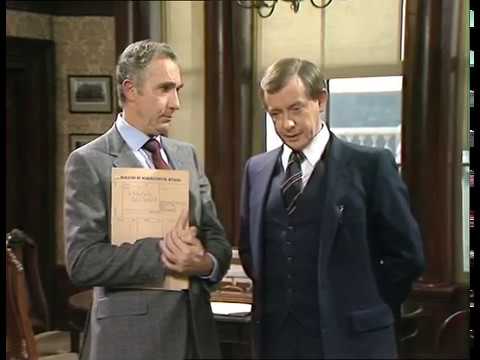
## Background This clip was published on YouTube by David Beckett on September 6, 2018. It features an excerpt from the British political satire television series Yes Minister (Series 3, Episode 6, "The Whisky Priest"), with the video description highlighting Sir Humphrey Appleby's famous monologue on the necessity of bureaucratic detachment.
## TL;DR When Bernard Woolley wonders whether civil servants ought to personally believe in the government policies they implement, Sir Humphrey Appleby immediately rejects the notion as absurd. Reflecting on his thirty-year career across eleven different governments, Sir Humphrey demonstrates that political platforms constantly contradict and reverse one another. He reels off a dizzying list of mutually exclusive stances he has had to enforce regarding the Common Market, steel nationalisation, capital punishment, and economic doctrine. Ultimately, Sir Humphrey argues that genuine ideological conviction would render a civil servant completely mad, cementing absolute neutrality as the bedrock of the profession.
## Atmosphere & style The exchange delivers sharp, dry political satire marked by a classic dynamic between an earnest junior official and a world-weary, patronising bureaucratic master. Delivered with polished comedic deadpan, Sir Humphrey's rhythmic escalation from polite incredulity to an exasperated, absurd crescendo makes the scene feel intellectually incisive and delightfully cynical. Watching it offers a swift, witty masterclass in administrative survival, contrasting naive idealism with the dizzying gymnastics of realpolitik.
## Bulletin - [00:00](https://www.youtube.com/watch?v=wKDdLWAdcbM&t=0s) Bernard Woolley questions whether civil servants ought to personally believe in the government policies they are tasked with implementing. - [00:00](https://www.youtube.com/watch?v=wKDdLWAdcbM&t=0s) Sir Humphrey Appleby dismisses personal ideological investment as an absurd hazard for administrators, citing his service across eleven governments over thirty years. - [00:00](https://www.youtube.com/watch?v=wKDdLWAdcbM&t=0s) Humphrey argues that personally adopting the diametrically opposed policies of alternating administrations would result in complete psychological madness.
## Key takeaways - [00:00](https://www.youtube.com/watch?v=wKDdLWAdcbM&t=0s) Bernard Woolley questions if civil servants must personally believe in government policies to carry them out. - [00:00](https://www.youtube.com/watch?v=wKDdLWAdcbM&t=0s) Sir Humphrey Appleby dismisses personal belief in policy as an 'extraordinary idea' that makes little administrative sense. - [00:00](https://www.youtube.com/watch?v=wKDdLWAdcbM&t=0s) Sir Humphrey has served eleven different governments across a thirty-year career in Whitehall. - [00:00](https://www.youtube.com/watch?v=wKDdLWAdcbM&t=0s) Personal ideological investment would force a civil servant to constantly reverse positions on European integration, switching between passionately avoiding and passionately joining the Common Market. - [00:00](https://www.youtube.com/watch?v=wKDdLWAdcbM&t=0s) Implementing industrial policy without detachment would require alternating between the nationalisation, denationalisation, and renationalisation of steel. - [00:00](https://www.youtube.com/watch?v=wKDdLWAdcbM&t=0s) On penal policy, personal conviction would require an administrator to be both a fervent retentionist and an ardent abolitionist regarding capital punishment. - [00:00](https://www.youtube.com/watch?v=wKDdLWAdcbM&t=0s) Civil servants would have to simultaneously endorse opposing macroeconomic models, operating as both a Keynesian and a Friedmanite. - [00:00](https://www.youtube.com/watch?v=wKDdLWAdcbM&t=0s) In education, belief in policy would mandate acting both as a preserver and a destroyer of grammar schools. - [00:00](https://www.youtube.com/watch?v=wKDdLWAdcbM&t=0s) Administrative duty has forced officials to swing wildly between being nationalisation freaks and privatisation maniacs. - [00:00](https://www.youtube.com/watch?v=wKDdLWAdcbM&t=0s) Sir Humphrey concludes that genuinely believing in every policy an administrator executes would reduce a civil servant to a 'stark, staring, raving schizophrenic'.
## Detailed walkthrough ### [00:00](https://www.youtube.com/watch?v=wKDdLWAdcbM&t=0s) The Perils of Believing in Government Policy
Bernard Woolley confides a sense of disillusionment about the civil servant's role, wondering aloud whether their duty to execute the state's agenda requires personal conviction: “If it's our job to carry out government policies, shouldn't we believe in them?” Sir Humphrey Appleby immediately recoils at the premise, brushing it off as an absurd proposition before asking, “What an extraordinary idea. Why?” To illustrate the sheer impracticality of emotional or ideological investment in administrative work, Sir Humphrey reflects on the breadth of his own long career across Whitehall.
Sir Humphrey points out that across three decades, political tides have constantly reversed themselves, making personal belief not only superfluous, but actively hazardous to a civil servant's sanity. Detailing the dizzying swings of policy he has had to implement—from European integration and macroeconomic dogma to industrial ownership and penal policy—Sir Humphrey demonstrates that true civil service professionalism demands complete, detached neutrality rather than personal loyalty to partisan dogma:
> “Bernard, I have served eleven governments in the past thirty years. If I had believed in all their policies, I would have been passionately committed to keeping out of the Common Market, and passionately committed to going into it. I would have been utterly convinced of the rightness of nationalising steel. And of denationalising it and renationalising it. On capital punishment, I'd have been a fervent retentionist and an ardent abolitionist. I would've been a Keynesian and a Friedmanite, a grammar school preserver and destroyer, a nationalisation freak and a privatisation maniac; but above all, I would have been a stark, staring, raving schizophrenic.”
- **Tenure and turnover:** Sir Humphrey has served eleven different governments over the course of thirty years. - **Contradictory stances Sir Humphrey would have had to hold:** - Strongly opposing entry into the Common Market versus being passionately committed to joining it. - Supporting the nationalisation of steel, followed by its denationalisation, followed again by its renationalisation. - Serving as a fervent retentionist of capital punishment versus acting as an ardent abolitionist. - Endorsing Keynesian demand management versus Milton Friedman's monetarist economics. - Fighting to preserve grammar schools versus working to dismantle and destroy them. - Operating simultaneously as a nationalisation zealot and a privatisation fanatic.
## Notable quotes > [00:00](https://www.youtube.com/watch?v=wKDdLWAdcbM&t=0s) I have served eleven governments in the past thirty years. If I had believed in all their policies, I would have been passionately committed to keeping out of the Common Market, and passionately committed to going into it. — Sir Humphrey Appleby
## Mentioned Bernard Woolley, Sir Humphrey Appleby, Common Market, John Maynard Keynes, Milton Friedman, Yes Minister, The Whisky Priest
## Video description From Yes Minister Series 3 Episode 6 "The Whisky Priest".
"Bernard, I have served eleven governments in the past thirty years. If I had believed in all their policies, I would have been passionately committed to keeping out of the Common Market, and passionately committed to going into it. I would have been utterly convinced of the rightness of nationalising steel. And of denationalising it and renationalising it. On capital punishment, I'd have been a fervent retentionist and an ardent abolitionist. I would've been a Keynesian and a Friedmanite, a grammar school preserver and destroyer, a nationalisation freak and a privatisation maniac; but above all, I would have been a stark, staring, raving schizophrenic."
[Source](https://www.youtube.com/watch?v=wKDdLWAdcbM)