Delta Clipper Rocket Validates Re-Entry Rotation in Flight 8
Spaceman Sam Coniglio
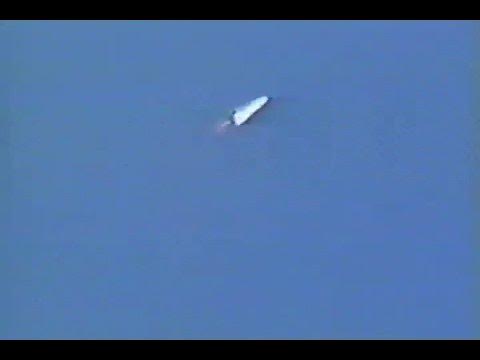
Flight 8 proves the fully reusable DC-X vehicle can execute a mid-air turnover into a re-entry profile and reorient for a controlled vertical landing.
AI-assisted summary of DC-X Flight 8 — original source. Check the original for full context.
Source published:
Key ideas
- On July 7, 1995, the Delta Clipper Experimental (DC-X) completed Flight 8 at the White Sands Missile Range in southern New Mexico. (0:00)
- Flight 8 verified the vehicle's capability to execute an aerodynamic pitch-over into a nose-first re-entry profile and reorient for landing. (0:00)
- The DC-X served as a pioneering technology demonstrator and is recognized as the world's first fully reusable rocket vehicle. (0:00)
Detailed notes
## Background Published on YouTube by Spaceman Sam Coniglio on October 12, 2008, this video presents historical test footage of the Delta Clipper Experimental (DC-X) Flight 8. The page description highlights the July 7, 1995 launch at the White Sands Missile Range in New Mexico, which demonstrated the world's first fully reusable rocket vehicle pitching over into a re-entry profile and reorienting for touchdown.
## TL;DR The video documents the landmark Flight 8 demonstration of the uncrewed DC-X vertical takeoff and vertical landing technology demonstrator. During the test, the rocket launches from White Sands Missile Range and performs an aerodynamic pitch-over maneuver into a nose-first re-entry attitude. It then reorients its base downward before firing its engines to achieve a controlled, powered vertical landing. The presentation concludes with a simple sign-off screen marking the end of the flight.
## Atmosphere & style The presentation evokes an authentic, archival feel, relying on instrumental background music instead of spoken commentary to accompany the aerospace footage. Watching the blunt-nosed craft ascend, gracefully flip on its side mid-air, and smoothly throttle down onto the desert pad feels hypnotic and pioneering. The subdued audiovisual framing lets the engineering milestone speak for itself, concluding quietly with an unadorned title card.
## Bulletin - [00:00](https://www.youtube.com/watch?v=wv9n9Casp1o&t=0s) On July 7, 1995, the Delta Clipper Experimental (DC-X) completed Flight 8 at the White Sands Missile Range in southern New Mexico. - [00:00](https://www.youtube.com/watch?v=wv9n9Casp1o&t=0s) Flight 8 verified the vehicle's capability to execute an aerodynamic pitch-over into a nose-first re-entry profile and reorient for landing. - [00:00](https://www.youtube.com/watch?v=wv9n9Casp1o&t=0s) The DC-X served as a pioneering technology demonstrator and is recognized as the world's first fully reusable rocket vehicle.
## Key takeaways - [00:00](https://www.youtube.com/watch?v=wv9n9Casp1o&t=0s) The Delta Clipper Experimental (DC-X) was an uncrewed technology demonstrator designed for vertical takeoff and vertical landing (VTVL). - [00:00](https://www.youtube.com/watch?v=wv9n9Casp1o&t=0s) DC-X is recognized as the world's first fully reusable rocket vehicle. - [00:00](https://www.youtube.com/watch?v=wv9n9Casp1o&t=0s) Flight 8 was conducted on July 7, 1995, at the White Sands Missile Range located in southern New Mexico. - [00:00](https://www.youtube.com/watch?v=wv9n9Casp1o&t=0s) The mission successfully executed an aerodynamic pitch-over maneuver into a nose-first re-entry profile. - [00:00](https://www.youtube.com/watch?v=wv9n9Casp1o&t=0s) Following the re-entry orientation, the vehicle demonstrated the ability to rotate its base back downward toward the ground. - [00:00](https://www.youtube.com/watch?v=wv9n9Casp1o&t=0s) DC-X fired its engines to perform a controlled, powered vertical landing maneuver. - [00:00](https://www.youtube.com/watch?v=wv9n9Casp1o&t=0s) Flight 8 validated critical re-entry attitude changes and landing reorientation for reusable launch architectures. - [00:00](https://www.youtube.com/watch?v=wv9n9Casp1o&t=0s) The video document concludes the demonstration sequence with instrumental background music and the final marker 'The End.'
## Detailed walkthrough ### [00:00](https://www.youtube.com/watch?v=wv9n9Casp1o&t=0s) Delta Clipper Experimental (DC-X) Flight 8
The video documents Flight 8 of the Delta Clipper Experimental (DC-X), an uncrewed vertical takeoff and vertical landing technology demonstrator recognized as the world's first fully reusable rocket vehicle. Conducted on July 7, 1995, at the White Sands Missile Range in southern New Mexico, this historic test demonstrated the vehicle's capability to execute an aerodynamic pitch-over maneuver into a nose-first re-entry profile before reorienting its base downward and firing its engines for a controlled, powered vertical landing.
The audio track features instrumental background music accompanying the flight sequence, concluding simply with the ambient phrase “The End” as the demonstration wraps up.
- **Vehicle:** Delta Clipper Experimental (DC-X) - **Flight Number:** Flight 8 - **Date:** July 7, 1995 - **Location:** White Sands Missile Range, New Mexico - **Key Milestone:** Validated rotation into a re-entry attitude and subsequent re-orientation for a vertical landing maneuver
## Mentioned Delta Clipper Experimental (DC-X), White Sands Missile Range, New Mexico
## Video description On July 7, 1995 a rocket known as the Delta Clipper Experimental (DC-X) launched into the sky. This is the world's first fully reusable rocket vehicle. Flight 8 proved that the vehicle could turn over into a re-entry profile and re-orient itself for landing. This flight took place at the White Sands Missile Range in southern New Mexico.
[Source](https://www.youtube.com/watch?v=wv9n9Casp1o)