Minister Orders 300 Layoffs at Empty £2.25M Hospital to Treat Sick
BBC Studios
A hospital exists to heal the sick rather than maintain employment, leaving an administrative workforce of 500 unjustifiable without patients.
AI-assisted summary of Get some patients - Yes, Minister - BBC — original source. Check the original for full context.
Source published:
Key ideas
- The Minister tours a £2.25 million medical facility—comprising J Theatre, radiotherapy, and intensive care—that sits entirely idle with zero patients. (0:01)
- Administrators defend employing 500 support staff without patients, arguing the absence of sick people reduces running costs, prolongs equipment life, and keeps the facility hygienic enough to contest the Florence Nightingale Award. (0:01)
- The Minister demands an immediate reduction of 300 administrative positions to fund clinical staff, threatening to shut the hospital down entirely unless patients are admitted. (0:37)
- Facing strike threats from union representative Mr. Fraser, the Minister welcomes the walkout, remarking that an empty hospital strike harms no one and encouraging administrators to join them. (0:37)
Detailed notes
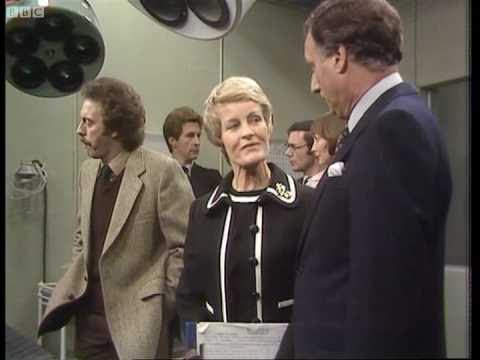
## Background This video was published on YouTube by BBC Studios on April 29, 2010. According to the page description, it features a classic clip from the political sitcom Yes, Minister in which the Minister visits an empty new hospital and demands that they admit patients immediately.
## TL;DR During a tour of a state-of-the-art medical facility, the Minister discovers that £2.25 million worth of equipment and an administrative staff of 500 people are being maintained without treating a single patient. When the administrator justifies the vacancy by noting that unused equipment lasts longer and touts a nomination for a hygiene award, the Minister threatens to close the hospital unless patients are brought in. He orders the firing of 300 non-clinical staff to fund medical personnel, brushes off union objections that a hospital is an employment program, and actively welcomes a threatened strike on the grounds that an empty hospital cannot harm anyone.
## Atmosphere & style The scene plays out with sharp satirical wit, contrasting the Minister's mounting, exasperated disbelief against the serene, deadpan logic of bureaucratic administration. The comedic tension escalates from dry observational irony into a rapid-fire confrontation over institutional purpose versus self-serving employment. Watching the exchange feels brisk, absurd, and delightfully biting as political common sense clashes head-on with civil service doublethink.
## Bulletin - [00:01](https://www.youtube.com/watch?v=x-5zEb1oS9A&t=1s) The Minister tours a £2.25 million medical facility—comprising J Theatre, radiotherapy, and intensive care—that sits entirely idle with zero patients. - [00:01](https://www.youtube.com/watch?v=x-5zEb1oS9A&t=1s) Administrators defend employing 500 support staff without patients, arguing the absence of sick people reduces running costs, prolongs equipment life, and keeps the facility hygienic enough to contest the Florence Nightingale Award. - [00:37](https://www.youtube.com/watch?v=x-5zEb1oS9A&t=37s) The Minister demands an immediate reduction of 300 administrative positions to fund clinical staff, threatening to shut the hospital down entirely unless patients are admitted. - [00:37](https://www.youtube.com/watch?v=x-5zEb1oS9A&t=37s) Facing strike threats from union representative Mr. Fraser, the Minister welcomes the walkout, remarking that an empty hospital strike harms no one and encouraging administrators to join them.
## Key takeaways - [00:01](https://www.youtube.com/watch?v=x-5zEb1oS9A&t=1s) The newly equipped hospital features an operating theatre, radiotherapy unit, and intensive care facility constructed at a cost of £2.25 million. - [00:01](https://www.youtube.com/watch?v=x-5zEb1oS9A&t=1s) Despite having no patients, the hospital employs 500 administrative and non-clinical support personnel. - [00:01](https://www.youtube.com/watch?v=x-5zEb1oS9A&t=1s) Hospital administration argues that zero patients benefits the facility by cutting running expenses and preserving equipment lifespan. - [00:01](https://www.youtube.com/watch?v=x-5zEb1oS9A&t=1s) Administrators treat overseeing an organization of 500 staff as an independent, justifiable undertaking irrespective of clinical operations. - [00:37](https://www.youtube.com/watch?v=x-5zEb1oS9A&t=37s) The Minister issues an ultimatum to Mrs. Rogers to begin treating patients immediately or face the total closure of the hospital. - [00:37](https://www.youtube.com/watch?v=x-5zEb1oS9A&t=37s) To fund doctors and nurses, the Minister orders the immediate dismissal of 300 non-clinical staff members. - [00:37](https://www.youtube.com/watch?v=x-5zEb1oS9A&t=37s) Mrs. Rogers claims the hospital is one of the best-run in the country, citing its contention for the Florence Nightingale Award for hygiene. - [00:37](https://www.youtube.com/watch?v=x-5zEb1oS9A&t=37s) The facility's award-worthy cleanliness is ironically enabled by the total absence of sick patients. - [00:37](https://www.youtube.com/watch?v=x-5zEb1oS9A&t=37s) The Minister dismisses operational concerns about handling complex surgeries, insisting the hospital should at least treat basic conditions like hernias, piles, and varicose veins. - [00:37](https://www.youtube.com/watch?v=x-5zEb1oS9A&t=37s) Union representative Mr. Fraser objects to job cuts, framing the dismissal of 300 workers as contrary to a compassionate society. - [00:37](https://www.youtube.com/watch?v=x-5zEb1oS9A&t=37s) The Minister rejects the premise that healthcare institutions exist to guarantee employment, defining a hospital strictly as a place for healing the sick. - [00:37](https://www.youtube.com/watch?v=x-5zEb1oS9A&t=37s) The Minister neutralizes union strike threats by welcoming an immediate walkout, noting it poses zero risk to patients in an empty facility.
## Detailed walkthrough ### [00:01](https://www.youtube.com/watch?v=x-5zEb1oS9A&t=1s) The Minister Inspects an Empty Hospital
The Minister tours a pristine, state-of-the-art facility, pausing to examine an unused operating theatre designated as "J Theatre." Upon inquiring into the expenditure, he learns that the theatre, along with the radiotherapy unit and intensive care, cost two and a quarter million pounds. When the Minister asks whether the administrator is appalled that such an expensive facility sits completely idle, the administrator calmly counters that having no patients is actually beneficial in certain respects, noting that keeping the equipment unused prolongs its operational life and significantly cuts down on running expenses.
Baffled by this administrative logic, the Minister points out the glaring absence of patients, only to be told that the essential administration of the facility must continue regardless. When the Minister questions whether caring for patients is the true purpose of a hospital, the administrator explains that managing an organization of 500 administrative and support personnel is a massive undertaking in its own right. The absurdity reaches a peak when the Minister points out that without patients, these workers would not be needed at all, prompting the administrator's bewildered reply: “Running an organization of 500 people is a big job, Minister.”
- The combined cost of J Theatre, radiotherapy, and intensive care was £2.25 million. - The hospital currently employs an administrative organization of 500 people despite having zero patients.
[00:37](https://www.youtube.com/watch?v=x-5zEb1oS9A&t=37s) Demands for Patients, Job Cuts, and Strike Threats
Losing his patience, the Minister delivers an ultimatum to Mrs. Rogers: she must admit patients into the hospital immediately or he will shut it down entirely. Rather than waiting for patients to arrive "in the course of time," he orders her to eliminate 300 non-clinical staff positions immediately, hire medical personnel, and start treating people. Mrs. Rogers protests vigorously, insisting that the hospital cannot function without those 300 staff members and arguing that it is already among the finest and most efficiently managed hospitals in the nation. To back this up, she reveals that the hospital is a contender for the Florence Nightingale Award, explaining proudly that “It's won by the most hygienic hospital in the area”—a pristine cleanliness made possible solely by the total absence of sick people.
When staff raise the objection that a skeleton medical team would be incapable of handling major surgical procedures, the Minister retorts that they do not need to attempt complex operations, declaring: “I don't care if you only do varicose veins, hernias, and piles. Do something.” At this point, union representative Mr. Fraser interjects to challenge the loss of 300 livelihoods, asking whether firing workers represents a compassionate society. The Minister firmly dismisses the notion that healthcare facilities exist for staff retention, stating: “A hospital is not a source of employment. It is a place for healing of the sick.” When Mr. Fraser threatens that his union members will walk out on strike, the Minister enthusiastically invites them to do so, pointing out that an empty hospital cannot harm anyone, and urges them to take the administrators along on strike as well.
```mermaid flowchart TD accTitle: Hospital Stand-off Flowchart accDescr: Flowchart illustrating the Minister's confrontation with the administrator and union over the empty hospital.
subgraph Problem["The Bureaucratic Reality"] A["£2.25M Unused Facilities<br/>(J Theatre, ICU, Radiotherapy)"] --> B["500 Administrative Staff<br/>0 Patients"] B --> C["Nominated for Florence Nightingale Award<br/>(Most hygienic hospital)"] end
subgraph MinisterDemands["Minister's Intervention"] D["Cut 300 Administrative Jobs"] E["Hire Doctors and Nurses"] F["Admit Patients Immediately"] end
subgraph Opposition["Pushback & Ultimatum"] G["Union Threatens Strike<br/>(Protecting jobs)"] H["Minister Welcomes Strike:<br/>No patients to harm"] end
B --> D D --> E E --> F D --> G G --> H ```
- Mrs. Rogers argues the empty facility is one of the best-run hospitals in the country and is nominated for the Florence Nightingale Award for local hospital hygiene. - The Minister insists on sacking 300 support workers to make budgetary room for doctors and nurses. - The Minister rebuffs union strike threats by welcoming the walkout: “Who can it harm? Do please come out on strike. The sooner the better. And take the administrators with you while you're at it.”
## Notable quotes > [00:37](https://www.youtube.com/watch?v=x-5zEb1oS9A&t=37s) A hospital is not a source of employment. It is a place for healing of the sick. — The Minister
## Mentioned Yes, Minister, BBC, BBC Studios, The Minister, Mrs. Rogers, Mr. Fraser, Florence Nightingale Award, J Theatre
## Video description The Minister visits a new empty hospital and demands that they get some patients immediately. Classic clip from the political sitcom Yes, Minister. Watch more high quality videos on the new BBC Worldwide YouTube channel here: http://www.youtube.com/bbcworldwide
This is a channel from BBC Studios who help fund new BBC programmes. Service information and feedback: https://www.bbcstudios.com/contact/contact-us/
[Source](https://www.youtube.com/watch?v=x-5zEb1oS9A)