Cuddy Says Body Language Drives Mindset And Workplace Influence
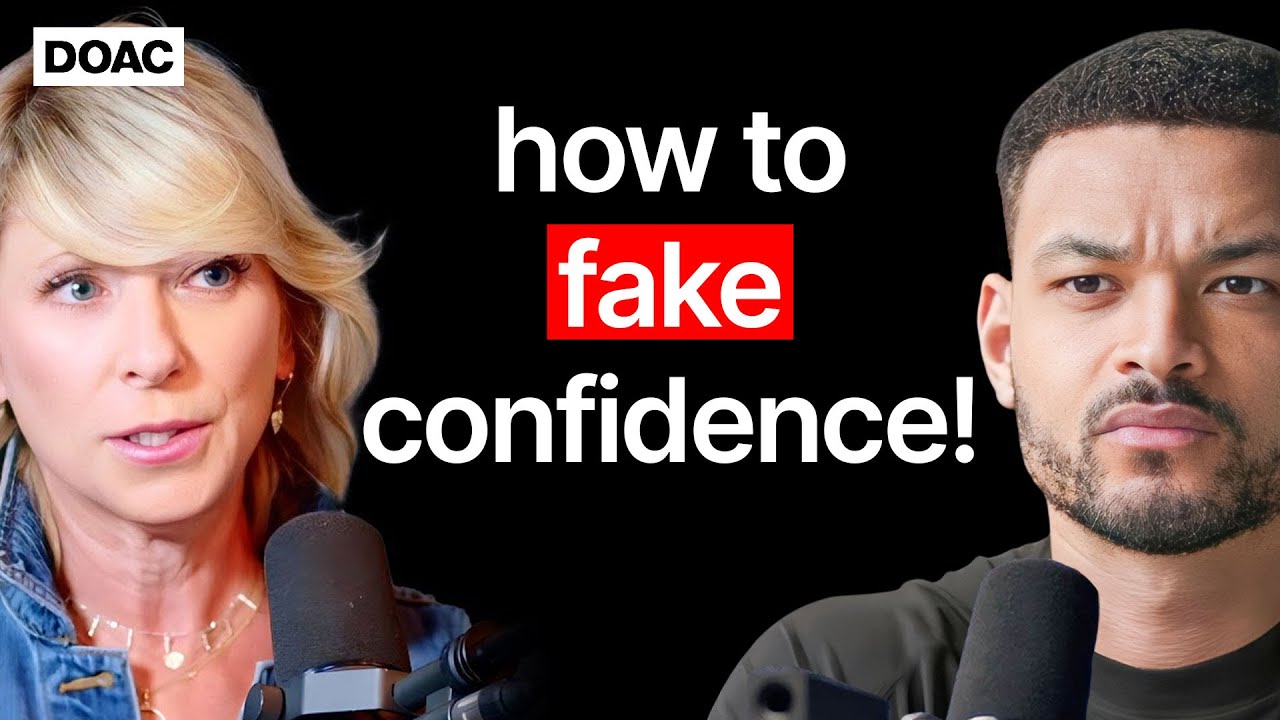
The Diary Of A CEO
Adopting expansive posture activates the brain's approach system to reduce stress, build agency, and establish the trust required to persuade others.
AI-assisted summary of The Body Language Expert: 4 Body Language Tricks That Will Make People Love You & Respect You! — original source. Check the original for full context.
Source published:
Detailed notes
## Background Ce contenu a été publié par la chaîne YouTube The Diary Of A CEO le 31 août 2023. Il s'agit d'un épisode de podcast animé par Steven Bartlett, qui reçoit le docteur Amy Cuddy pour discuter de l'impact du langage corporel sur la confiance en soi, la perception sociale et l'irrésistibilité.
## TL;DR Dans cet entretien, la chercheuse Amy Cuddy explique comment la posture et la communication non verbale influencent directement nos émotions, notre sentiment d'imposture et la manière dont les autres nous perçoivent. Elle démontre que le corps et l'esprit fonctionnent en boucle de rétroaction continue, proposant de petites micro-ajustements comportementaux plutôt que de grands changements radicaux. Enfin, elle partage son expérience personnelle d'avoir subi du harcèlement académique et met en avant l'importance d'établir la confiance comme préalable à tout pouvoir d'influence.
## Atmosphere & style L'atmosphère de l'échange est à la fois intime, vulnérable et rigoureusement scientifique. Steven Bartlett apporte une écoute attentive et partage ses propres anecdotes personnelles avec franchise, tandis qu'Amy Cuddy combine une grande clarté académique à une émotion palpable lorsqu'elle aborde des sujets douloureux comme le harcèlement. Il en résulte une conversation fluide, chaleureuse et émouvante, oscillant naturellement entre analyses de comportement et révélations profondément humaines.
## Key takeaways - [00:00](https://www.youtube.com/watch?v=YEM3nWkB-EE&t=0s) Non-verbal communication accounts for at least 50% of first impressions and forms an internal feedback loop directly influencing brain state and self-perception. - [06:33](https://www.youtube.com/watch?v=YEM3nWkB-EE&t=393s) Altering physical posture produces measurable changes in mood and mental health, including symptom reduction in clinical depression and PTSD. - [08:50](https://www.youtube.com/watch?v=YEM3nWkB-EE&t=530s) Imposter syndrome is a near-universal human experience across demographics rather than a medical pathology. - [11:54](https://www.youtube.com/watch?v=YEM3nWkB-EE&t=714s) Expansive postures activate the behavioral approach system, increasing opportunity perception, prosocial action, and personal agency. - [24:31](https://www.youtube.com/watch?v=YEM3nWkB-EE&t=1471s) Asynchrony between spoken words and physical body language is the true indicator of inauthenticity or deception, rather than simple eye contact. - [30:54](https://www.youtube.com/watch?v=YEM3nWkB-EE&t=1854s) Validated self-affirmation theory relies on anchoring in core identity values rather than repeating superficial mirror affirmations. - [36:45](https://www.youtube.com/watch?v=YEM3nWkB-EE&t=2205s) Sustainable personal growth is achieved through small behavioral 'self-nudges' rather than sweeping, high-friction resolutions. - [40:45](https://www.youtube.com/watch?v=YEM3nWkB-EE&t=2445s) The prolonged stress of the pandemic depleted collective 'surge capacity,' leaving many individuals in a prolonged defensive survival state. - [43:32](https://www.youtube.com/watch?v=YEM3nWkB-EE&t=2612s) Power differentials alter body language dynamics through complementarity, where expansive postures by leaders cause subordinate individuals to contract. - [47:40](https://www.youtube.com/watch?v=YEM3nWkB-EE&t=2860s) Eye contact is highly culturally constrained, serving as a sign of respect in some settings and an aggressive challenge in others. - [55:59](https://www.youtube.com/watch?v=YEM3nWkB-EE&t=3359s) Attempting to artificially fake body language creates nonverbal disconnects, whereas changing internal narrative naturally aligns posture and presence. - [01:04:12](https://www.youtube.com/watch?v=YEM3nWkB-EE&t=3852s) Targeted workplace bullying is driven by primary bullies seeking status through social destruction and a scarcity mindset. - [01:19:12](https://www.youtube.com/watch?v=YEM3nWkB-EE&t=4752s) Individuals crossing the 'line of resentment'—achieving high external recognition despite lower in-group status—are disproportionately targeted by workplace bullies. - [01:23:40](https://www.youtube.com/watch?v=YEM3nWkB-EE&t=5020s) Trust serves as the essential conduit for influence, requiring active listening and warmth before asserting intellectual authority. - [01:25:50](https://www.youtube.com/watch?v=YEM3nWkB-EE&t=5150s) Sadness and emotional contrast are necessary components of the human experience that foster empathy, healing, and depth.
## Detailed walkthrough ### [00:00](https://www.youtube.com/watch?v=YEM3nWkB-EE&t=0s) Introduction and the Power of Non-Verbal Communication
The conversation opens with host Steven Bartlett introducing Dr. Amy Cuddy, a Harvard professor and expert on the behavioral science of power whose iconic TED Talk on "power posing" became the second most-watched of all time. Dr. Cuddy quickly refutes common skepticism surrounding non-verbal communication. While pop-psychology folklore often claims that 80% or 90% of all human communication is non-verbal, Dr. Cuddy clarifies that non-verbal cues account for at least 50% of our first impressions of others.
Crucially, body language is not just an outward-facing signal directed at other people; it acts as a continuous internal feedback loop to our own brains. The way we hold ourselves sends immediate signals about whether we are safe or threatened, confident or powerless. If someone feels utterly powerless, their mind evaluates challenges as terrifying threats rather than exciting opportunities, stifling creativity, authenticity, and social bravery.
* **Facial Feedback Hypothesis:** Early research into body-mind feedback focused on facial expressions. Because core emotions like happiness, sadness, and surprise are hardwired and universal across human cultures, altering facial muscle contractions directly shifts internal mood states. * **The Pencil Experiment:** In classic facial feedback studies, participants forced into a smile by holding a pencil between their teeth—contracting the muscles around both the mouth and eyes—reported higher happiness levels, liked the experimenters more, and evaluated stimuli more positively than those forced into neutral or frowning positions. * **The Relaxation Response:** Research extending into physical movement and respiratory control demonstrated that shallow, rapid breathing triggers a fight-or-flight response. Slower, deeper abdominal breathing—pioneered in medical settings by Dr. Herbert Benson at Harvard Medical School in the 1960s and 1970s—triggers a autonomic nervous system shift that reduces stress before difficult procedures or public presentations.
---
[06:33](https://www.youtube.com/watch?v=YEM3nWkB-EE&t=393s) The Two-Way Street of Mind and Body
Dr. Cuddy emphasizes that the mind-body connection operates bidirectionally across clinical and social domains. Opening up one's posture for just two minutes produces measurable reductions in clinical depression scale scores for individuals suffering from major depressive disorder. Similarly, incorporating expansive body movements and yoga postures into treatment regimens for Post-Traumatic Stress Disorder (PTSD) yields significant reductions in trauma symptoms.
``` ┌────────────────────────────────────────────────────────┐ │ Bidirectional Feedback Loop │ ├─────────────────────────┬──────────────────────────────┤ │ Internal Emotional State│ ───────────────► Body Posture│ │ (Powerless / Threatened)│ (Collapsed) │ ├─────────────────────────┼──────────────────────────────┤ │ Body Posture (Expansive)│ ───────────────► Mindset │ │ │ (Agency & Opportunity)│ └─────────────────────────┴──────────────────────────────┘ ```
Steven and Dr. Cuddy reflect on the evolutionary origins of non-verbal signals. Formal human language is estimated to be roughly 150,000 to 200,000 years old, whereas early hominids and ancestral primates relied on reading physical cues for survival over hundreds of thousands of years. Non-verbal signals remain primary in animal behavior, such as the varied vocal chirps and protective tail poses observed in backyard squirrels signaling threat or mating availability.
---
[08:50](https://www.youtube.com/watch?v=YEM3nWkB-EE&t=530s) Deciphering the Virality of the TED Talk and Imposter Syndrome
Reflecting on her 2012 TED Talk, Dr. Cuddy notes that despite being over a decade old, the talk still receives 5,000 to 10,000 views per day and generates nearly a dozen personal emails daily from viewers around the globe. The universal appeal of the message stems from its frank discussion of "imposter syndrome." Dr. Cuddy highlights that early researchers of the phenomenon expressed regret over using the word *syndrome*, which falsely implies a pathological condition, preferring instead the term *imposter experience* to reflect how ubiquitous it is across demographics.
> "I think there was some universal truth that resonated across people, across cultures, and a lot of it was about feeling like an imposter... Almost everyone has this imposter experience."
Dr. Cuddy shares stories of receiving messages from first-generation Black college students, Swiss bankers, 12-year-old students, and retirees—all expressing the exact same underlying fear that they do not belong. By framing expansive posture as an accessible, zero-cost blueprint to cultivate inner agency, the talk gave individuals a practical tool to navigate anxiety without needing extra resources or technology.
---
[11:54](https://www.youtube.com/watch?v=YEM3nWkB-EE&t=714s) The Expanding Self: Mechanics of the Behavioral Approach System
The concept of power expansion extends far beyond static "power poses" like standing with hands on hips or adopting the open-armed "victory pose" seen in elite athletes like Usain Bolt. Expanding oneself involves dynamic habits across physical and temporal dimensions: taking longer strides while walking, letting arms swing naturally, speaking at a deliberate pace to take up "temporal space," and breathing deeply.
``` ┌──────────────────────────────────────────────┐ │ Expansive Physical Signals │ │ (Wide posture, slower speech, deep breathing)│ └──────────────────────┬───────────────────────┘ │ ▼ ┌──────────────────────────────────────────────┐ │ Behavioral Approach System Activation │ └──────────────────────┬───────────────────────┘ │ ┌─────────────────┴─────────────────┐ ▼ ▼ ┌───────────────────────┐ ┌───────────────────────┐ │ Threat → Opportunity │ │ Action & Agency │ │ Allies > Competitors │ │ Bystander Intervention│ │ Abundance Mindset │ │ Self-Efficacy │ └───────────────────────┘ └───────────────────────┘ ```
When expansive postures activate what psychologists call the **behavioral approach system**, several distinct shifts occur:
* **Opportunity Perception:** External challenges are viewed as exciting opportunities rather than existential threats. * **Social Connection:** Others are perceived as potential allies and friends rather than competitors or predators. * **Cognitive Flexibility:** The mind shifts from a defensive scarcity mindset to a creative abundance mindset. * **Prosocial Action:** Individuals feel empowered to intervene on behalf of others. Research in bystander intervention shows that individuals who feel high personal agency step up immediately in emergencies rather than assuming someone else is better qualified to help.
---
[14:59](https://www.youtube.com/watch?v=YEM3nWkB-EE&t=899s) Conducting a Posture Audit and Unconscious Powerlessness
Most individuals operate completely unaware of the physical signals of powerlessness they transmit to themselves and others. Dr. Cuddy frequently asks audiences to pause mid-presentation and perform an immediate posture audit without changing position. Common physical indicators of low agency and powerlessness include pulling limbs inward, rounding shoulders forward, collapsing the chest, and tightly crossing or wrapping ankles under chairs.
The impact of posture on emotional state is readily apparent in professional sports. When watching a losing basketball team, players often sit on the bench with heads buried in their hands and shoulders slumped—appearing physically defeated even though their muscular strength and athleticism remain unchanged from minutes prior when they were winning.
- **The Fetal Position Effect:** Approximately 40% of people sleep in the fetal position. While correlational, studies indicate that individuals waking up curled in a tight fetal position report higher baseline morning anxiety compared to those sleeping stretched out. - **Micro-Habits for Expansion:** Simple daily adjustments can interrupt powerless postures, such as doing a full-body "starfish" stretch before getting out of bed, holding a hand on one's hip while brushing teeth, adjusting car seats to prevent slouching over the steering wheel, and altering desk setups to force wider arm positioning.
<Elicitation label="Explore the psychological impact of imposter syndrome" query="What does Dr. Amy Cuddy recommend for overcoming imposter syndrome using body language and cognitive framing?"/>
[18:47](https://www.youtube.com/watch?v=YEM3nWkB-EE&t=1127s) Addressing Deep Low Self-Esteem and Body-Mind Feedback
The discussion shifts to how individuals with exceptionally low self-esteem physically navigate space. The host shares an anecdote about a male friend who is candid about his poor self-worth: when entering a room, he immediately insults or apologizes for himself, sits on the floor, and contracts physically to occupy as little space as possible. Questioned on how someone in that state can be helped, Amy Cuddy emphasizes the power of body-mind feedback rooted in clinical psychology research.
She points out that such behavior represents a severe drop below the mean, but changing one's physical posture can fundamentally alter internal feelings. She highlights research on combat veterans suffering from severe post-traumatic stress disorder (PTSD) who felt utterly broken and betrayed by their bodies. When researchers like Emma Seppälä at Yale taught these veterans expansive yoga poses and deep breathing practices, the long-term results were transformative:
* Veterans reported a restored sense of personal power and agency. * A year later, many had moved out of their parents' homes, secured employment, and re-entered the dating world. * For individuals dealing with trauma, abuse, or complex PTSD, Cuddy recommends starting these expansive posture practices at home alone, where they feel safe, before gradually carrying that physical presence into public settings.
[22:37](https://www.youtube.com/watch?v=YEM3nWkB-EE&t=1357s) The "Self-Story" and the Internal Narrative
The conversation explores how internal narratives dictate daily life and long-term health outcomes. The host defines the "self-story" as the foundational set of beliefs about worth and capability that governs human behavior, sharing a story about a world-champion boxer. When training alone on a treadmill, if the boxer cramps up at 6.5 miles of a planned 7-mile run, he forces himself to limp the remaining distance—reasoning that giving up when no one is watching lets "demons" into his self-story.
Cuddy agrees that breaking commitments to oneself creates a damaging downward spiral of self-perception. She cites research on aging populations showing that elderly individuals with positive personal narratives lived significantly longer than those with negative narratives, even when controlling for identical job backgrounds, socioeconomic status, and health factors.
[24:31](https://www.youtube.com/watch?v=YEM3nWkB-EE&t=1471s) Authenticity, Asynchrony, and Detecting Deception
When people feel powerless, they struggle to be authentic, often displaying body language that mimics outright deception. Cuddy dispels the myth that eye contact is the primary indicator of lying, explaining that eye contact varies drastically across cultures, upbringings, and personality types. Instead, the true signal of deception or inauthenticity is **asynchrony**—the disconnect between spoken words and physical body language.
``` [Inauthentic / Lying State] ──> Disconnect between Words & Body ──> Cognitive Overload / "Off" Signal ```
Whether someone is a child pretending to be sick to skip school or a nervous job candidate over-rehearsing answers, the body betrays incongruent emotions. Cuddy references the TV show *Shark Tank* to illustrate this dynamic:
* **Overconfident Founders:** Pitchers who try to present extreme confidence often display subtle physical asynchrony. The Sharks intuitively register that something is "off" and decline to invest. * **Authentic Founders:** Pitchers who lack formal business education or elite experience, but possess genuine conviction, elicit warmth and forward-leaning posture from the Sharks. * Authentic body language signals long-term resilience, persistence, and leadership potential that cannot be fake-scripted.
[29:27](https://www.youtube.com/watch?v=YEM3nWkB-EE&t=1767s) Body Language in Dating and Attractiveness
Addressing whether body language impacts physical attractiveness and dating success, Cuddy counters old assumptions that women are penalized for dominant body language. Modern dating research reveals that expansive, confident, and warm body language increases perceived attractiveness across all genders.
* Studies examining profile pictures on dating apps demonstrate that individuals exhibiting open, confident postures receive significantly higher attractiveness ratings. * The ideal signal conveys comfort in one's own skin without crossing into arrogance.
[30:54](https://www.youtube.com/watch?v=YEM3nWkB-EE&t=1854s) True Self-Affirmation vs. Positive Thinking
To help individuals build confidence, Cuddy contrasts toxic "mirror affirmations" with scientifically backed **Self-Affirmation Theory**. Simply standing in a mirror saying "I am awesome" or "I am a winner" when feeling low often backfires, making the person feel like a liar on top of feeling insecure.
``` Traditional "Mirror" Affirmations: Feel Low ──> "I am a winner" ──> Internal Friction ("I'm a liar") Self-Affirmation Theory: Identify Core Values ──> Journal Context ──> Grounded Security ```
Instead, validated self-affirmation methodology requires a specific exercise:
1. **Identify Core Values:** List the top 2-3 values or qualities that fundamentally define who you are (e.g., love of music, loyalty, family). 2. **Journal the Experience:** Write one paragraph about a specific time you expressed your top value and a second paragraph detailing how it felt to express it. 3. **Execute the Stressor:** Proceed to face a completely unrelated high-stress challenge (such as a difficult math exam or a formal debate).
Research across hundreds of studies confirms that anchoring in core identity reduces stress hormones (like epinephrine) and improves performance by reducing the threat level of the immediate challenge.
[34:00](https://www.youtube.com/watch?v=YEM3nWkB-EE&t=2040s) Building Real Evidence and Self-Nudging
The host and Cuddy discuss the distinction between self-affirmation and "building evidence." The host notes that his own journey from low confidence involved stepping outside his comfort zone to gather tangible proof that he could survive difficult situations—aligning with self-perception theory. Cuddy agrees with this grounded approach, expressing frustration with superficial internet culture that preaches "mindset alone creates your life."
To bridge the gap between feeling powerless and stepping into confidence, Cuddy introduces the concept of **self-nudging**: using small, incremental behavioral tweaks rather than massive, overwhelming transformations to shift mindsets over time.
<FollowUp label="Want to learn how to apply Amy Cuddy's 'self-nudging' techniques in high-pressure situations?" query="How does Amy Cuddy explain using self-nudges to handle high-pressure situations like public speaking or job interviews?"/>
[36:45](https://www.youtube.com/watch?v=YEM3nWkB-EE&t=2205s) The Power of Small Nudges vs. Grand Resolutions
Amy Cuddy firmly rejects the concept of massive New Year's resolutions, describing them as overly grandiose traps that require a million steps and inevitably lead to failure, quitting, and shame. Instead, she advocates for tiny, incremental nudges—focusing on doing just one thing slightly better the next time a challenging situation arises. For example, someone who dreads public speaking but has to lead a team meeting shouldn't aim to become a world-class orator overnight. They should pick a single variable: focusing on deep, slow breathing, or ensuring they don't wrap their arms protectively around their torso by holding a water bottle or a slide advancer.
This philosophy was instilled in Cuddy by her beloved graduate school advisor at Princeton, Susan Fiske. Cuddy recounts nearly quitting graduate school the night before her first-year research talk. Terror-stricken, she called Fiske to announce her resignation. Fiske refused to let her quit, telling her that even if the talk didn't go perfectly—which it wouldn't—she would survive it, learn something, and improve. Fiske instructed her to take every single speaking opportunity offered to her, promising that eventually, through these micro-adjustments, she would look back in awe at how far she had come. The goal is to shift from approaching challenges with dread, executing them with anxiety, and leaving with regret, to approaching with confidence, executing with calm, and leaving with satisfaction.
* **The Framework for Growth:** Identify the situations executed with anxiety and left with regret (e.g., public speaking, giving negative feedback, having hard family conversations) and change just **one small detail** per iteration. * **Controlling the Controllables:** Cuddy notes that walking away with satisfaction comes from knowing you represented yourself authentically: *"You want to walk away and say, 'They saw who I am, and now they get to make the decision.'"* * **The Upward vs. Downward Spiral:** Host Steven Bartlett shares his mental model of confidence and powerlessness as self-reinforcing loops. Confidence breeds better performance, which yields positive social feedback and further builds confidence (an upward spiral). Conversely, doubt and threat-avoidance create a downward spiral.
---
[40:45](https://www.youtube.com/watch?v=YEM3nWkB-EE&t=2445s) The Post-Pandemic Defense State and Loss of "Surge Capacity"
Bartlett expresses worry for friends trapped at the bottom of downward spirals who operate in a state of pure self-preservation to remove all threat from their lives. Cuddy agrees, observing that a significantly higher portion of the population lives in this defensive, survival-oriented state today compared to three and a half years prior. She attributes this psychological shift to the collective trauma and protracted uncertainty of the COVID-19 pandemic.
Cuddy explains that human beings are neurologically wired to mobilize for short-term crises lasting a couple of months, but not prolonged threats that drag on for years with constant, disorienting shifts (such as the cycle of emerging from lockdowns only to face new variants like Delta and Omicron). Humans rely on **surge capacity**—a mental and physical network of adaptive resources used to survive acute emergencies. While people often felt surprisingly productive during the first two months of the pandemic due to this emergency response, surge capacity inevitably depletes.
* **Combat Parallels:** Cuddy compares this to research on combat soldiers. During the initial emergency phase of battle, focus is high, goals are shared, and teams and leaders perform at their peak. * **The Regression Phase:** In the limbo between battles or crises, individuals enter a regression phase where they lose a sense of purpose, feel disconnected, withdraw, and experience psychological collapse. * **The Need for Grace:** Rebuilding requires self-compassion rather than self-chastisement: *"I think that we have to have some grace... with each other, with ourselves. I don't think it's going to be fixed if we're too hard on ourselves."*
---
[43:32](https://www.youtube.com/watch?v=YEM3nWkB-EE&t=2612s) Open Body Language, "Penguin Arms," and Power Complementarity
Shifting back to practical body language for daily life and leadership, Bartlett admits to being hyper-aware of his posture during podcast interviews, constantly evaluating whether sitting in an open stance versus curling up impacts how guests open up to him. Cuddy validates his intuition, confirming that an open posture—leaning forward slightly, exposing palms, and keeping arms away from the body—signals comfort, interest, and safety, inviting the other person to mirror that openness.
However, Cuddy highlights a crucial exception to mirror behavior known as **complementarity**. While peers naturally mirror each other's body language, interactions with a power differential trigger opposite behaviors: a dominant person's expansive posture instinctively causes a less powerful person to shrink and shut down. Therefore, leaders must consciously adopt open, non-intimidating body language to ensure nervous employees feel safe enough to share problems and ideas.
``` ┌─────────────────────────────────────────┐ │ POWER DIFFERENTIAL │ └────────────────────┬────────────────────┘ │ ┌──────────────────┴──────────────────┐ ▼ ▼ ┌─────────────────────┐ ┌─────────────────────┐ │ Dominant Person │ │ Submissive Person │ │ (Expansive stance) │ │ (Constricted pose) │ └─────────────────────┘ └─────────────────────┘ │ ▼ Complementarity Response Occurs ```
Cuddy also introduces the concept of **"penguin arms"**—a common posture adopted by anxious speakers who pin their wrists or elbows tight against their hips while gesturing with only their hands.
* **Penguin Arms:** Anxious speakers keep their upper arms glued to their torso while flapping their hands out, driven by the subconscious urge to occupy as little space as possible. * **Audience Feedback Loop:** Anxious, defensive body language makes the audience feel visibly uncomfortable; the speaker then reads that discomfort in the room, amplifying their own panic in a damaging feedback loop.
---
[47:40](https://www.youtube.com/watch?v=YEM3nWkB-EE&t=2860s) Eye Contact, Culture, and Primate Aggression
Bartlett opens up about a personal struggle: when speaking to people with whom he has unresolved issues or unsaid truths, he finds it extremely difficult to maintain eye contact, often looking down or away. He asks what broader significance eye contact holds in human communication and whether it can be faked.
Cuddy stresses that eye contact is one of the most culturally constrained nonverbal behaviors, making universal generalizations impossible. Children in different cultures are raised under radically different norms regarding eye contact, which can lead to severe misunderstandings in cross-cultural settings.
* **Cultural Variations:** In many East Asian cultures, prolonged eye contact is perceived as rude, disrespectful, or overly aggressive, especially toward authority figures. Conversely, in Western contexts like the United States, direct eye contact is expected, and avoiding it is often misread as dishonesty. * **Primate Evolutionary Roots:** In non-human primates and great apes (referencing primatologist Robert Sapolsky), direct eye contact is almost universally an overt display of aggression—an invitation to fight ("bring it on"). * **Contextual Differences:** Cuddy notes that even within the US versus the UK, staring in an elevator carries different meanings. In the US, it implies a friendly greeting is coming, whereas in rougher parts of the UK, sustained eye contact might prompt someone to check for their wallet and prepare for conflict.
---
[50:06](https://www.youtube.com/watch?v=YEM3nWkB-EE&t=3006s) Reading People, Pickup Artistry, and Dating Red Flags
When asked if reading body language is a learnable skill, Cuddy enthusiastically responds that it is. She strongly recommends former FBI agent Joe Navarro's book, *What Every BODY is Saying*, praising how it grounds real-world investigative experience in solid scientific research with clear visual examples, while distancing herself from manipulative "pickup art" manuals.
This prompts a funny confession from Bartlett. At age 18, after a book on pickup artistry was accidentally delivered to his family home due to his older brother typing the wrong address, Bartlett opened it on his bedroom floor and read it cover-to-cover without moving. While acknowledging the toxic nature of the subculture, Bartlett admits the book fascinated him because it illuminated nonverbal signals he had been sending and receiving his whole life without realizing it. He brings up the concept of "pecking"—leaning excessively into someone's personal space when attracted to them, which inadvertently signals low social value and causes the other person to lean away.
Cuddy recounts observing this exact dynamic while people-watching at restaurants during first dates, describing painful scenes where men talk endlessly about themselves without asking questions, invading space while the woman visibly tenses up.
* **Dating Red Flags:** A major nonverbal signal of a bad date is when one person talks continuously while physically leaning in too far, forcing the other to shrink, close their body off, or perform self-soothing behaviors. * **The Urge to Intervene:** Cuddy jokes that watching these cringe-worthy interactions makes her want to secretly slip a napkin to women on bad dates with the word *"RUN"* written on it.
---
<ElicitationsGroup message="Explore more insights from Dr. Amy Cuddy's discussion:"> <Elicitation label="Analyze the psychological mechanisms behind 'power posing'" query="What does Amy Cuddy's research say about the psychological and physiological mechanisms behind power posing?"/> <Elicitation label="Explore strategies for overcoming imposter syndrome" query="How does Amy Cuddy recommend overcoming imposter syndrome using nonverbal feedback loops?"/> </ElicitationsGroup>
[53:33](https://www.youtube.com/watch?v=YEM3nWkB-EE&t=3213s) Subtle Dating Tells and Reading the Room
The discussion begins with Doctor Amy Cuddy detailing the physical cues people give off when uncomfortable or trying to create distance. She notes how people make themselves smaller, lean away, or press their lips tightly together. Sharing an observation from television, Cuddy recalls watching an episode of *The Bachelorette* where a contestant hugged the lead. Though she did not forcefully pull back, her subtle body language made it painful to watch because it was obvious she felt he was stepping far past her boundary.
Steven Bartlett pivots to the positive side of the spectrum, describing how he and his girlfriend love watching other couples in restaurants to decipher their relationship dynamic. They try to figure out if it is a first date, how long they have been together, or if they are truly interested in each other. He points out that the worst sign is when both people are leaning away from each other scrolling on their phones. Cuddy highlights what genuine connection looks like instead:
* **Leaning In & Eye Contact:** Partners maintain comfortable eye contact, resist pulling out their phones, and lean toward one another. * **Curiosity Expressions:** Their faces noticeably light up with sincere intrigue when the other person speaks. * **The "Bathroom Break" Test:** Cuddy reveals her ultimate tell for whether a date is going well. When one person steps away to the restroom, the person remaining at the table cannot stop smiling—sometimes texting a friend, with cheeks visibly hurting from suppressed joy because they no longer have to play it cool. * **Grooming Signals:** Subtle gestures like adjusting hair or clothing, indicating they care deeply about how they present themselves to the other person.
---
[55:59](https://www.youtube.com/watch?v=YEM3nWkB-EE&t=3359s) Can You Fake Body Language? The "Inside-Out" Transformation
Bartlett asks whether it is possible to fake body language effectively. Cuddy explains that attempting to fake non-verbal signals usually fails due to *asynchronies*. Non-verbal communication involves an overwhelming number of synchronized channels—vocal pitch, speech cadence, facial expressions, and hand movements. Unless someone is a world-class actor, trying to consciously control all these variables results in a disjointed performance that people instinctively distrust.
> "Fake it till you make it to me has always meant pretend that you know things you don't know... Fake it till you become it is expand—allow yourself to feel powerful enough to really understand who you are."
Bartlett shares a deeply personal realization from his own youth. Between ages 14 and 21, feeling inherently "low value" and repeatedly rejected, he read pickup artistry books to master body language tricks and rules. None of it worked. His life only transformed when his fundamental self-story and opinion of himself changed. He emphasizes that while you might think you can manipulate three or four signals, human evolutionary biology equips us to sense true feelings instantly.
``` +-----------------------------------------------------------------------+ | OUTSIDE-IN vs. INSIDE-OUT | +-----------------------------------------------------------------------+ | OUTSIDE-IN (Faking It) | | - Trying to control gestures, eye contact, and tone artificially. | | - Creates non-verbal asynchronies that trigger instinctual distrust. | | - Focuses on fooling others rather than internal growth. | +-----------------------------------------------------------------------+ | INSIDE-OUT (Becoming It) | | - Shifting your internal narrative and sense of self-worth. | | - Body posture and presence naturally expand as a result. | | - Generates real courage to confront yourself and step into challenges.| +-----------------------------------------------------------------------+ ```
Cuddy clarifies her famous core concept, "Fake it till you *become* it." Unlike "fake it till you make it"—which focuses on fooling others until you land a role—becoming it means adopting expansive postures to give yourself the courage to step into challenges until that presence becomes part of your true identity. She recalls a student from her Harvard TED Talk story who felt like an imposter from a small town. By practicing these principles and speaking up, she eventually transformed her self-perception, found her calling in education, and came back years later to say she had truly *become* the person she wanted to be.
* Postural shifts should be taught to children not as an act of subservience or respect to adults, but as a form of respect to themselves. * Adopting open postures reduces defensiveness, allowing an individual to be genuinely authentic and face internal self-reflection.
---
[01:02:10](https://www.youtube.com/watch?v=YEM3nWkB-EE&t=3730s) Channel Announcements and Sponsorship Interludes
In a brief break from the main interview, Bartlett announces the official publication of his book, *The 33 Laws of Business & Life*. He describes it as the culmination of 15 years spent analyzing human behavior, leadership, storytelling, and self-understanding. To celebrate the launch, he offers a special gold-edition copy to 30 readers who post about the book on social media and tag him.
Following the book announcement, Bartlett shares his personal history with sponsor Huel. Years prior, he noticed a colleague named Michael wearing a Huel t-shirt in his office and was intrigued by the clean aesthetic. After Michael gave him a sample, Bartlett became an avid user and eventual investor, finding it ideal for maintaining a nutritionally complete diet amid a demanding schedule.
---
[01:04:17](https://www.youtube.com/watch?v=YEM3nWkB-EE&t=3857s) Academic Bullying, Public Defamation, and "Social Death"
Returning to the conversation, Bartlett shifts to a painful chapter in Cuddy’s life: her experience with severe academic bullying following the massive viral success of her research. Visibly moved, Cuddy describes the ordeal as far worse than any physical pain, explaining that it dragged on for years and resulted in profound emotional trauma.
Cuddy clarifies that this was not a case of anonymous online trolls; it was a targeted smear campaign led openly by fellow academics. Because the ringleaders successfully demeaned and stigmatized her, it created a mob dynamic where anyone who wanted to attack her felt permitted to do so. The sheer volume of harassment was so overwhelming that she still cannot look through the records herself and requires assistance to manage it.
> "It is social death... Without community, we are in a bad place. We do need each other. The facts of my life were stolen from me; my story was rewritten."
She explains the devastating mechanisms of target harassment in professional settings:
* **Theft of Narrative:** Misinformation was deliberately spread in news articles and online forums, forcing her to spend years correcting lies during media appearances rather than discussing her actual work. * **Workplace Bullying Statistics:** Cuddy notes research showing over 90% of workplace bullying targets end up leaving their positions—whether by being fired (when bullies reverse the narrative), transferred, quitting due to stress, suffering stress-related illnesses, or taking their own lives. * **Impact on Family:** Her husband, a scientist who understood the statistical arguments, tried to defend her publicly, which only escalated the conflict and traumatized him further. Meanwhile, she struggled constantly over how much to shield her teenage son from the turmoil. * **The Speaking Refuge:** Amazingly, the one place Cuddy felt safe during the height of the harassment was on stage speaking to audiences, where she was temporarily insulated from the attacks before returning home to isolate herself in fear.
Despite the deep grief over how her academic trajectory was derailed, Cuddy emphasizes that she eventually chose to walk away from her position on her own terms—clarifying that she was never denied tenure, as her bullies claimed, and had full support from her dean. Ultimately, leaving that toxic environment allowed her to rebuild a life that is fundamentally happier and more aligned with her true values.
[01:12:08](https://www.youtube.com/watch?v=YEM3nWkB-EE&t=4328s) The Personal Cost of Academic Bullying
Amy Cuddy opens up about the devastating professional and emotional toll of the bullying campaign that forced her out of her full-time, tenure-track position in academia. Despite having been promoted twice and building an excellent research record, the environment became so toxic that remaining felt impossible: "I would have died if I had stayed." Leaving felt like a choice that was simultaneously stolen from her. She likens the loss of her academic trajectory to losing a young spouse: even if you remarry years later and find real happiness, you never truly stop grieving the original loss.
This trauma has made writing her subsequent book a heavy four-year journey. Not only is telling her own story terrifying, but carrying the accounts of others who have suffered severe workplace bullying weighs heavily on her. She notes interviewing parents whose adult children took their own lives due to workplace harassment, as well as seeing her own research collaborators tortured by relentless disinformation and hostility. Even recently, her son came home troubled after friends taking introductory psychology courses were taught false narratives about her work, demonstrating how persistent institutionalized disinformation can be.
* **Impact on Collaborators:** Her co-researchers suffered immense distress and lost ground professionally while trying to fight back against calculated disinformation. * **Persistent Disinformation:** Her son experienced secondary distress when two friends taking psychology classes encountered anti-Cuddy propaganda embedded in their coursework.
[01:15:27](https://www.youtube.com/watch?v=YEM3nWkB-EE&t=4527s) The Anatomy and Motivations of Workplace Bullies
Addressing what drives this behavior, Cuddy breaks down the psychology of "primary bullies"—the small group who initiate harassment campaigns and recruit others. Primary bullies are typically repeat offenders motivated by an unfulfilled need for status and recognition. They harbour deep resentment toward anyone they perceive as receiving more acclaim than they supposedly deserve. To gauge their environment, bullies perform initial "bully tests"—small, probing attacks to see if others will intervene. When bystanders fail to push back, the behavior escalates rapidly. Cuddy emphasizes that bullying is less about formal power and more about extracting status by stripping it away from the victim.
A core psychological trait among bullies is a strict scarcity mindset. They view professional life as a zero-sum game, believing another person's success directly diminishes their own. Cuddy references Albert Einstein’s observation that the most important question one can answer is whether the universe is fundamentally friendly or hostile; bullies operate entirely on the conviction that the world is inherently hostile. Debunking popular myths, Cuddy notes that bullies rarely suffer from crippling low self-esteem that keeps them awake at night—they genuinely believe they are in the right—and most victims of bullying do not go on to become bullies themselves.
* **Primary Bullies:** A minority of individuals who initiate attacks and recruit followers to build momentum. * **The "Bully Test":** Initial minor hostility aimed at testing whether surrounding bystanders will tolerate the behavior or intervene. * **Scarcity Mindset:** The fixed-pie belief that someone else's recognition is a direct loss to one's own standing. * **Bystander Intervention:** The critical early window where colleagues can publicly object and prevent a minor test from escalating into a full campaign of social annihilation.
[01:19:12](https://www.youtube.com/watch?v=YEM3nWkB-EE&t=4752s) High External Status and the "Line of Resentment"
Steven Bartlett asks whether public attacks are simply an inevitable tax on success, given that high-profile TED Talks and popular podcasts naturally draw haters. Cuddy clarifies that while haters are common, actual bullying targets a specific demographic gap: individuals who hold relatively low internal status within their professional group but achieve massive external recognition outside of it. As a junior researcher whose TED Talk unexpectedly went viral, Cuddy crossed what researchers call the "line of resentment."
Individuals who hold high status both inside and outside an institution are far less likely to be targeted because their authority protects them. Conversely, those who "punch above their weight" in the eyes of their peers become viable targets for peers seeking to pull them back into line. Bartlett connects this to child stars and young celebrities who experience intense bullying at school precisely because their peers feel they were not "supposed" to achieve such huge external success.
``` [ High External Status ] │ (Protected) │ (Viable Targets) High In-Group Status │ Low In-Group Status ───────────────────────────┼─────────────────────────── Respected internally & │ CROSSES "LINE OF RESENTMENT" recognized externally │ Seen as "punching above weight" │ [ Low External Status ] ```
* **Line of Resentment:** The boundary crossed when a low-status insider gains high external popularity, triggering collective backlash from peers. * **Cultural Parallel:** Similar to how childhood celebrities face hostility from classmates who feel compelled to "reign them back in." * **Systemic Change:** Cuddy remains optimistic that workplace cultures can evolve to discourage this dynamic, comparing it to cultural shifts around misogyny, racism, and ageism.
[01:23:40](https://www.youtube.com/watch?v=YEM3nWkB-EE&t=5020s) Trust as the Conduit of Influence
Turning to practical principles for professional success, Cuddy summarizes her central thesis on trust and influence. Many business professionals make the mistake of entering a room trying to prove they are the smartest person present, prioritizing dominant confidence over trustworthiness. However, without first building trust, you lack the medium required for your ideas to travel: "Trust is the conduit of influence."
Establishing trust requires listening before asserting authority, rather than feeling obligated to speak first or "drop the anchor" in negotiations. Asking questions and seeking to understand the other party demonstrates genuine interest and yields vital information. When you eventually offer your perspective, the other person feels truly seen, ensuring your ideas are received rather than thrown against a brick wall.
* **Trust First:** Ideas cannot land effectively if trustworthiness hasn't been established beforehand. * **Strategic Listening:** Asking questions early in negotiations builds trust without surrendering power or authority.
[01:25:50](https://www.youtube.com/watch?v=YEM3nWkB-EE&t=5150s) The Value of Sadness and Final Reflections
Closing the episode with the podcast's traditional final question left by the previous guest—*"If we discovered a cure for sadness such that we would never experience it again, would you support the development of that cure?"*—Cuddy answers with a definitive no. Citing Susan Cain’s book *Bittersweet*, she explains that experiencing sadness, grief, and poignant music is vital for healing, depth, and human connection. Bartlett agrees, pointing out that emotional states exist in contrast, much like hot and cold, and that sadness serves as an essential internal signal that fosters empathy and compassion.
As the interview concludes, Bartlett expresses deep gratitude, sharing that reading Cuddy's work sparked several personal epiphanies. He praises her upcoming book on bullying and bystanders as an urgent necessity for navigating today's outrage mobs and cancel culture. He summarizes her presence as the ideal blend of warmth and competence, leaving Cuddy visibly moved as they exchange final thanks.
* **Susan Cain's *Bittersweet*:** Referenced by Cuddy to highlight the constructive, healing role that sadness plays in the human experience. * **Closing Affirmation:** Bartlett commends Cuddy for embodying both high warmth and high competence, calling her a role model for how leaders should project themselves.
<FollowUp label="Want to break down Amy Cuddy's research on warmth vs. competence in detail?" query="Can you detail Amy Cuddy's research model on Warmth vs. Competence and how it determines social perception?"/>
## Notable quotes > [08:50](https://www.youtube.com/watch?v=YEM3nWkB-EE&t=530s) I think there was some universal truth that resonated across people, across cultures, and a lot of it was about feeling like an imposter... Almost everyone has this imposter experience. — Amy Cuddy
> [36:45](https://www.youtube.com/watch?v=YEM3nWkB-EE&t=2205s) You want to walk away and say, 'They saw who I am, and now they get to make the decision.' — Amy Cuddy
> [40:45](https://www.youtube.com/watch?v=YEM3nWkB-EE&t=2445s) I think that we have to have some grace... with each other, with ourselves. I don't think it's going to be fixed if we're too hard on ourselves. — Amy Cuddy
> [55:59](https://www.youtube.com/watch?v=YEM3nWkB-EE&t=3359s) Fake it till you make it to me has always meant pretend that you know things you don't know... Fake it till you become it is expand—allow yourself to feel powerful enough to really understand who you are. — Amy Cuddy
> [01:04:17](https://www.youtube.com/watch?v=YEM3nWkB-EE&t=3857s) It is social death... Without community, we are in a bad place. We do need each other. The facts of my life were stolen from me; my story was rewritten. — Amy Cuddy
> [01:12:08](https://www.youtube.com/watch?v=YEM3nWkB-EE&t=4328s) I would have died if I had stayed. — Amy Cuddy
> [01:23:40](https://www.youtube.com/watch?v=YEM3nWkB-EE&t=5020s) Trust is the conduit of influence. — Amy Cuddy
## Mentioned Amy Cuddy, Steven Bartlett, Herbert Benson, Emma Seppälä, Susan Fiske, Robert Sapolsky, Joe Navarro, Susan Cain, Albert Einstein, Usain Bolt, Harvard University, Harvard Medical School, Yale University, Princeton University, FBI, TED Talk, Shark Tank, The Bachelorette, Huel, Presence: Bringing Your Boldest Self to Your Biggest Challenges, The 33 Laws Of Business & Life, What Every BODY is Saying, Bittersweet
[Source](https://www.youtube.com/watch?v=YEM3nWkB-EE)