NIPS 2017 Test of Time Award "Machine learning has become alchemy.” | Ali Rahimi, Google
Preserve Knowledge
AI-assisted summary of NIPS 2017 Test of Time Award "Machine learning has become alchemy.” | Ali Rahimi, Google — original source. Check the original for full context.
Source published:
Key ideas
- Ali Rahimi and Ben Recht received the NIPS 2017 Test of Time Award for their 2007 paper introducing random features, which used randomized projections to scale kernel machines to massive datasets. (0:07)
- Rahimi compares modern deep learning to alchemy: practically useful and capable of tangible discoveries, but deeply reliant on empirical folklore rather than foundational, verifiable theory. (11:08)
- Standard gradient descent can completely stall on simple architectures, such as a two-layer linear network with correlated inputs, even while second-order methods like Levenberg-Marquardt converge to machine precision in hundreds of iterations. (12:49)
- Widely adopted techniques like batch normalization remain scientifically ungrounded, relying on the unproven assumption that mitigating internal covariate shift is what accelerates optimization. (16:11)
- Rahimi urges the machine learning community to move beyond benchmark leaderboard chasing by investing in root-cause diagnostic experiments and developing scalable solvers beyond gradient descent. (18:29)
Detailed notes
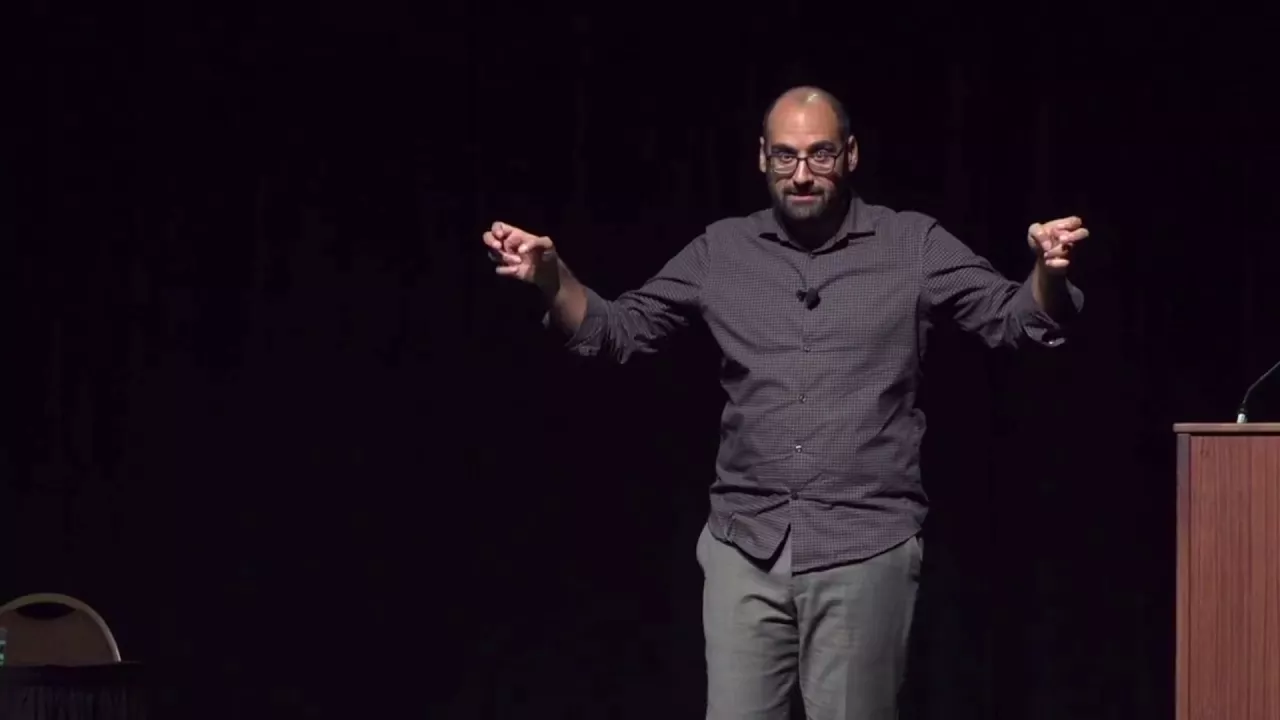
## Background This video was published on YouTube by the channel Preserve Knowledge on March 7, 2018. It captures Ali Rahimi's acceptance address for the NIPS 2017 Test of Time Award, though no accompanying show notes or description were provided on the page.
## TL;DR Accepting the NIPS 2017 Test of Time Award for his and Ben Recht's foundational 2007 work on random features, Ali Rahimi recounts how their original empirical shortcut eventually led to rigorous theoretical foundations. Rahimi then delivers a direct critique of the modern deep learning paradigm, arguing that despite widespread societal and commercial deployment, machine learning has drifted from a principled science into a form of alchemy dependent on unverified heuristics. Highlighting gradient descent's failure on elementary two-layer models and the lack of analytical understanding behind core tools like batch normalization, he challenges the field to move beyond leaderboard chasing. He urges the community to invest in diagnostic, root-cause experiments and develop scalable alternative optimization engines to transform machine learning into a truly rigorous discipline.
## Atmosphere & style The talk opens on a lighthearted and humorous note, with Rahimi sharing affectionate, self-deprecating memories of guerrilla marketing and dodging the conference's formidable 'rigor police.' As he pivots to the state of modern deep learning, the atmosphere shifts into an earnest, bracing, and provocative wake-up call that cuts through the industry's celebratory hype. Delivered with warmth, humility, and deep respect for his peers, Rahimi's candid indictment holds the audience visibly rapt, culminating in a reflective and resounding reception from the room.
## Bulletin - [00:07](https://www.youtube.com/watch?v=x7psGHgatGM&t=7s) Ali Rahimi and Ben Recht received the NIPS 2017 Test of Time Award for their 2007 paper introducing random features, which used randomized projections to scale kernel machines to massive datasets. - [11:08](https://www.youtube.com/watch?v=x7psGHgatGM&t=668s) Rahimi compares modern deep learning to alchemy: practically useful and capable of tangible discoveries, but deeply reliant on empirical folklore rather than foundational, verifiable theory. - [12:49](https://www.youtube.com/watch?v=x7psGHgatGM&t=769s) Standard gradient descent can completely stall on simple architectures, such as a two-layer linear network with correlated inputs, even while second-order methods like Levenberg-Marquardt converge to machine precision in hundreds of iterations. - [16:11](https://www.youtube.com/watch?v=x7psGHgatGM&t=971s) Widely adopted techniques like batch normalization remain scientifically ungrounded, relying on the unproven assumption that mitigating internal covariate shift is what accelerates optimization. - [18:29](https://www.youtube.com/watch?v=x7psGHgatGM&t=1109s) Rahimi urges the machine learning community to move beyond benchmark leaderboard chasing by investing in root-cause diagnostic experiments and developing scalable solvers beyond gradient descent.
## Key takeaways - [00:07](https://www.youtube.com/watch?v=x7psGHgatGM&t=7s) The NIPS Test of Time Award is conferred selectively to papers from a decade prior that demonstrate enduring impact on the field. - [00:07](https://www.youtube.com/watch?v=x7psGHgatGM&t=7s) Random features bypassed the quadratic scaling bottleneck of kernel machines by sampling fixed random projections and optimizing only the linear combination. - [03:06](https://www.youtube.com/watch?v=x7psGHgatGM&t=186s) The 2007 random features paper initially exhibited a gap between theory and practice, requiring far fewer projections in experiments than its uniform convergence bounds demanded. - [06:30](https://www.youtube.com/watch?v=x7psGHgatGM&t=390s) Mid-2000s NIPS enforced strict mathematical rigor through prominent theorists who scrutinized poster presentations and theoretical claims line by line. - [06:30](https://www.youtube.com/watch?v=x7psGHgatGM&t=390s) Subsequent follow-ups established that random projections act as an independent, dense basis in Hilbert space, eliminating the need to frame them as approximations of Mercer kernels. - [11:08](https://www.youtube.com/watch?v=x7psGHgatGM&t=668s) While modern machine learning has achieved remarkable commercial success and reproducibility, it has drifted into an uncritical, heuristic complacency. - [11:08](https://www.youtube.com/watch?v=x7psGHgatGM&t=668s) Like historical alchemy, deep learning produces valuable empirical inventions but lacks the principled atomic theory required to separate real mechanisms from superstition. - [12:49](https://www.youtube.com/watch?v=x7psGHgatGM&t=769s) Because machine learning models now govern high-stakes societal domains like healthcare, civic discourse, and elections, empirical trial-and-error is no longer sufficient. - [12:49](https://www.youtube.com/watch?v=x7psGHgatGM&t=769s) Gradient descent frequently fails on elementary setups, stalling on badly conditioned two-layer linear networks despite substantial non-zero gradients. - [16:11](https://www.youtube.com/watch?v=x7psGHgatGM&t=971s) Modern deep learning stacks are highly brittle, where minor changes like internal rounding modes can cause error rates to jump catastrophically. - [16:11](https://www.youtube.com/watch?v=x7psGHgatGM&t=971s) The standard explanation that batch normalization works by mitigating internal covariate shift lacks formal mathematical definitions, verification, or theoretical proof. - [18:29](https://www.youtube.com/watch?v=x7psGHgatGM&t=1109s) The research community must pivot away from incremental leaderboard competition toward diagnostic experiments designed to isolate root causes. - [18:29](https://www.youtube.com/watch?v=x7psGHgatGM&t=1109s) Developing scalable linear system solvers and matrix factorization engines capable of handling tens of billions of variables would free the field from total reliance on gradient descent.
## Detailed walkthrough ### [00:07](https://www.youtube.com/watch?v=x7psGHgatGM&t=7s) Presentation of the NIPS 2017 Test of Time Award
The session chair opens the morning program by explaining that a Test of Time Award is not an annual fixture at NIPS; indeed, the award itself must stand the test of time to even be conferred. For 2017, the program committee decided to look back a full decade to NIPS 2007 papers. A dedicated committee evaluated candidate works, a process the chair admits was difficult for all involved, joking that authors whose papers were passed over should not feel slighted.
```mermaid flowchart LR accTitle: Evolution of Random Features accDescr: Pipeline showing how kernel approximation evolved from 2007 to full generalization theory. subgraph S1["NIPS 2007: Kernel Approximation"] direction TB A["Exact Kernel Matrix<br>(O(N²) scaling)"] --> B["Random Fourier & Binning Features"] B --> C["Linear Solver on<br>Randomized Space"] end subgraph S2["Follow-ups & Generalization"] direction TB D["Hilbert Space Basis<br>(Beyond Kernels)"] --> E["Random Kitchen Sinks<br>& Direct Bounds"] end S1 --> S2 ```
To introduce the winning paper, the chair reads the authors' own summary describing random features as an elegant trick to accelerate supervised learning algorithms to handle big datasets spanning millions of points. Traditional learning approaches expend excessive computational effort optimizing parameters that do not strictly require optimization; instead, practitioners can draw parameters at random from a distribution and quickly optimize only the linear combination over them. Thanks to the concentration of measure phenomenon, this randomized shortcut preserves strong accuracy while remaining straightforward to implement. The chair highlights the paper's specific contributions: - Introducing random Fourier features to approximate Gaussian kernels efficiently. - Introducing random binning features to approximate separable multivariate shift-invariant kernels. - Paving the way for subsequent variants like random stumps for boosting, random support vectors for empirical kernel maps, and the widely known umbrella concept of "random kitchen sinks."
The chair then announces the award for *Random Features for Large-Scale Kernel Machines* to Ali Rahimi and Ben Recht, inviting Rahimi to the podium to deliver the address.
---
[03:06](https://www.youtube.com/watch?v=x7psGHgatGM&t=186s) The 2006 Origins: Two Emails and Guerrilla Marketing
Taking the stage alongside Ben Recht, Ali Rahimi begins with self-deprecating humor about aging in computer science, quipping that nothing makes an engineer feel quite as ancient as receiving an accolade literally called the "Test of Time." He announces that this 2007 paper formed merely the first act of an unintentional trilogy, and that as in any compelling narrative, the truly interesting turns happen in the middle and conclusion rather than the opening chapter.
Rahimi transports the audience back to NIPS 2006, an era when deep learning was first causing a stir. At the time, neural network training algorithms were notoriously intricate, and their benchmarked performance was roughly parity with linear methods such as PCA and linear support vector machines (SVMs). During workshop hallway chats, researchers noted that deep networks ought to be benchmarked against non-linear SVMs, but classical kernel machines scaled quadratically or cubically with dataset size, rendering them impossible to run on large datasets. Recht had been investigating randomized algorithms for compressed sensing, while Rahimi had been utilizing random sketches to accelerate bipartite graph matching for computer vision. Upon returning home from the conference, it took the pair just two emails to formulate a scalable kernel approximation.
```mermaid flowchart TD accTitle: Standard Kernel Machine vs Random Feature Approximation accDescr: Comparison of parameter scaling between traditional kernel machines and Rahimi-Recht random features. subgraph Classic["Traditional Kernel Machine"] C1["Data Points x_1... x_N"] --> C2["Place Kernel on Every Data Point"] C2 --> C3["Optimize N Weights (Dense QP)"] end subgraph RF["Random Features Scheme"] R1["Data Points x_1... x_N"] --> R2["Sample D Random Basis Functions"] R2 --> R3["Optimize D Weights (Linear Solver, D << N)"] end ```
The underlying mathematical observation was straightforward: standard shift-invariant kernels could be recast via Bochner's theorem as expectations over products of randomized cosine basis functions. Replacing an intractable sum of $N$ kernel functions with an empirical average of $D$ random features yielded a simple linear model with vastly fewer parameters to fit. To spread the word at their NIPS 2007 poster presentation, they engaged in what Rahimi calls algorithm guerrilla marketing, handing out flyer slips with four lines of MATLAB code: > “It’s, uh, 'Hey buddy, you want—you want to try a kernel machine? Here’s just four lines of MATLAB code.'”
However, Rahimi confesses that the paper harbored a glaring contradiction between theory and empirical behavior. Their published uniform convergence bounds demanded tens of thousands of random projections to guarantee an accurate uniform approximation of the Gaussian kernel. In actual experiments, however, they achieved exceptional validation performance using only a few hundred projections. More unsettling still, on certain benchmarks the random approximation achieved lower test error rates than the exact kernel machine it was meant to approximate.
---
[06:30](https://www.youtube.com/watch?v=x7psGHgatGM&t=390s) Evading the NIPS "Rigor Police" and Finding Pure Foundations
The mysterious gap between loose theoretical bounds and outstanding practical performance was perilous, because mid-2000s machine learning was actively hardening its standards. Rahimi reflects on how the discipline had moved past the freewheeling era that the late Sam Roweis used to term an "ideas conference," hardening into an uncompromising mathematical discipline. At poster sessions, authors were regularly grilled by roving bands of examiners that Rahimi affectionately calls the "NIPS rigor police": - Sharp theorists like Nati Srebro and Ofer Dekel. - Formidable students from Mike Jordan's laboratory. - Hardline interrogators like Shai Ben-David. - And if one was truly unlucky, Manfred Warmuth challenging assumptions line-by-line.
> “During the poster sessions you could see this roving band of what I used to call the NIPS rigor police—they would come to your poster and make sure that your arguments were airtight.”
Rather than shelving the method, Rahimi and Recht submitted the paper despite its theoretical dodge, choosing to brave the critics and promise to uncover the real explanation later. That resolution unfolded across the subsequent two papers of the trilogy. In the second paper, they stripped away the kernel framing altogether. Drawing randomly initialized smooth functions independently from an appropriate measure spans a dense basis set in an $L_2$ Hilbert space with high probability, directly paralleling how Fourier bases span functions or wide three-layer neural networks serve as universal approximators. One never needed to justify the features as approximations of Mercer kernels or eigenfunctions; randomized projections stood on their own as a complete basis for learning. In the third paper, they established formal generalization error bounds for these "random kitchen sinks" directly, bounding test error as a direct function of sample size and feature count without invoking an underlying kernel target.
Rahimi notes that he continues to deploy random features regularly in applied industry work, using them much like $k$-nearest neighbors: as a baseline diagnostic tool. When random projections effortlessly master a task, he reflects that either the technique is surprisingly capable, or the target problem was fundamentally trivial to begin with.
---
[11:08](https://www.youtube.com/watch?v=x7psGHgatGM&t=668s) From Electricity to Alchemy: Critiquing Modern Machine Learning
Turning to the present day in 2017, Rahimi underscores how dramatically the machine learning landscape has evolved over the past decade. The community largely solved its reproducibility crisis: researchers routinely publish open-source codebases, share reproducible pipelines, and test against rigorous common benchmarks. Concurrently, machine learning systems have become the bedrock of commercial reality: - Powering self-driving vehicle perception pipelines. - Transcribing voicemail messages and translating polyglot text. - Tagging consumer photo libraries and driving global advertising auctions. - Supporting multi-billion-dollar enterprise valuations.
Yet despite these triumphs, Rahimi warns that the discipline has slipped into an uncritical, euphoric complacency. He targets the ubiquitous corporate and academic boosterism claiming that deep learning represents an epochal, omnipotent utility: > “There’s a self-congratulatory feeling in the air; we say things like 'Machine learning is the new electricity.'”
> “I’d like to offer another analogy: machine learning has become alchemy.”
Rahimi stresses that comparing deep learning to alchemy is not a pure insult. Alchemy was genuinely useful; historically, alchemists made critical real-world discoveries, inventing metallurgy, industrial textile dyes, early pharmaceutical compounds, and foundational techniques for modern glassblowing. Yet because alchemists lacked an underlying principled theory of atomic elements, chemical bonding, and thermodynamics, their genuine breakthroughs were hopelessly entangled with superstition: they bloodlet patients with leeches to balance mythical humors and squandered centuries attempting to transmute base metals into gold. Rahimi argues that before physics and chemistry could catalyze the 18th-century scientific revolution, scholars were forced to systematically dismantle two millennia of accrued alchemical folklore—a cautionary tale for modern machine learning researchers relying on empirical craft over foundational understanding.
[12:49](https://www.youtube.com/watch?v=x7psGHgatGM&t=769s) Society at Stake and the Failure of Gradient Descent on Simple Models
Ali Rahimi warns that relying on alchemical heuristics might be tolerable when building consumer applications like photo-sharing apps, but machine learning now operates at a vastly higher societal level. Machine learning models govern healthcare decisions, mediate civic discourse, and influence democratic elections. Because of these consequences, Rahimi argues that society deserves infrastructure grounded in rigorous, verifiable, and thorough knowledge rather than trial-and-error guesswork, confessing: “As aggravating as the NIPS rigor police was, I miss them and I wish they’d come back.” To demonstrate where this lack of rigor causes tangible harm, he asks the audience how many have designed and trained a neural network from scratch only for it to fail, leaving them feeling as though they were personally at fault. Reassuring the crowd, he notes that this happens to him every three months and declares: “I don’t think it’s you, I don’t think it’s your fault, I think it’s gradient descent’s fault.”
```mermaid flowchart TD accTitle: Gradient Descent vs Levenberg-Marquardt on a Two-Layer Linear Net accDescr: Diagram illustrating gradient descent stalling on a badly conditioned two-layer linear network versus Levenberg-Marquardt converging to machine precision.
subgraph ProblemSetup["Test Setup: 2-Layer Linear Network"] Model["Model: Product of 2 tall matrices (Identity activations)"] Data["Labels: Badly conditioned linear function of inputs"] Model --> Loss["Loss Surface Evaluation"] Data --> Loss end
subgraph OptimizationComparison["Optimization Trajectory"] Loss --> GD["Gradient Descent & Variants"] Loss --> LM["Levenberg-Marquardt"]
GD --> Fail["Starts fast, then peters out\n(Non-zero gradient, not a saddle point or noise floor)"] LM --> Success["Reaches 0 loss in a few hundred iterations\n(Machine precision zero)"] end ```
To prove that gradient descent fails even on trivial setups, Rahimi presents the simplest deep network imaginable: a two-layer linear network with identity activation functions, where the training labels are generated by a badly conditioned linear function of the inputs (specifically, an input matrix with correlated columns). When running standard gradient descent and several of its popular variants on this model, optimization progresses rapidly at the start before abruptly petering out. Rahimi dismantles potential defenses of the algorithm: - It is not stuck in a local minimum or a saddle point, because the gradient magnitudes remain substantially non-zero. - It is not hitting a statistical noise floor or suffering from sample randomness, because running the exact expected loss produces the identical stalling curve. - In contrast, using a better descent direction like the Levenberg-Marquardt algorithm completely solves the system, dropping down to machine precision zero within a few hundred iterations.
Rahimi urges attendees to take ten minutes to reproduce this optimization experiment on their laptops, emphasizing that gradient descent is the core workhorse of modern machine learning. Addressing the counterargument that gradient descent works well on massive, complex deep networks, he remarks that the audience's raised hands show widespread personal experience to the contrary. More fundamentally, science requires testing tools on simple, interpretable setups before leaping to massive architectures: “This is how we build knowledge: we apply our tools on simple, easy-to-analyze setups, we learn, and we work our way up in complexity; we seem to have just jumped our way up.”
[16:11](https://www.youtube.com/watch?v=x7psGHgatGM&t=971s) The Brittle Technical Stack and the Enigma of Batch Normalization
The lack of analytical clarity makes modern machine learning engineering extremely brittle. To illustrate how delicate these pipelines are, Rahimi reads an email he received just a month prior from his friend Boris: > “On Friday, someone in another team changed the default rounding mode of some TensorFlow internals from truncate toward zero to round to even. Our training broke; our error rate went from less than 25% error to almost 99% error.”
Rahimi notes that his inbox contains several messages just like this one, mirrored across public internet forums and bug trackers. This brittleness occurs because practitioners apply fragile optimization methods across loss surfaces that nobody understands, and the typical response to unexpected behavior is simply piling on more unverified layers: “Our solution is to add more mystery to an already mysterious technical stack.”
```mermaid flowchart LR accTitle: Unverified Assumptions in Batch Normalization accDescr: Flowchart mapping the widely accepted claim that batch norm reduces internal covariate shift to the unproven foundational questions raised by Ali Rahimi.
BN["Batch Normalization Inserted"] --> SpeedsUp["Accelerates Gradient Descent"] SpeedsUp -.->|"Popular explanation"| ICS["Reduces 'Internal Covariate Shift'"]
subgraph OpenQuestions["Unanswered Foundational Questions"] Q1["What is the formal definition of internal covariate shift?"] Q2["Where is the evidence that batch norm reduces it?"] Q3["Why does reducing it accelerate gradient descent?"] end
ICS -.-> OpenQuestions ```
Rahimi points to batch normalization as the quintessential example. While inserting batch normalization layers between deep network representations reliably accelerates gradient descent, the community's scientific explanation for it remains completely unsubstantiated. He acknowledges that people routinely rely on systems they do not fully understand—comparing it to flying on a passenger airplane to attend the conference without being an aerospace engineer—but points out that travelers take comfort in knowing an entire field of aeronautics rigorously investigates and tests aerodynamic principles. By contrast, the machine learning community uncritically repeats the claim that batch normalization works because it mitigates "internal covariate shift," without providing: - A rigorous mathematical definition of internal covariate shift - Empirical or theoretical evidence demonstrating that batch normalization actually reduces internal covariate shift - Any theorem or experimental proof explaining why reducing internal covariate shift would accelerate gradient descent in the first place
Rahimi summarizes the dilemma bluntly: “Batch norm has become a foundational tool in how we build deep nets, and yet as a field, we know almost nothing about it.”
[18:29](https://www.youtube.com/watch?v=x7psGHgatGM&t=1109s) From Alchemy to Electricity: A Roadmap for Rigorous Machine Learning
Recognizing that machine learning now commands immense social influence, Rahimi outlines two concrete ways the research community can fulfill its responsibilities:
1. **Shift focus from leaderboard chasing to root-cause science:** Researchers spend enormous energy testing arbitrary tweaks just to achieve an incremental performance edge on competition benchmarks. The field needs fewer leaderboard-jockeying experiments and far more diagnostic experiments designed to isolate the fundamental root causes of unexplained phenomena. Simple, controlled experiments and simple theorems are the indispensable building blocks required to comprehend larger, complex systems. 2. **Develop scalable, diverse computational engines beyond gradient descent:** Today's production systems rely almost entirely on gradient descent variants because they are currently the only solvers engineered to optimize tens of billions of parameters across commodity hardware clusters. Rahimi challenges the community to build linear system solvers and matrix factorization engines capable of scaling to tens of billions of variables on commodity systems, which would open the door to radically new optimization paradigms and model families.
Expressing deep personal affection and gratitude for the machine learning community, Rahimi concludes that his critique stems from genuine respect for the people in the room, insisting that they possess the talent needed to tackle these hard mathematical and systems challenges. He closes with an appeal for collective reform: “Ben and I are grateful for the award and the opportunity to have gotten to know many of you and to work with many of you, and we would love it if we could work together to take machine learning from alchemy and into electricity.”
[21:27](https://www.youtube.com/watch?v=x7psGHgatGM&t=1287s) Presentation of the Test of Time Award
The session chair returns to the podium amid loud applause, thanking Rahimi for the provocative and thoughtful address. The host jokes that he hopes the conference can present Rahimi with another award ten years down the line celebrating "the return of rigor" in the community. Noting that the audience is visibly stunned and deeply appreciative of the talk's core message, the host invites Rahimi's co-author, Ben Recht, onto the stage. The session chair presents Rahimi and Recht with the official certificate for the NIPS 2017 Test of Time Award, concluding the award presentation before directing the audience toward the scheduled conference break.
## Notable quotes > [11:08](https://www.youtube.com/watch?v=x7psGHgatGM&t=668s) Machine learning has become alchemy. — Ali Rahimi
> [16:11](https://www.youtube.com/watch?v=x7psGHgatGM&t=971s) Batch norm has become a foundational tool in how we build deep nets, and yet as a field, we know almost nothing about it. — Ali Rahimi
> [12:49](https://www.youtube.com/watch?v=x7psGHgatGM&t=769s) This is how we build knowledge: we apply our tools on simple, easy-to-analyze setups, we learn, and we work our way up in complexity; we seem to have just jumped our way up. — Ali Rahimi
## Mentioned Ali Rahimi, Ben Recht, Boris, Levenberg-Marquardt algorithm, Manfred Warmuth, MATLAB, Mike Jordan, Nati Srebro, NIPS, NIPS 2007, NIPS 2017, Ofer Dekel, Random Features for Large-Scale Kernel Machines, Sam Roweis, Shai Ben-David, TensorFlow
[Source](https://www.youtube.com/watch?v=x7psGHgatGM)