Friedman Backs Land Value Tax as Least Damaging Levy to Fund State
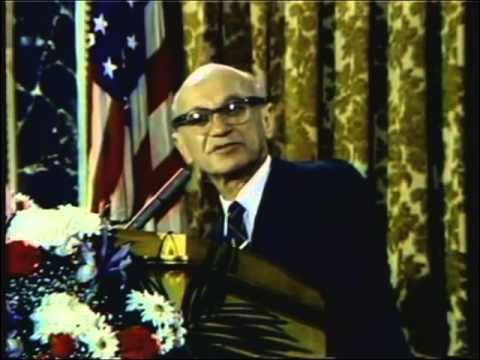
Benjamin Ljung
Milton Friedman argues that unimproved land value taxation is the least economically harmful way to fund core government functions, asserting public hostility toward property levies stems entirely from lump-sum billing rather than sound economic objections.
AI-assisted summary of Milton Friedman talks about property taxes — original source. Check the original for full context.
Source published:
Key ideas
- Milton Friedman argues that while every tax infringes on free enterprise, abolishing all taxes is an unattainable utopia because essential state functions like defense, policing, and the courts require funding. (0:00)
- Friedman ranks the property tax on the unimproved value of land—the classic Henry George argument—as the single 'least bad' tax, followed by a flat-rate income tax with strict deduction limits. (0:00)
- Public backlash against property taxes is driven by payment psychology rather than economic harm, as it remains one of the few levies paid through a direct, visible lump-sum check. (2:00)
- Reflecting on his wartime work designing the U.S. payroll withholding system, Friedman notes that automated deductions and hidden retail taxes lull citizens into tolerating far more destructive tax burdens. (2:00)
Detailed notes
## Background Published on YouTube by Benjamin Ljung on January 26, 2014, this clip highlights Milton Friedman's endorsement of Land Value Taxation. According to the page description and Hoover Institution records, the excerpt originates from Friedman's address titled 'Is Tax Reform Possible?', delivered at the Americanism Educational League's 51st Anniversary Dinner in Pasadena, California, on February 6, 1978.
## TL;DR Responding to an audience inquiry about operating without an income tax, Milton Friedman explains that while taxes inherently burden free enterprise, essential state functions like defense, policing, and the courts still require revenue. He designates the property tax on the unimproved value of land—championed by Henry George—as the single 'least bad' tax, followed by a basic flat-rate income tax with strictly limited deductions. Friedman then analyzes why property taxes face intense public backlash despite their economic merits, arguing that unlike indirect or payroll-withheld taxes that remain largely invisible, property taxes force individuals to write a large, conscious lump-sum check.
## Atmosphere & style The exchange has an engaging, articulate, and pragmatic tone, featuring Friedman in his element as a lucid orator addressing a free-market audience. His delivery balances rigorous economic realism with warm, self-deprecating humor, notably when jokingly admitting guilt over helping design the wartime tax withholding system that his wife never forgave him for. Watching the discussion feels like sitting in on a classic 1970s intellectual debate where provocative, counterintuitive economic principles are untangled with effortless clarity and charm.
## Bulletin - [00:00](https://www.youtube.com/watch?v=yS7Jb58hcsc&t=0s) Milton Friedman argues that while every tax infringes on free enterprise, abolishing all taxes is an unattainable utopia because essential state functions like defense, policing, and the courts require funding. - [00:00](https://www.youtube.com/watch?v=yS7Jb58hcsc&t=0s) Friedman ranks the property tax on the unimproved value of land—the classic Henry George argument—as the single 'least bad' tax, followed by a flat-rate income tax with strict deduction limits. - [02:00](https://www.youtube.com/watch?v=yS7Jb58hcsc&t=120s) Public backlash against property taxes is driven by payment psychology rather than economic harm, as it remains one of the few levies paid through a direct, visible lump-sum check. - [02:00](https://www.youtube.com/watch?v=yS7Jb58hcsc&t=120s) Reflecting on his wartime work designing the U.S. payroll withholding system, Friedman notes that automated deductions and hidden retail taxes lull citizens into tolerating far more destructive tax burdens.
## Key takeaways - [00:00](https://www.youtube.com/watch?v=yS7Jb58hcsc&t=0s) A zero-tax society is an unattainable utopia because an economy cannot function without basic government institutions. - [00:00](https://www.youtube.com/watch?v=yS7Jb58hcsc&t=0s) Taxation must exist to fund non-negotiable public functions, specifically national defense, police, law enforcement, and the judiciary. - [00:00](https://www.youtube.com/watch?v=yS7Jb58hcsc&t=0s) Because every tax distorts free enterprise, fiscal policy should aim to identify the 'least bad' alternatives rather than seeking a flawless system. - [00:00](https://www.youtube.com/watch?v=yS7Jb58hcsc&t=0s) The property tax on the unimproved value of land, championed by Henry George, is the least economically harmful form of taxation. - [00:00](https://www.youtube.com/watch?v=yS7Jb58hcsc&t=0s) A flat-rate tax on all income above a standard personal exemption and strict job expenses is the second least bad tax option. - [00:00](https://www.youtube.com/watch?v=yS7Jb58hcsc&t=0s) Friedman opposes the contemporary progressive income tax system, viewing it as needlessly complicated and economically damaging. - [02:00](https://www.youtube.com/watch?v=yS7Jb58hcsc&t=120s) Public hostility toward property taxes stems from administrative mechanisms rather than sound economic arguments. - [02:00](https://www.youtube.com/watch?v=yS7Jb58hcsc&t=120s) Property taxes are intensely hated because they force taxpayers to directly confront their burden by writing a large lump-sum check. - [02:00](https://www.youtube.com/watch?v=yS7Jb58hcsc&t=120s) Sales, excise, and corporate taxes evoke less public outrage because they are paid in pennies or concealed entirely within retail consumer prices. - [02:00](https://www.youtube.com/watch?v=yS7Jb58hcsc&t=120s) Income taxes feel painless due to payroll withholding, which deducts revenue at the source before workers ever see their paychecks. - [02:00](https://www.youtube.com/watch?v=yS7Jb58hcsc&t=120s) Friedman openly regrets helping design the federal payroll withholding mechanism during his World War II tenure at the U.S. Treasury. - [02:00](https://www.youtube.com/watch?v=yS7Jb58hcsc&t=120s) Governments could easily neutralize public resistance to property taxes by converting them into small, automated installments withheld at the source.
## Detailed walkthrough ### [00:00](https://www.youtube.com/watch?v=yS7Jb58hcsc&t=0s) The Necessity of Taxes and the Least Bad Alternatives
An audience member named Ed Arton opens the exchange by declaring himself a believer in free enterprise and expressing his conviction that the income tax is completely antagonistic to a free market economy. He asks Dr. Milton Friedman directly whether the United States could operate without an income tax. Friedman concedes that from a principled perspective, every form of taxation is antagonistic to free enterprise, but cautions against pursuing an unattainable utopia. While he strongly favors drastically reducing the scope of government activity below its current levels, he rejects the notion that society can function with no government whatsoever. Revenue must be raised to fund core, non-negotiable functions, specifically national defense, the police, the maintenance of law and order, and the administration of the judiciary.
Because some level of taxation is unavoidable, Friedman frames the policy problem not as finding a good tax, but as identifying which options are the "least bad." To the potential surprise of his audience, Friedman identifies the property tax on the unimproved value of land—the classic economic argument championed by 19th-century political economist Henry George—as the single least harmful tax. The second least bad option is a flat-rate tax on income above a basic exemption threshold. While an ideal system designed by Friedman would still feature an income tax, it would bear no resemblance to the existing, convoluted code. It would apply a single flat rate across all income regardless of source, allowing only a standard personal deduction and strictly necessary occupational expenses, thereby offering minimal interference with a dynamic free enterprise system.
```mermaid flowchart TD accTitle: Friedman's Hierarchy of Least Bad Taxes accDescr: Diagram illustrating Milton Friedman's ranking of acceptable taxes needed to fund essential government functions.
subgraph CoreFunctions["Essential Government Functions"] F1["National Defense"] F2["Police & Law Enforcement"] F3["Judiciary & Rule of Law"] end
subgraph TaxRanking["Friedman's Tax Hierarchy"] T1["1. Land Value Tax (Unimproved Land / Henry George)"] T2["2. Flat-Rate Income Tax (Strict Deductions Only)"] T3["Avoid: Complex, Progressive Income Tax Monstrosity"] end
TaxRanking --> CoreFunctions ```
- Ed Arton asks: “Can we run the country without income tax?” - Milton Friedman responds on political realism: “We have to recognize that we mustn't hope for a utopia that is unattainable.” - On the essential responsibilities of the state, Friedman notes: “We do need to provide for certain essential government functions: the police function, the national defense function, function of preserving law and order, of maintaining a judiciary.” - On his primary tax preference, Friedman states: “And in my opinion, and this may come as a shock to some of you, the least bad tax is the property tax on the unimproved value of land—the Henry George argument from many, many years ago.” - On designing an acceptable income tax, Friedman explains: “It would be a flat rate tax on all income from whatever source derived less only a personal deduction and strict occupational expense.”
---
[02:00](https://www.youtube.com/watch?v=yS7Jb58hcsc&t=120s) Why the Property Tax Is Unpopular: The Psychology of the Big Check
Friedman transitions to the public perception of taxation, noting the curious paradox of why property taxes provoke such fierce public hostility despite their sound economic footing. He argues that property tax resistance is not driven by sound economic objections, but by a straightforward administrative reality: it remains virtually the only levy left where an individual taxpayer must sit down and write a large, painful lump-sum check. In contrast, the income tax—which he considers economically far more destructive—encounters far less resistance because it has been mechanized to feel nearly painless.
Injecting personal humor and historical regret into the discussion, Friedman confesses his own complicity in making the income tax so deceptively tolerable. During World War II, while working at the United States Department of the Treasury, he helped design the payroll withholding system. Withholding deducts revenue incrementally before workers ever see their earnings, shielding the full magnitude of the burden. Sales taxes are similarly paid in negligible pennies per transaction, while corporate taxes and excise duties are concealed entirely within the final retail price of consumer goods. Property taxes, however, cannot hide. Friedman observes that if policymakers ever wished to neutralize public opposition to property taxes—though he hesitates to suggest it, calling it "giving hostages to fortune"—they could do so simply by implementing an automated withholding mechanism collected at the source in small, regular installments.
- Milton Friedman diagnoses the root of public resentment: “It's not unpopular for good economic reasons. It's unpopular in my opinion for one simple reason: it's the only tax left on the books for which people have to write a big check.” - Reflecting ruefully on his wartime work at the Treasury, Friedman admits: “The income tax is a far worse tax. But, and I have to admit that I have some part of the guilt in this process, because during World War II, I worked at the Treasury and helped to design the withholding system. My wife has never forgiven me for it.” - Describing the invisibility of indirect taxation, Friedman points out: “With respect to the corporate tax and excise taxes, they're hidden in the price of things we buy. We don't even know we're paying them.” - On how governments could pacify public outrage over property levies, Friedman concludes: “If you wanted to reduce the unpopularity of the property tax, the way to do it would simply be to provide for an effective method whereby it could be withheld at source in small payments, and that would eliminate a large part of the objection to it.”
## Notable quotes > [00:00](https://www.youtube.com/watch?v=yS7Jb58hcsc&t=0s) And in my opinion, and this may come as a shock to some of you, the least bad tax is the property tax on the unimproved value of land—the Henry George argument from many, many years ago. — Milton Friedman
> [02:00](https://www.youtube.com/watch?v=yS7Jb58hcsc&t=120s) If you wanted to reduce the unpopularity of the property tax, the way to do it would simply be to provide for an effective method whereby it could be withheld at source in small payments, and that would eliminate a large part of the objection to it. — Milton Friedman
> [02:00](https://www.youtube.com/watch?v=yS7Jb58hcsc&t=120s) With respect to the corporate tax and excise taxes, they're hidden in the price of things we buy. We don't even know we're paying them. — Milton Friedman
## Mentioned Milton Friedman, Ed Arton, Henry George, United States Department of the Treasury, Americanism Educational League, Hoover Institution
## Video description Land Value Taxation is endorsed by Milton Friedman. Can someone help me find the year this is recorded? (November 1978 is my guess, http://www.cooperativeindividualism.org/friedman-milton_interview-1978.html) Source: https://www.youtube.com/watch?v=PhI4WQqrct8
Update 20200528: from the Hoover Institution: Friedman, Milton. "Is Tax Reform Possible?" Milton Friedman Speaks. Address given at the Americanism Educational League 51st Anniversary Dinner, Pasadena, CA, February 6, 1978.
[Source](https://www.youtube.com/watch?v=yS7Jb58hcsc)