Nick Cannon Monetizes Ownership and Youth Brands into $1.3 Billion IP
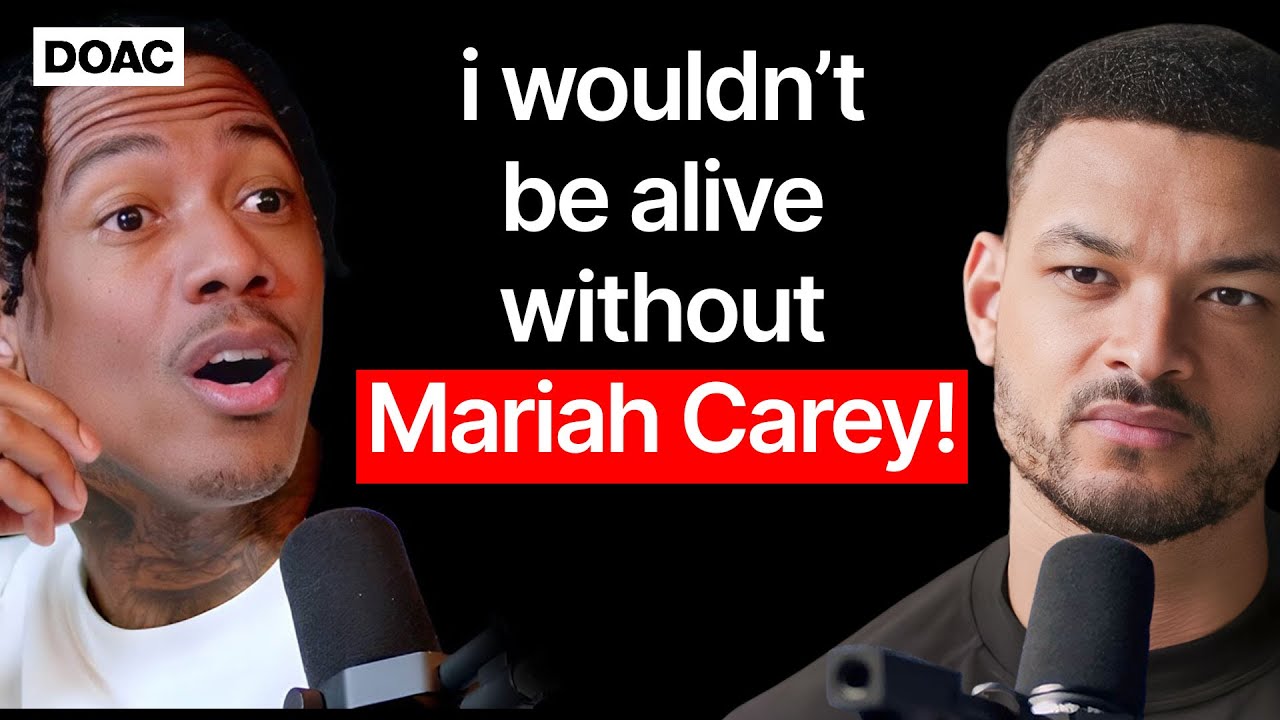
The Diary Of A CEO
Cannon attributes his long-term financial success to retaining early intellectual property rights and scaling youth-focused entertainment ecosystems like Wild 'N Out.
AI-assisted summary of Nick Cannon: How I ACCIDENTALLY Built A $1.3 Billion Business! — original source. Check the original for full context.
Source published:
Detailed notes
## Background This interview was published by The Diary Of A CEO with Steven Bartlett on YouTube on September 21, 2023. According to the page description, the episode features entertainer and entrepreneur Nick Cannon sharing the story of his journey in show business, how he accidentally built a $1.3 billion empire around the Wild 'N Out brand, and lessons learned on money, health, and resilience.
## TL;DR Nick Cannon reflects on his multi-decade career, tracing his journey from an 11-year-old stand-up comedian and youngest-ever television writer at Nickelodeon to a major entertainment mogul. He breaks down how mentorship from Jamie Foxx and Will Smith shaped his work ethic and financial discipline, and how self-funding the original Wild 'N Out pilot evolved into a $1.3 billion intellectual property encompassing television, live tours, restaurants, and digital platforms. Beyond business, Cannon opens up about his health battles with lupus nephritis, the tragic loss of his five-month-old son Zen to brain cancer, and how navigating deep grief and fatherhood redefined his ultimate purpose and legacy.
## Atmosphere & style The conversation carries an intimate, highly candid, and introspective mood that balances lighthearted humor with deep vulnerability. Steven Bartlett acts as an empathetic, deeply curious host, creating a safe space that allows Cannon to transition seamlessly from hilarious industry anecdotes to profound reflections on mortality and loss. Watching the interview feels like listening to a seasoned veteran step away from the Hollywood spotlight to offer an unvarnished, emotionally resonant masterclass on resilience, ambition, and personal growth.
## Key takeaways - [00:14](https://www.youtube.com/watch?v=YY7Jeh_jCww&t=14s) Nick Cannon started his entrepreneurial journey early, developing a work ethic based on the idea that hard work can outshine raw talent. - [01:57](https://www.youtube.com/watch?v=YY7Jeh_jCww&t=117s) Growing up in a disenfranchised community, Cannon utilized optimism, imagination, and a strong sense of purpose to navigate challenges. - [18:10](https://www.youtube.com/watch?v=YY7Jeh_jCww&t=1090s) Mentors like Jamie Foxx and Will Smith shaped Cannon's storytelling ability, work ethic, and early financial literacy. - [23:14](https://www.youtube.com/watch?v=YY7Jeh_jCww&t=1394s) A early setback with an unaired pilot and financial missteps taught Cannon the importance of preserving capital and building long-term security. - [30:00](https://www.youtube.com/watch?v=YY7Jeh_jCww&t=1800s) At age 17, Cannon became the youngest staff writer in TV history at Nickelodeon, eventually leveraging his experience into creating and executive producing his own shows. - [35:08](https://www.youtube.com/watch?v=YY7Jeh_jCww&t=2108s) Stand-up comedy served as the foundational training ground for Cannon to master writing, directing, performing, and brand management simultaneously. - [41:00](https://www.youtube.com/watch?v=YY7Jeh_jCww&t=2460s) Cannon emphasizes pursuing passion over money, asserting that long-term mastery and joy are what ultimately build wealth. - [49:03](https://www.youtube.com/watch?v=YY7Jeh_jCww&t=2943s) By self-funding the initial pilot for Wild 'N Out, Cannon retained the intellectual property rights that turned the show into a multi-billion dollar multi-platform brand. - [01:00:39](https://www.youtube.com/watch?v=YY7Jeh_jCww&t=3639s) Through Incredible Entertainment, Cannon scaled operations across TV, live tours, consumer hardware, and restaurant franchises, generating over $100M in headphone sales alone. - [01:08:43](https://www.youtube.com/watch?v=YY7Jeh_jCww&t=4123s) Cannon actively rejects predatory music industry contracts, favoring models that allow artists to maintain master ownership, publishing, and independent creative control. - [01:21:13](https://www.youtube.com/watch?v=YY7Jeh_jCww&t=4873s) A lupus diagnosis in 2012 shifted Cannon's daily priorities toward health, time management, and meaningful impact over hollow networking and social positioning. - [01:28:27](https://www.youtube.com/watch?v=YY7Jeh_jCww&t=5307s) Regular visits to children's hospitals provided crucial perspective, anchoring Cannon's practice of leading with gratitude during difficult personal trials. - [01:31:08](https://www.youtube.com/watch?v=YY7Jeh_jCww&t=5468s) The tragic loss of his son Zen taught Cannon to view grief as an ongoing companion while turning personal pain into empathy and purposeful living. - [01:38:51](https://www.youtube.com/watch?v=YY7Jeh_jCww&t=5931s) Cannon views fatherhood as a stewardship role, focusing on problem-solving, emotional support, and helping his children discover their own paths. - [01:42:36](https://www.youtube.com/watch?v=YY7Jeh_jCww&t=6156s) Redefining his legacy, Cannon aims to be remembered not for material success, but for making the world a better place through art, humor, and compassion.
## Detailed walkthrough ### [00:00](https://www.youtube.com/watch?v=YY7Jeh_jCww&t=0s) Intro: Building a Billion-Dollar Empire
Nick Cannon sets the tone for his entrepreneurial journey by reflecting on the origins of *Wild 'N Out*. What grew into a billion-dollar brand began very modestly—he simply created a platform to help fellow comedians like Kevin Hart make enough money to pay their rent. Host Steven Bartlett introduces Cannon as a comedian, host, and true superstar, highlighting his status as a pioneer in business whose ventures span across diverse industries.
Cannon reveals the massive scope of his business operations, which go far beyond his on-screen presence. From making over $100 million in a single headphones sale to running multi-million-dollar live tours, a cruise line, and restaurant franchises, his success stems from an unmatched work ethic rather than relying solely on raw talent.
* **Key Business Ventures:** Wild 'N Out brand, Ncredible Headphones sale ($100M+ revenue), national tours, cruise line, and restaurant ventures. * **Early Breakthrough:** Became the youngest staff writer in TV history at age 17, writing for Nickelodeon's *All That* and *Kenan & Kel*. * **Core Philosophy:** "I may not be the most talented person in the room, but I'll be the hardest worker in the world."
---
[01:57](https://www.youtube.com/watch?v=YY7Jeh_jCww&t=117s) Youthful Optimism and Superpower Imagination
Reflecting on what shaped his mindset as a child, Cannon describes a profound "youthful optimism" and imagination. Growing up in a small, disenfranchised community with limited upward mobility, he never felt constrained by his physical environment. Instead, he carried an internal conviction that he possessed a unique ability to manifest anything he desired.
This mindset was less about chasing fame or fortune and more about enjoying life and finding a silver lining in difficult or tumultuous times. Even when facing adversity, Cannon entered spaces with gratitude and optimism, a trait that continues to keep him level-headed amidst an extraordinary career.
> "I lived this life to where as small as the community was... I had this big imagination and in my mind a superpower that I could be, do, or whatever I wanted."
---
[03:07](https://www.youtube.com/watch?v=YY7Jeh_jCww&t=187s) Unorthodox Upbringing and Making Something Out of Nothing
Cannon discusses his non-traditional family dynamic, noting that his parents had him when they were just teenagers—joking that "my parents had sex once, just one time, and then I showed up." He even attended his father's high school graduation as a child. While his mother worked constantly and his father went off to college, his paternal grandparents stepped in as primary caregivers to raise them all.
Despite the financial struggles of putting food on the table, his home was filled with love and togetherness. Watching his family navigate these hardships instilled in him a resilient drive to "make something out of nothing."
* **Family Structure:** Raised by teenage parents alongside his paternal grandparents, who provided a central family infrastructure. * **Siblings:** Eldest of five brothers on his father's side; an only child on his mother's side.
---
[06:36](https://www.youtube.com/watch?v=YY7Jeh_jCww&t=396s) His Father’s Transformation and Escaping Destruction
Cannon details how his father managed to completely turn his life around after a troubled youth. In the 1980s, when substance abuse and crime were devastating local communities, his father faced incarceration and dark paths. However, he broke free from those influences, pursued a college degree, and dedicated his life to ministry and helping others.
This transformation served as a powerful model of redemption and personal growth for Cannon during his formative years.
---
[07:51](https://www.youtube.com/watch?v=YY7Jeh_jCww&t=471s) Rebellious Streak and the Magnetism of Street Culture
Admitting to an innate rebellious and anti-authoritarian streak, Cannon notes that he was always the type of kid who had to touch the hot stove himself to learn a lesson. Growing up in Southern California during an era where gang violence was glorified through music, entertainment, and street culture, he felt a pull toward the dark, unknown paths to prove he wasn't just a "goody two-shoes."
While many of his childhood friends and associates became permanently caught up in street violence or the justice system, Cannon's inherent creativity, optimism, and passion for performance served as his escape hatch.
> "I definitely have a rebellious nature... I'm definitely the kid that has to feel that the pot is hot to know what getting burned feels like."
---
[09:11](https://www.youtube.com/watch?v=YY7Jeh_jCww&t=551s) The 10-Year-Old Rapper and Class Clown
Between the ages of 10 and 14, Cannon was hyper-focused on hip-hop. Possessing a loud, energetic, "ADHD-ish" personality, he was well known throughout his neighborhood, always distributing demo tapes and making noise. His church background combined with his role as the school class clown helped him realize that his creative energy could be channeled into a legitimate career.
He looked up to charismatic multi-hyphenates who bridged music and comedy—such as Eddie Murphy and The Fresh Prince (Will Smith)—while simultaneously absorbing the raw street energy of West Coast hip-hop icons like Ice Cube and Too $hort.
* **Early Inspirations:** Eddie Murphy, Will Smith (The Fresh Prince), Ice Cube, and Too $hort. * **Early Performances:** Church talent shows, local neighborhood rap demos, and school comedy.
---
[11:25](https://www.youtube.com/watch?v=YY7Jeh_jCww&t=685s) Starting Stand-Up at 11 and Finding Mentors in Hollywood
Cannon began doing stand-up comedy officially at just 11 years old, initially performing at church events before stepping onto real comedy club stages. By age 15, he was frequenting the world-famous Comedy Store in Hollywood. Coming from a neighborhood miles away both geographically and culturally, he often had to sleep in his car or seek shelter on friends' couches.
Comedians like Jamie Foxx and Guy Torry (founder of the iconic *Fat Tuesday* comedy nights at The Comedy Store) took the young teenage comedian under their wings. Torry let 15-year-old Cannon open the show and warm up the crowd as high-profile celebrities like Kobe Bryant, Shaquille O'Neal, and Snoop Dogg walked into the room.
* **Key Early Supporters:** Jamie Foxx (provided a place to sleep and mentorship) and Guy Torry (gave him opening performance slots at *Fat Tuesday*). * **Comedic Contemporaries on Stage:** Chris Tucker, Damon Wayans, and Eddie Griffin.
---
[14:37](https://www.youtube.com/watch?v=YY7Jeh_jCww&t=877s) Intentionality, Hustle, and the "Nick Cannon" Brand
Rejecting the idea that his early break was sheer luck, Cannon emphasizes the power of intent and alignment. Ever since he was four years old, he intentionally introduced himself by his full name, "Nick Cannon," developing an early sense of personal branding inspired by his grandfather ("Daddy Cannon").
He navigated rooms by carefully studying the environment, creating deliberate action plans, and using his outward attention-seeking energy to build real industry relationships.
> "I don't believe in luck; I believe in alignment... You got to put yourself in those positions. Some people say luck is preparation meets opportunity."
---
[18:00](https://www.youtube.com/watch?v=YY7Jeh_jCww&t=1080s) Discovering Opportunities via Jamie Foxx's Laughapalooza
Cannon recounts how his relationship with Jamie Foxx indirectly led to his biggest career breakthrough. Jamie Foxx hosted a comedy festival called *Laughapalooza*, where talent executives from Will Smith's production company, Overbrook Entertainment, spotted 15-year-old Cannon performing on stage.
Impressed by his stage presence and comedic timing, Overbrook signed him to a holding deal in Atlanta, which directly set up his first formal meeting with Will Smith a few months later.
<ElicitationsGroup message="To explore more of Nick Cannon's story in the next parts:"> <Elicitation label="Read Part 2: Lessons from Will Smith & Early Financial Choices" query="Summarize Part 2 of Nick Cannon's interview covering his learnings from Will Smith and early financial management."/> <Elicitation label="Read Part 3: Building the Wild 'N Out Brand" query="Summarize the part of the transcript detailing how Nick Cannon built Wild 'N Out into a multi-million dollar business."/> </ElicitationsGroup>
[18:57](https://www.youtube.com/watch?v=YY7Jeh_jCww&t=1137s) Studying under Mentors: Jamie Foxx and Will Smith
Nick Cannon reflects on how his career trajectory was fundamentally shaped by meeting Jamie Foxx at age 15 and Will Smith at age 16. Describing both as exceptionally kind and naturally magnetic figures, he notes that walking into a room with them meant watching everyone instantly gravitate toward their booming energy. In contrast to their outgoing natures, Cannon describes himself as naturally quiet, observant, and reserved—qualities he frequently discusses with his friend Kevin Hart, who shares that same room-captivating presence. Despite his quieter default, observing Jamie Foxx allowed Cannon to study the exact mechanics of storytelling and impromptu charm, from mastering how to hold court at a table to sitting at a piano to sing and win over a room.
Beyond comedic timing, Foxx taught Cannon the depth of the "thespian muscle"—how to fully embody characters with subtle nuance whether playing a broad, silly persona or a deeply serious role. Shortly after, Will Smith stepped into Cannon’s life as a central mentor, instilling an relentless work ethic. Smith’s famous mantra—that he might not be the most talented person in the room, but he will outwork everyone—became Cannon’s guiding principle. Watching Smith put in an extra ten hours when everyone else went to sleep inspired teenage Cannon to operate with total dedication, pulling all-nighters in the studio before early morning set calls.
- **Key Mentors:** Jamie Foxx (met at age 15) and Will Smith (met at age 16). - **Core Lesson from Jamie Foxx:** Mastery of storytelling, room-captivating piano improvisation, and character embodiment. - **Core Lesson from Will Smith:** Outworking the competition by pushing through fatigue and sacrificing sleep to perfect a craft.
---
[23:14](https://www.youtube.com/watch?v=YY7Jeh_jCww&t=1394s) Financial Lessons, Broken Promises, and Hard Truths
When Will Smith took Cannon under his wing, he provided crucial structural guidance—teaching him how to structure rap music into standard 16-bar verses and 8-bar choruses rather than unstructured lines. However, the most profound lesson came when Smith cut Cannon his first major check for around $150,000 to $200,000. Ignoring Smith's explicit warnings against frivolous spending, Cannon immediately went out and bought the exact same Range Rover model that Smith owned. Smith called out the reckless purchase, reminding him that a young artist needs to preserve capital rather than mimic the spending habits of a global movie star. Cannon’s decision backfired drastically: he totaled the vehicle within six months and was forced to move back in with his mother a year later.
The financial strain was exacerbated by a crushing career setback at age 18. Cannon had created, written, and starred in a television pilot titled *Loose Cannon*, centered around a teenager in military school. With Will Smith and Quincy Jones executive producing, Stan Lathan directing, and Bentley Kyle Evans (creator of *The Jamie Foxx Show*) writing, the show had secured a six-episode commitment on The WB. Cannon felt his success was sealed, especially with his show scheduled to air directly after *The Jamie Foxx Show*. However, a sudden executive shift at the network resulted in the show being dropped. Devastated, 19-year-old Cannon wept for days as the illusion of overnight stardom evaporated, forcing him to learn how to pick himself up when the industry moved on.
- **First Major Paycheck:** ~$150,000 to $200,000 from Will Smith. - **Financial Mistake:** Bought a Range Rover matching Will Smith's, totaled it within six months, and went broke. - **The Un-Aired Pilot:** *Loose Cannon* (The WB), produced by Will Smith and Quincy Jones, directed by Stan Lathan. - **Career Impact:** The show was canceled during network restructuring when Cannon was 19, forcing him to move back home.
---
[27:13](https://www.youtube.com/watch?v=YY7Jeh_jCww&t=1633s) Esoteric Synchronicity and Operating Frequencies
Looking back at his career trajectory, Cannon offers an esoteric explanation for how high-achieving figures continually cross paths. He points to the law of synchronicity and the concept of the Akashic records, proposing that individuals operating at similar energetic frequencies are naturally drawn together. This explains why he, Will Smith, Jamie Foxx, and Kevin Hart remain perpetually interconnected—collaborating on projects or independently pursuing parallel ventures like hosting car shows or opening restaurants without direct competition. Cannon dismisses the idea of secretive Hollywood cabals, clarifying that "secret societies" are simply like-minded people functioning on the same high-frequency wave without needing explicit rules.
Conversely, Cannon describes the lower-frequency spectrum as a heavy, slow, and toxic state marked by victimization, anger, jealousy, and constant blame. He observes that individuals trapped in this low frequency often feel the need to use angst to assert themselves, failing to realize that their mindset actively sabotages their progress while higher-frequency individuals move past them unbothered.
> "People who operate on the same frequency... there doesn't have to be this written rulebook. It's just like, 'Oh no, we intuitively move like this, we gravitate towards certain things.'"
---
[30:00](https://www.youtube.com/watch?v=YY7Jeh_jCww&t=1800s) Breaking Records at Nickelodeon
At just 17 years old, Cannon became the youngest staff writer in television history after landing a role on Nickelodeon's hit series *Keenan & Kel*. His entry point came through doing audience warm-ups on set—entertaining crowd members between takes while production reset the cameras. His natural charisma caught the attention of production executives and manager Michael Goldman (who still manages both Cannon and Kenan Thompson). Recognizing his potential, the team gave him the opportunity to write for the show.
Capitalizing on Kenan Thompson's real-life crush on R&B singer Tamia, 16-year-old Cannon co-wrote an episode specifically crafted around her making a guest appearance. When the production team successfully booked Tamia for the episode, Cannon realized the magic of writing ideas into reality. This breakthrough led to a full-time staff writer position across multiple Nickelodeon shows at age 17, giving him the structural foundation to write his next pitch.
- **Record:** Youngest television staff writer at age 17. - **Breakthrough Gig:** Audience warm-up comic for *Kenan & Kel*. - **First Major Writing Win:** Wrote the *Kenan & Kel* episode featuring R&B singer Tamia. - **Key Industry Connection:** Manager Michael Goldman.
---
[33:00](https://www.youtube.com/watch?v=YY7Jeh_jCww&t=1980s) The Birth of *The Nick Cannon Show*
Following the cancellation of *Loose Cannon*, 19-year-old Cannon felt he had exhausted his one shot at mainstream superstardom. Feeling humbled and desperate to avoid returning to street hustling or taking a regular job, he swallowed his pride and pivoted back to children's media. Although he initially viewed Nickelodeon as a step down from becoming "the next Will Smith," he channeled his energy into creating, producing, and starring in *The Nick Cannon Show*.
This decision proved to be a masterclass in brand-building. Through *The Nick Cannon Show*, he developed a massive youth demographic that grew with him over decades. More importantly, the experience taught him the immense economic power of family entertainment—a sector dominated by billion-dollar conglomerates like Nickelodeon and Disney. Operating as an executive producer at age 22 sharpened his business instincts, turning what felt like a career compromise into the foundation of his modern media empire.
- **Pivotal Venture:** *The Nick Cannon Show* on Nickelodeon (created at age 19, launched while early 20s). - **Core Realization:** Family and youth entertainment is a multi-billion dollar engine that builds long-term audience loyalty.
---
[35:08](https://www.youtube.com/watch?v=YY7Jeh_jCww&t=2108s) Stand-Up Comedy as the Ultimate Training Ground
When asked how he possessed the technical mastery to write network television shows before turning 18, Cannon attributes his abilities entirely to stand-up comedy. Having performed and written his own material since age 11, he spent his early teens studying comedy specials like *Def Comedy Jam* and *BET's Comic View*. He realized early on that stand-up comedians are complete one-person entertainment operations who must handle writing, directing, performing, marketing, and self-promotion without a safety net.
By spending countless hours in public libraries studying language, analyzing story structures, and honing his timing on stage, Cannon built up his "10,000 hours" of repetitions before he even reached adulthood. This rigorous self-directed training gave him the confidence and speed required to excel in professional writers' rooms alongside veteran comedy writers.
- **Early Start:** Began writing jokes at age 11; studying comedy specials (*Def Comedy Jam*, *Comic View*) by ages 12–13. - **Key Takeaway:** Stand-up comedy forces an artist to master writing, directing, marketing, and performing simultaneously.
<ElicitationsGroup message="Where would you like to go next with this transcript?"> <Elicitation label="Summarize Nick's transition into Wild 'N Out" query="Summarize Nick Cannon's transition into creating Wild 'N Out and building it into a billion-dollar brand based on the next part of the transcript."/> <Elicitation label="Explore Nick's health battle with Lupus" query="Walk through Nick Cannon's discussion regarding his 2012 Lupus diagnosis and how it changed his approach to life and business."/> <ElicitationsGroup/>
[36:45](https://www.youtube.com/watch?v=YY7Jeh_jCww&t=2205s) Mastering a Craft Through Decade-Long Repetitions
Reflecting on Nick Cannon's career timeline, Steven Bartlett points out that starting in entertainment at age 11 and writing his own show by 22 represents more than a decade of constant repetitions in the gym. Cannon agrees, noting that even when *The Nick Cannon Show* wrapped up when he turned 22, he felt like he was still just getting started. He had started that show at 19, looking like a 15-year-old, right before his movie career with *Drumline* and his music career took off. Sitting in the interview today, he feels he still has countless movies to make, music to produce, and television shows to write.
When asked what advice he would give his children—or anyone—on how to reach the absolute top of an industry, Cannon keeps it strikingly simple: "Do it." He stresses that there is a world of difference between "trying" something and actually "doing" it. Trying is just sticking a foot in the water, whereas doing it means embodying every single aspect of the craft as if no other option exists. He compares it to the distinction between someone who merely plays basketball for fun versus a true "basketball player," or someone who takes a class versus a dedicated "boxer."
- Cannon notes he started hosting *The Nick Cannon Show* at 19 and wrapped it up at 22. - He emphasizes that reaching mastery requires embodying a discipline so completely that there is no backup plan.
---
[39:36](https://www.youtube.com/watch?v=YY7Jeh_jCww&t=2376s) Nurturing Natural Passion: "Happy Makes You Money"
When observing his own children, Cannon looks for what they naturally gravitate toward and what brings them genuine joy. Some of his kids are natural athletes, while others instinctively pull themselves up to the piano. His strategy as a parent is to water and cultivate those specific seeds because "fun" acts as the ultimate battery. If an artist or creator loses the fun in what they do, the work suffers—and pursuing something solely for money or external validation is a trap.
Bartlett agrees, reiterating his belief that the venture that makes someone the most money is ultimately the thing they can master, which requires staying with it for over a decade. Cannon summarizes this philosophy with a succinct motto: "Money doesn't make you happy; happy makes you money." He contrasts this with the concept of "sad money" and "bad money," which he sees frequently among ultra-wealthy entertainers who isolate themselves in giant glass castles, paranoid that everyone only values them for transactions.
- Cannon views personal joy and "fun" as the core fuel or battery behind sustained success. - "Sad money" describes wealthy individuals who end up miserable, lonely, and paranoid in "glass towers." - "Bad money" refers to dishonest, manipulative financial practices that dominate industries like music publishing.
---
[42:24](https://www.youtube.com/watch?v=YY7Jeh_jCww&t=2544s) The Manipulative Music Business and the Spectrum of Narcissism
Cannon pulls no punches when describing the traditional music industry, calling it a system engineered around manipulation and theft, where non-creative executives latch onto talented artists to exploit their intellectual property. Because the music itself brings immense joy to the world, Cannon argues the industry surrounding it should operate at a high frequency where everyone thrives. Instead, middle-men operate on a lower frequency, making millions off pure creative work while leaving the original creators empty-handed.
This dynamic leads into a discussion about the delicate balance between generosity and the "narcissism" required to succeed at the highest levels. Cannon openly embraces being a self-aware narcissist, arguing that a healthy balance of self-love and supreme confidence is essential. While extreme narcissism becomes sociopathic or dangerous, a baseline level of conviction—believing "I am him" or "I am her"—is what separates generational icons from the crowd. Without visionary self-belief, society wouldn't have groundbreaking inventions, iconic films, or legendary music.
- Cannon candidly identifies himself as having a healthy "balance of narcissism." - He lists generational icons who embodied the "I am him/her" mindset: LeBron James, Kobe Bryant, Michael Jordan, Michael Jackson, Mike Tyson, Will Smith, Chris Rock, Jamie Foxx, Mariah Carey, Mary J. Blige, and Beyoncé. - "Self" is the common thread: self-love, self-promotion, and self-dedication without looking down on others.
---
[46:48](https://www.youtube.com/watch?v=YY7Jeh_jCww&t=2808s) Fighting Spirit and Bet-On-Yourself Vision
Reflecting on his early days as a teenager in Hollywood, Cannon notes that while people tried to hustle him or sign him to predatory contracts, no one was ever able to extinguish his internal flame. He compares his career trajectory to that of a prizefighter: in the beginning, an entertainer might be a raw puncher, but over time they adapt, bobbing and weaving to become a defensive strategist and thinker. At his core, however, the desire to win against the odds remains identical to when he first stepped into the ring.
That rebellious, anti-authoritarian drive was the exact spark behind *Wild 'N Out*. At around age 23 in 2004, fresh off the success of *Drumline*, Cannon was under an overall deal with Viacom/MTV. When he pitched the concept of bringing his comedian and rapper friends together to play improv games, network executives admitted they didn't understand it. Rather than abandoning the idea, Cannon took $100,000 of his own money, rented out a comedy club, hired camera crews, brought in talent, and shot the pilot independently.
- Shot the original self-funded *Wild 'N Out* pilot in 2004 for approximately $100,000. - Because he owned the intellectual property, copyright, and trademarks before showing the finished pilot to MTV, Cannon held total leverage at the negotiating table. - He draws parallels between his early self-funding strategy and modern YouTube creators like MrBeast, admitting he wishes platforms like YouTube existed when he was burning pilots onto VHS tapes in the early 2000s.
---
[52:34](https://www.youtube.com/watch?v=YY7Jeh_jCww&t=3154s) Building the Billion-Dollar *Wild 'N Out* Empire
Two decades later, the brand Cannon created in a rented comedy club has grown into a massive enterprise. Having filmed through Season 21 and preparing for Seasons 22 and 23, Cannon has developed a streamlined production model that shoots two full seasons at once. His goal is to reach 25 seasons—marking 20 years on television—at which point he considers whether he might gracefully hand off the hosting duties to a younger generation as he approaches age 50.
The dynamic of the show has evolved dramatically over time. In the beginning, Cannon was a 23-year-old kid giving directions to veteran comedians he looked up to, such as Katt Williams, Chris Spencer, and Daryl Heath. Today, Cannon is the elder statesman watching young talent like DC Young Fly explode on his platform. What began as a selfless effort to give his broke friends jobs—recalling how Kevin Hart literally needed rent money at the time—accidentally transformed into a multi-faceted, billion-dollar brand.
- *Wild 'N Out* has produced 21 seasons, aiming for 25 seasons to mark its 20th anniversary. - Early cast members and veterans included Katt Williams, Chris Spencer, and Daryl Heath; modern stars include DC Young Fly. - The original motivation for creating the show was simply to put his talented friends on television so they could pay their bills.
[55:02](https://www.youtube.com/watch?v=YY7Jeh_jCww&t=3302s) Nurturing Talent and Building the "Wild 'N Out" Ecosystem
Nick Cannon reflects on how he built a business around identifying, incubating, and cultivating raw talent. He admits that many of the comedians and performers who pass through *Wild 'N Out* are vastly more talented than he is, but his gift lies in giving them a platform to hone their skills. He compares the show's intense stage to an elite athletic evaluation: "This is the NFL Combine... the best of the best in the grimiest of this." The environment tests every performer's anxieties, insecurities, and ability to think on their feet under extreme pressure.
Survival on *Wild 'N Out* serves as an industry trial by fire. Performers face ruthless jokes about their personal lives, past scandals, and physical appearance, all while having to freestyle rap or execute instant comedy. Once an artist survives that high-stakes atmosphere and earns the respect of their peers, they are hardened for any obstacle in Hollywood. Cannon highlights several legendary talents whose careers exploded after gaining momentum on the show:
* **Pete Davidson:** Transitioned from *Wild 'N Out* to become a breakout star on *Saturday Night Live* and a leading film actor. * **Mikey Day, Taran Killam, and Chris D'Elia:** Hones their improvisational comedic timing on the show before moving on to major television, writing, and sketch roles. * **Katt Williams and Kevin Hart:** Elevated their stand-up careers to tour arenas worldwide after refining their skills on the show's stage.
---
[57:11](https://www.youtube.com/watch?v=YY7Jeh_jCww&t=3431s) The $1.3 Billion IP: Merchandise, Restaurants, and Digital Domination
Cannon confesses that he never intentionally set out to build a multi-billion-dollar empire; he was simply in the trenches trying to make a cool television show and design a stylish t-shirt. It was only after corporate valuation experts analyzed the total intellectual property (IP) footprint that he realized the staggering scale of what he created. The IP spans over 500 television episodes, continuous live arena tours generating millions annually, a themed cruise line ("Wild 'N Wet"), and a rapidly expanding franchise of *Wild 'N Out* sports bars and restaurants—including their flagship expansion on Ocean Drive in South Beach, Miami.
``` ┌────────────────────────────────────────┐ │ Wild 'N Out Intellectual Property │ └───────────────────┬────────────────────┘ │ ┌──────────────────┬───────────────┼───────────────┬──────────────────┐ │ │ │ │ │ ┌──┴────────────┐ ┌──┴──────────┐ ┌─┴──────────┐ ┌──┴───────────┐ ┌──┴────────────┐ │ 500+ TV Ep. │ │ Live Tours │ │ Franchises │ │ Consumer Goods│ │ Digital Reach │ │ Library │ │ & Cruises │ │ & Lounges │ │ & Apparel │ │ (30M+ Subs) │ └───────────────┘ └─────────────┘ └────────────┘ └───────────────┘ └───────────────┘ ```
The brand's merchandise presence represents one of Paramount/Viacom's top-selling retail properties. The iconic *Wild 'N Out* logo appears on everything from apparel and swimwear to coffee mugs and novelty toys. Digitally, the show commands a massive cross-platform audience that dwarfs standard broadcast metrics:
* **YouTube:** Over 12 million subscribers. * **TikTok:** Over 12 million followers. * **Instagram:** Over 7 million followers on the show's primary account alone.
When valuation research initially cited a **$1.3 billion** figure years prior, Cannon chose not to fixate on the massive valuation. He jokes about the mental trap of knowing that number: "One, I start gloating... and the second thing, I'm like, 'Hey, where's my billion dollars? Somebody owes me some money!'" Instead, he stays focused on discovering the next generation of comedic and musical talent.
---
[01:00:39](https://www.youtube.com/watch?v=YY7Jeh_jCww&t=3639s) Incredible Entertainment and the $100M Headphone Business
In 2009, Cannon consolidated his various business efforts under a single parent company, **NCredible Entertainment** (often referred to as Incredible Entertainment). He designed NCredible as an all-in-one conglomerate to handle music labels, film production, television ventures, and consumer hardware in-house.
Around that time, NCredible partnered with Monster Cable—the original manufacturing partner behind Beats by Dre—to create a line of consumer electronics. While Beats focused on the $300 high-end market, NCredible launched a high-quality alternative priced at $100. By partnering with mass-market retailers like Walmart and RadioShack, NCredible quietly generated over **$100 million in revenue** in consumer electronics alone, proving Cannon's ability to capitalize on value-driven consumer hardware alongside his media projects.
---
[01:02:19](https://www.youtube.com/watch?v=YY7Jeh_jCww&t=3739s) Spotting Kehlani on *America's Got Talent*
Cannon recounts discovering R&B singer Kehlani when he was hosting *America's Got Talent*. Kehlani originally performed as the 15-year-old lead vocalist of the group PopLyfe, formed by Dwayne Wiggins of Tony! Toni! Toné!. Cannon recalls judge Piers Morgan pressuring the young singer to abandon her bandmates, refusing to vote them through unless she went solo. Despite the intense pressure on live television, Kehlani stood her ground, refusing to abandon her bandmates.
PopLyfe ultimately made it to the show's finale, performing alongside Stevie Wonder. However, after the show ended without a win, Kehlani returned home to Oakland, California, facing severe financial hardship and homelessness. Her father had been murdered during her childhood, her mother struggled with addiction, and she was navigating life as a homeless teenager.
When Cannon learned of her situation through mutual industry connections, he stepped in to provide direct support:
> "I'll move you to LA, but first we got to finish high school... Finish school, I'll take care of everything else."
Cannon provided a home, food, and full access to recording studios without asking for contracts or management fees. Just one year after finishing high school, Kehlani produced a mixtape that earned a Grammy nomination. Cannon introduced her to Craig Kallman at Atlantic Records, launching her global solo career.
---
[01:05:28](https://www.youtube.com/watch?v=YY7Jeh_jCww&t=3928s) Challenging Industry Exploitation: "I Don't Like Signing People"
Cannon expresses deep disgust toward traditional music industry practices, particularly predator contracts that force young, vulnerable artists to sign away their publishing and master rights "in perpetuity." He shares his own childhood scar: as a teenager, he signed away his valuable publishing rights for a mere **$10,000** advance—a mistake that became one of his greatest financial lessons.
``` Traditional Label Model Nick Cannon's NCredible Model ─────────────────────── ────────────────────────────── • Owns masters in perpetuity • Artist retains ownership & publishing • Predatory low cash advances • Direct funding ($5k–$10k) with no debt • Locks artists into long contracts • Collaborative splits & studio access ```
To counter this cycle, Cannon uses his television show *Future Superstars* as a platform to pay it forward:
* **Direct Funding:** In every city he visits, Cannon gives local independent artists **$5,000 to $10,000** out of his own pocket with no strings attached. * **No Predatory Ownership:** He refuses to force artists into predatory contracts or demand long-term percentages of their income. * **Collaborative Publishing:** If artists choose to work with NCredible, he operates on fair, split-publishing terms or standard studio cost-reimbursements.
Cannon argues that the rise of social media and direct-to-fan distribution platforms has stripped power from traditional record label middlemen. With artists holding direct access to their audiences, the old model of predatory ownership is rapidly dying—replaced by a new generation of empathetic, creator-first partnerships.
---
[01:10:20](https://www.youtube.com/watch?v=YY7Jeh_jCww&t=4220s) Why Strategic Networking Is Overrated
The conversation turns to career growth and industry networking. Host Steven Bartlett shares that he frequently argues with his assistant over networking, preferring to focus entirely on building great products rather than attending small-talk events. Cannon strongly agrees with Bartlett's philosophy:
> "Networking is stupid... If you're focused on being the best you, they'll come find you. You become a peacock or a magnet versus me having to small-talk in a room for three hours."
Cannon reflects on how his perspective has evolved after decades in the entertainment industry. While he used to attend high-profile industry gatherings and "white parties" wearing expensive watches to show off, he now views those events as exhausting work. Today, he prefers spending his time creating in the studio, being with his children, and working on meaningful projects over hollow social positioning.
[01:12:26](https://www.youtube.com/watch?v=YY7Jeh_jCww&t=4346s) Introversion, Networking, and Managing Energy
Nick Cannon and host Steven Bartlett reflect on the hidden demands of high-stakes networking in the entertainment industry. Bartlett admits that he low-key envies people who thrive in networking environments and can effortlessly introduce people to one another, acknowledging that as an introvert, he simply lacks the energy muscle to small-talk his way through endless industry lunches. Nick identifies himself as an "outgoing introvert" and mentions how he frequently debates this topic with his good friend Kevin Hart. While Kevin has the natural gift of walking into a room and instantly lighting it up, Nick looks at that level of socializing and finds it completely exhausting.
For Nick, managing his personal and spiritual bandwidth is a necessary act of self-preservation. Though his calendar and workload are constantly overloaded, he guards his spiritual energy fiercely rather than spreading it thin across every social event or industry gathering. He explains that he avoids going out just to "turn it on" for a crowd, preferring environments where he can remain his true, authentic self. While he knows how to navigate red carpets and award shows with the best of them when duty calls, his natural state is much more subdued and peaceful.
[01:13:59](https://www.youtube.com/watch?v=YY7Jeh_jCww&t=4439s) Podcast Sponsor Messages: Whoop and Huel
Steven Bartlett takes a brief break to share personal endorsements for two podcast sponsors: Whoop and Huel. As someone who is on the go 90% of the time, Bartlett discusses how prioritizing rest and recovery alongside his rigorous workout schedule transformed his daily energy. He credits the Whoop health tracker for providing actionable insights into sleep, recovery, stress, and training, making it vastly easier to keep his body in peak condition without burning out.
Transitioning to Huel, Bartlett highlights their Best Seller Bundle, curated for newcomers to sample various meals and bars. He praises the convenience of the products and jokingly emphasizes the phenomenal fit of the free Huel t-shirt, noting that integrating these meals into his busy schedule in boardrooms and laboratories has been a complete game-changer.
[01:16:00](https://www.youtube.com/watch?v=YY7Jeh_jCww&t=4560s) The Aspen Collapse and Lupus Nephritis Diagnosis
At age 32 in 2012, Nick Cannon faced a life-altering medical emergency while at the peak of his career and personal happiness. He was in Aspen with his then-wife Mariah Carey and their newborn twins, feeling like he was living his ultimate dream. Coming from the projects, Nick felt surreal being in Aspen, training hard at his home gym and boxing three times a week. Suddenly, he felt a sharp, unusual pain in his right side. Believing he could simply "work it off" like a Rocky movie montage, he went jogging up a mountain through high altitude and deep snow, only to collapse the moment he made it back to the house.
Mariah found Nick passed out on the floor and rushed him to the local emergency room in Aspen. Initially, doctors assumed he was suffering from extreme dehydration or altitude sickness, a common occurrence for tourists on the ski slopes. However, as fluid IVs failed to resolve the issue, doctors suspected kidney stones, then a severe kidney infection, and ultimately performed a kidney biopsy. The results revealed acute kidney failure caused by lupus nephritis—an autoimmune condition where the body's immune system mistakenly attacks its own organs.
- **Medical Complications:** The lupus flare-ups triggered life-threatening complications, including pulmonary embolisms and blood clots in his lungs and heart. - **Root Causes:** Doctors explained that severe physical and emotional stress can throw the immune system out of balance, triggering self-destructive autoimmune responses. - **Daily Discipline:** Nick views his lupus as a daily "alarm clock" that forces him to prioritize his health by drinking a gallon of water daily, taking supplements, and strictly limiting sodium and processed foods.
[01:20:53](https://www.youtube.com/watch?v=YY7Jeh_jCww&t=4853s) Perspective Shift, Mortality, and Mariah Carey's Support
The diagnosis completely altered Nick's mindset and forced him to re-evaluate how he spent his remaining time on Earth. He developed an acute awareness of a "ticking clock," prompting him to cut out superficial relationships that wasted his time and focus intensely on making a lasting impact for his children. Nick credits Mariah Carey with saving his life during this tumultuous period, describing her as his absolute rock who fought tirelessly alongside him through doctor consultations and hospital stays, all while managing her own massive global career.
Staring up at hospital ceilings during late-night isolations forced Nick to confront his higher power and wrestle with ultimate questions about life, death, and his legacy. Remarkably, he discovered that he felt content rather than afraid when contemplating his own mortality. That lack of fear shifted his focus entirely toward living life to the absolute fullest, maintaining that when his time finally comes, people will say he "rode that to the wheels fell off" while loving hard and smiling big.
- **Hospitalization Cycles:** Between 2012 and 2016, Nick was hospitalized multiple times per year, often for three weeks to a month at a time due to severe flare-ups. - **Chemotherapy-Like Treatments:** To control the autoimmune attacks, Nick had to undergo medication infusions similar to chemotherapy, which caused his hair to fall out. - **Unwavering Loyalty:** Nick emphasizes that he would willingly lay down his life for Mariah today, describing her as the ultimate matriarch and partner during his health crisis.
[01:28:27](https://www.youtube.com/watch?v=YY7Jeh_jCww&t=5307s) Finding Perspective through Compassion
Long before his own diagnosis, Nick routinely sought out grounded perspectives to keep his ego and daily stresses in check. He reveals that every month—and later once a quarter—he would quietly visit St. Mary's Healthcare System for Children without any media coverage or publicity. He would spend hours reading books, giving out toys, and simply hanging out with young patients battling chronic, life-altering, and terminal illnesses.
Observing the incredible resilience and bright smiles of these children dealing with extreme physical adversity served as a vital "reset button" for Nick. It forced him to reframe his own complaints and maintain deep gratitude for his blessings, proving that true perspective often stems from quiet acts of compassion and service.
<FollowUp label="Want to hear how Nick turned grief into purpose after losing his son Zen?" query="Walk me through part 6 of the transcript where Nick Cannon discusses losing his son Zen to brain cancer and turning grief into purpose."/>
[01:29:30](https://www.youtube.com/watch?v=YY7Jeh_jCww&t=5370s) Perspective, Compassion, and Life's Fragility
Nick Cannon reflects on his long-standing commitment to charitable work, recalling how visiting pediatric wards provided a profound reality check. He shares how seeing sick children in high spirits despite being hooked up to hospital tubes completely dismantled his own complaints. Cannon notes that he joined the board of St. Mary's Healthcare System for Children and began working with the Children's Miracle Network back in his mid-20s. In hindsight, he believes these early experiences prepared his mindset for his own severe health battles and the tragic loss of his son years later, instilling in him a deep practice of entering difficult spaces with empathy and compassion.
The conversation turns to the necessity of living fully in the present moment. Cannon stresses that life can change instantaneously—whether losing your health overnight or losing someone you expected to outlive you. Reflecting on his late son Zen, Cannon discusses how fast-paced living often leads to immediate regret if one fails to appreciate moments as they happen. He emphasizes that daily perspective and perception are essential tools for navigating life's unpredictability.
- **Board Service & Charity**: Cannon joined the board of St. Mary's Children's Hospital and worked with Children's Miracle Network starting in his mid-20s. - **Key Insight**: Seeing sick children happy on hospital wards taught Cannon to leave with gratitude for good health and zero personal complaints.
---
[01:31:08](https://www.youtube.com/watch?v=YY7Jeh_jCww&t=5468s) Processing Grief and the Loss of Zen
Host Steven Bartlett brings up the tragic loss of Cannon's five-month-old son, Zen, who passed away from brain cancer. Bartlett admits that losing a child belongs to an "awful club" that no parent ever conceives of joining. Cannon reflects on the nuance of grief, noting that he has learned never to say "I understand" when others go through tragedy, because everyone's pain is distinct. He candidly shares the internal torment, guilt, and existential questions that plague a parent after such a loss—wondering about the milestones the child was robbed of, whether reaching 5 or 25 years of age.
Cannon describes creating a mental "fog" as a temporary self-defense mechanism to survive the acute pain. However, he rejects the notion that time completely heals all wounds; instead, he views grief as a permanent fixture that one learns to walk alongside. For an naturally jovial and optimistic person, the pain never leaves, but he chooses to continue pushing forward, smiling, and staying appreciative.
When asked if he had space to grieve, Cannon responds directly: "Grieving is forever. It's not a time period... that's something you're going to grieve daily."
---
[01:33:31](https://www.youtube.com/watch?v=YY7Jeh_jCww&t=5611s) Turning Pain into Purpose and Family Dynamics in Mourning
Cannon explains his philosophy of transmuting sorrow into a constructive force rather than letting it curdle into bitterness. While the initial reaction to loss is often anger or sadness, he believes grief can be reshaped into a "badge of honor" and a source of profound empathy. For Cannon, losing his mother and grandmother deepened his respect and compassion for women, missing his father fueled his drive to be an extraordinary father, and losing Zen magnified his devotion to all children.
Bartlett asks what a "fly on the wall" would have observed inside Cannon's household during that devastating period. Cannon reveals that he copes with heavy trauma through intense silence and isolation. As someone normally loud and vibrant in his own home, his retreat into quiet created an almost eerie silence that made the entire house feel uncomfortable. Yet beneath that uncomfortable quiet, he notes there was an abundance of underlying love, deep internal processing, and mutual support.
- **Core Mindset**: Transforming personal tragedy into strength fills the empty emotional spaces and clarifies one's core purpose. - **Coping Style**: Cannon retreats into absolute silence when processing heavy grief, contrasting sharply with his energetic public persona.
---
[01:35:16](https://www.youtube.com/watch?v=YY7Jeh_jCww&t=5716s) The Diary Question: Over-Analyzing vs. Letting Go
Bartlett introduces the podcast's signature closing tradition, opening a secret question written in the diary by the previous guest. The question asks: *"This thing you're upset about, you're hanging on to, that you've been ruminating about, resenting—what would happen if you just let it go? If you just never thought about it again and let it go?"* Surprised by the relevance, Cannon jokes, "Did you interview my therapist?"
Cannon breaks down his dual personality: he is a perfectionist who over-analyzes certain areas, yet simultaneously a carefree, "fly by the seat of my pants" individual. In therapy, he works on compartmentalizing his issues. The things he over-analyzes almost exclusively center on his children and personal relationships, where he strives to be his best self. Conversely, financial losses or business setbacks don't keep him up at night. He answers the guest's question by stating that if he let go of those over-analyzed worries, "nothing would happen"—the ultimate outcome would be virtually identical to when he handles things with a carefree attitude. He adds that he no longer wastes energy caring about public opinion or holding long-term grudges.
---
[01:38:51](https://www.youtube.com/watch?v=YY7Jeh_jCww&t=5931s) Fatherhood, 12 Kids, and the Emergency Vet Story
The conversation shifts to fatherhood, with Cannon warning Bartlett—who mentions he and his partner are settling down and preparing to have children—that "their problems become your problems" instantly. Cannon humorously illustrates that a child's issue immediately hijacks a parent's life, whether it's sleeplessness, school anxiety, or illness. When Bartlett points out that managing problems across 12 children must mean handling an overwhelming volume of issues, Cannon laughs and wholeheartedly agrees.
To illustrate the everyday chaos, Cannon shares a comedic anecdote about one of his oldest children (his 12-year-old twins) rushing to him in a panic: *"Dad, my chameleon has an eye infection, we have to rush to the vet now!"* Cannon recalls thinking, *"It's a lizard!"* yet having to treat it as an absolute life-or-death emergency because his child cared so deeply.
> "They don't care about their siblings' problems. You got to deal with this one right now... 'Dad, my chameleon has an eye infection, we have to rush to the vet now!'... It's a lizard! All right... and it's life or death, the chameleon can't die!"
Despite the constant demands, Cannon views parenting as the ultimate joy and an ongoing lesson in problem-solving. He advises Bartlett to embrace every challenge, find the narrative within the struggles, and realize that every day can have a "happily ever after" if you choose to find the lesson in the journey.
---
[01:42:36](https://www.youtube.com/watch?v=YY7Jeh_jCww&t=6156s) Redefining Legacy and Final Reflections
When asked if he cares about his legacy, Cannon admits his perspective has evolved significantly. He rejects the traditional idea that his 12 children represent his legacy, explaining that children are independent beings given to parents on "stewardship" for 18 to 25 years. Instead, Cannon defines his true legacy as his intangible qualities: his compassion, gratitude, humility, and humor, which flow into his comedy, music, movies, and art. His goal is simple: to leave behind work and actions that continue to make people smile long after he is gone.
Bartlett expresses his deep appreciation for Cannon, highlighting how watching *Wild 'N Out* on MTV served as his gateway into hip-hop culture while growing up in Plymouth. Bartlett praises Cannon as a pioneer who has launched countless careers behind the scenes without demanding public credit, calling his journey the model of a "life worthwhile." Cannon warmly accepts the compliment, joking that "A Life Worthwhile" sounds like the title of his next book.
- **Children as Stewardship**: Cannon views parenting as a temporary mentorship role rather than an extension of his own ego or legacy. - **Core Legacy**: "He made the world a better place by making people smile." - **Host's Tribute**: Bartlett credits *Wild 'N Out* for shaping his cultural perspective as a youth in Plymouth and praises Cannon's continuous mentorship of rising talent.
## Notable quotes > [00:00](https://www.youtube.com/watch?v=YY7Jeh_jCww&t=0s) I may not be the most talented person in the room, but I'll be the hardest worker in the world. — Nick Cannon
> [01:57](https://www.youtube.com/watch?v=YY7Jeh_jCww&t=117s) I lived this life to where as small as the community was... I had this big imagination and in my mind a superpower that I could be, do, or whatever I wanted. — Nick Cannon
> [07:51](https://www.youtube.com/watch?v=YY7Jeh_jCww&t=471s) I definitely have a rebellious nature... I'm definitely the kid that has to feel that the pot is hot to know what getting burned feels like. — Nick Cannon
> [14:37](https://www.youtube.com/watch?v=YY7Jeh_jCww&t=877s) I don't believe in luck; I believe in alignment... You got to put yourself in those positions. Some people say luck is preparation meets opportunity. — Nick Cannon
> [27:13](https://www.youtube.com/watch?v=YY7Jeh_jCww&t=1633s) People who operate on the same frequency... there doesn't have to be this written rulebook. It's just like, 'Oh no, we intuitively move like this, we gravitate towards certain things.' — Nick Cannon
> [39:36](https://www.youtube.com/watch?v=YY7Jeh_jCww&t=2376s) Money doesn't make you happy; happy makes you money. — Nick Cannon
> [55:02](https://www.youtube.com/watch?v=YY7Jeh_jCww&t=3302s) This is the NFL Combine... the best of the best in the grimiest of this. — Nick Cannon
> [57:11](https://www.youtube.com/watch?v=YY7Jeh_jCww&t=3431s) One, I start gloating... and the second thing, I'm like, 'Hey, where's my billion dollars? Somebody owes me some money!' — Nick Cannon
> [01:02:19](https://www.youtube.com/watch?v=YY7Jeh_jCww&t=3739s) I'll move you to LA, but first we got to finish high school... Finish school, I'll take care of everything else. — Nick Cannon
> [01:10:20](https://www.youtube.com/watch?v=YY7Jeh_jCww&t=4220s) Networking is stupid... If you're focused on being the best you, they'll come find you. You become a peacock or a magnet versus me having to small-talk in a room for three hours. — Nick Cannon
> [01:31:08](https://www.youtube.com/watch?v=YY7Jeh_jCww&t=5468s) Grieving is forever. It's not a time period... that's something you're going to grieve daily. — Nick Cannon
> [01:38:51](https://www.youtube.com/watch?v=YY7Jeh_jCww&t=5931s) They don't care about their siblings' problems. You got to deal with this one right now... 'Dad, my chameleon has an eye infection, we have to rush to the vet now!'... It's a lizard! All right... and it's life or death, the chameleon can't die! — Nick Cannon
## Mentioned Nick Cannon, Steven Bartlett, The Diary Of A CEO, Wild 'N Out, NCredible Entertainment, Jamie Foxx, Will Smith, The Fresh Prince, Eddie Murphy, Ice Cube, Too $hort, Guy Torry, Kobe Bryant, Shaquille O'Neal, Snoop Dogg, Chris Tucker, Damon Wayans, Eddie Griffin, Overbrook Entertainment, Quincy Jones, Stan Lathan, Bentley Kyle Evans, Loose Cannon, The WB, The Jamie Foxx Show, Kenan & Kel, All That, Tamia, Kenan Thompson, Michael Goldman, Nickelodeon, The Nick Cannon Show, Drumline, LeBron James, Michael Jordan, Michael Jackson, Mike Tyson, Chris Rock, Mariah Carey, Mary J. Blige, Beyoncé, Viacom, MTV, Paramount, MrBeast, YouTube, Katt Williams, Chris Spencer, Daryl Heath, DC Young Fly, Kevin Hart, Pete Davidson, Saturday Night Live, Mikey Day, Taran Killam, Chris D'Elia, Wild 'N Wet, TikTok, Instagram, Monster Cable, Beats by Dre, Walmart, RadioShack, America's Got Talent, Kehlani, PopLyfe, Dwayne Wiggins, Tony! Toni! Toné!, Piers Morgan, Stevie Wonder, Craig Kallman, Atlantic Records, Future Superstars, Whoop, Huel, St. Mary's Healthcare System for Children, Children's Miracle Network, Zen
[Source](https://www.youtube.com/watch?v=YY7Jeh_jCww)