Spotify Founder Daniel Ek Outlines Strategy Behind $50 Billion Music Service
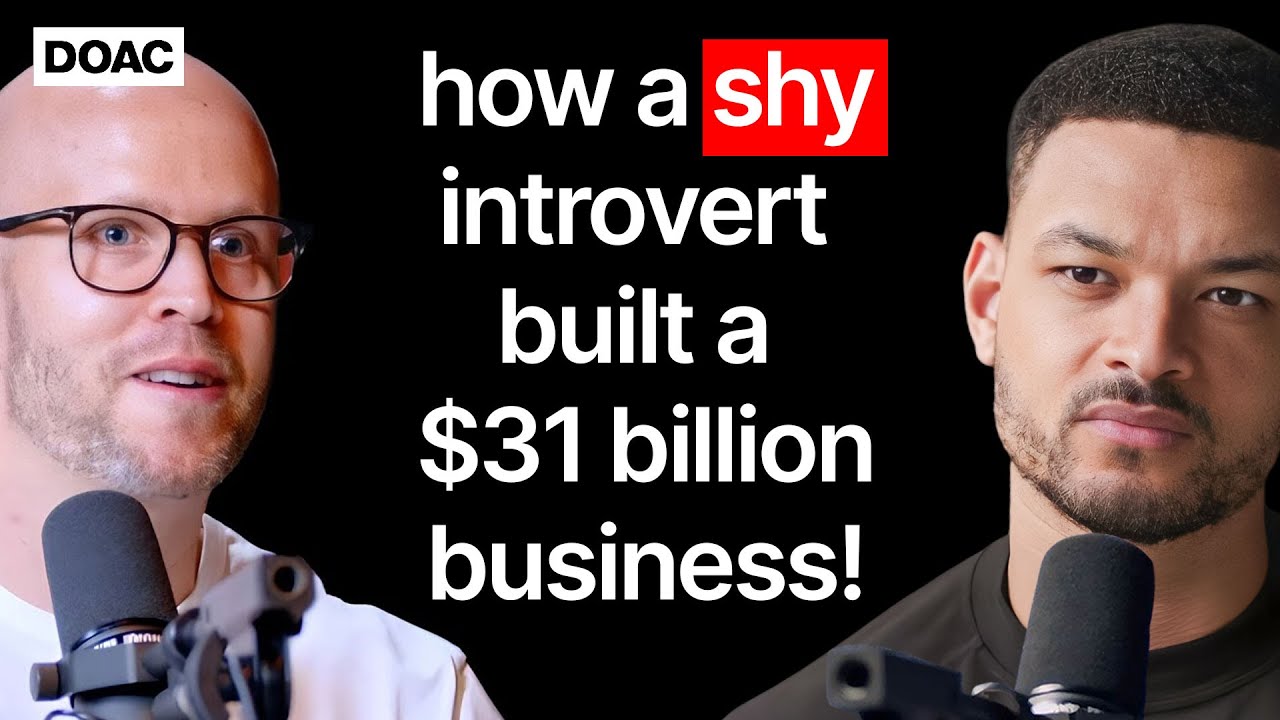
The Diary Of A CEO
Building a resilient enterprise requires embracing generalist leadership, taking asymmetric bets on user experience, and prioritizing corporate culture over rigid long-term strategy.
AI-assisted summary of Spotify Founder: How A 23 Year Old Introvert Built A $31 Billion Business! — original source. Check the original for full context.
Source published:
Detailed notes
## Background This episode was published by Steven Bartlett on his YouTube channel, The Diary Of A CEO, on September 28, 2023. According to the page description, the episode features Spotify founder Daniel Ek sharing his personal journey of building a $31 billion company from scratch. The description also highlights his upbringing, early success, struggles with retirement at age 22, and the culture that drives Spotify today.
## TL;DR Daniel Ek reflects on his path from a working-class childhood in Stockholm to becoming the founder and CEO of Spotify. After selling his first company at age 22 and retiring, he quickly experienced deep depression and emptiness, which spurred him to build a legal, user-friendly music platform alongside Martin Lorentzon. Ek discusses navigating near-death financial crises, warding off major competitive threats like Apple Music, and transitioning from trying to imitate famous tech founders to embracing his own strengths as a generalist. He emphasizes that long-term business success relies far more on nurturing organizational culture, showing deep empathy, and building strong human relationships than on cold logic or strategy alone.
## Atmosphere & style The conversation carries an intimate, reflective, and candid tone, balancing the high-stakes reality of tech entrepreneurship with deeply personal vulnerability. Host Steven Bartlett creates a calm, introspective space that allows Daniel Ek to drop the polished CEO facade and discuss his struggles with mental health, hair loss, introversion, and feeling out of place. The dynamic feels like an authentic fireside chat between two seasoned operators, offering a grounded and thoughtful atmosphere rather than a sensationalized success story.
## Key takeaways - [20:55](https://www.youtube.com/watch?v=w_35cUaU_NA&t=1255s) Daniel Ek retired at age 22 after selling Advertigo, but his initial playboy lifestyle of fast cars and nightlife brought profound emptiness and depression within six months. - [02:16](https://www.youtube.com/watch?v=w_35cUaU_NA&t=136s) Ek credits his mindset to his resilient single mother, who prioritized effort, moral character, and exposure to diverse social spheres over formal grades or traditional career titles. - [06:11](https://www.youtube.com/watch?v=w_35cUaU_NA&t=371s) As an introvert, Ek operates across technology, art, and business, allowing him to act as a bridge and translator between fundamentally different types of thinkers. - [10:55](https://www.youtube.com/watch?v=w_35cUaU_NA&t=655s) Rather than relying solely on traditional university education, Ek advises young entrepreneurs to join high-velocity startups and work closely under exceptional leaders as a 'fly on the wall.' - [24:45](https://www.youtube.com/watch?v=w_35cUaU_NA&t=1485s) Spotify was co-founded with Martin Lorentzon to create a legal music experience so seamless and superior that it would outcompete digital piracy. - [50:23](https://www.youtube.com/watch?v=w_35cUaU_NA&t=3023s) The early days of Spotify were defined by immense stress and near-death financial moments, highlighting the crucial emotional and strategic value of having a co-founder. - [55:06](https://www.youtube.com/watch?v=w_35cUaU_NA&t=3306s) A key entrepreneurial skill is the ability to move fluidly between high-level vision and granular, technical execution without getting lost in either extreme. - [56:37](https://www.youtube.com/watch?v=w_35cUaU_NA&t=3397s) Building personal relationships with executive assistants proved to be Ek's secret weapon in securing difficult high-level meetings with record label CEOs. - [57:42](https://www.youtube.com/watch?v=w_35cUaU_NA&t=3462s) Ek and Lorentzon took a massive financial risk by self-funding approximately $10 million into Spotify's seed stage in 2007. - [01:00:53](https://www.youtube.com/watch?v=w_35cUaU_NA&t=3653s) Spotify survived Apple Music's launch by focusing on platform ubiquity and algorithmic personalization while Apple prioritized hardware lock-in. - [01:07:51](https://www.youtube.com/watch?v=w_35cUaU_NA&t=4071s) Ek advocates for open digital marketplaces, criticizing Apple's 30% App Store toll and platform rules as anti-competitive barriers to global innovation. - [01:13:05](https://www.youtube.com/watch?v=w_35cUaU_NA&t=4385s) As a company matures, corporate culture becomes its most scalable and vital asset, ultimately surpassing pure strategy in driving long-term success. - [01:19:10](https://www.youtube.com/watch?v=w_35cUaU_NA&t=4750s) Instead of trying to copy other tech leaders, Ek succeeded by embracing his identity as a well-rounded generalist rather than forcing a hyper-specialized role.
## Detailed walkthrough ### [00:00](https://www.youtube.com/watch?v=w_35cUaU_NA&t=0s) Intro: The Paradox of Spotify's Unlikely Founder
The episode opens with a sharp juxtaposition between Daniel Ek’s self-described modest beginnings and his monumental status as a titan of the tech and music industries. Daniel describes himself as an introvert who was average at best academically and felt like he didn't belong anywhere. Yet, as the podcast context reveals, he founded Spotify—creating a tech giant valued at $50 billion, saving the music industry from its digital tailspin, and amassing a personal net worth of over $4 billion.
Through rapid preview clips, Daniel teases the chaotic trajectory of his early twenties. After flunking high school and building a first company that got acquired, he retired at just 23 years old. The immediate aftermath was a brief, high-flying period of fast cars, nightclubs, throwing money around, and dynamic nightlife, which quickly spiraled into severe depression and profound emptiness six months later. Reevaluating his life, he asked himself what he truly cared about. The answer was music, despite the industry plunging downward into piracy.
He speaks candidly about the sheer trial by fire that followed in Spotify's early days. The journey was plagued by near-death experiences for the company: running out of money, physical burnout where he gained 30 pounds and lost his hair, and the personal crisis of trying to model himself after tech leaders like Mark Zuckerberg instead of embracing his authentic self. He reflects on learning to share the burden, dealing with Apple’s competitive threat, and understanding that the business world runs on human relationships rather than pure cold logic.
- **Key Stats:** Created a $50B company; personal net worth exceeding $4B; retired at age 23 after his first acquisition. - **Core Realization:** A lavish lifestyle of clubs and sports cars brought emptiness within 6 months, sparking the search for a meaningful mission.
---
[02:16](https://www.youtube.com/watch?v=w_35cUaU_NA&t=136s) The Influence of Daniel Ek's Upbringing: A Single Mother's Determination
Host Steven Bartlett asks Daniel to return to his roots—the "oven" that baked him into the person he is today. Daniel credits his core foundation to his strong, resilient single mother. She raised him in a rough, working-class suburb of Stockholm with a chip on her shoulder, determined to prove her older brother wrong after he claimed she couldn't raise a child to be productive on her own. Her definition of success was raising a child who was well-read, well-educated, and capable of handling any adversity thrown at him.
To give him a broad, adaptable worldview, his mother enrolled him in an unusually eclectic set of activities that broke working-class stereotypes. She signed him up for a classic pentathlon—combining fencing, horseback riding, shooting, running, and swimming. Noticing his fine motor skills were strong while his gross motor skills were clumsy, she placed him in an all-female gymnastics group. To help him overcome his deep introversion, she pushed him into a theater group so he could learn to express himself publicly. Furthermore, she exposed him to the entire social spectrum, bringing him along to sit with university professors one day and struggling neighbors living paycheck-to-paycheck the next.
Despite this intensive upbringing, her main focus was never traditional career paths like becoming a doctor or a lawyer. Instead, she constantly emphasized that he must become a "good human being." Because Daniel found school academically easy, she cared little about whether he received straight A's; she cared only about effort. If he brought home top marks without stretching his limits, she would challenge him on whether he had genuinely tried his best, prioritizing the realization of his full potential over superficial outcomes.
- **Childhood Activities:** Classic pentathlon (fencing, horseback riding, shooting, running, swimming), gymnastics, and theater. - **Family Musical Heritage:** Grandfather was an opera singer; grandmother was a theater actress and jazz pianist. - **Parental Philosophy:** Focused heavily on effort, moral character, and realizing full potential rather than raw grades or traditional career titles.
---
[06:11](https://www.youtube.com/watch?v=w_35cUaU_NA&t=371s) Navigating Introversion and Belonging Everywhere (and Nowhere)
Daniel reflects on how his nature as an introvert interacted with his school experience. He explains that while he can "switch it on" when necessary—using skills honed in theater to project power and be a force of nature—doing so drains immense energy. Unlike extroverts who draw energy from a crowded room, social interactions with unfamiliar people are taxing for him. School was manageable primarily because he loved learning and possessed a strong memory for concepts, allowing him to absorb coursework effortlessly.
``` +-----------------------------------------------------------------------+ | DANIEL EK'S SPECTRUM | | | | Athletes <---> Musicians/Artists <---> Scientists <---> Tech | | | | "I won't excel at practically anything, but I'll hold my fort." | +-----------------------------------------------------------------------+ ```
Because his mother forced him into a wide range of disciplines, Daniel found himself occupying a unique middle ground across diverse social circles. He could comfortably hang out with the athletes, the musicians and artists, or the math enthusiasts. While he wasn't the absolute best in any single domain, he was proficient enough in all of them to be accepted. He views this multi-faceted identity as both a blessing and a curse:
> "The blessing is that it's very easy for me to relate to other people enough where I'm accepted in the group. But the downside is that I never really belong anywhere, because I'm not that one-sided as an individual. I'm not an artist, I'm not a technologist, I'm not a business person—I'm all of that."
This bridge-building quality carried directly into his adult life and professional relationships. He naturally acts as a translator between disparate worlds—such as bringing scientists, business executives, and creative artists together into the same room, helping groups who usually talk past each other find common ground.
- **Energy Dynamics:** Treats public performance as a learned, high-energy skill rather than a natural state; social environments with strangers consume energy. - **Multidisciplinary Identity:** Comfortable across technology, art, science, and business, allowing him to mediate between creative and corporate mindsets.
---
[09:38](https://www.youtube.com/watch?v=w_35cUaU_NA&t=578s) Redefining Ambition: Effort over Outcomes
The conversation shifts to the topic of ambition, a word often loaded with connotations of material success, wealth, or power. Daniel clarifies that his ambition stems directly from the input-driven mindset instilled by his mother. When he sees individuals with immense raw talent squandering their potential, he feels compelled to push for more. In his view, aiming significantly higher often takes the exact same baseline effort as aiming just slightly above where one currently stands, making it logical to pursue big, hairy, audacious goals.
He embraces the classic philosophy of "shoot for the stars and you might land on the moon." When Steven notes that many people do not lean into high ambition, Daniel questions whether that stems from a lack of desire or a deep-seated fear of testing their actual limits. He observes that most people are far more afraid of failure than they are eager for success, which leads them to talk themselves out of taking action on their ideas.
- **Perspective on Ambition:** Ambition is about inputs and pushing potential rather than fixating on vanity outcomes. - **Philosophy on Risk:** Aiming massively high requires comparable effort to aiming modestly higher; fear of failure is the primary barrier stopping people from acting on ideas.
---
[10:55](https://www.youtube.com/watch?v=w_35cUaU_NA&t=655s) Paths to Success: University vs. Real-World Exposure
Discussing how he would advise young people or his own children deciding between university and entering the workforce, Daniel offers a nuanced view of the education system. He considers traditional universities somewhat outdated for certain tracks, yet acknowledges their value depending on the individual's personality and goals. For structured fields like law or medicine, or for students who thrive under formal discipline and need a broad foundational base, university remains essential and effective.
However, for aspiring entrepreneurs, Daniel advocates for direct exposure to real-world business over classroom theory. He emphasizes that the single best move a young person can make is to work closely under exceptional leaders as a "fly on the wall." By observing an entrepreneur upfront—seeing the day-to-day operations, decision-making, and heavy administrative burdens—a person gains practical skills that lectures cannot replicate.
``` ┌─────────────────────────────────────────┐ │ TRADITIONAL UNIVERSITY PATH │ │ - Structured rigor & formal discipline │ │ - Essential for Law / Medicine │ │ - Broad foundational skill set │ └────────────────────┬────────────────────┘ │ Which path fits your wiring? │ ┌────────────────────┴────────────────────┐ │ REAL-WORLD STARTUP / APPRENTICESHIP │ │ - Direct proximity to decision-making │ │ - Observe execution & admin up close │ │ - "Cheapest way to fail" early on │ └─────────────────────────────────────────┘ ```
Steven agrees, recalling his own experience dropping out because he couldn't stay awake in lectures despite spending nights self-educating until 2:00 AM on topics like AI and rockets. Daniel agrees with Steven's advice that young people should join cutting-edge startups (such as AI ventures) on emerging technology waves. Doing so places them near crucial decisions, maximizes learning velocity, and serves as the "cheapest way to fail" early in a career without bearing massive personal downside.
> "Everyone when they think about the word innovation, they think that it's something entirely novel. Yet for me... I don't know of a single thing that just someone came up with that had no prior grounds. Everything is about putting two or more things together in a new context."
- **On Innovation:** Re-framing innovation not as pure creation from scratch, but as connecting existing concepts together in novel contexts. - **Career Advice for Youth:** Seek proximity to great mentors and operators; join early-stage startups on rising technology waves to compress the learning curve.
[18:27](https://www.youtube.com/watch?v=w_35cUaU_NA&t=1107s) Multiple Paths to Success and the Paradox of Advice
Reflecting on the early stages of a career, Daniel Ek observes that starting out at a larger company can be a practical strategic move. Doing so allows an aspiring founder to gain high-value skills, secure steady compensation, and build a financial "nest egg" before breaking out to launch an independent venture. Expanding on this theme, Ek reveals how his perspective on giving advice has shifted dramatically over time. Though he once eagerly dished out guidance, he now feels increasingly cautious about telling others how to navigate their lives, acknowledging that he is not necessarily in a position to dispense universal rules—even if he occasionally struggles to hold back when he sees people making avoidable missteps.
Ek emphasizes that there is no single predetermined path to success. Instead, the most compelling stories often come from unconventional backgrounds: a frustrated scientist leaving a lab because no one else would pursue their idea, or an unlikely outsider developing a niche skill during a standard day job that later proves essential to solving a complex problem. Interrupting the conversation briefly, host Steven Bartlett addresses the audience with a direct appeal, sharing data from Spotify and Apple shows that the majority of regular listeners haven't subscribed yet. He promises to work tirelessly to elevate the show's quality in exchange for a simple click on the follow or subscribe button.
---
[20:55](https://www.youtube.com/watch?v=w_35cUaU_NA&t=1255s) Retiring at 22: The Illusion of Wealth, Status, and Nightlife
Returning to his personal timeline, Ek discusses the aftermath of selling his first company, Advertigo, to TradeDoubler in 2006. By age 22, he found himself financially independent and officially retired—a position most young adults view as the ultimate dream. Growing up, Ek had always felt socially accepted on the surface, yet harbored a deep underlying feeling of not quite belonging anywhere. Struggling with romantic relationships compared to peers who excelled in sports or music, Ek had convinced himself that achieving financial freedom was the key to unlocking true social acceptance, finding his "tribe," and finally living life to the fullest.
Having assumed that retirement might be possible in his 40s or 50s through immense effort, achieving it at 22 was staggering. Ek initially embraced the stereotypical playboy lifestyle: frequenting elite nightclubs, buying a luxury sports car (a red Ferrari), and attracting romantic partners he previously could not reach. However, the thrill quickly faded into a hollow and depressing reality. He realized that the new social circle around him was transactional, drawn only to his wealth and access. The high-profile lifestyle offered no genuine connection, leaving him feeling drained, unfulfilled, and disconnected from his core self.
- **Age of Retirement:** 22 years old (often misstated as 23). - **Key Assets Acquired:** Red Ferrari sports car, luxury apartment. - **The Emotional Arc of Retirement:** Month 1 was exciting; Month 6 became depressing; Month 9 plunged into deep existential questioning; Month 12 brought a new purpose.
---
[24:45](https://www.youtube.com/watch?v=w_35cUaU_NA&t=1485s) Bonding with Martin Lorentzon and the Birth of Spotify
The true turning point came when Ek reconnected with Martin Lorentzon, the co-founder of TradeDoubler (the company that had acquired Advertigo). Lorentzon had just experienced his own corporate exit after his company's IPO, leaving him immensely wealthy—far richer than Ek—but similarly directionless and disoriented. The two bonded over their shared loss of purpose, spending quiet days watching *The Godfather* movies, eating potato chips, and debating what to do with their lives. Through these open conversations, Ek dismantled his deeply ingrained belief that work had to be inherently unpleasant. He realized that he genuinely loved working and learning, and wondered what would happen if he created an environment centered around intellectual curiosity and fun rather than immediate financial gain.
When Lorentzon asked Ek what domain he would pick if he could choose anything, Ek replied that he would pick music—though he immediately dismissed it as a "terrible idea" due to rampant piracy, declining industry revenues, and legal gridlock. Lorentzon challenged Ek's skepticism by repeatedly asking, "Why not?" They reasoned that trying to regulate piracy was futile; the only solution was to build a product vastly superior to illegal downloads. Ek envisioned a legal service that paid rights holders based on stream counts. Fueled by Lorentzon's unwavering optimism and willingness to fund the experiment, Ek abandoned the nightclub scene and dove straight back into work. Within a week of committing to the project, he felt happy for the first time in nearly a year.
> "I told him from the beginning... 'Hey, this is probably going to lose a lot of money. I have a hard time seeing this ever being a sustainable business... but let's do this.' And he said, 'Great, let's do it.'"
---
[28:57](https://www.youtube.com/watch?v=w_35cUaU_NA&t=1737s) The Psychology of Happiness and the Ferrari Paradox
Bartlett and Ek explore the broader psychological lesson behind Ek's post-exit slump: the necessity of testing and failing one's personal "hypothesis of happiness." Bartlett shares his own parallel experience of grinding seven days a week only to be met with a growing emotional emptiness—realizing only in hindsight that he was deeply lonely despite buying a massive home and a luxury car, both of which he quickly discarded to move into a modest studio apartment near his office. They debate whether people must personally experience the anticlimax of wealth to realize it doesn't guarantee fulfillment, or if that insight can be simulated. Ek notes that while he now loves giving old friends glimpses into high-profile, glamorous experiences, those friends often walk away realizing how exhausting the underlying work is and how little they actually desire that lifestyle.
Ek breaks down the subtle onset of his depression during his retired months, describing how status and luxury initially provided a rush of social currency—being added to guest lists with "plus tens" at exclusive clubs. However, by the tenth repetition, the experience lost its magic. Ek realized he was surrounded by "hangers-on" who were merely using him for bottle service and table access, recognizing that anyone else with equivalent funds could easily replace him. Ek cites author Morgan Housel's concept of the "Ferrari Paradox" from *The Psychology of Money*: when people admire a luxury sports car, they rarely admire the person driving it; instead, they imagine themselves in the driver's seat. Realizing that his pursuit of status was completely detached from his true need for genuine belonging and continuous learning, Ek was finally ready to redirect his energy into building something meaningful.
[36:36](https://www.youtube.com/watch?v=w_35cUaU_NA&t=2196s) Balancing Solitude and Social Connection as an Introvert
Daniel Ek reflects on discovering what truly makes him stable and happy, realizing that he thrives on solitude much more than average people do. In prior relationships, he used to feel drained because he assumed being in a relationship required constantly doing things together. Over time, he realized he actually thrives on loneliness and needs dedicated time to be by himself—where he can wander, dream, scheme, and pursue whatever enters his mind. Thankfully, his wife shares this trait; both are comfortable doing their own thing, which taught Ek that being an introvert requires managing his "energy reserves." While social interactions fuel him with ideas, they simultaneously drain his battery, which he recharges through quiet, individual reflection.
``` +-------------------------------------------------+ | Social Interaction | | • Generates new ideas & inspiration | | • Drains internal energy reserves | +-------------------------------------------------+ | v +-------------------------------------------------+ | Solitude | | • Dreams, schemes, and reflects | | • Recharges internal energy reserves | +-------------------------------------------------+ ```
Ek illustrates this dynamic with an unusual habit at dinner parties: among close friends who understand his eccentricities, he might suddenly get an idea mid-dinner, step away for an hour to write it down and gather his thoughts, and return fully energized to continue the conversation. While he acknowledges this would be socially awkward or inappropriate with strangers, his real friends and family accept it.
- **Key happiness components:** Learning, having fun, making a positive impact on others, and having the social freedom to withdraw into solitude without awkwardness. - **Relationship dynamic:** Ek and his wife allow each other complete space, though they joke that at least one of them must stay at social gatherings so both don't vanish simultaneously.
---
[42:02](https://www.youtube.com/watch?v=w_35cUaU_NA&t=2522s) Maintaining Romance and Relationship Defaults
When asked how he balances this deep need for isolation with romantic relationships—especially when a partner's primary love language is quality time—Ek explains that he and his wife deliberately create active bonding moments. He highlights two ways to structure a relationship: having the default be spending time together, or having the default be independent lives where you actively schedule time to engage in shared interests.
Since their children naturally come first, maintaining quality time requires intentional effort. For example, although Ek is not personally interested in horse riding, he actively supports his wife's passion by discussing it every morning, showing up at her practices and competitions, and finding ways to bond around it. Similarly, she enjoys hearing about his entrepreneurial endeavors. They also schedule traditional date nights where walking away mid-meal is off the table.
---
[44:34](https://www.youtube.com/watch?v=w_35cUaU_NA&t=2674s) Naïveté, Deep Research, and Solving Impossible Problems
Addressing the sheer audacity of launching Spotify as a young person in Sweden—defying giant, protective record labels—Ek credits a combination of "the beautiful naïveté of an entrepreneur" and thousands of hours of intense, multi-dimensional problem-solving. He compares this entrepreneurial delusion to Elon Musk building a successful electric car company when no new major U.S. car manufacturer had succeeded in decades.
``` [ Top-Level Vision ] --> Misses crucial execution nuances VS. [ Deep Detail Traps ] --> Misses the strategic big picture VS. [ Multi-Dimensional Mastery ] --> Spends 1,000+ hours analyzing systems, (Ek's Approach to Spotify/Healthcare) incentives, and laws to spot entry points ```
Ek believes time is the world's scarcest resource. When high-quality minds dedicate thousands of hours to dissecting complex systems, they uncover non-obvious solutions. Rather than staying too high-level or getting lost in micro-details, founders must dive deep enough to sequence problems correctly.
- **Copyright Expertise:** Though Ek knew nothing about the music industry initially, within a few years he became a leading expert on global copyright law, the Digital Millennium Copyright Act (DMCA), mechanical rights, performing rights societies, and metadata standards like ISRC and ISBN numbers. - **Healthcare Venture Example:** Ek spent a decade studying healthcare—analyzing NHS structure, insurance models, disease groups, cost curves, and human longevity—starting from a notebook entry in 2008 before launching his healthcare company in 2018.
---
[50:23](https://www.youtube.com/watch?v=w_35cUaU_NA&t=3023s) Surviving Near-Death Moments and the Value of a Co-founder
By 2007, after a year of development, the small Spotify team had built a working prototype that felt as seamless as having "all the world's music on your hard drive." However, securing legal rights from skeptical music executives turned into an 18-month binary gamble where the company nearly died at least four times due to running out of money and facing constant rejections.
> "In the beginning of that process I had hair, and then in the end of it I lost all of the hair. I probably gained 30 lbs in weight during that period of time... it was awful."
During these demoralizing two years—when Ek questioned whether the company would survive every month or two—his co-founder, Martin Lorentzon, proved indispensable. Because Martin was not bogged down in the brutal negotiations, he remained upbeat, kept unwavering faith in Ek, and provided a psychological safety net by reminding him, "We'll figure out something else if this doesn't work out." Ek stresses that while he gets most of the public credit, Spotify was a collective effort alongside Martin, key early team members like Gustav Söderström and Alex Norström, and many others.
- **Calculated Risk:** Ek viewed the venture as an asymmetrical bet: losing only cost a single failed attempt and the original capital, whereas succeeding presented a massive upside. - **Team Synergy:** Ek advises every founder to share the emotional burden with a co-founder, emphasizing that building a startup requires a balance of optimists and critical naysayers across all roles.
[055:06] Empathy, Nuance, and the Art of Simplifying Complexity
Daniel Ek reflects on the subtle realities of business and leadership, noting that as he gains experience, he realizes how little anyone truly possesses a perfect model of the world. Success often hinges on navigating granular nuances rather than sweeping generalizations. Most people, Ek explains, operate at extremes: they either stay above the nuances and fail to grasp the core issues, or they get so bogged down in the details that they lose sight of the bigger picture. The true superpower of extraordinary entrepreneurs is the ability to move fluidly between extreme detail and macro strategy, simplifying complex concepts for the broader world.
``` ┌─────────────────────────────────────────┐ │ MACRO VISION & STRATEGIC PICTURE │ └────────────────────┬────────────────────┘ │ Fluid Movement │ "Superpower" Up & Down │ Flexibility ▼ ┌─────────────────────────────────────────┐ │ GRANULAR DETAILS & DEEP NUANCE │ └─────────────────────────────────────────┘ ```
To illustrate this, Ek brings up Steve Jobs. Countering the popular myth that Jobs didn't understand technology or engineering, Ek emphasizes that even if Jobs didn't write code, he possessed a deep empathy for what made great engineers tick. He understood the inputs and trade-offs of technical solutions and excelled at translating intricate engineering achievements into simple, resonant messages for the everyday person.
* "Most people are... above the nuances [and] don't really understand the issues well enough, or too bogged down into details to understand the bigger picture." * "Steve Jobs... may not have known how to write code, but he certainly could empathize with what made an amazing engineer tick." * The rare superpower in entrepreneurship is the capacity to zoom in to extreme technical detail, zoom out to high-level vision, and simplify the result.
---
[056:37] Gatekeepers as Allies: Winning Over Executive Assistants
Host Steven Bartlett brings up the famous stories about Ek’s early days negotiating with record labels—specifically rumors that Ek camped outside label offices in a sleeping bag or accosted assistants to score meetings with elusive music CEOs. Ek laughs off the sleeping bag detail, clarifying that while he did once sleep outside during a different moment in his career, he never slept on the pavement outside record labels. However, the core effort was entirely real: he frequently booked one-way or week-long trips to New York with no confirmed meetings, spending his days making dozens of phone calls to land a spot on a senior executive’s schedule.
``` ┌────────────────────────┐ ┌────────────────────────┐ │ EXECUTIVE ASSISTANTS │ │ RECORD LABEL CEO │ │ "Keys to the Kingdom" │────────►│ Hard-to-Get Meeting │ └────────────────────────┘ └────────────────────────┘ ▲ │ Relatable & Easy to Work With │ ┌────────────────────────┐ │ DANIEL EK │ │ Persistent / Flexible │ └────────────────────────┘ ```
That intense hustle taught Ek a fundamental business lesson: executive assistants are the true "keys to the kingdom." While many visiting executives treat administrative staff as invisible, Ek made a point to treat them as individuals, build real relationships, and be as easy to work with as possible. When an unexpected 20-minute gap opened up in a CEO's calendar, assistants would prioritize Ek over ten other requests simply because he was friendly, flexible, and ready to show up at a moment's notice.
* **Exaggeration vs. Reality:** Ek did not sleep outside record labels in a sleeping bag, but he did fly to New York empty-handed, making up to 20 cold calls a day to get on calendars. * **The Assistant Strategy:** Executive assistants hold immense informal power. Treating them with genuine respect turned them into vital allies who opened doors. * **Frictionless Interaction:** Being consistent, polite, and available on short notice eliminated complexity and yielded high-value access that money couldn't buy.
---
[057:42] Betting It All: Funding Spotify's $10 Million Seed Stage
When asked if he poured his entire net worth into launching Spotify, Ek admits that he invested a massive chunk of his personal wealth, alongside his co-founder Martin Lorentzon (who contributed an even larger share). Together, they put roughly $10 million of their own money into the startup at the seed stage around 2007. At the time, seed checks were typically around $500,000, making a $10 million self-funded seed round completely unheard of in the tech industry.
``` ┌─────────────────────────────────────────────────────────────────┐ │ EARLY SPOTIFY SEED ROUND (2007) │ ├────────────────────────────────┬────────────────────────────────┤ │ Industry Standard Seed Round │ ~$500,000 │ │ Ek & Lorentzon Personal Capital│ ~$10,000,000 │ └────────────────────────────────┴────────────────────────────────┘ ```
Financially, failing would have wiped out the lifelong financial freedom Ek had secured at age 22, forcing him back into the job market. Looking back, Ek acknowledges that from a strict risk-management standpoint, putting that much personal capital on the line was "a terrible decision." However, he believes deeply in betting on oneself over passive investments.
* "All in all, I think we invested about $10 million into this by ourselves... Back in 2007, that just was unheard of." * "From a purely logical point of view, it was probably a terrible decision. But betting on yourself... is probably the best advice I could give." * Rather than investing small sums of money into random ventures, Ek advises aspiring entrepreneurs to invest their energy and skills into high-upside opportunities, taking equity over liquid cash when possible.
---
[01:00:53](https://www.youtube.com/watch?v=w_35cUaU_NA&t=3653s) Facing Apple Music: Ubiquity and Personalization under Fire
Bartlett shifts to one of Spotify's biggest threats: Apple launching Apple Music in 2015. At the time, media outlets predicted Spotify’s demise, assuming Apple's dominance over smartphone hardware would allow them to crush the independent streaming app. Ek explains that public perception usually lags internal reality by 6 to 12 months. Having watched Apple acquire Beats Electronics a year prior, Spotify had already anticipated the move and spent months game-theorizing every single competitive angle.
``` ┌─────────────────────────────────────────┐ │ APPLE MUSIC STRATEGY │ │ Hardware-First / Enclosed Ecosystem │ └────────────────────┬────────────────────┘ │ │ VS. │ ┌─────────────────────────────────────────┐ │ SPOTIFY STRATEGY │ │ Ubiquity Across All Hardware Platforms │ └─────────────────────────────────────────┘ ```
Spotify relied on a core strategic pillar: **ubiquity**. Ek bet that Apple would build a service designed primarily to lock users into Apple hardware. Spotify, by contrast, focused on working seamlessly across every platform imaginable—Windows, Android, smart fridges, and connected cars. Furthermore, Spotify held a massive lead in algorithmic personalization (like Discover Weekly) and custom playlist data that Apple's initial user experience couldn't match. When Apple finally made its official announcement, the Spotify team breathed a sigh of relief because Apple had not introduced any product innovations they hadn't already planned for.
* **Lagging Perception:** The public panicked when Apple Music was announced, but Spotify had spent over a year running game-theory scenarios on Apple's entrance. * **The Ubiquity Pillar:** Spotify deliberately integrated into every third-party ecosystem (car head units, alternative operating systems, smart home devices) where Apple had no incentive to go. * **Personalization Moat:** As Bartlett notes as a user, Spotify’s deep understanding of user taste and saved playlist history created high switching costs that Apple's launch product couldn't overcome.
---
[01:07:51](https://www.youtube.com/watch?v=w_35cUaU_NA&t=4071s) David vs. Goliath: The Battle Against Apple's Monopoly Tactics
The conversation turns to Apple's aggressive ecosystem control, including their 30% App Store cut, repeated rejections of Spotify’s audiobook updates, and alleged delays in app store approval times. Ek clarifies his perspective by separating Apple the product designer from Apple the platform owner. As a consumer, he loves Apple products and has used Macs and iPhones since the late 1990s. But as a business leader, he sees a company that still acts like a scrappy underdog while wielding the power of a ruthless, anti-competitive Goliath.
``` ┌─────────────────────────┐ │ APPLE'S IDENTITY │ └────────────┬────────────┘ │ ┌─────────────────────────┴─────────────────────────┐ ▼ ▼ ┌─────────────────────────┐ ┌─────────────────────────┐ │ CONSUMER EXPERIENCE │ │ BUSINESS ETHOS │ │ Phenomenal Hardware & │ │ 30% App Store Toll & │ │ Innovative Software │ │ Anti-Competitive Rules │ └─────────────────────────┘ └─────────────────────────┘ ```
Ek argues that forcing developers to hand over 30% of their revenue—or forbidding them from even communicating directly with their own customers if they refuse to pay—stifles global innovation and directly harms consumers. He stresses that Apple needs to recognize its position as the dominant marketplace platform and play fair.
* "Apple is a fantastic company and they make amazing products... but it's a company in many cases that still sees itself as an underdog, but don't realize that they've become Goliath." * "If you don't pay the 30%, you can't even speak to your consumers. It is kind of absurd." * Ek emphasizes that Apple's relentless platform tactics conflict with his own business ethos, believing the tech world would be far healthier if Apple adopted open and fair marketplace practices.
---
[01:10:30](https://www.youtube.com/watch?v=w_35cUaU_NA&t=4230s) DNA of a Business: How Culture Mirrors the Founder
Closing out the discussion, Bartlett asks Ek to reflect on his overarching philosophy and whether he is conscious of the unique personal traits that have shaped Spotify's distinct culture and success. Ek admits he rarely analyzes himself in those terms, but acknowledges that a company's problem-solving style naturally mirrors its founder's instincts. He describes the surreal experience of stepping back and watching Spotify teams independently solve problems using the exact principles and approaches he would have chosen himself.
* A company's operating culture becomes an organic extension of the founder's underlying principles and decision-making framework. * Watching an organization solve complex operational challenges autonomously—matching the founder's implicit logic—is one of the clearest signs of an embedded culture.
[01:11:36](https://www.youtube.com/watch?v=w_35cUaU_NA&t=4296s) The Evolution of Spotify and Daniel Ek's Personal Shift
Daniel Ek reflects on how Spotify, now 17 years old, has become like a teenager liberating itself from its creator. He notes that the company is no longer a direct reflection of just himself, but a broader entity shaped by key leaders. Specifically, he highlights Gustav Söderström, who leads product, and Alex Norström, who leads the business side. Having been with Spotify for over 12 years, both leaders now handle more of the day-to-day operations and infuse their own personal values into the business. While Ek notes they handle certain situations differently than he would, their choices remain aligned with his core principles.
Reflecting on his personal transformation, Ek compares starting Spotify as a 23-year-old to his current life as a 40-year-old father of two. His perspective on work has shifted significantly; while still vital, it is no longer the sole focus of his existence. He admits to currently navigating a period of self-discovery to understand who the "40-year-old Daniel" truly is, acknowledging how his mindset has matured over the decades.
- **Spotify's Age:** 17 years old at the time of recording. - **Key Executives Mentioned:** Gustav Söderström (Co-President & Chief Product Officer) and Alex Norström (Co-President & Chief Business Officer), both 12+ years at the company. - **Personal Milestones:** Founded Spotify at age 23; currently 40 years old with two children.
---
[01:13:05](https://www.youtube.com/watch?v=w_35cUaU_NA&t=4385s) Why Culture Trumps Strategy at Scale
Ek details how his view of corporate culture evolved over time. At 23, he naively thought culture meant having a ping-pong table in the office. By 30, he believed strategy was paramount while viewing culture as secondary. Now at 40, Ek considers culture to be the single most critical driver of a company's success, placing strategy in a secondary or even tertiary role. He describes culture as the most scalable element of an organization, composed of every positive and negative action, hire, and departure.
``` DANIEL EK'S PERSPECTIVE ON CULTURE OVER TIME ┌─────────────────────────────────────────────────────────────┐ │ Age 23: Ping-Pong Tables & Perks │ ├─────────────────────────────────────────────────────────────┤ │ Age 30: Strategy First, Culture as a Secondary Thought │ ├─────────────────────────────────────────────────────────────┤ │ Age 40: Culture as the #1 Priority (Strategy is Tertiary) │ └─────────────────────────────────────────────────────────────┘ ```
The core challenge of culture, according to Ek, is rewarding positive behaviors while discouraging negative ones. He highlights Annie Duke’s concept from *Thinking in Bets*, which uses poker chips as a metaphor for organizational agency. Successful employees accumulate "chips," giving them greater leniency to take risks, whereas repeated failures deplete an individual's agency within a large company.
- **Balancing Risk and Responsibility:** Spotify must maintain room for experimentation while responsibly serving 550 million active users and tens of millions of creators whose livelihoods depend on the platform. - **Quotes:** > "Culture is about rewarding the positive behaviors you want to see in the company and obviously dissuade the negative." > "Culture is the most scalable thing done right of a company... and it's the hardest thing."
---
[01:17:30](https://www.youtube.com/watch?v=w_35cUaU_NA&t=4650s) Organizational Lessons from Sports Teams
Host Steven Bartlett and Ek compare corporate culture to elite sports management. Bartlett shares stories from former Manchester United players about Sir Alex Ferguson, emphasizing that Ferguson's legendary success stemmed from managing people and protecting culture rather than tactical micro-management. They also discuss Mikel Arteta’s work fostering culture at Arsenal, as depicted in the *All or Nothing* documentary series.
Ek warns about the cultural risks of rapid scaling, contrasting steady cultural preservation with chaotic team overhauls—referencing Chelsea FC's rapid roster expansion as an example. He explains that if a company grows its head count by 50% two years in a row, the majority of employees will have less than a year of tenure, fundamentally disrupting established norms if not managed with care.
- **Rapid Growth Risk:** Adding 50% more staff annually dilutes existing cultural norms. - **Sports Comparisons:** Sir Alex Ferguson (Manchester United), Mikel Arteta (Arsenal), and the structural challenges at Chelsea FC.
---
[01:19:10](https://www.youtube.com/watch?v=w_35cUaU_NA&t=4750s) Embracing Your Superpower: The Generalist CEO
Answering the closing question left by the previous podcast guest—asking what unreceived advice at age 21 would have made him more successful—Ek addresses his journey toward self-acceptance. Early in his career, he tried to copy other tech founders by trying to be the best product mind in every room. Over time, he realized that modeling himself after leaders like Mark Zuckerberg was counterproductive.
Ek discovered that his true superpower lies in being a well-rounded generalist rather than a specialized master. He genuinely enjoys learning about diverse domain topics, ranging from public relations strategies to the history of employment law. Accepting his nature as a generalist allowed him to stop looking outward for models and instead focus inward. Bartlett reflects on how Ek's journey proves there is no single archetype for a successful entrepreneur.
- **Core Insight:** Optimize for personal strengths rather than attempting to fix or mask every weakness. - **Quotes:** > "My superpower is that I'm a pretty good all-rounder and not particularly good at anything." > "There's no such thing as a [single type of] entrepreneur in terms of how they operate... the most sure-fire way of becoming a successful entrepreneur is actually looking inward."
---
[01:22:30](https://www.youtube.com/watch?v=w_35cUaU_NA&t=4950s) Spotify's Culture of Curiosity and Listening to Creators
Bartlett praises Spotify for maintaining an underdog, first-principles mentality and a humble, family-like culture despite its massive scale. He highlights Spotify's impact not only on the music industry but also in advancing long-form podcasting.
To illustrate Spotify's humble culture, Bartlett shares a personal story about a trip to Sweden where top executives—including product head Gustav Söderström, business head Alex Norström, and executive Shaquelle Udin—sat down with him for an hour solely to ask how Spotify could better serve podcasters. Weeks later, they followed up with concrete updates based on his feedback. Ek responds that staying curious and active in learning from creators is vital to staying ambitious yet grounded.
- **Key Takeaway:** Combining extreme ambition with deep humility keeps a company curious and adaptable regardless of size.
---
[01:25:07](https://www.youtube.com/watch?v=w_35cUaU_NA&t=5107s) Sponsor Outro: Shopify
Bartlett closes the episode by introducing Shopify as a new podcast sponsor, calling it an essential tool he uses daily across his businesses. He shares that his team relied on Shopify to launch their *DOAC Conversation Cards*, praising its seamless user experience and execution.
- **Sponsor URL:** `[shopify.com/bartlett](https://shopify.com/bartlett)`
<FollowUp label="Want to explore how Daniel Ek structures Spotify's risk-taking and innovation process?" query="How does Spotify balance risk-taking and innovation with protecting its massive user base and creator ecosystem?"/>
## Notable quotes > [06:11](https://www.youtube.com/watch?v=w_35cUaU_NA&t=371s) I won't excel at practically anything, but I'll hold my fort. — Daniel Ek
> [06:11](https://www.youtube.com/watch?v=w_35cUaU_NA&t=371s) The blessing is that it's very easy for me to relate to other people enough where I'm accepted in the group. But the downside is that I never really belong anywhere, because I'm not that one-sided as an individual. I'm not an artist, I'm not a technologist, I'm not a business person—I'm all of that. — Daniel Ek
> [10:55](https://www.youtube.com/watch?v=w_35cUaU_NA&t=655s) Everyone when they think about the word innovation, they think that it's something entirely novel. Yet for me... I don't know of a single thing that just someone came up with that had no prior grounds. Everything is about putting two or more things together in a new context. — Daniel Ek
> [24:45](https://www.youtube.com/watch?v=w_35cUaU_NA&t=1485s) I told him from the beginning... 'Hey, this is probably going to lose a lot of money. I have a hard time seeing this ever being a sustainable business... but let's do this.' And he said, 'Great, let's do it.' — Daniel Ek
> [50:23](https://www.youtube.com/watch?v=w_35cUaU_NA&t=3023s) In the beginning of that process I had hair, and then in the end of it I lost all of the hair. I probably gained 30 lbs in weight during that period of time... it was awful. — Daniel Ek
> [55:06](https://www.youtube.com/watch?v=w_35cUaU_NA&t=3306s) Most people are... above the nuances [and] don't really understand the issues well enough, or too bogged down into details to understand the bigger picture. — Daniel Ek
> [55:06](https://www.youtube.com/watch?v=w_35cUaU_NA&t=3306s) Steve Jobs... may not have known how to write code, but he certainly could empathize with what made an amazing engineer tick. — Daniel Ek
> [57:42](https://www.youtube.com/watch?v=w_35cUaU_NA&t=3462s) All in all, I think we invested about $10 million into this by ourselves... Back in 2007, that just was unheard of. — Daniel Ek
> [57:42](https://www.youtube.com/watch?v=w_35cUaU_NA&t=3462s) From a purely logical point of view, it was probably a terrible decision. But betting on yourself... is probably the best advice I could give. — Daniel Ek
> [01:07:51](https://www.youtube.com/watch?v=w_35cUaU_NA&t=4071s) Apple is a fantastic company and they make amazing products... but it's a company in many cases that still sees itself as an underdog, but don't realize that they've become Goliath. — Daniel Ek
> [01:07:51](https://www.youtube.com/watch?v=w_35cUaU_NA&t=4071s) If you don't pay the 30%, you can't even speak to your consumers. It is kind of absurd. — Daniel Ek
> [01:13:05](https://www.youtube.com/watch?v=w_35cUaU_NA&t=4385s) Culture is about rewarding the positive behaviors you want to see in the company and obviously dissuade the negative. — Daniel Ek
> [01:13:05](https://www.youtube.com/watch?v=w_35cUaU_NA&t=4385s) Culture is the most scalable thing done right of a company... and it's the hardest thing. — Daniel Ek
> [01:19:10](https://www.youtube.com/watch?v=w_35cUaU_NA&t=4750s) My superpower is that I'm a pretty good all-rounder and not particularly good at anything. — Daniel Ek
> [01:19:10](https://www.youtube.com/watch?v=w_35cUaU_NA&t=4750s) There's no such thing as a [single type of] entrepreneur in terms of how they operate... the most sure-fire way of becoming a successful entrepreneur is actually looking inward. — Daniel Ek
## Mentioned Daniel Ek, Steven Bartlett, Spotify, Advertigo, TradeDoubler, Martin Lorentzon, Apple, Apple Music, Mark Zuckerberg, Elon Musk, Steve Jobs, Gustav Söderström, Alex Norström, Shaquelle Udin, Annie Duke, Morgan Housel, Sir Alex Ferguson, Mikel Arteta, Manchester United, Arsenal, Chelsea FC, Beats Electronics, Shopify, Huel, The Godfather, Thinking in Bets, The Psychology of Money, DOAC Conversation Cards
[Source](https://www.youtube.com/watch?v=w_35cUaU_NA)