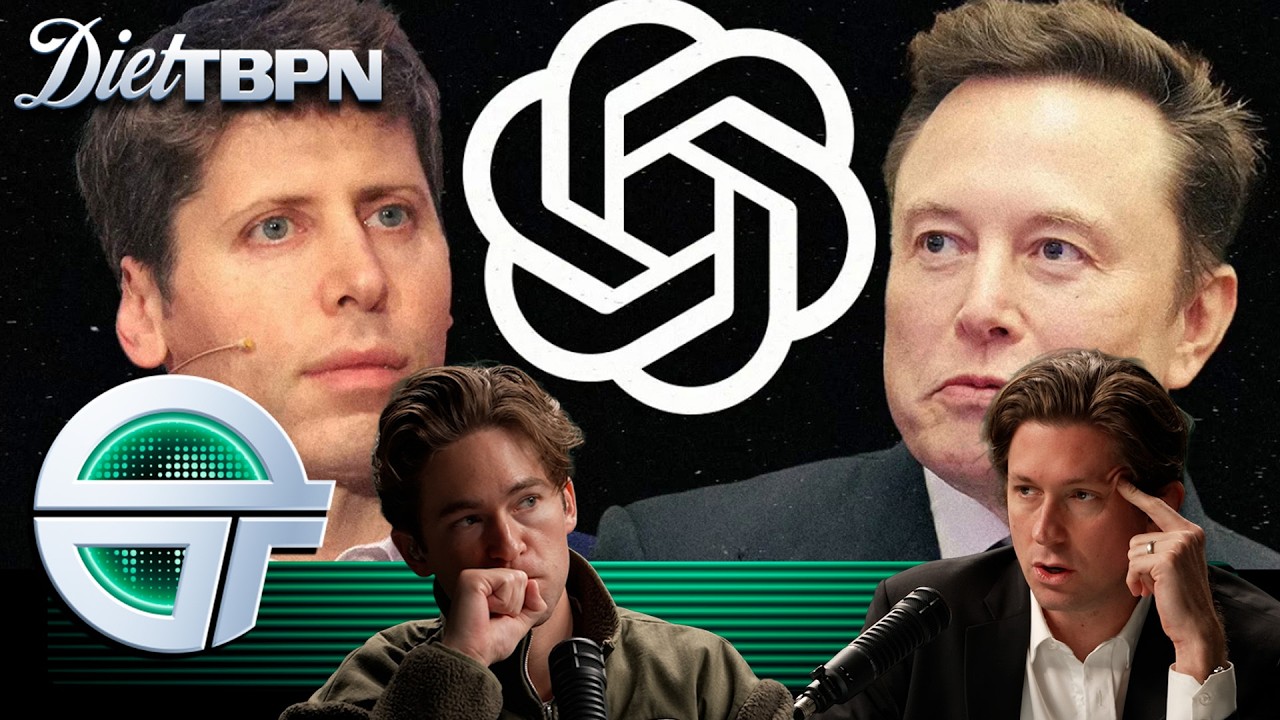
Altman Defends OpenAI Shift in Court as Secondary Stock Crackdown looms
TBPN
Sam Altman maintained under cross-examination that OpenAI required a for-profit arm to finance massive AI compute costs while defense counsel highlighted early acquisition threats and governance clashes with Elon Musk.
## Background
This video was published on YouTube by the tech news channel TBPN on May 13, 2026. The page description explains that Diet TBPN delivers a 30-minute recap of the daily live talk show hosted by John Coogan and Jordi Hays, covering key technology news, trial developments, and corporate transactions.
## TL;DR
The episode explores the high-profile court trial between Elon Musk and OpenAI, detailing Sam Altman's live testimony regarding the startup's transition from a non-profit to a for-profit structure and early founder dynamics. The hosts also examine the illegal secondary market and Special Purpose Vehicles (SPVs) surrounding high-flying AI startups, alongside product updates from Mira Murati's Thinking Machines Lab. Additionally, the coverage touches on real-time translation hardware trends in China, eBay's rejection of GameStop's $55 billion buyout offer, and Byron Allen acquiring a controlling stake in BuzzFeed.
## Atmosphere & style
The episode balances fast-paced, insightful tech reporting with casual, witty banter between co-hosts John Coogan and Jordi Hays. The discussion is energetic, candid, and conversational, freely blending serious legal and financial analysis with lighthearted absurdities—such as courtroom testimony about Elon Musk showing phone memes or the mechanics of wearing a 'Bane translation mask.' The narrative style feels like an authentic, insider Silicon Valley chat that keeps complex corporate drama entertaining and accessible.
## Key takeaways
- [00:02](https://www.youtube.com/watch?v=XZ5D1NUb4yE&t=2s) The Musk vs. OpenAI trial centers on whether Sam Altman and Greg Brockman manipulated Elon Musk into founding a non-profit lab before secretly pivoting to a for-profit entity.
- [00:02](https://www.youtube.com/watch?v=XZ5D1NUb4yE&t=2s) Defense testimony revealed Elon Musk explored absorbing OpenAI into Tesla under his control, while Ilya Sutskever confirmed no permanent non-profit promise was ever made to Musk.
- [03:38](https://www.youtube.com/watch?v=XZ5D1NUb4yE&t=218s) Early 2015 emails show Sam Altman's core motivation was preventing Google from maintaining a monopoly on advanced AI development.
- [03:38](https://www.youtube.com/watch?v=XZ5D1NUb4yE&t=218s) Altman argued against stack-ranking engineers in AI labs, advocating for psychological safety to foster deep research breakthroughs.
- [07:41](https://www.youtube.com/watch?v=XZ5D1NUb4yE&t=461s) Altman recounted the emotional toll of the November 2023 board coup ('the blip') while maintaining he never intended to deceive the board.
- [10:26](https://www.youtube.com/watch?v=XZ5D1NUb4yE&t=626s) Selling private AI startup shares through unauthorized SPVs without a broker-dealer license violates federal securities laws and corporate transfer restrictions.
- [10:26](https://www.youtube.com/watch?v=XZ5D1NUb4yE&t=626s) Companies like Anthropic and OpenAI are actively enforcing stock transfer restrictions, voiding unapproved secondary market sales and synthetic derivative contracts.
- [15:37](https://www.youtube.com/watch?v=XZ5D1NUb4yE&t=937s) Legal tension exists between secondary share buyers wanting to hold for upside and sellers risking share forfeiture or board-enforced transaction voiding.
- [21:02](https://www.youtube.com/watch?v=XZ5D1NUb4yE&t=1262s) Mira Murati's new startup, Thinking Machines Lab, introduced native full-duplex interaction models designed for real-time audio and video streaming without turn-taking latency.
- [22:52](https://www.youtube.com/watch?v=XZ5D1NUb4yE&t=1372s) Consumer AI hardware trends in China, such as real-time translation masks, highlight strong public enthusiasm despite current local compute and battery constraints.
- [26:00](https://www.youtube.com/watch?v=XZ5D1NUb4yE&t=1560s) eBay's board firmly rejected GameStop's $55 billion takeover offer, dismissing the unsolicited proposal as neither credible nor attractive.
- [26:33](https://www.youtube.com/watch?v=XZ5D1NUb4yE&t=1593s) Media mogul Byron Allen's Allen Family Digital acquired a 52% controlling stake in BuzzFeed for $120 million, taking over as CEO at a significant valuation premium.
## Detailed walkthrough
### [00:02](https://www.youtube.com/watch?v=XZ5D1NUb4yE&t=2s) Altman takes the stand as the Musk vs. OpenAI trial wraps up
The high-stakes trial between Elon Musk and OpenAI is nearing its conclusion ahead of schedule, with expectations that it will wrap up within the week. OpenAI CEO Sam Altman took the stand to face intense questioning regarding the company's evolution from a non-profit AI lab to a for-profit entity. Musk’s lawsuit alleges that Altman and Greg Brockman manipulated him into donating tens of millions of dollars to a non-profit venture, only to later covertly pivot into a profit-driven structure. Musk is also suing Microsoft, OpenAI’s largest investor, for aiding and abetting the alleged deception. The trial has effectively evolved into a broader referendum on Altman’s trustworthiness and the competence of the 2023 OpenAI board of directors.
Recent testimonies from key figures have added layer after layer of complexity to both sides. Former CTO Mira Murati and former board member Helen Toner delivered critical testimonies about the events leading up to the November 2023 board coup, focusing on Altman's lack of candor and leadership style. However, OpenAI's defense team struck back with testimonies from Shivon Zilis and Greg Brockman, which revealed that Musk was not purely defending a non-profit ideal; he had actively explored scenarios where OpenAI would be absorbed into Tesla, with Altman potentially helping lead Tesla AI and Musk maintaining total control. Yesterday, Microsoft CEO Satya Nadella and OpenAI co-founder Ilya Sutskever took the stand. Nadella defended Microsoft's partnership, stating Musk never contacted him to complain about contract violations despite having his direct number. Sutskever revealed he spent a year compiling a 50-page document on Altman’s manipulative behavior, yet acknowledged under oath that he never promised Musk that OpenAI would remain permanently non-profit—while also confirming his personal stake in OpenAI is valued at roughly $7 billion.
During Sutskever's testimony, he provided a blunt explanation for why the company needed a for-profit arm, delivering what show observers dubbed a candidate for "quote of the year": "If there's no funding, there's no big computer, and you need big computer if you want big AI."
- **Key Figureheads Involved:** Elon Musk, Sam Altman, Greg Brockman, Satya Nadella, Ilya Sutskever, Mira Murati, Helen Toner, Shivon Zilis.
- **Estimated Trial Timeline:** Initially slated for four weeks, live reports from journalists like Mike Isaac indicate it could end this week due to fast-paced depositions.
- **Financial Stakes:** Sutskever’s stake in OpenAI was revealed to be worth approximately $7 billion.
---
[03:38](https://www.youtube.com/watch?v=XZ5D1NUb4yE&t=218s) Courtroom revelations: Early emails, Tesla threats, and "memes on his phone"
Live coverage of Altman’s testimony, as reported on X by The New York Times reporter Mike Isaac (posting as "Rat King"), sheds light on the early history and interpersonal dynamics of OpenAI’s founders. Early on, OpenAI's defense established that Altman was just as deeply enamored with beneficial AI as Musk. They pointed to a famous 2015 quote from Altman claiming AI would probably destroy the world, clarifying that the full, often-clipped sentence was: "I think AI will probably destroy the world, and I'm starting a company—well, more of a non-profit—to work on this problem." Furthermore, an email from Altman in 2015 laid out his core motivation to counter Google's dominance: "Been thinking a lot whether it's possible to stop humanity from developing AI. I think the answer is almost definitely not. If it's going to happen anyway, it seems like it would be good for someone other than Google to do it first."
Altman detailed awkward early discussions where Musk floated bizarre governance ideas, including potentially passing control of OpenAI to his children upon his death—a scenario that raised immediate concerns over succession dynamics. Musk also offered Altman a board seat at Tesla as part of a proposal to integrate OpenAI’s research into Tesla. Altman interpreted this gesture as both an attempt to assuage his fears about losing direction over AI and a veiled threat: if Altman didn't accept, Musk implied he would simply build out AI at Tesla on his own. The hosts noted this aggressive tactic resembles classic tech executive moves, such as Mark Zuckerberg explicitly warning acquisition targets, "If you don't take the deal, we'll come for you."
The testimony provided moments of levity amid the tension. Altman criticized the practice of "stack ranking" engineers—a forced-ranking metric favored by Musk, Meta, Amazon, and historically popularized by Microsoft in the 1990s and 2000s—arguing that AI labs require "psychological safety" and a bottoms-up approach to allow researchers to experiment freely in corners, which originally yielded OpenAI's deep research breakthroughs. Altman then described a late-night meeting at Tesla regarding a potential merger, which dissolved into "a long, long period of time with Elon showing us memes on his phone." The detail was so absurd that the court reporter made Altman repeat "memes on his phone" directly into a booming courtroom microphone. In another email read verbatim into the record, Altman and Shivon Zilis discussed breaking the news of Microsoft’s investment to Musk, with Altman adding a written "cross fingers emoji."
- **2015 Google Counterweight:** Altman explicitly stated that someone other than Google needed to reach advanced AI first.
- **Corporate Cultural Clashes:** Altman pushed back hard against stack ranking, advocating for psychological safety to foster research breakthroughs.
- **Courtroom Humor:** Mike Isaac noted he was running low on "stamina points" after eating only a banana for breakfast while live-tweeting Altman repeating "memes on his phone" into the record.
---
[07:41](https://www.youtube.com/watch?v=XZ5D1NUb4yE&t=461s) Postmortem of the board coup and a brutal cross-examination
Altman publicly broached the five-day period in November 2023 when he was briefly ousted from OpenAI—referred to internally at the company as "the blip." He recounted cycling through all five stages of grief multiple times as he watched the work of his life verge on total destruction. "I had poured the last years of my life into this. I was watching it about to be destroyed. There was something appealing about going to work at Microsoft. I was also very angry, hurt, and upset. It felt like an incredible betrayal. It was definitely one of the hardest times of my life." Addressing the core accusation that he is a deceptive, slippery operator, Altman offered a tone of practiced humility: "I was not trying to deceive the board. I feel badly for the misunderstandings, but that was never my intent."
OpenAI’s defense team framed the board as inherently dysfunctional, referencing Satya Nadella's sharp assessment earlier in the week that the board members were operating from "amateur city." Summing up his journey, Altman told the jury: "If I knew how difficult and painful this was going to be, I never would have tried, but I'm very glad I did."
The atmosphere shifted dramatically as direct examination concluded and lead plaintiff’s counsel Stephen Molo took the floor for cross-examination. Known for dramatic flair, Molo immediately launched an aggressive line of questioning meant to paint Altman as fundamentally dishonest, opening with, "Are you completely trustworthy?" to which Altman softly replied, "I believe so." Molo followed up directly: "Do you always tell the truth?" In stark contrast to Musk’s combative demeanor on the stand, Altman maintained a muted, defensive posture, repeatedly denying Molo’s assertions as the cross-examination dissolved into chaotic back-and-forth questioning over past controversies.
- **Internal Terminology:** The five-day firing and reinstatement in late 2023 is officially called "the blip" inside OpenAI.
- **Board Dynamics:** Satya Nadella publicly dismissed the actions of the former non-profit board as coming from "amateur city."
- **Legal Strategy:** Plaintiff’s counsel Stephen Molo focused heavily on attacking Altman’s personal credibility rather than just structural contract law.
---
[10:26](https://www.youtube.com/watch?v=XZ5D1NUb4yE&t=626s) The drama over AI SPVs and illegal secondary market brokers
The discussion transitioned to a brewing controversy surrounding Special Purpose Vehicles (SPVs) and the wild-west nature of secondary stock sales in hot AI startups like Anthropic and OpenAI. The hosts highlighted a recently deleted viral post from a middleman bragging: "Simply brokering an Anthropic secondary deal made me more money than my entire net worth from working in my 20s." The show hosts pointed out the glaring legal flaw in this brag: acting as a broker for securities without holding a broker-dealer license is illegal under federal financial regulations. Obtaining an independent broker-dealer license involves an immense regulatory burden, leading most legitimate operators to contract under established firms rather than acting independently.
In response to the proliferation of unauthorized secondary market deals, companies like Anthropic and OpenAI updated their official policies with explicit warnings against unauthorized stock transfers and investment scams. Anthropic’s public statement firmly noted: "Any transfer or sale of Anthropic stock or any interest in Anthropic stock that has not been approved by our board of directors is void and will not be recognized on our books and records."
The hosts debated how investors attempt to bypass these restrictions. While direct stock transfers require board consent, many secondary facilitators use creative financial structures such as SPVs or futures contracts—selling economic exposure to future equity performance rather than the underlying shares themselves. While brokers argue that synthetic contracts or SPV fee structures do not constitute a direct sale of stock, company boards reject these workarounds as invalid. The regulatory crackdown even triggered a sell-off in digital asset equivalents and meme tokens designed to track company valuations, despite those assets having virtually no direct tie to actual underlying equity or book value.
- **Regulatory Compliance:** Brokering securities legally requires a licensed broker-dealer, which entails high compliance overhead.
- **Anthropic Board Policy:** Explicitly voids any unapproved stock transfers or derivative interests in company equity.
- **Market Reaction:** Synthetic derivative contracts, SPV fee mechanisms, and digital tracking assets face mounting legal scrutiny from target AI companies.
---
<ElicitationsGroup message="What would you like to do next?">
<Elicitation label="Draft an executive summary of Sam Altman's trial testimony" query="Draft an executive summary of Sam Altman's trial testimony" query_intent="CLICKABLE_SUGGESTION" />
<Elicitation label="Compare stack ranking versus bottoms-up management in tech" query="Compare stack ranking versus bottoms-up management in tech" query_intent="CLICKABLE_SUGGESTION" />
<Elicitation label="Explain how Special Purpose Vehicles operate in private equity" query="Explain how Special Purpose Vehicles operate in private equity" query_intent="CLICKABLE_SUGGESTION" />
</ElicitationsGroup>
Here is a detailed walkthrough of this portion of the transcript, capturing the key facts, figures, discussions, and overall tone.
---
[15:37](https://www.youtube.com/watch?v=XZ5D1NUb4yE&t=937s) The Practical Legal Realities of AI Secondary Market SPVs
The hosts dive deeper into the fallout surrounding secondary share transfers and Special Purpose Vehicles (SPVs) for high-flying AI startups like Anthropic and OpenAI. Reflecting on the viral online reaction, the hosts argue that the internet is being overly dramatic. In practice, early investors or employees who sold their shares through private secondary deals without board approval aren't necessarily running to Anthropic to confess.
```
+-------------------------------------------------------------------------------+
| Secondary SPV Legal Dynamics |
+-----------------------------------+-------------------------------------------+
| Seller Motivation | Wants to avoid share forfeiture, or |
| | claw back shares after massive gains. |
+-----------------------------------+-------------------------------------------+
| Buyer Motivation | Wants to stay quiet and ride out the |
| | upside (e.g., another 20x return). |
+-----------------------------------+-------------------------------------------+
| Catalyst for Messy Unwinding | A formal dispute/lawsuit brings in the |
| | company board, voiding agreements. |
+-----------------------------------+-------------------------------------------+
```
There is an inherent legal tension between buyers and sellers:
* **The Buyer's Dilemma:** A buyer who secured early shares at a low valuation wants to lay low and ride out potential massive gains (such as a 20x return).
* **The Seller's Motivation:** A seller might realize the stock has appreciated so dramatically that they want to offer the buyer's money back to reclaim their upside, or conversely, stay quiet out of fear that Anthropic's board will void or reclaim the shares entirely.
* **The Company's Hammer:** If these private disputes escalate into formal complaints or lawsuits, they become public. At that point, the startup steps in as a hostile third party to enforce stock restrictions and void the transactions for breaching corporate agreements.
The hosts note that recent public statements and blog posts from private companies warning about secondary sales aren't new rules—they are simply publicizing restriction clauses that have always existed in standard stock documents. While private equity deals involve negotiated "horse trading" (such as single vs. double-trigger acceleration clauses), transfer restrictions exist specifically so private companies can control who sits on their cap table.
> "Part of the reason to be private is you can control who [owns your stock]."
Given the sheer scale of the private market boom, the hosts estimate there could easily be tens of thousands of individuals tied up in these secondary structures. They highlight real-world examples, such as someone listing their house for sale specifically to fund an Anthropic secondary trade. They also poke fun at how public property records might eventually expose early employees liquidating stock for real estate. Drawing parallels to long-standing legal discussions around unwinding multi-layered SpaceX SPVs, they predict that unwinding non-compliant AI SPVs is set to become a "billion-dollar industry."
* **Frog & Toad Metaphor:** Referencing a post by Frankie at Paradigm, the hosts break down SPVs simply: *Frog puts Anthropic shares in an SPV so they can be transferred freely, but Toad points out that Anthropic can still enforce its transfer restrictions.*
* **Market Commentary:** Investor OnKroll raised the question of whether voided sales mean original sellers retain financial interest (leading straight into lawsuit territory), while journalist Mike Isaac characterized company blog posts as "saber rattling" intended to frighten naive employees, even though "SPVs find a way."
Shifting to AI product developments, the show touches briefly on the ongoing trial proceedings where Mira Murati’s video deposition was featured (while Shivon Zilis took the witness stand in person). The conversation then highlights Murati's new venture, **Thinking Machines Lab (TML)**, which publicly introduced its new "interaction models."
Murati announced on X (formerly Twitter) that TML is building a new class of models trained from scratch to handle real-time native interaction, rather than awkwardly stitching real-time audio onto standard turn-based models. The hosts play a concise YouTube demo showcasing TML's full-duplex audio and video system:
* **Real-Time Responsiveness:** The native full-duplex setup allows users to continuously stream audio/video input into the model and receive simultaneous responses without pausing or taking structured turns.
* **Visual & Audio Processing:** In the demo, the AI instantly tracks visual cues—saying "friend" every time someone walks into the frame—and handles real-time speech translation.
* **Speed Improvements:** The system appears noticeably faster and lower-latency than early voice modes, which had been previously criticized by social media creators.
---
[22:52](https://www.youtube.com/watch?v=XZ5D1NUb4yE&t=1372s) Real-Time AI Translation, "Bane Masks," and China's AI Optimism
The presentation of real-time translation triggers a tangential debate on consumer hardware. One of the hosts recalls a story from *The New York Times' Daily* podcast about an AI hardware trend in China: a wearable translation mask worn over the face—humorously compared to "Bane" from *The Dark Knight Rises*.
The host explains the real-world use case highlighted in the story: a mother in China who doesn't speak fluent English wears the translation mask to converse with her children. The mask translates her spoken Chinese into English in real-time out of a front-facing speaker for her kids, while her smart headphones translate their English responses back into Chinese. The hosts express enthusiasm for bringing a pair to the US show, joking that they could broadcast an entire episode speaking Chinese to each other while the audience hears translated English.
```
[ Mother Speaks Chinese ]
│
▼
┌─────────────────────┐
│ Wearable AI Mask │
└──────────┬──────────┘
│ Real-Time Audio
▼
[ Kids Hear English ]
```
However, the co-host pushes back with skepticism regarding technical feasibility and latency:
* **Latency & Compute Constraints:** High-quality real-time translation APIs remain relatively expensive and computationally heavy, making local on-device inference difficult without cloud connectivity.
* **Hardware Requirements:** Running high-end models (like a compressed Llama 3 variant) locally with minimal latency would require massive dedicated ASIC chips and heavy battery setups.
* **The "Jetpack" Joke:** The hosts joke that to make a local "Bane mask" perform seamlessly without cloud lag, the user would need to carry an Nvidia NVL72 server rack or a jetpack full of batteries behind them like a washing machine.
Despite the hardware debates, the hosts highlight the stark cultural contrast in AI adoption: while Western commentary often fixates on doom or legal battles, everyday consumers in China display high enthusiasm and practical optimism for AI tools that improve daily life and education.
---
[26:00](https://www.youtube.com/watch?v=XZ5D1NUb4yE&t=1560s) eBay Rejects GameStop's "Neither Credible Nor Attractive" $55B Bid
The hosts move to corporate M&A news, covering eBay's blunt rejection of a aggressive takeover attempt by GameStop ($GME).
* **The Proposal:** GameStop submitted a $55 billion cash-and-stock bid to acquire the online marketplace giant eBay.
* **The Rejection:** eBay’s board formally rejected the offer, publicly characterizing the proposal as "neither credible nor attractive."
* **Market Outlook:** Financial outlets like *The New York Times* noted that the rejection came as no surprise, as the probability of eBay accepting GameStop's unsolicited, rash offer was "infinitesimally remote."
---
[26:33](https://www.youtube.com/watch?v=XZ5D1NUb4yE&t=1593s) Byron Allen Acquires Majority Stake in BuzzFeed
In digital media news, media mogul Byron Allen is acquiring a controlling stake in BuzzFeed through Allen Family Digital.
Allen’s company is investing $120 million to acquire a 52% stake in BuzzFeed, with Allen himself stepping in as CEO. This deal represents a massive premium (nearly 3x) over BuzzFeed’s recent depressed market capitalization, which had been fluctuating between $40 million and $80 million.
```
+-------------------------------------------------------------------------------+
| Byron Allen / BuzzFeed Deal |
+-----------------------------------+-------------------------------------------+
| Investor | Allen Family Digital (Byron Allen) |
+-----------------------------------+-------------------------------------------+
| Investment / Ownership | $120 Million for a 52% controlling stake |
+-----------------------------------+-------------------------------------------+
| Valuation Premium | ~3x premium over prior $40M–$80M Mkt Cap |
+-----------------------------------+-------------------------------------------+
| Executive Change | Byron Allen steps in as BuzzFeed CEO |
+-----------------------------------+-------------------------------------------+
```
The hosts summarize Byron Allen’s unique, unconventional rise as a media tycoon:
1. **Late-Night Host to Syndication King:** Starting as a stand-up comedian and late-night talk show host, Allen built an unconventional syndication model.
2. **Arbitrage Strategy:** He bought up unused time slots on traditional broadcast television, independently sold advertising against his self-produced programming, paid for the airtime, and pocketed the net margin.
3. **Network Expansion:** Over time, he expanded into major traditional assets, including acquiring The Weather Channel and various local over-the-air broadcast stations.
4. **Current Projects:** He is notably taking over Stephen Colbert's former late-night time slot post-changeover with *Comics Unleashed*, a roundtable podcast-style comedy show.
The hosts express curiosity about Allen's strategic blueprint for revitalizing BuzzFeed. While acknowledging that BuzzFeed retains widespread brand recognition, they question its current cultural relevance, wondering if anyone actively opens its homepage first thing in the morning. They speculate on whether Allen sees a hidden, highly engaged legacy audience, or if he intends to pivot the outlet into new domains like prediction markets.
Closing out the show with a quick glance at BuzzFeed.com's live homepage, the hosts humorously read off the site's top trending headline listicles, remarking on how the platform continues to double down on long-form clickbait:
* *"50 Why Would You Put That Thing in Writing Photos That Prove People Are the Worst"* (Trending #1)
* *"41 Celebs People Used to Love and Now Can't Even Stand to Look At"*
* *"22 Stories About Boy Moms and Their Sons That Will Make You Cringe Into Oblivion"*
## Notable quotes
> [02:00](https://www.youtube.com/watch?v=XZ5D1NUb4yE&t=120s) If there's no funding, there's no big computer, and you need big computer if you want big AI. — Ilya Sutskever
> [03:38](https://www.youtube.com/watch?v=XZ5D1NUb4yE&t=218s) I think AI will probably destroy the world, and I'm starting a company—well, more of a non-profit—to work on this problem. — Sam Altman
> [03:38](https://www.youtube.com/watch?v=XZ5D1NUb4yE&t=218s) Been thinking a lot whether it's possible to stop humanity from developing AI. I think the answer is almost definitely not. If it's going to happen anyway, it seems like it would be good for someone other than Google to do it first. — Sam Altman
> [03:38](https://www.youtube.com/watch?v=XZ5D1NUb4yE&t=218s) If you don't take the deal, we'll come for you. — Mark Zuckerberg
> [07:41](https://www.youtube.com/watch?v=XZ5D1NUb4yE&t=461s) I had poured the last years of my life into this. I was watching it about to be destroyed. There was something appealing about going to work at Microsoft. I was also very angry, hurt, and upset. It felt like an incredible betrayal. It was definitely one of the hardest times of my life. — Sam Altman
> [07:41](https://www.youtube.com/watch?v=XZ5D1NUb4yE&t=461s) I was not trying to deceive the board. I feel badly for the misunderstandings, but that was never my intent. — Sam Altman
> [07:41](https://www.youtube.com/watch?v=XZ5D1NUb4yE&t=461s) If I knew how difficult and painful this was going to be, I never would have tried, but I'm very glad I did. — Sam Altman
> [07:41](https://www.youtube.com/watch?v=XZ5D1NUb4yE&t=461s) Are you completely trustworthy? — Stephen Molo
> [07:41](https://www.youtube.com/watch?v=XZ5D1NUb4yE&t=461s) I believe so. — Sam Altman
> [07:41](https://www.youtube.com/watch?v=XZ5D1NUb4yE&t=461s) Do you always tell the truth? — Stephen Molo
> [10:26](https://www.youtube.com/watch?v=XZ5D1NUb4yE&t=626s) Simply brokering an Anthropic secondary deal made me more money than my entire net worth from working in my 20s.
> [10:26](https://www.youtube.com/watch?v=XZ5D1NUb4yE&t=626s) Any transfer or sale of Anthropic stock or any interest in Anthropic stock that has not been approved by our board of directors is void and will not be recognized on our books and records. — Anthropic Board of Directors
> [15:37](https://www.youtube.com/watch?v=XZ5D1NUb4yE&t=937s) Part of the reason to be private is you can control who [owns your stock]. — TBPN Host
> [26:00](https://www.youtube.com/watch?v=XZ5D1NUb4yE&t=1560s) neither credible nor attractive — eBay Board of Directors
## Mentioned
Sam Altman, Elon Musk, OpenAI, Greg Brockman, Microsoft, Mira Murati, Helen Toner, Shivon Zilis, Tesla, Satya Nadella, Ilya Sutskever, Mike Isaac, Google, Mark Zuckerberg, Meta, Amazon, Stephen Molo, Anthropic, Frankie, Paradigm, OnKroll, Thinking Machines Lab, The New York Times, Bane, Nvidia, eBay, GameStop, Byron Allen, BuzzFeed, Allen Family Digital, The Weather Channel, Stephen Colbert, Comics Unleashed
奥特曼出庭为OpenAI转型辩护,二级股票市场整顿在即
山姆·奥特曼在接受交叉质询时坚称,OpenAI需要设立营利性分支机构来支撑巨额的AI算力成本;辩护律师则着重指出了早期的收购威胁以及与埃隆·马斯克之间的治理分歧。
本期节目深入探讨了埃隆·马斯克与OpenAI之间备受瞩目的法庭诉讼,详细解析了山姆·奥特曼关于该公司从非营利转向营利架构以及早期创始人之间互动关系的现场证词。主持人们还审视了围绕热门AI初创公司的非法二级市场和特殊目的机构(SPV),并介绍了Mira Murati旗下Thinking Machines Lab的最新产品动态。此外,本期内容还涉及中国实时翻译硬件的发展趋势、eBay拒绝GameStop提出的550亿美元收购要约,以及Byron Allen收购BuzzFeed的控股权。
马斯克诉 OpenAI 案进入尾声,Sam Altman 出庭作证坚称未曾欺骗董事会,并出示 2015 年邮件证明其初衷是防止 Google 垄断 AI;Ilya Sutskever 亦证实从未向马斯克承诺 OpenAI 将永久保持非营利状态。 (0:02)
针对 AI 初创公司火爆的二级市场转让乱象,Anthropic 与 OpenAI 严厉执行股权转让限制,宣布未经董事会批准的 SPV 及合成衍生品交易一律无效,无牌照经纪行为面临法律风险。 (10:26)
前 OpenAI CTO Mira Murati 创立的新公司 Thinking Machines Lab(TML)展示全双工原生交互模型,可实现无缝的实时音视频流式处理与即时语音翻译。 (21:02)
eBay 董事会正式回绝了 GameStop 提出的 550 亿美元主动收购要约,公开斥责该提案“既不可信也不具吸引力”。 (26:00)
媒体大亨 Byron Allen 旗下 Allen Family Digital 出资 1.2 亿美元收购 BuzzFeed 52% 的控股权,溢价接近 3 倍,Allen 本人将接任 CEO。 (26:33)
Reading summary
Testimonies in the Musk vs. OpenAI trial revealed the bitter corporate maneuvering behind the lab's for-profit restructuring, alongside emerging secondary-market legal turmoil for AI equity and major corporate buyout moves.
Courtroom Clashes Over OpenAI's Governance and Intent (0:02)
The high-stakes trial between Elon Musk and OpenAI neared its conclusion as CEO Sam Altman, Microsoft CEO Satya Nadella, and co-founder Ilya Sutskever took the stand. Musk alleged that Altman and Greg Brockman duped him into financing a non-profit entity before orchestrating a covert pivot to a for-profit structure, while OpenAI's defense highlighted that Musk had previously explored absorbing OpenAI into Tesla under his own control. Sutskever defended the structural shift bluntly, testifying under oath that advanced AI development required massive funding and compute while clarifying he never promised OpenAI would remain non-profit forever. Sutskever also acknowledged that his personal equity in OpenAI is valued at approximately $7 billion, while plaintiff counsel Stephen Molo focused heavily on attacking Altman's trustworthiness regarding the November 2023 board coup.
Founding Disagreements, Cultural Clashes, and Tesla Talks (3:38)
Live trial reporting detailed the cultural and operational rifts during OpenAI's early formative period. Early correspondence from 2015 showed Altman sought a counterweight to Google's dominance, yet tensions surfaced quickly as Musk proposed unconventional governance mechanisms, including passing corporate control to his children. Altman testified that Musk offered him a Tesla board seat while threatening to build internal Tesla AI competition if Altman declined. Furthermore, Altman rejected Musk's favored engineering practice of stack ranking, arguing that cutting-edge AI breakthroughs demand psychological safety and bottom-up autonomy rather than forced attrition metrics.
Legal Crackdown on AI Secondary Market SPVs (10:26)
The boom in AI private valuations has triggered legal friction around secondary share transfers and Special Purpose Vehicles (SPVs) for companies like Anthropic and OpenAI. Target startups have issued formal warnings asserting that unapproved share transfers or synthetic contracts are void and will not be recorded on their books. Despite brokers deploying synthetic exposure instruments to bypass board approval, private companies retain transfer restriction clauses to control their cap tables. Show hosts noted that an estimated tens of thousands of participants could face messy legal fallout if buyers and sellers dispute agreements, predicting that unwinding non-compliant secondary SPVs could balloon into a billion-dollar legal industry.
Shifting Frontiers in AI Models and Hardware (21:02)
Outside the courtroom, Mira Murati's new venture, Thinking Machines Lab (TML), unveiled interaction models built natively for full-duplex audio and video processing, enabling continuous input and responses without turn-based pauses. The development sparked discussion around real-time translation hardware, including reports from China of wearable translation face masks used for parent-child communication. However, practical implementation faces heavy compute bottlenecks, as low-latency local inference requires substantial ASIC chips and high-capacity battery power that currently constrain standalone consumer devices.
eBay Rejects GameStop as Byron Allen Buys BuzzFeed (26:00)
Major corporate deals diverged in viability as eBay's board summarily rejected GameStop's unsolicited $55 billion cash-and-stock takeover offer, labeling the proposal 'neither credible nor attractive.' In contrast, media mogul Byron Allen executed a digital media shakeup by investing $120 million through Allen Family Digital to acquire a 52% controlling stake in BuzzFeed. The deal, which places Allen in the CEO seat, represents a nearly threefold premium over BuzzFeed's recent $40 million to $80 million market capitalization, even as the outlet continues to rely heavily on legacy clickbait listicles.
While tech heavyweights litigate founding governance and brokerages face regulatory clampdowns on synthetic startup shares, practical questions remain regarding whether legacy digital brands like BuzzFeed can be effectively revived and how soon consumer AI hardware can overcome local compute limits.
## Background
本期内容由科技脱口秀频道 TBPN 于 2026 年 5 月 22 日发布在 YouTube 平台上,属于精简版节目《Diet TBPN》。节目由 John Coogan 和 Jordi Hays 主持,被《纽约时报》誉为“硅谷的新痴迷”,该期主要涵盖山姆·奥特曼在马斯克诉讼案中的出庭作证、AI 独角兽二级市场 SPV 乱象,以及 eBay 拒绝 GameStop 收购等科技商业热点。
## TL;DR
节目首先聚焦埃隆·马斯克起诉 OpenAI 与微软一案的最新庭审进展,详细复盘了山姆·奥特曼面对辩护律师尖锐质询时的防守姿态,以及当年马斯克提议吞并 OpenAI 的荒诞内幕。随后探讨了当前 AI 二级市场的狂热泡沫与监管风险,剖析了 Anthropic 和 OpenAI 严厉声明打击私下转让股份与嵌套 SPV 的法律博弈。此外,节目还介绍了前 CTO Mira Murati 创立的 Thinking Machines Lab 发布的全新全双工交互模型,并对 eBay 拒绝 GameStop 的 550 亿美元荒谬要约以及媒体大亨 Byron Allen 溢价控股 BuzzFeed 进行了尖锐点评。
## Atmosphere & style
整期节目节奏紧凑且充满硅谷式的幽默与讽刺,两位主持人风格犀利、配合默契,将严肃的法庭质询与资本八卦讲得妙趣横生。从模仿法庭速记员听不懂马斯克看“梗图”的尴尬现场,到现场翻阅 BuzzFeed 夸张盘点文的爆笑吐槽,节目在专业分析与极客狂想间游刃有余。听众在沉浸于高密度商业内幕的同时,能强烈感受到科技圈在面对泡沫狂欢与巨头博弈时的荒诞与戏谑感。
## Bulletin
- [00:02](https://www.youtube.com/watch?v=XZ5D1NUb4yE&t=2s) 马斯克诉 OpenAI 与微软欺诈案庭审进入关键尾声,奥特曼出庭直面个人诚信危机质询,庭审披露伊利亚持股价值约 70 亿美元,且关键证词揭示马斯克早年曾试图将 OpenAI 吞并入特斯拉营利实体。
- [13:32](https://www.youtube.com/watch?v=XZ5D1NUb4yE&t=812s) Anthropic 与 OpenAI 密集发布严厉合规警示,宣布任何未经董事会批准的二级市场老股转让及远期合约交易一律无效,直接整顿无券商牌照中介私下撮合交易的狂热乱象。
- [18:37](https://www.youtube.com/watch?v=XZ5D1NUb4yE&t=1117s) 针对 AI 独角兽二级市场老股的 SPV 多层嵌套已波及上万名个人投资者并出现变卖家产投机的极端现象,拆解该类违规资产正在催生规模近 10 亿美元的法务清理产业。
- [21:02](https://www.youtube.com/watch?v=XZ5D1NUb4yE&t=1262s) 前 OpenAI CTO Mira Murati 创立的 Thinking Machines Lab 发布原生全双工多模态交互模型,彻底跳过回合制文本大模型架构,实现端到端毫秒级音视频双向流式吞吐。
- [26:00](https://www.youtube.com/watch?v=XZ5D1NUb4yE&t=1560s) 资本市场方面,eBay 迅速回绝 GameStop 提出的 550 亿美元荒谬收购要约;同时媒体大亨 Byron Allen 出资 1.2 亿美元大幅溢价控股陷入困境的 BuzzFeed 并出任 CEO。
## Key takeaways
- [00:02](https://www.youtube.com/watch?v=XZ5D1NUb4yE&t=2s) 马斯克诉 OpenAI 与微软诉讼案进入尾声,双方围绕“非营利转营利是否存在欺诈”以及奥特曼个人信誉展开激烈交锋。
- [00:02](https://www.youtube.com/watch?v=XZ5D1NUb4yE&t=2s) 伊利亚作证直言大算力是开发顶级 AI 的前提,其持有的 70 亿美元 OpenAI 股权亦在庭上曝光,强化了公司转向营利性融资的抗辩依据。
- [00:02](https://www.youtube.com/watch?v=XZ5D1NUb4yE&t=2s) 纳德拉与布罗克曼作证反击马斯克,指出马斯克曾提议将 OpenAI 并入特斯拉自控并为火星探索筹资,且对微软投资从未正式抗议违约。
- [09:16](https://www.youtube.com/watch?v=XZ5D1NUb4yE&t=556s) 奥特曼出庭作证反驳马斯克的“惯性撒谎者”指控,在马斯克律师莫洛激进的反向质询中采取收敛克制的防守策略。
- [07:41](https://www.youtube.com/watch?v=XZ5D1NUb4yE&t=461s) 奥特曼在法庭上复盘 2023 年“董事会政变”经历并坦言遭受背叛,微软阵营则将原董事会的解雇决定定性为极其业余的失职操作。
- [10:24](https://www.youtube.com/watch?v=XZ5D1NUb4yE&t=624s) 硅谷二级市场掀起倒卖 Anthropic 等明星独角兽老股的狂潮,部分无牌中介以高达 5% 的佣金私下撮合交易,面临严厉的证券合规监管风险。
- [13:32](https://www.youtube.com/watch?v=XZ5D1NUb4yE&t=812s) Anthropic 官方发布声明宣布所有未经董事会批准的转让和表外远期合约自始无效,公司股东名册一概不予追认。
- [18:37](https://www.youtube.com/watch?v=XZ5D1NUb4yE&t=1117s) 围绕非上市公司转让限制条款,买卖双方形成微妙博弈,而拆解类似 SpaceX 历史遗留的多层复杂 SPV 业务已演化为价值近 10 亿美元的法律清理市场。
- [18:37](https://www.youtube.com/watch?v=XZ5D1NUb4yE&t=1117s) 经典绘本《青蛙与蟾蜍》的寓言被用于讽刺当前的 SPV 炒作:无论中介如何通过金融工具打包,始终无法突破公司依法保留的转让限制权。
- [21:02](https://www.youtube.com/watch?v=XZ5D1NUb4yE&t=1262s) Mira Murati 创立的 Thinking Machines Lab 展示全新原生全双工交互模型,摆脱在回合制文本大模型上生硬外挂语音的传统路径,支持极低延迟的音视频实时交互。
- [22:52](https://www.youtube.com/watch?v=XZ5D1NUb4yE&t=1372s) 端到端实时翻译硬件落地仍面临严峻瓶颈,在端侧算力芯片能耗与电池散热难以突破的前提下,轻量化消费级便携设备短期内难以实现。
- [26:00](https://www.youtube.com/watch?v=XZ5D1NUb4yE&t=1560s) eBay 董事会正式回绝 GameStop 提出的 550 亿美元现金加股票并购提案,定性其出价既缺乏资金可信度也毫无吸引力。
- [26:33](https://www.youtube.com/watch?v=XZ5D1NUb4yE&t=1593s) 媒体大亨 Byron Allen 斥资 1.2 亿美元斩获数字媒体 BuzzFeed 52% 的控股股权并掌舵担任 CEO,收购价格相对此前市值呈现近 3 倍溢价。
- [28:20](https://www.youtube.com/watch?v=XZ5D1NUb4yE&t=1700s) 市场对 Byron Allen 接盘 BuzzFeed 的商业动机存疑,指出该平台内容严重依赖荒诞长篇盘点文,作为核心资讯入口的品牌影响力已大幅衰退。
## Detailed walkthrough
### [00:02](https://www.youtube.com/watch?v=XZ5D1NUb4yE&t=2s) 庭审走向收官:马斯克诉 OpenAI 与微软案的核心争议
围绕埃隆·马斯克(Elon Musk)起诉 OpenAI 及其领导层的诉讼案原本预计持续四周,但随着前首席科学家伊利亚·苏茨克维(Ilya Sutskever)、前首席技术官米拉·穆拉蒂(Mira Murati)、前董事会成员海伦·托纳(Helen Toner)以及希冯·齐里斯(Shivon Zilis)等关键证人的作证加速推进,本案极有可能在本周提前收尾。这场诉讼的核心聚焦于马斯克指控山姆·奥特曼(Sam Altman)和格雷格·布罗克曼(Greg Brockman)欺骗他向一家非营利机构捐赠数千万美元,随后却将其暗度陈仓转变为营利性企业;同时,微软作为 OpenAI 最大的投资方,也被马斯克指控协助并支持了这场骗局。
在过去一周中,双方阵营轮番出招。穆拉蒂和托纳的证词重提了 2023 年 11 月那场短暂的“董事会未遂政变”(内部被称为“微澜”或“插曲”,The Blip),直指奥特曼在领导风格与坦诚度上的严重缺陷。然而,OpenAI 方也对马斯克发起了有力反击:齐里斯与布罗克曼作证指出,马斯克并非纯粹为了非营利愿景而战,他曾极力主张将 OpenAI 并入特斯拉,由奥特曼协助领导特斯拉 AI,甚至支持建立一个由马斯克亲自掌控、旨在为其火星探索筹措资金的营利实体。微软 CEO 萨提亚·纳德拉(Satya Nadella)出庭作证捍卫了双方的合作,指出马斯克明明有自己的电话,却从未就微软与 OpenAI 的交易违反非营利协议向他提出过抗议。而伊利亚虽然承认自己曾花一年时间整理了一份长达 50 页记录奥特曼操纵行为的备忘录,但也明确表示自己从未向马斯克承诺过 OpenAI 永远保持非营利模式;庭审中披露伊利亚持有的 OpenAI 股份价值高达约 70 亿美元,这也让陪审团对各方的动机有了更复杂的判断。
```mermaid
flowchart TD
accTitle: 庭审核心博弈逻辑
accDescr: 展示原告马斯克、被告OpenAI/微软以及各方证词在法庭上的核心冲突焦点
subgraph Plaintiff["原告:马斯克一方指控"]
P1["欺诈捐款:非营利转营利"]
P2["指控微软协助欺瞒"]
P3["攻击奥特曼为人滑头、不可信"]
end
subgraph Defense["被告:OpenAI 与微软抗辩"]
D1["大模型需要庞大算力与资金"]
D2["马斯克曾试图掌控并并入特斯拉"]
D3["指责2023年原董事会极其业余与失职"]
end
subgraph Witnesses["关键证词交叉"]
W1["伊利亚:没算力就没大模型;持股约70亿美元"]
W2["纳德拉:马斯克从未致电抱怨违约"]
W3["托纳/穆拉蒂:奥特曼存在信任与管理危机"]
end
Plaintiff <--> Defense
Witnesses --> Defense
Witnesses --> Plaintiff
```
- **庭审性质的演变**:案件先是变成了对奥特曼个人信用度的公投,随后演变为对 2023 年董事会究竟是“勇敢”还是“无能”的判定,最后微软入场试图确立自身作为稳定力量的形象。
- **伊利亚的金句**:伊利亚在联邦法庭宣誓后说出了一句被推特媒体人评为年度金句的大实话——“如果没有资金,就没有大电脑;如果你想要大 AI,你就需要大电脑”("If there's no funding, there's no big computer, and you need big computer if you want big AI")。
---
### [03:38](https://www.youtube.com/watch?v=XZ5D1NUb4yE&t=218s) 奥特曼出庭作证:早期 AI 恐惧与特斯拉吞并提议
《纽约时报》记者迈克·艾萨克(Mike Isaac,网名 Rat King)在 X 平台上对奥特曼出庭作证进行了全程文字直播。在 OpenAI 律师的提问下,奥特曼回顾了自己与马斯克早年对 AI 的共同痴迷。早在 2015 年,奥特曼曾发表过一段流传甚广的言论,称“AI 可能会毁灭世界”;但他在法庭上澄清,那其实是他回答“当前需要解决的关键问题是什么”时的上下文,被外界剪掉的下一句话是“所以我正在创办一家公司……更确切地说是一家致力于解决该问题的非营利组织”。在 2015 年的一封电子邮件中,奥特曼写道:“我一直在深入思考阻止人类开发 AI 是否可能,答案几乎绝对是否定的;既然它注定会发生,那么由 Google 之外的其他人率先做出来显然更好。”
奥特曼在证词中抛出了数个关于马斯克的内幕细节。他提到马斯克曾声称,自己死后可能会将 OpenAI 的控制权传给自己的子女们——节目主持人忍不住调侃道,马斯克有十几个甚至二十个孩子,这若真发生恐怕会演变成一场极其魔幻的“继承之战”。此外,法庭展示的往来邮件表明,当年探讨将 OpenAI 并入特斯拉时,马斯克曾提议给奥特曼一个特斯拉董事会席位以安抚其顾虑,但奥特曼敏锐地察觉到这背后潜藏着威胁:如果奥特曼不接受协议,马斯克就会直接在特斯拉内部独立开发 AI 来碾压他们。艾萨克对此评价道,这种“如果不从,我就亲自来对付你”的做派充满黑帮头目《黑道家族》(Tony Soprano)式的威胁色彩,与 Meta CEO 马克·扎克伯格(Mark Zuckerberg)在收购谈判中的强硬手段如出一辙。
---
### [06:07](https://www.youtube.com/watch?v=XZ5D1NUb4yE&t=367s) 工程师文化博弈、手机看梗图与微软入股秘闻
在谈及实验室管理时,奥特曼公开批评了在 AI 研究机构推行“员工堆栈排名”(Stack Ranking,强制末位淘汰制)的做法。虽然这是马斯克在旗下公司偏爱的手法,也是微软在 1990 至 2000 年代发扬光大、亚马逊及 Meta 广泛采用的考核制度,但奥特曼强调 AI 实验室最需要的是“心理安全感”(Psychological Safety):“你必须允许研究人员自下而上地在角落里随意尝试一些看似随机的想法,OpenAI 的 Deep Research 等诸多突破正是由此诞生的。”
证词还揭示了当年许多充满荒诞色彩的幕后花絮:
- **特斯拉会议看 Meme**:奥特曼回忆,当年他们在特斯拉大楼就将 OpenAI 并入特斯拉的 AI 研发议题开会开到深夜,随后很长一段时间里,全场所有人只能干坐着看马斯克在手机上向他们展示各种网络梗图(Memes)。搞笑的是,法庭速记员当场没听清,特意要求奥特曼对着麦克风大声重复了一遍“在他手机上看梗图”("memes on his phone"),成为庭审现场的爆笑一幕。
- **祈祷手势表情包(Crossed Fingers Emoji)**:在讨论接受微软投资的阶段,奥特曼与希冯·齐里斯商量如何向马斯克摊牌。奥特曼在法庭上逐字朗读了当年的邮件记录,甚至一本正经地把邮件末尾的“双手合十祈祷表情包”(Cross fingers emoji)读了出来,引发法庭记者的哄笑。
---
### [07:41](https://www.youtube.com/watch?v=XZ5D1NUb4yE&t=461s) 董事会政变复盘:“信任危机”与各方阵营攻防
在作证过程中,奥特曼首次在公开法庭上对 2023 年 11 月自己被董事会戏剧性解雇的“五日风波”进行了事后复盘。他描述自己当时在短短五天内把悲伤的五个阶段(否认、愤怒、讨价还价、抑郁、接受)反复经历了数遍:“我把过去数年的生命全部倾注于此,却眼睁睁看着它即将毁于一旦。当时去微软工作确实有吸引力,但我内心也感到极度愤怒、受伤和难过,那感觉就像是一场惊天背叛,绝对是我人生中最艰难的时刻之一。”
面对马斯克律师团队全场紧咬的“不可信、两面派、对不同人说不同话的狡黠操盘手(Slippery Operator)”这一人设指控,奥特曼带着一种“经过精心排练的谦逊语气”回应道:“当时显然存在误解和信任破裂。我并非试图欺骗董事会,对于造成的误解我深感遗憾,但这绝非我的本意。”面对马斯克方的攻势,OpenAI 与微软阵营的反击策略则极为明确:极力证明当年的董事会内部充满功能失调,甚至正如微软 CEO 纳德拉本周早些时候在证词中嘲弄的那样,这群董事会的行为完全就是在“业余玩家俱乐部”(Amateur City)的水平上胡乱操作。
### [09:16](https://www.youtube.com/watch?v=XZ5D1NUb4yE&t=556s) 山姆·奥特曼出庭作证:马斯克律师的尖锐质询与双方交锋
在法庭审理现场,山姆·奥特曼(Sam Altman)正在向陪审团做深入陈述,极力回击埃隆·马斯克(Elon Musk)方面试图将他塑造成一个“惯性说谎者”的指控。奥特曼在庭上动情地表示:“如果我早就知道这件事情会如此艰难且充满痛苦,我绝不会尝试去创办它;但我依然非常庆幸自己当初这样做了。”("If I knew how difficult and painful this was going to be, I never would have tried, but I'm very glad I did.")
随后 OpenAI 方面的直面询问结束,进入由马斯克首席辩护律师斯蒂芬·莫洛(Steven Molo)主持的反向质询(Cross-examination)环节。莫洛素来擅长戏剧化与极具张力的法庭风格,质询刚开场便火药味十足。莫洛直接抛出刀刀见血的问题:“你完全值得信任吗?”奥特曼低声回答:“我认为是的。”莫洛随即追问:“你每次都会说实话吗?”整场质询的核心策略,就是不断向陪审团灌输奥特曼不可信的形象。
与马斯克出庭时展现出的极具攻击性与好战姿态不同,奥特曼处于守势,语气十分克制,甚至刻意表现出一种谦逊的态度。莫洛的质询基本上是照着一份漫长的清单逐条盘问,反复向奥特曼核对:“兄弟,你还记得你干过的这些荒唐事吗?”而奥特曼则一概以“我不清楚”、“这不是真的”、“没有”等极简回答予以否认。现场充斥着紧张而混乱的气氛。观众可以关注《纽约时报》记者迈克·艾萨克(Mike Isaac)的社交媒体动态和《纽约时报》的实时文字直播,追踪庭审的最新进展。
- 莫洛开场直击信任底线,质问奥特曼是否“始终讲真话”。
- 奥特曼采取收敛、谦逊的防守姿态,与马斯克此前对抗性十足的作风形成强烈对比。
---
### [10:24](https://www.youtube.com/watch?v=XZ5D1NUb4yE&t=624s) 疯狂的二级市场:中介暴富帖与经纪商牌照争议
话题转向近期在硅谷掀起巨大波澜的特殊目的载体(SPV, Special Purpose Vehicle)二级市场交易。当前 AI 领域热钱涌动,许多人正借助 SPV 大赚特赚。主持人展示了一篇近期在 X 上被作者火速删除的爆款帖子。该帖原作者写道:“仅仅撮合了一笔 Anthropic 的老股(Secondary)交易,赚到的钱就超过了我整整二十几岁打工攒下的全部净资产。这简直太疯狂了。”
然而这种公开炫耀随即引发了巨大的合规质疑。主持人指出,公开发帖承认撮合证券交易本身极其危险,因为如果没有持有合规的经纪商/自营商牌照(Broker-Dealer License),私自撮合非上市公司证券交易属于非法行为。获得并维持经纪商牌照的合规负担异常沉重,甚至行业内很多专门从事老股撮合的专业人士自己都没有牌照,而是挂靠或签约在拥有牌照的金融机构名下,形式类似于房产中介挂靠在正规经纪行。
现场甚至开玩笑地要给实习生泰勒布置一个“AI 挑战任务”:在命令行输入“/goal”,让刚刚发布的 xAI Grok 5.5(或 Codex)跑起来,看看能否利用 AI 绕过繁重的合规门槛搞定经纪商牌照。玩笑归玩笑,非上市股权交易涉及的资金规模动辄堪比高端豪宅买卖,倘若中介从上亿美元的交易中抽取 5% 的现金佣金,回报确实惊人,因此严格的金融监管具有充分的正当性。
```mermaid
flowchart TD
accTitle: 非上市公司股权二级交易渠道对比
accDescr: 对比持有合法牌照撮合、SPV载体交易与无牌中介撮合的合规模式
subgraph 合法与半合规路径
A["具备经纪商牌照机构 / 挂靠中介"] -->|合规撮合买卖双方| B["完成股权转让"]
C["设立 SPV 载体"] -->|向投资人募资| D["以 SPV 名义买入老股"]
D -->|收取管理费/Carry| E["规避直接 Broker 概念"]
end
subgraph 违规高风险路径
F["无牌个人中介"] -->|私下签 Side Letter 揽客| G["撮合数千万至数亿美元交易"]
G -->|私自抽取 5% 佣金| H["面临非法经营证券监管风险"]
end
```
- 帖子作者自称单次撮合 Anthropic 股份交易的收入超过其 20-30 岁期间累计的全部净资产。
- 业内通常收取约 5% 的现金中介费,但依法必须持有 Broker-Dealer 资质或挂靠在持牌机构。
- 部分人士通过成立 SPV 向投资人募集资金再去购买老股,通过收取 SPV 结构的管理费或手续费来实现商业变现,以此试图规避经纪商资质认定。
---
### [13:32](https://www.youtube.com/watch?v=XZ5D1NUb4yE&t=812s) Anthropic 与 OpenAI 发布严打声明:远期合约与表外交易漏洞
中介的高调炫耀显然激怒了头部 AI 公司。随后,Anthropic 和 OpenAI 纷纷在官方渠道发布了言辞极其严厉的警告与合规声明。Anthropic 的声明标题直指“未经授权的 Anthropic 股票出售与投资骗局”,并明确警示:“任何未经我们董事会批准的 Anthropic 股票转让、出售或任何股票相关权益的转让,均为完全无效,我们的股东名册和公司记录将一概不予承认。”
现实中,灰产交易往往通过各种手段绕开公司董事会的知情权,最典型的操作是签署“远期合约”(Futures Contract)或“经济敞口协议”。签署这类协议的买卖双方声称:“我们并没有实际转让股票本身,只是转让了对该股票未来收益的经济权益,因此无需董事会审批。”但 Anthropic 等公司董事会对此持绝对零容忍态度,明确认定任何形式的打擦边球和自作聪明都属无效违约。
与此相关的还有加密衍生品与数字资产追踪代币,二级市场上甚至出现了锚定 Anthropic、OpenAI 或 SpaceX 估值的“迷因概念资产”。随着官方禁令出台,这些代币价格纷纷大跌。实际上,这类代币底层通常只配置了 1% 到 5% 极为微弱的相关资产敞口,估值早已与真实的账面价值(Book Value)彻底脱钩。
- Anthropic 明确声明:未获董事会书面许可的任何股权转让或相关权益转移一律宣告无效。
- 灰市中介常用手段包括未来收益转让协议、远期交付合约等,以此辩称“未发生实际股权交割”。
- 市场上追踪一线独角兽的加密概念资产大幅下跌,其底层资产占比极低,投机色彩浓重。
---
### [15:37](https://www.youtube.com/watch?v=XZ5D1NUb4yE&t=937s) 潜在诉讼风暴、博弈僵局与转让限制条款
这套严格的限制措施在业内引发了对于未来潜在法律风暴的讨论。目前的普遍共识是,实际情况可能比网络上的极度恐慌要平缓一些,因为在水下交易发生后,无论是买方还是卖方,在短期内都没有动力主动向 Anthropic 董事会“自首”坦白。
- 原始股东或早期员工如果主动坦白,可能会面临股份被公司直接作废(Void)或回购回收的严重后果;
- 买方以相对较低的估值拿到了份额,眼见估值暴涨,更倾向于保持沉默、静待公司 IPO,指望届时一切大事化小;
- 但如果估值出现几十倍的暴涨,卖方也可能产生反悔心理,试图以“当初交易未获董事会批准因而自始无效”为由退回本金并索回暴涨的股票。
双方在这种灰色地带中维持着微妙的博弈。一旦买卖双方产生经济纠纷诉诸公堂,交易细节将彻底公之于众,作为第三方的 Anthropic 必然介入并依据公司章程直接追责。
主持人强调,Anthropic 和 OpenAI 的公开声明并非出台了“新规”,而只是重申了每一份标准股票认购协议中早已存在的转让限制(Transfer Restrictions)。非上市公司之所以保持私有状态,核心诉求之一就是防止早期天使投资人或员工在公司做大后,将股份随意转手给管理层不认可的外部第三方。即便个别早期员工或早期投资人曾在协议中通过单重/双重触发(Single/Double Trigger)等条款进行谈判博弈,转让限制这一核心防线也几乎不可能被完全免除。
- 买卖双方形成短暂的攻守同盟:因害怕股份被作废或希望坐享升值,双方通常极力隐瞒交易事实。
- 估值暴涨容易诱发违约反悔,一旦矛盾激化引发诉讼,公司将作为第三方直接介入并判定交易无效。
- 限制股权转让是非上市公司自保的核心条款,官方公告只是将现有法律条文公开化、常态化。
### [18:37](https://www.youtube.com/watch?v=XZ5D1NUb4yE&t=1117s) AI 独角兽二级市场与 SPV 乱象:《青蛙与蟾蜍》式的寓言
在谈及围绕 Anthropic、OpenAI 等明星 AI 公司的二级市场交易时,主播们指出底层实际卷入的交易笔数和散户数量可能极其惊人。只要穿透层层嵌套的特殊目的载体(SPV)树状结构,背后很可能已经渗透了超过一两万名个人投资者。尽管眼下还没夸张到“出租车司机主动给你推荐 AI 股权 SPV”的盲目程度,但现实已经相差无几——甚至有人不惜卖掉自己的房产来筹资认购 Anthropic 的二级市场老股。然而,这种疯狂操作在合规上千疮百孔,比如房产契约的公开变更一眼就能被查出,而初创公司法务部门一旦调取登记记录,这类私下转让的交易链条就会彻底暴露在阳光下。
为了向听众深入浅出地解释这一纷乱局势,节目引用了 Paradigm 机构的 Frankie 借鉴经典儿童绘本《青蛙与蟾蜍》(*Frog and Toad*)所做的绝妙讽刺比喻:青蛙把 Anthropic 或 OpenAI 的股票放进了一个 SPV 里,得意地说:“看,现在我们可以自由买卖这些股份了!”然而蟾蜍却在一旁冷冷地提醒:“但是 Anthropic 依然保留并行使其股份转让限制权(Transfer Restrictions)。”青蛙只能无奈承认:“你说得对。”这针见血地指出了当前大量二级市场 SPV 实际上根本无法绕过原初创公司的转让禁令。
```mermaid
flowchart TD
accTitle: AI 初创公司二级市场 SPV 冲突机制
accDescr: 展示员工通过多层 SPV 转售公司股份与公司法务行使转让限制之间的法律冲突。
subgraph SecondaryTrade ["二级市场转让方"]
Employee["早期员工 / 股东"]
SPV1["单层 / 多层嵌套 SPV"]
RetailBuyers["散户 / 外部买家群"]
Employee -->|"转让股票权益"| SPV1
SPV1 -->|"分拆份额转售"| RetailBuyers
end
subgraph LegalRestrictions ["初创公司治理"]
StartupLawyers["Anthropic / OpenAI 法务"]
TransferClause["股份转让限制条款 (ROFR / 禁售)"]
StartupLawyers -->|"依据条款"| TransferClause
end
TransferClause -.->|"认定交易无效 / 法律诉讼"| SPV1
```
这一矛盾正将市场推向诉讼的泥潭。正如市场观察人士所提问的:如果 Anthropic 最终认定所有未经许可的二级市场股票转让全部无效,那么早已把权益卖掉套现的原持股员工,是否在法律和财务上依然持有该股份?在各方扯皮之下,拆解类似 SpaceX 历史遗留下来的“三层嵌套 SPV”正演变成一门价值近十亿美元的庞大法律清理产业。《纽约时报》科技记者 Mike Isaac 对此评论称,私营独角兽公司起草这些严苛法律条款,起初是为了吓退那些不懂行的早期员工和外部买家,阻止其在二级市场上倒买倒卖;但资本的贪婪总能让 SPV 找到空子钻,最终在推特上引发各类夸张耸动的论战与唇枪舌剑。
- 估算参与 AI 独角兽二级市场 SPV 嵌套投资的散户和个人可能已达 10,000 到 20,000 人以上。
- 市场出现了投资者抵押甚至出售自有房产,只为套现认购 Anthropic 二级市场股份的极端案例。
- 类似拆解 SpaceX 历史遗留的多层复杂 SPV 业务,被形容为正在形成一个近 10 亿美元规模的法务清理市场。
### [21:02](https://www.youtube.com/watch?v=XZ5D1NUb4yE&t=1262s) Mira Murati 创办 Thinking Machines Lab:推出全双工原生交互模型
话题转向 AI 实验室的核心动态与人事变动。前 OpenAI 首席技术官 Mira Murati 此前虽然接受了视频取证(Deposition),但在当下的法庭诉讼中尚未正式登台作证,当时真正出庭的是 Shivon Zilis。与此同时,离开 OpenAI 的 Mira Murati 已经在其创立的新公司 Thinking Machines Lab(TML)大展拳脚,并以极度简短精炼的视频发布了最新的成果——交互模型(Interaction Models)。
Mira Murati 在社交平台 X 上宣布,他们正在公开展示全新类别的原生全双工交互模型。该模型从零开始训练,旨在从原生层面直接处理实时语音与多模态交互,而非像过去业内常见做法那样,将实时功能生硬地拼贴缝合在传统的“回合制”(Turn-based)文本大模型之上。在现场播放的演示视频中,团队展示了极致奢华的发烧友级音响设备,演示人员对模型发出指令:“每次只要我的一个朋友进入镜头画面,你就喊一声‘Friend’。”模型随后展现出了惊人的全双工(Full Duplex)音视频处理能力:不仅能够并行流式接收音视频输入,而且能在人类说话的同时进行实时打断和双向同步回应,响应速度显著超越了此前因延迟问题被社交媒体广泛吐槽的早期语音模式。
- Mira Murati 在社交媒体明确阐述,该交互模型是从零开始全新训练的架构,摆脱了以往在回合制 LLM 上生硬外挂语音界面的做法。
- 该系统支持全双工音频与视频流实时双向吞吐,在演示中展示了高吞吐流式输入以及对画面突发变动的毫秒级响应能力。
### [22:52](https://www.youtube.com/watch?v=XZ5D1NUb4yE&t=1372s) 实时翻译硬件猜想:从中国的“贝恩面具”到背包里的 NVL72
视频演示中展示的实时双语同传能力,引发了主播关于硬件落地的天马行空讨论。主播提到《纽约时报》播客节目《The Daily》中报道的一个中国案例:一位母亲为了给孩子营造纯正的英语成长环境,但自身英语水平有限,于是佩戴了一款宛如《蝙蝠侠:黑暗骑士崛起》中反派“贝恩面具”(Bane Mask)般的翻译硬件。面具前方集成麦克风与扬声器,母亲用中文说话,面具外放实时转译成流畅的英语输出给孩子,而孩子用英语回答时,智能耳机再将内容翻译回中文回传给她。
这篇报道展现了海外截然不同的 AI 乐观主义氛围——普通民众对 AI 工具充满热情,坚信新技术能直接打破阶层壁垒、改善子女教育。主播们调侃,如果 TBPN 的演播室也配上这套设备,他们甚至可以全程用中文对话,演播室外放即时中文,而耳机里听到的是英文互译。
```mermaid
flowchart LR
accTitle: 假想中的高算力便携穿戴式翻译系统
accDescr: 描绘了佩戴者面具、ASIC 定制芯片与外背超算电池包的极客硬件构想。
subgraph Headwear ["面部穿戴组件"]
Mask["贝恩式外放翻译面具"]
Earphone["双耳实时监听耳机"]
end
subgraph ComputePack ["背负式供电与计算单元"]
ASIC["定制化 Llama-3 模型 ASIC 芯片"]
BatteryPack["高密度大容量电池背包"]
NVL72["假想背负式 NVL72 机柜"]
BatteryPack --> ASIC
NVL72 -.->|"极端极客脑洞"| ASIC
end
Mask <-->|"低延迟全双工数据流"| ASIC
ASIC <-->|"实时音频回传"| Earphone
```
但回到现实技术可行性上,主播们也发出了严肃质疑。目前的顶尖实时翻译模型如果调用云端 API,推理成本极高且存在不可避免的网络延迟;如果想将经过剪枝量化的 Llama-3 模型做成本地边缘计算(On-device inference),其功耗和散热将极其恐怖。主播们由此开玩笑称,使用者可能不得不模仿喜剧节目《Nathan for You》里的荒诞造型:脸上戴着紧绷的面具,后背背着像喷气背包一样沉重的电池组,甚至如同拖着一台轰鸣的洗衣机一般,在身后拖着一整个英伟达 NVL72(NVLink 72)机架在路上艰难行走。
- 现阶段低延迟、高保真且消除“机械合成音”(Clanker dialect)的端到端实时语音互译依然存在巨大工程挑战与 API 成本门槛。
- 真正的端侧全双工本地运行,在目前的芯片能效比与电池技术下依然难以做成轻量便携的消费级面具。
### [26:00](https://www.youtube.com/watch?v=XZ5D1NUb4yE&t=1560s) eBay 拒绝 GameStop 的 550 亿美元荒谬收购要约
随后节目转入资本市场的最新重磅消息。电商先驱 eBay 正式公开回绝了来自“散户概念股领头羊”游戏驿站(GameStop)高达 550 亿美元的收购要约。eBay 董事会毫不客气地将 GameStop 提出的这笔包含现金与股票的收购提案定性为:既不可信,也毫无吸引力("Neither credible nor attractive")。
《纽约时报》等主流财经媒体对此普遍评价,eBay 迅速且彻底的拒绝完全在预料之中,因为市场所有理性分析师都清楚,eBay 接受 GameStop 这种鲁莽且异想天开要约的概率“微乎其微到几乎可以忽略不计”。GameStop 想要通过蛇吞象的方式吃下老牌在线电商平台的野心,在此宣告碰壁。
- eBay 官方正式拒绝 GameStop 发起的价值 550 亿美元的现金加股票并购要约。
- 董事会和华尔街普遍认为 GameStop 的出价缺乏资金可行性与履约信誉。
### [26:33](https://www.youtube.com/watch?v=XZ5D1NUb4yE&t=1593s) 媒体大亨 Byron Allen 出资 1.2 亿美元控股并掌舵 BuzzFeed
另一桩震撼数字媒体行业的收购交易正在发生:著名媒体企业家 Byron Allen 宣布通过其关联实体 Allen Family Digital 斥资 1.2 亿美元注资陷入困境的数字媒体平台 BuzzFeed,以此斩获该公司 52% 的绝对控股股权,并亲自出任 BuzzFeed 的新任首席执行官(CEO)。
主播回顾了 Byron Allen 极具传奇色彩的草根发家史。他最初以深夜脱口秀主持人的身份崭露头角,随后敏锐地切入了一个极为独特的电视转播套利商业模式:他出资向各大电视台直接买断特定时间段的播放权(Airtime),随后依靠自身团队独立向广告商招商招商。广告主的资金直接汇入他的口袋,扣除支付给电视台的转播买断费用后,剩下的巨额差价全部转化为净利润。凭借这一转播权分销与广告利差模式积累的充沛现金流,Allen 随后发起了一系列大手笔传统媒体收购,先后将气象频道(The Weather Channel)以及多家无线广播电视台收入麾下,并将推出一档由众多脱口秀喜剧演员共同围坐畅聊的圆桌访谈节目《Comics Unleashed》。
```mermaid
flowchart LR
accTitle: Byron Allen 传统电视时段买断与广告套利商业模式
accDescr: 展示广告主向 Byron Allen 支付费用,Byron Allen 向电视台支付时段费用并自制节目的资金与业务流。
Advertisers["广告商 (Advertisers)"]
ByronAllen["Byron Allen (制作/发行机构)"]
TVStations["传统广播电视台 (TV Stations)"]
Audience["电视观众与衍生受众"]
Advertisers -->|"支付高额广告赞助费"| ByronAllen
ByronAllen -->|"支付固定买断播出时段费用"| TVStations
ByronAllen -->|"自制低成本节目 (如 Comics Unleashed)"| TVStations
TVStations -->|"播出节目与广告"| Audience
```
对于长期在低谷徘徊的 BuzzFeed 而言,这笔注资无疑是一剂强心针。在交易公布前,BuzzFeed 的公开市场市值一度在 4,000 万至 8,000 万美元的低位惨淡震荡,Allen 注入的 1.2 亿美元不仅让其估值水平大幅跃升,也将这家昔日的数字媒体宠儿彻底交由传统电视媒体资本操盘。
- Byron Allen 旗下公司出资 1.2 亿美元收购 BuzzFeed 52% 的控股股权,并接管公司担任 CEO。
- BuzzFeed 此前公开市场市值持续承压,仅在 4,000 万至 8,000 万美元区间徘徊,此次交易属于大幅度溢价注资重组。
### [28:20](https://www.youtube.com/watch?v=XZ5D1NUb4yE&t=1700s) 媒体大亨收购 BuzzFeed 的意图成谜与品牌价值质疑
主持人在节目中探讨了关于收购 BuzzFeed 的重磅传闻,指出这次收购报价带来了接近 3 倍的溢价(几乎是 3x premium)。虽然具体的股价走势还有待观察,但围绕 BuzzFeed 这一标的的后续进展无疑值得高度关注。然而,主持人对这笔交易的核心逻辑提出了强烈质疑,直言在现阶段 BuzzFeed 已经称不上一个优质的品牌;尽管它依然拥有极高的知名度与辨识度,但现实中根本没有人会在早晨醒来后特意打开其主页,心里想着“我今天一定要看看 BuzzFeed 在报道什么”。
对于买家——媒体大亨拜伦·艾伦(Byron Allen)的入局,主持人深感困惑并探讨其背后的真正意图。他们提出一个极具现实意义的对比:如果手里握有 1.2 亿美元的充裕资金,完全可以从头打造一个全新的媒体实体,甚至能创造出更有价值的东西;那么 Byron 究竟看中了什么?是 BuzzFeed 背后仍有一批黏性出奇高、外界未曾察觉的隐秘庞大受众,还是他另有算盘,比如打算将平台转型押注于预测市场(prediction markets)?
- **收购溢价显著**:买方开出的收购价相比当前市值呈现近 3 倍溢价,涉及资金规模达到约 1.2 亿美元。
- **品牌影响力脱节**:虽然 BuzzFeed 仍具广泛的名字辨识度,但早已失去传统时代那种作为核心信息入口的“首页吸引力”。
### [29:18](https://www.youtube.com/watch?v=XZ5D1NUb4yE&t=1758s) 直播翻阅 BuzzFeed 首页:失控膨胀的数字盘点文
为了验证 BuzzFeed 当前的内容生态与现状,主持人当场打开了 BuzzFeed 官网首页进行实时围观。首页的头条与热门内容立刻印证了他们的调侃——满屏充斥着长度惊人的盘点类文章(listicles)。当时全站排名第一的热门文章赫然是《50 张证明人性有多糟糕的“白纸黑字”留证照片》(50 why would you put that thing in writing photos that prove people are the worst);排在其后的还有《41 位曾经备受喜爱如今却让人看不下去的名人》(41 celebs people used to love and now can't even stand to look at)。
主持人忍不住吐槽,BuzzFeed 对盘点文的迷恋不仅丝毫未减,而且数字还在变得越来越夸张。主持人打趣道,自己过去常拿“5 个关键理由”这种短盘点开玩笑,但在如今的 BuzzFeed 页面上,这种篇幅根本达不到入选门槛。紧接着他们又读出了另一篇令人哭笑不得的标题:“22 个让你尴尬到脚趾抠地的‘儿子妈妈’(boy moms)与儿子的日常故事”(22 stories about boy moms and their sons that will make you cringe into oblivion),现场气氛在对这类荒诞点击诱饵(clickbait)的戏谑中推向高潮。
## Notable quotes
> [00:02](https://www.youtube.com/watch?v=XZ5D1NUb4yE&t=2s) If there's no funding, there's no big computer, and you need big computer if you want big AI — Ilya Sutskever
> [03:38](https://www.youtube.com/watch?v=XZ5D1NUb4yE&t=218s) 所以我正在创办一家公司……更确切地说是一家致力于解决该问题的非营利组织 — Sam Altman
> [03:38](https://www.youtube.com/watch?v=XZ5D1NUb4yE&t=218s) 我一直在深入思考阻止人类开发 AI 是否可能,答案几乎绝对是否定的;既然它注定会发生,那么由 Google 之外的其他人率先做出来显然更好。 — Sam Altman
> [06:07](https://www.youtube.com/watch?v=XZ5D1NUb4yE&t=367s) 你必须允许研究人员自下而上地在角落里随意尝试一些看似随机的想法,OpenAI 的 Deep Research 等诸多突破正是由此诞生的。 — Sam Altman
> [07:41](https://www.youtube.com/watch?v=XZ5D1NUb4yE&t=461s) 我把过去数年的生命全部倾注于此,却眼睁睁看着它即将毁于一旦。当时去微软工作确实有吸引力,但我内心也感到极度愤怒、受伤和难过,那感觉就像是一场惊天背叛,绝对是我人生中最艰难的时刻之一。 — Sam Altman
> [07:41](https://www.youtube.com/watch?v=XZ5D1NUb4yE&t=461s) 当时显然存在误解和信任破裂。我并非试图欺骗董事会,对于造成的误解我深感遗憾,但这绝非我的本意。 — Sam Altman
> [09:16](https://www.youtube.com/watch?v=XZ5D1NUb4yE&t=556s) If I knew how difficult and painful this was going to be, I never would have tried, but I'm very glad I did. — Sam Altman
> [10:24](https://www.youtube.com/watch?v=XZ5D1NUb4yE&t=624s) 仅仅撮合了一笔 Anthropic 的老股(Secondary)交易,赚到的钱就超过了我整整二十几岁打工攒下的全部净资产。这简直太疯狂了。
> [13:32](https://www.youtube.com/watch?v=XZ5D1NUb4yE&t=812s) 任何未经我们董事会批准的 Anthropic 股票转让、出售或任何股票相关权益的转让,均为完全无效,我们的股东名册和公司记录将一概不予承认。 — Anthropic
> [26:00](https://www.youtube.com/watch?v=XZ5D1NUb4yE&t=1560s) Neither credible nor attractive — eBay 董事会
## Mentioned
Sam Altman, Elon Musk, Greg Brockman, Ilya Sutskever, Mira Murati, Helen Toner, Shivon Zilis, Satya Nadella, Steven Molo, Mike Isaac, Mark Zuckerberg, Byron Allen, OpenAI, Microsoft, Tesla, Anthropic, Thinking Machines Lab, GameStop, eBay, BuzzFeed, Allen Family Digital, Google, Paradigm, The Weather Channel, Deep Research, Grok 5.5, Llama-3, NVL72, Comics Unleashed, The Daily, 青蛙与蟾蜍 (Frog and Toad), 黑道家族 (The Sopranos)
## Video description
Diet TBPN delivers the best of today’s TBPN episode in 30 minutes. TBPN is a live tech talk show hosted by John Coogan and Jordi Hays, streaming weekdays 11–2 PT on X and YouTube, with each episode posted to podcast platforms right after.
Described by The New York Times as “Silicon Valley’s newest obsession,” the show has recently featured Mark Zuckerberg, Sam Altman, Mark Cuban, and Satya Nadella.
Follow TBPN:
https://TBPN.com
https://x.com/tbpn
https://open.spotify.com/show/2L6WMqY3GUPCGBD0dX6p00?si=674252d53acf4231
https://podcasts.apple.com/us/podcast/technology-brothers/id1772360235
https://www.youtube.com/@TBPNLive
[Source](https://www.youtube.com/watch?v=XZ5D1NUb4yE)
Source quotes
[0:02] Ilya Sutskever: If there's no funding, there's no big computer, and you need big computer if you want big AI
[3:38] Sam Altman: 所以我正在创办一家公司……更确切地说是一家致力于解决该问题的非营利组织
[3:38] Sam Altman: 我一直在深入思考阻止人类开发 AI 是否可能,答案几乎绝对是否定的;既然它注定会发生,那么由 Google 之外的其他人率先做出来显然更好。
[6:07] Sam Altman: 你必须允许研究人员自下而上地在角落里随意尝试一些看似随机的想法,OpenAI 的 Deep Research 等诸多突破正是由此诞生的。
[7:41] Sam Altman: 我把过去数年的生命全部倾注于此,却眼睁睁看着它即将毁于一旦。当时去微软工作确实有吸引力,但我内心也感到极度愤怒、受伤和难过,那感觉就像是一场惊天背叛,绝对是我人生中最艰难的时刻之一。
[7:41] Sam Altman: 当时显然存在误解和信任破裂。我并非试图欺骗董事会,对于造成的误解我深感遗憾,但这绝非我的本意。
[9:16] Sam Altman: If I knew how difficult and painful this was going to be, I never would have tried, but I'm very glad I did.
[10:24] 仅仅撮合了一笔 Anthropic 的老股(Secondary)交易,赚到的钱就超过了我整整二十几岁打工攒下的全部净资产。这简直太疯狂了。
[13:32] Anthropic: 任何未经我们董事会批准的 Anthropic 股票转让、出售或任何股票相关权益的转让,均为完全无效,我们的股东名册和公司记录将一概不予承认。
[26:00] eBay 董事会: Neither credible nor attractive
Source quotes
[2:00] Ilya Sutskever: If there's no funding, there's no big computer, and you need big computer if you want big AI.
[3:38] Sam Altman: I think AI will probably destroy the world, and I'm starting a company—well, more of a non-profit—to work on this problem.
[3:38] Sam Altman: Been thinking a lot whether it's possible to stop humanity from developing AI. I think the answer is almost definitely not. If it's going to happen anyway, it seems like it would be good for someone other than Google to do it first.
[3:38] Mark Zuckerberg: If you don't take the deal, we'll come for you.
[7:41] Sam Altman: I had poured the last years of my life into this. I was watching it about to be destroyed. There was something appealing about going to work at Microsoft. I was also very angry, hurt, and upset. It felt like an incredible betrayal. It was definitely one of the hardest times of my life.
[7:41] Sam Altman: I was not trying to deceive the board. I feel badly for the misunderstandings, but that was never my intent.
[7:41] Sam Altman: If I knew how difficult and painful this was going to be, I never would have tried, but I'm very glad I did.
[7:41] Stephen Molo: Are you completely trustworthy?
[7:41] Sam Altman: I believe so.
[7:41] Stephen Molo: Do you always tell the truth?
[10:26] Simply brokering an Anthropic secondary deal made me more money than my entire net worth from working in my 20s.
[10:26] Anthropic Board of Directors: Any transfer or sale of Anthropic stock or any interest in Anthropic stock that has not been approved by our board of directors is void and will not be recognized on our books and records.
[15:37] TBPN Host: Part of the reason to be private is you can control who [owns your stock].
[26:00] eBay Board of Directors: neither credible nor attractive
Original transcript
[0:02] We have a great show for you today,
[0:03] folks. We have a bunch of guests
[0:06] and a bunch of new stories to go
[0:07] through. Of course, the trial is
[0:09] ongoing. Did you say that this might be
[0:11] the last week of the trial? I thought it
[0:12] was a four-week trial, but it sounds
[0:13] like it might wrap up
[0:14] >> ahead of schedule?
[0:16] >> Ty, do you know?
[0:17] >> Yeah, Mike Isaac said it might end this
[0:19] week. I assume just because they're
[0:20] getting to the like, you know,
[0:22] depositions whatever faster than they
[0:23] >> mean, it seems like Ilya has gone, Mira
[0:25] has gone, depositions from Helen Toner
[0:28] and Shivon Zilis, and then Sam's on the
[0:31] stand right now, I think.
[0:33] Mike Isaac is live-tweeting it, so we'll
[0:34] run through that. Sam Altman took the
[0:36] stand in the OpenAI versus Elon Musk
[0:38] trial this morning, just as a reminder.
[0:40] Here's what's at stake, per The Wall
[0:42] Street Journal. Musk is suing OpenAI and
[0:44] its leaders Altman and Greg Brockman for
[0:45] allegedly manipulating him into giving
[0:47] tens of millions of dollars to a
[0:48] nonprofit organization, only for them to
[0:50] turn the AI lab into a for-profit
[0:52] venture. Musk is also suing Microsoft,
[0:54] OpenAI's largest investor, for aiding
[0:56] Brockman and Altman in their alleged
[0:59] deception. So, big turning point in the
[1:00] trial was last Wednesday, when former
[1:02] OpenAI CTO Mira Murati and former board
[1:04] member Helen Toner gave testimonies
[1:06] about the events leading up to the
[1:08] November 2023
[1:11] failed board coup that were critical of
[1:15] Sam Altman's leadership style and
[1:16] candor. They called it the blip, where
[1:18] Sam was out and then back very quickly
[1:20] with a couple other people stepping into
[1:21] CEO for just a few days. But last week,
[1:24] OpenAI's side also began to land some
[1:26] punches on Musk. Earlier testimony from
[1:28] Shivon Zilis and Greg Brockman also had
[1:31] already suggested Musk was not just
[1:33] defending a pure nonprofit vision. He
[1:35] explored scenarios where OpenAI might
[1:37] become a part of Tesla, where Altman
[1:39] might help lead Tesla AI, and where Musk
[1:42] could retain deep control. Brockman also
[1:44] testified that Musk supported a
[1:46] for-profit conversion if Musk could
[1:48] control it, including
[1:50] including a version tied to raising
[1:52] money for his Mars ambitions. Yesterday,
[1:54] Microsoft CEO Satya Nadella and OpenAI
[1:56] co-founder Ilya Sutskever took the
[1:58] stand. Satya largely buffed OpenAI's
[2:01] side, defending Microsoft's partnership
[2:03] with the company and saying that Musk
[2:05] never contacted him to complain about
[2:07] the deal violating any agreement Musk
[2:10] had with the with with with OpenAI's
[2:12] nonprofit, despite Musk having Satya's
[2:14] number. Ilya testified that he spent a
[2:17] year compiling a 50-page document
[2:19] documenting Sam's manipulative behavior,
[2:21] but also said he never promised Musk
[2:23] that OpenAI would remain permanently
[2:25] non-profit. Also, it came out in the
[2:28] trial that Sutskever's stake in OpenAI
[2:29] is probably worth around 7 billion,
[2:31] which probably complicated how the judge
[2:33] and jury feel about his own motivations.
[2:35] So, the story is, since Marati
[2:38] uh is first, the trial became a
[2:39] referendum on Altman's trustworthiness,
[2:42] then it became a referendum on whether
[2:44] that the 2023 board was brave or
[2:46] incompetent, then Microsoft came in and
[2:48] tried to make it look like it was the
[2:50] stabilizing partner. Now, Altman has to
[2:52] personally answer the core questions
[2:54] hanging over uh the whole case, whether
[2:56] OpenAI's evolution was a necessary
[2:57] adaptation to build frontier AI or a
[3:00] betrayal of the nonprofit mission Musk
[3:03] says he funded. The trial is expected to
[3:06] conclude this week, and you can ask
[3:08] >> Zeff uh pulled out a quote from Ilya
[3:11] >> This is the
[3:12] >> explaining why OpenAI has a for-profit.
[3:14] Uh and he's
[3:16] uh he I guess, yeah, was was playing in
[3:19] I don't think intentionally playing into
[3:20] the meme potential, but certainly that's
[3:22] how it played out. Uh Ilya said, under
[3:24] oath, in a federal court, if there's no
[3:27] funding, there's no big computer. Max
[3:30] Zeff says in the running for quote of
[3:33] the year.
[3:33] >> If there's no funding, there's no big
[3:34] computer, and you need big computer if
[3:36] you want big AI. Sam Altman takes the
[3:38] stand in Musk versus OpenAI. Mike Isaac
[3:41] has a live blog going on X under Rat
[3:43] King. Let's run through some of what
[3:46] Mike Mike Isaac is finding. OpenAI
[3:49] begins questioning Altman much in the
[3:51] same way that the plaintiff's side had
[3:52] questioned Elon Musk establishing Alt
[3:54] that Altman like Musk has been enamored
[3:57] with AI for years and wanted to build
[3:59] inventive things with it. This is a very
[4:01] interesting tidbit from that that
[4:03] original like that viral quote from Sam
[4:06] where he's like AI will probably destroy
[4:08] the world. That happened in 2015 and it
[4:10] was an answer to a question of like what
[4:12] do you think the key problems to solve
[4:14] are? And then the next sentence in that
[4:16] quote that always gets clipped out is
[4:17] like and I'm starting a company. Oh,
[4:19] it's more of a non-profit to to work on
[4:21] this problem exactly. But that doesn't
[4:23] make it in. But so they were clearly
[4:25] both very interested in building
[4:28] beneficial AI although they ultimately
[4:31] butted heads. And they were also very
[4:33] worried about Google. Altman email from
[4:35] 2015. Been thinking a lot whether it's
[4:38] possible to stop humanity from
[4:39] developing AI. I think the answer is
[4:41] almost definitely not. If it's going to
[4:43] happen anyway, it seems like it would be
[4:44] good for someone other than Google to do
[4:47] it first. Altman said Musk once said he
[4:50] would potentially pass control of OpenAI
[4:52] to his children upon his death. I would
[4:55] love to know more about
[4:57] what that means because if you fractured
[4:59] into like 20 different children at a
[5:01] certain point like that can create a
[5:02] whole different dynamic of like
[5:05] succession, right? There's an old email
[5:07] that says Altman might have joined the
[5:09] board of Tesla as part of old AI
[5:12] discussions. Also came with a nascent
[5:14] threat of Musk doing this AI work inside
[5:17] of Tesla. Very it would be a shame if
[5:19] you didn't accept my offer sort of
[5:20] moves. This Tesla offer is interesting
[5:23] says Mike Isaac. Musk's offer Musk
[5:25] offers a board seat Altman says it was
[5:28] something he felt was to assuage
[5:30] concerns that Altman would have no
[5:32] direction over the development of AI if
[5:34] it were folded into Tesla. But Altman
[5:36] also said it appeared to be a nascent
[5:38] threat. If Altman had not accepted the
[5:40] idea according to him, Musk hinted that
[5:43] he may have done work developing AI on
[5:45] his own at Tesla regardless. And Mike
[5:47] Isaac gives some more context here. He
[5:49] says, "Uh this sort of talk is fairly
[5:51] commonplace these days on the
[5:53] battlefield that is Silicon Valley. Mark
[5:55] Zuckerberg, Meta CEO, has in the past
[5:57] made overtures to companies he's
[5:59] interested in acquiring, though he is
[6:01] often more explicit about his
[6:03] intentions. If you don't take the deal,
[6:04] we'll come for you." Tony Soprano vibes.
[6:07] Altman is criticizing stack ranking of
[6:09] engineers across AI labs, something Musk
[6:11] loves to do across his companies,
[6:12] apparently, and something very common
[6:14] across big co's like Meta and Amazon.
[6:16] And also Microsoft is known for the for
[6:18] the stack ranking. They almost like
[6:20] invented it or certainly popularized it
[6:22] throughout the '90s and 2000s, I
[6:24] believe. Altman says, "AI engineering
[6:27] labs need more psychological safety. You
[6:30] have to be willing to let a researcher
[6:32] go off and try something random in the
[6:34] corner, very bottoms-up. This is where
[6:36] the deep research project came from, and
[6:37] a bunch of other AI breakthroughs came
[6:40] from." Altman says there was a meeting
[6:42] at Tesla during the evening about
[6:44] folding Open AI into Tesla for AI
[6:46] research, and then a long, long period
[6:50] of time with Elon showing us memes on
[6:52] his phone. And apparently the court
[6:54] reporter asked Sam Altman to repeat
[6:56] "memes on his phone" loudly. I don't
[6:59] know why they didn't hear it the first
[7:01] time, but
[7:03] "rat king" Mike Isaac is laughing at
[7:05] this. I am going to have Sam Altman
[7:07] stating "memes on his phone" into a
[7:09] booming courtroom mic playing inside of
[7:11] my head on repeat for the week. "Memes
[7:13] on his phone" in all caps.
[7:16] "Getting hungry. He only had a banana
[7:18] this morning." Mike Isaac is suffering.
[7:19] His stamina points are draining.
[7:21] And he says, "LOL email between Altman
[7:23] and Shivon talking about how to handle
[7:25] Musk." And Altman telling him about a
[7:28] Microsoft investment. So Microsoft's
[7:30] going to invest. "How How should we tell
[7:32] Elon?" Altman narrates the email
[7:34] verbatim. "Hopefully it's easy." Cross
[7:36] fingers emoji. Because you have to read
[7:38] it out. So really funny to hear cross
[7:40] fingers emoji in the court record.
[7:41] Altman is going through his real first
[7:43] postmortem of his firing, appears to
[7:44] have gone through all five stages of
[7:46] grief multiple times over the course of
[7:50] five days. What are the five stages of
[7:52] grief? Stages of grief.
[7:54] >> Cope, seethe.
[7:55] >> Cope, seethe, mold.
[7:58] Uh denial, anger, bargaining,
[8:00] depression, and acceptance. Yeah, that
[8:02] is that is actually cope, seethe,
[8:05] uh
[8:06] mold.
[8:07] From mont, something.
[8:09] Uh
[8:10] Uh the five-day period is what is
[8:12] referred to internally at OpenAI as the
[8:14] blep, since it was a brief intermission,
[8:16] for what it's worth.
[8:18] Uh he said, Altman said, "I had poured
[8:20] the last years of my life into this. I
[8:22] was watching it about to be destroyed.
[8:24] There was something appealing about
[8:26] going to work at Microsoft. I was also
[8:27] very angry, hurt, and upset. It felt
[8:30] like an incredible betrayal. It was
[8:31] definitely one of the hardest times of
[8:32] my life." Altman finally broaches the
[8:34] issue of his widely rumored
[8:35] untrustworthiness. Clearly, there were
[8:37] misunderstandings and a breakdown of
[8:38] trust, he said. But with what comes of a
[8:40] bit of a practiced humility in his
[8:42] voice,
[8:43] quote, "I was not trying to deceive the
[8:45] board. I feel badly for the
[8:47] misunderstandings, but that was never my
[8:48] intent. This goes to the heart of how
[8:51] Musk counsel has tried to portray Altman
[8:53] across the entirety of the trial, a
[8:55] fundamentally slippery operator who says
[8:57] one thing to one party and something
[8:58] else
[8:59] uh entirely to others." OpenAI's
[9:01] rebuttal to that line of thinking has
[9:03] been to depict a board of directors at
[9:05] OpenAI rife with dysfunction, and as
[9:08] Microsoft Satya Nadella pointed out
[9:10] earlier in this week, directors who were
[9:11] operating from amateur city.
[9:13] Interesting. Uh taking shots at the
[9:16] board. Uh okay, Sam is giving the full
[9:19] uh jury Sam treatment again, trying to
[9:20] bat back against Musk picture of Altman
[9:22] as a serious liar. "If I knew how
[9:24] difficult and painful this was going to
[9:26] be, I never would have tried, but I'm
[9:27] very glad I did." OpenAI is done,
[9:29] cross-examination begins. Stephen Molo,
[9:31] lead Musk uh lead Musk counsel, who has
[9:35] the flair for dramatic, will probably
[9:37] give us fireworks. And this is
[9:39] continuing. Says, "Oh my God, Mollo, are
[9:41] you completely trustworthy?" Altman
[9:42] says, "I believe so." Mollo says, "Do
[9:44] you always tell the truth?" Wow, this is
[9:46] getting heavy. It's all about Musk
[9:48] counsel painting Sam as a liar. Brutal.
[9:51] Altman is on the defensive, but taking
[9:53] more of a muted tone with some attempted
[9:55] humility in his voice. It's very clear
[9:57] contrast with how Musk appeared
[9:59] combative on the stand. Interesting.
[10:01] Cross-examination is basically Musk's
[10:03] lawyer Mollo reading off a list of
[10:05] questions saying, "Hey bro, do you
[10:06] remember Do you remember all this messed
[10:08] up stuff you did?" And Altman saying,
[10:10] "No, I don't know. Not true. No."
[10:12] Absolutely chaos. Well, you can follow
[10:14] along at Mike Isaac.
[10:17] He has a whole thread and he's live
[10:18] posting. And I believe that there's a
[10:20] New York Times live blog as well that
[10:22] you can follow along with. So, we'll
[10:23] continue
[10:24] to cover this. Yes, let's move over to
[10:26] SPVs, the special purpose vehicles.
[10:30] >> Post are from
[10:31] >> rocking the valley right now. People are
[10:33] raking in the dough with SPVs.
[10:37] >> Yeah, so not everyone's happy though.
[10:39] Yeah, we can actually pull go down a
[10:41] little bit and pull up this post, which
[10:43] has since been deleted.
[10:46] >> Oh, really?
[10:46] >> Uh the post said Uh a few days ago,
[10:50] "Simply brokering an Anthropic secondary
[10:53] deal made me more money than my entire
[10:55] net worth from working in my 20s. This
[10:58] is insane. It is especially insane
[11:00] because this is not legal. Uh it is
[11:02] insane to post
[11:04] >> Uh is it not legal?
[11:06] >> Yeah, so
[11:06] you need a broker-dealer license to
[11:08] broker securities.
[11:10] >> Yeah, that's right. That's right. Well,
[11:12] I mean, she didn't say that she doesn't
[11:13] have one. She might.
[11:15] >> Uh very, very unlikely. It's It's very
[11:17] burdensome. It just a compliance to
[11:20] actually get your own broker-dealer.
[11:21] Even there's people that I know that
[11:23] just use secondary transactions. They
[11:25] don't even have their broker-dealer
[11:26] license. They work under a firm that
[11:29] does. They basically like contract with
[11:31] a firm. So, they're kind of like an
[11:33] almost like a real estate agent working
[11:34] under like a broker.
[11:35] >> I'm I'm smelling an intern challenge.
[11:37] Tyler,
[11:39] >> get your broker-dealer
[11:40] >> license.
[11:41] >> Figure out a way to use AI to bring down
[11:43] the compliance burden.
[11:44] >> Slash goal.
[11:45] Throw that slash goal down. Get me a
[11:47] broker-dealer license.
[11:48] >> X High
[11:49] >> X High 5.5 Codex
[11:51] >> Yeah.
[11:51] >> Uh and try and try and get your
[11:53] broker-dealer license and see
[11:54] >> so
[11:55] >> Let's see what it does.
[11:56] >> Yeah. Turns out that if you want to
[11:58] broker
[12:00] securities
[12:01] >> Yeah.
[12:01] >> transactions, it is uh there's a big uh
[12:04] regulatory burden
[12:06] >> Yeah.
[12:06] >> uh for good reason, right? Uh we're
[12:08] talking about you know, uh transactions
[12:11] that are
[12:11] >> Yeah.
[12:12] >> at the scale of high-end residential
[12:14] real estate in this case.
[12:16] >> Yeah.
[12:16] >> Uh you know, if if this individual was
[12:18] maybe getting like a 5% fee
[12:21] >> Mhm.
[12:21] >> on the deal
[12:22] >> Mhm.
[12:22] >> paid in cash.
[12:23] Who knows? It could have been It could
[12:25] have been, you know,
[12:26] >> Wait. There There is another take here,
[12:27] which is that there's the term
[12:29] brokering, which requires the
[12:30] broker-dealer license. But, there is
[12:32] also the format where you set up an SPV.
[12:35] The SPV takes in money
[12:38] from an investor and then buys secondary
[12:41] from someone who has the right to sell
[12:43] it. Maybe an investor who is not subject
[12:45] to the the the the the form that we saw
[12:48] Anthropic put out, right? And in that
[12:50] case,
[12:51] >> we'll get to that.
[12:52] >> We'll get to that. But, hypothetically,
[12:54] there are SPVs that they are not
[12:57] technically brokering the secondary
[12:59] deal, but they are facilitating it, and
[13:02] they do take a fee, right? Because SPVs
[13:05] often have fees associated with them.
[13:07] And that does not require a
[13:08] broker-dealer license, right?
[13:09] >> it's possible.
[13:10] >> the the straightforward interpretation
[13:12] of the post was that they had uh some
[13:14] sort of side letter, which was like
[13:17] >> Or they just got paid.
[13:18] >> If I can find you Yeah. If I can find
[13:19] you a buyer If I can find you a buyer
[13:21] for 100 million of your shares, you give
[13:23] me $5 million, right?
[13:24] >> Uh Uh, that that happens a lot, but it
[13:26] it uh
[13:28] usually and hopefully is happening
[13:30] through uh through legal
[13:31] >> Legal channels, yeah.
[13:32] >> dealers. So, uh this seemingly prompted
[13:36] uh both Anthropic and OpenAI
[13:39] >> it, right? This must be what started it
[13:41] cuz that post really really got them.
[13:42] >> uh more specific language on their site
[13:45] saying uh Anthropic said "Unauthorized
[13:47] Anthropic stock sales and investment
[13:49] scams." And said um
[13:52] you know, basically saying "Any transfer
[13:53] or sale of Anthropic stock or any
[13:55] interest in Anthropic stock that has not
[13:56] been approved by our board of directors
[13:58] is void and will not be recognized on
[14:00] our books and records."
[14:02] >> Mhm.
[14:03] >> Um and so, yeah, typically
[14:06] um
[14:08] yeah, typically like these are
[14:10] there there's so many ways to like
[14:13] transact without informing the company,
[14:16] right? Uh common one would be, you know,
[14:18] a futures contract. Um
[14:21] basically selling the right to uh uh the
[14:25] right to the investment in the in the
[14:26] future performance
[14:27] >> Yeah, and so I think the futures, the
[14:29] economic exposure enthusiasts or the the
[14:33] futures contracts teams uh would say
[14:36] that
[14:37] uh
[14:38] well, we didn't we there was no sale of
[14:40] the stock. We didn't transfer the stock
[14:43] and
[14:44] uh it's not a direct interest in the
[14:46] stock. And so, it doesn't need to be
[14:48] approved by the board of directors. And
[14:50] the board of directors would say,
[14:51] "Absolutely not. That doesn't count. You
[14:54] think you found a workaround and it
[14:56] doesn't count in this world." But that
[14:58] is going to be, you know,
[15:00] >> Yeah, so the funny thing is there's
[15:01] there's these sort of digital asset
[15:04] equivalents. Like people
[15:06] basically meme stocks around that that
[15:09] uh are trying to track overall interest
[15:11] or the overall valuation of these
[15:14] companies. They sold off, which is funny
[15:16] because I don't believe they're actually
[15:17] tied to any real underlying equity.
[15:20] >> And and even in the case
[15:22] And even and even in the the case that
[15:23] they were like saying that they were
[15:25] tied it was typically like in one one to
[15:27] five percent of the fund in Anthropic or
[15:30] Open AI or SpaceX and and they were like
[15:34] already well disconnected from the
[15:36] fundamentals of the book value, right?
[15:37] >> Yeah, so I I'm trying to think through
[15:39] how this plays out and uh
[15:43] overall I think the reaction from the
[15:46] internet was being more dramatic than
[15:49] maybe
[15:51] uh maybe is necessary because already
[15:54] like if you're if you're let's say an
[15:56] early investor in Anthropic and you at
[15:59] some point sold your shares, you didn't
[16:00] go to the board and get permission, but
[16:02] you structured some deal to sell your
[16:04] shares.
[16:04] >> You get your shares back.
[16:05] >> Um that is so so wait waiting well
[16:09] waiting for for that. Yeah. Um
[16:12] on one hand neither party if you bought
[16:15] the shares or you sold the shares,
[16:16] neither party is that incentivized to
[16:19] go
[16:20] to Anthropic board and be like, "Hey,
[16:21] I'm really sorry like we did this. It
[16:24] was against because on one hand like
[16:26] there's probably some scenario where the
[16:28] the the investor or the Anthropic
[16:31] employee could get their shares like
[16:33] voided or reclaimed in some scenario. So
[16:35] they don't necessarily want to do that.
[16:36] The investor is like, "Well, I bought
[16:38] these shares and now they're worth a lot
[16:39] more. So let's just like be chill and
[16:42] let this play out and we'll we'll all
[16:44] forget about it, right?" Um but there is
[16:46] a scenario where the the seller said
[16:48] tries to then make the case of "Oh,
[16:51] actually I'll just give you the money
[16:52] back because now the stock has
[16:53] appreciated so massively."
[16:55] >> Sure. Sure. Sure.
[16:56] >> There might be a weird but but what ends
[16:58] up happening is like
[17:01] there's sort of this like legal tension,
[17:02] right? Tension between both these
[17:04] parties.
[17:06] And then there could be some incentive.
[17:07] Again, the person that bought the shares
[17:09] at a lower valuation wants to just let
[17:11] it ride.
[17:11] >> Yeah.
[17:12] >> But then the but then somebody might be
[17:14] like, "Well, I kind of would happily
[17:16] ride up another 20X or something like
[17:18] that. But then if this starts going if
[17:21] once it goes into like an actual
[17:22] complaint or lawsuit then it becomes
[17:24] public and then you have this third
[17:26] party in there which is Anthropic which
[17:28] is like um going to just be like hey
[17:30] like you guys been messing around like
[17:32] this isn't this isn't cool this is
[17:34] against
[17:35] um
[17:36] against uh you know multiple sort of
[17:38] agreements and and terms so
[17:41] anyways it's going to be very messy
[17:43] right cuz there's there's there's
[17:44] already this
[17:45] >> This is also these blog posts are not
[17:47] new rules. It's merely they are
[17:49] publicizing rules that are probably
[17:51] already in the stock documents.
[17:53] >> Yeah because if you invested earlier you
[17:55] an employee you should know all this
[17:57] which isn't a surprise right?
[17:59] >> possible that very early investors don't
[18:01] have transfer restrictions for some
[18:03] reason. I don't think so.
[18:04] >> It's pretty standard.
[18:05] >> No you always you always set this up up
[18:07] as a company because imagine you have an
[18:10] early angel investor and your company
[18:12] does well and they just sell it to
[18:13] somebody who you don't like. Like part
[18:15] of the reason to be private is you can
[18:17] control who
[18:18] >> I just mean every deal is unique and
[18:19] every deal gets negotiated points and
[18:21] there might be at some point when some
[18:23] investor and employee was like I'm not
[18:25] joining unless you give me this and
[18:27] they're like okay yeah we'll get we'll
[18:28] pay you last but we'll give you this.
[18:30] >> There's always like horse trading like
[18:31] double trigger single trigger
[18:33] >> Yeah but it would be it would be
[18:34] >> I I I I agree with you. I agree. I agree
[18:37] with you. I agree with you.
[18:38] >> Yeah who knows how many transactions
[18:39] there's actually been. I don't know
[18:41] there could be like when you actually
[18:43] look down through all the trees of
[18:45] >> a lot
[18:46] >> there could be
[18:48] what what
[18:49] >> 10 over
[18:50] >> Yeah.
[18:51] >> 20,000
[18:52] individuals I don't know.
[18:53] >> It's not it's not like taxi cab driver
[18:57] telling you about the SPV that they got
[18:59] yet but it's like close to it. I mean
[19:02] there was the story of the guy who was
[19:03] like selling his house for Anthropic's
[19:05] secondary right? Like there's a lot of
[19:07] examples of this like people are going
[19:09] >> like record updates.
[19:11] >> Mhm.
[19:12] >> Like like you'll be able to look at the
[19:14] deed or whatever and be like, "Oh, who's
[19:16] the new owner? Oh, you work you're an
[19:18] early
[19:20] Like so that transaction that whole
[19:21] transaction doesn't really work.
[19:23] >> that's extremely public.
[19:24] >> Yeah, yeah, yeah, that's what I'm
[19:25] saying.
[19:26] >> yeah. Well, let's break it down for the
[19:27] Frog and Toad fans, the children in the
[19:29] audience because Frankie over at
[19:31] Paradigm put it in terms even a child
[19:34] could explain potentially a four or
[19:35] five-year-old.
[19:37] Um
[19:37] So, if you're familiar with just Frog
[19:39] and Toad you know anything about all the
[19:40] buzzwords we've been dropping for the
[19:41] last five minutes, you can think about
[19:43] it this way. Frog and Toad, the loved
[19:45] children's book, Frog put the shares of
[19:48] Anthropic or OpenAI in an SPV. "There,"
[19:52] he said, "now we can transfer these
[19:54] shares freely."
[19:57] "But Anthropic can still exercise its
[19:59] transfer restrictions," said Toad.
[20:02] "That is true," said Frog.
[20:05] The Frog and Toad, it's a great one. On
[20:07] Kroll says if Anthropic deems all
[20:09] secondary sales of Anthropic stock
[20:11] should be voided, does that mean the
[20:13] original buyer retains financial
[20:14] interest even after selling it away?
[20:16] Lawsuit territory? Yeah, there's going
[20:17] to be a messy thing. People have been
[20:18] talking about unwinding
[20:20] SpaceX triple layer SPVs for a long
[20:22] time.
[20:23] >> Yeah, that's going to be a
[20:24] billion-dollar that's going to be almost
[20:25] a billion-dollar industry.
[20:26] >> Yeah, we need to get the Mac we need to
[20:28] get the Mac room clip up again. It goes
[20:29] viral every time we talk about SPVs.
[20:33] What does Mike Isaac say? He says,
[20:34] "Yeah, look all the privcos draft this
[20:37] language to scare employees who don't
[20:40] know better from trading on secondary
[20:42] markets and from buyers seeking those
[20:43] shares and yet SPVs find a way. Funny to
[20:47] see the saber rattling and Twitter
[20:48] accounts doing hyperbolic posts though.
[20:51] And so it'll be an interesting to see
[20:53] like how far does the legal
[20:56] implications, how far do they actually
[20:58] go? Well, over at a different AI lab
[21:02] Mira Murati, who is just Was Mira on the
[21:05] stand? She was actually testifying in
[21:07] person or was she just video deposition?
[21:09] >> When I saw her, which was last
[21:11] Wednesday, it was just deposition. I
[21:13] don't believe she actually has testified
[21:15] in the trial yet.
[21:16] >> It was Shavon that was on the stand.
[21:17] >> Correct.
[21:17] >> Got it. Okay. Well, Mira is cooking over
[21:20] at Thinking Machines Lab TML launch
[21:23] interaction models with a delightfully
[21:26] concise YouTube video that we should
[21:28] play so that we can watch this. Mira
[21:31] Murati says on X today we are sharing
[21:34] our work on interaction models, a new
[21:37] class of model trained from scratch to
[21:39] handle real-time interactive interaction
[21:41] natively instead of gluing it
[21:44] to onto a turn-based one. Let's play the
[21:46] video.
[21:47] >> Hey, I need your help with something
[21:48] today. You ready?
[21:51] >> Absolutely, I'm ready. What's up?
[21:53] >> Yeah, so we're giving an announcement
[21:54] today and I've got two of my friends
[21:56] coming to help. Every time one of them
[21:58] enters the frame, I need you to say
[22:00] friend.
[22:01] >> Look at those speakers.
[22:03] >> Got it.
[22:04] >> Absolutely insane setup, audio file.
[22:07] >> So we've got a new system for full
[22:08] duplex audio and video, which means that
[22:12] you can stream input into it in
[22:13] real-time and it can respond to you even
[22:16] while you're speaking to it
[22:17] simultaneously. How does that sound?
[22:20] >> Sounds like a solid setup. Full duplex
[22:23] with real-time interaction is super
[22:24] useful.
[22:29] >> It seems faster than the original voice
[22:32] mode, which was lamented by viral
[22:36] Instagram reel producers.
[22:37] >> Can you translate into an English in
[22:39] real-time for my friend and for
[22:41] audience?
[22:44] >> Absolutely, I'll translate as you go.
[22:49] Today we're taking a look at our preview
[22:51] model.
[22:52] >> I saw or I heard about a version of this
[22:55] in China that's a mask that you wear
[22:58] that translates everything you say out
[23:01] of a speaker on the front and I was
[23:03] hearing this and I was just like why is
[23:04] this not in America? This seems so sick.
[23:06] Like we hear about the airpods but then
[23:08] you so the example was a mom in China
[23:11] teaching her kids
[23:13] English and so she basically wants to be
[23:15] talking to them in English constantly
[23:17] but she doesn't know enough English to
[23:19] teach them but she wants them to learn
[23:22] and so she will I think wear
[23:24] >> Put on the mask.
[23:25] >> No, it's literally a Bane mask. It looks
[23:27] >> Exactly like a Bane mask.
[23:28] >> Yeah.
[23:30] Yeah.
[23:31] Uh
[23:32] You merely adopted English. She was born
[23:33] in it or born in the AI translation
[23:36] minds.
[23:37] Um so she wears this Bane mask that does
[23:41] the live translation out to her kids.
[23:43] Her kids speak back to her in English.
[23:46] Smart headphones translate back.
[23:48] >> that wraps around
[23:49] >> I don't know. I couldn't find it. I was
[23:50] listening to it on a podcast so I didn't
[23:52] have any visuals but we got to find this
[23:53] thing and get a pair in America because
[23:57] in theory we could do the whole show
[23:59] speaking Chinese to each other and the
[24:02] audience would hear Chinese but we would
[24:04] be hearing English that we talked to
[24:06] each other. Isn't that cool?
[24:07] >> Powerful.
[24:08] >> So I would be hearing English on a
[24:10] massive delay probably
[24:13] but I would be speaking Chinese as it
[24:14] comes out of my Bane mask and and it was
[24:17] just a whole story the whole the whole
[24:19] thrust of the the New York Times daily
[24:21] was
[24:22] like the optimism of of AI optimism in
[24:26] China around AI. Just tons and tons of
[24:28] examples of
[24:30] you know everyday people being like oh
[24:32] yeah like AI is amazing. I'm teaching my
[24:34] kids English they're going to have a
[24:35] great life and like I would not be able
[24:37] to do this before and now I can just do
[24:39] this. And there's like so many examples
[24:40] of that and it's the exact opposite.
[24:42] >> the moment Jordi gets a live translation
[24:44] button it's over. We're not that far
[24:46] away from me being able to
[24:48] actually
[24:48] >> Wait, really?
[24:49] >> Uh for I guess but oh yeah for guests.
[24:52] >> For that mask I would actually be very
[24:53] surprised if that's like real or or at
[24:55] least if the audio sounds very good.
[24:57] They'll be because like you you can just
[24:58] look at like okay, what are the best
[24:59] like real-time translation models?
[25:02] What are they like API prices? They're
[25:03] like not super cheap. So, you can't do
[25:05] it locally, which means it's somehow in
[25:06] the cloud, right?
[25:08] And and just like even the best models
[25:09] are there's still some delay and they're
[25:12] just basically now getting to a point
[25:14] where it like sounds like a real person
[25:16] and not like super computer guys audio.
[25:19] >> It has a It has a clanker dialect.
[25:21] >> Okay, so yeah, maybe, but just like
[25:23] getting the the latency down is like
[25:25] extremely difficult because people have
[25:27] been working on this for I mean this is
[25:28] like Google Translate.
[25:29] >> at all?
[25:30] What if you basically bake a phone
[25:31] >> you can, but I think it's still like
[25:33] very
[25:33] >> phone ASIC for this one model. You take
[25:35] the Lama 3 version of it. You bake it
[25:37] down. Huge battery pack. You're wearing
[25:40] a whole jetpack full of batteries to
[25:42] power the H100 in the back. It's
[25:45] on-device inference, but they didn't say
[25:46] how big the suit is you have to wear
[25:48] that connects to the mask. Like
[25:50] >> Yeah, it's like the Nathan for you. It's
[25:51] like the Nathan for you. No, it's like
[25:52] the Nathan for you. No, it's like the
[25:53] Nathan for you. No, it's like the Nathan
[25:54] for you. No, it's like the Nathan
[25:56] >> It's an NBL 72 that you're just like
[25:58] dragging behind you like a washing
[26:00] machine. Anyway, GameStop is going to
[26:02] need to level up if they want to
[26:04] successfully take over eBay because eBay
[26:06] has rejected GameStop's $55 billion
[26:10] takeover bid. The online marketplace,
[26:13] that's eBay, called the cash and stock
[26:16] proposal, quote, "Neither credible nor
[26:19] attractive."
[26:21] The New York Times has a story here. The
[26:22] online marketplace rejected the
[26:23] proposal. This news should surprise no
[26:26] one since the odds it would accept
[26:28] GameStop's
[26:29] brash offer were infinitesimally remote.
[26:33] There is another media deal going on
[26:35] right now. Byron Allen is buying
[26:38] BuzzFeed, investing $120 million in the
[26:41] digital media company and will become
[26:43] the CEO.
[26:45] This is a very interesting story because
[26:47] I don't know how familiar you are or the
[26:49] audience is with Byron Allen, but he had
[26:52] a fascinating career
[26:54] where he was originally he jumped
[26:57] straight into late night talk show host.
[27:00] He was he became a late night talk show
[27:01] host and then eventually
[27:04] had this very interesting business where
[27:06] he would buy
[27:07] >> Zero to yap.
[27:08] >> Basically, he would buy the rights to
[27:12] broadcast on TV in certain slots in
[27:16] certain hours and then he would
[27:18] independently go sell advertising
[27:21] against the programming that he would
[27:24] put together and so the money would flow
[27:27] from the advertiser to him and then he
[27:29] would pay to air his content on
[27:33] traditional TV.
[27:34] >> Interesting.
[27:34] >> It's very interesting.
[27:35] >> was on the hook for the airtime
[27:36] basically, but then any any any
[27:38] difference was
[27:40] >> paying for the airtime and then he
[27:41] eventually bought the Weather Channel
[27:43] and a number of other
[27:46] sort of traditional over the over the
[27:48] air
[27:49] TV stations and sort of grew. He's also
[27:52] will be taking over the time slot from I
[27:55] believe Stephen Colbert
[27:57] post that changeover with a show called
[28:01] what is it? Comics Unleashed. It's a
[28:04] round table conversation. It's sort of
[28:06] just a podcast with a bunch of comics.
[28:08] Allen Family Digital a company
[28:10] associated with Mr. Allen will pay $120
[28:12] million for 52% stake and this is a huge
[28:15] jump from where BuzzFeed was trading. I
[28:16] think BuzzFeed was trading around like
[28:18] 40 to 80 million market cap or
[28:20] something. So it's like almost a 3x
[28:22] premium and we can get in the share
[28:23] price in a minute, but yeah, I'm I'm
[28:25] sure there will be more developments on
[28:27] what happens with BuzzFeed as the story
[28:30] >> curious what the plan is.
[28:31] >> I don't think it's a good good brand at
[28:33] this point. Certainly has name
[28:34] recognition, but I don't know anybody
[28:36] that wakes up in the morning
[28:38] >> and home page
[28:39] >> says, yeah, I got to know what BuzzFeed
[28:42] is talking about today. Granted there's
[28:44] probably a lot of people and Byron
[28:47] is
[28:48] a a media tycoon. So
[28:52] Now that's why I'm curious like what is
[28:54] what's the play here right because
[28:57] if you if you had a hundred and twenty
[28:59] million dollars to just build a new
[29:01] media property
[29:03] you wonder hey
[29:05] what what could you actually do? So is
[29:07] it is there some massive audience that's
[29:09] still sneakily more engaged
[29:13] maybe he sees a pivot to prediction
[29:15] markets.
[29:18] >> That's on the cover of BuzzFeed today.
[29:20] Let's check it out. BuzzFeed.com
[29:23] 50 why would you put that thing in
[29:26] writing photos that prove people are the
[29:28] worst? That's the number one trending
[29:30] article on BuzzFeed. 41 celebs people
[29:33] used to love and now can't even stand to
[29:36] look at.
[29:37] 22 they really go they love the listicle
[29:40] and they're getting longer. I was joking
[29:42] about five key reasons that would be
[29:44] that would never make the cut in modern
[29:46] BuzzFeed. 22 stories about boy moms and
[29:49] their sons that will make you cringe
[29:51] into oblivion.