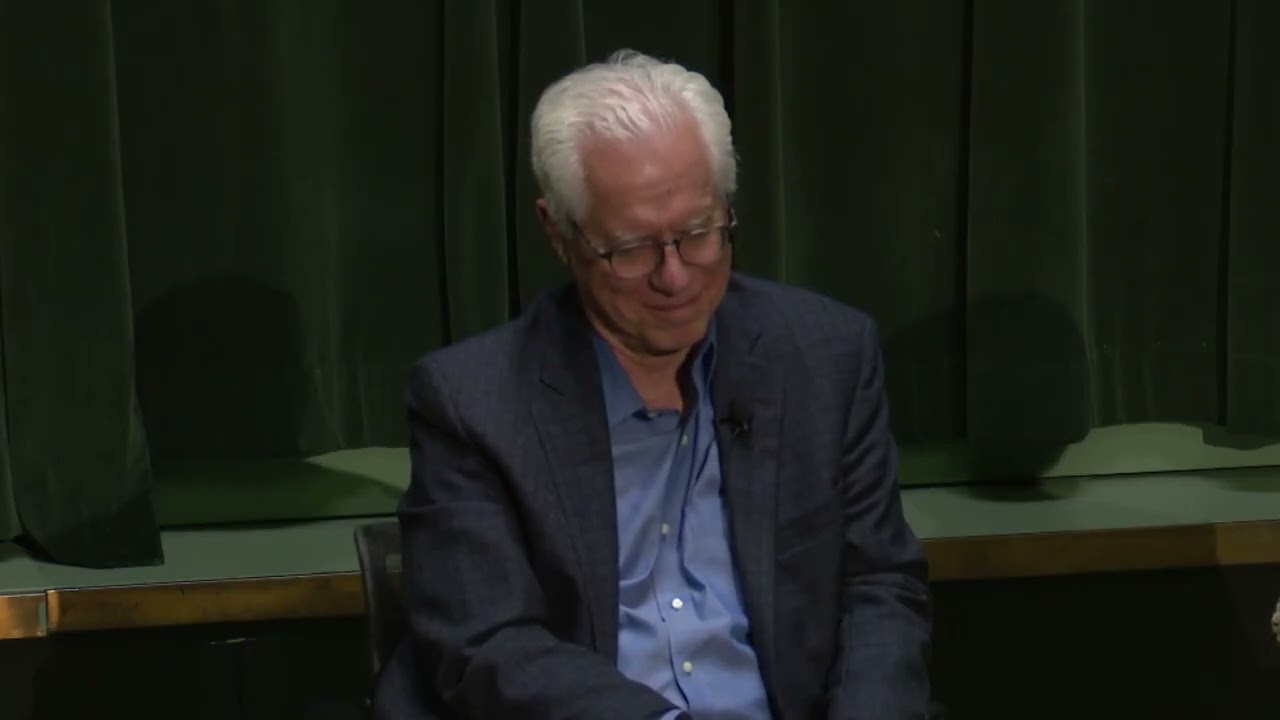
Ex-College Chiefs Say Runaway Costs, Not Politics, Fuel Public Mistrust
University of Michigan
The collapse in public confidence facing higher education stems from soaring tuition thresholds and opaque financial aid rather than campus speech battles, demanding an overhaul of the university economic model.
Higher-education leaders challenge the revised Yale report's recommendation to retreat from social action, arguing universities hold an essential nonprofit social contract to address civic fractures. (35:47)
Demographic transformations have collided with state-mandated admissions policies, such as Texas admitting the top 5% of high school graduates and UVA requiring 70% in-state enrollment, fueling political controversy over campus diversity. (16:21)
Panelists advocate for 'institutional reticence' over rigid neutrality, arguing colleges should avoid routine commentary but must speak out when their core educational missions or students are directly threatened. (43:04)
Declining public trust in higher education is primarily driven by tuition hyperinflation and opaque financial aid systems rather than political ideology alone, with private college costs approaching $100,000 annually. (57:10)
Detailed notes
## Background
Published on YouTube by the University of Michigan on November 2, 2026, this video documents a panel held at Rackham Amphitheater on October 27, 2026, as part of the Samantha Woll Dialogues. The event brings together three former university presidents to explore whether higher education institutions have an obligation to bridge social, political, and religious divides, evaluating where campuses are succeeding and where they fall short.
## TL;DR
Moderator Mary Sue Coleman (former University of Michigan president) leads a dialogue with Brian Rosenberg (former Macalester College president) and Teresa Sullivan (former University of Virginia president) on the societal obligations of higher education. The panelists analyze how demographic shifts, socioeconomic sorting, and monetized media polarization impact campus life, arguing that residential contact, collaborative pedagogy, and the humanities build vital civic empathy. Rejecting the inward retreat suggested by recent institutional reports, the speakers advocate for 'institutional reticence' over complete neutrality and defend the university's binding social contract to serve the public good. They conclude by examining the limits of free speech, the resilience of human-centered inquiry against artificial intelligence, and the opaque, escalating costs of college as the primary driver behind collapsing public trust.
## Atmosphere & style
The panel carries a measured, collegiate, and remarkably candid tone, distinguished by the unvarnished honesty of retired presidents who no longer have to manage donors, trustees, or campus public relations. Rich with self-deprecating humor and sharp institutional memory, the exchange balances personal anecdotes of administrative crises with sobering diagnoses of systemic societal polarization. Listening feels like attending an intimate, high-level debrief on modern higher education, where profound affection for the academic mission is matched by an unflinching willingness to acknowledge administrative missteps and structural flaws.
## Bulletin
- [35:47](https://www.youtube.com/watch?v=-KzJbp7-V2c&t=2147s) Higher-education leaders challenge the revised Yale report's recommendation to retreat from social action, arguing universities hold an essential nonprofit social contract to address civic fractures.
- [16:21](https://www.youtube.com/watch?v=-KzJbp7-V2c&t=981s) Demographic transformations have collided with state-mandated admissions policies, such as Texas admitting the top 5% of high school graduates and UVA requiring 70% in-state enrollment, fueling political controversy over campus diversity.
- [43:04](https://www.youtube.com/watch?v=-KzJbp7-V2c&t=2584s) Panelists advocate for 'institutional reticence' over rigid neutrality, arguing colleges should avoid routine commentary but must speak out when their core educational missions or students are directly threatened.
- [57:10](https://www.youtube.com/watch?v=-KzJbp7-V2c&t=3430s) Declining public trust in higher education is primarily driven by tuition hyperinflation and opaque financial aid systems rather than political ideology alone, with private college costs approaching $100,000 annually.
## Key takeaways
- [00:07](https://www.youtube.com/watch?v=-KzJbp7-V2c&t=7s) The panel reframed its inquiry from operational bridge-building to a normative debate on whether universities should actively bridge societal divides, prompted by the Yale report on institutional trust.
- [03:18](https://www.youtube.com/watch?v=-KzJbp7-V2c&t=198s) Provost Laurie McCauley argues that societal division is not historically unique, but higher education is exceptional as a deliberate institution designed to turn human friction into productive growth.
- [13:37](https://www.youtube.com/watch?v=-KzJbp7-V2c&t=817s) State-level admissions mandates, such as Virginia requiring 70% in-state enrollment and Texas automatically admitting top high school graduates, intersect with evolving demographics to create new campus dynamics.
- [19:12](https://www.youtube.com/watch?v=-KzJbp7-V2c&t=1152s) Administrative mandates to force student integration often fail; effective bridge-building relies on structured initiatives like the Program on Intergroup Relations (IGR).
- [21:30](https://www.youtube.com/watch?v=-KzJbp7-V2c&t=1290s) Bridging divides occurs fundamentally through residential proximity with diverse peers and exposure to the arts and humanities, cultivating Keatsian 'negative capability' and empathy.
- [25:42](https://www.youtube.com/watch?v=-KzJbp7-V2c&t=1542s) Inclusive pedagogy overcomes K-12 geographic segregation by engaging students in collaborative, task-based coursework modeled on the social dynamics of campus marching bands.
- [29:12](https://www.youtube.com/watch?v=-KzJbp7-V2c&t=1752s) Pre-orientation and leadership programs create an exponential ripple effect across campus by training student facilitators who can constructively moderate contentious peer discussions.
- [32:22](https://www.youtube.com/watch?v=-KzJbp7-V2c&t=1942s) Current campus polarization is exacerbated by coordinated online campaigns and commercial incentives that monetize division, coupled with younger generations' broader distrust in established institutions.
- [38:01](https://www.youtube.com/watch?v=-KzJbp7-V2c&t=2281s) Universities must frankly acknowledge their shortcomings in civil discourse rather than conceal speech failures or cancel events to avoid public controversy.
- [39:15](https://www.youtube.com/watch?v=-KzJbp7-V2c&t=2355s) Academic disciplines like demography and chronobiology have a public duty to translate empirical scientific evidence into polarized public policy debates.
- [43:04](https://www.youtube.com/watch?v=-KzJbp7-V2c&t=2584s) Former presidents prefer 'institutional reticence' to strict neutrality, asserting colleges should avoid partisan commentary while forcefully defending their institutional missions and students.
- [47:00](https://www.youtube.com/watch?v=-KzJbp7-V2c&t=2820s) Concerns regarding foreign influence are best handled through strict disclosure protocols targeting individual faculty conflicts of interest rather than restricting open global exchange.
- [50:20](https://www.youtube.com/watch?v=-KzJbp7-V2c&t=3020s) Freedom of speech protects offensive rhetoric short of direct personal threats, meaning universities must resist the 'heckler's veto' without ignoring genuine student safety concerns.
- [52:49](https://www.youtube.com/watch?v=-KzJbp7-V2c&t=3169s) Enduring disturbing speech and provocative symbols is an agonizing but necessary condition of an open society that avoids authoritarian surveillance policing.
- [54:36](https://www.youtube.com/watch?v=-KzJbp7-V2c&t=3276s) The rise of artificial intelligence reinforces the necessity of the arts and humanities, which foster enduring human capacities like empathy and intellectual agility that algorithms cannot replicate.
- [57:10](https://www.youtube.com/watch?v=-KzJbp7-V2c&t=3430s) The collapse of public confidence in higher education stems primarily from unsustainable tuition costs, financial aid opacity, and stark disparities between elite flagships and struggling regional colleges.
## Detailed walkthrough
### [00:07](https://www.youtube.com/watch?v=-KzJbp7-V2c&t=7s) Opening Remarks: The Wallenberg Institute and the Samantha Woll Dialogues
Jeffrey Veidlinger opens the afternoon gathering at the University of Michigan by welcoming attendees to the Rackham Amphitheater. He speaks directly to the students in attendance, encouraging them to attend a follow-up moderated discussion held next door immediately following the panel, noting that food will be provided so students can continue wrestling with the ideas raised on stage. Veidlinger expresses gratitude to the staff members who organized the event—Miriam Mora, Eleanor Camp, Alexis Gideon, and Joe Johnston—before outlining the origins and purpose of the Raoul Wallenberg Institute. The university established the institute in December 2023 as part of an institutional initiative to confront antisemitism while advancing religious diversity, inclusion, and civil discourse.
The institute honors 1935 Michigan alumnus Raoul Wallenberg, who coordinated with the Swedish and United States governments in Budapest during the Holocaust to rescue thousands of Hungarian Jews, before being detained by the Red Army and dying in a Soviet prison. As Veidlinger explains, “The mission of the institute is to advance the values he represented-- tolerance, courage, leadership, and empathy-- by studying and combating all forms of ethnic and religious hatred, and fostering civil discourse.” The Samantha Woll Dialogues form a central part of this mission, honoring Samantha Woll, a community organizer and champion of interfaith bridges who was murdered in Detroit just over two years prior. Veidlinger acknowledges the presence of Woll's family members, including Margo and Doug Woll, alongside Monica and Ben Rosen, whose support made the dialogue series possible.
Veidlinger then contextualizes the panel’s title and its evolution. The organizers originally conceived the event under the banner *How Can Universities Bridge the Divide*. However, their thinking shifted following the release of the Yale report on trust in higher education, which recommended that colleges step back from social action and re-anchor themselves in their core academic mission of generating and disseminating knowledge. In response, the organizers adjusted the guiding premise from *how* to *should*: *Should Universities Strive to Bridge Divides?* With that intellectual framework established, Veidlinger introduces University of Michigan Provost Laurie McCauley, thanking her for her instrumental leadership and ongoing partnership in bringing the Wallenberg Institute into existence.
- **Institute founding:** Established December 2023 at the University of Michigan to counter ethnic and religious hatred and advance civil dialogue.
- **Namesake heritage:** Raoul Wallenberg graduated from Michigan in 1935 and saved thousands of Hungarian Jews in Budapest before dying in Soviet detention.
- **Memorial dedication:** The dialogue series commemorates Samantha Woll, a Detroit-based grassroots organizer and interfaith leader.
- **Reframed focus:** The prompt was revised from an operational question (*How Can Universities Bridge the Divide*) to a normative one (*Should Universities Strive to Bridge Divides*) prompted by the Yale report on institutional trust.
---
[03:18](https://www.youtube.com/watch?v=-KzJbp7-V2c&t=198s) Provost Laurie McCauley on Historical Division and the Purpose of the University
Provost Laurie McCauley takes the podium, welcoming the audience to what she describes as her favorite room on campus for substantive dialogue. She begins by probing the common perception that modern society is more fractured than ever before. While acknowledgment of deep societal and global polarization is widespread, McCauley challenges the assumption that this climate is historically unique. Humans, she observes, have continually invented reasons to divide themselves across recorded history—whether across deep fault lines like religion, race, class, ideology, and nationality, or trivial markers like geographic turf and sports rivalries.
What makes the present moment remarkable, McCauley argues, is not the fact of division itself, but the persistence of deliberate institutions engineered specifically to bring those fractured groups together into constructive engagement. Chief among these institutions is the university. Each semester, campuses welcome thousands of students from radically different nations, cultural practices, belief systems, and political views to live and study side by side for years. While this proximity inevitably produces friction and visible conflicts, the far more striking reality is how routinely and quietly people learn to coexist.
Students negotiate these differences by listening, refining their ideas, discovering commonalities, and forming unexpected bonds, overwhelmingly doing so in good faith and with civility. McCauley underscores that higher education represents a continuous social experiment spanning over a millennium broadly—and more than two centuries at the University of Michigan specifically—designed to transform interpersonal friction into productive intellectual growth. As McCauley emphasizes: “Universities remain places where societies have most deliberately attempted to make these collisions between people productive ones, in a way that serves both them as individuals and the greater society around them.”
---
[07:01](https://www.youtube.com/watch?v=-KzJbp7-V2c&t=421s) Institutional Initiatives at Michigan and Introducing the Panelists
Turning to the question of institutional responsibility, McCauley poses the challenge: what, if anything, should universities do in a fractured society? She stresses that this inquiry is not new to Michigan, which has spent decades developing mechanisms to sustain difficult dialogue across difference. The campus has institutionalized this work through structures like the Center for Research on Learning and Teaching (founded in 1962), which equips faculty to handle contentious issues inside the classroom, and the Program on Intergroup Relations (launched in 1988), which pioneered intergroup dialogue models subsequently adopted nationwide. McCauley highlights that these habits cannot simply be inherited; each incoming class must practice them anew: “Every cohort has to learn again how to live, work, and ultimately flourish with people across the full spectrum of human experience.”
McCauley outlines several ongoing campus initiatives, including *Talking Maize & Blue*, an open module for incoming students premised on the reality that not all Wolverines think alike; the *Speak Your Mind, Change Your Mind* speaker series centered on intellectual open inquiry; and the newly created Center for American Dialogue, tasked with researching, testing, and sharing models for civic exchange. She reiterates the university's gratitude to the Wallenberg Institute for elevating civic discourse and combating hate, before introducing the afternoon's panel of experienced higher-education leaders:
- **Mary Sue Coleman (Moderator):** President Emerita of the University of Michigan (serving from 2002 to 2014, and returning as interim president in 2022). Former president of the University of Iowa and the Association of American Universities (AAU), and namesake of the campus's Mary Sue Coleman Hall life sciences facility.
- **Brian Rosenberg:** President Emeritus of Macalester College, where he served for 17 years. Currently a Visiting Professor at the Harvard Graduate School of Education and author of the book *Whatever It Is, I'm Against It*, which explores institutional resistance to change in higher education.
- **Teresa Sullivan:** President Emerita of the University of Virginia (serving from 2010 to 2018). Sociologist by discipline, and previously Provost and Executive Vice President for Academic Affairs at the University of Michigan, where McCauley had worked with her as a department chair.
---
[12:14](https://www.youtube.com/watch?v=-KzJbp7-V2c&t=734s) Setting the Stage: Diverse Institutions and Opening Remarks
Taking over the podium amid applause, Mary Sue Coleman welcomes the audience and thanks the Wallenberg Institute for creating a venue for what she considers an urgent and foundational conversation. She explains her goal for the opening portion of the panel: before diving into prescriptive solutions, each leader should describe the distinct character of the campus they led, emphasizing that institutional differences—between large public flagships and private liberal arts colleges—profoundly shape how universities navigate civil discourse and division.
Coleman proudly presents her own home institution, declaring: “I describe the University of Michigan as the best public university in the country, with a breadth and depth of study that is unparalleled.” She marvels at the sheer scale and intellectual reach of the campus, pointing out that the ongoing work of its faculty and staff continues to amaze her. She then invites Brian Rosenberg to introduce Macalester College and share his institutional vantage point. Rosenberg begins by thanking the organizers and draws appreciative laughter by acknowledging a personal connection to Ann Arbor: “My son got his law degree here and is gainfully employed, so I am a grateful father.”
[13:37](https://www.youtube.com/watch?v=-KzJbp7-V2c&t=817s) Institutional Profiles: Macalester College and the University of Virginia
Brian Rosenberg introduces the historical context and distinctive makeup of Macalester College, which was founded in 1874 by the Presbyterian Church. By the time Rosenberg arrived as president in 2003, the institution had reached a traditional liberal arts size of roughly 2,000 students. Rosenberg highlights that Macalester's defining characteristic is its deliberate international recruitment effort, established in the mid-20th century under a forward-thinking president. This recruitment resulted in an undergraduate community representing 110 countries, uniquely embedded as a small liberal arts campus within a metropolitan area of three million people. Rosenberg notes that he often felt he learned as much from those students as they learned from the faculty.
Mary Sue Coleman turns to Teresa Sullivan to examine the institutional dynamics at the University of Virginia. Sullivan notes that UVA is about half the size of the University of Michigan and operates under a state legislative mandate requiring 70% of its undergraduate body to be Virginia residents. However, demographic shifts across Virginia have disrupted traditional student expectations. The Northern Virginia suburbs outside Washington, D.C. (dubbed "Nova" by students) represent the wealthiest area in the commonwealth, boasting an average per capita income of $72,000. Because Nova attracts global employers, the local applicant pool is internationally and ethnically varied rather than composed of traditional white Southerners. In contrast, applicants from the rest of the state ("Rova") tend to be primarily White or African American, alongside an increasing Latino cohort. These geographic dynamics generate perpetual scrutiny regarding admissions fairness, exacerbated by the fact that UVA receives roughly 90,000 applications for a first-year class of only about 9,000 seats.
- Macalester College enrolled approximately 2,000 students representing 110 different nations.
- UVA is bound by state mandate to enroll 70% in-state residents.
- Per capita income in Northern Virginia ("Nova") stands around $72,000.
- UVA receives around 90,000 applications annually for an entering cohort of roughly 9,000 students.
[16:21](https://www.youtube.com/watch?v=-KzJbp7-V2c&t=981s) Demographics, Politics, and Affirmative Action in Texas
Teresa Sullivan reflects on her 27 years on the faculty at the University of Texas at Austin, where similar demographic transformations have collided with state politics. In Texas, state law mandates that 90% of UT Austin's undergraduate student body come from within the state. Under the state's percentage admission law, high school seniors who graduate in the top 5% of their class (compared to the top 10% for other public universities in Texas) receive automatic admission to UT Austin, regardless of standardized test scores or recommendation letters. Because public school enrollment across Texas is now roughly 66% African American and Latino, this top-percent admissions policy has steadily diversified UT Austin's student body, even though race-conscious affirmative action was eliminated in Texas well before Michigan.
Sullivan recounts a recent incident illustrating political misunderstandings of these shifting demographics. Following a dramatic football victory where UT came back from 21 points behind Ohio State in the fourth quarter, ecstatic students celebrated by throwing up the "Hook 'em Horns" hand sign. A statewide candidate running for office saw a photograph of the diverse crowd and publicly attacked the university on social media, complaining that foreign students were displacing native Texans. When pushed, the politician doubled down, claiming body cams exposed criminals while social media exposed the replacement of Americans by foreigners. Sullivan underscores that these celebrated students were not foreigners at all, but rather high-achieving Texas high school graduates admitted via state law. As Sullivan explains:
> “The public schools have changed dramatically, and people are not prepared for the fact that that means the colleges are going to change as well.”
She adds that as a result, “an enduring division in American society, which is the division by race and ethnicity, has become a contested point between universities and the public that surrounds them.”
[19:12](https://www.youtube.com/watch?v=-KzJbp7-V2c&t=1152s) Crossing Divides: Socioeconomics and Campus Dialogue
Mary Sue Coleman expands on the challenges of polarization by connecting demographic change to economic stratification. Coleman notes Michigan's high-profile legal defense of affirmative action, while pointing out that current financial aid models have introduced deep socioeconomic divides on campus. Because generous aid packages attract in-state students from lower-income backgrounds while out-of-state matriculants often hail from substantial wealth, the campus experiences layered racial and economic fractures.
Coleman argues that bridging these divides cannot be accomplished through administrative mandates. As she cautions:
> “I think anytime you require students to take a course or do something, you've lost the game.”
Instead, engagement must be structured constructively. Coleman highlights the University of Michigan's Program on Intergroup Relations (IGR)—originally established in 1988 through a partnership between Student Affairs and the College of Literature, Science, and the Arts (LSA)—as an institutional pioneer in teaching students from vastly different circumstances how to communicate effectively with one another across differences.
[21:30](https://www.youtube.com/watch?v=-KzJbp7-V2c&t=1290s) Cultivating Empathy Through Contact and the Humanities
Brian Rosenberg places campus divisions into a broader societal context, insisting that campuses cannot be analyzed as isolated bubbles detached from national rancor. When Rosenberg began his tenure at Macalester in 2003, modern social media platforms did not exist, critics had to draft physical letters or deliberate emails, and "Donald Trump was bankrupting casinos in Atlantic City." The rising conflict witnessed on campus directly reflects systemic fractures occurring off-campus.
Rosenberg argues that while structured dialogue programs are valuable, universities bridge divides through two far more fundamental mechanisms:
1. **Diverse Residential Encounters:** Living and studying alongside peers from 110 different countries forces students out of their insular peer groups. Although students occasionally cluster with familiar peers, campus culture can push them to build genuine empathy. Rosenberg emphasizes that empathy is “one of the essential characteristics, both of a university education and of being a citizen in a civilized society, and that is empathy—being able to see the world through the eyes of someone who is not you.”
2. **Engagement with the Arts and Humanities:** Drawing on his background as a literary scholar, Rosenberg points to John Keats’s concept of "negative capability"—the capacity to negate oneself in order to experience the consciousness of another. Immersing oneself in novels, history, visual arts, and theatrical performances trains the empathetic faculties necessary for civic cohesion.
Rosenberg concludes by stressing that bridging social chasms requires continuous exposure to unfamiliar cultures:
> “And only if you develop those muscles, ultimately, can we overcome those divides.”
```mermaid
flowchart TD
accTitle: Mechanisms for Bridging Campus Divides
accDescr: Diagram illustrating Brian Rosenberg's two foundational mechanisms for bridging social divisions in higher education.
subgraph Core["Institutional Environment"]
A["Diverse Campus Community"] --> B["Intercultural Contact"]
B --> C["Everyday Interaction with Different Backgrounds"]
D["Humanities & Liberal Arts"] --> E["Literature, History & the Arts"]
E --> F["Keatsian Negative Capability"]
end
C --> G["Development of Empathy Muscles"]
F --> G
G --> H["Bridging Social and Political Divides"]
```
Coleman wraps up the segment by agreeing on the value of international students, while noting that global admissions have become increasingly fraught in the modern geopolitical environment.
[25:42](https://www.youtube.com/watch?v=-KzJbp7-V2c&t=1542s) Geographic Sorting, Inclusive Pedagogy, and Shared Tasks
Mary Sue Coleman notes that visa challenges remain an ongoing hurdle for international students, but she points to another profound dynamic at large public institutions like the University of Iowa and the University of Michigan: incoming domestic students are coming from neighborhoods segregated by class and geography due to location-based public school systems. When these students arrive on campus, they are suddenly forced to live alongside and confront peers from backgrounds they have never encountered before. Turning to Teresa Sullivan, Coleman asks how this dynamic played out at the University of Virginia (and the University of Texas) and what institutional strategies helped ease those encounters.
```mermaid
flowchart TD
accTitle: Campus Contact and Inclusive Pedagogy Flow
accDescr: Shows how neighborhood-segregated students are brought into collaborative contact through inclusive pedagogy and shared tasks.
subgraph Background ["Incoming Background"]
A["Neighborhood-based K-12 schooling"]
B["Post-COVID social isolation and caution"]
end
subgraph Classroom ["Inclusive Pedagogy"]
C["Random group assignments and pairings"]
D["Collaborative demographic projects"]
end
subgraph Outcome ["Bridge-Building"]
E["Shared practical tasks"]
F["Discovery of unsuspected commonalities"]
end
A --> C
B --> C
C --> D
D --> E
E --> F
```
Sullivan explains that faculty and graduate instructors tackled this by developing inclusive pedagogy, recognizing that attending class is the single universal activity shared by every student:
> “Because the one thing we know students do is they go to class.”
Rather than defaulting to traditional lectures where students sit passively and never interact with peers or the instructor, inclusive pedagogy deliberately pairs students or assigns them to random working groups. Sullivan observed this necessity firsthand when teaching right after the pandemic. Students whose junior and senior high school years occurred online were remarkably cautious about approaching anyone, requiring basic instruction on how to meet and converse.
In her demography course, Sullivan assigned students to construct detailed demographic profiles of unfamiliar countries and present them to one another. Rather than remaining isolated, the students bonded, even planning hypothetical group trips to visit all their assigned countries together. She connects this to a 1970s study at UC Berkeley by sociologist Harry Braverman, which found that the marching band brought together students from diverse backgrounds more effectively than any other group on campus because members were required to complete a complex task together.
- Domestic public education is heavily partitioned by geography, meaning university entry is often a student's first uninsulated encounter with differing socio-economic and regional backgrounds.
- Post-COVID cohorts exhibited severe social hesitation, prompting faculty to re-teach foundational conversational habits.
- Task-oriented collaboration—exemplified by Braverman's research on university marching bands—serves as the model for structuring diverse student interactions inside the academic classroom.
---
[29:12](https://www.youtube.com/watch?v=-KzJbp7-V2c&t=1752s) Peer Facilitation and Seeding Student Leaders
Coleman stresses that as public institutions grow larger, they must intentionally create spaces where students can engage in dialogue without treating interactions purely as efforts to convince one another of opposing viewpoints. Sullivan notes that leadership programs at the University of Virginia trained students specifically to lead groups containing conflicting viewpoints. The goal was not to force an artificial consensus, but to facilitate the expression of diverse opinions; Sullivan noticed that graduates of these programs brought a distinctly constructive attitude toward peers who disagreed with them in class.
Brian Rosenberg illustrates this peer dynamic with an example from Macalester College. Pointing to two parents in the audience whose son and daughter-in-law graduated from Macalester, he recounts how the couple met through "Lives of Commitment," a pre-orientation program:
> “And almost without exception, those students then became leaders and facilitators.”
Rosenberg highlights that while graduating classes at small liberal arts colleges like Macalester may total only around 500 students per year, empowering ethical leaders creates an exponential ripple effect—ranging from influencing dozens of people to affecting millions, as demonstrated by Macalester alumnus Kofi Annan. Because students inherently relate better to their contemporaries, training select undergraduates to moderate difficult conversations effectively seeds leadership throughout the broader campus culture.
---
[32:22](https://www.youtube.com/watch?v=-KzJbp7-V2c&t=1942s) Monetized Division and Institutional Distrust
Coleman asks whether the current campus climate is uniquely polarized compared to their own tenures as university presidents. Sullivan responds that campus divisiveness has taken a qualitatively new turn because it has been commodified:
> “I think one thing that is different now is that there are people who are making money out of encouraging division.”
This financial incentive has turned controversy into an industry, allowing coordinated, highly structured disruptions to strike multiple campuses simultaneously via social media and the internet. Sullivan tempers this diagnosis by recalling Civil War historian Gary Gallagher’s remark that Abraham Lincoln would have gladly swapped his best day for Barack Obama’s worst day, acknowledging that national divisions have historically run even deeper.
Rosenberg remarks humorously that he is very glad not to be serving as a college president today. He diagnoses the current campus tension as an outgrowth of a society-wide collapse of faith in established institutions:
> “I won't sound like a complete Luddite and say, I wish social media had never been invented, but I wish social media had never been invented.”
Rosenberg emphasizes that the younger generation’s cynicism is justified given how many institutions have failed them, paired with worsening income inequality over his lifetime. Expressing equal skepticism toward both social media and artificial intelligence, he concludes that these societal pressures make institutional leadership far more difficult today than when he assumed his presidency two decades prior.
---
[35:47](https://www.youtube.com/watch?v=-KzJbp7-V2c&t=2147s) The Social Contract of Higher Education
Responding to Coleman’s inquiry about whether higher education has a core obligation to teach civil discourse and steer students away from ad hominem attacks, Rosenberg firmly agrees. He criticizes the revised "Yale Report," which narrowed the university's institutional mission strictly to the production and dissemination of knowledge while removing references to serving the public welfare:
> “It's the reason that we're nonprofits, because we're supposed to be serving the social good.”
In contrast to Yale's insular formulation, Rosenberg praises a recent faculty report from Cornell University as a compelling, outward-looking model for higher education. He argues that colleges and universities hold a binding social contract to tackle society's most acute crises—which currently centers on severe civic polarization. He concludes by acknowledging that universities must frankly admit their past shortcomings in preparing students to engage constructively with perspectives that conflict with their own.
[38:01](https://www.youtube.com/watch?v=-KzJbp7-V2c&t=2281s) Speech Controversies and Acknowledging Campus Failures
Brian Rosenberg shares that, as an alumnus of both Cornell University and Columbia University, he receives an endless stream of emails from embattled university presidents navigating campus crises. He describes a recent episode bridging the two institutions, where two Columbia students wrote an op-ed challenging the prevailing narrative surrounding an ongoing controversy at Cornell. While Rosenberg personally disagrees with their argument, he defends their right to express it and to engage in open dialogue with dissenting peers.
Instead of fostering debate, the situation deteriorated: an entire campus conference dedicated to the topic of freedom of speech was cancelled after participants objected to the inclusion of the publication that had printed the students' op-ed. Rosenberg highlights the resulting reputational damage and hypocrisy perceived by the public, concluding that “pretending to be successful when you're not never works.” Rather than covering up institutional shortcomings, he argues, universities must honestly confront where they are failing and determine concrete ways to do better.
[39:15](https://www.youtube.com/watch?v=-KzJbp7-V2c&t=2355s) Demography, Public Policy, and Communicating Scientific Evidence
Mary Sue Coleman notes that cards are being distributed through the amphitheater by a staff member named Eleanor so audience members can submit questions that have not yet been addressed. She then asks Teresa Sullivan to offer her perspective on whether universities are fulfilling their public mission. Sullivan explains that in her home field of demography, academic research and public service are fundamentally intertwined. As a current example, she points to a notice published in the Federal Register proposing revisions to the 2030 census that would eliminate questions concerning race and ethnicity. In response, demographers across the United States are mobilizing their scholarly expertise to draft public comments explaining why demographic data on race and ethnicity remain essential for sound governance—an analytical and civic capability that Sullivan insists demography students should acquire in their coursework.
Sullivan argues that although researchers do not establish public policy, their role is to enlighten it, though universities frequently fail to clearly communicate their findings on issues dividing the nation. To illustrate, she points to the imminent return to Standard Time:
```mermaid
flowchart TD
accTitle: Circadian Rhythm Policy Alternatives
accDescr: Flowchart illustrating scientific ranking of daylight saving policy choices from worst to best.
subgraph Daylight_Policies["Time Policy Options Ranked by Chronobiology"]
direction TB
Worst["1. Switching Twice a Year (Worst)<br>Spikes in heart attacks, strokes, accidents"]
Middle["2. Permanent Daylight Saving Time (Second Worst)<br>Passed House, stalled in Senate"]
Best["3. Permanent Standard Time (Best)<br>Aligns biological circadian rhythms with the sun"]
end
Worst --> Middle --> Best
```
Sullivan stresses that despite conclusive evidence from chronobiology and circadian rhythm research demonstrating that humans evolved to synchronize with the sun rather than arbitrary clock shifts, the country remains deadlocked over whether to adopt Daylight Saving Time or Standard Time, and the Senate has stalled a bill that the president indicated he would sign. Sullivan asserts that “conveying it is a public service, and that's the boat that Yale has missed,” arguing that universities must take responsibility for injecting clear, empirical scientific evidence directly into public controversies.
[43:04](https://www.youtube.com/watch?v=-KzJbp7-V2c&t=2584s) Institutional Reticence vs. Political Neutrality
Coleman introduces an audience question asking whether universities should take political stances. Rosenberg responds that they should do so only “occasionally.” He traces the doctrine of institutional neutrality back to its cornerstone document, the University of Chicago’s late-1960s Kalven Committee Report, which maintained that to preserve a forum for open dissent, the university itself should serve as the home of the critic rather than the critic. However, Rosenberg emphasizes a critical exception explicitly recognized by the report: when an issue directly threatens the mission and operation of the institution itself, the university does not merely possess the option to speak, but bears a direct obligation to do so.
Rosenberg prefers the concept of “institutional reticence”—coined in a book by a former president of Carleton College—over strict neutrality, warning that neutrality often devolves into passive withdrawal and silence. If university presidents issue statements on every societal event, the messaging deteriorates into meaningless white noise, especially outside institutional expertise. When federal policies threatened international student travel, however, Rosenberg felt compelled to speak out as president of Macalester College, whose explicit mission emphasizes internationalism, multiculturalism, and service to society:
> “I think picking your spots when the mission of the institution is threatened is probably where universities and colleges should be.”
Teresa Sullivan agrees with Rosenberg's stance and adds a distinction between issues that are political and those that are partisan, asserting that institutions should never adopt partisan positions. Because ordinary facts have become politicized along red-and-blue lines, leaders frequently freeze instead of speaking truth. Sullivan notes that when an institution's students or standards are maligned, leaders have an obligation to defend them with verifiable facts. Pointing to public debates surrounding the University of Texas, Sullivan observes that leadership should have firmly stated that 90% of its student body consists of Texas residents who graduated in the top 5% of their high school classes and fully earned their places.
[47:00](https://www.youtube.com/watch?v=-KzJbp7-V2c&t=2820s) Foreign Funding, Faculty Conflicts, and Global Exchange
Coleman turns the discussion to the influence of foreign money on higher education campuses and asks whether Sullivan worried about undue outside influence during her presidencies. Sullivan explains that public institutions are legally required to report and disclose foreign financial contributions and their sources. She differentiates between benign contributions—such as an international alumnus making a philanthropic gift to their alma mater or a foreign government funding specific medical research for a critical disease—and funding streams that could compromise university integrity. In her experience, the most severe problems involve individual faculty members who accepted covert appointments at foreign institutions without university disclosure:
- Major criminal and legal cases involving American professors stemmed from undisclosed conflicts of interest rather than the mere presence of foreign capital.
- Transparency through formal disclosure mechanisms remains the primary safeguard for preserving research integrity.
- Across the institutions where Sullivan spent the bulk of her administrative career, foreign philanthropic funding did not compromise core academic values.
Coleman then asks Rosenberg how immersion in a globally diverse student body influenced his worldview as a college leader. Rosenberg calls the impact profound, citing his post-presidential involvement with the African Leadership University, founded by Macalester graduate and entrepreneur Fred Swaniker. Working with the institution over a six-year period as it expanded from roughly 800 to 5,000 students—many raised in rural towns without electricity—deepened his understanding of unfamiliar cultures and demonstrated education's transformative power. Back on his own campus, Rosenberg saw this same cross-cultural power in action, recalling an instance where an Israeli student and a Palestinian student became close friends, remarking that “it is moments like that give you hope.”
[50:20](https://www.youtube.com/watch?v=-KzJbp7-V2c&t=3020s) Free Speech, Hate Speech, and the Heckler's Veto
Reflecting on the enduring value of learning even during deeply fractured times, the discussion turns to the difficult boundary between protected expression and prohibited harassment. Mary Sue Coleman poses the core dilemma directly to Teresa Sullivan: where does hate speech end and freedom of speech begin? Sullivan clarifies that legally, the line is crossed when speech escalates into a specific threat directed against an individual, at which point it becomes illegal and enters the jurisdiction of law enforcement. However, merely expressing ideas that people dislike or find offensive remains constitutionally protected. Sullivan emphasizes that when such views are voiced, others should exercise their own free speech to counter them with reasoned arguments.
The breakdown occurs, Sullivan observes, when only one viewpoint is granted a platform while dissenting voices are stifled or given no outlet to register their disagreement. While she strongly opposes shutting down speakers, she insists that critics must be provided legitimate channels to express dissent, whether by holding signs or asking pointed questions during public forums. Addressing the broader institutional impact of contentious events, Teresa Sullivan argues: “I don't like the heckler's veto. I think that's bad for universities. I think it's bad for democracy.” At the same time, she cautions against writing off affected community members as mere "snowflakes," stressing that hearing hateful rhetoric can make students legitimately fear for their safety and feel that their campus environment has turned hostile. Sullivan notes that this dilemma is not unique to academia—it surfaces in the military, corporate workplaces, and public life—and highlights that while European nations enforce legal codes barring specific categories of speech, the United States has consistently refused to take that path.
[52:49](https://www.youtube.com/watch?v=-KzJbp7-V2c&t=3169s) The Price of Freedom and Campus Hostility
Brian Rosenberg frames the endurance of offensive expression as an unavoidable condition of an open society, calling it the literal price of freedom. To illustrate the agonizing trade-offs involved, he shares a painful episode from his tenure at Macalester College, where someone persistently drew small swastikas in various locations around campus over the course of an entire year. Halting the vandalism realistically would have required blanketing every hallway and room with pervasive surveillance cameras—a measure Rosenberg rejected as unacceptable for an academic community and one students themselves would not support. Yet, throughout that entire year, he had to grapple with Jewish students who felt fundamentally unsafe and demanded administrative action.
Rosenberg points out that while direct physical threats represent the straightforward legal cases, modern controversies usually occupy the murky territory of provocative symbols—such as displaying a Confederate flag, hanging a noose from a dormitory window, or drawing hate symbols. While deeply distressing, such incidents test whether a campus can endure disturbing expression without defaulting to authoritarian policing. Reflecting on this fundamental trade-off, Brian Rosenberg states: “But my view has always been, we have to accept that bad in order to have the benefit of the larger good, which is the ability to have freedom of speech.”
[54:36](https://www.youtube.com/watch?v=-KzJbp7-V2c&t=3276s) Artificial Intelligence and the Endurance of the Arts and Humanities
Turning to academic priorities, Coleman asks about the steady disinvestment in the arts and humanities, particularly as students increasingly flock toward lucrative degrees in business and finance, and queries how the rapid emergence of artificial intelligence might alter the landscape. Rosenberg adopts a counterintuitively optimistic view, suggesting that artificial intelligence will ultimately serve as a powerful reminder of why the arts and humanities are indispensable. Because these fields cultivate capacities that are the most difficult for algorithms to replicate, they may emerge from the technological transition stronger and more valued.
Rosenberg cautions against treating higher education as short-term vocational training, pointing out how swiftly market demand shifts. Just six years prior, when he stepped down from Macalester, computer science reigned as the most popular major on campus, having earlier supplanted a massive wave of student interest in engineering—yet today, tech hiring dynamics are entirely different. Trying to tailor a curriculum strictly around the current job market leaves graduates vulnerable to rapid displacement. Instead, institutions must focus on developing lifelong learners endowed with enduring human faculties—resilience, teamwork, intellectual agility, and creativity. While these competencies can be fostered in any field, they remain the traditional hallmark of the humanities. Looking toward the horizon, Brian Rosenberg notes: “And I'm hoping there'll be a realization, as we become confronted with non-human forms of intelligence, that there are human forms of intelligence that maybe we should pay attention to.”
[57:10](https://www.youtube.com/watch?v=-KzJbp7-V2c&t=3430s) Cost, Access, and Rebuilding Public Confidence
Coleman shifts the conversation to the nationwide decline in public confidence in higher education, pointing out an apparent paradox: while public opinion metrics show mounting skepticism, prestigious colleges and flagship universities continue to see record-breaking applicant pools far beyond their capacity to admit. Sullivan suggests universities overlook their most persuasive ambassadors: their alumni. Graduates carry the lived reality of their education out into the world, equipped to counter prevailing negative narratives by sharing how profoundly life-changing their college years were. Furthermore, Sullivan observes that some public hostility toward elite institutions is fueled by parental envy—a sense of resentment from taxpayers who fund institutions their own children have no chance of attending. Addressing that grievance, Teresa Sullivan argues: “And one answer to that is to make more schools great, not to take away the greatness of the ones you have.”
Rosenberg pushes the analysis further, asserting that empirical surveys identify financial barriers, not ideological polarization, as the primary source of public discontent. While elite flagships like the University of Virginia, the University of Texas at Austin, and the University of Michigan enjoy record enrollments, smaller regional institutions face an existential crisis, with colleges in New England closing virtually every month as they struggle just to fill seats. Rosenberg identifies tuition hyperinflation and the opacity of the financial aid system as the root causes alienating families:
- **Tuition Thresholds**: In-state tuition and fees at select flagship public universities have crossed $50,000 per year, while the comprehensive cost of attendance at private institutions frequently surpasses $100,000 annually (reaching approximately $90,000 at Macalester for full-pay students).
- **Systemic Opacity**: Families are forced to commit to what is likely the second-largest purchase of their lives—behind only a home—without knowing what they will actually end up paying due to complicated financial aid formulas.
- **Institutional Disparity**: While flagship public universities and highly endowed private colleges expand, the vast majority of American colleges are scrambling for survival rather than turning qualified applicants away.
- **Limits of Public Subsidies**: Expecting states to solve the crisis through massive funding injections is unrealistic given urgent, competing public claims on state budgets, such as early childhood education and healthcare.
Summarizing the stakes for higher education's institutional survival, Brian Rosenberg concludes: “And if there's one thing, I think, that higher education could do to begin to rebuild public confidence, it's to create a more sustainable and equitable economic model.” Coleman brings the Samantha Woll Dialogue to a close, expressing her appreciation to both panelists for their candid perspectives and thanking the Rackham Amphitheater audience for their deep engagement.
## Notable quotes
> [50:20](https://www.youtube.com/watch?v=-KzJbp7-V2c&t=3020s) I don't like the heckler's veto. I think that's bad for universities. I think it's bad for democracy. — Teresa Sullivan
> [19:12](https://www.youtube.com/watch?v=-KzJbp7-V2c&t=1152s) I think anytime you require students to take a course or do something, you've lost the game. — Mary Sue Coleman
> [57:10](https://www.youtube.com/watch?v=-KzJbp7-V2c&t=3430s) And if there's one thing, I think, that higher education could do to begin to rebuild public confidence, it's to create a more sustainable and equitable economic model. — Brian Rosenberg
> [32:22](https://www.youtube.com/watch?v=-KzJbp7-V2c&t=1942s) I think one thing that is different now is that there are people who are making money out of encouraging division. — Teresa Sullivan
> [07:01](https://www.youtube.com/watch?v=-KzJbp7-V2c&t=421s) Every cohort has to learn again how to live, work, and ultimately flourish with people across the full spectrum of human experience. — Laurie McCauley
> [16:21](https://www.youtube.com/watch?v=-KzJbp7-V2c&t=981s) The public schools have changed dramatically, and people are not prepared for the fact that that means the colleges are going to change as well. — Teresa Sullivan
## Mentioned
University of Michigan, Rackham Amphitheater, Raoul Wallenberg Institute, Samantha Woll Dialogues, Jeffrey Veidlinger, Raoul Wallenberg, Samantha Woll, Margo Woll, Doug Woll, Monica Rosen, Ben Rosen, Laurie McCauley, Center for Research on Learning and Teaching, Program on Intergroup Relations, Talking Maize & Blue, Speak Your Mind, Change Your Mind, Center for American Dialogue, Mary Sue Coleman, Brian Rosenberg, Teresa Sullivan, Association of American Universities, Macalester College, Harvard Graduate School of Education, Whatever It Is, I'm Against It, University of Virginia, University of Texas at Austin, John Keats, Harry Braverman, UC Berkeley, Kofi Annan, Gary Gallagher, Abraham Lincoln, Barack Obama, Donald Trump, Yale University, Cornell University, Columbia University, Federal Register, Kalven Committee Report, University of Chicago, Carleton College, African Leadership University, Fred Swaniker, University of Iowa
## Video description
Should Universities Strive to Bridge Division?
Part of the Samantha Woll Dialogues, this panel brought together three former university presidents to explore whether colleges and universities have a responsibility to bridge social, political, and religious divides and, if so, whether they are succeeding and how they can do better.
October 27, 2026
Rackham Amphitheater
A version of this video without audio descriptions is available here: https://www.youtube.com/watch?v=Zu6aji-oJeE
Higher-education leaders Mary Sue Coleman, Brian Rosenberg, and Teresa Sullivan argue that universities retain a fundamental public obligation to bridge social and political divides, rejecting proposals for institutions to retreat into passive neutrality.
Contact, Pedagogy, and Developing Empathy Muscles (21:30)
Campus leaders contend that bridging polarization cannot rely on top-down curricular mandates. Former University of Michigan President Mary Sue Coleman cautions that requiring students to take specific discourse courses inherently fails. Instead, former Macalester College President Brian Rosenberg emphasizes that universities cultivate empathy—which he defines as the capacity to view the world through another's eyes—primarily through diverse residential encounters and engagement with the arts and humanities. Drawing on John Keats's concept of negative capability, Rosenberg argues that encountering unfamiliar cultures and ideas trains the intellectual faculties necessary for civil cohesion.
At large public flagships where domestic students arrive sorted by geography and class, structured classroom collaboration fills the gap. Former University of Virginia President Teresa Sullivan highlights inclusive pedagogy, noting that attending class is the single universal activity all students share. Citing Harry Braverman's research on university marching bands, Sullivan explains that assigning random peer groups to solve complex, practical tasks—such as demographic research projects—overcomes post-pandemic social isolation and enables students from polarized backgrounds to discover unsuspected commonalities.
Monetized Division and Institutional Reticence (32:22)
The panel identifies modern polarization as qualitatively distinct because social media platforms have commodified outrage, turning controversy into an industry that coordinates disruptions across multiple campuses simultaneously. While acknowledging deep historical fractures, Sullivan and Rosenberg note that this monetization combines with an off-campus collapse of faith in established institutions, fueling widespread student cynicism.
In navigating political pressure, the panel rejects both constant public posturing and total withdrawal. Addressing the University of Chicago's Kalven Committee Report, Rosenberg advocates for "institutional reticence" rather than absolute neutrality, which he warns can become passive silence. Under this framework, institutions avoid issuing commentary on outside events unless an issue directly threatens the university's core operational mission—such as federal restrictions targeting international students. Sullivan adds that institutions must maintain non-partisan stances while aggressively defending facts and institutional standards against political misrepresentation.
Speech Boundaries and the Price of Freedom (50:20)
When defining the boundaries of campus discourse, Sullivan notes that speech crosses into illegal conduct only when it escalates into specific threats directed against individuals. Short of that legal threshold, offensive expression remains constitutionally protected, requiring counter-speech rather than institutional suppression. While Sullivan rejects the "heckler's veto" as destructive to academic inquiry and democracy, she cautions against dismissing affected students as "snowflakes," noting that hateful rhetoric can cause genuine fear and perceived hostility.
Rosenberg describes enduring offensive symbols as the painful price of maintaining an open society. Recounting an episode at Macalester where swastika vandalism occurred over an entire year, he explains that stopping the perpetrator would have required blanket surveillance, which is fundamentally incompatible with an academic community. Choosing not to default to authoritarian policing meant actively supporting distressed Jewish students while preserving campus freedom, illustrating that open expression inevitably carries difficult institutional trade-offs.
Economic Realities Underlying Declining Trust (57:10)
While media narratives frequently attribute public dissatisfaction with higher education to ideological polarization, Rosenberg asserts that empirical data points to financial barriers as the primary driver of eroding confidence. Select public flagships now charge in-state tuition and fees exceeding $50,000 annually, while private college costs often top $100,000 per year, forcing families to make massive financial commitments through opaque aid systems.
This economic strain creates an acute divide across higher education. While elite flagships and heavily endowed colleges see record application volumes—such as UVA receiving roughly 90,000 applications for 9,000 seats—smaller regional colleges face an existential crisis marked by frequent closures. Sullivan suggests mobilizing alumni and expanding educational quality across more institutions to ease taxpayer resentment. Rosenberg concludes that restoring public faith ultimately requires higher education to develop a sustainable economic model rather than relying on unrealistic state funding increases.
The dialogue underscores that while universities possess unique structural capacities to counter civic fragmentation, their effectiveness remains limited by institutional failures to communicate empirical research, rising tuition costs, and the delicate balance between protecting open expression and ensuring community safety.
精炼阅读摘要
前高校领导人指出,大学负有弥合社会裂痕的根本公共契约,但化解极化不能依赖行政命令或将使命狭隘收缩为知识生产,而应依靠结构性接触、人文学科培养以及坚守制度克制原则。
社会契约与知识传播的公共责任 (35:47)
针对耶鲁大学关于高校信任度报告建议大学退出社会行动、回归纯粹学术使命的主张,Macalester College荣休校长Brian Rosenberg提出明确反对。他认为大学作为非营利机构的核心理由在于服务公共利益,高等教育承担着具有约束力的社会契约,必须直面当前最严峻的公民极化危机;相较于耶鲁封闭的主张,康奈尔大学面向外部社会的报告展现了更理想的模式。 Rosenberg直言,高校必须诚实承认过去在引导学生建设性应对对立观点上的不足,掩饰失败只会加剧公众的不信任感。
University of Virginia荣休校长Teresa Sullivan以自身的人口学专业为例,指出学术研究必须为公共政策提供实证支持。例如全美人口学家正在组织反馈,反对2030年人口普查拟取消种族与族裔问题的提议;又如时间生物学已明确证明人类生理节律需与太阳同步,每年两次调时最有害健康、永久标准时间最优,但科学共识并未被有效转化为公众决策。Sullivan认为,大学有责任将实证科学结论直接传递至公共争议中,未能承担此类公共传播正是耶鲁模式的盲区。
微观接触与任务驱动化解人口区隔 (25:42)
美国公立基础教育按地理位置划分学区,导致大量本土新生进入大学前生活在阶级和种族区隔的环境中,加之COVID-19疫情后线上教学使学生更加缺乏面对面互动的信心。University of Michigan荣休校长Mary Sue Coleman强调,高校无法通过强制选修课程来化解隔阂,行政强制往往适得其反,而应提供实质性的建设性沟通机制,例如密歇根大学自1988年设立的群际关系项目(IGR)。
Teresa Sullivan指出,课堂是所有学生不可避免的共同交集。大学教师通过包容性教学法(inclusive pedagogy),打破传统单向讲授,采用随机分组与结对合作方式,引导学生共同完成复杂的具体任务。Sullivan以其人口学课程为例,学生通过协作完成陌生国家人口档案并自发组织模拟旅行;她援引社会学家Harry Braverman在加州大学伯克利分校的研究,证明大学军乐团之所以能跨越背景高度凝聚多元群体,核心正在于成员必须共同协作完成精密任务。与此同时,通过培训学生领袖主持含冲突观点的讨论,能以同伴影响力在校园形成长效辐射效应。
人文学科在人工智能时代的共情价值 (21:30)
Brian Rosenberg指出,结构性对话项目固然有益,但高校化解分歧最底层的路径在于多元居住环境的日常接触,以及对艺术和人文学科的沉浸。以Macalester College为例,2000名学生来自110个国家,与背景截然不同的同龄人共同生活是迫使学生脱离闭塞圈层的关键机制。文学研究中济慈(John Keats)提出的“消极感受力”(negative capability)——即悬置自我、体验他人意识的能力——正是公民社会所需的共情训练。
在AI快速发展与人文学科投资萎缩的背景下,Rosenberg反常识地持乐观态度。他反对将高等教育仅仅视为短期职业培训,指出市场需求转变极快(如计算机科学与工程学位的热潮轮换),过度迎合当前就业市场易使毕业生面临被淘汰的风险。人文学科培养的团队协作、思维敏捷性、坚韧与创造力等核心素养正是算法最难复制的,人机交互的冲击将反向促使社会重新审视人类智慧特有的价值与共情能力。
制度克制原则与言论自由的边界 (43:04)
在大学是否应就政治议题表态的问题上,Rosenberg主张“制度克制”(institutional reticence)而非绝对中立。他回顾了芝加哥大学1960年代后期的《卡尔文报告》(Kalven Committee Report),即大学应作为批评者的家园而非批评者本身;但当核心使命直接受外部政策威胁时,大学不仅有权且有责任公开发声,正如他在联邦政府限制国际学生流动时代表Macalester表态一样。Sullivan进一步区分了政治问题与党派立场,强调大学绝不能卷入党派之争,但当本校招生标准或学生资质遭政治人物歪曲时(例如德州政客将本州依法录取的多元学生诬称为“替代本土人的外国人”),校方必须用核实的事实有力捍卫学生。
围绕仇恨言论与表达自由的冲突,Sullivan明确指出,法律上唯有针对个人的具体威胁才属违法并由执法机关介入,令人不悦的思想言论仍受宪法保护;她明确反对“起哄者否决”(heckler's veto),认为扼杀演讲有损民主与大学基石,同时反对将受创伤群体的关切轻率贬为“脆弱”。Rosenberg则认为,容忍冒犯性表达是开放社会的自由代价,若为彻底根除匿名仇恨符号而全面铺设监控,其破坏性远胜于恶劣言论本身,高校不能滑向威权式的严密管控。
商业化极化与公众信任的经济根源 (32:22)
与会领导人指出,当前校园极化的加剧受到外部大环境的深刻塑造。Sullivan分析称,现代极化已演变为成熟的牟利产业,利益方利用社交媒体在全美多所高校跨地域、有组织地制造对立。Rosenberg则观察到全社会对建制机构的信仰普遍崩塌,加上日益扩大的贫富差距与算法平台影响,年轻一代对大学的愤世嫉俗态度具有现实动因。
然而,民调显示的公众对高等教育信任度下降,其根本症结在于经济承受力而非意识形态分歧。尽管密歇根大学、德克萨斯大学奥斯汀分校和弗吉尼亚大学等公立旗舰校以及顶尖私立名校申请量屡破纪录,但全美绝大多数区域性院校正面临生存危机,新英格兰地区高校频繁倒闭。公立旗舰校州内就读总成本部分已突破5万美元,私立名校普遍逼近或超过10万美元,加之复杂的资助计算导致家庭在面对仅次于房产的重大支出时极度缺乏透明度。Rosenberg总结,在州财政预算向医疗与幼教倾斜的大环境下,建立可持续且公平的经济模式是高等教育重塑公众信任的首要任务。
讨论揭示出美国高等教育在弥合分歧时面临的内在两难:一方面必须坚守容忍尖锐甚至冒犯性表达的开放原则,另一方面需面对受侵害群体的安全诉求;尽管精英名校依然生源爆满,但高等教育整体的可承受性危机与财务不透明,持续侵蚀着公众对大学履行社会契约的根本信任。
Source quotes
[50:20] Teresa Sullivan: I don't like the heckler's veto. I think that's bad for universities. I think it's bad for democracy.
[19:12] Mary Sue Coleman: I think anytime you require students to take a course or do something, you've lost the game.
[57:10] Brian Rosenberg: And if there's one thing, I think, that higher education could do to begin to rebuild public confidence, it's to create a more sustainable and equitable economic model.
[32:22] Teresa Sullivan: I think one thing that is different now is that there are people who are making money out of encouraging division.
[7:01] Laurie McCauley: Every cohort has to learn again how to live, work, and ultimately flourish with people across the full spectrum of human experience.
[16:21] Teresa Sullivan: The public schools have changed dramatically, and people are not prepared for the fact that that means the colleges are going to change as well.
Original transcript
[0:07] JEFFREY VEIDLINGER:
Hi, everybody.
[0:09] Welcome.
[0:11] My name is Jeffrey
Veidlinger, and I'm
[0:13] the Director of the Raoul
Wallenberg Institute
[0:16] here at the University
of Michigan.
[0:22] Thank you all for joining
us this afternoon.
[0:25] Thank you, in particular, to
the students who are here.
[0:28] I want to remind all of the
students who are in the audience
[0:31] that we'll be hosting
a moderated discussion
[0:34] after the event next door.
[0:38] Food will be available, and
all students who are here
[0:41] are welcome to go to
that moderated discussion
[0:44] to talk about what you hear the
people talking on stage about.
[0:49] Thank you as well to the staff
at the Wallenberg Institute
[0:51] for making this event happen,
to Miriam Mora, Eleanor Camp,
[0:56] Alexis Gideon, and Joe Johnston.
[0:59] The Raoul Wallenberg
Institute was established
[1:01] by the University of
Michigan in December 2023
[1:05] as part of a university-wide
effort to combat anti-Semitism
[1:09] and advanced religious
diversity and inclusion.
[1:13] Raoul Wallenberg, the
institute's namesake,
[1:16] was a 1935 Michigan alum who
worked with the United States
[1:21] and Swedish
governments in Budapest
[1:23] to save thousands of Hungarian
Jews during the Holocaust.
[1:27] After the war, he was
detained by the Red Army
[1:30] and died in a Soviet prison.
[1:32] The mission of the
institute is to advance
[1:35] the values he represented--
tolerance, courage, leadership,
[1:40] and empathy-- by
studying and combating
[1:43] all forms of ethnic
and religious hatred,
[1:45] and fostering civil discourse.
[1:48] The Samantha Woll Dialogues
are an important part
[1:51] of this mission.
[1:52] This series of conversations
on contemporary issues
[1:55] of consequence was
established to honor
[2:00] the memory of Samantha
Woll, a passionate community
[2:03] leader, committed grassroots
organizer, and advocate
[2:06] for interfaith conversations,
who was tragically
[2:08] murdered in Detroit
just over two years ago.
[2:13] And thank you to her family,
Margo and Doug Woll, and Monica
[2:15] and Ben Rosen, for
helping us realize
[2:18] the vision of this series.
[2:22] This afternoon's dialogue,
Should Universities
[2:25] Strive to Bridge
Divides, addresses
[2:27] some of the most important
contemporary issues
[2:29] in higher education today.
[2:31] I want to say we
originally titled it
[2:33] How Can Universities
Bridge the Divide,
[2:36] but after the Yale report on
trust in higher education, which
[2:40] recommended that universities
move away from social action
[2:43] and focus instead on core issues
of dissemination of knowledge,
[2:48] we chose to alter the question
to Should Universities
[2:51] Strive to Bridge Divides.
[2:53] And I expect our speakers will
address both of those issues.
[2:57] And now, to introduce
this afternoon's speakers
[2:59] and the program, I would like to
welcome provost Laurie McCauley,
[3:03] whose partnership in
establishing the Raoul
[3:05] Wallenberg Institute and
whose support along the way
[3:08] has been instrumental in turning
our vision into the reality
[3:12] that you see today.
[3:14] [APPLAUSE]
[3:18] LAURIE K. MCCAULEY:
Thank you, Jeff,
[3:20] and thank you so much
for your leadership
[3:21] and bringing really the
most engaging conversations
[3:26] on our campus to
the Woll Dialogues.
[3:36] This is my favorite space on our
campus to have conversations,
[3:42] and we are also
benefited by having
[3:44] an amazing panel of colleagues.
[3:47] So we're really in for a treat.
[3:50] And as Jeff said, we're
here to talk about
[3:53] whether universities should
strive to bridge division.
[3:58] To discuss this
question, well, we
[4:00] must first observe that
we live in a divided
[4:03] country and a divided world.
[4:05] And of course, I don't
have to tell all of you
[4:07] that, it's pretty much obvious.
[4:10] But what is less obvious
is whether our condition
[4:14] or this condition is
historically exceptional.
[4:18] We often are told that we
are more divided than ever.
[4:24] By some metrics,
that could be true.
[4:27] But we human beings have devised
ways of dividing ourselves
[4:31] for all of recorded history,
whether it's by religion, class,
[4:37] nationality, race,
ideology, territory,
[4:42] sports teams, or any other
number of distinctions,
[4:48] some profound and some absurd.
[4:54] We continually find ways
to divide ourselves.
[4:58] What may be more historically
notable about this moment
[5:01] is the existence of institutions
deliberately constructed
[5:05] to bring many of those
differences into discussion
[5:09] and to fruitful inquiry.
[5:12] Chief among those
is the university.
[5:16] Every semester, thousands of
people from different countries,
[5:20] communities, faiths,
political traditions, and ways
[5:24] of seeing the world
come here, planning
[5:28] to spend years in one
another's company.
[5:32] Occasionally, this
produces friction.
[5:36] But remarkably, and of course,
we hear about those dust-ups,
[5:41] but remarkably, most
of the time people
[5:43] manage imperfectly but
persistently to coexist.
[5:48] And they revise
their arguments, they
[5:51] find common ground
and unlikely friends.
[5:54] And they do all of
this, by and large,
[5:56] with civility and in good faith.
[5:59] We are so accustomed
to that phenomena
[6:02] that we can fail to notice
how incredible it really is.
[6:08] Universities remain places
where societies have most
[6:11] deliberately attempted to make
these collisions between people
[6:17] productive ones, in a way that
serves both them as individuals
[6:22] and the greater
society around them.
[6:25] This is an experiment that has
been going on for at least 1,000
[6:30] years, and on this campus,
more than 200 years.
[6:36] It's worth unpacking
why is it successful,
[6:40] and asking how can
we do it even better.
[6:44] This leaves us with our profound
question of the day, "what,
[6:49] if anything, should universities
be doing as institutions
[6:54] in a society full of strife?"
[6:58] That is a question that's
not new at Michigan.
[7:01] For decades, we have invested
in conditions that make
[7:06] difficult dialogue possible.
[7:09] Our Center for Research
on Learning and Teaching,
[7:12] which was founded
in 1962 has long
[7:15] helped faculty think
carefully about how
[7:18] consequential and controversial
questions play out
[7:22] in the classroom.
[7:24] Since 1988, our program
on intergroup relations
[7:29] has made Michigan a national
leader in intergroup dialogue
[7:33] and helped develop an approach
that has since been adopted
[7:38] by many other universities.
[7:41] So we've been doing this
work for a long time,
[7:44] and in recent years, we've also
doubled down on these efforts.
[7:49] We created a program called
Talking Maize & Blue, which I
[7:53] highly recommend you engage in.
[7:56] It's open.
[7:57] It's targeted for our
entering new students,
[8:00] but anybody can go on
and take the module.
[8:05] It introduces students early
in their Michigan experience
[8:09] to questions of open
inquiry of disagreement
[8:13] and intellectual community.
[8:16] Not all Wolverines
think alike, and that's
[8:20] the gist of the module.
[8:23] Our Speak Your Mind,
Change Your Mind Series
[8:25] is a part of a larger
effort around building
[8:27] our culture of open inquiry,
and was launched in conjunction
[8:31] with our theme here on
life-changing education.
[8:35] Our new Center for
American Dialogue
[8:38] aims to examine the
idea of dialogue
[8:40] through research,
experimentation, and public
[8:43] engagement, and taking
a proactive approach
[8:46] to reporting on its findings.
[8:50] Many events moving this
important work forward,
[8:53] including speakers, panels,
workshops, and research
[8:56] are products of this Raoul
Wallenberg Institute.
[9:00] And for that, we are
incredibly grateful.
[9:03] The institute has
brought renewed attention
[9:06] to studying hatred directed
against religious and ethnic
[9:10] communities, fostering
cross-cultural understanding
[9:14] and elevating civic discourse
in this crucial moment.
[9:23] Michigan has been engaged
in this work in one form
[9:26] or another for generations.
[9:30] The work is not easy.
[9:32] It's not always intuitive.
[9:34] It doesn't happen automatically.
[9:36] Every cohort has
to learn again how
[9:40] to live, work, and
ultimately flourish
[9:43] with people across the full
spectrum of human experience.
[9:48] This is an incredible
responsibility
[9:51] we have to help each
generation co-create
[9:55] a healthy culture of discourse.
[9:59] Tonight, we are fortunate
to have three people with us
[10:02] who have spent much
of their careers
[10:04] thinking about
universities and how
[10:06] to create a productive
intellectual culture
[10:10] within them.
[10:12] Our moderator, President
Emerita Mary Sue Coleman,
[10:15] served as president of
the University of Michigan
[10:18] from 2002 to 2014
and returned to serve
[10:22] as interim president in 2022.
[10:28] She also served as president
of the University of Iowa
[10:31] and of the Association
of American Universities.
[10:35] Mary Sue is an enduring
feature of our landscape
[10:39] here at Michigan.
[10:40] Personally, an incredible
role model for me.
[10:46] Of course, we know that
we have a building named
[10:50] after Mary Sue--
[10:52] Mary Sue Coleman Hall, where
groundbreaking work in the life
[10:56] sciences takes place, in that
building that bears her name.
[11:01] Joining her is Brian Rosenberg,
who served for 17 years
[11:05] as president of
Macalester College.
[11:08] He's now a Visiting Professor
at the Harvard Graduate
[11:11] School of Education.
[11:14] His recent book has one of the
best titles I've ever heard,
[11:20] which is, Whatever It
Is, I'm Against It.
[11:24] [LAUGHTER]
[11:28] The book considers
higher-education's talent
[11:30] for resisting change and what
meaningful reform might require.
[11:36] And finally, Teresa
Sullivan, who
[11:39] is the President Emerita of
the University of Virginia.
[11:43] She has also served in my
favorite position, provost
[11:47] and executive vice president
for academic affairs,
[11:50] here at Michigan.
[11:52] And I fondly remember
being a department chair
[11:54] when she served as provost.
[11:57] She's a sociologist
by training, and she
[11:59] led the University of Virginia
as president from 2010 to 2018.
[12:05] Presidents emeriti,
thank you for joining us.
[12:11] And I'm now going to
turn it over to Mary Sue.
[12:14] MARY SUE COLEMAN:
OK, thanks very much.
[12:16] Thank you so much, I
really appreciate that.
[12:19] [APPLAUSE]
[12:20] Well, I want to thank
the Wallenberg Institute
[12:23] for inviting all of us here
to this, what I consider to be
[12:26] a very important conversation.
[12:34] So I want to start by just
having us describe a little bit,
[12:38] briefly, the institutions
that we led--
[12:42] because have some
diversity here,
[12:44] and I think that'll be
important to the discussion.
[12:48] So all of you know about
the University of Michigan.
[12:50] I describe the
University of Michigan
[12:53] as the best public
university in the country,
[12:58] with a breadth and depth of
study that is unparalleled.
[13:03] I mean, this place
constantly amazes me
[13:06] in terms of what it studies and
what its faculty and staff do.
[13:11] So, I just want to
start with that.
[13:12] But, Brian, why
don't you tell us
[13:14] a little bit about Macalester.
[13:16] BRIAN ROSENBERG: So for those
who don't-- first of all,
[13:18] thank you for having me.
[13:22] And I should note that I feel a
debt of gratitude to Michigan.
[13:27] My son got his law degree here
and is gainfully employed,
[13:31] so I am a grateful father.
[13:37] Macalester College
was founded in 1874
[13:40] by the Presbyterian Church.
[13:44] And by the time I
got there, in 2003,
[13:48] it had a student
body of about 2,000--
[13:50] so a very classic liberal
arts college size.
[13:53] What is most distinctive about
Macalester College, I think,
[13:57] is its international focus.
[13:59] Beginning in the middle
of the 20th century,
[14:02] under a very
visionary president,
[14:05] the college began actively to
recruit students from all over
[14:08] the world.
[14:09] Now, among those 2,000 students,
there are students from 110
[14:14] different countries.
[14:16] And so I had the
privilege during my time
[14:19] there of learning, I think,
as much from the students
[14:23] as any of them learned
from any of their faculty.
[14:29] And it is a college that is
unusual in being located--
[14:35] a small college in the middle
of a three-million person
[14:37] metropolitan area.
[14:39] So it was a privilege
to be there.
[14:43] MARY SUE COLEMAN:
Terry, what about UVA?
[14:44] TERESA SULLIVAN: Well,
the University of Virginia
[14:46] is considerably
smaller than U of M,
[14:49] a little more than half the size
of the University of Michigan--
[14:53] required by state law to
take 70% of its student body
[14:56] from the Commonwealth
of Virginia.
[15:02] But the Commonwealth of Virginia
has changed a lot over time.
[15:05] And the wealthiest part
of the commonwealth,
[15:09] which is the Northern Virginia
suburbs of Washington, DC,
[15:12] where the per capita
income now is $72,000,
[15:18] has generated lots of
students for the university,
[15:22] but it also employs now lots of
people from all over the world.
[15:25] And so as a result, the
students that Virginia
[15:28] is taking from
Northern Virginia are
[15:32] not what you might think
of as the traditional white
[15:34] Southerners.
[15:35] It's all sorts of people.
[15:37] The rest of the
state-- and by the way,
[15:38] the students refer to
Nova as Northern Virginia.
[15:40] And Rova, the rest of Virginia--
[15:46] Rova are far more likely to
be either White or African
[15:50] American, with now
some Latinos included.
[15:54] So there's always some
suspicion that there's
[15:58] too much affirmative action
one way or the other.
[16:00] We're letting in
too much of Nova.
[16:02] We're letting in
too much of Rova.
[16:04] It's always an issue.
[16:07] And because Virginia received
90,000 applications last year
[16:12] for first-year class, about
9,000, it's very selective.
[16:18] And that raises the
ante for lots of folks.
[16:21] But I want to talk about
Texas, if you don't mind.
[16:23] I live now in Austin,
and I was on the faculty
[16:26] at the University of Texas
at Austin for 27 years.
[16:29] So what's happened
in Austin, basically,
[16:32] with the political class
not exactly noticing,
[16:35] is that the public
schools there are now 66%
[16:38] African American and Latino.
[16:41] And the university is required
to take 90% of its student body
[16:45] from the state of Texas.
[16:46] And there's another law, which
says that if you graduate
[16:49] in the top 5% of your graduating
class in high school--
[16:53] it's 10% for most
universities, it's 5% for UT--
[16:57] then you're
automatically admitted.
[16:58] It doesn't matter what
your test scores were.
[17:01] It doesn't matter what
your recommendations are.
[17:03] You're in automatically
if you're up there.
[17:06] Well, the reason
this is important
[17:08] is that the complexion
of the student body
[17:09] is changing rapidly.
[17:11] And there's an assumption
that affirmative action, which
[17:16] has been illegal in Texas longer
than it has been in Michigan,
[17:20] was being practiced to
let in these students.
[17:22] And if I could just talk
about a little vignette,
[17:24] we have a statewide
politician who's
[17:26] running for office next Tuesday.
[17:29] And so after the
first football game,
[17:32] he saw a picture of
celebrating students.
[17:34] Why were they celebrating?
[17:36] Well, going into
the fourth quarter,
[17:37] we were 21 points
behind Ohio State.
[17:40] And miraculously,
we won the game.
[17:43] And the students were
enormously happy.
[17:45] They were jumping in the air,
throwing their arms up, throwing
[17:48] the hook 'em horns sign.
[17:49] And there was a picture
caught of these students.
[17:52] And so here's what
this politician
[17:53] had to say about
that on social media.
[17:56] I heard UT graduation this
year looked like this.
[17:59] I don't believe it.
[17:59] This problem is now obviously
far worse than anyone imagined.
[18:03] Well, if you had any doubt about
what problem he's speaking of,
[18:06] he doubled down.
[18:08] The next social media post--
[18:13] body cams exposed criminals.
[18:16] Social media is exposing
how many Americans have
[18:18] been displaced by foreigners.
[18:21] And further, I weep for
the families in Texas
[18:24] who can't get into UT because
they prioritize foreigners
[18:28] over Texans.
[18:29] Well, these were not foreigners.
[18:31] These were American-born
residents of Texas
[18:34] who graduated in the top 5%
of their high-school class,
[18:38] and therefore were
automatically admitted to Texas.
[18:41] But the political class has
not yet caught up with this,
[18:43] and is assuming it must be
the product of some kind
[18:45] of social engineering.
[18:47] And that is an issue
that a lot of schools,
[18:49] especially in the
South, are facing.
[18:51] The public schools have
changed dramatically,
[18:54] and people are not
prepared for the fact that
[18:56] means the colleges are
going to change as well.
[18:59] And so an enduring division
in American society,
[19:03] which is the division
by race and ethnicity,
[19:05] has become a contested
point between universities
[19:10] and the public that
surrounds them.
[19:12] MARY SUE COLEMAN: I think that
raises an interesting question,
[19:15] because we're thinking about,
how do we bridge the divide?
[19:20] That is, what has happened
with demographics,
[19:22] and it's really changing.
[19:23] And of course, the
University of Michigan
[19:25] is famous for its defense
of affirmative action
[19:28] and going through all
those years of trying
[19:33] to provide opportunity.
[19:36] In Michigan, I
think, as a state.
[19:38] now, the most important
demographic is,
[19:41] because of the robust
financial aid that's
[19:44] being given to universities, is
its socioeconomic diversity--
[19:48] is that many, many of
the in-state students
[19:51] now are from lower
socioeconomic circumstances,
[19:55] and many of the
out-of-state students
[19:57] are quite wealthy coming
into the institution.
[20:00] And so we've got
multiple divides.
[20:03] We've got racial divides,
socioeconomic divide.
[20:05] And how do we get
these groups not
[20:10] to be required to
do something that
[20:13] would let them meet each other
and learn from each other,
[20:18] but what are the kind of
things that we did back
[20:24] 20 years ago or 15 years
ago to bridge the divide?
[20:30] And one of the
things that I wanted
[20:32] to mention, at least at
Michigan, because it's
[20:35] been mentioned
already by Laurie,
[20:37] in her group, relations group--
[20:40] actually, it was a consortium
between student affairs
[20:46] and LSNA.
[20:50] Actually, there were
courses and programs
[20:52] that taught students how
to talk to each other, that
[20:54] came from very
different circumstances.
[20:57] And so, at least from my
perspective, in looking-- that
[21:01] started back in 1988, that
the University of Michigan
[21:04] has for a long time
tried to figure out
[21:07] how to bridge the divide.
[21:09] So what, at least
in your past, had
[21:13] you done to try to-- not
to do with requirement.
[21:17] I think anytime you require
students to take a course
[21:20] or do something,
you've lost the game.
[21:22] It has to be
encouraged, and it has
[21:25] to be in a way that's
interesting and constructive
[21:28] for them.
[21:28] So, Brian, what about you?
[21:30] BRIAN ROSENBERG:
So, first of all,
[21:32] I just want to
emphasize that we always
[21:34] have to remember
that universities
[21:36] are embedded in larger
social structures and issues.
[21:42] And I think too often we look
at universities as if they're
[21:44] a world unto themselves.
[21:46] The reality is, the entire
world around universities
[21:50] has become more divided and more
contentious over the last couple
[21:54] of decades.
[21:55] When I started at Macalester in
2003, there was no social media.
[22:02] If someone got angry
at me, they actually
[22:04] had to either write me a
letter or send me an email.
[22:08] Donald Trump was bankrupting
casinos in Atlantic City.
[22:13] And it was just
a different time.
[22:15] And so a lot of the
divisiveness that we
[22:18] see on university campuses is
a reflection of divisiveness
[22:22] that extends beyond them.
[22:25] I guess, I'd make two points.
[22:30] I think that the programs
that bring people
[22:32] into dialogue across difference
are really important.
[22:35] You do them here.
[22:36] They're doing them
at Macalester.
[22:38] But for me, there are
two more fundamental ways
[22:43] that universities
have been working
[22:46] and can continue to work
to bridge divisions.
[22:50] One is implied by what I said
earlier about Macalester's
[22:54] student population--
[22:55] 110 different countries.
[22:57] I really do believe that it
is important to bring people
[23:02] into regular contact with others
whose views and backgrounds are
[23:05] different from their own.
[23:08] For many, many of the
students on these campuses,
[23:11] this will be the most diverse
community within which they
[23:14] will live in their lifetimes.
[23:17] Does it always work?
[23:19] No.
[23:20] Are there times when students
will cluster together,
[23:23] like to like?
[23:23] Yes.
[23:25] But if you create the right
kind of culture on a campus,
[23:29] and I've seen this,
students will come out
[23:32] changed because they
have encountered people
[23:35] who are different from them.
[23:37] And what they will
develop is, to me,
[23:40] one of the essential
characteristics,
[23:43] both of a university
education and of being
[23:45] a citizen in a civilized
society, and that is empathy--
[23:49] being able to see the world
through the eyes of someone who
[23:52] is not you.
[23:54] There's an even more fundamental
way in which we do this.
[23:58] And this reflects
my own background
[24:00] in being a student
of literature,
[24:04] and why I think studying
the arts is so important.
[24:10] What happens to
students in classrooms
[24:12] when they read a novel, or
when they read a historian,
[24:16] or when they look at a painting,
is that, on some level,
[24:20] they are seeing the world
through the eyes of someone
[24:23] else.
[24:24] It's what Keats, who was
one of my favorite poets
[24:28] when I used to teach English,
called negative capability--
[24:34] the ability to negate
yourself for a while
[24:37] and see the world through the
eyes of someone who is not you.
[24:41] And there is no place that
happens more regularly and more
[24:47] purposefully than at
universities and colleges.
[24:51] And so I think, again,
these programs are great,
[24:57] but it's the core work.
[25:01] It's the core work
of getting students
[25:03] to study cultures they didn't
know about, to read books
[25:07] by people who were different
from them, by going to a museum,
[25:13] by seeing a play.
[25:15] That's the way you develop
those empathetic muscles.
[25:19] And only if you
develop those muscles,
[25:21] ultimately, can we
overcome those divides.
[25:28] MARY SUE COLEMAN:
I think, Brian,
[25:29] that's a really
interesting aspect,
[25:32] is the international
students coming in.
[25:38] I mean, we're
living in a time now
[25:39] where it's difficult for
international students
[25:42] to get visas, and that's going
to be another problem for us.
[25:46] But the other thing
that always struck me
[25:49] about both the
University of Iowa
[25:51] and the University
of Michigan is
[25:53] that students coming to
the university were--
[25:57] because public schools, public
secondary and primary education
[26:01] is based on neighborhoods.
[26:02] And so students coming into
the university with people
[26:06] from neighborhoods all over the
country, or all over the state,
[26:11] are all of a sudden
confronting people
[26:13] that they had never
interacted with before.
[26:16] Because education in this
country is so sort of location
[26:20] based, where you live,
where you come from.
[26:24] But it's just
another way, I think,
[26:26] to think about this sort of
coming together and interacting
[26:33] with people and having to live
with people who you've never
[26:37] encountered before in your life.
[26:39] But, Terry, what about in both?
[26:42] I guess you can talk about
Texas too, but both in Virginia.
[26:48] What was that sort
of interaction like,
[26:51] and what did you do to
try to help ameliorate it?
[26:56] TERESA SULLIVAN: One thing
that we discussed among faculty
[26:59] and graduate students was
developing inclusive pedagogy.
[27:03] Because the one thing we know
students do is they go to class.
[27:06] They don't necessarily
join any particular club
[27:09] or extracurricular group,
but they go to class.
[27:11] And it's very easy
for a faculty member
[27:15] to fall into a lecture mode.
[27:17] And the students
sit there and never
[27:19] have to interact with anybody,
including the professor.
[27:24] So an inclusive pedagogy
encourages a different approach
[27:28] to teaching in which students
may be paired with one another.
[27:31] They may be randomly
assigned to working groups.
[27:34] But they have a natural reason
to be together with each other.
[27:37] Now, when I was teaching right
after COVID, what I discovered
[27:40] was that COVID had a
deep effect on students
[27:45] who were high-school
juniors and seniors
[27:47] and had to go to school online.
[27:49] They were very cautious
about approaching anybody,
[27:52] no matter how
similar to themselves
[27:54] that person seemed to be.
[27:56] So we had to go back
through introductory,
[27:59] here's how you meet somebody.
[28:01] Here's how you talk to
them-- which was extreme.
[28:04] I think none of us had
experienced that before.
[28:07] But what happened with this
over the course of a semester
[28:11] was that students found
that they had commonalities
[28:15] they didn't suspect
with people they'd
[28:17] been randomly assigned to.
[28:20] I teach demography.
[28:21] And so one of the things
all my students have to do
[28:23] is a detailed demographic
portrait of a country
[28:26] they're not familiar with, and
then present it to each other.
[28:29] And what I found was students
sat down with each other
[28:31] and talked about, how
could we make a trip
[28:33] to all these countries together?
[28:35] So they were learning
from each other,
[28:37] even though they
weren't necessarily
[28:38] from those countries, and
they were doing it naturally.
[28:44] There was a study done by
sociologist Harry Braverman,
[28:48] back in the 1970s, at the
University of California,
[28:51] Berkeley, about, which aspects
of the campus seem to bring
[28:55] together the most students
of different backgrounds?
[28:58] And he found it was
the marching band.
[29:00] And it was because they had
a task to complete together,
[29:04] and it was working together
as a team that helped
[29:06] them get to know one another.
[29:08] Well, that's what you can
do in the classroom too,
[29:10] if you think about it.
[29:12] MARY SUE COLEMAN: Yeah, I mean,
I think that's a very important
[29:15] aspect, particularly
as universities--
[29:20] particularly the
public universities,
[29:22] you're representing a private,
but the public universities
[29:24] become larger and larger,
creating opportunities
[29:29] for having this happen--
[29:33] not in a terribly structured
way, but at least to have
[29:37] students confront each other.
[29:40] Are either of you familiar with
programs at your institutions
[29:45] that you've led that help to try
to teach students to facilitate
[29:52] these conversations?
[29:53] Because I think it's not only
engaging in the dialogue,
[29:57] but it's having some
help and learning
[29:59] how to engage the dialogue
so that it doesn't become
[30:04] a mechanism to try to convince
somebody of your point of view--
[30:08] that you can have
different points of view,
[30:10] and you can at least
learn to listen.
[30:14] Is that something that you
had some interaction with
[30:17] and at least some experience
in trying to set up?
[30:20] TERESA SULLIVAN: We did
have leadership programs
[30:22] in which students
were encouraged
[30:24] to learn, as a
function of leadership,
[30:27] to try and bring
a group together--
[30:33] despite the fact that
people in the group
[30:35] might have differing views.
[30:37] It didn't mean you had
to come to consensus,
[30:39] but it meant that they could
facilitate those different views
[30:42] being expressed.
[30:43] And I'll tell you,
in my own classes,
[30:44] I could tell the student who had
been in one of those programs,
[30:48] because it just
showed in the way
[30:49] they approached folks
who disagreed with them.
[30:59] BRIAN ROSENBERG:
There are actually
[31:01] two parents here whose son was
a Macalester student, and now,
[31:04] I gather, their daughter-in-law.
[31:06] And they met in a program
called Lives of Commitment.
[31:11] And this brought
together students
[31:13] before classes even started.
[31:16] And they came from
many different places
[31:18] with many different beliefs.
[31:20] And the one thing
they had in common
[31:21] was that they
wanted to live lives
[31:23] that benefited other people.
[31:26] And almost without
exception, those students
[31:29] then became leaders
and facilitators.
[31:31] You sort of seed them
throughout the community.
[31:35] And it's what we hope all
of our graduates will do.
[31:39] Especially when you're
a small college,
[31:41] like we are, you feel like,
well, we're only graduating 500
[31:45] students a year, how
much of a difference
[31:47] can we make in the world?
[31:48] But each of those people can
go on and affect a dozen or 100
[31:54] or 1,000-- or in the case of our
most famous alum, Kofi Annan,
[31:59] millions of people.
[32:01] So you never know who that
person is going to be.
[32:08] I always found students
listen to other students
[32:11] more than they listen to me
or just about anybody else.
[32:14] And so if you can
create student leaders,
[32:18] then they can in turn do a
really nice job of creating
[32:21] other student leaders.
[32:22] MARY SUE COLEMAN: So
is there something
[32:24] that's unique about the
time that we're living?
[32:28] We were all leaders a
number of years ago.
[32:32] We had our challenges then.
[32:34] Is this a particularly
divisive time?
[32:39] Do you see that on the campus?
[32:41] Do you feel it on the campus?
[32:43] Is it a more challenging
time, I guess, for university
[32:49] leaders to try to do something
about creating these sorts
[32:55] of opportunities for dialogue?
[32:57] TERESA SULLIVAN: I think
one thing that is different
[32:59] now is that there are
people who are making money
[33:03] out of encouraging division.
[33:06] And so it's become an industry.
[33:08] And that puts a lot of energy
behind division as opposed
[33:12] to unity.
[33:14] And that is new
in my experience.
[33:17] That was not something I had
to face when I was in office.
[33:21] And so that leads to pretty
structured, divisive moments
[33:27] that happen simultaneously
at a number of schools
[33:31] at the same time,
because they're
[33:33] linked now by the internet and
social media and other things.
[33:37] That's very different
from what it used to be.
[33:40] However, to put
this in perspective,
[33:43] Gary Gallagher, who is an
eminent historian of the Civil
[33:46] War, once told me that
Abraham Lincoln would gladly
[33:50] trade his best day for
Barack Obama's worst day.
[33:56] Things were pretty
bad then, too.
[33:59] BRIAN ROSENBERG:
Yeah, it's always
[34:01] tempting to see your particular
historical moment as the most
[34:06] extreme of one thing or
another, and I wouldn't
[34:08] go as far as to say that.
[34:12] I will say that I am very
glad not to be a college
[34:16] president right now.
[34:17] [LAUGHTER]
[34:18] I do think it is harder.
[34:21] As I said earlier, I think
colleges and universities
[34:24] are embedded in society.
[34:26] And look, there's no way around
it, we're living in a time
[34:29] when there is a profound loss
of faith in institutions.
[34:33] People point to the
loss of faith and faith
[34:36] in higher education,
which is true.
[34:37] But compared to some other
industries and institutions,
[34:43] we don't look so bad.
[34:45] It's a general loss of faith.
[34:48] And if you're a
member of a generation
[34:51] that, say, my children
are members of,
[34:54] you can understand it.
[34:56] A lot of these institutions
have failed them.
[35:00] And things like
income inequality
[35:02] have gotten dramatically worse
over the course of my lifetime.
[35:07] I won't sound like a
complete Luddite and say,
[35:11] I wish social media had
never been invented,
[35:14] but I wish social media
had never been invented.
[35:16] [LAUGHTER]
[35:17] And I, to be totally
honest, kind of
[35:19] feel even more
strongly about AI.
[35:24] It's a really,
really tough time.
[35:27] And that pressure does not tend
to bring out the best in people.
[35:32] And so yeah, it's certainly not
what Lincoln had to deal with,
[35:39] but it's a lot
harder than it was
[35:42] when I began my presidency a
little over two decades ago.
[35:47] MARY SUE COLEMAN: Brian,
coming to that point,
[35:50] do you think that colleges and
universities have an obligation
[35:55] to try to create
opportunities for students
[35:59] to learn how to talk to each
other when they may not agree,
[36:05] and to move away from
ad hominem attacks--
[36:10] if you don't agree with me,
or to have every conversation
[36:13] or every interaction
be one in which
[36:15] you're trying to convince
somebody that your point of view
[36:19] is the only correct one?
[36:21] BRIAN ROSENBERG: I do.
[36:22] I mean, I am not a fan
of the "Yale Report."
[36:27] Which, for those of you who
aren't familiar with the "Yale
[36:30] Report," they changed their
mission statement and removed
[36:35] the reference to
benefiting society,
[36:38] and simply reduced it to, the
production and the dissemination
[36:43] of knowledge.
[36:45] By the way, I would
recommend to you,
[36:47] as an alternative vision,
the report produced
[36:51] by the faculty at Cornell.
[36:54] It kind of got overwhelmed
by other things that
[36:56] had been going on
at Cornell, but it
[36:59] is a very, very different
vision of a university--
[37:06] much more outward looking.
[37:09] And I do think universities
have a responsibility to--
[37:13] they have a social contract.
[37:15] And part of that
social contract is
[37:17] we are going to try to
address the main problems
[37:20] in the universities
that we serve.
[37:22] It's the reason that
we're nonprofits,
[37:25] because we're supposed to
be serving the social good.
[37:28] And right now, serving
the social good
[37:30] means trying to get
people to be less divided.
[37:33] And so I think we do have to
be thoughtful and deliberate
[37:38] about it, maybe in a way
that we have not always
[37:40] been throughout our histories.
[37:43] And we also have to
acknowledge where
[37:44] we have not been successful.
[37:47] We've not, I think, done a
great job of training students,
[37:52] preparing students to
encounter viewpoints that
[37:55] are different from their own.
[38:01] I happen to be a graduate
of Cornell and Columbia,
[38:04] so I get lots of emails
from embattled presidents.
[38:08] And the latest at
Columbia-- and this
[38:11] ties together the
two universities.
[38:13] Two students at
Columbia wrote an op-ed
[38:16] that ran counter
to the prevailing
[38:18] narrative around the
situation at Cornell.
[38:22] Do I agree with what they wrote?
[38:24] No.
[38:25] Do I believe that they had the
right to write it and say it?
[38:29] Yes, I do.
[38:31] Do I believe that
they have the right
[38:33] to be engaged in dialogue with
people who disagree with them?
[38:38] I do.
[38:38] Well, what ended up happening
is the whole conference around,
[38:42] ironically, freedom
of speech got
[38:44] canceled, because people
objected to the fact
[38:49] that the publication
that printed their op-ed
[38:52] was going to be represented.
[38:54] And people look at
that and say, you
[38:56] know what, you guys are not
doing a very good job of what
[38:58] you claim to be doing.
[39:00] And I think pretending
to be successful
[39:03] when you're not never works.
[39:05] And so I think we need to
acknowledge where we're not
[39:07] being successful and figure out
how we can try to do better.
[39:15] MARY SUE COLEMAN: So,
Eleanor is coming around here
[39:17] with some cards, and she's
going to hand them to you.
[39:23] And if you'd like to have
one, raise your hand.
[39:28] And if you have a
question that you'd
[39:30] like to ask that
hasn't been asked,
[39:33] please feel free to do that.
[39:35] She'll just walk around.
[39:36] That's what she's doing.
[39:41] So, Terry, give us your sense
about the same question.
[40:00] TERESA SULLIVAN:
Well, I'm from a field
[40:02] in which research
and public service
[40:04] are pretty closely
aligned with each other.
[40:09] Let me give you an example.
[40:11] In the Federal
Register, there is now
[40:12] a notice of changes to the
2030 census, one of which
[40:16] would eliminate any question
on race or ethnicity.
[40:21] And so demographers
around the country,
[40:24] applying their own
research expertise,
[40:27] are writing responses to
this, to explain why you need
[40:30] data on race and ethnicity.
[40:34] That is something that
our students should also
[40:37] be able to do when they
finish a course in demography.
[40:42] In my own field, at least,
I see the close relationship
[40:46] between research
and public policy.
[40:51] Now, that's not to say we
make the public policy,
[40:54] but we can enlighten it.
[40:56] Let me give you another
example of a division
[40:58] where I think universities could
have been stronger in explaining
[41:03] their own research.
[41:05] Next Sunday morning, we're
going back on Standard Time.
[41:10] So you all get ready.
[41:11] Because after we go
back on Standard Time,
[41:13] there are more heart attacks,
there are more strokes,
[41:15] there are more
automobile accidents.
[41:18] But for years,
people have debated,
[41:23] should we keep
switching twice a year,
[41:25] from Standard to Daylight
Saving and back again?
[41:29] Well, we've got
research on that.
[41:32] The single worst option is
switching back and forth
[41:34] the way we do now.
[41:37] The second worst is staying on
permanent Daylight Saving Time.
[41:42] A bill to do that has
already passed the House
[41:44] and is currently
stalled in the Senate,
[41:46] although the president
has said he would sign it.
[41:49] The best alternative is to go
on Standard Time and stay there.
[41:52] Why is that the best?
[41:54] Well, medical experts,
biology experts, particularly
[41:58] those who study chronobiology
and circadian rhythms,
[42:02] have agreed that we're
much better off because we
[42:05] have evolved to
deal with the sun
[42:08] and not with an arbitrary time.
[42:11] Have we said that clearly?
[42:13] I don't think so, because the
whole country is divided about,
[42:17] what should we do?
[42:17] Should we go on Standard Time?
[42:19] Should we go on
Daylight Saving Time?
[42:20] And the Senate appears to be
divided on the issue, too.
[42:23] They can't make up their minds.
[42:24] Why have we not introduced
some scientific research
[42:28] into that conversation?
[42:30] We have this research.
[42:31] We have done it.
[42:33] It's just that we're not
always able to convey it.
[42:36] But I would hold that conveying
it is a public service,
[42:39] and that's the boat
that Yale has missed.
[42:43] MARY SUE COLEMAN: Well, we're
in a current circumstance
[42:46] where we don't pay attention
to a lot of scientific evidence
[42:49] that's out there, about what
would be better for our lives.
[42:52] But let's see, why don't
we get some questions now
[42:58] from our audience, if you've
got anything ready for us
[43:02] to ask about.
[43:04] OK, very good.
[43:09] This is a good question.
[43:11] Should universities
take political stances?
[43:17] BRIAN ROSENBERG: Small topic.
[43:20] So, my answer to that
is, occasionally.
[43:27] If you go back to the
formative document upon which
[43:32] institutional neutrality
has been based,
[43:34] it's the "Kalven
Committee Report"
[43:35] of the University of Chicago,
that was produced in the late
[43:40] 1960s.
[43:42] And that report does say that
in order for the university
[43:46] to be a place where all views
can be openly expressed,
[43:49] it should be what they say is
the home of the critic, but not
[43:54] the critic.
[43:56] And by and large,
I agree with that.
[43:57] But they make an exception.
[44:00] And the exception
is when an issue
[44:03] threatens the mission of
the university itself.
[44:07] And in that case,
the university,
[44:11] it says, doesn't
have an option, it
[44:13] has a responsibility to speak.
[44:17] And so a friend of mine, who
was the president of Carleton
[44:21] College, has written a
book in which he describes
[44:23] a policy of institutional
reticence, which I think
[44:27] makes more sense
than neutrality--
[44:29] which too often means
withdrawal and silence.
[44:33] Reticence means, you don't
weigh in on every issue.
[44:36] And as any president knows,
if you put out statements
[44:38] too often, they become just
white noise-- meaningless.
[44:44] And you shouldn't
put out statements
[44:46] where you don't really have
expertise to put out statements.
[44:50] But when it is something
that touches directly
[44:53] upon the ability
of the institution
[44:55] to carry out its mission, then
I think the appropriate position
[45:00] is not silence, which is
kind of a position itself,
[45:04] but to say something.
[45:05] To just give one
example-- and this can
[45:07] be very institution specific.
[45:10] So I mentioned McAllister's
commitment to global diversity.
[45:15] Well, when policies
are put in place
[45:17] that make it impossible
for international students
[45:19] to get to the United States,
my view as the president
[45:23] of that institution, whose
mission statement said,
[45:26] internationalism,
multiculturalism, and service
[45:29] to society, well, if you
are blocking our ability
[45:33] to do those things, you're
affecting our mission.
[45:36] And so it was my
responsibility as the leader
[45:38] of that institution
to say, we think
[45:40] that policy is wrong, even
though not everyone would
[45:43] agree with that.
[45:45] So I don't think withdrawal
is the right answer.
[45:48] I don't think speaking all
the time is the right answer.
[45:52] I think picking your spots when
the mission of the institution
[45:55] is threatened is probably where
universities and colleges should
[46:00] be.
[46:01] TERESA SULLIVAN: I'm pretty
much aligned with Brian on this,
[46:03] but I would also draw a
distinction between what's
[46:06] political and what's partisan.
[46:08] And so I do not
think universities
[46:10] should take partisan positions.
[46:13] The problem with the
political definition
[46:15] is that so many things
have been politicized,
[46:18] or are themed red or blue, that
it's difficult to say anything.
[46:23] But I also agree with Brian
that when your own university is
[46:27] called into question, then I
think you do have an obligation
[46:30] to defend it.
[46:31] Had I been the president
of the University of Texas
[46:33] after the Ohio
State game, I would
[46:35] have issued a
statement which said,
[46:37] all our students are here
because they deserve to be here.
[46:40] We are 90% Texas students,
and they graduate
[46:42] at the top 5% of their class.
[46:44] Those were simple facts that the
University of Texas did not say,
[46:49] and so most of the
public didn't know.
[46:52] And I see no problem
whatsoever in stating
[46:56] factual material that
is relevant to a growing
[46:59] political controversy.
[47:00] MARY SUE COLEMAN: I
think we can generally
[47:02] see that presidents have been
very reticent to speak out
[47:06] about almost anything.
[47:07] But, Terry, I want
to ask you, can you
[47:09] comment about foreign money
that comes to universities
[47:14] and the influence?
[47:16] Would you have
worried about that
[47:19] as influencing something that
the institution did or didn't
[47:22] do?
[47:25] TERESA SULLIVAN: You
need to declare it,
[47:27] at least in a
public institution.
[47:31] You have to declare the
foreign money and its source.
[47:35] And foreign money
covers a lot of things.
[47:38] Is it a foreign alumnus who's
donated back to his college?
[47:43] Don't really see a
problem with that.
[47:45] Is it a foreign
government that's
[47:46] supporting medical research
on a disease they're
[47:48] particularly concerned about?
[47:50] Again, that doesn't
bother me very much.
[47:53] But there are certainly
instances or cases
[47:57] when the institution
could be compromised
[48:01] by having accepted the money.
[48:03] Where I think the biggest
issues have come from
[48:06] is with individual
faculty members
[48:08] who have accepted
under-the-table appointments
[48:11] to foreign universities and have
not disclosed it to anybody,
[48:14] including their own university.
[48:16] And some of the cases where
American professors have
[48:20] been sentenced in
court, it's not
[48:22] just that the money
was foreign, it
[48:24] was that it was a
conflict of interest
[48:26] and they didn't
declare it to anybody.
[48:29] But in the two universities
I've been associated
[48:33] with for the longest, foreign
money is just not really
[48:35] been an issue.
[48:37] You were president, Brian.
[48:40] Do you think being exposed to
more international students
[48:44] in your position
as president helped
[48:46] you understand more about
just education in general?
[48:54] I mean, talk to us
just a little bit
[48:57] about what that impact
was on you as president
[49:01] to have really--
[49:04] a lot of your diversity
in your population
[49:06] was in international
students, as I understand it.
[49:10] BRIAN ROSENBERG:
It was profound.
[49:11] And I should also
allude to some work
[49:13] I've been doing since
I left Macalester.
[49:18] Again, this is a good example
of how one person can affect
[49:22] thousands and even millions.
[49:24] One one of our graduates,
named Fred Swaniker,
[49:26] has become an
educational entrepreneur
[49:29] on the continent of Africa.
[49:30] And he founded something
called the African Leadership
[49:33] University.
[49:34] And I've been working with
them for the last six years.
[49:38] And during that time, it's grown
from about 800 to about 5,000
[49:42] students, many of whom grew up
in towns without electricity.
[49:47] And it gave me an opportunity
both to become familiar
[49:52] with cultures about which
I knew absolutely nothing,
[49:57] and also see the transformative
effect of education.
[50:02] And the same would
happen at Macalester.
[50:04] I mean, there was an
instance at Macalester
[50:07] where a Palestinian student
and an Israeli student
[50:10] became best friends.
[50:14] And it is moments like
that give you hope.
[50:20] And so I learned a lot.
[50:21] But what it did and
what it continues to do,
[50:24] even when we are going
through very difficult times,
[50:28] is to give me fundamental
hope that education
[50:31] can make a difference.
[50:34] MARY SUE COLEMAN: I want to ask
you a pretty tough question,
[50:37] because I think it's one
that we grapple with a lot.
[50:42] Terry, where does hate speech
end and freedom of speech begin?
[50:47] TERESA SULLIVAN: That is
a very tough question.
[50:49] And I think that the
legal answer would be--
[50:53] and I know I've got at least one
lawyer here in the audience who
[50:56] can correct me.
[50:57] I think the legal
answer would be,
[50:59] when it becomes a threat
against an individual.
[51:03] That's when it becomes
illegal and a matter
[51:07] for law enforcement.
[51:09] But saying something that
people just don't like,
[51:12] that's probably
protected free speech.
[51:16] But other people
should be allowed
[51:18] to use their free speech
to say, that's just wrong,
[51:21] and here's why it's wrong.
[51:25] What happens too often is that
only one voice gets platformed,
[51:29] and that other dissenting
voice does not get platformed,
[51:33] or has no way to
make itself felt.
[51:37] So I don't like
the heckler's veto.
[51:40] I think that's bad
for universities.
[51:42] I think it's bad for democracy.
[51:44] But the heckler
needs to have a way
[51:46] to make his or her voice heard.
[51:50] That could be by holding a sign
or by being given some time
[51:53] to ask questions.
[51:55] I do have to agree, it's
a really difficult issue.
[51:59] The other thing is
the listeners who
[52:02] may be harmed just by
hearing the hate speech,
[52:07] their feelings should be
taken into consideration.
[52:10] It doesn't do to just say
that they're snowflakes.
[52:15] It can make them feel that
the people around them
[52:18] are hostile to them and
that they are in danger.
[52:20] And you've got to be
careful about that, as well.
[52:23] But listen, it's a dicey issue.
[52:24] It's not just dicey at the
university, by the way.
[52:28] It happens in workplaces.
[52:29] It happens in the military.
[52:31] It happens all over the place.
[52:33] But it's one that we've not
come to grips with very well,
[52:36] I don't think.
[52:37] By the way, the Europeans have
a very different view of it.
[52:40] I mean, they have codes of
things that you cannot say.
[52:43] And we just are
not willing to take
[52:45] that step in the United States.
[52:49] BRIAN ROSENBERG: It's
the price of freedom.
[52:54] We had an incident,
ongoing for about a year
[52:58] at Macalester, where someone
was drawing little swastikas
[53:03] around campus.
[53:05] And there's no realistic
way to stop it,
[53:10] unless you put surveillance
cameras up in every hallway,
[53:14] in every room.
[53:15] And I don't think
you want to do that,
[53:17] and I don't think students
would want you to do that.
[53:21] But for a year, I had to
deal with Jewish students
[53:26] telling me that they felt
unsafe and the college needed
[53:29] to do something about it.
[53:32] But what exactly you do about
it, there's no easy answer.
[53:39] Unless we want to
live in a society
[53:42] that is constantly surveilled
and that does have very, very
[53:46] strict restrictions on
what people can say and do,
[53:51] we have to live with
the fact that there
[53:53] are going to be people
who do awful things.
[53:57] And again, the distinction
that Terry made
[54:00] is in some ways
that's the easy one.
[54:03] You can't go up to someone and
say, I'm going to kill you.
[54:06] But what happens if
you draw a swastika,
[54:10] or you hang a noose
out your window,
[54:13] or you display a
Confederate flag?
[54:17] This is not an issue
that's, as you say,
[54:20] limited to colleges
and universities.
[54:22] It's everywhere.
[54:22] But my view has always been, we
have to accept that bad in order
[54:28] to have the benefit of
the larger good, which
[54:31] is the ability to have
freedom of speech.
[54:36] MARY SUE COLEMAN: We
touched on another topic
[54:38] that you brought up in one
of your responses, Brian,
[54:40] that I'd like to go back
to you a little bit--
[54:44] what about the
arts and humanities
[54:46] and the role of the arts and
humanities as universities is
[54:51] are disinvesting, perhaps
having more lucrative studies--
[54:59] particularly, I think, in
finance and business education,
[55:02] which seems to be the
most popular major now
[55:04] in many universities.
[55:06] But as AI rises and really
does change maybe humanity's
[55:14] traditional role in
the universities,
[55:16] how should we be thinking
about that in the future?
[55:26] BRIAN ROSENBERG: So I try
to be optimistic about this
[55:29] and say that one of the
things that AI is going to do
[55:34] is remind us of how important
the things that the humanities
[55:38] and the arts teach us are,
because they are the things that
[55:43] are perhaps hardest
to be replaced
[55:46] by artificial intelligence.
[55:48] When I left Macalester, the most
popular major in the college
[55:53] was computer science.
[55:54] That was only six years ago.
[55:55] MARY SUE COLEMAN:
Not long ago, right.
[55:57] BRIAN ROSENBERG:
It's not anymore.
[56:01] And if you try to build
your education, either as
[56:05] an institution or an individual
around what you think
[56:08] will prepare you
for your job, you're
[56:11] going to probably
pretty quickly learn
[56:13] that those jobs change rapidly.
[56:17] There was a period earlier
on where it was engineering.
[56:20] Everyone was going
into engineering.
[56:21] And that fell apart.
[56:24] And so, I think the goal
should be to prepare
[56:27] you to be a lifelong learner.
[56:30] And I think the goal should
be to have the kind of skills
[56:35] that I think will
serve you well--
[56:37] creativity, the ability
to work in teams,
[56:40] resilience, flexibility.
[56:43] And those are things that can
be learned in any discipline.
[56:47] But certainly those
are things that
[56:49] can be learned in the arts
and humanities, I think.
[56:52] And I'm hoping there'll
be a realization,
[56:58] as we become confronted with
non-human forms of intelligence,
[57:02] that there are human
forms of intelligence
[57:05] that maybe we should
pay attention to.
[57:10] MARY SUE COLEMAN: AI
seems to be a big topic
[57:12] these days, particularly,
and it's an area
[57:18] that I think is uncharted.
[57:19] And we're going to see what
will happen as a consequence.
[57:25] But both of you have
thoughts about-- we've
[57:29] talked a little bit
about lack of confidence
[57:32] in higher education.
[57:33] And I think this is a
sort of a ironic topic,
[57:42] because we hear about
loss of confidence
[57:45] in higher education-- except
the great universities
[57:49] in the country have many
more students applying
[57:52] than they can possibly admit.
[57:54] And so this lack of
confidence doesn't
[57:57] seem to be dampening the
enthusiasm for families
[58:00] to send their children to
great institutions of higher
[58:05] education.
[58:06] But are there things that
universities and colleges can
[58:09] be doing to get
people to have more
[58:13] confidence in institutions and
in higher education, in general?
[58:19] TERESA SULLIVAN: Well, every
time we graduate somebody,
[58:21] we're sending a little
public relations message out
[58:24] into the world.
[58:25] And I think we don't do
enough with the power
[58:29] that our alumni have to
change conversations and say,
[58:34] when I was at Michigan,
it wasn't like that.
[58:36] It was much better.
[58:39] Because I found that with alumni
of the great universities,
[58:43] you don't have to talk
to them for very long
[58:45] to discover that
it was a profoundly
[58:46] life-changing experience,
and they were happy for it.
[58:50] I think we need more of that.
[58:52] At least some of the
resistance to higher education
[58:57] actually is envy, from parents
who feel their kids could never
[59:01] benefit from it.
[59:02] And they're paying taxes
to support a school
[59:04] their kids can't go to.
[59:06] I understand that.
[59:07] And one answer to that is
to make more schools great,
[59:10] not to take away the greatness
of the ones you have.
[59:15] BRIAN ROSENBERG: If you
look at the surveys that
[59:19] suggest there's been a loss of
confidence in higher education,
[59:22] the number one reason is not
politics, it's cost and access.
[59:30] And if there's one
thing, I think,
[59:33] that higher education
could do to begin
[59:37] to rebuild public
confidence, it's
[59:41] to create a more
sustainable and enable
[59:44] an equitable economic model.
[59:48] I just read that,
for the first time,
[59:51] the full in-state tuition
at some flagship publics has
[59:55] exceeded $50,000 a year.
[59:58] At privates, of course, the cost
of attendance in many schools
[60:01] has exceeded $100,000 a year.
[60:03] And we all know
about financial aid,
[60:06] but we also know that
for the average family,
[60:09] the whole system is
completely opaque.
[60:13] Just imagine making
what is probably
[60:16] the largest purchase
of your life,
[60:18] with the exception
of your house,
[60:20] and not knowing how much
it's going to cost you.
[60:23] And so it's not
just the cost, it
[60:25] is the complexity and
opacity of the system.
[60:31] And it's not sustainable.
[60:34] For places like UVA, Austin,
Michigan, they're booming.
[60:41] Michigan's student body is
the largest it's ever been,
[60:45] and there's no sign that
that's going to change.
[60:47] But that is a slice
of higher education.
[60:51] There is a whole
other world out there.
[60:54] And I see it in
New England, where
[60:56] I live right now, where colleges
are closing every month--
[61:01] and where the majority of
institutions in the country
[61:04] are not worried about who
they say no to but how
[61:06] they fill their seats.
[61:12] I mean, that economic pressure,
on both the institutions
[61:17] and the public, we've got
to do something about it.
[61:20] And I'd love to
say that we should
[61:24] make more public investment in
it, because I believe we should.
[61:30] I'm a realist about that.
[61:32] There are a lot
of things that we
[61:33] should make more
public investment in,
[61:35] like health care and
early childhood education.
[61:40] So I'm not holding my breath
to wait and see states
[61:43] putting a lot more money
into higher education,
[61:47] but we need to figure out a
way to bend the cost curve.
[61:52] And if we don't do that, we're
going to become, I think,
[61:55] increasingly distrusted by a
public that doesn't understand
[62:00] why a year at Macalester College
right now probably costs you
[62:06] $90,000, if you're
paying full tuition.
[62:19] MARY SUE COLEMAN:
Well, with that,
[62:21] I think we've come to
our stopping point.
[62:24] And I just want to
thank our panelists
[62:26] for having a very intriguing
and engaging conversation,
[62:30] and thank the audience
for your questions.
[62:32] I'm sorry that I couldn't
get to many of them,
[62:35] but I can see from just the
questions that you asked,
[62:38] you were deeply engaged.
[62:39] And so thank you all
so much for being here.
[62:41] [APPLAUSE]