Grok Bot Cuts Comcast Bill to $45 in Autonomous Phone Test
Peter Yang
Outbound AI callers give consumers immense leverage against high-friction customer service systems, but will soon provoke worker pushback and devolve into bot-to-bot gridlock.
AI-assisted summary of This New Grok Bot Feature Just Saved Me $500 a Year (Seriously) — original source. Check the original for full context.
Source published:
Key ideas
- Grok Bot can now autonomously place outbound phone calls to US businesses, successfully negotiating Peter Yang's monthly Comcast internet bill down from $84 to $45. (0:00)
- The voice agent navigates automated IVR systems, rejects aggressive retention upsells, and coordinates directly with the user via chat when human digital consent is required. (6:22)
- Unlike competitors like Muse, Grok Bot provides users with the complete audio recording alongside live transcripts and introduces itself cleanly as an unnamed personal assistant. (11:48)
- While AI phone delegation cuts through deliberately high-friction legacy customer support queues, it introduces ethical questions about human agents unwittingly interacting with software. (12:58)
Detailed notes
## Background Published by Peter Yang on YouTube on November 3, 2026, this video demonstrates Grok Bot's newly launched outbound phone calling feature for US businesses. According to the page description, Yang shares a real recorded call where his Grok Bot negotiated his Comcast internet bill down from $84 to $45 a month, alongside actionable use cases, setup instructions, and a comparison against Muse.
## TL;DR Peter Yang demonstrates Grok Bot's new ability to autonomously place outbound phone calls to US businesses by tasking it with negotiating his Comcast internet bill. Navigating automated phone trees, making deadpan small talk, and systematically rejecting three retention upsells, the bot successfully lowered his monthly rate from $84 to $45 for faster speeds, looping Yang in only to click an SMS digital verification link. Yang highlights five key chore-call scenarios where AI phone agents save hours of frustration, details why Grok Bot outclasses competitor Muse by providing full audio recordings, and reflects on the surreal implications of human call center workers unknowingly haggling with AI agents.
## Atmosphere & style The presentation is energetic, candid, and subtly surreal, marked by Yang's palpable amusement as he listens back to an AI coolly bantering with an unsuspecting human agent. The audio snippets evoke a blend of modern tech marvel and slight dystopian comedy, particularly when the bot delivers deadpan quips about lacking physical eyes or asks the rep to read long confirmation numbers because it has no pen and paper. Watching the interaction unfold feels like witnessing an unfair technological leverage hack, shifting from lighthearted awe at the bot's relentless discipline to thoughtful reflection on the future of call center gridlock.
## Bulletin - [00:00](https://www.youtube.com/watch?v=F-356TczoQU&t=0s) Grok Bot can now autonomously place outbound phone calls to US businesses, successfully negotiating Peter Yang's monthly Comcast internet bill down from $84 to $45. - [06:22](https://www.youtube.com/watch?v=F-356TczoQU&t=382s) The voice agent navigates automated IVR systems, rejects aggressive retention upsells, and coordinates directly with the user via chat when human digital consent is required. - [11:48](https://www.youtube.com/watch?v=F-356TczoQU&t=708s) Unlike competitors like Muse, Grok Bot provides users with the complete audio recording alongside live transcripts and introduces itself cleanly as an unnamed personal assistant. - [12:58](https://www.youtube.com/watch?v=F-356TczoQU&t=778s) While AI phone delegation cuts through deliberately high-friction legacy customer support queues, it introduces ethical questions about human agents unwittingly interacting with software.
## Key takeaways - [00:00](https://www.youtube.com/watch?v=F-356TczoQU&t=0s) Grok Bot has launched an autonomous phone calling feature capable of dialing US businesses and conducting conversational negotiations. - [00:00](https://www.youtube.com/watch?v=F-356TczoQU&t=0s) In a real-world test, the bot negotiated a Comcast internet bill down from $84 to $45 per month while simultaneously upgrading speed from 400 Mbps to 500 Mbps. - [01:00](https://www.youtube.com/watch?v=F-356TczoQU&t=60s) Top high-leverage use cases for AI phone agents include negotiating bills, canceling phone-only subscriptions, navigating phone trees, making restaurant reservations, and gathering contractor quotes. - [01:33](https://www.youtube.com/watch?v=F-356TczoQU&t=93s) Configuring the bot requires simple natural language instructions alongside account details and competitive leverage, such as local fiber pricing. - [02:23](https://www.youtube.com/watch?v=F-356TczoQU&t=143s) Grok Bot demonstrated superior capability over legacy IVR systems, quickly bypassing automated promos and language prompts to reach a live representative. - [03:46](https://www.youtube.com/watch?v=F-356TczoQU&t=226s) During conversational lulls and small talk, the agent showed deadpan literalism and noticeable impatience with human pauses. - [06:22](https://www.youtube.com/watch?v=F-356TczoQU&t=382s) The bot methodically rejected three Comcast retention pitches: an XPro Wi-Fi extender fee, a free mobile line bundle, and a limited-time scarcity argument. - [08:52](https://www.youtube.com/watch?v=F-356TczoQU&t=532s) When Comcast required digital link approval rather than verbal consent, the bot paused the human agent to loop Peter in via text message without breaking character. - [09:42](https://www.youtube.com/watch?v=F-356TczoQU&t=582s) When asked by the representative to grab a pen and paper to record the confirmation number, the bot humorously noted it lacked physical hands and memorized the multi-digit sequence digitally. - [11:48](https://www.youtube.com/watch?v=F-356TczoQU&t=708s) Grok Bot outperforms Muse by delivering full audio recordings alongside transcripts and avoiding invented persona names like 'Haley.' - [12:58](https://www.youtube.com/watch?v=F-356TczoQU&t=778s) Automating calls offers massive productivity gains by cutting through artificially high-friction customer support systems designed to deter cancellations and discounts. - [12:58](https://www.youtube.com/watch?v=F-356TczoQU&t=778s) Widespread adoption of AI voice agents raises ethical concerns regarding call center workers unknowingly talking to bots and foreshadows a future where consumer bots negotiate directly with company bots.
## Detailed walkthrough ### [00:00](https://www.youtube.com/watch?v=F-356TczoQU&t=0s) Grok Bot Can Now Call US Businesses
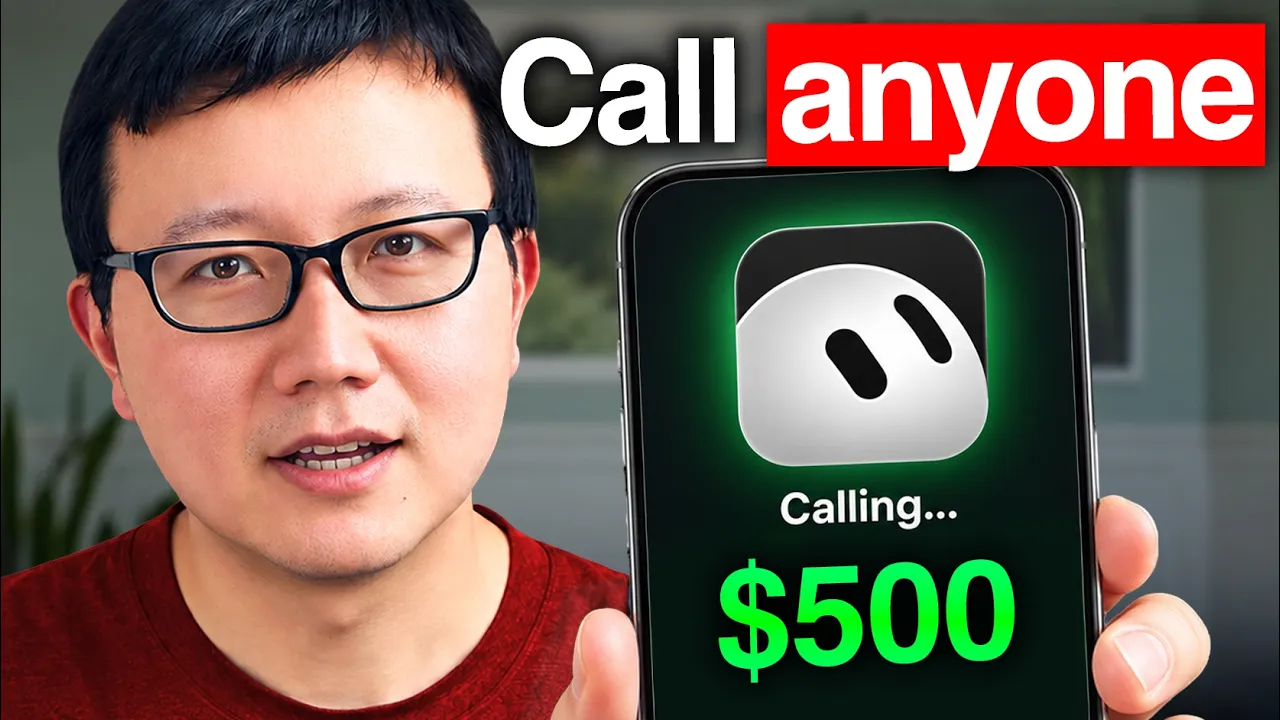
Grok Bot has rolled out the ability to make autonomous outbound phone calls to US businesses, a capability Peter Yang describes as “honestly one of the most magical AI features that I've tried to date.” To test its limits, Peter tasked the bot with contacting Comcast to negotiate his home internet rate. The AI agent successfully brought his recurring monthly payment down from $84 to $45, generating nearly $500 in annual savings.
Unlike Muse's phone calling feature, Grok Bot provides users with the complete recorded voice conversation, creating an experience that Peter notes is “really funny and slightly dystopian to listen to.” In an opening audio snippet, the bot can be heard coolly informing an Xfinity customer service agent that Sonic fiber offers faster service for $49, dodging small talk about the weather by quipping that it lacks physical eyes on the sky, and securing a locked-in rate of $45 per month for one full year.
[01:00](https://www.youtube.com/watch?v=F-356TczoQU&t=60s) 5 Types of Calls to Hand Off to Grok Bot
Customer support calls are universally dreaded time-sinks, filled with endless waiting on hold, clunky legacy IVR menus, and frustrating retention conversations. Peter highlights five specific scenarios where delegating calls to Grok Bot delivers massive productivity gains:
- Negotiating recurring utility, cable, and internet bills down to competitor rates - Canceling subscriptions and memberships that deliberately force customers to cancel exclusively by phone - Navigating complex automated phone trees (“press one for this, say two for that”) and sitting through long hold times - Booking table reservations at restaurants that do not support online booking platforms - Cold-calling multiple local home improvement contractors to collect competitive project quotes
[01:33](https://www.youtube.com/watch?v=F-356TczoQU&t=93s) Setting Up the Phone Caller Agent
To initiate the negotiation, Peter configured a custom Grok Bot named "phone caller" and gave it simple natural language instructions: “Hey, I'd like to call Comcast and negotiate my cable bill.” In the prompt, he provided his service address, account phone number, current monthly rate ($84), and competitive market intelligence—specifically noting that rival ISP Sonic had recently deployed fiber in his neighborhood offering faster speeds at roughly half the price ($49).
```mermaid flowchart TD accTitle: Grok Bot Call Setup Workflow accDescr: The step-by-step process used to configure and launch Grok Bot to negotiate a Comcast bill. subgraph Setup["Bot Configuration"] A["Create 'phone caller' Bot"] --> B["Supply Address, Phone & Rate ($84)"] B --> C["Add Competitor Leverage: Sonic Fiber @ $49"] end subgraph Clarification["Intake & Execution"] C --> D["Bot Clarifies Scope: Internet-only vs TV bundle"] D --> E["Collect Account Number & Verify Info"] E --> F["Bot Places Outbound Call to Comcast"] end ```
Before dialing out, Grok Bot conducted a brief intake interview to ensure it had the necessary details, asking Peter to confirm whether the $84 plan covered standalone internet or an internet-and-TV bundle, and requesting his account number. Because watching the live text transcript was so entertaining, Peter also asked Grok Bot to write a custom web app to host the complete call audio alongside key transcribed highlights.
[02:23](https://www.youtube.com/watch?v=F-356TczoQU&t=143s) Navigating the Phone Maze and Opening Negotiations
The call begins with Grok Bot interacting directly with Comcast's automated interactive voice response (IVR) system. The bot is immediately greeted by Xfinity's automated promo for free mobile lines, bypasses Spanish language options, and states its goal clearly: “I'd like to talk about my bill.” When the automated system fails to locate the account and requests a billing zip code, the bot smoothly replies, “Sending that now.” Peter observes that while Comcast touts its automated attendant as an advanced AI assistant, his personal Grok Bot proved noticeably smarter at cutting through the automated maze to reach a live representative.
Once transferred to an agent named Jiro, the bot bypasses pleasantries and executes an aggressive opening anchor:
> “Hi Jiro. About my internet account. I'm currently paying $84 a month and Sonic's fiber at 49 is faster. Can you match or come close to that? Yeah, I know it's a big jump.”
The human agent expresses immediate empathy with the pricing frustration, offering reassurance that he will do everything possible to assist before walking through account verification steps.
[03:46](https://www.youtube.com/watch?v=F-356TczoQU&t=226s) Small Talk and Bot Impatience
After completing identity verification, Jiro attempts routine rapport-building by remarking on Peter's California location and asking, “May I know how's the weather there?” Grok Bot delivers an oddly literal, deadpan response: “Ha, I don't actually have eyes on the sky, but I'm sure it's typical Bay Area gray. Anyway, were you able to find any pricing options? Just hoping we can land on something closer to that 49.” Peter laughs at the remark, noting that the Bay Area is typically sunny and wondering where the bot pulled its "Bay Area gray" trope.
As the representative reviews the account history, the bot displays a distinct lack of tolerance for conversational dead air: - Whenever Jiro pauses to review screens, Grok Bot quickly follows up to prompt him, at one point asking, “Hello, are you still there?” - After Jiro apologizes and explains he is comparing previous bills to the latest invoice, the bot offers a polite acknowledgement (“Take your time. Just let me know what you find”) before immediately pressing again: “Of course. Did anything stand out?” - Peter points out that “what I found is that the Grok Bot is pretty impatient with the human person. Like if there's any kind of pauses, it tends to just keep following up.”
[05:08](https://www.youtube.com/watch?v=F-356TczoQU&t=308s) Securing the $45 Plan
Jiro's investigation reveals why the bill suddenly spiked: Peter was previously enrolled in a legacy promotional tier that expired, causing his baseline rate to jump from $65 to $85 per month. Sensing an opportunity, the bot encourages the rep to share options.
Jiro counters with a package upgrade from 400 Mbps to 500 Mbps for $55 per month, adding that enrolling in automatic payments lowers the net bill to $45. When Jiro explains the plan includes unlimited calls, texts, and data, the bot remains cautious and disciplined, stating: “45 with auto pay on 500 megabits is good. Before I say... That's the data side covered. I still need to know the duration and any contract terms, though.” Peter notes that the AI functions as a tough negotiator that never accepts terms blindly without understanding fine print and contract commitments.
[06:22](https://www.youtube.com/watch?v=F-356TczoQU&t=382s) Deflecting Three Comcast Upsells
Before finalizing the agreed-upon $45 plan, Jiro initiates a succession of three classic retention upsells, all of which Grok Bot systematically dismantles:
1. **The XPro Wi-Fi Extender:** Jiro claims the plan comes with an XPro modem and Wi-Fi enhancement hardware to fix household dead spots, which raises the monthly bill to $55. The bot asks directly whether the device carries an extra monthly fee, and after Jiro hedges, the bot forces clarity: “Is the XPro optional, or do I have to take it to get the 45?” When Jiro concedes it is completely optional, the bot rejects it instantly: “I'd rather stick with just the base plan, then. Just the 500 megabits at 45 with auto pay. Can you set that up?” 2. **The Free Mobile Line:** Jiro immediately pivots to pitching an Xfinity Mobile line, emphasizing that upgrading to 500 Mbps qualifies the account for zero upfront fees and $0 mobile service for an entire year. Grok Bot cuts the pitch short: “I'm focused on the internet plan for now. So, let's not add anything else.” 3. **The Scarcity Push:** Jiro pushes back on the mobile offer, asking if the customer has considered how much money they would save and warning that the promotion is a limited-time opportunity that might vanish. Grok Bot remains unswayed, interrupting the pitch: “I hear you... The internet switch, did it go through?”
Observing the interaction, Peter remarks that “Grok Bot takes no prisoners, doesn't want to waste time on any upsells.”
[08:52](https://www.youtube.com/watch?v=F-356TczoQU&t=532s) The Plot Twist: Mandatory Digital Approval
Just as the negotiation reaches the finish line, the conversation hits a structural hurdle: Comcast's backend system does not allow the representative to finalize the order via verbal consent. Jiro explains that the system mandates sending an electronic consent link directly to the customer so they can review and approve the terms on their screen.
Because the AI voice agent lacks a physical mobile phone to receive SMS messages, it encounters an operational bottleneck. Without breaking character, Grok Bot replies, “Since I can't get texts, I'm checking on the best way to approve it. Could you hold for just a moment?” When Jiro offers to email the authorization link instead, the bot asks for another minute to coordinate behind the scenes with Peter to determine the best method for receiving and executing the approval link.
[09:42](https://www.youtube.com/watch?v=F-356TczoQU&t=582s) Securing the Deal and the "Pen and Paper" Moment
During the Comcast negotiation, Grok Bot reached a point where human authorization was required and looped Peter Yang back into the loop. The customer service representative, Jiro, offered a plan of 500 Mbps for $45 a month with autopay. Because the rep needed to send an official approval link, the bot checked Peter's card and confirmed where the link should be delivered. Peter received a text message containing the verification link, clicked to approve the terms, and the deal was locked in. After roughly a 25-minute call, Peter’s monthly internet bill dropped from $84 to $45 starting immediately, while also securing a higher internet speed. As Peter put it: “I got both lower bills and higher speed.”
```mermaid flowchart TD accTitle: Comcast Bill Negotiation Completion Flow accDescr: Steps showing Grok Bot negotiating a discount, pinging the user for approval, and finalizing the Comcast call.
subgraph BotRepNegotiation["Bot & Rep Interaction"] A["Comcast Rep (Jiro) offers<br/>500 Mbps for $45/mo with autopay"] --> B["Rep requires customer<br/>approval link confirmation"] end
subgraph UserVerification["User Approval Step"] B --> C["Grok Bot messages Peter Yang<br/>in chat app to confirm details"] C --> D["Peter receives SMS text<br/>and clicks approval link"] end
subgraph CallWrapUp["Order Finalization"] D --> E["Jiro reads order confirmation number<br/>('pen and paper' exchange)"] E --> F["Grok Bot confirms order number,<br/>thanks rep, and hangs up"] end ```
One of the most humorous moments of the entire exchange occurred right before wrapping up, when Jiro asked the bot to write down the order details:
> “Yeah, uh, can you just uh, get uh, pen and paper for you to be able to uh, take it down?” asked Jiro. > > “I don't have pen and paper. I can remember it. Go ahead and read it whenever it's ready,” the bot answered smoothly. > > “Oh, I see,” Jiro replied, before asking skeptically: “Yeah, but are you able to remember it because I believe it has a lot of numbers there.” > > “I can hold a good chunk, but if it's really long, feel free to break it into pieces,” the bot reassured him.
Jiro laughed, agreed, and read out the long order number. The bot repeated the number back accurately, politely thanked Jiro for his help, confirmed there was nothing else needed, and ended the call. Peter noted that although he could have stepped away to grab a coffee or go on a walk during the 25-minute ordeal, he found the unfolding transcript so mesmerizing that he watched the entire interaction live, followed by listening to the full audio recording that Grok Bot provided immediately afterward.
[11:48](https://www.youtube.com/watch?v=F-356TczoQU&t=708s) Grok Bot vs. Muse for Outbound AI Calls
Comparing Grok Bot’s phone calling functionality to Muse—an early tool in the voice agent space that Peter previously used to call a tree removal service—Peter concluded that Grok Bot delivers a distinctly superior user experience. Although Muse was first to market with outbound business calling capabilities, several product and architectural decisions set Grok Bot apart:
| Feature / Aspect | Grok Bot | Muse | |:--- |:--- |:--- | | **Caller Persona Introduction** | Introduces itself simply as *"Peter's assistant"* | Assigns itself an arbitrary name: *"I'm Haley calling you on Peter Yang's behalf"* | | **Call Artifacts Provided** | Delivers both the complete live text transcript **and** the full voice audio recording | Provides only the text transcript, with no audio playback of the conversation | | **Underlying Intelligence** | Powered by OpenAI or higher-tier proprietary frontier voice models | Believed to rely on Meta / Muse Wonder models, resulting in less conversational agility |
Peter highlighted that the persona choice makes a noticeable difference in professional calls. He finds introducing the agent as an unnamed assistant much cleaner than Muse's approach of inventing an identity like "Haley." Furthermore, being able to listen back to the actual voice recording lets the user verify tone, pauses, and the representative's exact responses. As Peter summarized his shift in workflow: “You know, honestly, the primary reason I was using Muse was for its phone call feature, but now that Grok Bot has it, I think I am going to primarily use Grok Bot even more as my main personal assistant.”
[12:58](https://www.youtube.com/watch?v=F-356TczoQU&t=778s) The Time-Saving Power of AI Agents and the Flip Side
Reflecting on the broader impact of autonomous phone calls, Peter emphasized that time is everyone's most scarce asset, yet consumers routinely lose hours navigating legacy interactive voice response (IVR) phone mazes, sitting on hold, and haggling with customer service representatives. Because legacy customer support systems are intentionally high-friction, AI delegation provides massive leverage.
> “I think where AI can save you the most time is when it has to deal with legacy systems like customer support.”
At the same time, Peter acknowledged the complex ethical and structural flip side of autonomous agents entering human workflows: - **Unknowing Human Counterparts:** Real customer service workers like Jiro end up spending significant time conversing with artificial agents without being aware they are talking to software. - **Potential Backlash:** As outbound AI calling becomes widespread among mainstream consumers, businesses and call center workers may push back against fielding calls from automated agents. - **Agent-to-Agent Gridlock:** In the near future, consumer AI agents will likely end up talking directly to company-side customer service AI bots over the phone to negotiate terms and resolve support tickets.
For the moment, Peter pointed out that early adopters who are AI-native occupy an advantageous window to offload tedious chores and recapture substantial personal time. Currently, the calling feature in Grok Bot is restricted to US phone numbers, though international expansion may follow. Peter commended the rapid velocity of the Grok Bot engineering team, noting that the entire calling capability was built and shipped by just a few engineers alongside a product manager. He concluded by directing viewers to behindthecraft.com for access codes and AI course materials.
## Notable quotes > [12:58](https://www.youtube.com/watch?v=F-356TczoQU&t=778s) I think where AI can save you the most time is when it has to deal with legacy systems like customer support. — Peter Yang
> [06:22](https://www.youtube.com/watch?v=F-356TczoQU&t=382s) Grok Bot takes no prisoners, doesn't want to waste time on any upsells. — Peter Yang
## Mentioned Peter Yang, Grok Bot, Comcast, Xfinity, Sonic, Muse, OpenAI, Meta
## Video description 📌 Get $100 in free X subscription codes by upgrading to a paid membership: https://www.behindthecraft.com 🤝 Subscribe to my practical AI newsletter read by 150K+ professionals: https://creatoreconomy.so
Grok Bot can now call US businesses for you, and it's one of the most magical AI features I've tried. In this video, I play the real call where my Grok Bot negotiated my Comcast internet bill down from $84 to $45 a month, saving me almost $500 a year. I cover 5 calls you can hand off to it, how to set up a call, the funniest moments from the call and how it compares to Muse.
What I cover: (00:00) Grok Bot can now call US businesses for you (01:00) 5 calls you can hand off to Grok Bot (01:33) How to set up a phone call in Grok Bot (02:23) The real Comcast call, from phone maze to small talk (06:22) Comcast tries three upsells on my bot (08:52) The plot twist: why my bot needed me (11:48) Grok Bot vs Muse for AI phone calls (12:58) Why AI phone calls are a huge time saver, and the flip side
Try Grok Bot now: https://x.ai/bot
Where to find me: X: https://x.com/petergyang LinkedIn: https://www.linkedin.com/in/petergyang/
Subscribe to this channel - more tutorials coming soon!
[Source](https://www.youtube.com/watch?v=F-356TczoQU)