Epstein Files Reveal How Disgraced Financier Built Global Influence Network
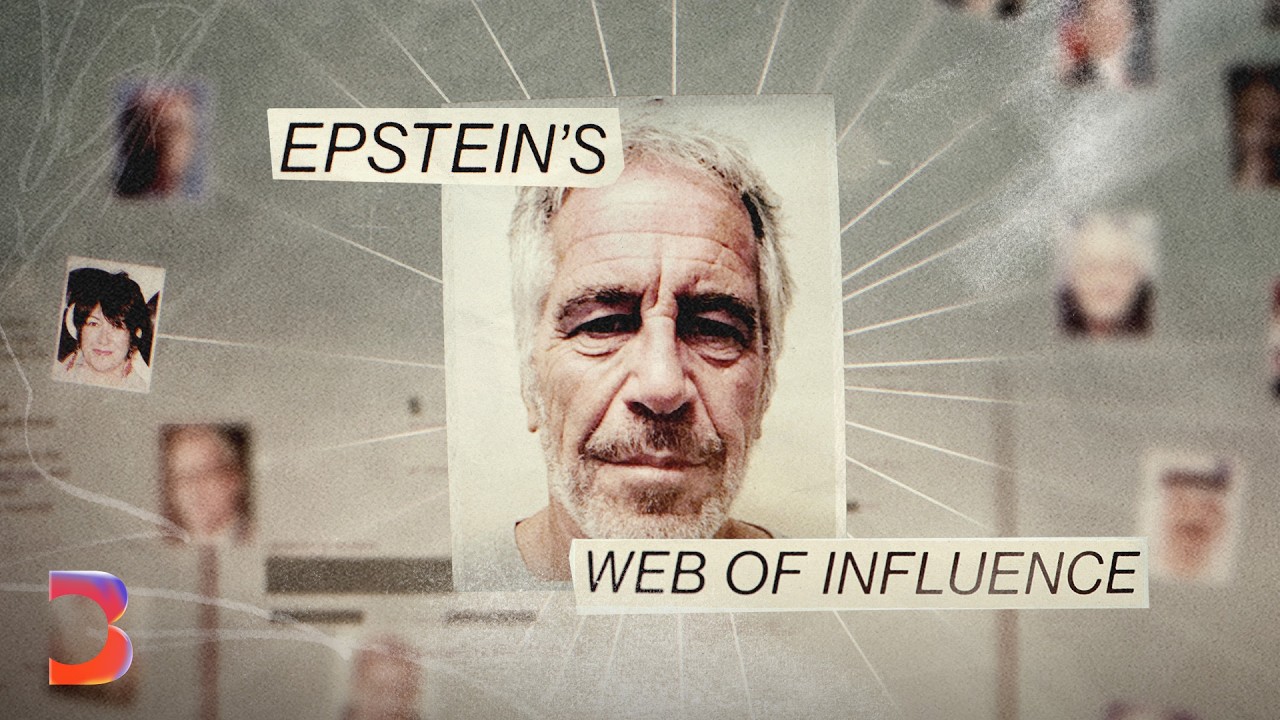
Bloomberg Originals
Analyzing thousands of documents shows Jeffrey Epstein weaponized personal favors, financial dealmaking, and academic gifts to insert himself at the center of elite power structures.
AI-assisted summary of Inside Jeffrey Epstein's Network of Power — original source. Check the original for full context.
Source published:
Detailed notes
## Background Published by Bloomberg Originals on YouTube on May 18, 2026, this video features a 14-minute investigation based on thousands of analyzed documents and emails. According to the page description, it maps Jeffrey Epstein's sprawling international network of power across finance, politics, and academia, illustrating how he relentlessly brokered connections and positioned himself at the center of high-stakes interactions.
## TL;DR The investigative feature details how Jeffrey Epstein cultivated and maintained influence among global elites despite mounting allegations and a 2008 conviction. Through key relationships with billionaires like Les Wexner and Leon Black, top bankers such as Jes Staley, and prominent legal and academic figures, Epstein leveraged financial strategy, discreet favors, and targeted philanthropy to gain institutional access. Using coded communication, lavish gifts, and high-level introductions, he made himself an indispensable intermediary connecting figures in finance, technology, and global politics. The video underscores how the release of these files has ignited formal investigations and widespread institutional scrutiny.
## Atmosphere & style The presentation carries a somber, analytical, and heavily journalistic tone, driven by data-led reporting and meticulous document examination. Rather than leaning into sensationalism, the narration maintains a measured, incisive cadence that methodically exposes the mechanics of transactional power and institutional enablement. Watching it evokes a stark sense of gravity and quiet outrage as the intricate, web-like nature of elite corruption and strategic reputation-laundering is laid bare.
## Key takeaways - [00:00](https://www.youtube.com/watch?v=MUg8U5YxS4k&t=0s) The release of the "Epstein files" by the US Justice Department revealed how Jeffrey Epstein engineered an extensive web of influence across finance, politics, and academia through transactional favors and constant dealmaking. - [01:15](https://www.youtube.com/watch?v=MUg8U5YxS4k&t=75s) Retail billionaire Les Wexner granted Epstein full power of attorney over his personal finances in the 1990s, serving as the critical launching pad for Epstein's financial credibility. - [02:30](https://www.youtube.com/watch?v=MUg8U5YxS4k&t=150s) Leon Black paid Epstein over $158 million for advisory services and tax strategy, while Epstein assisted Black in managing his art collection, tax planning, and personal secrecy. - [03:50](https://www.youtube.com/watch?v=MUg8U5YxS4k&t=230s) Jes Staley enabled Epstein's institutional standing at JPMorgan and actively intervened to keep Epstein as a client when internal concerns regarding sex trafficking surfaced. - [05:36](https://www.youtube.com/watch?v=MUg8U5YxS4k&t=336s) Epstein used access to young women as social leverage among powerful men, using coded communications with figures such as Jes Staley and Steve Tisch. - [06:20](https://www.youtube.com/watch?v=MUg8U5YxS4k&t=380s) Prominent legal figures including Brad Karp and Kathy Ruemmler provided Epstein with advice, legal guidance, and strategy surrounding his criminal record and media exposure. - [07:35](https://www.youtube.com/watch?v=MUg8U5YxS4k&t=455s) Epstein deployed tailored personal gifts and academic philanthropy, donating heavily to elite institutions like Harvard to acquire social capital and influence admissions. - [09:25](https://www.youtube.com/watch?v=MUg8U5YxS4k&t=565s) Through philanthropic ties with the Dubin family, Epstein funneled money to Mount Sinai and accessed a network of medical professionals for discreet care and consultations. - [10:48](https://www.youtube.com/watch?v=MUg8U5YxS4k&t=648s) Epstein expanded his influence into the tech industry via figures like Reid Hoffman, gaining introductions to prominent leaders including Mark Zuckerberg, Peter Thiel, and Elon Musk. - [11:33](https://www.youtube.com/watch?v=MUg8U5YxS4k&t=693s) By positioning himself as an indispensable global fixer and broker, Epstein connected powerful figures across business and politics to sustain his own influence.
## Detailed walkthrough ### [00:00](https://www.youtube.com/watch?v=MUg8U5YxS4k&t=0s) Mapping the Web of Elite Influence
Jeffrey Epstein was a prolific pedophile and sex trafficker with dozens of victims, many of whom were young and vulnerable women. While Ghislaine Maxwell remains the only individual currently imprisoned for her role in the illicit operation, the release of the "Epstein files" by the US Justice Department has named numerous high-profile figures. Most have denied wrongdoing, and few have faced legal proceedings. Both prior to and following his 2008 conviction for solicitation of prostitution with a minor, Epstein engineered a vast web of influence across finance, politics, and academia. By analyzing thousands of emails and documents, Bloomberg mapped how Epstein cultivated and sustained these connections through access, transactional favors, and constant dealmaking.
[01:15](https://www.youtube.com/watch?v=MUg8U5YxS4k&t=75s) Financial Roots: Les Wexner and L Brands
Epstein's rise in high finance began with retail billionaire Les Wexner, the founder of L Brands. Meeting in the 1980s while Epstein was attempting to establish himself as a financial advisor to the ultra-wealthy, the relationship quickly deepened. By the 1990s, Epstein was granted full power of attorney over Wexner's personal finances. Over time, Epstein acquired Wexner's New York mansion, purchased an L Brands aircraft, and managed major assets, including the construction of Wexner's luxury yacht alongside other massive development projects.
While this alliance served as the pivotal launching pad for Epstein's credibility in elite financial circles, the exact reasons why Wexner entrusted him with such extraordinary authority remain unclear. Wexner eventually cut ties with Epstein in the late 2000s, later reflecting, "As I look back at it, I was conned by the world Olympic all time con artist." A spokesperson for Wexner declined to comment on the matter.
[02:30](https://www.youtube.com/watch?v=MUg8U5YxS4k&t=150s) Billions and Personal Favors: Leon Black
Leveraging the reputation gained from his time with Wexner, Epstein transitioned to other high-net-worth clients, most notably Leon Black, co-founder of private equity giant Apollo Global Management. Epstein advised Black across a spectrum of matters, ranging from trust and estate planning to tax issues, philanthropy, and managing Black’s multi-billion-dollar art collection. An internal investigation commissioned by Apollo revealed that Black believed Epstein's advice generated over $1 billion in value. In exchange, Black routed at least $158 million to Epstein—fees that the US Senate Finance Committee noted far exceeded standard rates for comparable advisors—along with a $10 million donation to one of Epstein's charities.
Epstein's involvement extended deep into Black's personal life as well. He assisted Black in concealing an affair and even suggested surveillance when the mistress demanded a major payout. A 2026 Senate Finance Committee investigation alleged that Black made millions of dollars in payments to women, frequently utilizing Epstein as an intermediary. Although Black stepped down as Apollo's CEO in 2021 and has repeatedly expressed regret over the association, the ties highlight how financial strategy and personal secrecy intersected in Epstein’s operation.
- Leon Black paid Epstein at least $158 million for financial and advisory services. - Epstein advised Black on managing a multi-billion-dollar art portfolio and tax planning. - Black directed an additional $10 million to an Epstein-controlled charitable entity.
[03:50](https://www.youtube.com/watch?v=MUg8U5YxS4k&t=230s) Institutional Gatekeeping: Jes Staley and JPMorgan
Former Barclays CEO Jes Staley served as another crucial figure in Epstein's financial ascent. Their relationship began in the early 2000s when Staley was at JPMorgan, managing high-net-worth clients whose accounts generated millions of dollars in annual bank fees. Emails and legal filings reveal a close relationship defined by frequent communications, shared trips, and strategic financial moves. Epstein famously facilitated JPMorgan's acquisition of Highbridge Capital by introducing Staley to his close friend Glenn Dubin, Highbridge's co-founder, earning Epstein a $15 million finder's fee.
When internal concerns regarding Epstein's alleged involvement in sex trafficking began to surface within JPMorgan, records indicate Staley actively intervened to retain him as a client. In subsequent legal battles, JPMorgan accused Staley of preserving Epstein's relationship with the bank while denying its own knowledge of his illicit conduct. Staley, who did not respond to requests for comment, has consistently denied any knowledge of or involvement in Epstein's crimes.
[05:36](https://www.youtube.com/watch?v=MUg8U5YxS4k&t=336s) Coded Transactions and Social Access
The released emails demonstrate how Epstein used access to young women as a mechanism of social leverage and currency among powerful men. Correspondences between Epstein and Staley frequently featured coded language to discuss women, including subtle references to Disney characters.
Similarly, the files show that Steve Tisch, Executive Vice President and Chairman of the Board of the New York Giants, frequently contacted Epstein regarding various women, discussing their nationalities and physical features. In one explicit exchange, Tisch inquired whether a woman was a "pro or civilian?" Tisch later stated that he never accepted Epstein's invitations, deeply regretted associating with him, and has not been charged with any crime.
[06:20](https://www.youtube.com/watch?v=MUg8U5YxS4k&t=380s) Legal Shielding: Brad Karp and Kathy Ruemmler
To navigate legal challenges and preserve his status after his 2008 conviction, Epstein relied heavily on relationships with prominent legal figures. Among them was Brad Karp, who worked alongside Epstein in managing Leon Black’s wealth. Justice Department emails reveal Karp reviewing legal documentation for Epstein, including a draft filing arguing against reopening Epstein’s decade-old plea deal regarding sex trafficking charges. Karp, who expressed regret over his social interactions with Epstein, passed his observations along to Epstein, who then shared them with his wider legal team and former White House counsel Kathy Ruemmler.
Communications indicate that Ruemmler provided Epstein with guidance and advice over several years, including strategies for handling press inquiries regarding his criminal record. In return, Epstein showered Ruemmler with lavish gifts, ranging from spa treatments to designer goods worth thousands of dollars. A spokesperson for Ruemmler—who plans to step down as general counsel at Goldman Sachs in June—stated her interactions were strictly within a professional context as a defense attorney, emphasizing that she had no knowledge of his criminal activity and engaged in no wrongdoing.
[07:35](https://www.youtube.com/watch?v=MUg8U5YxS4k&t=455s) Personal Favors, Gifts, and Philanthropic Leverage
Epstein's transactional strategy did not always involve grand financial deals; he frequently deployed minor personal favors and tailored gifts to cement rapport across his network. Documented gifts include arranging chicken soup for a sick Kathy Ruemmler, sending a cashmere sweater to Noam Chomsky, gifting an Apple Watch to Steve Bannon, providing dumbbells to Reid Hoffman, and sending underwear to Woody Allen.
Simultaneously, philanthropy served as a key avenue for gaining credibility and social capital. Epstein directed significant funds toward prominent academic institutions, with Harvard University being among the largest beneficiaries. Epstein established close ties with multiple Harvard faculty members and university leaders, most notably Larry Summers, who served as Harvard's president from 2001 to 2006. Summers notably introduced Epstein to former President Bill Clinton. While Clinton denied knowledge of Epstein's crimes and characterized their relationship as a brief acquaintance, Summers expressed deep regret for his association while maintaining he engaged in no wrongdoing.
- Epstein documented at least $1.6 million in donations to New York-area schools. - Records show at least $400,000 paid by Epstein toward private tuition fees. - Epstein leveraged his network to influence elite school admissions, such as assisting the daughter of Ariane de Rothschild via Eva Andersson-Dubin.
[09:25](https://www.youtube.com/watch?v=MUg8U5YxS4k&t=565s) The Dubin Network, Mount Sinai, and Medical Access
Some of Epstein's deepest philanthropic and personal ties ran through physician Eva Andersson-Dubin and her husband, Highbridge Capital co-founder Glenn Dubin. As the founder of the Dubin Breast Center at Mount Sinai, Andersson-Dubin was connected to medical circles that Epstein accessed through donations. Records from the Justice Department outline at least $400,000 in Epstein-directed funds earmarked for Mount Sinai-linked initiatives.
This philanthropic footprint provided Epstein with practical, discrete advantages. He regularly drew on medical professionals within the Dubins' network to secure discreet medical care and consultations for young women in his orbit. Prominent surgeon Dr. Jess Ting developed a direct relationship with Epstein, with email logs showing Epstein's assistants coordinating appointments and minor procedures for Epstein and his female acquaintances. Correspondence shows Epstein directing a $50,000 donation toward Ting's research. Ting denied any wrongdoing, while a spokesperson for the Dubins stated they were horrified by the allegations and would have severed ties immediately had they known of Epstein's criminal conduct.
[10:48](https://www.youtube.com/watch?v=MUg8U5YxS4k&t=648s) Institutional Influence and Tech Elite Expansion
Epstein's financial reach extended to other academic departments, including at least $50,000 routed to Columbia University's dental school. His personal dentist, Dr. Thomas Magnani, was subsequently removed from his position at the university after Columbia determined that Epstein's girlfriend had been admitted to the dental school through an irregular admissions process. Magnani did not respond to requests for comment.
Through his philanthropic maneuvers, Epstein maneuvered into elite donor circles, connecting with major figures in the technology sector like LinkedIn co-founder Reid Hoffman. Hoffman subsequently aided in expanding Epstein's network deeper into Silicon Valley, hosting a dinner where Epstein was introduced to tech leaders including Mark Zuckerberg, Peter Thiel, and Elon Musk.
[11:33](https://www.youtube.com/watch?v=MUg8U5YxS4k&t=693s) The Ultimate Intermediary
As Epstein’s web of contacts expanded across sectors, he transformed his network into a self-sustaining source of influence, positioning himself as an indispensable broker and fixer. Across thousands of messages released in the Epstein files, he is repeatedly seen offering high-level introductions and acting as the central nexus connecting powerful figures who sought specific resources or political favors.
In one instance, Epstein facilitated introductions between DP World chairman Sultan Ahmed bin Sulayem and former British politician Peter Mandelson; bin Sulayem subsequently sought UK government support for a major port shipping project. In another deal, Epstein arranged a meeting between Apollo co-founder Josh Harris and Bill Gates—a move that carried direct financial incentives for Epstein, who held 250,000 shares in Apollo at the time. By identifying the specific needs of powerful individuals and acting as a trusted confidant, Epstein successfully embedded himself across global business, politics, and academia. While appearing in his contact records does not inherently denote criminal activity, the disclosure of these files has triggered widespread resignations, formal investigations, and intense scrutiny for those who enabled his access.
## Notable quotes > [01:15](https://www.youtube.com/watch?v=MUg8U5YxS4k&t=75s) As I look back at it, I was conned by the world Olympic all time con artist. — Les Wexner
> [05:36](https://www.youtube.com/watch?v=MUg8U5YxS4k&t=336s) pro or civilian? — Steve Tisch
## Mentioned Jeffrey Epstein, Ghislaine Maxwell, US Justice Department, Bloomberg, Les Wexner, L Brands, Leon Black, Apollo Global Management, US Senate Finance Committee, Jes Staley, Barclays, JPMorgan, Glenn Dubin, Highbridge Capital, Steve Tisch, New York Giants, Brad Karp, Kathy Ruemmler, Goldman Sachs, Noam Chomsky, Steve Bannon, Apple Watch, Reid Hoffman, Woody Allen, Harvard University, Larry Summers, Bill Clinton, Ariane de Rothschild, Eva Andersson-Dubin, Dubin Breast Center, Mount Sinai, Dr. Jess Ting, Columbia University Dental School, Dr. Thomas Magnani, LinkedIn, Mark Zuckerberg, Peter Thiel, Elon Musk, Sultan Ahmed bin Sulayem, DP World, Peter Mandelson, Josh Harris, Bill Gates
[Source](https://www.youtube.com/watch?v=MUg8U5YxS4k)