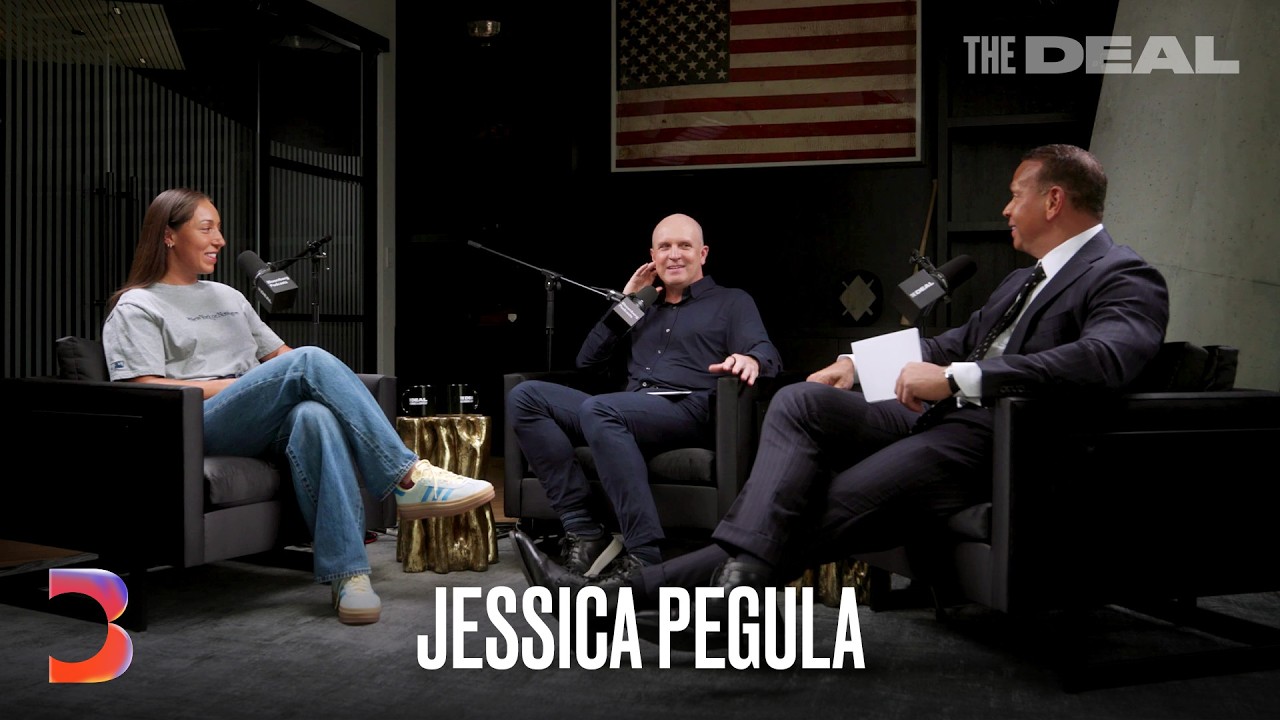
Jess Pegula Pushes Tennis Industry to Equalize Tour Prize Pools
Bloomberg Originals
Tennis players lack collective bargaining leverage to secure major league-style revenue splits, leaving prize pool parity outside Grand Slams dependent on individual tournament investments.
## Background
Published by Bloomberg Originals on YouTube on May 21, 2026, this episode of *The Deal* features hosts Alex Rodriguez and Jason Kelly sitting down with top global tennis player Jess Pegula. The episode highlights Pegula discussing her advocacy for structural changes and equal pay in professional tennis, alongside the business insights she gained from her parents, owners of the Buffalo Bills and Buffalo Sabres.
## TL;DR
Jess Pegula discusses the commercial realities of professional tennis, highlighting equal prize money initiatives like the Charleston Open and the structural hurdles to player revenue sharing, including the lack of a players' union. Serving on the WTA Player Council, she details efforts to address calendar fatigue and improve player compensation, drawing on support from figures like Billie Jean King. Pegula also shares leadership lessons from her parents' sports ownership, reflects on representing Buffalo sports culture globally, and discusses her long-term aspirations in sports executive management.
## Atmosphere & style
The conversation is conversational, pragmatic, and candid, blending the relaxed rapport of professional athletes with serious business dialogue. Pegula speaks with grounded confidence and dry humor, bringing an insightful insider perspective to both player labor dynamics and executive team ownership. The interaction between Pegula, Rodriguez, and Kelly feels like an engaging, peer-level discussion that balances lighthearted rapid-fire moments with focused insights on sports economics.
## Key takeaways
- [00:00](https://www.youtube.com/watch?v=O_xd_McRfQw&t=0s) Pegula applies her mother Kim's core philosophy, 'If it's meant to be, it's up to me,' focusing on proactive problem-solving without being deterred by systemic barriers.
- [01:31](https://www.youtube.com/watch?v=O_xd_McRfQw&t=91s) Ben Navarro's decision to match ATP 500 prize money at the Charleston WTA 500 event established a crucial benchmark for equal pay in non-Grand Slam tournaments.
- [03:03](https://www.youtube.com/watch?v=O_xd_McRfQw&t=183s) Structural hurdles such as the absence of a union, individual contractor status, and financial dependency on match wins prevent tennis players from achieving 50-50 revenue splits like major US leagues.
- [04:00](https://www.youtube.com/watch?v=O_xd_McRfQw&t=240s) ATP and WTA players are actively collaborating to push for higher revenue distribution, particularly targeting a larger percentage from the four Grand Slam events.
- [05:21](https://www.youtube.com/watch?v=O_xd_McRfQw&t=321s) As a member of the WTA Player Council, Pegula works to address an intense 11-month calendar and constant travel that lead to severe player fatigue and burnout.
- [09:12](https://www.youtube.com/watch?v=O_xd_McRfQw&t=552s) Billie Jean King and Ilana Kloss actively support the current generation of tennis players in their equal pay and organizational initiatives.
- [10:00](https://www.youtube.com/watch?v=O_xd_McRfQw&t=600s) Pegula's family background in sports ownership provides her with a dual perspective on player needs and tournament operational realities during negotiations.
- [14:43](https://www.youtube.com/watch?v=O_xd_McRfQw&t=883s) Her parents managed their franchises with distinct approaches: Terry focused on coaching, athletes, and team passion, while Kim led the business strategy, operations, and fan experience.
- [16:00](https://www.youtube.com/watch?v=O_xd_McRfQw&t=960s) Pegula harbors long-term ambitions for executive sports management after her playing career, building on a childhood dream of becoming an NHL general manager.
- [18:13](https://www.youtube.com/watch?v=O_xd_McRfQw&t=1093s) Pegula uses her global tennis platform to champion Buffalo sports, regularly engaging with 'Bills Mafia' fans worldwide and writing Buffalo notes on camera lenses during matches.
- [21:18](https://www.youtube.com/watch?v=O_xd_McRfQw&t=1278s) Among active and former players, Pegula admires Maria Sharapova as a major business role model for her hands-on venture capital work and brand building.
- [22:50](https://www.youtube.com/watch?v=O_xd_McRfQw&t=1370s) Pegula maintains strong confidence in quarterback Josh Allen and the Bills' championship potential, alongside optimism for the Sabres' playoff push.
## Detailed walkthrough
Here is a detailed, faithful walkthrough of the transcript segment:
### [00:00](https://www.youtube.com/watch?v=O_xd_McRfQw&t=0s) Mindset, Upbringing, and the Business of Tennis
Jessica Pegula opens by reflecting on a core lesson passed down from her mother, Kim Pegula: "If it's meant to be, it's up to me." Growing up, she watched her mother break barriers in sports while operating with an independent mindset that completely ignored perceived roadblocks. That upbringing shaped Pegula's own confidence and straightforward, pragmatic approach to challenges—she simply does not focus on obstacles and chooses to just get things done.
Hosts Jason Kelly and Alex Rodriguez welcome Pegula to *The Deal*. Kelly highlights Pegula's status as a top global tennis player and a key figure advocating for structural changes in the business of tennis, while also acknowledging her prominent background as part of the Pegula family (owners of the NFL's Buffalo Bills and the NHL's Buffalo Sabres). The hosts express their enthusiasm for digging into tennis economics, player revenue share, and equal pay dynamics.
### [01:31](https://www.youtube.com/watch?v=O_xd_McRfQw&t=91s) Equal Prize Money and the Charleston Open Benchmark
Kelly congratulates Pegula on her back-to-back tournament victories at the Charleston Open. This victory carries significant business weight: at the previous year's event, tournament owner Ben Navarro announced that the Charleston Open (a WTA 500 event) would match the prize money of ATP 500 tournaments.
Pegula clarifies a common public misconception, noting that while Grand Slams feature equal prize money for men and women, major discrepancies persist across other tour levels like 250s, 500s, and 1000s. Navarro’s decision set a high benchmark across the industry, forcing other tournaments to evaluate their own financial commitments to female athletes.
- **Tour Levels:** Tennis tournaments are categorized into Grand Slams, WTA/ATP 1000s, 500s, and 250s.
- **The Charleston Decision:** Ben Navarro elevated the Charleston Open WTA 500 prize purse to parity with equivalent ATP 500 events.
- **Impact:** Elevating prize money creates healthy competition among venues and sets a standard for player investment.
### [03:03](https://www.youtube.com/watch?v=O_xd_McRfQw&t=183s) Player Revenue Share, Labor Dynamics, and Slams
Rodriguez compares tennis revenue distribution to major American sports leagues like the NFL, MLB, and NBA—and Kelly adds the NHL to round out the "Big Four"—where revenues are split roughly 50-50 between team owners and players. When asked if tennis could ever reach a 60-40 split favoring players, Pegula is realistic about the structural hurdles facing individual sport athletes:
- **Lack of a Union:** Tennis players operate as independent contractors with no unified union representing their collective bargaining rights.
- **Individualist Mindset:** Because players compete individually and cover their own team costs, achieving consensus across the entire player body is difficult.
- **Financial Risk of Striking:** Unlike salaried athletes in traditional sports leagues, tennis players earn money almost entirely by winning matches. Without a base salary, players cannot easily risk boycotts or strikes.
Despite these hurdles, Pegula notes unprecedented ongoing conversations between ATP and WTA players to collectively advocate for a larger share of revenue, particularly from the four Grand Slam tournaments.
### [05:21](https://www.youtube.com/watch?v=O_xd_McRfQw&t=321s) Equal Pay Progress, Calendar Fatigue, and Player Advocacy
Discussing the wider landscape of equal pay outside the Grand Slams, Pegula points out that several top-tier WTA 1000 events—such as Madrid, Miami, and Indian Wells—now offer equal prize money. However, lower-tier tournaments still lag behind. Pegula, who sits on the WTA Player Council, emphasizes that high standards and tournament investment directly incentivize top players to compete, driving overall revenue growth.
The conversation shifts to the intense physical demands of the tennis calendar, which spans roughly 11 months of the year. The constant weekly travel across different countries, surfaces, and playing conditions creates severe burnout. Tournament organizers often hope player fatigue will wear down labor advocacy over time, but Pegula emphasizes that players are staying actively engaged in discussions to condense the calendar and safeguard athlete well-being.
- **WTA Player Council:** Pegula serves on the council, bridging the gap between player demands and tournament operations.
- **Season Length:** The professional tennis season stretches across 11 months, forcing players to manage heavy physical wear and travel demands.
### [09:12](https://www.youtube.com/watch?v=O_xd_McRfQw&t=552s) Support from Billie Jean King and Joining the WTA Player Council
When Rodriguez asks whether tennis legend Billie Jean King has been involved in these unionization and equal pay discussions, Pegula confirms that King and her partner Ilana Kloss are deeply supportive, regularly texting with advice and backing the current generation's efforts.
Pegula shares that her entry into leadership was unintentional: about four years prior (around the post-COVID period), she stepped into an open seat on the WTA Player Council after another player retired. Entering her mid-to-late twenties with no prior administrative experience allowed her to learn the business side from scratch. Drawing on insights from her family's sports background, she learned to appreciate both sides of the table—balancing player demands with the operational realities of tournament directors.
### [12:10](https://www.youtube.com/watch?v=O_xd_McRfQw&t=730s) Leadership Lessons from the Pegula Family Business
Reflecting on her parents' management of major professional sports franchises, Pegula shares key operational lessons she applies to her tennis career and leadership roles. Her mother taught her that success fundamentally comes down to managing people—understanding individual strengths, adapting to different personalities, and placing people in roles where they can succeed.
Pegula highlights that team ownership involves a steep learning curve, as there is no true training ground before purchasing a franchise. Rodriguez nods in agreement with the reality of learning on the job as a sports owner. Pegula recalls that while her family's acquisition of the NHL's Buffalo Sabres was fun and exciting, acquiring the NFL's Buffalo Bills "blew up our world" due to the massive scale, public scrutiny, and platform of the NFL.
[14:43](https://www.youtube.com/watch?v=O_xd_McRfQw&t=883s) Parents' Roles in Sports Leadership and Family Business Future
Jess Pegula reflects on the contrasting perspectives her parents brought to managing professional sports franchises. Her father, Terry Pegula, viewed team ownership through the lens of a lifetime of hard work, seeing it as an enjoyable, passion-driven venture where he could immerse himself in sports, engage with athletes, and learn from head coaches. In contrast, her mother, Kim Pegula, focused heavily on the business side, fan engagement, and modernizing the game-day experience by visiting different venues across sports to observe best practices.
Looking ahead to her own future beyond her active playing career, Pegula shares a childhood ambition of wanting to become the first female general manager in the NHL after falling in love with hockey around age 15. While she recognizes that specific path may not happen, she expresses a strong desire to stay deeply involved in sports executive management, whether in tennis, hockey, or football. With her sister Laura Pegula already taking on a larger executive role in the family's organizations, Jess notes that her father supports her long-term involvement, though he consistently emphasizes keeping her current focus on professional tennis. Alex Rodriguez and Jason Kelly note that staying involved on the management side provides a great competitive outlet for retired athletes without the physical toll on the body.
* **Family Unity through Franchise Ownership:** Acquiring sports franchises—specifically the Buffalo Sabres—brought the family closer together through a shared mission, excitement, and collective pride.
* **Sister’s Role:** Laura Pegula has taken on an expanded operational role within the family's sports portfolio.
---
[18:13](https://www.youtube.com/watch?v=O_xd_McRfQw&t=1093s) Connecting Tennis to Buffalo and the Global "Bills Mafia"
Pegula discusses the intense pride and global reach of Buffalo sports culture, particularly the passionate fanbase known as "Bills Mafia." No matter where she travels on the WTA tour—whether competing across Asia, Europe, or Australia—fans show up wearing team gear and shouting "Go Bills!" and "Go Sabres!" Pegula actively leans into this connection; during playoff runs at the Australian Open, she frequently writes Buffalo-related notes on court camera lenses, such as her viral comment "That was a catch."
Being one of the few high-profile professional tennis players from the Buffalo area alongside former pro Jimmy Arias, Pegula takes pride in serving as a bridge between tennis and the Buffalo sports community. She aims to cultivate tennis fans in a market where the sport has historically had a smaller footprint.
* **Buffalo Market Realities:** Pegula notes that tennis visibility in Buffalo is virtually non-existent outside of her and Jimmy Arias reaching elite levels.
* **Playoff Timing:** The Australian Open constantly overlaps with the NFL playoffs, making January an intense period for following the Bills from afar.
---
[19:30](https://www.youtube.com/watch?v=O_xd_McRfQw&t=1170s) Rapid Fire: Favorite Surface, Federer, and Career Breakthroughs
The hosts transition into a rapid-fire Q&A session, probing Pegula’s personal preferences, career milestones, and favorite figures across tennis and business:
* **Preferred Surface:** Hard court is her ultimate choice if she had to play on only one surface for the rest of her life.
* **All-Time Favorite Player:** Roger Federer.
* **Most Memorable Career Match:** Qualifying for the main draw of the US Open for the first time. She recalls winning a grueling three-set match in the final round of qualifying while battling nerves and heat, having previously fallen in the final qualifying round multiple times.
* **Roland-Garros Main Storyline:** Iga Świątek bringing in a new coach with strong ties to Rafael Nadal's team. Pegula jokes that the "King of Clay" advising the "Queen of Clay" makes the rest of the WTA tour panic, though she views herself as a dangerous underdog on clay.
* **Dream Grand Slam Title:** US Open.
---
[21:18](https://www.youtube.com/watch?v=O_xd_McRfQw&t=1278s) Business Inspirations and Life Advice
When discussing business role models among athletes, Pegula singles out former World No. 1 Maria Sharapova. Pegula admires Sharapova's ability to balance fierce, relentless competitiveness on court with successful ventures in fashion, consumer products, and venture capital, including appearances on *Shark Tank* and *The Deal*. Alex Rodriguez confirms Sharapova's hands-on approach, noting that she attends deal meetings alone without a entourage and conducts thorough due diligence.
Pegula shares that her dry, sarcastic humor aligns with Sharapova’s persona. She also credits her mother for the most impactful advice she ever received: "If it's meant to be, it's up to me." This mindset of independent accountability guided her mother in breaking gender barriers in sports management without viewing obstacles as permanent roadblocks.
* **Sharapova’s Business Style:** Driven by personal passion and quiet, authentic confidence rather than passive endorsement deals.
* **Maternal Influence:** Kim Pegula's proactive philosophy reinforced independence across the entire household.
---
[22:50](https://www.youtube.com/watch?v=O_xd_McRfQw&t=1370s) The Buffalo Sabres, Josh Allen, and Final Thoughts
To close the interview, the hosts press Pegula on what it will take for Buffalo's major sports franchises to secure championship titles. Pegula expresses enthusiasm for the Buffalo Sabres as they push to end their 15-year playoff drought, noting how energized the city has become.
For the Buffalo Bills, Pegula highlights the leadership of star quarterback Josh Allen. She emphasizes that consistency, playoff positioning, and incremental learning are key to breaking through for a Super Bowl title, adding succinctly that "Josh is the man" and expressing full trust in his leadership on the field.
* **Sabres Playoff Drought:** The Sabres' drive toward their first playoff appearance in 15 years generated immense excitement across the region.
* **Quarterback Leadership:** Pegula expresses absolute confidence in Josh Allen's ability to guide the Bills to a championship.
## Notable quotes
> [00:00](https://www.youtube.com/watch?v=O_xd_McRfQw&t=0s) If it's meant to be, it's up to me. — Kim Pegula (quoted by Jessica Pegula)
> [12:10](https://www.youtube.com/watch?v=O_xd_McRfQw&t=730s) blew up our world — Jessica Pegula
> [18:13](https://www.youtube.com/watch?v=O_xd_McRfQw&t=1093s) Go Bills! — Fans (quoted by Jessica Pegula)
> [18:13](https://www.youtube.com/watch?v=O_xd_McRfQw&t=1093s) Go Sabres! — Fans (quoted by Jessica Pegula)
> [18:13](https://www.youtube.com/watch?v=O_xd_McRfQw&t=1093s) That was a catch. — Jessica Pegula
> [22:50](https://www.youtube.com/watch?v=O_xd_McRfQw&t=1370s) Josh is the man — Jessica Pegula
## Mentioned
Jessica Pegula, Kim Pegula, Terry Pegula, Laura Pegula, Alex Rodriguez, Jason Kelly, Ben Navarro, Billie Jean King, Ilana Kloss, Jimmy Arias, Roger Federer, Iga Świątek, Rafael Nadal, Maria Sharapova, Josh Allen, The Deal, Bloomberg Originals, Buffalo Bills, Buffalo Sabres, NFL, NHL, MLB, NBA, WTA, ATP, WTA Player Council, Charleston Open, Australian Open, US Open, Roland-Garros, Shark Tank
杰西·佩古拉呼吁网球界实现巡回赛奖金均等化
网球运动员缺乏集体谈判的筹码以获得类似大联盟形式的收入分成,使得大满贯之外的赛事奖金均等仍取决于各赛事的单独投资。
Jess Pegula深入探讨了职业网球的商业现状,重点阐述了查尔斯顿公开赛等同酬举措,以及缺乏球员工会等阻碍球员获取收入分成的结构性障碍。作为WTA球员委员会成员,她在Billie Jean King等人士的支持下,详细介绍了为解决赛历疲劳和改善球员薪酬所做的努力。此外,Pegula还分享了从父母经营体育资产中汲取的领导力经验,反思了在全球范围代表布法罗体育文化的意义,并讨论了自己未来在体育高管管理层方面的长远规划。
本·纳瓦罗将查尔斯顿公开赛(WTA 500)的奖金提升至与同级别 ATP 500 赛事相当,为大满贯以外网球赛事的男女同工同酬树立了关键行业标杆。 (1:31)
由于缺乏工会、球员属于独立承包商且收入高度依赖胜负,网球界难以复制北美四大职业联赛约 50-50 的收入分成模式,但 ATP 与 WTA 球员正积极联合争取更高的大满贯分成比例。 (3:03)
佩古拉作为 WTA 球员委员会成员,正与比利·简·金等网坛前辈合作推动改革,力求解决长达 11 个月的繁重赛历对球员身心健康造成的严重消耗。 (5:21)
佩古拉借鉴父母在管理 NFL 水牛城比尔队和 NHL 水牛城军刀队时的双重视角与人际管理经验,并践行母亲“事在人为(If it's meant to be, it's up to me)”的务实处事哲学。 (12:10)
Reading summary
Professional tennis player Jessica Pegula argues that closing the sport's revenue and pay disparities requires persistent collective organizing, informed by the operational realities of sports ownership.
Prize Money Disparities Outside Grand Slams (1:31)
While Grand Slam tournaments offer equal prize purses for men and women, Pegula points out that notable pay discrepancies persist across lower-tier events, including 250, 500, and certain 1000-level tournaments. Top-tier WTA 1000 tournaments like Madrid, Miami, and Indian Wells have achieved parity, but lower levels still lag behind.
Pegula highlights tournament owner Ben Navarro's move to raise the Charleston Open (a WTA 500 event) prize purse to match equivalent ATP 500 events as an industry benchmark. She argues that elevated financial investments by tournament directors set competitive standards across venues and directly incentivize top-tier athlete participation, driving overall commercial growth.
Labor Constraints and Player Revenue Share (3:03)
Unlike major North American leagues like the NFL, MLB, NBA, and NHL—which split revenues roughly 50-50 between team owners and players—tennis lacks a standard collective bargaining framework. Pegula notes that tennis players operate as independent contractors without a unified labor union. Furthermore, an individualist mindset and the requirement that players personally finance their own coaching and support teams make industry-wide consensus difficult.
Because players earn money almost entirely by winning matches rather than through guaranteed base salaries, they face steep financial risks if they attempt boycotts or strikes. Despite these structural barriers, Pegula notes that ATP and WTA athletes are engaged in unprecedented joint discussions to push for a larger share of revenue, particularly from the four Grand Slam tournaments.
Calendar Demands and WTA Player Council (5:21)
The professional tennis calendar spans approximately 11 months per year, exposing players to severe physical wear and burnout as they travel weekly across different surfaces, time zones, and playing conditions. Pegula observes that tournament organizers historically relied on athlete fatigue to blunt labor advocacy, but active player representatives remain focused on condensing the schedule and safeguarding physical health.
Serving on the WTA Player Council, Pegula works with peers alongside external support from figures like Billie Jean King and Ilana Kloss. Pegula entered the council in her mid-to-late twenties without prior administrative experience, using the platform to bridge player grievances with tournament operational constraints.
Ownership Insights and Long-Term Management Goals (12:10)
Pegula applies operational insights learned from her family's sports portfolio, which includes the NFL's Buffalo Bills and NHL's Buffalo Sabres. Her mother, Kim Pegula, emphasized people management, fan experience, and stadium operations, while her father, Terry Pegula, focused on coaching dynamics and athletic performance. The transition to owning an NFL franchise brought immense public scrutiny and taught her family the steep learning curve of sports governance.
Drawing on business role models like Maria Sharapova, who balanced on-court performance with active venture capital and business management, Pegula intends to pursue executive sports leadership after retirement. While her sister Laura Pegula has taken on expanded responsibilities in the family business, Pegula expresses long-term interest in front-office roles across tennis, hockey, or football once her active playing career concludes.
Tennis labor advocacy faces systemic resistance due to calendar congestion, the absence of a union, and player reliance on prize-money-only income. While joint ATP and WTA dialogue with Grand Slams marks progress, aligning player demands with private tournament incentives across lower tour tiers remains an open challenge.
## Background
该内容由彭博旗下频道 Bloomberg Originals 于 2026 年 6 月 21 日发布在 YouTube 平台。根据页面简介,主持人亚历克斯·罗德里格斯(Alex Rodriguez)与杰森·凯利(Jason Kelly)在《The Deal》节目中专访了世界顶尖女子网球名将杰西卡·佩古拉(Jessica Pegula),深入探讨了她为职业网球商业体系变革所做的游说推动,以及她从父母身上汲取的商业与管理智慧。
## TL;DR
杰西卡·佩古拉在访谈中深度剖析了职业网球与北美四大职业联盟在劳资架构上的本质差异,指出了网球缺乏工会、球员自负盈亏等导致集体谈判困难的现实痛点。作为 WTA 球员委员会成员,她结合查尔斯顿公开赛等标杆案例,阐述了推行男女同工同酬、大满贯奖金合理再分配以及防范 11 个月漫长赛程倦怠等核心诉求。背靠坐拥 NFL 水牛城比尔队和 NHL 水牛城军刀队的佩古拉家族,她分享了从父母处汲取的“因才适用”人员管理哲学,并表达了退役后涉足球队管理层以延续胜负欲的抱负。此外,佩古拉还回顾了职业生涯克服心理难关的破局时刻,展现了与布法罗当地体育文化深厚的情感联结。
## Atmosphere & style
整场对话洋溢着干练务实且松弛风趣的高端商业沙龙氛围。同为职业体育战队投资人的 A-Rod 与佩古拉频繁产生“业内人士”的惺惺相惜,杰森·凯利精准的商业追问则让探讨始终围绕体育运作的底层逻辑展开。佩古拉展现出极度清醒、坦率而不卑不亢的表达风格,在触及劳资争议时理性而克制,谈到家乡热情的“比尔黑手党”球迷与家庭趣事时又充满温情与自嘲幽默,让观众如同置身于顶级体育决策层兼具战略格局与烟火气的会客厅。
## Bulletin
- [01:08](https://www.youtube.com/watch?v=O_xd_McRfQw&t=68s) 查尔斯顿公开赛老板本·纳瓦罗宣布将该项 WTA 500 赛事的女子奖金全面对齐男子 ATP 500 级别,标志着女子网球中级巡回赛同工同酬实现重要突破。
- [03:03](https://www.youtube.com/watch?v=O_xd_McRfQw&t=183s) 职业网球缺乏代表全体选手的统一工会且选手属于无底薪自雇承包商,这一根本制度差异导致网球运动员难以像北美四大联盟选手那样发起集体谈判或罢工。
- [05:21](https://www.youtube.com/watch?v=O_xd_McRfQw&t=321s) 杰西卡·佩古拉作为 WTA 球员委员会成员积极推动缩短长达 11 个月的冗长赛程,并呼吁 ATP 与 WTA 顶尖球员携手向四大满贯争取更高比例的奖金池再分配。
- [14:04](https://www.youtube.com/watch?v=O_xd_McRfQw&t=844s) 作为佩古拉家族一员,佩古拉分享了父母在掌管 NFL 比尔队与 NHL 军刀队中的分工哲学:父亲专注纯粹体育竞技,母亲则主导商业运作与球迷体验。
## Key takeaways
- [00:00](https://www.youtube.com/watch?v=O_xd_McRfQw&t=0s) 母亲金·佩古拉“谋事在人,成事在我”的独立态度深刻影响了杰西卡,赋予她在竞技与商业领域打破壁垒、专注行动的无畏心态。
- [01:08](https://www.youtube.com/watch?v=O_xd_McRfQw&t=68s) 大众常误以为网球已实现男女完全平权,但实际上真正的同工同酬仍仅局限于大满贯及部分千分赛,中低级别赛事依然存在明显奖金鸿沟。
- [01:08](https://www.youtube.com/watch?v=O_xd_McRfQw&t=68s) 查尔斯顿公开赛自掏腰包补齐男女奖金差距,树立了由私人资本推动巡回赛平权改革的行业标杆。
- [03:03](https://www.youtube.com/watch?v=O_xd_McRfQw&t=183s) 缺乏集中工会、运动员单打独斗的利己属性以及零底薪带来的极高停赛成本,是网球难以复制传统团队体育 50-50 劳资分成的核心根源。
- [03:03](https://www.youtube.com/watch?v=O_xd_McRfQw&t=183s) ATP 与 WTA 顶级选手正打破隔阂建立前所未有的男女协同合作,现阶段核心诉求是合力向四大满贯争取更多收益分成。
- [05:21](https://www.youtube.com/watch?v=O_xd_McRfQw&t=321s) “球员本身就是核心产品”,网球各分站赛事若不在基建与奖金上加大投入,将难以吸引顶级球星参赛并导致收视与门票恶性循环。
- [05:21](https://www.youtube.com/watch?v=O_xd_McRfQw&t=321s) 长达 11 个月的冗长赛季导致选手极度疲倦,而赛事管理层常采取“持久战”策略,用繁重赛程磨平球员抗争棱角,使内部维持团结变得十分艰难。
- [08:53](https://www.youtube.com/watch?v=O_xd_McRfQw&t=533s) 比利·简·金与其伴侣伊拉娜·克洛斯始终在幕后为现役球员的赛程改革与权益诉求提供坚定支持与战略指导。
- [10:15](https://www.youtube.com/watch?v=O_xd_McRfQw&t=615s) 加入 WTA 球员委员会使佩古拉跳出“非黑即白”的对立思维,学会兼顾球员权益与赛事运营、转播赞助等商业现实。
- [12:10](https://www.youtube.com/watch?v=O_xd_McRfQw&t=730s) 职业球队掌门人无法提前演练,纯粹是一门“边干边悟”的小众生意,知人善任与性格专长匹配是管理组织的核心秘诀。
- [14:04](https://www.youtube.com/watch?v=O_xd_McRfQw&t=844s) 佩古拉家族在收购 NFL 比尔队后直面北美顶级职业体育风暴,父母在热爱竞技与极致打磨球迷体验上形成了完美互补。
- [15:25](https://www.youtube.com/watch?v=O_xd_McRfQw&t=925s) 体育资产不仅重塑了佩古拉家族的情感纽带,佩古拉退役后也渴望转型进入冰球或橄榄球管理层,以管理者的身份延续竞争本能。
- [17:31](https://www.youtube.com/watch?v=O_xd_McRfQw&t=1051s) 佩古拉作为布法罗走出的顶尖球星,成为连接传统冰雪体育名城与职业网球的重要文化桥梁。
- [19:30](https://www.youtube.com/watch?v=O_xd_McRfQw&t=1170s) 职业生涯最难忘的转折点并非某场争冠决赛,而是克服酷暑与心理重压首次突围美网资格赛,完成职业生涯的蜕变。
- [21:18](https://www.youtube.com/watch?v=O_xd_McRfQw&t=1278s) 玛利亚·莎拉波娃在赛场内外的从容姿态以及亲力亲为参与商业谈判的作风,成为佩古拉在商业世界的关键灵感源泉。
- [22:50](https://www.youtube.com/watch?v=O_xd_McRfQw&t=1370s) 佩古拉对布法罗比尔队争夺超级碗充满信心,并对当家四分卫乔什·阿伦的顶级领导力给予了坚定不移的信任。
## Detailed walkthrough
### [00:00](https://www.youtube.com/watch?v=O_xd_McRfQw&t=0s) 母亲的言传身教与无畏心态
杰西卡·佩古拉(Jessica Pegula)开门见山地分享了母亲金·佩古拉(Kim Pegula)常对她说的一句话:“如果注定要发生,那就全靠我自己去实现(If it's meant to be, it's up to me)”。在她眼中,母亲始终保持着极强的独立性,在职业体育管理领域打破了无数无形的壁垒。更重要的是,母亲从未将这些障碍当成真正的阻碍,仿佛它们根本不存在,只是认定目标然后埋头把事情做成。这种观念深深烙印在杰西卡身上,每当别人赞扬她身上那种笃定与自信时,她坦言并非刻意展现强势,而是骨子里压根没有把那些所谓的关卡当回事,纯粹秉持着“尽管去做”的简单信念。
### [00:30](https://www.youtube.com/watch?v=O_xd_McRfQw&t=30s) 主持人开场:顶级球员与体育巨鳄家族的商业视角
节目联合主持人彭博社的杰森·凯利(Jason Kelly)与棒球名宿亚历克斯·罗德里格斯(Alex Rodriguez)随后正式引入本期话题。杰森指出,杰西卡不仅是当前全球最顶尖的女子网球名将之一,更是推动职业网球商业版图变革的关键幕后设计师之一。A-Rod 对此展现出浓厚兴趣,强调他尤其想拆解网球这项赛事的商业底层架构,探究球员在这块商业蛋糕中究竟能分得多少份额。
两位主持人还着重提及佩古拉身后显赫的体育商业背景:她是北美体育界最具影响力的家族之一——佩古拉家族的一员。她的父母特里·佩古拉(Terry Pegula)与金·佩古拉不仅是亿万富翁,更是 NFL 水牛城比尔队(Buffalo Bills)和 NHL 水牛城军刀队(Buffalo Sabres)的联合拥有者。这种家庭环境让杰西卡从小浸润在职业体育所有权与联盟运作的商业逻辑中,为她审视网球运动提供了有别于普通球员的独到视角。
```mermaid
flowchart TD
accTitle: Pegula Family and Business Ecosystem
accDescr: 结构展示杰西卡·佩古拉的双重角色、家族体育资产与当前行业推动目标
subgraph Family["佩古拉家族资产 (Terry & Kim Pegula)"]
NFL["NFL 水牛城比尔 (Buffalo Bills)"]
NHL["NHL 水牛城军刀 (Buffalo Sabres)"]
end
subgraph DualRole["杰西卡·佩古拉 (Jessica Pegula)"]
Player["世界顶尖女子网球职业选手"]
Architect["WTA 球员委员会成员 / 改革推动者"]
end
subgraph Agenda["核心诉求与推动方向"]
EqualPay["男女同工同酬 (Equal Prize Money)"]
RevShare["大满贯与赛事分成提升 (Revenue Share)"]
CalReform["缩短冗长赛季 / 防倦怠 (Schedule Reform)"]
end
Family --> DualRole
DualRole --> Agenda
```
### [01:08](https://www.youtube.com/watch?v=O_xd_McRfQw&t=68s) 查尔斯顿公开赛的同工同酬里程碑
刚在南卡罗来纳州查尔斯顿公开赛(Charleston Open)卫冕成功的杰西卡接受了主持人的祝贺。杰森指出,这不仅是一场竞技层面的背靠背夺冠,其背后还潜藏着职业网球史上极具商业意义的转折点。杰西卡解释道,查尔斯顿是一站 WTA 500 级别的红土赛事(网球体系分为 250、500、1000 以及四大满贯,500 级赛事竞争非常激烈)。
外界通常误以为男女网球早已全面实现“同工同酬”,但事实并非如此。杰西卡澄清,真正的同酬目前仅在大满贯赛事以及部分千分赛中落实,许多中低级别巡回赛两性奖金仍存在悬殊差距。去年赛后,查尔斯顿公开赛拥有者本·纳瓦罗(Ben Navarro)正式承诺,将 WTA 500 级别的赛事奖金提升至与男子 ATP 500 级别完全匹配的水平。杰西卡开玩笑称自己当时还打趣对方“怎么没在去年就兑现”,但幸运的是自己今年实现卫冕,真切享受到了这项政策红利。她高度评价纳瓦罗树立了极高的行业标杆,正是这种敢于担当的赛事老板,才能推动整个网球生态的质变,促使其他赛事跟进。
- **网球赛事层级**:四大满贯(Grand Slams)与 WTA 1000 级赛事大部分已实现同酬;WTA 500 及 250 级赛事在绝大多数情况下奖金远落后于 ATP 男子同级别赛事。
- **标杆事件**:查尔斯顿公开赛老板本·纳瓦罗宣布自本届起将女子 500 奖金完全对齐男子 ATP 500 奖金,拉开中级巡回赛同酬序幕。
### [03:03](https://www.youtube.com/watch?v=O_xd_McRfQw&t=183s) 为什么网球球员难以像北美四大联盟那样组建工会
A-Rod 从北美传统团队体育(NFL、MLB、NBA 以及 NHL 四大联盟)的运行规则切入,提到这些联盟的集体谈判机制使球员与资方基本保持着 50-50 的收益对半分成。他向杰西卡发问:作为球员权益的积极倡导者,网球未来是否有可能走向类似机制,甚至把球员分成推高到 60-40?
杰西卡的回答十分坦率。她分析了网球与团队运动的根本性制度差异:
1. **缺乏代表全体的球员工会**:网球没有集中统一的工会组织来发起有效的集体谈判。
2. **高度个体化的单打独斗属性**:网球是一项个人运动,选手天生具有“利己(selfish)”的工作模式,每个人都是独立的自雇承包商,很难把所有球员拧成一股绳。
3. **没有底薪保障导致罢赛成本极高**:职业网球手没有固定的年薪或保障合同,完全依赖赢球拿奖金;一旦停赛或罢赛,球员立刻面临零收入的生存危机,因此极难组织起像团队体育那样的联合抵制或罢工行动。
尽管如此,杰西卡透露,ATP 和 WTA 两边的顶级选手如今正在打破壁垒、展开对话,这是这项运动历史上极其罕见的男女选手协同合作。他们的短期目标并不是空谈颠覆性的劳资对半分成,而是合力向四大满贯赛事争取更高比例的奖金池再分配。杰西卡强调:“你不去争取,就永远得不到(You don't know unless you ask)。”
### [05:21](https://www.youtube.com/watch?v=O_xd_McRfQw&t=321s) 赛事生态、球员委员会与漫长赛程的消耗战
杰森随后剖析了网球更为复杂的商业架构:网球没有像 NBA 或 NFL 这样能统一号令的联盟总裁,各个分站巡回赛的商业模式各不相同。像本·纳瓦罗能够自掏腰包补足同工同酬的差额,完全取决于私人资本的意志,其他独立赛事老板并没有强制执行的法定义务。在谈到目前同酬的进展时,杰西卡梳理道,在 WTA 1000 这一层级,马德里(Madrid)、迈阿密(Miami)和印第安维尔斯(Indian Wells)等顶级赛事已经实现了男女同奖,但更基层的巡回赛仍差距巨大。
身为 WTA 球员委员会(WTA Player Council)成员,杰西卡深度参与了赛事运营层面的博弈。她从商业逻辑指出:“球员本身就是核心产品(The players are the product)”。如果赛事不肯大笔投入基础设施与奖金,大牌球星就不会赏脸参赛;缺少球星,门票和收视率便会骤跌,形成恶性循环。她把自己以及每位职业选手比作独立运转的“微型公司”,团队的人员配置、差旅开销完全自负盈亏。
最后,她指出了推动改革的深层困境——球员的精力消耗与疲态。职业网球选手的一年赛季长达 11 个月,几乎常年连轴转,赛程冗长不堪。选手一方面要在巡回赛中拼杀保住竞技状态和世界排名,另一方面还要持续为劳资权益发声,极易陷入身心俱疲的倦怠状态。而管理层与赛事方往往选择“打持久战”,试图用繁重的赛程和漫长的时间磨平球员的抗争棱角。杰西卡强调,正是因为这个原因,维持议题的热度并保持内部团结才显得尤为艰难且必要。
### [08:53](https://www.youtube.com/watch?v=O_xd_McRfQw&t=533s) 密集的赛程诉求与比利·简·金的鼎力支持
职业网球赛事的奔波程度超乎外界想象。球员几乎每周都在奔波,往返于不同的国家、城市,面对完全不同的比赛环境、气候条件,还要应对身体不断出现的伤病与疲劳。面对这种极限负荷,推动赛制改革成为当务之急,核心诉求就是“如何把赛季适当压缩一点”,因为当下的赛程密度已经让很多运动员身心难以为继。亚历克斯·罗德里格斯(Alex Rodriguez)对此深表认同,并指出这不仅是球员自身的权益之争,一旦赛事奖金和待遇提升,网球运动员背后的教练、体能师、理疗师等整个团队都会直接受益,所有人在这件事上的利益是完全一致的。
针对这一倡议,主持人探讨了是否曾向网坛传奇比利·简·金(Billie Jean King)寻求支持,甚至组建一个跨男女选手的联合委员会来推动改革。这位传奇人物生来热爱挑战且极具斗争经验。对此,佩古拉回应称,比利·简·金和她的伴侣伊拉娜·克洛斯(Ilana Kloss)在第一时间就给予了全力声援。佩古拉透露,她们经常发短信沟通,老前辈不仅为后辈树立了极高的标杆,而且至今依然充满斗志与活力。杰森·凯利(Jason Kelly)也感叹,比利·简·金绝对是他所见过的、名副其实的“大自然般不可阻挡的力量”。
- **赛季过载困境**:全球巡回奔波、多变赛场环境与持续伤病风险,迫使球员群体推动缩短赛历。
- **团队共赢效应**:球员收入与福利的提升直接反哺随行团队(教练、理疗师、训练师等),形成统一阵线。
- **传奇后盾**:比利·简·金与伊拉娜·克洛斯持续为现役球员提供坚定的幕后战略支持与鼓励。
### [10:15](https://www.youtube.com/watch?v=O_xd_McRfQw&t=615s) 误打误撞进入 WTA 球员工会:看清商业与竞技的双重视角
佩古拉并非一开始就立志成为球员领袖。大约四年前(约在疫情刚过、她二十七八岁时),因为一名选手退役导致 WTA 球员理事会(WTA Player Council)出现空缺,有人力劝她顶上。她起初十分迟疑,觉得“自己可能并不适合这个角色”,对相关事务也几乎一无所知。然而正是这种初涉管理层的经历,迫使她快速吸收大量知识,理解了网球运转的底层逻辑。
这一职位让她深刻体会到网球体系绝非单行道:一方面是球员们维护自身权益的迫切诉求,另一方面则是赛事运营、转播赞助等极为严苛的商业现实。事情绝非外界想象的那样“非黑即白”。佩古拉凭借父母在商业领域的熏陶,学会了站在双方的角度理性审视问题。在许多球员只顾争取自身利益、拒绝妥协时,她能够保持清晰的商业全局观,这种既替球员发声又理解赛事方立场的沟通方式,让她在同行和管理层中赢得了极高的威望与尊重。
```mermaid
flowchart TD
accTitle: 职业网球治理的双重视角模型
accDescr: 展示球员诉求与商业运营之间的平衡与协调机制
subgraph PlayerSide["球员端诉求 (Player Demands)"]
P1["减轻赛程负荷 / 缩短赛季"]
P2["提升赛事奖金与保障"]
end
subgraph BusinessSide["商业运营端 (Business Reality)"]
B1["转播权合同与赞助履约"]
B2["赛事主办方利润与球迷体验"]
end
subgraph PegulaRole["佩古拉与球员工会 (Advocacy & Balance)"]
R1["打破非黑即白的对立思维"]
R2["站在双重视角推动制度渐进变革"]
end
PlayerSide --> PegulaRole
BusinessSide --> PegulaRole
```
### [12:10](https://www.youtube.com/watch?v=O_xd_McRfQw&t=730s) 父母的商业传授:人员管理与“在实操中学习”的球队所有权
作为横跨 NFL 与 NHL 两大联盟的顶级体育家族后代,佩古拉在商业探索中深受父母的启迪。谈及母亲金·佩古拉(Kim Pegula)传授的最宝贵智慧,她毫不犹豫地指出是“人员管理”(managing people)。在复杂的组织中,管理者必须适应不同个体的性格特点,把合适的人放在最匹配的位置上。有的人在业务执行上极其出色,但绝不适合公开表达或参与敏感谈判;知人善任、因材施用,是其父母在执掌商业帝国过程中反复摸索出的心得。
佩古拉还揭示了一个公众鲜少意识到的现实:全世界顶级职业球队的老板屈指可数,这种身份没有任何预备课程或模拟训练可言。无论此前在其他商业领域多么成功,在买下一支球队之前,没有任何人具备真正的“职业球队运营经验”。当接管一支球队的刹那,老板们面临的完全是“给扔给你一摊事,只能自己去摸索解决”的实战试错过程。同为职业球队投资人的亚历克斯·罗德里格斯在旁连连心领神会地点头,直言这种只能“边干边学”的残酷现实确实切中要害。
- **核心管理哲学**:深刻洞察人性,依个人专长精准匹配岗位,避其所短、扬其所长。
- **所有权认知真相**:体育战队的掌门人经验无法提前演练,纯粹是一门在高度曝光下“边干边悟”的小众生意。
### [14:04](https://www.youtube.com/watch?v=O_xd_McRfQw&t=844s) 执掌水牛城比尔队:母亲的商业版图与父亲的体育热爱
当佩古拉的父母最初收购 NHL 水牛城军刀队(Buffalo Sabres)时,整个家庭还沉浸在纯粹的兴奋与乐趣中;但当他们着手收购 NFL 水牛城比尔队(Buffalo Bills)时,量级发生了质的飞跃。在北美职业体育界,没有任何联盟的体量能与 NFL 相提并论,这桩重磅收购瞬间将整个家族推向了全美聚光灯的核心,彻底重塑了他们的生活轨道。
在这对亿万富翁夫妇之间,存在着清晰而默契的分工。父亲特里·佩古拉(Terry Pegula)奋斗了大半生,将拥有一支体育战队视作拼搏后的崇高奖励与纯粹的热爱,他极度享受与运动员并肩、向功勋教练请教的过程;而母亲金·佩古拉则全面主导商业运作,她对球迷体验(fan experience)有着极高的热情,热衷于考察全美各大联盟不同场馆的运营细节,思考如何为现场观众打造顶级的赛事日体验。两人各展所长、互不干涉,在管理大型体育组织的磨合中形成了完美的互补。
- **影响力巨变**:从收购军刀队(Sabres)的家庭同乐,到接盘比尔队(Bills)后直面 NFL 级别的商业与舆论风暴。
- **父亲的角色**:以纯粹的体育赤诚投入,醉心于竞技战术、教练交流与运动员互动。
- **母亲的角色**:执掌商业全局,专注品牌打造、现场运营与球迷观赛体验的极致升级。
### [15:25](https://www.youtube.com/watch?v=O_xd_McRfQw&t=925s) 少女时期的总经理之梦与体育对家庭纽带的重塑
伴随家族体育帝国的扩大,佩古拉的姐姐劳拉(Laura Pegula)已经开始在球队事务中承担起重要职责。佩古拉风趣地回忆起自己 15 岁时曾对冰球极度痴迷,当时的终极梦想是成为“北美职业冰球联盟(NHL)的第一位女性总经理(GM)”。尽管这一愿望并未实现,但体育塑造了她的品格、赋予了她一切。她坦言,在结束网球选手的职业生涯后,自己无法想象生活中没有体育,无论是继续在网球领域深耕,还是参与冰球或橄榄球队的管理,她都渴望以某种形式深度融入其中。父亲特里虽然乐见其成,但当下仍严厉提醒她保持专注,因为现阶段征战巡回赛才是绝对首要的任务。
佩古拉坦言,离开赛场后自己一定会怀念那股刻在骨子里的竞争冲动,而进入球队管理层无疑是延续这种胜负欲的极佳出口。罗德里格斯对此幽默地附和道,管理球队能完美解决对竞技的瘾,而且“最棒的是早上起床不用浑身酸痛”。罗德里格斯还分享了自己与合伙人马克·洛尔(Marc Lore)投资球队时,各自的女儿起初觉得父亲们疯了,但最终球队却成了全家人情感紧密相连的核心纽带;佩古拉由衷赞同这一观点,回顾当年买下水牛城军刀队时,这项共同的家族事业确实让整个家庭空前团结地紧密凝结在了一起。
### [17:31](https://www.youtube.com/watch?v=O_xd_McRfQw&t=1051s) 家族的共同使命与布法罗的“Bills 黑手党”情结
谈及全家人共同参与体育帝国的管理与庆祝,杰西卡·佩古拉(Jess Pegula)坦言,这绝非外力强加,而是一种发自内心的兴奋与共享。佩古拉的父母一直希望孩子们能并肩协作、共同见证每一个荣耀时刻,这种全家齐心的经历本身就非常罕见且珍贵。尽管在聚光灯与庞大资产背后伴随着巨大的压力,但她强调,每当压力袭来时,大家总会提醒彼此不忘初心——能够一家人共同投身于如此特别的事业,本身就充满乐趣,必须心存感激。
谈话随即转向佩古拉家族深深扎根的布法罗市(Buffalo)。主持人指出布法罗拥有狂热的体育底蕴,闻名全美的“比尔黑手党”(Bills Mafia,即布法罗比尔队球迷狂热群体)更是无处不在。佩古拉笑着附和道,自己无论去世界任何角落参加网球巡回赛,哪怕远在异国他乡,观众席上也总能冒出高喊“Go Bills! Go Sabres!”的铁杆球迷,让她无论走到哪里都“躲不开”这群热情的乡亲。她自己也经常在赛场上与家乡互动,例如曾在澳大利亚网球公开赛赢球后在摄像机镜头上写下“那确实是个接球”(that was a catch),调侃比尔队的季后赛争议判罚。佩古拉感慨,布法罗历史上几乎没有网球传统,除了名宿吉米·阿里亚斯(Jimmy Arias)和她自己之外,几乎再无人达到高水平职业网球阶段。因此,她非常看重自己能够成为家乡与网球运动之间桥梁的角色,为这项运动在布法罗开拓新的受众。主持人顺势打趣建议,既然佩古拉家族正在布法罗兴建新球场,未来不妨在新球馆内办一场网球巡回赛;佩古拉笑着接受了这个主意,但随即幽默地补充了一个硬性前提:“只要别安排在寒冬腊月,或者外面稍微有点冷的天气就行。”
### [19:30](https://www.youtube.com/watch?v=O_xd_McRfQw&t=1170s) 快问快答:终身场地、费德勒与大满贯破局之战
随后节目进入节奏紧凑的“快问快答”(Rapid Fire)环节。当被问及如果余生只能挑选一种网球场地时,佩古拉毫不犹豫地选择了“硬地”(Hard court);而谈到有史以来最喜爱的网球运动员,她稍作思考后给出了罗杰·费德勒(Roger Federer)的名字。
在回忆职业生涯最难忘的一场比赛时,佩古拉并未提及某场决赛或击败顶尖球员的时刻,而是深情回顾了自己首次通过资格赛打进美国网球公开赛(US Open)正赛的经历。她解释道,大满贯资格赛的竞争异常残酷,选手必须连赢三场才能突围,现场不仅有大批观众与热烈气氛,奖金也颇为丰厚。决胜轮那天,她无论在身体状态还是心理层面都感觉欠佳,既有天气的酷热也有紧张的情绪,但最终苦战三盘逆转取胜。由于此前她曾多次在资格赛最后一轮功亏一篑,这场突破对年轻的她而言如同卸下了背负已久的千斤重担("monkey off my back"),完成了职业生涯关键的心理蜕变。当被问及最渴望赢得哪座大满贯奖杯时,佩古拉的答案同样毫无悬念——本土的“美网”(US Open)。
- **终身首选球场**:硬地(Hard court)
- **史上最爱球员**:罗杰·费德勒(Roger Federer)
- **生涯最难忘之战**:首次连胜三场突围美网资格赛(克服身体不适与紧张情绪,实现心理破局)
- **最渴望斩获的大满贯**:美国网球公开赛(US Open)
- **法网前瞻最大看点**:伊加·斯瓦泰克(Iga Świątek)与纳达尔(Rafael Nadal)团队展开训练合作。“红土之王”指导“红土女王”的动态在巡回赛球员中引发了“恐慌”,但佩古拉表示自己去年红土表现不俗,期待今年在罗兰·加洛斯能以黑马姿态带来惊喜。
### [21:18](https://www.youtube.com/watch?v=O_xd_McRfQw&t=1278s) 商业灵感莎拉波娃与“事在人为”的母亲箴言
当谈及哪位运动员的商业成就最给自己带来启发时,佩古拉提到了玛利亚·莎拉波娃(Maria Sharapova)。她十分欣赏莎娃在球场上展现出的凶悍斗志,同时又能无缝融入时尚与商业世界,并在每一个领域都取得巨大成功。莎娃在《创智赢家》(Shark Tank)以及本档播客《The Deal》中所展现出的从容自信,给佩古拉留下了极深印象。主持人杰森·凯利(Jason Kelly)与亚历克斯·罗德里格斯(Alex Rodriguez)也赞同地证实,莎娃在商业投资上绝对是“动真格的”(the real deal)——每次参与商业谈判,她从不躲在庞大的团队身后,而是单刀匹马亲自出席。佩古拉对此十分推崇,并提到自己特别喜欢莎娃那种内敛而冷静的冷幽默风格;罗德里格斯随即打趣自嘲道,莎娃确实极富幽默感,甚至曾经当面嘲弄过自己穿的鞋子。
谈到人生中收到的最佳建议,佩古拉深情回忆起母亲金·佩古拉(Kim Pegula)常挂在嘴边的一句话:“谋事在人,成事在我”("If it's meant to be, it's up to me")。作为在职业体育管理层开辟天地的女性,母亲打破了无数行业壁垒。佩古拉强调,母亲在做事时甚至从未将那些外部限制看作是不可逾越的障碍,这种“认定目标就径直去做”的坚韧态度与独立精神,成为她和兄弟姐妹们一生受用不尽的精神财富。
### [22:50](https://www.youtube.com/watch?v=O_xd_McRfQw&t=1370s) 寄语布法罗双雄:比尔队的超级碗与军刀队的斯坦利杯
在节目的尾声,主持人抛出了布法罗体育迷最关心的硬核难题:布法罗比尔队如何在2027年夺得超级碗?而布法罗军刀队(Buffalo Sabres)又该如何捧起斯坦利杯?
佩古拉对两支球队的前景充满信心。对于时隔15年重返季后赛的冰球队军刀队,她认为球队正处于极佳的上升势头,全城球迷都为此陷入狂欢,球队只需继续保持当下的节奏与冲劲。而谈及NFL的比尔队,她指出球队近年来一直保持在争冠集团的有利位置,关键在于持续将自己置于这个冲冠窗口,并在挫折中不断总结与调整。佩古拉特别表达了对四分卫乔什·阿伦(Josh Allen)的无限信任:“在乔什身上,我们深信不疑”(In Josh you trust)。她直言阿伦是一名无与伦比的领袖,自己根本不需要给他任何多余的建议,因为“他就是那个能够挑起大梁的人”(He's the man)。在罗德里格斯对乔什·阿伦的名字脱口而出引发一轮善意调侃后,主持人们向佩古拉致谢,整场对话在轻松欢快的气氛中圆满落幕。
## Notable quotes
> [00:00](https://www.youtube.com/watch?v=O_xd_McRfQw&t=0s) 如果注定要发生,那就全靠我自己去实现(If it's meant to be, it's up to me) — 杰西卡·佩古拉
> [03:03](https://www.youtube.com/watch?v=O_xd_McRfQw&t=183s) 你不去争取,就永远得不到(You don't know unless you ask) — 杰西卡·佩古拉
> [05:21](https://www.youtube.com/watch?v=O_xd_McRfQw&t=321s) 球员本身就是核心产品(The players are the product) — 杰西卡·佩古拉
> [08:53](https://www.youtube.com/watch?v=O_xd_McRfQw&t=533s) 大自然般不可阻挡的力量 — 杰森·凯利
> [12:10](https://www.youtube.com/watch?v=O_xd_McRfQw&t=730s) 人员管理 — 杰西卡·佩古拉
> [15:25](https://www.youtube.com/watch?v=O_xd_McRfQw&t=925s) 最棒的是早上起床不用浑身酸痛 — 亚历克斯·罗德里格斯
> [17:31](https://www.youtube.com/watch?v=O_xd_McRfQw&t=1051s) 只要别安排在寒冬腊月,或者外面稍微有点冷的天气就行 — 杰西卡·佩古拉
> [21:18](https://www.youtube.com/watch?v=O_xd_McRfQw&t=1278s) 谋事在人,成事在我(If it's meant to be, it's up to me) — 杰西卡·佩古拉
> [22:50](https://www.youtube.com/watch?v=O_xd_McRfQw&t=1370s) 在乔什身上,我们深信不疑(In Josh you trust) — 杰西卡·佩古拉
> [22:50](https://www.youtube.com/watch?v=O_xd_McRfQw&t=1370s) 他就是那个能够挑起大梁的人(He's the man) — 杰西卡·佩古拉
## Mentioned
杰西卡·佩古拉 (Jessica Pegula), 金·佩古拉 (Kim Pegula), 特里·佩古拉 (Terry Pegula), 杰森·凯利 (Jason Kelly), 亚历克斯·罗德里格斯 (Alex Rodriguez), 水牛城比尔队 (Buffalo Bills), 水牛城军刀队 (Buffalo Sabres), 查尔斯顿公开赛 (Charleston Open), 本·纳瓦罗 (Ben Navarro), WTA (国际女子网球协会), ATP (职业网球联合会), 四大满贯 (Grand Slams), 比利·简·金 (Billie Jean King), 伊拉娜·克洛斯 (Ilana Kloss), WTA 球员委员会 (WTA Player Council), 劳拉·佩古拉 (Laura Pegula), 马克·洛尔 (Marc Lore), 吉米·阿里亚斯 (Jimmy Arias), 罗杰·费德勒 (Roger Federer), 美国网球公开赛 (US Open), 伊加·斯瓦泰克 (Iga Świątek), 拉斐尔·纳达尔 (Rafael Nadal), 玛利亚·莎拉波娃 (Maria Sharapova), 《创智赢家》 (Shark Tank), 乔什·阿伦 (Josh Allen)
## Video description
Alex Rodriguez and Jason Kelly sit down with Jess Pegula to talk about lobbying for change in the business of professional tennis and what she’s learned from her parents.
--------
Like this video? Subscribe: http://www.youtube.com/Bloomberg?sub_confirmation=1
Get unlimited access to Bloomberg.com for just $1.99 your first month: https://www.bloomberg.com/subscriptions?in_source=YoutubeOriginals
Bloomberg Originals offers bold takes for curious minds on today’s biggest topics. Hosted by experts covering stories you haven’t seen and viewpoints you haven’t heard, you’ll discover cinematic, data-led shows that investigate the intersection of business and culture. Exploring every angle of climate change, technology, finance, sports and beyond, Bloomberg Originals is business as you’ve never seen it.
Subscribe for business news, but not as you've known it: exclusive interviews, fascinating profiles, data-driven analysis, and the latest in tech innovation from around the world.
Visit our partner channel Bloomberg News for global news and insight in an instant.
[Source](https://www.youtube.com/watch?v=O_xd_McRfQw)
Source quotes
[0:00] 杰西卡·佩古拉: 如果注定要发生,那就全靠我自己去实现(If it's meant to be, it's up to me)
[3:03] 杰西卡·佩古拉: 你不去争取,就永远得不到(You don't know unless you ask)
[5:21] 杰西卡·佩古拉: 球员本身就是核心产品(The players are the product)
[8:53] 杰森·凯利: 大自然般不可阻挡的力量
[12:10] 杰西卡·佩古拉: 人员管理
[15:25] 亚历克斯·罗德里格斯: 最棒的是早上起床不用浑身酸痛
[17:31] 杰西卡·佩古拉: 只要别安排在寒冬腊月,或者外面稍微有点冷的天气就行
[21:18] 杰西卡·佩古拉: 谋事在人,成事在我(If it's meant to be, it's up to me)
[22:50] 杰西卡·佩古拉: 在乔什身上,我们深信不疑(In Josh you trust)
[22:50] 杰西卡·佩古拉: 他就是那个能够挑起大梁的人(He's the man)
Source quotes
[0:00] Kim Pegula (quoted by Jessica Pegula): If it's meant to be, it's up to me.
[12:10] Jessica Pegula: blew up our world
[18:13] Fans (quoted by Jessica Pegula): Go Bills!
[18:13] Fans (quoted by Jessica Pegula): Go Sabres!
[18:13] Jessica Pegula: That was a catch.
[22:50] Jessica Pegula: Josh is the man
Original transcript
[0:00] My mom would kind of say if it's like,
[0:02] if it's meant to be, it's up to me.
[0:03] And I think that she was
always very independent
[0:05] and she broke all of
these barriers in sport.
[0:08] But like it was never a thing
[0:09] because it didn't even like cross her mind
[0:11] that it was like a roadblock.
[0:12] You know? It was just
like you just did it.
[0:14] And so I feel like that
definitely stemmed with me as far
[0:16] as people say like, oh you're so sure
[0:18] of yourself and like confident.
[0:19] And I'm like, well, because I,
[0:21] I guess I don't even
see like the roadblock.
[0:24] Yeah, I'm just kind of
like, we'll just do it.
[0:30] - Welcome back to the
Deal. I'm Jason Kelly.
[0:32] - And I'm Alex Rodriguez.
[0:33] - On today's show, Jess Pegula.
[0:35] Alex, I am so interested to talk to her.
[0:37] She's one of the world's best
tennis players right now.
[0:40] She's also a chief architect
around the business of tennis.
[0:43] - Well that's what I'm
really excited about
[0:45] and I really want to dig in into
all aspects of the business
[0:48] of tennis and also how much
[0:50] of the pie are the players getting.
[0:51] - That is the question that
she's working on right now.
[0:54] Let's also not forget,
she's a member of one
[0:56] of the most influential families
in all of sports, the Pegulas.
[1:00] Of course, her parents Kim and
Terry own the Buffalo Bills
[1:03] and the Buffalo Sabres.
Coming up next, Jess Pegula.
[1:08] Jess Pegula, really such a pleasure
to have you here with us.
[1:12] We love tennis.
[1:14] I'm going to confess
on both of our behalfs.
[1:17] We have a lot of questions
[1:18] and we may ask you some
really dumb questions
[1:20] about the business of tennis.
[1:23] I would like to think it's
[1:24] because we're just a proxy for
our audience, but maybe it's
[1:26] because I'm not as smart as I
want to be about the this game,
[1:30] even though I love it so much.
[1:31] We're, we're talking to you
[1:33] a couple days removed from a tournament
[1:37] win in Charleston for you.
[1:38] Congratulations.
- Thank you.
[1:39] - You played great.
[1:40] What I found so fascinating Alex, was
[1:45] there's a really
interesting business story
[1:47] behind the Charleston Open.
[1:49] Remind us what was
going on there with the,
[1:52] the prize money and everything.
[1:53] Because it's, it's a really
significant moment it feels
[1:56] like in the history of the sport.
[1:57] - Definitely. So last
year I was, you know,
[2:01] won the tournament back-to-back years now.
[2:02] So last year after the
finals they announced
[2:04] that they're going to be equal prize
[2:06] money, which was matching.
[2:07] So it's a WTA 500.
[2:09] So we have like 250s, 500s,
[2:10] 1000s, grand slams.
[2:12] So 500 is, they're usually
very strong events.
[2:15] Not quite as big as a,
as a tour 1000 event.
[2:19] But everyone kind of has
this perception that like men
[2:22] and women, it's equal prize money.
[2:23] It is at the slams
[2:25] but it's actually not at
a lot of the other events.
[2:27] So there's a big discrepancy there.
[2:28] And so the tournament
owner, Ben Navarro announced
[2:31] that he was going to match
basically the WTA 500 prize money
[2:35] along with that of the a
ATP 500 level tournaments.
[2:39] It's a big difference.
[2:40] And so it was a, an amazing announcement
[2:43] and I kind of joked like, oh man,
[2:44] you couldn't have done it this year.
[2:45] But I guess it, it paid off
[2:46] because I was able to win
the tournament this year.
[2:49] So it was a big step
[2:50] and I think set a standard very high
[2:52] for all the other tournaments.
[2:53] And sometimes you need
just like that one person
[2:55] to do something to kind
of raise like that level
[2:58] of commitment.
[2:59] So hopefully we start seeing some
[3:01] of the other tournaments kind of,
[3:02] you know, make their way to that.
[3:03] - So Jess speaking right on that point
[3:05] and congrats on the win back-to-back.
[3:07] That's pretty awesome. You know
when you talk about the big
[3:10] three in America sports, you
talk football NFL, MLB,
[3:14] and NBA basketball. Overall-
[3:16] - She's going to say NHL is the fourth
[3:18] because she's an NHL owner. Alex!
[3:20] Come on!
[3:21] - Include the NHL, the
big four, the big four.
[3:23] You know, overall it's-
- I got your back.
[3:25] Pretty close to 50-50 revenue of
[3:28] what the owners take home and
what the players take home.
[3:30] Yeah. Is there a position,
[3:31] and I know you've been a big
advocate for the players,
[3:33] where do you see this?
[3:34] Can you ever see this
one day getting to 60-40?
[3:39] - I think it's tough because one,
[3:41] we don't really have
like a player's union.
[3:43] We don't really have anyone that like
[3:44] represents the players.
[3:45] And in a way, I think
tennis we're very selfish
[3:49] 'cause we're individuals
we play individually.
[3:51] And I think to that part it's
really hard to get all of us
[3:54] as individual independent
people all on the same
[3:59] page as far as that.
[4:00] And so I don't, I don't really
know if you'll ever see like
[4:03] a strike or like just, you
know, people agree to not play.
[4:07] There's always been talks of it,
[4:08] but like in tennis, you know,
you make your money a lot
[4:11] by winning matches.
[4:12] You don't have a set, you
don't get paid a salary
[4:15] or get paid anything for
just the year, you know.
[4:17] So I think that always
changes everyone's mind as far
[4:20] as like I have to keep playing.
[4:22] I'm not going to take a,
I'm not going to strike,
[4:23] I'm not going to boycott, I'm
not going to do all these things.
[4:25] So I, I don't know if we'll
ever truthfully like looking now
[4:29] just knowing how tennis players
are and how they have to be.
[4:32] I don't really know if
it'll ever quite get there,
[4:34] but I've definitely
been in talks with a lot
[4:37] of the WTA and ATP players
as far as joining together
[4:41] to just try to get a higher
prize money, revenue,
[4:44] especially from the Grand Slams.
[4:45] I think that's something that can be done.
[4:48] And quite frankly, we've
never really had, both the men
[4:50] and the women on both sides
actually come together,
[4:52] which is super rare in any sport
[4:54] because when would that
really ever happen?
[4:56] But because it benefits
both of us, it's something
[4:58] that's been a topic
especially this year as far
[5:01] as just asking for a little bit more.
[5:04] You know. And I think that's
something that you have
[5:06] to, you have to ask.
[5:07] You know, you don't, you
don't know unless you ask.
[5:09] So I think that's just kind of something
[5:10] that we're headed towards.
[5:13] Hopefully it gets higher,
but it's definitely a work in
[5:15] progress and I think it's
going to take a lot of unity
[5:17] between a lot of the top
players from the ATP
[5:20] and the WTA side.
[5:21] - Well, and it's also, I mean,
[5:23] and again, I, I'm, I'm interested in,
[5:26] in geeking out a little bit
about the mechanics of this
[5:28] because in addition to the
independent contractors,
[5:32] there's also not a league in
the same way there is in the
[5:36] NBA, the NFL, the NHL
[5:38] or what, you know, the,
[5:39] the tournaments themselves
have different business models,
[5:42] which allows a Ben Navarro to say,
[5:46] I'm going to do this in Charleston.
[5:48] But it's more of a like people
have to choose to follow him.
[5:52] They're, it's not a set, they
don't have to thing. Right.
[5:55] They don't have to. So let me ask this.
[5:57] When it comes to equal pay,
[6:01] the perception is it's
like equal pay as you said.
[6:05] Yeah. And that, that is the case.
[6:07] But where are we in that evolution?
[6:10] Because you've worked
a lot on that in terms
[6:12] of actual equal pay across the board
[6:14] for men and women in tennis?
[6:15] - Yeah. You mean in slams
[6:16] or in just like all the other tournaments?
[6:18] - All the other tournaments.
- Yeah.
[6:19] I think in the WTA
1000s we've seen a lot
[6:21] of them match equal prize money.
[6:22] Now I think Madrid is
equal, Miami's equal,
[6:25] Indian Wells is equal.
[6:26] And again, it's just been something
[6:27] that's been continuously
starting to happen and grow.
[6:32] But I think a lot of the lower
level tournaments are still
[6:34] not there and that's
still a lot of players
[6:37] that aren't really getting paid the same.
[6:39] And I think where we just
want to see like the ecosystem
[6:42] of the sport kind of continue to grow
[6:44] because that means our sport
is going to continue to grow
[6:46] and get better and evolve.
[6:48] And again, it's, I hope
that with Ben doing
[6:51] what he did kind of sets the standard.
[6:53] Yeah. Because I do think it creates like a
[6:54] healthy competition.
[6:56] I'm on a WTA player council,
[6:57] so I see like more of the tournament side.
[6:59] And I think setting
the standards very high
[7:02] and investing in your event
is like a really big deal.
[7:06] because that's how you
get players to play.
[7:07] That's how you get them to come back.
[7:09] And then hopefully, you know,
you're making more money
[7:12] and so on and so on.
[7:13] And you can make that equal prize money
[7:15] because it's, it's, it's been a process
[7:16] - And it's an interesting thing.
[7:17] I mean I think about it from
the perspective of the players
[7:20] are the product, you know, so if like,
[7:22] if the best players aren't showing up,
[7:24] the revenue is not going to
be as high for the tournament.
[7:27] I mean it's just not, because
people aren't going to tune in,
[7:29] they're not going to buy tickets,
[7:30] they're not going to
spend their money there.
[7:32] - I think like it's gotten so much better
[7:34] because one, I think players
are starting to see that.
[7:37] I do think our sport, I,
[7:39] I mean I don't know has is a
little bit more open as far
[7:41] as like talking to each
other about this stuff.
[7:44] Yeah, I think sometimes
in tennis you're like
[7:46] in like selfish of course.
[7:47] I don't mean in like a bad way,
[7:48] but you're in your own little world.
[7:50] You know, because like
you said, you're not part
[7:52] of an organization or a team like you are.
[7:54] Like I run my own team
basically. Like who's my team?
[7:57] I control that. It's the
same with every other player.
[8:00] So I do feel like that I've
been able to talk to a lot
[8:03] of players about it
and they're all for it.
[8:05] It's just kind of getting
everyone to be all
[8:07] for it at the same time on the same page
[8:10] and then also not kind
of burning out with it.
[8:12] I think keeping that narrative
going constantly is something
[8:15] that's hard because you
know, I think sometimes
[8:18] it can get kind of tiring to
talk about it all the time.
[8:20] Players still want to focus
on like their careers
[8:22] and their results and stuff like that.
[8:24] And so I think you get a little burnt out
[8:26] and I think that's kind of
what they hope happens, right?
[8:29] Like yeah, they play the
long game and so they're
[8:31] - Going to wear you down.
[8:32] - Yeah, yeah. Wear you down.
[8:33] And I think that's where we've been trying
[8:34] to be a little bit more open with keeping
[8:37] that narrative going.
[8:38] And it also goes into like,
our season is way too long.
[8:41] Yeah. And so that's been
a whole other discussion.
[8:43] I mean we play like, I
mean you, you baseball,
[8:45] you guys play a lot of games too.
[8:47] We play all year and so-
[8:48] - Essentially 11 months a year.
[8:51] - Yeah. And so sometimes
tournaments get a little upset
[8:53] but it's, you can't
play every single week.
[8:55] Like with the travel, you're
traveling every single week,
[8:59] you're going to different
places, different conditions,
[9:01] different countries depending
on how you do if you're hurt.
[9:04] There's so many factors. So I think
[9:06] that's also like a big part
of it that we're trying
[9:08] to change is like how do we
condense the season a little bit
[9:11] because these players
can't keep up with it. And,
[9:12] - And Jess, if you're not careful,
[9:13] you're making one hell of a
compelling case for the players.
[9:16] And, and Jason, I'm wondering
if like, you being one
[9:20] of the great players and one
of the leaders of the sport,
[9:23] first of all, all your teams would benefit
[9:24] because the more you know,
money you guys make,
[9:27] the more there's for your team as well.
[9:29] And I think all the teams
would aligned around that.
[9:30] But I'm wondering if Billie Jean King,
[9:32] if you approached her, said,
how do we go about this?
[9:34] And can you set up a little
[9:35] committee, you know,
of both men and women?
[9:37] I mean, she likes a good fight. She's
[9:39] - Pretty good at it.
[9:40] No, trust me, Billy is
very supportive. Yeah.
[9:42] She's, we're definitely not
lacking any support from Billie.
[9:44] I think she was one of the first
people I think we talked to
[9:47] as far as like, there's a lot of issues,
[9:49] but like she was like one of
the first ones and she's great.
[9:52] Her and Ilana, like,
they text me all the time
[9:54] and they're, they're all for it.
[9:56] So she's, I mean, set the,
[9:57] set the standard and the
bar very high for us.
[9:59] Yeah. So I think she's definitely
someone where we're like,
[10:02] do you know, do you have our backs?
[10:03] Do you support this? And she's
like, you know, all gung ho.
[10:05] I mean she has so much
energy still. It's crazy.
[10:07] - She's, I mean she's unbelievable.
[10:08] I, I don't know if I've ever
encountered a force of nature
[10:12] that quite like, truthfully
quite like Billie Jean King.
[10:15] You've been very interested
[10:16] and vocal about the business
of tennis for a long time.
[10:19] You don't have to be.
- No.
[10:21] - You know, you could just
go out and play. Yeah.
[10:23] So what is that process
like where you make a,
[10:28] make a decision to, to really advocate and
[10:32] and to be a leader, you know,
truly like in the lineage of,
[10:36] of Billie and,
[10:37] and others who, who've
really advocated not just
[10:39] for themselves but for other players.
[10:41] - It's been interesting.
I don't think I, you know,
[10:45] when I first got asked to just
be on like WTA player council,
[10:47] like I, I only did it
because a girl retired
[10:50] and they're like, we need
someone to fill the spot.
[10:52] And they kind of convinced me
[10:53] and I was like, I don't
know if this is for me,
[10:55] but I think-
- When was this?
[10:57] - I've been on council like three,
[10:59] four year, almost four years now.
[11:00] I think. Like right after
COVID or right-
[11:04] - So you're in your mid to
late twenties at that point.
[11:07] - Yeah. And I had no idea about anything.
[11:09] And so I actually think that really helped
[11:11] because all of a sudden
you understand more about
[11:14] how things work and how there's
definitely two sides too
[11:17] because I think that's important.
[11:18] I think also learned
that from my parents too.
[11:20] Like there, there's the player side
[11:23] and there's also like a business side
[11:24] and sometimes it isn't as black
and white as people think.
[11:27] And so I think when
you learn that process,
[11:29] it becomes much more clear.
[11:31] And I think the fact
[11:32] that obviously I'm still a
player advocating for that, I,
[11:35] I don't know, I've, I gained a lot
[11:37] of respect I think from a
lot of different players.
[11:39] I'm just, I guess trying
to be somewhat of a voice
[11:42] and I think it just
naturally kind of happened.
[11:45] I don't know if it's my personality a bit,
[11:46] maybe my parents obviously
what they've done.
[11:48] Yeah. And just being able to,
[11:51] to think about things pretty clearly,
[11:52] I think from both sides.
[11:54] Because you definitely
get, you know, one side
[11:56] where they're all pushing what they want
[11:57] and then you get the player side
[11:59] or they don't want to hear anything else.
[12:00] They just want to, they
just want what they want.
[12:02] And so yeah, it was interesting.
[12:04] I just kind of came into it.
[12:05] But I would say being on that
player council kind of started
[12:08] that where you just, you learn.
[12:10] - Yeah. So Jess, I want to
talk about your parents a bit
[12:13] and, and your family because
as we talked about earlier,
[12:16] you know, truly one of
the first families of,
[12:19] of the NFL and
and the NHL these days.
[12:22] I had a great opportunity in
2020 actually here in Miami
[12:26] to interview your mom
[12:27] and, you know,
[12:30] just amazing insights
into the family business.
[12:34] And you know, we've been
talking a lot about partnership
[12:37] and relationships with players.
[12:40] There is something special
about Buffalo, your hometown.
[12:44] You were, you were born there.
[12:45] What are the lessons specifically
you've taken from them
[12:49] as you've thought about
your own business journey?
[12:51] - I would say what my mom always says is
[12:55] that it's just managing people.
[12:57] I think it's probably helped me a bit in
[12:59] what I've had to do.
[13:01] Just as like sometimes
you have to adapt, I think
[13:03] to people's personalities
[13:04] or just like know that like,
okay, this is how they are.
[13:07] They're really good in this role,
[13:08] but like, maybe they're not the best
[13:10] to talk about this subject.
[13:11] Or maybe it doesn't go
as well as it should.
[13:14] And you're like, you, you
have to like fit people with
[13:17] what they're good at.
[13:18] And I think that's something
that I've learned with them
[13:21] and I think it was a learning
process for them as well.
[13:23] Yeah. And I think
[13:24] that's something also people
maybe don't realize is
[13:26] that like owners of teams, there's only
[13:29] so many in the world.
[13:31] You don't, you're not,
there's no experience for that
[13:33] until it happens and you like
learn by owning that team.
[13:36] Like you don't own a team
when you're growing up
[13:39] and then like you like
learn about it, right?
[13:42] Get like you have to buy the team.
[13:43] Like you just get the team
and it's like, here's like,
[13:45] I don't know, like figure it out
[13:48] - For those listening that
there, that was a knowing nod
[13:52] from, from Alex Rodriguez
about like, aren't you right?
[13:55] You learn on the job. Yes you do.
[13:57] - Because if you think
about it like no one
[13:58] else, you don't own it.
[13:59] It's just, it's a niche thing.
[14:01] You know, you're successful
in other things. But it's,
[14:04] - So speaking of that, let's go back
[14:06] to when you first heard your mom
[14:08] and dad were buying the Buffalo Bills.
[14:10] Tell our audience your feelings.
[14:13] Was it more nervous,
excitement like, here we go,
[14:16] or Mom and dad, what are we doing?
[14:17] - So yeah, the Sabres
it was like very fun.
[14:20] But then I feel like when the
NFL came around, it was like
[14:23] so much bigger in a sense
because now it's like nothing's
[14:25] - Bigger than the NFL, right? Yeah.
[14:26] - Two teams and then the
NFL like owning an NFL,
[14:29] like it's just crazy. So
I think it definitely,
[14:32] I don't know, it kind of blew
up our world a little bit.
[14:34] I didn't feel it as much with the Sabres,
[14:35] but I think when we bought
the Bills it definitely
[14:37] like blew up. I don't know.
[14:39] - Your mom took such a strong role
- Yeah. From
[14:41] - From the beginning, right?
[14:43] - Yeah. Yeah. I mean my dad I
think always looked at it more
[14:45] as like, he worked so
hard all of his life.
[14:47] Like this is like an amazing
thing that I get to do.
[14:49] This is like, I don't want to
say a hobby, that's not great
[14:52] to say, but like it's, it was fun.
[14:54] Like he loves sports, he loves athletes,
[14:55] he loves learning from coaches
[14:57] and trying to like do all these things.
[14:58] My mom was I think more of the
business side where she loved
[15:01] the business, the fan experience.
[15:03] Like she loved going to
all these different games
[15:05] and seeing what all
these different teams did
[15:07] and how did they make
the fan experience like
[15:08] truly great for them.
[15:10] She loved that aspect of it.
Yeah. So, which is great.
[15:13] I mean, because they were
both able to kind of take
[15:15] what they loved and maybe
not overstep each other in
[15:18] that sense of kind of,
again, learning how to,
[15:22] to run a sports organization.
[15:25] - Do you see yourself, I
mean your older sister Laura,
[15:27] I believe has like taken a
bigger role in, in the teams.
[15:31] Is that something you might eventually do?
[15:33] Like what, what do you see
down the road when it comes to,
[15:36] to the family business in sports?
[15:37] - Yeah. It was funny
actually when I was like 15,
[15:40] I like got really into
hockey for whatever reason,
[15:43] like really into hockey.
[15:44] And so I always wanted to
be the first female GM.
[15:46] I don't think that's going to happen,
[15:47] but that was like my whole thing.
[15:50] And so I've always wanted
to be involved in sports.
[15:52] I love sports. I think it just
like, it gave me everything
[15:56] and made me like who I am.
[15:57] It taught me so many lessons
[15:58] and I, I couldn't imagine like
not having sports in my life.
[16:01] So I definitely think in some
aspect, whether it's tennis
[16:04] or hockey or football,
[16:05] I definitely would love to be involved.
[16:08] I have no idea like what that entails.
[16:10] Yeah, I think my dad
would definitely like me
[16:13] to be involved, but he knows
[16:14] tennis is the priority right now.
[16:16] Sure. So I think he's
very cognizant of that.
[16:18] And like he is always like,
no, you need to focus on like
[16:20] what you need to focus on now.
[16:22] But yeah, it's, it's something I think
[16:24] that I've, I've wanted to do.
[16:25] And I think being an athlete,
I mean, I don't know,
[16:28] maybe you can relate
like, I don't know, I'm,
[16:30] I'm definitely going to miss
that like competitive side
[16:33] and I think I can get channel some of that
[16:36] through a different way.
[16:38] But I would love to still
be involved in sports. Yeah.
[16:40] - It's a pretty good
channel I think. Yeah.
[16:42] I mean I've seen you courtside you get
[16:43] pretty into it.
[16:44] - It's spot on. It's spot on.
[16:45] And I don't know how you're
competitive but I, I do think
[16:47] to Jason's point, that there's
no better way to get a fix
[16:52] when you're still competitive.
[16:53] You just don't wake up
as sore, which is nice.
[16:56] You can just watch.
- Yeah.
[16:57] - And it gets easier when
you're not, you know, playing.
[17:00] - Yeah.
- But I, I think
[17:01] you'll, you'll do great
[17:02] and it's pretty awesome to have that.
[17:03] You know? And it also brings
[17:04] your families together.
[17:05] Like I have two
daughters, you have a sister
[17:08] and my daughters thought I was
[17:10] crazy when we bought these teams.
[17:13] My partner Mark has two daughters as well
[17:15] and his daughters probably
thought the same thing,
[17:17] but now they're all enjoying
it and it brings the family
[17:20] much closer together.
[17:21] - Yeah I think that is something
too that we, when we
[17:22] bought the Sabers specifically,
[17:25] like we definitely came
together a lot more as a family
[17:28] because like, you know, I mean it kind of,
[17:31] I don't want to say forces
you, but in a way like you're
[17:32] excited together, you're
like sharing it together.
[17:35] And I think, you know, that's
my parents wanted as well.
[17:38] They wanted us to like do this
together and celebrate that.
[17:41] So I think again, it's something
not everyone gets to do.
[17:44] It's special. So I think we definitely
[17:46] appreciate that aspect of it.
[17:49] - Yeah. I mean it's interesting
and I mean it, it does become,
[17:50] because there's a, I don't know, there,
[17:53] there there's a shared
mission about it that,
[17:56] that must be really fun for
your family I would guess.
[17:59] Yeah. And stressful. I guess.
[18:01] - I was going to say definitely stressful,
[18:02] but it's, it's a lot of fun.
[18:04] Even when it gets stressful,
I think you always try
[18:06] to come back to that point
that this is, it's fun
[18:09] and you're doing something
special together.
[18:11] Right. And you have to appreciate that.
[18:12] - Yeah. Well and I think,
I mean Buffalo is a,
[18:13] is a very special place
[18:16] that loves its teams so
much. So much. And so there
[18:20] - And great, great fans.
[18:22] - Unbelievable, I mean, you know,
[18:24] Bills mafia is well is a real
thing. Bills fans.
[18:26] - They're everywhere.
[18:29] I cannot not get away from
them. And I play tournaments
[18:30] all over the world and there
are still like people in other
[18:32] countries that are like,
go Bills, go Sabers.
[18:35] It's crazy. It's amazing though.
[18:36] - Well you, but to be, to be fair,
[18:38] you helped feed it a a
little bit too because
[18:40] you're, I remember was it at the
[18:42] Australian you wrote,
"that was a catch."
[18:44] - Yeah. I have to throw little
things out there. Exactly.
[18:47] Sometimes. Yeah. I'm always in
Australia during the playoffs
[18:49] so I've had some interesting
Australia memories.
[18:53] Yeah. As far as the last
couple playoff years.
[18:55] But yeah, I try to, I think I try to build
[18:57] that bridge especially
because there's not a
[18:58] lot of tennis in Buffalo.
[19:00] Virtually none. And I'm like, me
[19:02] and Jimmy Arias are like
the only people from Buffalo
[19:04] that like play tennis
and to, to our level.
[19:06] So to be able to like bridge the gap there
[19:08] and create new fans is, it's really cool.
[19:11] - Well here, here's an
idea. We are on the deal.
[19:13] You are building a new stadium in Buffalo.
[19:16] Maybe you can host a tennis tournament
[19:18] inside your new building.
[19:19] - Yeah. See that?
[19:22] - That would be actually really,
[19:24] that would be interesting. I don't know.
[19:25] - It would be great.
- Not in the winter.
[19:28] Definitely not if it's remotely cold out.
[19:30] - All right, let's do our rapid fire.
[19:32] So this is just first
thing that first things
[19:35] that that pops into your head.
[19:36] We'll just bounce back and forth.
[19:37] If you had to pick one
[19:38] to put one surface for
the rest of your life.
[19:40] Hard court, clay grass,
[19:41] - Hard court.
[19:42] - Favorite tennis player of all time.
[19:45] - Oh that's so tough. I
think probably Roger Federer
[19:48] - Most memorable match
of your tennis career?
[19:50] - I would say when I qualified at the US
[19:52] Open for the first time.
[19:53] Qualifying at a slam is really hard.
[19:55] You have to win three matches
to get into the main draw.
[19:57] But you're there at
the tournament playing.
[19:58] There's crowds, there's people,
all this stuff. Good money.
[20:02] And I just remember I won in three sets
[20:04] and I wasn't feeling great that day.
[20:05] Whether it was nerves or
the heat, I don't know.
[20:07] But I just remember I got through that
[20:09] and it was like a very
big like mental right
[20:12] kind of break for me
[20:13] - Because that's the show the
US Open is the show. Yeah.
[20:15] - And I was younger and I, I came back
[20:17] and I won this match for the, the,
[20:19] it was the last round of qualifying.
[20:20] So to get to the main draw
[20:21] and I just, I think I had
lost a couple third round.
[20:25] It's like last round of qualifying before.
[20:27] So it was kind of like monkey off my back.
[20:28] Kind of a big mental breakthrough for me.
[20:30] It was, it was a lot of things.
[20:32] - What's the most important storyline
[20:34] going into Roland-Garros?
[20:35] Either for you or for tennis?
[20:36] - For tennis. I just know that
[20:39] Iga Świątek has been working
[20:41] She hired a new coach.
[20:44] He used to work with Nadal
[20:45] and then like there's all
these videos now of her
[20:47] and Nadal like on the court
[20:48] and all of us are like, oh boy,
[20:50] she's her, clay is her best surface.
[20:51] She's won the French
Roland-Garros a lot of times.
[20:53] So I would say that's like
a big storyline right now.
[20:55] Because we're all like, oh no,
[20:56] like we're all in trouble. Like
[20:57] - The, the King of clay
advising the queen of clay.
[21:01] - Yeah, exactly. We're
like kind of panicking.
[21:03] So yeah, that I think that'll
be really, really interesting.
[21:06] But hopefully I, I played
good tennis last year so I'm,
[21:09] I feel like I could be
a little underdog on the
[21:12] clay this year.
[21:14] - Grand Slam you want to win the most?
[21:16] - Probably US Open.
[21:18] - Who's, is there an athlete
whose business career has
[21:21] inspired you the most? Who has it?
[21:23] - I would say Maria Sharapova
is very interesting.
[21:26] Like she was an insane competitor.
[21:27] Like fierce on the court,
loved fashion, loved business.
[21:31] Like I thought it was cool
how she was able to kind
[21:34] of love all of that and be
super successful at all of it.
[21:38] And I think she just
has a really cool, like,
[21:41] confidence about her with it.
[21:42] You know, I see her on Shark Tank
[21:44] and I see her doing all
these other cool things. You
[21:47] - You see her on The Deal.
[21:48] - Yeah. She was on here. Yeah. Yeah.
[21:50] I see her like doing all these
like really cool ventures
[21:53] and it's always stuff
that she's passionate
[21:54] about and stuff that she likes.
[21:56] And just knowing her personality, I, yeah,
[21:59] I think she would be a little bit
[22:00] of an inspiration there. Yeah.
[22:01] - And we've looked at deals together.
[22:02] Like she's the real deal. Yeah. She
[22:03] walks the walk.
[22:04] It's not her team. When she shows up in a
[22:06] meeting, it's her by herself.
[22:07] - Yeah, right. She's like
very quietly like confident.
[22:09] Like funny too.
- Oh yeah. She's hilarious.
[22:11] - She makes like funny, hilarious
comments like kind of dry
[22:14] and I like relate to that.
So I like that.
[22:16] - He's very aware because
she made fun of his shoes.
[22:19] - Yes.
- Oh, see like, yeah, I can see that.
[22:21] - Yeah. So go, go for it.
Just, all right, here we go.
[22:24] Best piece of advice you've ever been
[22:26] given and who gave it to you?
[22:28] - My, I guess my mom will
kind of say if it's like,
[22:30] if it's meant to be, it's up to me.
[22:32] And I think that she was
always very independent
[22:34] and she broke all of
these barriers in sport.
[22:37] But like, it was never a thing
[22:38] because it didn't even like cross her mind
[22:39] that it was like a roadblock.
[22:41] You know? It was just
like you just did it.
[22:43] Her kind of sending that
message to not just me,
[22:45] but like our whole family and my brothers
[22:47] and sisters I think helped the most. Yeah.
[22:50] - All right. So last question.
[22:51] What do the Bills have to do
to win a Super Bowl in 27?
[22:55] And what do the Sabres need
to do to win the Stanley Cup?
[22:58] - Oh my gosh, that's a tough question.
[23:01] - Hard-hitting questions here.
[23:03] - Yeah. Well the Sabres honestly,
[23:05] they just need to keep doing
what they're doing. I like
[23:07] - First playoff appearance
in 15 years.
[23:10] - In 15 years. Like came
out of kind of nowhere.
[23:12] Everyone's kind of not kind
of definitely freaking out.
[23:15] And I think just so fired up the Bills.
[23:18] I mean, we've put
ourselves in good position.
[23:20] I always say just keep putting
yourself in the same position
[23:22] and kind of learning from, I don't know,
[23:24] whatever you think you have to change.
[23:26] But Josh is an amazing
leader.
[23:27] - Yeah. In Josh you trust, right?
- I would just, exactly.
[23:30] I don't really think I would tell him
[23:32] like anything different.
[23:33] Like he's the man, so.
[23:34] - That's Josh Allen.
[23:35] Josh Allen, the quarterback of the
[23:36] Buffalo Bills. Look at you. Look at
[23:38] - My God.
[23:39] He's learning. He's learning every day.
[23:41] What a lifelong learner you are,
Alex Rodriguez.
[23:44] Jess, this has been so much fun.
Thank you for joining us.
[23:46] - Yeah, thank you.
- Thank you. I appreciate it.