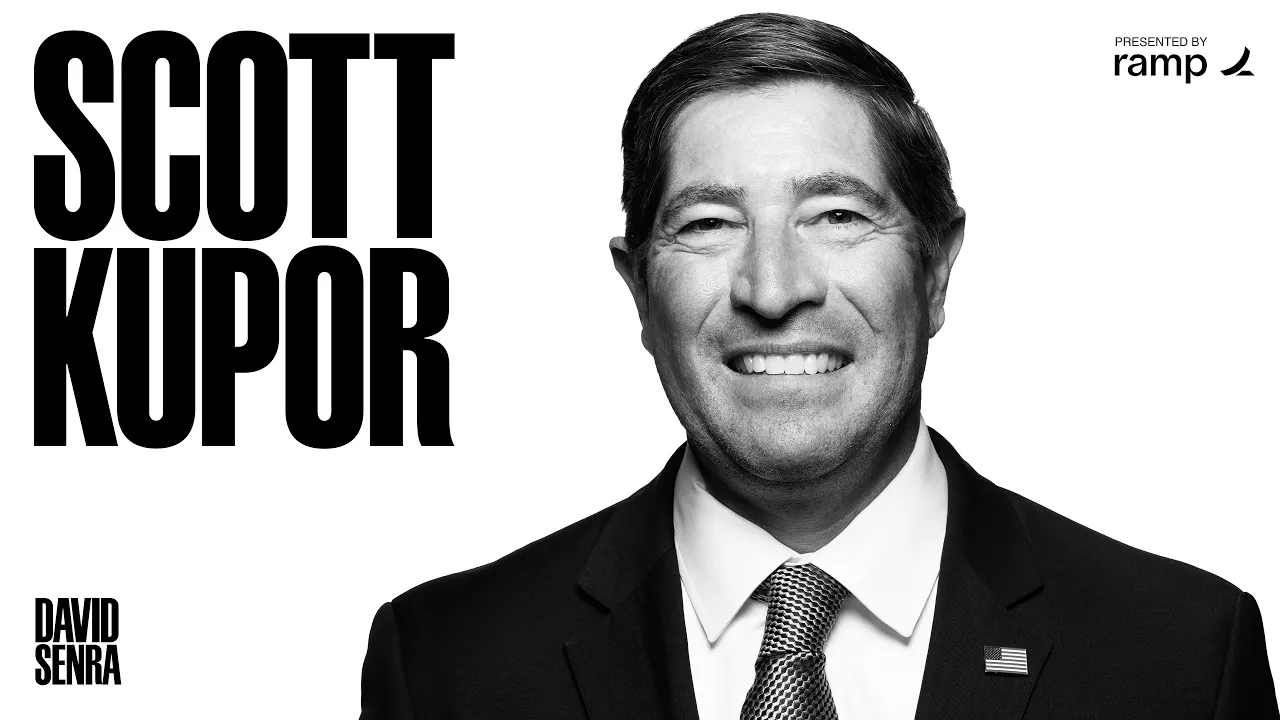
Scott Kupor left Andreessen Horowitz after 16.5 years to lead the U.S. Office of Personnel Management (OPM), overseeing HR and talent policy for approximately two million federal civilian workers. (27:09)
To modernize federal technical talent, OPM created Tech Force to hire 1,000 software engineers and AI specialists on two-year tours of duty, replacing self-assessments with third-party coding tests and waiving degree requirements. (36:13)
OPM is overhauling federal performance management by capping top ratings at 40%, directing 60% of bonus pools to top performers, and ending the mandatory 12-month time-in-grade rule. (33:24)
Federal retirement processing is transitioning away from a Boyers, Pennsylvania underground limestone mine housing 400 million paper pages, consolidating 120 legacy HR systems into a single digital platform to slash annual spending from $2 billion to $40 million. (48:56)
Detailed notes
## Background
This video was published by David Senra on YouTube on November 4, 2026. According to the page description, it features Scott Kupor—former managing partner and first employee of Andreessen Horowitz, now director of the U.S. Office of Personnel Management—discussing the origins and operational playbook of a16z, alongside his current efforts to overhaul federal government HR, modernize incentive structures, and digitize legacy bureaucracy.
## TL;DR
Scott Kupor recounts joining Marc Andreessen and Ben Horowitz as the first employee of Andreessen Horowitz during the 2008 financial crisis, breaking venture capital norms by adopting Michael Ovitz's CAA model, using aggressive marketing, and executing unconventional deals like the Skype leveraged buyout. Transitioning from venture capital after 16.5 years to lead the U.S. Office of Personnel Management, Kupor analyzes the deeply flawed incentive systems of the federal government that encourage zero-risk complacency over innovation. He details sweeping reforms underway, including overhauling grade ratings and promotion speed, eliminating degree credentialism to hire technical talent via programs like Tech Force, supporting DOGE workforce reductions, and digitizing 400 million pages of physical retirement paperwork stored underground in a Pennsylvania limestone mine.
## Atmosphere & style
The conversation carries the energetic, insider momentum of two Silicon Valley veterans dissecting operational machinery, pairing David Senra's enthusiastic historical parallels with Scott Kupor's candid, pragmatic demeanor. Kupor speaks with an unvarnished, no-nonsense clarity, punctuating institutional absurdities with dry humor and blunt profanity. The dialogue moves naturally from nostalgic late-night war stories over office bourbon at early a16z to a passionate, clear-eyed critique of civil service inertia, creating a tone that feels both urgently reformist and deeply analytical.
## Bulletin
- [27:09](https://www.youtube.com/watch?v=yTzH8GOpjmw&t=1629s) Scott Kupor left Andreessen Horowitz after 16.5 years to lead the U.S. Office of Personnel Management (OPM), overseeing HR and talent policy for approximately two million federal civilian workers.
- [36:13](https://www.youtube.com/watch?v=yTzH8GOpjmw&t=2173s) To modernize federal technical talent, OPM created Tech Force to hire 1,000 software engineers and AI specialists on two-year tours of duty, replacing self-assessments with third-party coding tests and waiving degree requirements.
- [33:24](https://www.youtube.com/watch?v=yTzH8GOpjmw&t=2004s) OPM is overhauling federal performance management by capping top ratings at 40%, directing 60% of bonus pools to top performers, and ending the mandatory 12-month time-in-grade rule.
- [48:56](https://www.youtube.com/watch?v=yTzH8GOpjmw&t=2936s) Federal retirement processing is transitioning away from a Boyers, Pennsylvania underground limestone mine housing 400 million paper pages, consolidating 120 legacy HR systems into a single digital platform to slash annual spending from $2 billion to $40 million.
## Key takeaways
- [04:00](https://www.youtube.com/watch?v=yTzH8GOpjmw&t=240s) a16z adapted Michael Ovitz's Creative Artists Agency (CAA) agency model to venture capital, replacing individual partner Rolodexes with dedicated internal operating benches for talent, PR, and business development.
- [07:42](https://www.youtube.com/watch?v=yTzH8GOpjmw&t=462s) The firm inverted venture fundraising via the reverse pitch, fielding operational specialists in founder meetings to prove how their platform would accelerate portfolio companies.
- [15:36](https://www.youtube.com/watch?v=yTzH8GOpjmw&t=936s) Andreessen and Horowitz forewent salaries at inception to direct management fees into platform operations, accelerating fee stacking by quickly raising Fund II.
- [13:01](https://www.youtube.com/watch?v=yTzH8GOpjmw&t=781s) The 2009 leveraged buyout of Skype alongside Silver Lake defied venture norms and returned half of a16z's inaugural fund when it was sold to Microsoft for $8.5 billion 18 months later.
- [18:37](https://www.youtube.com/watch?v=yTzH8GOpjmw&t=1117s) a16z broke Sand Hill Road's marketing taboo by applying enterprise software go-to-market and category-creation tactics to venture capital.
- [22:47](https://www.youtube.com/watch?v=yTzH8GOpjmw&t=1367s) As a16z expanded beyond 500 people, it decentralized general partner operations into specialized verticals like crypto, American dynamism, and AI infrastructure.
- [30:24](https://www.youtube.com/watch?v=yTzH8GOpjmw&t=1824s) Government bureaucracy defaults to zero-risk compliance because political incentives punish public failure while offering no financial upside for innovation.
- [33:24](https://www.youtube.com/watch?v=yTzH8GOpjmw&t=2004s) Kupor promotes permissioned risk in civilian government agencies, granting operational cover for calculated experiments in areas like IRS tax processing and Social Security.
- [33:24](https://www.youtube.com/watch?v=yTzH8GOpjmw&t=2004s) Legacy civil service evaluation inflated performance to the point where 99.7% of federal workers received passing grades and 90% of Senior Executive Service members qualified for diluted, nominal bonuses.
- [37:42](https://www.youtube.com/watch?v=yTzH8GOpjmw&t=2262s) Federal workforce demographics face a severe cliff, with only 7% of employees under 30 compared to 23% in the broader economy, and nearly half nearing retirement eligibility.
- [40:31](https://www.youtube.com/watch?v=yTzH8GOpjmw&t=2431s) The traditional recruiting pitch of lifetime employment fails with driven young talent; federal service must pivot to a private-sector tour of duty model backed by corporate tech partnerships.
- [42:45](https://www.youtube.com/watch?v=yTzH8GOpjmw&t=2565s) Credentialist civil service hiring rules that previously screened out skilled non-degree holders have been rewritten to allow talented practitioners to enter directly at GS-14 and GS-15 pay grades.
- [46:39](https://www.youtube.com/watch?v=yTzH8GOpjmw&t=2799s) The Department of Government Efficiency's rapid workforce reduction of roughly 300,000 personnel served as a necessary shock to dislodge decades of structural inertia across 2.3 million workers.
- [55:04](https://www.youtube.com/watch?v=yTzH8GOpjmw&t=3304s) Political appointees historically maintained broken workflows like paper-based retirement mine processing because taking operational risks jeopardized future political appointments and board seats.
## Detailed walkthrough
### [00:02](https://www.youtube.com/watch?v=yTzH8GOpjmw&t=2s) Leaving HP During the Financial Crisis to Join Andreessen Horowitz
Scott Kupor traces the origin of Andreessen Horowitz back to 2007, when Hewlett-Packard acquired Opsware—the company he had helped run alongside Marc Andreessen and Ben Horowitz. Under the acquisition agreement, Kupor and several colleagues had what he jokingly calls "indentured servitude to HP for, you know, 12 to 18 months." By the summer of 2008, Andreessen and Horowitz were itching to turn their personal angel investing into an institutional venture firm. The timing appeared catastrophic: Bear Stearns had vanished in March 2008, and while they were actively discussing the firm that summer, Lehman Brothers collapsed overnight in September 2008, making it feel as if the global financial system was unraveling.
Kupor recalls coming home to his wife in North Carolina—where he had moved to run a subsidiary business acquired by Opsware—to announce that he planned to quit HP, arguably the most secure corporate employer possible in the middle of a historic crisis, to take a leap with Andreessen and Horowitz. His hesitation dragged on through late 2008. Andreessen and Horowitz badgered him to make up his mind, and to this day they tease him by claiming that had he joined immediately, the firm would have been named Andreessen Kupor Horowitz rather than Andreessen Horowitz. By Christmas 2008, after Ben and Marc urged him to "get off the dime," Kupor committed, taking the official title of first employee rather than co-founder.
[01:37](https://www.youtube.com/watch?v=yTzH8GOpjmw&t=97s) Day One: Unofficial Job Descriptions, Costco Runs, and a Roguish Gmail Capital Call
When Kupor arrived, there was no job description whatsoever. Ben Horowitz and Marc Andreessen laid out a simple division of labor: “Look, we're going to invest and you need to figure out everything else we need to do to build a firm.” The earliest assignments were entirely operational, ranging from buying office furniture at Costco and stocking snacks to opening corporate bank accounts. Once they secured commitments for Fund I, the reality of venture capital capital calls struck. Investors pledge capital upfront, which the firm calls down as needed to wire money to portfolio investments.
On Kupor's very first day on the job, the firm closed an investment and the founders told him to issue a capital call to their limited partners (LPs). Having arrived before IT infrastructure existed, Kupor had no firm email address. He drafted a formal notice from his personal Gmail account and sent it off to approximately 50 institutional LPs, asking them to wire a million dollars. The response was swift outrage: an LP fired back, asking "who the [__] are you?", and phoned Andreessen and Horowitz to warn them that an impersonator was running a shakedown scheme on their fund. That incident served as the immediate push Kupor needed to register the a16z domain and build a formal finance operation. From that three-person beginning, the firm expanded to nearly 100 people within its first year and eventually grew to roughly 700 employees.
[04:00](https://www.youtube.com/watch?v=yTzH8GOpjmw&t=240s) Institutionalizing John Doerr and Adapting Michael Ovitz's CAA Model
The fundamental architecture of Andreessen Horowitz was directly inspired by Michael Ovitz, the legendary co-founder of Creative Artists Agency (CAA), who sat on the board of Loudcloud and Opsware and remained a close advisor to Marc, Ben, and Scott. Historically, venture capital operated like old Hollywood: a founder had a one-on-one relationship with a single general partner (GP), just as an actor like Robert Redford had an exclusive relationship with an individual talent agent. In Silicon Valley, the gold standard for that model was John Doerr of Kleiner Perkins, an exceptional super-connector who personally knew every top CEO, CFO, VP of sales, and political contact. Kupor explains that in their very first LP pitch deck, a16z explicitly proposed: “Look, could we basically institutionalize that and not have every GP have to learn all those things but could we basically effectively disaggregate that from the GP job and hire professionals who could do talent networks, who could do political networks, who could do sales and marketing and all the other things that ultimately came to be the platform for Andreessen Horowitz?”
Ovitz had cracked this problem at CAA around 1975 by breaking the single-agent monopoly. When a client visited CAA in 1990, the agency fielded a specialized team—one person dedicated exclusively to radio deals, another to international distribution, another to publishing. Andreessen Horowitz imported this "phalanx" structure directly into tech investing. John Doerr's bespoke model was impossible to scale because a single GP eventually caps out on board seats, and as software began to expand beyond traditional enterprise software into every vertical of the economy, no individual investor could realistically manage every executive, regulatory, and corporate relationship. Instead, a16z decided to pair domain-specialist investors with dedicated, in-house networks that handled nothing but executive talent, corporate business development, and public policy.
```mermaid
flowchart TD
accTitle: Evolution from Traditional 1-on-1 VC to the a16z CAA-Inspired Platform
accDescr: Diagram contrasting the traditional single-GP venture model with a16z's network-driven services phalanx.
subgraph Traditional["Traditional Venture Capital (The John Doerr Model)"]
GP["Individual General Partner"]
GP -->|"1-on-1 management"| PortCo["Portfolio Company / Founder"]
GP -.->|"bottlenecked by board seats & domain limits"| Tasks["Hiring, Sales, PR, Policy"]
end
subgraph A16Z["Andreessen Horowitz Model (The CAA Phalanx)"]
InvGP["Domain-Specific Investing GP"]
InvGP --> PortCo2["Portfolio Founder"]
subgraph Platform["Institutional Network Teams (Specialists)"]
T1["Talent Network (CFOs, CEOs, Eng VPs)"]
T2["Business Development & Sales"]
T3["Policy & Government Relations"]
T4["Marketing & Media Relations"]
end
Platform -->|"surrounds & supports"| PortCo2
end
```
- Andreessen Horowitz adapted the organizational blueprint developed by Michael Ovitz when he co-founded Creative Artists Agency (CAA) in 1975.
- Traditional venture capital had relied on the singular Rolodex of partners like Kleiner Perkins' John Doerr, which became unscalable as technology sectors expanded.
- In a16z's model, general partners focus strictly on investment selection within their domain expertise, while full-time, dedicated internal practices manage talent, corporate sales, executive placement, and government relations.
[07:42](https://www.youtube.com/watch?v=yTzH8GOpjmw&t=462s) The "Reverse Pitch" and the Michael Ovitz Model in VC
Scott Kupor explains how Andreessen Horowitz fundamentally altered the dynamic of traditional venture capital pitch meetings by instituting what they called the "reverse pitch." Instead of the engagement ending once an entrepreneur finished pitching the partners, the firm flipped the script: Marc Andreessen and Ben Horowitz would bring their entire operating team into the room to pitch the founder on why they should take Andreessen Horowitz's money. The message went beyond offering a single partner for the board; it offered an entire bench of dedicated professionals whose sole mandate was to open doors, institutionalize networks, and help portfolio companies win.
This approach was the direct operational translation of the playbook Michael Ovitz pioneered at Creative Artists Agency (CAA), where individual talent agents shared clients and collective agency resources rather than guarding individual silos. As Kupor describes the pitch to founders: “So that was like the key application of like what Ovitz did to you know how Marc and Ben adopted to the VC world.”
```mermaid
flowchart LR
accTitle: The a16z Reverse Pitch Flow
accDescr: Diagram showing how a founder pitch transitions into a16z presenting its firm-wide network.
subgraph FounderPitch["Founder Step"]
A["Entrepreneur pitches a16z"]
end
subgraph FirmPitch["The Reverse Pitch"]
B["Operating team enters room"]
C["Board member commitment: Ben Horowitz"]
D["Firm-wide operational network & resources"]
end
A --> B
B --> C
B --> D
```
- **The Reverse Pitch Promise**: Founders were told, “Hey look, if you work with Andreessen Horowitz, not only do you get me, Ben Horowitz, as your board member, but you get this entire table of people whose job it is day in and day out to figure out how do we institutionalize a set of relationships and networks that will make you successful.”
---
[08:08](https://www.youtube.com/watch?v=yTzH8GOpjmw&t=488s) Sponsor Messages: Ramp and AppLovin
David Senra pauses to highlight the episode's presenting sponsors, beginning with Ramp. Drawing a parallel to SpaceX’s relentless focus on eliminating unnecessary costs, Senra emphasizes how financial discipline can actually drive top-line expansion by unlocking capital for new initiatives. According to Ramp's platform data, the median customer reduces operating expenses by 5% while growing revenue by 16%, giving businesses an operational edge that compounds against their competitors.
Senra also introduces AppLovin, framing its mobile advertising platform through a quote from Peter Thiel's *Zero to One*: “The single most powerful pattern I have noticed is that successful people find value in unexpected places and they do this by thinking about business from first principles instead of formulas.” AppLovin connects advertisers with more than a billion users inside mobile gaming environments using full-screen video formats with an average watch time of 35 seconds, producing retention and engagement that scale campaigns to hundreds of thousands of dollars in daily ad spend.
---
[10:18](https://www.youtube.com/watch?v=yTzH8GOpjmw&t=618s) After-Hours Bourbon in Marc Andreessen's Office
Reflecting on his sixteen-and-a-half-year run at the firm from 2009 until leaving for public service, Kupor recalls the close-knit culture of the earliest days, which included what he fondly calls their "Mad Men episode." While nobody was smoking cigarettes indoors, workdays regularly wound down inside Marc Andreessen's spacious office, which featured an expansive bar and one of the finest collections of bourbon and whiskey Kupor had ever seen. The firm even bought a dedicated commercial ice machine to produce clear, square ice cubes, with Andreessen’s longtime assistant, Arsho Baghsarian, faithfully keeping it stocked every afternoon.
Andreessen was famous for his intense, obsessive routines. He ran on coffee throughout the day, and when a food captured his interest—like sushi—he would eat it for every single meal for six months straight. Drinking sessions had no formal agenda; sometimes lasting fifteen minutes, sometimes an hour, they offered Kupor an informal masterclass in tech and business history alongside two leaders he had already known for a decade. Kupor reflects: “They're just like the kinds of people where if you have time to sit down with them and just shoot the shit like outside of work hours like you always learn something.”
- **The Daily Formula**: Referencing Andreessen’s past appearance on the podcast, Senra mentions Marc's idea of a perfect schedule: “12 hours of caffeine followed by 6 hours of alcohol.”
- **Office Culture**: Drinks never devolved into wild late nights because the team had families to return home to, serving instead as a relaxed space to build camaraderie and debate investment theses.
- **Whiskey Handoff**: Because Andreessen eventually stepped away from drinking alcohol entirely, he later gifted much of his storied whiskey collection to Kupor for his birthdays.
---
[13:01](https://www.youtube.com/watch?v=yTzH8GOpjmw&t=781s) Taking the Leap in 2009 and the Unlikely Skype Deal
Moving his family from North Carolina back to the San Francisco Bay Area during the depths of the Global Financial Crisis was a calculated risk for Kupor. His back-of-the-envelope assessment was that Andreessen and Horowitz were virtually guaranteed to close their maiden $300 million fund, which would buy them years of runway to navigate the macro storm. If the venture failed to produce follow-on funds, Kupor figured he could simply find another job. He never envisioned that the firm would grow into an industry-defining institution, nor that it would establish massive momentum almost overnight.
The catalyst arrived just months after closing Fund I when a16z joined Silver Lake's Egon Durban and Michael Dell to engineer a leveraged buyout of Skype from eBay. Inside eBay, Skype had been neglected, yet its consumer communications network effects continued compounding exponentially. The transaction bewildered the venture capital establishment, which criticized a seed-and-early-stage fund for deploying capital into a complex private equity buyout. The deal was further clouded by a fierce intellectual property battle between eBay and Skype’s original founders, Niklas Zennström and Janus Friis. While rival suitors backed away over fears that Zennström and Friis might reclaim the underlying code, Durban negotiated directly with the founders, bringing them into the consortium and resolving the dispute.
The contrarian bet paid off rapidly. Just eighteen months later, the consortium agreed to sell Skype to Microsoft for $8.5 billion—roughly four times what they had paid—single-handedly returning approximately half of Andreessen Horowitz's inaugural fund and generating an overwhelming wave of media momentum. As Kupor observes regarding the fast-moving cycle: “And look, part of this business is momentum against momentum, right? Which is true of so many.”
- **The LP Disclosure**: The firm had broadly told limited partners they were focused on early-stage venture, but dropped subtle hints during fundraising that an unconventional transaction like Skype was brewing so investors would not be blindsided.
- **Venture Backlash**: Competitors loudly pounced on the strategy when the acquisition was announced, claiming: “These guys are crazy. What the hell are they doing to a buyout? It'll never work.”
- **Rapid Return**: The exit to Microsoft took only a year and a half to materialize, giving the rookie firm an extraordinary financial return and immediate top-tier credibility.
[15:36](https://www.youtube.com/watch?v=yTzH8GOpjmw&t=936s) Early Wins, Stacking Management Fees, and the 2009 Contrarian Advantage
The runaway success of the Skype deal dramatically accelerated Andreessen Horowitz’s trajectory, enabling them to raise their second fund far earlier than initially planned. In addition to returning roughly half of their inaugural fund to limited partners within just 18 months—a feat virtually unheard of both then and now—the firm notched another swift, early victory with Nicira, a networking startup founded by Martin Casado (who later became an a16z general partner) that was acquired by Cisco. While these early bets easily could have gone the other way, their rapid payoffs transformed the firm's narrative and validated its thesis.
```mermaid
flowchart LR
accTitle: a16z Fee Engine and Services Expansion Flow
accDescr: Diagram illustrating how early investment wins led to faster follow-on funds, stacking management fees, and the funding of a large platform team.
subgraph Wins["Early Catalysts"]
Skype["Skype Win<br>(50% Fund Returned in 18 Mos)"]
Nicira["Nicira Acquisition<br>(Sold to Cisco)"]
end
subgraph Capital["Fund Economics"]
Fund2["Accelerated Fund II Raise"]
ZeroSalary["Andreessen & Horowitz<br>Take $0 Salary"]
FeeStack["Stacking Management<br>Fee Stream"]
end
subgraph Org["Platform Scaling"]
Hiring["Kupor Hires Large<br>Non-Investing Team"]
Services["CAA 'Services Model'<br>Rolled Out to Founders"]
end
Crucially, implementing Michael Ovitz’s agency model required a substantial, continuous stream of management fees to support a large bench of non-investing operating executives. To jumpstart this engine, Marc Andreessen and Ben Horowitz acted with extraordinary magnanimity: neither drew any salary at the beginning, redirecting every possible dollar of management fees to Scott Kupor so he could hire the operational talent required to build out the platform. Raising a second fund established a stacking fee stream, allowing the firm to double down on building out its proprietary services infrastructure.
This aggressive expansion unfolded against the grim backdrop of the 2009 Global Financial Crisis. While Sequoia Capital famously issued their apocalyptic “RIP Good Times” presentation—warning founders that the world was ending, capital was gone, and everyone needed to hunker down—a16z positioned itself as an unburdened, optimistic beacon. Existing venture firms were consumed by triaging their damaged, legacy portfolio companies. By contrast, a16z hung out a fresh shingle, broadcast that it was openly open for business, and captured an immense wave of early momentum that compounded faster than anyone had anticipated.
- **Skype return pace**: Returned roughly half of Fund I’s total capital back to limited partners within 18 months of launch.
- **Nicira exit**: Early Fund I portfolio company led by Martin Casado; purchased by Cisco Systems.
- **Zero-salary founders**: Marc Andreessen and Ben Horowitz took zero salary at inception so management fees could fund operational hires.
- **Market environment**: Capitalized on the 2009 downturn following Sequoia's “RIP Good Times” memo, seizing market share while competitors were defensive.
[18:37](https://www.youtube.com/watch?v=yTzH8GOpjmw&t=1117s) Breaking the Sand Hill Road Taboo Against Marketing
For decades, venture capital operated under an unwritten code that treated overt marketing and public relations as entirely verboten. In the industry’s early decades—from the late 1960s up through the dot-com boom—venture capital was characterized by capital scarcity. The power dynamic was stark: venture capitalists sat on top with the money, and founders sat below pleading for it. Incumbent powerhouses like Sequoia Capital, Kleiner Perkins, Accel, Greylock, and Benchmark (which spun out of Merrill, Pickard, Anderson & Eyre) never needed to market because the check itself was the marketing; their conference room walls were lined with tombstone posters of legendary wins like Apple, Cisco, and Google.
Andreessen Horowitz entered the industry with no institutional track record, no storied logo wall, and no desire to play on the incumbents' home turf. Coming directly from operating backgrounds in enterprise software, Andreessen and Horowitz knew that even a world-class product fails if you do not actively market it: “We came out of the enterprise software business and we know like in the enterprise software business just because you have a good product nobody gives a shit if you don't actually tell them what it is, right?” Rather than trying to out-credential legacy firms, they fundamentally rewrote the rules of engagement. They redefined the venture offering from pure capital into "capital plus"—pairing equity checks with a dedicated services machine designed entirely around serving the entrepreneur.
This aggressive storytelling drew deep skepticism and irritation across Sand Hill Road. Competitors frequently carped to prospective limited partners that Andreessen Horowitz was all talk, bad-mouthing them for running a loud PR playbook and promoting services before they were proven. But Kupor and his partners viewed this simply as classical entrepreneurial category creation: you articulate a bold vision, establish the narrative, and then do the hard work of executing on the back end to make it real.
- **Historical VC power dynamics**: Capital scarcity from the 1960s to the 1990s meant elite firms did not need to advertise; the scarcity of capital alone dictated deal flow.
- **The "Capital Plus" positioning**: a16z shifted the product narrative from commodity dollars to an agency-style network dedicated to enterprise sales, business development, and executive hiring.
- **Incumbent pushback**: Sand Hill competitors accused the firm of violating industry norms by marketing heavily and telling the world what they were going to do before having a multi-decade track record.
[21:48](https://www.youtube.com/watch?v=yTzH8GOpjmw&t=1308s) Managing Personal Ego: Operations vs. Early-Stage Technical Investing
When Scott Kupor first arrived at the firm, the initial division of responsibilities was blunt: Andreessen and Horowitz would handle the investing, and Kupor would handle everything else. Kupor admitted that his ego initially took a hit, wondering why he was excluded from leading venture investments. However, he quickly realized that early-stage technology investing required an exceptional depth of technical fluency—the kind of native engineering intuition possessed by founders like Marc and Ben.
Sitting through endless pitches, Kupor saw that assessing early-stage technical architecture—such as distinguishing the architectural merits of ten competing database companies—was impossible without deep technical roots: “So, we sit in pitches all day long and if you don't understand databases, for example, you can hear 10 pitches about database companies and unless you have that depth of knowledge, the honest answer is you have no fucking clue like which one is the right one to invest in.” By confronting his limitations honestly, Kupor swallowed his ego, ceded the technical early-stage arena to his partners, and focused entirely on operational execution—a foundation that later positioned him to invest in late-stage healthcare and growth rounds as the firm expanded.
[22:47](https://www.youtube.com/watch?v=yTzH8GOpjmw&t=1367s) Decentralizing a16z and Swallowing Ego
Scott Kupor recounts how Andreessen Horowitz operated for its first ten years as a strictly centralized firm. Every single operating function—and even the investing partners—reported directly to Kupor, leaving Marc Andreessen and Ben Horowitz with virtually no direct reports. By the time the firm reached roughly 500 people, Andreessen and Horowitz recognized that a venture firm could not scale under such a bottlenecked architecture. Software was "eating the world," and the firm had expanded into distinctly disparate sectors such as crypto, healthcare, bio, and American dynamism. Marc and Ben realized:
> “Look, like we can't have 20 people sitting around when we're doing software eating the world and we've got crypto and healthcare and bio and, you know, American dynamism and all these other things going on—you have to specialize.”
Around the decade mark, the firm initiated a restructuring to decentralize operations into domain-specific, vertical investing teams: Chris Dixon ran the crypto fund, David Ulevitch led American dynamism, and Martin Casado headed AI infrastructure. Because the business development and operational needs of a gaming startup diverge radically from those of a life sciences company, the agency-style support services were split up and feathered into the individual verticals. Only core compliance and enterprise functions remained centralized: legal and finance (to prevent teams from operating rogue compliance regimes) and investor relations (so limited partners could interface with Andreessen Horowitz as a single institution rather than managing isolated relationships).
```mermaid
flowchart TD
accTitle: a16z Decentralization Model
accDescr: Diagram showing how a16z shifted from centralized operations to vertical domains while keeping core compliance central.
Crypto --> BD
AD --> BD
AI --> Talent
Bio --> Talent
```
This structural shift forced Kupor to confront his own ego. After spent years running the entirety of the firm's operations, having his scope reduced felt like a painful demotion, even though he knew it was the right organizational move. Ben Horowitz later remarked on a podcast that reorgs inevitably produce hurt feelings because someone always ends up with fewer responsibilities than before. When Kupor pushed back, Andreessen and Horowitz reassured him:
> “Look, we're not saying you're not doing a good job; we're saying, like, the needs of the business have changed.”
Rather than stepping away, Kupor channeled his energy into late-stage investing. Acknowledging that he lacked the domain expertise for zero-to-one seed tech investing, he helped launch a later-stage venture fund in 2019 alongside David George, who had been recruited from General Atlantic. Kupor carved out a focus on late-stage healthcare, backing companies that had moved past early technical risk and needed help scaling operationally from "one to infinity." By the time he transitioned into public service, Kupor had invested in roughly 15 companies and served on about 10 boards.
---
[27:09](https://www.youtube.com/watch?v=yTzH8GOpjmw&t=1629s) Leaving Venture for the Federal Government
After 16 and a half years at a16z, Kupor made the surprising jump to public service, becoming the director of the U.S. Office of Personnel Management (OPM). David Senra jokes that his wife frequently questions these sharp turns in his career, and Kupor laughs, agreeing that his wife is far smarter than he is and constantly asks, "What the hell am I doing?"
Kupor explains that public policy had been a long-standing personal interest dating back to high school, where he worked on healthcare policy economics assessing breast cancer screening. While an undergraduate at Stanford, he worked for Alan Garber (who later became president of Harvard University) conducting research on the health economics of prostate cancer screening. That work revealed counterintuitive realities of preventive medicine: while most men die *with* some form of prostate cancer, very few die *of* it, meaning broad-population screening often causes harm by catching indolent conditions that never would have caused clinical symptoms. Later, while attending Stanford Law School, he worked as a research assistant and modeler for Jay Bhattacharya (who went on to run the NIH).
Kupor's move to government was driven by both personal timing and institutional curiosity:
- **Personal readiness:** His children were grown and out of the house, Andreessen and Horowitz were gracious in facilitating his transition off company boards, and his private-sector career had left him financially independent enough to step away.
- **Agency scope:** As director of OPM, Kupor oversees the talent and human resources agency responsible for the federal government's roughly 2.1 million civilian employees, writing the policies that dictate hiring, evaluation, and workforce administration.
When asked how venture capital and tech management apply to the federal bureaucracy, Kupor emphasizes that all organizations fundamentally operate on the exact same core mechanics:
> “All an organization is is a collection of people who are just aligned around a similar set of objectives. Like, it's no more complicated than that.”
The primary problem across private, non-profit, or government sectors boils down to answering three fundamental questions:
1. Does the leadership establish the right set of objectives?
2. Are the right people in place to execute them?
3. Does the incentive structure align with those objectives, giving management mechanisms to reward and promote those who achieve them and correct or dismiss those who fail?
[30:24](https://www.youtube.com/watch?v=yTzH8GOpjmw&t=1824s) The Fear-Based Culture and Introducing "Permissioned Risk"
Scott Kupor argues that while government and the private sector pursue different objectives, the federal government's incentive structure is fundamentally broken. Driven by a culture obsessively focused on legal and regulatory compliance, employees choose to repeat existing processes rather than innovate, out of fear of making a mistake. When Kupor first stepped into his role, a direct report candidly summarized their duty: “Look, our job is to keep you out of the news basically.” When pressed, staff explained that their goal was avoiding hearings before Congress, audits from the Government Accountability Office (GAO), or inquiries by inspectors general. David Senra quips that the easiest way to avoid scrutiny is simply to do nothing in a room. Kupor rejected this passive mindset, telling his team that their job is to figure out what positive actions can be taken, and that he is willing to answer to congressional committees if an ambitious, well-intentioned initiative stumbles.
```mermaid
flowchart TD
accTitle: Comparison of Risk Models
accDescr: Contrasts the Silicon Valley risk model with the historical government model and Kupor's proposed permissioned risk model.
subgraph SV["Silicon Valley Model"]
direction TB
A["Permissionless Risk"] --> B["Obscene Risk-Taking"]
B --> C["Uncapped Upside (e.g., Coinbase 300-500x)"]
end
subgraph OldGov["Historical Government Model"]
direction TB
D["Compliance & Fear"] --> E["Zero Risk-Taking"]
E --> F["Zero Upside & Plodding Customer Service"]
end
subgraph NewGov["Kupor's Reform Model"]
direction TB
G["Permissioned Risk"] --> H["Sized to the Mission (Social Security, IRS)"]
H --> I["Process Automation & Massive Delivery Upside"]
end
```
Kupor contrasts the federal mindset with venture capital, where investors operate on "permissionless risk" because massive, uncapped upside—such as Chris Dixon and Marc Andreessen backing Coinbase in 2012 to return 300x to 500x—compensates for numerous failures. In government, that financial upside does not exist, leading the bureaucracy to adopt a default of zero risk. To counter this stagnation, Kupor advocates for "permissioned risk," where leaders explicitly authorize calculated risk-taking tailored to the mission. While life-or-death organizations like the Department of Defense require near-zero failure tolerance, everyday civilian services like IRS refunds or Social Security checks can afford minor fluctuations in delivery time if the long-term trade-off is automated, simple self-service. As Kupor summarizes:
> “We don't have that in government, but instead what they've had is basically the answer is like take zero risk, but that also means therefore like no consideration of upside potential for anything.”
[33:24](https://www.youtube.com/watch?v=yTzH8GOpjmw&t=2004s) Fixing Broken Ratings, Merit-Based Bonuses, and "Time in Grade"
The avoidance of risk extends directly into government performance management, creating an environment that repels high performers. In a typical federal rating system spanning 1 (failing) to 5 (exceptional), an astonishing 99.7% of the 2-million-person workforce historically receives a 3 (meets expectations) or higher. With only 0.3% rated below expectations, Kupor points out that meaningful accountability on the low end is mathematically nonexistent. The issue is just as severe at the top: among the roughly 7,000 career executives in the Senior Executive Service (SES), approximately 90% receive a rating of 4 or 5. This systemic inflation dilutes bonus pools into token payouts (like $1,000 checks) that offer no genuine incentive or retention value for elite performers.
```mermaid
flowchart LR
accTitle: OPM Performance and Promotion Reforms
accDescr: Illustrates the transition from tenure-gated and inflated systems to performance-capped, merit-based advancement.
subgraph SESReform["Executive Rating & Bonus Reform"]
direction TB
R1["Previous: ~90% Rated 4 or 5"] --> R2["New Cap: Max 40% at Top Tier"]
R2 --> R3["Target: 60%+ Bonus Pool to Top 40%"]
end
subgraph PromotionReform["Advancement Reform"]
direction TB
P1["Previous: Strict 'Time in Grade' (1-year lock)"] --> P2["Elimination of Arbitrary Tenure Gates"]
P2 --> P3["Rapid Promotion Based on Demonstrated Skill"]
end
```
To re-establish a high-performance culture, Kupor's Office of Personnel Management (OPM) implemented new performance guidelines capping top ratings at 40% of an agency's executive workforce, while mandating that over 60% of the bonus pool flow to those top performers. In addition, Kupor is dismantling the "time in grade" rule, an arbitrary policy mandating that employees remain in a role for a minimum of 12 months before becoming eligible for a promotion. Under the old rules, an exceptional software engineer who proved their skills within six months was forced to sit in bureaucratic purgatory for another half-year before being promoted, only to restart the 12-month clock again.
- Historically, only 0.3% of the two-million-person federal workforce was documented as falling below expectations.
- Roughly 90% of the 7,000 members of the Senior Executive Service received the two highest ratings (4 or 5).
- New OPM guidelines mandate that no more than 40% of evaluated populations receive top ratings, and that 60%+ of bonus funding must go to that top group.
- Traditional rules enforced a mandatory 12-month "time in grade" wait before an employee could be considered for promotion, which OPM is moving to eliminate.
> “So when you have a system where 90% of the people get ranked at the top of the class, that means the bonuses make no sense, right? I give you a $1,000 bucks and it has no incentive value.”
[36:13](https://www.youtube.com/watch?v=yTzH8GOpjmw&t=2173s) Launching Tech Force and Replacing Self-Assessment with Code Tests
To recruit modern technical talent, OPM launched Tech Force, an initiative designed to bring an elite corps of 1,000 software engineers, artificial intelligence experts, and data scientists into two-year tours of duty across the government. Rather than starting them at lower entry rungs, Tech Force hires these candidates at the GS-14 pay band—the second-highest individual contributor tier in the General Schedule system.
Critically, the program modernizes how candidates are screened. Historically, federal hiring relied on subjective questionnaires where candidates simply self-reported their proficiency on a 1-to-5 scale, resulting in candidates grading themselves as top experts without verification. That process stemmed in part from historical lawsuits surrounding disparate impact in hiring exams. Tech Force replaces self-assessments with third-party technical coding evaluations that measure hands-on competence. Kupor believes that matching technical vetting with merit-based leveling and rapid promotion paths will create an environment where top engineering talent actually wants to serve.
> “Never before has the government done this, right? Instead I would give you a questionnaire and you would self-rate your skills, right? You would say I'm a one through five. Turns out I'm a five.”
[37:42](https://www.youtube.com/watch?v=yTzH8GOpjmw&t=2262s) The Motivation to Fix Federal HR and the Looming Demographic Cliff
David Senra asks Scott Kupor to explain what core problem compelled him to uproot his life, move across the country, and commit years of his career to running the Office of Personnel Management (OPM). Senra emphasizes that it transcends politics: anyone who cares deeply about the country wants the most talented people serving in government, yet the government currently falls far short. Kupor responds by outlining three main motivations, beginning with talent and seat allocation. While Kupor stresses that there are many dedicated, capable individuals in federal service—framing the breakdown primarily as a flawed system and perverse incentive structure rather than a pure talent deficit—he readily admits to a massive pipeline failure: “we suck at getting early career people into government.”
```mermaid
flowchart TD
accTitle: Federal Workforce Demographic Imbalance
accDescr: Comparison of under-30 and over-50 demographic percentages between the total U.S. workforce and the federal workforce.
subgraph TotalUS["Total U.S. Workforce"]
US_Under30["23% Under Age 30"]
US_Over50["33% Over Age 50"]
end
subgraph FedGov["Federal Government Workforce"]
Fed_Under30["7% Under Age 30\n(Over 3-to-1 Deficit)"]
Fed_Over50["44% Over Age 50\n(11% Over-Indexed)"]
end
Fed_Over50 -->|"Retirement Cliff in 5-10 Years"| Cliff["Half of Workforce Retires\nZero Replacements"]
```
Kupor reveals striking workforce demographics:
- Only 7% of the federal workforce is under the age of 30, compared to 23% in the broader U.S. workforce, meaning the federal government is under-indexed on early-career talent by a factor of more than three to one.
- In contrast, 44% of federal employees are over age 50, compared to roughly 33% across the entire civilian U.S. economy—an 11 percentage point over-indexation.
Kupor points out that even from a small-government viewpoint (which Senra echoes, noting his background as the son of a Cuban immigrant), the math presents an existential crisis: if nothing changes, roughly half of the entire civilian workforce will retire within the next five to ten years, leaving agencies without the personnel required to operate. To address this, Kupor explains that OPM must actively recruit where young people actually are. He launched the agency's first-ever national college tour and began appearing on modern platforms like Instagram and WhatsApp, guided by younger hires who understand contemporary messaging.
[40:31](https://www.youtube.com/watch?v=yTzH8GOpjmw&t=2431s) Why "A Job for Life" Fails and Pitching Self-Interest via Tech Force
Kupor recounts pushback from an entrenched federal manager who criticized his reform agenda, insisting that the government's traditional recruiting pitch was lifetime job security. Kupor flatly rejected that logic:
> “I’m like look, that is the worst pitch I’ve ever heard. Like there’s not a single person under the age of 30 today who is thinking about lifetime employment. And if they are, by the way, you know, I hate to say this, but like that's not the kind of person we want because that's not the kind of like self-motivated, driven person that we want in the government.”
Instead of preaching abstract civic duty or offering thirty-year career tracks, Kupor reframes the proposition around self-interest and career acceleration. His pitch encourages ambitious technical talent to complete high-impact two-to-three-year tours of duty tackling problems impossible to find elsewhere:
- Space enthusiasts can build mission-critical software at NASA alongside leaders like Jared Isaacman.
- Energy and computing specialists can work on massive supercomputers within the Department of Energy.
To make the offer appealing, Kupor launched the Tech Force program, which pairs a two-year government stint with forty major private-sector tech partners, including Alphabet, Meta, and Databricks. During their tenure, these companies provide professional development and training. At the end of the tour, OPM hosts a massive hiring fair so participants can seamlessly transition into high-paying private-sector roles. Kupor compares this model directly to elite military pipelines:
- Israel's IDF cyber units (such as Unit 8200) take exceptional high school graduates, train them on critical national security infrastructure, and make them the most sought-after founders and hires for venture capital firms and tech companies worldwide.
- If alumni fall in love with public service, they are welcome to stay, but the institution should never demand a decades-long commitment upfront. Senra agrees, noting that aligning personal incentives with national needs yields vastly better recruiting results than pure appeals to patriotism.
[42:45](https://www.youtube.com/watch?v=yTzH8GOpjmw&t=2565s) Rigid Bureaucracy and the Lesson of "Big Balls"
Recruiting ambitious talent is useless if individuals enter an environment that punishes speed and ambition. Kupor emphasizes his second major goal: overhauling the rigid civil-service structure that forces employees to wait a full year in a grade before promotion eligibility or bans hiring skilled professionals at senior General Schedule (GS) levels without arbitrary years on paper.
To illustrate this absurdity, Kupor brings up an internet-famous hire from Elon Musk's Department of Government Efficiency (DOGE) efforts: a 19-year-old developer publicly known by the moniker "Big Balls." Kupor apologizes to the young man's mother, explaining that his real name is Ed. Ed dropped out of Northwestern University as a sophomore, proved to be an exceptionally brilliant software developer, and later moved to work under Joe Gebbia at the National Design Studio redesigning federal web portals.
During the height of DOGE's media coverage, Kupor read a quote from an institutional government official asserting that the federal government would never have hired Ed because he lacked a college degree and five years of relevant experience. Kupor was outraged:
> “And when I saw that, like literally like I wanted to pull my fucking hair out because I was like, 'This is exactly the problem, right? This guy's awesome. We should hire him because he actually has the skills to help us.'”
Kupor explains how credentialism actively harms the state:
- Formal degrees are treated as crude proxies for skill, screening out elite, self-taught practitioners who lack paper qualifications.
- Under legacy rules, someone like Ed would either be disqualified outright or forced into an entry-level GS-5 role paying roughly $40,000 per year—an insultingly low offer for a top engineer who could easily earn ten times that in Silicon Valley.
- While the federal government will never match private-sector compensation dollar-for-dollar, it must eliminate artificial gatekeeping, properly evaluate raw competency, and level talent appropriately so high performers can advance on merit.
[45:11](https://www.youtube.com/watch?v=yTzH8GOpjmw&t=2711s) Merit-Based Hiring and Joining the DOGE Wave
Scott Kupor continues his analysis of federal talent acquisition, pointing out that an elite candidate should not be held back by arbitrary credentials. If a skilled operator's track record proves their ability, they deserve to enter at the highest civilian pay grades, such as GS-14 or GS-15. Yet the entrenched system historically made that impossible. Kupor explains that OPM has focused on rewriting policy to prioritize direct capability over bureaucratic checklists: “So this is what we've been doing for a policy perspective is to fix all that stuff and say like merit matters take a test take an assessment and everything else quite frankly you know like we shouldn't worry about.” David Senra observes that non-traditional talent, like the pseudonymous operator "Big Balls," serves as a blueprint: a college dropout who lacked formal government credentials could be drawn into public service simply by hearing a leader they admired tell a compelling story.
Kupor recounts how he entered government alongside the Department of Government Efficiency (DOGE) leadership. After being interviewed by Elon Musk and Steve Davis—the primary day-to-day leader running the effort—Kupor spent substantial time collaborating with them between his nomination in early December and the presidential inauguration in January. Once an official is nominated, strict ethics and Senate confirmation rules dictate that they must temporarily cut off communications: “Then what happens is they tell you okay like until you get through your nomination process you basically have to be persona non grata and like stop communicating with folks because otherwise it can like foul your nomination process.” While Kupor had to observe from the sidelines until confirmed, the DOGE team used his future office as ground zero to roll out initial plans.
[46:39](https://www.youtube.com/watch?v=yTzH8GOpjmw&t=2799s) The Big Bang Approach to Slashing Federal Inertia
When Senra asks about the enduring structural ideas behind DOGE, Kupor outlines the sheer scale of the administrative apparatus. When Donald Trump took office, the federal civilian workforce stood at roughly 2.3 million employees. That figure was cut down to around 2 million—a reduction of nearly 300,000 workers. This brought federal staffing relative to the national workforce down to levels unseen since 1960, eclipsing even the Clinton-Gore reductions of the 1990s. Kupor emphasizes that the government had spent five decades locked in a one-way ratchet where budgets only expand, and agencies reflexively demand more head count every time Congress hands them a new mandate.
```mermaid
flowchart TD
accTitle: The Two-Phase Federal Reform Model
accDescr: DOGE uses an initial shock-and-awe phase to break bureaucracy, followed by OPM institutionalizing the changes.
subgraph Phase1["Phase 1: Breaking the Status Quo"]
A["2.3M Personnel Base"] --> B["DOGE Big Bang Shock"]
B --> C["Workforce Reduced by ~300k"]
end
subgraph Phase2["Phase 2: OPM Institutionalization"]
C --> D["Audit Active Projects"]
D --> E["Cull Low-Priority Programs"]
E --> F["Consolidate Redundant IT"]
end
```
Breaking through decades of bureaucratic inertia required an aggressive, shock-and-awe intervention rather than incremental adjustments. Kupor argues that while people can debate Musk’s specific tactics, radical action was the only viable way to force a mammoth system to change course:
> “So the way I think about what Elon did was like Elon had to come in and to ch to like change the direction of a 2.3 million person like oil tanker. You can't do gradual incremental stuff. Like you have to have a big bang approach.”
Kupor sees his own mission at OPM as institutionalizing those initial disruptions. Where Davis and Musk succeeded at "breaking glass," long-term reform requires forcing departments to catalog their ongoing initiatives, identify essential work, and aggressively strip away non-essential tasks—a discipline historically foreign to public agencies that only know how to accumulate responsibilities.
[48:56](https://www.youtube.com/watch?v=yTzH8GOpjmw&t=2936s) The Boyers Limestone Mine and 400 Million Pages of Paper
Senra asks Kupor to share the astonishing story of how federal retirement benefits have historically been managed. Between 100,000 and 200,000 federal employees retire every single year, yet the government never maintained a unified record of an employee's career across different agencies. Because each agency ran its own payroll and personnel software, OPM had to reconstruct an employee's 30-year service history from scratch the moment they decided to retire. Kupor notes that OPM is currently consolidating 120 disparate HR IT systems into one centralized architecture—a move expected to slash annual expenditures by 95%, from $2 billion down to $40 million.
Prior to recent reforms, the mechanics of claiming a federal pension relied on pure paper pushing. An employee hand-filled paper forms, attached physical postage stamps, and mailed them to their agency HR office. Once approved, the packet was stamped and snail-mailed to a separate payroll office, before being mailed again to an underground storage facility in Boyers, Pennsylvania. Located in Butler County inside a former limestone mine, the high-security facility features subterranean tunnels where employees drive golf carts along cavernous limestone walls. There, 800 staff members manually combed through paper files—drawing from an archive of 400 million pages of paper documents—to calculate pension payouts by hand. A single missing signature meant mailing the physical document back to the retiree, tacking on extra months of delay and stretching standard processing times anywhere from 3 to 12 months.
Recognizing the absurdity of the system, Elon Musk teamed up with Airbnb co-founder Joe Gebbia, who was running the National Design Studio, to begin digitizing the intake process before Kupor took office. Kupor picked up the initiative, officially automating the pipeline:
> “In fact, we declared last day of paper in the mine on June 30th. So we will never receive another piece of incoming paper into the mine. Everything's online, which it should be in the year 2026, which is this is not rocket science, right? Like you should be able to fill out an online application for your retirement.”
- Processing times for clean retirement applications have already fallen by over 50%.
- Kupor’s ultimate goal is a 90% reduction in processing time, guaranteeing that an error-free digital application results in a full retirement check within 15 days.
[53:09](https://www.youtube.com/watch?v=yTzH8GOpjmw&t=3189s) Digitizing 400 Million Pages and Shutting Down the Mine
Scott Kupor details the operational absurdity of managing federal retirement records inside the underground limestone mine in Boyers, Pennsylvania. The facility houses 400 million paper records for retirees who left service prior to modern digitization efforts. Whenever a retiree or surviving family member contacts the call center to report a life event—such as the death of a spouse or the addition of a dependent child to health coverage—the agency relies on an official job classification known as a "runner." This employee physically walks into the mine caverns, locates a physical metal filing cabinet (some dating back to the 1950s), pulls the paper folder, hands it to an adjudicator to process the request, and walks it back into the storage vaults to refile it.
To eliminate this manual bottleneck, OPM purchased two room-sized industrial scanning systems that Kupor compares to vintage mainframe computers. The goal is to digitize all 400 million legacy pages, which will not only transform customer service by putting records instantly at adjudicators' fingertips, but will ultimately allow OPM to decommission and shut down the physical paper storage component of the underground mine.
```mermaid
flowchart TD
accTitle: Retirement Record Processing Workflow
accDescr: Diagram contrasting the legacy manual workflow in the Boyers mine with the new digitization pipeline.
subgraph Legacy["Legacy Mine Workflow"]
A["Retiree / Family Calls Center"] --> B["Runner Dispatched into Mine"]
B --> C["Pull Paper File from 1950s Cabinet"]
C --> D["Deliver to Adjudicator"]
D --> E["Runner Refiles Folder Manually"]
end
subgraph Modern["Modern Digitization Pipeline"]
F["Two Room-Sized Scanners"] --> G["Digitize 400M Legacy Pages"]
G --> H["Instant Digital Access for Staff"]
H --> I["Decommission Underground Storage"]
end
```
Kupor points out that the absurdity of running federal retirement through an underground cave is not a recent discovery made by him or Elon Musk; investigative articles detailing the inefficiency date back to the 1970s and 1980s. The issue persisted for half a century because government incentives reward avoiding controversy rather than solving obvious problems:
> “The incentive structure is so aligned against fixing these things. It's way better to have a shitty service for people and not like risk rocking the boat than it is to actually try to convert these things into like a modern-day experience.”
[55:04](https://www.youtube.com/watch?v=yTzH8GOpjmw&t=3304s) Accepting Failure and Breaking Political Stasis
David Senra connects this operational paralysis to the federal talent crisis, pointing out that with roughly 44% of the workforce aged 50 and older, failing to fix these incentives ensures the government will have no capable successors once that cohort retires. Kupor agrees, noting that modernizing government operations requires bringing in ambitious talent and giving them room to experiment without the terror of bureaucratic retribution. Addressing a common Silicon Valley cliché, Kupor notes that Marc Andreessen frequently pushes back on the claim that tech culture celebrates mistakes:
> “There's this whole meme in Silicon Valley, right, that Silicon Valley like loves failure, right? And like nothing can be farther than true—nobody fucking likes failure. But what Silicon Valley does recognize is, look, if we're going to innovate, we're not going to get it right all the time.”
Kupor explains that while life-or-death government responsibilities must maintain extreme precision, reforming a broken customer retirement process warrants taking measured operational risks. Most political appointees historically refused to take those chances because they treated the position as a stepping stone to higher political office or lucrative corporate boards, where a single adversarial congressional hearing could derail their career ambitions. Kupor shared this exact dynamic with the President during his December interview for the directorship:
> “Look, I'll tell you the other reason why I think I'm qualified is there's not some other job I'm trying to get out of this. Like, I've been incredibly blessed, incredibly lucky in my private life. I didn't come to this job because like I'm competing for some other either private sector job or public sector job. So it's like, look, I don't really care. Like, I'm going to do what I think is the right thing, and then if I get in trouble, like you know, I'm either going to fight if I screwed up or if it turns out like I did something stupid, that's fine. Like fire me. I'm okay with that.”
- Historically, agency leadership tolerated broken systems because congressional blowback over a botched reform posed a greater personal career risk than letting service remain terrible.
- Kupor argues that having financial independence and zero desire for future political posts gives him the freedom to dismantle long-standing bureaucratic stasis.
[57:14](https://www.youtube.com/watch?v=yTzH8GOpjmw&t=3434s) How Early-Career Talent Can Join OPM
Senra asks how young listeners who want to serve a tour of duty in government can get involved. Kupor directs interested candidates to several active recruitment channels:
- The dedicated portal at `earlycareers.gov`
- In-person recruiting events across 40 college campuses nationwide
- Direct outreach on X via Kupor's personal handle (`@skupor`) or the agency's handle (`@USOPM`), noting that candidates can direct message him directly to explore roles.
David Senra closes the conversation by thanking Kupor for his urgency in tackling government reform, before reminding listeners to subscribe, leave reviews, and check out his primary podcast, *Founders*, where he has analyzed over 400 biographies of history's greatest entrepreneurs.
## Notable quotes
> [27:09](https://www.youtube.com/watch?v=yTzH8GOpjmw&t=1629s) All an organization is is a collection of people who are just aligned around a similar set of objectives. Like, it's no more complicated than that. — Scott Kupor
> [33:24](https://www.youtube.com/watch?v=yTzH8GOpjmw&t=2004s) So when you have a system where 90% of the people get ranked at the top of the class, that means the bonuses make no sense, right? I give you a $1,000 bucks and it has no incentive value. — Scott Kupor
## Mentioned
Scott Kupor, Marc Andreessen, Ben Horowitz, David Senra, Hewlett-Packard, Opsware, Loudcloud, Andreessen Horowitz, Michael Ovitz, Creative Artists Agency (CAA), John Doerr, Kleiner Perkins, Silver Lake, Egon Durban, Michael Dell, eBay, Skype, Niklas Zennström, Janus Friis, Microsoft, Nicira, Martin Casado, Cisco, Sequoia Capital, Chris Dixon, David Ulevitch, David George, U.S. Office of Personnel Management (OPM), Alan Garber, Jay Bhattacharya, Government Accountability Office (GAO), Senior Executive Service (SES), Tech Force, Coinbase, Alphabet, Meta, Databricks, Israel Defense Forces, Unit 8200, Department of Government Efficiency (DOGE), Elon Musk, Steve Davis, Joe Gebbia, Donald Trump
## Video description
Scott Kupor is the director of the U.S. Office of Personnel Management (OPM), which serves as the HR and talent agency for the federal government's roughly two million civilian employees. He worked with Marc Andreessen and Ben Horowitz at Loudcloud and Opsware, which sold to Hewlett-Packard in 2007. In 2009 he became the first employee of Andreessen Horowitz, where he spent 16 and a half years as managing partner, building the firm's operations and later investing in later-stage healthcare companies. Scott explains how a16z adapted Michael Ovitz's CAA model to venture capital, how the Skype deal and a willingness to market in an industry that considered it taboo accelerated the firm, and why he had to set his ego aside as the firm grew. He also shares why he left for government, why its incentive structure is "completely screwed up," how OPM is changing performance ratings and promotion rules, and how programs like Tech Force aim to bring young talent into government. He also tells the story of the underground mine in Boyers, Pennsylvania, where federal retirement paperwork was processed by hand for decades.
Show notes: https://www.davidsenra.com/episode/scott-kupor
Made possible by
Ramp: https://ramp.com
Deel: https://deel.com/senra
AppLovin: https://applovin.com/senra
David Senra
X: https://x.com/davidsenra
Instagram: https://www.instagram.com/davidsenra
LinkedIn: https://www.linkedin.com/in/davidsenra
Facebook: https://www.linkedin.com/company/senrashow
Threads: https://www.threads.com/@davidsenra
Spotify: https://spti.fi/TVrr557
Apple Podcasts: https://apple.co/4msoZtb
Website: https://www.davidsenra.com
Scott Kupor
X: https://x.com/skupor
LinkedIn: https://www.linkedin.com/in/scottkupor
Chapters
00:00:00 Quitting HP mid-financial crisis to join a16z
00:01:37 His first day
00:04:00 How a16z copied Michael Ovitz's CAA playbook
00:10:18 After-hours bourbon in Marc Andreessen's office
00:13:31 The Skype deal that returned half the first fund
00:18:37 Why VCs thought marketing was beneath them
00:21:48 Swallowing his ego as a16z grew
00:27:12 Why he left a16z to run the government's HR
00:30:37 Why government is afraid to take any risk
00:33:24 Why 99.7% of federal employees get a passing grade
00:36:13 Recruiting 1,000 engineers into government
00:38:37 Only 7% of the federal workforce is under 30
00:40:31 Why "a job for life" is the wrong pitch
00:43:09 Why the government would never have hired Big Balls
00:46:39 Why DOGE had to be a big bang
00:48:56 The underground mine with 400 million pages of paper
00:55:28 Why government has to accept some failure
00:57:14 How young people can join
Scott Kupor, the first employee of Andreessen Horowitz and later director of the U.S. Office of Personnel Management, argues that building high-performing institutions requires redesigning organizational incentives, replacing individual bottlenecks with specialized platforms, and embracing measured risk.
Institutionalizing the Platform Model at a16z (4:00)
When Andreessen Horowitz launched in 2009, the firm broke with traditional Sand Hill Road conventions by importing the Hollywood agency model pioneered by Michael Ovitz at Creative Artists Agency. Rather than relying on a single general partner's personal Rolodex—exemplified by Kleiner Perkins' John Doerr—a16z paired domain-specific investors with an internal phalanx of dedicated specialists handling executive talent, sales, public relations, and public policy. Marc Andreessen and Ben Horowitz initially took zero salary, channeling management fees entirely into hiring non-investing operational staff. Early wins, including returning half of their inaugural fund within 18 months via the Skype buyout and the sale of Nicira to Cisco, validated this fee-stacking services strategy during the downturn of the 2008–2009 financial crisis.
Decentralizing Growth and Managing Ego (22:47)
For its initial decade, a16z concentrated authority in a single operational hierarchy under Kupor. However, as software expanded across disparate domains and the organization reached roughly 500 employees, the firm decentralized its platform services directly into vertical investing practices such as crypto, bio and healthcare, AI infrastructure, and American dynamism. Only legal, finance, and limited-partner investor relations remained centralized to preserve regulatory compliance and institutional consistency. Kupor notes that adjusting to a narrower operational scope required setting aside personal ego and transitioning toward late-stage healthcare investing and board governance before eventually pivoting into public service.
Fixing Broken Civil Service Performance Structures (30:24)
Upon taking leadership of the Office of Personnel Management, which oversees 2.1 million federal civilian workers, Kupor encountered an organizational culture driven by fear of congressional or regulatory scrutiny, which effectively reduced operational risk-taking to zero. In contrast to venture capital's permissionless risk driven by uncapped upside, Kupor introduced "permissioned risk" scaled to individual agency missions. He observed that performance evaluations suffered from severe grade inflation: historically, 99.7% of the federal workforce received a rating of 3 or higher on a 5-point scale, and roughly 90% of Senior Executive Service members were ranked in the top two tiers, diluting bonuses into negligible payouts. To restore accountability, OPM instituted caps limiting top ratings to 40% of executive staff, allocated over 60% of bonus funds to those top performers, and initiated the repeal of arbitrary 12-month "time-in-grade" minimums that stalled high-performing employees.
Countering the Demographic Cliff via Merit Hiring (37:42)
The federal civilian workforce faces an impending retirement wave, with 44% of personnel aged 50 and older compared to 33% across the wider U.S. economy, and only 7% under age 30 versus 23% nationwide. To counter this, Kupor rejected the legacy pitch of lifetime employment in favor of two-year high-impact tours of duty through initiatives like Tech Force. The program recruits software and AI specialists directly into GS-14 pay grades, partnering with 40 private technology firms to offer structured career exits. Kupor also pushed to remove credentialist degree requirements in favor of objective coding exams, arguing that arbitrary rules historically blocked capable non-traditional candidates.
Dismantling Antiquated Federal Paper Operations (48:56)
Following initial workforce reductions initiated by Elon Musk and Steve Davis via DOGE that reduced civilian staffing from 2.3 million to roughly 2.0 million, OPM focused on modernizing legacy administrative infrastructure. Federal retirement intake previously funneled paper files into a former limestone mine in Boyers, Pennsylvania, where 800 employees navigated golf carts through caverns holding 400 million paper pages to manually calculate benefits, taking 3 to 12 months per claim. By mandating digital application cutoffs, deploying industrial scanning equipment, and consolidating 120 disparate HR platforms down to a single system, the agency reduced processing times by over 50% toward a target of 15 days, while projecting annual IT cost cuts from $2 billion to $40 million.
Kupor asserts that bureaucratic stagnation persisted for decades because career appointees feared congressional blowback more than poor public service. Long-term institutional transformation hinges on whether OPM can permanently embed merit-based incentives and digital operations across federal agencies before the aging workforce completely exits.
精炼阅读摘要
Scott Kupor回顾了Andreessen Horowitz(a16z)如何借鉴好莱坞CAA机制重构风险投资机构,并阐述了其随后出任美国联邦人事管理局(OPM)局长期间,如何利用硅谷治理经验、绩效重组与数字化手段破除庞大官僚体系的制度性惯性。
借鉴CAA模式:a16z重构风投组织架构 (4:00)
a16z创立于2008年全球金融危机期间,其组织蓝图直接脱胎于好莱坞知名经纪机构CAA联合创始人Michael Ovitz的理念。在传统模式中,风险投资高度依赖如Kleiner Perkins合伙人John Doerr式的单一超级连接者,但个人精力与董事席位终究存在瓶颈。a16z将合伙人的个人职能解构,建立由招聘、公关、政企销售及政策专家组成的专业后台支持矩阵,并推行由运营团队协同合伙人向创业者阐明服务能力的“反向路演”(Reverse Pitch)。为支持庞大服务团队,创始人Marc Andreessen与Ben Horowitz在初期放弃领取薪酬,将管理费全额用于组建平台。
这一打法颠覆了硅谷Sand Hill Road视营销为禁忌的传统规则。a16z进军市场时缺乏历史战绩,便以企业级软件营销的思路公开宣讲其“资本加服务”主张,并顶住同行的抨击。基金成立初期,机构通过联合Silver Lake参与Skype杠杆收购,仅用18个月便以85亿美元售予微软,单笔交易收回首期基金近半数本金,叠加Nicira出售给思科等战果,验证了这一规模化打法的商业逻辑。
规模化转型:从全员集权到垂直业务拆分 (22:47)
在成立的前十年里,a16z采取高度集权管理,除创始合伙人外,所有投资与运营职能均直接向Kupor汇报。但随着机构扩展至约500人,且业务延伸至加密货币、生物医疗、AI基础设施及“美国活力”(American Dynamism)等专业领域,原有单一汇报链条成为组织瓶颈。a16z随后开启去中心化改革,将市场拓展与人才招募等业务支持团队拆分并派驻至各垂直基金,仅将法律合规、财务以及LPs投资者关系保留在中央中台以维持风控一致性。
面对组织架构调整,Kupor坦言经历过管理边界收缩带来的心理落差,但他清醒认识到自己在缺乏深厚工程背景的早期硬核技术投资中不具竞争优势。通过克制个人偏见,他将重心转向成长期基金建设与后期医疗投资,在公司从1到无穷大的扩张期协助企业健全运营体系,直至加入公共部门前主导了约15家公司的投资并出任约10家董事职务。
引入容许风险:打破联邦体制的考核平庸 (30:24)
履新OPM后,Kupor发现联邦政府210万文职雇员的核心行为逻辑受制于“恐惧文化”:官僚系统缺乏风险回报机制,雇员的首要诉求是避免国会质询、审计署调查或监察长审查,因而倾向于固守陈规。与风投行业追逐非对称上限的“无许可风险”不同,Kupor主张在政府推行“容许风险”(Permissioned Risk),即领导层在非人命关天的日常民生与行政事务中(如税务自动化或社保支票发放)主动授权试错,以容忍可控故障为代价换取长远效率提升。
在考评与激励上,联邦政府原有的1至5分制评估极度扭曲,高达99.7%的员工获评3分及以上,高级执行官(SES)中90%被评为4或5分,使得绩效奖金沦为毫无激励作用的千元阳光普照奖;同时“在岗年限”(Time in Grade)硬性规定员工必须满12个月方可晋升。为此,OPM推行考评改革,强制将最高两档评分比例上限锁死在40%,并将60%以上的奖金池集中分配给顶尖人才,同时废除机械的在岗年限门槛,为高绩效技术人才破除晋升壁垒。
应对老龄断崖:以短期服役与实操考核揽才 (37:42)
联邦政府正面临严重的人才代际断层:30岁以下雇员仅占总数7%(全美比例为23%),而50岁以上占44%(全美比例为33%),未来5至10年将有近半数文职人员进入退休轨道。Kupor认为,传统的“终生铁饭碗”说辞对高素质年轻人毫无吸引力,政府必须借鉴以色列国防军Unit 8200模式,将公共服务包装为2至3年的高成长“服役旅程”(Tour of Duty),让人才直接参与NASA核心航天系统或能源部超级计算机的实际攻坚。
为此,OPM启动Tech Force计划,以GS-14高级别薪酬招募1000名工程师与AI专家,并联合Alphabet、Meta、Databricks等40家科技巨头建立轮岗后职业承接通道。同时,针对联邦招聘过分看重传统学历和依靠1至5分主观自评的弊端(如政府效率部DOGE引入的19岁大学退学开发者因缺乏文凭险些被系统过滤),OPM废除虚假自评机制,全面改用第三方实际代码能力测试,彻底以技术实操能力取代官僚文凭门槛。
终结矿井档案:4亿页纸质退休系统数字化 (48:56)
联邦政府历史遗留的低效在退休金核算流程中体现得尤为极端。全美每年有10万至20万名雇员退休,但各部门运行着120套互不通用的HR与薪酬系统,导致离职信息需纯手工拼凑。数十年来,纸质档案需邮寄至宾夕法尼亚州Boyers一处废弃石灰岩地下矿井,由800名驻矿人员在存放4亿页文件的铁皮柜间开高尔夫球车穿行、人工取件核算,导致退休金处理周期往往长达3至12个月,单页签名缺失即可导致数月延误。
OPM联合国家设计工作室(National Design Studio)加快业务重塑,将120套分散系统整合为一,预计将每年20亿美元的IT运维支出削减95%至4000万美元;同时部署两台大型工业扫描设备数字化全部4亿页历史档案,并设立“入矿纸质文件截止日”,强制推行全程在线申请。截至目前,无差错申请的处理时间已缩短逾50%,其最终目标是将全流程时限压缩至15天以内,从而彻底淘汰矿井物理纸质仓储。
Scott Kupor指出,公共部门的停滞往往源于政治任命官员将职务视作升迁跳板,因规避问责而宁愿维持糟糕现状。他认为,唯有凭借个人的财务独立与对后续政治生涯的无求,方能承担推动激进改革的试错代价。尽管DOGE的大幅裁撤与OPM的流程再造在短期内强行扭转了官僚惯性,但将硅谷技术治理范式移植进庞大联邦体制的长效性,依然面临体制抗性与跨周期执政的深层检验。
Source quotes
[27:09] Scott Kupor: All an organization is is a collection of people who are just aligned around a similar set of objectives. Like, it's no more complicated than that.
[33:24] Scott Kupor: So when you have a system where 90% of the people get ranked at the top of the class, that means the bonuses make no sense, right? I give you a $1,000 bucks and it has no incentive value.
Original transcript
[0:02] Tell me what it was like starting A16Z
[0:04] with Ben and Mark.
[0:06] >> It was interesting. So, let me give you
[0:08] the backstory if I can. So, we don't we
[0:11] had sold our last company to uh Hula
[0:12] Packard, right? So we sold it in 2007
[0:14] and a bunch of us had basically
[0:16] indentured servitude to HP for you know
[0:18] 12 to 18 months [laughter] and then the
[0:21] summer of '08 and mind you right you
[0:23] know your history right so in March of08
[0:25] basically Bear Sterns disappears right
[0:28] so it's summer of08 and Mark and Ben are
[0:30] like yeah we're going to do this we've
[0:32] been they've been doing angel investing
[0:33] for a long time with our own money and
[0:34] they said look it's it'd be a lot more
[0:36] fun if we institutionalize this and go
[0:37] out and raise money we were literally
[0:39] having this conversation summer of08 and
[0:41] then September of08 of course Leman and
[0:43] goes bankrupt like overnight. And so the
[0:45] world seems to be coming to an end. So I
[0:47] go home one day to my wife. I'm like,
[0:48] "Good news. I'm going to quit my job at
[0:50] HP, which is probably the most stable
[0:52] job you have, and join these two guys."
[0:55] And we were actually living in North
[0:56] Carolina at that time cuz uh we had a
[0:58] quieter business out there. And Ben and
[1:00] Mark asked me to go move out to run it.
[1:01] So I was already I was, you know, not in
[1:03] California even anymore. So it took me a
[1:05] long time. I hemmed it hot on it. And
[1:07] these guys joke to this day, which I
[1:08] don't know if it's true or they just
[1:09] like to braz me, is had I agreed to
[1:11] actually join them sooner that I would
[1:13] have been, you know, it would have been
[1:14] Andre Cooper Horwitz instead [laughter]
[1:16] of Horitz. Now I don't know if that's
[1:18] true or not, but um so I my official
[1:20] title is first employee, not actually
[1:22] co-founder of the firm. Uh but they
[1:24] started so I finally kind of Christmas
[1:27] um I I I still have these emails. I look
[1:29] back at them. Mark and Ben were like,
[1:30] "Look, you got to get off the dime. You
[1:32] got to figure out what you're doing."
[1:33] And I finally said, "Okay, like I'm
[1:34] going to go do this." But it took me a
[1:36] long time to figure it out.
[1:37] >> What was the job description where they
[1:38] say
[1:38] >> there was no job description? This was
[1:40] part of the problem was that Yeah. I was
[1:41] like my wife's like, "What are you
[1:42] doing?" I was like, "I have no idea." So
[1:43] this was basically, so remember it was
[1:45] just the two of them. And the job
[1:46] description was actually Mark and Ben
[1:48] said, "Look, we're going to invest and
[1:50] you need to figure out everything else
[1:51] we need to do to build a firm." And I
[1:53] didn't know what that was. So in the
[1:55] early days, it was literally like going
[1:57] to Costco to get buy furniture and make
[1:59] sure we had food in the office and then,
[2:01] you know, doing things like opening bank
[2:02] accounts. And then we close the first
[2:04] fund. And the way the funds work is, or
[2:07] you may know this, but for your
[2:08] listeners, is people, the investors sign
[2:10] up for what's called a commitment. They
[2:12] say, "Great, like, I'm going to commit
[2:13] $10 million of a life fund." And then we
[2:15] call the capital as we go. So it's
[2:16] literally called a capital call is what
[2:18] you do when you decide to invest in a
[2:19] company and you actually need the money
[2:21] so you can make the investment. So my
[2:23] very first uh like day on the job,
[2:25] they're like, "Great, we made an
[2:26] investment in this company. Can you
[2:27] please call Capital from our LPs to uh
[2:30] get the money?" So I didn't even have an
[2:32] email yet. So, I used my personal Gmail.
[2:34] Um, so I send out this notice to like 50
[2:37] different LPs. I'm like, great news.
[2:38] Like, wire me a million dollars
[2:40] basically because we need money for this
[2:41] thing. And I immediately get an email
[2:43] back from one of our LPs who I won't
[2:45] name who's like, who the [ __ ] are you?
[2:47] Why are you sending me this email? And
[2:49] then he he calls Mark and Ben. He's
[2:51] like, "Somebody's impersonating you
[2:52] guys. Like, somebody's literally trying
[2:53] to shake me down for money." So, you
[2:55] know, I finally realized I probably
[2:57] should actually get an A16Z domain and
[2:59] set that up. So that was kind of the
[3:00] that was the you know impetus I needed
[3:02] to actually get an ACC domain to do
[3:04] stuff. But that's what it was. It was
[3:05] just like we were figuring out as we
[3:06] went and these guys obviously look they
[3:08] knew what they were doing because they
[3:09] were investing and they knew what their
[3:10] primary job was. For me it was you know
[3:12] the whole goal was like how do we
[3:14] actually create a firm and so most of my
[3:16] initial days were hiring people
[3:18] basically. So you know basic stuff like
[3:20] we had to hire finance people for
[3:21] example so that like I wasn't doing
[3:23] stupid things like capital calls for
[3:24] people from my Gmail account. Uh but
[3:26] then we always had this theory right
[3:28] which has panned out which was how do we
[3:30] build a services component to the
[3:32] business right so how do we basically
[3:33] create a system where we can take
[3:35] everything that like an entrepreneur
[3:37] might need and develop kind of concepts
[3:39] of like networks and relationships
[3:40] around that. So talent networks, you
[3:43] know, um, business development networks.
[3:45] And so a lot of the early days was
[3:46] hiring people who were domain experts in
[3:48] those areas so that we could actually
[3:49] start to build this team and, you know,
[3:51] we went from three of us to probably
[3:53] close to 100 in the first year and today
[3:55] I think we have like 700 people or
[3:57] something in the firm. So it's been a
[3:58] it's evolved over time for sure. Was
[4:00] Michael Oitz around the uh, A16Z at this
[4:03] time?
[4:03] >> He was. Yeah. So Michael had been on our
[4:05] board actually at LoudCloud Opsswware.
[4:07] So that's how obviously Mark and Ben
[4:08] knew him, but that's also how I got to
[4:10] know him. And uh yes, he was very very
[4:12] influential as you probably know and I'm
[4:13] sure Mark told the story just about like
[4:15] the founding of the firm and so he was
[4:17] very helpful. So I would call on him a
[4:18] lot and be like look you know this is
[4:20] what we're thinking about doing and he
[4:21] would kind of recount to me how they did
[4:22] things at CIA. But you know essentially
[4:24] what they did which is what kind of you
[4:26] know a lot of what ACC was built on was
[4:28] kind of disagregate the job of what back
[4:30] then was the agent right and then we
[4:33] basically did the same thing for what
[4:34] was the general partner job right so in
[4:37] the old days and we actually pitched
[4:38] this in our first LP meeting we were
[4:41] basically trying to institutionalize
[4:42] John door uh and so for your listeners
[4:44] who may not remember John door he was
[4:46] you know one of the very very famous
[4:47] founders of Kleiner Perkins and you'd go
[4:49] to John and he knew every salesperson he
[4:52] knew every CFO he knew every political
[4:53] ical stuff. So John was like this
[4:55] ultimate uber connector for
[4:56] entrepreneurs and our basic idea was
[4:58] look could we basically institutionalize
[4:59] that and not have every GP have to learn
[5:02] all those things but could we basically
[5:04] uh effectively disagregate that from the
[5:06] GP job and hire professionals who could
[5:08] do talent networks who could do
[5:10] political networks who could do sales
[5:12] and marketing and all the other things
[5:13] that ultimately like came to be the
[5:15] platform for a 16Z
[5:16] >> was this around Michael uh over's idea
[5:19] of this failins where it's like if you
[5:21] before that it's like you where his you
[5:24] might like he's he's your agent, but
[5:25] really it's like no, you have all of CIA
[5:27] and you should tap into every single
[5:29] resource.
[5:29] >> Yeah. So, his his theory uh and he'll I
[5:32] know I know you're friends with him,
[5:32] you've had him on dinner with him
[5:34] tonight.
[5:34] >> Okay. Tell Michael [laughter] I said
[5:36] hello. I haven't seen him in a while,
[5:37] but but look, he'll tell the story much
[5:39] better. But my recollection of story is
[5:41] look, they they start CA in I think 1975
[5:44] and the whole industry was was which was
[5:46] very similar to how the venture capital
[5:47] industry was. You had an agent, right?
[5:49] So, you're Robert Redford, right? and
[5:51] you have an agent and that agent comes
[5:52] to you and says great I'm going to help
[5:54] you do this right I'm going to help you
[5:55] get movie deals I'm going to help you
[5:56] get book deals radio whatever the
[5:57] whatever the stuff is uh which was great
[5:59] but the model was basically a onetoone
[6:01] model which was your agent to actor what
[6:04] Michael did in CIA was they said look
[6:06] we're going to basically maintain the
[6:07] relationship context between agent and
[6:10] uh actor but when you would go like show
[6:13] up for a pitch at CIA in like 1990 where
[6:15] I think they had like 90% market share
[6:17] they would sit around a table and
[6:19] Michael would introduce you as Robert
[6:21] Redford and say look meet my colleague
[6:24] who does nothing other than radio deals
[6:25] here's my expert in radio deals here's
[6:27] my expert in international here's my
[6:28] expert in books so you had this whole
[6:30] idea that you were surrounded yeah
[6:31] failins maybe is the right way to think
[6:33] about it you have this whole firm as
[6:35] opposed to an individual who's
[6:36] responsible for your career and we
[6:38] basically took the same model to the VC
[6:40] world the VC world was a lot like that
[6:42] was you had a onetoone relationship with
[6:44] John door who was fantastic at what he
[6:46] did the problem with that inherently was
[6:47] number one it just wasn't scalable you
[6:50] know at some point, John has so many
[6:51] board seats that you time out from a GP
[6:53] perspective because you can only take so
[6:54] many board seats on. And then two was
[6:56] you had to get everybody to invest in
[6:58] all that same amount of relationship
[6:59] development work across all these
[7:00] domains. And that might have worked in
[7:03] the days John Door did it when basically
[7:05] we invested in enterprise software
[7:06] companies. That was essentially the
[7:07] domain of VC. But if you believe you
[7:10] know which I do, you know, Mark's
[7:11] software, you know, ate the world or
[7:13] seen the world as the domains grew like
[7:15] the expertise needed just continued to
[7:17] grow. So the fundamental theory that
[7:18] Mark and Ben had was let's hire GPS who
[7:21] are functional domain experts in the
[7:23] particular areas of investing they want
[7:24] and then let's surround them with this
[7:26] failings of somebody who all they do all
[7:29] day long is manage CFO relationships or
[7:31] CEO relationships or VPs of engineering
[7:34] somebody who all they do does government
[7:36] relations or business development or
[7:37] other stuff like that. So again like our
[7:39] pitch to an entrepreneur when they came
[7:41] in. We used to do this thing. We called
[7:42] it the reverse pitch actually where an
[7:44] entrepreneur would pitch us and then we
[7:46] would bring the team in and we would do
[7:47] the reverse pitch to them to say hey
[7:49] look if you work with Andre and Horowitz
[7:51] not only do you get me Ben Ben Horowitz
[7:53] as your board member but you get this
[7:55] entire table of people whose job it is
[7:57] day in and day out to figure out how do
[7:58] we institutionalize a set of
[8:00] relationships and networks that will
[8:01] make you successful. So that was like
[8:02] the key application of like what oitz
[8:04] did to you know how Mark and Ben adopted
[8:07] to the VC world.
[8:08] >> I want to tell you about the presenting
[8:10] sponsor of this podcast ramp. I have
[8:12] been reading a lot about SpaceX lately.
[8:14] SpaceX is one of the most valuable
[8:15] businesses in the world and one of the
[8:17] main themes in the history of SpaceX is
[8:19] constantly attacking and questioning
[8:21] your cost. Ramp helps many of the most
[8:23] innovative businesses in the world do
[8:25] exactly that. The median company running
[8:27] on ramp cuts their expenses by 5%. And
[8:30] one thing SpaceX has demonstrated is
[8:32] that a religious dedication to
[8:34] controlling costs can help actually
[8:36] increase revenue because you can pursue
[8:38] opportunities you couldn't otherwise.
[8:40] And we see that in the RAMP data, too.
[8:43] The median company running on ramp also
[8:45] grows their revenue by 16%. So when
[8:48] you're running your business on ramp and
[8:50] your competitors are not, you have a
[8:51] massive competitive advantage that
[8:53] compounds over time. Ramp is the only
[8:56] platform designed to make your finance
[8:57] team faster and happier. Many of the top
[9:00] founders and CEOs I know run their
[9:01] business on ramp. I run my business on
[9:03] ramp and you should too. Go to ramp.com
[9:06] to learn how it can help your business
[9:07] save time, save money, and grow revenue.
[9:10] That is ramp.com.
[9:12] I found one of my all-time favorite
[9:14] quotes when I was reading the book 0ero
[9:15] to1. The quote says, "The single most
[9:17] powerful pattern I have noticed is that
[9:19] successful people find value in
[9:21] unexpected places and they do this by
[9:24] thinking about business from first
[9:26] principles instead of formulas. That is
[9:28] exactly what Apploven has done with
[9:30] their advertising platform. Apploven
[9:32] connects you with over a billion
[9:33] potential new customers in mobile games.
[9:35] Apploving allows you to capture
[9:37] undivided attention. Apploven ads are
[9:39] full screen videos that are watched for
[9:41] an average of 35 seconds. That is
[9:44] retention that blows other ad platforms
[9:46] out of the water and you can launch on
[9:48] Apploven in minutes. You set the goal
[9:50] and Apploven achieves it. No complex
[9:53] setup, no expertise needed. And Apploven
[9:55] scales quickly. They can put your ads in
[9:58] front of over a billion potential
[9:59] customers. Other businesses have seen
[10:01] immediate results scale to hundreds of
[10:04] thousands of dollars of spend per day
[10:05] and increase their revenue by millions.
[10:08] So you want to get started quickly
[10:09] before all of your competitors are on
[10:11] Apploven. And you can do that by going
[10:13] to apploven.com. That's apploven.com.
[10:18] Before you left A16Z to go to
[10:20] government, you were there for how many
[10:21] years?
[10:22] >> 16 and a half years. So 09 until
[10:24] >> What are some of your like most
[10:25] memorable stories from the very early
[10:27] days, first year, 2, 3 years?
[10:29] >> Well, there were some fun ones like uh
[10:32] we had a little bit of our madman
[10:33] episode uh during the the firmware where
[10:36] uh at you know in the evenings we would
[10:37] go sit around and drink bourbon at the
[10:39] time. This was when Mark actually used
[10:41] to drink. I think he doesn't drink
[10:42] anymore.
[10:42] >> No, he said I think he on he was on the
[10:44] show earlier and I think he said like he
[10:46] thought the best day was like
[10:48] >> uh 12 hours of caffeine followed by 6
[10:50] hours of alcohol or something.
[10:51] He was great, right? Yeah. Like Mark
[10:53] would [laughter] drink a lot of coffee.
[10:55] He always had sushi for lunch. I don't
[10:57] know, you know, I don't know how well
[10:58] you know Mark. Obviously, it sounds like
[10:59] you know, but like Mark is very uh Mark
[11:01] gets very deep in things. So like if he
[11:03] gets excited about sushi, quite frankly,
[11:05] he'll eat sushi for like every meal for
[11:07] like a six-month period at a time,
[11:08] right? So he would do that and then
[11:10] yeah, like we would sit around his
[11:12] office at the end of the day and drink.
[11:13] And I remember very distinctly because
[11:14] we had to buy a uh special ice cube
[11:17] maker that actually made like you know
[11:19] uh the square ice cubes and Arsho who's
[11:21] his assistant was incredibly generous
[11:23] with us but like she would basically
[11:25] come in at the end of the day and like
[11:26] make sure the ice machine was right. So
[11:28] that was fun and it was just
[11:31] over this. Bring me to this. Okay. So
[11:33] Mad Men style we working all day. Now
[11:35] we're hanging out.
[11:36] >> We didn't drink. So I think style maybe
[11:38] is overrated cuz nobody was smoking
[11:40] cigarettes.
[11:41] >> So now it's night time.
[11:41] >> Now it's night time. Yes. Work day is
[11:44] kind of over, but we're going to keep it
[11:45] going and we're going to drink. What's
[11:46] happening?
[11:47] >> Yeah.
[11:47] >> In our original office and actually in
[11:49] our new office too, but Mark and Ben had
[11:51] these very spacious offices, which was
[11:53] very nice. And uh Mark literally had
[11:56] like a bar. Like Mark had one of the
[11:58] most amazing like bourbon and whiskey
[11:59] collections that I've ever seen. He
[12:01] probably still has it, although he's
[12:02] been generous with my birthdays over
[12:04] time. He sends things to me now since
[12:05] he's less of a drinker. Uh I pick up
[12:07] most of his stuff. But yeah, we would
[12:09] sit around and like talk. And it wasn't
[12:10] like there was no it was like the one
[12:11] part of the day where there was no
[12:12] formal agenda and sometimes we just
[12:15] bullshitted about whatever was going on.
[12:16] Sometimes we were actually talking about
[12:18] an investment or something in the
[12:19] company. But it was fun. It was like it
[12:20] was a time period where you felt like I
[12:23] mean number one for someone like me even
[12:24] though I'd been around Ben and Mark
[12:26] already for almost 10 years. They're
[12:28] just like the kinds of people where if
[12:29] you have time to sit down with them and
[12:31] just shoot the [ __ ] like outside of work
[12:32] hours like you always learn something.
[12:33] And so that was always fun. And it just
[12:35] felt like we just had this sense of
[12:37] camaraderie that we were trying to build
[12:38] something. So there was no agenda. We
[12:40] would sit around and sometimes it would
[12:42] go for 15 minutes and we'd all disappear
[12:44] and sometimes we'd sit there for an
[12:45] hour. Uh it never like turned like
[12:47] rockus like you know we all had like you
[12:48] know families and kids to go home to. So
[12:50] it [laughter] wasn't like we were like
[12:51] going from there to like a bar somewhere
[12:53] else. But it was just kind of a relaxing
[12:55] way to quite frankly end the day and
[12:57] have like some like fun or intellectual
[13:00] conversation about stuff we were doing.
[13:01] >> What do you think those versions of U3
[13:03] back then would think about the outcome
[13:05] that played out over the next 16 17
[13:07] years? When I did the math for myself
[13:10] and I was trying to convince my wife why
[13:12] in the middle of the global financial
[13:13] crisis we should pick our family up from
[13:14] North Carolina, go back to the Bay Area
[13:16] and do this thing. My math was like,
[13:18] okay, I'm pretty confident they'll raise
[13:20] the first fund. No idea quite frankly
[13:23] what happens after that. But my general
[13:25] cactus was like worst case, these funds
[13:27] take a long time. You know, we'll kind
[13:28] of weather through the financial crisis.
[13:30] And you know, these guys had always been
[13:32] very good to me in terms of taking care
[13:34] of me. And I was like, look, you know,
[13:36] I'll find a job. I'll find another job
[13:37] basically if like this thing just
[13:38] doesn't pan out. That was kind of my
[13:40] general general back of the uncle of
[13:42] calculus. I never imagined we'd get to
[13:44] where we were and nor did I actually nor
[13:45] did I imagine we would get there as fast
[13:47] as we did. And I think that was the big
[13:48] thing. So Mark's talked about this, but
[13:51] in literally like the first couple
[13:52] months after we closed the first fund,
[13:53] we invested in Skype. And uh yeah, if
[13:56] you remember, Skype was part of eBay,
[13:57] right? Skype was bought by eBay and it
[14:00] was like completely neglected inside of
[14:02] eBay. And yet amazingly, it had this
[14:04] incredible network effect. If you look
[14:05] at the numbers, like the numbers of
[14:06] subscribers just kept growing and
[14:08] growing. So, we joined with Silverlake
[14:10] at the time. Uh, if you know Egon
[14:11] Durban, who runs Silver Lake,
[14:13] >> Michael Dell, I just saw him a few few
[14:14] nights ago. He speaks very highly of
[14:16] him. He actually brought him up the
[14:17] other night.
[14:17] >> Exactly. Yeah. And uh and and Michael
[14:19] Dell was uh was part of that too, but it
[14:20] was literally like we did essentially a
[14:22] buyout. Like it was like a crazy thing
[14:24] to do. We we had just gone on the road
[14:26] and told all our investors we're doing
[14:27] early stage venture investing. And we
[14:29] hinted, by the way, this this Skype
[14:30] thing was going. So like we pretty much
[14:32] said it was going to happen but we
[14:33] couldn't say it was going to happen cuz
[14:35] you know it hadn't been done yet. But so
[14:36] it wasn't actually a surprise for LPs
[14:38] but it was clearly very different than
[14:39] the strategy we had laid out. And so we
[14:42] did this thing and immediately of course
[14:44] everybody attacks us and says these guys
[14:45] are crazy. What the hell are they doing
[14:47] to a buyout? It'll never work. And there
[14:49] was all kinds of stuff at the time. If
[14:50] you go back and read the stuff you'll
[14:51] see it. There was this big IP dispute uh
[14:54] with the original founders like Giannis
[14:55] and Nicholas and eBay about who actually
[14:57] owned the fundamental underlying IP. And
[14:59] so a bunch of people looked at buying
[15:01] Skype, but nobody could get comfortable
[15:02] because they're like, gee, if we buy it,
[15:04] what if Yiannis and Nicholas come out of
[15:05] the woodwork and say they own it and so
[15:07] do you really own the IP? You know,
[15:08] Egon's genius uh was let's actually
[15:11] figure out a way to work with these
[15:12] guys. So we actually, you know, our bids
[15:15] came together. We actually worked
[15:16] collaboratively with uh with these guys
[15:18] as a way to moderate this IP question.
[15:21] But anyways, everyone's like, "Look,
[15:22] this is crazy." But the literally 18
[15:24] months later, we sold to Microsoft for
[15:26] four times what we paid like 18 months
[15:28] before. And so the news cycles were just
[15:30] unbelievable. And look, part of this
[15:32] business is momentum against momentum,
[15:34] right? Uh which is true of so many
[15:36] businesses. And so we were able to
[15:38] actually like raise our second fund well
[15:40] ahead of what we had planned doing in
[15:42] part because the Skype thing just worked
[15:44] out so well. We returned, you know,
[15:46] literally, you know, half of our fund to
[15:47] our LPs within 18 months, which, you
[15:49] know, these days is obviously completely
[15:50] unheard of, but even back then was
[15:51] unheard of. And it just completely
[15:53] changed the narrative. We also had a
[15:55] company called Ner, which um was in the
[15:57] networking space. Martin Casado if you
[15:59] know Martine is one of the partners
[16:00] there today. His company got sold to
[16:02] Cisco early on in the first fund. So we
[16:03] had these like very quick early wins
[16:06] which basically you know potentially
[16:08] could have gone the other way but they
[16:09] didn't. and they went in our favor and
[16:10] they basically just dramatically
[16:12] accelerated the progress. And key to our
[16:14] business model, right, to do the Michael
[16:15] Logos business model, we had to have
[16:17] enough enough of a fee stream to be able
[16:19] to hire all these other non-investing
[16:21] people, right?
[16:22] >> Yeah.
[16:22] >> And you know, Mar's talked about this
[16:23] before, but like you know what Mark and
[16:25] Ben did, they were very magnanimous. The
[16:27] two of them didn't take they took no
[16:28] salary, right, at the beginning of the
[16:29] company because they wanted to basically
[16:31] take, you know, as much of the fees as
[16:32] they could to give it to me to go hire
[16:35] other people, you know, to build this
[16:36] thing out. But you know we needed
[16:38] another you know in order to kind of
[16:39] continue that build out the second fund
[16:41] gave us you know a you know stacking fee
[16:44] stream that allows us then to say okay
[16:45] now we can actually double down on this
[16:47] strategy. So it was one of these things
[16:48] where like you know we had early
[16:50] success. It was also 2009 right? So
[16:53] again middle of the global financial
[16:55] crisis. You know you know this but like
[16:57] you know the Sequoia guys put out this
[16:58] you know RIP uh presentation. Have you
[17:01] seen this?
[17:01] >> RIP good times.
[17:02] >> RIP good times, right? It's literally
[17:04] like the world's coming to an end. We're
[17:06] all going to die. Sounds a little bit
[17:07] like today actually now that I say it.
[17:09] [laughter] Um no one will ever raise any
[17:10] money. Like put all your money under
[17:12] under your mattress. And so like we were
[17:13] this shiny gold, you know, like object
[17:15] in 2009 when everyone else was hunkered
[17:17] down and worried about their portfolio
[17:19] companies. So we had this enormous
[17:20] advantage which is we put a shingle out
[17:22] and we say, "Hey, like we're open for
[17:23] business and every other venture firm
[17:25] and and rightly so, I understand it like
[17:26] they had these enormous amount of
[17:28] portfolio companies. They were very
[17:29] worried about whether they would survive
[17:30] or not." So so much of like all that
[17:33] early momentum acrewed to our benefit
[17:35] which enabled us then to go raise a
[17:37] second fund which gave us the funding to
[17:38] build out the services strategy and that
[17:40] really kind of compounded in a way that
[17:42] I I don't think we expected. Now Mark
[17:44] and Ben may tell the story differently
[17:45] which is they always knew they always
[17:47] knew it would be a success and and I'm
[17:48] sure I I believe that right I mean these
[17:50] guys are entrepreneurs for free
[17:51] obviously they're entrepreneurs
[17:53] self-confident and they don't wake up
[17:55] like thinking they're going to lose but
[17:57] they're always surprised. There's no
[17:58] [ __ ] way if you build something that
[18:00] they're confident they're going to
[18:01] succeed, but they can never predict the
[18:03] degree that uh to which they do succeed.
[18:05] It's funny that you say that they would
[18:06] tell this they might tell the story
[18:08] differently because one thing I love
[18:10] talking about Mark and it's obvious on
[18:11] if you watch the episode him and I did
[18:12] together is the amount of business
[18:14] history that's in that guy's head. It's
[18:16] like I just like constantly prompting
[18:17] and it's like I don't tell people you
[18:19] know this like we don't know what we're
[18:20] going to talk about before we talk.
[18:20] There's not a list of questions. I
[18:22] certainly didn't say anything to him
[18:23] other than we're both psychopathically
[18:24] obsessed with you know business history,
[18:26] entrepreneurs and all this other stuff.
[18:27] or impossible not to have an interesting
[18:28] conversation. But I'm like, damn it, I
[18:30] should get Mark on. I want him to like
[18:32] instead of telling the history of other
[18:33] businesses, I should get the history of
[18:34] A16Z from him like while you're
[18:36] speaking.
[18:37] >> It's amazing. Yeah. And look, as you
[18:38] know, look, the guy is encyclopedic on
[18:39] so many things. But that's and that's
[18:41] the other thing, by the way, that he and
[18:42] Ben both were really really smart about
[18:44] which was and and I I know he talked
[18:46] about this on your show, but just double
[18:47] down on it. This concept of marketing
[18:49] generally in the venture business,
[18:50] right? So, it was it was considered
[18:52] verboten to market in the venture
[18:54] capital business. And I don't know why
[18:55] that was and it was I don't know it's
[18:56] probably just I think it's mostly
[18:57] historical reason which was you didn't
[18:59] need to market because there was in the
[19:01] old days capital was scarce right so the
[19:03] source the derivation of power for
[19:05] venture capital firms in like late se
[19:08] you know late '60s early '7s until like
[19:10] probably like close to 2000s was money
[19:13] was scarce the VCs had the money and so
[19:15] therefore if you look at the balance of
[19:16] power the VCs were up here and the
[19:17] entrepreneurs were down here and that
[19:19] was sufficient right and and a lot of
[19:20] great firms and many of which still
[19:21] exist today were incredible in that era
[19:23] right That's you know obviously Sequoia
[19:25] you know has been and continues to be
[19:27] incredible but all the existing firms
[19:29] that you see there at the top of the
[19:30] game like Sequoia XL Greylock even
[19:32] Benchmark right which was a spin out of
[19:34] Merl Pickard all these guys lived in
[19:36] that era right where nobody marketed I
[19:38] believe just in part because they didn't
[19:40] have to market like you went to them
[19:41] because they had the money you needed
[19:42] the money that was what the marketing
[19:44] was when we came along board look we
[19:47] didn't know anything and we didn't know
[19:49] anybody and so part of like what Mark
[19:51] and Ben rightly said was just like We
[19:53] came out of the enterprise software
[19:54] business and we know like in the
[19:56] enterprise software business just
[19:57] because you have a good product nobody
[19:58] gives a [ __ ] if you don't actually tell
[20:00] them what it is right and so they're
[20:01] like look we got to go tell people who
[20:03] we are what we stand for and so we did
[20:05] we told the story which is look we're
[20:06] going to do things differently we're
[20:07] going to build this whole services part
[20:09] of our business and we're going to
[20:11] market on that basis because what we
[20:13] didn't have to market on was we didn't
[20:15] have the like the long history of a
[20:16] track record in the business right so to
[20:19] this day right if you go to Sequoia
[20:20] who's an amazing you know player in the
[20:22] space if you go to their conference
[20:23] rooms, you'll see Cisco in the, you
[20:25] know, a poster of Cisco and Apple and,
[20:27] you know, Google and all these other
[20:28] things. Like we had none of that, right?
[20:30] We had Mark and Ben had done their own,
[20:31] you know, angel investing and of course
[20:33] the two of them had had success as
[20:35] entrepreneurs, but like we couldn't
[20:36] compete against that. So what they
[20:38] rightly did was they said, "Look, if we
[20:40] can't compete on what people are
[20:41] competing on today, we have to change
[20:43] the rules of the road and go compete on
[20:44] something else." And so they created
[20:46] this category was, okay, the new venture
[20:48] capital firm is going to be not just
[20:50] capital, but it's going to be capital
[20:51] plus, right? going to be plus this whole
[20:53] network of people whose job it is to
[20:55] help the entrepreneur.
[20:56] >> It's in service of the entrepreneur.
[20:58] >> That's exactly right. And so and that so
[20:59] that was a huge major major difference
[21:02] you know that they did which also played
[21:03] out really well and we got a lot of [ __ ]
[21:05] from all the other VCs on Sand Hill.
[21:07] They're like look it's you know foroten
[21:08] to market and all this other stuff. We
[21:10] would I I remember cuz I was talking to
[21:12] all of our LPs every day and they're
[21:13] like, "Oh, uh, so and so, you know, we
[21:15] heard we heard this from, you know, one
[21:17] of your competitors and it was always,
[21:19] look, these guys talk a big game and
[21:21] they, you know, tell people stuff before
[21:23] they've done it." And we're like,
[21:25] >> you know, we're doing
[21:26] >> sounds like an entrepreneur to me.
[21:27] >> Yeah. We're doing exactly what any
[21:28] entrepreneur would do, which is like we
[21:29] were trying to create a category. You
[21:31] have to tell the category. You have to
[21:32] actually tell your narrative. And and
[21:33] look, we had to deliver on at the end of
[21:34] the day, which we did. It was just such
[21:36] a unique way to approach the business,
[21:38] not just the foundations of the business
[21:40] model, but the idea that we were going
[21:41] to actually create a marketing strategy
[21:42] around that that you know enabled you
[21:45] know the firm to kind of grow at a pace
[21:46] that I don't think any of us ever
[21:48] anticipated.
[21:48] >> So it sounds like at the beginning you
[21:50] were much more operational as your
[21:52] tenure continues. Did you switch over to
[21:55] investing or you always more operations
[21:56] like how
[21:57] >> I I did. Yeah. So I remember when I
[21:58] first came um I was like you know what
[22:02] do you want me to do? And they're like
[22:03] well we're gonna invest and you're gonna
[22:04] do everything else. And I have to admit
[22:05] like you know my ego for a little while
[22:07] was kind of hurt. I was like okay well
[22:08] why can't I why can't I also invest
[22:10] right? What I came to realize
[22:12] particularly what they were at the time
[22:13] they were doing early stage investing
[22:14] was I'm not a deep technologist like
[22:16] these guys are and so much of that game
[22:18] I believe is your ability to actually
[22:21] understand the technology at a way more
[22:22] granular level. So, we sit in pitches
[22:25] all day long and if you don't understand
[22:27] databases, for example, you can hear 10
[22:29] pitches about database companies and
[22:30] unless you have that depth of knowledge,
[22:32] the honest answer is you have no [ __ ]
[22:33] clue like which one is the right one to
[22:35] invest in. [clears throat] And so, I
[22:37] ultimately assuaged my ego by saying,
[22:38] "Okay, look, like that's not my strength
[22:40] basically." And so, I need to focus on
[22:41] the stuff that I think I can do. What
[22:43] happened over time was we changed the
[22:45] nature of the firms. This is another
[22:47] thing that uh I heard Ben talking about
[22:48] this uh on another podcast not too long
[22:51] ago which was we started with a
[22:53] centralized firm right so everything
[22:55] reported to me we grew that for about 10
[22:57] years till about 500 people or something
[22:59] so all of those like operating functions
[23:00] reported to me even like the investors
[23:03] essentially reported to me Mark and Ben
[23:04] didn't really have any direct reports
[23:06] what they realized over time which was
[23:07] brilliant was you can't scale a venture
[23:10] firm in that fashion so there were two
[23:12] reasons one was they said look like we
[23:14] can't have 20 people sitting around when
[23:15] we're doing software eating the world
[23:17] and we've got crypto and healthcare and
[23:20] bio and you know American dynamis and
[23:23] all these other things going on you have
[23:24] to specialize and so we started a
[23:26] process 10 years into the firm where we
[23:28] basically decentralized the firm and we
[23:30] said look like we're going to have
[23:32] smaller investing teams that are going
[23:33] to be domain specific so we're going to
[23:35] have a crypto fund that Chris Dixon runs
[23:37] and we're going to have an American
[23:38] dynamism fund that David Yulovich runs
[23:40] and we're going to have AI
[23:41] infrastructure this guy Martin runs and
[23:42] and on and on and then we said look in
[23:45] order to do that right the needs of the
[23:47] entrepreneurs are different. So all of
[23:48] these like ancillary operating services
[23:50] we built they all also need to feather
[23:52] in into these different verticals so
[23:53] that we can do the things that are
[23:54] appropriate for the entrepreneurs. So
[23:56] like what a gaming entrepreneur needs in
[23:57] terms of business development support is
[23:59] totally different than what a life
[24:01] sciences entrepreneur needs. And so we
[24:03] went through this process of basically
[24:05] you know disagregating everything into
[24:07] these structures and we just kept a few
[24:09] things centralized that made sense like
[24:10] so legal and finance right core
[24:12] compliance functions look you don't
[24:14] necessarily want people doing those
[24:15] separately on their own let's keep those
[24:17] centralized you know investor relations
[24:19] right from an LP's perspective their
[24:20] view is look like I want to interact
[24:21] with Indies and Horowits as a firm I
[24:23] don't want to have to like build
[24:24] completely independent relationships so
[24:26] we kept centralized and so what that did
[24:28] for me uh which admittedly I will say uh
[24:30] and you know Mark and men know this I
[24:32] fought initially because when you go
[24:33] from everything, right, you go from
[24:35] owning everything, you're like, "Wait a
[24:36] second. I all of a sudden feel like my
[24:37] domain got a lot smaller." In fact,
[24:39] actually, Ben, I I heard him talk about
[24:40] this on a podcast. He said exactly what
[24:42] I felt, which is true, is like anytime
[24:44] you do a reorg in a company, you know,
[24:45] you always get a lot of hurt feelings,
[24:47] right? Because by definition, somebody
[24:48] in a reorg has fewer things than they
[24:50] used to have. Basically, that's just the
[24:51] nature of it. And it took me a while
[24:53] before, again, this is another one where
[24:54] my ego got hurt. I was like, "Wait a
[24:55] second." Like, I thought I was doing a
[24:56] pretty damn good job like managing these
[24:58] things. And Mark and M to their credit
[25:00] like, look, we're not saying you're not
[25:01] doing a good job. We're saying like the
[25:02] needs of the business have changed. The
[25:03] needs of the business demand that we do
[25:05] this. And so let's go find other ways in
[25:07] which you can add value to the business.
[25:08] And so that was kind of when I finally
[25:10] got an opportunity to start doing some
[25:11] investing. And what I recognized again
[25:13] was, look, I can't do early stage tech
[25:15] investing because I'm just not a domain
[25:16] expert. And so we started a later stage
[25:19] fund. We call it later stage venture for
[25:22] lack of a more creative word. Um, and
[25:24] uh, and we started that in 2019. We
[25:26] brought in a guy named David George from
[25:28] GA General Atlantic who had been doing
[25:30] this who was great and so I basically
[25:32] started working with David and kind of
[25:33] carved out more of like doing stuff on
[25:34] the healthcare side. So by the time I
[25:36] left for government I had about 15
[25:38] companies that I invested in about 10 of
[25:40] which that I was sitting on the board of
[25:42] uh but doing stuff where the evaluation
[25:44] of the company was more about the
[25:45] operational successes and kind of the
[25:48] opportunity for the company from like
[25:49] one to infinity as opposed to the zero
[25:52] to the one side of investing which I
[25:54] just didn't feel like I had the right
[25:54] skill set to do.
[25:56] Deal is how the best founders turn the
[25:58] world into their talent pool. I've been
[26:00] studying how history's greatest founders
[26:02] operate for a decade, and one thing they
[26:04] all have in common is they understand
[26:05] that recruiting and hiring the very best
[26:07] talent is your most important priority.
[26:09] A players recognize other A players,
[26:11] which is why top companies like Ramp,
[26:13] Shopify, 11 Labs, Uber, and Door Dash
[26:16] all use deal. Many of the top founders I
[26:18] know have personally invested in Deal
[26:20] after using their product. And what they
[26:22] discovered is that deal is the best
[26:23] company in the world at building
[26:25] infrastructure for global hiring. Deal
[26:26] will help your business hire, pay, and
[26:28] manage any worker anywhere in the world.
[26:30] So you can retain the best talent
[26:32] anywhere and spend the rest of your time
[26:34] focusing on what you do best, delivering
[26:36] value to your customers. The founder of
[26:38] 11 Labs has a great description of the
[26:40] value deal can give your company. He
[26:42] said, "We built 11 Labs to break down
[26:45] language and communication barriers.
[26:46] With deal enabling us to hire and
[26:48] support exceptional talent anywhere, we
[26:51] can accelerate our innovation and bring
[26:53] more voices, stories, and ideas to every
[26:56] corner of the world. Deal is trusted by
[26:58] over 40,000 companies and growing fast.
[27:01] Learn how they can help your business by
[27:02] going to deal.com/enra.
[27:05] That is deal.com/enra.
[27:09] >> So, you just mentioned it. Then you
[27:10] decide to leave after 16 17 years and
[27:13] you're you take a hard turn.
[27:15] >> You think so? I sure don't think so.
[27:17] Into government. Why?
[27:20] >> Yeah, my wife asked me that a lot too.
[27:22] Um, so look,
[27:23] >> this seems to be a reoccurring theme
[27:25] with your wife questioning.
[27:26] >> My wife is my wife is my wife is way
[27:28] smarter than I am and uh her job is
[27:29] mostly yes to question like what what
[27:31] the hell am I doing? So the historical
[27:34] reason was I had literally done policy
[27:36] stuff starting in literally in high
[27:38] school actually. I worked for a group uh
[27:40] back in high school that used to do
[27:42] healthcare policy research. So, um, we
[27:44] were trying to figure out like this. We
[27:46] were doing like breast cancer screening
[27:48] stuff, right? You know, like what do the
[27:49] economics look like? And then when I
[27:50] went to Stanford, I worked for a
[27:51] professor, this guy named Alan Garber,
[27:53] who's actually now the president of
[27:54] Harvard, doing stuff around prostate
[27:55] cancer, right? Which is, okay, like does
[27:57] it make sense to screen large
[27:58] populations of men for prostate cancer.
[28:00] And I won't go into the details, but it
[28:01] turns out there's these weird nuances of
[28:03] prostate cancer. The basic answer is
[28:06] most men die with some form of prostate
[28:08] cancer. Very few men die of prostate
[28:09] cancer. And so screening broad
[28:11] populations can be problematic because
[28:13] you will catch a lot of stuff that never
[28:14] would have actually had health outcomes.
[28:16] Anyway, so I've had been doing that. And
[28:18] then when I went when I uh went to
[28:20] Stanford through law school, I actually
[28:22] worked for another guy who uh name is in
[28:24] the news today. Guy named Jay Bonacharia
[28:26] who now runs the NIH if you follow that.
[28:28] Uh Jay was a researcher at Stanford. I
[28:31] was his grunt. I used to do like
[28:33] modeling for him for this uh policy
[28:35] group that worked on. So I always had
[28:37] these like interests in policy and then
[28:39] whatever life kind of intervened and uh
[28:41] I ended up obviously going in a
[28:42] different path and going to the private
[28:43] sector. But at some point in my bucket
[28:45] list I always thought I'd do policy
[28:46] stuff. The reason now was really a
[28:49] couple things. One was just from a
[28:50] personal perspective like it was the
[28:51] right time in my life to do this. So my
[28:53] kids were all out of the house at this
[28:54] point in time. Mark and Ben were
[28:56] incredibly gracious and said hey look if
[28:58] this is what you want to do like we're
[28:59] happy to support it. You know you know
[29:01] they were they enabled me to kind of
[29:02] transition my stuff off uh and you know
[29:04] gave me the freedom to do that. And
[29:05] obviously I've been very lucky just
[29:07] financially along the way to have the
[29:08] means to be able to kind of take a break
[29:09] from business. And then the second thing
[29:11] was look I really believe that what I
[29:13] had learned in venture capital might
[29:15] have some applicability to what I would
[29:16] do in government. So the job I have is
[29:18] this I run this group called the office
[29:20] of personnel management. Essentially you
[29:21] could think of us as we are the
[29:23] HR/Talent agency for the 2 million
[29:25] civilian federal employees. So we are
[29:28] responsible for like making sure we have
[29:29] the right people coming into government
[29:30] and then all the policies that govern
[29:32] talent essentially in in Asia in
[29:34] government.
[29:35] >> And why did you think those there were
[29:37] skills transferable from your previous
[29:38] job to this one now?
[29:39] >> Because what I learned and particularly
[29:42] you know through all the stuff I've done
[29:43] with working for Mark and Ben and
[29:44] companies and managing people is
[29:46] something very simple which will sound
[29:47] like so obvious but I think it's really
[29:49] true which is look organizations are
[29:51] pretty simple. It doesn't matter if
[29:52] you're a government organization or a
[29:53] private organization or a not for-p
[29:54] profofit. They're all the same, which is
[29:56] all an organization is is a collection
[29:58] of people who are just lined around a
[29:59] similar set of objectives. Like it's no
[30:01] more complicated than that. The question
[30:02] is like, do you have the right set of
[30:04] objectives? Do you have the right
[30:06] people? And then do you have a set of
[30:07] incentives that track to those
[30:08] objectives so that when people do the
[30:10] things you want them to do, they get
[30:11] rewarded and recognized and you can then
[30:13] kind of do 10 more great objectives or
[30:15] when they don't do that, do you have a
[30:17] mechanism to either correct that
[30:18] behavior and or remove them to the
[30:19] organization? And so when I looked at
[30:21] that, I was like, okay, I'm going to
[30:23] come to government and it's a totally
[30:24] different set of objectives, which I
[30:26] agree. But the fundamental question is
[30:27] like, do we have the right people and do
[30:29] we have the right incentive structure to
[30:30] actually enforce the behavior we want?
[30:32] And the short answer particularly on the
[30:34] latter side is like the incentive
[30:35] structure is completely screwed up from
[30:36] my perspective.
[30:37] >> Before you move on, let's describe this.
[30:39] Why is the incentive structure
[30:41] completely screwed up from your
[30:42] perspective?
[30:43] >> So a couple of things. Number one is um
[30:48] it is an incredibly like legal
[30:50] regulatory compliance related culture
[30:53] basically and so everything that happens
[30:55] basically in government is for fear of
[30:57] doing something wrong we do the same
[30:59] thing we've been doing the same you know
[31:00] all along so the idea of innovation any
[31:03] kind of innovation is very much
[31:05] difficult to do because the better thing
[31:07] to do is keep doing what you're doing
[31:09] don't take risk you know when I first
[31:11] came in one of my you know reports said
[31:13] look our job is to keep you out of the
[31:15] news basically. And I was like, well,
[31:17] okay. Well, tell me more about that. And
[31:18] they said, well, we don't want you to
[31:19] get hauled in front of Congress for
[31:21] doing something that they don't want you
[31:22] to do. We don't want you to get a report
[31:23] from the GAO, which is basically like
[31:25] this compliance organization. We don't
[31:27] want the inspector general, you know,
[31:29] doing stuff. I was like, okay. Like,
[31:30] >> okay. So, then let me just sit in the
[31:31] room.
[31:32] >> That's easy. Yeah. Like, it's pretty
[31:33] easy how to solve that, right? Which is,
[31:34] okay, like we will just do nothing,
[31:35] right? That's exactly right. That's what
[31:37] I said. I was like, that's not your job.
[31:39] Like, your job is to help us figure out
[31:41] like what can we do that's good. And
[31:42] yes, if we have a good reason for doing
[31:43] something and we screw it up, like I'm
[31:45] fine getting hauled in front of some
[31:47] congressional committee and explaining
[31:48] that to them. Obviously, if we're if
[31:50] we're our process was crappy, that
[31:51] sucks. We got to fix that. But what it
[31:53] means is basically it does not allow for
[31:55] any innovation, right? So, look, I come
[31:56] from, as you know, we come from this
[31:58] crazy world in venture capital where we
[31:59] take like obscene amounts of risk, which
[32:01] is fine because you got like upside that
[32:03] potentially is uncapped, right? If you
[32:04] find Coinbase in 2012 as Chris Dixon and
[32:07] Mark did, you know, if it works, right,
[32:10] it can, you know, generate 300 500 times
[32:12] your money, right? And like that's a
[32:14] good thing to happen and that can cover
[32:15] a lot of mistakes. We don't have that in
[32:17] government, but instead what they've had
[32:18] is basically the answer is like take
[32:19] zero risk, but that also means therefore
[32:21] like no consideration of upside
[32:23] potential for anything. And so part of
[32:25] the incentive structure that I think we
[32:26] have to put in place and we're trying to
[32:27] put in place is I've been using this
[32:29] term permissioned risk which is
[32:31] deliberately different from the
[32:32] permissionless risk that I think exists
[32:33] in Silicon Valley which is we got to
[32:35] have this conversation and we got to be
[32:37] willing to let people take some risk and
[32:38] that risk needs to be appropriately
[32:40] sized for the organization. So if you
[32:42] are in department of war and the risk is
[32:43] people die okay like maybe we ought to
[32:45] have a really like low tolerance for
[32:46] that. But look what I do and what most
[32:48] people in government do is not life or
[32:50] death right? So yes like we want to get
[32:52] people their social security checks. We
[32:53] want to get people their IRS refunds.
[32:55] Like if it happens, you know, plus or
[32:57] minus a day or two from when we expect
[32:58] it, like you know, most cases nobody's
[33:00] going to die. But if we could actually
[33:02] like automate a system and figure out
[33:03] like how do you make it dead simple for
[33:05] people to get their social security
[33:06] checks or their retirement checks or
[33:08] anything like that, that has massive
[33:09] upside potential. But the incentive
[33:11] system has never allowed that. So that's
[33:14] part of number one, like that's part of
[33:15] the reason why the system screwed up is
[33:16] like there is zero zero opportunity for
[33:18] innovation. As a result, therefore, you
[33:20] have slow and plotting and not great
[33:22] customer service from a lot of these
[33:23] organizations.
[33:24] >> Well, not only that, if there's zero
[33:26] possibility for any kind of innovation,
[33:27] like what kind of talent are you going
[33:28] to attract?
[33:29] >> Yeah. So, here's the other side of this,
[33:30] right? Which is um then you have a
[33:32] performance management system that's
[33:34] also screwed up. So, I'll give you a
[33:35] story. I think you and I may have talked
[33:36] this long time ago when we first met.
[33:39] Everybody gets ranked generally one
[33:41] through five at the end of the year in
[33:42] terms of their employee rating. Some
[33:43] organizations have a four-point rating,
[33:45] but I should say one through five. One
[33:47] is the worst. like you definitely like
[33:49] should not be here. Five is like you're
[33:50] knocking the cover off the ball. And
[33:52] three means hey like you know what like
[33:54] you're good. You're doing what we asked
[33:55] you to do. That's all fine. And and
[33:57] every organization quite frankly needs a
[33:58] lot of people like that. Historically in
[34:00] government 99.7% of people are a three
[34:04] or above. Meaning literally 0.3% fall
[34:07] below expectations. Now in a population
[34:09] of 2 million people
[34:10] >> is that even possible?
[34:11] >> It's not even mathematically possible.
[34:12] >> It's not. So, you have one problem which
[34:14] is we don't do anything on low-end
[34:16] accountability in the government. Uh
[34:18] we're we're I'll tell you about how
[34:19] we're going to change this in a minute,
[34:20] but so that's a serious problem to your
[34:22] point, which is look, how do I attract
[34:23] and retain great people when I'm sitting
[34:25] here, you know, busting my ass and
[34:27] you're like dialing it in and everyone
[34:28] knows you suck, but like nobody actually
[34:30] wants to do anything about it. Like
[34:31] that's a terrible place for high
[34:32] performing people to be. So like Yes.
[34:34] Exactly. And then on the other end, uh
[34:36] so four and five, right? Those are the
[34:38] top ratings mean not just you're doing
[34:40] your stuff, but like you're
[34:41] extraordinary or you're outstanding.
[34:42] you're doing great stuff in the senior
[34:44] just give you an example in like the
[34:46] most senior side of government which is
[34:47] like 7,000 people that are like senior
[34:50] executives something like 90% of people
[34:53] get ranked a four or a five meaning like
[34:55] literally everybody's awesome
[34:57] >> in an organization 7,000 people
[34:59] >> it's not again it's just not possible
[35:00] right what it means is like we've gained
[35:01] the system and as a result again if I'm
[35:04] a high performer like you know I want to
[35:06] be a high performer and there ought to
[35:08] be smaller numbers of people who are
[35:09] high performers and by the way I ought
[35:10] to disproportionately get money for that
[35:12] So when you have a system where 90% of
[35:13] the people get ranked at the top of the
[35:15] class, that means the bonuses make no
[35:17] sense, right? I give you a,000 bucks and
[35:19] it has no incentive value. It has no
[35:21] retentive value. Instead, like we should
[35:22] have a system where which was what we're
[35:24] doing is we've put a rule in place which
[35:26] is no more than 40% of the population
[35:28] can be at that top ranking and 60 plus%
[35:31] of the compensation pool needs to go to
[35:33] those 40% of the people. Now,
[35:35] personally, I'd like to do even more
[35:36] extreme than that, but like we've got to
[35:38] crawl before we walk and run on this
[35:39] stuff. But like if you want to attract
[35:41] great people, you have to hold people
[35:42] accountable on the bottom end and you
[35:44] have to allow for differentiation. And
[35:46] then the third thing you have, by the
[35:47] way, just you're you got me on my soap
[35:49] box, is almost every promotion
[35:51] opportunity in government is gated by
[35:53] tenure. So you have to be in the job for
[35:55] a certain period of time, typically at
[35:56] least a one-year minimum before I can
[35:58] even consider you for for promotion. Now
[36:01] again, like if I'm going to hire some
[36:02] person who's awesome in software
[36:04] development and they knock the cover off
[36:06] the ball and within 6 months like they
[36:08] demonstrate that they they're they're
[36:09] better than I thought, they're
[36:11] essentially stuck in purgatory for 6
[36:12] months.
[36:13] >> Yeah. And then by the way, if you
[36:14] promote them, they have to wait another
[36:15] 12 months, right? So we're eliminating
[36:17] we're we're eliminating stuff like that.
[36:18] So these are all policy changes we're
[36:20] making, which is we're going to
[36:21] eliminate it's called time and grade is
[36:22] the is the name for it. But like what we
[36:24] want is a merit-based culture where you
[36:26] come in and we level you appropriately
[36:28] for what you can do. So, one of the
[36:29] programs we have is called Tech Force.
[36:31] Uh, just so you're aware, which is
[36:32] basically we're trying to build this
[36:33] elite core. You and I talked about this.
[36:35] This is a elite core of like we're
[36:36] trying to bring in a thousand software
[36:38] engineers, AI experts, data scientists
[36:40] to serve two-year terms of government.
[36:42] We're hiring them at what's called the
[36:44] GS14 level, which is is pretty high.
[36:46] That's like the second highest
[36:47] individual contributor level in
[36:48] government. And we're hiring that way
[36:51] because we are actually giving them
[36:52] assessments that technically analyze
[36:54] their skill set, right? So they come in
[36:55] and they have to do like an actual test
[36:57] by a third party that is a code
[36:59] development test. Never before has the
[37:01] government done this, right? Instead I
[37:03] would give you a questionnaire and you
[37:04] would self-rate your skills, right? You
[37:07] would say I'm a
[37:08] >> one through five. Uh turns out I'm a
[37:10] five.
[37:10] >> You're a five, right? You know this
[37:11] language, you know that language like
[37:12] and again like it's it's just it's crazy
[37:14] and there's a whole historical reason
[37:15] for it which is like there was this
[37:17] lawsuit about disperate impact on these
[37:19] exams. But but the point is like if we
[37:21] have a merit-based culture, we will
[37:22] bring people in at the right level. we
[37:24] will promote them at the right pace and
[37:26] then I believe they will want to stay
[37:28] because they will feel like they're
[37:29] actually able to do what they want to
[37:30] do. Right now until the changes we've
[37:32] made like historically we've had a
[37:33] system where like it's very hard for you
[37:35] to get break out of the pack basically
[37:37] and that's just not amenable to having a
[37:39] high performance culture. In the most
[37:40] simplest description that you can
[37:42] muster, explain why you felt it was like
[37:47] what is the main problem as you see it
[37:50] that you felt the need to again change
[37:52] your entire life, move again across the
[37:54] country and dedicate two, three, four
[37:56] years of your life to doing this? Is it
[37:59] the demographic problem? Is it we just
[38:00] don't like you? It doesn't m It's not a
[38:03] political thing, but if you care deeply
[38:04] about America,
[38:05] >> you want the most talented people
[38:07] >> Yes.
[38:08] >> in the government. Yeah. So, three
[38:10] things that motivated me which we're
[38:12] trying to do. One is do we have the
[38:14] right talent? We have the right people
[38:15] in the right seats. This is where again
[38:17] um again
[38:18] >> and the answer is clearly no.
[38:19] >> So,
[38:20] >> and you can't say this but
[38:21] >> yeah look let me say this because I want
[38:23] to be fair. There's a lot of there are a
[38:25] lot of very good people in the federal
[38:26] government. So like I I think and I'm
[38:27] going to come back to this. I think a
[38:28] lot of this is a systems incentive
[38:30] problem versus necessarily a talent
[38:31] crop. Now there is a talent problem
[38:32] which which you and I talked about a
[38:34] little bit which is we suck at getting
[38:36] early career people into government.
[38:37] explain the demographics of who's
[38:38] working in the government right now
[38:39] because this is a wild stat.
[38:40] >> Yeah. So today 7% that's seven of the
[38:44] federal workforce is under the age of
[38:46] 30. Okay. So just so your listeners have
[38:48] a comparison if you look at the total US
[38:50] workforce 23% of the total US workforce
[38:53] is under the age of 30. Okay. So by a
[38:55] factor of 3 to one or more the federal
[38:58] government is way under indexed on early
[38:59] career people. Okay. If you go to the
[39:01] other side, 44% of our population is
[39:04] over the age of 50
[39:05] >> in the work government
[39:07] >> in government. Sorry. So 44% in
[39:08] government is over the age of 50. That
[39:10] compares with about 33% in the total US
[39:12] workforce. So we are 3 to1 underindexed
[39:15] and then we are 11 percentage points
[39:17] overindexed in the over 50 category in
[39:18] federal government. So you know we've
[39:20] talked about this but look I'm a small
[39:21] government guy. I I won't presuppose
[39:24] your your ideological views but
[39:26] >> son of son of a Cuban immigrant.
[39:27] >> Okay. So you're you're more more small
[39:29] government than the big government.
[39:30] Okay. So that explains a lot like if we
[39:32] did nothing else half of our workforce
[39:34] will retire over the next 5 or 10 years
[39:36] and we are stuck with nobody to actually
[39:38] do the work right so like we need
[39:40] something more than zero people to
[39:41] actually work in the federal government
[39:43] so number one that motivated me is like
[39:45] can we solve that problem and I think
[39:47] you solve that problem in two ways one
[39:49] is we actually have to go tell a story
[39:51] about why it's interesting to go to
[39:52] government so we've been talking about
[39:54] this but one of the things I'm doing
[39:55] after I go here is we're starting on a
[39:57] college tour which we have never done at
[39:59] OPM we've never gone out to colleges or
[40:01] where where the actual young people are
[40:03] and said, "Let's go find you. Let's tell
[40:05] you what's compelling. Let's actually
[40:06] create programs around this." And so,
[40:08] we're we're going to do that. And, you
[40:10] know, you know, you may not have seen
[40:11] this, but I do these stupid social media
[40:13] things on, you know, Instagram and
[40:16] WhatsApp and stuff like that because
[40:17] like I've hired younger people who
[40:19] actually understand how do we get a
[40:21] message to people who who are this
[40:23] stuff, right?
[40:24] >> And your message is what? We need young
[40:26] >> here's my message. Technically talented
[40:28] people to just not 2ear stint you not
[40:31] cuz I think somebody was saying like
[40:33] when you first came in oh like you're
[40:35] kind of screwing things up because our
[40:36] pitch here is like you have a job for
[40:38] life
[40:38] >> and you're like yeah but young people
[40:39] don't think that way.
[40:40] >> Yeah. So I had a manager who like told
[40:42] me that they're like you guys suck
[40:43] because our whole pitch to people is
[40:45] come here and you have lifetime
[40:46] employment and and I told her this. I'm
[40:48] like look that is the worst pitch I've
[40:50] ever heard. Like there's not a single
[40:51] person under the age of 30 today who is
[40:52] thinking about lifetime employment. And
[40:54] if they are, by the way, you know, I
[40:55] hate to say this, but like that's not
[40:56] the kind of person we want because
[40:58] that's not the kind of like self
[40:59] motivated, driven person that we want in
[41:00] the government. So my pitch to people is
[41:02] look, come here. If do something, you
[41:05] know, not just that's good for your
[41:07] country, uh, that's fine, but like do
[41:08] something that's actually good for
[41:09] yourself, which is come spend two or
[41:11] three years, work on like some of the
[41:13] most complex, hardest problems there are
[41:14] out there, right? If you're interested
[41:16] in space, like go work at NASA. What
[41:18] like Jared Eisman NASA is doing is
[41:19] [ __ ] awesome and like you should be
[41:21] part of that. or if you want energy
[41:23] stuff go to department of energy there's
[41:24] all kinds of cool like supercomputer
[41:26] stuff and all kinds of things work on
[41:27] these hard problems and then after that
[41:30] quite frankly if you want to go to the
[41:31] private sector that's amazing like let's
[41:33] help you go to the private sector so
[41:34] this tech force program I mentioned in
[41:36] addition to these twoear stances we
[41:38] partners with 40 private companies right
[41:40] so all the names you would know right
[41:41] you know alphabet and meta and beta
[41:43] bricks and all these guys and what
[41:44] they're doing during the two years is
[41:46] they're going to do training and career
[41:48] development for these folks in this
[41:49] program and at the end of the two years
[41:51] we're going to do like a massive job
[41:52] fair and if we've done our job right in
[41:54] the government we have trained these
[41:56] folks so well that I want you know every
[41:58] private company to be fawning over these
[42:00] people it's a little bit like you know
[42:01] you and I were mentioning right in
[42:02] Israel and the IDF right they have this
[42:04] cyber core where it's the best the
[42:06] brightest kids coming out of high school
[42:08] go to the cyber core and when they come
[42:09] out every like venture capital firm is
[42:10] falling all over themselves to fund
[42:12] these guys every like cyber company
[42:14] wants to hire them like that's the kind
[42:15] of thing like we want for the federal
[42:17] government and if people love being
[42:18] governed great god bless them they can
[42:20] stay in government but like we don't
[42:21] need to ask people to make like 30 40
[42:23] year commitments. I think you're
[42:24] appealing to interest is way smarter
[42:26] than saying, "Hey,
[42:27] >> here's the government. You're a citizen.
[42:29] Come try to do something good for the
[42:31] government." That will get a some
[42:33] percentage of people, but it's like
[42:34] you're going to get a lot more if it's
[42:35] like, "No, this is actually good for you
[42:36] and your country at the same time."
[42:38] Align the incentives and look what could
[42:40] happen. Like this is where your starting
[42:41] point is when you you come in. This is
[42:42] what we can do. This is what you'll
[42:44] learn during this and this is what
[42:45] happens after that.
[42:45] >> That's exactly right. And then while
[42:47] you're here, which comes to the second
[42:48] point is look, I have to create a high
[42:50] performance culture for people like that
[42:51] to succeed. Right. So, if I can convince
[42:53] young aggressive like career-minded
[42:55] people to come to government, they can't
[42:57] come to the environment that I walked
[42:58] into, which is you have to sit in a job
[43:00] for a year before I consider you
[43:02] promotion or I can't hire you at a GS14
[43:06] level because you have an experience.
[43:07] I'll tell you the story um uh which is
[43:09] uh somebody was reminding me of today.
[43:10] So, if you follow the Doge stuff, right,
[43:13] um there's a guy named Big Balls. Have
[43:14] you ever heard of Big Balls? [laughter]
[43:16] >> I have heard of Big Balls.
[43:17] >> I don't know anything else but his name.
[43:19] It's very it's very hard to say it on
[43:20] air. But anyways, his he as I mentioned
[43:22] to somebody I talked this morning. He
[43:24] actually has a name. His name is Ed. So,
[43:25] apologies to his mom that basically Big
[43:27] Boss has become his name. He joined the
[43:29] government. He joined Doge. He joined
[43:30] Elon's team. I think he was 19 years
[43:32] old. He went to Northwestern. I think he
[43:33] dropped out as a sophomore. Okay. And
[43:35] he's one of like the most brilliant
[43:36] software developers around basically.
[43:38] And he's like, "Look, I got motivated by
[43:40] Elon and I want to do this stuff." And
[43:41] he's still there by the He works for Joe
[43:42] Jebia now as part of this national
[43:44] design studio which is like redesigning
[43:46] all of the like web uh sites for the
[43:48] government. Anyway, so when I uh I saw
[43:50] this article come out a few months after
[43:51] he joined this was in the height of the
[43:53] Doge stuff when of course everyone was
[43:54] you know thinking the world had come to
[43:56] an end and there was a quote from a
[43:58] government employee that said we would
[43:59] never hire he didn't say big balls he
[44:01] said Ed. He said we would never hire Ed
[44:03] in government because he didn't have a
[44:04] college degree and he didn't have 5
[44:06] years of work experience. And when I saw
[44:08] that, like literally like I wanted to
[44:10] pull my [ __ ] hair out because I was
[44:11] like, "This is exactly the problem,
[44:13] right? This guy's awesome. We should
[44:15] hire him because he actually has the
[44:17] skills to help us." And literally every
[44:20] job description in government, almost
[44:21] all of them have like a college degree
[44:23] requirement. Well, in my mind, like that
[44:25] is a proxy for skill that may be
[44:27] indicative of something but may not,
[44:28] right? Like the fact that Ed didn't have
[44:30] a college degree had no bearing on his
[44:32] software engineering skill set, but it
[44:34] would have been used to basically kept
[44:36] him out of a job because he would not
[44:37] have qualified or we would have hired
[44:38] him at like this low level where we
[44:41] would have paid him like $40,000 a year,
[44:43] which he never would do. Of course, he
[44:44] would go to Silicon Valley and get paid
[44:45] like 10 times that, right? So part of
[44:48] this is like if we're going to get great
[44:50] people, we have to be able to actually
[44:52] have them walk into a culture that
[44:54] actually believes in performance, that
[44:55] believes in accountability, that allows
[44:57] them to progress the organization, that
[44:58] pays them at the level that's
[45:00] appropriate for them. Look, we're never
[45:01] going to like pay what Silicon Valley
[45:02] does, and that's fine. And and and
[45:04] that's okay, but we ought to at least
[45:06] level people appropriately so that like
[45:07] Ed should not come in at this GS5, which
[45:10] is like the most entry level for
[45:11] government. he should come in at a GS14
[45:13] or 15 which the highest levels because
[45:15] his merit shows that he's capable of
[45:17] performing at that level but the system
[45:19] as it existed would not have allowed
[45:20] that to happen. So this is what we've
[45:21] been doing for a policy perspective is
[45:23] to fix all that stuff and say like merit
[45:25] matters take a test take an assessment
[45:27] and everything else quite frankly you
[45:29] know like we shouldn't worry about. So
[45:31] big balls kind of gives you the
[45:33] blueprint where he says I'm super
[45:35] talented.
[45:36] >> Yes.
[45:36] >> Drop out maybe never wouldn't qualify
[45:38] for the set of uh um requirements in
[45:41] federal government but I heard this
[45:43] person I admire tell a compelling story.
[45:45] >> Exactly.
[45:46] >> Right. You came in before during after
[45:48] Doge like what was
[45:49] >> Yeah. So I came in with uh basically I
[45:52] got interviewed and I came in with the
[45:53] Doge guys. So it was obviously Elon but
[45:55] of course there were guys like Steve
[45:56] Davis was kind of the day-to-day person
[45:58] running it. And uh I had the opportunity
[46:00] to spend a bunch of time with them
[46:01] pre-inauguration. So kind of you know
[46:03] end of I got nominated like first week
[46:06] of December or something and so kind of
[46:07] December and first part of January lead
[46:09] to inauguration. Then what happens is
[46:11] they tell you okay like until you get
[46:12] through your nomination process you
[46:14] basically have to be persona non grata
[46:16] and like stop communicating with folks
[46:17] because otherwise it can like foul your
[46:20] nomination process. So we had developed
[46:22] a bunch of plans and ideas for what we
[46:24] would do once like the administration
[46:26] turned over. Uh, but I wasn't there day
[46:28] one to be able to actually execute those
[46:29] things.
[46:30] >> But you were observing a lot of what was
[46:31] going on.
[46:32] >> That's exactly right. And they were
[46:32] executing it literally out of my office.
[46:34] So it turns out like my office was like
[46:36] the like ground central for ground zero
[46:38] for like everything was happening.
[46:39] >> So regardless of controversy over
[46:42] anything that happened there, I'm not
[46:43] even interested in that. I'm interested
[46:45] is there any ideas that you saw coming
[46:47] out of that that you thought were good
[46:50] and valuable should be spread further?
[46:52] >> Yeah, here's here's my here's my view
[46:54] overall on it. um is
[46:57] part of the issue is just to give you a
[46:59] sense of the numbers, right? So there
[47:01] were roughly 2.3 million federal
[47:03] civilian employees on day one when
[47:05] President Trump took office. Today we're
[47:07] just about 2 million. So we've reduced
[47:09] by close to 300,000 people, the the size
[47:12] of the federal government, which puts
[47:13] the federal government at the lowest
[47:14] level it's been uh as a percentage of
[47:17] the workforce since like 1960. And you
[47:19] literally have to go back to like
[47:20] Clinton Gore before you have anywhere
[47:22] even close to that. the numbers that
[47:23] president has is is much higher but
[47:25] still like that's the last time he had
[47:26] any serious effort. Part of it is look
[47:28] the entire apparatus of government is
[47:30] travels in one direction only which is
[47:31] budgets get get just get bigger every
[47:33] year. Every time an agency wants to do
[47:35] something new they go back to Congress
[47:36] and they say great you want us to do
[47:38] that thing give us more headcount to do
[47:39] it. So like that's been the path of like
[47:42] travel basically for the last I don't
[47:43] know 50 years probably or something like
[47:45] that. So the way I think about what Elon
[47:47] did was like Elon had to come in and to
[47:50] ch to like change the direction of a 2.3
[47:52] million person like oil tanker. You
[47:54] can't do gradual incremental stuff. Like
[47:56] you have to have a big bang approach.
[47:58] Right now people can argue and debate
[48:00] about his tactics and it's it's fair. I
[48:01] think there's you know there's fair
[48:02] arguments have to have on both sides.
[48:04] Like the idea that you had to have
[48:06] someone come in with a mission and
[48:08] actually try to like do some serious
[48:09] change. Like I don't think there's any
[48:11] argument that you could ever make the
[48:12] change that we did without effectively
[48:14] like a big bang strategy. Look, he got a
[48:16] lot of [ __ ] for it. Lots of people got a
[48:17] lot of [ __ ] for it. And you know, look,
[48:19] history will we'll we'll write the story
[48:21] about that one. What we're trying to do
[48:23] now, like what I came in was I was like
[48:24] great all the they did all this work.
[48:27] Now we have to institutionalize this.
[48:28] That's kind of how I think about my
[48:29] role, which is okay like Elon, Steve
[48:32] Davis, all these guys did amazing job of
[48:34] like breaking glass basically and saying
[48:36] like this is how things going to be. Now
[48:38] we have to like do the long-term
[48:39] institutionalization of it. Which means
[48:41] we have to now go through and say great,
[48:43] what are you actually working on? Tell
[48:44] me the 20 things you're working on. Like
[48:46] which ones are really important? Which
[48:47] ones should we not be doing? We never
[48:48] take stuff off the plate in government.
[48:50] We just keep adding.
[48:52] >> It's like inertia. It is
[48:53] >> is insane. It's crazy. the um the the
[48:56] story of you you oversee retirement
[49:00] benefits for all right
[49:02] >> and we were on the phone the other day
[49:03] and you told me the story I just could
[49:05] not believe I was like do you understand
[49:07] like we were talking about the fact that
[49:08] hey uh you know what there America is
[49:10] full of like dynamic really smart high
[49:13] agency young people that don't even know
[49:14] this is a path and this is an
[49:16] opportunity and maybe we should like
[49:17] just shine a light on this and maybe
[49:18] beneficial regardless of what you think
[49:20] like you want to if you have a choice
[49:22] between a better functioning government
[49:24] or of course you're going to choose that
[49:25] and it it has to do with the people that
[49:27] are in it like in any other organization
[49:29] but then you're like do you know about
[49:30] the mind full of 4 million pages of
[49:33] documents and like
[49:34] >> 400 million
[49:35] >> 400 million and I'm like Scott what the
[49:37] hell are you talking about can you tell
[49:39] this story
[49:40] >> this is a great this is a great story so
[49:41] and and credit to Elon right cuz Elon
[49:43] made this story a real one so we OPM
[49:47] manage retirement so roughly 100,000 to
[49:50] 200,000 people retired every year from
[49:52] government and when you retire you
[49:54] there's a process, right? You have to
[49:55] fill out a bunch of paperwork. It has to
[49:57] go to your HR department who has to
[49:58] confirm [clears throat] it. One of the
[49:59] like literally crazy problems, by the
[50:01] way, in government is we do not have the
[50:03] canonical history of your government
[50:05] service until you literally decide to
[50:07] retire. So most people to this day are
[50:09] in government for 30 plus years. They go
[50:12] to different agencies over time. Each of
[50:14] those agencies has different HR systems,
[50:16] has different payroll systems. And so I
[50:18] cannot look at, you know, David's record
[50:20] and say, "Hey, you spent 5 years here
[50:22] and you spent this." Literally part of
[50:24] the retirement process is we have to
[50:25] create that record. Now, we're changing
[50:27] that. By the way, one of the other big
[50:29] projects I'm going to come back to mind
[50:30] is we are consolidating the entire HR IT
[50:33] system in government from 120 different
[50:35] systems into a single system. And we're
[50:37] going to go from spending $2 billion a
[50:39] year to $40 million a year. We're
[50:41] literally going to save 95% by actually
[50:44] getting to a single system. and we will
[50:46] now have like the record of David Senra
[50:48] that you can look at every day and see
[50:49] all the stuff. So anyways, you want to
[50:51] retire. What you did prior to last year
[50:53] was you literally filled out paperwork.
[50:56] You put a [ __ ] stamp on it. You
[50:58] mailed it by mail to your HR department.
[51:00] Okay? They did their stuff. They put a
[51:02] stamp on it. They mailed it to a payroll
[51:04] department, which is different by the
[51:05] way in the federal government from the
[51:06] HR department. Payroll is a totally
[51:07] separate thing. And then they the final
[51:09] piece is they mail it literally to an
[51:12] underground mine in Berser,
[51:13] Pennsylvania. Now, nobody probably here
[51:15] has ever heard of Boyers, Pennsylvania.
[51:16] It actually happens to be in Butler
[51:18] County, which is where, you know, the
[51:19] president's assassination attempt in
[51:21] July, I guess, of 24 was. It's what you
[51:23] would expect like, you know, rural
[51:25] middle America looks like. The federal
[51:27] government happens to be actually one of
[51:28] the largest employers out there. So,
[51:29] people go to work every day in an
[51:31] underground mine that used to be an
[51:32] actual working limestone mine. Uh, it
[51:35] was since turned into basically a
[51:36] storage facility, but you can't get in
[51:38] there without going through massive
[51:40] security. You can go down in the mine
[51:41] and there are literally people driving
[51:42] golf carts around in with limestone
[51:45] walls. And so it shows up here and then
[51:47] literally we have individuals 800 people
[51:49] in my retirement service organization
[51:50] who take that paper, they read the
[51:52] paper, they make a bunch of manual
[51:54] calculations and then they give you a
[51:56] retirement check. That process
[51:58] historically takes anywhere from 3
[52:01] months at the low end to 12 plus months
[52:03] to do. partly because we go back and
[52:06] forth and if you forgot to sign your
[52:07] paper, I literally will snail mail it
[52:09] back to you, ask you to sign it and that
[52:11] will introduce another one-month delay
[52:12] in the process because like literally
[52:14] like it's sitting there waiting for you
[52:15] to happen. So Elon identified this and
[52:18] rightly so he's like this is insane. Uh
[52:20] he teamed up with a guy named Joe Jebia.
[52:21] Jeb Joe is a co-founder of Airbnb who's
[52:24] now running this natural design studio
[52:25] and they started this project at OPM
[52:27] before I got there and then I I picked
[52:29] it up which is how do we automate this
[52:30] process? Today we've fully automated the
[52:33] process. So now you never actually send
[52:36] a piece of paper. In fact, we declared
[52:37] last day of paper in the mine on June
[52:39] 30th. So we will never receive another
[52:42] piece of incoming paper into the mine.
[52:43] Everything's online, which it should be
[52:45] in the year 2026, which is this is not
[52:47] rocket science, right? Like you should
[52:48] be able to fill out an online
[52:50] application for your retirement. And as
[52:52] a result, we can reduce the processing
[52:54] time today just with the first iteration
[52:56] of this by more than 50%. My goal is
[52:59] like we're going to be able to reduce
[53:00] this like by 90%. Our commitment is if
[53:02] you give us an application that's
[53:04] electronic, that's healthy within 15
[53:06] days, like you should literally have
[53:07] like a full retirement check. Like it
[53:09] should not be any harder than that. So,
[53:10] we're doing that now. We have 400
[53:13] existing million existing pieces of
[53:15] paper from all the people who retired
[53:17] prior to last year basically who call us
[53:19] up sometimes and they say, "Hey, my
[53:21] spouse died or my child needs to be
[53:23] added to my insurance, whatever the
[53:25] stuff." So, literally, if you call our
[53:26] call center today, we send what we call
[53:28] a runner. This is actually a job
[53:30] classification of the mind who goes into
[53:31] the mine, pulls a file out of a
[53:34] electronic file cabinet, uh, sorry, not
[53:36] electronic file, but an actual virtual
[53:38] physical file cabinet, some of which
[53:40] date to like the 1950s. It's a great
[53:41] I'll show you some pictures after. And
[53:43] they bring it to the person who
[53:44] adjudicates it. And then when they're
[53:45] done, they literally return the thing
[53:47] back to its thing. Like we are now,
[53:48] we've just purchased two massive uh,
[53:52] like digitization machines. I don't know
[53:53] what you call them. Like literally like
[53:55] scanners that like take up an entire
[53:56] room. It's like a mainframe computer.
[53:58] And you know from this day forward now
[54:00] every single one of those 400 million
[54:02] pieces of paper is going to be digitized
[54:04] which will allow us number one to at
[54:06] some point in time actually literally
[54:07] shut down the storage component of the
[54:09] mine but also just dramatically change
[54:11] the nature of what we're doing in terms
[54:12] of servicing people. Like our service is
[54:13] not good for people in part because like
[54:16] we haven't given the people there they
[54:18] don't have the stuff at their fingertips
[54:19] to be able to resolve problems. They
[54:20] literally have to wait for somebody to
[54:21] deliver a piece a file for them from a
[54:23] file cabinet. Like it's insane. There
[54:25] are problems like this all over the
[54:26] government. They're so obvious we should
[54:27] fix them. But like this comes back to
[54:29] what we talked about about risk. I
[54:30] didn't like discover this and and Elon
[54:32] to his credit didn't discover this. You
[54:33] can go back literally to the 1970s and
[54:35] 1980s. You will see articles written
[54:36] about how [ __ ] ridiculous this mine
[54:38] is. Nobody has ever tried to solve this
[54:41] because god forbid some congressional
[54:43] person is going to say, "Oh, you screwed
[54:45] it up or you didn't do this and that."
[54:47] And and I was like, "Look, this is
[54:48] ridiculous. We have to fix this." But
[54:50] the incentive structure is so aligned
[54:52] against fixing these things. It's way
[54:54] better to have a shitty service for
[54:55] people and not like risk rocking the
[54:57] boat than it is to actually try to
[54:58] convert these things into like a modern
[55:00] day experience. Like this is the
[55:01] fundamental like incentive problem that
[55:03] we have to solve.
[55:04] >> Which ties to your main mission which is
[55:06] like if you don't change this incentive
[55:08] structure, you're not going to be able
[55:10] to recruit highquality talented people.
[55:12] And if we keep let's play this out 10
[55:14] years from now. Okay. It might not
[55:15] matter to you that what 44% of the
[55:17] workforce whatever the number is is 50
[55:19] or over. Yeah. Well, it's going to
[55:20] matter when they're all gone and we have
[55:22] nobody to replace them.
[55:23] >> Yes, that's exactly right. Yeah. So,
[55:25] look, everything ties together, right?
[55:27] If I'm going to I got to go tell people
[55:29] a good story to get them here. When they
[55:30] get here, I actually have to have an
[55:32] environment they're excited to do. And
[55:33] if they're excited to do it, then we
[55:35] will actually get modernization because
[55:36] they won't be trapped in a system of not
[55:38] actually trying new things. Like, and
[55:40] look, we have to accept the fact that
[55:42] we're going to screw some stuff up. Like
[55:44] again and and you know Mark always
[55:46] always uh you know gets excited about
[55:48] this but he's like you know there's this
[55:48] whole meme in Silicon Valley right that
[55:50] Silicon Valley like loves failure right
[55:51] and like nothing can be farther than
[55:53] true nobody [ __ ] likes failure but
[55:54] what Silicon Valley does recognize is
[55:56] look if we're going to innovate we're
[55:57] not going to get it right all the time
[55:58] and again like okay if we're talking
[56:00] about life and death for people we
[56:02] should be pretty careful we get it right
[56:03] all the time but if I can like make the
[56:05] retirement experience 10 times better
[56:07] and there's some risk that's reasonable
[56:09] that I [ __ ] it up quite frankly and it
[56:11] doesn't work like we got to incent
[56:12] people take that risk. Like it's crazy
[56:14] that we're not doing that, but like
[56:16] historically nobody has been willing to
[56:17] do that because you know whatever the
[56:19] person who was in my seat wanted some
[56:21] other political job coming out of this
[56:22] and therefore if they got a bad you know
[56:25] congressional hearing that would stop
[56:27] it. Like I told the president this when
[56:29] he interviewed me in December uh after
[56:31] he like asked me why he thought I was
[56:32] qualified for the job and I was like
[56:33] look I'll tell you the other reason why
[56:34] I think I'm qualified is there's not
[56:37] some other job I'm trying to get out of
[56:38] this. Like I've been incredibly blessed,
[56:40] incredibly lucky in my private life. I
[56:42] didn't come to this job because like I'm
[56:43] I'm competing for some other either
[56:45] private sector job or public sector job.
[56:46] So it's like look I don't really care.
[56:48] Like I'm going to do what I think is the
[56:50] right thing and then if I get in trouble
[56:52] like you know I'm either going to fight
[56:54] if I screwed up or if it turns out like
[56:56] I did something stupid that's fine. Like
[56:57] fire me. I'm okay with that. But like
[56:59] there's so many people who are in these
[57:01] jobs because it is a stepping stone to
[57:03] something else that it prevents them
[57:04] from being willing to take that
[57:06] appropriate like level of risk to try to
[57:07] get stuff done. And to me like that just
[57:10] makes no sense. It's like and this is
[57:11] why we have kind of stasis for for so
[57:13] long.
[57:14] >> All right. So, let's say somebody's
[57:15] listening to this right now. They want
[57:18] to help. They're young. They want to do
[57:19] a few stint. Where do they go? How do
[57:21] they get in touch with you?
[57:22] >> We have a whole website. Uh, believe it
[57:24] or not, early careers.gov. That's one
[57:26] place they can go. Uh, we're about to be
[57:28] on like 40 different college campuses.
[57:30] Uh, if they're there, they can show up
[57:32] uh and see us. Uh, they can uh follow me
[57:35] on X. Uh, I'm just scooper. Uh, OPM is
[57:39] usm like any of those places, but
[57:42] literally like send me a DM if you're
[57:44] interested. Like I guarantee you like we
[57:46] will figure out a way to make Southern
[57:48] work. I love how much you're on this.
[57:49] Thanks for taking the time to talk to
[57:50] today's app. Yeah.
[57:52] >> All right.
[57:52] >> I hope you enjoyed this episode. Please
[57:54] remember to subscribe wherever you're
[57:55] listening and leave a review and make
[57:57] sure you listen to my other podcast
[57:58] founders. For almost a decade, I've
[58:00] obsessively read over 400 biographies of
[58:03] history's greatest entrepreneurs
[58:04] searching for ideas that you can use in
[58:06] your work. Most of the guests you hear
[58:08] on this show first found me through
[58:10] Founders.