Peter Yang Launches Open-Source AI Skill to Fight Cancer Red Tape
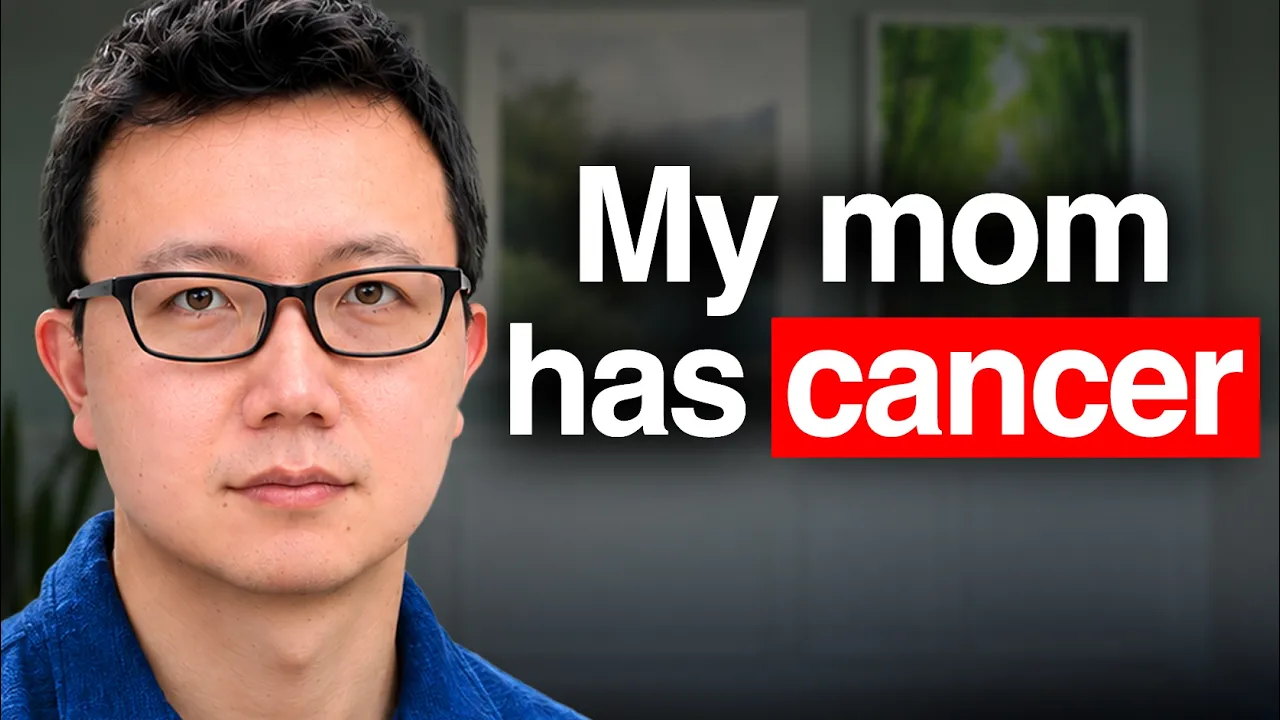
Peter Yang
Artificial intelligence aids cancer patients far more by untangling fragmented administrative bureaucracy and tracking records than by analyzing dense clinical research.
AI-assisted summary of My Mom Has Cancer Again. Here’s How I’m Using AI to Fight It — original source. Check the original for full context.
Source published:
Key ideas
- Peter Yang developed an open-source ChatGPT skill named 'F-Cancer' to assist caregivers in navigating medical bureaucracy, generating one-page briefs, and tracking treatment options. (0:00)
- Critical medical assets such as digital DICOM scans and physical biopsy pathology blocks often take several weeks to retrieve and should be requested immediately from hospital portals. (5:13)
- Top-tier second opinions from Comprehensive Cancer Centers and clinical trial research can take up to a month to arrange, requiring parallel pursuit alongside standard-of-care treatments. (10:34)
- Sharing a cancer journey publicly or across networks can unlock vital expert advice, which can be managed efficiently by distributing AI-generated email updates to an informal board of advisors. (14:19)
Detailed notes
## Background Published on YouTube by Peter Yang on November 4, 2026, this video addresses how caregivers can use AI to navigate a loved one's cancer diagnosis following his mother's fourth recurrence. According to the video description, Yang introduces an open-source ChatGPT skill he built called 'F-Cancer' to help families organize medical records, research therapies, consult experts, and manage the overwhelming logistics of care.
## TL;DR Drawing on his family's personal experience, Peter Yang details a five-step playbook for caregivers confronting cancer: building a centralized one-page patient brief, hunting down fragmented records and physical pathology specimens, and benchmarking standard care against clinical trials and tumor sequencing options. He explains how to leverage AI to draft concise communications for second opinions and assemble an informal expert advisory board by sharing the diagnosis openly. Throughout the breakdown, Yang emphasizes that automating administrative friction is essential not just for medical advocacy, but to protect precious, finite time with loved ones.
## Atmosphere & style The presentation carries a quiet, vulnerable, and deeply earnest tone that blends the emotional gravity of a child caring for an aging parent with the structured problem-solving of a systems engineer. Yang speaks candidly about the exhausting gap between hyped medical breakthroughs and the slow, fax-dependent bureaucracy of real-world hospitals. The delivery shifts effortlessly from pragmatic screen demonstrations to tender personal reflections on mortality and family, leaving the audience feeling both grounded and empowered to take action.
## Bulletin - [00:00](https://www.youtube.com/watch?v=Ddc5NFNnCfE&t=0s) Peter Yang developed an open-source ChatGPT skill named 'F-Cancer' to assist caregivers in navigating medical bureaucracy, generating one-page briefs, and tracking treatment options. - [05:13](https://www.youtube.com/watch?v=Ddc5NFNnCfE&t=313s) Critical medical assets such as digital DICOM scans and physical biopsy pathology blocks often take several weeks to retrieve and should be requested immediately from hospital portals. - [10:34](https://www.youtube.com/watch?v=Ddc5NFNnCfE&t=634s) Top-tier second opinions from Comprehensive Cancer Centers and clinical trial research can take up to a month to arrange, requiring parallel pursuit alongside standard-of-care treatments. - [14:19](https://www.youtube.com/watch?v=Ddc5NFNnCfE&t=859s) Sharing a cancer journey publicly or across networks can unlock vital expert advice, which can be managed efficiently by distributing AI-generated email updates to an informal board of advisors.
## Key takeaways - [00:52](https://www.youtube.com/watch?v=Ddc5NFNnCfE&t=52s) Facing cancer impacts nearly every family, with approximately two in five Americans receiving a diagnosis in their lifetime and 81% of diagnoses occurring at age 55 or older. - [02:04](https://www.youtube.com/watch?v=Ddc5NFNnCfE&t=124s) AI is often most valuable to caregivers not for reading theoretical research papers, but for managing the logistical chaos of doctor appointments, follow-ups, and fragmented records. - [02:04](https://www.youtube.com/watch?v=Ddc5NFNnCfE&t=124s) The custom F-Cancer skill consolidates patient information into a structured one-page Google Doc covering contacts, next actions, clinical facts, a plain-English glossary, and a care log. - [02:04](https://www.youtube.com/watch?v=Ddc5NFNnCfE&t=124s) Generating the top three priority questions via AI prior to tight 15-to-20-minute clinical appointments maximizes face-to-face time with oncologists. - [05:13](https://www.youtube.com/watch?v=Ddc5NFNnCfE&t=313s) AI recommendations are only as reliable as the underlying records, requiring immediate collection of written summaries, raw DICOM imaging, and physical pathology blocks. - [05:13](https://www.youtube.com/watch?v=Ddc5NFNnCfE&t=313s) Physical pathology tissue blocks are the single most critical asset for genomic sequencing and accurate second opinions, but often take weeks to retrieve from off-site storage. - [07:41](https://www.youtube.com/watch?v=Ddc5NFNnCfE&t=461s) A massive operational disconnect exists between cutting-edge cancer research and the archaic reality of clinical workflows reliant on faxes and voicemails. - [07:41](https://www.youtube.com/watch?v=Ddc5NFNnCfE&t=461s) Caregivers can understand first-line therapy expectations by referencing publicly available National Comprehensive Cancer Network (NCCN) guidelines with AI assistance. - [10:34](https://www.youtube.com/watch?v=Ddc5NFNnCfE&t=634s) Securing second opinions from premier Comprehensive Cancer Centers like MD Anderson, MSK, or UCSF often takes up to a month and requires substantial preparation. - [10:34](https://www.youtube.com/watch?v=Ddc5NFNnCfE&t=634s) Comprehensive tumor sequencing through services like BostonGene identifies actionable DNA and RNA biomarkers that traditional pathology may overlook. - [12:47](https://www.youtube.com/watch?v=Ddc5NFNnCfE&t=767s) Caregivers should evaluate clinical trials concurrently with initial care via ClinicalTrials.gov, while exercising caution regarding early unproven phase 1 and 2 trials. - [14:19](https://www.youtube.com/watch?v=Ddc5NFNnCfE&t=859s) Openly sharing a cancer diagnosis rather than keeping it secret can mobilize valuable advocates, clinicians, and specialized organizational support. - [14:19](https://www.youtube.com/watch?v=Ddc5NFNnCfE&t=859s) ChatGPT can translate dense clinical reports into concise bulleted updates, allowing caregivers to manage an external advisory board efficiently via BCC emails. - [15:41](https://www.youtube.com/watch?v=Ddc5NFNnCfE&t=941s) Beyond medical navigation, caregivers must deliberately protect quality time with loved family members before career ambitions and busywork displace irreplaceable moments.
## Detailed walkthrough ### [00:00](https://www.youtube.com/watch?v=Ddc5NFNnCfE&t=0s) My Mom's Story and How AI Can Help
Peter Yang begins by sharing that his mother has survived cancer three times, but she has recently been diagnosed yet again. During the prior three battles, his parents carried most of the burden alone, but he resolves that he will not simply watch from the sidelines this time: “The first three times this happened, my parents carried most of the burden. But this time, I'm not going to be a bystander.” Yang views supporting an ill family member as “probably the most important AI use case of them all.” To help patients and their families handle the immense logistical and emotional load, he developed an open-source, free ChatGPT skill named **F-Cancer** (hosted at `github.com/petergyang/fuck-cancer`), designed to guide caregivers step by step through the healthcare maze.
[00:52](https://www.youtube.com/watch?v=Ddc5NFNnCfE&t=52s) Cancer Statistics and the Caregiver's Burden
Cancer remains an inescapable reality across modern society. In the United States, roughly two in five people will receive a cancer diagnosis at some point in their lifetime, meaning that once caregivers and immediate family members are accounted for, virtually every household is impacted. On a positive note, cancer mortality rates have declined by 35% since 1991 thanks to ongoing advances in medical technology and therapies. Despite these improvements, age remains a major risk factor; approximately 81% of all cancer diagnoses occur in individuals aged 55 and older.
Facing this diagnosis requires a structured plan, which Yang divides into five distinct steps for caregivers and patients: 1. Create a one-page brief summarizing up-to-date facts and logistical contacts. 2. Track down and organize all medical records, lab reports, and imaging scans. 3. Thoroughly research standard treatment paths and clinical options. 4. Seek second opinions and bring experienced specialists into your corner. 5. Fiercely protect quality time with family.
[02:04](https://www.youtube.com/watch?v=Ddc5NFNnCfE&t=124s) Step 1: Create a One-Page Brief with AI
When his mother’s cancer recurred, Yang initially assumed he would leverage AI primarily to read dense oncology studies. In reality, he discovered that the tool's greatest utility lies in administrative coordination: “Instead, it's been far more useful for staying on top of the mountain of paperwork and follow-ups across the different doctors and hospital departments.” To solve this administrative chaos, the F-Cancer skill builds and maintains a live, concise Google Docs brief organized into five key components:
- **Patient Information:** Baseline demographics, emergency contacts, primary care team members, second-opinion contacts, phone numbers, and email addresses. - **What to Do Next:** The top three near-term action items or the top three priority questions to raise with doctors. - **What We Know:** Concrete clinical facts—biomarkers (such as ER/PR status), cancer stage, current treatment status, and diagnosis specifics. - **Plain-English Glossary:** Clarifications and translations of complex medical jargon into easy-to-understand language. - **Care Log:** A dated, chronological journal tracking appointments, test results, and newly discovered details.
```mermaid flowchart TD accTitle: Five Sections of the F-Cancer One-Page Brief accDescr: Diagram showing the five core sections built into the Google Docs family brief via the F-Cancer AI skill.
subgraph BriefStructure["One-Page Cancer Brief"] A["1. Patient Information & Care Team"] B["2. What to Do Next (Top 3 Questions)"] C["3. What We Know (Stage, Biomarkers)"] D["4. Plain-English Medical Glossary"] E["5. Chronological Care Log"] end
A --> B B --> C C --> D D --> E ```
To demonstrate the setup, Yang walks through a ChatGPT prompt: installing the skill directly from GitHub, then submitting a prompt such as: `F Cancer, my mom was just diagnosed with stage three breast cancer. Here are her markers, ER and PR positive... and here's her oncologist.` The tool outputs the structured brief directly. Having this single document ready to share with family members has proved invaluable when walking into tight 15-to-20-minute clinical visits. Caregivers can prompt the model just before an appointment—asking it to pull the top three most urgent questions based on the brief—ensuring precious consultation time is not wasted.
[05:13](https://www.youtube.com/watch?v=Ddc5NFNnCfE&t=313s) Step 2: Organize Medical Records and Scans
An AI prompt is only as reliable as the source records behind it: “Your brief is really only as good as the data behind it. So, the more records you have on the patient, the more personalized and up-to-date AI's responses can be.” Because his mother was treated at several facilities over the years, her medical history was fragmented across disparate hospital patient portals. Looking back, Yang strongly advises families to request three distinct categories of medical assets immediately rather than waiting:
- **Written Records:** Prior pathology summaries, laboratory panels, surgery summaries, scan impressions, and full treatment histories. - **Digital Imaging Files:** Raw CT, PET, and MRI scans. These are typically stored in the specialized **DICOM** imaging format, take two to three weeks to process, and are often delivered physically on a USB thumb drive or CD-ROM. - **Pathology Blocks and Slides:** Tissue specimens preserved from the tumor biopsy. This physical tissue is the single most critical asset for genomic sequencing and accurate second opinions. Because facilities often store old specimens in off-site warehouses, tracking them down takes the longest amount of time; his mother is still waiting on blocks from a previous cancer.
Yang stores all gathered records inside a shared Google Drive. Connecting ChatGPT directly to this archive alongside the one-page brief grounds the AI's responses in the patient’s personal medical reality rather than general web advice. Users can also ask ChatGPT to streamline the record retrieval process itself; for example, prompting it with hospital names like Stanford or UCSF will generate direct request portal links, estimate fulfillment wait times, and even draft initial record request emails.
[07:41](https://www.youtube.com/watch?v=Ddc5NFNnCfE&t=461s) Step 3: Research Treatment Options and Navigate Bureaucracy
A patient’s diagnosis typically begins when an abnormality is detected on an initial scan (such as a CT scan), followed by a confirmatory biopsy. Afterward, a multidisciplinary **tumor board**—consisting of oncologists, radiologists, surgical oncologists, and other specialists—meets to deliberate over the case and propose standard-of-care treatments based on established national protocols (like the US NCCN guidelines), which generally involve surgery, chemotherapy, radiation, or immunotherapy.
However, this formal clinical pipeline moves agonizingly slowly. Two full months after his mother's initial suspicious CT scan, her family was still waiting to confirm whether the mass was a recurrence of her previous breast cancer or a brand-new primary cancer. Yang highlights the deep emotional disconnect between online hype and the archaic reality of day-to-day healthcare: “Working with my mom's medical team has sometimes felt like working with a co-worker that doesn't respond to emails or calls and only communicates through voicemails and faxes.” He expresses deep frustration with tech commentary hyping miraculous AI cures while families are stuck waiting on physical mail and fax machines:
> “So, there's a massive disconnect between what state of the art treatment looks like and what standard care and procedure looks like. And as a caregiver, I think it's my job to really fight for my mom and try to get her the best care possible and navigate a lot of the bureaucracy.”
Rather than waiting passively while fearing the tumor is growing, caregivers can take concrete steps. The first move is understanding the baseline standard of care by consulting the National Comprehensive Cancer Network (NCCN) guidelines, which are publicly available with a free account. Caregivers can feed their patient brief and pathology details to AI models or specialized tools to surface the expected first-line therapies and prepare informed questions.
[10:34](https://www.youtube.com/watch?v=Ddc5NFNnCfE&t=634s) Researching Standard Care, Second Opinions, and Tumor Sequencing
Navigating cancer treatment begins with establishing an evidence-based benchmark for standard care and seeking out expert second opinions. Using his customized ChatGPT skill, Peter Yang demonstrates how a caregiver can prompt the model with specific questions: "What does standard treatment look like for a case like the patient's? And where do we get a second opinion?" In the hypothetical case of hormone receptor-positive breast cancer (ER and PR positive), the AI lays out typical surgical approaches and hormone-blocking therapies matched to the patient’s exact biomarkers. Yang emphasizes that understanding standard care equips families to have informed, reasoned discussions with their oncology team. For second opinions, he strongly recommends seeking consultations from top-tier Comprehensive Cancer Centers, citing institutions such as MD Anderson in Texas, Memorial Sloan Kettering (MSK) in New York, Dana-Farber Cancer Institute in Boston, and Stanford or UCSF in the Bay Area.
Securing a second opinion, however, is a grueling administrative undertaking that can easily take up to a month. Yang shares that his family is currently in the middle of securing an opinion from UCSF, and the legwork done in Step 2—organizing scans, pathology reports, and clinical records—has proven vital. He actively uses AI to parse medical files, draft formal cover letters explaining his mother's clinical history, and compose outbound emails to intake coordinators. Alongside second opinions, Yang underscores the necessity of comprehensive tumor sequencing. Because cancer is biologically heterogeneous, molecular profiling offers insights that standard pathology might miss. He outlines his plan to use BostonGene to run comprehensive DNA, RNA, and biomarker sequencing at an out-of-pocket cost of roughly $4,000, which yields a detailed molecular report capable of pinpointing targeted therapies.
As Yang explains regarding the individuality of the illness: “Cancer is actually more than 100 different types of diseases, and each person's tumor can behave differently.”
- **Recommended Cancer Centers**: MD Anderson (Texas), Memorial Sloan Kettering (New York), Dana-Farber (Boston), Stanford Medicine (California), and UCSF Health (California). - **Turnaround Time for Second Opinions**: Up to one full month from initial intake to clinical review. - **Tumor Profiling Service**: BostonGene, costing approximately $4,000 for in-depth DNA/RNA sequencing to identify actionable biomarkers.
```mermaid flowchart TD accTitle: Cancer Research and Expert Workflow accDescr: Visual flowchart outlining the parallel tracks for researching treatment, obtaining sequencing, and leveraging an expert network. subgraph S1["Step 3: Clinical Research"] A["Patient Records & AI Brief"] --> B["Identify Standard Care & Biomarkers"] A --> C["Submit for Second Opinion<br/>(MD Anderson, MSK, UCSF, Stanford)"] A --> D["Comprehensive Tumor Sequencing<br/>(BostonGene DNA/RNA profiling)"] A --> E["Search ClinicalTrials.gov<br/>(Targeted Phase 2/3 trials)"] end
subgraph S2["Step 4: Expert Advisory"] B & C & D & E --> F["Synthesize Key Medical Updates"] F --> G["Draft Oncologist Email Updates via ChatGPT"] G --> H["BCC Expert Board<br/>(Advocates, Foundation staff, Clinicians)"] H --> I["Actionable Feedback & Treatment Strategy"] end ```
---
[12:47](https://www.youtube.com/watch?v=Ddc5NFNnCfE&t=767s) Evaluating Clinical Trials with AI and ClinicalTrials.gov
When a patient receives an initial diagnosis, oncologists reflexively start with standard of care because those regimens are rigorously tested and clinically proven. However, cutting-edge therapies are often locked within clinical trials. Yang points out that investigating trials is a critical parallel path, though it requires significant caution. Early-stage research presents real hazards, meaning patients cannot jump into experimental protocols blindly without seasoned clinical guidance.
Because the AI skill retains the complete context of the patient's one-page medical brief and underlying records, it can query ClinicalTrials.gov—the central registry of US clinical studies—to extract trials specifically matching the patient's diagnosis, stage, biomarker profile, and geographical location. When prompted to identify the top three clinical trial candidates across the United States or Canada, the model returns tailored options within driving distance of the patient. Yang stresses that researching trials, requesting second opinions, and awaiting sequencing results should never be deferred until standard therapies fail; they take weeks or months to arrange and should be pursued early in the disease course.
Yang issues a direct warning about jumping too hastily into experimental regimens: “And by the way, you should be very careful about clinical trials because some stage one and two trials are actually unproven and could actually make things worse.”
- **Database Utilized**: ClinicalTrials.gov, integrated directly into the custom AI skill to match inclusion/exclusion criteria. - **Trial Screening Parameters**: Phase, geographic proximity to the patient, prior therapy requirements, and specific tumor histology. - **Strategic Advice**: Initiate clinical trial matching concurrently with initial treatment planning rather than waiting for disease recurrence.
---
[14:19](https://www.youtube.com/watch?v=Ddc5NFNnCfE&t=859s) Step 4: Assembling an Expert "Board" and Sharing the Journey
A cancer diagnosis often drives families into secrecy, but Yang found that making his mother's situation public unlocked an outpouring of specialized assistance. Over a dozen individuals reached out with firsthand advice, resources, and connections. In particular, he highlights three invaluable allies who stepped into his corner: Ari from OpenCancer, who connected the family with specialists for pathology reviews and advanced diagnostic testing; Bailey from the Sijbrandij Foundation, who helped structure precise questions regarding tissue sequencing and therapy pathways; and practicing clinicians such as Dr. Odabashian, who reached out via direct messages on X (formerly Twitter) to offer independent clinical perspectives.
To maintain this support network without drowning in communication logistics, Yang treats these advisors as an informal board of directors. Whenever fresh pathology arrives or a treatment crossroad emerges, he prompts ChatGPT to transform dense clinical notes into succinct, clear email updates: "Can you draft a short email update?" He then sends these summaries via BCC to his advisory panel, soliciting their feedback on proposed regimens, surgical margins, or sequencing targets. This crowdsourced clinical brain trust gives the family confidence that no stone is left unturned.
Yang reflects on why breaking the silence around illness is so transformative: “You know, most families who get cancer like to keep it to themselves. But, what I found is that sharing the story and sharing the journey online or even just with friends really empowers other people to come and help.”
- **Key Contributors**: - Ari (OpenCancer): Provided direct introductions for second-opinion pathology reviews and advanced lab testing. - Bailey (Sijbrandij Foundation): Coached the family on drafting critical questions for treating oncologists regarding tissue assays. - Dr. Odabashian and social media clinicians: Provided rapid independent perspectives on diagnostic findings. - **Communication Workflow**: Drafting concise clinical bullet-point memos with ChatGPT, then emailing the distributed expert board via BCC.
---
[15:41](https://www.youtube.com/watch?v=Ddc5NFNnCfE&t=941s) Step 5: Protecting Precious Time with Family
The final step Yang presents departs from medical administration to focus on the emotional reality of caregiving: preserving meaningful time with loved ones. Upon receiving news of his mother's recurrence, Yang stepped away from his routine and spent an entire uninterrupted week with her, walking together, sharing meals, and having long conversations. He also instituted a daily phone call so his parents can see and talk with his young daughters.
Yang observes that for professionals in their early forties, life becomes a complex squeeze between raising young children and supporting aging parents. At this career stage, ambition often pulls people toward status, promotions, and income. Yet, financial success ultimately proves that time is far more scarce than money. Because moments with family lack explicit deadlines and cannot be tracked on a balance sheet, they are the easiest commitments to postpone until it is too late. Referencing the *Beardo* comic strip by Dan Dougherty—which depicts a father holding his baby girl, watching her grow up frame by frame, and suddenly realizing she has moved out while he has grown old—Yang reflects that his own daughters are rapidly growing up, and life moves relentlessly fast.
He urges viewers to keep their core priorities straight: “I think if there's one thing that I made you realize in this video is to recognize that time with your spouse, your kids, and your parents is very precious and limited and can pass by before you know it, right?”
Yang concludes by reminding viewers that his open-source "F-Cancer" ChatGPT skill is freely accessible via GitHub in the video description. He encourages anyone confronting a cancer diagnosis—either personally or as a family caregiver—to reach out for support, share their stories openly, and lean on the community.
## Notable quotes > [14:19](https://www.youtube.com/watch?v=Ddc5NFNnCfE&t=859s) Most families who get cancer like to keep it to themselves. But, what I found is that sharing the story and sharing the journey online or even just with friends really empowers other people to come and help. — Peter Yang
> [12:47](https://www.youtube.com/watch?v=Ddc5NFNnCfE&t=767s) You should be very careful about clinical trials because some stage one and two trials are actually unproven and could actually make things worse. — Peter Yang
> [05:13](https://www.youtube.com/watch?v=Ddc5NFNnCfE&t=313s) Your brief is really only as good as the data behind it. So, the more records you have on the patient, the more personalized and up-to-date AI's responses can be. — Peter Yang
## Mentioned Peter Yang, ChatGPT, F-Cancer, Google Docs, Google Drive, NCCN, MD Anderson, Memorial Sloan Kettering, Dana-Farber Cancer Institute, Stanford Medicine, UCSF Health, BostonGene, ClinicalTrials.gov, Ari, OpenCancer, Bailey, Sijbrandij Foundation, Dr. Odabashian, X, Dan Dougherty, Beardo
## Video description Copy my best AI workflows to save time and automate busywork: https://www.behindthecraft.com/?utm_source=youtube&utm_medium=tutorial 🤝 Subscribe to my practical AI newsletter read by 150K+ professionals: https://creatoreconomy.so
My mom has survived cancer three times, and now she has it again. This time, I'm not going to be a bystander. In this video, I walk through the 5 steps I'm taking to help her navigate cancer with ChatGPT, using a free skill I built that any patient or caregiver can use. I cover how to create a one-page brief, organize medical records, research treatment options, find experts, and protect time with family. I'm not a doctor, and none of this replaces a care team.
What I cover: (00:00) My mom's story and how I'm helping (00:52) Why cancer touches almost every family (02:04) Step 1: Create a one-page brief with AI (05:13) Step 2: Organize medical records and scans (07:41) Step 3: Research treatment options, second opinions, and trials (14:19) Step 4: Find experts to have in your corner (15:41) Step 5: Protect quality time with family
Get my free F-Cancer skill: https://github.com/petergyang/fuck-cancer
Resources mentioned: OpenCancer: https://opencancer.ai Future of Cancer Care Today (Sijbrandij Foundation): https://sijbrandijfoundation.org/fcct ClinicalTrials.gov: https://clinicaltrials.gov Cancer stats (NCI SEER): https://seer.cancer.gov/statfacts/html/all.html Time with family data (Our World in Data): https://ourworldindata.org/grapher/time-spent-with-relationships-by-age-us Comic: Beardo by Dan Dougherty
Where to find me: X: https://x.com/petergyang LinkedIn: https://www.linkedin.com/in/petergyang/
Subscribe to this channel - more tutorials coming soon!
[Source](https://www.youtube.com/watch?v=Ddc5NFNnCfE)