## Background
Published on YouTube by Bloomberg Originals on June 3, 2026, this episode of The Circuit with Emily Chang features an intimate interview with 23andMe Chief Executive Officer Anne Wojcicki. According to the page description, the episode explores the rise, fall, and rebirth of the personal genetics company as it emerges from bankruptcy as a nonprofit aiming to expand its customer base to 100 million users.
## TL;DR
The video details the turbulent evolution of 23andMe from a $6 billion biotech darling to its Chapter 11 bankruptcy filing following a major data security incident, strategic over-complexity, and market saturation. Founder Anne Wojcicki recounts buying back her company for $305 million in cash after reopening a bankruptcy auction against Regeneron and restructuring it into an open-science nonprofit research entity. Set against the backdrop of personal tragedies—including the deaths of her father, her nephew, and her sister, former YouTube CEO Susan Wojcicki—the narrative traces Wojcicki's determination to rebuild 23andMe into a 100-million-user preventive health platform.
## Atmosphere & style
The episode blends active, candid investigative journalism with deeply personal, reflective moments across cycling routes near Stanford, family homes, and local food halls. Emily Chang's probing, direct line of questioning balances the weight of intense corporate reckoning, board resignations, and high-profile controversies with lighthearted family banter and warmth. The overarching emotional arc moves from raw grief and public crisis toward resilient optimism, capturing the intense determination of a Silicon Valley founder navigating tragedy to rebuild her life's work.
## Key takeaways
- [00:38](https://www.youtube.com/watch?v=DX_HLqz7l2g&t=38s) 23andMe went from a peak $6 billion valuation to filing for Chapter 11 bankruptcy in March 2025 following market saturation and data privacy issues.
- [00:38](https://www.youtube.com/watch?v=DX_HLqz7l2g&t=38s) Anne Wojcicki bought back 23andMe out of bankruptcy court for $305 million in cash, restructuring it into a nonprofit research entity.
- [04:36](https://www.youtube.com/watch?v=DX_HLqz7l2g&t=276s) Under its new nonprofit mandate, 23andMe aims to transition from a commercial consumer product to an open-science platform for global research.
- [05:23](https://www.youtube.com/watch?v=DX_HLqz7l2g&t=323s) The company went public via a SPAC merger in 2021 at a $5.7 billion market cap, but struggled under an overly complex triple identity of consumer brand, diagnostics, and drug discovery.
- [13:47](https://www.youtube.com/watch?v=DX_HLqz7l2g&t=827s) A 2023 credential-stuffing security incident compromised thousands of accounts, expanding notifications to 6.9 million users due to relative-matching features.
- [07:45](https://www.youtube.com/watch?v=DX_HLqz7l2g&t=465s) Strategic challenges and genomic complexity slowed progress, as most chronic diseases are polygenic rather than driven by single gene mutations.
- [11:46](https://www.youtube.com/watch?v=DX_HLqz7l2g&t=706s) The company's entire independent board resigned en masse in August 2024 amid strategic disagreements with Wojcicki following major personal losses for her family.
- [15:27](https://www.youtube.com/watch?v=DX_HLqz7l2g&t=927s) Wojcicki outbid pharma giant Regeneron in a reopened bankruptcy auction to retain control over user DNA data.
- [16:50](https://www.youtube.com/watch?v=DX_HLqz7l2g&t=1010s) 23andMe's long-term goal under its nonprofit structure is to expand its database from 13 million to 100 million users to power AI-driven genomic discovery and preventive healthcare.
- [17:53](https://www.youtube.com/watch?v=DX_HLqz7l2g&t=1073s) Wojcicki aligns 23andMe's vision with broader consumer demand for outside-in healthcare reform and systemic disease prevention.
## Detailed walkthrough
### [00:06](https://www.youtube.com/watch?v=DX_HLqz7l2g&t=6s) The Kitchen Counter and Silicon Valley Royalty
The walkthrough begins on location with Bloomberg’s Emily Chang and 23andMe co-founder Anne Wojcicki visiting Wojcicki's childhood home in Northern California. Wojcicki admits with a laugh that despite her adulthood, she still frequently refers to this location as "my house." Inside the home, Chang points out a framed photograph of Steve Jobs sitting right on the kitchen counter, prompting a lighthearted exchange about Jobs staring down anyone cooking in the kitchen.
Wojcicki explains that her mother, Esther Wojcicki, knew Steve Jobs intimately through her efforts as an educator. Her mother wrote some of the earliest grants to introduce Apple Macintosh computers directly into school journalism programs. Wojcicki reminisces about her mother's persistent hands-on approach back in the day, recalling how she would show up at the Jobs residence, knock on the front door, and plainly state that she needed more Macs for her students.
- **Key Figure:** Esther Wojcicki (mother), an early pioneer of digital journalism curriculum in secondary education.
- **Steve Jobs Connection:** Personal friendship built through early Apple education grant initiatives.
---
[00:38](https://www.youtube.com/watch?v=DX_HLqz7l2g&t=38s) From Biotech Darling to Bankruptcy and Rebirth
Emily Chang summarizes the meteoric trajectory of Anne Wojcicki and 23andMe. Wojcicki—a Bay Area native, avid cyclist, and co-creator of the prestigious Breakthrough Prize in science—co-founded 23andMe to pioneer direct-to-consumer genetic testing. The company famously convinced millions of customers to mail in saliva samples to unlock their genetic code, earning the first-ever FDA approval for consumer genetic health testing.
At its peak, 23andMe grew into a biotech darling valued at nearly $6 billion. However, a series of compounding crises led to a complete corporate collapse, forcing Wojcicki to resign as CEO so she could orchestrate a bid from the outside to buy back her own company. Wojcicki reflects on that period as a "total reckoning." Ultimately, she bought the company out of bankruptcy for $305 million in cash, restructured it as a nonprofit organization, and retook her seat as CEO. When asked if this outcome is a comeback, Wojcicki prefers to view it as an "evolution," noting candidly that she now holds a "master's in hard things" while preparing her figurative PhD thesis.
- **Peak Valuation:** Nearly $6,000,000,000 ($6 billion).
- **Buyback Price:** $305,000,000 ($305 million) in cash out of bankruptcy court.
- **New Structure:** Reorganized from a publicly traded corporation into a nonprofit research entity.
- **Customer DNA Base:** Approximately 13 million user profiles.
---
[00:40](https://www.youtube.com/watch?v=DX_HLqz7l2g&t=40s) Morning Bike Rides and Childhood Memories at Kite Hill
The narrative shifts to a two-day active interview conducted while cycling through the rolling hills surrounding Stanford University. Wojcicki outlines her strict daily biking routine, describing cycling as her ultimate source of personal freedom. She bikes every morning to arrive at the office energized and happy, and bikes home every evening to process the day's stress and business decisions. Her team knows that if bad weather prevents her from riding, her personality shifts and she gets noticeable "cranky."
As they ride through the countryside, Wojcicki points out fields of wildflowers where she and her siblings played as children. They arrive at "Kite Hill," a sentimental childhood spot where her family routinely flew kites.
- **Daily Routine:** Morning and evening daily commute via bicycle for mental clarity and stress management.
- **Location:** Kite Hill and the foothills surrounding Stanford University.
---
[03:18](https://www.youtube.com/watch?v=DX_HLqz7l2g&t=198s) The Wojcicki Dynasty and the Origins of Google
Chang details the extraordinary background of the Wojcicki family. Anne's father, Stanley Wojcicki, was the chair of the physics department at Stanford. Her sister Janet became a doctor and professor, while her late sister Susan Wojcicki became tech royalty—famously renting out her garage to Google's founders and later serving as CEO of YouTube. Their mother Esther is a celebrated high school journalism teacher and parenting author.
After studying biology at Yale, Anne worked on Wall Street before returning to California. It was during this return that she met her future husband, Google co-founder Sergey Brin, who was then a Stanford PhD student working out of Susan's garage on an early web search algorithm. Brin initially provided 23andMe with an early startup loan, which was later repaid when Google acquired an equity stake in the company. Although Anne and Sergey divorced in 2015, they remain on good terms and have jointly invested in local real estate projects, such as buying commercial properties in Los Altos.
- **Family Background:**
- **Stanley Wojcicki:** Chair of Stanford Physics Department (father).
- **Esther Wojcicki:** Teacher, author, parenting expert (mother).
- **Susan Wojcicki:** Former CEO of YouTube; rented garage to Google (sister).
- **Janet Wojcicki:** Epidemiologist, professor, and physician (sister).
- **Yale Education:** Anne Wojcicki studied biology at Yale University before heading to Wall Street.
- **Google Connection:** Early loan from Sergey Brin, later converted/repaid when Google took a direct stake in 23andMe.
---
[04:36](https://www.youtube.com/watch?v=DX_HLqz7l2g&t=276s) Buying Back 23andMe as an "Open Science" Platform
Standing atop Kite Hill with their bikes, Chang asks Wojcicki why she chose to spend her own fortune buying 23andMe back rather than starting a fresh venture. Wojcicki explains that she loved the work too deeply to let it disappear, realizing that she would spend the rest of her life in regret if she hadn't attempted the buyout.
Wojcicki expresses immense gratitude that she had the financial privilege to write the multi-million dollar check. Under its new nonprofit mandate, she envisions 23andMe as a "gift to society"—an open-science platform for global researchers to unravel the foundational mechanisms of life, human health, and complex diseases like Alzheimer's.
- **Core Vision:** Transitioning 23andMe from a commercial consumer product to a global open-science platform for medical research.
- **Target Disease Areas:** Alzheimer's, cancer, cardiovascular diseases, and complex genetics.
---
[05:23](https://www.youtube.com/watch?v=DX_HLqz7l2g&t=323s) Dual Business Model, Wall Street Boom, and Real Estate
In its peak commercial era, 23andMe operated on a dual business model that captured popular culture. On the consumer side, home DNA kits became a widespread phenomenon (even becoming a frequent punchline on late-night television). On the enterprise side, the company amassed a massive genomic database aimed at fueling drug discovery across oncology, immunology, neurology, and metabolic diseases.
In 2021, 23andMe went public through a SPAC merger backed by Sir Richard Branson, driving its market valuation to $5.7 billion and briefly making Wojcicki a self-made billionaire. Concurrently, Wojcicki engaged in a commercial real estate passion project in nearby Los Altos alongside Sergey Brin, describing the process of acquiring local commercial buildings and supporting local entrepreneurs as a real-life game of "Monopoly."
- **2021 Public Listing:** Went public via Richard Branson-backed SPAC (VG Acquisition Corp).
- **Peak Market Cap:** $5.7 billion.
- **Therapeutic Focus:** Internal drug development across oncology, cardiovascular, metabolic, and neurological disorders.
---
[06:38](https://www.youtube.com/watch?v=DX_HLqz7l2g&t=398s) Strategic Complexity, Data Breach, and Chapter 11
The company's commercial trajectory soured rapidly after its public listing. Kit sales slowed as market saturation took hold—Wall Street demanded continuous growth that a one-time consumer kit could not deliver. Furthermore, a massive security incident compromised credential data linked to 6.9 million user profiles, severely damaging public trust. Running low on cash, 23andMe filed for Chapter 11 bankruptcy protection on March 23, 2025.
Reflecting on her blind spots, Wojcicki admits to foundational errors in corporate positioning. Investors frequently asked whether 23andMe was a consumer brand, a diagnostics company, or a therapeutics firm. Wojcicki’s insistence that it was "all of them" created a structural complexity that proved overwhelming and unmanageable for a company at its stage.
- **Bankruptcy Date:** March 23, 2025 (Chapter 11 filing).
- **Data Security Incident:** Compromised credential access affecting 6.9 million user profiles via credential-stuffing.
- **Strategic Flaw:** Over-complexity by trying to simultaneously operate as a consumer tech, diagnostic, and drug-discovery enterprise.
---
[07:45](https://www.youtube.com/watch?v=DX_HLqz7l2g&t=465s) Expert Perspective: The Limits of the Human Genome
To unpack what went wrong, Chang meets with veteran biotech journalist Kristin V. Brown in New York. Brown describes a "cult of personality" surrounding Wojcicki due to her infectious enthusiasm and unshakeable faith in genomic science.
Brown notes that when the Human Genome Project mapped the first human genome in 2003, project leader Francis Collins famously predicted that DNA-based designer drugs for cancer and Alzheimer's would arrive by 2020. Early genetic discoveries in the 1980s and 1990s focused on single-gene disorders like Huntington's disease, leading scientists to assume conditions like diabetes or lung cancer would operate similarly. Instead, modern science revealed that common diseases are polygenic—driven by thousands of interacting genes and environmental factors—making genomic drug discovery far slower and more complex than anticipated. Furthermore, 23andMe faced a fundamental market wall: most consumers who wanted a DNA kit had already bought one.
- **Human Genome Project Landmark:** Completed in 2003 under Dr. Francis Collins.
- **Scientific Reality Check:** Most major chronic illnesses are complex and polygenic, rather than caused by a single isolated gene mutation.
- **Market Saturation:** Core consumer DNA testing market reached a natural growth ceiling.
---
[09:30](https://www.youtube.com/watch?v=DX_HLqz7l2g&t=570s) Personal Tragedy Amid Corporate Collapse
Returning to Wojcicki's childhood home, Wojcicki leads Chang through rooms filled wall-to-wall with vintage family photos. She points to images of her grandmother Rose and her sisters Susan and Janet, noting that as the youngest child, she developed an observant, quiet style—learning from her older sisters' experiences before stepping forward.
Wojcicki reflects on the emotional toll of resigning from 23andMe to bid on its assets in bankruptcy court. Being suddenly cut off from 20 years of work emails, calendars, and institutional identity felt "like a death" where everything looked like a different, darker shade the next morning.
Making matters far worse, this corporate collapse coincided with three devastating family deaths within a short window:
1. Her 86-year-old father, Stanley Wojcicki, passed away.
2. Her 19-year-old nephew, Marco Troper (Susan's son), died from an accidental overdose.
3. Her sister, Susan Wojcicki, died at age 56 from lung cancer despite having never smoked.
Wojcicki shares a touching detail about Susan’s devotion as an older sister: even during her final month of life while battling terminal cancer, Susan offered to read 23andMe's regulatory financial filings (10-Q) to provide strategic advice.
- **Family Losses:**
- **Stanley Wojcicki:** Died at age 86.
- **Marco Troper:** Nephew (Susan's son), died at age 19 from an accidental overdose.
- **Susan Wojcicki:** Died August 9, 2024, at age 56 from lung cancer.
---
[11:46](https://www.youtube.com/watch?v=DX_HLqz7l2g&t=706s) The Mass Board Resignation and "Burn Book"
In late August 2024, just weeks after Susan's death, 23andMe's entire independent board of directors resigned en masse. The board issued a public statement citing a lack of a fully financed, actionable proposal and clear strategic disagreements with Wojcicki over the direction of the company, compounded by her concentrated voting control. The resigning directors included longtime friends and early backers like Roelof Botha, Patrick Chung, and Neal Mohan (who succeeded Susan as CEO of YouTube).
Wojcicki describes the shock of the mass resignation as an "unbelievable surprise" from which she is still recovering. A Special Committee of the board had taken over major decisions, creating a disjointed corporate atmosphere during an already devastating personal time. When asked who belongs in her personal "burn book," Wojcicki chooses to keep names private, acknowledging that individuals had their own complex motivations.
In a statement provided to Bloomberg, early investor Patrick Chung noted that reorganizing the company and cutting certain programs had become necessary, but affirmed that the company's core mission "remains fully alive" under Wojcicki's renewed leadership.
- **Board Resignation Date:** Late August 2024 (a few weeks after Susan Wojcicki's death on August 9).
- **Key Board Members Who Resigned:** Roelof Botha (Sequoia Capital), Patrick Chung (XFund), Neal Mohan (CEO of YouTube).
- **Patrick Chung's Quote:** Stated that reorganization was necessary, but affirmed the mission "remains fully alive" under Anne.
---
[13:47](https://www.youtube.com/watch?v=DX_HLqz7l2g&t=827s) Addressing the Data Security Incident
Chang directly confronts Wojcicki regarding the highly publicized data incident that exposed millions of users. Wojcicki pushes back on the term "data breach," clarifying that 23andMe's internal database architecture was never hacked or breached directly.
Instead, malicious actors used compromised username and password combinations leaked from *other* external website breaches (credential stuffing). Roughly 13,000 to 14,000 23andMe accounts had matching credentials. However, because 23andMe's platform shows users their relative connections, notifying those affected accounts alongside every individual genetically linked to them caused the total notification number to swell to 6.9 million users. The resulting fallout led to state attorneys general warning consumers to delete data and Congressional scrutiny over national security and genomic privacy.
- **Incident Mechanism:** Credential stuffing attack using leaked passwords from third-party sites (approx. 13,000–14,000 primary compromised accounts).
- **Impact Radius:** Expanded to ~6.9 million profile records due to automatic relative-matching notifications.
---
[15:07](https://www.youtube.com/watch?v=DX_HLqz7l2g&t=907s) The Courtroom Battle Against Regeneron
When 23andMe entered bankruptcy, pharmaceutical giant Regeneron Pharmaceuticals initially submitted the winning auction bid for the majority of 23andMe's assets. Wojcicki refused to give up, fighting to reopen the bankruptcy auction on the explicit grounds that user DNA data should remain with 23andMe rather than being sold off to Big Pharma.
Reopening the auction was an uphill battle. Regeneron had $16 billion on its balance sheet and held a contractual "last look" provision, allowing them to match or top any competing bid. Wojcicki walked into a room packed with high-priced attorneys fully expecting to be outbid and defeated. However, in a dramatic turn of events, Regeneron formally declined to submit a final counter-bid. Wojcicki describes breaking down in tears, screaming, jumping up and down in raw, uncontained emotion at the realization that she had won her company back for $305 million.
- **Initial Winning Bidder:** Regeneron Pharmaceuticals.
- **Regeneron Balance Sheet:** ~$16 billion in cash reserves.
- **Winning Bid:** $305 million cash offer by Anne Wojcicki in round two of the reopened auction.
---
[16:50](https://www.youtube.com/watch?v=DX_HLqz7l2g&t=1010s) Rebuilding with AI and the Vision for 100 Million Users
Looking forward, Wojcicki outlines her ambitious vision for the reorganized nonprofit. While 23andMe currently holds a recontactable database of 13 million users—the largest in the world—Wojcicki argues that in the era of artificial intelligence, a dataset of that size is insufficient.
To fully decode the human genome, predict chronic disease patterns, and deliver truly personalized preventive medicine, the platform needs data from **100 million users**. Aligning her mission with broader public discussions around chronic disease prevention (referencing the MAHA / Make America Healthy Again movement), Wojcicki emphasizes that solving systemic health crises requires massive, ethically gathered human data.
- **Current Database Size:** 13 million users.
- **Long-Term Target:** 100 million users to power AI-driven genomic discovery and preventive health models.
---
[17:53](https://www.youtube.com/watch?v=DX_HLqz7l2g&t=1073s) State Street Market and Outside-In Healthcare Reform
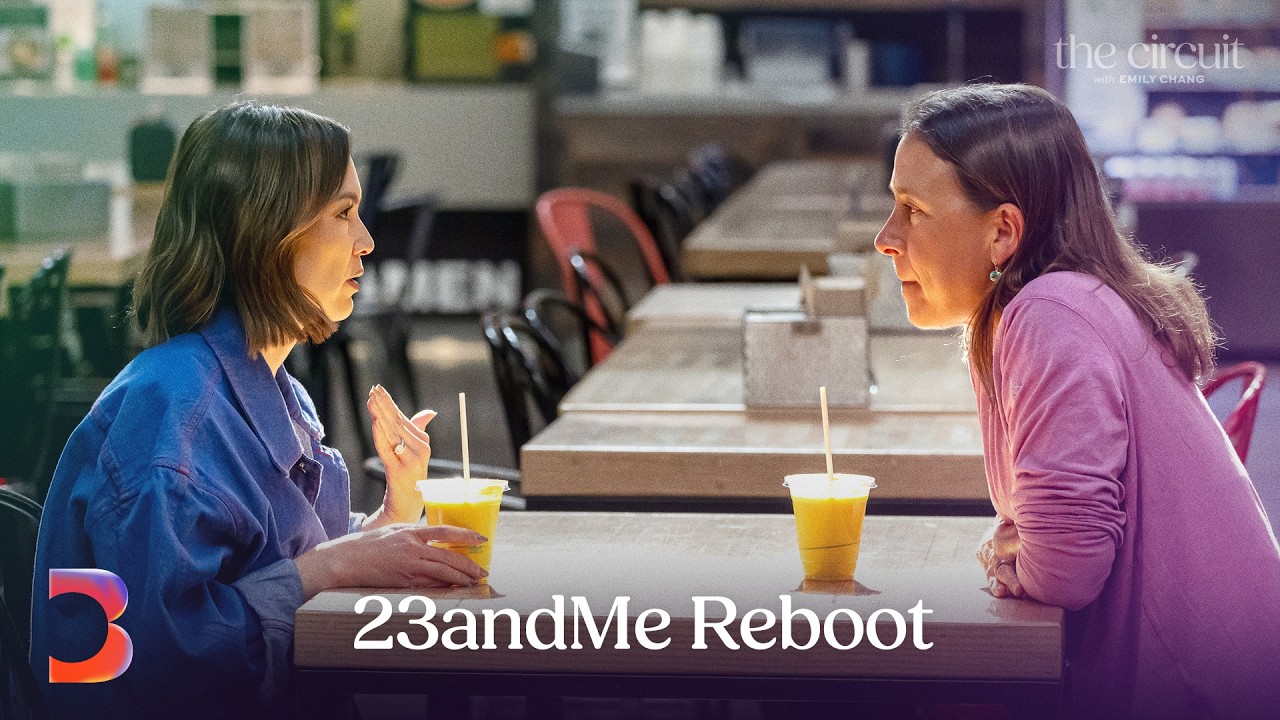
The section concludes with Wojcicki taking Chang to State Street Market in Los Altos, a vibrant community food court that Wojcicki personally developed as part of her local real estate efforts. As they order mango lassis, Wojcicki shares her broader critique of the American healthcare industry.
Wojcicki asserts that the current healthcare system makes too much profit off chronic dysfunction to ever reform itself from within. True change, she argues, must be driven from the outside by empowering individuals with their own biological data. She expresses satisfaction that despite all the legal, financial, and personal turmoil, 23andMe laid the groundwork for a broader preventative health movement.
- **Location:** State Street Market (food hall development in Los Altos, CA).
- **Core Philosophy:** Healthcare cannot be fixed from the inside due to entrenched financial incentives; consumer-driven data and outside-in prevention are required.
<ElicitationsGroup message="Where would you like to go next with this transcript?">
{/* Reason: Offers clear next logical steps for exploring the transcript or related topics. */}
<Elicitation label="Summarize Part 2 of this transcript" query="Can you provide the detailed walkthrough for Part 2 of this transcript?"/>
<Elicitation label="Compare 23andMe's bankruptcy to other biotech restructurings" query="How does 23andMe's bankruptcy and transition to a nonprofit compare to other recent biotech restructurings?"/>
</ElicitationsGroup>
[018:36] The Healthcare Shift and the Rise of the MAHA Movement
Reflecting on how drastically healthcare culture has shifted since 23andMe first launched, Anne Wojcicki points out that early on, even standard online consent didn't exist, and the concept of patients taking control of their own health data was seen as radical. Today, a whole ecosystem of direct-to-consumer health companies like Hims, Ro, Midi, and Hello Heart exists to streamline care. When Emily Chang asks about her stance on the "Make America Healthy Again" (MAHA) movement, Wojcicki connects it to her upbringing under her mother, Esther. Esther instilled early warnings about food preservatives like BHT and red food coloring causing hyperactivity, a fiery self-advocacy born out of personal tragedy when her young brother died after eating aspirin due to a lack of proper care. Wojcicki recalls her own dentist firing her and kicking her out of the chair simply because she refused an X-ray, illustrating how frustrating it is when healthcare providers ignore patient concerns. To Wojcicki, MAHA represents an underlying reality where people feel hurt and unheard by the medical establishment and are desperate for systemic change.
- About 41% of Americans report supporting the MAHA movement, which spans a wide spectrum of health claims ranging from food safety to vaccines and cell phone radiation.
- Esther Wojcicki's medical records once featured a pediatric note warning that she "can be quite uncontrollable at times" due to her relentless patient advocacy.
---
[020:31] Rebirth as a Nonprofit and the Goal of 100 Million Users
As skepticism toward the medical establishment grows, 23andMe is using its transition into a nonprofit to reclaim its initial momentum. Wojcicki emphasizes that 23andMe was always driven by mission and societal impact—focused on participant numbers, lives saved, and research papers generated—rather than purely producing a corporate bottom line. Under this new foundation model, 23andMe sells DNA kits, accepts charitable donations, and conducts genetic research internally while sharing data with external partners. The ambition remains high: Wojcicki intends to scale the platform to 100 million users, decode human genetics, eliminate preventable deaths, and create personalized prevention plans for every individual.
- Prominent tech investor and billionaire Ron Conway has committed financial support to the new 23andMe foundation.
- Recent research contributions supported by 23andMe data include published studies on obesity medications, cannabis, and AI-driven prediction models for genetic conditions.
---
[022:05] Elite Connections, the Epstein Papers, and Personal Resilience
Chang notes that while Wojcicki's high-profile network offers immense fundraising power, being entangled with the elite carries severe reputational risks. The investigation into disgraced financier Jeffrey Epstein reveals that his assistant once ordered large batches of 23andMe kits (which were canceled when flagged for international shipment) and that Ghislaine Maxwell explicitly messaged Epstein to "be very nice" to Wojcicki because she held the key to DNA mapping. Addressing the connection directly, Wojcicki states she met Epstein once and doesn't recall discussing DNA, explaining that he existed within the broader tech and conference circuit (including the TED network). She acknowledges visiting his island once briefly, but maintains she has nothing to hide. Moving to her personal life, Wojcicki speaks openly about her amicable co-parenting relationship with ex-husband Sergey Brin, as well as her decision to have a third child via a sperm donor at age 45—a choice she pursued with zero expectations just to avoid living with regret.
- Ghislaine Maxwell wrote to Epstein regarding Wojcicki: *"be very nice to her. Not stupid. She's interested in mapping DNA. She is key:-)"*
- Wojcicki credits her grounded nature to living with her sister and spending daily time with her children.
---
[025:31] Family Banter and Remembering Susan Wojcicki
The scene shifts to the backyard of the Wojcicki family home, where Chang sits down with Anne, her sister Janet, and their mother Esther. The conversation kicks off with playful chaos as the family tries—and fails—to agree on how to properly pronounce their Polish surname ("Wah-jit-ski" vs. "Whoa-jiskey"), with Anne admitting she simply agrees with whatever reasonable attempt people make. Esther candidly shares how painful it was as a mother to watch Anne go through the public bankruptcy and corporate collapse of 23andMe, expressing deep relief to see her emerge resilient on the other side.
The mood turns reflective as they honor their late sister and daughter, former YouTube CEO Susan Wojcicki. Anne shares her personal coping rule following difficult life events like divorce and loss: doing one thing every day that brings joy and maintaining optimism. Chang and the family reflect on the tragic loss of Susan's leadership in an industry with so few high-profile female tech executives. Anne shares fond memories of family ski trips filled with chaotic energy, where Susan would balance urgent YouTube crises with asking for a diaper bag, as well as their annual trips to the Oscars, where Susan unpretentiously wore dresses bought on sale at Macy's.
- Janet Wojcicki, who serves on the 23andMe board and lives with Anne, jokes about checking to see if she is accidentally wearing Anne's clothes during the interview.
- Esther Wojcicki shares a lighthearted historical anecdote about personally knocking on Steve Jobs' door to request computers for her classroom; Jobs agreed to provide them on the condition that she keep the source secret.
---
[029:23] Looking Ahead: "The Dream is Alive"
As the walkthrough concludes, Chang reflects on an early investor's description of Anne Wojcicki as possessing a "willful ignorance of constraints"—a trait celebrated in Silicon Valley. While convincing millions more consumers to submit their DNA to a nonprofit remains a formidable challenge, both the family and experts remain committed to the vision. Janet, speaking as a science researcher, notes that human biology is constantly being rewritten and cautions against dismissing Wojcicki's goals. Wojcicki re-affirms her unwavering commitment to building a personalized prevention path for every individual and accelerating scientific discoveries worldwide, closing with shared laughter as the family declares that the dream of 23andMe is very much alive.
## Notable quotes
> [00:38](https://www.youtube.com/watch?v=DX_HLqz7l2g&t=38s) total reckoning — Anne Wojcicki
> [00:38](https://www.youtube.com/watch?v=DX_HLqz7l2g&t=38s) master's in hard things — Anne Wojcicki
> [04:36](https://www.youtube.com/watch?v=DX_HLqz7l2g&t=276s) gift to society — Anne Wojcicki
> [07:45](https://www.youtube.com/watch?v=DX_HLqz7l2g&t=465s) cult of personality — Kristin V. Brown
> [09:30](https://www.youtube.com/watch?v=DX_HLqz7l2g&t=570s) like a death — Anne Wojcicki
> [11:46](https://www.youtube.com/watch?v=DX_HLqz7l2g&t=706s) unbelievable surprise — Anne Wojcicki
> [11:46](https://www.youtube.com/watch?v=DX_HLqz7l2g&t=706s) remains fully alive — Patrick Chung
> [18:36](https://www.youtube.com/watch?v=DX_HLqz7l2g&t=1116s) can be quite uncontrollable at times — Pediatrician / Medical Record
> [22:05](https://www.youtube.com/watch?v=DX_HLqz7l2g&t=1325s) be very nice to her. Not stupid. She's interested in mapping DNA. She is key:-) — Ghislaine Maxwell
> [29:23](https://www.youtube.com/watch?v=DX_HLqz7l2g&t=1763s) willful ignorance of constraints — Early Investor
## Mentioned
23andMe, 23andMe Institute, Anne Wojcicki, Apple, Bloomberg, Breakthrough Prize, Esther Wojcicki, Francis Collins, Ghislaine Maxwell, Google, Hello Heart, Hims, Human Genome Project, Janet Wojcicki, Jeffrey Epstein, Kristin V. Brown, Macy's, Midi, Neal Mohan, Patrick Chung, Regeneron Pharmaceuticals, Richard Branson, Ro, Roelof Botha, Ron Conway, Sergey Brin, Stanford University, Stanley Wojcicki, State Street Market, Steve Jobs, Susan Wojcicki, TED, The Circuit, VG Acquisition Corp, Wall Street, Yale University, YouTube
Anne Wojcicki bought 23andMe out of Chapter 11 bankruptcy for $305 million in cash to reorganize the former $6 billion biotech company into a nonprofit open-science research platform. The restructuring follows years of compounding crises, including market saturation, an overextended business model, a major credential-stuffing security incident, and severe personal and governance fallout.
The Flaws of the Commercial DNA Model (5:23)
23andMe gained mainstream prominence after securing the first-ever FDA clearance for consumer genetic health testing, eventually reaching a $5.7 billion market capitalization following its 2021 public listing via a Richard Branson-backed SPAC. The company operated on a dual model that paired direct-to-consumer DNA kits with an internal enterprise therapeutics arm focused on drug discovery across oncology, neurology, and metabolic disorders. Wojcicki later admitted that attempting to operate simultaneously as a consumer brand, diagnostics service, and therapeutics developer introduced unmanageable structural complexity.
Commercial momentum stalled as the company encountered fundamental scientific and market obstacles. Biotech journalist Kristin V. Brown noted that consumer demand reached a natural ceiling because customers rarely needed more than one DNA kit. Simultaneously, the promise of genomic therapeutics met the scientific reality that common chronic illnesses like diabetes and lung cancer are polygenic—involving thousands of interacting genes and environmental triggers rather than single-gene mutations—making drug development far slower and more costly than early genomic forecasts anticipated.
Data Breach, Personal Loss, and Board Exodus (6:38)
A series of compounding operational and personal crises culminated in 23andMe filing for Chapter 11 bankruptcy on March 23, 2025. Public trust eroded significantly after a credential-stuffing security incident exposed user data. While internal databases were not breached directly, attackers used credentials stolen from third-party sites to access approximately 13,000 to 14,000 accounts; because 23andMe linked genetic relatives, the notification requirement widened to roughly 6.9 million user profiles, prompting Congressional scrutiny and warnings from state attorneys general.
This corporate deterioration coincided with devastating family grief for Wojcicki, including the deaths of her father Stanley, her 19-year-old nephew Marco Troper, and her sister, former YouTube CEO Susan Wojcicki, who died from lung cancer at age 56. In late August 2024, weeks after Susan's death, 23andMe's entire independent board of directors—including early backers Roelof Botha, Patrick Chung, and Neal Mohan—resigned en masse, citing strategic disagreements over company proposals and Wojcicki's concentrated voting control.
Auction Showdown and Nonprofit Restructuring (15:07)
Wojcicki stepped down as CEO to organize an outside bid to buy 23andMe's assets out of bankruptcy court. Pharmaceutical manufacturer Regeneron, which held $16 billion in cash reserves, initially placed the winning auction bid. Wojcicki fought to reopen the auction process, arguing that the database of consumer DNA records should remain within 23andMe rather than being absorbed by a commercial pharmaceutical firm.
Although Regeneron held a contractual right to match or top competing offers, the pharmaceutical giant declined to submit a counter-bid in the reopened auction. Wojcicki acquired the company for $305 million in cash and retook the CEO seat. She restructured 23andMe into a nonprofit foundation funded through a mix of kit sales, philanthropic contributions from backers including tech investor Ron Conway, and research partnerships across fields such as obesity and genetics.
AI Ambitions, Data Scale, and Healthcare Skepticism (16:50)
As a nonprofit, 23andMe aims to operate as an open-science database for researchers studying complex diseases like Alzheimer's and cancer. While the company retains 13 million recontactable user profiles—the largest such repository globally—Wojcicki claims this scale is insufficient for modern computational biology. She has set a target of 100 million user profiles, arguing that datasets of this magnitude are required to feed artificial intelligence models capable of predicting disease and personalizing preventive treatment.
Wojcicki connects this platform expansion to broader public dissatisfaction with conventional medicine, citing the 'Make America Healthy Again' movement supported by an estimated 41% of Americans. She contends that because the existing healthcare system generates substantial profits from chronic disease management, systemic improvement cannot come from within institutional healthcare, but must instead be driven from the outside by giving consumers direct access to their own biological data.
Wojcicki's transition of 23andMe into a nonprofit removes the quarterly pressures of public markets, but scaling the genetic database from 13 million to 100 million individuals remains a formidable challenge. The organization faces the ongoing task of reassuring consumers about genomic privacy while proving that artificial intelligence trained on crowdsourced DNA can translate into measurable preventive health breakthroughs.
[0:38] Anne Wojcicki: total reckoning
[0:38] Anne Wojcicki: master's in hard things
[4:36] Anne Wojcicki: gift to society
[7:45] Kristin V. Brown: cult of personality
[9:30] Anne Wojcicki: like a death
[11:46] Anne Wojcicki: unbelievable surprise
[11:46] Patrick Chung: remains fully alive
[18:36] Pediatrician / Medical Record: can be quite uncontrollable at times
[22:05] Ghislaine Maxwell: be very nice to her. Not stupid. She's interested in mapping DNA. She is key:-)
[29:23] Early Investor: willful ignorance of constraints
Original transcript
[0:06] - I was born here
[0:08] and people tease me that
I sometimes still refer
[0:11] to this as my house.
[0:13] - Steve Jobs is on the kitchen counter.
[0:15] - I know.
- Steve Jobs is staring at you
[0:17] every time you cook.
[0:19] - My mom knew Steve well
[0:20] because she wrote some of the first grants
[0:22] to bring the Mac into schools.
[0:24] And so my mom was one of the
first digital programs in a
[0:27] journalism program at school.
[0:29] And so my mom used to like
show up at the house, knock,
[0:32] knock, knock and be like,
I need some more Macs.
[0:38] - Anne Wojcicki. Bay area
native, cycling enthusiast,
[0:41] co-creator of the
Breakthrough Prize in science
[0:45] and co-founder of the
personal genetics company 23andMe.
[0:50] 23andMe inspired millions of people
[0:52] to spit in tubes in exchange
[0:54] for a glimpse at their genetic code.
[0:56] - So you now have the first
FDA approved consumer
[1:00] genetic test.
[1:01] - What you might call
Anne Wojcicki, a pioneer.
[1:03] - We're going to
fundamentally change things.
[1:05] It was a biotech darling
at one point worth nearly
[1:09] $6 billion
[1:13] before it all collapsed
[1:14] and Wojcicki was forced to resign in order
[1:16] to win it back from the outside.
[1:19] - From that moment, it
was like a little bit
[1:21] of a total reckoning,
like, what am I going to do?
[1:27] What she did was buy the
company for $305 million in cash,
[1:32] restructure it as a nonprofit,
and retake the title of CEO.
[1:36] Should we call it a
comeback or not just yet?
[1:38] - It's an evolution. Probably
more than the comeback.
[1:41] I joined her for a
fast-paced two day romp
[1:44] through the hills around
Stanford's campus, where she
[1:47] talked to me about winning her
job back, co-parenting
[1:50] with Google co-founder Sergey
Brin, losing her sister Susan,
[1:54] former CEO of YouTube,
[1:56] and the day her own
board turned against her,
[1:59] - Those people were friends of hers.
[2:02] And how could they have done that?
[2:04] - The shock will never wear off.
[2:06] All while making me work for it.
[2:09] - Is this supposed to make my
blood pressure go up or down?
[2:12] - Down. It's going to go down.
[2:14] And my camera crew, too.
[2:16] Now that she's back at the helm,
[2:18] Wojcicki is looking
forward to better days.
[2:21] - I definitely have a master's
[2:23] in hard things right now.
[2:25] So when I write the PhD
[2:27] thesis, I'll share it with you, okay?
[2:38] - Okay, so we're biking.
- We're biking, we're biking.
[2:40] - So what's your biking routine?
[2:41] - Okay, so my biking routine,
[2:42] I bike every day because it's freedom.
[2:44] So I always bike in the
morning, I show up in the office
[2:46] and I'm happy and I bike home
[2:48] and then I can kind of process everything
[2:50] that happened in the office that day.
[2:52] So nobody ever, like when it's raining out
[2:54] and I can't bike, people know it's a
different personality.
[2:57] - They don't want to talk to you.
[2:59] - I'm just going to be more cranky.
[3:03] As kids we rode all around and
we used to like hang out
[3:06] and play in all these flowers.
We played in all of this.
[3:10] Now we're going to Kite Hill.
[3:13] So you might be surprised
to learn that this is
[3:16] where we used to fly kites.
[3:18] - Wojcicki grew up in
an illustrious family.
[3:20] Her father Stanley, chair
[3:22] of the physics department at
Stanford. Her sister Janet,
[3:25] a doctor and professor.
Susan, who's credited
[3:28] with persuading Google to buy
YouTube, and the matriarch,
[3:31] Esther. Celebrated high school
teacher, friend of Steve Jobs
[3:36] and self-styled parenting expert. Wojcicki
[3:39] studied biology at Yale, then
took a job on Wall Street
[3:43] before returning to California.
[3:45] That's when she met her future
husband, Sergey Brin, one
[3:49] of the Stanford PhD students working out
[3:51] of her sister Susan's garage
on something called search.
[3:55] Specifically, Google.
[3:56] Brin gave 23andMe a loan,
later repaid when Google
[4:00] took a stake in the company.
[4:03] The couple divorced in 2015,
but remain on good terms.
[4:08] - We can put our bikes down
and then we can look around.
[4:11] - How about that?
- Yes.
[4:12] You were on the front lines
[4:13] of Google obviously.
[4:15] Did that empower you
[4:18] or did that sort of give you
[4:20] like a motivation to push through?
[4:22] - Yeah, I think the thing
that I learned from them
[4:25] and from like frankly
like this whole culture is
[4:28] that it's okay to try
and it's okay to fail.
[4:32] Like the main thing is like
the continuous pursuit of
[4:35] what you're interested in.
[4:36] - You buy the company
back with your own money.
[4:39] - Yes, thank God. Yeah.
- Why come back?
[4:42] - Why come back?
- Oh, why come back?
[4:44] - Why not start something new?
[4:45] - I love it. I love what we do.
[4:47] At the end of the day I was
like, okay, if I don't buy it,
[4:51] I'm probably in my head
always regretting it.
[4:55] - How'd it feel to write that
check? That's a big check.
[4:57] - I mean, in some ways it's
like a privilege that I can.
[5:01] 23andme I think is so incredibly valuable
[5:05] and it's now a gift to society.
[5:07] And so this should be the open science
[5:10] platform for the world.
[5:13] Like to make discoveries about
like the foundations of life,
[5:17] make discoveries about, you know,
[5:18] what is health, about diseases,
[5:21] Alzheimer's, like everything.
[5:23] - The business model seemed
reasonable. On one side,
[5:27] a consumer product that was
making waves in pop culture.
[5:30] See there's a new company
called 23andMe, and
[5:33] because of them, 23 people
now say their father is me.
[5:39] On the other, a treasure trove of DNA data
[5:42] that could theoretically be
used to develop treatments
[5:45] to deadly diseases.
[5:46] Any drugs or diseases in particular
[5:48] that you are particularly we working on
[5:50] excited about? We're a whole rate
[5:51] - Oncology, immunology, neurology,
[5:53] cardiovascular, metabolic disease.
[5:55] So this is major breakthrough
stuff you're doing.
[5:58] - The company went public
in 2021 via a richer
[6:01] Branson back deal.
[6:02] The stock boomed and Wojcicki
became a self-made billionaire.
[6:07] She and Brin had also been
buying up commercial real estate
[6:10] in nearby Los Altos,
[6:11] a passion project which
eventually took over.
[6:15] - It's a little bit like
real life monopoly like you,
[6:20] you get and buy a building
[6:21] and then you can find
amazing business leaders
[6:24] and you can support them.
[6:26] - Everything seemed to be coming up. Anne,
[6:33] - Oh
- You think she owned the place?
[6:38] But the newly public company
was about to run into trouble
[6:41] after peaking at a market
cap of $5.7 billion,
[6:45] the stock tanked 23
[6:47] and me wasn't selling enough
kits to keep Wall Street happy.
[6:50] Then hackers got a hold of
data from 6.9 million 23
[6:54] and me profiles, which certainly
didn't help suddenly 23
[6:58] and Me was out of cash.
[7:01] Looking back, if you see
a blind spot, what was it?
[7:04] - I think there's like a number
of things that we did wrong
[7:06] and I think first and foremost,
you know, there's aspects
[7:09] that are like totally unsexy
[7:11] but are really important
like corporate structure.
[7:13] I'd go and meet with an investor
[7:15] and they would say like,
what's your identity?
[7:18] Are you a consumer company?
Are you a diagnostic company?
[7:21] Are you a therapeutics company?
[7:23] And we'd say like, oh, we're all of them.
[7:25] And like, that's amazing.
[7:27] And at that stage we were
at, it was too complex.
[7:32] - On March 23rd, 2025, the
company filed for bankruptcy.
[7:45] I headed to New York to meet up
[7:46] with veteran journalist Kristin V. Brown,
[7:48] to find out more about what happened
[7:50] to the once promising biotech company.
[7:53] You've been covering Anne
Wojcicki for a long time.
[7:56] What's your impression of
her as a person and as a CEO?
[7:59] - There's kind of a cult
of personality around her
[8:02] because she's so nice
[8:04] and so enthusiastic about what she does.
[8:07] I mean, nobody believes in the power
[8:10] of the genome more than Anne Wojcicki.
[8:12] - What was the promise of DNA
when 23andMe first started
[8:15] and what changed?
[8:17] - So what changed is not that 23andMe
had a bad idea.
[8:21] At the time, it was a great idea.
[8:23] - In 2003, scientists finished the first
[8:25] map of the human genome.
[8:27] Francis Collins, the
leader of the project,
[8:29] said we would have a DNA based
designer drug for Alzheimer's
[8:32] and cancer by 2020.
[8:35] - With this profound new knowledge.
[8:36] Humankind is on the verge
[8:37] of gaining immense new power to heal
[8:40] - In the eighties and nineties
[8:41] they were having all these breakthroughs
[8:43] where they were finding single
genes for diseases, right?
[8:47] Like Huntington's disease.
[8:49] We thought that most
diseases would be like that.
[8:51] That there would be one gene for diabetes,
[8:54] that there would be one gene
that made you more at risk for,
[8:57] you know, lung cancer.
[8:58] But it's not like that.
There are many, many,
[9:00] many genes involved in diabetes.
[9:02] And the fact is
[9:04] that biology is not only still pretty
[9:06] mysterious to us, right?
We don't know a lot.
[9:09] - Hmm. What is 23andMe's
[9:11] biggest challenge in your opinion?
[9:14] - I think 23andMe's biggest
challenge that most people
[9:16] who want to take a DNA test kit have
[9:18] already, have already done it.
[9:20] And you know, how do you grow if people
[9:25] fundamentally don't want your product?
[9:30] - Welcome to my, my crazy home.
[9:32] - This is the house you grew up in.
- It is.
[9:35] - I think every square inch
of wall has a picture on it.
[9:37] - It's very much a history of our lives.
[9:42] So that's little me,
but like more importantly,
[9:44] this is little me.
[9:45] - Okay.
- And so that's Susan, that's Janet
[9:49] and that's my grandmother Rose.
[9:51] And that's me. You know,
Susan and Janet dominated
[9:56] and so I had that luxury a
little bit of like sitting back
[9:59] and watching and just
like seeing what they did
[10:02] and like what mistakes they made.
[10:04] And so like even at my first job,
[10:06] like I remember thinking like
my first year is not about
[10:09] speaking, it's about observing.
[10:11] Hmm. And I've always kind
of been that way is like,
[10:13] I want to understand the
situation before I jump in.
[10:17] - A year ago, almost exactly, the company
[10:19] filed for bankruptcy.
[10:20] Tell me about that day and that
[10:22] decision.
[10:23] - I mean it's, it's remarkable
[10:25] to think it was almost a
year ago. I had resigned so
[10:29] that I could be part of
the bidding process, knowing
[10:31] that there was a likely chapter 11 filing.
[10:35] You know, I think some of
the things that surprised me,
[10:37] like I was, you know, suddenly out.
[10:41] I had no, none of my email
from 20 years or 19 years.
[10:45] My calendar, like everything,
like my life, it was just
[10:48] so personal and like
suddenly I didn't have it.
[10:53] You know, it's like a death.
[10:55] Like what do you do the
day after someone dies?
[10:57] Like you kind of look at everything,
[10:59] like you look at the clouds
and you look at the sky and,
[11:02] and it's different and
everything is a different shade.
[11:05] - Around the same time her
[11:07] company was falling apart, Wojcicki
[11:09] and her family suffered three real deaths.
[11:12] Her father passed away at age 86.
[11:15] Susan, who never smoked,
died at 56 of lung cancer.
[11:19] And Susan's 19-year-old son
Marco passed away from an
[11:23] accidental overdose.
[11:26] Susan was fighting cancer.
[11:27] While you were fighting for your company,
[11:30] did you talk to her about it?
[11:31] - Yeah, I mean like even when,
[11:33] when she was in her last
month of life, she was like,
[11:36] well like send me your 10 Q
and I'll give you feedback.
[11:40] She was a big supporter and
she was always trying to help.
[11:43] She was like always the big sister.
[11:46] - In 2024, your board
resigned all at once.
[11:50] The board put out a statement
[11:52] after of work, we have yet
to receive a fully financed,
[11:55] fully diligent, actionable proposal
[11:57] that is in the best
interests of shareholders.
[12:00] It is also clear that we differ
on the strategic direction
[12:03] for the company going forward.
[12:04] Because of that and your
concentrated voting power,
[12:07] we resign from the board.
[12:09] Now some of these people
are people who've sung your
[12:12] praises for decades.
[12:13] Investors like Roelof Botha,
Patrick Chung, Neal Mohan,
[12:17] who took over as CEO when Susan left.
[12:20] What conversations did you have with them
[12:22] and how did that feel?
[12:26] - I mean, it was a really complicated time
[12:28] because we'd set up a special committee.
[12:31] I was still CEO,
[12:32] but it was almost like the
special committee took over to,
[12:34] to take on major decisions.
[12:38] So it was a surprise for me
when they were saying, you know,
[12:40] like, oh, there's, we have a disagreement
[12:43] where I was like, like what?
[12:44] Like, like what? What
were we disagreeing about?
[12:48] I was working incredibly
hard to put together a bid.
[12:52] It was hard because Susan died August 9th
[12:55] and the board resigned a few weeks later.
[12:57] - Have you talked to any of them since?
[12:59] - I've engaged with a couple.
[13:01] - So who's in your burn book
[13:03] and who's, who's, who stuck with you?
[13:05] - I think they will stay
anonymous in my, in my burn book.
[13:08] People have their own motivations.
[13:10] People have their own reasons why.
[13:13] And it was a really complicated situation.
[13:15] And I should emphasize I was
one of the largest shareholders
[13:18] and I was going to do whatever I could
[13:21] to be in the best interest of
the mission and shareholders.
[13:25] It was an unbelievable surprise to me.
[13:28] - Bloomberg reached out to the
board members who resigned,
[13:30] all but one declined to
comment or didn't respond.
[13:33] Patrick Chung, one of the
earliest investors in 23andMe
[13:37] said, "it became necessary
to reorganize 23andMe
[13:41] and cut some programs,"
[13:42] but that the company's mission
"remains fully alive" under
[13:44] Wojcicki's leadership.
[13:47] I want to talk about the data
breach that exposed the data
[13:51] of millions of users that
wasn't stored securely.
[13:53] When you look back on that,
what do you think went wrong?
[13:57] How did you, or how did
the team let that happen?
[14:00] - I've never called it a data breach
[14:02] because it wasn't actually
a breach of our systems.
[14:05] Usernames and passwords by other companies
[14:07] that had been breached were
released into the dark web.
[14:11] And what we found is there was 13
[14:13] or 14,000 of those that matched in
[14:18] 23andMe. And you know,
we elected to notify,
[14:23] you know, obviously the
13, 14,000 individuals,
[14:27] but also everyone that they
were genetically connected to
[14:30] and, and that's how the
numbers became so large. Data
[14:34] and security are top priorities
[14:37] and we always take that really seriously.
[14:39] We always have. And you learn
from, you learn every day.
[14:43] And the most important thing is
[14:45] to be vigilant and stay on top of it.
[14:47] - The highly publicized sale,
stoked fears about privacy.
[14:50] Attorneys general told
consumers to delete their data
[14:54] and Congress called Wojcicki to testify.
[14:58] - Failing to safeguard Americans'
data from these hostile
[15:00] actors would not only be a
critical violation of privacy,
[15:04] but also a national security catastrophe.
[15:07] - Drugmaker Regeneron initially
won the auction for most
[15:10] of 23andMe's assets,
[15:12] but Wojcicki persuaded the bankruptcy
court to reopen the case.
[15:16] Part of her argument was that
the data would remain with
[15:19] 23andMe instead of being
sold to Big Pharma.
[15:22] And in the end she won.
[15:25] So ultimately your offer was
accepted $305 million.
[15:29] - It was. On round two.
[15:31] Let's not forget round two
[15:33] because that was, there
was real work, girl.
[15:37] - Did you celebrate or was
it not that kind of a day?
[15:40] - The day that I won is surreal.
[15:43] Regeneron put out tons of
press around how they won.
[15:46] They were out here meeting with my team,
[15:48] you know, they were in it to win it.
[15:50] And so reopening the auction was a battle.
[15:54] And part of what Regeneron
negotiated for was the last look,
[15:58] meaning that they had the
ability to give the last bid.
[16:01] And I was devastated, like
totally flat out devastated
[16:05] because I didn't have, you know,
[16:07] Regeneron has 16 billion
on their balance sheet.
[16:10] Like I can't compete.
[16:11] And so I had to have peace with
like, I'm going to lose it.
[16:16] And I was like, but at least I'm going to,
[16:18] I'm going to go down fighting.
[16:20] I'm not going to just,
you know, hand it over.
[16:24] And so that morning I walked
in was like, you know,
[16:29] sat down, you know, it's like, you know,
[16:32] a giant table of lawyers.
[16:33] It's like a really expensive table.
[16:35] And you know, Regeneron
said they declined to bid
[16:39] and I couldn't stop screaming.
[16:42] I was like screaming, jumping
up and down. I was crying.
[16:45] I was like raw emotion.
[16:47] That's like all, it was like,
I was like out of control.
[16:49] It was like out of body experience.
[16:50] - What's the hardest thing
about being a founder
[16:52] after a very public stumble.
[16:54] - You know, it's hard
because you want to win
[16:55] and you want to be successful.
[16:57] And for me,
[16:58] success was not just
about the monetary side,
[17:02] but it was also the success of humanity
[17:06] and helping millions
[17:08] and millions of people
benefit from their genome.
[17:12] And you know, we're at 13 million today,
[17:14] which is the world's largest, you know,
[17:16] recontactable data set.
[17:18] But to do the things that we want to do,
[17:20] particularly in an AI world,
you want hundreds of millions
[17:23] to really realize the dream
of understanding the code
[17:28] of life and having
personalized prevention.
[17:32] You know, I look at the MAHA movement,
[17:33] I look at everyone here
like we're suffering
[17:35] with chronic disease, like we're suffering
[17:36] with all these different issues.
[17:38] Susan had lung cancer, like
[17:40] how can I understand our health?
[17:43] And to understand it, you need data
[17:46] and you need data that's
collected in the right way
[17:49] and you need engaging with people.
[17:53] - Wojcicki took me to the food court
[17:54] she started, where we talked about her
[17:55] philosophy around health.
[17:57] - All right, welcome
to State Street Market.
[18:01] - Love it. So you built this place.
[18:03] - We built this place. What do you
[18:06] want? You want to get a mango lassi?
[18:07] - Ooh yeah, that sounds good.
- Let's get mango lassis.
[18:13] - You know, you've always
been really into preventative
[18:15] health and you've been really critical
[18:17] of the healthcare system.
[18:19] Do you think the system is broken?
[18:21] - There's so much money
off the dysfunction
[18:24] that you can never change from within.
[18:27] I think you have to start outside.
[18:29] And what makes me so happy
now is it everything
[18:34] 23andMe did was so hard
in those early days.
[18:36] Like there wasn't even online consent.
[18:39] The idea of having a patient come
[18:42] and get, you know,
information on their own was
[18:44] like radical.
[18:45] So the fact that there's like,
there's us, there's Hims,
[18:49] there's Ro, there's Midi,
there's you know, Hello Heart.
[18:52] I mean there's like an entire industry
[18:56] that has made healthcare easier.
[18:58] - What's your take on the MAHA movement?
[19:00] Make America Healthy Again?
- Ooh.
[19:02] My mom was like very early, you know,
[19:05] teaching us about BHT and preservatives
[19:07] and you never want to eat,
you know, red food coloring
[19:10] and that it can create hyperactivity.
[19:12] So one thing I realized also
[19:14] with my mom is the first time
I asked for my medical record,
[19:17] it came with this note across
the top that said, as all
[19:20] of us in pediatrics know
this mom can be quite
[19:24] uncontrollable at times.
[19:25] My mom had a tragedy when she was little,
[19:27] her little brother ate a bottle of aspirin
[19:30] and they couldn't get
proper care and he died.
[19:32] And so my mom always had
this mindset is like,
[19:35] if you don't take care of yourself
[19:36] and if you don't advocate
for yourself, nobody will.
[19:39] And so like time
[19:41] after time my mom, you know,
we'd have the experience
[19:44] of like going to the doctor saying like,
[19:46] oh there's this issue
or there's this problem
[19:48] and not feeling heard.
[19:50] And then we switch. Like
even I had this issue, I went
[19:53] to the dentist and she
insisted on X-raying my mouth.
[19:56] I was like, I don't want a X-ray.
[19:57] So she kicked me out
of the chair and I left
[20:00] and I had to go find a new dentist.
[20:02] And the MAHA movement for
me is reflective of the fact
[20:05] that people are hurting
and they don't feel heard
[20:10] and they want to see change.
[20:13] - I am a MAHA mom.
[20:16] - Is that a correct statement by the way?
[20:20] - About 41 percent of
Americans say they support
[20:21] the MAHA movement,
which covers a wide range
[20:24] of claims about food vaccines
[20:26] and cell phone radiation,
often with little evidence
[20:29] to support them.
[20:31] But skepticism of the medical
establishment is growing.
[20:34] And maybe that's an opening for
[20:36] 23andMe to find its
momentum again, this time
[20:38] as a nonprofit. How does the
whole nonprofit thing work?
[20:42] - 23andMe was always a
mission driven company.
[20:45] We were always focused on impact.
[20:47] How many people are
signing up to participate
[20:49] and how many lives are we saving?
[20:52] How many papers are we generating?
[20:54] Is it being translated into
something that's meaningful
[20:57] for society?
[20:58] We're going to be
measured on questions like
[21:00] that, no longer on like, did you
[21:03] generate a bottom line for us?
[21:05] And that's why we're growing
as a nonprofit is to say,
[21:09] we're coming back, and we're, the mission
[21:11] and the dream is still there.
[21:13] We're going to get to a
hundred million people.
[21:15] We're absolutely going to
learn the code of life.
[21:18] We're absolutely going to define
[21:20] what a personalized
prevention plan means for each
[21:22] and individual person.
[21:24] And we're going to eliminate
preventable deaths.
[21:26] And I can achieve that as a
nonprofit the same way I could
[21:29] achieve that as a for-profit.
[21:31] - 23andMe'S model as a
nonprofit is to sell kits,
[21:35] take donations,
[21:36] and then use the data for
research both internally
[21:39] and with external partners.
[21:42] In the last year, it's contributed
[21:44] to published research on
obesity drugs, cannabis,
[21:47] and using AI to predict
conditions based on genes.
[21:52] Billionaire Ron Conway
has committed to donate
[21:54] to the new foundation.
[21:56] It's a sign of one of
Wojcicki's superpowers.
[21:59] She knows a lot of powerful
people with deep pockets
[22:02] and people like her.
[22:05] But there are downsides to
being entangled with the elite
[22:10] Wojcicki's name,
[22:11] along with Brin's, appears
in the investigation
[22:14] of disgraced financier
[22:15] Jeffrey Epstein,
[22:17] whose assistant once ordered so many
[22:20] 23andMe test kits that the
company flagged his request
[22:23] and canceled the order
[22:24] when it was revealed they
were for use outside the US.
[22:29] - Jeffrey Epstein was apparently
obsessed with genetics
[22:33] and lacing the human race
with his DNA.
[22:36] Ghislaine Maxwell
emailed Epstein about you
[22:38] directly, saying "be very nice to her.
[22:40] Not stupid. She's
interested in mapping DNA.
[22:44] She is key smiley face."
[22:47] Did you ever encounter Jeffrey Epstein?
[22:49] Did he ever talk to you about DNA?
[22:51] - We met him once and I don't
remember talking about DNA.
[22:56] - I mean so many powerful
people including tech leaders,
[22:58] almost all of them men,
got caught in his web.
[23:01] How does this happen?
[23:03] - I, I think that there
was a circle of like people
[23:06] who like, hey, you meet this
person, you meet that person.
[23:09] I'm going to this event,
I'm going to this conference
[23:13] and you, you end up interacting.
[23:16] - Was it on the island?
- So we knew, you know, we went
[23:20] to the island once that was
reported and it was short,
[23:26] but you know, he was, Jeffrey
Epstein was in the TED network
[23:29] and other areas like he was
kind of in the circle,
[23:32] but it was, it was pretty limited for us.
[23:38] - Nobody likes to be asked
about Jeffrey Epstein,
[23:40] but Wojcicki says she's an open book.
[23:43] You're not scared to
talk about hard things
[23:46] or things that other people
don't want to talk about.
[23:49] Where does that come from?
[23:50] - I have nothing to hide.
[23:51] I've had like very public failures.
[23:54] I've had very public divorce.
I've had really hard times.
[23:58] You know, I always think
about like the people
[24:00] who helped me along the way,
like what is it that I can do
[24:03] that also helps other people?
[24:05] And frankly when I talk
about it, it helps me.
[24:08] - What's your relationship
like with Sergey now?
[24:10] - Sergey's been a great co-parent for me.
[24:12] You can't go through like the kind
[24:14] of crazy life you have, we've had,
[24:16] and like not
[24:19] have a deep affection.
[24:22] And I feel like, like we've
raised a couple really
[24:24] amazing children.
[24:26] - You had a third child on
your own with a sperm donor.
[24:30] What went into that decision for you?
[24:33] - Yeah, I, I mean I can't
help talking about it
[24:37] and smiling a lot because
I feel every day like I'm
[24:40] so lucky.
[24:43] I really, I like, I didn't
think I could get pregnant
[24:46] - At 45!
[24:47] - I know at 45, a hundred percent.
[24:48] I mean I think that's where I
look at like all these things,
[24:50] like when you go into something
[24:52] with low expectations, what happens?
[24:55] But I went in saying
like, I'm not, I'm never,
[24:58] it's never going to happen.
[24:59] So like why am I even
like, I was like, I'm,
[25:01] I'm doing it just to make sure
[25:03] that I don't feel guilty
that I didn't try.
[25:05] because if you don't try, you
can't. You have no chance.
[25:09] - What's something people assume about
[25:10] you but always get wrong.
[25:12] - I tend to not worry about
what people are assuming,
[25:15] but I know people definitely come to me
[25:17] and they're like, oh you're very grounded.
[25:19] I'm like, well why
would I not be grounded?
[25:23] I was like, I live with my
sister, I have my children.
[25:26] There's plenty of people
to try to keep me grounded.
[25:31] - Another beautiful day.
- You're seeing
[25:34] Wojcicki background headquarters.
[25:36] - I ended my day with
Wojcicki, her sister Janet,
[25:39] and her mother Esther in the
backyard of their family home
[25:42] to reflect on the challenges
of the last two years
[25:45] and finally settle the question of how
[25:48] to pronounce their Polish surname.
[25:50] I do want to start with a
lesson on pronunciation
[25:52] because nobody gets it right.
[25:54] - Ms. Anne Whoa-gee-key.
[25:56] - Ms. Whoa-jo-ski.
Did I say it wrong?
[26:00] - Uh, Ms. Whoa-jiskey.
It's Whoa-jiskey, right?
[26:02] - And I thought I had it right
[26:03] but then when you said it, I was like,
[26:05] I don't say it quite
like that. So I say Wah-jit-ski.
[26:08] - Yeah, that's fine.
- That's good.
[26:09] - But you said woo.
[26:10] - No, whoa. It's like whoa.
Like whoa, whoa.
[26:13] - Like Whoa-just-ski.
- Jiss.
[26:16] - It's like Whoa-jet-skiing.
[26:18] - No it's not.
- Well I'm just trying to make it -
[26:21] - There's no consensus in
this family. Let's just like -
[26:23] - Okay.
[26:24] Okay. And you're obviously used
[26:25] to people saying it wrong
and spelling it wrong.
[26:27] - Oh yeah. The minute they say anything
[26:28] that sounds reasonable, I say yes.
[26:32] - I'm curious what you both
think seeing Anne having gone
[26:35] through this era of survival.
[26:37] We talked about survival.
[26:38] - I mean it's remarkable.
It's really, it's remarkable.
[26:41] Like everything that
Anne has gone through,
[26:43] - You know, I had a feeling
[26:45] that she was going to be
just strong and resilient.
[26:48] But I can tell you as
a mom I couldn't watch
[26:52] because it was hard for me.
[26:54] It is very reassuring for me
to see her on the other side.
[26:57] And she has a great company.
[27:00] - You know, when I got divorced
[27:01] and it was hard, I remember I
had this therapist was like,
[27:03] you have to do one thing a
day that makes you happy.
[27:07] Mm. Like that's just for you.
[27:09] And I've kind of lived by that.
[27:10] We couldn't control Susan getting sick.
[27:12] We couldn't control Marco dying.
[27:13] Like I couldn't control
aspects of 23andMe.
[27:17] And so the thing I can
control is like making myself
[27:21] happy and optimistic.
[27:22] - I interviewed Susan many
times and she was always so kind
[27:26] and so generous with, with her
advice about how to be a mom
[27:30] and how to have a big job
[27:32] and that, yeah, you, you
could do that at the same time
[27:36] and you could actually
be good at both things.
[27:39] There are so few women in high profile,
[27:43] powerful positions in tech.
[27:45] Do you see that as another
part of this tragedy?
[27:49] - Yes, a hundred percent.
- For sure.
[27:52] I think every day,
[27:54] like I wish I could get
Susan's perspective on the
[27:57] world, you know?
[27:59] And there's not tons
[28:00] of female leaders in the tech space.
[28:04] - We always thought she might
be the next CEO of Google.
[28:07] - I know, I know. Look, Susan was amazing.
[28:10] And what was fun for
us, like we'd be skiing
[28:14] and you know, we all
like bring our different,
[28:17] like you have all the kids
and there's this chaos
[28:19] and Janet has her world like,
[28:20] and Susan would be
like, I got to like deal
[28:22] with these crazy things that
are happening on YouTube and,
[28:26] and then she'd be there and she'd be like,
[28:27] oh can you bring the diaper bag?
[28:29] You know? I went to the
Oscars every year with Susan
[28:33] and Susan was so funny because
she like didn't really care.
[28:37] She was like, I'm just going to buy
[28:38] like a dress at Macy's, like on sale.
[28:41] But she kind of had that
perspective as like,
[28:44] it's not like, it's not
that important for us.
[28:45] Like no one's like watching us.
[28:47] - Anne Wojcicki tried to recruit
Susan to 23andMe to no avail.
[28:51] But she's had more success with Janet.
[28:53] You now work with Anne.
[28:56] - Yes. Yes.
- And I think you also live together.
[28:58] - Yes. You know, it wasn't an ask,
[29:01] it was like, you're
going to be on the board.
[29:04] - Does she also let you
borrow her pants in exchange?
[29:08] I mean, how does this work? Really?
[29:12] - I had to quickly check
the outfit to see whether
[29:15] that was mine or truly hers.
[29:18] - Well that's one way to
stay aligned with your board.
[29:23] It's too early to say whether
a nonprofit structure will
[29:25] help Wojcicki achieve her ambitions.
[29:28] 23and Me still needs to
persuade a lot more people
[29:30] to buy its tests.
[29:32] But Wojcicki as one early
investor put it, has a willful
[29:35] ignorance of constraints.
In Silicon Valley,
[29:39] that's usually considered a good thing.
[29:42] What are the chances she pulls this off?
[29:45] - As a science reporter, I had
learned a long time ago to,
[29:48] you know, never say never.
[29:49] Right? Like we're learning
things all the time
[29:52] and our conception of human
biology is constantly changing.
[29:58] - So you haven't given up on
the dream it sounds like.
[30:01] - Yeah. Enable each person
[30:02] to have their own
personalized prevention path
[30:05] and accelerate discoveries
broadly like in every
[30:08] area. And we're going to do that.
[30:11] - The dream is alive guys.
- It's alive.
[30:13] - It's alive. Does anyone have a kite?
[31:00] - She's my mother. Who's uncontrollable?
[31:04] - The matriarch. Wait, wait, wait.
[31:05] Esther, can you tell us about
knocking on Steve Jobs door
[31:08] and asking for computers?
[31:10] - Oh, I did knock. He
came over to my class.
[31:13] I said I need some computers.
[31:14] He's like, if you don't tell anybody
[31:16] where you got them, I'll give you some.
[31:19] - Well, you're telling people now. Okay.