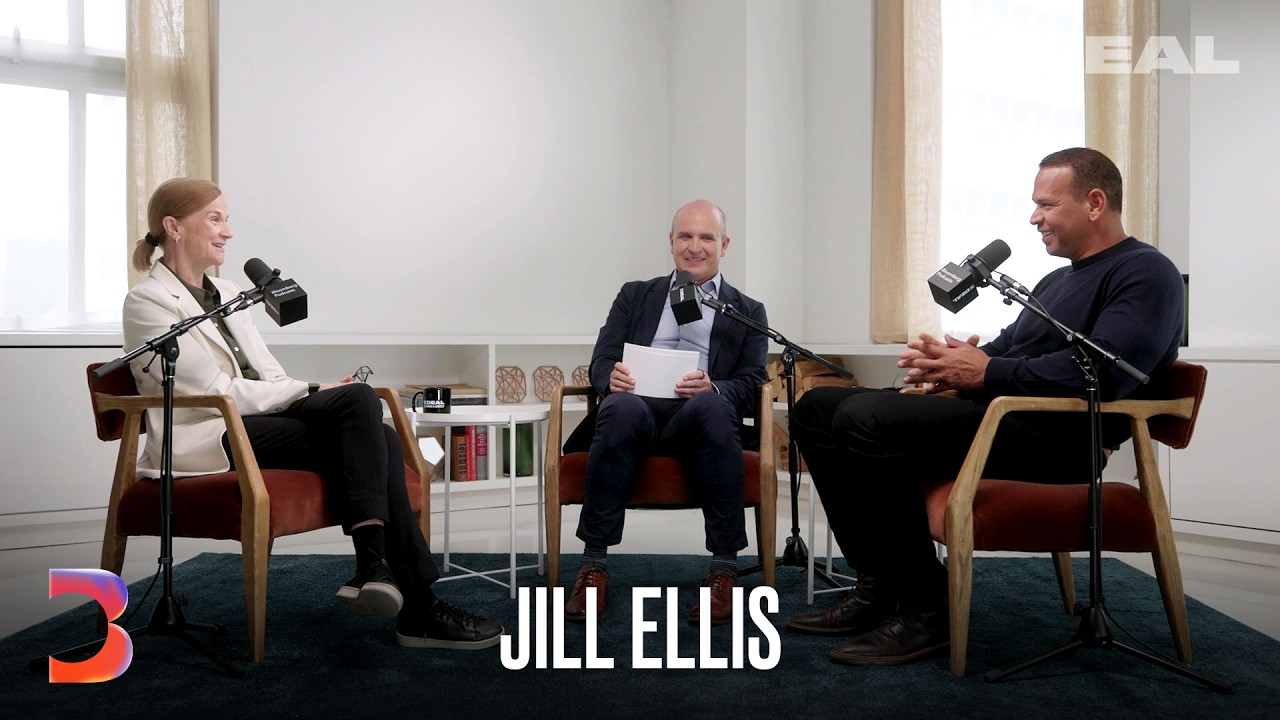
FIFA's Ellis Forecasts $1B Revenue for 2027 Women's World Cup
Bloomberg Originals
FIFA Chief Football Officer Jill Ellis argues that unbundling women's media rights and establishing dedicated global tournaments unlock massive commercial growth rather than serving as a charitable obligation.
## Background
Published on YouTube by Bloomberg Originals on June 4, 2026, this video features hosts Alex Rodriguez and Jason Kelly interviewing FIFA Chief Football Officer Jill Ellis for their series "The Deal." The show notes describe the episode as a deep dive into ticket prices, revenue expectations, and the commercial growth of both men's and women's global soccer ahead of the World Cup.
## TL;DR
Former U.S. Women's National Team coach and FIFA Chief Football Officer Jill Ellis makes the case for soccer as an unparalleled global investment asset, detailing the massive commercial expansion driving the sport. She outlines key operational dynamics, including unprecedented ticket demand exceeding 500 million requests, strategic match scheduling, and the integration of American-style entertainment into international tournaments. Ellis also addresses the rapid professionalization and unbundling of media rights in the women's game, while advocating for structured leadership pathways for female coaches and the commercial launch of the 2028 Women's Club World Cup.
## Atmosphere & style
The interview balances high-level corporate insight with relaxed, candid sports banter, driven by the easy chemistry between Alex Rodriguez, Jason Kelly, and Jill Ellis. The tone is authoritative yet engaging, blending strategic discussion of global media rights and tournament operations with authentic passion for fan culture and stadium atmosphere. It feels like an insider look into the business mechanics behind major global sporting events, capping off with a warm and energetic rapid-fire segment.
## Key takeaways
- [00:01](https://www.youtube.com/watch?v=lSor-UiLdxM&t=1s) Jill Ellis frames soccer as the ultimate global investment asset, citing its universal reach, massive participation base in the U.S., and unmatched drama.
- [00:01](https://www.youtube.com/watch?v=lSor-UiLdxM&t=1s) The Men's World Cup generates $4 billion to $6 billion in revenue, which is redistributed directly back to all 211 member associations through FIFA Forward funding.
- [00:31](https://www.youtube.com/watch?v=lSor-UiLdxM&t=31s) The expanded 48-team Men's World Cup structure introduces debutant nations and increases global parity where any team can win on a given day.
- [05:09](https://www.youtube.com/watch?v=lSor-UiLdxM&t=309s) Ticket demand for the World Cup reached an unprecedented 500 million requests—a tenfold increase over the previous two tournaments combined.
- [05:09](https://www.youtube.com/watch?v=lSor-UiLdxM&t=309s) FIFA strategically maps out match schedules and venue selections, pairing specific marquee teams and player demographic hubs with host cities to maximize crowd draw and revenue.
- [10:28](https://www.youtube.com/watch?v=lSor-UiLdxM&t=628s) FIFA is actively integrating American sports entertainment practices—such as individual player introductions, fan cams, and mid-match commercial breaks—into international soccer matches.
- [13:00](https://www.youtube.com/watch?v=lSor-UiLdxM&t=780s) Hosting a multi-city tournament across North America presents logistical challenges around transportation, transit costs, and visa processing compared to compact host models like Qatar.
- [15:08](https://www.youtube.com/watch?v=lSor-UiLdxM&t=908s) Women's World Cup revenues are projected to double to $1 billion for the next tournament, with 100% of proceeds earmarked for reinvestment into the women's game.
- [15:08](https://www.youtube.com/watch?v=lSor-UiLdxM&t=908s) Unbundling media rights from men's broadcast packages has allowed women's sports to establish independent commercial value and secure standalone media deals.
- [17:04](https://www.youtube.com/watch?v=lSor-UiLdxM&t=1024s) The NWSL has achieved financial stability and growth in its 13th season through higher compensation, professionalized facilities, and expansion to 16 teams.
- [19:04](https://www.youtube.com/watch?v=lSor-UiLdxM&t=1144s) As financial incentives in women's sports increase, deliberate pathways and licensing support are required to ensure women remain represented in coaching and technical roles.
- [20:25](https://www.youtube.com/watch?v=lSor-UiLdxM&t=1225s) Ellis pitches investing in women's soccer to member federations as a high-return commercial opportunity rather than a charitable obligation.
- [20:25](https://www.youtube.com/watch?v=lSor-UiLdxM&t=1225s) FIFA is launching the inaugural Women's Club World Cup in 2028, with target locations focused on maximizing commercial scale.
## Detailed walkthrough
Here is a detailed, faithful walkthrough of the transcript portion.
---
[00:01](https://www.youtube.com/watch?v=lSor-UiLdxM&t=1s) The Pitch for Soccer as a Global Investment
Alex Rodriguez opens by asking FIFA Chief Football Officer Jill Ellis for her pitch to him and Jason Kelly on why they should invest in soccer. Ellis immediately identifies soccer as the "truly global sport." While sports like American football and baseball dominate regional markets, soccer is played and watched everywhere, offering investors an immediate, massive global audience. To demonstrate its sheer scale, Ellis points out that even the 2023 Women's World Cup drew 2 billion viewers, and FIFA is currently in China negotiating broadcast deals to capture that market's revenue.
In the United States specifically, soccer is no longer just an emerging trend; it is fast becoming the largest youth participation sport with a deeply established, educated fan base. The domestic infrastructure is firmly in place with over 30 teams in Major League Soccer (MLS) as well as the NWSL. Between the massive youth playing base, established domestic pro leagues, and the historical success of teams like the U.S. Women's National Team on the world stage, Ellis frames soccer as a "can't miss" asset—highlighting that nothing matches the drama of the final five minutes of a match.
- **Women's World Cup Projected Revenue:** Expected to hit $1 billion for the 2027 tournament (a projected $500 million increase over previous levels).
- **Men's World Cup Revenue Range:** Generates upwards of $4 billion to $6 billion.
- **Redistribution Model:** Revenue generated goes directly back into the game through FIFA Forward funding, which provides financial support to all 211 member associations.
---
[00:31](https://www.youtube.com/watch?v=lSor-UiLdxM&t=31s) Tournament Anticipation and the "Three-Ring Circus"
Jason Kelly and Alex Rodriguez officially introduce the episode of *The Deal*, noting the perfect timing of speaking with Jill Ellis on the eve of the World Cup. Ellis, who previously led the U.S. Women's National Team to back-to-back World Cup titles in 2015 and 2019, reflects on the atmosphere surrounding major global tournaments. She admits that leading up to kickoff, every World Cup feels like a "three-ring circus" filled with debate, public commentary, and controversy—whether concerning visa logistics, venue safety, or ticket pricing. However, she notes that as soon as the first match kicks off and the first whistle blows, the magical nature of the sport takes over and fans settle in.
Alex shares his perspective from Miami, describing how soccer has taken over the city's narrative. Between the presence of figures like David Beckham and Lionel Messi, local championship runs, and Miami's international melting-pot demographic, soccer has arguably become the number one sports conversation in the area. (He also mentions his excitement about participating in an upcoming coin flip.)
Looking ahead to the upcoming Men's World Cup, Ellis points out that it will be the largest in history:
- **Expanded Field:** 48 teams competing (up from 32).
- **Global Parity:** Includes debutant countries, raising questions about match competitiveness. Ellis emphasizes that soccer’s global nature means on any given day, a "minnow" can beat a giant.
---
[05:09](https://www.youtube.com/watch?v=lSor-UiLdxM&t=309s) Unprecedented Ticket Demand and Strategic Match Scheduling
Jason Kelly highlights the sheer lack of any market comparison for the numbers FIFA generates, sharing a staggering metric he learned from FIFA President Gianni Infantino regarding ticket demand:
- **Previous World Cups Combined:** The prior two World Cups received a total of 50 million ticket requests.
- **Current World Cup Demand:** Has generated **500 million ticket requests**—a 10-fold increase over the previous two combined.
Addressing public criticism regarding dynamic ticket pricing, Ellis explains that when demand reaches half a billion requests, market forces inevitably drive pricing, though FIFA works hard to retain ticket allocations for partners and fans. Handling an event of this scale requires a deep team of ticketing and operational experts who strategically map out tournament schedules years in advance.
Ellis reveals that FIFA carefully aligns team matchups with venue locations to maximize attendance, regional interest, and revenue. For instance, in planning for upcoming tournaments, FIFA considers demographic hubs—such as pairing South Korea (starring Son Heung-min) with West Coast venues like Los Angeles to leverage local populations. Certain iconic clubs and national teams carry guaranteed crowd draw regardless of venue:
- **Real Madrid:** "Will sell out anywhere you put them."
- **Colombia:** Consistently fills U.S. stadiums with a sea of yellow jerseys when playing domestically.
- **Traveling Fan Bases:** Nations like Scotland consistently travel in massive numbers to support their team.
---
[10:28](https://www.youtube.com/watch?v=lSor-UiLdxM&t=628s) Fan Culture, Atmosphere, and Soccer as Entertainment
The conversation turns to global fan bases and how stadium environments differ around the world. Alex asks about the most intense fan cultures, and Ellis points to Latin American countries like Argentina and Colombia, where supporters sing, move, and chant nonstop for the full 90 minutes. She contrasts this continuous energy with the more reserved U.S. crowd style, describing American audiences as traditionally more of a "golf clapping kind of fan base." She notes that Scottish fans are equally passionate, often starting their match-day celebrations at 6:00 AM.
Additionally, hosting the tournament in North America brings distinct traditions into the fold:
- **Tailgating & Marches:** Tailgating is largely unique to North America (not customary in Europe) and could lead to opening stadium gates earlier.
- **Stadium Marches:** Organized fan marches to the stadium remain a core staple of international soccer culture.
Ellis notes that FIFA and Gianni Infantino have actively studied American sports production to integrate more entertainment elements into the match experience. Having attended events like Orlando Magic NBA games, FIFA has begun adopting features such as individual player introductions, dance cams, fitness cams, and enhanced venue presentation (as tested during the Club World Cup). While European and South American matches traditionally focus strictly on the pitch without distraction, American venues excel at presenting a "show around the show," including extensive premium hospitality spaces and mid-match commercial opportunities like official hydration breaks.
---
[13:00](https://www.youtube.com/watch?v=lSor-UiLdxM&t=780s) Economic Impact and Operational Challenges
Alex and Jason discuss the massive economic impact that host cities like New York experience when packed fan bases travel in packs. However, Jason notes that spreading a tournament across North America presents unique operational challenges compared to past host nations. Drawing a contrast to the 2022 World Cup in Qatar—where matches were tightly contained within Doha, allowing fans to attend multiple games in a single day—the North American landscape is far more spread out.
Ellis acknowledges these logistical complexities, noting that ongoing discussions surround stadium access, local transit costs (such as travel to MetLife Stadium), and international visa processing. Despite these hurdles, she emphasizes that previous events like CONCACAF tournaments and the Club World Cup have demonstrated that once fans arrive, the host cities deliver safe, world-class events that fully capture the global energy of the game.
<ElicitationsGroup message="Where would you like to go next with this transcript?">
<Elicitation label="Summarize Part 2 of the transcript" query="Summarize Part 2 of the FIFA Jill Ellis transcript."/>
<Elicitation label="Analyze the business model of FIFA World Cups" query="Based on this transcript, analyze the key revenue streams and operational business model of FIFA World Cups."/>
</ElicitationsGroup>
[14:41](https://www.youtube.com/watch?v=lSor-UiLdxM&t=881s) The Electric Atmosphere of International Tournaments
Alex Rodriguez opens the segment comparing international soccer tournaments to the World Baseball Classic, highlighting the unique sense of national pride involved. He notes that the energy at a national team match is roughly ten times that of a standard league or playoff game. Recalling his experiences in Miami, he describes an atmosphere that mirrors European soccer culture, complete with concerts beginning five or six hours before kickoff, fans chanting, and flags waving everywhere—a patriotic spectacle that is difficult to fully appreciate unless experienced firsthand.
---
[15:08](https://www.youtube.com/watch?v=lSor-UiLdxM&t=908s) The Present and Future Growth of the Women's Game
Jason Kelly turns the discussion to Jill Ellis's seamless transition between the men's and women's sides of soccer, calling her a "chief architect" of women's soccer globally and in the United States. When asked about the current trajectory of the women's game, Ellis points to powerful commercial and attendance signals. Major milestones are being reached, such as a Denver NWSL exhibition drawing between 62,000 and 63,000 fans. While the previous FIFA Women's World Cup generated $500 million, revenues are now projected to reach $1 billion, 100% of which will be reinvested directly into women's football.
Ellis emphasizes that the overall ecosystem is maturing with new global club championships being established to match the men's structure. Crucially, sports organizations are moving away from treating the women's game as an "add-on" to men's media packages. By unbundling these rights, women's sports are standing on their own feet; for instance, Netflix secured a lucrative deal for exclusive media rights to an upcoming one-month tournament.
* Total revenue from the previous Women's World Cup reached $500 million, with projections for the next iteration targeted at $1 billion.
* 100% of FIFA Women's World Cup revenues are designated for reinvestment into women's football.
* High-water mark attendance metrics include 62,000 to 63,000 fans at a Denver NWSL match.
---
[17:04](https://www.youtube.com/watch?v=lSor-UiLdxM&t=1024s) Professionalization, Stability, and the WNBA Parallel
Kelly addresses the evolution of the National Women's Soccer League (NWSL), recalling how only a few years ago—around the release of the 2022 Yates Report—the league faced severe systemic challenges. Ellis reflects on how the current league, now in its 13th season, represents the third iteration of a U.S. women's professional soccer league after the first two attempts failed. The NWSL has expanded from 12 to 16 teams and replaced part-time contracts and player-funded travel logistics with strict professional standards and modern, purpose-built facilities.
Rodriguez draws a strong parallel between the NWSL's rise and the recent momentum in the WNBA. He recalls attending a recent WNBA draft—where his team held the second overall pick—and asking young draft picks about their emotions. One player enthusiastically replied, "Heck yeah, I'm a millionaire," illustrating how rising player compensation serves as a vital magnet to attract top talent to women's professional sports.
* The NWSL is in its 13th season and has grown from 12 to 16 teams.
* Professionalization upgrades include baseline contract guarantees, dedicated training facilities, and fully covered team travel expenses.
---
[19:04](https://www.youtube.com/watch?v=lSor-UiLdxM&t=1144s) Preserving the Leadership Pathway for Women
As financial resources and economic incentives increase in women's sports, Ellis observes an unintended side effect: a decreasing proportion of female leaders and coaches on the sidelines. As coaching roles become economically lucrative, more men enter the field. Ellis points out that there are currently only about three female head coaches in the NWSL, and around two or three in England's Women's Super League.
While Title IX served as a landmark catalyst for playing access in the United States, keeping women in technical and executive roles requires deliberate policy. Ellis shares that FIFA President Gianni Infantino expressed a strong desire to see every head coach be female. Ellis cautioned that structural pathways—such as coaching education licenses, mentorship, and experience—must be built to support regulations. Under current rules, teams must feature at least one female coach on their technical staff (either as a head or assistant coach).
> "It's not just creating the regulation, it's creating the pathway to the regulation." — Jill Ellis
* There are currently only three female head coaches in the NWSL and two to three in the English Women's Super League.
* FIFA mandates that technical coaching staffs include at least one female coach as either head coach or assistant.
---
[20:25](https://www.youtube.com/watch?v=lSor-UiLdxM&t=1225s) Straight Talk on Commercializing the Game
Kelly quotes Ellis's philosophy on her role at FIFA: "I didn't come into this job to protect comfort." Asked about the candid feedback she provides to FIFA leadership, Ellis shares details from her address to the FIFA Congress, which represents the presidents of all 211 member federations. She told them directly that failing to invest in women's football is a lost commercial opportunity: "Your countries care about winning. It's not just, by the way, a gender thing, it's about winning."
Ellis frames women's soccer not as an obligation, but as a smart, viable economic investment. She actively pushes internal executives, such as FIFA Chief Commercial Officer Romy Gai, to maximize standalone media packages for the Women's World Cup rather than bundling them into joint deals. Looking ahead, Ellis highlights the inaugural FIFA Women's Club World Cup slated for 2028, arguing that it should be hosted in a region like the United States to maximize commercialization, global access, and viewership metrics.
* Ellis addressed the presidents of all 211 FIFA member federations on the commercial necessity of investing in women's football.
* The inaugural Women's Club World Cup is set to launch in 2028, with targets to host it in the United States to optimize broadcasting and sponsorship revenue.
To conclude the interview, Kelly and Rodriguez run through a series of quick-fire questions covering Ellis's career and personal soccer preferences:
* **Favorite World Cup memory as a coach:** The 2019 Women's World Cup quarterfinal match in France.
* **Favorite World Cup memory as a fan:** The 2022 Men's World Cup final in Qatar between Argentina and France.
* **Most exciting tournament storyline:** The debut of new, first-time national teams ("debutantes").
* **One rule or tournament change to make tomorrow:** Reserving a block of 500 tickets per match specifically for children.
* **Underrated 2026 host city:** Ellis lightheartedly declines to pick one (mentioning her wife is from Kansas City), stating that all host cities will be amazing.
* **Favorite all-time players:** Diego Maradona on the men's side; Marta on the women's side.
* **Teams she wants to see win a championship:** Manchester United (her childhood team since age seven) and the U.S. Men's National Team winning a World Cup.
## Notable quotes
> [00:01](https://www.youtube.com/watch?v=lSor-UiLdxM&t=1s) truly global sport — Jill Ellis
> [05:09](https://www.youtube.com/watch?v=lSor-UiLdxM&t=309s) Will sell out anywhere you put them. — Jill Ellis
> [10:28](https://www.youtube.com/watch?v=lSor-UiLdxM&t=628s) golf clapping kind of fan base — Jill Ellis
> [10:28](https://www.youtube.com/watch?v=lSor-UiLdxM&t=628s) show around the show — Jill Ellis
> [15:08](https://www.youtube.com/watch?v=lSor-UiLdxM&t=908s) chief architect — Jason Kelly
> [17:04](https://www.youtube.com/watch?v=lSor-UiLdxM&t=1024s) Heck yeah, I'm a millionaire — Draft pick
> [19:04](https://www.youtube.com/watch?v=lSor-UiLdxM&t=1144s) It's not just creating the regulation, it's creating the pathway to the regulation. — Jill Ellis
> [20:25](https://www.youtube.com/watch?v=lSor-UiLdxM&t=1225s) I didn't come into this job to protect comfort. — Jill Ellis
> [20:25](https://www.youtube.com/watch?v=lSor-UiLdxM&t=1225s) Your countries care about winning. It's not just, by the way, a gender thing, it's about winning. — Jill Ellis
## Mentioned
Alex Rodriguez, Bloomberg Originals, Bloomberg Podcasts, Club World Cup, Colombia, CONCACAF, David Beckham, Diego Maradona, FIFA, FIFA Club World Cup, FIFA Congress, FIFA Forward, FIFA Women's Club World Cup, FIFA Women's World Cup, Gianni Infantino, Jason Kelly, Jill Ellis, Lionel Messi, Major League Soccer, Manchester United, Marta, MetLife Stadium, National Women's Soccer League, Netflix, Orlando Magic, Real Madrid, Romy Gai, Son Heung-min, The Deal, U.S. Men's National Team, U.S. Women's National Team, WNBA, World Baseball Classic, World Cup, Yates Report
According to FIFA Chief Football Officer Jill Ellis, soccer is experiencing unprecedented commercial expansion driven by exponential ticket demand and the financial unbundling of the women's game. However, realizing this value requires managing complex multi-city tournament logistics and establishing deliberate development pipelines to reverse the decline of female head coaches.
Surging Global Scale and Scheduling Strategy (5:09)
Ellis and interviewers frame soccer as a unique global asset backed by unmatched audience scale. For the upcoming Men's World Cup, FIFA recorded 500 million ticket requests—a tenfold increase compared to the 50 million requested for the prior two tournaments combined. While the men's tournament generates $4 billion to $6 billion, which is redistributed across 211 member associations through FIFA Forward funding, Ellis acknowledges that this sheer volume inevitably drives dynamic, market-based pricing. To optimize attendance and broadcast revenue across an expanded 48-team tournament, FIFA strategically maps matchups years in advance, pairing teams with demographic population centers—such as placing South Korea in Los Angeles—while relying on marquee draws like Colombia and Real Madrid to fill any venue.
Commercial Independence of Women's Football (15:08)
The women's game is undergoing a structural shift from a subsidized auxiliary asset into an independent commercial product. Revenues from the FIFA Women's World Cup are projected to double from $500 million to $1 billion for the 2027 edition, with 100% of proceeds slated for direct reinvestment into women's soccer. Broadcast strategies have shifted away from bundling women's media rights into men's packages, allowing standalone rights sales to platforms like Netflix. Domestically, the NWSL is in its 13th season and has grown from 12 to 16 teams, replacing player-funded travel and part-time contracts with dedicated facilities, guaranteed standards, and high-attendance milestones such as 63,000 spectators at a Denver exhibition.
Operational Friction and Evolving Event Production (10:28)
Staging an expanded World Cup across North America presents major logistical contrasts to recent hosts. Unlike the 2022 World Cup in Qatar, which was geographically concentrated within Doha and enabled fans to attend multiple matches daily, the dispersed North American footprint introduces challenges around transit access, stadium commute costs, and international visa processing. Concurrently, FIFA is adapting its match-day presentation by incorporating American arena-style production methods. Drawing inspiration from leagues like the NBA, tournament organizers are testing video-board fan cameras, individual player introductions, and expanded premium hospitality, attempting to merge American tailgating and entertainment production with the traditional continuous chanting and marches of international supporters.
Deficits in Female Technical Leadership (19:04)
Despite rising compensation and commercial investment across women's soccer, Ellis points out an unintended consequence: the declining proportion of female technical leadership. As coaching roles become more lucrative, male coaches increasingly enter the market, leaving only three female head coaches in the NWSL and two to three in England's Women's Super League. Although FIFA leadership has expressed a desire for all-female head coaching rosters and instituted rules requiring at least one female coach on technical staffs, Ellis argues that quotas are ineffective without institutional pathways. Sustainable representation depends on funding coaching licenses, mentorship, and practical technical apprenticeships to build a viable pipeline.
While FIFA projects record-setting revenues and global fan engagement, the organization faces unresolved challenges in balancing dynamic ticket pricing against broad fan access, executing complex cross-border logistics, and ensuring that commercial windfalls create durable executive and coaching pathways for women.
## Background
该视频由彭博原创(Bloomberg Originals)于 2026 年 6 月 21 日发布在 YouTube 平台。节目中,主持人亚历克斯·罗德里格斯(Alex Rodriguez)与杰森·凯利(Jason Kelly)在商业对话栏目《The Deal》中专访了国际足联(FIFA)首席足球官吉尔·埃利斯(Jill Ellis)。根据官方简介,对话重点聚焦于世界杯前夕空前的市场需求、门票价格与动态定价争议、数十亿美元的营收预期,以及全球足球产业与女子赛事的飞速扩张。
## TL;DR
本期对话深度拆解了足球作为全球第一大运动所具备的不可替代商业壁垒与资本循环体系。埃利斯透露,本届美加墨世界杯的购票申请量暴增至惊人的 5 亿张,女足与男足世界杯分别迈入 10 亿及数十亿美元的商业体量,所得利润将通过 FIFA Forward 计划全额反哺全球 211 个成员协会。同时,FIFA 正在加速吸收美式“体育即娱乐”的商业运营经验,并彻底推动女足转播版权解绑与独立商业化运作。此外,埃利斯强调投资女足是纯粹的商业增量机遇而非慈善义务,呼吁行业打破反常瓶颈、系统性赋能女性主帅与高管晋升通道。
## Atmosphere & style
全片节奏明快且极富张力,将顶级财经访谈的商业敏锐度与世界冠军教头的实战激情完美融合。罗德里格斯以职业球队老板的视角与彭博主播凯利默契配合,而埃利斯谈吐干练坦率,既直面球票动态定价、后勤挑战及教练席性别流失等尖锐话题,又在拆解球迷文化与快问快答时展现出十足的幽默感。整场对谈在宏观资本运作的冷峻推演与绿茵赛场纯粹竞技魅力的热烈共鸣之间自如切换,给观众带来极具启发性且层次丰富的高密度观感。
## Bulletin
- [06:30](https://www.youtube.com/watch?v=lSor-UiLdxM&t=390s) 本届美加墨世界杯全球购票申请激增至5亿张,达到前两届总和(5000万张)的10倍;面对超饱和需求,国际足联(FIFA)通过动态定价与跨年度赛程场馆容量精细测算来平衡供需与二级市场溢价。
- [15:08](https://www.youtube.com/watch?v=lSor-UiLdxM&t=908s) 2027年女足世界杯商业营收预计达到10亿美元,女足权益通过与男足版权彻底解绑并斩获Netflix等流媒体巨额转播合约,实现商业独立且收益将100%全额反哺女足生态。
- [05:09](https://www.youtube.com/watch?v=lSor-UiLdxM&t=309s) 男足世界杯单届商业收益达40亿至60亿美元并触达全球50亿人次,FIFA依托“前瞻计划(FIFA Forward)”将全部商业盈余定向回流至211个成员协会的青训与基础设施建设中。
- [19:04](https://www.youtube.com/watch?v=lSor-UiLdxM&t=1144s) 商业化繁荣引发女性执教空间反向压缩:目前NWSL及英女超等顶级联赛的女性主教练仅剩2至3人,FIFA正通过硬性教练组配比门槛与专业执照培养链条防止女性高管及教练被边缘化。
## Key takeaways
- [00:01](https://www.youtube.com/watch?v=lSor-UiLdxM&t=1s) 足球具备不可替代的全球唯一性商业壁垒,男足与女足世界杯合计撬动数十亿收视受众与数十亿美元营收,且收益最终回流至全球草根与青训体系。
- [03:28](https://www.youtube.com/watch?v=lSor-UiLdxM&t=208s) 扩军至48支球队带来历史最大规模赛事,虽然赛前伴随着安保、签证与高票价的争议漩涡,但赛制扩容赋予欠发达地区弱旅掀翻足坛豪门的高戏剧性魅力。
- [05:09](https://www.youtube.com/watch?v=lSor-UiLdxM&t=309s) FIFA前瞻计划(FIFA Forward)构成了闭环资金循环生态,使全球211个成员协会无论规模大小均能从世界杯数十亿美元红利中获得场地与青训定向补贴。
- [06:30](https://www.youtube.com/watch?v=lSor-UiLdxM&t=390s) 面对美加墨世界杯突破5亿张门票的超级需求爆发,FIFA官方承认并使用动态票价机制,同时提前数年根据球市体量精细锁定巨型体育场的赛程对阵。
- [09:01](https://www.youtube.com/watch?v=lSor-UiLdxM&t=541s) 赛事编排紧扣球迷地理学与移民社群分布,例如将孙兴慜率领的韩国队定点洛杉矶,以最大化激活特定族裔聚居区的票房狂热与流动消费。
- [10:27](https://www.youtube.com/watch?v=lSor-UiLdxM&t=627s) 北美世界杯正催生全球球迷文化大碰撞,拉美与欧洲的狂热呐喊、街头游行与美式赛前车尾派对(tailgating)结合,颠覆了北美传统的安静观赛习惯。
- [11:34](https://www.youtube.com/watch?v=lSor-UiLdxM&t=694s) FIFA加速引入美式“体育即娱乐”商业模式,将球员秀场式登场、球场互动镜头及高端商务接待区(premium hospitality)嵌入传统足球场景以拓宽变现通道。
- [13:00](https://www.youtube.com/watch?v=lSor-UiLdxM&t=780s) 美加墨三国的地理离散性带来了相较于多哈集中办赛数倍的后勤考题,跨国签证协调、交通接驳与高昂差旅成为检验主办方调度能力的核心挑战。
- [15:08](https://www.youtube.com/watch?v=lSor-UiLdxM&t=908s) 权益解绑(unbundling of rights)是女足生态商业质变的核心催化剂,摆脱男足“搭售附赠品”定位后,女足赛事已展现出独立吸引顶级流媒体天价版权的实力。
- [17:50](https://www.youtube.com/watch?v=lSor-UiLdxM&t=1070s) 女子体育全面职业化确立了刚性最低薪酬与专业硬件保障,球星迈入百万年薪阶层所形成的示范效应正有力带动下一代年轻球员的职业化追求。
- [19:04](https://www.youtube.com/watch?v=lSor-UiLdxM&t=1144s) 女足赛道商业吸金能力的提升反常地挤压了女性从业空间,针对主教练席位男性化现象,行业需系统性构建女性教练执照与俱乐部高管的晋升通道。
- [20:25](https://www.youtube.com/watch?v=lSor-UiLdxM&t=1225s) 投资女子足球是一项以追求竞技胜利与获取高额增长为导向的严肃商业决策,绝非履行社会道义或从事慈善事业的被动负担。
- [20:25](https://www.youtube.com/watch?v=lSor-UiLdxM&t=1225s) 首届女足世俱杯将于2028年正式落地,FIFA积极主张将其落户美国,以充分撬动北美成熟职业体育的商业变现与全球传播声量。
## Detailed walkthrough
### [00:01](https://www.youtube.com/watch?v=lSor-UiLdxM&t=1s) 顶级投资标的:足球为何具备不可替代的全球商业壁垒
在节目开场中,亚历克斯·罗德里格斯(Alex Rodriguez)直接向国际足联(FIFA)首席足球官吉尔·埃利斯(Jill Ellis)抛出了一个核心商业问题:如果他和彭博主持人杰森·凯利(Jason Kelly)打算进军足球领域,埃利斯的商业推介(pitch)会是什么?埃利斯给出的底线逻辑非常直接——足球是当今世界上唯一真正意义上的“全球性运动”。当团队正在中国等地敲定大规模转播权协议时,赛事的吸金能力已经展现得淋漓尽致:下一届女足世界杯预计创下 10 亿美元的收入,而男足世界杯的收入规模则将达到 40 亿至 60 亿美元。埃利斯特别指出,尽管这些数字极其惊人,但其核心价值在于所有的收益最终都会通过体制重新注入并反哺到足球运动本身。
回到演播室,主持人杰森·凯利与罗德里格斯正式介绍了吉尔·埃利斯在体坛的非凡履历。作为两届女足世界杯冠军教头(曾于 2015 年和 2019 年带领美国女足国家队登顶),她不仅在绿茵场上战绩彪炳,如今更作为 FIFA 的首席足球官,成为这项全球第一大运动规则与商业宏图的核心构架师之一。罗德里格斯感叹,随着世界杯临近,这场足球浪潮已经无孔不入。他在迈阿密生活了 40 多年,见证了这座城市因大卫·贝克汉姆(David Beckham)、莱昂内尔·梅西(Lionel Messi)的加盟以及各项冠军赛事的进驻,彻底变成了一个狂热的足球文化熔炉。
当话题转向投资时,身为 WNBA 球队投资者和 NBA 明尼苏达森林狼队老板的罗德里格斯透露自己将在接下来的赛事中担任挑边掷硬币(coin toss)嘉宾。埃利斯进一步向他阐述了足球在美国乃至全球的不可替代性:棒球和美式橄榄球虽然在北美根基深厚,但缺乏足球瞬间调动全球观众的广度——仅 2023 年女足世界杯就吸引了 20 亿独立观众。而在美国本土,足球已跨越了“新兴小众”的阶段,成为青少年参与度最高的体育项目;加上美职联(MLS)拥有超过 30 支球队以及成熟的女子职业联赛,美国已经培育出整整一代懂球、看球且消费力极强的成熟球迷群体。埃利斯坦言:“在体育娱乐领域,没有任何体验能比得上足球比赛最后五分钟那种扣人心弦的张力。”
- **全球收视受众基数**:2023 年女足世界杯全球累计观看人数达 20 亿;
- **美国本土生态演进**:已成为全美青少年参与人数最多的体育项目,MLS 扩充至 30 多支成熟球队;
- **投资核心逻辑**:依托全球化即时受众,叠加北美本土新一代“原住民”球迷与家庭消费群体的崛起。
---
### [03:28](https://www.youtube.com/watch?v=lSor-UiLdxM&t=208s) 赛事前夕的“马戏团”风波与48队扩军看点
面对大赛倒计时的紧绷氛围,主持人杰森·凯利指出,大型国际赛事筹备阶段的混乱程度往往不是“三环马戏团”(three-ring circus),而更像是一个多达“十二环”的舆论漩涡。从球票价格飙升、跨国签证难题到安保与差旅成本,各方争议层出不穷。埃利斯深有感触地回应,无论是当年作为主教练带队征战,还是如今作为高管统筹全局,大赛开赛前总伴随着层出不穷的摩擦与质疑——正如去年举办世俱杯(Club World Cup)前夕各界爆发的激烈争论一样。但足球运动的规律在于:一旦揭幕战的主裁判吹响哨声、球迷坐满看台,所有的争议与杂音都会瞬间烟消云散,被纯粹的赛场魔力所取代。
```mermaid
flowchart TD
accTitle: 世界杯筹备与落地转化流程
accDescr: 展示从赛前舆论争议演进到赛场开启后的全球狂热过程
subgraph PrepPhase["赛前筹备与舆论发酵"]
A["多维现实挑战<br/>(签证/球票定价/场馆安全)"] --> B["舆论争议爆发<br/>('十二环马戏团'现象)"]
end
subgraph KickoffPhase["赛事正式启幕"]
B --> C["首场哨响与正赛揭幕<br/>(First Whistle)"]
C --> D["赛场纯粹竞技体验<br/>(球迷涌入/焦点转向球星)"]
end
subgraph ExpansionImpact["48队扩军催化效应"]
D --> E["新军首秀与黑马逆袭<br/>('弱旅撼动巨人')"]
E --> F["全球受众全域卷入"]
end
```
谈及本届赛事的竞技看点,埃利斯重点谈到了赛制扩军至 48 支球队的历史性举措。这是世界杯历史上规模最大的一届,意味着将有更多足球欠发达国家作为“新面孔”首次登上国际最高舞台。虽然外界普遍担忧比赛的竞争性差距可能会被拉大,但埃利斯坚信,足球真正的魅力正是“在任何一个特定的比赛日,看似微不足道的小球队(minnows)都有可能击败不可一世的足坛巨人”。这种跨越国界的不确定性与民主化参与,正是全世界球迷为之疯狂的根源所在。
- **筹备期核心关切**:场馆满座率、大型国际赛事的安全防范系统以及各代表队核心球星的顺利入境到位;
- **48 队赛制突破**:历史最大规模世界杯,多支国家队迎来世界杯正赛首秀;
- **竞技核心戏剧性**:赛制扩容赋予弱旅掀翻传统豪强的单场淘汰机制,强化全球各区域的参与感。
---
### [05:09](https://www.youtube.com/watch?v=lSor-UiLdxM&t=309s) 50亿观众与百亿营收:FIFA Forward的资金循环生态
当罗德里格斯询问赛事的实际受众规模与商业变现量级时,埃利斯给出了权威的官方统计口径:上一届卡塔尔男足世界杯的全球观看人数高达 50 亿人次;2023 年女足世界杯达到 20 亿人次,下一届女足赛事则预计进一步攀升至 25 亿到 30 亿人次。在媒体转播权变现方面,FIFA 商业团队正紧锣密鼓地在中国等重点海外市场进行新周期的版权谈判。从商业总收入来看,2027 年女足世界杯的营收预计将实现 5 亿美元的跨越式增长,直接冲破 10 亿美元大关;而男足世界杯的单届商业收益更是稳定落在 40 亿至 60 亿美元的超高区间。
面对这些数字,杰森·凯利以资深商业观察家的视角直言,在整个体育商业领域“根本没有任何其他标的能够与世界杯相提并论(There is no comp)”。埃利斯随后阐明了国际足联的非营利再分配机制:FIFA 所获取的巨额商业资金绝非单纯被组织截留,而是通过专有的“国际足联前瞻计划”(FIFA Forward)重新分配。目前 FIFA 旗下的 211 个成员协会无论大小,都能从中获得专项发展资金,用于本土训练场地建设、青少年梯队建设及草根足球扶持,形成全球体育资本的长效自我造血循环。
- **卡塔尔男足世界杯收视总规模**:全球累计触达 50 亿人次;
- **女足世界杯营收跃升**:2027 年总营收预计较前周期激增 5 亿美元,一举跨入 10 亿美元门槛;
- **男足世界杯商业规模**:单届营收预计在 40 亿至 60 亿美元之间;
- **资金反哺机制**:所得利润通过 FIFA Forward 计划定向补贴给全部 211 个国家与地区成员协会。
---
### [06:30](https://www.youtube.com/watch?v=lSor-UiLdxM&t=390s) 5亿张球票申购爆炸与动态定价的商业博弈
围绕本届北美世界杯的高昂票价与公众可及性问题,杰森·凯利抛出了一个极为震撼的对比数据。他透露近期在采访国际足联主席詹尼·因凡蒂诺(Gianni Infantino)时得知:过去两届男足世界杯收到的全球购票申请总和约为 5000 万张,而本届由美加墨联合举办的世界杯,目前的购票申请总数竟然狂飙至 5 亿张——需求量直接达到了前两届总和的十倍之多(10x)。面对如此令人咋舌的超饱和需求,凯利追问 FIFA 内部究竟该如何应对这道严峻的供需经济学难题。
埃利斯回应称,FIFA 内部有极其庞大的专业票务与战略团队在日以继夜地平衡供需。针对外界对球票高价的猛烈抨击,埃利斯并未回避,而是坦率承认“动态球票定价(dynamic ticket pricing)是客观且真实存在的”。超乎想象的市场需求必然导致二级市场溢价失控,机构必须在照顾商业合作伙伴权益、遏制恶意倒票与平抑市场价格之间寻找微妙的平衡。
埃利斯透露,票务战略的制定实际上在比赛打响数年前就已经启动。为了最大化门票收益与场馆上座率,票务专家团队会精细计算参赛队伍与对阵落位,将焦点球队安排在体量最大的巨型体育场内。这项复杂的选址与容量测算目前也正在女足世界杯的筹备中同步上演——由于需要综合考量各地球场规模以实现商业利益与观赛体验的最大化,女足的具体赛程表至今仍在反复推演敲定中。面对这种全球体坛罕见的狂热需求,罗德里格斯由衷感叹这种量级的市场号召力“简直超乎想象,任何其他联盟的老板都只能在梦里奢求”。
- **球票申请量量级暴涨**:前两届世界杯合计申请量为 5000 万张,本届北美世界杯申请量突破 5 亿张,实现 10 倍增长;
- **动态定价与二级市场抗衡**:公开承认动态票价机制的存在,将其视为应对天量溢出需求及打击二手市场炒作的经济学手段;
- **场馆排期商业模型**:赛程与场馆安排提前数年精细化推演,针对焦点对阵匹配最大容量场馆,以最大化门票收益。
### [09:01](https://www.youtube.com/watch?v=lSor-UiLdxM&t=541s) 赛地编排与球迷地理学:如何最大化赛事价值
在探讨如何从竞技和商业两个维度实现赛事价值最大化时,杰森·凯利(Jason Kelly)提出,赛程对阵、明星球队以及焦点故事线都是极为关键的抓手。吉尔·埃利斯(Jill Ellis)指出,世界杯比赛都是在极其宏大的球场中举行,例如接下来的巴西女足世界杯,许多赛场都拥有六七万个席位,这对女足赛事而言是一项极其艰巨的挑战。尽管对阵很大程度上取决于随机抽签,主办方无法全盘掌控,但赛地安排仍蕴含着精密的商业考量。
埃利斯举例说明,根据城市人口结构、特定社群聚集以及球星影响力来分配赛地至关重要。例如,让拥有超级球星孙兴慜(Son Heung-min)的韩国队在洛杉矶作赛,就能最大程度调动美西庞大的韩裔社区和球迷热情。此外,像皇家马德里(Real Madrid)这样的豪门在世俱杯中无论被安排在何处,门票都会迅速售罄;而每当美国队对阵哥伦比亚队时,看台上也总会坐满身着黄色球衣的狂热球迷。美加墨作为文化大熔炉,不仅本地移民基数庞大,来自苏格兰等地球迷的远途出行意愿也极为强烈,这种跨区域流动性直接构成了赛事的票房基石。
- **球场体量与负荷**:巴西女足世界杯将启用容纳 60,000 至 70,000 人的大型球场,对女足赛事的票房号召力提出了更高要求。
- **球星与人口匹配**:韩国队与孙兴慜在洛杉矶比赛,精准契合西海岸庞大的亚裔人口与足球受众。
- **跨国球迷迁徙**:哥伦比亚、墨西哥以及苏格兰球迷展现出极强的客场随行奔赴意愿,成为门票销售的核心推动力。
---
### [10:27](https://www.youtube.com/watch?v=lSor-UiLdxM&t=627s) 从“高尔夫式鼓掌”到清晨狂欢:全球球迷文化的碰撞
亚历克斯·罗德里格斯(Alex Rodriguez)分享了自己在迈阿密感受到的浓厚欧洲足球氛围——球迷们清晨六七点钟就开始饮酒、派对狂欢,并借此询问埃利斯心目中最疯狂、最热烈的球迷群体来自哪里。埃利斯毫不犹豫地点名拉丁美洲市场,特别是阿根廷和哥伦比亚球迷,称赞他们整整 90 分钟从不停歇地挥舞双臂、放声高唱,具有难以抵挡的感染力。
埃利斯幽默地对比道,美国本土球迷的观赛习惯有时更接近安静礼貌的“高尔夫式鼓掌”(golf clapping),而面对拉美球迷全场 90 分钟的狂热呐喊,这对美国观众将是一场全新的文化洗礼。她还风趣地提到自己已故的母亲是苏格兰人,深知苏格兰球迷同样疯狂,完全可能在早上 6 点就开喝。此外,欧美观赛文化正发生奇妙的交融:欧洲本土并不流行美式的赛前车尾派对(tailgating),而本次世界杯提前开放球场外围,将车尾派对与欧洲传统的球迷“向球场游行进发”(marches to stadiums)相结合,势必碰撞出前所未有的狂欢场面。
---
### [11:34](https://www.youtube.com/watch?v=lSor-UiLdxM&t=694s) 体育即娱乐:FIFA 的“美式商业取经”
国际足联(FIFA)正在加速拥抱美式“体育即娱乐”的商业开发模式。埃利斯透露,FIFA 如今在迈阿密设立了办公室,国际足联主席詹尼·因凡蒂诺(Gianni Infantino)频繁观摩美国职业体育赛事。例如,他们曾一同观看奥兰多魔术队的 NBA 比赛,从中汲取球员逐一出场介绍的秀场仪式感,并将这一做法直接应用到了去年的世俱杯赛场上。
除了赛前仪式,FIFA 还积极将美式球场运营经验引入传统足球赛事。埃利斯指出,传统欧洲和南美球场极少配置像美国这样大规模的高端商务接待区(premium hospitality),而美加墨的球场硬件提供了广阔的商业变现空间。连因高温设立的补水暂停(hydration breaks)如今也已被转化为商业赞助场景,此外如健身镜头(fitness cam)与热舞抓拍镜头(dance cam)等美式互动元素也让因凡蒂诺深感惊艳。相比传统欧洲观众“眼里只有 90 分钟比赛、不受任何外物干扰”的严肃专注,美国体育打造的“围绕比赛秀场的多重娱乐盛宴”(a show around the show)正成为 FIFA 拓展全球增量的重要抓手。
---
### [13:00](https://www.youtube.com/watch?v=lSor-UiLdxM&t=780s) 辽阔版图下的后勤考题:从多哈的紧缩到美加墨的离散
随着社交媒体将全球狂热连接在一起,像纽约这样的大都市预计将迎来天文数字般的经济效益。但凯利也提出了一个关键隐忧:这届世界杯球场横跨美加墨三国,其交通与后勤挑战极为复杂。在去年的世俱杯期间,外界已经看到了部分交通瓶颈与入场难题,尤其是前往新泽西大都会人寿体育场(MetLife Stadium)的高昂成本与交通接驳,一直是舆论热议的痛点。
凯利对比了两人共同经历的卡塔尔多哈世界杯:当时所有场馆高度集中,球迷甚至可以在一天之内辗转观看多场比赛;而美加墨世界杯的赛地分布极度分散,球迷跨国、跨城流动的签证壁垒与出行成本显著上升。埃利斯回应称,尽管签证等问题正在全力协调解决,部分球迷也曾因中北美及加勒比海足联(CONCACAF)赛事组织而产生出行犹疑,但世俱杯证明了现场赛事的安全与精彩。罗德里格斯对此深有共鸣,他回忆起自己在世界棒球经典赛(WBC)中的亲身体验,表示为国家荣誉而战的狂热氛围是常规职业比赛乃至季后赛的十倍以上,球场外长达数小时的音乐会、挥舞的国旗与整齐的战歌,共同构成了无可替代的爱国主义情绪场域。
---
### [15:08](https://www.youtube.com/watch?v=lSor-UiLdxM&t=908s) 女足商业生态的质变:十亿营收、独立版权与 NWSL 的重生
凯利将话题引向埃利斯多年来作为“全球及美国女足主要缔造者”的角色,探讨女子足球发展的现状与商业转折点。埃利斯列举了一系列强劲信号:丹佛的全国女子足球联赛(NWSL)比赛吸引了多达 6.2 万至 6.3 万名现场观众。而经济收益的暴增更为直观——上届女足世界杯创造了约 5 亿美元收入,而即将到来的下一届女足世界杯预计将斩获 10 亿美元,并且这笔资金将“100% 全部重新投入到女子足球事业中”。
```mermaid
flowchart LR
accTitle: 女足商业开发模式转型
accDescr: 展示女子足球商业模式从捆绑销售到独立变现的演进路径
subgraph 过去模式["传统捆绑模式"]
A["男足核心版权"] -->|"附赠 / 搭售"| B["女足版权权益"]
B --> C["商业价值被动且被严重低估"]
end
subgraph 当前模式["独立变现模式"]
D["女足独立 IP 拆分"] --> E["流媒体与转播权竞价"]
E --> F["重磅流媒体合同 (如 Netflix)"]
F --> G["10 亿美元预期营收与全额反哺"]
end
```
埃利斯强调,女足生态最本质的变革在于**权益解绑(unbundling of rights)**。在过去的体育商业中,女足权益长期作为男足赛事的“附赠品”打包销售,如今女足赛事已完全能够独立立足。流媒体巨头 Netflix 为接下来为期一个月的女足世界杯转播支付了创纪录的天价转播费,女性俱乐部世俱杯也应运而生。谈及经历过 2022 年耶茨报告(Yates Report)虐待丑闻危机的 NWSL,埃利斯充满信心:美国前两次女足职业联赛均以失败告终,而如今的 NWSL 已稳步迈入第 13 个年头,参赛球队从最初的 12 支稳健扩充至 16 支,展现出强大的体制韧性与长期投资价值。
- **创纪录的营收预期**:女足世界杯商业收入从 5 亿美元跃升至预估的 10 亿美元,实现翻倍增长。
- **资金 100% 回流**:世界杯所得 10 亿美元收入将全额反哺女子足球基础设施与生态系统建设。
- **版权拆分与流媒体突破**:彻底终结与男足打包搭售的历史,Netflix 斥巨资买下单月赛事转播权,刷新媒体版权纪录。
- **职业联赛规模扩张**:NWSL 经历行业调查与治理重构后展现稳定性,球队阵容已扩展至 16 支。
### [17:50](https://www.youtube.com/watch?v=lSor-UiLdxM&t=1070s) 女子体育职业化的飞跃与薪酬经济学的连锁效应
吉尔·埃利斯(Jill Ellis)指出,女足各项关键指标飙升的底层核心,正是这项运动走向真正的“职业化”。回看过去,球员们签的是半职业兼职合同,甚至坐飞机打客场比赛时还要自掏腰包支付行李托运费,这种荒唐的待遇在任何成熟职业体育体系中都是不可想象的。而如今,行业不仅建立了规范合法的硬性最低保障标准,俱乐部还专门为女子球队兴建专属训练基地与场馆。更强的稳定性、空前的关注度以及日益健全的制度规范,共同推动了整个生态的蜕变。
听闻此言,亚历克斯·罗德里格斯(Alex Rodriguez)深有感触地指出,这与 WNBA 目前走过的商业化路径完全如出一辙。他分享了自己不久前参加 WNBA 选秀大会的见闻:当时他所在球队握有榜眼签,当他与现场许多年轻女球员交流,询问她们和家人是否为此感到兴奋时,有位姑娘满怀自豪地直言:“那当然,我要成为百万富翁了(heck yeah, I'm a millionaire)!” 罗德里格斯感叹,她们完全配得上这一切;更重要的是,这种经济层面的巨大飞跃和薪资提升具备强大的榜样示范效应,它会激励更多年轻女孩产生明确的职业追求,渴望通过打球实现财务自由与人生价值。
---
### [19:04](https://www.youtube.com/watch?v=lSor-UiLdxM&t=1144s) 商业繁荣背后的悖论:女性教练与管理层职位的流失
然而,埃利斯也敏锐地指出了生态扩张过程中一个令人担忧的反常现象:随着女足商业价值走高、市场吸引力激增,场边教练席和高管层中的女性比例反而被严重挤压。一旦某个赛道在经济上变得有利可图,大量男性从业者便迅速涌入并占据帅位。目前在美国国家女足联赛(NWSL)中,只有大约三位女性主教练;而在英格兰女足超级联赛中,这一数字也仅有两到三人。埃利斯强调,行业资本绝不能只流向场上的运动员,还必须大力投资女性所有者、总经理(GM)以及各级管理层的晋升路径。
主持人询问国际足联是否已出台“每支球队必须配备至少一名女性主教练或助教”的硬性规定,埃利斯对此予以确认。她感慨,人们总希望职场性别平等能够水到渠成地自然发生,但现实往往并非如此。尽管美国的《教育法修正案第九条》(Title IX)在赋予女性体育权益方面起到了划时代的作用,但场边执教的女性身影依然日益减少。国际足联主席詹尼·因凡蒂诺(Gianni Infantino)对此抱有极大热情,甚至曾激进地提议“让所有主教练都必须是女性”,埃利斯则直率地制止道:“我们目前还没达到那个阶段。” 她强调,政策不能脱离实际,必须先通过各级教练执照培训和实战积累,为她们铺平专业晋升的通道,建立配套的培养体系,而不是设立缺乏现实基础的空中楼阁。
```mermaid
flowchart TD
accTitle: 促进女子足球执教生态平衡的路径机制
accDescr: 展示了从行业规范、培养路径到商业价值闭环的女性教练支持体系架构
subgraph Regulation["政策与制度保障"]
A["设立硬性准入门槛<br/>(教练组至少一名女性)"]
B["因凡蒂诺的激进愿景<br/>(全女性主帅目标)"]
end
subgraph Pipeline["培养与赋能路径"]
C["教练执照专业化教育"]
D["积累执教经验与梯队晋升"]
E["高管与GM多元化培养"]
end
subgraph Outcome["可持续生态成果"]
F["扭转教练席女性流失趋势"]
G["建立健康商业与竞技生态"]
end
A --> C
B -.->|"埃利斯建议: 拒绝冒进"| C
C --> D
D --> E
E --> F
F --> G
```
- **教练席性别比例现状**:NWSL 仅有约 3 名女性主教练;英格兰女足职业联赛仅有 2 至 3 名女性主帅。
- **管理层建设焦点**:除了女足运动员的薪资保障,必须系统性开辟女性成为俱乐部老板、总经理(GM)及教练团队的核心通道。
---
### [20:25](https://www.youtube.com/watch?v=lSor-UiLdxM&t=1225s) 向国际足联直言:投资女足是商业决策而非慈善义务
针对埃利斯曾公开表示“自己来到国际足联不是为了贪图安逸”的说法,杰森·凯利(Jason Kelly)问及她是如何向国际足联高层及因凡蒂诺坦率建言的。埃利斯表示,因凡蒂诺非常欣赏直言不讳的风格。在国际足联代表大会面对全球 211 个成员协会主席的发言中,埃利斯便毫不客气地挑明:如果不投资女足,各协会就错失了历史性的巨大商业机遇。“你们的国家渴望胜利,而这绝非单纯的性别议题,这完全关乎如何赢得胜利。” 她明确呼吁,发展女足绝不该被视为一种被动的“道义负担”,而是一个极具增长潜力的前瞻性商业投资。
埃利斯在内部推动了全方位的商业模式重塑,特别是在转播版权的独立拆分上。她向首席营销官(CMO)罗米·盖伊(Romy Gai)施加压力,要求重新审视赞助捆绑模式,质问女足世界杯究竟能拥有多少独立的专属商业赞助伙伴,并强调虽然美国市场开出了优渥的版权价格,但世界其他地区也必须为女足的真实价值付出相应对价。此外,埃利斯还强力推动了女足世俱杯(Women's Club World Cup)的落地。首届赛事已确定将于 2028 年正式打响,埃利斯正极力建言将该届赛事放在美国举办,以充分发挥成熟市场的商业运作潜能,为赛事赢得全球顶级的转播曝光和关注度。
---
### [22:18](https://www.youtube.com/watch?v=lSor-UiLdxM&t=1338s) 终极快问快答:经典记忆、世界杯愿景与心头所爱
在节目的尾声,两位主持人与吉尔·埃利斯展开了一场节奏轻快的连珠炮式快问快答:
- **执教生涯中最难忘的世界杯回忆**:2019 年法国女足世界杯四分之一决赛(美国队力克东道主法国队)。
- **作为球迷最震撼的世界杯瞬间**:卡塔尔男足世界杯决赛。法国对阵阿根廷的大战是一场无可争议的传世经典。
- **对即将到来的世界杯最期待的看点**:初登世界杯舞台的新军(debutantes),黑马与新面孔的出现最令人振奋。
- **如果明天就能推行一项变革,最想改变世界杯的什么**:每场比赛专门预留 500 张球票,专供孩子们入场观赛。
- **2026 年世界杯最被低估的东道主城市**:埃利斯打趣道,自己的妻子来自堪萨斯城(Kansas City),所以绝对不能选那里;事实上在她看来没有哪个城市被低估,所有承办城市都将展现出惊人的魅力。
- **历史最佳球员**:男足球员首推迭戈·马拉多纳(Diego Maradona);女足球员则是巴西传奇玛塔(Marta)。
- **最渴望看到夺冠的队伍**:自 7 岁起埃利斯就是曼联(Manchester United)的死忠拥趸,她急切盼望曼联能重返巅峰;至于国家队层面,她最渴望见证美国男足国家队赢得男足世界杯冠军。
## Notable quotes
> [00:01](https://www.youtube.com/watch?v=lSor-UiLdxM&t=1s) 在体育娱乐领域,没有任何体验能比得上足球比赛最后五分钟那种扣人心弦的张力。 — 吉尔·埃利斯
> [03:28](https://www.youtube.com/watch?v=lSor-UiLdxM&t=208s) 在任何一个特定的比赛日,看似微不足道的小球队(minnows)都有可能击败不可一世的足坛巨人。 — 吉尔·埃利斯
> [05:09](https://www.youtube.com/watch?v=lSor-UiLdxM&t=309s) 根本没有任何其他标的能够与世界杯相提并论(There is no comp)。 — 杰森·凯利
> [06:30](https://www.youtube.com/watch?v=lSor-UiLdxM&t=390s) 动态球票定价(dynamic ticket pricing)是客观且真实存在的。 — 吉尔·埃利斯
> [06:30](https://www.youtube.com/watch?v=lSor-UiLdxM&t=390s) 简直超乎想象,任何其他联盟的老板都只能在梦里奢求。 — 亚历克斯·罗德里格斯
> [11:34](https://www.youtube.com/watch?v=lSor-UiLdxM&t=694s) 围绕比赛秀场的多重娱乐盛宴(a show around the show)。 — 吉尔·埃利斯
> [17:50](https://www.youtube.com/watch?v=lSor-UiLdxM&t=1070s) 那当然,我要成为百万富翁了(heck yeah, I'm a millionaire)! — WNBA选秀球员
> [19:04](https://www.youtube.com/watch?v=lSor-UiLdxM&t=1144s) 我们目前还没达到那个阶段。 — 吉尔·埃利斯
> [20:25](https://www.youtube.com/watch?v=lSor-UiLdxM&t=1225s) 你们的国家渴望胜利,而这绝非单纯的性别议题,这完全关乎如何赢得胜利。 — 吉尔·埃利斯
> [22:18](https://www.youtube.com/watch?v=lSor-UiLdxM&t=1338s) 每场比赛专门预留 500 张球票,专供孩子们入场观赛。 — 吉尔·埃利斯
## Mentioned
吉尔·埃利斯 (Jill Ellis), 亚历克斯·罗德里格斯 (Alex Rodriguez), 杰森·凯利 (Jason Kelly), 詹尼·因凡蒂诺 (Gianni Infantino), 大卫·贝克汉姆 (David Beckham), 莱昂内尔·梅西 (Lionel Messi), 孙兴慜 (Son Heung-min), 迭戈·马拉多纳 (Diego Maradona), 玛塔 (Marta), 罗米·盖伊 (Romy Gai), 国际足联 (FIFA), FIFA Forward, 女足世界杯 (FIFA Women's World Cup), 男足世界杯 (FIFA World Cup), 世俱杯 (FIFA Club World Cup), 女足世俱杯 (Women's Club World Cup), 美国职业足球大联盟 (MLS), 美国国家女子足球联赛 (NWSL), 美国女足国家队 (USWNT), 美国男足国家队 (USMNT), 明尼苏达森林狼队 (Minnesota Timberwolves), WNBA, 奥兰多魔术队 (Orlando Magic), 皇家马德里 (Real Madrid), 曼联 (Manchester United), Netflix, 彭博社 (Bloomberg), 大都会人寿体育场 (MetLife Stadium), 中北美及加勒比海足联 (CONCACAF), 世界棒球经典赛 (WBC), 耶茨报告 (Yates Report), 《教育法修正案第九条》 (Title IX)
## Video description
Alex Rodriguez and Jason Kelly sit down with FIFA Chief Football Officer Jill Ellis. Before the World Cup, Ellis shares her thoughts on ticket prices, revenue expectations and the growth of the game.
#FIFA #Sports #WorldCup
When sports, business and culture collide, there’s often a deal to be made. Join Alex Rodriguez and Bloomberg correspondent Jason Kelly as they get the inside track from corporate titans, sports champions and game-changing entrepreneurs on investing, strategy, reinvention and the ones that got away. The Deal with Alex Rodriguez and Jason Kelly is a Bloomberg Podcasts and Bloomberg Originals series that’s passionate, relaxed, insightful and inspirational. If you think you know these icons, prepare to be surprised.
--------
Like this video? Subscribe: http://www.youtube.com/Bloomberg?sub_confirmation=1
Get unlimited access to Bloomberg.com for just $1.99 your first month: https://www.bloomberg.com/subscriptions?in_source=YoutubeOriginals
Bloomberg Originals offers bold takes for curious minds on today’s biggest topics. Hosted by experts covering stories you haven’t seen and viewpoints you haven’t heard, you’ll discover cinematic, data-led shows that investigate the intersection of business and culture. Exploring every angle of climate change, technology, finance, sports and beyond, Bloomberg Originals is business as you’ve never seen it.
Subscribe for business news, but not as you've known it: exclusive interviews, fascinating profiles, data-driven analysis, and the latest in tech innovation from around the world.
Visit our partner channel Bloomberg News for global news and insight in an instant.
[Source](https://www.youtube.com/watch?v=lSor-UiLdxM)
Source quotes
[0:01] 吉尔·埃利斯: 在体育娱乐领域,没有任何体验能比得上足球比赛最后五分钟那种扣人心弦的张力。
[3:28] 吉尔·埃利斯: 在任何一个特定的比赛日,看似微不足道的小球队(minnows)都有可能击败不可一世的足坛巨人。
[5:09] 杰森·凯利: 根本没有任何其他标的能够与世界杯相提并论(There is no comp)。
[6:30] 吉尔·埃利斯: 动态球票定价(dynamic ticket pricing)是客观且真实存在的。
[6:30] 亚历克斯·罗德里格斯: 简直超乎想象,任何其他联盟的老板都只能在梦里奢求。
[11:34] 吉尔·埃利斯: 围绕比赛秀场的多重娱乐盛宴(a show around the show)。
[17:50] WNBA选秀球员: 那当然,我要成为百万富翁了(heck yeah, I'm a millionaire)!
[19:04] 吉尔·埃利斯: 我们目前还没达到那个阶段。
[20:25] 吉尔·埃利斯: 你们的国家渴望胜利,而这绝非单纯的性别议题,这完全关乎如何赢得胜利。
[22:18] 吉尔·埃利斯: 每场比赛专门预留 500 张球票,专供孩子们入场观赛。
Source quotes
[0:01] Jill Ellis: truly global sport
[0:31] Jill Ellis: three-ring circus
[5:09] Jill Ellis: Will sell out anywhere you put them.
[10:28] Jill Ellis: golf clapping kind of fan base
[10:28] Jill Ellis: show around the show
[15:08] Jason Kelly: chief architect
[17:04] Draft pick: Heck yeah, I'm a millionaire
[19:04] Jill Ellis: It's not just creating the regulation, it's creating the pathway to the regulation.
[20:25] Jill Ellis: I didn't come into this job to protect comfort.
[20:25] Jill Ellis: Your countries care about winning. It's not just, by the way, a gender thing, it's about winning.
Original transcript
[0:01] - If Jason and I wanted
to make an investment in
[0:02] soccer, what's your pitch?
[0:04] - Well, I, I think it's
the truly global sport.
[0:06] I mean, right now we're,
we're in China negotiating
[0:08] broadcast deals for China
in terms of revenue.
[0:11] So for the Women's World Cup,
[0:12] it'll be a billion in
revenue for next summer.
[0:15] And for the Men's World Cup,
you're probably talking upwards
[0:17] of four to six billion, I
would say, in that range.
[0:19] So, yeah, I mean, the
numbers are, are big,
[0:23] but those are the numbers that
go back into, into the sport.
[0:31] - Welcome back to the
Deal. I'm Jason Kelly.
[0:33] - And I'm Alex Rodriguez.
[0:34] - Alright, Alex, coming up
on the show, Jill Ellis,
[0:37] she is the Chief Football Officer
of FIFA, meaning she's one
[0:40] of the chief architects of
the global game of soccer.
[0:43] Also, not for nothing.
[0:44] She won a couple of World Cups in 2015
[0:46] and 2019 as the head of the
US Women's National Team.
[0:50] The World Cup, even if you wanted
[0:53] to escape it, you couldn't.
[0:55] - And I haven't. I'm down in Miami.
[0:57] I mean, it is everywhere.
[0:58] And I cannot wait to dive into the numbers
[1:01] of what FIFA represents
[1:02] - And all eyes are going to be
[1:04] what happens next in the
business of soccer coming up,
[1:06] Jill Ellis.
[1:09] Jill Ellis, FIFA's,
Chief Football Officer.
[1:11] You know, Alex, we love
to make this show timely.
[1:14] What is more timely than talking
[1:16] to the Chief Football Officer
[1:17] of FIFA on the eve of the World Cup?
[1:20] So let's start there.
[1:22] How are you feeling about this World Cup?
[1:24] - I mean, excited. I think the,
what I've learned over time,
[1:28] you know, whether either competing in them
[1:29] or watching them is there's
always a lot of controversy.
[1:32] It always feels like a three ring
[1:33] circus kind of getting into there.
[1:34] But once the games kick off,
it's, it's magical, so excited.
[1:38] Obviously, I'm from the US
so it's exciting to have a,
[1:41] a world cup back here on
the, on the shores of,
[1:43] of America. So I think
it's gonna be brilliant.
[1:45] - You're feeling it down
in Miami, aren't you?
[1:47] - Oh, there's no doubt. I mean,
I think for the first time,
[1:49] Jill, I was born in New York,
[1:51] but I've been in Miami
around 40 plus years,
[1:54] and I think soccer right
now could be the number one,
[1:58] if not the number one
sport, the number one kind
[2:00] of conversation and
narrative around, I mean,
[2:02] you got Beckham, you
have Messi, you have the,
[2:04] the championship. And
there's so many people
[2:07] that are, it's a melting pot.
[2:09] And I guess my question
to you, obviously FIFA,
[2:11] by the way I'll be throwing
the, the coin flip.
[2:14] I'm really excited about it.
[2:15] - Amazing.
[2:16] - But sell me in the sport.
[2:17] Like if, if it was an investment,
[2:19] obviously I'm into women's sports
[2:21] with the W, I'm into men's sports with,
[2:23] an NBA team with the Wolves.
[2:25] If Jason and I wanted
to make an investment in
[2:27] soccer, what's your pitch?
[2:28] - Well, I, I think it's
the truly global sport.
[2:31] I mean, you always hear,
obviously you've got American
[2:32] football, baseball, but
it, it's played everywhere.
[2:34] So I think you've got an
immediate global audience.
[2:37] There's not a bigger audience
[2:38] for it than obviously the World Cup.
[2:40] I mean, even the Women's World
Cup 2 billion viewers in '23.
[2:43] So you've got probably the
most global sport out there.
[2:47] I think it's in the US it's trending.
[2:49] I mean, I think it's
becoming probably the largest
[2:51] participation sport amongst youth.
[2:52] So you've now got a whole
generation of people playing it.
[2:57] You've got established
professional leagues here.
[2:59] I mean, 30 plus teams in the MLS,
[3:01] obviously the Women's League.
[3:02] So it's, it's not just emerging anymore.
[3:04] It's very much here.
There's a baked in fan base,
[3:07] you've got an educated fan
base, now you've had success.
[3:10] You know, obviously the
women's teams had much a lot
[3:12] of success on the global stage.
[3:14] Listen, I think it's,
it's a can't miss sport
[3:16] and I think people that
are engaging in sport,
[3:20] and especially in America
where we make it something
[3:22] that it's can't miss, it's
such an exciting sport.
[3:25] I mean, there's nothing like
the last five minutes of a,
[3:27] of a, of a soccer game.
[3:28] - You mentioned Jill, the
three ring circus of it all.
[3:31] And there are, I mean,
[3:34] it may be a 12 ring circus at this point
[3:37] in, in this lead up.
[3:38] We're talking to you just,
you know, a few weeks
[3:40] before it all kicks off
[3:43] and everybody's talking about something.
[3:45] I've recently, you know, talked
[3:47] with your colleague Gianni
Infantino about ticket prices.
[3:49] Yep. People are worried about visas.
[3:52] People are worried about
who's gonna pay, like what
[3:55] from your job perspective, like
[3:57] what do you worry about
in this, you know, sort
[3:59] of like tense lead up to the,
[4:01] to the matches actually getting played?
[4:03] - I mean, I certainly
think it's, you know, you,
[4:05] you wanna have full stadiums.
[4:07] Safety is always something
when you think about massive
[4:10] global events that you wanna make sure
[4:11] that those things are in place.
[4:13] But ultimately it's
getting the teams here,
[4:15] getting the stars here.
[4:17] Once, you know, again, we had
the Club World Cup last summer
[4:20] and there was a lot of debate
[4:21] and con, you know, controversy about
[4:23] is this the right event?
[4:26] As soon as the matches kick
off, the fans are in the stands,
[4:28] people gravitate towards that
and it, and it plays out.
[4:30] And I think that's,
you know, I think as a,
[4:33] as a former coach as well,
[4:34] you also know there's
always the anticipation for
[4:37] that first whistle, that first moment.
[4:39] And then once it happens, I
think people settle into it.
[4:41] But, you know, I think one of the things
[4:43] that people have talked about,
about this World Cup is we
[4:44] now got 48 teams.
[4:46] It's the largest World Cup ever.
[4:48] It's going to be, you know,
countries debutants here.
[4:51] It'll be, you know, are the
games gonna be competitive?
[4:53] And I think that's, going back
[4:55] to my early comment about this
sport being truly global is
[4:58] yes, I think on any given day
you're gonna see, you know,
[5:01] one of the minnows beat the giants.
[5:02] And that's kind of what the exciting
[5:04] thing about this sport is.
[5:05] You've got such a,
[5:07] well the whole world really participating.
[5:09] - Give us an idea of some
of the numbers as far as
[5:11] how many people around
the world would watch the,
[5:14] these events, like the last two
[5:16] championship games, for example.
[5:18] - Yep.
- And what kind
[5:19] of revenue would you say it generates?
[5:23] - Well, I think the, the last World Cup,
[5:24] and obviously that was Qatar,
[5:26] I think it was 5 billion globally,
[5:27] the Women's World Cup, 2 billion,
[5:29] - 5 billion.
[5:30] - Yep.
- A billion people.
[5:31] - Yep. The Women's World
Cup in 23 was 2 billion.
[5:33] We're projecting, you
know, 2.5 to 3 billion.
[5:36] I mean, you know, it's broadcast.
[5:37] I mean, right now we're,
we're in China negotiating
[5:39] broadcast deals for China.
[5:41] You know, the whole world really tunes in,
[5:44] in terms of revenue.
[5:45] So for the Women's World Cup,
[5:47] we're projecting this will be
a $500 million increase to,
[5:51] it'll be a billion in revenue
for next summer in 2027.
[5:56] And for the men's World Cup
probably talking upwards of four
[5:58] to six billion, I would
say, in that range.
[6:00] So yeah, I mean the numbers are, are big,
[6:03] but it's, those are the numbers
[6:05] that go back into, into the sport.
[6:06] You know, for example, we give,
[6:08] FIFA gives every participating
country that's 211,
[6:12] they get FIFA forward money.
[6:13] So the money gets
redistributed back into the
[6:16] investment of the sport.
[6:17] - Jason, I have a question for you. Yeah.
[6:18] I mean, you're the business
person expert here.
[6:21] When you hear Jill say numbers
like a billion for the women,
[6:23] 5 billion, what is the comp
that you've seen?
[6:27] - There is no Comp.
[6:29] I mean, that's the thing
is there is no comp.
[6:30] And and one of the interesting
things, Jill, that, you know,
[6:33] as I've dug into this and,
[6:34] and spending time with Gianni
on this, on this topic is,
[6:39] you know, there is so much anticipation
[6:41] around this World Cup in North America
[6:43] because of the scale of it.
[6:45] And you know, one of the things, and
[6:47] and I would love to talk a
little bit about accessibility
[6:50] and ticket prices, because
I asked Gianni this question
[6:54] and he gave me a statistic,
[6:56] which you gotta keep me honest
here, Jill, when I repeat it,
[6:58] which is you'll,
[7:00] this is gonna blow your mind.
The previous two World Cups,
[7:03] you know, they have, you
know, people request tickets
[7:05] and there were 50 million ticket requests
[7:08] for the last two combined.
[7:10] - Oh my gosh.
[7:11] - For this
one World Cup, this one
[7:14] that's coming up, 500
million ticket requests.
[7:17] So 10 x the last two.
[7:19] So I, I guess my question to
you, Jill, on that is with
[7:24] that sort of demand, how
do you manage the supply?
[7:28] Like what are the, what are
the conversations you guys
[7:30] have inside of FIFA?
[7:32] Because you have to manage
the economics completely
[7:34] differently with that sort of demand.
[7:36] - Well, in, you know, in
fairness, there's a whole team
[7:38] that manages this event, right?
[7:39] Sure. So we have a whole team behind it.
[7:41] But I mean, I think the, you know,
[7:43] the dynamic ticket
pricing is, is very real.
[7:47] You know, I think that's the other thing.
[7:48] FIFA's been taking a lot of
hits about the ticket pricing,
[7:50] but the reality is the demand
is so big that, you know,
[7:54] you can't control all the resale
[7:55] and all these types of types of things.
[7:57] But you know, internally
it's, I mean, they have
[8:01] to keep a lot back,
obviously for partners.
[8:03] How do you eke it out?
[8:04] How do you make sure that the
demand is, is there, I mean,
[8:06] we still got certain games that
I think we're, we're trying
[8:09] to, to push and to sell,
[8:11] but they, yeah, I mean, they
have a whole, a whole branch
[8:14] of, of ticketing experts that go in there
[8:16] and look at everything.
[8:17] I mean, even when you map out
[8:19] where you want teams to play, right?
[8:20] Who do you want in what venue?
[8:22] I mean, we're doing
this currently right now
[8:23] with, with the Women's World Cup.
[8:25] We haven't released the schedule
[8:26] because we're looking at
the size of the stadiums.
[8:28] Where do you want teams
playing to maximize revenue?
[8:31] And so yeah,
[8:33] this strategy happens
years in advance for sure.
[8:35] - That sort of demand, I
mean, can you, I I, I'm,
[8:38] I'm turning this back on you.
[8:40] I mean, can you fathom
that sort of demand?
[8:42] I mean, you have a couple
pretty popular teams,
[8:44] but like, that level is, I
mean, it's, it's hard to fathom.
[8:49] - I wish I, I can only dream
[8:51] - Well, and we're getting hit
for, you know, ticket prices.
[8:53] But you're, you're right. I
mean, the demand is so high
[8:55] that it drives the markets.
[8:57] - And, and so with that sort
of demand, Jill, you know, one
[9:01] of the things that comes to
mind for me is how do you factor
[9:04] that in on the, on the sporting side,
[9:06] whether it is thinking about the matchups,
[9:09] thinking about which teams
[9:11] and which countries are, are going
[9:12] to be the dominant storylines.
[9:15] How do you maximize that as a business?
[9:16] How do you, how do you lean into
[9:17] it in, on the sporting side?
[9:19] - Well, it's certainly, I mean, you know,
[9:20] we're playing in massive stadiums,
[9:21] but if you look next summer
in Brazil, there's 60,
[9:24] 70,000 seat stadiums.
[9:25] I mean, which for the women's game is,
[9:27] it's massive and it's a heavy lift.
[9:29] So it's, it's exactly that.
[9:30] It's who do you want playing
where. Obviously,
[9:33] there's not ultimate
control because it's a draw.
[9:36] Yeah. And it's a random draw.
[9:37] But in terms of where teams
play, making sure that,
[9:41] you know, South Korea is
playing in LA you know,
[9:43] they've got an amazing
player there in Son,
[9:45] and so making sure
they're on the west coast.
[9:47] And so it's looking at location,
population, you know, and,
[9:51] and obviously general interest.
[9:52] I mean, you know, a team,
so for example, last summer,
[9:54] it didn't matter where
you put Real Madrid,
[9:56] Real Madrid will sell out.
[9:58] - In the club World Cup.
[9:59] - In the club world,
anywhere. And there's certain
[10:01] teams, I mean, Columbia has a phenomenal,
[10:04] every time you see the
US play Columbia in, in,
[10:06] in the US on the men's
side, it's, it's full
[10:09] of Yellow Jerseys, right?
[10:10] Obviously Mexico, we playing in Mexico.
[10:12] But there's, I mean, there's
just an immense amount,
[10:14] especially because we're
such a melting pot.
[10:16] I mean, there's gonna be
a large, a large following
[10:19] that will travel, you know,
[10:20] and that's the other thing
you think about what,
[10:22] what fans will travel, you know?
[10:23] Right. The Scottish fans
will come, they'll travel.
[10:25] I mean, there's just
some amazing fan bases.
[10:27] - Jason, we have crazy fans
in America. Now in Miami,
[10:31] I'm really feeling it. There's
a very European feeling in
[10:33] Miami. Now,
[10:35] they start partying at six,
[10:36] seven o'clock in the morning, drinking.
[10:38] So I guess my question is,
who are some of the craziest,
[10:42] most rabid fan bases? If
you guys to say a few?
[10:44] - Listen, the Latin
American market is phenomenal.
[10:47] I mean, you know, Argentina bring,
[10:49] amazing fans, Columbia the same.
[10:51] I mean, I think those fans, I mean,
[10:53] they don't stop the entire
game moving their arms singing.
[10:56] I mean, it's, it's nonstop.
[10:57] And that's what's gonna be really cool
[10:59] for I think the US fans to
experience is, you know,
[11:02] we're kind of like a golf
clapping kind of fan base compared
[11:05] to, compared to the rest
of the world who are just,
[11:07] you know, rabid for 90 minutes.
[11:10] But yeah, I mean the, the South
American fans are brilliant.
[11:13] I mean, listen, my mom was
Scottish, God bless her.
[11:15] Those fans are, they're crazy.
[11:17] They will be probably starting
at 6:00 AM but, you know,
[11:20] and then you actually add to that
[11:22] because tailgating's not a thing
[11:23] in Europe for the rest of the world.
[11:24] You now add that you're gonna
open up the, potentially the,
[11:27] the stadium earlier.
[11:28] I mean, I think it's, it's gonna be crazy.
[11:30] They have marches to stadiums
that's really big things in,
[11:33] in, in this, this world.
[11:34] - Well, and that entertainment piece,
[11:36] I think you'll appreciate this,
Alex, it is so fascinating
[11:39] to me because it, and,
[11:40] and Jill, again, keep me honest
here, like it does feel like
[11:44] FIFA as a whole is leaning
very much into the sort
[11:49] of entertainment aspect of sports.
[11:50] I mean, I think about what
you guys do in Minnesota,
[11:54] I mean, that's just kind
of table stakes, but
[11:59] soccer, it feels like,
is learning a lot about how
[12:01] to build around the
match. Is that fair Jill?
[12:04] - Yeah, I mean, listen, we
have offices in Miami now,
[12:06] and I, you know, in
fairness, Gianni's spent a lot
[12:08] of time now going to American sports.
[12:09] We were, we went to an Orlando
basketball game, you know,
[12:12] the idea of the players coming out one
[12:13] by one, being introduced.
[12:15] We did that last year
in the club World Cup.
[12:16] So there's a lot of,
there's a lot of learnings.
[12:18] Just that sport as entertainment is,
[12:22] you know, I think is very real.
[12:24] I mean, you know, last year
we walking around stadiums
[12:26] and just seeing the amount
[12:27] of premium hospitality, you
don't see that in Europe.
[12:29] You don't see that in South
America in terms of just space.
[12:32] So I think, you know, we're
learning a lot, you know,
[12:35] hydration breaks that you can
actually commercialize now.
[12:38] I mean, there's all kinds
of different things.
[12:40] You know, one of the
things he loved was the,
[12:42] the fitness cam, the dance cam.
[12:44] I mean, these are things that in Europe,
[12:45] they're very traditional because
the game is the focal point
[12:49] and nobody gets distracted
by anything else.
[12:50] Whereas I think in America,
we're used to having a show
[12:53] around the show kind of thing.
[12:54] - Also I can just imagine,
Jill, the social impact
[12:57] of social media, the
connectivity around the world.
[13:00] There's just massive those numbers.
[13:01] But Jason, I'm also wondering
that economic impact
[13:04] to a city like New York,
[13:07] those numbers have to be bonkers.
[13:08] And I'm assuming, Jill,
that those fan bases,
[13:10] we just talked about travel very in,
[13:13] in packs, right?
[13:14] - Yep very much so.
[13:15] - And they travel well.
[13:16] - Yeah, I mean, I and Jason,
[13:17] I dunno if you wanna speak to that, but
[13:18] - No, I mean, I think
it's very true.
[13:20] I mean, I, this is one of
the big, I dare say like,
[13:24] this is one of the big question marks
[13:26] around this World Cup is,
you know, we got a little bit
[13:29] of a preview of it, to your
point from the Club World Cup,
[13:33] some good, some bad, you
know, in terms of like access
[13:36] to the stadiums and, you
know, can people get there?
[13:38] Can they travel there?
[13:39] You know, there's been a lot of talk about
[13:41] how much it's gonna
cost to get to MetLife.
[13:42] I mean, these are, these are the kinks
[13:45] that definitely are being worked
out that probably, I mean,
[13:48] certainly in the last World
Cup in, in Qatar, you know, you
[13:51] and I were in Doha together and, and,
[13:53] and actually spent some
time talking about the
[13:55] sort of these mega events.
[13:56] Everything was very Yeah, very contained.
[13:59] You could go to multiple
matches in a day in
[14:01] different stadiums.
[14:02] Here it's much more spread out.
[14:05] I think these are,
these are big questions
[14:07] that we actually won't know
[14:09] until the matches really
get underway, right?
[14:10] - Correct. Yeah. I mean, I
think it's, you know, again,
[14:12] I think some events
are still selling
[14:15] how much fans will travel.
[14:16] I mean, obviously, you know,
[14:17] visas issues coming into the
country, I think, you know,
[14:20] we're trying to mitigate
those as much as possible.
[14:22] But, you know, sometimes
people's hesitation, I mean,
[14:24] we saw it last year, CONCACAF
hosted their tournament
[14:27] and you know, at the time
people were uncertain
[14:29] about going to the stadiums.
[14:30] But, you know, I think the
Club World Cup showed last year
[14:33] that, you know, when you get there,
[14:34] it's, it is a great event.
[14:35] It's a safe event. But I mean,
[14:37] there's nothing quite like coming
[14:39] and seeing, you know, you experienced it
[14:41] with the baseball World Cup Yeah.
[14:43] Countries that national pride.
[14:44] There really isn't anything quite like it.
[14:46] - Yeah. It's almost like ten to one
[14:48] to a regular game or even a playoff game.
[14:49] Yeah. Because for example,
in Miami, I had a very much
[14:52] of a European soccer feel
[14:54] where there was like concerts
going on five, six hours
[14:57] before the game, and people were chanting
[14:59] and they had their flags and it,
[15:01] it's just a very patriotic
like, theme that is,
[15:04] it's hard, it's hard to
describe unless you're there.
[15:08] - So it, it's interesting
in talking to you, Jill,
[15:11] even for, for the past little bit about
[15:14] how fluidly you move in your job,
[15:18] and obviously based on your experience
[15:19] between the men's game
and the women's game,
[15:21] it is not at all hyperbole
[15:26] to say you have been a chief architect
[15:27] of the women's game globally and,
[15:29] and certainly in this country.
[15:32] Where are we in that journey?
[15:34] You know, I mean, I know we're
all very focused on the World
[15:36] Cup, the men's World Cup this summer,
[15:40] but there'll be one next
summer for the women.
[15:45] How would you describe the
state of the women's game game?
[15:47] - I mean, I think it's, you know,
[15:49] the signals are out there, right?
[15:50] We're seeing attendances go up.
[15:52] I mean, I think the Denver NWSL team,
[15:55] it was 62,000, 63,000.
[15:57] So you're seeing a lot of these
amazing signals, you know,
[16:00] the Women's World Cup next year.
[16:02] And so yes, I'm, I straddle both, but,
[16:04] but obviously have one eye
on next summer as well,
[16:06] because, you know, this
will be the first, I mean,
[16:08] it was $500 million I think
they made off of the last one.
[16:11] Now we're looking a billion
[16:12] and a hundred percent of that
money will be reinvested in
[16:15] the women's football, which is huge.
[16:17] But we're also seeing the ecosystem grow.
[16:19] We're seeing now club championships
[16:20] for global club championships for women.
[16:22] Like we have on the men's side.
[16:23] We're seeing professional
leagues become more stable,
[16:27] become more, you know, in
terms of attendance investment.
[16:31] So I, you know, I think, listen, I,
[16:33] and even internally in FIFA it used to be
[16:35] that everything, and, and this was true.
[16:37] And I think in a lot of sports,
you sell the men's game,
[16:39] the women's game was an add-on.
[16:40] You sell this, it was an add-on.
[16:41] Now we're unbundling rights.
[16:43] We've just got the most,
the highest media deal ever
[16:46] for next summer's
World Cup.
[16:48] Netflix is paying for
a one month tournament,
[16:51] which is incredible numbers.
[16:52] So we're suddenly seeing
this unbundling unpackaging
[16:55] because I think it can stand alone.
[16:57] - Yeah. And,
[16:58] and so to that point, you
know, I, I've followed the NWSL
[17:04] very closely for
a number of years now.
[17:06] And, you know, it was not that long ago
[17:10] and you remember it well, I'm
sure that this was a league
[17:13] that was in existential crisis.
[17:15] You know, the Yates Report,
2022 comes out, you
[17:18] and a lot of other people
were, you know, in that report
[17:22] and there was a concern that
the league wouldn't go on.
[17:24] What's changed? Like what, what,
[17:26] what has happened in
those intervening years
[17:28] that gives you confidence
that women's soccer
[17:31] and especially women's soccer in this
[17:32] country is on the right track?
[17:34] - Well, I think it's,
you know, it's stability.
[17:35] I mean, we we're, we're,
we're in our third iteration
[17:37] of a women's professional league.
[17:39] Yeah. So the first two failed.
So this one has now been,
[17:41] I think we're in year 13.
[17:42] Perhaps you're seeing the
growth of it in terms
[17:46] of teams added, you know, we
went from 12, now we're at 16.
[17:50] So you're just seeing all of the, all
[17:52] of the numbers go up in that.
[17:53] But I think it's just, it's
the professionalization
[17:55] of the game, I think at its core.
[17:57] I mean, if you put the
players in the middle of it,
[17:58] it was part-time contracts.
[18:00] It was paying for their own
luggage to get on planes.
[18:03] It was things that just, you know,
[18:04] shouldn't really happen
in professional sports.
[18:06] Now you're seeing legitimate
minimum standards imposed.
[18:09] You're seeing, you know,
[18:11] facilities being specifically
built now for women's teams.
[18:15] So there's just a lot more stability.
[18:17] I think there's a lot
more attention on it,
[18:18] there's a lot more regulation
of the sport as well in terms
[18:22] of, you know, expectations and,
[18:24] and like I said, minimum standards.
[18:25] So I think all of those
things attribute to it.
[18:28] - I can tell you, Jill, when
you were speaking, I was like,
[18:30] wait a minute, is she
speaking about the WNBA?
[18:33] It was exactly the same playbook. Yep.
[18:34] And the same traction, but I
was recently at the WNBA draft.
[18:39] - Yep.
- And we had the second pick,
[18:41] and I had an opportunity to speak to a lot
[18:43] of the young women.
[18:45] And I said to a few of them,
I said, are you excited?
[18:47] Is your family happy? She goes,
[18:48] heck yeah, I'm a millionaire.
[18:50] I'm gonna be a millionaire.
And they said it was such
[18:53] pride and they deserve it.
[18:55] And I do think that the economic growth
[18:57] and the compensation is gonna
recruit other young women
[19:01] to say, why can't I also play the WNBA?
[19:03] I wanna be a millionaire.
[19:04] - What's interesting is, and,
[19:06] and I don't know if this is the same,
[19:07] but in women's soccer,
women's football, for example,
[19:09] as the sport is growing and
the ecosystem is growing,
[19:12] and the players for sure are getting more,
[19:14] we're actually seeing less
women in leadership roles,
[19:18] in coaching and the sidelines.
[19:19] So as it becomes more economically viable,
[19:22] you're now seeing a lot of men going into,
[19:23] you know, for example, coaching.
[19:24] We only have, I think, three head coaches
[19:27] that are female in the NWSL in the women's
[19:30] professional league in England,
[19:31] I think it's two to three.
[19:32] So we also have
[19:33] to make sure we're investing
not just in the players,
[19:36] but the pathway forowners,
for leadership, for GMs,
[19:39] for these other roles in women's sports,
[19:42] I think is, is a part of that.
[19:43] - Isn't one of the changes that you made
[19:44] that every team must have
at least one female head
[19:48] coach or coach?
[19:49] - An an assistant or a head coach, yeah.
[19:51] I mean and the reality is
[19:52] you hope these things happen
[19:53] organically, but they haven't.
[19:55] I mean, listen, the US
Title IX was a game changer
[19:59] for us in terms of access and opportunity,
[20:02] but we're seeing less and
less women on the sidelines.
[20:06] And I think, you know, this
was a passion for Gianni.
[20:09] He, I mean, he was like, I want
[20:10] every head coach to be female.
[20:11] I'm like, we're not quite there yet.
[20:13] We've gotta make sure that these,
[20:14] these coaches are prepared,
that they have, you know,
[20:16] experience that they have
[20:18] education through coaching licenses.
[20:20] So it's not just creating
the, the regulation,
[20:23] it's creating the pathway
to the regulation.
[20:25] - Yeah. I read a, a quote of
yours about your current job
[20:29] that, that you said you didn't
come into this job to, and,
[20:33] and again, keep me honest
here, to protect comfort.
[20:36] And you're a straight talker.
[20:39] What is some straight
talk that you've given
[20:43] to your colleagues at FIFA
[20:45] and to Gianni about
growing the women's game
[20:48] and what FIFA's role can be
in ensuring that, you know,
[20:52] these, in investment terms,
[20:53] these gains are consolidated?
[20:56] - Well, yeah, I mean, yes.
And Gianni appreciates,
[20:58] you know, the straight talk.
[21:00] I mean, I just gave a,
a speech to Congress
[21:01] and basically to the 211 presidents
[21:05] of the Federation just
sort of said to them, like,
[21:06] if you don't, if you don't
invest in women's football,
[21:09] you're missing out.
[21:11] Your countries care about winning.
[21:13] It's not just by the
way a gender thing,
[21:15] it's about winning.
So, you know, provoking
[21:17] and encouraging people to
invest because, you know,
[21:21] and I said in this
speech's not an obligation.
[21:23] It, it shouldn't be an obligation.
[21:24] It should be something you look at
[21:25] as a viable economic
decision as you move forward.
[21:30] But yeah, I mean, just
conversations, you know, looking at
[21:32] how we look at how
media rights
[21:35] are framed, you know, pushing,
yes, we've got a great deal
[21:39] with America, but yes, guess what the rest
[21:40] of the world should also be paying.
[21:42] So it's, it's everything from
media rights deals to meeting
[21:45] with our CMO Romy
[21:47] and, you know, pushing into
sort of challenging him to sort
[21:50] of say, hey, listen, this is packaged.
[21:52] How many standalone do we have
for the Women's World Cup?
[21:55] So a lot of different
[21:56] conversations around that.
[21:57] But ultimately it's
like, what are we doing?
[21:59] I mean, like the Club World Cup for women,
[22:01] it's, it's now a real thing.
[22:02] The first iteration will be in 2028.
[22:05] It's important that it's a high standard.
[22:07] And I've said to them, we've
gotta have it in an area,
[22:09] in a region,
[22:10] hopefully it'll be here in the US
[22:11] that we can commercialize it,
that we can really give it
[22:14] what it deserves in terms of access
[22:17] around the world, viewership.
[22:18] - Alright, we're gonna move to
our rapid fire. Pretty easy.
[22:21] We'll bounce it back and forth.
[22:23] I'll start in then you pick up. You ready?
[22:24] - I'm ready.
- Alright. Favorite World Cup
[22:26] memory as a coach?
[22:28] - France 2019 quarterfinals.
[22:31] - Favorite World Cup memory as a fan?
[22:34] - Qatar. Last World Cup final. Amazing.
[22:36] France, Argentina Classic.
[22:38] - Yeah. That was a hell of a match.
[22:39] A storyline you're most excited about
[22:41] going into this World Cup?
[22:44] - Just the debutantes, the new
teams I think is exciting.
[22:48] - One change to the World
Cup you would make tomorrow?
[22:53] - I would put 500 tickets aside
[22:55] for kids. Just for kids to come.
[22:58] - All right. That's a good one.
[23:00] Underrated host city for 2026.
[23:03] - Ooh. God. My wife's from
Kansas City so I can't say that.
[23:06] I don't think there is one.
[23:08] I think there's, I think these
cities are gonna be amazing.
[23:10] - Favorite player of all time?
[23:13] - Oh, Maradona. Male player, Maradona.
[23:16] - And women?
[23:17] - Women's player, I would
probably go with Marta.
[23:20] - Team you'd like to see win a
championship more than any?
[23:24] - My team since I
was seven was Man United.
[23:26] So I go, we need
to get back on top.
[23:30] World Cup. Come on,
[23:31] I wanna see the US win a
World Cup, Men's World Cup.
[23:33] - Jill Ellis, thank you so much.
[23:35] This was really fun.
[23:36] Thank you so much guys.
Appreciate you. Thank you.