## Background
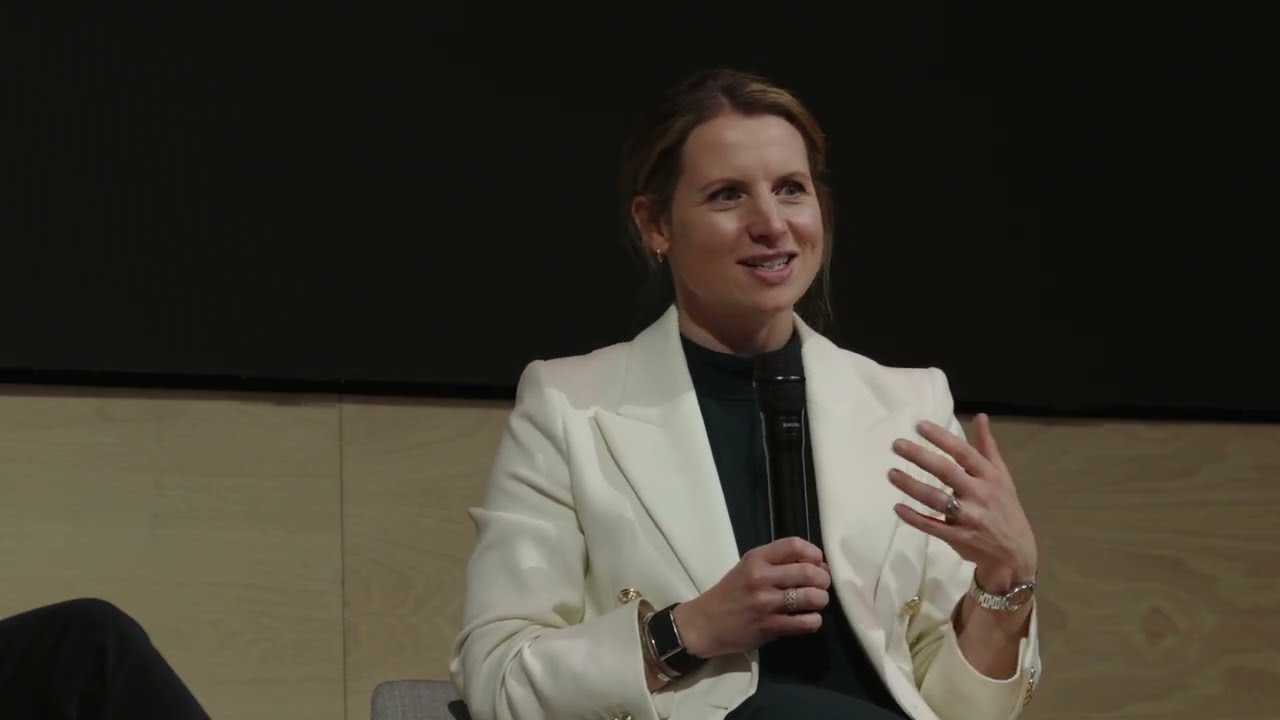
This content was published on YouTube by OpenAI on June 8, 2026. The source page does not provide a description or show notes for the video.
## TL;DR
Nikolai Skovgaard hosts Emily Prince, Group Head of Analytics and AI at the London Stock Exchange Group (LSEG), to discuss how LSEG is driving AI adoption internally and externally. Prince explains the "LSEG Everywhere" strategy, which utilizes the Model Context Protocol (MCP) co-developed with OpenAI to seamlessly connect LSEG's 33+ petabytes of financial data into everyday tools like ChatGPT. She details LSEG's transition from fragmented pilot projects to an enterprise-wide evaluation framework across various personas, while addressing workflow transformations for analysts and product teams. Additionally, Prince highlights LSEG's approach to enterprise governance, Responsible AI principles, and how self-disruption can help reimagine legacy financial processes.
## Atmosphere & style
The session carries an optimistic, forward-looking, and collaborative energy between enterprise leaders and AI pioneers. Emily Prince speaks with pragmatic candor, grounding technical concepts in relatable personal experience, such as reminiscing about early-career Excel macros. The narrative feels inspiring yet structured, capturing a sense of shared adventure as both organizations acknowledge they are actively co-creating an unwritten blueprint in real time.
## Key takeaways
- [00:00](https://www.youtube.com/watch?v=LJKzZAH0bEw&t=0s) LSEG operates globally across 170 markets with 26,000 employees, managing over 33 petabytes of financial data while serving roughly 44,000 customers.
- [00:00](https://www.youtube.com/watch?v=LJKzZAH0bEw&t=0s) Emily Prince manages a dual role at LSEG, driving internal AI adoption across employees and safely deploying AI services to external financial clients.
- [01:57](https://www.youtube.com/watch?v=LJKzZAH0bEw&t=117s) The 'LSEG Everywhere' strategy uses the Model Context Protocol (MCP) to embed 33+ petabytes of financial data into platforms like ChatGPT without lengthy data onboarding.
- [01:57](https://www.youtube.com/watch?v=LJKzZAH0bEw&t=117s) MCP allows financial professionals to ground AI queries in deterministic market models rather than relying solely on generic LLM summaries.
- [04:14](https://www.youtube.com/watch?v=LJKzZAH0bEw&t=254s) LSEG transitioned from fragmented AI pilots to group-wide scaling by introducing structured evaluation frameworks to maintain quality across various personas.
- [04:14](https://www.youtube.com/watch?v=LJKzZAH0bEw&t=254s) Evaluation metrics are mapped to specific roles, covering internal teams (finance, marketing, engineering) and external personas (investment bankers, research analysts).
- [05:57](https://www.youtube.com/watch?v=LJKzZAH0bEw&t=357s) AI integration eliminates major data bottlenecks for financial analysts, enabling them to analyze structured and unstructured orthogonal data simultaneously.
- [05:57](https://www.youtube.com/watch?v=LJKzZAH0bEw&t=357s) Product development cycles shifted from long, rigid PRD intake processes into rapid, iterative co-building sessions.
- [09:00](https://www.youtube.com/watch?v=LJKzZAH0bEw&t=540s) LSEG prioritizes 'no-regret' architectural investments, including robust API structures, MCP integrations, and universal model harnesses.
- [09:00](https://www.youtube.com/watch?v=LJKzZAH0bEw&t=540s) Responsible AI principles established two years ago were embedded directly into end-to-end development workflows rather than imposing restrictive new barriers.
- [09:00](https://www.youtube.com/watch?v=LJKzZAH0bEw&t=540s) To counter employee anxiety over workflow compression and AI displacement, management leverages hands-on hackathons, training, and direct tool enablement.
- [15:35](https://www.youtube.com/watch?v=LJKzZAH0bEw&t=935s) Financial institutions have a unique opportunity to challenge heavy-handed legacy habits and re-examine whether established workflows are regulatory mandates or just outdated patterns.
- [15:35](https://www.youtube.com/watch?v=LJKzZAH0bEw&t=935s) Because no historical blueprint exists for enterprise AI transformation at this scale, AI leaders and tech partners must co-create new operational playbooks in real time.
## Detailed walkthrough
Here is a detailed, faithful walkthrough of the transcript section provided:
[00:00](https://www.youtube.com/watch?v=LJKzZAH0bEw&t=0s) Introduction and Overview of LSEG's Market Presence
Nikolai Skovgaard welcomes the audience to the session focused on financial services executives across Europe, introducing Emily Prince, Group Head of Analytics and AI at the London Stock Exchange Group (LSEG).
Prince provides background on LSEG as a FTSE 100 global financial markets infrastructure and data provider. She explains that LSEG operates across 170 markets with 26,000 employees and serves roughly 44,000 global customers. The company’s core role is delivering trusted financial information, ranging from underlying asset pricing and risk models to market services like clearing and exchange operations. Within LSEG, Prince wears two distinct hats: driving internal AI scaling and tool adoption across the organization, and safely delivering AI-driven services to external customers.
- **Employee Count**: 26,000 employees globally.
- **Customer Base**: Approximately 44,000 customers across 170 markets.
- **Data Footprint**: Over 33 petabytes of financial data in LSEG's data and analytics business alone.
[01:57](https://www.youtube.com/watch?v=LJKzZAH0bEw&t=117s) "LSEG Everywhere" Strategy and the Model Context Protocol (MCP)
Prince outlines the "LSEG Everywhere" strategy, created to integrate trusted financial data directly into whichever tools users rely on, acknowledging that different organizations require distinct setups in a rapidly evolving AI ecosystem. A key technical anchor of this strategy is the Model Context Protocol (MCP), developed in partnership with OpenAI.
Through MCP, LSEG connects its vast trove of over 33 petabytes of trusted financial data directly into surfaces like ChatGPT. This setup allows financial professionals to move beyond generic LLM summaries and query tangible financial information grounded in deterministic market models. Rather than undertaking six-month data onboarding programs, clients get turnkey access to trusted data directly inside their everyday workflow tools.
- **Strategy Objective**: Ground AI capabilities in trusted, deterministic financial models and proprietary data regardless of the front-end tool used.
- **Data Accessibility**: Turnkey integration without lengthy data onboarding pipelines.
[04:14](https://www.youtube.com/watch?v=LJKzZAH0bEw&t=254s) Strategic Evolution, Evaluation Frameworks, and User Personas
Reflecting on how AI strategy has evolved over the past year, Prince notes that moving from isolated "spikes of expertise" or "a thousand flowers blooming" to group-wide scaling required establishing robust evaluation frameworks. She jokes that she says the phrase "evaluation framework" multiple times a day.
To achieve meaningful scale without sacrificing quality, LSEG systematically maps out success metrics tailored to specific internal and external personas. Internally, this covers finance, marketing, product, and engineering teams; externally, it spans investment banking divisions (IBD), executive management, and research analyst teams. Evaluation extends beyond simple model selection to encompass the entire operational harness, ensuring speed does not undermine standards.
- **Key Focus**: Transitioning from fragmented pilot projects to an enterprise-wide evaluation framework.
- **Persona Alignment**: Customizing success criteria for distinct roles across finance, product, engineering, investment banking, and research.
[05:57](https://www.youtube.com/watch?v=LJKzZAH0bEw&t=357s) Culture, Hands-On Adoption, and the Analyst Workflow Transformation
Discussing cultural shifts, Prince highlights that successful AI adoption relies heavily on an open-minded, inquisitive attitude rather than just pure technical skill sets. Reflecting on her earlier banking career spent "doing horrendous reconciliation in Excel and debugging macros," she describes being able to directly converse with a spreadsheet as a radical transformation in productivity.
For financial analysts specifically, the traditional bottleneck was time: analysts were forced to limit themselves to a narrow subset of data sources simply due to the physical limits of their workday. Leveraging AI with MCP enables analysts to ingest both structured and unstructured orthogonal data sources simultaneously while maintaining corporate policies and quality standards. Furthermore, product development cycles have collapsed from long, rigid PRD (Product Requirement Document) intakes into rapid, iterative co-building sessions.
- **Persona Impact**: Solving data friction for financial analysts who previously had to restrict their inputs due to time constraints.
- **Workflow Shift**: Replacing multi-month development lifecycles with real-time, cross-functional iteration.
[09:00](https://www.youtube.com/watch?v=LJKzZAH0bEw&t=540s) Balancing Rapid Pace with Enterprise Governance and Responsible AI
Managing rapid technology deployment across 40,000+ global customers requires a clear distinction between "no-regret" foundation building and ongoing experimentation. For LSEG, the primary no-regret investments were API architecture, MCP integration, and universal model harnesses.
Prince notes that LSEG established its Responsible AI principles and governance framework two years prior. Rather than creating restrictive new rules, LSEG embedded AI oversight into its existing end-to-end development workflows. This structural scaffolding allows teams to innovate safely while addressing emerging complexities, such as workflow compression (where a process that previously required ten people can now be completed by one or two). Culturally, management focuses on channeling employee anxiety into active engagement through hands-on hackathons and direct tool enablement.
- **Governance Timeline**: LSEG developed its core Responsible AI principles two years ago to create safe parameters for innovation.
- **Cultural Enablement**: Countering AI displacement fears through hands-on training, education programs, and targeted internal hackathons.
[15:35](https://www.youtube.com/watch?v=LJKzZAH0bEw&t=935s) Challenging Finance Norms and Co-Creating the AI Blueprint
Addressing the legacy complexities within the financial industry, Emily Prince reflects on how many processes in finance have become overly "heavy-handed" not necessarily by design, but through gradual evolution over time. She framing the current AI transition as a unique window of opportunity for organizations to openly challenge established habits and embrace self-disruption. Organizations should critically question whether existing workflows are truly mandated by regulatory requirements or if they are simply legacy patterns waiting to be reimagined. By taking a fresh look at these operations, leaders can unlock deep operational insights, differentiate their offerings, and enable their organizations to truly fly.
Prince emphasizes the pioneering nature of this work, noting that there is no predefined playbook, textbook, or historical precedent for navigating this transformation. Instead, everyone in the industry is actively building, learning, and creating together in real time, which she describes as "truly special and exciting." The session host echoes this perspective, agreeing that both teams are constantly "reinventing the blueprint together" as they push boundaries in AI adoption before thanking Prince to warm applause from the audience.
* **Legacy vs. Evolution:** Financial processes often accumulate friction through evolution rather than intentional design, creating prime opportunities for self-disruption.
* **Lack of Playbook:** There is no existing book or precedent for this scale of AI transformation, requiring continuous co-creation between AI innovators and enterprise leaders.
## Notable quotes
> [04:14](https://www.youtube.com/watch?v=LJKzZAH0bEw&t=254s) evaluation framework — Emily Prince
> [04:14](https://www.youtube.com/watch?v=LJKzZAH0bEw&t=254s) spikes of expertise — Emily Prince
> [04:14](https://www.youtube.com/watch?v=LJKzZAH0bEw&t=254s) a thousand flowers blooming — Emily Prince
> [05:57](https://www.youtube.com/watch?v=LJKzZAH0bEw&t=357s) doing horrendous reconciliation in Excel and debugging macros — Emily Prince
> [09:00](https://www.youtube.com/watch?v=LJKzZAH0bEw&t=540s) no-regret — Emily Prince
> [15:35](https://www.youtube.com/watch?v=LJKzZAH0bEw&t=935s) truly special and exciting — Emily Prince
> [15:35](https://www.youtube.com/watch?v=LJKzZAH0bEw&t=935s) reinventing the blueprint together — Nikolai Skovgaard
## Mentioned
Nikolai Skovgaard, Emily Prince, London Stock Exchange Group, LSEG, OpenAI, ChatGPT, FTSE 100, Model Context Protocol, MCP, LSEG Everywhere, Excel
Emily Prince, Group Head of Analytics and AI at the London Stock Exchange Group (LSEG), argues that scaling artificial intelligence across capital markets requires anchoring large language models in deterministic financial data, enforcing role-specific evaluation frameworks, and actively dismantling legacy operational habits.
Turnkey Data Integration via the Model Context Protocol (1:57)
To serve roughly 44,000 customers across 170 markets, LSEG developed its "LSEG Everywhere" strategy to bring proprietary data directly into everyday end-user tools. A primary technical foundation of this effort is the Model Context Protocol (MCP), created in partnership with OpenAI, which links more than 33 petabytes of financial data and deterministic market models directly into surfaces like ChatGPT.
Prince explains that this architecture allows financial professionals to move past generic conversational summaries and query verifiable financial models without undergoing traditional six-month enterprise data onboarding cycles. By connecting proprietary feeds directly to user interfaces, the approach provides turnkey data access while preserving model precision.
Scaling AI Through Role-Specific Evaluation Frameworks (4:14)
Transitioning from fragmented pilots—described by Prince as isolated "spikes of expertise" or "a thousand flowers blooming"—to group-wide deployment required institutionalizing rigorous evaluation frameworks. To prevent acceleration from degrading analytical standards, LSEG evaluates both individual models and the overarching operational harness carrying them.
Prince emphasizes that evaluation criteria cannot be generic; they must be mapped systematically across distinct internal and external personas. Internally, metrics are aligned to the workflows of finance, marketing, product, and engineering teams. Externally, the framework establishes separate performance benchmarks for investment banking divisions, corporate executives, and research analysts.
Alleviating Analyst Bottlenecks and Navigating Workflow Compression (5:57)
Within financial analysis, practitioner output was historically constrained by the physical time required for manual data reconciliation and macro debugging in spreadsheets, forcing analysts to restrict their research inputs to limited datasets. Prince reports that coupling conversational interfaces with MCP allows analysts to ingest structured financial figures alongside orthogonal unstructured sources simultaneously without violating internal policies.
This operational acceleration also collapses product development from rigid Product Requirement Document (PRD) pipelines into iterative co-building sessions. Addressing the workforce impact of workflow compression—where processes previously requiring ten people might be performed by one or two—LSEG relies on hackathons, hands-on tool enablement, and an inquisitive internal culture to redirect displacement concerns into active engagement.
Governance Architecture and Challenging Heavy-Handed Legacy Norms (9:00)
LSEG manages operational deployment across 26,000 employees by separating speculative experimentation from "no-regret" foundational investments, specifically API architectures, model harnesses, and MCP tooling. Rather than drafting restrictive rules mid-deployment, the organization relies on Responsible AI principles and governance scaffolding established two years prior, embedding monitoring directly into standard engineering workflows.
Prince observes that many entrenched financial processes became heavy-handed through historical accumulation rather than regulatory necessity. She views the current AI shift as an opportunity for financial institutions to self-disrupt and question whether long-standing workflows remain necessary, stressing that because no predefined playbook or historical precedent exists, enterprise leaders and technology providers must co-create the operational blueprint in real time.
While LSEG demonstrates technical feasibility through protocol-driven data access and compressed analyst workflows, Prince underscores that the enterprise financial sector still lacks a validated playbook for industry-wide transformation, leaving continuous experimentation and organizational restructuring as ongoing operational imperatives.
精炼阅读摘要
伦敦证券交易所集团(LSEG)分析与人工智能负责人 Emily Prince 指出,该集团正通过与 OpenAI 合作引入模型上下文协议(MCP),将其超过 33 PB 的确定性金融数据直接嵌入日常工作流工具中。她认为,AI 的规模化部署必须脱离分散试验,转而建立在严格的角色化评估体系、无悔的基础设施投资与嵌入式负责任治理之上,以此打破传统金融业的路径依赖。
LSEG Everywhere 与 MCP 架构 (1:57)
据 Emily Prince 介绍,作为在 170 个市场拥有 2.6 万名员工、服务约 4.4 万家客户的富时 100(FTSE 100)指数金融基础设施与数据服务商,LSEG 仅在数据与分析业务中就储备了超过 33 PB 的金融数据。为了应对快速演进的工具生态,集团推进“LSEG Everywhere”战略,旨在将经合规验证的金融数据直接投递至用户偏好的各类前端界面中。
该战略的核心技术支点是与 OpenAI 联合研发的模型上下文协议(MCP)。通过 MCP,LSEG 将海量数据资产直接与 ChatGPT 等应用连接,使金融专业人员能够基于确定性市场模型获取事实支撑,而非通用大模型的泛化推论。此举替代了以往长达六个月的数据对接与导入周期,实现了可信金融数据的开箱即用。
规模化基石:用户画像与评估体系 (4:14)
在回顾战略推进历程时,Prince 指出,企业若要从孤立的“专业能力突触”或零散试验迈向全集团规模化,首要任务是确立严密的评估框架。她强调,单纯的算法模型对比并不足以支撑企业级落地,必须将评估覆盖至包含全流程测试环境与运行外壳(operational harness)的系统架构,防止盲目追求上线速度而牺牲质量与合规底线。
为了兼顾效率与严谨性,LSEG 针对不同用户画像制定了专属的衡量指标。在组织内部,该体系覆盖了财务、营销、产品和工程部门;在外部客户层面,则紧扣投资银行部(IBD)、执行管理层以及股票与行业研究团队的核心痛点,确保评估结果切实对应各专业岗位的业务标准。
重构分析师工作流与敏捷研发 (5:57)
Prince 结合其银行业早年从事 Excel 繁复对账与宏调试的经历表示,能够直接与电子表格对话是生产力层面的根本转变。以往金融分析师面临的核心瓶颈在于工作时长的物理极限,受限于有限的工时,他们只能人为限制输入的数据集范围。借助 MCP 架构,分析师得以在遵循企业合规的前提下,同时处理并整合多维度的结构化与非结构化正交数据。
与此同时,工具的迭代也重塑了内部研发协作模式。过去耗时数月、依赖僵化产品需求文档(PRD)的线性开发流程已被打破,转变为跨职能团队实时协同与高频迭代的敏捷共建机制,极大压缩了功能从构想到交付的周期。
治理与文化:无悔投资与应对替代担忧 (9:00)
面对服务全球 4 万余家机构客户的高合规要求,Prince 强调必须区分“无悔基础投资”(no-regret investments)与日常探索实验。LSEG 将 API 架构、MCP 协议集成以及通用模型测试框架确立为核心底座。在治理方面,集团在两年前便确立了“负责任 AI”原则,且并未另设繁琐审批,而是将安全与合规审查直接嵌入端到端的既有开发管线中。
随着自动化带来“工作流压缩”——过去需十人完成的任务如今缩减至一至两人即可胜任,组织内部不可避免地产生了岗位替代担忧。Prince 表示,管理层的策略并非回避问题,而是通过密集的动手黑客松、实战操作与通识教育,主动引导员工将焦虑转化为运用新工具的技能,推动团队平稳过渡。
重塑金融惯例:打破路径依赖与蓝图共创 (15:35)
针对金融业长期存在的复杂流程,Prince 指出,许多繁琐沉重的操作并非源自严密的制度设计,而是历史演变中形成的路径依赖。当前的 AI 转型为机构提供了罕见的自我颠覆契机,管理者应借此审视现有工作流,厘清哪些是硬性监管要求,哪些只是习惯性积累的遗留冗余,从而通过重构流程释放潜能。
Prince 强调,当前全行业在推进此类深层次变革时均处于拓荒阶段,既无既定教科书,也无现成蓝图可供参考。无论是金融机构还是技术提供方,各方均在实时探索中协同推进行业实践的标准制定,共同绘制 AI 驱动下的金融运行新范式。
Prince 与对话方一致认为,金融核心业务与 AI 的结合是一场缺乏现成先例的长期探索;尽管 MCP 与接口标准化显著降低了数据应用门槛,但伴随流程压缩而来的组织架构重组,以及在破除遗留操作习惯的同时守住金融风控底线,仍是未来行业规模化推进中需持续破解的核心挑战。
Detailed notes — zh
## Background
本内容由 OpenAI 官方 YouTube 频道于 2026 年 7 月 3 日发布。视频为 Customer Ignite Talk 系列分享,页面未提供额外简介,核心记录了伦敦证券交易所集团(LSEG)分析与人工智能负责人 Emily Prince 与 OpenAI 欧洲市场拓展负责人 Nikolai Skobo 的深度对谈。
## TL;DR
对话深入复盘了 LSEG 在生成式 AI 浪潮下的落地实践与战略思考。面对超 33 PB 的海量金融数据,LSEG 确立了以 API 与模型上下文协议(MCP)为核心的“LSEG Everywhere”战略,将自然语言大模型无缝锚定在确定性的金融定价与风险模型之上。同时,Emily 阐述了构建自动化评估体系、设立安全“合规脚手架”以及将开发范式从臃肿 PRD 评审转向敏捷共创的组织变革。最后,她鼓励金融同行敢于质疑繁琐的历史包袱并勇于自我颠覆,在缺乏既定蓝图的未知水域中重构业务价值。
## Atmosphere & style
整场对谈节奏明快且极具专业洞察力,既有大型金融机构严谨求实的底色,又洋溢着拥抱技术浪潮的拓荒激情。主持人 Nikolai 的提问层层递进、直击痛点,而拥有 20 年金融老兵背景的 Emily 则谈吐从容幽默,结合早年调试 Excel 宏代码的切肤之痛与当下技术突破形成鲜明对照,引发强烈共鸣。现场氛围在坦诚探讨恐惧与替代焦虑中逐渐升温,最终收尾于直面未知、共同书写行业新规则的振奋感与使命感之中。
## Bulletin
- [01:57](https://www.youtube.com/watch?v=LJKzZAH0bEw&t=117s) 伦敦证券交易所集团(LSEG)推出“LSEG Everywhere”战略,通过模型上下文协议(MCP)将其超过 33 PB 的受信任金融数据与确定性模型直接接入 ChatGPT 等大模型环境,赋能全球 44,000 家金融客户。
- [09:33](https://www.youtube.com/watch?v=LJKzZAH0bEw&t=573s) LSEG 明确将 API 建设与 MCP 视为“零遗憾”(no regret)的确定性投资,以克服通用大模型业务针对性不足的弊端,并彻底重塑了研发流程,废弃漫长的 PRD 评审,转向全职能高频敏捷协同。
- [11:50](https://www.youtube.com/watch?v=LJKzZAH0bEw&t=710s) 大模型与自动化评测 Harness 的引入使工作流程大幅压缩,过去需 10 人协作的研发交付任务如今由 1 至 2 名超级个体即可完成,倒逼企业组织架构与合规审计机制深刻变革。
- [13:46](https://www.youtube.com/watch?v=LJKzZAH0bEw&t=826s) 为化解员工对 AI 取代的恐惧,LSEG 推动培训从泛泛的概念普及转向场景化动手实操(hands-on builds),通过解决实际业务痛点激活全员创新心态。
## Key takeaways
- [00:00](https://www.youtube.com/watch?v=LJKzZAH0bEw&t=0s) LSEG 拥有服务全球 170 个市场、44,000 家客户的庞大体量,其核心定位是提供受信任的金融数据、确定性定价模型与中立的基础设施。
- [01:57](https://www.youtube.com/watch?v=LJKzZAH0bEw&t=117s) “LSEG Everywhere”战略依托 API 和 MCP 打破历史并购造成的数据孤岛,让专业人员在各类终端界面中均能调用权威数据底座。
- [04:14](https://www.youtube.com/watch?v=LJKzZAH0bEw&t=254s) 企业 AI 的核心考量已从单一概念验证走向企业级评估体系(Evaluation Framework),标准化、自动化的评测机制成为系统迭代的基础。
- [04:14](https://www.youtube.com/watch?v=LJKzZAH0bEw&t=254s) 推动 AI 普及的最大动力在于文化与心态而非单纯的硬技能门槛,开箱即用的 MCP 架构省去了动辄数月的数据治理周期,带来了立竿见影的效率跃升。
- [07:33](https://www.youtube.com/watch?v=LJKzZAH0bEw&t=453s) 传统金融分析师因处理带宽受限面临渠道依赖和清洗成本过高的痛点,大模型体系将其耗时数天的数据整合与分析压缩至实时反馈机制。
- [09:33](https://www.youtube.com/watch?v=LJKzZAH0bEw&t=573s) 在高合规行业中,API 与 MCP 成为最明确的“零遗憾”投资,能够将通用智能转化为高相关性的特定行业智能。
- [09:33](https://www.youtube.com/watch?v=LJKzZAH0bEw&t=573s) LSEG 与 OpenAI 展开深度双向合作,在严苛的金融风控要求下倒逼前沿模型能力迭代,共同跨越通用技术到垂直业务的鸿沟。
- [11:50](https://www.youtube.com/watch?v=LJKzZAH0bEw&t=710s) 负责任 AI 原则的初衷并非设置创新枷锁,而是作为安全脚手架融入日常业务流程,为一线团队的快速试错托底。
- [11:50](https://www.youtube.com/watch?v=LJKzZAH0bEw&t=710s) AI 带来的“工作流程压缩”颠覆了传统团队编制,1-2 人的敏捷单元正在替代以往 10 人规模的分工协作模式。
- [13:46](https://www.youtube.com/watch?v=LJKzZAH0bEw&t=826s) 缓解员工技术焦虑的有效途径是将培训升级为场景化实训与黑客松,让业务人员亲手利用 AI 解决部门实际痛点。
- [15:03](https://www.youtube.com/watch?v=LJKzZAH0bEw&t=903s) 金融行业历史上的许多陈规旧矩并非不可撼动,当前的技术奇点为企业提供了反思非强制性流程、主动实现“自我颠覆”的独特窗口期。
- [15:03](https://www.youtube.com/watch?v=LJKzZAH0bEw&t=903s) 当前的金融 AI 变革没有现成教科书或预设蓝图,全行业探索者均处于共同试错与定义规则的历史节点。
## Detailed walkthrough
### [00:00](https://www.youtube.com/watch?v=LJKzZAH0bEw&t=0s) 欢迎致辞与伦敦证券交易所集团(LSEG)的业务定位
OpenAI 欧洲 Go-to-Market(市场拓展)团队负责人 Nikolai Skobo 登台主持会议。他提到,紧接上一位讲者 Matt 的分享,本次专题将邀请 OpenAI 在欧洲合作的金融服务机构高管展开深入交流。首先受邀登台的是伦敦证券交易所集团(London Stock Exchange Group, 简称 LSEG)分析与人工智能负责人 Emily Prince,共同复盘 LSEG 在 AI 领域的落地实践与战略思考。
在开场介绍中,Nikolai 列举了 LSEG 作为富时 100 指数成分股机构的庞大业务规模:业务遍及全球 170 个市场,拥有约 26,000 名员工,服务超过 44,000 家客户。面对这一沉甸甸的数据,Emily 幽默地回应这确实“让我们每天都很忙”。随后,Emily 详细拆解了 LSEG 的核心价值和她本人的双重视角。LSEG 的核心角色是提供受信任的金融信息,这不仅包含底层数据、定价信息,还涵盖各类经过严格检验的市场模型(如风险模型);同时,集团还承担着保持客观中立的清算与交易所职能。在她个人职责层面,她主要扮演两种角色:一是统筹 LSEG 内部如何安全高效地应用 AI,推动技术从早期的碎片化实验走向规模化影响;二是探索如何利用 AI 安全地赋能并服务全球客户。
- **组织体量**:覆盖全球 170 个金融市场,拥有 26,000 名员工,服务全球 44,000 家金融客户。
- **业务支柱**:底层金融数据、市场与风险定价模型、客观清算机制以及核心交易所基础设施。
---
### [01:57](https://www.youtube.com/watch?v=LJKzZAH0bEw&t=117s) “LSEG Everywhere”战略与模型上下文协议(MCP)
谈及 LSEG 的 AI 顶层构想,Emily 重点介绍了集团推出的“LSEG Everywhere”战略。这一战略源自对技术演进速度以及企业多样化需求的深刻洞察:不同机构对工具的需求各异,且技术迭代日新月异。为了让客户不拘泥于特定软件环境即可调用核心能力,LSEG 与 OpenAI 展开深入技术协同,利用 MCP(Model Context Protocol,模型上下文协议)打破数据边界。
通过这一架构,LSEG 将其仅数据与分析业务板块就拥有的超过 33 PB(Petabytes)受信任金融数据直接接入大模型环境。用户在 ChatGPT 等界面中与系统交互时,不仅可以生成通用的宏观总结或报告,还能发起极其具体的复杂业务提问。这些输出结果全部锚定在权威、可追溯的数据底座以及确定性金融计算模型之上。“LSEG Everywhere”的核心信念在于:无论专业人士使用何种终端工具,必须拥有一套权威数据锚点,才能使生成式 AI 从表面层面的文本概括,跃升为颠覆金融工作流的真正生产力。
```mermaid
flowchart TD
accTitle: LSEG Everywhere 数据交互架构
accDescr: 展示 LSEG 的 33PB 底层数据与确定性模型如何通过 API 与 MCP 连接到 ChatGPT 及终端工具
subgraph DataLayer["底层资产层"]
D1["33+ PB 金融与分析数据"]
D2["确定性风险与定价模型"]
end
subgraph IntegrationLayer["能力集成与接口层"]
API["企业 API 战略"]
MCP["MCP (Model Context Protocol)"]
end
subgraph PresentationLayer["终端工作流与应用层"]
GPT["ChatGPT 交互界面"]
XLS["智能电子表格 / 终端分析工具"]
end
DataLayer --> API
API --> MCP
MCP --> GPT
MCP --> XLS
```
面对 Nikolai 询问该策略是侧重内部提效还是对外赋能,Emily 指出两者并驾齐驱。由于 LSEG 历史上经历过多次大型并购,各板块沉淀了大量互不相通的数据模型。团队通过强力推进 API 战略,并将 MCP 作为核心解耦关键,打通多源异构数据,不仅大幅消解了内部技术债务,也实现了对外部客户的一站式即插即用(Turnkey)赋能。
- **底层数据规模**:数据与分析业务单一板块的数据存量超过 33 PB。
- **核心机制**:依托 API 与 MCP(Model Context Protocol)协议,将生成式自然语言与确定性金融模型融合。
---
### [04:14](https://www.youtube.com/watch?v=LJKzZAH0bEw&t=254s) 评估体系(Evaluation Framework)与企业文化驱动
讨论转向过去一年 AI 战略重心的演变时,Emily 坦言自己的日常词汇发生了显著变化。如果说过去是单一的技术实验,现在她每天都会重复提及多次“评估框架”(Evaluation Framework)。随着系统走出封闭的概念验证,如何保证全链路质量并达到预期商业结果成为重中之重。
这一评估框架贯穿在复杂的业务角色划分中。在 LSEG 内部,涵盖了财务、市场、产品及工程等职能团队;在外部客户端,则需适配投资银行部(IBD)、资产管理部以及股票/行业研究分析团队等差异化诉求。确立成功的标准早已超越了单纯的大模型选型(Model Selection)或基础集成管道,而是深入到能否在企业级规模下全自动化、标准化地运行评价体系,从而在确保合规与精准度的同时支撑高速迭代。
当谈及阻碍或推动 AI 普及的因素时,Emily 纠正了普遍认为“硬技能门槛最关键”的偏见,强调文化与心态才是核心引擎。变革的最大飞跃往往来自那些秉持开放心态、乐于动手实验并能积极拥抱“惊叹时刻”("Oh my god" moment)的员工。她结合自身早年在多家投资银行的工作经历举例:当年分析师需要花费海量时间在 Excel 中进行繁琐枯燥的对账工作,甚至通宵调试脆弱易崩的宏代码(Macros)。如今,直接在电子表格中与数据对话已成为现实。更为关键的是,借助开箱即用的 MCP 架构,用户直接触达权威数据源,完全绕过了以往动辄长达 6 个月的数据接入与治理周期。几个小时的手工建模被缩短至几秒内自动生成,这种效率跃升让她直言“在感到极度兴奋的同时,回想以前也不免感到一丝扎心”。
---
### [07:33](https://www.youtube.com/watch?v=LJKzZAH0bEw&t=453s) 分析师工作范式重构与风控平衡的挑战
Nikolai 提到,帮助分析师转型一直是 LSEG 的核心重点,并询问在生成式 AI 出现之前分析师面临的核心痛点。Emily 剖析道,金融分析师必须处理浩瀚的多源异构数据,既包括结构化市场指标,也包括大量非结构化的财报与研报。然而,现实中人的精力和时间是有限的——分析师必须下班接孩子,还要兼顾各类杂务,这迫使人们形成认知妥协,往往仅依赖少数几个熟悉的信息渠道。
理想状态下,分析师渴望获得全局视野,尤其是那些能够带来独特超额收益(Edge)的正交信息(Orthogonal Insights)。但获取这些洞察的瓶颈在于数据源是否可信,以及是否需要耗费巨大的前期清洗与预处理成本。借助当前的大模型体系,分析师能够全方位扩充信息汲取的广度与深度;机构还能借助 Scale 等手段,将各类复杂的投资原则、监管政策、偏好乃至认知偏见检测以标准化方式规模化嵌入。整个分析迭代周期从过去的以“小时或天”计,缩短为实时反馈机制。
在本节末尾,Nikolai 指出 LSEG 作为最早在 ChatGPT 上构建原生应用的传统金融基础设施机构之一,在服务全球 4 万余家客户的过程中展现了罕见的创新速度。针对高合规金融行业中“极速创新步伐”与“严格风险控制”之间的张力,Nikolai 向 Emily 抛出了核心问题:在必须严守风控红线的金融底座定位下,LSEG 是如何在急速迭代的生成式 AI 技术浪潮中寻求并维持精准平衡的。
- **传统分析师瓶颈**:信息处理带宽受限导致渠道依赖、大量时间损耗在数据清洗与手工预处理、正交信息挖掘成本高昂。
- **现代化赋能手段**:借助自动化评估与提示词/策略注入,将原本跨越数天的数据清洗与建模压缩至即时迭代循环。
### [09:33](https://www.youtube.com/watch?v=LJKzZAH0bEw&t=573s) “零遗憾”决策与敏捷开发:API、MCP 及研发范式的重构
在探讨技术演进与商业落地的平衡时,伦敦证券交易所集团(LSEG)的策略是清晰划定那些“绝不后悔”(no regret)的确定性投资。Emily Prince 指出,在 AI 技术日新月异、充满不确定性的背景下,围绕 API 建设以及结合 MCP(Model Context Protocol,模型上下文协议)进行的信息打通,正是团队认定最具确定性价值的举措。这一技术底座彻底解决了“通用大模型虽然强大但过于泛化”的问题,使模型能够真正接入特定业务场景的上下文,提供高相关性的行业智能。配合兼具通用性与灵活度的模型调度评测体系(harness),企业得以快速在不同模型之间无缝适配,确立了坚实的技术护城河。
与此同时,LSEG 与 OpenAI 团队保持着高频且深度互动的合作关系。双方的沟通并非简单的甲乙方采买,而是在复杂的金融垂直场景中互相“施压”与打磨。金融服务业务对确定性执行(deterministic practices)、风险合规以及极其严苛的监管要求有着近乎偏执的标准,而很多处在前沿探索期的通用 AI 能力并不能直接开箱即用,必须双方团队“多走一公里”(go that extra mile)才能跨越鸿沟。这种坦诚开放的合作机制不仅倒逼双方在模型前沿能力上迅速迭代,更从根本上颠覆了传统软件工程的研发文化。过往在金融行业中根深蒂固的流程——漫长的 PRD(产品需求文档)评审、繁冗的立项审批与线性排期——已被彻底摒弃,取而代之的是“所有核心角色同坐一个帐篷内”(everyone in the tent together)、以极高频节奏共同构建与迭代的崭新开发范式。
```mermaid
flowchart TD
accTitle: LSEG 敏捷 AI 研发与落地架构
accDescr: 展示 LSEG 如何结合 API、MCP 与负责任 AI 框架,将漫长传统的开发周期重构为快速迭代的敏捷架构。
subgraph Infrastructure["底座与上下文打通"]
A["API 接口服务"] --> C["特定场景的行业智能"]
B["MCP 协议集成"] --> C
D["模型评测与调度调度体系 (Harness)"] --> C
end
subgraph Culture["研发范式变革"]
E["传统模式:漫长 PRD 评审与需求立项"] -.->|彻底颠覆| F["敏捷模式:跨职能全员同帐篷 (All-in-tent) 快速迭代"]
end
subgraph FrontierCollab["金融级定制与合作"]
C --> G["OpenAI 深度共研"]
F --> G
G --> H["确定性业务流程 / 严苛风控与监管合规"]
end
```
- **业务针对性(Job to be Done)**:单纯依赖通用强大模型无法满足专业要求,唯有通过 API 与 MCP 打通业务数据,才能解锁真正高相关度的行业智能。
- **研发节奏重塑**:研发周期大幅压缩,不再依靠厚重的文档往返,敏捷迭代成为组织探索前沿机遇的核心抓手。
---
### [11:50](https://www.youtube.com/watch?v=LJKzZAH0bEw&t=710s) 负责任 AI 与工作流重塑:从合规脚手架到人力压缩
谈及规模化落地技术过程中最棘手的挑战,Emily 重点分析了治理机制与工作流重塑。早在两年前,LSEG 意识到 AI 创新的规模将呈指数级增长,便前瞻性地制定了“负责任 AI 原则”(Responsible AI principles),并在业务全流程中铺设了覆盖全面的治理框架。Emily 特别强调,设立合规机制的初衷绝不是给一线团队“戴上手铐”(handcuff people),而是打造坚固的安全脚手架(scaffolding),让团队在清晰的安全边界内毫无后顾之忧地展开创新与构想。公司没有凭空创造一套脱离现实的官僚规则,而是对既有的端到端开发与服务流程进行改良升级,将 AI 治理无感地嵌入到日常业务工作流中。
伴随模型能力的飞跃,更深刻的变革发生于“工作流程压缩”(compression of workflows),这也是 Emily 认为当前最为复杂、影响最为深远的命题。过去一个传统的系统开发或业务交付任务可能需要多达 10 名不同职能的人员通力配合,而如今随着新型 Harness 与 Agent 体系的成熟,1 到 2 个人就能借助 AI 工具在极短时间内完成同样甚至更高质量的工作。这种从“多人分工协作”向“超级个体极速求解”的巨变,不仅重新定义了团队编制,更对组织治理提出了新考验:企业必须确保在研发流程高度精炼甚至角色合并时,既有的合规标准与质量审计依然能够严丝合缝地嵌入其中。
- **合规前置设计**:治理体系两年前已制度化落地,核心在于“赋能创新而非约束业务”,通过制度脚手架为大规模构想提供安全托底。
- **人员结构压缩**:AI 带来的工作流压缩颠覆了传统项目团队配置,1–2 人的小敏捷单元正在取代以往 10 人级别的开发团队。
---
### [13:46](https://www.youtube.com/watch?v=LJKzZAH0bEw&t=826s) 弥合兴奋与恐惧:从认知培训迈向场景化实操构建
如果说技术架构与治理框架的搭建属于理性层面的硬仗,那么“组织文化与员工心态的转变”则是横亘在企业面前更为艰巨的隐性挑战。Emily 直言,员工对 AI 的态度往往是复杂的:兴奋与焦虑并存,期待的背后潜藏着“被技术取代或淘汰”的恐惧,加之外界对 AI 的过度宣传和信息不对称,导致认知出现偏差。对管理层而言,当务之急是帮助团队安全且自信地融入 AI 浪潮,引导大家利用这些工具真正解决自己的日常痛点,而不是让任何一个人在转型中掉队。
为了在组织内部激活正向的文化动能,LSEG 采取了一套循序渐进的赋能路径。第一步是普及工具权限,为员工全面接入 ChatGPT 以及集成了企业上下文的 MCP 扩展工具;第二步则是将培训体系从简单的“认知宣传与概念普及”全面升级为“动手实操构建”(hands-on builds)。组织不再空泛地讨论技术前景,而是鼓励员工针对自己部门的细分痛点开展小切口、可落地的实战建设。例如在财务场景中,让财务团队亲手用 AI 解决本职工作中的繁重计算与审核难题,不仅有效打消了恐惧心理,更让员工由内而外地成为技术的主人与推动者。
- **工具与协议普及**:一线员工广泛享有 ChatGPT 及 MCP 赋能套件,保障底层生产力工具的全面触达。
- **实战化培训**:摒弃泛泛的理论课,推行直击财务与业务痛点的黑客松(hackathon)和场景实训,以真实效益驱散替代焦虑。
---
### [15:03](https://www.youtube.com/watch?v=LJKzZAH0bEw&t=903s) 颠覆金融历史包袱:在无既定蓝图的时代主动迎战
在对谈的结尾,被问及对同行的经验建议时,拥有 20 年金融从业经历的 Emily 坦言,当前正处于整个金融行业历史上最迷人、最非凡的时代节点。她回顾了过去职业生涯中金融行业那些臃肿、繁重且令人痛苦的流程规范。许多看似不可撼动的陈规旧矩,往往并非经过严密顶层设计的产物,而是在漫长的历史演化中层层加码、修修补补堆叠而成的副产品。
面对当下的技术奇点,企业迎来了绝无仅有的“自我颠覆”(self-disrupt)窗口期。领导者和团队必须敢于向既有规则发起开诚布公的质询:“这个流程真的必须以这种方式存在吗?它背后是否有不可逾越的法定监管原因?还是说,这仅仅是前人留下的习惯?”如果答案并非法律强制要求,那么这就是彻底重构业务的最佳契机。勇于打破固有模式的企业不仅能获得前所未有的洞察力,更能让整个组织展翅腾飞。Emily 动情地强调,这场变革在历史上没有任何一本教科书可供翻阅,没有任何预设蓝图(blueprint)或成熟先例可供抄袭;所有探索者都在同一艘船上,共同在未知水域中摸索、创造并书写规则,而这正是身处当下时代最珍贵、最振奋人心的意义所在。
> “在当下这个时刻,我们所有人都有机会去公开挑战并自我颠覆,质问‘这真的是必须维持的现状吗?背后有不可动摇的监管依据,还是一个彻底重构的机会?’如果换个角度审视,你能获得的深刻洞察,以及让组织展翅高飞的机遇,就在眼前。这里没有蓝图,没有现成的书籍去翻阅,也没有先例可循——我们所有人都在局中,共同学习、共同创造,这才是真正特别且令人兴奋的。”
## Notable quotes
> [00:00](https://www.youtube.com/watch?v=LJKzZAH0bEw&t=0s) 让我们每天都很忙 — Emily Prince
> [04:14](https://www.youtube.com/watch?v=LJKzZAH0bEw&t=254s) Oh my god moment — Emily Prince
> [04:14](https://www.youtube.com/watch?v=LJKzZAH0bEw&t=254s) 在感到极度兴奋的同时,回想以前也不免感到一丝扎心 — Emily Prince
> [09:33](https://www.youtube.com/watch?v=LJKzZAH0bEw&t=573s) 绝不后悔 — Emily Prince
> [09:33](https://www.youtube.com/watch?v=LJKzZAH0bEw&t=573s) 多走一公里 — Emily Prince
> [09:33](https://www.youtube.com/watch?v=LJKzZAH0bEw&t=573s) 所有核心角色同坐一个帐篷内 — Emily Prince
> [11:50](https://www.youtube.com/watch?v=LJKzZAH0bEw&t=710s) 设立合规机制的初衷绝不是给一线团队“戴上手铐”,而是打造坚固的安全脚手架 — Emily Prince
> [11:50](https://www.youtube.com/watch?v=LJKzZAH0bEw&t=710s) 工作流程压缩 — Emily Prince
> [13:46](https://www.youtube.com/watch?v=LJKzZAH0bEw&t=826s) 动手实操构建 — Emily Prince
> [15:03](https://www.youtube.com/watch?v=LJKzZAH0bEw&t=903s) 自我颠覆 — Emily Prince
> [15:03](https://www.youtube.com/watch?v=LJKzZAH0bEw&t=903s) 这个流程真的必须以这种方式存在吗?它背后是否有不可逾越的法定监管原因?还是说,这仅仅是前人留下的习惯? — Emily Prince
> [15:03](https://www.youtube.com/watch?v=LJKzZAH0bEw&t=903s) 在当下这个时刻,我们所有人都有机会去公开挑战并自我颠覆,质问‘这真的是必须维持的现状吗?背后有不可动摇的监管依据,还是一个彻底重构的机会?’如果换个角度审视,你能获得的深刻洞察,以及让组织展翅高飞的机遇,就在眼前。这里没有蓝图,没有现成的书籍去翻阅,也没有先例可循——我们所有人都在局中,共同学习、共同创造,这才是真正特别且令人兴奋的。 — Emily Prince
## Mentioned
Emily Prince, Nikolai Skobo, Matt, 伦敦证券交易所集团 (LSEG), OpenAI, ChatGPT, 模型上下文协议 (MCP / Model Context Protocol), 富时 100 指数 (FTSE 100), Microsoft Excel, Scale
[Source](https://www.youtube.com/watch?v=LJKzZAH0bEw)
[4:14] Emily Prince: evaluation framework
[4:14] Emily Prince: spikes of expertise
[4:14] Emily Prince: a thousand flowers blooming
[5:57] Emily Prince: doing horrendous reconciliation in Excel and debugging macros
[9:00] Emily Prince: no-regret
[15:35] Emily Prince: truly special and exciting
[15:35] Nikolai Skovgaard: reinventing the blueprint together
Original transcript
[0:00] [music]
[0:03] >> Hi everyone.
[0:04] My name is Nikolai Skobo. I help lead
[0:07] Open Eyes European go-to-market team.
[0:09] Um, as you heard from Matt earlier, for
[0:11] this next session, we're going to go
[0:12] ahead and invite uh a few of the
[0:14] executives from some of the financial
[0:15] services organizations that we work with
[0:18] uh across Europe and and hear from them.
[0:20] And to start, I'd like to welcome Emily
[0:22] Prince uh together with me to share a
[0:24] bit about the London Stock Exchange's
[0:26] journey with AI.
[0:28] >> [applause]
[0:35] >> Thank you for joining us.
[0:36] >> Thanks for having me. It's great to be
[0:37] here.
[0:38] >> Well, very good. Um, so
[0:41] Emily is the group head of analytics and
[0:44] AI at the London Stock Exchange Group.
[0:46] Um
[0:47] FTSE 100 uh global financial markets uh
[0:50] infrastructure and data provider, as I'm
[0:52] sure many of you know, supporting 44,000
[0:55] customers, I think, globally with 26,000
[0:57] employees.
[0:58] >> Yeah, it keeps us busy.
[0:59] >> Keeps you busy uh across 170 markets.
[1:03] Maybe just to start, could you tell us a
[1:04] bit about your role and and maybe LSEG's
[1:06] role in the market as well?
[1:08] >> Yeah, happy to. So
[1:10] um starting with LSEG, so LSEG's role is
[1:12] really to provide financial information,
[1:14] trusted financial information. And
[1:16] uh sometimes that looks like underlying
[1:18] data, pricing, but also market models.
[1:21] So you can think of risk models and many
[1:23] others.
[1:24] Uh the other side of what we do is um
[1:27] really to provide that unbiased picture
[1:29] and also services. So from clearing to
[1:32] the exchange, which many people
[1:33] associate uh with the group. Um from
[1:36] myself directly, I'm I have two hats
[1:38] really that I wear.
[1:40] One is in how we use AI inside LSEG. So
[1:43] from the tools that we use to the way
[1:45] that we scale and go from a thousand
[1:48] flowers blooming into something that
[1:49] really is with scalable impact. Um and
[1:52] to the other side, actually, how we
[1:53] service our customers as well uh using
[1:56] AI safely.
[1:57] >> You have something called Al Seg
[1:59] everywhere.
[2:00] Um, an AI strategy. I I'd love to hear a
[2:03] little bit about it and for you for you
[2:05] to sort of tell the group how it's
[2:06] evolved, maybe how it came about. Uh,
[2:09] and how you're sort of disseminating it
[2:11] into the organization.
[2:13] >> Yeah, happy to. So, with Al Seg
[2:15] everywhere, it was it was something that
[2:17] we believed in very strongly or and
[2:19] still do of course. When people think
[2:20] about AI and what is going to look best
[2:22] for their organization, that looks like
[2:24] different things. It sometimes looks
[2:26] like different tools, but also
[2:27] recognition of just how fast this space
[2:30] is evolving.
[2:32] And so, what we wanted to do and
[2:33] together with Open AI, what we made
[2:35] available were things like our MCP. So,
[2:37] model context protocol and it allowed us
[2:39] to really unlock the enormous quantity
[2:43] of data and our just taking our data and
[2:45] analytics business alone, it's over 33
[2:46] petabytes of data and bringing that into
[2:49] the hands of customers very directly.
[2:51] So, people working in chat GPT can ask
[2:54] those questions, build the reports that
[2:56] we were seeing a little bit earlier and
[2:58] actually not just ask generic questions,
[3:01] but ask very tangible questions grounded
[3:03] in trusted data, but also with those
[3:06] deterministic financial models at the
[3:08] same time. So, Al Seg everywhere was a
[3:10] belief that regardless of where you're
[3:12] working, what tools you you need to have
[3:14] that anchor in terms of trusted
[3:16] information to make sure you're going
[3:17] beyond just general summary of
[3:19] information with AI to something that is
[3:21] a genuine transformation in the way that
[3:23] you work.
[3:24] >> And and this applies internally at Al
[3:26] Seg. Are you thinking about this
[3:28] externally as well with a similar
[3:30] concept?
[3:30] >> Absolutely. So, it's interesting. So,
[3:33] when when we started to really think
[3:35] about how do we go from these definite
[3:38] experiments that we have in the group to
[3:39] something that is genuinely scalable?
[3:41] That was one of the really big things
[3:43] that we wanted to focus on.
[3:45] Um, and the the challenge that we have
[3:47] is uh, Al Seg had multiple acquisitions,
[3:50] lots of different data model and so on
[3:51] and so forth. So, we had to think about
[3:53] how do we bring this together in a way
[3:55] that we could unlock all of this
[3:56] advantage genuinely at scale, both
[3:59] internally, but also for the benefit of
[4:00] customers.
[4:01] We heavily leaned into our API strategy
[4:04] and with that MCP as that unlock in
[4:07] terms of being able to use a lot of
[4:09] these great tools over the top and that
[4:11] that was a true game changer for the way
[4:13] that we work.
[4:14] >> Together, we've talked a bit about, you
[4:15] know, the the evolution of of AI.
[4:19] I'm I'm curious to hear sort of how
[4:20] you're thinking strategically about AI
[4:22] today versus maybe just just a year ago.
[4:26] You know, what are you what are you
[4:28] investing in now maybe as well to set
[4:30] yourself up for the the next phase to
[4:32] come?
[4:33] >> Yeah, so I don't think I say evaluation
[4:36] >> No.
[4:37] >> [laughter]
[4:38] >> I think every day I say the probably
[4:40] evaluation framework multiple times a
[4:42] day, so that that count is definitely
[4:44] going up and
[4:45] I think in that as we've scaled more and
[4:47] more and gone from these kind of single
[4:50] contained spikes of expert to something
[4:52] that is genuinely scaling, we've had to
[4:54] really lean on on how do we make sure
[4:56] that we're upholding that quality and
[4:58] achieving our intended outcome.
[5:01] And that came in a few places. One, we
[5:03] had to be really purposeful on what
[5:05] problem are we solving? How do we get
[5:07] success from teams in finance to teams
[5:10] in marketing to teams in our product to
[5:13] teams in engineering, but also from a
[5:15] client perspective to the teams in IBD
[5:18] to the teams in management to the teams
[5:21] the analyst research teams. So, it's
[5:23] really recognizing all of those
[5:25] different persona groups and then being
[5:27] really clear on what does success look
[5:30] like. And for us, that went beyond model
[5:33] selection and the harness that we use
[5:35] into different applications, but also
[5:36] heavily lent into what does our
[5:39] evaluation framework like and how can we
[5:40] make sure that that's really done at
[5:42] scale across all of these and with that
[5:44] we can really run at speed.
[5:47] >> How have you sort of seen the the
[5:49] adoption across the organization? Are
[5:51] there certain aspects of the the team,
[5:53] the strategy, the culture that you've
[5:54] seen sort of shift over the last 12
[5:56] months?
[5:57] >> Yeah, it's a really interesting one. So,
[5:59] I think you get this question a lot
[6:01] around like what are the skills, what
[6:03] are the and actually I find it to be
[6:06] hugely culturally rooted in terms of
[6:08] attitude more than anything else. It's
[6:10] just those people that are really
[6:12] leaning in and experimenting and
[6:15] creating and we just see these
[6:17] incredible leaps of the people that are
[6:19] just open-minded, experimenting, playing
[6:22] and the kind of that that moment of
[6:24] like, "Oh my
[6:26] And for me personally, I've had quite a
[6:28] few of those. I
[6:30] I remember from my time at various
[6:32] different banks that I used to work in
[6:34] doing horrendous reconciliation in Excel
[6:38] and debugging macros and all sorts of
[6:41] horrible horrible things.
[6:42] And what we can achieve now and the fact
[6:46] I can talk to my spreadsheet and I have
[6:49] is kind of radical in terms of
[6:52] the way that we can work and I feel like
[6:54] we're only at the beginning of actually
[6:56] realizing just how powerful that is. And
[6:59] that would be one thing if we were
[7:00] talking about generic information, but
[7:02] coupled with the fact that we were
[7:04] actually exposed this source with the
[7:06] MCP, means you're actually reaching out
[7:10] with turnkey access to all of that
[7:12] trusted data. There was no data
[7:13] onboarding for 6 months. no big program.
[7:16] It's turnkey access to all of that
[7:18] content
[7:19] generatively into a spreadsheet that
[7:21] looks like something that would have
[7:22] taken me several hours historically.
[7:25] So, slightly depressing as well as very
[7:27] exciting.
[7:28] >> Exciting and and sort of presents the
[7:30] opportunity, I think probably across the
[7:31] whole organization. Uh
[7:33] You you touched on analysts earlier. Uh
[7:36] helping transform how analysts work has
[7:39] been a a priority and and sort of
[7:41] initiative from you and the team.
[7:44] What was the core problem for analysts
[7:46] before AI?
[7:48] >> Yeah, so I think with analysts in
[7:49] particular, you know, it's really common
[7:52] that you're talking about multitude of
[7:53] different data sources, structured and
[7:54] unstructured sources, and candidly, we
[7:57] all have a certain amount of time in our
[7:58] day, and we
[8:01] need to go pick up our children, and
[8:02] there's lots of other things that we
[8:03] need to do. And so,
[8:05] over time, we've kind of conditioned
[8:06] ourselves to only pull from certain
[8:08] pieces of information. But it as an
[8:09] analyst, you really want everything. You
[8:12] really want everything at your disposal,
[8:14] and ideally all of those
[8:16] slightly orthogonal insights are really
[8:17] going to differentiate your analysis and
[8:19] give you something that is of a bit of
[8:20] an edge. The question is, where is that
[8:22] going to come from, and is it genuinely
[8:24] trusted source, and are you going to
[8:26] have to spend a lot of time
[8:27] pre-processing it before you can
[8:29] actually use it?
[8:30] So, for me, it's the fact that you can
[8:32] be so much more bountiful in terms of
[8:35] the sources you're pulling from.
[8:37] You can uphold that standard. You can
[8:39] embed with things like scale, a lot of
[8:41] the standards, the policies, the
[8:42] preferences, the biases as part of that
[8:45] at scale. And you can be very kind of
[8:47] fast in terms of iterating through
[8:50] different cycles where you can really
[8:51] provide the feedback in in real time.
[8:53] You're actually iterating through what
[8:55] would have taken potentially hours or
[8:56] days previously.
[8:58] >> Yeah, and and you all were obviously one
[9:01] of the first financial services
[9:02] organization to launch an application on
[9:04] ChatGPT, sort of creating a surface for
[9:06] analysts and your your customers to to
[9:08] leverage it in other services and
[9:10] platforms. You and the team are moving
[9:11] incredibly fast. Uh and
[9:14] as we articulated earlier, covering, you
[9:16] know, 40-plus thousand customers across
[9:17] countries all over the world, keeping up
[9:20] with the technology and the innovation
[9:21] is super challenging.
[9:23] How how are you thinking about sort of
[9:25] balancing the rapid adoption of the
[9:27] technology and the pace over the court
[9:29] of control that you naturally need given
[9:32] the industry you're in?
[9:33] >> Yeah, it's uh interesting, Pete. So, I
[9:35] think
[9:36] for us, we had to try and
[9:38] is a constant battle. I'll I'll I'll say
[9:40] up front.
[9:41] >> Yeah.
[9:42] >> But try to be quite grounded on what are
[9:44] the no regret pieces and
[9:47] um that distinction was quite important.
[9:49] So, for us in what we do, the no regret
[9:51] things were the work that we did around
[9:53] API and with that the MCP because we saw
[9:56] that information unlock of the
[9:58] difference between we were whether we
[9:59] working with relevant intelligence from
[10:02] the perspective of the job to be done
[10:04] from our standpoint or we were just
[10:05] working with something extremely
[10:07] powerful but also very generic.
[10:09] So, that was a really important one and
[10:12] the universality in model selection that
[10:14] goes with that, the harness that we use
[10:16] around it has really proven to be really
[10:19] powerful for us.
[10:21] On the other side, what we're doing is
[10:23] and together with you guys is really
[10:25] constantly pushing each other. So, we
[10:28] spend a lot of time Nico with your team
[10:29] kind of pushing you on problems that are
[10:32] heavily kind of financial service
[10:34] specific on a lot of the things that we
[10:36] worry about in terms of deterministic
[10:38] practices, workflows around risk, around
[10:41] regulation and how do we get this
[10:43] balance because there are inherent
[10:45] problems that we've had in the industry
[10:46] for a long time.
[10:48] This is not a kind of panacea and
[10:50] sometimes a lot of the frontier things
[10:51] that we're talking about don't
[10:52] necessarily directly apply until we go
[10:55] that extra mile. So,
[10:56] I feel like it's that constant very
[10:58] active partnership where we're pushing
[11:00] each other but with that being very very
[11:02] open-minded. So, the whenever we're
[11:04] looking at 55 or and it's where it's
[11:07] having that really open-minded approach
[11:09] to what could this look like? What does
[11:11] the next frontier and how do we make
[11:12] sure that we're really agile in terms of
[11:14] the way that we lean into that.
[11:16] The other thing I'll say is there's a
[11:17] big cultural piece in the way of working
[11:19] for us as well in that you don't have
[11:21] these like long development cycles
[11:23] anymore. They're very short, they're
[11:25] very fast. It is everyone in the tent
[11:28] together building, iterating, building
[11:31] it and it's really fast. So, in the
[11:33] past,
[11:34] uh from throughout my career, candidly,
[11:36] you've got your PRD, you do your intake,
[11:39] you've got these kind of long cycles in
[11:41] terms of process, and we're just seeing
[11:43] that radically shift. And with that
[11:45] shift, we can be much more agile in
[11:47] terms of some of those frontier
[11:49] opportunities.
[11:50] >> And we have to be an agile partner to
[11:51] you, right? So, that sort of speed
[11:53] doesn't compromise trust or the
[11:56] governance model that you already have.
[11:57] Um
[11:59] Maybe along that line, it's like what
[12:01] what have you found that has been the
[12:03] most challenging or the hardest as
[12:05] you've scaled some of these solutions in
[12:06] the technology?
[12:07] >> So, I think
[12:08] maybe I'll take you this in a couple of
[12:10] fronts.
[12:11] So, you mentioned about governance. Um
[12:14] I think we wanted to So, we actually
[12:16] developed our responsible AI principles
[12:17] and with that an expansive governance
[12:19] framework across everything that we do
[12:22] quite early on, and that was very really
[12:23] much by design because we wanted to
[12:25] create the scaffolding in the way that
[12:27] we could allow the teams to innovate at
[12:29] scale. We didn't want to like handcuff
[12:30] people, but we wanted to create a safe
[12:32] framework where people could really
[12:34] ideate properly.
[12:35] >> When did you start thinking about this?
[12:36] >> Uh 2 years ago. We had it before, but it
[12:39] really came into we realized the scale
[12:42] of innovation that we were going to be
[12:43] looking at, and that this had to be
[12:45] institutionalized in a much greater way.
[12:47] What we didn't do was create a whole new
[12:49] set of rules. What we did is we looked
[12:51] at everything in terms of the end-to-end
[12:53] way that we build and service, and
[12:56] actually looked at all of the things
[12:57] that we needed to adapt with the
[12:58] interest of not constraining the
[13:00] business, but enabling it and embedding
[13:02] it as part of the general workflow.
[13:05] Um so, I think that wasn't necessarily a
[13:07] problem, but definitely something we had
[13:09] to think very carefully about, and we
[13:10] keep looking at. So, as we get new
[13:11] models, as we get new harnesses, as we
[13:14] start to see compression of workflows,
[13:15] which I'll argue is one of the most um
[13:19] complex things to look at. So, as we
[13:21] start to think about you've got your
[13:22] traditional characters in building
[13:25] something today, as we start to see
[13:27] workflows change and how that they're
[13:29] built and you go from 10 people to maybe
[13:31] one or two people solving that problem
[13:33] in a fraction of the time. We have to
[13:36] make sure that we're embedding all of
[13:37] the governance and process within that
[13:39] and that that's going to be something I
[13:41] think that we will be continually
[13:43] looking at to make sure that we're
[13:44] getting right. The bigger challenge I
[13:46] think is more
[13:48] cultural.
[13:49] So making sure that we people are
[13:51] excited, but there's often a fear that
[13:53] sits alongside that excitement and
[13:56] there's often a lot of miscommunication
[13:58] in terms of AI.
[14:00] So for me it's trying to get people
[14:03] safely engaged in a way that they're not
[14:05] left behind, but they can really engage
[14:07] and use it in a way that actually solves
[14:09] real problems for them. And I still
[14:11] think we're really early in that
[14:13] journey.
[14:14] >> Are you doing anything culturally with
[14:17] that sort of excitement internally?
[14:19] >> Uh we're doing a lot. So first of all
[14:21] it's about enablement with
[14:23] uh chat GPT, making sure they've got the
[14:25] MCV, so they've got all of the tools as
[14:26] one. Second thing is all about
[14:28] education, making sure people have those
[14:30] programs, have that education. We're
[14:32] getting much more kind of activated in
[14:34] terms of rather than just awareness and
[14:36] learning, but really like hands-on
[14:38] builds now in terms so that it really
[14:40] becomes very tangible. I love the
[14:41] finance examples earlier. I think that
[14:43] is exactly what it should look like
[14:45] where it is that really hands-on and
[14:48] accountable way of saying I'm not
[14:50] solving generic problems, but it's
[14:51] really specific problems for me, for my
[14:54] team and then it's something we can
[14:55] really invest in.
[14:57] >> Maybe we can ask Sarah if you can join
[14:58] our finance hackathon which is for our
[15:00] CFO.
[15:01] Um
[15:03] before we wrap
[15:05] based on sort of your learnings over the
[15:06] past few years, what what advice would
[15:08] you sort of impart on on your peers?
[15:11] Sort of what you've learned along the
[15:12] journey.
[15:13] >> I don't know if it's advice, but I think
[15:15] like I mean it's definitely a lean in
[15:16] moment. Yeah.
[15:18] Um and I think it is probably the most
[15:21] fascinating and extraordinary moment to
[15:23] be in this industry and
[15:26] when I look at all of the horrible
[15:27] things I mean I've been doing so 20
[15:29] years and the horrible processes and
[15:31] ways of working and
[15:33] some of the like there's a lot of
[15:35] heavy-handed things in finance not
[15:37] necessarily by design but by evolution
[15:40] and the opportunity that we all have at
[15:43] this moment in time to really like
[15:46] to openly challenge and self-disrupt and
[15:48] say is that something that we absolutely
[15:51] have to have in that way and is there a
[15:52] true regulatory reason it has to be done
[15:54] like that or is this a moment where we
[15:56] can actually reinvent it because if it
[15:58] is something we can look at differently
[16:00] gee the insights that you can actually
[16:03] get and the opportunity to differentiate
[16:05] and have your organization just fly
[16:09] is just there and there's not a
[16:11] blueprint for what it looks like we talk
[16:12] a lot about this there is no there is no
[16:14] book you can read or blueprint or
[16:16] precedence from we're all in it we're
[16:19] all learning we're all creating and that
[16:21] feels for me truly special and exciting.
[16:24] >> It does for us too. We keep we keep
[16:26] reinventing the the blueprint together.
[16:28] Yeah.
[16:29] Um
[16:29] thank you so much for joining us and
[16:31] sharing.
[16:32] >> [applause]