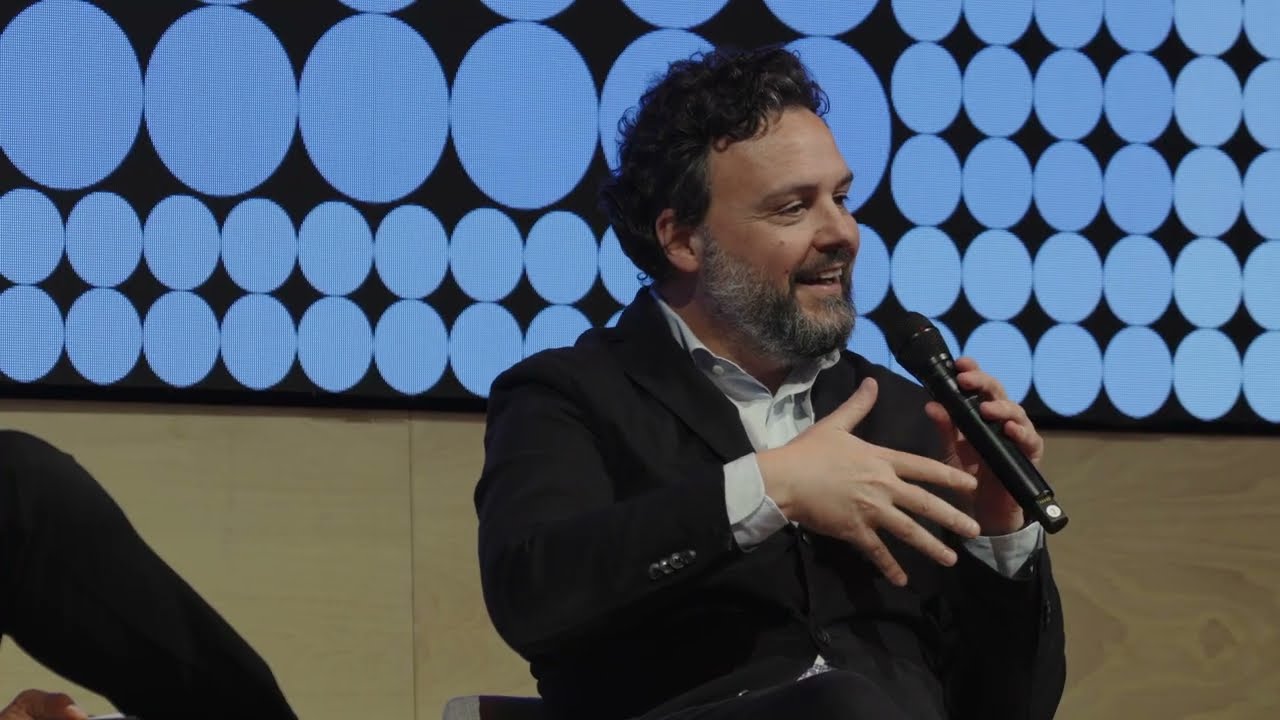
Erste Group Overhauls AI Banking Architecture to Drive Advisory
OpenAI
Erste Group is shifting its AI deployment from basic conversational bots to proactive financial advisory in order to extend guidance from the top 20% of affluent clients to its entire user base.
## Background
This video was published on YouTube by OpenAI on June 8, 2026. The page description provides no additional details about the context or content of the talk.
## TL;DR
In this customer ignite talk, Maurizio Poletto, Chief Platform Officer & COO of Erste Group, joins OpenAI's Fola Odundele to discuss the realistic implementation of AI in enterprise digital banking. Poletto details Erste Group's shift from theoretical board-level hype to solving complex regulatory, security, and operational challenges. He shares insights on integrating live customer data early, balancing decentralized internal productivity tools with centralized customer-facing safety on the George banking platform, and using proactive AI to democratize financial advice for the 80% of retail customers who lack access to wealth guidance.
## Atmosphere & style
The talk carries a candid, witty, and pragmatically grounded tone that sets aside corporate polished slides for real-world lessons in fintech engineering. Poletto interacts with Odundele through lighthearted humor and engaging analogies—comparing AI adoption to doctor visits, Amazon delivery expectations, and voice-assistant missteps—creating an approachable peer-to-peer dialogue. Overall, the discussion feels insightful, modest about past architectural mistakes, and focused on practical execution within a highly regulated environment.
## Key takeaways
- [00:00](https://www.youtube.com/watch?v=gli3gNI2saU&t=0s) Board-level excitement around AI has shifted from theoretical slide decks to solving complex operational, security, and regulatory challenges.
- [02:00](https://www.youtube.com/watch?v=gli3gNI2saU&t=120s) Unlike previous hype cycles such as blockchain, AI has directly integrated into core enterprise problem-solving and workflows.
- [02:44](https://www.youtube.com/watch?v=gli3gNI2saU&t=164s) Financial institutions must slow down their AI implementation pace the moment systems begin accessing sensitive customer data to preserve client trust.
- [03:24](https://www.youtube.com/watch?v=gli3gNI2saU&t=204s) Erste Group intentionally tackled compliance and live customer data integration early on rather than starting with low-risk public data.
- [04:47](https://www.youtube.com/watch?v=gli3gNI2saU&t=287s) Internal productivity tools were decentralized across regional units to maximize speed, while customer-facing AI interactions were strictly centralized.
- [06:20](https://www.youtube.com/watch?v=gli3gNI2saU&t=380s) Retail customers treat banking apps as transactional tools rather than conversational partners, making proactive AI nudges far more effective than blank chat boxes.
- [07:39](https://www.youtube.com/watch?v=gli3gNI2saU&t=459s) Conversational interfaces will not replace app buttons for simple transactions due to efficiency and privacy considerations.
- [09:30](https://www.youtube.com/watch?v=gli3gNI2saU&t=570s) Traditional branch-based financial advisory services currently reach only 20% of banking clients, leaving the remaining 80% without personalized guidance.
- [10:00](https://www.youtube.com/watch?v=gli3gNI2saU&t=600s) Erste Group aims to use AI to democratize financial advice, acting like a doctor for client financial health across its entire user base.
- [11:16](https://www.youtube.com/watch?v=gli3gNI2saU&t=676s) Consumer AI platforms like ChatGPT have established a high user-experience benchmark that regulated banking apps are now forced to match.
- [12:45](https://www.youtube.com/watch?v=gli3gNI2saU&t=765s) Leaders in regulated industries must embrace rapid architectural iteration, accepting that early AI systems will be rebuilt multiple times as the technology evolves.
## Detailed walkthrough
### [00:00](https://www.youtube.com/watch?v=gli3gNI2saU&t=0s) Introduction and Moving Beyond AI Hype
Fola Odundele, leader in OpenAI's enterprise team in London, introduces Maurizio Poletto, Chief Platform Officer and COO of Erste Group. Highlighting Poletto's extensive background across design, innovation, and fintech—most notably driving George, one of Europe's premier digital banking platforms—Odundele sets the stage for a candid discussion on AI adoption across a major financial institution. When asked what has shifted over the last 12 to 18 months to make AI a top board-level priority, Poletto explains that while board-level excitement has been present since day one, the nature of that excitement has fundamentally transformed.
In the early stages, enthusiasm was driven primarily by personal experimentation and polished PowerPoint decks. Today, that same excitement is paired with a concrete list of complex operational challenges: rolling out AI tools to thousands of employees, ensuring full legal compliance, satisfying regulatory auditors, and convincing security teams to adopt an enablement mindset rather than reflexively saying no. Poletto compares this evolution to the blockchain boom 5 to 6 years prior, noting that while blockchain generated massive hype claiming to solve every global problem, it lacked the immediate, practical problem-solving trajectory that defines AI implementation today.
- Erste Group operates across multiple European markets with George serving as its core digital banking platform.
- Board-level AI focus has transitioned from theoretical slide decks to operational implementation, security enablement, and compliance frameworks.
- Poletto sharply contrasts AI with previous technology cycles like blockchain, emphasizing that AI has moved directly into core workflow integration.
[02:44](https://www.youtube.com/watch?v=gli3gNI2saU&t=164s) Navigating Regulation and Customer Data
Addressing the delicate balance between speed and caution in a highly regulated banking environment, Poletto outlines Erste Group's guiding philosophy on governance, compliance, and data residency. In banking, the decision to slow down is strictly triggered by customer data interaction. Because financial institutions are built entirely on trust—a fragile asset that is both expensive and time-consuming to rebuild if damaged—any system handling sensitive customer records demands painstaking diligence rather than rapid bootstrapping.
While many peer institutions took a safer route by debuting AI capabilities on public data sets—such as help centers, general information portals, and static website content—Erste Group intentionally chose "the hard way." Approximately two and a half to three years ago, the bank decided to integrate live customer data right from day one. Though Poletto admits this aggressive approach caused its fair share of "gray hair" and early mistakes, tackling compliance and security head-on yielded invaluable institutional expertise that now allows the bank to move forward with far greater speed and confidence.
> "You have to start slowing down once you start accessing customer data. That's the moment where you sit down and say, 'I cannot bootstrap it anymore. I need to do it properly.'"
- Erste Group initiated its AI customer data integration roughly 2.5 to 3 years ago.
- Competitors typically began with low-risk public data, whereas Erste Group tackled regulated customer data integration immediately.
- The early governance and security struggles created a mature internal framework for rapid scaling.
[04:47](https://www.youtube.com/watch?v=gli3gNI2saU&t=287s) Implementation Strategy and Reactive vs. Proactive AI
To manage enterprise-wide rollout without creating operational bottlenecks, Erste Group split its strategy cleanly between internal productivity and customer-facing interactions. At the regional and country level, local management was granted total freedom to experiment with internal productivity tools—such as document search bots for policy manuals and working instructions—allowing teams to move fast and learn independently. Conversely, all customer-facing AI interactions inside the George digital banking app were strictly centralized at the holding level to guarantee safety and architectural consistency.
This deployment revealed key behavioral insights about how everyday retail clients interact with AI. Erste Group discovered that most retail customers do not view a banking app as a conversational partner; they treat it as a transactional utility tool. Furthermore, when presented with a blank chat interface, customers rarely know what questions to ask. Consequently, reactive AI (where the system waits for user input) saw limited engagement, whereas proactive AI—pushing tailored conversation prompts and contextual nudges directly to users—dramatically boosted meaningful interactions.
- Internal productivity tools were decentralized across regional operating units to maximize speed and local autonomy.
- Customer-facing AI was centralized within the George platform across all operating countries to maintain governance and data protection.
- Proactive AI nudges significantly outperformed reactive chat interfaces, bridging the gap for users unsure of how to query financial assistants.
[07:39](https://www.youtube.com/watch?v=gli3gNI2saU&t=459s) Conversational Banking vs. Financial Advice for the 80%
Questioning popular industry assumptions around fully conversational interfaces, Poletto brings lighthearted skepticism to the idea that text or voice chats will replace traditional app buttons for basic transactions. Recalling early voice-assistant promotions where asking Alexa for a account balance hilariously required opening and authenticating a mobile app anyway, he notes that tapping a few buttons remains far more efficient than dictating payments in public settings. Instead, Erste Group views AI's true transformative power as democratizing access to comprehensive financial advice.
Currently, traditional banking provides tailored financial guidance to roughly 20% of its customer base—typically wealthier, older individuals with the time to visit physical branches. The remaining 80% of customers use mobile banking purely functionally to transfer money or check balances, despite being the demographic that needs financial guidance the most. Drawing an analogy to healthcare, Poletto argues that banks must act like doctors for their clients' financial health, using AI to deliver high-quality advisory services to the entire client base rather than just an affluent minority.
> "Our vision in the group is that we are here taking care about like a doctor taking care about probably the second most important thing in people's life, which is their money... then comes health, then comes money—or vice versa."
- Traditional branch-based financial advice currently reaches only ~20% of Erste Group's customer base.
- The remaining 80% of retail customers use banking apps purely for functional, transactional needs without receiving personalized financial guidance.
- Erste Group aims to leverage AI as a scalable financial advisor to democratize wealth guidance across its entire customer base.
[11:16](https://www.youtube.com/watch?v=gli3gNI2saU&t=676s) Setting the OpenAI Standard and Iterative Platform Building
Discussing the role of AI technology vendors, Poletto jokingly holds OpenAI accountable for setting an intimidatingly high benchmark. Consumer platforms like ChatGPT have established a seamless user experience standard that retail banking clients now expect across all digital interactions—regardless of the severe regulatory, risk, and security constraints financial institutions face behind the scenes. He compares OpenAI's market impact to Amazon's early push for one-day delivery: even if built at immense effort, it redefined consumer expectations industry-wide, forcing all players to elevate their execution.
Closing with key advice for technology leaders in regulated industries, Poletto emphasizes the necessity of embracing rapid architectural iteration. Erste Group built AI as a distinct subsystem within the George digital platform and is already on its second complete architectural overhaul within two years. Rather than viewing the scrapping of early versions as a waste of capital, he framing it as the mandatory cost of learning in a rapidly changing field. Leaders must accept making mistakes early and design their engineering pipelines—supported by AI coding tools—to rebuild platforms faster over time.
- Poletto highlights ChatGPT as setting the benchmark for consumer AI interactions ("My best $23 I ever spent a month").
- Drawing an analogy to Amazon's one-day delivery, consumer expectations in AI now force regulated enterprise apps to meet top-tier commercial standards.
- Erste Group completely rebuilt its core AI architecture within two years and anticipates developing version 3.0 within the next 18 months.
## Notable quotes
> [02:44](https://www.youtube.com/watch?v=gli3gNI2saU&t=164s) You have to start slowing down once you start accessing customer data. That's the moment where you sit down and say, 'I cannot bootstrap it anymore. I need to do it properly.' — Maurizio Poletto
> [07:39](https://www.youtube.com/watch?v=gli3gNI2saU&t=459s) Our vision in the group is that we are here taking care about like a doctor taking care about probably the second most important thing in people's life, which is their money... then comes health, then comes money—or vice versa. — Maurizio Poletto
Erste Group重组银行AI架构以驱动财务咨询
Erste Group正将其AI部署从基础对话机器人转向主动式财务咨询,以将指导服务从前20%的富裕客户延伸至全体用户群。
在本次客户Ignite演讲中,Erste Group首席平台官兼首席运营官Maurizio Poletto与OpenAI的Fola Odundele共同探讨了AI在企业数字银行中的实际落地应用。Poletto详细介绍了Erste Group如何从董事会层面的理论炒作转向解决复杂的监管、安全和运营挑战。他分享了尽早整合实时客户数据、在George银行平台上平衡分散的内部生产力工具与集中的面向客户安全保障,以及利用主动式AI为80%缺乏财富规划指导的零售客户普及财务建议的深刻见解。
Erste Group 首席平台官兼首席运营官 Maurizio Poletto 指出,董事会对 AI 的关注已从早期的概念幻灯片转向解决具体的运营、合规与安全挑战;与此前的区块链炒作不同,AI 已经直接融入核心企业工作流。 (0:00)
银行业在系统触碰敏感客户数据时必须审慎放缓以维护客户信任,但 Erste Group 在两三年前便选择直面挑战、整合真实客户数据,从而积累了成熟的合规与治理框架。 (2:44)
Erste Group 将内部生产力工具下放给区域单位以追求落地速度,但将面向客户的 AI 严格集中在 George 平台管理;实践表明零售客户习惯将银行 App 视作交易工具,主动式情境推送的效果远优于空白对话框。 (4:47)
传统线下网点仅能向约 20% 的高净值客户提供个性化财务建议,Erste Group 计划利用 AI 将专业咨询能力普及至剩余 80% 仅使用基础交易功能的普通大众客户。 (7:39)
Reading summary
According to Maurizio Poletto, Chief Platform Officer and COO of Erste Group, banks must move beyond speculative AI hype by embedding live customer data directly into regulated systems and utilizing proactive AI to democratize financial advisory services.
Integrating Regulated Customer Data over Public Datasets (2:44)
Over the past 12 to 18 months, board-level interest at Erste Group shifted from theoretical presentations to operational execution, regulatory audits, and shifting security teams into an enablement mindset. Unlike previous technology waves such as blockchain, which generated broad hype without immediate practical utility, Poletto noted that AI addressed concrete enterprise workflows immediately.
While many financial institutions initially limited AI deployments to low-risk public data like help centers, Erste Group chose to integrate regulated customer data beginning two and a half to three years ago. Poletto stressed that accessing customer data requires slowing down because bank trust is difficult and costly to rebuild once compromised. Although this decision caused early organizational friction, it established the compliance and security frameworks required for scalable deployment.
Bifurcated Governance and Proactive AI Interaction (4:47)
To prevent operational bottlenecks across multiple European markets, Erste Group split its deployment model into two distinct tracks. Regional and national units received autonomy to experiment with internal productivity tools, such as policy document search bots, while all customer-facing AI features inside the George digital banking app were strictly centralized at the holding level to preserve architectural consistency and data safety.
In client deployments, Erste Group observed that retail customers interact with banking apps as functional transaction tools rather than conversational counterparts. Customers rarely knew what to ask when faced with blank text prompts. As a result, reactive chat interfaces generated low engagement, whereas proactive AI—delivering contextual prompts and relevant nudges directly to users—drove significantly higher interaction.
Scaling Financial Advice to the Broader Base (7:39)
Poletto expressed skepticism toward industry predictions that voice or conversational chat will replace standard graphical buttons for routine tasks like sending money or checking balances. Instead, Erste Group positions AI's primary value as democratizing financial guidance across its entire retail footprint.
Currently, traditional banking delivers customized advisory services to roughly 20% of customers, primarily wealthier individuals who visit brick-and-mortar branches. The remaining 80% use mobile banking strictly for transactional utility, despite having the greatest need for financial guidance. Poletto argued that banks should function like doctors managing financial health, using automated AI advisors to provide personalized counsel to the underserved 80%.
Elevated Consumer Standards and Constant Re-Architecture (11:16)
Commercial platforms like ChatGPT have established a seamless user experience benchmark that retail banking customers now expect from their financial institutions, regardless of underlying banking regulations. Poletto compared this dynamic to Amazon’s introduction of one-day delivery, which reset cross-industry consumer expectations.
To keep pace, Poletto advised enterprise leaders to treat early software architectures as disposable learning vehicles rather than permanent assets. Erste Group built its AI engine as an isolated subsystem within the George platform and has already executed two full architectural overhauls within two years, with a third iteration anticipated within the next 18 months.
Erste Group's implementation demonstrates that extracting real value from enterprise AI requires absorbing early governance friction and committing to frequent architectural rebuilds, though continuously keeping pace with rapid consumer-grade AI developments within heavily regulated banking environments remains a demanding operational challenge.
精炼阅读摘要
Erste Group 首席平台官兼首席运营官 Maurizio Poletto 指出,银行业的人工智能应用已告别概念炒作,进入涉及复杂合规、安全赋能与底层重构的实质运营阶段;该行通过直面客户真实数据与双轨治理,致力于将过去仅面向少数群体的财务咨询扩展至 80% 的普通零售客群。
从概念炒作转向双轨运营落地 (0:00)
Poletto 指出,董事会对人工智能的关注重点在过去 12 至 18 个月内发生了根本转变,从最初基于个人探索和演示文稿的理论兴奋,转变为解决一系列复杂的落地难题,包括面向数千名员工推广工具、满足监管审计要求,以及促使安全团队从习惯性拒绝转向赋能支持。与五至六年前声称能解决一切全球问题却缺乏务实落地路径的区块链热潮不同,AI 已直接融入银行的核心工作流。
在集团落地策略上,Erste Group 采取了内部与外部严格区分的双轨制:在区域和各分支机构层面,管理层完全放权让本地团队自主探索内部生产力工具(例如用于查询政策手册和工作指引的文档机器人),以最大化响应速度;而所有嵌入 George 数字银行平台的面向客户的交互,则统一收归集团控股层面集中管控,以确保架构一致性、安全性与数据治理边界。
真实客户数据整合与合规经验积累 (2:44)
在严格受管的金融环境中,Poletto 明确表示,一旦系统开始触碰客户数据,就必须主动放慢开发速度,不能再依赖初期的快速粗放搭建(bootstrapping)。银行业完全建立在信任之上,而信任一旦受损,重建过程极为昂贵且耗时,因此涉及敏感数据的任何系统都必须进行极为严密的前期论证。
多数同行机构为了规避风险,通常选择从帮助中心、静态网页或公共数据集等低风险场景切入,而 Erste Group 在约两年半至三年前决定从第一天起就整合真实的客户数据。Poletto 坦承这一激进路径虽然导致了许多早期失误并带来巨大的合规压力,但也让团队在合规与安全领域建立了深刻的制度化经验,使得该行在当下的规模化扩展中能够以更高的确定性和速度推进。
主动交互范式与财务咨询普惠化 (7:39)
该行在真实用户交互中发现,零售客户并不会把手机银行视为对话伙伴,而只是将其当作完成转账或查账的交易工具。Poletto 质疑了以文字或语音完全取代应用按键的设想,指出在公共场合点击按键比语音指令更具效率;同时,空白的对话框往往让用户不知从何问起,导致被动响应式 AI 的用户参与度极低。相反,由系统主动推送定制化对话提示与情境建议(Proactive AI)则显著提升了互动成效。
基于此,Erste Group 认为 AI 的核心颠覆力不在于取代基础操作界面,而在于实现高阶财务咨询的普惠化。目前传统线下网点仅能覆盖约 20% 拥有充足时间且相对富裕的高净值群体,其余 80% 的普通零售客户仅使用移动端进行基础交易,但他们恰恰是最需要财务指导的群体。Poletto 认为银行应如同管理健康的医生一样管理客户的“财务健康”,利用 AI 作为可规模化复制的顾问,向全量客户群体普及定制化的资产配置与理财建议。
对标消费级体验与高频架构重构 (11:16)
Poletto 强调,OpenAI 的 ChatGPT 等消费级平台为整个市场树立了极高的体验标杆,其影响类似于早期亚马逊推出次日达服务重塑了全行业的物流预期。如今,零售银行客户无论后台面临多么繁复的合规、风控与安全限制,都会以顶级消费级软件的无缝标准来衡量金融产品,这倒逼受管机构的技术团队必须提升交付质量。
针对受监管行业的技术管理者,Poletto 建议必须接纳高频的技术架构迭代。Erste Group 将 AI 打造为 George 平台内的独立子系统,在过去两年内已经历了两次底层架构的彻底推倒重建,并预计在未来 18 个月内开发 3.0 版本。他主张管理者应将推翻早期版本的重构成本视为快速学习的必经代价,并利用 AI 辅助编码等工具加速工程重构流程,以敏捷适应底层技术的飞速演进。
Poletto 的核心观点在于,金融机构应用 AI 的胜负手在于是否有魄力直面受监管的客户真实数据,并打破空白聊天界面的局限,以主动交互方式将财务咨询普惠至占总量 80% 的大众客群;然而,在严密合规与高标准客户期望的双重夹击下,银行能否以每 18 个月推倒一次架构的高昂试错成本维系系统稳定性,仍是这一战略长期推进中的核心考验。
Detailed notes — zh
## Background
本视频由 OpenAI 官方 YouTube 频道于 2026 年 7 月 3 日发布。内容记录了 OpenAI 伦敦团队与奥地利 Erste Group 首席平台官兼首席运营官 Maurizio Poletto 的炉边对话;原页面未提供额外的文字简介。
## TL;DR
Erste Group 首席平台官 Maurizio Poletto 深入分享了该行在强监管环境下落地 AI 的硬核实践与治理哲学。Erste Group 选择了一条直面底层客户隐私数据的攻坚路径,并在内部生产力与客户服务之间实行“分行分散探索、总部集中管控”的双轨模式。针对传统银行仅能服务 20% 高净值客群的痛点,银行通过主动推送式 AI 打破交互惯性,致力于让专属理财咨询下沉普惠至剩余 80% 的大众群体。Maurizio 进一步剖析了 OpenAI 设立的极致消费级体验给金融业带来的“亚马逊效应”,并告诫金融从业者必须抛弃把重构视为浪费的旧观念,建立每隔一两年推倒重写系统的敏捷试错文化。
## Atmosphere & style
对话整体务实、坦率且充满机智幽默,既有传统大型银行高管面对合规与安全的审慎敬畏,又洋溢着产品与设计专家对前沿体验的纯粹执着。Maurizio 语言犀利生动,不仅拿区块链虚火与地铁语音查账的荒诞场景调侃咨询泡沫,还风趣地“抱怨”OpenAI 拔高了公众胃口,使得复杂的架构治理与风控议题变得引人入胜。台上主客互动自然松弛,全片在直面转型阵痛的坦诚反思与拥抱推倒重构的技术乐观主义之间达成了精妙平衡,给观众带来极具启发性与代入感的现场听感。
## Bulletin
- [02:44](https://www.youtube.com/watch?v=gli3gNI2saU&t=164s) 与从公开帮助中心起步的常规路线不同,Erste Group 在 AI 落地初期便选择直接连通底层敏感客户数据,虽增加了初期合规试错成本,但为后续核心业务规模化建立了技术底气。
- [04:47](https://www.youtube.com/watch?v=gli3gNI2saU&t=287s) 移动端零售客户缺乏自发与 AI 对话的习惯,实践证明基于财务状态的主动推送提示(Proactive AI)效果远胜被动应答,有效化解了大众“想用 AI 却不知该问什么”的门槛。
- [07:37](https://www.youtube.com/watch?v=gli3gNI2saU&t=457s) 传统网点模式受限于人力成本仅能覆盖前 20% 高净值客户的理财咨询,Erste Group 押注生成式 AI 旨在将专业财务顾问能力下沉,普惠以往被忽视的 80% 大众群体。
- [11:16](https://www.youtube.com/watch?v=gli3gNI2saU&t=676s) OpenAI 凭借消费级产品重塑了全球用户心理预期,形成倒逼金融业的“亚马逊效应”——客户绝不会因银行面对严苛合规监管而降低对 AI 交互体验的及格线要求。
- [13:16](https://www.youtube.com/watch?v=gli3gNI2saU&t=796s) Erste Group 专有 AI 平台在两年内已彻底推翻重建至第二代,并提前规划了第三次重写;在 AI 辅助编码工具加持下,金融科技创新的竞争核心正在转向“更快速地推倒重构”。
## Key takeaways
- [00:00](https://www.youtube.com/watch?v=gli3gNI2saU&t=0s) AI 发展已走出早期停留在高管 PPT 上的虚火炒作阶段,转向深入解决合规审计、安全壁垒与全行推广等具体现实难题。
- [02:44](https://www.youtube.com/watch?v=gli3gNI2saU&t=164s) 银行业的立足之本是极其昂贵且脆弱的信任,一旦涉及核心客户数据就必须放慢节奏,坚决走严谨的正规流程而非草台班子式的野蛮生长。
- [02:44](https://www.youtube.com/watch?v=gli3gNI2saU&t=164s) Erste Group 绕开仅使用公开数据的“轻巧方案”,直面底层客户数据与监管检验,将迟早要经历的合规阵痛前置转化为长期竞争优势。
- [04:47](https://www.youtube.com/watch?v=gli3gNI2saU&t=287s) 集团在内部落地中推行去中心化,各分行可自主搭建内部知识与规章解读工具;但在面向客户的场景上坚持集团高度集权管控,保障安全与体验一致。
- [04:47](https://www.youtube.com/watch?v=gli3gNI2saU&t=287s) 单纯依赖客户主动提问的被动式 AI 难以破除用户心智惯性,精准设计的触发式主动建议(Nudges)才是激发双向智能对话的关键杠杆。
- [07:37](https://www.youtube.com/watch?v=gli3gNI2saU&t=457s) 高效清晰的图形界面(GUI)依然不可替代,银行 AI 战略的核心并非打造全语音对话玩具,而是重塑深层咨询服务的可及性。
- [07:37](https://www.youtube.com/watch?v=gli3gNI2saU&t=457s) 传统线下零售银行业存在结构性失衡:80% 的普通客户长期仅将手机银行当作转账查账工具,无法享受到网点仅向 20% 高净值人群提供的专业指导。
- [10:22](https://www.youtube.com/watch?v=gli3gNI2saU&t=622s) Erste Group 将银行定位为关照客户财富健康的“财富医生”,致力于通过生成式 AI 打破咨询人力成本壁垒,实现财富管理的全民普惠。
- [11:16](https://www.youtube.com/watch?v=gli3gNI2saU&t=676s) 消费级 ChatGPT 树立了无法妥协的体验天花板,客户面对银行业 AI 的心态是二元的——要么足够出色,要么彻底不用,合规不能作为体验打折的借口。
- [13:16](https://www.youtube.com/watch?v=gli3gNI2saU&t=796s) 在强监管的金融行业中推进 AI 变革,必须建立接受犯错的技术文化,将单体系统推倒重写视为技术演进的必经之路而非资源浪费。
- [13:16](https://www.youtube.com/watch?v=gli3gNI2saU&t=796s) AI 编码助手显著降低了系统重构的时间与人力成本,使技术团队具备以更高频率完全重建架构的能力,竞争关键转向试错迭代速度。
## Detailed walkthrough
### [00:00](https://www.youtube.com/watch?v=gli3gNI2saU&t=0s) 数字化银行先锋与董事会对 AI 的真实兴奋
来自 OpenAI 伦敦企业业务团队的 Fola Odundele 为对话开场,隆重介绍了 Erste Group 首席平台官兼首席运营官 Maurizio Poletto。Maurizio 兼具体验设计、金融科技与创新背景,多年来一直是大规模数字化银行转型的核心推手,特别是主导打造了欧洲领先的数字银行平台 George。Fola 指出,Erste Group 长期处于数字银行前沿,但在过去 12 到 18 个月里发生了关键质变,AI 已然跃升为董事会和平台战略的最核心议题。
Maurizio 回忆称,董事会层面对 AI 的狂热与兴奋从第一天起就存在,但早期与现在的状态有着本质不同。最初的兴奋源于高管们在私下试用、阅读资料并制作一堆华丽的 PowerPoint 汇报PPT,事情往往止步于此;而如今的兴奋则伴随着扑面而来的现实难题——如何向全行员工普及?如何促使他们真正使用?如何合规合法?以及如何说服安全团队打破固有壁垒、主动开放而非一味封闭防御。
在谈及 AI 与以往技术风口的区别时,Maurizio 尖锐地拿区块链做了对比。他直言五六年前区块链也曾引发狂热,当时似乎全世界的所有问题都能被区块链解决,但随之而来的却从未有一份需要切实解决的严谨挑战清单。AI 则截然不同,“这绝不是一时的虚火炒作,它会长期留存(this is not an hype and is here to stay)”。正是在这种不断攻坚克难的落地过程中,商业价值才得以真正显现。
- 对话嘉宾:Fola Odundele(OpenAI 伦敦企业业务负责人)与 Maurizio Poletto(Erste Group 首席平台官兼首席运营官)。
- 核心成果:成功打造覆盖中东欧数百万用户的数字银行旗舰平台 George。
- 核心观点:真正的价值不在于 PPT 上的概念畅想,而在于解决合规、安全与员工推广等具体难题。
### [02:44](https://www.youtube.com/watch?v=gli3gNI2saU&t=164s) 严格监管下的取舍:直面客户数据的“硬核之路”
身处高度监管的银行业环境,金融机构在面对治理、数据驻留、合规性与可审计性时,何时该快、何时该慢是一门精细的平衡术。Maurizio 指出,银行业的基石是信任,而信任不仅极其昂贵,一旦受损更需要耗费漫长时间来重建。因此,银行业内的一条铁律是:一旦涉及客户敏感数据,就必须立即踩下刹车、放慢节奏,“不能再用野蛮生长的草台班子方式(bootstrap),必须按部就班走正规流程”。
回顾两三年半前刚接触 AI 时的技术决策,Maurizio 透露业内不少银行采取了相对稳妥聪明的做法:从完全不涉及客户隐私的公开信息入手,例如搭建帮助中心问答、处理公开门户网页的数据。然而,Erste Group 却反其道而行之,从第一天起就选择了一条充满坎坷的“硬核之路(the hard way)”——直接连通并处理底层客户数据。
尽管这个决定在实施初期带来了大量试错成本,甚至让团队“熬出了不少白发”,但 Maurizio 坚信这是迟早要跨过的一道坎,既然终究要发生,不如尽早直面安全与合规的严苛检验。如今来看,这一艰难抉择换来了深厚的业务与技术认知积累,反而让 Erste Group 在后续推进规模化落地时拥有了更快前行的底气。
```mermaid
flowchart TD
accTitle: Erste Group AI 实施策略架构
accDescr: 展示 Erste Group 在内部生产力工具与客户面向功能上的双轨推进架构
subgraph Internal["内部生产力推进 (各分行下放/快速探索)"]
A["各国分行独立运作"] --> B["行内知识库问答"]
A --> C["政策/工作指引学习"]
A --> D["快速试错与敏捷验证"]
end
subgraph CustomerFacing["核心客户服务 (集团总部统管/高标准合规)"]
E["集团总部集中管控"] --> F["连接底层核心客户数据"]
E --> G["严格的安全与合规审计"]
F & G --> H["George App 智能对话与财务伴侣"]
end
Internal -.->|"提供前沿实践灵感"| CustomerFacing
```
### [04:47](https://www.youtube.com/watch?v=gli3gNI2saU&t=287s) 内部赋能与客户交互:主动触达优于被动应答
在全集团推行 AI 的具体战术上,Maurizio 采取了极度清晰的双轨管理架构:在集团控股层面,对于面向员工的生产力工具实施彻底的去中心化策略,允许各国分行自主推进,搭建用于解读操作指引、规章制度的专属 Chatbot,不让总部成为创新落地的瓶颈;但在面向客户的业务场景中,由于集团全境采用统一的数字银行平台架构,规则被严格收紧为“禁止分行私自触碰,全部由集团总部集中建设”,以确保客户数据处理、AI 建议和账户安全处于同一高标准防护之下。
当真正将 AI 引入面向零售客户的 George 平台时,团队获得了一个深刻的业务洞察:零售客户与银行的交互习惯存在天然惯性。用户习惯于去线下网点与真人客户经理深入交谈,但打开手机银行 App 时,他们通常仅将其视为一种纯粹的功能性工具,并不会自发意识到这还可以是一个能进行双向交流的智能伴侣。
为了打破这种认知屏障,Erste Group 摸索出了“被动式 AI(Reactive AI)”与“主动式 AI(Proactive AI)”的双向打法:
- 被动式 AI:等待客户主动打开对话框发起提问;
- 主动式 AI:由系统基于客户的财务状态主动推送提示(Nudges),启发客户开启对话。
实践证明,主动推送取得了压倒性的良好反馈。Maurizio 直言,核心原因非常朴素:“很多客户其实喜欢 AI,但他们根本不知道该问什么。”通过精准设计的主动建议,平台正在逐步降低交互门槛,帮助海量普通用户建立与 AI 银行伴侣交谈的日常心智。
### [07:37](https://www.youtube.com/watch?v=gli3gNI2saU&t=457s) 走出语音假象:用 AI 破局 80% 的大众理财咨询真空
针对 George 平台的未来形态究竟应当偏向纯自助工具还是专业理财教练,Maurizio 保持了极其清醒和克制的态度。他讲了一个常在公司内部调侃的轶事:当年亚马逊 Alexa 掀起语音交互浪潮时,咨询顾问们纷纷预言未来人们不再会使用移动 App,所有银行事务都会转为口头问答。然而 Maurizio 每天乘坐公共交通上下班,他从未见过有人在拥挤的地铁车厢里对着手机大声问:“喂,查一下我的账户余额是多少?”甚至咨询公司的演示视频还闹出过荒诞逻辑——当用户在家问 Alexa 最近一笔交易时,Alexa 回答:“没问题,请打开手机 App 并登录,我才能告诉你。”
基于这些观察,Maurizio 认为图形界面(GUI)依然拥有不可替代的效率优势。在设计良好的界面中,轻点几下按钮、输入几个数字,远比对着系统长篇大论下达转账指令更高效。因此,Erste Group 当前的核心战役绝非单纯追求把银行变成全对话式的极客玩具,而是要解决一个长期困扰传统零售金融的结构性失衡:
- 传统的线下网点模式,最多只能覆盖全行约 20% 的客户并为其提供一对一的专业理财建议;
- 剩余高达 80% 的庞大普通客户群体,在过往仅仅把手机银行当成查看余额、进行转账的浅层工具,从未真正享受到高质量的财富管理指导。
如何借助生成式 AI 与 George 平台的能力,将原本专属网点少数人的专业财务顾问能力下沉,去服务这被遗落的 80% 大众客户,帮助他们更好地规划个人财务,构成了 Erste Group 数字化转型的最大战略雄心。
### [10:22](https://www.youtube.com/watch?v=gli3gNI2saU&t=622s) 普惠金融咨询:用 AI 照顾客户“第二重要”的人生财富
在探讨金融服务的普惠性时,Maurizio Poletto 直言不讳地指出,当下真正迫切需要财务咨询的人群,往往正是最难获得该服务的大众。在传统模式下,能够享受到专业面对面咨询的通常只有那 20% 较为富裕且年长的高净值客户,他们有闲暇时间亲自前往线下网点,银行也能为他们提供周到的服务。然而,剩下的 80% 普通客户该如何触达?如何才能切实改变他们的日常生活?Erste Group 内部一直秉持着一个核心愿景:银行的角色应当类似于医生——医生关照的是人的健康,而银行关照的则是人们生命中仅次于健康的“第二重要之物”,那就是财富。
现场气氛轻松幽默,Maurizio 笑称有人或许会争论爱才是第二重要,或者金钱排在爱之前,但无论如何,财富绝对稳居人生重要事项的前两三名。因此,银行的宏大抱负绝不仅是服务少数富人,而是要全力以赴服务好每一位普通客户。对于这一目标,Maurizio 坚信生成式 AI 正在成为最得心应手、最关键的技术杠杆,让原本昂贵且稀缺的个性化咨询能力走向全民普惠。
- **二八定律的倒置**:传统网点模式主要服务 20% 有钱有闲的高净值人群,但另外 80% 的大众客群才是真正最渴求、最需要财务指引的群体。
- **银行即“财富医生”**:Erste Group 内部将财务健康与身体健康并提,视金钱为客户人生中仅次于健康的第二或第三位核心要素。
- **AI 赋能普惠**:生成式 AI 打破了专业理财建议的人力成本壁垒,成为将高标准咨询规模化推向全体客户的底层支柱。
---
### [11:16](https://www.youtube.com/watch?v=gli3gNI2saU&t=676s) OpenAI 设定的行业标杆与银行业面临的“亚马逊效应”
当主持人谈及工具民主化并询问 OpenAI 应在银行转型中扮演何种角色——究竟是技术提供商、共建者(Co-builder)还是战略顾问时,Maurizio 风趣地揭秘了双方此前在筹备电话中的一段对话。他向 OpenAI 团队半开玩笑地“抱怨”道:“你们实际上把我们逼进了一个非常艰难的处境。”原因在于,OpenAI 打造出了一款在全球范围内极其成功的消费者级产品。Maurizio 坦承自己就是 ChatGPT Plus 的忠实付费用户,甚至感叹这每月 23 美元是他“这辈子花得最值的一笔钱”。
但这同时给传统行业带来了前所未有的压力:OpenAI 凭借极致的产品体验,在全世界用户心中树立了极高的标杆。银行业即便是面对监管合规、风险控制、信息安全等层层严苛约束,客户也绝不会因此降低对银行 AI 的期待。没有任何用户会宽容地表示:“虽然你们银行的 AI 对话体验比 OpenAI 差,但考虑到你们是银行,我能接受。”相反,用户只会冷冷地认定“OpenAI 做得比你们好”。Maurizio 将此比作当年亚马逊推行“次日达”服务的“亚马逊效应”——最初亚马逊为了次日达多年亏损,但它彻底重塑了全行业的消费者预期,逼迫所有竞争对手必须跟进。在 AI 时代,用户体验不存在折中的“及格线”,要么足够好,要么就是糟糕,银行必须依靠 OpenAI 的工具与能力一同跨过这道高门槛。
```mermaid
flowchart TD
accTitle: 消费者预期倒逼银行业 AI 体验升级
accDescr: 展示 OpenAI 设立的极高体验标杆如何穿透银行业合规壁垒,倒逼银行消除半吊子体验的流程。
subgraph Benchmark ["消费者级行业标杆"]
A["OpenAI 打造极致消费级产品<br/>(每月 $23 的顺畅体验)"] --> B["建立全球用户心理预期<br/>(高标准、零容忍)"]
end
subgraph BankingPressure ["银行业现实困境"]
C["银行业严苛约束<br/>(合规 / 风险 / 数据安全)"] -.-> D["潜在的打折体验<br/>('半吊子' AI 对话)"]
B ==> E{"客户是否买账?"}
D --> E
E -- "绝不接受降级" --> F["残酷现实:客户直接转向 OpenAI"]
end
subgraph Solution ["破局路径"]
F ==> G["看齐亚马逊'次日达'标准<br/>不给妥协留空间"]
G --> H["银行借助 OpenAI 工具能力<br/>在强监管下达到同等体验水位"]
end
```
- **严苛的参照系**:消费级 ChatGPT 树立了公众对 AI 对话能力的认知天花板,客户不会因银行受强监管而宽容其 AI 表现平庸。
- **无处容身的折中文案**:Maurizio 强调体验没有“还可以”的灰色地带,“要么好,要么不好”("Either it's good or it's not good.")。
- **亚马逊式体验重构**:正如亚马逊当年不惜亏损推动次日达从而彻底改变整个零售业规则,领先的 AI 体验也在倒逼传统金融机构快速跟上节拍。
---
### [13:16](https://www.youtube.com/watch?v=gli3gNI2saU&t=796s) 给金融从业者的建议:拥抱试错,将推倒重构视为常态
针对台下那些刚在受监管金融行业起步开展 AI 探索的从业者,主持人请 Maurizio 分享经验。Maurizio 坦率地表示自己很难好为人师,但他给出的最深刻体会是:必须从心底里“接受犯错”,并勇敢承认重构的必然性。他透露,Erste Group 的整个数字银行体系内嵌入了一套专有的 AI 平台,而在短短两年时间内,该 AI 平台就已经迭代到了第二版——这不是修修补补的小升级,而是彻底推翻第一版之后的推倒重来。不仅如此,他甚至已经做好心理准备,预计一两年后规划中的第三版同样需要推翻第二版。
```mermaid
flowchart LR
accTitle: AI 架构演进与持续重构模式
accDescr: 展示 Erste Group 从第一版架构到第二版及未来第三版的持续推倒重构演进路径。
subgraph V1 ["初期阶段 (Year 0-1)"]
A1["AI 平台 V1.0<br/>初步探索"] --> A2["发现单体/瓶颈<br/>不可扩展"]
end
subgraph V2 ["当前阶段 (Year 1-2)"]
B1["彻底推倒重写<br/>AI 平台 V2.0"] --> B2["适配当前复杂场景"]
end
subgraph V3 ["未来规划 (Year 3+)"]
C1["主动规划 V3.0 重构<br/>引入 Coding Assistant"] --> C2["更高频率、更低成本完成推倒重写"]
end
A2 ==> B1
B2 ==> C1
```
Maurizio 剖析道,这就像所有初创公司的必经之路一样:起初大家通常会快速搭建一个单体应用(Monolithic application),随着业务发展便会发现它无法横向扩展,唯一的出路就是将其全部推倒重新设计。在某些传统大机构中,推翻重写通常会被问责为“浪费金钱”,但在 Erste Group 的技术文化里,这被视为探索前沿科技的唯一正确路径。现在的竞争核心早已不是“如何一次性把系统做对”,而是“如何更快地完成重构”。他强调,随着各类 AI 编程助手(Coding Assistant)的加入,团队完全推翻并重建系统的速度将越来越快。在金融科技领域取得成功的核心秘密,莫过于提前做好在做对之前“先做错两三次”的觉悟与准备。
- **两年两代架构**:Erste Group 在数字银行内部打造 AI 专属平台,运行仅两年已将第一版完全废弃,全面重构成全新的第二版。
- **主动预留重构周期**:Maurizio 已经在团队规划中预留了一年半后的推倒重构预算,拒绝把技术迭代当成一次性投资。
- **重新定义“浪费”**:打破大企业将推翻重构视为资源浪费的传统认知,将其定义为技术探索的必经之路;借助 AI 辅助编码等工具,竞争的关键在于以更快的速度推翻旧架构并高效重生。
## Notable quotes
> [00:00](https://www.youtube.com/watch?v=gli3gNI2saU&t=0s) this is not an hype and is here to stay — Maurizio Poletto
> [02:44](https://www.youtube.com/watch?v=gli3gNI2saU&t=164s) 不能再用野蛮生长的草台班子方式(bootstrap),必须按部就班走正规流程 — Maurizio Poletto
> [02:44](https://www.youtube.com/watch?v=gli3gNI2saU&t=164s) the hard way — Maurizio Poletto
> [04:47](https://www.youtube.com/watch?v=gli3gNI2saU&t=287s) 禁止分行私自触碰,全部由集团总部集中建设 — Maurizio Poletto
> [04:47](https://www.youtube.com/watch?v=gli3gNI2saU&t=287s) 很多客户其实喜欢 AI,但他们根本不知道该问什么。 — Maurizio Poletto
> [07:37](https://www.youtube.com/watch?v=gli3gNI2saU&t=457s) 喂,查一下我的账户余额是多少? — Maurizio Poletto
> [07:37](https://www.youtube.com/watch?v=gli3gNI2saU&t=457s) 没问题,请打开手机 App 并登录,我才能告诉你。 — Maurizio Poletto
> [11:16](https://www.youtube.com/watch?v=gli3gNI2saU&t=676s) 这辈子花得最值的一笔钱 — Maurizio Poletto
> [11:16](https://www.youtube.com/watch?v=gli3gNI2saU&t=676s) 你们实际上把我们逼进了一个非常艰难的处境。 — Maurizio Poletto
> [11:16](https://www.youtube.com/watch?v=gli3gNI2saU&t=676s) Either it's good or it's not good. — Maurizio Poletto
> [11:16](https://www.youtube.com/watch?v=gli3gNI2saU&t=676s) 虽然你们银行的 AI 对话体验比 OpenAI 差,但考虑到你们是银行,我能接受。 — Maurizio Poletto
> [13:16](https://www.youtube.com/watch?v=gli3gNI2saU&t=796s) 接受犯错 — Maurizio Poletto
> [13:16](https://www.youtube.com/watch?v=gli3gNI2saU&t=796s) 先做错两三次 — Maurizio Poletto
## Mentioned
OpenAI, Erste Group, Maurizio Poletto, Fola Odundele, George, ChatGPT Plus, Amazon, Amazon Alexa
[Source](https://www.youtube.com/watch?v=gli3gNI2saU)
Source quotes
[0:00] Maurizio Poletto: this is not an hype and is here to stay
[2:44] Maurizio Poletto: 不能再用野蛮生长的草台班子方式(bootstrap),必须按部就班走正规流程
[2:44] Maurizio Poletto: the hard way
[4:47] Maurizio Poletto: 禁止分行私自触碰,全部由集团总部集中建设
[4:47] Maurizio Poletto: 很多客户其实喜欢 AI,但他们根本不知道该问什么。
[7:37] Maurizio Poletto: 喂,查一下我的账户余额是多少?
[7:37] Maurizio Poletto: 没问题,请打开手机 App 并登录,我才能告诉你。
[11:16] Maurizio Poletto: 这辈子花得最值的一笔钱
[11:16] Maurizio Poletto: 你们实际上把我们逼进了一个非常艰难的处境。
[11:16] Maurizio Poletto: Either it's good or it's not good.
[11:16] Maurizio Poletto: 虽然你们银行的 AI 对话体验比 OpenAI 差,但考虑到你们是银行,我能接受。
[13:16] Maurizio Poletto: 接受犯错
[13:16] Maurizio Poletto: 先做错两三次
Source quotes
[2:44] Maurizio Poletto: You have to start slowing down once you start accessing customer data. That's the moment where you sit down and say, 'I cannot bootstrap it anymore. I need to do it properly.'
[7:39] Maurizio Poletto: Our vision in the group is that we are here taking care about like a doctor taking care about probably the second most important thing in people's life, which is their money... then comes health, then comes money—or vice versa.
Original transcript
[0:00] [music]
[0:04] >> Good afternoon, everyone. My name is
[0:05] Fola Odundele. I lead part of our
[0:07] enterprise business here at Open AI in
[0:10] London. Um and I am joined by Maurizio
[0:13] Poletto. Maurizio, they've given me a
[0:15] pretty impressive bio, so I'm going to
[0:18] try and do justice here. You are the
[0:20] Chief Platform Officer and CEO of Erste
[0:22] Group with a background spanning design,
[0:25] innovation, and fintech. Uh you've been
[0:27] a driving force behind transforming
[0:29] digital banking at scale, most notably
[0:32] through the development of George, one
[0:34] of Europe's leading digital banking
[0:36] platforms. And really, today's
[0:38] conversation is really focusing on your
[0:41] adoption of AI across the business. Um I
[0:44] personally enjoy these chats because
[0:46] they are the real-life examples of
[0:48] customers that go through challenges,
[0:51] have those learnings, and we're here to
[0:53] share those learnings today with you
[0:54] all.
[0:55] So, Maurizio, Erste has been a digital
[0:58] banking leader for a number of years,
[1:00] but something has changed in the last
[1:02] 12-18 months. Um what makes AI that
[1:05] board level platform level priority now?
[1:09] >> On the board level, the excitement is
[1:11] there from since day one. The difference
[1:14] is that on day one,
[1:16] um the excitement was all ourselves
[1:20] reading and experiencing this by
[1:21] ourselves privately and having a bunch
[1:24] of PowerPoint presentation. That's where
[1:26] it ends.
[1:28] Now is same excitement, even more, with
[1:31] a bunch of problems to solve.
[1:34] How to roll it out to your employees,
[1:35] how to make them using it, how to make
[1:37] it legal, how to make it compliant, how
[1:40] to convince security people to open up
[1:43] and not to close.
[1:44] So, the excitement is the same. It's
[1:47] just that it follow up with a list of
[1:49] challenges, and I think that's what I
[1:51] like the most because without solving
[1:53] those challenges, you don't generate
[1:56] value, right? And I think we are right
[1:58] in the middle of that thing. So,
[2:00] um we are still we are still super
[2:02] excited on the board
[2:04] and we have always been.
[2:06] Um the difference with AI is that
[2:10] this is not an hype and is here to stay.
[2:13] And I remember with blockchain there was
[2:16] a similar
[2:17] there was a similar situation 5-6 years
[2:19] ago, you may remember. Super excitement
[2:21] about blockchain, every problem in the
[2:22] world will be solved by blockchain, but
[2:24] it was never followed up by a list of
[2:26] challenges to to to to solve.
[2:29] Here is different. This is really really
[2:31] really substantially different and and
[2:34] and we are in the middle of that project
[2:37] or that process of implementing it.
[2:39] >> Excellent. And we'd love to hear more
[2:40] about that process and the challenges
[2:43] that you're facing.
[2:44] You're operating obviously in a
[2:46] regulated environment and as a regulated
[2:48] bank, how do you decide when to go fast,
[2:52] when to go slow when you think about
[2:54] things like governance, data residency,
[2:56] compliance, auditability, many many
[2:59] other things?
[2:59] >> So, in banking
[3:02] I can speak for many colleagues here.
[3:04] You have to start slowing down
[3:07] once you start accessing customer data.
[3:10] That's the moment where you start sit
[3:12] down and say, "Ah, I cannot bootstrap it
[3:14] anymore. I need to do it properly."
[3:16] Because probably that's the most
[3:17] sensible piece of information we have in
[3:19] our system. We are an industry built on
[3:21] trust and if you look at trust beside
[3:23] the fact that it's quite expensive, uh
[3:26] uh uh
[3:27] it takes you a while to regain that
[3:28] trust. So, as soon as you touch customer
[3:31] data or you want to start processing
[3:33] customer data, you have to slow down and
[3:36] think about doing it properly.
[3:38] We have made a decision at the very
[3:40] beginning when we started to engage with
[3:42] AI about
[3:43] 2 and 1/2 3 years ago,
[3:45] uh that we didn't want many banks did a
[3:48] smart approach. They started with data
[3:51] which is doesn't have any customer data.
[3:53] They started with help center, general
[3:55] information, data which is on the public
[3:58] portal, easy.
[3:59] We for several reason we started the
[4:02] hard way. We immediately started to
[4:04] connect customer data right away from
[4:06] day one.
[4:07] Lots of mistakes in that process as you
[4:10] can imagine, but we went the hard way
[4:12] because we said eventually this
[4:15] needs to happen, so why don't we do it
[4:17] right away? And and there therefore
[4:20] there you need to do it right. You need
[4:21] to have compliance in place. You need to
[4:23] have security in place. You need to make
[4:25] sure that things are done properly. We
[4:28] need to make sure that everything is
[4:29] done in a correct way.
[4:32] And yeah, it's a bit it took us a bit
[4:35] it puts a bit of gray air on on our
[4:38] head,
[4:39] but I think it pays off. We have a
[4:41] certain amount of knowledge on that
[4:43] topic right now that give us the
[4:44] confidence we can move forward faster.
[4:47] >> Great. And one of the areas that you
[4:49] started first is is rolling out chat GPT
[4:52] internally and I'm I'm curious, what
[4:54] have you learned from rolling out chat
[4:56] GPT AI tools that has changed how you
[4:59] think about broader employee adoption?
[5:01] >> So in the group we had a very simple
[5:03] strategy.
[5:05] Um
[5:06] trivial. I'm in charge of the group, so
[5:08] I'm not running a specific country. I'm
[5:11] on the holding level and I'm in charge
[5:13] of different country and we said
[5:15] for productivity tools every country can
[5:18] almost do whatever they want. So go on
[5:20] fast because we knew that I don't want
[5:22] to become a bottleneck for my colleagues
[5:24] in the country to do, I don't know,
[5:25] chatbot that help them up their team to
[5:28] uh learn about document, working
[5:30] instruction, policy and stuff like this.
[5:32] I say on those stuff these are the
[5:34] tools, go on as fast as possible, learn
[5:37] as much as possible.
[5:39] On customer facing we had a clear rule
[5:42] and say you don't touch customer facing.
[5:44] We do this centrally.
[5:46] Uh Uh, because in the group we have a
[5:48] one digital platform across all the
[5:49] country and we wanted to do customer
[5:51] facing AI conversation and advisory and
[5:55] support on the app with customer data.
[5:58] We want to do it centrally and so that
[6:00] we we keep ourselves restricted.
[6:03] And, um,
[6:04] so this was the overall strategy.
[6:07] What we found out is that
[6:10] not all our customer
[6:13] ask the same question we will ask. And
[6:16] so, uh, we also learned that
[6:19] many of our retail customer, we started
[6:22] with retail of course,
[6:24] are not ready to have a conversation
[6:26] with a bank.
[6:28] They're ready to come into the branch
[6:29] and have a conversation with a person,
[6:31] but they're not they're using our
[6:32] digital banking app as a tool, as a
[6:35] service.
[6:37] And they takes a bit of time for them to
[6:39] understand that they could they could
[6:41] have a companion where they can have a
[6:43] conversation with. This is a process
[6:45] that will take a while and it's still
[6:46] taking today. And so for instance, one
[6:48] of the nudge I can tell you is every
[6:50] time we implemented AI, we always had
[6:53] two way of doing AI. We have the
[6:55] reactive AI, means the customer open the
[6:57] conversation and start talking.
[6:59] And we have the proactive AI, when we
[7:02] push a conversation nudges on our
[7:04] customer and see how they reacted. And
[7:07] as you can imagine, the great result we
[7:09] got it on the proactive one, when we
[7:11] push, when we give our customer an idea
[7:13] which kind of conversation they can
[7:15] have.
[7:15] Because the reality is very simple. Many
[7:18] of our customers simply like AI, but
[7:20] have no idea what to ask. They just
[7:22] don't know. So at the moment we have in
[7:24] this strategy that we about counter
[7:26] balancing proactiveness and reactiveness
[7:29] in a in a way that we get this new
[7:31] technology and those conversation
[7:33] familiar on our customer level. And we
[7:36] are in that process right now.
[7:37] >> Amazing. And I know that the George app
[7:40] and digital experience that you have is
[7:43] is used by millions of customers.
[7:45] >> Yeah.
[7:45] >> And I'm curious and maybe the audience
[7:46] are curious, what should something like
[7:49] George look and feel like? So, you
[7:52] talked a lot there about the
[7:53] proactivity. Completely agree, but
[7:55] should it be more self-service, a
[7:57] financial coach, something else?
[8:00] >> I I don't know. If I would know, I
[8:02] probably I don't know. Uh
[8:05] I don't know if
[8:08] I have a very simple joke I do in the
[8:10] company. I always say, "Oh, I remember
[8:13] for- forget the I. You remember when
[8:14] Alexa came into place? Conversation. You
[8:17] remember that?
[8:18] And at that time, I remember lots of
[8:20] consultant and company came to us and
[8:22] say, "People will
[8:24] not talk to you. You will not use your
[8:25] app. They will ask questions."
[8:29] Uh because now with Alexa, you can ask
[8:30] question. And
[8:33] and I said, "Listen, I'm coming to the
[8:35] office with a public transportation
[8:36] every day.
[8:37] And what the first time I see someone
[8:40] asking their phone, "Okay, what's my
[8:42] balance?"
[8:43] When I see that happening, then I will
[8:45] probably start changing my mind. I I I
[8:47] don't see this yet. Uh
[8:49] And I remember this crazy experience
[8:51] someone was showing me that you were
[8:53] going home in this one of these
[8:54] promotional video from consultant. You
[8:56] go home and you say, "Hey Alexa,
[8:59] uh what is the last transaction um I I I
[9:02] happened on my account?" And then Alexa
[9:05] said, "No problem. Open uh sign up on
[9:08] your app. Take your app, sign up on the
[9:09] app, and then I can give you that
[9:10] information."
[9:12] And I said, "Well, that's uh something
[9:13] wrong in this, right?" And so, um I
[9:16] don't know if banking will be
[9:18] conversational.
[9:19] It may be. I don't know. Um
[9:22] I still believe that doing doing a
[9:24] transaction, if you have built your
[9:25] interface right, is much easier to do it
[9:27] by clicking some buttons and putting
[9:29] some number than telling someone to do a
[9:30] transaction.
[9:32] I'm not ruling out that we will get
[9:33] there and say, "Do Send the money
[9:34] somewhere." And the system will do it.
[9:37] But, that's not my challenge. My
[9:38] challenge is that or our challenge is
[9:42] that at the moment
[9:43] we are roughly providing financial
[9:47] advice to roughly 20% of our customer
[9:50] base.
[9:51] Which is the customer base that decide
[9:53] to come into our branches.
[9:57] Um
[9:59] and I think our ambition is to provide
[10:01] financial advice, help them to really
[10:03] take care about their finances
[10:06] to the other 80% of our customers that
[10:08] at the moment don't do this. They're
[10:09] just using our tool very
[10:12] functionally to make transfer, to see
[10:14] where they stand, but they don't really
[10:16] get the advice. That's a big challenge.
[10:19] Because if you analyze this missing 80%
[10:22] are most probably the people who need
[10:24] that advice the most.
[10:26] Because normally the 20% that get that
[10:29] advice today are normally a bit
[10:31] wealthier, a bit older. They have time
[10:33] to come to the branches. They have and
[10:35] normally we serve them great. How can we
[10:38] serve the other 80%? To really make an
[10:41] impact on their life. Our vision in the
[10:43] group is that we are here taking care
[10:45] about like a doctor
[10:47] taking care about
[10:49] probably the second most important thing
[10:52] in in customer life, in in people's
[10:54] life, which is their money, right? There
[10:56] is health first, then comes the money.
[10:58] Someone said number two is love.
[11:00] Someone said maybe money comes before
[11:02] love. Whatever, but either the second or
[11:04] the third most important thing.
[11:06] And
[11:07] our ambition is to
[11:09] do anything we can to serve all our
[11:12] customer and not just the wealthy one.
[11:13] And I think AI comes very handy here.
[11:16] >> Yeah, and I think democratizing access
[11:18] to the tools and capabilities for
[11:20] everyone, uh we certainly align with
[11:21] that. Um on that note then, what role
[11:25] should partners like an open AI
[11:28] play in a bank's AI transformation?
[11:31] Technology provider, co-builder,
[11:32] strategic advisor, all three?
[11:34] >> Mhm.
[11:36] Um
[11:37] in our preparation call
[11:40] I was mentioned one thing to Folay, and
[11:42] I said
[11:44] you guys from Open AI put that in a very
[11:46] bad situation. Why? Because you have
[11:50] very successful consumer product.
[11:52] I'm one of your pro user.
[11:55] My best $23 I ever spent
[11:58] a month.
[11:59] It's uh but
[12:01] you also set a standard.
[12:05] You set the standard.
[12:07] And so, everything I deliver to my
[12:08] customer with all the restriction of my
[12:10] industry, my risk department, my
[12:13] security department has to reach that
[12:15] standard. No one will say, "Yeah, your
[12:17] your AI conversation is a bit worse than
[12:21] what I get in Open AI, but I'm expecting
[12:24] it because I'm accepting it because you
[12:25] are a bank." No one will do this. They
[12:26] say, "Well, that's Open AI can do
[12:28] it better."
[12:30] And so, you you set that standard. You
[12:33] need to help me to get to that standard.
[12:35] That's what we need from you.
[12:37] >> Challenge accepted, Moray. Um
[12:39] and absolutely, that's why we provide
[12:41] the tools, the capabilities, and we
[12:42] definitely want to continue to
[12:43] >> It's like about I told you, it's like
[12:44] about Amazon make everyone use that
[12:47] everything can deliver in one day.
[12:49] >> Yeah.
[12:49] >> You know, at the beginning with Amazon,
[12:51] this was a money loss system, right? For
[12:53] many years they were losing money with
[12:55] one-day delivery.
[12:56] But everyone has has to catch up.
[12:59] Uh it's a bit similar what what you are
[13:01] doing and some of your competitor do it
[13:03] too. So, the the the bar is really high,
[13:05] and there is no
[13:07] uh you know, there is no
[13:10] uh there is no space for
[13:12] a partially good experience. Either it's
[13:15] good or it's not good.
[13:16] >> Customer expectations they're evolving
[13:18] and changing. Absolutely agree. Um I can
[13:20] see the time we have time for one last
[13:22] question. Clearly, this is a space
[13:24] you're passionate about, something you
[13:25] think about a lot. You're on journey and
[13:28] then making progress on that journey.
[13:30] But to those in the audience who are
[13:31] just starting out working regulated
[13:34] financial industry
[13:36] what's a piece of advice you could give
[13:38] them starting in the early phases?
[13:41] >> I I I start to give advice, but what I
[13:43] can tell you is
[13:45] I we accepted to make mistake. So we
[13:48] accepted so now I I think we are
[13:50] building this AI platform our AI so we
[13:53] have a digital banking platform and the
[13:55] AI is a platform within the platform and
[13:58] we are already since 2 years we already
[14:00] at the second version of it. Not a bit
[14:03] of a version a bit different. I So the
[14:06] first version
[14:08] we have to redo it completely and I'm
[14:10] not ruling out that
[14:12] the third version we're going to do in
[14:14] couple of years needs to be completely
[14:15] different. So do you have to accept that
[14:17] this is this is the case? It's like like
[14:19] every little startup you start with a
[14:21] monolithical application then once you
[14:23] are there you figure out that this is
[14:25] not scalable and then you need to do it
[14:26] differently and you need to
[14:28] take the whole thing and re re
[14:30] reconsider it and
[14:32] um
[14:34] in some company this is considered in
[14:36] some organization this may be considered
[14:37] a waste of money.
[14:39] In in in my organization in our
[14:41] organization we considered it as the way
[14:44] to do it and and I'm already planning
[14:47] that I need space in probably a year and
[14:49] a half
[14:51] to
[14:51] to redo it again.
[14:53] The game is about re doing it faster and
[14:55] hopefully with some coding assistant and
[14:58] so on we can redo it completely faster.
[15:00] But yeah, you have to accept that you
[15:04] have to do it wrong couple of times
[15:06] before you do it right. That's that's
[15:07] the only thing I've learned and I don't
[15:09] know if it will help any one of you to
[15:10] do that, but
[15:11] >> No, I think that's great advice. Mari,
[15:13] thank you so much for this conversation.
[15:15] >> Well, I thank you very much.
[15:17] >> [applause]