OpenAI Cuts Finance Team to 20% of Peer Size via Custom AI Tools
OpenAI
Empowering frontline employees with autonomous AI agents allowed OpenAI to manage $162 billion in capital raises entirely in-house, saving hundreds of millions of dollars in traditional advisory fees.
## Background
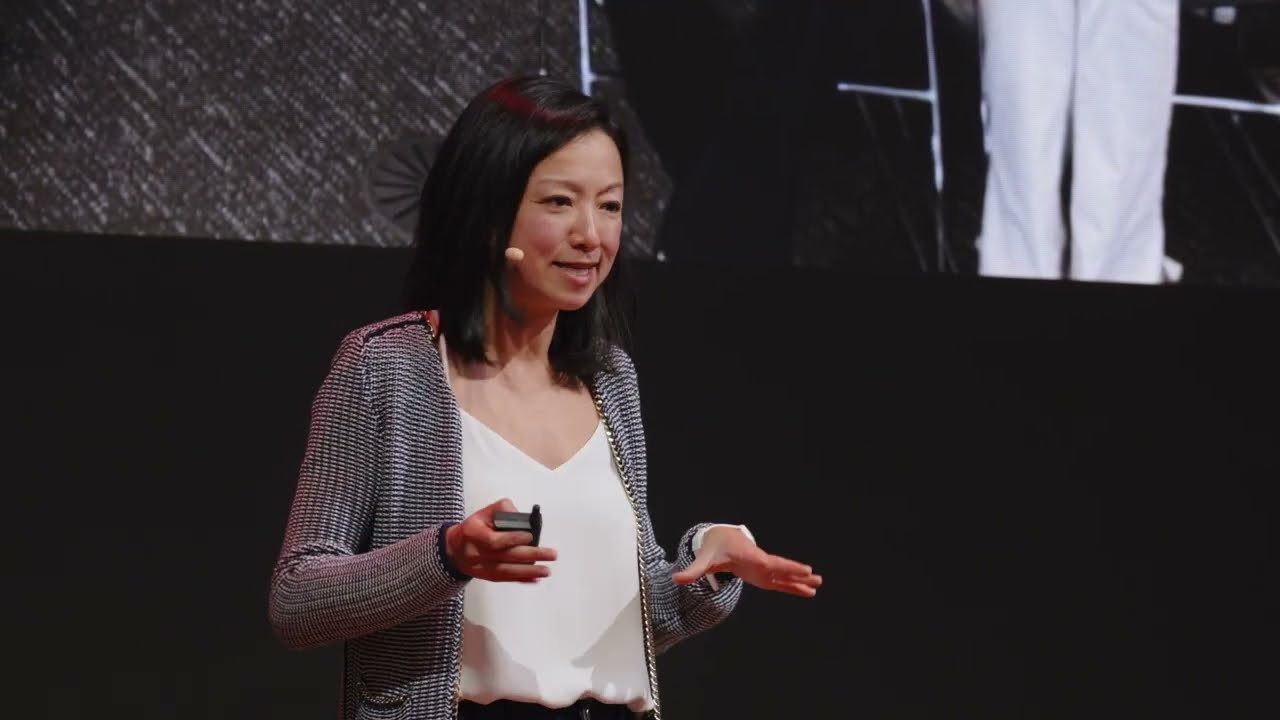
Published on YouTube by OpenAI on June 8, 2026, this video features Stacie Faggioli presenting OpenAI's internal finance operations. According to the page description, it showcases how OpenAI’s finance team leverages AI tools—including ChatGPT, ChatGPT for Excel, Codex, and custom agents—to re-design financial processes.
## TL;DR
Stacie Faggioli, Head of Finance for Applications at OpenAI, outlines how her team operates as an 'AI-native' organization operating at roughly 20% the size of traditional peer tech finance teams. She highlights individual productivity enhancements like building custom Investor Relations agents to support multi-billion-dollar financing rounds and utilizing ChatGPT for Excel to execute complex LBO models in minutes. Furthermore, she details how Codex automates data visualization, sales tracking, and executive reporting while autonomous agents handle procurement, credit checks, contract reviews under GAAP ASC 606, and vendor risk management. Faggioli concludes by emphasizing that true operational innovation relies on democratizing AI tools so front-line employees can build grassroots solutions.
## Atmosphere & style
The presentation carries an authoritative, pragmatic, and forward-looking tone, balancing high-stakes enterprise finance with accessible technological innovation. Faggioli speaks with grounded candor, drawing clear contrasts between labor-intensive traditional finance work—such as late-night associate modeling—and modern automated workflows. The narrative feels inspiring and action-oriented, conveying genuine excitement for employee-driven innovation while maintaining a disciplined focus on accuracy, risk controls, and operational efficiency.
## Key takeaways
- [00:01](https://www.youtube.com/watch?v=1NtS2KdnDok&t=1s) The OpenAI finance team operates with three main design principles: AI-Native by Design, Demonstrable Headcount Leverage, and Deploy Early and Iterate Fast.
- [00:01](https://www.youtube.com/watch?v=1NtS2KdnDok&t=1s) An assessment by PwC revealed that OpenAI's finance team is roughly 20% the size of comparable technology peer companies due to heavy AI leverage.
- [00:01](https://www.youtube.com/watch?v=1NtS2KdnDok&t=1s) Embedding software engineers directly within the Enterprise FinTech pillar side-by-side with finance experts eliminates traditional IT ticket bottlenecks.
- [03:30](https://www.youtube.com/watch?v=1NtS2KdnDok&t=210s) OpenAI trained a custom Investor Relations Agent in ChatGPT that provided CFO-grade answers during a $40B private market raise in 2025 and a $122B financing round.
- [03:30](https://www.youtube.com/watch?v=1NtS2KdnDok&t=210s) ChatGPT for Excel functions like a human analyst by planning analysis, writing dynamic formulas, and completing LBO models in roughly 10 minutes.
- [09:18](https://www.youtube.com/watch?v=1NtS2KdnDok&t=558s) The finance team uses Codex to generate an ROI dashboard for marketing spend that automatically produces top-5 spend reallocation recommendations weekly.
- [09:18](https://www.youtube.com/watch?v=1NtS2KdnDok&t=558s) Unstructured sales interaction data (including Gong transcripts) is processed by Codex into real-time analytics to track sales rep adoption behavior early.
- [09:18](https://www.youtube.com/watch?v=1NtS2KdnDok&t=558s) Codex automates board and executive reporting workflows, like compute margin analysis, saving days of manual data reconciliation time every week.
- [14:22](https://www.youtube.com/watch?v=1NtS2KdnDok&t=862s) An internal Procurement Agent deflects approximately 60% of routine employee procurement and travel policy inquiries without human intervention.
- [14:22](https://www.youtube.com/watch?v=1NtS2KdnDok&t=862s) Autonomous agents perform contract reviews in bulk to flag non-standard terms for GAAP ASC 606 revenue recognition analysis.
- [17:05](https://www.youtube.com/watch?v=1NtS2KdnDok&t=1025s) Vendor Risk Agents automatically compile vendor profiles and embed risk scores directly into procurement software for instant approval decisions.
- [17:50](https://www.youtube.com/watch?v=1NtS2KdnDok&t=1070s) Grassroots innovation from frontline employees deep in the daily work drives more successful AI solutions than top-down executive directives.
## Detailed walkthrough
### [00:01](https://www.youtube.com/watch?v=1NtS2KdnDok&t=1s) OpenAI's Vision for the Finance Team of the Future
Stacie Faggioli, Head of Finance for Applications at OpenAI, introduces how her organization has spent the last few years fundamentally changing its operational model through artificial intelligence. Managing OpenAI's business performance is only one half of her mandate; the other explicit objective (OKR) is to construct the "finance team of the future." To achieve this without simply slapping AI on top of legacy processes, her team adheres to three core design principles:
1. **AI-Native by Design:** When deploying an agent or AI tool, the team avoids treating it as a basic "bolt-on" addition. Instead, they reimagine entire workflows from scratch, propagate best practices across cross-functional partners, and restructure hiring practices and org charts around AI capabilities.
2. **Demonstrable Headcount Leverage:** A recent operational assessment by PwC revealed that OpenAI’s finance team is roughly **20% the size** of comparable technology peer companies, serving as living proof that smaller teams can achieve massive leverage using the right technology.
3. **Deploy Early and Iterate Fast:** Rather than waiting for stable, "final" versions of fast-evolving AI software, the organization maintains a strict bias toward immediate deployment and continuous iteration, allowing the team to grow organically alongside the models.
Organizational structure plays a key role in enabling this speed. OpenAI’s finance organization is split into three simple pillars: **Strategic Finance** (capital allocation, fundraising, and growth planning), **Finance Operations** (the operational engine handling accounting, bill payments, revenue collection, tax filing, and monthly book closes), and **Enterprise Financial Technology** (enterprise fintech, which manages finance systems and data platforms). To prevent bottlenecks, OpenAI embeds software engineers directly into the Enterprise FinTech pillar side-by-side with finance subject matter experts, eliminating traditional reliance on external IT tickets and enabling real-time software evolution.
---
[03:30](https://www.youtube.com/watch?v=1NtS2KdnDok&t=210s) Driving Individual Productivity: Investor Relations & ChatGPT for Excel
Deploying AI occurs at two levels across the organization: boosting individual user productivity and deploying team-wide autonomous agents. On the individual side, tools range from standard ChatGPT and the ChatGPT for Excel plugin to Codex for advanced data analysis.
A standout case study in individual productivity is the custom **Investor Relations (IR) Agent** built within ChatGPT. Faggioli notes that as a non-technical person, she found it simple to build, yet it delivered immense return on investment. OpenAI managed two historic equity raises entirely in-house: a **$40 billion** private market raise in 2025 and a massive **$122 billion** financing round closed just weeks prior. Inundated with complex diligence requests, the team trained an IR agent on internal proprietary data and fine-tuned its output to match the tone of a public-company-grade investor relations officer.
> "Because we only have one CFO, everyone on the team, with the help of the investor relations agent, was able to provide CFO-grade answers to our investors... That means hundreds of millions of dollars in savings in terms of advisory fees."
Beyond investor communications, the IR agent helped scale the finance team's impact internally by helping recruit top-tier talent. When pitching executive candidates in research, engineering, or product who receive significant equity packages, recruiting teams deploy the IR agent to clearly articulate the equity value story just as the CFO would.
For financial modeling, **ChatGPT for Excel** acts like a human analyst. Instead of blindly pasting static numbers, it steps back, plans the analysis, structures project tasks, and writes dynamic, traceable formulas directly into workbook cells—allowing analysts to adjust underlying assumptions and run scenario analyses seamlessly.
* **LBO Modeling Demonstration:** Faggioli walks through a leverage buyout (LBO) analysis of a hypothetical publicly traded company named "OpenDesk"—a task that used to cost her all-nighters as a 25-year-old private equity associate.
* **Execution & Output:** By uploading an equity research PDF directly into ChatGPT for Excel and prompting it to "think like an investment professional," the plugin plans the project, lays out detailed financial projections, builds a full capital structure with cost-of-capital assumptions for each equity/debt tranche, constructs sources and uses, and provides a final investment recommendation (in this run, recommending against proceeding because return thresholds were not met).
* **Speed:** The entire LBO modeling workflow took approximately **10 minutes** to generate automatically.
---
[09:18](https://www.youtube.com/watch?v=1NtS2KdnDok&t=558s) Codex for Data Dashboards, Sales Analytics, and Automated Reporting
Faggioli highlights OpenAI's transition to using **Codex** for advanced data analysis and front-end interface engineering, putting the power of software development directly into the hands of non-technical finance professionals across several distinct scenarios:
1. **Marketing Spend ROI Dashboard:** Facing vast amounts of granular spend data from agencies across channels, geographies, and keywords, the team fed raw marketing data into Codex to generate a custom ROI dashboard. The tool identifies where return on investment diminishes due to channel saturation and generates top-5 reallocation recommendations weekly, turning static analysis into an active spend-rebalancing routine.
2. **Leading Sales Analytics via Unstructured Data:** To track adoption of a newly launched product without burdening account reps with manual CRM entries, the team used Codex to ingest unstructured call records and emails (including **Gong transcripts**). Codex processes these interactions into a real-time sales dashboard broken down by segment, geography, and individual account level. This gives leadership immediate visibility into rep behavior and early performance signals long before the quarter ends.
3. **Automated Executive and Board Reporting:** Creating monthly presentation decks—such as the compute margin deck presented to the CFO—previously required manual reconciliation of raw infrastructure telemetry across diverse GPU hardware, overlaid with accounting allocation rules. Using Codex and reusable code skills, the entire data munging and chart generation process was compressed into a few hours of work.
> "Of course, we're not just shipping this directly to the CFO. We still have folks on my team look at the data. We create QAs where we create evals to make sure we're kind of stress testing the numbers to make sure they pass our sniff test... But in general, it has just saved us probably days of time every single week."
Beyond individual productivity tools, OpenAI embeds autonomous Codex agents directly into routine financial operations to execute repetitive, multi-system workflows:
* **Procurement Agent:** Automatically answers and resolves internal employee policy questions (e.g., travel budgets and hotel spending limits for overseas trips), deflecting roughly **60%** of routine procurement and travel inquiries without human intervention.
* **Credit Check Agent:** Replaces manual research conducted by credit risk analysts for high-threshold accounts. The agent conducts credit research in minutes, generates a composite credit risk score, and embeds the output directly into the CRM interface so sales reps can immediately assess deal viability.
* **Contract Review Agent:** Ingests customer agreements in bulk to detect non-standard terms. This eliminates the need for accounting teams to manually read every single contract to evaluate revenue recognition impacts under **GAAP ASC 606** rules, while allowing the deal desk to flag risk and respond to prospective customers significantly faster.
* **Vendor Risk Agent:** Streamlines risk assessment reports by automatically compiling and researching vendor risk profiles that previously required extensive manual labor.
[17:05](https://www.youtube.com/watch?v=1NtS2KdnDok&t=1025s) Vendor Risk Integration and Building an AI Mindset
Stacie Faggioli details how OpenAI integrates automated risk assessment directly into their operational workflow. By embedding the vendor risk score straight into their procurement software system, anyone involved in the approval flow can instantly review the score and make an informed decision to either proceed or escalate the matter. Wrapping up her presentation of practical finance use cases, Faggioli emphasizes that the true key to success lies in cultivating an "AI mindset." Within OpenAI's finance team, employees have become naturally conditioned to pause before tackling any challenging task and ask: "Okay, what can ChatGPT do for me, or how can I use ChatGPT to make this task easier?"
[17:50](https://www.youtube.com/watch?v=1NtS2KdnDok&t=1070s) Democratizing AI Tools and Unlocking Grassroots Innovation
Reflecting on a photograph from her team's internal hackathon, Faggioli stresses the importance of democratizing access to AI tools by putting ChatGPT and Codex directly into the hands of every employee. She candidly points out that "none of those things I just talked to you about were my ideas. Zero." True innovation doesn't stem from top-down directives; instead, organizations must empower the people closest to the day-to-day work—those who are deep in the data and actively plumbing the systems—to build their own solutions. She concludes by expressing how surprising and impressive the resulting employee-led innovations can be, before thanking the audience and passing the stage back to Matt.
- Vendor risk scores are directly surfaced in the procurement software to facilitate fast approvals or escalations.
- Democratizing tools like ChatGPT and Codex allowed the team members closest to the problem to innovate all the solutions presented.
## Notable quotes
> [03:30](https://www.youtube.com/watch?v=1NtS2KdnDok&t=210s) Because we only have one CFO, everyone on the team, with the help of the investor relations agent, was able to provide CFO-grade answers to our investors... That means hundreds of millions of dollars in savings in terms of advisory fees. — Stacie Faggioli
> [09:18](https://www.youtube.com/watch?v=1NtS2KdnDok&t=558s) Of course, we're not just shipping this directly to the CFO. We still have folks on my team look at the data. We create QAs where we create evals to make sure we're kind of stress testing the numbers to make sure they pass our sniff test... But in general, it has just saved us probably days of time every single week. — Stacie Faggioli
> [17:50](https://www.youtube.com/watch?v=1NtS2KdnDok&t=1070s) none of those things I just talked to you about were my ideas. Zero. — Stacie Faggioli
> [17:05](https://www.youtube.com/watch?v=1NtS2KdnDok&t=1025s) Okay, what can ChatGPT do for me, or how can I use ChatGPT to make this task easier? — Stacie Faggioli
Stacie Faggioli, Head of Finance for Applications at OpenAI, outlines how the company restructured its finance function into an AI-native operational model that operates at roughly 20% of the headcount of comparable technology peers according to a PwC assessment.
Reorganizing Structure and Mindset for Headcount Leverage (0:01)
Faggioli explains that OpenAI splits its finance organization into three pillars: Strategic Finance, Finance Operations, and Enterprise Financial Technology. Rather than treating artificial intelligence as an add-on to existing processes, the company embeds software engineers directly alongside finance domain experts within the fintech pillar, removing standard IT ticketing bottlenecks and enabling continuous iteration on operational tools.
This structural design relies on what Faggioli describes as an "AI mindset," where staff are conditioned to assess how AI can assist with complex tasks before beginning work. She emphasizes that operational innovations were not top-down directives, but emerged organically from internal hackathons where frontline employees closest to the data designed their own automation solutions.
Scaling Strategic Deals via IR and Dynamic Modeling (3:30)
To handle investor demands internally during a $40 billion private market raise in 2025 and a subsequent $122 billion round, OpenAI deployed an internal Investor Relations agent trained on proprietary data. The agent was fine-tuned to produce CFO-grade responses to diligence questions, which Faggioli claims eliminated the need for external advisory support and yielded hundreds of millions of dollars in fee savings. The tool was also deployed by talent acquisition teams to explain complex equity structures to prospective executive hires.
For financial planning, the team uses ChatGPT for Excel to replace manual spreadsheet workflows with dynamic modeling. During a leveraged buyout demonstration on a hypothetical company, the tool ingested an equity research report, outlined capital structures, populated dynamic formula-driven cells, and generated an investment recommendation against the transaction in roughly 10 minutes.
Codex-Driven Reporting and Unstructured Data Analysis (9:18)
Finance staff also use Codex to build custom analytical dashboards without relying on dedicated software developers. For marketing finance, Codex ingests granular agency data across geographies and keywords to identify channel saturation and generate weekly spend reallocation recommendations. In sales analytics, the tool processes unstructured email logs and Gong call transcripts into real-time performance dashboards, offering visibility into account activity ahead of quarter-end closes.
Codex is similarly applied to monthly reporting, such as compiling compute margin decks from complex infrastructure telemetry across heterogeneous GPU hardware. While automation reduced the compilation process from days to a few hours, Faggioli stresses that analysts still maintain quality-assurance evaluations to stress-test the data before delivering it to leadership.
Autonomous Agents in Operational and Compliance Workflows (14:22)
OpenAI integrates autonomous agents across multi-system operational workflows to handle repetitive administrative and regulatory tasks. A dedicated procurement agent deflects approximately 60% of internal employee travel and expense policy inquiries, while a credit check agent generates risk scores directly within the sales CRM in minutes to support deal evaluation.
For regulatory compliance, an automated contract review agent screens customer agreements in bulk to flag non-standard terms, streamlining revenue recognition reviews under GAAP ASC 606 standards and accelerating deal desk workflows. Similarly, automated vendor risk agents compile risk profiles that feed directly into procurement software, allowing approvers to evaluate scores immediately before escalating or approving transactions.
Faggioli maintains that OpenAI's operational leverage stems from empowering frontline analysts with AI development tools rather than imposing executive directives. However, she notes that the organization continues to require human-in-the-loop oversight and systematic evaluations to review model-generated data before finalized reports reach the CFO.
[3:30] Stacie Faggioli: Because we only have one CFO, everyone on the team, with the help of the investor relations agent, was able to provide CFO-grade answers to our investors... That means hundreds of millions of dollars in savings in terms of advisory fees.
[9:18] Stacie Faggioli: Of course, we're not just shipping this directly to the CFO. We still have folks on my team look at the data. We create QAs where we create evals to make sure we're kind of stress testing the numbers to make sure they pass our sniff test... But in general, it has just saved us probably days of time every single week.
[17:50] Stacie Faggioli: none of those things I just talked to you about were my ideas. Zero.
[17:05] Stacie Faggioli: Okay, what can ChatGPT do for me, or how can I use ChatGPT to make this task easier?
Original transcript
[0:01] [music]
[0:02] [applause]
[0:04] >> Hi everyone. I'm Stacy Fichera. I lead
[0:06] finance for applications at OpenAI.
[0:09] Over the last couple of years, I have
[0:11] seen firsthand how my team has changed
[0:13] the way they work with AI. And so I'm
[0:15] really excited to be here today to just
[0:17] share a couple of examples with you.
[0:19] So
[0:20] in addition to managing the financial
[0:21] performance of the business, one of my
[0:24] OKRs at OpenAI is to build the finance
[0:26] team of the future. And so what exactly
[0:28] does that mean?
[0:30] When my team and I think about how we
[0:32] make the decisions to manage toward that
[0:35] objective, we really try to adhere to
[0:37] three principles. So first is we want to
[0:42] be AI native by design. What does that
[0:44] mean? As many of my colleagues have
[0:46] already mentioned, what that means is
[0:47] when we deploy a tool or an agent, we
[0:50] don't don't just think about it as a
[0:52] bolt-on to our existing processes. We
[0:54] really try to fundamentally reimagine
[0:56] how the workflow can be done. We really
[0:59] think about how we propagate the best
[1:00] practices, not only throughout our team,
[1:03] but across our cross-functional
[1:04] stakeholders. And also increasingly,
[1:06] we're rethinking how we hire and design
[1:09] our org chart around our agents.
[1:12] The second principle is we have to be
[1:14] able to show head count leverage. In a
[1:16] very recent assessment that PwC did on
[1:19] our finance team and our operations,
[1:21] they have found that our finance team
[1:23] size is about 20% the size of our
[1:26] comparable technology peers. And so we
[1:29] are living proof that you can in fact do
[1:31] more with less with the right technology
[1:34] and the right tooling.
[1:36] And the third principle would be deploy
[1:38] early and iterate fast. Again, you don't
[1:40] need me to tell you that our technology
[1:42] is changing super quickly and even we
[1:45] feel it on a day-to-day basis. And so
[1:47] whenever a decision comes up about
[1:49] whether we should wait for a more stable
[1:52] or more final version of AI, our bias
[1:54] has always been to just deploy it and
[1:57] keep iterating. This way the team is
[1:59] able to grow very organically with our
[2:01] technology, and I feel like in real time
[2:04] we are creating the finance team of the
[2:05] future.
[2:08] Uh I'll give you a little bit of context
[2:09] as to how we're structured before I go
[2:11] into some of the examples. So, our
[2:12] finance organization is pretty simple.
[2:14] It has three different three separate
[2:16] pillars. Um the first pillar is what we
[2:18] call strategic finance. This is the team
[2:20] that's responsible for allocating
[2:22] capital, raising capital, and also
[2:24] planning our growth.
[2:26] Uh the second pillar is what we call
[2:28] finance operations. So, for example,
[2:30] accounting sits in here. This is the
[2:32] team that's really the engine of
[2:33] finance. They are responsible for
[2:35] collecting revenue, paying our bills,
[2:37] filing our taxes, closing the books on a
[2:39] monthly basis.
[2:41] And the third pillar is what we call
[2:43] enterprise financial technology or
[2:45] enterprise fintech. Um this is the team
[2:47] that take looks after our finance
[2:49] systems and our data platforms.
[2:53] Okay. And our customers often ask us,
[2:55] "Where do you embed or put the team
[2:58] that's building your tool tooling or
[2:59] your AI agents for you?" Um on the
[3:02] finance team we have chosen to embed
[3:03] engineers directly into finance by
[3:06] sitting in the financial technology
[3:07] pillar. So, what we have found is that
[3:10] by having these engineers sitting
[3:11] side-by-side with the finance subject
[3:14] matter experts, we can speed up our
[3:16] deployment and iteration as opposed to,
[3:18] you know, me sitting over here in a
[3:20] corner and waiting for my colleague in
[3:22] the IT department to build something to
[3:24] my requirement. And this way our tools
[3:26] can evolve in real time alongside our
[3:29] work.
[3:30] Okay. So, in terms of actual deployment,
[3:32] I broadly think about it in two ways.
[3:34] One is how do we deploy tools to
[3:36] increase individual productivity, and
[3:39] how do we also deploy agents to help um
[3:41] the entire team become more efficient.
[3:45] Uh on the individual side, I'll talk
[3:47] about a few different examples. Um so,
[3:49] we use tools such as ChatGPT that we all
[3:51] know and love, we use our ChatGPT for
[3:54] Excel plugin, and more recently we've
[3:56] started becoming power users of Codex to
[3:58] really drive efficiencies on the team.
[4:01] Let's start with ChatGPT. So, the
[4:04] investor relations agent was something
[4:05] we built with ChatGPT. This is the
[4:07] personal favorite. I love this example
[4:10] because it was so simple to implement.
[4:11] I'm a non-technical person and I could
[4:13] do this.
[4:14] But also it is extremely high in ROI.
[4:17] So, in my time at OpenAI, I've been
[4:20] super fortunate to be part of two
[4:22] historic equity raises. Last year we
[4:24] raised 40 billion from the private
[4:27] markets and just a few weeks ago we
[4:29] announced we closed 122 billion in
[4:31] financing. Super proud of the
[4:33] achievement, but as you can imagine
[4:35] behind the scenes it was not always
[4:37] pretty.
[4:38] The team was absolutely inundated with
[4:40] diligence requests from investors.
[4:43] And so, what we did was we trained a
[4:47] investor relations agent on our internal
[4:50] data as well as on the tone of a public
[4:53] company grade investment relations
[4:55] professional.
[4:56] And what this enabled us to do is when
[4:58] we were getting just sort of absolutely
[5:00] inundated with diligence requests,
[5:03] instead of assembling the responses
[5:04] manually, we were able to use the agent
[5:07] to provide data
[5:09] grounded, factual, consistent,
[5:11] strategically framed answers to our
[5:13] investors in minutes. And what's also
[5:16] important is because we only have one
[5:18] CFO, everyone on the team, with the help
[5:21] of the investor relations agent, was
[5:23] able to provide CFO grade answers to our
[5:25] investors.
[5:27] So, we were able to ultimately run both
[5:30] raises entirely in-house.
[5:32] And I don't need to tell this audience
[5:35] that means hundreds of millions of
[5:37] dollars in in savings in terms of
[5:39] advisory fees. The other really
[5:41] interesting thing about our investor
[5:42] relations agent is I think it has really
[5:45] helped the finance team kind of scale
[5:46] our influence. What this is ultimately
[5:49] doing is just helping us sell our equity
[5:51] story. Turns out there are a lot of
[5:53] other places in the company where we
[5:55] have to sell our equity story. Every
[5:57] time we try to close a senior executive,
[5:59] whether it's in research, whether it's
[6:01] in engineering, whether it's in product,
[6:03] and they get a huge equity compensation
[6:05] package, they want to understand what is
[6:07] this equity worth? And so we have been
[6:09] able to share the investor relations
[6:11] agent with our recruiting teams and with
[6:14] our executive other executives to help
[6:16] them tell that same story that our CFO
[6:18] would tell.
[6:20] Okay, the second example, ChatGPT for
[6:22] Excel. We cannot have a finance
[6:24] discussion without talking about ChatGPT
[6:26] for Excel. Um as my colleague Stephanie
[6:29] had already mentioned, it really
[6:31] provides incredible leverage because to
[6:33] me it thinks like a human analyst. When
[6:36] you give it a task, it will first take a
[6:38] step back and think about how it would
[6:40] structure the analysis and then it would
[6:42] go into the workbook. It will write the
[6:44] formulas directly into the workbook. So
[6:47] that at the end, when I get it back, it
[6:49] is traceable, it is auditable, and I can
[6:52] toggle assumptions to do scenarios.
[6:55] Okay, so let's do an example.
[6:58] Okay, so
[6:59] when when I was thinking about what
[7:01] example to put together, I decided to do
[7:03] this one because as a former private
[7:05] equity associate, I can still remember
[7:08] the all-nighters that I pulled building
[7:11] leverage buyout or LBO models. So let's
[7:14] imagine I'm like back being 25-year-old
[7:17] Stacy
[7:18] and I am being asked to analyze the take
[7:21] private of a publicly traded company
[7:22] called OpenDesk. So the first step is I
[7:25] will go pull up an equity research
[7:27] report that has some financials.
[7:30] Now with ChatGPT, the workflow is just
[7:32] completely transformed.
[7:34] I can open up So this is my Excel. Now
[7:37] open up ChatGPT for Excel.
[7:40] I can simply upload the PDF report into
[7:44] um Chat GPT for Excel. I and I I'll just
[7:46] tell it, "Think like an investment
[7:48] professional,
[7:50] lay out the financial projections, and
[7:52] build me an LBO model." And that's it.
[7:54] And so here you can see Chat GPT for
[7:56] Excel starting to plan the analysis and
[7:59] lay out the assumptions.
[8:01] Um here it is thinking and structuring
[8:04] the the project and the tasks. And then
[8:08] it starts to populate the spreadsheet.
[8:12] And what I find incredible is um not
[8:15] only does it do exactly as I ask, it
[8:17] makes the projections, it builds an LBO
[8:19] model, it has very sophisticated
[8:22] assumptions and inputs. You know, very
[8:24] uh very detailed assumptions around the
[8:26] cap the cap structure, the cost of
[8:28] capital for each type of uh for each
[8:30] tranche of equity and debt, and it even
[8:34] has sources and uses. So all of the
[8:36] outputs that I would want to see and
[8:38] that I would be building as an
[8:39] investment associate. And just like a
[8:42] good investor, it even makes a
[8:44] recommendation at the end. So in this
[8:46] case, it decided that you should not
[8:48] proceed with investment because it does
[8:49] not meet the return thresholds.
[8:52] And um of course this was just a speed
[8:54] run of what Chat GPT was actually doing.
[8:56] If you were following the timestamp, it
[8:58] took about 10 minutes for Chat GPT to do
[9:01] all of that. And so uh in my day-to-day
[9:04] job today, obviously I'm not looking at
[9:06] LBOs anymore, but all of the same
[9:08] underlying analytical capabilities in
[9:10] terms of structuring analysis, running
[9:13] scenarios, creating outputs are
[9:15] day-to-day workflows for me and my team.
[9:18] Okay. And next I wanted to talk about
[9:21] Codex for data analysis.
[9:23] Uh I know I've used the word exciting
[9:25] many times, but truly I am so excited
[9:27] about Codex because it has put the power
[9:30] of coding and software engineering into
[9:32] the hands of non-technical people like
[9:34] myself. Um there's so many use cases
[9:37] across data analysis and automation, so
[9:40] let's dive in.
[9:42] Okay, so this is um, this is actually a
[9:45] marketing spend dashboard that my team
[9:47] actually uses, hence we had to blur out
[9:49] some of the numbers. But the situation
[9:52] is this, we spend a lot on marketing uh,
[9:55] and we get tons of data from our
[9:57] marketing agencies. We get very, very
[9:59] detailed data on our spend across
[10:01] geographies, across channels, across
[10:03] keywords. Um, we have no shortage of
[10:06] data. What we do have a shortage of is
[10:08] the time to actually crunch through all
[10:10] of that data to extract insights. So,
[10:12] what do we do? We just uploaded it all
[10:15] of that data into Codex and we said,
[10:18] "Build me an ROI dashboard."
[10:20] And so, this is what um, Codex
[10:22] ultimately came up with.
[10:25] And here, it allowed us to very quickly
[10:27] toggle between the different channels
[10:30] and start to understand our channel our
[10:32] spend for each channel and when we start
[10:34] to see the ROI diminishing because the
[10:37] channel is getting saturated. And
[10:39] further, we asked Codex to give us five
[10:42] the top five recommendations for where
[10:44] it would um, reallocate the spend based
[10:48] on the data it's seeing. So, because we
[10:50] now have the power of this Codex
[10:52] dashboard, we are rebalancing our
[10:55] marketing spend on a weekly basis,
[10:57] moving our dollars from the less
[10:58] efficient channels to the more efficient
[11:01] channels. And this has been absolutely a
[11:03] game changer for us.
[11:07] So, another example we built with Codex
[11:09] just to go in a totally different
[11:11] direction is to get sales insights. Um,
[11:14] we recently launched a new product and
[11:16] we started to ask the field to sort of
[11:18] push it to our customers. And uh, my CRO
[11:21] and myself, you know, we were very
[11:23] interested in getting a leading in some
[11:25] leading indicators on how this is going
[11:28] in the field. Are our sales reps
[11:30] actually talking to our customers about
[11:31] it or are they just more comfortable
[11:33] selling the legacy products? And um you
[11:36] can probably imagine the the kind of
[11:38] traditional way of doing this is you go
[11:40] into your CRM, you create a new field
[11:42] called product X or whatever. Um you
[11:45] make your reps enter data every day
[11:47] about when whether they talked to a
[11:49] customer about it, and then you have a
[11:51] human download that data, you have a
[11:53] human analyze that data.
[11:55] With Codex, we've what we were able to
[11:57] do is basically go to where all of these
[12:00] insights are already living. So Codex is
[12:03] pulling um the interactions and the
[12:05] insights from our Gong transcripts and
[12:08] from customer emails or emails between
[12:10] our customers and our reps, and creating
[12:13] a dashboard that tells me exactly by by
[12:16] segment, by geography, all the way down
[12:19] to the account level, which reps are
[12:21] talking to our customers about these new
[12:24] products. And so way before the quarter
[12:27] is over, we can start to get a sense of,
[12:30] you know, how are things looking? Do we
[12:32] need to redeploy resources? Do we need
[12:34] to, you know, have um a team that
[12:37] specializes in this product really kind
[12:39] of assist our existing reps in pushing
[12:41] the product. And so this again has been
[12:44] a really uh very helpful tool for us.
[12:48] Okay, last Codex example. I could keep
[12:50] going, but um the other amazing thing
[12:52] about Codex, like I mentioned, is it can
[12:54] code, which means it can code front end
[12:57] interfaces, just like a front end
[12:58] engineer would, which means it can
[13:01] automate a lot of the presentations that
[13:03] we have to do for our executives and for
[13:05] our board. So here's an example of a um
[13:09] a compute margin slide that we show our
[13:11] CFO uh every month. So again, the the
[13:14] slide is real, the the numbers are made
[13:16] up, so we don't have to get too excited
[13:18] about it. Uh but before Codex, creating
[13:21] this slide was just this highly manual
[13:24] process. You can probably imagine. We
[13:26] have to reconcile raw infrastructure
[13:29] telemetry data across different
[13:31] products, across different types of
[13:33] GPUs,
[13:35] and then the accounting team has to
[13:36] overlay the accounting rules and how we
[13:38] allocate certain clock costs and so on
[13:40] and so forth. And then you have a human
[13:42] kind of make
[13:43] munch it all into pretty charts.
[13:46] Um, and with Codex, we basically with
[13:49] Codex and reusable skills, we have
[13:51] basically compressed that workflow into
[13:53] a few hours of work on Codex. It's
[13:56] important, I would say, to emphasize
[13:57] that, you know, of course, we're not
[13:59] just shipping this directly to the CFO.
[14:02] We still have folks on my team look at
[14:04] the data. We create QAs where we create
[14:07] evals to make sure we're kind of stress
[14:09] testing the numbers to make sure they
[14:11] pass our sniff test and they look
[14:13] accurate. But in general, it has just
[14:15] saved us probably days of time every
[14:18] single week, every single month.
[14:22] Okay, so those were just a few example
[14:24] of a few examples of individual
[14:26] productivity tools.
[14:27] I'll also talk a little bit about how we
[14:29] use Codex at the organizational level.
[14:32] We have built agents that's embedded
[14:34] directly in many of our finance
[14:36] workflows. These automate away a lot of
[14:38] the very tedious and routine work,
[14:41] and the agents are able to basically
[14:43] orchestrate across lots of different
[14:45] systems to take on repetitive tasks.
[14:48] So,
[14:50] I'll just give you a flavor of this.
[14:51] There are four examples I wanted to talk
[14:53] about. So, the first one is procurement.
[14:56] We have a procurement agent. It's quite
[14:58] simple,
[14:59] but procurement and travel questions
[15:01] used to be handled by humans, you know,
[15:04] I'm traveling to London. How much money
[15:06] can I spend on a hotel every night? But
[15:08] now the procurement agent will can
[15:10] deflect about 60% of these questions
[15:13] automatically,
[15:14] and it's getting better and better over
[15:16] time.
[15:18] We have a credit check agent. So, this
[15:21] is for our customers who spend above a
[15:23] certain threshold. Uh in the past, we
[15:25] had credit risk analysts literally
[15:28] research every customer
[15:31] um and pull information on them and to
[15:33] create a composite sort of credit risk
[15:35] score. And today, we just have a credit
[15:37] risk agent do it in minutes. And we also
[15:40] embed the scoring directly into the CRM
[15:42] system, so it's really easy for our reps
[15:45] to see at one glance at whether we can
[15:47] keep moving forward with a certain
[15:49] customer.
[15:51] Okay, contract review agent. This is
[15:53] also very cool. Um the contract review
[15:56] agent basically ingests um
[15:58] agreements in bulk and it structures the
[16:00] data and it looks out for non-standard
[16:03] terms. So, you know, for example, you
[16:05] know, we have lots of agreements with
[16:07] customers every day. In the past, the
[16:09] accounting team would have to read every
[16:11] single agreement to make sure that there
[16:13] are no non-standard terms that will uh
[16:16] cause them to change how they recognize
[16:17] the revenue under GAAP ASC 606 revenue
[16:20] recognition rules, etc. Um our deal desk
[16:23] would also have to manually review the
[16:25] agreements to make sure we're not
[16:26] signing up for anything that's too
[16:28] non-standard. And now with our uh
[16:31] contract review agent, we can basically
[16:33] do it in bulk and it will just flag
[16:34] these insights for us. And so, as a
[16:36] result, you know, as our volume of
[16:39] agreements grow, we don't have to scale
[16:41] our accounting team linearly in uh in
[16:44] relationship to that in order to
[16:46] continue closing our books on time. And
[16:48] more importantly for our customers, our
[16:49] deal desk is able to give them responses
[16:51] much more quickly.
[16:54] And uh finally, vendor risk agent. So,
[16:56] again, as you can imagine, uh
[16:59] risk reports used to take a lot of
[17:01] manual research and manual compiling to
[17:03] do. Uh we have a vendor risk agent that
[17:05] does that. And again, we embed the
[17:07] vendor risk score directly into our
[17:10] procurement software system, so that
[17:12] whoever is um in the approval flow can
[17:14] see that risk score and either proceed
[17:17] or just escalate it.
[17:21] Okay, so I think that was it. That I
[17:22] just wanted to share a few examples.
[17:23] That's a very quick look at how we're
[17:25] running finance and Open AI. Um the last
[17:27] thing I just wanted to say was I truly
[17:30] believe, you know, success comes from an
[17:32] AI mindset. Before we do anything that's
[17:35] challenging, we are now conditioned to
[17:37] think, "Okay, what can ChatGPT do or for
[17:41] me or how can I use ChatGPT to make this
[17:44] task easier?" And so you always approach
[17:48] every problem from that angle.
[17:50] And the other thing I would say is this
[17:52] is a picture from the team's hackathon.
[17:55] What we did was just democratize access,
[17:58] right? Put ChatGPT, put Codex into the
[18:00] hands of everyone.
[18:02] Um I think it's really interesting that,
[18:05] you know, none of those things I just
[18:06] talked to you about were my ideas. Zero.
[18:09] You have to put the tools into the hands
[18:11] of the folks who are closest to the
[18:13] problem, who are in the data, who are
[18:15] plumbing the systems every day, and I
[18:17] think you will be really surprised at
[18:19] the innovations that they come up with.
[18:21] So with that, uh thank you so much and
[18:23] I'll turn it back over to Matt. Thank
[18:25] you.
[18:26] >> [applause]