Calley Means Quits White House as Aides Shield Food, Pharma Donors
PowerfulJRE
Former advisor Calley Means claims Chief of Staff Susie Wiles and senior political aides sabotaged the administration's health agenda to protect corporate donors ahead of midterm elections.
Calley Means resigned as senior advisor to HHS, alleging that an inner circle of lobbyists and operatives—including Chief of Staff Susie Wiles, James Blair, and Tony Fabrizio—systematically sabotaged the Make America Healthy Again (MAHA) agenda to protect corporate donors and midterm fundraising. (0:01)
The White House crafted an executive order declaring domestic glyphosate supply a matter of national security, shielding Bayer from billions in cancer litigation by citing munitions supply pretexts and barring internal objections from Robert F. Kennedy Jr. (26:09)
FDA leadership faced intense West Wing pressure over corporate priorities: Dr. Marty Makary was ousted after resisting demands to fast-track fruit-flavored e-cigarettes and mandate safety trials for Moderna and Pfizer vaccines. (93:58)
Critical food transparency and metabolic health reforms were suppressed, including a non-regulatory federal definition of ultra-processed foods (UPFs) and restrictions on sugary foods in school breakfasts and the $8 billion SNAP soda subsidy. (132:08)
Detailed notes
## Background
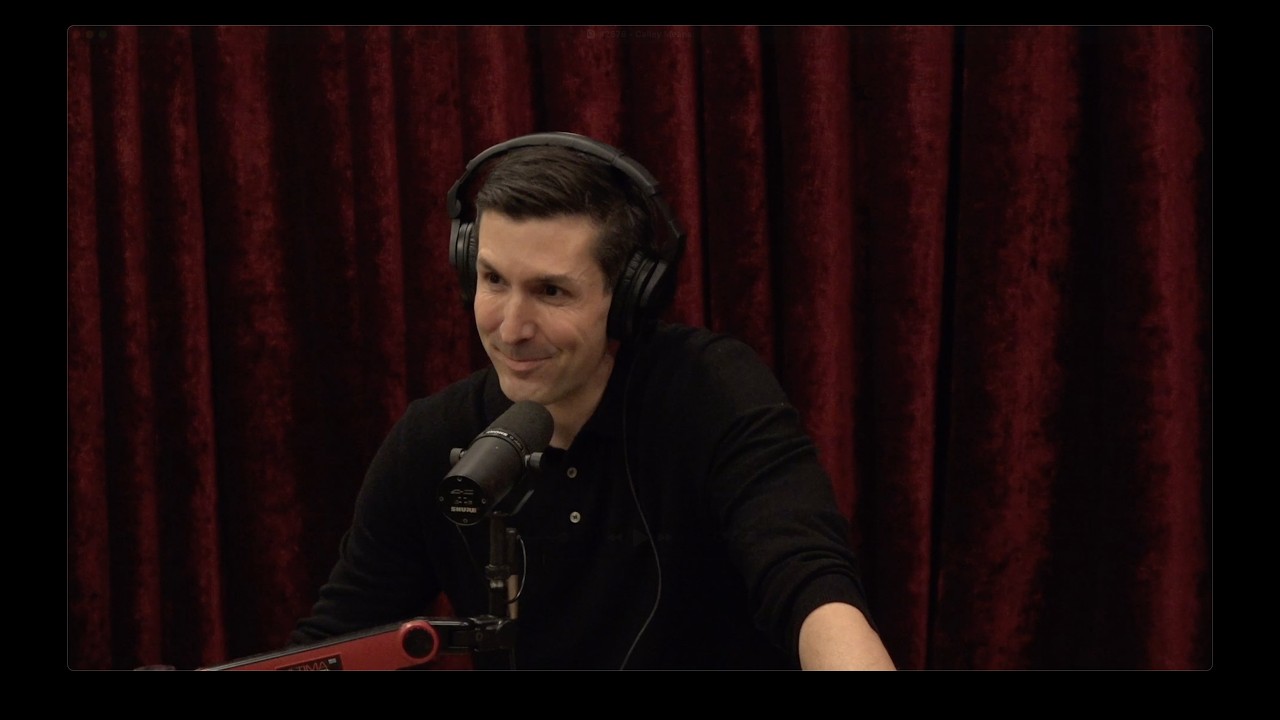
Published on YouTube by PowerfulJRE on November 6, 2026, this episode of The Joe Rogan Experience features Calley Means, a health advocate, co-founder of Truemed, and co-author of 'Good Energy.' According to the episode description, Means discusses his tenure as a former senior advisor to the United States Department of Health and Human Services working to implement the Make America Healthy Again (MAHA) agenda.
## TL;DR
Calley Means details his resignation from the Trump administration's Make America Healthy Again (MAHA) initiative, revealing how promised public health reforms were systematically undermined by internal political operatives and corporate lobbyists. He exposes White House maneuvers that favored food, chemical, and pharmaceutical conglomerates, including efforts to grant Bayer legal immunity for glyphosate, fast-track flavored e-cigarettes, abandon post-market vaccine safety trials, and block a federal definition for ultra-processed foods. Means emphasizes that top strategists like Chief of Staff Susie Wiles prioritized corporate midterm fundraising over child metabolic health and school lunch reform. Ultimately, he argues that regulatory agencies and Congress are fundamentally captured by special interests, requiring systemic structural overhauls rather than traditional partisan politics.
## Atmosphere & style
The conversation carries an urgent, somber, and disillusioned tone as Calley Means delivers an insider whistleblower account, moving from the electric optimism of the early transition to bitter betrayal by entrenched political operatives. Joe Rogan reacts with palpable shock and indignation, frequently interjecting to validate Means's claims with his own experiences encountering West Wing gatekeeping and bureaucratic sabotage. The dynamic balances intense moral frustration over skyrocketing rates of pediatric chronic illness with a forensic, clear-eyed exposure of corporate lobbying networks, giving the exchange a tense, revelatory weight.
## Bulletin
- [00:01](https://www.youtube.com/watch?v=dMBBOawFy_4&t=1s) Calley Means resigned as senior advisor to HHS, alleging that an inner circle of lobbyists and operatives—including Chief of Staff Susie Wiles, James Blair, and Tony Fabrizio—systematically sabotaged the Make America Healthy Again (MAHA) agenda to protect corporate donors and midterm fundraising.
- [26:09](https://www.youtube.com/watch?v=dMBBOawFy_4&t=1569s) The White House crafted an executive order declaring domestic glyphosate supply a matter of national security, shielding Bayer from billions in cancer litigation by citing munitions supply pretexts and barring internal objections from Robert F. Kennedy Jr.
- [01:33:58](https://www.youtube.com/watch?v=dMBBOawFy_4&t=5638s) FDA leadership faced intense West Wing pressure over corporate priorities: Dr. Marty Makary was ousted after resisting demands to fast-track fruit-flavored e-cigarettes and mandate safety trials for Moderna and Pfizer vaccines.
- [02:12:08](https://www.youtube.com/watch?v=dMBBOawFy_4&t=7928s) Critical food transparency and metabolic health reforms were suppressed, including a non-regulatory federal definition of ultra-processed foods (UPFs) and restrictions on sugary foods in school breakfasts and the $8 billion SNAP soda subsidy.
## Key takeaways
- [00:01](https://www.youtube.com/watch?v=dMBBOawFy_4&t=1s) Calley Means resigned from his White House advisory role after concluding that a concentrated group of political operatives actively undercut populist health reforms to enrich corporate interests.
- [04:08](https://www.youtube.com/watch?v=dMBBOawFy_4&t=248s) Chief of Staff Susie Wiles concentrated executive power and favored corporate lobbying networks, including Ballard Partners and Continental Strategies, over reform mandates.
- [06:19](https://www.youtube.com/watch?v=dMBBOawFy_4&t=379s) Chief pollster Tony Fabrizio acted as an internal policy gatekeeper while simultaneously retained by major corporate clients, repeatedly vetoing health initiatives as politically expendable.
- [22:15](https://www.youtube.com/watch?v=dMBBOawFy_4&t=1335s) American children suffer unprecedented rates of chronic illness and metabolic dysfunction while consuming 20% of the world's glyphosate despite representing only 4% of the global population.
- [26:09](https://www.youtube.com/watch?v=dMBBOawFy_4&t=1569s) The administration used a national defense and munitions pretext in a draft executive order to preempt EPA reviews and grant Bayer legal immunity from cancer lawsuits.
- [40:37](https://www.youtube.com/watch?v=dMBBOawFy_4&t=2437s) The Department of Justice filed an amicus brief supporting Bayer's liability shield before the Supreme Court without President Trump's direct knowledge or approval.
- [45:20](https://www.youtube.com/watch?v=dMBBOawFy_4&t=2720s) Means argues that genuine free markets do not exist in healthcare or agriculture due to regulatory capture, leaving product liability lawsuits as one of the few remaining market checks.
- [50:26](https://www.youtube.com/watch?v=dMBBOawFy_4&t=3026s) The 17th Amendment and modern campaign finance force lawmakers to spend up to 90% of their working hours fundraising, leaving Congress incapable of challenging corporate lobbies.
- [52:08](https://www.youtube.com/watch?v=dMBBOawFy_4&t=3128s) Means advocates for an incoming populist president to condition all legislative signatures on passing a single-page constitutional amendment banning corporate and union political spending.
- [01:17:32](https://www.youtube.com/watch?v=dMBBOawFy_4&t=4652s) Career agency personnel and gatekeepers utilized bureaucratic delay tactics and procedural resistance to block outside health directives, including clinical psychedelic therapies.
- [01:29:46](https://www.youtube.com/watch?v=dMBBOawFy_4&t=5386s) White House staff prioritized expediting fruit-flavored e-cigarette approvals over food safety reforms, justifying the move as a midterm campaign strategy to court young male voters.
- [01:33:58](https://www.youtube.com/watch?v=dMBBOawFy_4&t=5638s) Dr. Marty Makary was pushed out as FDA Commissioner after resisting political pressure to bypass pediatric safety reviews for flavored vapes and demanding rigorous clinical trials for mRNA vaccines.
- [01:47:33](https://www.youtube.com/watch?v=dMBBOawFy_4&t=6453s) The administration dramatically raised allowable concentration thresholds for retail 7-hydroxymitragynine (7-OH), expanding sales of potent opioid-like extracts in convenience stores.
- [01:57:43](https://www.youtube.com/watch?v=dMBBOawFy_4&t=7063s) A non-regulatory child food safety campaign and a 60 Minutes segment were abruptly canceled by Susie Wiles to avoid alienating sugar industry midterm donors.
- [02:05:46](https://www.youtube.com/watch?v=dMBBOawFy_4&t=7546s) Following the departure of Makary and Vinay Prasad, FDA regulators quietly dropped required post-market clinical safety and efficacy trials for Pfizer's COVID-19 vaccine.
- [02:09:18](https://www.youtube.com/watch?v=dMBBOawFy_4&t=7758s) The Affordable Care Act reinforced structural dysfunction by pegging private insurer margins to aggregate expenditures, driving massive premium hikes and healthcare spending reaching 25% of GDP.
- [02:12:08](https://www.youtube.com/watch?v=dMBBOawFy_4&t=7928s) Means chose to resign after food industry lobbyists intervened with West Wing leadership to kill a scientific, non-regulatory definition of ultra-processed foods backed by major medical associations.
- [02:15:17](https://www.youtube.com/watch?v=dMBBOawFy_4&t=8117s) Federal school breakfast programs continue to spend billions funding donuts and sugary pastries while food processors actively lobby against basic whole-food protein standards.
## Detailed walkthrough
### [00:01](https://www.youtube.com/watch?v=dMBBOawFy_4&t=1s) Resignation and the Broken Promise of MAHA
Joe Rogan opens the conversation welcoming Calley Means back, who immediately reveals that he has just recently resigned from his position as a senior advisor in the White House leading the implementation of the Make America Healthy Again (MAHA) agenda. Looking back to when Robert F. Kennedy Jr. aligned with Donald Trump, Means explains that he viewed that partnership as one of the greatest political miracles in history—a rare moment showing genuine animation between a Democrat and a Republican united to confront entrenched special interests and drain the Washington swamp. Means dropped everything he was doing to join the administration, operating under the realist understanding that politics moves in only two ways: through the money of special interests, or through immense public pressure and public shame.
Means details that while early health victories did occur, every single breakthrough required intense outside public outrage to circumvent internal roadblocks. For instance, administrative efforts to reform psychedelic medicine were being completely stalled by directives from the top until Joe Rogan personally contacted Trump; Trump immediately reacted by ordering staff to get the directive onto his desk within a week, smashing through bureaucratic delays. Similar strategies had to be mobilized to push dietary guidelines and eliminate toxic food dyes. Yet Means ultimately resigned because a concentrated, antagonistic inner circle inside the administration actively undercut the policies voters demanded, operating instead to enrich themselves and their families. As Means states:
> “The simple reality and why I left is that there is a very concentrated group of people in the Trump administration that are antagonistic to what people voted for and are frankly, I think it's very clear, doing things for other reasons, particularly in many cases to enrich their families.”
- Things in Washington typically advance via special interest financing—the reason the United States spends three times more than other countries on healthcare while housing and living costs skyrocket.
- The MAHA voter coalition proved that regular citizens deeply care about chronic disease, creating enough external pressure to force through early wins like food dye removals.
[02:46](https://www.youtube.com/watch?v=dMBBOawFy_4&t=166s) The Illusion of an Historic Presidency
Reflecting on the hopeful atmosphere during the transition and initial days in office, Rogan notes how intoxicating the momentum had seemed to observers who were eager to see Kennedy tackle food additives, peptides, stem cell access, and psychedelics. Means confirms that the enthusiasm inside the building on day one was unlike anything he had ever witnessed. Officials genuinely believed they were participating in an administration that would eclipse George Washington's in historical significance, convinced they possessed an unstoppable mandate to implement structural reforms.
That early optimism soon evaporated as centralized gatekeeping froze substantive policy. Means describes how the internal climate rapidly shifted from a revolutionary sense of purpose to profound disillusionment as political operatives took command of the administrative machinery. As Means recalls:
> “I cannot express to you how electric it felt in there in the early days.”
[04:08](https://www.youtube.com/watch?v=dMBBOawFy_4&t=248s) The Susie Wiles Power Center and Corporate Lobbying Ties
Addressing the mechanics of how the administration derailed, Means describes an unprecedented consolidation of executive power within the Chief of Staff's office. He characterizes Chief of Staff Susie Wiles as the most powerful chief of staff in modern American history, maintaining a complete stranglehold over all policy choices to the extent that cabinet secretaries spent their meetings maneuvering to secure her favor. Means reviews the background of Wiles and her core circle, noting that before entering the White House, she spent her career as a high-priced lobbyist representing foreign leaders like Benjamin Netanyahu alongside powerful pharmaceutical and pesticide corporations.
```mermaid
flowchart TD
accTitle: White House Policy Funnel Under Susie Wiles
accDescr: Diagram illustrating how policy proposals are controlled by Susie Wiles and her circle of political advisors and lobbyists before reaching the President.
subgraph Internal["Chief of Staff Control Hub"]
SW["Susie Wiles<br/>(Chief of Staff)"]
JB["James Blair<br/>(Political Operations / Midterms)"]
WB["Walker Barrett<br/>(Senior Deputy)"]
RW["Richard Walters<br/>(Former Lobbyist / Acting CoS)"]
end
CAB["Cabinet Secretaries & MAHA Policy Initiatives"] --> SW
TF -->|"Polling Analysis: 'Juice not worth the squeeze'"| SW
SW -->|"Veto or Stutter"| POTUS["Executive Action / Donald Trump"]
CS -.->|"Prioritized Access"| SW
```
Means identifies the specific lieutenants who formed this nucleus of control: James Blair, a longtime Florida political consultant with deep ties to the sugar industry who ran political operations; Walker Barrett, a former congressional staffer and Florida neighbor of Wiles; and Richard Walters, a veteran fundraiser and lobbyist for the pesticide and pharmaceutical sectors who effectively ran the country as acting chief of staff while Wiles was away receiving cancer treatment. Campaign co-manager Chris LaCivita also wielded massive sway from the outside as a corporate consultant. As Means summarizes:
> “Susie Wiles, her career has been taking money from the industries and foreign governments who would pay her the most money.”
- James Blair transitioned out of the White House to steer midterm election operations, merging the long-term electoral strategy directly into daily policy decisions.
- Richard Walters came out of a lobbying shop representing pharmaceutical and pesticide firms, exercising near-total executive authority while Wiles underwent cancer therapies.
[06:19](https://www.youtube.com/watch?v=dMBBOawFy_4&t=379s) Sabotaging MAHA: Tony Fabrizio and Influence Peddling
Means zeroes in on Donald Trump's chief pollster, Tony Fabrizio, who maintained an outside consulting business while functioning as the ultimate gatekeeper for policy feasibility inside the administration. Every executive action was filtered through Fabrizio's political viability metrics, despite the fact that Fabrizio was simultaneously on the payroll of PepsiCo, major pharmaceutical firms, and other corporate food conglomerates. When the MAHA team attempted to pass basic school lunch reforms and create a formal federal definition for ultra-processed food—which makes up 70% of the American child's diet and was supported by roughly 90% of the electorate—Fabrizio dismissed the initiative, arguing politically that "the juice isn't worth the squeeze."
Meanwhile, a culture of influence-peddling grew around the West Wing. Means points to Continental Strategies, a lobbying firm where Susie Wiles' daughter worked. Prior to the Trump administration, the firm brought in negligible earnings, but its revenues skyrocketed to roughly $30 million a year once Wiles took power. Means recounts that it was an openly acknowledged reality within the building that corporate interests seeking fast-tracked access and high-priority status knew they needed to hire Wiles' daughter's firm. A parallel pattern of revolving-door lobbying access also surrounded the family of Chris LaCivita.
- Fabrizio actively accepted corporate retainers from PepsiCo and Big Pharma while assessing whether to approve administration actions regulating ultra-processed foods.
- Continental Strategies saw its revenue soar from nearly zero to roughly $30 million annually after Susie Wiles' daughter joined the firm during the administration.
[09:28](https://www.youtube.com/watch?v=dMBBOawFy_4&t=568s) Ballard Partners and the DC Influence Industry
Calley Means details the meteoric rise of Ballard Partners, describing how the lobbying firm became an unprecedented financial powerhouse tied directly to key political figures surrounding Donald Trump. Susie Wiles worked at Ballard Partners, and Means explains that inside Washington, it is an open secret: if an interest group hires Ballard, they secure direct access to Susie to get their policy goals executed. While public filings show Ballard bringing in $98 million, Means points out that any experienced lobbyist knows reported figures are merely a "down payment." The primary function of such a firm is advising corporate and foreign clients on how to route capital into downstream dark-money networks, suggesting the real financial footprint carries roughly a tenfold multiple.
Means emphasizes that Ballard has generated more revenue than any other lobbying firm in American history, transforming middle-tier influence into the ultimate gatekeeper apparatus. When Joe Rogan asks whether this type of operation is considered normal, Means stresses that this revolving door has been the standard operating procedure in Washington for over thirty years. However, he distinguishes between systemic rot and Trump himself: Means believes Trump is largely unaware of these specific machinations, as he cannot oversee everything at once. The tragic irony, Means argues, is that the administration has been thoroughly co-opted by the exact swamp figures Donald Trump mobilized millions of working-class voters to throw out of power.
```mermaid
flowchart TD
accTitle: The Washington Lobbying Influence Flow
accDescr: Diagram illustrating how corporate clients route funds through dominant lobbying firms into policy access and dark money.
subgraph Corporate ["Corporate & Foreign Clients"]
C1["Special Interests / Corporations"]
end
- Ballard Partners reported $98 million in lobbying revenue, making it the highest revenue-generating lobbying firm in U.S. history.
- The publicly reported figures represent only a fraction of the total cash flow, serving as an advisory springboard to shift capital through dark-money groups by an estimated 10x factor.
- Means spoke directly to prominent lobbyist colleagues who admitted the system is deeply corrupt, but they resigned themselves to continuing because "it's the game" and supports lucrative careers.
- “It is impossible to describe to you how demonic this culture is,” Means tells Rogan regarding the Washington lobbying industry.
---
[12:06](https://www.youtube.com/watch?v=dMBBOawFy_4&t=726s) The Bipartisan Shell Game and the Abandonment of MAHA
Means broadens his critique to show that influence peddling is entirely nonpartisan. He cites Senate Majority Leader Chuck Schumer speaking directly to hospital lobbyists, assuring them that leadership had their backs. Whether looking at Schumer or Hakeem Jeffries, senior congressional staffers routinely leave government to establish lucrative boutique firms, prompting major corporations to instantly reallocate their lobbying budgets toward those newly connected operatives. In Means’ view, Congress has not passed a single piece of meaningful legislation in twenty years that truly took on entrenched special interests; instead, both parties perpetuate a shell game while the public is distracted by partisan bickering.
This corporate capture directly derailed the Make America Healthy Again (MAHA) agenda. Means recounts pitching an initiative for healthier, additive-free school lunches to Trump’s chief pollster and strategist, Tony Fabrizio. Means pointed out that Trump had galvanized a vast new base by partnering with Robert F. Kennedy Jr. and that Rogan’s vast audience was deeply invested in reforming childhood nutrition, even if processed food corporations opposed it. Fabrizio completely dismissed the suggestion, explicitly informing Means that healthy school meals, taking on corporate food giants, and the broader MAHA movement were simply not part of the administration's political strategy.
- Major corporations shift their lobbying budgets overnight whenever top staffers for leaders like Chuck Schumer or Hakeem Jeffries transition to K Street.
- In twenty years, Congress has failed to pass significant legislation curbing the dominance of corporate special interests.
- Despite Trump’s campaign alliance with RFK Jr., senior strategists actively sidelined children's health, pesticide crackdowns, and food system reforms in backroom discussions.
- “At the end of the day debating partisan politics or having the delusion that this is a Trump problem or a Democratic problem... this is a structural problem,” Means emphasizes.
---
[14:07](https://www.youtube.com/watch?v=dMBBOawFy_4&t=847s) Midterm Strategy: Gerrymandering, Money, and Gimmicks
When Rogan asks what the administration's political team viewed as their actual strategy if not the issues that energized their coalition, Means reveals that top operatives like Susie Wiles, James Blair, and Tony Fabrizio were fixated entirely on midterms, redistricting, and financial donor preservation. Rather than delivering on broad populism, the inner circle pursued a surgical redistricting strategy—gerrymandering state maps to tilt congressional races toward Republicans. Because their background was steeped in corporate lobbying for clients such as Pepsi, their mental model held that election outcomes are purely transactional and dictated by campaign war chests.
Wiles repeatedly told Means, "We need money for the midterms, Calley," using campaign fundraising targets to justify caving to food and pharmaceutical lobbyists. Fabrizio produced internal polling claiming voters do not care about toxic pesticides, chronic disease, or standing up to Big Pharma. In a cabinet-level briefing, Wiles hailed Fabrizio as the smartest strategist in the room, laying out a messaging platform built on incremental gimmicks: "no tax on tips," small affordability talking points, extending provisions from the previous tax cuts, and narrowly targeted drug price negotiations. Means counters that polling from Pew, CNBC, and Fox News consistently shows that Americans across the spectrum view political corruption as the country's paramount crisis. In Means' eyes, Donald Trump survived an assassination attempt and built a movement to enact deep structural reform, not to settle for focus-grouped campaign stunts.
- Strategists James Blair, Tony Fabrizio, and Susie Wiles focused their midterm blueprint almost exclusively on gerrymandering and raw fundraising rather than populist policy delivery.
- Fabrizio's internal polling was weaponized to argue that the public was indifferent to corporate farming practices, food ingredients, and pharmaceutical corruption.
- National surveys from Fox News, Pew Research, and CNBC show the public identifies money in politics and systemic corruption as the nation's single greatest issue.
- “Susie said to me many times, ‘We need money for the midterms, Calley. We need money for the midterms,’” Means recalls, illustrating how fundraising superseded reform.
[19:09](https://www.youtube.com/watch?v=dMBBOawFy_4&t=1149s) The "Tallahassee Lobbyists" and Centralized Control under Susie Wiles
Joe Rogan asks Calley Means whether Donald Trump was simply duped or overwhelmed when staffing his administration. Rogan points out that in Trump’s first term back in 2016, his pledge to "drain the swamp" backfired because he brought the swamp into the government to execute it. In the second administration, Trump was supposed to have learned from those mistakes, but Rogan wonders if managing more than a hundred key positions makes it impossible for any president to personally review every candidate's background, plans, and financial conflicts of interest. Means responds that while there are exceptional cabinet secretaries who genuinely want to aggressively reform the system—highlighting Robert F. Kennedy Jr. as a hero—those officials find themselves exasperated by deep lobbying dynamics and an iron-fisted, centralized control run by Chief of Staff Susie Wiles.
Means explains that Wiles earned a reputation during the presidential campaign as a steady hand and the supposed "adult in the room." That competence secured her the Chief of Staff role, after which she brought in a circle of figures on her personal recommendation. Means acknowledges being initially enthusiastic about working alongside her, Kennedy, and the team to pass the Make America Healthy Again (MAHA) agenda. However, he stresses that the resulting paralysis represents a broader rot in American governance rather than a flaw unique to Trump. Addressing the influence of special interests, Calley Means bluntly observes: “Americans did not vote to have a group of lobbyists from Tallahassee be slowing down every policy that people voted for.”
---
[22:15](https://www.youtube.com/watch?v=dMBBOawFy_4&t=1335s) The American Children's Health Crisis and the Chemical Addiction
Rogan asks Means how this friction first surfaced inside the White House, prompting Means to break down the battle over glyphosate. Rogan notes that when RFK Jr. appeared on the podcast, he seemed visibly dejected when recounting how their health initiatives were blocked. Means sets the stage by outlining the catastrophic state of pediatric health in the United States, pointing out that American children are currently the sickest in the developed world. Kids are entering puberty two to three years earlier than they did fifty years ago—a trend *The New York Times* covered while claiming nobody knows the underlying cause. The country leads the world in pediatric cancer, autoimmune conditions, hormone imbalances, and type 2 diabetes.
Means argues that agricultural chemicals sprayed across the food supply are a direct driver of this epidemic. Despite accounting for only 4% of the global population, the United States consumes roughly 20% of the world’s glyphosate, herbicides, and pesticides. This addiction is fueled by broken economic incentives: Americans spend roughly half as much of their national income on food as Europeans do, yet spend three times as much on healthcare. Despite intense industry pushback, public sentiment is overwhelmingly unified behind reform. Polling by Tony Fabrizio showed that 92% of Republicans favor regulating pesticides, and Trump explicitly promised during his endorsement ceremony with Kennedy that his administration would clean up toxic chemicals on farms.
```mermaid
flowchart TD
accTitle: Structural Imbalance in US Agriculture and Health
accDescr: Diagram showing how chemical inputs drive cheap food production, leading to high disease rates and massive healthcare expenditures.
subgraph Inputs["Chemical Addiction"]
POP["US: 4% of Global Population"] --> USAGE["Consumes 20% of Global Glyphosate & Herbicides"]
end
subgraph Incentives["Economic Distortions"]
USAGE --> FOOD["Cheap, Chemically Riddled Food<br>(Half the Income Spent vs. Europe)"]
end
subgraph Outcomes["Public Health & Costs"]
FOOD --> SICK["World's Highest Pediatric Disease Rates<br>(Early Puberty, Cancer, Autoimmune)"]
SICK --> CARE["3x Higher Healthcare Spending vs. Europe"]
end
```
- American girls and boys are hitting puberty 2 to 3 years younger than children did five decades ago.
- The United States accounts for 4% of global population but approximately 20% of global glyphosate and herbicide use.
- According to polling by Tony Fabrizio, 92% of Republicans support regulating agricultural pesticides.
---
[24:03](https://www.youtube.com/watch?v=dMBBOawFy_4&t=1443s) The Battle Over the MAHA Report and Suppressed EPA Science
The earliest warning sign within the administration appeared during the drafting of the initial MAHA report, which was intended simply to catalog the issues Trump had publicly pledged to investigate. Means explains that merely trying to get the word "glyphosate" into the text triggered an explosive, almost violent backlash from industry lobbyists. Major agricultural chemical firms flooded Susie Wiles and other White House officials with phone calls to scrub any mention of the herbicide, treating even the acknowledgment that it might pose a health risk as an existential threat. Means recalls: “It was the greatest fight I've ever experienced up to that time in my life to have the word glyphosate in that report and the amount of almost violent reaction against that from industry, calls to Susie, calls to everyone to have that or not even have it in the report, not even have a government report mention that this could potentially be a problem was the biggest policy battle I had seen up to that time.”
Means underscores that the Environmental Protection Agency has not performed a legitimate evaluation of glyphosate in nearly thirty years, maintaining an official stance that it is non-carcinogenic. Five years prior, when an EPA review was scheduled to reaffirm that finding, litigation unsealed internal records revealing that Bayer—which acquired Monsanto, the original manufacturer of Roundup—had ghostwritten scientific research for the agency and improperly influenced EPA officials, forcing the review to be thrown out. Despite running public relations campaigns that brand themselves as defenders of science while attacking Kennedy as a peddler of misinformation, agrochemical giants exert massive pressure across Capitol Hill. Bipartisan senators representing agricultural states routinely threaten to slash appropriations for the National Institutes of Health if researchers attempt to study the health impacts of glyphosate, successfully freezing federal inquiry for decades.
---
[26:09](https://www.youtube.com/watch?v=dMBBOawFy_4&t=1569s) Bayer's Pursuit of Immunity and the National Security Executive Order
Because billions of dollars in legal settlements have established in court that glyphosate causes cancer, Bayer faced an existential financial crisis. To shield itself, the company launched a nationwide legislative strategy to secure blanket legal immunity, aiming to make glyphosate only the second product in American history—after vaccines—protected from consumer product-liability lawsuits. When deep-red agricultural state legislatures rejected the immunity bills, lobbyists tried and failed to quietly slip the protections into the federal Farm Bill, blocked by a grassroots MAHA revolt among conservative voters. Aware of the political landmines, Means had already spoken with Wiles’s staff and USDA leadership, warning that any administration intervention on behalf of a chemical proven to cause childhood cancer would be a catastrophic political mistake, and received assurances that the White House would stay out of it.
That consensus evaporated without warning when Means was summoned into a room with Walker Barrett, a key operative working under Susie Wiles. Barrett slapped a draft executive order onto the desk, told Means to review it, and revealed an order declaring domestic glyphosate supply a vital matter of national security while granting the manufacturer defense-related liability protections. When Means protested that neither the Secretary of War nor military generals viewed pesticide application on farmland as a national security emergency, Barrett shut down the pushback immediately, declaring the document final and ordering Means to tell Kennedy not to contact the president or raise objections. Wiles promptly called Kennedy's office to enforce the blackout, and the order was publicly announced the very next day. At the same time, the administration began moving to intervene in a pending Supreme Court petition on glyphosate liability that the court had previously been unlikely to take.
- Bayer sought state and federal liability shields to stop multi-billion-dollar cancer verdicts, seeking immunity similar to that granted to vaccines.
- Grassroots conservative opposition defeated industry immunity language in both state legislatures and the federal Farm Bill.
- Walker Barrett presented the glyphosate executive order as non-negotiable: “This is final. It's national security. It's coming out tomorrow with other people in the room.”
[29:41](https://www.youtube.com/watch?v=dMBBOawFy_4&t=1781s) Backroom DOJ Maneuvers and Supreme Court Immunity for Bayer
Calley Means details how pesticide manufacturers secured liability protection before the Supreme Court through quiet administrative maneuvering inside the Department of Justice. When the Solicitor General's office decides whether to weigh in on a petition for certiorari, its recommendation carries massive weight in determining whether the Supreme Court agrees to hear the case. While the Biden administration had previously declined to urge the Court to intervene, appointees inside the current administration reversed course. Means explains that Heidi Overton, an ally of Susie Wiles who was positioned for the FDA Commissioner role, worked with the Department of Justice to construct a legal rationale supporting liability immunity for pesticide manufacturers—specifically bypassing Robert F. Kennedy Jr. entirely.
To push the brief across the finish line, the Department of Justice brought attorney Sarah Harris into the Solicitor General's office. Harris came directly from the primary law firm representing Bayer. She authored an opinion advising the Supreme Court to take the case and grant liability protection to Bayer, shielding the makers of glyphosate from consumer cancer lawsuits. Means emphasizes that this entire process circumvented standard internal policy review and excluded Kennedy. Joe Rogan expresses disbelief that a chemical known to cause cancer could be granted federal liability shielding, calling it indefensible that an entire food system relies on poison that other nations refuse to use.
```mermaid
flowchart TD
accTitle: Internal DOJ Pipeline for Bayer Liability Shielding
accDescr: Diagram illustrating how Bayer's legal interests bypassed Robert F. Kennedy Jr. to obtain Supreme Court liability protection.
subgraph Staffing ["Administrative Pipeline"]
A["Heidi Overton (Wiles Ally / FDA Pick)"] --> B["Coordinates with DOJ on Legal Strategy"]
C["Sarah Harris (Recruited from Bayer Law Firm)"] --> D["Solicitor General's Office"]
end
subgraph Action ["Execution & Exclusion"]
B & D --> E["Drafts Amicus Brief Backing Bayer Immunity"]
E --> F["Completely Bypasses RFK Jr. & MAHA Team"]
end
subgraph Outcome ["Judicial Result"]
F --> G["DOJ Urges Supreme Court to Intervene"]
G --> H["Supreme Court Grants Liability Protection"]
end
```
- When the Solicitor General recommends that the Supreme Court take up a case, the Court heavily defers to that guidance.
- Sarah Harris transitioned directly from Bayer's primary outside defense firm into the Solicitor General's office to write the critical brief.
- The policy process excluded Robert F. Kennedy Jr. and his health advisory team from reviewing or contesting the decision.
- The Supreme Court ultimately sided with the petition, granting pesticide manufacturers the requested liability shielding.
---
[31:31](https://www.youtube.com/watch?v=dMBBOawFy_4&t=1891s) Glyphosate, Free Market Recourse, and Arden Allison
Means clarifies that his stance was never about abruptly demanding an immediate overnight ban on glyphosate, acknowledging the complex, interconnected reality of American agriculture, where 99% of corn and 98% of soybeans are sprayed with it, alongside widespread use on wheat crops for post-harvest desiccation. Instead, Means frames the issue around fundamental free-market principles: if a company produces a chemical that inflicts negative externalities and bodily harm, citizens must retain the legal right to sue for damages. Removing that legal recourse turns glyphosate into only the second product category in modern American history—after vaccines—to enjoy broad legal immunity, stripping everyday citizens and mothers of cancer patients of their day in court.
Rogan brings up the viral case of Arden Allison, a Tennessee teenager who was accidentally drenched in glyphosate while working on a cell tower maintenance crew. Months after the direct chemical exposure, Allison developed an aggressive, massive neck tumor diagnosed as one of the most severe cases of Hodgkin lymphoma his oncologists had ever encountered. The dramatic swelling on the side of his face was initially dismissed by internet skeptics as prosthetic makeup or artificial intelligence, but it led Allison and his mother to become fierce public anti-poison advocates. Means adds that this crisis is not isolated; agricultural states like Iowa and Kentucky now suffer from the highest cancer rates of any geographic location in human history, yet chemical manufacturers managed to secure immunity immediately after funneling vast sums of lobbying money to Ballard Partners.
> “And by cutting that out, it’s actually an assault on the market because I was actually happy with that’s happening. The MAHA is putting pressure on glyphosate. There’s lawsuits which is appropriate and they’re going to invest and they’re going to figure out something different.” — Calley Means
- Approximately 99% of American corn and 98% of soybeans are sprayed with glyphosate, with heavy usage also applied to dry wheat prior to harvest.
- Glyphosate stands as the only product besides vaccines to be granted federal liability shielding from consumer harm.
- Arden Allison developed a severe case of Hodgkin lymphoma after an industrial spill on a cell tower job, leaving him with an enormous tumor.
- Iowa and Kentucky have recorded some of the highest baseline cancer rates globally, heavily concentrated around intense agricultural chemical spraying.
- High-priced lobbying firms like Ballard Partners were retained by corporate chemical clients throughout the policy process.
---
[35:14](https://www.youtube.com/watch?v=dMBBOawFy_4&t=2114s) Trump’s Blindspot and the Unelected Bureaucracy
Means reveals that President Donald Trump was entirely unaware that his own Department of Justice had backed Bayer's liability protection before the Supreme Court. During a private meeting with Trump, Kennedy, Means, and a regenerative farmer, the farmer raised the Supreme Court's ruling. Trump was blindsided, reacting with genuine anger, questioning how such a terrible decision could have occurred, and expressing total shock that his DOJ had filed in support of it. Means explains that while Trump's personal instincts on health issues are naturally aggressive, political operatives surrounding him—including Susie Wiles and pollster Tony Fabrizio, who took money from pharmaceutical companies—frequently manage him, suppress inquiries, and run major policy decisions behind his back.
Rogan and Means discuss the deep subversion of representative democracy represented by unelected gatekeepers pushing corporate immunity through the courts without public or presidential awareness. Means estimates that if the issue of giving chemical manufacturers immunity from cancer lawsuits were put to a nationwide popular vote, at least 95% of Americans across all political parties would reject it. Rogan questions the sanity of believing the world's greatest nation cannot feed itself without dousing its soil in poison, pointing out that humanity grew food sustainably for millennia before chemical conglomerates hijacked agricultural policy.
> “President Trump reacted to the Supreme Court decision saying, ‘It’s a terrible idea. How the hell did this happen?’ and had no idea the Department of Justice—” — Calley Means
> “It is just extraordinary to me that people who were not elected can have that kind of power where they can push something through the Supreme Court where the president doesn’t even know about it.” — Joe Rogan
- When informed by a regenerative farmer about the Supreme Court ruling, Trump immediately called it a “terrible decision” and had no knowledge of DOJ involvement.
- Pollster Tony Fabrizio accepted money from pharmaceutical interests and generated polling data used by Susie Wiles's circle to halt federal vaccine inquiries for a year.
- Wiles's staff explicitly presented the DOJ's pesticide liability brief as a non-negotiable fait accompli, telling Means it was not open for discussion.
- Both speakers assert that over 95% of the American voting public opposes granting corporate immunity to pesticide producers.
[40:37](https://www.youtube.com/watch?v=dMBBOawFy_4&t=2437s) The DOJ Memo and EPA Preemption at the Supreme Court
Calley Means explains the legal mechanisms that allowed the federal government to intervene on behalf of pesticide manufacturers facing liability lawsuits over glyphosate. Joe Rogan questions why the Supreme Court would agree to strip away consumers' rights to sue chemical companies. Calley clarifies that the case hinged on a rigged statutory framework asserting the Environmental Protection Agency (EPA) holds preeminent authority over chemical regulations. The Supreme Court relied on this standard of federal supremacy rather than evaluating whether the agency itself functions honestly. Calley emphasizes that it is not the court’s role to scrutinize how compromised the regulatory process is, noting that glyphosate has not undergone a legitimate, untainted review in thirty years because the previous review was discarded over ghostwritten research and bribery directed at EPA officials. Despite these glaring ethical breaches, a single bureaucrat within the Department of Justice drafted a memo urging the Supreme Court to take up the case and establish federal preemption over state-level failure-to-warn claims.
“The Supreme Court went by the law which mentions that EPA should be the dominant force and not and it's not really the Supreme Court's job to note that the EPA is rigged to the point that glyphosate hasn't been reviewed in 30 years and last review was thrown out for ghostwritten research and bribery to EPA officials.”
[41:33](https://www.youtube.com/watch?v=dMBBOawFy_4&t=2493s) The Multi-Billion Dollar Glyphosate Monopoly
Curious about the scale of the financial interests at stake, Joe asks Jamie Vernon to look up the total annual spending on glyphosate and Roundup in the United States using Perplexity. While Jamie searches, Calley underscores that regardless of the exact commercial tally, modern industrial agriculture remains thoroughly dependent on the chemical. Around 99% of all domestic corn and soybeans are genetically modified specifically to resist glyphosate, allowing farmers to drive across entire fields spraying herbicide that eradicates every living weed while leaving the modified crop unharmed.
Jamie pulls up global market estimates indicating that worldwide annual expenditures on glyphosate-based weed killers fall between $7 billion and $12.4 billion:
- **Global Market Insights:** Estimates the market at approximately $6.8 billion.
- **Industry Insight Reports:** Places annual spending around $9.3 billion.
- **Transparency Market Research:** Estimates the market at $12.4 billion.
[43:15](https://www.youtube.com/watch?v=dMBBOawFy_4&t=2595s) Agricultural Lobbying, Overrepresented Farm States, and the Iowa Backlash
Calley details how agrochemical giants protect their business model through aggressive lobbying and disproportionate political leverage. Top lobbying groups such as CropLife America pump massive amounts of cash into the political ecosystem, often retaining prominent revolving-door operatives like Richard Walters, whose former firm FSG Global was paid by CropLife right before he joined the administration as a de facto chief of staff. Furthermore, because the U.S. Constitution awards two senators to every state regardless of population, small rural farming states wield outsized power in Washington. Chemical conglomerates coordinate directly with these farm-state senators, convincing them that unrestricted pesticides and herbicides are vital to maintaining low crop prices and global competitiveness.
However, Calley points out that the grassroots reality on the ground is rapidly breaking away from corporate talking points. He cites his friend Zach Lane, who ran in the Republican gubernatorial primary in Iowa on a platform focused squarely on addressing the state's alarming cancer rates and contaminated runoff water. Water quality has become the single most pressing public concern in Iowa because agricultural chemical runoff has rendered local drinking water toxic. Notably, both Lane and the winning Democrat campaigned against shielding pesticide makers from liability:
“Like, farmers don't like cancer. And this is not banning anything. Like, again, I can't stress this enough. This is literally whether there should be a legal recourse.”
subgraph Industry ["Agrochemical Industry"]
A["CropLife & Ag Giants<br/>($7B–$12B Market)"]
B["K Street Lobbyists &<br/>Former Aides (FSG Global)"]
end
subgraph Washington ["Federal Influence"]
C["Overrepresented<br/>Farm State Senators"]
D["Compromised EPA<br/>(Ghostwritten Reviews)"]
E["DOJ Bureaucrats<br/>(Preemption Memos)"]
end
subgraph Legal ["Judicial Outcome"]
F["Supreme Court Preemption<br/>Blocks State Tort Lawsuits"]
end
A --> B
B --> C
B --> E
A --> D
D --> E
E --> F
C --> E
```
[45:20](https://www.youtube.com/watch?v=dMBBOawFy_4&t=2720s) The Illusion of Free Markets and the Threat of Political Backlash
Calley warns that the glyphosate shield is only one of thousands of identical conflicts across federal agencies where public welfare is subordinated to corporate payoffs. He cautions that conservative politicians are dangerously out of touch when they rely on twenty-year-old rhetoric defending the "free market," arguing that free markets simply do not exist in contemporary American healthcare, agriculture, or housing. Unless the party enacts real anti-corruption reforms that address these structural monopolies, frustrated voters will inevitably seek drastic alternatives and turn to socialists:
“Before you have a free market, you have to fix this structural problem. And it's actually what President Trump is saying is very similar to what the people on the left are saying to what AOC and them are saying.”
Calley argues that there is profound national unity on this issue across the political spectrum: everyday Americans on both the left and the right recognize that the federal apparatus is rigged against them, and they are tired of watching political gatekeepers subvert reform efforts.
[46:56](https://www.youtube.com/watch?v=dMBBOawFy_4&t=2816s) Top-Down Control in the White House and the Need for Systemic Reform
Joe expresses astonishment that a small circle of unelected gatekeepers within the White House can exert such sweeping control over national health policy. Calley directly attributes this atmosphere to Chief of Staff Susie Wiles and her immediate team, who have consolidated unprecedented top-down authority across the executive branch. He shares that his criticisms reflect the deep frustrations of numerous current cabinet secretaries and White House staffers. Calley doubts Donald Trump is fully aware of these backroom maneuvers, noting that the president was visibly blindsided when it was revealed that Wiles approved her top two deputies taking hundreds of thousands of dollars from foreign interests. Calley stresses that Trump still has a generational opportunity to confront systemic swamp corruption head-on, noting that public exposure and shame remain the most potent tools against an otherwise demonic corporate-political nexus.
When Joe asks whether replacing these individuals would fundamentally fix the government, Calley answers that staff changes alone are useless without sweeping structural overhauls. Merely swapping out personnel within an inherently corrupt machine only gaslights the public into false hope. Meaningful change requires strict statutory bans on foreign lobbying by government advisers and potentially a constitutional amendment to sever corporate money from the regulatory apparatus:
“Americans need to understand that if they are getting whipped up and excited about policy promises through our existing structure, they are being duped and gaslighted and lied to. We need to have systemic reform.”
[50:26](https://www.youtube.com/watch?v=dMBBOawFy_4&t=3026s) The Broken Legislature and the 17th Amendment
Calley Means reflects on the foundational philosophy of the United States, pointing out that the Federalist Papers were deeply skeptical of human nature and built upon the fundamental premise that human beings are inherently self-interested and prone to corruption. The framers engineered a complex system of checks and balances to restrain those impulses. Over time, however, the growth of the administrative state has overwhelmed those constitutional barriers. Calley argues that the framers would be stunned by how few structural updates and amendments have been enacted as the nation modernized, leaving Congress and the Senate utterly paralyzed and beholden to special interests.
When Joe Rogan asks why modern lawmakers are so fundamentally incapable of going against corporate lobbying, Calley pinpoints their daily schedule. “A senator spends 90% of their time fundraising,” Calley states. He argues that the passage of the Seventeenth Amendment during the populist era, which instituted the direct popular election of senators rather than appointment by state legislatures, turned out to be a structural disaster. Under the original design, state legislators acted as a buffer, but direct elections forced senators into an unending money race. Inside Washington, political operatives have convinced themselves that donor capital matters far more than voters. Calley recalls how senior political strategist Susie Wiles explicitly defended donor appeasement during campaign strategy talks, telling him plainly: “Calley, we can't do this. I need sugar money.”
```mermaid
flowchart TD
accTitle: The Senate Fundraising Trap
accDescr: Diagram contrasting the original appointment of senators with modern direct elections and donor capture.
subgraph OriginalSystem["Original Constitutional Framework"]
Voters1["Voters"] --> StateLeg["State Legislatures"]
StateLeg -->|"Appoint"| Sen1["U.S. Senators (Insulated Buffer)"]
end
subgraph ModernSystem["Seventeenth Amendment Framework"]
Voters2["Voters"] -.->|"Direct Vote"| Sen2["U.S. Senators"]
Donors["Corporate Donors & PACs"] -->|"90% of Schedule Spent Fundraising"| Sen2
Sen2 -->|"Dependent on Special Interests"| Policy["Stalled Reform / Policy Capture"]
end
```
[52:08](https://www.youtube.com/watch?v=dMBBOawFy_4&t=3128s) Bypassing Congress with a Single-Page Anti-Corruption Mandate
Calley rejects the conventional Washington wisdom that campaigns are won solely by raising the most money, observing that Donald Trump previously won elections while operating with significantly less cash than his opponents. Expecting Congress to reform itself is an exercise in self-delusion because sitting legislators will never vote to restrict their own funding mechanisms. Instead, meaningful structural reform must originate from an incoming president who runs on an unambiguous, mass-appeal populist platform to dismantle systemic corruption. Calley questions why Americans tolerate Super PACs or corporate giants like Bayer manipulating domestic policy when other developed nations ban outright corporate money in governance.
To break through compromised politicians, Calley envisions a completely bipartisan, single-page constitutional amendment targeting both corporate and union political spending equally. An incoming president must turn political corruption into their central campaign mandate, as polling consistently demonstrates it is the foremost concern across the American electorate. Once elected, the president would force the measure onto lawmakers on day one and grind Washington to a halt until it passes. Describing the necessary executive posture, Calley insists: “And I'm not signing a fucking bill until Congress passes this.” By wielding public shame and refusing to govern on standard legislative priorities, a popular president could force Congress to submit.
Joe Rogan breaks briefly for a personal endorsement of the OnX Hunt GPS navigation app. He highlights how the tool eliminates boundary guesswork for outdoor recreation, hunting, and real estate by delivering accurate property lines, landowner data, 3D and LiDAR mapping, and custom waypoints that function seamlessly off-grid without cell reception. He notes the newly added in-app real-time location sharing feature for hunting partners, urging listeners to prepare properly and use discount code `JRE` for 20% off their membership.
[55:43](https://www.youtube.com/watch?v=dMBBOawFy_4&t=3343s) The Lobbying Machine vs. School Lunches and MAHA
Returning to the discussion, Rogan observes that average voters have almost no comprehension of how deeply entrenched Washington's money web truly is. Most citizens cling to romantic, idealistic narratives about their chosen political parties and view campaign finance reform as a vague aspiration, entirely underestimating the violent institutional pushback any president would face if they attempted to shut down the lobbying gravy train. Rogan emphasizes that the moment an outsider threatens to disrupt that pipeline of capital, the entire bipartisan ecosystem mobilizes to protect its livelihood.
Calley agrees, noting that his strategy with the Make America Healthy Again (MAHA) movement was deliberately designed to expose that dynamic by targeting undeniable, common-sense issues where special-interest pushback looked visibly absurd. Even on the seemingly uncontroversial initiative to remove ultra-processed junk food from public school cafeteria lunches, top operatives like Susie Wiles and pollster Tony Fabrizio fought back vigorously across dozens of strategy meetings. They openly argued that removing junk food from children's trays would financially harm the processed food corporations that manufacture those products. Calley highlights how naked the financial incentives are, remarking: “And when I left, the day I left, the stocks of the major junk food companies went up 8%.”
[58:04](https://www.youtube.com/watch?v=dMBBOawFy_4&t=3484s) RFK Jr., Tallahassee Lobbyists, and Routes to Structural Reform
Calley points out that the MAHA platform and Robert F. Kennedy Jr.'s coalition represent the most broadly popular domestic policy positions within the Republican base. Citing Harvard-Harris polling data, Calley notes that Kennedy emerged as the single most popular public official in America, bridging cross-partisan divides. Despite this popularity, lobbyists—most notably firms like Brian Ballard's Ballard Partners—funneled significant corporate capital into kneecapping Kennedy's influence, while partisan Democrats talked about impeaching him. Calley warns that the Republican Party cannot survive unless it genuinely commits to dismantling cronyism, declaring: “You cannot have a free market without fighting corruption first.”
Rogan presses Calley on whether a course correction is still realistic this far into the administration, reflecting from the vantage point of November 2026 just after the midterm elections. Rogan asks whether removing the influential Tallahassee-based lobbying cadre from the White House would actually solve the problem or simply invite another batch of compromised figures. Calley insists there are principled staff members inside the administration who would not betray the president for special interests or foreign powers, but permanent change requires structural mechanisms. He outlines the two constitutional avenues available for real institutional transformation:
- **Executive Mandate:** An intensely popular president weaponizes their bully pulpit, introduces a single-page anti-corruption reform on day one, and vetoes all congressional legislation until lawmakers pass it.
- **Article V Convention of States:** A bypass mechanism where two-thirds of state legislatures petition to draft and ratify constitutional amendments directly, entirely circumventing the U.S. Congress.
[01:00:12](https://www.youtube.com/watch?v=dMBBOawFy_4&t=3612s) Institutional Reform and the Swamp
Calley Means outlines two paths for institutional reform in America: an Article V constitutional convention where all 50 states can bypass the federal legislature to pass amendments, or a determined president willing to clean house. Means states his thesis that President Trump can still save his presidency, change staff, adopt an America First stance against the Washington establishment, and potentially work with Democrats on meaningful populist policy. He argues that the public is deluding itself by ping-ponging back and forth between two parties while Congress remains completely broken, unable to produce a single piece of legislation in twenty years that truly takes on special interests.
Means contends that ordinary Americans intuitively grasp that the country is at a critical juncture and that nothing can improve without structural reform. Rather than looking for silver-bullet policy proposals, the nation must address root incentives: ending super PACs, stopping corporations from buying politicians, preventing senators from spending 90% of their working hours fundraising, and shutting down the revolving door between government service and lobbying. Rogan is startled when Means points out the extent of this conflict of interest across federal institutions:
> “Because the 20 people I worked with at HHS, I did a—I laid them out, 19 out of 20 will be lobbyists for the interest that we're trying to fight the day after they leave.”
[01:03:06](https://www.youtube.com/watch?v=dMBBOawFy_4&t=3786s) Private Dinners, Dave Ricks, and the Revolving Door
Means explains that public servants are fully aware of their future industry payoffs, describing this career pipeline as an understood golden parachute. During his first months in Washington, DC, Means was invited to an intimate dinner with Dave Ricks, the CEO of Eli Lilly. Ricks spends vast amounts of time in DC, frequently hosting mid-level White House staffers at venues like the exclusive Ned Club to cultivate relationships. When Means confronted Ricks about the concerns of MAHA voters regarding pharmaceutical profit models—specifically that the healthcare system is financially incentivized to keep Americans sick—Ricks simply rolled his eyes and turned his attention to another White House staffer at the table. That staffer later left the administration to become a lobbyist.
```mermaid
flowchart TD
accTitle: The Washington Revolving Door Cycle
accDescr: Diagram illustrating how corporate executives access mid-level administration staffers and recruit them into industry lobbying roles.
subgraph Administration["Executive Branch & Agencies"]
Staffer["Mid-Level White House / HHS Staffer"]
Policy["Regulatory & Policy Decisions"]
end
subgraph Industry["Corporate Sector"]
CEO["Pharma & Agribusiness CEOs (e.g., Eli Lilly)"]
Dinners["Dinners & Networking (e.g., The Ned Club)"]
Lobbyist["High-Paying Industry Lobbying Role"]
end
CEO -->|"cultivates access"| Dinners
Dinners -->|"builds relationships with"| Staffer
Staffer -->|"shapes or softens"| Policy
Staffer -->|"exits government service"| Lobbyist
Lobbyist -->|"lobbies former colleagues at"| Administration
```
Means underscores that almost every official working alongside Robert F. Kennedy Jr. on healthcare policy will ultimately seek employment within the very industries MAHA is fighting against.
- Eli Lilly CEO Dave Ricks routinely visits Washington to dine with mid-level White House personnel.
- Staffers transition directly from regulatory oversight positions into seven-figure lobbying gigs for targeted industries.
- Private social clubs like The Ned Club serve as primary networking hubs for lobbyists, corporate executives, and federal aides.
[01:04:20](https://www.youtube.com/watch?v=dMBBOawFy_4&t=3860s) Courtney Nupp and the Glyphosate Executive Order
Means shifts to a concrete example of bureaucratic capture involving glyphosate policy. Rather than high-ranking military generals or defense officials demanding an executive order protecting chemical inputs, the push was driven from within the National Security Council by Courtney Nupp, a former congressional staffer who handled agricultural supply chain matters. Working alongside Chief of Staff Susie Wiles's team, Nupp helped push through an executive order framing glyphosate production as vital to defense. Shortly afterward, Nupp left government to become CEO of the United Soybean Board, an organization heavily invested in lobbying for glyphosate use.
Means describes the atmosphere inside these meetings, where career staffers show open indifference to public health data and the concerns raised by independent advocates:
> “And they just there's hatred—like I don't think it's in their brains fully and their hearts, but there's like a hatred in the system to like voters. It's crazy—like it's demonic, like she like got this fake national security argument through and then goes and probably makes millions of dollars, right, lobbying for them.”
[01:06:25](https://www.youtube.com/watch?v=dMBBOawFy_4&t=3985s) The Munitions Pretext and Pressuring the EPA
Rogan and Means pull up the official White House text of the order, titled "Promoting the National Defense by Ensuring an Adequate Supply of Elemental Phosphorus and Glyphosate-Based Herbicides." Rogan questions how munitions production could justify agricultural spraying, noting that the order begins by citing elemental phosphorus requirements for defense radar, semiconductors, solar cells, optoelectronics, and lithium-ion batteries before abruptly pivoting to corn, livestock feed, and agricultural dominance. Means explains that the national defense pretext was ghostwritten by industry interests, specifically tied to Bayer and lobbying firms like Ballard Partners, purely to block MAHA and Kennedy from pursuing health-based reviews.
When the order was signed, Susie Wiles's team firmly shut down any internal dissent. An aide sat Means down, warning him that the decision was final and that Kennedy's office was explicitly instructed not to litigate the issue. It was executed without a public signing ceremony, leaving it unclear how much President Trump personally understood about the document. Means clarifies that MAHA is not demanding an immediate overnight ban on glyphosate, as the agricultural system has spent decades becoming dependent on it. However, while European authorities aggressively phase it down and acknowledge cancer risks, US agencies face intense political suppression:
> “And the HHS, I—I just will say this again, was extremely pressured in the run-up to the EPA review not to study glyphosate, like—like by senators and others.”
[01:09:59](https://www.youtube.com/watch?v=dMBBOawFy_4&t=4199s) Glyphosate, Broken Nutrition Policy, and Iowa's Cancer Crisis
Calley Means stresses that the core apparatus directing nutrition and food policy within the United States government is fundamentally broken. When establishment figures urge the public to "trust the science," Means points out that the science and guidance emerging from high-level federal agencies cannot be relied upon. Joe Rogan asks whether the federal government or independent researchers have funded a single study to devise agricultural strategies for eliminating glyphosate while keeping the food supply intact. Means responds that resolving this should not be complicated if market mechanisms were allowed to function properly. When chemical manufacturers like Bayer argue that legal liabilities must be shielded by government intervention, Means counters that facing substantial lawsuits is precisely how a functional market forces companies to innovate safer alternatives.
The human cost of chemical-heavy industrial farming is evident in places like Iowa. Means highlights that contaminated tap water has become the single biggest issue in the entire state, drawing a direct parallel from Rogan to the municipal water crisis in Flint, Michigan. Iowa currently suffers from the second-highest cancer rate in the nation—trailing only Kentucky—and Means notes that the geographical map detailing heavy glyphosate application mirrors the concentration of cancer diagnoses almost exactly. When Rogan inquires about the specific types of illnesses appearing, Means points out the prevalence of non-Hodgkin lymphoma among young people and agricultural workers. Rather than defending chemical dependencies, working farmers are increasingly desperate to learn why their families and communities are getting sick.
```mermaid
flowchart TD
accTitle: Glyphosate Runoff and Agricultural Health Crisis
accDescr: Flowchart illustrating the chain from chemical application to high cancer rates and legal liability.
subgraph FarmingImpact["Industrial Agriculture Model"]
A["Widespread Glyphosate Application"] --> B["Tap Water Contamination\n(Iowa #1 Issue)"]
B --> C["Spike in Cancer Rates\n(Non-Hodgkin Lymphoma)"]
end
subgraph MarketMechanism["Accountability vs. Protection"]
C --> D["Merited Multi-Billion\nDollar Lawsuits"]
D --> E{"Corporate Reaction"}
E -->|"Lobby for Legal Shields"| F["Blocked Innovation"]
E -->|"Accept Market Accountability"| G["Incentive to Create\nSafer Alternatives"]
end
```
- Iowa ranks second in the United States for overall cancer incidence, while Kentucky holds the highest rate.
- Non-Hodgkin lymphoma remains a primary cancer linked directly to heavy agricultural chemical exposure in farm states.
- Billions of dollars in court settlements demonstrate that litigation serves as the primary market pressure forcing corporations to confront pesticide toxicity.
---
[01:12:26](https://www.youtube.com/watch?v=dMBBOawFy_4&t=4346s) Regenerative Agriculture and the Failure of Incremental Reform
Rogan brings up the regenerative farmers who visited the White House to advocate for clean soil and sustainable practices. Means highlights figures like Will Harris of White Oak Pastures—whom Calley and his sister Dr. Casey Means connected with through Rogan's podcast—and agricultural scientist Jonathan Lundgren. Rogan observes that Harris spent two decades methodically transitioning his family's multi-generational industrial operation into a functioning regenerative ecosystem, proving that large-scale agricultural transformation is feasible. Means notes that although billions of dollars were successfully reallocated within the USDA to foster regenerative practices, and sympathetic officials like Brooke Rollins were willing to engage, incremental administrative wins remain fundamentally constrained by entrenched industry constituencies. Means emphasizes: “Like I think MA and like a lot of what we've done is nudging this forward, but we're not getting real change without institutional reform. It's too much.”
- Will Harris spent 20 years transforming his family's farm from an industrial model into a thriving regenerative agriculture showcase.
- Federal shifts moved billions of dollars inside the USDA toward regenerative initiatives, yet systemic change stalled due to institutional inertia.
---
[01:13:36](https://www.youtube.com/watch?v=dMBBOawFy_4&t=4416s) Advice to the President: Clearing House and Combating the Swamp
When Rogan asks what concrete advice Means would deliver if Donald Trump invited him to outline an agenda, Means answers without hesitation: the president must purge his administration of establishment gatekeepers and dismantle systemic corruption. Recalling the personal sacrifices and assassination attempt Trump endured, Means suggests that despite historic achievements in securing the border, lowering crime, and fighting ideological trends, Trump's enduring historical legacy hinges on whether he takes on corporate capture directly. Rather than seeking compromises with entrenched figures like Senate Republican Leader John Thune, Trump should recognize that congressional leaders are fundamentally compromised by special interests. Means even proposes an unexpected strategy: reaching out to new populist-left lawmakers who refuse corporate PAC money and run on working-class reform platforms, because beneath the labels, their underlying anti-establishment economic rhetoric mirrors Trump's original message.
Means argues that presidential power is unique because the executive is the sole leader elected by the entirety of the American electorate, giving a president the mandate to enact policies that are broadly popular across party lines. The single most popular stance in the country is declaring war on the corrupt systems governing Washington, D.C. If Trump chooses to empower true reformers—including Robert F. Kennedy Jr.—he has an extraordinary opportunity over the next two years to deliver structural change that honors the constitutional intent of the founding fathers. As Means argues: “Unless people are talking about real structural reforms to if the rules of the game are rigged, we're just going to keep getting a rigged outcome. And the rules of the game are rigged.”
- Means identifies Senate Republican Leader John Thune as emblematic of the institutional establishment standing in the way of real administrative housecleaning.
- True populist alignment exists between working-class reform candidates on the left and right who reject corporate political funding.
---
[01:17:32](https://www.youtube.com/watch?v=dMBBOawFy_4&t=4652s) The Hostile Bureaucracy: Internal Sabotage Facing Reformers
Rogan questions why an elected president struggles to execute this disruptive agenda, prompting Means to describe the sheer scale of resistance inside federal departments. Drawing from his time working closely with Robert F. Kennedy Jr., Means expresses immense admiration for Kennedy's character, calling him a personal hero of unwavering integrity who acts strictly for the public interest. Yet Kennedy was tasked with steering the Department of Health and Human Services—a gargantuan 90,000-person agency where the permanent career bureaucracy is actively hostile to leadership and determined to derail reform.
This bureaucratic resistance is not just passive resistance; it manifests as deliberate internal subversion. Means reveals that career federal employees circulated a historical OSS/CIA simple sabotage field manual that outlines techniques for undermining organizations from within through intentional incompetence, bureaucratic delay, and procedural gridlock. When Rogan reacts in disbelief, Means points out that if managing a 90,000-person agency feels like navigating an army of entrenched saboteurs, a president presiding over more than two million federal workers faces an unruly administrative state orders of magnitude harder to control. Describing the administrative landscape Kennedy encountered, Means states: “He's surrounded by demons who want him out and want him just destroyed. That's his staff.”
- The Department of Health and Human Services (HHS) employs roughly 90,000 personnel, presenting massive operational friction for appointed reformers.
- Career bureaucrats circulated an internal OSS/CIA sabotage guide detailing how to thwart institutional progress through deliberate incompetence and procedural foot-dragging.
- The broader federal executive branch encompasses more than 2,000,000 civilian workers, creating immense structural resistance to systemic executive branch reform.
[01:19:06](https://www.youtube.com/watch?v=dMBBOawFy_4&t=4746s) Institutional Resistance, Staff Consolidation, and White House Paralysis
Calley Means reflects on the growing frustration across cabinet agencies over the past two years, where widely popular policies the president campaigned on have been stalled by an aggressive consolidation of power among White House staff. Means argues that unelected aides frequently exploit the president's demanding schedule to slow down executive directives, even when those policies align with bipartisan, anti-institutional sentiment. However, Means expresses confidence that the president recognizes who genuinely fights for systemic reform versus those who sell out to institutional or foreign interests.
Joe Rogan brings up a direct example of this bureaucratic gridlock: the historic meeting held with the president regarding ibogaine and psychedelic therapies for military veterans and individuals struggling with severe addiction. Despite the president subsequently signing an executive order to advance research and access, Rogan notes that everyone involved on his end reports that the initiative has become hopelessly bogged down.
“The president knows the people around him that will try to go hard to really drive some compelling change to have an impact on the country that he wants to have,” Means insists, highlighting the disconnect between the president's actual intent and staff execution.
```mermaid
flowchart TD
accTitle: Presidential Policy versus Bureaucratic Stall
accDescr: Diagram showing how executive orders face institutional resistance and staff bottlenecks before outside pressure forces progress.
subgraph Executive ["Executive Level"]
A["President Campaign Commitments & EOs"]
B["Direct Citizen & Advisor Pressure"]
end
subgraph Bureaucracy ["Institutional Gatekeepers"]
C["Senior Staff & Agency Heads"]
D["Policy Slowdowns & Institutional Inertia"]
end
subgraph Outcome ["Policy Reality"]
E["Reform Breakthrough (e.g., Psychedelic Fast-Track)"]
F["Paralysis / Administrative Stall"]
end
A --> C
C --> D
D --> F
B --> A
B -.->|"Bypasses Gatekeepers"| E
```
---
[01:20:48](https://www.youtube.com/watch?v=dMBBOawFy_4&t=4848s) The Battle Over Psychedelics, Ibogaine, and White House Gatekeepers
Means counters Rogan's concern with cautious optimism, noting that psychedelic reform is actually moving faster than almost any other initiative because of the president's direct personal engagement. However, Means points to deliberate sabotage from administrative gatekeepers, singling out figures like Heidi Overton, the designated FDA commissioner, who attempted to halt psychedelic policy without understanding what ibogaine or psychedelic-assisted therapies actually entail. Means describes White House officials framing ibogaine as just another illicit "street drug," ignoring that patients do not use it recreationally.
When Rogan directly contacted the president to bypass the blockages, the internal White House apparatus reacted with intense anger, accusing Rogan of staging an "end run" around the established policy process. Means fiercely defended Rogan’s call, countering that reaching out directly to the commander-in-chief represents the American public's voice, not a bureaucratic violation, and that policy should not be dictated solely by corporate lobbyists like those from Ballard Partners. Both agree that fast-tracking psychedelic trials and rescheduling these treatments could become one of the administration's defining historic legacies.
Rogan expresses genuine astonishment at the resistance, maintaining: “I think it's going to change mankind. I I really genuinely believe this. I know people think I'm naive or that I have some very idealistic and utopian view of what this stuff can accomplish, but we have a gigantic problem with people who have drug addictions in this country.”
Means explains the staff's hostile reaction to Rogan's involvement: “At one point, a person said to me, this is an end run. This is an end run of the policy process. And I said back that you calling the president is not an end run. You represent a lot of people. You have your finger on the pulse. You help the president. You have every prerogative to call the president.”
- Heidi Overton and senior aides attempted to halt progress by equating clinical ibogaine treatments with street drugs.
- Staff members frequently invoked Chief of Staff Susie Wiles or the president's name to shut down innovative discussions.
- External pressure, rather than insider protocol, proved to be the only mechanism capable of breaking institutional inertia.
---
[01:25:48](https://www.youtube.com/watch?v=dMBBOawFy_4&t=5148s) SNAP Reform, Corporate Food Lobbying, and the Youth Metabolic Crisis
Means explains that pushing real reform through the federal apparatus requires either massive financial leverage or intense public shaming. He details the fight to reform the Supplemental Nutrition Assistance Program (SNAP), revealing that liquid sugar (soda) is the single most purchased item on food stamps, followed closely by candy and potato chips. While approximately 30 states—primarily Republican-led states such as Texas under Governor Greg Abbott, alongside Florida, but notably excluding California—have moved to restrict soda purchases through SNAP, the processed food lobby fought the measures relentlessly, including flying private jets to sway governors.
The conversation turns to the staggering human cost of subsidizing metabolic disease with taxpayer dollars. Means details how public funds enrich multinational food companies like Coca-Cola, only for the government to foot the bill again through Medicaid when patients develop chronic illness. Rogan is visibly shocked as Means recites government health metrics indicating that a generation of American youth is already suffering from severe metabolic dysfunction. Means emphasizes that when public health degrades to this scale, the crisis ceases to be a matter of individual discipline and becomes an undeniable systemic failure driven by perverse federal subsidies.
“We have SNAP that's 15% of Americans depend on it. It's number one item is soda, number two, three item is candy, top item is potato chips. No other country does that,” Means explains, outlining how government programs actively fuel chronic illness.
- **38% of American teenagers** have pre-diabetes (early-stage type 2 diabetes), according to recent USDA and federal health statistics.
- **45% of teenagers** in the United States are currently categorized as overweight or obese.
- **20% of young adults** have non-alcoholic fatty liver disease.
- **Almost 80% of American adults** are overweight or obese.
- **$8 billion**: Approximate scale of taxpayer money flowing to soda conglomerates through federal assistance programs.
- **State Action**: 30 states moved to restrict soda on SNAP, while 20 states (including California) refused to remove it.
[01:28:22](https://www.youtube.com/watch?v=dMBBOawFy_4&t=5302s) The Currency of Washington: Bad Press and Special Interest Money
Calley Means explains the bleak mechanics of trying to enact reform in Washington, D.C., recounting how he often had to use the threat of public blowback to force bureaucrats and political operatives into action. In his experience, presenting grim public health statistics or moral arguments about chronic disease produces virtually no response behind closed doors. Meetings in the capital simply do not stop because child health metrics are deteriorating; the bureaucracy and its political managers remain completely indifferent to data unless their immediate self-interest is threatened. The Make America Healthy Again (MAHA) movement provided rare leverage because political operatives were terrified of disappointing grassroots voters or getting publicly called out by influential alternative media figures.
Means laments that the existing political ecosystem is biologically wired to expel authentic reform. While Donald Trump correctly framed chronic disease and institutional capture as issues transcending partisan divides during the campaign, the permanent staffing apparatus operates under entirely different incentives. To illustrate how deep this distortion runs, Means prepares to share specific, concrete episodes showing how key policy decisions inside the Department of Health and Human Services (HHS) were actively hijacked by commercial interests.
> “Nobody gives a fuck. All that matters is special interest money or whether they're going to get a bad article about them.” — Calley Means
---
[01:29:46](https://www.youtube.com/watch?v=dMBBOawFy_4&t=5386s) The Fruit-Flavored Vape Lobby and Midterm Politics
Means pivots to the epidemic of youth vaping, which Joe Rogan notes is rampant across American high schools. Citing survey data, Means points out that while only about 5% of teenagers will self-incriminate and admit they vape on a survey, roughly 50% report that their close friends vape. Crucially, around 70% of teens state they would never use e-cigarettes if fruit and candy flavorings were unavailable. Despite the catastrophic public health implications of addicting a generation of adolescents to nicotine, massive lobbying sums from the e-cigarette sector and Big Tobacco flooded into major lobbying outfits like Ballard Partners.
Inside the West Wing, James Blair, who held tight control over domestic policy and political strategy, elevated the expedited approval of fruit-flavored e-cigarettes into the single most urgent priority across all of HHS. Issues like Medicare solvency, rural healthcare access, dietary guideline reforms, and combating ultra-processed foods were completely sidelined. When Means pushed Blair to deliver on MAHA campaign promises regarding food additives, Blair cautioned that food conglomerates had "played by the rules," while pollster Tony Fabrizio dismissed healthy food reforms by saying "the juice wasn't worth the squeeze." Instead, Blair emphatically insisted that legalizing fruit-flavored vapes was an indispensable midterm election strategy because young male voters allegedly demanded access to them. Rogan is flabbergasted by the rationale, calling it blatant personal self-enrichment disguised as electoral strategy.
```mermaid
flowchart TD
accTitle: Capture of Youth Vaping Policy
accDescr: Flowchart illustrating how tobacco and vape lobbying money influenced White House political policy over public health priorities.
subgraph Industry["Industry & Lobbying"]
VapeIndustry["E-Cigarette & Big Tobacco Money"] --> LobbyFirms["Top K-Street Lobbying Firms (e.g., Ballard Partners)"]
end
subgraph WHGatekeepers["White House Policy Control"]
LobbyFirms --> Blair["James Blair (Political Director / Policy Gatekeeper)"]
Blair --> Strategy["Frame Flavored Vapes as Essential 'Midterm Strategy'"]
end
subgraph HHSResponse["Department of Health & Human Services"]
Strategy --> Deprioritize["Sidelining of Chronic Disease, Food & Medicare"]
Strategy --> PressureFDA["West Wing Pressure on FDA for Fruit-Flavored Approvals"]
end
```
> “I mean, this is it's personal benefit 100%. There's no way, shape, or form you could convince anybody in this country that vaping was the number one thing in the midterms.” — Joe Rogan
---
[01:33:58](https://www.youtube.com/watch?v=dMBBOawFy_4&t=5638s) The Ousting of Marty Makary and Continued Regulatory Push
Federal statute explicitly requires that before the Food and Drug Administration (FDA) grants market approval to tobacco and nicotine products, manufacturers must supply scientific studies proving the products do not introduce net harm to children. FDA Commissioner Dr. Marty Makary was repeatedly summoned to West Wing meetings where officials leaned on him to bypass or dilute these standards to fast-track flavored e-cigarettes. Makary held his ground and refused to rubber-stamp the approvals, which Means identifies as a direct contributing factor to Makary subsequently being fired from the administration.
Following Makary's dismissal, administration staffer Heidi Overton drafted a revised policy designed to relax regulatory hurdles for fruit-flavored vapes, fulfilling the political leadership's demands. The move immediately triggered lawsuits from major public health organizations, including the American Heart Association, citing the explicit statutory ban on approvals lacking pediatric safety data. Means notes that even after James Blair transitioned out of the White House—reportedly remaining connected to vaping industry revenue—his successor, Richard Walters, continued aggressively pressuring health agencies to open new pathways for flavored e-cigarettes.
- Federal law mandates rigorous pediatric safety evaluations prior to FDA market approval of flavored nicotine products.
- Dr. Marty Makary faced relentless pressure from West Wing political personnel to skirt youth-safety mandates before he was removed from office.
- The American Heart Association and allied health groups filed federal lawsuits to block administrative attempts to lower safety standards on flavored vapes.
> “These aren't the best and brightest, these staffers. They have tremendous power though, but they're just like DC, you know, they play the game. And yeah, it's crazy.” — Calley Means
Means turns to another flashpoint at the FDA that unfolded around the time Makary was under pressure: Moderna’s application for an mRNA-based influenza vaccine, developed through a joint venture backed by hundreds of millions of dollars from firms like Blackstone. When the FDA reviewed Moderna’s clinical trial submission, scientists identified two glaring defects that forced the agency to reject the application and send it back.
First, standard regulatory practice demands that an experimental drug be tested against the prevailing standard of care—in this case, the most effective modern flu vaccine available. Instead, Moderna deliberately designed its clinical trials using an obsolete, inferior comparator to artificially flatter the performance of its mRNA candidate, despite having received a formal warning letter regarding poor trial design from the Biden administration. Second, even against the weakened comparator, the trial demonstrated an absolute risk reduction of merely 8% alongside a heavy side-effect profile. Despite immense financial and corporate pressure, the FDA determined the drug offered virtually no real-world clinical benefit.
> “The study you know you you always want to compare the drug to whatever the best standard of care is currently... and they used purposely used a antiquated old one uh to make it look better and they got a warning basically a letter from the Biden administration saying this isn't great study design.” — Calley Means
[01:37:58](https://www.youtube.com/watch?v=dMBBOawFy_4&t=5878s) The DC Lobbying Playbook and the Pushing of Unsafe Vaccines
Calley Means describes a troubling incident involving a pharmaceutical trial where a proposed vaccine demonstrated an almost negligible risk reduction alongside massive side effects, including recorded deaths within the trial group. When Dr. Marty Makary reviewed the submission, he did not outright reject the drug; instead, he pushed it back, demanding that the company conduct another study to establish safety. This pushback triggered an unrelenting lobbying onslaught against the agency. Means breaks down the standard Washington, D.C. influence playbook, noting that special interests know exactly who to hire when they want to bypass regulatory resistance: retain Ballard Partners, Continental Strategy (where Susie Wiles’s daughter works), and Checkmate Strategies (run by Chris LaCivita’s son), while bombarding key figures with phone calls and campaign donations.
The institutional pressure quickly fractured internal alliances. Means recalls being in the room alongside Makary and Heidi Overton—whom Makary had mentored throughout her entire career at Johns Hopkins—when Overton admitted that the corporate pressure had become insurmountable and said she could no longer protect him. Reflecting on how Washington erodes moral convictions, Calley Means remarks, “This place turns you into demons.” Makary was subsequently removed, and Overton spearheaded a re-review by orchestrating a sham advisory committee led by Dr. David Kaslow, the director of the FDA’s vaccine division and former head of vaccines at Merck. Means points out that Kaslow is an entrenched industry advocate who wears an N95 mask daily, has amassed significant personal wealth, and even sports a vanity license plate that reads "VACCINATE." With Kaslow's committee rubber-stamping the shot, it was promptly pushed onto the open market and stamped as safe and effective.
```mermaid
flowchart TD
accTitle: The Washington Regulatory Bypass
accDescr: Diagram illustrating how corporate pharmaceutical interests circumvent FDA safety objections through lobbying firms and compliant agency officials.
subgraph Phase1["Trial & Pushback"]
A["Trial Shows Deaths & Negligible Efficacy"] --> B["Marty Makary Demands Further Testing"]
end
subgraph Phase2["Lobbying Blitz"]
B --> C["Corporate Interests Activate K-Street Playbook"]
C --> D["Ballard, Continental, & Checkmate Retained"]
end
subgraph Phase3["Regulatory Capitulation"]
D --> E["Internal Pressure Applied to Mentored Staff"]
E --> F["Makary Ousted / Sham Advisory Panel Formed"]
F --> G["David Kaslow (ex-Merck) Approves Vaccine"]
end
```
- In the trial referenced by Means, the drug demonstrated negligible risk reduction while recording severe side effects and participant fatalities.
- The standard corporate lobbying network named includes Ballard Partners, Continental Strategy, and Checkmate Strategies.
- Dr. David Kaslow, who oversaw the rubber-stamping advisory committee, previously led vaccines at Merck, wears an N95 mask full-time, and drives a vehicle with the vanity plate "VACCINATE."
[01:40:54](https://www.youtube.com/watch?v=dMBBOawFy_4&t=6054s) Regulatory Capture, Liability Protection, and Tony Fabrizio's Conflicts
Means emphasizes that although he was initially critiqued by parts of the Make America Healthy Again (MAHA) movement for not centering his focus on vaccines, witnessing this process firsthand completely shattered any remaining trust in the regulatory apparatus. Nobody inside the agencies was actually reading the scientific literature; instead, political pressure and corporate loyalists waved products through. As a result, Americans are subjected to medical treatments approved through corrupt mechanisms. Means welcomes scrutiny on these subjects and argues that the public is entirely justified in harboring skepticism, stating: “Like we can't say with a straight face these processes are legitimate.”
The conversation shifts to the broader pharmaceutical strategy of misclassifying therapeutic products. Because manufacturers receive unprecedented blanket liability protections under federal vaccine law, pharmaceutical firms actively try to label as many products as possible as "vaccines" to avoid civil lawsuits and automatically capture institutional deference. Means also exposes the immense power held by Trump campaign pollster Tony Fabrizio, who had placed an administrative block on independent vaccine research studies via a direct White House order—a block that Donald Trump personally stepped in to lift. Means points out that Fabrizio’s firm, Fabrizio, Lee & Associates, openly lists major corporate clients on its website, including Pfizer, the Pharmaceutical Research and Manufacturers of America (PhRMA), Philip Morris, R.J. Reynolds, Procter & Gamble, Dow Chemical, and the Heritage Foundation, granting him near-veto power over cabinet decisions despite severe conflicts of interest.
- Blanket liability protection incentivizes pharmaceutical companies to classify novel treatments as vaccines to shield themselves from product liability litigation.
- Donald Trump directly intervened to unblock vaccine safety studies that had been shelved by internal White House directives.
- Tony Fabrizio’s consulting client roster includes Pfizer, PhRMA, Philip Morris, R.J. Reynolds Tobacco, Procter & Gamble, and Dow Chemical.
[01:44:06](https://www.youtube.com/watch?v=dMBBOawFy_4&t=6246s) Joe Rogan’s Experience with Kratom and the "Feel Free" Epidemic
Means transitions to another largely unregulated compound sweeping the United States: kratom. Rogan shares his personal history with the botanical substance, recounting how a podcast guest with a history of substance abuse originally introduced him to it as a mild, coffee-like stimulant at low doses. After taking two capsules before an interview and finding it mildly stimulating, Rogan asked his guest what dose he consumed. The guest admitted to taking ten capsules prior to weightlifting sessions. Rogan decided to test that dosage himself, acting as a self-described "crash test dummy," and was shocked by the resulting intoxication. While his fine motor skills remained intact, Rogan was undeniably stoned and had to confront his friend, warning him that using ten capsules meant he was no longer sober.
Rogan points out that the compound quickly infiltrated the comedy and wellness scene through products like "Feel Free" wellness tonics, which comedian Duncan Trussell was consuming incessantly at the Comedy Mothership club until high-profile lawsuits and reports of crippling addiction surfaced. Rogan notes that while some former opioid addicts claim kratom serves as a functional, harm-reduction alternative to OxyContin or oxycodone, its addictive potential is severe. Another guest saw a bottle of kratom by Rogan's studio coffee machine and issued a direct warning, which Rogan recounts: “Dude, I am so addicted to that shit I can't get off of it and it's fucking horrible.” Means confirms that kratom is fundamentally an opioid derived from a concentrated leaf, dubbed "gas station heroin," that thrives in a dangerous legal gray zone while generating an estimated $3 billion domestically.
- Low doses of kratom act as a mild stimulant, whereas high doses (such as 10 capsules) cause pronounced opioid-like intoxication.
- "Feel Free" botanical drinks, which contain kratom, led to widespread dependency and multiple consumer lawsuits.
- Kratom has grown into an estimated $3 billion unregulated industry across the United States.
[01:47:33](https://www.youtube.com/watch?v=dMBBOawFy_4&t=6453s) The Kratom Loophole and the 7-Hydroxymitragynine Lobbying Blitz
Calley Means details how a legal gray area has allowed 7-hydroxymitragynine (7-OH), the potent opioid alkaloid derived from kratom, to proliferate in gas stations, convenience stores, and trendy wellness shops across the country. Joe Rogan notes that he first ran into it years before the pandemic at a health-oriented juice shop in Los Angeles, recalling that the product came in an opaque, dark glass bottle labeled as containing two doses with no practical way for a consumer to measure them out. Means underscores that despite its innocuous retail placement, the compound acts directly on opioid receptors and is triggering severe relapses and fatalities among individuals who had previously achieved sobriety. Addressing the policy response, Means explains that FDA Commissioner Dr. Marty Makary initially led a sweeping cross-government initiative, holding an emotional press conference alongside mothers who had lost their sons to these unregulated products. The FDA and DEA originally established a strict tolerance threshold of 0.05% concentration for the core opioid alkaloid—a standard that permitted traditional kratom leaf beverages with trace levels while preventing concentrated extracts from delivering a potent opioid high.
```mermaid
flowchart TD
accTitle: Regulatory Attempt and Lobbying Reversal on 7-OH
accDescr: Flowchart illustrating the regulatory crackdown on 7-hydroxymitragynine and its subsequent reversal due to lobbying.
subgraph InitialAction ["Initial Public Health Stance"]
A["Marty Makary & FDA/DEA Initiative"] --> B["Establish strict 0.05% tolerance limit"]
B --> C["Prevents concentrated retail opioid highs"]
end
subgraph LobbyingPressure ["Lobbying & Political Reversal"]
D["Vape shop & Kratom extract industry"] --> E["Relentless lobbying in 'Susie Wiles world' / West Wing"]
E --> F["Administration raises tolerance limit by 20x"]
end
C -.->|"Challenged by"| D
F --> G["Multi-bottle chugging enables legal retail high"]
```
However, that regulatory victory was swiftly dismantled by a massive lobbying counteroffensive mounted by manufacturers and vape-shop distributors profiting off retail addiction. Means describes an unrelenting campaign orchestrated within Chief of Staff Susie Wiles's orbit and directed from the West Wing, which pressured the administration into relaxing the standard by multiplying the permissible concentration threshold twentyfold. Means doubts that Donald Trump was personally aware of the maneuver, but points out that the regulatory dilution effectively handed the industry the green light to market intoxicating doses. “It’s an opioid and it’s causing devastation,” Means emphasizes, adding later that “this is an opioid that you can buy at gas stations, and you have this 20x increase into what Marty solidified, which is going to cause death.”
- 7-hydroxymitragynine is sold in dark glass, multi-dose bottles in gas stations and health shops where dosage control is nearly impossible.
- The initial FDA/DEA benchmark capped the alkaloid concentration at 0.05%, requiring someone to drink dozens of bottles to achieve an opioid high.
- Intense lobbying from vape-shop groups and manufacturers led the administration to raise the allowable tolerance limit by 20x over the scientific recommendation.
---
[01:50:56](https://www.youtube.com/watch?v=dMBBOawFy_4&t=6656s) The Scale of Big Nicotine and the Peculiar High of Kratom
The conversation pivots to the sheer economic weight of the vape and nicotine industries, which have absorbed traditional tobacco giants like Altria and R.J. Reynolds as cigarette smoking declines. Pulling up industry figures on screen, Rogan is stunned by the valuation of the global e-cigarette market, projected at $24 billion in 2026, with United States tracked retail accounting for $6 billion in 2025 and electronic cigarettes in vape shops reaching $8 billion by 2026. Rogan observes the uniquely powerful grip of nicotine and reflects on the nature of opioid addiction. He recalls receiving an intravenous morphine drip after undergoing knee reconstruction surgery, describing how the sheer intensity of the euphoria made it immediately obvious why people ruin their lives chasing it: “It was one of those things like if you felt pain, you could press a button, so I was pressing that fucking button.”
In contrast, Rogan finds kratom's subjective effects strangely unsettling because users can remain surprisingly functional even while experiencing an opioid effect, recalling an instance where he took roughly ten capsules from a brand and felt an unusual state of functional intoxication. Means stresses that regardless of how individual experiences vary, the clinical reality is indisputable: kratom and concentrated 7-OH are causing emergency room visits and official incident reports to skyrocket nationwide, particularly devastating working-class, blue-collar communities. Means explains that this pattern of industry lobbyists quietly gutting health guardrails is not an isolated event but a systemic disease plaguing Washington, driving cabinet secretaries to deep frustration across unconnected departments. Expressing his bewilderment at the vast sums of money involved, Rogan exclaims, “That's crazy. That's so much money.”
- Global e-cigarette and vaping market valuation is estimated at $24 billion in 2026.
- U.S. tracked retail for vaping products is estimated at $6 billion in 2025, alongside $8 billion in vape-shop sales in 2026.
- Major legacy tobacco firms like Altria and Reynolds have aggressively transitioned capital and political lobbying into the vaping sector.
- Emergency reports and acute adverse incidents tied to retail kratom extracts have risen dramatically over the past year across blue-collar states.
---
[01:54:35](https://www.youtube.com/watch?v=dMBBOawFy_4&t=6875s) Building Bipartisan Bridges: David Kessler and the War on Ultra-Processed Foods
Means turns to what he considers one of the most promising dimensions of the Make America Healthy Again (MAHA) movement: forging genuine alliances with Democrats and left-wing health champions on common-sense, nonpartisan crises. He highlights their partnership with Dr. David Kessler, the renowned FDA commissioner under President Bill Clinton who famously took on Big Tobacco in the 1990s by uncovering that cigarette manufacturers systematically manipulated nicotine chemistry to hook smokers. Rogan and Means roll a *60 Minutes* clip featuring Kessler, who brought tobacco executives before Congress under oath and is now pursuing the ultra-processed food industry with identical determination. In the broadcast, Kessler states that the food crisis is as large as or larger than tobacco because, while not everyone chose to smoke, ultra-processed food touches virtually every American citizen.
Means explains that Kessler approached Robert F. Kennedy Jr. directly, publicly praising him on *60 Minutes* as a historic figure and formally submitting a citizen petition to compel the FDA to investigate the biological toll of industrial sugar and refined carbohydrates on children. Kessler identified a critical regulatory lever within the FDA's historical "Generally Recognized as Safe" (GRAS) loophole. For decades, the FDA largely failed to track chemical additives, allowing food corporations to self-certify not only individual ingredients but also the safety of the specific quantities consumed daily. Under existing law, companies marketing high-sugar formulations to children are technically required to possess scientific studies demonstrating that those dosage levels cause no metabolic harm—evidence Means insists does not exist. Praising Kessler's courage in breaking party lines to confront systemic chronic disease, Means states, “He was a driving force in bringing tobacco executives before Congress and turning public attention to the industry; he's now aiming to do the same with the food industry in terms of a public health crisis.”
- Dr. David Kessler served as FDA Commissioner under Bill Clinton and spearheaded the federal investigation that exposed tobacco companies manipulating nicotine.
- Kessler filed a formal petition with the FDA demanding an empirical scientific inquiry into whether refined carbohydrates and sugar concentrations harm children's health.
- The FDA's GRAS loophole has historically enabled food corporations to self-certify ingredient safety without independent agency verification.
- Federal regulations technically mandate that food companies hold scientific documentation proving that recommended serving amounts of sugar are safe for children.
### [01:57:43](https://www.youtube.com/watch?v=dMBBOawFy_4&t=7063s) Susie Wiles, the Sugar Lobby, and Midterm Fundraising
Calley Means recounts attempting to launch a major initiative on fundamental food safety, focusing specifically on questioning whether the current amount of sugar in children's diets is appropriate. After going through the full inter-agency review process, securing White House approval, and setting up a planned segment on *60 Minutes* to expose the truth without introducing burdensome regulations, White House Chief of Staff Susie Wiles stopped the initiative. According to Means, Wiles directly told him, “we can't do that. I need the sugar industry money.”
Joe Rogan and Means examine the logic behind shelving overwhelmingly popular domestic policies just to court corporate donations for the midterms. Means points out that food safety and MAHA (Make America Healthy Again) policies were polling off the charts, representing some of the highest-rated domestic issues the administration had. He argued to the team that delaying action until after the midterms made zero political sense: deals made with special interests before an election eliminate any political leverage to tackle them afterward. Despite the administration's obsessive focus on fundraising and political calculations, the strategy completely backfired, resulting in a historic defeat for Republicans in the midterm elections.
- The proposed initiative avoided new regulations, focusing instead on public transparency regarding sugar consumption in children.
- Key strategists guiding the administration's political decisions included Susie Wiles, James Blair, and Tony Fabrizio.
```mermaid
flowchart TD
accTitle: Food Safety Initiative Blocked by Campaign Fundraising
accDescr: Diagram showing how a White House-approved food safety initiative was halted by Susie Wiles to protect campaign donations.
subgraph Initiative["Food Safety Initiative"]
A["Draft public food safety initiative"] --> B["Inter-agency process & White House approval"]
B --> C["Planned 60 Minutes feature on child sugar intake"]
end
subgraph Intervention["White House Intervention"]
D["Chief of Staff Susie Wiles"] -->|"Blocks initiative"| C
E["Midterm fundraising priority"] -->|"Need sugar industry money"| D
end
subgraph Outcome["Political Fallback"]
D --> F["MAHA campaign promises shelved"]
F --> G["Historic midterm election defeat"]
end
```
### [01:59:28](https://www.youtube.com/watch?v=dMBBOawFy_4&t=7168s) The Fallacy of Campaign Cash and Demands for Structural Reform
Means attacks the foundational assumption inside Washington, D.C., that massive fundraising hauls are the single most important element of political viability. Means asserts that Donald Trump's original appeal and election victories were never about money or microtargeting; they succeeded because Trump went out, “let it rip,” and tapped into a genuine disruptive populist energy. Despite this, administrative operatives dismissed the impact of the MAHA movement and populist coalitions, choosing instead to prioritize donor capital, targeted advertisements, and redistricting. Means notes that within roughly six months of taking office, this midterm fundraising obsession paralyzed the entire administration and dictated executive decisions.
Means argues that this cycle of corruption is normalized across both political parties. He laments that United States senators routinely spend up to 90% of their working hours fundraising from corporate interests rather than serving the public. He states: “When you buy into the belief that money for campaigns is more important is the most important thing, you can excuse anything.” Looking ahead, Means proposes that any future disruptive administration should freeze standard policy creation for a year simply to wage war on Congress, the Senate, and the systemic corruption of D.C., declaring that the town's current culture is “demonic” and requires fundamental structural overhaul rather than mere personnel changes.
- Means highlights that U.S. senators spending 90% of their time dialing for corporate donations blocks common-sense policies backed by 90% of citizens.
- He emphasizes that both Democrats and Republicans follow identical playbooks of prioritizing donor money over popular domestic reforms.
### [02:03:13](https://www.youtube.com/watch?v=dMBBOawFy_4&t=7393s) Post-Midterm Finger-Pointing and Leaks Against Trump
Rogan points to recent news reporting detailing how Susie Wiles allegedly shielded Donald Trump from internal polling warnings of an impending midterm rout, noting public calls in the press urging her resignation. Rogan reads from an article reporting that Wiles routinely shut down warnings about looming oversight probes and brushed off negative signs by repeating that they were going to win. Means describes Wiles and her immediate team as “leaking machines” who started planting stories before the vote took place to cast their political strategy in a positive light while pre-emptively scapegoating Trump for the midterm losses.
While Rogan notes that Trump inevitably bears ultimate responsibility alongside deeply unpopular issues like foreign wars and cryptocurrency controversies, Means confirms there is an orchestrated push among senior White House staffers to abandon the president and dodge blame. Means continues to believe Trump genuinely wants to secure a historic legacy over his remaining two years, but argues that institutional saboteurs within his own camp continue to undermine him.
### [02:05:46](https://www.youtube.com/watch?v=dMBBOawFy_4&t=7546s) Rollback of Pfizer COVID-19 Vaccine Safety Trials
Means turns to how the administration handled pharmaceutical oversight, highlighting Dr. Vinay Prasad—whom he describes as a hero who was forced out by Susie Wiles—and Dr. Marty Makary. Prasad and Makary had negotiated an elegant compromise regarding Pfizer's COVID-19 vaccine re-approval: the approval was made strictly contingent upon Pfizer conducting an immediate, robust safety and efficacy clinical trial, something that had not been required in years.
Pfizer initially agreed to the condition to secure the regulatory sign-off. However, once Marty Makary was pushed out of the administration, bureaucrats within the Food and Drug Administration and the administrative state quietly informed Pfizer that they would no longer be held to the testing agreement, effectively canceling the mandated safety study.
[02:06:58](https://www.youtube.com/watch?v=dMBBOawFy_4&t=7618s) Vaccine Mandate Studies, Pfizer, and the Byzantine FDA Machine
Calley Means explains how pharmaceutical companies managed to evade conducting a mandated safety study for the COVID-19 vaccine. Conducting the study was originally established as a clear precondition for the continued administration of the shot, but the manufacturers waited out the clock, pushed for key regulatory figures to be ousted, and ultimately escaped the requirement altogether. When asked how such a mandate could simply vanish, Means points directly to high-level regulatory complicity: “The FDA let it happen.” While he notes that he does not have firsthand insider records of the exact conversations, he emphasizes that decisions of that magnitude do not occur without explicit directives from the very top, following an immense corporate push by Pfizer to keep the data buried.
Means defends Robert F. Kennedy Jr.’s intentions against persistent media characterizations, stressing that Kennedy never attempts to manipulate scientific outcomes. Instead, Kennedy continually pleads for gold-standard, unbiased research across vaccines and agricultural chemicals alike, only to encounter an entrenched establishment terrified of what transparent data might reveal. Means describes Washington, D.C., as a Byzantine apparatus where entrenched bureaucrats and lifelong insiders easily manipulate procedural levers to protect corporate bottom lines. Pharma executives maintain direct personal lines into the FDA, coordinating regulatory attacks against independent compounding pharmacies while operating within a seamless revolving door where agency regulators move freely back and forth into lucrative corporate executive roles.
- The requirement for Pfizer to conduct a comprehensive post-market safety study was quietly dropped by the FDA after personnel changes.
- Robert F. Kennedy Jr.’s approach has centered on demanding rigorous, independent studies rather than predetermining scientific conclusions.
- High-level pharmaceutical CEOs routinely contact FDA officials directly to shape regulatory priorities, such as targeting compounding pharmacies that offer cheaper alternatives.
---
[02:09:18](https://www.youtube.com/watch?v=dMBBOawFy_4&t=7758s) Structural Corruption, Obamacare, and the Failure of Incremental Policy
Means argues that incremental legislative tinkering is useless in a system that is fundamentally rigged at the structural level. With society facing massive disruptions from artificial intelligence, soaring inequality, and persistent social despair, he contends that the country cannot afford performative policy theater. He points to the Affordable Care Act as a prime example of an initiative celebrated as landmark reform that was actually drafted by the private insurance lobby to guarantee historic corporate windfalls. Rather than restraining medical inflation, the law tethered insurer profit margins to total expenditures, incentivizing higher premiums and expanding healthcare to 25 percent of the total United States economy.
```mermaid
flowchart TD
accTitle: The Corporate Policy Capture Loop
accDescr: Diagram illustrating how corporate lobbying leads to legislation that fuels systemic disease and inflated costs.
subgraph Influence ["Influence & Policy"]
A["Corporate Campaign Cash & Lobbying"] --> B["Legislation Drafted by Industry Insiders"]
end
subgraph Outcomes ["Systemic Outcomes"]
B --> C["Guaranteed Corporate Revenue & Regulatory Protection"]
C --> D["Exploding Chronic Disease & Healthcare Costs"]
D --> A
end
```
The consequence of this structure is that the United States spends three times more per capita on healthcare than any other nation on Earth, yet Americans suffer lower life expectancies than their peers across the developed world. Means directs sharp criticism at political gatekeepers who exploit the necessity of campaign fundraising to undermine the public mandate. While exempting Donald Trump from personal blame, Means singles out White House Chief of Staff Susie Wiles and political operatives on both sides of the aisle for shielding lucrative vices—such as vape manufacturers, gas station opioids, pharmaceutical giants, and industrial glyphosate suppliers—at the direct expense of public health.
> “I think Americans should be intolerant of any leader that does not talk about actually how to fix the rules of the game instead of just fucking policies.” — Calley Means
- Since the passage of the Affordable Care Act, health insurance premiums have surged 1.5x while major insurer stock valuations increased roughly fifteenfold.
- Healthcare expenditures have ballooned to consume approximately 25% of the United States GDP.
- Political handlers within the administration repeatedly prioritized corporate patrons—including purveyors of tianeptine ("gas station heroin"), vapes, and pesticides—over MAHA initiatives.
---
[02:12:08](https://www.youtube.com/watch?v=dMBBOawFy_4&t=7928s) The Breaking Point: The Ultra-Processed Food Definition and Big Food Lobbying
When asked to identify the breaking point that forced his resignation from government advisory work, Means points to the deliberate sabotage of a baseline federal definition for ultra-processed food (UPF). He spent six months constructing an unprecedented scientific consensus, bringing together academic institutions such as Harvard and Tufts with traditional medical groups like the American Heart Association, the American Academy of Pediatrics, and the American Medical Association. Even though these organizations were actively litigating against the administration on other matters, they agreed to publicly stand beside officials to identify ultra-processed food as the single greatest driver of the nation's public health emergency.
The definition itself was straightforward: any food product formulated with artificial dyes, non-nutritive sweeteners, or factory-derived industrial chemicals already tracked on FDA ingredient registries. Means explains that children in the United States consume roughly 70 percent of their daily calories from ultra-processed formulations, compared to just 10 percent for children in Spain. Despite the fact that the initial draft was merely a descriptive scientific benchmark without regulatory mandates or immediate restrictions, food conglomerates deployed intense lobbying muscle to kill it. When Means met with a lobbyist representing Mondelez (the maker of Oreos), the lobbyist bluntly admitted they opposed the measure purely because transparency would harm sales, openly bragging about their direct phone access to White House Chief of Staff Susie Wiles and political director Mark Paoletta.
> “He's like, 'Fuck you. I'm gonna call them.' And he called them.” — Calley Means
- Ultra-processed foods comprise an estimated 70% of the average American child's caloric intake, compared to just 10% in Spain.
- Major medical associations and leading academic research institutions had agreed to endorse the administration's proposed scientific UPF definition.
- Despite broad buy-in from agency heads, including incoming USDA leadership under Brooke Rollins, the initiative was systematically stalled following backchannel lobbying from food conglomerates.
---
[02:15:17](https://www.youtube.com/watch?v=dMBBOawFy_4&t=8117s) School Lunch Reform: Donuts for Breakfast and Institutional Pushback
Means recounts his parallel battle to overhaul federal school lunch nutrition standards, an effort that involved hundreds of interagency meetings spanning the Office of Management and Budget (OMB), the Department of Agriculture (USDA), Health and Human Services (HHS), and the National Economic Council. The central focus of the reform was removing sugary desserts from federally funded school breakfast programs and instituting a mandatory baseline for real dietary protein. Under existing federal guidelines, there is no requirement that children receive any protein at school breakfast, resulting in millions of students being served ultra-processed donuts, pastries, and refined carbohydrates every morning at taxpayer expense.
The reform package proposed common-sense shifts: prohibiting pastry desserts as breakfast items, establishing minimum protein requirements so cafeterias could serve real whole foods like eggs, and requiring schools to prioritize unprocessed proteins over standard processed staples like frozen pizza and fried chicken nuggets. Means laments that despite the United States spending more money per student on school nutrition programs than any other developed nation, cafeteria standards remain a national embarrassment, especially when contrasted with the fresh, whole-food programs administered in Japanese schools. However, as soon as the interagency guidelines approached completion, industrial food processors launched a concerted lobbying offensive to dismantle the nutritional baselines.
> “We have tens of millions of donuts and sugary pastries going government funded to kids every day, destroying their metabolic health.” — Calley Means
- Doughnuts and sugary pastries represent the single most common school breakfast items distributed to children across the United States.
- Federal school breakfast guidelines historically lacked any minimum requirement for whole-food protein.
- The United States spends more per child on school meal programs than peer developed nations, yet feeds students predominantly ultra-processed items like fried nuggets and cafeteria pizza.
[02:16:43](https://www.youtube.com/watch?v=dMBBOawFy_4&t=8203s) Corporate Resistance, Choosing the Truth, and Final Thoughts
Calley Means reflects on the absurdity and frustration of encountering corporate pushback against basic dietary reforms, specifically when industry interests complain about policy proposals affecting their bottom line. He points out that Robert F. Kennedy Jr. became a central, widely popular, and impactful figure within the political coalition, making the fight against chronic disease and processed food one of the most resonant aspects of the domestic policy agenda. Despite this massive public mandate, industry figures still pushed back against simple measures, telling him bluntly that changes would hurt their sales. Calley was astonished that lobbyists would attempt to block healthier school lunch initiatives and resist even a minor quarter-page definition of ultra-processed food that lacked any direct regulatory teeth, especially when shifting away from these foods is essential to preventing the country from being destroyed from within.
Faced with people lying directly to his face, Calley decided that exposing the subversion was the only viable path forward. While acknowledging that the journey is ongoing and still in its earliest stages, he emphasizes that he remains fundamentally optimistic about the movement's trajectory. As Calley Means explains regarding his decision to speak out: “And I think when this type of subversion is happening, um, maybe the best thing you can do is tell the truth.” Joe Rogan fully agrees with that stance, closing the conversation by thanking Calley for sticking his neck out and bringing such sobering, eye-opening evidence to light. Rogan admits that while he already knew the chronic disease crisis was massive, he had not fully grasped the sheer extent of corporate manipulation and institutional capture until hearing the full breakdown, predicting that listeners will walk away with the exact same realization.
- Industry lobbyists fought against reform simply because improving nutrition and defining ultra-processed food would hurt their sales figures.
- The contested proposals included basic improvements to school lunches and a mere quarter-page definition of ultra-processed food that carried no regulatory impact.
- Calley maintains an optimistic outlook for the long-term movement to overhaul the American food supply, viewing complete public transparency as the most effective counter to corporate subversion.
## Notable quotes
> [58:04](https://www.youtube.com/watch?v=dMBBOawFy_4&t=3484s) You cannot have a free market without fighting corruption first. — Calley Means
> [46:56](https://www.youtube.com/watch?v=dMBBOawFy_4&t=2816s) Americans need to understand that if they are getting whipped up and excited about policy promises through our existing structure, they are being duped and gaslighted and lied to. — Calley Means
## Mentioned
17th Amendment, 60 Minutes, 7-hydroxymitragynine (7-OH), Affordable Care Act (Obamacare), Alexandria Ocasio-Cortez, Altria, American Academy of Pediatrics, American Heart Association, American Medical Association, Arden Allison, Ballard Partners, Bayer, Benjamin Netanyahu, Bill Clinton, Blackstone, Brian Ballard, Brooke Rollins, Calley Means, Casey Means, MD, Checkmate Strategies, Chris LaCivita, Chuck Schumer, CNBC, Coca-Cola, Comedy Mothership, Continental Strategies, Courtney Nupp, CropLife America, Dave Ricks, David Kaslow, David Kessler, Donald Trump, Dow Chemical, Duncan Trussell, Eli Lilly, Environmental Protection Agency (EPA), Fabrizio, Lee & Associates, Feel Free, Food and Drug Administration (FDA), Fox News, FSG Global, Global Market Insights, glyphosate, Good Energy, Greg Abbott, Hakeem Jeffries, Harvard University, Harvard-Harris, Heidi Overton, Heritage Foundation, Industry Insight Reports, James Blair, Jamie Vernon, Joe Rogan, John Thune, Johns Hopkins, Jonathan Lundgren, Make America Healthy Again (MAHA), Mark Paoletta, Marty Makary, Merck, Moderna, Mondelez, Monsanto, National Economic Council, National Institutes of Health (NIH), National Security Council, Office of Management and Budget (OMB), Office of Strategic Services (OSS) / Central Intelligence Agency (CIA), OnX Hunt, OxyContin, PepsiCo, Perplexity, Pew Research, Pfizer, Pharmaceutical Research and Manufacturers of America (PhRMA), Philip Morris, Procter & Gamble, R.J. Reynolds, Richard Walters, Robert F. Kennedy Jr., Roundup, Sarah Harris, Solicitor General, Supplemental Nutrition Assistance Program (SNAP), Supreme Court of the United States, Susie Wiles, The Ned Club, The New York Times, Tony Fabrizio, Transparency Market Research, Truemed, Tufts University, United Soybean Board, United States Department of Agriculture (USDA), United States Department of Health and Human Services (HHS), United States Department of Justice (DOJ), United States Drug Enforcement Administration (DEA), Vinay Prasad, Walker Barrett, White Oak Pastures, Will Harris, Zach Lane
## Video description
Calley Means is a health advocate, author, and former senior advisor to the United States Department of Health and Human Services. He is also a co-founder of Truemed and co-author of the book "Good Energy" with his sister Casey Means, MD.
Former White House advisor Calley Means asserts that the administration's "Make America Healthy Again" agenda was systematically derailed from within by political gatekeepers beholden to corporate food, agrochemical, and pharmaceutical lobbies. Drawing on his tenure leading health initiatives alongside Robert F. Kennedy Jr., Means argues that systemic campaign finance incentives and revolving-door lobbying reliably suppress popular public health reforms unless countered by direct public pressure.
Gatekeeping and Lobbying Paralysis Inside the Administration (6:19)
Means describes how initial post-election momentum evaporated as centralized gatekeepers froze policy implementation. He points directly to Chief of Staff Susie Wiles and chief pollster Tony Fabrizio, asserting that policy proposals were routinely filtered through political calculations and donor considerations rather than health outcomes. Fabrizio dismissed efforts to define ultra-processed foods and reform school lunches as politically disadvantageous, despite public support exceeding 90 percent. Means also highlights that Fabrizio maintained commercial ties to food and drug conglomerates like PepsiCo, while lobbying revenues at firms associated with administration figures—such as Brian Ballard's Ballard Partners and Continental Strategy, where Wiles's daughter worked—surged.
According to Means, initiatives like reforming the Supplemental Nutrition Assistance Program (SNAP)—where soda is the most-purchased item—or launching a public transparency initiative on childhood sugar intake were actively shelved. He recounts Wiles explicitly halting a planned national media segment because the campaign relied on sugar industry donations for the midterms. Despite predictions from operatives that catering to industry donors would secure electoral advantage, the approach ultimately culminated in substantial midterm defeats.
The Strategic Shielding of Bayer and Glyphosate (26:09)
Means details an aggressive internal maneuver to protect Bayer from existential cancer liabilities tied to glyphosate. After state-level immunity legislation and Farm Bill carve-outs collapsed, administrative operatives, including National Security Council staffer Courtney Nupp, advanced an executive order labeling domestic glyphosate and elemental phosphorus production as essential to national defense. Means maintains this munitions rationale was ghostwritten by industry lobbyists specifically to bar Kennedy and health agencies from conducting safety reviews. Shortly after advancing the order, Nupp left the administration to become CEO of the United Soybean Board.
Simultaneously, political appointees within the Department of Justice bypassed Kennedy to help pesticide manufacturers secure legal immunity at the Supreme Court. The administration reversed a prior Biden administration stance by recommending that the Court take up a case asserting federal Environmental Protection Agency (EPA) preemption over state-level failure-to-warn lawsuits. To prepare the brief, the DOJ brought in attorney Sarah Harris directly from the firm representing Bayer, sidelining standard internal review despite evidence that the EPA had not conducted an uncompromised evaluation of glyphosate in three decades.
Regulatory Capitulation on Pharmaceuticals, Tobacco, and Opioids (93:58)
Means contends that agency heads attempting to enforce statutory safety requirements faced sustained pressure and removal. Food and Drug Administration Commissioner Dr. Marty Makary resisted West Wing demands to fast-track flavored e-cigarettes without pediatric safety data mandated by federal law, and refused an application by Moderna for an mRNA flu vaccine that used an obsolete comparator and showed an absolute risk reduction of only 8 percent. After Makary was dismissed from his post, administration appointee Heidi Overton moved to relax pediatric hurdles for fruit-flavored vapes and facilitated a re-review of the vaccine, while bureaucrats quietly abandoned a mandated COVID-19 safety study that Makary and Dr. Vinay Prasad had secured as a condition for Pfizer's re-approval.
A similar dynamic unfolded around unregulated synthetic and concentrated botanicals. Makary led an interagency push with the DEA establishing a strict 0.05 percent concentration threshold for 7-hydroxymitragynine (7-OH)—a potent alkaloid derived from kratom sold in convenience stores that activates opioid receptors. However, targeted lobbying campaigns rapidly mobilized to protect high-margin retail sales, weakening enforcement even as emergency room visits and relapses escalated.
The Limits of Personnel and Necessary Structural Reforms (50:26)
Means argues that replacing individual bureaucrats is futile because modern governance is structurally organized around donor extraction. Citing legislative gridlock, he observes that sitting senators spend up to 90 percent of their working time fundraising, making the repeal of the Seventeenth Amendment or curbing political capital essential points of reflection. Furthermore, nineteen out of twenty agency officials he encountered transition into lucrative lobbying roles for the industries they previously oversaw.
Because Congress will not willingly restrict its own revenue sources, Means outlines two avenues for structural change: an Article V constitutional convention organized directly by the states, or an incoming president using a single-page bipartisan anti-corruption mandate. He proposes that an executive must refuse to sign all legislative packages until Congress enacts statutory bans on corporate and union political spending, eliminates super PACs, and halts the revolving door between government service and lobbying.
Means concludes that while public pressure and exposure remain the only reliable tools for countering corporate capture, piecemeal reforms like nudging USDA funding toward regenerative agriculture cannot overcome administrative sabotage. The primary unresolved question is whether executive leadership will break from entrenched political gatekeepers to champion systemic campaign finance and lobbying overhauls, or continue deferring to the bipartisan consulting industry.
精炼阅读摘要
前白宫高级顾问 Calley Means 透露,旨在应对美国慢性病危机的“让美国再次健康”(MAHA)议程已在白宫内部遭到严重阻挠。Means 指控白宫幕僚长 Susie Wiles 与民调专家 Tony Fabrizio 建立集权控制并与大型游说集团结盟,为迎合企业捐款和中期选举资金,系统性压制了农药、食品营养及医药安全领域的关键改革。
游说集团与白宫幕僚构筑的政策壁垒 (6:19)
Means 详细描述了白宫内部权力中枢如何被游说利益集团实质控制。特朗普首席民调专家兼战略顾问 Tony Fabrizio 在白宫担任政策可行性审查把关人,同时其私人咨询公司仍在接收百事可乐(PepsiCo)及大型制药公司的资金;当 MAHA 团队提出超加工食品的联邦定义并推动校园餐改革时,Fabrizio 以政治成本过高为由予以否决。Means 指出,白宫幕僚长 Susie Wiles 及其亲信掌控了行政机器,涉及包括 Ballard Partners、Continental Strategies(Wiles 之女任职的游说公司)在内的利益网络。企业界普遍形成共识,聘请这些与幕僚长家族关联的机构即可获得政策绿灯,而 Ballard Partners 的公开申报收入虽近 1 亿美元,其实际运作的暗钱网络规模据估计达其数倍。
拜耳草甘膦法律豁免与国家安全令 (26:09)
面对草甘膦致癌诉讼带来的数百亿美元法律风险,拜耳公司(Bayer)展开大规模游说,企图让该除草剂成为继疫苗之后美国历史上第二个享有全面免责保护的产品。在农业州议会与联邦农业法案相继受阻后,白宫内部绕过卫生官员推进行政干预。原国家安全委员会官员 Courtney Nupp(离职后随即出任支持草甘膦的美国大豆联合会首席执行官)与 Wiles 团队起草行政命令,以国防急需元素磷为借口,将草甘膦供应强行包装为国家安全事项,阻止了 Robert F. Kennedy Jr. 推动的独立健康审查。在司法部层面,曾代表拜耳的律师 Sarah Harris 被引入副总检察长办公室并撰写意见书,推动最高法院确立联邦环境保护署(EPA)法规对各州诉讼的优先管辖权,尽管 EPA 已有三十年未对草甘膦进行排除利益冲突的审查。
药监局人事震荡与制药业监管撤退 (93:58)
联邦食品药品监督管理局(FDA)内部推行的安全审查标准因外部商业压力遭到实质削弱。FDA 局长 Marty Makary 博士坚持法定审查标准,拒绝在缺乏儿童安全评估数据的情况下批准调味电子烟上市,随后被免职;接替其政策制定的 Heidi Overton 随即放宽监管,直接引发公共卫生团体的诉讼。此外,莫德纳(Moderna)获大量资本支持的 mRNA 流感疫苗在临床试验中故意使用过时对照物以粉饰效果,且绝对风险降低仅为 8% 并伴有显著副作用,此前曾被 FDA 驳回,但后续遭遇高强度游说反扑。在辉瑞(Pfizer)新冠疫苗重新审批过程中,Makary 与 Vinay Prasad 曾设定开展严格长期安全性试验作为批准前提,但在 Makary 离职后,FDA 官僚机构悄然废除了对辉瑞的强制试验要求。
慢性病危机下的食品与营养政策溃败 (117:43)
美国儿童正面临严重的代谢健康危机,早熟、自闭症、自身免疫疾病和 2 型糖尿病发病率剧增,但联邦食品政策改革在商业献金面前屡屡碰壁。Means 指出,针对补充营养援助计划(SNAP)的改革提议遭到食品工业强力阻挠,目前含糖汽水仍是该救济计划中采购金额最大的单一商品。当 Means 试图联合媒体曝光儿童糖分摄入危机时,Susie Wiles 直接叫停该项目,并直言中期选举“需要糖业的资金支持”。在校园餐改革方面,MAHA 团队拟禁止联邦资助的学校早餐提供甜甜圈和糕点,并设立最低蛋白质标准,同样因食品工业阻挠被无限期搁置。Means 表示,在其离职当天,主要垃圾食品制造商的股票市值上涨了 8%。
制度性腐败根源与反腐宪法改革主张 (52:08)
针对行政与立法的整体瘫痪,Means 认为渐进式政策修补已无法奏效,核心问题在于金钱政治对宪政架构的侵蚀。他分析指出,宪法第十七修正案确立参议员直选后,迫使参议员将 90% 的工作时间用于向企业筹款,导致国会二十年来未通过任何真正触动特殊利益集团的法案。鉴于国会议员不会主动立法切断自身财路,Means 认为破局路径只有两条:一是依据宪法第五条由各州发起制宪会议绕过国会;二是未来总统应以全面反腐作为核心政治授权,在上任首日强推单页纸的反腐宪法修正案,彻底禁止企业与工会政治捐款,并以拒签任何法案为筹码迫使国会妥协。
Means 强调,自己选择公开辞职并披露内幕,是因为体制内部对公共健康数据的漠视与背叛已无可容忍。他倾向于认为特朗普总统本人在很大程度上被亲信幕僚与说客网络蒙蔽,其历史定位取决于是否敢于彻底清洗建制派中介。然而,面对在华盛顿盘根错节数十年的两党游说机器与消极怠工的联邦官僚体系,草根健康运动能否单凭公众舆论压力逆转万亿美元规模的食品医药利益联盟,依然存在巨大的不确定性。
Detailed notes — zh
## Background
本期节目由 PowerfulJRE 于 2026 年 11 月 6 日在 YouTube 平台发布。节目嘉宾为健康倡导者、畅销书《Good Energy》合著者、Truemed 联合创始人及前美国卫生与公众服务部高级顾问卡利·米恩斯(Calley Means),视频主要围绕其辞去白宫职务后的内幕揭露展开。
## TL;DR
卡利·米恩斯在节目中公开披露了他辞去白宫高级顾问一职的深层原因,直指白宫权力中枢已被幕僚长苏西·怀尔斯(Susie Wiles)及游说利益集团高度垄断与架空。他详细揭露了拜耳(Bayer)草甘膦免责政令、果味电子烟审批放水、辉瑞与莫德纳疫苗监管让步、卡痛叶(Kratom)阿片类衍生物监管倒退等一系列幕后权力交易。尽管小罗伯特·肯尼迪(Robert F. Kennedy Jr.)与 MAHA 团队获得了极高的大众民意支持,但哪怕是改善学校午餐营养标准或拟定超加工食品学术定义等常识性健康改革,均因白宫幕僚迎合企业中期选举献金而遭到全面阻挠与搁置。米恩斯呼吁必须通过限制企业献金和宪制改革等结构性重组手段,彻底打破华盛顿跨党派的旋转门腐败体制。
## Atmosphere & style
整场对话充满着强烈的政治幻灭感、严峻的紧迫性与直言不讳的揭黑张力。卡利·米恩斯从体制内核心操盘手的亲历者视角出发,带着对公共卫生恶化和官僚背叛选民的深切愤慨,逐一指名道姓拆解权力网络;乔·罗根则在震惊、难以置信与义愤填膺的情绪间频繁共鸣。随着一个又一个被金钱利益扭曲的政策内幕被层层剥开,节目呈现出一种沉重、令人清醒而又极具冲击力的警世氛围。
## Bulletin
- [00:01](https://www.youtube.com/watch?v=dMBBOawFy_4&t=1s) 前白宫高级顾问 Calley Means 宣布离职,公开披露白宫幕僚长 Susie Wiles 及其亲信网络高度集权,系统性搁置 MAHA 健康改革议程以迎合大企业游说利益并换取中期选举献金。
- [26:09](https://www.youtube.com/watch?v=dMBBOawFy_4&t=1569s) 农药巨头拜耳在面临草甘膦数十亿美元致癌赔偿诉讼之际,通过白宫国家安全委员会幕僚将草甘膦保障提升为“国家安全问题”,并借助司法部意见书推动最高法院确立诉讼豁免权。
- [01:25:48](https://www.youtube.com/watch?v=dMBBOawFy_4&t=5148s) 美国青少年代谢危机恶化:38% 青少年患有前驱糖尿病,全美儿童饮食中 70% 为超加工食品,但食品行业与白宫幕僚阻挠了甚至不带强制监管约束的超加工食品学术定义发布。
- [01:29:46](https://www.youtube.com/watch?v=dMBBOawFy_4&t=5386s) 因拒绝妥协放宽果味电子烟审批门槛并对数据存疑的莫德纳 mRNA 流感疫苗采取审慎审查,FDA 局长 Marty Makary 遭到白宫高层施压并被解职。
## Key takeaways
- [00:01](https://www.youtube.com/watch?v=dMBBOawFy_4&t=1s) 小罗伯特·F·肯尼迪与特朗普结盟发起的 MAHA 运动在白宫遭遇严重官僚阻挠,早期政策突破均依赖外部舆论施压与特朗普直接干预。
- [02:46](https://www.youtube.com/watch?v=dMBBOawFy_4&t=166s) 白宫政策决策权被高度集中于幕僚长 Susie Wiles 办公室,各内阁部长的施政受制于游说集团亲信网络的政治民调审查。
- [05:19](https://www.youtube.com/watch?v=dMBBOawFy_4&t=319s) 特朗普首席民调专家 Tony Fabrizio 在评估白宫政策可行性的同时,其公开客户名单包括百事可乐及多家跨国制药巨头。
- [09:28](https://www.youtube.com/watch?v=dMBBOawFy_4&t=568s) 以 Ballard Partners 和 Continental Strategies 为代表的游说公司在政权更迭后收入激增,成为企业向权力中枢缴纳“买路财”的主要渠道。
- [13:30](https://www.youtube.com/watch?v=dMBBOawFy_4&t=810s) 白宫竞选策略团队近乎偏执地将筹款置于核心公共利益之上,反复以“中期选举需要资金”为由否决限制糖业和食品巨头的改革倡议。
- [21:49](https://www.youtube.com/watch?v=dMBBOawFy_4&t=1309s) 尽管草甘膦与非霍奇金淋巴瘤高发密切相关且爱荷华等农业州癌症率居高不下,白宫幕僚仍背着总统强推将其定性为国防安全物资的行政命令。
- [29:41](https://www.youtube.com/watch?v=dMBBOawFy_4&t=1781s) 司法部在未征询卫生部门主管意见的情况下向最高法院提交意见书,促使最高法院接案并赋予拜耳草甘膦法律诉讼豁免权,摧毁了市场追责机制。
- [50:26](https://www.youtube.com/watch?v=dMBBOawFy_4&t=3026s) 华盛顿政界深陷企业政治献金泥潭,参议员将 90% 的精力用于筹款,使得触动利益集团的常识性立法在过去二十年几乎完全停滞。
- [01:00:12](https://www.youtube.com/watch?v=dMBBOawFy_4&t=3612s) 联邦机构与企业间存在严重的“旋转门”利益链,卫生与公众服务部绝大多数中层幕僚离职后直接转任其监管行业的职业说客。
- [01:20:22](https://www.youtube.com/watch?v=dMBBOawFy_4&t=4822s) 退伍军人迷幻药及伊博格碱疗法在获得总统签署行政令后,遭到白宫高层官员将其曲解为街头毒品并刻意拖延审查进度。
- [01:25:48](https://www.youtube.com/watch?v=dMBBOawFy_4&t=5148s) 全美 15% 人口依赖的 SNAP 食品券计划中,财政报销金额第一名的商品是苏打水,每年实质上通过纳税人资金补贴高糖饮料巨头数十亿美元。
- [01:29:46](https://www.youtube.com/watch?v=dMBBOawFy_4&t=5386s) 为迎合烟草行业游说,白宫幕僚将审批果味电子烟拔高为优先政治事项,并在遭到坚持底线的 FDA 局长抵抗后推动对其免职。
- [01:47:33](https://www.youtube.com/watch?v=dMBBOawFy_4&t=6453s) 在企业游说压力下,白宫西翼强行将卡痛叶提取物 7-OH 的法定容许上限放宽 20 倍,加剧了民间阿片类物质成瘾危机。
- [01:54:35](https://www.youtube.com/watch?v=dMBBOawFy_4&t=6875s) 前克林顿政府 FDA 局长 David Kessler 与 MAHA 阵营结盟,正式要求 FDA 动用烟草级调查标准迫使食品巨头证明添加巨量糖分对儿童无害。
- [02:06:58](https://www.youtube.com/watch?v=dMBBOawFy_4&t=7618s) 辉瑞 COVID 疫苗在重新批准时原本被设定的严格后续真实安全性与有效性研究要求,在改革派官员被边缘化后被 FDA 单方面取消。
- [02:12:08](https://www.youtube.com/watch?v=dMBBOawFy_4&t=7928s) 受跨国食品企业游说施压,白宫高层搁置了仅四分之一页长且不带强制监管的“超加工食品”定义,并阻挠了公立学校午餐取消高糖甜点的改革方案。
## Detailed walkthrough
### [00:01](https://www.youtube.com/watch?v=dMBBOawFy_4&t=1s) 辞职背后的政治幻灭与公众施压
节目开场寒暄后,Calley Means 随即抛出重磅消息:他刚刚辞去了白宫高级顾问的职务。两年前小罗伯特·肯尼迪(Robert F. Kennedy Jr.,简称 Bobby Kennedy)宣布与唐纳德·特朗普(Donald Trump)总统结盟,曾被视为美国历史上最伟大的政治奇迹之一。民主党人与共和党人跨越党派界限携手合作,让无数人感到振奋,这向全美展现出本届政府打算动真格对抗既得利益集团和“华盛顿沼泽”(the swamp)。为了促成并落实 MAHA(Make America Healthy Again,让美国再次健康)政策,Calley Means 放下了手头的所有事业投身白宫。
然而,作为一名现实主义者,Calley Means 指出政治运作本质上只有两条路径:其一是特殊利益集团与金钱驱动,这也是美国医疗开支达到其他国家三倍、房价居高不下的根本原因,整个内部机制早已被操纵;其二则是来自真实的大众压力与公众舆论带来的政治羞耻感(public shame)。特朗普与肯尼迪的联盟原本证明了选民对健康议题的强烈关切,他们也确实利用这股民意冲破了一些阻碍——例如此前被白宫高层全面叫停的致幻剂疗法(psychedelics),是在 Joe Rogan 亲自给特朗普打电话后,特朗普明确下令“必须把这事办成,下周内就送把文件到我桌上”,才最终打破官僚系统的封锁;同样的公众施压手段也被用来推进膳食指南修订以及剔除食品中的有害合成色素。但 Calley Means 强调,他最终选择离开的残酷现实在于:白宫内部存在一个极其核心的掌权群体,他们与选民的诉求背道而驰,纯粹是在为个人及家族利益谋利。
> “两年前当鲍比·肯尼迪加入特朗普总统阵营时,我认为那是历史上最伟大的政治奇迹之一。” —— Calley Means
> “但最简单的现实,也是我离开的原因,就是特朗普政府内部有一小撮极其集权的人,他们敌视民众所投票支持的事物,而且坦白说,我认为非常明显的是,他们做很多事情纯粹出于其他原因,特别是在许多情况下是为了让他们自己的家族敛财致富。” —— Calley Means
- 美国在医疗保健方面的支出是其他任何国家的三倍,Calley Means 认为这归咎于被特殊利益集团操纵的内部系统。
- 早期政策成果(如致幻剂疗法推进、膳食指南修改、淘汰食品色素)全都是在白宫官僚阻挠下,依靠外部公众施压和特朗普本人的直接介入才得以强行突破。
---
### [02:46](https://www.youtube.com/watch?v=dMBBOawFy_4&t=166s) 从早期的狂热期望到深层官僚集权
Joe Rogan 回忆起本届政府成立之初的全民狂热,当时人们对肯尼迪的入阁充满期待,迫切希望看到多肽(peptides)、干细胞(stem cells)、致幻剂研究的放开,以及清除食品中破坏健康的非必要添加剂。Calley Means 赞同这种感受,他表示在上任的第一天,白宫内部所有人都觉得正在参与一届具有划时代意义的政府,甚至私下认为特朗普的历史成就可能超越乔治·华盛顿,整个团队充满着要大干一场的电荷般躁动(electric energy)。
然而,这种希望很快破灭。在 Joe Rogan 询问转折点是如何发生时,Calley Means 直言华盛顿的腐败程度人尽皆知,但本届白宫的权力结构是美国历史上最极端的中央集权,所有政策决定权都被牢牢控制在白宫幕僚长(Chief of Staff)苏茜·怀尔斯(Susie Wiles)的办公室手中。没有任何一项政策可以在未获得其办公室许可的情况下推进,内阁各部部长们在日常会议中花费大量精力,不是为了推进政策,而是揣测如何讨好苏茜以博取她的青睐。
```mermaid
flowchart TD
accTitle: White House Centralized Policy Funnel
accDescr: A diagram illustrating how cabinet secretaries must go through Susie Wiles and her inner circle of pollsters and lobbyists to pass policies.
subgraph DecisionMakers["核心决策层 (幕僚长办公室)"]
SW["幕僚长: 苏茜·怀尔斯 (Susie Wiles)"]
TF["首席民调专家: 托尼·法布里奇奥 (Tony Fabrizio)<br/>(服务百事可乐与大药企)"]
deputies["核心副手群:<br/>詹姆斯·布莱尔 (James Blair)<br/>沃克·巴雷特 (Walker Barrett)<br/>理查德·沃尔特斯 (Richard Walters)"]
end
subgraph PolicyInput["政策发起与执行"]
Cabinet["内阁各部部长与 MAHA 团队"]
PolicyPush["全民健康政策<br/>(超加工食品定义、学校午餐改革等)"]
end
Cabinet -->|"寻求批准并极力迎合"| SW
PolicyPush -->|"民调与政治可行性审查"| TF
TF -->|"以'得不偿失'为由否决"| deputies
deputies -->|"严密封锁"| SW
```
- Calley Means 描述白宫初期氛围时提到,大家一致认为他们正身处美国历史上最具决定性的历史时刻。
- 白宫的权力架构呈现出前所未有的中央集权化,苏茜·怀尔斯被称为现代美国历史上最具权势的幕僚长。
---
### [05:19](https://www.youtube.com/watch?v=dMBBOawFy_4&t=319s) 操纵政策的核心圈子与旋转门利益链
在简短的技术故障调整后,Calley Means 开始逐一揭露控制白宫关键命脉的核心人物背景与利益冲突:
1. **苏茜·怀尔斯(Susie Wiles)**:现任白宫幕僚长。在进入白宫前她是全美顶尖的说客之一,其职业生涯长期为出价最高的外国政府(如作为本雅明·内塔尼亚胡的顶级顾问)以及大型制药公司、农药行业服务。
2. **詹姆斯·布莱尔(James Blair)**:白宫前政治运作主管,苏茜来自佛罗里达州的密友。他是一名长期收受制糖业等特殊利益集团资金的政治顾问,后离任负责中期选举操盘,但仍在幕后拥有巨大控制权。
3. **托尼·法布里奇奥(Tony Fabrizio)**:特朗普的首席民调专家兼苏茜的好友。他身处体制外却拥有至高无上的权力,所有政策必须经过他的政治评估。Calley Means 披露,托尼·法布里奇奥在白宫任职的同时,其公开客户名单包括百事可乐(Pepsi)、制药巨头以及 MAHA 正全力对抗的几乎所有产业。在推进 90% 美国人支持的“超加工食品定义”及“学校午餐改革”(全美儿童日常饮食中有 70% 是超加工食品)时,托尼一边收受百事可乐的资金,一边提供民调报告宣称推动这些政策“得不偿失”(the juice isn't worth the squeeze)。
4. **沃克·巴雷特(Walker Barrett)与理查德·沃尔特斯(Richard Walters)**:前者是苏茜在佛罗里达的邻居,曾长期担任国会幕僚;后者是中间派筹款人和前农药、医药说客。在苏茜因癌症治疗暂时缺席期间,理查德一度成为实际上的代理幕僚长。
5. **克里斯·拉奇维塔(Chris LaCivita)**:曾与苏茜共同领导竞选活动,目前在体制外担任顾问及高级说客,获取特殊利益集团的巨额报酬。
不仅如此,白宫内部的裙带利益输送已成为公开的秘密。苏茜·怀尔斯的女儿加入了一家名为 Continental Strategies 的游说公司。在白宫内部甚至有明火执仗的默契:只要某家公司雇佣了苏茜的女儿,其诉求就能在白宫被列为最高优先级。数据显示,Continental Strategies 在特朗普执政前的年收入几乎为零,但在苏茜女儿加入后,其年营收迅速暴增至约 3000 万美元。与此同时,克里斯·拉奇维塔的女儿同样卷入了类似的游说利益链条中。
> “在苏茜的整个职业生涯中,谁给的钱最多,她就替谁效力——无论是外国政府还是大企业。这就是她的生计所在,没有人对此有所争议。” —— Calley Means
> “当我们为学校午餐改革、为给超加工食品下定义而奋战时——全美有90%的人希望这么做……儿童70%的饮食都是超加工食品——他(托尼·法布里奇奥)一边拿着百事可乐的钱,一边给出政治分析,声称推行这类政策是得不偿失。” —— Calley Means
- 托尼·法布里奇奥在担任特朗普首席民调专家的同时,其公司依然在公开为百事可乐和大型药企提供服务。
- 统计数据显示,全美儿童的饮食中有 70% 属于超加工食品。
- 幕僚长苏茜·怀尔斯女儿所在的游说公司 Continental Strategies,在特朗普政府上台后年营业额从接近于零暴增至约 3000 万美元。
### [09:28](https://www.youtube.com/watch?v=dMBBOawFy_4&t=568s) 游说集团的吸金神话与华盛顿的“买路财”
Calley Means 详细揭露了游说机构 Ballard Partners 在政坛的惊人崛起。他指出,主管特朗普竞选活动并对各项政策决策拥有极大影响力的苏西·怀尔斯(Susie Wiles),此前曾在 Ballard Partners 工作;这家原本籍籍无名的游说公司,在政权更迭后收入一飞冲天,迅速攀升为美国历史上吸金能力最强的游说公司。在华盛顿特区,这早已是一个半公开的秘密:只要聘请了 Ballard Partners,就能直接拿到与决策核心见面的机会,事情就能办成。Calley Means 强调,公开报表中显示其获得了 9800 万美元,但这仅仅是明面上的“定金”;游说公司真正的工作,是指导客户如何将资金转移至各类“黑钱”(dark money)组织,实际金额完全可以乘以十倍。
- **Ballard Partners 的财报体量**:账面报销 9800 万美元仅是冰山一角的定金,通过暗钱网络运作的真实资金规模往往高达其 10 倍。
- **权力寻租逻辑**:在哥伦比亚特区形成了一种固定套路——想推动任何政策,企业就必须向特定的关键游说公司缴纳“保护费”。
### [10:58](https://www.youtube.com/watch?v=dMBBOawFy_4&t=658s) 华盛顿跨党派的“恶魔文化”与制度性腐败
面对乔·罗根关于“这种现象是否正常”的询问,Calley Means 明确表示,这种机制在华盛顿已经运转了 30 年之久,并不能简单归咎于特朗普个人。他认为特朗普本人不可能事无巨细皆知,但悲哀的事实是,特朗普的团队已经被他当初发誓要“抽干沼泽”的同一批建制派特权阶层彻底渗透。Calley Means 甚至用“恶魔般”(demonic)来形容这种游说文化。他透露,在录制节目前他曾直言不讳地质问自己在游说圈身居高位的朋友,指出整个国家正站在历史的悬崖边,这种贪婪无异于劫掠美国人民、迟早引发社会动荡,而对方却冷漠地回应:“这就是游戏规则,我的职业和生活都很优渥。”
Calley Means 进一步指出,这绝非单一政党的恶疾,而是一场两党轮流坐庄的“骗局”(shell game)。民主党方面同样如出一辙:参议院领袖查克·舒默(Chuck Schumer)前不久还在医院游说团体的集会上公开承诺“会全力支持你们”;众议员哈基姆·杰弗里斯(Hakeem Jeffries)和舒默的前幕僚们离职后自立门户创办游说公司,大财团立刻争相雇佣以换取利益交换。在过去二十年里,国会几乎没有通过任何敢于真正对抗特殊利益集团的法案。选民无论是给特朗普投票还是给民主党投票,初衷都绝不是为了让一群一边操盘中期选举、一边收受外国资金、还将子女送进千万级游说公司的说客来把持朝政。
> “It is absolutely true that his administration has been infiltrated by the very people that he energized voters to say he would get out of DC.” —— Calley Means
```mermaid
flowchart TD
accTitle: 华盛顿特殊利益游说与权力寻租闭环
accDescr: 展示选民意志如何被游说集团、两党幕僚以及大企业暗钱所架空和取代的过程。
subgraph PowerCore ["核心决策层与智囊"]
Politicians["政客与竞选操盘手<br/>(两党建制派高层)"]
Staffers["前高级幕僚 / 核心智囊"]
end
subgraph SwampSystem ["游说机器与暗钱通道"]
LobbyFirm["顶级游说集团<br/>(如 Ballard Partners)"]
DarkMoney["暗钱组织与黑金网络<br/>(10倍杠杆资金)"]
end
subgraph CorporateBackers ["特权赞助方"]
BigCorp["跨国巨头 / 医药 / 食品巨头<br/>(如百事等大企业)"]
end
BigCorp -->|"巨额游说费与定金"| LobbyFirm
LobbyFirm -->|"暗度陈仓分流"| DarkMoney
Staffers <-->|"旋转门机制"| LobbyFirm
LobbyFirm -->|"政策买单与闭门会议"| Politicians
Politicians -.->|"边缘化"| PublicInterest["公众与选民诉求<br/>(健康食品 / 医疗改革)"]
```
### [13:30](https://www.youtube.com/watch?v=dMBBOawFy_4&t=810s) MAHA 议程遭边缘化:中期选举的筹款死循环与选区划分执念
谈到具体政策的交锋时,Calley Means 讲述了自己为了改善学校午餐健康标准而与特朗普团队核心民调专家托尼·法布里齐奥(Tony Fabrizio)交涉的经历。Calley 曾向法布里齐奥力陈,小罗伯特·肯尼迪(Robert F. Kennedy Jr.)与特朗普结盟激发出前所未有的草根热情,“让美国再次健康”(MAHA)是罗根听众及千千万万家庭翘首以盼的议题,即使加工食品巨头反感也应该推行。然而法布里齐奥却对此嗤之以鼻,当面轻描淡写地表示:“这根本不是我们核心策略的一部分。”
Calley Means 透露,竞选战略团队(包括詹姆斯·布莱尔、托尼·法布里齐奥和苏西·怀尔斯)真正痴迷的根本不是解决国民慢性病危机,而是近乎偏执地专注于“精准选区划分”(gerrymandering),企图通过重划国会选区地图来确保共和党在中期选举中保住席位。在这些人的脑海中,政治的底层逻辑完全被金钱绑架——苏西曾多次向 Calley 直言:“凯利,我们中期选举需要钱。”当整个政治运作的前提被设定为“没有金钱就无法打赢选举”时,政客们就能合理化一切与大财团的勾结;法布里齐奥甚至利用民调数据做掩护,声称选民根本不在乎食品成分、农药残留或对抗大型制药公司,从而将这场轰轰烈烈的健康联盟降维成一场只向巨头筹款的政治骗局。
> “Susie said to me many times, ‘We need money for the midterms, Calley. We need money for the midterms.’” —— Calley Means
### [16:00](https://www.youtube.com/watch?v=dMBBOawFy_4&t=960s) 竞选噱头 vs. 制度性改革:美国人真正愤怒的根源
当罗根质疑“如果连促成联盟的议程都不关心,那他们认为选民在乎什么”时,Calley Means 披露了该团队在中期选举策略上兜售的一系列政治“花招”。在一次面向全体内阁成员的宣讲中,苏西极力吹捧法布里齐奥,称他是“全屋子里最聪明的人”。他们端出的核心施政口号极其单一琐碎:仅限于“小费免税”(no tax on tips)、生活负担能力,以及一揽子税改法案带来的减税;而在医疗卫生领域,唯一的动作就是象征性地谈判降低几种处方药价格。
Calley Means 尖锐地反驳道,皮尤(Pew)、CNBC 以及福克斯新闻(Fox News)等各大机构的近期民调均清晰显示,美国民众眼中的头号危机始终是“政治腐败与金钱政治”。人们在精神层面上之所以被特朗普吸引,是因为他承诺过打破彻底崩坏的建制体制。特朗普曾直面枪击暗杀、险些丧命,熬过了常人难以想象的风暴,他重返政坛的使命绝不是为了靠“免除小费税”这种零敲碎打的竞选把戏敷衍了事。如果不直面深层的制度腐败与游说体系改革,任何关于国家竞争力的口号都只是空谈。
> “I think Americans feel spiritually, and this is what helped get Trump elected, is, you know, American, you know, competitiveness does not rest on whether we pass no tax on tips.” —— Calley Means
### [19:09](https://www.youtube.com/watch?v=dMBBOawFy_4&t=1149s) 白宫幕僚长 Susie Wiles 与权力中枢的利益瘫痪
Joe Rogan 针对特朗普的用人逻辑提出疑问:2016 年首届政府执政时,特朗普曾发誓要“排干沼泽”(drain the swamp),结果却任用了沼泽里的人;如今外界原本以为他吸取了教训,但他是否再次受骗?毕竟政府内有上百个核心岗位需要任命,总统绝不可能逐一微观管理并审查每个人的背调、规划或财务利益勾连。Calley Means 回应指出,本届政府内部确实聚集了许多优秀人才,例如 Robert F. Kennedy Jr.(小罗伯特·肯尼迪,Bobby)以及一些斗志昂扬的内阁部长,但这些部长们普遍感到极度沮丧和无力,因为来自白宫幕僚长 Susie Wiles 团队的绝对中央集权与 Ballard Partners 游说集团的幕后干预造成了严重的政策瘫痪。
Calley Means 梳理了背后的脉络:Susie Wiles 成功操盘了特朗普的总统竞选,以“稳健可靠的掌舵人”(the adult in the room)这一声誉赢得普遍信任并顺理成章出任白宫幕僚长。然而,她随后将来自佛罗里达州塔拉哈西(Tallahassee)的游说集团亲信大批安插进权力中枢。Calley Means 明确直言:“美国选民投票不是为了让一帮来自塔拉哈西的说客去拖延阻碍每个人投票支持的政策。”那些说客往往借口需要争取特殊利益集团的政治献金而扼杀改革,这绝非选民的诉求,也构成了整个体制必须切除的痈疽。
```mermaid
flowchart TD
accTitle: 游说力量对白宫政策决策的阻断流程
accDescr: 展现从选民诉求与内阁意图,到 Susie Wiles 幕僚层与游说团队阻截,最终导致政策搁浅的因果逻辑。
subgraph VotersAndCabinet ["选民授权与内阁意图"]
A["美国选民票选改革诉求<br/>(MAHA 健康议程)"]
B["RFK Jr. 及内阁部长<br/>力推慢性病与农药监管"]
end
subgraph Gatekeepers ["白宫权力中枢阻截"]
C["幕僚长 Susie Wiles<br/>与塔拉哈西游说集团"]
D["Ballard Partners 利益网络<br/>以政治献金与国家安全为由卡位"]
end
subgraph Outcome ["政策结果"]
E["政府审查与监管报告被大幅稀释"]
F["绕过讨论强推有利于跨国企业的政令"]
end
A --> B
B --> C
C --> D
D --> E
D --> F
```
- 选民授权与内阁意愿遭到游说网络的制度性反噬,多位核心内阁部长对内部治理陷入瘫痪深感无力。
- 权力运作模式表现为高度集权与利益回扣,选民期望的全面公共卫生改革在起步阶段即被技术性冻结。
---
### [21:49](https://www.youtube.com/watch?v=dMBBOawFy_4&t=1309s) 草甘膦危机、儿童慢性病蔓延与科学报告的文字拉锯战
Joe Rogan 追问改革受阻的具体转折点,并提及 Bobby Kennedy 此前在播客中提及草甘膦(glyphosate)受阻时流露出的深深挫败感。Calley Means 以全美严峻的公共卫生危机作为背景分析:美国儿童是目前发达国家中最不健康的群体,青春期发育时间比 50 年前提前了 2 至 3 年;《纽约时报》虽对此刊文报道,却宣称“无人知晓原因”。与此同时,美国儿童面临着整个人类历史上最高的自身免疫性疾病、内分泌失调、小儿癌症和糖尿病发病率。尽管美国人口仅占全球的 4%,但消耗的草甘膦、除草剂和杀虫剂却占到了全球总量的 20% 左右。更讽刺的是,美国人花在食物上的国民收入比例仅为欧洲人的一半,但在医疗保健上的支出却是欧洲的三倍——整个系统陷入了“吃廉价毒物、支付巨额医疗费”的病态循环。
民调专家 Tony Fabrizio 的数据显示,高达 92% 的共和党选民支持监管杀虫剂农药,特朗普本人在背书集会上也公开承诺要彻底整顿食品喷洒化学品。然而在起草 MAHA 报告时,Calley Means 遭遇了平生最激烈的政策恶战:为了在报告中仅仅保留“草甘膦”(glyphosate)这一个词,农化行业就爆发了近乎暴力的抵制,说客疯狂致电 Susie Wiles 及白宫高层施压。Calley Means 强调,这甚至还不是出台限制政策,仅仅是让联邦政府报告承认该物质“可能存在潜在问题”,都触碰了资本的核心逆鳞:
- 环境保护局(EPA)已有近 30 年未曾对草甘膦进行独立有效的全面审查,现行标准仍判定其“不致癌”。
- 五年前 EPA 启动评估时曾下达“不致癌”结论,但在后续法庭诉讼中被曝出草甘膦生产商拜耳(Bayer)直接找枪手代写了 EPA 的研究报告,并涉嫌贿赂 EPA 官员,导致该审查结果被依法废弃。
- 拜耳在发起公关攻势抨击 Bobby“传播虚假信息”的同时,来自农业州的跨党派参议员直接威胁削减美国国立卫生研究院(NIH)的拨款预算,严厉禁止开展关于农药与儿童健康关联的研究。
---
### [26:09](https://www.youtube.com/watch?v=dMBBOawFy_4&t=1569s) 寻求豁免的拜耳、突袭的“国家安全”行政命令与最高法院诉讼
草甘膦巨头拜耳面临着因致癌指控导致的高达数十亿美元的民事诉讼判决,其最核心诉求是寻求完全的“法律豁免权”,企图让草甘膦成为全美继疫苗之后第二个彻底免于被起诉的产品。在州议会强推立法受阻、向国会《农业法案》(Farm Bill)夹带私货引发 MAHA 群体和保守派议员共同反弹后,游说集团将主战场转移至白宫行政权力。Calley Means 原本与农业部(USDA)及 Susie Wiles 的助理团队达成过一致,认为白宫绝不应替致癌产品站台,插手该议题无异于“政治自杀”。
然而不久后,Calley Means 突然被叫进办公室。Susie Wiles 派系的官员 Walker Barrett 将一份草甘膦行政命令(Executive Order)直接摔在桌上,要求其审阅。该行政命令竟荒谬地将“保障草甘膦的使用”拔高为“国家安全问题”,并以国防为借口变相为化工巨头赋予责任豁免。Calley Means 质问战争部长(国防部长)与美军将领从未将农场使用草甘膦视作国防安全,并警告该法令在政治上是一场灾难。Walker Barrett 当场强硬封杀讨论,直接下达封口令:“这是最终决定。这是国家安全问题。它明天就会发布。请通知 Bobby,这事不容商榷。”随后还严令禁止 Bobby 给特朗普打电话,Susie Wiles 本人也随即致电 Bobby 的办公室切断任何上诉渠道。该政令于次日如期强行发布。与此同时,围绕草甘膦豁免权的诉讼已上诉至联邦最高法院,原本最高法院极可能拒绝受理拜耳的诉求,但行政当局在此关键节点的表态,彻底暴露了幕僚层动用国家公权力为单一企业法律风险护航的内幕。
> Calley Means 回忆当时在办公室内遭到的严厉威吓:“‘这是最终决定。这是国家安全问题。明天就会与其他与会人员一同公布。’他还说:‘请通知 Bobby,这事不容商榷。’Bobby 绝不能打给总统或任何人,这事没有任何讨论余地。”(“This is final. It's national security. It's coming out tomorrow with other people in the room.” And he said, “Please inform Bobby and this is not up for discussion.” And Bobby should not be calling the president or calling anyone. this is not up for discussion.)
### [29:41](https://www.youtube.com/watch?v=dMBBOawFy_4&t=1781s) 司法部幕后操作与拜耳草甘膦诉讼豁免权
Calley Means 揭露了联邦政府内部如何背着 Robert F. Kennedy Jr. 暗中推动最高法院为农药巨头拜耳(Bayer)提供法律责任豁免。在最高法院考虑是否受理一桩关键诉讼时,司法部(DOJ)的立场至关重要;此前拜登政府选择不介入,但新一届政府中被提名为食品药品监督管理局(FDA)局长的 Heidi Overton(Susie Wiles 团队的核心成员)却联手司法部构建法律论点,力促最高法院受理此案并支持农药制造商的免责保护。在此过程中,Overton 完全没有征询 Bobby Kennedy 的意见。更耐人寻味的是,司法部副总检察长办公室引入了曾服务于拜耳主要代理律所的律师 Sarah Harris,由其起草正式意见书,建议最高法院接手该案并赋予拜耳法律责任豁免。
最终,最高法院在政府简报的大力敦促下受理了案件并站在了企业一方。Joe Rogan 对此深感震惊与荒谬,指出草甘膦是一种已知会致癌的物质,全美食品生产体系依赖剧毒农药维系本身就极其反常,而这种农药在许多国家早已被严格限制或禁用。Calley 澄清说,自己并非不切实际的极端主义者,他深知美国目前有 99% 的玉米和 98% 的大豆都在喷洒草甘膦,因此要求在一夜之间彻底禁用并不现实;但剥夺民众因患癌而起诉企业的权利,则是彻底摧毁了自由市场最基础的制衡机制。
“The Supreme Court ended up siding with the case which they wouldn't have taken without that brief uh and urging from the administration to take it.” —— Calley Means
```mermaid
flowchart TD
accTitle: 拜耳草甘膦法律豁免权运作流程
accDescr: 展示幕后官僚、司法部与律所如何绕过 Bobby Kennedy 推动最高法院确立诉讼豁免
subgraph 幕后推手与利益链
A["Susie Wiles 幕僚群 / Heidi Overton"] -->|"绕过 Bobby Kennedy"| B["司法部 (DOJ) 介入案件"]
C["拜耳主要代理律所"] -->|"指派律师 Sarah Harris"| D["副总检察长办公室"]
end
subgraph 决策推进
B --> E["构建农药厂商免责法律依据"]
D --> E
E -->|"提交意见书敦促受理"| F["美国最高法院"]
F --> G["判定拜耳享有诉讼责任豁免"]
end
```
### [32:05](https://www.youtube.com/watch?v=dMBBOawFy_4&t=1925s) 市场追责被剥夺、田纳西少年病例与农业州的癌症危机
讨论转向草甘膦在农作物干燥(desiccation)及小麦收割前的滥用,以及剥夺法律诉讼权带来的灾难性后果。Calley 强调,自由市场有效运作的核心在于追究负外部性的责任(externalities);MAHA(让美国再次健康)运动与民事诉讼原本在逼迫农药企业转型研发安全替代品,然而政府的这波操作却让草甘膦沦为继疫苗之后全美第二种享有法律免责保护的产品,彻底关死了患癌家庭通过法律维权的大门。
为了展示草甘膦的现实破坏力,Rogan 与工作人员调出了田纳西州少年 Ardan Allison 的案例照片:该少年在基站维护作业中被草甘膦淋透,几个月后便罹患了极其恶性的霍奇金淋巴瘤(Hodgkin lymphoma),脸部和颈部暴长出巨大的肉瘤,历经七年抗癌斗争。Calley 随之指出,当前美国爱荷华州(Iowa)与肯塔基州(Kentucky)等农业核心州的癌症发病率,已经飙升至人类文明史上有记录以来的全球最高水平,而就在此时,企业却在支付巨额公关与游说费用后成功斩获了法律免责盾牌。
“Look at him on the left. Look at the side of his face. That is fucking insane.” —— Joe Rogan
- 农药滥用不仅集中在玉米(99%)和大豆(98%),还普遍用于小麦收割前的高效干燥剂。
- 田纳西少年 Ardan Allison 在通信基站遭草甘膦喷淋后,出现严重组织病变并确诊恶性淋巴瘤。
- 爱荷华州与肯塔基州等农耕区域拥有全球最高的人群癌症发病率,农残暴露被视作关键诱因。
- 司法部介入使拜耳免除诉讼赔偿风险,成为继 1986 年疫苗免责法案后罕见的免责特例。
### [35:14](https://www.youtube.com/watch?v=dMBBOawFy_4&t=2114s) 特朗普不知情、幕僚的操控与 MAHA 议程的阻力
当 Rogan 追问唐纳德·特朗普(Donald Trump)是否知晓此事时,Calley 透露了一个令人震惊的内幕:在一场有 Bobby Kennedy 和一位生态农业(Regenerative Agriculture)农场主参加的私下会面中,农场主当面向特朗普提到了最高法院的这一判决。特朗普当场大为震怒,质问“这到底是怎么回事”,并明确表示这是一个极其糟糕的判决,他此前对司法部的秘密推案文件毫不知情。Calley 直言,这生动展现了白宫官僚系统如何系统性地蒙蔽总统,并以“政治专业人士”自居将总统当成婴儿般摆布。
这种架空机制早有前例:特朗普曾主张对疫苗安全性展开全面调查,但医药游说利益链下的民调专家 Tony Fabrizio 随即出具了一份声称该议题在政治上不受欢迎的民调,Susie Wiles 等幕僚便据此将疫苗调查彻底搁置了一整年,直到特朗普亲自打破这一僵局。Calley 强调,绝大多数普通民众投票绝非为了让未被民选的幕僚在闭门会议中擅自剥夺公民起诉有毒化工企业的权利。民调显示 95% 的美国人反对赋予毒药企业豁免权,然而掌控权力枢纽的建制派却在竭尽全力掩盖腐败真相,阻止公众了解食品医疗体系被金钱操纵的具体逻辑。
“President Trump reacted to the Supreme Court decision saying, 'It's a terrible idea. How the hell did this happen?' and had no idea the Department of Justice [weighed in].” —— Calley Means
“It is just extraordinary to me that people who were not elected can have that kind of power where they can push something through the Supreme Court where the president doesn't even know about it.” —— Joe Rogan
### [40:37](https://www.youtube.com/watch?v=dMBBOawFy_4&t=2437s) 司法部备忘录与环保署霸权:最高法院为何介入草甘膦案
Calley Means 解释了为什么最高法院会同意审理涉及草甘膦法律责任的案子。从表面上看,只需要司法部(DOJ)内部一名官僚撰写一份建议最高法院接案的备忘录即可推动此事。然而其深层法律逻辑存在严重的制度性倾斜:现行法律赋予了美国国家环境保护局(EPA)在农药监管上的“至高权力”(preeminent authority)。最高法院通常严格依照字面法律条文行事,认定联邦监管机构拥有主导裁量权,而最高法院的职责并不包括去审查 EPA 本身是否已被腐蚀。事实上,草甘膦已有 30 年未接受过合规审查,而上一次审查更因充斥代笔研究(ghostwritten research)以及向 EPA 官员行贿而被迫作废。正是由于行政部门的默许以及司法部出具的备忘录,最高法院才接手了该案,否则农药巨头根本无法获得这种庇护。
```mermaid
flowchart TD
accTitle: DOJ Memo to Supreme Court Intervention
accDescr: 司法部备忘录如何通过法律漏洞使最高法院介入草甘膦免责诉讼
subgraph GovProcess["行政与司法管道"]
A["DOJ 官僚撰写备忘录"] --> B["建议最高法院接手案件"]
B --> C["最高法院依据现行法介入"]
end
subgraph LegalBias["制度倾斜与机构失效"]
D["法律规定 EPA 享有至高监管权"] --> C
E["EPA 30年未对草甘膦合规审查"] -.->|"代笔研究与贿赂丑闻"| D
end
```
- 法律机制预先设定了 EPA 的监管霸权,架空了地方法院和受害者提起民事诉讼的传统法律救济途径。
- 司法部出具的关键备忘录是案件能够被最高法院受理的核心推手,直接促成了行政权力对司法问责的干预。
### [41:33](https://www.youtube.com/watch?v=dMBBOawFy_4&t=2493s) 每年上百亿美元的毒药:依赖草甘膦的转基因农业体系
面对草甘膦在全美各地的广泛滥用,Joe Rogan 感到极为不解,并让制作人 Jamie 现场使用 Perplexity 检索全美及全球每年在草甘膦上的开销。Rogan 指出,普通消费者如今依然能在市场上买到 Roundup(农达)除草剂。Calley Means 直言,虽然他不清楚其中潜藏的具体欺诈账目,但整个美国现代农业系统已经对草甘膦形成了高度依赖,全美 99% 的玉米种植都捆绑在这种化学制剂之上。现代农业的商业闭环是:种子公司出售经过基因改造(GMO)的种子,农民将种子播撒入土壤,然后驾驶拖拉机大面积喷洒高浓度除草剂,除草剂会杀死土地里除耐药种子外的一切活物。
Jamie 查出的数据显示,全球每年在以草甘膦为基础的除草剂上的支出大约在 70 亿至 120 亿美元之间。Global Market Insights 估算为 68 亿美元,另一家市场机构估算为 93 亿美元,Transparency Market Research 的估算甚至高达 124 亿美元。正如 Joe Rogan 所言:“无论如何,我们谈论的都是数十亿美元的规模。”
### [43:15](https://www.youtube.com/watch?v=dMBBOawFy_4&t=2595s) 游说集团“拉着卡车送钱”与农业州参议员的制度漏洞
这笔高达数十亿美元的庞大市场滋生了极其激进的政治游说力量。Calley Means 揭露,行业协会和大型化工农业企业在华盛顿政界完全是“开着大卡车在送游说资金”。例如曾一度担任事实上的幕僚长的理查德·沃尔特斯(Richard Walters),其此前任职的游说公司 FSG Global 在他离职进入核心权力圈之前不久,就收到了农药巨头联盟 CropLife 的大额注资。
更为致命的是美国参议院的制度设计缺陷:宪法规定无论各州人口多寡,每个州均固定拥有两名联邦参议员。这导致人口稀少的小农业州在国会中被严重“过度代表”(overrepresented)。大型跨国农业公司为了确保其高产量与低成本神话不破灭,将无限制使用杀虫剂和除草剂视作生死存亡的红线,因此早已深度买通了来自这些农业州的参议员,导致整个联邦农业政策的走向被小农场州政客与化工巨头的私相授受牢牢绑架。
### [44:14](https://www.youtube.com/watch?v=dMBBOawFy_4&t=2654s) 爱荷华州的民意觉醒:水质危机、飙升的癌症率与法律追索权
尽管农业游说势力只手遮天,但基层的民意反弹已经在农业腹地爆发。Calley Means 举了他朋友扎克·莱恩(Zach Lane)的例子:莱恩作为共和党候选人竞选爱荷华州州长,其核心竞选纲领正是“查明爱荷华州极高癌症发病率的真相”。在爱荷华州,选民最关心的头号政治议题是水质安全——由于农药和化肥的严重地表径流污染,该州大量自来水已经恶化到根本无法饮用的地步。最终无论是莱恩还是当选的民主党人,双方在竞选时都明确表态反对给予农药公司法律豁免权。
Calley Means 强调,这说明反抗毒害并非党派问题,即便是深红农业州的农民也极度痛恨癌症。民众的诉求根本不是立刻禁止农药,而仅仅是保留受害者的法律追索权(legal recourse)。“这不是要禁止任何东西,”Calley Means 解释道,“这完全关乎是否应该保留合法的追索途径。就这么简单,这是个获得 95% 民众支持的议题。”但白宫的政客却视而不见,而草甘膦免责仅仅是成千上万个体制性腐败案例中的沧海一粟。
### [45:22](https://www.youtube.com/watch?v=dMBBOawFy_4&t=2722s) 自由市场的假象:两党体制失灵与系统性危机
Calley Means 警告,如果华盛顿政客继续在现存体制内混日子,美国政治将面临雪崩。他极其担忧社会主义思潮在未来彻底掌控国家,因为共和党如果拿不出切实的“反腐败行动方案”来根除政商勾结,被逼入绝境的普通美国人自然会投票给完全不同的颠覆性方案。目前许多保守派政客依旧把“捍卫自由市场”当成口号,但现实是冷酷的:
> “我们现在的医疗体系里根本没有自由市场,我们的农业体系里没有自由市场,我们的住房领域里也没有自由市场。” —— Calley Means
Calley Means 呼吁共和党必须认真践行唐纳德·特朗普在竞选期间对选民许下的民粹反腐承诺,而不是在幕后悄悄架空总统。他指出,在反对权贵掠夺、反对体制腐蚀这一点上,特朗普竞选时的口号与左翼代表人物(如亚历山大·奥卡西奥-科尔特斯,AOC)的诉求存在着惊人的重合与高度民意一致——全美老百姓都不想再忍受被大企业操纵的伪自由市场。
### [46:56](https://www.youtube.com/watch?v=dMBBOawFy_4&t=2816s) 白宫权力中枢的信息茧房与苏西·威尔斯的自上而下控制
面对这种结构性溃败,Joe Rogan 震惊于白宫内部极少数幕僚竟能对三亿多民众的生活产生如此不可逆的破坏性影响。Calley Means 证实,白宫幕僚长苏西·威尔斯(Susie Wiles)及其团队在白宫内部建立起了“前所未有的自上而下的集权控制”,这种压制性的官僚文化在内部制造了巨大的沉默螺旋,他此刻所说的正是特朗普政府内许多工作人员乃至内阁部长的普遍心声。
当 Rogan 询问总统本人是否知情并支持威尔斯的做法时,Calley Means 表示,特朗普总统此前在得知威尔斯居然批准其两名高级副手收受某外国政府数十万美元报酬时感到非常震惊。由于信息被周围的核心圈子层层过滤和严密阻断,总统根本无法接触到这些基层微观层面的腐败内幕。Calley Means 坦言,正是这种脱离竞选承诺的建制派官僚作风导致了中期选举的失利。总统内心深处承受过巨大磨难,渴望成为名垂青史的伟大领袖,如果他能重拾竞选初心、下定决心清洗华盛顿特区的“深层沼泽”,现在拨乱反正为时未晚。
### [49:33](https://www.youtube.com/watch?v=dMBBOawFy_4&t=2973s) 华盛顿的“魔性”生态与修宪反腐的紧迫性
Calley Means 回忆,自己离职时曾被苏西·威尔斯发短信表达赞赏并请求他“不要在外界公开发表针对她的负面言论”,同时他也获得了美国农业部(USDA)、卫生与公众服务部(HHS)以及白宫政策圈的高度认可。然而他深知,体制内部的改良空间已经极其有限。华盛顿政界已被数十亿美元的企业黑金彻底锁死,呈现出一种近乎“着魔般”(demonic)的异化状态。
在 Rogan 追问“即便撤换这批人,能否找到合适的人选来扭转航向”时,Calley Means 给出了斩钉截铁的否定回答:“不。”他直言,如果美国人以为仅仅指望现存权力架构内的新官僚做出政策许诺就能带来改变,那就是在被彻底欺骗和洗脑。唯一的出路是系统性的结构重塑:
> “我们绝不能让有权势的政府顾问从外国政府那里收钱成为合法行为。” —— Calley Means
Calley Means 援引《联邦党人文集》(Federalist Papers)指出,美国国父们当年立国并非建立在脱离现实的盲目乐观主义之上,而是为了制衡人性的自私与权力的贪婪。今天 95% 的普通民众都会赞同推动一项宪法修正案,以彻底终结跨国企业操纵政府、垄断法律的腐败体制。在主流渠道被利益集团完全垄断的当下,唯一打破这套铁幕的武器,就是靠敢于发声的人公开真相,用社会舆论的耻感(shame)去倒逼华盛顿做出实质性改变。
### [50:26](https://www.youtube.com/watch?v=dMBBOawFy_4&t=3026s) 联邦党人文集、第十七宪法修正案与国会的筹款泥潭
卡利·米恩斯(Calley Means)指出,《联邦党人文集》(Federalist Papers)对人性抱有极度怀疑的态度;美国建国和宪法制定的基石,恰恰建立在“人是会腐败的、动机往往是不良的”这一前提之上,因此国父们设立了权力制衡体系。然而,当前的行政国家(administrative state)已经彻底失控。建国先贤若看到现代社会经历如此巨大的变迁,宪法修正案和制度层面的结构性调整却屈指可数,必定会感到震惊。在米恩斯看来,阻力最大的往往不是两党党派分歧严重的议题,反而是 90% 民众完全赞同的常识性议题,因为华盛顿特区的“体制沼泽”(the swamp)绝不愿放弃既得利益。当乔·罗根(Joe Rogan)追问为何参众两院如此崩坏时,米恩斯道出了冰冷的现实:一名美国参议员要将 90% 的时间耗费在政治筹款上。
米恩斯回顾了建国初期的制度设计——最初参议员并非由选民直接普选产生,而是由各州立法机构任命,州议会充当了一道防火墙。然而在民粹主义时代通过的第十七宪法修正案改为直接普选,米恩斯直言这是一场灾难,因为参议员根本没时间接触真实选民,华盛顿的所有人都在自我欺骗,坚信金钱远比选民的选票重要。米恩斯随即公开引用了苏茜·怀尔斯(Susie Wiles)对他的原话,直指其背后的金钱算计:“‘卡利,我们不能这么干,我需要糖业的钱。’这是直接原话,‘我需要糖业集团的钱来赢得中期选举。’”(“Cali, we can't do this. I need sugar money. Direct quote. I need the money from the sugar people to win the midterms.”)
```mermaid
flowchart TD
accTitle: 华盛顿政治筹款与立法陷入僵局的机制
accDescr: 展现参议员将绝大部分时间用于筹款以讨好利益集团,从而阻碍结构性改革的恶性循环。
subgraph FundLoop["筹款困局"]
A["第十七修正案直接普选"] --> B["参议员将 90% 时间用于筹款"]
B --> C["屈从特殊利益集团 (如糖业献金)"]
end
subgraph Gridlock["华盛顿停滞"]
C --> D["阻碍常识性改革 (如校园餐去垃圾食品)"]
D --> E["国会绝不可能自我约束或主动立法"]
end
E -->|"需要自上而下的总统授权破局"| F["强力改革诉求"]
```
- 宪法初创时期参议员由各州议会推选,构建了利益缓冲机制,第十七修正案的直接普选彻底改变了议员的精力分配。
- 华盛顿的普遍认知是资金优先于选民,但唐纳德·特朗普以远少于对手的资金胜选,证明了核心政治诉求和承诺比单纯的献金堆砌更具决定性。
---
### [52:18](https://www.youtube.com/watch?v=dMBBOawFy_4&t=3138s) 终结企业政治献金的总统行政授权方案
米恩斯直言,如果民众指望国会主动通过法案来自我设限或进行结构性重组,完全是在自欺欺人。改变现状的唯一现实动力在于总统竞选人——总统需要争取大众基础,因此有充足动力打出彻底重组华盛顿政治生态的旗号。他提出灵魂质问:为什么美国要有超级政治行动委员会(Super PAC)?民众难道希望拜耳(Bayer)这样的跨国巨头操控政治体制吗?为什么不能像其他国家一样,彻底将企业资金赶出政治?他设想通过一份仅有一页纸的宪法修正案来大刀阔斧地打破现状。
面对罗根关于“如何让那些已经利益妥协的政客配合推行”的疑问,米恩斯给出了具体执行路径:总统候选人必须将反腐败作为竞选的核心授权(mandate)与第一承诺。这一改革方案必须百分之百超越两党界限,既打击大企业献金,也以同等力度限制工会资金。米恩斯强调,民调显示政治腐败和金钱政治改革是全美民众最为关注的头号议题。新总统在上任第一天就该将法案提交国会,并公开立誓:“‘在这个法案获得国会通过之前,我他妈的一份法案都不会签署。’”(“I'm not signing a fucking bill until Congress passes this.”)唯有借助极高民意支持的总统以公开羞辱(shaming)国会的方式施压,利用绝对的民意授权强行推进,才能撕开体制的一角。
- 提案必须保持极度简短(一页纸)且绝对中立,同时限制企业资金与工会政治捐款。
- 在总统掌握强力授权的前提下,利用否决权冻结国会其他所有立法日程,倒逼国会通过自我改革法案。
---
### [55:43](https://www.youtube.com/watch?v=dMBBOawFy_4&t=3343s) 校园午餐博弈、垃圾食品股价与肯尼迪的民意基本盘
罗根指出,大部分民众对深层利益纠葛的严重程度几乎一无所知,选民往往对自身所属的政党与政客抱有理想化的幻想,只停留在“把金钱赶出政治”这种空泛的概念上,根本想象不到一旦有人试图砸碎既得利益集团的“铁饭碗”(gravy train),会遭遇何等猛烈的阻击。米恩斯对此深有体会,他在推行“让美国再次健康”(MAHA)运动时,策略正是聚焦于那些不言自明、让对手反驳起来显得极度愚蠢的议题,比如改善公立学校的校园午餐。然而,高层为此召开了数十场会议和电话争吵,对方核心的反对论点竟然是:将垃圾食品移出学校餐盘会重创那些生产和销售垃圾食品的食品巨头。
更具讽刺意味的是,米恩斯从美国卫生与公众服务部(HHS)离职的当天,各大垃圾食品巨头的股票应声大涨了 8%,罗根对此惊叹“太肮脏了”。米恩斯进一步剖析,小罗伯特·F·肯尼迪(Robert F. Kennedy Jr.)组建的健康联盟深受普通民众欢迎,哈佛-哈里斯(Harvard-Harris)民意调查显示,肯尼迪是当今美国支持率最高的公众人物,其政策更是共和党内最受拥护的国内政策部分。然而,以巴拉德(Ballard Partners)为代表的游说集团受特殊利益驱使,正投入巨资围剿肯尼迪,甚至叫嚣要弹劾他。米恩斯强调,自由市场的前提是反腐败,如果共和党不兑现竞选反腐承诺,未来将失去存在的根基。对于如何在体制深处扭转乾坤,米恩斯指出了两套宪制路径:一是凭借高民意总统强推改革,二是启动《美国宪法》第五条规定的州级制宪会议路径——若全美有三分之二的州投票赞成,各州便可完全绕开国会直接通过宪法修正案。
- 游说集团与幕僚阻挠校园餐改革的核心说辞,是保护制造垃圾食品的企业利润不受损失。
- 米恩斯离职当天,主要垃圾食品企业的股票市值暴涨 8%。
- 哈佛-哈里斯民调显示,小罗伯特·F·肯尼迪是全美民意支持度最高的现任公职人物,跨党派号召力极强。
- 推动制度彻底改革的两大机制:总统行使至高行政授权直接向国会施压;或者依托宪法由三分之二的州绕开国会联手发起制宪修正案。
### [01:00:12](https://www.youtube.com/watch?v=dMBBOawFy_4&t=3612s) 体制性改革的两条路径与两党政治的僵局
Calley Means 探讨了打破华盛顿体制僵局的可能性,指出各州可以通过召开宪法大会(Article V convention),绕过联邦立法机构直接通过宪法修正案。谈到当下的政治局势,Means 认为唐纳德·特朗普总统如果更换核心幕僚、重拾“美国优先”对抗深层体制(the swamp)的战斗姿态,甚至与民主党展开部分合作,依然有望挽救自己的任期并成为历史性人物。然而现实却是两党在彻底崩塌的国会体制下互相推诿踢皮球。Means 向 Joe Rogan 抛出一个尖锐的反问:过去20年里,有哪一项真正对抗了特殊利益集团、真正属于民粹主义倾向的法案得以通过?答案是一个都没有。
Means 强调,普通美国公众其实完全能感受到国家正步入一个关键转折点,体制已经彻底烂透,但若没有切实的制度改革,任何单点的政策“灵丹妙药”都无济于事。这种根本性的体制变革必须从常识性问题切入:我们是否应该允许超级政治行动委员会(Super PACs)存在?是否应该任由跨国巨头买断政治流程?参议员们凭什么要把 90% 的时间用来募集资金?退役将军中难道真有高达 90% 的人一卸任就立刻进入军工企业任职?当谈到医疗开销为何居高不下时,Means 指出病灶在于根深蒂固的人员流动机制。
> “Because the 20 people I worked with at HHS, the I I did a I laid them out, 19 out of 20 will be lobbyists for the interest that we're trying to fight the day after they leave.” —— Calley Means
- 华盛顿的深层问题在于体制本身的激励架构彻底腐坏,民选官员与官僚并非为公众服务,而是受制于离职后的利益通道。
- 罗伯特·F·肯尼迪(Robert F. Kennedy Jr.)在推动医疗改革时所共事的政策幕僚中,除了一两人外,几乎所有人离职后的第二天都会转头为他正在斗争的医药巨头效力。
- Joe Rogan 对此评价道,这不仅是人尽皆知的事实,而且正是官僚们心知肚明的“金降落伞”(golden parachute)。
---
### [01:03:06](https://www.youtube.com/watch?v=dMBBOawFy_4&t=3786s) 药企与幕僚的旋转门:礼来 CEO 的私密晚宴
```mermaid
flowchart LR
accTitle: 华盛顿政商旋转门运作机制
accDescr: 展示药企与政府官员在华盛顿通过社交俱乐部与晚宴建立利益输送的过程
subgraph 华盛顿游说社交圈
CEO["跨国巨头 CEO<br/>(如礼来公司 Dave Ricks)"]
Club["专属社交场所<br/>(如 The Ned Club)"]
Dinner["频繁私密晚宴<br/>(试探并拉拢中层幕僚)"]
end
subgraph 政府权力核心
Staffer["白宫/卫生与公众服务部<br/>中层幕僚"]
Policy["阻挠/稀释激进改革政策<br/>(如 MAHA 医疗议程)"]
end
subgraph 退出机制
Exit["离职加入游说集团/跨国企业<br/>(获取数百万美元丰厚回报)"]
end
CEO --> Dinner
Staffer --> Dinner
Club -.-> Dinner
Dinner --> Policy
Staffer --> Exit
Exit -.-> CEO
```
Means 分享了自己初到华盛顿前两个月的切身经历。当时他受邀参加一场晚宴,同桌的包括全球市值最大的制药公司之一礼来(Eli Lilly)的首席执行官戴夫·里克斯(Dave Ricks)以及一名白宫中层幕僚。Ricks 几乎长期驻扎在华盛顿,每周都会出现在各种政客圈子里。在晚宴上,Means 当面向 Ricks 表达了“让美国再次健康”(MAHA)运动选民对制药业商业激励模式的愤怒,明确指出当下的医疗系统本质是在鼓励全美民众继续患病。面对这番直言,Ricks 只是翻了个白眼,转头继续与另一位白宫女幕僚热聊。不久之后,该女幕僚便从白宫离职,摇身一变成了游说集团的高薪说客。
Means 揭露,这套操作是跨国企业高管的常规套路:他们频繁在华盛顿的私人会所(例如 The Ned 俱乐部)请白宫中层幕僚吃喝,试探每个人的底线并建立人脉,为日后的利益收买铺路。系统内部充斥着对选民诉求的漠视甚至仇恨,官僚们凭借政策操弄为自身离职后赚取数百万美元铺设坦途。
---
### [01:04:20](https://www.youtube.com/watch?v=dMBBOawFy_4&t=3860s) 草甘膦行政令的瞒天过海:以“国防安全”之名的利益输送
围绕除草剂草甘膦(Glyphosate)的争议,Means 揭开了一桩由幕后说客精心编织的行政命令内幕。推动该行政令出台的核心推手并非军方将领或皮特·赫格塞斯(Pete Hegseth),而是一名名为考特尼·努普(Courtney Knupp)的国家安全委员会(NSC)幕僚。Knupp 此前曾在国会工作,后在 NSC 掌管全球供应链事务。在苏茜·威尔斯(Susie Wiles)团队的协助下,她起草并强行推行了一项关于草甘膦的总统行政命令。完成这一政治任务后,Knupp 随即离职,直接出任联合大豆委员会(United Soybean Board)的高管,而该组织本质上就是代表草甘膦产业利益的核心游说联盟。
白宫官方网站上的行政令标题充斥着荒谬的话术:“通过确保元素磷及基于草甘膦的除草剂充足供应来促进国防”(Promoting the national defense by ensuring an adequate supply of elemental phosphorus and glyphosate-based herbicides)。游说集团(Means 直指背后可能是拜耳公司 Bayer 和 Ballard 游说团队)将草甘膦与弹药制造强行绑定:其逻辑在于元素磷是制造雷达、传感器、光电子器件、锂离子电池以及军火弹药的关键原料,同时它又是生产草甘膦农药的不可或缺前体,因此必须以“国家安全”的名义全面保障草甘膦的供应。
> “This was lobbied right to send a like middle finger to MAHA and Bobby like they could have the the department of war could have easily issued a guidance to shore up supply chains of phosphorus right.” —— Calley Means
- Rogan 当场阅读了白宫官网的行政命令文本,感叹该文件从武器军备飞速扯到农田玉米,其语言包装的荒谬程度令人咋舌。
- 在行政命令下达前夕,Susie Wiles 的幕僚直接按住 Means,勒令其必须接受这是既成事实,严厉警告不得让肯尼迪团队介入或提出诉讼;Wiles 本人甚至直接致电肯尼迪办公室,要求他们停止就此抗争。
- 该行政命令并未举行任何公开签署仪式,因此特朗普总统本人在签字时是否完全清楚其背后的游说交易仍存疑问。
---
### [01:09:06](https://www.youtube.com/watch?v=dMBBOawFy_4&t=4146s) 跨国监管反差与美国环保署的审查黑幕
面对 Rogan 关于全球草甘膦使用情况的提问,Means 澄清,MAHA 运动并非激进主张在明天就全面禁止该化学品,因为美国整个工业化农业体系在过去数十年间已经对草甘膦形成了严重依赖。然而放眼国际,欧洲正在大力推动减少乃至逐步淘汰草甘膦的使用,全球多个主要监管机构也早已明确承认其与癌症之间的关联。
与欧洲形成鲜明对照的是,美国环境保护署(EPA)即将展开针对草甘膦的官方审查,但在审查前的关键筹备阶段,包括参议员在内的建制派政客向卫生与公众服务部(HHS)施加了极其沉重的政治压力,严令其不得对草甘膦的健康危害展开深入研究,竭力掩盖化学农药对公众健康的真实威胁。
### [01:09:59](https://www.youtube.com/watch?v=dMBBOawFy_4&t=4199s) 科学与政策的信任危机:草甘膦、癌症地图与农业各州的饮用水灾难
Calley Means 痛心地指出,当下关于公共卫生的讨论总充斥着“尊重科学”、“相信科学”的说辞,但现实中美国政府主导的食品与营养政策早已千疮百孔,根本无法令人信任:“People like talk about like pro-science, like trust the science... leading nutrition policy, like leading food policy in the United States government, like we cannot trust what we're hearing, like we can't. It's broken.”(人们谈论支持科学、相信科学……主导美国政府营养政策和食品政策的那些东西,我们根本无法相信我们所听到的,我们做不到,这套系统已经崩塌了)。Joe Rogan 随即追问,联邦政府或其他机构究竟有没有做过任何一项严肃研究,试图寻找在剔除草甘膦(glyphosate)的同时仍能维持粮食供应的替代策略?
Calley Means 回应道,这其实并不复杂,如果市场机制健全有效,市场本身就能解决这个问题。然而现实是,像拜耳(Bayer)这种巨头只会通过游说集团(如 Ballard 游说公司)抱怨诉讼缠身、急于甩掉包袱,试图在立法层面上免责。Calley 认为,巨额诉讼本该成为倒逼企业研发更好、更安全替代品的市场激励,尤其是在这些诉讼本身极具法律依据、企业不得不赔付数十亿美元达成和解的情况下。
谈到农药残留的危害,Calley 举出爱荷华州的极端现状:饮用水受污染目前已成为爱荷华州民众最为关切的头号问题。Joe Rogan 震惊地将其比作密歇根州弗林特市(Flint, Michigan)的铅水危机。Calley 指出这甚至更为严重,爱荷华州的癌症发病率位列全美第二,而位列第一的是同为农业大州的肯塔基州。如果将全美草甘膦施用地图与癌症发病率分布图叠放在一起,两者的吻合度惊人。Joe Rogan 询问高发的是否为某种特定癌症,Calley 证实非霍奇金淋巴瘤(Non-Hodgkin lymphoma)尤为普遍,正如此前那位脖子上长出巨大肿瘤的年轻人一样。Calley 直斥这是赤裸裸的邪恶,并强调过去政界总将农民塑造成“反对触碰任何农药”的铁板一块,但私下调查发现,农民自己也非常迫切地想知道究竟为什么患癌的是他们自己。
- **全美癌症发病率排名**:肯塔基州位列全美第一,爱荷华州位列第二,两者均为工业化密集喷洒农药的大宗农业州。
- **癌症高发关联**:草甘膦高施用区域与全美恶性肿瘤高发区域在地理分布上几乎完全重合。
- **代表性病症**:除各类恶性肿瘤外,非霍奇金淋巴瘤(Non-Hodgkin lymphoma)在接触农药的人群中极为高发。
- **拜耳诉讼策略**:试图通过国会游说直接推翻法律责任,而非投入资金研发对人体无害的农业除草替代方案。
---
### [01:12:26](https://www.youtube.com/watch?v=dMBBOawFy_4&t=4346s) 白宫会议与再生农业的曙光:体制阻力下的改良尝试
Joe Rogan 提到 Calley 团队曾带去白宫建言献策的再生农业实践者,Calley 指出他们邀请了包括 John Lundgren 以及乔治亚州著名白橡树牧场(White Oak Pastures)的 Will Harris 等多位生态农业领军人物。Will Harris 正是通过 Joe Rogan 的播客节目与 Calley 和 Casey Means 结识的。Joe Rogan 感慨 Will Harris 花费了长达 20 年的艰苦努力,才将家族的工业化现代农场彻底改造成健康的再生农业体系。
Calley 阐述了他们当时向政府提出的政策方案:在法律层面绝不能豁免农药巨头的诉讼责任,同时由政府设立专项机制,大力推广并补贴再生农业转型。通过这一努力,美国农业部(USDA)成功挪出了数十亿美元的专项资金用于支持相关试点。Calley 特别肯定了农业部官员 Brooke 的态度,称赞她愿意顶着既有选区和利益集团的巨大压力,与倡导健康的团队坐下来死磕细节。然而,Calley 坦言,官僚体系内部很多人即便想大刀阔斧地推行健康变革,也深感层层束缚。虽然健康倡导力量通过小步慢跑(nudging)推动了局部进展,但 Calley 明确断言:“We're not getting real change without institutional reform. It's too much.”(如果不进行彻底的体制改革,我们绝不可能迎来真正的改变。阻力实在太庞大了)。
---
### [01:13:36](https://www.youtube.com/watch?v=dMBBOawFy_4&t=4416s) Calley 给特朗普的执政谏言:清洗沼泽、宣战国会与打破两党伪善
Joe Rogan 顺着话题将场景拉回到内阁层面,向 Calley 抛出一个假设性问题:如果特朗普听到了这期播客,直接联系 Calley 寻求破局建议,Calley 会对总统说什么?Calley 毫不犹豫地回答,他会当面建议特朗普“彻底清理门户(clear his house)”。
Calley 表示,他直觉特朗普正逐渐意识到这一点。他会向特朗普直言:总统先生,您为了推动历史性变革付出了巨大牺牲,甚至险遭枪击暗杀;您在任内确实取得过许多文化与政策政绩,例如压低犯罪率、加固南部边境、遏制觉醒思维病毒(woke mind virus),但如果您想如愿成为名垂青史的伟大总统,就必须回到最初的承诺——直面华盛顿深层沼泽、粉碎特殊利益集团。Calley 直言不讳地痛批参议院共和党领袖 John Thune 这类体制建制派是个“恶魔”(demon),特朗普绝不该再浪费精力去迎合他们,而是应该全面向国会宣战:“He should not be trying to make friends with John Thune anymore who's a demon... He needs to go to war with Congress, go to war with the Senate.”(他绝不该再试图讨好那个恶魔 John Thune……他需要向国会宣战,向参议院宣战)。
不仅如此,Calley 还给出了一项极具颠覆性的政治提议:建议特朗普主动去接见国会中那些真正拒绝接受企业政治献金、誓言进行制度改革的新生代左翼代表(如 Bernie Sanders 和 Alexandria Ocasio-Cortez 等派系的人物)。Calley 指出,如果闭上眼睛去听这些新左翼政客在竞选中的核心论调,他们其实宣称不想搞教条式的纯社会主义或 DEI 身份政治,而是主张维护工人阶级利益、砸烂建制派沼泽——在反建制的话语内核上,他们其实打着和特朗普一模一样的旗号。Calley 透露,在政府各部门的中层,依然存在许多当初为了历史性改革而加入、即便离职也愿意重返岗位的实干派,这场针对腐败体制的战役远未结束。
```mermaid
flowchart TD
accTitle: Calley Means 对特朗普打破华盛顿僵局的战术建议
accDescr: 展示白宫如何绕过建制派阻挠,联合民意与激进改革派重构治理体系。
subgraph Problem["体制性腐败瓶颈"]
A["国会建制派与游说财阀捆绑<br/>(如 John Thune 等参院高层)"]
B["全盘沦陷的职业官僚网络<br/>(深层政府官僚体系)"]
end
subgraph Strategy["破局路线图"]
C["清理白宫门户<br/>清洗中饱私囊的幕僚"]
D["跨党派反建制联合<br/>接触拒收财阀献金的激进民意代表"]
E["向国会与深层沼泽全面宣战<br/>诉诸全民直选赋予的元首合法性"]
end
subgraph Goal["终极历史使命"]
F["重构医疗/食品底层规则体系"]
G["全面授权改革者与 RFK Jr.<br/>彻底打破慢性病利益链"]
end
Problem --> C
C --> D
D --> E
E --> F
F --> G
```
---
### [01:15:51](https://www.youtube.com/watch?v=dMBBOawFy_4&t=4551s) 结构性改革的破局点与官僚深层政府的“暗中破坏手册”
在分析当选官员几乎全员被利益集团渗透、陷入妥协腐败的现实时,Calley 却展现出独特的乐观。他指出,总统是全美唯一由全体国民普选产生的职位,其政治激励在于顺应全美最广泛的民意,而当前美国社会最普遍、最压倒性的共识就是“彻底炸平华盛顿建制圈(blowing up DC)”。Calley 强调,下一位赢得大选的领袖必然是通过全面反对国会参众两院而胜出的。美国当前的所有危机不是个别政客的人格缺陷,而是底层游戏规则彻底被操纵了:“The foundational issues are structural... If the rules of the game are rigged, we're just going to keep getting a rigged outcome. And the rules of the game are rigged. And this is not what the founders wanted.”(根本问题是结构性的……如果游戏规则被操纵了,我们得到的就只能是被操纵的结果。而现在的游戏规则完全被操纵了,这根本不是建国先父们想要的局面)。
Joe Rogan 随后追问,既然变革如此必要且大势所趋,那究竟是什么在阻碍最高决策者迈出这关键一步?Calley 从自身在体制内的亲身经历给出了极为惊人的内幕解释。Calley 动情地谈到他的偶像小罗伯特·F·肯尼迪(Robert F. Kennedy Jr.,简称 Bobby),表示在与 RFK Jr. 日夜共事后,自己对他的人格完整度更加肃然起敬,确信他做任何决策都完全出于对美国民众利益的考量。然而,RFK Jr. 所掌管的是一个庞大达 9 万人的联邦卫生机构,他的周遭几乎全都是巴不得将他彻底毁掉的官僚与政治暗桩。
更令人发指的是,整个官僚基础设施的职业公务员系统内部,竟然在私下传阅一份源自中央情报局(CIA)的破坏指南手册,教导公务员们如何通过在日常行政中装疯卖傻、消极怠工和极致低效,从内部彻底瘫痪机构运转、瓦解白宫的改革政令。Calley 感叹,RFK Jr. 面对 9 万人的敌意官僚已是步履维艰,而总统要统领的则是超过 200 万人的联邦官僚体系。这种深植于深层政府骨子里的反抗与蓄意破坏,才是真正让改革者寸步难行的制度梦魇。
- **总统职位的独特政治优势**:全美唯一拥有全体选民授权的职位,其最大民意红利在于摧毁华盛顿建制派沼泽。
- **建国宪政理念的违背**:华盛顿当下的财阀游说分肥体系,完全违背了美国建国先父在立国文献中确立的自我革新精神。
- **卫生与公众服务部(HHS)生态**:掌管 9 万名员工的机构中,充斥着对抗领导层改革、企图抹黑 RFK Jr. 的职业建制官僚。
- **CIA 内部破坏手册传阅**:职业联邦官僚系统私下传播破坏指南,教授如何利用体制内的极端官僚主义、平庸低效从内部瓦解和抵制政府改革。
### [01:19:06](https://www.youtube.com/watch?v=dMBBOawFy_4&t=4746s) 白宫权力固化与超越党派的体制改革机遇
Calley Means 谈到,过去两年里,政府在推进其竞选时广泛受欢迎的政策上缺乏激进举措,引发了极大挫败感。他指出白宫内部存在严重的权力高度集中现象,幕僚们利用总统事务繁忙的特点,刻意拖延许多部委机构的政策推进。Calley 表示自己代表了许多内阁机构的心声,但他坚信总统完全有能力对幕僚团队做出调整。总统清楚谁不会出卖自己给外国势力,也明白身边哪些人是在全力以赴推动真正对国家有深远影响的变革。在 Calley 看来,总统竞选时所讲的内容与左派民众呼吁的诉求高度重合,这根本不是党派分歧问题,而是反建制、改革腐朽体制的绝佳历史契机。
- 白宫幕僚利用总统工作繁忙建立权力壁垒,故意阻挠内阁机构推行核心竞选承诺。
- 卫生与改革议题本质上超越两党分歧,具备广泛的民意基础与打破旧体制的机会。
---
### [01:20:22](https://www.youtube.com/watch?v=dMBBOawFy_4&t=4822s) 退伍军人迷幻药疗法遭遇白宫官僚阻挠
谈话转入具体政策时,Joe Rogan 提到自己曾参与推动退伍军人和成瘾患者使用伊博格碱(Ibogaine)及迷幻药疗法的白宫历史性会议。总统当时签署了相关行政命令,但随后推进过程遭到白宫内部极大的阻力,所有参与者都反映该项目陷入了令人难以置信的停滞。Calley Means 回应称,由于总统本人对该议题非常投入,迷幻药疗法的推进实际上比多数其他议题还要好一些,但依然面临整个体制试图“熬死我们、拖垮一切”的阻碍。
Calley 披露,即将出任 FDA 局长的 Heidi Overton 等白宫高层官员此前极力阻挠迷幻药政策,甚至根本不愿理解这些药物到底是什么。Calley 痛批这种不作为与官僚阻挠展现了华盛顿特区“恶魔般的本质”(demonic nature)。他承诺他和内部志同道合的盟友一定会竭尽全力,打通审查路径并为临床研究开启快速通道,这将成为特朗普政府最伟大的成就之一。Joe Rogan 也坚定地附和道:“我也这么认为,因为我觉得这将改变人类。我真的发自内心地相信这一点。”(“Yeah, I think so as well because I think it's going to change mankind. I I really genuinely believe this.”)Rogan 强调成瘾问题在全美极其严重,而伊博格碱是经过研究证实最有效的手段之一,对官僚体系的阻挠感到匪夷所思。
```mermaid
flowchart TD
accTitle: 迷幻药疗法推进面临的官僚阻力流程
accDescr: 展示白宫外部推动、总统签署行政令到内部幕僚拖延阻挠的流转过程
subgraph External["外部推动与高层决断"]
A["Joe Rogan 与倡导者入宫游说"] --> B["总统高度支持并签署行政命令"]
end
subgraph Bureaucracy["白宫幕僚与官僚阻挠"]
B --> C["Heidi Overton 等官员设置关卡"]
C --> D["将伊博格碱污名化为街头毒品"]
D --> E["指责外部建言为绕过政策流程 (End Run)"]
end
subgraph Strategy["破局路径"]
E --> F["保持政策警惕与内部施压"]
F --> G["开启快速研究通道与 FDA 科学审查"]
end
```
---
### [01:22:55](https://www.youtube.com/watch?v=dMBBOawFy_4&t=4975s) 官僚认知偏差与斥责 Rogan“越级走捷径”的内幕
当 Rogan 追问到底是谁在踩刹车、为何要减速时,Calley Means 详细还原了幕后的博弈。不同于其他饱受医药游说影响的领域,迷幻药受到的医药游说相对较小——尽管颠覆传统“长期吃药”商业模式的单次治愈方案确实让药企警惕——主要的阻力依然来自体制对任何新事物的本能抗拒。以 Heidi Overton 为代表的白宫高层直接将此类药物与街头毒品混为一谈,声称“总统是反毒品的,这无异于往街头输送另一种毒品”。Calley 对此反驳称,根本没有人把伊博格碱当作娱乐性毒品去滥用。
更令人震惊的是,Susie Wiles 和 Heidi Overton 等人在内部彻底叫停了这项工作,并声称对此无能为力。当 Rogan 直接致电总统推动此事后,白宫内部的核心圈子勃然大怒。甚至有白宫官员当面质问 Calley:“这是在绕过正规政策流程走捷径(end run)!”Calley 当场驳斥了对方,表明 Joe Rogan 代表了广大公众的声音,时刻掌握民间脉搏,并曾大力支持总统,完全有权利给总统打电话;总统绝不需要只与 Ballard Partners 等顶尖游说公司的游说客见面,总统理应倾听像 Rogan 这样的人的意见并独立作出判断。
- Heidi Overton 等人将治疗成瘾的伊博格碱曲解为泛滥街头的毒品,作为阻挠政策的白宫话术。
- 白宫幕僚反感外部力量打破其权力垄断,指责外部专家的直接建言是“破坏既定流程”。
---
### [01:25:48](https://www.youtube.com/watch?v=dMBBOawFy_4&t=5148s) 食品券补贴含糖饮料与全美青少年的代谢危机
Calley Means 解释道,他在推行政策时主要依靠两种武器:资金或舆论羞辱(money or shame)。在膳食指南改革和禁止食品补充援助计划(SNAP / 食品券)购买苏打水(含糖饮料)的斗争中,他们取得了重要突破。目前全美有 15% 的人口依赖 SNAP,而该计划报销金额第一名的物品居然是苏打水,排在其后的是糖果和薯片,没有任何其他国家会用纳税人的钱强制喂养穷人垃圾食品。可口可乐等巨头由此每年从纳税人手中榨取高达数十亿美元的收入。
目前全美已有 30 个州取消了用 SNAP 购买苏打水的资格,其中包括得克萨斯州和佛罗里达州。得州州长 Greg Abbott 甚至顶住了食品巨头派遣私人飞机前来进行游说的压力,坚决推行了禁令;然而,加利福尼亚州等 20 个州依然拒绝跟进。更严峻的后果在于,这些喝苏打水长大的孩子随后依赖 Medicaid(医疗补助计划)看病,拖垮了整个医疗体系。Calley 现场引述了来自美国农业部(USDA)的最新震撼数据:全美有 38% 的青少年患有前驱糖尿病。听到这个数字,Joe Rogan 难以置信地连连惊呼:“我的天啊,38% 的孩子有前驱糖尿病。”(“Oh my god. 38% of kids have pre-diabetes.”)Calley 总结道,当全美 45% 的青少年超重或肥胖、20% 的年轻人患有脂肪肝、近 80% 的成年人超重或肥胖时,这已经远远超出了“个人自由选择”的范畴,而是整个系统激励机制彻底崩溃的产物。
- **全美青少年代谢健康危机指标**:
- 38% 的青少年患有前驱糖尿病(糖诱导的 2 型糖尿病前期)。
- 45% 的青少年处于超重或肥胖状态。
- 20% 的年轻群体患有脂肪肝疾病。
- 近 80% 的美国成年人超重或肥胖。
- **SNAP(食品券)支出黑幕**:全美 15% 人口依赖该计划,其头号采购商品为苏打水,随后是糖果与薯片。
- **各州政策分化**:30 个州已立法禁止将 SNAP 用于购买苏打水(包括顶住游说压力的得克萨斯州),而加利福尼亚州等 20 个州依然允许。
### [01:28:22](https://www.youtube.com/watch?v=dMBBOawFy_4&t=5302s) 华盛顿的运作真相:特殊利益与负面公关驱动的官僚体制
Calley Means 讲述了他在华盛顿哥伦比亚特区(DC)推动政策变革时的无力感与现实残酷。他直言不讳地指出,外界以为在政府内部引用惊人的健康危机数据就能说服官员行动,但现实根本不是这样:在官僚体制内部,“根本没人在乎”这些公共卫生数据,唯一能驱动事情发生变化的,只有特殊利益集团的金钱利益,或是对出现负面媒体报道、激怒公众选民与网红意见领袖的恐惧。
```mermaid
flowchart TD
accTitle: 华盛顿政策决策驱动机制
accDescr: 对比数据驱动的政策理想与特殊利益驱动的现实政治运作模式
subgraph 理想模式
A["公共卫生数据与危机统计"] --> B["官僚机构开会研判"]
B --> C["主动制定改善民生政策"]
end
subgraph 现实体制
D["游说集团献金与旋转门"] --> F{"实际决策杠杆"}
E["公众舆论曝光与选民反弹"] --> F
F --> G["政策放行或紧急公关回应"]
A -.->|"被直接忽略"| F
end
```
Means 表示,MAHA(Make America Healthy Again)运动之所以能在某种程度上取得进展,正是因为体制内的某些人开始担心这会激怒支持该运动的选民群体。即便他和 Robert F. Kennedy Jr. 竭尽全力推进了多项议题,整个官僚生态系统仍然本能地排斥任何颠覆现状的尝试。Means 认为,这绝非单纯的党派斗争问题,正如 Donald Trump 在竞选期间所提到的,这是一个超越两党政治的“结构性沉疴”。
> Calley Means:“Nobody gives a shit. All that matters is special interest money or whether they're going to get a bad article about them.”(“根本没人在乎。唯一重要的只有特殊利益集团的金钱,或者他们是否会被媒体写出一篇难堪的坏报道。”)
---
### [01:29:46](https://www.youtube.com/watch?v=dMBBOawFy_4&t=5386s) 果味电子烟的游说暴利与白宫的“中期选举优先事项”
Calley Means 随后讲述了一个令人不安的具体案例:青少年电子烟泛滥危机。Joe Rogan 指出电子烟在如今的高中里已经极其猖獗。Means 引用了一项权威调查数据:当直接询问高中生“你抽电子烟吗”时,承认的只有大约 5%;但当被问到“你的朋友中有多少人抽电子烟”时,这一比例直接飙升到了 50%。调查进一步显示,果味电子烟是吸引青少年的罪魁祸首,高达 70% 的受访青少年明确表示,如果没有果味产品,他们根本不会去碰电子烟。
然而,在华盛顿高层,烟草与电子烟行业的庞大资金正在大行其道。Means 指出,大型烟草公司和电子烟行业将巨额资金输送给 Ballard 等顶级游说公司和相关政治幕后势力。当时控制着美国卫生与公众服务部(HHS)政策命脉、让所有政策都必须经过其审查的 James Blair,将“为果味电子烟开辟更宽松的审批通道”列为 HHS 压倒一切的头号议题,其优先级甚至超过了联邦医疗保险(Medicare)、医疗可及性和食品健康改革。
```mermaid
flowchart LR
accTitle: 电子烟政策推动链路
accDescr: 展示烟草游说集团通过白宫幕僚施压放宽果味电子烟标准的流程
Vape["烟草/电子烟产业资金"] --> Lobby["华盛顿顶级游说机构 (如 Ballard)"]
Lobby --> Staff["白宫/HHS 核心幕僚 (James Blair 等)"]
Staff -->|"政治说辞: 年轻选民/中期选举核心"| Policy["要求放宽果味电子烟审批限制"]
Policy -->|"施压/撤换"| FDA["FDA 监管层 (Marty Makary 被施压解职)"]
```
白宫幕僚竟将审批果味电子烟粉饰为“中期选举的核心议题”,声称年轻男性和播客听众想要这些果味电子烟。每当 Means 尝试为 MAHA 选民争取权益、推动对超加工食品(ultra-processed foods)设定严格标准时,Blair 却警告他要小心对待食品公司,称“这些巨头一直遵守规则,不能过度打击”,而 Tony Fabrizio 等人甚至在会议中声称在食品健康政策上下功夫是“得不偿失”(the juice wasn't worth the squeeze)。
- **青少年电子烟普及度**:直问个人仅 5% 承认,但问及身边朋友时比例高达 50%。
- **果味偏好**:约 70% 的吸烟青少年表示,若没有水果味等特殊风味,他们就不会吸电子烟。
- **法定门槛**:美国国会法律明文规定,FDA 在批准相关产品上市前,必须有充分研究证明该产品不会对未成年人造成伤害。
- **FDA 局长 Marty Makary 顶住压力被撤职**:Makary 因在果味电子烟审批问题上坚持底线、不愿妥协,在西翼一次次遭到严厉施压,最终被免职。
- **政策放水与诉讼**:Makary 被撤职后,Heidi Overton 按照高层意图起草了放宽果味电子烟监管标准的政策文件;该文件发布后,立即遭到包括美国心脏协会(American Heart Association)在内的多个卫生组织的联合起诉。
- **后续接任者继续推进**:在 James Blair 离职后,接替他的 Richard Walters 依旧将推动果味电子烟审批作为首要任务。
> Joe Rogan:“There's no way, shape, or form you could convince anybody in this country that vaping was the number one thing in the midterms.”(“你绝不可能以任何方式让这个国家的任何一个人相信,电子烟会是中期选举的头号大事。”)
---
### [01:36:20](https://www.youtube.com/watch?v=dMBBOawFy_4&t=5780s) 莫德纳 mRNA 流感疫苗研究中的数据操控丑闻
在 Marty Makary 承受巨大政治压力的同时,FDA 针对莫德纳(Moderna)mRNA 流感疫苗的一项上市申请引发了强烈反弹。Moderna 与 Blackstone 等机构设立了合资企业,在该项目上投入了数亿美元。然而,该疫苗的临床试验数据在 FDA 审查中暴露出了两个根本性的严重缺陷。
首先是临床对照设计涉嫌故意操控。按照科学规范,评估新药的有效性必须与现有的“最佳标准疗法”(即目前市场上表现最好的流感疫苗)进行对照;但 Moderna 却故意挑选了一款性能落后的老旧淘汰疫苗作为对照组,试图以此粉饰数据,使其 mRNA 疫苗显得更具优势。为此,拜登政府时期的相关监管部门甚至曾向其发出警告函,指出其试验设计存在严重合规缺陷。
其次是其实际保护效果极差且副作用明显。临床数据显示,该款 mRNA 流感疫苗的“绝对风险降低率”(Absolute Risk Reduction)仅有可怜的 8%,在统计学和临床意义上几乎没有任何实质性防护作用;与此同时,临床试验中却监测到了非常显著的副作用发生谱(side effect profile)。Means 严厉指出,即便在这种涉嫌刻意操控的低标准试验下,这款投入数亿资本的 mRNA 流感疫苗也根本拿不出站得住脚的安全有效性证明。
> Calley Means:“The study, you know, you always want to compare the drug to whatever the best standard of care is currently. And they used purposely used a antiquated old one to make it look better and they got a warning basically a letter from the Biden administration saying this isn't great study design.”(“在临床研究中,你总需要把药物与现有的最佳护理标准进行对比。而他们故意使用了一款过时的老旧产品来让自己显得更好,他们甚至收到了拜登政府的一封警告信,指出这种研究设计存在严重问题。”)
### [01:37:58](https://www.youtube.com/watch?v=dMBBOawFy_4&t=5878s) 疫苗审批黑幕、游说压力与科学家的妥协
Calley Means 揭露了一款临床试验数据极差的疫苗是如何在华盛顿被强行通过的。该疫苗的风险降低效果微乎其微,几乎可以忽略不计,却伴随着严重的副作用,甚至在试验组中出现了死亡病例。负责审查的 Marty Makary 医生并未直接驳回,而是审慎地提出暂缓审批,要求进行进一步的研究。然而,这一决定立刻引来了游说圈无休止的政治与企业施压——特别是游说巨头 Ballard 体系、白宫幕僚长 Susie Wiles 女儿所在的 Continental 游说公司,以及政治顾问 Chris LaCivita 儿子所在的 Checkmate 等利益网络。Calley 指出,这是华盛顿特区公开的敛财套路:只要有特权利益集团想操纵体制,就砸钱给这几家公司,并用密集的电话与竞选捐款轰炸关键决策者。
令人心寒的是体系对人性的腐蚀。新任 FDA 提名官员 Heidi 曾是 Marty 在约翰斯·霍普金斯大学一手培养、指导的门生,但在企业高压之下彻底动摇。Calley 回忆起她与 Marty 还有自己坐在一起时的场景,Heidi 当时无奈地表示企业的压力实在太大,她已经无法再为 Marty 提供掩护。Calley 感叹道:“这个地方真的会把人变成恶魔(This place turns you into demons)。”最终,坚持科学原则的 Marty 被撤职,而 Heidi 则推动了重新审查,并组建了一个走过场的假咨询委员会,委员会由前默沙东(Merck)疫苗主管、现任疫苗中心负责人把持。这位负责人日常戴着 N95 口罩,汽车车牌甚至就印着“VACCINATE”(打疫苗)。随着傀儡委员会轻率盖章,这款曾导致受试者死亡的疫苗便被堂而皇之地批准上市,并被宣传为“安全且有效”。
- 游说操作指南:利益集团通常通过 Ballard、Continental 和 Checkmate 等关键中间人建立利益输送,以政治献金和高层游说绑架监管审批。
- 利益冲突典型:负责疫苗审查的关键官员此前长期担任默沙东疫苗部门负责人,Calley 讽刺他“从未见过自己不喜欢的针剂”,审批过程完全沦为形式。
---
### [01:41:00](https://www.youtube.com/watch?v=dMBBOawFy_4&t=6060s) 疫苗免责光环、意识形态与白宫背后的药企操盘手
Calley 坦言,自己曾因没有把疫苗作为主要批判议题而遭到“让美国再次健康”(MAHA)阵营部分人士的抨击,但亲历这一切后,他认为公众完全有理由对现有体制丧失信心。在美国,疫苗审查机制的核心漏洞在于法律免责保护(liability protection)与一种根深蒂固的意识形态紧密绑定:制药工业只要将某种产品贴上“疫苗”的标签,它就能立刻规避法律追责,并在舆论场上获得神圣不可质疑的地位。正因如此,大型药企正在竭尽所能将各种药物包装成所谓的疫苗。
在这场博弈中,政治顾问的幕后干预尤为惊人。Calley 点名特朗普的高级顾问兼民调专家 Tony Fabrizio,指出他曾在白宫直接下达禁令,封杀所有针对疫苗安全性的深入研究,直到特朗普本人出面才解除了这一限制。Calley 与 Joe Rogan 查看了 Fabrizio 公司的官方网站,其公开客户名单赫然列着辉瑞(Pfizer)、美国药品研究与制造商协会(PhRMA)、菲利普莫里斯(Philip Morris)、雷诺烟草(R.J. Reynolds)、宝洁(Procter & Gamble)以及陶氏化学(Dow Chemical)。作为拥有全盘政策否决权的核心权臣,内阁成员都在极力迎合他的意向,而他直到今天仍同时拿取各大制药巨头的利益输送。
“我们不能板着脸说这些审查程序是合法合规的。”Calley Means 严肃地警告道,“在这个国家存在一个严重的问题:法律免责保护与一种意识形态结合在了一起,那种意识形态就是,只要你拿出一款产品并称之为疫苗,它立刻就会受到尊崇。”
---
### [01:44:08](https://www.youtube.com/watch?v=dMBBOawFy_4&t=6248s) 卡痛叶(Kratom)泛滥:所谓“天然替代品”背后的阿片类成瘾陷阱
话题转向民间广泛滥用但监管缺失的精神活性物质——卡痛叶(Kratom)。Joe Rogan 详细讲述了自己充当“小白鼠”测试卡痛叶的荒唐经历。曾经有一位有成瘾史的播客嘉宾向他极力推荐卡痛叶,声称小剂量能像咖啡一样提神,大剂量效果更强。Rogan 起初在录节目前尝试服用了 2 粒胶囊,感觉确实有一点轻微的兴奋作用。然而,当该嘉宾透露自己平时健身前一次性吃 10 粒时,好奇的 Rogan 也照着吃了 10 粒,结果立刻体会到了强烈的药物麻醉感。
Rogan 描述那种感觉非常诡异:它虽然没有破坏手部精细动作或运动协调能力(这也是很多人敢吃了去举铁的原因),但整个人百分之百处于中毒上瘾的高潮状态(intoxicated)。Rogan 当场对那位朋友直言:“嘿,哥们,你根本没有保持清醒,这绝对不叫戒毒清醒。”后来,奥斯汀的喜剧俱乐部里开始流行一种含有卡痛提取物的“Feel Free”功能饮料,喜剧演员 Duncan Trussell 等人频繁饮用,随后市场上便爆发了针对该产品的成瘾诉讼。还有一位嘉宾走进演播室,看到咖啡机旁放着卡痛叶产品,立刻惊恐地告诫他们绝对不要碰,并痛苦地承认自己深陷其中根本无法戒断。
Calley Means 明确指出,无论外界如何粉饰,卡痛叶从药理本质上就是不折不扣的阿片类物质,在民间被称为“加油站海洛因”(gas station heroin)。这种从树叶中提取的浓缩物质目前处于监管的法律灰色地带,但在美国本土已经发展成一个年产值高达 30 亿美元的庞大地下与半公开产业,正在普通人群中悄然蔓延。
“它就是一种彻头彻尾的阿片类药物,被称为加油站海洛因。”Calley Means 直截了当地指出,“它在法律上处于灰色地带,但在美国已经是一个规模达 30 亿美元的产业。”
### [01:47:33](https://www.youtube.com/watch?v=dMBBOawFy_4&t=6453s) 卡痛叶阿片类提取物与游说集团的施压
Calley Means 谈到了一种名为 7-羟基帽柱木碱(7-hydroxymitragynine,常简称 7-OH,即卡痛叶的核心活性生物碱)的分子。由于法律灰色地带,含有该高浓度化合物的产品被合法堂而皇之地摆在加油站、便利店甚至洛杉矶的高端健康果汁店里售卖。Calley 强调这在药理上就是一种阿片类物质,对社会造成了毁灭性影响——许多刚从毒瘾中恢复的人误食后重蹈覆辙,导致大量成瘾和死亡事故频发。公共卫生领域对这起灾难几乎没有任何异议,打击阿片类药物也是特朗普政府极力推行的核心政策之一。为此,FDA 局长 Marty Makary 曾牵头联合多个政府部门发起了一项强有力的倡议,并在新闻发布会上与痛失爱子的母亲们站在一起,誓要遏制泛滥。然而,电子烟店和背后的生产商掀起了毫不留情的疯狂游说。Calley 直言:“当你贩卖的是海洛因级别的致瘾物时,这门生意可太让人上瘾了。”
Joe Rogan 随后分享了自己的亲身经历,他在疫情前就在洛杉矶的健康饮品店见过这种卡痛叶饮料,甚至买过一次。那些小玻璃瓶通常标着含有两个剂量,但瓶身采用全黑不透明玻璃,消费者在喝的时候根本无法看清液面,也无法准确量出半个剂量。Calley 指出问题的核心在于规制标准:在任期初期,FDA、DEA 等监管机构原本拟定了极其严格的安全容许上限——卡痛叶核心阿片类化合物的浓度限制在 0.005%。因为天然卡痛叶饮料仅含微量活性成分,在 0.005% 的限度下,人必须喝下三四十瓶才可能产生致幻快感,这项标准的出台曾被视为一次重大胜利。然而,强效利益集团在“Susie Wiles 的圈子”内进行了大规模游说和施压,白宫西翼甚至直接施压要求放宽标准。最终,该分子的法定容许上限被不可思议地放宽了整整 20 倍。Calley 愤慨地表示,这一放宽让所有人都心照不宣:现在普通人只需要买上两三瓶猛灌下去就能获得毒品般的快感,而放宽标准必将导致更多人丧命。
```mermaid
flowchart TD
accTitle: 7-OH 监管标准被游说集团逆转的过程
accDescr: 展示 FDA 最初拟定严格标准,到遭利益集团施压,最终标准被放宽 20 倍的因果链条
subgraph Regulation["监管初始阶段"]
A["卡痛叶提取物 (7-OH) 泛滥<br/>在便利店与加油站合法贩售"] --> B["FDA 局长 Marty 联合部门倡议<br/>设定 0.005% 严格容许上限"]
B --> C["需要喝下 20-40 瓶才致幻<br/>被视为公共健康的大胜利"]
end
subgraph Lobbying["游说施压阶段"]
D["电子烟与卡痛产业链疯狂游说"] --> E["游说势力渗透白宫西翼<br/>要求全面放宽监管门槛"]
end
subgraph Outcome["妥协结果"]
E --> F["监管容忍上限暴增 20 倍"]
F --> G["喝 2-3 瓶即可致幻嗨起<br/>阿片成瘾与死亡事件加剧"]
end
C -.-> D
```
- 7-羟基帽柱木碱最初被建议限制在 0.005% 的浓度上限,以彻底消除其成瘾致幻滥用可能。
- 利益集团在白宫西翼施加高压后,官方最终妥协将该分子的容许限量提高了 20 倍。
- Calley Means 评价道:“这是板上钉钉的事实,也是我们一直落后的领域。公共卫生领域的任何人对这是一场灾难都没有实质争议。”(“This is a just black and white, you know, area we've been behind on. Um, and it's, you know, there's no real discussion among anybody in public health that this is a disaster.”)
---
### [01:51:04](https://www.youtube.com/watch?v=dMBBOawFy_4&t=6664s) 庞大的电子烟产业与阿片类效应的诡异对比
两人的对话随即延伸至电子烟与尼古丁行业的资本规模。Calley 表示电子烟产业极其庞大,雷诺烟草(Reynolds)、奥驰亚(Altria)等传统烟草巨头正在全面从传统香烟撤资,重仓涌入电子烟领域,并雇佣了成群结队的职业说客在华盛顿进行全面渗透。Joe 现场让制作团队核实市场数据:全球电子烟市场规模到 2026 年预计将达 240 亿美元;在美国,2025 年跟踪零售额已达 60 亿美元,2026 年美国电子烟及烟具专卖店的规模预计将达 80 亿美元。庞大的资金规模让 Joe 惊呼疯狂。
谈及卡痛叶带来的阿片类效果,Joe 回忆起自己曾因膝盖韧带重建手术在医院注射过吗啡点滴。他清楚记得当时那种极致的药效与快感,只要感到疼痛就可以按一下给药按钮,他当时心想既然都动完大手术了索性就享受药物带来的兴奋,由此完全理解了普通人为何会如此容易对其上瘾。然而 Joe 认为卡痛叶的感觉更加奇怪和诡谲——人即使摄入后依然保持功能正常,他曾尝试过由朋友公司制作的胶囊(吃过约 10 粒),感觉十分怪异,甚至搞不清其中的剂量究竟有多少。Calley 强调,无论主观感受差异如何,卡痛叶的有效成分在生物学上就是阿片类,在过去一年向官方通报的滥用事故与致死案例呈爆炸式增长,尤其在传统蓝领州,便利店销售阿片类药物漏洞已经演变成巨大的社会危机。
- 全球电子烟产业估值在 2026 年将达 240 亿美元,美国本土电子烟与专卖店规模将达 80 亿美元。
- Joe Rogan 回忆膝盖术后使用吗啡点滴的感受:“这东西太疯狂了,药效如此强劲,体验如此剧烈,我完全能够理解为什么人们会对其上瘾。”(“This stuff was nuts. It was so potent. It was so intense. And I could totally understand why people get addicted to it.”)
- Calley 指出政府各个看似无关的部门内部都在发生这种被说客完全渗透、推翻既定专业政策的乱象,这是连内阁部长们都在私下深切抱怨的系统性顽疾。
---
### [01:54:35](https://www.youtube.com/watch?v=dMBBOawFy_4&t=6875s) 跨党派联盟与前 FDA 局长 David Kessler 对食品工业的清算
Calley 转换话题,谈到了“让美国再次健康”(MAHA)运动的核心承诺——跨越党派鸿沟,真正联手解决无可争议的常识性健康危机。为了推进这项工作,Calley 积极与民主党人和左翼团体建立合作桥梁。其中一位极为重要的盟友是曾在克林顿政府时期担任 FDA 局长的 David Kessler。当年 Kessler 曾冒着丢掉乌纱帽的巨大职业风险,公然与整个美国烟草工业正面硬刚,在国会听证会上出示烟草公司通过操控尼古丁含量来让消费者成瘾的确凿证据。
节目现场播放了《60分钟》(60 Minutes)对 David Kessler 的专访片段。这位当年的打烟草英雄直言,如今超加工食品引发的公共卫生危机在规模和危害上“就算不比烟草更大,也至少与其等同”,因为当年并非人人都抽烟,但今天超加工食品却无孔不入地侵蚀着每一个美国人的生活。Calley 介绍,身为资深民主党人的 Kessler 主动找到了他们并全力支持小罗伯特·肯尼迪(Robert F. Kennedy Jr.),公开宣称鲍比·肯尼迪在这一议题上将成为历史性的人物。
Kessler 向 FDA 递交了一份极具杀伤力的正式请愿书。该机制利用了法律监管上的一个关键破绽:长期以来,FDA 根本不知道美国食品中究竟包含了什么成分,整个食品工业一直处于彻底的“自我监管”(self-policing)状态,企业可以自行认证添加成分及其使用剂量对人体安全无害。然而法律同时明确规定,食品公司在法律上有义务拿出严格的科学研究,证明他们向儿童推荐日常摄入的巨量糖分和精制碳水化合物确实“不会伤害儿童”。Kessler 的请愿书要求 FDA 动用烟草级的科学调查手段,正式质询各大食品巨头,迫使他们公开这些关于糖分对儿童健康危害的底牌研究。Calley 断定,这些高糖食品公司根本拿不出这样的无害证明。
- David Kessler 在 1990 年代以 FDA 局长身份主导了针对大烟草公司的国会听证会,揭发了尼古丁操纵内幕。
- Kessler 在《60分钟》节目中论述食品危机与烟草危机的对比:“它的规模即使不比烟草更大,也至少与其旗鼓相当。”(“It's as large if not larger.”)
- Calley Means 揭露了长期以来食品行业的监管盲区:“在此之前,FDA 根本不知道我们的食物里究竟有什么。这完全是食品行业的一套自我监管机制,无论是添加什么成分,还是至关重要的添加量是否会产生健康影响,全由他们自己进行自我认证。”(“As you might know, the FDA up until we just closed it, uh did not know what's in our food. Doesn't know. It's been a full self-policing from the food industry where they are able to self certify both in the ingredients and importantly the amount of the ingredient having an impact or not.”)
### [01:57:43](https://www.youtube.com/watch?v=dMBBOawFy_4&t=7063s) 被糖业资金绑架的中期选举政治逻辑
Calley Means 讲述了他们曾试图在白宫推动一项关于基础食品安全的重大举措。团队原本录制了一期《60分钟》(*60 Minutes*)节目,获得了白宫的全力批准,并顺利走完了跨部门审查流程。该计划并非强制性的监管法令,只是为了开启公众讨论,探讨儿童膳食中的含糖量是否合理。然而,白宫办公厅主任 Susie Wiles 却直接叫停了这个项目,理由是不能得罪金主:“Susie 告诉我,‘我们不能这么做,我需要糖业的资金。’”(“Susie told me, uh, we can't do that. I need the sugar industry money.”)
Joe Rogan 指出这是为了中期选举筹集资金,但如今中期选举已经惨淡收场,按理应该可以放手去推了。Calley Means 愤慨地表示,他在内部反复质问的正是这一点:这些食品健康议题在当时民调中是白宫支持率最高的国内政策议题之一,数据完全爆表;既然选举前有政治考量而不能做,为何要在选前迎合特殊利益集团,难道指望在选后没有政治动力的情况下,反手给特权阶层一刀吗?这种逻辑完全站不住脚。
```mermaid
flowchart TD
accTitle: Food Safety Initiative Veto Flowchart
accDescr: A flowchart depicting how a White House food safety initiative was approved across agencies but blocked by leadership to protect campaign fundraising.
subgraph Approval["政策审批流程"]
A["录制《60分钟》节目"] --> B["跨部门流程通过"]
B --> C["白宫正式批准"]
end
subgraph Blockage["政治利益阻断"]
C --> D{"Susie Wiles 叫停"}
D -->|"阻断理由"| E["需要糖业中期选举资金"]
E --> F["搁置高民调核心承诺 (MAHA)"]
end
```
### [01:59:11](https://www.youtube.com/watch?v=dMBBOawFy_4&t=7151s) 竞选资金神话与华盛顿的“恶魔结构”
针对共和党在中期选举中的历史性惨败,Calley Means 直言,这是由 Susie Wiles、James Blair 和 Tony Fabrizio 等人主导的选举策略直接导致的。他强调,这种将竞选资金视为首要目标的思维模式本身就是一个骗局:“当你认同竞选资金是最重要的事情这一信念时,你就可以为任何事情开脱。”(“When you buy into the belief that money for campaigns is more important is the most important thing, you can excuse anything.”)
Calley Means 认为,特朗普在 2024 年的大选胜利绝非靠金钱驱动,而是源自他本人的爆发力和大众民粹主义情绪。然而白宫核心幕僚却极其轻视特朗普自身的影响力以及“让美国再次健康”(MAHA)联盟的贡献,片面迷信微观定向广告、划分选区和资金募集。就任约六个月后,这种由于顾忌中期选举带来的瘫痪状态就彻底主导了整个政府。更可怕的是华府普遍接受的潜规则:参议员要花 90% 的时间向企业金主募资。Calley Means 痛斥这种体制是“恶魔般的”(demonic),并指出两党都在玩弄同样的把戏;如果不彻底推行结构性改革,任何新政府都无法真正落实有益于 90% 大众的常识性政策。
- **中期选举瘫痪期**:政府执政仅约 6 个月后,各项核心政策便因顾忌中期选举金主而陷入停滞。
- **两党通病**:建制派幕僚离职后多以家庭财富和企业游说为导向,民主党人同样深陷这种以筹资为核心的循环。
- **民调反差**:大众关心的基础健康议题支持率极高,却被政治顾问以定向广告和金主偏好为由完全牺牲。
### [02:03:13](https://www.youtube.com/watch?v=dMBBOawFy_4&t=7393s) 惨败后的内幕甩锅与疫苗审查被废
Joe Rogan 提到网络上广泛曝光的报道——许多报道直指 Susie Wiles 应对共和党中期选举的溃败负责,质疑她为何一直向特朗普掩盖危险信号,甚至坚称“我们一定会赢”,封杀任何可能影响竞选的监督调查。Calley Means 指出,Susie Wiles 和 James Blair 本身就是政治放料机器。早在选举发生前,他们就在媒体文章中推卸责任给特朗普总统,同时大肆宣扬自己的战略有多天才。尽管 Joe Rogan 与 Calley Means 均承认在战争、加密货币等深度不受欢迎的议题上总统负有最终责任,但白宫高层幕僚集体将总统“推下车甩锅”的行径尤为恶劣。
紧接着,Calley Means 揭露了另一个被白宫建制派阻挠的卫生重磅内幕。被 Susie Wiles 排挤出局的 Vinay Prasad 与 FDA 局长候选人 Marty Makary 曾针对辉瑞(Pfizer)新冠疫苗设计了一套精妙的监管方案:在重新批准辉瑞疫苗时,强制要求其立即启动一项长期欠缺的实际安全性与有效性新研究,批准决定与该研究结果严格挂钩。辉瑞此前已同意将该研究作为批准的前提条件。然而在 Marty Makary 离职后,FDA 内部的深层官僚系统却悄然通知辉瑞:他们无需再进行这项严谨的安全性测试。
- **媒体风向反弹**:中期选举后 24 小时内,大量媒体刊登报道要求白宫办公厅主任 Susie Wiles 引咎辞职。
- **选前舆论铺垫**:James Blair 等幕僚在选前便通过媒体专访提前把可能失败的责任推给总统,同时抢占政治功劳。
- **疫苗研究撤销**:FDA 原本与辉瑞达成的附加安全性临床试验要求,在关键改革派官员离开后被监管机构单方面免除。
### [02:06:58](https://www.youtube.com/watch?v=dMBBOawFy_4&t=7618s) 辉瑞疫苗研究要求的取消与华盛顿游说机器
谈话从一项针对辉瑞(Pfizer)COVID-19 疫苗的后续研究要求被撤销展开。卡利·米恩斯(Calley Means)透露,原本继续分发该疫苗的前提条件之一是辉瑞必须完成一项严肃的科学研究,但药企深知这会得出不利的结论,因此采取了拖延战术并施压要求解雇马蒂·马卡里(Marty Makary)。当被问及这项研究要求最终是如何被取消时,卡利直言这是美国食品药品监督管理局(FDA)放水的结果,而这种级别的动作必然有高层的直接指令。辉瑞为了阻止研究结果面世付出了极大的努力,尽管小罗伯特·F·肯尼迪(Robert F. Kennedy Jr.)始终在呼吁用真正的科学和扎实的研究说话,但在每个环节都会遭到既得利益者的阻挠。
卡利感慨华盛顿特区(DC)的权力机制极其复杂且错综复杂,那些在体制内浸淫了二十年的老官僚早已深谙如何把控这台机器。大药企的首席执行官们与 FDA 内部人员保持着极为深厚的人脉网络,随时可以通过私下沟通施压监管机构去打压配方药房(compounders)等竞争对手。监管者与药企之间存在着赤裸裸的旋转门——负责疫苗审批的官员此前在默克(Merck)工作,离职后也将重返大型药企,这种利益绑定让本应落地的严肃医学监管化为乌有。
针对小罗伯特·F·肯尼迪在科学研究上的立场,卡利·米恩斯作出了明确的辩护:
> “但我从没见过鲍比把手放在天平上偏袒任何一方;他完全是在恳求大家拿出真正的研究、科学,开展货真价实的研究,这就像农药问题一样,人们就是什么都不想知道。”
- 强制进行真实医学研究原本是辉瑞继续供应其 COVID 疫苗的前提条件,但最终在 FDA 的纵容下被无疾而终地取消。
- 大药企高管与联邦机构高层保持高频私人沟通,利用深度利益关系操纵监管并排挤行业挑战者。
---
### [02:09:18](https://www.youtube.com/watch?v=dMBBOawFy_4&t=7758s) 政策修补的破产、奥巴马医改与白宫幕后的金钱政治
卡利强调,美国当前面临的系统性危机绝不可能靠通过几项不痛不痒的法案来解决。面对人工智能(AI)可能在未来几年引发人类历史上最具破坏性的变革、社会贫富差距持续拉大以及公众焦虑蔓延的现实,政客们仍在细枝末节的小修小补上虚度光阴。他认为公众不应再容忍任何只谈论具体政策却不触及底层游戏规则的领导人,因为现行的政策制定机制早已彻底腐败。
作为典型案例,卡利尖锐抨击了被视为过去二十年最重大政策之一的《平价医疗法案》(Obamacare)。这项法案本质上完全由健康保险行业操刀起草,它规定保险公司可以提高保费,并从中按比例抽取不断膨胀的利润分成。其直接后果是法案出台后全美保险费用暴涨了 1.5 倍,保险公司股价飙升了 15 倍,医疗保健支出如今竟占到了美国经济总量的 25%。美国的人均医疗支出高达全球其他任何国家的三倍,预期寿命却在发达国家中垫底。卡利痛斥这种体制的虚伪,并指出虽然特朗普总统本人并非根源,但白宫幕僚长苏西·怀尔斯(Susie Wiles)等华盛顿两党建制派操盘手,正以政治献金为借口公然背叛选民意志,暗中庇护大型药企、电子烟、草甘膦农药以及被称为“加油站海洛因”(如噻奈普汀 tianeptine)的违禁药物,而健康食品议题却被彻底踩在脚下。
关于奥巴马医改对美国医疗成本造成的恶劣后果,卡利·米恩斯直言不讳地评价道:
> “这直接创造了利益驱动,保险公司的股票暴涨了 15 倍,就像这曾是伟大的自由主义成就一样;它是美国历史上最糟糕、最差劲的法律,彻底引爆了医疗保健成本。”
```mermaid
flowchart TD
accTitle: 医疗利益集团驱动的政策腐败逻辑
accDescr: 展现利益集团起草法案、推高保费并绑架白宫决策的制度恶性循环
subgraph PolicyCreation["立法阶段"]
A["保险与制药行业利益集团"] -->|"直接起草政策"| B["奥巴马医改等法案"]
end
subgraph EconomicImpact["经济后果"]
B -->|"允许提价并按比例抽成"| C["保费上涨 1.5 倍 / 医疗占 GDP 25%"]
C -->|"资本获利"| D["保险公司股价暴涨 15 倍"]
end
subgraph PoliticalCycle["政治庇护"]
D -->|"巨额政治献金输入"| E["白宫幕僚与两党建制派 (如 Susie Wiles)"]
E -->|"压制健康改革 / 保护草甘膦与药企"| A
end
```
---
### [02:12:08](https://www.youtube.com/watch?v=dMBBOawFy_4&t=7928s) 压垮骆驼的最后一根稻草:超加工食品定义与学校午餐改革的流产
当乔·罗根(Joe Rogan)询问是什么促使他最终选择离开政府时,卡利讲述了他主导推动“超加工食品”(Ultra-processed Food)官方定义时遭遇的惊人黑幕。超加工食品的定义本应极其明确——包含人工色素、非营养性甜味剂或 FDA 清单上的工厂提炼化学品。为了推进该项目,卡利跨越党派界限,联合了哈佛大学、塔夫茨大学以及曾起诉特朗普政府的美国心脏协会(AHA)、美国儿科学会(AAP)和美国医学会(AMA)。美国儿童日常饮食中高达 70% 是超加工食品(西班牙仅为 10%),然而即使仅仅发布一个不附加任何强制监管的学术性定义,也遭到了食品工业极其凶猛的游说反扑,因为巨头们害怕真相曝光后会推动后续的包装标签法和学校配餐禁令。
在长达六个月的谈判中,卡利接触了包括可口可乐和亿滋国际(Mondelēz)在内的各方代表。奥利奥饼干母公司亿滋的游说代表在面对科学证据时毫无反驳之力,直接以极具威胁的口吻宣称这会破坏其商业利益,并当面放话称自己随时可以给白宫高层苏西·怀尔斯等人打电话叫停。尽管农业部(USDA)部长布鲁克·罗林斯(Brooke Rollins)及其他部门此前均已签字同意,该定义随后却被无限期搁置。当卡利和小罗伯特·F·肯尼迪前去质询时,苏西当面撒谎否认存在利益冲突,转头却在背后抱怨他们“太烦人、碍着别人生财”,要求对他们采取限制手段。
与此并行的还有卡利耗费六个月心血推动的学校午餐改革方案。美国儿童在校最常见的第一大早餐竟然是政府财政补贴的甜甜圈和高糖糕点,完全没有强制性的蛋白质标准。卡利试图通过规定取消早餐甜点、引入鸡蛋等天然全形蛋白质以遏制代谢疾病,然而食品游说集团再次全线介入施压阻挠。他痛心疾首地指出,美国在学校配餐上花费的资金远超世界其他国家,但端上餐桌的却是危害健康的披萨和油炸鸡块,在重视饮食健康的日本等国面前,这无疑是彻头彻尾的“国家耻辱”。
卡利·米恩斯在抨击公立学校早餐对儿童代谢系统的摧毁时愤怒地表示:
> “每天有数千万个由政府出资资助的甜甜圈和含糖糕点被送进孩子们嘴里,彻底摧毁了他们的代谢健康,这是绝对不可原谅的混蛋行径。”
- 美国儿童饮食中 70% 属于超加工食品,而西班牙这一比例仅为 10%。
- 亿滋国际等跨国食品企业的游说者直接将白宫高级幕僚视作私产,以此压制任何针对有害食品的透明度定义。
- 美国学校午餐支出全球第一,但缺乏基础的蛋白质标准,常年以高糖糕点、冷冻披萨和油炸鸡块为主食。
### [02:16:43](https://www.youtube.com/watch?v=dMBBOawFy_4&t=8203s) 资本利益对食品改革的阻挠与坚持说出真相的决心
凯利·米恩斯(Calley Means)痛陈了食品工业游说团体对政策改革的肆意阻挠与暗中破坏。他指出,小罗伯特·F·肯尼迪(Robert F. Kennedy Jr.)作为当今美国极具影响力和号召力的政治人物,其推动的健康与食品改革也是国内政策中最受公众支持的议题。然而,即便是在小罗伯特·肯尼迪处于政治联盟核心、民意呼声极高的情况下,相关利益集团仍然公然宣称某些改革举措“会损害我们的销售额”,并竭力阻挠改善学校午餐的计划,甚至连一份仅有四分之一页纸、完全没有任何硬性监管约束力的“超加工食品定义”都要全力封杀。米恩斯直言,彻底摆脱正在摧垮美国人健康的超加工食品,对国家的前途至关重要,面对利益群体当面撒谎的荒谬行径,他感到必须采取行动。
米恩斯表示,尽管改革之路才刚刚起步,但他对长远未来依然抱有乐观态度。在面对这种体制性的颠覆与阻力时,站出来揭露内幕是他当时能做出的最正确选择。谈及自己的行动动机时,凯利·米恩斯坚定地表示:“我认为当这种暗中破坏正在发生时,也许你能做的最好的事情就是讲出真相。”(“And I think when this type of subversion is happening, maybe the best thing you can do is tell the truth.”)
乔·罗根(Joe Rogan)对米恩斯的无畏发声表达了高度赞赏与由衷感谢。罗根感慨道,感谢米恩斯甘冒风险挺身而出并分享了这些令人警醒的事实;尽管他此前已经意识到食品与慢性病危机是一个巨大的难题,但从未真正认识到问题的严重程度与体制盘根错节的黑幕竟到了如此地步。罗根坚信,广大听众在听完本期节目后,也必然会产生同样的震撼与深思。
- **改革受阻细节**:利益集团仅仅因为“担心影响产品销量”,就试图扼杀针对学校营养午餐的改进提案,甚至联合抵制一份篇幅仅有四分之一页且不具备监管约束力的超加工食品(Ultra-processed Food)官方定义。
- **民意与政策脱节**:小罗伯特·F·肯尼迪(Robert F. Kennedy Jr.)引领的健康改革虽然是美国民众支持度极高的内政议题,但依然在幕后面临巨大利益集团的谎言与阻击。
- **主持人的总结**:乔·罗根指出节目中披露的信息发人深省(sobering),彻底刷新了大众对公共健康与利益博弈深层内幕的认知。
## Notable quotes
> [45:22](https://www.youtube.com/watch?v=dMBBOawFy_4&t=2722s) 我们现在的医疗体系里根本没有自由市场,我们的农业体系里没有自由市场,我们的住房领域里也没有自由市场。 — Calley Means
> [02:12:08](https://www.youtube.com/watch?v=dMBBOawFy_4&t=7928s) 每天有数千万个由政府出资资助的甜甜圈和含糖糕点被送进孩子们嘴里,彻底摧毁了他们的代谢健康,这是绝对不可原谅的混蛋行径。 — 卡利·米恩斯(Calley Means)
> [49:33](https://www.youtube.com/watch?v=dMBBOawFy_4&t=2973s) 我们绝不能让有权势的政府顾问从外国政府那里收钱成为合法行为。 — Calley Means
## Mentioned
Calley Means, Joe Rogan, Donald Trump, Robert F. Kennedy Jr., Susie Wiles, Tony Fabrizio, James Blair, Walker Barrett, Richard Walters, Chris LaCivita, Marty Makary, Heidi Overton, Vinay Prasad, Brooke Rollins, David Kessler, Chuck Schumer, Hakeem Jeffries, John Thune, Bernie Sanders, Alexandria Ocasio-Cortez, Dave Ricks, Courtney Knupp, Will Harris, Zach Lane, Ardan Allison, Casey Means, Ballard Partners, Continental Strategies, Checkmate, Bayer, Monsanto, Pfizer, Moderna, Eli Lilly, Merck, PepsiCo, Coca-Cola, Mondelēz, CropLife, Blackstone, United Soybean Board, Truemed, Good Energy, FDA, EPA, USDA, HHS, DOJ, NIH, DEA, NSC, American Heart Association, American Academy of Pediatrics, American Medical Association, Glyphosate, Ibogaine, Kratom, 7-hydroxymitragynine, SNAP, Medicare, Medicaid, Affordable Care Act, Federalist Papers
## Video description
Calley Means is a health advocate, author, and former senior advisor to the United States Department of Health and Human Services. He is also a co-founder of Truemed and co-author of the book "Good Energy" with his sister Casey Means, MD.
https://www.youtube.com/@truemed
https://www.penguinrandomhouse.com/books/727184/good-energy-by-casey-means-md-and-calley-means/
https://www.truemed.com
https://www.calleymeans.com
Perplexity: Download the app or ask Perplexity anything at https://pplx.ai/rogan.
50% off your first box at https://www.thefarmersdog.com/rogan!
Ghost Soldier exclusively in Theatres This Tuesday
[Source](https://www.youtube.com/watch?v=dMBBOawFy_4)
[58:04] Calley Means: You cannot have a free market without fighting corruption first.
[46:56] Calley Means: Americans need to understand that if they are getting whipped up and excited about policy promises through our existing structure, they are being duped and gaslighted and lied to.
Original transcript
[0:01] Joe Rogan podcast. Check it out.
[0:03] >> The Joe Rogan Experience.
[0:06] >> TRAIN BY DAY. JOE ROGAN PODCAST BY
[0:08] NIGHT. All day.
[0:12] >> Hey, good to see you.
[0:15] >> Good to see you.
[0:15] >> How are you doing?
[0:17] >> Well, I just uh recently resigned from
[0:19] my job.
[0:21] >> How was that?
[0:25] Um,
[0:27] you know, two years ago when Bobby
[0:29] Kennedy joined President Trump, it was
[0:31] one of the greatest, I think, political
[0:32] miracles in history. Um, I think we were
[0:35] all so excited. It showed, uh, that
[0:37] there was a real political animation
[0:38] about a Democrat dealing working with a
[0:40] Republican. Um, I think it showed the
[0:42] country that the Trump administration
[0:43] was going to fight not just partisan
[0:45] stuff, but special interests and the
[0:47] swamp. Um, I helped set that up. Came
[0:51] in, dropped everything I was doing, came
[0:52] in, was a senior adviser at the White
[0:54] House, led maha implementation,
[0:57] fought really hard, and I was optimistic
[0:59] because I'm a realist. And things get
[1:03] done in politics two ways. One is
[1:05] there's special interest in money.
[1:07] That's how a lot of things got get done.
[1:09] That's why we spend three times more
[1:10] than any other country on healthcare.
[1:12] That's why we have such high housing
[1:14] prices. that like a lot of the things
[1:16] we're complaining about and dealing with
[1:17] are because the systems have been rigged
[1:18] on the inside. We all know that. But the
[1:20] other way things get done is real public
[1:22] pressure and real public shame on the
[1:23] political system. And what Bobby Kennedy
[1:25] and President Trump did is showed
[1:26] there's a lot of voters care that care
[1:27] about American health. And I was
[1:29] optimistic we could use that coalition
[1:31] to bust through the DC swamp to get some
[1:34] things done. And we did get some things
[1:36] done, but all of them were through
[1:38] public shame. you know, the psychedelic
[1:40] thing, um, that was being totally
[1:42] blocked, uh, full directive from the top
[1:45] that we were going to slow that down and
[1:47] not do it. And your call to President
[1:50] Trump, you know, and President Trump,
[1:52] whenever there was an issue which was on
[1:54] his radar, he's like, "Let's get it
[1:55] done. Let's go hard." He said, "We need
[1:56] to get this done. Get this on my [ __ ]
[1:58] desk in the next week." And it busted
[2:00] through the system. you know, I was able
[2:02] to engender a coalition to get that same
[2:05] dynamic happening with things like
[2:07] dietary guidelines, the food dyes, um
[2:09] getting those out of the system. These
[2:11] were all just the system of DC does not
[2:13] want any change to happen. And the fact
[2:15] that we had a voter coalition and could
[2:17] use that and say this coalition, you
[2:19] other people are going to be pissed off
[2:20] if we don't get things done. We we were
[2:22] able to get things done. But the simple
[2:24] reality and why I left um is that there
[2:27] is a very concentrated group of people
[2:29] in the Trump administration um that are
[2:32] antagonistic to what people voted for
[2:34] and are frankly uh I think it's very
[2:38] clear uh doing things for other reasons
[2:41] uh particularly in many cases to enrich
[2:43] their families.
[2:46] >> So walk us through this. So, you get in
[2:50] there, you you have your your first days
[2:54] on the job. When did you realize it was
[2:57] going to be an issue and you were very
[2:59] hopeful at first, right? It's very
[3:00] exciting. A lot of people were very
[3:02] excited about the coalition. They felt
[3:04] like there's it was one of the main
[3:05] things that I was excited about with
[3:07] Trump getting into office was that Bobby
[3:10] Kennedy was going to be in there and
[3:12] there was a there was a lot of these
[3:13] things that you just discussed a lot of
[3:15] these pro things about peptides and stem
[3:18] cells for sure the psychedelics and then
[3:22] just making people aware of like
[3:24] additives in food that were completely
[3:26] unnecessary that were ruining people's
[3:28] health.
[3:29] >> So there's all this promise everybody
[3:31] was very excited about it. It was
[3:32] electric two years ago. I mean, we
[3:34] remember it. It was absolutely electric.
[3:36] And that compared to what we felt this
[3:38] week, right? That that's the real issue.
[3:39] Like there was a real sense. Every
[3:42] single person in the first day of the
[3:43] Trump administration thought we were
[3:44] working for a presidency that would be
[3:46] absolutely historic. We thought we were
[3:47] that Trump was going to be better than
[3:49] George Washington. We there the energy
[3:51] was we felt like we were in the most
[3:53] consequential moment in American
[3:54] history. We were going to go hard and we
[3:55] were going to be able to channel what
[3:57] voters voted for that. I cannot express
[3:59] to you how electric it felt in there in
[4:01] the early days.
[4:03] >> So, what was the process like where you
[4:06] felt like it was off the rails?
[4:08] >> Yeah. So, I want to get into specifics.
[4:11] Uh we all know things are corrupt and
[4:13] bad, but I I'll just I'll just get right
[4:15] into specifics. What I learned, and I
[4:17] don't think anyone would dispute this,
[4:19] the way the White House uh this White
[4:21] House is set up is the most centralized
[4:24] control um up to the chief of staff
[4:26] office of any administration in American
[4:29] history. So, I I'll just get into
[4:31] details about who runs the White House.
[4:33] And there's a picture I have of the key
[4:35] people, but um the White House, Susie
[4:38] Wilds, is the most powerful chief of
[4:40] staff in modern American history. and
[4:42] she has taken a strangle hold on any
[4:44] policy decision. No policy decision uh
[4:46] gets done without her office uh giving
[4:49] it the okay. And it it's it's absolutely
[4:51] systematic. So every single cabinet um
[4:54] secretary it they're spending meetings
[4:57] constantly worrying about how to get on
[4:58] Sus's good side and how to win favor
[5:01] with her. Um she has a couple deputies.
[5:05] The deputies are um it was James Blair
[5:10] uh another guy named Walker Barrett uh
[5:12] and another guy who who um uh who
[5:15] recently came in named Richard Walters.
[5:17] These are the most powerful people in
[5:18] the country.
[5:19] >> All right, we're back.
[5:20] >> Yeah,
[5:21] >> we had a glitch.
[5:22] >> These are the most powerful people in
[5:24] the country. And let me just go through
[5:25] dispassionately just just factually who
[5:28] these people are. Susie Wilds, the chief
[5:30] of staff, before she joined the Trump
[5:32] administration, was one of the top
[5:33] lobbyists in the country. She spent her
[5:36] career uh taking money from Benjamin
[5:38] Netanyahu, who she was a top consultant
[5:40] for, um the pharmaceutical industry, the
[5:43] pesticide industry. So, just dis just
[5:45] passionately, just as a statement of
[5:46] economic facts, Susie Wilds, her career
[5:49] has been taking money from the
[5:51] industries and foreign governments who
[5:52] would pay her the most money. That's
[5:53] what she did. Nobody disputes that. Um,
[5:57] James Blair, who was the head of
[5:59] political operations, uh, is her friend
[6:02] from Florida and, uh, a long-term
[6:06] political consultant, taken a lot of
[6:08] money from industries like the sugar
[6:09] industry, but that's his that's been his
[6:11] career, running some campaigns, taking
[6:13] money from special interests. She
[6:14] brought him along and uh, really propped
[6:16] him up with Trump. Tony Fbrezio is one
[6:19] of the most powerful people in the
[6:20] country. He's Trump's chief pollster,
[6:22] very good friends with Susie. um he is
[6:25] on the outside the whole time and every
[6:28] single policy issue goes through him
[6:30] because he tells the team whether it's
[6:32] politically appropriate to do or not
[6:34] based on his polling as he's been
[6:36] working in the Trump administration in
[6:38] this extremely powerful role where every
[6:40] single cabinet secretary is trying to
[6:41] get on his good side. He is, and this is
[6:44] uh actually on his website, uh he takes
[6:46] money from Pepsi, he takes money from
[6:48] pharmaceutical companies, he takes money
[6:50] from almost every single industry we're
[6:52] fighting against right now to this day.
[6:54] So, he's taking money at the same time.
[6:55] I don't even know if President Trump
[6:56] fully knows that, but um as we were
[6:59] fighting things like school lunch reform
[7:02] and getting an ultrarocessed food
[7:03] definition, 90% of the country wants
[7:05] this. We're going to define
[7:06] ultrarocessed food. 70% of a child's
[7:07] diet is ultrarocessed food. We need to
[7:09] define it. We need to figure out what to
[7:10] do there. It's a widely popular promise
[7:11] from the administration. He is getting
[7:14] paid by Pepsi and giving political
[7:16] analysis that the juice isn't worth the
[7:18] squeeze on doing policies like that. As
[7:19] simple as school lunch reform. So that's
[7:21] Tony Freezio. Every single issue goes
[7:24] through him, goes through James. Tony
[7:26] and James um were also in charge of the
[7:29] midterm efforts. So James left the White
[7:31] House to be in charge of the midterm
[7:32] efforts, but still very involved. And
[7:35] the key thing Susie did is from almost
[7:37] day one, we made the midterm strategy
[7:40] the policy strategy. So we she they
[7:42] would often say that we can't do certain
[7:45] things because uh that would hurt
[7:47] special interest configurations for the
[7:49] midterms. Walker Barrett is Sus's
[7:51] neighbor in Florida, junior guy, but
[7:54] extremely powerful. Um he was a
[7:57] congressional staffer for a long time.
[7:59] Richard Walters is a kind of mid-level
[8:02] fundraiser. uh his his whole career has
[8:04] been uh consulting and fundraising. He
[8:06] came from a lobbying firm in the past
[8:09] year that lobbyed for pesticides,
[8:11] lobbyed for pharma. Um Richard was for a
[8:14] while the most powerful person in the
[8:15] country because as Susie was out uh
[8:17] getting cancer treatment, Richard was
[8:19] effectively chief of staff. Um and Chris
[8:22] Levita uh ran the campaign with Suzie's
[8:25] been on the outside. Uh he's a lobbyist
[8:28] uh consultant getting paid a lot of
[8:30] money by special interests. Um, and the
[8:32] other thing I note, Suz's daughter, um,
[8:37] became a lobbyist. Uh, and I don't know
[8:39] if you have the graph, Continental
[8:41] Strategies. Um, but this is really
[8:44] interesting. Um, Sus's daughter went to
[8:47] a lobbying firm and it was an open
[8:50] discussion in the White House. If a if a
[8:53] company hired Suz's daughter, um, then
[8:56] that was getting a high priority. And
[8:59] there's a chart that shows Continental
[9:01] Strategies. The group Sus's daughter
[9:03] worked for had almost zero in revenue
[9:05] before the Trump administration shot up
[9:07] to 30ish million dollars a year in
[9:10] revenue. So if you're a special interest
[9:12] and you want to get something done, the
[9:14] secrets out. You pay Suz's daughter and
[9:16] it was openly discussed that when they
[9:18] had a client. So this this is this is
[9:21] what happened uh to Continental once uh
[9:24] Sus's daughter worked there. Then Chris
[9:26] Levita's daughter again the person who
[9:28] ran the Trump campaign if you go to
[9:30] Checkmate the person who ran the Trump
[9:32] campaign and is highly influential in
[9:35] various policy decisions um it's the
[9:38] same graph the firm didn't exist before
[9:40] the Trump administration shot up and
[9:42] then Suzie uh worked at a firm called
[9:45] Ballard Partners uh Ballard Partners has
[9:48] become the highest revenue generating
[9:50] lobbying firm in history um and when
[9:54] Ballard it's just and open. Everyone
[9:56] knows this. If you hire Ballard, you get
[9:58] a meeting with Susie and you can get
[10:01] things done. And and and their revenue
[10:03] went from middle to the highest revenue
[10:05] lobbying firm uh ever. So, I'm just just
[10:07] trying to state facts. That's who these
[10:09] people are. That's their background. You
[10:12] know, everyone's This is valid. Just go
[10:15] to the 2026,
[10:18] you know, $98 million. And the key thing
[10:21] I'd say here is you talk to any lobbyist
[10:25] that 98 million is what's reported.
[10:28] That's the down payment. That's then
[10:30] Ballard advising people on how to shift
[10:33] money to other dark money groups. So you
[10:35] probably put a 10x multiple on that.
[10:37] Ballard basically helps then pay other
[10:39] groups, pay other people um to uh to to
[10:44] to to get things done. So, and and and
[10:46] Ballard, again, the secrets out in DC.
[10:49] Uh you have to pay Ballard to get
[10:51] something done. And they've they've
[10:52] generated more revenue than any other
[10:54] firm in American history. Um that's who
[10:56] these people are.
[10:58] >> Is this normal?
[10:59] >> This is the key point I I want to make
[11:01] and I think it's very important as we uh
[11:04] decipher the election. Um I want to go
[11:07] into specifics to explain how this
[11:09] works. This is how it works for 30
[11:11] years. It is a massive mistake. I don't
[11:14] think President Trump knows about most
[11:16] of this like like like like he can't be
[11:18] everywhere at once. It is absolutely
[11:21] true that his administration has been
[11:23] infiltrated by the very people that he
[11:25] energized voters to say he would get out
[11:27] of DC. And what I'm going to talk about
[11:29] today and the specific things I'm going
[11:31] to talk about are not idiosyncratic to
[11:33] the Trump administration. Um this is how
[11:36] DC works. It is impossible to describe
[11:39] to you how demonic this culture is.
[11:41] Before I went on, I actually spoke to
[11:43] some of my friends who are top
[11:44] lobbyists. I'm like, is this is this
[11:46] right to you? Like, like we are at a
[11:48] precipice in American history. Like,
[11:50] this is like civilizational like like
[11:52] Americans are going to have social
[11:53] unrest and rebel against like we're
[11:55] robbing the American people. Like,
[11:56] right. And they're like, "Yeah, yeah."
[11:58] I'm like, "Well, why are you doing this?
[12:00] I don't have an intro. It's the game. I
[12:02] have a good career, good, good life."
[12:03] Like, everyone like this, this is how DC
[12:06] works. You know, Chuck Schumer gave a
[12:09] speech to the hospital lobbyists two
[12:11] weeks ago saying, you know, I'm gonna
[12:13] have your back. He he went around to all
[12:14] the lobbyists saying, "We're gonna we're
[12:16] going to help you out." Um, you know,
[12:18] Jeffre and Schumer, all their people
[12:20] became lobbying firms. Their lobbying
[12:22] firms are going to get this type of
[12:23] money that's already happening. Every
[12:24] every firm in every every company in DC
[12:26] is shifting to Schumer's former staffers
[12:28] or Jeffy's former staffers. This is how
[12:31] it works. And if we This is a core
[12:35] point. We need to grasp as Americans,
[12:40] it's not one party, the we're playing
[12:42] the shell game, right? When Congress and
[12:44] the Senate, I I don't think they've
[12:46] passed a bill in the past 20 years
[12:47] that's significantly taken on special
[12:49] interest. This is a game at the end of
[12:51] the day debating partisan politics or
[12:53] having the delusion that this is a Trump
[12:55] problem or a Democratic problem. This is
[12:56] a structural problem. Americans did not
[12:59] vote for Trump or frankly the Democrats
[13:02] recently who were basically copying
[13:03] Trump's messages against the swamp. They
[13:05] didn't vote to have people like this um
[13:08] that are accepting money from foreign
[13:09] countries while they're running the
[13:10] midterm strategy, have their kids
[13:12] working at lobbying firms that are
[13:13] making tens of millions of dollars. Um
[13:16] you know, and really having the most
[13:18] populist president ever elected, Donald
[13:20] Trump, have a centralized policy process
[13:24] that is, you know, entirely dictated not
[13:26] by voters, um but by who's paying a
[13:30] ballot. Um, at one point, you know, I
[13:33] was arguing for, I think, school lunches
[13:34] or this no-brainer policy to Tony
[13:37] Frizzio, and I said to him, I said, you
[13:39] know, um, President Trump really
[13:42] galvanized a lot of voters with with
[13:44] Bobby Kennedy. I know, you know, Joe
[13:45] Rogan's listeners would really love to
[13:47] see some, you know, uh, get getting
[13:49] healthier school meals. The processed
[13:50] food companies might not like that. And
[13:52] he said it's not a big part of our
[13:54] strategy. He said, uh, you know, those
[13:56] voters kind of dismissed me bringing up
[13:59] your listeners who I felt like I was
[14:00] advocating for. He said, "That's not
[14:02] really, and Maha is not really a big
[14:04] part of our strategy." Um, so I, you
[14:07] know,
[14:07] >> what did he say the strategy was?
[14:09] >> They they were obsessed with um they
[14:13] were obsessed with a highly
[14:15] um kind of surgical strategy of
[14:17] redistricting. They were obsessed with
[14:19] redistricting
[14:21] and um and uh
[14:24] >> explain that to people.
[14:25] >> Yeah. So so so so James Blair and and
[14:27] Tony Freezia and Susie their entire
[14:30] strategy to win the midterms was to
[14:32] gerrymander uh various states to change
[14:35] the congressional map so they're more
[14:36] favorable to Republicans and that's all
[14:39] they cared about um uh with the uh with
[14:43] the midterm strategy. And then, you
[14:46] know, I can't speak to exactly what's in
[14:48] their head, but everyone has their own
[14:51] biases, right? When you come from this
[14:53] world where you're being paid at the
[14:55] current moment by Pepsi and all these
[14:56] other companies, all your friends are
[14:58] lobbyists, you know, everything. You
[15:00] kind of convince yourself that politics
[15:03] all rests on money. And and Susie and
[15:06] and James and other people said this a
[15:07] lot. Susie said to me many times, "We
[15:10] need money for the midterms, Cali. We
[15:12] need money for the midterms." So when
[15:13] you convince yourself that money is the
[15:15] most important thing for the midterms
[15:17] and for the future political dynamics
[15:20] and this was the narrative in the Trump
[15:22] administration by Susie uh from the from
[15:24] almost the beginning then you can
[15:26] justify almost anything and what Tony
[15:28] Fbrezo did with this polling is said oh
[15:30] people don't really care about the food
[15:31] issues people don't really care about
[15:32] the pesticide issues people don't really
[15:34] care about the taking on farm or
[15:35] whatever so so so so that's the big
[15:39] shell game I think that happened is is
[15:41] everything in the political strategy Y
[15:43] was based on getting enough money for
[15:45] the midterms, not actually doing the
[15:47] things that would then energize voters
[15:49] enough.
[15:49] >> Well, what do they think people do care
[15:51] about? If they don't think people care
[15:52] about the very things that they voted
[15:54] for that they were excited about with
[15:56] this whole coalition with Maja, what do
[15:59] they think?
[16:00] >> Yeah. J James and the political team was
[16:02] really obsessed with these gimmicks. You
[16:04] know, that they they they gave a
[16:06] presentation to the entire cabinet and
[16:08] Susie said, "Tony Frizzio is smarter
[16:10] than anyone in this room. Listen to him.
[16:11] he's driving our strategy and he talked
[16:13] about how, you know, still good for him.
[16:15] >> Yeah. And and he talked about how uh as
[16:17] a central as a central campaign message
[16:20] um in the midterms, we need to talk
[16:22] about no tax on tips
[16:24] >> um and and affordability and and and
[16:26] then and and the tax cut that we got
[16:28] from the one big beautiful bill. And my
[16:31] opinion is that, you know, you look at
[16:34] recent polls and this is Pew, this is
[16:36] CNBC, this is Fox News, they ask
[16:38] Americans what the biggest issue in the
[16:40] country was, and it's the same in every
[16:41] poll. It's corruption. It's money and
[16:43] politics. And I think Americans feel
[16:47] spiritually, and this is what helped get
[16:49] Trump elected, is, you know, American,
[16:52] you know, competitiveness does not rest
[16:54] on whether we pass no tax on tips. uh I
[16:57] don't think Trump got shot in the face
[17:00] um you know and almost killed uh and has
[17:03] gone through everything he's gone
[17:04] through to run on these gimmicks. Um it
[17:07] it's cuz we have corruption. It's
[17:09] because we have a broken system like
[17:11] like it is a joke that we're going to
[17:14] actually address big issues without
[17:15] institutional reform which is really
[17:17] what Trump ran on. Um but but they
[17:19] pushed these gimmicks. They were
[17:20] obsessed with this um you know the only
[17:23] thing on healthcare was that we uh
[17:25] lowered drug prices. as we had some drug
[17:27] price negotiations. So, it was very like
[17:29] targeted things instead of, you know,
[17:31] big bold ideas.
[17:33] >> Think DraftKings isn't available where
[17:34] you live? Think again. DraftKings, an
[17:37] official partner of the NBA, is now
[17:40] available in all 50 states. So, wherever
[17:43] you live, follow your favorite NBA
[17:45] stars. Get excited about the biggest
[17:47] matchups and lock in on those buzzer
[17:50] beating moments. And with DraftKings,
[17:52] it's all in one app. Plus, new customers
[17:55] get three months of NBA League pass on
[17:58] us, so you can catch more NBA action
[18:01] anytime, anywhere. Download the
[18:03] DraftKings Sports app today and use code
[18:06] Rogan. New DraftKings customers. Spend
[18:09] five and get 200 in total bonuses, plus
[18:13] three months of NBA League pass on us.
[18:16] That's code Rogan in partnership with
[18:18] DraftKings. The crown is yours.
[18:20] >> Bet with DK Sportsbook. Gambling
[18:22] problem. Call 1800 gambler 1800 my reset
[18:25] Connecticut call 888-789-77777
[18:28] visit ccpg.org or on behalf of Bootill
[18:31] Casino in Kansas. Bet tax pass through
[18:33] may apply in Illinois. 21 and over. Void
[18:35] in Canada. Event contract trading with
[18:36] DraftKings. Predictions involves risk of
[18:38] loss. Availability varies. Predictions
[18:40] offer Void in New York. Bet to get bonus
[18:42] bets that expire in 7 days. Trade to get
[18:44] predictions dollars that expire in one
[18:46] year. $50 in rewards issued every 7 days
[18:48] via click to claim for 21 days. One
[18:50] non-withdrawable reward redeemable. NBA
[18:53] League pass autorenews until canceled.
[18:54] Terms at dk&ng.co/audio.
[18:57] Limited time offer. nationwide based on
[18:59] sports book predictions and free-to-play
[19:00] sports contest availability varies by
[19:03] state.
[19:04] >> So when he got into office, how do these
[19:06] people become a part of the cabinet? Is
[19:09] it simply that you have cuz I I
[19:11] understand like the first administration
[19:13] that you have back in 2016, it was a
[19:15] giant issue that he had brought he
[19:17] thought he was draining the swamp. He
[19:18] was bringing in the swamp to try to
[19:20] drain the swamp,
[19:21] >> right? this time supposedly he had
[19:24] learned from the mistakes from the first
[19:26] administration and that things were
[19:28] going to be different. Did he get duped?
[19:30] Like what what do you think it is? Do
[19:31] you think there's like there's a 100
[19:33] plus jobs to fill? There's no way he can
[19:36] micromanage all of them and sit down
[19:38] with every individual person and go in
[19:40] depth on their resume, what their plans
[19:41] are, what what financial ties do you
[19:44] have? So,
[19:45] >> I I think that he um just first thing
[19:48] I'll say, there are a lot of good people
[19:50] in the administration. Like Bobby
[19:52] Kennedy is is a hero. There's a lot of
[19:54] other cabinet secretaries that want to
[19:55] go hard. Um but those cabinet
[19:58] secretaries are often talking about how
[20:00] exasperated they are by these dynamics,
[20:02] by these ballor dynamics and by the
[20:04] absolutely centralized control and
[20:06] paralysis that Susie's driven. So, you
[20:08] know,
[20:10] it's frustrating, but but uh Susie W, I
[20:13] mean, that just the history is um she uh
[20:16] ran Trump's campaign. Um then was chosen
[20:20] as the chief of staff and then I know
[20:22] she brought these other people in uh
[20:25] based on her word. Um I think Trump was
[20:28] right to learn lessons from his first
[20:31] term, but I'm just saying what the
[20:34] reality is right now. like Americans did
[20:36] not vote to have a group of lobbyists
[20:39] from Tallahassee be slowing down every
[20:42] policy that people voted for. Um and
[20:48] often saying that's because we need to
[20:50] take get special interest money. I mean
[20:52] that that is not what people voted for
[20:53] and it's a real serious problem.
[20:56] >> And when she was running his campaign,
[20:59] was it that the campaign was successful?
[21:02] he became president. So he said, "Okay,
[21:03] I'm just going to make you chief chief
[21:04] of staff."
[21:05] >> Yeah. Her reputation has been that she's
[21:07] a steady hand, that she's, you know, um
[21:09] an adult in the room. That was kind of
[21:11] her reputation. There was a big uh force
[21:13] to to get her in as the chief of staff.
[21:15] And I was really excited about that.
[21:18] And, you know, I I worked, you know,
[21:20] with her and with Bobby and uh worked to
[21:22] get the Maha um agenda through. But um
[21:26] but you know, I I think we're at a
[21:28] pretty consequential time in American
[21:29] history. Um, I think frankly, and I we
[21:32] can get into specific stories, but I
[21:34] think what's happening is a case study,
[21:36] not just what's wrong with Trump, but
[21:37] what we need to exercise from the system
[21:38] in general.
[21:39] >> So when So you you get in Yeah.
[21:43] >> And when do you start realizing what
[21:45] these issues are and how does it unveil
[21:48] itself?
[21:49] >> I mean, I can I can go into what
[21:50] happened with glyphosate.
[21:51] >> Yes, please. Cuz that's a big one
[21:53] because I I mean, I really love Bobby.
[21:56] He's a great guy, but when he was on
[21:58] here, he seemed so dejected when he had
[22:01] to explain how they got blocked,
[22:04] >> right? Tell me.
[22:07] >> Let's just set the table. Um,
[22:10] >> let's set the table about
[22:10] >> glyphosate. Yeah, let me set the table
[22:12] about glyphosate in general.
[22:15] >> Um,
[22:16] America, American children are the
[22:18] sickest children in the developed world.
[22:20] We're hitting puberty much younger than
[22:22] we did 50 years ago. um 2 to 3 years.
[22:27] The New York Times recently did an
[22:28] article. They say nobody knows why.
[22:30] Um we have the highest rates of
[22:33] autoimmune conditions, hormone
[22:35] conditions, um cancer, pediatric cancer,
[22:39] diabetes, you know, go every chronic
[22:41] disease you can think of. We have the
[22:42] highest rates among kids of any society
[22:45] in human history. So, you know, I
[22:47] definitely think that solving that was a
[22:50] major v voter promise. So, you know,
[22:52] obviously the what we're spraying on our
[22:54] food is is very important. And the
[22:56] United States, we're 4% of the world's
[22:58] population. Uh by some measures, we use
[23:00] 20% of the world's uh glyphosate uh and
[23:04] herbicides and pesticides. So, so we our
[23:07] our system is addicted to these
[23:10] chemicals. Um it's also interesting to
[23:12] me when you look at us versus other
[23:14] countries, we actually spend half as
[23:16] much of our national income uh on food
[23:19] um than Europe. um they they spend
[23:21] double uh the the relative amount on
[23:23] food, but we spend three times more on
[23:25] healthcare. So, we've got this real
[23:26] issue. We're we're eating we have these
[23:27] incentives for the cheapest possible
[23:30] food riddled with um these chemicals. Um
[23:34] and that was a big issue. Um you know,
[23:35] we Tony Freezio did a poll 92% of
[23:38] Republicans uh want to regulate
[23:40] pesticides. I mean, this is this is a
[23:42] universal issue and a real mandate for
[23:44] the maja movement. and Trump uh the
[23:46] President Trump um uh during the
[23:49] endorsement ceremony he he said
[23:50] specifically we are going to look into
[23:52] pesticides we're going to clean up the
[23:53] pesticides um this is a top issue so um
[23:58] kind of in the administration
[24:01] the first thing we had was the MA report
[24:03] which was just basically listing what
[24:05] President Trump said he wanted to look
[24:06] into such as pesticides and it was the
[24:09] greatest fight I've ever experienced up
[24:10] to that time in my life to have the word
[24:12] glyphosate in that report and the amount
[24:17] of
[24:19] almost violent reaction against that
[24:21] from industry, calls to Susie, calls to
[24:23] everyone to have that or not even have
[24:26] it in the report, not even have a
[24:27] government report mention that this
[24:29] could potentially be a problem uh was
[24:32] the biggest policy battle I had seen up
[24:34] to that time. Just a word, just a word.
[24:37] >> But we it's very clear that health
[24:40] dangers. There is no I I would say there
[24:44] is actually no medical uh disagreement
[24:46] on that. Um but but you have to
[24:49] understand the EPA hasn't reviewed
[24:52] glyphosate in close to 30 years and they
[24:54] currently say that it does not cause
[24:56] cancer. Now 5 years ago they it was up
[24:59] for review and they were going to review
[25:01] it and they said no cancer. Then it came
[25:03] out in court that Bayer, the maker of
[25:06] glyphosate, ghost wrote research for the
[25:08] EPA report and bribed EPA officials. So
[25:12] Bayer right now is running PR campaign
[25:14] saying attacking Bobby saying we can't
[25:16] have a misinformation. We're the
[25:17] pro-science company. That literally the
[25:20] last review of glyphosate was thrown out
[25:21] because they ghost wrote research. the
[25:24] the amount of pressure and this is the
[25:25] first thing I realized the the pressure
[25:29] was not even on policy on on on uh on
[25:32] glyphosate and pesticides. They didn't
[25:35] want any inquiry there and this is where
[25:37] bipartisan senators come in from
[25:39] agriculture states. There's tremendous
[25:41] pressure on the NIH not to study it. I'm
[25:43] I'm saying like people are threatening
[25:44] appropriations if we even look into it.
[25:46] Like the the amount of aggression to not
[25:50] legitimize this topic and it hasn't been
[25:52] legitimized. The MA report literally
[25:54] saying that glyphosate might be a
[25:56] problem was the first time the US
[25:58] government has actually ever recognized
[26:00] even that potential reality, but it was
[26:02] totally watered down. So that that that
[26:04] that's the first step. Um the industry
[26:09] uh is very concerned
[26:11] uh because there have been lawsuits that
[26:14] have been settled for billions of
[26:16] dollars that prove that this chemical uh
[26:21] gives people especially kids in many
[26:23] cases cancer. Uh those lawsuits are
[26:26] threatening Bayer and the top issue for
[26:30] them was getting those lawsuits off
[26:32] their back. So they work to go state by
[26:35] state and pass laws jam laws through
[26:39] giving them legal immunity. Basically
[26:42] enabling making it the second product
[26:44] after vaccines in America that you can't
[26:46] sue for. And even in most deep red very
[26:50] agriculture states this was a step too
[26:52] far. So they had trouble passing these
[26:54] bills in the states. Then they tried to
[26:57] jam something into the farm bill uh in
[26:59] Congress and there was such a maja
[27:01] uprising including from Republicans that
[27:03] that this just doesn't make any sense.
[27:05] They were having trouble getting it
[27:06] through Congress. So, I knew, you know,
[27:09] being at the White House um as the as
[27:12] the Maha person, I knew that this was a
[27:14] politically explosive issue because it's
[27:16] obviously bad politics if the
[27:17] administration looks like they're
[27:18] putting their thumb on the scale to
[27:21] provide a product that has been proven
[27:23] to give kids cancer legal immunity.
[27:25] Obviously, that's a massive political
[27:27] loser. So, I chatted with um Susie's
[27:31] team. I chatted with um the USDA
[27:34] leadership. Um I'm like we agree that
[27:37] the administration at the very least
[27:38] should not be weighing in on this. Um we
[27:41] should not be putting that's a political
[27:43] disaster.
[27:44] Um time goes on and um I was called into
[27:50] a room
[27:52] and Suz's uh person Walker Bear is there
[27:57] and he puts an executive order down on
[27:59] the desk and he says
[28:03] please review. And it was the glyphosate
[28:06] EO that uh says it's a national security
[28:09] issue. We need to have glyphosate and
[28:10] alluded to liability protection using
[28:13] national defense um reasons
[28:15] >> national security make sure that we have
[28:18] glyphosate use
[28:20] >> and I will tell you
[28:23] the secretary of war the major generals
[28:26] they don't see our lack of glyphosate on
[28:29] US farms as a national security issue
[28:30] and the EO was all about farming all
[28:32] about glyphosate. No, nobody in military
[28:35] leadership sees this as a national
[28:36] security issue. So So Walker put that on
[28:39] the table. I read it. I said, "This is a
[28:42] political disaster." Um, you know, we
[28:46] need to talk about this. And he said,
[28:49] "This is final. It's national security.
[28:52] It's coming out tomorrow um with other
[28:55] people in the room." And he said,
[28:57] "Please inform Bobby and this is not up
[28:58] for discussion." And Bobby should not be
[29:01] calling the president or calling anyone.
[29:02] this is not up for discussion. Susie
[29:04] then called Bobby's office and said,
[29:06] "We're not discussing this." Um, I went
[29:09] and informed Bobby and it was announced
[29:12] the next day.
[29:14] Around the same time, the Supreme Court
[29:18] was um
[29:20] um was deciding whether to take a case
[29:24] that revolved around liability
[29:26] protection for glyphosate. I again over
[29:29] previous months had talked to many
[29:31] people and said this is a political
[29:32] disaster because the Trump
[29:33] administration had a decision of whether
[29:35] to uh weigh in on that case. So the
[29:38] Supreme Court probably wasn't going to
[29:39] take the case and when the Trump
[29:41] Department of Justice when the
[29:42] president's Department of Justice weighs
[29:43] in, they can basically weigh in and say
[29:44] please take this case and it was
[29:46] basically hinging on whether the
[29:47] administration weighed in and said
[29:49] please take this case and the
[29:50] administration can weigh in on cases.
[29:51] The Biden administration chose not to.
[29:53] So I'm like we just just follow suit.
[29:55] This is a political disaster. Um Heidi
[29:59] Overton, who now is um who's who's
[30:03] Sus's, you know, person um who's now up
[30:07] for the FDA commissioner,
[30:09] um worked with the Department of
[30:11] Justice,
[30:13] uh to construct a legal argument about
[30:17] why the Supreme Court could take the
[30:19] case and why they should be supporting
[30:22] uh liability protection for the
[30:24] pesticide makers. and she did not uh
[30:27] consult Bobby Kennedy on that. And the
[30:30] Department of Justice um brought in a
[30:34] lawyer named Sarah Harris to the
[30:36] solicitor general's office. Sarah came
[30:38] from the law firm that is Bayer's main
[30:41] law firm and she wrote an opinion saying
[30:44] that the Supreme Court should take the
[30:46] case and and and give liability
[30:47] protection to Bayer. Um and uh and that
[30:51] came out. So both of these things um
[30:55] were completely done without Bobby
[30:57] Kennedy throughout any policy process.
[30:59] >> So did they get the liability
[31:01] protection?
[31:02] >> Yeah. The Supreme Court ended up siding
[31:04] with the case which they wouldn't have
[31:05] taken without that brief uh and urging
[31:08] from the administration to take it.
[31:09] >> How is that possible that something that
[31:11] gives people cancer that's known to give
[31:13] people cancer gets liability protection?
[31:16] >> The it's it's indefensible. We've talked
[31:18] about it on the podcast before, but the
[31:20] idea that your food system in order for
[31:22] it to function, it relies on poison is
[31:25] really insane, especially when you
[31:27] realize that that's not being used in
[31:29] other countries.
[31:31] >> Well, here's what I'd say, Joe. It's
[31:32] it's even, you know, I again, I'm not
[31:36] I'm a realist. Um I I you know, I wasn't
[31:38] in there to
[31:40] argue for unreasonable things. We have a
[31:43] very complicated interconnected economy.
[31:46] Um, I even buy the argument, right, that
[31:48] we can't ban this stuff tomorrow. You
[31:50] know, 99% of corn is sprayed with it,
[31:52] 98% of soybeans. Um, it's used in other
[31:55] countries. It's a lot less. Um,
[31:57] >> it's also used in wheat, which is really
[32:00] crazy.
[32:00] >> And they use it for post Yeah. the
[32:02] desiccation.
[32:03] >> Yeah. Which is really insane. Have you
[32:05] seen there's a a a case of a young man
[32:09] who had glyphosate spilled on him and
[32:12] his neck and everything swoll up and he
[32:16] had like hu this insane reaction that a
[32:19] lot of people saw online. They thought
[32:20] it was fake. They thought this was like
[32:22] oh this is either AI or this is like you
[32:25] know someone put prosthetics on this
[32:27] young guy. But no, this guy, there was
[32:29] some sort of an accident and glyphosate
[32:32] spilled on one side of his face. See,
[32:35] you could find it, James.
[32:37] >> I'm I'm only seeing it in memes, so I'm
[32:39] going to try to find a non-me source.
[32:42] >> Okay. I was pulling that. Um, I was
[32:45] going to say is this wasn't a crazy
[32:47] stance to ban anything. It was about
[32:50] whether people could sue if they get
[32:53] cancer. And in a free market like that
[32:55] to me that's a perfect dynamic like
[32:58] we're not banning it but there needs to
[33:00] be in a free market recourse if it's
[33:03] causing harm for the externalities. So,
[33:05] it actually was a perfect situation that
[33:08] we had the legal system taking lawsuits
[33:10] and and and adjudicating. And by cutting
[33:13] that out, it's actually an assault on
[33:15] the market because I was actually happy
[33:17] with that's happening. The Maha is
[33:18] putting pressure on glyphosate. There's
[33:20] lawsuits which is appropriate and
[33:22] they're going to invest and they're
[33:23] going to figure out something different.
[33:24] And that's happening to a large degree.
[33:26] There's been a lot of success with the
[33:27] major in America realizes that like
[33:30] people are pissed off. But but to take
[33:32] the legal recourse out to make it the
[33:34] second product after vaccines where I
[33:36] mean what what does that say to moms
[33:38] whose kids have cancer you can't even
[33:40] sue. So this is the young man Tennessee
[33:43] teen drenched in
[33:46] Oops. Tennessee teen drenched in
[33:48] glyphosate spent next seven years
[33:51] fighting massive alien tumor. Just
[33:54] months after being completely dowsted by
[33:56] glyphosate while working on a cell tower
[33:57] maintenance crew. Tennessee teenager
[34:00] Ardan Allison developed one of the worst
[34:02] cases of Hodkin lymphoma his doctor had
[34:06] ever seen. Ardan and his mother told
[34:08] CHD.tv how the 7-year battle transformed
[34:13] them into outspoken advocates pushing to
[34:15] get this disgusting poison out of our
[34:18] food supply. Look at him on the left.
[34:20] Look at the side of his face.
[34:23] That is [ __ ] insane.
[34:27] We're hitting a precipice right now
[34:29] because you know the top issue in Iowa
[34:31] right now is that they have the highest
[34:33] cancer rates in the world. So you know
[34:36] this is happening to
[34:37] >> Iowa has the highest cancer rates in the
[34:39] world
[34:39] >> of any geographic location in the
[34:43] history of human civilization across the
[34:45] world. Iowa and Kentucky and other US
[34:48] farm states had the highest cancer rates
[34:50] of any location in the world. And the
[34:54] this substance just got legal liab just
[34:58] got liability removed
[35:00] >> after paying after paying Ballard
[35:03] >> a ton of money.
[35:07] >> Wow. If you pull up Courtney Nup K N U P
[35:12] um soybean.
[35:14] >> Have you spoken to Trump about this?
[35:17] >> Well, this is what's really interesting.
[35:20] Um, I seeing this work out had a strong
[35:26] suspicion that this was happening under
[35:28] his nose. And we had a meeting with him
[35:32] and Bobby and some other folks. And a
[35:37] farmer who was there, uh, regenerative
[35:39] farmer brought it up and
[35:44] President Trump reacted to the Supreme
[35:45] Court decision saying, "It's a terrible
[35:47] idea. How the hell did this happen?" and
[35:48] had no idea the Department of Justice uh
[35:50] >> Jesus Christ.
[35:51] >> And uh I think it's it's implatic and
[35:54] and and and I will say certainly what I
[35:56] saw when President Trump heard about an
[35:59] issue, his inclination was right. And
[36:03] the people around him, I think, treat
[36:05] him horribly. They treat him like they
[36:08] talk about him like a baby. And they say
[36:11] it's cuz we're, you know, the political
[36:12] experts. But, you know, Trump wanted to
[36:15] go hard on investigating vaccines. Tony
[36:17] Fbrezo got paid by pharma and did a poll
[36:19] saying that it's not a popular issue and
[36:20] Susie and Tony Fbrezo in that world put
[36:22] a full halt for a year on any vaccine
[36:25] inquiry. The president busted that up
[36:27] just like he did with the psychedelic
[36:28] thing. The president uh did not know
[36:32] about the um Department of Justice uh
[36:36] memo.
[36:37] >> He didn't know about the Supreme Court
[36:39] ruling on glyphosate. He
[36:41] >> and he didn't know the the
[36:42] administration supported it. And his
[36:43] initial his reaction was that that's a
[36:45] terrible decision.
[36:47] Did he investigate and find out who was
[36:48] respons
[36:49] >> I can't speak to that but I can listen
[36:51] the president I I'm not making he has a
[36:53] lot going on.
[36:54] >> Yeah. Obviously
[36:54] >> and and and
[36:56] this is like
[36:59] I've never seen him be presented an
[37:01] issue on the Maha stuff and I'm going to
[37:02] speak to the Maha stuff and not his
[37:04] inclination not to go hard. It is clear
[37:08] that the glyphosate example
[37:12] uh is a case study of what is happening
[37:15] throughout the maja agenda and the
[37:17] health agenda uh but also throughout the
[37:20] entire government.
[37:24] But but but but let me let me did did
[37:27] Americans vote for
[37:30] this extremely
[37:33] you know not transparent process where
[37:36] we have immunity for pesticide makers be
[37:40] jammed down our throats with no public
[37:41] discussion. You know, at the very least,
[37:44] I think they voted for uh Bobby Kennedy
[37:47] with me and others at the table with
[37:49] whoever is arguing for the liability to
[37:51] have a discussion for the chief of staff
[37:54] office to level that up to the president
[37:56] uh if there was an impass, you know, and
[37:59] a real discussion. But, but what they
[38:01] what they frequently did is they tried
[38:03] to take Bobby out of the discussion. I
[38:05] mean, again, Susie's person sat me down,
[38:08] put the DO on the table, and said, "It's
[38:10] not up for discussion.
[38:12] about it was put in a really tough
[38:14] place.
[38:16] It
[38:16] >> is just extraordinary to me that people
[38:19] who were not elected
[38:22] can have that kind of power where they
[38:25] can push something through the Supreme
[38:27] Court where the president doesn't even
[38:29] know about it. And it's something that
[38:32] the mass percentage of our country that
[38:34] doesn't have a vested financial interest
[38:36] would not want to happen like that. That
[38:38] is something especially the legal
[38:40] liability protection. There's there's
[38:43] not I don't if you had a vote just an if
[38:46] you we just had a wide scale
[38:50] country vote I think it would be like
[38:53] off the charts
[38:54] >> 95%. We have poll we have polls
[38:57] >> and the 5% like who the [ __ ] are those
[39:00] people like this is not something that
[39:04] is necessary. It's something that's
[39:06] necessary with the way the current
[39:07] system is structured. It doesn't mean
[39:10] that this is the only way to do it. It's
[39:11] not like this is the only way to grow
[39:13] food. People have been growing food
[39:15] throughout human history. The idea that
[39:17] the only way that we can grow food in
[39:20] the United States of America, the
[39:22] greatest country the world has ever
[39:23] known, is we have to grow food with
[39:25] poison. Because there's some
[39:27] corporations that profit off of this and
[39:31] that use this.
[39:33] This system does not want us to know the
[39:37] truth. Uh and they don't want us to talk
[39:39] about this stuff openly. Again, the
[39:41] other massive pressure from the industry
[39:44] was just not studying the issue. Like
[39:47] like when you have listen
[39:52] we we everyone agrees corruption is a
[39:54] problem.
[39:56] Polling says it's the number one issue
[39:58] in America. Like you have to identify
[40:00] what the problem is before solving it.
[40:02] And there's a lot of forces that don't
[40:03] want us to identify it. Like I I feel
[40:06] like it is vital to identify what the
[40:09] problem is specifically and how this
[40:11] works.
[40:13] >> Well, I agree with that 100%.
[40:16] I just I don't understand how this can
[40:19] be happening right under his nose.
[40:22] >> There's so much going this is glyphosate
[40:24] is just one
[40:26] >> getting it to the Supreme Court and
[40:28] having and how how did the Supreme Court
[40:30] agree on this? There's 15. There's 15.
[40:33] You know, there's the government's
[40:34] millions of people. The DOJ is one part
[40:37] of it. The DOJ, one bureaucrat could
[40:40] write a memo saying that the Supreme
[40:41] Court should could take this case.
[40:43] >> But why would they agree to that? That's
[40:44] what I understand. Why would they agree
[40:46] to removing
[40:48] >> the there's it gets into legal
[40:50] complexity uh in a law that's rigged
[40:53] saying that the EPA should have
[40:54] preeminent authority over regulation. So
[40:58] they they go by the Supreme Court went
[41:00] by the law which mentions that EPA
[41:02] should be the dominant force and not and
[41:06] it's not really the Supreme Court's job
[41:07] to note that the EPA is rigged to the
[41:09] point that glyphosate hasn't been
[41:10] reviewed in 30 years and last review was
[41:12] thrown out for a ghostridden research
[41:13] and bribery to EPA officials. So so the
[41:16] law itself says stuff about EPA
[41:18] supremacy. Um, you know, the the case
[41:21] was kind of technical. Um, uh, you know,
[41:24] and they went off what the laws are, but
[41:26] the administration and the memo from the
[41:29] DOJ to take the case made them take the
[41:31] case, and we would not have had it if
[41:32] they didn't.
[41:33] >> Jamie, do me a favor and put this into
[41:34] perplexity, please. Um, ask what is the
[41:39] amount of money spent on glyphosate in
[41:43] this country annually?
[41:47] >> What do you think that is? You mean like
[41:49] by farmers like in farms?
[41:50] >> Yeah, farmers, you know, all that stuff.
[41:52] All the Roundup sales, all that [ __ ] I
[41:56] mean, because it's it's available
[41:57] commercially as well for for consumers,
[42:00] right? You can still buy Roundup, can't
[42:02] you?
[42:04] >> It's being limited more, but Yes.
[42:06] >> Let's guess. What do you think the
[42:08] amount of money we're talking about here
[42:10] is that's in use by farmers?
[42:13] Cali, what do you think it is?
[42:15] >> I I don't know what the fraud numbers
[42:17] are. I know this our agriculture system
[42:19] is dependent on it. It's 99% of US corn
[42:22] >> and they're dependent upon it as an
[42:25] herbicide.
[42:26] >> Yeah.
[42:26] >> And um
[42:27] >> and the seeds are genetically modified
[42:29] to for it not to kill. So so so a corn
[42:31] farmer, soybean farmer puts the seeds
[42:34] down, gets in their tractor, sprays um
[42:36] and then it kills everything but the
[42:38] seed.
[42:38] >> Here we go. Worldwide annual spending on
[42:41] glyphosate based weed killers is roughly
[42:43] 7 to 12 billion.
[42:46] seems well
[42:48] >> um is one universally agreed total
[42:51] global market insight estimate 6.8
[42:54] billion insight 8 estimates 9.3
[42:57] transparency market research estimates
[43:00] 12.4 four.
[43:02] These are commercial market estimates,
[43:04] not an audited tally of everyone's
[43:06] purchases. So, there's not a clear
[43:11] number, but either way, we're talking
[43:13] about billions.
[43:15] >> Yeah. What the what the what what the
[43:18] industry does f first off, they're
[43:21] they're an aggressive lobby. I mean, you
[43:24] talk about when you're looking at the
[43:25] firms I mentioned, they're backing up
[43:27] the truck. Richard Walters who who came
[43:29] in and de facto chief of staff for a
[43:32] while. Um his former firm um FSG Global
[43:35] was was paid by Crop Life right before
[43:38] he left. Um so they're backing up the
[43:40] truck on traditional lobbying. Other
[43:41] thing that they have is um is that the
[43:44] large uh agriculture companies uh feel
[43:48] like it's existential to maintain their
[43:50] lead and low prices to have you know
[43:53] copious amounts of un you know limit
[43:55] regulated pesticides and herbicides. So
[43:58] they've bought off the senators from
[44:00] farm states. uh you have an interesting
[44:02] dynamic where because each state gets
[44:03] two senators, the small agriculture
[44:04] states are actually over represented and
[44:07] um a lot of the strategy was highly
[44:09] coordinated with those agriculture
[44:11] senators.
[44:14] >> It's changing though and I think a
[44:16] positive sign is um my friend Zach Lane,
[44:18] he he lost, but he ran as a Republican
[44:21] uh governor candidate in Iowa and his
[44:23] chief message was we're going to figure
[44:25] out what the hell's going on with Iowa's
[44:26] cancer rates. Um, and the number one
[44:29] issue in Iowa for the election was water
[44:31] quality because their water in Iowa is
[44:33] undrinkable with all the crap in the
[44:35] water from all the runoff. Uh, it's the
[44:36] number one issue in the state. Um, and
[44:38] actually both the Republican, this guy
[44:40] really led on the issue, and the
[44:42] Democrat who won, both ran on, uh,
[44:45] opposing liability protection and really
[44:48] figuring out what the hell is going on
[44:49] with the cancer rate. So, even in Iowa,
[44:50] the epicenter of this, uh, you've got
[44:52] people pissed off, you know, which is a
[44:54] point I made to, you know, the political
[44:57] folks at the White House. It's it's um,
[44:59] you know, this is clearly a political
[45:00] loser to do. Um, and I I I don't even
[45:04] think it's right on on the politics of
[45:06] the farmers. Like, farmers don't like
[45:07] cancer. And this is not banning
[45:09] anything. Like, again, I can't stress
[45:11] this enough. This is literally whether
[45:13] there should be a legal recourse.
[45:16] That's it. 95% issue
[45:20] but but but it's one case study but Joe
[45:22] you're you're the problem
[45:25] there's thousands of these issues
[45:28] there's thousands and thousands and
[45:30] thousands of these things
[45:32] >> and they're all very similar in that way
[45:34] >> this I I'll talk about more stories but
[45:36] I can give stories from my and I you
[45:38] know I think more people should have the
[45:40] courage to to to say what's going on I
[45:42] think there's way too much of a culture
[45:44] um you know of just like going along
[45:46] with the system I mean, you tell me.
[45:48] Like, are we at a time right now where
[45:49] it feels like we're just going to be
[45:50] status quo for the next four years? I
[45:52] I'm worried about I'm worried about
[45:54] socialists taking over because I think
[45:56] unless the Republican party actually has
[45:58] an anti-corruption plan to actually fix
[45:59] this, Americans are going to vote for a
[46:01] different solution. They're going to
[46:02] vote for something different than
[46:03] whatever's defending the current. You
[46:05] know, Republicans are, you know, respond
[46:07] to social, oh, we, you know, we support
[46:09] free markets. It's it's like talking
[46:10] points from 20 years ago. We don't have
[46:12] a free market in healthcare. We don't
[46:14] have a free market in agriculture. We
[46:16] don't have a free market in housing.
[46:18] Like, like, we don't have that. If the
[46:21] Republican party does not listen to what
[46:23] Trump said during the campaign, stop
[46:25] trying to subvert him, but actually, you
[46:28] know, try try to do what he said and
[46:30] resonate with voters on, we're screwed.
[46:32] Before you have a free market, you have
[46:33] to fix this structural problem. And it's
[46:37] actually what President Trump is saying
[46:40] is very similar to what the people on
[46:42] the left are saying to what AOC Lied are
[46:44] saying. You know, they're saying like
[46:47] there's mass uniformity here. Like
[46:49] Americans don't want this. Um but it is
[46:53] it is absolutely how it works. And I'm,
[46:54] you know, happy to get into
[46:56] >> it's just amazing that a small handful
[46:57] of people in the White House can have
[46:59] this kind of an impact on the entirety
[47:01] of the population. I don't think anyone
[47:03] would dispute that that Susie's created
[47:06] with her team uh a historic amount of
[47:10] top- down control. I don't think anyone
[47:12] would dispute that. Um and I I don't I
[47:16] don't think many would dispute uh what
[47:18] I'm saying about the general culture
[47:19] that's engendered.
[47:21] I I'm speaking I'm speaking for many
[47:25] staff members and cabinet secretaries in
[47:27] the Trump administration right now. Now,
[47:29] what is the support like for her from
[47:31] the president?
[47:33] Does he understand this?
[47:35] >> I think he was caught off guard by the
[47:37] fact that Susie approved
[47:40] uh the two her two top deputies to go
[47:42] collect hundreds of thousands of dollars
[47:44] from a foreign government. I think he
[47:45] was caught off guard by that. And I I
[47:48] don't my my intuition would be that um
[47:52] uh information's been protected so much
[47:55] he doesn't fully understand uh all these
[47:58] micro stories. Nor could he I'm giving a
[48:00] couple stories out of thousands. I this
[48:02] is the culture that has been created. I
[48:05] mean it's why we lost the midterms. We
[48:08] have been discordant from what was run
[48:10] on two years ago that I believe
[48:12] President Trump President Trump wants to
[48:13] be a great president. I think actually
[48:15] there's a massive opportunity to correct
[48:17] the course and frankly take some of the
[48:20] Democrats out their world that they want
[48:21] to word that they want to fix corruption
[48:22] and fix the swamp. Like I think there's
[48:23] huge opportunity. We've got more time.
[48:25] He's the president, you know, for for
[48:27] for longer. Um and I think his
[48:29] inclination is to go hard. I think his
[48:30] inclination is to be a historic figure
[48:32] that he's suffered greatly and and and
[48:34] wants to do that. There's still time.
[48:36] Um, but Joe, like, you know, I don't
[48:40] think anyone would say that I wasn't one
[48:41] of the most effective internal patient
[48:43] policy advocates in the White House. Uh,
[48:45] I got a lot done. Uh, I worked well with
[48:48] people. You know, Susie sent me a text,
[48:50] you know, saying how much she admired me
[48:51] when I left and and asked me not to not
[48:54] to speak negatively of her. Um, you
[48:57] know, but uh, you know, praised by the
[48:59] USDA, praised by the White House,
[49:00] praised by HHS, like like I tried and
[49:03] and I feel like the most important thing
[49:04] we can do,
[49:06] >> uh, again, it's either they've got the
[49:08] corporate money, they've got the
[49:10] complete and utter strangleold of the
[49:12] DC, you know, environment, which is
[49:14] demonic. It's demonic. We have you, we
[49:18] have truth getting out there like, and
[49:20] shaming the system. Shame works. Like
[49:23] the truth getting out there actually
[49:24] works. Changes culture. We have to get
[49:27] the truth and have real conversations in
[49:29] America. We have to have some bravery.
[49:31] That's what I believe.
[49:33] >> Even if he removed the people that are
[49:35] responsible, is are there people that
[49:38] could replace them that would change
[49:40] course or is it
[49:42] >> No.
[49:43] >> No. Um there has to be we we Americans
[49:47] need to understand that if they are
[49:50] getting whipped up and excited about
[49:52] policy promises through our existing
[49:54] structure, they are being duped and
[49:55] gaslighted and lied to. We need to have
[49:57] systemic reform. We should not have it
[50:01] legal to have government advisers,
[50:04] influential government advisors taking
[50:06] money from foreign governments. Um I
[50:09] think 95% of people would agree that we
[50:12] need a constitutional amendment. Why?
[50:13] Why do we have this? Why why do we have
[50:15] corporations able to totally rig the uh
[50:17] system? You know, the founders I've been
[50:19] reading the Federalist Papers, you know,
[50:21] I don't see what I'm saying as a
[50:23] pessimistic thing. Like America wasn't
[50:24] founded on idealism. Like the the the
[50:26] Federalist papers are like deeply
[50:28] skeptical of human nature. Like the
[50:29] entire founding of our country and
[50:30] constitution was based on the premise
[50:32] that humans are corrupt. Humans are
[50:35] really bad. Like their motivations are
[50:37] bad. And they created sets of checks and
[50:40] balances for that. the administrative
[50:42] state and the kind of what's happened uh
[50:44] has gotten out of control. I think the
[50:45] founders would be shocked that we have
[50:47] had so few amendments and structural
[50:48] changes to our system as we've
[50:49] modernized and we have to do simple
[50:52] things that 90% of people agree with.
[50:54] The hardest things to get done actually
[50:57] um are not the partisan issues but the
[51:00] things actually most people agree with
[51:02] because the swamp doesn't want that and
[51:03] I cannot express to you how broken the
[51:05] Senate and Congress are. Like they don't
[51:07] go against special interests. Um, so
[51:10] >> why is that?
[51:12] >> A senator spends 90% of their time
[51:14] fundraising.
[51:17] A senator spends 90%.
[51:19] >> 90.
[51:20] >> Yeah. And um, you know, in the original
[51:23] founding, the constitution, senators
[51:25] weren't directly elected. They were
[51:27] appointed by state legislators. So, you
[51:28] voted for your state legislator and then
[51:30] they would appoint a senator. So, there
[51:32] wasn't there was actually a little bit
[51:34] of a buffer and you, you know, you had
[51:36] to rely on your state legislator. Um
[51:39] during the populist era the 17th
[51:41] amendment passed which did direct
[51:42] election. I think that's a disaster. I
[51:44] think we should go back because a
[51:46] senator's 90% of their time is not being
[51:49] spent with voters. It's being spent on
[51:51] this and I think it's a little bit of a
[51:53] game where everyone in DC convinces
[51:55] themselves that money is more important
[51:56] than voters. Again that's the Susie
[51:58] Wilds premise directly. Cali, we can't
[52:01] do this. I need sugar money. Direct
[52:04] quote. I need the money from the sugar
[52:06] people to win the midterms.
[52:08] >> So, so, so, so I think it's a lie. Um,
[52:12] you know, Trump has won elections with
[52:13] much less money. I think the message and
[52:15] actually what you're promising and what
[52:16] you're doing matter a lot more. What
[52:18] what what gives me hope. We we will we
[52:21] will get nothing out of Congress.
[52:22] Nothing. You like you are deliluding
[52:25] yourself if you think Congress is going
[52:26] to pass some major bill to constrain
[52:28] themselves or structurally change.
[52:30] There's an incentive for a presidential
[52:31] candidate to really run on reform
[52:33] because they are trying to be popular to
[52:34] the mass base of people. And I do think
[52:37] there's an effort for President Trump,
[52:39] for additional presidential candidates
[52:41] to run on actual structural reform to
[52:44] blow up DC. Why do we have super PACs?
[52:47] Can we pull that? Do Americans want
[52:49] super PACs? Do Americans want Bayer
[52:51] rigging the political system? Do like
[52:54] why can we have a conversation about
[52:56] just flatout corporate money and
[52:58] politics? Other countries don't do that.
[53:03] Like, like, why can't we have a one-page
[53:05] constitutional amendment to start
[53:07] structurally changing these things?
[53:10] >> What would that entail? Like, how how
[53:12] would that be passed? How would you get
[53:15] people on board that have already
[53:16] compromised?
[53:17] >> You have to have the president run on it
[53:19] as a mandate, as a central campaign
[53:21] promise, and say, "This is my central
[53:23] campaign promise. We are going to have
[53:26] this simple uh document passed. The
[53:30] document needs to be 100% bipartisan. It
[53:33] it has to go after corporate money verse
[53:36] the the same amount they go after union
[53:38] money. It needs to be totally up the
[53:39] fairway
[53:40] >> 90% issue about corruption in politics
[53:44] and structural reform of money and
[53:45] politics.
[53:46] >> That they pulled that. It's the number
[53:48] one issue in America. But how and then
[53:50] they win on that issue and then they
[53:52] run. It's so important what a president
[53:54] runs on, right? And that's I think the
[53:56] disconnect with the people being
[53:57] frustrated the past two years. But the
[53:58] president, the president has a lot of
[54:00] power on what they marshall the
[54:01] country's attention to and run on. This
[54:02] is number one is not in America. So they
[54:03] run on that. They should say this is
[54:06] going to Congress the day I get into
[54:08] office. And I'm not signing a [ __ ]
[54:11] bill until Congress passes this. And if
[54:14] you vote for me, this is a mandate to
[54:16] actually pass structural reforms. And
[54:19] they hold Congresses and shame. It's
[54:21] shame. They shame Congress to do it.
[54:24] That's the only way it will work.
[54:25] Congress will never originate it
[54:26] themselves. It needs to be a very
[54:28] popular president with a mandate to get
[54:29] this thing passed. And it needs to be
[54:31] extremely simple, one page, start and
[54:34] chip away at this. That's it.
[54:36] >> This episode is brought to you by Onyx
[54:37] Hunt. Do you hunt or recreate outside?
[54:40] Or are you in real estate or other
[54:42] fields where you need to know property
[54:44] boundaries and or ownership? Listen up.
[54:47] Millions of hunters, including me, use
[54:49] the OnX Hunt app. And here's why. It
[54:51] turns your phone into a GPS that works
[54:54] anywhere, even without cell service.
[54:56] You'll see exactly where you are in
[54:58] relation to every property line as well
[55:01] as who owns the land. No more
[55:02] secondguing boundaries or wondering
[55:05] what's over the next ridge. Whether
[55:07] you're chasing elk out west or hunting
[55:09] whitetails in the back 40, OnX Hunt
[55:12] delivers 3D and LAR mapping, custom way
[55:16] points, and more. And new this year,
[55:19] inapp location sharing. So you know
[55:22] where your buddies are in real time. The
[55:25] best hunters are prepared. That's what
[55:27] this app does. It turns guesswork into a
[55:29] plan. I use it every time I hunt. Before
[55:32] your next hunt, get on onx hunt.
[55:35] Download it today. Use code JRE for 20%
[55:39] off your membership at onxhunt.com.
[55:43] I think a part of the problem is most
[55:45] people are not aware of how significant
[55:49] all this is. Most people are not aware
[55:51] of how deep this web goes. Like what
[55:54] you're saying right now that you're so
[55:56] eloquently articulating, most people do
[55:59] not have this information available to
[56:01] them. And most people have very um
[56:06] idealistic narratives as to what their
[56:09] party represents and what their
[56:11] politicians represent. And I don't think
[56:13] they really truly understand the extent
[56:15] of the influence that money has. It's
[56:18] almost like a vague notion that we have
[56:21] to take money out of politics, right?
[56:23] Sure. But do they do they actually
[56:25] understand the extent of how intertwined
[56:28] it is and how difficult it would be? And
[56:31] uh just imagine the resistance a
[56:34] president presidential campaign would
[56:36] receive from
[56:39] whether whether it's Congress or whether
[56:41] it's lobbyists or whether it's all this
[56:43] money if they knew that this guy's going
[56:45] to get in this woman's going to get in
[56:47] office and kill the gravy train.
[56:49] >> It's but it's hard it's hard to have
[56:51] that pressure when you're saying
[56:52] something that's demonstrabably obvious
[56:54] and everyone agrees with. That's what I
[56:55] tried to do with Maha, right? I tried to
[56:57] focus on the big things first. I tried
[56:58] to focus on issues which made people
[57:00] like Susie and Tony look stupid for
[57:02] disagreeing with I mean they were going
[57:04] to battle on school lunches. They were
[57:06] going to battle on
[57:07] >> and what were they saying?
[57:08] >> Uh there was dozens of meetings and
[57:11] calls saying that taking junk food out
[57:14] of school lunches would hurt uh the
[57:16] companies uh who make
[57:18] >> sell junk food.
[57:19] >> Yeah. And uh and when I left the day I
[57:21] left the stocks of the major junk food
[57:23] companies went up 8%.
[57:30] Oh, that's so dirty.
[57:32] >> So, no, but these and and my I I thought
[57:36] we were operating at a rational again,
[57:38] I'm not a zealot. I'm not, you know,
[57:42] immune or I'm not um blind to DC
[57:45] dynamics, right? Having the right
[57:47] argument in DC doesn't matter. But it's
[57:49] it's we have Bobby Kennedy's coalition.
[57:52] It's popular. It polls well. And we look
[57:54] really stupid for not improving school
[57:57] lunches or getting the
[57:59] >> abolition is probably the only thing
[58:01] that's still supported.
[58:04] >> It's the most popular part of domestic
[58:05] policy for Republicans. Bobby Kennedy is
[58:07] the most popular figure by far in the
[58:09] Republican party.
[58:11] >> Um yeah, I think Democrats are stupid uh
[58:14] to be attacked. They're saying they want
[58:16] to impeach him. Like Bobby Kennedy, you
[58:17] look at Ballard's uh money that they're
[58:20] paying for the special interest. Um it's
[58:23] all against Bobby Kennedy like like he
[58:25] he's he's fighting what everyone wants
[58:27] to fight uh and would gladly work with
[58:30] people across the aisle. Uh and is the
[58:32] most popular he's actually the most
[58:33] popular according to Harvard Harris poll
[58:35] the most popular public official in
[58:36] America uh today. Um so there was a
[58:41] tremendous energy
[58:44] uh to diminish his impact on the
[58:46] election to diminish him. Um
[58:49] um I think based on some of these
[58:51] dynamics we're talking about like the
[58:54] Republican party is not going to exist
[58:57] unless we listen to what Trump said
[58:59] during the campaign, you know, and
[59:01] become a anti-corruption party. You
[59:03] cannot have a free market without
[59:05] fighting corruption first. Do you think
[59:07] it's possible this deep into the
[59:09] administration? Here we are. It's
[59:10] November 2026, just after the midterms.
[59:13] Do you think it's possible to course
[59:15] correct now?
[59:15] >> I think it's possible for President
[59:17] Trump to exercise the Tallahassee
[59:19] lobbyists from the White House um and
[59:22] >> and replace him with who? This is the
[59:23] point earlier like
[59:25] >> there's some there's some there's some
[59:26] good people in the White House. There is
[59:28] a lot of people that are very
[59:29] frustrated. There are people that would
[59:31] not sell him under the bus for a foreign
[59:32] government.
[59:33] >> Okay. But if he did remove these people
[59:36] that we just that you highlighted that
[59:38] you say the are the issue. Are there
[59:41] people that you could get in a place
[59:43] that would not immediately be
[59:45] compromised?
[59:46] >> You need struct You need to you need to
[59:48] you we have to get to a moment in
[59:50] America where presidents are running on
[59:52] true institutional reform. The only
[59:54] there's two there's two ways that you
[59:55] can drive institutional reform in this
[59:57] country. One is as I mentioned the
[59:58] president jams it down as their top
[60:00] priority. There's actually a second
[60:02] route in the constitution where states
[60:04] can create a constitutional amendment
[60:06] without Congress at all. It's never
[60:08] happened. But if twothirds of states
[60:10] actually vote to have a constitutional
[60:12] convention, they can meet all 50 states
[60:15] and pass amendments without the federal
[60:19] legislature. Um it's actually an issue
[60:21] that I think a lot of people should look
[60:23] into. That's very interesting. But but
[60:25] those are the two routes we can have
[60:26] institutional reform. My my thesis is I
[60:29] think Trump uh President Trump can save
[60:31] this presidency, can change staff and
[60:33] get back on more of, you know, an
[60:36] America first fighting pos position
[60:39] against the swamp uh and get a lot done
[60:41] and maybe even get some things done with
[60:43] Democrats. I believe that I think
[60:44] President Trump uh wants to be a
[60:46] historic figure and realizes that uh
[60:49] it's gone off course for true reform. My
[60:53] argument is we are deliluding ourselves.
[60:57] We're playing this game where we're just
[60:58] pinging pong back and forth between the
[60:59] parties with an absolutely broken system
[61:03] um in Congress. Again, can you can
[61:05] anyone name a bill that's really to
[61:07] taken on special interest that's
[61:08] actually been really populist in the
[61:10] past 20 years? It doesn't happen. It
[61:12] will not happen. Um, so you know, we've
[61:17] got to bring this to the top of the
[61:18] conversation and I think that's primed
[61:21] because these are the most important
[61:23] issues in America. To your point about
[61:24] Americans and the what voters think, I
[61:27] my intuition is that actually Americans
[61:30] get what's going on. Um, I think we can
[61:32] all feel that we're entering a
[61:34] consequential moment in American history
[61:36] and things are really [ __ ] broken.
[61:39] Um, and I think people can buy into this
[61:42] idea that we're not going to have some
[61:43] silver bullet policy solves without real
[61:45] institutional reform. And the
[61:46] institutional reform, again, starts
[61:48] simple. Should we have super PACs?
[61:50] Should we have the ability for
[61:52] corporations to completely buy off uh
[61:55] the political process? Should senators
[61:57] be spending 90% of their time
[61:58] fundraising? Should 90% of generals
[62:02] leave and immediately go become military
[62:04] contractors? Is that appropriate?
[62:06] >> Is that really
[62:07] >> 90%? We're talking about we're talking
[62:09] about war and you we're talking about
[62:10] these bad and said, "Oh, why do we have
[62:12] such high healthare costs?" Because the
[62:13] 20 people I worked with at HHS, the I I
[62:16] did a I laid them out,
[62:19] 19 out of 20 will be lobbyists for the
[62:22] interest that we're trying to fight the
[62:24] day after they leave
[62:25] >> and they're aware of this and this is
[62:27] the golden parachute
[62:28] >> 100%. I mean, it's just these are things
[62:30] we learn about in sixth grade civics
[62:31] class, but I like everyone has
[62:34] motivations.
[62:35] Every single person that Bobby Kennedy
[62:39] works with on healthcare policy, almost
[62:41] to the person, maybe one or two
[62:44] exceptions, will be working for the
[62:47] industries that Bobby Kennedy's trying
[62:49] to fight the day they leave. And do you
[62:51] think that there's direct communication
[62:53] with these people to try to stop things
[62:55] or do you think there's an understanding
[62:57] that there's an incentive to to do
[63:00] things that are beneficial for the
[63:01] industry because you're going to be
[63:02] leaving and entering into the private
[63:04] sector as soon as you get out of public
[63:06] office?
[63:06] >> Oh, one of my first couple months in DC,
[63:09] um I was invited to a dinner with Dave
[63:11] Ricks, the CEO of Eli Liy.
[63:15] Um he's in DC every week. He's in DC all
[63:18] the time and he practically lives in DC
[63:21] and I'm like, "This is interesting. I
[63:23] don't know if he knows what he's dealing
[63:24] with. I I'll go to this dinner." Another
[63:26] White House staffer was there, a
[63:28] mid-level staffer. I could see very
[63:30] clearly he comes to DC. He invites the
[63:34] staffers to dinner.
[63:36] I expressed to him the opinions of Maha
[63:38] voters to pharmaceutical incentives and
[63:40] how we have a real problem uh that
[63:42] Americans are lashing out about which is
[63:44] that our healthcare system is
[63:45] incentivized for Americans to be sick.
[63:48] Uh he rolled his eyes, talked to the
[63:51] other person we were having dinner with.
[63:52] She ended up leaving the White House and
[63:54] becoming a lobbyist. Um he he feels
[63:57] people out. These these CEOs are having
[63:59] dinner all the time with the mid-level
[64:02] White House staffers. All the all the
[64:04] time. Uh,
[64:05] >> and they're just figuring out
[64:06] >> Dave Rick, the CEO of the largest
[64:07] pharmaceutical company is in DC all the
[64:09] time having dinner with mid-level
[64:10] staffers. You go to the Ned Club in DC
[64:13] that the special club there. I mean,
[64:15] it's just it's just staffers having
[64:16] dinner with lobbyists and CEOs. Yeah.
[64:19] >> Jesus Christ.
[64:20] >> Pull up Courtney. Courtney I sent you
[64:22] Courtney Nup soybean. So, so you know on
[64:27] the glyphosate thing
[64:29] this wasn't generals or Pete Hex saying
[64:32] we need a EO on glyphosate. You had this
[64:35] woman named Courtney Nup
[64:38] who was a staffer at the national
[64:40] security council. This you know
[64:42] congressional staffer who became you
[64:45] know national security for agriculture.
[64:48] She with Susie drove the EO. She's at
[64:51] national security. She's she she she
[64:54] then left and became the CEO of the
[64:58] soybean board, which is the soybean
[65:00] board is a is a glyphosate lobbying
[65:04] group. This doesn't even get attention,
[65:06] but that's who I was dealing with. She
[65:09] currently serves as the director of
[65:12] global supply chain at the National
[65:15] Security Council, USB's board of farmer
[65:18] leaders representing more than 30
[65:20] states. ratified the decision at its
[65:23] July board meeting in Indianapolis.
[65:26] >> Yeah. And and you know, I I um you know,
[65:29] I think at these meetings, right, with
[65:31] her and with with Susie's people, um I
[65:35] think about all the advocates, all the
[65:37] people that come on this podcast, it's
[65:39] like all the people that like care about
[65:41] like this issue, like people dying of of
[65:44] poisoning, and it's like these are where
[65:46] it happens, and people like her are
[65:48] really, really, really powerful. Um, and
[65:52] they just don't give a [ __ ] about like
[65:54] what you know, you know, so many people
[65:57] have advocated, you know, left and
[65:59] right,
[66:00] >> you know, and um, and they just there's
[66:03] hatred like I don't think it's in their
[66:06] brains fully and their hearts, but
[66:08] there's like a hatred in the system to
[66:10] like voters. It's crazy. like like like
[66:14] it's demonic like like she like got this
[66:19] fake national security argument through
[66:21] and then goes and probably makes
[66:23] millions of dollars, right, lobbying for
[66:24] them. So
[66:25] >> what but I don't even understand the
[66:27] national security argument.
[66:30] >> But how do they write it? How do they
[66:32] write it out? Like to make
[66:33] >> it was written by it was written by uh I
[66:36] mean I assume it was written by Bayer. I
[66:38] mean
[66:38] >> but did you see the language like what
[66:40] what is the language? How how do you Oh,
[66:42] they they they argued that uh the phosph
[66:45] like something about phosphorus, which
[66:47] is a component to glyphosate, is needed
[66:49] for munitions,
[66:52] >> but the EO was all about how
[66:53] >> the [ __ ] does it have to do with using
[66:54] it on corn?
[66:55] >> I know.
[66:56] >> Promoting the national defense by
[66:58] ensuring an adequate supply of elemental
[67:01] phosphorus and glyphosate based
[67:03] herbicides. This is the presidential
[67:05] actions from white house.gov.
[67:08] Um it wouldn't it be possible to have a
[67:11] supply chain of phosphorus outside of
[67:14] this mandate of
[67:16] >> this was lobbyed right to send a like
[67:19] middle finger to Maha and Bobby like
[67:21] they could have the the department of
[67:23] war could have easily issued a guidance
[67:25] to shore up supply chains of phosphorus
[67:26] right um
[67:28] >> right I mean
[67:29] >> but but then you go down there's all
[67:30] this stuff about glyphosate too
[67:32] >> it's not mutually exclusive this so
[67:35] elemental phosphorus is also a critical
[67:36] precursor element for the production of
[67:38] glyphosate based herbicides which play a
[67:40] critical role in maintaining America's
[67:42] agricultural advantage by enabling
[67:44] farmers to efficiency efficiently and
[67:47] cost effectively produce food and
[67:49] livestock feed. But boy, this is the way
[67:52] this is phrased is so crazy. And the
[67:57] this is so nuts.
[67:58] >> Yeah. It starts talking about weapons
[68:00] and then then quickly moves on to farms.
[68:03] >> Yeah. I see. Yeah.
[68:07] Um,
[68:10] so it's a critical component for
[68:12] manufacturing semiconductors that are
[68:14] central to numerous defense
[68:15] technologies, radar, solar cells,
[68:17] sensors, opto electronics, increasingly
[68:20] important in modern lithium ion battery
[68:22] chemistries
[68:25] boy.
[68:27] And so
[68:30] when Trump was passing this,
[68:33] did you discuss this with him? No, that
[68:35] this was Susie Wild's person sitting me
[68:37] down saying that this is final. Do not
[68:39] have Bobby push anyone. Susie calling
[68:41] Bobby's office saying don't litigate
[68:43] this. And that this was getting out the
[68:44] next day and it was signed. Uh there was
[68:46] no public signing. So I can't speak to
[68:48] whether Trump President Trump knew about
[68:50] this.
[68:50] >> But doesn't it seem like you can
[68:52] sufficiently supply phosphorus?
[68:54] >> No, of course. Of course that it's it's
[68:57] not even worth it's it's a joke. It's a
[69:00] joke. That's a joke. This was this was
[69:04] Ballard.
[69:06] >> How many countries are using uh
[69:07] glyphosate for their agriculture?
[69:10] >> So so so this again this gets to the
[69:12] cool point. We are not arguing to ban it
[69:14] tomorrow. The system unfortunately over
[69:17] the past several decades has become
[69:18] addicted to this chemical and Europe is
[69:21] aggressively trying to and uses much
[69:23] less of it and is trying to get it out
[69:24] of their system uh but is is on the
[69:27] process of phasing it out much higher
[69:28] than America. also other major
[69:30] regulatory authorities have um have uh
[69:35] uh recognized the cancer link. Um
[69:39] it is it is so notable that the EPA
[69:42] right and the the review is coming up.
[69:45] Um, and the HHS, I I I just will say
[69:48] this again, was extremely pressured in
[69:51] the run-up to the EPA review
[69:54] not to study glyphosate
[69:57] like like like by senators and other
[69:59] people like like like
[70:03] people talk about like pro-science like
[70:06] trust the science like like I'm telling
[70:08] you like leading nutrition policy like
[70:10] leading food policy in the United States
[70:12] government like we cannot trust trust
[70:15] what we're hearing
[70:18] like we can't. It's broken.
[70:22] >> Has there been a single study um by our
[70:26] government or others to
[70:29] come up with strategies to figure out a
[70:33] way to remove glyphosate and still
[70:36] maintain the food supply?
[70:38] >> Yeah. See, this is where I I don't even
[70:39] think it's that complicated.
[70:41] The market does work if it's an ex if
[70:44] it's a functioning market, right?
[70:47] >> Yes. Like like like like like Bayer's
[70:51] argument to you know the Ballard
[70:54] argument was we're getting so screwed by
[70:58] these lawsuits. We need to get these
[70:59] lawsuits off our back. That's a bad
[71:00] argument. Like you should be figuring
[71:03] out like that that creates an incentive
[71:05] to create a better solution,
[71:07] >> right? Um, and you know, the market
[71:10] works in that respect,
[71:11] >> especially if these lawsuits have merit.
[71:13] >> Yes.
[71:14] >> And they do
[71:14] >> settle for billions of dollars.
[71:16] >> And you were saying that Iowa's drinking
[71:18] water
[71:19] >> is the number one issue in Iowa.
[71:21] >> So people in Iowa, they can't drink out
[71:24] of the tap.
[71:25] >> There's probably articles on this, but
[71:27] um Oh, it like like out of every issue
[71:30] in Iowa, it's the number one issue in
[71:32] Iowa.
[71:32] >> So it's like Flint, Michigan.
[71:33] >> Yeah.
[71:34] >> Same sort of deal. It
[71:35] >> it's it's a massive issue. And Iowa has
[71:38] the it's the second highest cancer rates
[71:40] in the country, which means the world.
[71:44] >> God,
[71:45] >> if you look at a map of where
[71:46] glyphosate's used and then a map of
[71:48] cancer in the United States, it's almost
[71:49] identical.
[71:50] >> What has the first highest?
[71:52] >> Kentucky
[71:53] >> and the same thing.
[71:54] >> Yeah, they're like the same.
[71:55] >> Farmerland.
[71:56] >> Yeah. Yeah. It's all It's all the farm
[71:57] states.
[71:58] >> God.
[71:59] >> Yeah.
[72:00] >> And is it a specific type of cancer or
[72:03] is it just
[72:04] >> No, I think it's non Hopkins lymphoma is
[72:06] a big one. Just like that young man got
[72:08] on his neck. Yeah.
[72:09] >> Good lord,
[72:10] >> it's evil. And again, like like and this
[72:15] is what farmers are starting to realize,
[72:16] right? We had this monolith of like
[72:18] farmers don't want any touching of
[72:19] pesticides. It's like we pulled it like
[72:22] farmers want to know why they're getting
[72:23] cancer. Um, you know, can't we just be
[72:26] honest?
[72:26] >> Who was the regenerative farmer that you
[72:28] guys met with in the White House?
[72:30] >> We brought several regenerative farmers.
[72:32] Um, John Lundren, Will Harris.
[72:35] >> Will Harris.
[72:35] >> Yeah. Yeah.
[72:36] >> Who I you know Casey and I met through
[72:38] Yeah.
[72:38] >> after reaching him out on your show. Um
[72:40] >> some of those guys
[72:42] >> that guy spent 20 years converting his
[72:44] family farm from an industrial-based
[72:46] farm to regenerative.
[72:48] >> It's possible.
[72:49] >> Yeah.
[72:49] >> And and and and you know, our policy
[72:51] was, you know, let's let's not remove
[72:54] the let's have the legal route and let's
[72:57] really promote
[72:59] uh regenerative farming um and try to
[73:02] incentivize it. There was several
[73:03] billion dollars that moved from the USDA
[73:05] and and I I will say, you know, Brooke
[73:07] Brooke at the USDA, you know, has been
[73:10] she was game. She dug in with us on on
[73:12] trying to get some of this done. She has
[73:13] her constituency. But, you know, I would
[73:15] say there's a lot of people, you know,
[73:17] that kind of want to move harder on
[73:19] things, but feel kind of constrained
[73:20] right now. But, you know, we we I don't
[73:22] I don't want to take away from this.
[73:24] Like I think MA and like a lot of what
[73:25] we've done is nudging this forward, but
[73:28] we're not getting real change without
[73:31] institutional reform. It's too much. Um
[73:36] >> so let me take you back to the cabinet.
[73:38] >> Mhm.
[73:39] >> What would be like I want you to imagine
[73:42] that Trump hears this podcast and says,
[73:45] "Uh, I want to talk to you. Tell me what
[73:47] we should do." What do you tell him?
[73:52] I would recom I would recommend that he
[73:54] clear his house. Um and I think he's
[73:56] getting there. And um
[73:57] >> you do what makes you
[73:59] >> I I I would It's fully my intuition. I
[74:01] hope he's getting there. I would say,
[74:04] Mr. President,
[74:06] you have suffered. You've been shot
[74:10] to drive significant change. You've been
[74:14] dealing with a lot of things. A lot of
[74:15] great things have happened. We have had
[74:18] crime go to an all-time low. We have
[74:19] secured the border. We have combed the
[74:23] woke mind virus, which is very
[74:25] important. Like there's a lot of
[74:27] cultural accomplishments that we've
[74:29] made, but he still has an opportunity to
[74:32] do what he wants to do, which is go down
[74:34] as a great president by really combating
[74:37] special interest, combating the swamp,
[74:39] combating the real institutions of DC
[74:40] that he knows is broken. He should not
[74:43] be trying to make friends with John
[74:44] Thoon anymore who's a demon like the
[74:46] majority leader the of the Republicans
[74:48] like the he knows he knows these people
[74:50] are broken. He needs to go to war with
[74:53] Congress go to go to war with the
[74:54] senator Senate. Um you know take tell
[74:58] take take some of the new lefties at
[75:00] their word that they are not taking
[75:02] corporate money and really want to drive
[75:03] institutional reform. Meet with them. I
[75:05] think the best chance the president has
[75:06] to get things done is meeting with
[75:08] Barney, meeting with Elsa. They ran on a
[75:10] Trump message like like like if you
[75:12] close your eyes and listen to what the
[75:14] the socialists are saying that they're,
[75:15] oh no, we don't want to we don't want to
[75:17] do socialist stuff. We don't want to do
[75:18] DEI stuff. We want to help the middle
[75:19] class. We want to combat the swamp. Like
[75:21] they they are running as Trump. So
[75:25] there's an opportunity for the president
[75:27] um to get back to basics. I'm I'm not
[75:30] going to name names, but I on this one,
[75:33] but there's there's people in that
[75:36] administration and people that have left
[75:38] that will come back that want to drive
[75:41] historic reform. Like at the mid level,
[75:44] like there's a lot of people that joined
[75:46] to to drive historic reform. So, this is
[75:48] not over. But it just seems like from
[75:51] your description that all of these
[75:53] elected officials are contacted and mo
[75:56] most of them are in one way compromised.
[75:59] The next president's going to win by
[76:00] running against the Senate and Congress.
[76:02] And and this is why I'm optimistic. The
[76:04] president is unique because they are
[76:06] they're the only person elected by
[76:07] everyone. So they have an incentive to
[76:08] say what's widely popular. They have an
[76:11] incentive to say what's widely popular.
[76:12] And the most widely popular thing you
[76:14] can do right now is actually run on
[76:15] blowing up DC.
[76:18] So I I I actually do just from an
[76:19] incentive standpoint, I actually have a
[76:22] lot of optimism that we're going to get
[76:24] there on a true like reform agenda. And
[76:27] I'm trying to jam this out of the
[76:29] ecosystem. We all need to get together
[76:32] in America to realize, you know, people
[76:35] can complain about President Trump,
[76:36] people can complain about the Democrats.
[76:38] The foundational issues are structural.
[76:40] And I think we all can feel that. Um,
[76:43] and unless people are talking about real
[76:45] structural reforms to if the rules of
[76:47] the game are rigged, we're just going to
[76:48] keep getting a rigged outcome. And the
[76:49] rules of the game are rigged. And this
[76:51] is not what the founders wanted. Like we
[76:53] are not taking into account what the
[76:54] founding document said. the founders
[76:56] would be shocked that we haven't
[76:57] reformed more. Um, so we've got to have
[77:00] structural reform and I think there's a
[77:02] serious incentive
[77:04] um to to to to have that more in the
[77:08] conversation and I think the president
[77:09] could frankly inject that into the
[77:11] conversation. I I I think that there's
[77:13] an opportunity for him to do great
[77:16] things in the next two years and I think
[77:17] he wants to. I I really do. I think he
[77:21] wants to empower Bobby more. I think he
[77:23] wants to empower um the change makers in
[77:26] the administration more. I I believe
[77:29] just my intuition is that he wants that
[77:30] and I think that'd be a good thing.
[77:32] >> And what is stopping him from doing
[77:34] that?
[77:38] >> I think um like he's the president.
[77:42] Yeah, he's got a lot going on.
[77:44] >> I understand that. But obviously there's
[77:46] some things that have made his
[77:47] administration deeply unpopular with
[77:50] some of the American people. This isn't
[77:51] to make an excuse, but you know, I I
[77:53] spent every day with Bobby Kennedy, who
[77:54] is my hero. Uh I I left with more
[77:58] respect for him than ever. Um I'm never
[78:03] just full integrity. Um never seen him
[78:06] do, you know, anything that wasn't in
[78:08] the best interest in his mind for the
[78:10] American people. But I spent a lot of
[78:12] time with him. He's got a 90,000 person
[78:14] agency.
[78:15] He's surrounded by demons who want him
[78:18] out and want him just destroyed. That's
[78:22] his staff.
[78:23] >> Really?
[78:23] >> Yeah. And it's that bad.
[78:25] >> Yeah. And Trump's sitting at 2 million
[78:26] people.
[78:26] >> So his staff is all completely
[78:28] compromised.
[78:28] >> Yeah. Like like for the most especially
[78:30] the whole infrastructure they were
[78:32] sending around a memo, a CIA manual
[78:33] about how to be a bad bureaucrat and and
[78:35] subvert an institution from within.
[78:38] That's like sent around by all the
[78:39] career officials. Like they hate
[78:41] President Trump. Yeah. about how to be a
[78:43] bad bureaucrat and subvert from within
[78:44] by being incompetent. Um,
[78:46] >> wow.
[78:47] >> Um, so, so just like taking that what I
[78:50] know, it's like like it's kind of I'm
[78:52] not making excuses for anyone, but it's
[78:54] like it's kind of crazy, right? It's
[78:57] like what the hell do I do? Um, this is
[79:01] an unruly government and the president
[79:03] has orders of magnitude more than that.
[79:06] Um, so yes, I do think it's possible for
[79:10] him to
[79:12] recognize that
[79:14] um there's frustration over the past two
[79:18] years of not aggressively moving on the
[79:22] policies that he ran on that are widely
[79:24] popular that there's been a severe uh
[79:28] consolidation of power using the fact
[79:30] that he's very busy to slow many
[79:33] policies down and I'm speaking for many
[79:36] cabinet agencies when I say this. I'm
[79:37] going to give my I'm happy to give more
[79:39] specific stories. Um, but yes, he can
[79:42] make a change to his staff. The
[79:43] president knows who the people are that
[79:46] are not going to sell him out to a
[79:47] foreign government.
[79:49] The president knows the people around
[79:51] him that will try to go hard to really
[79:54] drive some compelling change to have an
[79:56] impact on the country that he wants to
[79:58] have. Um, and I think there's actually
[80:00] opportunity. There's opportunity in the
[80:03] fact that the president ran on saying
[80:04] the same thing that people on the left
[80:06] are saying, which are actually not
[80:08] partisan. There's actually there is an
[80:10] opportunity
[80:12] to
[80:14] to get some things done that are not
[80:16] partisan, but but but anti-institution
[80:19] like like like like reform the
[80:21] institution. I believe that
[80:22] >> I know there's been an incredible amount
[80:24] of resistance from the people that I
[80:26] worked with to meet with him at the
[80:28] White House about Ibagain and
[80:31] psychedelic use for veterans, for people
[80:34] with addictions and all the things that
[80:36] we talked about during that historic
[80:37] meeting. He signed the executive order
[80:40] and
[80:41] everyone that's involved in it on my
[80:44] side is saying it's it's unbelievably
[80:47] bogged down.
[80:48] >> Oh yeah. Um, I would say that the
[80:52] psychedelic uh is moving more positively
[80:56] than almost any other issue because the
[80:57] president is very engaged on it. But you
[81:00] have an infrastructure that is trying to
[81:02] wait us out and bog down everything. Um,
[81:04] but out of all the issues, I I am
[81:07] optimistic. We've got I won't even name
[81:09] them now, but just to protect them, but
[81:11] we've got people I think you know um
[81:14] people that are good people that are
[81:16] still in there I'm communicating
[81:18] regularly with that are that are
[81:19] flagging issues and uh and making sure
[81:22] this goes through. But it is an
[81:24] interesting issue, right? It's like one
[81:25] small issue. It is a massive issue
[81:28] because it's a it's an issue for you and
[81:30] it's just like we shouldn't need that.
[81:32] Um like like we're using that. I was
[81:34] using that a ton. get this [ __ ] done
[81:36] right now. Like the president wants
[81:38] this. Um the problem is most issues
[81:41] don't get to that level, but like
[81:43] didn't. But um um I mean to me to me,
[81:48] you know, the fact that Heidi Overton is
[81:50] now going to be the FDA commissioner was
[81:51] trying to block psychedelics it without
[81:54] understanding what they were. It's like
[81:56] it's just a representation of like the
[81:57] demonic nature of DC. I mean, this is
[81:59] one of the great things the Trump
[82:00] administration is going to do. I promise
[82:01] like I promise you that there's people
[82:04] in there and me still. We're going to do
[82:06] whatever possible to make sure that gets
[82:08] out which which means you know that
[82:10] there's a path to have some of the drugs
[82:12] reviewed that there's fasttracked on the
[82:15] research that that this stuff gets out
[82:16] of the out of the box. It has to happen.
[82:18] It's going to be one of the greatest
[82:19] accomplishments of the Trump
[82:20] administration.
[82:21] >> Yeah, I think so as well because I think
[82:22] it's going to change mankind. I I really
[82:25] genuinely believe this. I know people
[82:26] think I'm naive or that I have some very
[82:31] idealistic and utopian view of what this
[82:33] stuff can accomplish, but we have a
[82:35] gigantic problem with people who have
[82:37] drug addictions in this country in this
[82:39] country. And it's one of the most
[82:40] effective things that's ever been
[82:41] studied by far. And I don't understand
[82:44] what the resistance is. So, can you give
[82:46] me some information about that? Like
[82:49] what and who is trying to slow this down
[82:52] and put the brakes on it and why?
[82:55] Yeah. So, so this is what I've been
[82:56] dealing with that the chatter you're
[82:58] getting. I would say I think this is
[83:00] moving pretty well right now. Um, it's
[83:04] been unblocked. You always have to be
[83:05] vigilant for institutional blockages,
[83:08] but but all I'm hearing until my last
[83:10] day is that things are moving about as
[83:12] well as they can. Uh, psychedelics was
[83:15] interesting um because it wasn't a
[83:18] widely lobbyed issue. I think there was
[83:20] a little bit from pharma um because I I
[83:23] do think it's very disruptive to have a
[83:25] substance that can be potentially one
[83:27] time and just transformative. It's not
[83:28] the usual pharma business model, but it
[83:31] was just um institutional resistance to
[83:34] doing anything new. Um you know, the top
[83:38] people at the White House, Heidi Overton
[83:39] included, didn't didn't have a full
[83:41] understanding
[83:42] um of what they were or no interest,
[83:45] right? She she talked about these in the
[83:46] same class as street drugs. I'm like,
[83:48] people aren't doing recreational Ibeane.
[83:50] Like, that's not how it works. Um, and
[83:53] it was
[83:53] >> what was the conversation where she
[83:55] talked about in the same classes?
[83:56] >> Oh, that that's how her and other people
[83:58] that that oh, the president's anti-drug.
[84:00] This is just putting another drug like
[84:02] on the street, referring to it like a
[84:04] street drug that there's going to be
[84:05] some that that was a mass white house
[84:07] talking point that got out from Heidi
[84:10] after I contacted him about.
[84:11] >> No, no, no, no. This is before.
[84:13] >> So, so when you contacted
[84:14] >> this was something we ran on. This was
[84:16] something the president said good. This
[84:17] had a halt from Heidi. Susie, this had a
[84:21] halt. Um, you know, Susie, Heidi at one
[84:24] point, you know, got very frustrated
[84:25] with the FDA commissioner, me saying
[84:27] that, uh, you know, this just was going
[84:29] to be stalled. There's nothing we can do
[84:31] about it. Um, you know, invoking
[84:34] everyone invokes the president actually
[84:35] when they invoke Susie, you know,
[84:37] invoking the president. Um, so, so it
[84:39] was being stalled there. There's a huge
[84:42] there was a huge just paralysis to
[84:44] getting anything innovative or new done.
[84:46] And to me, this was demonic, right? This
[84:48] was this was something I believe this
[84:50] would be one of the great
[84:51] accomplishments of our time getting this
[84:52] out. I mean I mean, you know, it's
[84:55] something it's something that I think we
[84:57] don't understand how society impactful
[84:58] it can be if done right. So, um, so you
[85:02] called, people were very pissed about
[85:04] that call, kind of the cadre of White
[85:06] House people. At one point, um, a person
[85:09] said to me, um, this is an end run. This
[85:12] is an endrun of the policy process.
[85:15] And I said back that you calling the
[85:18] president is not an end run. You
[85:20] represent a lot of people. You have your
[85:22] finger on the pulse. You help the
[85:23] president. You have every prerogative to
[85:25] call the president. And that is not an
[85:28] end in the process. And the president
[85:30] doesn't only need to meet with Ballard
[85:31] lobbyists. Uh he actually can talk to
[85:34] people like Joe and the president can
[85:36] take that into account and make his own
[85:37] opinion.
[85:39] But they were very upset that an
[85:42] external force came in um to push that.
[85:47] >> Yeah, I felt that.
[85:48] >> Yeah. Um and that's how I tried to
[85:53] operate throughout. Again, it's either
[85:55] money or or shame, you know, with the
[85:58] dietary guidelines, um with taking soda
[86:01] off SNAP, with you know, we've gotten a
[86:03] lot of major food policies. You know,
[86:05] the top item on food stamps is soda.
[86:08] >> Isn't that crazy? Innesota, we took that
[86:09] off.
[86:10] >> 30 states. Um, you know, we had landmark
[86:12] uh food safety reform. So, so we've
[86:14] gotten a lot.
[86:15] >> What are the 20 states that didn't go
[86:16] along with that?
[86:16] >> California's one.
[86:18] >> Wow.
[86:20] >> California is one. Texas did it.
[86:21] >> Super healthy. California.
[86:23] >> Texas. Governor Abbott uh they were
[86:27] flying private jets of food companies
[86:28] told him not to. He did it.
[86:30] >> Wow.
[86:30] >> Yeah. Florida,
[86:32] red, blue states did it, but mostly red.
[86:34] Uh but every state should do that. I
[86:36] mean, if we're if if Democrats are
[86:37] running saying that they're going to be
[86:38] more maja than Republican, that that
[86:40] every single state should do that. I
[86:41] mean, that is that is unexcusable
[86:44] that we're, you know, Coca-Cola is
[86:47] making, you know,$8 billion or whatever
[86:50] it is from taxpayer money to give soda
[86:52] to kids
[86:54] >> who are then on Medicaid and bankrupt
[86:56] the system. And like 38% of teens have
[86:58] pre-diabetes. I mean, it's it's like so
[87:00] so we got say that number. 38% of teens
[87:04] in the United States have free diabetes.
[87:07] >> Holy [ __ ]
[87:10] >> I mean, it's dark.
[87:12] >> Holy [ __ ]
[87:14] >> Um, that's crazy.
[87:18] >> But but for each of those things, um,
[87:20] >> Oh my god. 38% of kids have
[87:24] pre-diabetes.
[87:26] >> You So you're talking type two diabetes,
[87:27] it's sugar induced, correct?
[87:29] >> Pre-diabet pre-diabetes. Yeah. Pre-type
[87:30] type two diabetes. Yeah. Oh my god.
[87:32] >> That's recent USDA statistics.
[87:35] It's it's the biggest issue in the
[87:37] country and it's directly from
[87:39] incentives. You know, this is what was
[87:42] so popular. This is what's still
[87:43] popular. You know, Republicans, we
[87:46] believe in free choice. But when 38% of
[87:48] kids have pre-diabetes, 45% of teens are
[87:51] overweight or obese, 20% of young adults
[87:53] have fatty liver disease, almost 80% of
[87:56] American adults are obese or overweight.
[87:58] We're beyond a personal choice issue. We
[88:00] have a systemic breakdown and it's
[88:02] obvious. We have SNAP that's 15% of
[88:06] Americans depend on it. It's number one
[88:08] item is soda, number two, three item is
[88:10] candy, top item is potato chips. No
[88:13] other country does that. So we're force
[88:15] feeding. Then they're lobbying, right?
[88:18] And they we got the snap through, but I
[88:20] again it's public pressure that I used.
[88:22] I I I would I would threaten a lot,
[88:24] right? That you know various people
[88:26] would get mad that we get bad press.
[88:27] Like that works. And sometimes it had to
[88:30] happen. But that that's all that moves
[88:32] anything. Nobody gives a [ __ ] Like
[88:35] nobody gives a [ __ ] about these things.
[88:38] Like like you don't have meetings in DC
[88:40] and talk about those statistics and
[88:42] people say we we better do something.
[88:44] Nobody cares. Like I cannot express to
[88:47] you how strong that is. Nobody gives a
[88:49] [ __ ] All that matters is special
[88:52] interest money or whether they're going
[88:53] to get a bad article about them.
[88:55] >> Oh my god.
[88:56] >> That's it. So So that's what Maha did.
[88:58] we had this we had this, you know, they
[89:00] were people were worried that, you know,
[89:04] we might disappoint the voters or or
[89:05] have influencers get upset. Um, and I
[89:08] tried to use that as much as possible.
[89:09] And and and Bobby, we got a lot done,
[89:11] but but like but like the the the the
[89:14] the ecosystem wants to expel any of this
[89:17] like expel
[89:20] um and you know, I wish I wish Democrats
[89:25] and Republicans, everyone would just
[89:26] kind of see it's what Trump actually,
[89:29] you know, talked about during the
[89:30] campaign like this is wider than
[89:32] partisan. It's just like a structural um
[89:34] problem. But there's, you know, it can
[89:37] get into a another story or two that's
[89:39] just specific because I think the
[89:40] specific stories are are helpful.
[89:43] >> Okay. Sure.
[89:44] >> Um,
[89:46] another issue that was very unsettling
[89:49] was
[89:51] um childhood vaping. Are you familiar
[89:53] with that issue?
[89:55] Vaping with kids, you probably might see
[89:58] it with
[89:58] >> it's rampant in high schools. M
[90:00] >> um there's a study from one of the
[90:02] leading groups that um they asked kids
[90:05] how many of your friends vape, you know,
[90:06] by all the best statistics about 50%.
[90:09] >> 50.
[90:10] >> Yeah. Yeah.
[90:12] >> Holy [ __ ]
[90:13] >> So, this survey asked um this is
[90:15] actually pertinent. It asked, "Do you
[90:19] vape?" It's like kids answering a
[90:20] survey, they're like, you know, it was
[90:22] like 5%. Like, what percentage of your
[90:24] friends vape? 50%. So I think any parent
[90:28] with high schoolers sees that it's a
[90:29] huge huge issue and it's you know
[90:31] disastrous health impacts. Also on the
[90:34] surveys it's clear um that it's all
[90:37] about the flavored vapes. Um so flavored
[90:41] vapes are very appealing to kids and
[90:43] like 70% of the kids said that the
[90:45] people wouldn't vape if there weren't
[90:46] flavored vapes. Um, so some of these
[90:50] folks I put up earlier, um, there's
[90:54] significant money flowing around to some
[90:56] of the folks that I mentioned, um, from
[90:59] the vaping industry. It's a massive,
[91:01] massive industry. Um, and it's also the
[91:04] big tobacco guys are really getting into
[91:06] this and, uh, and and and funneling a
[91:08] lot of money to Ballard. So, it was well
[91:09] known at the White House. Um, I don't
[91:12] know if I think it's Ballard, but one of
[91:14] the top one of the top firms, but it was
[91:15] well known. this is a tagged issue that
[91:17] this was this is a big one. These guys
[91:19] are donating to the you know to the
[91:21] various causes. They're uh they're
[91:24] hiring the right people. You know, it
[91:26] was the single in my opinion the single
[91:28] most prioritized issue at HHS among any
[91:31] health issue for James Blair who's who's
[91:33] really has a strangle hold on policy.
[91:36] Policy has to go through him. So like
[91:37] I'm talking like Medicare, um you know,
[91:40] health access, food, you know, anything
[91:43] at HHS. This was the top issue for the
[91:45] White House. And the issue was to get a
[91:48] better pathway for fruit flavored vapes.
[91:51] >> Oh my god.
[91:51] >> And there's a law that says that this is
[91:56] from Congress that says before any FDA
[91:58] approval, you need to have a study
[91:59] saying that this isn't harmful to kids.
[92:02] And um uh Marty McCary who was who was
[92:06] fired um was pounded on this, pounded on
[92:09] this like like meeting after meeting
[92:11] West WW um like he wasn't getting called
[92:14] up to you know talk about you know our
[92:16] uh dietary guidelines reform or healthy
[92:18] food or you know anything that Bobby
[92:20] Kennedy talked about and and James and
[92:22] other people um they said this is where
[92:26] the these guys you know being kind of
[92:29] immersed in this world and and being the
[92:32] gate on policy but also the midterm
[92:34] strategy. He would argue that approving
[92:37] vapes was a core midterm issue
[92:41] um that that that young men that your
[92:43] listeners I guess really want their
[92:45] kids, you know, that really want their
[92:47] fruit flavored vapes. And this was a
[92:48] emphatic argument. So this is what this
[92:50] is the problem, right? When you have
[92:51] these people in charge of the polling,
[92:53] in charge of the policy and and they're
[92:55] using the midterms as a reason to jam
[92:57] vaping. And I'm like I'm thinking I'm
[93:00] like well geez I okay I I helped
[93:02] >> I have never heard that once
[93:05] >> the number one issue is
[93:06] >> that's the like like I'm not this is the
[93:09] top issue among these people for all of
[93:12] health.
[93:13] >> So so I remember I'm like thinking I'm
[93:16] like huh I was pretty involved in the
[93:18] campaign. I connected Secretary Kennedy
[93:22] and President Trump and you know was a
[93:24] top advocate and you know put together
[93:26] the whole policy plan for the Maja and
[93:28] polling and I I don't remember vapes
[93:30] being approving vapes being a top issue
[93:33] but that was that was their argument uh
[93:35] when I brought up how we really need to
[93:37] cater to your audience who I felt like I
[93:39] was fighting for and um and the Maha
[93:42] voters and you know fasttrack some of
[93:44] these ultrarocessed food definitions and
[93:46] other things. James told me that, you
[93:48] know, we really got to be careful
[93:49] because these guys have played by the
[93:50] rule by the rules of the food industry.
[93:52] We don't want to beat up on them too
[93:53] much. And then Tony Frizzio in other
[93:55] meetings said that juice wasn't worth
[93:56] the squeeze on some of those policies.
[93:58] But on vaping, no, no, this was a very
[94:00] important uh midterm issue. So Marty
[94:02] stood his ground um and and worked with
[94:05] worked to kind of um create some
[94:08] solution, but but stood his ground. Um
[94:11] he was later fired. And um when he was
[94:16] when he was fired, uh Heidi Overton, you
[94:19] know, who really, you know, just kind of
[94:20] did whatever Susie uh that's how you get
[94:23] ahead in DC, did whatever Susie wanted.
[94:26] Um uh she wrote up a policy to relax
[94:29] standards on um fruit flavored vapes.
[94:33] They released that, got sued by various
[94:35] people, the American Heart Association,
[94:37] noting the law that you need to have
[94:38] studies saying this isn't harmful for
[94:40] kids. And still to this day, it is a top
[94:42] issue. Uh James left, still very
[94:44] involved in it. I've heard, I can't
[94:46] substantiate this. I have heard that
[94:48] he's currently taking money from the
[94:49] vaping industry. He can deny that. I
[94:50] don't know. Um that's what I've heard.
[94:52] I'm not making that statement factually.
[94:53] I'm trying to be very specific. But
[94:56] Richard uh Walters, who replaced him,
[94:58] it's it's his top issue. I mean, he he's
[94:59] he's pounding uh trying to find whatever
[95:02] possible way we can uh approve more
[95:04] fruit flute fl uh fruit flavored vapes.
[95:07] um for the specific and and it's it's
[95:09] it's not defensible like this is this is
[95:11] so those are on the market and kids buy
[95:14] them. So um
[95:15] >> I I want to be in the room when that
[95:16] guy's pushing that as the number one
[95:18] thing.
[95:19] >> The thing is it's like normal. It's like
[95:21] I and I think I think you know
[95:25] I won't name everyone but like there's
[95:27] people
[95:29] one thing I'd say these people just and
[95:31] I don't mean this like in a really
[95:33] dismissive way. These aren't the best
[95:34] and brightest, these staffers. They have
[95:37] tremendous power though, but they're
[95:39] just like DC, you know, they play the
[95:41] game. And yeah, it's crazy. It is crazy.
[95:46] But this is happening on every issue and
[95:48] it's so antagonistic
[95:50] to, you know, the the sin for me is it's
[95:53] not even good politics.
[95:56] Like like it's just it's bad. It's just
[95:58] it's just it's just total co-option.
[96:00] >> Co total co-option. I mean, this is it's
[96:02] personal benefit 100%. There's no way,
[96:05] shape, or form you could convince
[96:06] anybody in this country that vaping was
[96:09] the number one thing in the midterms,
[96:11] >> but this was their this is like like
[96:13] from my perspective like this was the
[96:15] issue that that was
[96:17] >> freedom to vape.
[96:18] >> Yeah. So, so, so and and and you know,
[96:20] it it has ramifications for millions of
[96:23] children also around that time
[96:27] uh that Marty was was in the hot seat.
[96:31] um the FDA sent a um basically sent an
[96:36] application back on the Madna mRNA flu
[96:39] vaccine. Do did you ever talk of do do
[96:42] you remember that? Okay. So, this was a
[96:43] big uproar among some of the Maha folks.
[96:46] Um but uh Madna was using their mRNA
[96:50] technology to create a flu vaccine,
[96:52] >> right? um they had a joint venture with
[96:55] um I believe Blackstone
[96:58] um you know hundreds of millions into
[97:00] this into this drug and the FDA reviewed
[97:04] it and there were two major issues. One
[97:07] is that the study you know you you
[97:09] always want to compare the drug to
[97:11] whatever the best standard of care is
[97:13] currently. So like whatever the best flu
[97:15] vaccine is and they used purposely used
[97:18] a antiquated old one uh to make it look
[97:22] better and they got a warning basically
[97:24] a letter from the Biden administration
[97:26] saying this isn't great study design.
[97:27] They've been warned on it. So that was
[97:29] one issue. The second is it didn't work.
[97:31] It had a 8% absolute risk reduction
[97:34] which is almost nothing and a
[97:35] significant side effect profile uh based
[97:38] on the clinical trials. So, they weren't
[97:40] even comparing it to the standard of
[97:42] care, even though they rigged the study.
[97:43] Um, I want to be careful with my words
[97:45] in my opinion, rigged the study, but I,
[97:47] you know, I think that's safe to say
[97:48] given that they purposely use not the
[97:50] standard of care for what it would be
[97:51] compared to. Um,
[97:55] very very low uh based on that study uh
[97:58] risk reduction, like almost negligible,
[98:01] and then massive side effects.
[98:02] >> And what were the side effects? Uh so I
[98:06] I it can't be definitively said but
[98:08] there were deaths um and
[98:11] >> from the trial.
[98:12] >> Yeah, there there were deaths in the
[98:14] trial group.
[98:16] >> Oh god.
[98:17] >> Um
[98:17] >> from the
[98:18] >> there were deaths in the trial group.
[98:20] >> Um and um you know a host of other
[98:24] issues
[98:24] >> and they were still trying to push it
[98:25] through.
[98:26] >> So Marty said uh it didn't even reject
[98:28] it. Said push it back. We need to do
[98:30] another study.
[98:33] uh unrelenting
[98:35] unrelenting um pressure, you know, from
[98:39] the from the Ballard world and all that.
[98:42] Um you know, if any special interest is
[98:44] watching and you're trying to rig the
[98:46] system, unless it changes, pay Ballard,
[98:49] pay Continental, Susie's daughter, pay
[98:52] Checkmate, Chris Vita's son. That's
[98:55] another one that shot up. And um you
[99:00] know, pound Susie with donations and
[99:01] calls. Everyone knows this playbook.
[99:03] This is it's an open secret in DC, but
[99:06] that's what they did. They followed the
[99:07] playbook. The playbook's out. And um I
[99:10] remember Yeah. the the new F FDA nominee
[99:13] uh Heidi who was basically like Marty's
[99:15] intern. Like Marty mentored her. Marty
[99:17] like helped her whole career um at Johns
[99:20] Hopkins, you know, was her adviser. Um,
[99:24] I remember she was sitting with Marty
[99:27] and me and and she basically said, you
[99:30] know, this corporate pressure is getting
[99:32] so much like I don't know what I can do
[99:33] for you anymore. And I'm like, oh, okay.
[99:37] This place turns you into demons. Like,
[99:39] this place just turns you into a demon.
[99:41] Like, she was breaking with Marty
[99:43] because he refused to bend on something
[99:48] that clearly like scientifically he did
[99:50] the right thing. Uh Heidi wasn't reading
[99:52] studies or like you know doing anything.
[99:55] >> She just responded to corporate crime
[99:56] >> and this is a vaccine
[99:58] that's gonna go out and be called safe
[100:00] and effective
[100:02] >> and kill people
[100:03] >> and Marty was fired. Heidi drove the
[100:07] jamming through of a re re-review where
[100:11] they set up a sham advisory committee
[100:13] of, you know, run by this guy um the
[100:16] head of the vaccine center, Caslo,
[100:19] uh was the head of vaccines for Merc. He
[100:22] has a license plate that says vaccinate.
[100:24] Whereas an where's his license plate? So
[100:28] he led vaccines for Merc. His license
[100:30] plate says vaccinate and he has an N95
[100:33] mask
[100:34] >> and um And he wears an N95 mask all the
[100:36] time.
[100:37] >> Every day.
[100:37] >> That guy must be
[100:39] >> What kind of car is he driving?
[100:40] >> I don't know. It's nice. He's very He's
[100:42] very wealthy. I bet he is.
[100:43] >> Um so, so he's in charge of vaccine. So,
[100:46] you know, his group puts together a sham
[100:48] advisory committee says, "Oh, this is
[100:49] perfect." And now it's approved. Now,
[100:51] that vaccine
[100:54] >> is safe and effective. And you know, I
[100:57] was attacked by some of the MA people
[100:59] for not vaccines weren't my issue. Um,
[101:02] I'll tell you like we need to grapple
[101:04] with this and I'll just speak to
[101:05] everybody, right? Like this is how it
[101:08] worked. Nobody was looking at studies.
[101:11] Like the study was not good. And due to
[101:14] political pressure and the former head
[101:17] of Merc Vaccines, who's running the
[101:19] vaccine center, who's never seen a jab
[101:20] he doesn't like, waving it through, like
[101:23] we have a vaccine in the market that the
[101:25] FDA did not think was appropriate or at
[101:26] least needed more studies. That's how it
[101:29] [ __ ] works and we need to grapple
[101:31] with that. Like the Democrats are saying
[101:32] they want to trot Bobby in and talk
[101:35] about his vaccine decisions. I would
[101:36] love that. Like we need to have a real
[101:38] conversation here. Um but you know it's
[101:41] damn right people have questions about
[101:44] this stuff. And I can tell you I have
[101:46] very little confidence again from being
[101:49] very close to the center of this. Like
[101:52] we can't say with a straight face these
[101:54] processes are legitimate. And it's a
[101:56] real problem in this country where the
[101:58] the liability protection has coincided
[102:01] with an ideology. That ideology is that
[102:05] vaccines it's like if you just have a
[102:08] product and you call it a vaccine, it
[102:10] immediately gets respected.
[102:12] 90% of Americans just trust the
[102:14] pharmaceutical industry, right? But
[102:17] there used to be good vaccine actually
[102:18] trust is declining. Uh but but like
[102:21] vaccine Oh, okay. That pull as well.
[102:23] There's a huge effort among pharma to
[102:25] label as many things that they can a
[102:27] vaccine. It's this weird thing, right?
[102:29] >> Because of liability protection
[102:30] >> for liability protection and because
[102:32] vaccine sounds once you're labeled that,
[102:35] >> right?
[102:35] >> You know, it's like you can't question
[102:36] it. So, so, so it's this weird thing
[102:38] which is and I think the left is
[102:40] actually going to change on this and
[102:41] frankly the left used to be leaders on
[102:43] this issue, but
[102:44] >> you know, I I I think they've really
[102:48] kind of lost the vaccine debate. tried
[102:50] to bully Bobby into not talking about
[102:52] it, but he kept doing it. The president
[102:54] has been amazing at this. Again, Tony
[102:56] Fbrezio put a block on any study like
[103:00] anything on vaccines. Block direct white
[103:02] house order block. Trump, the president
[103:05] unblocked that.
[103:06] >> That's crazy.
[103:07] >> Tony Fbrezio put a block and he takes
[103:09] money from pharma. It's on his website.
[103:11] This website, I mean, Fizer is on his
[103:14] website right now today. So
[103:17] >> look at that corporate public affairs
[103:20] New York Post.
[103:20] >> This is his website.
[103:22] >> Penn National GI Fiser Pharmaceutical
[103:25] Pharmaceutical Research and
[103:26] Manufacturing of America. Philip Morris,
[103:29] Proctor and Gamble, RJ Reynolds,
[103:31] Tobacco, Vaping, Heritage Foundation.
[103:35] Wow.
[103:35] >> Most powerful one of the single most
[103:38] powerful people in the country.
[103:39] >> Dowo Chemical Full veto on any policy.
[103:42] Every cabinet every cabinet leader in
[103:45] the Trump administration is working to
[103:48] get his approval.
[103:51] >> Wow.
[103:52] >> He's taking that money today. I don't
[103:54] know if the president knows that.
[103:57] Um but uh yeah. So
[104:03] um
[104:04] that's the mRNA. I've got another one.
[104:06] >> Give me another one.
[104:08] >> You know about?
[104:09] >> Yes.
[104:10] >> What do you think of? Well,
[104:13] I I have a story. I've told the story.
[104:15] If you've heard it before, I apologize.
[104:17] No listeners.
[104:18] >> Um there's this guy that I had on my
[104:20] podcast. Nice guy. And uh he hadum and
[104:24] he was telling me how great it was. He's
[104:26] had previous addictions. And uh I go,
[104:28] "What does it do?" "Oh, well, at low
[104:31] doses it acts as like a mild stimulant
[104:33] like coffee. At higher doses, it this
[104:37] guy's had problems with addictions." Um,
[104:40] and I go, "Okay, how many should I
[104:41] take?" Well, he says, "Well, when
[104:42] you're, you know, about to do a podcast
[104:44] or something, take two." So, I take two
[104:46] of these little capsules. And I'm like,
[104:48] "Hm, it's kind of interesting." All
[104:50] right. It's there's something going on.
[104:51] It does something. A little bit of a
[104:52] stimulant.
[104:53] >> And then, uh, I tell him, I go, "Yeah,
[104:55] it's kind of cool." I go, "What do you
[104:56] take?" And he goes, "When I work out, I
[104:58] take 10."
[105:00] >> So, I go, "10?" I go, "You take 10?" I
[105:03] go, "What does that do?" And he goes,
[105:04] "Oh, it's great. I don't have any
[105:06] problem with it." I go, "Really? 10?"
[105:09] So, you know, I'm a crash test dummy.
[105:11] I'm like, "I'll take 10." So, I took 10.
[105:13] And I was like, "Holy [ __ ] dude." I'm
[105:16] like, "You're high." And I talked to him
[105:18] and I said, "Hey, man. You're not sober.
[105:21] This is not sober." I'm like, it was a
[105:23] weird high. It wasn't affecting my motor
[105:25] skills. It was really interesting. It
[105:27] wasn't affecting my Which is why I
[105:29] understand I guess he lifts weights on
[105:30] it. Um, it wasn't affecting my ability
[105:34] to like control my fine motor skills,
[105:37] but I was 100% in some way, shape, or
[105:40] form intoxicated. I don't know what part
[105:43] of the opiate receptors it it
[105:47] works with, but it's not that simple.
[105:51] And then there was a bunch of these feel
[105:53] free drinks that were going around the
[105:55] club and uh like Duncan kept drinking
[105:57] them. He was drinking them like
[105:58] incessantly. And I was like, I man, I
[106:00] don't know about these [ __ ] things.
[106:01] >> Yeah.
[106:02] >> And then I started seeing all these
[106:03] lawsuits and I started seeing all these
[106:04] people that like got really addicted to
[106:06] them. Then we had a guy come in on uh
[106:08] and did an episode of the podcast and
[106:10] someone had sent us someratom stuff and
[106:12] it was sitting on the uh countertop next
[106:15] to the coffee machine and he just
[106:16] immediately points. He goes, "Do not
[106:18] take that." And I go, "Really?"
[106:20] >> And he goes, "Dude, I am so addicted to
[106:23] that [ __ ] I can't get off of it and
[106:24] it's [ __ ] horrible." He goes, "It's a
[106:26] horrible high and I can't get off." I'm
[106:28] like I go really I thought it was like a
[106:30] safe alternative to people that were
[106:32] addicted to opiates and I have heard
[106:35] that from other people that are very
[106:37] functional and they said they've had
[106:38] problems with Oxycontton and Oxycodone
[106:41] and all these pills in the past but now
[106:43] they're taking them and they're fully
[106:45] functional and I'm like okay well I get
[106:47] I guess for them maybe but it seems like
[106:51] it's addictive at least for some people
[106:54] it's an opioid
[106:56] >> just straight up it's a straight up
[106:58] opioid.
[106:59] >> Okay,
[106:59] >> it's very It's called gas station
[107:01] heroin. It's It is an opioid period. It
[107:05] is a legal gray zone. And I I I don't
[107:09] think many people know about this, but
[107:10] this is a like $3 billion industry,
[107:13] >> but this is mass billions of dollars uh
[107:17] >> just in the United States or
[107:19] >> Yeah.
[107:19] >> Okay,
[107:20] >> that's my understanding.
[107:21] >> Okay.
[107:21] >> Um
[107:23] this is rampant right now in America.
[107:26] Many many people probably do know about
[107:28] this. Uh but this is an opioid and it's
[107:32] comes from a leaf. You can concentrate
[107:33] the 70 which is the molecule but it's
[107:36] through a legal gray area uh has been
[107:39] able to be put into products that are
[107:40] sold at gas stations, you know, stores.
[107:44] >> Yeah. Yeah.
[107:45] >> That's where I first encountered it was
[107:46] at a healthy juice shop in Los Angeles.
[107:49] >> It's an opioid and it's causing
[107:51] devastation. So people that have been
[107:54] coming off of, you know, uh, drug
[107:56] addiction end up taking it, going right
[107:58] back on the wagon. It's causing deaths.
[108:00] It's causing devastation. It is an
[108:02] opioid. Um, this is a just black and
[108:06] white, you know, area we've been behind
[108:08] on. Um, and it's, you know, there's no
[108:11] real discussion among anybody in public
[108:13] health that this is a disaster. So this
[108:17] seemed like, you know, no-brainer,
[108:19] right? the president, you know, is
[108:21] trying to, you know, push on opioids.
[108:24] It's devastating his voters and um Marty
[108:29] uh, you know, had a amazing initiative
[108:32] and press conference where he was going
[108:34] to uh take this on and he stood with
[108:36] moms who've lost sons and um and uh it
[108:40] was cross government. I mean, this is
[108:41] like, okay, great. This is early on.
[108:43] It's like, okay, this is a no-brainer.
[108:44] Let's just keep doing this stuff.
[108:46] Um the amount of lobbying um on this was
[108:51] unrelenting. So you have these like vape
[108:53] shop, you know, people and you know,
[108:56] these companies that are, you know, it's
[108:58] these it's these guys that just got in
[108:59] and just like rode this wave. I mean,
[109:01] when you're selling heroin,
[109:04] you know, it's pretty addictive.
[109:05] >> Well, then not only that, this has been
[109:06] a long time going on. Like, so this was
[109:09] before the pandemic is that I I saw it
[109:11] in Los Angeles.
[109:12] >> Yeah. And I think I even bought it there
[109:14] before. I think I even bought a not only
[109:17] that, but those little bottles, they're
[109:19] supposed to be two doses,
[109:20] >> right?
[109:20] >> And it's you can't see through the
[109:23] bottle,
[109:23] >> of course.
[109:24] >> Right. It's a dark glass. And so when
[109:27] you're drinking it, like how do you how
[109:30] do you measure out two doses? How do you
[109:32] >> So this is the key this is the key
[109:33] thing. So what the FDA and and DA and
[109:37] everyone did early on in the term was
[109:39] put a extremely high uh tolerance limit
[109:42] on the amount of uh the compound a 0
[109:45] uh05% concentration uh of the of the 70
[109:49] of the core u opioid compound. So
[109:53] because people still sometimes have
[109:56] drinks with theratom leaf which has a
[109:57] trace amount and 05% is a very low
[110:00] amount. you'd have to drink like 20 or
[110:02] 30 or 40, like a ton of the bottles to
[110:05] like get a high, right? Um, so that went
[110:08] through was a big victory.
[110:11] Unrelenting lobbying happened and this
[110:15] Suzie world uh huge pushing, huge, huge
[110:19] pushing meetings um pushing from the
[110:22] West Wing uh to relax the standards and
[110:26] the administration. And again, I I don't
[110:28] think Trump even knows about this. Um,
[110:31] they increased the tolerance 20x.
[110:33] >> Oh, Jesus.
[110:34] >> So, so 20x versus what the
[110:37] recommendation was. And, uh, that's
[110:40] clear then, and everyone knows the game.
[110:43] That's that um, you know, maybe you have
[110:45] to buy two bottles, you know, three and
[110:47] chug them um, to get the high, but
[110:50] everyone knows the game there, right?
[110:51] So, um, then it's exactly why they
[110:53] lobbyed to do that and that that
[110:56] happened. So we have vaping,
[110:59] you know, 50%. And you know, you know,
[111:02] again, it's it's it's
[111:04] >> how big is the vaping industry? Like
[111:06] what is the
[111:06] >> it's massive. It's so it's it's it's
[111:08] becoming the whole tobacco industry.
[111:10] They're all getting away from cigarettes
[111:11] and you know, the Reynolds um you know,
[111:13] Altria, the big players are now all in
[111:16] on the vaping. So there's they're you
[111:19] know, hiring all the lobbyists doing a
[111:21] lot. So it's a hu nicotine is a very big
[111:23] business.
[111:24] >> Yeah. But see, like there's something
[111:26] uniquely addictive about Wow.
[111:30] Well, ecigarette vaping industry is
[111:33] estimated at 24 billion in 2026. This is
[111:37] global.
[111:39] Um, can we get it on the United States?
[111:42] Is that available?
[111:44] US tracked retail 6 billion in 2025.
[111:49] US electronic cigarettes and vape shots,
[111:51] 8 billion in 2026. [ __ ]
[111:58] That's crazy. That's so much money.
[112:03] Wow. This cratom opiate effect. Why is
[112:08] it so different than I mean I haven't
[112:11] done Oxycontton or anything like that,
[112:13] but I did get an operation once on my
[112:16] knee and they gave me a drip of
[112:18] morphine, which is also an opiate. And I
[112:21] remember thinking, "This is crazy. This
[112:23] stuff was nuts. It was so potent. It was
[112:26] so intense. And I could totally
[112:28] understand why people get addicted to
[112:30] it.
[112:30] >> It was one of those things like if you
[112:31] felt pain, you could press a button. So
[112:33] I was it was pressing that [ __ ]
[112:34] button like I I had a
[112:37] >> reconstruction of my knee. So it was
[112:38] like who cares? Let's get high.
[112:40] >> Um but the theratom thing seems
[112:44] different, right? Like what is that?
[112:46] >> The high was different.
[112:47] >> Yeah. It's weird. You're functional,
[112:50] which is just felt so strange to me.
[112:52] Maybe May, maybe if you took more you
[112:54] would I don't know,
[112:54] >> right? I only took 10. I don't even I
[112:56] don't even know. I mean, these are
[112:57] capsules that this Kai's company was
[112:59] making. I don't even know like what the
[113:01] dosage was.
[113:02] >> I can't speak to um the impact of it or
[113:06] the differences, but but but it is an
[113:08] opioid. I mean, that's not a dispute.
[113:10] It's it's it's it's a huge problem right
[113:13] now of people that have opioid
[113:15] addictions using this. It's a massive
[113:17] problem. is um the reports the uh to
[113:20] authorities and and uh incidents are
[113:23] skyrocketing in the past year. Um you
[113:26] know it's a real societal issue. You go
[113:27] into any of the you know
[113:30] bluecollar states and this is a real
[113:33] problem. So you know it's a
[113:35] multi-billion dollar industry and it's a
[113:36] it's an it's a loophole for an opioid
[113:39] that you can buy at gas stations. Um and
[113:42] um and you know you have this 20x
[113:47] increase into what Marty solidified um
[113:51] which is going to cause death. I mean
[113:53] it's going to cause nothing good.
[113:55] >> And this is all lobbyists.
[113:56] >> Oh, unrelenting. Yeah. I mean again the
[113:59] playbook the the play the playbook is
[114:01] out right and I don't again I I just I I
[114:05] don't you shouldn't fault him for that.
[114:06] He I don't think the president fully
[114:08] understands like the I'm telling what I
[114:11] know and saw um this is happening
[114:15] everywhere
[114:17] like everywhere like totally totally
[114:21] unconnected parts of the government like
[114:24] this is what cabinet secretaries like
[114:26] complain deeply about it's it's a real
[114:30] real problem.
[114:35] Give me another one.
[114:37] >> Um, I sent you uh David Kesler's uh
[114:42] petition thing, the 60 Minutes clip. Do
[114:45] you have that? Um,
[114:49] this is a cool one or a cool policy. Um,
[114:53] you know, the whole promise of Maha is
[114:54] that we build bridges and really solve,
[114:57] you know, no-brainer issues. So, I
[115:00] really worked to, you know, build
[115:02] bridges with Democrats and, you know,
[115:04] leftwing groups because it's really,
[115:05] this is an issue. These issues have been
[115:07] talked about by everyone. One guy that
[115:08] was a great ally was David Kesler, who
[115:11] is the uh FDA commissioner during um
[115:14] Clinton who uh really took bravery and
[115:17] put his job at risk by taking on the
[115:18] cigarette industry. And this this is the
[115:21] initiative. Um this is just a little bit
[115:23] about him. I think it's just
[115:25] >> was commissioner of the US Food and Drug
[115:27] Administration during the 1990s when he
[115:30] helped expose how the tobacco companies
[115:33] manipulated nicotine levels to hook
[115:36] consumers.
[115:37] >> I am here to provide you with actual
[115:40] instances of nicotine control and
[115:43] manipulation in the tobacco industry. if
[115:47] you raise your right hand.
[115:48] >> He was a driving force in bringing
[115:50] tobacco executives before Congress and
[115:53] turning public attention to the
[115:55] industry. He's now aiming to do the same
[115:58] with the food industry in terms of a
[116:01] public health crisis.
[116:04] How does this compare with tobacco?
[116:07] >> It's as large if not larger.
[116:09] >> It's that significant. The scale of this
[116:14] this affects everybody. Understand not
[116:17] everybody smoked but look at the number
[116:20] of people who consume
[116:23] ultrarocessed food. It touches all of
[116:25] us.
[116:25] >> So So this is a guy that's a Democrat.
[116:29] He came to us. He came to Bobby. He said
[116:32] on that 60 Minutes profile which also
[116:34] interviewed Bobby that Bobby Kennedy
[116:36] will be a historic figure that he
[116:37] supports Bobby Kenny in this issue. Like
[116:39] it was real bridge building. And what he
[116:41] did was he submitted a petition to the
[116:42] FDA which would basically compel the FDA
[116:45] to ask about the amounts of sugar and
[116:48] refined carbohydrates in our diet from a
[116:49] real scientific area like kind of with
[116:51] the tobacco industry and actually start
[116:53] investigating in a real scientific way
[116:54] whether this explosion of these simple
[116:56] things like sugar and refined
[116:57] carbohydrates in our diet have had an
[116:58] impact on children's health. Like the
[117:00] most no-brainer thing imaginable. You
[117:02] know, we we would we would do an FDA
[117:03] initiative with him. you know,
[117:05] potentially have some of these uh food
[117:07] companies um you know, do answer some
[117:09] questions. And his mechanism that he
[117:11] found was really interesting because,
[117:13] you know, as you might know, the FDA up
[117:15] until we just closed it, uh did not know
[117:17] what's in our food. Doesn't know. It's
[117:19] been a full self-p policing from the
[117:21] food industry where they are able to
[117:22] self certify both in the ingredients and
[117:25] importantly the amount of the ingredient
[117:27] having an impact or not. So, you have
[117:29] all these things marketed to kids with
[117:30] high sugar. They're actually legally
[117:32] responsible for having studies showing
[117:34] how the amount of sugar that they're
[117:36] recommending for, you know, daily use
[117:38] for kids actually doesn't harm kids. I I
[117:40] would imagine they don't have that.
[117:41] They're legally required to have that.
[117:43] This would open up the door to start
[117:45] that conversation, getting the truth
[117:46] out, not not nothing regulatory. Um, we
[117:49] did a 60 minutes, we got full White
[117:51] House approval. We went through the
[117:52] inter agency process and we were going
[117:53] to do a big initiative on basic food
[117:55] safety, asking whether the amount of
[117:57] sugar in a children's diet was
[117:58] appropriate. Um, and that's where Susie
[118:02] told me, uh, we can't do that. I need
[118:03] the sugar industry money.
[118:09] >> Need the money for the midterms.
[118:10] >> Yeah.
[118:11] >> Okay. The midterms are over. Now what?
[118:14] >> Well, the point I would constantly make
[118:16] is why the hell aren't we doing these
[118:17] now? Because these the highest polling
[118:19] domestic policy issues that the
[118:20] administration has in many cases. I
[118:22] mean, these things pull off the charts,
[118:24] obviously. And um why would we be making
[118:28] deals for the special interest and then
[118:30] stab the special interest in the back
[118:31] right after the midterms and we don't
[118:32] have a political reason to do it. That
[118:35] was my question. Like there was a
[118:37] political reason to do it before the
[118:38] midterms. We have no political reason to
[118:41] do it now.
[118:41] >> That that so I I never understood the
[118:43] argument to wait till after the
[118:44] midterms.
[118:45] >> Well, it doesn't make any sense. They
[118:46] would say sometimes I think but they
[118:48] would I assume behind that I don't
[118:50] understand the political calculations
[118:52] they're having to measure these are core
[118:55] core central campaign promises of maja.
[118:59] >> Not only that but clearly it didn't work
[119:03] like whatever they're thinking about how
[119:05] you don't understand how the political
[119:07] system works and we need to win the mid.
[119:09] So they they got destroyed.
[119:11] >> Yeah. Historic.
[119:13] >> Yeah. and fully from this strategy of
[119:15] James Blair and Tony Frieza and Susie
[119:18] >> and the war
[119:19] >> and the war.
[119:24] >> Jesus,
[119:26] >> it sounds so daunting.
[119:28] >> But the strategy, like I'll just hit it
[119:31] again.
[119:33] When you buy into the belief that money
[119:37] for campaigns is more important is the
[119:39] most important thing, you can excuse
[119:41] anything. M
[119:42] >> and I don't even think it's true. Like I
[119:45] like I think I think there's kind of
[119:46] this lie around DC. Like it was clear to
[119:48] me that the money this this is not a
[119:50] money campaign. We're in a huge moment
[119:53] in America. Like a disruptive moment.
[119:56] Like Trump the Trump campaign wasn't
[119:59] about money. It was about him going out
[120:01] there letting it rip. That's what that's
[120:04] what won the election. I was really
[120:06] surprised, you know, how kind of
[120:08] dismissive this world was to to
[120:10] President Trump. you know, explain to me
[120:11] that, you know, that your, you know,
[120:14] coalition that you brought in or maybe,
[120:16] you know, impacted didn't matter, that
[120:17] Maha didn't matter. Um, you know, that
[120:20] that that the real populist messaging
[120:22] didn't matter much. It was really about
[120:24] the microtargeting. It was about getting
[120:26] the money for, you know, the targeted
[120:28] ads. It was about the redistricting.
[120:30] Like, it it felt very wrong to me and
[120:33] very against what President Trump ran
[120:34] on. and that that construct which I
[120:37] don't think any cabinet secretary would
[120:39] really could could possibly dispute this
[120:42] that midterm kind of uh paralysis
[120:47] impacted the administration about 6
[120:50] months after the term started and it
[120:53] became the dominant guiding force. Um
[120:56] and I think it's based on a lie. I I
[120:57] really politically it's based on a lie.
[120:59] But you know, you have to go into the
[121:01] motivations of people, right? And and
[121:03] and I don't want to assume what people
[121:05] are thinking. I can just, you know, look
[121:07] at what they've done in their lives,
[121:09] look at what they're probably going to
[121:11] work after, assume that they are
[121:12] motivated by getting money for their
[121:15] family and, you know, look at where
[121:17] their children are working.
[121:18] >> Well, clearly. And also, if that's the
[121:19] narrative, the whole thing is just about
[121:21] money. And that's the most important
[121:23] aspect of it.
[121:25] >> Yeah. That's that's it's like you can't
[121:29] imagine how accepted that belief is. You
[121:33] know, the 90% of senator time being
[121:36] fundraising. It's just like this isn't
[121:38] right. Like like can we step back and
[121:40] just ask do we think senators should be
[121:42] spending 90% of their time fundraising
[121:44] from corporate donors? Like is that a
[121:47] good thing?
[121:48] Um like like like like we kind of just
[121:51] have like honestly like I feel like
[121:53] there's gaslighting about like
[121:55] preventing Americans from just having
[121:57] common sense discussions that on things
[121:59] 90% of people um care about. If I you
[122:02] know if I was you know driving a
[122:04] strategy it would be like we're actually
[122:06] going to take a hold on like policy for
[122:08] a year if we have a new administration.
[122:10] like we are going to like take on
[122:13] Congress, take on the Senate, take on um
[122:16] DC
[122:18] and demand structural reform so we
[122:21] actually have more of a terrain where we
[122:23] can actually get some things done. Like
[122:26] unless we fix that, we're not getting
[122:27] anything done. Like like this place is
[122:30] demonic. It's demonic. And and I'm not
[122:33] here I'm not here to just beat up on
[122:37] Suzy or James. These are these are case
[122:41] studies, right? They're they're totally
[122:43] bipartisan. The Dems are doing the exact
[122:45] same thing right now. The Dems have done
[122:47] it before. Like the I'm trying to share
[122:50] specific stories from where I was
[122:51] leading um to kind of color this. We
[122:55] were talking a while ago and you're
[122:55] like, how does this corruption actually
[122:57] work? It's like we need to identify what
[122:59] the problem is. Um but but yeah, the
[123:03] president needs to exercise these people
[123:04] from the administration. Um but that's
[123:07] not the root cause.
[123:09] of the problem.
[123:13] >> Okay. Got some more.
[123:16] Give me some more. Just like so we can
[123:17] hammer this down and let people know
[123:19] this is not just a few things. Like this
[123:21] is all going to get out there. It's
[123:22] going to be all clipped up.
[123:24] >> This is kind of important that we we lay
[123:26] out as many of these as possible.
[123:28] Revealed how Susie Wilds kept Trump in
[123:30] the dark about looming GOP disaster.
[123:33] >> This is an article I saw today. If I if
[123:35] you Google her name, there's tons of
[123:37] articles in the last 24 hours saying she
[123:39] should resign now. And
[123:42] uh so was she gaslighting him about the
[123:45] polls.
[123:46] >> Mhm.
[123:47] >> Yeah. This says that they were going to
[123:49] win.
[123:49] >> Yeah.
[123:50] >> White House Chief of Staff Susie Wilds
[123:52] in particular would often shut down
[123:53] conversations regarding a lightly
[123:55] onslaught of oversight probes into those
[123:57] operating at the highest levels of the
[123:58] administration. One of the advisers
[124:00] said, believing it could pull focus away
[124:02] from the campaign.
[124:03] >> Oh, no. No. She
[124:04] >> she would always say, "We are going to
[124:05] win. We're going to put all our energy
[124:07] into winning." The adviser remarked of
[124:09] Wild's attitude in the months leading up
[124:11] to the midterm elections. How did she
[124:13] think they were going to win? No one
[124:14] thought they were going to win.
[124:15] >> Susie and her team, in my opinion,
[124:17] right, they're leaking machines and
[124:19] they're now aggressively um it actually
[124:21] happened before. I was shocked before
[124:23] the election. There was an article with
[124:24] quotes from Susie and James Blair. Like,
[124:27] and the article was quasi blaming the
[124:29] president for the race and saying how
[124:31] brilliant their strategy was. It's like
[124:32] quotes from them before the election
[124:34] even happened. Um, you know, during the
[124:37] campaign in 2024, you know, James had
[124:40] pin tweets and it was all about his
[124:42] political strategy. I'm like, dude, you
[124:44] you you guys managed the ship. You guys
[124:46] did not win this election. President
[124:47] Trump ran this won this election, but
[124:49] they're in they're in crisis mode. Um,
[124:52] there's a lot of people in crisis mode
[124:53] to basically blame the president, which
[124:55] I think is is is wrong. Um, you know,
[125:00] you know, I've got
[125:00] >> for the midterms, you mean? Yeah. Yeah.
[125:02] >> But don't you think he takes some
[125:03] responsibility?
[125:05] >> Of course, he's the ultimate
[125:06] responsibility.
[125:07] >> The war in I think that there's a lot
[125:09] institutionally happening under his
[125:10] nose. I'm not here.
[125:12] >> Yeah. It's not just that. It's also
[125:15] >> It's very complicated.
[125:16] >> The cryptocurrency thing. There's the
[125:18] lot of stuff is deeply unpopular.
[125:22] >> True.
[125:22] >> Yeah. And there's a mass effort among
[125:25] staffers right now, senior staffers to
[125:27] throw him under the bus when there's
[125:29] many uh fingerpoint to go around. I will
[125:33] your what you just said is completely
[125:34] right.
[125:36] I believe that there's still an
[125:38] opportunity to get stuff done in the
[125:39] next two years and I believe that
[125:41] President Trump wants to be a historic
[125:42] president and do big things. I believe
[125:44] that and I think there's an opportunity
[125:45] to do it.
[125:46] >> So what else are you
[125:48] >> um
[125:49] there was one interesting thing on the
[125:51] uh co
[125:53] Um I actually thought Vana Prasad who
[125:56] got pushed out by Susie um who's a hero
[125:59] and uh you know leading the vaccine
[126:02] stuff and uh Marty I thought they had a
[126:05] really elegant solution for the um the
[126:07] COVID vaccine where when they reapproved
[126:10] Fiser's uh model they required that they
[126:15] do a test like they haven't done a
[126:16] safety test in like a long time and they
[126:18] require that they have to do like a like
[126:20] an immediate um new study showing um and
[126:23] then and that the approval was
[126:24] contingent on doing that study and that
[126:26] study showing efficacious benefit um and
[126:29] they asked for a real study. So Fizer
[126:31] agreed to that on for their condition of
[126:34] their approval. Um and Marty then got
[126:38] fired and then just recently they uh you
[126:42] know the FDA um and kind of the deep the
[126:45] deep arms of of of that world told FISA
[126:49] they don't have to do the study.
[126:51] Um, so we were going to have a real like
[126:54] actual like study and I I I I think my
[126:56] opinion is they they didn't do the study
[126:58] because they knew it would show bad
[127:00] things. Um, but they um they waited it
[127:04] out. They pushed for Marty to get fired
[127:06] and and now uh and now they don't have
[127:09] to do a study. I don't think that's been
[127:11] talked about enough, but that was a
[127:12] precondition of them continuing to give
[127:14] the COVID vaccine. And I thought it was
[127:16] kind of an elegant solution. So, how did
[127:18] the requirement to do the study get
[127:21] dismissed?
[127:23] >> The FDA let it happen.
[127:26] And nothing I I don't have personal view
[127:28] like like insight, but nothing nothing
[127:31] like that happens without um directive
[127:34] from the top.
[127:37] Okay.
[127:37] >> And I think there was a huge um there
[127:41] was a huge uh effort by Fizer to not
[127:46] want the results of that to come out.
[127:51] Um
[127:52] but uh
[127:55] I'll say again, you know, and just
[127:56] reiterate on the vaccines like
[128:00] but I've never seen Bobby put his finger
[128:02] on the scale for anything. I mean, he he
[128:03] legitimately is just like begging people
[128:06] to just have like studies, science, like
[128:08] real studies, like the the it's like
[128:10] it's like the pesticides. People just do
[128:12] not want to know anything. Um and uh
[128:17] sorted on that at every step and the
[128:19] president's been the real ally on that.
[128:21] But uh but just just just you know, the
[128:24] other thing about DC is this machine is
[128:26] so complex and Byzantine. You know,
[128:28] these creatures that have existed there
[128:30] for 20 years just know how to operate
[128:32] it.
[128:33] But um but it's just frustrating to me
[128:36] that you know we actually would have had
[128:38] a real win there where we would have had
[128:40] a really legitimate study have to be
[128:43] conducted by Fizer and um and they they
[128:46] they did a ton of ton of work to get out
[128:49] of that. Um,
[128:52] again, these guys, these CEOs are
[128:54] talking to everyone. Like they're
[128:57] they're communicating with people all
[128:58] the time deep into the FDA, you know,
[129:01] oh, you got to you got to uh you got to
[129:04] beat up on these these compounders a
[129:06] little bit, you know, like they're
[129:07] they're giving us some trouble. It's
[129:08] it's all rel like huge relationships
[129:10] deep. And these people again, the
[129:12] vaccine guy worked for Merc, they'll
[129:14] work again. I mean, it it's that simple.
[129:18] >> Good lord. So
[129:21] it will not be changed by
[129:24] a some stupid bill.
[129:28] Like I do I I I do think we can we we we
[129:31] we are at the it's a question for
[129:33] Americans. Are are we at the moment of
[129:36] like fiddling around on incremental
[129:38] change or are we entering an interesting
[129:40] time? Like we at least have to take the
[129:42] possibility of what some people are
[129:43] saying with AI that we're entering the
[129:45] most disruptive period of human history
[129:47] in the next four years. I mean Elon
[129:49] thinks we won't be working soon. I mean
[129:51] I don't know but we're entering a very
[129:53] interesting time. Like inequality is not
[129:56] going down.
[129:58] Social anxiety is not going down. Like
[130:00] like we're how how far along I think
[130:02] we're actually institutionally like
[130:03] pretty far along. Like
[130:06] are we going to have a serious
[130:08] conversation or not? And to me that like
[130:10] I am optimistic because I think
[130:13] Americans want this. I think there's an
[130:15] incentive for political leaders at the
[130:17] presidential level to actually start
[130:18] jamming this in the conversation. But I
[130:20] I I I think Americans should be
[130:21] intolerant of any leader that does not
[130:24] talk about actually how to fix the rules
[130:26] of the game instead of just [ __ ]
[130:28] policies. Policies are [ __ ]
[130:31] Obamacare Obamacare like like that's one
[130:34] of the biggest policies in the past 20
[130:35] years written by the insurance industry.
[130:37] Insurance premiums have gone up 1.5x
[130:39] since then. Like we is now 25% of the US
[130:42] economy is healthcare. It was ridden by
[130:44] the insurance industries. It created a
[130:45] thing where you can raise premiums and
[130:47] get 15% of a larger and larger pie.
[130:49] Created a direct incentives and the
[130:50] stocks of insurance companies have gone
[130:52] up 15x like like like that was the great
[130:55] liberal. It was it was a worst worst law
[130:58] in American history. Exploded healthcare
[131:01] costs. We spend three times more than
[131:02] any other country today on healthcare,
[131:04] any country in the world and live less
[131:06] than any other developed country. Like
[131:09] the policy process is broken. It has to
[131:13] be fixed structurally.
[131:16] It's simple. But money and politics is a
[131:19] big [ __ ] deal. and the leaders of the
[131:21] government, not President Trump that
[131:23] I've seen, but you know, Susie Wilds,
[131:25] and she's the same as many others, left,
[131:27] right, um, use this importance of money
[131:31] as an excuse to basically be
[131:34] antagonistic to what voters said and,
[131:37] you know, help gas station heroin, help
[131:41] vaping, help you know, pharma companies,
[131:46] help glyphosate. Those are those are
[131:49] like that's the issues that was being
[131:52] pushed down from the White House. It
[131:54] wasn't healthy food
[131:57] at all.
[131:59] Wow.
[132:01] I had to [ __ ] bulldoze that stuff.
[132:05] What was the last draw for you?
[132:08] What you had to what you wound up
[132:09] leaving?
[132:12] I had a huge issue that the
[132:15] administration had agreed to release an
[132:18] ultrarocessed food definition. Um,
[132:22] this was important because the the
[132:24] processed food definition is super
[132:26] simple. You know, it's it includes a
[132:28] color, it includes um a non-nutritive
[132:31] sweetener, it includes one of these
[132:33] factory derived chemicals that there's
[132:34] an FDA list on. You know, I I I worked
[132:38] with left, right, and center. I I I
[132:40] purposely worked with every uh academic
[132:43] I could find. These people that did not
[132:45] like President Trump and I had every
[132:48] academic group that I could find,
[132:50] Harvard and TUS and everywhere uh
[132:52] aligned on the definition. I had the
[132:54] American Heart Association, the American
[132:56] Academy of Pediatrics, American Medical
[132:58] Association, all these groups that are
[133:00] like suing the Trump administration,
[133:01] other things. They're like, "We'll stand
[133:02] in an event with you. We'll say this is
[133:03] the most important public health issue
[133:05] in the country, ultrarocessed food
[133:06] consumption." Again, 70% of a child's
[133:08] diet in the US is ultrarocessed food and
[133:10] it's 10% in Spain. That's the problem.
[133:14] That's the problem. And we we
[133:15] incentivize it. So, we define it. Now,
[133:18] what was so interesting to me is that
[133:20] this was simply a definition, not even
[133:23] tied to regulation.
[133:25] But the amount of vitriol and lobbying
[133:27] on this issue, just just having a simple
[133:29] definition out because the food
[133:31] companies don't want people to know the
[133:34] truth. They don't want people to have
[133:35] transparency. Even just a definition
[133:37] would come out. People would be able to
[133:39] look on apps, you know, maybe they could
[133:40] do voluntary labels and maybe there'd be
[133:42] some momentum eventually to have this on
[133:44] a label where states could pass laws to
[133:47] restricted in school lunches, things
[133:48] like that. But it would it would
[133:49] continue the momentum and they lobbyed
[133:54] aggressively. The the um the um
[133:58] lobbyist, you know, and I and I met with
[134:00] everybody. This is six months. I met
[134:02] with Coca-Cola, Mandles, every the Oreo
[134:04] lobbyist
[134:06] from Mandles,
[134:08] he just told me, he's like I'm like, "Do
[134:11] you have any scientific, you know,
[134:12] feedback on this?" They're like, "We
[134:13] don't want it done. This will hurt our
[134:15] business." And I'm like, "Well, we have
[134:18] a mandate behind us. This is
[134:19] administration priority. We're going to
[134:20] get it done." He's like, "I'm going to
[134:22] call Mark Pilot. I'm going to call
[134:23] Susie. I'm going to call." And he talked
[134:26] about these people at the White House
[134:28] like they were extensions of him. He's
[134:30] like, "Fuck you. I'm gonna call them.
[134:32] And he called them. And this policy that
[134:36] Brooke Rollins at the USDA, who has a
[134:39] lot of constituency, they don't want it.
[134:40] She agreed to it. Everyone agreed to it.
[134:42] We had a meeting and then it got
[134:45] delayed, delayed, delayed. And um Bobby
[134:48] and I went with Susie. She's like, "Oh,
[134:50] you guys are doing great. I don't know
[134:51] about any special interest concerns." Um
[134:54] lied to us to our face.
[134:57] Then I heard her complaining, you know,
[134:59] about about us after that meeting and
[135:02] talking about how we need to do
[135:03] something about Maja and that's what I
[135:05] heard.
[135:06] >> We do something about it because
[135:08] >> do something about me and do just just
[135:10] just that they were being annoying.
[135:11] That's what I heard. Yeah.
[135:12] >> Getting in the way of them making money.
[135:14] >> Mhm.
[135:15] >> And um and I'm like if And then and then
[135:17] tied into this was and I just couldn't
[135:20] Right. school lunches like the school
[135:24] lunch rag I worked for six months on
[135:27] full alignment throughout the entire
[135:28] government the full policy process right
[135:31] you know the OM the USDA HHS every
[135:34] stakeholder the national economic
[135:36] council hundreds of meetings
[135:39] and this isn't everything I wanted but
[135:41] you know it it's it's we we don't
[135:43] require protein at breakfast do you know
[135:45] what the number one breakfast in for
[135:47] school children is in America
[135:48] >> what
[135:49] >> donuts and sugary pastries.
[135:52] We have tens of millions of donuts and
[135:55] sugary pastries going government funded
[135:58] to kids every day, destroying their
[135:59] metabolic health. It's ain't it [ __ ]
[136:01] excusable.
[136:03] And there's no protein requirement. So,
[136:05] we said you can't have sugary desserts
[136:08] for breakfast and we're going to put a
[136:10] protein requirement breakfast so maybe
[136:11] people can have some eggs. You know,
[136:14] there uh we raised protein a little bit.
[136:17] We put that we, you know, you should
[136:19] prioritize whole food proteins instead
[136:22] of, you know, at menu right now. You
[136:23] look at a school, it's pizza and fried
[136:25] chicken nuggets. I mean, it's
[136:26] disgusting. It's a national
[136:27] embarrassment what's happened with
[136:28] school lunches. It's not even a money
[136:30] issue. We spend more than any other
[136:32] country on school lunches. You compare
[136:34] us to Japan, it's a national
[136:35] embarrassment. Um, and the industry
[136:40] comes in on this issue that's central to
[136:43] Bobby Kennedy, central to a political
[136:45] coalition, so popular and and impactful
[136:49] quite frankly,
[136:50] and they say it's going to hurt our
[136:52] sales.
[136:54] And I'm like, if we're gonna block
[136:57] school lunches
[136:59] and a and a quarter page definition of
[137:02] ultrarocessed food that doesn't even
[137:04] have a regulatory impact when Bobby
[137:06] Kennedy is the most popular figure in
[137:09] America, this is the most popular part
[137:10] of the domestic policy. Um, not to
[137:14] mention that it's just critically
[137:16] important for the future of America that
[137:18] we continue the trend away from
[137:20] ultrarocessed food, which is literally
[137:21] destroying our country. Um, and just
[137:25] hearing just just the lie like lying to
[137:27] my face, you know. Um,
[137:31] I'm like a the journey is still going. I
[137:34] mean, my my my goal I think we're in
[137:37] early stages. I'm actually optimistic,
[137:38] but I did what I felt uh was the best
[137:41] thing to do at the time. And I think
[137:43] when this type of subversion is
[137:45] happening, um, maybe the best thing you
[137:48] can do is tell the truth.
[137:52] I agree.
[137:54] Listen, man. Thank you for being here.
[137:56] Thank you for sticking your neck out.
[137:57] Thank you for all this information. It's
[137:59] really sobering. It's uh it's very I I
[138:02] was aware that it was a huge issue, but
[138:05] I didn't know I didn't know to the
[138:07] extent and I think a lot of people
[138:09] listening to this are going to have the
[138:11] same feeling after this podcast.
[138:14] >> Thank you. Thank you. Bye everybody.