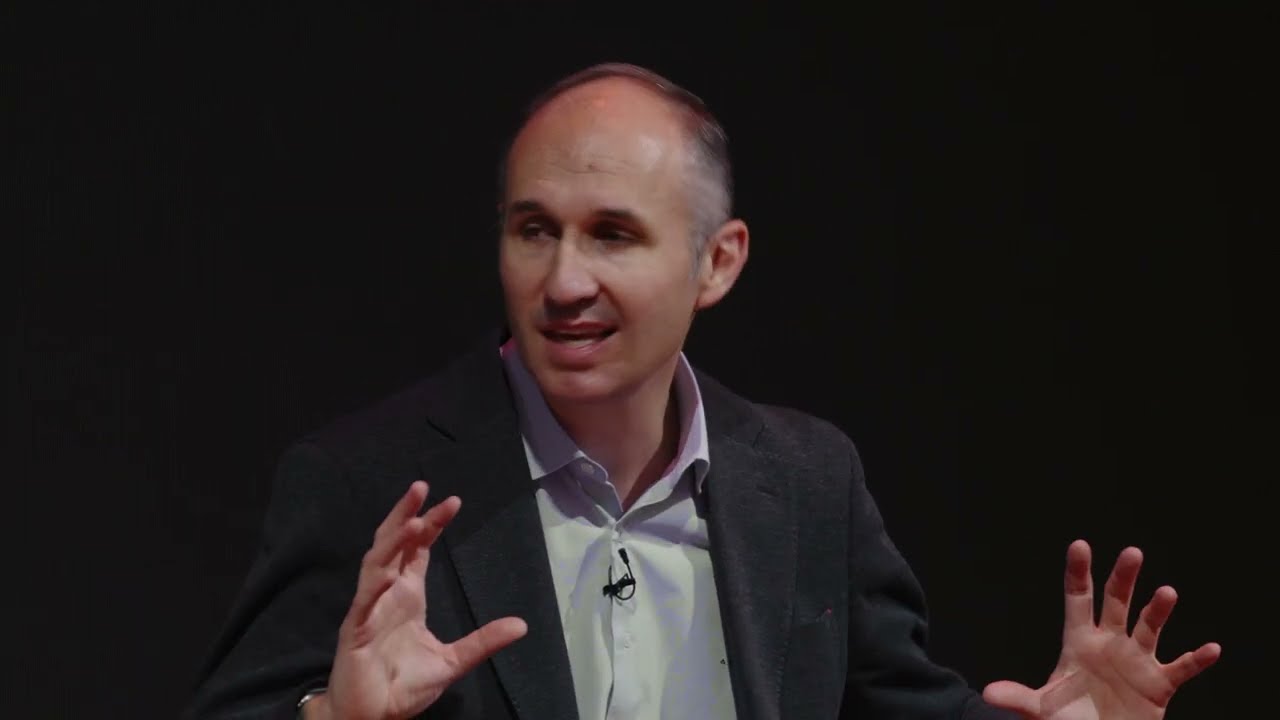
BBVA Embeds OpenAI Across Core Workflows to Drive Global Transformation
OpenAI
BBVA drives enterprise-wide AI adoption by anchoring specialized AI agents to core business units with hands-on training and executive usage tracking rather than treating software as a standalone IT rollout.
## Background
Published on YouTube by OpenAI on June 11, 2026, this video features a customer ignite talk outlining BBVA's enterprise-wide AI transformation. According to the page description, Antonio Bravo, Chief Data and AI Officer at BBVA, discusses how the bank deployed ChatGPT Enterprise to over 120,000 employees and structured its AI strategy around six specialized business robots.
## TL;DR
BBVA has embedded AI directly into its core operations by deploying ChatGPT Enterprise to 120,000 employees and establishing a strategic framework around six business-focused "robots" and two foundational pillars. Supported by close ecosystem collaboration with OpenAI, the bank utilizes co-located multidisciplinary teams, stage-gated token funding, and hands-on enablement to drive measurable short-term impact. Through transparent monthly usage dashboards sent to top executives, BBVA maintains leadership engagement while standardizing reusable primitives to industrialize and safely scale agent development.
## Atmosphere & style
The presentation feels strategic, pragmatic, and highly collaborative, driven by Antonio Bravo's candid leadership style. The narrative shifts smoothly from high-level corporate architecture to grounded, real-world lessons, balancing ambitious technological goals with honest admissions about early mistakes and organizational re-engineering. The overall vibe is one of disciplined, forward-thinking innovation, reflecting a confident and transparent dialog between enterprise leaders and key tech partners.
## Key takeaways
- [00:05](https://www.youtube.com/watch?v=UNJSk90Lz1c&t=5s) BBVA rolled out ChatGPT Enterprise licenses to over 120,000 employees worldwide, embedding AI as a global enterprise operating layer.
- [01:02](https://www.youtube.com/watch?v=UNJSk90Lz1c&t=62s) The bank's top-down AI agenda is built around six specialized business-focused "robots" and two core supporting pillars.
- [01:02](https://www.youtube.com/watch?v=UNJSk90Lz1c&t=62s) The six robots focus on retail experience, client advisory, risk management, back-office operations, software development, and employee productivity.
- [04:14](https://www.youtube.com/watch?v=UNJSk90Lz1c&t=254s) BBVA supports its AI strategy with two pillars: becoming a data-rich company and managing/orchestrating an agent network.
- [05:14](https://www.youtube.com/watch?v=UNJSk90Lz1c&t=314s) Execution relies on two- to three-month cycles generating tangible "aha moments" that unlock stage-gated token and capital funding.
- [06:14](https://www.youtube.com/watch?v=UNJSk90Lz1c&t=374s) Technical experts are co-located directly inside business units to avoid siloing AI as a standalone IT initiative.
- [08:15](https://www.youtube.com/watch?v=UNJSk90Lz1c&t=495s) Partnering closely with external ecosystem leaders like OpenAI allows BBVA to adapt quickly and course-correct as AI paradigms evolve.
- [09:56](https://www.youtube.com/watch?v=UNJSk90Lz1c&t=596s) Widespread AI adoption requires dedicated, hands-on enablement teams traveling directly to regional offices rather than passive online training.
- [11:30](https://www.youtube.com/watch?v=UNJSk90Lz1c&t=690s) Treating early rollout like "planting grass before building roads" led employees to build over 100 custom GPTs that save 70% to 80% of task execution time.
- [12:41](https://www.youtube.com/watch?v=UNJSk90Lz1c&t=761s) Monthly adoption dashboards sent directly to executive leaders and the CEO drive engagement through transparent peer benchmarking.
- [14:28](https://www.youtube.com/watch?v=UNJSk90Lz1c&t=868s) BBVA deliberately restricted its scope to eight key areas—excluding other departments like finance—to maintain strategic focus and impact.
- [16:48](https://www.youtube.com/watch?v=UNJSk90Lz1c&t=1008s) Industrializing agent creation through shared primitives allows BBVA to systematically scale agentic workflows while re-engineering legacy banking governance.
## Detailed walkthrough
Here is the detailed, faithful walkthrough of the provided transcript section.
---
[00:05](https://www.youtube.com/watch?v=UNJSk90Lz1c&t=5s) BBVA’s Ambitious Vision for AI Transformation
The presentation opens with an introduction highlighting BBVA as one of the largest banks in the world and a prime example of a company fully committing to AI. Rather than treating AI as a mere extra tool or simple question-answering system, BBVA's goal is to embed AI deeply across its entire global organization to actively support core business functions. To achieve this, BBVA initially rolled out ChatGPT Enterprise to more than 120,000 employees worldwide, establishing AI as an enterprise operating layer.
Building on this foundational layer, the bank developed a comprehensive strategy structured around six specialized robots and two supporting pillars, each designed to empower a specific core business area. Antonio Bravo, Chief Data and AI Officer at BBVA, is introduced to explain the details of this ambitious strategy.
- **Global reach**: Rolled out ChatGPT Enterprise licenses to over 120,000 employees worldwide.
- **Strategic structure**: Composed of six business-focused specialized "robots" and two core supporting pillars.
[01:02](https://www.youtube.com/watch?v=UNJSk90Lz1c&t=62s) The Blueprint: BBVA’s Six AI "Robots" and Supporting Pillars
Taking the stage, Antonio Bravo outlines BBVA’s top-down AI agenda, emphasizing that it was constructed collaboratively alongside the global executive team, business units, and international leaders. He stresses that this strategy is not purely technology-driven or controlled in isolation by the data and AI team; rather, it directly targets key impact areas across the bank's end-to-end value chain as a "retail universal banking machine."
Bravo details the six business-focused "robots":
* **Robot 1 (Retail Business):** Designed to create a new, conversational, and multimodal digital experience for clients on mobile and future smart devices, co-sponsored by the Head of Retail.
* **Robot 2 (Client Advisory & Commercial Banking):** Targets segments where human advisory is essential (Corporate & Investment Banking, Enterprise Banking, and Private Banking). Recognizing that bankers currently spend only "roughly 20 to 25%" of their time directly with clients, this robot uses AI to handle backend tasks so bankers can increase client facing time to "25, 30, or 35%."
* **Robot 3 (Risk Management):** Integrates AI capabilities into risk analytics to empower risk officers to perform better, faster analyses and streamline underwriting to make it more customer-friendly.
* **Robot 4 (Back-Office Operations):** Automates complex document extraction and classification for heavy paperwork processes in back offices, such as mortgages, consumer finance, and insurance.
* **Robot 5 (Software Development):** Focuses on equipping BBVA's massive software engineering team with OpenAI Codex to boost developer productivity and eliminate a massive, persistent backlog.
* **Robot 6 (Connected Robot & Employee Productivity):** Focuses on universal AI enablement across all 120,000 employees regardless of role. It helps staff build general-purpose agents to automate daily workflows across calendar management, email, HR tools, and internal systems.
To support these six robots, Bravo introduces two foundational pillars:
1. **Data Rich Company:** Preparing and structuring organizational data so it can be seamlessly consumed by AI agents.
2. **Agent Network Management & Orchestration:** Building the technical infrastructure required to manage, coordinate, monitor, and continuously improve the sprawling network of operational AI agents across the bank.
[05:14](https://www.youtube.com/watch?v=UNJSk90Lz1c&t=314s) Iterative Execution, "Aha Moments," and Operating Model Principles
Bravo explains that alongside this top-down framework, BBVA uses an iterative execution model focused on short-term impact. Every two to three months, the bank targets tangible "aha moments"—proof points that demonstrate real business value to sponsors and spark a snowball effect in organizational adoption. Funding follows a stage-gated investment approach, where teams are progressively awarded compute tokens and capital based on these realization moments.
The operating model combines top-down strategic alignment with bottom-up innovation, allowing employee-created solutions to feed directly back into global priorities. To prevent AI from becoming a siloed IT initiative, multidisciplinary teams—comprising data scientists, machine learning engineers, software developers, and domain experts—are co-located directly within retail, commercial, and risk units. Bravo notes that "this co-location thing... actually flips a little bit the way we've been working previously." Furthermore, BBVA places heavy emphasis on change management, comprehensive training, and transparent communication so that employees embrace AI agents rather than fearing job displacement.
- **Execution cadence**: Generates tangible "aha moments" every 2 to 3 months to prove impact and drive adoption momentum.
- **Resource allocation**: Uses a stage-gated funding model distributing compute tokens and budget based on proven outcomes.
- **Organization**: Co-locates technical experts (data scientists, ML engineers, developers) directly inside specific business units.
[08:15](https://www.youtube.com/watch?v=UNJSk90Lz1c&t=495s) Ecosystem Partnerships and the Collaboration with OpenAI
Bravo emphasizes the importance of partnering with the broader technology ecosystem. Given how rapidly the AI landscape evolves—with paradigms shifting "almost every other two or three weeks"—trying to build everything internally using legacy methods risks creating stranded, obsolete assets.
He highlights BBVA's close partnership with OpenAI across all eight focus areas of their agenda. This collaboration has allowed BBVA to learn quickly, adapt to state-of-the-art developments, and course-correct when necessary. Bravo candidly shares that "we've done 180 degrees flips to some of the work that we were doing... we actually made mistakes and the OpenAI team has been very helpful in helping us realize that we were not heading into the right direction before and we had to flip." His core advice to other enterprise leaders is to heavily leverage external ecosystem partnerships to maintain speed and agility.
[09:56](https://www.youtube.com/watch?v=UNJSk90Lz1c&t=596s) Lessons in AI Adoption, Hands-On Guidance, and Peer Benchmarking
Moving into a Q&A segment, the host asks Bravo for key lessons learned and common pitfalls in driving widespread AI adoption. Bravo points out that driving organizational adoption requires dedicated resources and focused teams; BBVA established a specialized team under Robot 6 dedicated exclusively to global and local AI enablement. Rather than relying solely on passive online courses, this team travels directly to regional offices—such as finance teams in Mexico, risk teams in Peru, or retail units in Spain—to conduct hands-on training sessions with ChatGPT and specialized tools. Bravo warns that simply deploying software licenses without active support fails, stating: "you don't think it's going to work by only deploying the product... you need to accompany, you need to do the training, you need to track with metrics."
Reflecting on corporate fears surrounding wide license rollouts, Bravo compares early AI enablement to "planting grass before building roads"—letting employees freely use the tool reveals where natural demand and workflows exist before formalizing infrastructure. This bottom-up freedom has yielded high-impact automations:
- BBVA currently has **over 100 custom GPTs** built by employees.
- These automations are actively used by thousands of workers, saving **70% to 80% of execution time** across various operational tasks.
When asked about leadership engagement, Bravo reveals a once-controversial practice: the bank sends monthly adoption dashboards directly to executive leaders, including the CEO and Chairman. These dashboards display an executive's personal usage, compare it against peer benchmarks, and detail adoption metrics within their sub-units. This transparency creates positive peer pressure, identifies lagging regions (such as specific teams in Colombia, Peru, or Mexico) for targeted retraining, and ensures leadership leads by example.
[14:28](https://www.youtube.com/watch?v=UNJSk90Lz1c&t=868s) Prioritizing High-Impact Use Cases Across the Executive Team
The host notes that while generative AI is general-purpose enough to tackle almost any problem, BBVA's strategy stands out for its tight focus on core business drivers. Bravo explains that defining the six robots and two pillars required extensive, collaborative trade-offs across the executive committee. Historically, non-technical executives found technology investments daunting and unpredictable due to ever-rising costs. However, by framing AI around clear value creation across key operational drivers, the leadership team jointly determined where to focus resources.
Bravo reveals that maintaining this focus required hard choices and deliberate exclusions. For instance, despite having a massive finance department and CFO, BBVA explicitly chose not to build a dedicated robot for finance right away. Instead, they restricted their strategic framework strictly to "the eight"—the six targeted robots and two foundational pillars—to ensure organizational discipline, deep impact, and resource concentration.
[16:10](https://www.youtube.com/watch?v=UNJSk90Lz1c&t=970s) Securing Executive Alignment Across BBVA
Addressing the leadership dynamic required to drive transformation, Antonio Bravo explains that he made sure to involve every member of the executive committee—most notably the Chairman and the CEO—so that AI adoption became a shared agenda rather than a siloed initiative. While he acts as the executive responsible for wiring and managing the agenda across the enterprise—spending roughly 90% of his time directly with the teams—he emphasizes that this remains the bank’s overarching agenda, not merely his personal project. The strategy avoids peripheral tasks and is firmly anchored to BBVA’s core business drivers and main areas of impact.
- The executive consensus includes the bank's Chairman, CEO, and the full executive committee.
- Bravo allocates 90% of his daily focus to working directly alongside execution teams.
- AI focus areas, such as the software development robot, are built directly around primary bank functions rather than isolated experiments.
[16:48](https://www.youtube.com/watch?v=UNJSk90Lz1c&t=1008s) Industrializing Agentic Building and Scaling for the Future
Looking toward the future of technology and strategy, the discussion turns to scaling AI capabilities beyond the initial deployments. Bravo highlights that as BBVA built its first agents across the key robots, a clear design pattern emerged. Recognizing shared primitives—such as model evaluation, structured data access, and standard API connectors—unlocked a common playbook. Rather than treating each agent as a custom project, BBVA aims to industrialize and systematize agent development to scale across all processes in a controllable, structural manner.
Bravo notes candidly that traditional banking organizational structures and legacy controls were never designed to onboard autonomous AI agents. Working alongside OpenAI revealed underlying operational complexities around governance, security, and risk controls that must be managed in entirely new ways. Overcoming these governance challenges allows the institution to safely capture "all the abundance that this AI area is bringing."
- Identified reusable foundational primitives: standard evaluations, secure data access points, and unified API connectors.
- Traditional risk, security, and governance models require re-engineering, as legacy bank processes were not designed for autonomous agent execution.
- Systematizing agent deployment provides a scalable playbook to systematically transform the rest of BBVA's operational workflows.
## Notable quotes
> [01:02](https://www.youtube.com/watch?v=UNJSk90Lz1c&t=62s) roughly 20 to 25% — Antonio Bravo
> [01:02](https://www.youtube.com/watch?v=UNJSk90Lz1c&t=62s) 25, 30, or 35% — Antonio Bravo
> [05:14](https://www.youtube.com/watch?v=UNJSk90Lz1c&t=314s) this co-location thing... actually flips a little bit the way we've been working previously. — Antonio Bravo
> [08:15](https://www.youtube.com/watch?v=UNJSk90Lz1c&t=495s) almost every other two or three weeks — Antonio Bravo
> [08:15](https://www.youtube.com/watch?v=UNJSk90Lz1c&t=495s) we've done 180 degrees flips to some of the work that we were doing... we actually made mistakes and the OpenAI team has been very helpful in helping us realize that we were not heading into the right direction before and we had to flip. — Antonio Bravo
> [09:56](https://www.youtube.com/watch?v=UNJSk90Lz1c&t=596s) you don't think it's going to work by only deploying the product... you need to accompany, you need to do the training, you need to track with metrics. — Antonio Bravo
> [09:56](https://www.youtube.com/watch?v=UNJSk90Lz1c&t=596s) planting grass before building roads — Antonio Bravo
> [14:28](https://www.youtube.com/watch?v=UNJSk90Lz1c&t=868s) the eight — Antonio Bravo
> [16:48](https://www.youtube.com/watch?v=UNJSk90Lz1c&t=1008s) all the abundance that this AI area is bringing. — Antonio Bravo
## Mentioned
BBVA, OpenAI, Antonio Bravo, ChatGPT Enterprise, OpenAI Codex, ChatGPT, Mexico, Peru, Spain, Colombia
Antonio Bravo Acin outlines BBVA's enterprise transformation strategy, which grounds generative AI across 120,000 employees into a disciplined architecture of six business-focused "robots" and two operational pillars rather than peripheral experimentation.
Targeted Architecture Across Core Banking Functions (1:02)
BBVA organized its enterprise transformation around an end-to-end framework dubbed "the eight," comprising six domain-specific AI robots and two supporting infrastructure pillars. The specialized robots target distinct operational drivers: conversational multimodal interfaces in retail, backend automation to increase commercial bankers' direct client time from roughly 20–25% to up to 35%, accelerated underwriting and risk analytics, automated document extraction for back-office paperwork like mortgages, software developer productivity using OpenAI Codex, and enterprise-wide workflow automation for 120,000 employees. These tools rely on two foundational pillars: preparing structured enterprise data and engineering an agent network management and orchestration layer.
Bravo notes that establishing this blueprint required strict executive trade-offs to prevent resource fragmentation. Despite possessing a large global finance unit, BBVA deliberately chose not to build a dedicated finance robot initially, constraining investments exclusively to high-impact core banking functions.
Iterative Funding and Cross-Functional Co-Location (5:14)
Rather than running multi-year IT programs in isolation, BBVA operates an execution model designed around short delivery cycles. Teams work toward tangible proof points or "aha moments" every two to three months to validate business value before receiving further resources. Funding follows a stage-gated mechanism, allocating capital and compute tokens only as operational milestones are proven.
To bridge the gap between technical teams and operational units, BBVA shifted away from centralized delivery silos. Technical specialists—including data scientists, machine learning engineers, and software developers—are co-located directly inside retail, commercial, and risk departments, ensuring that development remains directly aligned with everyday business priorities.
Grassroots Enablement and Executive Accountability (9:56)
To drive widespread organizational adoption, BBVA deployed ChatGPT Enterprise licenses globally while establishing dedicated enablement teams under its employee productivity initiative. Rather than relying on passive software rollouts or self-paced courses, trainers travel directly to regional offices in Spain, Mexico, and Peru to deliver hands-on coaching. Bravo compares this approach to "planting grass before building roads," allowing spontaneous employee experimentation to uncover viable workflows before engineering rigid infrastructure. This strategy yielded over 100 employee-created custom GPTs, which Bravo reports save 70% to 80% of task execution time across operational workflows.
Adoption is reinforced from the top through radical metric transparency. BBVA distributes monthly dashboards to the executive committee, CEO, and Chairman, detailing each leader's personal AI usage, benchmarking them against peers, and highlighting adoption rates within their regional business units to identify areas needing intervention.
Industrializing Agent Architecture and Re-Engineering Controls (16:48)
To prevent legacy developments from becoming obsolete in a rapidly shifting ecosystem, BBVA established a deep partnership with OpenAI across all eight transformation areas. Bravo candidly acknowledges that this external collaboration prompted several 180-degree strategic pivots after initial technical missteps.
As deployment expanded, the bank identified core architectural primitives—such as standardized model evaluation, unified API connectors, and structured data access layers—to industrialize agent development into a repeatable playbook. However, Bravo emphasizes that scaling autonomous agents exposes friction with traditional banking structures: legacy operational controls, risk frameworks, and security protocols were not engineered for autonomous agent execution and must be systematically redesigned.
While BBVA's disciplined framework has established broad adoption and measurable operational time savings, its long-term expansion hinges on solving the governance challenge of safely integrating autonomous AI agents into legacy banking risk, compliance, and security frameworks.
精炼阅读摘要
西班牙对外银行(BBVA)首席数据与人工智能官 Antonio Bravo Acin 阐述了该行的人工智能转型战略:通过向全球超过 12 万名员工部署 ChatGPT Enterprise,并围绕六大业务机器人与两大支柱建立工业化智能体架构,将 AI 深度嵌入全行业务价值链。
顶层架构:六大业务机器人与两大支柱 (1:02)
BBVA 未将 AI 视为孤立的技术工具或问答系统,而是将其定义为全行的企业级运营底座。该战略由高管团队、业务部门与国际分支主管共同制定,涵盖六个专门业务“机器人”:机器人 1 面向零售业务,开发多模态对话式数字体验;机器人 2 面向客户顾问与商业银行,旨在承担后台任务,将银行顾问面对客户的时间从现有的 20% 至 25% 提升至 25% 至 35%;机器人 3 增强风险分析并精简承保流程;机器人 4 负责房贷、消费信贷与保险等后台复杂文档的自动提取与分类;机器人 5 借助 OpenAI Codex 赋能软件工程师,消除积压任务;机器人 6 推动全员生产力,支持员工自建工作流智能体。支撑这六大机器人的是两大基础支柱:整理数据以便智能体调用的“丰富数据企业”支柱,以及负责协调、监控和优化全行智能体网络的“智能体网络管理与编排”支柱。
双轨推进:敏捷交付与跨职能团队协同 (5:14)
在落地执行上,BBVA 采用自上而下对齐与自下而上创新相结合的混合模式。该行设定了每 2 至 3 个月产生具象“顿悟时刻”(aha moments)的节奏,以阶段性成果证明商业价值并带动组织采纳。资源调配则采取分阶段投资机制,根据实际成效逐步释放计算 Token 和预算。为了打破部门壁垒,数据科学家、机器学习工程师和软件开发者直接进驻零售、商业与风控等业务单元现场办公,改变了以往的技术协作方式。同时,该行通过变革管理与透明沟通缓解员工对岗位被替代的顾虑,促使全员接纳 AI 智能体。
普及策略:现场赋能与高管透明度看板 (9:56)
BBVA 认为单纯下发软件许可无法驱动深度转型。为此,负责机器人 6 的专属赋能团队前往墨西哥财务部、秘鲁风险部及西班牙零售部等一线机构,开展面对面的工具培训。Bravo 将早期的赋能探索比作“修路前先种草”,即先观察员工在日常工作中的自发需求,再进行标准化沉淀。目前该行员工已搭建超过 100 个自定义 GPT,供数千名员工使用,部分运营任务的执行时间减少了 70% 至 80%。此外,该行每月向董事长和首席执行官在内的高管发送采纳度看板,公开其个人使用情况、同行基准及下属业务单元的指标。这种透明机制带来了良性竞争压力,能迅速锁定拉美或欧洲进展滞后的团队并实施针对性再培训。
严守边界:战略取舍与外部生态协作 (14:28)
由于生成式 AI 具有通用性,管理层面临范围膨胀的挑战。为确保资源集中,高管团队明确作出了取舍,例如初期主动放弃为庞大的财务部门开发独立机器人,严格将核心范围限定在“六大机器人与两大支柱”内。由于 AI 技术范式每隔数周便发生快速迭代,BBVA 选择深度绑定 OpenAI 等外部生态,避免内部自研造成资产过时与技术锁死。Bravo 坦言,合作期间团队曾推翻并彻底转向部分原有技术路径,外部伙伴的反馈帮助他们及时修正了错误方向。
未来规模化:智能体工业化与治理重塑 (16:48)
随着初期智能体进入应用,BBVA 提炼出了模型评估、结构化数据访问和标准 API 接口等通用基础构件,正试图将智能体构建由定制化项目升级为工业化、体系化的标准作业流程。然而,传统银行业的组织架构、合规与风险控制体系并非为自主运行的 AI 智能体而设计。Bravo 指出,银行必须与外部合作伙伴协同重构底层的治理模式、安全防护和风控流程,方能在受控、稳健的框架内安全释放自主智能体带来的业务潜力。
BBVA 的实践表明,大型机构的 AI 转型既依赖集中攻坚的核心业务蓝图,也需要全员赋能的自下而上探索;但随着自主智能体在核心流程中逐步铺开,传统银行业治理架构与自治系统之间的摩擦,构成了该模式未来全面推广面临的关键挑战。
Detailed notes — zh
## Background
本期视频由 OpenAI 于 2026 年 7 月 3 日发布在 YouTube 频道。视频内容记录了 BBVA(西班牙对外银行)首席数据与 AI 官 Antonio Bravo Acin 的专题分享,介绍该行如何将 AI 融入核心业务,面向全球 12 万余名员工全量普及 ChatGPT Enterprise,并围绕六大业务机器人重塑零售、风控、运营和研发等流程的战略实践。
## TL;DR
视频系统性复盘了大型百年银行 BBVA 与 OpenAI 深度合作实现企业级 AI 转型的完整路径。BBVA 确立了贯穿业务核心价值链的六大业务机器人及两大底层支柱,依托“自顶向下”的执行委员会共识与每两到三个月一次的“顿悟时刻”敏捷交付驱动业务增量。在推广机制上,BBVA 秉持“先种草坪,再修道路”的包容理念,通过专职陪跑团队与高管率先作为超级用户的“善意同侪压力”,促使全行沉淀出上百个提效显著的定制应用。最后,双方深入探讨了抵御泛化诱惑的残忍取舍哲学,以及未来破局既有银行内控架构、实现 Agent 工业化建造与协同治理的宏大愿景。
## Atmosphere & style
全场对话务实、从容且极富洞见,既有一流金融机构高管的沉稳与决断,又洋溢着拥抱技术奇点的先锋探索热情。Antonio 的叙述逻辑严密、毫无概念炒作的浮躁,善于用“先种草坪再修路”等生动比喻化解组织变革与技术恐惧的沉重命题。他与主持人 Matt 的问答切磋自然默契,从对齐执委会的高层博弈谈到赋能跨国基层的温情细节,展现出极强的实践穿透力,让听众切实沉浸在一场宏大且落地的现代企业智能化工业革命之中。
## Bulletin
- [00:05](https://www.youtube.com/watch?v=UNJSk90Lz1c&t=5s) BBVA 将生成式 AI 作为底层操作系统,面向全球逾 12 万名员工全量铺开 ChatGPT Enterprise,并围绕六大业务机器人与两大支柱重塑银行价值链。
- [12:12](https://www.youtube.com/watch?v=UNJSk90Lz1c&t=732s) 奉行“先种草坪,再修道路”的自下而上探索策略,全行已涌现逾百个员工自研定制 GPTs,为跨国千余名员工缩减 70% 至 80% 的日常繁琐工时。
- [13:07](https://www.youtube.com/watch?v=UNJSk90Lz1c&t=787s) 推行公开透明的月度采纳看板,利用良性同侪压力与最高管层(包括董事长与 CEO)亲自挂帅做超级用户的示范效应,彻底瓦解组织推行阻力。
- [05:14](https://www.youtube.com/watch?v=UNJSk90Lz1c&t=314s) 实行极致聚焦的“八大议程”取舍哲学,配合 2 至 3 个月交付一次的“顿悟时刻”与阶段准入式 Token 投资闭环,确保技术投入直击核心商业价值。
- [16:48](https://www.youtube.com/watch?v=UNJSk90Lz1c&t=1008s) BBVA 下一阶段的战略跃迁聚焦于智能体的“工业化建造与治理能力”,通过通用技术原语打通核心系统并重塑银行业内控合规架构。
## Key takeaways
- [00:05](https://www.youtube.com/watch?v=UNJSk90Lz1c&t=5s) BBVA 拒绝将 AI 视作边缘插件或日常问答工具,而是将其作为贯穿全球 12 万名员工与核心银行业务运转的企业级底层系统。
- [00:05](https://www.youtube.com/watch?v=UNJSk90Lz1c&t=5s) AI 转型议程并非技术部门闭门造车,而是由数据团队与全行执行委员会、各区域及业务负责人共同制定的自顶向下核心纲领。
- [02:04](https://www.youtube.com/watch?v=UNJSk90Lz1c&t=124s) 确立六大核心业务赋能机器人,覆盖零售交互、高价值顾问、风险建模承保、后台文档结构化、软件研发以及全员通用互联。
- [02:04](https://www.youtube.com/watch?v=UNJSk90Lz1c&t=124s) 通过引入专属 AI 助手承接琐碎流程,BBVA 计划将企业金融与私行顾问直接面对客户的高价值时间占比从 20% 拉升至 35%。
- [02:04](https://www.youtube.com/watch?v=UNJSk90Lz1c&t=124s) 构筑“数据富集型企业”与“Agent 网络编排与治理”两大支柱,使沉睡数据能被智能体直接消费,并确保跨企业协同合规。
- [05:14](https://www.youtube.com/watch?v=UNJSk90Lz1c&t=314s) 推行“顿悟时刻”(Aha moments)敏捷交付机制,每隔 2 到 3 个月交付具象化业务成效,以此激发内部滚雪球效应。
- [05:14](https://www.youtube.com/watch?v=UNJSk90Lz1c&t=314s) 配套阶段准入式(stage-gated)投资管理模型,根据项目在各里程碑展现的真实价值,动态递进分配 Token 额度与后续资金。
- [05:14](https://www.youtube.com/watch?v=UNJSk90Lz1c&t=314s) 打破技术与业务二元对立,将数据科学家、机器学习工程师直接嵌入零售、对公及风控业务一线开展物理协同办公。
- [08:16](https://www.youtube.com/watch?v=UNJSk90Lz1c&t=496s) 与 OpenAI 建立深度前沿生态同盟,通过外部前沿视角敏锐纠偏并多次果断调头,规避企业技术过时带来的“搁浅资产”风险。
- [09:44](https://www.youtube.com/watch?v=UNJSk90Lz1c&t=584s) 吸取过往协同软件部署的沉痛教训,设立全球专属推广团队深入多国业务一线开展实地陪跑辅导,避免软件一发了之。
- [12:12](https://www.youtube.com/watch?v=UNJSk90Lz1c&t=732s) 秉持“先种草坪,再修道路”理念,先包容一线员工自由探索边界与提示词,再提炼高频真实足迹固化为全行工业化设施。
- [13:07](https://www.youtube.com/watch?v=UNJSk90Lz1c&t=787s) 建立直达最高管理层的月度 AI 采纳率看板,以同侪基准对标形成良性推动力,董事长与 CEO 带头成为硬核先锋用户。
- [14:28](https://www.youtube.com/watch?v=UNJSk90Lz1c&t=868s) 严控技术发散诱惑,全行战略高度收敛为不可动摇的“八大议程”,甚至未给核心财务条线设立独立机器人以确保极致聚焦。
- [16:48](https://www.youtube.com/watch?v=UNJSk90Lz1c&t=1008s) 下一代决胜关键在于从手工作坊式的 Agent 开发跃迁至系统化、工业化的建造能力,彻底改造传统金融内控与审批流程。
## Detailed walkthrough
### [00:05](https://www.youtube.com/watch?v=UNJSk90Lz1c&t=5s) 全员普及与核心战略:BBVA 的企业级 AI 转型蓝图
主持人 Matt 首先登台,向现场观众隆重推介了全球银行业巨头 BBVA(西班牙对外银行)在 AI 转型上的标杆实践。BBVA 的野心绝非将人工智能作为某种外挂式的功能插件,亦不仅仅局限于让系统回答日常问题,而是要将 AI 深度浸润并贯穿到整个银行运转的血脉中,主动支撑起各项最为关键的核心业务职能。这一战略落地的第一步便极具魄力:BBVA 直接面向全球超过 12 万名员工全量铺开了 ChatGPT Enterprise 许可,使生成式 AI 真正演化为整个企业的底层操作系统。在这一扎实的基础上,BBVA 进一步将宏大愿景具象化为六大针对特定核心业务的“机器人”与两大基础支柱。随后,BBVA 首席数据与 AI 官 Antonio Bravo Acin 登台,亲自拆解这一宏伟转型背后的具体落地路线。
Antonio 开场时谦逊地表示,自己只需借助三张幻灯片,便能将 BBVA 迄今为止的探索历程清晰道来。他着重指出,BBVA 的 AI 战略之所以能迅速推行,关键在于全行确立了一套非常坚决的“自顶向下”(top-down)议程。更为关键的是,这项议程并不是由数据或 AI 技术团队在象牙塔中闭门造车、单向推动的技术狂欢,而是技术团队与全行执行委员会、各个业务板块以及分布在不同国家的业务负责人并肩制定的共同纲领。面对一家业务横跨全球众多国家的零售全能银行庞大机器,BBVA 必须确保 AI 被精准对接到整个价值链上最具商业价值、最能带来实际业务增量的核心环节。
### [02:04](https://www.youtube.com/watch?v=UNJSk90Lz1c&t=124s) 重塑价值链:六大业务机器人与两大战略支柱
```mermaid
flowchart TD
accTitle: BBVA AI Transformation Architecture
accDescr: Diagram illustrating BBVA's six specialized AI robots and two supporting foundational pillars.
subgraph SixRobots["六大业务赋能机器人 (Six Robots)"]
R1["机器人 1: 零售业务<br/>(移动端与数字渠道新交互)"]
R2["机器人 2: 客户顾问赋能<br/>(投行/企金/私行顾问时间翻倍)"]
R3["机器人 3: 风险核心引擎<br/>(加速承保与敏捷分析)"]
R4["机器人 4: 后台与运营<br/>(房贷/车贷/保险文档结构化提取)"]
R5["机器人 5: 软件开发工程<br/>(Codex 赋能开发者清空 Backlog)"]
R6["机器人 6: 互联全员机器人<br/>(12万员工通用 Agent 与日程/邮件)"]
end
subgraph TwoPillars["两大底层支柱 (Two Pillars)"]
P1["数据富集型企业<br/>(数据就绪,供 Agent 直接消费)"]
P2["Agent 网络编排与治理<br/>(跨企业 Agent 协同与持续改进)"]
end
TwoPillars --> SixRobots
```
随后,Antonio 逐一深入剖析了 BBVA 核心布局的六大垂直机器人以及支撑它们运行的两大基石:
- **机器人 1(零售业务机器人 / Retail Business Robot)**:如同过去十到十五年间 BBVA 倾注巨大投资将银行服务全面搬上移动端一样,该机器人致力于依托智能手机或未来的新兴智能硬件,在数字渠道上彻底重塑个人客户与银行产品及服务交互的全生命周期体验。该项目由全行零售业务总负责人协同各区域零售主管共同领衔推进。
- **机器人 2(高价值客户顾问机器人 / Client Advisory Robot)**:聚焦于企业与投资银行(CIB)、企业金融以及私人银行等极度依赖专业顾问服务的业务领域。Antonio 指出,过去一位专业银行家在工作时间内仅能匀出大约 20% 的时间真正与客户面对面沟通;通过引入 AI 助手承接琐碎流程,BBVA 希望将这一深度咨询服务时间的占比强力拉升至 25%、30% 甚至 35%,释放出惊人的商业增量。该机器人由 CIB、企业银行及私行业务负责人共同统帅。
- **机器人 3(风险引擎机器人 / Risk Robot)**:直接扎根于银行的核心分析命脉——风险控制。通过将前沿 AI 能力交到风险分析师手中,促使风险建模与信用评估不仅更精准、更深透,而且极大压缩审批周期,从而将原本繁复冗长的风险承保(underwriting)流程改造得对客户极具亲和力。
- **机器人 4(运营与后台自动化机器人 / Operations & Back Office Robot)**:全面覆盖按揭贷款、消费金融、保险等复杂业务的后台流程,专注实现海量非结构化凭据、文书的自动化信息提取与智能分类,彻底替员工卸下沉重的“纸质文档包袱”。
- **机器人 5(软件开发机器人 / Software Development Robot)**:面向 BBVA 庞大的软件工程研发团队,全面接入 OpenAI Codex 等前沿编程工具,致力于突破研发资源稀缺与任务优先级排期的永恒矛盾,以成倍提高的工程生产力消灭多年累积的技术积压(backlog)。
- **机器人 6(互联赋能机器人 / Connected Robot)**:在面向 12 万名员工全量分发 ChatGPT 账号的基础上,推动全员无论身处网点柜台、风控部门还是行政岗位,都能构建面向日程协调、邮件处理以及内部 HR 工具交互的通用 Agent。
要支撑起这一庞大的智能化网络,BBVA 锁定了两大技术支柱:一是建设“数据富集型企业”(Data-rich company),使原本沉睡在底层各系统的数据能够被各类 Agent 直接理解与消费;二是构建面向整个 Agent 网络的编排与治理平台,负责企业级 Agent 的协同运转、监控管理与持续迭代升级。
### [05:14](https://www.youtube.com/watch?v=UNJSk90Lz1c&t=314s) “顿悟时刻”驱动的敏捷交付与分阶段投资
在战略推进的节奏感上,Antonio 强调 BBVA 绝不采取那种动辄耗时数年、最终交付却脱离现实的传统长周期模式。相反,他们在坚决贯彻“自顶向下”目标的同时,格外推崇高频敏捷的迭代方式,并为此专门设立了“顿悟时刻”(Aha moments)机制。团队每隔两到三个月就会向业务负责人或联合赞助人集中交付一次极其具体、可量化感知的业务成效。这些时刻就像一盏盏明灯,不仅向业务方实证了 AI 的真实威力与投产路径,更在全行内部点燃了“滚雪球效应”(snowball effect),让原本持观望态度的各个部门纷纷主动申请入局。
与这种交付模式相呼应的是一套严格的“阶段准入式”(stage-gated)投资管理模型。BBVA 并不在一开始就盲目撒钱,而是紧密结合各项目取得的“顿悟时刻”里程碑,逐步向各支攻坚团队分配 Token 消耗额度与后续资金,形成动态递进的正向滚动投资闭环。
在运营组织模式层面,BBVA 同样打破了传统的“技术提供方 vs 业务需求方”二元对立,将自顶向下的架构牵引与自底向上激发出的创新灵感无缝焊接:
- **跨学科团队协同入驻(Co-location)**:BBVA 将数据团队、AI 工厂的数据科学家、机器学习工程师(MLE)以及软件开发者直接抽调并嵌入到零售、对公商业以及风控团队的第一线,实行真正的物理混合办公与联合攻关,彻底扭转了过去割裂的交接模式。
- **自上而下与自下而上的良性共振**:全员 12 万人的广泛普及为底层带来了百花齐放的分布式创意,而严密的顶层治理又确保了这些自发涌现的 Agent 方案能快速归拢并对齐到六大机器人的核心航道中。
- **文化重塑与消除技术恐惧**:AI Agent 能否发挥成效,最终取决于基层员工是否愿意主动使用。BBVA 在组织变革管理上倾注了大量心血,不仅提供系统性培训,更在全行确立了一套“真实且积极”的叙事体系,通过事实向员工证明 AI 工具是协助而非替代他们,彻底打消大家内心的恐惧与顾虑。
### [08:16](https://www.youtube.com/watch?v=UNJSk90Lz1c&t=496s) 告别孤岛思维:与前沿生态共舞的自我颠覆之路
演讲的最后,Antonio 语重心长地谈到了外部生态合作对大模型时代企业生存的决定性意义。他坦言,如今整个生成式 AI 领域处于极端动态演进的旋涡之中,新模型、新技术与新架构往往两三周就会完成一次换代颠覆,旧的认知范式眨眼间便会彻底过时。大型企业如果在这一浪潮中依然固步自封、沿用老旧的 IT 研发旧路,极大概率会因技术跟不上演进速度而产生大量沉没的“搁浅资产”(stranded assets)。
正因如此,BBVA 坚定地与 OpenAI 达成了深度的战略同盟,将 OpenAI 团队的工程与科研支持全面贯穿到全行六大机器人的战略实施之中。Antonio 毫无保留地分享道,在过去的合作中,BBVA 经历过无数次认知刷新,甚至曾对既有开发路径做出过数次“180 度的大转向”。在探索前沿的征程上,团队不可避免地会走弯路、犯错误,而正是与 OpenAI 这样身处行业最前沿的核心团队保持同频,才让 BBVA 能够敏锐意识到技术走偏的危险,并在关键时刻果断调头纠偏。对于台下所有的企业领导者,Antonio 给出的核心建议是:面对这场变化之迅疾超乎想象的历史性浪潮,拥抱前沿生态系统绝非可选项,而是决定一家企业能否真正立于不败之地的必由之路。
### [09:44](https://www.youtube.com/watch?v=UNJSk90Lz1c&t=584s) 演讲收尾与问答开启:全员普及 AI 的核心心法
在展示完演讲的三页核心幻灯片后,Antonio 对 OpenAI 团队在推动银行机器人战略议程中提供的强大助力表达了诚挚感谢,并迅速将现场转入问答环节。OpenAI 主持人 Matt 随即抛出首个核心问题:在为数以万计的员工部署工具的过程中,BBVA 究竟学到了哪些关键经验?哪些举措切实奏效,又在哪些地方踩过坑?
Antonio 直言,AI 全员普及(从发放许可证到真正融入日常)与生活中的任何大事一样:如果希望它发生得既迅速又具结构化体系,就必须投入绝对的专注和扎实的资源。BBVA 将全员 AI 普及行动归纳并命名为“6 号机器人”(Robot 6)。这项工作之所以能取得阶段性成功,首要原因在于银行设立了一支全职、专属的专职团队,专门负责在全球和各业务国自上而下、横向联动地推动全员 AI 采用。
这支团队并非仅仅在内网扔几套线上视频课程,而是真正深入一线各个实体部门。他们奔赴墨西哥的财务团队、秘鲁的风控团队、西班牙的零售业务一线,手把手开展面对面培训,向一线员工直观演示如何使用 ChatGPT 以及生成式 AI 解决实际业务痛点。Antonio 提及以往银行业推行云端协同办公工具的惨痛教训:当时软件一发了之,结果组织内部留下了大量从未真正上手的死角,许多人依旧习惯离线单机作业,导致数字化转型大打折扣。面对 ChatGPT 这种极具颠覆性的工具,企业绝不能奢望“只要把软件部署到位,员工就会自发用好”,必须全程陪跑、跟踪数据指标,并针对掉队的部门快速微调帮扶方案。
### [12:12](https://www.youtube.com/watch?v=UNJSk90Lz1c&t=732s) “先种草坪,再修道路”:自下而上探索与惊人成效
在启动全员大规模许可证配发初期,管理层内部曾出现过疑虑与恐惧:大家拿了这个工具会不会瞎折腾?会不会做出一堆毫无逻辑、甚至违规的自动化脚本?针对这种担忧,Antonio 展现出了极具战略眼光的包容心态。他坚信,给员工足够的自由去探索工具边界,反而能为顶层设计提供极其珍贵的现实洞察。
他形象地用“先种草坪,再修道路”(planting grass before building roads)的比喻来诠释这一策略:先铺上整片草坪,静观人们日常究竟习惯踩出怎样的足迹,摸清真实的流动路径之后,再顺应足迹把真正的硬化道路修建起来。BBVA 的实际结果完全验证了这种自下而上探索的力量:许多一线基层员工自发搭建的自动化流程和定制 GPTs,如今已被成千上万名跨国同事广泛采纳。
```mermaid
flowchart TD
accTitle: 基层草坪探索到组织级硬化道路沉淀机制
accDescr: 展示自下而上的员工探索如何与自上而下的赋能跟踪相结合,最终提炼为全行级标准化 Agent 资产。
subgraph Ground["基层探索:种下草坪"]
A["全员下发 ChatGPT 许可证"] --> B["一线员工自发实验与提示词构建"]
B --> C["沉淀业务痛点与个性化 GPTs 原型"]
end
subgraph Metrics["中间驱动:数据与赋能"]
C --> D["专属普及团队现场培训与辅导"]
D --> E["月度看板监控使用率与部门对标"]
end
subgraph Industrialization["顶层沉淀:修筑道路"]
E --> F["识别高价值自动化场景"]
F --> G["纳入全行标准化 Agent 架构与工业化治理"]
end
```
- **节省 80% 工时**:全行已有超过 100 多个由员工自主开发的定制 GPTs,为多个国家、超过 1,000 名员工在日常繁琐任务中节省了 70% 至 80% 的工作时间。
- **全局正向反馈**:正是因为前期宽容的探索环境与全天候的辅导团队相辅相成,才让这些由基层痛点驱动的优秀用例浮出水面,直接反哺顶层战略。
### [13:07](https://www.youtube.com/watch?v=UNJSk90Lz1c&t=787s) 高管看板与“善意同侪压力”:领导层亲自挂帅做超级用户
主持人 Matt 补充道,在审阅 BBVA 的采纳率数据后台时,最让他感到惊艳的一点在于:BBVA 的全球执行委员会和高管团队居然是全行最硬核的“超级用户”(Power Users)。他向 Antonio 探寻这套高管赋能机制背后的秘密。
Antonio 笑着坦承,这套做法在推行初期其实相当具有争议。银行建立了一套按月发送的“AI 采纳率数据看板”,直发给组织内的每一位业务负责人。看板上不仅清晰列出主管个人的实际使用频次,更直观附上其同级别同僚的使用水平基准对标,以及其麾下各分支部门的普及进度。这种设计立刻在管理层中催生出了非常微妙且高效的“善意同侪压力”(nice peer pressure)。
只要看板上显示哥伦比亚、秘鲁或墨西哥某业务单元的数据显著滞后,管理团队便会立刻介入调查原因,并迅速追加专门的辅导资源。最关键的是,这种公开透明的榜单直接延伸至最高决策层——包括董事长(Chairman)和首席执行官(CEO)都会按月收到包含所有执委数据的大看板。正如 Antonio 所言,如果高管自己率先成为 Codex 和 ChatGPT 的先锋用户,团队看在眼里,全员自上而下的推动阻力就会迎刃而解;Matt 也附和道,自己经常会收到 BBVA 最高管层发来一些极其深度的工具使用与技术探讨提问。
### [14:28](https://www.youtube.com/watch?v=UNJSk90Lz1c&t=868s) 锚定核心业务:拒绝技术自嗨的“八大议程”与取舍哲学
面对生成式 AI 几乎能应用于一切业务的通用性特质,Matt 问及 BBVA 是如何抵住泛化诱惑、精准筛选出设立专属“机器人”的重点业务领域的。Antonio 强调,这一战略并非由技术或数据团队在象牙塔中闭门造车,而是一场由整个执行委员会共同深度参与、拍板决定的集体共创过程。
Antonio 坦言,对于 BBVA 这样体量庞大的百年金融机构而言,高管层历来对所谓的“技术投资”心存戒备。传统技术项目往往成本高昂、预算年年攀升,却难以直观量化价值。而生成式 AI 是一项能对业务底层价值产生质变催化作用的技术。为了让业务条线全盘接受,Antonio 先拿出顶层框架,随后将决策权交给执委会集体讨论:“我们是否应该利用 AI 来彻底重塑数字化渠道,让它更具对话性、多模态以及投资顾问导向?”当全员达成共识后,这项议程才正式立项。
这种战略推演要求极其残忍的取舍。Antonio 透露,银行甚至没有给财务团队单独设立机器人——尽管财务团队极为优秀、CFO 地位举足轻重,且 BBVA 本身就是一家银行——但为了维持绝对的聚焦,管理层依然决定保持克制。这套战略最终被严格精简并命名为“八大议程”(The Eight),仅包含八项事关银行未来命脉的重大战役。Antonio 将自己 90% 的精力倾注在跨部门协调与团队协同上,向全行明确传达一个理念:这绝对不是 Antonio 个人或数据团队的技术自嗨,而是全行上下共同扛起的业务核心战役。
### [16:48](https://www.youtube.com/watch?v=UNJSk90Lz1c&t=1008s) 迈向未来:Agent 工业化建造与组织流程破局
谈及未来的演进方向与合作愿景,Antonio 表现出极大的兴奋。随着 BBVA 在各个机器人矩阵下陆续跑通了首批智能体(Agent),技术团队敏锐地捕捉到底层的通用范式(patterns):无论是模型的自动化评测(evals)、企业级数据底座的打通,还是与核心系统 API 的标准连接器,都存在高度一致的技术原语(common primitives)。
过去的探索实际上为全行沉淀出了一套清晰的 Agent 研发剧本(playbook)。而眼下最激动人心的跃迁,在于如何将这种能力“系统化”与“工业化”(systematize and industrialize)。传统银行业的既有架构从来不是为了接纳“自主智能体(Agent)”入职而设计的。在与 OpenAI 团队并肩作战的这几个月里,双方在管控合规、内控审计和数据安全方面遇到了诸多前所未有的复杂壁垒,必须探索出一套彻底颠覆传统人工审批的新型治理模式。
在 Antonio 看来,未来的决胜关键正是打造这种可规模化、可内控的“智能体工业化建造能力”(industrialization of agentic building capabilities)。唯有摆脱单点作战的工匠作坊模式,将构建能力结构化地延伸至全行各类深层业务流程中,BBVA 才能真正将 AI 时代所带来的澎湃生产力丰饶彻底收入囊中。现场在热烈的掌声与对下一阶段深度协作的期许中圆满落下帷幕。
## Notable quotes
> [00:05](https://www.youtube.com/watch?v=UNJSk90Lz1c&t=5s) 这项议程并不是由数据或 AI 技术团队在象牙塔中闭门造车、单向推动的技术狂欢,而是技术团队与全行执行委员会、各个业务板块以及分布在不同国家的业务负责人并肩制定的共同纲领。 — Antonio Bravo Acin
> [02:04](https://www.youtube.com/watch?v=UNJSk90Lz1c&t=124s) 过去一位专业银行家在工作时间内仅能匀出大约 20% 的时间真正与客户面对面沟通;通过引入 AI 助手承接琐碎流程,BBVA 希望将这一深度咨询服务时间的占比强力拉升至 25%、30% 甚至 35%,释放出惊人的商业增量。 — Antonio Bravo Acin
> [05:14](https://www.youtube.com/watch?v=UNJSk90Lz1c&t=314s) 团队每隔两到三个月就会向业务负责人或联合赞助人集中交付一次极其具体、可量化感知的业务成效。这些时刻就像一盏盏明灯,不仅向业务方实证了 AI 的真实威力与投产路径,更在全行内部点燃了“滚雪球效应”。 — Antonio Bravo Acin
> [08:16](https://www.youtube.com/watch?v=UNJSk90Lz1c&t=496s) 大型企业如果在这一浪潮中依然固步自封、沿用老旧的 IT 研发旧路,极大概率会因技术跟不上演进速度而产生大量沉没的“搁浅资产”。 — Antonio Bravo Acin
> [08:16](https://www.youtube.com/watch?v=UNJSk90Lz1c&t=496s) 面对这场变化之迅疾超乎想象的历史性浪潮,拥抱前沿生态系统绝非可选项,而是决定一家企业能否真正立于不败之地的必由之路。 — Antonio Bravo Acin
> [09:44](https://www.youtube.com/watch?v=UNJSk90Lz1c&t=584s) 企业绝不能奢望“只要把软件部署到位,员工就会自发用好”,必须全程陪跑、跟踪数据指标,并针对掉队的部门快速微调帮扶方案。 — Antonio Bravo Acin
> [12:12](https://www.youtube.com/watch?v=UNJSk90Lz1c&t=732s) 先种草坪,再修道路。先铺上整片草坪,静观人们日常究竟习惯踩出怎样的足迹,摸清真实的流动路径之后,再顺应足迹把真正的硬化道路修建起来。 — Antonio Bravo Acin
> [13:07](https://www.youtube.com/watch?v=UNJSk90Lz1c&t=787s) 看板上不仅清晰列出主管个人的实际使用频次,更直观附上其同级别同僚的使用水平基准对标,以及其麾下各分支部门的普及进度。这种设计立刻在管理层中催生出了非常微妙且高效的“善意同侪压力”。 — Antonio Bravo Acin
> [13:07](https://www.youtube.com/watch?v=UNJSk90Lz1c&t=787s) 如果高管自己率先成为 Codex 和 ChatGPT 的先锋用户,团队看在眼里,全员自上而下的推动阻力就会迎刃而解。 — Antonio Bravo Acin
> [14:28](https://www.youtube.com/watch?v=UNJSk90Lz1c&t=868s) 这绝对不是 Antonio 个人或数据团队的技术自嗨,而是全行上下共同扛起的业务核心战役。 — Antonio Bravo Acin
> [16:48](https://www.youtube.com/watch?v=UNJSk90Lz1c&t=1008s) 唯有摆脱单点作战的工匠作坊模式,将构建能力结构化地延伸至全行各类深层业务流程中,BBVA 才能真正将 AI 时代所带来的澎湃生产力丰饶彻底收入囊中。 — Antonio Bravo Acin
## Mentioned
Antonio Bravo Acin, Matt, BBVA, OpenAI, ChatGPT Enterprise, OpenAI Codex, GPTs, CIB, The Eight
## Video description
BBVA is bringing AI into the core of its business.
In this conversation, Antonio Bravo, Chief Data and AI Officer at BBVA, shares how the bank rolled out ChatGPT Enterprise to 120,000+ employees and built an AI strategy around six business-focused robots.
Hear how BBVA is using OpenAI and Codex to transform workflows across retail banking, client advisory, risk, operations, software development, and employee productivity.
[Source](https://www.youtube.com/watch?v=UNJSk90Lz1c)
Source quotes
[0:05] Antonio Bravo Acin: 这项议程并不是由数据或 AI 技术团队在象牙塔中闭门造车、单向推动的技术狂欢,而是技术团队与全行执行委员会、各个业务板块以及分布在不同国家的业务负责人并肩制定的共同纲领。
[2:04] Antonio Bravo Acin: 过去一位专业银行家在工作时间内仅能匀出大约 20% 的时间真正与客户面对面沟通;通过引入 AI 助手承接琐碎流程,BBVA 希望将这一深度咨询服务时间的占比强力拉升至 25%、30% 甚至 35%,释放出惊人的商业增量。
[5:14] Antonio Bravo Acin: 团队每隔两到三个月就会向业务负责人或联合赞助人集中交付一次极其具体、可量化感知的业务成效。这些时刻就像一盏盏明灯,不仅向业务方实证了 AI 的真实威力与投产路径,更在全行内部点燃了“滚雪球效应”。
[8:16] Antonio Bravo Acin: 大型企业如果在这一浪潮中依然固步自封、沿用老旧的 IT 研发旧路,极大概率会因技术跟不上演进速度而产生大量沉没的“搁浅资产”。
[8:16] Antonio Bravo Acin: 面对这场变化之迅疾超乎想象的历史性浪潮,拥抱前沿生态系统绝非可选项,而是决定一家企业能否真正立于不败之地的必由之路。
[9:44] Antonio Bravo Acin: 企业绝不能奢望“只要把软件部署到位,员工就会自发用好”,必须全程陪跑、跟踪数据指标,并针对掉队的部门快速微调帮扶方案。
[12:12] Antonio Bravo Acin: 先种草坪,再修道路。先铺上整片草坪,静观人们日常究竟习惯踩出怎样的足迹,摸清真实的流动路径之后,再顺应足迹把真正的硬化道路修建起来。
[13:07] Antonio Bravo Acin: 看板上不仅清晰列出主管个人的实际使用频次,更直观附上其同级别同僚的使用水平基准对标,以及其麾下各分支部门的普及进度。这种设计立刻在管理层中催生出了非常微妙且高效的“善意同侪压力”。
[13:07] Antonio Bravo Acin: 如果高管自己率先成为 Codex 和 ChatGPT 的先锋用户,团队看在眼里,全员自上而下的推动阻力就会迎刃而解。
[14:28] Antonio Bravo Acin: 这绝对不是 Antonio 个人或数据团队的技术自嗨,而是全行上下共同扛起的业务核心战役。
[16:48] Antonio Bravo Acin: 唯有摆脱单点作战的工匠作坊模式,将构建能力结构化地延伸至全行各类深层业务流程中,BBVA 才能真正将 AI 时代所带来的澎湃生产力丰饶彻底收入囊中。
Source quotes
[1:02] Antonio Bravo: roughly 20 to 25%
[1:02] Antonio Bravo: 25, 30, or 35%
[5:14] Antonio Bravo: this co-location thing... actually flips a little bit the way we've been working previously.
[8:15] Antonio Bravo: almost every other two or three weeks
[8:15] Antonio Bravo: we've done 180 degrees flips to some of the work that we were doing... we actually made mistakes and the OpenAI team has been very helpful in helping us realize that we were not heading into the right direction before and we had to flip.
[9:56] Antonio Bravo: you don't think it's going to work by only deploying the product... you need to accompany, you need to do the training, you need to track with metrics.
[9:56] Antonio Bravo: planting grass before building roads
[14:28] Antonio Bravo: the eight
[16:48] Antonio Bravo: all the abundance that this AI area is bringing.
Original transcript
[0:01] [music]
[0:05] >> So, next I want to share a fantastic
[0:07] example of a company that's going all in
[0:09] across all three of these pillars
[0:10] pillars that Katie was just telling us
[0:12] about.
[0:13] BBVA are one of the largest banks in the
[0:15] world. Their goal wasn't to make AI an
[0:17] add-on, it was to infuse it throughout
[0:19] the entire business. Not just answering
[0:22] questions, but actively supporting
[0:24] critical business functions.
[0:25] They started by rolling out ChatGPT
[0:27] Enterprise to over 120,000 employees
[0:30] worldwide.
[0:31] And they've really turned AI into an
[0:33] enterprise operating layer by doing
[0:35] this.
[0:36] They expanded that vision into six
[0:37] specialized robots and two supporting
[0:40] pillars, each built to support a core
[0:42] part of the business.
[0:44] But rather than me tell you about the
[0:46] details of BBVA's ambitious AI strategy,
[0:49] I'd love for you to hear from the author
[0:50] himself. So, please join me in welcoming
[0:52] Antonio Bravo, Chief Data and AI Officer
[0:54] from BBVA to the stage.
[1:00] >> [applause]
[1:02] >> Thank you very much, Matt, for the
[1:04] introduction and thanks everyone for
[1:06] being here today.
[1:07] I'm going to use just three slides to
[1:09] share a little bit of our journey so
[1:11] far. So, bear with me. So, first thing,
[1:13] Matt already introduced that at BBVA we
[1:16] have defined a very top-down agenda to
[1:18] guide our AI strategy.
[1:21] And interestingly enough, it's something
[1:22] that we've done alongside all the
[1:24] executive team and the different
[1:26] business areas and countries to make
[1:28] sure that it actually addresses the main
[1:31] opportunities that AI has for a that AI
[1:34] brings, sorry, for a business like us,
[1:37] for a business like a retail universal
[1:39] banking
[1:41] machine that operates in many different
[1:42] countries. So, that's why we came up
[1:44] with an agenda that I'll elaborate in a
[1:46] minute that is basically wiring AI to
[1:49] the main pieces of impact across our
[1:53] value chain. You will see that this is
[1:54] an agenda that is not technological, uh
[1:57] technology driven, or that is actually
[2:00] in a way uh only steered by the data and
[2:03] AI team.
[2:04] So, what we have here is as Matt was
[2:05] saying, six robots. The robot number one
[2:07] is the retail robot, retail business
[2:09] robot. This is same way in the past 10
[2:12] to 15 years, we've been investing a lot
[2:14] in bringing a new distribution uh model
[2:17] to our clients through basically mobile.
[2:19] We now want to create a new experience
[2:21] for our clients to interact with our
[2:23] products and services through the
[2:26] digital channels, smartphones, or any
[2:28] devices that might come into the future.
[2:30] And that's our robot one. To my earlier
[2:32] comment before, is co-sponsored by our
[2:34] head of retail and the different heads
[2:36] of retail in the businesses. Robot
[2:37] number two is how we transform the
[2:39] relationship with clients, but in this
[2:41] case, through the bankers.
[2:43] In the segments where typically advisory
[2:45] plays a more relevant role, which are
[2:47] those segments? Corporate and investment
[2:49] banking, enterprises, private banking.
[2:51] In those segments, just to give you an
[2:54] average of the time that
[2:55] uh banker spends with the client is
[2:57] roughly 20 to 20%. So, can we use AI to
[3:01] actually spend more time advising our
[3:03] clients? Can we make that 20 25 30 35?
[3:06] The impact that we can get is probably
[3:09] huge. That's robot number two. Again, to
[3:11] my earlier comment on this being a bank
[3:13] wide agenda, robot number two is co-led
[3:16] by the head of corporate and investment
[3:18] banking, private banking, and
[3:19] enterprises. Robot number three is in uh
[3:22] mainly anchored in the core engine of
[3:25] analytical capabilities in the bank,
[3:26] which is risk. How do we bring AI
[3:29] capabilities to our risk risk analysts,
[3:32] same way we do to the bankers? So, as
[3:34] for them to do better analysis and also
[3:36] do it faster, so that we can also
[3:38] streamline the process of risk
[3:40] underwriting to also make it more
[3:42] customer friendly.
[3:44] Robot number four is processes in back
[3:46] office operations,
[3:47] document extraction, classification of
[3:49] information in the back of offices where
[3:51] we manage all the paperwork for
[3:53] mortgages, consumer finance, insurance,
[3:55] all that.
[3:56] Number four, an area where AI is
[3:58] expected to have a huge impact for a big
[4:00] software development shop like us,
[4:02] software development. How do we bring
[4:03] codex
[4:05] to our software developers so that they
[4:07] can become more productive, so that they
[4:08] can clean the backlog that we have. We
[4:10] have a huge backlog and and we always
[4:13] manage a scarcity and have to do
[4:14] prioritization of things. Can we get rid
[4:17] of that backlog?
[4:18] And lastly, robot number six is what we
[4:20] call connected robot, which is basically
[4:22] enabling AI to be used by everyone. Matt
[4:25] referred before we deployed 120,000
[4:28] ChatGPT licenses to every other employee
[4:30] regardless of their role. And our goal
[4:32] also is to help them build agents that
[4:34] are general purpose to help them manage
[4:36] things like calendar,
[4:38] email,
[4:39] our HR tools and different tools that
[4:42] you
[4:43] you use at BBVA regardless of you being
[4:45] a risk officer or a banker or whatever.
[4:47] So that's robot number six. And then,
[4:49] two pillars. First, we need our data to
[4:51] be ready to be consumed by agents.
[4:54] That's what we call becoming a data rich
[4:55] company. And the other pillar is
[4:57] managing across all this network of
[5:00] agents that we are starting to build
[5:02] that also requires technology and
[5:04] orchestration across the company to be
[5:07] able to to also do the continuous
[5:09] improvement at the operation of the new
[5:11] organization of agents that we are
[5:12] deploying.
[5:14] Quick ideas also,
[5:15] with on top of having this top-down
[5:17] agenda, we we also want to be very
[5:19] iterative and make sure that we deliver
[5:22] short-term. So that's why we came up
[5:23] with this notion of aha moments where
[5:25] we've been progressively every two,
[5:27] three months trying to come up with
[5:30] impact that is very tangible to the
[5:32] business or to the sponsors and that are
[5:34] realization moments that show the way
[5:37] and prove the impact. And here that we
[5:38] also creating a little bit of a snowball
[5:40] effect in terms of adoption because
[5:43] everyone wants to chip in.
[5:44] Operating model I'll elaborate in a
[5:46] minute. We basically are putting all our
[5:48] data uh
[5:50] teams and our AI factories to work with
[5:52] the businesses
[5:54] and with the teams that are actually
[5:56] living each one of the robots.
[5:58] We're putting a lot of focus also in
[6:00] experimentation and here partnerships
[6:02] I'll elaborate in a minute are very
[6:03] relevant.
[6:04] And partnering with the ecosystem and
[6:07] also making sure that we have an estate
[6:09] gated investment approach in which we
[6:11] are progressively based on a hard
[6:13] moments funding teams with tokens and
[6:16] also funding teams with investment
[6:17] capabilities so as to create this
[6:20] rolling effect over time.
[6:22] I was mentioning before principles of
[6:24] the operation operating model. We have a
[6:26] very top-down agenda. This is relevant
[6:27] but also through the wide adoption of AI
[6:30] we also get a very nice bottom-up impact
[6:33] that we then plug into these same
[6:34] priorities. So I think combining this
[6:38] very structural top-down approach with
[6:39] also the impact and the benefits of
[6:42] distributed creation that we get through
[6:44] enabling everyone to use AI is a great
[6:46] thing.
[6:47] Governance and coordination again we are
[6:49] a large organization 120,000 employees.
[6:52] I guess many for many of you is the same
[6:53] thing. So wiring everyone in especially
[6:57] so that it doesn't become an AI agenda
[6:59] only is very relevant and that's why I
[7:01] was referring before to the fact that I
[7:03] tried to have everyone all these
[7:06] sponsors in the robots engaged into what
[7:08] we are doing and that's very relevant
[7:10] for the governance. Then
[7:12] multidisciplinary teams we basically
[7:15] deployed all the capabilities data
[7:17] scientists machine learning engineers
[7:19] our software developers to the teams in
[7:21] retail commercial or risk so as to work
[7:24] together in building these agents.
[7:26] Kind of might sound soft but this
[7:29] co-location thing is very very relevant
[7:31] and actually
[7:33] flips a little bit the way we've been
[7:35] working previously in some of these
[7:37] efforts.
[7:38] And then change management and cultural
[7:41] um, cultural change is very relevant
[7:44] in a way. I mean, if we build agents and
[7:45] then our employees don't use it cuz they
[7:48] scared or fear about what
[7:51] what they might imply, we're not going
[7:53] to be successful. So, we're also putting
[7:54] a lot of focus in change management,
[7:57] training, and also having a positive
[7:59] narrative that actually is true and we
[8:01] demonstrate to the employees so as to
[8:03] make sure that while we deliver the
[8:05] agents and while we deliver the tooling
[8:08] to the impact to the employees, sorry,
[8:11] they really embrace it and are not
[8:13] scared of them.
[8:15] Lastly, I was mentioning before
[8:17] connecting with the ecosystem. We've
[8:19] been
[8:20] very conscious throughout this journey
[8:22] that we operate in a super dynamic
[8:24] environment. As you've heard already
[8:26] from the team and as you will hear
[8:27] probably during today's session, things
[8:29] change almost every other two or three
[8:31] weeks. And our paradigms become obsolete
[8:34] very, very fast. So, that's why we've
[8:36] been very conscious on how relevant it
[8:38] is to be surrounded by the right
[8:40] partners so as to make sure that we
[8:42] operate in the state of the art of
[8:44] technology and we don't work with
[8:46] obsolete paradigms that then
[8:48] will will yield some stranded assets to
[8:51] the organization. So, connecting to the
[8:53] ecosystem is very relevant cuz we have
[8:56] to do things the old way and in a such
[8:59] we don't have to do things in the old
[9:00] way, sorry. And in such a dynamic
[9:02] environment, we cannot cope with the
[9:03] speed of being up to date. So, that's
[9:05] why we have a very strong partnership
[9:07] with the OpenAI team in which we've been
[9:09] getting the support across the entire
[9:11] agenda of the eight, across the entire
[9:13] agenda of robots,
[9:15] and it's helping us a lot.
[9:16] The amount of learning that we're
[9:18] getting is huge.
[9:19] We've done 180 degrees degrees flips to
[9:22] some of the work that we were doing. So,
[9:24] we we actually made mistakes and
[9:26] the OpenAI team has been very helpful in
[9:29] helping us realize that we were not
[9:31] heading into the right direction before
[9:33] and we had to flip.
[9:35] And I would say that my advice to any of
[9:37] you is that in this journey there is
[9:39] going to be so dynamic and so fast is
[9:41] essential to partner with the ecosystem
[9:43] and our experience in partnering with
[9:44] Open AI has been fantastic. Cuz they've
[9:46] been helping us drive the agenda
[9:50] of our robots in a very very impactful
[9:52] way.
[9:53] And that's that's basically it.
[9:56] Those are the three slides that I
[9:57] brought and we'll be happy to take some
[9:59] questions. Yeah, thank you Antonio. So
[10:02] it's really fascinating to hear about
[10:04] the journey that you've been on. I'd
[10:06] love to understand like what are the key
[10:07] lessons that you've learned on this
[10:09] journey and how to drive AI adoption.
[10:10] Like what's been working well or what
[10:11] mistakes did you make?
[10:13] For AI adoption, so
[10:15] meaning like the deployment of licenses
[10:18] to the to the teams, right? So I think
[10:20] the first one I would say is that
[10:23] as as it happens with everything in
[10:25] life, if you want
[10:27] things to happen to happen fast and to
[10:29] happen structurally, you need to put
[10:30] focus and a little bit of resources.
[10:34] And basically our AI adoption efforts,
[10:36] which we now framed into Robot 6,
[10:39] have been successful we believe so far
[10:41] because we have a team that is solely
[10:43] devoted in doing that. We have a team
[10:45] that manages AI adoption across the
[10:47] organization both globally and in the
[10:49] countries.
[10:50] And
[10:51] and basically they do a lot of training.
[10:53] They do not only trainings that are
[10:55] online, but they go literally is a team
[10:57] that goes literally to every other team
[10:59] to the finance team in Mexico, to the
[11:01] risk team in Peru, to the
[11:05] retail business team in Spain. And they
[11:07] do trainings to show them what they can
[11:09] do with ChatGPT, what they can do with
[11:11] AI. And I think that's been very
[11:14] successful cuz in a way
[11:16] we've also experienced in the banking
[11:18] previous occasions that when we went for
[11:20] instance to the cloud with collaborative
[11:22] tools, there were pockets of the
[11:23] organization that were not working with
[11:25] them and they used to work in
[11:28] offline and that was tricky and in cases
[11:32] when when you introduce new tools and
[11:34] this is a super powerful
[11:36] tool and context GPT you need to
[11:39] accompany people
[11:41] you don't think it's going to work by
[11:43] only deploying the product you need to
[11:45] accompany you need to do the training
[11:46] you need to track with metrics which is
[11:48] also that something that we do you need
[11:50] to find two plans for this area of this
[11:51] unit that is lagging behind and I think
[11:54] that's a very successful
[11:56] and and another thing also I think when
[11:58] we when we done this massive deployment
[12:01] of licenses to everyone
[12:03] there were also some fears of some of
[12:05] the colleagues saying what is people
[12:07] going to be doing with this what are we
[12:08] going to get out of this maybe they
[12:09] start building automation that they
[12:11] doesn't make sense
[12:12] so I think that's fine
[12:16] our observation is that letting people
[12:19] use the tool and
[12:21] and find out what they do with it is
[12:23] also very informative for your top-down
[12:25] strategy in a way is like this is the
[12:27] story of planting grass before building
[12:29] roads you plant the grass see where the
[12:31] flows where people chooses to go and
[12:33] then you build the road in that in that
[12:36] in that path no and that's also been the
[12:38] case because as you know we've had some
[12:40] very impactful cases in which people has
[12:42] been building automations and GPTs that
[12:45] are literally now used by thousands of
[12:47] employees and saving times by 70 to 80%
[12:51] in many cases we have more than 100 GPTs
[12:53] saving 80% of the time to more than
[12:56] 1,000 employees in many different
[12:57] countries and that has come thanks to
[13:00] enablement and wide adoption that again
[13:02] requires a team and focus that to help
[13:05] the organization move into that
[13:06] direction
[13:07] >> and one of the most insightful things
[13:09] for me when I look at BBVA's adoption
[13:11] dashboards is that the global leadership
[13:13] team as
[13:15] the biggest power users of the tool can
[13:16] you talk a little bit about how did that
[13:17] happen the executive education
[13:19] >> yes that's it was a controversial at the
[13:21] beginning but
[13:23] but what we do is we send weekly monthly
[13:25] sorry monthly now monthly adoption
[13:27] dashboards to every leader in the
[13:28] organization and we will tell you uh
[13:31] this is your adoption level, your
[13:32] personal adoption level, this is the
[13:34] adoption level of your peers, so that
[13:36] you can also benchmark yourselves.
[13:38] Uh and then the adoption level of your
[13:40] different units underneath. So, I think
[13:43] that that's been very useful cuz to my
[13:45] earlier comment, it has helped us
[13:47] identify
[13:48] an area in Colombia or in Peru or in
[13:51] Mexico that was lagging behind. Why is
[13:52] that?
[13:53] Then maybe we put more focus on
[13:54] training. And it also creates some nice
[13:57] peer pressure. Yeah, we do that at the
[13:59] executive level, so the CEO and the
[14:00] chairman get their dashboard in which I
[14:02] am part of and my colleagues are part
[14:04] of.
[14:05] And it's also important cuz
[14:07] if we
[14:08] as with anything in life, you know, if
[14:10] if you do it and you use it and you're
[14:12] pioneer and you use Codex or you use
[14:14] ChatGPT, then your teams see you use it.
[14:17] Then they use it and then that scales
[14:19] down.
[14:20] >> Exactly. And it's been great, you know,
[14:22] I often get some really advanced
[14:23] questions from uh from some of the
[14:25] executive team at BBVA about how to use
[14:27] the tools.
[14:28] Um so, coming back to the robot
[14:30] strategy, GenAI is so general purpose,
[14:32] it feels like you could solve almost any
[14:33] problem with it. Uh but one thing that
[14:36] stands out to me from your strategy is
[14:37] there's some good focus here on the key
[14:39] areas of the business. So, how do you
[14:40] decide
[14:41] to build the strategy? How did you
[14:42] decide which areas of the business
[14:44] should deserve a robot uh to have that
[14:46] focus?
[14:46] >> Yeah, that's really relevant cuz um it's
[14:49] been a collaborative process across the
[14:51] executive team.
[14:52] And
[14:53] I cannot stress that enough. I think
[14:56] that's very relevant cuz uh
[14:58] for a large organization like BBVA,
[15:01] uh historically, um
[15:03] tech uh
[15:04] tech things have been a little bit scary
[15:06] for the executives. Like you guys in
[15:08] tech, you spend a lot and
[15:10] it's it's always increasing, you know?
[15:13] So, that's why I think uh this is so
[15:15] different and this is basically
[15:17] technology that can enable a huge value
[15:20] unlock for what we do in BBVA. and
[15:22] that's why we had this process in which
[15:24] we came up with this agenda that is
[15:27] very transversal as I was saying before
[15:31] and in which I basically was putting out
[15:33] the framework but then it was a
[15:35] collective decision on okay does it make
[15:38] sense to to use AI to invest in the
[15:40] transformation of our digital channels
[15:43] to make them more conversational
[15:44] multimodal and advisor focus?
[15:48] And it was it was okay yeah. We we went
[15:50] together and the executive team to take
[15:52] that decision and
[15:53] robot by robot that was the agenda. We
[15:56] had to make trade-offs. We don't have a
[15:58] robot for our finance team which is a
[15:59] great team and our CFO and we are bank
[16:01] come on.
[16:02] But we say okay let's just stay focused.
[16:05] That's why the beauty of our agenda is
[16:06] that we call it the eight cuz it's only
[16:08] eight things. With eight big things but
[16:10] uh but to your question Matt it was
[16:13] it was a process in which I made sure I
[16:15] involved everyone and every on the
[16:17] executive committee on the executive
[16:18] committee of course the chairman and the
[16:20] CEO
[16:21] so that it's everyone's agenda. It's not
[16:23] my agenda. Of course I'm the
[16:24] executive that manages and wires the
[16:26] agenda across and I spent 90% of my time
[16:29] with the teams and that's my main focus
[16:32] but everyone knows that this the bank's
[16:34] agenda is not my agenda and as you were
[16:37] as you've seen is not taking things that
[16:39] we are doing. Of course there's software
[16:41] development robot and some others but is
[16:44] anchored to the main areas of impact for
[16:47] for BBVA.
[16:48] >> It makes total sense. This is all really
[16:50] fast. We've been working for several
[16:51] months now and our teams have been
[16:52] working really well together to deliver
[16:53] the robots agenda
[16:56] but what's happening next? What are you
[16:57] excited for? How are you going to evolve
[16:58] your strategy as the technology
[16:59] continues to evolve?
[17:01] >> Yeah yeah that's
[17:02] I mean again it will be so fast no?
[17:05] But I think what what I'm excited now is
[17:07] about this as we've been building our
[17:09] first agents under under each one of
[17:11] these robots
[17:12] it's also been clear that there's a
[17:14] pattern in a way. There's a way of of
[17:16] building agents. There's There's common
[17:18] primitives, the evaluations, the access
[17:20] to the data, the connectors to the APIs.
[17:23] So,
[17:25] as as we figured out that that there's a
[17:28] way there's
[17:29] there's a playbook to be to build agents
[17:31] that we have been funding through the
[17:32] building of our first agents underneath
[17:34] each one of the robots, we have the
[17:36] opportunity to systematize and
[17:38] industrialize the way we do it.
[17:40] Cuz honestly, our organization is not
[17:43] fit or is not designed to onboard
[17:45] agents, which is what we've been doing.
[17:48] And there's complexities on the work
[17:49] that we've been doing with you guys.
[17:51] We've encountered complexities in terms
[17:53] of governance, controls, security, that
[17:55] of course we have to manage, but we have
[17:57] to manage in a different way that we
[17:59] typically done
[18:00] because our process has never been
[18:02] operated by by agents so far, no?
[18:05] So, what I'm more excited about is about
[18:07] how do we come up with this notion of
[18:09] industrialization of our agentic
[18:13] building capabilities
[18:15] so as to scale beyond what we're doing
[18:18] here to the rest of the processes and
[18:20] things in the bank in a very structural
[18:22] and controllable way.
[18:24] And that's a little bit how the future
[18:25] look like looks like, I think, and
[18:27] that's how we will be able to capture
[18:29] all the abundance that this AI area is
[18:31] bringing.
[18:31] >> Yeah, it's been amazing learning
[18:32] together. And we're excited to kind of
[18:34] collaborate with you on our next step.
[18:35] Thank you so much, Antonio.
[18:37] >> [applause]