OpenAI GPT-5.5 And Codex Cut Startup Project Timelines From Months To Weeks
OpenAI
Autonomous AI agents and frontier models allow six-person startup teams to achieve the software output of hundreds of developers while shifting human roles from manual execution to high-level direction.
## Background
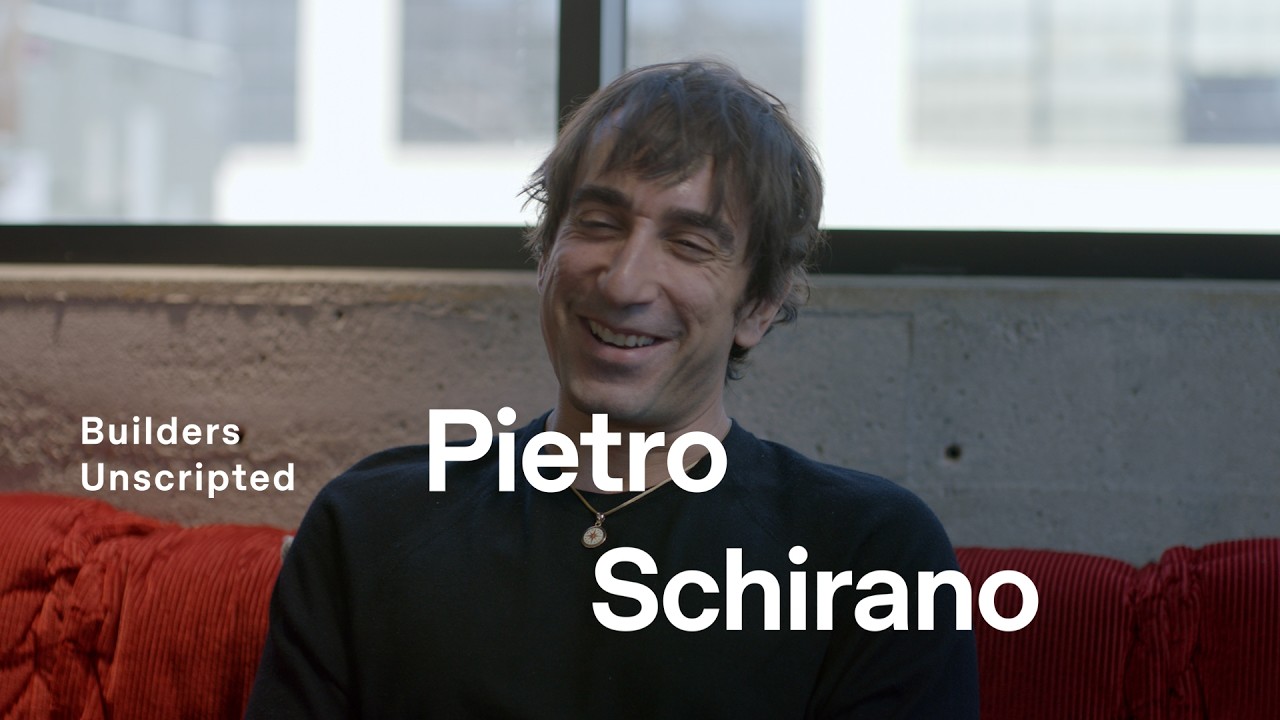
Published on YouTube by OpenAI on June 26, 2026, this video features Pietro Schirano, Founder & CEO of MagicPath, in conversation with OpenAI's Romain Huet. The episode focuses on pushing the creative boundaries of GPT-5.5 and leveraging Codex to transform ideas into fully functional software.
## TL;DR
Pietro Schirano demonstrates experimental applications built with GPT-5.5 and Codex, including an audio-visual cryptographic tool that translates images into harmonic music and back, a multi-modal writing app called Odysseus, and a custom game deployed onto obsolete security hardware. He shares his multi-agent prompting techniques, such as using custom shortcuts to orchestrate persistent autonomous workflows, and discusses how Codex acts as a system-wide assistant for desktop tasks and metrics. Finally, Schirano discusses MagicPath's vision for human-agent collaboration and how AI acts as an equalizer that shifts human work from manual execution to directing autonomous systems.
## Atmosphere & style
The conversation carries a lighthearted, playful, and energetic vibe from the start, opening with Schirano ad-libbing a song about needing 'more tokens.' The dynamic between Schirano and Huet feels like two passionate, tech-forward peers casually exploring a modern digital frontier together. Fueled by genuine curiosity and awe, the host and guest share an optimistic tone as they showcase creative hacks, blending technical ambition with a sense of wonder.
## Key takeaways
- [00:17](https://www.youtube.com/watch?v=SPC_yCe1cUw&t=17s) GPT-5.5 enables native visual and spatial reasoning without the need for traditional manual grid overlays.
- [03:45](https://www.youtube.com/watch?v=SPC_yCe1cUw&t=225s) Pietro Schirano built a bi-directional app in one shot that converts image Base64 data into harmonic audio compositions and reconstructs the image back from sound.
- [07:57](https://www.youtube.com/watch?v=SPC_yCe1cUw&t=477s) Custom shortcut commands like 'Spawn', 'Agent', 'PR', and 'Debug' optimize multi-agent orchestration and long-horizon execution in Codex.
- [09:13](https://www.youtube.com/watch?v=SPC_yCe1cUw&t=553s) Using tools like GPT Image 2 and Codex, creators can generate complete UI assets and package functional applications in a single prompt.
- [10:24](https://www.youtube.com/watch?v=SPC_yCe1cUw&t=624s) Integrating OpenAI's Realtime Audio API with predictive text completion enables seamless multi-modal writing interfaces.
- [14:47](https://www.youtube.com/watch?v=SPC_yCe1cUw&t=887s) Codex can interface directly with legacy hardware via USB, reading serial ports to build custom games adapted to unique screen geometry and controller inputs without prior documentation.
- [17:28](https://www.youtube.com/watch?v=SPC_yCe1cUw&t=1048s) Hardware controls can act as physical notification hubs, using haptics and display messages to alert users when unsupervised long-running Codex tasks complete.
- [19:00](https://www.youtube.com/watch?v=SPC_yCe1cUw&t=1140s) MagicPath uses an infinite canvas to collapse traditional product roles (engineering, design, product management) into a unified collaboration space powered by AI.
- [19:00](https://www.youtube.com/watch?v=SPC_yCe1cUw&t=1140s) Small core teams leveraging GPT-5.5 and Codex can achieve the software output and development velocity of enterprise engineering teams.
- [22:04](https://www.youtube.com/watch?v=SPC_yCe1cUw&t=1324s) Codex extends beyond coding into general computing automation, handling local file organization, metadata cleanup, and database metric reporting via MCP tools.
- [22:04](https://www.youtube.com/watch?v=SPC_yCe1cUw&t=1324s) Accelerated AI development drastically compresses product feedback cycles, allowing teams to test and deploy feature updates in a single day.
- [25:27](https://www.youtube.com/watch?v=SPC_yCe1cUw&t=1527s) The primary role of human builders is shifting from manual, granular execution to directing and supervising autonomous AI agent workflows.
- [25:27](https://www.youtube.com/watch?v=SPC_yCe1cUw&t=1527s) Global access to frontier AI models levels the playing field, democratizing the ability to turn software ideas into reality regardless of geography.
The session begins with Pietro Schirano playfully ad-libbing a song about needing "more tokens," setting a lighthearted tone with OpenAI's Romain Huet. Romain introduces Pietro as a multifaceted creator—a musician, engineer, designer, founder, and "AI whisperer." When asked how his mind navigates so many domains, Pietro compares exploring modern AI to historical navigation, citing a quote about being born too late for the sea but too early for the stars. For him, AI offers a brand-new frontier—the latent space—where creators can explore like a modern-day Magellan or Marco Polo.
When evaluating new frontier models like GPT-5.5, Pietro focuses on finding edge cases and new capabilities that were previously impossible. He describes GPT-5.5 as a massive step change where complex tasks "just work." Unlike previous vision workflows where images required overlay grids to help the model identify spatial locations, GPT-5.5 reasons natively about coordinates and visual context without artificial prompting aids. His personal evaluation process prioritizes finding unconventional applications centered on creativity and fun, such as using models as creative directors to guide other AI design agents.
- **Personal Evaluation Suite:** Tests agentic tool usage, spatial vision reasoning, multi-agent orchestration, and creative execution.
- **Vision Benchmarking:** Eliminates the need for manual grid overlays, allowing native spatial reasoning across visual UI elements.
---
[03:45](https://www.youtube.com/watch?v=SPC_yCe1cUw&t=225s) Converting Images into Sound
Pietro demonstrates an experimental app built in one shot using Codex and GPT-5.5 that translates images into harmonic audio signatures and back again. Loading the OpenAI logo into the interface, the app processes the file's data into a musical composition. When the audio file is re-uploaded, the system reverses the transformation to reconstruct the original image perfectly. Pietro compares this acoustic data transmission to the alien communication scene in Steven Spielberg's *Close Encounters of the Third Kind*.
The underlying pipeline coordinates image parsing, Base64 data encoding, cryptographic integrity, and music theory concepts to produce an aesthetically pleasing song rather than raw noise. Beyond technical execution, Pietro emphasizes the psychological shift required for builders: creators must abandon self-imposed constraints and ask what they would build if they weren't afraid of technical limitations.
- **Audio-Visual Cryptography:** Encodes Base64 image payload structures directly into harmonic musical frequencies.
- **Bi-Directional Reconstruction:** Restores the exact source image directly from the exported audio signal.
---
[07:57](https://www.youtube.com/watch?v=SPC_yCe1cUw&t=477s) Multi-Agent Workflows and Systems in Codex
Transitioning to developer workflows, Pietro shares his testing methodology when receiving early access to new models. He focuses on three core pillars: precise instruction following, task execution fidelity, and multi-agent direction capabilities. He uses custom text-replacement shortcuts to command Codex efficiently during long sessions:
- `Spawn`: Triggers Codex to spin up multiple parallel sub-agents to divide complex tasks.
- `Agent`: Injects a persistent system prompt reminding the model to maintain autonomous goal completion without stopping prematurely.
- `PR`: Instructs the agent to review repo context and open a formal pull request.
- `Debug`: Triggers a full post-session review of all generated code to catch potential edge cases, regressions, and hidden bugs.
Pietro highlights that long-horizon task execution—running autonomously for hours—is the key lever for unlocking productivity. He notes that native platform features, such as OpenAI's `/goal` command in Codex, align directly with the custom agentic prompting structures early power users developed.
---
[09:13](https://www.youtube.com/watch?v=SPC_yCe1cUw&t=553s) Rapid Design Execution with Odysseus
To illustrate how multi-modal models streamline creative workflows, Pietro shares an autocomplete writing application called **Odysseus**, named after the protagonist of Homer's *Odyssey*. The app's name reflects navigating an "infinite sea of possibilities" when co-writing with AI. Rather than spending hours in Photoshop crafting layer gradients, borders, and textures as he would have done 15 years ago, Pietro generated the full app icon—featuring a classic Greek ship merged with a feather quill—in a single shot using GPT-5.5 and GPT Image 2.
```
"Can you give me an app icon that has a Greek ship and a quill?"
│
▼
[GPT-5.5 / GPT Image 2 One-Shot Generation]
│
▼
[High-Resolution Icon & Packaged DMG Application File]
```
Pietro describes modern code as a "malleable, clay-like medium." Just as point-and-shoot cameras democratized photography for non-painters, AI coding tools like Codex allow anyone to take a rapid "snapshot of an idea" and turn it into functional software without getting bogged down in manual execution details.
- **Icon Generation:** Produced production-ready macOS app assets (including embedded gradients and textures) via a single prompt.
- **Turnkey Packaging:** Bundled the completed application directly into a deployable DMG installer file.
---
[10:24](https://www.youtube.com/watch?v=SPC_yCe1cUw&t=624s) Real-Time Multi-Modal Integration in Odysseus
Inside the Odysseus interface, Pietro demonstrates real-time human-AI writing collaboration. Humans excel at processing dense sensory inputs but encounter bottlenecks when outputting text. Odysseus bridges this gap by offering predictive autocompletion as the user types or presses tab, as well as mid-sentence text insertion.
The application incorporates OpenAI's Realtime Audio API, allowing users to switch fluidly between voice dictation and typed text. As Pietro speaks, the system transcribes his voice live on screen and immediately allows GPT-5.5 to complete the thought in prose. The interface features integrated dark mode formatting, dynamic text styling commands, and fluid modality switching to make software feel like a natural extension of human thought.
- **Realtime Audio Stream:** Uses OpenAI's Realtime Audio models to capture speech and render live text directly within the editor.
- **Contextual In-line Insertion:** Analyzes surrounding text blocks to generate context-aware sentence completions mid-paragraph.
- **UI Architecture:** Features full dark-mode styling, inline rich-text formatting shortcuts, and multi-modal mode switching.
<ElicitationsGroup message="Explore related workflows and model capabilities:">
<Elicitation label="Explore multi-agent workflows in Codex" query="How do I set up multi-agent workflows and sub-agents in OpenAI Codex like Pietro Schirano described?"/>
<Elicitation label="Build real-time audio apps with GPT-5.5" query="How can I use OpenAI's Realtime Audio API to build an app that combines speech transcription and AI text autocompletion?"/>
</ElicitationsGroup>
[14:47](https://www.youtube.com/watch?v=SPC_yCe1cUw&t=887s) Reviving Obsolete Hardware with Codex
Romain Huet and Pietro Schirano dive into Pietro's passion for bridging cutting-edge AI frontiers with vintage, obsolete electronics. Pietro highlights an environmental aspect to this hobby: instead of letting broken or retired gadgets sit indefinitely in office drawers, developers can repurpose them into playful or practical tools using modern models.
To demonstrate, Pietro presents a security control terminal device—a rugged "working device." Unsure of how to build for its unusual screen orientation, he connected the hardware directly to Codex via USB and asked the model to read the port. Without prior documentation specifying that vertical scrolling was possible, Codex examined the connected device, read its firmware and serial details, and engineered a fully functional, vertically scrolling *Doodle Jump* clone in a single prompt. Pietro notes that Codex even correctly mapped fine-grained analog sensitivity for short versus long presses on the controller to enable smooth movement and double-jumping.
- **USB Device Inspection:** Connected directly to Codex; Schirano simply prompted the model to "read the USB," allowing Codex to identify the hardware and serial information without prior API instructions for vertical scrolling.
- **Single-Prompt Game Generation:** Codex authored a *Doodle Jump* clone tailored to the device's unique screen aspect ratio in just one prompt.
- **Hardware Sensing:** Codex inferred the analog controller's input sensitivity, translating short and long button presses into distinct mechanics like double jumps.
[17:28](https://www.youtube.com/watch?v=SPC_yCe1cUw&t=1048s) Hardware Control as an Unsupervised Workflow Notifier
Moving beyond pure novelty, Pietro shows how he adapted the same hardware device to solve a practical productivity problem. Because long-running Codex tasks can execute unsupervised for 10 to 30 minutes, Pietro built an integration where Codex sends notifications back to the physical device.
The device now acts as a dedicated desktop remote and status indicator. When Codex finishes running complex tasks in the background, it triggers the device to vibrate and display a completion message, allowing Pietro to step away from his desk to grab coffee without worrying about whether a job got stuck.
- **Desktop Remote Interface:** Built a system where Codex sends completion alerts, title headers, and status messages to the physical device.
- **Haptic Alerts:** Uses physical vibration cues so the user knows an unsupervised background process has completed while away from the screen.
[19:00](https://www.youtube.com/watch?v=SPC_yCe1cUw&t=1140s) MagicPath and the Collapse of Traditional Product Roles
Pietro transitions to discussing his startup, MagicPath, an infinite canvas platform designed for agents and humans to collaborate, design, and build software together. MagicPath aims to be the unified workspace for product teams, solving the friction that occurs when product managers, designers, and engineers use disparate tools. Pietro and Romain reflect on how frontier models act as a "translation layer" and equalizer across these disciplines.
Celebrating its one-year anniversary, MagicPath is preparing for its 2.0 release, a milestone Pietro credits directly to GPT-5.5 and Codex. With a core product team of just six people, deploying Codex across the company acts as a force multiplier—effectively granting the startup the bandwidth of 100 to 200 virtual developers or a concentrated group of top-tier engineers.
- **MagicPath Overview:** An infinite canvas workspace serving as a shared context hub for AI agents and human collaborators across web, mobile, and IDE setups.
- **Team Scale & Output:** A 6-person core product team leveraging GPT-5.5 to achieve the development velocity of a far larger engineering organization.
- **Pull Request Multiplier:** Pietro notes his personal pull request output increased tenfold following the integration of GPT-5.5.
- **Founder's Balance:** Pietro discusses the internal conflict between his desire to continuously build code using AI and his primary founder duties like fundraising and client relations.
[22:04](https://www.youtube.com/watch?v=SPC_yCe1cUw&t=1324s) Codex as a System-Wide Assistant and Accelerated Feedback Loops
Pietro shares how deeply Codex has integrated into his daily life, mentioning lightheartedly that he uses it so continuously that his girlfriend jokingly asked who he was constantly chatting with. Rather than restricting Codex to coding, he relies on it as an everyday system assistant. Because Codex has local environment access, Pietro uses it to reorganize computer files, repair metadata and cover art across old music libraries, write Apple Notes, and compile investor dashboards by connecting Model Context Protocol (MCP) integrations for Stripe and Mixpanel. Romain notes that this non-technical expansion is mirrored within OpenAI, where legal, finance, and HR teams use Codex daily.
This dramatic increase in execution speed has fundamentally transformed customer feedback loops. Instead of waiting months for user feedback cycles typical in traditional big tech environments, MagicPath can prototype and ship new features to beta testers within a single day, gathering immediate human reactions to refine the product direction.
- **Everyday System Utilities:** Uses Codex for desktop file organization, Apple Notes generation, and audio metadata tagging.
- **Data & Dashboarding:** Integrates MCP tools (e.g., Stripe, Mixpanel) directly with Codex to generate visual dashboards and metrics for investors.
- **Enterprise-Wide Adoption:** OpenAI observed similar non-technical usage across internal legal, finance, and HR departments, driving efforts to simplify onboarding.
- **Rapid Beta Cycles:** Ships real-time feature iterations to MagicPath beta testers in single-day cycles rather than multi-month development arcs.
[25:27](https://www.youtube.com/watch?v=SPC_yCe1cUw&t=1527s) From Doing to Directing: AI as the Equalizer of Time
Pietro reflects on his core thesis for founding MagicPath: the shift from direct execution to directing autonomous agents. He views AI tools as a way for humans to reclaim time—reducing multi-month software project timelines down to weeks so people can spend more time away from their desks with family and friends.
Closing the conversation, Pietro expresses optimism about the global democratization of intelligence. Reflecting on his childhood in Italy, where technical resources and US-style startup opportunities were limited, he emphasizes how open access to frontier compute levels the playing field for creators worldwide, turning anyone with an idea into a builder.
- **Supervision & Direction:** Work is shifting toward asynchronous prompt-driven direction via mobile interfaces (e.g., triggering agent workflows on OpenClaw at 2:00 AM) rather than manual desk work.
- **Human Time Reclaiming:** Frames AI acceleration as a tool to drastically compress project cycles and return free time to creators.
- **Democratization of Tech:** Pietro highlights how equal access to advanced AI models levels global opportunity for aspiring builders regardless of geographic location.
## Notable quotes
> [00:17](https://www.youtube.com/watch?v=SPC_yCe1cUw&t=17s) more tokens — Pietro Schirano
> [00:17](https://www.youtube.com/watch?v=SPC_yCe1cUw&t=17s) born too late for the sea but too early for the stars — Pietro Schirano
> [00:17](https://www.youtube.com/watch?v=SPC_yCe1cUw&t=17s) just work — Pietro Schirano
> [03:45](https://www.youtube.com/watch?v=SPC_yCe1cUw&t=225s) Close Encounters of the Third Kind — Pietro Schirano
> [07:57](https://www.youtube.com/watch?v=SPC_yCe1cUw&t=477s) Spawn — Pietro Schirano
> [07:57](https://www.youtube.com/watch?v=SPC_yCe1cUw&t=477s) Agent — Pietro Schirano
> [07:57](https://www.youtube.com/watch?v=SPC_yCe1cUw&t=477s) PR — Pietro Schirano
> [07:57](https://www.youtube.com/watch?v=SPC_yCe1cUw&t=477s) Debug — Pietro Schirano
> [09:13](https://www.youtube.com/watch?v=SPC_yCe1cUw&t=553s) Odysseus — Pietro Schirano
> [09:13](https://www.youtube.com/watch?v=SPC_yCe1cUw&t=553s) infinite sea of possibilities — Pietro Schirano
> [09:13](https://www.youtube.com/watch?v=SPC_yCe1cUw&t=553s) malleable, clay-like medium — Pietro Schirano
> [09:13](https://www.youtube.com/watch?v=SPC_yCe1cUw&t=553s) snapshot of an idea — Pietro Schirano
> [14:47](https://www.youtube.com/watch?v=SPC_yCe1cUw&t=887s) working device — Pietro Schirano
> [14:47](https://www.youtube.com/watch?v=SPC_yCe1cUw&t=887s) read the USB — Pietro Schirano
> [19:00](https://www.youtube.com/watch?v=SPC_yCe1cUw&t=1140s) translation layer — Pietro Schirano
## Mentioned
Pietro Schirano, Romain Huet, OpenAI, MagicPath, GPT-5.5, Codex, Steven Spielberg, Close Encounters of the Third Kind, Base64, Odysseus, Homer, Odyssey, Photoshop, GPT Image 2, Realtime Audio API, Doodle Jump, Model Context Protocol, MCP, Stripe, Mixpanel, Apple Notes, OpenClaw, Italy, US
Creator and MagicPath founder Pietro Schirano argues that frontier AI models like GPT-5.5 and OpenAI Codex are transforming software development from manual syntax execution into high-level agent direction. By combining native multimodal reasoning with long-horizon autonomous workflows, individuals and small teams can rapidly bridge software creation, legacy hardware control, and everyday operations.
Native Multimodal Reasoning and Creative Translation (0:17)
Schirano evaluates frontier models by probing their edge capabilities, noting that GPT-5.5 exhibits native spatial and coordinate reasoning that eliminates the need for manual prompting aids like visual grid overlays. This spatial understanding enables seamless multimodal conversions, such as an experimental application built with Codex that converts Base64 image files into harmonic audio compositions and reverses the process to reconstruct the original image file without data loss.
Schirano demonstrates this workflow in Odysseus, a co-writing desktop application whose icon and packaging were generated in a single prompt using GPT-5.5 and GPT Image 2. By combining OpenAI's Realtime Audio API with predictive text completion, the editor lets users switch between voice dictation and typed prose with inline autocompletion. Schirano characterizes modern code as a malleable medium, arguing that multi-modal models allow builders to capture rapid concepts and translate them into deployable software without manual design overhead.
Autonomous Task Execution and Physical Hardware Integration (14:47)
To handle complex programming sessions, Schirano uses custom Codex prompt shortcuts—including commands to spawn parallel sub-agents, enforce autonomous task completion, trigger repository pull requests, and audit code for edge-case regressions. Noting that productivity scales with long-horizon execution that runs independently for 10 to 30 minutes or hours, Schirano aligns this workflow with platform features like OpenAI's native /goal command.
Schirano extended these autonomous capabilities to physical hardware by connecting an obsolete security terminal to Codex via USB without technical documentation. Prompted only to inspect the USB port, Codex identified the hardware and serial data, inferred the analog controller's short- and long-press input sensitivity, and generated a functional vertically scrolling Doodle Jump clone tailored to the device's screen ratio in a single prompt. Schirano subsequently programmed the terminal to act as an external desk remote that provides haptic vibration alerts whenever Codex finishes long background tasks.
Operational Velocity and System-Wide Automation (19:00)
At MagicPath, an infinite canvas platform for human and agent collaboration, Schirano reports that a six-person core product team achieves the development velocity of 100 to 200 engineers by deploying GPT-5.5 and Codex. Schirano notes that his personal pull request output increased tenfold, enabling the startup to compress feature development cycles and ship iterative updates to beta testers within a single day rather than waiting across traditional multi-month corporate timelines.
Beyond writing software, Schirano uses Codex as an everyday desktop utility for file system management, music metadata restoration, Apple Notes composition, and financial tracking via Model Context Protocol (MCP) integrations with Stripe and Mixpanel. OpenAI's Romain Huet notes that this operational expansion mirrors internal trends at OpenAI, where non-technical divisions such as legal, human resources, and finance use Codex to automate routine reporting and workflows.
Shifting from Execution to High-Level Direction (25:27)
Schirano describes a fundamental transition from manual technical labor to directing autonomous agents, often supervising workflows asynchronously via mobile interfaces rather than sitting at a workstation. In his view, the primary promise of this technological leverage is the reclamation of human time, compressing multi-month development arcs into weeks so creators can focus on life outside work.
Reflecting on his upbringing in Italy with limited local access to traditional startup capital and technical infrastructure, Schirano argues that global access to frontier compute democratizes software creation. In his assessment, equal access to high-capability models levels the competitive playing field, enabling builders worldwide to execute complex ideas regardless of geographic location.
While Schirano emphasizes that autonomous tools dramatically lower barriers to software creation, he highlights an ongoing challenge for founders: balancing the technical impulse to continuously build software using AI against primary executive obligations, including client relationships and fundraising.
## Background
该视频由 OpenAI 官方频道于 2026 年 7 月 3 日发布在 YouTube 平台上,是《Builders Unscripted》访谈系列的第 4 集。视频简介说明,主持人 Romain Huet 与 MagicPath 创始人兼 CEO Pietro Schirano 展开对话,共同探讨如何探索 GPT-5.5 的创造力极限,并借助 Codex 将前沿灵感直接转化为可用软件。
## TL;DR
访谈围绕 Pietro Schirano 作为 OpenAI 模型早期测试者和创业者的前沿实践展开。Pietro 演示了基于 GPT-5.5 与 Codex 实现的图像与和谐音乐无损互转原型、集成 Realtime 语音模型的写作工具 Odysseus,以及仅凭极简指令逆向激活旧硬件并运行《涂鸦跳跃》和自制物理震动提醒器的硬核案例。结合自身创办 MagicPath 的经历,他深入阐述了如何利用多智能体快捷指令驱动微型团队实现超常效能,并指出软件开发正从“亲历亲为”迈向“全盘监督”,AI 正在赋予全球创作者超越地理与技能限制的创造自由。
## Atmosphere & style
整场对话洋溢着极客浪漫主义与纯粹的探索激情,从开场即兴哼唱“需要更多 Token”的默契玩笑,到畅想潜空间探险时的两眼放光,气氛既轻松惬意又充满前沿张力。Pietro 兼具资深设计师的审美敏感与黑客般的动手狂热,与主持人 Romain 的深度技术共鸣让整场交流行云流水、毫不做作。伴随着旧硬件重获新生与夜以继日的突发奇想,对谈最终升华至“AI 作为人类对时间的复仇”与智能平权的宏大愿景,带给观众一种兼具狂喜与深思的感染力。
## Bulletin
- [01:34](https://www.youtube.com/watch?v=SPC_yCe1cUw&t=94s) GPT-5.5 在视觉推理与多模态代码生成上取得质的飞跃,不仅彻底摒弃了此前需要叠加坐标网格辅助定位的做法,还能在一次 Prompt 下实现复杂的图像与加密音频互转。
- [15:36](https://www.youtube.com/watch?v=SPC_yCe1cUw&t=936s) Codex 的能力已拓展至底层硬件逆向与适配:在仅有一条“读取 USB 设备”指令且缺乏官方文档支持的情况下,Codex 自主摸透硬件底层驱动,成功为冷门安全设备移植了竖屏运行的复古游戏。
- [20:25](https://www.youtube.com/watch?v=SPC_yCe1cUw&t=1225s) 人机协作正全面从“亲力亲为(doing)”转向“全盘监督(supervision)”,6 人的小团队借助 Codex 获得了等同于 100 至 200 名开发者的杠杆效能,将六个月的研发周期压缩至两周。
- [22:06](https://www.youtube.com/watch?v=SPC_yCe1cUw&t=1326s) 通过 MCP 协议打通 Stripe 和 Mixpanel 等业务接口,Codex 正演变为非技术部门广泛使用的系统级执行者与全能数字生活助理,推动全球范围内的智能与机会平权。
## Key takeaways
- [00:17](https://www.youtube.com/watch?v=SPC_yCe1cUw&t=17s) 探索 AI 潜空间(Latent Space)如同现代版的地理大发现,面对新一代模型,开发者最大的阻碍是对未知的自我设限与恐惧。
- [01:34](https://www.youtube.com/watch?v=SPC_yCe1cUw&t=94s) GPT-5.5 在视觉能力和推理上实现了飞跃,能够直接推断界面重点与点击逻辑,不再依赖早期 GPT Vision 所需的人工坐标网格。
- [03:45](https://www.youtube.com/watch?v=SPC_yCe1cUw&t=225s) 利用 GPT-5.5 和 Codex 可通过一次尝试(one-shot)构建高难度加密应用,完成图像 Base64 编码与和谐旋律的双向无损转换。
- [05:58](https://www.youtube.com/watch?v=SPC_yCe1cUw&t=358s) Pietro 评估新模型的核心三要素为指令遵循度、端到端任务执行力以及拆解调度子智能体的总监级能力。
- [05:58](https://www.youtube.com/watch?v=SPC_yCe1cUw&t=358s) 通过定义 `agent`、`spawn`、`PR`、`debug` 等文本快捷指令,开发者可驱动多智能体长时间并发执行复杂长程任务与代码审查。
- [08:57](https://www.youtube.com/watch?v=SPC_yCe1cUw&t=537s) 设计流程发生根本性重塑,过去在 Photoshop 中需耗费数天调节的复杂高质感图标,现在通过前沿模型单次 Prompt 即可直接落地生产级资产。
- [11:09](https://www.youtube.com/watch?v=SPC_yCe1cUw&t=669s) 人类感知输入带宽极高但表达输出狭窄,集成 Realtime API 的写作工具 Odysseus 将 AI 变成了创作者大脑的即时延展与思考快照。
- [13:30](https://www.youtube.com/watch?v=SPC_yCe1cUw&t=810s) 纯软件开发能力已渐趋饱和,将前沿模型的深度代码推理应用于堆积在抽屉中的旧硬件与专有固件,开辟了极客考古与化废为宝的新边界。
- [15:36](https://www.youtube.com/watch?v=SPC_yCe1cUw&t=936s) Codex 在官方 API 未公开竖向渲染与电位特性的情况下,自驱攻克底层驱动,成功为便携安全设备定制出适配微型摇杆的跳跃游戏。
- [17:33](https://www.youtube.com/watch?v=SPC_yCe1cUw&t=1053s) 利用旧硬件改造震动提示器,为 Codex 耗时 10 至 30 分钟的自主长程任务提供物理触觉反馈,使开发者能真正离开工位而无需焦虑监控。
- [19:09](https://www.youtube.com/watch?v=SPC_yCe1cUw&t=1149s) MagicPath 致力于构建 Agent 与人类共同设计的“无限画布”,通过 AI 充当无缝的翻译层与平权器,打破 PM、设计师与工程师之间的职责壁垒。
- [20:25](https://www.youtube.com/watch?v=SPC_yCe1cUw&t=1225s) AI 为小微团队带来数十倍的人力杠杆,但同时也对创始人提出了克制“代码手痒”、从个人工程实现转向团队与战略管理的心智挑战。
- [22:06](https://www.youtube.com/watch?v=SPC_yCe1cUw&t=1326s) Codex 借助 MCP 协议直连业务系统 API,从底层原始数据直接生成高保真设计看板,在 OpenAI 内部已被法律、财务等非技术人员广泛使用。
- [24:06](https://www.youtube.com/watch?v=SPC_yCe1cUw&t=1446s) 超越单纯的原型探索(Vibe Coding),AI 最大的价值是实现“一天拉起新功能并直面真实用户反馈”的极速商业闭环。
- [25:27](https://www.youtube.com/watch?v=SPC_yCe1cUw&t=1527s) 未来生产力范式正彻底转向全盘监督(supervision),分布式智能体接管了具体搬砖干活(doing),人类的核心职责转变为战略指引与调度(directing)。
- [26:05](https://www.youtube.com/watch?v=SPC_yCe1cUw&t=1565s) AI 异步执行是“人类对时间的复仇”,大幅压缩研发工期并将宝贵的时间资产交还给创作者,用于陪伴家人和享受现实生活。
- [27:02](https://www.youtube.com/watch?v=SPC_yCe1cUw&t=1622s) 顶级大模型与算力的全球普及消弭了非核心区域与硅谷等技术中心的资源鸿沟,带来了无与伦比的创造力欣快感与全球智能平权。
## Detailed walkthrough
### [00:17](https://www.youtube.com/watch?v=SPC_yCe1cUw&t=17s) 开场切磋与潜空间探险家的心境
节目在一阵轻松幽默的寒暄中拉开序幕。Romain Huet 打趣问 Pietro Schirano 是不是正在为《Builders Unscripted》谱写主题曲,Pietro 顺势哼唱起即兴创作的歌词:“Tokens, oh, I need more”,引得两人哈哈大笑。Romain 称赞 Pietro 是一位身兼数职的全才——不仅是音乐人、工程师、设计师与创业者(MagicPath 创始人兼 CEO),更是一位名副其实的“AI 窃窃私语者(AI whisperer)”和 OpenAI 各代模型的早期测试者。
当被问及这种跨领域的充沛创造力究竟源于何种思维方式时,Pietro 引用了一句深得他心的话:“我们出生太晚,没能探索大海;出生太早,未能漫步星空(We're born too late for the sea, but too early for the stars)。”在 Pietro 看来,AI 的诞生恰好为当代人开辟了全新的未开拓疆域——潜空间(Latent Space)。探索潜空间就像当年的麦哲伦或马可·波罗扬帆远航一样,深入这项前沿技术的思想腹地,去勘测并突破人类所能抵达的边界,这让他感到由衷的兴奋。
### [01:34](https://www.youtube.com/watch?v=SPC_yCe1cUw&t=94s) 试水 GPT-5.5:从网格覆盖到视觉推理的跃迁
Pietro 作为 OpenAI 模型的早期测试者,习惯用非常独特的视角审视每一代新模型,去寻找那些上一代模型无法触及的边缘能力。谈及初次在 Beta 测试中体验 GPT-5.5 的感受,Pietro 直言那是一种被彻底震撼的“质的飞跃(big step change)”,许多以往极难实现的事情如今居然“一把就成”。
每次拿到新模型,Pietro 都会运行一套专属的个人基准测试(evals),涵盖从多工具协同的 Agent 行为到多模态交互等诸多维度。他举了一个生动的对比例子:在早期的 GPT Vision 时代,为了让模型明白应该点击画面的哪个按钮,他必须在图片上人工叠加一层由方格组成的坐标网格(overlay grid),模型才能勉强辨认元素位于哪一个网格内;而 GPT-5.5 的视觉能力与推理水平已高度成熟,完全无需这种繁琐的辅助标记,就能直接推理出页面上的视觉重点与点击逻辑。然而,Pietro 最在意的往往是大众容易忽视的维度——模型的创造力、趣味性,以及它扮演设计师或扮演“指导其他设计智能体的创意总监”时的能力。
### [03:45](https://www.youtube.com/watch?v=SPC_yCe1cUw&t=225s) 演示:图像编码为声音,再从声音复原图像
Pietro 在笔记本电脑上展示了他用 GPT-5.5 制作的第一个实验性应用:一个将“图像转化为和谐音乐,再由音乐完美还原为图像”的加密通信原型。他当场把 OpenAI 的 Logo 图标拖入应用,点击生成歌曲,音箱中随即流淌出一串优美和谐的旋律。接着,Pietro 将这段音频下载下来,模拟接收方在另一台电脑上操作,把音频文件重新拖回应用点击还原,“砰”的一声,原本的 OpenAI Logo 完好无损地复现在屏幕上。
```mermaid
flowchart LR
accTitle: Image to Sound to Image Workflow
accDescr: Pipeline showing image encoding into music and decoding back to image.
subgraph Encode ["加密与合成阶段"]
A["输入图像 (Base64)"] --> B["GPT-5.5 + Codex 密码学编码"]
B --> C["和谐音频文件 (.wav / 音乐)"]
end
subgraph Decode ["解密与重建阶段"]
C --> D["接收端音频解析"]
D --> E["还原原始图像"]
end
```
整个应用完全是由 Codex 配合 GPT-5.5 在“一次尝试(one-shot)”下构建完成的。Pietro 感叹这背后的技术栈极为复杂,既涉及 Base64 编码与密码学,又需要理解怎样才算“悦耳好听的音乐”。这个点子不禁让人联想到史蒂文·斯皮尔伯格执导的经典科幻电影《第三类接触》(Close Encounters of the Third Kind)片尾人类科学家通过特定音乐旋律与外星人交流的桥段。Pietro 强调,面对新一代 AI,人类最大的束缚往往是自我设限的恐惧,只要敢于放飞想象力,“没有任何想法是过于疯狂的”。
- **底层技术考量**:将图像的 Base64 数据与音频信号的频率、谐波进行双向加密映射,保证审美层面的音乐和谐度与数据层面的无损还原。
- **创作思维**:打破“工具做不到”的预设心理障碍,借助 GPT-5.5 极高的一次性完成率快速验证边缘想法。
### [05:58](https://www.youtube.com/watch?v=SPC_yCe1cUw&t=358s) 个人测试基准与 Codex 多智能体快捷指令系统
当 Romain 追问 Pietro 拿到 GPT Image 2 或 GPT-5.5 等新模型时具体的评估工作流时,Pietro 归纳了他最看重的三个核心支柱:
1. **指令遵循度(Instruction Following)**:评估模型是否能一丝不苟地听从引导。Pietro 提到有些模型为了安全性往往会过度防御,导致指令遵循反而倒退,但他赞赏 GPT-5 系列在“保持有问必答的实用助手角色”方面拥有罕见的一致性。
2. **任务执行力(Task Execution)**:能否准确无误地端到端交付复杂请求。
3. **指挥其他智能体的调度能力(Directing Other Agents)**:作为大脑去拆解任务并调度子智能体。
```mermaid
flowchart TD
accTitle: Codex Shortcuts and Agent Execution Flow
accDescr: Pietro's shortcut system driving multi-agent workflows in Codex.
subgraph Trigger ["文本替换快捷键 (Text Replacement)"]
S1["'agent'"]
S2["'spawn'"]
S3["'PR'"]
S4["'debug'"]
end
subgraph Action ["智能体执行与交付"]
S1 --> A1["设定长程目标 / 类似 /goal 坚持不懈直至完成"]
S2 --> A2["并发派生多个 Sub-agents 协同处理"]
S3 --> A3["基于代码库自动提交 Pull Request"]
S4 --> A4["会话结束前全面审查 Bugs、回归与边界情况"]
end
```
为了极致提升与 Codex 的交互效率,Pietro 在系统中预设了一套专属的文本替换快捷键:
- **`agent` 指令**:注入 Prompt 告诫模型:“记住你是一个自主智能体,在彻底达成最终目标前绝不要中途停下”。Romain 补充道这正是 OpenAI 官方近期正式推出 `/goal` 斜杠命令的底层逻辑。Pietro 坚信,未来技术普及与财富重新分配的关键杠杆,就是模型能否在无人干预下自主持续运行数小时之久。
- **`spawn` 指令**:让主模型即刻派生出多个子智能体(sub-agents)并发执行特定子任务。
- **`PR` 指令**:直接基于当前代码仓库审查并自动推送 Pull Request。
- **`debug` 指令**:在编码会话尾声执行全盘扫描,专门检测潜在的代码缺陷、逻辑回归以及极端的边界情况(edge cases)。
在此之上,GPT-5.5 的多模态代码生成能力同样表现惊艳。Pietro 极力推荐大家尝试“先生成设计图、再让模型将其转写为代码”的闭环流程,而这与 OpenAI 官方将 GPT Image 2 与代码生成打造成“Build Web Apps”插件的设计理念不谋而合。
### [08:57](https://www.youtube.com/watch?v=SPC_yCe1cUw&t=537s) 图标设计与写作工具 Odysseus
聊起设计实现,Pietro Schirano 指出,如今直接把设计图丢给 GPT-5.5 并由它完整实现代码,过程顺畅得近乎完美;而仅仅在四五个月之前,这种跨模态工程落地体验根本无法想象。Romain Huet 由此延伸发问:除了游戏和像素艺术,作为曾经深入设计过各类图标的资深设计师,Pietro 如何看待如今的图标设计?Pietro 随即展示了自己打造的一款名为 **Odysseus** 的自动补全写作工具。该命名取自荷马史诗《奥德赛》中的主角尤利西斯(奥德修斯),寓意着当人类与 AI 协同书写时,面对的是一片蕴含无限可能性的创作汪洋。
在为应用制作图标时,Pietro 仅仅向 Codex 提出了一个提示词:“你能帮我设计一个带有希腊古帆船和羽毛笔的应用图标吗?”结果模型一键(one-shot)直接生成了极其惊艳的设计成果,并自动打包到了 DMG 安装文件中。Pietro 感慨,如果倒退十五年,要达到同样的高水准,设计师必须在 Photoshop 中反复调整多层图层、渐变阴影、精细边框以及细腻的质感纹理,耗费数小时乃至数天的精力;而如今,这一切在一次交互中便完美交付。
- **Odysseus 命名意象**:象征借助 AI 写作时,创作者驶向了由无穷表达构成的“无限之海”。
- **传统 vs 现代图标流程**:过去需要 Photoshop 多重图层、渐变映射与精微纹理调节,耗时良久;如今利用 Codex 配合前沿模型单次 Prompt 即可直接落地生产级视觉资源。
---
### [11:09](https://www.youtube.com/watch?v=SPC_yCe1cUw&t=669s) 实时多模态交互与心智延伸
Pietro 探讨了他产品设计中一以贯之的核心母题——“人类与 AI 之间的心智连接”(human to AI mind connection)。他认为人类本质上是极其精密的“输入机器”,能够高效吞吐视觉、听觉、嗅觉等海量感官信号,但人类的“输出”通道却受限于打字或手绘速度,效率相对低下。因此,他打造 Odysseus 的初衷就是为了让 Codex 和 AI 模型成为大脑思维的直接延展。在演示中,Pietro 输入开头:“今天我要去 OpenAI 办公室,和 Romain 一起录制新一期的 Builders Unscripted。我正在考虑演示……”,随后轻按 Tab 键,GPT 模型便即刻理解上下文并补全后续逻辑;如果想在段落中间插入补充观点,模型也能无缝衔接。
更令人惊叹的是其与 OpenAI 全新 Realtime 语音模型的整合。Pietro 启动实时语音流,直接对着电脑自然言说,系统便近乎零延迟地将话语实时转录并映射为排版文字;当他停止说话,模型又能瞬时继续顺着思路向下自动补全。配合暗色模式(Dark Mode)与自然的文本格式控制(如直接对模型说“把这句加粗”),整个创作交互如同拥有了“第二大脑”。Pietro 将这种变革比作摄影术的发明:“过去并不是所有人都是出色的画家,但每个人都能拍照片;如今借助 Codex 编程,就如同为脑海中的想法拍下一张快照。”代码不再是坚硬死板的构件,而变成了像黏土一样极具延展性的“软材料”。
```mermaid
flowchart TD
accTitle: Odysseus 交互流
accDescr: 展现创作者通过按键补全与实时语音输入与模型闭环协作的流程
subgraph InputStage ["创作者多模态输入"]
A["敲击文本 / 上下文草稿"]
B["自然语音言说 (Realtime API)"]
end
subgraph ModelStage ["模型心智延展推理"]
C["上下文补全与意图识别"]
D["实时语音转写与格式解析"]
end
subgraph OutputStage ["界面动态渲染"]
E["Tab 键无缝自动补全"]
F["富文本排版 (如加粗/段落调整)"]
end
A --> C --> E
B --> D --> F
E -.-> A
```
- **人类输入与输出的失衡**:人类感知系统极强但表达输出带宽狭窄,AI 的职责在于打破输出瓶颈。
- **摄影隐喻**:人人皆可拍照,虽然未必都是摄影大师;Codex 让编程门槛大幅降低,使每个人都能随时把想法凝固为数字产品。
---
### [13:30](https://www.youtube.com/watch?v=SPC_yCe1cUw&t=810s) 探索 GPT-5.5:从纯软件到唤醒抽屉里的旧硬件
面对市面上层出不穷的全新模型,Romain 询问 Pietro 在获得 GPT-5.5 等前沿模型的早期访问权限时,通常有怎样的探索流程或习惯仪式。Pietro 坦言自己常常陷入一种兴奋与焦虑并存的状态——甚至常常夜不能寐,脑海中不断翻涌着“我还能用它创造什么”的冲动,生怕时间不够去实现所有突发奇想。但他同时敏锐地意识到,当下的前沿模型在纯电脑软件与通用代码生成方面已经极其成熟,甚至在某种程度上进入了能力“饱和”期。因此,他开始思考一些过去曾尝试过但彻底失败的边缘场景。
Pietro 的破局点落在了一个出人意料的领域:唤醒多年来堆积在抽屉底部的各类旧硬件和过时极客小玩具(gadgets)。这些硬件各具特性,有些运行 C 语言,有些运行冷门且封闭的原厂专有固件,连 Pietro 自己也从未掌握它们的底层通信协议。他突发奇想:如果让具备深度多模态与代码推理能力的 GPT-5.5 和 Codex 直接与这些旧设备对话,能否理解它们的物理与芯片本质,甚至重新为其定制现代应用?这种探索不仅极富极客浪漫,甚至带有一种化废为宝、赋予过时电子垃圾全新生命的生态环保意味。
- **前沿探索心法**:避开常规纯软件开发的舒适区,寻找过去做不到、失败过的硬核交叉边界。
- **电子极客考古**:直面未知固件、专有协议与底层 C 代码,尝试用 AI 连接未知硬件。
---
### [15:36](https://www.youtube.com/watch?v=SPC_yCe1cUw&t=936s) 用 Codex 一键爆改安全硬件:Doodle Jump 经典重现
Pietro 拿起手边一台原本用于工作与网络安全渗透检测的便携式硬件小设备(外形小巧、带有微型屏幕与摇杆按键)。横向操作这台设备时手感奇特,于是 Pietro 决定将其竖过来握持,并在上面运行一款经典游戏。整个改造过程堪称魔法:Pietro 只是把该设备通过 USB 数据线插到电脑上,随后直接对 Codex 下达了一条极简指令:“读取 USB 设备,看看这是什么。”
Codex 迅速扫描了 USB 端口,精准识别出外设型号、序列号与底层硬件架构,并回复道:“检测到该设备连接,我可以在上面做些事情。”在接下来的交互中,Codex 仅凭单次 Prompt 便为其完全重写并烧录了一款类似早期 iOS 爆款游戏《涂鸦跳跃》(Doodle Jump)的竖屏无尽跳跃游戏。令人惊叹的是,Pietro 翻阅该设备的官方 API 手册,发现官方文档中从未提及支持竖向屏幕渲染或垂直滚动视角,但 Codex 竟自行摸透底层驱动逻辑攻克了屏幕旋转难题;不仅如此,Codex 还深入解析了设备上微型模拟摇杆的电位特性,针对短按与长按设置了不同的灵敏度梯级,甚至原生实现了顺滑的“二段跳”(double jump)物理交互。原本冷门严肃的安全硬件,转瞬间变成了一台操作极其丝滑的掌上复古游戏机。
- **零配置硬件识别**:仅凭一条“Read the USB”指令,Codex 自动获取序列号与底层设备环境。
- **逆向挖掘未公开特性**:在官方 API 未记录的情况下,Codex 自主实现了屏幕竖屏渲染与垂直平滑滚动算法。
- **物理按键深度适配**:模型精确识别摇杆键程机制,支持轻按微操与长按蓄力,实现复古《Doodle Jump》的二段跳操控体验。
### [17:33](https://www.youtube.com/watch?v=SPC_yCe1cUw&t=1053s) 硬件与 Codex 的工作联动:自制远程任务完成震动提醒器
在探讨大脑与 AI 连接的语境下,Pietro 展示了他如何将闲置硬件变成实用的工作辅助工具。他让 Codex 自行编写了一个控制应用,并与该设备建立连接。这套硬件控制器具备触觉反馈功能:当 Pietro 在电脑端向 Codex 派发任务后,一旦代码执行或任务完成,设备便会产生明显的震动,并在屏幕上弹出提示信息。现场演示时,Romain 亲手感受到了强烈的震感。Pietro 笑称这个做法听起来“超级极客(so nerdy)”,但对他的日常工作流却极具价值。
随着 Codex 自主能力的跃升,Pietro 的任务处理时长经常会持续 10 分钟、20 分钟甚至半小时。在高度信任模型自主执行的同时,开发者心底难免会担心“程序是否中途卡住”。如今有了这个振动提醒硬件,他可以放心离开工位去冲杯咖啡,一旦听到或感觉到桌上设备的震动,就知道 Codex 已经收工。“你终于能够真正离开办公桌,而且清楚知道 Codex 什么时候搞定”,这个小设备俨然变成了监控 AI 后台进度的专属“物理遥控器”。
```mermaid
flowchart LR
accTitle: Codex 硬件监控工作流
accDescr: 展示 Pietro 如何利用 Codex 长时间自主运行并通过闲置硬件进行物理触觉通知
subgraph Desktop["工作站环境"]
Task["派发复杂开发任务\n(运行 10-30 分钟)"]
CodexRun["Codex 无人值守自主编码"]
Task --> CodexRun
end
subgraph Hardware["闲置硬件改造"]
App["Codex 编写的控制客户端"]
Alert["震动触觉提醒 + 任务状态通知"]
App --> Alert
end
CodexRun -- "任务完成信号" --> App
```
---
### [19:09](https://www.youtube.com/watch?v=SPC_yCe1cUw&t=1149s) 创立 MagicPath:人机协同的无限画布与角色消融
话题转向 Pietro 的创业身份。作为 MagicPath 的创始人兼首席执行官,他向 Romain 阐释了这款产品的核心定位:MagicPath 是一个面向 Agent 与人类共同设计、构建的“无限画布(infinite canvas)”。无论用户是在手机还是电脑端唤起 Codex,都可以直接接入这一共享工作空间。在 Pietro 的构想中,未来每个人都会拥有专属 Agent,其中内置了特定的偏好、记忆与业务上下文,而 MagicPath 的目标正是成为这些产品研发团队的标杆基准工具。
在传统软件团队中,产品经理、设计师与工程师之间往往职责割裂又彼此越界:PM 想做设计,设计师想懂技术,工程师又想参与产品决策。AI 的介入打破了这种藩篱,它充当了无缝的“翻译层”与“平权器(equalizer)”。然而,当前团队成员使用的工具极为分散,有人用网页版 ChatGPT,有人在 IDE 中用 Codex 搭配 GPT-5.5,MagicPath 则为 Codex 提供了一张可以自由探索、绘制与构建的可视化画布。
---
### [20:25](https://www.youtube.com/watch?v=SPC_yCe1cUw&t=1225s) 团队效能跃升与创始人内心的“工程手痒”
MagicPath 刚刚迎来创立一周年纪念,已经积累了大量企业客户,目前正准备推出 2.0 核心版本。Pietro 坦言,如果没有 GPT-5.5 和 Codex 的支持,他们根本不可能取得现在的进展,“这不是吹嘘,这就是残酷的事实”。整个 MagicPath 的产品研发团队总共只有 6 个人,在技术日新月异、必须极速迭代的 AI 时代,为每位员工配备 Codex 成了一种强效的杠杆催化器,“这就像瞬间拥有了 100 到 200 名普通开发者,或者相当于团队突然多了 5 名顶尖资深工程师”。
但技术产能的爆发也给创始人带来了幸福的烦恼。作为 CEO,Pietro 需要承担融资、客户沟通、团队关怀等管理重任,然而面对如此强大的 GPT-5.5,他内心总有一种“疯狂想要往代码库里塞新功能”的冲动。他提交的 Pull Request(PR)数量暴增了近十倍。这导致他常常陷入内心博弈:一边是极具诱惑力、分分钟就能用 AI 把点子变现的工程师手痒本能,另一边则是必须克制冲动、充分信任团队优秀成员并履行好商业职能的创始人责任。
---
### [22:06](https://www.youtube.com/watch?v=SPC_yCe1cUw&t=1326s) 超越代码编写:Codex 作为全能数字生活助理与数据看板生成器
当被问及 Codex 如何改变个人工作习惯时,Pietro 透露自己几乎整天都开着软件与 Codex 对话,以至于女朋友都开玩笑质问他:“你整天对着这个应用在跟谁聊天呢?她到底是谁?”事实上,他早已不再把 Codex 仅仅当作写代码的工具,而是作为接管日常系统的全能数字助理:
- **文件与本地系统管理**:让 Codex 整理电脑硬盘中的海量杂乱文件。
- **老旧媒体库翻新**:自动修复多年前收藏的音乐库,补全专辑封面插图、歌名和元数据。
- **会议与工作笔记记录**:将本次与 Romain 对谈的大纲直接口述给 Codex,由它自动排版并写入本地的 Apple Notes。
更强大的是借助模型上下文协议(Model Context Protocol,MCP)将 Codex 与业务系统连通。Pietro 将公司的 Mixpanel 行为分析数据和 Stripe 支付账单 API 直接挂载给 Codex。当需要向投资人汇报时,Codex 能一键拉取一手业务数据,并在 MagicPath 中直接生成精美的高保真数据看板,实现了从“底层原始数据”到“设计交付物”的端到端直接贯通。
Romain 对此感同身受,并透露在 OpenAI 内部,使用 Codex 的早已不仅是软件工程师,法律、财务、人力资源等非技术部门都在广泛使用。正因如此,OpenAI 进一步降低了 Codex 的上手门槛,并为其引入浏览器自动化与全系统操作能力,使其成为真正的系统级任务执行者。
---
### [24:06](https://www.youtube.com/watch?v=SPC_yCe1cUw&t=1446s) 超越“氛围编码”(Vibe Coding):构建即时用户反馈闭环
行业内对轻量原型开发的“氛围编码(vibe coding)”讨论热烈,但 Pietro 认为团队的实际工程实践早已远超这一阶段。AI 带来的核心突破在于将产品迭代交付速度推向了极致:
- **传统大厂研发模式**:用户调研、需求分析往往耗费数月,耗巨资把功能做出来后,市场和需求可能早已发生偏移,团队根本不确定方向是否正确。
- **AI 时代的即时闭环**:现在团队可以在一天之内将一个完整功能特性从零拉起(spawn a feature in a day)。
MagicPath 拥有一个高活跃度的核心 Beta 测试群。功能上线当天,Pietro 就可以直接扔进群里询问体验反馈,用户在几分钟内回复“这个好”或“那个不好”,团队随即就能修补完成。模型不仅能够模拟潜在客户提供预审建议,更赋予了团队超光速面向真实客户验证假设的能力。
---
### [25:27](https://www.youtube.com/watch?v=SPC_yCe1cUw&t=1527s) 从亲自干活到全局调度:监督世界的到来
谈到两人此前交流过的人机交互演进趋势,Pietro 坚定地指出:人类正在大步迈入一个由“亲自执行”转向“全盘监督(supervision)”的世界。他表示:“我对这一趋势深信不疑,甚至整家公司的底层逻辑都押注于此。如果我猜错了,那我彻底完蛋。”
在 Pietro 看来,未来的核心生产力不再体现在具体搬砖干活(doing),而在于战略层面的方向指引与工作调度(directing)。未来将由无处不在的去中心化 Agent 组成,用户无论身处何地都能随手调用。即便是在凌晨两点躺在床上,只需通过手机对 Agent 发送一条语音想法,调取某段历史背景,分布式 Agent 就能协同运转,将创意精准调度到位并转化为现实软件。
### [26:05](https://www.youtube.com/watch?v=SPC_yCe1cUw&t=1565s) 远离办公桌:AI 作为人类对时间的“复仇”
随着工作流从亲力亲为转变为指导规划,Pietro Schirano 描述了一种前所未有的创作自由:每当自己冒出一个新点子,背后的 Agent 就会自动去执行、构建并交付成品,随后发回一个可查看的链接。创作者甚至完全不需要一直守在电脑桌前,只需扫一眼成果并给出反馈即可。在 Pietro 看来,这种体验带有一种难以言喻的“浪漫”与深切的希望。他感慨道,人类唯一平等拥有的共同资产就是时间,而 AI 的本质就像是“人类对时间的复仇”(revenge of human against time)。过去打造一款软件产品往往需要耗费整整六个月的心血,而如今在 Agent 的辅助下,两周即可实现。
节省下来的海量时间让人们能够走出办公室,去陪伴家人、朋友和所爱之人。Pietro 坦言,作为初创公司的创始人,自己依然承担着繁重的工作负荷,但现在他完全可以在 Agent 于后台自动跑任务的同时,放心地离开工位去见朋友。这种工具不仅重塑了生产力,更注入了一种令人振奋的乐观主义——技术终于不再是绑架人类注意力的枷锁,而是成为代替人类在数字世界辛勤耕耘的分身。
```mermaid
flowchart LR
accTitle: 传统开发与 Agent 协作模式的时间对比
accDescr: 对比传统耗时数月的研发流程与由 Agent 异步执行的新型开发模式
subgraph OLD["传统开发模式"]
A1["构想创意"] --> A2["全天守在办公桌前"]
A2 --> A3["耗时数月手工编码"]
end
subgraph NEW["Agent 协作模式"]
B1["构思指令"] --> B2["Agent 异步构建与交付"]
B2 --> B3["随时查看反馈 / 享受生活"]
end
```
- **开发周期大幅压缩**:原本需要耗时长达六个月的产品研发,如今在 AI 的驱动下仅需约两周即可完成。
- **生活重心的回归**:节约下来的时间被重新赋予人类价值,让创业者和开发者在推进项目的同时,能有更多精力陪伴家人与朋友。
---
### [27:02](https://www.youtube.com/watch?v=SPC_yCe1cUw&t=1622s) 创造力的欣快感与智能平权
当 Romain Huet 询问 Pietro 最希望留给受众的一种感受或心境时,Pietro 毫不犹豫地形容为一种“无与伦比的欣快感”(incredible feeling of euphoria)。这种狂喜来自于创作者终于获得了一种彻底的自主掌控力——确信自己现在能够随时随地亲手做任何想做的事、构建任何想构建的软件,不再受到技能断层的阻碍。Romain 对此深表赞同,并指出这恰恰契合了 OpenAI 的核心愿景:为所有人打造工具,让现实世界中的每一个人都能成为“构建者”(builder)。
```mermaid
flowchart TD
accTitle: AI 计算力带来的机会均等化
accDescr: 全球算力普及打破地域资源壁垒,实现全球构建者的智能平权
subgraph Past["以往地域壁垒"]
P1["非核心技术区域<br>(如意大利等本土机会受限)"]
P2["技术与算力资源垄断"]
end
subgraph Now["智能平权时代"]
N1["统一访问顶级智能与算力"]
N2["全球每个人都成为构建者"]
end
Past -->|OpenAI 普及先进模型| Now
```
作为在意大利长大的开发者,Pietro 深情地回顾了自己的成长轨迹。在过去,身处意大利的普通年轻人根本无法企及美国本土所具备的优渥资源与无限机会;但如今,只要拥有这一尖端智能的入口,全球所有人的起跑线就被彻底抚平。这种技术平权(equalize)打破了地理与阶层的藩篱,让身处世界任何角落的人都能触碰顶级算力。谈话最后,Romain 衷心感谢了 Pietro 长期以来在模型正式发布前凭借自身敏锐的审美、品味和创意为 OpenAI 团队提供宝贵反馈,并期待他在 MagicPath 以及各类极客硬件改造中继续大展身手。Pietro 最终以温暖的母语“Grazie mille”致谢告别,为整场对谈画上了饱含激情与理想主义的句号。
- **走向智能平权**:顶级模型与算力的全球普及,消弭了过去像意大利等非核心技术中心与美国硅谷之间的资源鸿沟。
- **前沿共建机制**:OpenAI 借助像 Pietro 这样兼具审美与技术探索力的社区先锋,在模型正式上线前持续验证并打磨其创造力极限。
## Notable quotes
> [00:17](https://www.youtube.com/watch?v=SPC_yCe1cUw&t=17s) Tokens, oh, I need more — Pietro Schirano
> [00:17](https://www.youtube.com/watch?v=SPC_yCe1cUw&t=17s) We're born too late for the sea, but too early for the stars — Pietro Schirano
> [01:34](https://www.youtube.com/watch?v=SPC_yCe1cUw&t=94s) big step change — Pietro Schirano
> [08:57](https://www.youtube.com/watch?v=SPC_yCe1cUw&t=537s) 你能帮我设计一个带有希腊古帆船和羽毛笔的应用图标吗? — Pietro Schirano
> [11:09](https://www.youtube.com/watch?v=SPC_yCe1cUw&t=669s) 过去并不是所有人都是出色的画家,但每个人都能拍照片;如今借助 Codex 编程,就如同为脑海中的想法拍下一张快照。 — Pietro Schirano
> [15:36](https://www.youtube.com/watch?v=SPC_yCe1cUw&t=936s) 读取 USB 设备,看看这是什么。 — Pietro Schirano
> [17:33](https://www.youtube.com/watch?v=SPC_yCe1cUw&t=1053s) 你终于能够真正离开办公桌,而且清楚知道 Codex 什么时候搞定 — Pietro Schirano
> [20:25](https://www.youtube.com/watch?v=SPC_yCe1cUw&t=1225s) 这不是吹嘘,这就是残酷的事实 — Pietro Schirano
> [20:25](https://www.youtube.com/watch?v=SPC_yCe1cUw&t=1225s) 这就像瞬间拥有了 100 到 200 名普通开发者,或者相当于团队突然多了 5 名顶尖资深工程师 — Pietro Schirano
> [22:06](https://www.youtube.com/watch?v=SPC_yCe1cUw&t=1326s) 你整天对着这个应用在跟谁聊天呢?她到底是谁? — Pietro Schirano
> [25:27](https://www.youtube.com/watch?v=SPC_yCe1cUw&t=1527s) 我对这一趋势深信不疑,甚至整家公司的底层逻辑都押注于此。如果我猜错了,那我彻底完蛋。 — Pietro Schirano
> [26:05](https://www.youtube.com/watch?v=SPC_yCe1cUw&t=1565s) 人类对时间的复仇 — Pietro Schirano
> [27:02](https://www.youtube.com/watch?v=SPC_yCe1cUw&t=1622s) 无与伦比的欣快感 — Pietro Schirano
> [27:02](https://www.youtube.com/watch?v=SPC_yCe1cUw&t=1622s) Grazie mille — Pietro Schirano
## Mentioned
Pietro Schirano, Romain Huet, OpenAI, MagicPath, Builders Unscripted, GPT-5.5, Codex, GPT Vision, GPT Image 2, 史蒂文·斯皮尔伯格 (Steven Spielberg), 《第三类接触》 (Close Encounters of the Third Kind), Odysseus, Realtime API, Photoshop, Apple Notes, Doodle Jump, Mixpanel, Stripe, Model Context Protocol (MCP)
## Video description
Pietro Schirano, Founder & CEO of MagicPath sits down with Romain Huet to talk about pushing the creative edges of GPT-5.5 and using Codex to turn ideas into software.
03:45 Images into sound
07:57 Multi-agent Codex workflows
14:34 Reviving hardware with Codex
25:27 From doing to directing
[Source](https://www.youtube.com/watch?v=SPC_yCe1cUw)
Source quotes
[0:17] Pietro Schirano: Tokens, oh, I need more
[0:17] Pietro Schirano: We're born too late for the sea, but too early for the stars
[1:34] Pietro Schirano: big step change
[8:57] Pietro Schirano: 你能帮我设计一个带有希腊古帆船和羽毛笔的应用图标吗?
[11:09] Pietro Schirano: 过去并不是所有人都是出色的画家,但每个人都能拍照片;如今借助 Codex 编程,就如同为脑海中的想法拍下一张快照。
[15:36] Pietro Schirano: 读取 USB 设备,看看这是什么。
[17:33] Pietro Schirano: 你终于能够真正离开办公桌,而且清楚知道 Codex 什么时候搞定
[20:25] Pietro Schirano: 这不是吹嘘,这就是残酷的事实
[20:25] Pietro Schirano: 这就像瞬间拥有了 100 到 200 名普通开发者,或者相当于团队突然多了 5 名顶尖资深工程师
[22:06] Pietro Schirano: 你整天对着这个应用在跟谁聊天呢?她到底是谁?
[25:27] Pietro Schirano: 我对这一趋势深信不疑,甚至整家公司的底层逻辑都押注于此。如果我猜错了,那我彻底完蛋。
[26:05] Pietro Schirano: 人类对时间的复仇
[27:02] Pietro Schirano: 无与伦比的欣快感
[27:02] Pietro Schirano: Grazie mille
Source quotes
[0:17] Pietro Schirano: more tokens
[0:17] Pietro Schirano: born too late for the sea but too early for the stars
[0:17] Pietro Schirano: just work
[3:45] Pietro Schirano: Close Encounters of the Third Kind
[7:57] Pietro Schirano: Spawn
[7:57] Pietro Schirano: Agent
[7:57] Pietro Schirano: PR
[7:57] Pietro Schirano: Debug
[9:13] Pietro Schirano: Odysseus
[9:13] Pietro Schirano: infinite sea of possibilities
[9:13] Pietro Schirano: malleable, clay-like medium
[9:13] Pietro Schirano: snapshot of an idea
[14:47] Pietro Schirano: working device
[14:47] Pietro Schirano: read the USB
[19:00] Pietro Schirano: translation layer
Original transcript
[0:17] Ciao Pietro.
[0:18] Hey, what's up Roman?
[0:19] Are you writing the theme song
for Builder’s Unscripted?
[0:21] Maybe.
[0:22] Yeah, like, maybe we call it,
like, tokens or something anymore.
[0:25] Let's hear it.
[0:25] [Singing] Tokens
[0:27] [Singing] Oh, I need more
[0:29] That sounds like a great idea.
[0:31] We’ll save that for later.
[0:32] Well, I'm so excited about this one.
[0:34] You're a man of many talents.
[0:36] Thank you.
[0:36] Your musician as we can tell.
[0:38] You're also an engineer,
a designer, founder.
[0:42] I would say AI whisperer.
[0:43] Early testers of our models.
[0:46] So I'm super excited to chat.
[0:48] But to get started, I'd love to
hear, like, how does your brain work?
[0:52] How do you have so much creativity across
all of these different fields?
[0:56] Yeah. Well, first of all, thanks
so much for for having me.
[0:59] I feel like, you know,
you and I have been talking for a while.
[1:01] So this is amazing to just be here
and have this chat.
[1:04] So for me, I feel like, you know, there's
this quote, that I love, which is like,
[1:08] “We're born too late for the sea,
but too early for the stars.”
[1:12] And with AI right now, I feel like there’s
this is new field that you can explore.
[1:15] Like the latent space, right?
[1:16] It's like you can get into the mind
of this incredible new technology
[1:20] and start to explore almost like, you know,
truly like an explorer back in the days.
[1:24] Like a Magellan,
you know, or a Marco Polo.
[1:27] and just trying to figure out, you know,
what are the
[1:29] what are the things I can do
with this technology.
[1:30] And I think that to me,
it's like really exciting.
[1:32] I love that quote.
[1:33] That's super cool.
[1:34] I mean, we've seen your work from afar,
like for a long, long time.
[1:37] And then like you've been one of our early testers,
[1:39] and it's like having, access to these models because you've
[1:42] you always have, like,
an interesting lens, like you're
[1:44] looking at these models
to find the little edges and like,
[1:47] what can they do that
the previous one could not do?
[1:49] Yes.
[1:50] What was your first impression of,
like GPT 5.5, for instance?
[1:53] It was a big step change.
[1:54] I feel like there was a lot of the things
that were very hard to do in the past
[1:57] that now all of a sudden it just works.
[1:59] It's just such a, like, complete
sort of like, wave that just shocked me
[2:04] when I first I interacted with the model
in the beta testing.
[2:06] It's things like, you know, like
I have all this set of evals,
[2:09] that, personal evals that I have
every time a new model comes out.
[2:13] And those are thing from, you know,
agentic behaviors like understanding, like,
[2:16] how can I run multiple tools at the same
time or multi-model capabilities?
[2:20] Yeah.
[2:21] And I give an example,
[2:22] in the case of GPT Vision, at the time,
in order for the model to understand what to look at
[2:27] I have to provide the image in this,
like with an overlay grid on top of like squares.
[2:32] So the model would know, oh,
the bottom is in this square and whatnot.
[2:35] And now you don't have to do that, right.
[2:37] Like 5.5 it's
so good at vision capability.
[2:39] You can just reasoning around
[2:40] where to click, where to look
and like stuff like that, right.
[2:43] But ultimately what I really care
is like what kind of capabilities
[2:47] those models have that my people
may miss, right.
[2:50] And so those are things around creativity and fun.
[2:52] Like how good the model is at acting like as a designer
[2:54] or how good is the model acting as a creative director
to direct other design agents and models, right.
[3:00] And actually, you know,
[3:00] there's a really funny demo that I
the first thing I build with 5.5 was like,
[3:05] what if I could create something
where 5.5 takes an image
[3:09] and deconstructs the image in a sound,
that it's harmonic based on the picture.
[3:14] And then I can use this sound
to reconstruct the image.
[3:17] Almost sort of like a secret communication game language so that, you know,
[3:21] two people can communicate with sound
in this like secret way.
[3:24] And I was like, there's no way it's going to get this
right because it's like a very complex,
[3:26] you know,
there's like cryptography involved.
[3:28] There's like the how good
the music needs to be.
[3:30] How are you comparing like the Base64 of the image to sound.
[3:34] And I was like,
there's no way I'm going to get it right.
[3:36] And then I did it and it just worked.
[3:38] And it was crazy.
[3:39] Why don't we take a look at your laptop
[3:41] and you show me a little bit what you've been building with these new models?
[3:44] Yes.
[3:45] So the first thing that I built with 5.5,
[3:48] so going back to this idea of, like,
how can we poke the model for creativity
[3:52] and so, like, you know, fun ideas, like,
out of the ordinary ideas.
[3:55] So what I did,
I basically built this app right.
[3:58] And so what this app can do,
it's pretty crazy.
[4:01] So it can convert an image into a sound.
[4:03] And then from a sound back to an image.
[4:05] Almost like a secret communication way
between different people.
[4:10] And so what I'm going to do right now,
I'm going to take the OpenAI logo here.
[4:13] So I'm going to pop it right here and
then I'm going to ask to create a song and
[4:18] [Music plays]
[4:19] And Codex plus 5.5 was basically able to do this
like in one shot.
[4:24] And I was like mind blown.
[4:25] Because like, there's
so much going on here.
[4:27] There is cryptography going on
there is like understanding, you know,
[4:31] what does even mean
to make a beautiful song?
[4:33] Wow.
[4:33] And, you know, there's this movie,
I think it's called,
[4:37] Contact from the Third Kind is like an old
Steven Spielberg movie in the 1980s.
[4:41] And there is at the very end of the movie,
I don't know if you remember this.
[4:44] The scientists are communicating
with the aliens
[4:47] and the way the aliens communicated,
[4:49] it is actually very similar to this,
which I was kind of impressed.
[4:52] That’s cool.
[4:52] It sounds really good.
[4:54] It sounds really good, right?
[4:54] And so, what I can do now,
I can download this sound
[4:57] and then I'm going to pretend now, know you, that I sent it, that you’re accessing this app on your computer.
[5:01] Okay.
[5:01] Right.
[5:02] And what I'm going to do, I'm
going to take this sound, drag it back here
[5:06] and I'm going to ask
to recover the image.
[5:07] Boom.
[5:08] And now I have the image there.
[5:09] So we convert
[5:11] Yeah.
[5:11] Basically like an image to sound
and from sound back.
[5:13] What?
[5:14] How is that possible?
[5:15] It’s, I know and it's like, that’s the kind of
[5:18] So for me, like, this is what's important
when you think about AI, it's like,
[5:22] what can I do?
[5:23] Right? Like what,
[5:24] no idea is too crazy, right?
[5:25] I think there's an element of
just your imagination.
[5:29] Like, you know, your imagination
shouldn't be like you're constraint.
[5:31] Just feel free.
[5:32] And also, if there is an element
where, you know, as the model gets better,
[5:35] you really need to start thinking about
[5:37] what are the things I can do
if I wasn't afraid, right.
[5:39] Right.
[5:40] Because I think, like as humans,
[5:41] we always have this sort of like walls
a little bit.
[5:44] Or it’s like, oh, can this be done?
[5:45] Can this be, you know,
but just try and like now, you know,
[5:48] 5.5 it's so good that it gets those thing
right.
[5:51] That's really awesome because like,
you have like your musician background
[5:55] that can help you have these ideas.
[5:57] This is so cool.
[5:58] And you talking about evals too,
like I'm curious, like,
[6:01] so when the new model comes your way,
like GPT image two or GPT 5.5, like,
[6:06] what's your process to look at a new model
and kind of like find what it's good at?
[6:11] Yes. So I basically look for three
different things.
[6:14] One, is instruction following.
[6:16] So it's like how good is the model at following these instructions?
[6:19] And you might be surprised,
[6:20] actually sometimes a modern model doesn't
necessarily mean its better instruction following
[6:24] because they might get maybe
like a little more, secured or whatever. Right.
[6:28] And so it's, what I love about the GPT
five series is how consistent it has been
in just being helpful.
[6:35] Just being a helpful assistant. Right.
[6:36] So there's like the instruction
falling part.
[6:38] Then there is like,
how was the task executed?
[6:42] Like, is it actually being able
to do what I ask?
[6:44] And then there's an element of like, how good is the model at actually directing other agents?
[6:50] Because that's actually a very complex
task.
[6:51] Right, like if I say to Codex, like,
actually this is really fun,
[6:55] so I have all the set of shortcuts
that I use with Codex.
[6:58] Right.
[6:58] And so for example,
if I say “Spawn,” it does this, right.
[7:02] So I have all these like text replacement
that I have for myself.
[7:05] So because,
you know, Codex can run multi-agent
[7:07] and the reason why I have shortcuts
is because by now,
[7:09] I know what are the things that I want
the model to be good at.
[7:12] And then I see how the model performs.
[7:14] Right?
[7:14] Interesting.
[7:15] So for example,I have this one, when I say agent,
I say, “Hey, remember you're an agent.
[7:20] You have to like complete the goal
until you complete the goal.
[7:23] Don't stop.” Right?
[7:24] And one thing about 5.5
is really good at that,
[7:27] which now you guys launch the goal.
[7:29] With the slash goal command, yes.
[7:30] Exactly. So I was doing this before goal, right.
[7:32] And so this is another thing.
[7:33] It's like, one, I think, of the
the most important levers that we seen
[7:37] as the model get better is
how long of a task they can do.
[7:41] Yeah.
[7:41] And I actually believe like the true unlocking and distribution of wealth for everybody is going to be when's the model
[7:47] is just going to be able
to just basically run for hours. Right.
[7:49] Which Codex is already capable of. Right.
[7:51] But in order to do that you kind of
have to nudge it a little bit. Right.
[7:53] And so that's something that I look for
when a new model comes up.
[7:56] What about sub agents?
[7:57] Sub agents, I have Spawn.
[8:00] So I say “Spawn” and it spawns multiple agents.
[8:03] I have things like, I have like PR,
so this is actually something I do a lot.
[8:06] So it's like, you know, I'll push this
PR based on this repository.
[8:09] Or another thing actually that Codex does extremely well is debug.
[8:14] So every time
[8:15] That’s cool.
[8:16] Yeah.
[8:16] So every time, like a session ends
[8:18] I basically say like okay
review all the code that we've done.
[8:21] Is there any potential bug, regression, edge
cases? All this kind of stuff, right.
[8:25] And so, by now, I know when the model performs well on this task,
[8:28] like, you know, instruction following, multi-agent capability.
[8:31] And then there's an entire element
of multi-modality, right?
[8:34] It's like okay, like, how good are you
taking this image and converting to code, right.
[8:39] And 5.5 is actually amazing.
[8:40] In fact, I think like a really fun flow
that recommend people to do with 5.5
[8:44] is like, you know, generating an image
and then asking
[8:47] to make something out of that,
which is, you know, it does really well.
[8:50] Yeah. That's why we built the Build Web Apps
plugin, where we package up in one plugin
[8:54] the idea of like using GPT image 2
to generate a design.
[8:57] So cool.
[8:57] And then get 5.5 to implement that design
because usually it's like
[9:01] it's pretty flawless to take a design in
and like actually implement it out
[9:04] And I feel like those stuffs
truly weren’t possible
[9:06] like, you know, even like 4 or 5 months ago.
[9:08] Yeah.
[9:08] And you know, they were in some category but
[9:10] they're just better now.
[9:11] What about beyond games and pixel art?
[9:13] Like, you are a designer,
you design icons in the past.
[9:16] Like how do you look at
icon design for instance now?
[9:19] So I built this app, which
I'll show you in a second, is pretty cool.
[9:21] It's an autocomplete writing tool
and I call it Odysseus.
[9:25] And Odysseus is basically the protagonist of like,
you know, the Odyssey and Ulysses.
[9:29] And the reason why I call it like that
is because
[9:30] because you’re writing with AI in this app, you're kind of this like infinite sea of possibility and writing that you can do.
[9:36] I like that.
[9:37] And so I ask Codex like, can you give me an app icon that has a Greek ship and a quill?
[9:43] And it's just did this.
[9:44] This is incredible.
[9:45] And in one shot, right.
[9:46] And then it add in the DMG.
[9:48] And so now, you know, like my app, it's right here.
[9:51] I mean, the Pietro of like 15 years ago,
[9:53] how many hours
would you have spent trying to design this?
[9:55] Oh, don't even get me started. This was like Photoshop multiple layers,
[9:59] I can’t even tell you, you know,
there is like a gradient, affect applied here.
[10:02] There is like a border with gradient
applied.
[10:05] There's all this, like, texture.Llike,
I mean, it's actually insane.
[10:08] It would be like many, many hours.
[10:09] Yeah, it would be like, to get it to
this level would be like hours, hours of work.
[10:14] Yeah.
[10:14] And you just one shot it?
[10:15] Yeah, exactly.
[10:16] But yeah, so maybe we can take a look at this app.
[10:18] I'm curious to hear more about it
[10:20] because you also play with like,
multi-modal models, right?
[10:24] Yes.
[10:25] And we just launched like new time
audio models in the API.
[10:28] And it sounds like it's also something
you try to build out already.
[10:31] Yeah. So like I think the theme
that I always go back to it
[10:35] is this idea of human to AI mind
connection.
[10:39] Right?
[10:39] It's like, what can I do so that this tool
[10:43] like Codex or certain AI model becomes
[10:46] basically just like, a sort of
like, an extension of my own mind.
[10:50] Right.
[10:50] And you be surprised.
[10:51] Like, I feel like we as humans,
we are an incredible input machine, right?
[10:55] Like the vision,
the sound, the smell, all those things.
[10:57] But we kind of suck at output, right?
[11:00] And so I was like, okay,
what if I can make an app
[11:04] where as I write it completes
what could be the next text.
[11:09] And then I can also talk to it.
[11:10] So in this case we're saying, you know,
today I'm going to the OpenAI office
[11:13] to record a new episode
of Builders Unscripted with Romian.
[11:16] And I'm thinking about demoing
[11:17] and then I can just press stub
and now GPT model generating.
[11:21] Oh, that's pretty cool.
[11:22] Like, you know, okay, this is
the last interaction of my Agentic workflow.
[11:25] And like,
[11:25] what if I say, you know,
[11:27] what if I say like, oh, maybe I want to
add something in the middle, right.
[11:30] So I can go here and it's going
to autocomplete that sentence right there.
[11:34] But then I was like, well what if I do
this like mind extension thing, right.
[11:38] So I can like start GPT real time,
the new version.
[11:41] And now I can just talk, right?
I can talk right here.
[11:43] And you can see in real time, its basically,
you know, writing
[11:48] what I'm saying, which is pretty insane.
[11:50] And then I can stop it, right.
[11:51] And then I can like autocomplete
whatever I say.
[11:54] Right?
[11:55] That's pretty impressive.
[11:56] Impressive.
[11:57] Almost like having a second brain capture in real time.
[12:00] That's kind of crazy because
[12:01] Really that's how far we've come in making these interfaces
feel like a natural extension of your own
[12:05] That's insane.
[12:05] That's what you wanted to say.
[12:06] That's insane.
Like that's what we're talking about.
[12:09] That’s wild.
[12:09] That's awesome.
[12:10] I love also how, like, you can bring
these modalities together, right.
[12:15] Not just like, well, obviously
I'm a, I'm a writer, I'm typing,
[12:18] but also I can just, like
[12:19] Talk.
[12:19] You know, talk to the computer.
[12:21] Captured that in real time
and then finish my thoughts in writing.
[12:24] This interplay is pretty magical.
[12:26] Yeah. And honestly,
the UI, the build is pretty nice.
[12:29] Like there's like,
there's like a dark mode.
[12:31] There is like, all these commands, like,
you know,
[12:33] if I want to like, I don't know,
like, bold this, I can just comment.
[12:36] I mean, it's pretty crazy, right.
[12:37] Like and this is just talking to the model.
[12:40] Just talk to the model.
[12:41] And I think this is a perfect
example of like what is the
[12:44] the app of your dream, right.
[12:45] That you had in
you left in the drawer of your mind
[12:49] and you never build
[12:50] because you were busy or you felt you couldn’t have done it
and like all these things, right.
[12:53] And I feel like now
basically everybody can do this.
[12:56] And like the analogy
that I have with Codex is
[12:58] I was thinking about the other day
was like,
[12:59] it's like in the past,
not a lot of people were great painters.
[13:03] Right?
[13:03] But everybody can take a photo.
[13:05] Great. Not everybody's a great photographer
but everybody can take a photo.
[13:08] And to me this is like the taking a photo
of coding, right?
[13:12] It's like it's
just a snapshot of an idea that I had.
[13:16] And now it's in this new sort
of basically medium slash material
[13:20] that coding is becoming.
[13:21] I feel like coding now is becoming this
very malleable, clay like type of thing.
[13:26] Yeah. You can just build a thing.
[13:27] You can just build it. Yeah.
[13:28] Exactly.
[13:29] That's pretty awesome.
[13:30] Thanks for showing me like,
all of these projects.
[13:32] Really cool to see your creativity.
[13:34] In fact, I'm curious, like you playing
with so many modalities from image gen
[13:39] to, like, this voice and real time models
to the frontier of 5.5.
[13:43] Like when a new OpenAI model drops
and you get early access,
[13:47] like, how do you go about that?
[13:50] Like what's your process or your ritual
to go about like poking at those models?
[13:54] Yes, I love that question
because it's something
[13:56] that I basically think about all the time.
[13:58] Like, sometimes I don't sleep because
I think, what are the things I can do?
[14:01] There is almost like there's like,
a quote unquote and site
[14:04] building anxiety that I have
because I just want to make sure
[14:06] I have time to do all those ideas.
[14:08] But what's interesting, it's almost like
the models are getting so good at coding
[14:12] software and you know, just computer
software that it feels like
[14:16] the almost saturated in a way.
[14:17] And so I'm always like, what can I do that I haven't tried and is there something that it's really cool that,
[14:22] I mean, maybe an idea that I had
that I couldn't do before
[14:25] because I try in the past
and it just didn't worked out.
[14:28] And an interesting side effect of 5.5
is that I basically surround myself
[14:34] with all these old gadgets
that I had in my drawers for years.
[14:38] And, you know, I don't speak the language
of these devices.
[14:41] Like, I don't know whether there’s code on it,
[14:42] this might be coded in C,
[14:43] this might be coded
in some proprietary language and whatnot, right.
[14:47] And so I was like, would it be cool
if Codex in 5.5 could understand
[14:52] the nature of these devices
and then building out for it?
[14:54] So that's really cool.
[14:55] I love the idea of you, like, on one hand,
poking at the very frontier of AI
[15:00] but on the other hand
[15:02] Coming back
[15:02] coming back to these like old devices
[15:05] and see what you can potentially do
with them.
[15:07] Yeah.
[15:07] And it's interesting because it's like
almost a way to revive this obsolete tech.
[15:11] Right?
[15:12] There's almost an element of,
like a, almost environmental element
[15:14] that comes from,
oh, now I have all those things that,
[15:17] you know, they're in my drawer.
[15:17] They're they're broken.
And I don't know what to do with that.
[15:19] I can just repurpose for something else,
which I think is really interesting.
[15:23] Is that what,
kind of pulls you back to them?
[15:25] It's like, well,
I have these drawers of, like, devices.
[15:28] Sure enough, at some point
I can do something creative with them.
[15:30] Exactly.
[15:31] Like I can do something that I could
maybe use it for my work or
[15:33] you know, to
to have fun or whatnot, right.
[15:36] So tell me about this one.
What is it?
[15:37] Yeah, so this is basically just like a, it's
a device to do like security control on like
[15:42] it’s kind of like a working device
if you want to actually to think about it.
[15:45] And I was like, what,
be fun to make a game for this.
[15:49] But then I was like, you know,
if I was making a game for this,
[15:51] it’s kind of like weird like this,
like a, you know, this screen is weird.
[15:54] I don’t know how to play.
[15:55] But then I was like, hmm but if I plat it
this way, maybe it's more interesting.
[15:59] And so I ask Alexa
to basically understand this firmware.
[16:03] It did that and then
[16:05] So did you just like plug the device to Codex?
[16:08] I plug the device to Codex.
[16:09] I plug the device
and you say like read the USB.
[16:09] And you say like...
[16:10] Read the USB.
[16:11] Okay.
[16:11] I was like read the USB.
[16:12] Like what is it?
[16:13] And it was like,
is this device is connected.
[16:15] And I its like, “This device is a, you know,
this is the serial number or whatever.”
[16:18] And it was like, “Oh,
I can actually do something on this.”
[16:21] And I was like, “No way.”
[16:22] So it built this like, sort of like, Doodle Jump clone.
[16:26] No way.
[16:27] Which is really funny, right.
[16:28] And it's like and what's even interesting about this,
[16:31] I read their API
and thought there is no mentioning
[16:34] of being able to do this
[16:35] sort of vertical work
or like vertical scrolling of the screen
[16:39] but Codex just figure that out,
which is really crazy.
[16:42] And so now I have this
like basically endless game.
[16:45] Basically like Doodle Jump,
like early iOS game, right.
[16:48] Which is honestly,
I think it's crazy, right.
[16:50] And then I was like
[16:51] The screen is pretty
good to play, actually.
[16:52] No, it's fun.
[16:53] Surprisingly.
[16:53] Yeah, you should try it.
[16:54] It's like, it's pretty fun to play it.
[16:56] Yeha, you just move around
and like the controllers move.
[16:59] And the other interesting thing that I, after I read what colleagues was doing.
[17:03] This little analog pattern
actually has like different sensibility
[17:07] if you long press
and if you like short press
[17:09] and Codes just like figured it out.
[17:11] Oh wow.
[17:12] To make sure that, you know,
the experience was this smooth.
[17:14] Oh yeah. You even nailed the double jump.
[17:16] Yeah, yeah yeah yeah.
[17:17] If I press it.
[17:18] If you want to like double jump,
if you like too far you can double jump.
[17:20] I mean and that was true truly one prompt.
[17:23] Incredible.
[17:24] And when I saw it I was like, there's no way.
[17:25] I have never seen this device before.
[17:27] It's crazy.
[17:28] It's awesome.
[17:29] And then I was like, well,
this is all in fun, right, whatever.
[17:33] But what if I could use this for work?
[17:35] Like, what is the interesting thing
I could do, for work?
[17:37] And so I think, like a team of, like
[17:40] today conversation
has been like this connection, mind, AI.
[17:43] Yeah.
[17:44] Right and what can we do with those models.
Like what
[17:46] what are the things we can do.
[17:47] So you can see here
basically Codex built an app
[17:52] so that it could connect itself.
[17:55] And so, like, I was like, okay,
[17:57] what can I do
that's, like, useful for work.
[17:58] So Codex built this control
where if I send the text here,
[18:04] it basically vibrates when it's done.
[18:06] So of course you can hear it,
but it's vibrating.
[18:08] I feel it. Yeah.
[18:09] And it shows me the message, right.
[18:11] Title.
[18:12] Yeah. It's like okay, now it's no message
because we talk more.
[18:15] I keep saying like, hello.
[18:17] And so I can see the text.
[18:19] And it’s vibrating.
[18:21] Right.
[18:21] That’s cool.
[18:22] And the reason why I did
this is going to sound so nerdy, right.
[18:25] But I have long, long sessions with Codex,
and sometimes I feel like Codex can be very unsupervised now.
[18:31] I trust it like I know
[18:32] it's going to run for 20 or 30 minutes
or ten minutes, whatever the task is,
[18:36] and then when I come back is done.
[18:37] but there's always this element of like,
[18:39] oh, what if we got stuck or whatever,
right?
[18:41] And so now what I do, I'm like, you know,
I go grab a coffee, my office,
[18:45] and I hear, like,
I leave the little vibration when Codex is done.
[18:47] On your desk, you can actually step away from your desk.
[18:50] And you know when Codex is done.
[18:51] I know it's done.
[18:51] And this is like, a really interesting
way to, like, use a device that,
[18:55] you know, I've never used.
[18:56] You know, it's
almost like a remote control, basically.
[18:59] Fascinating.
[19:00] We talked a lot about, like, your,
you know, skill set as an engineer,
the creator, a designer.
[19:06] I'd love to talk a little bit about, like,
you as a founder.
[19:09] Yes.
[19:09] So you're building MagicPath.
[19:10] Yes.
[19:11] Can you tell us a little bit about what is?
[19:12] Yeah, so MagicPath is basically an infinite canvas for agent
and human to design and build together.
[19:17] So we built sort of this
like common workspace where you can access
[19:21] from everywhere so you can have like,
you know,
[19:23] you can have Codex running in any device
on your phone or whatever.
[19:26] And you can just like design in MagicPath
[19:28] because what I really think it's happening
right now, you have everybody's
[19:31] going to have their own agent
in some extent,
[19:33] like you have
your agent, it has all the information
[19:35] that you like,
all the context that you like.
[19:37] I have the one that I like
in the context.
[19:40] And so the idea is like,
how can we become the reference tool
[19:44] for the product teams, right?
[19:45] Because right now there's like a big issue
where you have, you know, the PM
[19:49] trying to be the designer, the designer should be the engineer, engineers should be the, you know,
[19:52] and it's awesome
because AI is basically collapsing
[19:54] all those roles because the AI is becoming
do sort of like translation, translation layer in a way.
[19:58] It's also an equalizer.
[20:00] Equalizer. Exactly.
[20:00] But because of that, people tend to stay
in all different kinds of tool.
[20:03] Like, you know, some people might access,
5.5 in Codex, some people may access in ChatGPT
[20:09] and some people may access somewhere else.
[20:10] And so we're trying to be the place
[20:12] and so it's actually really cool,
[20:13] Codex can build in MagicPath.
[20:15] So it’s just a canvas for Codex
to explore and design and stuff like that.
[20:18] And so, and it's, you know,
we launched like, a year ago actually.
[20:22] So there's almost like a year anniversary
and it's awesome.
[20:25] We are, you know,
we have like tons and tons of customers.
[20:27] And Codex in particular, 5.5
is being like a huge help for us because
[20:32] we're about to launch the 2.0 version
of the application.
[20:35] And truthfully, we wouldn’t be able to get
where we are right now
[20:38] if we didn't have 5.5,
I can tell you that.
[20:40] And I'm not even trying to like,
you know, over say things. It’s just the reality.
[20:45] Because we are a small team
[20:46] where, like, you know,
our product team, we're like six people.
[20:49] And so, you know, we move really fast
because you have to move really fast in the age of AI.
[20:54] But having Codex access
to all my employees becomes
[20:57] sort of like a forcing function, where
now I have access to one hundred developers
[21:01] or two hundred developers
and stuff like that, right.
[21:03] Or maybe I have access
to five new developers
[21:05] but they're like really good developers.
[21:07] Right.
[21:07] Right.
[21:08] And so that's it's
been like a huge help.
[21:10] But I would say a funny thing
is that as a founder,
[21:15] there's so many things that I need to
do, right.
[21:17] I need to raise money.
[21:18] I need to like, talk to my clients.
[21:20] I need to make sure,
like my employees are happy, all the stuff.
[21:22] And now that the AI is so good
[21:24] and 5.5 is so good
[21:26] there's almost an element of like,
[21:27] oh my God,
I want to push so many things in the app.
[21:29] Like, like I've been like
my PR request has been going up like
[21:33] I don't know, like a tenfold
because of 5.5
[21:35] and so like there's
an element of like as a founder
[21:37] it’s also important to kind of like,
you know, say, okay,
[21:40] I know you can build anything you want right now
[21:42] but you also have these incredible people
that you hire.
[21:45] Right.
[21:45] So, you know, you can trust, right.
[21:47] And so there is this once
this sort of like
[21:48] inner battle between me as a founder,
as a person that just wants to build stuff
[21:52] You just want to build.
[21:53] But I have to do all those other things,
which is as equally important
[21:57] or more important in some sense.
[21:58] And so, yeah, it's it's been an amazing,
amazing experience.
[22:02] Yeah, yeah.
Thanks for saying that's awesome.
[22:04] How has Codex changed the way you work
personally?
[22:06] Like, are you just spending way more time
talking to Codex now?
[22:09] I talk to Codex so much that my girlfriend
was like, what are you doing?
[22:12] You always with this like, you know, app open.
[22:14] Who are you talking to?
[22:15] It’s like, who is she? No, no.
[22:17] But she was like, you know, she's always
like, ask me like, why are you talking?
[22:21] Because I'm always talking to Codex,
right.
[22:22] And it actually the reason why I do that,
[22:26] this might be surprising,
but I don't use code it just for coding.
[22:28] Like I use it to, like, organize
the files on my computer or, like,
[22:31] you know, I have this, like, music
library from, like, years ago.
[22:34] I like, fix all the covers, the metadata,
all of those things.
[22:37] I've read the notes.
[22:38] So actually I write the notes for today.
[22:40] Things, you know,
like I want to like, talk to you.
[22:42] I ask Codex, like, “hey,I like to do this, this kind of stuff I want to talk about write into Apple Notes.”
[22:47] And he just did that, right.
[22:48] Because he has access
to all my local system on my local file.
[22:50] And so I think like an interesting thing
that now I'm telling my friends,
[22:54] is to actually use Codex,
not as just like this
[22:57] coding assistant, but like as an everyday
everything assistant.
[23:00] Right?
[23:01] And especially it's super helpful for me
because
[23:04] you know, because Codex can now
generate designs MagicPath.
[23:07] I have all my MCP connected to
Codex, like,
[23:09] you know, my mix panel
for like how my company is doing, Stripe,
[23:12] like all those things,
I can just pull up all this data in Codex
[23:15] and then I can make just, like, beautiful
dashboard design for my investors.
[23:19] Like,
that's sort of like 1 to 1, you know,
[23:22] from idea information
context to generalization.
[23:25] It's like so powerful and
just Codex, just like
[23:29] And then I use fast hours so I don't know how much money I'm spending.
[23:31] You guys probably need some credits.
[23:34] But, yeah, it's incredible.
[23:35] That's great to hear.
[23:36] I mean, we see that at OpenAI too, like virtually everyone at OpenAI is now using Codex
[23:40] no matter which team they’re on from,
like legal to finance to H.R.
[23:44] Not just the engineers.
[23:46] And that's why
we also made the onboarding easier
[23:49] because we're noticing that outside
of OpenAI too, like people like yourself
[23:52] who are just leveraging Codex for anything.
[23:55] And now that we have like all of these
plugins but also with the ability,
[23:59] as you said, to kind of drive
the browser, drive the computer,
[24:02] any task completed by Codex.
[24:05] Exactly, anything you want.
[24:06] Yeah.
[24:06] Well with all that speed that you have now
with your team, like,
[24:09] how are you thinking about, like, the customers
and what does that unlock for you guys?
[24:14] Like, you know,
people talk a lot about vibe coding
[24:17] but it feels like
we're far beyond that point now.
[24:19] Yeah, I mean,
I feel like because of the velocity
[24:22] we're able to get our product into,
you know, customer’s hands way quicker.
[24:25] Like, I feel like the
[24:27] the power of having your customer,
like just giving you feedback right away.
[24:30] It's like, it just you can't compare that
to how products used to be built before.
[24:34] Like, you know, I worked on
[24:35] lots of big tech company in the past,
and I feel like
[24:37] that process will take months.
[24:39] Like, you know, you get like the user feedback
acquisition, you get all this information,
[24:43] you have to spend months
building the thing
[24:45] and then you might not even know
[24:46] if the thing that you were building
is the right thing to do.
[24:48] Because as you know,
like as you're building,
[24:50] there's always like some other direction
you can go.
[24:52] And so now, because, you know,
we can literally spawn a feature in a day,
[24:56] I can have, we have like a beta tester
group at MagicPath.
[24:59] And so I can basically just like say, “hey,
what do you guys think about this?”
[25:02] And they get back to me. “This is great.”
“This is not.” Boom, bop, done, right.
[25:05] So that, it's something that it's just, you know,
[25:08] Like having that loop.
[25:09] That feedback loop.
[25:10] That’s much faster.
[25:10] And so it's not only just the model
acting like potential customer
[25:13] but it's also like the model enabling you
to go to your customer much quicker,
[25:17] which is really nice.
[25:19] That's great.
[25:19] One thing that we, talked about
the last time we spoke together
[25:24] was how we're moving to a world of,
like, supervision.
[25:27] Yes.
[25:28] I'd love to hear you, like,
speak more about this.
[25:30] Yeah. So I actually, I believe in this
so much that I built my company on it.
[25:35] So if I'm wrong, I'm screwed.
[25:38] But
[25:38] Conviction.
[25:39] Conviction.
[25:40] But the idea is like, you know,
I believe that as we go into the future,
[25:44] work is going to be less about doing the thing
but more about directing the thing.
[25:48] Right?
[25:49] I really believe in this world of decentralized agents that you can access from everywhere.
[25:53] So, for example,
you know, I was going to say,
[25:54] MagicPath, I can be on my phone, on OpenClaw and I say, like, I mean, my bad.
[25:58] I have an idea.
[25:59] You know at 2am in the morning
I was like, hey, you know, like,
[26:02] can we just change that using,
you know, this context from this period?
[26:05] Because I had this idea, the agent goes, makes the thing, comes back, sends me a link, I see it
[26:10] And I’m like, “Great, no, feedback,” right.
[26:13] I’m not, I don't even have to be
at my desk anymore.
[26:16] And to me, there's something very quote unquote romantic, and like, very sort of like, hopeful
[26:22] hopeful about that, which is like,
I think as a human, right
[26:25] the only thing that we have
that is in common is time, right.
[26:29] And so I feel like
[26:30] AI is really it's to me, it's like this
revenge of human against time.
[26:34] Like it's like, oh, we knew that it will
take us six months to build this product.
[26:39] Now you take us, you know, two weeks.
[26:41] And that's a huge saving in time
that you can spend with your family,
[26:44] with your friends, your loved ones, right.
[26:46] And so there is an element of like,
really tremendous optimism that
[26:50] comes to me when I think about this tool,
because it is enabled me to
[26:53] I mean, I worked a ton
because I'm a founder but
[26:55] you know, like
I can also just like go and see my friend
[26:57] because I know that, you know,
I have an agent running
[26:59] is doing the work that I should do.
[27:01] Well that's awesome.
[27:02] If there's like, one thing that you'd like
to leave people with, maybe like
[27:06] one feeling you'd like them to have,
what would that be?
[27:09] For me would be this, like, incredible
feeling of euphoria that comes from
[27:13] knowing that I can just do whatever I want now and just build anything I want.
[27:17] That's awesome.
[27:18] And very much like this idea for us
[27:21] like, going back to OpenAI's mission
that like, we want to build tools
[27:24] for all builders and for everyone really.
[27:27] Yes.
[27:27] And now everyone is a builder.
[27:28] Yeah.
[27:29] I think, like, you know,
[27:30] the amazing thing
that you guys have been able to do,
[27:31] especially with this new model,
is really like democratizing
[27:34] something that was so unknown
and foreign to a lot of people to now
[27:37] to now something that everybody can use, right.
[27:39] Like, the cool thing is like,
you know, I grew up in Italy, right.
[27:41] I was a kid in Italy
and I feel like growing up there,
[27:44] I didn't have the same sort of like,
you know, possibilities
[27:47] that somebody could have in the US.
[27:48] But now I feel like because everybody gets access to this incredible intelligence
[27:52] will equalize in a way
which I think is really beautiful.
[27:54] And thank you guys for doing that,
to provide all that compute to the world.
[27:58] Well, thank you so,
so much, Pietro, for all your work.
[28:02] We love having you in the community.
[28:04] Will love having your eyes and your taste
and your creativity on the models
[28:08] right before we able to ship them.
[28:10] My pleasure.
[28:11] And yeah, we can't wait to see
what you're going to build next
[28:14] with MagicPath and all of the crazy
ideas and all devices you're hacking with.
[28:19] And I hope this inspires
people to, you know, build great things.
[28:23] Cool, same. Thank you so much.
[28:25] Grazie mille.
[28:26] [Speaking Italian]