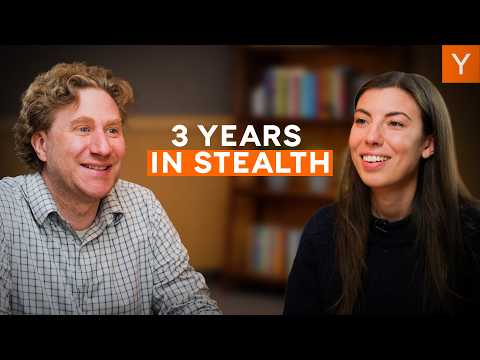
Variance Exits Stealth With $21M Series A for Compliance AI
Y Combinator
Autonomous AI agents prevent high-scale fraud and state-sponsored misinformation by replacing slow, fragmented human review with self-healing risk networks.
## Background
Published by Y Combinator on YouTube on March 31, 2026, this episode of Founder Firesides features YC Managing Partner Jared Friedman interviewing Karine Mellata, co-founder of Variance (W23). The episode highlights Variance's emergence from a three-year stealth period to announce a $21 million Series A funding round for their purpose-built AI agents handling risk and compliance.
## TL;DR
The interview explores how Variance automates complex fraud detection, content review, and identity verification for major enterprises and platforms like GoFundMe. The co-founders leveraged their background in Apple's fraud engineering team to transition industry standards from slow, manual human triage to self-healing AI agents capable of reasoning over fragmented, unstructured data. Despite maintaining a lean 12-person team, the startup achieved massive revenue growth and survived an existential crisis when a co-founder was severely injured in a traffic accident.
## Atmosphere & style
The conversation carries a gripping, confessional energy, balancing high-stakes tech-thriller elements—like uncovering state-sponsored election fraud—with the grounded humility of an early-stage startup journey. The dynamic between the host and guest is deeply collaborative and reflective, moving from tactical engineering discussions to a vulnerability-mapped emotional arc during the retelling of the founder's near-fatal accident. It feels intensely focused, gritty, and earnest, driven by a profound, unpivoting sense of duty to solve a highly sensitive problem from the shadows.
## Key takeaways
- [00:07](https://www.youtube.com/watch?v=JF6XIixstmQ&t=7s) Variance is officially coming out of stealth with an announcement of a $21 million Series A funding round to scale its operations.
- [01:24](https://www.youtube.com/watch?v=JF6XIixstmQ&t=84s) The company spent three years building in secrecy to avoid handing bad actors a blueprint or roadmap of the vulnerabilities they solve for high-profile clients.
- [00:07](https://www.youtube.com/watch?v=JF6XIixstmQ&t=7s) Variance specializes in purpose-built AI agents for risk and compliance, automating complex tasks like content review, fraud detection, and identity verification.
- [02:26](https://www.youtube.com/watch?v=JF6XIixstmQ&t=146s) Platforms like GoFundMe utilize Variance's AI agents to manage compliance liabilities and rapidly filter out opportunistic, crisis-driven fraud campaigns following major news events.
- [07:45](https://www.youtube.com/watch?v=JF6XIixstmQ&t=465s) The core architecture of Variance's AI agents relies on just three fundamental building blocks: corporate compliance documents (SOPs), proprietary execution tools, and integrated internal/external data sources.
- [07:45](https://www.youtube.com/watch?v=JF6XIixstmQ&t=465s) A breakthrough capability for the AI agents is open-web browsing, which allows them to trace unstructured data on the internet to uncover complex graphs of abuse just like human analysts.
- [09:31](https://www.youtube.com/watch?v=JF6XIixstmQ&t=571s) To bypass the technical bottleneck of fragmented data and legacy infrastructure, Variance's agents can directly scrape and interact with human-facing user interfaces via a browser.
- [11:47](https://www.youtube.com/watch?v=JF6XIixstmQ&t=707s) Traditional deterministic fraud systems relying on rigid rules and human triage are being replaced by self-healing agentic systems that continuously adapt against active adversaries.
- [14:12](https://www.youtube.com/watch?v=JF6XIixstmQ&t=852s) Variance's agents successfully uncovered sophisticated, state-sponsored fraud rings pushing election-related narratives by evaluating holistic entity-to-entity networks rather than isolating content.
- [14:12](https://www.youtube.com/watch?v=JF6XIixstmQ&t=852s) The platform has identified online threats of real-world physical violence early enough to alert law enforcement and actively prevent harm.
- [16:26](https://www.youtube.com/watch?v=JF6XIixstmQ&t=986s) Despite running a massive enterprise data operation, Variance maintains a lean team of 12 people, operating with a high-ownership culture where problems are handed to engineers to run with autonomously.
- [16:26](https://www.youtube.com/watch?v=JF6XIixstmQ&t=986s) The founders pivoted from an entirely headless API model to building visual investigator dashboards after realizing that humans still need to deeply evaluate the top 1% of highly complex fraud cases.
- [19:01](https://www.youtube.com/watch?v=JF6XIixstmQ&t=1141s) Variance operates as AI coding maximalists, leveraging tools like Cursor to allow its 5 human engineers—and even non-technical staff—to achieve the software output of a 25-person team.
- [20:09](https://www.youtube.com/watch?v=JF6XIixstmQ&t=1209s) The co-founders met at Apple working on the internal fraud engineering team, which gave them the firsthand insights and specific technical expertise needed to launch Variance.
- [22:26](https://www.youtube.com/watch?v=JF6XIixstmQ&t=1346s) Variance landed its first enterprise customer, Ask Media Group (an IAC brand), by targeting a high-stakes, manual BPO compliance bottleneck that was actively restricting the client's business growth.
- [23:10](https://www.youtube.com/watch?v=JF6XIixstmQ&t=1390s) The launch of GPT-4 occurred during Variance's initial enterprise pilot, instantly supercharging the system's performance and reducing infrastructure costs by a factor of ten.
- [24:43](https://www.youtube.com/watch?v=JF6XIixstmQ&t=1483s) In July 2024, amidst exponential revenue growth, the company faced an existential crisis when the founder was hospitalized with a broken spine and leg following a severe truck accident.
- [26:39](https://www.youtube.com/watch?v=JF6XIixstmQ&t=1599s) The founder's sudden immobilization exposed a risky "bus factor of one" regarding sales and operations, prompting the company to actively scale its business operations so survival did not rely on one person.
- [29:02](https://www.youtube.com/watch?v=JF6XIixstmQ&t=1742s) Unlike many AI startups that pivot frequently to chase trends, the founders maintained an unwavering focus on their original day-zero vision out of a sense of duty to solve industry scaling challenges.
## Detailed walkthrough
### [00:07](https://www.youtube.com/watch?v=JF6XIixstmQ&t=7s) Coming Out of Stealth with a $21 Million Series A
This episode of the Founder Fireside marks a major milestone and a historic first for the series: a live, big-time announcement. Karim, the co-founder of Variant, joins the host to officially announce that the company is coming out of stealth and has secured a $21 million Series A funding round. For the past three years, the team has been quietly building a powerful infrastructure under the radar, growing into a substantial company that powers some of the most widely used products in everyday life.
Variant specializes in creating "purpose-built AI agents for risk and compliance." Their technology is designed to automate content review, fraud detection, and identity verification at an unprecedented scale. They are already powering major marketplaces and Fortune 500 companies, including a Fortune 50 company that uses Variant to verify sellers and handle complex Ultimate Beneficial Owner (UBO) verifications.
- **Funding:** $21 million Series A
- **Time in Stealth:** 3 years
- **Core Product:** Purpose-built AI agents for risk, compliance, content review, fraud, and identity verification
- **Key Customers:** Fortune 500 companies, major marketplaces, and GoFundMe
[01:24](https://www.youtube.com/watch?v=JF6XIixstmQ&t=84s) Operating in the Shadows: Why the Secrecy?
Building in complete secrecy for three years is no small feat, especially when acquiring high-profile customers. Karim explains that the secrecy is a deliberate strategy dictated by the highly sensitive nature of the data and issues Variant handles. He describes their mission with a striking comparison: "building the systems that are often used by the bad guys, but we're building them for the good guys." If Variant were to publicly market the exact use cases and vulnerabilities they solve for their clients, it would inadvertently hand a roadmap to bad actors, sparking even more fraud and abuse.
This dynamic places Variant's clients in a perpetual cat-and-mouse game with fraudsters, making Variant their "secret weapon" that they prefer to keep hidden. Karim embraces this low-profile existence, noting, "Exactly. We're in the shadows." He believes this quiet, highly impactful work is deeply motivating for their employees, and expects that even as they scale far beyond their Series A, Variant will always remain a company that operates slightly out of the spotlight.
[02:26](https://www.youtube.com/watch?v=JF6XIixstmQ&t=146s) Powering GoFundMe and Fighting Crisis-Driven Fraud
While average consumers may not know Variant by name, they frequently interact with platforms powered by its infrastructure. A prime example is GoFundMe. Because GoFundMe functions essentially as a payments platform, it carries strict compliance liabilities and must ensure it does not facilitate payments to unauthorized or fraudulent organizations. GoFundMe uses Variant's AI agents to conduct deep investigations, ensuring money is not funneled to sanctioned countries or compliance-risk entities, and verifying that organizers are truly who they claim to be.
Karim points out that fraud on GoFundMe is highly "crisis-driven." Whenever a natural disaster or a high-profile tragedy occurs, there is an immediate, massive spike in fundraisers. Karim shares a concrete example involving a spike of campaigns following "the murder of Charlie Kirk," where dozens of accounts suddenly claimed to be related to the family to siphon off donations. Variant's AI agents step in to analyze behavioral signals, account history, images, and bios against GoFundMe's terms of service to instantly separate the single legitimate family fundraiser from a hundred fraudsters. This critical verification work, which used to require armies of human analysts, is now fully automated and executed consistently before campaigns are even allowed to go live.
- **GoFundMe's Risk Profile:** Operates as a payments platform liable for compliance violations, such as money funneling to sanctioned countries.
- **Fraud Triggers:** Natural disasters, crises, and high-profile deaths cause sudden spikes in opportunistic, fraudulent campaigns.
- **Verification Signals:** AI agents analyze account history, user identity, fundraiser bios, and uploaded images.
- **Automation Impact:** Replaces manual human review with consistent, automated pre-live validation.
[05:55](https://www.youtube.com/watch?v=JF6XIixstmQ&t=355s) Real-World Use Cases: Identity and KYB Verifications
The scale and variety of use cases handled by Variants' AI agents are immense, often operating behind the scenes without users even realizing it. One primary application is running complex identity reviews for marketplaces and gig economy platforms. For instance, when someone signs up to be a delivery driver, their identity must be verified using selfies and driver's licenses. Variants' AI agents ingest this data, reason over it, and validate it against the company's standard operating procedures (SOPs).
Another major use case is complex Know Your Business (KYB) verifications. When a user signs up to do business online with a marketplace or a financial institution, these organizations are legally required to verify that the individual is actually linked to the business they claim to own.
* **The Challenge of KYB:** A simple example is signing up to do business under the name "Variants," while the legal entity is "Decoy Technologies," tied to "Keren Melamed." While this connection is straightforward, building and verifying this graph at scale is incredibly difficult.
* **The Risk Graph:** Businesses often have multiple shell companies tied to various agents and identities. Within these massive graphs, the area of risk expands. A single node in the network might be located in a sanctioned country, or associated with adverse media, or have a court history involving money laundering. Currently, companies are forced to conduct these complex investigations entirely manually.
---
[07:45](https://www.youtube.com/watch?v=JF6XIixstmQ&t=465s) The Three Building Blocks of AI Agents
To automate these complex workflows, Variants relies on a remarkably elegant architecture. There are only three fundamental building blocks required to build their AI agents:
1. **Compliance Documents / SOPs:** The standard operating procedures and guidelines that define what a company deems necessary to verify during onboarding or at any other stage of an entity's lifecycle.
2. **Tools:** The proprietary tools built by Variants that allow the agent to execute actions.
3. **Data:** The internal and external data sources that the agent queries and reasons over.
With just these three components, the agents can automate complex KYC (Know Your Customer), KYB, and content reviews.
When it comes to data, the system splits its focus between internal customer data and external data. Variants is highly proficient at connecting to diverse data sources and pulling unstructured data into its own data stores. Externally, the platform accesses over 100 business registries worldwide, giving it international reach. Crucially, the AI agents also have access to the open web.
This web-browsing capability was "one of the final nodes that made this whole problem really hard to automate." Just like a human analyst who spends a significant portion of their day Googling names, looking at search results, and applying human judgment to see if something "seems fishy," the AI agent can now trace back an entire "graph of abuse" by finding intelligence signals on the unstructured, open web.
---
[09:31](https://www.youtube.com/watch?v=JF6XIixstmQ&t=571s) Overcoming the Hardest Technical Challenges: Data Fragmentation
At scale, the core technical challenge for Variants has always been the data. The platform regularly pulls in petabytes of unstructured, schema-less data from vastly different sources. It is far from a simple relational database query.
To illustrate, Keren shares a concrete example of verifying a fundraiser. To perform this check, the system must gather scattered data points:
* **User Identity Data:** Information about the user, their login behaviors, the devices they have used, and the Personally Identifiable Information (PII) they provided during onboarding.
* **Business Information:** Data verifying the business entity itself.
* **Fundraiser History:** The complete history and context of the specific fundraiser.
Whether dealing with a financial institution or a marketplace, this data is typically scattered across five to ten different internal systems and data stores.
Most challenging of all, some of this data is "hidden behind a UI." Because of this, the only way the AI agents can scoop up and reason over the data is by directly scraping a user interface that was originally built exclusively for humans.
To solve this onboarding and integration bottleneck, Variants utilizes three integration methods: reverse ETL, APIs, and a recently developed third way. This third method involves spinning up a browser, opening up a legacy, human-facing review tool, pulling the necessary data directly from the screen, and then reasoning over it.
[11:47](https://www.youtube.com/watch?v=JF6XIixstmQ&t=707s) The Evolution of Fraud Systems: From Patchwork to Self-Healing Agents
The transition from human-operated dashboards to agentic systems is a natural evolution. Since humans were already using these dashboards to perform fraud analysis, AI agents can seamlessly step in and utilize the exact same interfaces. Reflecting on pre-LLM systems at Apple, the technology has evolved dramatically to make these deeply agentic systems possible today. Historically, companies solved fraud at scale using a patchwork of deterministic systems. This typically involved a rules engine (e.g., "if a transaction is over $1,000, flag it"), specialized classifiers designed to detect one specific flavor of abuse, and finally, human analysts. Humans were the critical glue, relying on context to synthesize signals from various nodes and make a final decision.
However, the most critical requirement of any fraud system is the ability to evolve rapidly through a tight feedback loop, especially since fraud is a highly dynamic environment with active adversaries. In the traditional setup, relying on humans introduced slow response times and inconsistency, preventing the system from ever becoming truly "self-healing." The goal with Variance was to build a system entirely free of these inefficient nodes. Today's AI agents close this loop, achieving true self-healing and resilience. They can materialize any features a rules engine would, and they eliminate the need for specialized classifiers because they can read standard operating procedures (SOPs) and reason over unstructured data or images to identify threats like chargeback fraud. By removing the bottleneck of human reasoning at scale, companies can ship faster and open new product lines without fear of fraud bottlenecks.
- **Traditional Fraud Stack Nodes:** Rules engines, specialized classifiers, and human analysts.
- **The Core Bottleneck:** Human review is slow and inconsistent, which stalls the feedback loop against active adversaries.
- **The Agentic Solution:** AI agents read SOPs, reason over unstructured data/images, and dynamically query data stores to eliminate the need for rigid classifiers and manual human triage.
---
[14:12](https://www.youtube.com/watch?v=JF6XIixstmQ&t=852s) Detecting State-Sponsored Fraud Rings and Preventing Physical Harm
A powerful real-world example of this technology in action occurred during the recent elections. One of Variance's customers—a Fortune 500 company hosting large online communities—found itself highly politically exposed. Because Variance's AI agents have access to the broader context of how entities relate to one another, they were able to analyze how a single user fit into the entire network. This holistic view allowed the system to detect highly complex, state-sponsored fraud rings pushing specific political narratives. A traditional, isolated classifier looking at individual pieces of content sequentially would have missed this entirely. Because the agents can directly query data stores, materialize features on the fly, and use each step of reasoning to determine their next tool call, they uncovered sophisticated coordinated campaigns that would have otherwise gone unnoticed.
Beyond online misinformation, these investigations have had serious physical world implications. The system has successfully detected online threats of physical violence where individuals had coordinated plans to commit harm at scale. By identifying these patterns early, the system has actively prevented physical violence. Once Variance detects and investigates these high-stakes threats, the findings are typically handed over to law enforcement.
- **Election Case Study:** Detected state-sponsored actors pushing coordinated narratives on a Fortune 500 community platform.
- **Key Capability:** Agents dynamically query data stores and evaluate entity-to-entity relationships rather than analyzing content in isolation.
- **Physical Safety Impact:** Early detection of coordinated physical threats, with findings escalated to law enforcement to prevent real-world violence.
---
[16:26](https://www.youtube.com/watch?v=JF6XIixstmQ&t=986s) Keeping the Team Lean and the Shift to Frontend UX
Building such a robust and high-impact platform sounds like a massive undertaking, yet the Variance team remains incredibly lean with only 12 people, including just five software engineers. They are actively hiring across the board, particularly for backend and frontend roles. The emphasis on frontend engineering came as a surprise to the founders. Originally, they were stubborn about building a pure, end-to-end decisioning layer, believing they could operate entirely as a headless API call that delivered precise decisions.
They quickly realized they were wrong about this approach. Because AI agents are highly efficient, they can successfully triage 99% of standard cases. However, the remaining 1% represents the most complex, high-variance cases that absolutely require human review. To handle this critical 1%, companies need an exceptional dashboard and highly visual investigative tools to help human analysts make sense of the most sophisticated fraud patterns.
- **Current Team Size:** 12 total team members, including 5 software engineers.
- **Hiring Focus:** Active recruitment for both backend and frontend engineering roles.
- **Product Pivot:** Shifted from a pure headless API to building rich visual dashboards, because the 1% of cases escalated by the AI require deep human investigation.
[17:33](https://www.youtube.com/watch?v=JF6XIixstmQ&t=1053s) The High-Ownership Culture at Variance
Variance operates with a remarkably lean team of just five engineers, yet they process petabytes of data and automate critical decision-making for some of the largest companies in the world. The company fosters a very strong ownership culture, bolstered by the fact that two of the engineers are ex-founders themselves. Everyone on the team possesses a deep sense of agency over every facet of the business. Based in person in San Francisco every day, the team is highly product-focused. Because both founders are engineers, they avoid dictating what to build; instead, they present a problem to an engineer and let them run with it.
This collaborative environment allows team members to develop deeper expertise in specific areas than the founders themselves. For example, Luke, who was one of the first engineers at Meter, understands large language model evaluations (evals) better than anyone else on the team or perhaps even in the wider industry. This small-team dynamic ensures that every individual plays a massive role in the success of Variance, a feat that has been supercharged by the adoption of AI coding agents.
[19:01](https://www.youtube.com/watch?v=JF6XIixstmQ&t=1141s) Operating as AI Coding Maximalists
The team at Variance considers themselves "AI coding maximalists." Every engineer essentially operates as a manager of their own small team of AI agents. While there are only five human engineers, their software output is closer to that of a 25-person team. It is common to see an engineer with three monitors running coding agents simultaneously. Despite this high velocity, they maintain strict quality control and review all pull requests (PRs).
This leverage extends beyond the engineering team. The company's customer success manager, who is entirely non-technical, regularly interfaces with enterprise customers and handles simple feature requests directly. She inputs these requests into Cursor, an AI coding agent, and autonomously ships the features. She is able to get back to a customer just a few hours later to say, "Oh, it's shipped," without ever needing to involve the engineering team.
[20:09](https://www.youtube.com/watch?v=JF6XIixstmQ&t=1209s) The Apple Origin Story and Y Combinator
The founders, Michael and his co-founder, met while working as colleagues at Apple on the fraud engineering team. Michael was a machine learning engineer, while his co-founder worked as a data engineer. The fraud engineering team functioned essentially as an internal "fraud engineering as a service" team for Apple, providing critical services to major divisions like iMessage and iCloud. They enjoyed a highly symbiotic working relationship: Michael’s machine learning decisions were dispatched across the broader Apple organization via his co-founder's data streaming jobs.
Realizing they worked exceptionally well together, they began discussing the idea of building a dedicated product. When they realized that a startup was the best vehicle to bring this product to life, they decided to apply to Y Combinator. Their primary motivation was a shared desire to see this product exist and to solve the fraud and data problems they witnessed at Apple in a much more efficient, self-healing, and resilient way.
[21:26](https://www.youtube.com/watch?v=JF6XIixstmQ&t=1286s) Winning the First Enterprise Customer
Securing the first enterprise customer for a young startup requires building deep personal trust. "Your first customer really believes in the founders first," they explain, because early enterprise products inevitably evolve based on initial customer feedback. Beyond founder trust, the startup had to target a problem space that was actively "on fire." Without a burning pain point, enterprise clients have no incentive to take a risk on a small, unproven startup.
Variance found its first customer in IAC, a major publicly traded holding company known for brands like Care.com and Angie. Specifically, they partnered with Ask Media Group, an IAC brand managing a massive volume of marketing content. Because IAC is publicly traded, they faced stringent compliance requirements regarding what could be published. Variance leveraged its platform to review and audit this marketing content at scale, solving a critical compliance bottleneck.
- **Team Size:** 5 engineers, producing the output of a 25-person team using AI agents.
- **Office Location:** In-person in San Francisco.
- **Key Team Member:** Luke, an early engineer from Meter, who leads the team's LLM evaluation efforts.
- **Primary AI Tool Mentioned:** Cursor, used by both engineers and non-technical staff to write and ship code.
- **First Customer:** IAC (specifically Ask Media Group), utilizing Variance for marketing content compliance.
[23:10](https://www.youtube.com/watch?v=JF6XIixstmQ&t=1390s) Automating the Unautomatable with Early LLMs
The compliance guidelines for IAC's marketing content were notoriously difficult to map to traditional classifiers. For instance, determining whether a piece of content gave unauthorized advice for a legal defense is not something that can be easily resolved with a regular expression. Because of this complexity, the problem was previously solved entirely by a very large, outsourced team of human agents through a Business Process Outsourcing (BPO) setup. This reliance on human moderation severely bottlenecked IAC's growth; they simply could not scale the human team fast enough, which meant they had to limit the amount of marketing content they put out into the world.
While IAC had an intuition that large language models (LLMs) could solve this issue, Variance was the first company to confidently step up and say, "Hey, we can actually do that with large language models." This occurred at the very beginning of the company's journey, even before the launch of ChatGPT. Variance was at the absolute forefront of the earliest wave of startups figuring out how to use LLMs to automate previously unautomatable tasks.
Building in such a dynamic environment was highly unpredictable. During their pilot with IAC, OpenAI released GPT-4. This sudden shift in the landscape was incredibly interesting because it changed Variance's cost structure by a 10x factor while simultaneously supercharging their performance in the middle of the pilot.
- **The BPO Bottleneck:** IAC's growth was restricted because scaling human moderation teams to review complex compliance guidelines was too slow and expensive.
- **Pre-ChatGPT Origins:** Variance was founded just before the ChatGPT boom, making them pioneers in LLM-based automation.
- **Dynamic Infrastructure:** The release of GPT-4 during their initial pilot drastically improved performance and reduced costs tenfold.
---
[24:43](https://www.youtube.com/watch?v=JF6XIixstmQ&t=1483s) Rapid Growth and a Sudden Crisis
After the grueling eight-month process to land IAC as their first enterprise customer, Variance began onboarding other major clients in the trust and safety space, including Medium, GoFundMe, and Redbubble. By July 2024, the company was experiencing rapid, step-function growth. Because they were dealing with large enterprises, their revenue was doubling month-over-month.
This period of intense growth culminated in San Francisco at TrustCon, one of the largest trust and safety conferences. The Variance team worked exhausting 12-hour days to make the conference a success. On the Sunday afternoon immediately following the event, while heading back to the office, the founder was riding in a bike lane when they were suddenly hit by a truck.
At the time of the accident, Variance was a tight-knit team of only ten people. The founder suffered a broken spine and a broken leg, resulting in a 10-day hospitalization during which they were completely unable to walk. For a founder who had spent a year and a half working every single day without a day off, being suddenly immobilized in a hospital bed was a jarring and terrifying shift.
- **Key Customers Onboarded:** Medium, GoFundMe, and Redbubble.
- **Exponential Revenue:** Revenue was doubling month-over-month in July 2024 due to enterprise onboarding.
- **The Accident:** The founder was hit by a truck in a bike lane the day after TrustCon, resulting in a broken spine, a broken leg, and 10 days of hospitalization.
---
[26:39](https://www.youtube.com/watch?v=JF6XIixstmQ&t=1599s) The "Bus Factor of One" and Overcoming the Hurdle
Three or four days after the accident, co-founder Michael came to visit the hospital. Michael was incredibly anxious—not only for his co-founder's health, but also because of the existential threat to the company. Up to that point, Variance had a "bus factor of one." The rest of the team consisted entirely of engineers, meaning the hospitalized founder was the sole person managing sales and customer relationships.
During the visit, Michael brought a book about Norman Foster, the architect of Apple Park, as a gift. The two sat in silence next to the hospital bed for a couple of minutes, overwhelmed by the gravity of the situation. Finally, Michael broke the tension with a laugh, saying, "Well, this is going to make a really good scene in our IPO movie."
Though they laughed, the stress was real. The founder was out of commission for about three weeks, and Michael even wondered if this was the end of the company. He kept recalling the story of Steve Wozniak, who survived a plane crash, left Apple, and went back to Berkeley. Despite the fear that they might have to part ways, both founders shared a deep, underlying conviction that this was not the end. It felt like a massive hurdle to overcome, but they knew there was so much more to come. The founder eventually learned to walk again, and the experience taught the company a vital lesson: they desperately needed to scale the business operations so that the company's survival did not rely on a single person.
[29:02](https://www.youtube.com/watch?v=JF6XIixstmQ&t=1742s) Conviction vs. Pivoting in the AI Era
The interviewer contrasts the typical modern AI startup journey with the path taken by Corrine and Michael. Many founders enter the space with an initial hypothesis, only to pivot rapidly through multiple ideas as new models drop and the AI landscape shifts. These teams often change what they are working on several times just to align with "whatever the cool thing is." By contrast, Corrine and Michael arrived on "day zero" with a highly opinionated view of what they wanted to build, having experienced the problem firsthand. The interviewer suggests that this unwavering focus might be why they never felt like giving up; they simply had to see their original vision through to completion.
[29:37](https://www.youtube.com/watch?v=JF6XIixstmQ&t=1777s) A Sense of Duty to Solve the Problem
Corrine enthusiastically agrees, tracing their persistence back to why she and Michael started the company in the first place. They possessed a highly specific and "quite rare pair of skill sets" and a deep understanding of the industry's scaling challenges. Rather than wanting to start a company for just any arbitrary problem set—a path she acknowledges some founders excel at—they felt a profound "sense of duty" to apply their unique skills to solve this exact issue.
This commitment sustained them through the years, and they were ultimately rewarded by the rapid evolution of technology. Corrine notes how lucky they were that LLMs improved so dramatically, leading to "agentic systems" and "agent harnesses" capable of solving the problem fully end-to-end. This genuine dedication also resonates with their customers, who appreciate meeting founders who truly understand their day-to-day struggles and are committed to "building the right engineering system in the right ways." With that final reflection, the host wraps up the conversation, thanking Corrine for sharing her journey.
## Notable quotes
> [01:24](https://www.youtube.com/watch?v=JF6XIixstmQ&t=84s) building the systems that are often used by the bad guys, but we're building them for the good guys. — Karine Mellata
> [01:24](https://www.youtube.com/watch?v=JF6XIixstmQ&t=84s) Exactly. We're in the shadows. — Karine Mellata
> [07:45](https://www.youtube.com/watch?v=JF6XIixstmQ&t=465s) one of the final nodes that made this whole problem really hard to automate. — Karine Mellata
> [20:09](https://www.youtube.com/watch?v=JF6XIixstmQ&t=1209s) fraud engineering as a service — Michael
> [22:26](https://www.youtube.com/watch?v=JF6XIixstmQ&t=1346s) Your first customer really believes in the founders first — Karine Mellata
> [22:26](https://www.youtube.com/watch?v=JF6XIixstmQ&t=1346s) on fire — Karine Mellata
> [23:10](https://www.youtube.com/watch?v=JF6XIixstmQ&t=1390s) Hey, we can actually do that with large language models. — Karine Mellata
> [26:39](https://www.youtube.com/watch?v=JF6XIixstmQ&t=1599s) Well, this is going to make a really good scene in our IPO movie. — Michael
> [29:02](https://www.youtube.com/watch?v=JF6XIixstmQ&t=1742s) whatever the cool thing is. — Jared Friedman
> [29:37](https://www.youtube.com/watch?v=JF6XIixstmQ&t=1777s) sense of duty — Karine Mellata
## Mentioned
Y Combinator, Jared Friedman, Karine Mellata, Variance, GoFundMe, Apple, Michael, Luke, Meter, Cursor, IAC, Ask Media Group, Care.com, Angie, OpenAI, GPT-4, ChatGPT, Medium, Redbubble, TrustCon, Norman Foster, Apple Park, Steve Wozniak
After three years operating in stealth, fraud and compliance startup Variant announced a $21 million Series A round for its purpose-built AI agents. Founded by former Apple fraud engineers, the company replaces fragmented legacy fraud infrastructure with autonomous agents that ingest unstructured data to audit compliance, investigate financial networks, and detect coordinated abuse.
Agent Architecture and Data Ingestion (7:45)
Variant’s architecture relies on three primary components: standard operating procedures (SOPs), proprietary execution tools, and integrated data stores. Rather than relying on rigid relational databases, the platform regularly processes petabytes of unstructured and schema-less data. This includes querying internal customer logs, accessing more than 100 international business registries, and analyzing open-web search results to uncover hidden graphs of abuse across corporate networks.
To overcome enterprise data fragmentation, where relevant signals sit across five to ten distinct customer databases or behind legacy software interfaces, the company combines APIs, reverse ETL, and automated browser scraping. By deploying headless browsers that interact directly with human-facing review screens, the AI agents retrieve data originally designed only for manual examination, enabling reasoning across fragmented data silos.
From Fragmented Heuristics to Agentic Decisioning (11:47)
Traditional enterprise anti-fraud systems rely on a patchwork of rules engines, narrow single-purpose classifiers, and manual triage by human analysts. The founders note that human triage creates an inconsistent, slow feedback loop that active adversaries routinely exploit. Variant’s agents replace these deterministic filters by directly reading compliance SOPs, reasoning dynamically across images and text, and materializing analytical features on the fly without dedicated classifiers.
Although the founders initially intended to build a purely headless decisioning API, they altered their product roadmap to include rich visual frontend dashboards. Because the platform successfully automates roughly 99% of routine reviews, the remaining 1% of high-variance, complex cases must be escalated to human analysts, who require visual network graphs and investigative tools to evaluate edge cases.
Detecting Coordinated Exploits and Real-World Threats (2:26)
Variant deploys its agents across high-volume platforms, such as GoFundMe, where fraud tends to surge immediately following natural disasters and major news events. The system analyzes account history, user identity, bios, and image assets prior to campaign publication, separating bad actors attempting to siphon relief funds from legitimate family fundraisers. For marketplaces and enterprise clients, the agents perform automated Know Your Business (KYB) and Ultimate Beneficial Owner (UBO) reviews to untangle shell companies spanning sanctioned jurisdictions or adverse media.
The system's ability to map entity relationships across entire networks has revealed sophisticated abuse beyond basic financial fraud. During recent election cycles, Variant detected state-sponsored influence rings pushing coordinated political narratives on a Fortune 500 community platform. In other instances, the agents uncovered coordinated plans for offline violence, allowing the company to escalate threat intelligence to law enforcement before physical harm could occur.
Extreme Operational Leverage and Foundational Risks (17:33)
Variant maintains an unusually lean team of 12 people, including only five software engineers based in San Francisco. The engineering team operates as AI maximalists, utilizing tools like Cursor to manage autonomous coding agents across multi-monitor setups, achieving development output the founders equate to a 25-person team. This automation extends beyond engineers; non-technical team members, including customer success personnel, deploy simple product features independently via AI coding agents.
This extreme organizational leverage initially created severe operational fragility. In July 2024, amid rapid month-over-month revenue growth from enterprise additions like IAC, Medium, and Redbubble, one co-founder was struck by a truck and hospitalized for ten days with broken bones. Because the startup had a single person managing all enterprise sales and account relationships, the accident exposed a critical 'bus factor of one,' forcing the founders to deliberately scale operational and relationship management across the broader team.
Variant's founders attribute their resilience and avoidance of opportunistic AI pivots to deep domain expertise developed inside Apple's fraud infrastructure. The company's future scaling will test whether lean, agent-assisted engineering teams can maintain enterprise sales, product reliability, and high-stakes compliance standards as their client base and operational footprint expand.
[1:24] Karine Mellata: building the systems that are often used by the bad guys, but we're building them for the good guys.
[1:24] Karine Mellata: Exactly. We're in the shadows.
[7:45] Karine Mellata: one of the final nodes that made this whole problem really hard to automate.
[7:45] Karine Mellata: seems fishy
[9:31] Karine Mellata: hidden behind a UI.
[11:47] Karine Mellata: self-healing
[19:01] Karine Mellata: AI coding maximalists
[19:01] Customer Success Manager: Oh, it's shipped
[20:09] Michael: fraud engineering as a service
[22:26] Karine Mellata: Your first customer really believes in the founders first
[22:26] Karine Mellata: on fire
[23:10] Karine Mellata: Hey, we can actually do that with large language models.
[26:39] Michael: Well, this is going to make a really good scene in our IPO movie.
[29:02] Jared Friedman: whatever the cool thing is.
[29:37] Karine Mellata: sense of duty
Original transcript
[0:07] So, I'm particularly excited to do this
[0:07] So, I'm particularly excited to do this Founder Fireside because we have a first
[0:09] Founder Fireside because we have a first
[0:09] Founder Fireside because we have a first for the Founder Fireside series. We are
[0:12] for the Founder Fireside series. We are
[0:12] for the Founder Fireside series. We are doing a big announcement on this
[0:14] doing a big announcement on this
[0:14] doing a big announcement on this podcast. We are announcing that Variant
[0:17] podcast. We are announcing that Variant
[0:17] podcast. We are announcing that Variant is coming out of stealth and announcing
[0:20] is coming out of stealth and announcing
[0:20] is coming out of stealth and announcing their $21 million Series A, and I'm
[0:23] their $21 million Series A, and I'm
[0:23] their $21 million Series A, and I'm really excited to be here with Karim,
[0:26] really excited to be here with Karim,
[0:26] really excited to be here with Karim, the co-founder of Variant. Thank you so
[0:27] the co-founder of Variant. Thank you so
[0:27] the co-founder of Variant. Thank you so much for joining us, Karim. Thank you.
[0:29] much for joining us, Karim. Thank you.
[0:29] much for joining us, Karim. Thank you. So, this is a big day. You're coming out
[0:31] So, this is a big day. You're coming out
[0:32] So, this is a big day. You're coming out of stealth after building basically in
[0:33] of stealth after building basically in
[0:33] of stealth after building basically in stealth for the past 3 years, and you
[0:36] stealth for the past 3 years, and you
[0:36] stealth for the past 3 years, and you built Variant quietly into this big
[0:38] built Variant quietly into this big
[0:38] built Variant quietly into this big company that powers a lot of the
[0:40] company that powers a lot of the
[0:40] company that powers a lot of the products that everybody knows and uses
[0:43] products that everybody knows and uses
[0:43] products that everybody knows and uses in their regular life. Can you tell us
[0:45] in their regular life. Can you tell us
[0:45] in their regular life. Can you tell us about what Variant is and about the $21
[0:47] about what Variant is and about the $21
[0:47] about what Variant is and about the $21 million Series A you're announcing? So,
[0:49] million Series A you're announcing? So,
[0:49] million Series A you're announcing? So, Variant is building purpose-built AI
[0:51] Variant is building purpose-built AI
[0:51] Variant is building purpose-built AI agents for risk and compliance. We
[0:54] agents for risk and compliance. We
[0:54] agents for risk and compliance. We automate content review, fraud reviews,
[0:56] automate content review, fraud reviews,
[0:56] automate content review, fraud reviews, identity reviews at scale. We're
[0:58] identity reviews at scale. We're
[0:58] identity reviews at scale. We're powering some of the largest companies
[1:01] powering some of the largest companies
[1:01] powering some of the largest companies in the world, Fortune 500s,
[1:02] in the world, Fortune 500s,
[1:02] in the world, Fortune 500s, marketplaces. We've been working with
[1:04] marketplaces. We've been working with
[1:04] marketplaces. We've been working with GoFundMe, for instance, to review all of
[1:07] GoFundMe, for instance, to review all of
[1:07] GoFundMe, for instance, to review all of their fundraisers at scale, some Fortune
[1:09] their fundraisers at scale, some Fortune
[1:09] their fundraisers at scale, some Fortune 50 for verifying all of their sellers
[1:12] 50 for verifying all of their sellers
[1:12] 50 for verifying all of their sellers and complex UBO verifications, and today
[1:16] and complex UBO verifications, and today
[1:16] and complex UBO verifications, and today coming out of stealth. And you guys
[1:17] coming out of stealth. And you guys
[1:17] coming out of stealth. And you guys built in stealth for a long time, like 3
[1:20] built in stealth for a long time, like 3
[1:20] built in stealth for a long time, like 3 years, and you have a lot of customers
[1:21] years, and you have a lot of customers
[1:21] years, and you have a lot of customers that you can't even name on this on this
[1:24] that you can't even name on this on this
[1:24] that you can't even name on this on this podcast. Why all the secrecy around
[1:27] podcast. Why all the secrecy around
[1:27] podcast. Why all the secrecy around this? Variant usually deals with really
[1:31] this? Variant usually deals with really
[1:31] this? Variant usually deals with really sensitive data and sensitive issues, and
[1:34] sensitive data and sensitive issues, and
[1:34] sensitive data and sensitive issues, and the phrase I like to use is that we're
[1:37] the phrase I like to use is that we're
[1:37] the phrase I like to use is that we're building the systems that are often used
[1:38] building the systems that are often used
[1:38] building the systems that are often used by the bad guys, but we're building them
[1:40] by the bad guys, but we're building them
[1:40] by the bad guys, but we're building them for the good guys. So, often times it's
[1:42] for the good guys. So, often times it's
[1:42] for the good guys. So, often times it's really hard to market the use cases that
[1:46] really hard to market the use cases that
[1:46] really hard to market the use cases that customers are using Variant for because
[1:49] customers are using Variant for because
[1:49] customers are using Variant for because those issues are so sensitive, and if we
[1:51] those issues are so sensitive, and if we
[1:51] those issues are so sensitive, and if we were to market those, then it may create
[1:53] were to market those, then it may create
[1:53] were to market those, then it may create more fraud, it may create more abuse, it
[1:55] more fraud, it may create more abuse, it
[1:55] more fraud, it may create more abuse, it may create more bad. Like your your
[1:57] may create more bad. Like your your
[1:57] may create more bad. Like your your customers are stuck in this constant cat
[1:59] customers are stuck in this constant cat
[1:59] customers are stuck in this constant cat and mouse game with the bad guys and
[2:02] and mouse game with the bad guys and
[2:02] and mouse game with the bad guys and you're their secret weapon. They don't
[2:03] you're their secret weapon. They don't
[2:03] you're their secret weapon. They don't want anyone to know what their secret
[2:05] want anyone to know what their secret
[2:05] want anyone to know what their secret weapon is.
[2:06] weapon is.
[2:06] weapon is. >> Exactly. We're in the shadows. I think
[2:08] >> Exactly. We're in the shadows. I think
[2:08] >> Exactly. We're in the shadows. I think it's it's it's good it's really
[2:10] it's it's it's good it's really
[2:10] it's it's it's good it's really impactful for our employees working at
[2:13] impactful for our employees working at
[2:13] impactful for our employees working at the company, really impactful. You get
[2:15] the company, really impactful. You get
[2:15] the company, really impactful. You get to see that when you work at Varience,
[2:17] to see that when you work at Varience,
[2:17] to see that when you work at Varience, but I think even far beyond the series
[2:21] but I think even far beyond the series
[2:21] but I think even far beyond the series A, we'll always be a company that's a
[2:22] A, we'll always be a company that's a
[2:22] A, we'll always be a company that's a little bit more in the shadows and I
[2:24] little bit more in the shadows and I
[2:24] little bit more in the shadows and I think that's that's okay for us. What's
[2:26] think that's that's okay for us. What's
[2:26] think that's that's okay for us. What's cool about Varience is that even though
[2:28] cool about Varience is that even though
[2:28] cool about Varience is that even though probably
[2:29] probably
[2:29] probably no one who's watching this video has
[2:32] no one who's watching this video has
[2:32] no one who's watching this video has ever actually used the product
[2:33] ever actually used the product
[2:33] ever actually used the product themselves,
[2:35] themselves,
[2:35] themselves, they have used many products that under
[2:37] they have used many products that under
[2:37] they have used many products that under the hood are actually powered by what
[2:40] the hood are actually powered by what
[2:40] the hood are actually powered by what you built. And so indirectly, they're
[2:43] you built. And so indirectly, they're
[2:43] you built. And so indirectly, they're actually like using stuff built on top
[2:45] actually like using stuff built on top
[2:45] actually like using stuff built on top of Varience like a lot of like software
[2:47] of Varience like a lot of like software
[2:47] of Varience like a lot of like software infrastructure counter products. Can you
[2:49] infrastructure counter products. Can you
[2:49] infrastructure counter products. Can you maybe tell people about a
[2:52] maybe tell people about a
[2:52] maybe tell people about a specific product that they've used
[2:53] specific product that they've used
[2:53] specific product that they've used that's or probably used that's powered
[2:55] that's or probably used that's powered
[2:55] that's or probably used that's powered by Varience and how it works? One of the
[2:58] by Varience and how it works? One of the
[2:58] by Varience and how it works? One of the customers, GoFundMe, is a platform that
[3:01] customers, GoFundMe, is a platform that
[3:01] customers, GoFundMe, is a platform that you can use in order to build your own
[3:03] you can use in order to build your own
[3:03] you can use in order to build your own fundraisers. And GoFundMe is effectively
[3:05] fundraisers. And GoFundMe is effectively
[3:05] fundraisers. And GoFundMe is effectively a payments platform. And GoFundMe
[3:07] a payments platform. And GoFundMe
[3:07] a payments platform. And GoFundMe actually has some very strict compliance
[3:08] actually has some very strict compliance
[3:09] actually has some very strict compliance requirements because they are liable for
[3:11] requirements because they are liable for
[3:11] requirements because they are liable for facilitating payments to, let's say, an
[3:14] facilitating payments to, let's say, an
[3:14] facilitating payments to, let's say, an organization that they shouldn't have
[3:16] organization that they shouldn't have
[3:16] organization that they shouldn't have done so. So Varience is used to verify,
[3:18] done so. So Varience is used to verify,
[3:18] done so. So Varience is used to verify, for instance, if a fundraiser is going
[3:20] for instance, if a fundraiser is going
[3:20] for instance, if a fundraiser is going to be built for a military operation,
[3:22] to be built for a military operation,
[3:22] to be built for a military operation, for instance, or if you're building a
[3:24] for instance, or if you're building a
[3:25] for instance, or if you're building a fundraiser for
[3:26] fundraiser for
[3:26] fundraiser for um a crisis that you were not part of,
[3:28] um a crisis that you were not part of,
[3:28] um a crisis that you were not part of, which would be fraudulent. Well,
[3:30] which would be fraudulent. Well,
[3:30] which would be fraudulent. Well, GoFundMe sort of has the responsibility
[3:32] GoFundMe sort of has the responsibility
[3:32] GoFundMe sort of has the responsibility to be able to detect this. They're using
[3:34] to be able to detect this. They're using
[3:34] to be able to detect this. They're using AI agents, so Varience AI agents, to
[3:37] AI agents, so Varience AI agents, to
[3:37] AI agents, so Varience AI agents, to conduct those investigations. So make
[3:39] conduct those investigations. So make
[3:39] conduct those investigations. So make sure that the money is going to the
[3:41] sure that the money is going to the
[3:41] sure that the money is going to the person that they say they are and also
[3:43] person that they say they are and also
[3:43] person that they say they are and also make sure that the money is not going to
[3:45] make sure that the money is not going to
[3:45] make sure that the money is not going to be funneled to sanctioned countries, for
[3:47] be funneled to sanctioned countries, for
[3:47] be funneled to sanctioned countries, for instance, or be going to um anything
[3:50] instance, or be going to um anything
[3:50] instance, or be going to um anything that could be a compliance risk for
[3:52] that could be a compliance risk for
[3:52] that could be a compliance risk for them. You were telling me earlier about
[3:53] them. You were telling me earlier about
[3:54] them. You were telling me earlier about like one specific very concrete form of
[3:55] like one specific very concrete form of
[3:55] like one specific very concrete form of fraud. What does like typical fraud on
[3:57] fraud. What does like typical fraud on
[3:58] fraud. What does like typical fraud on GoFundMe look like? Yes, so
[4:00] GoFundMe look like? Yes, so
[4:00] GoFundMe look like? Yes, so GoFundMe is actually very crisis-driven.
[4:03] GoFundMe is actually very crisis-driven.
[4:03] GoFundMe is actually very crisis-driven. So, if there is any sort of large event
[4:06] So, if there is any sort of large event
[4:06] So, if there is any sort of large event or any sort of natural disaster, there's
[4:09] or any sort of natural disaster, there's
[4:09] or any sort of natural disaster, there's usually going to be a spike in
[4:11] usually going to be a spike in
[4:11] usually going to be a spike in fundraisers that occur on GoFundMe. It's
[4:13] fundraisers that occur on GoFundMe. It's
[4:13] fundraisers that occur on GoFundMe. It's really hard for the team to keep up with
[4:15] really hard for the team to keep up with
[4:15] really hard for the team to keep up with how many of these fundraisers are
[4:17] how many of these fundraisers are
[4:17] how many of these fundraisers are actually going to be real fundraisers
[4:19] actually going to be real fundraisers
[4:19] actually going to be real fundraisers for that event or possibly fraudulent.
[4:22] for that event or possibly fraudulent.
[4:22] for that event or possibly fraudulent. One of the example that we saw was I
[4:24] One of the example that we saw was I
[4:24] One of the example that we saw was I think recently there was, for instance,
[4:26] think recently there was, for instance,
[4:26] think recently there was, for instance, the the murder of Charlie Kirk. There
[4:28] the the murder of Charlie Kirk. There
[4:28] the the murder of Charlie Kirk. There was a spike of fundraisers for the
[4:30] was a spike of fundraisers for the
[4:30] was a spike of fundraisers for the family of Charlie Kirk. How do you know
[4:33] family of Charlie Kirk. How do you know
[4:33] family of Charlie Kirk. How do you know who's actually related to Charlie Kirk
[4:35] who's actually related to Charlie Kirk
[4:35] who's actually related to Charlie Kirk and who's just trying to
[4:37] and who's just trying to
[4:37] and who's just trying to raise money for their own Okay, so like
[4:39] raise money for their own Okay, so like
[4:39] raise money for their own Okay, so like Charlie Kirk dies. Yes. And then what
[4:42] Charlie Kirk dies. Yes. And then what
[4:42] Charlie Kirk dies. Yes. And then what happens is like 100 people post a
[4:46] happens is like 100 people post a
[4:46] happens is like 100 people post a fundraiser on GoFundMe like claiming to
[4:49] fundraiser on GoFundMe like claiming to
[4:49] fundraiser on GoFundMe like claiming to be a family member of Charlie Kirk.
[4:51] be a family member of Charlie Kirk.
[4:51] be a family member of Charlie Kirk. >> Exactly. And it's mostly just like total
[4:53] >> Exactly. And it's mostly just like total
[4:53] >> Exactly. And it's mostly just like total fraudsters who are just hoping that some
[4:54] fraudsters who are just hoping that some
[4:54] fraudsters who are just hoping that some people like donate to their Charlie Kirk
[4:56] people like donate to their Charlie Kirk
[4:56] people like donate to their Charlie Kirk fundraiser instead of the real Charlie
[4:57] fundraiser instead of the real Charlie
[4:57] fundraiser instead of the real Charlie Kirk family fundraiser. Exactly.
[4:59] Kirk family fundraiser. Exactly.
[4:59] Kirk family fundraiser. Exactly. >> And you're in charge of figuring out
[5:01] >> And you're in charge of figuring out
[5:01] >> And you're in charge of figuring out which one is the real Charlie Kirk
[5:02] which one is the real Charlie Kirk
[5:03] which one is the real Charlie Kirk family and who are the like 100
[5:04] family and who are the like 100
[5:04] family and who are the like 100 fraudsters. Exactly. And there's a lot
[5:06] fraudsters. Exactly. And there's a lot
[5:07] fraudsters. Exactly. And there's a lot of behavioral signals you can use to do
[5:08] of behavioral signals you can use to do
[5:08] of behavioral signals you can use to do so.
[5:09] so.
[5:09] so. You have information on the identity,
[5:11] You have information on the identity,
[5:11] You have information on the identity, you have information on what that
[5:13] you have information on what that
[5:13] you have information on what that account has done in the past. You also
[5:15] account has done in the past. You also
[5:15] account has done in the past. You also have information at the fundraiser
[5:17] have information at the fundraiser
[5:17] have information at the fundraiser level. So, the image, the bio, and such.
[5:20] level. So, the image, the bio, and such.
[5:20] level. So, the image, the bio, and such. So, the Variance AI agents are going to
[5:21] So, the Variance AI agents are going to
[5:21] So, the Variance AI agents are going to be using all of that context and use the
[5:24] be using all of that context and use the
[5:25] be using all of that context and use the GoFundMe terms of services to basically
[5:27] GoFundMe terms of services to basically
[5:27] GoFundMe terms of services to basically decide whether or not that should be
[5:29] decide whether or not that should be
[5:29] decide whether or not that should be allowed on the platform. That work used
[5:31] allowed on the platform. That work used
[5:31] allowed on the platform. That work used to be done by human analysts and now can
[5:34] to be done by human analysts and now can
[5:34] to be done by human analysts and now can be fully automated in a much more
[5:35] be fully automated in a much more
[5:35] be fully automated in a much more consistent manner. Every person who
[5:37] consistent manner. Every person who
[5:37] consistent manner. Every person who signs up to do a GoFundMe fundraiser,
[5:40] signs up to do a GoFundMe fundraiser,
[5:40] signs up to do a GoFundMe fundraiser, they don't realize it, but actually
[5:42] they don't realize it, but actually
[5:42] they don't realize it, but actually their request is being validated by
[5:46] their request is being validated by
[5:46] their request is being validated by Variance AI software before it's allowed
[5:48] Variance AI software before it's allowed
[5:48] Variance AI software before it's allowed to go live. Yes, exactly. What are other
[5:50] to go live. Yes, exactly. What are other
[5:50] to go live. Yes, exactly. What are other like products that people
[5:53] like products that people
[5:53] like products that people use that also are powered by variants
[5:55] use that also are powered by variants
[5:55] use that also are powered by variants and they don't even realize it? So, the
[5:57] and they don't even realize it? So, the
[5:57] and they don't even realize it? So, the scale has been um impressive. The number
[6:00] scale has been um impressive. The number
[6:00] scale has been um impressive. The number of use cases that our agents can be used
[6:02] of use cases that our agents can be used
[6:02] of use cases that our agents can be used for. So, we have been running complex
[6:05] for. So, we have been running complex
[6:05] for. So, we have been running complex identity reviews for marketplaces, gig
[6:08] identity reviews for marketplaces, gig
[6:08] identity reviews for marketplaces, gig economy platforms. So, when you sign up
[6:10] economy platforms. So, when you sign up
[6:11] economy platforms. So, when you sign up to actually be for instance a delivery
[6:13] to actually be for instance a delivery
[6:13] to actually be for instance a delivery driver, your identity needs to be
[6:15] driver, your identity needs to be
[6:15] driver, your identity needs to be verified based on selfies, based on your
[6:18] verified based on selfies, based on your
[6:18] verified based on selfies, based on your driver's license. All of that data is
[6:21] driver's license. All of that data is
[6:21] driver's license. All of that data is then going to be reasoned on by our AI
[6:23] then going to be reasoned on by our AI
[6:23] then going to be reasoned on by our AI agents. And then it's also going to be
[6:25] agents. And then it's also going to be
[6:25] agents. And then it's also going to be validated based on the company standard
[6:27] validated based on the company standard
[6:27] validated based on the company standard operating procedures. That's a good
[6:29] operating procedures. That's a good
[6:29] operating procedures. That's a good example of how variants is used. We're
[6:32] example of how variants is used. We're
[6:32] example of how variants is used. We're also used for complex, what we call KYB
[6:34] also used for complex, what we call KYB
[6:34] also used for complex, what we call KYB verifications. So, if you sign up to do
[6:37] verifications. So, if you sign up to do
[6:37] verifications. So, if you sign up to do any sort of business online, whether
[6:40] any sort of business online, whether
[6:40] any sort of business online, whether it's for a marketplace or also to with a
[6:43] it's for a marketplace or also to with a
[6:43] it's for a marketplace or also to with a financial institution,
[6:45] financial institution,
[6:45] financial institution, they have the compliance requirements to
[6:47] they have the compliance requirements to
[6:47] they have the compliance requirements to verify that you are actually linked to
[6:49] verify that you are actually linked to
[6:50] verify that you are actually linked to the business you say you you own. So, a
[6:53] the business you say you you own. So, a
[6:53] the business you say you you own. So, a good example is for example, I sign up
[6:56] good example is for example, I sign up
[6:56] good example is for example, I sign up to say I'm going to be doing business
[6:57] to say I'm going to be doing business
[6:57] to say I'm going to be doing business with variants. Well, the legal name of
[7:00] with variants. Well, the legal name of
[7:00] with variants. Well, the legal name of my company is Decoy Technologies and it
[7:02] my company is Decoy Technologies and it
[7:02] my company is Decoy Technologies and it is tied to Keren Melamed. That's a
[7:04] is tied to Keren Melamed. That's a
[7:05] is tied to Keren Melamed. That's a simple example, but building that graph
[7:06] simple example, but building that graph
[7:06] simple example, but building that graph at scale is really hard and often times
[7:09] at scale is really hard and often times
[7:09] at scale is really hard and often times you're going to see company have
[7:11] you're going to see company have
[7:11] you're going to see company have multiple shell companies, be tied to
[7:13] multiple shell companies, be tied to
[7:13] multiple shell companies, be tied to multiple different agents and different
[7:16] multiple different agents and different
[7:16] multiple different agents and different other identities. And within that really
[7:18] other identities. And within that really
[7:18] other identities. And within that really large graph, you expand the area of risk
[7:21] large graph, you expand the area of risk
[7:21] large graph, you expand the area of risk for the company where one of these nodes
[7:23] for the company where one of these nodes
[7:23] for the company where one of these nodes could be in a sanctioned country. One of
[7:26] could be in a sanctioned country. One of
[7:26] could be in a sanctioned country. One of these nodes could have adverse media on
[7:28] these nodes could have adverse media on
[7:28] these nodes could have adverse media on them and possibly have
[7:31] them and possibly have
[7:31] them and possibly have been to court for money laundering. And
[7:33] been to court for money laundering. And
[7:33] been to court for money laundering. And companies are required to conduct these
[7:35] companies are required to conduct these
[7:35] companies are required to conduct these investigations at scale and at the
[7:37] investigations at scale and at the
[7:37] investigations at scale and at the moment it's entirely manual. Do you
[7:39] moment it's entirely manual. Do you
[7:39] moment it's entirely manual. Do you license data from a bunch of different
[7:41] license data from a bunch of different
[7:41] license data from a bunch of different sources? Do you like scrape all these
[7:43] sources? Do you like scrape all these
[7:43] sources? Do you like scrape all these government websites? Yes, but to take a
[7:45] government websites? Yes, but to take a
[7:45] government websites? Yes, but to take a step back, I think it's really elegant
[7:48] step back, I think it's really elegant
[7:48] step back, I think it's really elegant how AI agents are built at the moment.
[7:50] how AI agents are built at the moment.
[7:50] how AI agents are built at the moment. There's really only three building
[7:52] There's really only three building
[7:52] There's really only three building blocks that you need. So, you have
[7:55] blocks that you need. So, you have
[7:55] blocks that you need. So, you have the compliance documents, the standard
[7:57] the compliance documents, the standard
[7:57] the compliance documents, the standard operating procedure, so what the company
[7:59] operating procedure, so what the company
[7:59] operating procedure, so what the company deems as necessary to verify at the
[8:02] deems as necessary to verify at the
[8:02] deems as necessary to verify at the onboarding level or at any other parts
[8:05] onboarding level or at any other parts
[8:05] onboarding level or at any other parts of the life cycle of that entity. Once
[8:07] of the life cycle of that entity. Once
[8:07] of the life cycle of that entity. Once we have those compliance documents, then
[8:09] we have those compliance documents, then
[8:09] we have those compliance documents, then the AI agent can do its work using tools
[8:13] the AI agent can do its work using tools
[8:13] the AI agent can do its work using tools that we built and data, internal or
[8:15] that we built and data, internal or
[8:15] that we built and data, internal or external. Those are the only building
[8:17] external. Those are the only building
[8:17] external. Those are the only building blocks you need to automate complex KYC,
[8:20] blocks you need to automate complex KYC,
[8:20] blocks you need to automate complex KYC, complex KYB, complex content review. The
[8:22] complex KYB, complex content review. The
[8:22] complex KYB, complex content review. The question you're asking about data is
[8:24] question you're asking about data is
[8:24] question you're asking about data is interesting. Usually it's going to be a
[8:26] interesting. Usually it's going to be a
[8:26] interesting. Usually it's going to be a split between internal customer data.
[8:28] split between internal customer data.
[8:28] split between internal customer data. So, Variance is really good at
[8:30] So, Variance is really good at
[8:30] So, Variance is really good at connecting to all data sources, pulling
[8:33] connecting to all data sources, pulling
[8:33] connecting to all data sources, pulling unstructured data into our own data
[8:34] unstructured data into our own data
[8:34] unstructured data into our own data stores.
[8:35] stores.
[8:35] stores. And the second one is external data. So,
[8:38] And the second one is external data. So,
[8:38] And the second one is external data. So, we do have access to over a hundreds
[8:40] we do have access to over a hundreds
[8:40] we do have access to over a hundreds business registries across the world,
[8:43] business registries across the world,
[8:43] business registries across the world, which makes us international. And then
[8:45] which makes us international. And then
[8:45] which makes us international. And then our AI agents also have access to the
[8:46] our AI agents also have access to the
[8:46] our AI agents also have access to the open web. So, a lot of unstructured data
[8:49] open web. So, a lot of unstructured data
[8:49] open web. So, a lot of unstructured data is found directly on the web. I actually
[8:52] is found directly on the web. I actually
[8:52] is found directly on the web. I actually think interestingly enough that access
[8:53] think interestingly enough that access
[8:54] think interestingly enough that access to the web was one of the final nodes
[8:56] to the web was one of the final nodes
[8:56] to the web was one of the final nodes that made this whole problem really hard
[8:59] that made this whole problem really hard
[8:59] that made this whole problem really hard to automate. Yes, because like the human
[9:01] to automate. Yes, because like the human
[9:01] to automate. Yes, because like the human analyst, a big part of what they would
[9:03] analyst, a big part of what they would
[9:03] analyst, a big part of what they would do is they would go and they would like
[9:04] do is they would go and they would like
[9:04] do is they would go and they would like Google for names and then they would
[9:06] Google for names and then they would
[9:06] Google for names and then they would like look at what comes up and apply
[9:07] like look at what comes up and apply
[9:07] like look at what comes up and apply some judgment. Like, all right, does
[9:08] some judgment. Like, all right, does
[9:08] some judgment. Like, all right, does this seem fishy or not? Exactly. When
[9:11] this seem fishy or not? Exactly. When
[9:11] this seem fishy or not? Exactly. When you think of a large graph
[9:14] you think of a large graph
[9:14] you think of a large graph of abuse,
[9:16] of abuse,
[9:16] of abuse, if one of these nodes, one of these
[9:19] if one of these nodes, one of these
[9:19] if one of these nodes, one of these intelligence signal is found on the
[9:20] intelligence signal is found on the
[9:21] intelligence signal is found on the unstructured or the open web, then
[9:23] unstructured or the open web, then
[9:23] unstructured or the open web, then without having a human agent Google on
[9:25] without having a human agent Google on
[9:25] without having a human agent Google on the web, you can't even trace back the
[9:27] the web, you can't even trace back the
[9:27] the web, you can't even trace back the whole graph of abuse. What are some
[9:29] whole graph of abuse. What are some
[9:29] whole graph of abuse. What are some other interesting technical challenges
[9:31] other interesting technical challenges
[9:31] other interesting technical challenges that you guys have encountered and have
[9:33] that you guys have encountered and have
[9:33] that you guys have encountered and have to solve in the course of
[9:35] to solve in the course of
[9:35] to solve in the course of making this work? At scale, um, the data
[9:38] making this work? At scale, um, the data
[9:38] making this work? At scale, um, the data problem was was
[9:40] problem was was
[9:40] problem was was really the core hardest technical
[9:43] really the core hardest technical
[9:43] really the core hardest technical challenge. Usually with customers, what
[9:46] challenge. Usually with customers, what
[9:46] challenge. Usually with customers, what we will do is that we'll pull in
[9:49] we will do is that we'll pull in
[9:49] we will do is that we'll pull in petabytes of data that are coming from
[9:52] petabytes of data that are coming from
[9:52] petabytes of data that are coming from vastly different sources, and all of
[9:54] vastly different sources, and all of
[9:54] vastly different sources, and all of that data is unstructured, doesn't have
[9:56] that data is unstructured, doesn't have
[9:56] that data is unstructured, doesn't have a schema. Unstructured, isn't it? Don't
[9:59] a schema. Unstructured, isn't it? Don't
[9:59] a schema. Unstructured, isn't it? Don't you just like pull it like like do you
[10:00] you just like pull it like like do you
[10:00] you just like pull it like like do you pull like out of there like relational
[10:03] pull like out of there like relational
[10:03] pull like out of there like relational database? I I I wish it was this this
[10:05] database? I I I wish it was this this
[10:06] database? I I I wish it was this this simple. But usually, I mean, I'll give
[10:08] simple. But usually, I mean, I'll give
[10:08] simple. But usually, I mean, I'll give you a very concrete example. So for
[10:10] you a very concrete example. So for
[10:10] you a very concrete example. So for instance, if you need to verify a
[10:12] instance, if you need to verify a
[10:12] instance, if you need to verify a fundraiser, I'll pick the fundraiser
[10:14] fundraiser, I'll pick the fundraiser
[10:14] fundraiser, I'll pick the fundraiser example. Okay. Usually the data is going
[10:16] example. Okay. Usually the data is going
[10:16] example. Okay. Usually the data is going to be scattered around the user identity
[10:20] to be scattered around the user identity
[10:20] to be scattered around the user identity data, so you need to have information on
[10:22] data, so you need to have information on
[10:22] data, so you need to have information on the user, you need to have information
[10:24] the user, you need to have information
[10:24] the user, you need to have information on all of their login behaviors, the
[10:26] on all of their login behaviors, the
[10:26] on all of their login behaviors, the devices that they've had, the PII that
[10:29] devices that they've had, the PII that
[10:30] devices that they've had, the PII that they've onboarded at the beginning. You
[10:31] they've onboarded at the beginning. You
[10:32] they've onboarded at the beginning. You need to also be able to pull in
[10:33] need to also be able to pull in
[10:33] need to also be able to pull in information about the business, and then
[10:35] information about the business, and then
[10:35] information about the business, and then you need to have also all of the
[10:37] you need to have also all of the
[10:37] you need to have also all of the information on the fundraiser itself,
[10:39] information on the fundraiser itself,
[10:39] information on the fundraiser itself, and all of the history of that
[10:40] and all of the history of that
[10:40] and all of the history of that fundraiser. What has been hard is that
[10:43] fundraiser. What has been hard is that
[10:43] fundraiser. What has been hard is that often times, whether you're financial
[10:44] often times, whether you're financial
[10:44] often times, whether you're financial institution or you're a marketplace,
[10:47] institution or you're a marketplace,
[10:47] institution or you're a marketplace, that data is going to be scattered
[10:48] that data is going to be scattered
[10:49] that data is going to be scattered across five to 10 different systems.
[10:52] across five to 10 different systems.
[10:52] across five to 10 different systems. It's going to be into different data
[10:53] It's going to be into different data
[10:53] It's going to be into different data stores. And one thing that's been really
[10:55] stores. And one thing that's been really
[10:55] stores. And one thing that's been really interesting in that is that sometimes
[10:57] interesting in that is that sometimes
[10:57] interesting in that is that sometimes that data is going to be hidden behind a
[10:58] that data is going to be hidden behind a
[10:58] that data is going to be hidden behind a UI.
[10:59] UI.
[10:59] UI. So the only way that the Verint AI
[11:01] So the only way that the Verint AI
[11:01] So the only way that the Verint AI agents are able to sort of scoop up that
[11:03] agents are able to sort of scoop up that
[11:03] agents are able to sort of scoop up that data and reason over it is to be able to
[11:06] data and reason over it is to be able to
[11:06] data and reason over it is to be able to directly scrape from a UI that was built
[11:09] directly scrape from a UI that was built
[11:09] directly scrape from a UI that was built for a human.
[11:11] for a human.
[11:11] for a human. So the data piece and being able to
[11:13] So the data piece and being able to
[11:13] So the data piece and being able to scoop up all of that data and bringing
[11:14] scoop up all of that data and bringing
[11:14] scoop up all of that data and bringing it to Verint was one of the hardest
[11:16] it to Verint was one of the hardest
[11:16] it to Verint was one of the hardest technical challenges. It's really an
[11:17] technical challenges. It's really an
[11:17] technical challenges. It's really an onboarding one.
[11:18] onboarding one.
[11:18] onboarding one. >> And so do you do you do that? Do you
[11:20] >> And so do you do you do that? Do you
[11:20] >> And so do you do you do that? Do you have agents that interact with like the
[11:22] have agents that interact with like the
[11:22] have agents that interact with like the customers' like internal dashboards and
[11:26] customers' like internal dashboards and
[11:26] customers' like internal dashboards and like pull data out of them? Yes. So at
[11:29] like pull data out of them? Yes. So at
[11:29] like pull data out of them? Yes. So at the moment, the way that integrate with
[11:30] the moment, the way that integrate with
[11:30] the moment, the way that integrate with Verint can be reverse ETL, API, but very
[11:33] Verint can be reverse ETL, API, but very
[11:33] Verint can be reverse ETL, API, but very recently we've been awarded this third
[11:35] recently we've been awarded this third
[11:35] recently we've been awarded this third way, which is spinning up a browser,
[11:37] way, which is spinning up a browser,
[11:37] way, which is spinning up a browser, >> Browser. Wow. opening up a really old
[11:40] >> Browser. Wow. opening up a really old
[11:40] >> Browser. Wow. opening up a really old review tool that was built for a human,
[11:42] review tool that was built for a human,
[11:42] review tool that was built for a human, Okay.
[11:43] Okay.
[11:43] Okay. >> pulling that data and then reasoning
[11:45] >> pulling that data and then reasoning
[11:45] >> pulling that data and then reasoning over it. I guess it makes sense because
[11:47] over it. I guess it makes sense because
[11:47] over it. I guess it makes sense because like the work was being done by a human
[11:48] like the work was being done by a human
[11:48] like the work was being done by a human before and so like if the human can use
[11:51] before and so like if the human can use
[11:51] before and so like if the human can use the dashboard, well, the agent can use
[11:52] the dashboard, well, the agent can use
[11:53] the dashboard, well, the agent can use the same dashboard. Yes, exactly. You
[11:55] the same dashboard. Yes, exactly. You
[11:55] the same dashboard. Yes, exactly. You worked on
[11:56] worked on
[11:56] worked on related systems at Apple like pre-LLMs
[11:59] related systems at Apple like pre-LLMs
[11:59] related systems at Apple like pre-LLMs and now you're building this like deeply
[12:01] and now you're building this like deeply
[12:01] and now you're building this like deeply agentic system. Can you talk about how
[12:02] agentic system. Can you talk about how
[12:03] agentic system. Can you talk about how the technology has evolved and like why
[12:05] the technology has evolved and like why
[12:05] the technology has evolved and like why it's possible to solve this problem now?
[12:07] it's possible to solve this problem now?
[12:07] it's possible to solve this problem now? Yeah, definitely. So, I think it's
[12:08] Yeah, definitely. So, I think it's
[12:09] Yeah, definitely. So, I think it's important to sort of
[12:10] important to sort of
[12:11] important to sort of understand how these problems were
[12:12] understand how these problems were
[12:12] understand how these problems were solved at scale before. So, usually
[12:15] solved at scale before. So, usually
[12:15] solved at scale before. So, usually companies are going to have a patchwork
[12:17] companies are going to have a patchwork
[12:17] companies are going to have a patchwork of different, what I call, deterministic
[12:19] of different, what I call, deterministic
[12:19] of different, what I call, deterministic systems. So, they're going to have rules
[12:22] systems. So, they're going to have rules
[12:22] systems. So, they're going to have rules that say, "Well, if this transaction is
[12:24] that say, "Well, if this transaction is
[12:24] that say, "Well, if this transaction is over a thousand dollars, then do this."
[12:27] over a thousand dollars, then do this."
[12:27] over a thousand dollars, then do this." Um they're going to have classifiers
[12:29] Um they're going to have classifiers
[12:29] Um they're going to have classifiers that are really good at detecting
[12:29] that are really good at detecting
[12:30] that are really good at detecting detecting one specific flavor of abuse.
[12:32] detecting one specific flavor of abuse.
[12:32] detecting one specific flavor of abuse. Then they're going to have humans. And
[12:34] Then they're going to have humans. And
[12:34] Then they're going to have humans. And humans are really good at
[12:36] humans are really good at
[12:36] humans are really good at understanding in context all of these
[12:38] understanding in context all of these
[12:38] understanding in context all of these different nodes and signals and then
[12:40] different nodes and signals and then
[12:40] different nodes and signals and then making a final decision.
[12:42] making a final decision.
[12:42] making a final decision. And I think when you think of a fraud
[12:43] And I think when you think of a fraud
[12:43] And I think when you think of a fraud system, the most important feature of a
[12:45] system, the most important feature of a
[12:45] system, the most important feature of a fraud system is that it needs to evolve
[12:47] fraud system is that it needs to evolve
[12:47] fraud system is that it needs to evolve really rapidly and you need to have a
[12:49] really rapidly and you need to have a
[12:49] really rapidly and you need to have a really tight feedback feedback loop. But
[12:51] really tight feedback feedback loop. But
[12:51] really tight feedback feedback loop. But when you think of the three nodes I've
[12:53] when you think of the three nodes I've
[12:53] when you think of the three nodes I've mentioned, rules engine, classifiers and
[12:56] mentioned, rules engine, classifiers and
[12:56] mentioned, rules engine, classifiers and humans,
[12:57] humans,
[12:57] humans, humans being really slow times and and a
[13:00] humans being really slow times and and a
[13:00] humans being really slow times and and a little bit inconsistent, that feedback
[13:02] little bit inconsistent, that feedback
[13:03] little bit inconsistent, that feedback loop can only be so fast. And we never
[13:05] loop can only be so fast. And we never
[13:05] loop can only be so fast. And we never really felt like you could achieve a
[13:07] really felt like you could achieve a
[13:07] really felt like you could achieve a self-healing system that could thrive in
[13:10] self-healing system that could thrive in
[13:10] self-healing system that could thrive in a dynamic environment and I think fraud
[13:12] a dynamic environment and I think fraud
[13:12] a dynamic environment and I think fraud is the most dynamic environment cuz you
[13:13] is the most dynamic environment cuz you
[13:14] is the most dynamic environment cuz you always have adversaries. So, Michael and
[13:16] always have adversaries. So, Michael and
[13:16] always have adversaries. So, Michael and I were always really, really, really
[13:19] I were always really, really, really
[13:19] I were always really, really, really stubborn about
[13:21] stubborn about
[13:21] stubborn about making this system have no nodes that
[13:24] making this system have no nodes that
[13:24] making this system have no nodes that were inefficient, if that makes sense.
[13:26] were inefficient, if that makes sense.
[13:26] were inefficient, if that makes sense. And now you have AI agents that are able
[13:30] And now you have AI agents that are able
[13:30] And now you have AI agents that are able to sort of close the loop from a
[13:33] to sort of close the loop from a
[13:33] to sort of close the loop from a reliance and self-healing standpoint.
[13:35] reliance and self-healing standpoint.
[13:35] reliance and self-healing standpoint. They're able to materialize any features
[13:38] They're able to materialize any features
[13:38] They're able to materialize any features that our rules engine would be able to
[13:39] that our rules engine would be able to
[13:40] that our rules engine would be able to materialize.
[13:41] materialize.
[13:41] materialize. You don't need a classifier anymore
[13:43] You don't need a classifier anymore
[13:43] You don't need a classifier anymore because AI agents are able to read set
[13:46] because AI agents are able to read set
[13:46] because AI agents are able to read set of standard operating procedure and
[13:48] of standard operating procedure and
[13:48] of standard operating procedure and reason over an image or reason over sort
[13:51] reason over an image or reason over sort
[13:51] reason over an image or reason over sort of unstructured data and know that
[13:54] of unstructured data and know that
[13:54] of unstructured data and know that this is possibly chargeback fraud. You
[13:56] this is possibly chargeback fraud. You
[13:56] this is possibly chargeback fraud. You don't need a specialized classifier for
[13:57] don't need a specialized classifier for
[13:58] don't need a specialized classifier for it.
[13:58] it.
[13:58] it. Um and you don't need human reasoning
[14:00] Um and you don't need human reasoning
[14:00] Um and you don't need human reasoning anymore. So you have this fully
[14:02] anymore. So you have this fully
[14:02] anymore. So you have this fully self-healing system, which at scale is
[14:05] self-healing system, which at scale is
[14:05] self-healing system, which at scale is really transformative and allows
[14:07] really transformative and allows
[14:07] really transformative and allows companies to be able to ship faster,
[14:09] companies to be able to ship faster,
[14:09] companies to be able to ship faster, open new product lines cuz they don't
[14:11] open new product lines cuz they don't
[14:11] open new product lines cuz they don't have this sort of bottleneck.
[14:12] have this sort of bottleneck.
[14:12] have this sort of bottleneck. >> Do you have an example of something like
[14:14] >> Do you have an example of something like
[14:14] >> Do you have an example of something like that with one of your customers where
[14:16] that with one of your customers where
[14:16] that with one of your customers where the system was able to do something that
[14:18] the system was able to do something that
[14:18] the system was able to do something that just like no human team of fraud
[14:20] just like no human team of fraud
[14:20] just like no human team of fraud analysts could ever have been able to
[14:21] analysts could ever have been able to
[14:21] analysts could ever have been able to do? Yeah, one customer specifically
[14:25] do? Yeah, one customer specifically
[14:25] do? Yeah, one customer specifically uh and I think that fraud pattern came
[14:27] uh and I think that fraud pattern came
[14:27] uh and I think that fraud pattern came to be during the elections. Um we had
[14:29] to be during the elections. Um we had
[14:29] to be during the elections. Um we had one customer that is processing a lot of
[14:32] one customer that is processing a lot of
[14:32] one customer that is processing a lot of content and they're also they're Fortune
[14:34] content and they're also they're Fortune
[14:34] content and they're also they're Fortune 500. They're hosting large communities
[14:36] 500. They're hosting large communities
[14:36] 500. They're hosting large communities and they're also fairly politically
[14:38] and they're also fairly politically
[14:38] and they're also fairly politically exposed.
[14:39] exposed.
[14:39] exposed. And throughout the elections, because
[14:41] And throughout the elections, because
[14:41] And throughout the elections, because our AI agents had access to the context
[14:45] our AI agents had access to the context
[14:45] our AI agents had access to the context of entities in relation to other
[14:47] of entities in relation to other
[14:47] of entities in relation to other entities. So how does this user fit into
[14:50] entities. So how does this user fit into
[14:50] entities. So how does this user fit into all of the other users that we're
[14:52] all of the other users that we're
[14:52] all of the other users that we're looking at? We were able to detect
[14:54] looking at? We were able to detect
[14:54] looking at? We were able to detect really complex fraud rings of especially
[14:57] really complex fraud rings of especially
[14:57] really complex fraud rings of especially state-sponsored actors that were pushing
[14:59] state-sponsored actors that were pushing
[14:59] state-sponsored actors that were pushing one narrative over. And I don't think
[15:02] one narrative over. And I don't think
[15:02] one narrative over. And I don't think this would have been possible if you had
[15:04] this would have been possible if you had
[15:04] this would have been possible if you had one classifier in isolation that was
[15:06] one classifier in isolation that was
[15:06] one classifier in isolation that was looking at one piece of content after
[15:08] looking at one piece of content after
[15:08] looking at one piece of content after the other. But because AI agents are
[15:10] the other. But because AI agents are
[15:10] the other. But because AI agents are able to directly query our data stores,
[15:13] able to directly query our data stores,
[15:13] able to directly query our data stores, they're able to materialize features on
[15:15] they're able to materialize features on
[15:15] they're able to materialize features on the fly and they're also able to use one
[15:19] the fly and they're also able to use one
[15:19] the fly and they're also able to use one step to reason over what should be the
[15:22] step to reason over what should be the
[15:22] step to reason over what should be the next step and the next tool call that
[15:23] next step and the next tool call that
[15:23] next step and the next tool call that they make. We were able to detect much
[15:26] they make. We were able to detect much
[15:26] they make. We were able to detect much more sophisticated fraud rings than you
[15:28] more sophisticated fraud rings than you
[15:28] more sophisticated fraud rings than you would have been able to do before. It's
[15:29] would have been able to do before. It's
[15:29] would have been able to do before. It's also like a pretty interesting
[15:31] also like a pretty interesting
[15:31] also like a pretty interesting implication of variance. Like you're
[15:33] implication of variance. Like you're
[15:33] implication of variance. Like you're actually able to like detect
[15:35] actually able to like detect
[15:35] actually able to like detect misinformation online and like improve
[15:38] misinformation online and like improve
[15:38] misinformation online and like improve the political
[15:39] the political
[15:39] the political discourse. What a what a like cool
[15:42] discourse. What a what a like cool
[15:42] discourse. What a what a like cool impact to have on the world. Yeah, it's
[15:44] impact to have on the world. Yeah, it's
[15:44] impact to have on the world. Yeah, it's been a it's been high responsibility.
[15:47] been a it's been high responsibility.
[15:47] been a it's been high responsibility. Um but no, it's it's been really
[15:48] Um but no, it's it's been really
[15:48] Um but no, it's it's been really interesting. I think um some of the
[15:51] interesting. I think um some of the
[15:51] interesting. I think um some of the abuse vectors we've been able to detect
[15:53] abuse vectors we've been able to detect
[15:53] abuse vectors we've been able to detect have had really serious physical
[15:55] have had really serious physical
[15:55] have had really serious physical implications. So, people that are making
[15:58] implications. So, people that are making
[15:58] implications. So, people that are making threats online of physical harm have a
[16:00] threats online of physical harm have a
[16:00] threats online of physical harm have a plan to do these things at scale. Um
[16:03] plan to do these things at scale. Um
[16:04] plan to do these things at scale. Um Wow, so you might have actually like
[16:05] Wow, so you might have actually like
[16:05] Wow, so you might have actually like prevented physical violence from
[16:07] prevented physical violence from
[16:07] prevented physical violence from happening in the world by detecting it
[16:08] happening in the world by detecting it
[16:08] happening in the world by detecting it early. Yes, exactly. Yes. So, at scale
[16:12] early. Yes, exactly. Yes. So, at scale
[16:12] early. Yes, exactly. Yes. So, at scale some of these investigations can lead to
[16:15] some of these investigations can lead to
[16:15] some of these investigations can lead to finding things that are really scary.
[16:17] finding things that are really scary.
[16:17] finding things that are really scary. And at the end of the day, once it's
[16:18] And at the end of the day, once it's
[16:18] And at the end of the day, once it's detected and investigated by Variance,
[16:21] detected and investigated by Variance,
[16:21] detected and investigated by Variance, it's usually going to be in the hands of
[16:22] it's usually going to be in the hands of
[16:22] it's usually going to be in the hands of law enforcement. But seeing that impact
[16:25] law enforcement. But seeing that impact
[16:25] law enforcement. But seeing that impact at scale is really interesting. This
[16:26] at scale is really interesting. This
[16:26] at scale is really interesting. This sounds like a lot of software to build.
[16:28] sounds like a lot of software to build.
[16:28] sounds like a lot of software to build. How how big is the team now? So, we're
[16:30] How how big is the team now? So, we're
[16:30] How how big is the team now? So, we're 12. Um we have five software engineers.
[16:33] 12. Um we have five software engineers.
[16:33] 12. Um we have five software engineers. So, we've been we've remained very very
[16:35] So, we've been we've remained very very
[16:35] So, we've been we've remained very very lean.
[16:36] lean.
[16:36] lean. >> software engineers building all of this?
[16:38] >> software engineers building all of this?
[16:38] >> software engineers building all of this? Yes. Are you hiring more? We're hiring
[16:41] Yes. Are you hiring more? We're hiring
[16:41] Yes. Are you hiring more? We're hiring more. So, we're we're hiring across the
[16:42] more. So, we're we're hiring across the
[16:42] more. So, we're we're hiring across the board. Um we're hiring for back end.
[16:44] board. Um we're hiring for back end.
[16:44] board. Um we're hiring for back end. We're hiring as well for front end,
[16:46] We're hiring as well for front end,
[16:46] We're hiring as well for front end, which I think Michael and I hadn't
[16:48] which I think Michael and I hadn't
[16:48] which I think Michael and I hadn't realized was such an important part of
[16:51] realized was such an important part of
[16:51] realized was such an important part of the product. If I can give you a little
[16:52] the product. If I can give you a little
[16:52] the product. If I can give you a little bit more context, I think
[16:55] bit more context, I think
[16:55] bit more context, I think when Michael and I first started the
[16:56] when Michael and I first started the
[16:56] when Michael and I first started the company, we were really stubborn about
[16:59] company, we were really stubborn about
[16:59] company, we were really stubborn about building a full end-to-end decisioning
[17:01] building a full end-to-end decisioning
[17:01] building a full end-to-end decisioning layer. So, we thought we needed to get
[17:03] layer. So, we thought we needed to get
[17:03] layer. So, we thought we needed to get really good at making really precise
[17:05] really good at making really precise
[17:05] really good at making really precise decisions, but at the end of the day we
[17:07] decisions, but at the end of the day we
[17:07] decisions, but at the end of the day we could be treated like an API call. We
[17:09] could be treated like an API call. We
[17:09] could be treated like an API call. We were not right about that. Um what we
[17:12] were not right about that. Um what we
[17:12] were not right about that. Um what we found out is that because AI agents are
[17:14] found out is that because AI agents are
[17:14] found out is that because AI agents are able to take on the simplest part of the
[17:16] able to take on the simplest part of the
[17:17] able to take on the simplest part of the workflow. So, they're able to triage 99%
[17:20] workflow. So, they're able to triage 99%
[17:20] workflow. So, they're able to triage 99% of of cases. That 1% is usually going to
[17:23] of of cases. That 1% is usually going to
[17:23] of of cases. That 1% is usually going to be the most complex cases that need to
[17:26] be the most complex cases that need to
[17:26] be the most complex cases that need to be reviewed by a human. And you need a
[17:28] be reviewed by a human. And you need a
[17:28] be reviewed by a human. And you need a really good dashboard. You need a really
[17:29] really good dashboard. You need a really
[17:29] really good dashboard. You need a really good investigative visual tool to be
[17:32] good investigative visual tool to be
[17:32] good investigative visual tool to be able to make sense of those super
[17:33] able to make sense of those super
[17:33] able to make sense of those super complex use cases. What's it like
[17:36] complex use cases. What's it like
[17:36] complex use cases. What's it like working at Variance? What's what's cool
[17:37] working at Variance? What's what's cool
[17:37] working at Variance? What's what's cool about working there? It's a very strong
[17:40] about working there? It's a very strong
[17:40] about working there? It's a very strong ownership culture. Um we have five
[17:42] ownership culture. Um we have five
[17:42] ownership culture. Um we have five engineers and we're processing petabytes
[17:44] engineers and we're processing petabytes
[17:44] engineers and we're processing petabytes of data. We're making decisions in a
[17:47] of data. We're making decisions in a
[17:47] of data. We're making decisions in a fully automated manner for some of the
[17:48] fully automated manner for some of the
[17:48] fully automated manner for some of the largest companies in the world. So, I
[17:51] largest companies in the world. So, I
[17:51] largest companies in the world. So, I think just for context, we have two
[17:53] think just for context, we have two
[17:53] think just for context, we have two ex-founders on the team. Um everyone has
[17:55] ex-founders on the team. Um everyone has
[17:55] ex-founders on the team. Um everyone has a really strong ownership culture and it
[17:58] a really strong ownership culture and it
[17:58] a really strong ownership culture and it really feels like they have agency over
[18:00] really feels like they have agency over
[18:00] really feels like they have agency over every single part of the company. So, on
[18:02] every single part of the company. So, on
[18:02] every single part of the company. So, on a day-to-day basis, we're in person in
[18:03] a day-to-day basis, we're in person in
[18:03] a day-to-day basis, we're in person in San Francisco every day. We're very very
[18:05] San Francisco every day. We're very very
[18:06] San Francisco every day. We're very very product-focused. Both Michael and I are
[18:08] product-focused. Both Michael and I are
[18:08] product-focused. Both Michael and I are engineers, of course. So, it's a very
[18:10] engineers, of course. So, it's a very
[18:10] engineers, of course. So, it's a very very high ownership, but also high
[18:13] very high ownership, but also high
[18:13] very high ownership, but also high collaboration workplace. And there's
[18:15] collaboration workplace. And there's
[18:15] collaboration workplace. And there's never really a time where Michael and I
[18:17] never really a time where Michael and I
[18:18] never really a time where Michael and I sort of dictate to the team what there
[18:19] sort of dictate to the team what there
[18:19] sort of dictate to the team what there is to build. It's really more going to
[18:21] is to build. It's really more going to
[18:21] is to build. It's really more going to be we give a problem to an engineer and
[18:23] be we give a problem to an engineer and
[18:23] be we give a problem to an engineer and then they just take it and run with it.
[18:26] then they just take it and run with it.
[18:26] then they just take it and run with it. And at the end of the day, it's been
[18:27] And at the end of the day, it's been
[18:27] And at the end of the day, it's been really fascinating because I can sort of
[18:30] really fascinating because I can sort of
[18:30] really fascinating because I can sort of proudly say that there's people on the
[18:31] proudly say that there's people on the
[18:31] proudly say that there's people on the team that understand certain areas of
[18:34] team that understand certain areas of
[18:34] team that understand certain areas of the business better than I do. For
[18:35] the business better than I do. For
[18:35] the business better than I do. For instance, Luke on the team was one of
[18:37] instance, Luke on the team was one of
[18:37] instance, Luke on the team was one of the first engineers at Meter and he
[18:39] the first engineers at Meter and he
[18:39] the first engineers at Meter and he understands evals for large language
[18:41] understands evals for large language
[18:41] understands evals for large language models better than anyone else on the
[18:43] models better than anyone else on the
[18:43] models better than anyone else on the team and even
[18:45] team and even
[18:45] team and even I think better than than a lot of people
[18:47] I think better than than a lot of people
[18:47] I think better than than a lot of people in the industry. So, we sort of have
[18:49] in the industry. So, we sort of have
[18:49] in the industry. So, we sort of have this culture where we get to learn a lot
[18:51] this culture where we get to learn a lot
[18:51] this culture where we get to learn a lot from our engineers. And because the team
[18:53] from our engineers. And because the team
[18:53] from our engineers. And because the team is so small, they get to be a really
[18:56] is so small, they get to be a really
[18:56] is so small, they get to be a really large part of the success of Variance.
[18:58] large part of the success of Variance.
[18:58] large part of the success of Variance. And I think that's something that's been
[18:59] And I think that's something that's been
[18:59] And I think that's something that's been possible now that we have coding agents.
[19:01] possible now that we have coding agents.
[19:01] possible now that we have coding agents. Yeah, are you guys AI coding
[19:03] Yeah, are you guys AI coding
[19:03] Yeah, are you guys AI coding maximalists?
[19:05] maximalists?
[19:05] maximalists? I would say we we we pretty much are at
[19:07] I would say we we we pretty much are at
[19:07] I would say we we we pretty much are at this point. Um everyone on the team is
[19:10] this point. Um everyone on the team is
[19:10] this point. Um everyone on the team is usually going to be almost like a
[19:12] usually going to be almost like a
[19:12] usually going to be almost like a manager of their own their own small
[19:14] manager of their own their own small
[19:14] manager of their own their own small team, which is really interesting. I
[19:16] team, which is really interesting. I
[19:16] team, which is really interesting. I would say we're five, but I think in
[19:18] would say we're five, but I think in
[19:18] would say we're five, but I think in terms of software output, we're probably
[19:20] terms of software output, we're probably
[19:20] terms of software output, we're probably closer to a 25-people team. So, every
[19:24] closer to a 25-people team. So, every
[19:24] closer to a 25-people team. So, every engineer is going to have three monitors
[19:26] engineer is going to have three monitors
[19:26] engineer is going to have three monitors with their coding agents running. Um
[19:29] with their coding agents running. Um
[19:29] with their coding agents running. Um we still have, you know, good oversight.
[19:32] we still have, you know, good oversight.
[19:32] we still have, you know, good oversight. We still review all of the PRs, but I
[19:34] We still review all of the PRs, but I
[19:34] We still review all of the PRs, but I think in terms of output, everyone is a
[19:37] think in terms of output, everyone is a
[19:37] think in terms of output, everyone is a manager of a small team of AI agents,
[19:39] manager of a small team of AI agents,
[19:39] manager of a small team of AI agents, which is really interesting. And I think
[19:40] which is really interesting. And I think
[19:40] which is really interesting. And I think one other really interesting anecdote is
[19:43] one other really interesting anecdote is
[19:43] one other really interesting anecdote is that our customer success manager, who's
[19:45] that our customer success manager, who's
[19:45] that our customer success manager, who's entirely non-technical, but interfaces
[19:48] entirely non-technical, but interfaces
[19:48] entirely non-technical, but interfaces with enterprise customers on a
[19:49] with enterprise customers on a
[19:50] with enterprise customers on a day-to-day basis, now gets to take on
[19:52] day-to-day basis, now gets to take on
[19:53] day-to-day basis, now gets to take on feature requests, especially the simple
[19:55] feature requests, especially the simple
[19:55] feature requests, especially the simple ones, directly give them to Cursor, a
[19:57] ones, directly give them to Cursor, a
[19:57] ones, directly give them to Cursor, a Cursor agent, and then directly be able
[20:00] Cursor agent, and then directly be able
[20:00] Cursor agent, and then directly be able to ship features in a fully autonomous
[20:03] to ship features in a fully autonomous
[20:03] to ship features in a fully autonomous manner, get back to the customer a few
[20:05] manner, get back to the customer a few
[20:05] manner, get back to the customer a few hours later and say, "Oh, it's it's
[20:06] hours later and say, "Oh, it's it's
[20:06] hours later and say, "Oh, it's it's shipped." And she didn't even need to
[20:08] shipped." And she didn't even need to
[20:08] shipped." And she didn't even need to speak to the engineering team.
[20:09] speak to the engineering team.
[20:09] speak to the engineering team. >> Well, that's awesome. Maybe let's change
[20:11] >> Well, that's awesome. Maybe let's change
[20:11] >> Well, that's awesome. Maybe let's change gears here and talk a little bit about
[20:12] gears here and talk a little bit about
[20:12] gears here and talk a little bit about the the origin story. How how did you
[20:14] the the origin story. How how did you
[20:14] the the origin story. How how did you and Michael end up starting this
[20:15] and Michael end up starting this
[20:15] and Michael end up starting this company? How did you end up working on
[20:17] company? How did you end up working on
[20:17] company? How did you end up working on this problem? So, Michael and I both
[20:19] this problem? So, Michael and I both
[20:19] this problem? So, Michael and I both met. We were co-workers at Apple. Um we
[20:22] met. We were co-workers at Apple. Um we
[20:22] met. We were co-workers at Apple. Um we were both engineers on the fraud
[20:23] were both engineers on the fraud
[20:23] were both engineers on the fraud engineering team. And I was a data
[20:25] engineering team. And I was a data
[20:25] engineering team. And I was a data engineer, Michael was a machine learning
[20:27] engineer, Michael was a machine learning
[20:27] engineer, Michael was a machine learning engineer. And it was really interesting
[20:29] engineer. And it was really interesting
[20:29] engineer. And it was really interesting because the team in and of itself was
[20:32] because the team in and of itself was
[20:32] because the team in and of itself was sort of the fraud engineering as a
[20:34] sort of the fraud engineering as a
[20:34] sort of the fraud engineering as a service team of Apple. We were providing
[20:37] service team of Apple. We were providing
[20:37] service team of Apple. We were providing our services to the iMessage team, the
[20:39] our services to the iMessage team, the
[20:40] our services to the iMessage team, the iCloud team. And we were the centralized
[20:42] iCloud team. And we were the centralized
[20:42] iCloud team. And we were the centralized fraud team. And Michael's machine
[20:44] fraud team. And Michael's machine
[20:44] fraud team. And Michael's machine learning decisions were then dispatched
[20:46] learning decisions were then dispatched
[20:46] learning decisions were then dispatched to the rest of the organization through
[20:48] to the rest of the organization through
[20:48] to the rest of the organization through my own streaming jobs. So, we had a very
[20:51] my own streaming jobs. So, we had a very
[20:51] my own streaming jobs. So, we had a very sort of symbiotic relationship uh from
[20:54] sort of symbiotic relationship uh from
[20:54] sort of symbiotic relationship uh from the get-go. We knew that we worked
[20:55] the get-go. We knew that we worked
[20:55] the get-go. We knew that we worked really well together. I remember telling
[20:57] really well together. I remember telling
[20:57] really well together. I remember telling Michael, "Oh, well, what if the right
[20:59] Michael, "Oh, well, what if the right
[20:59] Michael, "Oh, well, what if the right vehicle for this product was a company?"
[21:02] vehicle for this product was a company?"
[21:02] vehicle for this product was a company?" And I told Michael, "Oh, we should apply
[21:04] And I told Michael, "Oh, we should apply
[21:04] And I told Michael, "Oh, we should apply to Y Combinator." That was sort of the
[21:06] to Y Combinator." That was sort of the
[21:06] to Y Combinator." That was sort of the origin story. I think it really started
[21:08] origin story. I think it really started
[21:08] origin story. I think it really started from the product. We really, really
[21:10] from the product. We really, really
[21:10] from the product. We really, really wanted to
[21:12] wanted to
[21:12] wanted to just see this product exist. Um and we
[21:15] just see this product exist. Um and we
[21:15] just see this product exist. Um and we wanted to see that problem that we were
[21:17] wanted to see that problem that we were
[21:17] wanted to see that problem that we were solving at Apple
[21:19] solving at Apple
[21:19] solving at Apple be solved in a much more efficient way,
[21:22] be solved in a much more efficient way,
[21:22] be solved in a much more efficient way, in a much more self-healing and
[21:24] in a much more self-healing and
[21:24] in a much more self-healing and resilient way. How did you crack it? How
[21:26] resilient way. How did you crack it? How
[21:26] resilient way. How did you crack it? How did you convince the first customer to
[21:28] did you convince the first customer to
[21:28] did you convince the first customer to take a big bet on you? I think your
[21:30] take a big bet on you? I think your
[21:30] take a big bet on you? I think your first customer really believes in the
[21:33] first customer really believes in the
[21:33] first customer really believes in the founders first. They believe in the
[21:35] founders first. They believe in the
[21:35] founders first. They believe in the founders' ability to be able to solve
[21:37] founders' ability to be able to solve
[21:37] founders' ability to be able to solve their problem because at the end of the
[21:39] their problem because at the end of the
[21:39] their problem because at the end of the day when you start enterprise, you do
[21:41] day when you start enterprise, you do
[21:41] day when you start enterprise, you do have a version of your product, but it's
[21:42] have a version of your product, but it's
[21:42] have a version of your product, but it's going to evolve so much based on your
[21:44] going to evolve so much based on your
[21:44] going to evolve so much based on your first customer's requirements.
[21:46] first customer's requirements.
[21:46] first customer's requirements. >> Yeah. So, there was a a belief and a
[21:48] >> Yeah. So, there was a a belief and a
[21:48] >> Yeah. So, there was a a belief and a trust in Michael and I that we
[21:50] trust in Michael and I that we
[21:50] trust in Michael and I that we understood their problem well enough to
[21:52] understood their problem well enough to
[21:52] understood their problem well enough to then translate that into a software
[21:53] then translate that into a software
[21:53] then translate that into a software platform. It really started with that
[21:55] platform. It really started with that
[21:55] platform. It really started with that and then I think the second thing that
[21:57] and then I think the second thing that
[21:57] and then I think the second thing that was really important is that we needed
[21:59] was really important is that we needed
[21:59] was really important is that we needed to land on a problem space which has
[22:01] to land on a problem space which has
[22:01] to land on a problem space which has evolved a lot, which was
[22:04] evolved a lot, which was
[22:04] evolved a lot, which was on fire. Mhm. It needed to be on fire
[22:06] on fire. Mhm. It needed to be on fire
[22:06] on fire. Mhm. It needed to be on fire because what we found is that if it
[22:08] because what we found is that if it
[22:08] because what we found is that if it wasn't on fire, then
[22:11] wasn't on fire, then
[22:11] wasn't on fire, then there was no reason to go and trust this
[22:13] there was no reason to go and trust this
[22:13] there was no reason to go and trust this really small startup that had no real
[22:17] really small startup that had no real
[22:17] really small startup that had no real proof points behind them. Who was the
[22:19] proof points behind them. Who was the
[22:19] proof points behind them. Who was the first customer and what was the burning
[22:21] first customer and what was the burning
[22:21] first customer and what was the burning pain point that got them to be willing
[22:23] pain point that got them to be willing
[22:23] pain point that got them to be willing to do this? Yeah, so our first customer
[22:26] to do this? Yeah, so our first customer
[22:26] to do this? Yeah, so our first customer was uh a company called IAC. They're a
[22:28] was uh a company called IAC. They're a
[22:28] was uh a company called IAC. They're a publicly traded company. IAC folks might
[22:30] publicly traded company. IAC folks might
[22:30] publicly traded company. IAC folks might not have know of IAC cuz they're like a
[22:33] not have know of IAC cuz they're like a
[22:33] not have know of IAC cuz they're like a parent holding company, but I'll bet
[22:34] parent holding company, but I'll bet
[22:34] parent holding company, but I'll bet they know about some of the IAC brands.
[22:36] they know about some of the IAC brands.
[22:36] they know about some of the IAC brands. Like
[22:36] Like
[22:36] Like 100 something IAC brands that everybody
[22:38] 100 something IAC brands that everybody
[22:38] 100 something IAC brands that everybody knows. Yes, so I IAC brands, I mean, IAC
[22:41] knows. Yes, so I IAC brands, I mean, IAC
[22:41] knows. Yes, so I IAC brands, I mean, IAC has care.com, Angie. We were working
[22:43] has care.com, Angie. We were working
[22:43] has care.com, Angie. We were working with Ask Media Group Okay. which had a
[22:46] with Ask Media Group Okay. which had a
[22:46] with Ask Media Group Okay. which had a very large amount of marketing content.
[22:49] very large amount of marketing content.
[22:49] very large amount of marketing content. And because IAC is a large publicly
[22:51] And because IAC is a large publicly
[22:51] And because IAC is a large publicly traded company, there was a lot of
[22:52] traded company, there was a lot of
[22:52] traded company, there was a lot of compliance requirements around what
[22:54] compliance requirements around what
[22:54] compliance requirements around what could go into their marketing content.
[22:56] could go into their marketing content.
[22:56] could go into their marketing content. So, we basically used the platform that
[22:59] So, we basically used the platform that
[22:59] So, we basically used the platform that we had built to to content at scale to
[23:02] we had built to to content at scale to
[23:02] we had built to to content at scale to then review their own marketing content.
[23:06] then review their own marketing content.
[23:06] then review their own marketing content. And I think what was really interesting
[23:07] And I think what was really interesting
[23:07] And I think what was really interesting is that one, that problem was entirely
[23:10] is that one, that problem was entirely
[23:10] is that one, that problem was entirely solved using human agents because those
[23:13] solved using human agents because those
[23:14] solved using human agents because those compliance guidelines are really hard to
[23:15] compliance guidelines are really hard to
[23:15] compliance guidelines are really hard to map to a traditional classifier. You
[23:17] map to a traditional classifier. You
[23:17] map to a traditional classifier. You can't give advice for legal defense for
[23:19] can't give advice for legal defense for
[23:19] can't give advice for legal defense for instance. That's really hard to map to
[23:21] instance. That's really hard to map to
[23:21] instance. That's really hard to map to >> Right, writing a regular expression for
[23:23] >> Right, writing a regular expression for
[23:23] >> Right, writing a regular expression for that.
[23:23] that.
[23:23] that. >> Exactly. So it was it was
[23:25] >> Exactly. So it was it was
[23:25] >> Exactly. So it was it was semi-impossible. So it was a very large
[23:27] semi-impossible. So it was a very large
[23:27] semi-impossible. So it was a very large team of human agents, uh part of a BPO
[23:30] team of human agents, uh part of a BPO
[23:30] team of human agents, uh part of a BPO outsourced that was doing this work. And
[23:32] outsourced that was doing this work. And
[23:33] outsourced that was doing this work. And that was basically hurting their growth.
[23:35] that was basically hurting their growth.
[23:35] that was basically hurting their growth. There was less marketing content that
[23:37] There was less marketing content that
[23:37] There was less marketing content that they could put out in the world because
[23:39] they could put out in the world because
[23:39] they could put out in the world because they were not It's really hard to scale
[23:41] they were not It's really hard to scale
[23:41] they were not It's really hard to scale a team of human agents and human
[23:43] a team of human agents and human
[23:44] a team of human agents and human moderators. So they knew sort of had an
[23:47] moderators. So they knew sort of had an
[23:47] moderators. So they knew sort of had an intuition that that could be done with
[23:49] intuition that that could be done with
[23:49] intuition that that could be done with large language models, but we were the
[23:51] large language models, but we were the
[23:51] large language models, but we were the first company to say, "Hey,
[23:53] first company to say, "Hey,
[23:53] first company to say, "Hey, we can actually do that with large
[23:55] we can actually do that with large
[23:55] we can actually do that with large language models." We were a small
[23:56] language models." We were a small
[23:56] language models." We were a small startup. I think that happened maybe
[23:58] startup. I think that happened maybe
[23:58] startup. I think that happened maybe >> This was at the very beginning cuz you
[24:00] >> This was at the very beginning cuz you
[24:00] >> This was at the very beginning cuz you guys actually started Variance
[24:02] guys actually started Variance
[24:02] guys actually started Variance pre-ChatGPT. Like just a little bit
[24:04] pre-ChatGPT. Like just a little bit
[24:04] pre-ChatGPT. Like just a little bit before ChatGPT, right?
[24:06] before ChatGPT, right?
[24:06] before ChatGPT, right? >> Yeah. And so you were you were right at
[24:08] >> Yeah. And so you were you were right at
[24:08] >> Yeah. And so you were you were right at the very earliest waves of companies
[24:10] the very earliest waves of companies
[24:10] the very earliest waves of companies that were figuring out out how to use
[24:12] that were figuring out out how to use
[24:12] that were figuring out out how to use LLMs to automate these previously
[24:14] LLMs to automate these previously
[24:14] LLMs to automate these previously unautomatable tasks.
[24:15] unautomatable tasks.
[24:15] unautomatable tasks. >> Yes, exactly. Um I think
[24:18] >> Yes, exactly. Um I think
[24:18] >> Yes, exactly. Um I think GPT-4 came out during the batch, which
[24:22] GPT-4 came out during the batch, which
[24:22] GPT-4 came out during the batch, which was really interesting. And as we were
[24:24] was really interesting. And as we were
[24:24] was really interesting. And as we were running this pilot for this first
[24:26] running this pilot for this first
[24:26] running this pilot for this first customer,
[24:28] customer,
[24:28] customer, sort of open AI was coming out with new
[24:30] sort of open AI was coming out with new
[24:30] sort of open AI was coming out with new models in the middle of the pilot, which
[24:32] models in the middle of the pilot, which
[24:32] models in the middle of the pilot, which was changing one, our cost structure by
[24:34] was changing one, our cost structure by
[24:34] was changing one, our cost structure by a 10x factor, but also was changing our
[24:37] a 10x factor, but also was changing our
[24:37] a 10x factor, but also was changing our performance quite a lot. So it was
[24:39] performance quite a lot. So it was
[24:39] performance quite a lot. So it was really interesting to build in this
[24:40] really interesting to build in this
[24:40] really interesting to build in this world that was super dynamic. Okay, so
[24:43] world that was super dynamic. Okay, so
[24:43] world that was super dynamic. Okay, so the the the first big battle was like
[24:45] the the the first big battle was like
[24:45] the the the first big battle was like getting the first customer. Took eight
[24:47] getting the first customer. Took eight
[24:47] getting the first customer. Took eight months to land IAC. You really did it
[24:49] months to land IAC. You really did it
[24:49] months to land IAC. You really did it the hard way cuz you went enterprise
[24:51] the hard way cuz you went enterprise
[24:51] the hard way cuz you went enterprise from the from the very beginning. Have
[24:53] from the from the very beginning. Have
[24:53] from the from the very beginning. Have there been any other hard
[24:55] there been any other hard
[24:55] there been any other hard like challenges of building this
[24:57] like challenges of building this
[24:57] like challenges of building this company? I think starting a company
[24:58] company? I think starting a company
[24:58] company? I think starting a company tests you in a lot of different ways. Um
[25:01] tests you in a lot of different ways. Um
[25:01] tests you in a lot of different ways. Um and we have a really interesting story.
[25:03] and we have a really interesting story.
[25:03] and we have a really interesting story. You know, after I see we got to on board
[25:05] You know, after I see we got to on board
[25:05] You know, after I see we got to on board a lot of great customers in the trust
[25:06] a lot of great customers in the trust
[25:06] a lot of great customers in the trust and safety space. Um Medium, of course,
[25:09] and safety space. Um Medium, of course,
[25:09] and safety space. Um Medium, of course, GoFundMe, Redbubble. And around July
[25:13] GoFundMe, Redbubble. And around July
[25:13] GoFundMe, Redbubble. And around July 2024 was one of the times where
[25:16] 2024 was one of the times where
[25:16] 2024 was one of the times where the company was growing rapidly. We were
[25:18] the company was growing rapidly. We were
[25:18] the company was growing rapidly. We were on boarding more and more enterprise use
[25:20] on boarding more and more enterprise use
[25:20] on boarding more and more enterprise use cases. I think during that month our
[25:22] cases. I think during that month our
[25:22] cases. I think during that month our revenue was
[25:23] revenue was
[25:23] revenue was doubling within the month and then
[25:25] doubling within the month and then
[25:25] doubling within the month and then doubling the month after.
[25:26] doubling the month after.
[25:26] doubling the month after. >> Wow. It was really exciting, very step
[25:28] >> Wow. It was really exciting, very step
[25:28] >> Wow. It was really exciting, very step function because it's enterprises. And
[25:31] function because it's enterprises. And
[25:31] function because it's enterprises. And we had just wrapped up one of the
[25:33] we had just wrapped up one of the
[25:33] we had just wrapped up one of the largest trust and safety conferences uh
[25:35] largest trust and safety conferences uh
[25:35] largest trust and safety conferences uh called TrustCon in in San Francisco. And
[25:38] called TrustCon in in San Francisco. And
[25:38] called TrustCon in in San Francisco. And I think a couple I want to say the day
[25:40] I think a couple I want to say the day
[25:40] I think a couple I want to say the day after we had worked so hard for this
[25:42] after we had worked so hard for this
[25:43] after we had worked so hard for this conference. We 12 hours a day. We were
[25:45] conference. We 12 hours a day. We were
[25:45] conference. We 12 hours a day. We were super tired. Um
[25:47] super tired. Um
[25:47] super tired. Um I was going back to the office on a
[25:50] I was going back to the office on a
[25:50] I was going back to the office on a Sunday afternoon. Um and I was on the
[25:53] Sunday afternoon. Um and I was on the
[25:53] Sunday afternoon. Um and I was on the bike lane. And a truck hit me. That was
[25:59] bike lane. And a truck hit me. That was
[25:59] bike lane. And a truck hit me. That was a really really crazy experience to to
[26:01] a really really crazy experience to to
[26:01] a really really crazy experience to to go through as a founder. I mean, the
[26:04] go through as a founder. I mean, the
[26:04] go through as a founder. I mean, the company was doing well, but at the end
[26:05] company was doing well, but at the end
[26:05] company was doing well, but at the end of the day we were a 10-people team and
[26:08] of the day we were a 10-people team and
[26:08] of the day we were a 10-people team and the CEO who just gets hit by a truck.
[26:11] the CEO who just gets hit by a truck.
[26:11] the CEO who just gets hit by a truck. How badly were you injured? Um so I
[26:13] How badly were you injured? Um so I
[26:13] How badly were you injured? Um so I broke my spine, broke my leg, and I was
[26:16] broke my spine, broke my leg, and I was
[26:16] broke my spine, broke my leg, and I was hospitalized for about 10 days. I
[26:18] hospitalized for about 10 days. I
[26:18] hospitalized for about 10 days. I couldn't walk for about 10 days. Wow.
[26:20] couldn't walk for about 10 days. Wow.
[26:20] couldn't walk for about 10 days. Wow. For a year and a half as a founder,
[26:22] For a year and a half as a founder,
[26:22] For a year and a half as a founder, you're moving so fast. You're working
[26:24] you're moving so fast. You're working
[26:24] you're moving so fast. You're working every day. I had never
[26:26] every day. I had never
[26:26] every day. I had never I don't think we ever took days off.
[26:28] I don't think we ever took days off.
[26:28] I don't think we ever took days off. Even if you do, you're you're still
[26:29] Even if you do, you're you're still
[26:29] Even if you do, you're you're still pretty much on.
[26:31] pretty much on.
[26:31] pretty much on. So for a year and a half you're working
[26:32] So for a year and a half you're working
[26:32] So for a year and a half you're working super hard and then all of a sudden as a
[26:34] super hard and then all of a sudden as a
[26:34] super hard and then all of a sudden as a founder, you're in a bed and you can't
[26:36] founder, you're in a bed and you can't
[26:36] founder, you're in a bed and you can't move. Three or four days after all of
[26:39] move. Three or four days after all of
[26:39] move. Three or four days after all of that happened, Michael came to visit me
[26:41] that happened, Michael came to visit me
[26:41] that happened, Michael came to visit me in the hospital.
[26:43] in the hospital.
[26:43] in the hospital. And of course Michael was super anxious.
[26:45] And of course Michael was super anxious.
[26:45] And of course Michael was super anxious. One for my health, but also trying to
[26:47] One for my health, but also trying to
[26:47] One for my health, but also trying to understand what that even meant, right?
[26:49] understand what that even meant, right?
[26:49] understand what that even meant, right? Like the
[26:50] Like the
[26:50] Like the the CEO has a bus factor of one. We only
[26:52] the CEO has a bus factor of one. We only
[26:52] the CEO has a bus factor of one. We only have engineers and we have me that's
[26:54] have engineers and we have me that's
[26:54] have engineers and we have me that's running all the sales and the customer
[26:55] running all the sales and the customer
[26:55] running all the sales and the customer relationships.
[26:56] relationships.
[26:56] relationships. >> were the only It was all founder-led
[26:58] >> were the only It was all founder-led
[26:58] >> were the only It was all founder-led sales. You were the only person doing
[27:00] sales. You were the only person doing
[27:00] sales. You were the only person doing sales.
[27:00] sales.
[27:00] sales. >> Yes, and and fully the rest of the team
[27:03] >> Yes, and and fully the rest of the team
[27:03] >> Yes, and and fully the rest of the team was only engineers. And and Michael came
[27:05] was only engineers. And and Michael came
[27:05] was only engineers. And and Michael came to visit me and he he brought I don't
[27:07] to visit me and he he brought I don't
[27:07] to visit me and he he brought I don't know, I vividly remember he brought this
[27:09] know, I vividly remember he brought this
[27:09] know, I vividly remember he brought this Norman Foster book which was the
[27:11] Norman Foster book which was the
[27:11] Norman Foster book which was the architect of Apple Park
[27:13] architect of Apple Park
[27:13] architect of Apple Park as a gift to me and he was sort of
[27:16] as a gift to me and he was sort of
[27:16] as a gift to me and he was sort of sitting next to my hospital bed holding
[27:19] sitting next to my hospital bed holding
[27:19] sitting next to my hospital bed holding the book. Um and we were both in silence
[27:21] the book. Um and we were both in silence
[27:21] the book. Um and we were both in silence cuz we we didn't even know what to say,
[27:23] cuz we we didn't even know what to say,
[27:23] cuz we we didn't even know what to say, right? It was silence for for a couple
[27:25] right? It was silence for for a couple
[27:25] right? It was silence for for a couple of minutes and
[27:27] of minutes and
[27:27] of minutes and he laughed and said, "Well, this is
[27:30] he laughed and said, "Well, this is
[27:30] he laughed and said, "Well, this is going to make a really good scene in our
[27:33] going to make a really good scene in our
[27:33] going to make a really good scene in our IPO movie."
[27:35] IPO movie."
[27:35] IPO movie." I was like, "Yeah, it's a good way to
[27:37] I was like, "Yeah, it's a good way to
[27:37] I was like, "Yeah, it's a good way to view it."
[27:38] view it."
[27:38] view it." We laughed about it, but I think I was
[27:40] We laughed about it, but I think I was
[27:40] We laughed about it, but I think I was probably out of commission for about a
[27:42] probably out of commission for about a
[27:42] probably out of commission for about a week and then two or three weeks after
[27:44] week and then two or three weeks after
[27:44] week and then two or three weeks after that. And I think it it it put a lot of
[27:47] that. And I think it it it put a lot of
[27:47] that. And I think it it it put a lot of stress on on the company. There were a
[27:49] stress on on the company. There were a
[27:49] stress on on the company. There were a moment a few moments where Michael was
[27:51] moment a few moments where Michael was
[27:51] moment a few moments where Michael was wondering
[27:53] wondering
[27:53] wondering if this was the end. He would tell me
[27:56] if this was the end. He would tell me
[27:56] if this was the end. He would tell me and repeat to me the story of Steve
[27:57] and repeat to me the story of Steve
[27:57] and repeat to me the story of Steve Wozniak who like went through the plane
[27:59] Wozniak who like went through the plane
[27:59] Wozniak who like went through the plane crash and then left Apple and then
[28:02] crash and then left Apple and then
[28:03] crash and then left Apple and then went to go work at went back to
[28:04] went to go work at went back to
[28:04] went to go work at went back to Berkeley. So, I think there was sort of
[28:06] Berkeley. So, I think there was sort of
[28:06] Berkeley. So, I think there was sort of a a feeling that maybe this was going to
[28:09] a a feeling that maybe this was going to
[28:09] a a feeling that maybe this was going to be the end of the company and maybe we
[28:11] be the end of the company and maybe we
[28:11] be the end of the company and maybe we just needed to sort of part ways. There
[28:14] just needed to sort of part ways. There
[28:14] just needed to sort of part ways. There was a really deep feeling that um
[28:18] was a really deep feeling that um
[28:18] was a really deep feeling that um it was not the end. It's an interesting
[28:20] it was not the end. It's an interesting
[28:20] it was not the end. It's an interesting challenge. So, it's sort of like a a
[28:22] challenge. So, it's sort of like a a
[28:22] challenge. So, it's sort of like a a hurdle you need to go over, but it just
[28:24] hurdle you need to go over, but it just
[28:24] hurdle you need to go over, but it just doesn't feel like the end at all. It
[28:27] doesn't feel like the end at all. It
[28:27] doesn't feel like the end at all. It feels like there's so much more to come
[28:29] feels like there's so much more to come
[28:30] feels like there's so much more to come and
[28:31] and
[28:31] and I definitely felt that. I know Michael
[28:33] I definitely felt that. I know Michael
[28:33] I definitely felt that. I know Michael felt that and we got to
[28:35] felt that and we got to
[28:36] felt that and we got to got to walk again. Now, I can walk again
[28:38] got to walk again. Now, I can walk again
[28:38] got to walk again. Now, I can walk again and and and we got to learn that
[28:41] and and and we got to learn that
[28:41] and and and we got to learn that we definitely need to scale me so that
[28:43] we definitely need to scale me so that
[28:43] we definitely need to scale me so that so that hopefully this doesn't happen
[28:45] so that hopefully this doesn't happen
[28:45] so that hopefully this doesn't happen again, but we definitely yeah, need to
[28:48] again, but we definitely yeah, need to
[28:48] again, but we definitely yeah, need to scale me. One thing that strikes me
[28:49] scale me. One thing that strikes me
[28:49] scale me. One thing that strikes me about your story is
[28:52] about your story is
[28:52] about your story is the extent to which you guys have had a
[28:54] the extent to which you guys have had a
[28:54] the extent to which you guys have had a very strong opinion from the very
[28:55] very strong opinion from the very
[28:55] very strong opinion from the very beginning about what to build and who to
[28:57] beginning about what to build and who to
[28:57] beginning about what to build and who to build it for. Like a lot of founders
[28:59] build it for. Like a lot of founders
[28:59] build it for. Like a lot of founders come into YC,
[29:01] come into YC,
[29:01] come into YC, they have some initial idea, but like
[29:02] they have some initial idea, but like
[29:02] they have some initial idea, but like it's just a hypothesis, and then they
[29:04] it's just a hypothesis, and then they
[29:04] it's just a hypothesis, and then they like pivot through like many different
[29:06] like pivot through like many different
[29:06] like pivot through like many different ideas, and like new models drop, and AI
[29:08] ideas, and like new models drop, and AI
[29:08] ideas, and like new models drop, and AI changes, and they like might change the
[29:11] changes, and they like might change the
[29:11] changes, and they like might change the thing that they're working on like
[29:12] thing that they're working on like
[29:12] thing that they're working on like several times to fit with whatever the
[29:14] several times to fit with whatever the
[29:14] several times to fit with whatever the like cool thing is. And and and you you
[29:16] like cool thing is. And and and you you
[29:16] like cool thing is. And and and you you guys have kind of been the opposite of
[29:18] guys have kind of been the opposite of
[29:18] guys have kind of been the opposite of that. You came in like day zero with a
[29:20] that. You came in like day zero with a
[29:20] that. You came in like day zero with a very strong opinion of what to build.
[29:23] very strong opinion of what to build.
[29:23] very strong opinion of what to build. You'd seen the problem firsthand, and
[29:24] You'd seen the problem firsthand, and
[29:24] You'd seen the problem firsthand, and then the whole company has just been
[29:26] then the whole company has just been
[29:26] then the whole company has just been like that initial hypothesis playing
[29:29] like that initial hypothesis playing
[29:29] like that initial hypothesis playing out. I guess, I don't know, is is that
[29:31] out. I guess, I don't know, is is that
[29:31] out. I guess, I don't know, is is that perhaps part of why it didn't seem like
[29:33] perhaps part of why it didn't seem like
[29:33] perhaps part of why it didn't seem like it could be over yet because you like
[29:35] it could be over yet because you like
[29:35] it could be over yet because you like really had to see it through? Yes. And
[29:37] really had to see it through? Yes. And
[29:37] really had to see it through? Yes. And if we go back to why Michael and I
[29:39] if we go back to why Michael and I
[29:39] if we go back to why Michael and I started the company, Michael and I had a
[29:41] started the company, Michael and I had a
[29:41] started the company, Michael and I had a very specific pair of skill sets in
[29:45] very specific pair of skill sets in
[29:45] very specific pair of skill sets in And we understood what the industry
[29:48] And we understood what the industry
[29:48] And we understood what the industry looked like. We had a lot of issues with
[29:50] looked like. We had a lot of issues with
[29:50] looked like. We had a lot of issues with what the industry looked like and how
[29:51] what the industry looked like and how
[29:51] what the industry looked like and how these problems were solved at scale. But
[29:55] these problems were solved at scale. But
[29:55] these problems were solved at scale. But I think from the beginning, we always
[29:56] I think from the beginning, we always
[29:56] I think from the beginning, we always felt a really strong sense of duty
[29:59] felt a really strong sense of duty
[29:59] felt a really strong sense of duty to put our very specific and quite rare
[30:03] to put our very specific and quite rare
[30:03] to put our very specific and quite rare pair of skill sets to the good of the
[30:06] pair of skill sets to the good of the
[30:06] pair of skill sets to the good of the industry.
[30:07] industry.
[30:07] industry. Um it was almost like a sense of duty,
[30:09] Um it was almost like a sense of duty,
[30:09] Um it was almost like a sense of duty, and to us it was never really about
[30:12] and to us it was never really about
[30:12] and to us it was never really about starting a company for any problem sets.
[30:16] starting a company for any problem sets.
[30:16] starting a company for any problem sets. Which I think some some founders are
[30:17] Which I think some some founders are
[30:17] Which I think some some founders are really great at doing that. Don't get me
[30:19] really great at doing that. Don't get me
[30:19] really great at doing that. Don't get me wrong. But we didn't want to just start
[30:22] wrong. But we didn't want to just start
[30:22] wrong. But we didn't want to just start a company for any problems. We wanted to
[30:24] a company for any problems. We wanted to
[30:24] a company for any problems. We wanted to solve that problem. And we knew the
[30:27] solve that problem. And we knew the
[30:27] solve that problem. And we knew the technology was going to evolve, and and
[30:30] technology was going to evolve, and and
[30:30] technology was going to evolve, and and we were so lucky, right? LLMs got so
[30:32] we were so lucky, right? LLMs got so
[30:32] we were so lucky, right? LLMs got so good. Now we have agentic systems. We
[30:33] good. Now we have agentic systems. We
[30:33] good. Now we have agentic systems. We have agent harnesses that are able to
[30:36] have agent harnesses that are able to
[30:36] have agent harnesses that are able to fully solve this problem end to end.
[30:38] fully solve this problem end to end.
[30:38] fully solve this problem end to end. But we really wanted to solve this
[30:39] But we really wanted to solve this
[30:39] But we really wanted to solve this problem, and this strong sense of duty I
[30:42] problem, and this strong sense of duty I
[30:42] problem, and this strong sense of duty I think is what kept Michael and I going
[30:46] think is what kept Michael and I going
[30:46] think is what kept Michael and I going throughout the years. And I also think
[30:48] throughout the years. And I also think
[30:48] throughout the years. And I also think that's something that resonates deeply
[30:49] that's something that resonates deeply
[30:49] that's something that resonates deeply with customers. So when they meet us,
[30:52] with customers. So when they meet us,
[30:52] with customers. So when they meet us, they sort of see these founders that are
[30:54] they sort of see these founders that are
[30:54] they sort of see these founders that are really deeply trying to solve the
[30:56] really deeply trying to solve the
[30:56] really deeply trying to solve the problem that they're seeing on a
[30:57] problem that they're seeing on a
[30:57] problem that they're seeing on a day-to-day basis. Once because they've
[30:59] day-to-day basis. Once because they've
[30:59] day-to-day basis. Once because they've seen it before, but also two because
[31:02] seen it before, but also two because
[31:02] seen it before, but also two because it's something that is doable if you put
[31:05] it's something that is doable if you put
[31:05] it's something that is doable if you put enough care into building the right
[31:07] enough care into building the right
[31:07] enough care into building the right engineering system in the right ways.
[31:10] engineering system in the right ways.
[31:10] engineering system in the right ways. All right. I feel like that might be a
[31:11] All right. I feel like that might be a
[31:11] All right. I feel like that might be a great note to end on. Thank you so much,
[31:12] great note to end on. Thank you so much,
[31:12] great note to end on. Thank you so much, Corrine. Thank you.