## Background
Published on YouTube by The Compound on June 12, 2026, this episode of The Compound and Friends features hosts Michael Batnick and Downtown Josh Brown alongside guest Brian Levitt, Chief Global Market Strategist at Invesco. According to the page description, the group discusses whether the AI trade is overcrowded, why underlying earnings support the market, what real distress indicators look like, as well as topics covering small caps, interest rate expectations, consumer health, the SpaceX IPO, and dot-com bubble comparisons.
## TL;DR
The episode explores the health of the ongoing market rally, dismissing fears of an imminent crash and addressing concerns around market concentration in mega-cap tech and AI. Brian Levitt highlights strong underlying corporate earnings growth and healthy balance sheets across households and businesses, arguing that the market relies on fundamental earnings rather than speculative mania. The hosts unpack consumer resilience in a K-shaped economy, dissect Wall Street hype surrounding the SpaceX IPO, and explain why traditional bear triggers like valuation metrics often miss real macro threats. Ultimately, the discussion highlights the transition of AI from infrastructure capex to broader enterprise productivity as a primary catalyst for long-term market expansion.
## Atmosphere & style
The episode balances energetic, casual banter with sharp financial commentary, blending comedic personal anecdotes—like muffin mishaps and intense Knicks playoff euphoria—with institutional market analysis. Josh Brown and Michael Batnick maintain a lively, cynical back-and-forth that cuts through Wall Street hyperbole, while guest Brian Levitt provides a grounded, data-driven counterweight. The atmosphere feels like an informal, candid conversation among seasoned market veterans who use humor, colorful metaphors, and historical perspective to demystify complex macroeconomic trends.
## Key takeaways
- [11:38](https://www.youtube.com/watch?v=olbnxPdOWtM&t=698s) The S&P 500's earnings have continued to hit new highs, but performance and earnings growth have diverged sharply between 'New Era' AI/tech sectors and traditional 'Old Sector' companies.
- [11:56](https://www.youtube.com/watch?v=olbnxPdOWtM&t=716s) Despite headlines focusing on mega-cap tech concentration, broad market earnings strength was visible in Q1, with 7 out of 11 sectors posting double-digit earnings growth.
- [12:16](https://www.youtube.com/watch?v=olbnxPdOWtM&t=736s) Anticipated market broadening away from mega-cap tech has been repeatedly delayed over the past two years by external macro shocks, including policy decisions and oil price spikes.
- [16:16](https://www.youtube.com/watch?v=olbnxPdOWtM&t=976s) The surge in oil prices acted as a major headwind for market participation, driving up headline inflation expectations and putting interest-rate-sensitive sectors on hold.
- [25:05](https://www.youtube.com/watch?v=olbnxPdOWtM&t=1505s) Neither institutional nor retail investors appear overextended or taking excessive risk, with household asset allocations and debt levels remaining healthy by historical standards.
- [28:30](https://www.youtube.com/watch?v=olbnxPdOWtM&t=1710s) Investors often mistakenly search for a single headline event to trigger a market crash, failing to realize that major failures like Lehman Brothers occur at the end of a long fundamental deterioration rather than causing it.
- [35:19](https://www.youtube.com/watch?v=olbnxPdOWtM&t=2119s) Bank of America's Savita Subramanian warned clients that 70% of her quantitative bear market signposts have been triggered, pointing to extreme valuation dispersion within the tech sector reminiscent of February 2000.
- [41:18](https://www.youtube.com/watch?v=olbnxPdOWtM&t=2478s) U.S. household net worth has reached a record $175 trillion, creating a K-shaped economy where top-quintile consumers drive corporate earnings growth despite inflation pressures on lower-income households.
- [45:29](https://www.youtube.com/watch?v=olbnxPdOWtM&t=2729s) Severe economic crashes require structural overleverage, whereas current corporate balance sheets remain strong with low net interest payments relative to historical levels.
- [49:32](https://www.youtube.com/watch?v=olbnxPdOWtM&t=2972s) Reports of massive institutional and retail oversubscription for high-profile offerings like the SpaceX IPO are often misleading indicators created by non-binding indications of interest.
- [58:29](https://www.youtube.com/watch?v=olbnxPdOWtM&t=3509s) Rather than relying on price targets or Shiller P/E ratios, the macro indicators that matter most for cycle longevity are credit spreads, bank lending standards, and system-wide leverage.
- [01:00:40](https://www.youtube.com/watch?v=olbnxPdOWtM&t=3640s) The next major wave of market growth and broadening may come from enterprise adopters of AI outside of tech—such as insurance, finance, and healthcare—driving profit margins through agentic AI productivity gains.
## Detailed walkthrough
### [00:00](https://www.youtube.com/watch?v=olbnxPdOWtM&t=0s) Cold Open: Knicks Euphoria and Bakery Drama
The show opens with some candid studio banter as Michael Batnick vents about a frustrating experience at the bakery downstairs. Needing a quick bite before a busy afternoon, he went down for his usual Thursday blueberry muffin and black coffee. When they were out of blueberry, he was forced to settle for a lemon poppy seed muffin ("Who wants lemon? Who would buy that?"). To make matters worse, after bringing it upstairs, he discovered his coffee was undrinkably cold. Despite his ongoing efforts to "be nicer" and refrain from assuming the worst of people, the cold coffee pushed him over the edge—he tracked down the owner’s email address to demand accountability ("What do you want to do here?"). Josh Brown pokes fun at Michael’s failed attempt to stay calm, noting that while Michael claims to be working on his temper, Josh seems to be heading in the opposite direction as the "gloves come off."
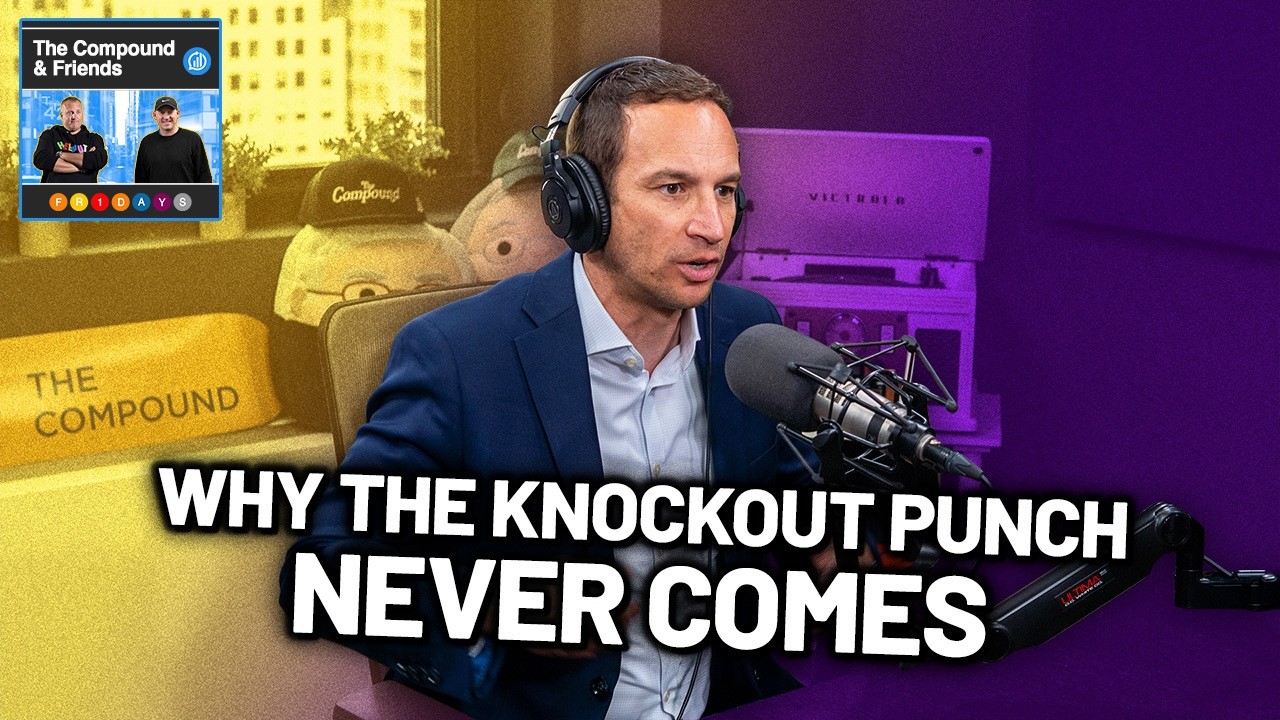
<Image alt="Michael Batnick and Josh Brown on set at The Compound" caption="Michael and Josh in studio" src="image_agent_tag_1"/>
---
The conversation quickly pivots to basketball and the emotional rollercoaster of being a die-hard New York Knicks fan. Michael recounts attending Game 4 of the Eastern Conference Finals the night before—a game where the Knicks pulled off an unbelievable 29-point comeback. He describes the experience as an out-of-body blur, akin to his wedding night, admitting that he was crying tears of joy both during the game and again the following morning in front of his wife. He contrasts this euphoric comeback with his earlier regret of walking out of Game 1 against the Cleveland Cavaliers when the Knicks were down by 22.
During the game's darkest moments, several acquaintances texted him asking if he was at the arena ("Are you at the game?... Yikes"). Michael admits that while people were just trying to connect, those texts felt like salt in the wound when his team was down 25 points. He genuinely appreciated the friends who gave him space and left him alone to suffer in peace.
Evaluating how the opposing team managed to blow a massive 29-point lead, Michael references analysis from Michael Wilbon:
* The opposing team made only 8 field goals in the entire second half.
* They shot 12 three-pointers in the second half with over 10 seconds remaining on the shot clock—a move Michael labels absolute "coaching malpractice" when protecting a 20-point lead.
* De'Aaron Fox attempted a contested layup with 11 seconds left on the shot clock.
* The coaching staff called only a single timeout in the fourth quarter to break the Knicks' surging momentum.
Michael notes that Knicks fans are so fanatical that tickets for potential upcoming games in Oklahoma City and San Antonio are driving wild travel logistics. Direct flights from New York quickly sold out, forcing fans to book connecting flights through Orlando or Atlanta, or fly into alternative Texas hubs like Austin and Houston just to make the three-hour drive to San Antonio. Josh and Brian joke about who actually sits in the front row at San Antonio games compared to New York's celebrity-studded courtside row, bantering about figures like Tim Duncan, Pop, Davy Crockett, or cartoon characters like Yosemite Sam filling the seats.
* **Knicks Comeback:** Overcame a 29-point deficit in Game 4.
* **Secondary Market Travel:** Up to 30%–40% of ticket sales on platforms like TickPick for away games were snapped up by traveling New Yorkers.
---
[08:08](https://www.youtube.com/watch?v=olbnxPdOWtM&t=488s) Introducing Brian Levitt and What Makes Invesco Different
Josh Brown officially kicks off Episode 246 of *The Compound and Friends*, giving a warm shout-out to the production crew before introducing the week's special guest: **Brian Levitt**, Chief Global Market Strategist and Head of Strategy and Insights at Invesco.
```
┌────────────────────────────────────────────────────────────────────────┐
│ BRIAN LEVITT'S TIMELINE │
├──────┬─────────────────────────────────────────────────────────────────┤
│ 2000 │ Started at OppenheimerFunds in fixed income product management. │
│ 2005 │ Transitioned into macro and investment strategy. │
│ 2019 │ Joined Invesco following its acquisition of OppenheimerFunds. │
└──────┴─────────────────────────────────────────────────────────────────┘
```
Josh brings up Invesco's massive footprint in the asset management industry, particularly its flagship Nasdaq-100 ETF (the Qs), and asks Brian to describe Invesco's core "superpower" and identity. Brian explains that Invesco stands out as a comprehensive solution provider across every major asset class, boasting strong footprints in:
* **Exchange-Traded Funds (ETFs):** One of the largest ETF issuers globally.
* **Private Markets & Active Equities:** Robust fundamental active equity strategies alongside private credit and real estate offerings.
* **Fixed Income:** High-volume municipal bond and fixed-income management operations.
Brian reflects on his nearly two decades at OppenheimerFunds prior to the 2019 merger, noting that Invesco now houses legacy powerhouse fund brands such as AIM and Van Kampen. Josh shares a funny historical footnote from his early brokerage days: because Oppenheimer & Co. (the retail brokerage firm) shared a name with OppenheimerFunds (the asset manager), many retail brokers would pitch Oppenheimer funds to clients, subtly giving the impression that they were proprietary in-house products. Brian laughs, recalling how people would call OppenheimerFunds looking for high-profile banking analyst Meredith Whitney during the 2008 financial crisis, forcing staff to repeatedly clarify that she worked for the broker-dealer, not the fund company.
---
[11:38](https://www.youtube.com/watch?v=olbnxPdOWtM&t=698s) Is the AI Trade Too Crowded?
Michael opens the market discussion by highlighting Invesco's suite of equal-weighted ETFs. While most investors are familiar with RSP (the equal-weight S&P 500), Michael notes that he frequently monitors equal-weighted sector ETFs—such as equal-weighted technology or consumer staples—to gauge underlying market breadth away from mega-cap distortions. He mentions asking Claude AI about the total assets across those equal-weighted sector suites, which estimated around $7.5 billion.
```
EARNINGS DIVERGENCE (POST-2022)
Trailing 12M EPS
▲
│ / <-- AI / New Era Sectors (Nvidia, Big Tech)
│ /
│────────/─────────────────────────────────────────
│ /
│ / \
│ / \ <-- Traditional / Old Economy Sectors
└────┴────────┴─────────────────────────────────────► Time
```
Turning to market concentration, Michael references a chart from veteran market strategist Jim Paulson tracking trailing 12-month earnings per share (EPS) for S&P 500 "New Era" (tech/AI) sectors versus "Old Sector" traditional companies since 2022. Paulson’s data reveals a striking divergence: while the broad S&P 500's earnings continue to make new highs, the actual earnings for a majority of traditional companies remain below where they were at the start of the current bull market. This raises a fundamental debate: Is the market dangerously dependent on a handful of AI-driven tech giants, or will AI productivity gains eventually filter down and lift the rest of the economy?
Brian offers a nuanced, cautiously optimistic perspective:
> "If you actually look at the first quarter of this year, you had earnings across most sectors posting very strong gains... So it is broadening out. The interesting thing, for the second year in a row, we really were at a point where we expected the markets to broaden out and it was starting to work. Two years in a row, a policy decision disrupted it."
Brian points out that fundamental underlying breadth is stronger than headlines suggest:
* 7 out of 11 S&P 500 sectors reported **double-digit earnings growth** in Q1.
* 9 to 10 out of 11 sectors registered **positive year-over-year earnings growth**.
* Small-cap earnings are finally showing signs of life and bottoming out.
* The S&P 500 is up roughly 11% year-to-date, yet an equal-weighted basket of the Magnificent Seven stocks is actually flat-to-negative on the year, proving that performance has quietly begun to extend beyond just seven mega-cap tech names.
<FollowUp label="Want to continue with Part 2 of the transcript walkthrough?" query="Please provide Part 2 of the transcript walkthrough for TCAF 246."/>
[14:32](https://www.youtube.com/watch?v=olbnxPdOWtM&t=872s) Is the AI Trade Too Crowded?
The conversation opens with a stark look at market concentration, highlighting that a surprisingly large portion of the market was negative on the year. Beyond mega-cap tech, the massive capital expenditure surrounding artificial intelligence has spilled directly into sectors like utilities and materials. If a stock outside of a biotech company scoring a major drug approval is up 20% on the year, it is almost certainly an AI-related play. Investors keep piling into this space for a simple reason: it is where the actual revenue and earnings growth reside.
Looking at the first half of the year, two distinct macro narratives unfolded. The year initially kicked off on a highly bullish note, with global leading economic indicators pointing toward an economic expansion alongside anticipated rate cuts from the Federal Reserve. That setup pointed toward a broader market rally. However, geopolitical friction—specifically conflict involving Iran—stepped in and halted that momentum dead in its tracks, mirroring how policy and macro shocks disrupted market broadening during the prior year's "Liberation Day" narrative.
- **Market Participation:** While the AI trade dominates headlines, small caps and emerging markets remain poised to benefit if macroeconomic conditions allow broadening to resume.
- **Catalysts for Broadening:** To shift away from a market where roughly 40% of equities remain negative, markets need oil prices, interest rates, and inflation expectations to peak so the Fed can comfortably return to an easing stance.
- **Underlying Conditions:** Although oil price spikes knocked Fed rhetoric on its heels and crippled sectors like housing, real estate, and financials, the broader market is betting these cost pressures are nearing their ceiling.
[16:16](https://www.youtube.com/watch?v=olbnxPdOWtM&t=976s) What Could Broaden the Bull Market?
The discussion shifts to how the spike in oil prices served as a major "monkey wrench" for equity markets. On one hand, it abruptly crushed the expanding 52-week high list, derailing a promising rotation into lagging sectors. On the other, it reignited headline CPI concerns, flattening yield curves and hitting interest-rate-sensitive areas like real estate and housing.
Analyzing the relative strength chart of the Russell 2000 against the S&P 500 shows signs of a potential major breakout, signaling that markets are pricing in peaks in both oil and inflation expectations. While recent CPI prints hovering around 4% spooked short-term traders, long-term stability is better reflected in the bond market's break-even rates.
- **5-Year Break-Even Rates:** Moved from a comfortable ~2.15% (215 bps) up to ~2.65% before settling around 2.50%, signaling price stability rather than a run-away wage-price spiral.
- **Tightening Thresholds:** Historically, true cycle-ending risks occur when 5-year break-evens surge above 3.00%, forcing aggressive Fed hikes that tighten bank lending standards and blow out credit spreads.
- **Wage Dynamics:** Unlike the structural inflation push seen four years prior, current pressures stem primarily from isolated commodity price shocks rather than runaway wage growth.
[20:48](https://www.youtube.com/watch?v=olbnxPdOWtM&t=1248s) Market Momentum and Recent Pullbacks
When asked to summarize what has actually worked in the market using a single word, the group offers terms like "AI," "Memory," "Growth," and "Momentum." As a practical matter, momentum and AI have become virtually synonymous. Citing research from *Daily Chartbook* and Barclays data, the team notes that the momentum crowding score recently reached the 90th percentile, setting the stage for a sharp, short-term unwind.
To illustrate this dynamic, the hosts examine a chart plotting stocks furthest above their 200-day moving average against their performance over a recent four-day trading window. Highly extended semiconductor and hardware names—such as Micron, which sat a staggering 150% above its 200-day moving average—faced an immediate, sharp shakeout as overextended traders sobered up.
- **Outlier Performers:** Casey's General Store is highlighted as a rare non-AI winner, driving strong stock performance purely by selling pizza at Midwestern gas stations following an exceptional earnings report.
- **Pullback Severity:** While extended tech names like Western Digital (WDC), Dell, Intel, and Seagate (STX) experienced pullbacks, the pullback was short-lived, with bounce-backs emerging within days.
- **Source of Volatility:** The panel emphasizes that market drops driven by geopolitical headline risks or policy uncertainty (e.g., U.S.-Iran tension) are far preferable to fundamental corporate breakdowns like an earnings pre-announcement from a market leader like Nvidia.
[25:05](https://www.youtube.com/watch?v=olbnxPdOWtM&t=1505s) Are Investors Taking Too Much Risk?
Addressing whether investors are overextending themselves, the host and guest agree that neither professional money managers nor individual retail investors are taking excessive risk as a group. Pointing to sentiment metrics and "bulls minus bears" indicators, retail sentiment remains quick to turn cautious at the first sign of macro trouble. Furthermore, overall household asset allocations between equities, fixed income, and cash remain well-balanced by historical standards.
```
┌──────────────────────────┐
│ Current Market Risk │
└────────────┬─────────────┘
│
┌──────────────────────┴──────────────────────┐
▼ ▼
Institutional Investors Retail & Households
• Caution on policy news • Quick to turn bearish on headlines
• Balanced asset allocation • Equity/Cash/Bonds in historical balance
```
A common counterargument relies on rising margin debt levels. A chart shared by Liz Ann Sonders tracks margin debt as a percentage of M2 money supply. While margin balances appear elevated at market highs, the panel clarifies why this metric can be misleading:
- **Not a Timing Indicator:** Margin debt naturally peaks alongside market highs and contracts during 10% drawdowns without triggering a catastrophic financial unwind.
- **Modern Usage Patterns:** High-net-worth individuals and financial advisors frequently utilize portfolio line-of-credit borrowing against appreciated equities to finance real-economy liquidity needs rather than to stack speculative equity leverage.
- **Historical Geopolitical Resilience:** Looking back at historical data, markets are almost universally higher 12 months after major geopolitical shocks or sudden 20% spikes in oil prices.
[28:30](https://www.youtube.com/watch?v=olbnxPdOWtM&t=1710s) Why Investors Keep Looking for a Market Crash
The discussion turns to behavioral finance and the psychological tendency of average investors to constantly search for a single, dramatic "knockout punch" in the news cycle that will trigger a bear market.
> "The average investor is looking for a knockout punch in the headlines. They think a news event is going to happen and it's going to punch the market in the face and knock us into a bear market... What they don't understand is that knockout punch comes at the bottom."
Using the 2008 bankruptcy of Lehman Brothers as a classic example, the hosts explain that major corporate failures are typically the *result* of an ongoing bear market that has already dragged equities down 25% to 30%, rather than the initial trigger that creates one. Investors who fixate on scary news stories often miss the bigger fundamental picture: solid corporate earnings, tight credit spreads, and anchored long-term inflation expectations.
---
<ElicitationsGroup message="Explore related topics from this transcript:">
<Elicitation label="Discuss dot-com bubble comparisons" query="Show me the transcript walkthrough for the dot-com bubble comparison section of this episode."/>
<Elicitation label="Examine consumer strength & wealth" query="Provide the detailed walkthrough for the consumer strength and household wealth portion of this show."/>
</ElicitationsGroup>
[29:43](https://www.youtube.com/watch?v=olbnxPdOWtM&t=1783s) The Psychology of Market Traps: Cause, Effect, and Paranoia
Michael Batnick and Downtown Josh Brown unpack the flawed psychology of investors who are constantly bracing for a catastrophic "knockout punch." Josh uses the classic Looney Tunes imagery of Wile E. Coyote getting hit on the head with an anvil to illustrate how people mistakenly think market tops occur. Investors assume a single, sudden external event causes a crash in a vacuum, whereas in reality, a knockout punch only lands when an economy is already thoroughly deteriorated and broken down.
Looking at current conditions, the hosts emphasize that fundamental warning signs—such as severe corporate debt crises or private credit defaults—simply do not exist today. While some media outlets point to diminished investor enthusiasm for private credit, Josh emphasizes that a minor cool-down in appetite is vastly different from the systemic breakdown of 2008.
Michael notes that 18 years have passed since the last fundamental recession (excluding the artificial shutdown of COVID-19). During those nearly two decades, investors have spent endless energy anticipating an imminent collapse—panicking over the European debt crisis, Brexit, sudden spikes in 30-year Treasury yields above 5%, or inflationary fears. The panel argues that staying perpetually hyper-vigilant to "protect the nest" causes investors to miss historic, long-term wealth creation.
* **Cadence of a Market Top:** Josh maps out how actual market tops form: bad reactions to good news, failed rallies that make lower highs, months of stagnant returns, a rolling over of the Citi Economic Surprise Index into negative territory, and finally, a breakdown after structural damage is already done.
* **The Danger of Complacency:** Brian Levitt highlights the "Minsky moment"—the paradox where prolonged economic stability breeds excessive confidence, making the complete absence of risk perception the ultimate threat to the market.
> "They think it's like Looney Tunes where an anvil or a piano gets dropped on Wile E. Coyote... It's not cause and effect. It's what environment are you in?"
---
[33:33](https://www.youtube.com/watch?v=olbnxPdOWtM&t=2013s) The AI Growth Shift and Retail Investor Profit-Taking
The conversation shifts to the evolving narrative surrounding Artificial Intelligence and its underlying fundamental justification. At the start of the year, investors questioned the demand side of AI, wondering whether businesses and consumers would actually adopt chatbots at scale or generate meaningful revenue from them. Within five short months, however, consensus shifted toward acknowledging AI as ubiquitous, persistent infrastructure integrated across every sector.
Because underlying earnings growth for core hardware and semi-conductor players has exploded, traditional valuation multiples have actually *compressed* rather than expanding to absurd levels. The panel addresses whether retail traders are overextended in the trade. Citing data from Vanda Research, Michael points out that retail investors recently staged their largest single-stock net selling event since November 2023, taking profits in surging semiconductor leaders rather than blindly chasing them higher.
* **Vanda Research Data:** Single-stock retail net selling reached $47 million in a single week, led primarily by taking gains in semiconductor names like Micron and SanDisk.
* **Earnings Realities:** Rather than a speculative bubble detached from reality, stocks like Micron and AMD have been backed by massive step-functions in fundamental earnings growth.
> "It's not going to be us engaging with a chatbot occasionally. It's going to be persistent engagement with artificial intelligence."
---
[35:19](https://www.youtube.com/watch?v=olbnxPdOWtM&t=2119s) Wall Street Warning Signs: Savita Subramanian’s Bearish Thesis
Michael introduces a high-profile research report from Savita Subramanian, Head of U.S. Equity & Quantitative Strategy at Bank of America. Subramanian advised clients that it is time to take profits in equities, noting that 7 out of her 10 quantitative bear market signposts (70%) have now been triggered—a threshold historically associated with major stock market peaks.
Subramanian highlighted that despite the S&P 500 gaining 11% year-to-date, valuations compressed from 22x to 21x forward earnings as earnings revisions outpaced price gains—concentrated heavily in Tech and Energy. Meanwhile, sectors like Financials, Healthcare, and Consumer Discretionary suffered price declines despite positive earnings revisions. Her research points to extreme dispersion within the Information Technology sector itself—where hyper-scale AI winners surge while traditional software and non-AI tech lag behind—drawing direct comparisons to the peak of the dot-com bubble in February 2000.
```
Savita Subramanian's Market Signposts (BofA)
[■■■■■■■□□□] 70% Triggers Met (7/10 Historical Bear Market Flags)
-----------------------------------------------------------------
• Trigger 1: High P/E stocks outperforming Low P/E (Excessive Speculation)
• Trigger 2: Lofty long-term growth expectations vulnerable to shock
• Trigger 3: Severe valuation dispersion within tech (AI vs. Non-AI)
```
Brian Levitt responds that while her analysis correctly identifies extreme internal market concentration, taking profits does not require liquidating into cash. Instead, Invesco advocates for a cyclical value rotation into neglected areas of the market, non-U.S. dollar assets, and international equities—similar to the broadening market action observed in the second half of 2025.
* **S&P 500 Year-to-Date Performance:** Up 11%, while P/E multiples compressed slightly from 22x to 21x.
* **Sector Divergence:** Energy and Tech have driven the index's return, while Financials, Healthcare, and Discretionary lag.
* **Dot-Com Parallel:** Extreme performance gaps between the top and bottom quintile of tech stocks mirror conditions from February 2000, when only internet infrastructure providers (e.g., Cisco, Intel, Microsoft) rallied while the broader tech space stagnated.
* **Policy Catalyst Needed:** Broadening out the market rally will require Federal Reserve rate cuts to narrow yield differentials and ease borrowing costs for high-debt, cyclical companies.
> "High P/E stocks led low P/E stocks by a wide margin, which is a sign of excessive speculation... Loftier long-term growth expectations breach levels consistent with equities being more vulnerable to disappointment."
---
[41:18](https://www.youtube.com/watch?v=olbnxPdOWtM&t=2478s) The K-Shaped Economy and Household Wealth Resilience
The panel examines the resilience of the U.S. economy despite a continuous barrage of macro headwinds since 2022—including elevated interest rates, a frozen housing market, commercial real estate stress, geopolitical disruption in the Strait of Hormuz, and high energy prices.
Brian Levitt highlights that overall U.S. household net worth has climbed to a record $175 trillion, while total household liability ratios relative to net worth sit near historic lows. Addressing the apparent disconnect between struggling everyday consumers and a resilient stock market, the speakers dissect the mechanics of a "K-shaped" economy.
```
THE K-SHAPED ECONOMY
Top Quintiles (Top 40%) =======> All-Time High Net Worth ($175T)
Drives S&P 500 Corporate Earnings
Unfazed by Gas Prices / Inflation
Bottom Quintiles (Lower 20%) ====> Living Paycheck to Paycheck
Squeezed by $4.50/gal Gasoline
Minimal Direct Impact on S&P 500
```
Because corporate earnings in the S&P 500 are overwhelmingly generated by spending from the top income quintiles, high national gasoline prices (averaging $4.50/gallon) or consumer debt stress at the bottom end of the income scale do not trigger corporate earnings recessions. While high prices severely harm lower-income families living paycheck to paycheck, the upper tier of consumers continues to spend on travel, leisure, and luxury items.
* **U.S. Household Net Worth:** Reaches a record $175 trillion, leaving overall household balance sheets remarkably healthy compared to prior economic cycles.
* **Economic Bellwethers:** The hosts track hotel equities (e.g., Hilton) as a pure gauge of upper-tier consumer health. Despite broader economic anxieties, hotel stocks continue to trade near all-time highs.
* **Stock Market Exposure:** Household equity allocations (stocks and mutual funds) as a percentage of GDP stand at 191% today, compared to 116% at the peak of the 2000 tech bubble, illustrating how deeply consumer wealth is tied to stock market performance.
> "The bottom 20%, a lot of their spending frankly is government subsidized anyway... The earnings impact of that on the S&P 500 is de minimis. I'm not saying that's good or bad—I'm just making the reality of it clear so you invest in the world that exists."
[045:29] Household Wealth and Economic Vulnerabilities
Michael Batnick opens by probing the real-world limit of the wealth effect. If total household net worth to disposable income pulled back from 191% down to 170%, would consumers actually stop spending? He ponders what scale of stock market drop—whether a 30% sustained decline or a full-blown crash—it would take to shatter uppercase consumer spending habits, noting that consumer spending is precisely what continues to drive the market.
Brian Levitt clarifies that this circular dynamic does not end arbitrarily; it ends under classic macro conditions where excess leverage and overheating inflation force the Federal Reserve to aggressively tighten monetary policy. Levitt explains that the magnitude of a drawdown depends heavily on the starting fundamental health of the economy:
* **Minor Recession:** A market decline of 20% to 25%, taking a couple of years to recover.
* **Severe Balance-Sheet Recession:** If an economy is severely overleveraged and vulnerable, a crash of 40% to 50% can occur, requiring a decade-long recovery.
Levitt points out that neither U.S. households nor corporations are overleveraged today. In fact, corporate net interest payments as a percentage of income remain historically well below pre-COVID levels. Because balance sheets are healthy, the economy lacks the structural fragilities required to cause a deep financial catastrophe.
- Household wealth-to-disposable-income ratio referenced: ~191%
- Corporate net interest payments remain well below pre-COVID baselines
---
[047:20] Narratives, Market Noise, and the Google Equity Deal
Michael acknowledges Levitt's argument on economic strength but pushes back on market supply dynamics, bringing up a piece Levitt wrote regarding how market narratives tend to follow stock price action rather than lead it. While Michael agrees that individual quarter misses like Broadcom or Micron's volatility are short-term noise, he argues that recent psychological narrative shifts are real: strong job numbers re-rating Fed rate hike expectations, the momentum factor crowding, and corporate equity issuances.
Michael highlights Google's equity issuance as a potential narrative shift that caught market chatter. Levitt counters that the Google transaction was digested by the broader market without incident, calling it a bullish signal rather than a warning sign. He emphasizes that Greg Abel's Berkshire Hathaway stepped in to finance part of the deal within a week of taking over, framing it as a financial deal rather than data center construction.
> "Berkshire Hathaway comes in and invests in it... I actually looked at the Google event as a pretty promising event... from the bullish side. The market was able to digest that without incident."
---
[049:32] SpaceX IPO: Oversubscribed Rumors vs. Wall Street Reality
The hosts dive into the highly anticipated $75 billion SpaceX IPO. Michael references Morgan Stanley's wild projection that SpaceX's revenue could reach $3 trillion by 2040, pointing to it as the type of headline people look back on at market tops. He cites a Barron's report stating that demand for the $75 billion offering reached $250 billion—making it 3.3 times oversubscribed.
Josh Brown aggressively dismisses these oversubscription headlines as completely manufactured Wall Street fluff. Drawing on his experience as a former branch manager, Josh explains how syndicate indications of interest (IOI) work: retail investors and institutions regularly over-order—putting in for 10 million shares when they only want 2 million—because they assume the deal will be cut back.
* **SpaceX IPO Size:** $75 billion offering generating an alleged $250 billion in institutional/retail demand
* **Retail Allocation:** Approximately 30% directed toward retail investors
* **Morgan Stanley Long-Term Target:** $3 trillion in revenue by 2040
> "The oversubscribed stuff is fake... You could just make up a number and say it to a reporter and they will go on the air... Nobody actually knows what the demand is because indications of interest are non-binding."
---
[052:05] SpaceX Pricing, Float Dynamics, and Market Tops
When asked where the stock trades post-IPO, Josh predicts SpaceX will open 30% to 40% above its $135 offering price before eventually giving back those gains and coming down to give investors another crack at the $135 level. He points out that unlike traditional IPOs where underwriter roadshows gather institutional price discovery, Elon Musk essentially dictated the $135 price to the investment banks.
The conversation shifts to whether mega-tech IPOs (SpaceX, Anthropic, OpenAI) totaling upwards of $4 trillion in potential market cap will drain liquidity from the rest of the market or destabilize major stock indexes. Levitt and Josh demystify index inclusion fears, explaining that index providers like the S&P 500 and NASDAQ 100 adjust heavily for free float. Because Elon Musk owns roughly 40% of SpaceX, his illiquid stake is excluded from float-adjusted ETF weightings.
- Total combined market cap of incoming mega-IPOs (SpaceX, Anthropic, OpenAI): ~$4 trillion
- Elon Musk's personal SpaceX ownership stake: ~40% (excluded from public free-float calculations)
> "The Bears want this to be an asteroid. It has to be for them... They said Alibaba was too big for the New York Stock Exchange 12 years ago... We did this with Saudi Aramco, too."
---
[058:29] The Macro Indicators That Actually Matter
Levitt criticizes bear arguments that rely on static valuation metrics or hyper-fixate on apocalyptic triggers. He jokes about how bear narratives constantly shift: when Silicon Valley Bank didn't crash the market, it was tariffs; when tariffs failed, it was war in Iran; and now bears expect SpaceX to be the pin that pops the bubble.
When Michael asks Levitt what macro indicators actually matter for evaluating economic cycles, Levitt disregards Wall Street price targets and Schiller PE ratios (noting PE is only useful for 10-year mean-reversion expectations). Instead, Levitt relies on a tight checklist of fundamental credit metrics:
* **Credit Spreads:** The single most reliable gauge of real market distress and credit availability.
* **Systemic Leverage:** Excess leverage built up across households, corporations, and banks.
* **Inflation Expectations & Fed Policy:** Rate trajectories and central bank liquidity constraints.
* **Bank Lending Standards:** Senior Loan Officer Opinion Surveys showing credit tightening or loosening.
> "There's like this thing where 17 of 20 indicators are flashing red. Well, if they've been flashing red for three years, maybe they're the wrong indicators... Credit spreads tell you what you need to know."
[59:51](https://www.youtube.com/watch?v=olbnxPdOWtM&t=3591s) The Strength of the Dollar and Broader Market Indicators
The discussion kicks off with a quick checklist of key macro indicators to watch: credit spreads, bank lending standards, inflation expectations, leverage, and the strength of the US dollar. When pressed on what the dollar's strength signals for the forward stock market outlook, Brian Levitt notes that it is telling that the dollar has not rallied substantially. He contrasts the present environment with 2015, when weak global growth and a deflationary backdrop coincided with a Fed rate-hiking cycle that caused the dollar to soar.
In contrast, the dollar's behavior in 2026 reflects a dynamic where it was expected to weaken until geopolitical tensions in Iran introduced new friction. The dollar had to reprice from expecting a Fed easing cycle to anticipating no cuts or even potential rate hikes. Even with that repricing, the dollar gets a modest bid rather than a skyrocketing flight-to-safety move that would signal a rollover in the economic cycle.
- Key macro indicators to monitor: credit spreads, bank lending standards, inflation expectations, financial leverage, and the US dollar index.
- Historical comparison: In 2015, a strong Fed tightening effort during a weak global growth regime caused the dollar to skyrocket, signaling severe cycle drag.
- Geopolitical context: The dollar repriced away from easing cycle expectations following the conflict in Iran, but without triggering a systemic flight-to-quality spike.
[01:00:40](https://www.youtube.com/watch?v=olbnxPdOWtM&t=3640s) AI Efficiency Beyond the "Picks and Shovels"
Josh Brown pivots to what could be the most underrated, bullish catalyst for the market: non-tech companies leveraging AI to drive bottom-line results. He brings up a recent CNBC segment discussing The Travelers Companies, an insurance giant sitting near all-time highs. Insurance underwriting and risk management are natural beneficiaries of algorithmic processing. Travelers reported a 21% year-over-year jump in underwriting profit and explicitly attributed this performance to their AI investments.
Josh argues that if the broader market begins to fill up with similar surprise earnings beats from AI *users* rather than AI *vendors*, it will drive the exact market broadening investors have been waiting for. For three years, investors have been myopically fixated on the ~100 "picks and shovels" companies selling AI hardware and infrastructure. The true long-term trade, he suggests, may be owning the most effective corporate adopters of AI as they widen their lead over competitors through superior earnings growth. Brian Levitt agrees, noting that this transition from hardware/chips/memory to enterprise ROI is already in its early innings across lagging sectors like financials and healthcare.
- Case study: The Travelers Companies reported a 21% year-over-year increase in underwriting profit driven directly by operational AI integration.
- Market rotation: Shift from investing in the ~100 infrastructure/hardware "picks and shovels" to investing in enterprise adopters experiencing margin expansion.
- Lagging sectors positioned to benefit: Financials and healthcare, where AI applications in underwriting, data management, and medical solutions can unlock significant efficiency gains.
[01:03:40](https://www.youtube.com/watch?v=olbnxPdOWtM&t=3820s) Demystifying the "Picks and Shovels" Analogy and the Agentic AI Shift
Josh dismantles the popular "picks and shovels" analogy, reminding the group that during the 1849 California Gold Rush, the phrase was actually used sardonically. Most gold seekers went broke; the real winners were vendors like Levi Strauss selling denim workwear. Applying that cynical lens to AI misses the mark, as companies are actively using AI to improve real-world business productivity. Even at their firm's scale, Josh estimates they are currently using about 1% of the AI capability they will be utilizing in five years.
The conversation concludes with a distinction between simple prompt engineering and truly agentic AI. Most people still think of AI as a search engine or prompting tool where you type a query and wait for a response. The true paradigm shift occurs with agentic AI—waking up to find complex tasks, analyses, and workflows executed autonomously overnight. The market spent early 2026 adjusting to this shift, which will ultimately drive structural corporate efficiencies and lower the cost of doing business.
- Historical background: The 1849 Gold Rush "picks and shovels" phrase was originally a cynical reference to a failed rush where vendors made money while miners went broke (e.g., Levi Strauss selling workwear).
- Productivity transition: Moving from basic prompting (reactive search-like interactions) to agentic AI (autonomous overnight task execution and system restructuring).
- Corporate ROI: Autonomous AI integration is expected to lower structural business costs and drive higher return on investment (ROI) across mid-size and large enterprise balance sheets.
[01:06:10](https://www.youtube.com/watch?v=olbnxPdOWtM&t=3970s) Looking Ahead and Show Sign-Off
Wrapping up the episode, the hosts ask Brian Levitt what he is most looking forward to on a personal note. Brian proudly shares that his oldest daughter is graduating from high school next week. In typical host banter, Josh jokes about whether he has found her a junior-year college internship yet, to which Brian laughs and mentions she aspires to be like Erin Andrews—joking that anyone with connections for a sideline reporting job should reach out.
Josh signs off by reminding viewers to follow Brian Levitt, Chief Global Market Strategist at Invesco, on LinkedIn, and plug his podcast, *Greater Possibilities*. The hosts thank the audience for tuning in and close out another episode of *The Compound and Friends*.
- Guest info: Brian Levitt, Chief Global Market Strategist at Invesco.
- Podcast plug: *Greater Possibilities with Brian Levitt*, available on all major podcast platforms.
<ElicitationsGroup message="Explore related market and AI topics from this discussion:">
<Elicitation label="Analyze AI ROI in non-tech sectors like finance and healthcare" query="How are non-tech sectors like finance, insurance, and healthcare using AI to boost earnings and profit margins?"/>
<Elicitation label="Break down the shift from basic AI prompting to agentic AI workflows" query="What is agentic AI, and how does it differ from basic prompt-based AI models in enterprise productivity?"/>
</ElicitationsGroup>
## Notable quotes
> [00:00](https://www.youtube.com/watch?v=olbnxPdOWtM&t=0s) Who wants lemon? Who would buy that? — Michael Batnick
> [11:38](https://www.youtube.com/watch?v=olbnxPdOWtM&t=698s) If you actually look at the first quarter of this year, you had earnings across most sectors posting very strong gains... So it is broadening out. The interesting thing, for the second year in a row, we really were at a point where we expected the markets to broaden out and it was starting to work. Two years in a row, a policy decision disrupted it. — Brian Levitt
> [28:30](https://www.youtube.com/watch?v=olbnxPdOWtM&t=1710s) The average investor is looking for a knockout punch in the headlines. They think a news event is going to happen and it's going to punch the market in the face and knock us into a bear market... What they don't understand is that knockout punch comes at the bottom. — Downtown Josh Brown
> [29:43](https://www.youtube.com/watch?v=olbnxPdOWtM&t=1783s) They think it's like Looney Tunes where an anvil or a piano gets dropped on Wile E. Coyote... It's not cause and effect. It's what environment are you in? — Downtown Josh Brown
> [33:33](https://www.youtube.com/watch?v=olbnxPdOWtM&t=2013s) It's not going to be us engaging with a chatbot occasionally. It's going to be persistent engagement with artificial intelligence. — Brian Levitt
> [35:19](https://www.youtube.com/watch?v=olbnxPdOWtM&t=2119s) High P/E stocks led low P/E stocks by a wide margin, which is a sign of excessive speculation... Loftier long-term growth expectations breach levels consistent with equities being more vulnerable to disappointment. — Savita Subramanian
> [41:18](https://www.youtube.com/watch?v=olbnxPdOWtM&t=2478s) The bottom 20%, a lot of their spending frankly is government subsidized anyway... The earnings impact of that on the S&P 500 is de minimis. I'm not saying that's good or bad—I'm just making the reality of it clear so you invest in the world that exists. — Brian Levitt
> [47:20](https://www.youtube.com/watch?v=olbnxPdOWtM&t=2840s) Berkshire Hathaway comes in and invests in it... I actually looked at the Google event as a pretty promising event... from the bullish side. The market was able to digest that without incident. — Brian Levitt
> [49:32](https://www.youtube.com/watch?v=olbnxPdOWtM&t=2972s) The oversubscribed stuff is fake... You could just make up a number and say it to a reporter and they will go on the air... Nobody actually knows what the demand is because indications of interest are non-binding. — Downtown Josh Brown
> [52:05](https://www.youtube.com/watch?v=olbnxPdOWtM&t=3125s) The Bears want this to be an asteroid. It has to be for them... They said Alibaba was too big for the New York Stock Exchange 12 years ago... We did this with Saudi Aramco, too. — Downtown Josh Brown
> [58:29](https://www.youtube.com/watch?v=olbnxPdOWtM&t=3509s) There's like this thing where 17 of 20 indicators are flashing red. Well, if they've been flashing red for three years, maybe they're the wrong indicators... Credit spreads tell you what you need to know. — Brian Levitt
## Mentioned
Michael Batnick, Downtown Josh Brown, Brian Levitt, Invesco, The Compound and Friends, Fidelity Investments, New York Knicks, Cleveland Cavaliers, Michael Wilbon, De'Aaron Fox, Tim Duncan, OppenheimerFunds, AIM, Van Kampen, Oppenheimer & Co., Meredith Whitney, RSP, Claude AI, Jim Paulson, Nvidia, Federal Reserve, Daily Chartbook, Barclays, Micron, Casey's General Store, Western Digital, Dell, Intel, Seagate, Liz Ann Sonders, Lehman Brothers, Vanda Research, AMD, Savita Subramanian, Bank of America, Cisco, Microsoft, Hilton, Broadcom, Google, Greg Abel, Berkshire Hathaway, SpaceX, Morgan Stanley, Barron's, Elon Musk, Anthropic, OpenAI, Alibaba, Saudi Aramco, The Travelers Companies, Levi Strauss, Erin Andrews
According to Invesco strategist Brian Levitt and hosts Josh Brown and Michael Batnick, investors mistakenly anticipate that a sudden headline-driven "knockout punch" will trigger a bear market, overlooking that catastrophic crashes require pre-existing balance-sheet deterioration and credit stress. Despite persistent macro disruptions and warnings of extreme AI concentration, healthy corporate debt structures, record household wealth, and broadening enterprise AI adoption continue to support the economic expansion.
The Fallacy of the Headline Knockout Punch (28:30)
Josh Brown and Brian Levitt argue that investors mistakenly anticipate a single external event to crash a healthy market. Using the 2008 Lehman Brothers collapse as an example, they point out that high-profile corporate failures land at the bottom of an already deteriorated cycle—typically after equities have fallen 25% to 30%—rather than causing the initial downturn. Genuine market tops instead develop through prolonged erosion, characterized by lower highs, deteriorating economic surprise indices, and tightening credit.
Levitt emphasizes that cycle-ending risks historically occur when inflation pushes 5-year break-even rates above 3.00%, compelling the Federal Reserve to aggressively hike rates, tighten bank lending standards, and widen credit spreads. Today, U.S. corporate net interest payments relative to income sit well below pre-COVID levels, and household balance sheets lack systemic leverage. Consequently, recent market volatility driven by commodity price swings or Middle East tensions reflects transient macro friction rather than structural insolvency.
Market Concentration Versus Underlying Earnings Breadth (11:38)
The panel contrasts warnings of dangerous market concentration with resilient underlying sector earnings. Michael Batnick highlights Bank of America strategist Savita Subramanian’s report noting that 7 of 10 historical bear market signposts have been triggered—including valuation dispersion between AI winners and traditional tech reminiscent of February 2000. While the S&P 500 rose 11% year-to-date, forward price-to-earnings multiples slightly compressed from 22x to 21x because earnings revisions were heavily concentrated in tech and energy.
Levitt counters that underlying corporate breadth is stronger than top-heavy indexes indicate. In the first quarter, 7 of 11 S&P 500 sectors delivered double-digit earnings growth, and an equal-weighted basket of the Magnificent Seven remained flat to negative on the year. Levitt maintains that broader equity participation has been interrupted by policy and geopolitical shocks—such as oil spikes postponing Fed rate cuts—rather than organic corporate weakness, setting up eventual cyclical rotation as interest-rate pressures normalize.
Household Wealth and K-Shaped Economic Resilience (41:18)
Examining the apparent disconnect between struggling consumers and resilient stock indexes, the hosts dissect the mechanics of a K-shaped economy. Brian Levitt notes that aggregate U.S. household net worth reached a record $175 trillion, with liability-to-net-worth ratios near historical lows. While $4.50-per-gallon gasoline severely burdens lower-income households living paycheck to paycheck, corporate earnings across the S&P 500 are overwhelmingly driven by the spending power of the top income quintiles.
Because high-earning households hold substantial asset cushions—with equity allocations relative to GDP standing at 191%, compared to 116% during the 2000 dot-com peak—discretionary demand in sectors like hospitality remains near record highs. Levitt observes that while an economic slowdown without debt overhangs might trigger a routine 20% to 25% market drawdown, severe crashes of 40% to 50% require balance-sheet insolvencies that are not currently present in the financial system.
AI Transition From Infrastructure to Enterprise Productivity (60:40)
Although early AI gains concentrated heavily in semiconductor and hardware momentum trades—prompting Vanda Research to record $47 million in weekly retail profit-taking—the panel identifies a transition toward enterprise productivity. Rather than an unbacked speculative bubble, fundamental earnings growth in leading hardware producers supported prices and compressed valuation multiples, laying ubiquitous technical infrastructure.
Josh Brown argues that the broader catalyst for market expansion will stem from non-tech companies using AI to widen profit margins. For instance, The Travelers Companies reported a 21% year-over-year rise in underwriting profit, directly crediting internal AI tools. Brown and Levitt argue that the evolution from basic conversational prompts to autonomous agentic workflows will lower structural costs across mid- and large-cap enterprises, driving unexpected earnings beats in traditional sectors such as insurance, financials, and healthcare.
The source concludes that without deteriorating credit spreads or excessive leverage, geopolitical and policy shocks represent temporary interruptions rather than cycle-ending crashes. However, sustained market broadening remains contingent on whether inflation and oil prices subside enough to allow Federal Reserve rate cuts, and whether mainstream enterprises can successfully translate agentic AI investments into durable bottom-line earnings.
## Background
本期视频由财经播客频道 The Compound 于 2026 年 6 月 13 日在 YouTube 平台发布,属于《The Compound and Friends》第 246 期节目。主持人和联合主持人 Downtown Josh Brown 与 Michael Batnick 邀请到景顺(Invesco)首席全球市场策略师 Brian Levitt,共同深入探讨当前美股 AI 交易是否过度拥挤、企业盈利对市场的支撑作用、互联网泡沫历史对比、美国家庭财富与 K 型消费、SpaceX IPO 传言以及真正值得投资者关注的周期风险指标。
## TL;DR
节目围绕美股牛市是否面临终结展开辩论,重点拆解了市场对所谓“致命一击”崩溃论的常见误区。嘉宾 Brian Levitt 与主持人们指出,当前市场极端分化背后有坚实的利润与 AI 资本支出支撑,虽然动量交易拥挤,但企业资产负债表健康、信用利差紧窄且通胀预期受控,并不具备系统性崩盘的宏观条件。针对 SpaceX 天量超额认购传闻与空头预警,对话揭开了投行 IPO 需求的营销真相,并反驳了巨无霸上市会吸干流动性的说法。最终三人一致认为,牛市下半场的真正催化剂在于从早期的算力“卖铲人”向深度应用 AI 降本增效的传统实体行业扩散,以及 Agentic AI 对企业长期生产力与利润率的重塑。
## Atmosphere & style
整场节目在轻松风趣的生活吐槽与硬核扎实的专业宏观交锋之间自如切换。开场充斥着纽约式的快人快语——从买不到心仪玛芬的琐碎抓狂到尼克斯季后赛大逆转的极致狂喜,迅速拉近了与观众的距离;切入正题后,Josh 的犀利机智、Michael 对数据细节的敏锐捕捉与 Brian 沉稳老练的机构视角碰撞出极高密度的信息火花。讨论打破了传统财经节目的严肃沉闷,既有对华尔街造词与空头偏见的辛辣嘲讽,又带有对科技生产力与宏观韧性的理性乐观,听感畅快淋漓且极具启发性。
## Bulletin
- [13:24](https://www.youtube.com/watch?v=olbnxPdOWtM&t=804s) 景顺首席全球市场策略师 Brian Levitt 指出,当前美股牛市基本面依然坚实,企业盈利强劲且信用利差紧窄,市场广度受阻主要是受油价与地缘外生冲击引发的利率重估,而非系统性失衡。
- [54:15](https://www.youtube.com/watch?v=olbnxPdOWtM&t=3255s) 市场对超大规模 IPO(如 SpaceX、OpenAI 等)抽干流动性的担忧被严重夸大,由于指数编制采取自由流通量调整(Free-Float Adjusted),内部人高持股比例将大幅限制其实际被动权重。
- [41:21](https://www.youtube.com/watch?v=olbnxPdOWtM&t=2481s) 美国家庭净资产创下约 175 万亿美元的历史新高且债务比率较低,K 型经济中前 40% 高收入群体的消费韧性继续为标普 500 指数企业盈利提供坚固屏障。
- [01:00:43](https://www.youtube.com/watch?v=olbnxPdOWtM&t=3643s) AI 投资逻辑正从单纯的算力硬件“卖铲人”向垂直行业“超级使用者”过渡,传统企业通过深度整合 Agentic AI 实现实质性降本增效,将成为推动牛市良性扩散的核心引擎。
## Key takeaways
- [11:38](https://www.youtube.com/watch?v=olbnxPdOWtM&t=698s) 等权重指数能更客观地反映真实的市场广度,避免市值加权 ETF 被前几大权重巨头严重绑架与掩盖。
- [13:24](https://www.youtube.com/watch?v=olbnxPdOWtM&t=804s) 推动下半年美股全面扩散(Broadening)的关键催化剂在于油价见顶、长端利率与通胀预期筑顶,以及美联储重返宽松降息周期。
- [17:34](https://www.youtube.com/watch?v=olbnxPdOWtM&t=1054s) 当前的通胀扰动属于外部价格冲击而非恶性薪资螺旋上升,5 年期通胀保平率维持在 2.50% 附近,显示价格稳定性依然牢固。
- [20:34](https://www.youtube.com/watch?v=olbnxPdOWtM&t=1234s) 美股动量拥挤度触及第 90 百分位,与 200 日均线极端偏离的硬件巨头易触发剧烈技术性去杠杆,但这属于健康的获利了结与筹码清洗。
- [22:54](https://www.youtube.com/watch?v=olbnxPdOWtM&t=1374s) 投资者面对“盈利引擎熄火”与“政策/地缘扰动”时应理性区别对待,当前属于企业基本面强劲但政策存在不确定性的良性震荡期。
- [26:34](https://www.youtube.com/watch?v=olbnxPdOWtM&t=1594s) 保证金债务增加多为高净值客群利用增值资产抵押进行实体经济投资,不能简单作为二级市场过度投机或择时见顶的危险信号。
- [27:32](https://www.youtube.com/watch?v=olbnxPdOWtM&t=1652s) “致命一击”永远发生在熊市底部而非牛市顶部;真正的见顶演变遵循好消息不涨、反弹不创新高、阴跌至宏观数据转负的渐进节奏。
- [35:35](https://www.youtube.com/watch?v=olbnxPdOWtM&t=2135s) 美银 10 项熊市见顶指标中有 7 项触发,高 PE 股大幅领跑与科技板块极度分化虽与 2000 年互联网泡沫相似,但当前具备宽松降息预期与爆发式真实利润的底层支撑。
- [37:39](https://www.youtube.com/watch?v=olbnxPdOWtM&t=2259s) 资金向顺周期和低估值资产轮动的核心瓶颈在于缺乏降息催化剂,仅凭“估值便宜”不足以扭转市场向稀缺高成长的集中抱团。
- [44:25](https://www.youtube.com/watch?v=olbnxPdOWtM&t=2665s) 美国家庭权益资产配置占 GDP 比例攀升至 191% 的历史极值,意味着未来股市若发生深幅回撤,负财富效应向实体经济蔓延的敏感度显著上升。
- [49:34](https://www.youtube.com/watch?v=olbnxPdOWtM&t=2974s) 投行承销中所谓“数倍超额认购”普遍存在无约束意向登记与机构防御性多报等虚高机制,并不完全代表真实的市场流动性全额承接。
- [58:29](https://www.youtube.com/watch?v=olbnxPdOWtM&t=3509s) 判断宏观周期拐点应少看市盈率和策略师目标价,重点监控信用利差、银行贷款标准、通胀预期、美联储货币政策与杠杆水平等核心指标。
- [01:05:37](https://www.youtube.com/watch?v=olbnxPdOWtM&t=3937s) AI 技术范式正由依赖人机提问的“提示词”阶段加速跃迁至具备自主执行能力的“智能代理”(Agentic AI)阶段,将大幅重塑企业利润率预期。
## Detailed walkthrough
### [00:00](https://www.youtube.com/watch?v=olbnxPdOWtM&t=0s) 烘焙店遭遇与“学着做个好人”
节目在一阵充满生活琐碎感的吐槽中开场。Michael Batnick 愤愤不平地讲述了当天上午在楼下烘焙店的糟心经历:他每周四中午赶时间录节目,惯例是买一个蓝莓玛芬配一杯黑咖啡提神。然而店员刷完卡后才告诉他蓝莓玛芬卖光了,只剩没人想买的“柠檬罂粟籽”(Lemon poppy)玛芬。更让他崩溃的是,拿回楼上一喝,那杯热咖啡居然是冰凉刺骨、完全无法下咽的。
通常遇到这种情况,大家都会选择微波炉热一下或者默默拉黑不再去,但 Michael 破天荒地在网上搜出了店老板的个人邮箱,直接发邮件讨要说法。Josh Brown 在一旁疯狂调侃,指出 Michael 就在一小时前还在大谈人生哲学,宣称自己在生活中“正努力学着做个更友善的人”(trying to be nicer)、要多体谅他人而不是总往最坏处预设,结果一转头就因为一个玛芬和一杯冷咖啡破了防。
---
### [01:06](https://www.youtube.com/watch?v=olbnxPdOWtM&t=66s) 尼克斯史诗级逆转:出窍体验与看球礼仪
随后话题转向了前一晚纽约尼克斯队(New York Knicks)令人血脉偾张的季后赛逆转。作为铁杆尼克斯球迷,Michael 当晚就在现场。他提到在第一轮对阵骑士队第一场落后 22 分时,自己曾提前退场,而昨晚的比赛让他彻底完成了“救赎”。不过在落后 25 分的至暗时刻,手机里一些泛泛之交发来的短信让他哭笑不得——对方发来“你在现场吗?”“天呐好惨(Yikes)”。
Michael 直言,虽然明白大家可能只是想找点参与感、试图展现友善,但当一个铁杆球迷眼睁睁看着球队被痛扁时,这种短信简直是在伤口上撒盐;他反而由衷感激那些一整晚都没发短信打扰他的真朋友。随着下半场尼克斯打出史诗级翻盘,Michael 形容整个第四节就像自己的“新婚之夜”一样,是一场狂喜的梦境和出窍体验(outer body experience),节奏快到大脑无法处理,甚至回到家后和第二天早上都忍不住激动落泪,必须回家重看录像才能回过神来。
---
### [02:49](https://www.youtube.com/watch?v=olbnxPdOWtM&t=169s) 领先 29 分被翻盘:战术失误与执教失职
现场几人深入拆解了对手是如何把高达 29 分的领先优势拱手送出的。这场崩盘在技术统计和战术执行上堪称荒谬:
```mermaid
flowchart TD
accTitle: 领先29分崩盘的关键战术失误链路
accDescr: 展示对手在第四节进攻节奏失控、体能透支且未能及时叫暂停导致被尼克斯逆转的全过程。
subgraph Offense["进攻端选择严重失误"]
A["进攻时间剩余10秒以上盲目出手3分 (12投仅1中)"]
B["比赛尾声阶段出现不合理的上篮选择"]
end
subgraph Fatigue["轮换与体能耗尽"]
C["主力整场仅休息1分钟,末节大面积投篮失准"]
end
subgraph Coaching["暂停与节奏把控失控"]
D["第四节仅叫1次暂停,眼睁睁看着势头倒向尼克斯"]
end
A --> E["崩盘被逆转"]
B --> E
C --> E
D --> E
```
- **投篮选择极其糟糕**:对手在下半场领先 20 多分的情况下,竟然在进攻时钟还剩 10 秒以上时出手了 12 次三分球,结果只投进 1 门。Josh 怒斥这种在巨大领先优势下不压时间、胡乱抢投三分的策略完全是“执教失职”(coaching malpractice)。
- **体能彻底耗尽**:对手主力球员全场比赛几乎打满,整场仅下场休息了 1 分钟,导致末节体力透支,哪怕出现大空位机会也频频打铁。
- **暂停把控匪夷所思**:面对尼克斯掀起的一波波进攻高潮(例如 Josh Hart 在弧顶命中追至差 15 分的关键三分),对手在整个第四节竟然只叫了 1 次暂停,完全没有采取任何有效手段来打断尼克斯的主场气势。
---
### [04:18](https://www.youtube.com/watch?v=olbnxPdOWtM&t=258s) 疯狂的纽约球迷:抢占客场与球场众生相
比赛的大逆转彻底引爆了尼克斯球迷的狂热。Michael 透露自己早在一个月前就提前预订了客场比赛门票,如今随着球队晋级,飞往客场的直飞航班早已被抢购一空。疯狂的纽约球迷开始各显神通:转机奥兰多或亚特兰大,甚至先飞到奥斯汀或休斯敦,再驱车数小时赶往球馆。
- **客场变成“主场”**:根据票务平台 TickPick 的数据,客场门票有超过 30% 到 40% 被纽约人买走。此前在费城的系列赛中,客场看台保守估计就有 40% 是尼克斯球迷,整个看台声势浩大。
- **明星与场边文化**:Josh 和 Michael 调侃起客场的观赛文化——麦迪逊广场花园的第一排常年坐着提莫西·查拉梅(Timothée Chalamet)等好莱坞顶流巨星,而到了客场球馆,第一排的本地名流可能就只剩下蒂姆·邓肯(Tim Duncan)或得州的标志性传奇人物了。
在一阵打趣 Michael 像个“真正的尼克斯球员”一样激动落泪后,现场在摄影镜头机位调整的插曲中正式切入主题,由 Josh Brown 正式宣布《The Compound and Friends》第 246 期开播,并由赞助商富达投资(Fidelity Investments)推介了其专为跨设备交易与多屏定制打造的 Fidelity Trader+ 平台,随后迎来本期重磅嘉宾——景顺(Invesco)首席全球市场策略师 Brian Levitt。
### [08:20](https://www.youtube.com/watch?v=olbnxPdOWtM&t=500s) 嘉宾登场:认识来自景顺(Invesco)的 Brian Levitt
节目开场,主持人 Downtown Josh Brown 介绍了联合主持人 Michael Batnick 以及在场的 Compound 制作团队成员 Sean、Nicole 和 Duncan。随后,Josh 热烈欢迎了本期重磅嘉宾——景顺(Invesco)首席全球市场策略师兼策略与洞察主管 Brian Levitt。Brian 于 2019 年在景顺并购奥本海默基金(OppenheimerFunds)时正式加入景顺,在此之前,他的职业生涯早自 2000 年便在奥本海默基金起步,最初负责固定收益产品管理,并于 2005 年转入宏观与投资策略团队。现场还开起了关于纽约尼克斯队的玩笑,Josh 调侃 Brian 是否亲自去过 1970 年尼克斯队夺冠的总决赛现场,Brian 笑着回应那应该是他父亲当年的经历。
谈及景顺的核心护城河时,Josh 提到业内无人不知无人不晓景顺旗下的明星产品纳斯达克 100 指数 ETF(QQQ),但景顺的超能力远不止于此。Brian 介绍道,景顺拥有庞大的产品矩阵,是业内规模最大的 ETF 提供商之一,不仅涵盖深厚的私募市场业务、主动基本面股票投资,还拥有极具影响力的固定收益与市政债券管理业务,真正做到了“只要客户有配置需求,景顺几乎都能提供”。景顺的发展历程也是一部并购整合史,旗下融合了包括 AIM、Van Kampen 在内众多拥有长期声誉的老牌资产管理公司。
Josh 还透露了一段行业往事与趣谈:华尔街上曾经有一家经纪商名字也叫 Oppenheimer,与资管公司 OppenheimerFunds 毫无从属关系,但当时不少经纪人向客户推销基金时,往往刻意暗示“这就是我们自家的基金”。更有趣的是在 2007-2008 年金融危机期间,著名分析师 Meredith Whitney(当时供职于 CIBC Oppenheimer)做出看空银行股的重磅预测名声大噪,大批电话疯狂打进 OppenheimerFunds 寻找她,迫使基金公司工作人员只能一遍遍哭笑不得地解释:“她不在这里工作,这是两家完全独立的公司!”
---
### [11:38](https://www.youtube.com/watch?v=olbnxPdOWtM&t=698s) 拥挤的 AI 交易与等权重 ETF 的启示
话题转向当前资本市场的结构。Michael Batnick 提到自己在 Josh 讲话时常低头敲电脑,并非在发短信或刷 Reddit,而是在查数据。他特别指出自己非常喜爱景顺旗下的等权重 ETF 系列(例如知名的 S&P 500 等权重 ETF“RSP”,以及科技、消费等各行业的等权重版本)。Michael 现场询问 AI 助手 Claude 获悉景顺这类等权重基金总规模约达 75 亿美元。Josh 与 Michael 一致认为,像市值加权的非必需消费品 ETF(XLY)存在极度被前几大巨头绑架的缺陷,而等权重产品是衡量真实“市场广度”(Market Breadth)不可或缺的工具。
Michael 抛出了核心议题:当前市场是否已经彻底演变成一场“要么拥抱 AI,要么出局”(AI or nothing)的牛市?他引用了知名宏观策略师 Jim Paulson 的图表,数据显示标普 500 指数中的“新时代板块”(New Era Sectors)过去 12 个月追踪每股收益(EPS)持续高歌猛进,而“旧经济板块”的 EPS 自 2022 年牛市启动以来甚至低于牛市初期起点。这引发了浓重的看空情绪:市场仅仅依靠极少数龙头股拉动,显得摇摇欲坠。Michael 发问,如果非 AI 板块的收益能受到 AI 带来的生产力提振,市场格局是否会有所改观?
```mermaid
flowchart TD
accTitle: 市场两极分化与广度打开路径
accDescr: 展示以AI为核心的高增长板块与传统板块的盈利差异,以及通过通胀和利率见顶促进市场广度扩大的逻辑路径。
subgraph NarrowMarket["当前拥挤交易格局"]
AI["AI 资本支出与硬件巨头<br/>(高营收与双位数盈利增长)"]
Old["传统/旧经济板块<br/>(盈利增速滞后、走势疲软)"]
AI -.->|"拉动标普 500 指数上行"| SPX["标普 500 市值加权走强"]
end
subgraph ExpansionTriggers["促使市场广度打开的关键催化剂"]
Oil["油价见顶回落"]
Inflation["通胀预期与利率见顶"]
FedCut["美联储恢复降息宽松"]
end
subgraph BroadeningOutcome["牛市健康扩散结果"]
SmallCaps["中小盘股与新兴市场补涨"]
EqualWeight["等权重指数与全行业盈利改善"]
end
NarrowMarket --> ExpansionTriggers
ExpansionTriggers --> BroadeningOutcome
```
---
### [13:24](https://www.youtube.com/watch?v=olbnxPdOWtM&t=804s) 广度扩散的两度受挫与牛市延续的必要条件
针对 Jim Paulson 的图表,Brian Levitt 提出了更具建设性的看法。他指出,今年一季度的企业财报已经展现出盈利向全市场扩散的苗头:标普 500 的 11 个行业板块中有 7 个实现了双位数利润增长,多达 9 至 10 个板块录得正增长,小盘股的盈利也开始出现回暖迹象。然而,这已经是连续第二年出现“市场广度本该全面展开,却被突如其来的宏观政策或地缘事件强行阻断”的情况。2025 年有某些政策事件干扰,而今年初刚显现扩散迹象,3 月初的中东与伊朗地缘危机又一次令周期股与中小盘受挫,资金被迫再度避险抱团进具备高可见度成长的 AI 板块。
Josh 补充了一组极具反差的冷门数据来佐证极端分化:今年以来标普 500 指数上涨了约 11%,但若将“美股七巨头”(Magnificent 7)等权重计算,该组合年内整体表现竟然是负的;同时,标普 500 中有接近 40% 的个股年内涨幅为负。这表明行情的极端集中并不是因为科技板块的盲目概念炒作,而是因为围绕“AI 资本支出”(AI capex)形成了跨越科技、公用事业(电力需求)与原材料板块的统一基本面逻辑——“今年你只要看到一只股票大涨 20%,除非是某只碰巧拿到审批的生物科技股,否则几乎全都与 AI 相关”。因为只有这些公司手握无可争议的营收与利润增速,资金蜂拥而至完全合乎情理。
最后,针对 Josh 提出的“如何才能让市场打破 40% 股票下跌的停滞怪圈,重新在下半年迎来全面扩散”这一问题,Brian 给出了明确的关键转折指标:
- **油价见顶**:全球大宗商品与能源价格回落(Brian 认为目前已经见顶),减轻生产成本与居民压力;
- **长端利率与通胀预期见顶**:美债收益率筑顶,为中小企业和高杠杆部门解绑;
- **美联储重返宽松周期**:消除地缘风险(如霍尔木兹海峡局势)对通胀的二次扰动,确保美联储能够顺畅推行降息;
- **实体经济获益确认**:在低增长环境下资金只会抱团稀缺成长,但若能形成“财政刺激 + 美联储降息 + 全球经济同步扩张”的宏观组合,中小盘股(Small Caps)与新兴市场(Emerging Markets)在下半年将迎来非常强劲的表现机会。
### [17:34](https://www.youtube.com/watch?v=olbnxPdOWtM&t=1054s) 油价冲击、通胀预期与市场广度的受挫
油价因伊朗冲突局势而出现的短期暴涨,宛如向原本顺畅运行的市场齿轮中扔进了一把扳手。这给市场带来了双重打击:一方面,它彻底打乱了此前正在萌芽的“市场广度扩大”(broadening trade)行情——原本越来越多的成分股正在突破并刷新 52 周新高,但油价飙升迅速逆转了这一趋势;另一方面,油价这一单一要素推高了通胀预期,将 CPI 重新拉回聚光灯下,迫使美联储的政策措辞再度趋向鹰派。在利率预期受挫的重压下,房地产建筑板块首当其冲被市场抛弃,金融业、商业地产以及保险类股票等权重板块也遭到猛烈压制。
然而,随着油价见顶回落,市场情绪迅速重整旗鼓。从罗素 2000 小型股指数除以标普 500 指数(Russell 2000 / S&P 500)的比率图表来看,小型股相对于大盘股的比价正在蓄势,显现出重大向上突破的迹象。Brian Levitt 强调,尽管公布的 CPI 报告录得 4% 左右的同比涨幅引发了投资者的短暂焦虑,但整体数据并未脱离预期;相比于表面上的头条通胀数字,债券市场所反映的预期才是决定周期的真正风向标。
五年前乃至 2022 年美联储被迫激进紧缩的导火索,是 5 年期通胀保平率(5-Year Breakeven Inflation Rate)冲破 3%(甚至阶段性突破 5%),伴随恶性薪资螺旋上升,从而迫使银行收紧信贷并推高利差,最终导致周期走向终局。而当前的环境截然不同:通胀完全来自外部价格冲击(Price Shock)而非工资推动,5 年期通胀保平率虽然一度从年初舒适的 2.15% 攀升至 2.65%,但目前已回落至 2.50% 附近。债券市场的定价表明价格稳定性依然牢固,美联储缺乏重启加息的实质依据。
- 关键对比:2022 年紧缩周期由薪资与全方位通胀失控驱动(5 年期通胀保平率突破 3%);当前主要为地缘政治带来的外生供给价格冲击。
- 利率敏感板块:油价冲击期间,住房建造、房地产开发、区域金融以及保险板块均遭遇明显抛售与估值压缩。
```mermaid
flowchart TD
accTitle: Oil Price Shock and Market Transmission
accDescr: Flowchart illustrating how the oil price shock impacts the macro environment and stock market breadth.
subgraph Shock["地缘与大宗商品冲击"]
A["伊朗地缘局势恶化"] --> B["国际油价剧烈飙升"]
end
subgraph Macro["宏观与政策预期传导"]
B --> C["CPI 担忧重燃 / 通胀预期走高"]
C --> D["美联储鹰派预期抬头 / 降息延后"]
end
subgraph Equities["股市板块分化与压制"]
D --> E["利率敏感板块受重挫<br/>(地产、金融、保险)"]
D --> F["市场广度扩张被打断<br/>(新高个股数量锐减)"]
end
subgraph Recovery["油价见顶与广度修复"]
B -.->|"油价见顶回落"| G["5年期通胀保平率回落至 2.50%"]
G --> H["罗素2000 / 标普500 比率酝酿向上突破"]
end
```
---
### [20:34](https://www.youtube.com/watch?v=olbnxPdOWtM&t=1234s) 动量交易拥挤度见顶与科技股的“醒酒时刻”
如果用一个词来概括今年以来的市场领跑力量,现场给出了“AI”、“存储芯片(Memory)”、“成长”乃至“动量(Momentum)”等不同答案,但本质上它们指向的是同一批核心标的。援引每日图表集(The Daily Chartbook)引用的巴克莱(Barclays)研报数据,当前美股的“动量拥挤度得分”(Momentum Crowding Score)已经攀升至第 90 百分位的高位区间。过度的筹码集中在周五引发了一场剧烈的去杠杆多头平仓(Unwind),不过这场洗盘极度短暂,动量标的随后便强力反弹,部分杠杆科技 ETF(如 DRM)在短短几天内再度暴涨超 10%。
为了量化这场急促的回撤,制作团队绘制了一张横纵坐标对比图:纵轴是个股股价与其 200 日移动平均线的偏离幅度(拓展程度),横轴则是它们在随后 4 个交易日内的回撤幅度。数据清晰地揭示了背后的逻辑——脱离均线越远的股票,遭受的回撤打击越惨烈。例如美光科技(Micron),其股价在调整前一度高出 200 日均线整整 150%。主持人形容这就像“市场里的人喝高了,需要挨上一记耳光醒醒酒”。
在这波全面由科技硬件与 AI 带动的盛宴中,Casey's General Stores 成了极罕见的异类。这家深耕美国中西部、主要依靠在加油站便利店卖披萨的公司,凭借强劲的业绩财报创出新高,证明了非 AI 消费传统企业也能跑出独立行情。但除极少数特例之外,市场最膨胀的泡沫与动量高度集中在 Western Digital(WDC)、戴尔(Dell)、英特尔(Intel)和希捷(STX)等科技硬件巨头身上。
- 极端均线偏离:调整前美光科技(Micron)高出 200 日均线 150%,极度透支上行预期。
- 动量拥挤指标:巴克莱测算的动量拥挤得分触及历史 90% 分位数,触发技术性抛售与筹码再平衡。
---
### [22:54](https://www.youtube.com/watch?v=olbnxPdOWtM&t=1374s) 波动率的触发机制:政策不确定性与“A门 vs B门”
市场参与者频繁探寻下一轮深度回调的拐点,但 Brian Levitt 指出,美股绝大多数波动归根结底源自“政策不确定性”(Policy Uncertainty)。上周五非农就业数据录得 7.5 万人,由于该数据初值往往带有高达 5.7 万人的后续修正空间,基于单月非农过度惊慌本无必要,但市场却借机开始预期美联储可能不仅推迟降息、甚至会追加一到两次加息。这种对货币政策贴现率的重估,叠加伊朗地缘政治缺乏协议的外交迷局,构成了引发市场波动的典型催化剂。
Josh Brown 提出了一个生动的心理测试——如果市场注定要迎接剧烈波动,投资者面前有两扇门供选择:
- **A 门(基本面暴雷)**:英伟达(Nvidia)突然发布业绩预警并向下修正指引;
- **B 门(政策/地缘扰动)**:特朗普与伊朗的地缘冲突升级走向未知与荒诞的境地。
理性的投资者每一次都会毫不犹豫地选择“B 门”,因为没人愿意承受“A 门”所代表的核心盈利引擎熄火。当前的幸运之处恰恰在于市场处于“B 门”状态:企业端盈利依旧坚挺无匹,根本没有基本面坍塌的迹象。至于市场上偶有浮现的所谓“滞胀(Stagflation)”论调,Levitt 认为纯属无稽之谈,“既谈不上停滞,更称不上失控性通胀”。只要通胀预期被锚定在可控区间、金融体系维持价格稳定,本轮经济与市场扩张周期就不会被轻易终结。
---
### [25:07](https://www.youtube.com/watch?v=olbnxPdOWtM&t=1507s) 投资者是否承担了过多风险?融资融券与杠杆的争论
面对市场是否已经进入非理性繁荣、投资者是否承担了过高风险的疑问,Brian Levitt 给出了明确的否定判断。从专业机构到普通散户,整体风险暴露并未失控。即便美股位于高位,每当突发地缘事件或波动袭来,牛熊情绪指数(Bulls minus Bears)往往会迅速跌入悲观区域,证明市场参与者内心仍充满警惕。此外,美国家庭的资产负债表拆解显示,股票、固定收益与现金储备之间的配置比例整体维持在非常健康和合理的历史区间,并未出现资产全盘孤注一掷涌向权益资产的极端倾斜。
对于知名策略分析师 Liz Ann Sonders 提出的“保证金债务(Margin Debt)高企,投资者似乎恐高症消失”的预警,现场展开了激烈的统计口径剖析。评论者认可 Liz 摒弃单纯使用“保证金债务绝对美元金额”来哗众取宠的做法,因为在指数创历史新高的背景下,保证金绝对规模创新高是必然的数学结果。然而,以 M2 货币供应量作为分母来衡量融资债务比例同样存在缺陷。市场参与者普遍认为,虽然融资杠杆有所回升,但衡量真实的投机狂热程度需要更加精细、客观的相对资产指标,而非一概归咎于投资者盲目冒进。
### [26:34](https://www.youtube.com/watch?v=olbnxPdOWtM&t=1594s) 融券杠杆与被误读的市场脆弱性
主持人与嘉宾围绕保证金债务(Margin Debt)展开探讨。很多人常常把融资余额创新高视为投资者过度投机、市场见顶的危险信号,但现实情况早已发生变化。现在大量保证金借款其实是高净值富裕群体在理财顾问的建议下进行的资产运作:他们以大幅升值的投资组合为抵押借出资金,再将资本投入到实体经济或个人项目中,而不是在二级市场盲目加杠杆炒股。
因此,这类指标绝不能简单当作择时工具(Timing Tool)。就算市场出现10%左右的健康回调,并且在低位震荡盘整三个月,融资余额也会自然而然平缓回落,大家只是降低了看多情绪并减少风险暴露,根本不会引发所谓的“核爆级”连锁平仓危机。
```mermaid
flowchart TD
accTitle: 投资组合抵押借贷与市场自我调节机制
accDescr: 展示高净值人群利用持仓抵押借款投资实体,以及市场回调时杠杆自我消解的过程。
subgraph CapitalFlow["高净值资金流向"]
A["高净值账户持仓大幅升值"] --> B["理财顾问建议: 抵押持仓借入 Margin Debt"]
B --> C["资金投向实体经济与商业项目 (非二级投机)"]
end
subgraph MarketAdjustment["市场自然回调机制"]
D["市场发生 10% 正常回撤"] --> E["情绪转冷,主动缩减风险敞口"]
E --> F["杠杆余额自然下降 (非雪崩式强平)"]
end
```
### [27:32](https://www.youtube.com/watch?v=olbnxPdOWtM&t=1652s) “致命一击”的迷思:见顶与崩盘的底层逻辑
Brian Levitt 指出,很多普通投资者总觉得角落里潜伏着某种巨大的灾难,并且这种恐惧几乎从未间断。然而将各种冲击置于历史背景中考量就会发现:无论是中东局势升级等突发地缘政治风险,还是油价短时间内暴涨20%,在事件发生12个月之后,标普500指数大概率依然录得上涨。眼下的基本面事实是:企业盈利强劲、信用利差处于紧窄状态、通胀预期受到有效控制、美元也没有出现破坏性暴拉,没有任何指标显示市场正处于危险边缘。
Josh Brown 补充道,散户投资者往往在新闻头条中苦苦寻找所谓的“致命一击”(Knockout Punch),以为突然某天会飞来一只黑天鹅把牛市打得粉碎。但历史规律完全相反——“致命一击”永远发生在熊市的底部,而不是顶部。以2008年雷曼兄弟倒闭为例,雷曼垮台时市场早已深跌了25%到30%,是持续恶化的熊市环境杀死了雷曼,而不是雷曼倒闭导致了熊市的诞生。很多人把崩盘当成了《兔八哥》(Looney Tunes)动画片里从天而降砸在歪心狼头上的铁砧或钢琴,执着于单向因果关系,却忽略了环境自身的演变。
- 宏观环境支撑:美国历史上极少在企业盈利稳健、信用利差紧窄且无系统性债务违约时直接暴跌进深渊。
- 私募信贷现状:目前仅是部分投资者对私募信贷的认购热情降温,绝非2008年次贷危机重演。
- 18年的徒劳等待:如果剔除疫情这种不可抗力带来的短暂衰退,距离上一次真正的经济衰退已经过去18年,一味寻找终结牛市的“发令枪”让投资者错失了漫长的复利红利。
### [31:41](https://www.youtube.com/watch?v=olbnxPdOWtM&t=1901s) 真正见顶的节奏与AI估值消化
牛市真正的顶部从不是在某一天轰然倒塌,它的演变有其固有节奏:最初是市场上出现了重大利好消息,但股价却对此反应冷淡、涨不动了;接着指数反弹,却未能突破前期高点;在长达半年的时间里无法刷新历史高位,市场慢慢从狂热转向冷淡;随后指数步入10%至12%的温和阴跌,花旗经济意外指数(Citi Economic Surprise Index)开始持续走弱,负面数据接踵而至——当坏环境彻底确立后,真正的“致命一击”才会降临,把残存的脆弱结构彻底击穿。
针对市场对英伟达、美光(Micron)等个股“涨得太快太猛是泡沫”的质疑,嘉宾们指出这种观点忽略了爆发式的业绩增长。今年年初市场还在纠结“需求端是否成立、企业会不会只把聊天机器人当玩具”,但短短5个月内,市场迅速达成共识:AI 将无处不在,深度嵌入所有业务流程,实现持续性的交互与赋能。伴随着爆发式的真实利润兑现,许多AI领头羊的前瞻市盈率不仅没有泡沫化,反而在盈利暴增下被大幅压低。
- 见顶节奏:好消息不涨 $\rightarrow$ 反弹不创新高 $\rightarrow$ 震荡阴跌10% $\rightarrow$ 经济意外指数转负 $\rightarrow$ 最终“致命一击”引发深跌。
- 散户资金动向:Vanda Research 监测显示,散户在上周录得2023年11月以来最大的单只股票抛售潮,单周净流出约4700万美元,主要集中在美光、闪迪(SanDisk)等年内翻倍甚至涨幅巨大的半导体明星股上,表明散户也并非毫无节制,而是在大赚后兑现利润。
- 华尔街策略争论:美银(Bank of America)股票量化策略主管 Savita Subramanian 在最新研报中公开发布“该获利了结(Time to take profits)”的看空报告,引发市场热议。
### [35:35](https://www.youtube.com/watch?v=olbnxPdOWtM&t=2135s) 熊市信号与 2000 年互联网泡沫顶部的诡异重合
Michael Batnick 援引了华尔街某位知名策略师(指美银策略师 Savita Subramanian)的最新熊市预警框架。今年标普 500 指数上涨了约 11%,但估值倍数反而从年初的 22 倍回落压缩到了 21 倍。虽然企业盈利预测上调击败了估值扩张并带动了股市上涨——尤其是能源和科技这两个表现最佳的板块——但金融、医疗保健和非必需消费品板块即便在盈利预期被上调的情况下,年内表现依然录得下跌。该策略师极度不看好这种“业绩预期被大幅推高、但估值倍数却毫无正面反应”的市场格局。她设立了 10 项专门用来监测熊市顶部的核心风向标指标,目前已有 7 项被正式触发(即 70% 的预警触发率),而这恰恰与历史上历次市场大顶前夕观察到的平均触发概率完全一致。
让主持人与嘉宾感到背脊发凉的,是当前与 2000 年 2 月网络泡沫巅峰期的诡异雷同。在已触发的预警中,高市盈率(高 PE)股票大幅跑赢低市盈率股票,展现出极其猖獗的投机狂热;与此同时,市场对上市公司的长期增长预期被推升至极高水位,让权益资产极易受到业绩不及预期的脆弱冲击。目前唯一尚未被完全触发的是卖方一致预期指标(Sell-Side Indicator)——即所有华尔街策略师全面转为多头并扎堆看涨,但随着投行分析师被迫调高目标点位以追赶市场涨势,这一指标也在迅速恶化。更危险的信号在于板块间与板块内部令人咋舌的极端分化:不仅科技板块与非科技板块之间差距巨大,就连科技股内部,做 AI 的巨头与传统纯软件公司之间也出现冰火两重天的走势,与 2000 年 2 月纳斯达克见顶时的结构如出一辙。
- **估值倍数走势**:标普 500 指数年初至今上涨 11%,但市盈率从年初的 22 倍压缩至 21 倍。
- **熊市风向标指标触发率**:监测大顶的 10 个预警指标中已有 7 个亮起红灯(70%)。
- **板块内部分化加剧**:科技与能源领跑,金融、医疗保健和非必需消费品在盈利预期上调的情况下仍陷入负收益。
---
### [37:39](https://www.youtube.com/watch?v=olbnxPdOWtM&t=2259s) 获利了结后的去向:风格轮动还是全面崩塌?
针对这位策略师“是时候获利了结”的警告,Brian Levitt 直截了当地切入核心:如果现在要落袋为安,撤出来的资金该往哪里放?是彻底卖出换成现金去场外观望,还是进行资产再平衡?Michael 说明该策略师主张的是一次向“价值股的大轮动”——即抛售处于高位的科技巨头,转投低估值的顺周期板块或非美元计价的国际资产。Brian 对此坦言,这种“轮动至顺周期和非美资产”的观点实际上是景顺连续两年的核心判断,但这一预判在过去两年中屡屡落空。要实现这种估值修复与轮动,仅仅具备“初始估值便宜”是远远不够的,市场必须拥有强有力的催化剂。
通常情况下,这种催化剂来自美联储的降息周期。美联储降息不仅能收窄美国与世界其他经济体之间的利差、削弱美元,还能有效缓解高杠杆、重资产顺周期行业的利息负担。Josh Brown 回忆起 2025 年下半年摆脱加息压力后,国际市场曾迎来过一波非常靓丽的补涨行情。Brian 坚信市场未来依然有望重新迎来行情的扩散与再平衡,但前提是通胀和利率环境必须给出一个合理的走向;如果宽松预期落空,周期性板块将寸步难行。
```mermaid
flowchart TD
accTitle: Market Dispersion Resolution Paths
accDescr: Diagram illustrating how extreme market dispersion can resolve either through crash or policy-driven broadening.
subgraph Current["当前市场结构矛盾"]
A["极端分化: AI及核心科技疯涨 vs 多数股票滞涨"]
end
subgraph Resolution["两种潜在化解路径"]
direction TB
B["路径一:估值泡沫破裂 (2000年剧本)<br/>加息/高利率压垮经济,高位股雪崩引爆全面大跌"]
C["路径二:行情良性扩散 (降息与宽松)<br/>利率下行化解债务压力,资金轮动至低估值与非美资产"]
end
A --> B
A --> C
```
---
### [38:57](https://www.youtube.com/watch?v=olbnxPdOWtM&t=2337s) 图表解析科技板块的疯狂分化与周期尾声的宿命
Josh 随后调出了多张历史走势图表印证当前与互联网泡沫的相似性。图表显示,当前科技板块内部领跑者与垫底者之间的收益差(Spread),与 2000 年网络泡沫顶峰如出一辙。Josh 回忆道:“在 2000 年,如果你是一家科技公司,只要你不是在搭建互联网骨干网或制造移动电话,根本就无人问津。”如今的场景完全复刻:市场只认单一的 AI 主题,其他传统科技股惨遭冷落。整个板块的巨大离散度并非大家普遍上涨导致的,而是由极少数头部领跑者(如当年的 Cisco、Intel、Microsoft,今天的算力芯片与云巨头)极其夸张的单边暴涨造成的。更进一步的图表表明,标普 500 指数内最佳与最差股票的分化幅度已经逼近 2020 年新冠疫情爆发时的极端水平。
Josh 指出,目前市场上大约有 800 家上市科技公司,其中仅有 300 家在暴涨,其余均在沉寂。但他强调,这种极端集中并不必然以股市崩盘来收场,同样可以通过其他股票补涨的“扩散效应(Broadening)”来良性化解。然而,2000 年泡沫之所以最终破裂,是因为美联储当时处于激进的加息紧缩周期,最终诱发了经济失速。相比之下,今年初投资者之所以充满信心,是因为普遍预期有财政刺激和美联储的“预防式降息(Insurance cuts)”,甚至预期联邦基金利率最终会降至 3%。周五市场的跳水反映了投资者的底层恐惧:这是否会变成一个通过紧缩最终刺破行情的终局?因为在缺乏宽松货币政策的前提下,行情的广度很难自然修复。
- **标普 500 指数最佳与最差股票分化**:收益差距已逼近新冠疫情危机爆发时的峰值水平。
- **科技股分化现状**:约 800 家科技类上市公司中,仅有约 300 家伴随 AI 主题实现暴涨。
- **历史周期的本质区别**:2000 年大顶伴随着持续的利率紧缩周期,而当前市场原本计入了宽松与降息预期。
---
### [41:21](https://www.youtube.com/watch?v=olbnxPdOWtM&t=2481s) K 型经济、汽油价格与美国中产的消费韧性
讨论随即转向实体经济在重重压力下的抗压能力。Josh 梳理了自 2022 年以来美国经济面临的连环打击:飙升的通胀、暴涨的利率、原本被预言会拖垮经济的商业地产危机、被高利率冻结的住房市场、关税争端、霍尔木兹海峡地缘危机带来的高油价冲击,然而非农就业和劳动力市场却依然在加速增长。面对“究竟什么才能拖垮这个经济体”的疑问,Brian Levitt 指出,美国家庭的资产负债表远比外界想象的要坚固得多:全美家庭净资产规模目前高达约 175 万亿美元,创下历史新高;同时家庭债务相对于总净资产的比例处于历史极低水平。几年前外界大肆炒作的“信用卡拖欠率飙升与 6,000 美元欠款危机”,事后证明不过是疫情后通胀推高物价与泰勒·斯威夫特(Taylor Swift)巡演门票等突发开销带来的短暂波动。
Brian 强调,当前美国呈现出极其鲜明的“K 型经济”特征:过去几年家庭财富的大幅跃升绝大部分集中沉淀在 K 型上方的高收入阶层。只要位于前 20%(第一五等分)和第二五等分的高净值群体保持旺盛消费,整体经济就绝不会陷入衰退;底层五等分人群的消费紧缩固然令人心痛,但在宏观层面更多只表现为整体经济活动的边际放缓。对于全美平均每加仑 4.50 美元的汽油价格,Josh 补充道,在洛杉矶的马里布(Malibu)或卡拉巴萨斯(Calabasas)等富人区,人们虽然觉得油价昂贵,但“没有一个人会因为汽油价格而改变自己的生活方式”,而正是这部分人群的消费构成了标普 500 指数企业盈利的大头。相比之下,底层 20% 人口的消费相当一部分依赖政府补贴,其边际变化对美股成分股利润的影响微乎其微。
- **全美家庭净资产总额**:攀升至约 175 万亿美元的历史历史最高纪录。
- **家庭资产负债结构**:家庭负债与净资产之比处于历史低位,抗风险缓冲垫极厚。
- **宏观微观分化现实**:虽然全美 20% 家庭依然过着入不敷出的“月光”生活,但标普 500 的实际盈利基本由 K 型顶端的富裕消费群体驱动。
---
### [44:25](https://www.youtube.com/watch?v=olbnxPdOWtM&t=2665s) 酒店股晴雨表与家庭财富被股市绑架的隐忧
为了监测 K 型顶层消费群体的真实健康状况,Josh 和 Michael 提出将“酒店股(Hotel Stocks)”作为核心晴雨表。相比航空公司等饱受航空燃油成本波动干扰的行业,万豪、希尔顿等酒店集团的股价更能纯粹地反映高收入群体的休闲消费意愿。目前酒店板块的股票普遍处于历史高位附近且表现极其坚挺,直接印证了顶层消费需求依然蓬勃。
然而,Michael 指出了这种财富驱动模式背后蕴含的巨大风险敞口:美国经济和消费正前所未有地被股市牢牢绑定。图表显示,在 2000 年互联网泡沫顶峰时期,美国家庭对股票和共同基金的权益资产配置规模占全美 GDP 的比例为 116%;而在当下,这一比例已经暴增至惊人的 191%。这意味着股市财富在经济总量中的比重远超以往任何时期。一旦股市遭遇深度回调,巨大的负财富效应(Reverse Wealth Effect)将以历史罕见的烈度直接冲击实体消费与经济基本面。
- **核心高频消费观察指标**:选取酒店股作为过滤能源扰动、纯粹观察顶层消费力度的标杆,相关个股普遍维持在历史高位区间。
- **家庭股票配置占 GDP 比例历史对比**:
- 2000 年互联网泡沫顶峰:**116%**
- 当前水平:**191%**,表明实体经济与美股表现之间的利益绑定达到前所未有的深度。
### [45:27](https://www.youtube.com/watch?v=olbnxPdOWtM&t=2727s) 财富效应、杠杆过剩与衰退的触发机制
围绕股市与实体经济的关系,三人展开了层层剖析。Michael Batnick 提出,当前关于股市驱动经济的讨论近乎一种“循环论证”:富裕阶层的资产大幅增值带来了显著的“财富效应”,进而支撑了其强大的消费能力,而正是这种消费又反过来推高了股市。Batnick 质问道,如果家庭净资产对可支配收入的比例从 191% 回调到 170%,甚至股市直接下挫 30%,富人的消费习惯究竟会在何种临界点发生根本性逆转?究竟要跌到多惨,股市的暴跌才会真正蔓延并拖垮实体经济?
Brian Levitt 解释说,这种循环虽然紧密交织,但它的终结往往遵循着经典规律——只有当经济体系中出现极度的杠杆、投机过剩或恶性通胀,迫使美联储不得不全力下狠手加息紧缩时,循环才会被打破。Levitt 强调,跌幅往往取决于经济周期的“起始点状态”:
- **温和型衰退**:如果经济本身没有严重失衡,股市可能回调 20% 至 25%,通常需要两到三年就能修复失地并重回高点。
- **重度失衡衰退**:如果经济早已处于过度杠杆化的脆弱境地,一旦引爆危机,市场可能会暴跌 40% 到 50%,且往往需要长达 10 年的时间才能完全恢复。
然而放眼当下,整体宏观经济远谈不上杠杆过高。不仅美国家庭的资产负债表保持健康,企业端的基本面也十分稳固。Levitt 特别指出,当前美国企业的净利息支出占营收的比重,仍远低于新冠疫情爆发前的历史水平。因此,虽然资产估值处于高位,但并未呈现出空头所渲染的极端脆弱性。
---
### [47:20](https://www.youtube.com/watch?v=olbnxPdOWtM&t=2840s) 叙事反转、利率预期与谷歌股权融资
Batnick 随后将话题转向股市的叙事逻辑,提到 Levitt 曾撰文分析过“叙事总是跟着股价走”——市场一旦下跌,人们便会蜂拥寻找看似合理的借口。尽管短线充斥着各种杂音(例如博通业绩稍有瑕疵引发恐慌,而美光曾在 3 月业绩大超预期后先暴跌 30% 随后却暴涨 300%),但 Batnick 认为近期的一系列信号确实深刻冲击了市场心理。不仅强劲的非农就业数据让市场开始反向定价甚至担忧美联储可能再次加息,动量因子的极度拥挤以及科技巨头的股权融资行为,也引发了资金面的广泛猜测。
```mermaid
flowchart TD
accTitle: 市场叙事转变与资金反馈机制
accDescr: 展示了从宏观数据变化到市场心理预期重塑,再到巨头再融资被巴菲特接盘的演化链条
subgraph Macro["宏观数据与心理重塑"]
A["强劲就业数据出炉"] --> B["利率预期急剧重估<br/>(甚至担忧再度加息)"]
B --> C["动量因子极度拥挤<br/>市场情绪高度敏感"]
end
subgraph Financing["巨头资本运作"]
D["Alphabet(谷歌)<br/>进行股权融资"] --> E{"市场担忧:<br/>是否开启巨头抽血潮?"}
end
subgraph Reaction["多空消化与承接"]
C & E --> F["伯克希尔·哈撒韦入场<br/>认购约10%份额"]
F --> G["格雷格·阿贝尔完成纯财务运作<br/>市场无缝消化,多头信心巩固"]
end
```
针对 Alphabet(谷歌)的股权发行,市场最初私下议论纷纷,担忧这是否意味着更多科技巨头即将开启天量股权融资抽走流动性。然而,Levitt 与 Josh Brown 却从中看出了极为强烈的多头信号:整个市场不仅极其平稳地消化了这笔发行,甚至连价值投资泰斗伯克希尔·哈撒韦(Berkshire Hathaway)都果断出手认购了约 10% 的份额。这是副董事长格雷格·阿贝尔(Greg Abel)接管日常运营以来的标志性大动作之一,且纯粹是一笔精明的财务投资。若基本面存在巨大隐患,老牌价值投资者绝不可能在此时入局接盘。
---
### [49:34](https://www.youtube.com/watch?v=olbnxPdOWtM&t=2974s) SpaceX IPO 狂热:华尔街超额认购的内部真相
讨论随即切入当时万众瞩目的 SpaceX IPO 话题。Batnick 带着戏谑的语气提到,摩根士丹利曾发布研报预测 SpaceX 到 2040 年的年营收可能达到惊人的 3 万亿美元。这种荒诞且遥远的宏大叙事,让人不禁联想起历次牛市泡沫顶峰时的疯狂论调:“到时候回头看,大家肯定会质疑‘我们当初怎么会蠢到相信这个?’”根据《巴伦周刊》(Barron's)的报道,SpaceX 这笔拟募资 750 亿美元的 IPO,账面申购需求竟高达 2500 亿美元,达到了 3.3 倍超额认购。
曾在投行担任过分支经理的 Josh Brown 毫不客气地当场戳穿了所谓“超额认购”的华尔街内幕,直斥其为虚构的营销数字:
> “所谓的‘超额认购’纯粹是鬼话……你随便编一个数字随口告诉记者,他们就会在电视上大肆宣扬 SpaceX 的交易获得了 12 倍超额认购。根本没人知道真实的底层需求是多少。”
Brown 揭露了投行承销中的多重潜规则与需求虚增机制:
- **无约束力的意向登记(Indications of Interest)**:券商给散户打电话推介(散户配售份额约占 30%),询问是否愿意在 135 美元买入 100 股。散户口头答应后根本无需提前付款;如果开盘大涨,他们便会买单并转手套现,一旦破位下行,随时可能违约弃购。
- **虚报翻倍的防御性申购**:机构投资者明知市场上充斥着“超额认购”的传言,为了确保拿到目标仓位,如果实际想要 200 万股,就必须硬着头皮申报 1000 万股。这种自抬身价的心理博弈使得账面订单成倍膨胀。
- **马斯克的独裁定价**:传统 IPO 往往需要经历漫长的路演,收集掌控着几百亿乃至数千亿美元的大型机构的真实估值反馈(例如机构表态不愿出 20 美元,但可在 16 美元全额承接)。但埃隆·马斯克完全不同,他直接对投行下达死命令“价格就是 135 美元”,市场竟全盘接受并准备追高 20% 抢筹。
在谈及后市走向时,Brown 预测该股上市首日很可能会在亢奋情绪下飙升 30% 至 40%,开在 170 至 180 美元附近,但随后很难守住涨幅;未来 6 个月内,投资者大概率还有机会在 135 美元甚至更低的位置重新买入。最后,Batnick 提出了一个更深层次的疑问:SpaceX 这场史诗级的 IPO 狂欢,究竟只是市场上孤立的个案狂热,还是某种更大规模的市场流动性抽水警告?
### [54:15](https://www.youtube.com/watch?v=olbnxPdOWtM&t=3255s) 超大规模 IPO 迷思:吸血市场还是见顶信号?
主持人与 Brian Levitt 就即将到来的重磅科技 IPO(包括 SpaceX、Anthropic 和 OpenAI 等)对美股生态的影响展开了深度讨论。部分市场评论人士担忧,这些巨无霸上市会吸干二级市场的流动性,甚至成为本轮牛市见顶的标志。Brian Levitt 对此持否定态度,他指出当前的 IPO 市场整体活跃度其实相当平淡,完全没有出现历史上投机狂潮时期那种铺天盖地的 IPO 盛况;虽然这几家头部公司的估值规模巨大,但并不能说明整个市场处于投机过热状态。
针对媒体所谓“AI 泡沫即将吞噬你的养老金账户”这类耸人听闻的标题,Brian 斥之为纯粹的媒体炒作("That's nonsense. That's journalists"),真正的专业投资机构根本不会得出这种结论。随后 Michael Batnick 算了一笔指数权重账:如果 SpaceX 估值 2 万亿美元,Anthropic 和 OpenAI 各估 1 万亿美元,合计市值高达 4 万亿美元,未来进入纳斯达克 100 指数(QQQ)和标普 500 指数(S&P 500)时是否会造成剧烈挤出效应?Josh Brown 与 Brian 明确反驳了这种担忧:指数编制采用的是**自由流通量调整(Free-Float Adjusted)**机制。以 SpaceX 为例,Elon Musk 个人持股比例高达约 40%,扣除内部人及受限股份后,其实际纳入指数的自由流通市值远低于整体估值,根本不会出现所谓“直接占领纳斯达克 100 指数 1.8 万亿美元权重”的情况。
```mermaid
flowchart TD
accTitle: 超大规模科技公司上市对指数的实际影响路径
accDescr: 展示整体市值在经过自由流通量调整后,实际进入被动指数的真实权重远低于账面市值。
subgraph Valuation["总账面估值 (约 4 万亿美元)"]
SPX["SpaceX (~$2T)"]
ANT["Anthropic (~$1T)"]
OAI["OpenAI (~$1T)"]
end
subgraph FloatAdjust["指数编制过滤机制"]
FA["自由流通量调整 (Free-Float)"]
Insider["扣除内部人持股\n(例如马斯克持有 SpaceX ~40%)"]
end
subgraph Impact["实际市场影响"]
Passive["进入 QQQ / S&P 500 的实际权重合理"]
NoDrain["并未吸干二级市场总流动性"]
end
SPX --> FA
ANT --> FA
OAI --> FA
FA --> Insider
Insider --> Passive
Passive --> NoDrain
```
- **超级科技 IPO 假设估值**:SpaceX 约 2 万亿美元,Anthropic 约 1 万亿美元,OpenAI 约 1 万亿美元,三大巨头总计市值可达 4 万亿美元。
- **流通盘约束**:由于马斯克等创始团队与早期资本占据大量非流通股,指数纳入比例将被大幅压缩,不会引发被动基金的被动抛售潮。
- **交易所生态印证**:Josh 提到,与景顺合作紧密的纳斯达克(Nasdaq)自身股价走势平稳横盘,并未出现历史上 IPO 泡沫狂热期交易所股票暴涨的迹象,从侧面证明资本市场并无过热泡沫。
---
### [56:04](https://www.youtube.com/watch?v=olbnxPdOWtM&t=3364s) 空头的末日情结与见顶借口
对话转向对看空者(Bears)心理机制的剖析。Josh 提出,如果 SpaceX 顺利上市且平稳运行,这难道不是对多头的强力催化剂吗?空头一直将这批大型 IPO 视为砸向牛市的“小行星”("The Bears want this to be an asteroid"),一旦这场所谓的灾难没有发生,反而会极大地提振普通投资者的风险偏好,同时为投行等以赚取承销咨询费为主的金融机构(Fee Financials)带来可观收益。
回溯历史,大家指出这种恐慌情绪似曾相识:12 年前阿里巴巴上市时,市场惊呼其体量对纽交所来说太大;沙特阿美(Saudi Aramco)上市时也是同样的论调,但 2014 和 2015 年的美股表现依然坚挺。Josh 讽刺空头的逻辑分裂:他们一方面声称 IPO 会抽干资本导致见顶,另一方面又声称这代表狂热情绪的见顶信号。这就像一个人推脱邀约时同时编出两个借口(比如“我身体不舒服,而且我老婆要我帮忙”),通常说明两个理由都是假的,真实原因只是他们执迷于估值见顶的预设偏见。空头不断将崩盘催化剂从硅谷银行倒闭推到关税,再推到伊朗冲突,如今又盯上了 SpaceX。
- **历史重演的类比**:2014 年阿里巴巴(Alibaba)上市及沙特阿美(Saudi Aramco)巨额招股,均未造成美股资金链断裂或毁灭性崩盘。
- **空头的“末日轮转论”**:空头预言的市场崩溃“大爆炸时刻”(Big Bang moment)不断调换替罪羊:硅谷银行危机(SVB) $\rightarrow$ 贸易关税 $\rightarrow$ 中东与伊朗局势 $\rightarrow$ SpaceX IPO。
---
### [58:29](https://www.youtube.com/watch?v=olbnxPdOWtM&t=3509s) 周期研判的真伪指标:少看市盈率,多看信用利差
针对坊间所谓“20 个预警指标中有 17 个亮起红灯”的恐吓性言论,Josh 与 Brian 吐槽称:如果这些指标已经亮红灯亮了整整三年,那只能证明它们根本就是错误的指标。Brian 强调,在宏观周期分析中,他坚决把复杂的指标精简到最本质的核心,完全剔除“首席策略师目标价”以及短期“市盈率(PE ratios)”。
Brian 解释说,市盈率或许在评估 5 到 10 年期的长期均值回归与回报预期时有一定参考价值,但作为择时工具或短期周期拐点判断毫无用处。他列出了自己真正紧密监控的五大宏观指标:
1. **信用利差(Credit Spreads)**:目前完全没有出现违约风险上升带来的利差走阔;
2. **银行贷款标准(Bank Lending Standards)**;
3. **通胀预期(Inflation Expectations)**;
4. **美联储货币政策(Fed Policy)**;
5. **杠杆水平(Leverage)与美元强度(Strength of the Dollar)**。
谈及美元汇率时,Brian 澄清,美元近期由于地缘政治和降息预期修正(从大幅宽松预期转向降息推迟甚至可能加息)获得了一定支撑,但并未出现类似 2015 年通缩与经济疲软时期那种因极端避险(Flight to Quality)而急剧飙升的形态,这表明当前经济周期根本没有发生根本性逆转。
---
### [01:00:43](https://www.youtube.com/watch?v=olbnxPdOWtM&t=3643s) AI 下半场的真正机会:从“卖铲人”走向“超级使用者”
讨论的最后,Josh 提出了当前经济与市场中最被严重低估的潜在牛市催化剂:**传统行业深度拥抱 AI 带来的盈利爆发**。过去三年,全市场的目光都近视般地(myopically obsessed)紧盯着提供算力与硬件的百来家“卖铲人”(Picks and Shovels companies),却忽视了 AI 终端应用带来的生产力质变。
Josh 以美股全天候强劲个股、距离历史新高仅几美元的旅行者财产险集团(The Travelers Companies)为例:作为一家看似枯燥的传统保险公司,其核保与风险管理模型是应用 AI 的绝佳场景。Travelers 最新公布的季度财报显示,其核保利润(underwriting profit)同比暴增了 21%;在业绩电话会议上,管理层直言不讳地向华尔街表示这完全归功于其实施的 AI 投资。Josh 总结指出,如果未来市场中涌现出大批这类不被贴上 AI 标签、却凭借优秀应用 AI 技术而大幅拉开与竞争对手差距的优质公司,不仅会推动牛市真正实现“普涨(Broadening)”,更将开启投资 AI 的第二阶段最精彩叙事——从押注基础工具转向押注最擅长利用 AI 的行业领跑者。Brian 对此深表认同,并指出这种转变正在早期阶段实质性发生。
### [01:03:01](https://www.youtube.com/watch?v=olbnxPdOWtM&t=3781s) 拆解“卖铁锹”隐喻:AI 投资如何驱动实体行业降本增效
讨论从人工智能产业链的演进路径切入。市场最初的焦点完全集中在算力芯片上,随后延伸至存储芯片与整体基础设施建设,但大家开始追问:这些庞大资本开支带来的实际收益究竟何时兑现?当前企业的整体盈利能力与人均产出本就处于历史高位,而在接下来的数年中,这种效率提升只会进一步加剧。特别是此前表现相对落后的传统板块,如金融和医疗健康,预计将在将 AI 深度整合进业务流程后迎来爆发式的收益与效率红利。尤其是医疗领域,AI 有望彻底攻克大量长期困扰人类的健康挑战与生命难题。
```mermaid
flowchart LR
accTitle: AI投资红利释放路径
accDescr: 从基础设施资本开支转向各垂直行业ROI变现与效率提升的全流程图
subgraph Infra["阶段一:基础设施构建"]
A["算力芯片 / GPU"] --> B["存储与网络硬件"]
B --> C["数据中心与能源设施"]
end
subgraph Adoption["阶段二:行业业务重构"]
C --> D["金融服务应用"]
C --> E["医疗健康与研发突破"]
C --> F["中小企业日常运营优化"]
end
subgraph Impact["阶段三:价值兑现 (ROI)"]
D & E & F --> G["降本增效与重塑利润率"]
G --> H["推动新一轮牛市健康延续"]
end
```
谈及行业叙事,Josh Brown 尖锐地指出了“卖铁锹”(picks and shovels)这一经典比喻背后的黑色幽默。在第一次互联网泡沫时期,人们频繁援引 1849 年旧金山淘金热的典故,声称“无论淘金者赚不赚钱,卖铁锹的人一定暴富”;但大众往往忽略了该隐喻最初带有的讽刺意味——当年绝大多数蜂拥至旧金山的人根本没挖到黄金,甚至落得倾家荡产、人生尽毁的下场。真正暴赚的反而是像李维·斯特劳斯(Levi Strauss)那样卖耐磨牛仔工装裤的商人。
因此,如果眼下的 AI 热潮仅仅是一场“卖铁锹赚钱、淘金者注定落空”的虚妄狂欢,那将是一场经济灾难。但嘉宾与主持人都坚信这次截然不同:即便是在他们自己的财富管理机构这样的中小企业内部,目前对 AI 的使用也仅仅开发了未来五年潜力的 1% 左右;中型企业乃至大型上市公司更是在切实用 AI 改良业务流程并创造真实价值。如果美股牛市要在 2026 年及以后健康延续,由实打实的投资回报率(ROI)与生产力重组驱动的上涨才是最健康的催化剂。
- **历史镜鉴**:1849 年加州淘金热中真正的淘金者损失惨重,而 Levi Strauss 凭借结实耐用的工装裤赚取了巨额财富,使“淘金热卖铁锹”在互联网泡沫早期常带讽刺色彩。
- **业务落地现状**:当前众多中小企业对 AI 的实际利用率仅为其未来潜力的 1% 左右,后续仍有极为广阔的生产力释放空间。
- **牛市动力切换**:市场期待牛市从早期的硬件炒作顺利过渡到由各大行业资本开支带来的实际 ROI 与利润率改善所驱动。
---
### [01:05:37](https://www.youtube.com/watch?v=olbnxPdOWtM&t=3937s) 从人机对话到自主代理:Agentic AI 重塑市场认知
对于 AI 认知的代际差异构成了讨论的另一核心。目前大众对 AI 的直观体验仍然局限在“提示词与提问”(prompting)的搜索引擎模式:用户输入一句话,模型返回一段回答。然而,技术前沿和产业实践正在快速跃迁至智能代理(Agentic AI)阶段。在这种全新范式下,用户不再需要时刻与界面交互,而是前一天设定好目标,第二天清晨醒来便能直接查收 AI 自主完成任务的终道结果。
资本市场在今年才刚刚开始消化并理解这种范式转移。此前整个市场的估值模型和预期体系仍停留在“提示词阶段”,并未对 Agentic AI 所能带来的自动化飞跃做好充分的定价准备。这种从“辅助工具”到“自主劳动力”的经济结构重塑,将从根本上削减企业的边际运营成本,释放惊人的利润弹性。
- **人机交互升维**:传统模式类似于升级版搜索引擎,高度依赖人类的 Prompt 驱动;Agentic 模式则具备夜间后台全自主执行与交付复杂成果的能力。
- **市场预期差**:华尔街此前的认知节奏明显滞后,整个市场正在加速理解并重新定价由 Agentic AI 驱动的产业变革。
---
### [01:06:10](https://www.youtube.com/watch?v=olbnxPdOWtM&t=3970s) 结尾闲聊与展望:大女儿毕业、场边记者梦想与播客推荐
节目在轻松欢快的氛围中收尾。被问及录制中最喜欢的话题时,Brian 打趣称最开心的还是前面大聊纽约尼克斯队(Knicks)的时光。随后,主持人遵守惯例询问 Brian 近期在生活或事业上最期待的事情。
Brian 满怀感慨地透露,下周他最大的女儿即将从高中毕业,这让他觉得时光飞逝。当 Josh 打趣询问他是否已经帮女儿物色好大学三年级的实习岗位时,Brian 笑着说女儿的梦想是成为像埃琳·安德鲁斯(Erin Andrews)那样顶尖的体育场边记者。由于两位主持人也深耕财经媒体领域,Brian 顺势幽默地开玩笑称,如果大家有任何体育场边记者的门路或人脉,务必帮他牵线搭桥。
节目最后,主持人向听众推介了 Brian Levitt 的个人平台:
- **职业动态追踪**:可通过 LinkedIn 关注 Invesco 首席全球市场策略师 Brian Levitt。
- **播客节目**:Brian 主持的官方音频节目《Greater Possibilities》,该节目在各大主流播客平台均有上线,深度剖析宏观经济与市场前景。
## Notable quotes
> [49:34](https://www.youtube.com/watch?v=olbnxPdOWtM&t=2974s) 所谓的‘超额认购’纯粹是鬼话……你随便编一个数字随口告诉记者,他们就会在电视上大肆宣扬 SpaceX 的交易获得了 12 倍超额认购。根本没人知道真实的底层需求是多少。 — Downtown Josh Brown
> [20:34](https://www.youtube.com/watch?v=olbnxPdOWtM&t=1234s) 市场里的人喝高了,需要挨上一记耳光醒醒酒。 — Downtown Josh Brown
> [13:24](https://www.youtube.com/watch?v=olbnxPdOWtM&t=804s) 今年你只要看到一只股票大涨 20%,除非是某只碰巧拿到审批的生物科技股,否则几乎全都与 AI 相关。 — Downtown Josh Brown
> [54:15](https://www.youtube.com/watch?v=olbnxPdOWtM&t=3255s) That's nonsense. That's journalists. — Brian Levitt
> [56:04](https://www.youtube.com/watch?v=olbnxPdOWtM&t=3364s) The Bears want this to be an asteroid. — Downtown Josh Brown
> [38:57](https://www.youtube.com/watch?v=olbnxPdOWtM&t=2337s) 在 2000 年,如果你是一家科技公司,只要你不是在搭建互联网骨干网或制造移动电话,根本就无人问津。 — Downtown Josh Brown
> [41:21](https://www.youtube.com/watch?v=olbnxPdOWtM&t=2481s) 没有一个人会因为汽油价格而改变自己的生活方式。 — Downtown Josh Brown
> [47:20](https://www.youtube.com/watch?v=olbnxPdOWtM&t=2840s) 叙事总是跟着股价走。 — Brian Levitt
## Mentioned
Michael Batnick, Downtown Josh Brown, Brian Levitt, Invesco, Fidelity Investments, QQQ, RSP, XLY, S&P 500, Jim Paulson, Russell 2000, Micron, Barclays, The Daily Chartbook, Casey's General Stores, Western Digital, Dell, Intel, Seagate, Nvidia, Liz Ann Sonders, Citi Economic Surprise Index, Vanda Research, Savita Subramanian, Bank of America, Alphabet, Berkshire Hathaway, Greg Abel, Elon Musk, SpaceX, Anthropic, OpenAI, Morgan Stanley, Barron's, Alibaba, Saudi Aramco, The Travelers Companies, Levi Strauss, Erin Andrews, New York Knicks, Greater Possibilities
## Video description
On episode 246 of The Compound and Friends, Michael Batnick and Downtown Josh Brown are joined by Brian Levitt, Chief Global Market Strategist at Invesco to discuss: whether the AI trade has become too crowded, why earnings growth still supports the market, and what investors should actually watch for signs of trouble. They also discuss small caps, rate expectations, consumer strength, the SpaceX IPO, and whether comparisons to the dot-com bubble are useful or overdone.
This episode is sponsored by Fidelity Investments. Visit https://www.Fidelity.com/TraderPlus to learn more about Fidelity Investments and the all-new Fidelity Trader+, Fidelity’s most powerful trading platform yet.
►00:00 - Cold Open: Knicks Euphoria and Bakery Drama
►08:08 - Introducing Brian Levitt
►09:16 - What Makes Invesco Different?
►11:38 - Is the AI Trade Too Crowded?
►16:16 - What Could Broaden the Bull Market?
►25:05 - Are Investors Taking Too Much Risk?
►30:03 - Why Investors Keep Looking for a Market Crash
►34:33 - Is This Starting to Look Like the Dot-Com Bubble?
►41:18 - The Consumer, Household Wealth, and the Economy
►49:32 - SpaceX IPO: Bubble Warning or Bullish Catalyst?
►58:29 - The Indicators That Actually Matter
►01:00:40 - The Optimistic Take on AI and the Market
👕 Check out The Compound shop: https://www.idontshop.com
🎙️Listen to our podcasts:
TCAF: https://podcasts.thecompoundnews.com/show/TCAF/
Animal Spirits: https://podcasts.thecompoundnews.com/show/animalspirits/
Ask The Compound: https://podcasts.thecompoundnews.com/show/ATC/
The Compound Newsletter: https://www.thecompoundnews.com/subscribe
Linkedin: https://www.linkedin.com/company/the-compound-media/
Instagram: https://instagram.com/thecompoundnews
Twitter: https://twitter.com/thecompoundnews
Tik Tok: https://www.tiktok.com/@thecompoundnews
Investing involves the risk of loss. This podcast is for informational purposes only and should not be or regarded as personalized investment advice or relied upon for investment decisions. Josh Brown and Michael Batnick are employees of Ritholtz Wealth Management and may maintain positions in the securities discussed in this video. All opinions expressed by them are solely their own opinion and do not reflect the opinion of Ritholtz Wealth Management. See our disclosures here:
https://ritholtzwealth.com/podcast-youtube-disclosures/
The Compound Media, Incorporated, an affiliate of Ritholtz Wealth Management, receives payment from various entities for advertisements in affiliated podcasts, blogs and emails. Inclusion of such advertisements does not constitute or imply endorsement, sponsorship or recommendation thereof, or any affiliation therewith, by the Content Creator or by Ritholtz Wealth Management or any of its employees. For additional advertisement disclaimers see here https://ritholtzwealth.com/advertising-disclaimers.
#TheCompound #Investing #StockMarket #AI #ArtificialIntelligence #spacex
[Source](https://www.youtube.com/watch?v=olbnxPdOWtM)
Source quotes
[49:34] Downtown Josh Brown: 所谓的‘超额认购’纯粹是鬼话……你随便编一个数字随口告诉记者,他们就会在电视上大肆宣扬 SpaceX 的交易获得了 12 倍超额认购。根本没人知道真实的底层需求是多少。
[20:34] Downtown Josh Brown: 市场里的人喝高了,需要挨上一记耳光醒醒酒。
[13:24] Downtown Josh Brown: 今年你只要看到一只股票大涨 20%,除非是某只碰巧拿到审批的生物科技股,否则几乎全都与 AI 相关。
[54:15] Brian Levitt: That's nonsense. That's journalists.
[56:04] Downtown Josh Brown: The Bears want this to be an asteroid.
[38:57] Downtown Josh Brown: 在 2000 年,如果你是一家科技公司,只要你不是在搭建互联网骨干网或制造移动电话,根本就无人问津。
[41:21] Downtown Josh Brown: 没有一个人会因为汽油价格而改变自己的生活方式。
[47:20] Brian Levitt: 叙事总是跟着股价走。
Source quotes
[0:00] Michael Batnick: Who wants lemon? Who would buy that?
[11:38] Brian Levitt: If you actually look at the first quarter of this year, you had earnings across most sectors posting very strong gains... So it is broadening out. The interesting thing, for the second year in a row, we really were at a point where we expected the markets to broaden out and it was starting to work. Two years in a row, a policy decision disrupted it.
[28:30] Downtown Josh Brown: The average investor is looking for a knockout punch in the headlines. They think a news event is going to happen and it's going to punch the market in the face and knock us into a bear market... What they don't understand is that knockout punch comes at the bottom.
[29:43] Downtown Josh Brown: They think it's like Looney Tunes where an anvil or a piano gets dropped on Wile E. Coyote... It's not cause and effect. It's what environment are you in?
[33:33] Brian Levitt: It's not going to be us engaging with a chatbot occasionally. It's going to be persistent engagement with artificial intelligence.
[35:19] Savita Subramanian: High P/E stocks led low P/E stocks by a wide margin, which is a sign of excessive speculation... Loftier long-term growth expectations breach levels consistent with equities being more vulnerable to disappointment.
[41:18] Brian Levitt: The bottom 20%, a lot of their spending frankly is government subsidized anyway... The earnings impact of that on the S&P 500 is de minimis. I'm not saying that's good or bad—I'm just making the reality of it clear so you invest in the world that exists.
[47:20] Brian Levitt: Berkshire Hathaway comes in and invests in it... I actually looked at the Google event as a pretty promising event... from the bullish side. The market was able to digest that without incident.
[49:32] Downtown Josh Brown: The oversubscribed stuff is fake... You could just make up a number and say it to a reporter and they will go on the air... Nobody actually knows what the demand is because indications of interest are non-binding.
[52:05] Downtown Josh Brown: The Bears want this to be an asteroid. It has to be for them... They said Alibaba was too big for the New York Stock Exchange 12 years ago... We did this with Saudi Aramco, too.
[58:29] Brian Levitt: There's like this thing where 17 of 20 indicators are flashing red. Well, if they've been flashing red for three years, maybe they're the wrong indicators... Credit spreads tell you what you need to know.
Original transcript
[0:00] I yelled at the b the guy at the bakery
[0:01] today downstairs
[0:04] >> here.
[0:04] >> Yeah. I go I'm in there every week on
[0:07] Thursday. I have no time for lunch.
[0:09] >> So I get a stupid blueberry muffin and a
[0:11] black coffee to wake up.
[0:13] >> They have They ring me up. They have no
[0:15] blueberry muffins. Okay, fine. What What
[0:17] do you have? Lemon poppy. Of course you
[0:19] do.
[0:20] >> Yeah. Who wants lemon?
[0:21] >> Who would buy that?
[0:22] >> Uh fine. I don't care. My I get
[0:25] upstairs. I realize the coffee is ice
[0:27] cold. undrink like undrinkably cold.
[0:30] >> All right. So, you microwave it.
[0:31] >> I I emailed I never do this. I email a
[0:33] guy. I'm like, "Yes, he does." No, I
[0:35] don't. Here's the situ. No, I don't. I
[0:36] just let it go. I'll just never go back.
[0:38] I'll never go back.
[0:39] >> But I'm like, "What do you want? What do
[0:40] you want to do here?"
[0:42] >> You know what I mean? Like,
[0:43] >> well, I'm in there every week.
[0:45] >> Who are you emailing?
[0:46] >> The owner. I found the owner. I found
[0:48] the owner's email.
[0:49] >> Sick.
[0:49] >> I was telling I was telling Josh, I was
[0:51] speaking an hour ago about how I'm
[0:52] trying to BE NICER. LEMON POPPY MUFFIN.
[0:55] CAN YOU IMAGINE
[0:56] >> just in life just generally speaking,
[0:57] you know, like just give people
[0:58] >> in this economy
[0:59] >> and not assume the worst always.
[1:01] >> It feels good to be nice.
[1:02] >> Trying to be nice and Josh going the
[1:03] other way.
[1:05] >> Um, so
[1:06] >> the gloves are off, but but Brian, it's
[1:08] hard because last night, for example, I
[1:10] was at the Knicks game.
[1:11] >> So jealous, by the way.
[1:12] >> Well, I left This is my redemption. I
[1:15] left game one of the Cav series when we
[1:17] were down 22.
[1:17] >> No, you didn't.
[1:18] >> I did.
[1:18] >> Okay.
[1:19] >> I did.
[1:20] >> Um, and last night and listen, I I think
[1:23] that people are trying to be nice.
[1:24] They're trying to like be in on the
[1:25] action, right? It's fun. Like, oh,
[1:26] Michael's at the game. I'm He's I know
[1:27] he's a big Nick fan. Uh, are you at the
[1:29] game? But like I had a few people text
[1:31] me like acquaintances.
[1:33] >> Are you at the game? This is when we
[1:35] were down 25. Are you at the game? Yes.
[1:36] Yikes.
[1:37] >> Yikes.
[1:37] >> Dude, right.
[1:38] >> Like why would you do that?
[1:39] >> I don't feel bad enough already.
[1:41] >> Why would you Why would you say that to
[1:42] me, right?
[1:43] >> So, anyway, I appreciate all
[1:44] >> What do we What do you think they think
[1:47] the reaction is going to be?
[1:48] >> I I don't know. I think
[1:50] >> you think anyone wants that text?
[1:51] >> No, I I don't think I don't think that
[1:52] they're thinking that. Oh, like maybe
[1:54] like Michael isn't genuinely die hard.
[1:57] He's probably not having a great time
[1:58] right now. And or the people that are
[2:00] texting you like during the game are
[2:02] probably not thinking like maybe just
[2:04] let him enjoy the game. His phone's
[2:05] probably blowing up. So, I do it's nice
[2:07] like people are trying to be nice. So, I
[2:08] do appreciate that.
[2:09] >> They're trying to connect with somebody
[2:10] at the game.
[2:10] >> So, I I'm trying to not be like, you
[2:12] know, be nice. Um but I really
[2:14] appreciate all the people that didn't
[2:15] text me. Right.
[2:16] >> Right. That just like let me be.
[2:17] >> Yeah. Don't Don't contact me. I'm
[2:19] miserable.
[2:19] >> Anyway, so last night was it was like my
[2:22] wedding night. best night
[2:23] >> in the sense that it was No, let me let
[2:26] me let me go on.
[2:28] >> So, nothing happened.
[2:29] >> It was it was just a euphoric blur that
[2:32] I woke up and I was like, "What the
[2:34] like?" So, I need to I need to record
[2:36] the game. I I recorded the game. I'm
[2:37] going to watch it when I get home
[2:38] tonight, the fourth quarter, cuz it
[2:40] happened so fast in the moment. I just
[2:42] completely It was an outer body
[2:44] experience.
[2:44] >> Of course. Of course. I was just doing
[2:45] math the whole night, right? Like, how
[2:47] how much are we down? How much how did
[2:49] we get there?
[2:49] >> So, here's what happened. I heard Will
[2:51] Bond say this this morning in terms of
[2:53] like because literally how did that
[2:55] happen, right? They were up 29 points.
[2:57] How did they blow the lead?
[2:58] >> They hit eight field goals in the second
[2:59] half. That's how it happened.
[3:00] >> No, here's how it happened.
[3:02] >> Specifically, they took 12 threes in the
[3:05] second half with more than 10 seconds on
[3:08] the shot clock, which is coaching
[3:09] malpractice. You're up 20 points. You
[3:12] cannot take threes with 10 plus seconds
[3:13] of the shot clock. And they made one of
[3:15] those shots.
[3:15] >> One of those shots. And they um Dear Fox
[3:18] went for the layup with 11 seconds. I
[3:19] mean, that's just It's Yeah, it's not
[3:21] practice.
[3:21] >> Boner of the decade.
[3:22] >> What's weird is that they're not a
[3:24] poorly coached team.
[3:25] >> Like the Spurs are not up until up until
[3:28] what we saw last night,
[3:30] >> right?
[3:30] >> I wouldn't say that they're expertly
[3:32] coached, but that's that's like a very
[3:35] weird series of things that most teams
[3:39] would never do.
[3:40] >> I think they were trying to step on the
[3:41] throat.
[3:42] >> They were they went for it,
[3:44] >> right? They went for it. They weren't
[3:45] resting when just step on the throat.
[3:47] Let's let's get this done and get on to
[3:48] game five. And they missed a lot of open
[3:50] shots. Well, they were lights out the
[3:51] first half. They played every minute of
[3:53] the game except for one minute. One they
[3:55] rested them one minute,
[3:56] >> right? Well, you could tell by the end
[3:57] >> they were they were they were missing
[3:59] open shots. So, they were good looks.
[4:00] But the other thing is, and I didn't
[4:01] watch the game, re re-watch the game
[4:03] yet. I think they only called one
[4:04] timeout in the fourth,
[4:06] >> which is crazy.
[4:06] >> Like, how do you not stop?
[4:07] >> You got to stop the momentum.
[4:08] >> Like immediately. Immediately. We hit
[4:10] another three. Timeout. Josh Hart's
[4:12] three at the top of the key to put it
[4:13] down 15, I think. Timeout. And they did
[4:15] it once. It was It was It was
[4:17] inexplicable. Anyway, so Nick Knicks
[4:18] fans are psychos, I was telling Brian.
[4:20] Um, so I got my tickets to to OKC and
[4:22] San Antonio a month ago just in case.
[4:25] Um, and so they ran out of direct
[4:27] flights. Now it's like the the one or
[4:30] two stops to San Antonio. You go through
[4:32] Orlando, Atlanta, whatever. Then that
[4:34] gets sold out. Then people are flying
[4:36] into Austin. Um, Jonathan Boyard texted
[4:39] me this morning. He's going into
[4:40] Houston. I said, "Why are you going to
[4:41] Houston? It's a three-hour drive. Go to
[4:42] Austin." He's like, "Dude, there's no
[4:43] flights. There's more flights to
[4:44] Austin." Yeah,
[4:46] >> I would I would imagine that that arena
[4:48] will be 30% Knicks fans.
[4:49] >> He was Mike was saying higher.
[4:50] >> Well,
[4:51] >> no, I said no, last night.
[4:53] >> Last night I saw that 40% of the sales
[4:54] on tick pick or it was 30 some% were
[4:56] from New Yorkers.
[4:57] >> Excuse me. On what?
[4:58] >> Tick pick.
[4:59] >> So I uh I was at I was at one of the
[5:01] Philly games I would say 40% Knicks
[5:03] conservatively like my entire section
[5:05] was Knicks. people that live in
[5:07] Philadelphia that are originally from
[5:09] New York, people that came from New
[5:11] York, people that came from other places
[5:13] that are Knicks fans to Philadelphia.
[5:16] San Antonio is further than
[5:18] Philadelphia. I honestly don't even
[5:20] think it's going to matter.
[5:20] >> It's not going to matter. And if you
[5:21] think Knicks fans or New Yorkers were
[5:23] insufferable before this, just wait.
[5:25] >> Now, do they sell do they sell Timothy
[5:28] Shalamé front row seats?
[5:30] >> Probably not.
[5:31] >> I don't know.
[5:31] >> They push they put him back a row,
[5:32] right?
[5:32] >> Who are the San Antonio celebrities?
[5:34] Like Yose Sam? Like I don't even know
[5:36] who the [ __ ] would be in that front row.
[5:38] This guy.
[5:39] >> Oh, honestly like I'm trying to I'm
[5:41] trying to
[5:41] >> J.R. Yuing.
[5:42] >> No. Uh Davy Crockett.
[5:44] >> Davy Crockett.
[5:44] >> Like like literally the Alamo.
[5:46] >> The Alamo. Yeah.
[5:47] >> Last night there was I saw Oh, Tim
[5:49] Duncan.
[5:50] >> There you go.
[5:50] >> No, he's he's he sits on top of pop
[5:53] there. I saw and I was one of them.
[5:54] There was a lot of people crying. Like
[5:56] it was even this morning. This morning
[5:58] my wife is like you're crying again.
[6:01] Again. It's just it was it's a lot. It's
[6:04] a lot to process. Well, it's like his
[6:06] wedding night.
[6:06] >> Yeah. Yeah.
[6:07] >> You cried on your wedding night, too? I
[6:08] I I've been told.
[6:09] >> I did.
[6:10] >> All right. Uh, round of applause for
[6:12] Michael Baddock. His dreams are coming
[6:13] true right before our eyes. I'm a Knicks
[6:16] fan, but Michael is a Knicks fan. You're
[6:19] like almost You are a Nick.
[6:22] He's at that level. All right, Mr. Mr.
[6:25] Cole, get a get a good one of me this
[6:27] week. Wait, wait, come back. Come back.
[6:28] Come back.
[6:30] >> Let's do Let's be
[6:31] >> That was a failed intro. I don't think
[6:32] we've had that before.
[6:33] >> Let's be deliberate. Let's be
[6:34] deliberate.
[6:35] >> Uh, that was a coaching malpractice.
[6:37] >> All right, come on. I want to get a good
[6:39] picture cuz I'm always looking to the
[6:41] side. Everyone always says
[6:42] >> you still are.
[6:43] >> Yeah, you're getting like these profile
[6:45] shots of me. Like these Alfred
[6:47] Hitchcockesque profile shots. I'm much
[6:49] better head on.
[6:51] >> All right, let's do the show. John,
[6:52] click it up. Let's go. All right,
[6:54] friends. Episode 246.
[7:08] This message is brought to you by
[7:10] Fidelity Investments. When timing is
[7:12] everything, you need powerful tools and
[7:13] research that can meet you in the
[7:14] moment. With the allnew Fidelity Trader
[7:16] Plus platform, your charts and
[7:18] preferences show up consistently, synced
[7:20] up across all your devices, so you can
[7:22] act fast whenever and wherever you're
[7:24] trading. You can save and order on your
[7:27] desktop at home. Get a mobile alert when
[7:30] you're at work and complete the trade in
[7:32] the Fidelity app without starting over.
[7:35] And with the downloadable Fidelity
[7:36] Trader Plus desktop platform, you have
[7:39] more control with multi-monitor views,
[7:42] enhanced tools, and customization
[7:44] options and integrated screen sharing.
[7:46] With Fidelity Trading Specialists, try
[7:49] Fidelity's most powerful trading
[7:51] platform yet at fidelity.com/trader.
[7:53] Plus, Fidelity Investments and the
[7:55] Compound are not affiliated. Views,
[7:57] opinions, products, services, and
[7:58] strategies discussed are not endorsed or
[8:00] promoted by Fidelity Investments.
[8:02] Fidelity Brokerage Services LLC member
[8:05] NYC
[8:10] 246.
[8:12] Go New York. Go New York. Go.
[8:15] You guys, we have an we have a brand new
[8:18] guest with us this week.
[8:20] First time listeners, first- time
[8:22] viewers. My name is Downtown Josh Brown.
[8:24] My co-host as always, Mr. Michael
[8:26] Batnik. Hello. Hello. The whole compound
[8:29] team is here. Sean's here. Nicole's
[8:31] here. Duncan's here.
[8:34] And we are blessed. We have Brian Lean
[8:36] in the house. Brian is the chief global
[8:39] market strategist and head of strategy
[8:42] and insights at Invesco. Welcome to the
[8:44] show, Brian.
[8:45] >> My pleasure. Thank you for having me.
[8:46] Hell yeah. Brian joined Invesco when the
[8:49] firm combined with Oenheimer Funds in
[8:51] 2019. He started at Oenheimer Funds in
[8:55] fixed income product management in the
[8:57] year 2000
[9:00] and then moved to the macro and
[9:02] investment strategy group in 2005.
[9:06] He also attended in person the 1970
[9:09] Knicks finals.
[9:11] Is that what you told me before?
[9:12] >> I think my father.
[9:13] >> All right, dude. It's a pleasure to have
[9:15] you. Um,
[9:15] >> it's my pleasure to be here. Thank you.
[9:16] it occurred to me I don't I like Invesco
[9:20] is such a huge brand in our business
[9:23] everybody knows the Q's everybody of
[9:26] course um but like just in a nutshell
[9:29] what is the Invesco superpower like what
[9:31] do you guys besides just the Q's what do
[9:34] you think you guys stand for and what do
[9:36] you think um is the thing that sets you
[9:38] apart in the asset management world
[9:40] >> we we offer a significant array of great
[9:42] products we're one of the largest ETF
[9:44] shops in the industry
[9:46] private market business, active
[9:48] fundamental equity, um a large fixed
[9:51] income business with a big municipal
[9:53] bond shop. So, we we offer products um
[9:56] that serve our clients. I mean, we if if
[9:58] if you're looking for it, we likely have
[10:00] it.
[10:00] >> Okay. And you have been there since
[10:02] almost the beginning like what's the
[10:04] origin of the firm prior to its current
[10:06] incarnation?
[10:07] >> So, I was with Oppenheimer Funds. I was
[10:09] with Oppenheimer funds for almost 20
[10:11] years and we were acquired by Invesco in
[10:15] 2019.
[10:16] Um, and if Invesco is there's some
[10:19] pretty big names that are now part of
[10:21] Invesco, whether that was AIM, whether
[10:22] that was Vancampen, you know, some names
[10:25] that investors know for you know a
[10:26] variet for a long amount of time um is
[10:29] under the Invesco umbrella.
[10:30] >> I think I can reveal this without
[10:32] getting anyone in trouble at this point.
[10:33] Certainly the statute of limitations has
[10:35] run out. The funny thing about
[10:37] Oppenheimer funds from my own personal
[10:39] experience and you probably know this um
[10:43] is that there was a brokerage firm
[10:45] totally unrelated.
[10:46] >> Correct. Oppenheimer still exists.
[10:48] >> Yes.
[10:49] >> Okay. Good guys.
[10:50] >> But I knew a lot of Oppenheimer brokers
[10:52] who would pitch Oenheimer funds
[10:54] >> and give the client the impression like
[10:58] that.
[10:58] >> Oh, that's funny.
[10:59] >> These are our funds.
[11:00] >> So we had it different. And so you
[11:02] remember when Meredith Whitney made the
[11:03] big call on the banks, she was
[11:05] Oppenheimer and company.
[11:06] >> That's when it was like CIBC Oppenheimer
[11:08] or whatever
[11:09] >> and people would call us looking for
[11:11] Meredith Whitney,
[11:12] >> right?
[11:12] >> And we would say, "No, she doesn't work
[11:14] here.
[11:14] >> She doesn't work here.
[11:14] >> She doesn't work here."
[11:15] >> Yeah. Can you believe it? There's two
[11:16] different Oppenheimer companies on Wall
[11:18] Street.
[11:18] >> Right.
[11:19] >> Okay. All right. If one of them were to
[11:21] change their name, which one would it
[11:22] have been?
[11:23] >> Which was the real one?
[11:24] >> We would The funds was the real one,
[11:26] right? Totally the real one.
[11:28] >> All right. Shout
[11:28] >> the right way to invest. Shout out to
[11:30] Shout out to Oppenheimer. Just just uh
[11:32] >> of blessed memory.
[11:33] >> Yeah. Just Well, you are Oenheimer, but
[11:35] the other one's still here. All right.
[11:37] Uh let's start with this. The most
[11:39] crowded trade in the market. Michael,
[11:41] take it away.
[11:42] >> So, um you know, I just want to say
[11:44] people see me typing on my computer
[11:45] sometimes while Josh is talking. What is
[11:47] he doing? Is he texting? He's no doing
[11:48] work group on Reddit. So, I was just
[11:51] looking at Appa probably really of
[11:53] nothing that we're about to speak to,
[11:54] but one of your one of the suites uh of
[11:56] ETFs that I love to look at are the
[11:59] equaled ones, not just RSP,
[12:01] >> but like all of the other ones. So, I
[12:02] was taking a screenshot. I asked Claude,
[12:04] "How much uh how much money is in these
[12:05] funds total?" And it says about $7 half
[12:07] billion. I don't know if that's high or
[12:08] lower than I would have thought. Like
[12:10] the equal weight technology, the the
[12:11] staples because we look at RSPS all of
[12:14] the time, right?
[12:15] >> All of the time. Because XLY is a hugely
[12:17] flawed product,
[12:19] >> I think.
[12:19] >> Yeah. and you want to get a sense breath
[12:21] of the market, right? You're following
[12:22] it. How are how is it performing um
[12:24] relative to the market cap? I'm watching
[12:26] it all the time also.
[12:27] >> Yeah. So, anyway, we're fans of that.
[12:28] Okay. So, not that this is news to
[12:31] anybody, but this is so obviously the AI
[12:34] or nothing bull market. And I don't just
[12:36] mean the stocks and their prices. If you
[12:39] look at the actual earnings, so this is
[12:40] from Jim Jim Paulson. Chart on please,
[12:42] John, or Daniel. um the S&P 500 new era
[12:47] sectors trailing 12-month EPS and we
[12:49] could you know we all know what's in
[12:50] there versus the old sector trailing
[12:53] month EPS and this goes back to 2022
[12:57] um so so he said many investors suggest
[13:00] the bull is doing fine because S&P 500
[13:02] earnings continue to rise while this is
[13:04] true earnings for most companies are
[13:07] actually below where they were at the
[13:08] start of this bull market. So I would
[13:10] ask you um I think probably the
[13:13] interpretation is that this is bearish
[13:14] because it's it's only one area doing
[13:16] all the heavy lifting. What if the red
[13:19] line, forget about catches up, but what
[13:21] if that gets gets a lift from all the AI
[13:24] productivity,
[13:24] >> right? And I think it's starting to
[13:25] happen. If you actually look at the
[13:26] first quarter of this year, you had
[13:28] earnings across most sectors posting
[13:31] very strong gains. So it was seven of
[13:33] the 11 sectors posting double digit
[13:35] earnings growth. nine of 11 positive
[13:37] earnings growth or maybe even 10 of 11
[13:39] positive earnings growth. So it is
[13:41] broadening out. The interesting thing
[13:43] for the second year in a row we really
[13:46] were at a point where we expected the
[13:48] markets to broaden out and it was
[13:50] starting to work. Two years in a row a
[13:53] policy decision disrupted it. So you've
[13:56] seen um other parts of the market you've
[13:59] seen small cap earnings start to pick up
[14:01] and the markets have responded. Um but
[14:04] yeah, I mean it's a it's an environment
[14:06] where the world is adjusting to a very
[14:09] substantial structural change that I
[14:11] think even goes beyond what investors
[14:14] had anticipated in the beginning of the
[14:16] year with regards to the AI build.
[14:18] >> The S&P is up 11% year-to- dateish. The
[14:21] MAG 7 are negative on the year as a
[14:23] group if you equal weight them. Very
[14:26] strange. And then I I read 40% I didn't
[14:30] double check it. shadow of 40% of S&P
[14:32] stocks were negative on the year. So to
[14:34] Michael's point, there's extreme
[14:37] concentration happening in this AI capex
[14:40] story and it does touch a lot of
[14:42] sectors. Think about it like utilities
[14:45] are in there, materials are in there,
[14:48] >> like uh are in there. So, uh, so it's
[14:52] not just tech, but, um, it's one story.
[14:57] Like, if if you find if you find a stock
[14:59] that's up 20% on the year, if it's not a
[15:01] biotech that just got approval for
[15:03] something, it's probably AI related.
[15:06] >> And I think that's the when we say like
[15:08] the most crowded trade, well, why is
[15:10] everyone crowding in there? It's
[15:12] literally where the earnings growth is,
[15:14] and it's where the revenue growth is.
[15:15] And why wouldn't they want to own those
[15:17] stocks? So, that's the story to me of
[15:19] the first half of this year. What do you
[15:20] do do you take issue with any of that or
[15:22] >> I don't although I would say there's
[15:23] really been two stories that have
[15:25] unfolded since the beginning of the
[15:26] year. You had the first one and if we
[15:29] look at our leading economic indicators
[15:30] the global economy moving into an
[15:33] expansion while the Federal Reserve is
[15:35] going to lower interest rates. So that's
[15:36] quite bullish and that suggests broader
[15:39] market participation. If you think of
[15:40] the first few months of the year, we had
[15:42] a nice feel of that. You had a a pretty
[15:45] decent environment going on. The war in
[15:48] Iran stopped it. similar in yeah the
[15:51] beginning of March similar to the way
[15:52] liberation day stopped it in 2025. So
[15:56] when I say two years in a row we made a
[15:58] policy decision that disrupted what do
[16:01] other parts of the market need like if
[16:03] you're going to be in a slow growth
[16:04] world everyone's going to keep bidding
[16:05] up growth where they could find it. If
[16:08] you can get in an environment where you
[16:09] have fiscal stimulus Fed cut Fed cutting
[16:12] interest rates global economy picking up
[16:15] that's when more companies can
[16:16] participate. So, we stalled it here um
[16:19] you know for for certainly parts of the
[16:21] S&P 500, but I I wouldn't underestimate
[16:24] small caps doing well this year.
[16:26] Emerging markets, of course, emerging
[16:28] market,
[16:28] >> what do they what do they need?
[16:30] >> What do small caps need? What are the
[16:31] rest? What has we're going to talk about
[16:33] some you wrote about bare market
[16:35] narratives and we're going to touch on
[16:37] that later. So, I don't want to step on
[16:38] that, but what do we need to see in the
[16:41] second half the resumption of what you
[16:43] just pointed out? like the we had this
[16:46] we had this broadening trade two years
[16:48] in a row. Something weird happened in
[16:50] the spring out of nowhere. Stopped it
[16:52] dead in its tracks, right?
[16:53] >> And we went back to a AI.
[16:55] >> It went to slow growth slow.
[16:58] >> What do we need to reverse that so that
[16:59] we're not looking at 40% of the market
[17:01] negative on the year? Like what has to
[17:03] happen?
[17:03] >> Oil prices peaking, which I believe they
[17:05] have. Um interest rates peaking, which I
[17:08] believe they have. Inflation
[17:09] expectations peaking. um and a Federal
[17:12] Reserve that can get back on its easing
[17:15] stance. So, a lot of that has to do with
[17:16] the straight of moves, what's going on
[17:18] with Iran, and can we get past that? So,
[17:20] the good news from a from a market
[17:22] perspective is the market's moving on.
[17:24] If we think about each of those things
[17:26] peaking, um but you need the real
[17:28] economy to get support from that. So,
[17:30] the market is believing we're going to
[17:32] get to a better place when you think of
[17:34] oil inflation expectations, rates coming
[17:37] down, but the but the broad macro
[17:40] backdrop um is weak as a result and and
[17:43] the Fed's on hold as a result.
[17:44] >> So, there's two interesting things
[17:46] happening at once. I'd love to get both
[17:47] of you guys what you think.
[17:49] >> Um the oil price spike from the uh from
[17:53] the Iran war, it's like it really threw
[17:56] a monkey wrench into everything because
[17:58] it did two things. The first is
[18:00] obviously it screwed it screwed up the
[18:02] broadening trade. Correct.
[18:04] >> And it took like a whole chunk of the
[18:06] market down and and these were stocks
[18:08] that were starting we were starting to
[18:10] see the 52- week high list expand.
[18:12] >> Yes.
[18:12] >> And that totally went into reverse. So
[18:14] it did do that
[18:16] >> and then simultaneously it raised
[18:18] inflation expectations even though oil
[18:21] is one input. Yeah.
[18:22] >> It kind of brought like CPI back into
[18:25] the the focus again. Correct. It it
[18:27] knocked the Fed rhetoric on on its on
[18:29] its heels. And so like the whole housing
[18:33] component of the stock market, throw it
[18:36] out. Like like it's forget it.
[18:38] >> Financials, you're going to flatten
[18:39] >> got kneecapped. Real estate like real
[18:41] estate up until recently. There's some
[18:44] weird reasons why. Insurance like all of
[18:46] these different categories of stocks and
[18:48] they're huge categories of stocks got
[18:51] blown up by this oil price spike. And so
[18:55] I feel like if that goes into reverse,
[18:57] >> that goes into reverse.
[18:58] >> It would make sense to see people say,
[19:00] "Okay, great. It's game back on."
[19:02] >> What's happening right now? Look at this
[19:04] chart. So this is Russell 2000 divided
[19:06] by the S&P 500 and this thing is is
[19:10] >> looks like it's cooking
[19:11] >> and look it looks like a major major
[19:13] breakout is coming.
[19:14] >> Correct. And that's the peak in oil
[19:15] prices. That's the peak in inflation
[19:17] expectation. I mean, the reality is you
[19:18] get a CPI report a few days ago, um, and
[19:22] investors worry because it's what, 4% or
[19:25] so. I mean, where did we think it was?
[19:26] We knew that's where it was going. I've
[19:28] never been concerned about the headline
[19:30] number. I'm far more concerned about
[19:32] what the bond market is telling us about
[19:34] inflation. And coming into the year, you
[19:37] had a 5-year break even, probably around
[19:39] 215, right? That's I like that. I I I
[19:42] can sleep very well at night with a
[19:44] 2-year f um with a 215 break even. you
[19:47] move to 265 or so, that starts to get a
[19:50] little bit worrisome. We're back at 250.
[19:52] And so the bond market's telling you you
[19:54] have price stability, which means you're
[19:57] not going to get rate hikes. Um,
[19:59] >> right. We don't have wage growth as a
[20:01] component of the inflation.
[20:03] >> No,
[20:03] >> that's not what's happening.
[20:04] >> That's not what's happening. You have a
[20:05] price shock.
[20:06] >> That was the problem we had four years
[20:07] ago. We don't have that today. No,
[20:08] >> we have the price shock.
[20:10] >> Right.
[20:10] >> Okay.
[20:10] >> Right. And if you think about when the
[20:13] problem became more critical 5 years ago
[20:15] or in 2022 was when the 5-year break
[20:19] even broke above 5%.
[20:21] >> Yeah,
[20:22] >> that's I mean I'm sorry 3%. That's the
[20:24] pro 5year goes above 3%. That's the
[20:26] problem. You have to start tightening
[20:27] interest rates. We know when you tighten
[20:29] interest rates bankers tighten lending
[20:31] standards, credit spreads blow out.
[20:32] That's how end of cycles happen. That's
[20:34] not what this is. If we were if we were
[20:36] to uh end the year today and somebody
[20:39] would would say use one word to describe
[20:45] what worked in the markets in 2026, what
[20:48] word would you use?
[20:48] >> AI.
[20:49] >> What would you use?
[20:50] >> Memory.
[20:51] >> Growth.
[20:51] >> Momentum. Momentum.
[20:52] >> Ah. Yeah.
[20:53] >> Ah.
[20:53] >> Yeah.
[20:54] >> Which brings which brings us to chart
[20:56] two.
[20:57] >> Oh, it's synonymous. All of the momentum
[20:59] is AI. But go on.
[21:00] >> It's it's synony right. It's uh
[21:03] >> it is it is it's all AI. So this is from
[21:07] uh there's a there's a there's a guy
[21:09] called the Daily Chart book. That's not
[21:10] his name, but he happens to write a a
[21:12] research piece called the Daily
[21:13] Chartbook, and every day he puts out 30
[21:14] or so great charts, and this is one of
[21:16] them. So we're looking at the momentum
[21:17] crowding score. I don't know how
[21:18] Barkclay's exact exactly calculated
[21:20] this, but whatever. It's at the 90th
[21:22] percentile. And so on Friday, we got a
[21:25] very quick unwind of this. By the way,
[21:27] the unwind has now rewinded. We're now
[21:29] back like DRM the ETF is up 12% today.
[21:33] Um so
[21:35] Chart Kid, we have a chart kid. He he
[21:37] he's an artist. Um chart three. He made
[21:40] a chart. I said, "Hey, you know what? I
[21:42] think this is a great way to visualize
[21:43] what just happened
[21:44] >> when he'll become a chart man."
[21:46] >> On Friday through on Friday through
[21:48] Wednesday, the stocks I said, take a
[21:50] look at the stocks that were the
[21:51] furthest distance above their 200 day
[21:53] moving average and plot that against
[21:55] what happened over the last 4-day
[21:56] period. And it's a very clear story. the
[21:58] stocks that were the most extended. So
[22:00] on the y- axis, you see how far they are
[22:02] away from their 200 day moving average.
[22:03] So Micron was 150% away from its 200
[22:06] above its 200 day moving average. Yeah,
[22:08] people were a little bit drunk and they
[22:11] needed to sober up and they got a little
[22:12] bit of a slap on the wrist. So I thought
[22:14] that the selloff last week was long
[22:16] overdue, very much needed. Um I don't
[22:20] think that I I mean I definitely didn't
[22:21] think that we would bounce in two days.
[22:22] I thought it would maybe last a week,
[22:24] two weeks, but we needed it.
[22:25] >> May I?
[22:26] >> Yeah, go ahead. Cook. Okay, not
[22:28] everything is AI. This is Casey's
[22:31] General Store, which is an outlier
[22:34] because it had an amazing earnings
[22:35] report. No AI. Literally selling pizza
[22:40] in gas stations in the Midwest.
[22:42] >> Okay.
[22:42] >> So, not everything.
[22:43] >> But, no, no, but that is the exception.
[22:46] Like you said,
[22:47] >> look at all of the bubbles.
[22:49] >> Those have those have one thing in
[22:50] common. WDC, Dell, Intel, STX.
[22:54] >> Well, let's make it let's make an
[22:56] important point to investors. I mean,
[22:57] investors are always asking me when I
[22:59] think volatility is coming or when I
[23:02] think a draw down is coming.
[23:03] >> Hands up on that, too.
[23:04] >> Well, it's almost Josh, isn't it always
[23:06] the result of policy uncertainty? I
[23:08] mean, isn't that when it always comes
[23:10] back in? So, you what happened on
[23:12] Friday? I mean, I guess we're going to,
[23:14] you know, we don't have a deal with
[23:15] Iran. All right. So, there's some policy
[23:17] uncertainty there, but we've been doing
[23:18] that for weeks now. But we got 75,000
[23:21] non-farm payroll number, which by the
[23:23] way gets revised 57,000 in either
[23:26] direction. So the last thing I want to
[23:28] do is freak out about a payroll number,
[23:30] but all of a sudden the market wants to
[23:32] raise expectations of one or two Fed
[23:34] rate hikes. So you start to get some of
[23:36] that uncertainty into the market and you
[23:38] get, you know, you get a selloff. I
[23:40] mean, it's not the earnings side. We
[23:42] talked about that, right? Earnings have
[23:43] been great. So, you adjust the discount
[23:45] rate. At some point, you're you're going
[23:47] to have some volatility in these
[23:49] markets, but I'm still in the camp and
[23:51] and I've said it already. I just I don't
[23:53] believe that we're in a persistent
[23:55] inflation environment and I don't
[23:56] believe the Fed's raising interest
[23:57] rates.
[23:58] >> I think what you raised is such an
[24:00] important point because if not that we
[24:02] get a choice, but if if you if you were
[24:05] to get a choice, what is going to be the
[24:07] source of the market volatility?
[24:11] Door A, Nvidia just pre-announced to the
[24:14] downside. Okay. Any other door?
[24:16] >> Door B is Donald Trump versus Iran goes
[24:20] in a weird direction. Like you would
[24:22] take door B every single time.
[24:24] >> Correct.
[24:24] >> Nobody wants door A. And the good news
[24:27] is we don't have door A right now.
[24:29] >> We don't. Or if there's a door C, I
[24:31] would think it would be some hint of
[24:33] stagflation, which I I always think is
[24:36] silly. Um, this is not stagflation. This
[24:38] isn't stag or flation, you know. Sounds
[24:40] like Linda Richmond on Saturday Night
[24:42] Live, right?
[24:43] >> Discuss discuss talk amongst yourselves.
[24:45] >> But yeah, it's not it's not
[24:46] stagoreflation, but but that's
[24:48] >> um I I mean I I probably talk about
[24:50] inflation break evens too much right
[24:52] now, but every cycle there's something
[24:54] new. I'm laser focused on, right? We all
[24:56] are, you know, wait in bank lending
[24:58] spreads, 2020 vaccination rates. To me,
[25:01] that's the story right now with oil
[25:03] where it is. As long as we have price
[25:05] stability, this cycle is going to keep
[25:06] on going.
[25:07] >> Are investors taking too much risk?
[25:10] No, I don't think investors are taking
[25:11] too much risk as a group. I know it's
[25:13] hard to lump everybody. You don't think
[25:14] so?
[25:15] >> No. And and I
[25:16] >> which investors is the question.
[25:18] >> Yeah. I mean,
[25:18] >> all right, let's start. I don't think
[25:20] professionals are taking too much risk
[25:21] right now.
[25:21] >> I don't.
[25:22] >> Let's start with Let's start with that.
[25:23] >> Yeah. I don't think so. And I think
[25:24] individual investors are still very
[25:27] concerned about this. I hear, you know,
[25:29] at least anecdotally, or if you look at
[25:31] the bulls minus bears indices. I mean,
[25:33] you have people who, you know, get quite
[25:35] bearish very quickly when these types of
[25:38] events come around. So, I don't think
[25:40] we're overexposed to equities. Actually,
[25:42] if you break down US households um
[25:45] equities, fixed um cash, you're you're
[25:49] pretty much in line with um you know,
[25:51] you're pretty reasonable in terms of
[25:52] what percentage you have in each.
[25:54] >> Let's do the margin debt chart. So, this
[25:56] is friend of the show, Liz Thomas. Huge
[25:58] fan of Liz's. I don't agree with the
[26:01] conclusion though that she's she said I
[26:04] remain bullish but not with my head
[26:05] buried in the sand. Margin debt looks
[26:07] high at the moment. Investors don't seem
[26:09] afraid of heights. She's showing she's
[26:12] doing it right. She's not showing at
[26:13] least
[26:14] >> she's not doing the dollar amount of
[26:15] margin debt which drives me crazy. She's
[26:17] doing it right. A percentage of money
[26:20] supply. M2
[26:22] >> I would just say like of course margin
[26:23] debt would be at a high with the market
[26:25] at a high. Correct. It always is.
[26:27] Correct.
[26:27] >> Wait a hold There's two things here
[26:28] because she did adjust, right?
[26:30] >> But she's adjusting by the wrong thing.
[26:32] >> Okay. So, but here's here's I think
[26:33] there's another thing that's driving
[26:34] this that people don't talk about. We
[26:36] do.
[26:37] >> It's rich people using margin debt to
[26:39] borrow. Like, so there's so much of
[26:41] that. There's so much of advisors
[26:44] driving that where it's not the
[26:45] indicator that it used to be. It's not
[26:47] people taking excess risk. It's people
[26:49] borrowing against highly appreciated
[26:52] portfolios to put it to work back into
[26:54] the real economy.
[26:55] >> Right. I agree with that completely. And
[26:57] when people look at charts like these,
[26:58] they have to recognize that basically
[27:00] what you're signaling here is it's not a
[27:02] timing tool, right? You're you're
[27:04] suggesting that if this unravels at some
[27:07] point, there could be some
[27:08] vulnerabilities here, but you're
[27:09] certainly shouldn't use this as a timing
[27:12] tool because to your point, you should
[27:13] expect it to be higher given where the
[27:15] market
[27:16] >> the market pulls back 10% and stays
[27:18] down. No V just 10% pull back and then 3
[27:22] months in a in a draw down that margin
[27:25] balance comes down. Correct.
[27:26] >> Naturally, it doesn't it's not a nuclear
[27:28] bomb going off.
[27:30] >> People just get less bullish and and
[27:31] stop taking as much risk.
[27:32] >> That's the challenge. I think that when
[27:34] I speak to investors, I get the sense
[27:36] that people think something terrible is
[27:39] lurking. Uh and the reality is they've
[27:41] been thinking something's terrible been
[27:42] lurking for forever, right? And so,
[27:45] >> you know, try and I I always try to make
[27:48] sure that they're putting events into
[27:50] the proper context, right? If you, you
[27:52] know, the the war in Iran starts, I
[27:54] mean, that's going to be the big moment.
[27:55] People are afraid. If you look at almost
[27:57] every time you have one of these
[27:58] geopolitical risks, market's positive 12
[28:01] months later. Almost every time you have
[28:03] a 20% spike in oil prices, the market's
[28:05] higher 12 months later. And so, you
[28:08] know, investors, I think there's just
[28:09] too much of a news flow. There's just so
[28:11] many concerns and so many scare pieces
[28:13] out there where if they took a step back
[28:15] and they said earnings are good, credit
[28:19] spreads are tight, inflation
[28:20] expectations are contained, the dollar
[28:23] hasn't rallied to, you know, unnecessary
[28:26] levels. There's there's not a lot in
[28:28] here that would suggest we're in a
[28:29] danger zone.
[28:30] >> So, you're doing this as long as I am.
[28:31] You and I roughly the same age.
[28:33] >> Yeah.
[28:34] >> Um I'm a little bit smarter than you
[28:36] >> and I'm a little bit older than you.
[28:38] >> Fair. Uh no, no, no. But like you and I
[28:41] know this, but that the average investor
[28:44] doesn't. And it's not their fault. I
[28:46] think you and I are now older than the
[28:47] average investor.
[28:48] >> Mhm.
[28:49] >> Close. Yeah.
[28:50] >> Is
[28:51] >> um
[28:53] the average investor is looking for a
[28:55] knockout punch.
[28:56] >> Correct.
[28:56] >> In the headlines. They think a news
[28:59] event is going to happen and it's going
[29:01] to punch the market in the face and
[29:03] knock us into a bare market.
[29:05] >> Yeah, you're right.
[29:05] >> What they don't understand is that
[29:07] knockout punch comes at the bottom.
[29:09] So a great example is Lehman Brothers.
[29:12] >> We're already in a we're already in a 25
[29:15] or 30% draw down, right?
[29:17] >> By the time Leman goes under, they went
[29:19] under because of the bare market. They
[29:22] didn't go under and then um and then
[29:25] that necessitates us having a bare
[29:27] market. Right. Right. Okay.
[29:29] >> So they but they think like such and
[29:31] such thing terrible thing is going to
[29:35] happen which is then going to put us in
[29:38] a bare market. But the reality is we are
[29:40] much more susceptible to a real knockout
[29:43] punch once we're already in a bare
[29:46] market. And that happens the knockout
[29:48] punch comes as a consequence of the
[29:51] terrible environment that we have
[29:53] already found ourselves in for quite
[29:55] some time.
[29:56] >> Correct. And it usually
[29:57] >> but they don't they don't understand it.
[29:59] They think it's like they almost think
[30:02] it's like Looney Tunes where like aing
[30:04] anvil like like somebody drops a piano
[30:07] on WY Coyote,
[30:08] >> right?
[30:09] >> Um and then a lump grows out of his
[30:11] head. They think it's like this cause
[30:12] and effect. It's not cause and effect.
[30:14] It's what environment are you in?
[30:16] >> The environment we're in right now, why
[30:18] would you be looking for a knockout
[30:19] punch? There's there's no debt problems.
[30:22] There's no credit issues. Private
[30:24] there's not private credit issues.
[30:26] There's lack of investor interest in
[30:28] private credit. That is not that is not
[30:30] 2008.
[30:31] >> It's just human nature.
[30:32] >> No, I that I totally get because we've
[30:35] been wired that way to look for signs
[30:38] that there's danger.
[30:38] >> Protect the nest. I mean, like DM is I'm
[30:40] looking it's on my screen. It's up 13%
[30:42] right now.
[30:42] >> Finish my point. To finish my point,
[30:45] we're 18 years since the last actual
[30:48] recession. I'm throwing CO out.
[30:50] >> Yeah, throw CO out.
[30:51] >> Okay. We're 18 years from the last
[30:53] recession. So for 18 years, people are
[30:56] looking for this knockout punch that's
[30:57] going to put us in a bare market and
[30:59] recession.
[31:00] >> What if you spent that time not doing
[31:02] that,
[31:02] >> right? Like you know, imagine
[31:05] >> and and you and we and you and I, we had
[31:06] to resp all of us, we had to respond to
[31:08] the European debt crisis. We had to
[31:10] respond to Brexit. We every single thing
[31:12] that happened along the way, we had to
[31:14] make sure that we were holding hands and
[31:16] guiding people through these
[31:18] environments. You even saw it last week.
[31:19] I'm reading through my social feed and
[31:22] people are talking about, oh, the
[31:24] 30-year above 5%. This is the US debt
[31:26] problem that we've been worrying about.
[31:28] That's the trigger. That's it. Yeah,
[31:29] we're going to collapse on our debt or
[31:32] oh, inflation's here and valuations have
[31:35] to adjust meaningfully and it's just not
[31:38] it's just not a reality. You're you're
[31:40] you're not grounded.
[31:41] >> The cadence will be this. The top will
[31:43] look like this. There'll be great news
[31:46] and stocks won't react well to it. And
[31:49] then we'll all shake it off and we'll
[31:51] put out all these uh tweets about here's
[31:54] some context and then the market will
[31:56] rally back to a high but not the old
[31:59] high and we won't think much of it. It's
[32:01] just the eb and flow of markets and then
[32:03] like six months will go by since we've
[32:04] had a new high
[32:05] >> and people will start getting a little
[32:08] bit less enthusiastic because I don't
[32:10] understand I keep putting money in but
[32:12] it's not going up
[32:13] >> right
[32:13] >> and then so that is sort of how it
[32:16] happens and then if that goes on long
[32:17] enough we're in a 10% draw down
[32:20] >> which then becomes 12 or 10 and then you
[32:23] start to see the city economic surprise
[32:25] index roll over and all the surprises
[32:27] start coming in worse negative and then
[32:30] the knockout punch comes, we will
[32:33] already we will already be in a in a bad
[32:36] situation.
[32:37] >> Right now, I mean, you want to play this
[32:40] game, today's the top. No, wait, wait,
[32:42] wait. I didn't mean today. Tomorrow's
[32:44] the top. You want to do that? You could
[32:46] do that.
[32:46] >> Right. And and people are saying, you
[32:47] know, this isn't grounded in
[32:49] fundamentals. This is too far too fast.
[32:52] Totally wrong. Right. I mean, that's
[32:53] what I'm hearing at the
[32:54] >> Too far too fast since 2009.
[32:56] >> 2009. Exactly. because they hyperfocus
[32:59] on they look at Micron and they say the
[33:01] stock's up 10x in the last year and a
[33:02] half this this is a bubble doesn't make
[33:03] sense
[33:04] >> right
[33:04] >> and they look at that and they don't
[33:05] look at the earnings growth but I think
[33:07] the longer this goes on without a real
[33:09] recession I think the more emboldened or
[33:11] confident people get that it has to end
[33:12] badly at some point like it's been too
[33:14] long
[33:15] >> but it's
[33:15] >> well that's that's the Minsky moment
[33:17] where people become so complacent that
[33:19] that becomes the risk the lack of the
[33:22] lack of fear itself becomes the biggest
[33:26] risk in the market let's think about
[33:27] what's happened this year. So you come
[33:28] into this year, people are talking about
[33:30] an AI bubble, right? That was probably
[33:32] the biggest question we got last year.
[33:33] And I think a lot of that was more on
[33:36] the demand side. Are people actually
[33:38] going to use this? Are we going to
[33:39] engage with chat bots? Um are businesses
[33:42] going to make use of this? X percentage
[33:44] of businesses say they have no idea what
[33:46] to do with this to the market having to
[33:49] catch up in a fivemon period to the fact
[33:51] that artificial intelligence is going to
[33:54] be ubiquitous. It's going to be in
[33:56] everything that we do in perpetuity.
[33:58] It's not going to be us engaging with a
[34:00] chatbot occasionally. It's going to be
[34:04] persistent engagement with artificial
[34:06] intelligence. And that's a level of
[34:07] growth and a shift in the economy that
[34:10] the market had to really get its head
[34:12] around. And the market wasn't there in
[34:15] the beginning of the year. And you look
[34:16] at what the earnings have been, the
[34:17] valuations haven't
[34:20] increased because
[34:21] >> they've come down.
[34:22] >> They've come down because
[34:23] >> respond to the earnings. What a concept.
[34:25] So, one area of the of Josh asked like,
[34:27] "Are investors too bullish or are they
[34:28] taking too much risk?" I think there's
[34:30] probably a cohort of No, probably there
[34:32] is a cohort of retail investors that
[34:34] have been I hate to say lol to
[34:37] complacency. It sounds so condescending.
[34:39] >> Somebody that's made a,000% in AMD is is
[34:41] hearing me say that they've been lulled
[34:42] into complacency. It's like, "Hey,
[34:44] [ __ ] I'm up a,000%. What are you
[34:45] talking about?" It sounds rude. So, I
[34:46] don't mean it that way.
[34:47] >> Complacent all the way to the bank.
[34:48] >> Yeah. Exactly. Exactly. So, I don't mean
[34:50] it that way. Um but uh retail investors,
[34:53] this is from Vander Research, biggest
[34:56] single stock selling, this was last
[34:58] week, since November 2023,
[35:01] $47 million led by semiconductor names
[35:03] such as Micron and SanDisk. So
[35:05] eventually they were taking too much
[35:07] risk and okay, so they sold a little
[35:09] bit, but they're they've done
[35:10] extraordinarily well.
[35:11] >> They have they have selling stocks to
[35:13] the point that we made in the earlier
[35:14] chart. They're selling stocks that have
[35:16] doubled or more.
[35:17] >> Yeah. It was too crowded
[35:18] >> year to date.
[35:18] >> Yeah.
[35:19] >> All right. Uh, Sevita Supermanian, Bank
[35:21] of America, Equity Quant Strategy Group.
[35:24] Time to take profits. This was, I think,
[35:27] the biggest research piece of the week.
[35:29] >> I want to share some of what she said
[35:30] and get your reaction to it.
[35:32] >> Um, and we hate her, so you could say
[35:35] whatever you want. Uh,
[35:37] >> no, we do not.
[35:38] >> The S&P 500 is up 11% year-to date.
[35:41] Multiples compressed to 21 from 22 times
[35:44] at the start of the year. and earnings
[35:46] revision that trumped returns,
[35:48] especially in energy and tech, the two
[35:50] best performing sectors. But financials,
[35:53] healthcare, and discretionary have seen
[35:54] losses year-to- date despite positive
[35:57] revisions. She doesn't like that setup
[36:00] where expectations are ratcheted up, but
[36:04] multiples are not reacting posit uh are
[36:07] not reacting positively. And she has a
[36:09] point because that's sort of one of her
[36:12] bare market signposts. She's got like
[36:15] these 10 things that are red flags and
[36:17] seven of them have now triggered
[36:19] >> uh 70% of her bare market which is the
[36:22] average that they've observed at prior
[36:26] market peaks. So she's the comparison
[36:29] that she's harping on is February of
[36:31] 2000 which for you and I very ominous
[36:34] very
[36:35] >> we know what what went on then. Um last
[36:37] last thing from her before I get your
[36:39] reaction. So she is saying high PE
[36:42] stocks led low PE stocks by a wide
[36:44] margin which is a sign of excessive spec
[36:47] speculation. That's one of her triggers.
[36:49] Another trigger um lofty long-term
[36:53] growth expectations breaching levels
[36:55] consistent with equities being more
[36:56] vulnerable to disappointment. So that's
[36:58] that last point I made. Um the sellside
[37:01] indicator hasn't been triggered yet.
[37:04] That's where the strategists get all
[37:06] bowled up. But that has gotten worse
[37:08] because they're chasing the market quite
[37:10] frankly with their targets. Um, but
[37:12] she's talking about this dispersion tech
[37:15] versus everything else and then inside
[37:18] of tech like AI tech versus software or
[37:22] every other and that is reminiscent of
[37:25] the peak of the market in February 2000.
[37:27] There's obviously a lot of differences
[37:28] here and she knows that and we know
[37:30] that. But I'd just love to get your take
[37:32] on this idea of time to take profits
[37:35] just based on how eerie some of the
[37:37] similarities are.
[37:39] >> I guess the the question would be if
[37:40] it's time to take market time to take
[37:42] profits, what are we doing with the
[37:44] profits? And is that going to cash and
[37:47] sitting this out for a while?
[37:49] >> No, they're call she's calling for a
[37:50] value rotation.
[37:51] >> Yeah. So it's about a diversification
[37:52] story and a rotation.
[37:54] >> Take profits in tech. take profits in
[37:55] tech, move into more other cyclical
[37:57] parts of the market or move into non- US
[38:00] dollar assets. Um, yeah, look, that was
[38:03] our view two years in a row, and that
[38:05] view got disrupted two years in a row.
[38:08] So, what would what would you need for
[38:10] that? Um, you well, you have good
[38:13] starting valuations, but you need
[38:14] catalysts for it. Usually, the catalysts
[38:16] come from
[38:17] >> Yeah. from Fed easing. So, the rate
[38:19] differentials come down um between the
[38:22] US and the rest of the world. lower
[38:24] rates helps um you know the more higher
[38:26] indebted parts of the market. So you
[38:28] could get there. Um and I think that we
[38:30] will get there. I do think that we will
[38:32] get back. If you think about the second
[38:34] half of 2025, things broadened out a bit
[38:37] again once we got past liberation day.
[38:39] So
[38:39] >> Oh yeah, we had international stock
[38:40] rally in 25. It was awesome.
[38:42] >> I I think we can I think we can get back
[38:44] to that place. Um but yeah, we're going
[38:47] to pro we're going to need to see um
[38:50] some type of reasonable outcome out of
[38:52] the straight or it's going to be
[38:53] difficult for um more cyclical parts of
[38:56] the market.
[38:57] >> Can I show you some charts?
[38:58] >> Yes. John 6.
[39:03] >> So So this is this is what she's talking
[39:05] about. The spread between the top and
[39:07] bottom performers inside of tech looks
[39:10] exactly like the dot bubble. um if you
[39:13] were a tech stock in in the year 2000
[39:15] and not building the internet or mobile
[39:18] phones, nobody had any interest
[39:20] whatsoever.
[39:21] >> We had a similar phenomenon this year. A
[39:23] lot of tech stocks not up um but just
[39:26] that one theme. Do these quickly chart 7
[39:30] >> and the dispersion was not was a result
[39:32] of outsized gains from the top
[39:34] performers and that also happened in
[39:37] February of 2000 right at the peak of
[39:39] the the tech bubble. It was just this
[39:41] runaway group of stocks like you
[39:43] remember Cisco and Intel, Microsoft.
[39:46] Okay. Um, chart 8. We'll do these
[39:48] together. These are the red flags.
[39:51] >> So, the spread between the best and
[39:53] worst S&P 500 performers is near COVID
[39:56] levels. Uh, not not a great situation.
[39:59] Hopefully, it's being fixed. We're in
[40:00] the process of that being fixed right
[40:02] now. And then the widest dispersion
[40:04] within info.
[40:07] So you can you can kind of mentally
[40:10] understand that that similarity just
[40:12] mark like the concentration of winners
[40:15] within one sector even to the exclusion
[40:17] of other companies in that sector. This
[40:19] is not like when energy rallies and they
[40:21] all go up,
[40:21] >> right?
[40:22] >> This is like I don't know 800 publicly
[40:25] traded tech stocks at this point and 300
[40:27] of them are up huge. That's the that's
[40:30] the scenario. So that doesn't have to
[40:32] fix itself with a crash.
[40:33] >> No, it does not. it could fix itself the
[40:35] other way which is what you're arguing
[40:36] >> which is with a broadening of the
[40:37] market. Now what you had in 2000, you
[40:39] had a rate tightening cycle, right? I
[40:42] mean that that's how the that's how
[40:43] these things end.
[40:44] >> These things end with with higher rates
[40:47] and the economy that rolls over. The
[40:50] positive coming into this year was
[40:52] stimulus. Not not just in the US with
[40:55] the one big beautiful bill.
[40:56] >> Insurance cuts.
[40:57] >> Yeah.
[40:58] >> And insurance cuts, right? We were going
[40:59] to lower the funds rate to 3%. So So
[41:02] that's the big difference between 99
[41:04] 2000 and today. And I think that's why
[41:06] you get the selloff on Friday. Is this
[41:09] the beginning of the rate tightening
[41:13] cycle that ultimately ends it because
[41:15] you're not going to get a narrowing of
[41:17] that dispersion if you're not in an
[41:19] easier policy environment. I want to get
[41:21] your take on the consumer and the
[41:23] economy
[41:24] >> because there's been so much thrown at
[41:26] us starting in 2022 with inflation
[41:30] >> and then interest rates um and a
[41:34] commercial real estate crash which was
[41:36] going to take the economy down. It
[41:37] didn't.
[41:38] >> Uh now we're dealing with a frozen
[41:40] housing market which is kind of a big
[41:41] part of the economy. Uh we dealt with
[41:43] tariffs. Uh the straight of Hormuz is
[41:46] closed. We have higher oil prices. Um,
[41:48] and yet the labor market seems to be
[41:49] accelerating. At least in in, you know,
[41:51] the last three months, we've we've been
[41:52] okay. What is it going to take to um to
[41:56] slow us down?
[41:58] >> Well, household net worth right now is
[42:00] about $175 trillion. That's an all-time
[42:04] high. And if you look at households,
[42:06] their liabilities to their net worth is
[42:08] historically low,
[42:09] >> dwarfed.
[42:10] >> Yeah. So, the fundamentals of US
[42:13] households are far better than people
[42:15] think. You remember a few years ago when
[42:16] we were coming out of COVID, they were
[42:18] talking about credit card delinquencies
[42:19] and $6,000 balances and all. Turns out
[42:22] that was all just Taylor Swift tickets,
[42:24] so it wasn't a problem. No, that was all
[42:25] inflation related. So, the household's
[42:28] in good shape. We know we have a
[42:29] K-shaped economy, right? Because a lot
[42:31] of the household net worth gains have
[42:32] accred to the top part of the K. When
[42:35] you have spending that persists at the
[42:38] top income quentile or the second income
[42:41] quentile, you know, the economy is going
[42:43] to be just fine. It's when those
[42:45] quintiles really tighten their belt that
[42:48] you go into something more like a
[42:50] recession. If if the bottom income
[42:52] quintiles slow, not to be flippant about
[42:54] it, but that's more of a slowdown in
[42:57] activity. So, what we're having here,
[42:59] $4.50 nationally on gasoline hurts.
[43:03] People in LA hate when I say that cuz
[43:05] what do you mean 450?
[43:06] >> But it doesn't hurt the stock market.
[43:07] but doesn't hurt the stock market
[43:08] because um you know this is not a very
[43:12] this isn't an economy that's overly
[43:14] energy intensive.
[43:15] >> Well, take LA take LA, take Malibu,
[43:18] Calabasas, whatever like whatever Tony
[43:21] area within LA.
[43:24] >> Yeah, they don't of course the gas price
[43:25] is stupid, but not one of them is
[43:27] changing their lifestyle based on it.
[43:29] >> And those are the consumers that show up
[43:32] in the S&P 500's earnings.
[43:33] >> Yeah. the bottom 20% a lot of their
[43:36] spending frankly is government
[43:38] subsidized spending anyway. Um and they
[43:42] the earnings impact of that it's
[43:44] dimminimous. I'm not saying that's good
[43:46] or it's bad. I'm just making the reality
[43:47] of it invest in the world that we exist
[43:50] in.
[43:50] >> It's horrible to have 20% of US
[43:52] households living paycheck to paycheck
[43:54] and have like high gas prices stop them
[43:57] from being able to take their kids back
[44:00] to school shopping. It sucks.
[44:01] >> Yeah. But it's also the re the the
[44:04] reality that the S&P is unfased by that,
[44:07] >> right? And that's when it becomes more
[44:08] calls about industry or sector, more
[44:11] specific names and discretionary gets
[44:13] hurt when you see gasoline prices go to
[44:15] where they are. But in terms of the
[44:17] broad market, the way that we're
[44:18] structured, it's not a very um you know,
[44:22] a near-term spike in gasoline prices is
[44:24] not going to
[44:25] >> You had one indicator like if if you
[44:28] were to just say this is the only
[44:29] indicator I'm paying attention to. So,
[44:32] as a call on when the top of that K is
[44:34] in trouble, Michael and I have been
[44:36] talking about hotel stocks. And some
[44:38] people would say like airline stocks but
[44:40] maybe less pure because they have that
[44:42] gasoline problem, a jet fuel cost
[44:45] problem. Yeah. So hotel stocks,
[44:47] >> hotel stocks seem like a great one.
[44:48] >> Perfect, right?
[44:48] >> Perfect one. And I have a sister who
[44:50] works at Hilton.
[44:51] >> All highs, all those stocks doing quite
[44:53] well.
[44:53] >> So let me ask you this. There there's
[44:55] obviously a couple different takes you
[44:56] could have on this. We know that this
[44:59] economy and the consumer is heavily
[45:01] levered to the stock market. Obviously
[45:04] speak about the borrowing and the margin
[45:05] debt chart that I showed earlier. So at
[45:08] the peak in the tech bubble, John chart
[45:09] 11 please, the household equity
[45:11] allocation to stocks and mutual funds as
[45:13] a percentage of GDP was 116%.
[45:16] And today it's 191%. So it's
[45:19] significantly larger today the amount of
[45:21] money that we have in stocks relative to
[45:23] the overall size of the economy. So you
[45:25] could say uhoh, if the stock market
[45:27] comes down, the economy is going to come
[45:29] down with it. And I don't I don't mean
[45:30] like the stock market cutting cut in
[45:31] half. I stock market gets cut in half
[45:33] because the economy is doing terribly,
[45:34] right? Okay. But I think that you can
[45:37] make the case that all right so 191% if
[45:40] this pulls back to 170% I'm talking
[45:42] about the wealth effect this pulls back
[45:44] to 170% does the does the consumer stop
[45:46] spending money like where where where
[45:48] would this line have to go
[45:49] >> right how bad does this have to get
[45:51] >> so the stock market spills over into the
[45:54] real world
[45:54] >> falls 30% and stays there like what
[45:56] would have to happen to the stock market
[45:57] to change the uppercase spending habits
[45:59] because that is what's driving the stock
[46:00] market and I know it's like sort of a
[46:01] circular conversation
[46:02] >> it's a circular conversation it doesn't
[46:04] have to end just because you're in the
[46:05] the circular momentum of it. It ends
[46:08] under similar conditions which is
[46:10] there's too much leverage and excess in
[46:12] the economy, too much inflation, the Fed
[46:14] kills it. So, at some point, we'll get
[46:16] there, right? It just at some point you
[46:19] will have an environment where this will
[46:21] become too excessive. Um, not
[46:24] necessarily where our stock market
[46:26] ownership is, but you'll have an
[46:27] overheating economy and this will roll
[46:30] over. And if it's a minor rec recession,
[46:33] you'll be down 20 25%. It'll take a a
[46:35] couple of years to get back to where you
[46:37] were. If it's a more significant
[46:40] recession, if you're way overlevered and
[46:42] you're coming at it from a very
[46:43] vulnerable position, you know, you could
[46:45] see it markets come down 40 50% and it
[46:47] takes 10 years to get back to where you
[46:48] are. It really depends on the starting
[46:50] point. And you know, Josh had mentioned
[46:52] earlier, it's not a particularly
[46:54] overlevered
[46:55] economy. We talked about the household
[46:57] being in in good shape. businesses are
[47:00] generally in good shape. Last I checked,
[47:01] net interest payments of businesses are
[47:03] historically well well below where they
[47:06] were um going into COVID. So I look for
[47:09] it as a as a not just because that
[47:11] number is elevated. Where are the
[47:13] vulnerabilities
[47:15] and it does not appear to be nearly as
[47:18] vulnerable as I think some people
[47:19] suspect it might be.
[47:20] >> On the economic side, I would agree with
[47:21] you. But on the stock market supply
[47:23] side, so you wrote a you wrote a piece
[47:25] about um narratives following the stock
[47:29] market health and that's almost always
[47:30] the case, right? Like the stock market
[47:33] falls and we're looking for reasons as
[47:34] to why it did what it did.
[47:36] >> And I I'm 99% with you. I think in this
[47:39] particular recent sell-off, I think the
[47:41] narratives were pretty clean and
[47:43] actually shouldn't be swept under the
[47:44] rugs. So for example, Broadcom's revenue
[47:47] miss. Yeah, whatever. I mean, Micron had
[47:49] a massive beat in March. stock sold off
[47:51] 30% and then it rallied 300%. Right.
[47:53] Right. So, like there's a lot of
[47:54] short-term noise in here. But, um
[47:57] >> the I think the strong job numbers and
[48:00] the rerating of expectations for rate
[48:01] hikes I think is real. Um I think the uh
[48:04] >> real in terms of it's having a real
[48:06] impact on psychology.
[48:07] >> It's having a real impact and it's it's
[48:09] it's in the it's in the market. Like
[48:11] people are expecting the Fed to raise
[48:12] rates. They just are. And I think that
[48:14] matters. I think the SpaceX IPO, we're
[48:16] going to talk about that in a second,
[48:18] certainly noteworthy. um with others
[48:20] coming down the pike. Is it pike or
[48:22] pipe?
[48:22] >> It's either actually.
[48:23] >> Oh, is it?
[48:24] >> I think it is. Oh [ __ ] Okay.
[48:25] >> Yeah, it could be either.
[48:26] >> I think it could be either.
[48:27] >> Okay. Um but also
[48:29] >> if you're in England, it's the pike
[48:31] >> and a U in flavor.
[48:32] >> But but coinciding with the insane
[48:35] crowding into the momentum factor and
[48:38] also the Google equity issuance
[48:40] >> and it was there was chatter of wait are
[48:42] more companies going to issue equity
[48:44] like I think the stories are legitimate.
[48:46] I thought that was a pretty big story
[48:47] with the Google equity issuance. Fair
[48:49] pretty much a non-event.
[48:51] >> It's but it's a narrative change.
[48:52] >> Berkshire Hathaway comes in and and
[48:54] invests in it. I mean, that's not
[48:56] usually what you would expect from a,
[48:57] you know, a long-term value investor if
[48:59] this was a a significant challenge where
[49:01] they take like 10% of it. So, yeah, I
[49:03] actually thought I looked at the Google
[49:05] event as a pretty promising event from,
[49:09] you know, from from that perspective.
[49:11] >> Promising on the bullish side.
[49:12] >> Yeah, promising on the bullish side. I
[49:14] mean, you have a I mean, the market was
[49:16] able to digest that without incident.
[49:18] And you had a Bergkshire Hathaway
[49:19] stepping in wanting to own it.
[49:20] >> That's like the second deal he's ever
[49:22] done since taking over.
[49:24] >> Yeah.
[49:24] >> Greg Ael, like he did an acquisition and
[49:26] he did that within one week.
[49:28] >> Mhm.
[49:28] >> And it's a financing deal. He's not
[49:30] Bergkshire's not building data centers.
[49:33] It's financial.
[49:34] >> On the SpaceX thing, Josh and I were
[49:35] joking the other day. I think Morgan
[49:37] Stanley said that their revenue could
[49:39] reach $3 trillion by I think it was 2040
[49:42] or something. Like these are the type of
[49:43] things that if you look back and I'm not
[49:45] suggesting that this is the top, but
[49:47] that's the quote. That's like the thing
[49:48] you're like, "Wait a minute. How are we
[49:50] so stupid?" Right?
[49:51] >> Like it's they said $3 trillion in
[49:53] revenue in 2040 and we were just like,
[49:54] "Okay." Um,
[49:56] >> okay. So the other question is how much
[49:58] how much um liquidity is really
[50:00] available from investors pockets to
[50:03] finance all of this happening. Demand
[50:05] for this from Barren. Demand for
[50:07] SpaceX's $75 billion IPO stock has
[50:09] reached $250 billion, making it 3.3
[50:12] times over subscribed. So, it appears
[50:14] like we're going to swallow.
[50:15] >> It's a fake number.
[50:16] >> What? What? Go ahead.
[50:17] >> The overs subscribed [ __ ] is fake. So,
[50:20] do you remember Cerebrus went public in
[50:21] the middle of May?
[50:22] >> Mhm.
[50:23] >> I'm on TV next to people who are saying
[50:25] it's 20 times over subscribed. Well,
[50:27] what the [ __ ] did that mean? It went
[50:28] down 100 points over the next three
[50:30] weeks. Like that. You could just make up
[50:33] a number and say it to a reporter and
[50:35] they will go on the air and say the
[50:37] SpaceX deal is 12x over subscribe. First
[50:40] of all, where do you get that number
[50:41] from? Oh, an investment banker told me
[50:44] like nobody like actually knows what the
[50:47] demand is because indications of
[50:48] interest the in so you call up a retail
[50:51] investor in this case 30% retail say if
[50:54] we could get you if we can get you a 100
[50:56] shares of SpaceX at $135 a share do you
[51:00] want it? Yes. You don't know if they're
[51:03] going to pay for it. Nobody know. If it
[51:05] goes up, they'll pay for it. If it goes
[51:06] down, they're not going to pay for it.
[51:08] And therefore, I don't care how over
[51:10] subscri I did the indication of interest
[51:13] myself. I was a branch manager. I
[51:16] promise you it's [ __ ] But on my
[51:18] scale, these were tiny deals. We would
[51:20] raise $8 million for a company. At this
[51:22] scale, I would bet the [ __ ] factor
[51:25] is 10x because everybody wants stock.
[51:29] Everybody wants to be the lead placement
[51:31] uh uh person on this syndicative stuff.
[51:34] Like people are just calling in orders
[51:36] that are completely fictional to make
[51:38] sure that the real orders are covered.
[51:40] And that's the other aspect of this. If
[51:42] you if you have legitimate demand for 2
[51:45] million shares of SpaceX at an in at a
[51:48] uh at a investment firm, 2 million you
[51:51] put in for 10 million.
[51:53] >> Mhm.
[51:53] >> Cuz all you're hearing about is how
[51:55] overs subscribed it is. So, if I want
[51:57] the two, I better say I want 10.
[51:59] >> All right. Well, let me ask if I say I
[52:00] want two, I might get one.
[52:01] >> So, retail will retail investors be left
[52:03] holding the SpaceX bag.
[52:05] >> They don't think it's a bag. They they
[52:07] they
[52:08] >> I didn't ask you. Will they be Will they
[52:10] hold Elon's bag?
[52:11] >> What does that mean?
[52:11] >> Are they Are they exit liquidity? Is the
[52:12] Is the IPO going to fall apart?
[52:14] >> Dude, I know retail people who are being
[52:15] offered stock that are able to sell a
[52:17] minute later. Nobody's telling them they
[52:18] have to hold it.
[52:19] >> All right. Will will this fall 50% like
[52:22] a lot of other big IPOs in the first
[52:24] three months? I think a lot of that is
[52:26] so my personal opinion is a lot of that
[52:28] is pending what are the market
[52:30] conditions will this hold up in a in a
[52:32] correction definitely not
[52:33] >> okay let's assume let's just assume a
[52:35] normal market I'm I know I'm asking you
[52:36] to make a prediction will this thing
[52:38] fall 40% because it is hyped like I my
[52:41] dad asked me
[52:42] >> I think it will open I think it will
[52:44] open 30 to 40% above the offering price
[52:47] that's my that's my opinion um I do not
[52:50] think it'll hold that gain and I don't
[52:52] think it'll build on that gain
[52:53] >> they're coming to market. I think the
[52:55] price is 130. So you expect it to open
[52:57] whatever 170 180.
[52:58] >> Okay. The price is 135. Do you know why?
[53:02] Because Elon told the banks the price is
[53:05] 135.
[53:06] >> So what?
[53:07] >> So what? A real IPO, a tradition, I
[53:09] shouldn't say real, this will be very
[53:11] real. A traditional IPO, it's a process.
[53:14] It's a road show. There's feedback from
[53:17] institutional investors, not retail
[53:19] investors, but like people managing $80
[53:23] billion, $200 billion, tell the the the
[53:26] underwriters, we wouldn't pay 20, but we
[53:30] would probably be very comfortable
[53:31] paying 16. And then all of that gets
[53:34] factored in. And then of course, it's
[53:35] all made up because
[53:36] >> different Elon is Elon is a different.
[53:39] >> So he said 135, so that's the price. And
[53:41] everyone's just like, "Yeah, that's that
[53:43] sounds right. Let me pay 20% above that.
[53:46] That's what's about to happen. I think
[53:47] they'll get the pop. I can't imagine
[53:49] them not getting it. Your real question
[53:51] is, does it hold the pop?
[53:52] >> No. My question is, all right, so you
[53:54] said it pops at 135 to 170, whatever.
[53:56] Will it be at 90 at some point in the
[53:58] next 6 months?
[53:58] >> I think I think you'll get another crack
[54:00] at it at 135.
[54:01] >> I I think the bigger question is, is
[54:03] this just an idiosyncratic event
[54:05] happening in the market or is what are
[54:06] what we discussing here something, you
[54:09] know,
[54:10] >> larger right behind it,
[54:11] >> right? And is this something larger than
[54:13] that that investors need to be worried
[54:15] about? Um, I'm not ready to get there in
[54:17] my opinion that this is something that's
[54:19] >> like is it so much money to be raised
[54:22] that it's going to take a a bite out of
[54:24] the rest of the stock market?
[54:25] >> They're going to take a bite out of the
[54:26] rest of the stock market or it's
[54:27] indicative of a market top. Um, and if
[54:29] you actually look at the IPO activity,
[54:31] yeah, we've got a couple of highprofile
[54:33] ones coming to market, but this is not
[54:36] the level of IPO activity that you would
[54:38] normally deem to be speculative. the the
[54:41] size of the big three are quite large,
[54:43] but it's not as if we've got, you know,
[54:45] speculative levels of IPO activity in
[54:47] these markets.
[54:48] >> These will be heav heavily all three of
[54:50] these will be heavily involved in the
[54:53] big ETFs and that's the thing that
[54:55] people are talking about.
[54:56] >> That's what people are worried about.
[54:57] And you see these headlines that the AI
[54:59] bubbles coming for your retirement
[55:01] account, right? That's nonsense. That's
[55:02] nonsense. That's journalists. And that's
[55:04] what I want. Investment people are not
[55:05] saying that.
[55:05] >> Yeah. And that's what I wanted to make
[55:06] sure that we were covering here as we
[55:08] debate this. Is it just something
[55:09] idiosyncratic that we're going to be
[55:11] watching? It's going to be a stock story
[55:13] that we're going to be watching.
[55:14] >> All right. Wait. So, two trillion. This
[55:15] is market caps, not dollars being
[55:17] raised.
[55:18] >> But just hypothetically, for index
[55:20] construction purposes, two trillion for
[55:22] SpaceX, a trillion for anthropic, a
[55:25] trillion for OpenAI, it's $4 trillion.
[55:27] Mhm.
[55:28] >> I mean that's meaningful amount of
[55:30] market cap that is going to require some
[55:33] space in the Q's eventually in the S&P
[55:37] >> eventually like right
[55:39] >> but wait but but they are being adjusted
[55:40] for the float dramatically adjusted for
[55:42] the float.
[55:42] >> They well they they would have to be
[55:44] other otherwise it would make no sense.
[55:45] >> It's not SpaceX would not be a$ 1.8
[55:47] trillion position in in the NASDAQ 100.
[55:49] >> Correct. They would go it'll be free
[55:51] float based or it would be less.
[55:52] >> They won't have the proportion of a 1.8
[55:54] trillion.
[55:55] >> Elon's what does Elon own? 40%. So his
[55:57] So take that out of take that out.
[55:59] >> Right. Okay. So you're not worried about
[56:01] that? I'm not worried about
[56:01] >> that. You don't think that's a real win
[56:03] for the market?
[56:04] >> I don't.
[56:04] >> How about the converse of that which is
[56:08] these IPOs or at least SpaceX comes goes
[56:11] off without a hitch, everybody's happy.
[56:14] Is that a bullish catalyst?
[56:16] >> Yes. Well, what are the bears going to
[56:17] say if this if these IPOs don't crash
[56:19] the market? What's next?
[56:20] >> The Bears want this to be an asteroid.
[56:22] >> It has to be for them,
[56:23] >> right? They do.
[56:24] >> So what if it's not? Is that what does
[56:26] that do? Does that galvanize the
[56:28] investing public that all is like all is
[56:32] well, this big bad thing that everyone's
[56:34] told you to worry about is over and look
[56:37] at the risk appetite. It's very healthy.
[56:39] >> I think it does. I think it does. And I
[56:41] think it helps the financials.
[56:42] >> I So, okay. Well, it's definitely going
[56:44] to help the uh maybe not the spread
[56:47] financials, but the fee financials.
[56:48] >> The fee financials.
[56:49] >> By the way, to your point, I know you
[56:50] guys have a relationship with with with
[56:51] NASDAQ. Like NASDAQ stock is not doing
[56:54] awesome. You would think that if it does
[56:56] like a a super frothy, elevated,
[56:58] excessive IPO market that NASDAQ would
[57:00] be and I know you can't comment on the
[57:02] stock, but like it's whatever. It's
[57:04] going sideways. It's not there's no
[57:05] frothier.
[57:06] >> No.
[57:06] >> Okay. So, not a wealth destruction
[57:08] event.
[57:08] >> No, not a wealth.
[57:09] >> The largest IPO in history will not be
[57:12] um Didn't they talk this way about
[57:14] Alibaba 12 years ago?
[57:16] >> Yes, they did.
[57:17] >> They said it's too big for the New York
[57:18] Stock Exchange.
[57:19] >> Yeah, I think we did this with Saudi
[57:21] Aramco, too. Yeah, I remember 2014 being
[57:23] an okay year in stocks. 2015, too.
[57:26] >> Hold on. Let me just say if this is a
[57:28] top, you are going to act like it was so
[57:30] obvious.
[57:31] >> No, I'm not.
[57:31] >> Isn't that what we do?
[57:32] >> It's so obvious.
[57:33] >> No, I'm really I'm really not. But I but
[57:36] I won't like be completely shocked.
[57:38] >> I don't So I don't Here's the question.
[57:42] Are the bears saying it's a top because
[57:45] it's going to cause a top
[57:47] by virtue of sucking all this capital
[57:49] away from other or the bears saying it's
[57:52] a top because it's a sign of excessive
[57:55] enthusiasm or are they saying both?
[57:58] >> I've heard both. I've heard both but I
[57:59] think it is that sign of excessive
[58:01] enthusiasm.
[58:02] >> You know like your parents tell you when
[58:04] somebody gives you two reasons for
[58:06] something both are not true.
[58:07] >> Yeah. Like that's how you know they're
[58:09] like uh I call Michael and I say, "Hey,
[58:12] um you you want to you want to go hit
[58:14] golf balls in the driving?" And she's
[58:15] like, "I'm not feeling well and also my
[58:17] wife needs me to help her."
[58:19] >> Neither neither are you. So neither is
[58:20] true. Neither is true.
[58:21] >> Have plans with somebody else.
[58:22] >> Right. Exactly.
[58:23] >> She's sick of listening to the sound of
[58:24] my voice. And I totally get that.
[58:25] >> I think it's a valuation story. I think
[58:27] that investors just there's plenty of
[58:29] investors who would think of eval
[58:30] valuations as a timing tool. think that,
[58:33] you know, the if things are getting
[58:35] frothy, if the if the Schiller PE is too
[58:38] elevated, if the margin levels are this
[58:41] all can't be true. And so, there's the
[58:44] Big Bang moment coming. And when it
[58:47] wasn't Silicon Valley Bank, then it was
[58:48] tariffs. When it wasn't tariffs, then it
[58:50] was the war in Iran. When it wasn't the
[58:52] war in Iran, now it's going to be
[58:53] SpaceX. And and you know,
[58:55] >> I love this so much. So, there's like
[58:57] this thing where 17 of 20 indicators are
[59:00] flashing red. Well, if they've been
[59:01] flashing around for three years, maybe
[59:03] they're the wrong indicator.
[59:03] >> Maybe they're the wrong indicators. I I
[59:05] mean, I try to keep it simple and you
[59:07] know, like, are credit spreads widening?
[59:08] >> No.
[59:09] >> No.
[59:09] >> So, what are the things that matter to
[59:10] you?
[59:11] >> Credit spreads. They tell you what you
[59:12] need to know.
[59:13] >> So, so I I look at leverage, inflation
[59:15] expectations, Fed policy, credit
[59:17] spreads, bank lending standards. That's
[59:19] my cycle analysis.
[59:20] >> So, I noticed that you don't have
[59:21] anything in there about chief strategist
[59:24] price targets.
[59:25] >> No, I don't have chief strategist.
[59:26] >> You also don't have anything in there
[59:27] about PE ratios?
[59:28] >> No. No. No, because PE ratios would I
[59:30] mean if I the where I would use a PE
[59:32] ratio is if I was making a 5 to 10year
[59:35] return maybe more like a 10year return
[59:37] expectation you would need to have some
[59:40] reversion to the mean on valuations over
[59:43] a 10-year period because there's a high
[59:45] you know correlation there but there's
[59:46] nothing with you know
[59:48] >> say your list again say your list again
[59:50] >> all right let's start with
[59:51] >> credit spreads
[59:52] >> credit spreads bank lending standards
[59:54] the strength of the dollar inflation
[59:56] expectations
[59:58] um leverage.
[59:59] >> What does the strength of the dollar
[60:00] tell you about the forward uh outlook
[60:03] for stocks?
[60:03] >> Well, it's interesting that the dollar
[60:04] has not rallied substantially.
[60:07] So, if we think about, you know, in 2015
[60:11] in a very weak growth, deflationary
[60:13] environment, the Fed was going to raise
[60:14] rates, the the dollar soared.
[60:17] >> That's not what this is. I mean, the
[60:18] dollar was likely to weaken this year
[60:20] till the war in Iran started. And so the
[60:23] dollar's had a reprice basically from
[60:25] expecting um an easing cycle to no cuts
[60:30] to maybe a rate. So the dollar gets a
[60:32] bit of a bid there, but it's not
[60:33] skyrocketing. It's not going to levels
[60:36] that would make you think there's this
[60:38] huge flight to quality and um and and
[60:41] that the the cycle's rolling over. What
[60:43] do you think is the most underrated
[60:46] thing going on in the economy or the
[60:48] markets or both um that should augur?
[60:52] Well, so we talked about all the bare
[60:54] stuff.
[60:54] >> Yeah.
[60:55] >> What are the what are the things that
[60:56] not enough people are excited about?
[60:58] Like for me
[61:00] uh let me let me set this up. So I we
[61:03] did a segment today on CNBC about one of
[61:05] the names on my best stocks in the
[61:06] market list and it's about Travelers.
[61:09] Travelers is like not an exciting
[61:10] company. It's a couple of bucks away
[61:12] from an all-time high.
[61:14] >> Why? They're one of the first companies
[61:16] that's got tangible evidence that their
[61:18] AI investments are.
[61:20] >> So, if you think about all the areas
[61:22] where AI should help companies,
[61:26] >> risk risk management and insurance
[61:28] underwriting should be the top of your
[61:30] list. This is like the most obvious
[61:32] thing in the world. We have algorithms.
[61:35] Let's let the AI loose on those
[61:37] algorithms and see if we can improve how
[61:40] much money we end up surrendering um but
[61:43] from bad uh underwriting. So, they
[61:46] announced a 21% year-over-year jump in
[61:49] underwriting profit. And on the
[61:51] conference call, they told Wall Street,
[61:53] "This is the [ __ ] AI." Like, this
[61:56] that's what's going on. It's not a it's
[61:58] not a a magical thing.
[61:59] >> No.
[62:00] >> Okay. So if the rest of the market
[62:04] becomes littered with stories like that
[62:07] about stocks where nobody is associating
[62:10] them with the AI but the AI customers
[62:14] start to surprise on earnings to the
[62:16] upside. A you'll get your broadening B
[62:20] it would be a really interesting
[62:21] juxiposition versus the last three years
[62:24] where we all have been um myopically
[62:27] obsessed with the 100 picks and shovels
[62:30] companies.
[62:31] selling less AI. Wait, what if the real
[62:34] trade all along was investing in the
[62:38] most talented consumers of AI as they
[62:42] outdistanced their competitors in
[62:44] earnings growth thanks to those
[62:45] investments? Wouldn't that be such a
[62:47] cool story and great for investors that
[62:50] were what? So, what do you
[62:52] >> Absolutely. And we're So,
[62:53] >> you think that's likely?
[62:54] >> Yeah, I do think it's likely. I mean, I
[62:56] think it's already starting to happen in
[62:57] many ways. I mean, we're in the early
[62:59] innings of this. So, you're right. We
[63:01] started with the the chips and we moved
[63:03] to memory and the infra the
[63:05] infrastructure build, but what about all
[63:07] the benefits? I mean, we're starting at
[63:09] this from an an environment where
[63:10] corporate profitability, the number of
[63:12] employees is historically high, and
[63:15] that's only going to get better in the
[63:17] coming years. And you think about
[63:18] sectors that have not done well like
[63:20] financials or like health care. Um, I
[63:23] mean those are places of the market
[63:25] where you would expect to see
[63:26] substantial gains as a result of of
[63:30] incorporating artificial intelligence
[63:32] into that business, particularly
[63:33] healthcare. Thinking about all of the
[63:35] challenges of life that we're going to
[63:38] unlock with new solutions. One of the
[63:40] problems uh and we could end on this.
[63:43] One of the problems with the picks and
[63:45] shovels analogy
[63:47] is people forget that that analogy
[63:51] during the internet boom era, the first
[63:53] one, it was sardonic.
[63:56] They were saying because in the actual
[63:58] gold rush, the 1849 gold rush in San
[64:01] Francisco, there wasn't any gold. Like
[64:04] people ruined their lives
[64:07] chasing up up into San Francisco to look
[64:09] for gold that was never there. like a
[64:11] few people found gold and it was it it
[64:14] was like uh it was a catastrophe for the
[64:17] people but like the idea was like well
[64:19] at least the picks and shovels
[64:21] salespeople made money. Actually the
[64:22] company that made the most money was
[64:24] Levi Strauss selling selling uh denim
[64:27] workware but fine. Um
[64:30] >> we better hope this isn't picks and
[64:32] shovels and this is a a failed gold
[64:34] rush.
[64:35] >> I don't think it's going to be. We're
[64:37] using AI inside of our business right
[64:39] now. probably 1% of what we'll be using
[64:42] five five years from now. And I think
[64:44] and we're, you know, considered, I
[64:46] guess, a small business. Um, midsize
[64:49] businesses and publicly traded largesiz
[64:51] businesses. It's not a gold rush.
[64:54] They're literally improving their
[64:56] companies. So, the picks and shovels
[64:58] analogy is like it's almost too
[65:00] smartassy. This is like this is real.
[65:04] So, if we're going to have a continued
[65:06] bull market, I think it'd be really cool
[65:08] if it were powered by ROI from all the
[65:10] spending that we're doing in 2026.
[65:12] >> I agree with you completely.
[65:13] >> And you think it's likely?
[65:14] >> I do think it's likely. Absolutely. I
[65:16] don't see how this movement, this
[65:20] restructuring of the economy and this
[65:22] restructuring of how businesses um are
[65:24] are run. I don't see how that doesn't
[65:26] improve efficiencies. I don't see how
[65:28] that doesn't improve profitability. and
[65:31] do it at a level where you're I mean
[65:33] you're going to be doing it at a way
[65:34] that's going to be likely lowering the
[65:36] costs of business.
[65:37] >> You said something early on about the
[65:39] ubiquity of AI right now. Mo for most
[65:43] people their experience with AI is
[65:46] prompting and asking for something.
[65:48] >> It's like a search engine.
[65:49] >> You're talking about waking up and
[65:50] seeing the results of what your AI did
[65:52] for you overnight. Yes.
[65:54] >> That's where we're Okay. This is a very
[65:56] different mentality and most people
[65:58] haven't gotten there yet. Well, and
[66:00] quite frankly, like I said, the market
[66:01] had to catch up to it this year.
[66:03] >> I agree with you. Agent, the market
[66:05] wasn't ready for a gentic. Correct. The
[66:06] market was still thinking in prompting
[66:08] terms. Yeah. All right, Brian, you're
[66:10] the man. You have fun on the show today.
[66:11] >> I had a great time. Thank you. What was
[66:13] your favorite part?
[66:14] >> Probably talking about the next.
[66:17] >> All right. Uh Brian, we always try to
[66:19] end the show when we remember asking
[66:20] people what they're most looking forward
[66:22] to. What do you got?
[66:24] >> Personal, business, anything. I'm
[66:26] looking forward to next week when my uh
[66:28] oldest daughter graduates high school.
[66:29] >> Look at you. Look at you.
[66:31] >> Yeah. Hard to believe.
[66:32] >> Yeah. Did you find her uh did you find
[66:34] her uh an internship for her junior year
[66:37] of college yet? You have three years.
[66:39] Well,
[66:39] >> she wants to be Eron Andrew. So, you
[66:41] know, we're I guess we're sort of in the
[66:42] media business. If if you know anyone
[66:44] that uh can get her a sideline reporting
[66:46] job, let me know.
[66:47] >> All right. We'll try to figure that out.
[66:49] All right, guys. Thank you so much for
[66:50] watching. Thank you for listening. I
[66:52] want to let you know you can follow
[66:54] Brian Levit of Invesco on LinkedIn. You
[66:57] doing anything else on social or not
[66:59] really?
[67:00] >> I have a podcast.
[67:02] >> Okay, tell us about it. Where do we find
[67:03] it?
[67:04] >> Greater Possibilities podcast. Um,
[67:06] anywhere you find podcasts.
[67:07] >> The Greater Possibilities podcast with
[67:09] Brian Levit. Anywhere find podcasts are
[67:12] played. Make sure you check that out.
[67:14] Thank you so much for this. Great to see
[67:15] you.
[67:16] >> Great job everybody. See you next week.
[67:18] Thank you.